Shared posts

15 Dec 01:29

מי באמת מסרב פה לפקודות?

by חנן עמיאור
Yuval Pinter

הולי שיט זה הרבה

מינויו של יוסי כהן לראשות המוסד חידש את הדיון התקשורתי בסכנת סירוב הפקודה מצד חובשי הכיפות. בדיקה יסודית של היקפי הסרבנות, משמאל ומימין, מעלה את השאלה האם כלב השמירה על הדמוקרטיה נובח על העץ הנכון


לכידה

למצולמים אין קשר לסכנה (הצילום מתוך אתר תנועת 'אומץ לסרב')


בימים האחרונים, על רקע מינויו של בוגר החינוך הדתי יוסי כהן לראש המוסד, לצדו של מפכ"ל משטרה וראש שב"כ שאף הם חובשי כיפות, שבה ועולה בתקשורת סוגיית סירוב הפקודה הפוטנציאלי של בני הציונות הדתית.

ביום שישי האחרון קבע ב'הארץ' הפרופ' יגיל לוי ש"החינוך הזה (הממלכתי דתי, ח"ע) מתריס נגד הסמכויות הפוליטיות של המדינה… הטענה של הציונות הדתית, שההתנתקות היא עמידה במבחן נאמנות, היא אחיזת עיניים… שיח הנאמנות של הציונות הדתית הוא פשוט בלוף".

הצטרף אליו הבוקר אלכס פישמן, הפרשן הצבאי של 'ידיעות אחרונות', שגם הוא חושש מבני הציונות הדתית וקובע אף הוא ('החשש: הדור הבא', ידיעות אחרונות, 14.12, עמ' 24) ש"יש חשש משבירת ההיררכיה וסירוב פקודה מאורגן על רקע אידיאולוגי"

אין בסקירה שלהלן משום הטלת דופי בחשש שמבטאים פישמן ולוי, אלא רק הצבתו בתוך ההקשר הרחב של ממדיה המספריים של תופעת הסרבנות הפוליטית בישראל, מימין ומשמאל.

הנתונים מראים שהיחס בין מקרי הסרבנות מימין של החשודים המידיים "בני הציונות הדתית", לבין מקרי הסרבנות משמאל של מי שמכונים "מיטב הנוער", עומד על 1:26 לערך, כמובן לרעת הסרבנים משמאל. הנה הסקירה, המבוססת בחלקה על מחקר שפרסם מרכז המידע של הכנסת:

ראשית הסירוב משמאל, בימים שלפני הקמת המדינה ותוך כדי מלחמת העצמאות. נתן חפשי, מנהיג תנועת 'הפצפיסטים הציונים בארץ ישראל' ו'ברית שלום', מנהיג את תנועת הסרבנות. מאמר מערכת של 'הארץ' מספטמבר 54', בעקבות שביתת רעב של הסרבן אמנון זכרוני שהסתיימה כעבור 23 ימים בניצחונו ובהתקפלות הצבא, העריך את מספר הסרבנים משמאל בראשית שנות החמישים בכמאה.

עם סיום מלחמת ששת הימים, ביוני 67', נרשמת הסרבנות הראשונה מימין: הרב הצבאי הראשי, שלמה גורן, מסרב לפקודת הרמטכ"ל יצחק רבין להוציא ממערת המכפלה את דגל ישראל, ארון הקודש וספר התורה שהכניס לשם.

אפריל 1970: 70 שמיניסטים שולחים לראשת הממשלה גולדה מאיר מכתב בו הם מוחים "נגד מדיניות ישראל בשטחי יש"ע" ומזהירים אותה במילים אלו: "איננו יודעים אם נהיה מסוגלים לבצע את המוטל עלינו בצבא תחת הסיסמה 'אין ברירה'"

אוגוסט 1971: ארבעת חברי תנועת 'מצפן' שולחים מכתב לשר הביטחון משה דיין, בו הם מודיעים לו שהם מסרבים להתגייס ל"צבא הכיבוש".

לאחר חודשים אחדים מגיבים המתחרים הפוליטיים של 'מצפן', חברי תנועת שי"ח (שמאל ישראלי חדש). הם מבקשים משלטונות הצבא לא לשרת ביו"ש. אין נתונים מספריים לגבי מספר החיילים שביקשו לא לשרת ביו"ש אולם ידוע שהתנועה מנתה כמה מאות פעילים.

יולי 79': מכתב השמיניסטים השני: 27 סרבני שירות ביו"ש

קיץ 82': המצור על ביירות, מח"ט הטנקים אלי גבע מסרב להילחם בביירות ונוטש את חטיבתו

במהלך המלחמה חותמים כ 3000 חיילים על עצומת סירוב לשרת בלבנון ביוזמת תנועת 'יש גבול'. עוד 2500 חתמו על עצומת סירוב נוספת שיזם הארגון במהלך האינתיפאדה הראשונה

1987: מכתב השמיניסטים השלישי לראש הממשלה יצחק שמיר: 16 מועמדים לגיוס מודיעים על סירובם "לקחת חלק בפעולות דיכוי"

נובמבר 94': על רקע הסכמי אוסלו, מקרה סרבנות שני מימין: קצין סיירת שקד רס"ן מוטי קרפל ועוד כמה קצינים וחיילים (אחדים, לא מצוין מספרם) שולחים לראש הממשלה יצחק רבין מכתב ובו הם מביעים סירוב לשרת, עקב הכוונה להקים "מדינה נוכרית בלב הארץ"

2002: על רקע דיכוי האינתיפאדה השניה, מכתב השמיניסטים הרביעי לאריאל שרון – 350 חותמים מודיעים לרה"מ: "נסרב לשרת בצבא הכיבוש"

2003 – מכתב הטייסים – 27 טייסים חותמים על מכתב לשרון: "נסרב לתקוף בעזה"

כעבור חודשים אחדים – מכתב לוחמי סיירת מטכ"ל – 13 חותמים "נסרב לשרת בשטחים"

בעקבות המכתבים צוטט ראש לשכתו של שרון, דוב וייסגלס, כאומר "אלה לא חבר'ה עם עגילים, אלה מיטב הנוער!"

2005: על רקע ההתנתקות, גילוי שלישי בהיסטוריה של סרבנות מימין, הפעם משמעותי, אם כי הכל יחסי: הפרקליטות הצבאית רושמת 163 מקרי סרבנות או איום בסרבנות

ספטמבר 2005: בעקבות ההתנתקות, סרבנות רביעית מימין: "מכתב השמיניסטים הכתומים" – 100 חותמים על כוונתם להימנע מלהתגייס לצבא.

ולסיום – סרבני הימים האלו, 623 סרבנים ברשימה שמית מתעדכנת באתר תנועת השמאל 'אומץ לסרב'.

אותה תנועה המארגנת את מה שכינה הבוקר פישמן ב'ידיעות', (בכוונו כמובן לבני הציונות הדתית,) "סירוב פקודה מאורגן על רקע אידיאולוגי"

סיכום:

משמאל: 100 סרבני 'הפצפיסטים הציונים ן'ברית שלום', 70 במכתב השמיניסטים הראשון, 4 חברי 'מצפן', סרבני תנועת שי"ח, (מספרם לא צוין ולכן אינם נכללים בספירה), 27 במכתב השמיניסטים השני, 1 אל"מ אלי גבע, סרבני 'יש גבול' – 3000 במלחמת לבנון הראשונה, 2500 במהלך האינתיפאדה הראשונה, 16 במכתב השמיניסטים השלישי, 350 במכתב השמיניסטים הרביעי, 27 במכתב הטייסים, 13 במכתב סיירת מטכ"ל, 623 הסרבנים הרשומים כעת באתר 'יש גבול'.

סה"כ סרבנים משמאל: 7081

מימין: 1 הרב גורן, מוטי קרפל ועוד אחדים (10 לצורך החישוב), 163 במהלך ההתנתקות, 100 בעקבותיה.

סה"כ סרבנים מימין: 274

יחס: 1:26


14 Dec 07:17

"בשבוע האחרון הם לא מוכנים לדבר איתי"

by ניר גונטז'
Yuval Pinter

חחחח אולי גונטז׳ יתקשר למפכ״ל וישאל אותו אם יש לו מים מהברז ואז כשהמפכ״ל יגיד לו כן הוא יגיד לו נו מה חשבת שייצא משם קולה חחחחחחחח

מפכ"ל המשטרה הנכנס רוני אלשיך הורה לקצינים שלא לדבר עם עיתונאים ללא ליווי דובר • עיתונאים חוששים מייבוא של סגירות תקשורתית מהשב"כ, אחרים סבורים כי מדובר בגחמה חולפת
13 Dec 12:16

There is also this set of fabulous steak knives...

by Lydia Marks
Via
13 Dec 12:15

Starbucks are bastards.

by Lydia Marks

12 Dec 14:47

טרמינולוגיה מתעתעת

by אורן פרסיקו
Yuval Pinter

אהבתי את הסיכול הממוקד, המוצדק לחלוטין, לאיציק סבן, שהגיב בעין כמו בהמה בהמתית במיוחד לפני שבוע-שבועיים

העיתונים קשובים למצוקתם של חשודים בטרור | איציק סבן מקבל ב"ישראל היום" את פני המפכ"ל החדש | יש מי שיוצא נגד "פסטיבל הגז", ויש מי שיוצא נגד "פסטיבל העוני"
12 Dec 13:15

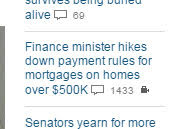
Minister Morneau hiked down … what?

by Mark Liberman
Yuval Pinter

הדאון פה ממש הופך את זה למשובח

Faith Jones writes:

I live in Canada, where even our Prime Minister goes canoeing and snowshoeing and stuff, so when I saw this headline on the CBC:

… I assumed the Finance Minister was hiking down an actual mountain somewhere in or around Ottawa. Then I got to "payment" and, because of my previous confusion, I still had it in my mind that the verb was "hikes down" but now I thought it was meant metaphorically, and tried to figure out what these "payment rules" were and what "hiking down" such a rule would entail.

Yeah. Minister Morneau has increased the minimum DOWN PAYMENT needed on houses over $500,000. Took me a good minute and a half to get there.

12 Dec 08:14

Correction of the year?

by Ben Zimmer
Yuval Pinter

הפעם עם המקור

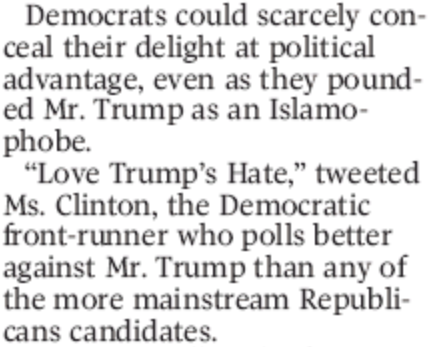
From the article "Trump brushes off widespread backlash" by Paul Koring, The Globe and Mail (Ontario Edition), Dec. 9, 2015, p. A13:

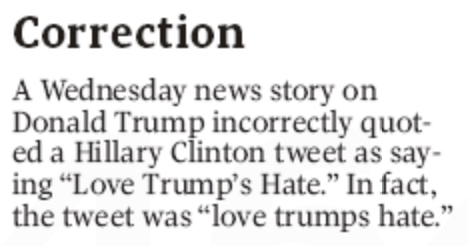
And the inevitable correction (The Globe and Mail, Dec. 11, 2015, p. A2):

Here's the tweet to which the article refers:

Tell Donald Trump: Hate is not an American value. pic.twitter.com/qlhuKPKwn0

— Hillary Clinton (@HillaryClinton) December 8, 2015

(Page images via PressReader. A similar correction ran in the online edition.)

11 Dec 18:26

Dictionary-sampling estimates of vocabulary knowledge: No Zipf problems

by Mark Liberman

Yesterday I explained why the long-tailed ("Zipf's Law") distribution of word frequencies makes it almost impossible to estimate vocabulary size by counting word types in samples of writing or speaking ("Why estimating vocabulary size by counting words is (nearly) impossible"). In a comment on that post, "flow" suggested that similar problems might afflict attempts to estimate vocabulary size by checking someone's knowledge of random samples from a dictionary.

But in fact this worry is groundless. There are many problems with the method — especially defining the list to sample from, and defining what counts as "knowing" an item in the sample — but the nature of word-frequency distributions is not one of them.

We could prove this as a theorem, but it will probably be clearer to most people if we run a simulation. So this R script does the following:

(1) Assume a dictionary with NWords=100000 entries;
(2) Assume a Zipfian distribution such that the Nth commonest word has probability proportional to \(1/N^k\);
(3) Simulate a "known" subset by selected those words that appear in a randomly-generated text of NSample=6000000 items;
(4) Pick NTest=500 dictionary items at random (with uniform probability across the NWords entries);
(5) Determine what fraction of those NTest items are "known" according to (3);
(6) Iterate (4)-(5) ntests=100 times;
(7) Compare the mean proportion "known" in the sample tests to the true underlying proportion of "known" words.

Here's the result of a few runs of the cited script:

> source("KnowCheck.R")
 32313-word vocabulary: 0.32313 of 100000-word dictionary
 Mean 163.7 known out of 500 tested in 100 trials
 Mean Proportion known is 0.3274, stdev 0.0219688
 > source("KnowCheck.R")
 32120-word vocabulary: 0.3212 of 100000-word dictionary
 Mean 160.7 known out of 500 tested in 100 trials
 Mean Proportion known is 0.3214, stdev 0.0187757
 > source("KnowCheck.R")
 32216-word vocabulary: 0.32216 of 100000-word dictionary
 Mean 161.7 known out of 500 tested in 100 trials
 Mean Proportion known is 0.3234, stdev 0.020238
 > source("KnowCheck.R")
 32402-word vocabulary: 0.32402 of 100000-word dictionary
 Mean 161.48 known out of 500 tested in 100 trials
 Mean Proportion known is 0.32296, stdev 0.021834

You can try changing the script parameters to convince yourself that the method continues to work.


09 Dec 16:17

Why estimating vocabulary size by counting words is (nearly) impossible

by Mark Liberman
Yuval Pinter

מגניב

A few days ago, I expressed skepticism about a claim that "the human lexicon has a de facto storage limit of 8,000 lexical items", which was apparently derived from counting word types in various sorts of texts ("Lexical limits?", 12/5/2015). There are many difficult questions here about what we mean by "word", and what it means to be "in" the lexicon of an individual or a language — though I don't see how you could answer those questions so as to come up with a number as low as 8,000. But today I'd like to focus on some of the reasons that even after settling the "what is a word" questions, it's nearly hopeless to try to establish an upper bound by counting "word" types in text.

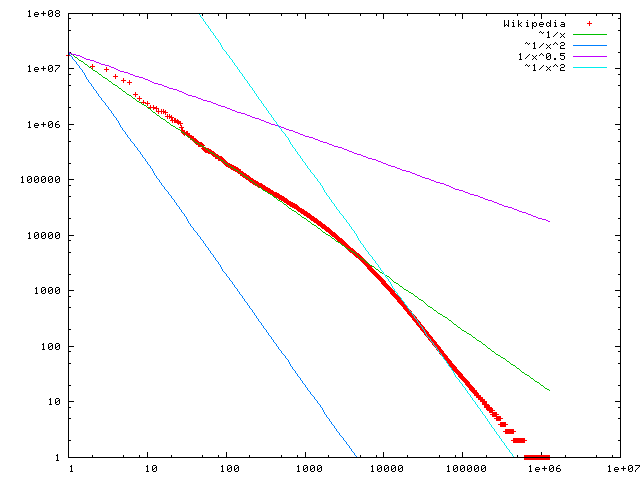
Zipf's Law says that if you order words by frequency, the frequency of the Nth word is proportional to \(1/N^s\), where s is an exponent that runs roughly between 0.5 and 2 for various parts of the distribution. (See e.g. this plot for the various estimated exponents in different frequency-ranges of Wikipedia text.)

The crucial point is that most words are rare, and the further down the frequency-ordered list you go, the rarer the words are. And an obvious consequence of this is that estimating vocabulary by counting word-types in someone's speech or writing is at best very hard to do.

This is partly because most words are very rare, and not-yet-encountered words are likely to be increasingly rare, and so it takes a very large sample to see them all or even most of them. As I observed in an earlier post, if we concatenate 16 of Charles Dickens' books and ask how much of his vocabulary he displayed as a given amount of his text has passed by, then after nearly 4 million words he's still showing us wordforms (i.e. distinct space-or-punctuation-separated letter-strings) that he hadn't used before:

But it's worse than that. You might hope to fit a function to data of this sort, and thereby estimate the vocabulary size as a parameter of the fit. But because of the nature of the long-tailed distribution of words, this is essentially impossible to do in a reliable way. Here's the same plot with two superimposed artificial samples, from hypothetical vocabularies of 100,000 and 200,000 words:

And for a given vocabulary size, different choices of Zipfian parameters will give quite different results:

Obviously you can establish a lower bound, starting with the number of "words" that you've actually seen (which makes the estimate of a limit at 8,000 especially puzzling).

And there is a simple and elegant model of how to use such samples to estimate the underlying population size, developed originally by Alan Turing during the WWII Enigma cryptanalysis effort — see I.J. Good, "The Population Frequencies of Species and the Estimation of Population Parameters", Biometrika 40(3-4) 237-264, December 1953, or these lecture notes. But this simple and elegant method, though it works reasonably well to estimate how much "belief" to withhold for previously-unseen species, is not nearly as effective at estimating how numerous the species for which we reserve that belief will turn out to be.

For much more on this topic, see Harald Baayen's book, Word Frequency Distributions.


09 Dec 07:08

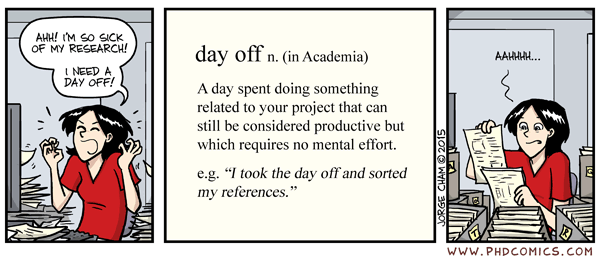
12/07/15 PHD comic: 'Day Off'

Piled Higher & Deeper by Jorge Cham
www.phdcomics.com
Click on the title below to read the comic
title: "Day Off" - originally published 12/7/2015

For the latest news in PHD Comics, CLICK HERE!

07 Dec 19:00

הצעות לכתבי-עת מדעיים חדשים

by נביא שקר
Yuval Pinter

שיהיה. הראשון טוב.

רוב כתבי-העת המדעיים מפעילים סינון ראשוני של כתבי-היד שנשלחים אליהם, ולאחר מכן יש סבבים של ביקורת ומענה לביקורת, ובלה בלה בלה וכאב ראש.

הנה הצעות לכתבי-עת שהתמריץ שלהם עובד באופן קצת אחר:

Once

ONCE

נניח לרגע ש-ONCE (בעברית ״פעמון״) הוא כתב-עת מדעי רציני. ״פעמון״ פונה לקהל רחב, ומפרסם מחקרים חדשים בפיזיקה, כימיה, ביולוגיה, אסטרופיזיקה, רפואה, מדעי המחשב, מדעי החברה וכו׳. כתב-העת מפעיל ביקורת בסיסית שמונעת מקשקוש מוחלט להתפרסם, אבל מעבר לבדיקת שפיות ובדיקה טכנית כללית, כמעט כל מה שנשלח מתפרסם (נניח שאחוזי הקבלה הם משהו כמו 80%).

העניין הוא, שאפשר לפרסם בפעמון רק פעם אחת.

הכלל הזה כולל שיתופי פעולה ואנשים שהם לא המחבר הראשי של המאמר.

עכשיו, בתור חוקר או חוקרת, מה כדאי לך לעשות? הדבר תלוי בהסתברות שאתם מאמינים שתגלו דברים חשובים או מעניינים לאורך הקריירה שלכם, ובאיזה קצב זה יקרה. חלק קטן אולי ירצה לחכות לסוף הקריירה, חלק אולי ירצו לפרסם משהו ׳גדול׳ בתחילת הקריירה כדי להגיע לקהל רחב. חלק ירצו להעריך את כמות הפרסומים המדעיים האפשריים שלהם כ-N, לחכות עד שהם יפרסמו N/e מאמרים, ואז לשלוח לפעמון את המחקר הבא שלהם שמנצח את המאמר הטוב ביותר מבין N/e שכבר פורסמו (למה? כי ככה).

[ידידי ג׳ הציע גרסא אחרת – אחוזי קבלה גבוהים יותר בירחונים, אבל לכל חוקר מותר לפרסם עד 10 מאמרים בחייו]

Better

better

"שיפור״, בשמו העברי, מקדיש גליונות לתתי-תחומים (גליון הפיזיקה למשל כולל אסטרופיזיקה, חומר מוצק, חישוב קוונטי וכו׳). גם כתב-העת הזה פונה לקהל רחב, ומפרסם מחקרים בתחומים שונים.

העניין הוא, ש״שיפור״ יפרסם מאמר רק אם הוא טוב יותר מהמאמרים שהתפרסמו בו עד כה (בתוך תת-תחום המחקר). אנשים בטח ישאלו מי קובע מה טוב יותר, אבל נניח שיש לנו צוות מבקרים טוב למדי. בהתחלה ״שיפור״ יפרסם זבל מוחלט, אבל לאט לאט אפשר לקוות שהוא יבצע אלגוריתם טיפוס-גבעה במרחב המאמרים האפשרי.

[אפשר לחשוב על תהליך דומה בעת שכירת אנשי סגל חדשים. הידיד ש׳ אמר שאצלם במחלקה עלה פעם הרעיון שישכרו חוקר חדש אם הוא טוב יותר מהחציון במחלקה. מצד אחד, זה קריטריון סביר למדי – לא מבקשים שתהיה טוב יותר מכוכבי המחלקה, בסך הכל אתה צריך להיות יותר טוב מחצי מהם, וחלק בטח די בינוניים. מצד שני, בהנחה שזה עובד, אמור להיות שיפור במחלקה עם כל רכש]

Proposal

proposal

"הצעה״ יכול לעבוד גם בתור אתר. כתב-העת (או האתר) יאגד הצעות למחקר מטעם חוקרים בתחומים שונים. אלה הרעיונות שחוקרים מציעים בערך פעם בשבוע (או יום) יחד עם המשפט ״זה יכול להיות אחלה מאמר״. כלומר, אין שום סיכוי שיהיה להם זמן לעשות את זה, אבל מישהו אי שם יכול להוציא מזה משהו.

במקום שרעיונות כאלה ימותו מסביב לשולחן המעבדה, אפשר לפרסם אותם ב״הצעה״. מאמרים בכתב-העת הם לכל היותר עמוד, עדיף פחות, וכוללים את הרעיון, למה מדובר ברעיון טוב, ומה צריך כדי לממש אותו (בערך).

הדבר היחיד שיוצא לחוקר או חוקרת מפרסום ב״הצעה״ זה הסכם ג׳נטלמני שאם מישהו אחר רואה את הרעיון בכתב-העת ומבסס עליו את המחקר שלו, הוא צריך לכתוב ב-acknowledgments שהרעיון הגיע מאדם כזה וכזה. כמובן שאף-אחד לא יכול לאכוף את ההסכם הזה, אבל אני מרשה לעצמי לא לדאוג לפרטים האלה כי אני גם לא הולך לפרסם את כתב-העת הזה. אם מישהו כן יעשה את זה, אנא זכרו מאיפה הרעיון הגיע.

====

חוץ מזה, אני חושב להתחיל פרס מחקר בשם ״פרסים רבים״ וכתב-עת בשם ״כתבי-עת מהנחשבים בעולם״.


07 Dec 10:51

פרס מחליש את הסיפור? נחביא אותו

by גדעון שביב
Yuval Pinter

כך מגיבים.

 הכתב המדיני של חדשות 2 מטיל על סגנית שר החוץ ציפי חוטובלי את האחריות ל"סערה המדינית", שבדרך, בעקבות נייר "מזמין קטטה" שהפיצה לנציגויות ישראל בעולם. למה לעובדה שלמעשה מדובר בנייר של שר החוץ לשעבר שמעון פרס אין רמז בדיווח?


חדשות2

אודי סגל "חושף" (צילום מסך חדשות 2)


"אודי סגל, אתה חושף הערב את מה שנראה כמו הסערה המדינית הבאה".

במילים אלו פתח מגיש המהדורה המרכזית של חדשות 2, דני קושמרו, את ההפניה לדיווחו של הכתב המדיני אודי סגל, אודות מסמך המדיניות שהפיץ משרד החוץ לנציגויות ישראל בעולם, לפיו, ההתנחלויות אינן סותרות את החוק הבינלאומי. ("הסערה המדינית הבאה: "ההתנחלויות חוקיות", בסרטון החל מהדקה 16:40):

"בהחלט," עונה סגל לקושמרו, ומתחיל לספר על הנייר, "ביוזמתה של סגנית שר החוץ ציפי חוטובלי, שהנחתה את הצוות המשפטי של המשרד לרענן את המסמך המשפטי והוא קובע כך:"

כאן מגולל סגל את עיקרי הנייר שזה עתה "חשף", נייר שנשמע (שמא מושמע) לאוזני הצופים, כביטוי נוסף לעמדתה הנצית של חוטובלי. מהדיווח עולה הרושם שהנייר מהווה תפנית במדיניות הדיפלומטית של ישראל, העוברת לתבוע זכות מלאה לריבונות על כל שטחי יהודה ושומרון, ואף צפוי לחולל "סערה מדינית". כדי לחזק את התחושה שמדובר בפנייה דיפלומטית חדה ימינה מהקו שנהג עד כה, קושר סגל את השינוי בהמלצות הדו"ח שהגיש לממשלה השופט בדימוס אדמונד לוי,  לפני כשלוש וחצי שנים. כך סגל:

זה העובדות. בשורה התחתונה דני, זהו נייר הגנה המבוסס כמעט כל כולו על הטיעונים של דו"ח אדמונד לוי… הסכנה המדינית בנייר, הוא מזמין עימות, מזמין קטטה

מילה אחת קטנה, הנחבאת בתוך דיווחו של סגל, מרמזת להטייה הבולטת המאפיינת דיווח זה, והמילה הזו היא כמובן המילה "לרענן".

שכן הכתב המדיני של חדשות 2 יודע היטב, שהנייר שהפיצה חוטובלי לנציגויות, אינו אלא אותו נייר, לפחות מבחינת המהות, אותו הפיץ לנציגויות ישראל לפני כ 14 שנה שר החוץ שמעון פרס.

בחינה מדוקדקת של הנייר הישן, שהפיץ פרס, לעומת הנייר החדש שהפיצה חוטובלי, מעלה שלהוציא השמטת הטענות הישראליות לגבי רצועת עזה, (שחדלו להיות  רלוונטיות לפני כעשור), ועיבוי פרק רקע על הקשר ההיסטורי של העם היהודי לאדמתו, כמבוא לטיעונים עצמם, הנייר במהותו זהה.  בשני הניירות עולות אותן טענות משפטיות, לפיהן לישראל "תביעות קניין תקפות ביחס לשטחי יהודה ושומרון" בשל העובדה שהשטח לא נכבש מישות מדינית המחזיקה בריבונות לגיטימית על השטח. לפיכך, ובשל נימוקים נוספים, האיסור המוזכר באמנת ז'נבה הרביעית על העברת אוכלוסיה לשטח כבוש, אינו חל במקרה זה. 

מסקנות דו"ח אדמונד לוי, מאליו מתברר, אינן קשורות לעניין כלל, כיוון שכשכתב את הנייר המקורי משרד החוץ של פרס, עדיין היה השופט העליון אדמונד לוי  בשיא הקריירה שלו כשופט פעיל.

'פרספקטיבה': אודי סגל, אתה הרי יודע שחוטובלי לקחה נייר ישן של פרס, והפיצה אותו מחדש כשהוא נושא את אותה מהות בדיוק. למה להציג זאת כ"חשיפה" של נייר ש"יעורר סערה מדינית" ו"יזמין עימות וקטטה"?

אודי סגל: ציינתי שמדובר "ברענון של מסמך". בטלוויזיה יש בכל זאת רק דקה, ולא היה זמן להיכנס להיסטוריה של המסמך. זה לא נועד להסתיר משהו. למרות זאת ציינתי שמדובר ברענון מסמך קיים. לא מסכים עם הטענה שאין כאן חדש. העניין הוא לא עצם המסמך אלא ששולחים אותו מחדש לשגרירויות עם הנחייה להעלות אותו בפגישות… המהלך הוא לא רק משפטי, אלא גם הסברתי, מבחינת הניסיון לשים את זה על סדר היום. יש הבדל בין מסמך שקבור באתר משרד החוץ בין אלפי מסמכים, לבין מסמך שנשלח לכל השגרירויות.

לגבי דו"ח אדמונד לוי. אני הפרדתי בדיווח שלי ואמרתי "עד כאן העובדות". המילה "למעשה" היא הפרשנות שלי. ושוב מדובר בטלוויזיה, ולא ניתן להכניס הכל. יש כאן מהלך מאד מוזר, בו ממשלת נתניהו ממנה וועדה, ואז לא עושה עם הדו"ח כלום. מכיוון שציפי חוטובלי מאמינה גדולה בדו"ח אדמונד לוי,  יש כאן הכנסה של דו"ח אדמונד לוי ללא המסקנה שלו. זאת הייתה פרשנות.

הפרשנות השנייה הייתה שזה מזמין תגרה. ברגע שאתה מעלה את המסמך מן האוב, עושה לו רענון ומתיחת פנים, שולח לשגרירויות ואומר לשגרירים שבפגישותיהם עם עמיתיהם מאירופה עליהם  "להעלות את הטיעונים המשפטיים", יש פה מהלך דיפלומטי. המהלך הוא לא העניין המשפטי, אלא העניין הדיפלומטי.

להערכתי יש פה עניין בעל חשיבות שיעורר כותרות והדים. אבל לפעמים גם אני שוגה. אני מצאתי את זה נורא מעניין.


06 Dec 07:11

South Caucasus Minorities Within Minorities.

by languagehat
Yuval Pinter

מעניין, בעיקר הציטוט הראשון

Joel at Far Outliers has been posting excerpts from Thomas de Waal’s The Caucasus: An Introduction, and this one scratched my multicultural itch:

The three main capital cities of the region have their own distinct histories. A century ago, neither Tbilisi (Tiflis), Baku, nor Yerevan had a majority population of Georgians, Azerbaijanis, or Armenians, respectively. Tbilisi can lay claim to being the capital of the Caucasus, but its Georgian character has been much more intermittent. For five hundred years it was an Arab town, while the older city of Mtskheta was the old Georgian capital. Then, in the medieval period, the city was taken over by the Armenian merchant class. They were the biggest community in the nineteenth century and finally left en masse only in the 1960s. Famous Tbilisi Armenians have included the world chess champion Tigran Petrosian and the filmmaker Sergei Parajanov. Baku became a cosmopolitan city with many different ethnic groups from the late nineteenth century. Russian became its lingua franca. Garry Kasparov, the Jewish Armenian world chess champion, who was born in Baku but is unable to return there because of his Armenian roots, describes his nationality as “Bakuvian” (Bakinets in Russian). Baku only turned into a strongly Azerbaijani city with the end of the Soviet Union, the Nagorny Karabakh war, and the mass emigration of other national groups.

By contrast, up until the First World War, Yerevan, the capital of Armenia, had a Persian flavor and a Muslim majority population. Its major landmark was a blue-tiled mosque, and there was no big church. [...] More Armenians lived in Tiflis, Baku, Shusha, and Van. Yerevan became an Armenian city only after the mass flight of Armenians from the Ottoman Empire and of Azerbaijanis from eastern Armenia in 1915–18.

Arguably, strong national identities only began to emerge in the three countries of the South Caucasus in the Soviet era. [...]

Half a dozen smaller nationalities form sizeable communities in the South Caucasus. Kurds are spread throughout the region. So-called Yezidi Kurds are Armenia’s biggest minority, and there are large numbers of Muslim Kurds in Azerbaijan. The Abkhaz and the Ossetians (discussed in chapter 5) are both few in numbers. There are fewer than one hundred thousand Abkhaz in Abkhazia and even fewer Ossetians in South Ossetia—many more Ossetians live in Russian North Ossetia. Azerbaijan’s main two minority ethnic groups are the Lezgins in the north and the Talysh in the south. The two hundred thousand Lezgins (according to official figures) live in the north of Azerbaijan across the border from around four hundred thousand of their ethnic kin who live in the Russian republic of Dagestan. They are Sunnis, and they speak a language apparently indigenous to the Caucasus. The Talysh live in southern Azerbaijan near the Iranian border and speak a language related to Farsi.

A follow-up post, Origins of Azerbaijan, describes what happened to this complex coexistence in the course of the awful twentieth century:

In the early part of the new century, the new Armenian and Azerbaijani national movements inevitably collided. For centuries, Armenians and Azerbaijanis had coexisted as neighbors in a patchwork quilt of towns and villages across the Transcaucasus. They spoke each other’s languages, traded freely, and had a shared culture with strong Persian influences. Yet mixed marriage was rare, and differences of religion, social status, and now national ideology caused divisions. These tensions were contained by Russian colonial rule, but when that rule weakened in 1905 and 1917 (and again in 1988) the geography of mixed ethnic cohabitation turned peaceful communities into places of violence.

The revolutionary year of 1905 saw the outbreak of what was called the “Armeno-Tatar War.” The bloodshed spread the entire length of the South Caucasus, from Baku in the east to Nakhichevan in the west. Up to ten thousand people were killed, and whole urban districts and villages were gutted. The British author James Henry called Baku “the greatest blood-spot in the mysterious, rebellious and blood-stained Caucasus” after it saw two bloody pogroms in one year. The conflict horrified and puzzled both locals and outsiders. One Azerbaijani intellectual in Ganja, Ahmad bay Aghaoghli, “sternly lectured crowds in a Ganja mosque that ‘even wild animals do not devour their own kind’ reminding them that Muslims and Armenians had for centuries lived in peace before the coming of the Russians.” The Russian socialist author Maxim Gorky expressed shock at what happened, lamenting “how hard it is to believe that these simple noble people now stupidly and senselessly are killing one another, giving in to provocation by evil and dark forces.”

And of course that was only the beginning. How I hate nationalism, at least in its violent exclusionist form!

06 Dec 06:25

בלי לדרוש את הכדור

by דורפן
Yuval Pinter

טוב אולי הגיע הזמן שאני אראה איזה משחק איתו

cc

וכך הגענו אל נקודת הרבע של העונה כשסטפן קארי על 0.946 נקודות לדקה והווריורס לא מנוצחים.

רק לסבר את הסטטיסטיקה – רק ווילט צ׳מברליין בעונת החמישים נקודות – בה שיחק כל דקה – השיג ממוצע גבוה יותר על פני עונה. למרות שאני בטוח שברזולוציות של רבע עונה אנשים עשו דברים דומים. ג׳ורדן, בראיינט, ווסטברוק בוודאי.

אבל זה בדיוק מה שבלתי נתפש כאן. אנחנו הרי יודעים איך נראית תקופה כזו. השחקן נכנס לזון, אין לו אלוהים, הוא מסמן לכולם לעוף לו מהדרך. אבל במשחק בשרלוט אחרי הרבע השלישי המטורף חזר דל קארי לעמדת השידור – אחרי טקס שערכו לכבודו – וחשב שבנו יחזור למגרש כדי לכבד אותו. ״הוא יתחנן ללוק וולטון לשחק״ אמר קארי האב. בסוף של דבר סטף לא התחנן ולא שיחק אבל אתם מבינים את הטרמינלוגיה? הוא יתחנן למאמן. לעומת כל האלפה-דוגס של העולם. שמוחקים תרגילים שהמאמנים שרטטו. שמכריזים ביום רביעי מי ייקח את הזריקה המכריעה אם תהיה כזו בשבת. שמודיעים שהם רוצים להיות בנבחרת האולימפית כשהם לא צריכים להיות בחמישיה של הקבוצה שלהם. קארי הוא עולם תרבותי שונה לחלוטין.

קארי מתוך קבוצתיות מוחלטת רושם הופעה שביעית של ארבעים נקודות העונה. לכל שאר הליגה ביחד יש 14. היום הוא קלע 44 כי באמת היו צריכים ממנו 44. אין לו שום עניין בשיאים. קחו למשל את שיא השלשות של הליגה (12 במשחק) שלא שייך לו (בראיינט ודוניאל מרשל שותפים לו). כל כך הרבה פעמים הוא קרוב אליו, ובשלושים הפרש אפשר להשאיר אותו במגרש כדי שיסלק את האנומליה הזו. לא אכפת לו.

האיש רושם את הממוצעים הללו כשהוא לעולם לא דורש את הכדור. כשהוא עסוק בעיקר בנסיון להכניס את חבריו לקבוצה למשחק. הוא יבוא מחר לברוקלין בתקווה אמיתית שיזדקקו רק ל-18 נקודות ב-25 דקות מצידו.

ראינו טובים ואולי טובים יותר. שחקן כזה לא ראינו.

השתתפות במימון דה באזר

05 Dec 08:11

Iran’s Nuclear Weapons Program Confirmed

by Elliott Abrams

The nuclear deal with Iran requires that it tell the truth–the whole truth–about its previous efforts to build a nuclear weapon.

As Sen. Mark Kirk said this week,

senior Administration officials repeatedly told the American people that Iran should come clean on all nuclear weapons activities as part of any final deal:

After the Iran nuclear agreement was signed, the Administration reversed itself:

Why this reversal? We now have some evidence of why: Iran was in fact working on nuclear weapons until at least 2009, and has refused to “come clean.” To have demanded that Iran truly comply with the language of the nuclear deal might have torn the deal apart, and the Obama administration would not allow that–at any cost. The newest IAEA report on the Iranian program is described in The New York Times:

Iran was actively designing a nuclear weapon until 2009, more recently than the United States and other Western intelligence agencies have publicly acknowledged, according to a final report by the United Nations nuclear inspection agency.

The report, based on partial answers Iran provided after reaching its nuclear accord with the West in July, concluded that Tehran conducted “computer modeling of a nuclear explosive device” before 2004. It then resumed the efforts during President Bush’s second term and continued them into President Obama’s first year in office.

But while the International Atomic Energy Agency detailed a long list of experiments Iran had conducted that were “relevant to a nuclear explosive device,” it found no evidence that the effort succeeded in developing a complete blueprint for a bomb.

In part, that may have been because Iran refused to answer several essential questions, and appeared to have destroyed potential evidence in others.

Where does that leave us? First, we see that all the Iranian propaganda about never, ever building a weapon, and about the mysterious “fatwa” barring Iran from having a nuclear weapon, was a pack of lies. They were working on a weapon as recently as 2009. Second, we see that the nuclear deal, however weak its terms, will not in any event be enforced. Read again those words from our top negotiators, Kerry and Sherman. If those demands on Iran have been abandoned, which will be next?

The treatment of the famous PMDs, the “possible military dimensions” of Iran’s nuclear work, has now been abandoned–and the IAEA apparently was not even allowed to speak with the head of the program, the Iranian official Mohsen Fakrizadeh. The lesson this teaches Iran is that the United States, at least under this administration, has too much invested in the agreement to demand full Iranian compliance with it.

There are other implications, as The Times suggested:

Iran’s refusal to cooperate on central points could set a dangerous precedent as the United Nations agency tries to convince other countries with nuclear technology that they must fully answer queries to determine if they have a secret weapons program.

Quite right. The deal itself is bad enough, but a failure even to enforce it means the likelihood of nuclear proliferation has risen even further.

04 Dec 17:29

לוסי אהריש VS סמי סמוחה

by חנן עמיאור

מגישת הטלוויזיה טענה בלהט שרוב אזרחי ישראל הערבים מכירים בישראל כמדינה יהודית. הזדמנות טובה לעיין בממצאיו של הפרופ' סמי סמוחה, מחבר 'מדד יחסי יהודים-ערבים' לשנת 2015, שפורסם ימים אחדים קודם לכן


לכידה

לוסי אהריש (צילום מסך 'שיחת היום' ערוץ 2


ביום שלישי האחרון, בתוכנית הבוקר של 'רשת', הביע חבר הפאנל שמעון ריקלין ספק באשר למידת ההכרה של אזרחי ישראל הערבים, בישראל כמדינה יהודית. על כך ענתה לו המגישה, לוסי אהריש, (כאן, ב 1:10:58) כך:

פה אני קמה עליך ושמה לך סטופ. רוב ומרבית ערביי ישראל מכירים בישראל כמדינה יהודית, כמדינת הלאום של העם היהודי. כן, בהחלט, במאה אחוז. נקודה סימן קריאה. ואני מוכנה שתלך ותבדוק אותי

יד המקרה גרמה לכך שלא היה צריך להרחיק לכת כדי לבדוק, כיוון שימים אחדים קודם לכן, פרסם הפרופ' סמי סמוחה את ממצאי 'מדד יחסי יהודים ערבים לשנת 2015'. המדד של סמוחה הוא פרויקט רחב יריעה המתקיים מזה עשרות שנים, ובמסגרתו ממופים ההיבטים השונים של יחסי יהודים ערבים במדינה, באמצעות משאלי דעת קהל חריגים בהיקפם וברמת ההעמקה שלהם.

בין הממצאים של סמוחה ניתן לראות צדדים חיוביים, המבטאים התקרבות ורצון לחיות בדו קיום מצד הערבים. למשל העליה הקבועה במספר משרתי השירות האזרחי, חרף הכתף הקרה שנותנת המנהיגות הערבית למהלך, או שאיפה גוברת לחיות בקשרי יום יום הדוקים יותר עם היהודים.

אבל כותרת המדד חד משמעית: ישנה מגמת החרפה יציבה וקבועה ביחס הערבים לישראל, לעומת מגמת התמתנות יציבה וקבועה, ביחס היהודים לערביי ישראל. ככל שחולף הזמן נעשים הערבים הישראלים עוינים יותר כלפי היהודים, בעוד שככל שחולף הזמן נעשים היהודים פחות עוינים כלפי האזרחים הערבים.

ומה בדבר קביעתה הנחרצת של אהריש?

רוב ערביי ישראל אינם מכירים בזכותה של ישראל להתקיים כמדינה יהודית וציונית. 54% מצדיקים התקוממות חמושה (אינתיפאדה) של ערביי ישראל, 55% רואים בישראל כובש זר, צלבני, שיעלם מהאזור בעתיד

עם זאת, רוב האזרחים הערבים, (60%) משלים מחוסר ברירה עם העובדה שזה המצב, והצלבנים הציונים כאן כרגע ובעתיד הקרוב. נאלץ להשלים בדיעבד, לא מכיר מלכתחילה.

לוסי אהריש בחרה שלא להגיב

תודה ליגאל בן ברוך

04 Dec 12:58

Bad sex writing: really really bad

by Geoffrey K. Pullum
Yuval Pinter

הולי שיט. הוא גם אנטישמי כזה, נכון?

I'm pleased to be able to announce on Language Log the winner of the Literary Review's 2015 Bad Sex in Fiction Award. The award went to the singer Morrissey for his debut novel List of the Lost. And it seems to have been honestly earned. The judges cited this sentence:

Eliza and Ezra rolled together into the one giggling snowball of full-figured copulation, screaming and shouting as they playfully bit and pulled at each other in a dangerous and clamorous rollercoaster coil of sexually violent rotation with Eliza's breasts barrel-rolled across Ezra's howling mouth and the pained frenzy of his bulbous salutation extenuating his excitement as it whacked and smacked its way into every muscle of Eliza's body except for the otherwise central zone.

That really is remarkably bad, i.m.h.o.

The awardee failed to show up for the award ceremony (apparently this happens fairly often).

04 Dec 12:14

How lovely.

by Lydia Marks
Via
02 Dec 15:17

Comic for 2015.12.02

New Cyanide and Happiness Comic
28 Nov 18:05

ההתכתשות הגדולה

by כתב "העין השביעית"
Yuval Pinter

חביב הפעם (שבוע שעבר היה בזיון)

"קול העין", תוכנית הרדיו של "העין השביעית" וקול-הקמפוס: אמל ג'מאל על סגירת כלי התקשורת של התנועה-האסלאמית, רביב דרוקר על עתירת חופש המידע נגד נתניהו, גלעד טוקטלי על סרטו העוסק בדב יודקובסקי ואלעד טנא על קוד אתי לסיקור נפגעות עבירות מין
28 Nov 10:39

A megaphone that can translate

by Victor Mair
Yuval Pinter

מתבקש. עם זאת אני חושד במוצר הספציפי שמוצג רק פעמיים עם אותו ביטוי קצרצר

An article by Nick Vivian in USA Today informs us:

"Tokyo's airport is using this incredible megaphone to translate into three languages on the fly" (11/22/15).

The person wielding the megaphone speaks into it in Japanese and the megaphone amplifies her messages in three languages, one after another:  English, Korean, and Chinese.

The article includes a video showing the megaphone in action.  It also describes plans to develop more ambitious devices that can handle more languages, that will be able to engage in two-way conversation, and can team up with robots to make them even more astonishingly lifelike than they already are.

[h.t. Kyle Wilcox]

27 Nov 12:10

Adrienne E. Gusoff

"Living in a vacuum sucks."
26 Nov 16:57

Regret

by Doug

Regret

I love Godzilla.

25 Nov 11:17

It's good to be realistic.

by Lydia Marks
Via
25 Nov 07:13

‫פיה‬

by ‫מתן‬

פיה

עד תנאי העצירה, שלא נשארות שיניים.

שתפו ותהנו (כמו כן, ניתן לשתף מבלי להנות): del.icio.us Facebook TwitThis Google Bookmarks Google buzz

23 Nov 05:06

Comic for 2015.11.22

New Cyanide and Happiness Comic
22 Nov 13:10

Cloud Conversations

by Mark Liberman
Yuval Pinter

קסום

David Donnell writes:

My initial thought was that there was a climate-related "cloud conversation" that the French were oppposing — Michele Kelemen, "Paris Attacks Cloud Conversation At Summit Of World Powers", NPR 11/15/2015.


21 Nov 23:39

The perils of pirates.

by Lydia Marks
21 Nov 18:44

The UAE Model for Arab Women

by Elliott Abrams

Combating ISIS and Islamist terrorism more generally requires bullets and bombs, but it requires far more–including changing the social practices that have marginalized so many Arabs in their own countries. It is unlikely to be a coincidence that the country where women (and, it’s worth noting, trade unions) have advanced the furthest, Tunisia, is also the country that has advanced furthest politically.

In October 2014 the United Arab Emirates demonstrated its commitment to changing the role of women when an Emirati woman who is a jet pilot bombed ISIS. As CNN put it then, “Maj. Mariam Al Mansouri may be ISIS’ worst nightmare. The first female fighter pilot in the United Arab Emirates, she led a strike mission this week against the terror group.”

This week, Dr. Amal Al Qubaisi was appointed President of the Federal National Council of the UAE, making her the first woman in the Middle East to lead a national assembly. An architect by profession and the first woman to be a member of the Council, she is now its president and Speaker.

Yes, it was an appointment and not a popular election. And in the last election for the Council (some members are appointed, some elected) about a fourth of the candidates were women, but none were elected. And of course the Council itself is only advisory.

But the appointment clearly shows the commitment of the government to change the status of women. Like the model of a female jet pilot in the UAE military, it’s a terrific message to Emirati women– that they can go well beyond traditional roles. And it’s a model for other Arab countries, if only they would understand and adopt it.

CORRECTION: It has been pointed out to me that Dr. Qubaisi is the first woman in any Arab country to lead a national parliament, but not the first in the entire Middle East. Dalia Itzik was speaker of Israel’s Knesset from 2006 to 2009. I’m glad to make the correction and give Israel the honor due it.

21 Nov 11:51

a comic to use when facebook is down, or, if i may be so bold: also when facebook is up

Yuval Pinter

שימושי

archive - contact - sexy exciting merchandise - search - about
← previous November 18th, 2015 next

November 18th, 2015: Can Facebook TRULY be replaced by a 58kb png file? This creator of the 58kb png file says: yes!

– Ryan