Shared posts

23 Feb 22:32

A plausible theory for what the entrance vault to the Great Pyramid might be and what's likely behind it

by Gareth Branwyn

We're all familiar with the strange, enormous chevron vault high above the entrance to the Great Pyramid at Giza. And since 2016, many of us have waiting anxiously to find out what might be behind it (after a scan that year revealed evidence of a void). — Read the rest

23 Feb 22:31

21 of the Best Introspective Movies to Watch Absolutely Alone

by Ross Johnson

I’ve always been perfectly content to watch movies by myself. It’s all well and good if it’s 2 Fast 2 Furious or Uncharted, but there are movies that demand a little more attention and reward careful attention—and kids, partners, and even friends can be, frankly, distractions.

Read more...

23 Feb 22:31

What's the Safest Way to Throw Away Old Knives?

by Emily Long

Good knives have a long shelf life if you take care of them: wash them by hand, store them in a dedicated place, and keep them sharp. Even dull blades can be salvaged.

Read more...

23 Feb 22:31

Price of lithium has quadrupled in a year, but China found a massive deposit near Mount Everest

by Mark Frauenfelder

Lithium is a critical component of batteries for electric vehicles and demand has increased sharply in recent years. So has the price. According to Reuters, "BMI's assessment puts the mid-point of Chinese lithium carbonate prices in December at $39,250 a tonne, a gain of 485.8% from the same period a year ago." — Read the rest

23 Feb 22:27

Elden Ring Review – Make Way for the Elden Lord

by Francesco De Meo

Elden Ring

Since the release of Demon's Souls, From Software has become synonymous with many things: hardcore and brutally challenging action role-playing, unique storytelling, amazing level design. With each following title, the studio has upped the ante more and more, improving on the original formula a lot while staying extremely faithful to it. The only exception to this was Sekiro: Shadows Die Twice, a game that, while rooted into the Souls series, played radically differently, with a huge focus on stealth and unique combat mechanics like parrying, showing the world that the developer does know how to break away from its successful formula.

On paper, Elden Ring looks like a dream come true for many types of players, no matter if they are fans of Dark Souls or not. The game marks the return to the Souls formula following Sekiro: Shadows Die Twice, but with an open-world setting, the first-ever created by the developer, enriched by worldbuilding and lore created in collaboration with George R.R. Martin (in case you've been living under a rock, he's the man behind the A Song of Ice and Fire novels adapted into the massively popular Games of Thrones TV show). A collaboration that felt very unlikely but natural at the same time, given how skilled George R.R. Martin is at creating worlds with a long history and coherent lore.

With so much going for it, Elden Ring's expectations have been massive since the day the game was announced. The risk of disappointment was extremely high as well, even more so for fans of both the Souls series and George R.R. Martin like me. Still, after having spent tens of hours with the game, I'm comfortable saying that Elden Ring isn't just From Software's best game to date, but also one of the best open-world games ever released, if not the very best. The bar has been raised so high that all future open-world titles will inevitably be compared to it.

Elden Ring's story presentation stays true to what From Software has done for its previous games, with the introduction providing details on the world and its history. Players are mostly left on their own to piece the rest together via environmental storytelling, item descriptions, dialogues with NPCs, and sparse cutscenes.

Right from the intro, it is clear that the Elden Ring's lore is incredibly deep. The game takes place in the Lands Between, lands that were once prosperous thanks to the rule of Queen Marika The Eternal and her children, the Demigods. The people of the lands were blessed by the Erdtree and the Elden Ring that was generated from it, which kept the Golden Order of the land in place. The Elden Ring itself was maintained by the balance between the different Runes it housed. The history of the Lands Between took a turn for the worse, however, when some mysterious figures stole the Death Rune and killed one of Marika's children, the Demigod Godwyn. This event brought the end of the Golden Order and turned the Lands Between into the state they are in at the start of the game. The player is only one of the Tarnished, whose goal is to recover every Great Rune and restore the Elden Ring to become the Elden Lord. The Tarnished were all blessed by the Erdtree and the Elden Ring, but now only some of them retain the benevolence of Grace, which also guides them toward their destiny.

Understanding the story of Elden Ring to its full extent will take plenty of time, that's for sure, as George R.R. Martin and From Software have created an extremely rich world that is filled with mystery, and piecing everything together is part of the charm of the experience. Many of the elements found in the game help players understand more of this world, from enemy placement/behavior and items to dialogues with NPCs and so on. Almost everything in Elden Ring tells a part of the story: there are some enemies in a specific area that seem to be worshipping something, and solving a puzzle in the area will reveal what these people are worshipping so reverently and protecting so fiercely; other times, you will find groups of enemies fighting against one another, revealing the hostility between different factions; moreover, you will see powerful creatures that have been seemingly enslaved by others much weaker than them. Players may read wrongly into these elements, but that is the nature of old, almost forgotten legends.

While the Elden Ring story is presented in the typical Souls series fashion, some noticeable differences make it a tad less obscure and closer to the Sekiro: Shadows Die Twice story presentation. The introduction manages to get players pumped up with a combination of beautiful artwork, great music, and masterful voice acting; the game also features way more NPCs that try to give players more information, although often in a very cryptic way. Many of these NPCs are the main focus of selected questlines, letting players learn more about them and what they are looking for in the Lands Between. Standard fare for the Souls series, sure, but a fare that has been elevated not only by excellent writing and voice acting but also by how the game actually plays.

Elden Ring is one of the very few open-world games that can make the player feel like they are really on an adventure. Following the starting area, which features a nice tutorial that teaches the basics in a very effective way, the player emerges in the proper Lands Between, free to go wherever they wish. While doing so at the start of the game is somewhat tricky due to lacking essential tools like the spectral steed Torrent, it is definitely possible, as there is very little barring the player's way. If one is skilled enough, it is possible to take down enemies that are meant to be taken on with better gear.

It's not like the players need to go out of their way to explore the Lands Between, as Elden Ring makes it exceedingly easy to get lost in this massive world and have fun while doing so. Pretty much every structure that can be seen from a distance holds some sort of secret, and moving from one to the other feels incredibly natural rather than "gamey" like it does in pretty much every other modern open-world game. The map, for example, is not cluttered with icons indicating points of interest that have yet to be discovered, and it is up to the player to discover things that may be significant by looking at them. Found what looked like a cave entrance? It probably is. Found a ruin that may be a proper point of interest? It definitely is. Markers and beacons that can be applied on the map make it easy to keep track of interesting things the player may have discovered, but they are the only icons you will find on the map, not counting the locations of the Sites of Graces, the new version of the classic Bonfires that also serve as fast-travel locations, Evergaols (special locations that hold combat challenges against powerful optional bosses), and discovered dungeons. In Elden Ring, the map isn't what guides the player but only a tool to help them experience all of the eerie beauty of the Lands Between.

All this wouldn't matter much with a bad or mediocre world design, but thankfully this is not the case in Elden Ring. The game's world and location design is a true showcase of From Software's capabilities. Everything from the open fields to minor and Legacy Dungeons is masterfully designed, with some extremely personable elements, like the strong winds on Stormhill and the unsettling atmosphere of Liurna of the Lakes. The locations are full of secrets to discover and alternate paths that are more or less suited for specific playstyles and builds. Stormveil Castle, the first major story dungeon, has two different routes that can be used for infiltrating it and even more to reach the Demigod and Elden Ring shardbearer Godrick. The much bigger size of the world allowed Hidetaka Miyazaki and his team to amp the ambushes and traps, many of them ready to surprise players as soon as they set foot in the Lands Between.

Saying how From Software managed to apply its unique design philosophies into an open-world game, while true, would not paint the entire picture, as the team did step up its game considerably in Elden Ring as well. With the ability to jump and ride the already mentioned spectral steed Torrent, the world design had to change to accommodate these mechanics, and From Software proved to be ready for this. All locations have excellent vertical design and feature some light platforming that doesn't feel out of place. On the contrary, it aligns with the developer's philosophy of letting players take risks and reward them. These platforming sequences are not on the same level as Sekiro: Shadows Die Twice, but it's clear how the game helped shape Elden Ring's prominent verticality.

When it comes to From Software games, the one completely new exploration mechanic is horse riding, a necessity with an open-world game. Soon after starting the game, players will obtain the Spectral Steed Whistle and thus the means to summon Torrent and further explore the Lands Between. Horse riding feels incredibly smooth and responsive and is a highly welcome addition to the formula, not only for exploration but also for combat situations. Some of the enemies and bosses you will encounter during the game use mounts as well, leading to some intense combat sequences that are truly epic. To make an example, I was fighting the Tree Sentinel boss (who can be fought right from the start of the game). After a grueling fight, I managed to take down the boss's health to near death. Out of Sacred Flask uses, I started charging the boss, risking everything on my next strike, and he does the same while it suddenly starts to rain. It's these small touches of open world design that elevate Elden Ring to a whole other level.

It can be argued that The Legend of Zelda: Breath of the Wild attempted to do something similar to Elden Ring, making the game feel like a proper adventure. However, Hyrule felt way more empty than the Lands Between. Additionally, most of the discoveries players can make in the Nintendo game don't hold the same importance as Elden Ring's, primarily due to the much richer lore behind the From Software game. And the open-world game by Nintendo definitely cannot compare in terms of mechanical complexity and depth of combat.

Elden Ring

Elden Ring's combat mechanics would have been great even if they were the same ones featured in Dark Souls 3, but From Software went the extra mile and tweaked them in a lot of interesting ways, granting players an amazing degree of freedom. Combat, at its heart, is still the same stamina-based system where pretty much every action requires stamina, but the number of combat options has been exponentially increased. Weapon Arts, for example, are more varied than ever and can be switched out easily with the new Ash of War mechanics, which also let players change the affinity of the weapon, thus which stats it scales with, with the added benefit that it can be done without having to use items or spend Runes. Magic spells, divided into Faith-based incantations and Intelligence-based Sorceries, are incredibly varied and generally all very useful. Weapons are just as varied, highlighting the whole system's versatility. The return of a proper, working Poise value, which determines how often the player's action can be interrupted by an enemy's attack, and the introduction of a Super Armor hidden value that breaks the enemy's stance once depleted, make tanky and heavy builds as viable as the more agile ones. A stealth-focused build is also quite viable, thanks to the amazing world design that accommodates stealthy playstyles well and the good selection of weapons, accessories, and usable items, such as the Mimic Veil that lets the user blend with the environment by transforming into an object. The versatility of the system and the excellent combat and world design make sure that players can build their characters however they want and not feel gimped by their choices.

Expanding the basis of the combat and the growth systems seen in the Dark Souls games isn't the only thing Elden Ring does, as there are also some brand new features. The ability to jump, for example, doesn't just influence exploration, but combat as well, since jumping attacks deplete Super Armor faster, for example. Another brand new combat maneuver is the Guard Counter, a special attack that can be unleashed after blocking an attack from an enemy. Interestingly enough, this new technique can be used to take advantage of the smaller openings between enemy attack strings. If timed right, they let the player go back into a guard stance without getting damaged. This is an advanced use of the technique, so great knowledge of the enemies' movesets will be required to pull these off correctly.

Speaking of enemy designs, From Software outdid themselves in Elden Ring, with the biggest enemy variety ever seen in a game from the studio. The enemy lineup is massive, featuring all sorts of creatures ranging from your regular fully-armored knights to undead skeletons, giant trolls, demi-humans, beastmen, dragons, armored birds, walking spider-like hands and other monstrosities that feel like they have come straight from Bloodborne. The many bosses are obviously the stars of the show in Elden Ring, and they come with unique designs and movesets that will make some of them fan favorites for years to come.

With a huge open world to explore freely, new combat options, and massive enemy variety, Elden Ring may have been a very tough nut to crack for newcomers. Thankfully, this isn't the case, as the game is the most accessible one yet by From Software, featuring short and to the point tutorials for its main mechanics and some welcome quality of life improvements. A few examples? More generous placement of the Sites of Graces, the new Bonfires, the introduction of the Stakes of Marika, more basic checkpoints that reduce the frustration of dying and having to get back to the point of defeat. More accessible, however, doesn't mean easier. While it is true that many optional bosses can be trivialized by either going back to them after having leveled up and obtained better gear or by summoning spirits, the main bosses and some minor enemies can be challenging even at a high level, mostly due to their movesets or placement. As Elden Ring is all about freedom, players can decide how challenging the whole experience can be. If one were to go straight to the Legacy Dungeons, for example, and ignore everything else,  things would be extremely challenging.

The introduction of the already mentioned summonable spirits was pretty much a requirement, given how much multiplayer has changed compared to Dark Souls 3. In Elden Ring, it is still possible to summon other players to one's game for cooperative and competitive gameplay, but it's a little less straightforward this time around, as summon signs only become visible by using a special item, the Furlcalling Finger Remedy, and activating the Summoning Pool in an area. It is also possible to submit one's summon sign to the pool to become eligible for summoning by players that interact with said pool. Additionally, invasions are only possible this time around if you're already in a multiplayer session with other players, which is a change that some may not like, as it does make invasions more in favor of the invaded players unless the invaded player allows for more than a single invader by using the Taunter's Tongue item. These new mechanics also make it easier for players to ignore the multiplayer mechanics and play solo (albeit with features like messages and bloodstains active) without having to worry about getting invaded.

Elden Ring

When it comes to visuals, Elden Ring looks way ahead of the previous games from the studio. Thanks to the fantastic sense of scale and the huge draw distance, character models, textures, and lighting, the open-world segments look great. There are some strange visual issues with vegetation's shadows, but they are more or less noticeable depending on what the player is doing. What is apparent, in the PC version of the game at least, are some performance drops in the open areas. They happen mainly in the starting Limgrave area, but thankfully they are not as frequent in other areas and are seemingly absent in dungeons, although they may still occur if both player and enemy start using magic spells. The stuttering issues don't seem to be related to the specs of the system running the game, as I experienced them at every resolution and not just at 4K. The machine used for the test (i7-10700 CPU, RTX 3070, 16 GB RAM) is way above the recommended specs listed by the developer, too.

The day one patch, which promises further tuning, was not available in time for the review, so there is the chance that these stuttering issues may be solved by the time the game launches. That the PC version doesn't natively support framerates above 60 FPS and ultrawide resolutions is not going to be fixed anytime soon (except by modders, perhaps), and it can be a dealbreaker for some players, not to mention something that shouldn't happen in a modern PC game.

I tried hard to find any faults in Elden Ring, but no matter how hard I tried, I couldn't find any outside of some technical issues that the developers could fix via patches. I firmly believe that perfection doesn't exist and that it is always possible to improve, but I really couldn't think of anything that Elden Ring could have done better. As such, the game wholly deserves a perfect score, an honor I would have given only to a couple of other modern games, not only for its extremely high quality but also for what it accomplished with its open world and for how it will surely influence video games as a whole in the future.

PC version tested (review code provided by the publisher).

The post Elden Ring Review – Make Way for the Elden Lord by Francesco De Meo appeared first on Wccftech.


23 Feb 22:26

NVIDIA GeForce RTX 40 ‘Ada Lovelace’ GPUs Rumored For September Launch, Could Feature A Blazing 850W TDP

by Hassan Mujtaba

NVIDIA GeForce RTX 40 'Ada Lovelace' GPUs Rumored For September Launch, Could Feature A Blazing 850W TDP

Ready your PC and especially the PSUs because NVIDIA's next-gen GeForce RTX 40 'Ada Lovelace' GPUs are rumored to consume almost a kilowatt of power.

NVIDIA GeForce RTX 40 'Ada Lovelace' GPUs Rumored For September Launch, Flagship AD102 Chip Could Consume Over 800 Watts of Power

There have been multiple reports that NVIDIA's next-gen GeForce RTX 40 GPUs based on the Ada Lovelace graphics architecture are going to be insanely fast and insanely power hungry. Now the latest rumors coming from Kopite7kimi and Greymon55 seem to point out that the flagship GPU, the AD102, could consume over 800 Watts of power.

According to the latest information, Greymon55 mentions that GeForce RTX 40 'Ada Lovelace' GPUs could be available as early as September 2022. But the launch isn't the most interesting part that is mentioned in the rumor but the alleged power figures. Both leakers state that the flagship AD102 GPU will have multiple SKUs for the RTX 4080, RTX 4080 Ti, and RTX 4090 desktop graphics cards. It looks like these GPUs will also feature different power targets with the entry-level GPU hitting 450 Watts of peak consumption, followed by the Ti variant at around 600W while the flagship RTX 4090 could end up with a monstrous TDP of around 850W.

Both leakers do state that these aren't based on the final specifications and the power figures could change in the retail variants but there's a good reason to believe why these could end up being true. NVIDIA is already investing development around the new PCIe Gen 5 connector that offers up to 600W power input per connector. The delayed GeForce RTX 3090 Ti is one example where the card is expected to rock at a TGP of 450W and will be the first desktop graphics card to utilize such a connector interface. The next-gen cards are also expected to utilize the same PCIe standard but it looks like the top variant could end up with two Gen 5 connectors to supplement the ~800W power requirement.

  • 8aea4db9-81cd-4457-8458-3cae99dce105
  • 5a9b6d2c-2637-4085-a087-3936792ea6a6

Several PSU makers have already started releasing their brand new Gen 5 power supplies which would include the necessary connectors to support the next-gen GPUs but they only feature one primary Gen 5 connector which means that if NVIDIA was to use a second 16-pin port, users will have to use a 2x 8-pin to 1x 16-pin adapter which will ship with most of these PSUs.

Of course, these are all rumors for now but both leakers have very high credibility based on their previous rumors and leaks so this might end up being true. Considering that NVIDIA is aiming for a huge 2x performance gain with their Ada Lovelace GeForce RTX 40 series lineup to compete against AMD's RDNA 3 offerings, the green team could be going all out and that includes power and pricing, besides just performance.

Previously rumored specs have shown us a huge update to the core specs. The NVIDIA AD102 "ADA GPU" appears to have 18432 CUDA Cores based on the preliminary specs (which can change) provided by Kopite. This is almost twice the cores present in Ampere which was already a massive step up from Turing. A 2.2 GHz clock speed would give us 81 TFLOPs of compute performance (FP32). This is more than twice the performance of the existing RTX 3090 which packs 36 TFLOPs of FP32 compute power.

PCIe 5.0's 12-pin Power Cable Reminiscent of NVIDIA's Power Cable Architecture

Kopite7kimi also hinted at some specification details of the NVIDIA Ada Lovelace chips a while back which you can read more about here and check out the specs in the table provided below:

NVIDIA CUDA GPU (RUMORED) Preliminary:

GPU TU102 GA102 AD102
Architecture Turing Ampere Ada Lovelace
Process TSMC 12nm NFF Samsung 8nm 5nm
Graphics Processing Clusters (GPC) 6 7 12
Texture Processing Clusters (TPC) 36 42 72
Streaming Multiprocessors (SM) 72 84 144
CUDA Cores 4608 10752 18432
Theoretical TFLOPs 16.1 37.6 ~90 TFLOPs?
Memory Type GDDR6 GDDR6X GDDR6X
Memory Bus 384-bit 384-bit 384-bit
Memory Capacity 11 GB (2080 Ti) 24 GB (3090) 24 GB (4090?)
Flagship SKU RTX 2080 Ti RTX 3090 RTX 4090?
TGP 250W 350W 450-850W?
Release Sep. 2018 Sept. 20 2H 2022 (TBC)

The NVIDIA Ada Lovelace GPU family is expected to bring a generational jump similar to Maxwell to Pascal. It is expected to launch in the second half of 2022 but expect supply and pricing to be similar to current cards despite NVIDIA spending billions of dollars to accquire those good good TSMC 5nm wafers.

Which next-generation GPUs are you looking forward to the most?
  • AMD RDNA 3 (Navi 3X Radeon RX GPUs)
  • NVIDIA Ada Lovelace (GeForce RTX GPUs)
  • Intel ARC Alchemist (ARC Graphics Cards)
Poll Options are limited because JavaScript is disabled in your browser.

The post NVIDIA GeForce RTX 40 ‘Ada Lovelace’ GPUs Rumored For September Launch, Could Feature A Blazing 850W TDP by Hassan Mujtaba appeared first on Wccftech.

23 Feb 22:25

Microsoft Security delivers new multicloud capabilities

by Pooja Parab

In times of great change, challenges and opportunities can be found in many directions. This is certainly true in IT and cybersecurity.

Today, while navigating a pandemic, frequent supply chain shocks, and global talent shortages, organizations around the world are forced to confront sophisticated ransomware and nation-state attacks. They’re continually staying ahead of stricter compliance requirements, and they’re doing all of this while focusing on the strategic edge they obtain using technology as a transformational advantage.

Cloud, mobile, and edge platforms have driven unprecedented business innovation, adaptation, and resilience during this time, but this broad mix of technologies also introduces incredible complexity for security and compliance teams. The security operations center (SOC) must keep pace with safeguarding identities, devices, data, apps, infrastructure, and more. Further, they must take stock of evolving cyber risks in this multicloud, multi-platform world, and identify where blind spots may exist across a broad new set of users, devices, and destinations. 

When you combine these business needs and rising concerns, it’s clear that security is the defining opportunity and challenge of our time. At Microsoft, our mission of empowering every person and organization on the planet to achieve more means anticipating these needs, slashing security complexity, and protecting organizations across their entire digital estate. We do this by making multicloud support central to our security strategy.

Today, we’re announcing new advances to help customers strengthen visibility and control across multiple cloud providers, workloads, devices, and digital identities—all from a centralized management view. These new features and offerings are designed to secure the foundations of hybrid work and digital transformation.  

Delivering the future of multicloud security

According to the Flexera 2021 State of the Cloud Report, 92 percent of respondents are using a multicloud model, meaning they rely on apps and infrastructure from multiple cloud providers.1 Another recent survey sponsored by Microsoft shows that 73 percent of respondents say it’s challenging to manage multicloud environments.2 For organizations to fully embrace these multicloud strategies, it’s critical that their security solutions reduce complexity and deliver comprehensive protection.

Today, we’re taking another step in Microsoft’s journey to protect our customers across diverse cloud systems by extending the native capabilities of Microsoft Defender for Cloud to the Google Cloud Platform (GCP).

With GCP support, Microsoft is now the only cloud provider with native multicloud protection for the industry’s top three platforms: Microsoft Azure, Amazon Web Services (AWS) (announced at Ignite last November), and now Google Cloud Platform (GCP). Microsoft Defender for Cloud provides Cloud Security Posture Management and Cloud Workload Protection. It identifies configuration weak spots across these top providers to help strengthen the overall security posture in the cloud and provides threat protection across workloads—all from a single place.

Support for GCP comes with out-of-box recommendations that allow you to configure GCP environments in line with key security standards like the Center for Internet Security (CIS) benchmark—protection for critical workloads running on GCP, including servers, containers, and more. Find out more in today’s announcement blog

Microsoft Defender for Cloud dashboard with connected Azure subscriptions, A W S accounts, and G C P projects.

Strengthening Zero Trust with identity security from CloudKnox

Despite all this innovation and change, security and compliance fundamentals begin with conclusively managing identity. Identities are the foundational piece that makes it possible to deliver apps, data, and services where they’re needed.

In a multicloud world, the number of platforms, devices, users, services, and locations multiplies exponentially, so securing those dynamically changing identities and permissions, wherever they are, is another core pillar of multicloud protection. 

A key pain point for many organizations here is the lack of visibility and control over their ever-evolving identities and permissions. To help address this, last year we acquired CloudKnox Security, a leader in Cloud Infrastructure Entitlement Management (CIEM), to accelerate our ability to help customers manage permissions in their multicloud environments and strengthen their Zero Trust security posture.

Today, we’re announcing the public preview of CloudKnox Permissions Management. CloudKnox provides complete visibility into user and workload identities across clouds, with automated features that consistently enforce least privilege access and use machine learning-powered continuous monitoring to detect and remediate suspicious activities. Learn more in today’s blog post

CloudKnox Permissions Management dashboard with complete visibility into permissions across Azure, A W S, and G C P.

Reinventing the economics of security data with Microsoft Sentinel

To defend against today’s threats as well as tomorrow’s, security teams must have ready access to all security data. But as the volume of security data continues to grow exponentially, a one-size-fits-all model is no longer sufficient.

We’re working to reinvent the economics of working with security information and event management (SIEM) data and delivering new ways to access and analyze security data by embracing all data types, wherever they live, to provide the most comprehensive threat hunting solution. Today, we’re announcing new capabilities as the first step on this journey. We’re introducing basic logs, a new type of log that allows Microsoft Sentinel to sift through high volumes of data and find high-severity, low-visibility threats, and a new data archiving capability to extend data retention to seven years—beyond our current policy of two years—to enable our customers’ global data compliance needs. We’re also adding a new search experience to empower security analysts to hunt for threats more effectively. They can now search massive volumes of security data quickly and easily from all logs, analytics, and archives. Learn more about Microsoft Sentinel’s vision and new capabilities.

Delivering comprehensive protection

In today’s threat landscape, attacks are coming from anywhere and everywhere, including both inside and outside organizations. That’s why it’s critical to deliver comprehensive solutions that organize security, compliance, identity, endpoint management, and privacy as an interdependent whole while extending protection across platforms and clouds.

To that end, we’re announcing some updates across our portfolio that will help you better protect what’s most important to your business:

  • Secure workload identities with Azure Active Directory (Azure AD): We’re extending Azure AD beyond its core capabilities of protecting user identities to now also safeguarding workload identities for apps and services, as customers move more workloads into the cloud, and develop more cloud-native applications. We announced Conditional Access for workload identities last November, and now, Identity Protection can also be applied to workload identities. Learn more from our blog post.
  • Secure payment processing in the cloud with Azure Payment HSM: We recently launched a new service, Azure Payment HSM, in public preview, for payment card issuers and network and payment processors to securely process payments in the cloud. It provides the highest levels of protection for cryptographic keys and customer PINs for secure payment transactions. Learn more from the announcement blog

Join us at the What’s Next in Security from Microsoft digital event

Cyber risks are inevitable and ever-evolving, but the more we build comprehensive, integrated, and cloud-powered defenses using automation to prevent, detect, and mitigate risk, the more we can empower organizations of all sizes to be fearless in their digital transformation and continue to innovate.

We’re committed to delivering comprehensive solutions that work seamlessly across platforms and extend to clouds and apps well outside our offerings so that our customers can secure their entire digital estate, end-to-end.  

In a new year full of perseverance and opportunity, I want to thank our customers and partners for placing their trust in Microsoft Security. I’d also like to invite you to join us at our What’s Next in Security from Microsoft digital event tomorrow February 24, 2022, where we will be joined by industry leaders to dive deeper into these evolving market trends, our multicloud protection innovations, and more. Learn more and register for the event here.

Learn more

To learn more about Microsoft Security solutions, visit our website. Bookmark the Security blog to keep up with our expert coverage on security matters. Also, follow us at @MSFTSecurity for the latest news and updates on cybersecurity.


12021 State of the Cloud Report, Flexera.

2Cloud trends show customers increasing investments in hybrid and multicloud, Erin Chappel, Microsoft. January 27, 2022.

The post Microsoft Security delivers new multicloud capabilities appeared first on Microsoft Security Blog.

23 Feb 22:20

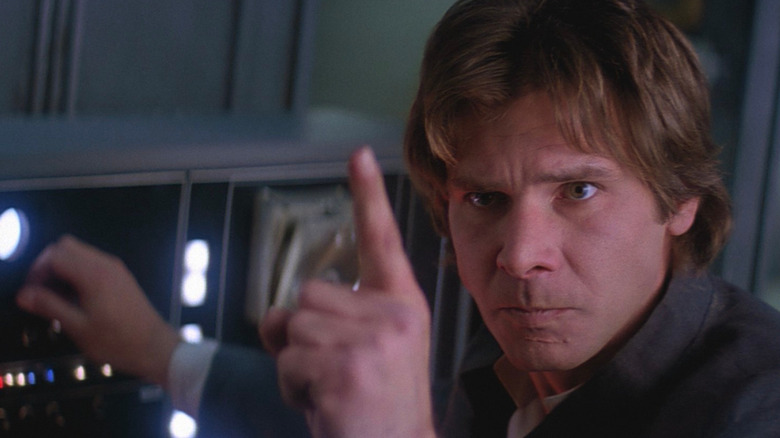
The Empire Strikes Back Scene You Probably Didn't Know Was Improvised

by Lyvie Scott
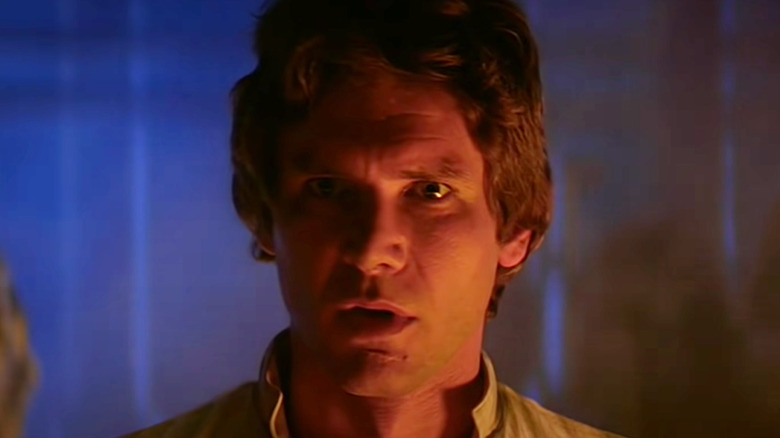
pdir="ltr">"StarWars"isasmuchalovestoryasitisafairytaleaboutlaserswordsinspace.ThelovecoursingthroughGeorgeLucas'sprawlingdynastyisn'talwaystheromantickind,butHanSoloandLeiaOrgana'sromanceisarguablytheheartoftheoriginaltrilogy.Theiriconicexchangeinahref="https://www.slashfilm.com/58286/the-daily-stream-hey-guys-you-ever-see-that-really-old-movie-the-empire-strikes-back/">"StarWars:EpisodeV-TheEmpireStrikesBack/a>"—whereLeiablurtsoutherfirst"Iloveyou,"andHanquipsbackwithapainfully-cool"Iknow"beforedescendingintohiscarboniteprison—issecondonlytoDarthVader's"Iamyourfather."It'sbeenparrotedbymanya"StarWars"-lovingcouple,andaffixedtocountless"StarWars"memorabilia(officialorotherwise),whichiswhyit'sstillsurprisingthatHan'spitchperfectresponsewasn'talwayssuchasurething./p>p>The"EmpireStrikesBack"setwasn'tnearlyastroubledassomeoftheahref="https://www.slashfilm.com/75786/phil-lord-says-solo-a-star-wars-story-was-a-valuable-learning-experience/">morerecent"StarWars"productions/a>,buttherewasstillafairamountofconflictsurroundingthescript.ItwasinitiallypennedbyLeighBrackett(of"TheBigSleep"and"TheLongGoodbye"fame),butlaterrewrittenbyLucasand"StarWars"luckycharmLawrenceKasdan.Andwhilethatscript servesasatextbookexampleofsequelwritingatitsfinest,HanandLeia'sscenesinparticularenduredafewsignificantchanges./p>
How "I Know" Came To Be

pdir="ltr">HanandLeia'sfatefulfarewellisabitdifferentintheoriginalscript.Leiaem>does/em>say"Iloveyou,"alongwith"Icouldn'ttellyoubefore,butit'strue."Hanrespondswith"Justrememberthat,'causeI'llbeback,"alinethatdidn'treallyworkatall.Inahref="https://www.youtube.com/watch?v=U4xdWpo4bh8">a211interviewwithJonFavreau/a>,HarrisonFordconfirmedthatLucashadarguedforasimpler"Iloveyoutoo,"whichfelttepidatbest,grosslyoutofcharacteratworst:/p>blockquote>pdir="ltr">"Ithoughtitwasalostopportunity.Thischaracterhasneverbehavedsounabashedlyemotionalandconventionalbefore...Youwantyourbadassestobeabadasstilltheend.Youwantthemtogodownthewaytheylived."/p>/blockquote>pdir="ltr">IrvinKershner,whohadsteppedintodirectwhileahref="https://www.slashfilm.com/753488/why-francis-ford-coppola-felt-sad-about-george-lucas-star-wars-success/">Lucasproduced/a>,wasnotshyaboutalteringKasdan'sscriptinanycapacity.Thedirectorwasknowntoworkshopsceneswithactorsbefore(andsometimesinthemidstof)shootingthesceneinquestion,andHanandLeia'sfarewellwasnodifferent.KershnerworkedcloselywithFordonthedayofshooting.TheirconversationwasevenrecordedonsetbyunitpublicistAlanArnold,andlatertranscribedforauthorJ.W.Rinzler'sbook"TheMakingofTheEmpireStrikesBack."/p>pdir="ltr">Theirconversationconfirmsthat"Iknow"was,infact,allHarrisonFord."Ifshesays,'Iloveyou,'andIsay,'Iknow,'it'sbeautifulandit'sacceptableandit'sfunny,"theactortoldKershner."Thepointis,I'mnotworriedaboutmyselfanymore;I'mworriedabouther."/p>
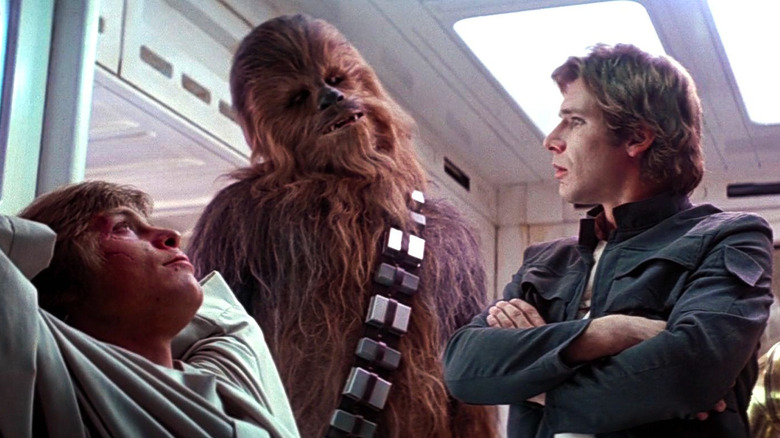
Pushback And Payoff

pdir="ltr">Kershner,obviously,hadnoissuegivingFordsomuchcontrol."Iregardedthatsceneasentirelyhis,"hetoldRinzler,"whichiswhyIgavehimsomuchopportunitytotellmehowhethoughtweshouldtreatit."Unfortunately,noteveryoneinvolvedleftthesetfeelingequallyconsidered./p>pdir="ltr">AccordingtoFord,Lucas"wentapes***"whenhelearnedaboutthechange,thinkingthatthenewline"wouldgetabadlaugh"fromaudiences.Fortunately,Kershnerhadfilmedonetakeoftheline,aswritten,forsafety.Butbefore"Iloveyoutoo"all-outreplaced"Iknow,"LucastestedFord'schoiceatanearlyscreening./p>pdir="ltr">BothFordandKershnerwerepresentatthescreening,andthough"Iknow"em>did/em>getonelaugh,theactorremembersitas"alaughofrecognition."Kershnerfurtherrecountedthefanreceptionina21interviewwithahref="http://www.vanityfair.com/hollywood/21/1/irvin-kershner">VanityFair/a>:"Peoplecameupandsaidthatisthemostwonderfullineanditworked.SoGeorgedecidednottohavethesecondscreening."/p>pdir="ltr">ThedirectoralsorecalledthatFord'simprov"causedtension"withCarrieFisher,wholaterherselfcommentedonhercostar'soff-the-cuffrewrites."HarrisonFordwasrewritinghisstuffinalltheStarWarsmovies,"Fishertoldahref="http://www.phoenixnewtimes.com/news/carrie-fisher-on-spy-in-the-house-of-me-tinkerbell-and-being-the-movie-industrys-best-script-doctor-663695">ThePhoenixNewTimes/a>in28."Itbecameannoyingbecauseitimpactedmystuff."Itwasn'tuntil"ReturnoftheJedi"thatFisherwouldhavethechancetorewriteherownlines,anditwastherethathercareerasahref="https://www.slashfilm.com/548436/carrie-fisher-script-doctor/">arenownedscriptdoctor/a>firstbegantotakeshape./p>
Read this next: The 19 Greatest Movie Couples Of All Time Ranked

The post The Empire Strikes Back Scene You Probably Didn't Know Was Improvised appeared first on /Film.

23 Feb 22:19

Why Office Space Drove Fox Executives Crazy Before It Was Released

by Travis Yates

Mike Judge's 1999 film "Office Space" was a late bloomer. The workplace comedy is about three frustrated software company employees about to be downsized who hatch a plan to get revenge on their greedy bosses. It offered a biting yet hilarious critique of the modern workplace, but the movie was initially considered a flop, barely covering its $10 million budget at the box office. However, through word of mouth, DVD sales, and rentals, "Office Space" would eventually become a cult classic.

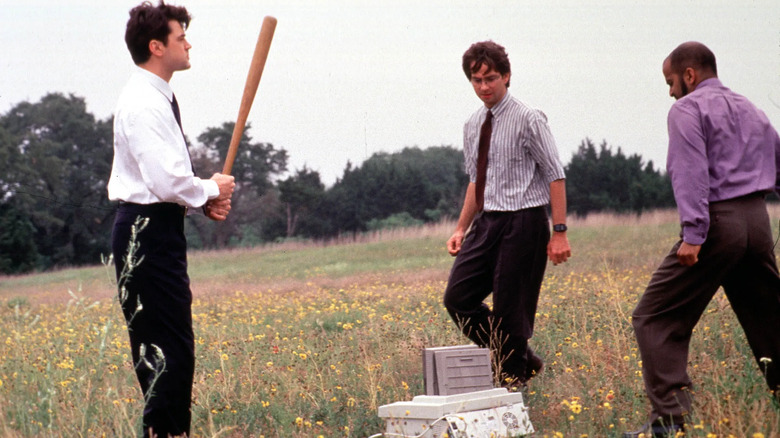
Over the years, it's become clear that audiences feel a deep connection to "Office Space" and its material. From the refusal by Joanna (Jennifer Aniston) to wear the required number of pieces of flair at Chachki's to the cathartic beatdown of the company printer by Peter (Ron Livingston) and friends, audiences bonded with the characters and related to their experiences.

"Office Space" has become the inspiration for well-known quotes and recurring internet memes. But like the tactless boss Bill Lumberg (Gary Cole) from the movie, studio executives at 20th Century Fox didn't have any idea what they had at the time, fighting Mike Judge on his choices every step of the way.

The Studio Didn't Like Much Of Anything

Delayed success could be a theme for Mike Judge, who experienced the same thing with his 2006 film "Idiocracy." The reason seems to be the source material of his movies and the studios' inability to "get it." Movies are all about creating a connection with audiences. Ironically, there seems to be a big disconnect between audiences and the people in charge of the film studios.

In an interview with The AV Club, Judge pointed out that the backgrounds of most movie execs and filmmakers are very different from the everyday person. Judge said:

"It kind of hit me at some point during the process that most people in the film business — not just the executives, the people who make them, too — tend to come from pretty upper-class backgrounds. If they go work a job, it's to have that experience, that sort of thing. After they graduate college, they have time to go visit Europe and take some time off and get their heads together."

Judge went as far as calling the film "a movie that me and a couple of my friends and my brother would think is funny," saying he had to fight the studio for every decision. He added that 20th Century Fox didn't like the soundtrack, the casting, or "much of anything." Once production was finished, however, it didn't take Judge long to realize he might be on to something big.

'OK, This Is It, And It's Not Going To Get Any Better'

Judge recalled a time during post-production on "Office Space" when he heard some of the studio accountants quoting the movie. That's when he realized it was going to resonate with others. These people were the true test audience, not the stuffy studio execs. As Judge notes, studio heads "hadn't had to sit there in a cubicle and go, 'Okay, this is it, and it's not going to get any better. And maybe when I'm 58, I can retire.'"

Despite clashes with the studio, Judge said it was satisfying to make "Office Space" and calls the long-term success of the movie vindicating. In a way, it makes perfect sense that 20th Century Fox executives hated the movie. In a sense, they were the butt of the joke, the reason TPS reports exist (if film studios used them). In a critique of American office life, the film purposely mutes characters' wardrobes so that they blend in with cubicle walls while simultaneously deafening them with the cacophony of their office dwelling. "Corporate Accounts Payable, Nina speaking. Just a moment!" still echoes in my head, and I didn't have to work 40 hours a week at Initech (and, mmm...yeaaaah, maybe even Saturdays).

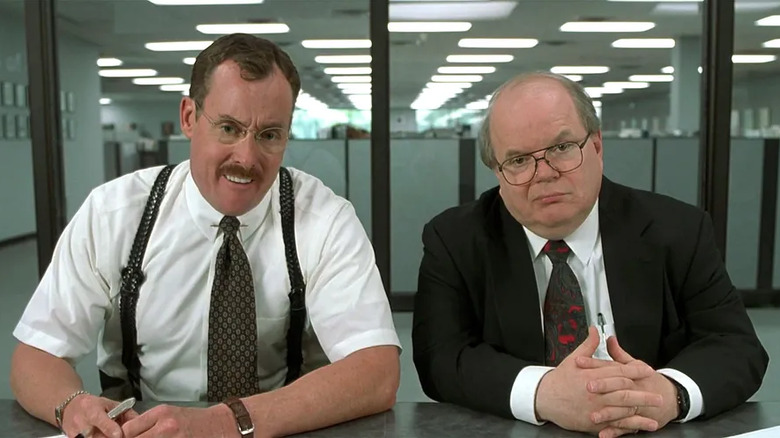
The beauty of "Office Space" is how it captured the mundane, day-to-day life of the modern American office worker. The film was a precursor to NBC's "The Office," the immensely popular workplace mockumentary sitcom that ran for nine seasons. Series creator Greg Daniels (a collaborator with Mike Judge on "King of the Hill") also had to fight to get the sitcom made. If studio execs would finally realize that audiences continue to be fascinated by comedic takes on office life, that'd be greaaaat. If they don't, maybe they should be the ones meeting with the Bobs.

Read this next: The 15 Best '90s Comedies Ranked

The post Why Office Space Drove Fox Executives Crazy Before It Was Released appeared first on /Film.

23 Feb 22:17

George Lucas' Favorite Star Wars Character Is About As George Lucas As It Gets

by Joshua Meyer

Everyone has their own favorite "Star Wars" character, be it Grogu — the child formerly known as Baby Yoda, who became a viral sensation and parade balloon thanks to "The Mandalorian" — or any one of a galaxy full of other aliens, droids, and Jedi. As "Star Wars" characters go, the American Film Institute is partial to Darth Vader, Han Solo, and Obi-Wan Kenobi, all of whom ranked on its list of the greatest movie heroes and villains of all time. Meanwhile, some of here at /Film (raises hand) are unabashed Luke Skywalker fans and will defend him to our dying day, whiny "New Hope" voice and all.

But "Star Wars" creator George Lucas marches to the beat of a different Ewok drum. Though Lucas sold the "Star Wars" franchise to Disney in 2012 and is no longer involved with it, he obviously created it and was instrumental in steering it for the first 35 years of its existence, dating back to the 1977 release of the original "Star Wars" movie, which he wrote and directed. Less popular was the prequel trilogy that he began in 1999 with "Star Wars: Episode I – The Phantom Menace." In a poll we conducted asking fans to choose the best "Star Wars" movie, only one of the prequel films, "Revenge of the Sith," even ranked (coming in dead last, at that).

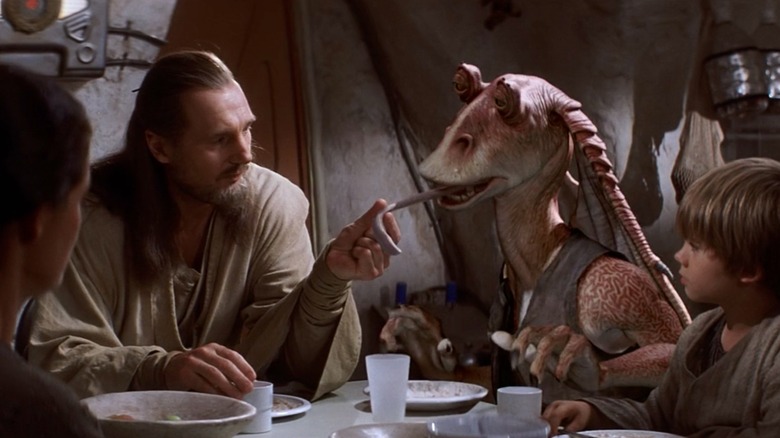
Though Disney's sequel films now bear the brunt of online fan disgruntlement, much of that was aimed for years at Lucas, his prequels, and actors like Ahmed Best, who portrayed the CG character, Jar Jar Binks. Maybe this is why Lucas, the defiant '70s Movie Brat turned Lucasfilm mogul, has stuck to his guns and named Jar Jar as his favorite "Star Wars" character.

'Of Course Jar Jar Is My Favorite Character'

At "Star Wars" Celebration in 2019, Lucas recorded a video message for "The Phantom Menace" 20th anniversary panel, where he said (via Indiewire):

"Thank you for coming to the Celebration. ['The Phantom Menace'] is one of my favorite movies and of course Jar Jar is my favorite character. Ahmed [Best], you did a fantastic job. It was very, very hard."

Whatever you think of Jar Jar, it was nice to see Lucas make a public show of support for Best, who revealed the year before that he had contemplated suicide due to the media backlash he received over his association with the character.

When Lucas was inducted as a Disney Legend at the D23 Expo in 2015, he also revealed that the Disney character Goofy was the inspiration for Jar Jar. You can see the resemblance in those floppy ears of his. It makes it a little bit harder to hate on the gangly Gungan (unless you also want to hate on Goofy ... in which case, are you human?!)

Around the time Jar Jar first showed up back in 1999, some fans started to shift in their theater seats and think, "I've got a bad feeling about this." His role was greatly reduced after "The Phantom Menace," but there's an old Reddit theory — which Best has embraced — that Jar Jar was actually a Sith masquerading as a clumsy fool the whole time.

As the theory goes, Jar Jar was meant to be an inversion of Yoda: his shtick would be annoying at first, but then at some point, the "Star Wars" prequels would drop the bombshell that he was the evil mastermind behind everything. Maybe this is why he's the one who proposes the Galactic Senate give emergency powers to Supreme Chancellor Palpatine, thereby paving the way for the Emperor's rise to power.

For some fans, this fascinating bit of revisionism might cast Jar Jar in a better light. Look into his unsettling, reptilian yellow eyes. Don't you think there's more to Jar Jar than meets the eye? Is it coincidence or conspiracy that he share the same initials as J.J. Abrams, the director of "The Force Awakens?"

Darth Jar Jar makes everything better.

Read this next: Star Wars Movie Villains Ranked Least To Most Powerful

The post George Lucas' Favorite Star Wars Character is About as George Lucas as It Gets appeared first on /Film.

23 Feb 22:16

Microsoft Defender for Cloud now supports Google Cloud Platform

by Arif Bacchus
23 Feb 22:16

Former Amazon exec Charlie Bell, now at Microsoft, speaks out on multicloud security

by Kip Kniskern
23 Feb 22:09

US Will Cut Russia Off From Tech, Resources If Putin Escalates, US Official Says

by msmash
Russian President Vladimir Putin can do a lot more damage in Ukraine and the United States is prepared to respond by withholding technology and resources if he does, deputy U.S. Deputy Treasury Secretary Wally Adeyemo said on Wednesday. From a report: Such measures were not announced on Tuesday as part of a round of sanctions unveiled by President Joe Biden to punish Putin for recognizing two breakaway regions of Ukraine as independent and deploying troops into the regions to "keep the peace." "President Putin clearly has the ability to do much more than he has done so far," Adeyemo said in an interview with CNBC. In response, the Biden administration could deprive Russia of a vast swath of low- and high-tech U.S. and foreign-made goods, from commercial electronics and computers to semiconductors and aircraft parts, people familiar with the matter have told Reuters. "The key thing that President Putin needs to consider is whether he wants to ensure that Russia's economy is able to grow, that he has the resources he needs to be able to project power in the future. If he chooses to invade, what we're telling him very directly, is that we're going to cut that off.

Read more of this story at Slashdot.

23 Feb 22:09

Does Life Flash Before Your Eyes? Brain Scan of Dying Man Suggests It's Possible

by msmash
When Harry Stamper sets off a bomb to save planet Earth in the film Armageddon, his life flashes before his eyes. Now research has revealed tantalising clues that such recall may not be Hollywood hyperbole. From a report: An international team of scientists has reported an unexpected situation in which they recorded the brain activity of an 87-year-old patient as he died. The man had been admitted to a hospital emergency department after a fall that resulted in a bleed in the brain, and subsequently deteriorated. When doctors carried out an electroencephalography (EEG), they had discovered the patient had developed epilepsy. However, during the EEG recordings he had experienced a heart attack and died. The team says analysis of recordings of the 30 seconds before and after the man's heart stopped beating suggest that in his final moments he experienced changes in different types of brain waves, including alpha and gamma brain waves. The study suggests that interactions between different types of brain wave continue after the blood stops flowing in the brain. But, the researchers add, it also raises an intriguing possibility. "Given that cross-coupling between alpha and gamma activity is involved in cognitive processes and memory recall in healthy subjects, it is intriguing to speculate that such activity could support a last 'recall of life' that may take place in the near-death state," the team writes in the journal Frontiers in Ageing Neuroscience. However, the findings are based on the recordings from just one person, and the researchers urge caution, noting among other factors that traumatic brain injuries and white matter damage can affect brain waves, while activity of networks in the brain can be affected by anticonvulsant medication such as that given to the patient. Nonetheless, the researchers say the results could have important implications.

Read more of this story at Slashdot.

23 Feb 22:08

Dying person's brain scan suggests possibility that life really does flash before your eyes before death

by David Pescovitz

An 87-year-old man was undergoing an electroencephalography (EEG) when he suffered a heart attack and died. According to an international team of researchers, the brain scans recorded in the 30 seconds before and after his death revealed very unexpected brain activity that could possibly indicate that his life flashed before his eyes, as the saying goes. — Read the rest

23 Feb 22:06

FreeDOS, the open-source MS-DOS clone, has a new update available

by Corbin Davenport

Microsoft Disk Operating System (MS-DOS) and its competitors reigned supreme in the early days of the IBM PC-compatibles, throughout the 1980s and early 1990s, before Microsoft Windows started to catch on. Even though Microsoft stopped updating MS-DOS decades ago, the FreeDOS project has been keeping the dream alive, and now a brand new update is available.

The FreeDOS project is led by founder Jim Hall, and combines an open-source kernel and command prompt with a variety of third-party software. You can run a barebones install on just about any x86 PC ever made, including early IBM PC clones with Intel 8086 processors, but it also works on most modern computers as well. The previous update, version 1.2, was released in December 2016.

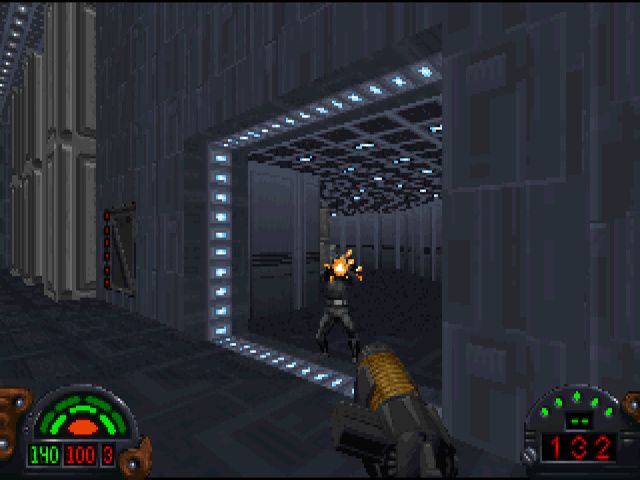
Command prompt Dark Forces screenshot

FreeDOS 1.3 was released on Sunday, with an updated FreeCOM command line (the main terminal-like interface), FAT32 partition support for old 8086 PCs, an improved floppy disk edition, easier networking, new programs and games, a better installer, and more. Just like previous releases, there are multiple editions available depending on what installation media your PC or virtual machine supports — check out the update report for everything included in each edition.

The FreeDOS project has been ongoing since 1994, when Microsoft announced it wouldn’t sell or support MS-DOS as a separate product anymore (Windows ME, the last version of Windows to use an MS-DOS core, dropped out of support at the end of 2003). FreeDOS has nearly-perfect support for games and applications created for MS-DOS, which includes most PC software released in late 1980s and 1990s, including Microsoft Windows 3.1.

Emulators like DOSBox remain popular for running run DOS software on modern computers, but FreeDOS can be run inside a virtual machine, and also works on most PCs that were originally designed for MS-DOS. It’s keeping DOS alive without proprietary code, which is definitely an impressive achievement.

Source: FreeDOS

The post FreeDOS, the open-source MS-DOS clone, has a new update available appeared first on xda-developers.

23 Feb 22:01

Why John Carpenter Doesn't Watch A Lot Of Modern Horror Movies

by Travis Yates

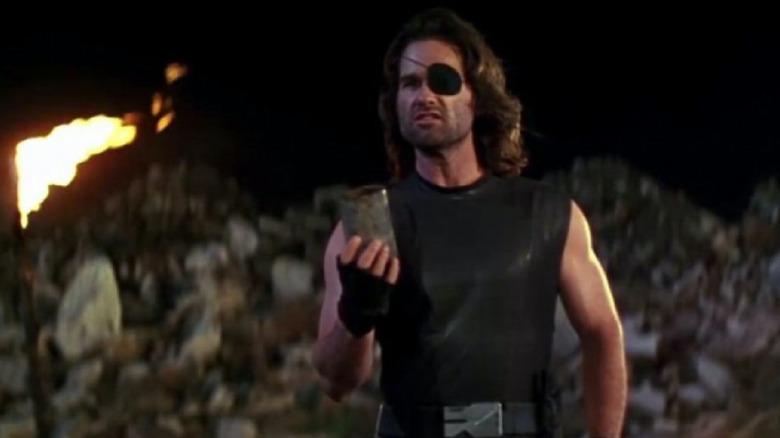
John Carpenter is often celebrated for his contributions to the horror genre, but it shouldn't go unnoticed that he is quite versatile as a filmmaker. In addition to the "Halloween" franchise and a slate of horror films including "The Fog" and "In the Mouth of Madness," Carpenter is also known for notable action films such as "Escape From New York" and "Assault on Precinct 13." You could argue that "The Thing" and "They Live" are as relevant today in the midst of a global pandemic and political strife as they were the day they were made. However, it is the horror genre where Carpenter's signature style comes through.

Carpenter's films are clinics in tension-building, using point-of-view shots -- such as the first shot of "Halloween," which takes us through Michael Myers' childhood home -- and Steadicam tracking shots to give us a sense of the space his characters occupy. But it might surprise many to find out that the filmmaker, often referred to as the "Master of Horror," no longer watches a lot of horror movies.

'There Are Just So Many Of Them'

John Carpenter is the most notable horror filmmaker to emerge from the "film brats" of the New Hollywood movement in the late 1960s and 1970s. The "film brat" isn't defined by notoriety, but rather how they came into their craft. Rather than come up through the studio system like most filmmakers of the past, the "film brats" learned about film by watching film and honed their skills at newly formed cinema programs at universities across the country. Carpenter was no different -- he attended the USC School of Cinematic Arts, where his first student film shared a bit of DNA with the eventual "Halloween" franchise. But these days, his viewing habits have changed a little.

Just after Carpenter's 70th birthday, Rotten Tomatoes interviewed the legendary filmmaker. When asked about his viewing habits, Carpenter said:

"I get to catch up on some of the mainstream stuff. There are so many horror films being made at all sorts of levels. There are just so many of them. And I'm sure a bunch of them are really good. I just don't take the time to find out."

Ironically, the current horror landscape Carpenter helped create is now producing so much content that there's essentially too much to watch. After all, he drew up the blueprint for success with the 1978 low-budget "Halloween." The film would become one of the most successful independent films of all time, grossing more than $47 million on just a $325,000 budget, according to Box Office Mojo. The film inspired a spate of "supernatural" killers and a sub-genre of holiday-themed serial killer films such as "Friday the 13th," "Silent Night, Deadly Night," and "My Bloody Valentine."

But just because he isn't watching as much doesn't mean he hasn't stayed busy.

What Exactly Has Carpenter Been Doing?

Carpenter's contributions to the horror landscape might only be matched by his impact on how film scores are developed. As Spin notes, his style of complex synthesized scores created a new genre in film composition. Music has been much of his focus since taking a step back from the business of making movies. In fact, it's become a family affair. Carpenter has a band comprised of his son Cody and his godson Daniel Davies, who is the son of The Kinks guitarist Dave Davies. Since 2015, the trio released three studio albums, "Lost Themes I-III," which are synth-heavy scores for non-existent movies. They've also gone on tour and re-recorded some of Carpenter's classic soundtracks.


If it sounds ambitions for a 74-year old, don't worry, Carpenter is also finding time to relax. He says he is excited about the new storytelling art form of video games and cites "Fallout 76" (of course) as one of his favorites. Carpenter even took to Twitter to praise "Assassin's Creed Valhalla."

And though he doesn't watch many horror movies anymore, Carpenter believes scary movies will be around for a long time. He explained to Esquire how the genre is fed by our fears, saying:

"Right from the beginning, from the early Universal horror movies—they were there during the Depression. People flocked to them. Horror is always going to be with us."

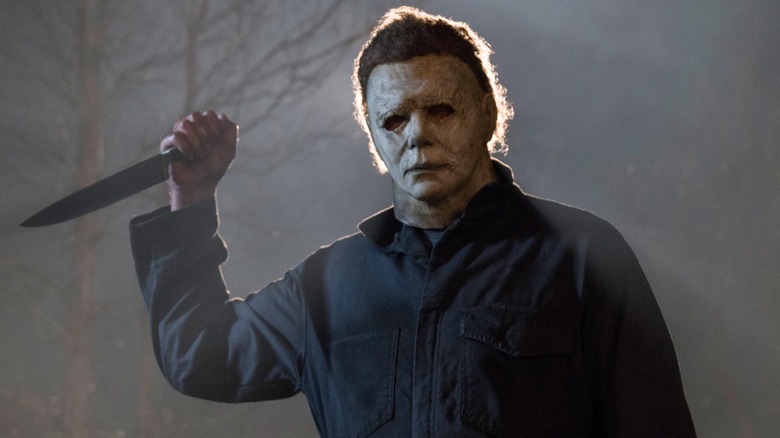
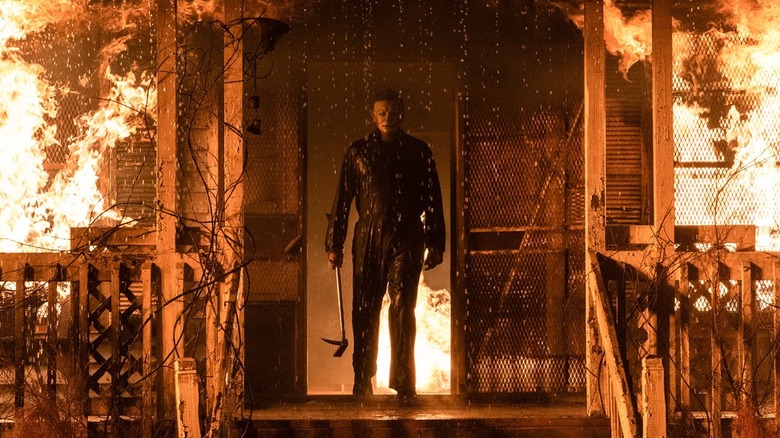
Carpenter returned to his roots in 2018 by getting involved with the first "Halloween" film since directing the 1981 sequel. He composed the score for director David Gordon Green's movie and served as executive producer/creative consultant. Though Carpenter wasn't involved in the most recent iteration of the franchise, 2021's "Halloween Kills," Green calls the film a "love letter to John Carpenter."

It is hard to guess what's next for John Carpenter. It could be any number of things -- maybe Blumhouse could try lure him back out of retirement -- but one thing he probably won't be doing any time soon is catching up on all the modern horror movies he's missed.

Read this next: The Horror Movies We Can't Wait To See In 2022

The post Why John Carpenter Doesn't Watch a Lot of Modern Horror Movies appeared first on /Film.

23 Feb 11:54

Behind the Stalkerware Network Spilling the Private Phone Data of Thousands

by BeauHD
An anonymous reader quotes a report from TechCrunch, written by security editor Zack Whittaker: Consumer-grade spyware is often sold under the guise of child monitoring software, but also goes by the term "stalkerware" for its ability to track and monitor other people or spouses without their consent. Stalkerware apps are installed surreptitiously by someone with physical access to a person's phone and are hidden from home screens, but will silently and continually upload call records, text messages, photos, browsing history, precise location data and call recordings from the phone without the owner's knowledge. Many of these spyware apps are built for Android, since it's easier to plant a malicious app than on iPhones, which have tighter restrictions on what kind of apps can be installed and what data can be accessed. Last October, TechCrunch revealed a consumer-grade spyware security issue that's putting the private phone data, messages and locations of hundreds of thousands of people, including Americans, at risk. But in this case it's not just one spyware app exposing people's phone data. It's an entire fleet of Android spyware apps that share the same security vulnerability. On the front line of the operation is a collection of white-label Android spyware apps that continuously collect the contents of a person's phone, each with custom branding, and fronted by identical websites with U.S. corporate personas that offer cover by obfuscating links to its true operator. Behind the apps is a server infrastructure controlled by the operator, which is known to TechCrunch as a Vietnam-based company called 1Byte. TechCrunch found nine nearly identical spyware apps that presented with distinctly different branding, some with more obscure names than others: Copy9, MxSpy, TheTruthSpy, iSpyoo, SecondClone, TheSpyApp, ExactSpy, FoneTracker and GuestSpy. Other than their names, the spyware apps have practically identical features under the hood, and even the same user interface for setting up the spyware. Once installed, each app allows the person who planted the spyware access to a web dashboard for viewing the victim's phone data in real time -- their messages, contacts, location, photos and more. Much like the apps, each dashboard is a clone of the same web software. And, when TechCrunch analyzed the apps' network traffic, we found the apps all contact the same server infrastructure. But because the nine apps share the same code, web dashboards and the same infrastructure, they also share the same vulnerability. The vulnerability in question is known as an insecure direct object reference, or IDOR, a class of bug that exposes files or data on a server because of sub-par, or no, security controls in place. It's similar to needing a key to unlock your mailbox, but that key can also unlock every other mailbox in your neighborhood. IDORs are one of the most common kinds of vulnerability [...]. But shoddy coding didn't just expose the private phone data of ordinary people. The entire spyware infrastructure is riddled with bugs that reveal more details about the operation itself. It's how we came to learn that data on some 400,000 devices -- though perhaps more -- have been compromised by the operation. Shoddy coding also led to the exposure of personal information about its affiliates who bring in new paying customers, information that they presumably expected to be private; even the operators themselves. After emailing 1Byte with details of the security vulnerability, the email address was shut down along with "at least two of the branded spyware apps," according to TechCrunch. "That leaves us here. Without a fix, or intervention from the web host, TechCrunch cannot disclose more about the security vulnerability -- even if it's the result of bad actors themselves -- because of the risk it poses to the hundreds of thousands of people whose phones have been unknowingly compromised by this spyware." In a separate report, security editor Zack Whittaker explains how one can remove common consumer-grade spyware.

Read more of this story at Slashdot.

23 Feb 11:52

The Pam-Only Episode Of Pam & Tommy Is A Series High Point

by Valerie Ettenhofer

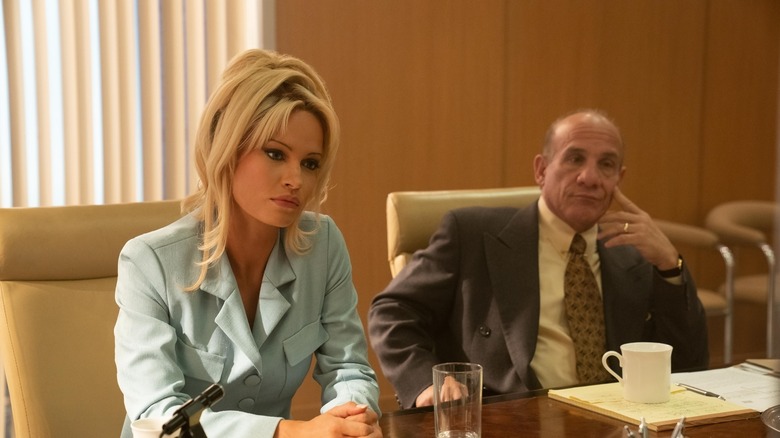
After spending five episodes bringing its central relationship — and sex scandal — to life, "Pam & Tommy" takes a step back this week to give us some insight into the show's much-discussed central figure. Pamela Anderson, as imagined by episode writer Sarah Gubbins and embodied by Lily James, takes center stage in an episode about the deposition in the Lee family's case against Penthouse. The resulting half-hour is one of the series' best.

Without the presence of the show's other, more controversial constellation points, Tommy and Rand, viewers don't need to re-examine their moral understanding of the story with every new scene. As enjoyable and thoughtful as "Pam & Tommy" is, the series' willingness to empathize with all its central figures can make it tough to watch without thinking about what's been left out so far, like any hint of Lee's abuse of Anderson

By focusing entirely on Pamela, we can see the story at its most pure; we can't know that everything in this episode is true, but its themes ring true for women everywhere. "Pamela in Wonderland" lets us get lost in a flashback of Pam at her most carefree — only to be yanked back down to earth by the nasty, misogynist realities of her present-day situation.

A Star Is Born (In Vancouver)

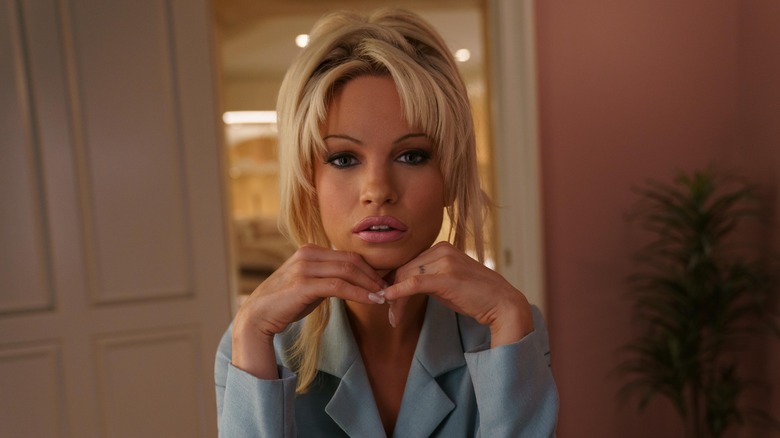
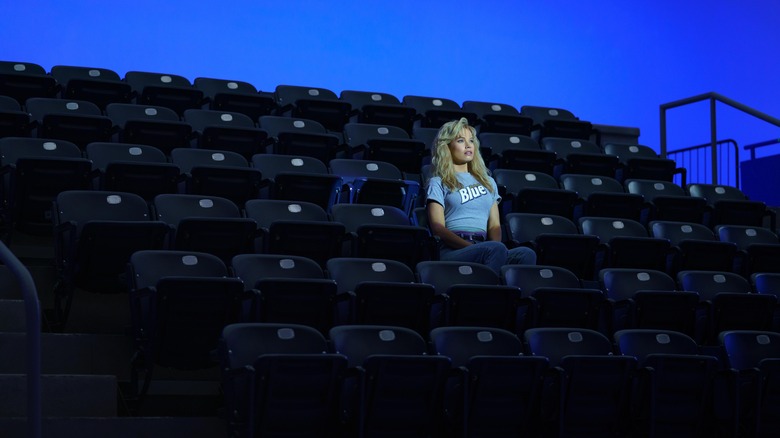
The episode opens with Pam getting ready for her deposition. She wears a baby blue dress suit and her hair and makeup are impeccable as always. Episode director Hannah Fidell quickly transitions to another significant moment for which Pam got glammed up — a football game seven years earlier. In this flashback, Pam's back in Vancouver, working as a waitress. On this particular night, she's out with her obviously crappy boyfriend, and gets singled out in the audience and featured on the Jumbotron. This doesn't seem like a moment that would change lives, but it turns out to be her big break, as a man approaches her soon after and asks her to model.

Soon after, Pam gets a call from Playboy. She's giddy about it, but her boyfriend doesn't take it well, slut-shaming her in an argument that ends with him throwing a knick-knack at her head. She dodges and is out the door before he knows it, headed to America. I'm most stricken here by how unsurprised Pamela is by the chauvinist tone of his abuse; it's clear that male jealousy and cruelty have followed her around for as long as she's been called beautiful. Even at the tender age of 22, she's already learned to shrug it off and focus on her dreams and goals with a smile.

This Just In: Lawyers Are Gross

The episode fast-forwards back to 1996, where it's clear that Pam's optimism and people-pleasing spirit both make her an easy target for the underhanded techniques of the lawyers in the Penthouse case. The deposition scenes play out like an interrogation. They don't quite reach the manipulative, terrifying heights of the Monica Lewinsky hotel scenes in "American Crime Story: Impeachment," but they come close.

The legal team's strategy is clear: paint Pamela as a sex, money, and attention-hungry whore by any means necessary. They do this by pursuing intrusive and deeply irrelevant lines of questioning, setting the tone with a question about how old Pamela was when she first publicly exposed her genitals. They ask her if Tommy has ever paid for sex, and if she's ever been paid for sex. They imply that she leaked the tape herself, and in a move that truly deserves to win the sleazeball lawyer gold metal, they bust out a copy of the honeymoon tape and force Pamela to identify the people and places within it.

This deposition comes across as an absolute nightmare to me, and not just because of Pamela's specific mistreatment. It doubles as a broad indictment of a real culture that punishes sexually confident women without understanding them, and of a reductive patriarchal viewpoint that fails to see sex as anything but salacious. It would be one thing for the lawyers to use this as an underhanded tactic while knowing that it's BS, but they seem to buy into it themselves. The man who asks Pamela why she would make a sex tape if she didn't mean for other people to see it says so earnestly, with no thought to concepts like intimacy, pleasure, or shame-free documentation of memories. When he asks Pam if she considers posing nude a sex act, she almost has to laugh.

Pam's Exhilarating First Shoot

The episode's centerpiece is a lively, lovely flashback to Pamela's first Playboy shoot. It's one of the show's best scenes, in large part because it's one of the only times we see her in her element and with some measure of power. She's nervous when she gets to the mansion, but is whisked away to be pampered in hair and makeup. We can tell that the lawyers' concept of a nude photoshoot is way off by the fact that Pam's mom is here, giving her encouragement as she prepares.

When it comes time for the shoot, it's the least exploitative set-up imaginable. She asks the photographer where they're going to shoot, but she doesn't mean locations. She giggles apprehensively as she gestures towards her own body. "Never fear, dear," he answers jovially. "This is Playboy, not Penthouse: we like to keep things classy here. Remember to have fun!" He also lets her know they'll do whatever she's most comfortable with. I wasn't sure which direction this scene would go in when it started, but the photographer's answer is all the reassurance I need, and Pam seems to agree.

Pam is a natural. As she poses in a montage of outfits and set-ups, Fidell captures the character with a sense of dynamic joy. Anti-pornography feminists, look away for this part: this is pure empowerment. Pam's having so much fun that when the shoot finally ends, she seems disappointed. There's a sense of agency here that's missing in so many of the Pam scenes we've seen so far, which usually show her trapped within the narrow purview of the men whose dirty minds rule her life in the wake of the tape. This is Pam at her most free. When the shoot ends, everyone claps, well aware of the rare talent they've just witnessed.

Fact Check: Was Hugh Hefner Really This Nice?

As a series based on reality, "Pam & Tommy" gets more complicated with each new figure it introduces. This week, its central complication comes in the form of Hugh Hefner (Mike Seely, even more perfectly cast than the actor playing Leno), the famous Playboy founder known for his harem of beautiful young girlfriends. Hefner, too, is kind to Pamela here. He takes her aside to privately express his seemingly platonic admiration for her. He also gives her some amazing life advice, telling her not to forget that her personal worth is different than the dollar values people will try to put on her. He tells Pam that the world will be watching her, and that she'll have to learn to play different versions of herself, but should always remember who she is.

This is beautiful, prescient advice, but the real Hugh Hefner was a much more complex figure than the fairy godfather we see her. By the real-life Pamela Anderson's own account, Hefner was always kind to her. In a now-deleted Instagram video she posted after his death in 2017, she called him the most important person in her life. "Everything anyone loves about me is because you understood me," she said, as reported by Variety. "[You] accepted me and encouraged me to be myself." 

While Pamela may have had overwhelmingly positive interactions with Hefner, his legacy has been complicated since his death, particularly by the release of a docuseries titled "Secrets of Playboy." The series includes a host of allegations against Hefner, detailed in The Washington Post, that make the head of the Playboy Mansion sound manipulative at best, and dangerous and cult-like at worst.

"I'm Sorry We Left Such A Mess."

Though the real Pamela Anderson hasn't spoken ill of Hefner, she has been clear about how disgusting the deposition experience was, and her quote about it creates a stark contrast from her descriptions of her time with Playboy. In the book "Tommyland" (excerpted via Esquire), she says the following about the experience:

It was great sitting through depositions, where old men with crusty white sh*t in the corners of their mouths would hold up pictures of me naked in Playboy and ask why I'd even care that the tape was out there...I couldn't handle it. It got to a point where I could not go to another deposition with these sweaty old guys asking me about my sex life.

The full extent of the lawyers' creepiness becomes clear in the episode's final moments, when they full-court-press Pam about her every decision, motivation, and desire. If she's having sex in a car in the video, wasn't she worried that truckers could see her from their angle above? Doesn't that basically mean she doesn't care who sees her have sex? The questions go on and on, and at a certain point, they become unbearable. Pam retreats to the bathroom, where she vomits.

In the quiet final moments of the episode, we realize that Pam is pregnant again. She seemingly hasn't told anyone in the room — this is one thing happening to her body that she can keep private, for now. She tells her lawyer she wants the depositions to be done. She doesn't cry as she packs up her files; despite these men's best efforts, she's leaving with her dignity intact. Yet despite remaining unapologetic throughout the grueling and invasive process, Pam can't help but revert back to people-pleaser mode at the last moment. The episode ends with her softly telling the maintenance workers, "I'm sorry we left such a mess."

Read this next: 13 Shows Like Manifest You Can Binge Watch Right Now

The post The Pam-Only Episode of Pam & Tommy Is A Series High Point appeared first on /Film.

23 Feb 11:46

The Geekbox: Episode 618

Wherein we discuss Peacemaker, Chrono Cross, EarthBound Beginnings, Mario Strikers: Battle League, Wii Sports, Live A Live, Mario Kart 8, Street Fighter 6, Kirby and the Forgotten Land, Final Fantasy VI Pixel Remaster, and Elden Ring. Starring Ryan Scott, Justin Haywald, and Ryan Higgins.

22 Feb 23:02

Windows 10 and 11 21H2 Data Wiping Tool Leaves User Data On Disk

by BeauHD
Microsoft MVP Rudy Ooms has discovered that the built-in Windows data wiping functions leave user data behind in the latest versions of Windows 10 and Windows 11. "This error applies to both local and remote wiping of PCs running Windows 10 version 21H2 and Windows 11 version 21H2," reports Tom's Hardware. From the report: Ooms first discovered that there were problems with the disk wipe functionality provided by Microsoft when doing a remote wipe via Microsoft Intune system management. However, he has tested several Windows versions and both local and remote wiping over the weekend to compile the following summary table [embedded in the article]. At the bottom of the table you can see that both Wipe and Fresh Start options appear to work as expected in Windows 10 and 11 version 21H1, but are ineffectual in versions 21H2. Ooms installed and tested these four OSes, with local and remote wipe operations, then checked the results. The most common issue was the leaving behind of user data in a folder called Windows.old on the "wiped" or "fresh start" disk. This is despite Microsoft warning users ahead of the action that "This removes all personal and company data and settings from this device." In his blog post, Oooms notes that some users might feel assured that their personal data was always stored on a Bitlocker drive. However, when a device is wiped, Bitlocker is removed, and he discovered that the Windows.old folder contained previously encrypted data, now non-encrypted. It was also noted that OneDrive files, which had been marked as "Always Keep on this device" in Windows previously, remained in Windows.old too. Ooms has kindly put together a PowerShell Script to fix this security blunder by Microsoft. One needs to run the script ahead of wiping/resetting your old device. Hopefully Microsoft will step up and fix this faulty behavior in the coming weeks, so you don't need to remember to run third party scripts.

Read more of this story at Slashdot.

22 Feb 21:54

Biden Says Russia's Actions Are Beginning of an 'Invasion,' Announces Sanctions - CNET

by Carrie Mihalcik
The president said there are over 150,000 Russian troops surrounding Ukraine.
22 Feb 20:29

Hackers Backdoor Unpatched Microsoft SQL Database Servers with Cobalt Strike

by noreply@blogger.com (Ravie Lakshmanan)
Vulnerable internet-facing Microsoft SQL (MS SQL) Servers are being targeted by threat actors as part of a new campaign to deploy the Cobalt Strike adversary simulation tool on compromised hosts. "Attacks that target MS SQL servers include attacks to the environment where its vulnerability has not been patched, brute forcing, and dictionary attack against poorly managed servers," South Korean
22 Feb 20:29

FTA: When the recent COVID-19 wave fueled by the omicron variant hit the U.S., no one expected it would lead to the number of deaths it did. Excluding the WHO, CDC, any competent doctors, and NHS. Subby asks you, who knew COVID could be this complex? [Facepalm]

22 Feb 20:25

Windows 11 will soon warn users if their PC is unsupported

by João Carrasqueira

Users running Windows 11 on unsupported hardware may soon see a warning, based on the latest build released to Insiders in the Dev channel. When opening the Settings app, Windows 11 will let users know if their PC doesn’t meet the minimum requirements to run the OS. However, it won’t stop users from running the OS.

This isn’t entirely unexpected, seeing as Twitter user Albacore had spotted this feature hidden in the previous Windows Insider build, but users are now seeing it on their machines without any hacking, as initially noted by Windows Latest. The warning is also shown next to the Windows Insider watermark on the desktop. Microsoft made no mention of this change in the blog post for Windows 11 build 22557, but this is likely just so users know what to expect.

Windows 11 system requirements warning

Image credit: Albacore (Twitter)

When Microsoft announced the minimum requirements for Windows 11, it caused a bit of a ruckus among Windows users. In addition to doubling the amount of RAM required, the prime issue many had was that Microsoft was limiting compatibility to newer generations of processors, leaving behind tons of machines still in active use. Microsoft later explained that older CPUs experienced system crashes much more frequently, meaning the experience would be less than optimal.

However, while the upgrade was blocked via the typical methods, it’s always been possible to install Windows 11 on unsupported hardware in other ways. You can use the Media Creation Tool, the Upgrade Assistant, or download an ISO to install Windows 11. Of course, that comes with the risk of performance being unstable or unreliable on unsupported hardware. The warning in the Settings app could help users understand the reason behind any issues they might run into, and it’s always possible to go back to Windows 10 if they prefer it.

For now, this warning is only being shown to Insiders running Windows 11 on unsupported hardware, and there’s no indication of when it will come to the general public. It seems like a small enough change that it could be rolled out with a simple cumulative update, but it could come with the next feature update, which is expected later this year.

The post Windows 11 will soon warn users if their PC is unsupported appeared first on xda-developers.

22 Feb 20:24

No Man’s Sky Sentinel 3.82 Update released, full patch notes revealed

by John Papadopoulos

Hello Games has just released a brand new update for No Man’s Sky. According to the release notes, the Sentinel 3.82 Update packs numerous fixes for bugs and glitches. Moreover, it fixes some crashes and introduces a number of navigation optimisations. Going into more details, this patch fixes a number of issues with Sentinel navigation … Continue reading No Man’s Sky Sentinel 3.82 Update released, full patch notes revealed →

The post No Man’s Sky Sentinel 3.82 Update released, full patch notes revealed appeared first on DSOGaming.

22 Feb 20:23

How Quentin Tarantino Cobbled Together Christopher Walken's Famous Pulp Fiction Scene

by Miyako Pleines

There are many memorable moments in Quentin Tarantino's "Pulp Fiction." Royales with cheese. Jules' majestic watch. Jack Rabbit Slim's. Poor, poor Marvin. But one moment that often stands out above all the rest is The Watch Scene. You know the one, where a serious-faced Captain Koons (Christopher Walken) delivers the most impeccable speech to a young Butch Coolidge about the watch that has been passed down by the Coolidge men from generation to generation as a family heirloom that has seen and survived three of America's greatest wars.

At first, it seems like a touching story. "The way your dad looked at it, this watch was your birthright," Captain Koons tells Coolidge, but as he tenderly fondles the timepiece with his fingers, he reveals that the only way Coolidge's father could ensure the watch would make it back to his young son was to hide the watch up his ass for five straight years while he was kept in a POW camp alongside Captain Koons. When Coolidge finally and ironically succumbed to a bad case of dysentery, it was Koons who made the decision to take responsibility for the watch, hiding it up his ass for another two years before he was rescued. Suddenly, you're wondering if that thing has ever been properly cleaned. 

The brilliance of the scene lies in Walken's impeccable comedic ability, but it also gets its power from the deliberate choices Tarantino made while filming various takes. It turns out that watches being hidden up the booty are funny, but only if the build-up to the punchline is properly executed.

The Vocabulary Of Perspective

When you see the watch scene for the first time, at first there is a somberness to it. Captain Koons is a sincere man, here to deliver this precious gift to its rightful heir, ensuring that this piece of the Coolidge family history continues its journey. Sentimentality is strong here, but the scene also resonates with the kind of apathy reserved only for children when they are faced with an adult who is trying to impart their wisdom. This indifference is made real through Tarantino's choice to angle the majority of the shots up at Walken's face, giving the audience the same viewpoint of young Butch peering up at this strange man who he's never met before. It's an effective choice that allows the scene to both linger in its emotion while also leaving room for the humor that we don't yet know is coming.

In an interview for Film Comment, Tarantino talks about how this scene was shot, highlighting his decision to focus on point of view. He says, "I shot maybe 13 or 14 takes of the basic shot that you see in the movie, the kid's point of view. Then I did five or six takes of [Walken] doing it in closeup, and then I just had the little kid."

Throughout each of these takes, Tarantino had Walken deliver the monologue in varying levels of intensity, eventually choosing to use certain takes for specific parts of the story based on the level of sincerity he was going for.

"I could use the more humorous take on the First World War and then the Second World War story where [Walken's] talking about Wake Island, which is more tragic, I took his darkest take, and then for the Vietnam story I took his most irreverent one, which is the funniest."

The result is the iconic scene that has been cemented in cinematic history forever. 

"One of the fun things about making a movie is, there's a whole lot of vocabulary so this scene I'll shoot in one long take, this scene I want to do through forced perspectives, this scene I want to do with very minimal coverage, like the bathroom scene between Bruce Willis and Maria de Medeiros," says Tarantino. And he's absolutely right. This famous scene is effective because Tarantino chose to subtlety fluctuate the tone — or vocabulary — of the scene so that when the ass-tronomical reveal finally occurs, it's that much more, shall I say, explosive.  

Read this next: Horror Roles That Changed Actors Forever

The post How Quentin Tarantino Cobbled Together Christopher Walken's Famous Pulp Fiction Scene appeared first on /Film.

22 Feb 20:23

The Exact Moment In The Suicide Squad That Inspired James Gunn To Make The Peacemaker Series

by Sandy Schaefer

When the news broke that Christopher Smith, AKA Peacemaker (John Cena), from James Gunn's "The Suicide Squad" was getting his own spin-off series (one also written and partly directed by Gunn), reactions were naturally mixed. Sure, the character's violently jingoistic outlook made for a darkly amusing running gag in Gunn's DC Extended Universe movie, but was there enough "there" there to justify giving this particular antihero his own show — least of all after he turned on his teammates to do Amanda Waller's bidding near the end of that film? And why was Peacemaker getting a spin-off before the other, more lovable members of Gunn's Task Force X like Daniela Melchior's Cleo Cazo, AKA Ratcatcher 2? (That's not to say I've given up hope that Gunn is secretly working on a Ratcatcher 2 spin-off, mind you.)

As it turns out, the guy who made the Guardians of the Galaxy household names and directed a heartfelt horror-comedy-romance about a woman and her alien-possessed husband may, in fact, know what he's doing. "Peacemaker" season 1 proved to be a very funny (and very violent) superhero romp that doubled as a nuanced character study, as well as a thoughtful reflection on the troubled times we're living in. For Gunn, it all goes back to a moment during production on "The Suicide Squad" that made him realize a "Peacemaker" series was actually a good idea. As he explained to Vulture:

"There's one really specific moment with me and John that I can trace the origin of this show back to. It's the moment in 'The Suicide Squad' where Peacemaker is holding his gun on Ratcatcher 2 and he's about to kill her. I went into this tight closeup of his eyes. On set, I'm always on the microphone talking over everything while we're shooting. So I'm talking to John on the God Mic about what he's feeling, and I see his eyes switch. I see him go to this incredibly sad, vulnerable place. We realize this character is a guy who's doing something he doesn't want to do at all, but that he's going to do anyway, which is shoot a young girl."

John Cena Has The 'Other Layer'

Far from a stranger to casting wrestlers-turned-actors in his projects, Gunn famously hired Dave Bautista to play Drax the Destroyer in the first "Guardians of the Galaxy" movie at a time when Bautista's dramatic chops were far from a given. Once again, his instincts were right on the money: Bautista has shown his acting skills go well beyond playing burly, intimidating henchmen (although he's great at that, too), and is now regularly working with filmmakers like Denis Villeneuve, Rian Johnson, and M. Night Shyamalan, on top of his ongoing collaborations with Gunn. In his interview with Vulture, Gunn noted that he saw the same thing in Bautista that he saw in Cena when he was filming that especially tense moment from "The Suicide Squad":

"When I saw that moment in him, I knew John was not just a performer who was funny, which is why I hired him, but a guy who had this other layer. At that moment, I knew John had that thing. It's a thing a lot of big actors don't have, and that most wrestlers turned actors don't have. Dave Bautista also has it. That's the reason I hired him for 'Guardians' in the first place. A big part of me wanting to do 'Peacemaker' was to sculpt away all the other stuff, all the juggling and entertaining John does, and focus on that vulnerable sector."

"Peacemaker" has certainly done just that, giving the world the messy, dancing, piano-playing, bisexual superhero we need. It has also provided HBO Max with, reportedly, one of its most-watched Original series to date, with a second season now officially on the way. That's all the more welcome news after season 1 and keeps hope alive that Gunn isn't done expanding the "Suicide Squad" corner of the DCEU just yet.

The first season of "Peacemaker" is now streaming on HBO Max.

Read this next: Joker's Wild: Ranking The Cinematic Versions Of The Clown Prince Of Crime

The post The Exact Moment in The Suicide Squad That Inspired James Gunn to Make The Peacemaker Series appeared first on /Film.

22 Feb 20:22

If you've had your COVID-19 booster you may not need another shot for years

by Jason Weisberger

The New York Times is reporting that a number of studies have found T-cell response after vaccination with any of the 4 main COVID-19 vaccines should present a strong defense against the disease and its variants for years.

New York Times:

Specialized immune cells called T cells produced after immunization by four brands of Covid vaccine — Pfizer-BioNTech, Moderna, Johnson & Johnson and Novavax — are about 80 percent as powerful against Omicron as other variants, the research found.

Read the rest
22 Feb 20:22

Magpies Have Outwitted Scientists by Helping Each Other Remove Tracking Devices

by msmash
An anonymous reader shares a report: When we attached tiny, backpack-like tracking devices to five Australian magpies for a pilot study, we didn't expect to discover an entirely new social behaviour rarely seen in birds. Our goal was to learn more about the movement and social dynamics of these highly intelligent birds, and to test these new, durable and reusable devices. Instead, the birds outsmarted us. As our new research paper explains, the magpies began showing evidence of cooperative "rescue" behaviour to help each other remove the tracker. While we're familiar with magpies being intelligent and social creatures, this was the first instance we knew of that showed this type of seemingly altruistic behaviour: helping another member of the group without getting an immediate, tangible reward. As academic scientists, we're accustomed to experiments going awry in one way or another. Expired substances, failing equipment, contaminated samples, an unplanned power outage -- these can all set back months (or even years) of carefully planned research. For those of us who study animals, and especially behaviour, unpredictability is part of the job description. This is the reason we often require pilot studies.

Read more of this story at Slashdot.