Shared posts

22 Feb 20:20

SiN

by Ryan Oliver

It is not impossible to imagine that the year 2037 will be a time when public police forces are replaced by private contractors, body-altering drugs are running rampant, and Half-Life 3 is still not yet released. This is (mostly) the world of SiN, a game that will live forever in shadow and comparison to the original Half-Life.  Released 10 days before Gordon Freeman’s adventure and the Source Engine would change the FPS genre forever, SiN was an innovative but buggy mess on November 9th, 1998, when it launched on the PC in North America.

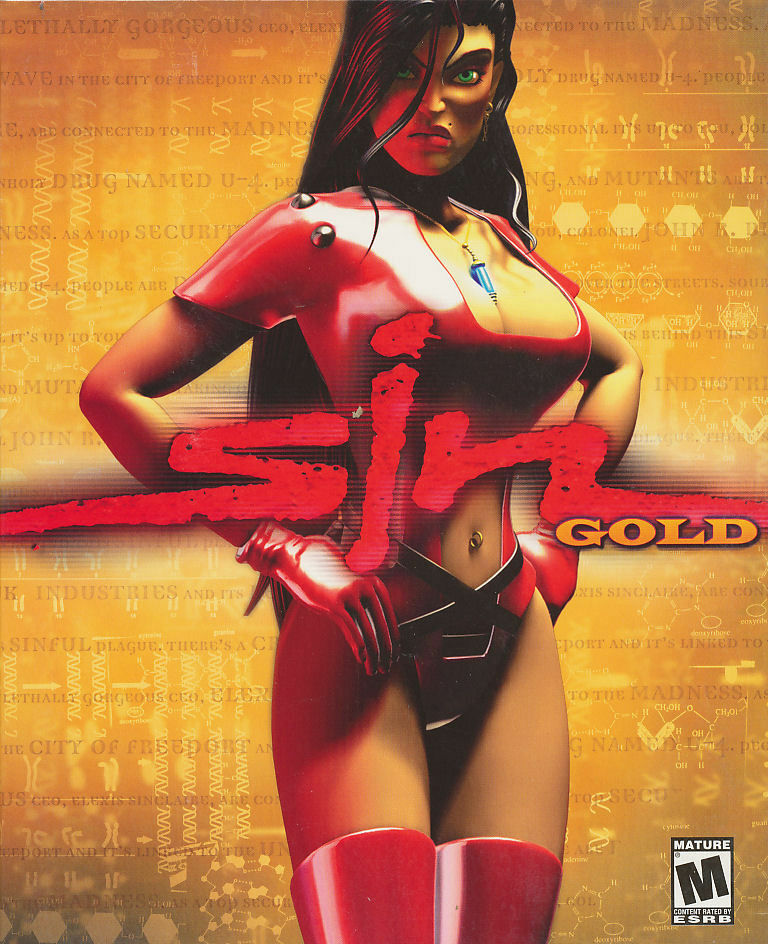
SiN suffered as a result of two different decisions made in its development.  Originally scheduled for release in spring of 1998 and built on the original Quake engine, SiN was reworked and redeveloped for the Quake II engine around four months before its planned original release.  That, combined with a rush to get it to market before Half-Life led to game-breaking bugs which hurt its initial launch.  It would, however, be patched, boosted and supported for the twenty years, from the expansion (Wages of SiN), to an episodic sequel (Emergence), to an anime (SiN: The Movie), and then re-released for digital distribution (SiN Gold) along with an impending remaster, ensuring SiN remains living whether it deserves to or not.

SiN was developed by Ritual Entertainment, their first full release after having developed a mission pack for Quake.  Published by Activision, SiN would be Ritual’s signature project. The company would go on to develop a few other projects including Heavy Metal: F.A.K.K 2 and Legacy of Kain: DefianceSiN sold well and fueled the release of the first episode of the hopeful episodic series of sequels.  However in 2006 Ritual was sold to MumboJumbo and future episodes of the SiN series died with that sale.

SiN is a product of the late 1990s in a way that very few games capture so honestly.  From the opening cutscene which features a random 90’s word jumble starting with the words “Sexy Evil Temptress”, you are exposed to world-building that combines the male-centered aggression of Nu Metal with the petulance of the “Attitude Era”. While its story and characters are the post child for the late 90’s clichés, the truth is, SiN is a very fun game to play.  It is an innovative moment in FPS growth. Your mileage will vary on how well you can handle that mix and whether it will be worth your time.

You are John Blade, working for Hard Corp in the town of Freeport. John is a Duke Nukem type, complete with constant one-liners.  More brawn than brains. Fortunately, he’s got hacker JC to cover the brain part, a constant ‘in ear’ story companion to give John an audience for his banter and a nerd for his hacking puzzles.

And then there is Elexis Sinclair, or “bitch” as John Blade constantly refers to her. Never have you seen a 90s FPS villain so clearly designed by a group of men and their marketing team. Elexis constantly drops sexual innuendo into every sentence, from basic commands given to subordinates to the end game cutscene. Her backstory and eventual trajectory through SiN Episodes and the films is fleshed out (no pun intended), if not reflected in the way she is actually portrayed or acted in this game.  She is a doctor “intent on changing the world and using her considerable beauty to do so”.  She was featured on the box and a majority of the promotion for the release of SiN. John Blade is a forgettable action hero that a player rarely sees more than his hands.  Elexis, as tone-deaf as she is designed, was the true star of SiN and the face of the franchise.

While the coating may be ripe with 90s clichés, the gameplay and level design is anything but standard for the time, and along with Half-Life, ushered in a new way of interacting with first person shooters. Even today many of SiN’s ideas are fresh in an FPS and are the ‘first’ incorporation of ideas that would increasingly become staples of the genre.  These ideas are just that; “firsts”, often early iterations on ideas that would become more commonplace in future games.

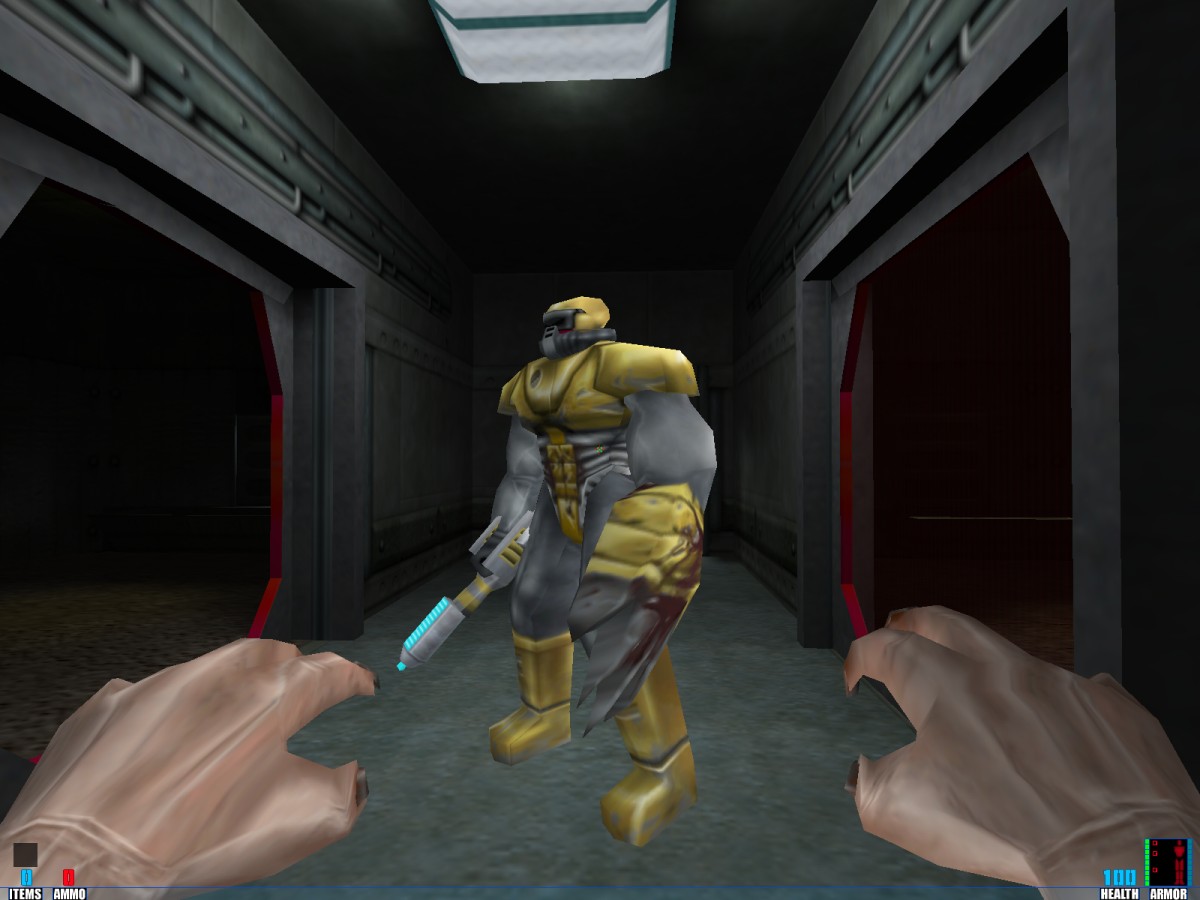
Armor pickups are collected in three parts, torso, head and legs.  Damage is taken to each section of armor depending on the enemy aim.  It’s a neat idea, though the truth is in the heat of battle, one rarely notices which section of armor is being hit, nor what type of armor you are picking up. By the same token, enemies are more than just one large hitbox.  A shot to the arm can cause an enemy to drop their weapon, a shot to the leg may have them limping.  Headshots are often definitive kills and each weapon affects both the look and impacts of the damage taken.  Shoot an enemy too much in the torso and he will not drop torso armor.  These combine to promise a more dynamic combat than a standard FPS creating options beyond just “shoot” at everything that moves, but in practice, it’s hard to think of a different strategy when a new enemy pops out.

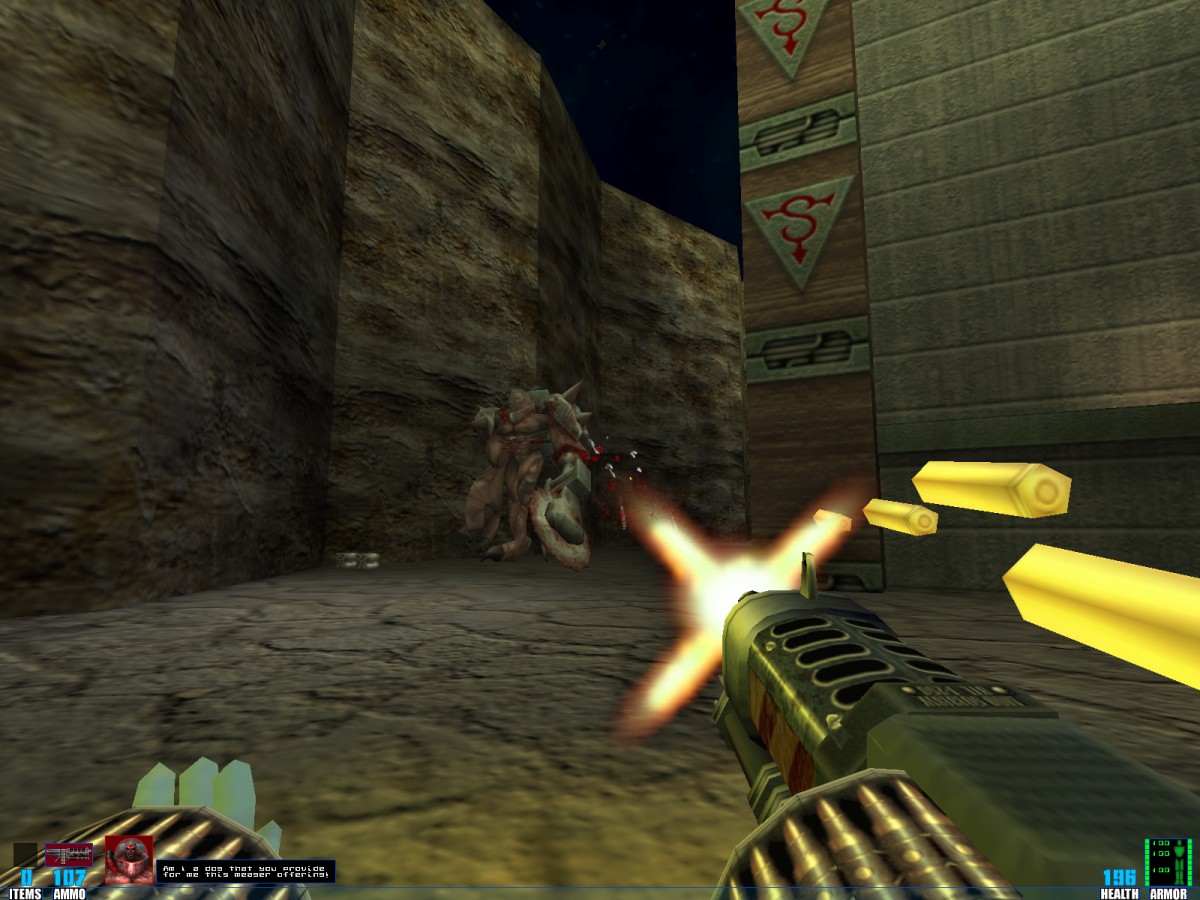
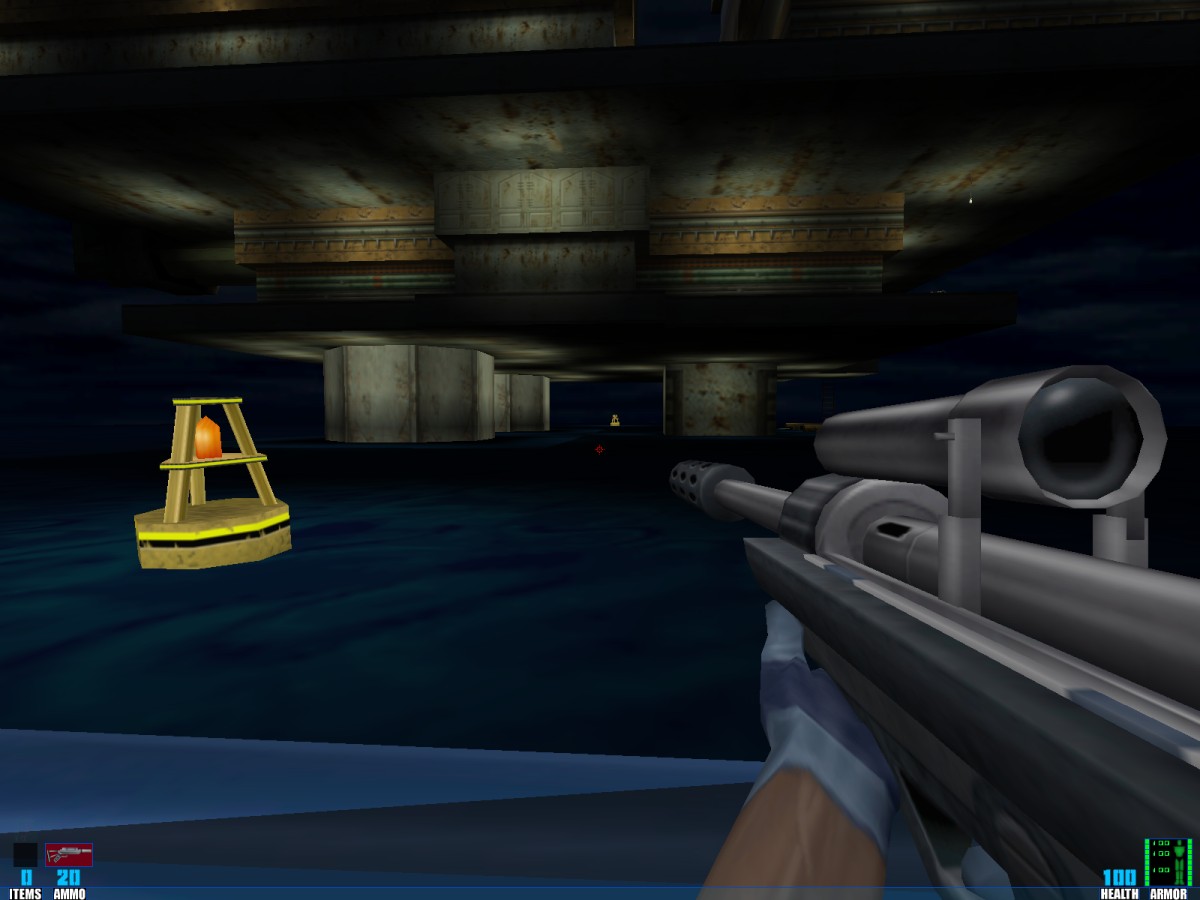
Weapons are fairly standard FPS fare, everything from a pistol to a chaingun, you’ve seen it all before. Underwater levels add a speargun, and there are spider mines available which are especially fun in multiplayer.  The Quantum Destabilizer is the ultimate weapon, formed by collecting a series of parts throughout the game.  To increase the power of its impact, the player holds down the ‘fire’ button, but hold it too long and the weapon will explode taking you with it.  Unfortunately ammo for most weapons is pretty hard to come by.  Right from the start you’ll find yourself running out of ammo for the most basic weapons and needing to resort to fists.

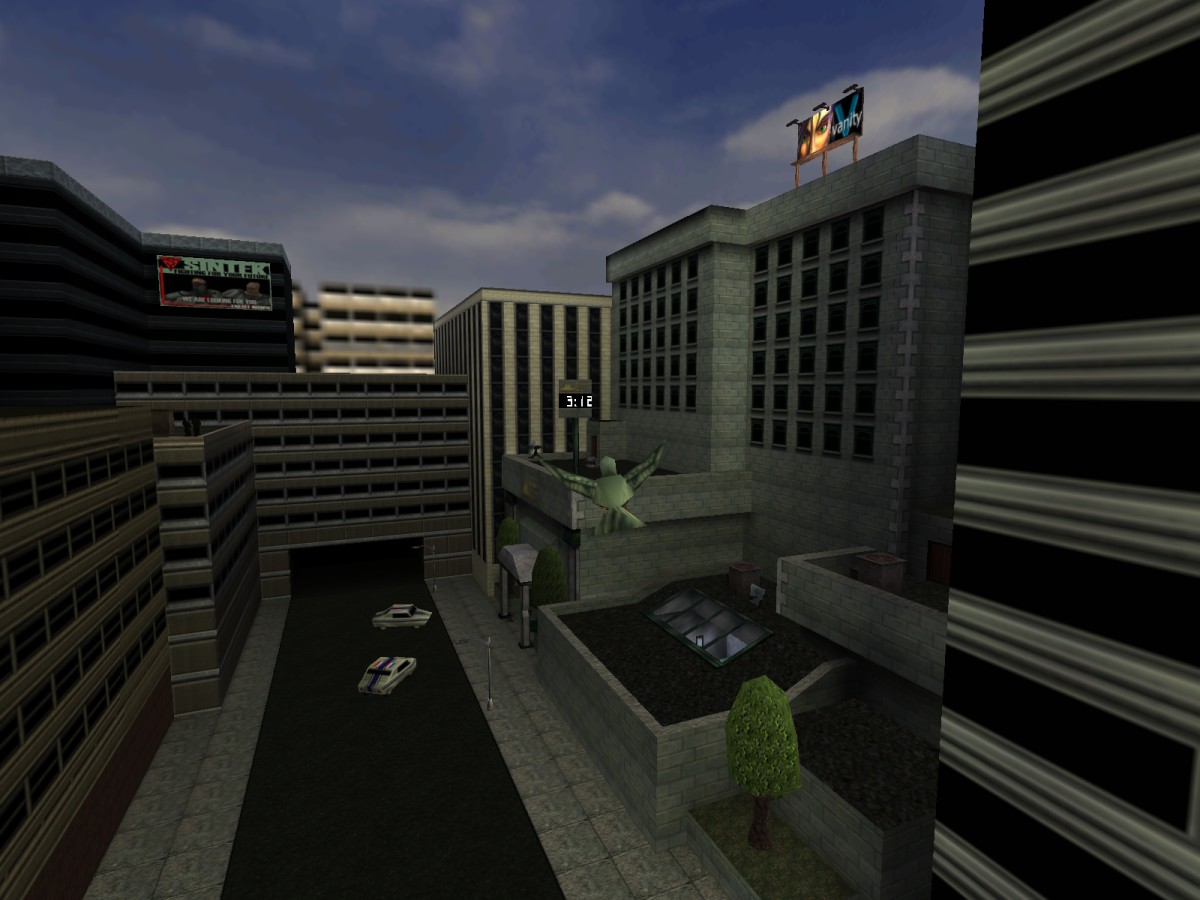
The game’s single player is divided into six unique regions and a total of 18 levels.  The game touches lightly on elements of an “immersive sim” to both build character into the game and provide different ways of progressing through an FPS beyond just ‘kill’.  The Quake II engine allows for interactive level components allowing you to destroy the environment, solve unique puzzles and participate in some light platforming.  The platforming elements are a little annoying and unnecessary, but they are few and far between and rarely slow the pace of the game enough to turn you completely off.

Some of the best moments when you can explore the world laid out.  A particular highlight is being able to dig into a computer and exit out into a sort of DOS shell that can be manipulated and explored using traditional DOS commands.  These moments speak to how much more is beneath the surface of the game and how much care actually went into creating the world itself.  The world isn’t open, but it isn’t necessarily linear either.

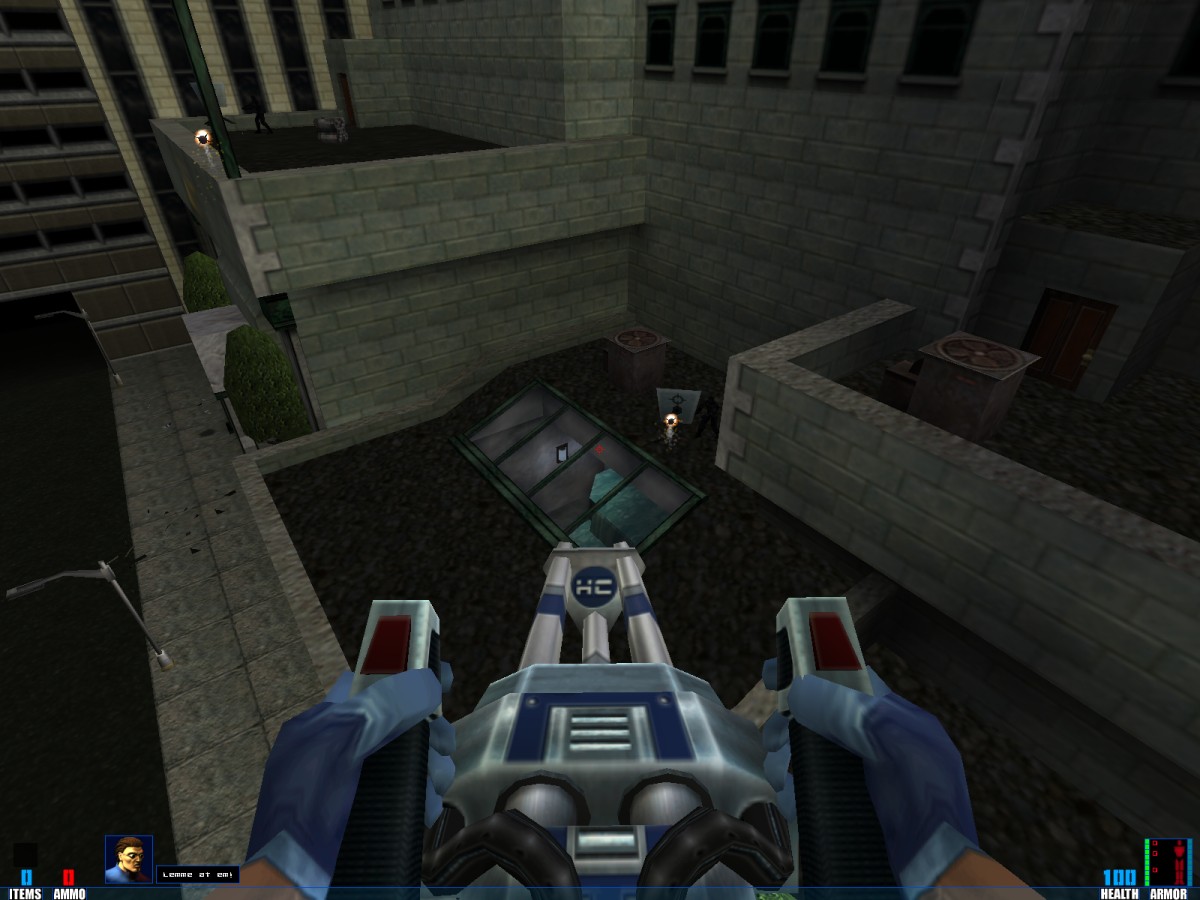
Gameplay-wise, SiN tries to be more than just a standard FPS.  The game starts on a helicopter with the player in control of a mini-gun.  Future levels involve driving vehicles (pretty good), basic stealth elements (not good) and the underwater (not bad).  It features cinematics to progress the story along and the Quake II engine is used to full effect to allow destructible environments which are used for puzzles and storytelling elements.

Multiplayer deathmatch features unique levels and is well designed.  The standard FPS weapons are all available and the Sniper Rifle in particular adds some fun to hunting down your friends.  Elexas is a playable character here and in her string bikini is not only ill equipped for a shootout but impossible to hide in the shadows of a level, making her easy prey.  A particular standout is “Spry”, developed by Richard Gray, which is credited as the first “shrunk player” level in an FPS.  Miniaturized players contained within a small library, hide under couches and chairs or stand above on the top of a picture frame.  The change in perspective is a creative addition to the FPS deathmatch world and one that was replicated in other games.

The last few levels of the game are where SiN starts to fall apart. Enemy models start to get repetitive, the level design makes less and less sense.  There is much about this game, from it’s buggy initial release to its less than stellar last few levels that speak to how rushed this game was and how little time the team had to implement the Quake II engine changes.  Instead of relying on the strengths they had built into the game and fleshing out a game that could compete with Valve’s creation, Ritual pushed to the finish line too quickly and in a Frankenstein engine that combined both Quake games without fully mastering either one.

The care the game was given in the early going is evident throughout the production.  The manual is 47 pages of lore filled backstory.  The original website for the release was packed with character descriptions that speak to how well fleshed out some of these otherwise cardboard cutout characters ended up in the game.  The first half of the game is a rich, deep experience full of unique takes on the FPS genre and the way storytelling could be incorporated.

When you start to dig into SiN, You can see why it continues to be supported so many years later with remakes and films.  For those that choose to dig into what SiN could have been you can only wonder what it still could be.


SiN was first posted on February 22, 2022 at 9:51 am.
©2017 "Hardcore Gaming 101". Use of this feed is for personal non-commercial use only. If you are not reading this article in your feed reader, then the site is guilty of copyright infringement. Please contact me at kurt@hardcoregaming101.net
22 Feb 20:18

Intel Arc Alchemist A300, A500, A700 Gaming Graphics Card Segments Detailed: Powered By 6nm Xe-HPG DG2 Architecture

by Hassan Mujtaba

Intel's Arc Alchemist gaming graphics cards are launching in Q2 2022 and SiSoftware has published the detailed specs of each Xe-HPG DG2 GPU segment.

Intel Arc Alchemist Gaming Graphics Card Lineup Detailed: A700 High-End, A500 Mainstream & A300 Entry-Level

The Intel Arc Alchemist lineup will be targeted at three segments, mobility, desktop & workstation. The first Xe-HPG DG2 GPUs will be headed towards the mobility segment in Q1 2022 followed by the desktop discrete graphics cards in Q2 2022 and finally, we will get workstation solutions in the third quarter of 2022.

We have already detailed the core architecture, specifications, and features of the Arc Alchemist lineup in our detailed roundup over here but the latest information from SiSoftware highlights the various performance tiers. As we know, the Intel Arc Alchemist lineup will feature two primary DG2 GPU SKUs, the big 'SOC 1' and the small 'SOC 2'. SOC 1 will feature the DG2-512 configuration and will be utilized by the Arc A700 and Arc A500 series graphics solutions while the SOC 2 config that will utilize the DG2-128 SKU, will be utilized by the Arc A300 series.

Intel Arc A370M Gaming GPU Spotted In High-End Alder Lake Notebook, Coming To PCs Later This Quarter

Several Intel Arc A300 series GPUs have been leaked over time including the desktop Arc A380 and the mobility Arc A370M and Arc A350M. All three of these graphics solutions feature the SOC 2 'DG2-128' SKU. The Arc A300 series as such will rock up to 8 Xe-Cores, 128 Execution Units, 1024 ALUs, a 128-bit (14 Gbps) memory solution, and a 6nm process node from TSMC. Interestingly, the desktop variant comes with a 96-bit solution for up to 6 GB GDDR6 memory while the laptop solution is said to carry the full 128-bit bus interface for up to 8 GB GDDR6 memory.

Intel ARC Alchemist vs NVIDIA GA106 & AMD Navi 24 GPUs

Graphics Card Name Intel ARC A350? NVIDIA GeForce RTX 2050 AMD Radeon RX 6500 XT Intel ARC A380? NVIDIA GeForce RTX 3050
GPU Name ARC Alchemist DG2-128 NVIDIA GA107 AMD Navi 24 ARC Alchemist DG2-128 NVIDIA GA106
Architecture Xe-HPG Ampere RDNA 2 Xe-HPG Ampere
Process Node TSMC 6nm Samsung 8nm TSMC 7nm TSMC 6nm Samsung 8nm
Die Size ~155mm2 TBC TBC ~155mm2 276mm2
FP32 Cores 8 Xe Cores 16 SM Units 16 Compute Units 8 Xe Cores 24 SM Units
FP32 Units 1024 2048 1024 1024 3072
Memory Bus 64-bit 64-bit 64-bit 96-bit 128-bit
Memory Capacity 4 GB GDDR6 4 GB GDDR6 4 GB GDDR6 6 GB GDDR6 8 GB GDDR6
TDP 35-50W 30-45W ~75W ~75W ~75W
Launch Q1 2022 Q1 2022 Q2 2022 Q1 2022 Q1 2022

A full-on review of the Arc A380 desktop graphics card sample has been published by the outlet showcasing that the A380, in its early state, is competing decently against the NVIDIA GeForce RTX 3050 & AMD Radeon RX 6500 XT graphics cards. Each card has its own strong points and given that this entry-level GPU solution is targeted at RTX 3050 and 6500 XT, we can expect final performance to further improve as we get close to launch. One thing where the Arc lineup really shines is its GPU power efficiency and Alchemist is looking really strong in this department. It should be noted that these benchmarks are almost entirely synthetic and don't translate into gaming performance so it is something that you should wait for rather than using these numbers to theorize the final game performance of Intel's upcoming Arc Alchemist graphics cards.

Intel Arc A380 vs NVIDIA RTX 3050 & AMD RX 6500 XT Benchmarks (Image Credits: SiSoftware):

  • intel-arc-a380-proc
  • intel-arc-a380-hash
  • intel-arc-a380-crypto
  • intel-arc-a380-mem-bw
  • intel-arc-a380-science
  • intel-arc-a380-finance
  • intel-arc-a380-image

Intel Arc A380 vs NVIDIA RTX 3050 & AMD RX 6500 XT Power/Price (Image Credits: SiSoftware):

  • intel-arc-a380-power
  • intel-arc-a380-perf-vs-power
  • intel-arc-a380-overall
  • intel-arc-a380-price
  • intel-arc-a380-perf-vs-cost

As for the higher-end Arc A700 and A500 series, the Arc Alchemist A700 will utilize the full 32 Xe-Core configuration featuring 512 EUs, 4096 ALUs, and a 256-bit (16 Gbps) memory design. These cards will be outfitted with up to 16 GB of GDDR6 memory. The Arc A500 will also utilize the DG2-512 SOC 2 but a slightly cut-down design with only 24 Xe-Cores enabled for 384 EUs, 3072 ALUs & a 192-bit (16 Gbps) memory design for up to 12 GB capacities. Look forward to more details on the lineup in the coming weeks.

Intel Xe-HPG Based Discrete Alchemist GPU Configurations:

GPU Variant Graphics Card Variant GPU Die Execution Units Shading Units (Cores) Memory Capacity Memory Speed Memory Bus TGP
Xe-HPG 512EU ARC A780? Alchemist-512EU 512 EUs 4096 Up To 32/16 GB GDDR6 18 / 16 / 14 Gbps 256-bit ~225W (Desktops)
120-150W (Laptops)
Xe-HPG 384EU ARC A580? Alchemist-512EU 384 EUs 3072 Up To 12 GB GDDR6 16 / 14 Gbps 192-bit 150-200W (Desktops)
80-120W (Laptops)
Xe-HPG 256EU ARC A550? Alchemist-512EU 256 EUs 2048 Up To 8 GB GDDR6 16 / 14 Gbps 128-bit 60-80W (Laptops)
Xe-HPG 128EU ARC A380? Alchemist-128EU 128 EUs 1024 Up To 6 GB GDDR6 16 / 14 Gbps 96-bit ~75W (Desktops)
Xe-HPG 128EU ARC A350? Alchemist-128EU 128 EUs 1024 Up To 4 GB GDDR6 16 / 14 Gbps 64-bit 35-50W (Laptops)
Xe-HPG 96EU ARC A330? Alchemist-128EU 86 EUs 768 Up To 4 GB GDDR6 16 / 14 Gbps 64-bit ~35W (Laptops)

The post Intel Arc Alchemist A300, A500, A700 Gaming Graphics Card Segments Detailed: Powered By 6nm Xe-HPG DG2 Architecture by Hassan Mujtaba appeared first on Wccftech.

22 Feb 20:17

Ending 3G Service Sparks Fears of an 'Alarmaggedon'

by msmash
AT&T's planned shutdown of its 3G network Tuesday has sparked fears that home security systems, medical alert monitors and a range of other devices will stop working. From a report: Carriers have previously retired networks, but this transition is proving more complicated because the pandemic hindered companies that rely on 3G services from making upgrades. Plus, there are just more devices to manage. AT&T, T-Mobile and Verizon are all planning to shut down their 3G networks this year to support new 5G services. AT&T, which first announced plans to sunset its 3G network in 2019, says less than 1% of its mobile data traffic runs on that network. The company has offered customers free and discounted 4G LTE phones to help them upgrade, totaling about 2 million replacements. What to watch: AT&T says phone coverage will not be affected, but it's not just phones that use the company's 3G network.

Read more of this story at Slashdot.

22 Feb 20:15

The federal Zero Trust strategy and Microsoft’s deployment guidance for all

by Emma Jones

You’d be forgiven for missing the White House announcement on federal Zero Trust strategy on January 26, 2022.1 After all, on that day alone a Supreme Court Justice announced his intention to retire, the Federal Reserve announced its plan to raise interest rates, and the State Department was busy trying to reduce international tensions.

Even if it didn’t lead the evening news, the security announcement is a crucial milestone for all those that understand the importance of a Zero Trust model and are working hard to implement it. It’s no secret that government support for a technology can turbo-boost adoption—ask anyone who uses GPS, the internet, or electronic medical records.2 US Federal Government support for Zero Trust is similar: the Office of Management and Budget (OMB) has started an accelerated adoption curve for tens of millions of new endpoints.

There are 2.25 million full-time equivalent employees in the US federal executive branch, and 4.3m if you count postal workers and other staff in the judicial, legislative, and uniformed military branches.3 These also include many frontline workers, a critical security topic that I discuss in the blog post Reduce the load on frontline workers with the right management technology. The US Federal Government also sets the tone for technology policy in state and local government, which adds another 19.7 million workers, before we even begin to count federal government suppliers who will be asked to comply.4 Even at a ratio of one employee per endpoint (and the ratio could be higher with personal devices and IoT), not counting the endpoint strategy updates by overseas governments, we’re looking at tens of millions of endpoints that will be managed according to Zero Trust governance principles.   

In full, I encourage you to read the memorandum press release, Office of Management and Budget Releases Federal Strategy to Move the U.S. Government Towards a Zero Trust Architecture.

Here are my three takeaways:

  1. Zero Trust is now relevant to every organization.
  2. Leadership alignment is the biggest obstacle to driving Zero Trust agendas.
  3. Zero Trust architecture requires holistic, integrated thinking.
Laptop with data charts visible in foreground with out of focus C I S O's in the background.

Zero Trust is now relevant to every organization

Hybrid work, cloud migration, and increased threats make Zero Trust now relevant to every organization.

The concept of Zero Trust is not new. The term was first coined by then Forrester analyst John Kindervag in 2010.5 Yet, as the OMB paper says: “The growing threat of sophisticated cyber attacks has underscored that the Federal Government can no longer depend on conventional perimeter-based defenses to protect critical systems and data. The Log4j vulnerability is the latest evidence that adversaries will continue to find new opportunities to get their foot in the door.”

Yet, in our 2021 Zero Trust Adoption Report, only 35 percent of organizations claim to have fully implemented their Zero Trust strategy.

Zero Trust is now vitally relevant for every organization for two reasons. First, the shift to remote work and the accompanying cloud migration is here to stay. Gartner® estimates that 47 percent of knowledge workers will work remotely in 2022.6 This is not just a pandemic-era emergency that will reset to perimeter-based solutions once COVID-19 cases decrease. Today, security solutions must start from the fact that endpoints could be outside of a perimeter defense set-up and be tailored accordingly. Second, cyber threats continue to increase. The US Federal Government referenced the Log4j flaw but could equally have mentioned Kaseya, SolarWinds, or other recent disruptions. These disruptions are expensive—a 2021 IBM report put the average total cost of a breach of 1 to 10 million records at USD52 million, with a mega breach of 50 to 65 million records costing companies more than USD400 million.7

The US Federal Government is signaling that Zero Trust is essential for the current times. Zero Trust requires customers to think beyond firewalls and network perimeters and assume breach from within those boundaries.

Adult male C I S O pointing to digital map of the world on large screen.

Leadership alignment is the biggest obstacle to driving Zero Trust agendas

My second takeaway is that leadership alignment is critical to organizations making the proper progress in Zero Trust.

OMB requires that every agency nominate a Zero Trust strategy implementation lead within 30 days. Furthermore, the memorandum states: “Agency Chief Financial Officers, Chief Acquisition Officers, senior agency officials for privacy, and others in agency leadership should work in partnership with their IT and security leadership to deploy and sustain Zero Trust capabilities. It is critical that agency leadership and the entire ‘C-suite’ be aligned and committed to overhauling an agency’s security architecture and operations.” In short, this is not simply a technology problem that can be handed over to IT, never to be thought of again. Zero Trust requires, at a minimum, C-suite engagement and, given the risks involved in a security breach, also warrants board oversight.

Our Zero Trust Adoption Report that explores the barriers to Zero Trust implementation also highlighted leadership alignment. Fifty-three percent mentioned this as a barrier, covering C-suite, stakeholder, or broader organizational support. Other key barriers to adoption included limited resources, such as skills shortages in areas like change management, or the inability to sustain the length of time for implementation. For example, according to a 2020 annual Cybersecurity Workforce Study by (ISC)2, there remains a shortage of 3.1 million cybersecurity workers, including 359,000 in just the US.8 Related to this, budget constraints were mentioned by 4 in 10 survey respondents. Anticipating and proactively addressing leadership alignment, limited resources, and budget are key to the broader rollout of Zero Trust architectures, independent of any technology choices.   

Zero Trust architecture requires holistic, integrated thinking

 Zero Trust architecture thinking is more akin to conducting an orchestra than just flipping a switch. The US Federal Government’s plans encompass identity (including multifactor authentication and user authorization), devices (including endpoint detection and response), networks (including Domain Name System, HTTP, and email traffic encryption), apps and workloads, and data. This is not a project that can be done in silos or quickly. Indeed, the OMB asks federal agencies that Within 60 days of the date of this memorandum, agencies must build upon those plans by incorporating the additional requirements identified in this document and submitting to OMB and Cybersecurity & Infrastructure Security Agency (CISA) an implementation plan for FY22 to FY24 for OMB concurrence, and a budget estimate for FY24.”

Microsoft’s and the US Federal Government’s Zero Trust frameworks are very similar. They overlap into five categories. Microsoft calls out infrastructure separately from networks, while the OMB memo combines the two. When thinking about Zero Trust, any organization needs to consider:

  1. Identities and authentication: Protecting identities against compromise and securing access to resources, including multifactor authentication.
  2. Endpoints and devices: Securing endpoints and allowing only compliant and trusted devices to access data.
  3. Applications: Ensuring applications are available, visible, and securing your important data.
  4. Data: Protecting sensitive data wherever it lives or travels.
  5. Networks: Removing implicit trust from the network and preventing lateral movement.
  6. Infrastructure: Detecting threats and responding to them in real-time.

Underscoring these pillars is centralized visibility, which enables a holistic view. Being able to see how all apps and endpoints are deployed and whether there are security issues is vital to maintaining as well as setting up a Zero Trust posture. An endpoint management solution provides a central repository for security policies and a place to enforce those policies should an endpoint no longer comply. Solutions should enable built-in encryption across all platforms, whether Windows, macOS, iOS, Android, or Linux. Equally, unified endpoint management will make the network journey towards Zero Trust easier, regardless of the type of network. Visibility matters in Zero Trust, and effective endpoint management is a major factor in delivering it.

Picking a starting point

Having a consistent framework for Zero Trust and constant visibility is a good starting point. Nonetheless, it doesn’t answer the question of where and how to start implementing Zero Trust for your organization. The answer will be specific to every organization—there is no one-size-fits-all approach for Zero Trust. Organizations may start at different points, but the Microsoft 365 Zero Trust deployment plan gives all organizations a practical guide to introduce Zero Trust.

The deployment plan has five steps and can help organizations implement a Zero Trust architecture:

  1. Configure Zero Trust identity and device access protection to provide a Zero Trust foundation.
  2. Manage endpoints by enrolling devices into management solutions.
  3. Add Zero Trust identity and device access protection to those devices.
  4. Evaluate, pilot, and deploy Microsoft 365 Defender to automatically collect, correlate, and analyze the signal, threat, and alert data.
  5. Protect and govern sensitive data to discover, classify, and protect sensitive information wherever it lives or travels.

Management of your apps and endpoints plays a vital and foundational role in any Zero Trust deployment. By enrolling devices into management, you can configure compliance policies to ensure devices meet minimum requirements and deploy those configuration profiles to harden devices against threats. With a solid foundation established, you can defend against threats by using device risk signals and ensure compliance using security baselines. In this way, you’re protecting and governing sensitive data, no matter what operating system platform your devices are using.

CISA Director Jen Easterly wrote in the memo’s press release: “As our adversaries continue to pursue innovative ways to breach our infrastructure, we must continue to fundamentally transform our approach to federal cybersecurity.” Zero Trust is a critical US Federal Government priority, which will accelerate mass adoption. If your organization is just starting to implement Zero Trust or further along, I hope the free resources below are helpful.

Learn more

Explore Microsoft’s resources and products to help you implement a Zero Trust strategy:

Read more about the US Federal Government’s Zero Trust strategy announcement:

Additional resources:


1US Government sets forth Zero Trust architecture strategy and requirements, Joy Chik, Microsoft. February 17, 2022.

250 inventions you might not know were funded by the US government, Abby Monteil, Stacker. December 9, 2020.

3Federal Workforce Statistics Sources: OPM and OMB, Congressional Research Service. June 24, 2021.

4Number of state and local government employees in the United States from 1997 to 2020, by full-time/part-time status, Statista.

5Forrester pushes Zero Trust model for security, Dark Reading.

6Gartner, Forecast Analysis: Remote and Hybrid Workers, Worldwide, Ranjit Atwal, Rishi Padhi, Namrata Banerjee, Anna Griffen, 2 June 2021. GARTNER is a registered trademark and service mark of Gartner, Inc. and/or its affiliates in the U.S. and internationally and is used herein with permission. All rights reserved.

7Cost of a Data Breach Report 2021, IBM.

8Cybersecurity Workforce Study, (ISC)2. 2020.

The post The federal Zero Trust strategy and Microsoft’s deployment guidance for all appeared first on Microsoft Security Blog.

22 Feb 20:11

Author Kyle Buchanan On The Wild And True Story Of Making Mad Max: Fury Road; Read An Excerpt [Interview]

by Ben Pearson

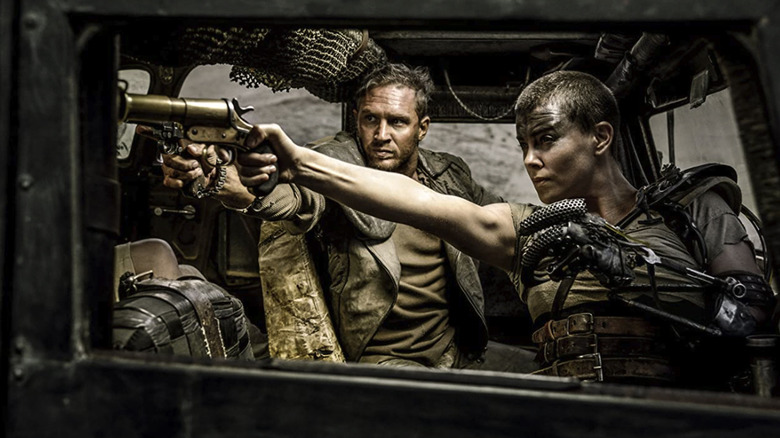
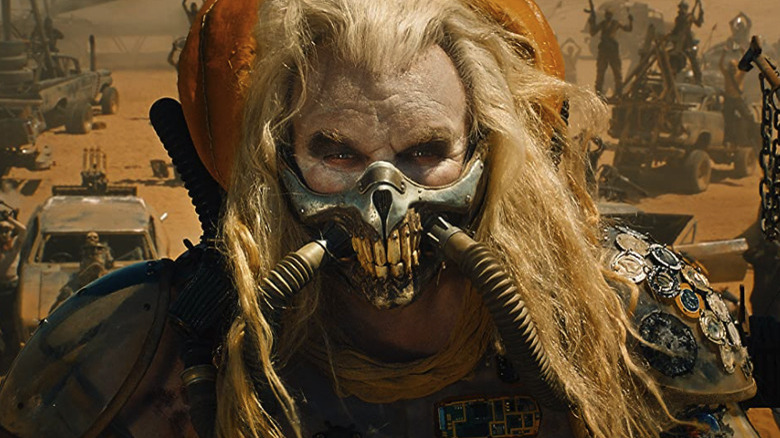
"Mad Max: Fury Road" is undeniable. It's one of the most bombastic, breakneck, dangerous, jaw-dropping, and downright ambitious movies ever made, and the story of how it came together is just as compelling as the movie itself. 

In his new book, "Blood, Sweat & Chrome: The Wild and True Story of Mad Max: Fury Road," New York Times writer Kyle Buchanan interviewed director George Miller, stars Charlize Theron and Tom Hardy, and over 150 more people involved with the making of the movie, resulting in an extensive oral history which details their unbelievable and unforgettable experiences bringing this unlikely masterpiece to life. It's an incredible read -- an immersive, in-depth recounting of the movie's inception, its long path through development, and its absolutely insane shoot in the Nambian desert. You may think you know how this film was made, but this book has stories you've never heard, directly from the folks who were actually there.

The book's publisher was kind enough to let us share an excerpt from the book, which features several of the major players talking about the movie's ending and how it changed. You can find that excerpt below, but first, I jumped on the phone with Buchanan himself to talk about the daunting task of wrangling such a huge story together into a coherent narrative.

The Making Of A Masterpiece
As someone who has read a bunch of oral histories, you start to notice things when you read one. Like, "The interviewer clearly only had a few minutes with this person because they only address a very specific topic and then that person doesn't contribute again." But that's not the case in your book. You talked to so many people, and a ton of those names come up over and over across the entire story. So on a practical level, how did you go about conducting these interviews?

It was the double-edged sword of doing this book in the pre-vax time in the pandemic, because if I could have done things the way I would have preferred, it would've been pre-pandemic, and I would've flown to Australia, and I could have gone through people's old boxes and gone out to lunch with all the key players. That was not going to happen at that point in time. But the upside of that is that I could fit in so many more interviews in a day. I could do a phone call with somebody who's in Los Angeles in the morning, somebody in London in the afternoon, and then in the evening and into the night, talk to Australians and Kiwis.

Also, because it was the pre-vax part of the pandemic, I did not have a robust life like I was used to. I was at home. I was looking for ways to distract myself. And let me tell you, writing a book is a great way to distract yourself. So yeah, my productivity during that time kind of shot through the roof. And I'll say this also: There's something about the experience of making "Fury Road" that makes people want to talk to you about it. They don't want to just give you 10 minutes, because they know it wouldn't do that experience justice. So even when you're dealing with somebody like Charlize Theron, or Zoe Kravitz, or Riley Keough, who obviously have very busy lives and are in demand for all sorts of things, let alone interviews, they want to stay on the line with you. They want to talk to you about this. In a lot of cases, this is the first time they've really gone deep talking about it with journalists. With members of their own family or their friends, they've been telling these stories for a long time. But something about the amount of time that has elapsed since the movie was shot, it was just that sort of perfect time to get people to really open up. I was really fortunate that they were willing to give me all that time. I think a lot of them felt very compelled that if they were going to speak on the record, literally for the first time, they were going to give me that access.

I've also put together a handful of oral histories myself, and something that always happens is there's a story or two that's really good, but it just doesn't fit anywhere in the narrative that you're trying to tell. Did that happen to you here, or were you actually able to fit everything in because this book covers every aspect of the movie over so many years?

There was a lot that I couldn't fit in. Ultimately, once you start shaping a book like this, you realize that it has its own narrative. And much like a movie, there are things that are going to get lost because they're not necessarily advancing the narrative. A good example of that is, I spoke to the screenwriter John Collee, who was one of the writers on this project. He's not in the book. He was a delight to talk to, because he came in that fallow period in between the movie falling away at Fox with Mel Gibson and it being revived at Warner Brothers, which is the incarnation that we know.

In that period, John came on. He's a fantastic writer -- he wrote "Master and Commander" -- and George asked him, "Okay, you see all these storyboards? Can you actually whip these together into a conventional screenplay?" And he was like, "Okay, you know what? I'll try." And he wrote a conventional screenplay based on those storyboards. I don't know if it was just to sort of relieve studio executives or what, but it really never got used, because even though George Miller had wanted John to do this, he already had the vision of the movie in his mind, and it just was a more specific vision that needed the detail of those storyboards. So that's what they ultimately relied on, not that screenplay. But John was kind enough to send me that screenplay, and it's kind of a kick to read a really well-written version of what we know from those images, and what George saw in those images.

I've been following you on Twitter for years, so I know you're a fan of Mad Max: Fury Road and that you knew a great deal about it before embarking on this project, but what was something you were surprised to learn about while putting this book together?

Well, there were a lot of people who worked on this movie that had never talked about it that I didn't know about. The writer Kelly Marcel, who works with Tom Hardy all the time, she's never given an interview acknowledging that she was an on-set writer. We think we know who the writers are, the credited ones, and so often, it turns out in Hollywood that there are other people who were involved even at the beginning of this process. The fact that a lot of it spun out of a failed attempt to mount "Mad Max" as a syndicated TV show, and that originally George was working on the "Fury Road" concept with Eric Blakeney, who was a writer and producer on "21 Jump Street." It's fascinating for me to see some of the things that kind of got brushed away as an official narrative of the film was mounted. But also, to be honest with you, what was just exciting for me was just to talk to people who don't normally give interviews, not because of any sort of subterfuge, but because they're people who work on the crew. To be able to talk to a visual effects data wrangler, like "Toast" Yadav, who has the most incredible day one making of the movie story, hat's what I wanted to zero in on. Because what I found the more I dug into "Fury Road" is that this is an incredible movie that is obviously the product of a visionary, but amongst visionaries, he's very uncommon in how collaborative he is. I think you get that impression as you read it. He really seeks out these sort of trusted lieutenants, or these people in artistic fields that have a point of view very different than his own, and he wants to imbue the movie with their perspective.

So you have somebody like Eve Ensler coming on board to educate the actresses who played the wives about sexual slavery. And you have people whose contributions are even less known and visible, like the people who would train the War Boys and teach them improv exercises to kind of improve their fervor. You don't always know about those things, but you can sense it. It's such a dense movie. It feels like there's more going on beyond the borders of the frame. So it was very exciting to track down all of these people and hear their stories, because -- and I can say this pretty confidently having interviewed 135 of them -- there's not a single person who doesn't have incredible stories about the making of that movie because there just wasn't ever a making of the movie quite like that one.

The specificity on display in the movie is unreal. Like you were saying, some of the things you might not know about, but you can feel them in the movie. Reading your book actually reminded me of the experience of watching the bonus features on the "Lord of the Rings" DVDs.

I remember the very first time I watched it, and it's a really incredibly visceral movie, so that's paramount, but there were also just such small things that go by in a flash where you're like, "Wait, wait, wait, I want to know more about that!" because it's so clearly worked out. I think it makes you realize that for all the incredible people who work on most of our action blockbusters, some of these ideas are just skin deep, and it's not the same with "Fury Road." There's a really deceptively simple premise, but underneath that, underpinning every visual you see, is so much thought. And it's incredible to get to dig into that as an author, because there literally are stories behind almost everything you could point to in that movie.
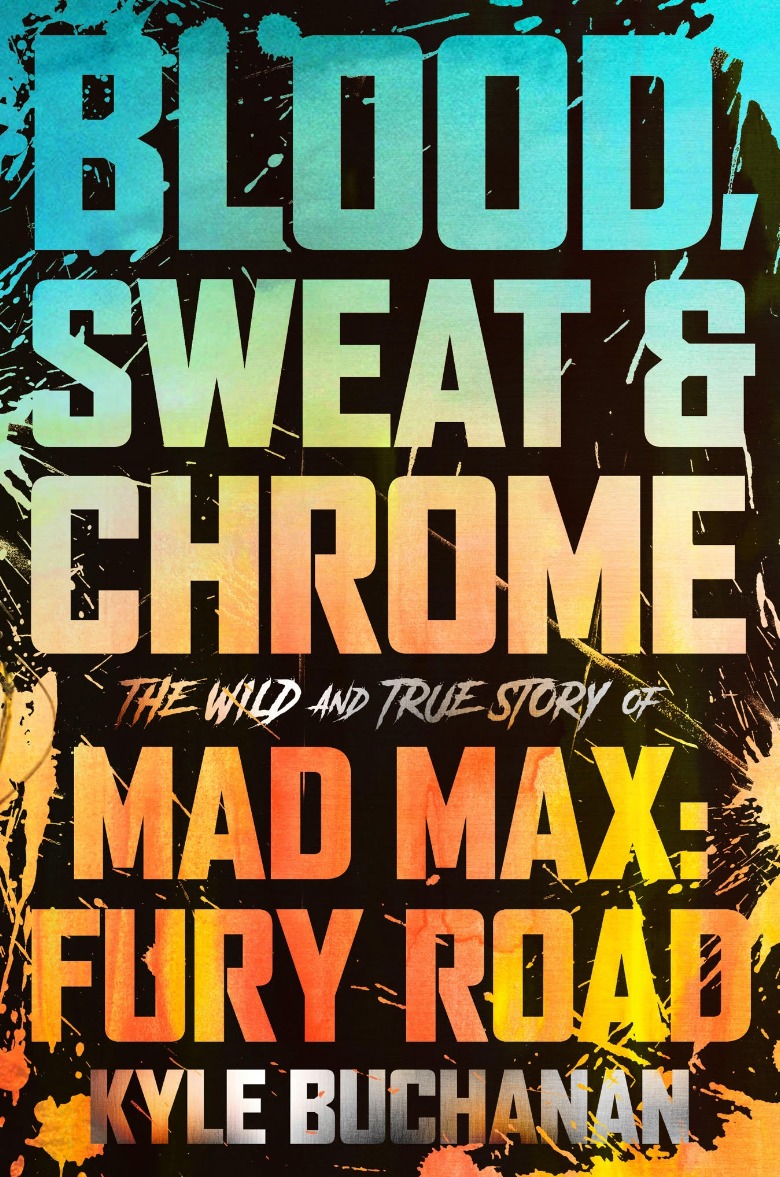
I'm not going to give anything away, but one thing I loved about the book was finally hearing about exactly why Charlize and Tom Hardy didn't get along during the filming. There had been so many little whispers that had then been aggregated a billion times over, but your book actually gets into the mentalities they had and specific reasons they clashed.

I think that's one of the advantages to the oral history format, because this is obviously something that anybody who worked on that set had their own theories about, witnessed certain things about, and I think definitely Charlize and Tom, this many years out, had their own perspectives on what went down, and how maybe both of them could have averted it. So the truth lies somewhere in the middle. To be able to give so much space to everybody to tell their sides of that story: What was the issue? Why did they just not get along? What happened on set that sort of set them spinning in opposite directions?

How different is the final version of this book from your first draft? You mentioned the narrative that you wanted to tell. Did that change a lot over the course of writing the book?

Ultimately, not that different. It's a process, especially when you're doing an oral history, of cutting things down, which is an advantageous place to be rather than having to create when there's nothing there. To have a surplus of good sh*t is way more preferable. So it's just about carving it down and finding the spine, the backbone of this thing. You're finding the narrative spine of the book in the same way that in post-production, they tinkered with it and found the spine of "Fury Road."

Sometimes doing such an intense dive into a project can put you off the subject for a little while afterwards. So are you sick of "Fury Road" right now?

No, this is the best part! Sometimes, when you read an oral history, or any book about the making of something, when you go back and you revisit it, it kind of trumps everything -- sometimes I think to the detriment of both the book and the project. And I'm so happy to at least report in my own case that has not happened. I've seen it a zillion times, but I think it had been sort on ice for me these last several months, and then I re-watched it again just a few weeks ago with friends who hadn't seen it and wanted to see it before the book comes out. And yeah, from the jump it is so incredibly visceral and involving, that even me, even the guy who literally wrote the book on "Fury Road," got swept up in it as though I was a first time viewer again. I wasn't thinking about, "Oh, let me pause it and tell this story, or this anecdote." I was just thinking, "Oh my God, I hope they make it." It's an incredible movie to be able to withstand so much scrutiny, and yet you still find yourself lost in it. It's also an incredible movie from an author perspective, just because I never got tired of talking to people about it. People's stories were so fascinating because the movie is that deep, because the movie does reward your interest. I think there are few movies, certainly very few movies in that genre, where the more you investigate it, the more it rewards you.

I hope that people who maybe are just casual fans of the movie, or maybe don't even know anything about it, can find it, because I've always loved books about the making of a movie. I mean, two of my favorites are "Monster," John Gregory Dunn's book about the making about "Up Close and Personal," and "The Devil's Candy," the Julie Salamon book about "The Bonfire of the Vanities." And the only sticking point for me with most of these books is that they're incredibly juicy books about the making of bad movies, which isn't necessarily even a sticking point, but I'm excited to present a really juicy book about the making of a masterpiece, because I think those are maybe more scarce.

Blood, Sweat & Chrome Excerpt
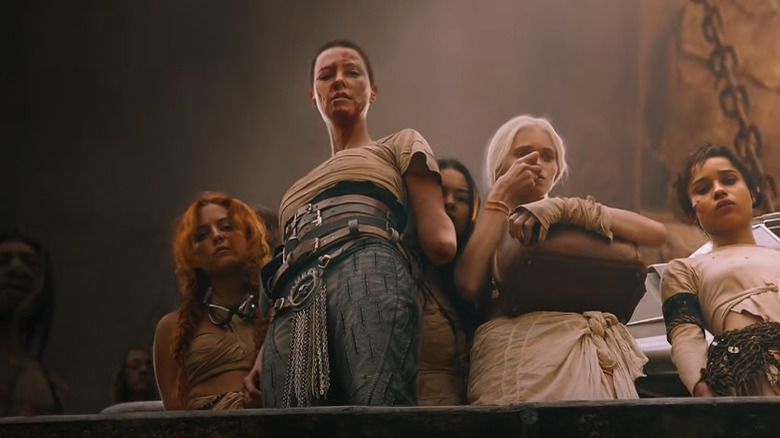
On November 14, 2013, nearly a full year after the original shoot had been cut short, all of Fury Road's major players reassembled in Sydney to finish the film. But this would be no simple pickup shoot.

During the original shoot in Namibia, Warner Bros. president Jeff Robinov had nixed the beginning and ending sequences of the movie, which were set at the cliffside Citadel lorded over by Immortan Joe. But Robinov was pushed out of the studio after a succession bid elevated his rival Kevin Tsujihara, and when Tsujihara screened Fury Road, he approved a new shoot in Sydney that would add the Citadel scenes back into the story.

But the ending — where Max, Furiosa, and the other survivors return to the fortress and reveal Immortan Joe's corpse to a shocked crowd — was hotly debated. Should all of the characters board the platform elevator into the fortress and become its new rulers? Or was there a bittersweet ending that felt more fitting for Max?

Charlize Theron ("Furiosa"): We never had an ending. There was a sketched-out idea of an end that we all knew wouldn't be the end, and we made the whole movie fully aware of that. Everybody thought that while we were making the movie, someone would figure it out.

Mark Sexton (lead storyboard artist): In the storyboarding phase, it was all of them going up on the platform, and Max is there supporting Furiosa. This was in the iteration where it was supposed to be Mel Gibson, and so it was really considered to be the end of Max's story: He's now become reintegrated into society and regained his humanity. He wants to become part of a greater thing, as opposed to being a loner, and he is going up towards ultimate salvation.

Mark Goellnicht (camera operator): They went back and created this Green Place together, these amazing tiers of huge, almost rainforest-style greenhouse gardens in the Citadel, super lush, with all different types of vegetables and plants. Then they can have offspring of their own and provide food for the family and everyone else. How corny. Can you imagine? No. Totally dumb.

George Miller (director): We tried, but it would have been very cheesy had he gone up there and they lived happily ever after.

Shira Hockman (art director): We never shot that ending [during the original shoot]. We got to the point when they arrived all together, where Max is carrying Furiosa, and they go back into the hydroponics set. We shot that without sound because George already knew that it wasn't going in, but we had spent so much money on those rigs that we just shot it anyway.

Mark Goellnicht: Yeah, they spent a lot on that set. It was f**king awesome, but George was so not interested. The studio wanted us to shoot it, but you could tell he wasn't interested in doing a Disney ending. It just didn't match the essence of this film at all.

Shira Hockman: The stuff that did get shot got shot badly, almost on purpose, so that it could get reshot again.

P. J. Voeten (producer and first assistant director): It's the only time I've ever seen George do one take, because he said, "This is never going to be in the film."

A year later in Sydney, Miller decided to go in a different direction: The women would ascend into the Citadel while Max leaves them to roam the wasteland once more. Having gained back

his humanity by helping the women fight for theirs, Max shares a final, freighted look with Furiosa before he disappears into the crowd below.

George Miller: All the way through the shoot, I thought, Max will go up there with Furiosa and the remaining Wives, and there will be a new disposition. But it was much better for Max to go off into the wasteland in search of himself, just as he always did. It's an ending that fits with the rest of the movie much better.

Sean Genders (senior prosthetic artist): Max has to be left alone. That's the beauty of it, it's such a flip on the happy ending. He gives everything in movies one and two and even three, and he ends up left alone at the end.

Shira Hockman: It was a much better ending than the storybook "Oh, they've fallen in love and live happily ever after" thing. That's not a Mad Max ending.

Mark Sexton: It's a new Max, he's younger, and there's an option of making more of these, so therefore more continued story. It works for that younger iteration of Max, and it was a great way of helping shift the focus of that story towards Furiosa and what she achieved with the Wives.

Peter Pound (principal vehicle designer and storyboard artist): I still think that it would have been better if Max went up with her into the Citadel.

George Miller: Nico and I decided that Max hadn't earned the right to go there. It's only been three days and he's not yet resolved at all. He's on the step to resolution.

Nico Lathouris (writer): He was not ready to love somebody. It almost happens with Furiosa, but he's not ready for that kind of life. He hasn't learned the lesson yet about grieving.

Richard Lawson (film critic, Vanity Fair): Even though Max goes off into the desert at the end of the movie, he at least knows that there are still decent people out there. And maybe it's enough to know, Children of Men style, that the human experiment has not completely ended. At the very least, helping those people exist has helped him exist.

Nico Lathouris: He's still driven by his desire to find some kind of redemption, which he won't find until he confronts the original problem, the death of his wife and child. He will be doing that forever until he goes back to the grave of his wife and his kid and sits there for a while and really grieves. That's my feeling about it.

Charlize Theron: When we shot that end, everyone felt really good about it: "Oh yeah. This is the end to our movie."

George Miller: Perhaps, had Jeff Robinov said, "Oh, go and shoot the bookends of the film at the Citadel," and had there not been the kind of disruption of changing personnel at the studio, we would not have had the hiatus which allowed us to shape the film to that degree.

Margaret Sixel (editor): In the end, it was fantastic that it happened, because it did allow me to look at the footage that we had and think, What do we need, actually? It was a luxury, to some extent.

Petrina Hull (production and development executive): George got to make the film that he always wanted to make, and it wasn't compromised and no doubt it's a better film because of it. And the right thing happened in the end.

Adapted from Blood, Sweat and Chrome: The Wild and True Story of Mad Max: Fury Road, by Kyle Buchanan. Copyright © Kyle Buchanan 2022. Reprinted with permission from William Morrow, a division of HarperCollins Publishers.

Read this next: 14 Remakes That Are Better Than The Original

The post Author Kyle Buchanan On The Wild and True Story of Making Mad Max: Fury Road; Read an Excerpt [Interview] appeared first on /Film.
22 Feb 20:07

Spectral Evidence

by Bill Harris
I'm reading a Margaret Atwood book on writing (this one), and I stumbled upon this passage:
Those who have taken an interest in the Salem witch trials in the seventeenth-century New England will be familiar with the concept of "spectral evidence," which was accorded the same legal status as more tangible exhibits, such as wax effigies stuck full of pins. Witches were supposed to have the ability to send out their "specter," or incorporeal likeness, to do their dirty work for them. Thus if someone saw you in the barnyard hexing the cows and you could demonstrate by witnesses that you were home in bed at the time, what was proven was not your innocence, but the fact that you had the ability to project your own double, and were therefore a witch. (It was not until spectral evidence was barred from the courts that the New England witchcraft trials finally ended.)

Isn't that uncomfortably similar to what's happening now with conspiracy theories? There are so many people in the U.S. who believe in every conspiracy theory that comes by, and this is exactly the way their minds work: everything that happens, no matter what it is, is interpreted to bolster the conspiracy theory. 

It would be nice if we could progress beyond the seventeenth century. 
22 Feb 20:06

The 20 Best Legal Thrillers In Cinema History

by Margaret David

The legal thriller is a genre that often relies on heightened reality. The truth of the legal profession is less than gripping: a life of memorizing documents filed by a citation system that's relatively simple but sounds intimidating. Judges at varying stages of power trips. And there's lots of takeout food. What we're saying is that the job's usually a snore factory, and the most interesting lawyers that we've heard of are rarely our most beloved members of society.

A good legal thriller lets the lawyers out to play, often mixing together bits of legitimate law with blood-pumping action. A few special films manage to work mostly within the courtroom, ratcheting up the tension by virtue of an excellent cast and a situation we become invested in. It's the humanity caught within the legal documents that we're drawn to. And many films are all too real — fictional yet drawn from actual events and the heartbreak they caused. These are some of the best, and you won't need to know what United States v. Paramount was to enjoy any of them.

The Devil's Advocate

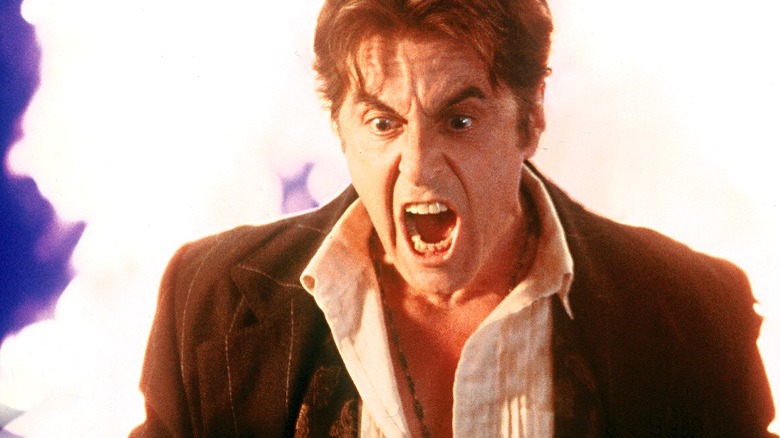
There are two great stories about putting the devil in the courtroom. "The Devil's Advocate" is way more bombastic than the classic tale "The Devil and Daniel Webster," but it's also a hell of a lot more fun. With the most blatant pseudonym since Sue Denim, Al Pacino takes his paycheck and gives back everything he can possibly offer as John Milton. The devil himself is here, and he's always ready to rock.

Facing him is a confused but affable Keanu Reeves, who doesn't quite sell it as down-home country lawyer Kevin Lomax. His accent is a riot, but he's so very "Keanu" that it doesn't matter. His wife is played by Charlize Theron in a remarkable and often haunting early role. "The Devil's Advocate" leans into the theatrical wildness of its premise with glimpses of demonic entities and temptations beyond measure. All of it hinges on a simple, moral choice Lomax makes in a courtroom one day — or so he believes. Satan's learned from his day with Daniel Webster, and it's doubtful Lomax is going to slip his blood-bound contract this time.

To Kill A Mockingbird

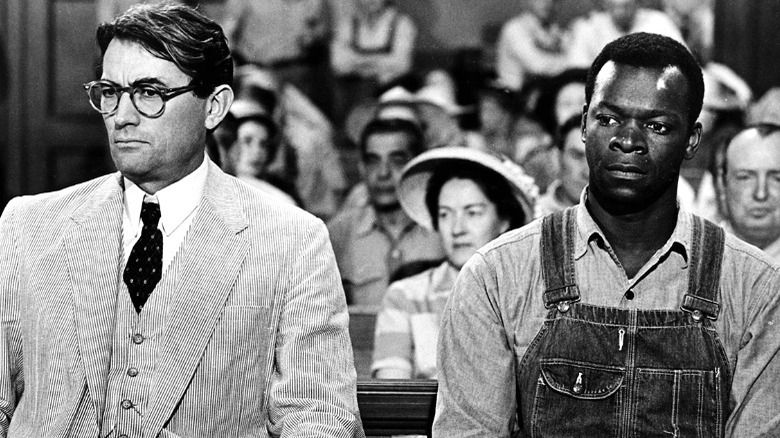
Today's audiences need reminders of how powerful a performer Gregory Peck was. From sober and fair to haunting to hilarious, he was one of the 20th-century cinema's brightest lights. In "To Kill A Mockingbird," based on Harper Lee's 1960 novel of the same name, it's initially fair to nick Peck's iconic outing as Atticus Finch as just another example of the white savior trope. But by the end of this heartbreaking story, Finch and his family have faced real peril — all for the crime of trying to teach these small-minded white men that Black lives matter and that the truth matters. It's Peck's performance that drives this message home.

Atticus Finch is a good man. He's so genuine that he feels purely fictional. There are real people like him around us, however, and it's that reminder that keeps this film from turning tragic. Still, there's sorrow enough in-store when you realize Finch's attempts to prove a young Black man's obvious innocence won't mean anything to this racist town. Note also that this film features the debut of Robert Duvall whose small but meaningful role provides the title drop.

My Cousin Vinny

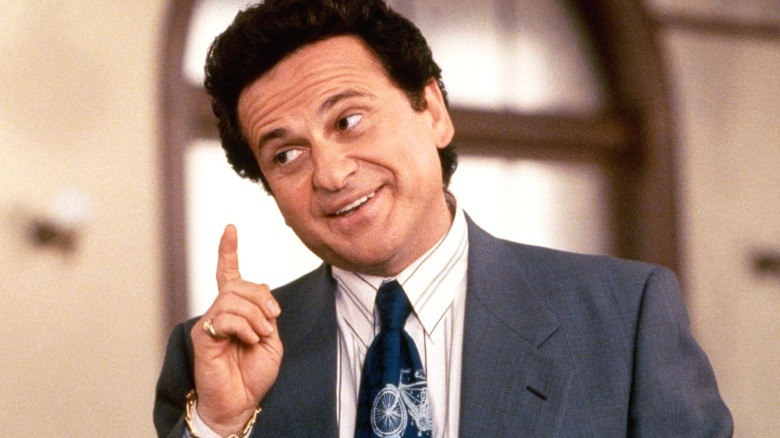
Primarily a comedy, there's a taut thread in the first half of the legal world's favorite movie, "My Cousin Vinny." New York kid Bill Gambini (Ralph Macchio) and his best friend, Stan (Mitchell Whitfield), are at real risk of getting railroaded into first-degree murder charges in rural Alabama. They make the mistake of talking to the cops without a lawyer. Consequently, a shoplifting charge turns into a high-stakes mess, and you know the cops won't back down for fear of being embarrassed.

Enter Joe Pesci as Bill's cousin Vinny, big of heart and short on common sense, who's recently passed the bar exam and has the right to represent clients in civil cases — not criminal ones. Still, he can skate through on some fast talk and big-city charm — and that's half of good lawyerin' right there! The rest of the film is the funniest legal thriller ever.

The Firm

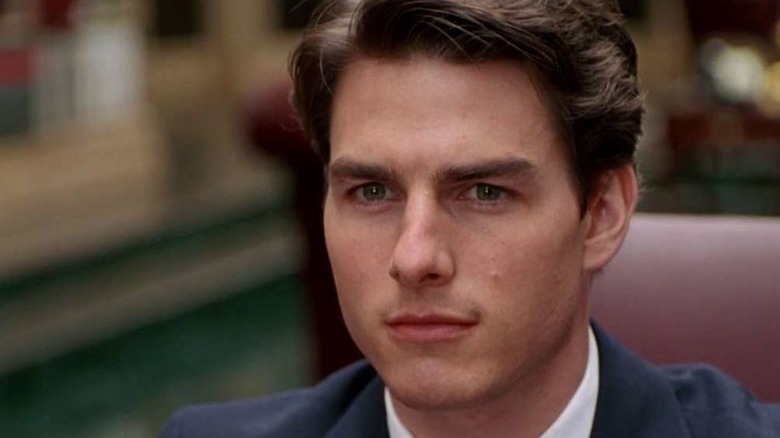
John Grisham rebooted the modern legal thriller in the '90s with a steady stream of bestselling potboilers that made everyone's parents sound like they knew a tort from a tortilla. The legal profession's answer to Michael Crichton, Grisham was both a practicing lawyer and former politician. The man knows how to sell the sizzle, and his second novel, "The Firm," became a Tom Cruise-led blockbuster in 1993.

Twisty enough to hold your attention and loaded with enough action to keep you awake, "The Firm" hides some nifty discussions of ethical dilemmas inside its Mafia-enabling-firm-versus-the-Feds exterior. Explaining what RICO charges are without putting an audience to sleep is an achievement in itself, and Cruise sells both idealism and cynicism in equal measure. Supporting him is a rock-solid cast, including Gene Hackman, Ed Harris, and Wilford Brimley in his most unsettling role since "The Thing." Brimley's not here to be cuddly, folks. He's going to protect the firm at all costs.

Primal Fear

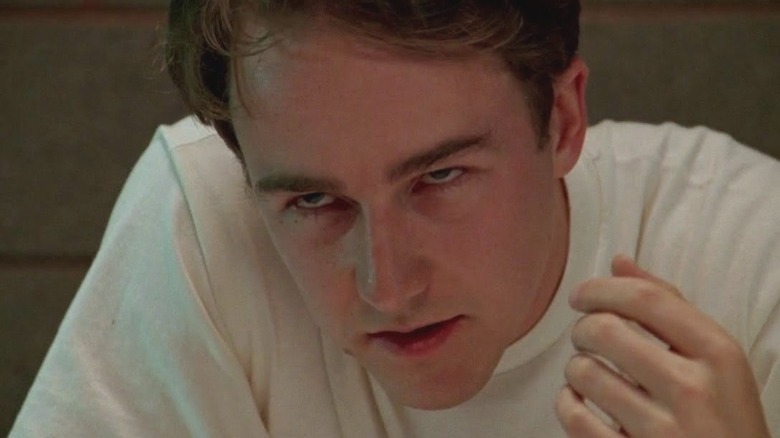
Film nerds know immediately which film they were watching when they discovered Edward Norton. "Fight Club" is a popular entry point into the actor's career, but some lucky fans caught his first cinematic outing in 1996's "Primal Fear." A standard but well-oiled vehicle for star Richard Gere, the film gave the "An Officer and a Gentleman" star the meaty role of a defense lawyer whose client (Norton) is accused of murdering the priest that abused him for years.

As lawyer Martin Vail, Gere is as strong as ever, but he's immediately sidelined by his powerhouse costar. It has to be stressed that, at the time, Edward Norton was a nobody, and this role instantly put him in the running for an Academy Award

A mix of scenery-chomping destruction and pure, furious acting, the finale between Gere and Norton is a showstopper. Norton, as Aaron Stampler, is unforgettable. For those needing closure, "Primal Fear" is based on the novel by William Diehl and has two sequels that feature both Vail and his terrifying client.

A Civil Action

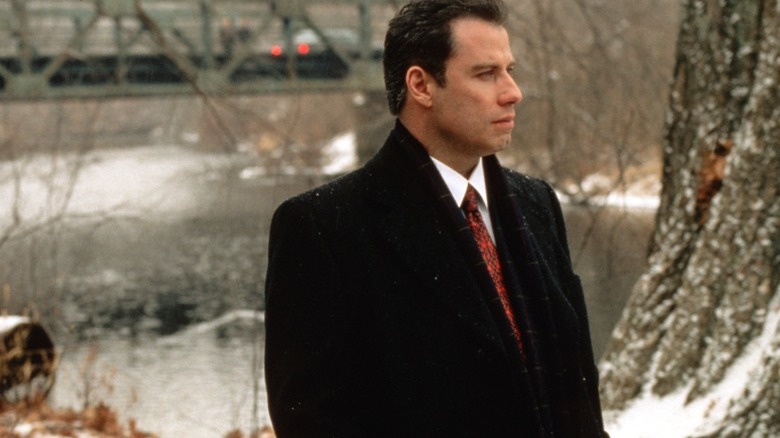
John Travolta enjoyed a modest comeback after his turn in "Pulp Fiction," and one of his best roles to come out of that period was as the real-life lawyer Jan Schlichtmann in "A Civil Action." A fictionalized but moderately accurate and intelligent depiction of the contamination incidents that happened in Woburn, Massachusetts, during the '70s, the film stars a perfectly cast Travolta as an opportunistic legal eagle. As Schlichtmann, he finds himself becoming passionate about an environmental disaster that's inflicted leukemia on a generation of local children. Still, he has a long road ahead of him.

A Superfund site is a big deal. It means the EPA has recognized and is diverting funds to clean up a hazardously polluted area. But first, the site needs to be legally recognized. The town of Woburn struggled for years to get a trio of corporations to admit they'd been quietly dumping a dangerous solvent. Jan Schlichtmann, seeing a fat paycheck, ends up in a struggle with corporate lawyers that wears him down. The key to the film is humanity — flawed, sick, tired humanity — versus a corporate monolith. "A Civil Action" is an excellent film that's never dry in how it showcases civil law.

The Lincoln Lawyer

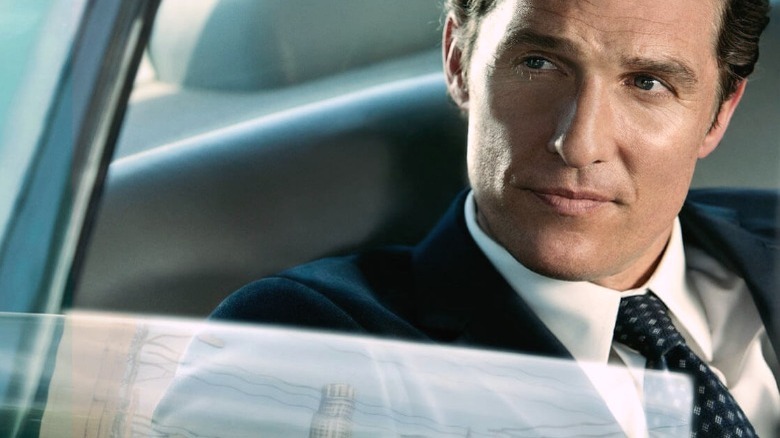
Make your own jokes about Michael McConaughey's Lincoln car commercials. God knows I have. There's no proof that his role in the understated but rock-steady thriller "The Lincoln Lawyer" directly led to his secondary career, but it is a nice bit of synchronicity. Yes, McConaughey's skeevy-but-sharp lawyer, Mickey Haller, works out of a chunky old Lincoln Town Car, hence the name. Although he sells a certain street style, Haller is nevertheless smarter than the people he's up against.

Haller takes on a high-profile case that involves a rich boy up on some big charges. At first, he believes the kid. Haller has ethics and (for reasons of his own) prefers to take on clients he believes are innocent. However, genre fans know legal thrillers rarely end anywhere close to where they begin, and it'll be no surprise to learn that this poor rich boy is an entitled wolf with some big, bad hobbies. The case nearly spirals out of Haller's control, but McConaughey's intensity helps hold the whole thing together.

Bridge Of Spies

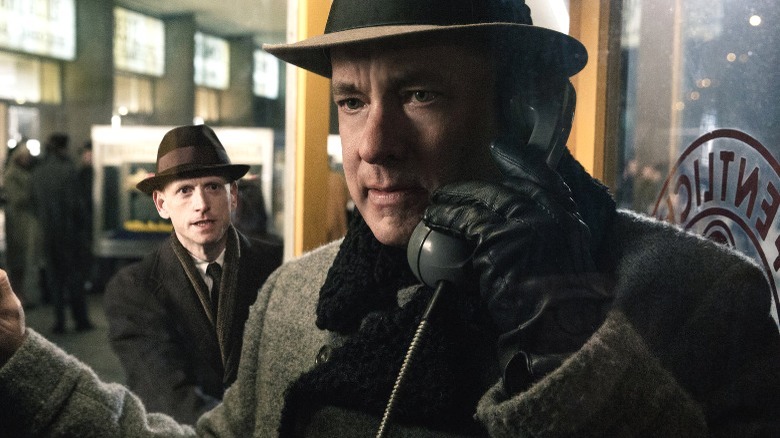
It may seem weird to forget that a Steve Spielberg movie exists, but "Bridge of Spies" seems like it fell out of everyone's head after the 2015-2016 awards season. Tom Hanks plays real-life lawyer James Donovan who acted as a legal assistant in the Nuremberg Trials. In 1957, Donovan refused to compromise his principles and offered Soviet spy Rudolf Abel (Mark Rylance) a full defense despite his clear guilt. Hanks adds humility and strength to Donovan, who earns derision from his peers for doing his job.

Donovan wins Abel his life, ensuring his client avoids the death penalty. Donovan believes a living prisoner might one day save an American, and years later, he's proven right. In a plot twist worthy of a Tom Clancy novel, Donovan must oversee a prisoner exchange that turns complicated. All of this is set against the most stressful, paranoiac era of the Cold War, with the rise of the Berlin Wall becoming a poignant focal point. As lush and intricate as any Spielberg film, "Bridge of Spies" features yet another fantastic Hanks performance.

The Insider

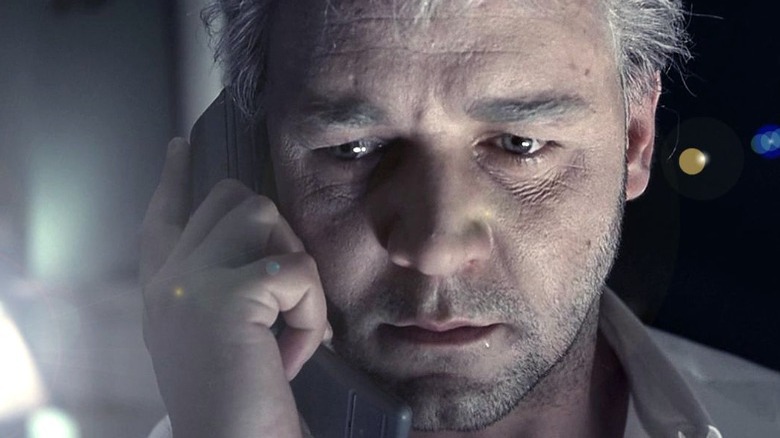
The controversies that (slightly) hamstrung the massive United States tobacco industry are treated as historical fodder now — cute and archaic amidst the rise of vaping technology and a bevy of new products. But once upon a time, Big Tobacco was the force one did not mess with, and Michael Mann's legal drama "The Insider" breaks down one of their biggest scandals — one that nearly took the credibility of the respected CBS news program "60 Minutes" down with it.

Australian actor (and occasional brawler) Russell Crowe was already making waves in the U.S. when he was cast alongside Al Pacino in "The Insider." That's a tough draw for anyone, but Crowe, as the real-life whistleblower Jeffrey Wigand, dances with Pacino's "60 Minutes" producer Lowell Bergman with just the right amount of trepidation and force to make him the centerpiece. Yes, Bergman's devotion to his ethics in the face of pushback from network brass is the foundation, but Wigand's defiance is key to making it all happen. Underrated and overlooked, "The Insider" is one of Mann's best.

Presumed Innocent

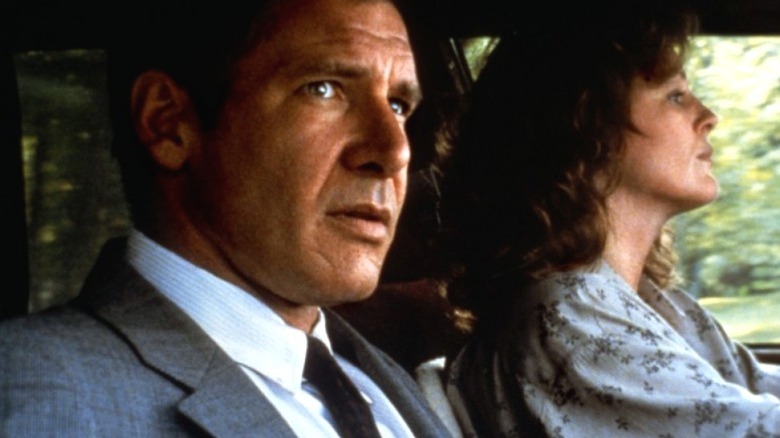
Just before John Grisham blew up the legal thriller scene, there was Scott Turow. Overshadowed by the king of the bestseller list, former Chicago Assistant U.S. Attorney Turow nonetheless has a nice body of work any fan of the genre should look into. In 1990, Turow's first novel, "Presumed Innocent," was adapted into a sexy affair starring Harrison Ford at his mussiest and most befuddled.

There are not very many nice people in "Presumed Innocent," and that includes our protagonist. Kind of a dork, Ford, as Rusty Sabich, gets saddled with a case in which he has a major conflict of interest. Our boy was sleeping around with the recently deceased, and it's not long before he winds up looking like the prime suspect. In the sort of twist that only works in lusty, early '90s films, the real culprit is a head-spinner. Melodramatic but featuring great performances from Raul Julia and Bonnie Bedelia, "Presumed Innocent" is definitely a product of the 1990s — a really good product ... like Dunkaroos.

Erin Brokovich

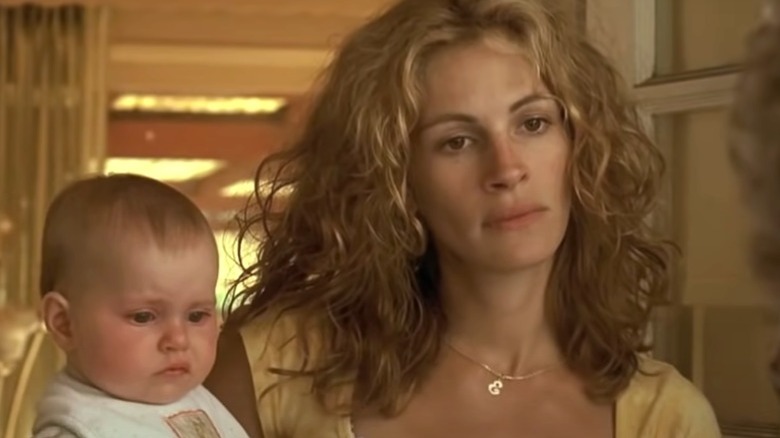
For whatever inane reasons, everyone has performers they don't enjoy. I have some issues with Julia Roberts. It's not her. It's me. Regardless, no fan of legal thrillers can ignore "Erin Brokovich." It was a juggernaut, a solid critical and box office success with a full plate of award nominations, with Roberts starring as the real-life activist who brought the Hinkley groundwater contamination disaster to light.

Brokovich, as portrayed as Roberts, isn't plucky. She's ferocious in a way that sometimes undermines her goals. But there's no doubting her passion and tenacity, and her work as a legal clerk under Ed Masry (Albert Finney) puts her in a position to do something useful with her persistence. 

Again, a corporation has used a small town as a dumping ground, and again, there's an uphill fight to get the company to admit wrongdoing. The film is a showcase for Roberts as Brokovich as she navigates the tough world of corporate crime. Despite the film's hopeful note, the real-life cleanup of Hinkley, California, remains a painful affair. Today, the town is nearly deserted, its water still contaminated with chromium-6.

The Hurricane

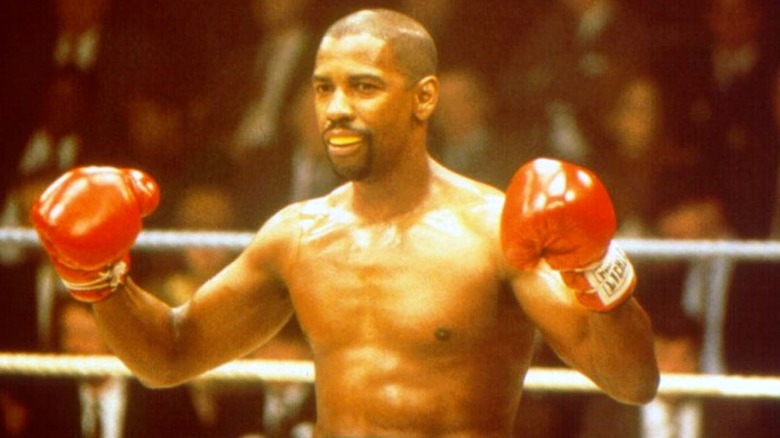
Another historical drama with tough psychological moments and some hard discussions, "The Hurricane" is one of Denzel Washington's less well-remembered films. That's a shame. Directed by Norman Jewison with cinematography by the legendary Sir Roger Deakins, the film stars Washington as Rubin Carter. Carter was a Black boxing contender of the 1960s who earned the moniker The Hurricane for his speed in overpowering his opponent.

The movie uses a dual motif to tell Carter's story: The core of the film is Carter's racism-fueled conviction in a triple homicide in 1966, a miscarriage of justice that railroaded the boxer and his friend, John Artis (Garland Whitt), into multiple life sentences on little evidence and a lot of infringement on their constitutional rights. Alongside the main plot is the 1980s-based story of a young man named Lesra Martin (Vicellous Shannon), and his years-long struggle to get Carter's case re-examined in federal court. Heartbreaking, ever-relevant, and painful, "The Hurricane" features a slew of excellent performances. The reality behind the film is a little bit more complicated, but then, it always is for Black men in America.

A Time To Kill

Based on John Grisham's first novel (the fourth to be filmed), "A Time To Kill" is a leading contender for the best adaptation of the author's work. And while it feels like Matthew McConaughey has been with us forever, this is the film that provided his major breakthrough. "A Time To Kill" is a ticking timebomb of tension. It is a story that knows it's asking for the audience to root for a defendant who is clearly guilty, demands we examine our motivations, and allows us the empathy to accept them.

Justifiable homicide is a knotty issue. It's also not a defense that's going to hold water when furious father Carl Lee (Samuel L. Jackson) guns down the two men that raped and nearly killed his daughter (RaéVen Kelly). It's hard to keep the nuances in mind. Emotionally, Carl Lee is justified in his actions. His tangible rage surges throughout Jackson's fiery performance. However, the law is clearly not on his side. Grisham's tale of a man who does what the law will not remains controversial. "A Time To Kill" is an excellent story filled with complicated questions.

If you or anyone you know has been a victim of sexual assault, help is available. Visit the Rape, Abuse & Incest National Network website or contact RAINN's National Helpline at 1-800-656-HOPE (4673).

Amistad

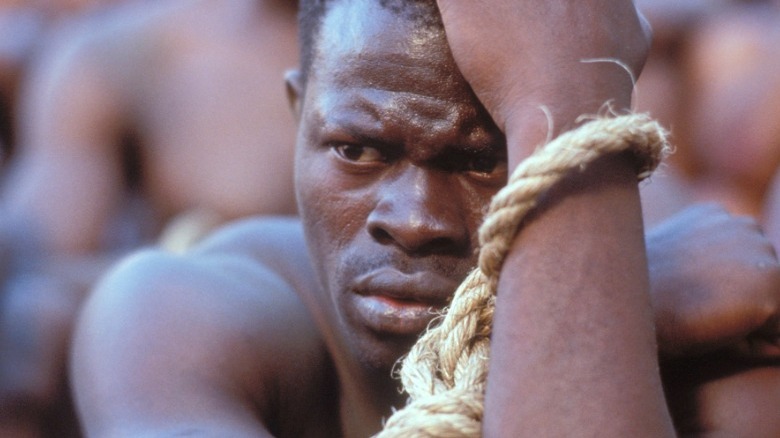
What was up with Matthew McConaughey and legal dramas in the '90s? He's not the centerpiece of Steven Spielberg's "Amistad," though. That honor goes to Djimon Hounsou in one of his finest roles to date. The entire ensemble is excellent and includes Sir Anthony Hopkins (as John Quincey Adams), Morgan Freeman, Pete Postlethwaite, Stellan Skarsgard, and an early appearance by "12 Years a Slave's" Chiwetel Ejiofor. 

In 1839, Joseph Cinqué (Hounsou) leads a revolt aboard the slave ship La Amistad. However, he and the survivors arrive on the shores of the United States, not Africa. Soon, Cinqué and his fellow captives are caught up in a legal battle over their rights as property. 

Of course, this pre-Civil War film recognizes the great evil of slavery, but the fight itself is bittersweet. The defense and the audience know this is about basic humanity, but in that era, it was, unfortunately, more about politics and the proper accounting of legal property. It should disgust — and it does. There's little that's purely optimistic here, but Hopkins provides a stunner of speech that helps give hope as the credits roll.

Philadelphia

It's a blessing that both the social stigma and the health threat of HIV/AIDS have been greatly reduced. For many gay men in the 1980s, the risk of the disease and the impact their sexuality had on their public lives caused them to live in constant fear. It was not mainstream. Sexuality was often hidden. Consequently, thousands died in silence. "Philadelphia" helped to change that

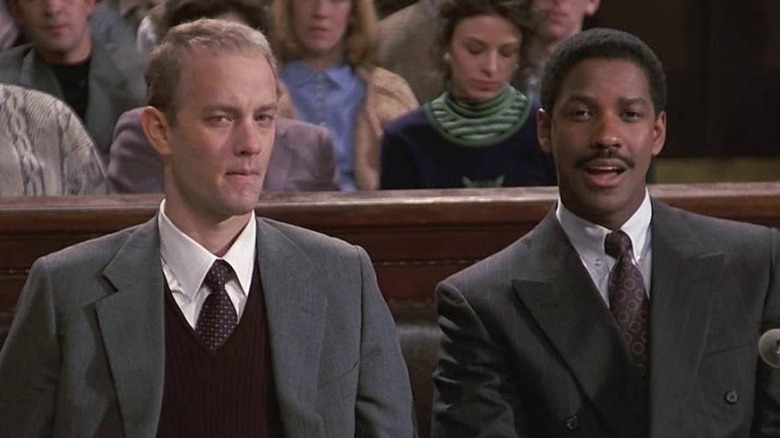
"Philadelphia" also turned Tom Hanks into a serious dramatic actor. Its success relies on the humanity and the empathy that grows between Hanks and Denzel Washington.

The civil case presented in the film is fairly straightforward. Hanks stars as Andrew Beckett, a lawyer who tries to keep his sexuality and HIV diagnosis secret. When he is dismissed after a paperwork error, he suspects his firing was punitive —  a way for his firm to avoid a wrongful termination suit on the basis of discrimination. 

At the height of the AIDS crisis, Beckett is left to advocate for himself. Joe Miller, a homophobic Black lawyer who fears the now-debunked ways to contract AIDS, realizes the parallels between racism and this new era of discrimination and agrees to help. As a memoir of a dark period in modern America, "Philadelphia" is a heartbreaker. We're a little better than this now. But there's still a long way to go.

Sleepers

Based on author Lorenzo Carcaterra's 1995 book of the same name, "Sleepers" is a tough story about the life-destroying weight of abuse. Although the film's courthouse drama feels understated compared to its larger story of the tragedy that befell a handful of Hell's Kitchen kids and how they exacted revenge on their abusers, Brad Pitt's performance is gripping throughout.

A brutal counterpart to "Stand By Me," "Sleepers" is a lesson in outsized consequences. The four young protagonists are street punks who make extra cash by doing odd jobs for local crime families, but they're not bad kids at heart. They screw up and end up in a juvenile center run by sadistic guards who prey on them. As adults, the scars of their experiences are deep. A revenge killing pulls the four back together for a bittersweet reunion that can't last. Yes, Carcaterra's story has earned pushback over the years, but with the Kids for Cash scandals and the horrifying Elan School tragedy as our reality, this fictional tale of revenge is cathartic.

If you or someone you know may be the victim of child abuse, please contact the Childhelp National Child Abuse Hotline at 1-800-4-A-Child (1-800-422-4453) or contact their live chat services.

A Few Good Men

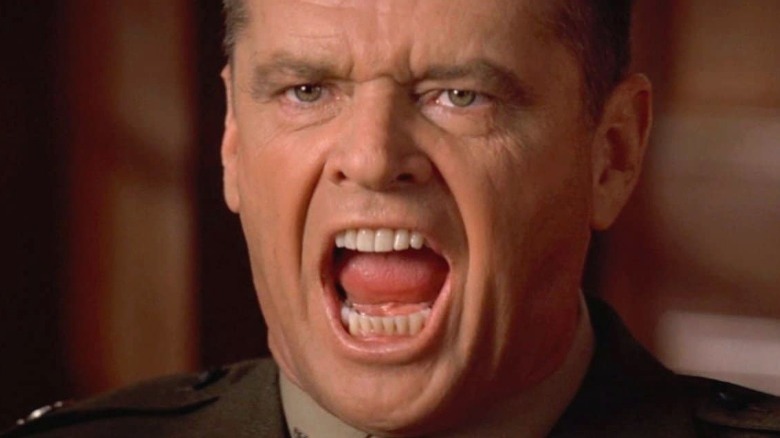
How can you not be a sucker for Jack Nicholson yelling at the top of his lungs? "A Few Good Men" sets up some good reasons for Nicholson to be an utterly entertaining bastard by putting him on a witness stand in front of a full audience. In the film's famous courtroom sequence (which has caused even eight-year-olds to scream "You can't handle the truth!" without having any idea where the phrase came from) the veteran actor is gripped in ham-to-ham combat with none other than Tom Cruise.

Written by Aaron Sorkin and directed by Rob Reiner, "A Few Good Men" walks its audience through the purposefully complicated world of military law. Court martials are at stake for two young Marines accused of murder, but the chain of command means that's neither where the story ends nor where it begins. As Colonel Jessup, Nicholson is as terrifying as he is mesmerizing. Ultimately, what's at stake in "A Few Good Men" is the true definition of honor.

JFK

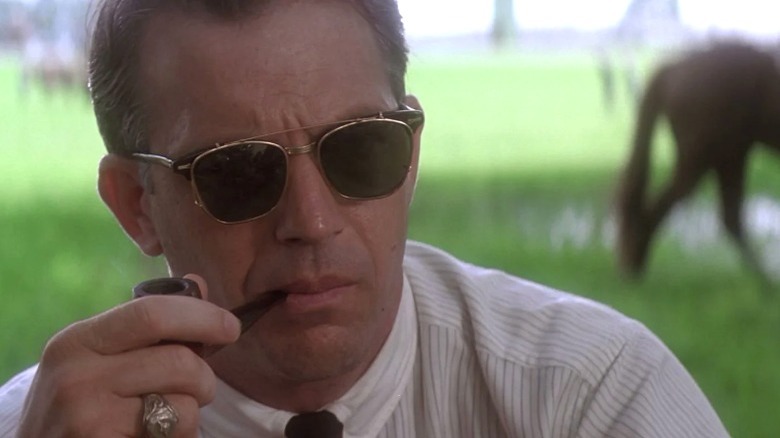
I'm not going to play around. Oliver Stone's "JFK" is fiction built out of all the juiciest bits of conspiracy that came out of the Warren Commission. Still, it's terrific fiction — a stewpot of magnificent performances and cinematography that lingers in the mind. It's got John Candy in a rare dramatic role as a troublesome New Orleans lawyer. It's got Gary Oldman as Lee Harvey Oswald. It's got Donald Sutherland as a faux Deep Throat guiding Kevin Costner through a conspiracy-filled minefield.

Nominally, "JFK" is about the way these complicated theories build on each other, giving rise to our collective frustration with finding the truth. It is also about trying to implicate the so-called deep state for the assassination of a sitting president. As tantalizing as that may be, the movie doesn't sell the premise well enough for even its fictional jury to buy. It's a great film that gives insight into Oliver Stone's alternate reality. Yet, like a glimpse through Tolkien's palantíri, it's not real. But it is spectacular to watch.

12 Angry Men

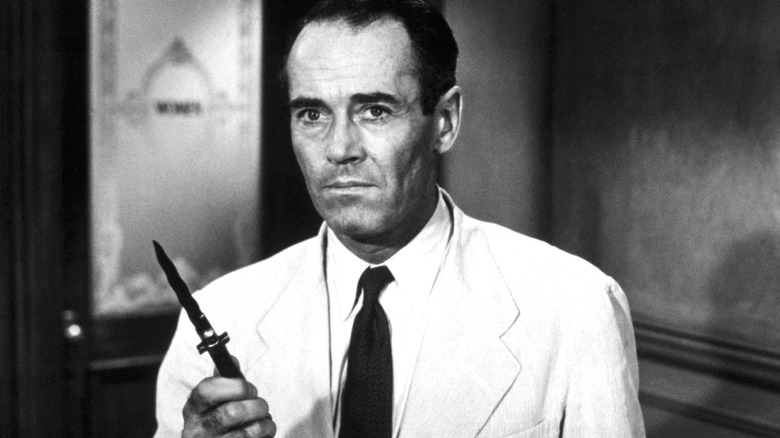
There's a fair chance you saw Sidney Lumet's "12 Angry Men" as part of a course in high school or college. If you haven't seen it since then, it's time for a rewatch. The kind of film that Aaron Sorkin fights to recreate with his didactic intrigues, "12 Angry Men" is a masterwork of body language and dialogue. The key to "12 Angry Men" is its simplicity: An anonymous jury of 12 men must deliberate over the fate of a young man who, if he's found guilty, will be sentenced to death.

For roughly 90 minutes, these men interrogate each other, sometimes aggressively, about the details that stick out from the testimony they've heard over a long trial. They must also contend with the issues of memory and emotion. Behavioral cues become meaningful, personal stakes become important, and in the end, they make the only decision they can. 

Michael Clayton

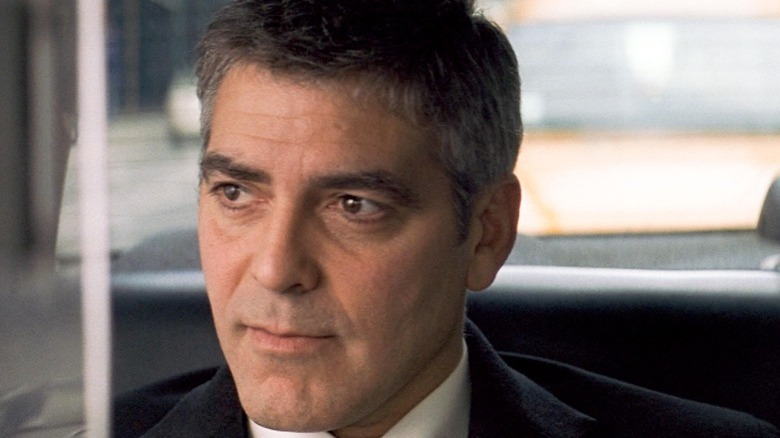
Directed by Tony Gilroy, writer of the "Jason Bourne" franchise, "Michael Clayton" has a title that makes it sound like it's going to be a docudrama about some boring, typical white dude. But keep the "Bourne" thing in mind. As the titular Clayton, George Clooney is an amoral troubleshooter for a big law firm. He's kind of like The Wolf (Harvey Keitel) from "Pulp Fiction" but sexier. No offense, Harvey.

"Michael Clayton" is an intricate thrill-ride that looks at John Grisham's work and says, "Yes, that's very nice. But how about we add some explosions?" To make sure the audience is awake, the film starts with the possibility that Clayton is dead. Then, we go back several days to see just how he wound up with a self-disassembling car. The answers are complicated, but naturally, greed is a factor. This movie deserves the chance to be seen with no expectations on the part of the audience, so let's end any discussion of plot details here. Trust the reviews on this one. The critics loved it. You will, too.

Read this next: The 20 Best Heist Movies Of All Time

The post The 20 Best Legal Thrillers in Cinema History appeared first on /Film.

22 Feb 00:39

Attack On Titan Final Season Sees The Return Of Old Characters And Conflicts In Chaotic And Somber 'Sunset'

by Rafael Motamayor

After a series of intense episodes full of great action and game-changing twists, it makes sense that "Attack on Titan" would finally slow down a bit to give us a ground-view of the consequences to Eren's actions. That's not to say that the new episode, "Sunset," was a step down or anything; on the contrary, we get some fantastic moments of character introspection and even some big reveals as everyone continues to struggle with deciding what to do in the face of the Rumbling.

One thing is clear in this episode of "Attack on Titan": No matter what happens next, apocalypse or not, war is one thing that never changes.

Would You Look At That, More Daddy Issues

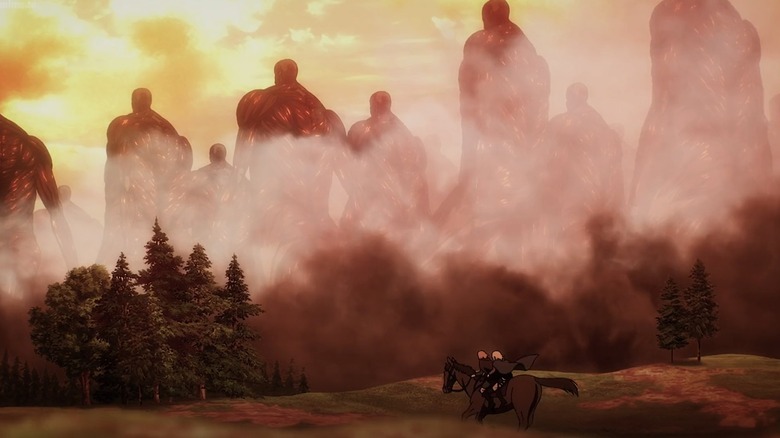
We start the episode with the return of Hitch in the Stohess District, which is back to being a war zone after Eren wreaks havoc in the district once again. There are bodies and destruction everywhere, and there are as many people blaming Eren on the casualties as there are voices crying out that they were necessary sacrifices. There is something utterly terrifying and effective about these post-Rumbling episodes of "Attack on Titan" which never let you forget about the walking apocalypse in the background. In every single scene, you can hear the constant noise of footsteps or see the constant presence of the huge Colossal Titan bodies marching past, truly giving you a sense of the scope of the Rumbling.

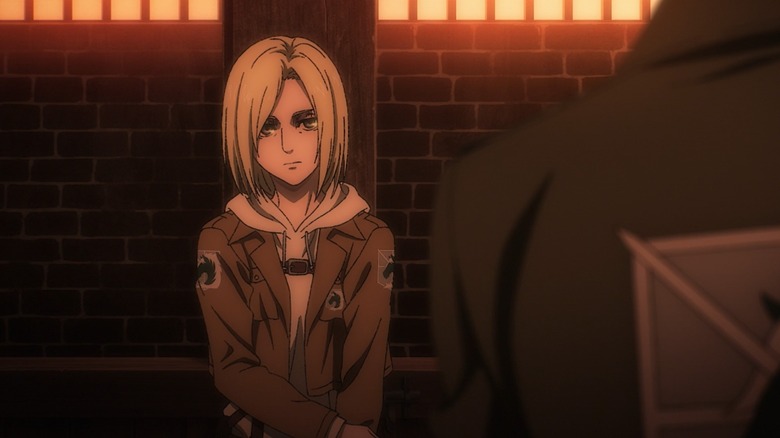
Hitch reunites with Annie herself, who is back and as misanthropic as ever. Having spent four years trapped in a crystal cage of her own making, listening to the bickering of Hitch and Armin, it's time for Annie to tell her story. Sadly, this feels a bit redundant, in that there's not a lot we couldn't guess from context or from past episodes. The way she tells it, she was abandoned as a child for being half-Eldian, and was taken in by an Eldian man who -- surprise -- trained her to be a lethal weapon in order to become a warrior candidate and grant him honorary Marleyan benefits. This is why she never cared about any life other than her own, and why she was always so ruthless; being congratulated for her physical prowess was the only type of praise and affection she knew. That all ended, however, on the day she shipped out for Paradis, as her father apologized for everything he did and wished she could just return home alive.

Annie acknowledges that she did unforgivable things, but she doesn't care about those she hurt, only about returning to her father. This once again reinforces the show's idea that nationalism, loyalty, and idealism are meaningless compared to the urge to fight for those closest to you, for better or worse.

'Humanity Will Never Stop Fighting Itself Until It Shrinks To A Size Of One Or Fewer'

For the past season now, "Attack on Titan" has pondered the value of preemptive strikes. Was Eren obliterating Liberio to weaken the world's military before they could invade Paradis justified, or good? Is the Rumbling? Though the show has mostly avoided giving us a direct answer, instead providing enough context for the audience to understand why the characters would act the ways they do, "Sunset" does give us a few ideas as to why Eren was wrong to think an apocalypse could solve Eldia's problems.

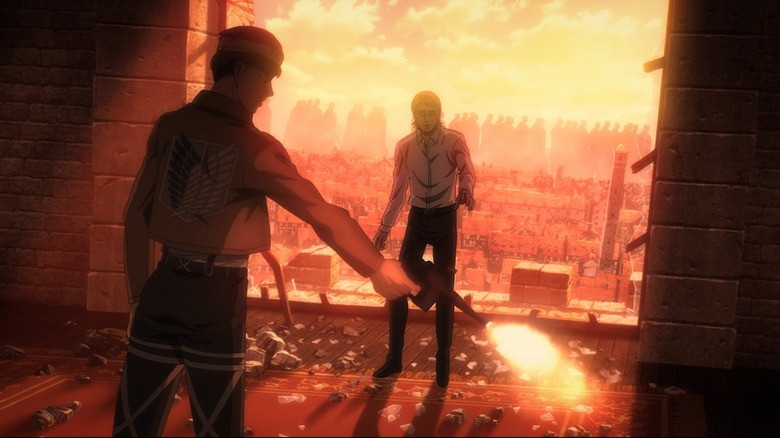
For one, there's Keith Shadis giving a rather pessimistic piece of advice to the Scout recruits he saved last episode, dissuading them from trying to make a run for it by explaining that they should keep their head down and accept that the Yaegerists are now fully in control. If the recruits try to fight or even just disobey, they'll be killed along with anyone representing the old way of doing things, as Shadis surely will. Instead, he pleads them to wait it out and strike when the time is right. Likewise, we also get a scene where Armin tells Mikasa that he needs to do everything he can to stop Connie from killing Falco, because he needs to be in Gabi's good graces to use her to talk Reiner and Pieck into their side, because after the Rumbling destroys the outside world, whoever controls the Titans will rule Paradis, and they have to avoid a new civil war.

The fact that, even in the middle of an extinction-level event, these characters are already thinking about what conflict will come next calls back to a quote from Erwin back in season 3, in which he talks about violence being inherent to human nature: "Humanity will never stop fighting itself until it shrinks to a size of one or fewer." No matter how many people are left alive after the Rumbling, no matter if they are Eldian or Marleyan, Titan shifters or not, peace will not last forever, and the hatred and violence will not disappear. This is honestly the bleakest and most depressing statement the show has made in quite a while, guiding the audience to spend so much time justifying the actions of the characters and judge whether the losses are acceptable, only to now show that it will all be in vain. Eren may be doing what he's doing because he's trying to save his friends from the outside world, but what happens to them after all that? If there was ever any doubt that "Attack on Titan" would end on any positive or uplifting note, this episode stomped on that idea.

Then we have Floch, the most punchable face on the show and the main reason to feel hopeless about the future of Paradis Island. We see him happily executing the volunteers unless they accept to be subservient to the new Eldian Empire. He also revels in all the death and destruction, because he sees it as a necessary sacrifice to achieve freedom. He tries to convince the other Yaegerists that he should be in charge because he was personally chosen by Eren to be his voice, and he supposedly knew of his plans a whole 10 months prior — but we call B.S. on that. Floch continues to be the face of fascism and idolatry, showing how low people can fall when they start placing all their hope on a single savior, whether it's Eren now, or Erwin back in season 3. It creates an interesting juxtaposition with Armin, who has a full breakdown this episode after he realizes that things are just overwhelmingly complicated and spread out, and lashes out at Mikasa when she asks about Eren, saying he is just too big of a problem for them to handle right now. Armin is still reeling from the decision to bring him back rather than Erwin in season 3, and he struggles to live up to that decision, believing Erwin to be the man who always had a good plan. But we know that's not true: Levi and even Erwin himself said a lot during that third season that all he had were gambles, and the only thing he had in mind was not the good of mankind, but a drunken dream of seeing the truth of this world, everyone else be damned. Floch and Armin were forever changed by the Battle of Shiganshina, and it's a testament to the writing of "Attack on Titan" that those moments can become so essential and important years later.

Not All Is Lost

Still, from the very first episode of the show, "Attack on Titan" has been about the ways humanity manages to fight in the face of adversity, even if that adversity is of their own making. As bleak as things seem right now, there is some hope.

For one, there's Kaya and Gabi, the personifications of the anime's ultimate message of hope in human reconciliation, as they say their goodbyes and even share a hug. As last week reminded us, and as this episode continues to show, the adults are still stuck in the forest of hatred and violence they made for themselves, but it is the kids who can see the end of the forest and can move past this cycle of violence.

Then there's the final reveal of the episode: The return of Levi and Hange. The latter is just as weirdly awkward and funny as ever, as she plainly stops the Cart Titan in her tracks and asks Pieck and Magath for help. This may be the start of the last alliance that Armin talked about earlier in the episode, the last hope of transcending conflicts and borders and ... what? Stopping Eren? That may solve a few things, but as this episode showed, the Titans are just a red herring, and war? War never changes.

Read this next: Every Peter Jackson Film Ranked From Worst To Best

The post Attack on Titan Final Season Sees the Return of Old Characters and Conflicts in Chaotic and Somber 'Sunset' appeared first on /Film.

21 Feb 23:57

PCSX2 can now support custom textures for fan remasters

by Dustin Bailey
PCSX2 can now support custom textures for fan remasters

PCSX2 is the go-to emulator for PlayStation 2 these days, and a wealth of updates continue to bring it new features. Now the emulator is getting support for texture dumping and replacement, which means that simple fan remasters with updated textures will soon be possible for pretty much the entire PS2 library.

Contributing developer Stenzek posted a build of PCSX2 with support for the feature as a pull request on Github over the weekend. Given that Stenzek's other recent contributions to the project - like PCSX2's Vulkan support - have been met with wide acclaim from the community, this one will likely be part of the main PCSX2 build soon.

The new feature allows you to dump textures from a game to your hard drive, or re-implement textures directly from a folder. Some users have already had success running original textures through an AI upscaler to gently improve the fidelity of various games with minimal effort. Or, you could just do what Stenzek did, and paste a fat chocobo to the side of the crates in Ratchet & Clank.

21 Feb 23:57

The Daily Stream: Celebrate Alan Rickman's Birthday With A Little Chaos

by Jenna Busch

(Welcome to The Daily Stream, an ongoing series in which the /Film team shares what they've been watching, why it's worth checking out, and where you can stream it.)The Movie: "A Little Chaos"Where You Can Stream It: NetflixThe Pitch: It's the late Alan Rickman's birthday today, and in honor of that, let's shine a spotlight on one of his final films, "A Little Chaos." Rickman wrote the screenplay along with Jeremy Brock and Alison Deegan from Deegan's story. It was his second turn as a director, and he also plays the minor but important role of King Louis XIV of France. "A Little Chaos" is the story of Sabine De Barra (Kate Winslet), a landscaper in 17th century France who has been through personal tragedy. When the King decides to build the Garden of Versailles, he assigns the job to architect André Le Nôtre (Matthias Schoenaerts), who needs an assistant, and Sabine applies for the job. Though there are some issues, Sabine is hired, manages to meet the king, and win over his ladies -- though she is sabotaged at every turn. There is a love story, a story of healing, and a beautiful tale of a woman ahead of her time finding what she treasures most: someone who appreciates her talent and, more importantly, her own sense of self. 

Why It's Essential Viewing

I'm of the opinion that watching Alan Rickman dancing in the costume of King Louis XIV should be enough to sell this film, but more than that is its heart. This is not a grand or bombastic story, the way things with French kings in them often are. This is a quiet story about a woman who has lost almost everything, and yet never loses her creativity or drive to make a better life for herself. Maybe I'm reaching here, but I think part of what makes it so lovely is that it feels so personal.

Not to get all symbolic on you, but the film is sort of a discussion about order and chaos as much as it is a love story. That sounds very lofty, but it doesn't come across that way. It's very clearly stated. André's style is all about order, something you often see in the gardens of that century's nobility. Sabine, however, has found refuge and peace in things being unstructured. She doesn't follow the idea of symmetry in her designs, and at one point is observed moving something in a garden so it's off center. André sees that moment from a window, and dismisses her because of it, just as the rest of the designers do. 

A Little Chaos Is Good For The Soul

Her acceptance by the other designers isn't just put in jeopardy by the fact that she's a woman. Women were relegated to certain parts of society during this time, of course, but in the court (whether you're nobility or working for them), there was actually room for women to have a skilled profession. Hey, the wealthy do what they want, right? The thing that upsets the status quo, however, is that Sabine is not following the rules of order, which makes her hard to predict. It makes the other designers question their own choices, and no one is comfortable with that. However, sometimes it takes being shaken up to discover things about yourself and the world that you never knew before.

The symbolism is clear in this film. There is a moment when Sabine is speaking about a fading flower to the King, but is very clearly speaking about his out-of-favor courtesan Madame de Montespan (Jennifer Ehle), and why he should reconcile with her. And amid the chaos are little moments, like when Sabine meets a grieving man and offers a small kindness, which changes her life.

I won't spoil the end for you, but I will say that the final scene with Alan Rickman seems like the perfect send-off for a man who has given us so much entertainment over the years. Even if you watch it for that alone, I think you'll get something wonderful out of it. We miss you, Mr. Rickman.

Read this next: The Daily Stream: Meet The Australian Bloodhunters Of Firebite

The post The Daily Stream: Celebrate Alan Rickman's Birthday With A Little Chaos appeared first on /Film.

21 Feb 18:32

Ultima Patcher 1.7

by Pix

A new version of the Ultima Patcher has recently been released adding support for the PC port of Ultimore 1 – A World Divided. That’s available for download from https://github.com/Fenyx4/UltimaPatcher/releases/download/1.70/UltimaPatcher.zip.

I still need to give this new Ultimore port a go myself. Trying to get anywhere with the Apple II original was a frustrating exercise but I’m looking forward to being able to try it on the PC. I should be reviving this blog as least briefly whenever I do get around to it.

You may notice the external website address. The Patcher is now open source and all the recent work has been done by Fenyx Dragon who has also added support for his own Ultima 4 randomizer patch at the same time.

21 Feb 18:30

I just noticed that early Colonial Vipers had some odd instruments

by Jason Weisberger

I loved the OG Battlestar Galactica. To young me, Colonial Vipers were nearly as cool as the Star Wars X-Wing. Watching this video of the first appearance of the Viper I noticed a few things I never really did before, however. — Read the rest

21 Feb 14:39

‘Fort Knox’ is an Amazing The Elder Scrolls V: Skyrim Sci-fi City Fan Expansion Featuring Multiple Main Areas

by Aernout van de Velde

ford knox mod elder scrolls v skyrim fan city expansion sci-fi

Another day, another great modification for the ever-popular The Elder Scrolls V: Skyrim.

Skyrim recently celebrated its 10th anniversary but the RPG is still receiving great mods on a daily basis, further improving Bethesda’s popular game. Today we wanted to share a modification for those looking for a bit of sci-fi modding.

Created by modder ‘Ripcat’, the ‘Fort Knox’ sci-fi city fan expansion for The Elder Scrolls V offers multiple new main sci-fi areas, including Accord Plaza, Downtown, Industrial Zone, Yanabayashi Park, and Lake Athabasca. This new mod also allows players to traverse to “Octo8 Island” – an island that can be accessed via a shuttle from Accord Plaza. In addition to offering these new areas, this mod also features over 400 new NPCs, over 150 interiors, new types of robots, and over 150 modern new weapons/armor, etc.

We’ve included a video of this cool new mod in action down below:

Those interested can download the mod via Nexusmods. Please note that it has been flagged for containing ‘adult’ content. As such, you’ll need to log in and change content preferences within your Nexusmods account.

The Elder Scrolls V: Skyrim is available globally now for PC and consoles. The game was originally released back in 2011. The next installment in the series, The Elder Scrolls VI, is currently in the works at Bethesda. Recently it has been confirmed that the upcoming title will be exclusive to Xbox and Bethesda aims to make the game a "decade game".

"You go back and you read a review of the first Elder Scrolls. And then you read The Elder Scrolls IV: Oblivion's, then you read The Elder Scrolls V: Skyrim's", Bethesda's Todd Howard said last year. "You black out a couple things. And they read the same. “You've stepped out and oh my gosh, it feels so real.” People change. Technology changes. But the ultimate goal is still to make it so that, when you boot the game up, you feel like you've been transported. […] The Elder Scrolls VI has got to be a “decade game.” How do you make a game where you go into it, like, “People have to play it for a decade?”

The post ‘Fort Knox’ is an Amazing The Elder Scrolls V: Skyrim Sci-fi City Fan Expansion Featuring Multiple Main Areas by Aernout van de Velde appeared first on Wccftech.

21 Feb 14:32

Punk cover of Pee-wee's Playhouse theme song

by Rusty Blazenhoff

Kobanes, a Chicago punk band, have covered the theme song to Pee-wee's Playhouse and now I never want to hear it any other way. It just works!

Fun trivia: Cyndi Lauper sang the original theme but is credited as "Ellen Shaw."Read the rest

21 Feb 14:31

Christopher Nolan Has A Hot Take About Blade Runner

by Joshua Meyer

"Blade Runner" is one of those classic films that has existed in numerous versions over the years. The original 1982 domestic and international cuts gave way to a so-called "Director's Cut," and then the "Final Cut," which featured additional involvement from director Ridley Scott. Since the Final Cut — released in 2007 as the movie marked its 25th anniversary — is the only one that Scott oversaw without an intermediary, fans may be inclined to regard it as the definitive version. However, Scott's fellow filmmaker, Christopher Nolan, has a different take, and it may be a hot one, if you're not used to hearing much love for Harrison Ford's abandoned voiceover.

In "Blade Runner," Ford plays Rick Deckard, a cop in a futuristic Los Angeles who hunts replicants (synthetic humans). Scott did not have final cut over the theatrical release, and the studio wanted a happier ending and voiceover narration to help clarify the story after it tested poorly with audiences. Nolan saw the studio's version on VHS first, and in an appearance on the Happy Sad Confused podcast, he spoke about the impression it and other blockbusters made on him, saying:

"[A] really seminal film was Ridley Scott's Blade Runner. All this science fiction, somewhere in there you've got the Bond films. It's just signified to me the potential of the blockbuster, and of the globe-traveling sort of glamorous filmmaking. But Ridley Scott's Blade Runner, I first watched it on VHS. I was too young to go see it in the cinema, you know it was an R-rated film. And even on that smaller screen, something about the immersion of that world, and the creation of that world really spoke to me. And I watched that film hundreds of times, literally hundreds of times."

'It Is The Best Version Of The Film'

"Blade Runner" had a number of production problems, and neither Scott nor Ford were fans of the studio-mandated voiceover. Ford felt pressured to do it against his will, and over the years, he has given various interviews in print magazines like Empire and Playboy, describing the end result as "bad voiceover" and "bad narration."

The 1992 Director's Cut of the film subsequently removed all trace of it. Yet in an era where it's all too easy for studios to flood the market with extended editions and other alternate cuts of perennial film favorites, Nolan still prefers the version of "Blade Runner" that he was first exposed to on VHS all those years ago. He said:

"It is the best version of the film. It's imperfect - and it seems presumptuous and I'm a huge fan of Ridley Scott, so I don't want to go up against his view in a sense - but the reality is, that tension between the marketplace, between the studios, between the fights, the creative stuff that happens when a film goes out, unless they literally pull the film out of the director's hands and recut it, and bastardize it in some way, I think really the authoritative version of the film tends to be the one that goes out there in theaters."

'There's Something About That Put Up Or Shut Up'

Nolan continued:

"Even with the voice-over, all the rest, there are all these defining things to it that I realized I'd missed over the years in coming to the other versions. And, I think there's something about that 'put up or shut up.' Okay, that's the thing you put in theaters. I think as filmmakers, well I think for the public, that has to be protected as some kind of authoritative, definitive statement on what the film is."

The influence of "Blade Runner" on Nolan's work can perhaps most acutely be felt in "Batman Begins," where the rain and steam of the Narrows and Gotham City functions as a kind of superhero reimagining of Scott's dystopian L.A. "Batman Begins" also utilized a key "Blade Runner" cast member by having Rutger Hauer, who played the fierce replicant Roy Batty, serve as the CEO of Wayne Enterprises.

In the end, knowing how much Nolan values the purity of the theatrical experience, and knowing that he watched the theatrical cut of "Blade Runner" hundreds of times and grew attached to it as a kid, it's not altogether surprising to hear that he prefers it to any of the later releases. For other cinephiles, however, whether or not this is actually "the best version" of "Blade Runner," as he called it, is highly debatable.

Read this next: The 20 Best Dystopian Movies Of All Time

The post Christopher Nolan Has a Hot Take About Blade Runner appeared first on /Film.

21 Feb 04:17

FreeDOS 1.3

by Jim Hall

The new FreeDOS 1.3 is now available for download! This contains a bunch of great new features and improvements since the 1.2 release, including: new FreeCOM 0.85a, new Kernel 2043 and an 8086 version with FAT32 support, floppy Edition now uses compression and requires about half as many diskettes, the return of networking, some new programs and games, many many many package updates, some updates and improvements to NLS, improved install process, especially with the MBR, some support to automatically set the COUNTRY.SYS information, improved CD initialization for the boot media and installed system, .. and much, much more! Download FreeDOS 1.3

Check the Readme for more details. You'll need 20MB to install a "Plain DOS system," or about 275MB for a "Full installation including applications and games." You can find other optional packages on the BonusCD. For a list of everything included in FreeDOS 1.3, including what's installed and what's available to install, read the release report file.

I'm very excited for FreeDOS 1.3 - THANKS TO EVERYONE for your help in making this new release! The new FreeDOS 1.3 reflects all the hard work of everyone who wrote code, translated messages, edited documentation, tested new versions, offered support, and all the other things that go into a new version. I can't thank everyone here, but I can try to list a few names: Jerome, Tom, Ralf, Eric, Aitor, WIlli, thraex, Alain, Anton, Arkady, Bernd, Jack, Ercan, Imre, Igor, James, Joe, Laaca, Mark, Mateusz, Gregory, Nagy, RayeR, Rugxulo, Shane, Mercury, Uwe, Gregory, .. and everyone! THANK YOU!

21 Feb 04:15

After Blackouts, Texas Became a Top State for New Solar Installations as Thousands Install Microgrids

by EditorDavid
"Thousands of Texans who have turned to solar power and battery storage, creating so-called microgrids, as a solution to blackouts," reports the Houston Chronicle. "With a venture creating the same little power plants for apartment buildings, Texas has become a national leader in residential solar power installations." From 2019 to 2020, small-scale solar capacity in Texas grew by 63 percent, to 1,093 megawatts from 670 megawatts, according to the Energy Information Administration. In the first three quarters of 2021, another 250 megawatts of residential solar were installed in the state, according to the Solar Energy Industries Association. In last year's third quarter alone, Texas ranked second behind California in the amount of power from new installations during the period, the industry's Washington, D.C. trade group said. Surging demand for residential solar power in Texas after the February 2021 freeze put pressure on installers to keep up, said Abigail Hopper, president and CEO of the association. The race to buy new rooftop panels has slowed some, she said, but Texas remains among the top three states for new installations. And the shrinking price of solar cells will help support its growing popularity, Hopper said. "I think as more and more Americans really struggle with the impact of severe weather — everything from fires, the cold, hurricanes, droughts — and see the impacts on power and power outages, you're going to continue to see folks looking for resiliency," Hopper said.

Read more of this story at Slashdot.

20 Feb 12:11

Rebel FM Episode 529 - 02/18/2022

This week we're back-ish after a food-poisoning prompted week off and we've got a LOT to talk about, including, Sifu, Horizon Forbidden West, Total War: Warhammer 3, Infernax, the Uncharted movie, and plenty more! This week's music:  Mastodon - Teardrinker
20 Feb 12:06

The Elder Scrolls V: Skyrim gets a sci-fi city fan expansion, featuring 400 NPCs & 200 interiors

by John Papadopoulos

Modder ‘Ripcat’ has released an amazing sci-fi city expansion mod for The Elder Scrolls V: Skyrim Special Edition, called Fort Knox. For Knox features a large sci-fi/modern city with 5 main areas, and is a must-have for all sci-fi Skyrim fans. The main areas of the city are Accord Plaza, Downtown, Industrial Zone, Yanabayashi Park … Continue reading The Elder Scrolls V: Skyrim gets a sci-fi city fan expansion, featuring 400 NPCs & 200 interiors →

The post The Elder Scrolls V: Skyrim gets a sci-fi city fan expansion, featuring 400 NPCs & 200 interiors appeared first on DSOGaming.

19 Feb 23:14

Tiny Core Linux: The Smallest Linux Distro Ever Made

by David Delony

You might look at the current crop of major Linux distros and see how big their ISO images are. It's common to see the sizes balloon to several gigabytes.

19 Feb 22:27

Quake 4 in Quake 2 Vanilla Patch 1.1

Quake 4 in Quake 2 Vanilla Patch 1.1
Quake 4 in Quake 2 Vanilla Patch 1.1, This patch fixes the readlevel: functions pointers have moved error.
19 Feb 22:09

Your Brain Doesn't Slow Down Until Your 60s

by BeauHD
Our ability to process information during decision-making doesn't drop off until age 60, according to new findings that challenge the widespread belief that mental speed starts to decline in our 20s. New Scientist reports: Mischa von Krause at Heidelberg University in Germany and his colleagues analysed data collected from around 1.2 million people aged 10 to 80 who took part in an experiment that was originally designed to measure implicit racial bias. During the task, participants were asked to sort words and images, for example by labelling faces as white or Black, or classifying words such as "joy" or "agony" as good or bad, by pressing one of two buttons. In support of previous studies, the researchers found that people's reaction times speed up from their teens to around age 20, then slow down as they get older. This decline has typically been attributed to slower mental speed, but this isn't the case, says von Krause. The team used an established model of cognition based on previous research, which assumes people make decisions by continuously considering information until they reach a threshold of certainty. According to this model, the decrease in reaction time from age 20 is probably due to people wanting more certainty before making decisions as they age, visual information taking more time to travel from their eyes to their brain and people taking longer to physically hit the button as they get older. The analysis suggests that people's mental speed increases in their 20s, and stays high until age 60. [...] While the team expects the results will apply to a wide range of cognitive tasks, it is possible that age may affect other tasks differently, such as those relying on memory. The study has been published in the journal Nature Human Behavior.

Read more of this story at Slashdot.

19 Feb 20:09

In 1941, 120,000 American citizens were imprisoned for the crime of having Japanese ancestry, an event few remember. Now one of the prison camps is about to be designated a National Historic site - Oh My [Cool]

19 Feb 19:47

Never Bark at Your Dog

by Elizabeth Yuko

In case you blinked and missed the TikTok #barkatyourdogchallenge, it’s exactly what it sounds like: A person barking at their dog. More specifically, the goal of the challenge is to take a video of your dog reacting to you barking at them, in their face.

Read more...

19 Feb 19:46

Corn Ethanol Worse for the Climate Than Gasoline, Study Finds

by EditorDavid
Reuters reports: Corn-based ethanol, which for years has been mixed in huge quantities into gasoline sold at U.S. pumps, is likely a much bigger contributor to global warming than straight gasoline, according to a study published Monday. The study, published in the Proceedings of the National Academy of Sciences, contradicts previous research commissioned by the U.S. Department of Agriculture (USDA) showing ethanol and other biofuels to be relatively green.... The research, which was funded in part by the National Wildlife Federation and U.S. Department of Energy, found that ethanol is likely at least 24% more carbon-intensive than gasoline due to emissions resulting from land use changes to grow corn, along with processing and combustion.... Under the U.S. Renewable Fuel Standard (RFS), a law enacted in 2005, the nation's oil refiners are required to mix some 15 billion gallons of corn-based ethanol into the nation's gasoline annually. The policy was intended to reduce emissions, support farmers, and cut U.S. dependence on energy imports. "Today, most gasoline sold in the U.S. contains 10 percent ethanol, and about a third of the corn crop in the country is used to produce the fuel..." reports Ars Technica: The extra land put under the plow released a significant amount of carbon, enough to flip the assessment of corn ethanol from a carbon-negative fuel to a carbon-emitting one. The biggest decline came when new cropland released carbon that had been stored in soils and vegetation, including roots of living plants. Farmers were also less likely to enter a field into the Conservation Reserve Program, which pays farmers to plant perennial vegetation on unused farmland. After the fertilizer was applied, it released a significant amount of nitrous oxide, a potent greenhouse gas that warms the atmosphere 300 times more than the same amount of carbon dioxide over 100 years. The researchers' estimates of the carbon impact of the fertilizer are probably low, too, since the authors didn't calculate how much additional pollution the manufacturing process released or the extent to which degraded water quality in downstream waterways released more greenhouse gases.

Read more of this story at Slashdot.

19 Feb 19:46

Patrick Stewart Addresses Doctor Strange In The Multiverse Of Madness Speculation ... Enigmatically

by Danielle Ryan

Marvel fans have long awaited the introduction of the X-Men into the Marvel Cinematic Universe. The characters belonged to 20th Century Fox for years, making crossovers difficult at best. After the Disney acquired Fox, things changed, and now there's plenty of potential for everyone's favorite mutants to appear in the MCU. In the recent trailer for "Dr. Strange in the Multiverse of Madness," we hear someone whose voice sounds very similar to Sir Patrick Stewart's Professor X as the existence of the MCU's Illuminati is seemingly revealed.

While the idea of the beloved Professor as a member of a secret cabal seems far-fetched to many fans of the "X-Men" films, it's not too outside of the realm of possibility for where he's gone through the comics over the years ... but is it actually him? Well, if it is, then Sir Patrick's not allowed to say so yet.

In an interview with ComicBook.com, Stewart did his best Andrew Garfield, dodging giving a definitive answer with a bit of coy humor. After all, Marvel Studios does like to keep its secrets. While the actor didn't explicitly deny being in "Doctor Strange in the Multiverse of Madness," he did emphasize that a Patrick Stewart-esque voice isn't proof of anything:

"You know, people have been imitating my voice ever since I came on the stage 60 years ago. So, I can't be held responsible for that."

A Careful Bit Of Answer-Dodging

While now seems like the perfect time to bring the mutants into the MCU, Stewart has been reticent to don Cerebro once more. After the emotional ending in "Logan," Stewart told press that he was retiring from the franchise completely. There were talks between Stewart and Marvel Studios president Kevin Feige in 2020, but Stewart was not keen on revisiting the character then, either. So it's entirely possible that this is some kind of Marvel switcheroo, or just a marketing gimmick, and that Stewart is out for good (or he's been replaced with a body double and a robot voice). The cynic in me, however, thinks that he's simply not allowed to talk about the fact that he's back, and he's bringing out his best question-dodging tactics. He is an actor, after all.

The trailer for "Doctor Strange in the Multiverse of Madness" looks like it's drawing heavily from the "House of M" run of comics, which saw Scarlet Witch turn the world upside down after a trauma. We already know Wanda is capable of some serious reality twisting, so they could be setting her up to be a big bad like she was in the comics. Only time will tell, but if we get to see her face off against her comic book dad, Magneto (played in the Fox movies by Ian McKellen/Michael Fassbender), this X-Men fan might die of happiness. "Doctor Strange in the Multiverse of Madness" is about exploring the multiverse, so who knows? Whatever happens, it's exciting. 

We'll find out if that's actually Patrick Stewart or not when "Doctor Strange in the Multiverse of Madness" hits theaters on May 6, 2022. 

Read this next: 11 Marvel Comics Villains We Really Want To See In The MCU

The post Patrick Stewart Addresses Doctor Strange in the Multiverse of Madness Speculation ... Enigmatically appeared first on /Film.

18 Feb 22:53

'Zero-Click' Hacks Are Growing in Popularity. There's Practically No Way To Stop Them
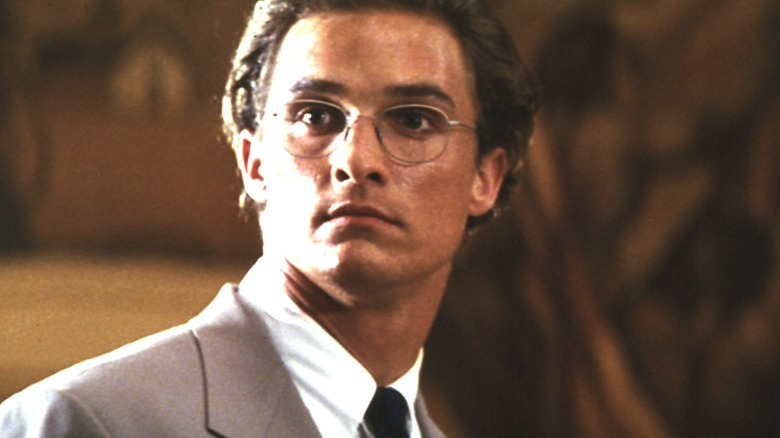
by msmash
With people more wary than ever about clicking on suspicious links in emails and text messages, zero-click hacks are being used more frequently by government agencies to spy on activists, journalists and others, according to more than a dozen surveillance company employees, security researchers and hackers interviewed by Bloomberg News. From a report: Once the preserve of a few intelligence agencies, the technology needed for zero-click hacks is now being sold to governments by a small number of companies, the most prominent of which is Israel's NSO Group. Bloomberg News has learned that at least three other Israeli companies -- Paragon, Candiru and Cognyte Software -- have developed zero-click hacking tools or offered them to clients, according to former employees and partners of those companies, demonstrating that the technology is becoming more widespread in the surveillance industry. There are certain steps that a potential victim can take that might reduce the chances of a successful zero-click attack, including keeping a device updated. But some of the more effective methods -- including uninstalling certain messaging apps that hackers can use as gateways to breach a device -- aren't practical because people rely on them for communication, said Bill Marczak, a senior research fellow at Citizen Lab, a research group at the University of Toronto that focuses on abuses of surveillance technology.

Read more of this story at Slashdot.

18 Feb 20:41

'Pathetic' Performance Has Left US 'Well Behind' China in 5G Race, ex-Google CEO Eric Schmidt Says

by msmash
The U.S. government's "dithering" has left the country "well behind" China in the race to build out 5G technology, former Google CEO Eric Schmidt said, as he urged Washington to step up investment in the next-generation internet technology. From a report: Writing in an op-ed in the Wall Street Journal, Schmidt and Graham Allison, a professor of government at Harvard, said that America is "far behind in almost every dimension of 5G while other nations -- including China -- race ahead." The authors urged the Biden administration to make 5G a "national priority." Otherwise, they said, "China will own the 5G future." 5G refers to next-generation wireless internet that promises super-fast download speeds. But it could also form the basis for industrial and military applications and form a way for devices to communicate with each other. That's why it's seen as a critical technology and one of the reasons China is moving quickly with its own 5G rollout and future applications.

Read more of this story at Slashdot.

18 Feb 20:03

PseudoManuscrypt Malware Spreading the Same Way as CryptBot Targets Koreans

by noreply@blogger.com (Ravie Lakshmanan)
Numerous Windows machines located in South Korea have been targeted by a botnet tracked as PseudoManuscrypt since at least May 2021 by employing the same delivery tactics of another malware called CryptBot. "PseudoManuscrypt is disguised as an installer that is similar to a form of CryptBot, and is being distributed," South Korean cybersecurity company AhnLab Security Emergency Response Center (
18 Feb 20:03

NSA Provides Guidance on Cisco Device Passwords

by Ionut Arghire

The National Security Agency (NSA) this week published recommendations regarding the use of specific passwords when looking to secure Cisco devices.

read more