Ronald.phillips
Shared posts
Rebel FM Episode 531 - 03/04/2022
RBDOOM-3-BFG 1.4.0 Patch

This version improves support for mapping with TrenchBroom and comes with a couple of bugfixes like working stencil shadows. This release is intented to aid the current TrenchBroom mapping jam in the id Tech 4 Discord. You can just extract the files over the 1.3.0 release.

Pick a good password, then never change it

Glenn Fleishman has some advice that may seem counterintuitive: never change your password. If your password is long and random enough to avoid brute force or dictionary attacks, unique to the service, and has not been leaked, you should never need to change it. — Read the rest
Year Of The Vampire: Matt Reeves Invites Darkness Across The Threshold With Let Me In

(Welcome to Year of the Vampire, a series examining the greatest, strangest, and sometimes overlooked vampire movies of all time in honor of "Nosferatu," which turns 100 this year.)
"Let Me In" is a movie cut from the same cloth as David Fincher's "The Girl with the Dragon Tattoo," insofar as it's an American remake or re-adaptation of a Swedish novel that had already received a Swedish film adaptation just two years earlier. Like Fincher's film, "Let Me In" has some teeth to it. In this case, they're vampire fangs. However improbably, this superficial retread somehow manages to justify its existence as the tale of a lonely individual, preyed upon by others, who comes into their own as they forge a connection with someone in a snowy setting.
That first adaptation of John Ajvide Lindqvist's book, which bears the same title, "Let the Right One In," is a film that we've spotlighted twice in recent months: first, in our Daily Stream series, then again here in our Year of the Vampire series. What makes this version, "Let Me In," worth revisiting now is its timely link to several water cooler names and its thematic relevance to ongoing world events. It also just happens to be a good movie.
Released in 2010, "Let Me In" marks an early collaboration between director Matt Reeves and composer Michael Giacchino, the dynamic duo behind "The Batman," in theaters this week. The film's protagonist, Owen, is also played by a young Kodi Smit-McPhee, who is up for an Oscar this month for his work in Jane Campion's "The Power of the Dog." That movie takes its title from a line of scripture: "Deliver my soul from the sword; my darling from the power of the dog." In "Let Me In," Owen's barefoot darling is a vampire named Abby (Chloë Grace Moretz), who will deliver him from the power of school bullies against an Americanized backdrop of Reagan-era politics and religious othering.
What It Brought To The Genre
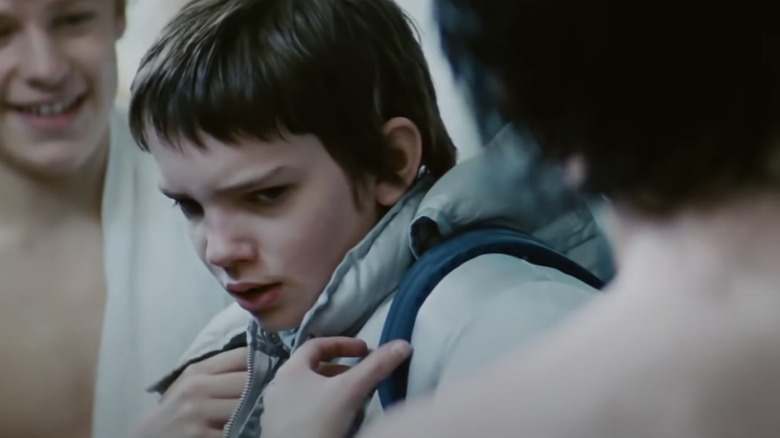
"Let Me In" brought a different kind of indie-sleeper romance to the vampire movie genre at a time when "The Twilight Saga" was midway through its run of blockbuster YA success. Reeves' film, by contrast, opened at #8 at the box office and barely recouped its $20 million budget, perhaps because it came so soon after "Let the Right One In" and because Hollywood was beginning to reach a saturation point in terms of the renewed vampire craze.
As a genre entry, "Let Me In" also remains noteworthy in that it helped bring Hammer Films back from the dead. Beginning in the mid-to-late 1950s, the Hammer Horror brand had become associated with sexy bloodsuckers through "Horror of Dracula" and its eight sequels (seven of which starred Christopher Lee) along with other titles like "The Vampire Lovers" (and the rest of the Karnstein Trilogy), which drew from the 1872 pre-"Dracula" lesbian vampire novella, "Carmilla," by Sheridan Le Fanu.
With such a rich tradition of vampire movies, it was only appropriate that Hammer should resurrect itself in true undead fashion with "Let Me In." The movie even opens with a Marvel-style Hammer logo, where old movie poster art flashes through the letters.
Giacchino's music leads the way as the film sets us down in Los Alamos, New Mexico, in 1983. It's a time when the Satanic panic is in full swing, as evidenced by the first line of police questioning. "Are you a Satanist?" a detective asks a disfigured hospital patient. "Are you involved in some kind of cult?"
At home, Owen's mother prays before eating, but she's a blur in the background or a head above frame. In "Let Me In," religiosity lurks on the perimeter as a way of reinforcing the film's themes. Giacchino's score adds a sweet texture, yet this is a movie about projecting evil onto others, while reckoning — or refusing to reckon — with it in ourselves.
"If America Ever Ceases To Be Good..."
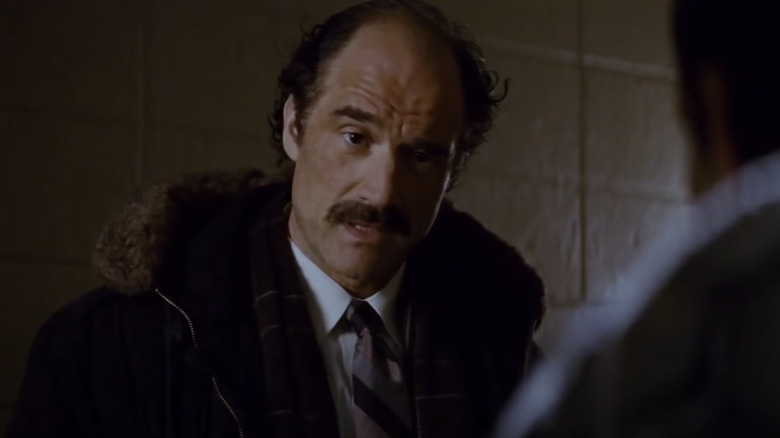
In a conventional Hollywood script, outlined with a beat sheet, there would come a moment early on where there is a statement of theme for the movie. It's that moment in "Halloween," for example, where Laurie Strode's teacher is talking about fate's inevitability and Laurie looks outside to see the masked killer, Michael Myers, standing across the street.
In "Let Me In," we get a beat like that around the 7-minute mark. It comes when the unnamed detective, credited as "The Policeman" (Elias Koteas), steps outside the hospital, where he sees the disfigured patient, a victim of self-inflicted acid burns, lying dead on the ground after falling from his window.
For about 45 seconds, the camera lingers in a stationary spot inside the hospital, looking through the glass door at The Policeman as President Ronald Reagan's "Evil Empire" speech plays on the television inside and a nurse's dark reflection eventually approaches. We're literally seeing through a glass, darkly, per the biblical phrase.
Reagan's speech, which has a theocratic ring to it, was given to the National Association of Evangelicals at the height of the Cold War. In it, Reagan sought to frame the conflict between the U.S. and Soviet Union as a spiritual battle between the forces of good and evil. The part that we hear in the movie is as follows:
"There is sin and evil in the world, and we're enjoined by scripture and the Lord Jesus to oppose it with all our might. Our nation, too, has a legacy of evil with which it must deal. The glory of this land has been its capacity for transcending the moral evils of our past. Alexis de Tocqueville put it eloquently after he had gone on a search for the secret of America's greatness and genius, and he said, 'Not until I went into the churches of America and heard her pulpits aflame with righteousness, did I understand the greatness and the genius of America.' America is good. And if America ever ceases to be good ..."
Reeves leaves that "if" hanging open-ended.
Russia's recent invasion of the Ukraine has once again made it the enemy in the news, but in "Let Me In," the director seems to be invoking the Cold War and the Satanic panic as a means of making a larger point about human nature.
Battle Not Ye With Monsters
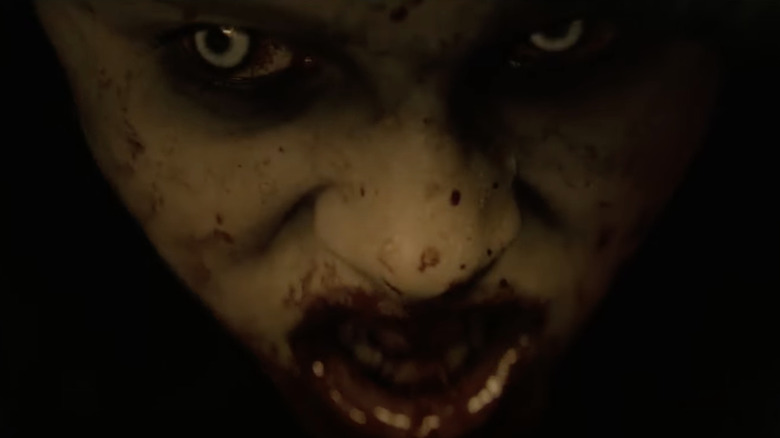
As humans, we look for scapegoats outside ourselves, monsters, Others, to whom we can assign blame. The great moral contradiction of the Satanic panic is that, while church members were focused on phantom cults conducting ritual abuse, the real epidemic of child abuse — warned about in a 1985 report by Father Thomas P. Doyle — was going on at the hands of trusted clergymen.
American heroes fought villains with foreign accents in action movies derivative of "Die Hard" (a Reagan-era film), while some of the country's own internal problems were left to fester for decades. At one point, "Let Me In" shows an actual dumpster fire, a visual manifestation of the phrase often used to describe the 2016 U.S. presidential election.
Owen's mother insists that he's a "good boy," but after Abby goes feral and vampiric at the sight of his blood, he's left asking, "Do you think there's such a thing as evil? Can people be evil?"
The lead bully of "Let Me In," Kenny (played by "13 Reasons Why" star Dylan Minnette), does initially come across as evil in the way that he harasses Owen: giving him painful locker-room wedgies and lashing him across the face with a car antenna. Yet Owen himself has issues. His room is where "Taxi Driver" meets "Rear Window" in a creepy, pint-sized fashion. At school, he pledges allegiance to the flag, but at home, we see him in a mask like something out of a home invasion movie, menacing his own mirror with a kitchen knife, saying, "Hey, little girl. Are you a little girl? Huh? Are you scared?"
Then, he proceeds to spy on his neighbors with his telescope. "Little girl" is what Kenny calls Owen when he's bullying him. The implication is that Owen, while powerless to do so on his own, fantasizes about turning the tables on his attackers and perhaps even becoming a bully himself. It brings to mind that famous Nietzsche quote: "Battle not with monsters, lest ye become a monster, and if you gaze into the abyss, the abyss gazes also into you."
Right after Abby agrees to go steady with him, Owen is empowered to stand up for himself on a school ice-skating trip. She has told him, "You have to hit back hard. Hit them harder than you dare, and then they'll stop." So that's what he does.
Gaze Into The Outer Darkness
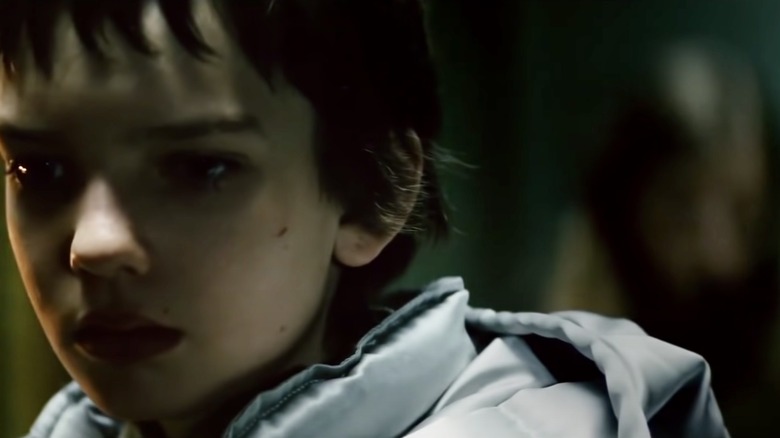
With a metal pole, Owen does a Peter-in-Gethsemane number on Kenny's ear. At the same time, the screams of other students ring out across the lake. They've found the frozen remains of the victim Abby drained in a horrific tunnel attack, while posing as a child in need of help. Her adult companion, Thomas (Richard Jenkins), tried to dispose of the man's body, but now it has reappeared, as if to give a glimpse of the future murders that Abby's new companion, Owen, will commit.
In the long run, Abby's advice to Owen only escalates the situation with Lenny. As it turns out, Lenny is also human: he gets bullied and called a little girl by his sadistic older brother, who comes back for revenge and tries to drown Owen. Abby is there to save him and kill all the bullies, and on the one hand, it's narratively satisfying to see them get their comeuppance. On the other hand, Abby follows the "Interview with the Vampire" playbook, whereby "evil is a point of view" and bloodsuckers are free to kill indiscriminately.
She's already slaughtered The Policeman, devoured one neighbor, and left another half-eaten and doomed to a fiery death by sunlight. We know that Owen will kill for her, maybe hanging people upside-down from a tree, like Thomas did, and draining their blood into jugs she can drink. He's come a long way from the petty crime of stealing money out of his mother's pocketbook, while being confronted with the sight of a Jesus portrait on her mirror. Owen has battled with monsters, and now he's ready to become one.
The year before "Let Me In," McPhee co-starred with Viggo Mortensen in "The Road," based on Cormac McCarthy's Pulitzer Prize-winning novel. McCarthy also wrote a book called "Outer Dark," which, like "The Power of the Dog," took its title from scripture — a Gospel line describing the "outer darkness" as a place where "there shall be weeping and gnashing of teeth."
In "Let Me In," the darkness, personified by Abby, is outside Owen, waiting to be let in. He embraces his dark side and receives a bloody vampire kiss from it, but it could someday leave him burned and unrecognizable like Thomas. It's a bittersweet ending to a movie that remains a worthy and meaningful addition to the vampire canon.
Read this next: The Horror Movies We Can't Wait To See In 2022
The post Year Of The Vampire: Matt Reeves Invites Darkness Across the Threshold With Let Me In appeared first on /Film.
Samsung Gets Hacked by Same Group That Compromised NVIDIA’s Data, 190GB Worth of Info Allegedly Stolen

Samsung has reportedly been struck by a massive cyberattack initiated by the group Lapsus$, who claims that they have gotten hold of 190GB worth of valuable data. This is the same group of hackers who earlier stole 1TB worth of data from NVIDIA, which included leaked DLSS code.
Samsung Officials Are Aware of the Cyberattack, Reportedly Claiming That Investigation Is Underway, but There Is No Mention of a Ransom
In a note posted earlier today, Bleeping Computer reports that Lapsus$ teased about releasing Samsung data with a snapshot of C/C++ directives in Samsung software. Sure enough, the teaser led to the publishing of a leak, stating that it has confidential Samsung source code that was obtained from the cyberattack.
-
source code for every Trusted Applet (TA) installed in Samsung’s TrustZone environment used for sensitive operations (e.g. hardware cryptography, binary encryption, access control)
-
algorithms for all biometric unlock operations
-
bootloader source code for all recent Samsung devices
-
confidential source code from Qualcomm
-
source code for Samsung’s activation servers
-
full source code for technology used for authorizing and authenticating Samsung accounts, including APIs and services

The leaked data’s size shows three compressed files that amount to nearly 190GB. The data was then made available in a torrent. Lapsus$ says that it would be deploying additional servers to help peers get the most out of their download speeds. A brief description of the content available is given below.
“Part 1 contains a dump of source code and related data about Security/Defense/Knox/Bootloader/TrustedApps and various other items
Part 2 contains a dump of source code and related data about device security and encryption
Part 3 contains various repositories from Samsung Github: mobile defense engineering, Samsung account backend, Samsung pass backend/frontend, and SES (Bixby, Smartthings, store)”

Samsung officials said they are now assessing the situation but have not confirmed if the hacking group has asked for ransom. This data breach may have adverse effects on Samsung’s partners like Qualcomm and Apple, as the Korean giant has formed strong business relationships with them. We have to see if Samsung will engage in a dialogue with the extortion group and if they will demand ransom.
The post Samsung Gets Hacked by Same Group That Compromised NVIDIA’s Data, 190GB Worth of Info Allegedly Stolen by Omar Sohail appeared first on Wccftech.

Half-Life 2 Overcharged has been released, available for download
Back in January 2022, we informed you about a new graphical overhaul mod for Half-Life 2. And today, we are happy to report that Half-Life 2 Overcharged has been released, and is available for download. Half-Life 2 Overcharged is a mod that aims to fix, improve and enhance numerous features and gameplay elements of Valve’s … Continue reading Half-Life 2 Overcharged has been released, available for download →
The post Half-Life 2 Overcharged has been released, available for download appeared first on DSOGaming.
sdl-compat 1.2.52 Debuts As Initial SDL-1.2-Atop-SDL-2.0 Release
LatencyFlex v0.1 Released As Drop-In Replacement To NVIDIA Reflex
The Batman's Big Cameo Can Be Traced Right Back To David Lynch
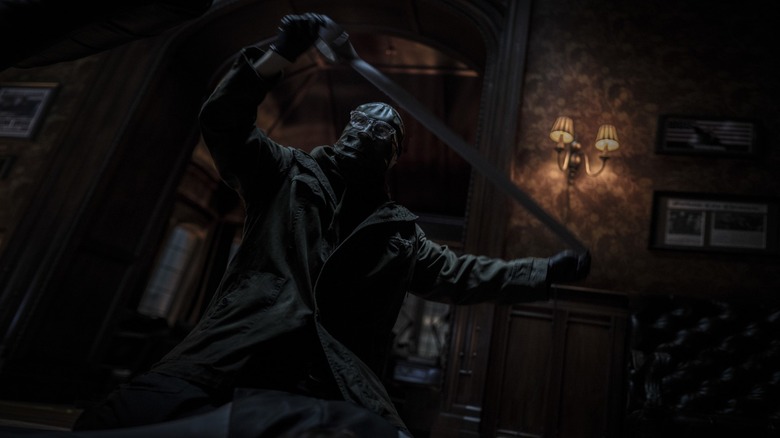
This article contains a spoiler for the final scenes of "The Batman."
Near the end of "The Batman," after the Riddler has been apprehended and escorted to his own private cell at Arkham Asylum (in this film, a smaller, more clinical place when compared to the Hammer-movie/haunted-castle version of previous films), he finds himself destitute. He has no friends, Batman wasn't on his wavelength, and he only has time to think about what he did, and what he's going to do about it going forward. One would hope that Gotham City's mental care facilities are better in "The Batman" than they were in 2019's "Joker." Arkham Asylum (which takes its name from the fictional Massachusetts city found in H.P. Lovecraft stories) is a notoriously ill-run hospital in the Batman universe, run more like the Chateau D'If than an actual hospital. Supervillains are sent there only to cause riots and then to break out again. Prison warden Crichton from the 1966 TV series handled supervillains about as well as the administrators of Arkham.
In Arkham, the Riddler hears his cellmate ask a riddle. We only see the cellmate in silhouette, the sun beaming in from behind him. He see his wild hair and a few details on his smiling face. "One day you're on top," he says, "The next day, you're a clown." Although the character is credited as "Unseen Arkham Prisoner," it's quite clear this is director Matt Reeves' version of the Joker. The solution to the Joker's mysterious riddle is "a friend," implying that he and the Riddler will begin an exchange of ideas, feeding one another's propensity for supervillainy. One cannot recognize him on screen, but the Joker is played by actor Barry Keoghan from "Killing of a Sacred Deer" and "Eternals." It wouldn't be a superhero film without a teaser for an upcoming sequel.
Reeves, in a recent interview with IGN, talked about his vision of the Joker, and how this new version -- however briefly glimpsed -- was, in fact, inspired by the 1980 David Lynch film "The Elephant Man."
The Elephant Man
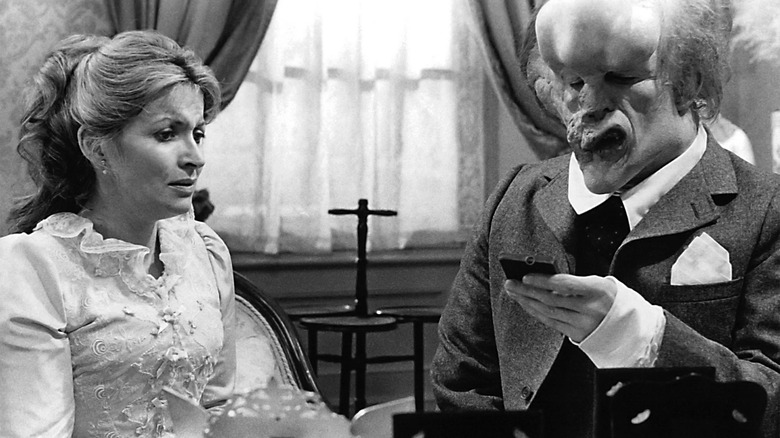
"The Elephant Man" was Lynch's second feature as a director, and was produced by the legendary comedian Mel Brooks, who offered Lynch funding after being so impressed by Lynch's debut film, "Eraserhead." "The Elephant Man" tells the true story of Joseph Merrick -- changed to John for the film -- who was born with several medical conditions that left his skin coated with tumors, his arm misshapen, and his head oversized. Merrick (John Hurt) was displayed in circus sideshows. One Dr. Treaves (Anthony Hopkins) takes pity on Merrick, who is treated cruelly by his "owner," a Dickensian villain named Bytes (Freddie Jones). Treaves finds that Merrick is, in fact, intelligent and gentle and has an abiding love for art and theater. "The Elephant Man" was nominated for eight Academy Awards, including Best Actor, Best Director, and Best Picture, but it won none. "Ordinary People" won Best Picture that year.
When it came time to design his own version of the Joker, Matt Reeves was inspired by "The Elephant Man."
Reeves started his design for the Joker on the character of Gwynplaine, played by Conrad Veidt in Paul Leni's 1928 film "The Man Who Laughs," based on a novel by Victor Hugo. The Joker from the comics, first seen in 1940, was originally inspired by Gwynplaine, so "The Man Who Laughs" was merely a logical place to start for any Joker. Gwynplaine has his smile carved into his face. In Tim Burton's 1989 "Batman," the Joker's face was the result of exposure to chemicals and botched corrective plastic surgery. In "The Dark Knight," we don't really know where his scars came from. Reeves wanted the Joker's smile to be something he was born with:
"He's got this congenital disease. He can never stop smiling. And it made Mike [makeup artist Michael Fontaine] and I think about — I was talking about "The Elephant Man" because I love David Lynch. And I was like, "Well, maybe there's something here where it's not something where he fell in a vat of chemicals or it's not the Nolan thing where he has these scars and we don't know where they came from. What if this is something that he's been touched by from birth and that he has a congenital disease that refuses to let him stop smiling? And he's had this very dark reaction to it, and he's had to spend a life of people looking at him in a certain way and he knows how to get into your head."
Smiling Since Birth
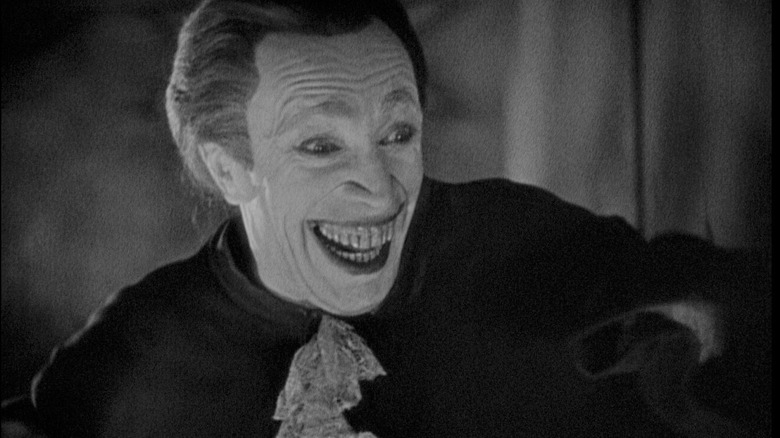
Even though the Joker only plays a small role in "The Batman," the character is significant, positioned, as he is, as Batman's longest-lasting nemesis. As such, Reeves had to be sensitive in creating the look of the Joker, even for a brief cameo. It was important to Reeves to make the character stand out among the character's long, long-running history. The idea that the Joker had been born with a Conrad Vedit-like rictus would indeed be a new take on the character:
"So [it's] this idea of him being very incisive and brilliant and being able to get into your mind and basically having this nihilistic point of view that's like from his inception, from his birth, life has been a cruel joke on him. And this is his response, and he's eventually going to declare himself as a clown, declare himself as the Joker. That was the idea."
In a way, this is the opposite of the story of "The Elephant Man," which is about a man who remained humane and thoughtful, even after years of abuse at the hands of a cruel circus ringmaster. This Joker was to be undone by his infirmities.
The Next Step For The Joker
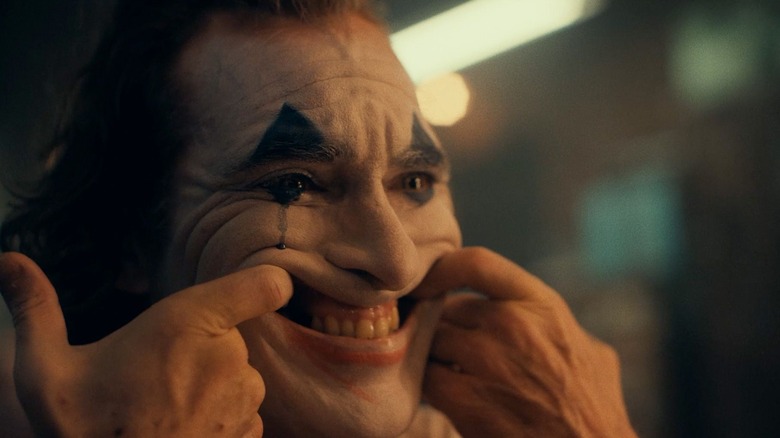
Although the bulk of "The Batman" takes a lot of tonal cues, visual elements, and plot points from David Fincher's 1995 film "Seven," Reeves also admitted in the IGN interview that his plan for the Joker was far more elaborate, and was going to take a central notion from "The Silence of the Lambs" as well. In "The Batman," there was to be a scene wherein the title hero must go to Arkham Asylum and consult a prisoner -- one with whom he had a past -- in order to gain insight into the mind of The Riddler who was still at large. That prisoner was meant to be the Joker, presented like Hannibal Lecter.
But Reeves tested his film without the Joker scenes, and realized the Riddler functioned better without them:
"What you're really seeing is a pre-Joker Joker. And the idea for me, why I kept that scene in the movie, even though I cut the first scene that I'm describing, is because it was important for me at the end. I actually took the scene that's in the movie still out for a brief time. And we tested it, and I realized that for me, on the one hand, it finishes the Riddler's arc, because you know the way his story plays out and you see him in the wake of what's happened and how Batman has been able to thwart what he was doing."
Indeed, saving the threat of the Joker for the future added texture to earlier scenes:
"But it was also this idea that in this moment, now that the stranglehold of Falcone has been broken, it means that there is a moment of not only hope, but it's also the moment of greatest danger in the city in a long time because it means that everyone is going to grab for power. And when Selina is talking to Batman at the end of the movie -- and they're having their very poignant goodbye because they're always going to be on the opposite sides of things -- she says to him, 'You know this place isn't going to change.' And when I took the [Joker] scene out, the stakes of the scene changed, because that scene shows you that, when she says that, you've just seen it and you see the two of them [Joker and Riddler] next to each other. And that's just one example of how trouble in Gotham is never going to subside. There's always going to be somebody with a plan afoot."
It's entirely likely that a sequel to "The Batman" will be greenlit, as these sorts of things have a tendency to continue indefinitely, so we'll have a chance to catch up with the Joker in the future.
Read this next: Joker's Wild: Ranking The Cinematic Versions Of The Clown Prince Of Crime
The post The Batman's Big Cameo Can Be Traced Right Back to David Lynch appeared first on /Film.
Studio 666 Co-Writers Jeff Buhler And Rebecca Hughes Kill The Foo Fighters [Interview]
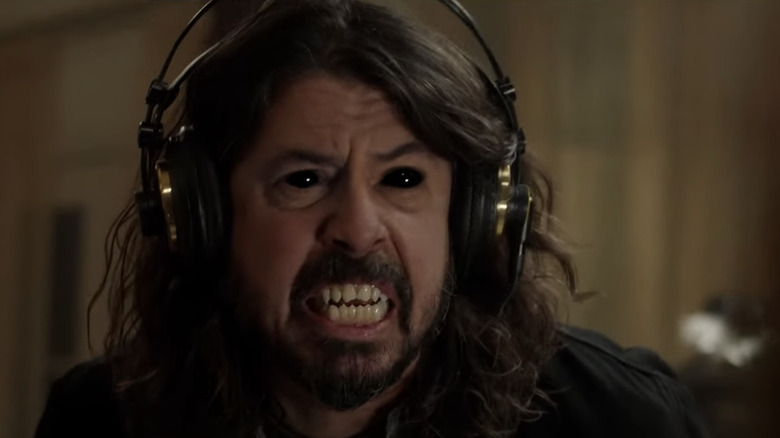
"Studio 666" always has its tongue in its cheek. The horror-comedy, in which Dave Grohl becomes possessed and devours the rest of the Foo Fighters, never takes itself seriously in the slightest. The jokes and kills go big. Maybe beneath the grilling, the cannibalism, and the band's infighting over a never-ending song, there's a story about the fear of losing your friends or band mates and, as a result, yourself. It's a story older than rock and roll.
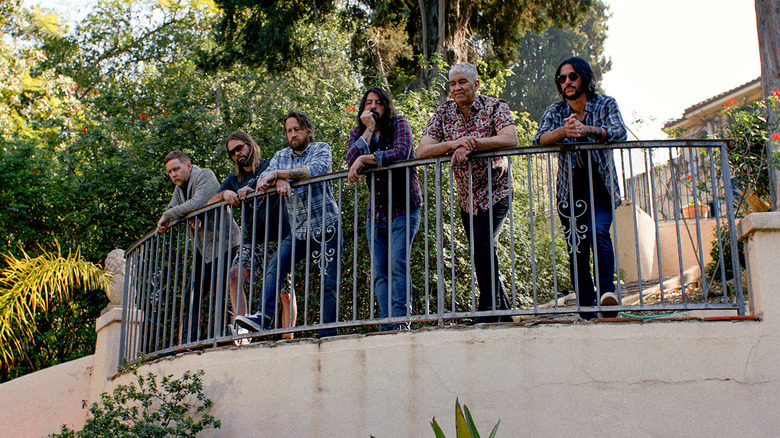
For "Midnight Meat Train" screenwriter Jeff Buhler and comedy writer Rebecca Hughes, it's simply a party movie, not a meditation on morality and the creative process. The lightness of the film has drawn mixed reactions from audiences, but the writing duo remain proud and hopeful "Studio 666" will keep finding its people. During a recent phone interview, Buhler and Hughes talked to us about their memorable experience writing the film, including the four days Hughes wrote the first draft from a hospital bed.
This interview has been lightly edited for clarity.
'It's Show Business, People'
Dave Grohl had a few pages worth of ideas, right? What were they?
Buhler: If I remember correctly, one of the central things that he had was this idea of a caretaker, the creepy guy that we see at the beginning, who's the leader of the spirits in the house. Then we expanded upon that by building the mythology out around that, but that was one of the central ideas that he came up with.
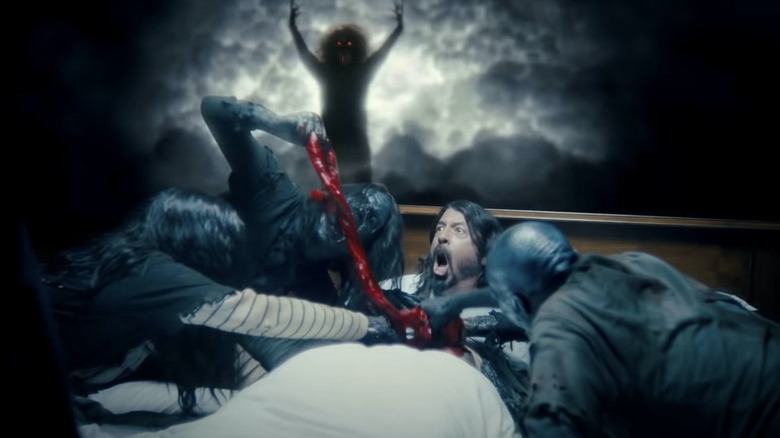
Hughes: Dave's idea was that they move into this house, and then he becomes possessed and kills the band. Further to that, he and [makeup effects designer] Tony Gardner were our friends and had come up with a list of kills. A lot of those kills that you see, Dave and Tony were very committed to having those play out.
Including the bedroom kill?
Hughes: Yes, the bedroom kill included.
Buhler: As a matter of fact, when Dave was describing that one to us, he kept referring back to "Friday the 13th" and the classic kill when Kevin Bacon gets the arrow up through his throat from underneath. He just wanted to do something that paid homage to that, but then went a 1,000 times further.
When you heard that idea -- Dave killing his band -- what did you think that meant deep down?
Hughes: I was like, oh boy, over 20 years, it's symbolic, of course. But I think, just knowing Dave, it's all in fun. He just loves humor and having fun and taking the piss out of himself and the band. I went to hang out with him for a couple hours and there was no ... anything that we played up in the script in terms of conflict within the band was totally us trying to come up with conflict.
Buhler: You have to wonder if there's some underlying subconscious dynamic that's going on when he brings up that idea, and some of the tension between the band members. We just tried to lean into those little fracture points and then just exaggerate everything as much as possible.
Rebecca, you wrote the first draft in four days, right?
Hughes: Oh yes, I did. I will say, the first 80 pages, not quite the first entire draft, but yes.
Buhler: It was pretty much the whole thing. I mean, there was maybe the ending left.
Hughes: Just the ending was left. What happened was, we had commenced on the script and it was right around the holidays, because I think the first meeting we had with them was in October, and then it was a pretty quick process coming up, back and forth, getting to hang out with the band. We had lunch with the bass player, and he filled us in with some band personalities.
Around the holidays, Jeff and I had laid out the workload, where I would lay down the first draft and then Jeff would come in and sprinkle his magic on it and tweak and do whatever he needed to do. And especially, add the gore and the horror and all that, which is his expertise. So we had agreed that was going to be the deal. Then I had an emergency and was sent to the hospital.
I had about maybe five to seven pages laid down, because it's the holidays. Every day that went by that I wasn't getting more page numbers, I'm like, "Oh my God, they need the script." I mean, they were already in pre-production, so it was like, "Oh my God, we need the script yesterday." I was really going to get to work right after Christmas, and then I ended up having a health issue with my colon, which is why this is so fortuitous when Dave gets his intestines and colon ripped out.
There's a lot of weird stuff like that. Yeah, I basically perforated my colon. So I had to stay in the hospital for four days and Jeff was like, "Oh my God, you can't be hospitalized. We need to get this script done." And I'm like, "I know." We were both freaking out and he was like, "Well, what do you need?" And I was like, "Well, I need some clothes and a toothbrush. And my laptop." He's like, "You're going to write it in the hospital?" And I was like, "Yes, man."
Buhler: The show must go on.
Hughes: Yeah, the show must go on. It's show business, people. I'll tell you, it was the greatest thing ever, aside from the fact that I could not even put water to my lips, because nothing could go down. They were healing my colon naturally rather than having to have immediate surgery, we were trying it the natural route. So, I was very thirsty, but I did have an IV. But aside from that, man, I just sat there and wrote it eight hours a day, 10 hours, 12, whatever. I just wake up, start writing, go to bed, wake up again, start writing.
Buhler: You got to remember, they had recorded the album in that house, just as it is in the movie. They had been in there and they were still recording when we were first discussing this idea. So, there was a lease and a timetable, and if they were going to make this movie, it had to be on this particular calendar. So, when we got involved creatively, the train was already rolling. They were prepping off the outline. We had a very detailed outline before the end of the year and before the holiday, but there was no break for us. We just kept going. And so, as Rebecca said, when she unfortunately had to spend a few days in the hospital, the work still kept flowing. There was no slowing down the train.
Rebecca, if someone's in the hospital getting their pages done, I think most people don't have too many valid excuses for not getting their pages.
Hughes: Yeah, exactly. Writing sometimes, when life happens, you're just like, "Oh my God, how am I not writing?" But when you are forced to just lay there, it's like nothing else to do. So, in a weird way, it was a blessing, because I got that thing done in, like I said, four days. They shot pretty much the first draft, for good or bad. I mean, some would say, "Do a couple more drafts, honey." But Dave loved it, so they just went for it. They were like, "Okay, thanks." And then they just took it and ran and started making it. We were like, "Wait, don't you know about notes and shouldn't there be rounds and rounds of notes, like studios always do, and all that?"
Buhler: It's one of the joys of working with musicians, especially people like Dave, where it's like, he gets an idea and he just wants to do it. So, he just does it. It just doesn't cross his mind that the train could come off the track. So he just kept going, and I think we all fed off of his passion for the project. He was really enthusiastic about it.
I think he even read the outline to his mom before the holidays and reported back that she was laughing out loud and that she really enjoyed it. So we knew they were behind the way we had laid things out and the structure of it. It was exciting and fun to feed off of that energy.
'Dave Brought Everybody To A Coldplay Show'
Rebecca, when it comes to the comedy, how did you want to stay true to the band's voices but also deviate from them?
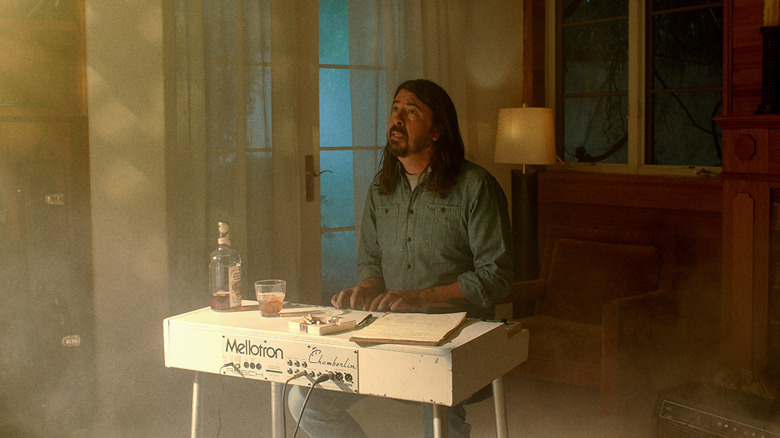
Hughes: It's funny, because I've read a few things and I think people have said, "Oh, there's no character development." That always makes me chuckle, because we were actually told that, "Give most of the lines to Pat, Dave, and I think a little bit to Chris." But mostly Pat and Dave, and Rami, because they're more comfortable in front of the camera. I think back in the day, maybe Pat was in some TV episodes and playing some ne'er-do-well and was used to the camera. Obviously, Dave loves the camera and is so hilarious, such a natural actor.
It's funny when people are saying, "They're not actors and there's no character development." I'm like, "Oh my gosh." We were told, "If they can even memorize their lines, that'll be good." So, we were working with those parameters. I just did an exaggerated reality of what's going on with them in terms of a little grill competition.
Jeff and I discussed and I just thought, "What is it like to be a rock star? I mean, what is that actually like? Who says no to Dave Grohl?" We all talked about him being possessed, but then it was like, when I was sitting there in my hospital bed, it's like, "Well geez, how does this actually work? What does that mean, really?"
I just thought it'd be funny if he turns into this crazy maniac of himself, and is going to write a song that never ends, and he's so amazing, he's going to invent a new f***ing musical note. That's just funny to me. So, we just kind of made fun of him. To be honest, we thought he was going to note us on it. When we handed in the script, I remember I was like, "Oh boy, is he going to fire us off this project?" We make so much fun of him. And he did, he really liked it.
Buhler: He loved that. Yeah, he really responded to that. And the idea of, because he's such a popular figure, we all know the divas of the world. I think people know Dave Grohl's not like that. He's the nicest guy. Everyone, whether you're a Foo Fighters fan or you just know him through the public sphere or whatever, he's universally loved. He's very charming. So, it was super fun to make him into this demonic diva, right? Where he's using his power and his stature to exploit the band for what he needed to get out of them.
Hughes: It worked also with the story, because he has to start killing his band, so they have to be fighting about something. So it worked in terms of that, too, plotting and structure and all that stuff.
Is that advantageous, the likability of the band? Just knowing from the beginning of telling the story, you already have a large audience who will like these characters?
Hughes: Exactly. And it wasn't a lot of pressure to really develop Taylor's character. It's like, we know who he is and people already like him, like you said, so there's an affinity there. There was the thing of, "Will he, can he, is he willing to memorize his lines?" So we were told to cut those down.
Buhler: They not only jumped into it enthusiastically, but when it came time to perform this version of themselves, they all just basically took it and ran with it. There were moments where they were just riffing on stuff and adding their own flavor to it. Their personalities were laid into the story and you get that in the dynamic of the characters, but they all just took it and ran with it. It was like everything was turned up to 11, to use a "Spinal Tap" reference, but they really enjoyed it, I think.
What sound did you both initially imagine for the never-ending song?
Hughes: What we thought was just, he's possessed, so it should be a demonic, thick, and heavy-sounding song that sounds demon-esque. And we thought, because the Foo Fighters are awesome, it's incredibly accessible rock and roll music, and we just thought with the demon element, it should just be a different sound a little bit. So, that's how we came up with that. But then Dave, when I pitched that to him, I was like, "Do you have a demon, a thick, heavy song?" And he's like, "Oh yeah, I have that. I have that."
Buhler: In his spare time, he's working on other stuff that's clearly not Foo Fighters material.
Hughes: Well, he had a band called Probot, and I think that's Probot's stuff. I didn't realize what Probot was, but it's all that dirge stuff. So, it worked out. It worked.
This is not the first time in Foo Fighters history there's been a playful dig at Coldplay.
Hughes: Oh, yeah.
How did that come about?
Buhler: It's funny, because Coldplay's a band that you love or hate. Dave has had this ongoing battle with the singer of Coldplay, with playful little digs at each other. I'll speak for myself, but Rebecca, I think you probably agree, they're just funny for some reason. To make fun of Coldplay is just funny. Dave absolutely goes into that, because he's like, "Oh my God, Coldplay ..." I think he's had a history with them.
Hughes: I knew the band, the Foo Fighters, because I was a guest of the Eagles of Death Metal, back in the early aughts and I was a guest on their tour and they were opening for the Foo Fighters. So, I ended up meeting the band, and one night Dave brought everybody to a Coldplay show, which was in London at some big arena. That night I think he was talking about, just joking around about Coldplay, but he was digging them and stuff, but he was also just joking around.
I remembered that night. It was the perfect opportunity for that. So it's just taking what you know, and then when the moments come up, the opportunities come along in the script, inserting what you already know about it. That's where the heightened reality comes in.
''Spinal Tap' Meets 'Scooby-Doo' Meets 'The Monkees''
Is that a great experience that happens when you're a writer, where a fun life experience, from the sound of it, later comes full circle and influences a script?
Hughes: My big joke was, they didn't even know I was a writer back then. They didn't even know. They just knew I was some chick along with the Eagles of Death Metal. They had no idea. I mean, I had hit it off with Dave, because he's a lot like Jeff, who's obviously a dear friend, and many of my other friends who were very funny. So, it just felt like hanging out with them. We were friendly, but whatever, then went our own, of course, separate ways.
I always joke that experience would be like when I'm 90 in the nursing home and in my rocking chair, like, "The time I went on tour with the Foo Fighters...." Everyone's always going to be like, "Yes, Rebecca, we've heard it 9,000 times." And so, when this opportunity came up, it was a call in from Jeff, who got the call initially for the job, because he's such an accomplished horror writer. He pulled me in, because it was comedy and my familiarity with the band. When that happened, it was like a miracle. I couldn't believe it. I was like, "I can't believe I went on tour with them so long ago and now it's coming full circle." Then, the whole question was going to be -- and Jeff and I were asking on the way up to the first meeting -- "Will Dave remember me? The man meets a lot of people and it's not like we hung out that much." He did.
Buhler: And it was a few years before that you were on tour with Eagles and the Foos.
Hughes: Oh, it was like a decade. It was a long time.
Buhler: Both Rebecca and I have gone to a lot of shows and have a lot of friends in the music industry, so we've been in and around that scene a little bit, which is also something that we wanted to pull from, the behind the scenes element of making a record and the dynamic with the manager and all that stuff. So, all of those experiences that you pull from your life, really helped to give the film a sense that it's got at least one toe in reality, and then it goes nuts.
Clearly, it was a great experience. At the beginning of the call, you brought up how the reaction to the movie has been mixed. Given how positive the job was, though, do you just focus more on the experience?
Buhler: It's funny, I've never written a horror-comedy. I've always done pretty straightforward horror and really hardcore stuff. You always get mixed reviews in the genre. It's very rare for any horror film to be embraced universally. With this, I mean, it's such a particular taste with the self-deprecating humor and the irony and them being self-reflexive. I wasn't surprised that some people either loved it or some people just didn't get it, and then some people just didn't like it. So, it's always fun to see that splintering.
I would probably say it was one of the most fun and most satisfying writing experiences, because we knew that the movie was going forward and the process was so fast and everybody was so enthusiastic and fun to work with, that it was just a thrill. By the time it came out -- and you have to remember, they shot this just before Covid, and had to shut down production in March of 2020, and then went back six months later and picked up the material that they had not been able to capture because of the lockdown. So by the time it came out, I was just so pleased to see it on the screen with live people, that by that point, it didn't really matter to me what anybody thought about it.
Hughes: I think Jeff has a thicker skin than me, because Jeff has had way more movies come out. In fact, this is my first one. I was surprised that people were expecting something more serious, I guess. In terms of the comedy and in terms of the horror, I was thinking that everybody would know it was a goof. And so therefore, when I did go down the rabbit hole of reading some of the bad reviews, I was like, "Oh boy, they're not seeing it...." Whatever, there's some validity, I'm sure, but whatever. I just was expecting people to understand that it was going to be "Spinal Tap" meets "Scooby-Doo" meets "The Monkees." When the people were just like, "You have a responsibility as a filmmaker," I'm like, "Oh, dear. Okay. I see." So then I quickly shifted my expectations and now I'm just happy if it's a cult hit film on any level.
To Jeff's point, "Midnight Meat Train" got a mixed reaction when it came out, but I don't know a single horror fan, myself included, who doesn't love that movie now.
Buhler: Yes. And it's funny, because that movie came out and got very strong reactions from people and it came out during a time when the studio was going through a regime change. It was just a strange release. Since then, it has found its audience and people are so passionate about it. I remember seeing the trailer for the first time in the theater and thinking, "'The Midnight Meat Train,' just the title itself is insanity. It's crazy." So, it's fun to work on stuff like that or like this, where you just put your best into it and see what happens. If something works, it'll find its audience. I think that's where this film is headed as well.
"Studio 666" is now playing in theaters.
Read this next: 20 Movies About Time Travel Ranked Worst To Best
The post Studio 666 Co-Writers Jeff Buhler and Rebecca Hughes Kill The Foo Fighters [Interview] appeared first on /Film.
Key US Provider of Internet To Russia Cuts Service There, Citing 'Unprovoked Invasion of Ukraine'


Read more of this story at Slashdot.
Superhero Bits: Go Behind The Scenes With The Batman, Harley Quinn Season 3 Update & More
(Superhero Bits is a collection of stories, updates, and videos about anything and everything inspired by the comics of Marvel, DC, and more. For comic book movies, TV shows, merchandise, events, and whatever catches our eye, this is the place to find anything that falls through the cracks.)
In this edition of Superhero Bits:
"The Batman" director weighs in on a "Joker" crossover.
An oral history of Wolverine.
Charlie Cox is diving very deep on Daredevil right now.
A "Harley Quinn" season 3 update.
All that and more!
Radiant Black Spin-Off Radiant Red Coming From Image Comics
Image Comics has been building up a shared universe of superheroes over the last year, something the publisher hasn't really had as of late. That kicked off with the acclaimed "Radiant Black," a book that is now getting a spin-off. As the above post indicates, a new miniseries titled "Radiant Red" is now on the way and will see a character from that book taking the spotlight. Could it be that Image is trying to build a superhero universe that could translate into TV or movies? Ponder that if you please. "Radiant Red" #1 hits shelves this Wednesday.
Barry Keoghan Shares Photo From The Batman Red Carpet
As you may well have noticed, "The Batman" is now in theaters and folks are flocking to theaters to see it. Now, "Eternals" star Barry Keoghan has shared a photo of himself with Jeffrey Wright, who plays Jim Gordon in the film, from the red carpet. Why did Keoghan post this photo on the day of release? A great question to revisit at a later date, perhaps. For those who have seen the film, some further reading might be of use.
An Oral History Of Wolverine
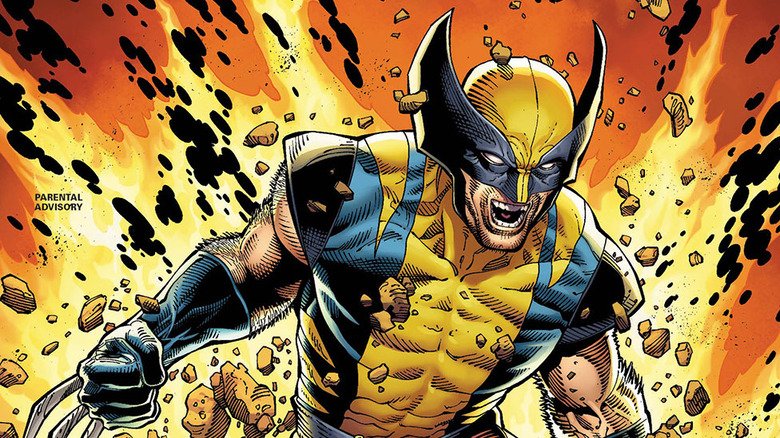
Wolverine is without a doubt one of the most important characters, not just to the "X-Men" franchise, but in all of comic book history. As such, the folks at Inverse have put together a pretty fascinating oral history of the fan-favorite mutant, who essentially saved the "X-Men" from obscurity back when he became part of the team. The rest, as they say, is history, but for those who want some detailed insight, the article is a very good place to get it. The full article can be found by clicking here.
A Brief History Of Batman
With "The Batman" now in theaters, interest in the character is arguably higher than it has been in years. One thing of major importance is that director Matt Reeves opted not to tell an origin story for Robert Pattinson's Caped Crusader. But for those who want a brief and kind of cool primer on the character's well-known backstory, DC has put together the above video to serve that very purpose. Yes, you do need to watch Bruce Wayne's parents die again, but the comic book animation style is pretty neat and it's a nice, breezy watch.
Charlie Cox Is Reading Daredevil's Entire Marvel Comics Run
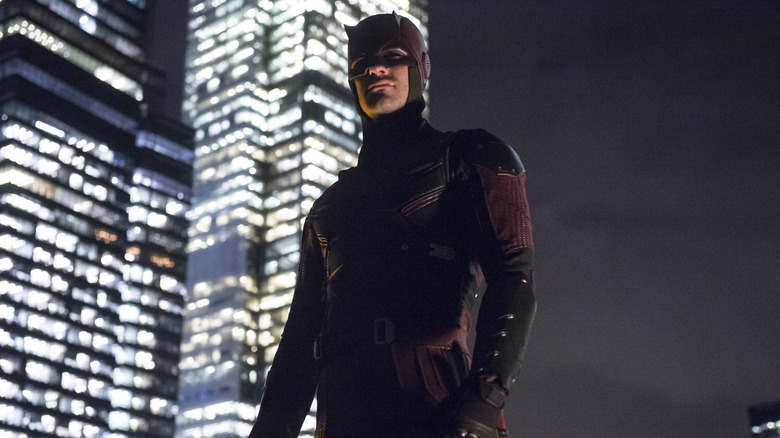
Charlie Cox is back as Daredevil/Matt Murdock in the MCU thanks to "Spider-Man: No Way Home." This isn't going to be the last time we see him and, as the actor revealed to Comicbook.com, he's been doing his research. Specifically, he's reading just about everything in the character's history from beginning to end.
"I re-upped my Marvel Unlimited account. And I started reading the comics from the beginning again, which I haven't done since we started the show all those years ago. And it's funny, I'm rereading the Joe Quesada, Kevin Smith, the Guardian Devil from '98. And it's funny, I haven't read it since I read it before we started shooting the show. And it's funny reading it now, I'm recognizing so many moments that we kind of took. Because right at the beginning of that series, there is a confessional that is almost how we started our show. And at the time I hadn't read it enough to put the two together, but like he's in a confessional basically saying similar lines to what I said in that booth at the beginning of episode one, season one. So it's really fun to reread it and to be able to kind of identify little moments that were kind of little Easter eggs, the ones I was unaware of at the time."
Let it never be said that Cox doesn't take his work seriously.
Harley Quinn Season 3 Is One Step Closer To Release
Producer Patrick Schumacker has shared the above update on the status of "Harley Quinn" season 3, which is coming to HBO Max sometime this year. As we can see, the audio mix has been finished, which is a major step in getting the show in the can and getting it in front of your eyeballs. There is still no release date, but with the audio locked, we should be hearing official word sooner rather than later. Keep your eyes out.
The Batman Director Discusses The Prospect Of A Joker Crossover
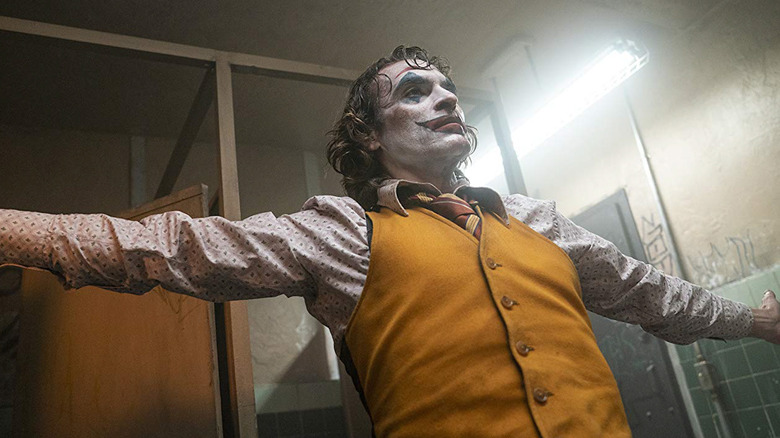
"The Batman" does not exist in the same universe as the rest of the DCEU, but that isn't the only recent DC movie to share that distinction. 2019's Oscar-winning smash hit "Joker" also exists in its own little universe. So, any chance these two universes could collide? Director Matt Reeves addressed the topic recently with Total Film.
"I was finishing the Planet of the Apes movies when I first came on board [Batman], in 2017. It's been five years in the making. When I was working on the script, and got deep into the script, Joker hadn't come out yet. I didn't know what Joker was or what it was going to be. I became aware of [Joker] once we were very deep into [The Batman], and the fact that they were grounding things in a way that was reminiscent of things that we were doing, that wasn't planned," Reeves said. "Joker was always meant to be a very specific standalone that Joaquin and Todd were doing. There was never really any discussion of crossover."
It doesn't sound like it. Be that as it may, it does seem like a "Joker" sequel is still on the table, so there is that.
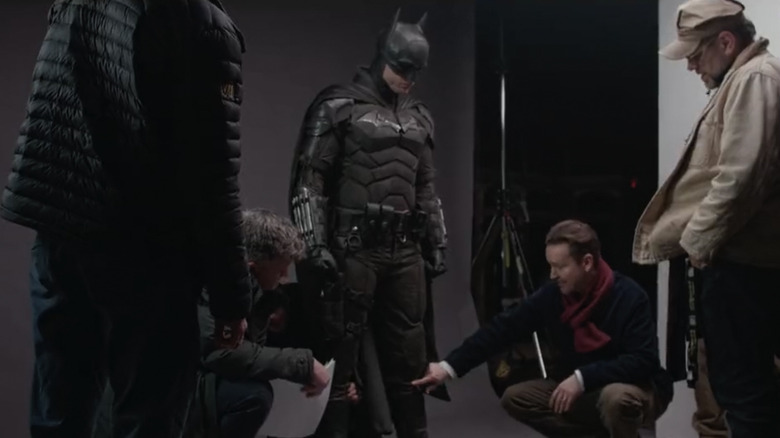
The Batman Behind The Scenes Featurette
Lastly, for today, we have a brand new featurette from the folks at Twitter Movies that takes us behind the scenes with the cast and crew of "The Batman." Whether you've seen the movie or not, this is a nice, compact look at what it took to craft this new version of Gotham City, with insight from many of the cast members, as well as Reeves. It is structured in a pretty cool way, transitioning from the BTS shots to the shots from the finished product, while also coming with some colorful commentary. Check it out for yourself above.
Read this next: The Horror Movies We Can't Wait To See In 2022
The post Superhero Bits: Go Behind The Scenes With The Batman, Harley Quinn Season 3 Update & More appeared first on /Film.
Why Matt Reeves Was 'Devastated' When Robert Pattinson Joined Tenet
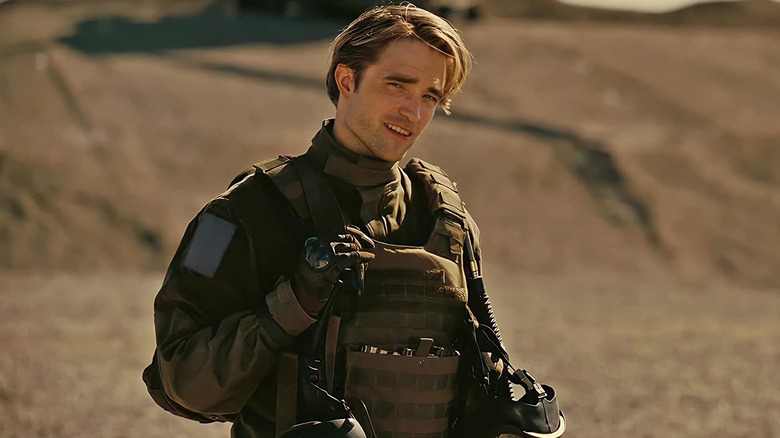
If you've kept up with Robert Pattinson's career post-"Twilight," then you know he's mostly stayed away from acting in any movie that could be even remotely considered "mainstream." Be it David Michôd's "The Rover," David Cronenberg's "Maps to the Stars," the Safdie Brothers' "Good Time," Claire Denis' "High Life," or Robert Eggers' "The Lighthouse," R-Patz has preferred to keep it weird, in terms of both the films he makes and his performances therein.
After many years of avoiding big-budget movies entirely, Pattinson signed on for Christopher Nolan's "Tenet." It was a natural step for him to take in his career, too. Nolan's $200 million sci-fi action film might have a global sense of scale and huge set pieces to match those of a James Bond adventure, but its story about time-inversion, mysterious forces from the future waging a war upon the past, and a parent who's just trying to protect their child caught in the middle of it all (combined with the many stylistic motifs it retains from Nolan's earlier work) make it as much of an off-beat, auteur-driven project as the various low-budget, indie, and/or international features Pattinson has stuck to of late.
However, for "The Batman" director Matt Reeves, Pattinson joining "Tenet" was far from exciting news, given that he was already looking to cast him as the Caped Crusader in his DC Comics movie. As Reeves explained on the ReelBlend podcast:
"I was aware that he was doing 'Tenet,' and I thought that was really cool. Let me tell you actually how it really affected me. I wrote the story [for 'The Batman'], I wrote this script, with Rob in mind. I wanted him to be my Batman. I had no idea if he was going to be Batman. And when it was announced that he was cast by Chris in 'Tenet,' I was devastated. Because I was convinced that, if he was gonna choose — because he'd been doing all of these art films, and he'd been working with all these interesting filmmakers ... And I was like, if he's gonna do it a blockbuster, will it be 'Batman,' and will he do more than one? And so when he's doing a blockbuster with, like, one of the definitive Batman filmmakers I felt, 'Okay, so there goes that! He's not gonna want to be Batman!' I had no clue, you know?"
'It Seems Like He Might Be Into Batman'
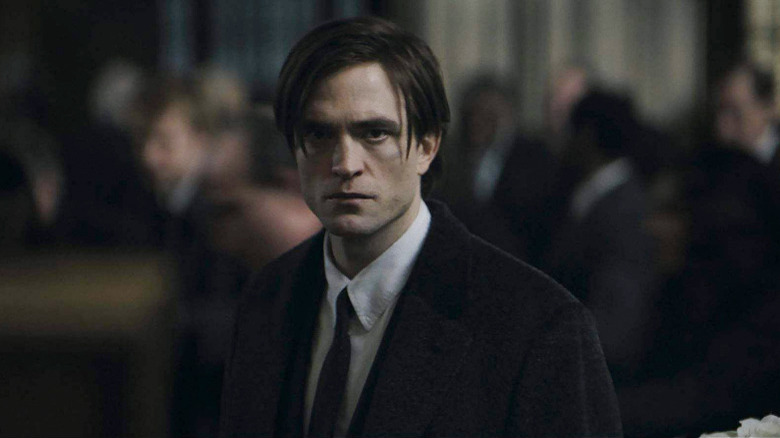
As we know now, of course, Pattinson was very much interested in playing Batman, having gone on record to say he's "always loved the character." Still, that wasn't a given when Reeves' longtime producing partner, Dylan Clark, went in for a "general meeting" with the actor. Much to their pleasant surprise, R-Patz was not only game to sneakily audition for "The Batman" while he was still working on "Tenet," he was also the one who brought the idea up in the first place. As Reeves explained:
"And so it was really exciting when my partner Dylan happened to have a general meeting, and I asked him to kind of — on the sly I was like, look, you have a general meeting, but we're writing this for him. If he doesn't want to do it, I don't know what I'm gonna do! And Dylan was like, 'I'll kind of feel it out, I'll just see how it goes.' And what's cool was that Rob brought it up, and so when Rob brought it up, Dylan was like, 'I think we might have a shot. It seems like he might be into Batman.' Alright, cool! So I thought that there was a chance. So that was one of those things where it was a really crazy thing, where he was doing the screentest, and at that time, in my mind, there was no question that Rob was gonna blow it up. But you have to do it because they've all done it! You do the screen test, you put him in the suit, you do the whole thing. But knowing he was coming, and sneaking away from 'Tenet' to do that, there was a particular vibe to that that was kind of cool."
With the benefit of hindsight, it seems a little funny that Reeves was ever all that concerned about Pattinson not wanting to star in "The Batman" on the heels of making "Tenet." Even setting aside R-Patz's love for the costumed crime-fighter, Reeves is a lot like Nolan in that he's taken the distinct creative vision of his earlier, mid-budget directorial efforts "Cloverfield" and "Let Me In" (granted, less so that of his feature directing debut on the 1996 comedy "The Pallbearer") and carried it over into the world of blockbuster filmmaking with his "Planet of the Apes" sequels and, now, "The Batman." It's no surprise, then, that Pattinson would want to work with him — least of all on a project that would allow him to continue weirding it up to his heart's delight.
Read this next: The 15 Best Batman: The Animated Series Episodes
The post Why Matt Reeves Was 'Devastated' When Robert Pattinson Joined Tenet appeared first on /Film.
Why The Two Fullmetal Alchemist Series Are So Drastically Different

"Fullmetal Alchemist" is the tale of Edward and Alphonse Elric, two broken teenage brothers who go on a quest to find the Philosopher's Stone, a mythical substance with the power to restore their bodies. En route, they clash with villainous, immortal beings called "homunculi" and discover the truth behind their home country of Amestris. It's a heady mix of found families, magic duels and B-movie horror, and just slightly more complex in tone and subject matter than boy's manga standards like "Naruto" and "Bleach."
Beginning with an ongoing manga series that went on to win the prestigious Seiun award in 2011, the story truly exploded after it was adapted to anime form. It was a huge success in both Japan and the United States, winning both popular and critical acclaim. Pokémon introduced me to the world of anime and manga, but it was Fullmetal Alchemist that made me seek it out on purpose.
But just like there are two Elric brothers, there are also two "Fullmetal Alchemist" anime adaptations. "Fullmetal Alchemist" aired in 2003, and it's the one I grew up with. It includes several story elements and characters from the source comic, but it fully diverges at the halfway point. "Fullmetal Alchemist: Brotherhood," on the other hand, aired from 2009 to 2010 and adapted the manga from beginning to end with a minimum of deviations. To this day, fans continue to fight over which series is better. The debate has become as infamous as old standbys like subs versus dubs, or whether anime was really better 10 or 20 or even 30 years ago. By this point, any fan who hears the argument rev up knows it's time to peace out. But why has this argument has gone on for so long? What is it about "Fullmetal Alchemist" and "Brotherhood" that led to this bitter sectarian fight?
You've Got A Strong Pair Of Legs
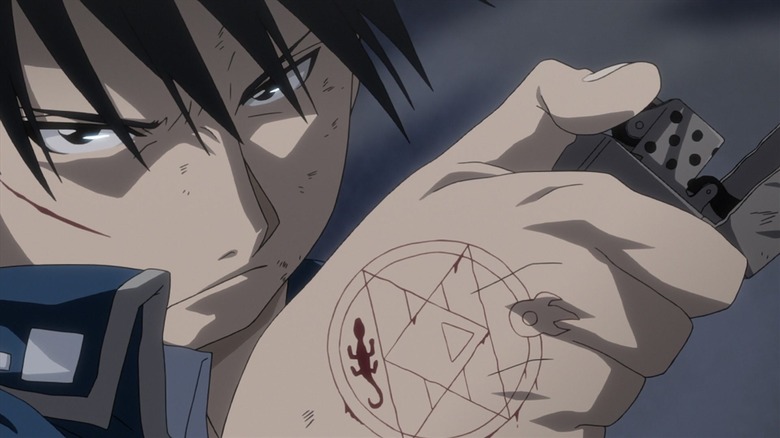
Both "Fullmetal Alchemist" anime series were produced by Bones, one of the most consistent anime studios in the industry. Its famous producer Masahiko Minami says in an interview with MangaUK that it was Yoshiyuki Ito, a long-time animator and character designer affiliated with the studio, who discovered the manga on the shelves. Ito recommended the series to Minami, who decided after reading it that Bones should produce it. Since the manga series had just begun, and artist Hiromu Arakawa was still fleshing out the characters and the story, a direct adaptation was impossible. Therefore, the anime staff chose to take the characters and setting in their own direction. Director Seiji Mizushima (immortalized in the excellent workplace comedy "Shirobako" as Seiichi Kinoshita) noted in an interview at Anime Expo 2009, "When I started the project, there wasn't pressure to be faithful to the original story. It was more about creating an original story that would last a full season."
As Mizushima says, one challenge facing the staff of "Fullmetal Alchemist" was how to stretch a manga series early in its serialization to 50 full episodes of anime airing over the course of a year. Their solution was to heavily decompress the source comic, and use original material to fill in the gaps. The first 25 episodes, half of the series, cover just four volumes of story from the manga. The second half deviates fully from Arakawa's original, featuring characters and concepts crafted by the anime staff. Many of the most beloved aspects of "Fullmetal Alchemist" stem directly from these changes. For instance, the lovable family man Maes Hughes dies a tragic death at the hands of the villains in volume 4 of the manga, signaling to the reader that they mean business. But the version of Hughes in "Fullmetal Alchemist" lives until the 25th episode, halfway through the series. Rather than just another twist in the narrative, the death of Hughes becomes the dramatic turning point of "Fullmetal Alchemist." His death in the manga made an impact on me, but I would reckon that it was really his death in the "Fullmetal Alchemist" anime that achieved legendary status in the fan community.
Something Of Equal Value Must Be Lost

On the other hand, there are aspects of "Fullmetal Alchemist" that even its die-hard fans have a hard time defending. Later episodes provide a cyborg man with a gun in its mouth, several oriignal homunculi, and a climactic twist involving an alternate dimension Nazi Germany. Other scenes are more a question of taste: In a famous original sequence, it is revealed a young character introduced early in the series was since sexually assaulted and traumatized by soldiers, and they're raising the child conceived after that act on their own.
It wasn't just that these aspects were controversial, but they were incompatible with the canon and broader tone of the manga. So it is no surprise that years after the release of "Fullmetal Alchemist," Bones decided to produce a new adaptation that would follow the manga to the letter. "That was...the Bible for the whole thing," says Yasuhiro Irie, the director of "Brotherhood," in an interview with Anime News Network. "The whole process was about figuring out how best to convert the manga into anime."
At a glance, a new "Fullmetal Alchemist" series that would fully adapt the manga's story seems like an easy commercial calculation to make. But I want to take a moment to emphasize how ambitious this production was, and how it, in some ways, remains unparalleled. Not only is "Brotherhood" even longer than "Fullmetal Alchemist," not only did it run in parallel with the manga and end at roughly the same time, but it kept a high baseline of visual quality throughout. Anime adapted from boy's comics would have highlights on occasion, and some reached peaks of excellence ranging for dozens of episodes. But a series faithfully adapting a visually ambitious action comic from beginning to end, without major compromises, padding or breaks, was rare. Even today, popular boy's action anime like "My Hero Academia" are aired in chunks of 12 to 24 episodes at a time, and, frankly, don't look as consistently good as "Brotherhood" did.
The results speak for themselves. "Brotherhood" currently has the highest score on My Anime List, a popular anime ranking site where many young fans congregate. "Fullmetal Alchemist" by comparison is ranked #413 on the list.
Even When Our Eyes Are Closed

Fans of "Fullmetal Alchemist" insist that while "Brotherhood" is certainly more faithful to the original manga, the direction and storytelling lack a certain spark compared to its predecessor. I have some sympathy for this perspective. Personally speaking, I'm exhausted by the dogmatic faithfulness of modern anime adaptations, which stick to the page while ignoring how best to adapt for the screen. The fact that Mizushima and his collaborators made risky choices in adapting the early volumes of the manga is a decision I respect. At the same time, I think that in its best moments "Brotherhood" is far more than just a page-to-screen adaptation.
One of the strongest weapons in the show's arsenal is the animator Yoshimichi Kameda, a fan-favorite action animator who came into his own while working on "Brotherhood." His breakthrough scene immortalizes a battle from the manga's 10th volume, where the tortured captain Roy Mustang defeats the cruel homunculus Lust by roasting her to a crisp with alchemy. The scene was already striking in the manga, but under Kameda's hand it transforms into something even greater. Lust explodes into a rictus of thick black lines and shocking "impact frames," her face contorted in horrible pain and anger.
Kameda comes back again and again to animate some of the manga's best scenes. He knocks it out of the park every single time. Anime fan writer purplegeth wrote that "it almost feels like Hiromu Arakawa drew her manga panels with the express purpose of having ... Kameda later bring them to life." Of course, Kameda was just one of many talented animators working on "Brotherhood." But I use his example to prove a point, which is that "Brotherhood" is not simply impressive because it looks "modern" compared to "Fullmetal Alchemist." Rather, "Brotherhood" is impressive because, while the story is a beat by beat adaptation of the manga, its best sequences take full advantage of the medium of anime. I believe that the choices made by Kameda and co. in these setpieces show, at the very least, as much care as any interpretive choice made by the team on the original adaptation of "Fullmetal Alchemist" in 2003.
That's What Makes It So Beautiful

When the case is laid out that way, it seems cut and dry that "Brotherhood" is superior to "Fullmetal Alchemist." But I don't agree. While I believe that the manga is the definitive version of the story (and "Brotherhood," by that metric, the "definitive" anime) there are aspects of "Fullmetal Alchemist" I love that are nowhere to be found in "Brotherhood."
In my book, the strongest of those elements is the soundtrack. The music of "Fullmetal Alchemist" is composed by Michiru Oshima, whose work spans across both anime and live-action. Its most famous song is "Bratja," a song with Russian lyrics infamous for reducing anime fans of a certain age to tears. Translated into English, the first stanza of the song expresses the feelings of the older brother Edward Elric:
"Forgive me, little brother
I am so sorry before you.
It's forbidden to try to return
One taken by the earth."
Later, we see the words of the younger brother, Alphonse Elric:
"I cannot blame you,
I am not hurt at all.
Well, we sinned
By wanting to be stronger than everyone else."
We're Tiny Insignificant Humans
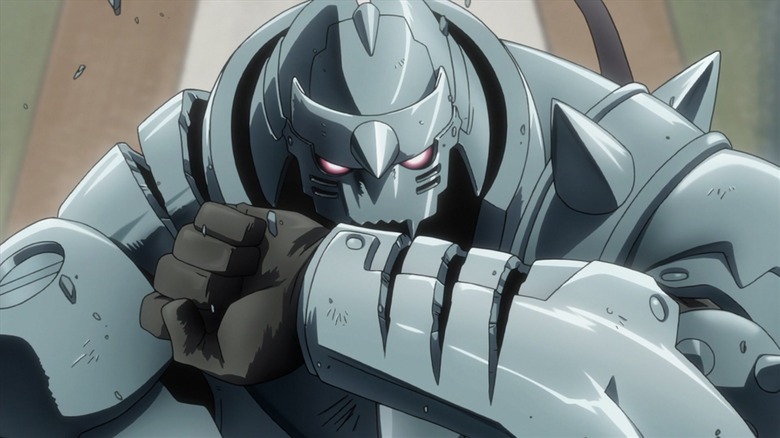
In these two stanzas is the full weight of "Fullmetal Alchemist" as a story. Edward struggles to bear the sin by which he obliterated his brother's body and violated his mother's. But Alphonse is mature enough to realize that while Edward beckoned Alphonse to walk upon the path, Alphonse alone made the decision to take the first step. In a piece for Anime News Network defending the 2003 adaptation, Rose Bridges says, "'Bratja' is a sad song, but I think the reason it's so popular is that it's very hopeful."
Hiding between the bars on the page are the twin serpents of pain and forgiveness, the cruelty of the past and limitless possibility of the future. These qualities are exactly what made "Fullmetal Alchemist" so appealing to teens across the world. Before Arakawa's manga found its way, it was "Bratja" that fully crystallized the promise latent in these characters and their doomed world.
I should emphasize that the composer for "Brotherhood," Akira Senju, is no slouch either. A composer whose body of work is as varied as Oshima's, his compositions strike a note of baroque exuberance that complements the source in its own way. After all, "Fullmetal Alchemist" isn't just about sad teenage boys, but also government conspiracies, martial arts battles, and immortal homunculi who smash their own heads just to prove how invincible they are. But watching "Brotherhood," even with its many admirable qualities, I still felt the loss of "Bratja."
The One And Only Truth
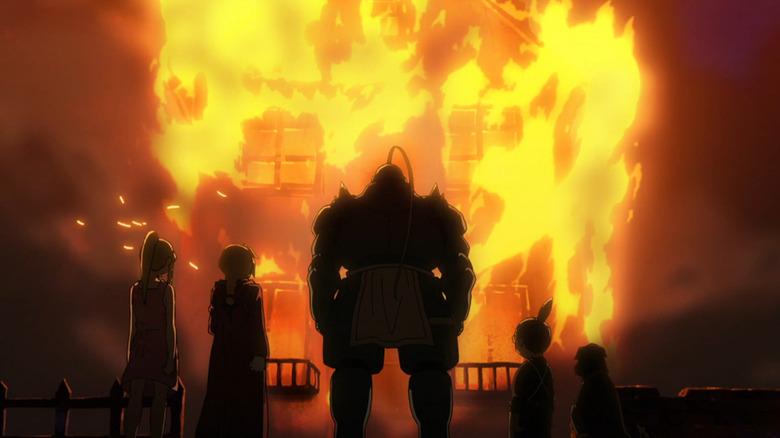
At the end of the day, I think the debate between "Fullmetal Alchemist" and "Brotherhood" comes down to nostalgia. There are folks like myself to whom "Fullmetal Alchemist" was a gateway to another strange and wonderful world. For others, "Brotherhood" was that gateway. I can never relive the experience of those who came after me, in the same way that those same people cannot have the experience I had. At the same time, I've changed enough as a person that "Fullmetal Alchemist" is no longer my favorite thing. Now I have other reference points that mean just as much to me, whether they be the bizarre prog rock of "Revolutionary Girl Utena" or the adolescent fantasia of "FLCL." I would like to revisit the series at some point and determine where my own preferences lie. But I can be content taking either series for what it is rather than whatever it could or should be.
There is no perfect "Fullmetal Alchemist" adaptation that combines the best of the 2003 series and "Brotherhood." At the same time, I don't think that is a problem that needs to be solved. Both anime exist, classics of their respective eras. Bones is undoubtedly a stronger studio because of their work on both entries. We've seen the crew from "Fullmetal Alchemist" reunite in later projects, like the ambitious postmodern superhero epic "Concrete Revolutio." But "Brotherhood" director Yasuhiro Irie recently directed the animated Netflix miniseries "Eden," while animator Yoshimichi Kameda contributed character design and other expertise to Bones's fantastic adaptation of "Mob Psycho 100." Rather than having to pick one or the other, we can simply enjoy the fruits of both.
Read this next: The Best Adult Animation Of 2021
The post Why the Two Fullmetal Alchemist Series Are So Drastically Different appeared first on /Film.
Charlie Cox Shares The Marvel Advice Tom Hiddleston Gave Him
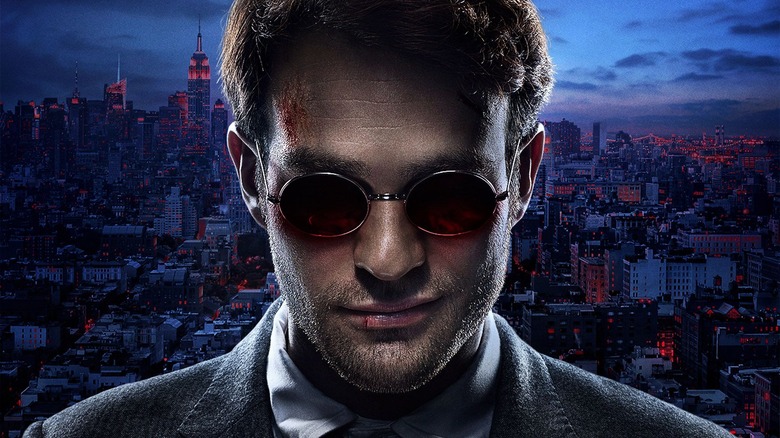
Friends are very important. They're there for you during your greatest achievements and your hardest struggles. But friends are also there for you on the regular days in between when you need to talk about something that you can't tell anyone else. Luckily for Charlie Cox, he has Tom Hiddleston.
When the "Daredevil" star was brought in to shoot his cameo for "Spider-Man: No Way Home," he obviously couldn't tell anyone about it. But when one of your best friends is the Marvel Cinematic Universe's resident Trickster God who is also familiar with the strict policies of the House of Ideas, you have at least one person that you can share your excitement with. Although, when Cox went to his friend with this news, Hiddleston gave him some advice that backfired just a little bit.
The Greatest Trick The Devil Ever Pulled
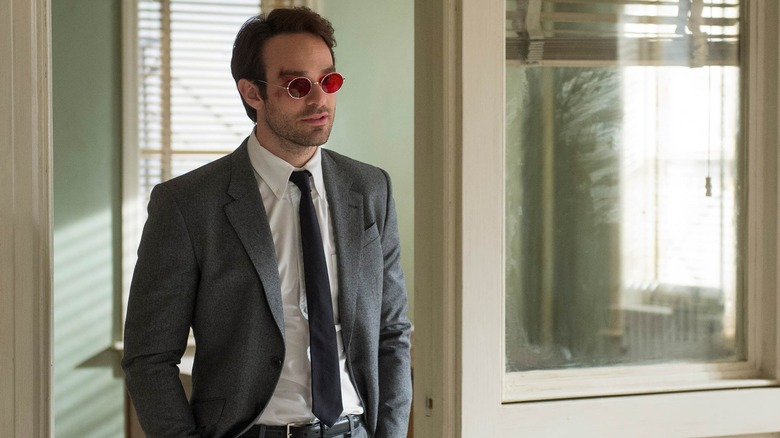
While speaking to ComicBook.com to promote his new TV series "Kin," Cox shared that Hiddleston was one of the first phone calls he made when he learned that he was returning to the MCU.
"He said to me, and he was shooting 'Loki' at the time, so he'd spoken to those guys, and he knew, and they knew we were friends, and all that stuff, so he knew about it. I spoke to him, and he said to me, 'Whatever you do, when the film comes out, you've got to sneak into the back of a theater, because it will go crazy.' And I remember thinking, 'No it won't.' It'll be nice to be there, but I think he's thinking what it would be like for Loki to appear in that moment, where the Loki fan base is unlike anything I've ever seen in my life."
Unfortunately, Cox turned out to be right in this situation. As he said in a previous interview, there were no cheers in his theater when the Man Without Fear's alter ego from the acclaimed Netflix shows popped up in the friendly neighborhood web-slinger's latest feature film. This is still incredibly surprising to me since my theater went absolutely nuts for the moment, but maybe the actor just caught a rough crowd.
While this is most certainly a bummer and definitely not the reaction that Hiddleston was hoping for when sharing this advice, my hope is that Cox managed to see the outpouring of love for Matt Murdock's return on the internet. That love is certainly alive and well in the /Film Slack channel. And now that the whole Defenders roster is moving to Disney+ on March 16, 2022, a whole new crop of "Daredevil" fans should be popping up very soon to shower Cox's version of the Devil of Hell's Kitchen with all the praise that he rightfully deserves. So when that inevitably happens, hopefully it all gets back to Cox and he can tease his friend about the "bad" advice he was given.
Read this next: Every MCU Post-Credits Sequence Ranked From Worst To Best
The post Charlie Cox Shares the Marvel Advice Tom Hiddleston Gave Him appeared first on /Film.
NSA Publishes Best Practices for Improving Network Defenses
The National Security Agency (NSA) this week published a set of best practices for organizations looking to improve the overall security of their networks.
The guidance is meant to be generic, applicable to a broad range of network devices, and should help administrators prevent adversaries from exploiting their networks.
New AMD Radeon Firmware Published For Upcoming GPUs
Are you a teacher in Kentucky and plan on retiring soon? Did you know KY Teacher's Retirement System is the second largest shareholder for the Sber Bank of Russia? Are you seeing where this is going? [Facepalm]

No Man’s Sky Sentinel 3.84 Update released, fixes numerous bugs, full patch notes
Hello Games has released a brand new update for No Man’s Sky. According to its release notes, the Sentinel 3.84 Update fixes a lot of bugs and glitches that plagued the game. Moreover, it resolves a number of crashes. Going into more details, Sentinel 3.84 fixes a crash related to input, as well as a … Continue reading No Man’s Sky Sentinel 3.84 Update released, fixes numerous bugs, full patch notes →
The post No Man’s Sky Sentinel 3.84 Update released, fixes numerous bugs, full patch notes appeared first on DSOGaming.
It's Time To Admit Matt Reeves Is One Of Our Best Blockbuster Auteurs
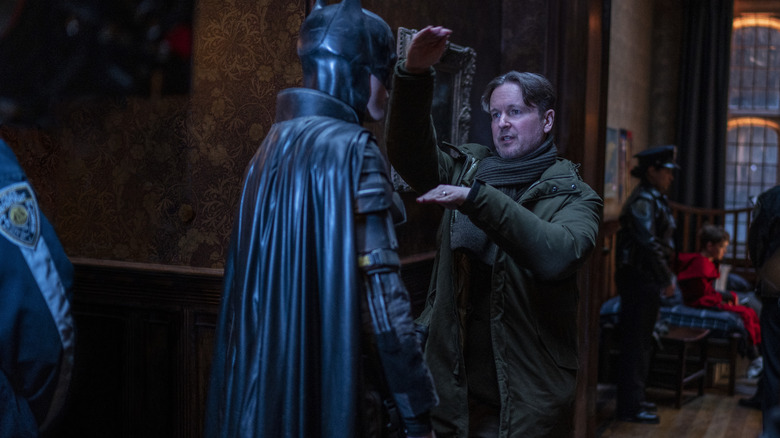
Though he's made a number of high-profile tentpole films already, it feels like Matt Reeves has been laboring away under the auteur radar for over a decade. The director of "Cloverfield," "Let Me In," "Dawn of the Planet of the Apes," and "War for the Planet of the Apes" has gained a new level of attention for helming "The Batman," but he's already built up an impressive filmography since he crossed back over from television into moviemaking in 2008. In a less superhero-obsessed world, it feels like Reeves' name would carry more clout by now, similar to his contemporary, Denis Villeneuve, another filmmaker who emerged as a distinctive new voice around the same time and has since come into his own as a science fiction director.
Reeves actually made his feature-film directorial debut in 1996 with "The Pallbearer," a tepidly reviewed romantic comedy starring David Schwimmer and Gwyneth Paltrow. After that, he went off and did TV for ten years, most notably co-creating the Keri Russell-led drama, "Felicity," with J.J. Abrams.
As a teenager, Reeves and Abrams got their start together, winning film awards and even being enlisted by Kathleen Kennedy to transfer Steven Spielberg's old Super 8 home movies to videotape for him. Abrams later went on to serve as the co-producer of Reeves' sophomore feature, "Cloverfield." It put Abrams' production company, Bad Robot, on the map, and it's one of those movies that was marketed on the strength of its producer's name recognition.
Reeves Was Overshadowed Early On
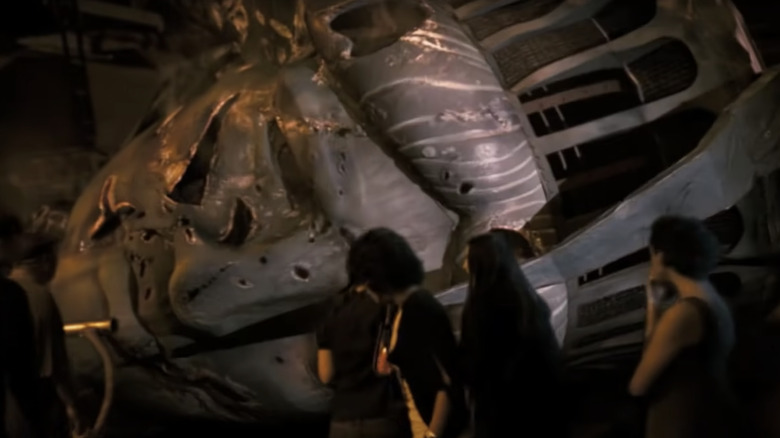
By 2008, Abrams was already well-known as the creator of "Alias" and co-creator of "Lost," though his involvement with the latter series waned as he took on "Mission: Impossible III" and Carlton Cuse came aboard to run the island-set mystery show with Damon Lindelof. With "Cloverfield," as with "Lost," Abrams' name became conflated with the project in the public's mind such that it somewhat overshadowed that of the real chief creative (similar to what happened in 2021 with producer Jordan Peele and director Nia DaCosta on DaCosta's "Candyman" remake).
The first trailer for "Cloverfield" notably billed it as a movie "From producer J.J. Abrams." Reeves' name only appeared in a quick flash onscreen at the end with the other standard credits display.
Written by Drew Goddard, "Cloverfield" has a few script glitches, mostly related to its damsel-in-distress plot, in which the cast of fresh-faced young beautiful people, including Michael Stahl-David and Lizzy Caplan, venture back into Midtown Manhattan to save the hero's girlfriend — who is literally stuck up in a tower. Yet "Cloverfield" helped lead a resurgence of found footage films in the late 2000s and it's still a landmark entry in that genre.
Though it was reverse-engineered from an old movie poster for John Carpenter's "Escape from New York," images in "Cloverfield" like the Statue of Liberty head crash-landing in the street — only to attract gawkers with new-fangled camera phones — remain indelible to the time period. Another Carpenter film, "Christine," or at least the Stephen King book it adapted, influenced Reeves' horror-movie approach to the Batmobile in "The Batman."
Let Me In Ironed Out The Kinks Of Cloverfield
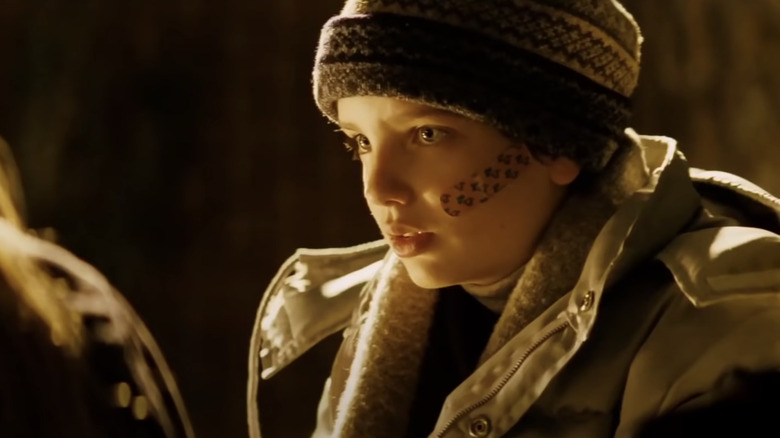
With its urban disasters and post-9/11 dust clouds, "Cloverfield" manages, in its best moments, to be an above-average found-footage flick that puts the viewer on the street in the middle of a Godzilla-type monster attack on New York. For a feature filmmaker whose only calling card before this was "The Pallbearer," Reeves made a quantum leap forward with "Cloverfield." It saw him engage with high-concept genre fare and deliver the kind of popcorn movie you'd be excited to see with your friends or a date on opening weekend. Like "Paranormal Activity," "Cloverfield" even gave birth to its own franchise, in this case, a series of loosely connected films that includes "10 Cloverfield Lane" and the less-well-received "Cloverfield Paradox."
After "Cloverfield," came "Let Me In," Reeves' 2010 re-adaptation of the Swedish vampire novel, "Let the Right One In." We'll have a more in-depth feature about "Let Me In" up this weekend, but suffice it to say, it's a film that was unfairly dismissed by some remake-weary cinephiles. It's also a movie where Reeves really came into his own as a filmmaker, ironing out the kinks of "Cloverfield" by writing his own adapted screenplay.
Reckoning with inner and outer monstrosity in a bullied boy, played by 2022 Oscar nominee (and "Dawn of the Planet of the Apes" costar) Kodi Smit-McPhee, Reeves gave "Let Me In" its own unique subtext and setting in '80s America during the Satanic panic and Cold War. The film paired Reeves with Michael Giacchino, composer of "The Batman" score, for another memorable soundtrack album, and it's a movie that belongs in the same auteur-remake category as David Fincher's "The Girl with the Dragon Tattoo."
Planet Of The Apes Solidified Reeves As An Auteur
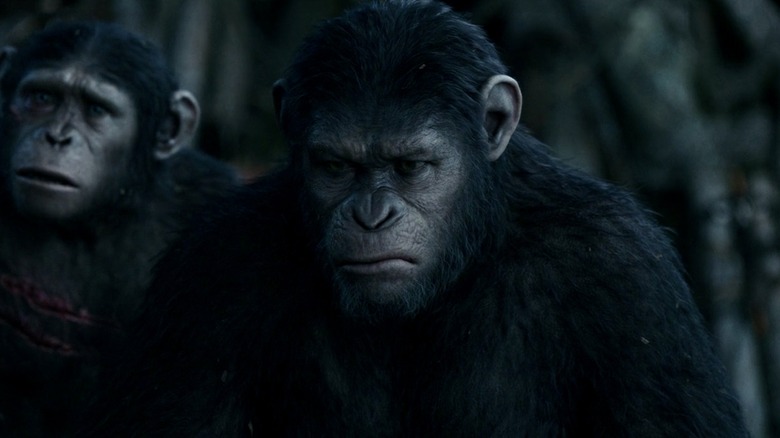
In 2014 and 2017, Reeves was to the "Planet of the Apes" reboot trilogy that Paul Greengrass had been to the 2000s Bourne trilogy. Another director, Rupert Wyatt, had kicked things off with "Rise of the Planet of the Apes," and Reeves came on in the second and third movie to fill out the rest of the trilogy as one of the best of the modern era.
With "Dawn of the Planet of the Apes," Reeves and his cast and crew crafted an astonishing feat of technical wizardry, where the visual effects function as a rich layer of make-up and production design over strong performances and real environments like the Muir Woods National Monument outside San Francisco. At the beginning of the film, there is a moment where the camera blinks upward from the ground at apes swinging through the treetops overhead. Then, it takes on the perspective of the apes themselves, hitting the ground and chasing a herd of deer through the forest. Toward the end of the movie, the camera perches atop a tank turret in a virtuoso shot that gives a rotating view of a battle zone. It's the kind of moment that screams "cinematic."
A society of talking apes may seem like a silly premise, divorced from itself as a proven intellectual property (though with the specter of bird flu and swine flu not long gone, the premise of a "simian flu" wiping out civilization seemed frighteningly realistic. And obviously, the current pandemic has only added to that). Like all good science fiction, however, "Dawn of the Planet of the Apes" serves as a commentary on our own real world of human affairs.
Did We Mention Dawn Of The Planet Of The Apes Rocks?
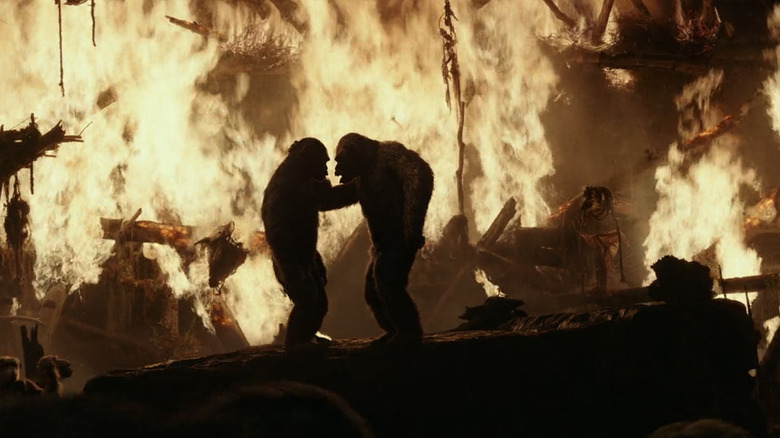
Simply put, "Dawn of the Planet of the Apes" is franchise filmmaking at its finest. It's one of those sequels like "The Empire Strikes Back," "Terminator 2: Judgment Day," or, yes, "The Dark Knight," that is even better than the first movie. The film earned rave reviews and dazzled viewers with its imagery, but because it arrived in the IP-crazed landscape of the 2010s, Reeves' name again took something of a backseat to the "Apes" banner itself. However, he delivered another thematically rich film, as he had with "Let Me In." As we put it on the 50th anniversary of the original 1968 "Planet of the Apes:"
Dawn of the Planet of the Apes unfolds like an epic based on real political events, complete with a coup d'etat that changes the course of history. By the time the movie descends into a nightmare vision of apes unloading assault rifles on unsuspecting humans (in a sandbag nest, and then again later, while charging forward on horseback, against a backdrop of flames), it is clear this film is painting a stark metaphor of human tribalism at its worst.
The focus on apes in Reeves' film belies a universal tale, as if returning the audience to its evolutionary roots, holding up a mirror to our more primitive selves and reminding us that as far as we may have come as a "civilized" species, we still have a long way to go. Andy Serkis as Caesar and Toby Kebbel as the tragic, terrifying Koba make for one of the more dynamic hero-and-villain pairings of the 2010s. Reeves wrung more emotion out of actors in mo-cap as apes than most directors would be able to pull from human characters.
Reeves Won The Trilogy War
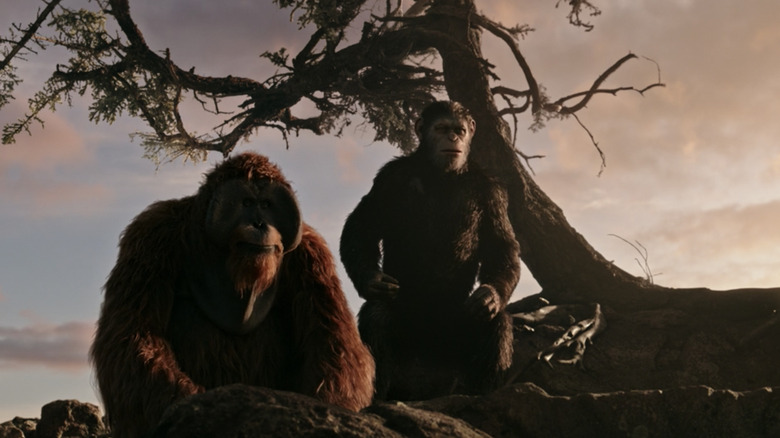
The biggest compliment one might pay "War for the Planet of the Apes" would be to say that it fully sticks the landing for the "Apes" reboot trilogy. Reeves introduces new characters like Steve Zahn's Bad Ape and Woody Harrelson's "Apocalypse Now"-inspired human colonel, but he never loses sight of Caesar's story. In fact, he puts Caesar through hell as a crucible of character before leading the ape survivors and the audience (its own kind of upright ape community) to the promised land of a satisfying trilogy ender.
Call it fan hyperbole, but the "Planet of the Apes" reboot series is probably the greatest modern trilogy filmed since "The Lord of the Rings." Even Christopher Nolan got tripped up a bit in the endzone with "The Dark Knight Rises." What's interesting, if you look back at Reeves' filmography, is the ways in which it parallels Nolan's. "Cloverfield" hit the same year as "The Dark Knight." In "Let Me In," which landed the year of "Inception," Reeves recruited Ritchie Coster, who played the Chechen mob boss in "The Dark Knight," to be the gym teacher at his young protagonist's school.
Maybe that's just a coincidence, or maybe Reeves was already following along closely with the "Batman" film franchise. We know that he has an affinity for certain "Batman" comics. Whatever the case, with "Dawn of the Planet of the Apes" in 2014, Reeves arguably outdid Nolan and "Interstellar." Both directors would release solid summer blockbusters, only a week apart from each other, again in 2017 with "Dunkirk" and "War for the Planet of the Apes." Now, Reeves is once again garnering acclaim with "The Batman," a film that is already being hailed by some as a contender for best Batman movie.
Since 2008, Matt Reeves has worked within the studio system to carve out a body of work that brings true artistry to templates that could easily be disposable in other hands. His films are emotionally effective and technically adroit and have pushed the limits of what found footage, remakes, sequels, and superhero films do. Reeves is proof-positive that auteurism is still very much alive in Hollywood and now wearing a Bat-suit.
Read this next: 12 Awesome Action Movies That Never Got Sequels
The post It's Time to Admit Matt Reeves is One of Our Best Blockbuster Auteurs appeared first on /Film.
The US Space Force Plans To Start Patrolling the Area Around the Moon
Read more of this story at Slashdot.
BBC Resurrects WWII-era Shortwave Broadcasts as Russia Blocks News of Ukraine Invasion
Read more of this story at Slashdot.
'Star Trek: Picard' enters the 25th century only to promptly ignore it
The following contains moderate spoilers for the first three episodes of ‘Star Trek: Picard’ season two, but not much more than what was seen in earlier teasers and trailers.
The first season of Picard was controversial, to say the least. Many fans were happy to see old friends again; others weren’t so thrilled at the grimdark direction Starfleet and the Federation went in the 20 years since we’d last seen their 24th century incarnations. Still, we got a look at how technology evolved, met some intriguing new characters and in the finale, at least, everything seems to have been put right.
It’s that brighter world where the second season of Picard begins, with synthetic beings now legal — which is handy, given that at the end of last season Jean-Luc Picard was transferred into an android body. It left me and much of the audience wondering if and how this would affect future stories. The answer comes pretty quickly in season two, now with new showrunner Terry Matalas at the helm. It doesn’t really matter. It’s not made clear exactly who does and who doesn’t know, but Jean-Luc Picard is still subject to the ravages of age while enjoying all the legal protections he would have had as a flesh-and-blood being (he still owns the vineyard, for one thing). Even Q, when he inevitably appears, treats Picard as the same being he’s always been.
Viewers may be familiar with the “Ship of Theseus” thought experiment, recently brought up in the finale of last year’s WandaVision. Basically, the idea is that if you slowly replace the parts of a ship over time, and then reassemble the old parts into another ship, which one is the original ship? In Picard, they suggest that the essence of a human being is their intelligence, so the real Jean-Luc Picard is the synthetic being that’s walking around on Earth right now. The problem with this, however, is that this hasn’t always been how Star Trek worked. While characters like Miles O’Brien and Harry Kim were replaced by duplicate versions of themselves, “Thomas” Riker was decidedly not given the same courtesy. It seems that duplicates are acceptable only when they replace someone we’ve otherwise lost.
During press interviews, even Patrick Stewart admitted the synthetic body issue was “a real mess.” Thankfully, the show smartly moves past it. It’s been at least a year and a half since the events of the first season, meaning we’re now in the 25th century. Picard has returned home and assumed the chancellorship of Starfleet Academy. Both Rios and Raffi have gone back to the fleet, and even Elnor is now attending school as a cadet (as the first full-blooded Romulan at the Academy). It’s the nice shiny future we’ve always loved to see on Star Trek, complete with some banging costume design and fun updated tech. Last season I noted how nice it was to see the continuation of the “synthetic being” storyline that ran through The Next Generation, and having all the characters settled into new positions leaves plenty of room to explore other facets of 25th-century technology and society.
However, Picard hasn’t become a happy show overnight. A new crisis quickly emerges, with a rift in subspace demanding Picard’s attention and putting the entire fleet at risk. This is where Q comes in, shunting Picard and his close compatriots over to an altered timeline where the genocidal “Confederation” rules the Alpha Quadrant with an iron fist. This isn’t the Mirror Universe that we’re familiar with from previous shows like the original series, Deep Space Nine and Discovery. In this version, Earth is still very much in charge, having wiped out multiple species with the Borg next on its list.
It’s not entirely clear in the first three episodes how this alternate reality was created, or why Q picked the La Sirena crew over any of Picard’s friends from the Enterprise-D. But it’s really just a tool that lets the show dabble in another Star Trek mainstay: time travel. Rather than create some new device or strange spatial phenomenon that sends the crew back in time, their method of traversing through the centuries harkens back to a method seen in the original series, one later repeated in the The Voyage Home. The ship slingshots around the sun, a technique that requires precise calculations that only someone like Spock can provide… or the Borg Queen, in this case. It’s not necessarily scientifically accurate, but it is a nice callback for a franchise spanning over 60 years, especially when fans have a tendency to try to square every inconsistency with their own theories instead of just embracing the chaos.
And chaos awaits the crew as they slide into the fair year of 2024, just a notch ahead of our own time so there’s very little difference in tech to worry about. Raffi and Seven are aghast at the poverty on display in 20th-century Los Angeles, which points to why the show’s writers chose this year instead of 2022 or 2023: 2024 is the date of the infamous “Bell Riots” as seen on Deep Space Nine’s “Past Tense.”
At that point, the poor and indigent residents interned in “Sanctuary Districts” in San Francisco struck back against the degrading conditions they were forced to live in, eventually prompting higher level changes that would eventually lead to the Federation we all know and love. Whether Picard and friends will end up playing a role in those pivotal events remains to be seen, but the third episode hints at Rios getting some taste of injustice as an undocumented Latino man –though he’s undocumented for a time travel reasons and not because of immigration.
Overall, the beginning of Picard plays like a greatest hits reel: We’re treated to the return of classic baddies like Q and the Borg, other characters are referenced in passing for some fun Easter eggs, and time travel episodes of Star Trek tend to be a blast so I hope that this will be a good storyline. In a way it’s a warm blanket of nostalgia to calm the audience after the mess that was season one. But if you were hoping to actually explore the galaxy and see more of the 25th century, season two looks to be yet another letdown.
U.S. Senate Passes Cybersecurity Bill to Strengthen Critical Infrastructure Security
Elden Ring is one of the funniest games I’ve ever played
Around 20 hours into Elden Ring, I stumble across a crumbling old church near a lake. Inside, a giant tortoise wearing a papal mitre greets me and teaches me some powerful new sorceries. Just a short ride from the church I see a gigantic lobster. It seems friendly enough, but it's facing away from me, so I get off my horse and approach it on foot. Just as I expect the 'talk' prompt to flash up, it spins around, snatches me up with one pincer, and then repeatedly snips at my face with the other before casting my lifeless body into the murky swamp waters. As everything fades to black and 'You Died' appears on-screen, I let out a chortle that lasts for nearly a minute.
Elden Ring is really, really funny. Sure, the player messages - like signs that point to a tortoise and simply read 'dog' - are good for a titter, but the Lands Between is FromSoft's most overtly funny world to date. It's packed with humorous easter eggs, internal jokes that run for far too long, and comical little embellishments in its monster design.
There are some small spoilers ahead, so if you don't want to hear about any NPCs or enemies then click away, preferably to our Elden Ring review.
RELATED LINKS: Elden Ring system requirements, Elden Ring bosses guide, The best Elden Ring classesMeta Says Its Metaverse Ambitions Won't Be Possible Without Better Cellular Networks
Read more of this story at Slashdot.
Does the Dell XPS 13 Plus run Linux?
The Dell XPS 13 Plus is one of the most interesting laptops we’ve seen so far this year. It has a very modern design, a great display, and top-tier performance. Like most laptops, the Dell XPS 13 Plus is mostly known as a Windows device, but what if you want to run Linux on it? Thankfully, you can, either by buying it with Linux out of the box or by installing it yourself later.
The Dell XPS 13 Plus Developer Edition comes with Ubuntu
If you want to buy the Dell XPS 13 Plus with Linux out of the box, you’ll want to look for the Developer Edition. This isn’t new to Dell, and the regular Dell XPS 13 also comes in a Developer Edition that runs Linux. Specifically, the Dell XPS 13 Plus comes with Ubuntu, which is one of the most popular Linux distributions. The version that comes installed is 20.04, the latest one available as a long term support (LTS) release. You can always upgrade to Ubuntu 21.10 if you want to.

This is great to see considering so few premium laptops come with Ubuntu. With the Dell XPS 13 Plus being one of the best laptops out there, it’s great to have the option to run Linux and have it be officially supported by the manufacturer. We don’t yet know what configuration options will be available since the laptop hasn’t launched yet, but the standard Dell XPS 13 didn’t make any big sacrifices with Linux compared to the Windows version.
Windows Subsystem for Linux
Another option you might want to consider is just using the Windows Subsystem for Linux. For a while now, it’s been possible to run Linux on Windows, with various distributions available on the Microsoft Store. These are mostly CLI-based versions of the OS, but you can run GUI apps, too.

You can enable the Windows Subsystem for Linux by going to the Settings app, then going to the Apps section and choosing Optional features -> More Windows features. Simply scroll down the list, enable the Windows Subsystem for Linux, and restart. Then you can look for a Linux distribution on the Microsoft Store and install it. Ubuntu, Kali Linux, openSUSE, and others are available.
Installing Linux on the Dell XPS 13 Plus
If you want Linux to run natively on your PC, access a GUI version of it, or you want to replace Windows entirely, you can install it using an ISO file or a bootable USB drive. It’s relatively easy to install Linux on a PC, and since most Linux distributions are free, you don’t have to worry about buying a license.
For example, if you want to install Ubuntu, you can download the latest ISO from the official Ubuntu website or you can look for one of the many Linux distributions out there you can install. Only Ubuntu is officially supported, but if it runs well, other Linux distros should work just fine on the Dell XPS 13 Plus.
As to how you can install it, it depends on how invested you are in switching. You can use virtualization software such as VMware Workstation Player to create a virtual machine if you just want to test out Linux. Or you can use Rufus to creatable a bootable USB drive to install Linux natively on the laptop. We have a guide on how to dual-boot Linux and Windows 11, if you want to keep using them side-by-side.
The Dell XPS 13 Plus isn’t available to buy just yet, so if Linux is really your preferred choice, you can still buy it with Ubuntu preinstalled. We’ll have a purchase link above once it’s available. In the meantime, if you’d rather not wait, you can check out other Dell laptops you might like. Technically, any Windows 11 laptop can run Linux in some form, specifically through the second and third options above. And if you’re looking to expand the ports on your laptop, you may want to check out the best docks for Dell XPS laptops.
The post Does the Dell XPS 13 Plus run Linux? appeared first on xda-developers.

Tom Hiddleston Says He's Merely 'A Temporary Torchbearer' Of The Loki Role
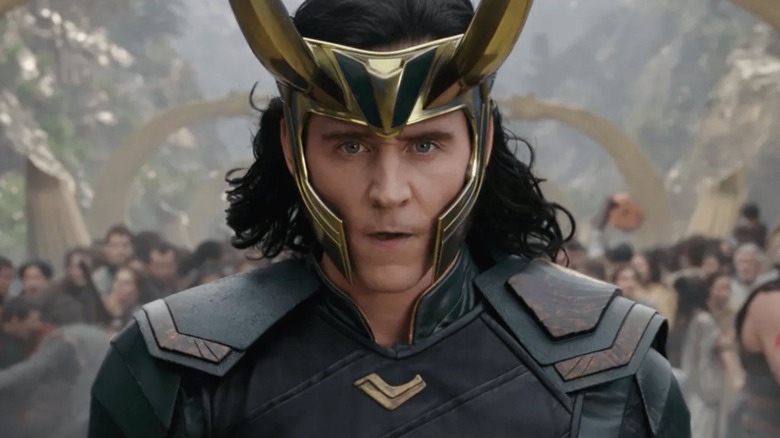
I don't want to acknowledge the possibility of a Marvel Cinematic Universe without Tom Hiddleston in it. I love him very much. I was on the set of the first "Thor" film and when I spoke to him, he was so excited about the role, he was practically jumping up and down. As recently as July 2021, Hiddleston said, "If I were asked to play Loki for the rest of my life, would I? Yeah, absolutely."
So what is this news? Well, Loki stans, Hiddleston spoke during a panel discussion for the Disney+ series "Loki," hosted by the Royal Television Society, alongside his co-star Sophia Di Martino (per Variety). They were discussing the Loki variants in the series, like Classic Loki (Richard E. Grant), Alligator Loki (some very talented CG artists), and of course, Di Martino's Sylvie Loki variant. Regarding the different actors who have now played Loki, Hiddleston said:
"I'm a temporary torchbearer. I've always thought that. It's a great role. It's an archetype, the trickster god, the agent of chaos. I'm just here interpreting that for the time being. Loki has been here for centuries and will be here for centuries more and I'm just stepping into that silhouette for now."
More Hiddleston Loki Please!
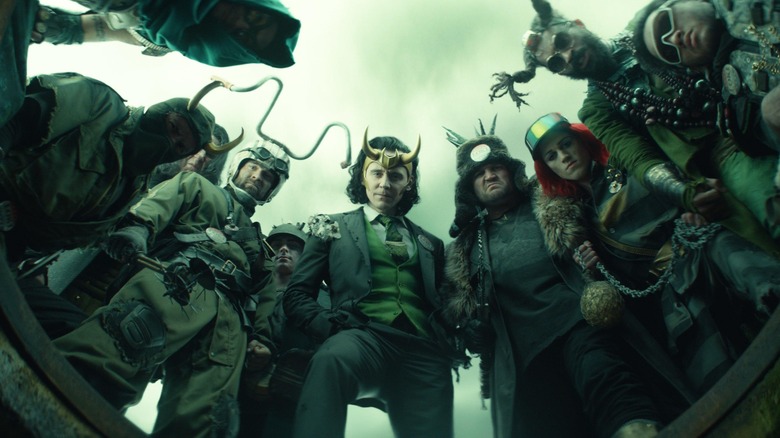
Before you lose your grip on sanity like I did for a moment, think about this. Loki is a shapeshifter. He can be any gender. He can be any animal -- and that's just in this universe. Now that we have the entire multiverse thing happening in the MCU, literally anything a writer can dream up can happen. Heck, we saw Frog Thor in "Loki!"
I'm not saying that Hiddleston won't get bored and do something else. Maybe he's tired of the horns and the wig. Maybe he loves it and will play Loki as long as Marvel will let him (and Marvel, he needs to play this forever). I think the reference here is to the actual Norse deity that this character is based on: Loki has been around for centuries, and will be remembered as long as we have the writings he comes from, or writings about those writings. The trickster archetype is omnipresent in some form or another in so many mythologies around the world. One show isn't going to end and poof, he'll be forgotten -- any more than Zeus or Venus would be.
At least, I hope that's what he's saying. It soothes me to think so. Either way, Hiddleston's Loki will be back in "Loki" season 2. He's not (as far as we know) appearing in "Thor: Love and Thunder," and with no one even realizing who he is at the end of "Loki" season 1, where we'll see him again outside of the series is very much up in the air. Still, Loki is a trickster, so maybe this is just to throw us all off. That's so Loki!
Read this next: 11 Marvel Comics Villains We Really Want To See In The MCU
The post Tom Hiddleston Says He's Merely 'A Temporary Torchbearer' of the Loki Role appeared first on /Film.
Bidets explained to American person

In this clip, a man from Korea tries to explain bidets to an American woman who is clearly completely unfamiliar with the idea of cleaning an ass with water instead of smearing excrement around it with a wadded handful of paper. — Read the rest
Dunkirk (2017) [BluRay] [2160p] [YTS.MX]

IMDB Rating: 7.8/10
Genre: Action / Drama / History / Thriller / War
Size: 4.76 GB
Runtime: 1hr 46 min
May/June 1940. Four hundred thousand British and French soldiers are hole up in the French port town of Dunkirk. The only way out is via sea, and the Germans have air superiority, bombing the British soldiers and ships without much opposition. The situation looks dire and, in desperation, Britain sends civilian boats in addition to its hard-pressed Navy to try to evacuate the beleaguered forces. This is that story, seen through the eyes of a soldier amongst those trapped forces, two Royal Air Force fighter pilots, and a group of civilians on their boat, part of the evacuation fleet. —grantss