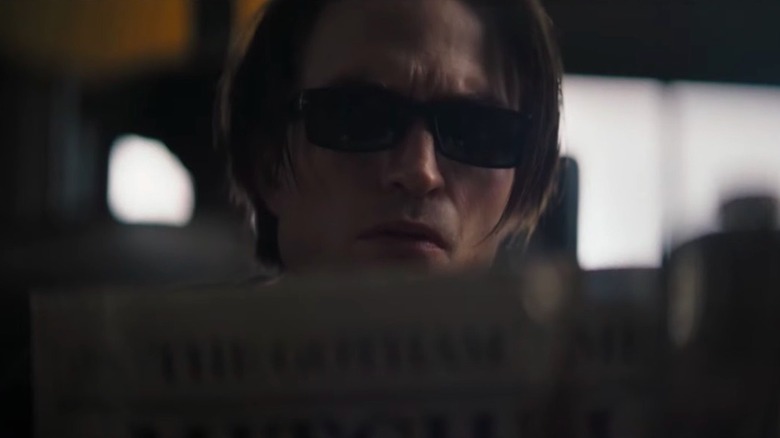
Shared posts

03 Mar 22:33

Quentin Tarantino's First Movie Memory Is Extremely Quentin Tarantino

by Mike Shutt

All of us have our cherished first movie experience. Mine was watching Disney's "Snow White and the Seven Dwarfs" on VHS in my living room. I'm sure this movie, or a plethora of others from the House of Mouse, were among your first film experiences, Or at least, they would have similar sensibilities to those Disney movies. Parents want to ease their children into movies, letting them see things with simple morals and bright colors. Being under 80 minutes is also a plus, as it's tough to hold a child's attention for too long. After all, a parent showing a movie to a kid usually is just to keep a kid occupied. Rarely does that kid turn out to be a major filmmaker.

Well, Quentin Tarantino had a very different introduction to movie watching. His early movie memory wasn't of "Some Day My Prince Will Come" or "A Dream Is a Wish Your Heart Makes." That would be far too ordinary and sentimental for Tarantino. No, the "Once Upon a Time ... in Hollywood" director who helped bring his love of the grindhouse and the B-movie to the mainstream could only have begun watching movies with a cheap knock-off.

The Name's Drummond, Bulldog Drummond

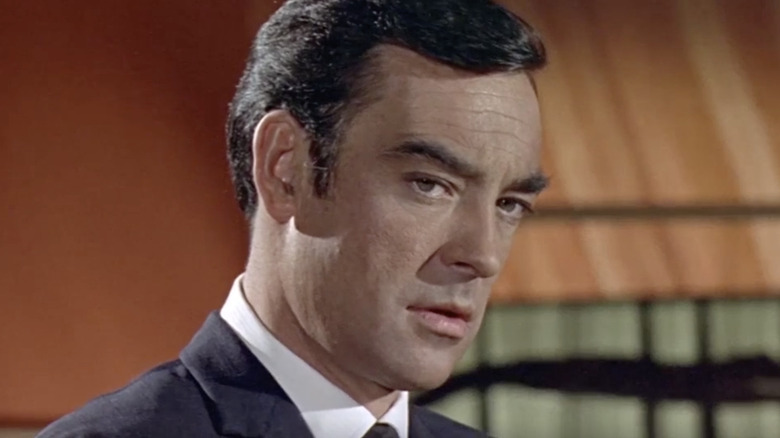
In an interview with Italian talk show host Fabio Fazio, Quentin Tarantino revealed that his first film was "Deadlier Than the Male," a quick cash grab in 1967 to capitalize on the popularity of James Bond. Based on the post-World War I British adventurer Bulldog Drummond, "Deadlier Than the Male" starred Royal Shakespeare Company stalwart Richard Johnson as Drummond, who also happened to be the first choice to play James Bond in "Dr. No," and was directed by British journeyman filmmaker Ralph Thomas. It has the beats of a Bond film down to the cold open ending on a big parachute stunt that goes into a title sequence with its own theme song. Even the poster wants to be a Bond movie. Plenty of studios wanted in on this trend, and "Deadlier Than the Male" was simply another one thrown on the pile.

But it was certainly an impactful experience for Tarantino -- it was the first film he remembers seeing. He recalls of the experience:

"I remember this one scene with Elke Sommer and Sylva Koscina. They kidnap this guy, and they kind of hold this guy prisoner. I remember watching it at five and being a little blown away by the sexual politics of it. I didn't understand that at five."

Being five, he could only remember so much. A fleeting moment like that can trap itself inside the mind of a child so easily, removed from any kind of context. It was not until years later, when he naturally blind bought the movie (I love a blind buy; an underrated part of movie collecting), that he knew what movie he saw as a kid:

"And so I'm screening it after I bought it. And then all of a sudden, about midway through, that scene comes on and I go: 'Oh my God! This is the f****** movie! This is the first movie I ever f****** saw!"

While Tarantino's first movie may not have been exactly age-appropriate or even that good of a movie, that first exposure to the mixture of light, sound, and image is a powerful one. With my viewing of "Snow White," I know deep down I expect a certain level of craft and vibrancy to a picture, even though when I was a tiny child I had no idea what those things were. I just knew I liked "Snow White," which is a film that still holds up tremendously as an adult. I am sure seeing "Deadlier Than the Male" taught Quentin Tarantino at the age of five about how entertaining pulp storytelling could be, something that he has infused into all of his films as a director. There's a rather impressive straight line you can draw from that formative experience of seeing this kind of junky rip-off to masterpieces like "Inglourious Basterds." Was this conscious? Most certainly not, but it just goes to show you how your singular life experience informs everything you do. For Tarantino, who has become one of the great champions of cinema, be it high or (more than likely) low, "Deadlier Than the Male" may have proved more impactful than its makers ever could have known.

Read this next: The 20 Best Heist Movies Of All Time

The post Quentin Tarantino's First Movie Memory Is Extremely Quentin Tarantino appeared first on /Film.

03 Mar 22:32

Let's Talk About That Big The Batman Cameo, And What It Means

by Ethan Anderton

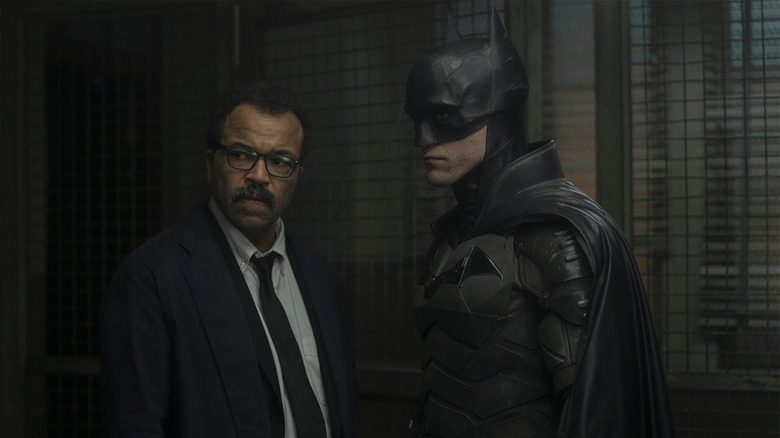
"The Batman" doesn't follow in the footsteps of many comic book movies by having any kind of credits scene -- there's a fun little Easter egg at the very end of the credits, but it's not a lead-in to a potential follow-up. But "The Batman" still manages to set up a sequel that appears to already be in development via a scene that could have easily been included in the credits. Instead, director Matt Reeves chose to include this moment as the penultimate scene of the film, and it features a cameo will undoubtedly have fans buzzing about what's to come. 

But in order to dig into this scene, we must head into major spoiler territory, so if you haven't seen "The Batman," turn back now.

Riddler Finds A Friend

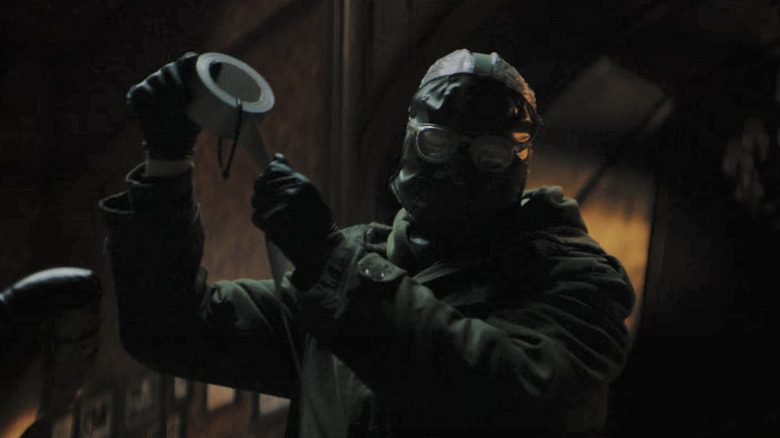
Though the Riddler is apprehended by the Gotham City Police Department and locked up, there's a much larger plan that unfolds involving a small squad of insurrectionists who plan to completely dismantle Gotham, starting with the city's new mayor just as she's about to claim victory in Gotham Square Garden. Though Batman fails to stop a cataclysmic series of explosions that cause the nearby river to completely flood the city, he ends up stopping all of Riddler's loyal supporters turned armed terrorists, ultimately foiling the villain's big plan.

Now locked up, presumably in Arkham Asylum, Riddler is distraught when he sees on the news that his grand scheme ended up being thwarted. But he's about to get some sympathy from a nearby neighbor. Through a small cell door opening, we see a dark, obscured face that has clearly been disfigured in a significant way. He comments on Riddler's failed plan, but it doesn't sound like he's taunting the fellow criminal. Instead, it sounds like this prisoner might be keen on hatching a new plan with the puzzling madman. The prisoner begins: 

"Isn't that just terrible? Them raining on your parade like that? What is it they say? One day you're on top, the next you're a clown. Well, let me tell you, there are worse things to be."

Riddler begins to moan and cry, sounding similar to Dwight Schrute from "The Office" when he's at his most depressed. But this mysterious prisoner tries to help Riddler feel better. He quickly adds, "Don't be sad. You did so well, and you know, Gotham loves a comeback story." This prompts Riddler to ask, "Who are you?" The prisoner gets a little more playful:

"Well, that's the question, isn't it? Riddle me this, the less of them you have, the more one is worth."

Riddler whispers, "A friend." The obscured criminal begins laughing unsettlingly, only a bit at first, then slowly more maniacal, and Riddler joins in, their laughs echoing the quiet hallways of Arkham Asylum.

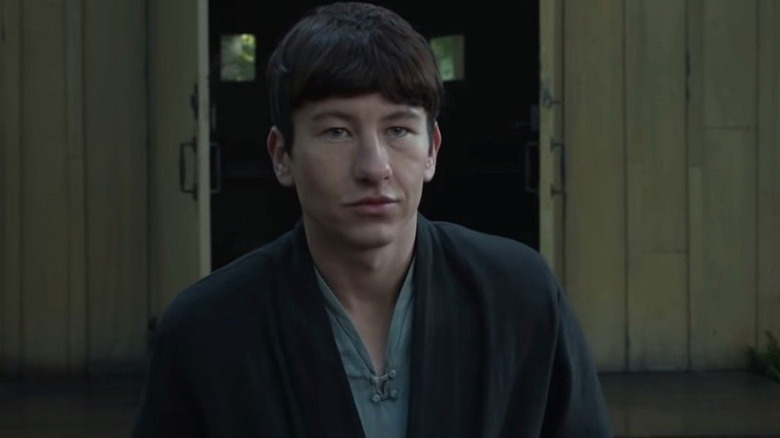
I don't know about you, but I think this guy is a real... Joker. And even though you will have some difficulty recognizing who that mysterious prisoner is thanks to his obscured profile and the scene's low light, the actor is none other than "Eternals" and "Dunkirk" star Barry Keoghan.

So there you go: it certainly looks like Batman's most dangerous rogues may be teaming up in the sequel. 

Barry Keoghan As The Joker

There were rumors of Barry Keoghan having a secret role in "The Batman" last year, with some reports indicating that he might be playing a new version of the Joker. Though he's only officially credited as "Unseen Arkham Prisoner" in the official credits, the dialogue and facial disfigurement certainly suggests that Barry Keoghan is playing Batman's ultimate nemesis.

Initially, it was reported there were two cuts of "The Batman" being screened behind the scenes. One of the cuts was said to include the scene that featured Barry Keoghan, while the other did not. However, it seems there was another Barry Keoghan scene that was filmed and left out of the movie altogether. 

TechRadar spoke with Matt Reeves about the rumors regarding Barry Keoghan's role in "The Batman," and it sounds like there may have been two scenes with Barry Keoghan in the film at some point. Reeves explained:

"There were scenes we cut that I liked... In fact, there's a scene with the unseen prisoner, who appears at the end of the movie in Arkham with the Riddler. There was an earlier scene where Batman went to Arkham to try to profile the Riddler, and Barry is in that scene. It's a very cool scene, and I'm sure we'll release the scene after the movie comes out, because it's a really cool deleted scene."

So in addition to the scene towards the end of the film, it sounds like Barry Keoghan might have been present during the sequence where Batman goes to speak with Riddler by way of the prison phone booth. Why was the scene cut? Perhaps it undercut the intensity of the interaction between Batman and Riddler. After all, that scene slowly builds in tension and anger as Batman realizes there's more to the criminal's plan, all while Riddler himself realizes that Batman hasn't actually been helping him this entire time, a misconception that could only be presumed by a psychopath.

Do We Really Need Another Joker?

Look, I know that Joker is basically Batman's arch nemesis, but between Jared Leto as Joker in "Suicide Squad" and Joaquin Phoenix going in an even more deranged direction in "Joker," not to mention all of his other appearances in video games, comics, merchandise, and more, the villain has become overexposed. Sure, the prospect of Barry Keoghan's Joker teaming up with Paul Dano's Riddler for that teased comeback has at least some potential, but I just wish Matt Reeves would dig into Batman's extensive rouges gallery for someone else. While I'm confident Reeves and Keoghan will ultimately deliver something substantially different Clown Prince of Crime than we've seen in recent years, there are far more interesting bad guys and gals just waiting to trade blows with Batman on the big screen. 

"The Batman" is playing in theaters everywhere now.

Read this next: Batman Movies Ranked From Worst To Best

The post Let's Talk About That Big The Batman Cameo, and What It Means appeared first on /Film.

03 Mar 22:30

Melinda French Gates said Bill's relationship with Jeffrey Epstein led to the end of their marriage

by Mark Frauenfelder

In a CBS interview, Melinda French Gates said one of the main reasons she divorced Bill Gates, in addition to his affair, was his ongoing friendship with pedophile Jeffrey Epstein.

From the interview:

French Gates said she met the sex offender "exactly one time, because I wanted to see who this man was.

Read the rest
03 Mar 22:26

Release: Ghostrunner - Project_Hel

Dive into the brutal and violent story of Hel, the Ghostrunner boss.
Genre: Action

03 Mar 22:23

John Romero’s Doom 2 level raises over €25K for Ukrainian relief

by Dustin Bailey
John Romero’s Doom 2 level raises over €25K for Ukrainian relief

March 7, 2022: John Romero's new Doom 2 level for Ukrainian relief has raised over €25,000 so far.

John Romero is one of PC gaming's most legendary figures, and he's out here continuing to create new levels for his most famous works. Sigil released in 2019 as a free, unofficial fifth episode for the original Doom, and now Romero has released a new, paid Doom II level supporting humanitarian efforts in Ukraine.

The level is called One Humanity, and it's available for €5.00 (about $5.80 USD) on Romero's website. Every penny, as Romero explains on Twitter, goes to the Red Cross and the UN Central Emergency Response Fund. You'll need to make use of a modern Source port of Doom II in order to play the .WAD file.

The new Doom 2 level for charity was announced and released on May 3, and now just four days later, John Romero has announced that their efforts have raised over €25,000 for Ukrainian relief - which is around $27.3K USD or £20.6K GBP - and the count is still going up.

03 Mar 22:22

The 20 Greatest Parody Movies In Cinema History

by Liam Gaughan

It's very disheartening to see how parody movies have declined in the past few decades. Franchises like "A Haunted House" or "Scary Movie" are no longer funny, and they don't understand what spoofs need to do to be clever. A parody isn't defined by the number of current pop culture references or celebrity cameos it can fit in. At their best, parody movies should be able to offer insights into why a genre is worth poking fun at.

The internet era has certainly made it more challenging to come up with original gags. Filmgoers are overexposed to late-night jokes, "Saturday Night Live" sketches, satirical film reviews, and an overabundance of cynicism on social media platforms. By the time that Wade Wilson threw in a one-liner mocking the "Save Martha" scene from "Batman v. Superman: Dawn of Justice" in "Deadpool 2," it felt two years behind the curve.

A few easy jokes about something popular don't make a great movie. In fact, the best parody movies should stand independently so someone unfamiliar with the source material can still enjoy it.

Here are the 20 greatest parody movies in cinema history.

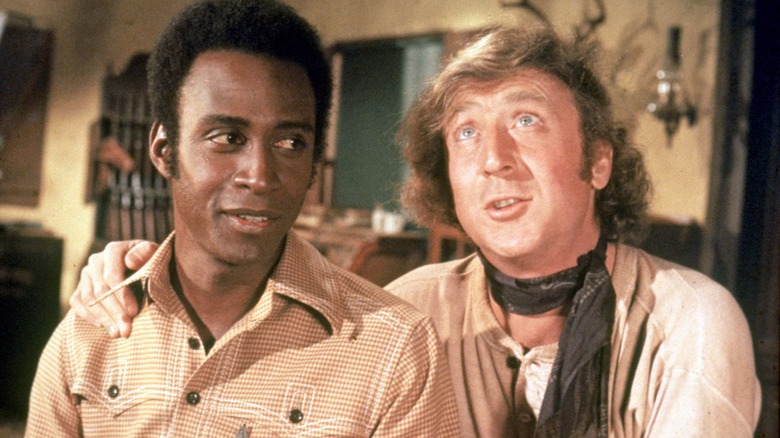
Blazing Saddles
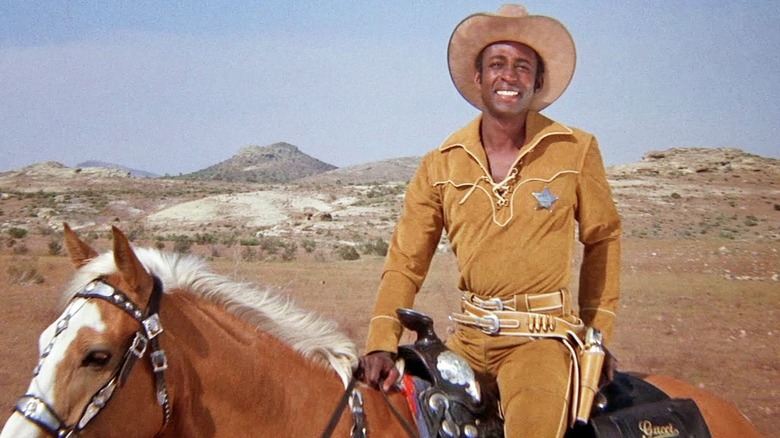
Mel Brooks aimed his razor-sharp wit at the Western movie genre in 1974 with his spoof "Blazing Saddles." At this point, the Western had been established for generations. Westerns had evolved and matured since their earliest days. More reflective films like "Once Upon A Time In The West" and "The Man Who Shot Liberty Valance" had already deconstructed the genre. That made it more challenging to say something new with a genre that audiences were already so familiar with.

"Blazing Saddles" isn't recreating just one specific Western. Similar to classics like "High Noon," "Rio Bravo," and "Shane," the story features a brave sheriff in a lawless town. The volatile town of Rock Ridge is set to be the site of a new railroad line. Territorial Attorney General Hedley Lamarr (Harvey Korman) realizes he can profit off of the new expansion. He decides to get the current residents to abandon their homes by sending in a Black sheriff.

Sheriff Bart (Cleavon Little) is dispatched to the city and is immediately met with racist backlash from the citizens. Bart treats his position with optimism and forms a friendship with the alcoholic gunslinger known as The Waco Kid (Gene Wilder). They work together to clean up the streets.

Young Frankenstein
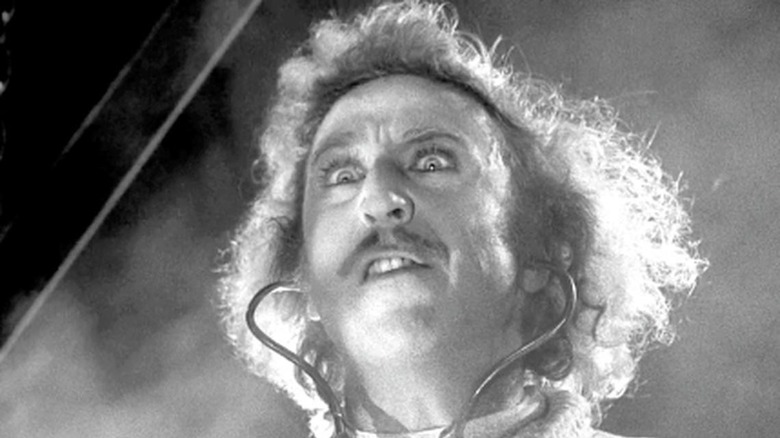
"Frankenstein" is one of the most iconic horror movies in cinematic history. James Whale's 1931 classic was the template for the genre, and Whale's follow-up, "The Bride of Frankenstein," has just as many famous moments. Universal Pictures brought back Frankenstein's monster in subsequent sequels, spinoffs, and crossovers with characters like Dracula, the Wolf Man, and even Abbott and Costello. In 1957, Peter Cushing and Christopher Lee took on the story in Hammer Films' "The Curse of Frankenstein." There have also been many television adaptations of Mary Shelley's famous novel. Audiences certainly couldn't be blamed if they were sick of hearing the words "It's alive!"

Mel Brooks decided to take on the story in 1974 — the same year as "Blazing Saddles." "Young Frankenstein" centers on Victor Frankenstein's embarrassing grandson, Dr. Frederick Frankenstein (Gene Wilder). Frederick inherits his family's estate in Transylvania and meets a descendant of the famous "Frankenstein" character Igor (Marty Feldman). He begins performing the same experiments that his ancestor became notorious for. Eventually, Frederick creates his own monster (Peter Boyle).

Ironically, this sillier interpretation was the most original take on "Frankenstein" in years. It's easy to forget that the "Frankenstein" story is inherently tragic. Brooks mocks Frankenstein's crazed concepts but also gives him a compelling reason to pursue them. Frederick isn't taken seriously by the scientific community and has something to prove. He shows genuine affection for his monstrous creation. 

Spaceballs
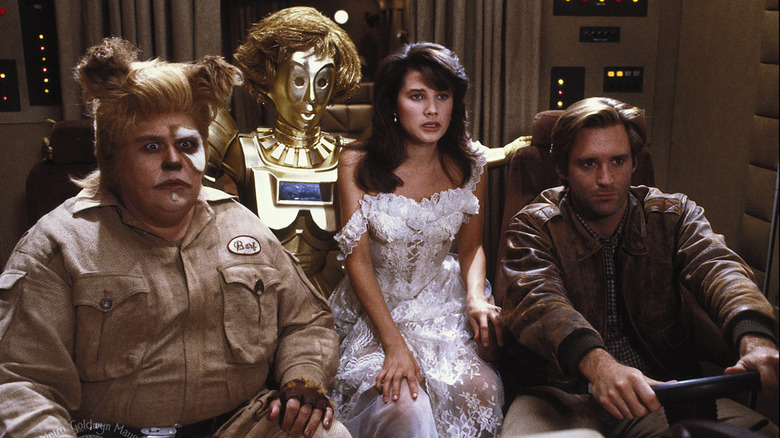
"Star Wars" has always been a dominant cultural presence. George Lucas' science fiction movie introduced a new era of blockbuster filmmaking that changed the course of Hollywood history. Studios were desperate to find the next "Star Wars." The series risked overexposure because there were many comedic interpretations already. Everything from "Donnie and Marie" to "The Muppet Show" poked fun at the galaxy far, far away.

Nevertheless, Mel Brooks decided to take a stab at "Star Wars" in 1987.  "Spaceballs" mocks many popular films and franchises, including "Star Trek," "Indiana Jones," "Aliens," "The Wizard of Oz," "Planet of the Apes," and even "2001: A Space Odyssey." However, it is primarily a "Star Wars" parody. The film follows space mercenary Lone Star (Bill Pullman), who is a bit of a combination of Luke Skywalker and Han Solo. Lone Star and his loyal half-human, half-dog companion Barf (John Candy's version of Chewbacca) are offered a reward to rescue Princess Vespa (Daphne Zuniga) of the planet Druidia. Vespa is set to be married to the idiotic Prince Valium (Jim J. Bullock).

Lone Star must avoid the villains of the planet Spaceball's evil empire, including Dark Helmet (Rick Moranis), Colonel Sandurz (George Wyner), and President Skroob (Brooks). Brooks lampoons "Star Wars" with lots of fun parallels like "the Schwartz,"  the "Spaceballs" version of the Force.

Austin Powers: International Man Of Mystery
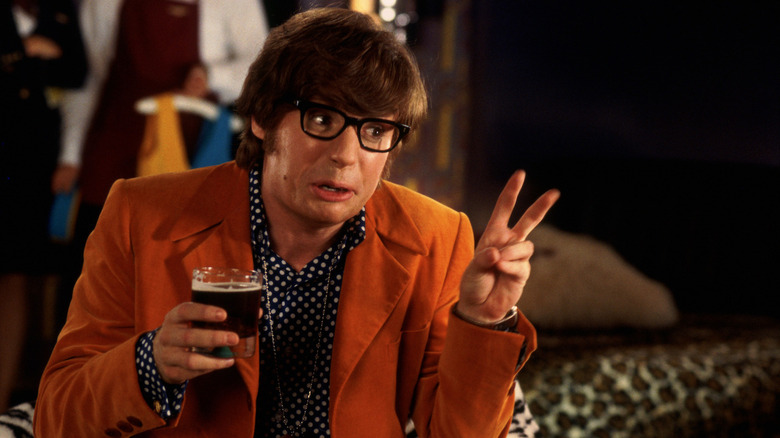
The James Bond films aren't the highest-grossing film franchise of all time, but they have been a consistent moneymaker for six decades. Bond first appeared on the big screen in 1962's "Dr. No," and audiences have come to expect a new 007 adventure every few years. There's no indication that the series will end anytime soon. Just last year, Daniel Craig's final adventure as 007, "No Time To Die," managed to rake in impressive box office results and earn critical praise after being delayed due to COVID-19.

Each new Bond film is a product of its era. The series is reimagined and rebooted every time a new actor steps into the role. When you consider the movies inspired by Bond, it is challenging to think of any new takes on the cinematic spy. However, Mike Myers was able to craft a loving, quirky homage with 1997's "Austin Powers: International Man of Mystery." Not only did Myers mock the familiar cliches of the Bond series, but he also explored the hilarious consequences of bringing a character from the swinging '60s into the modern day.

In the film, Myers takes on the dual roles of world-class secret agent Austin Powers and the eccentric villain Dr. Evil. Both characters are hilariously incompetent. Ironically, Myers created parody characters that were just as worthy of revisiting as Bond and Blofeld. With the subsequent films, "Austin Powers: The Spy Who Shagged Me" and "Austin Powers in Goldmember," this is one of the few comedic franchises with sequels as good as the original.

Deadpool
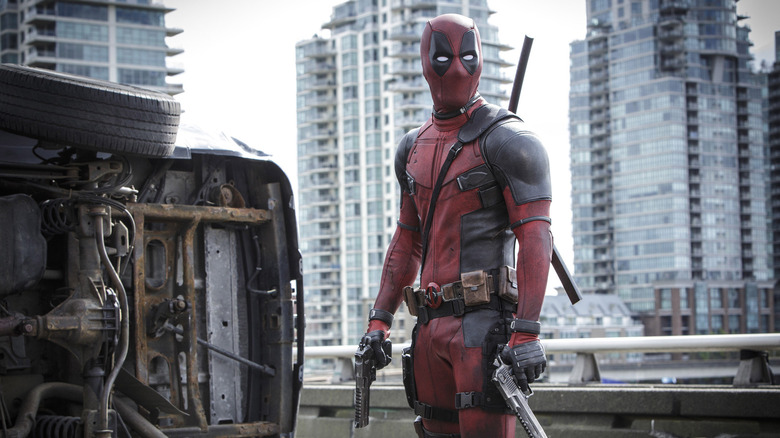
Despite what the great Steven Spielberg might say, superhero movies aren't going away any time soon. The genre has always been popular, but in the past decade, comic book-inspired movies have become a dominant form of entertainment. They continue to top the box office charts every year. There's no sign that the Marvel Cinematic Universe is slowing down, and DC continues to expand its filmography with both the DC Extended Universe and offshoot projects set outside of its connected continuity. The genre is popular with comic book fans and critics alike. Films like "Logan," "Black Panther," and "Joker" became major awards contenders.

2016 was a pivotal year for superhero movies thanks to "Captain America: Civil War" and "Batman v. Superman: Dawn of Justice." Compared to these two huge crossovers, the modestly-budgeted "Deadpool" was an underdog. Still, the foul-mouthed mercenary with a heart of gold succeeded. The comedic slant of "Deadpool" was exactly what the genre needed. The film mocks the archetypes of the genre, but it still works as an awesome R-rated action-comedy in its own right.

Like "Batman Begins" and "Iron Man," "Deadpool" features a non-linear narrative framing device. Ryan Reynolds' Wade Wilson has an engaging and tragic origin story that makes him consistently interesting. It's also just refreshing to see a superhero who actually loves his job.

The Cabin In The Woods
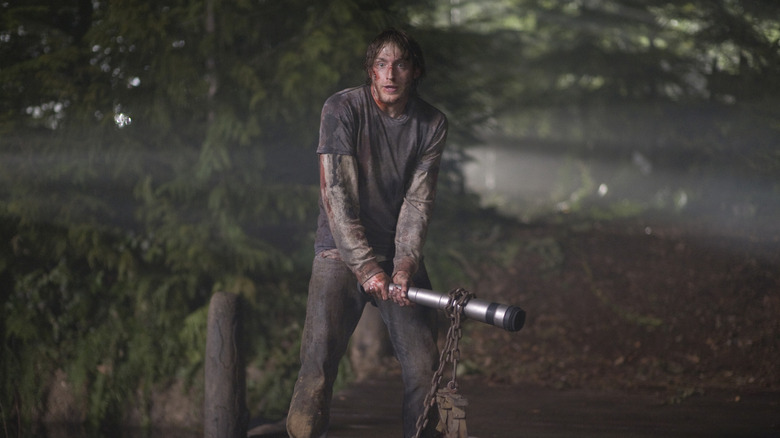
Parody movies are often loving tributes from filmmakers honoring their influences. It's nice to see spoofs that genuinely celebrate a genre and remind us why it's worth revisiting. However, there's also room for spoof films that take a more critical stance. A great parody can examine the cliches it's subverting. Comedy can make a meaningful statement without being mean-spirited or dismissive.

"The Cabin in the Woods" is both an homage and deconstruction of many subgenres of horror. It initially unfolds in a way similar to low-budget gore movies like "Evil Dead" or "Bad Taste." It also incorporates elements of slasher films, monster movies, conspiracy thrillers, and torture porn. For fans of the genre, it's fun to see references to the vast history of horror cinema. However, screenwriters Drew Goddard and Joss Whedon also question the appeal of violence and examine horror movie fan culture. "The Cabin in the Woods" is particularly critical of the negative stereotypes of women and minority characters in horror movies.

The film follows six college friends who take a road trip vacation to the titular cabin in the woods. Each character represents a different horror movie archetype: Dana Polk (Kristen Connolly) is "The Virgin," Curt Vaughan (Chris Hemsworth) is "The Jock," Jules Louden (Anna Hutchinson) is "The Whore," Marty Mikalski (Fran Kranz) is "The Fool," and Holden McCrea (Jesse Williams) is "The Scholar." With some unforeseen twists and turns, "The Cabin in the Woods" cleverly explains why the story plays out in such a seemingly cliched way.

Popstar: Never Stop Never Stopping
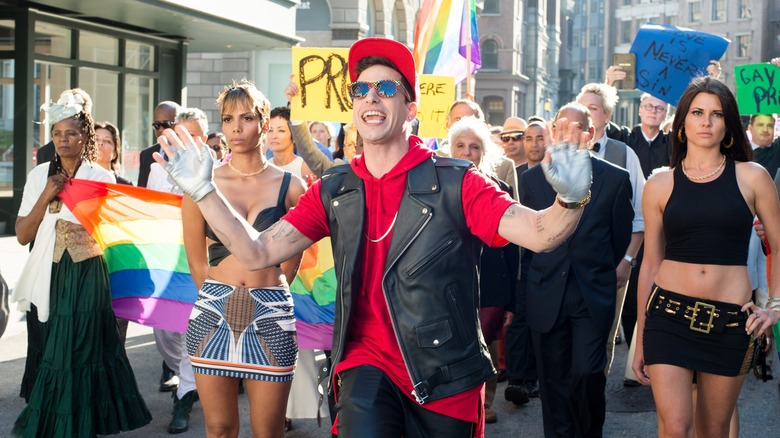
In the 21st century, there have been many music documentaries and concert films focusing on current pop icons. Obviously, these films are aimed at younger audiences, but there is something that feels fake about the way these films are presented. Docs like "Justin Bieber: Never Say Never" or "Katy Perry: Part of Me" feel like manufactured products from marketing departments. Sometimes, it seems like the days of truly great music documentaries like "Bob Dylan: Don't Look Back," "Monterey Pop," or "The Last Waltz" are long gone.

The talented team at Lonely Island decided to take down the pop doc trend in 2016 with their mockumentary, "Popstar: Never Stop Never Stopping." The film centers on pop sensation Conner4real (Andy Samberg), formerly known as "Kid Conner." In the film, Conner is venturing off on a major solo tour after abandoning his former bandmates, The Style Boyz. His childhood friend, Owen (Jorma Taccone), once known as "Kid Contact," is now his relatively useless DJ, and  Conner mostly ignores him. Lawrence (Akiva Schaffer), the former "Kid Brain," leaves the industry entirely to become a farmer in the middle of nowhere.

"Popstar: Never Stop Never Stopping" doesn't just lampoon music culture. It features a great soundtrack of its own. Original tunes like "Incredible Thoughts," "I'm So Humble," "Karate Guy," and "Mona Lisa" playfully mock popular music trends.

Tropic Thunder

Great parodies have the opportunity to not only lampoon famous movies but also the people that made them. There are reasons why trends emerge, and it is important to question why these trends are still popular. Are they simply a product of creative laziness or just Hollywood cynicism? Can a true artist inadvertently take on cliched material? Should we as viewers be empathetic to them? Is it okay to mock someone's hard work and creative vision because they're an out-of-touch Hollywood celebrity? These are questions that parodies often don't think to ask.

However, Ben Stiller did ask those questions in 2008 with his satirical action-comedy, "Tropic Thunder." Stiller had already worked in the industry for quite a while, both in front of and behind the camera. His perspective boosts the insights that "Tropic Thunder" has on the film production process. Stiller stars as Tugg Speedman, an action movie star renowned for his "Scorcher" series of films. Tugg had become a laughing stock within the industry with his failed Oscar bait project, "Simple Jack." In the film, he tries to regain his dignity by starring in a major war film that is similar to "Platoon" or "Apocalypse Now."

Tugg joins a cast that includes lazy comedian Jeff Portnoy (Jack Black), method actor Kirk Lazarus (Robert Downey Jr.), up-and-comer Kevin Sandusky (Jay Baruchel), and rapper Alpa Chino (Brandon T. Jackson). The ensemble heads to Vietnam for an ambitious shooting schedule and are put in actual danger.

Enchanted
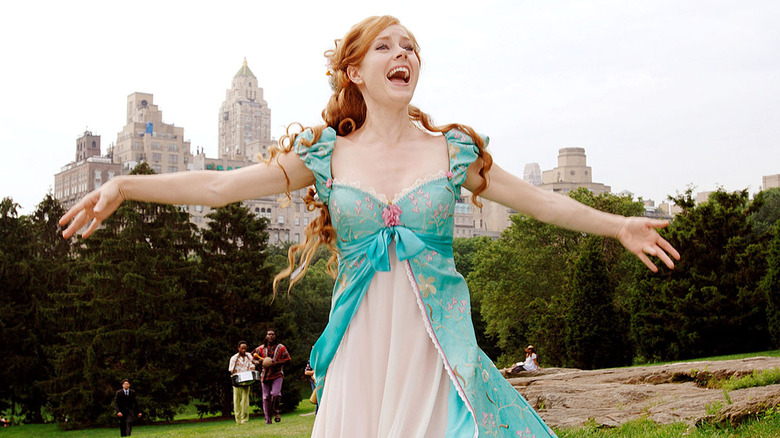
The parody genre is often associated with crass R-rated comedies that feature overt sexuality and foul language. It makes sense for parodies to be aimed at older viewers. Adults have simply seen more movies than children and are more familiar with trends. However, there certainly are stories that children have seen more than once. Disney has been cranking out fairy tale movies for most of its history, and most kids have probably seen more than their share.

As a result, 2007's "Enchanted" can tell a parodical story for a family audience. There's a goofiness in "Enchanted" that appeals to children, but there's also a more subtle meta-commentary on the familiar princess archetype for older viewers. The film opens with an animated sequence set in a mythical fairy-tale land. The naive Princess Giselle (Amy Adams) falls in love with the brave (but not that bright) Prince Edward (James Marsden). Giselle's wicked stepmother, Queen Narissa (Susan Sarandon), casts a curse and transports Giselle to modern-day New York.

Giselle finds herself trapped in an environment where her idealism is out of touch. Cynical divorce attorney Robert Phillip (Patrick Dempsey) takes pity on her when he sees how scared she is. He offers her the chance to stay with him and his daughter. Edward may have swept her off her feet, but Giselle gradually falls in love with Robert.

Galaxy Quest
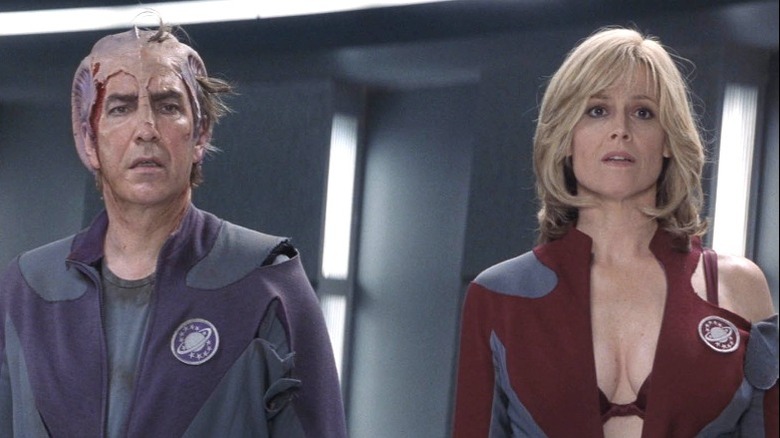
"Star Trek" has a fascinating fan culture. You may be sick of hearing the phrase "it was all for the fans," but "Star Trek" was truly saved by its loyal fanbase. An enthusiastic letter-writing campaign prevented the original series from cancellation. "Star Trek" fans are notoriously loyal. Convention culture is an essential part of the saga's history, so fans are often privy to the private lives of their favorite stars.

1999's "Galaxy Quest" is a loving tribute to both "Star Trek" and its fans. The film imagines a cult science fiction series called "Galaxy Quest" that is similar to the original "Star Trek" series. Despite its limited television run, "Galaxy Quest" has a strong cult following. The out-of-work actors from the show now make their living by attending conventions and appearing on panels. The egocentric stars have grown to despise each other. Jason Nesmith (Tim Allen) is "Galaxy Quest's" version of William Shatner. His haughty behavior has worn thin on castmates Gwen DeMarco (Sigourney Weaver), Alexander Dane (Alan Rickman), Fred Kwan (Tony Shalhoub), Tommy Webber (Daryl Mitchell), and extra-turned-cast-manager Guy Fleegman (Sam Rockwell).

The crew is forced to bond when a real alien species seeks their help. Threatened by an invading race led by the evil Roth'h'ar Sarris (Robin Sachs), the naive Thermian people have misinterpreted episodes of "Galaxy Quest" as real historical documents. 

Top Secret!
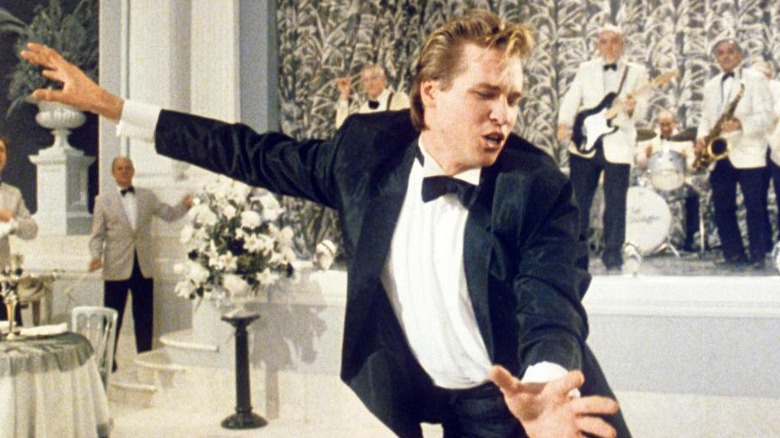
It's interesting when parody films combine multiple genres into a broader satire. It diversifies the humor within the film and gives the audience a unique experience. Merging multiple genres may not make logical sense in a more dramatic story, so a parody version is perfect. It gives filmmakers the chance to be more creative. A more diverse group of film fans may be interested because of all the different influences.

The 1984 action-comedy "Top Secret!" combines the espionage, World War II, Cold War thriller, and musical genres into one quirky adventure. The film opens as a fairly straightforward parody of Elvis Presley's films. It takes a comedic look at a '50s-style rock and roll musician named Nick Rivers (Val Kilmer). Rivers' international tour takes him to East Germany. Other genres emerge in the hilarious narrative, as Cold War paranoia and lasting World War II tensions are still present in East Germany.

Rivers charms the local rebel leader, Hillary Flammond (Lucy Gutteridge), with his rendition of "Tutti Frutti" at a lavish dinner party. He ends up saving her from being captured. Rivers learns that she's involved with a movement to prevent the rise of former Nazis. Inspired by her heroism, Rivers decides to join her mission. "Top Secret!" expertly combines action and humor. The character of Rivers is surprisingly dynamic compared to Elvis' dim-witted characters. Rivers finds creative solutions to help the resistance movement and constantly surpasses everyone's expectations. "Top Secret!" features an incredible debut performance from Kilmer, and it helped launch him as a major star.

Shaun Of The Dead
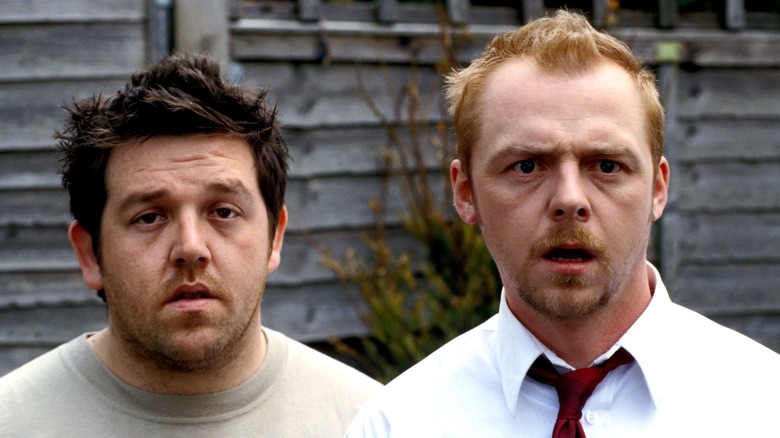
Zombie films had grown into a tired subgenre by the early 21st century. "28 Days Later" may have changed the game with its fast-moving zombies, but most movies about the undead were stuck repeating the same formula that George Romero had already perfected. Romero's "Night of the Living Dead," "Dawn of the Dead," and "Day of the Dead" are foundational within the genre. They set a high precedent for excellence, and it was hard for other films to distinguish their vision of a zombie apocalypse in an original way.

When Edgar Wright took on the genre with "Shaun of the Dead," he didn't just make a loving tribute to Romero. The film has great (and very bloody) practical zombie effects. The zombies themselves were more effective than anything horror fans had seen in years. Few horror-comedies are equally funny and scary. "Shaun of the Dead" is a rare exception and perfectly combines Wright's fast-paced humor with some truly sickening death sequences. Wright understands that, in addition to being scary villains, zombies are a metaphor for their living counterparts. He satirizes how mankind has already become the living dead by doing the same menial tasks every day.

"Shaun of the Dead" is also a great character study. Torn between his slacker best friend, Ed (Nick Frost), and his level-headed girlfriend, Liz (Kate Ashfield), Shaun (Simon Pegg) is initially a bit immature and stuck in a rut. The zombie pandemic gives him the chance to become a hero.

Hot Fuzz

After the success of "Shaun of the Dead," Edgar Wright and his stars Simon Pegg and Nick Frost parodied buddy cop action movies with "Hot Fuzz." "Hot Fuzz" may be making fun of many types of action movies, but at its heart, it's a story of friendship. The film follows two polar opposite characters as they discover they have much more in common than they initially expected. Like "Shaun of the Dead," "Hot Fuzz" isn't just a winking parody. It's an effective genre film in its own right. The action sequences are top-notch and incorporate Wright's fast-paced humor.

"Hot Fuzz" follows the notoriously serious London cop Nicholas Angel (Pegg) as he solves major crimes in the city. Angel is closed off from any personal relationships with his squad. As effective as he is, Angel's superiors dislike how he's shames the rest of the department with his overperformance. They decide to reassign him to the quiet, quirky small town of Sandford.

Angel quickly grows annoyed with the Sandford police force. He's particularly irritated when he's assigned to partner up with geeky rookie officer Danny Butterman (Frost). They grow closer throughout the adventure as Danny teaches Angel a different type of police work. Angel is initially disappointed by the lack of apparent criminal activity in Sandford. However, a series of unexplained deaths lead him and Danny to uncover a conspiracy engineered by the town's long-time residents.

The World's End
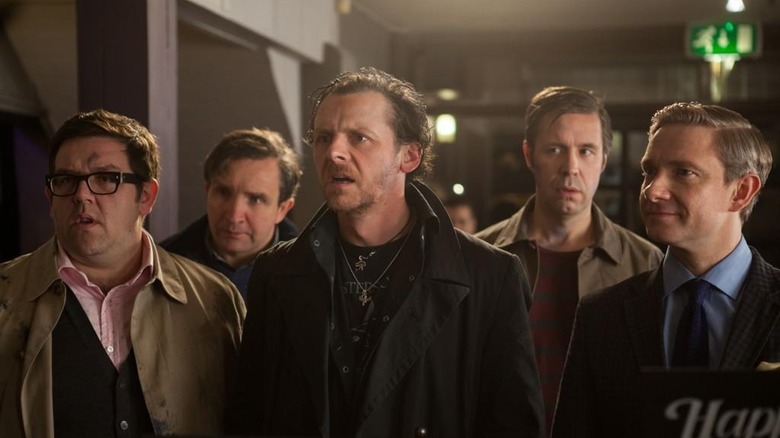
"The World's End" is the third film in Wright, Pegg, and Frosts' "Cornetto Trilogy." It is both the funniest and the most mature film of the series. "The World's End" has elements of science fiction films like "The Stepford Wives," "The Quatermass Xperiment," and "Invasion of the Body Snatchers." However, the "one wild night" story is similar to comedies like "Go," "After Hours," or even "Adventures in Babysitting." Wright turns these wildly different influences into a surprisingly nuanced character commentary. He explores nostalgia, alcoholism, and aging. If "Shaun of the Dead" and "Hot Fuzz" succeed as both hilarious parodies and genuine genre classics, "The World's End" creates something completely new.

Slacker Gary King (Simon Pegg) lives in the shadow of the dubious glory of a youthful drinking escapade from his high school years. Gary is still proud that he and his friends nearly completed a pub crawl called "The Golden Mile." His friends, however, have moved on with their lives. Under false pretenses, Gary gathers his old buddies, Andy Knightley (Frost), Steven Prince (Paddy Considine), Oliver Chamberlain (Martin Freeman), and Peter Page (Eddie Marsden). He plans to return to their hometown to finally complete "The Golden Mile."

In a night of heavy drinking, the gang discovers that their familiar stomping grounds are more sinister than they remember. Each man is haunted by demons from their past, and they find that the town's residents have been replaced by robot lookalikes.

This Is Spinal Tap
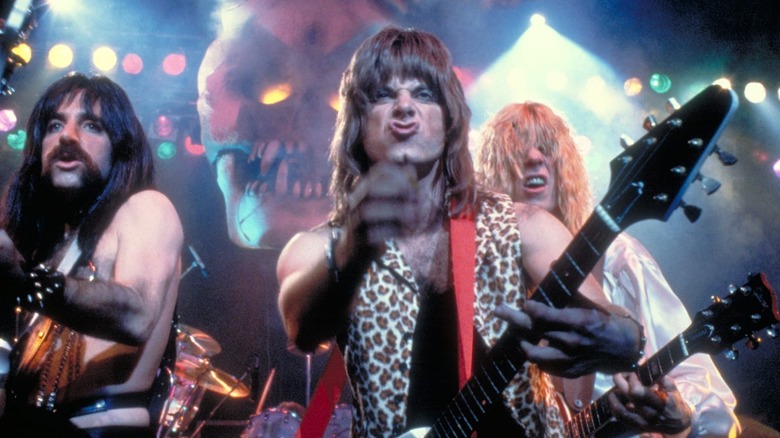
Some films transcend being parodies and leave a legacy that lasts even longer than what they're mocking. "This Is Spinal Tap" was inspired by music documentaries like "The Last Waltz." However, the film features characters that have become iconic in their own right. Rob Reiner treats the film as a serious documentary about a fictional group of musicians. Their experiences give surprising insights into the music culture of the era.

The eccentric titular band Spinal Tap consists of vocalist David St. Hubbins (Michael McKean), guitarist Nigel Tufnel (Christopher Guest), bass player Derek Smalls (Harry Shearer), keyboardist Viv Savage (David Kaff), and drummer Mick Shrimpton (R.J. Parnell). The characters feel like exaggerated versions of popular '70s and '80s musicians. Reiner also co-stars as the fictional documentarian Marty Di Bergi. Marty films the band's misadventures during a national tour. Filled with some great (and hilarious) tunes, "This is Spinal Tap's" soundtrack is a classic. 

Monty Python And The Holy Grail
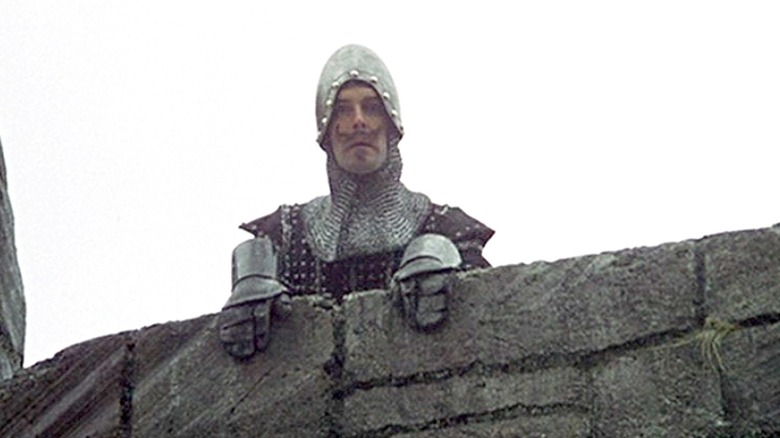
A parody film should be more than a loose collection of sketches. However, a sketch group still has what it takes to spice up the genre. The British comedy troupe Monty Python created a unique form of clever humor in their classic skits. In 1975, they translated their absurd sensibilities into a narrative feature. "Monty Python and the Holy Grail" plays like a loving send-up of Arthurian legends and medieval movies in general.

The film retells the classic story of the legendary search for the Holy Grail, but these Knights of the Round Table are complete idiots! When King Arthur (Graham Chapman) is called upon by God to retrieve the relic, he brings along Sir Lancelot (John Cleese), Sir Robin (Eric Idle), Sir Bedevere (Terry Jones), Sir Gallahad (Michael Palin), and his loyal squire Patsy (Terry Gilliam) on a seemingly noble quest to Castle Aarrgh. The film makes fun of low-budget medieval films with its comically cheap-looking special effects.

Black Dynamite
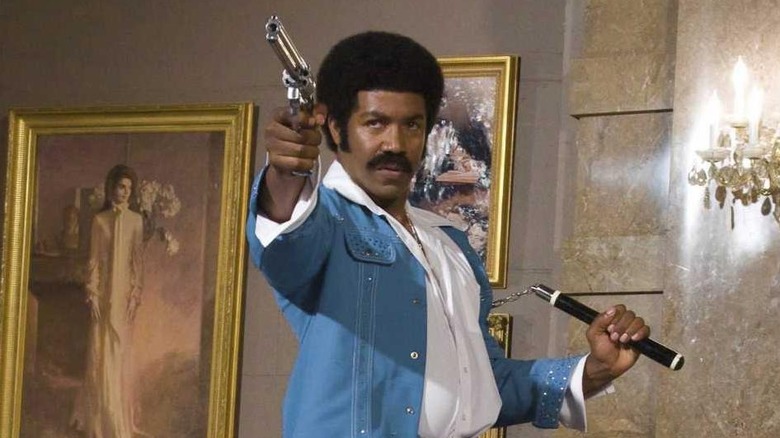
Great parodies don't just mock story. It's always more interesting when a parody examines the era in which its subject was produced and points out how things like production values, casting, and technical competence have changed. "Black Dynamite" is a hilarious send-up of '70s movies blaxploitation, particularly 1971's "Shaft." Like the films it lampoons, "Black Dynamite" features comically incompetent sets, poorly edited action sequences, and the use of stock footage and repeated shots. There are even instances where the boom mic appears in the frame.

Michael Jai White stars as the exaggerated action hero Black Dynamite. Black Dynamite is somehow the world's greatest cop, martial arts expert, soldier, CIA agent, and community hero all at once. His hilarious overabundance of skills makes him an absurdly perfect hero. Black Dynamite is selected to lead an investigation into a new drug sweeping the streets, and his wild adventures take him all the way to Richard Nixon's White House.

Airplane!
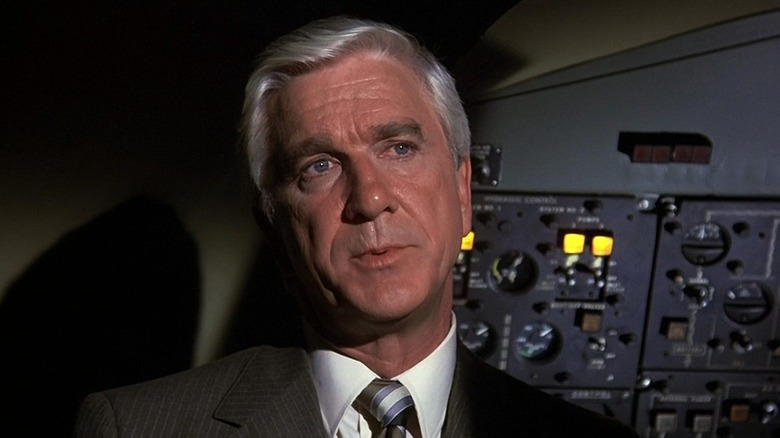
The disaster movie genre has managed to stick around for decades. This generation has Roland Emmerich's filmography, but disaster films were particularly popular in the '70s. Hits like "Airport," "The Towering Inferno," "Earthquake," and "The Poseidon Adventure" dominated the era. Most disaster movies are already pretty ridiculous. Thankfully, all the laughs from the classic comedy "Airplane!" are intentional.

"Airplane!" follows a packed flight from Los Angeles to Chicago that descends into a crisis. The crew and passengers begin feeling the effects of food poisoning during a particularly chaotic storm. With the pilots incapacitated, the idiosyncratic Dr. Rumack (Leslie Nielson) takes charge as things get worse and worse.

Ironically, "Airplane!" has more engaging motivations for its leading characters than most actual disaster films. War veteran Ted Striker (Robert Hays) boards the flight at the last minute to pursue his girlfriend, flight attendant Elaine Dickinson (Julie Hagerty). Ted's romantic pursuits are relatable and help balance out the constant one-liners.

Three Amigos
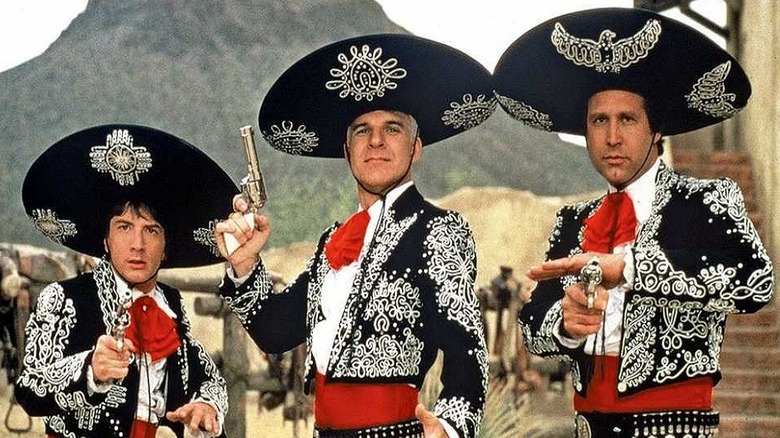
"Three Amigos" is a great parody because it features the people least equipped to be real heroes: highly paid Hollywood stars. No group in Hollywood is more deserving of a roast than lazy, egocentric actors. It's fun to see a parody film that looks at how disconnected from reality these popular stars can be.

Silent film actors Lucky Day (Steve Martin), Dusty Bottoms (Chevy Chase), and Ned Nederlander (Martin Short) star in a popular Western adventure series called "The Three Amigos!" They are mistaken for actual gunslingers by the villagers of the poor Mexican village of Santo Poco. The impoverished town is threatened by the outlaw El Guapo (Alfonso Arau) and his bandits. After getting fired from their studio, Lucky, Dusty, and Ned travel to Santa Poco, mistakenly misreading the pleas of the town as an acting gig. They are stranded upon arrival and must become the heroes that they've been pretending to be.

The Naked Gun: From The Files Of Police Squad!
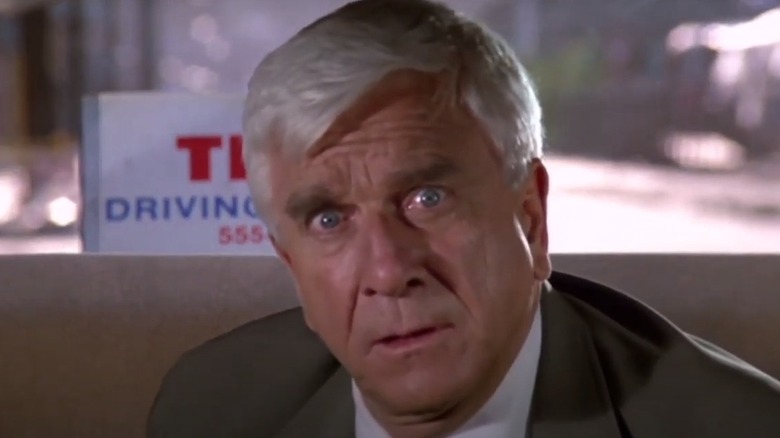
Genre parodies are popular in both cinema and on television. The 1982 "Police Squad!" TV series from David Zucker lampooned procedural police shows with its comedic version of a Lee Marvin-esque detective — Leslie Nielsen's Lieutenant Frank Drebin. "Police Squad!" established a world and characters well worth revisiting, but the show was tragically canceled after one season.

Just as many serious cop shows have made the transition to the big screen, Zucker was able to bring back Drebin for the 1988 feature film "The Naked Gun: From The Files of Police Squad!" You don't need any knowledge of the series to appreciate how the film mocks overtly serious police characters and convoluted criminal conspiracies. The bluntness of Nielsen's performance is perfectly balanced with surreal gags. Drebin is a comedic character with unusual depth, and he returns for the sequels "The Naked Gun 2 1⁄2: The Smell of Fear" and "Naked Gun 33 1⁄3: The Final Insult."

Read this next: The 15 Best '80s Comedies Ranked

The post The 20 Greatest Parody Movies in Cinema History appeared first on /Film.
03 Mar 22:11

The SSD Edition: 2021 Drive Stats Review

by Andy Klein

Welcome to the first SSD edition of the Backblaze Drive Stats report. This edition will focus exclusively on our SSDs as opposed to our quarterly and annual Drive Stats reports which, until last year, focused exclusively on HDDs. Initially we expect to publish the SSD edition twice a year, although that could change depending on its value to our readers. We will continue to publish the HDD Drive Stats reports quarterly.

Background

The SSDs in this report are all boot drives in our storage servers. In our early storage servers, we used HDDs exclusively for boot drives. We began using SSDs in this capacity in Q4 of 2018. Since that time, all new storage servers and any with failed HDD boot drives have had SSDs installed. Boot drives in our environment do much more than boot the storage servers, they also store log files and temporary files produced by the storage server. Each day a boot drive will read, write, and delete files depending on the activity of the storage server itself.

Overview

As of December 31, 2021, we were using 2,200 SSDs. As we share various tables and charts below, some of the numbers, particularly the annualized failure rate (AFR) will be very surprising to informed readers. For example, an AFR of 43.22% might catch your attention. We will explain these outliers as we go along. Most are due to the newness of a drive, but we’ll let you know.

As with the HDD reports, we have published the data we used to develop our SSD report. In fact, we have always published this data as it resides in the same files as the HDD data. Now for the bad news: The data does not currently include a drive type, SDD or HDD, so you’ll have to do your research by model number. Sorry. You’ll find the links to download the data files on our Drive Stats Test Data webpage. If you are just looking for SSD data, start with Q4 2018 and go forward.

If you are new to our Drive Stats reports, you might wonder why we collect and share this information. It starts with the fact that we have lots of data storage available, over two exabytes to date, for customers using the Backblaze B2 Cloud Storage and Backblaze Computer Backup services. In doing that, we need to have a deep understanding of our environment, one aspect of which is how often drives, both HDDs and SSDs, fail. Starting about seven years ago we decided to share what we learned and shed some light on the previously opaque world of hard drive failure rates. It is only natural that we would be as transparent with SSDs. Read on.

Annual SSD Failure Rates for 2019, 2020, and 2021

At the end of 2021, there were 2,200 SSDs in our storage servers, having grown from zero in Q3 2018. We’ll start with looking at the AFR for the last three years, then dig into 2021 failure rates, and finally, take a look at the monthly AFR rates since 2019. We’ll explain each as we go.

The chart below shows the failure rates for 2019, 2020, and 2021.

Observations and Comments

  • The data for each year (2019, 2020, and 2021) is inclusive of the activity which occurred in that year.
  • There is an upward direction in the failure rate for 2021. We saw this when we compared our HDD and SSD boot drives in a previous post. When we get to the quarter-by-quarter chart later in this blog post, this trend, as such, will be much clearer.
  • Two drives have eye-popping failure rates—the Crucial model: CT250MX500SSD1 and the Seagate model: ZA2000CM10002. In both cases, the drive days and drive count (not shown) are very low. For the Crucial, there are only 20 drives which were installed in December 2021. For the Seagate, there were only four drives and one failed in early 2021. In both cases, the AFR is based on very little data, which leads to a very wide confidence interval, which we’ll see in the next section. We include these drives for completeness.
  • A drive day denotes one drive in operation for one day. Therefore, one drive in operation for 2021 would have 365 drive days. If a drive fails after 200 days, it will have 200 drive days and be marked as failed. For a given cohort of drives over a specified period of time, we compute the AFR as follows:
     
    AFR = (drive failures / (drive days / 365)) * 100
     
    This provides the annualized failure rate (AFR) over any period of time.

2021 Annual SSD Failure Rates

Let’s dig into 2021 and add a few more details. The table below is an expanded version of the annual 2021 section from the previous chart.

From the table, it should be clear that the Crucial and Seagate drives with the double-digit AFRs require a lot more data before passing any judgment on their reliability in our environment. This is evidenced by the extremely wide confidence interval for each drive. A respectable confidence interval is less than 1.0%, with 0.6% or less being optimal for us. Only the Seagate model: ZA250CM10002 meets the 1.0% percent criteria, although the Seagate model: ZA250CM10003 is very close.

Obviously, it takes time to build up enough data to be confident that the drive in question is performing at the expected level. In our case, we expect a 1% to 2% AFR. Anything less is great and anything more bears watching. One of the ways we “watch” is by tracking quarterly results, which we’ll explore next.

Quarterly SSD Failure Rates Over Time

There are two different ways we can look at the quarterly data: over discrete periods of time, e.g., a quarter or year; or cumulative over a period of time, e.g., all data since 2018. Data scoped to quarter by quarter can be volatile or spikey, but reacts quickly to change. Cumulative data shows longer term trends, but is less reactive to quick changes.

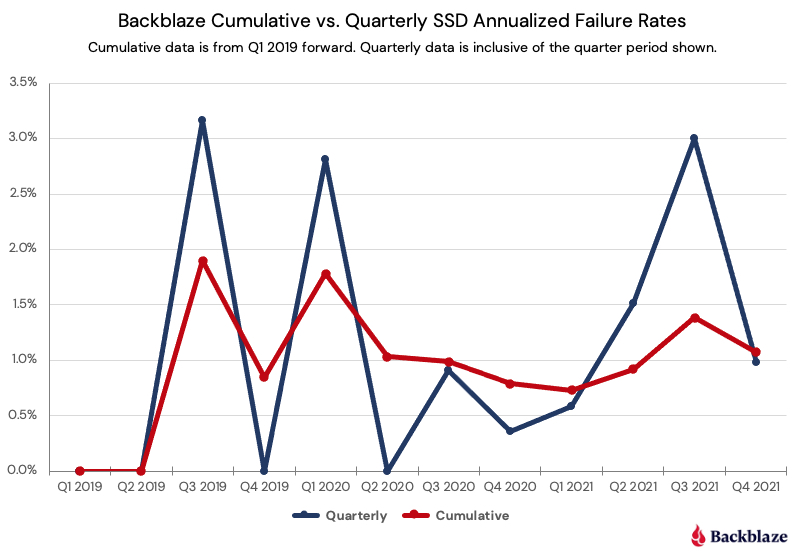
Below are graphs of both the quarter-by-quarter and cumulative-by-quarter data for our SSDs beginning in Q1 2019. First we’ll compare all SSDs, then we’ll dig into a few individual drives of interest.

The cumulative curve flows comfortably below our 2% AFR threshold of concern. If we had just followed the quarterly number, we might have considered the use of SSDs as boot drives to be problematic, as in multiple quarters the AFR was at or near 3%. That said, the more data the better, and as the SSDs age we’ll want to be even more on alert to see how long they last. We have plenty of data on that topic for HDDs, but we are still learning about SDDs.

With that in mind, let’s take a look at three of the older SSDs to see if there is anything interesting at this point.

Observations and Comments

  • For all of 2021, all three drives have had cumulative AFR rates below 1%.
  • This compares to the cumulative AFR for all SSD drives as of Q4 2021 which was 1.07% (from the previous chart).
  • Extending the comparison, the cumulative (lifetime) AFR for our hard drives was 1.40% as noted in our 2021 Drive Stats report. But, as we have noted in our comparison of HDDs and SSDs, the two groups (SSDs and HDDs) are not at the same point in their life cycles. As promised, we’ll continue to examine that dichotomy over the coming months.
  • The model (ZA250CM10002) represented by the red line seems to be following the classic bathtub failure curve, experiencing early failures before settling down to an AFR below 1%. On the other hand, the other two drives showed no signs of early drive failure and have only recently started failing. This type of failure pattern is similar to that demonstrated by our HDDs which no longer fit the bathtub curve model.

Experiments and Test Drives

If you decide to download the data and poke around, you’ll see a few anomalies related to the SSD models. We’d like to shed some light on these outliers before you start poking around. We’ve already covered the Crucial and Seagate drives that had higher than expected AFR numbers, but there are two other SSD models that don’t show up in this report, but do show up in the data. These are the Samsung 850 EVO 1TB and the HP SSD S700 250GB.

Why don’t they show up in this report? As with our drive stats review for our HDDs, we remove those drives we are using for testing purposes. Here are the details:

  • The Samsung SSDs were the first SSDs to be installed as boot drives. There were 10 drives that were installed to test out how SSDs would work as boot drives. Thumbs up! We had prior plans for these 10 drives in other servers and after about two weeks, the Samsung drives were swapped out with other SSDs and deployed for their original purpose. Their pioneering work was captured in the Drive Stats data for posterity.
  • The HP SSDs that were part of the testing of our internal data migration platform, i.e., moving data from smaller drives to larger drives. These drives showed up in the data in Q3 and Q4 of 2021. Any data related to these drives in Q3 or Q4 is not based on using these drives in our production environment.

What’s Next

We acknowledge that 2,200 SSDs is a relatively small number of drives on which to perform our analysis, and while this number does lead to wider than desired confidence intervals, we had to start somewhere. Of course, we will continue to add SSD boot drives to the study group, which will improve the fidelity of the data presented. In addition, we expect our readers will apply their usual skeptical lens to the data presented and help guide us towards making this report increasingly educational and useful.

We do have SSDs in other types of servers in our environment. For example, restore servers, utility servers, API servers, and so on. We are considering instrumenting the drives in some of those servers so that they can report their stats in a similar fashion as our boot drives. There are multiple considerations before we do that:

  1. We don’t impact the performance of the other servers.
  2. We recognize the workload of the drives in each of the other servers is most likely different. This means we could end up with multiple cohorts of SSD drives, each with different workloads, that may or may not be appropriate to group together for our analysis.
  3. We don’t want to impact the performance of our data center techs to do their job by adding additional or conflicting steps to the processes they use when maintaining those other servers.

The SSD Stats Data

The complete data set used to create the information used in this review is available on our Hard Drive Test Data page. As noted earlier, you’ll find SSD and HDD data in the same files and you’ll have to use the model number to distinguish one record from another. You can download and use this data for free for your own purpose. All we ask are three things: 1) you cite Backblaze as the source if you use the data, 2) you accept that you are solely responsible for how you use the data, and 3) you do not sell this data to anyone; it is free.
Good luck and let us know if you find anything interesting.

The post The SSD Edition: 2021 Drive Stats Review appeared first on Backblaze Blog | Cloud Storage & Cloud Backup.

03 Mar 22:10

Against The Ice Star Nikolaj Coster-Waldau On His Real-Life Survival Thriller [Interview]

by Danielle Ryan

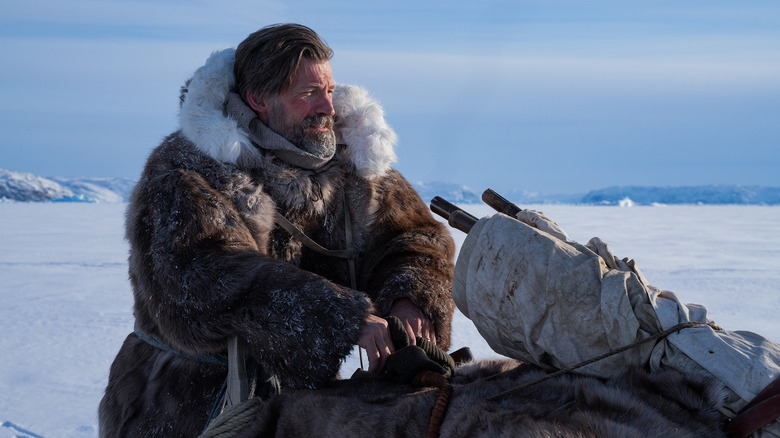
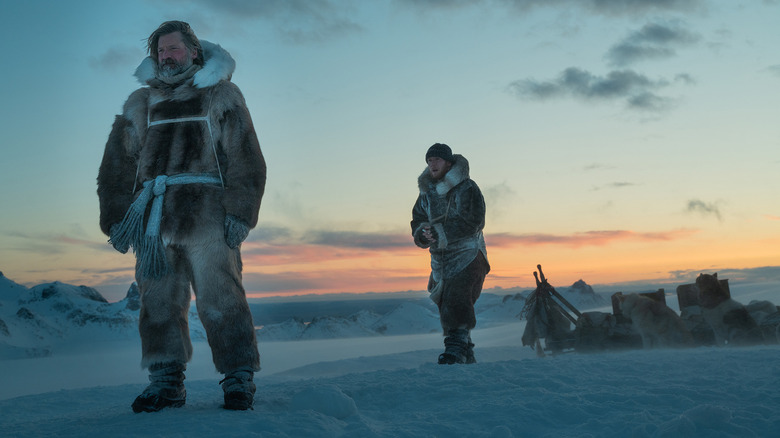
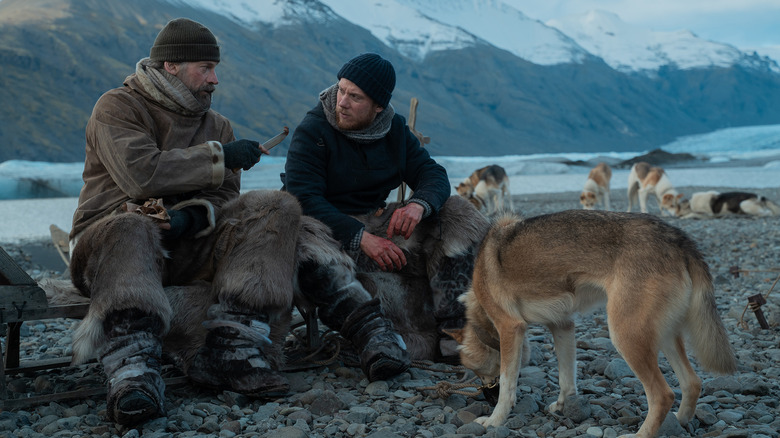
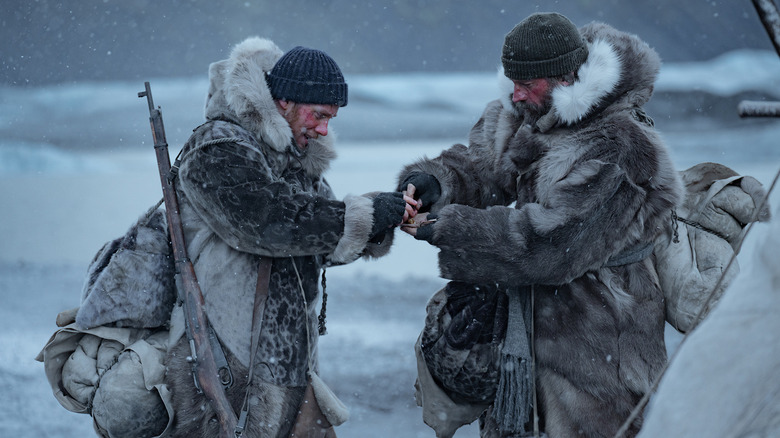
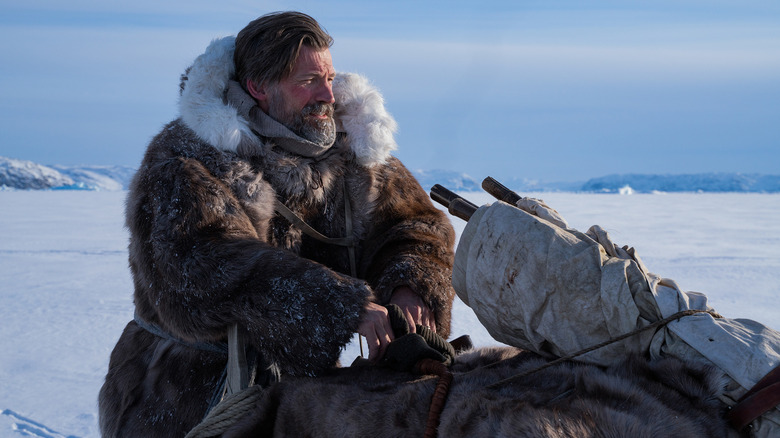
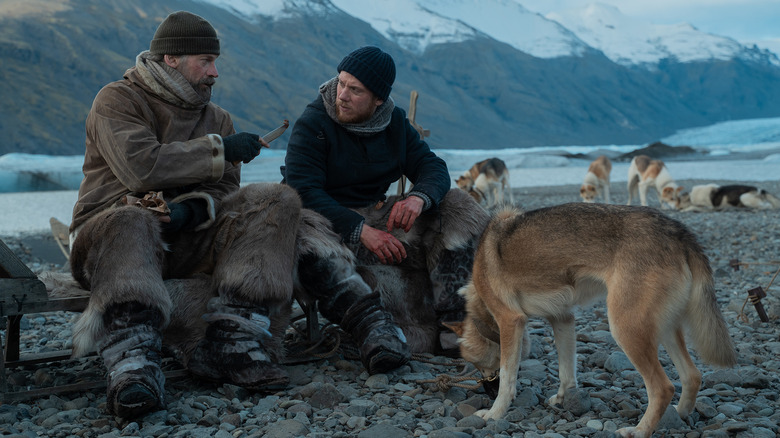
Nikolaj Coster-Waldau heard "winter is coming" on "Game of Thrones" for years, but apparently decided that he hadn't had quite enough ice and snow. In his latest film, "Against the Ice," now streaming on Netflix, the actor faces off against the icy wastes of Greenland with only a single companion and a pack of sled dogs. "Against the Ice" was a passion project for Coster-Waldau, who co-wrote the screenplay with Joe Derrick, based on the memoir "Two Against the Ice" by explorer Captain Ejnar Mikkelsen. 

In 1909, Mikkelsen and a crew of Danish explorers set out to prove that Greenland was one solid land mass. The United States claimed there was a split in the land, and that the portion on the side of the split closest to the North American continent was U.S. territory instead of belonging to Denmark. If Mikkelsen and his crew could prove that Greenland was whole, then the entire thing would be Danish territory. After a failed attempt to trek into the arctic with one of his champion explorers, Mikkelsen set out to try again. Unfortunately, the only person willing to join him was the ship's inexperienced young mechanic, Iver Iverson (Joe Cole). The two faced insurmountable odds but managed to discover the proof they need, only to realize that the trip back might be much harder than they expected. "Against the Ice" is both a survival movie and a psychological thriller, and a tale of friendship in the face of rising existential dread. It's also absolutely gorgeous to look at, with great steps taken to ensure the film had a properly icy authenticity. 

After checking out the film, I sat down with Coster-Waldau via Zoom to talk about filming conditions, his relationships with his human and canine co-stars, and what inspired him to undertake such a challenging experience. 

This interview has been lightly edited for clarity. 

'Everything We Are Is Basically Our Own Subjective Experience'

So first off, this is clearly a labor of love — what about this story made you want to tackle writing a screenplay?

Well, there was a couple of things. I read the book that it's based on, "Two Against The Ice" by Ejnar Mikkelsen, and I really loved that. I've been looking for a story set in Greenland for some time. My wife's from Greenland, I've been coming there for the last 25 years and it's just the most magical place. So I thought, I've never seen it really on film. Then when I read the book, I was like, "Wow, this is an incredible book." First of all, it was exciting. It's an unbelievable story of survival, but it had something that I thought was really unique in terms of these stories, because it's set in this vast epic landscape. Then the same time, the second half is more or less this psychological thriller in this pressure-cooker of a situation.

I thought that was really interesting. Two very different characters. Most of these explorers are alpha males, like Ejnar Mikkelsen. They know everything and they're focused and they're on a mission. And then you have this other character who was none of that, and he just happens to be there by complete accident. And then he has the audacity of volunteering to go on this crazy -- obviously he doesn't know it's going to be this crazy journey, but still he has already seen that this is dangerous and still, he just has blind faith in his captain. I thought that was beautiful. Then thirdly, there's a description that he has in his book of how they were both affected mentally that I thought was really moving and interesting.

After I read the book, we started doing research, we found this recording of these two old guys, it's from 1970, they're 90 and 84. Two old friends talking about back then. You can see the difference in them. You can still see the young men they were once. They talk about the journey. "Oh, you remember when you saw your grandfather sitting out there?" "Oh yeah. We went looking for him for days, didn't we." "Do you remember, we talked about what if a girl suddenly appeared and then, do you remember the postcard?" "Yes. And you picked three girls and I picked one." And then suddenly Mikkelsen says, "Yeah, and that was the one time you really disappointed me, when you let me down."

He says it with such clarity. You could just sense that there was so much more there, that this was not just a little thing, that these women had become so much more. That's where we really got inspired, where we thought this could be so interesting to go down that rabbit hole. Because he talks about it again and again in the book, that they see things that aren't there and they know they're not there, but they see them, so they are there. And that whole thing about the mind and everything we are is basically our own subjective experience.

'You Can Actually See What It's Like Up There'

In the film, the Arctic is almost a character itself. What was it like filming it in those conditions, and did you learn any survival tricks of your own along the way?

Stay warm. That's important, and not wet. But that was, from the get-go, we wanted to shoot everything in the Arctic and we wanted to everything to be in-camera. We didn't want to use computer generated images. We wanted it to be there, because there's no reason not to if you have the opportunity. There's so many gifts you get from being in the elements that you could never recreate.

You have a wind machine, fine, it just blows this direction. But when you're out, we all know nature, suddenly the wind, it's this way, then it's that way. The cold, when it's really cold as it was, it affects everything in your face, it affects the way you speak, all those things. Because that was, as I said, our ambition to make it as authentic as possible, that you can actually see what it's like up there. It blows your mind. Shooting in Greenland, it was challenging, but it was so worth it. The shots we have on the two sleds and the dogs going out on the frozen sea ice with the icebergs stuck, frozen. I haven't seen it before, and I'm really proud of that.

'Machines Break Down, But The Dogs Will Keep Going As Long As You Feed Them'

Speaking of the dogs, what was it like working with whole dog sled teams? Did you learn how to mush at all?

I learned some. Obviously it takes a lifetime to master something like that. And I made some mistakes. They are still dogs, but what's exciting is just to watch them when they get in front of the sleds, the excitement, the power, the farting [laughs], that is just unbelievable. It's just a beautiful thing. And I love the fact that they've used dogs for so long in Greenland. They still use them in Northwest of Greenland because it is the best, the safest, the most reliable way of transporting yourself when it is as cold as it is out there. They don't make too much noise, because obviously up there you go hunting. This is the way, literally, to make a living. Going on a snowmobile or a machine, it's just too noisy. You'll scare everything away.

Also, machines break down, but the dogs will keep going as long as you feed them. So, it was a massive experience. In Iceland, of course we had some great wranglers -- great, great people. In Greenland, we worked with local hunters and it was their own dogs. That was also just fascinating to see the trust the dogs had with their owner. They didn't quite trust me that way, but I didn't take offense.

'I've Never Had A Fear Of Bad Chemistry. I Have A Fear Of Bad Acting'

Speaking of trust, you and Joe Cole had to kind of build some trust because your characters have such a deep relationship. How did you two navigate figuring that out? Not becoming too antagonistic or too friendly, too fast?

Well, Joe joined us fairly late in the process. He's a great actor. I mean, he's just such a great actor. I think sometimes the word "chemistry" is thrown around, but I've never had a fear of bad chemistry. I have a fear of bad acting. And then that was what we just said: We have to find the best actor. Of course we also have to find someone who is willing to make a movie like this, because going into it, we knew it was going to be really tough physically. If you love that kind of thing, it's a dream project, but if you don't, it's going to be hell.

So we need to find someone who was like, "Yes, I realize I'm going to be outdoors all day. I won't be able to go inside. I won't be able to sit in my trailer, but I will be on the most beautiful locations you can imagine." And Joe was all in. So, from the get-go, we became friends. He's just a great guy. So, it kind of just happened, once we started working on the scenes, reading the scenes together, you sense immediately that, "Okay this is perfect, we're going to have fun exploring this together." And we did.

'I Think The Next One We're Planning To Do Is Very, Very Different'

You're from Denmark, and your wife is from Greenland, and there are lots of great exploration tales there. Are there any other stories of explorers, either real or fictional, that you want to tell?

Well, there is one and he's been described in some novels. If you look up the King of Iceland, there's a story there, which is like a real life, 18th century "Forrest Gump" story. I do like that. So yes, there is that one. But no, I don't have anything ready to go. And I think the next one we're planning to do is very, very different. It's a whole different world, which I think is good. I'll go crazy if I have to shoot everything in the Arctic.

You don't get a ton of screen time together, but how was it working with Charles Dance again?

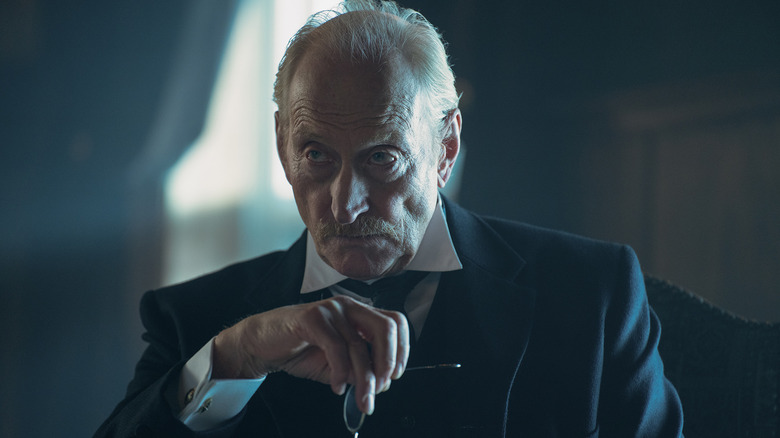
Oh, it was great. I was so happy that he agreed to come join us on the shoot. We had a great time on "Game of Thrones." And that's why I asked him, because I knew we needed someone with that kind of authority, with that kind of sharp wit, the edge to play the finance minister. He's not, and he should not be, a likable character, but you should still appreciate his intelligence and just the sheer power. Charles agreed to do it, I'm very grateful for that. And he just delivers and he just knocks it out of the park. It was fun filming in Reykjavik for a couple of days. 

Finally, what is your favorite movie about ice and snow? 

I've never thought of that before. When talking about ice and all that, it's not a movie like that at all, but I love Ang Lee's "The Ice Storm," but that's a whole different -- it's not set in the Arctic. Oh yeah, I think it's called -- Neil Scout, the Norwegian director, did a movie called "Pathfinder," 20 years ago I think. 30 years ago, maybe. Long time ago. That I thought was really cool, because they also shot everything on location and you could tell.

"Against the Ice" is currently streaming on Netflix. 

Read this next: The 35 Best Documentaries You Can Watch On Netflix Right Now (March 2022)

The post Against The Ice Star Nikolaj Coster-Waldau on His Real-Life Survival Thriller [Interview] appeared first on /Film.

03 Mar 22:09

5 Delicious Hot Cross Bun Recipes to Make At Home

by Mariam Gabaji

For a nostalgic take on Easter this year, why not make your very own hot cross buns at home? Whether it’s baking them the traditional way or giving them a modern-day twist, we’ve got you covered with some great recipes.

Read more...

03 Mar 22:08

Become a Sam's Club Member for only $20

by Boing Boing's Shop

We thank our sponsor for making this content possible; it is not written by the editorial staff nor does it necessarily reflect its views.

We all love a good membership club, especially for the discounts, perks, and fun finds that come along with it. — Read the rest

03 Mar 22:07

Secure your OT and IoT devices with Microsoft Defender for IoT and Quzara Cybertorch™

by Lauren Goodwin

This blog post is part of the Microsoft Intelligent Security Association guest blog seriesLearn more about MISA.

In recent years, malicious actors have started attacking industrial control systems and key sectors of nations’ critical infrastructure to inflict damage that transcends the cyber world and traditional IT assets. The risk to public safety cannot be overstated, as these types of cyberattacks have real-world potential to inflict harm on humans. These “industrial control systems” that control the many facets of our nation’s critical infrastructure are more commonly known as operational technology (OT) devices. The same goes for IoT devices and industrial internet of things (IIoT) devices. IoT is the network of physical objects that contain embedded technology to communicate, sense, or interact with the internal or external state of its environment. The public and private sectors have many OT and IoT devices in industries such as defense, power generation, robotics, chemical and pharmaceutical production, oil production, transportation, and mining—to name a few. OT devices are hardware and software that monitor or control physical equipment, assets, and processes—and they are being compromised at an increasing rate.1

Alarmingly, in 2021 there were two incidents of local water treatment plants in the US being a target of cyberattacks. One cyberattack occurred in the San Francisco Bay area in January 20212 and another occurred in February 2021 in Oldsmar, Florida.3 In the Oldsmar, Florida cyberattack, the malicious actors attempted to increase the amount of sodium hydroxide in the water supply to potentially dangerous levels. Thankfully, the attack was thwarted by a plant supervisor who caught the act in real-time and reverted the changes. These cyberattacks occurred on OT devices used for critical infrastructure at local level, but similar cyberattacks are playing out in the real world on a national level as well.

On May 7, 2021, Colonial Pipeline, an American oil pipeline system responsible for 45 percent of all fuel consumed on the US East Coast, suffered a ransomware cyberattack that crippled all pipeline operations for about six days.4 The aftermath of this attack caused fuel shortages in six US states as well as the US capital, Washington D.C.

These cyberattacks on OT devices may not be new, but they underscore how dangerous the threat is to our critical infrastructure, as well as how great the risk is to our overall public safety.

The US government has taken notice of the increased threat against OT systems and has responded accordingly. Per the President’s Executive Order on Improving the Nation’s Cybersecurity issued on May 12, 2021, “The Federal Government must bring to bear the full scope of its authorities and resources to protect and secure its computer systems, whether they are cloud-based, on-premises, or hybrid.5 The scope of protection and security must include systems that process data (information technology (IT)) and those that run the vital machinery that ensures our safety (operational technology (OT)).” The Quzara CybertorchTM solution, in conjunction with Microsoft Defender for IoT and Microsoft Sentinel, help agencies meet compliance with various aspects of this executive order. This includes, but is not limited to, providing agencies a means to monitor IT and OT operations and alerts, respond to attempted and actual cyber incidents, and facilitate logging, log retention, and log management. 

With the threat of cyberattacks impacting OT and IoT devices on the rise, it is important now more than ever for national, state, local governments, and their private sector partners to be vigilant in securing their OT and IoT devices that operate or assist critical infrastructure.

The current state of cybersecurity in OT and IoT environments

While it is encouraging that the US Government is giving greater emphasis to secure OT and IoT infrastructure, they and private corporations with OT and IoT devices face an uphill battle. This is because many OT and IoT environments use outdated (and therefore, unsecure) operating systems and software. A comprehensive report from CyberX (acquired by Microsoft) in June 2020 titled Global IoT and ICS Risk Report was compiled based on data gathered from 1,821 production OT and IoT networks using passive, agentless monitoring with patented deep packet inspection (DPI) and network traffic analysis (NTA) algorithms. These production networks spanned diverse IoT and ICS systems—including robotics, refrigeration, chemical, and pharmaceutical production, power generation, oil production, transportation, mining, and building management systems (heating, ventilation, and air conditioning (HVAC), closed-circuit television (CCTV), and more). These are the findings in the report:

  • 71 percent had outdated or unsupported operating systems.
  • 64 percent had unencrypted passwords.
  • 54 percent were remotely accessible.
  • 22 percent had indicators of threats.
  • 27 percent had direct internet connections.
  • 66 percent had no automatic updates.
Cyber X report high-level findings spanned diverse I o T and I C S systems showing gaps in threat coverage.

Figure 1. CyberX report high-level findings.

Securing and monitoring OT and IoT devices

It is critical for national, state, local governments, and their private sector partners to secure their OT and IoT environments from cyberattacks—but first, security must be made easier to incorporate. To make it easier for these entities to incorporate OT and IoT security, Quzara CybertorchTM, a managed security service provider (MSSP), partnered up with Microsoft to leverage Microsoft Defender for IoT. By leveraging Microsoft Defender for IoT, Quzara CybertorchTM is able to discover all OT and IoT devices in an environment, identify vulnerabilities present on these devices, and provide continuous security monitoring of these devices.

Automated asset inventory

Microsoft Defender for IoT is an agent-less solution that—connecting to a mirroring port on a network’s switch—passively listens to real-time OT and IoT traffic in the industrial network. Quzara CybertorchTM uses this tool to quickly create an “Asset Inventory Map” that shows all assets on the network, identifies which machines are interacting with each other, and at which layer of the Purdue model they operate.6

Auto-generated asset inventory map in purdue model layout displaying all assets on a network, identifying which machines are interacting with each other and at which layer of the Purdue model they operate.

Figure 2. Auto-generated Asset Inventory Map in Purdue model layout.

By identifying which assets communicate with each other in a Purdue model format, valuable information is gathered that depicts which machines can communicate out to the internet from the OT network. These internet-connected machines are the ones we prioritize locking down and monitor more closely for suspicious traffic. Identifying internet-connected assets is just one example of what the Asset Inventory Map can display. The Asset Inventory Map also reveals any shadow devices that are on the OT and IoT network. In other words, by revealing all assets on the OT network, the Asset Inventory Map will identify any IT, OT, and IoT devices that the IT department may not be officially aware of. Furthermore, the Asset Inventory Map helps IT security teams identify “single points of failure” in their environment based on the network topology and architecture. Quzara CybertorchTM encourages hardening these assets that are “single points of failure” and creating redundancy to ensure operations aren’t disrupted if these assets were to ever go down unexpectedly.

Vulnerability management of OT and IoT devices

Quzara CybertorchTM can identify known vulnerabilities on OT and IoT devices by leveraging Microsoft Defender for IoT. Microsoft Defender for IoT proactively identifies vulnerabilities such as unpatched devices, unauthorized Internet connections, and subnet connections. Beyond identifying vulnerabilities, Microsoft Defender for IoT also identifies changes to device configurations, programmable logic controller (PLC) code, and firmware. Quzara CybertorchTM consolidates all this information and generates executive summary reports listing out all the vulnerabilities for all OT and IoT devices in a network—which includes prioritized remediation steps. Prioritized remediation steps may include prioritizing fixes based on risk scoring (for example, through common vulnerability scoring system (CVSS) scores and other factors) and automated threat modeling. These reports contain an overall security score for the OT and IoT devices on the network. As remediation occurs, continuous improvement can be measured by subsequent reports showing the overall security score improving.

Report example showing vulnerabilities present on an O T workstation.

Figure 3. Vulnerabilities present on an OT workstation.

Continuous monitoring for OT and IoT devices

Quzara CybertorchTM is a security operations center as a service that leverages Microsoft Sentinel to continuously monitor IT environments as well as OT and IoT environments. Microsoft Sentinel is a security information and event management (SIEM) tool with security orchestration, automation, and response (SOAR) capabilities. Microsoft Sentinel has native interoperability with Microsoft Defender for IoT and is cloud native. Using Microsoft Sentinel, Quzara CybertorchTM can ingest logs from IT, OT, and IoT devices, creating a unified bird’s-eye view across IT and OT boundaries and empowering our security operations center (SOC) analysts to then analyze for signs of malicious activity.

When using other products, typically a lot of work and expertise is required to create rules that aggregate disparate alerts into consolidated incidents. Quzara CybertorchTM greatly reduces the work that is required to create targeted rules for OT and IoT incidents, as Microsoft Sentinel has pre-built analytics rules for OT and IoT devices when used in conjunction with Microsoft Defender for IoT. Functionality also exists to create custom rules and playbooks from these OT and IoT alerts. This functionality empowers our SOC analysts to help detect, alert, and assist personnel in mitigating vulnerabilities on OT and IoT devices.

View of Microsoft Defender for I o T analytics rules in Microsoft Sentinel.

Figure 4. Microsoft Defender for IoT analytics rules in Microsoft Sentinel.

If your team, company, or clients have an OT or IoT environment and are interested in obtaining an OT or IoT cybersecurity risk assessment, please reach out to Quzara CybertorchTM or by email here.

About Quzara Cybertorch™

Quzara Cybertorch™ is a security operations center as a service and managed detection and response (MDR) purpose-built to meet the needs of U.S. Civilian, Department of Defense (DoD), and Defense Industrial Base (DIB) customers for extended detection and response (XDR), Vulnerability Management, OT and IoT monitoring, and security monitoring needs. Their security operations center as a service, vulnerability management, and XDR capabilities are based on the National Institute of Standards and Technology (NIST) 800-53 FedRAMP HIGH controls. Their entire technology stack leverages FedRAMP HIGH Authorized systems. Quzara Cybertorch’s™ team of Security Analysts are all based and operate within the US, with emphasis on security clearances and government support experience. Explore Quzara Cybertorch ™ and visit the Quzara Cybertorch ™ listing in the Microsoft commercial marketplace.

Learn more

To learn more about the Microsoft Intelligent Security Association (MISA), visit our website where you can learn about the MISA program, product integrations, and find MISA members. Visit the video playlist to learn about the strength of member integrations with Microsoft products.

To learn more about Microsoft Security solutions, visit our website. Bookmark the Security blog to keep up with our expert coverage on security matters. Also, follow us at @MSFTSecurity for the latest news and updates on cybersecurity.


1Crimes of Opportunity: Increasing Frequency of Low Sophistication Operational Technology Compromises, Mandiant, May 25, 2021.

2Hackers Tried to Poison California Water Supply in Major Cyber Attack, News Week, June 18, 2021.

3The Florida water plant attack signals a new era of digital warfare—it’s time to fight back, Darktrace, February 16, 2021.

4Ransomware Attack Shuts Down A Top U.S. Gasoline Pipeline, NPR, May 9, 2021.

5Executive Order on Improving the Nation’s Cybersecurity, The White House. May 12, 2021.

6The “Purdue Model” is a structural model for industrial control system security concerning physical processes, systems, and the IT machines that manage or interact with them.

The post Secure your OT and IoT devices with Microsoft Defender for IoT and Quzara Cybertorch™ appeared first on Microsoft Security Blog.

03 Mar 21:53

Backblaze Has Released Their First Drive Stats Report For SSDs

by msmash
Backblaze has published its first SSD edition of the Drive Stats report. A Slashdot reader writes: This edition focuses exclusively on their SSDs as opposed to their quarterly and annual Drive Stats reports which, until last year, focused exclusively on HDDs. Initially they expect to publish the SSD edition twice a year, although that could change depending on its value to readers. They'll continue to publish the HDD Drive Stats reports quarterly. It's an interesting look at SSD reliability in a commercial environment and may be useful to anyone wondering what drive they should (or shouldn't) consider for their own deployment.

Read more of this story at Slashdot.

03 Mar 18:56

Robert Pattinson Secretly Lurks In Batman Fan Forums Because Of Course He Does

by Rafael Motamayor

Robert Pattinson is a bit of an odd Batman, isn't he? For one, the former "Harry Potter" star has continually described his take on the Caped Crusader as "kind of a weirdo," as he proves to be arguably the biggest Batman nerd among Batman actors (none of the others have cited the masterpiece "Mask of the Phantasm" as an influence before).

Then there's his fascinating press tour for Matt Reeves' "The Batman." While many actors would focus on talking about the project they're working on, or tell funny anecdotes, Pattinson has focused on telling wild anecdotes — most of which are blatant lies. Still, there are some truths to the anecdotes, or at least very creative and funny lies, like Pattinson's first crush being a "Final Fantasy 7" character, or how he lurks on Twitter and fan forums like the real Batman.

A Dark Knight Rises

Where most Batman actors would prepare for putting on the iconic cowl by training really hard or maybe reading some comic books, Pattinson took a different approach. In an interview with Vanity Fair, the actor admitted to using fan forums and using fan theories to inform his take on Bruce Wayne.

"It's actually very... I'm just reading these again and it's extremely helpful to have these fan theories. I used to look at a lot of the forum stuff and it actually really did inform my character a lot. Still look at it nowadays... I generally lurk. Sometimes I just get pushed a little far and I have to respond something. So, when sometimes you just see a quite abstract message going like, 'Just please, just leave me alone,' that's me [laughs]. 'Stop picking faults. I'm doing my best.' [laughs].

After so many iterations of Batman, it makes sense for Pattinson to try and get a sense of what people on the internet — who are known to be very cordial and civilized —had to say about the character and where it should go next. That being said, Pattinson said he also still takes the occasional peek behind the social media curtain, which makes me concerned about him. We all know how toxic Twitter can be, especially comic book Twitter. 

For example; in a recent interview with the LA Times, Pattinson commented on the online criticism of his initial casting, saying: "I was actually mocked less than I usually am, I was quite shocked. Only 70% negative? A-plus!'"

We are big fans of Robert Pattinson here, especially press tour Robert Pattinson, so here's hoping his Twitter lurks are filled with pleasant comments that are as lovably weird as the actor.

"The Batman" will be released in theaters on March 4, 2022.

Read this next: Batman Movies Ranked From Worst To Best

The post Robert Pattinson Secretly Lurks in Batman Fan Forums Because Of Course He Does appeared first on /Film.

03 Mar 18:50

The 20 Best Murder Mystery Movies Ever Made Ranked

by Gino Orlandini

Alfred Hitchcock had a big influence on the murder mystery genre in the 1930s. His early films like"The 39 Steps" are admirable historically, but a bit too dated at this point to make a straight-faced recommendation. Hitchcock's thriller plots and shadowy sensibilities were followed by '40's films like "The Maltese Falcon" where Hollywood's most rugged mid-century individual, Humphrey Bogart, started solving complex murder plots with his fast-talking devil-may-care flair. Studios were buying up pulpy detective novels and Agatha Christie page-turners, and the genre was coming together. 

Decades later films like "Gone Girl" are playing with the form and ensuring the murder mystery movie is as viable as ever. Audiences will always pay to be puzzled, horrified, even briefly confused, as long as they are thrilled in the end. Murder mysteries pique our desire for forbidden knowledge. We love being tantalized with secrets, scandalized by lurid reveals, and then relieved when the world is put back into semi-working order. Here are the 20 best murder mystery movies ever made, ranked.

Blow-Up (1966)

"Blow-Up" is worth at least skimming if you want a full arsenal of pretentious film school references. Like "The Conversation" (below) this is a murder mystery about the ambiguity of evidence, this time hinging on the reliability of celluloid itself as a simulacrum for real events. This was the first English-language film of Italian director Michelangelo Antonioni, working in the far-less commercial industry of western Europe. Both French and Italian directors at the time were experimenting with form and questioning whether cinema had to be about telling stories at all.

"Blow-Up" feigns a mystery plot when a London fashion photographer thinks he's accidentally taken a picture of a murder. He obsesses over every piece of film grain trying to enhance a gun-like splotch. A femme fatale type eventually shows up and wants the photos. Is she part of the plot? If this were the American imitation "Blow Out" by Brian De Palma in 1981, this woman would eventually be spoon-feeding us a grand explanation. Since it's a mid-century Italian film, "there is no spoon," as that Buddhist kid from "The Matrix" would say.

The Conversation (1974)

"The Conversation" is about paranoia and that deep sense that someone is watching ... or in this case, listening. In the conspiracy-minded Watergate era, director Francis Ford Coppola was considering a concept that was definitely in the ether. An unusually reserved Gene Hackman plays surveillance expert Harry Caul, a solemn private eye in the body of a tech whiz who gets hired by a suspicious client to spy on a young couple. Caul gets fixated on one ambiguous recording and soon thinks everyone involved is in danger. This is a "new" Hollywood classic as the industry took an iconoclastic turn in the 1970s towards experimentation. It's essentially an audiophile's version of Alfred Hitchcock's 1954 film "Rear Window" in which Jimmy Stewart thinks he sees a murder, but can't be sure.

Decades after Coppola made the three greatest films of all time back-to-back-to-back with "The Godfather I & II" and "Apocalypse Now" the director is less present in pop culture than his prolific contemporary Martin Scorsese. Coppola's final Godfather film in 1990 was disastrous. His "Bram Stoker's Dracula" in 1992 is so gratuitously pretentious it's an absolute good-bad masterpiece totally worth watching. Before he hit a creative brick wall, Coppola was one of the best filmmakers America ever produced and this is an important work from the legendary auteur's heady prime.

Brick (2005)

"Brick" is the early-career brainchild of galaxy-brained Hollywood writer-director Rian Johnson ("Looper," "Knives Out"). This low-budget neo-noir was his first full-length feature in 2007 but showed off the auteur's cinephile bonafides reminiscent of other filmmaking savants like Quentin Tarantino or Martin Scorsese. The joke of "Brick" is that it's a noir murder mystery in the vein of a Humphrey Bogart classic but the entire cast is aughts high school kids riffing like anti-heroes from the black and white 1940s. Nobody nods and winks at the camera. It's all played dead serious even during a crucial scene as a teenage drug kingpin's mother serves cookies and milk.

Joseph Gordon Levitt wants answers when he finds his ex-girlfriend's dead body. As he roves from the jocks to the drama kids, party girls, and burnouts, the complex noir plot snakes through the parallel hierarchies of public school cliques. The great thing about "Brick" is that seeing a bunch of kids acting in the affected style of mid-century noir really puts in relief the genre's tropes. "Brick" is a loving homage to the noir form by a writer-director who has continually added fresh takes to established genres. 

Murder On The Orient Express (1974)

Films based on novelist Agatha Christie's sensibilities are a small genre unto themselves. "Death on the Nile" kept her actual work alive in 2022. The British scribe is by many estimates the best-selling author of all time. Her work is a bit like "Law and Order," ripped from the headlines and turned into twisty whodunnits. Sidney Lumet's 1974 adaptation of Christie's most famous novel "Murder on the Orient Express" is still the high-water mark for this train-set caper. It starts with a similar scenario to the abduction of the Lindbergh baby. Two years before the 1934 novel, the infant child of world-renown aviator Charles Lindbergh was taken from his home. A ladder was left against the open nursery window, a trail of muddy footprints, and a ransom note demanding $50,000. A dramatic cat-and-mouse negotiation ensued but the child was found dead and a German immigrant was later executed for the crime.

Albert Finney, Ingrid Bergman, Sean Connery, Lauren Bacall, and Anthony Perkins lead a walk-of-fame cast that's hard to beat. There's also a 2017 remake by Kenneth Branagh that received a lukewarm reception. It's perfectly acceptable if you can't get past the blown-out highlights of 1970s film stock. Lumet's original got a solid anamorphic digital restoration in 2017 that looks good but the version most available to stream is a muddy-looking crop to 16x9, a borderline criminal disservice to this historic film.

The Long Goodbye (1973)

Elliot Gould plays private eye Phillip Marlowe quipping his way through "The Long Goodbye" in a relaxed counterculture version of the character that influenced Jeff Bridges' burnout detective "The Dude" in "The Big Lebowski." It's a long way from the manic, fast-talking take on Marlowe from Humphrey Bogart in "The Big Sleep" decades earlier. Gould's Marlow has no shadowy office and no svelte secretary. He works from home where he's so busy muttering to himself and doting on his cat that he hardly notices the hippy girls doing nude yoga outside his window. Director Robert Altman's playful adaptation of Raymond Chandler's pulpy detective novel instantly grabs you by keeping the camera trained on this chilled-out detective. The film doesn't have the stark compositions of classic noirs like "The Third Man," but Altman's roving camera is so sure-handed this 1973 classic could almost be mistaken for a modern film shot on steadicams.

The plot kicks off when an old friend named Terry Lennox shows up at Marlow's door in the middle of the night covered in scratches. Terry admits to a fight with his wife and wants a lift to Mexico. Marlowe is so low-key he agrees but when both Terry and his wife are found dead, a conspiracy plot comes knocking too. Lists like these often recommend old films that play like long novels: They're rewarding if you can get through them. "The Long Kiss Goodbye" is pure murder mystery pleasure credits to credits.

Sleepy Hollow (1999)

"Sleepy Hollow" is Tim Burtons' most underrated film and perfectly marries his love of gothic fairy tales and light-hearted humor. This 1999 retelling of Washington Irving's story first published in 1819, takes practical-effect inspiration from British Hammer Studio horror films of the 1950s and 1960s. These films upped the ante from golden-age monster movies with graphic scenes of gore and fancifully colored spurting blood. Burton's vision could come off a little over-the-top if you're not hip to the homage.

Per usual the goth kid auteur casts his pale-skinned muse Johnny Deep to play an unusually handsome but no less comic version of Ichabod Crane. The New York City Detective is called to the small town of Sleepy Hollow to investigate a series of murderers we know too well ends in the appearance of a headless apparition, played by Christopher Walken. The broad strokes of this story date at least as far back as the 14th-century poem "Sir Gawain and The Green Knight," which also got an excellent adaptation in 2021. There is no better filmmaker to combine American folklore and mid-century monster movie sensibilities than Burton at the '90s peak of his powers.

Scream (1996)

When "Scream" came out in 1996 Hollywood had already been churning out suburban slasher flicks like "Halloween" for 20 years. "Scream" director Wes Craven had personally taken the genre into a more supernatural realm with the "A Nightmare on Elm Street" franchise in the 1980s. "Scream" screenwriter Kevin Williamson's whodunit script is most notable for its ironic and self-aware meta-commentary. It's a brand of movie humor steeped in pop cultural references that probably peaked with "Juno" in 2007. The style transforms reckless teens into wise-cracking cultural sages who never run out of pithy rejoinders.

Jamie Kennedy is the movie's resident horror movie expert and his succinct summary of slasher tropes is meta-cinematic nirvana. This ironic guide to survival includes: avoiding sex, avoiding drugs, alcohol, and, "never, ever say 'I'll be right back,' because you won't be right back." Of course, this knowingness is also hubris that gets these kids killed as a mysterious masked murderer cuts through half the excellent cast. The carnage includes Drew Barrymore playing a sacrificial lamb slaughtered in the first scene. It's an ode to films like "Psycho" where a movie star is butchered in the opening act for shock value. "Scream" is a thrilling aural history of slasher flicks tucked cleverly inside an actual slasher film and it's no surprise the sequels continue to pile up.

The Girl With The Dragon Tattoo (2011)

This might as well be a list of David Fincher films as cinema's master of neo-noir thrillers did it again in 2011 with "The Girl With The Dragon Tattoo." Some have argued the original 2009 Swedish adaptation of Stieg Larsson's novel felt more true to the story's Scandinavian roots, but there's no better craftsman than Fincher and if he remakes your movie, you probably have the second-best film. Larrson died of a heart attack at age 50. Like his main character and obvious avatar Mikael Blomkvist, Larsson was a middle-aged magazine founder dead-set on taking down right-wing extremists. So when he died suddenly right before his books became global sensations, conspiracies about shadowy forces swirled. The New York Times had a more grounded theory. The writer may have caffeinated himself to death: 

"Larsson's is a dark, nearly humorless world, where everyone works fervidly into the night and swills tons of coffee; hardly a page goes by without someone 'switching on the coffee machine.'"

All this is an intriguing footnote to Fincher's cyberpunk thriller about Blomkvist partnering with hacker Lisbeth Salander to solve a cold case murder. The pulsing rhythms of Fincher's adaptation include Karen O's plaintiff wales on an otherwise industrial score by frequent Fincher collaborator Trent Reznor. This remake is a pure shot of espresso for the tired murder mystery genre and admittedly has more zip than the excellent original adaptation.

Memento (2000)

In 2000 Christopher Nolan's stunning breakout "Memento" announced the arrival of a filmmaking savant with a knack for reviving every Hollywood genre he touched. Just as "Inception" reimagined action and "Dunkirk" re-thought the World War II genre, "Memento" turns mystery filmmaking on its head. Not only is the identity of the killer an open question, but the hero's own mind is a riddle wrapped in one of the most inventive puzzle plots ever put to celluloid. A young Guy Pearce plays Leonard, a man who loses the ability to make new memories after taking a blow to the head while witnessing the murder of his wife. He's determined to track down her killer, but with no short-term memory, every clue he collects must constantly be rediscovered and questioned.

Nolan and his scribe brother Jonathan are masters of high-concept screenplays which often focus on the peculiarities of time. Jonathan penned the short story called "Memento Mori" on which the film is based. It's a Latin phrase meaning, "remember, you are mortal." Victorious generals in ancient Republican Rome would designate a slave to whisper this incantation into their ears during the ecstatic heights of ritual Roman military parades. As Leonard seeks vengeance on his wife's killer, we discover he may already have gotten his pound of flesh, but how could he know for sure? Living with no memory is like living outside time as Leonard's tragic earth-bound immortality becomes a permission slip for evil.

Rear Window (1954)

"Rear Window" is Alfred Hitchcock's 1954 ode to his own voyeurism. The iconic director was well known for his fixation on his leading ladies, but the rotund Brit allegedly hated his own appearance and was relegated to admiring women from afar. A 2016 Hitchcock biography (via Daily Mail) claimed the director had a sexless marriage and was "obsessed" with the personal lives of the blonde stars he worked with like this film's second lead, Grace Kelly.

"Rear Window" is among the most Freudian films ever made. Hitchcock cast Jimmy Stewart as the stand-in for himself named Jeff, a photographer trapped inside his sweltering New York apartment after breaking his leg on assignment. As he convalesces from a wheelchair, Jeff becomes obsessed with spying on the neighbors in his building's elaborate courtyard. Sometimes he even pulls out long camera lenses to get a better look at a golden-haired dancer he's dubbed "Miss Torso." When Jeff thinks he's witnessed a murder, this peeping-tom detective needs more proof before the supposed killer turns his attention on this immobile witness. Hitchcock allegedly felt he was deformed. He lived a guilt-fueled life of repression peppered with the twisted fantasies he put onscreen. Jeff is Hitchcock's impotent voyeur. He's sexless, physically limited, and spends his days trapped in fantasy that combines sex and murder. 

Basic Instinct (1992)

"Basic Instinct" is mostly remembered for Sharon Stone's eye-popping turn as a twisted man-eater who squirms out of a police interrogation with a strategic uncrossing of her legs. Yet the film is more than the sum of its racy memes. Exhibit 1: the lurid script sold for a record $3 million in 1990, according to screenwriter Joe Eszterhas. Amazingly, he told the AV Club he penned it in only 13 days. This 1992 neo-noir thriller helmed by gonzo king Paul Verhoven ("Robocop," "Total Recall") uses explicit sexuality to elevate the femme fatale into a physically formidable rival. Stone's clever crime novelist Catherine Tramell is suspected of dispatching her rockstar boyfriend in a brutal sex slaying. When police detective Nick Curran (Michael Douglas) gets tasked with the investigation, he immediately finds Tramell a person of interest ... and that's exactly how she wants it. 

"Basic Instinct" has some of the most graphic extended sex scenes in R-rated cinema history, and like the comparably subtle Alfred Hitchcock classic "Vertigo" the more this cop becomes taken with his subject the more he's pulled into her vortex. Even as Catherine seduces Nick, his conviction that she's a killer only adds to the forbidden passion of their psycho-sexual connection. This is the noir where sex and death are most explicitly intertwined. "Basic Instinct" borders on the pornographic, but always in service of a riveting thriller plot. In other words, it's a Hitchcock film if he'd lived to work in the anything-goes early '90s. 

The Fugitive (1993)

It's not often Hollywood treats us to a murder mystery with blockbuster visuals starring one of the industry's biggest stars at the peak of their powers, but that's what we got from underrated director Andrew Davis (the man behind excellent '90s thriller "A Perfect Murder") with "The Fugitive." Based on the original TV series from 1963, Harrison Ford plays respected doctor Richard Kimble. When his wife is brutally murdered during a home invasion he takes the rap but escapes during a prison transport gone wrong. Once on the lamb, Kimble must find a mysterious one-armed man he thinks killed his wife before a federal marshal played by Oscar-winner Tommy Lee Jones (at his crotchety best) can haul him in.

"The Fugitive" is, unfortunately, the kind of movie that doesn't get made anymore: a mid-budget mystery for adults. There are no superpowers, no world-ending MacGuffins. The most challenging scene to film was certainly the train crashing into Kimble's prison bus, for which Warner Bros. wrecked an actual choo-choo in 1993. This incredible stunt is both unimaginable today and probably unnecessary considering CG capabilities. "The Fugitive" holds up, but also, no one has really bothered to top it.

Mystic River (2003)

"Mystic River" isn't Clint Eastwood's best film — that's obviously "Unforgiven" — but it is the legendary actor/director's most studio-polished piece of work. Eastwood is known for capturing scenes in one take and moving on. It's an actor-friendly style that made him prolific even into his '90s. It's also created some unevenness in his canon (see "Cry Macho" for details). "Mystic River" is an Oscar-winning film where the auteur's craft really flows. The story follows three Boston-area friends in the 1970s riven by trauma when one is abducted and sexually abused. Decades later, the men have gone their separate ways. Tim Robbins plays the victim grown-up, brooding in the shadow of this horror. Sean Penn matures into a small-time gangster and loyal family man, but when his daughter is murdered the third in his old trio (Kevin Bacon) is named lead detective, and the other (Robbins) becomes the prime suspect.

Like all great mystery films, the killer must be hidden in plain sight. Maybe the trauma these men suffered has created a monster, but which of them is it, really? "Mystic River" is in the mode of Greek tragedy, dressed up in 20th-century garb. Like Oedipus, it's about the inescapability of destiny. These men living on the working-class shores of Boston's actual Mystic River can make peace with the flow of time, or not. That's up to them. The tides of fate are coming in either way.

The Third Man (1949)

In "The Third Man," paperback western writer Holly Martin (Joseph Cotton) arrives in Vienna to stay with a friend named Harry Lime (Orson Welles) only to find he's been killed. Lime's mysterious girlfriend seems to know more than she says, and so does everyone else. What unfolds is a story of corruption rooted in the black markets of post-war Europe. Director Carol Reed's mystery noir is often considered the best British film of all time. Its lighthearted style and elegant mise-en-scene clearly inspired the oeuvre of Wes Anderson, Steven Soderbergh, and the early crime capers of Guy Richie, but it does have one amusing flaw. It somewhat overuses the off-kilter framing of the Dutch angle, a noir trope meant to signify mysterious happenings, but there's no psychological logic behind the technique. Some shots are crooked. Some aren't. After the film debuted, fellow director William Wyler sent Reed a spirit level with a note attached: "Carol, next time you make a picture, just put this on top of the camera, will you?" notes Indiewire.

This style choice accents one of the most beautiful films ever shot in high-contrast black and white. The streets of Vienna shimmer, particularly at night, with great beams of backlight flooding the cobblestone boulevards and casting long shadows on the ruins of this historic city in murky decline. Reed worked so tirelessly achieving the film's glorious aesthetic he developed an addiction to Dexedrine to keep up with his 20-hour a day shooting schedule.

Gone Girl (2014)

"Gone Girl" points out that we social animals wear our identities like costumes. We all play different roles with parents or siblings or lovers. The dynamics can be so different it raises real questions about the self. The story drills down on the unsustainable lie of our romantic courtship personas, and how that charade can mean some spouses only truly meet long after they tie the knot. Ben Affleck and Rosamund Pike play a seemingly idyllic suburban couple, Nick and Amy Dunne. Nick is a handsome dilettante and Amy is a spoiled-but-thwarted overachiever, embittered about playing the "cool girl" for too long as she puts up with Nick's aimlessness. They gave up their big-city life for stability, but when Amy vanishes a trail of clues points to the dark cracks in this marriage.

This is another neo-noir by David Fincher, the undisputed modern master of the genre. The filmmaker's exacting visuals are a stark contrast to the messy sprawl of this twisty and blood-spattered revenge thriller. It's hardly a spoiler to say more is going on than a missing person's case. "Gone Girl' borders on a black comedy about keeping things going for appearance's sake. It asks a question that can haunt any intimate relationship: Can you ever truly know someone else's mind? If not, what evils is your spouse actually capable of?

Knives Out (2019)

"Knives Out" is one of the most delicious murder mysteries ever thanks to the savant-stylings of writer-director Rian Johnson of "Looper" and "Brick" fame. Johnson applies his wry meta-cinematic wit to a whodunnit in the style of "Clue." The radiant Ana de Armas plays a nursemaid for a wealthy novelist (Christopher plumber). When the great man dies under suspicious circumstances his good-for-nothing family starts circling like vultures. That's when Daniel Craig doing a Foghorn Leghorn southern drawl as Detective Blanc shows up to put the whole clan under his magnifying glass.

While penning the airtight script that cuts deep into this bourgeois family's dysfunction, Johnson was on a mission to prove himself. He'd heard the feedback from the extreme online community who hated his "Star Wars: The Last Jedi." The director wanted to make "Knives Out" engage with "the current state of online culture," he told Deadline in 2019. Every modern filmmaker telling a contemporary story has to decide if the ubiquitous smartphone will be a part of their film. Johnson wanted this Agatha Christie-inspired story to be very much of its time, so the phones, as well as the knives, are out in the screenplay he populates with characters "who for better or worse you could only meet in 2019."

Zodiac (2007)

"Zodiac" might be the greatest murder mystery of all time about an unsolved case. We usually love the genre for its proverbial page-turning tension en route to an "ah-ha" catharsis, but director David Fincher's 2007 film is up to something very different. The killer who haunted the San Francisco area of the late 1960s and early '70s was never caught, so a rock-solid resolution can't be the payoff. Fincher still crafts a methodical whodunit with an eerie parade of suspects. Jake Gyllenhaal plays the real San Francisco Chronicle cartoonist Robert Graysmith, who gets obsessed with the case when the killer begins sending coded clues to the newspaper where he works. Graysmith is slowly undone by this unsolvable riddle.

In 2021 a cold case team plausibly claimed to have finally cracked the long-mysterious Zodiac ciphers and identified a supposed rural gang leader, Gary Francis Poste, as the killer. Poste died in 2018, so perhaps again eluded justice, but his name turned out to be the code's key. The question was the answer. Poste probably enjoyed this logician's joke, as an encrypted version of his name was printed in every major newspaper. "Zodiac" makes no mention of this latest real-world suspect but it doesn't matter. The killer's twisted infinite jest is the point.

L.A. Confidential (1997)

"L.A. Confidential" is a neo-noir in the style of "Chinatown" that delves into all the dimly-lit decadence of mid-century Los Angeles, but it stands above many noirs for telling a compelling murder mystery to boot. Many of the best classic detective noirs like "The Third Man" or "The Big Sleep" have plenty to recommend but sag somewhat with episodic story structures where one clue leads to another in a long black-and-white blur of dames and names, until the 90-minute mark when somebody finally spills.

"Confidential" has the virtue of encasing both the deeper anti-hero themes of classic noirs while telling a taut detective tale that keeps you anchored to the plot. Guy Pearce heads the stellar cast as Exley, the son of a murdered detective who discovers the city's corruption may have killed his old man. Kevin Spacey plays a showboat cop and symbol of the city's circular grift. He feeds gossip to tabloids, consults for TV shows, and cares mostly about getting his name in the city's dishonest rags. Russell Crowe represents the old school, a brutal enforcer cop with a hair-trigger temper. His simmering conscience makes him Exley's only plausible ally to clean up a corrupt cop shop and root out the devils in the city of angels.

The Maltese Falcon (1941)

"The Maltese Falcon" is the murder mystery that basically invented film noir. Cinematographer Arthur Edeson thought a dark tale should be shot in a visually dark style to match, and borrowed from German expressionism to create this shadowy 1941 masterpiece. Before this film, big Hollywood films often used lighting schemes closer to TV sitcoms where almost everything is evenly illuminated. Noir brought purposely crafted contrast to cinema, a stark style that also more accurately reflects the real world, suffused in both shadow and moral ambiguity.

Humphrey Bogart plays private eye Sam Spade in John Huston's adaptation of Dashiell Hammett's pulpy detective novel. The plot sets a paradigm for the genre when a beautiful dame shows up at Spade's office asking for help finding her sister, but when Spade's partner is murdered Bogey's iconic detective is thrust into a mystery that involves the hunt for the film's titular treasure. Noir murder mysteries almost always envelop the hero under false pretenses, often in the form of a femme fatale. These alluring ladies are symbols of a romantic chase that is sure to end in disaster. They represent desire, not just for their beauty, but because they hold a weary secret. They're simultaneously in distress, but also a trap waiting to spring. As Bogey is pulled down the rabbit hole, Hollywood's biggest golden-age movie star chews every scene as he cuts the mold of conflicted American anti-heroes for decades to come.

Se7en (1995)

"Se7en" is a riveting procedural about the hunt for a biblically inspired serial killer who, even once caught, remains a mystery. David Fincher's 1995 masterpiece has had countless imitators ("Kiss The Girls," "The Bone Collector," "The Little Things") but none hold a candle. Denzel Washington was originally up for the Brad Pitt role but turned it down because he thought screenwriter Andrew Kevin Walker's gothic masterpiece of a script was too "dark and evil ... Then, when I saw the movie, I was like, 'Oh, shoot,'" Washington told Entertainment Weekly in 2010.

Washington's loss was a young Brad Pitt's gain. Working with David Fincher was pivotal for the star, as the two would go on to collaborate on "The Curious Case of Benjamin Button" and "Fight Club." Pitt has assiduously avoided playing generic heroes, and "Se7en" marks a proof of concept for that position. In 2004 he got cajoled by Warner Bros. to play Achilles in the entertaining-but-cheesy "Troy." He swore by the gods he'd never do that again. "I'm following my gut from here on out," he said of his disappointment with the finished film. Pitt hated all the generic hero shots, the lack of an auteur's specificity. "I'd become spoiled working with David Fincher," he understandably explained. Decades later, the duo's grisly murder mystery remains the pinnacle of both iconic artists' mighty careers.

Read this next: The 14 Best Noir Movies Ranked

The post The 20 Best Murder Mystery Movies Ever Made Ranked appeared first on /Film.

03 Mar 18:49

John Romero has just released a new map/level for Doom 2

by John Papadopoulos

John Romero has just released a new map/level for the 1994 id Software release Doom 2, called One Humanity. One Humanity is Romero’s first DOOM II level since the release of the original in 1994. Romero has created this map in order to support the people of Ukraine and the humanitarian efforts of the Red … Continue reading John Romero has just released a new map/level for Doom 2 →

The post John Romero has just released a new map/level for Doom 2 appeared first on DSOGaming.

03 Mar 11:34

VMware Enabling VMWGFX 3D Support For AArch64

VMware engineers are in the process of enabling 3D acceleration within their VMWGFX driver on AArch64 so those making use of VMware virtualization software on 64-bit Arm will be able to enjoy accelerated 3D guest virtual machines...
03 Mar 11:34

U.S. Gov Issues Stark Warning, Calling Firmware Security a 'Single Point of Failure'

by Ryan Naraine
03 Mar 01:36

Hackers Demand NVIDIA Open Source Their Drivers Or They Leak More Data

by BeauHD
New submitter briaguya shares a report from VideoCardz: Hackers that infiltrated NVIDIA systems are now threatening to release more confidential information unless the company commits to open sourcing their drivers. It is unclear what the stolen data contains, but the group confirmed that there are 250GB of hardware related data in their possession. Furthermore, the group confirmed they have evaluated NVIDIA position, which means that NVIDIA is might trying to communicate with the group to prevent future leaks. The group has already published information on NVIDIA DLSS technology and upcoming architectures. Yesterday, Nvidia reportedly retaliated against the hacker group known as "Lapsus$" by sneaking back into the hacker's system and encrypting the stolen data. The group claimed that it had a backup of the data, though.

Read more of this story at Slashdot.

03 Mar 00:34

Against The Ice Review: A Beautiful Slow Burn Set In A Frozen Wasteland

by Danielle Ryan

Some true stories are almost too incredible to be believed, like Denmark's Arctic Expedition in 1909. Led by Captain Ejnar Mikkelsen, the team set out to dispute the United State's claim on Northeast Greenland. If the team could prove that Greenland was one massive piece of land and not two separate ones, as the U.S. believed, then the territory would remain Denmark's. After the ship was marooned in ice and a previous attempt to trek north failed, Mikkelsen set out to prove it himself, accompanied only by the ship's inexperienced young mechanic, Iver Iversen (Joe Cole). They manage to find proof but are beset upon by Mother Nature at almost every turn, facing off against the elements, sheer cliff faces, and even a hungry polar bear. They eventually returned to camp to discover that they had been abandoned, and it would be years before they finally saw rescue. Mikkelsen recounted his experiences in his book "Against the Ice," and that incredible journey has been turned into a movie on Netflix. 

"Against the Ice" stars Nikolaj Coster-Waldau ("Game of Thrones") as the grizzled Mikkelsen, who we're introduced to as he returns from a failed trek and is forced to cut off his partner's frostbitten toes. It's a pretty grim scene that sets the tone for the film, which rarely lets up in its unpleasantness. When Mikkelsen decides to set out again, no one wants to join him except for the young mechanic Iversen (Joe Cole), who volunteers. They hitch up the dog sleds and take off, but almost immediately things start going sideways. Iversen is tender-hearted and kind, and he's rather attached to his sled dogs. Mikkelsen warns him not to get attached because they might have to kill one dog to feed the others, but Iversen ignores the warning. The film's first major casualty is Iversen's favorite dog, and many more follow. Iversen's inexperience leads to the dog's death, setting him on a path to try to learn the ropes as fast as he can out of sheer survival. 

The first half of the film is a pseudo-"The Revenant," complete with a bear attack and our heroes eating some less-than-stellar meat. Unlike the character in that film, however, they have each other, and their frozen hell-forged friendship allows them to survive. There are plenty of opportunities for Mikkelsen and Iversen to turn on one another while they trek back to camp, but they manage to keep their mission and a sense of camaraderie alive. None of the dogs make it, but the two men at least manage to return to the boat. Unfortunately, the boat had been made into a camp, and the camp was abandoned when a rescue team arrived and the two explorers were still gone. The two then make camp in the crew's shack, thankful that they were left a year's worth of rations, just in case. 

The second half of "Against the Ice" follows Mikkelsen and Iversen as they begin to lose their minds in the desolation of the frozen wilderness. Months pass without any sign of rescue, and the two begin to fear that they will never see their families or homeland again. Mikkelsen begins having hallucinations of the woman he loves waiting for him back in Denmark, and these delusions start taking over his exhausted mind. Iversen helps him endure, though he begins having some instability of his own. Things are looking grim for the explorers, and grimmer still when Finance Minister Neergaard (Charles Dance), who sent the team in the first place, refuses to send another rescue mission to help them. 

A Gorgeous And Grueling Tale In Need Of A Trim

"Against the Ice" has a lot going for it. The landscapes of Greenland and Iceland, where the film was shot, are stunning, with natural light used to create absolutely incredible vistas. Danish cinematographer Torben Forsberg uses the setting well, and almost every still would make a beautiful painting, whether it's of the icy mountain ranges or just Coster-Waldau's tired eyes as he looks across a campfire. The performances are also stellar, and Coster-Waldau and Cole have the kind of on-screen chemistry that makes you believe in the power of their intense friendship. There is an authenticity to "Against the Ice" that's hard to fully put into words: the dogs are appropriately scruffy, the people look genuinely dirty, and the bitter cold seems to come right out of the screen. 

Throughout "Against the Ice," black title cards with white text appear every so often, letting the audience know how much time has passed since Mikkelsen and Iversen first set off on their expedition. As the numbers start getting almost ridiculously high, the movie starts to feel like a slog. The first half has quite a bit going on with the dogs, sled accidents, and bear attack, but the second half is a purely psychological thriller with an interesting backdrop. There are some good bits here, and much of it was pulled directly from Mikkelsen's memoir, but it drags on slightly too long and begins to mimic the tedium of the actual experience these men endured.

This is clearly a passion project for Coster-Waldau, who co-wrote the script with Joe Derrick and co-produced the film with Baltasar Kormákur. It shows great potential for his future endeavors, and "Against the Ice" would be a much better film with about 20 minutes cut out of the second half, where the drama goes on just a bit too long. If you're looking for a feel-bad movie with some absolutely stunning cinematography and an appreciation for the tenacity of the human spirit, then "Against the Ice" was made for you. /Film Rating: 5 out of 10

Read this next: 20 Movies About Time Travel Ranked Worst To Best

The post Against The Ice Review: A Beautiful Slow Burn Set in a Frozen Wasteland appeared first on /Film.

02 Mar 23:46

Alexander Skarsgard Says Shooting The Northman Was His Most Difficult Job Ever

by Rafael Motamayor

Many actors go through grueling physical punishment for roles, whether it's Christian Bale transforming his body like he was made of Play-Doh or the pain suffered by the cast of "Suicide Squad" while acting with Jared "I send the grossest things as gifts" Leto. Similarly, ask anyone on the cast of "The Batman" and they'll talk about their intense experiences on set. 

Now that "The Batman" is about to be unleashed on audiences, it's time to look at the next film that made its cast miserable for the sake of our entertainment: "The Northman."

The Hard Life Of A Viking

You may be shocked to hear that a movie about Vikings was a physically-demanding experience. As trailers have already shown, Robert Eggers' latest offering is full of brutal battles, whether it's one-on-one sword fights, raids, sieges, or the occasional naked swordfight on a volcano. It is not a huge surprise, then, to hear its main star, Alexander Skarsgård, say the film was "physically and mentally the most difficult job I've ever had, but also the most rewarding" during an interview with Total Film for the new issue of the magazine (via GamesRadar).

Skarsgård continues:

"The days were really long and hard, and we were out in the mud, and up on these mountaintops with the wind and the cold. The week prior, I was working on the television show Succession, on which I play a tech billionaire in a villa on Lake Como. So I literally went from playing one of the richest dudes on the planet in a crazy, beautiful villa, surrounded by yachts and helicopters and luxury, and got on a plane and flew to Iceland to get shackled and dragged through the mud. It was definitely a waking-up moment and a humbling experience."

Thing is, he wasn't the only one to say something to this effect. In that same interview, his co-star Anya Taylor-Joy also commented on the physical demands of shooting the film. "I'm not a complainer," she said:

"and Rob and Jarin know that, but there was one day when the mud was up to my knees, and it had frozen overnight, and I'm barefoot. It had got to a point where I think just squeaked out, 'Please!' And they were like, 'Oh, OK, it's bad. It's really bad. We need to get this done. If Anya's saying, 'Can we please roll? I can't stand here any longer...'"

It seems Eggers was really going for authenticity while shooting "The Northman," which makes me wonder about the naked volcano fight.

A Tale Of Viking Revenge

According to Robert Eggers, "The Northman" was inspired by an actual Norse legend, the tale of "Amleth," which in turn inspired "Hamlet." The legend tells the story of a prince whose father dies at the hands of his power-hungry brother, who then marries the widowed queen, forcing the prince to enact revenge.

When the trailer for "The Northman" came out, however, it bore a striking resemblance not to William Shakespeare's play, but to a Japanese story about Vikings. "Vinland Saga" is a manga series written by Makoto Yukimura, later adapted into a wonderful anime by "Attack on Titan" animation studio WIT. That epic tale tells the story of Thorfinn, the young son of a mighty warrior who deserted a battle and fled to Iceland looking for some peace and quiet. Of course, things are not that simple, and when he gets betrayed and murdered, Thorfinn will swear revenge. What makes that show fascinating is the great care it pays to historical facts, drawing from Norse sagas and involving several historical figures into its story, many of which will be familiar to "Vikings: Valhalla" viewers. 

If you want some hot Viking action to keep you waiting until you can see Alexander Skarsgård freeze and get dragged through the mud, "Vinland Saga" will do the trick. Plus, it features one of the greatest anime villains of the past decade.

"The Northman" will raid theaters on April 22, 2022.

Read this next: The 15 Best Japanese Horror Movies Of All Time

The post Alexander Skarsgard Says Shooting The Northman Was His Most Difficult Job Ever appeared first on /Film.

02 Mar 23:42

Bungie Rejects Steam Deck's Linux, Threatens To Ban Destiny 2 Players There

by BeauHD
An anonymous reader quotes a report from The Verge: When will Bungie let Destiny 2 come to Valve's Steam Deck handheld gaming PC? It's looking like the answer is never -- because the soon-to-be Sony subsidiary has published a help page that not only says the game's unsupported, but outright threatens to ban prospective Steam Deck players (via Wario64). The help page has a new section titled "Steam Deck and Destiny 2," which reads: "Destiny 2 is not supported for play on the Steam Deck or on any system utilizing Steam Play's Proton unless Windows is installed and running. Players who attempt to launch Destiny 2 on the Steam Deck through SteamOS or Proton will be unable to enter the game and will be returned to their game library after a short time. Players who attempt to bypass Destiny 2 incompatibility will be met with a game ban." To be fair, Bungie isn't the only one to reject the Steam Deck without necessarily providing a satisfying explanation -- Epic Games CEO Tim Sweeney explained to me why Fortnite won't get updated for the Steam Deck last month, even though Epic's own Easy Anti-Cheat (EAC) claims game developers can enable it with "just a few clicks." And while both Apex Legends and Elden Ring now fully work on Deck despite using anti-cheat, it's also true that many other top multiplayer games have yet to fully arrive.

Read more of this story at Slashdot.

02 Mar 21:48

STALKER 2 “Shifted to the Sidelines” Until “After the Victory” Says Ukrainian Developer

by Nathan Birch

STALKER 2

Last week, Russian shocked the world when it launched a full-scale invasion of Ukraine, prompting impassioned responses from around the world, including the gaming industry. One of the first companies to respond was Kyiv-based STALKER 2 developer GSC Game World (you can read their initial statement here) and now they’ve provided an update. Understandably, GSC Game World has confirmed that development of STALKER 2 has “shifted to the sidelines” as the company focuses on the safety and survival of its employees and their families.

The previous week, we were editing the video about our motion capture studio. We wanted to show how our cutscenes were created. [We took the] time to watch videos, write scripts, and speak with actors. The previous week was ages ago.

On the 24th of February, Russia declared war on Ukraine and sent rockets, tanks, and soldiers to our homeland. Our country is forced to fight for existence again. Seems like this is the price of freedom. This video is our answer to [the] "How are you guys?" question. Now we are striving to help our employees and their families survive. The game development has shifted to the sidelines, but we will definitely continue... after the victory. Glory to Ukraine.

Here’s hoping GSC Game World will be at a place where they can continue the development of STALKER 2 soon. Not that a video game matters that much in the big picture right now, but a return to relative normalcy for GSC can only be a good thing. We here at Wccftech hope for a peaceful resolution to the conflict and the safety of all Ukrainian citizens.

STALKER 2 is coming to PC and Xbox Series X/S. The game is currently slated for a December 8 release, but it seems unlikely that milestone will be hit at this point.

The post STALKER 2 “Shifted to the Sidelines” Until “After the Victory” Says Ukrainian Developer by Nathan Birch appeared first on Wccftech.

02 Mar 20:16

GWJ Conference Call 803

by Amoebic
Elden Ring

Elden Ring (PS5, PC), Horizon: Forbidden West (PS5), Lost Ark (PC), Total War: Warhammer III (PC), Slay The Spire (PC), Some familiar voices, and more!

02 Mar 20:16

Microsoft Has Another Go At Their DirectX Linux Kernel Driver

Microsoft on Tuesday posted a third iteration of their "DXGKRNL" Linux kernel driver for DirectX / Hyper-V compute support for use within Windows Subsystem for Linux / Windows Subsystem for Android...
02 Mar 20:15

Researchers See 'Future of an Entire Species' In Ultrasound Technique

by BeauHD
An anonymous reader quotes a report from the New York Times, written by Wudan Yan: Kristin Aquilino, a scientist at the University of California, Davis, knows that expectations are just disappointments in disguise. Over the last decade, she has led the school's white abalone captive breeding program, which aims to bring the marine mollusk back from the brink of extinction. Last June, she and her colleagues drove snails kept in captivity at Davis down the California coast to Cabrillo Marine Aquarium in Los Angeles. Others were dropped off at labs and aquariums around Southern California; all told, this was the largest spawning attempt of white abalone to date. But when she tried to get them in the mood with what she calls a love potion -- a mix of seawater with hydrogen peroxide -- the snails languished in their tanks occasionally emitting bubbles, but no eggs or sperm. After four hours, Dr. Aquilino called it off. (Simultaneous attempts at the other sites also failed.) "It sucks," she said. "There's a lot of human effort involved, but there's no way they'll spawn today." After fishermen depleted 99 percent of white abalone from the wild in the 1970s, the sea snails are hanging on by a slimy thread. Despite the urgency of breeding these and other endangered aquatic snails to reintroduce to the wild, propagating more of them in a lab is still a guessing game, Dr. Aquilino says. Now, a study published Thursday in the journal Frontiers in Marine Science offers an improved tool for determining which abalone will be reproductive. The technique, using noninvasive ultrasound, a decades-old medical technology, could raise the prospects of successful captive breeding efforts and ultimately help restore endangered abalone in the wild. [...] For Dr. Aquilino, the method offers a glimmer of hope. "When I first saw the ultrasound images of my kids, I saw the future of my family," she said. "When I see the ultrasound images of these abalone, I see the future of an entire species." [...] Sara Boles, a postdoctoral researcher working with Dr. Gross, discovered a way to perform ultrasounds on the abalone without taking them out of their tanks by holding the device up to their sticky feet. This quickly produced clear images of their swollen or flaccid gonads on a laptop appended to the ultrasound probe. In the new study, Dr. Boles and her colleagues examined over 200 abalone and scored the thickness of their gonads on a scale of 1 to 5 to determine which are likely to spawn. With the ultrasound images, the gonad comes into focus: The stomach appears as a dark, cone-shaped item, and the slightly lighter gonad surrounds it. For now, these images can provide an easy way to score animals, but Dr. Gross and his colleagues want to verify if gonad thickness also correlates with reproductive success. Already, Dr. Boles has used the ultrasound to help Dr. Aquilino in her white abalone breeding efforts. Last spring, after Dr. Aquilino had already visually scored the animals, Dr. Boles brought the ultrasound to her lab. Of the eight white abalone that Dr. Boles rated highest after the ultrasound exam, five spawned; some snails with slightly lower ratings did, too. The method is already helping researchers revise their methods of assessing which abalone are most ready to reproduce.

Read more of this story at Slashdot.

02 Mar 20:14

If The Universe Is A Hologram, We May Soon Gaze Into A Black Hole - CNET

by Monisha Ravisetti
A mind-bending theory called holographic duality could lead us into the universe's deepest, darkest voids.
02 Mar 20:14

Universal Chiplet Interconnect Express (UCIe) Announced: Setting Standards For The Chiplet Ecosystem

by Ryan Smith

If there has been one prominent, industry-wide trend in chip design over the past half-decade or so, it has been the growing use of chiplets. The tiny dies have become an increasingly common feature as chip makers look to them to address everything from chip manufacturing costs to the overall scalability of a design. Be it simply splitting up a formerly monolithic CPU in to a few pieces, or going to the extreme with 47 chiplets on a single package, chiplets are already playing a big part in chip design today, and chip makers have made it clear that it’s only going to grow in the future.

In the meantime, after over 5 years of serious, high-volume use, chiplets and the technologies underpinning them seem to finally be reaching an inflection point in terms of design. Chip makers have developed a much better idea of what chiplets are (and are not) good for, packaging suppliers have refined their ultra-precise methods needed to place chiplets, and engineering teams have ironed out the communications protocols used to have chiplets talk amongst each other. In short, chiplets are no longer experimental designs that need to be proven, but instead have become proven designs that chip makers can rely on. And with that increasing reliance on chiplet technology comes the need for design roadmaps and stability – the need for design standards.

To that end, today Intel, AMD, Arm, and all three leading-edge foundries are coming together to announce that they are forming a new and open standard for chiplet interconnects, which is aptly being named Universal Chiplet Interconnect Express, or UCIe. Taking significant inspiration from the very successful PCI-Express playbook, with UCIe the involved firms are creating a standard for connecting chiplets, with the goal of having a single set of standards that not only simplify the process for all involved, but lead the way towards full interoperability between chiplets from different manufacturers, allowing chips to mix-and-match chiplets as chip makers see fit. In other words, to make a complete and compatible ecosystem out of chiplets, much like today’s ecosystem for PCIe-based expansion cards.

02 Mar 20:13

Chariot Trailer: John Malkovich Investigates A Glitch In The Reincarnation Process

by Anya Stanley

In David Mitchell's sci-fi metafiction novel "Cloud Atlas" (which the Wachowskis adapted into a "wholly unique" feature in 2012), it's said that if you travel far enough, you'll meet yourself. The "mostly infallible" life cycle, as John Malkovich's Dr. Karn explains it, is simple: "You live, you die, you live, you die." What "The Chariot" presupposes is: what if it wasn't? Malkovich stars as a shady man of science in Adam Sigal's dark comedy, in which the process of reincarnation has become privatized and a corporation now oversees the rebirth. A young man (Thomas Mann) encounters a woman (Rosa Salazar) he loved in a past life, causing a glitch in the system and, apparently, a world of trouble for himself as a result.

This is the third feature film for Sigal ("When the Starlight Ends"), who also pens the screenplay. The film, the first from Scarlett Pictures, also stars Shane West, Scout Taylor Compton, Vernon Davis, Chris Mullinax and Joseph Baena-Schwarzenegger. Melissa McPhail executive produces, while Sasha Yelaun and Johnny Remo of Skipstone Pictures produce alongside Henry Penzi and Carol Anne Watts. Check out the trailer below.

'Tell Me, Do You Enjoy Existing?'

Mann, whose prior credits include "Kong: Skull Island" and "Me and Earl and the Dying Girl," stars as Harrison Hardy opposite Malkovich's Dr. Karn. The movie is billed as a dark comedy, and so Malkovich's presence as an eccentric, sinister doctor who wears cute bows in his hair isn't out of place. The best dark comedies lean into the natural absurdities of awful situations -- think of a buck naked David Naughton awakening in a zoo enclosure after a night of lycanthropy in "An American Werewolf in London." It's easy to imagine the pitfalls and possibilities surrounding reincarnation, especially if the death-rebirth process can be honed and wielded. Personally, I'm hoping that Malkovich's good doctor changes a little bit each time he shows up, like so many iterations of the same soul jumping from vessel to vessel. Let's not act like the Primetime Emmy winner is averse to the strange and unusual.

Malkovich recently wrapped on the pandemic-inspired action thriller "The Survivalist" alongside Jonathan Rhys Meyers, and we'll soon hear his voice as Chief Engineer Pollard in "Unsinkable," a multi-episode audio drama about WWII cargo ship San Demetrio, known as the ship that wouldn't die. Us mortals are out of luck, however, for the secret movie Malkovich made with Robert Rodriguez, which won't drop until the year 2115. Where's reincarnation when you really want it?

"Chariot" releases on April 15, 2022.

Read this next: 20 Movies About Time Travel Ranked Worst To Best

The post Chariot Trailer: John Malkovich Investigates a Glitch in the Reincarnation Process appeared first on /Film.

02 Mar 20:12

Firefly Ending Explained: A Mistreated Series, A Follow-Up Film, And A Complicated Legacy

by Devin Meenan

The western and space opera are two genres that have often intersected, from "Star Trek" and "Star Wars," to "Cowboy Bebop" and "Outlaw Star." Still, the most overt melding ever remains Joss Whedon's "Firefly." Premiering on Fox in 2002, the series' setting was a cosmic version of the post-Reconstruction era Wild West. Series lead Malcolm "Mal" Reynolds (Nathan Fillion) was modeled as much on Han Solo as on Ethan Edwards, John Wayne's anti-hero from "The Searchers." In spite of its truncated 14 episode run, "Firefly" acquired a dedicated fanbase, one that earned it a 2005 follow-up film, "Serenity."

Objects In Space

One reason for Firefly's swift demise was that the network aired the episodes out of order -- the series' pilot, "Serenity," which was hastily replaced by "The Train Job," was actually the last episode to be aired. The final chronological episode was "Objects in Space," which featured a bounty hunter named Jubal Early (Richard Brooks) slipping onto the crew's ship in order to capture the mysterious River Tam (Summer Glau), whose psychic powers are starting to become more apparent.

"Objects in Space," directed by Whedon, is clearly not meant as any sort of finale. An early scene in the episode features River telepathically gleaning the other characters' thoughts, with those thoughts planting seeds for where their arcs were intended to lead. The episode does explore one of Whedon's pet themes, that of existentialism -- as River notes, we're all ultimately "objects in space" -- but this is merely a pondering detour, not a thesis.

The closest thing to being conclusive about the episode is that it finally peels back the mystery surrounding River; up to this point, she'd been an enigma. This continues in the series' ultimate conclusion, "Serenity."

Serenity On The Silver Screen

During the series, one of threats to the protagonists had been Reavers, cannibalistic savages who'd gone insane on the edge of space. Whedon said, "Every story needs a monster. In the stories of the old west, it was the Apaches." "Serenity," the follow-up movie which caps off the story told in the "Firefly" TV series, reveals that humanity's governing body, the Alliance, created the Reavers in a failed experiment. The Alliance developed a drug named "Pax" to pacify populations and tested it on the settlement of Miranda. 99% of the subjects lost any will to do anything, and so just laid down and died. The other 1% had the opposite reaction, becoming Reavers. This revelation reignites Mal's rebel spirit, and the crew of Serenity decide to broadcast the revelation to the galaxy. Despite casualties, the crew succeeds; the film ends with Mal and River co-piloting the ship and flying off into the black of space for further adventure.

The film's villain, an agent of the Alliance known only as "The Operative" (Chiwetel Ejiofor), says his goal is a world without sin. Miranda shows what that world would be like: There's nothing more human than imperfection, and the only way to be perfect is to do nothing at all. At the same time, if we lose ourselves to those imperfections, we become monsters. Beyond the basic humanism of this message, there's a strong streak of anti-authoritarianism, if not outright libertarianism. Large institutions and governments need to stay out of the people's way and not impose behavior on them, the movie (and show) says, recalling the cowboy's dream in so many classic westerns.

Where Allegory Falls Apart

The legacy of Whedon's body of work has been stained by revelations of his (un)professional behavior. That's not to say "Firefly" doesn't have issues within its text. The series uses the mythology of the Civil War, but removes the context of human slavery and positions the "Browncoats" (Confederates) as plucky rebels who really were just standing up for their independence against an encroaching central government.

This is a consequence of Whedon's inspirations, from Michael Shaara's novel "The Killer Angels" to Golden Age Hollywood westerns, which had a similar romanticization of the South and frontier freedom. Similarly, the Reavers are a transplant of the monstrous stereotypes of native Americans, but stripped of any real-world cultural baggage. "The Searchers" doesn't hold up by the 2020s' standards of cultural enlightenment, but it at least interrogates its genre's politics. In contrast, "Firefly" just indulges in the tropes.

In any case, "Serenity" disappointed at the box office, and the "Firefly" 'verse has been confined to comics ever since. With so much of the show's charm having come from a cast who've aged out of their roles, it's for the best that it stays there.

Read this next: Sci-Fi Box Office Bombs That Deserve A Second Chance

The post Firefly Ending Explained: A Mistreated Series, a Follow-Up Film, and a Complicated Legacy appeared first on /Film.
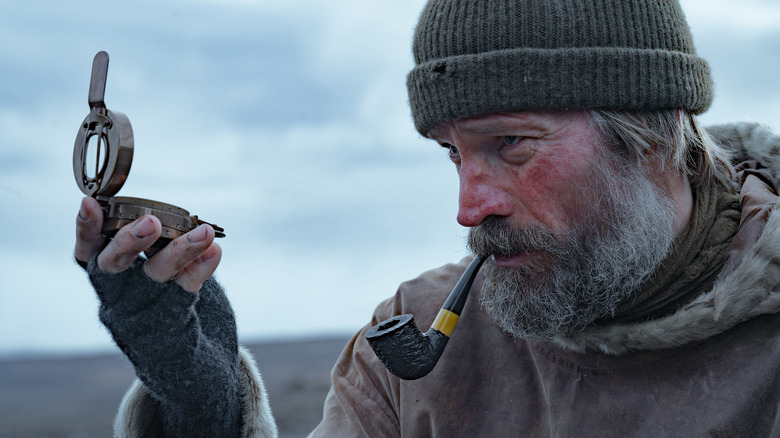
02 Mar 20:12

In old comedy skit, Zelenskyy plays Ukraine's future president—himself!—getting a call from Angela Merkel about its application to join the European Union

by Rob Beschizza

As Russian tanks roll menacingly (albeit very slowly) toward Kyiv, Ukraine president Volodymyr Zelenskyy signed his country's application to join the European Union yesterday. In his former pre-invasion life as a comedian, though, he already performed a comedy skit about such an application and what would happen next. — Read the rest