Ronald.phillips
Shared posts
Optimists Live Longer, Says Study


Read more of this story at Slashdot.
How Russia's Airline Industry Was Pushed To the Brink in a Week
Read more of this story at Slashdot.
Russia Mulls Legalizing Software Piracy As It's Cut Off From Western Tech
Read more of this story at Slashdot.
Half of US Adults Exposed To Harmful Lead Levels As Kids
Read more of this story at Slashdot.
Master Thief Robert Pattinson Busted For Swiping Socks From The Batman Set
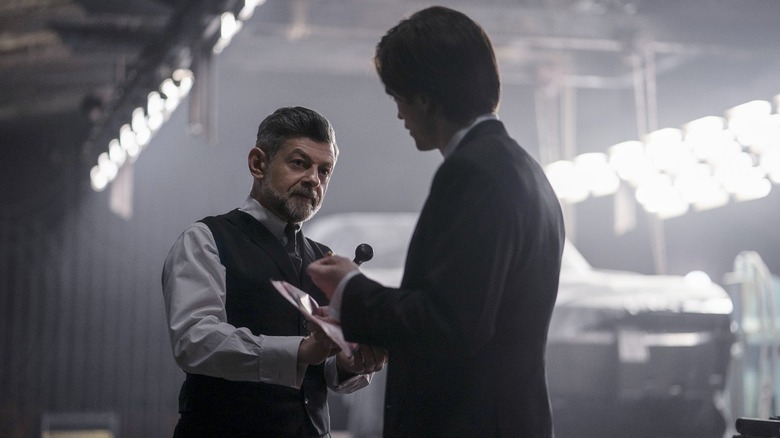
Minor spoilers for "The Batman" follow. Like, extremely minor. Teeny tiny.
"Alfred, I don't want your cufflinks." Okay, Bruce, then what about his socks? Or anyone's socks, for that matter? As it turns out, being a rich and famous actor in real-life playing a rich and famous character in "The Batman" couldn't prevent star Robert Pattinson from behaving like a complete and total menace while on set. He may have wanted to turn down those Wayne-branded cufflinks that Alfred offers to him on the eve of a rare public appearance by Bruce Wayne, but apparently that didn't stop Pattinson from absconding with far too many pairs of socks from the production.
That's according to Pattinson himself, at least, whom we all know has a pesky little habit of just flat-out making things up when he gets a little bored. Most infamously, the man once completely made up an entire story about witnessing a clown die at a circus as a kid, which (if you ask me) outdoes any trauma Bruce Wayne himself went through with the death of his parents. Like I said, the man is a menace and we kind of love him for it.
So from the man who (allegedly) spends his free time in unusual ways -- not fighting crime at night in armored spandex, as far as we know, but hiding out on Batman forums online and social media to see what people are saying about him -- comes the somewhat dubious (but no less hilarious) reports that he got busted for becoming a kleptomaniac, as far as socks are concerned. Check out his damning statements below, which should obviously call into question his fitfulness to ever don the batsuit ever again. This is why vigilantes are always bad news, folks.
Confessions Of A Sock-Thief

In an interview on BBC Radio 1 (via Insider), Robert Pattinson came out with a downright Riddler-esque confession of his own. If he's to be believed, then the "Batman" star has been hoarding socks from the set of "The Batman" throughout over a year of shooting.
It's pretty commonplace, of course, for actors to take home certain items of sentimental value that the used on-set during production. The dastardly deed that Pattinson has fessed up to doing, however, is another matter entirely and completely beyond the pale. Let it be known that we here at /Film are simply humble messengers of such foul misbehavior and do not condone the rampant theft of socks. With that important caveat out of the way, here are Pattinson's own words describing his reprehensible actions.
"It's impossible to take anything home from [set]. I did get a lot of socks. All of my socks are all from 'Batman.' ... I kept getting told from Warner Bros., 'You know, it's fine to have a few, but you take them every day. How many socks do you need? Because we've been shooting for a year.'"
Judging by the actual giggles that Pattinson tries to speak through while regaling this story (around the 10 minute and 50 second mark in the interview clip), we're going to go out on a limb and assume that he's lightly exaggerating for effect. Compared to the usual round of hum-drum responses and boring, PR-ready non-answers that actors under tight NDAs usually give out, we'll gladly take as many absurd and ridiculous stories that Pattinson could possibly think of on the spot. In terms of other insights that are just as suspicious as this one, Pattinson has previously talked about looking up bat-fighting techniques for some real-world inspiration. Elsewhere in the realm of (relatively) more reliable comments, the star also recently opened up about wanting to appear in "Dune: Part Two."
If you can't get enough of Robert Pattinson's abject weirdness, "The Batman" is currently playing in theaters.
Read this next: The 20 Best Heist Movies Of All Time
The post Master Thief Robert Pattinson Busted for Swiping Socks from The Batman Set appeared first on /Film.
Oh, you're into Doomsday Prepping? That's cool, that's cool. I was into Doomsday Prepping, too, back before it got so mainstream. I'm doing much more obscure sorts of prepping now, you probably haven't heard of them [Obvious]

Captured Russian officer apologizes to Ukraine: You bet we're committing "genocide" in Ukraine. That, and we're ashamed of it [Obvious]
Russian Shelling Damaged a Nuclear Research Facility, Ukraine Says
Read more of this story at Slashdot.
Understanding How Hackers Recon
The Russian military's logistical problems explained

In a 20-minute segment, Wendover Productions examines the failed logistics of Russia's war on Ukraine. The Russian army is the junkyard that we've seen portrayed in media, but it's large and powerful all the same. The critical problem for it is logistics: it can't project a supply chain beyond its borders for more than a few days. — Read the rest
Poll asks if war in Ukraine spreads, should the US military get involved. Rich people say yes Poor people who have to fight the war say no [News]

This short documentary explores how capitalism has made satire impossible

This ~15 minute video was created by Renegade Cut, and examines the way that late-stage capitalism commodifies literally everything until we feel so powerless to escape its grasp that we "digest" "content" in "bite-sized" pieces just to feel some relief (by feeding the beast). — Read the rest
Aware of the looming humanitarian disaster their invasion is causing, Russia announces a limited cease-fire and say it will open evacuation corridors that will allow Ukrainian civilians to flee but only to Russia or Belarus [Sick]

6 'Russian' Things You're Boycotting That Aren't Actually Russian

In light of the Russian invasion of Ukraine, many Americans have called for boycotts of Russian goods in order to show their support for the Ukrainian people. Republican and Democratic leaders alike have specifically called for the removal of Russian vodkas from shelves; one tavern owner in Bend, Ore. went so far as…
How Serial Killer Ed Gein Inspired Classic Horror Movies

In our true crime-obsessed world, serial killers have unfortunately reached icon status. We could debate whether or not the world really needs another Ted Bundy movie until we're all blue in the face, but no serial killer can compare to Hollywood's obsession with the Plainfield Butcher, Ed Gein. A murderer and grave-robbing body snatcher is bound to be newsworthy regardless of criminal circumstance, but the grotesque ways Gein utilized the corpses he collected were so shocking, people couldn't (and still can't) stop talking about it. Gein confessed to at least two murders and was suspected in several others, but was only convicted for the murder of tavern owner Mary Hogan in 1954. Despite his comparatively low body count (to be clear: one is too many), Gein's modus operandi and so-called "house of horrors" have permeated pop culture through the iconic horror films inspired by his real-life crimes.
After images of Gein's Wisconsin farmhouse were made available to the public, creatives were given a blueprint to design the living space of isolated and demented killers and permanently changing the landscape of horror. His unhealthy obsession with his mother led to the creation of Norman Bates in "Psycho," the details of his horrific flesh projects paved the way for Leatherface of "The Texas Chain Saw Massacre," and although frequently debunked, the idea that he was a gender confused crossdresser inspired characters like Buffalo Bill in "The Silence of the Lambs." All three of these films were monumental successes of their own, and inspired plenty of others in their wake.
Gein's Gross Arts And Crafts
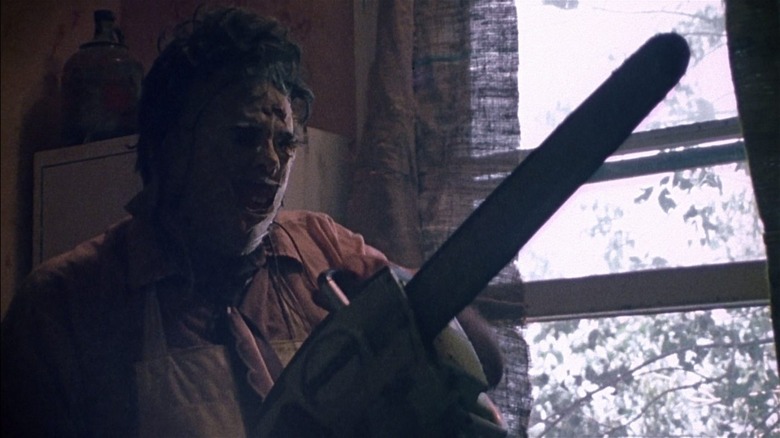
I'll admit, I've frequently used the phrase "wants to use my skin as a lampshade" to describe the weird men that send me crude messages on the internet. This expression is rooted not only in what was found in Gein's home, but how slasher films would later interpret his demented habit. 1974 brought "The Texas Chain Saw Massacre" and "Deranged," two films that feature a killer who uses the flesh of others as materials. Otis Driftwood of "House of 1000 Corpses" and "The Devil's Rejects" also reference Gein through Otis' skill of crafting human sculptures for Captain Spaulding's museum.
As for Gein's crafts, authorities found a wastebasket made of human skin, chair seats made of flesh, skull bowls, leg skin leggings, face masks, windowshade drawstrings made of lips, the human skin lampshade, and the belt of women's nipples in addition to a collection of dismembered body parts, bones, and fingernails. His actions were so nightmarish and unbelievable that it sounded like something out of a horror movie, which makes complete sense why horror creatives immediately mined his crimes for inspiration. It was also implied that Gein was a necrophile, as shown in "Deranged," but this claim was never substantiated.
The Obsession With His Mother Wasn't Totally Accurate

Robert Bloch's novel "Psycho" told the story of Norman Bates, a man with an unhealthy obsession with his mother. Bloch was inspired by Ed Gein, historically remembered for keeping his mother's corpse in the basement and creating a woman's suit inspired by his mother. Filmmaker Alfred Hitchcock became fascinated with the story and crafted his cinematic masterpiece of the same name, but there's one huge problem ...Gein never actually exhumed his mother. It is true that Gein's mother was a religious zealot, highly controlling, and Gein was desperate for her approval, but the portrayal of his obsession in horror films wasn't totally based in reality.
Gein didn't do as Norman Bates did and take on the persona of his mother, but his crimes were rooted in his need for her approval. Around the time of Gein's crimes, psychologists were peddling the idea that a mother's relationship to her son was one of the surefire ways to determine a psychopath. Criminal profiling was just around the corner, and it was commonplace to hear people blame the actions of men on the women who raised them. This concept is still perpetuated even in today's horror, but led to quite possibly the most egregious portrayal of Gein, and sparked a trope that unfortunately has caused genuine harm to marginalized people.
The "Crossdressing Killer" Trope Was Based On Speculation
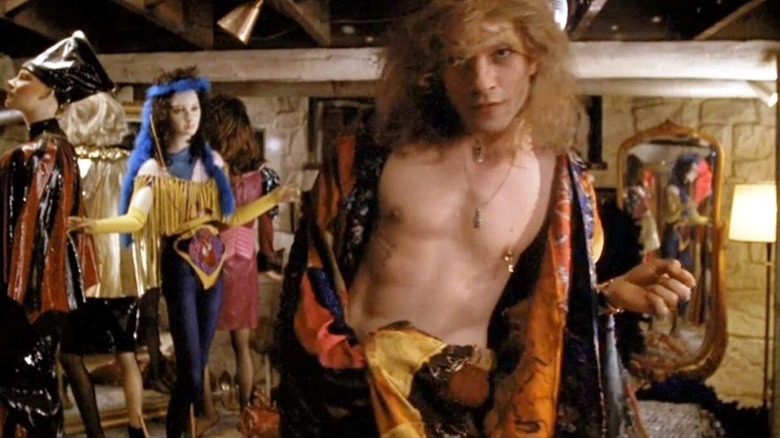
Gein is also remembered for "wanting to be a woman," with his woman's suit allegedly inspired by a desire to be inside of his mother once again. This trope inspired "Psycho," which inspired "The Silence of the Lambs," which inspired an entire society to believe that transgender women are dangerous predators. The "killer crossdresser" trope skyrocketed in prominence due to Gein and the subsequent success of films inspired by him. Author Grady Hendrix noted that the original "Life" pictorial included a line about Gein wishing her were a woman, despite there not having been a psychiatric evaluation. An armchair psychiatrist who'd never met Gein claimed showed symptoms of "acute transvestitism," but the actual psychiatric profile of Gein included nothing about transvestitism or crossdressing.
When Gein took a polygraph test, operator Joe Wilimovsky asked leading questions about his presumed belief that Gein enjoyed wearing women's clothing, and when Gein said "that could be," it was interpreted that he was definitively transgender. As Hendrix also writes, Gein was highly suggestible and struggled to tell the difference between things that actually happened and things he was told had happened. Combine this all with the increased societal anxiety (see: transphobia and homophobia) that men were becoming "sissies," and suddenly we had the narrative that anyone assigned male at birth who displayed any sort of gender non-conforming desires or habits were equatable to Ed Gein. "And there you have it," said Hendrix:
"A busted psychiatric theory about how mothers made their sons gay and trans got shoehorned into the case against Ed Gein by eager psychiatrists, and it then made it into Robert Bloch's novel based on the Gein case, which wound up in Alfred Hitchcock's hit movie based on Bloch's book, which flowed out like a poisonous river, leaving its rancid traces on dozens, if not hundreds, of serial killer books and slasher movies."
Read this next: The 31 Scariest Movie Scenes Ever
The post How Serial Killer Ed Gein Inspired Classic Horror Movies appeared first on /Film.
Even Mild Covid is Linked To Brain Damage, Scans Show
Read more of this story at Slashdot.
New Zealand announces sanctions on Russia, threatens to cut off exports of Longbottom Leaf [Interesting]

Microsoft working on keyboard & mouse support for Xbox Cloud Gaming
The Three Must-Watch Anime That Inspired Turning Red Director Domee Shi

When director Domee Shi began providing artistic inspiration for her film "Turning Red," she knew she would be forcing some of the animators out of their comfort zone, and others into a world they'd only dreamed of creating. Inspired heavily by 1990s and early 2000s anime, "Turning Red" effortlessly combines the western style of animation that made Pixar iconic, and the massively influential eastern style of anime that Shi grew up loving. The result is a highly expressive film where 13-year-old Mei Lee gains stars in her eyes when she's amazed, giant drops of tears when she's sad, a gigantic bean-shaped mouth to showcase the full range of her emotions, and pupils that wildly shift in size depending on how she's feeling.
For a film like "Turning Red," where our main character transforms into a giant red panda at any sign of a big emotional shift, the incorporation of anime elements only adds to the storyline's effectiveness. In a recent interview with Shi, we asked her to give us some anime homework to prepare for "Turning Red." I'm happy to say that Shi didn't disappoint, and recommended three all-time greats that are absolutely worth checking out.
Ranma ½

One of the biggest anime inspirations for "Turning Red" is the series "Ranma ½" which aired in Japan from 1987-1996. Viz Media licensed the show in 1993, bringing it to the western world as the very first anime TV series to ever be released in English with a faithful uncut dub. The story follows a teenage boy named Ranma Saotome who accidentally falls into the "Spring of Drowned Girl" and is cursed to become a girl when splashed with cold water, only being brought back to his correct identity with hot water. The anime was extremely popular in the 1990s, with Ranma not only accepting his ability to transform between genders, but frequently and willfully transforming in order to fulfill his goals. The screwball anime is largely remembered only for its famous gender-swapping angle, but "Ranma ½" also serves as a slapstick comedy of errors and an accidentally affirming (albeit clumsy) allegory for transmasculinity.
"It's like martial arts, high school drama, transformation, comedy, action, and slapstick," said Shi. "We borrowed a lot of its tone and the whole transforming between human and animal aspect."
While Mei is firmly a girl throughout the entire movie, like Ramna, she frequently intentionally transforms into the Red Panda when necessary. There's a certain beauty about both Mei and Ramna learning to embrace an intrinsic part of themselves that makes them "different" in the eyes of the status quo, and realizing that what they thought was a "curse" is actually what makes them wonderful.
"Ranma ½" is currently available to stream on Peacock.
Fruits Basket

I was in middle school when I read my first manga, the wonderful "Fruits Basket," about Tohru Honda, an orphan girl who, after meeting Yuki, Kyo, and Shigure Sohma, discovers that the 13 members of the Sohma family are possessed by the animals of the Chinese zodiac and are cursed to turn into their animal forms when they are weak, stressed, or when they are embraced by anyone of the opposite sex that is not possessed by a spirit of the zodiac.
"I loved that series growing up,'' said Shi. "It's comedy, it's high school, it's great." The manga was given the anime treatment in 2001, and with Mei transforming into a red panda whenever her emotions get too hard to handle (yes, that does include the feeling she gets when she thinks about cute boys), the "Fruits Basket" influence is easy to see.
The original "Fruits Basket" anime is available on Crunchyroll, and the 2019 anime is streaming on Hulu.
Sailor Moon

"Fighting evil by moonlight, winning love by daylight, never running from a real fight, she is the one named Sailor Moon!" With a movie that so heavily values the importance of female friendships, Domee Shi was of course inspired by "Sailor Moon." Shi admits that much of the pastel and high-femme color palettes of "Sailor Moon" inspired the look of "Turning Red," but the friendship was very much an homage to the Sailor Scouts.
"Middle school girls saving the world with superpowers, how can you go wrong with that?" Shi asked. "Sailor Moon" was extremely influential in the world of anime, and along with "Dragon Ball Z," helped spark a wave of anime love in the west. "Sailor Moon" is still putting out new content even today, because you can't keep a good magical girl down.
"Sailor Moon" is available to stream on Hulu and "Sailor Moon Crystal" is on Netflix.
Read this next: The 14 Best Animated Movies (That Aren't Made By Disney Or Pixar)
The post The Three Must-Watch Anime that Inspired Turning Red Director Domee Shi appeared first on /Film.
The Russian Embassy in DC just got a makeover with a smart new sign: President Zelensky Way

The Russian Embassy in Washington DC now has an unofficial new street name: President Zelensky Way.
The sign, which is attached to a pole and cement base, was rolled over on a dolly at 2:30 pm yesterday by activist Claude Taylor, who told Insider it's meant to be "a peaceful, nonviolent, silent form of protest." — Read the rest
Kashmir students recount harrowing journey to escape Ukraine, which must have been awful if it bothered people used to traveling in both time and space [Scary]

Save These Kitchen Scraps for Better Spaghetti Sauce

A lot of people talk about saving veggie scraps for stock (as they should), but too many sleep on the sauce scrap bag. Functionally, the process is similar: Gather your vegetable peels, butts, and other assorted ephemera and put them in a freezer bag; put the bag in the freezer; retrieve it the next time you make stock…
NVIDIA code-signing certificates are masking as malware, part of attack on the company from last week

Inconvenience is preparing for the aftermath of the NVIDIA hack assault, which we initially investigated in late February. Two code-marking authentications were among the implied 1TB of information acquired, which compromised equipment schematics, firmware, drivers, worker data, and the sky is the limit from there. The meaning of the declarations getting into any programmers' grimy hands is that dangerous entertainers can reuse them to sign their malware coding.
Further attacks on NVIDIA include malware appearing in two separate code-signing certificates from NVIDIA.
Straight ahead of the end of the week, PC security expert Bill Demirkapi highlighted the two spilled NVIDIACorporation endorsements, as given by VeriSign. You can see from the screen captures that one of them lapsed in 2014 and the other in 2018. Regardless of the endorsements so obviously being terminated, Demirkapi says that " Windows permits them to be utilized for driver marking purposes."
That escalated quickly #Lapsus
#Nvidia #LeakedCertificateMimikatzhttps://t.co/TrY6vL2mEE
KDUhttps://t.co/RDf6bnuArk pic.twitter.com/Jl4tpS5KEr
— Florian Roth
(@cyb3rops) March 3, 2022
Just ahead of the weekend, computer security specialist Bill Demirkapi highlighted the two leaked NVIDIA Corporation certificates issued by VeriSign. You can see from the screenshots above that one of them expired in 2014 and the other in 2018. Demirkapi says that " Windows still allows them to be used for driver signing purposes despite the credentials being expired."
Security analyst Florian Roth took to Twitter to provide links to malware seen in the wild, endorsed as though they were veritable, unaltered NVIDIA code. These weren't connected to the malware but instead to infection-examining information bases investigating reality. Confirmation of the risk from these authentications being made public became visible only a couple of hours after the fact.
A not insignificant rundown of the malware appears to have been cultivated, presently ensured as certifiable Nvidia code. Among the dubious bundles, many seem to be contaminated with Mimikatz, a program used to remove passwords, PINs, and comparative from a PC's memory that succumbs to it.
The post NVIDIA code-signing certificates are masking as malware, part of attack on the company from last week by Jason R. Wilson appeared first on Wccftech.

Walking Dead Spin-Off Isle Of The Dead Will Star Maggie And Negan

I've got an elevator pitch for you. What if I came up with a zombie show titled "The Walking Dead," but the real twist was that the humans were the real, metaphorical walking dead. Not the zombies! Okay, credit where it's due because that concept was actually pretty nifty ... way back in 2010, at least, when the series first made its way onto our airwaves. Well over a decade later, "The Walking Dead" just continues to chug along and defy death. Hey, isn't that kind of like... Okay, you know what, I'm not even going to go for that incredibly low-hanging fruit. All snark aside, the long-running series has remained immensely popular for a reason, even if former fans like myself can pinpoint exactly the moment where we lost interest and waved the white flag. (For me, that would be when the writers decided to kill off Emily Kinney's Beth Greene halfway through the fifth season in arguably the most unnecessarily bleak way they could.)
But to borrow a phrase from another (better?) show, "What is dead may never die." AMC's flagship program may finally be winding down with its eleventh season, as the second of three separate 8-episode chunks is set to release in just a few weeks, but naturally, the franchise has found a way to live on in other forms anyway. It's been a few years since we first heard about AMC's plans to expand the franchise with movies and spin-offs, which has borne fruit with "Fear The Walking Dead" (now set to begin its eighth season!), a Daryl and Carol spin-off, "The Walking Dead: World Beyond," and the anthology series "Tales of the Walking Dead."
But today brings the news that yet another spin-off series is now in the works, because there's no such thing as too much, apparently. According to Variety, AMC has greenlit a new series that will currently be called "Isle of the Dead." It'll star two very familiar faces from the original series, as Lauren Cohan's Maggie Greene and Jeffrey Dean Morgan's villainous Negan will once again join forces to star in the new show.
Isle Of The Dead
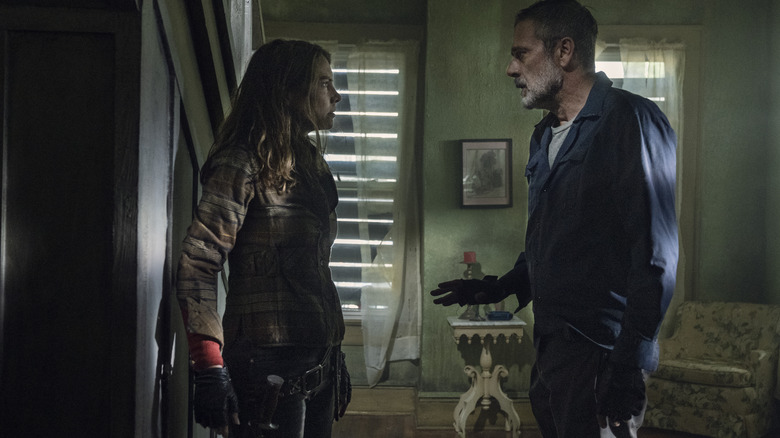
Boy, I hope you don't have "The Walking Dead" fatigue just yet, because the property isn't going anywhere anytime soon.
In fairness, "Isle of the Dead" sounds like a very natural extension of the ongoing storyline in the main series. It will revolve around Maggie and Negan, a pair of characters who obviously have in-universe history stemming from that fateful, unforgettable, and incredibly controversial season 6 finale. The season 7 premiere revealed Negan had brutally murdered Maggie's beloved Glenn (thus freeing Steven Yeun to do many more interesting projects in the years since, so maybe we shouldn't begrudge that episode so much after all), providing plenty of drama and conflict to come once Maggie and Negan finally came face-to-face. Their meeting in Alexandria didn't exactly lead to many fireworks and any reunions since then have been sporadic at best, but an entire series dedicated to both characters should lead to plenty of potential storytelling opportunities.
According to the report, the series will be comprised of six episodes and "will see the two characters traveling into a post-apocalyptic Manhattan long ago cut off from the mainland. The crumbling city is filled with the dead and denizens who have made New York City their own world full of anarchy, danger, beauty, and terror." Eli Jorné, who has written and co-executive produced "The Walking Dead" for multiple seasons, will write, executive produce, and serve as showrunner on the series. Interestingly, both Cohan and Morgan will also serve as executive producers in addition to starring in the series. In addition, original "The Walking Dead" producer, writer, and showrunner Scott M. Gimple will return to oversee the spin-off as the franchise's chief content officer. As he said in a statement:
"Eli has created a chaotic, beautiful, grimy madhouse of the dead for Negan, Maggie, and fans of the show eager to discover an unseen and insane world of the TWD Universe. Lauren and Jeffrey have always been fantastic collaborators and now, we bring that collaboration to the next level with a series that will take these characters to their limits with the world — and each other. All of us are thrilled to take you on an all new, all different TWD epic for the ages."
Fans can expect "Isle of the Dead" to drop on AMC and AMC Plus in 2023. Meanwhile, "The Walking Dead" season 11 is currently airing.
Read this next: The 15 Best Jackie Chan Movies Ranked
The post Walking Dead Spin-off Isle of the Dead Will Star Maggie and Negan appeared first on /Film.
The new KGB is stabbing the old KGB in the back over the invasion of Ukraine (Non-paywalled link swapped in) [Repeat]

[RELEASE] Morrowind Rebirth 5.8 BETA
![[RELEASE] Morrowind Rebirth 5.8 BETA](https://media.moddb.com/cache/images/downloads/1/230/229118/thumb_620x2000/Morrowind_Rebirth_Menu.6.1.jpg)
This is a BETA. Use at your own risk. Changelog down below.
Bomberman Series Introduction / Bomberman (1983)

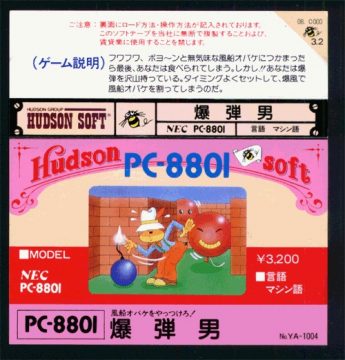


Once upon a time, Bomberman was a pretty big deal in the world of video games. As one of the biggest names in console multiplayer, games in the franchise were oftentimes the go-to picks for college dorms and friendly gatherings, allowing anywhere from two to ten people to duke it out. After the 90s, it didn’t take long for Bomberman to fall out of prominence, thanks to factors like Hudson Soft’s financial struggles and their resulting purchase by Konami, leading to less frequent releases that were scattershot in their goals, much like what Konami ended up doing with the Frogger license.
One could also say Bomberman’s greatest strength ended up as a source of weakness: as a game that’s easy to learn but challenging to master, some people feel the franchise peaked with earlier entries like Saturn Bomberman and later entries tried to add too many ingredients to a perfect recipe. There’s also a potential divide between what people seek from Bomberman – many see it as purely a multiplayer experience, whereas some may prefer the entries that go all-in on single player content, such as Bomberman Hero.
Still, Bomberman managed to get dozens upon dozens of releases throughout its long history and the series isn’t done for yet, with a port of Super Bomberman R Online to non-Stadia platforms in 2021 being its most recent entry. The franchise is fascinating and diverse, covering just about every genre there is, from the standard maze action to platformers to sports titles, and there are even several mini-game compilations and a strategy RPG as well!
The fundamentals of Bomberman are straightforward yet masterful in their simplicity. Your single method of attack involves placing down a bomb and waiting for it to explode in a plus-shaped pattern. These explosions usually span one or two squares to start, but once you accumulate some firepower and bomb quantity power-ups, it’s easy to engulf entire rows and columns in flames. You need to exercise caution around your bombs though, since the explosions can kill you as well and a poorly placed bomb can trap you against a wall. Games of Bomberman typically take place in square or rectangular mazes, containing both hard blocks that can’t be destroyed and soft blocks that can be destroyed to clear space or find power-ups. The strategy of the series comes down to knowing the timing of your bomb explosions and where to position them in order to maximize how efficiently you can clear out blocks while avoiding danger, and the environments are big enough to allow for offensive and defensive play. It works well enough against enemy AI, but the game becomes entirely different when played against another human, since trying to predict their next move becomes far more interesting and dynamic knowing that one mistake equals death for an unprepared player.
When playing the single player modes, your goal is usually to complete a number of stages by defeating every enemy and making your way to the exit. As you progress, each world changes the general environment and introduces different gimmicks and stage hazards that mix up the way you play. Enemies become more diverse as well, and can do things like shoot projectiles, move through blocks, or even eat your bombs to prevent them from going off.Power-ups can be found inside soft blocks to make things more manageable and they’re retained between levels should you manage to keep on surviving. Every world is capped off with a boss fight that you’ll have to analyze and learn how to dodge while finding opportunities to hit them with your bombs. This formula gets shaken up significantly whenever Bomberman goes fully 3D or dives into spin-off territory, and there are certainly intricacies unique to each entry, but this is otherwise the template for much of the franchise’s output.
The multiplayer Bomberman experience is all about frantic action and customization that can be enjoyed with other people or with CPU opponents. Players are pitted against one another in a test of reflexes and wits as they aim to accumulate power-ups and be the last one standing. Most of the power-ups from the single player modes show up and players are given a bevy of options to play with, such as different arenas, multiple playable characters, team battle options, and alternate objectives beyond the standard deathmatch. Later entries pile on some additional mechanics too, such as allowing eliminated players to get back in the game if they can take out an opponent from the sidelines. Multitaps for older consoles are still sought after for the purpose of playing Bomberman, which is a testament to the enduring legacy and quality of the multiplayer experience.
Bomber Man (MSX)
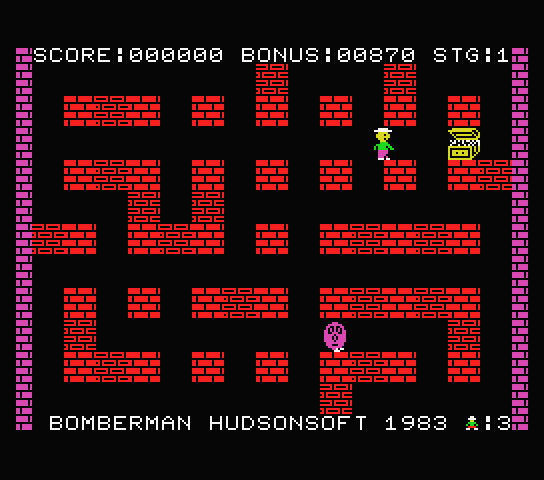
For most people, Bomberman began with the Famicom entry in 1985 (which didn’t leave Japan until 1989), but there were actually two games that preceded it. Originally created by Hudson Soft in 1980 as a tech demo for their BASIC compiler, Bomber Man (or Bakudan Otoko) was only given a limited release in 1983 and 1984 on contemporary Japanese computers at the time, contributing to its obscurity elsewhere. European countries would end up getting the game under the title of Eric and the Floaters on the MSX and ZX Spectrum in 1984, with the name change supposedly due to a desire to avoid any potential associations with terrorism. The name change isn’t quite as ill-fitting as it may sound- Bomberman didn’t yet have his iconic robot design. He first appeared as just a guy with a hat and overalls, so giving him a normal name made enough sense. The game was programmed by two Hudson Soft employees, Toshiyuki Sasagawa and Y. Tanaka, and while neither of them would go on to be long-term Hudson Soft regulars, their contributions here were essential in establishing the groundwork for the franchise.
Bakudan Otoko is an endless game where your goal is to eliminate the living balloons (these would go on to be called “Balloms” in future games) that populate each stage. It’s possible to find an exit instead of killing every enemy, but doing so in this particular entry just resets the current level and doesn’t actually advance you to the next stage. There aren’t any power-ups here and there’s only a single kind of environment (albeit one that has a randomized arrangement of blocks each time), so all you’ve got is the ability to place up to five bombs at a time with a blast radius of two squares each. Bomberman moves half a tile at a time, something unique to this entry and the next, which ends up making movement feel somewhat slow and difficult to do, especially when turning corners as you’re being chased.
This strange kind of movement does allow for an interesting mechanic though – by placing bombs in between two tiles, it’s possible to blow up half of a soft block rather than the entire thing. Doing this allows a second bomb’s explosion to pierce through the remaining half, hitting anything that may be on the other side. Half-broken walls can’t be moved through either, making them both an ideal place to protect yourself and a perfect spot to set up an attack.
There’s only one type of enemy to deal with, but they’re more nuanced than you might expect. The balloons move unpredictably around each level in their initial passive state. They won’t go after Bomberman until they turn red, which makes them far faster until they eventually calm back down. In this particular entry, bombs can be passed through, so you can’t use them to block pursuers, requiring you to monitor the location of each enemy at all times.
While it may be tempting to hang back and hide until your foes become passive, you’re rewarded for taking the initiative in multiple ways. Each balloon you manage to destroy will award you with points, but defeating red balloons will give you up to 200 points, whereas waiting until your foe is at their weakest may give you as few as ten points. There’s incentive to clear each stage as quickly as possible, since doing so you grants you additional points. You can also find treasures hidden in the soft blocks, which contribute to your score as well. Scoring is purely for self-satisfaction, since there’s no way to get extra lives and there’s no high score table to record your best attempts either.
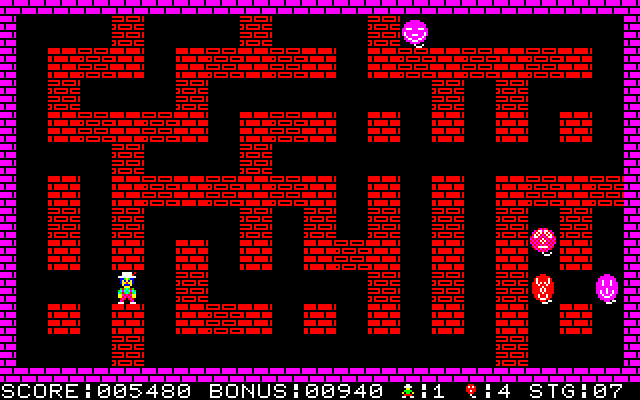
Bomber Man (PC88)
When playing on the NEC PC-88 series of computers, everything is visually simplistic but rather colorful and the sprites are detailed and big enough to stand out amongst the action. There’s no music, only sound effects for movement, explosions, and losing a life, which is something that would remain true with every version of the game. This version moves exceptionally fast compared to the others, making it difficult to outrun red balloons without using a wall to break their line of sight.
On the NEC PC-6000 line of computers, the game fares quite well without losing much in the transition. The design of Bomberman has changed to one that’s mostly red with purple hair, and there’s now an extra screen that explains the game when you first begin. Starting and ending the game is also accompanied by a voice sample, which is a neat novelty. The general pace is noticeably slower than on the PC-88, but thankfully not so slow as to ruin the gameplay. The only real knock against this version is that the balloons are always red and only use different expressions to indicate a change in state, making it harder to read their movements.
The version available to the Sharp MZ-700/2000 lines is perhaps the most interesting one, simply because of how much abstraction it has going on. Instead of Bomberman and balloons, every character is represented by an arrangement of squares that vaguely resemble a person, and it’s hard to say what the treasure is even supposed to be. Despite the visual downgrades, the color changing mechanic for the enemies is preserved, the game moves quickly without being overwhelming, and the controls feel among the tightest of the bunch, making it an impressively solid port.
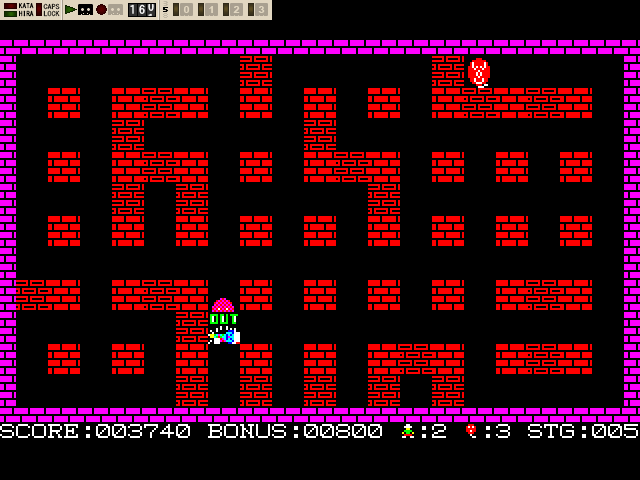
Bomberman (Hitachi Mark 5)
The Sharp X1 version is mostly similar to the PC-88 version with a few additional flourishes. The intro screen now shows Bomberman running away from the balloons and there are also some extra options, such as the ability to enable or disable sound effects. Whenever a stage loads, you now get to watch the individual blocks appear and form the maze, which is pretty neat, but does slow things down a bit since you have to watch it every time. The action itself is unfortunately much slower, making this version pretty tedious to try and actually play.
The Fujitsu FM-7 port is the weakest of the bunch. Everything is much smaller and zoomed out, and the title of the game is displayed constantly at the top and takes up much of the screen. Bomberman now moves constantly and pressing one of the four movement keys makes him face a different direction. This makes precise actions far less reliable, which would normally be a bigger problem if the enemies weren’t also compromised. The balloons (now called “Aliens”) come off as far less competent, pursuing you less frequently and oftentimes starting the round stuck in the corner for several seconds. Things slow to an absolute crawl when even one bomb is placed down and trying to play for prolonged periods simply feels dreadful. The only real positive change in this version is that you get five lives instead of three.
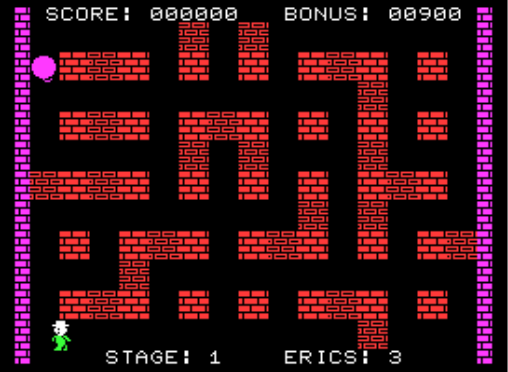
Eric and the Floaters (ZX)
The MSX and ZX Spectrum versions are similarly robust, offering a strong balance of visuals and speed while also introducing a new addition to the gameplay. The ZX Spectrum version is a bit less detailed than the MSX version, with the most notable example being that the balloons are missing faces in the ZX Spectrum version of Eric and the Floaters. Exclusive to these versions are “Bomb Auto Setting” stages that show up occasionally from stage four onwards. During these stages, Bomberman will automatically place a bomb whenever he takes a step. This is as catastrophic as it sounds, since the bombs will set off a chain reaction that’s very difficult to escape. It’s an interesting idea, but it’s more frustrating than anything, since flawlessly planning out your path and hoping the stage layout accommodates said plan is required to avoid a swift death. This idea returns later on in the series as one of the potential consequences of picking up the Skull item.
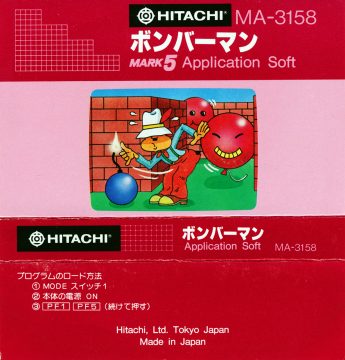
Thanks to the efforts of the website Gaming Alexandria, a version of Bakudan Otoko for the Hitachi Mark 5 has been preserved. It’s mostly similar to the PC-88 version, but with a few improvements. For starters, the title screen is completely different compared to any other version, opting to sort its information vertically instead of horizontally. Most notably, this is the only version of the game where exits actually bring you to the next stage as you’d expect, making them worth seeking out. This version is reasonably paced and even increases the amount of enemies onscreen at a slightly slower rate (stage five will only have three enemies instead of four like in the PC-88 version), making it one of the best versions overall.
Bakudan Otoko is effectively outclassed by every installment afterwards, but it’s still worthy of recognition for how much of the essence of Bomberman it manages to establish. It may be missing the personality, the variety, and the multiplayer, but the action here paved the way for the Famicom game to become the smash hit that it did. Before that though, Hudson Soft would go on to try one more ambitious, albeit ill-advised, experiment with Bomberman in 1984.
Bomberman Series Introduction / Bomberman (1983) was first posted on March 6, 2022 at 1:51 pm.
©2017 "Hardcore Gaming 101". Use of this feed is for personal non-commercial use only. If you are not reading this article in your feed reader, then the site is guilty of copyright infringement. Please contact me at kurt@hardcoregaming101.net
Exercising Reduces Risk of Dementia - But Not If There's Air Pollution
Read more of this story at Slashdot.
DFIR Reporting
A request that's been pretty consistent within the industry over time has had to do with reporting. I'd see a request, some responses, someone might ask for a template, and then the exchange would die off...I assumed that it had moved to DMs or offline. Then you'd see the discussion pop up again later, in some other forum.
I get it...writing is hard. I have the benefit of having had to write throughout my career, but also of putting intentional, dedicated effort into DFIR reporting, in that I had been very purposeful in seeking feedback from my boss, and incorporating that feedback into report writing. I was able to get to the point of having reports approved with minimal (if any) changes pretty quickly.
As a result, in 2014, Windows Forensic Analysis Toolkit 4/e was published, and in this edition, I included a chapter on reporting. It was (and still is) a general overview addressing a lot of things that folks miss when it comes to technical reporting, going from the importance of spelling and grammar to the nature of an "Executive Summary" and beyond.
About a year ago, Josh Brunty wrote a blog post on Writing DFIR Reports; 7 yrs later, and his blog post included some of the same thoughts and recommendations I'd shared in my book. It was validating to see that others had had (and shared) similar thoughts regarding reporting. Different words, different experiences, different person, but similar thoughts and direction. Cool.
So why does any of this matter? Not to put too fine a point on it, but it doesn't matter how good or thorough you are, it doesn't matter if you're technically light years beyond the bad guys. If you can't communicate your findings to those to whom it matters, in an actionable manner...who cares? What does any of it matter?
Coworkers and others in the community have long chided me for my insistence on correct spelling and use of terminology (i.e., specificity of language), in some instances saying, "yeah, well you know what I meant...". Okay, but a report or Jira ticket regarding an incident is not intended to be a placeholder for "what you meant", because 6 months or a year from now, you may not remember what you meant. Or, as is more often the case, someone other than you who's looking at the report will get the wrong information, because they're bringing a whole new set of understanding to "what you meant". As to spelling, let's say you absent-mindedly drop the last digit from the last octet of an IP address...rather than ".245", it's ".24". If you were to search for that IP address across other data sources, you'd still find it, even with the final digit missing. But what happens when you drop that IP address into a block list? Or, what happens if (and I ask because this has happened) the digit is mistakenly dropped from the second octet? All of it fails...searches, blocks, etc. At the very least misspelling words simply makes the report or ticket appear unprofessional, particularly given the number of tools out there with built-in spell check. However, misspelling can also lead to material impacts to the information itself, altering the course of the investigation. Misspelling a system name or IP address can be the difference between an AD server and a user's workstation. Misspelling an IP address or domain means that it's not actually blocked, and traffic continues to flow to and from that remote system, unabated. The issue is that when the report or ticket is the means of communication, intention and "you know what I meant" is impossible to convey.
When I got started in the private sector information security business back around 1997-1998, I was working with a team that was performing vulnerability assessments. We had a developer on our team who'd developed an Access database of report excerpts based on various findings; we could go into the interface and select the necessary sections (based on our findings) and auto-populate the initial report. We had a couple of instances where someone either wrote up a really good finding, or re-wrote a finding that we already had a truly exceptional manner, and those entries were updated in the database so that someone could take advantage of them. Our team was small, and everyone was on-board with the understanding that generating the initial report was not the end of our reporting effort.
However, we had one forensic analyst as part of our "team"...they didn't go on vulnerability assessments with us, they did their "own thing". But when their work was done, it usually took two analysts from the assessment team to unravel the forensic findings and produce a readable report for the customer. This meant that resources were pulled from paying work in order to ensure that the contract for the forensic work made some money and didn't go into the red.
In a world where remote work, and work-from-home (WFH) is becoming much more the norm, being able to clearly, concisely, and accurately communicate is even more important. As such, if you're writing something that someone else is going to pick up later that day or week, and use as the next step for their work, then you want to make sure that you communicate what needs to be communicated in a manner that they can understand and use.
At the very least, you want to communicate in such a manner that you can come back a year later and understand what you'd meant. I say this, and like with most things in "cyber", we all look at this as a hypothetical, something that may happen, but it's not likely. Until it does. I worked with one team where we said that regularly - someone would continually ask, "what's the standard?" for writing, and we'd say, "...so that you can come back to it a year later and understand what was going on, and correctly explain what happened." This was what our boss, a former cop, had said. And no one listened, until an analyst we'll call "Dave" had to review a report that had been written 12 months prior. He couldn't make heads or tails of the report...what exactly had been examined, what was the original analyst looking for, and what did they find? All of this was a mystery, not just to "Dave" but to other analysts who reviewed the report. The reports were all written from the company, to the customer, but we tracked down the analyst through contracting...it was Dave. The customer was raising a legal complaint against our company, and we had no way of figuring out if they had a legitimate complaint or not because no one, not even Dave, could figure out what had been delivered.