Ronald.phillips
Shared posts
The End of Infinite Data Storage Can Set You Free
Bong Joon-Ho's Favorite Modern Horror Movie May Surprise You
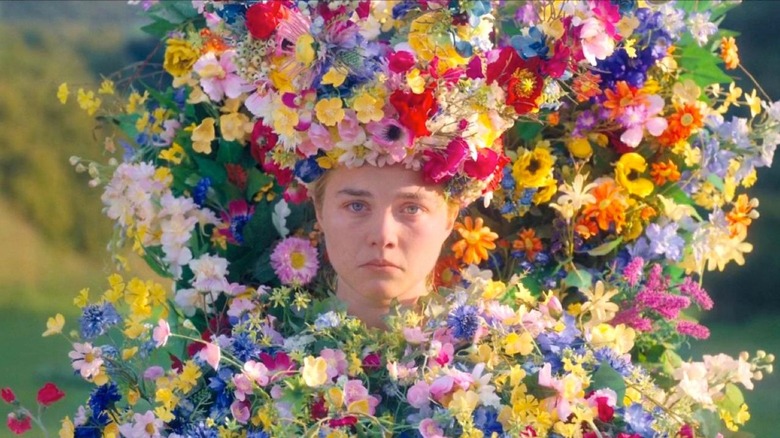
Bong Joon-ho's success crossed over to new global heights after the release of "Parasite," the South Korean filmmaker's dark comedy thriller that explored social class dynamics. The film made history during awards season — Bong received the Cannes Film Festival's most prestigious award, the Palme d'Or, in 2019, and later, numerous accolades including four Academy Awards for Best Director, Best Picture (the first non-English film to do so), Best Original Screenplay, and Best International Feature Film.
Although the rest of the world has only just begun to appreciate Bong's creative genius, the director has had a long-spanning career. He has dabbled in multiple genres, and his films can rarely be classified into one — which makes him one of the world's most exciting and unpredictable filmmakers.
After Bong became a filmmaking sensation with "Parasite," the filmmaker was interviewed by publications such as Sight & Sound, where the filmmaker named 20 directors pivotal to the future of cinema over the next decade. Earning the second spot on the list is contemporary horror master Ari Aster — the name behind the acclaimed A24 horror films "Hereditary" and "Midsommar." Bong's praise for Aster's vision is high, in fact, the filmmaker told Far Out Magazine that "Midsommar" is his favorite modern horror film of all time.
Bong Joon-Ho Loves Ari Aster's Midsommar
"Midsommar," filmmaker Ari Aster's sophomore scare-fest introduced fans to a new sense of horror. It starred Florence Pugh as Dani, a grieving woman who travels to Sweden with her toxic boyfriend and his friends to attend a midsummer festival. At first, what appears to be a community living in an idyllic retreat quickly transforms into a violent and bizarre pagan cult, complete with ritual sacrifices and grisly violence. Despite its overwhelming themes of horror, the film is almost entirely presented in daylight, under blue skies, and across stunning, pastoral landscapes. It doesn't sound like a horror movie, no? But it is. "Midsommar" is teeming with stellar performance and striking, colorful visuals, which legendary filmmakers such as Bong have taken note of.
Bong Joon-ho describes the visuals of "Midsommar" as "compelling" and believes that Aster's filmography delivers profound horror.
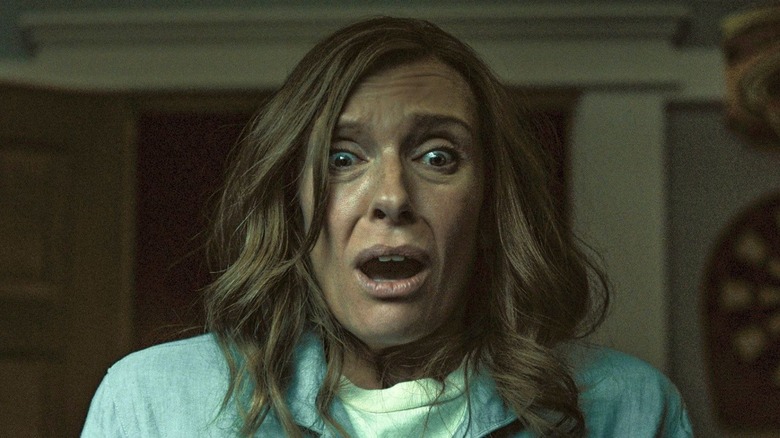
Not only did Bong select the film as his favorite modern horror flick, but he has also praised Aster's 2018 film "Hereditary." The psychological horror film features an ensemble cast in Toni Collette (whose performance was majorly snubbed at the Oscars), the spectacular Alex Wolff, Milly Shapiro, and Gabriel Byrne as a family who is haunted by an evil presence after the death of their secretive grandmother.
Bong Joon-ho's love for Aster's work led to him writing the introduction to A24's official screenplay book for "Hereditary." Along with complimenting how the film traveled beyond its genre, the filmmaker had great things to say about his viewing experience.
"[Hereditary] goes beyond the trappings of genre and delivers true, profound horror," Bong said. "A horror that is primal and inescapable. In order to survive this overwhelming horror, we cast a spell on ourselves. We hope that the gruesome moments we witnessed will eventually settle into a neutral view of the accident, like an innocuous tableau made up of adorable miniature figures."
The film isn't based on a true story — but its occult elements are rooted in demonic mythology and it explores the intergenerational effects of a family curse. With its staggering, unforgettable performances and jump scares that will keep you at the edge of your seat throughout its 2 hours and 7-minute runtime, it's easily one of the greatest horror films of the 21st century.
Read this next: The 95 Best Horror Movies Ever
The post Bong Joon-ho's Favorite Modern Horror Movie May Surprise You appeared first on /Film.
How Bruce Lee Helped Jumpstart Jackie Chan's Career
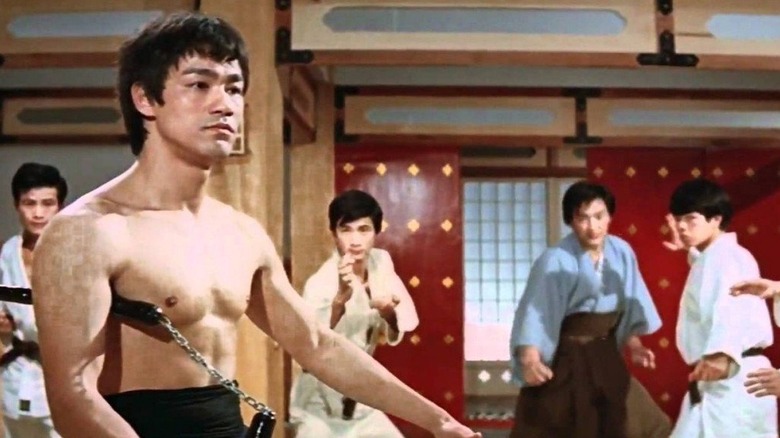
Jackie Chan and Bruce Lee may have made very different movies, but they share a similar degree of global impact, each having been the face of Hong Kong cinema for stretches of time. It was Lee's few movies in Hong Kong, and tragic early death in 1973, that set the direction of the region's '70's action film output, and Chan's emergence as a star at the decade's tail end would mark a major change towards physical comedy. Despite their differences in approach, they shared a significant relationship: early in Chan's film career, he worked as a stunt double for Lee. He would use that experience as inspiration.
Lee's taciturn precision and elegance is a far cry from the loose, comical drunken master style of Chan. Lee derived his art from the styles of Ip Man, while Chan's descended from Buster Keaton. Even their movies' stories come from different worlds, as Lee used his work to emphasize a kind of warrior philosophy. The movies that Lee made in Hong Kong, the ones that made him a worldwide phenomenon, followed years of difficulty in Hollywood, where opportunities dried up quicker than they were offered.
Hollywood Disappointments, Hong Kong Beginnings
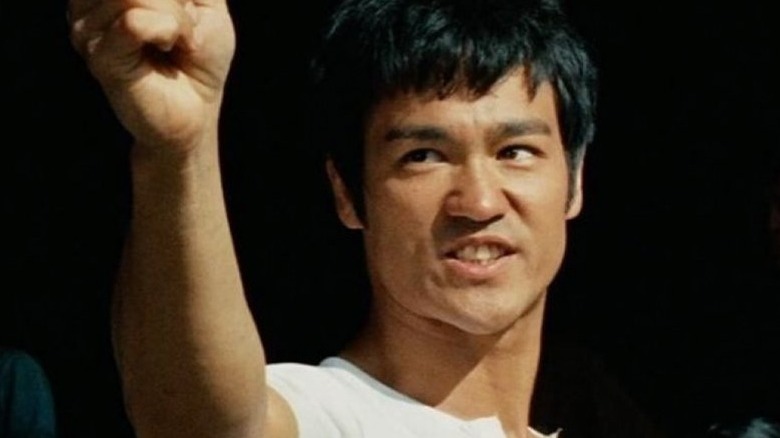
In the '60's, Lee's time in the United States saw him teaching martial arts to celebrities like Kareem Abdul-Jabbar and Steve McQueen. The connections forged by those lessons got Lee attention from film and television producers like Fred Weintraub, one of many looking to capitalize on the Kung Fu movies coming out of China.
Lee's sidekick role as Kato on television's "The Green Hornet" proved immensely popular in the U.S. and Hong Kong. With a number of sturdy business relationships, he anticipated a vehicle of his own. He needed work, but the industry in the late '60's was unwilling to commit to an Asian lead. Most of his roles came from television shows in need of a guest martial artist. Weintraub urged Lee to take the roles offered to him for movies in Asia, believing they could convince the American film industry to take a chance on him. Lee signed on to star in Lo Wei's "The Big Boss," to be filmed in Thailand. It was the first movie to emphasize his star power, charisma, and grace in full force.
Low-budget as they were, "The Big Boss" and its follow-up, "Fist of Fury," also directed by Lo Wei, ended up becoming major box office hits, the most successful to ever come out of Hong Kong at that point. The greatness came from tension on-set, with Lee picking fights with unimpressed stuntmen and his director. Jackie Chan, unknown stunt double, even saw Lo Wei cower behind his wife as Lee's temper flared up.
The Bruce Lee Lookalikes
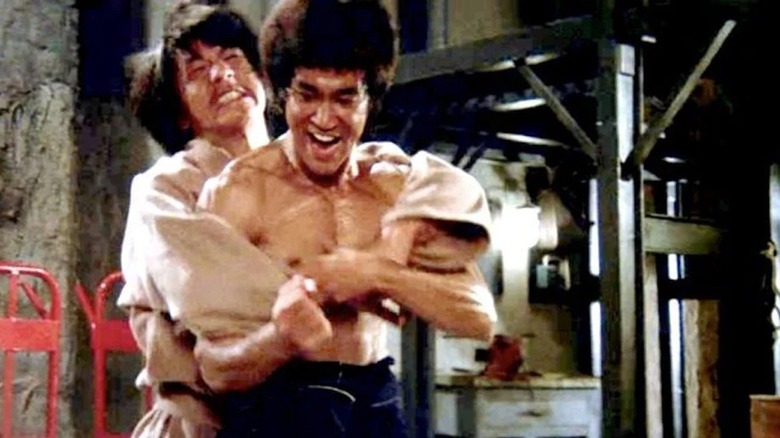
Those movies, immensely popular, forged Lee's reputation on the world stage. That he was only able to make a couple did little to diminish his impact -- and that unknown stunt double, Jackie Chan, was the only man whose work in Hong Kong action cinema would rival Lee's in global influence.
Lee's death in 1973, when he was just 32 and at the peak of his powers as a performer and choreographer, robbed the world of a master. His absence was keenly felt by the Hong Kong film industry, who spent the rest of the '70's finding martial artists who kind of looked like Lee, changing their stage names, and recasting them in movies with titles like "Fists of Bruce Lee" (starring Bruce Li). Even Chan began his leading man work along these lines, before fully establishing his screen persona with "Drunken Master."
While Chan's first parts came as a young man in the films of the great King Hu, the stunt work he did with Lee in the early '70's was what really compelled him to embrace the art form. According to him, seeing "Fist of Fury" onscreen made him want to be a star.
From Stuntman To Star
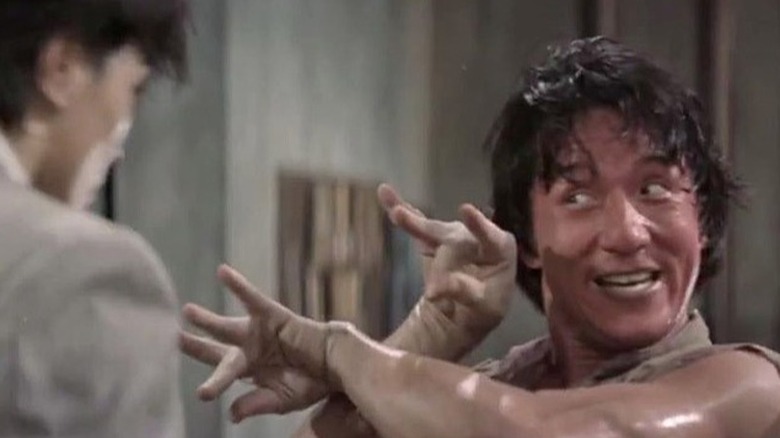
In a 1997 interview with the South China Morning Post, Chan described his experience working with Lee in greater detail, revealing that Lee had a massive entourage and was intimidating to him as a young stunt double. But Lee was kind to him, getting him overtime on set and was, in general, "very good to the low class people." When Lee needed Chan to do a somersault for him, Chan did -- and saw, with the final cut of "Fist of Fury," that his work as a stuntman had made Bruce Lee look even better.
He took pride in that, but had no more interest in being a stunt double, or making somebody else look better. He had a new desire to act, and "wanted to let people know it was me on the screen. I didn't want to be a double." And in Bruce Lee's final complete film, "Enter the Dragon," he got his wish, eschewing the stunt work in favor of playing random guards who get beat down. But at least you knew it was him.
That experience lit a fire under Chan played a huge role in his growth as a star. It gave him the tools and confidence to move the industry away from the Bruce Lee rip-offs with which it got enamored. Despite the world of difference between their styles, the two artists shared a unique degree of talent and innate charisma. Each of them rebuilt the culture in their own ways.
Read this next: Jackie Chan's 15 Greatest Fight Scenes Ranked
The post How Bruce Lee Helped Jumpstart Jackie Chan's Career appeared first on /Film.
Quentin Tarantino Kept Michelle Yeoh From Quitting Acting
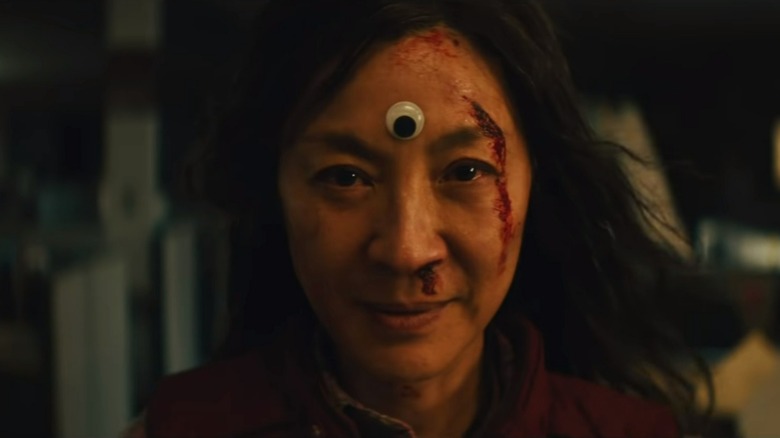
Of all the possible universes that may or may not be in existence, let's all be grateful that we're living in one where Michelle Yeoh continues to kick ass and take names. First getting her start in the 1980s Hong Kong movie scene, the martial arts star quickly rose to prominence and helped pioneer the country's emerging trend of women in leading roles for action flicks. Western audiences would soon find out for themselves about Yeoh's tremendous screen presence and fierce commitment to doing as many of her own stunts as possible, putting her among the ranks of successful male stars like Jackie Chan and Jet Li. Of course, it's one thing for a nobody like me to heap that sort of praise upon her well after the fact. It's another thing entirely when such compliments are paid by industry figures like Quentin Tarantino, back when the trajectory of her career was still at a crucial turning point.
In a new profile for The Hollywood Reporter (via IndieWire), Yeoh opened up about the path she found herself embarking on that would ultimately end up with her leading the upcoming Daniels film (that's the shared title of co-directors Dan Kwan and Daniel Scheinert) "Everything Everywhere All At Once," a genre-defying, multiverse-hopping fever dream that recently held its premiere at the South By Southwest Film Festival. /Film's own Jacob Hall called the film "a mind-melting masterpiece" in his review, setting expectations even higher for the latest effort by the "Swiss Army Man" directors and, specifically, for Yeoh's performance in it.
But this may never have happened if it weren't for a chance meeting with director Quentin Tarantino at particularly bleak moment in Yeoh's life. Yeoh revealed that during filming for "The Stunt Woman" in 1996, she suffered a debilitating back injury that had her questioning whether she even wanted to continue acting or not. With friends urging her to think about what's best for her, Yeoh spoke frankly about her depressive thoughts at this point: "Why am I doing this? Is it worth it? If I really got hurt, then what?"
Luckily for Yeoh and the rest of us who have come to love and appreciate her contributions to the art, that all changed when Tarantino paid her a visit.
'That Was A Turning Point'
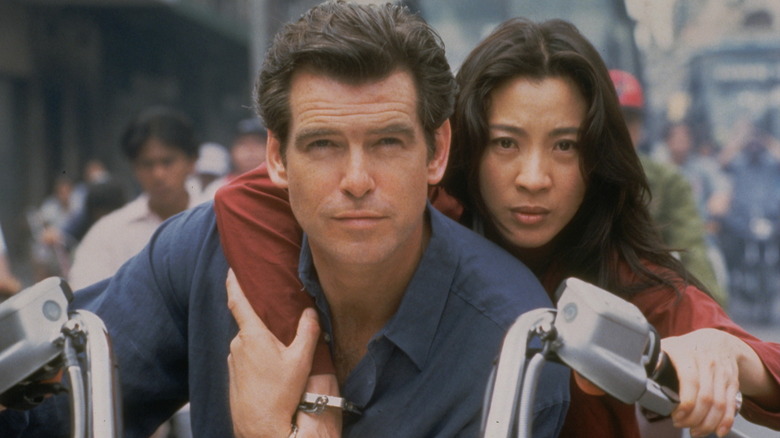
While Yeoh was laid up in bed, unable to move, Quentin Tarantino happened to be in Hong Kong with the intention of meeting just three individuals: Jackie Chan, Jet Li, and Michelle Yeoh. Though initially resistant (THR describes Tarantino's stubborn insistence to meet with her as a success, but only after "much wheedling from the American"), Yeoh finally agreed to a brief conversation with the famous director. That, as it turned out, turned into a much, much longer one. Enthusiastically telling Yeoh that "I've watched all your movies" and going on to break down all his favorite action sequences to a molecular level, Yeoh gradually came out of her existential funk. As she put it:
"The next thing I knew, we were talking and I was coming back to life. I'll never forget it. It was like, 'I do love what I do.' And that was a turning point where I felt, 'I've paid my dues.'"
The rest, as they say, is history. Her next big break after that came with 1997's "Tomorrow Never Dies," as her scene-stealing appearance in the James Bond film firmly landed her on the map in Hollywood for good. She soon followed that up with Ang Lee's "Crouching Tiger, Hidden Dragon," a movie where her undeniably charismatic performance convinced the director to back off his initial plans to dub over her voice. As Lee remembers, "The way she performs, you cannot duplicate that. And of course, the good news is she's a very good actress."
That talent would drive Yeoh's next decade of work, ultimately culminating with her supporting role in "Star Trek: Discovery," a long-overdue victory lap in Marvel's "Shang-Chi and the Legend of the Ten Rings," and, of course, what seems like her finest role to date with "Everything Everywhere All at Once." How fitting is it that this story comes out ahead of the release of a movie that, according to Jacob Hall's review, begins with Yeoh's character at a low point where she's "despondent, bored, and prone to distraction, her life an endless cycle of disappointment." As much as life tends to imitate art, sometimes it feels even more rewarding when it's the other way around.
"Everything Everywhere All At Once" comes to theaters on March 25, 2022.
Read this next: 17 '80s Action Movies You Definitely Need To See
The post Quentin Tarantino Kept Michelle Yeoh From Quitting Acting appeared first on /Film.
Review: FLUX GOURMET, Visually Seductive, Absurdly Comic
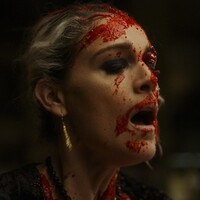 Asa Butterfield, Gwendoline Christie and Ariane Labed star; Peter Strickland ('In Fabric,' 'Duke of Burgundy') directed.
Why Burt Reynolds Originally Hated His Role In Boogie Nights
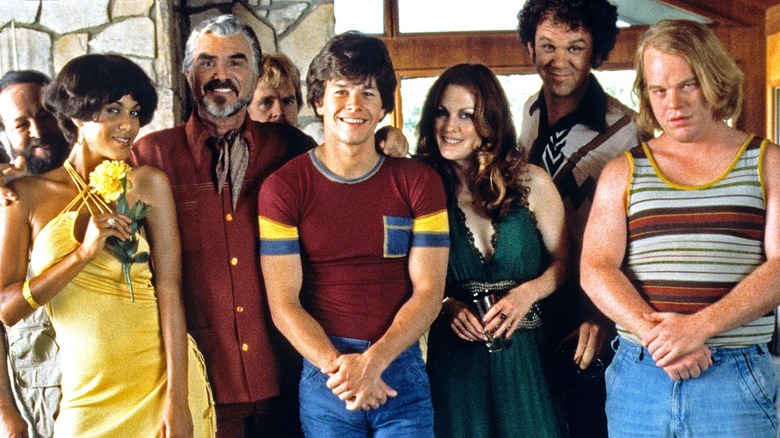
It's a special kind of heartbreak when you find out an actor from one of your favorite movies actually despised their role. So if you also count yourself an ardent admirer of Paul Thomas Anderson's "Boogie Nights" and/or Burt Reynolds, get ready for some tears. Those who've scene the film know that of its many eccentric yet endearing characters, it's the idealistic adult film director Jack Horner that shines the brightest. After all, it's Jack who holds the oddball family/film production company together with dreams of making porn flicks people will appreciate not just for sex, but for things like plot and character.
Unfortunately, Reynolds had less than a fraction of the same passion or appreciation for "Boogie Nights" as his Jack does for pornos. He's also not the first actor to express regret over their role in the film. Mark Wahlberg, who plays the boyish newcomer to the porn industry Eddie Adams/Dirk Diggler, once said the movie was at the top of his list of "poor choices." Given the film's, uh, exceptionally revealing ending, we understand Walhberg's sentiment. But Walhberg's embarrassment is in stark contrast to Reynold's intense dislike for the film. So why, exactly, did a role that earned the actor numerous awards and nominations, including an Oscar nod for Best Supporting Actor, inspire such hate?
A Movie About Porn Made Hollywood's Playboy Uncomfortable
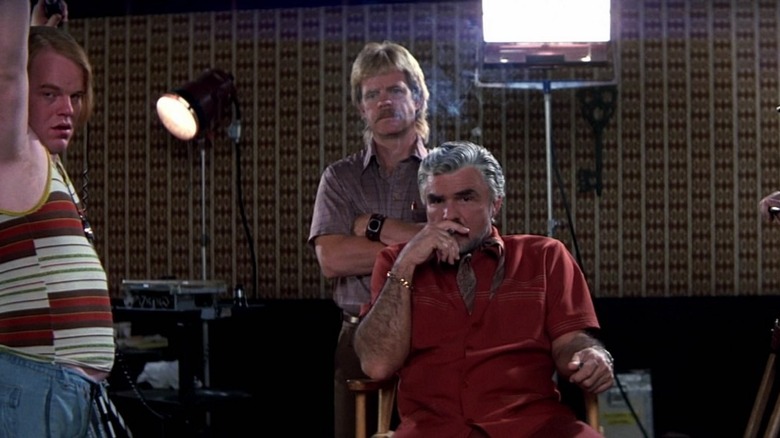
As a '70s sex-symbol in his own right, you'd think Reynolds would've found something to relate to in Anderson's hedonistic and extravagant period-drama about that very decade. Instead, it seems the actor regarded the entire experience of filming "Boogie Nights" as a discomforting one. "It just wasn't my kind of film," he told to Conan O'Brien in 2018 and described its intimate dealings with the porn industry as "very uncomfortable."
In a Guardian Live event in 2015, Reynolds said:
"I don't like those people, I feel like they are due for a very hard time because they tried to do legitimate film and they're never going to be able to. It's sad, they were very sad people and they showed up a lot of times on set. It's a one-way street, if you go down that road as an actor, you're finished."
It probably didn't help that Wahlberg would apparently walk around set with a fake erection, channeling his inner Diggler with a very outward expression, one of the many stories told by Reynolds to the Guardian that detailed his reproach of the movie. We suppose then its a testament to his acting that Jack is such a fervent champion of porn as an artform, especially since the actor held such a condemning, if slightly condescending, attitude towards the genre. So much so that Reynolds never saw the finished movie as he was only able to stomach a rough-cut viewing. The was an experience so dire the Washington Post reported the actor fired his agent immediately afterwards, going scorched earth to eradicate any and all association with one of his most popular roles.
But the debauchery of "Boogie Nights" wasn't the only thing that aggravated Reynolds onset.
Reynolds Wasn't Exactly Anderson's Biggest Fan
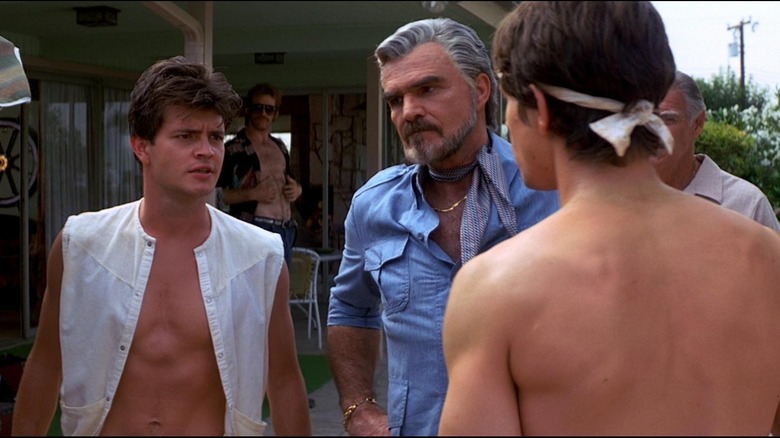
There are plenty of great director versus actor feuds. Some have sunk entire productions while others miraculously don't. Thankfully, "Boogie Nights" is one of the latter. But that doesn't mean the level of vitriol wasn't an ocean that threatened to drown everyone involved. In that same Guardian Live interview, Reynolds said he "hated" Anderson enough to turn down a role in "Magnolia." He went on to describe working with the director as one might talk about jury duty or court-ordered community service: "I'd done my picture with Paul Thomas Anderson, that was enough for me."
But none of that quite compares to the fact that Reynolds almost gave Anderson a little more than a piece of his mind during on particularly heated quarrel. As recounted by producer John Lyons in an oral history of the film published by Grantland:
"I had to pull Burt's arm back when it was cocked. I was in the middle of it. Burt was getting ready to slug him and I was like, 'Burt, Burt, no, no, don't, don't do it.' And then I had to take Burt back to the trailer. And I spent a lot of time in Burt's trailer. A lot. I love Burt. I thought he was incredible. He was old Hollywood; there were a lot of people on that set that just didn't really have the time or the interest in it."
If you're thinking that maybe time heals all wounds and cools every grudge -- think again. In a 2015 GQ interview, Reynolds didn't have any inclinations to hold back when speaking about Anderson's directorial skills. He got plenty of blows in this time around:
"Personality-wise, we didn't fit. He was young and full of himself. Every shot we did, it was like the first time [that shot had ever been done] I remember the first shot we did in Boogie Nights, where I drive the car to Grauman's Theater. After he said, 'Isn't that amazing?' And I named five pictures that had the same kind of shot. It wasn't original. But if you have to steal, steal from the best."
Looking back, it's incredible "Boogie Nights" survived to become a success, both commercially and critically. Between the Reynolds-Anderson feud and almost going direct-to-video, it's a film that had its share of behind-the-scenes hiccups. But something has to be said of Reynolds being able to put aside personal opinions and grievances and act his ass off, turning in a performance that's the heart of Anderson's kaleidoscopic, character-driven sortie through the '70s.
Burt Reynolds passed away in 2018. He is sorely missed.
Read this next: Adam Sandler's 14 Best Roles Ranked
The post Why Burt Reynolds Originally Hated His Role in Boogie Nights appeared first on /Film.
Ukrainian President Volodymyr Zelenskyy's Comedy Series Has Returned To Netflix In The US
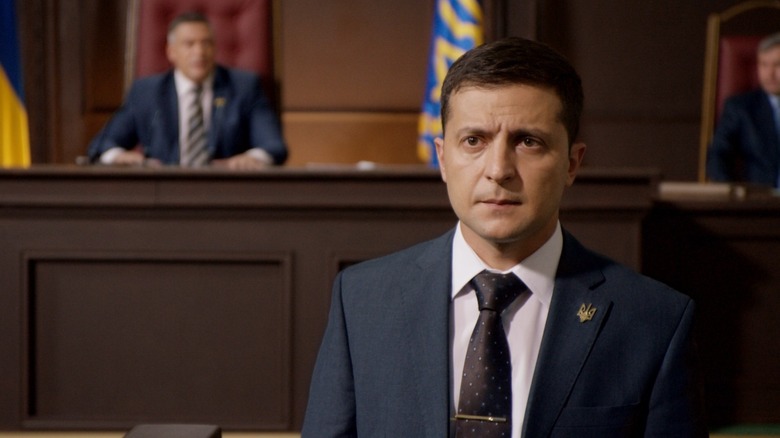
Volodymyr Zelenskyy, the president of Ukraine, has become something of a global superstar in recent weeks following Russia's invasion of the country. Yet, in a life before he managed to become a leader beloved not just by his people, but admired the world over, he was actually an actor in movies and TV shows. Now, Netflix has brought back one of his most noteworthy works, "Servant of the People," to its subscribers in the U.S. by popular demand.
The show had previously lived on Netflix from 2017 to 2021 but, in light of recent events, demand for the show has surged. Thus, the streaming giant has once again secured the rights and is offering people a chance to see the oddly prophetic series that sees Zelenskyy going from teacher to president. The official synopsis for the show reads as follows:
Modest and humble teacher Vasily is caught on camera raging over the miserable situation in his country. When a pupil posts the video on Youtube, it becomes a viral sensation. Everybody loves Vasilyl's outrage and people start gathering money for a presidential campaign. Which he wins! Servant of the People follows Vasilyl's new life as president; he has no interest in changing his life, he wants to stay the same, live in his flat with his parents, borrow money from his friends at the end of the month and take his bike to work; it's just that now his work is as the most powerful man in the country.
More Than Just A Comedy
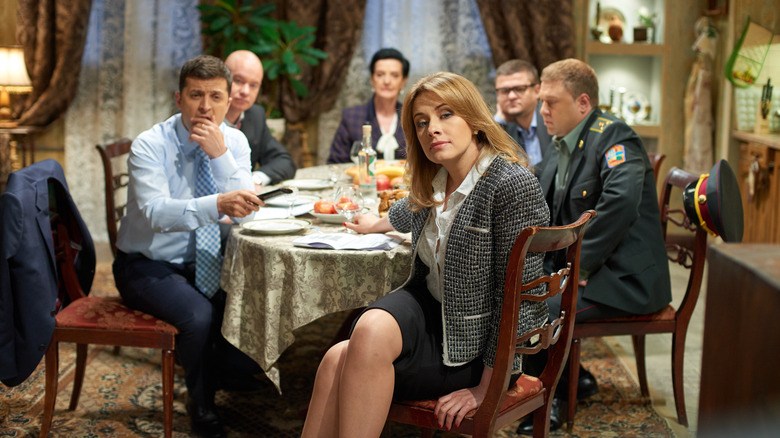
"Servant of the People" ended up being the thing that actually launched Zelenskyy's political career, ultimately putting him in the position he's in now. Swedish television group Eccho Rights has been licensing the show around the world in light of recent demand, Channel 4 in the U.K. and other major carriers picking it up as well. Eccho, in a statement, has the following to say earlier this month in expanding its licensing of the show.
"The series is a comedy but also an important document of where Zelenskyy comes from. His fictional president is a normal man, who grows into his role as a heroic and adored leader. While the real world scenario facing Zelenskyy and the Ukrainian people is far more grim and appalling than the comedy of the series, there are obvious parallels with the real world situation, and Servant of the People is a fascinating, important and historic piece of television."
In addition to the show's three seasons, a film based on the series titled "Servant of the People: The Movie" was also released in 2016. Eccho, it is worth mentioning, is donating €50,000 to the Ukrainian Red Cross Society, with the money going to help those who have been impacted by the war.
"Servant of the People" is now streaming on Netflix.
Read this next: The Best Movies Streaming Right Now: Malignant, A Hero, And More
The post Ukrainian President Volodymyr Zelenskyy's Comedy Series has Returned to Netflix in the US appeared first on /Film.
Netflix thought now would be a good time to resurface Zelensky's sitcom
Before he gained widespread acclaim for his leadership of Ukraine following Russia's invasion, president Volodymyr Zelensky was a famous actor and comedian. He starred in a satirical comedy series called Servant of the People, which is now once again available to view on Netflix in the US.
You asked and it’s back!
— Netflix (@netflix) March 16, 2022
Servant of the People is once again available on Netflix in The US. The 2015 satirical comedy series stars Volodymyr Zelenskyy playing a teacher who unexpectedly becomes President after a video of him complaining about corruption suddenly goes viral. pic.twitter.com/Pp9f48jutF
Zelensky played a teacher who is unexpectedly elected president of Ukraine after a video of him ranting about government corruption goes viral. As The New York Times notes, the series, which ran from 2015 to 2019, proved successful in Russia as well as Ukraine. The show has previously been on Netflix in the US, and the service suggested it was bringing Servant of the People back by popular demand.
It's not surprising that subscribers are interested in watching the show that helped propel Zelensky to the presidency. It'll be interesting to see if Netflix shares viewership figures in the coming weeks.
Still, Netflix is touting the return of the show amid a conflict in Ukraine in which thousands of people have been killed. The number of refugees who have fled the country is in the millions, according to the United Nations.
Netflix is one of many companies that have cut ties with Russia over the last few weeks. Its streaming platform is no longer available there. It reportedly suspended production and content acquisitions in the country too.
The Star Trek: Voyager Plotline Jeri Ryan Wishes She Could Do Differently
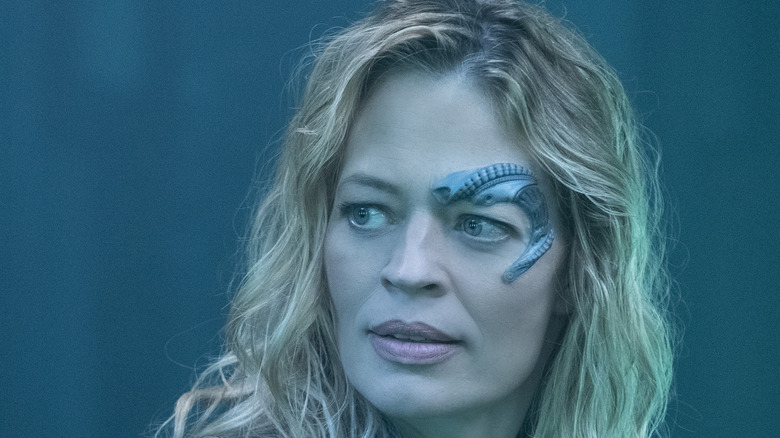
If you ask someone what their favorite "Star Trek" series is, "Star Trek: Voyager" probably won't be the first choice — or even the second. Debates surrounding the series run hot, from the various characters within its ensemble to how it resolved the story of the U.S.S. Voyager's travels through the Gamma Quadrant. Even the series' stars have their own thoughts on how things were handled; Jeri Ryan, who played fan-favorite character Seven of Nine, is no different.
During an interview with the official "Star Trek" website in 2011, Ryan discussed the series finale "Endgame" and her issue with the sudden relationship between Seven of Nine and Commander Chakotay. Said relationship had been established in the episode "Human Error," where Seven was learning the ups and downs of being human via the holodeck; in Ryan's mind, the issue could have been handled more carefully:
"My problem with that relationship was that it came out of the blue. They had started the set-up of the relationship a few episodes earlier ... where Seven was experimenting with her humanity on the holodeck. And so she sort of fell in love with Chakotay there. They said something like her could never have these sorts of relationships because she would die, or whatever."
Speed Dating
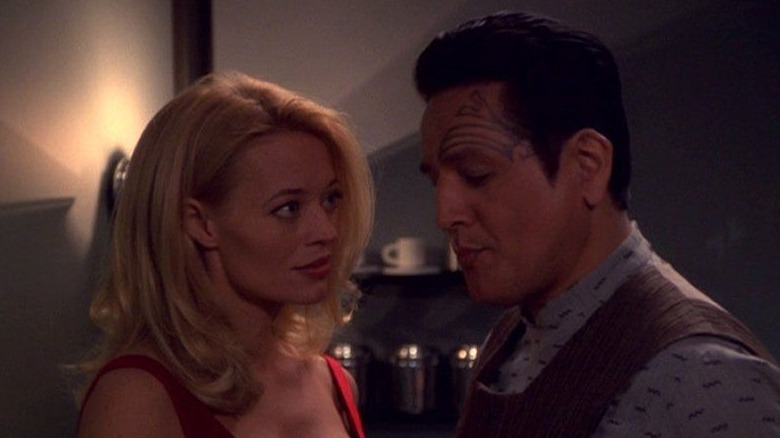
Ryan continued to discuss the sudden Seven/Chakotay relationship and how she thought it wouldn't go anywhere during the filming of the episode "Natural Law", which left the pair stranded on an alien planet.
"We specifically asked the producers — Robert and I — 'Now, are we going to play this? Is this going to go somewhere? Because, obviously, we'd need to carry something over from...' And they said, 'No, no, no, no! Absolutely not. Don't play any of that. Nothing's going to happen.'"
Apparently, the producers backtracked, because by the time "Endgame" filmed Seven and Chaoktay were romantically involved. Ryan admits that she was more than a little annoyed by this about-face.
"And then, out of the blue, all of a sudden, they're dating (in "Endgame"). That was a little annoying, especially when you've specifically asked about it and they said, 'No, absolutely not.' Then, suddenly they're in love. That was a little... It's one of the frustrations of network television. And it's how you learn, also. You have to try to be the babysitter and the protector of your character."
Both Seven and Chakotay have recently reappeared in "Star Trek: Picard" and "Star Trek: Prodigy," respectively. Seven became part of Jean-Luc Picard's crew and Chakotay served as the captain of the U.S.S. Protostar. If you asked me, they tried to make it work and agreed to a mutual separation — but for what it's worth, it's not the strangest couple I've seen on TV. Or even the most ill-fitting — Ted and Robin from "How I Met Your Mother," anyone?
Read this next: The 19 Greatest Movie Couples Of All Time Ranked
The post The Star Trek: Voyager Plotline Jeri Ryan Wishes She Could Do Differently appeared first on /Film.
How to Find the 'Evil' Investments Hiding in Your Portfolio

Who owns the corporations that contribute to climate change, engage in appalling labor practices, and test products on animals? You probably do.
Tiny Tina’s Wonderlands Details Crossplay on Launch Platforms; PC System Requirements Announced

Tiny Tina’s Wonderlands is right around the corner and is the next big venture for 2K and Gearbox Software’s popular looter shooter series Borderlands. As we inch closer and closer to the March 25th release date, the game developers have lots of new information to share regarding how the game can be played in multiplayer, split-screen options, PC requirements, and worldwide release info. Let’s break it down.
Tiny Tina’s Wonderlands will support crossplay between Xbox Series X|S, Xbox One, PlayStation®5, PlayStation®4, and PC via the Epic Games Store. Co-op allows you to explore the Wonderlands with up to three friends, and the game gives you options to determine how loot drops and how enemy strength scales during multiplayer.
Through the power of SHiFT Matchmaking, players across any of the supported platforms for the game can group up to make an unforgettable experience with your friends. More information on how to enable crossplay can be found on the game’s official website.
As for split-screen gameplay, that feature makes a return, and PlayStation 5 and Xbox Series can support up to four-player co-op on a single console. Meanwhile, their less powerful counterparts, the PlayStation 4 and Xbox One sport two-player local co-op. All four of these consoles allow you to pick between a horizontal or vertical split-screen orientation during two-player co-op.
Meanwhile, in Borderlands 3, PlayStation will be joining the crossplay umbrella sometime in the future, as they’ve been left out of crossplay on that game. Crossplay for Borderlands 3 will be coming to PlayStation 5 and PlayStation 4 in the future, enabling you to play with your friends on Xbox One, Xbox Series X|S, Mac, Stadia, and PC via Steam and the Epic Games Store.

As for when exactly the game releases, 2K has also provided information on that. Tiny Tina’s Wonderlands will release time depending on your region, with most regions releasing at midnight local time. In the U.K. and Ireland, the game will be available on consoles beginning at 12 a.m. GMT on March 25. On PC, the game will be available via the Epic Game Store in all markets beginning at 11 p.m. GMT on March 24.
And finally, we have PC specs. These essentially tell you what hardware your PC needs to sport to run the game properly, and also what hardware the developer themselves recommend to use. The PC specs for Tiny Tina’s Wonderlands is as follows:
-Minimum Requirements-
- OS: Windows 10 (latest service pack);
- Processor: AMD FX-8350 (Intel i5-3570);
- Memory: 6GB RAM;
- Graphics Card: AMD Radeon RX470 (NVIDIA GeForce GTX 960 4GB);
- HDD: 75 GB;
- DirectX: Version 11.
-Recommended Requirements-
- OS: Windows 10 (latest service pack);
- Processor: AMD Ryzen
 5 2600 (Intel i7-4770);
 - Memory: 16GB RAM;
- Graphics Card: AMD Radeon RX 590 8GB (NVIDIA GeForce GTX 1060 6GB);
- HDD: 75 GB;
- DirectX: Version 11
Tiny Tina’s Wonderlands releases on March 25th, 2022, for PlayStation 5, PlayStation 4, Xbox Series, Xbox One, and PC via the Epic Games Store.
The post Tiny Tina’s Wonderlands Details Crossplay on Launch Platforms; PC System Requirements Announced by Ule Lopez appeared first on Wccftech.

First The Legend of Zelda Ocarina of Time Unofficial PC Port available for download
A few days ago, we informed you about an unofficial PC port of The Legend of Zelda that will release on PC on April 1st. That project is titled Ship of Harkinian. However, this isn’t the only PC port of Ocarina of Time that is under development. In fact, the first unofficial PC port of … Continue reading First The Legend of Zelda Ocarina of Time Unofficial PC Port available for download →
The post First The Legend of Zelda Ocarina of Time Unofficial PC Port available for download appeared first on DSOGaming.
A Cosmic Web Connecting the Universe Shapes Dark Matter In Galaxies, Study Finds


Read more of this story at Slashdot.
Doctor Who: The Daleks' Timeline Explained
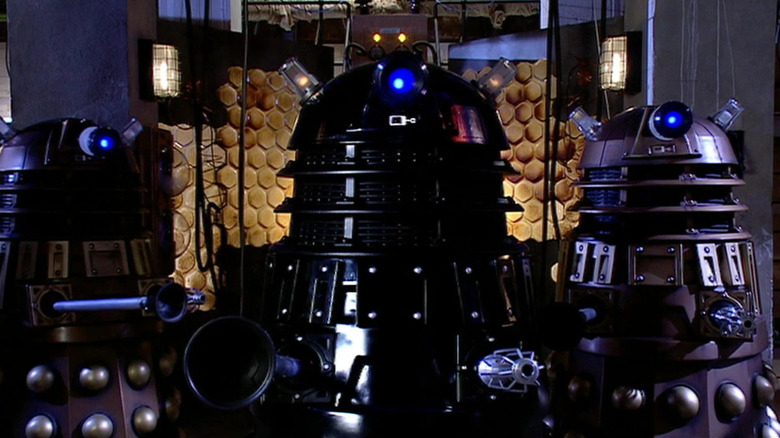
Even if you've never seen an episode of "Doctor Who," you'll probably be familiar with the Time Lord's archnemeses, the Daleks. From their humble beginnings in the early '60s, the incredibly cranky hostile aliens have become some of the most iconic baddies in all of sci-fi. Sure, it's easy to poke fun at their creaky early appearances, bumping around the cardboard sets and ubiquitous quarries that served as alien planets in many of the classic episodes.
They were hellbent on galactic conquest but scuppered by a flight of stairs, as the most common old joke goes. Later incarnations rectified that problem, fitting them with jet boosters so they could fly around, plus improving their arsenal beyond the classic laser/toilet plunger combo. Yet the basic design remained the same and the fact is they are deeply unsettling, with their turret-like head, telescopic eye-scanner thing, and their chilling desire to exterminate anything that isn't a Dalek.
The very first Doctor, William Hartnell, encountered the Daleks in a seven-part 1963 serial known simply as "The Daleks," which gave the creatures their first backstory. They have been regular adversaries for every Doctor since apart from the Eighth, Paul McGann, although other media took care of that for him. As the series developed in the '70s, the show writer Terry Nation indulged in a bit of revisionism and created a second origin story for his most famous creations in the revered 1975 serial "Genesis of the Daleks." As if things weren't confusing enough, trying to keep track of the chronology of a time-traveling Time Lord and his time-traveling archenemies.
The BBC retconned that in 2021 with their official timeline of the Daleks, changing it so the First Doctor's first encounter with them actually happened a century later in the Dalek's timeline. Now the Doctor apparently bumped into a separate faction that stayed behind on their home planet, Skaro, while the others went off through time and space looking for new worlds to conquer. Are we all clear so far?
Me neither, but hang in there. I've only ever been the most casual "Doctor Who" viewer, maybe catching one or two episodes of each regeneration since the show was revamped in 2005. I loved it as a kid, but then I was only really in it for the aliens and paid little attention to all the lore stuff. Let's make no mistake about it, there is an incredible amount of "Doctor Who" lore, from 298 stories over 869 episodes spread across the past six decades. That's before you get into the additional material from books, audio, and other media. Even dedicated Whovians acknowledge that the chronology of events can be a little tricky at the best of times, so what hope would I have? Well, here's what I found out...
So What Is A Dalek, And Where Do They Come From?
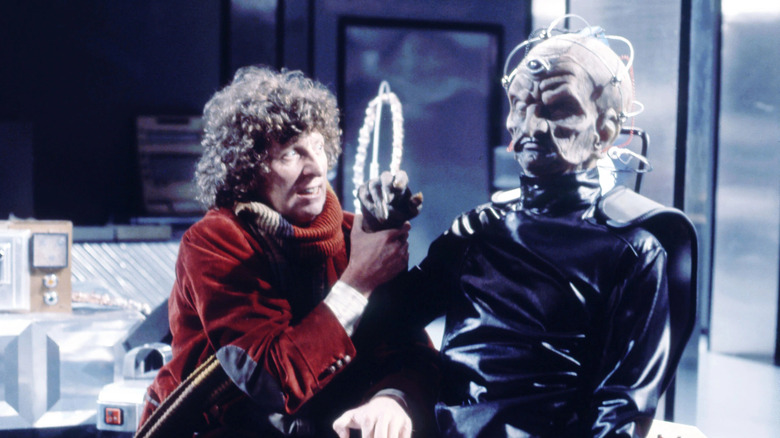
The Daleks are hideously mutated blobs shuttling about inside their own personal mini-tanks created by Davros, a mad scientist type from the planet Skaro. Davros was badly injured during a Thousand Year War between his race, the Kaleds, and their mortal enemies, the Thaleds. He was first introduced in that landmark episode "Genesis of the Daleks," where the Fourth Doctor (Tom Baker) is sent back in time to prevent the creation of the Daleks and stop them becoming the dominant species in the universe.
If you've ever wondered why the Daleks were so fond of exterminating everything, all the clues are here. Terry Nation grew up during World War II (via Warped Factor) and was inspired by the Nazis when it came to inventing the Daleks. He really leans into the comparison in "Genesis;" the Kaleds are really into sinister black military attire, Iron Cross accoutrements, throwing around Heil Hitler-style salutes, and have an obsession with racial purity.
Davros, blind and confined to a fancy wheelchair which carried his life support systems, sold out his own people to speed along his development of genetically enhanced mutants, end the war, and ensure the survival of his race. For an escapist show like "Doctor Who" this story is pretty bleak, envisioning a planet ravaged by nuclear warfare, melding the spectre of Nazism with stark Cold War terror. The Doctor can't bring himself to commit genocide and end the full production of the Daleks before it begins, although an accident does it for him, setting their development back many years. The Daleks eventually turn on their creator, exterminating Davros because he isn't pure enough for them.
The Doctor's involvement with Davros began long before the scientist dreamed up his infamous creations, however. In the two-parter "The Magician's Apprentice/The Witch's Familiar," the Twelfth Doctor (Peter Capaldi) encounters a frightened young boy on a battlefield much earlier in the Thousand Year War, surrounded by deadly "Hand mines." The Doctor initially leaves him to die when he realizes the kid will grow up to become the creator of the Daleks, but returns later to save him and seed the notion of mercy in the boy's mind. This has serious life-saving repercussions for the Doctor's companion, Clara (Jenna Coleman), in many centuries' time when the story concludes.
Out Into The Universe ... And To Earth
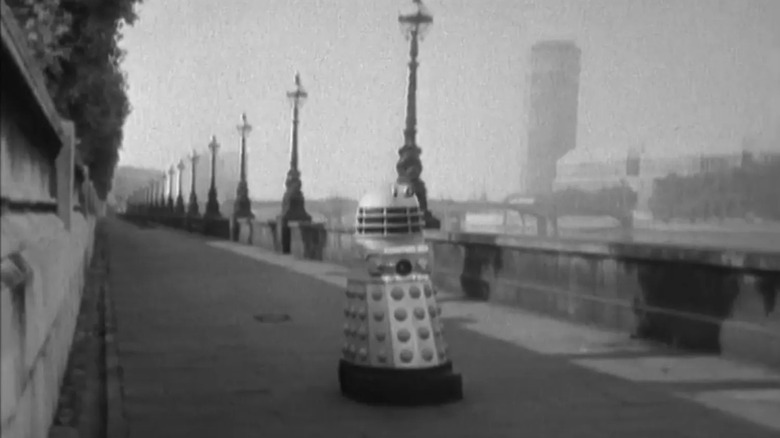
Some time after the setback at the end of "Genesis of the Daleks," the evil aliens develop space travel and time travel, setting out into the universe looking for new planets to terrorize and conquer. This gimmick allowed the series' writers to put them in all sorts of fun historical settings, from Ancient Egypt ("The Daleks' Master Plan") and the Mary Celeste ("The Chase"), to supposedly helping out Winston Churchill and the Allies fight off the Luftwaffe during World War II ("Victory of the Daleks"). The latter story gave the "Ironsides" a sweet British army green paint job and gave us Spitfires in space.
Out of all the billions of worlds in the universe, the Daleks have a particular fixation with Earth, resulting in dozens of invasion plans over the decades. An early attempt came in a more recent episode, "Resolution," where a Reconnaissance Scout landed on our planet in the 9th century, only to be thwarted by warring factions banding together to defeat it and dispatch its dismembered parts to the far-flung reaches of the globe. You can't keep an evil Dalek down, however, and an archaeologist in the 21st century unwittingly unearthed one of the pieces, which revived its missing parts and caused more havoc. Luckily, the Thirteenth Doctor (Jodie Whittaker) was on hand to cast it into a supernova before it could summon the Dalek fleet.
Returning to the early days of the show — that is, the period from the First Doctor's initial encounter with the Daleks and the Fourth Doctor's failure to annihilate them in "Genesis of the Daleks" — showdowns with the irate cyborgs skipped between adventures in the then-present day and the far future. Shortly before the seminal episode "The Daleks," they attempted to conquer Earth in the 21st Century ("Dalek Invasion of Earth"), with several Daleks trundling around London.
Without having to worry about a canonical timeline, the show's original writers gave us several dastardly Dalek masterplans, from trying to eliminate the Doctor while hiring The Master to start a space war ("Frontier in Space"), altering history to make their earlier invasion plan succeed ("The Day of the Daleks"), attempting to implant mankind with the "Dalek Factor" to make us more like them ("The Power of the Daleks"), and holding the galaxy to ransom with a lethal plague ("Death to the Daleks").
Even the Seventh Doctor (Sylvester McCoy) had an adventure set during this time period, returning to 1963 to retrieve the Hand of Omega, a powerful Time Lord weapon that the First Doctor left behind ("Remembrance of the Daleks") before tricking Davros into firing it and destroying Skaro. But wasn't Davros exterminated by the Daleks in "Genesis of the Daleks?" Yeah, about that...
Davros Makes A Comeback...
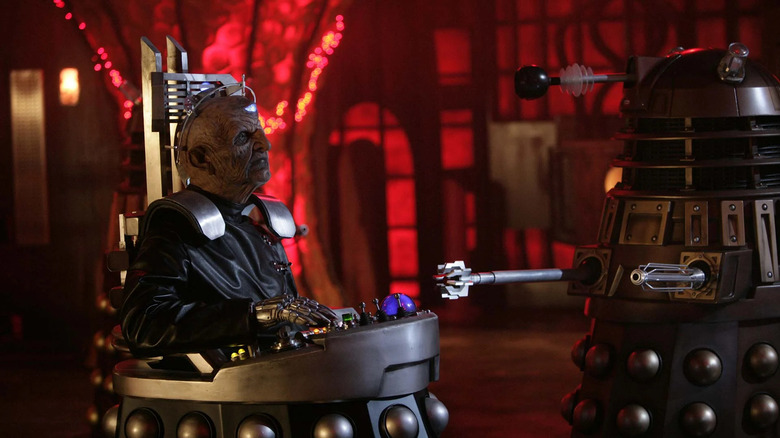
For all their lethal machinations, the Daleks eventually turned to their old creator Davros for help in the 46th century when they got embroiled in a war with another alien race, the Movellans. It turned out that he wasn't exterminated after all, just held in suspended animation and covered in cobwebs ("Destiny of the Daleks"). Luckily, the Fourth Doctor was able to apprehend Davros and put him in cryogenic freezing to await trial for his heinous crimes.
Now realizing that the Time Lords had been meddling with their timeline, the Daleks teamed up with Davros once again in "Resurrection of the Daleks," breaking him out of a prison ship in the far future to hatch another scheme, this time to clone the Fifth Doctor (Peter Davison) and his companions in an attempt to assassinate the Time Lord high council on Gallifrey, the Doctor's home planet.
Thwarted once again, Davros repaired to the planet Necros with a rather ghoulish plot to create another strain of Daleks using corpses ("Revelation of the Daleks"). Chronologically, this was the last Classic episode featuring the Daleks, with the Sixth Doctor (Colin Baker) in his colorful clown coat taking care of business this time.
Davros made his "Doctor Who" revival return in the two-parter "The Stolen Earth/Journey's End," where Earth was once again under threat from a massive Dalek invasion. The ambitious storyline not only crossed over with characters from two spin-offs, "Torchwood" and "The Sarah Jane Adventures," it also caught fans on the hop with the Tenth Doctor's (David Tennant) premature regeneration. You can get pills for that, mate!
Further Davros adventures followed, including the aforementioned "The Magician's Apprentice/The Witch's Familiar," which served as a prequel to the whole Davros saga. It was a heartfelt renewal of hostilities between Davros and the Twelfth Doctor, with the cunning mastermind preying on the Time Lord's innate compassion to spring another trap on Skaro.
The Time War
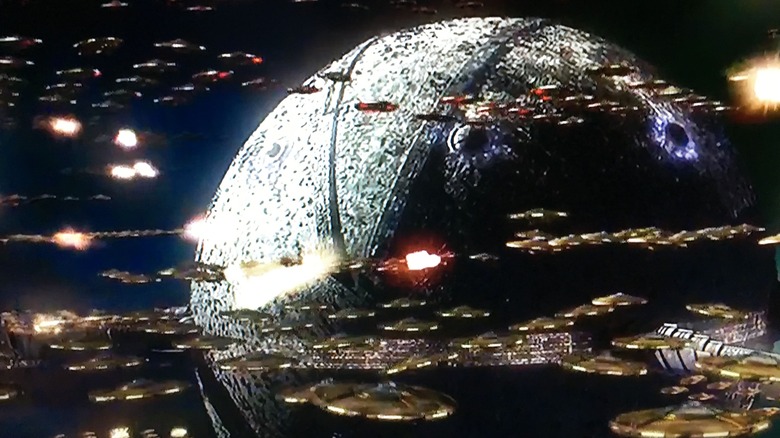
The earlier attempt by the Seventh Doctor to destroy Skaro led to the Time War, which came to a spectacular head in "The Day of the Doctor." This epic conflicted between the Time Lords and the Daleks lasted for around 400 years, although was spread over many millennia as they battled across space and time (via Tardis Fandom). There were allusions to the Time War in Classic storylines, but it only became a major plot point for the series from the 2005 revival onwards. "The Day of the Doctor" was a huge event to celebrate the show's 50th anniversary, claiming a Guinness World Record for the largest ever simultaneous screening of a TV show, broadcast to 94 countries worldwide and showing in select cinemas (via The Guardian).
Even I tuned in for that one, although I found the lore a bit bewildering. The BBC certainly pulled out all the stops for the episode, with a marauding Dalek fleet and a massive battle on Gallifrey. The action was a far cry from the endearingly rickety effects of the First Doctor's original adventures, which were the focus of "An Adventure in Time and Space," screened a few days earlier as part of the half-century celebrations.
The story was a major event in both the Time Lords and the Daleks' timelines. It introduced the "War Doctor" (John Hurt), who decided to end the Time War by using an ancient super weapon called the Moment to wipe out both sides. Meeting up with the Tenth and Eleventh Doctors (Matt Smith) to carry out the terrible but necessary deed, the latter's companion, Clara, convinced them there must be a better way. Summoning the help of their previous incarnations, they managed to tuck Gallifrey away in a pocket universe at the last moment, causing the Dalek fleet to destroy itself in the cataclysmic crossfire.
After The Time War And Beyond...
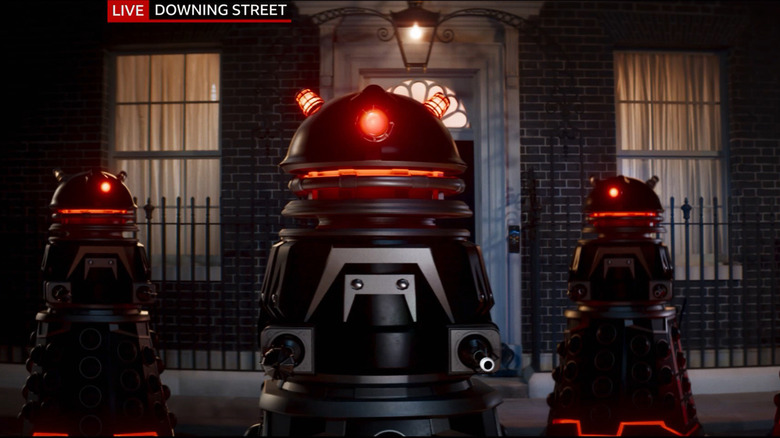
A lone Dalek survivor was discovered on Earth by a raging Ninth Doctor (Christopher Eccleston) in "Dalek," but blew itself up when it couldn't cope with emotions resulting from its DNA being tainted by that of the Doctor's companion, Rose (Billie Piper). Some of the most notable Dalek survivors of the Time War were the Cult of Skaro, who returned to Earth in "Doomsday" with an Ark full of imprisoned Daleks, but got caught up in street warfare with those other classic "Doctor Who" villains, the Cybermen.
The Cult of Skaro were up to the old time-traveling tricks again in the two-parter "Daleks in Manhattan/Evolution of the Daleks," where the Tenth Doctor headed to 1930s New York to rumble their ghastly attempts to create a squid-headed human-Dalek hybrid.
Although the Fourth Doctor (Tom Baker) said in "Genesis of the Daleks" that his enemy had been around for 25,000 years, adventures far beyond that scope appeared in the new "Doctor Who" episodes. In "Bad Wolf/Parting of the Ways," the Ninth Doctor encountered his old foe in the distant future, set in the year 200,100.
In the present day timeline, the Thirteenth Doctor (Whittaker) had a further encounter with the Daleks in "Revolution of the Daleks," when an unscrupulous tycoon used parts of the recon scout from "Resolution" to build his own fleet of defense drones. This allowed the resurrected Dalek to build its own army, only to be wiped out by a Dalek death squad for being impure.
Jodie Whittaker is nearing the end of her tenure as the Time Lord, resulting in fevered rumors about who will take her place as the Fourteenth Doctor. There are some fascinating names in the hat for the next go at the TARDIS controls including Danny Dyer, Phoebe Waller-Bridge, Hugh Grant, and Richard Ayoade. Either one of those might be enough to turn me into a Whovian, but boringly the bookies favor David Tennant having another stint in the role. Whoever eventually gets the part, you can be sure that they will face off against sometime in the future ... or past, as the case may be.
Read this next: The 10 Best Sci-Fi Movie Villains
The post Doctor Who: The Daleks' Timeline Explained appeared first on /Film.
Nasty Linux Netfilter Firewall Security Hole Found
Read more of this story at Slashdot.
Star Trek: Strange New Worlds: Get Your First Look At Paul Wesley As James T. Kirk
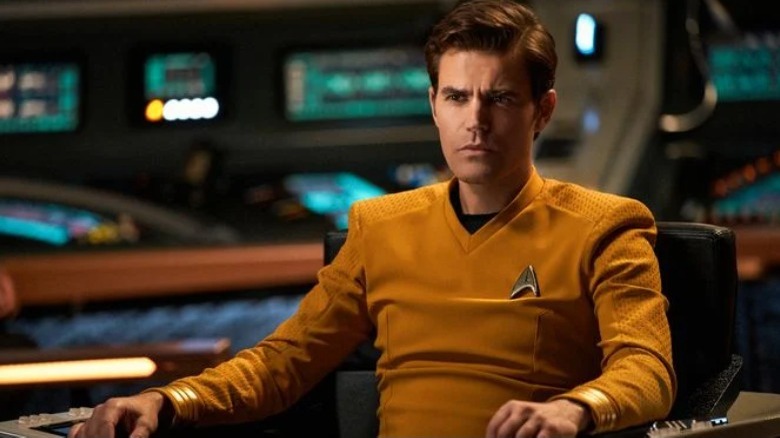
Well, "Star Trek" fans, it's time to brace ourselves for that excited-nervous feeling of meeting a new Captain Kirk yet again. Paramount has officially announced (via Collider) that "The Vampire Diaries" star Paul Wesley will be on board the U.S.S. Enterprise, taking over the role made famous by William Shatner in the new series "Star Trek: Strange New Worlds."
If that's not enough, Paramount also released an official first look photo of Wesley as Kirk, and I've got to say, it cuts an impressive figure. The character, who is reportedly not set to arrive until season 2 of the streaming series, sits in a chair aboard a spacecraft donning the iconic yellow-shirted uniform we know so well. Wesley wears an inquisitive expression that's neither as serious (or playful) as Chris Pine's Kirk could be, nor as campy as Shatner's, making it difficult to tell where his take on Kirk will land. Honestly, that makes this all the more intriguing.
Two Enterprise Captains
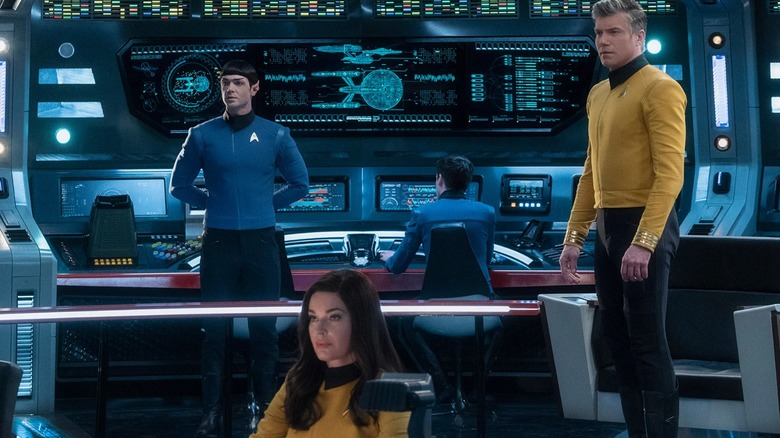
It's worth noting that "Star Trek: Strange New Worlds" isn't actually billed as a show about Kirk, at least not at the start; rather, the series begins with Captain Christopher Pike (Anson Mount) at the helm of the Enterprise. Here's the synopsis for the series, which is set to debut its first season on Paramount+ on May 5, 2022:
"Star Trek: Strange New Worlds" is based on the years Captain Christopher Pike manned the helm of the U.S.S. Enterprise. The series will feature fan favorites from season two of "Star Trek: Discovery": Anson Mount as Captain Christopher Pike, Rebecca Romijn as Number One and Ethan Peck as Science Officer Spock. The series will follow Captain Pike, Science Officer Spock and Number One in the years before Captain Kirk boarded the U.S.S. Enterprise, as they explore new worlds around the galaxy.
It's inevitable that the show will eventually bump up against the timeline of "Star Trek: The Original Series," as the crew that was first introduced in an episode of "Star Trek: Discovery" already included Kirk's other half, Officer Spock (Peck). It's interesting that Paramount chose to share what could have been a season finale reveal ahead of the show's season 1 air date, but the company seems to know what they're doing. Paramount clearly has major plans for the franchise, as they renewed several "Trek" shows in January and even plan to move forward with a fourth film following the timeline established by J.J. Abrams' 2009 reboot.
"Star Trek: Strange New Worlds" will premiere its 10-episode first season on May 5, 2022, on Paramount+.
Read this next: The 14 Best Sci-Fi Shows On Amazon Prime
The post Star Trek: Strange New Worlds: Get your first look at Paul Wesley as James T. Kirk appeared first on /Film.
Fourth Shot 'is Necessary', Pfizer CEO Says
Read more of this story at Slashdot.
Ready Or Not Had A Dark Alternate Ending That Didn't Make The Movie
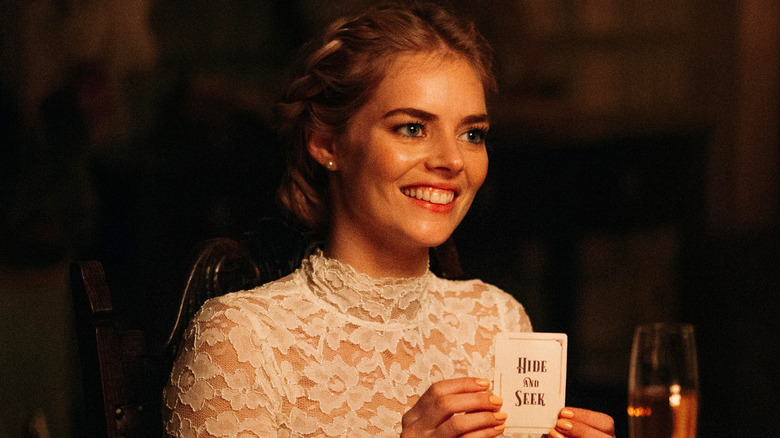
The year 2019 saw the release of three notable film entries in the "Eat the Rich" era of media. There was Rian Johnson's "Knives Out," a quirky murder-mystery that gave its working-class hero a happy ending while serving her late employer's entitled family their just desserts. Then there was Bong Joon-ho's "Parasite," a satirical thriller that forewent a feel-good conclusion in favor of making a damning statement about the harsh reality of global capitalism. Lastly, in-between those two ends of the spectrum, there was "Scream" (2022) duo Matt Bettinelli-Olpin and Tyler Gillett's "Ready or Not," a horror-comedy where things didn't work out hunky-dory for its lead. Still, at least she walked away in one piece, which is more than you can say for her evil, rich in-laws.
Quick recap: "Ready or Not" centers on Grace (Samara Weaving), a young bride who is hunted on the night of her wedding by her partner Alex's (Mark O'Brien) family, the Le Domases, after drawing a game card reading "Hide-and-Seek" from a puzzle box. The box, as it turns out, belonged to one Le Bail, the mysterious, sinister man whom the Le Domases' ancestor made a deal with to attain their fortune. As the legend tells, the living members of the Le Domas family have until sunrise to catch and kill Grace, or else Le Bail will make them pay with their own lives. Indeed, they wind up doing just that in the film's gleefully bloody climax ... but that wasn't always going to be the case.
How The Final Ending Came Together
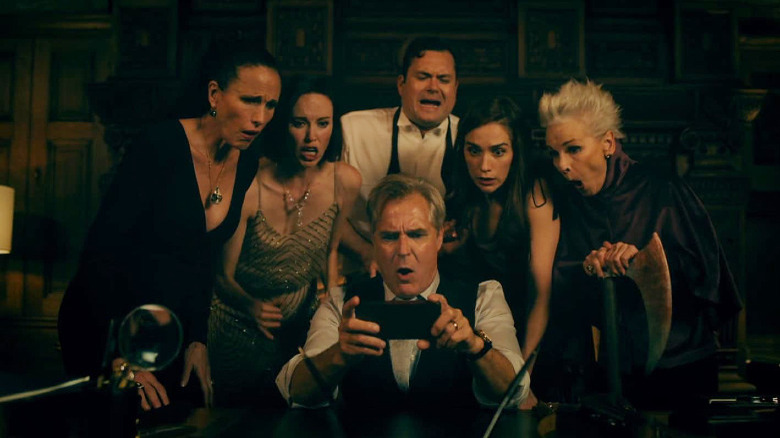
In an interview with Cinema Blend in October 2019, Bettinelli-Olpin revealed that an early iteration of the "Read or Not" script by Guy Busick and Ryan Murphy (not that one) saw the Le Domas clan succeed in killing Grace and sustaining their literal blood curse. Yet, as the movie continued to develop, Bettinelli-Olpin said that he, Gillett, and their writers came to realize "it was something that we kind of knew we had to change cause I don't think it was the version that we wanted to tell." He added:
"But once we all kind of collectively agreed like, 'Let's try to have our cake and eat it too and play out the version where Grace survives, it's not real, these f**king clowns completely f**ked up, and then we kill them.'"
Based on his comments, it seems Bettinelli-Olpin and his team were relatively quick to think up the idea of having the Le Domases fail to murder Grace before sunrise, only for nothing to happen right away. The real challenge, by the sound of it, was coming up with the best way of showing the curse was, in fact, real after that without dragging the film's runtime out. "Us and the writers went through probably 20 drafts that we shared, maybe a dozen with the producers, and they, rightfully so, shot down most of them, because they were way too long," Bettinelli-Olpin explained.
As such, the "Ready or Not" creative team cycled through ways to satisfyingly kill off Grace's in-laws after all the horrible things they did to her (and those before her) in the name of retaining their wealth and power. Bettinelli-Olpin said there was one version akin to the "Final Destination" films, with each member of the Le Domas family meeting their demise via, one assumes, a grisly "accident" caused by some unseen spectral force (much like Death slays its victims in those movies). Right away, though, he said he and the others realized the script draft where the Le Domases spontaneously combust one-by-one was the option they had to go with:
"It was one of these things, I'll never forget reading it the first time. Reading it on the page, it was like a half a page. It was so fast and absurd that I remember jumping on the phone with Tyler and [producer] Chad [Villella], and we had that kind of moment of like, 'Oh my God, this is so bats**t that it's probably the best idea we've ever heard.' It was one of those ones where you know you're taking a gigantic risk, so you embrace it and you go for it. And then once we all got on board, it was a big discussion about how are we going to actually do that in an effective way. But the fun of it was let's let you have both endings in a way that feels satisfying. Because you just kind of want to see them explode!"
A Laughing Matter
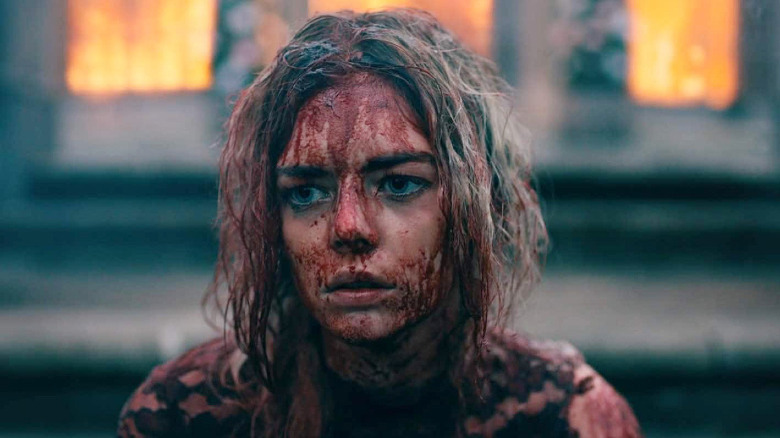
There was one last ingredient the "Ready or Not" filmmakers later added to the movie's ending during production: Having Grace laugh as those around her start exploding into bursts of blood. It was actually Weaving's idea to have her character react that way after playing things more dramatically for a couple of takes. As Bettinelli-Olpin recalled:
"That was Samara on the day. That was not in the script. That was not from us. Samara had done one or two takes. We had only had a few takes on everything cause it was such a quick shoot, and after two takes she was like, 'Can I just try one where I laugh? I just feel like I would find this funny.' And so we said, 'Yes please. That sounds wonderful, let's try it.' And I even remember when we were shooting it thinking like, 'Man, this is so bold. I hope this works!'"
With the benefit of hindsight, it's no surprise that this element works as well as it does in the movie's final cut. As much as "Ready or Not" itself balances gruesome thrills with dark humor, Grace is too busy trying to stay alive to see the Le Domas' actions as anything but terrible and horrifying up until the film's climax. After all she's put through, it's a relief for both her and the audience when her would-be killers are forced to pay the ultimate price for their unquestionably horrible behavior, least of all right after they (briefly) think they're going to get off scot-free.
The biggest drawback to this approach is that "Ready or Not" forgoes putting a finer point on its social commentary in favor of a more cathartic payoff closer to the final scene in "Knives Out." But then again, not every "Eat the Rich" film needs to be "Parasite" and deal in hard truths. Sometimes, watching a pack of rotten, no-good "one-percenters" get what's coming to them is enough on its own.
Read this next: The 31 Scariest Movie Scenes Ever
The post Ready Or Not Had a Dark Alternate Ending That Didn't Make the Movie appeared first on /Film.
German government: if you use Kaspersky, you're an dummkopf [Obvious]

Thousands of Secret Keys Found in Leaked Samsung Source Code
An analysis of the recently leaked Samsung source code revealed that thousands of secret keys have been exposed, including many that could be highly useful to malicious actors.
Not Everyone Wants NFTs to Be the Future of Gaming
Over 200 Organizations Take Part in CISA's Cyber Storm Exercise
The Cybersecurity and Infrastructure Security Agency (CISA) last week hosted Cyber Storm VIII, a three-day national cyber exercise whose goal was to test preparedness to a cyber-crisis impacting critical infrastructure.
9 Foods You Don't Need to (or Shouldn't) Refrigerate

With the exception of salt and canning, nothing has changed the food preservation game quite like the refrigerator. Lowering a food’s temperature can prolong freshness and stave off bacterial growth—but in some cases, it can also change its texture and flavor for the worse.
Shadow Warrior 3 and Ready or Not Receive NVIDIA Reflex Upgrades

NVIDIA has added upgrades to Shadow Warrior 3 and Ready or Not. GeForce players of the aforementioned games will now be able to see a decrease in latency and gain a competitive edge. NVIDIA has also mentioned that the Reflex ecosystem has several G-SYNC displays and gaming mice.
For those not in the know, NVIDIA Reflex is a suite of technologies that optimize and measure system latency in competitive games. The aim of the suite is to reduce system latency so actions occur quicker, making players more competitive in multiplayer matches, and making single-player titles more responsive. Reflex is widely used in a lot of eSports titles because of this.

So, let's start with the upgrades for Shadow Warrior 3. Earlier this month the game received a performance increase of up to 68% by adding NVIDIA DLSS support. Now, thanks to the latest NVIDIA Reflex upgrades, Shadow Warrior 3 players can experience a system latency reduction of up to 56% in the game. As such, GeForce (and especially RTX users) can now experience Shadow Warrior 3 with the one-click latency reduction of Reflex and frame rates accelerated using DLSS.
NVIDIA Reflex is also coming to the cooperative shooter Ready or Not. Players can now experience a massive reduction in lag. In a game where milliseconds make a difference, it is important to have the least amount of latency possible. The NVIDIA Reflex improvements made to Ready or Not guarantee an up to 42% increase in performance in the form of lower latency. All of this is available at just the click of a button.

The ecosystem for NVIDIA Reflex continues to expand, of course. New Reflex displays include the AOC AG254FG and the Viewsonic XG271QG. In addition, the latest NVIDIA Reflex-compatible mice are the Alienware Wired Gaming Mouse AW320M and ROCCAT Kone XP Gaming Mouse. We'll continue to update as more games, displays, and mice get added to the Reflex ecosystem.
The post Shadow Warrior 3 and Ready or Not Receive NVIDIA Reflex Upgrades by Ule Lopez appeared first on Wccftech.

Easter Eggs You Missed In I Am Legend
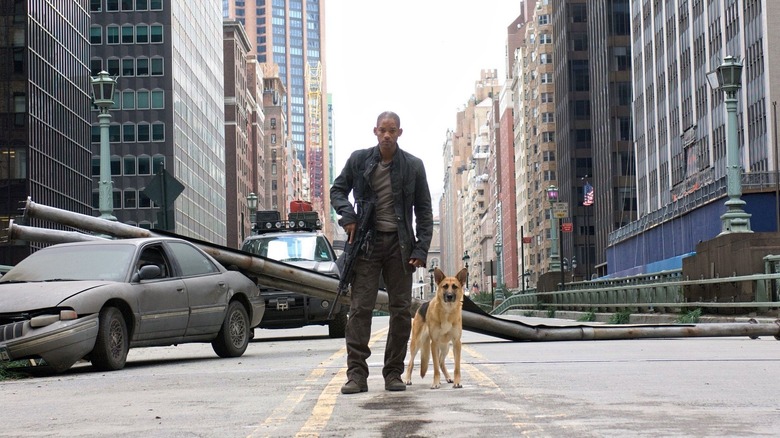
There's a lot going on in "I Am Legend." Francis Lawrence's 2007 blend of action and horror is loosely based on Richard Matheson's 1954 novel of the same title, and while the story still follows the last man alive in New York, Neville (played by Will Smith), amid a global outbreak that turns humans into vampiric monsters, the film deviates heavily from Matheson's book. With over 50 years between the novel and Warner Bros.' adaptation, there are bound to be some updates and hidden treats found on the big screen. And with a sequel announced, we've been revisiting the original and tracking down all of these tiny details.
Some elements are explicitly meant to be picked up by the viewer; butterflies are a repeating motif and a divine symbol throughout the 101-minute runtime. But some gems aren't picked up until a second, third, or fourth viewing of the movie. To save everyone the trouble of watching that scene with the dog again, here are some of those Easter eggs that might have gone unnoticed.
Writing's On The Wall
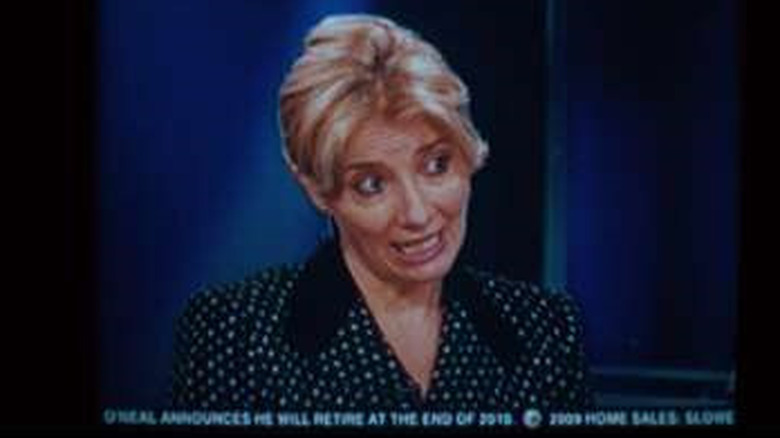
Post-apocalyptic movies are goldmines for predictions. In the nooks and crannies of civilization's ruins, a hawkeyed viewer can unravel more of the story. This is different from straight-up exposition like John Krasinski's incredible 2018 creature feature "A Quiet Place." Krasinski's movie delivered information about those creatures to its audience via a now-infamous scribbled whiteboard in the opening moments of the film, but "I Am Legend" dispenses tips more gingerly.
Early in the movie, a news report is shown featuring Dr. Alice Krippin (played by an uncredited Emma Thompson) discussing a recent scientific breakthrough: a measles virus genetically-altered to treat cancer. But a glance downward at the ticker tape scrolling across the screen references some future events, including the news that NBA legend Shaquille O'Neal would be retiring from the sport "at the end of 2010." Turns out, Shaq really did retire after 19 years of pro basketball in the 2010-2011 season, just one season later than predicted.
A Dog Day Afternoon
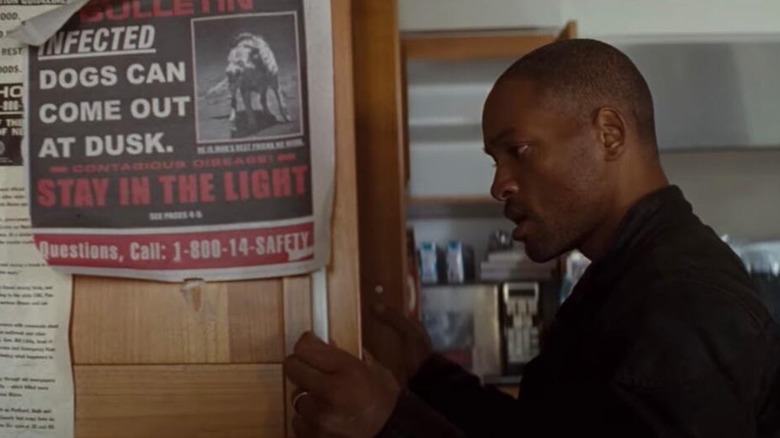
The movie is not without its silent whiteboard information. During Neville's foraging excursions throughout the abandoned city, a newspaper bulletin on a cabinet alerts readers that infected dogs aren't as intensely averse to the daylight as the dawning race of humanoid Darkseekers. "Infected dogs can come out at dusk," the notice reads, along with a photo of the feral dogs and a call to stay in the light. It's a nifty bit of foreshadowing that precedes an infected dog attack (unleashed by the infected humans) on Neville and his dog Sam later in the film. It's an emotionally devastating moment; the duo survive the attack, but Sam is bitten in the mayhem, and her human companion knows that the countdown to her transformation has already begun.
An Inside Joke
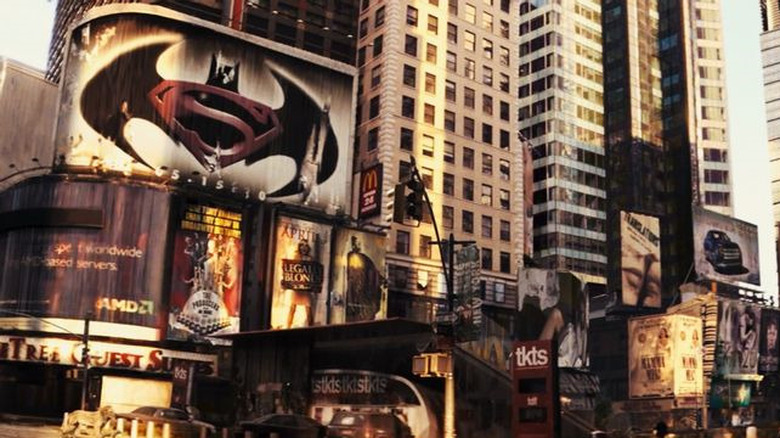
German filmmaker Wolfgang Petersen, known for works like "Das Boot" and "The Perfect Storm," was set to begin production on "Batman vs. Superman" in 2003, with a script co-written by Akiva Goldsman and Andrew Kevin Walker. The project underwent delays and eventually the studio nixed it altogether after failed talks about continuing franchises for each of the fictional superheroes. While Warner Bros. would release "Batman vs. Superman: Dawn of Justice" in 2016, it had a different creative team, without Goldsman and Walker. Goldman, who co-wrote "I Am Legend," still got to sneak in a reference to the lost project, which is why, as Neville scavenges Times Square, a billboard for "Batman vs. Superman" is seen in the background.
"Just My Imagination (Running Away With Me)"
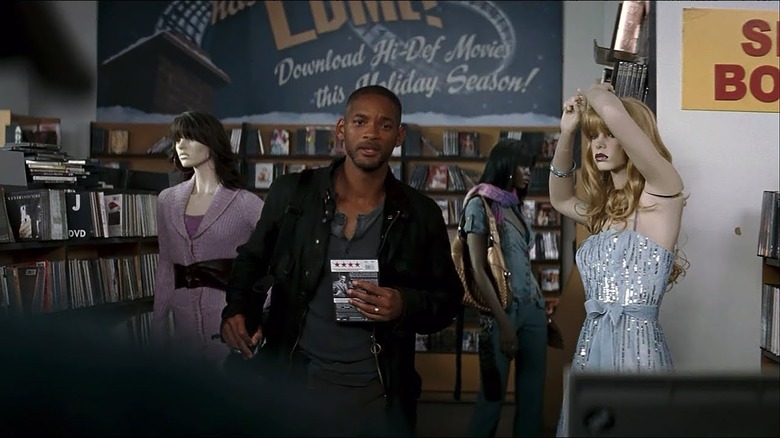
There's nothing like an effective head turn from an inanimate object to rattle the spirit. The horror and thriller genres understand this intimately; when a direct look towards the camera comes from a human in these sorts of films, it conjures up the same immediate audience recoil that happens when Lars Thorwald looks at the camera in Hitchcock's "Rear Window," because it feels like we're being caught. It is twice as jarring when the turn comes from something that isn't supposed to move at all. In 2015, "Hell House, LLC" thoroughly freaked its protagonists and its audiences out by observing, through found footage, a clown dummy moving its head and appearing to break the fourth wall. "I Am Legend" puts its lonely star Neville through the wringer, wracking him with guilt and eventually doing a number on his psyche, as extreme, sustained isolation can do.
While driving through Manhattan, Neville shows familiarity with several mannequins scattered locally, even naming a few. One orange-hooded mannequin, "Fred," is moved mysteriously from the store where he normally sits -- it's unclear at this point whether Neville moved it and simply forgot due to a deteriorating mental condition, or another living person (who looks like a mannequin but also like the creatures after his blood) is out in broad daylight. But he looks closer, and Fred's head appears to turn from the left to the front, looking directly towards Neville. The making-of featurette for "I Am Legend" reveals that actor Martin Soole was made up and replaced the mannequin, in order to invite the viewer into Neville's state of mind and echo his paranoia. So yes, it's not an illusion and there's no need to call the therapist -- Fred really did move.
Read this next: The 20 Best 2000s Horror Movies Ranked
The post Easter Eggs You Missed In I Am Legend appeared first on /Film.
Arm Turns to Layoffs After Nvidia Deal Falls Through - CNET

The Hidden Meaning In The Cowboy Bebop Anime's Opening Credits
There are some show themes you don't skip. The 12-string twang of The Shadowy Men's intro to "The Kids in the Hall." The hot sax and nasty bass running through "Night Court." And the freeform horns and smoky, chaotic transitions of "Cowboy Bebop." From its release in 1998 to its live-action adaptation in 2021, "Cowboy Bebop" has enjoyed a formidable legacy as one of the greatest anime series of all time, and certainly oneof the most influential. Why? When /Film spoke with the English voice cast of the animated series, Wendee Lee (who voices Faye Valentine) put it like this:
"It's really a lot of elements, but I think what was going on is that the creators were making the story they wanted to create, honoring their influences that happen to be the rock and roll roots of the US, jazz, Motown, you name it. All the musical influences are woven into the fabric and tone of this series."
Centered around a trio of bounty hunters fighting pirates and ennui in the far reaches of space, "Cowboy Bebop" was the creation of director Shinichirō Watanabe, with help from screenwriter Keiko Nobumoto and the formidable production and animation team at Sunrise. In the series, former assassin Spike Spiegel, former cop Jet Black, and con woman Faye Valentine pursue their bounties across deep space in their ship Bebop, all to the chaotic, melodic tunes of prolific composer Yoko Kanno (who also scored anime series like "Darker Than Black" and "Kids on the Slope") and her jazz band Seatbelts.
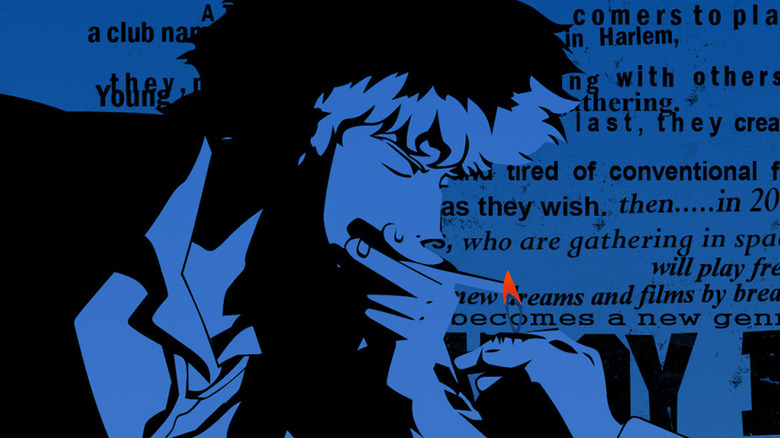
The theme music in the original "Cowboy Bebop" series is as beloved as the characters. It still finds fresh interpretations, such as last year's remix courtesy of Steve Aoki. From its opening brass explosion to its hip bass line, the show's theme, "Tank!," is matched by expressive, freewheeling visuals that reflect the band's energy. Vibrant splashes of yellow, green, and blue backlight the silhouette of each bounty hunter, all of whom are shown vaulting amid and between the credits. Each title card whizzes past, sometimes breaking up the composition into framed sections, all to the toe-tapping rhythm of the music. But what's hidden in those credits?
3,2,1, Let's Jam
Taking its visual cues from the dynamic credit sequences of Saul Bass, Sejun Suzuki's in-your-face 1966 gangster picture "Tokyo Drifter," and the pop art movement, the art direction of the "Cowboy Bebop" opener features noir beats, action shots, billowing cigarette smoke, and guns blazing. And hidden within this landscape are blocks of typeset text bearing Watanabe's not-so-secret manifesto for the series itself:
"Once upon a time, in New York City in 1941... at this club open to all comers to play, night after night, at a club named "Minston's Play House" in Harlem, they play jazz sessions competing with each other. Young jazz men with a new sense are gathering. At last they created a new genre itself. They are sick and tired of the conventional fixed style jazz. They're eager to play jazz more freely as they wish then... in 2071 in the universe... The bounty hunters, who are gathering in the spaceship "BEBOP", will play freely without fear of risky things. They must create new dreams and films by breaking traditional styles. The work, which becomes a new genre itself, will be called... COWBOY BEBOP"
Eagle-eyed "Bebop" watchers will also find excerpts of the text in the commercial bumpers for the show. It's a bold move to call one's shot like that in the opening credits of the series, but what are opening lines and images if not a mission statement for what you're about to watch?
"A New Genre Itself..."
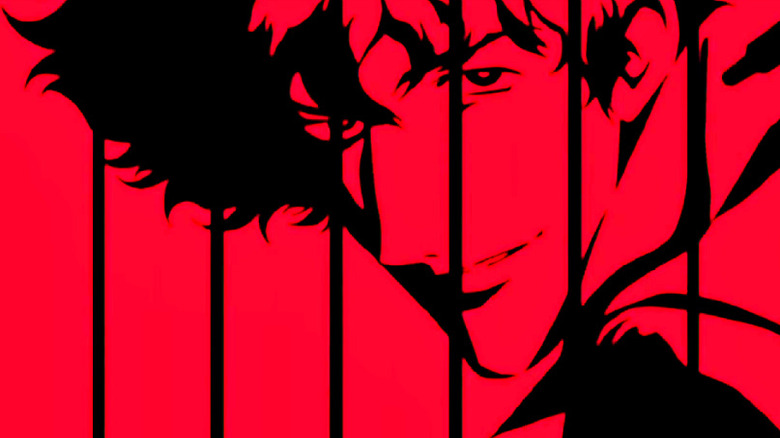
With regards to the music, its use in "Bebop" is a bit like jazz itself. In a panel interview for Otakon 2013, Watanabe admitted that Kanno's process doesn't include much direction, as she adapts the Spike spirit and goes her own way to hit her target. But the two have a creative rapport, and the storyteller is inspired to craft scenes based on Kanno's music:
"First, let me [go] on the record as saying she does not compose music exactly the way I tell her to. *room laughter* She gets inspired on her own, follows up on her own imagery, comes to me saying "this is the song we need for Cowboy Bebop," and composes something completely on her own. There were instances where I heard these songs she created for Cowboy Bebop, took inspiration from them and created new scenes for Cowboy Bebop. And then she would be inspired by these new scenes I'd created, they would give her new ideas for music and she'd come to me with even more music. For example, some songs in the second half of the series, we didn't even ask her for those songs, she just made them and brought them to us. Normally this is unforgivable and unacceptable, but with Cowboy Bebop it was a big hit. So hakuna matata!"
No worries, indeed: the music of "Cowboy Bebop" has equaled the anime in terms of popularity. The theme was so perfect that Kanno was recruited to compose music for the live-action Netflix series, and the band has released seven original soundtrack albums since the anime's run first ended in 2000. With the help of Yoko Kanno and Seatbelts, "Cowboy Bebop" recalibrated the Japanese idea of anime and where it could go, almost becoming "a new genre itself" -- the space-opera Western. And that's why you never hit "Skip Intro."
Read this next: The 15 Best Star Wars Side Characters
The post The Hidden Meaning in the Cowboy Bebop Anime's Opening Credits appeared first on /Film.
Shadow Warrior 3 and Ready or Not NVIDIA Reflex Update
CIA used detainee as a living prop for torture training, gave him brain damage

The CIA illegally kept a man as a torture training prop at one of its secret prisons in Afghanistan in 2003. Trainee torturers "lined up to take turns at knocking his head against a plywood wall, leaving him with brain damage," reports The Guardian. — Read the rest
What Generation Z can teach us about cybersecurity
Girl Security National Security Fellows Program fellow Amulya, a 17-year-old interested in countering online disinformation, said she feels her sense of personal privacy has been largely nonexistent “growing up in a media-saturated world.” She believes her sense of privacy was stolen by a combination of mass media, access to tech without education, and an increasing divide among generations, government, and industry around responsible technology. With an online presence from a young age, members of Generation Z, like Amulya, bring personal insight to the cybersecurity conversation about online privacy.
Girl Security, the organization I founded in 2016, builds more equitable pathways through learning, training, and mentorship for girls, women, and female-identifying and non-binary young people interested in national security careers. Ann Johnson, Corporate Vice President of Security, Compliance, and Identity Business Development at Microsoft Security, and I recently spoke about the unique challenges, like privacy, that youth confront as digital natives—defined as “a person born or brought up during the age of digital technology.”
Insights from Generation Z supplement the insights we get from adults and people currently in the workforce. When Ann and I talked about Generation Z, we considered a couple of big questions:
- How do younger generations think about and experience personal privacy in a digital world shaped by the sharing of personal information and narratives?
- If young people forge a new understanding of privacy—where less privacy becomes the cultural norm—what might the implications be for society today and in the future?
Privacy expectations have changed
To get answers, I recently sat down with nine remarkable future national security leaders, ages 16 to 19, who completed the 15-week Girl Security National Security Fellows Program, to discuss the experiences of girls and women online and how those experiences shape their understanding of cybersecurity.
In discussing what the internet and technology are getting right and what can be improved, the fellows explained that technology provides an unprecedented level of access to information and resources and is an affordable method of communication. However, they emphasized the need to make technology and cybersecurity education more accessible to more communities across the United States and globally through in-school learning, financial support for educational opportunities, and training programs like Girl Security.
Preventing large-scale disruptions through responsible technology is also crucial, according to Prachi, a 17-year-old high school student interested in cybersecurity. She noted that prevention can also be personalized with the use of multifactor authentication and password protection. Advancing more robust user-friendly policies, laws, and regulations is also imperative to maintaining digital trust.
Gurman, a 19-year-old who is pursuing a career in cybersecurity, added that the first step to protecting personal privacy in a shifting digital landscape is to acknowledge “how little is in our control.”
“The invasion of privacy is so normalized that we have stopped worrying about it in a way,” Gurman said. “Social media detoxes are becoming more popular because on some level, we understand as a society that living through a digital world isn’t healthy because it detaches us from reality. Yet, in my opinion, all of these things have the underlying assumption that tech is so pervasive, it cannot be controlled so we have to rationalize and normalize it as a way to seemingly maintain some control over our reality.”
There’s a growing sense of apathy among younger generations with respect to personal security online and the proliferation of user data, according to Rachel, a 16-year-old interested in economic security. She emphasized young people’s willingness to readily share locational data and other personal data.
Amanda, a 17-year-old who is particularly interested in human rights and technology, added that while adults can benefit from tech education, young people are normalizing bad online behaviors by prioritizing convenience (like saved passwords) over privacy and security.
Security protection and consent remain a challenge
As we discussed the impact of a growing reliance on technology to share information among friends and family, attend school during the pandemic, run businesses, and more, the group considered what exactly should society seek to prevent, protect, preserve, and advance with technology.
“The government and industry should do more to prepare digital citizens for breaches or attacks that may compromise personal data and privacy,” according to Sama, an 18-year-old pursuing an interest in geopolitics and counterterrorism. She began using social media in elementary school and signed various consent forms regarding the use of her data. While aggregation of user data is not all bad—information can feed technology innovation—there need to be enhanced protections for youth on social media platforms, particularly around consent.
“Women and girls are empowered and more secure when they can claim more agency in their lives, especially in settings when they are not given choices,” explained Jasmine, a 19-year-old who is pursuing a career in international relations. “On the internet, I feel I have lost that control.”
The burden is often placed on parents to educate youth about online harms, such as cyberbullying, harassment, image sharing, and doxing (when people reveal private information about someone), according to Jasmine. However, many Generation Z parents were born before the widespread advent of the internet and email, and often lack access to training and learning tools about the types of cybersecurity threats their children may confront online.
In fact, some parents contribute to the sharing of children’s personal information online—sharenting is the sharing of a minor’s information by a parent or caregiver.1
Nicole, a 16-year-old interested in climate security and technology, said she believes user-friendly policies, laws, and regulations might lessen generational tensions around sharenting. Such measures would build greater trust and confidence in the technology many youths in the United States and other parts of the world use every day.
Making cybersecurity more accessible
Achieving greater individual online privacy and security for future generations and advancing government and industry standards requires adopting approaches like the Zero Trust model as well as installing mandatory reporting and incident notification systems, according to Sravya, a 16-year-old interested in cybersecurity and the role of language in our cybersecurity understanding. The fellows also emphasized the need to create a shared discourse across generations about the interconnectedness of personal privacy, cybersecurity, and national security.
Generation Z perspectives can inform cybersecurity policies
We hope you’ve enjoyed hearing these Generation Z perspectives from the Girl Security fellows. In addition to the Girl Security National Security Fellows Program, girls interested in security pathways can also be mentored through Girl Security’s nationwide e-mentoring program and learn from leading experts from Microsoft Security and across government, industry, and the social sectors. In addition, Girl Security hosts summer empowerment programs, learning and training webinars, and community-based programming, including the Girl Scout patch Finding Your Superpowers in Cybersecurity created in partnership with Microsoft and Girl Security.
The program was kicked off to help young students learn security fundamentals, but it turns out, we have as much to learn from them about the importance of online privacy when developing cybersecurity policies and programs. Happy Women’s History Month!
Next steps
Learn more about Girl Security initiatives and the Cybersecurity Superpowers program.
To learn more about Microsoft Security solutions, visit our website. Bookmark the Security blog to keep up with our expert coverage on security matters. Also, follow us at @MSFTSecurity for the latest news and updates on cybersecurity.
1Sharenting: 5 Questions to Ask Before You Post, Claire McCarthy, MD, FAAP, American Academy of Pediatrics. November 20, 2019.
Disclaimer: The views expressed here are solely those of the author and do not represent the views of Microsoft Corporation.
The post What Generation Z can teach us about cybersecurity appeared first on Microsoft Security Blog.