Shared posts

31 Mar 14:44

Steven Spielberg Told Michael Bay To Stop Making Transformers Movies

by Lex Briscuso

Sometimes, it's hard to know when you've had enough. If you're Michael Bay, you might have Steven Spielberg telling you as much. The "Transformers" filmmaker opened up about advice from Spielberg (who was also an executive producer on the franchise) to cut his time short with the robotic sequels — but clearly, he didn't take the recommendation.

Bay told Unilad UK in an interview published on March 25:

"I made too many of them. Steven Spielberg said, 'Just stop at three'. And I said I'd stop. The studio begged me to do a fourth, and then that made a billion too. And then I said I'm gonna stop here. And they begged me again. I should have stopped. [But] they were fun to do."

Bay directed all five of the original installments in the franchise: the original 2007 "Transformers," 2009's "Revenge of the Fallen," 2011's "Dark Side of the Moon," 2014's "Age of Extinction," and 2017's "The Last Knight." After those five movies, Bay stepped back into a producer role for the two spin-off movies, 2018's "Bumblebee" and the upcoming "Rise of the Beasts," set to be released in 2023.

While the "Transformers" franchise is known for being pretty mediocre in terms of substance, the films make up for it in grandiose CGI action sequences that, in 2007, were pretty impressive. However, the 2018 spin-off "Bumblebee" did garner some positive response, hence the addition of "Rise of the Beasts" to the franchise, which is set to be a direct sequel to "Bumblebee."

Reflecting On 'Scary' Territory With Transformers

Bay also noted in the interview that the original film was "scary" to release because of the technical elements — and the filmmaking team really didn't know how it would be received:

"The first one was scary. It was technology we didn't know would work, and then it became very successful ... It was the first time digital effects were that highly reflective, so it broke a lot of new ground. It was a fun experience. It made more than [$709 million], that's a lot of movie tickets and a lot of people that have seen it."

It wasn't just the technical aspects that made the "Transformers" films a challenge. Bay also noted that Spielberg's advice also included suggested casting changes. Original "Transformers" star Megan Fox clashed with Bay on set and in 2011, it was reported that Spielberg told Bay to fire her. However, Spielberg later denied the claims. She was replaced by Rosie Huntington-Whiteley in the third installment, "Dark Side of the Moon." He told GQ at the time:

"I wasn't hurt, because I know that's just Megan. Megan loves to get a response. And she does it in the wrong way. I'm sorry Megan, I'm sorry I made you work 12 hours. I'm sorry that I'm making you show up on time. Movies are not all warm and fuzzy."

"Transformers: Rise of the Beasts" is set to open on June 9, 2023. 

Read this next: The 25 Best Movie Robots Of All Time

The post Steven Spielberg Told Michael Bay to Stop Making Transformers Movies appeared first on /Film.

30 Mar 21:19

Tell a Russian warship to "go fark yourself"? That's a medallin' [Hero]

30 Mar 21:19

You Need to Fry an Egg in Cheese

by Jordan Hicks and Claire Lower
30 Mar 21:10

Apple, Facebook and Discord reportedly gave user data to hackers posing as law enforcement

by Karissa Bell

Apple, Facebook and Discord turned over user data to hackers posing as law enforcement officials, according to a new report in Bloomberg. The demands, which were forged to look like authentic legal requests, reportedly came from legitimate email accounts that had been “compromised.”

According to Bloomberg, both Facebook and Apple turned over “basic subscriber details, such as a customer’s address, phone number and IP address.” Discord provided “the Internet address history of Discord accounts tied to a specific phone number,” according to Krebs on Security. The hackers also targeted Snap, though it’s not clear if the company actually turned over the requested data.

As Bloomberg points out, it’s not uncommon for companies like Apple and Facebook to turn over data to law enforcement, and these companies have dedicated teams to respond to such requests. Typically, these requests are accompanied by a court order, but there are “emergency” cases when law enforcement asks for data without one, like when someone’s life is believed to be in danger.

In this case, the hackers exploited this tactic in order to access personal information about specific targets in order to “facilitate financial fraud schemes.” Using hacked emails tied to legitimate law enforcement personnel, they were able to successfully fool the companies into handing over the data.

In a statement to Bloomberg, Meta spokesperson Andy Stone said that the company has safeguards in place to verify legal requests and detect abuse. “We block known compromised accounts from making requests and work with law enforcement to respond to incidents involving suspected fraudulent requests, as we have done in this case,” Stone said.

Apple and Snap also pointed to company guidelines, saying they have policies to verify the legitimacy of requests for user data. But these safeguards can fall short if the requests appear to be from emails associated with legitimate law enforcement agencies. As Discord told Krebson Security:

“We can confirm that Discord received requests from a legitimate law enforcement domain and complied with the requests in accordance with our policies. We verify these requests by checking that they come from a genuine source, and did so in this instance. While our verification process confirmed that the law enforcement account itself was legitimate, we later learned that it had been compromised by a malicious actor. We have since conducted an investigation into this illegal activity and notified law enforcement about the compromised email account.”

Interestingly, security researchers have reportedly tied some of the people involved in this scheme to another high-profile hacking group: Lapsus$, whose members allegedly hacked Microsoft and Okta. According to Bloomberg, one person involved with forging the requests is also “believed to be the mastermind behind the cybercrime group Lapsus$.”

30 Mar 17:42

Bruce Willis Is Retiring From Acting Following Aphasia Diagnosis

by Danielle Ryan

Actor Bruce Willis has had an incredible career for nearly 40 years. His breakout big screen role as John McClane in "Die Hard" in 1988 -- following a successful TV run as the star of "Moonlighting" -- cemented him as an action hero for the ages, and he's been a major Hollywood player ever since. In the past few years, Willis has taken on roles in a number of straight-to-video releases, with eight releasing in 2021 alone and another 11 due to release in 2022. Fans began to question both his performances in the films and his reasoning for doing them, though as rumors began swirling about Willis' deteriorating health, the jokes about his acting mostly turned to concern. 

Willis' daughter Rumer Willis released a statement today on behalf of the family, confirming that Willis will be retiring from acting. The statement also explains that Willis has been diagnosed with aphasia, which inhibits his cognitive abilities, and he will be taking time to spend with his family and live it up as best he can.

A Legend Retires

Rumer Willis posted on her Instagram account:

"To Bruce's amazing supporters, as a family we wanted to share that our beloved Bruce has been experiencing some health issues and has recently been diagnosed with aphasia, which is impacting his cognitive abilities. As a result of this and with much consideration Bruce is stepping away from the career that has meant so much to him. This is a really challenging time for our family and we are so appreciative of your continued love, compassion and support. We are moving through this as a strong family unit, and wanted to bring his fans in because we know how much he means to you, as you do to him. As Bruce always says, "Live it up" and together we plan to do just that.Love,Emma, Demi, Rumer, Scout, Tallulah, Mabel, & Evelyn"

Aphasia is a condition that slowly erodes a person's ability to communicate. Speech, speech recognition, and reading and writing become increasingly challenging as the parts of the brain that recognize those patterns stop working correctly. Aphasia often occurs as the result of a head injury or stroke, but can also happen as a result of any other trauma to the brain, including tumors or degenerative disease. The aphasia could easily explain why Willis was spotted wearing an ear-piece in some of his recent films to help him remember lines, and it could also explain rumors of him appearing disoriented on set. It also opens up a discussion about how much of his slew of final films were exploitative, or if Willis had fully consented in order to bank money for retirement. Whatever the situation, it's truly a shame to see one of cinema's greatest movie stars retiring on such a sad note. 

I hope retirement is good to Willis, and he gets to enjoy some rest, relaxation, and love with his family. Thank you for a lifetime of incredible movies, Mr. Willis.

Read this next: The Best Movies Of 2021

The post Bruce Willis is Retiring From Acting Following Aphasia Diagnosis appeared first on /Film.

30 Mar 17:41

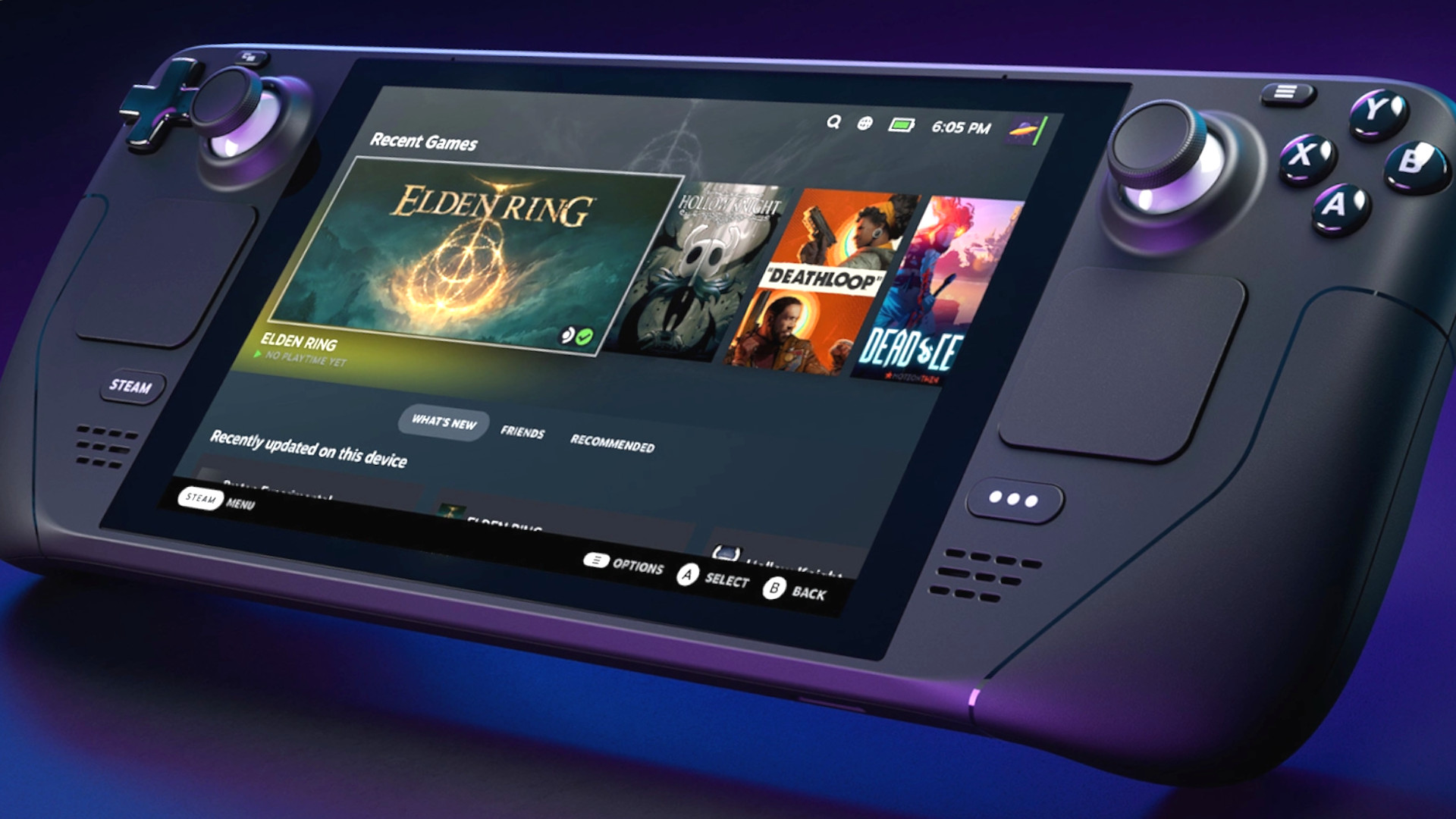
RetroArch update makes Steam Deck emulation better

by Dustin Bailey
RetroArch update makes Steam Deck emulation better

Steam Deck emulation is getting better thanks to a new RetroArch update introducing some important usability updates. There's now a more convenient way to manage your installed emulation cores on the Steam version of RetroArch, and the software now makes use of the Deck's on-screen keyboard.

"We came up with a SteamWorks shim that allows RetroArch Steam to interface with the Steamworks API," the devs explain in a blog post. "Mist, our middleware tool, runs in a separate process, runs concurrently with RetroArch Steam, and functions as a bridge between this separate process interfacing with Steamworks and the GPL application itself running in an entirely different process."

With that back-end tech enabled, you can now manage emulator cores directly from the RetroArch UI, even in the Steam version. Previously, due to limitations from Valve, you could only install or uninstall cores through the Steam DLC interface. You still have to acquire cores as (free) DLC on Steam, but once you've claimed them, you can now install or uninstall them directly within RetroArch.

30 Mar 17:28

Russian state TV is now coming right out and saying it: "our partner Trump"

by Carla Sinclair

We already knew that Donald Trump was in bed with Vladimir Putin, but last night a host on Russian state TV came right out and said it, stating it's time "to change the regime in the U.S." and to "again" reinstate "our partner Trump." — Read the rest

30 Mar 17:17

Death Stranding Director's Cut is stranger, weirder, and the best version of Kojima's hiking postal sim

by Katharine Castle

It's a strange thing, returning to the world of Death Stranding after more than a year away. Having done that classic thing of rinsing almost every last delivery out of it before finally strapping myself in for its rollercoaster ending back in 2020, there hasn't been much reason to return to my precious, daft BB Boys in the intervening months - not even its Cyberpunk 2077 crossover was enough to tempt me back. At long last, though, I have cause to load up the BB train again. Death Stranding Director's Cut arrives on Steam and the Epic Games Store today, bringing with it new story missions, new delivery buddies, new weapons and... a Mario Kart-style race track? Yep, that sounds like a classic Kojima upgrade pack, if you ask me. Not quite as revolutionary as Metal Gear Solid 3: Subsistence, mind, but it's roughly in the same kind of ballpark.

It's been great fun revisiting the lush mountains of Death Stranding's definitely not Icelandic version of post-apocalyptic America. If anything, the weirdest thing is seeing that same world I know and love on a fresh server, bereft of all the distracting neon signs, yelps of "Keep on keeping on!" and one-upmanship bridge-building that made up the bulk of the original's asymmetric online multiplayer component. It's actually quite refreshing to see these virgin, unspoiled landscapes again, although I imagine this won't last long once returning players flock back to their well-worn delivery routes. As for the new new stuff, is it worth making a return trip? As with all expando games, the answer will very much depend on if and how much you played the first one.

Read more

30 Mar 16:03

Risks of Using Russian Tech Analyzed by UK Cybersecurity Agency

by Eduard Kovacs
30 Mar 16:03

Russians Need VPNs. The Kremlin Hates Them

by Morgan Meaker
VPNs are divided between trying to help Russians stay connected to the global web and steering clear of Putin’s messy politics.
30 Mar 16:03

Apple M1 gaming: What’s gaming really like on Apple Silicon?

by Karthik Iyer

Apple’s new 14-inch and 16-inch MacBook Pro are some of the most powerful laptops on the market. Both the new M1 Pro and the M1 Max chip mark a serious jump from the previous M1 chip, and deliver a “Pro” experience that long-time enthusiasts have been yearning for. Both the M1 Pro and the M1 Max are extremely powerful, but the M1 Max with its beefy 32 GPU cores is particularly impressive. But are they good for gaming? Well, in this article, we’re going to explore the topic of Apple M1 gaming to find out what’s gaming really like on the Apple M1?

Navigate this article:

Specifications

Here’s a quick look at the specifications of each Apple M1 chip in the lineup:

Specification Apple M1 Apple M1 Pro Apple M1 Max Apple M1 Ultra
CPU Cores Up to 8 cores Up to 10 cores Up to 10 cores Up to 20 cores
CPU Performance Cores 4 8 8 16
CPU Efficiency c0res 2 2 2 4
GPU cores Up to 8 Up to 16 24 or 32 Up to 64
Neural Engine Cores 16 16 16 32
Manufacturing Process 5nm 5nm 5nm 5nm
Transistors 16 billion 33.7 billion 57 billion 114 billion
Unified Memory
  • 8GB
  • 16GB
  • 16GB
  • 32GB
  • 32GB
  • 64GB
  • 64GB
  • 128GB
Memory Bandwidth 68.25GB/s 200GB/s 400GB/s 800GB/s

Before we begin, it’s worth pointing out that we’re primarily focusing on the new M1 Pro and the M1 Max chip for this comparison. While Apple M1 is also a capable chip, it’s no match for the new M1 Pro and the M1 Max. And if you are looking to get the absolute best performance, especially for gaming we recommend picking up a MacBook Pro notebook powered by either of these chips. The new MacBook Pro laptops also have better displays with support for a higher refresh rate, further improving the overall gaming experience. Alternatively, you can also pick up a Mac Studio desktop that’s powered by the new M1 Ultra chip and pair it with a high-end monitor to play games. That setup will probably cost you a lot of money, so keep that in mind.

Apple M1 Gaming Performance

For this particular topic, we’ll be taking a look at the performance of a couple of games including the Shadow of the Tomb Raider, and a few gaming simulation tests. We should be able to get a good understanding of the kind of gaming experience you can get by looking at the performance tests. We were able to play the Shadow of the Tomb Raider on an Apple MacBook Pro with an M1 Pro chip without any issues. At the highest preset and at 1080p resolution, the MacBook Pro was able to churn out close to 50FPS. The Shadow of the Tomb Raider continues to be a demanding title for Macs, so we’re finally glad to see a notebook that’s capable of running it at playable frame rates.

It’s not quite the benchmark number, but still better than what you’d get from the older M1. You should easily be able to get over 60FPS while playing the game is on an Apple MacBook Pro powered by the M1 Max chip. The Hitman reboot from 2016 is another title that we ended up running on the MacBook Pro. The M1 Pro-powered MacBook Pro was easily able to handle this one and yield over 100FPS. Sure, the Hitman from 2016 isn’t exactly a new game, but there are a lot of Windows laptops out there that’ll struggle to run this at playable settings.

Game Apple MacBook Pro with M1 Pro (FPS)
Rise of the Tomb Raider
(Lowest Preset | 1080p)
108
Rise of the Tomb Raider
(Highest Preset | 1080p)
72
Shadow of the Tomb Raider
(Lowest Preset | 1080p)
74
Shadow of the Tomb Raider
(Highest Preset | 1080p)
43
The Hitman (2016)
(Highest Preset | 1080p)
110

Apple M1 Pro GPU

Moving on to the synthetic benchmark/gaming simulations, we’re looking at GFXBench 5 and 3DMark tests that run natively on the M1 silicon. The Apple MacBook Pro powered by the M1 Pro chip managed to score 10,322 on the 3DMark Wild Life test. That’s a significant improvement over what the original M1 chip scores in the same test. We were also able to record over 400FPS in GFXBench 5 Pro’s offscreen Car Chase test.

Looking at both the real-world gaming as well as the synthetic game simulation tests, it’s safe to say that the new Mac computers are getting better at handling gaming. We tested with an M1 Pro-powered MacBook Pro notebook, which means, you are bound to get better performance if you are trying to run the games or tests on an M1 Max-powered machine or an M1 Ultra-powered Mac Studio desktop.

Lack of games on macOS

As you can tell, Apple’s hardware is definitely ready to tackle gaming workloads. It may not be winning across the benchmark board, but we think it’s it’s very much capable of running a lot of the modern titles that are coming out on PC and consoles. Sure, there are some good titles like Team Fortress, Dota 2, Rust, Hades, etc. but what about the rest of the catalog? There’s no denying that a majority of games that can take advantage of the stellar MacBook hardware simply don’t exist on macOS. That’s one of the main reasons why Macs have had a hard time evolving as a viable gaming platform.

Apple's 2021 MacBook Pro 16-inch with M1 Max.

There are multiple ways to run Windows games like Grand Theft Auto 5, among others, on a Mac, but the process is rather complicated. Not to mention, the workarounds also tank the performance, thereby ruining the overall experience. While it’s a good way for enthusiasts to make some Windows games run on the new hardware, we don’t recommend it for average users. It’s better to stick to the limited selection of native titles that run on macOS.

Streaming games on Mac

You can also use Steam Link to stream the games that are available in your Steam library to your Mac computer. This is a solid workaround for those who already have a capable Windows machine and want to share their library with others at home. Steam Link is best used when both devices are connected to your router via ethernet to avoid latency issues. Steam Link, in case you don’t know, relies on the hardware of the host device and your network connection. This means, there are no hardware requirements for Mac.

NVIDIA GeForce Now Square Enix Shadow of the Tomb Raider

Streaming games via Steam Link is obviously not for everyone since you do need a capable Windows machine to run those games. A good alternative for that would be cloud gaming services like Nvidia’s GeForce Now. It allows you to play a range of games from your Steam, Uplay, or Battle.net accounts instantly, without any need to worry about the graphical power. All the processing is handled by Nvidia at sites scattered around the globe. The games are essentially powered remotely and are sent to your Mac computers at high speeds.

Apple Arcade for gaming on Mac

Apple Arcade on macOS

Lastly, there’s Apple Arcade which is Apple’s own premium subscription gaming service that lets you download and play included games for a monthly fee with no added costs. Pretty much all Apple Arcade games run very well on the Mac, and we think it’s great for casual gamers who are on the lookout for some casual titles to unwind after a long day of work. Apple has also done a great job of keeping its library up-to-date with fresh titles across different genres including mystery, family, puzzle, and more.

In addition to new titles from lesser-known devs, Apple Arcade also holds a solid collection of games from some popular names including Final Fantasy creator Hironobu Sakaguchi, Annapurna Interactive, and more. There are plenty of games to choose from and we think it totally justifies the price tag. A majority of these Apple Arcade games also support third-party controllers, which is great.

One of the best things about Apple Arcade is that one subscription gives access to up to six members of a family group. This means you can easily play the games with other members of the family together, without having to buy the titles separately. This also makes it a much more compelling option from a family-sharing perspective as Switch demands each user in the party to own a copy of the game.

Even if you don’t look at Apple Arcade as a standalone alternative to Switch or playing AAA titles, it’s still a great way to experience some quality games in your free time. And the fact that you can play these games on Mac with a controller makes up for an even better experience overall. You can learn more about Apple Arcade and Apple’s other subscription services by heading over to our Apple Subscription Services guide.

Support for PS5 DualSense and Xbox controller

Mac may not be the most gaming-friendly platform out there but it allows you to use a variety of controllers to play games. With the release of macOS Big Sur 11.3, Apple introduced support for Sony’s next-generation DualSense controller for PS5 on Mac. The PS5 controller works with any controller-supported game, and you can connect it via Bluetooth or USB. The PS5 DualSense controller works with MFI-supported games on the App Store, including those available as part of Apple Arcade and Sony’s Remote Play app. It also works with a lot of controller-supported games available on Steam, Epic Games Store, and GeForce Now.

Sony DualSense wireless controller

Alternatively, you can also pair an Xbox controller to your Mac via Bluetooth and use it to play controller-supported games. In addition to these popular controllers, you can also use a lot of other ones including some of the 8Bitdo controllers.

Apple M1 Gaming: Is it possible?

Even with the limited set of tests that we were able to run, it’s quite evident that the Apple hardware has come a long way. You could play games like the Shadow of the Tomb Raider on the original M1-powered machines too but the experience is vastly superior on the M1 Pro-powered MacBook Pro. These new machines will happily entertain you with gaming as long as the titles you run are natively available for macOS. The selection is very limited for now, but you can find some good titles to play on your MacBook Pro notebooks in your free time.

    13-inch MacBook Pro
    Apple's 13-inch MacBook Pro powered by the M1 chip is capable of running casual games without any issues.
    14-inch MacBook Pro
    Apple's 14-inch MacBook Pro with an M1 Pro chip can handle all the games better than an M1-powered MacBook.
    Apple Mac Studio
    The Apple Mac Studio powered by the new M1 Ultra chip starts at $3,999. It comes with up to 128GB of unified memory and up to 1TB SSD.

Besides that, there’s also Apple Arcade that can act as a primary source of gaming for a lot of casual gamers. Being able to pick up and continue the same game on, say, your iPhone or the iPad is also a huge selling point for Apple Arcade. It’ll be interesting to see how the M1 Ultra is able to handle the same games in comparison to the M1 Pro and the M1 Max. We’ll try to add more info around that once we get a chance to run some games on the M1 Ultra.

The post Apple M1 gaming: What’s gaming really like on Apple Silicon? appeared first on xda-developers.

30 Mar 16:01

Researchers Find Python-Based Ransomware Targeting Jupyter Notebook Web Apps

by Kevin Townsend

Researchers warn of likely future ransomware attacks against web applications used by data scientists

Researchers have found what they believe to be the first Python-based ransomware sample specifically targeting Jupyter Notebooks.

read more

30 Mar 16:01

The Need for Resilient Zero Trust

by Torsten George

Making Zero Trust resilient

It is essential to ensure that any Zero Trust technology used is resilient to external factors

read more

30 Mar 16:00

Apple’s Senior Executive Finally Gives an Explanation Why Automatic iOS Updates Arrive Weeks Later

by Ali Salman

Automatic iOS Updates delayed

There are two ways through which Apple allows you to update the software of your iPhone or iPad. Some people prefer updating manually, others wait for Apple to seed the latest update over the air. If you want to install the latest updates right away, it is recommended that you use the manual method. If you are okay with waiting then an OTA update would be installed automatically if you have it enabled. However, automatic iOS updates tend to arrive days or sometimes weeks later. Apple did not ever tell us the reason why but we finally have an explanation.

This is Why iOS Updates Often Arrive a Week Later After Release According to Apple

If you manually navigate to Settings > General > Software Update, you will find the latest update right away. However, automatic iOS updates tend to take their sweet time before it is finally installed. Mateusz Buda, an iPhone user, posed a question to Apple's senior VP of software Craig Federighi in an email. Buda stated in his email that he has not received the iOS 15.4 updates after two weeks of its release with automatic updates enabled. Federighi was happy to respond to the question.

Hi Mateusz,

We incrementally rollout new iOS updates by first making them available for those that explicitly seek them out in Settings, and then 1-4 weeks later (after we've received feedback on the update) ramp up to rolling out devices with auto-update enabled.

Hope that helps!

- craig

We have to take into account that Apple sells a lot of iPhones and iPads and seeding updates at the same time is a cumbersome task. Henceforth, Apple adds an extra layer of protection for its servers by intentionally delaying updates between 1 to 4 weeks for users who have enabled automatic iOS updates. This way, Apple can also pull back updates with serious bugs and issues. It gives the company some time before a wider range of users has updated to the latest firmware.

This is all there is to it, folks. What are your thoughts on Apple's automatic iOS updates delayed by weeks? Share your experience with us in the comments section below.

The post Apple’s Senior Executive Finally Gives an Explanation Why Automatic iOS Updates Arrive Weeks Later by Ali Salman appeared first on Wccftech.

30 Mar 15:59

Researchers Expose Mars Stealer Malware Campaign Using Google Ads to Spread

by noreply@blogger.com (Ravie Lakshmanan)
A nascent information stealer called Mars has been observed in campaigns that take advantage of cracked versions of the malware to steal information stored in web browsers and cryptocurrency wallets. "Mars Stealer is being distributed via social engineering techniques, malspam campaigns, malicious software cracks, and keygens," Morphisec malware researcher Arnold Osipov said in a report
30 Mar 15:59

Apollo 10 1/2 Review: A Rotoscoped Home Movie About The Space Race

by Josh Spiegel

Many, though not all, of Richard Linklater's films have a distinct, almost proud, sense of being homegrown and personal. Though Linklater isn't quite as involved as fellow Texas-based filmmaker Robert Rodriguez, at least in terms of exactly how many roles within a given film he can take on, his films are imbued with a passion associated with the awareness that no one else could tell these stories, because they are specifically Linklater's stories to tell. That passion is very much on display in the well-meaning, if not terribly involving, new animated film "Apollo 10 1/2: A Space Age Childhood," the auteur's first with the streaming giant Netflix. This is a sweet, friendly, low-key affair that often feels less like a story and more like a home movie Linklater collected to share with his grandkids.

It's not a very wild leap to make regarding Linklater's intent here, considering that one of the last lines of dialogue in "Apollo 10 1/2" features the lead character's father (Bill Wise) saying that he wants to be sure his son can tell his grandchildren one day that he watched American astronauts land and walk on the surface of the Moon. The historic and groundbreaking NASA launch of Apollo 11, climaxing in Neil Armstrong and Buzz Aldrin walking on the Moon on July 20, 1969, is the main thrust of "Apollo 10 1/2," though with a playful twist: early on, our lead Stan (Milo Coy) is surprisingly tasked at random by two NASA officials (Zachary Levi and Glen Powell) to test out the lunar module because they worry it might be too small for grown men to safely use. But that's barely even window dressing on what "Apollo 10 1/2" appears to be about: Linklater, who Stan seems to be a clear stand-in for, talking about what it was like to grow up in the space age of the 1960s right in the middle of the action.

Yet there isn't so much action in "Apollo 10 1/2" as there is television, and there is a lot of television in this streaming movie. A lot. The truest hook of this film is that, like Linklater's 2001 indie darling "Waking Life," it has been rendered in rotoscope-style animation. So that means you won't have to look twice at Levi's NASA official to recognize him, just having been re-animated after being filmed in live-action. It also means that when we watch Stan and his siblings watch everything from "The Twilight Zone" to "The Wonderful World of Color" to the Moon landing itself and its coverage on CBS by anchor Walter Cronkite, it's all rotoscoped, down to the twinkle in Cronkite's eye in now-legendary footage as he marveled at the sight of astronauts on the Moon. 

Look Back In Pleasure

"Apollo 10 1/2" briefly acknowledges some of the tumult and upheaval occurring in the world, let alone America, in the late 1960s, almost always through snippets on television. There are short glimpses of the Vietnam War, of racial and gender inequity being fought against by so-called hippies, yes, but this movie is otherwise as positively nostalgic as a modern title gets. That nostalgia is assisted by a heaping amount of voiceover narration courtesy of Jack Black, portraying the older version of Stan. Often, voiceover narration in a coming-of-age story is there to set the scene before mostly vanishing until the finale. In "Apollo 10 1/2," the near-opposite is true, as Black almost certainly has the most dialogue in the film, far more than anyone else. Black has done some of his best work with Linklater, in films like "School of Rock" and "Bernie," but he goes for a more straightforward take here in what amounts to Linklater's version of "The Wonder Years." Though the writer/director bucks the trend of using more, not less, narration, it ends up stifling any true creative throughline here. What we know about Stan and his family is provided through "tell more than show"-style narration.

So what does end up working, when it works, in "Apollo 10 1/2" is the animation itself. Both in how Linklater depicts Stan suiting up as an astronaut in his imaginative flight of fancy, as when he presents the real Moon landing, the animation is almost blindingly bright and impressively detailed. Here's a case where the nostalgia of a given set of memories lines up perfectly with the style in which it's depicted. No doubt the real experience of living in Houston in the 1960s wasn't always quite as rosy as Linklater presents it to be, even just from his personal point of view. But rotoscoping animation as utilized here allows for a storybook quality. What Linklater does in using this style of animation is bring his past to life in ways far beyond what live-action can do.

The unfortunate side effect of that, however, is that "Apollo 10 1/2" just kind of feels like a string of home movies with a gussied-up style. That moment near the end where Stan's dad expresses his desire to pass on the memory of the Moon landing is both perfectly understandable — the closing text notes that men haven't walked on the Moon for 50 years, allowing for the hope that they may do so again — and so bald-faced that it's a bit shocking the words "THIS IS THE THEME" don't appear at the bottom of the screen. "Apollo 10 1/2: A Space Age Childhood" is well-intentioned, well-rendered, and so upbeat in its existence that criticizing it may feel unnecessary. But this director, this style, and this setting could've made for something a bit more powerful. 

/Film Rating: 5.5 out of 10

Read this next: 20 Movies About Aliens That You Definitely Need To Watch

The post Apollo 10 1/2 Review: A Rotoscoped Home Movie About The Space Race appeared first on /Film.

30 Mar 15:56

Shazam! Director Will Never Make A Superman Movie Because Internet Fans Rightfully Freak Him Out

by Lex Briscuso

Taking on a superhero franchise is a lot of work, and "Shazam!" director David L. Sandberg knows that. The filmmaker — who is also directing the upcoming "Shazam! Fury of the Gods" sequel — revealed that he wouldn't be trying to take on another hero franchise, like "Superman," any time soon. Why? Well, you can probably guess (especially if you read the headline to this story). 

During an AMA on Instagram (via ComicBook), Sandberg explained:

"At one point I would have said Superman, but when there are so many different expectations and hardcore fans you're going to piss off so many people no matter what you do. Seeing how people react to things like The Last Jedi makes me want to stay away from things like that. Shazam! was perfect in that there hadn't been that many adaptations before. There are still people who think it was done wrong, but it was on a manageable level."

He has a point, folks. It's also clear DC fans are really happy with the way Sandberg brought the Shazam character to life, so it makes sense that he would be a shoo-in to expand the DCU with more projects. However, not only does Sandberg plan to stay away from Superman, but he also thinks helming a "Justice League" film would be "too big for me. Too much expectations as well."

The Road To Shazam!

Earlier this month, it was announced that "Shazam! Fury of the Gods" would have its release date moved up from June 2, 2023, to December 16, 2022. Additionally, Sandberg opened up via Instagram in September 2021 to reveal he was working on temporary VFX for the sequel film alongside images of his studio:

"Making temp VFX in my post-production office. Still using my old copy of Action Essentials 2 from VideoCopilot (especially for smoke during Shazam transformations). Post-production office has no windows (I got really spoiled with my pre-production office seen on the second image). But I still prefer this one since it's in LA and I get to sleep in my own bed every night."

Another filmmaker jumped into the comments section to ask how things were playing out in the post-production process, and Sandberg seemed to not only be in good spirits about the work, but also very ready to show it to the world. "Going good," Sandberg replied. "Eager to get some VFX in there so I can show it to people and see how it plays." It seems as though the filmmaker has probably made a lot of progress by now, so it appears that we might get more footage — in the form of a trailer — by the late summer. 

The "Shazam!" sequel will see Asher Angel, Zachary Levi, Jack Dylan Grazer, Adrian Brody, Grace Fulton, Meagan Good, and Ian Chen reprise their roles from the first installment. Major Hollywood names Helen Mirren and Lucy Liu are also set to join the cast as Hespera and Kalypso, respectively.

Read this next: Superman Movies Ranked From Worst To Best

The post Shazam! Director Will Never Make a Superman Movie Because Internet Fans Rightfully Freak Him Out appeared first on /Film.

30 Mar 15:56

Russia is finding out the hard way that just because a walkie talkie has "GI Joe" printed on it does not mean it is viable for battlefield communications [Fail]

30 Mar 15:56

House comes complete with a sex dungeon (pic 30)... at least that's what I'd use it for. Subby's wife, however, saw the same pics and said "oooh, storage space" which unfortunately was not a euphemism [Strange]

30 Mar 15:55

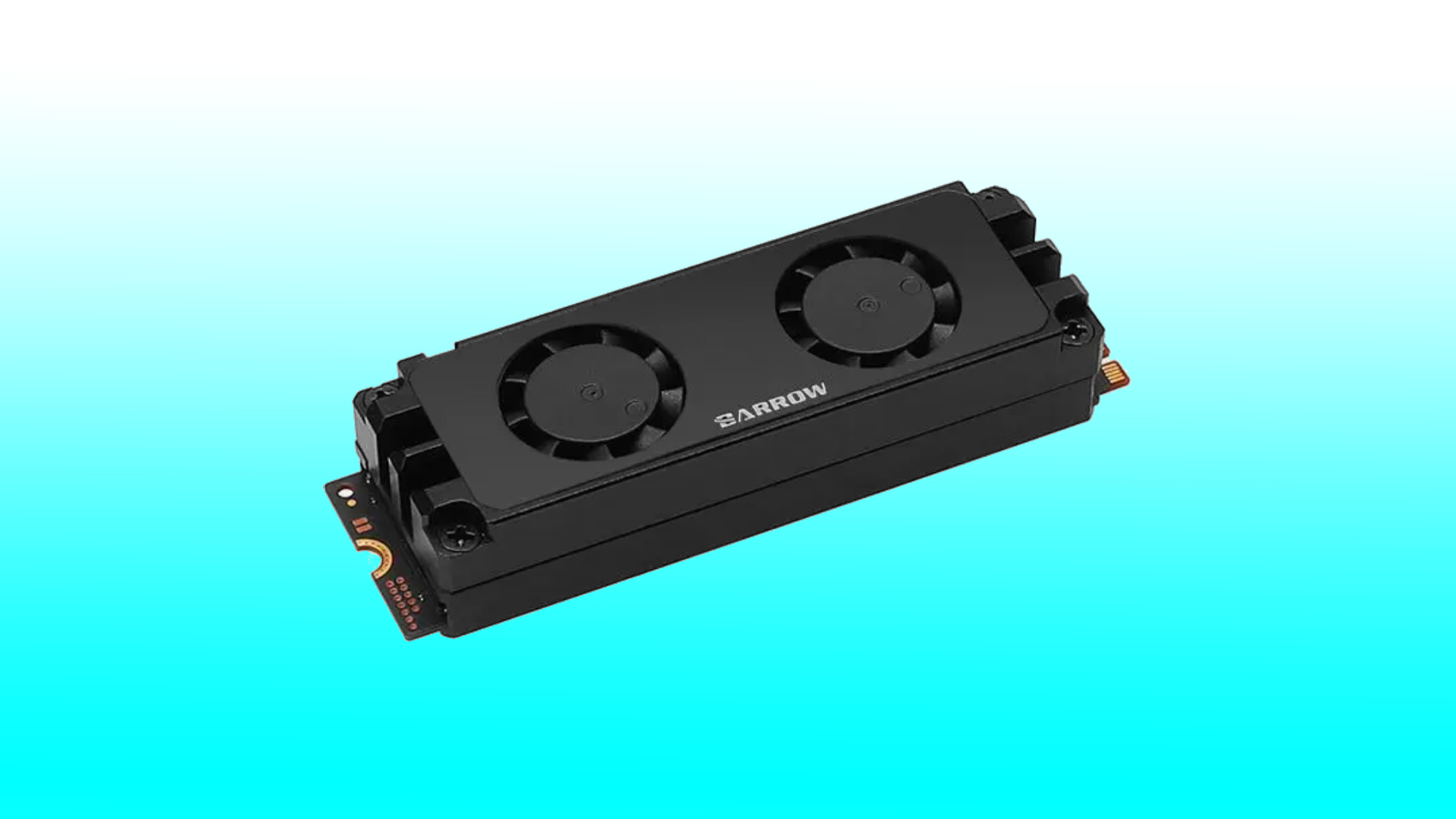
Your future SSD could require GPU style cooling fans

by Phil Hayton
Your future SSD could require GPU style cooling fans

Solid state drive heatsinks are becoming a norm, but future SSD drives might require the same fan cooling setup as your graphics card. In a blog post, the Taiwanese electronics company Phison highlights the importance of keeping high-speed storage cool and how high temperatures can affect drive performance.

According to Phison's chief technical officer, Sebastien Jean, heatsinks should be enough to keep PCIe Gen5 SSDs cool, but says we'll eventually "need to have a fan that’s pushing air right over the heatsink, too.” The company has since removed Jean's comments from the blog, but it still says that proceeding generations of drives may require robust cooling mechanisms further down the line.

Jean also suggests that Gen5 could mark the end of the road for the M.2 PCIe connector standard, as bottlenecks hamper potential max SSD speeds. Adopting a new connection type might also mitigate the need for both a heatsink and a fan, as it'll allow for heat dissipation through motherboard conduction while boosting signal integrity.

RELATED LINKS: Best SSD for gaming, How to build a gaming PC, Best gaming CPU
30 Mar 15:55

Windows 11 stops growing while Windows 10 21H2 takes the top spot, according to AdDuplex

by João Carrasqueira

After rising fairly quickly in its first few months, Windows 11 growth seems to have stalled in March, according to the latest AdDuplex survey. The latest charts show that Windows 11 usage share has remained nearly identical compared to February. However, Windows 10 version 21H2 has seen some growth and it became the most used version of Windows in March.

As usual, this data is collected from roughly 5,000 apps that are using the AdDuplex SDK v.2 for their advertising framework. While this month’s results don’t come with a sample size, but it’s usually been around 60,000 PCs. That’s a small sample size all things considered, but it does allow us to observe the trend in growth and decline of specific Windows versions. The results were collected on March 29.

As mentioned above, Windows 11 barely saw any growth in March AdDuplex survey, accounting for 19.4% of Windows users, a very minor increase from 19.3% in February. It managed to hold on to third place, with Windows 10 version 21H2 and 21H1 leading the pack. In March, Windows 10 version 21H2 saw a significant rise, now reaching 28.5% of Windows PCs (up from 21% in February), and taking the top spot among all the versions included in the survey. With that, Windows 10 version 21H1 fell to second place, with a usage share of 26.5% (down from 27.5%).

AdDuplex March 2022 Windows usage stats

Most of the growth for Windows 10 version 21H2 came from version 20H2, and there’s a very good reason for that. Windows 10 version 20H2 will stop being supported in May, and that means Microsoft is starting to automatically update those PCs in order to keep them in the support cycle. This is a very minor update, so if you’re still running version 20H2, you may want to consider upgrading sooner rather than later, as you could be missing out on important fixes.

Along with the stats for March, AdDuplex also updated its historic data for usage share growth. As you can see, Windows 11 growth has completely flatlined, which is something we haven’t seen in a few years. However, taking the collective adoption of Windows 11 and Windows 10 version 21H2, which were released around the same time, users are still jumping to the newest releases at a relatively rapid pace.

Historic Windows usage trends chart as of March 2022

If you’re wondering why Windows 11 isn’t growing, there are a few reasons that could explain that. For one thing, Windows 11 has minimum requirements that many Windows 10 PCs don’t meet, so there are going to be many users left behind in the transition. Additionally, even for PCs that are supported, Windows 11 is an optional update, so it’s bound to be adopted more slowly. Windows 10 version 21H2 is mandatory for PCs that are running out of support, so it’s bound to grow more quickly.

A few weeks ago, Microsoft said it was accelerating the Windows 11 rollout due to the positive feedback it had received, so it’s not like users consider Windows 11 a bad update. Many new Windows 11 devices are hitting the market in the coming months, so it’s likely adoption will also ramp up that much more. Keep in mind the past year has also been unique in the sense that Intel didn’t release new laptop processors in the second half of 2021, so there wasn’t as much exciting hardware for users to upgrade to.

Microsoft is set to unveil new features for Windows 11 at an event on April 5th, so maybe we’ll be hearing about more reasons to upgrade soon.


Source: AdDuplex

The post Windows 11 stops growing while Windows 10 21H2 takes the top spot, according to AdDuplex appeared first on xda-developers.

30 Mar 15:55

How Joker Would Have Played A Role In The Dark Knight Rises

by Collier Jennings

As long as there have been Batman movies, there's been a Joker. The Dark Knight and the Clown Prince of Clown's rivalry almost always finds new ways to be represented on screen — heck, there's even a deleted scene from "The Batman" featuring Barry Keoghan as the Joker doing his best Hannibal Lecter impression. With all due respect to Joaquin Phoenix, it's probably safe to say that the image most people think of when they think about the Joker is the late, great Heath Ledger's performance in "The Dark Knight." Ledger's twitchy, unhinged take on the character not only stole the show from its main lead, but it was also enough to nab Ledger a posthumous Academy Award for Best Supporting Actor.

And there could have been even more of the Joker in the third and final Christopher Nolan-helmed Batman film. David S. Goyer, who crafted the story for the entire "Dark Knight Trilogy", discussed his initial plans for the trilogy during an interview with Premiere Magazine (via ScreenRant) for "Batman Begins." In Goyer's words, there were plans to have the Joker in both a second and third film in the trilogy. 

Half The Man He Used To Be

Goyer's initial plot for "The Dark Knight" had the film ending with Batman capturing the Joker with the help of newly minted Commissioner Gordon and Dent — but their victory would be short-lived.

"The next one would have Batman enlisting the aid of Gordon and Dent in bringing down The Joker...but not killing him, which is a mistake they made in the first one...In the third, the Joker would go on trial, scarring Dent in the process."

This plot point is almost lifted verbatim from the classic Batman story "The Long Halloween," which served as a major influence on "The Dark Knight." However, director and co-writer Christopher Nolan chose to combine these elements into a single story: one of the Joker's traps ends up scarring Dent and he becomes Two-Face, descending further into madness. Looking back, Nolan made the right choice, as the decision to have "The Dark Knight Rises" explore the fallout of both the Joker and Dent's actions made for a more interesting, if slightly scattershot movie.

Three Is The Magic Number

But "The Dark Knight Rises" almost didn't come to be. In a USA Today interview following "The Dark Knight", Nolan expressed his reluctance to return:

"I don't know why they're hard to do...Maybe there's so much expectation to them. But I wouldn't want to do one if it weren't going to be as good as the first or second. That's not respectful to the fans."

He isn't wrong: for every "Return of the Jedi" or "Return of the King" there's a "Blade: Trinity" or "Speed 2: Cruise Control". There was also the shadow of Ledger's presence hovering over any third installment; how do you top that? 

But Nolan eventually did return for a third film, closing the book on his Dark Knight trilogy and fundamentally altering the way comic book adaptations were looked at. And I think it worked even without the Joker; after all, part of the fun of writing Batman is getting to play with his rich roster of villains. A Batman cannot live on fighting clowns alone.

Read this next: The 11 Coolest Easter Eggs In The Batman

The post How Joker Would Have Played a Role in The Dark Knight Rises appeared first on /Film.

30 Mar 15:55

We Need To Talk About Moon Knight's Great Anime Joke

by Rafael Motamayor

What exactly is anime? Technically, it is just the Japanese word for "animation," but as the medium continues to grow in popularity around the world, making waves at the box office, more and more animators worldwide take inspiration from Japanese titles in their work. This asks an important question: what exactly makes something anime? Is it just an aesthetic? A series of tropes? Is it a geographical location or nationality?

We have seen many American cartoons outsource their animation and direction to Japanese studios, even in the '70s and '80s. More recently, Japanese studios have produced movies or shows based on American franchises mostly for American audiences. Are those anime? How about an episode of an American cartoon made by a guest Japanese animator, like Masaaki Yuasa making an episode of "Adventure Time"? Is that considered anime, or is the term just a scapegoat meant to gatekeep the medium?

Of course, this is a pointless debate that changes absolutely nothing. What matters is that this debate has been raging at least for the better part of two decades, and one of the shows often caught in the middle of the argument is "Avatar: The Last Airbender," a show popular for its anime-inspired world and visuals. Just when you think the debate was over, new fuel is added to the fire, and it comes from the unlikeliest of sources: Marvel's newest streaming series, "Moon Knight."

This post contains minor spoilers for the first episode of "Moon Knight."

"You Mean The Anime?"

The first episode of "Moon Knight" introduces us to Oscar Isaac's Steven Grant, a shy, hopelessly nerdy gift-shop worker at a London museum with an affinity for ancient Egypt and absolutely no clue what the hell is going on most of the time.

That is until he starts figuring some things out, like the fact that he (or some version of him) has an enemy: Ethan Hawke's Arthur Harrow, who Hawke himself calls a "sane lunatic." We see Harrow leading a kind of cult and working for the Egyptian god Ammit, supposedly handing out justice to those who will eventually do evil — kind of like in "Minority Report."  

Near the end of the episode, Harrow ambushes Steven and explains why he should also be following Ammit. As he explains it, had she been freed before, she could have prevented countless tragedies (I mean, the Eternals could have done the same and we all know how that turned out), but she was betrayed some time ago by other gods, and also her avatar.

"'Avatars.' Blue people. Love that film," Steven responds to the mention of the term, referring (poorly) to filmmaker James Cameron's magnum opus. When Harrow is about to explain what it is, Steven adds, "You mean the anime?"

And with that simple line, Marvel enters the "is it anime?" debate.

Steve Grant, An Otaku Superhero?

Here is a Marvel show, already belonging to a huge franchise that regularly inspires its own furious internet debates. It even has a joke about James Cameron's biggest movie, which makes sense given it's now a Disney property. But that this superhero show devotes a joke to a 17-year-old cartoon and a niche and tired internet debate? Well, it does serve to paint a picture of who Steven Grant is that he knows about the show.

Though we don't know much about Steven, an image from the trailer reveals that Steven's other identity, Marc Spector, is 35 years old according to his passport. Assuming this is also Steven's age, that would mean he was 17 or 18 when "Avatar: The Last Airbender" first debuted on Nickelodeon. It is perfectly reasonable to think a guy like Steven, who is so fascinated by ancient cultures, would at least hear about this animated show that combines the visual style of Japanese anime, with a "Lord of the Rings"-style serialized fantasy story, and a vast and expansive fantasy world with its own mythology and history.

What does this mean for Steven? Well, it means Tom Holland is not the only superhero nerd in the MCU, and that I would love to see Spider-Man and Moon Knight talk about random things for two hours.

As for the anime bit? Well, that depends on how you define anime, but that doesn't matter. The important thing is that the show remains so respected and well-liked that it continues to inspire debates nearly two decades after its premiere, even inside the Marvel Cinematic Universe. 

Read this next: 10 Anime Movies That Deserved To Win The Oscar For Best Animated Feature

The post We Need to Talk About Moon Knight's Great Anime Joke appeared first on /Film.

30 Mar 15:53

Intel Unveils Arc Alchemist A-Series Discrete Gaming GPUs: ACM-G10 With Up To 32 Xe Cores & ACM-G11 With Up To 8 Xe Cores

by Hassan Mujtaba

Intel has officially unveiled its first two Arc Alchemist A-Series GPUs, the ACM-G10 with up to 32 and the ACM-G11 with up to 8 Xe Cores.

Intel's First Discrete Gaming GPUs Unveiled: Arc A-Series In ACM-G10 32 Xe & ACM-G11 8 Xe Flavors

The Intel ARC Alchemist GPUs are designed primarily for desktop and notebook platforms. From the information that we have currently gathered, the lineup will consist of two GPUs and each of those will have various SKUs, and each of those SKUs will be featured in a range of solutions for desktop graphics cards and mobility GPUs.

All Intel ARC Alchemist GPUs will utilize the TSMC 6nm process node and from what we already know, the Intel Xe-HPG Alchemist GPU features a Xe-Core which is the fundamental DNA of the 1st Gen ARC lineup. The Xe-Core is a compute block that is composed of 16 Vector Engines (256-bit per engine) and 16 Matrix Engines (1024-bit per engine).

Each Vector Engine is composed of 8 ALUs so, in total, we are looking at 128 ALUs per Xe-Core. The Xe-Core further features its own dedicated 192 KB L1 cache so that is a total of 6 MB of L1 cache on the complete chip.

  • 2022-03-30_15-32-06
  • 2022-03-30_15-32-09
  • 2022-03-30_15-32-10

Intel fuses four Xe-Cores together to form a Render Slice which is composed of 4 Ray Tracing Units, four Sampler Units, Geometry/Rasterize/HiZ engines, and two Pixel Backend blocks with 8 units on each. These Render Slices are put together to form the main GPUs. The flagship is composed of an 8 Render Slice configuration which features 32 Xe-Cores, 512 Vector Engines, and 4096 ALUs. There will be different configurations with 2, 4, 6 Render Slices but we are focusing on the flagship part in this report.

Intel’s Xe HPG architecture will be able to achieve 1.5x higher clock rates than Xe LP and also deliver 1.5x higher performance per watt. This means we are looking at clocks in the 2.1 GHz range considering the Xe LP discrete GPUs were clocked at 1.4 GHz. It also means that Intel will be able to squeeze additional power out of the architecture, should they want to, without increasing the power draw (or reducing the power draw while keeping performance constant.

  • 2022-03-30_15-32-11
  • 2022-03-30_15-32-12
  • 2022-03-30_15-32-13
  • 2022-03-30_15-32-15
  • 2022-03-30_15-32-16
  • 2022-03-30_15-32-17
  • 2022-03-30_15-32-18

Out of the two GPUs, the first one will be known as ACM-G10. This is the top SKU and will be featured in mainstream and high-end designs. The second GPU is known as ACM-G11. This is an entry-level SKU and as such, will be featured in entry-level and mainstream designs. Each GPU has its own SKUs with different specifications.

  • 2022-03-30_15-32-19
  • 2022-03-30_15-32-20
  • 2022-03-30_15-32-21
  • 2022-03-30_15-32-23

Each Matrix Engine block is also referred to as an XMX block which will handle tensor operations in both FP16 (128 FP16 ops/clock), INT8 (256 INT8 ops/clock), & INT4 (512 INT4/INT2 ops/clocks) mode. The XMX engines allow for up to 16 times the compute capabilities for INT8 inferencing. This helps boost the performance through the dedicated XeSS (Xe Super Sampling) technology.

Coming to the media engine, the Intel Arc Alchemist discrete GPUs are equipped with the latest tech which includes up to 8K60 12-bit HDR decode, up to 8k 10-bit HDR encode, VP9, AVC, HEVC, and AV1. Intel is partnering with top brands to leverage the AV1 capabilities of their Arc GPUs through the Alliance for Open Media. The new AV1 engine will provide 50x faster GPU encoding capabilities versus software mode. The tech will be integrated into several creation tools such as FFMPEG, Handbrake, Adobe Premiere Pro, DaVinci Resolve, and XSplit on launch.

  • 2022-03-30_15-32-33
  • 2022-03-30_15-32-35
  • 2022-03-30_15-32-36
  • 2022-03-30_15-32-37

In addition to that, the Intel Arc Xe Display Engine will support the latest display standards such as HDMI 2.0b, DisplayPort 1.4a, and 2.0 10G. Support for a variety of high resolution and high refresh rate modes is also going to be available which include:

  • 2x 8k60 HDR
  • 4x 4k120 HDR
  • 1080p360
  • 1440p360
  • 2022-03-30_15-32-39
  • 2022-03-30_15-32-40
  • 2022-03-30_15-32-42
  • 2022-03-30_15-32-43
  • 2022-03-30_15-32-44

As for adaptive syncing technology, Intel's discrete Arc Alchemist GPUs will support both Adaptive-Sync and Speed Sync technology. The former will sync the display's refresh rate to provide a smooth and tear-free experience while the latter will speed up the latest frame, delivering low latency, no tearing, and no cap. There's also a third mode known as Smooth Sync which will blur distracting screen tears with a dithering filter.

  • 2022-03-30_15-32-47
  • 2022-03-30_15-32-48
  • 2022-03-30_15-32-49
  • 2022-03-30_15-32-50
  • 2022-03-30_15-32-52
  • 2022-03-30_15-32-53

Intel Xe-HPG Based Discrete Alchemist GPU Configurations:

GPU Variant Graphics Card Variant GPU Die Execution Units Shading Units (Cores) Memory Capacity Memory Speed Memory Bus TGP
Xe-HPG 512EU ARC A780? Arc ACM-G10 512 EUs 4096 Up To 32/16 GB GDDR6 18 / 16 / 14 Gbps 256-bit ~225W (Desktops)
120-150W (Laptops)
Xe-HPG 384EU ARC A580? Arc ACM-G10 384 EUs 3072 Up To 12 GB GDDR6 16 / 14 Gbps 192-bit 150-200W (Desktops)
80-120W (Laptops)
Xe-HPG 256EU ARC A550? Arc ACM-G10 256 EUs 2048 Up To 8 GB GDDR6 16 / 14 Gbps 128-bit 60-80W (Laptops)
Xe-HPG 128EU ARC A380? Arc ACM-G11 128 EUs 1024 Up To 6 GB GDDR6 16 / 14 Gbps 96-bit ~75W (Desktops)
Xe-HPG 128EU ARC A350? Arc ACM-G11 128 EUs 1024 Up To 4 GB GDDR6 16 / 14 Gbps 64-bit 35-50W (Laptops)
Xe-HPG 96EU ARC A330? Arc ACM-G11 86 EUs 768 Up To 4 GB GDDR6 16 / 14 Gbps 64-bit ~35W (Laptops)

Intel Arc Alchemist 'ACM-G10' GPU Specifications - The Top GPU

The top Arc Alchemist GPU is going to be the ACM-G10. It is said expected to measure 396.2mm2 which makes it larger than both NVIDIA's GA014 and AMD's Navi 22 chips. The ACM-G10 powered GPUs are going to compete against NVIDIA's GeForce RTX 3070(Ti) and AMD Radeon RX 6700 XT.

NVIDIA packs in tensor cores and much bigger RT/FP32 cores in its chips while AMD RDNA 2 chips pack a single ray accelerator unit per CU and Infinity Cache. Intel will also have dedicated hardware onboard its Alchemist GPUs for Raytracing & AI-assisted super-sampling tech.

The full die features 32 Xe Cores, 512 EUs, 4096 ALUs, a 256-bit bus interface, and up to 16 GB GDDR6 memory featuring clock speeds between 16-18 Gbps from Samsung. Following are some of the ACM-G10 32 EU variants that we can expect::

  • 512 EU (4096 ALUs) / 16 GB @ Up To 18 Gbps / 256-bit
  • 384 EU (3072 ALUs) / 12 GB @ Up To 16 Gbps / 192-bit
  • 256 EU (2048 ALUs) / 8 GB @ Up To 16 Gbps / 128-bit

The Xe-HPG Alchemist ACM-G10 chip is suggested to feature clocks of around 2.2 - 2.5 GHz though we don't know if these are the average clocks or the maximum boost clocks. We have already spotted a flagship configuration with DG2-512 GPU running at 2.4 GHz, delivering nearly 20 TFLOPs of FP32 horsepower so we might very well end up with 2.5 GHz clocks in the final revision.

The TDP target for these chips seems to start at 120W for laptops and go all the way up to 300W for desktop parts. In either case, we can expect the final model to rock an 8+6 pin connector config, The reference model is also going to look very much like the drone marketing shot Intel put out during the ARC branding reveal.

Intel ARC AGM-10 vs NVIDIA GA104 & AMD Navi 22 GPUs

Graphics Card Name Intel ARC A780? NVIDIA GeForce RTX 3070 Ti AMD Radeon RX 6700 XT
GPU Name ACM-G10 NVIDIA GA104 AMD Navi 22
Architecture Xe-HPG Ampere RDNA 2
Process Node TSMC 6nm Samsung 8nm TSMC 7nm
Die Size ~396mm2 392mm2 335mm2
FP32 Cores 32 Xe Cores 48 SM Units 40 Compute Units
FP32 Units 4096 6144 2560
Max Clock ~2400 MHz 1770 MHz 2581 MHz
FP32 TFLOPs ~20 TFLOPs 21.75 TFLOPs 13.21 TFLOPs
Memory Bus 256-bit 256-bit 192-bit
Memory Capacity 16 GB GDDR6 8 GB GDDR6X 12 GB GDDR6
Launch Q2 2022 Q2 2021 Q1 2021

Intel Arc Alchemist 'ACM-G11' GPU Specifications - The Small GPU

The Intel ACM-G11 is going to be the smaller Arc GPU, aiming at the entry-level and mainstream PC platforms. The GPU is said to measure around 147.7-154.9mm2. This is also much smaller than the 200mm2 TU117 die that the chip will be competing against. The GA107 die size isn't known yet but it is likely to be around 160-180mm2. It is a bigger chip compared to the recently released AMD Navi 24 which measures only 107mm2.

There are two configs that feature the full-fat SKU with 1024 cores, a 96-bit, and a 64-bit variant with 6 GB and 4 GB memory capacity, respectively. The cut-down variant will come with 96 EUs or 768 cores and a 4 GB GDDR6 memory featured across a 64-bit bus interface. The chip is expected to feature a clock speed of around 2.2 - 2.5 GHz and have a sub 75 Watt power consumption which means we will be looking at connector-less graphics cards for the entry-level segment.

Following are all the ARC ACM-G11 variants that we can expect:

  • 128 EU (1024 ALUs) / 6 GB @ Up To 16 Gbps / 96-bi
  • 128 EU (1024 ALUs) / 4 GB @ Up To 16 Gbps / 64-bit
  • 96 EU (768 ALUs) / 4 GB @ Up To 16 Gbps / 64-bit

This GPU will be very similar to the DG1 GPU-based discrete SDV board however Alchemist will have a more improved architecture design and definitely more performance uplift over the first-gen Xe GPU architecture. This lineup is definitely going to be aimed at the entry-level desktop discrete market based on the specifications.

Intel ARC AGM-11 vs NVIDIA GA106 & AMD Navi 24 GPUs

Graphics Card Name Intel ARC A350? NVIDIA GeForce RTX 2050 AMD Radeon RX 6500 XT Intel ARC A380? NVIDIA GeForce RTX 3050
GPU Name ACM-G11 NVIDIA GA107 AMD Navi 24 ACM-G11 NVIDIA GA106
Architecture Xe-HPG Ampere RDNA 2 Xe-HPG Ampere
Process Node TSMC 6nm Samsung 8nm TSMC 7nm TSMC 6nm Samsung 8nm
Die Size ~155mm2 TBC TBC ~155mm2 276mm2
FP32 Cores 8 Xe Cores 16 SM Units 16 Compute Units 8 Xe Cores 24 SM Units
FP32 Units 1024 2048 1024 1024 3072
Memory Bus 64-bit 64-bit 64-bit 96-bit 128-bit
Memory Capacity 4 GB GDDR6 4 GB GDDR6 4 GB GDDR6 6 GB GDDR6 8 GB GDDR6
TDP 35-50W 30-45W ~75W ~75W ~75W
Launch Q2 2022 Q1 2022 Q2 2022 Q2 2022 Q1 2022

The post Intel Unveils Arc Alchemist A-Series Discrete Gaming GPUs: ACM-G10 With Up To 32 Xe Cores & ACM-G11 With Up To 8 Xe Cores by Hassan Mujtaba appeared first on Wccftech.

30 Mar 15:53

Intel Confirms Gaming Arc A-Series Lineup: Arc 7 ‘High-Performance’ Up To A770M, Arc 5 ‘Advanced’ Up To A550M, Arc 3 ‘Enhanced’ Up To A370M

by Hassan Mujtaba

Intel is also confirming its long-awaited Arc A-series branding which will include gaming Arc 7, Arc 5, and Arc 3 GPU segments.

Intel Unveils Arc 7 'High-Performance, Arc 5 'Advanced, Arc 3 'Enhanced' Discrete Alchemist A-Series Gaming GPUs

So we know the brand name from Intel is Arc and the first graphics lineup is going to be called Alchemist and they are going to feature the Xe-HPG (High-Performance Graphics) graphics architecture. Now the Alchemist name sounds a little too geeky but it's also a nice touch compared to all the Scientists & Star codenames that NVIDIA and AMD have been using. Also, Intel doesn't stop at Alchemist and has even more codenames detailed that they plan on launching in the future. Keep on reading to know more about that.

To make things simple, this is how each company brands its current graphics lineup [Company][Branding][Identifer][Family]:

  • Intel Arc A-Series
  • NVIDIA GeForce 30
  • AMD Radeon 6000
Alchemist, the mascot of Intel's 1st discrete graphics lineup. (Image Credits: Intel)

But that's not all, we also have come to know what the products will be called. Intel is confirming today at least 5 products based on the Discrete Arc A-Series GPUs, all of which are aimed at the mobility segment first. So we know the nomenclature of these graphics chips will be something like the following:

  • Intel Arc A300, A500, and A700 (performance-wise)

So the full branding would be something like (Note: following products are just used for naming comparisons and may not fall in the same performance category):

  • Intel Arc A770M
  • NVIDIA GeForce RTX 3080
  • AMD Radeon RX 6800

So now that we know how Intel is going to call their Arc Alchemist graphics products, let's move over to the specifications.

Intel Arc A-Series Mobile Graphics Lineup

As expected, Intel will be launching its mobility Arc A-series graphics lineup first which will get a total of five new products in each segment. The Intel Arc 7 and Arc 5 lineup will utilize the ACM-G10 GPU while the Arc 3 lineup will utilize the ACM-G11 GPU. All of these GPUs are equipped with the same feature set which includes support for XeSS, DirectX XII Ultimate, XMX acceleration, Xe Media Engine, and PCIe Express 4.0 along with a host of other features.

Intel Arc 7 'High-Performance' Gaming GPU Lineup

The Intel Arc 7 lineup is going to utilize the flagship ACM-G10 GPU and will feature two variants, the Arc A770M and the Arc A730M. The top-end variant for mobility platforms, the Arc A770M, will be equipped with the full ACM-G10 configuration, utilizing 32 Xe-Cores for 4096 ALUs, 32 ray tracing units, a graphics clock of 1650 MHz, up to 16 GB GDDR6 memory that operates across a 256-bit wide bus interface and a TDP target of 120-150W. This is comparable to the GeForce RTX 3070 Ti Max-Q variant.

The second part is the Intel Arc A730M which will also be equipped with an ACM-G10 GPU but house 24 Xe Cores (3072 ALUs), 24 ray tracing units, a graphics clock of 1100 MHz, 12 GB GDDR6 memory running across a 192-bit bus interface and a TDP target of 80-120W. This GPU will aim for the GeForce RTX 3060 series mobility options.

Intel Arc 5 'Advanced' Gaming GPU Lineup

The Intel Arc 5 lineup will only feature one variant for now that makes use of the ACM-G10 GPU. It will feature 16 Xe Cores (2048 ALUs), 16 Ray tracing units, a 900 MHz graphics clock, 8 GB GDDR6 memory running across a 128-bit bus interface, and a TDP range of 60-80W. This chip should aim for the RTX 3060 Max-Q graphics chip.

Intel Arc 3 'Enhanced' Gaming GPU Lineup

Lastly, we have the Intel Arc 3 lineup which is the entry-level and power-optimized family making use of the ACM-G11 GPU. The lineup features the Arc A370M which utilizes the full GPU config & 8 Xe Cores (1024 ALUs), 8 ray tracing units, 1550 MHz graphics clock, 4 GB of 64-bit GDDR6 memory, and a TDP range of 35-50W. This chip would be tackling the GeForce RTX 3050 series.

The second option is the Intel Arc A350M which features 6 Xe cores (768 ALUs), 6 ray tracing units, 1150 MHz graphics engine clock, a 4 GB 64-bit bus interface, and a TDP range of 25-35W which is going to aim the entry-level MX500 series options from NVIDIA.

Intel Arc A-Series Mobility GPU Lineup:

Graphics Card Variant GPU Variant GPU Die Execution Units Shading Units (Cores) Memory Capacity Memory Speed Memory Bus TGP
Arc A770M Xe-HPG 512EU Arc ACM-G10 512 EUs 4096 16 GB GDDR6 16 Gbps 256-bit 120-150W
Arc A730M Xe-HPG 384EU Arc ACM-G10 384 EUs 3072 12 GB GDDR6 14 Gbps 192-bit 80-120W
Arc A550M Xe-HPG 256EU Arc ACM-G10 256 EUs 2048 8 GB GDDR6 14 Gbps 128-bit 60-80W
Arc A370M Xe-HPG 128EU Arc ACM-G11 128 EUs 1024 4 GB GDDR6 14 Gbps 64-bit 35-50W
Arc A330M Xe-HPG 96EU Arc ACM-G11 96 EUs 768 4 GB GDDR6 14 Gbps 64-bit 25-35W

Intel Arc A-Series GPU Performance

Intel has been tight-lipped about the performance of its Arc Alchemist graphics but they are now starting to share some performance metrics of their entry-level parts. We also know through our own sources where these GPUs will land. The ACM-G10 is expected to be an NVIDIA GA104 & AMD Navi 22 competitor while the ACM-G11 is expected to compete against NVIDIA GA106 / GA107 and AMD Navi 24 GPUs.

The flagship model should end up with around 18.5 TFLOPs FP32 compute which is  40% more than the RX 6700 XT but 9% lower than the NVIDIA RTX 3070. In terms of performance positioning, the top 512 EU variant is said to compete against the RTX 3070 / RTX 3070 Ti, the 384 EU variant is said to compete against the RTX 3060 / RTX 3060 Ti on desktops. On the laptop side, the 512 EU might be just as fast as the RTX 3080, 384 EU variant around RTX 3070 level and the 256 EU will end up against the RTX 3060.

Performance for the entry-level ACM-G11 GPU is expected to land between the GeForce GTX 1650 and GTX 1650 SUPER but with raytracing capabilities. This performance level, if priced correctly, will be highly competitive against similar solutions from NVIDIA and AMD.

Intel has shown its entry-level Arc A370M GPU offering a smooth 60 FPS+ gaming experience at 1080p across a variety of games versus the integrated Intel Iris Xe graphics. Then in another slide, they show competitive titles can deliver over 90 FPS at 1080p when running on the Arc A370M series.

Intel also highlights the content acceleration features integrated within Arc GPUs with the A370M providing a 2.4x boost over the integrated Iris Xe GPU. Intel hasn't shared any performance figures versus the competition yet.

  • 2022-03-30_15-33-01
  • 2022-03-30_15-33-00

Intel Arc Alchemist GPU Gaming Features

Intel knows that making a GPU is just one part of the whole graphics ecosystem and they are also creating a wide portfolio of features that will go into power their Arc GPU lineup. Raja Koduri and Lisa Pearce have highlighted that drivers play a crucial role in graphics development & they are collaborating with a list of developers and studios to optimize their GPUs for current and next-gen AAA games and creative applications.

  • 2022-03-30_15-33-17
  • 2022-03-30_15-33-18
  • 2022-03-30_15-33-19

Intel's DG2 ARC Alchemist will offer the first true gaming drivers and that is its own initiative. NVIDIA and AMD have worked for years to optimize their current suite of gaming drivers and to get Intel's first discrete gaming GPUs on the same level as the competition is certainly a big deal. A range of driver-specific optimizations including Resizable BAR support is also headed to Linux for Intel's Arc Alchemist GPUs.

Technologies that will be incorporated by Intel Arc GPUs include:

  • XeSS (Xe Super Sampling) AI-Assisted Super Sampling Technology
  • XeGTAO (Ground-Truth Ambient Occlusion)
  • Xe DeepLink Technology
  • XeXMX with Xe-Cores
  • Hardware-Accelerated Raytracing
  • Intel GameDev Boost with 1oneAPI Tool Kit
  • Resizable-Bar Support for Desktops & Laptops

Intel has shown several games that will utilize XeSS in their recent demos such as 505 Game's Death Stranding, IO Interactive's Hitman 3, and Exor Studio's The Riftbreaker, all of which are fairly new AAA titles. Intel showcased both games running on an undisclosed Xe-HPG ARC Alchemist GPU. Both games were compared on 1080p resolution and 4K XeSS upscaling. Although the videos are of 1080p quality, you can still see that 4K XeSS really helps enhance the visual quality in both titles.

Intel ARC Alchemist 4K XeSS Super Resolution Demo In Hitman 3:

  • 2021-10-29_2-28-46
  • 2021-10-29_2-28-54
  • 2021-10-29_2-29-00
  • 2021-10-29_2-29-05
  • 2021-10-29_2-29-08

Intel ARC Alchemist 4K XeSS Super Resolution Demo In Riftbreakers:

  • 2021-10-29_2-35-31
  • 2021-10-29_2-35-37
  • 2021-10-29_2-35-39
  • 2021-10-29_2-35-44
  • 2021-10-29_2-35-46
  • 2021-10-29_2-35-56
  • 2021-10-29_2-36-00
  • 2021-10-29_2-36-04
  • 2021-10-29_2-36-07

The upscaled images are both sharp, less blurry and show the textures on various objects in more detail. We have a very in-depth interview with the principal engineer of XeSS here which talks about how the company plans on expanding the technology in their future updates. You can also see an internal 4K XeSS demo here along with further XeSS tech details here.

Intel Arc Alchemist XeSS Technology (GDC 2022 Demo)

Intel XeSS is a super-sampling technique that leverages Machine Learning to reconstruct a low-resolution frame into a high-resolution frame, running at a fraction of the cost of rendering at a higher resolution such as 4K. The core principle of XeSS is to take advantage of ML through the integrated XMX AI acceleration hardware that is featured on the Xe-Cores for Arc Alchemist GPUs. XeSS will be fully compliant with DirectX 12 and uses the Intel Vector Shading language-based NN (Neural Networking) running on Intel's Arc SIMD architecture.

Intel Showcases Arc Alchemist GPU Performance With XeSS & Raytracing Enabled, Calls XeSS Better Than Temporal Upscaling 2

Compared to native resolution (4K), XeSS 4K with XMX takes less than half the cost to render a scene. The technology is also DP4a compliant which means it can run on GPUs without AI or ML acceleration engines such as XMX but offer similar performance and image quality.

Intel Showcases Arc Alchemist GPU Performance With XeSS & Raytracing Enabled, Calls XeSS Better Than Temporal Upscaling 3

In terms of image quality, Intel XeSS will eliminate all kinds of ghosting with minimal artifacts (such as shimmering) when compared to other upscaling methods such as TAAU. It also comes with its own built-in sharpening engine and will be replacing TAA. Intel has stated that XeSS can achieve much higher scaling ratios without compromising quality than Temporal Supersampling or Spatial upscaling.

Intel Showcases Arc Alchemist GPU Performance With XeSS & Raytracing Enabled, Calls XeSS Better Than Temporal Upscaling 4

Intel also shared a brand new XeSS Rens demo which was running on an Intel Arc Alchemist GPU that was running at a fixed frequency. The demo was run on 1440p with raytracing and 4K with raytracing enabled. The demo was run at each resolution on 5 different XeSS presets that range from Ultra Performance, Performance, Balanced, Quality, and Ultra Quality. The Ultra performance mode offers up to 2.53x performance boost over native while Ultra Quality offers a 27% boost in performance over native at 4K resolution.

Intel Showcases Arc Alchemist GPU Performance With XeSS & Raytracing Enabled, Calls XeSS Better Than Temporal Upscaling 5

Intel Arc Alchemist Raytracing Technology (GDC 2022 Demo)

Next up, Intel talked about its raytracing approach and how they are making it better than AMD's and NVIDIA's approach. Intel will be bypassing SIMD divergency for hit shaders, textures and using a set of HW sorting for rays and threads to maximize uptime of each lane. This would allow Intel to essentially automatically accelerate raytracing on hardware.

In a slide showcasing performance metrics on a pre-production Intel Arc Alchemist silicon, the GPU offers 0.775x performance in RayQuery (relative) vs DXR1.0. Intel states that this is a bigger perf hit than competitor 1 (NVIDIA) while competitor 2 (AMD) takes an even bigger hit. Intel also offers their own conclusion and fixes to why this performance hit is seen on their GPUs.

In addition to XeSS support, Intel also showed a brief demo of raytracing running in Metro Exodus on its own ARC Alchemist GPUs. Another key technology Intel talked about is XeGTAO which is the brand new Gound-Truth Ambient Occlusion method, an advanced form of screen-space ambient occlusion, that delivers greater accuracy for higher image quality.

Intel ARC Alchemist Raytracing Demo In Metro Exodus:

  • 2021-10-29_2-28-08
  • 2021-10-29_2-28-12
  • 2021-10-29_2-28-18
  • 2021-10-29_2-28-22

Intel XeSS Is Backwards Compatible With DG1 'Xe-LP' & 11th Gen CPUs

Intel has also confirmed that the XeSS technology will be backward compatible with both Xe-LP-based DG1 GPUs & iGPUs on the 11th Gen Tiger Lake GPUs.

Intel also wants to leverage the workstation and content creation market with its Xe-HPG GPUs in applications such as 3DSMax where they can give NVIDIA's Quadro and AMD Radeon PRO graphics cards some tough competition. It is specifically stated that Intel's ARC GPUs can offer great graphics performance within content creation and development applications.

Intel also emphasized the driver release and how it plans to release them on regular basis and new releases every time a major title is launched. The company has gone on a major hiring spree for its graphics division, acquiring renowned names from the industry over the last couple of weeks. Since we mentioned drivers, Intel will also have integrated overclocking tools within their latest driver suite available when Arc Alchemist GPUs hit the shelves.

Intel ARC Alchemist Internal XeGTAO Demo:

  • 2021-10-29_2-27-28
  • 2021-10-29_2-27-37
  • 2021-10-29_2-27-41
  • 2021-10-29_2-27-44
  • 2021-10-29_2-27-48
  • 2021-10-29_2-27-51

Intel also announced that devs will have access to their XeSS technology through the DevMesh program and anyone from indie to AAA developers can submit a form from the official Intel DevMesh site. Intel is touting up to 2x FPS with their XeSS Super Resolution technology so it will be great to have more options for gamers & the tech also will be workable on both NVIDIA and AMD GPUs.

Moving away from GPUs for a bit, Intel also discussed how they can leverage their hybrid design introduced in 12th Gen Alder Lake CPUs within game engines. Intel and IO Interactive have been optimizing both the GPU and CPU sides of things. It is stated that developers can leverage back-ground tasks such as AI acceleration, Character Animation, Physics, Collisions, audio-processing, and more, leaving the performance cores with their leading single-threaded performance to be available for the more demanding tasks.

Intel DeepLink Demo Using ARC Alchemist & Iris Xe GPUs:

  • 2022-03-30_15-33-03
  • 2022-03-30_15-33-04
  • 2022-03-30_15-33-05
  • 2022-03-30_15-33-06
  • 2022-03-30_15-33-07
  • 2022-03-30_15-33-09
  • 2022-03-30_15-33-11
  • 2022-03-30_15-33-12
  • 2022-03-30_15-33-13
  • 2022-03-30_15-33-16

The last most interesting thing shared by Intel was their DeepLink technology which will help Xe-HPG ARC Alchemist GPUs work alongside Iris Xe to boost performance in creation applications. A demo showcasing a standalone ARC Alchemist GPU and another system with DeepLink where the same ARC Alchemist GPU is working alongside an Iris Xe GPU integrated on Intel's CPUs is shown. The DeepLink system ended up with 40% faster transcoding in Handbrake as it was able to utilize more performance out of the Iris Xe chip.

There Intel Arc 3 series is available starting now in various laptop designs while the Arc 5 and Arc 7 GPUs will be hitting mobile segment in early Summer so around May or June. Expect more info on these parts in the coming months.

Intel Arc A-Series Endnotes:

  • 2022-03-30_15-33-33
  • 2022-03-30_15-33-36
  • 2022-03-30_15-33-37
  • 2022-03-30_15-33-38
  • 2022-03-30_15-33-40

The post Intel Confirms Gaming Arc A-Series Lineup: Arc 7 ‘High-Performance’ Up To A770M, Arc 5 ‘Advanced’ Up To A550M, Arc 3 ‘Enhanced’ Up To A370M by Hassan Mujtaba appeared first on Wccftech.


30 Mar 15:53

Intel Launches Arc Control, An All-In-One Graphics Software Experience Suite For Gamers & Creators With No Login Requirement

by Hassan Mujtaba

Intel Launches Arc Control, An All-In-One Graphics Software Experience Suite For Gamers & Creators With No-Login Requirement 1

In addition to its GPUs and respective products, Intel is also launching its Arc Control graphics software suite for gamers and creators.

Intel Arc Control Brings Forth A Modern Overlay Delivering Auto Driver Updates, Performance Tuning, Creator Studio Features & No Login Required

Intel doesn't want its Arc lineup to be just about the products but they also want to deliver the best experience within a vast gaming and creator community. As such, Intel is launching Arc Control, a full-on software suite based around the Arc graphics family. The Arc Control has a lot to offer and some features include:

  • Game Drivers Updates
  • Performance Tuning
  • Creator Studio
  • Global Settings
  • Unified Software
  • Game Library

Intel Launches Arc Control, An All-In-One Graphics Software Experience Suite For Gamers & Creators With No-Login Requirement 2

Think of Arc Control as Intel's answer to NVIDIA's GeForce Experience and AMD's Radeon Software suite. The application will feature a modern overlay that will be instantly accessible anytime with the press of the Alt+I buttons (this can be configured). One thing that Intel is investing a lot in is its driver support and Arc Control will be providing automatic driver updates (always up to date, or on-demand). The installation process for the drivers will also be fully integrated.

Intel Launches Arc Control, An All-In-One Graphics Software Experience Suite For Gamers & Creators With No-Login Requirement 3

There will also be a performance tuning panel that will let you monitor real-time performance metrics, utilize a Telemetry overlay by pressing Alt+O (this can be configured) to show an in-app HUD, and even adjust performance settings such as power, fan speeds, clocks, etc (only available for desktop GPUs).

Intel Launches Arc Control, An All-In-One Graphics Software Experience Suite For Gamers & Creators With No-Login Requirement 4

The Intel Arc Control Creator Studio will make streaming simplified by easily broadcasting your content to 3rd party platforms such as Twitch, Facebook, etc. There's also an 'Intel Virtual Camera' which will let users utilize AI camera features such as background blur, replacement, removal & auto-frame. Auto Game highlights will provide users with sharable highlight reels saved locally on the PC.

Finally, the whole suite will be available to all Intel Arc users and access to the application will not require any sort of login. This is definitely a huge deal for gamers who want simplified access to a graphics software suite without handing over their personal information.

  • 2022-03-30_15-33-28
  • 2022-03-30_15-33-29
  • 2022-03-30_15-33-21

The post Intel Launches Arc Control, An All-In-One Graphics Software Experience Suite For Gamers & Creators With No Login Requirement by Hassan Mujtaba appeared first on Wccftech.

30 Mar 15:52

Intel Arc Alchemist Discrete Graphics Card For High-Performance Gaming PCs Unveiled, Limited Edition Variant Launches Summer 2022

by Hassan Mujtaba

Intel has officially unveiled its first desktop discrete graphics card within the Arc Alchemist A-series lineup which launches in Summer 2022.

Intel's First Discrete Gaming Graphics Card In The Arc Alchemist A-Series Launching In Summer 2022

The Intel ARC Alchemist graphics card was first visually demonstrated by YouTuber Moore's Law Is Dead. Intel's new card originally showcased a black cover with an elongated green printed circuit board back when we first saw it as an engineering sample. Later, it was showcased with a modern silver aesthetic but the latest shots once again show a black-colored shroud. The final card looks very similar to the prototypes we saw earlier but adopts a more premium look hence the 'Limited Edition' branding.

This new Intel Arc Alchemist discrete graphics card is supplied with a black-colored dual-fan cooling technology, which matches the same layouts in the earlier leaked photos. There is a more noticeable view of the I/O bracket with these new photos that uses three DisplayPort connectors and a single HDMI connection. Intel has confirmed that the new ARC Alchemist will begin graphics card architectures to support the newest DisplayPort 1.4a & HDMI 2.0b interfaces.

  • 2022-03-30_20-18-23
  • 2022-03-30_20-19-13
  • 2022-03-30_20-12-23
  • 2022-03-30_20-12-32

The printed circuit board displays as many as eight memory modules. From this observation, the card is possibly the 16 GB model (considered the flagship model of Intel's new line) so it is likely to be a premium variant of the flagship Arc 7 A780 graphics card which will utilize the full Arc ACM-G10 GPU with 32 Xe cores.

  • 2022-03-30_20-09-57
  • 2022-03-30_20-09-56
  • 2022-03-30_20-09-54
  • 2022-03-30_20-09-50
  • 2022-03-30_20-09-48
  • 2022-03-30_20-09-47
  • 2022-03-30_20-09-44
  • 2022-03-30_20-09-42
  • 2022-03-30_20-12-44
  • 2022-03-30_20-09-40
  • 2022-03-30_20-09-59
  • 2022-03-30_20-10-00
  • 2022-03-30_20-10-09

We can see that the engineering sample is supplied with dual 8-pin connectors and the whole finish of the card looks incredible. The sides also feature a LED-illuminated 'Intel Arc' logo. The discrete graphics card lineup is slated for launch in Summer 2022 which aligns with the May-June rumors that we have heard before.

The post Intel Arc Alchemist Discrete Graphics Card For High-Performance Gaming PCs Unveiled, Limited Edition Variant Launches Summer 2022 by Hassan Mujtaba appeared first on Wccftech.

30 Mar 15:52

Intel Introduces The Arc A-Series Mobile Graphics

Intel today is formally introducing their Arc 3 series mobile graphics that will begin appearing in laptops beginning in April while Arc 5 and Arc 7 graphics are coming out in the "early summer" for the much anticipated Intel discrete graphics offerings.
30 Mar 13:09

The Surprising Influence Sherlock Holmes Had On JoJo's Bizarre Adventure

by Mike Williams

Hirohiko Araki has been delivering the absolutely bizarre adventures of folks named JoJo since 1987. Across a number of series, fantastic protagonists with magical powers named after classic rock bands get into all sorts of trouble. There's truly nothing like "JoJo's Bizarre Adventure" -- you haven't lived until you've seen a high-schooler who looks like a full-grown adult triumphing over a baby with fangs in a dreamworld.

Every new iteration of "JoJo's Bizarre Adventure" -- there have been eight parts of the anime to date, with an ninth part starting soon -- features a new hero nicknamed Jojo, a unique setting, and odd spin on magical combat. From a conflict against ancient vampires just before World War II to a murder caper in a small Japanese town, the series has been everywhere. The first "JoJo's Bizarre Adventure" began all the way back in 19th century England though, a hint at the surprising series that inspired Araki in the first place.

The World's Greatest Detective Began This Bizarre Adventure

In an interview with the Japanese magazine Kotoba, Araki said he wouldn't have started "JoJo's Bizarre Adventure" if it wasn't for Sir Arthur Conan Doyle's iconic literary detective Sherlock Holmes. His very first manga series was "Cool Shock B.T.," a mystery manga that stuck closer to Doyle's detective serials. Sherlock Holmes was also the inspiration for the first "Jojo" setting, with the series taking place in 19th century England just like 1887's "A Study in Scarlet" and the other early Holmes stories.

Doyle's writing helped Araki learn how to compose his own stories and characters. "What makes Holmes great is that he may be a genius, but he's also clearly a jerk," Araki told Kotoba, as translated by AnimeNewsNetwork. "I've often thought that one of the conditions for being a hero is loneliness. When push comes to shove, a hero has to be able to fight and solve a case by themselves, otherwise you can't call them the hero. You wouldn't even be able to say that they suit the role of protagonist of a series."

While having a lonely, proactive jerk is a good recipe for a protagonist, Araki did concede that a supporting character like Watson is key as well. He insisted that the characters playing off one another is where a story's real effectiveness comes from. Araki explained:

"Actually, it's even harder to depict the ultimate side character in the form of Watson than it is to depict the protagonist. Holmes is complete as a character, so the question becomes how will he and Watson face off with each other? I believe that the perfect story has charismatic characters and a style of storytelling that conveys their charisma."

Reaching Into A Stone Ocean

Inspired by "Sherlock Holmes," Araki's grand tale began as "JoJo's Bizarre Adventure" in the pages of Weekly Shonen Jump. The first part ran for 44 chapters, becoming the "Phantom Blood" arc after the fact. While the series has always been successful in Japan, its popularity grew with the anime adaptation of the same name produced by David Production. The first season adapted the "Phantom Blood" and "Battle Tendency" arcs, and the second kicked off an adaptation of "Stardust Crusaders," one of the most beloved arcs in Japan. The simulcast of "Stardust Crusaders" on Crunchyroll is what really blew up "JoJo" on an international scale.

The latest arc, "Stone Ocean," is currently airing on Netflix. This arc features Jolyne Kujo, a young woman who finds herself trapped in prison for a crime she didn't commit. There she comes into her own special powers and seeks to find out more about the conspiracy that's targeting her family. The first part of "Jojo's Bizarre Adventure: Stone Ocean" is available on Netflix, while the second part is coming Fall 2022.

Read this next: The 10 Best Anime Moments Of 2021

The post The Surprising Influence Sherlock Holmes Had On JoJo's Bizarre Adventure appeared first on /Film.

30 Mar 10:21

GWJ Conference Call 807

by Amoebic
Tiny Tina's Wonderlands

Gran Turismo 7 (PC), F1 2021 (PC), Tiny Tina’s Wonderlands (PC), Weird West (PC), Sim games, and more!