Shared posts

30 Mar 10:17

Moon Knight Episode 1 Asks: Who's Marc?

by Vanessa Armstrong

"Moon Knight" has finally premiered! The first episode of the Marvel Cinematic Universe show revolves around Oscar Isaac's Steven Grant, and the poor British Museum gift shop employee has no idea what the heck is going on for most of it.

We as the audience likely know a bit more than Steven if we've seen any of the trailers or coverage of the Disney+ show before today. That doesn't mean, however, that there aren't some delightful surprises in this inaugural episode. 

Read on for a breakdown of the ordeals that poor Steven went through in the "Moon Knight" premiere. 

Let's Meet Steven With A V
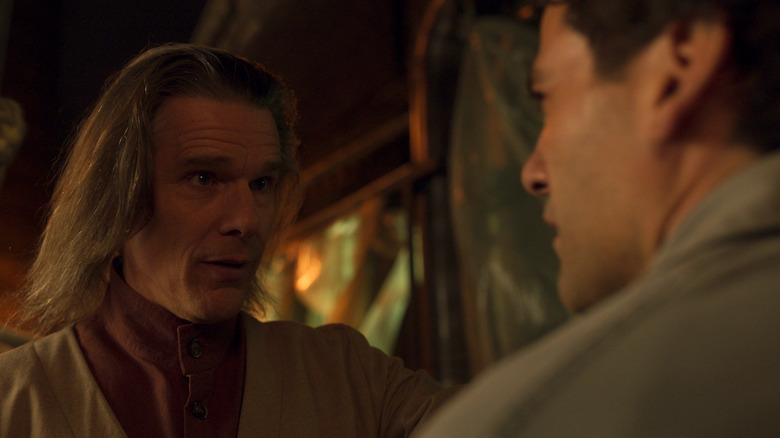
We start off the episode with a cold open on ... someone's hands resting on a table and Bob Dylan's "Every Grain of Sand" playing in the background. We soon find out that those hands (and the forearm with the Egyptian-looking set of scales on it) are Ethan Hawke's (Arthur Harrow). We have some inklings of what Harrow's deal is, with Hawke recently calling his character a "sane lunatic." The opening scene confirms Hawke's "sane lunatic" statement — Harrow smashes a glass, puts the shards in his sandals, and then promptly puts them on. Harrow, it seems, is into some kind of methodical corporal mortification — something a sane lunatic would totally be into.

If we need another hint that "Moon Knight" isn't going to be like other MCU fare, the familiar Marvel opening looks the same but is overlaid with Engelbert Humperdinck's "A Man Without Love," a ballad with uplifting lyrics like, "Every day I wake up, then I start to break up, lonely is a man without love."

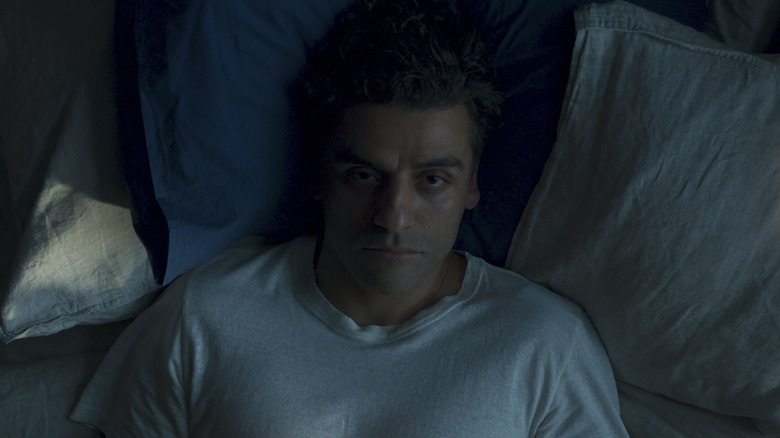
"A Man Without Love" is a good theme song for Steven, sadly; we see him go about what was most likely a regular day for him: waking up anything but refreshed, strapped to a bed surrounded with sand; feeding his one-finned fish while leaving a voice message to his mum; finally getting himself out the door only to miss the bus and arrive late to his job at the British Museum's gift shop.

It's at the museum we find out "Steven with a V" isn't respected at his place of employment, and that he is a big Egyptian guy, which is helpful in giving us the exposition we presumably need that there's a supergroup of nine Egyptian gods called the Ennead. We also find out Steven has a date with a lovely tour guide and has no recollection of asking her out.

After work, Steven relays these developments in his love life and how he loses chunks of time to one of those performance artists who cover themselves in gold and pretend to be a statue. It's a one-sided conversation, of course, but this "statue" bears a canny resemblance to the character in the comics named Crawley who is one of Marc Spector's good friends. (The credits at the end confirm that this man's name is, indeed, Crawley, though we don't know yet if this is just a nod to the source material or if statue-man will have a larger role later on.)

Even Ancient Egypt Had MacGuffins
Steven makes it home and tries to stay awake so he doesn't wander off in his "sleep" again. His efforts are in vain, however — throwing a Rubik's cube into the air and researching Egyptian gods can only work for so long (though it was interesting to see the line about the Ennead and the rift between god and man highlighted in the book he was reading). Poor, dear Steven eventually falls asleep and wakes up with a messed-up jaw in the middle of ... the Alps?

Here's where things start to get weird, folks! And I mean that in the best way. Steven hears the voice of F. Murray Abraham (aka the Egyptian god of the moon, Khonshu — although Steven doesn't know that just yet) ordering him to surrender the body to Marc. Viewers might know who Marc is (kind of), but Steven sure doesn't! Things get stranger still when he finds an Egyptian MacGuffin (a golden scarab) in his pocket and we see the first glimmerings of Khonshu behind him. Before Steven can get his bearings, however, a man from a window (a window Steven's body presumably jumped or fell out of) returns Steven's wave before trying to shoot him. Steven, understandably upset, runs away and tries to blend in with a crowd in the town nearby.

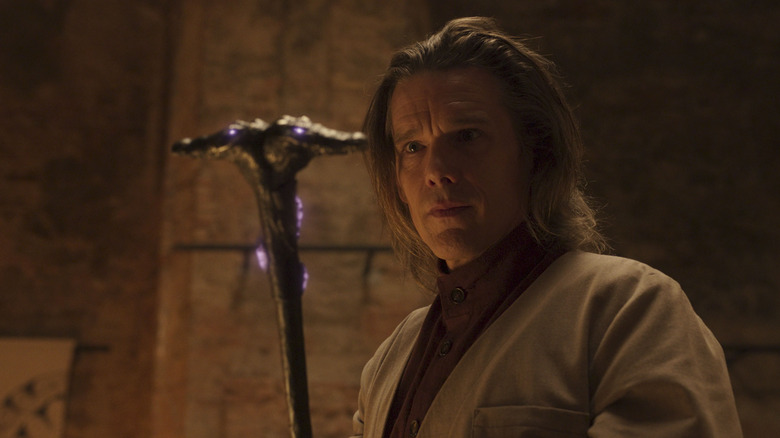
That crowd, however, is made up of members of the cult of Ammut, of which Harrow is their corporeal leader. Hawke's Harrow, who is really channeling some David Koresh vibes here, tells his/Ammut's followers that he's ready to use the scales to judge people. Some dude passes Harrow's test, which involves a cane and the dude holding hands with Harrow, but then a nice old lady doesn't pass and magically dies. Before she becomes deceased, she claims she's been good all her life. Harrow says he believes her, but that maybe she'll do something bad in the future. Ammut, just like the powers that be in "Minority Report," doesn't wait for someone to do something bad to knock them off, it seems, which is — among other things — ethically problematic. 

Who Wants A Cupcake?
Steven sees all this as well and then gets identified in the crowd. He tries to give back the scarab, but in an impressive feat of acting by Isaac, his body doesn't listen to him, most likely because Khonshu (or Marc) is doing all he can to keep the scarab out of Harrow's hands. Steven then blacks out, and we go with him, only to wake up when he does moments later with the men chasing him all bloodied and/or dead. Steven runs as Khonshu continues to yell at him and picks a cupcake truck as his getaway vehicle, because why not?

It's this cupcake car chase scene, set to Wham!'s "Wake Me Up Before You Go-Go," where things get violently funny at Steven's expense (though the henchmen following him probably don't find it so funny). It's an action-packed scene that has more of an MCU feel to it, and it's also impressive from a production standpoint — did Marvel really drive a cupcake truck down this curvy road in the Alps? I'd love to see a behind-the-scenes making of this sequence because it's a great one that holds its own in a franchise full of big action scenes.

Steven and Marc keep flipping back and forth in the sequence as well, though we stay with Steven's point of view for the entirety of it. The goons are coming after him, things go dark and we "wake up" with Steven to find the goons dead and Steven holding a gun. The exasperated voice of Khonshu is along for the ride as well, getting more and more fed up with Steven until the van stops and Steven stares at the remaining goons, and then ... Steven wakes up back in bed in his London flat.

'I Wonder What Fishies Dream About'
Steven thinks at first that what happened in the Alps was all a dream or some such rot. Then he notices that his sweet one-finned fish Gus now has two fins. That's not his only trouble — when he goes to the steak house for his date with the tour guide, he finds out he's actually two days late. It's Sunday, not Friday, and he's very sad and confused, and leaves an extra sad voicemail to his mum where he lied and said the date went great. 

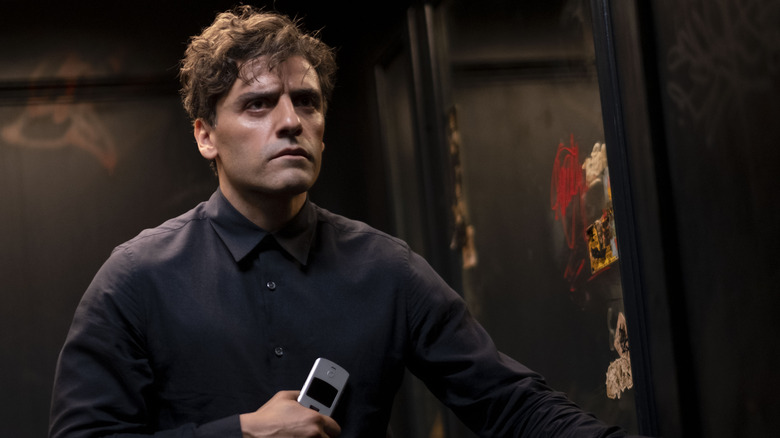
At home, things don't get much better for him. He notices a loose board high up on his ceiling and finds a storage key and a cell phone inside. He turns the phone on and it rings almost immediately — it's someone named Layla, and she's upset and asks Marc where the heck he's been for the past few months. 

Steven, however, doesn't know who Marc is. Layla hangs up on him, and we hear the voice of Marc tell Steven to stop looking. "You're going to get yourself in trouble," Marc says. Steven is understandably freaked out and becomes properly terrified when the electricity goes bonkers. He runs to the elevator and it opens on a darkened hallway that has Khonshu rushing at Steven in a suitably horrifying way. Khonshu disappears before reaching Steven, though an old lady who enters the elevator becomes suitably perturbed by Steven.

Poor Steven then blacks out again and awakes on the city bus on his way to work. Harrow is on the bus, too, he realizes, and he catches a glimpse of Khonshu on the street. Frazzled and terrified, Steven flounders off the bus and rushes into the British Museum.

There Is Chaos In Poor Steven
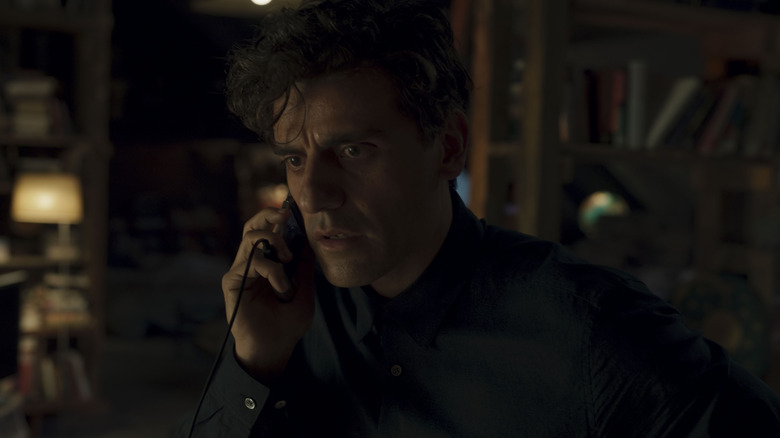
Harrow and Steven have a showdown in the museum. Harrow wants the scarab, and Steven swears he doesn't have it. We get more of an explanation of Ammut's willingness to kill those who haven't yet sinned, and Harrow also uses Ammut's cane to test Steven. Harrow's tattoo doesn't turn green or red, however, but fluctuates. "There's chaos in you," Harrow tells Steven before the latter runs away.

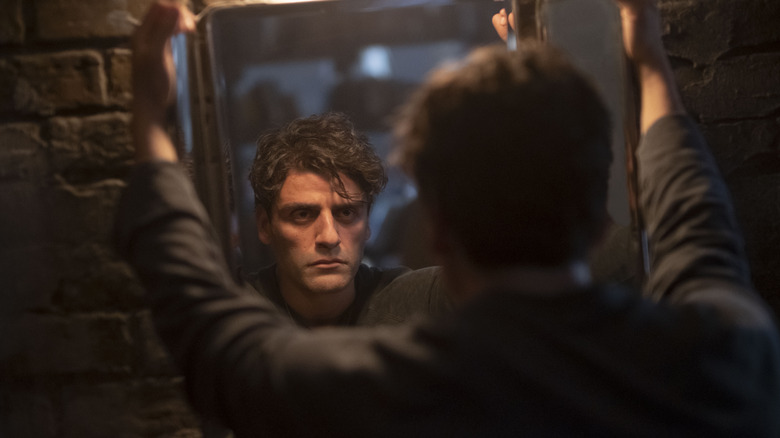
Poor Steven doesn't get much reprieve, however. While he's doing inventory at night, Harrow unleashes some supernatural jackals after him in the museum. He rushes to the bathroom and locks the door, but it's just a matter of time until the jackals break through. Time to get weird once again! (Or weirder, I guess, as things are already pretty weird.) Steven sees Marc in the mirror. "Let me save us," Marc says, and Steven agrees. It's here we see Marc for the first time in the body — the lights flicker, revealing hieroglyphics on the wall and the beginnings of the Moon Knight bandages wrap over Marc.

In a great bit of camera work, we then cut to outside the bathroom and move forward slowly. A sink comes out and crashes against the wall, and the camera jerkily moves its point of view from the sink into the bathroom, where we see Marc as Moon Knight making quick work of the jackal. It's a momentous scene! And it's the last thing we see before the credits.

This episode does a great job of teeing up the story in a compelling way — the choice to show everything from Steven's point of view until the very end made it more intimate than expected, and also set the stage for more than a few entertaining, Marvel-esque moments. I can't wait to see where things go in the next episode — will Steven get control back? Will he keep his job at the British Museum? And where did that scarab go anyway? There's mystery afoot, and I look forward to seeing where the story takes us. 

Before I Say 'Laters Gators!'
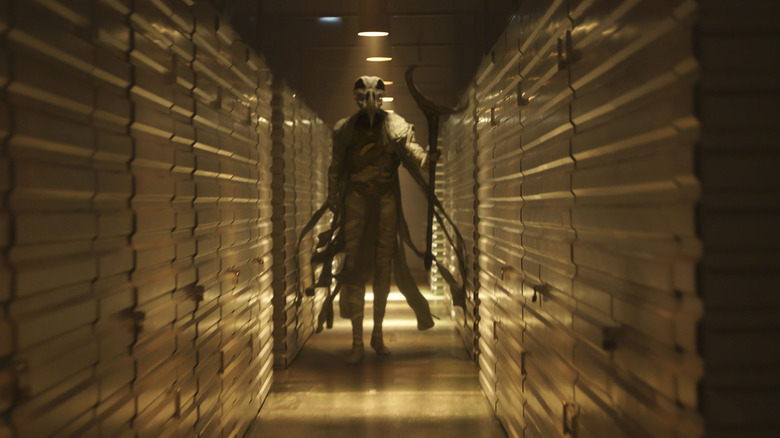
  • Steven says, "laters gators" to his mum when hanging up the phone. Ammut is part crocodile — could Steven's "mum" be Ammut?! Probably not, though I do wonder who, if anyone, is getting Steven's voicemails, sending him postcards, and setting him up in that large flat. Perhaps Marc? Though the mum thing is weird, even for this weird show.
  • Khonshu isn't very nice to Steven, using words like "idiot," "parasite," and "worm." You could be a bit nicer, Egyptian God of the Moon.
  • One of the missed calls on Marc's cellphone is Duchamp, a French mercenary who was also friends with Marc in the comics. Will Duchamp show up later? Or is this just another li'l Easter Egg for us?
  • Don't feed fish sprinkles! No wonder the real Gus died!

New episodes of "Moon Knight" drop on Disney+ on Wednesdays.

Read this next: Every Pre-MCU Marvel Movie Ranked

The post Moon Knight Episode 1 Asks: Who's Marc? appeared first on /Film.

30 Mar 01:58

Some Twitter Traffic Briefly Funneled Through Russian ISP, Thanks To BGP Mishap

by BeauHD
An anonymous reader quotes a report from Ars Technica: Some Internet traffic in and out of Twitter on Monday was briefly funneled through Russia after a major ISP in that country misconfigured the Internet's routing table, network monitoring services said. The mishap lasted for about 45 minutes before RTCOMM, a leading ISP in Russia, stopped advertising its network as the official way for other ISPs to connect to the widely used Twitter IP addresses. Even before RTCOMM dropped the announcement, safeguards prevented most large ISPs from abiding by the routing directive. A visualization of what the event looked like is illustrated on this page from BGPStream. Doug Madory, the director of Internet analysis at network analytics company Kentik, said that what little information is known about Monday's BGP event suggests that the event was the result of the Russian government attempting to block people inside the country from accessing Twitter. Likely by accident, one ISP made those changes apply to the Internet as a whole. "There are multiple ways to block traffic to Twitter," Madory explained in an email. "Russian telecoms are on their own to implement the government-directed blocks, and some elect to use BGP to drop traffic to certain IP ranges. Any network that accepted the hijacked route would send their traffic to this range of Twitter IP space into Russia -- where it likely was just dropped. It is also possible that they could do a man-in-the-middle and let the traffic continue on to its proper destination, but I don't think that is what happened in this case."

Read more of this story at Slashdot.

30 Mar 01:56

'I No Longer Grade My Students' Work -- And I Wish I Had Stopped Sooner'

by BeauHD
"I've been teaching college English for more than 30 years," writes Elisabeth Gruner, a professor of English at the University of Richmond. "Four years ago, I stopped putting grades on written work, and it has transformed my teaching and my students' learning. My only regret is that I didn't do it sooner." The practice she's adopted is called "ungrading," where students are given formative rather than summative feedback. "At the end of the semester they submit a portfolio of revised work, along with an essay reflecting on and evaluating their learning," writes Gruner. "Like most people who ungrade, I reserve the right to change the grade that students assign themselves in that evaluation. But I rarely do, and when I do, I raise grades almost as often as I lower them." Here's here reasoning (via The Conversation): I stopped putting grades on written work for three related reasons -- all of which other professors have also cited as concerns. First, I wanted my students to focus on the feedback I provided on their writing. I had a sense, since backed up by research, that when I put a grade on a piece of writing, students focused solely on that. Removing the grade forced students to pay attention to my comments. Second, I was concerned with equity. For almost 10 years I have been studying inclusive pedagogy, which focuses on ensuring that all students have the resources they need to learn. My studies confirmed my sense that sometimes what I was really grading was a student's background. Students with educational privilege came into my classroom already prepared to write A or B papers, while others often had not had the instruction that would enable them to do so. The 14 weeks they spent in my class could not make up for the years of educational privilege their peers had enjoyed. Third, and I admit this is selfish: I hate grading. I love teaching, though, and giving students feedback is teaching. I am happy to do it. Freed from the tyranny of determining a grade, I wrote meaningful comments, suggested improvements, asked questions and entered into a dialogue with my students that felt more productive -- that felt, in short, more like an extension of the classroom.

Read more of this story at Slashdot.

30 Mar 01:54

Log4Shell Exploited To Infect VMware Horizon Servers With Backdoors, Crypto Miners

by BeauHD
An anonymous reader quotes a report from ZDNet: The Log4Shell vulnerability is being actively exploited to deliver backdoors and cryptocurrency miners to vulnerable VMware Horizon servers. On Tuesday, Sophos cybersecurity researchers said the attacks were first detected in mid-January and are ongoing. Not only are backdoors and cryptocurrency miners being deployed, but in addition, scripts are used to gather and steal device information. Log4Shell is a critical vulnerability in Apache Log4J Java logging library. The unauthenticated remote code execution (RCE) vulnerability was made public in December 2021 and is tracked as CVE-2021-44228 with a CVSS score of 10.0. According to Sophos, the latest Log4Shell attacks target unpatched VMware Horizon servers with three different backdoors and four cryptocurrency miners. The attackers behind the campaign are leveraging the bug to obtain access to vulnerable servers. Once they have infiltrated the system, Atera agent or Splashtop Streamer, two legitimate remote monitoring software packages, may be installed, with their purpose twisted into becoming backdoor surveillance tools. The other backdoor detected by Sophos is Silver, an open source offensive security implant released for use by pen testers and red teams. Sophos says that four miners are linked to this wave of attacks: z0Miner, JavaX miner, Jin, and Mimu, which mine for Monero (XMR). Previously, Trend Micro found z0Miner operators were exploiting the Atlassian Confluence RCE (CVE-2021-26084) for cryptojacking attacks. A PowerShell URL connected to this both campaigns suggests there may also be a link, although that is uncertain. [...] In addition, the researchers uncovered evidence of reverse shell deployment designed to collect device and backup information.

Read more of this story at Slashdot.

30 Mar 01:54

The Drone Operators Who Halted Russian Convoy Headed For Kyiv

by BeauHD
"Ukrainian special forces teamed up with IT professionals on ATV four-wheelers to target the infamous Kiev convoy," writes longtime Slashdot reader darkseid. "Every Help Desk Geek's Walter Mitty fantasy!" The Guardian reports: One week into its invasion of Ukraine, Russia massed a 40-mile mechanized column in order to mount an overwhelming attack on Kyiv from the north. But the convoy of armored vehicles and supply trucks ground to a halt within days, and the offensive failed, in significant part because of a series of night ambushes carried out by a team of 30 Ukrainian special forces and drone operators on quad bikes, according to a Ukrainian commander. The drone operators were drawn from an air reconnaissance unit, Aerorozvidka, which began eight years ago as a group of volunteer IT specialists and hobbyists designing their own machines and has evolved into an essential element in Ukraine's successful David-and-Goliath resistance. [...] The unit's commander, Lt Col Yaroslav Honchar, gave an account of the ambush near the town of Ivankiv that helped stop the vast, lumbering Russian offensive in its tracks. He said the Ukrainian fighters on quad bikes were able to approach the advancing Russian column at night by riding through the forest on either side of the road leading south towards Kyiv from the direction of Chernobyl. The Ukrainian soldiers were equipped with night vision goggles, sniper rifles, remotely detonated mines, drones equipped with thermal imaging cameras and others capable of dropping small 1.5kg bombs. "This one little unit in the night destroyed two or three vehicles at the head of this convoy, and after that it was stuck. They stayed there two more nights, and [destroyed] many vehicles," Honchar said. The Russians broke the column into smaller units to try to make headway towards the Ukrainian capital, but the same assault team was able to mount an attack on its supply depot, he claimed, crippling the Russians' capacity to advance. "The first echelon of the Russian force was stuck without heat, without oil, without bombs and without gas. And it all happened because of the work of 30 people," Honchar said. "The Aerorozvidka unit also claims to have helped defeat a Russian airborne attack on Hostomel airport, just north-west of Kyiv, in the first day of the war," adds the Guardian. Similar to the convoy ambush, they "[used] drones to locate, target and shell about 200 Russian paratroopers concealed at one end of the airfield."

Read more of this story at Slashdot.

29 Mar 21:07

Boomers vs. Videogames

by Shamus

Normally when I make a video for YouTube, I take my transcript and turn it into an article. This usually involves cutting out the parts that won’t work in print: Bits of footage, audio gags, jokes where my narration disagrees with the slides I’m showing, and so on. This video is quite short – about 14 minutes – and it has a lot of these sorts of video-only shenanigans. If I cut them all out, then there wouldn’t be much left.

So rather that clean up the script for print, I’m going to publish it as-is.[1] I don’t know how well this will work, but I’m sure you’ll let me know in the comments. Anyway, here it is…


I’ve said before that I’m older than your typical YouTube videogame creator.  I’m older than the Mortal Kombat franchise. (1992) I’m older than the original NES. (1985) Older than Pac-Man. (1980) Older than the original Atari. (1977) I’m even older than Pong. (1972) I’m fifty, which means I’m about a year older than commercial videogames.

Because of this, I sometimes get comments where some kid will hit me with an “ok boomer” when they think I’m being out of touch. At first I didn’t think anything of it. I figured they were just using the “ok boomer” meme figuratively, not literally. Like saying “ok grampa”. 

And fine. It’s no big deal. This is YouTube. We’ve all been called worse. 


Link (YouTube)

But then I noticed a trend of people calling the original Doom a “boomer shooter” and I realized that there’s an entire generation of kids out there who have no idea what “boomer” actually means or where the generational demarcation points are. “Boomer” just means “old person” now, and that makes it really confusing to discuss generational differences. 

So let’s talk about the boomers, and then we’re going to talk about who is really screwing up the videogame industry these days. 

Rise of the Boomers

While these guys are towering icons of boomer culture, the Fab Four aren't themselves boomers. Born in the early 1940s, all four of the Beatles fall into the 'silent generation'. As the name suggests, people don't talk about the silent gen very much.

While we divide the generations up according to birth years, a generation is really more about culture than it is about age. The baby boomer generation is comprised of people born between 1946 and 1964. What really set these people apart wasn’t their age, but their lifestyle.

Earlier generations treated education like an optional bonus on the way to the workforce. They either had no public schooling, or they left school in their early teens so they could help support their families by working at a farm or a factory. The boomers were the first generation to experience the full 12 years of schooling in significant numbers.

Earlier generations were tightly connected to their extended families. It wasn’t uncommon to grow up under the same roof as your grandparents, aunts, and uncles. The baby boomers were the first generation to grow up in the newly-forming suburbs. For those boomer kids, “family” just meant the “nuclear family” – mom and dad and the kids.

Mass media – and television in particular – gave baby boomers a strong sense of cultural identity. Culture was homogenizing, making it possible for everyone to experience the same TV shows, the same movies, and the same music. When the boomers went off to college – something they were far more likely to do than their parents – they might travel a thousand miles away to a place they’d never been to before. And when they got there, they would discover that they had more in common with their new classmates than with the families they left behind. This sounds normal to us now, but at the time this was a very radical shift. The new generation was rejecting the culture of their parents and forming their own.

This new phenomena was given a name… the “generation gap”. These days we use the term to talk about the common divide between the old and the young, but back in the 1970s this specifically referred to the tensions between boomers and their parents. Incidentally, this is where the clothing chain The Gap got its name

To most of you, this should sound pretty familiar. Full K through 12 education? Nuclear family? Living in the ‘burbs? Distinct generational identity marked by particular mass media? That sounds like kids growing up today. And I think that’s what makes the boomers so interesting. They were the first modern generation. Their childhood experiences have more in common with today’s kids than with the generations that came before.

The baby boom generation ended in 1964. Yeah, I know it sounds weird to say that the height of Beatlemania marked the end of the baby boom, but if the boomer period lasted any longer then you’d have a bunch of boomer kids who had boomer parents, and that’s not how generations work.

People born between 1965 and 1980 are called Generation X. That’s me. I realize that we’re all just “old people” to the under-thirty crowd, but our generations are pretty distinct. Gen X has its own TV shows, movies, and music.

Okay, hopefully we’ve got the generations all sorted out. So let’s talk about what this has to do with videogames.

Dawn of Gaming

Boomers might not be big fans of videogames today, but their generation is the one that got the industry started. Boomers built those primitive early machines[2] while Gen-Xers like me were literally still in diapers. Boomers designed the first arcade cabinets and invented the first gen home gaming consoles.

It wasn’t until the late 80s that my generation was finally old enough to make our own contributions to the hobby. Which brings me to the idea of Doom being a “boomer shooter”. 

Doom came out in 1993. Here is the team that made Doom:

This picture perfectly captures the personality of everyone involved. It's remarkable.

By 1993, Baby boomers were nearing 50. You’ll notice that these guys are NOT 50. The same was true for most of the people who played the game. I was 22 at the time. I’m sure a few middle-aged boomers played a little Doom when they could steal a few minutes away from their families and careers, but Doom was overwhelmingly a game by and for the 20-somethings of Generation X. So when you call it a “boomer shooter” you’re off by about three decades. In fact, Doom was my generation’s first major contribution to the hobby, so seeing it called a “boomer shooter” really stings. 

Some people try to justify the term by saying “It’s a boomer shooter because it goes ‘boom'” For one thing, all shooters go boom. That’s kinda the point of a shooter. Secondly, this is like saying the original Civilization is a millennial game because it covers millenniums of history. That’s just confusing for no reason.

Here I have to admit that language prescriptivism is a doomed undertaking. Yes, there are over a dozen better terms we could use for these games, but the term “boomer shooter” has stuck and people are going to continue to use it regardless of how annoying or wrong it might be. I can’t change that, but that doesn’t mean it’s not worth complaining about.

And speaking of complaining, let’s talk about the generation that’s ruining this hobby…

Blame it on Boomer

I began writing about games professionally about 14 years ago when I became a contributor at the Escapist. That was right around the point where the industry finished its first big round of consolidations that saw the big publishers gobble up all of the smaller studios. At the time, most of those publishers were run by baby boomers. And so for years I’ve been referring to the industry leadership as “boomers”. But as I ran the numbers in researching this video, I realized that this isn’t really true anymore.

So let’s do a quick CEO headcount and see who’s running things these days. And just to be clear, I’m just focusing on western developers here. The generational divide works differently in Japan and I’m not qualified to comment on that culture, so I’m not including them in this list.

Let’s start off with the big one:

Phil Spencer is the CEO of Microsoft gaming, which means he’s in charge of Xbox and a sizable chunk of PC stuff. He was born in 1968, which means he’s Gen X.

Tim Sweeney is the CEO of Epic Games. He was born just a year before me, so he’s also Gen X. 

Bethesda is owned by Zenimax Media. For years Zenimax was run by baby boomer Robert A. Altman. But Altman has since passed away and Zenimax is now owned by Microsoft. Which means Phil Spencer controls this one, too.

Take-Two Interactive is run by Strauss Zelnick. He might not look it, but he was born in 1957, which makes him the first baby boomer on our list.

Cartoon villain Bobby Kotick runs the slaughterhouse at Activision. He was born in 1963, which means he’s one of the youngest boomers out there. If he was any younger, he’d be Gen-X. Oh but wait, Microsoft just bought Activision and Kotick is probably on the way out. After the merger, this will be another superconclomerate for Phil Spencer to run.

Ubisoft is the house of microtransactions, DRM and NFTs, and that place is run by Yves Guillemot. Born in 1960, he’s a boomer.

CD Projekt is run by Marcin Iwi?ski. He was born in 1974, which puts him on team Gen-X.

Andrew Wilson is running the lootbox factory at EA. Like Iwi?ski, he was born in ’74, so he’s another Gen Xer.

2k Games is run by David Ismailer, who doesn’t have a Wikipedia page. We don’t know his exact age, and pictures of him are hard to come by. Still, he’s clearly not a baby boomer. Heck, is this guy even 40 yet? Is this our first millennial CEO? I don’t know. Maybe this is an old picture or maybe he’s another immortal like Strauss Zelnick. Whatever. Let’s just assume he’s Gen-X and move on.

Just to be inclusive, let’s throw mobile / social games developer King.com into the list. King is run by… 

Oh.

Ok, so King was bought by Activision, which was bought by Microsoft, which means this is another company that has fallen into Phil Spencer’s hands. Is anyone keeping an eye on this guy? It seems like he could do a lot of damage if he wanted to.

And finally we have the wildcard, Valve. Like Bobby Kotick, Valve head honcho Gabe Newell is close to the line between boomer and X-er, landing just on the boomer side.

So there it is. That’s the industry as it stands in early 2022. What a disappointment. I always hoped that the generational turnover would bring us a better class of leadership, but here we are. My generation is running the industry, and things are as bad as they’ve ever been. 

To a certain extent, I think the failings of the Gen-X CEOs are a lot less forgivable than the failings of their boomer predecessors. Videogames didn’t show up until boomers were in their 30s, and the industry didn’t really take off until the generation was well into middle age. These people didn’t grow up playing games. The hobby isn’t personal to them, so I can see why they would look at games as just another disposable consumer product.

But I can’t give a pass like that to the Gen-X guys on our list. Take Andrew Wilson for example. He was 11 when the original Famicom came to the west and seventeen when the Super Nintendo dropped. He was nineteen when id Software unleashed Doom on the world. Even if he didn’t personally experience these things, he should have some appreciation of them through his peers. He ought to understand how games work, what makes people connect with them, and he ought to understand the deep impression a well-crafted game can leave on the audience. Which makes his constant assault on the hobby all the more offensive. 

It’s nice that his team apologized for the disaster of Battlefront 2, but it’s even more mystifying that they made the blunder in the first place. How could you not know how damaging lootboxes would be to the experience? How could you not know how offensive this would be to your customers? Your audience isn’t some mysterious unapproachable alien group. They’re not strangers with a different language and cultural background. They’re not on the other side of some impossible generation gap. Your customers are the people you grew up with. It’s the culture you grew up in. You should know better. Being a Gen-Xer that doesn’t understand what gamers want is like being a millenial that doesn’t understand smartphones.

And this is what I find really depressing about the state of things right now. 

Today’s gaming industry is one where you use a privacy-invading launcher to buy a DRM locked game with always online single player where you use an in-game shop to buy lootboxes to gamble for NFTs as part of some godawful pay-to-win design. Videogames are barely a hobby at this point. It’s basically a bunch of morally and artistically bankrupt companies looking for the next grift. Okay, these companies aren’t ALL that bad, and I think a couple of them actually try to do right by their customers.  But still, the overall state of the industry is horrendous and we mostly have Gen-X to blame for it. What a disappointment.

I guess we have to wait another 15 years for my generation to retire, and hope millennials are better stewards of the industry when they get to the top.

29 Mar 21:07

Elden Ring New Mod Introduces Transmogrification With Some Gameplay Tweaks

by Francesco De Meo

Elden Ring

A new Elden Ring mod that has been shared online this week introduces some gameplay tweaks that make up for the lack of transmogrification in the game, allowing players to wear whatever armor they desire without having to deal with reduced defense stats and poise.

The ERTransmog mod removes weight, physical and magic defense stats from all armors and introduces tweaks to three Arsenal talismans, replicating the stats of heavy, medium, and light armor. This makes it possible for players to wear whatever armor set they want without having to sacrifice defense.

I removed weight, physical and magic defenses and also adjusted the poise of all armor in the game to make it cosmetic only. Defenses and poise are now supported by all 3 arsenal talismans.

You can craft them from crafting, at the very bottom, in "all items". One for light armor, another for medium armor, and one for heavy armor.
Each talisman weighs a precise weight, which corresponds to the load of the original armors ; it is therefore necessary to invest skill points in endurance, in order to be able to wear them.

Unfortunately, using this mod involves using a talisman slot to manage defenses, it also replaces 3 talismans that you will no longer be able to benefit from.

While this is far from being optimal, the Elden Ring ERTransmog mod takes a very creative approach that works well for the most part. You can download the mod from Nexus Mods.

Elden Ring is now available on PC, PlayStation 5, PlayStation 4, Xbox Series X, Xbox Series S, and Xbox One worldwide. Learn more about the game by checking out my review.

Elden Ring is not only the best action RPG developed by From Software but one of the best open-world titles ever made. A masterclass of game design, Elden Ring isn't just a game but an epic dark fantasy journey that no one will be able to forget for a very long time.

The post Elden Ring New Mod Introduces Transmogrification With Some Gameplay Tweaks by Francesco De Meo appeared first on Wccftech.

29 Mar 21:05

Sophos Warns of Attacks Exploiting Recent Firewall Vulnerability

by Ionut Arghire

Sophos on Monday raised the alarm about a recently patched Sophos Firewall vulnerability being exploited in attacks.

Impacting the User Portal and Webadmin of Sophos Firewall, the bug is described as an authentication bypass that could lead to remote code execution.

read more

29 Mar 20:54

The Best Gadgets for Hikers and Campers

by Kegan Mooney

Just because you love camping and hiking doesn't mean that you can't bring along some modern gadgets with you. In fact, there are tons of modern camping and hiking gadgets that can not only help to keep you safe, but also make your trip much more enjoyable too.

29 Mar 20:54

PlayStation Plus is merging with PlayStation Now with three new flexible options

by pwright@gamingnexus.com

PlayStation is merging their two flagship subscription services, PlayStation Plus and PlayStation Now. The all-new service, now bundled under the PlayStation Plus brand, will feature three tiers offering various features. The move is touted as a method for PlayStation to better compete with Xbox Game Pass. 

PS Plus Essential provides the same benefits that PlayStation Plus members are getting today; which includes two monthly downloadable games, online multiplayer access, exclusive game discounts and cloud storage for saved games. It also costs the same as the current PS Plus subscription $59.99/€59.99/£49.99 a year.

PS Plus Extra includes everything above but adds a collection of 400 of the most enjoyable PS4 and PS5 games which can be downloaded. This collection will include the likes of Spider-Man, Spider-Man: Miles Morales, God of War, Returnal, Mortal Kombat 11 and Death Stranding. The rest of the lineup will be announced nearer the time. Like Game Pass and PlayStation Now, additional titles will be added on a regular basis. PS Plus Extra will cost $99.99/€99.99/£83.99 a year.

PS Plus Premium includes everything from PS Plus Essential and Extra, but also adds classic games streaming from the PS1, PS2 and PSP, PS3 and PS4 game streaming, and time-limited game trials. This is the costliest tier priced at $119.99/€119.99/£99.99 a year.

Unlike Xbox Game Pass, PlayStation confirmed that new first-party releases will not be added to any tier at launch. Full details can be found on the PlayStation Blog

29 Mar 20:54

Hackers Gaining Power of Subpoena Via Fake “Emergency Data Requests”

by BrianKrebs

There is a terrifying and highly effective “method” that criminal hackers are now using to harvest sensitive customer data from Internet service providers, phone companies and social media firms. It involves compromising email accounts and websites tied to police departments and government agencies, and then sending unauthorized demands for subscriber data while claiming the information being requested can’t wait for a court order because it relates to an urgent matter of life and death.

In the United States, when federal, state or local law enforcement agencies wish to obtain information about who owns an account at a social media firm, or what Internet addresses a specific cell phone account has used in the past, they must submit an official court-ordered warrant or subpoena.

Virtually all major technology companies serving large numbers of users online have departments that routinely review and process such requests, which are typically granted as long as the proper documents are provided and the request appears to come from an email address connected to an actual police department domain name.

But in certain circumstances — such as a case involving imminent harm or death — an investigating authority may make what’s known as an Emergency Data Request (EDR), which largely bypasses any official review and does not require the requestor to supply any court-approved documents.

It is now clear that some hackers have figured out there is no quick and easy way for a company that receives one of these EDRs to know whether it is legitimate. Using their illicit access to police email systems, the hackers will send a fake EDR along with an attestation that innocent people will likely suffer greatly or die unless the requested data is provided immediately.

In this scenario, the receiving company finds itself caught between two unsavory outcomes: Failing to immediately comply with an EDR — and potentially having someone’s blood on their hands — or possibly leaking a customer record to the wrong person.

“We have a legal process to compel production of documents, and we have a streamlined legal process for police to get information from ISPs and other providers,” said Mark Rasch, a former prosecutor with the U.S. Department of Justice.

“And then we have this emergency process, almost like you see on [the television series] Law & Order, where they say they need certain information immediately,” Rasch continued. “Providers have a streamlined process where they publish the fax or contact information for police to get emergency access to data. But there’s no real mechanism defined by most Internet service providers or tech companies to test the validity of a search warrant or subpoena. And so as long as it looks right, they’ll comply.”

To make matters more complicated, there are tens of thousands of police jurisdictions around the world — including roughly 18,000 in the United States alone — and all it takes for hackers to succeed is illicit access to a single police email account.

THE LAPSUS$ CONNECTION

The reality that teenagers are now impersonating law enforcement agencies to subpoena privileged data on their targets at whim is evident in the dramatic backstory behind LAPSUS$, the data extortion group that recently hacked into some of the world’s most valuable technology companies, including Microsoft, Okta, NVIDIA and Vodafone.

In a blog post about their recent hack, Microsoft said LAPSUS$ succeeded against its targets through a combination of low-tech attacks, mostly involving old-fashioned social engineering — such as bribing employees at or contractors for the target organization.

“Other tactics include phone-based social engineering; SIM-swapping to facilitate account takeover; accessing personal email accounts of employees at target organizations; paying employees, suppliers, or business partners of target organizations for access to credentials and multi-factor authentication (MFA) approval; and intruding in the ongoing crisis-communication calls of their targets,” Microsoft wrote of LAPSUS$.

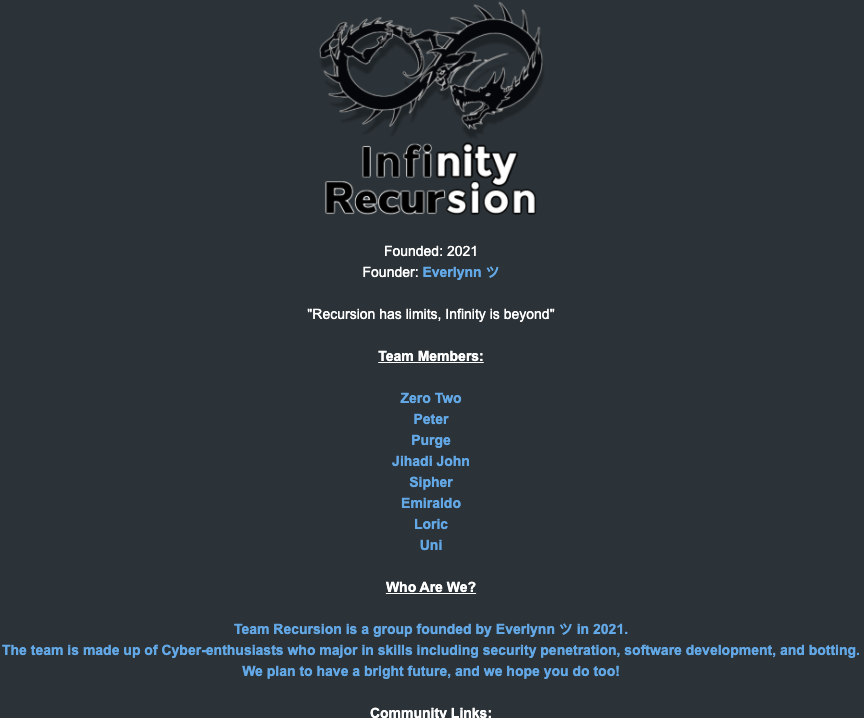
The roster of the now-defunct “Infinity Recursion” hacking team, from which some members of LAPSUS$ allegedly hail.

Researchers from security firms Unit 221B and Palo Alto Networks say that prior to launching LAPSUS$, the group’s leader “White” (a.k.a. “WhiteDoxbin,” “Oklaqq”) was a founding member of a cybercriminal group calling itself the “Recursion Team.” This group specialized in SIM swapping targets of interest and participating in “swatting” attacks, wherein fake bomb threats, hostage situations and other violent scenarios are phoned in to police as part of a scheme to trick them into visiting potentially deadly force on a target’s address.

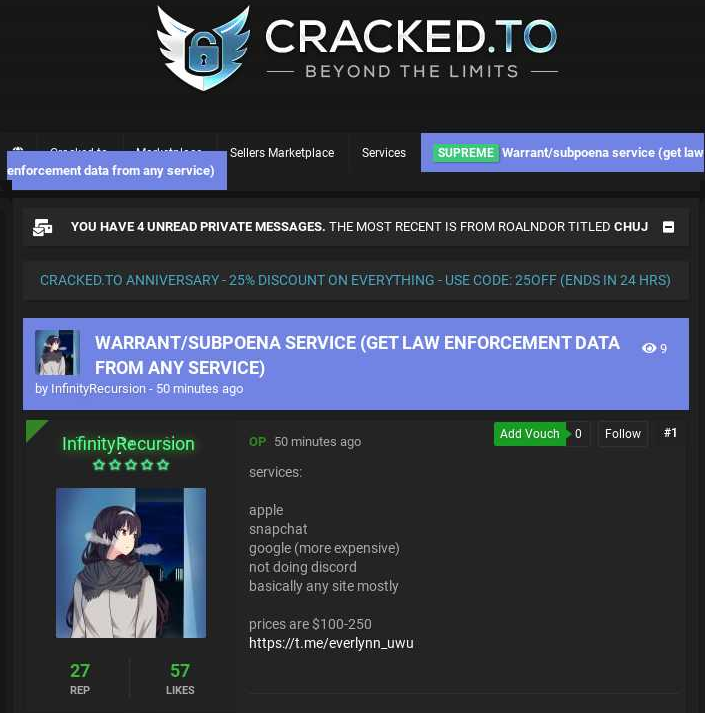
The founder of the Recursion Team was a then 14-year-old from the United Kingdom who used the handle “Everlynn.” On April 5, 2021, Everlynn posted a new sales thread to the cybercrime forum cracked[.]to titled, “Warrant/subpoena service (get law enforcement data from any service).” The price: $100 to $250 per request.

Everlynn advertising a warrant/subpoena service based on fake EDRs. Image: Ke-la.com.

“Services [include] Apple, Snapchat, Google (more expensive), not doing Discord, basically any site mostly,” read Everlynn’s ad, which was posted by the user account “InfinityRecursion.”

A month prior on Cracked, Everlynn posted a sales thread, “1x Government Email Account || BECOME A FED!,” which advertised the ability to send email from a federal agency within the government of Argentina.

“I would like to sell a government email that can be used for subpoena for many companies such as Apple, Uber, Instagram, etc.,” Everlynn’s sales thread explained, setting the price at $150. “You can breach users and get private images from people on SnapChat like nudes, go hack your girlfriend or something haha. You won’t get the login for the account, but you’ll basically obtain everything in the account if you play your cards right. I am not legally responsible if you mishandle this. This is very illegal and you will get raided if you don’t use a vpn. You can also breach into the government systems for this, and find LOTS of more private data and sell it for way, way more.”

Last week, the BBC reported that authorities in the United Kingdom had detained seven individuals aged 16 to 21 in connection with LAPSUS$.

TAKING ON THE DOXBIN

It remains unclear whether White or Everlynn were among those detained; U.K. police declined to name the suspects. But White’s real-life identity became public recently after he crossed the wrong people.

The de-anonymization of the LAPSUS$ leader began late last year after he purchased a website called Doxbin, a long-running and highly toxic online community that is used to “dox” or post deeply personal information on people.

Based on the feedback posted by Doxbin members, White was not a particularly attentive administrator. Longtime members soon took to harassing him about various components of the site falling into disrepair. That pestering eventually prompted White to sell Doxbin back to its previous owner at a considerable loss. But before doing so, White leaked the Doxbin user database.

White’s leak triggered a swift counterpunch from Doxbin’s staff, which naturally responded by posting on White perhaps the most thorough dox the forum had ever produced.

KrebsOnSecurity recently interviewed the past and current owner of the Doxbin — an established hacker who goes by the handle “KT.” According to KT, it is becoming more common for hackers to use EDRs for stalking, hacking, harassing and publicly humiliating others.

KT shared several recent examples of fraudulent EDRs obtained by hackers who bragged about their success with the method.

“Terroristic threats with a valid reason to believe somebody’s life is in danger is usually the go-to,” KT said, referring to the most common attestation that accompanies a fake EDR.

One of the phony EDRs shared by KT targeted an 18-year-old from Indiana, and was sent to the social media platform Discord earlier this year. The document requested the Internet address history of Discord accounts tied to a specific phone number used by the target. Discord complied with the request.

“Discord replies to EDRs in 30 minutes to one hour with the provided information,” KT claimed.

Asked about the validity of the unauthorized EDR shared by KT, Discord said the request came from a legitimate law enforcement account that was later determined to have been compromised.

“We can confirm that Discord received requests from a legitimate law enforcement domain and complied with the requests in accordance with our policies,” Discord said in a written statement. “We verify these requests by checking that they come from a genuine source, and did so in this instance. While our verification process confirmed that the law enforcement account itself was legitimate, we later learned that it had been compromised by a malicious actor. We have since conducted an investigation into this illegal activity and notified law enforcement about the compromised email account.”

KT said fake EDRs don’t have to come from police departments based in the United States, and that some people in the community of those sending fake EDRs are hacking into police department emails by first compromising the agency’s website. From there, they can drop a backdoor “shell” on the server to secure permanent access, and then create new email accounts within the hacked organization.

In other cases, KT said, hackers will try to guess the passwords of police department email systems. In these attacks, the hackers will identify email addresses associated with law enforcement personnel, and then attempt to authenticate using passwords those individuals have used at other websites that have been breached previously.

“A lot of governments overseas are using WordPress, and I know a kid on Telegram who has multiple shells on gov sites,” KT said. “It’s near impossible to get U.S. dot-govs nowadays, although I’ve seen a few people with it. Most govs use [Microsoft] Outlook, so it’s more difficult because theres usually some sort of multi-factor authentication. But not all have it.”

According to KT, Everlynn and White recently had a falling out, with White paying KT to publish a dox on Everlynn and to keep it pinned to the site’s home page. That dox states that Everlynn is a 15-year-old from the United Kingdom who has used a variety of monikers over the past year alone, including “Miku” and “Anitsu.”

KT said Everlynn’s dox is accurate, and that the youth has been arrested multiple times for issuing fake EDRs. But KT said each time Everlynn gets released from police custody, they go right back to committing the same cybercrimes.

“Anitsu (Miku, Everlynn), an old staff member of Doxbin, was arrested probably 4-5 months ago for jacking government emails used for EDR’ing,” KT said. “White and him are not friends anymore though. White paid me a few weeks ago to pin his dox on Doxbin. Also, White had planned to use EDRs against me, due to a bet we had planned; dox for dox, winner gets 1 coin.”

A FUNDAMENTALLY UNFIXABLE PROBLEM?

Nicholas Weaver, a security specialist and lecturer at the University of California, Berkeley, said one big challenge to combating fraudulent EDRs is that there is fundamentally no notion of global online identity.

“The only way to clean it up would be to have the FBI act as the sole identity provider for all state and local law enforcement,” Weaver said. “But even that won’t necessarily work because how does the FBI vet in real time that some request is really from some podunk police department?”

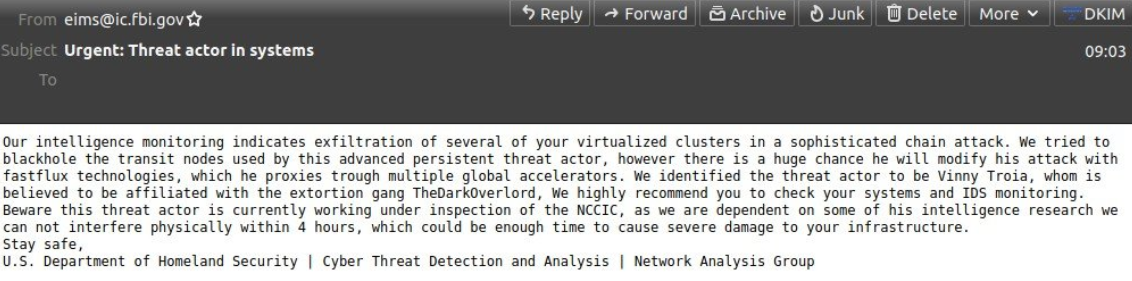
It’s not clear that the FBI would be willing or able to take on such a task. In November 2021, KrebsOnSecurity broke the news that hackers sent a fake email alert to thousands of state and local law enforcement entities through the FBI’s Law Enforcement Enterprise Portal (LEEP). In that attack, the intruders abused a fairly basic and dangerous coding error on the website, and the fake emails all came from a real fbi.gov address.

The phony message sent in November 2021 via the FBI’s email system.

KrebsOnSecurity asked the FBI whether it had any indication that its own systems were used for unauthorized EDRs. The FBI declined to answer that question, but confirmed it was aware of different schemes involving phony EDRs targeting both the public and the agency’s private sector partners.

“We take these reports seriously and vigorously pursue them,” reads a written statement shared by the FBI. “Visit this page for tips and resources to verify the information you are receiving. If you believe you are a victim of an emergency data request scheme, please report to www.ic3.gov or contact your local FBI field office.”

Rasch said while service providers need more rigorous vetting mechanisms for all types of legal requests, getting better at spotting unauthorized EDRs would require these companies to somehow know and validate the names of every police officer in the United States.

“One of the problems you have is there’s no validated master list of people who are authorized to make that demand,” Rasch said. “And that list is going to change all the time. But even then, the entire system is only as secure as the least secure individual police officer email account.”

The idea of impersonating law enforcement officers to obtain information typically only available via search warrant or subpoena is hardly new. A fictionalized example appeared in the second season of the hit television show Mr. Robot, wherein the main character Elliot pretends to be a police officer to obtain location data in real time from a cellular phone company.

Weaver said what probably keeps fraudulent EDRs from being more common is that most people in the criminal hacking community perceive it as too risky. This is supported by the responses in discussion threads across multiple hacking forums where members sought out someone to perform an EDR on their behalf.

“It’s highly risky if you get caught,” Weaver said. “But doing this is not a matter of skill. It’s one of will. It’s a fundamentally unfixable problem without completely redoing how we think about identity on the Internet on a national scale.”

The current situation with fraudulent EDRs illustrates the dangers of relying solely on email to process legal requests for highly sensitive subscriber data. In July 2021, a bipartisan group of U.S. senators introduced new legislation to combat the growing use of counterfeit court orders by scammers and criminals. The bill calls for funding for state and tribal courts to adopt widely available digital signature technology that meets standards developed by the National Institute of Standards and Technology.

“Forged court orders, usually involving copy-and-pasted signatures of judges, have been used to authorize illegal wiretaps and fraudulently take down legitimate reviews and websites by those seeking to conceal negative information and past crimes,” the lawmakers said in a statement introducing their bill.

The Digital Authenticity for Court Orders Act would require federal, state and tribal courts to use a digital signature for orders authorizing surveillance, domain seizures and removal of online content.

29 Mar 20:53

Sony’s PlayStation Plus subscription service is getting a much-needed overhaul in June

by Pranob Mehrotra

In a bid to keep up with Microsoft’s excellent Xbox Game Pass offerings, Sony is giving its PlayStation Plus subscription service a much-needed revamp. The company has announced that the all-new PlayStation Plus will launch in June with over 700 games and several other benefits.

In December last year, we first saw reports about Sony’s plan to launch a PlayStation competitor for the Xbox Game Pass. Sony has now confirmed its plans in a blog post, which highlights all the changes coming to its PlayStation Plus and PlayStation Now subscription services. To begin with, Sony is combining the two into an all-new PlayStation Plus subscription. The new subscription service will be available in three membership tiers across the world, offering the following benefits:

  • PlayStation Plus Essential
    • Benefits:
      • Provides the same benefits that PlayStation Plus members are getting today, such as:
        • Two monthly downloadable games
        • Exclusive discounts
        • Cloud storage for saved games
        • Online multiplayer access
      • There are no changes for existing PlayStation Plus members in this tier
    • Pricing for PlayStation Plus Essential remains the same as the current price for PlayStation Plus
      • US: $9.99 monthly / $24.99 quarterly / $59.99 yearly
      • UK: £6.99 monthly / £19.99 quarterly / £49.99 yearly
      • Europe: €8.99 monthly / €24.99 quarterly / €59.99 yearly
      • Japan: ¥850 monthly / ¥2,150 quarterly / ¥5,143 yearly
  • PlayStation Plus Extra
    • Benefits:
      • Provides all the benefits from the Essential tier
      • Adds a catalog of up to 400 of the most enjoyable PS4 and PS5 games – including blockbuster hits from our PlayStation Studios catalog and third-party partners. Games in the Extra tier are downloadable for play.
    • Pricing:
      • US: $14.99 monthly / $39.99 quarterly / $99.99 yearly
      • UK: £10.99 monthly / £31.99 quarterly / £83.99 yearly
      • Europe: €13.99 monthly / €39.99 quarterly / €99.99 yearly
      • Japan: ¥1,300 monthly / ¥3,600 quarterly / ¥8,600 yearly
  • PlayStation Plus Premium
    • Benefits:
      • Provides all the benefits from Essential and Extra tiers
      • Adds up to 340 additional games, including:
        • PS3 games available via cloud streaming
        • A catalog of beloved classic games available in both streaming and download options from the original PlayStation, PS2 and PSP generations
      • Offers cloud streaming access for original PlayStation, PS2, PSP and PS4 games offered in the Extra and Premium tiers in markets where PlayStation Now is currently available. Customers can stream games using PS4 and PS5 consoles, and PC
      • Time-limited game trials will also be offered in this tier, so customers can try select games before they buy.
    • Pricing:
      • US: $17.99 monthly / $49.99 quarterly / $119.99 yearly
      • UK: £13.49 monthly / £39.99 quarterly / £99.99 yearly
      • Europe: €16.99 monthly / €49.99 quarterly / €119.99 yearly
      • Japan: ¥1,550 monthly / ¥4,300 quarterly / ¥10,250 yearly

In markets where cloud streaming is not available, Sony will offer a PlayStation Plus Deluxe tier. It will be a bit cheaper than the Premium tier, and it will offer the same benefits except for cloud streaming support.

As far as the game library is concerned, Sony says that the new subscription will offer the following titles at launch:

  • Death Stranding
  • God of War
  • Marvel’s Spider-Man
  • Marvel’s Spider-Man: Miles Morales
  • Mortal Kombat 11
  • Returnal

Sony also says that it’s working with its game developers and third-party partners to bring more titles to the new PlayStation Plus library.

Sony will go with a phased regional rollout for the new subscription service, starting with several markets in Asia this June. North America, Europe, and the other regions where PlayStation Plus is currently available should receive the revamped subscription shortly thereafter. The service should become available globally by the end of H1 2022. For additional details, check out Sony’s official blog post by following the source link below.


Source: PlayStation Blog

The post Sony’s PlayStation Plus subscription service is getting a much-needed overhaul in June appeared first on xda-developers.

29 Mar 20:50

Hackers Gaining Power of Subpoena Via Fake 'Emergency Data Requests'

by msmash
Krebs on Security reports: In the United States, when federal, state or local law enforcement agencies wish to obtain information about who owns an account at a social media firm, or what Internet addresses a specific cell phone account has used in the past, they must submit an official court-ordered warrant or subpoena. Virtually all major technology companies serving large numbers of users online have departments that routinely review and process such requests, which are typically granted as long as the proper documents are provided and the request appears to come from an email address connected to an actual police department domain name. But in certain circumstances -- such as a case involving imminent harm or death -- an investigating authority may make what's known as an Emergency Data Request (EDR), which largely bypasses any official review and does not require the requestor to supply any court-approved documents. It is now clear that some hackers have figured out there is no quick and easy way for a company that receives one of these EDRs to know whether it is legitimate. Using their illicit access to police email systems, the hackers will send a fake EDR along with an attestation that innocent people will likely suffer greatly or die unless the requested data is provided immediately. In this scenario, the receiving company finds itself caught between two unsavory outcomes: Failing to immediately comply with an EDR -- and potentially having someone's blood on their hands -- or possibly leaking a customer record to the wrong person. "We have a legal process to compel production of documents, and we have a streamlined legal process for police to get information from ISPs and other providers," said Mark Rasch, a former prosecutor with the U.S. Department of Justice. "And then we have this emergency process, almost like you see on [the television series] Law & Order, where they say they need certain information immediately," Rasch continued. "Providers have a streamlined process where they publish the fax or contact information for police to get emergency access to data. But there's no real mechanism defined by most Internet service providers or tech companies to test the validity of a search warrant or subpoena. And so as long as it looks right, they'll comply." To make matters more complicated, there are tens of thousands of police jurisdictions around the world -- including roughly 18,000 in the United States alone -- and all it takes for hackers to succeed is illicit access to a single police email account.

Read more of this story at Slashdot.

29 Mar 20:50

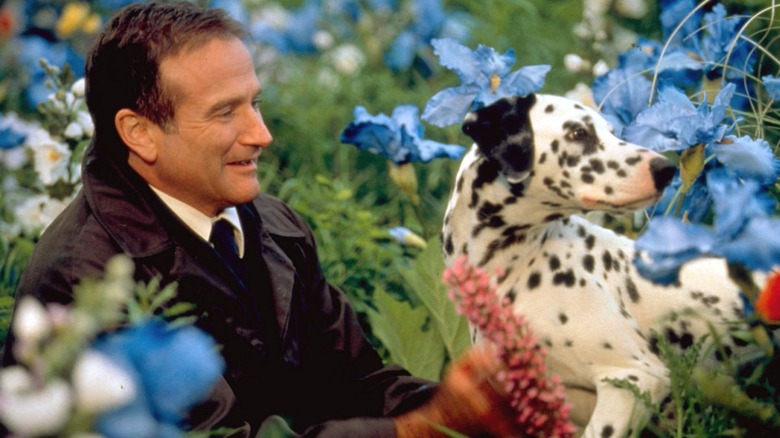
Robin Williams' Mrs. Doubtfire Disguise Even Had His Co-Stars Fooled

by Fatemeh Mirjalili

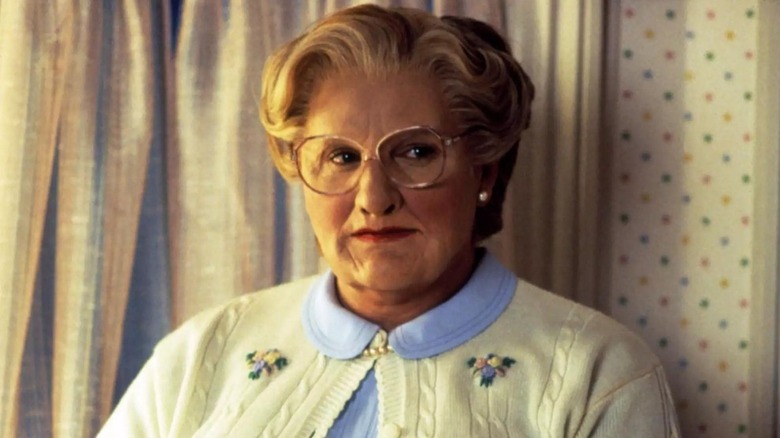
In "Mrs. Doubtfire," Robin Williams plays a newly-divorced actor who disguises himself as an elderly but spry female housekeeper to get employed in his family home. As Mrs. Doubtfire, Daniel Hillard (Williams) can still interact with his children on a daily basis, despite his wife getting sole custody of them. The touching film addresses the themes of divorce and separation and its influence on a family and young children, not to mention the endless love of a desperate father who will go to any length to spend time with his kids.

It's an understatement to say that Robin Williams was a man of many talents — he could easily switch between comedic and dramatic roles, and he left a lasting impact on the field of voice acting. As one of Hollywood's most prominent improvisers, he has created characters in the spur of a moment and ad-libbed through some of the most memorable movie scenes. In "Mrs. Doubtfire," his transformation into a female housekeeper was so convincing that the actor had his co-stars fooled — one of them even thought him to be the mother of director Chris Columbus!

Robin Williams Fooled Lisa Jakub Completely

The 1993 film has its fair share of emotional moments, but it's particularly memorable for being full of laughs. Canadian writer and former actress Lisa Jakub, who played daughter Lydia Hillard, shared a hilarious story with The Chicago Tribune from her days auditioning for "Mrs. Doubtfire."

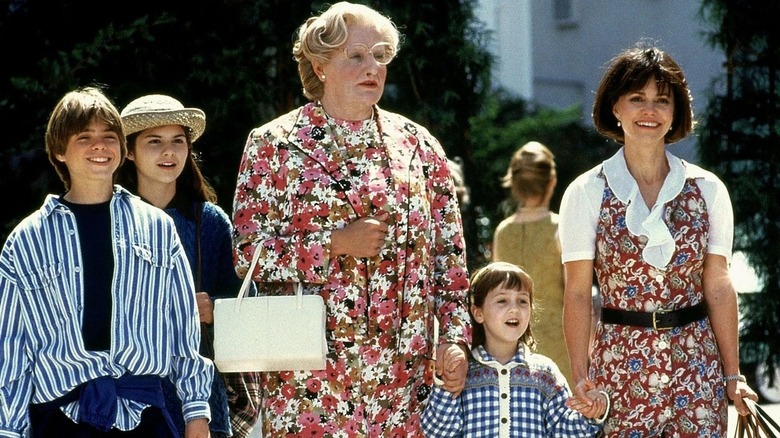
Jakub, who was 15 at the time, arrived to audition for a part in the film as the oldest sibling in the Hillard family. When she was introduced to a Scottish woman, Jakub believed her to be the mother of director Chris Columbus. The young actress revisited her initial thoughts on meeting the matronly woman, stating that she wanted to make a good impression on her. Jakub didn't have the slightest idea that it was actually Robin Williams in his disguise for the movie. The actress recalled:

"I remember being introduced to Chris Columbus' mother and thinking I had to really make small talk and be charming because this was my boss' mom," said Jakub, who was 14 when she made the film. "I wanted to make a good impression. It wasn't until later that I realized [it was Williams]. I totally fell for it."

She wasn't the only one fooled by the revered comedian.

'She's Got Everything'

Matthew Lawrence, then 12 years old, portrayed middle sibling Chris Hillard in the film, and he soon realized that something strange was going on at the movie set. But Williams had him fooled in the beginning as well! Williams' performance and the amazing makeup job fooled the young actor for a few moments. Lawrence remembered:

"I started to catch on because I was a working kid. But definitely for two or three minutes I was sitting next to Mrs. Doubtfire and I had no idea [it was Williams]. I think they didn't tell me that the cameras were rolling, and they just had us sit down. I think they just wanted to get our natural kids' reactions."

Lawrence's reaction to Williams dressed as Mrs. Doubtfire got him the job. In fact, it was the actor himself who decided Lawrence was perfect for playing his on-screen son, and they quickly improvised a scene for the audition that charmed everyone present. Lawrence explained:

"Robin basically got me the role. He leaned over me and said 'I really like you. I want you to play my son, so you got to work with me on this one. I'm going to do something, just go with it" He turned his back to the camera and just pinched me so hard, right in that sensitive spot between your arm and your chest. My reaction was a normal reaction -- 'Hey, you can't do that. You just hurt me. What are you doing?''' That was the moment that got me the role The fact that I reacted that way to Mrs. Doubtfire was what they were looking for, and Robin knew that."

Williams' transformation into Mrs. Doubtfire was aided by makeup artist Ve Neill, who is renowned for her work on "The Hunger Games" and "Pirates of the Caribbean." It took her four and a half hours (via Buzzfeed) to apply the makeup every single day, and her efforts earned her the Academy Award for "Best Makeup" that year.

It has been 29 years since "Mrs. Doubtfire" hit theaters. The comedy presented the perfect opportunity for Robin Williams to demonstrate his humorous side, but behind its punchlines and convincing cross-dressing lies a dark and cold reality that many face in divorce and separation, making for an emotional story that any family can enjoy.

Read this next: The 15 Best '90s Comedies Ranked

The post Robin Williams' Mrs. Doubtfire Disguise Even Had His Co-Stars Fooled appeared first on /Film.
29 Mar 20:49

What do you think of the new PlayStation Plus, and is it better than Xbox Game Pass?

by Katharine Castle

After months of rumours, Sony have finally unveiled their answer to Xbox Game Pass today. Starting this June, their new subscription service will unite PlayStation Plus and their cloud streaming platform PlayStation Now under one roof, offering three different tiers of membership. Most of it isn't that relevant to us on PC, but the final, most expensive tier, PlayStation Plus Premium, will include that aforementioned cloud streaming to PC, letting us play hundreds of PS1, PS2, PS3, PS4 and PSP games without having to own an actual PlayStation.

It's not yet clear how that library of games will differ from the current PlayStation Now library, but one thing is certain: this is a move that definitely benefits people with a PlayStation and a PC more than it does standalone PC peeps. And yet, even as someone who falls into the former camp of PlayStation and PC owners, I'm still not sure this new PS+ is something I actually want. Sure, there's that massive retro collection on offer, but no Day One games I can either play on my console or stream to PC? On your bike, Sony. Personally, I see this as more of a dip-in and dip-out kinda deal to indulge my occasional retro cravings, but I'm keen to know what you, RPS readers, think of this new PS Plus offering as well. Does it appeal in any shape or form? And how does it compare to Game Pass for you? Let's chat about it below.

Read more

29 Mar 20:48

Why are there separate Program Files and Program Files (x86) directories?

by Raymond Chen

On Windows editions that support x86 emulation, there are two directories for program files. The C:\Program Files directory is for programs in the native system bitness, and the the C:\Program Files (x86) directory is for programs that run under the x86-32 emulator. But why are they separate directories? Why can’t we combine them? If you have 32-bit Contoso and 64-bit LitWare, you can still put them in C:\Program Files\Contoso and C:\Program Files\LitWare, and they won’t bother each other.

That’s true, but it does create problems if a program is available in both 32-bit and 64-bit versions, such as Microsoft Office or Visual Studio. You couldn’t install both versions side-by-side; you’d have to pick one.

And it so happens that Windows itself comes with a lot of programs that are available in both 32-bit and 64-bit versions, like Internet Explorer and WordPad. Those programs could have installed themselves into separate directories like C:\Program Files\Internet Explorer and C:\Program Files\Internet Explorer (x86) to avoid the conflict, but then that runs into compatibility issues with apps that do things like launch %ProgramFiles%\Internet Explorer\iexplore.exe and then start manipulating the Internet Explorer process expecting it to be the same bitness as the program that did the launching.

This sounds sort of like a lazy answer, seeing as this problem could be solved with sufficient application of application compatibility shims. But application compatibility shims are really a solution of last resort, because by their nature, they can be applied only to programs where the problem has already been identified. If there’s a way you can structure your system so that these problems never arise in the first place, then you don’t have to worry about identifying the programs that suffer from the problem: You fixed all of them at once!

Yet another problem is with the pesky Common Files subdirectory under Program Files. This is a directory that is intended for the case of separately-installed programs which nevertheless share some things in common. For example, Contoso might have two products, Contoso Standard and Contoso Deluxe, and both of the programs use the Contoso Framework. The Contoso Framework files can go into the C:\Program Files\Common Files\Contoso subdirectory.

If the 32-bit and 64-bit directories were combined into a single C:\Program Files directory, then you would have a mix of 32-bit and 64-bit components in C:\Program Files\Common Files\Contoso, and that makes nobody happy. Whoever installs first wins, and whoever installs second gets errors.

Keeping the two Program Files directories separate avoids this problem. C:\Program Files\Common Files\Contoso contains the 64-bit Contoso Framework files, and C:\Program Files (x86)\Common Files\Contoso contains the 32-bit Contoso Framework files.

After I wrote up this answer, I realized that I already answered it some time ago, so here’s the video:

The post Why are there separate Program Files and Program Files (x86) directories? appeared first on The Old New Thing.

29 Mar 20:45

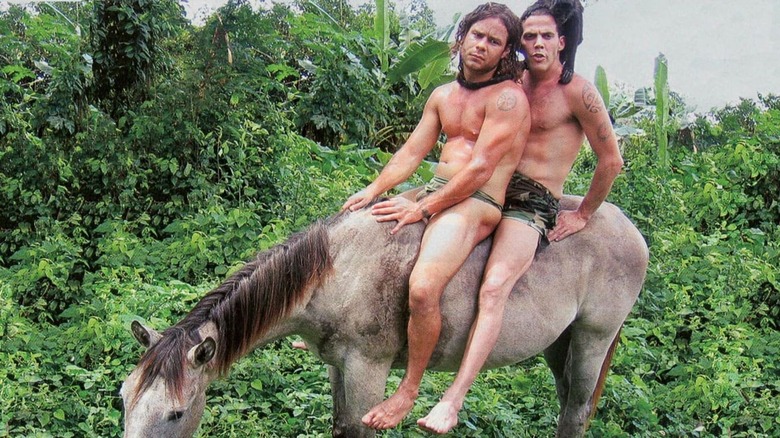
Jackass Forever Stars Wee Man And Preston Lacy Promise That Jackass Will Never End [Interview]

by Danielle Ryan

Friendship is at the core of the "Jackass" franchise, and it's hard to think of a friendship in the films stronger than the one between Jason "Wee Man" Acuña and Preston Lacy. The two have experienced the ups and downs of the franchise together (as well as the actual ups and downs of bungee-jumping off of a bridge together in "Jackass: Number Two"). For more than 20 years, the biggest, sweetest cast member and the smallest, spiciest cast member have been the perfect odd couple, taking on whatever challenges Johnny Knoxville, Jeff Tremaine, and the rest of the "Jackass" crew throw at them. In "Jackass Forever," now available to rent on VOD platforms and streaming on Paramount+, they once again throw shame to the wind and put their bodies in harm's way, all in the name of making us laugh. 

The gods of comedy smiled upon me, and I had the chance to chat with Lacy and Acuña via Zoom about their favorite stunts, the legacy of the franchise, and so much more. The best part of it all? They promised that "Jackass" truly is forever, and that they have no plans to quit -- although they might be doing more instigating than stunting in the future. 

This interview has been lightly edited for clarity. 

'We're Like Wine: We Age Very Well'

So how does it feel to come back and do this after all of these years? You guys aren't exactly young men anymore.

Acuña: We're like wine: We age very well. So doing "Jackass" and being very athletic kept us the way we are, and it was fun. It's what we do.

What are some of your comedy influences? What inspired you guys to go into this sort of mix of stunt work and comedy?

Lacy: I was big into "Cheers" and "Taxi," and moved to California to be on sitcoms, and made the mistake of getting hooked up with Johnny Knoxville and going into reality slapstick comedy.

Acuña: Well, Preston wrote good bits for us when we first started doing things, and Knoxville would call him back and go, "These bits are so good, but you're going to have to do them."

'The More You Talk [About] Getting Out Of It, The More You're In It'

You both have done some incredible bits over the years. Which are your favorites? I have to know.

Lacy: For me and Jason together is the bungee we did in Florida off of the bridge. That's my favorite one with the two of us.

Acuña: And that was one of our "one takes." One that was like, "One take, got it, nailed it."

Are there any stunts or pranks either of you have said no to over the years?

Acuña: We have.

Lacy: We tried to get out of random things for different reasons. One of them was like a Mentos Coke thing we did that I didn't want to do, just because I thought I was going to slip and hurt my knee in there.

Acuña: We have also been trying to get out of bits, but the more you talk [about] getting out of it, the more you're in it.

'We've Been Doing This Before Everybody Else'

How does it feel watching a new generation take the reins and sort of take over some of the more painful stunts and carry on the legacy? What do you guys think the future of the franchise looks like?

Lacy: Well, it's pretty easy to get the new guys to buy you dinner, for sure.

Acuña: It's pretty easy to prank the new guys.

Lacy: I think there probably is a future, but who knows exactly what that'll be. But I think there probably is.

Acuña: Yep. But we'll still be included, don't worry. We might be the cheerleaders, but we'll still be there.

Lacy: Instigators.

Acuña: Instigators, yeah.

You all famously said "Jackass 3D" was the last one, and then now, "Jackass Forever" is kind of "forever," the last one. Do you think "Jackass" will ever actually end?

Lacy: No.

Acuña: Nope. There's no end for "Jackass." "Jackass" has been around before YouTube, so if you think about it, we've been doing this before everybody else. Because when we first even started, people were like, "Dude, me and my buddies used to do that, but we didn't have cameras," and now everybody has cameras, but we were already doing it.

Lacy: I asked Knoxville when we could retire, and he said that the Three Stooges were in their late '60s when they did, and we should hold out for that.

'Once Somebody's Naked, You've Done Everything'

"Jackass" features a lot of male nudity and it really challenges toxic masculinity, and you guys have kind of become unwitting queer icons. Was that something that you ever intentionally set out to do, or did it just happen because of your natural camaraderie?

Lacy: We just tried to make it funny and tried to be inclusive with everybody. I treat people like I think they want to be treated.

Acuña: And when we first started doing these bits, it was more thinking that whoever was doing them was going to be more embarrassed than getting an amazing bit. Now, years later, we realize that no matter what, it's still going to be funny. People are always like, "No, you guys are, like, naked now." It's like, hey man, once somebody's naked, you've done everything. You can't embarrass anybody anymore, so bring it. What do you got?

'Every Time We Say There's Not Going To Be Another Movie, There's Another Movie'

On that note, what was the scariest, most embarrassing thing for either of you to do? I'm sure, Wee Man, running across that table during the board meeting naked had to be a little intimidating.

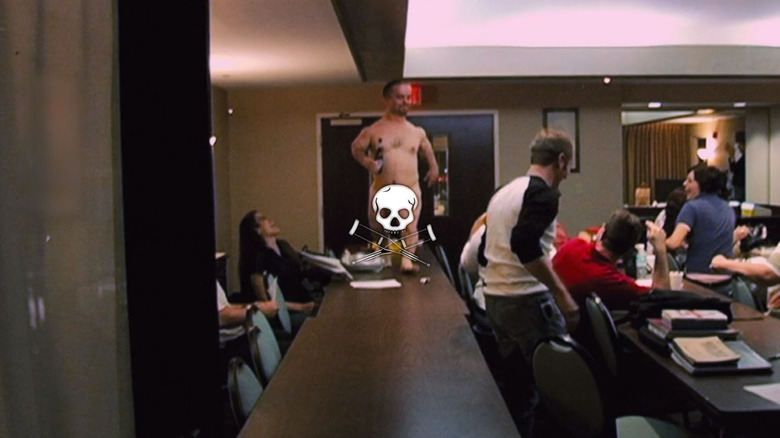
Acuña: No, that was the easiest. We were done filming for the day and Jeff [Tremaine] and I were in the hotel jacuzzi, and we noticed that meeting going on. Jeff goes, "Just run across naked," and that's like something we would just do out of the blue anyway. There was no pain involved, so that was like a perfect bit.

Lacy: If you catch yourself getting really, really humiliated, you then realize, "Wait a minute, I'm getting some good footage right now." So, in the back of your mind, you're like, "Well, take the good with the bad."

What are some of your all-time favorite movie stunts? Is there anybody throughout history that's really impressed you or inspired you?

Acuña: Bruce Willis. He's a badass. He's big inspiration.

So are we going to see you walk barefoot across glass in "Jackass 5"?

Acuña: Does Bruce Willis walk across glass?

In "Die Hard."

Acuña: Oh, dang. I got to check that out again. Well, "Die Hard" is a Christmas movie.

Will there ever be a Jackass Christmas movie?

Acuña: You never know. Nowadays, we can't even say no, because every time we say there's not going to be another movie, there's another movie.

'We'll Always Keep Putting Out The Same Style Music, Just A New Record'

That's true. Is there anything you want to tell the "Jackass" fans? The kids that have been watching since they were staying up late at night, watching on MTV and cheering you guys on -- is there anything you want to share with all those lovely little nerds like myself?

Lacy: Just that our movie does not disappoint, and it's really funny and it will shock you.

Acuña: And it's like a band: We'll always keep putting out the same style music, just a new record.

"Jackass Forever" is streaming on Paramount+ and available to rent on all VOD platforms. 

Read this next: 14 Awesome Comedies That Never Got Sequels

The post Jackass Forever Stars Wee Man and Preston Lacy Promise That Jackass Will Never End [Interview] appeared first on /Film.
29 Mar 20:41

Streaming Service Overload Is About To Hit Gamers, Too

by Ryan Scott

Netflix completely managed to reshape Hollywood by providing a new business model that every studio now wants to emulate. Create a streaming subscription service full of exclusive content and some curated favorites, get a bunch of monthly subscribers, count the cash. It's not nearly as easy as it sounds, but it's now the model that everyone wants to follow and, as it turns out, this is beginning to extend beyond the realm of TV and movies. The subscription model is about to hit another gigantic industry, specifically the video game industry, in a gigantic way. Get ready, gamers: the streaming service overload is coming for you as well.

Microsoft already provided a big shake-up to the industry with Xbox Game Pass, a monthly subscription service that allows players to pay $14.99 per month for access to a gigantic library of games that they can download and play at their heart's desire without having to pay for the games individually. This even extended to "Halo Infinite," the latest entry in the company's marquee franchise, which is now a big show on Paramount+ as well. It's basically Netflix for video games! It didn't take long for Sony, the company behind PlayStation, to craft its own version of this service, which is officially getting revamped as of today.

PlayStation Plus previously allowed access to select titles each month that would be available in a gamer's library in perpetuity as long as they stayed subscribed. Now an updated, tiered version of the service will give users access to a whole library of games for a monthly fee. According to PlayStation, there are three different tiers: PlayStation Plus Essential, PlayStation Plus Extra, and PlayStation Plus Premium. They all are priced differently and come with varying benefits. The particulars are laid out in the post, but it tops out at $17.99 per month/$119.99 yearly. It's cheaper than buying new video games frequently, but it's yet another subscription service to worry about. And there is a bigger problem that is likely to emerge.

The Exclusivity Problem

As we've seen with the streaming wars between Netflix, Disney+, Apple TV+, HBO Max, and everyone else, exclusivity is king. Do you want to watch "The Mandalorian?" Subscribe to Disney+. Have an interest in seeing "CODA," this year's Best Picture winner at the Oscars? Get Apple TV+. That's the way it goes and that is the way this will all continue to go until something very dramatic changes.

I think you gamers out there can see where I'm going with this, but with Xbox Game Pass and PlayStation Plus (not to mention Nintendo Switch Online) now vying for subscribers, the notion of exclusivity in gaming is about to get more serious than it's ever been. Yes, console exclusives have always been a thing. You can only play "The Last of Us" on PlayStation, and you can only play "Mario Kart" on Nintendo. That's the way it goes. But this subscription service model is going to force each company to get more competitive and aggressive with exclusives to entice subscribers.

We've already seen the beginnings of this, with Microsoft making its massive $68.7 billion acquisition of Activision Blizzard earlier this year. Once the deal closes, it will put huge franchises like "World of Warcraft" and "Call of Duty" in the hands of Xbox. One has to imagine that the folks at Sony are going to look for acquisitions and deals to make as well. More exclusivity means more tough choices for gamers to make. If you're a die-hard Xbox guy it may become tougher to not have a PlayStation, and vice versa. Be prepared because this is the world we're now living in.

Read this next: 12 Shows Like Stranger Things You Definitely Need To Stream

The post Streaming Service Overload is About to Hit Gamers, Too appeared first on /Film.
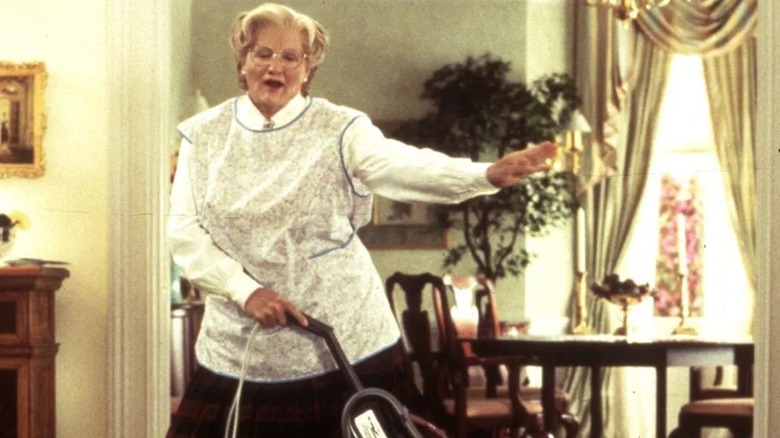
29 Mar 20:41

PS Plus Day 1 Releases Would Hurt First-Party Games Says Ryan, But “Things Can Change”

by Nathan Birch

God of War Ragnarok PS Plus

Today Sony officially announced their revamped version of PlayStation Plus, which will offer various tiers and new features, like a catalog of classic titles and cloud gaming. That said, there’s one thing that’s not included in Sony’s Xbox Game Pass competitor – new release first-party titles. While Microsoft adds all their games, including big ones like Halo Infinite, to Game Pass on Day 1, Sony will continue to hold back. In a new interview with GamesIndustry.biz, PlayStation boss Jim Ryan made it clear it simply wouldn’t be feasible to keep creating major blockbusters like God of War Ragnarok and Horizon Forbidden West if they were offered on PS Plus right from the get-go.

[In terms of] putting our own games into this service, or any of our services, upon their release... as you well know, this is not a road that we've gone down in the past. And it's not a road that we're going to go down with this new service. We feel if we were to do that with the games that we make at PlayStation Studios, that virtuous cycle will be broken. The level of investment that we need to make in our studios would not be possible, and we think the knock-on effect on the quality of the games that we make would not be something that gamers want.

The reality is, Sony and Microsoft are in very different places business-wise. Microsoft is in a position to use a big game like Halo Infinite to build up their subscription service. Sony, meanwhile, can’t afford to take a loss on the next God of War. That said, the games industry is ever-changing, and Ryan isn’t ruling out Day 1 PS Plus releases entirely…

The way the world is changing so very quickly at the moment, nothing is forever. Who would have said even four years ago that you would see AAA PlayStation IP being published on PC? [...] So I don't want to cast anything in stone at this stage. All I'm talking to today is the approach we're taking in the short term. The way our publishing model works right now, it doesn't make any sense. But things can change very quickly in this industry, as we all know.

What do you think? Will Sony eventually start sending their games straight to PS Plus? Should they? Or would it be the end of the big PlayStation blockbuster?

The post PS Plus Day 1 Releases Would Hurt First-Party Games Says Ryan, But “Things Can Change” by Nathan Birch appeared first on Wccftech.

29 Mar 20:38

VMware vCenter Server Vulnerability Can Facilitate Attacks on Many Organizations

by Eduard Kovacs

VMware on Tuesday announced the availability of patches for a vCenter Server vulnerability that could facilitate attacks against many organizations.

read more

29 Mar 20:35

Jackass Forever Stars Steve-O And Chris Pontius Talk About The Spirit Of The Franchise [Interview]

by Danielle Ryan

More than 20 years ago, MTV debuted a little show late at night featuring a collection of gnarly dudes doing stupid stunts and pranking one another. That series, "Jackass," went on to be a global phenomenon, so far spawning four theatrically released films, the spin-off films of "Bad Grandpa," a handful of straight-to-video sequels, several spin-off shows including "Wildboyz," "Viva la Bam," and "Homewrecker," and more. The antics of a group of skateboarders and professional knuckleheads became an indelible part of pop culture. The road has been hard, and it has been long, but the cast members of "Jackass" have plenty of stories to tell. 

"Jackass Forever" is now available to rent on VOD, and the film is a hilarious return to form for Johnny Knoxville, Steven "Steve-O" Glover, Chris Pontius, Preston Lacy, Jason "Wee Man" Acuña, and the rest of the "Jackass" gang. They've even introduced some new faces, like Jasper Dolphin of "Loiter Squad" fame and Zach "Zackass" Holmes, bringing "Jackass" to another generation of pain-proof performers. 

I grew up watching "Jackass" and "Wildboyz" and idolized Steve-O and Pontius, who both struggled in their personal lives (Pontius was homeless for years; Steve-O struggled with addiction) only to rise victorious above it all. These guys get knocked down and pop back up ready to fight some more, and that's genuinely admirable. I was blessed with the chance to chat with the wildest boyz of all about their careers, a "Wildboyz" reboot, the future of "Jackass," and so much more. 

This interview has been lightly edited for clarity. 

'Without Skateboarding, There Is No Jackass'

I'm a huge "Wildboyz" fan, and we finally got a little bit of "Wildboyz" in "Jackass Forever." Would you ever do "Wildboyz" again?

Steve-O: I don't think there's a chance that I would be willing to do "Wildboyz" again, because to take that further, which is what we would always want to do, we would have to outdo what we did before. We would have to take as big or bigger risks than we did before. And "Wildboyz" was the most dangerous show that we filmed. I wouldn't be interested in taking such huge risks with my life anymore, and I'm personally much more sensitive about the treatment of animals. When there's so much focus on shooting with animals, you end up in a lot of situations that you're not comfortable with. And I wouldn't want to do that.

Who are some of your stunt heroes? Who inspired you guys to get into hurting yourselves for a living?

Pontius: To me, just growing up skateboarding and doing that. If I have any heroes in stunts, it'd just be pro skaters that I looked up to, because really, without skateboarding, there is no "Jackass."

Steve-O: Danny Way.

Pontius: Danny Way. I like Jason Jessee, Jesse Martinez. So many. Chris Miller, so many awesome skaters. Without skateboarding, "Jackass" would've never happened. That's really what brought us all together. "Jackass" came from skateboarding, and it's just what a lot of skater guys would do when we're not skateboarding.

'As Reckless And Irreverent As We Are, We Only Target Ourselves'

"Jackass" is interesting because it is a bunch of skater guys, but somehow there's no toxic masculinity, it's queer positive, it's body positive. Did you guys set out to make a show that was really anti-toxic, or did it just happen naturally?

Pontius: I think to me, it was just about being funny and doing what makes us laugh and not being afraid to be called names -- especially at the time when this started, the world was a lot different place. I think we grew up in a world where gay people were [considered] sexual deviants, literally. Not being afraid to just to do what's funny, and if someone's going to call us a name or whatever, who cares? And being naked's funny, and just not being afraid to do what makes us laugh. If it's ahead of its time, everybody can catch up later. Or just once somebody is brave enough to do something socially, then it becomes okay. And the world, we evolve.

Steve-O: I love that you asked that question, because I've always been really proud of the fact that "Jackass" is in such a good spirit. We've always been very respectful of third parties. We're never out to make anybody feel bad. We're not mean to anybody. It's just all feel-good stuff. As reckless and irreverent as we are, we only target ourselves and we're attention whores. We love the attention. So, I think that it's really permissible to watch us give ourselves a hard time, and it's really wholesome that we don't give anybody else a hard time. That's something I'm really proud of.

'I Think We're Never Going To Say Never Again'

How does it feel watching the next generation come in and take the reins and do some of the more painful stunts so you guys don't have to? And is there a future for "Jackass"?

Pontius: All the new guys and girl fit in really great. And yeah, it was just fun filming with them. Poopies seemed like he belonged with us from day one. And is there a future? Every "Jackass" movie has been like, Knoxville said was going to be the last "Jackass" movie, and then we end up making another one. So, yeah. Is there a future in "Jackass"? I think we're never going to say never again, so I just think it's awesome that this group got to work together again. I think we're definitely going to be doing something in some form in the future -- and more often, if we have anything to say about it.

'Jackass Is A Big Celebration Of Failure'

Both of you have had a very unusual rise to fame. You've both been through a lot in your personal lives. Do you have any advice for fans out there for when they get knocked down, about how to get back up again?

Pontius: Yeah, I think just with failure — and "Jackass" is a big celebration of failure — but I think if you get knocked down, you just haven't done it yet. I think a lot of people are afraid of failing in life and I've never really liked seeing that. It's like, you just haven't made it yet. It's like a skateboard trick. You didn't fail, you just didn't make it yet, and you've just got to keep trying.

"Jackass Forever" is streaming on Paramount+ and available to rent on all VOD platforms.

Read this next: The 15 Best '90s Comedies Ranked

The post Jackass Forever Stars Steve-O and Chris Pontius Talk About the Spirit of the Franchise [Interview] appeared first on /Film.

29 Mar 20:30

We Have Improv To Thank For Batman And Commissioner Gordon's Hilarious Harley Quinn Scenes

by Sandy Schaefer

In a time when it seems like every comic book character out there is being adapted for film or TV (and I mean every one of them), it's not enough for superhero movies and shows to merely coast by on the popularity of their IPs or the talent involved in bringing them to life. This is especially the case when it comes to Batman and his various allies and enemies, the likes of which have already been turned into live-action and animated projects many, many times over the decades, dating back to the live-action theatrical "Batman" serials from the 1940s.

The beloved Clown Queen of Crime herself, Harley Quinn, is no exception, having long left her days of living in the Joker's shadow behind her and carved out an identity all her own separate from her abusive ex-boyfriend. She's currently played in the DC Extended Universe by Margot Robbie, giving the "Wolf of Wall Street" and "I, Tonya" star the chance to flex her action, comedy, and drama acting muscles something fierce. Of course, as terrific as Robbie is in the role, it's the animated "Harley Quinn" TV show that's been able to fully dive beneath the surface of the rogue-turned-antihero and examine what makes her tick.

As much as "Harley Quinn" centers on Harley and her efforts to have a healthy relationship with her friend (and, in time, lover) Poison Ivy, in a broader sense, it's a show about the emotional problems of both the heroes and super-villains who call Gotham City their home. In fact, much of the conflict in the series (which, to be clear, is very funny and very adult) comes from characters not having their emotional needs satisfied by those in their orbit. Similarly, a lot of the humor stems from those same interactions, some of which (such as Batman and James Gordon's) are partly improvised to wickedly entertaining results.

Turns Out, Being Work-Friends With Batman Isn't So Great

No stranger to the world of DC animation, voice actor Diedrich Bader lent his vocals to Batman and other characters on the squeaky-clean cartoon series "Batman: The Brave and the Bold" for three seasons from 2008-2011, later reprising this iteration of the Caped Crusader for the animated movie "Scooby-Doo! & Batman: The Brave and the Bold" in 2018. He's since gone on to voice Bats on "Harley Quinn," joking to DC Universe (via Harley Quinn TV) that it's a show for "big kids" prior to its premiere in November 2019:

"Yeah, just everything about ['Harley Quinn'] is different [from 'The Brave and the Bold'], and that's what's cool about it. It's kind of a reimagining of the whole world. I think it's a really good opportunity for comedy. What are these people's lives really like? Wait until you see. The stuff with me and Christopher Meloni [who voices Commissioner Gordon]..."

Indeed, since its very first episode, "Harley Quinn" has played up the idea that being Commissioner of Gotham City has taken a heavy toll on James Gordon's mental health and personal life. Not helping matters, it seems he only has Batman — who, let us not forget, dealt with the trauma from seeing his parents murdered right in front of him by dressing up like a bat and pummeling criminals with his fists —to confide in as a work-friend, be it about his faltering marriage or just how exhausting it is to try and keep Gotham's rogues gallery in line. But what's great is that "Harley Quinn" doesn't merely play their scenes for laughs, it also gives both characters room to actually grow and mature as people (as predictably and hilariously chaotic as that process turns out to be).

Harley Quinn Is About 'Blowing Up The DC Universe In A Weird Way'

Confirming that he and Meloni improvise parts of their scenes as Batman and Gordon, Bader went on to briefly talk about "Harley Quinn" and the way it flips the larger DC Universe on its head:

"Yeah, [Meloni and I] were brought in together a lot, which was really fun. The sessions are incredibly fun. For the pilot, I even worked with Alan Tudyk, who plays the Joker. That was mostly what we recorded together. But for the rest of them, it was mostly me and Chris. He's really great. He's a great improviser, and he's really fun to work with. I think we went into some really interesting areas. Yeah, the idea [behind this show] is sort of about blowing up the DC Universe in a weird way."

Like Bader indicated, "Harley Quinn" is really about digging into the messy feelings and desires of Gotham's eccentric citizens, in a way that other DC movies and TV shows rarely have. Combine it with the show's comically R-rated violence, foul language, and sexual content, and the result is a series that, shockingly, is somehow emotionally-sensitive, sex-positive, and utterly irreverent all at once. Without a doubt, the writing is key to what makes "Harley Quinn" so special. But at the same time, as Bader's comments remind everyone, it's the show's voice actors that bring that extra oomph (be it via improv or just their scripted line delivery) that pushes it over the edge and makes the animated series work as remarkably well as it does.

Read this next: Joker's Wild: Ranking The Cinematic Versions Of The Clown Prince Of Crime

The post We Have Improv to Thank For Batman And Commissioner Gordon's Hilarious Harley Quinn Scenes appeared first on /Film.

29 Mar 10:40

The second unofficial PC port of The Legend of Zelda Ocarina of Time is available for download

by John Papadopoulos

Earlier this month, we informed you about the release of the first unofficial PC port of The Legend of Zelda, Open Ocarina. However, that wasn’t the only PC port that was under development. Ship of Harkinian is another unofficial port and last week, its development team released its first public version. Ship of Harkinian is … Continue reading The second unofficial PC port of The Legend of Zelda Ocarina of Time is available for download →

The post The second unofficial PC port of The Legend of Zelda Ocarina of Time is available for download appeared first on DSOGaming.

29 Mar 10:34

Experts Detail Virtual Machine Used by Wslink Malware Loader for Obfuscation

by noreply@blogger.com (Ravie Lakshmanan)
Cybersecurity researchers have shed more light on a malicious loader that runs as a server and executes received modules in memory, laying bare the structure of an "advanced multi-layered virtual machine" used by the malware to fly under the radar. Wslink, as the malicious loader is called, was first documented by Slovak cybersecurity company ESET in October 2021, with very few telemetry hits
29 Mar 02:19

Lapsus$ Found a Spreadsheet of Passwords as They Breached Okta, Documents Show

by msmash
The Lapsus$ hackers used compromised credentials to break into the network of customer service giant Sitel in January, days before subsequently accessing the internal systems of authentication giant Okta, according to documents seen by TechCrunch that provide new details of the cyber intrusion that have not yet been reported. The report adds: [...] The documents provide the most detailed account to date of the Sitel compromise, which allowed the hackers to later gain access to Okta's network. [...] The documents, obtained by independent security researcher Bill Demirkapi and shared with TechCrunch, include a Sitel customer communication sent on January 25 -- more than a week after hackers first compromised its network -- and a detailed timeline of the Sitel intrusion compiled by incident response firm Mandiant dated March 17 that was shared with Okta. According to the documents, Sitel said it discovered the security incident in its VPN gateways on a legacy network belonging to Sykes, a customer service company working for Okta that Sitel acquired in 2021. The timeline details how the attackers used remote access services and publicly accessible hacking tools to compromise and navigate through Sitel's network, gaining deeper visibility to the network over the five days that Lapsus$ had access. Sitel said that its Azure cloud infrastructure was also compromised by hackers. According to the timeline, the hackers accessed a spreadsheet on Sitel's internal network early on January 21 called "DomAdmins-LastPass.xlsx." The filename suggests that the spreadsheet contained passwords for domain administrator accounts that were exported from a Sitel employee's LastPass password manager.

Read more of this story at Slashdot.

28 Mar 23:33

The Oscars Inexplicably Decided Jokes About Sexual Assault Were Okay If They're Made About Men

by BJ Colangelo

(This piece will discuss sexual harassment, so please consider this your trigger warning.)

Back in 2013, Oscar host Seth MacFarlane opened the show with a high-production value musical number called, "We Saw Your Boobs" in which he highlighted the numerous women in Hollywood who have appeared nude or topless in feature films. The premise for the song, in general, is wading into iffy territory, but the fact MacFarlane cited moments like Jodie Foster in "The Accused," in which her character is brutally gang-raped, twisted this "joke" into a flagrant glorification of sexual assault. 

Over the nearly ten years since, many have viewed "We Saw Your Boobs" as one of the worst openers in Oscar history, which is why the blatant double standard during one of last night's longest bits was even more uncomfortable to watch.

Co-host Regina Hall took the stage at one point to break the bad news that although everyone in the audience had been tested for Covid, some of the test results had gotten lost and a handful of celebrities needed to come with her to get re-tested. Right off the bat, joking about lackadaisical Covid protocols while the pandemic is still actively killing people every day feels in poor taste, but when the actual "punchlines" began rolling in, the joke took a turn for the worse. 

Hall used the set-up as a means to call a number of Hollywood leading men up to the stage, declaring that they all needed to come with her backstage. It started off as a playful way to highlight the attractiveness of all of these actors, but slowly plummeted into a normalization of sexual harassment.

This Is About Impact Vs. Intent

Unless the actors themselves speak out, it's difficult for us to know who all consented to be called on for the bit taking place. While the participating individuals may have had no issue with the premise of the joke, watching Hall parade a group of men on stage only to objectify them and physically body check them was genuinely upsetting to watch. 

Before bringing up Jacob Elordi of "Euphoria" fame, Hall joked about him being of legal age while implying his attractiveness is rooted in the abused and abusive high school-aged character he plays on TV. Following the bit, presenters Josh Brolin and Jason Momoa took the stage, and Hall did a "Covid pat-down" of each man, with Brolin even being made to bend over and "assume the position," so to speak. Hollywood has a horrific history of turning a blind eye toward the sexual assault against women, and seeing an Oscar host grope and objectify a group of men on a public stage for the entire world to see, set to a chorus of uproarious laughter, contributes to this systemic issue.

Here are some not-so-fun facts: 1 in 6 boys is sexually abused before their 18th birthday, with 1 in 4 men reporting experiencing unwanted sexual events in their lifetime. The emphasis on this is "reported," because our society is a hostile environment for anyone to speak out about sexual harassment, and because of this, it is likely underreported. When disgraced producer and serial sexual predator Harvey Weinstein was finally brought to task for his decades of abuse, The Academy expelled him

As much as I'd like to say this is evidence that they know right from wrong, they also awarded Roman Polanski the Best Director Oscar in 2003 for "The Pianist" after he fled to Paris to avoid imprisonment for committing unlawful sex with a minor. Polanski remains a fugitive from the U.S. criminal justice system to this day.

Joking About Sexual Assault Just Isn't Funny

Terry Crews, Alex Winter, Michael Gaston, Anthony Rapp, Corey Feldman, James Van Der Beek, and Brendan Fraser have all spoken out about how their own experiences with sexual assault within the Hollywood system have impacted both their careers and their lives. In a night filled with high highs and embarrassingly low lows, Hall's bit was overshadowed by a bigger conflict, but that doesn't mean this "joke" shouldn't be called to the red carpet. 

By no means am I accusing Hall, the Academy joke writers, or the consenting participants of the segment of being rape apologists or intentionally trying to diminish the severity of men's sexual assault. But this moment was emblematic of the way our culture continually mishandles discussions surrounding men's assault, playing it off as a joke and not giving it the serious weight it deserves. Not only was Hall's segment in bad taste, but Academy Award-winner Marlee Matlin was also in the room as a chorus of people cheered for her abuser, William Hurt, during the In Memoriam segment. The Academy has a long way to go when it comes to their handling of sexual assault, and this was yet another unfortunate reminder of that fact.  

When Mary Kay Letourneau pleaded guilty in 1997 to two counts of felony second-degree rape of a child, the media (including late night and talk show host fodder) treated the situation like a salacious scandal between a "lucky" student and an older woman, rather than calling it out as the rape it was. It was hard not to think of those unfunny jokes about being "hot for teacher" while witnessing a crowd of people laugh at a woman openly groping men on a public stage. 

I truly believe all involved thought the joke was all in good fun, and that's exactly the problem. Sexual assault, whether it's committed against women or men, isn't funny, and the Academy needs to do better. Now.

Read this next: The Best Movies Of 2021

The post The Oscars Inexplicably Decided Jokes About Sexual Assault Were Okay If They're Made About Men appeared first on /Film.
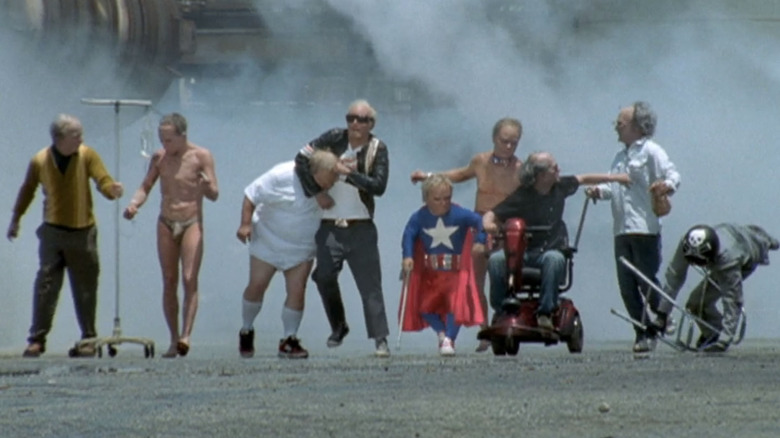
28 Mar 22:55

Richard Matheson, The Influential Science Fiction Writer You've Never Heard Of

by Margaret David

Richard Matheson isn't a name film fans have at the tip of their tongue. The Jersey-born writer gets a Google bump annually, as New Years' anti-celebrants fixated on SyFy's "The Twilight Zone" marathon will keep seeing his name come up in the writer's credits. "Star Trek" fans likely remember the episode "The Enemy Within," if not its writer. It was the first episode to feature a transporter accident early in Season 1. The glitch creates two Captain Kirks, one good and one evil, a franchise trope that now occurs often enough that an in-universe character can legitimately suffer from transporter phobia.

Matheson's work often looked at who we were at heart, searching for our true selves through wild tribulations. Like his contemporary, Rod Serling, Matheson was a World War II veteran with a complicated view of our existence. Fascinated with metaphysics and spirituality, he would explore these topics several times in his career. Some of these would inspire classic films like "Somewhere in Time" and "What Dreams May Come." Matheson died in 2013, living long enough to see dozens of adaptations of his work come to life. Among his achievements are some of the most important or influential works of science fiction that have inspired others. Let's take a look at them.

The Incredible Shrinking Man

One of Richard Matheson's first novels, 1956's "The Shrinking Man," was filmed as "The Incredible Shrinking Man" only a year later. This adaptation is excellent, brought to life by director Jack Arnold, who turned "The Creature from the Black Lagoon" into one of Universal's iconic monsters. With the same thoughtfulness Arnold gave that swampy creature, and terrific special effects, "The Incredible Shrinking Man" doesn't lose Matheson's philosophical underpinnings in its finale.

Both Matheson's novel and the film are about a guy named Scott that gets irradiated by a strange mist. It interacts with a chemical he ingested (better not to question it), and the next thing he knows, all his clothes don't fit him anymore. Eventually, Scott's fighting off bugs in his house and dealing with the existential dread of life at the subatomic level. For reference, Marvel's Hank Pym, the first Ant-Man, wouldn't exist until 1962. Although the comics took a gonzo science approach instead of Matheson's exploration of an everyman under duress, the popularity of "The Shrinking Man" probably helped Hank, and later Scott Lang, come to life.

The Twilight Zone

Richard Matheson wrote over a dozen episodes for both the original run of Rod Serling's "The Twilight Zone" and its 1980s revival. Many of them are standouts, some so notable that they would be adapted into feature-length movies years later. One episode, "Little Girl Lost," was so remarkable that it apparently served as the uncredited inspiration for Tobe Hooper and Steven Spielberg's exemplary "Poltergeist." Matheson's original story deals with dimensional riddles, not questions of the afterlife, and was written to cope with his own fears of losing his daughter. Otherwise, the plot beats are similar to "Poltergeist," with little Tina lost within her home, the family reaching out to an expert for help, and Tina's mother, Chris, becoming instrumental in rescuing Tina from this otherworldly dimension.

Matheson also wrote one of the most famous episodes of "The Twilight Zone" that exists, the story that made William Shatner memetic years before "Star Trek." "Nightmare at 20,000 Feet" is the one with the creature on the wing, the possible result of a man afraid to fly who's then confronted with his worst nightmare. But it turns out that the gremlin, and his fears, are legitimate after all. Directed by Richard Donner, it's an episode that typifies the best "The Twilight Zone" has to offer.

Still In The Twilight Zone

Another "Twilight Zone" episode by Richard Matheson, "A World of His Own," was a unique, quirky tale about a writer caught between his wife and his pretty muse. Gregory, the writer, can't convince his wife that the pretty young thing isn't a threat to their marriage, because she isn't real. Neither, as it turns out, is his wife. The episode is a rare lark for the series, and the finale is the first and only time Rod Serling appears as a character before disappearing as another of Gregory's fictional constructions.

Nearly all of Matheson's scripts are terrific; he's also the author of "Nick of Time," the other episode to feature William Shatner. This one sees future Kirk as a honeymooner that grows obsessed with the Luciferian fortune dispenser at his diner table, barely wrenching free of its hold on him by the time the credits roll. But even more well-known is "The Invaders," the mostly-silent episode that features Agnes Moorehead ("Bewitched") as a lonely old woman besieged by tiny invaders from Earth.

Roger Corman And The Edgar Allan Poe Cycle

From the 1960s through part of the '70s, pulp horror movies made weekends fun for teens with cash to burn. Though dozens of stylish Hammer Film horror imports set the tone, the new era of spooks and scares would belong to directors like Roger Corman and George A. Romero. But Corman had several aces in his pocket: the public domain stories of Edgar Allan Poe, Vincent Price as his leading man, and Richard Matheson to adapt Poe's works into screenplays.

Matheson's scripts set the template for what's called the Corman-Poe Cycle. Writing four of the eight films that make up Corman's classic horror franchise, Matheson starts strong with an adaptation of "The Fall of the House of Usher." Matheson's script gave Vincent Price plenty to talk about, putting Poe's subtler themes into words the audience can't miss.

"The Pit and the Pendulum" allowed Matheson to rework Poe's story into something different. Adding a new backstory, this film moves away from Poe's terror of the Spanish Inquisition into a ghostly melodrama that happens to occur in Spain. Matheson's last script, "The Raven," is even more imaginative. Here, Matheson turns Poe's most famous poem into a campy but fun romp about a wizard's duel that let Price play with a live raven. 

Duel

Even Steven Spielberg started small. His first feature film was released in November 1971, a made-for-television flick named "Duel," starring Dennis Weaver. This miniature horror hinted at what its new director would soon be capable of, doling out dreads unseen as a salesman is hunted by a truck driver possessed by something stronger than road rage. The screenplay, with its scant glimpses of the malignant trucker inside his weaponized vehicle, was Richard Matheson's.

The original short, published in Playboy's April 1971 issue, was written almost a decade earlier. Matheson was in a car with a friend on the day of JFK's assassination when they were really badly tailgated by an aggressive truck driver. The incident stuck with Matheson, already an established writer, and this sleek Camaro of a story adapted well to the TV movie format. The explosions are fancied up, and the bulk of the budget, around $400,000, went to effects. The psychological drama comes through as clear as desert radio, and the little film earned a spiffed-out ride on the international theater circuit, with new footage and decades of positive critical response.

The Omega Man

The most frustrating thing about all three adaptations of Richard Matheson's famous novel, "I Am Legend," is that none of them have the spine to stick with the central premise. The new species it describes is a biological vampire, turned by a global pandemic and decimated by a survivor, Robert Neville, who's also intent on finding a cure. The first adaptation was called "The Last Man on Earth," filmed in Italy and released in 1964. Vincent Price may be the leading man, but he can't save a version that Matheson would disown by putting his pseudonym Logan Swanson on the script.

"The Omega Man" is a solid attempt to hew closer to the original novel. This 1971 version stars Charlton Heston as Robert Neville, with the pandemic turning its frightening survivors into Morlock-style mutants pained by sunlight. Some social commentary survives through this adaptation, with actress Rosalind Cash sharing an interracial kiss with Heston and the undertones of a struggling new society peeking through. As a cult science fiction classic, "The Omega Man" is unmissable. But Matheson was less than enthused with this final result, too.

I Am Legend

2007 saw Hollywood take another whack at Richard Matheson's novel. Starring Will Smith, this version takes even greater liberties with its source material than the Italian version. A modest box office success aware of its own mistakes — it has a well-known alternate ending, in which Smith's Neville has a revelation close to the novel's protagonist — it found enough of an audience to kick off pre-production on a sequel.

Matheson's last interviews on the topic of "I Am Legend" in 2001 reveal his frustration with Hollywood's refusal to adapt his novel as he wrote it, predicting another modified version years before filming started. But the latest riff on "I Am Legend" isn't all bad, even if you're consumed by the changes to the novel. Smith, a lifetime fan of science fiction, puts out one of his best performances in this film. His version of Neville capably displays the loneliness and instability that comes with feeling like the last man on Earth, a melancholy bit of art that avoids falling into cheap humor.

Somewhere In Time

"Bid Time Return" is Richard Matheson's gentlest novel, a romance with hints of science fiction. A dying man becomes enthralled with the photo of a long-gone actress, and he uses a form of auto-hypnosis to send his consciousness back in time to meet her. The experiment works, sending him back to the 19th century where our protagonist finds the love of his life. The ending is bittersweet, but what's important is the love he experienced in that brief time.

"Somewhere in Time" is the book's 1980 adaptation, again scripted by Matheson and starring Christopher Reeve as Richard. Richard is approached by an old woman who seems to know him, pleading with him to come back to her. It's not until eight years later that he begins to understand who she was. The film thrives on Reeve's love and charisma, though its ending remains as painful as the novel's. It's also a regional experience; Michigan residents know this film as the star of Mackinac Island's tourist industry. The island's Grand Hotel, where the film was shot, holds an annual weekend event dedicated to the film. There's also an international fan club that's been running strong since 1990.

The Night Stalker

Author Jeffrey Rice hadn't found a publisher for his pulpy vampire novel, "The Kolchak Papers," when it got optioned for a TV movie. It was no insult to his work that the adaptation, "The Night Stalker," hired Richard Matheson to write its script. The result was a hit for ABC that would spawn a sequel, "The Night Strangler" (written solely by Matheson and adapted into a bestselling novel by Rice), as well as the series "Kolchak: The Night Stalker."

Rice's novel and Matheson's script both follow Carl Kolchak (Darren McGavin), a reporter used to the skeevy side of Vegas life. Kolchak becomes an accidental vampire hunter by following up on a series of eerie murders on the Strip, setting himself up for a future of discovering the weirdest stories on Earth. The sequel movie puts Kolchak on the trail of a man and his magic elixir. But it's the cult hit series that made Kolchak important to science fiction fans today. Kolchak is the "father" of "The X-Files," inspiring creator Chris Carter at an early age. It's an important enough link that Darren McGavin would appear as a Kolchak-like figure who previously watched over Mulder's unusual case files.

What Dreams May Come

Richard Matheson's 1978 novel, "What Dreams May Come," includes an extensive and unusual bibliography at its end. The book drew from years of Matheson's research into a variety of spiritual beliefs, including the esoteric 19th-century Theosophy movement. The result is a unique exploration of what happens after we die, following a story of one man struggling to accept his own death and his wife's suicide. The novel is Matheson's most beautiful, exploring rich, natural landscapes as his protagonist, Chris, undergoes a number of spiritual trials.

Adapted to film in 1998, "What Dreams May Come" is a difficult film to watch today. Not because of any flaw on the film's part, which won an Academy Award for its painterly, vivid cinematography, but because Chris is played by Robin Williams at his most sensitive and emotional. Real life makes this story about the pain and the relief in understanding our mortality impossibly poignant, a monument to the man we lost. The film is lovely, the novel one of Matheson's best, and that both exist may be a comfort. It's still not an easy one.

If you or anyone you know is having suicidal thoughts, please call the National Suicide Prevention Lifeline​ at​ 1-800-273-TALK (8255)​.

Stir Of Echoes

The late '90s was a strong era for horror, with humanity's collective anxiety subtly ramped up by the change of the century. That created a hotbed of sometimes transgressive horror, often touching on religious or spiritual themes. While "The Sixth Sense" was the box office winner of 1999 in this category, it had quiet but strong competition from the lesser-known Kevin Bacon film "Stir of Echoes."

Based loosely on one of Richard Matheson's earliest novels, "Stir of Echoes" retains some core plot points. Our protagonist, Tom (Kevin Bacon), undergoes hypnosis and finds himself sensitive to the unrestful spirits all around him. The film gives him a family, including a son born aware of the undead world, and the murder mystery plot Tom is thrust into gains a new sense of urgency due to the raised stakes. Though David Koepp's plot veers from the novel in several large respects, it's also the rare film to earn Matheson's own approval.

The Box

There's no scientific proof of genetic memory, but it still feels like we're all born knowing the story of The Monkey's Paw. You can make any wish, but the results will have an ironic twist. Richard Matheson wrote his own updated twist on the formula in his 1970 short story "Button, Button," its gist nearly as well-known: All you have to do is push a button to win a fat stack of money, but someone you don't know will die.

There are two adaptations of this famous tale. One was for the 1980s revival of "The Twilight Zone," and the changes to Matheson's script were extreme enough for him to bust out his Logan Swanson pseudonym once again. The other is "The Box," by "Donnie Darko" director Richard Kelly. Stylish and divisive, though it earned Roger Ebert's approval, the film also changed up Matheson's bleak finale. Found in multiple collections of Matheson's short works, the original story asks us outright if we can ever truly know each other.

Real Steel

"Steel" is a Season 5 episode of "The Twilight Zone," airing in 1963 and scripted by Richard Matheson from his short story of the same name. It's an okay episode, a morality tale about humanity's tenacity when faced with a future that could make them obsolete. Robot boxers are used to drive home the point.

"Real Steel" credits Matheson for his original story, and the results are arguably better than its first adaptation. It doesn't hurt that we have Hugh Jackman as the down-on-his-luck former boxer, Charlie. What really holds the film together isn't just Charlie's relationship with his estranged son, Max (Dakota Goyo). It's the grimy reality that pervades the underworld of the robot fights. The film's cinematography relies somewhat on neon and near-future aesthetics, but it's also dirty. It's riddled with garbage, and garbage people, and happy endings aren't easy to come by.

It's surprising, then, that the ending is melancholy but still fighting for hope, the sort of finale Matheson would have approved of. "Real Steel" continues to have a follow-up in varied stages of development, and if it retains this level of worldbuilding and an understanding of Matheson's style, we can't wait to see it.

Read this next: The 15 Worst Sci-Fi Movies Of The 21st Century (So Far)

The post Richard Matheson, The Influential Science Fiction Writer You've Never Heard Of appeared first on /Film.

28 Mar 22:54

How To Watch Mystery Science Theater 3000 Season 13

by Natalia Keogan

"Mystery Science Theater 3000" is back at it again, this time with a lucky 13th season for its dedicated fanbase to enjoy. First airing in 1988 on KTMA-TV (now WUCW) in Minneapolis, Minnesota, the show was an underground oddity for a while until Comedy Central picked it up from 1989 through 1996, after which point it was canceled to immense fan uproar. This caused Sci-Fi to pick it up, for it only to be canceled again after a two-year run concluding in 1999. It would appear that the show, dubbed "MST3K" for short, would forever remain a late-20th century anomaly, garnering a cult following of cinephiles who can't get enough of bad B-movies and the hilarious commentary the show's human and robot hosts offer as the films play. Flicks ranging from "Manos: The Hands of Fate" to "Danger: Diabolik" were lampooned to great effect, which actually resulted in an increased interest in these otherwise obscure films that may have simply been lost to time.

While Netflix revived the show for the 21st century in 2017, giving audiences an 11th and 12th season of the show, it became clear that the creators desired a way to independently deliver "MST3K" episodes to viewers. With the show's forthcoming 13th season, they were able to do just that thanks to a successful Kickstarter campaign. So let's step onto the Satellite of Love and gaze at what's coming our way on this season of "Mystery Science Theater 3000".

Get Ready To Launch The Gizmoplex

That's right, "MST3K" will now be available to stream through its very own service called The Gizmoplex, which will exclusively run new episodes every other week for the next year. It took 218 episodes and a feature film to get here, but it's amazing that a show with such low-budget roots has been able to sustain a fanbase that fervently supports the best practices for the team behind the content. 

For the inaugural weekend of The Gizmoplex, a weekend-long lineup of new "MST3K" episodes will air. "Santo in The Treasure of Dracula" will kick things off on May 6, followed by "Robot Wars" on May 7, and "Beyond Atlantis" on May 8. For those curious as to how to navigate this new streaming service and the new episodes it'll be producing, here's a handy excerpt from the new season's official press release:

"To see the new season, visitors will be able to buy tickets to livestream events ($10 each), rent the new episodes ($8 each), or get a 'Season Pass' ($135) that includes tickets to over 25 livestream events and a digital copy of the new season to keep!

Plus, to celebrate the launch of the Gizmoplex, all visitors will be able to stream every available classic episode of MST3K for free – on demand and without commercials – for a limited time! The Gizmoplex will be available via a web portal and also on a wide variety of OTT platforms, including apps for both iOS and Android devices, Roku, Amazon Fire TV, and more."

What Can We Expect From Season 13?

While the first weekend of films has already been announced, there's certainly a trove of cinematic trash/treasure that awaits viewers, with the official trailer featuring a slew of titles to be tackled in the forthcoming season, including "Munchie" and "Demon Squad." For a full run-down of what's to come, the jam-packed trailer is just a click away.

If you want something a bit more in-depth to satisfy your curiosity ahead of the season's May release, here's a synopsis hot off of the official press release:

"For the first time, not one, but three humans will be subjected to the bittersweet agony of watching the world's cheesiest movies, as returning test subject Jonah Heston (Jonah Ray) shares hosting duties with the newest kidnapped Gizmonic technician, Emily Connor (Emily Marsh) and original host Joel Robinson (show creator Joel Hodgson).

Accompanied by wisecracking robot pals Crow T. Robot (Hampton Yount / Kelsey Ann Brady), Tom Servo (Baron Vaughn / Conor McGiffin) and GPC (Rebecca Hanson / Yvonne Freese), our heroes will have to survive 13 new movies, 12 new shorts, and the unveiling of Kinga's newest scheme for world domination: THE GIZMOPLEX, the First Cineplex on the Moon. Will they finish the season with their sanity intact?"

Also re-joining the cast will be Felicia Day as Kinga Forrester, Patton Oswalt as Max, and Mary Jo Pehl as grandmother Pearl Forrester. Stacked in every possible way, it appears that 13 really might be the show's lucky number after all. 

Read this next: The 15 Best '90s Comedies Ranked

The post How to Watch Mystery Science Theater 3000 Season 13 appeared first on /Film.
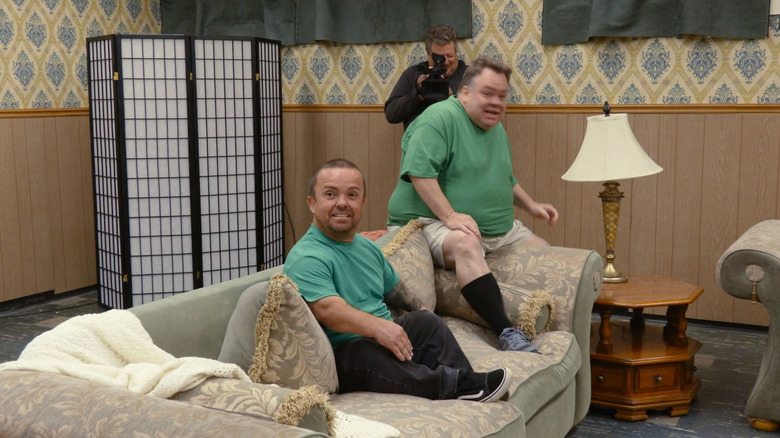
28 Mar 20:54

Strange jaguar skeleton surrounded by starfish discovered in Mexico City

by David Pescovitz

Researchers from Mexico's National Institute of Archaeology uncovered an unusual 14th century Aztec altar at the Templo Mayor site in Mexico City. A jaguar skeleton is surrounded by shells and more than 150 starfish. According to the archaeologists, the offering was made to the god Huehueteotl-Xiuhtecuhtli who represents fire and all life. — Read the rest
28 Mar 20:53

Google Ordered Russian Translators Not To Call War in Ukraine a War

by msmash
In early March, contractors working for Google to translate company text for the Russian market received an update from their client: Effectively immediately, the ongoing Russian war against Ukraine could no longer be referred to as a war but rather only vaguely as "extraordinary circumstances." The internal email, obtained by The Intercept, was sent by management at a firm that translates corporate texts and app interfaces for Google and other clients. From the report: The email passed along instructions from Google with the new wording. The instructions also noted that the word "war" should continue to be used in other markets and that the policy change was intended to keep Google in compliance with a Russian censorship law enacted just after the invasion of Ukraine. Asked about the guidance, Google spokesperson Alex Krasov told The Intercept, "While we've paused Google ads and the vast majority of our commercial activities in Russia, we remain focused on the safety of our local employees. As has been widely reported, current laws restrict communications within Russia. This does not apply to our information services like Search and YouTube." According to a translator who spoke to The Intercept, the orders apply to all Google products translated into Russian, including Google Maps, Gmail, AdWords, and Google's policies and communications with users. (The translator asked for anonymity to avoid reprisal by their employer.) The internal memo helps explain why some Google web pages, including an advertising policy and video help document found by The Intercept, use euphemistic terms like "emergency in Ukraine" in their Russian version but âoewar in Ukraineâ in the English version.

Read more of this story at Slashdot.