Shared posts

17 May 15:03

Quotation of the Day…

by Don Boudreaux
(Don Boudreaux)

Tweet

… is from page 46 of the 2000 Liberty Fund edition of Frederic William Maitland’s 1875 dissertation at Trinity College, Cambridge, A Historical Sketch of Liberty and Equality:

Again, laws first appeared in the history of mankind as the formulation of already existing customs, and not as the expression of the will of a superior.

(For the benefit of those who are unfamiliar with legal scholarship: no name is more respected and celebrated as an historian of law as that of Maitland.)

16 May 23:27

Death Comes for Terry Pratchett

by Scott Shackford

Terry Pratchett in his London home, 1997Terry Pratchett may not have been the first writer to personify Death as a walking, talking skeleton tasked with reaping the souls of the living, but he was the first to give him a horse named Binky and a granddaughter named Susan.

This Death was no less efficient or inevitable despite all the whimsy, of course. As various characters in Pratchett's long-lasting, wildly popular series of fantasy novels passed on, Death traveled across Discworld—a flat planet resting on the backs of four elephants who stood on a giant turtle that swam through the universe—to ferry the newly deceased to whatever came afterward.

So it was highly appropriate that after Pratchett's death at age 66 on March 12, following a long and deliberately public faceoff with early-onset Alzheimer's disease, the novelist's official Twitter account described his passing as Death gently escorting Pratchett from our rounder, less turtle-dependent world.

But let's not dwell on Death. Pratchett's Discworld books, all 40 of them (not counting short stories and related works), teemed with messy, disorganized life. And because he wrote in the fantasy genre, they were also packed with wizards, witches, dwarves, dragons, vampires, zombies, demons, werewolves, and the occasional orangutan. His books were humorous in tone, but tackled weighty matters of self-determination, identity, innovation, and, above all else, liberty.

"Whoever created humanity left in a major design flaw. It was the tendency to bend at the knee." That piece of insight came from Feet of Clay, a book from right in the middle of his series, published in 1996. The witticism encapsulates a consistent theme in his books approaching how humans (and other sentient species) struggle between the desire to be free and the comfort of letting somebody more powerful or smarter (or claiming to be smarter, anyway) call the shots. In Pratchett's books, both the heroes and the villains tended to be people in positions of authority. What separated his heroes—people like police commander Samuel Vimes, witch Esme "Granny" Weatherwax, and even Patrician Havelock Vetinari, an assassin turned ruler of the sprawling city of Ankh-Morpork—from the villains was their insistence on letting people live their own lives, whatever may come of it, even when they made a mess of things.

By contrast, Pratchett's villains, whether they were fallen and irrelevant nobles, religious leaders, narcissistic elves, or tradition-obsessed dwarves, pursued power for themselves while claiming it was for the benefit of all. The ultimate villains in Pratchett's books were the "auditors of reality," shapeless cosmic bureaucrats who hate life because it's so unpredictable. People aren't just shaped by the universe. They help reshape the universe, and this torments creatures who want nothing more than a permanent form of order. Pratchett responded (through Vetinari) to all these inclinations in The Truth: "Pulling together is the aim of despotism and tyranny. Free men pull in all kinds of directions....It's the only way to make progress."

Pratchett's works embraced progress and innovation, both in technology and in humanity. His book series may have started in what appeared to be a typical quasi-medieval fantasy milieu, but it was far from static. Over the course of his novels, the Discworld saw the invention of the printing press, a form of telegraph, paper currency, mail, and in the last book to be published before Pratchett's death, the steam engine. But also over the course of his novels, the Discworld also saw the development of concepts of liberty, like the free practice of religion, freedom of speech and of the press, and the notion that basic rights ought to be extended to new races that humanity had treated like vermin or property—goblins, orcs, golems, the undead.

As J.K. Rowling eclipsed Pratchett as England's (and ultimately the world's) most popular fantasy writer, he introduced a teen witch named Tiffany Aching in a series of young adult-oriented books sharing the Disc­world setting and some of its characters. Rather than replicating the concept of a repressive institutionalized public school setting and infusing it with magic, like Rowling did with Hogwarts, Pratchett sent Aching out into the world to learn from other witches and through experience how to deal with serious problems using magic (or, more importantly, not using magic). She was Harry Potter's homeschooled cousin.

Pratchett's anti-authoritarian authority figures and his themes of innovative freedom and self-determination drew him praise from the Libertarian Futurist Society. Several of his books have been finalists for the group's Prometheus Award. He won in 2003 for Night Watch, a book starring Vimes that used time travel to explore Ankh-Morpork's dark history of violent, murderous leadership and thuggish police. It even had examples of a vicious variation on waterboarding-style interrogations before the world knew how the CIA was treating certain prisoners in its efforts to track down Osama bin Laden. When accepting the prize, Pratchett encapsulated both what Vimes learned from his experience with authority turned bad and what he saw from the government today: "When lawlessness walks the streets, the authorities will bend all their efforts to keeping honest men unarmed...Policemen are sometimes tempted into being sheepdogs who prefer to keep the flock corralled rather than protect it from the predators, because it's easier to bite sheep than wolves. [Vimes] learns that the people who declare that the innocent have nothing to fear are wrong, because the innocent certainly should fear; they fear the guilty and, especially, they should fear, distrust, and fight the kind of people who say 'the innocent have nothing to fear.'"

Pratchett noted, ruefully, that England lacks a tradition of libertarianism, but went on: "Currently we have a government that lacks wisdom, perspective, or talents, is centrist, arrogant, talks incessantly about rights while it curtails freedoms, and is led by a man who is passionately devoted to appearing to be passionately devoted to things. I see fragments of Night Watch all around me. So, right now, I'm feeling very libertarian indeed."

16 May 23:05

Last Chance! Final Push! Do You Have a Dollar?

by Howard Tayler

The Planet Mercenary Kickstarter closes Monday Morning at around 2pm Eastern time.

If you're still on the fence, and don't want to miss out, pledge a dollar.

We'll be using Backerkit to allow people to increase their pledges, and to specify the things they want, and you'll have until at least mid-June to settle up. 

The Kickstarter page is a long, involved, possibly confusing thing. Here are some easy links:

Seventy Maxims: Click here if you want to pledge for the hardback copy of The Seventy Maxims of Maximally Effective Mercenaries. It's $20 in the US, with additional shipping for Canada and the rest of the world.

Company Commander: Click here if you want everything—RPG book, cards, dice, screen, PDFs, the Seventy Maxims book, and more. It's $75, and you'll need to increase your pledge by $10 to get the RiPP token add-ons, but that can wait until June if you'd like. This is by far our most popular pledge level. Again, additional charges will apply for shipping outside the US.

RPG PDFs only: Click here for the "Air Dropped Grunt" level. This gets you the core RPG book and the cards in PDF format. This is $20, with no shipping charges at all. Note that this does not include the Maxims in PDF format, because we're not doing those as part of this Kickstarter. 

Foot in the Door: Again, here's the $1.00 pledge level, the "Forward Observer." It gets your foot in the door so that you can increase your pledge to cover any of the rewards I've listed above. If you decide you don't want this stuff after all, well, you're out a dollar, but at the very least you'll get some nifty wallpapers for your trouble.

If you don't play RPGs, but have been looking for a good encyclopedia of the Schlock Mercenary universe, the core Planet Mercenary book will deliver that in spades. It's an in-universe artifact, written by the R&D team at Planet Mercenary. Their CEO's commentary will appear in the margins (she was promised those would not go to print, but somebody screwed up) and we'll have plenty of references to things that have happened in the Schlock Mercenary comic strip, as told from the perspective of folks on the outside. 

This Stuff Ships In April of 2016

We have a lot of work to do before we can deliver the goods you're pledging for. The artists have barely started their work, and at least one of the manufacturers has a 26-week cycle. The Planet Mercenary Team (Howard, Sandra, Alan, Jeff, Ben, and a bunch of other folks) will be working on this for the next ten months. 

Between now and the shipping date we'll keep you in the loop with regular blog posts here, in the development journal (schlocktroops.com), and via Kickstarter updates. We'll post lots of digital goodies between now and then, including pre-release rules, draft images (like this early draft of Jeff Zugale's cover art) and probably plenty of fun desktop wallpapers. 

Thank You

This has been one of the most successful role playing games to appear on Kickstarter. Your faith in us is humbling and a bit intimidating, and we promise that you have not misplaced it. You backers have made this crazy, wonderful thing possible, and in about three days we'll start our journey to carry it from "possible" to "wonderful and in your hands." 

Thank you for giving us that opportunity.

This is going to be so. much. fun.

15 May 22:07

Raid on Venice Beach Church Targets Illegal Kombucha Tea

by Elizabeth Nolan Brown
Jts5665

Yet more government idiocy.

Once upon a time, a boy with a beautiful head of hair starred in a bunch of teen movies and then grew up to co-found a new-age spiritual movement. Tale as old as time. The actor-turned-guru, Andrew Keegan, set up Full Circle's headquarters in an old Venice Beach, California, church last fall, and this would all just be a charming little fact ripe for the Tweeting were it not for meddling state alcohol control agents. Last Friday, an undercover officer from the state's Alcohol Beverage Control (ABC) "infiltrated the temple," Vice reports, "clearing the way for a 9 PM incursion by five officers." What manner of crazy bootlegged hooch were the agents there to confiscate? 

Kombucha. Blueberry kombucha. 

For the uninitiated, kombucha is a type of carbonated, probiotic tea, popular among hipsters and health foodies. It's made by mixing regular tea, sugar, and a "symbiotic culture of bacteria and yeast" known as the "mother" and letting the whole business ferment for a few days. The end result is a somewhat vinegar-like beverage that's packed with good bacteria (à la yogurt) and ever-so-slightly alcoholic. 

Under federal law, beverages with more than 0.5 percent alcohol must state so on the label. In general, kombucha falls under this limit, though this can vary based on how it's made; and the longer kombucha is fermented—or, once bottled, the longer it sits on store shelves—the more the alcohol content may rise. For a brief while, in 2010, the U.S. Food and Drug Administration (FDA) and the Alcohol, Tobacco, Tax and Trade Bureau (TTB) looked like that they might crack down on kombucha, spurred by both widely-circulated rumors that Lindsay Lohan's alcohol-detection bracelet had been set off by drinking it and state tests showing some commercial brands were above the 0.5 limit. Most fell between 0.5 and 2.5 percent alcohol. 

On Friday, Full Circle was offering kombucha on tap, provided by local brand Kombucha Dog, during an event to benefit Freedom Project and the Sea Shepherd Conservation Society. But because the tea contains slightly above 0.5 percent alcohol, it requires a special license to sell say ABC agents, who cited a Full Circle rep for misdemeanor selling alcohol without a license. "We’re a complaint-driven agency, so when someone notifies us about what might be an illegal activity, we respond to it," ABC Special Agent Will Salao told local newspaper The Argonaut. Keegan's response? 

"They may be a complaint-driven agency, but we’re an intention-driven organization and our intentions are pure," Keegan said. "Kombucha is something we’d never imagine to be an illegal substance, and it’s frustrating the system has that perspective." 

Jason Dilts, Full Circle's communications director, said drinking kombucha is part of the group's spiritual practice. "It's a sacred tea to a lot of people who come into our temple," Dilts told Vice.

But "despite the Kombucha Police raiding the layer, much awareness and love was shared" last Friday, one event-goer noted on Facebook. "Cheers to all who contributed their vibezzz." 

Full Circle can't comment on legal issues surrounding the raid, Dilts told me via email. "Rather than put energy into the unnecessary disturbance that took place, we will instead focus on business as usual," he said. On Sunday, Full Circle is holding a benefit concert in honor of Brendon Glenn, a young man who was killed in Venice Beach last week during an altercation with Los Angeles police.

15 May 22:04

Tased Motorist to CBP Agent: 'What the Fuck Is Wrong With You?'

by Jacob Sullum

Jessica Cooke, a 21-year-old from Ogdensburg, New York, recently graduated from SUNY Canton with a degree in law enforcement leadership and had already applied for a job as a U.S. Customs and Border Protection (CBP) agent when she was surprised by an impromptu final lesson at a CBP checkpoint on Route 37 in Waddington last week. What she learned—that people who insist on their constitutional rights in this setting run the risk of being roughed up and shot with a stun gun—should help make her a better CBP agent, although CBP may not see it that way.

Cooke was driving from Norfolk to her boyfriend's house in Ogdensburg, the northern border of which is the St. Lawrence River. If you cross the river, you are in Canada, but Cooke was not crossing the river. She nevertheless became subject to the arbitrary orders of CBP agents by driving through one of the country's many internal immigration checkpoints, which can be located anywhere within 100 miles of the border (a zone that includes two-thirds of the U.S. population). For some mysterious reason, she was instructed to pull into a secondary inspection area, where she used her cellphone to record a five-minute video of the stop (below).

After presenting her driver's license, Cooke, who surely learned in college that police (and even CBP agents!) need "reasonable suspicion" to detain someone, asks why she was pulled over. "You guys have no reason to be holding me," she says. A male agent who identifies himself as a supervisor has no explanation for the detention, but he says Cooke will have to wait for a drug-sniffing dog to inspect her car. "Well, they'd better be here soon, because if not, I'm calling 911, and this can all be figured out," Cooke says. "You guys are holding me here against my will." Eventually the female agent who first interacted with Cooke says she seemed nervous—an all-purpose excuse for detaining someone, since people tend to be nervous when confronted by armed government officials.

"Why do you want to get in my trunk when you have no right to?" Cooke asks. That question also reflects a potentially disquieting familiarity with Supreme Court decisions related to traffic stops. Just last month, the Court ruled that, in the absence of reasonable suspicion, police may not extend a traffic stop for the purpose of walking a drug-sniffing dog around the vehicle. But the Court also has said that if a dog alerts to a car (or, same thing, a cop claims that the dog alerted), that is enough by itself to supply probable cause for a search, even though there are lots of reasons (including a handler's deliberate or subconscious cues) why a dog might alert to a car that contains no contraband. 

"If they're not here within 20 minutes, I'm gone," Cooke says. "You can leave," the male agent says. "You can walk down the road right now....Your car's not going anywhere....I'll spike the tires." After Cooke refuses to comply with his order to "stand over there" instead of "here," they have this exchange:

CBP agent: I'm going to tell you one more time, and then I'm going to move you.

Cooke: If you touch me, I will sue your ass. Do you understand me?

CBP agent: Go for it.

Cooke: Touch me then.

CBP agent: Move over there.

Cooke: Go ahead. Touch me.

CBP agent: I'm telling you to move over there. 

At this point the agent seems to grab Cooke, and soon she is lying on the ground, screaming. According to a CBP spokeswoman, the agent "deployed an electronic control device." Naturally, the government is considering assault charges—against Cooke.

While Cooke is rolling around on the ground, screaming in pain, the agent repeatedly orders her to "get on your stomach." Her response: "What the fuck is wrong with you?" Also this: "Are you fucking retarded?" And this: "You fucking Tased me, you asshole!" These rejoinders do not have quite the same emotional impact as "I can't breathe," especially since Cooke survived the incident. Still, she asks good questions.

The video ends at this point. But according to Cooke, the dog finally arrived, sniffed around her car, and did not alert. The agents opened her trunk anyway. They found no contraband.

If that account is accurate, it is hard to see how the search could have been legal. While nervousness alone might be deemed enough for reasonable suspicion, SUNY Buffalo immigration law professor Rick Su told the local NPR station, "it is not sufficient" to justify a vehicle search, which requires probable cause to believe the vehicle contains evidence of a crime. Su notes that CBP is "starting to use these checkpoints beyond their intended goal":

It's an immigration checkpoint. But what it seems from the video is that the interest of the officials is not so much immigration at that point. It's something else, maybe a drug violation, or other ordinary crimes that they were investigating....This belief actually sets up a very dangerous dichotomy between the exception that's granted for immigration and the use of immigration checkpoints to [pursue] all sorts of other law enforcement priorities....

[A checkpoint stop] really should be relatively nonintrusive. Ask questions about identification, about residency, and, as long as they are satisfied that there is no reasonable suspicion that there is an immigration violation, most people should be waved through. It should be a relatively quick check.

But because "the exception is so broad," Su says, the feds are "using immigration checkpoints to enforce other areas of federal law, including the war on drugs." In other words, the Supreme Court, which has explicitly rejected drug interdiction as a rationale for randomly stopping cars, has effectively allowed such stops within 100 miles of any "external boundary," as long as the feds claim to be looking for illegal immigrants.

Even though she was preparing for a career as a CBP agent, Cooke clearly was disturbed by this development. But the Watertown Daily Times found some local residents who think her objections are much ado about nothing. "I'm all for border patrol checks," said one. "Look at the drugs seized weekly by these that would otherwise go right onto the streets. If you have nothing to hide, why be a jerk? Just cooperate."

15 May 21:55

GERALDO: ABC Fired Me for $200 Donation...

15 May 21:54

Gynecologist accidentally leaves mobile phone in patient after C-section...

Jts5665

oops.


Gynecologist accidentally leaves mobile phone in patient after C-section...


(Third column, 18th story, link)

15 May 00:50

Caught In The Act: Government Hackers

by Tyler Durden

But... what difference does it make...


Source: Townhall

15 May 00:05

My first novel is free right now on Amazon

by correia45
Jts5665

Good read.

The eBook for my first novel, Monster Hunter International, is available for free right now. We just added MHI to the Baen Free Library. Monster Hunter International (Monster Hunters International Book 1) My publisher follows the same basic marketing philosophy as crack dealers. The first hit is free! If you like it, there is a…
14 May 17:01

Interview with the Green Thumb of Evil

by noreply@blogger.com (VD)
Viidad’s Q and A with David The Good concerning the latest Castalia House release, the number one gardening bestseller on Amazon: COMPOST EVERYTHING: The Good Guide to Extreme Composting:
Viidad: Why did you write COMPOST EVERYTHING?

David The Good: I suppose I should say “because I love our mother the earth” or “because I want to world to reduce, reuse and recycle” or something stupid like that, but really, it’s because I’m a cheapskate and I hate following all the rules that tell me I should throw out stuff that could be added into my gardens as fertilizer.

Viidad: Like dead bodies.

David The Good: I wish people would stop bringing that up. One or three times does not a pattern make.

Viidad: But the precedent is there…

David The Good: I will not answer any more questions along these lines. I am VFM, craven servant of the Dark Lord, serial number 0156…

Viidad: Are not! That’s my number!

David The Good: Surely The Most Evil One could not have made a mistake…!

Viidad: Never! But… well… hmm… I… whatever.  Okay, weird.  Back to the interview. What about this question: who should really give a flying fetid flip-flop about composting?
I told you he was nuts. Read the rest of the interview at Castalia House.

Posted by Vox Day.
14 May 01:17

If You Ever Need to Explain to Someone What “Breathtaking” Means

by Harvey
Jts5665

beautiful music.

(Submitted by Jimmy [High Praise!])


[Rachmaninoff Prelude in g minor op. 23 #5 HQ] (Viewer #4,849,215)

Send to Kindle
13 May 23:28

Insuring John Galt?

by Thomas A. Firey

Caleb’s latest podcast is an interview with Charles Murray on his new book, By the People: Rebuilding Liberty without Permission. You can watch the podcast below or download the audio here. Be forewarned: if you’re like me, you’ll be Kindle-ing the book before the interview ends.

The word “provocative” is applied to far too many books these days, and often to books that should instead be called “wacky.” Murray’s thesis fully earns the former adjective, and perhaps a touch of the second–and I write that as high praise.

He argues that American government today is so far divorced from the nation’s founding principles of limited government and individual liberty that it can’t be returned to those principles through normal political action. No presidential administration, congressional turnover, or set of SCOTUS appointments will restore the Commerce and General Welfare clauses. Thus, he writes, supporters of liberty should try to effect change through carefully chosen but broadly adopted acts of civil disobedience against publicly unpopular regulations. Some examples that come to my mind: people could become part-time Uber drivers, or cash businesses could routinely make deposits of $9,999, or parents could include cupcakes in their schoolchildren’s packed lunches.

Of course, public officials will try to punish the participants. But that’s good, Murray argues, for two reasons: First, it’ll consume a lot of the regulators’ surprisingly scarce resources in order to punish even a small percentage of the participants. Second, it opens the way for challenging the regulations in court–where, in recent years, they’ve had trouble surviving judicial scrutiny.

To fund those challenges and financially protect participants, he proposes the participants create a legal defense and compensation fund prior to any disobedience. In essence, the fund would be an insurer with a muscular legal wing, reducing regulatory violations to mere insurable events.

This last bit is what gives Murray’s book a touch of wackiness–but then, perhaps not. If the targets of civil disobedience are well chosen and participation is large, the participants as a group could benefit financially even though they’d pay the “insurance premium.”

I’m interested in reading parts of the book that Murray briefly mentions in the interview: how to select “stupid and pointless” regulations that would be good targets of civil disobedience, how exactly the insurance fund would operate, how to rally public opinion and attract support from non-libertarians, and perhaps most importantly, why does he think the general public–and not just libertarians–are tired of being hassled by regulators and government officials.

Could Murray’s idea spark a large wave of civil disobedience? Perhaps–with the help of insurance.

13 May 16:12

GOP SENATOR: DOMESTIC SURVEILLANCE NEEDS TO BE RAMPED UP...

Jts5665

Facepalm...


GOP SENATOR: DOMESTIC SURVEILLANCE NEEDS TO BE RAMPED UP...


(First column, 11th story, link)

13 May 14:52

Grains – What’s the Upside?

by Squatchy

Guest post written by: Mike Sheridan


One of the reasons I quit nutrition school is because class often consisted of discussing the benefits of foods that are clearly harmful, and learning tedious preparation methods for making them edible. After a considerable number of irritating debates with teachers and classmates (mostly vegetarians), it occurred to me that this probably wasn’t a designation I wanted to be associated with.

Call me a different cat, but the letters after my name have never meant much to me. Other than saving thousands of dollars on education, I can read the same textbooks, watch lectures from better educators, and form an opinion based on reliable evidence. With the current state of the medical profession, and the embarrassing recommendations from the government associations, I’d say my lack of fancy letters is a blessing in disguise…or at least that’s what I’m telling myself.

One of the best things about self-educating, is that you get to learn what you want, when you want. Whether this puts me at an advantage is debatable, but I’m sure as heck not wasting time learning the 58 side effects of a new pharmaceutical drug, or the American Diabetes Association’s (ADA) ridiculous nutrition recommendations for diabetics.

Why bother, when I know I can eat like a hunter-gatherer and never get sick?

And that the ADA’s recent dietary recommendations make a diabetics blood sugar look like this:Image 1 - Grains- What's the Upside_

While a low-carb paleo plan makes it look like this:Image 2 - Grains- What's the Upside_


The other great thing about self-educating is thinking for yourself instead of being told how to think. Questioning the information instead of blindly following it.

Why sit through nutrition school learning the benefits of inedible grass seeds when I can question whether they’re worth consuming at all?

As you probably guessed from the title, I’m referring to grains. I know I’m preaching to the choir on this one, as most of you have already opted to avoid them entirely; however, there’s plenty of non-Paleo visitors to this website that are reluctant to change because of heavily inGRAINed beliefs. I’m hoping that the evidence and rationale I’ve put together below will put their apprehension to rest.

Who knows, maybe I can even get through to my old teachers and classmates!

Grains – The Promoted Pros

What are the benefits of eating grains? I don’t know, you tell me. My old classmates would probably tell you that they’re nutrient dense and packed with fiber. To which I ask:

“Compared to what?”

Grains are actually nutrient defunct compared to meat, nuts & seeds, and vegetables. At least when using Harvard Researcher, Matt Lalonde’s, Nutrient Density Value chart:

Food Category Nutrient Density Value
Organ Meat and Oils 17
Herbs and Spices 17
Nuts & Seeds 10
Cacao 8
Fish and Seafood 1
Pork 0.7
Beef 0.3
Eggs and Dairy -0.6
Vegetables (Raw) -0.7
Lamb, Veal, Raw Game -1.2
Poultry -1.7
Legumes -2.9
Processed Meat -3.1
Vegetables (Cooked, Canned) -4.8
Plant Fat and Oils -5.4
Fruits -5.6
Animal Skin and Feet -6.2
Grains (Cooked) -6.2
Refined and Processed Oils -6.4


I’m not sure about you, but this chart leads me to believe that if I was concerned about nutrients, I should prioritize organ meat ands nuts and seeds. Likewise, it looks like a few pinches of cilantro, basil, and thyme, may be enough to make up for any lack of grains.

The dietician or nutritionist tells us we need whole grains for B-vitamins, but do we really?[i]

  Food Mg per serving
Thiamin (B1) Sunflower Seeds (1/2 cup) 1.08
Ground Pork (75g) 0.75
Oatmeal (1/2 cup) 0.48
Riboflavin (B2) Liver (75g) 1.6-2.7
Cuttlefish 1.3
Eggs (2 large) 0.5
Muesli cereal (1/2 cup) 0.2
Niacin (B3) Anchovies (75g) 19.0
Tuna (75g) 12.0
Liver (75g) 10.0
Chicken (75g) 8.0
Mushrooms (1/2 cup) 6.0
All Bran 3.0
Pyridoxine (B6) Liver (75g) 0.76
Tuna (75g) 0.68
Venison (75g) 0.57
Banana (1 medium) 0.43
Wheat bran (1/2 cup) 0.35
Folate (B9) Liver (75g) 420.0
Lentils (1/2 cup) 176.0
Okra (1/2 cup) 142.0
Spinach (1/2 cup) 121.0
FORTIFIED Pasta (1/2 cup) 83.0
Whole Wheat Bread (1 slice) 18.0
Cobalamin (B12) Clams (75g) 74.2
Kidney (75g) 59.2
Liver (75g) 52.9
Oysters (75g) 18.2
Mackeral (75g) 13.5
Caribou (75g) 5.0
All Grains N/A (<0)


Again, it appears animal source foods are superior. Especially when it comes to one of the most common deficiencies in B12.

In the year 2000, data from the Framingham Offspring Study found that nearly 40% of the adult population was flirting with B12 deficiency.[ii]

More importantly, the nutrient amounts listed for grains are nowhere near the same as what’s absorbed. In their ‘whole’ form, the vitamins and minerals are locked up in phytic acid;[iii] and in their refined form, the vitamins and minerals have been removed with the bran. In other words, even if you’re consuming the more nutrient dense source (whole grains), you’re not absorbing the nutrients.

Sadly, the phytic acid in grains also binds to essential minerals[iv] (like magnesium,[v] zinc,[vi] iron,[vii] and calcium[viii]) and reduces their absorption. Meaning, the grains themselves are not only inferior in nutrient content and availability, but they can disrupt the content and availability from other food sources. As the father of The Paleo Diet, Dr. Loren Cordain, lays out in The Paleo Answer:

Calcium absorbed with 100 calories of grain is 7.6 mg. Calcium absorbed in an equal amount of vegetables is 116.8 mg’s.

Arguably, this is why rickets and osteoporosis are extremely common in populations that rely heavily on cereal grains.[ix] And aside from a lack of animal protein, it’s also why vegetarians and vegans are commonly deficient in essential nutrients.[x]

So, should we eat whole grains for b-vitamins and nutrients?

Maybe if we’re about to die of starvation. Other than that, no! Clearly, the paleolithic foods have more nutrients, and unlike grains, they’re actually absorbed.


What About Fiber?

Conventional wisdom says the fiber in whole grains keeps us regular, and this prevents colon cancer, right?

It also lower cholesterol, and this prevents heart disease, right?

Sorry to burst your bubble, but you’re at risk of heart disease and colon cancer because you’re fat and inflamed. And the reason you’re fat and inflamed is because you listened to the government that told you to eat less meat and saturated fat and start stuffing your gullet with 6-11 servings of whole grains.

Meanwhile, there’s no association between fiber intake and colon cancer. This was concluded in a study from 1999 in the New England Journal of Medicine based on data from 89,000 Nurses:[xi]

“Our data do not support the existence of an important protective effect of dietary fiber against colorectal cancer or adenoma.”

And it’s the same story with heart disease. The only evidence producing a positive result attributed the lower risk to a “slight” decrease in total cholesterol;[xii] which is a horrible predictor of heart disease.[xiii]

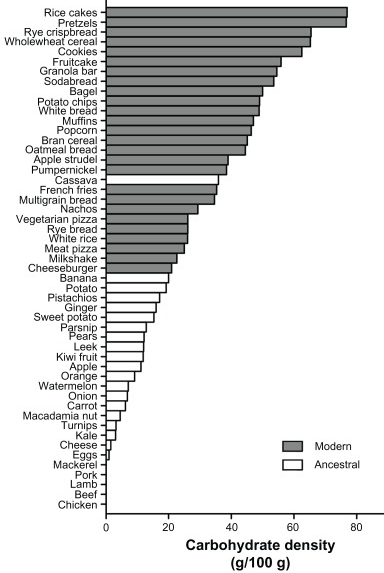
More importantly, whole grains are extremely high in bodyfat-storing, insulin-raising, triglyceride-forming carbohydrates, and this increases our risk of heart disease far more than any indigestible fiber may lower it. In fact:

The DART study from 1989 looked at long-term fiber intake, and found that the group eating twice as much fiber ended up with a 23 percent greater risk of heart attack and a 27 percent increased risk of dying.[xiv]

Realistically, the ‘fiber’ in whole grains is the equivalent of swallowing a loufa – the body wash latherer that women (and some men) use in the shower.

Image 3 - Grains - What's the Upside_

Grains keep you regular because they’re predominantly insoluble fiber that you can’t digest. The only reason you think they’re beneficial is because they expand in water, push everything through your digestive system like a plunger, and make your deuces looks massive.

As you may’ve guessed, this does more harm than good when it comes to your health. Proper transit time and elimination speed is important, but when it’s too quick we run the risk of decreased absorption.[xv] And when that fiber source is grain, it causes inflammation,[xvi] and intestinal damage.[xvii] As researchers from the Medical College of Georgia put it:

“When you eat high-fiber foods, they bang up against the cells lining the gastrointestinal tract, rupturing their outer covering.”[xviii]

Basically, that loufa you’re eating is stiffer and pointier than the one in the pic.

Although the Cereal Giants will tell you otherwise, the health of your gastrointestinal system has less to do with transit time (mouth to butt speed), and more to do with the proportion of ‘good’ vs ‘bad’ bacteria in your colon, and integrity of your gut lining. Unlike grains, the soluble fiber in fruits and vegetables feeds healthy gut bacteria and facilitates the absorption of essential nutrients.[xix] The beneficial prebiotic content in these foods increases the production of short chain fatty acids (like butyric acid) and good bacteria (like bifidobacteria[xx]) in the colon, while improving nutrient absorption (like calcium and magnesium[xxi]) and reducing the key biomarkers (like fasting glucose) for diabetes and heart disease.

Interestingly, even if we forget about the inflammation, intestinal damage, and disrupted absorption with whole grains, fruits and vegetables supply more grams of fiber per serving:

  • Half an avocado provides 6+ grams of fiber[xxii] – more than a bowl of oatmeal (4g)
  • 1 cup of kale has more fiber than 3 slices of whole-wheat bread[xxiii]
  • 1 artichoke supplies10+ grams of fiber[xxiv] – more than 3 bowls of Cheerios

As Dr. William Davis puts it:

“If you replace wheat calories with those from vegetables and raw nuts, fiber intake goes up.”

So, other than holding pizza toppings and adding handles to your hamburger, what’s the upside of eating grains?

And don’t tell me it’s fuel, as even the Institute of Medicine understands that:

“We don’t need carbohydrates for energy.”[xxv]

The reality is, there’s no upside – and plenty of downside.

Grains – The Consistent Cons

When foods are immunogenic it means they activate the immune system and induce inflammation. Although most make an effort to refrain from foods they’re allergic to (i.e. activates immunoglobulin E), many are unknowingly consuming foods that are immunogenic.  The most common example is wheat, with some research showing that it promotes inflammation in more than 80% of the population.[xxvi]

Renowned gluten intolerance researcher, Dr. Kenneth Fine, believes 1 in 3 Americans are gluten intolerant and 8 in 10 has the genetic wiring to develop it.

Even if we forget about gluten, many of the gliadin proteins in wheat and other grains are responsible for inducing a pro-inflammatory immune response,[xxvii] whether the individual has a known intolerance or not. [xxviii] A paper from Ian Spreadbury in 2012 suggests that this is partly the result of an unfriendly bacteria left behind after the breakdown of acellular carbohydrates (grains, flour, sugar).[xxix]Image 4 - Grains- What's the Upside_
Basically, that loufa you just swallowed was a used one.

Similar findings have determined that an endotoxin called LPS (lipo-polysaccharides) is elevated in the GI tract when the typical High-Carbohydrate Grain-Dominant diet is consumed,[xxx] and this is strongly correlated with obesity and diabetes[xxxi] – something not seen in our grain-free paleolithic ancestors.[xxxii]

Chronic gut inflammation also promotes an increase in intestinal permeability (leaky gut), which is associated with various autoimmune[xxxiii] and inflammatory bowel disorders,[xxxiv] and negatively affects our absorption of essential vitamins and minerals.[xxxv] Essentially, grains are a double-whammy, as they damage the intestinal lining where nutrients are absorbed, and most of them come equipped with ‘anti-nutrients’ (phytic acid and lectins) that prevent nutrient availability.

A paper released in 2005 outlined that the switch to a cereal based (agrarian) diet high in anti-nutrients is to blame for the development of leptin resistance and the degenerative diseases that come with it.[xxxvi]

Although lectin activity has been demonstrated in a variety of grains (rye, barley, oats, etc), wheat-germ agglutinin (WGA) is the most heavily studied, and has it’s highest concentration in wheat.[xxxvii] WGA and other lectins have the ability to bind to nearly every cell type,[xxxviii] and notably those of the gut.[xxxix] Similar to gliadin and the other wheat proteins, lectins promote an inflammatory response[xl] and effect otherwise healthy individuals without a known allergy.[xli]

Yes, other foods are high in lectins and phytates (ex: nuts & seeds),[xlii] but there’s less reliance on these foods as a dietary staple. These ant-nutrients don’t seem to cause problems in small amounts,[xliii] but the digestive damage becomes increasingly prominent with consistent and excessive consumption. Sadly, this has become characteristic for the majority of the population when it comes to grains.

The cereal for breakfast, sandwich for lunch, pasta for dinner regimen damages the gut and leaves no opportunity for repair.[xliv]

The biggest concern is for those avoiding animal protein, as grains, beans, nuts, and seeds are their sole protein source. Not only does this leave them extremely deficient in essential nutrients because of a lack of meat, but the excessive intake of phytates and lectins decreases the availability in their foods, and damages the intestinal lining where nutrients are absorbed.[xlv]

A vegetarian will tell you that the phytates and lectins can be removed with proper preparation procedures (such as sprouting, soaking, drailing, and boiling), but research tells us that only 50% of phytates are removed with an 18hr soak,[xlvi] and most lectins are resistant to heat.[xlvii]

One study from 2002 in the Journal of Food Science determined that a16hr soak at 77 degrees Fahrenheit (or 3 day germination period) had no reduction in phytic acid.[xlviii]

More importantly, given the North American norm of prioritizing speed and convenience over quality, what percentage of the population is actually going to go through with this?

Is it just me or are we trying extremely hard to make a food edible and beneficial, that clearly isn’t edible and beneficial?

Maybe 0.0001% of the population will take the necessary 5 days to malt and sprout oats at 52 degrees Fahrenheit, and soak them for 17 hours at 120 degrees Fahrenheit to remove 98% of the phytic acid.[xlix] But after all that, what are we left with?

30 grams of carbohydrates in a ½ cup!

Regardless of whether or not you soak grains to remove the phytic acid and access more nutrients, it doesn’t change the fact that they’re still far too high in insulin-skyrocketing carbohydrates.[l] You know, the ones that continue to drive obesity through the ceiling.image 5 - grains - what's the upside_

North Americans stay fat and get sick because they prioritize foods that are high in carbohydrates. And I’m not talking about the creamer in your coffee and candy in your top drawer. I mean the bagel for breakfast, pizza for lunch, pasta for dinner, and popcorn in front of the t.v.

Fortunately, many are finally receiving the message that sugar is bad, but they’re failing to recognize that the bread they’re putting zero-sugar jam raises their blood sugar faster than pure table sugar.[li]

What About Whole Grains?

Despite what you’ve been told (and continue to hear), the difference in blood sugar between whole and refined grains is negligible.[lii] Likewise, swapping refined grains for whole grains has no significant reductions in body fat or other risk factors for the metabolic syndrome.[liii]

But lets say we play along, and pretend that the fiber in whole grains really does make that much of a difference in blood sugar. This still doesn’t change the fact that we’re left with a food that excessively contributes to our daily carbohydrate load.

1 serving of grains is going to add at least 30 grams of nutrient degenerate carbohydrate, that is eventually broken down into the exact same simple sugars (glucose) as candy bars.[liv]

And aside from promoting insulin resistance, obesity, and diabetes, these chronically elevated blood sugar levels (hyperglycemia) are driving degenerative diseases of the heart[lv] and brain.[lvi] [lvii]

“Hyperglycemia (high blood sugar) has been proposed as a mechanism that may contribute to the association between diabetes and reduced cognitive function.”[lviii]

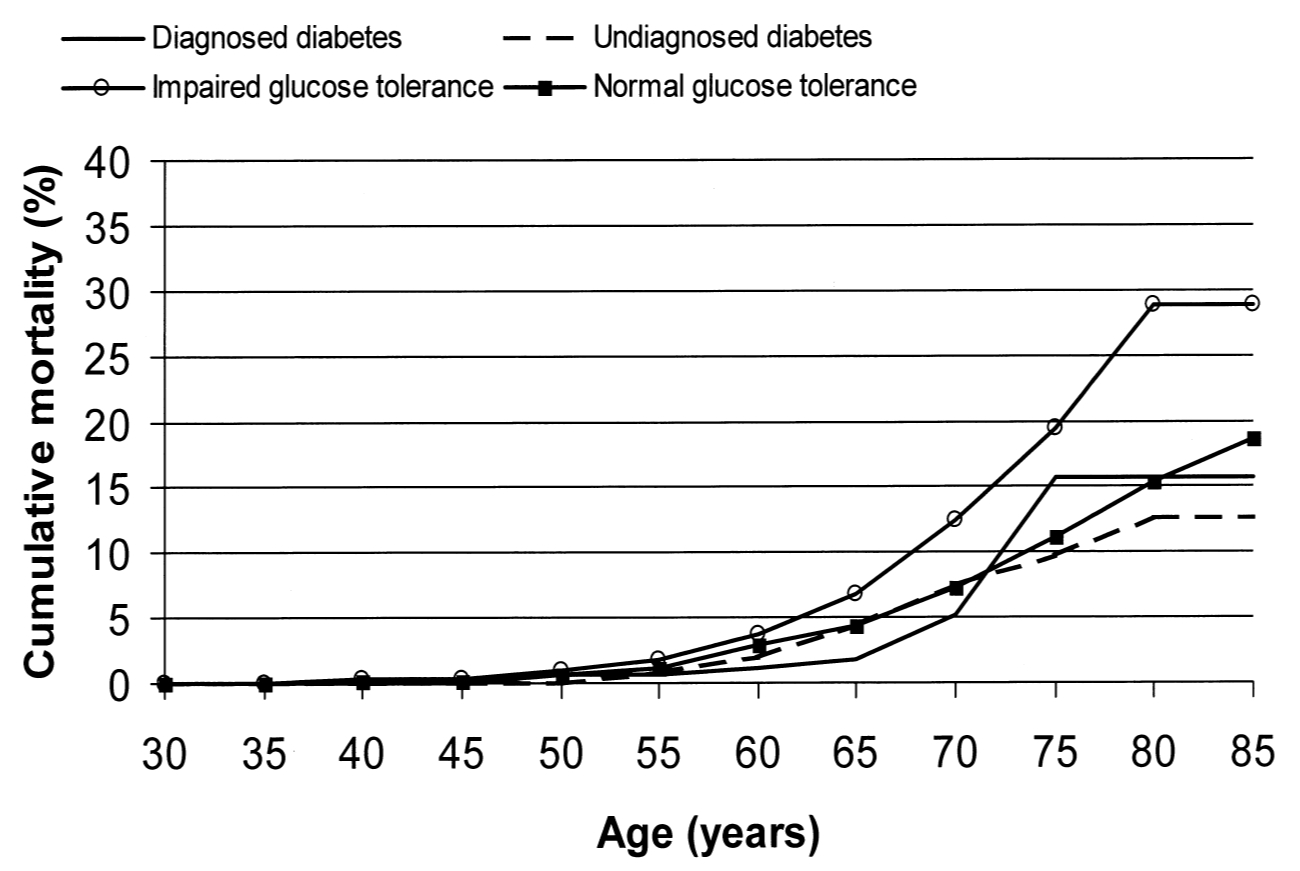
Sadly, the excess body fat[lix] and impaired glucose tolerance[lx] that develop from a diet dominated by high-glycemic carbohydrates are also directly associated with cancer mortality.[lxi]image 6 - grains - what's the upside_image 7 - grains - what's the upside_

Grains – Lose/Lose

Basically, whole grains versus refined grains is a choice between inflammation and hyperglycemia, or unavailable and non-existent nutrients. Even if there was a blood sugar benefit (which there isn’t), it’s trumped by a loss in vitamin and minerals.

To say you eat grains for nutrients is like saying you go to the strip club for action. Although it appears they’re available, clearly you’re not getting any.

There’s plenty of foods that supply accessible nutrients and beneficial fiber, without the negative health consequences that come with grains. Bread and cereal companies and governments funded by them are going to tell you otherwise, but let’s remember what their livelihood depends on.

Grain Consumption = Bread & Cereal Sales = Government Funding

Sadly, your doctor will probably mislead you too; as aside from being to less nutrition classes than me,[lxii] he spends his time learning what they want. ‘They’ being the companies and governments that profit off you being sick.

Sick People = Pharmaceutical Sales = Government Funding

Personally, I wouldn’t trust anyone that says you need grains, because you don’t. What you need, is less body fat and inflammation, and a stronger, healthier gut.

Stay Lean!

Coach Mike

In Eat Meat And Stop Jogging, Mike Sheridan uncovers the flaws in the prevailing advice to get healthy and fit. Despite conventional beliefs, he contends that the instruction to limit red meat, restrict calories, increase fiber, run long distances, avoid saturated fat and reduce cholesterol is increasing our waistline, decreasing our lifespan, and leading to an unnecessary struggle.eat meat stop jogging cover


[i] http://www.dietitians.ca/Your-Health/Nutrition-A-Z/B-Vitamins.aspx

[ii] http://www.ars.usda.gov/is/pr/2000/000802.htm

[iii] http://ajcn.nutrition.org/content/38/6/835.full.pdf

[iv] http://jn.nutrition.org/content/129/7/1434S.full

[v] http://ajcn.nutrition.org/content/79/3/418.short

[vi] http://www.unboundmedicine.com/harrietlane/ub/citation/6496386/A_stable_isotope_study_of_zinc_absorption_in_young_men:_effects_of_phytate_and_alpha_cellulose_%20

[vii] http://www.ncbi.nlm.nih.gov/pubmed/3034044

[viii] http://www.ncbi.nlm.nih.gov/pubmed/3036926

[ix] http://www.thelancet.com/journals/lancet/article/PIIS0140-6736%2872%2990523-5/abstract

[x] http://ajcn.nutrition.org/content/45/4/785.short

[xi] http://www.ncbi.nlm.nih.gov/pubmed/9895396

[xii] http://www.ncbi.nlm.nih.gov/pubmed/9925120?dopt=Citation%20

[xiii] http://jama.jamanetwork.com/article.aspx?articleid=381733

[xiv] http://www.ncbi.nlm.nih.gov/pubmed/2547617

[xv] http://ajcn.nutrition.org/content/33/11/2397.full.pdf+html

[xvi] http://www.ncbi.nlm.nih.gov/pmc/articles/PMC3402009/

[xvii] http://www.mdpi.com/2072-6643/5/3/771/htm

[xviii] http://www.sciencedaily.com/releases/2006/08/060823093156.htm

[xix] http://jn.nutrition.org/content/133/1/1.full

[xx] http://jn.nutrition.org/content/129/7/1431S.full

[xxi] http://link.springer.com/article/10.1007%2Fs00394-004-0526-7

[xxii] http://jn.nutrition.org/content/132/7/2015.full

[xxiii] http://huhs.harvard.edu/assets/file/ourservices/service_nutrition_fiber.pdf

[xxiv] http://huhs.harvard.edu/assets/file/ourservices/service_nutrition_fiber.pdf

[xxv] http://www.huffingtonpost.ca/mike-sheridan/carbohydrates-and-energy_b_6823546.html

[xxvi] http://gut.bmj.com/content/56/6/889.extract

[xxvii] http://onlinelibrary.wiley.com/doi/10.1111/j.1365-2796.2011.02385.x/abstract;jsessionid=91D683B320900B055CD92C7504835E71.f03t01

[xxviii] http://onlinelibrary.wiley.com/doi/10.1111/j.1365-2567.2010.03378.x/abstract;jsessionid=7B2CE8DA05EDBCFDB852FFF9BE9930EC.f03t01

[xxix] http://www.ncbi.nlm.nih.gov/pmc/articles/PMC3402009/

[xxx] http://care.diabetesjournals.org/content/32/12/2281.full.pdf

[xxxi] http://care.diabetesjournals.org/content/34/8/1809.full.pdf

[xxxii] http://informahealthcare.com/doi/abs/10.1080/13590840310001619397

[xxxiii] http://link.springer.com/article/10.1007%2Fs12016-011-8291-x

[xxxiv] http://onlinelibrary.wiley.com/doi/10.1111/j.1365-2982.2010.01498.x/abstract;jsessionid=BBE9EB1718D6292F68F844D4F8A78C9B.f03t02

[xxxv] http://www.ncbi.nlm.nih.gov/pubmed/3034049

[xxxvi] http://www.biomedcentral.com/content/pdf/1472-6823-5-10.pdf

[xxxvii] http://www.sciencedirect.com/science/article/pii/0924224496100157

[xxxviii] http://journals.cambridge.org/action/displayAbstract?fromPage=online&aid=873700&fileId=S0007114593001254

[xxxix] http://link.springer.com/article/10.1007%2FBF00731295

[xl] http://onlinelibrary.wiley.com/doi/10.1002/%28SICI%291521-4141%28199903%2929:03%3C918::AID-IMMU918%3E3.0.CO;2-T/abstract;jsessionid=3676FA3FB1E8E318D29ADCB624E2EDB1.f03t02

[xli] http://www.sciencedirect.com/science/article/pii/S0014579396011544

[xlii] http://ajcn.nutrition.org/content/33/11/2338.full.pdf+html

[xliii] http://journals.cambridge.org/action/displayAbstract?fromPage=online&aid=873700&fileId=S0007114593001254

[xliv] http://journals.plos.org/plosone/article?id=10.1371/journal.pone.0000687

[xlv] http://www.ncbi.nlm.nih.gov/pmc/articles/PMC1115436/?tool=pubmed

[xlvi] http://www.sciencedirect.com/science/article/pii/0308814694902135

[xlvii] http://informahealthcare.com/doi/abs/10.3109/13590849109084100

[xlviii] http://onlinelibrary.wiley.com/doi/10.1111/j.1365-2621.2002.tb09609.x/abstract

[xlix] http://onlinelibrary.wiley.com/doi/10.1111/j.1365-2621.1992.tb14340.x/abstract

[l] http://m.ajcn.nutrition.org/content/76/1/5.full.pdf?sid=6f6fd7cc-dd9c-4c02-82b2-b959f5649453

[li] http://ajcn.nutrition.org/content/76/1/5.full

[lii] http://m.care.diabetesjournals.org/content/4/5/509.full.pdf

[liii] http://ajcn.nutrition.org/content/early/2014/06/18/ajcn.113.078048.short

[liv] http://www.huffingtonpost.ca/mike-sheridan/sugar-carbohydrates_b_6586584.html

[lv] http://care.diabetesjournals.org/content/early/2014/10/14/dc14-0360.abstract%20

[lvi] http://www.nejm.org/doi/full/10.1056/NEJMoa1215740

[lvii] http://www.neurology.org/content/79/10/1019

[lviii] http://www.ncbi.nlm.nih.gov/pubmed/22710333

[lix] http://www.nejm.org/doi/full/10.1056/NEJMoa021423

[lx] http://aje.oxfordjournals.org/content/157/12/1092.full.pdf

[lxi] http://www.ncbi.nlm.nih.gov/pmc/articles/PMC3267662/

[lxii] http://www.nature.com/ejcn/journal/v68/n7/abs/ejcn201475a.html


12 May 21:33

Climate Change Concerns Don’t Belong in Dietary Guidelines

by Patrick J. Michaels, Paul C. "Chip" Knappenberger

On Friday, May 8, the public comment period closed for the new 2015 Dietary Guidelines issued by the U.S. Department of Agriculture (USDA) and the Department of Health and Human Services (HHS). In a nutshell, the new dietary guidelines are to eat a diet richer in plant-based foods and leaner in animal-based products. One of the considerations used by the USDA/HHA in their Scientific Report used to rationalize these new dietary guidelines was that such diets are

“associated with more favorable environmental outcomes (lower greenhouse gas emissions and more favorable land, water, and energy use) than are current U.S. dietary patterns.” [emphasis added]

Throughout the Scientific Report whenever greenhouse gases are mentioned, a negative connotation is attached and food choices are praised if they lead to reduced emissions.

This is misleading on two fronts. First, the dominant greenhouse gas emitted by human activities is carbon dioxide which is a plant fertilizer whose increasing atmospheric concentrations have led to more productive plants, increasing total crop yields by some 10-15 percent to date. The USDA/HHS is at odds with itself in casting a positive light on actions that are geared towards lessening a beneficial outcome for plants, while at the same time espousing a more plant-based diet.

And second, the impact that food choices have on greenhouse gas emissions is vanishingly small—especially when cast in terms of climate change. And yet it is in this context that the discussion of GHGs is included in the Scientific Report. The USDA/HHS elevates the import of GHG emissions as a consideration in dietary choice far and above the level of its actual impact.

In our Comment to the USDA/HHS, we attempted to set them straight on these issues.

Our full Comment is available here, but for those looking for a synopsis, here is the abstract:

There are really only two reasons to discuss greenhouse gas emissions (primarily carbon dioxide) in the context of dietary guidelines in the U.S., and yet the USDA and HHS did neither in their Scientific Report of the 2015 Dietary Guidelines Advisory Committee (DGAC).

The first reason would be to discuss how the rising atmospheric concentration of CO2—a result primarily of the burning of fossil fuels to produce energy—is a growing benefit to plant life. This is an appropriate discussion in a dietary context as atmospheric CO2 is a fertilizer that promotes healthier, more productive plants, including crops used directly as food for humans or indirectly as animal feed. It has been estimated that from the atmospheric CO2 enrichment to date, total crop production as increased by 10-15 percent. This is a positive and beneficial outcome and one that most certainly should be included in any discussion of the role of greenhouse gases emissions in diet and nutrition—but is inexplicably lacking from such discussion in the DGAC report.

The second reason to discuss greenhouse gas emissions in a diet and nutrition report would be to dispel the notion that through your choice of food you can “do something” about climate change.  In this context, it would be appropriate to provide a quantitative example of how the dietary changes recommended by the DGAC would potentially impact projections of the future course of the climate. Again, the DGAC failed to do this.  We help fill this oversight with straightforward calculation of averted global warming that assumes all Americans cut meat out of their diet and become vegetarians—an action that, according to the studies cited by the DGAC, would have the maximum possible impact on reducing greenhouse gas emissions and thus mitigating future climate change.  Even assuming such an unlikely occurrence, the amount of global warming that would be averted works out to 0.01°C (one hundredth of a degree) by the end of the 21st century.  Such an inconsequential outcome has no tangible implications.  This should be expressed by the DGAC and mention of making dietary changes in the name of climate change must be summarily deleted.

We recommend that if the DGAC insists on including a discussion of greenhouse gas emissions (and thus climate change) in it 2015 Dietary Guidelines, that the current discussion be supplemented, or preferably replaced, with a more accurate and applicable one—one that indicates that carbon dioxide has widespread and near-universal positive benefits on the supply of food we eat, and that attempting to limit future climate change through dietary choice is misguided and unproductive.  These changes must be made prior to the issuance of the final guidelines. 

We can only guess on what sort of impact our Comment will have, but we can at least say we tried.

11 May 20:42

DEA Takes $16,000 From Train Passenger Because It Can

by Tim Cushing

There were no drugs and nothing to enforce, but that didn't stop the Drug Enforcement Agency from taking $16,000 from a passenger on a train headed to California.

After scraping together enough money to produce a music video in Hollywood, 22-year-old Joseph Rivers set out last month on a train trip from Michigan to Los Angeles, hoping it was the start of something big.

Rivers changed trains at the Amtrak station in Albuquerque, New Mexico, on April 15, with bags containing his clothes, other possessions and an envelope filled with the $16,000 in cash he had raised with the help of his family, the Albuquerque Journal reports. Agents with the Drug Enforcement Administration got on after him and began looking for people who might be trafficking drugs.

Rivers said the agents questioned passengers at random, asking for their destination and reason for travel. When one of the agents got to Rivers, who was the only black person in his car, according to witnesses, the agent took the interrogation further, asking to search his bags. Rivers complied. The agent found the cash -- still in a bank envelope -- and decided to seize it on suspicion that it may be tied to narcotics. River pleaded with the agents, explaining his situation and even putting his mother on the phone to verify the story.

No luck.
Leaving aside the unsavory hint of racial profiling, there's the fact that the DEA helped itself to cash simply because it was cash. It had no reason to suspect Rivers of anything, but the money was apparently too much to pass up. Even having his story corroborated was useless. And, sure, the DEA agents had no reason to believe anyone Rivers put them in touch with was a trustworthy source of information. (After all, he's some sort of drug dealer, right?) But to grant the DEA the benefit of the doubt for its refusal to believe Rivers' mother's statements is to cut the agents an absurd amount of slack for everything preceding that.

Because what did the DEA actually have here? A young guy and $16,000 in cash. According to the DEA's own statements, it doesn't need anything more than that to effect an asset seizure. And, according to the DEA's own statements, it has no reason to bother with anything more than a cursory look that "confirms" what it wants it to confirm.
[Sean] Waite [DEA - Albuquerque] said that in general DEA agents look for “indicators” such as whether the person bought an expensive one-way ticket with cash, if the person is traveling from or to a city known as a hot spot for drug activity, if the person’s story has inconsistencies or if the large sums of money found could have been transported by more conventional means.
If we leave it to the DEA to define drug activity "hot spots," it becomes any destination any traveler is headed to, especially if there's seizable cash involved. As for story inconsistencies, we're back to "eye of the beholder" territory. If agents are motivated to perform asset seizures, any story can be found to have enough flaws to justify the forfeiture. Waite's statement is very unhelpful, other than to show how completely screwed up asset forfeiture programs are.

As if on cue -- and as if the DEA's Sean Waite is completely unaware of the level of scrutiny and negative public opinion centered on asset forfeiture programs -- he delivers the most tone-deaf of talking points:
“We don’t have to prove that the person is guilty,” Waite said. “It’s that the money is presumed to be guilty.”
Boom. There's your problem. Or rather, Rivers' problem. And the problem of far too many Americans who made the mistake of leaving home with cash on their person. The government doesn't need to prove shit. It can just take and take and take and force those wronged by its "presumptions" to jump through multiple expensive and mostly futile hoops if they hope to recover their "guilty" belongings.

So, what do you tell people like Rivers? "Don't carry cash?" Cash is universal and accepted everywhere. But it's also apparently inherently guilty. Just don't carry large amounts of cash? From Virginia's asset forfeiture stats:
Contrary to the oft-stated defense that these programs are necessary to cripple powerful drug lords and multimillion dollar fraudsters, more than half the cash seized from 2001-2006 fell in the $614-1,288 range and the average worth of vehicles seized has hovered at about $6,000.
And Philadelphia, PA's:
A City Paper review of 100 cases from 2011 and 2012 found the median amount of cash seized by the District Attorney was only $178.
Any cash is inherently suspicious and can be deemed "guilty" by the seizing agency with no corroborating evidence. $16,000 has just made its way into the DEA's funds and if Rivers wants it back, he's likely going to lose a great deal of it to legal fees. He's currently trying to raise the money the DEA took from him via crowdfunding site GoFundMe. Hopefully, he'll get another chance to make his music video without being sidelined by government agents looking to bust some "guilty" cash.

Permalink | Comments | Email This Story


11 May 14:20

Child Protection Stasi in action

by noreply@blogger.com (VD)
This abuse of government authority has got to stop, and stop immediately.
Police seized 10 kids from their rural Kentucky home after receiving an anonymous tip to investigate the family's “off the grid” lifestyle.

Joe Naugler happened to be away with eight of his children when the authorities arrived on the scene. Nicole Naugler, who happens to be five months pregnant, took their oldest children with her to drive away, but the authorities stopped her and took took them. She was arrested for “disorderly conduct and resisting arrest,” but she claims she was arrested after not allowing the officers to take her children without a "fight." Officers told her husband he needed to hand over the other children or face felony charges, and he complied.

Pace Ellsworth, a family friend, said he believes the Nauglers were targeted because the government disagrees with their “free” lifestyle of “unschooling,” which focuses on learning through life experience and each child’s individual strengths.

The children have been placed in four different homes in four different counties that CPS chose. On Friday morning, officials inspected the Naugler's home and concluded that they did, in fact, have good living conditions.

The Nauglers are hopeful to get their kids back. The family will find out the specific reason their kids were taken at an upcoming court hearing, but it’s hard to believe how EASY it was for the authorities to take their kids. This was all based on a baseless, anonymous tip.
There is absolutely no excuse or justification for this sort of thing. Every policeman and CPS agent involved should be arrested and tried for kidnapping. Whatever happened to Blackstone's Formulation and the principle "It is better that ten guilty persons escape than that one innocent suffer"?

The Child Protection Stasi aren't protecting children. They are abusing them.

Posted by Vox Day.
07 May 14:07

Two Readers React to the Viral Video About Mass Kidnappings and Stranger Danger

by Lenore Skenazy

Joe SaladsAs I wrote in response to the Joey Salads child abduction video—which purported to help parents become more aware of stranger danger—the worst-case scenario is far rarer than Salads suggests, and parents are already terrified enough.

Among the responses I received to my post was this troubling and very honest note:

I agree with your views in theory, but when I was 9 years old, I was tricked by a stranger to go with him and then assaulted and left for dead.  (And yes, I had been warned not to go with strangers by my school and my family.)

Skipping the details, as you can imagine, it affected my entire life from then on, as well as my parents and siblings.

My question to you is: yes, as a society we are over-protective.  But if one parent followed your advice and then their child was assaulted, or g-d forbid, killed, how would you feel?

I’m sure you’ve heard, and discounted, this argument before, but I didn’t know if you ever heard from an actual victim, as I know they are rare. But if we can do anything to prevent something like this from happening to another child, shouldn’t we?

To the person who wrote me this note, I would say this: First of all, I am so sorry and upset this happened to you. I wish you and your family every bit of joy and optimism that can be yours.

I would feel sad and grief-filled if this happened to another child, whether they were following my advice or not. (And my advice is probably the same as your own parents gave you: You should talk to anyone, you should not wander off with anyone.) And I would be very angry… at the criminal.

You’re right: I am always asked how I would feel if my son had gotten on the subway and “never come home”—which is just a variation on, “What if something bad happened when you thought things would probably be fine?” The thing is: We all know how I’d feel. Stricken. So the question, when asked by the media (not you), isn’t asked out of curiosity. It is asked as a way of implying that I was wrong to not dwell upon the possibility of future grief and remorse before I allowed my son out of my sight. And that if only I engaged in a little more proactive regret, I’d stop letting him do anything unsupervised.

This implies that when and if anything tragic happens to a child, it is the fault of the parents for not being vigilant enough. It legitimizes blaming the victim and/or the victim’s parents. But I hope you do not blame yourself for what happened to you, or your parents.

What no one ever says is this: “Why would you ever suggest someone drive their kid to your house, or class, or office? What if they got into a car accident on the way and died? How would you feel, knowing you had suggested they drive over?”

I don’t mean to be callous or dismissive. But letting kids go outside, talk to strangers, or get into the car to go to the dentist—these all come with a bit of risk. Letting kids take that “risk” is not dumb or foolhardy, and it shouldn’t be guilt-inducing, even though after a tragedy we all tend to second-guess ourselves.

What we tend to do now is second-guess ourselves ahead of time. We imagine the remorse we would feel, and say, “It’s not worth it.”

That’s why so many parks are empty.

So I don’t know if that helps at all, but my main point is: If a child is hurt—God forbid—when a parent lets him go outside, I will mourn. But I will not blame the parent for failing to predict the rare and unpredictable, any more than I’d blame the parent who drives her kid the three blocks to school out of a fear of predators, and gets sideswiped by a truck. As someone once wrote to this blog: “Most of the bad things that happen to kids are as a result of bad luck. Not bad parenting.”

As I was mulling this over, I got an email from another reader that added a new perspective. It begins:

I watched this [Joey Salads child abduction] video the first time and fell into the trap with the other Facebook sheep, thinking this guy had just opened my eyes to something important. And then I watched it a second time on this blog and read all of these comments and realized you are all so right. This is pure fear-mongering. Unfortunately, my initial knee-jerk reaction of “OMG, that is crazy, my kid would totally do this!” stems from the fact that I was actually attacked and molested by a stranger in public when I was a child, and I have warned my kids about stranger danger because of that. My past has haunted me my whole life and my biggest fear is something similar (or worse) happening to my children. But what does living in fear do for people? Absolutely nothing. And the comments here actually help me to realize that more clearly.

There’s no way to guarantee absolute safety in any situation. But if we can agree not to blame anyone but the criminal, or bad luck, when kids are hurt, that might help at least a tiny bit to mitigate the pain.

07 May 13:33

Stop the HB 796, Modernize Dietetics/Nutrition Practice Act

by Robb Wolf

UPDATE

I am working to put together a roundtable on this bill. We have folks from eatright.org, the Nutritional Therapy assoc, and some folks who have worked on the inside in this legislative process. Not sure on the timeline, but trying to get it done ASAP and that will be a special podcast edition.


Hey folks, I need to pass this along to you and I really hope you lend some muscle to shooting down the Bill HB 796, “Modernize Dietetics/Nutrition Practice Act.” In essence, HB 796 will prevent anyone from communicating dietary advice to a non-family member who has a medical condition. Friend of yours asks you how you lost weight? Can’t say anything, as obesity is a “medical condition.” Own a gym and want to do a Paleo Challenge? Good luck, the Dietetics Board of NC can, and likely will, sue you. If you check out that link to the Bill, scan down to the bottom, you will see what becomes illegal with the enactment of this Bill. At one point it was the “practice of dietetics” however that has been changed to “medical nutrition therapy.” Since life itself can be labeled a “medical condition” it provides a remarkably invasive reach for the The North Carolina Board of Dietetics/Nutrition. These are the same folks that tried to sue Steve Cooksey for blogging about his experience SUCCESSFULLY managing his diabetes. Fortunately, due to enormous support for Steve the NCBDN failed in their suit, but this is their next attempt at a power-grab.

WTF is going on?

There is a struggle emerging between the old guard of academia/medicine and the emergent, decentralized networks that provide arguably superior information. Academia clearly has it’s place, although I am continually pushed to define or understand exactly what that role is other than protecting hegemony. I put much more faith in markets, self-experimentation and outcome based medicine. That position absolutely FREAKS OUT anyone who is an entrenched academic. Well, tough. Dietetics, as it is currently practiced, is an appalling failure. An auto-mechanic who understands the rudiments of ancestral health is more valuable to our populace than 10,000 RD’s who promulgate the same tired crap. To some degree, this is exactly what is happening. The old guard is getting crushed in a market-based sharing of information and their only response is to make a political/legal power-grab. NOT change their broken, archaic methodology. instead, they work to create a legal barrier that prevents people from sharing simple solutions to complex problems.

Now, this does currently “only” affect North Carolina. Why should you care about that? Well, this sets a precedent. Today NC, tomorrow your state. This problem is NOT going away. As the ancestral health idea makes more headway, we will see more and more of this as the old institutions grasp at power that is sliding out of their hands.

Laura Combs has done amazing work staying up on this topic. She provided me the following material which allows you to easily contact legislators directly involved in this bill. Please take the time to support freedom and the free sharing of information.

 From Laura Combs
ALERT about HB 796, Modernize Dietetics/Nutrition Practice Act. This bill has passed the House and now sits in Senate Rules, where I hear it is viewed favorably by the Rules chair (I will see him tomorrow if I can catch him).
 
If you used Dr. Natasha Campbell-McBride’s GAPS diet or another food healing path for your kids, you will be breaking the law if share your food strategies with others because you will be offering “Medical nutrition therapy. – The provision of nutrition care services for the purpose of managing or treating a medical condition.” and you are not licensed to do that.
 
What can you do? Please email the Rules Chair, Senator Tom Apodaca at Tom.Apodaca@ncleg.net and tell him that this bill is a power grab by the Dietetics and Nutrition professions and violates our Free Speech because it prevents us from sharing nutrition information with friends who have medical conditions. Senator Apodaca must not release this bill from Rules Committee.
 
Here is a link to the bill so that you can view it for yourself: http://www.ncga.state.nc.us/Sessions/2015/Bills/House/PDF/H796v2.pdf
 
 ————————
 
Here is my letter:

Dear Senator Apodaca,
 
I am writing to strongly urge you to bury/not release HB 796. This is a terrible bill that obliterates Free Speech in North Carolina.
 
I know that you are a strong supporter of autism care as a primary sponsor of SB 676. One of the keys to autism spectrum recovery is changes in diet. Most dietitians and nutritionists are unaware of those protocols, but many, many parents are. Parents have improved and in some cases freed their children from autism via dietary therapies. Those parents will become criminals if they share their nutrition strategies with other parents because they will be offering “Medical Nutrition Therapy.” It is unbelievable to me that the Dietetics and Nutrition monopoly can create such Constitutional havoc and get away with it – in the House at least.
 
If the Dietetics and Nutrition professions were effective, why are more and more people sick by the food they eat (diabetes, high blood pressure, obesity and many other forms of metabolic syndrome)? I happen to be good that this stuff and I have helped a lot of people – people who have been failed by the medical association and the Dietetics and Nutrition folks. I volunteer my knowledge and I can’t believe that I will be muzzled by this group of supposed professionals.
 
If these folks want to regulate and license themselves,  by all means they should do so, but they should leave the regular person alone.
 
Please do not release HB 796 from Rules and maintain our Freedom of Speech. We have had too many assaults on our freedoms by Senator Tarte (SB 346, the Vax Bill, and SB 271, Four-Year Term for GA/Limit Consecutive Terms.) and are getting tired of this nonsense.
 
Thank you for your consideration.
 
Sincerely,
 
Laura Combs
Raleigh, NC

quote-if-people-let-the-government-decide-what-foods-they-eat-and-what-medicines-they-take-thomas-jefferson-37-63-88

06 May 20:56

Announcing the Spin Cycles and Our First Award

by Patrick J. Michaels

Judging from the November electoral tsunami, whose epicenter was in coal country, people aren’t taking very kindly to the persistent exaggeration of mundane weather and climate stories that ultimately leads to, among other things, unemployment and increased cost of living. In response, we’ve decided to initiate “The Spin Cycles” based upon just how much the latest weather or climate story, policy pronouncement, or simply poo-bah blather spins the truth.

Like the popular and useful Fujita tornado ratings (“F1” through “F5”), or the oft-quoted Saffir-Simpson hurricane severity index (Category 1 through Category 5), and in the spirit of the Washington Post’s iconic “Pinocchios,”, we hereby initiate the “Spin Cycle,” using a scale of Delicates through Permanent Press. Our image will be the universal vortex symbol for tropical cyclones, intimately familiar to anyone who has ever been alive during hurricane season, being spun by a washing machine. Here’s how they stack up, with apologies to the late Ted Fujita and Bob Simpson, two of the true heroes of atmospheric science with regard to the number of lives their research ultimately saved.

And so, here we have it:

Delicates. An accidentally misleading statement by a person operating outside their area of expertise. Little harm, little foul. One spin cycle.

Slightly Soiled.  Over-the-top rhetoric. An example is the common meme that some obnoxious weather element is new, thanks to anthropogenic global warming, when it’s in fact as old as the earth. An example would the president’s science advisor John Holdren’s claim the “polar vortex,” a circumpolar westerly wind that separates polar cold from tropical warmth, is a man-made phenomenon. It waves and wiggles all over the place, sometimes over your head, thanks to the fact that the atmosphere behaves like a fluid, complete with waves, eddies, and stalls. It’s been around since the earth first acquired an atmosphere and rotation, somewhere around the beginning of the Book of Genesis. Two spin cycles.

Normal Wash. Using government authority to create public panic regarding climate change, particularly those omitting benefits, in an effort to advance policy. For example, the 2014 National Climate Assessment. Three spin cycles.

Heavy Duty. Government regulations or treaties claiming to save the planet from certain destruction, but which actually accomplish nothing. Can also apply to important UN climate confabs, such as Copenhagen 2009 (or, quite likely, the upcoming 2015 Paris Summit), that are predicted to result in a massive, sweeping, and world-saving new treaty, followed by self-congratulatory back-patting. Four spin cycles.

Permanent Press. Purposefully misleading commentary on science which will hinder actual scientific debate and credibility for generations to come, especially those with negative policy outcomes. Linking extreme weather events to climate change, the perpetually impending demise of the polar bears, the Federal government attempting to convince you to sell your beachfront property before it’s submerged. Five spin cycles.


INAUGURAL SPIN CYCLE AWARD 

DOES MERCURY FROM POWER PLANTS MAKE US STUPID?

In State of Michigan et al. v. Environmental Protection Agency, the EPA contends that the costs to reduce and then eliminate mercury from power plant effluent are justified because current emissions are lowering I.Q. scores. The result will be to eliminate all coal-fired generation of electricity, [double entendre ahead] currently around 40 percent of our total electric power.

You remember IQ (“Intelligence Quotient”) tests, right? Oh, well, maybe you don’t, because public schools can’t use them anymore. Whether or not they measure intelligence (whatever that is) or not, not all socioeconomic groups score the same, so they can’t be fair (whatever that means). But they do predict, within certain humongous error ranges, lifetime income—which isn’t fair, either.

Which, means, according to EPA, that power plant emissions of mercury are harming…whom?

So—we can’t make this stuff up, the EPA invented a population of 240,000 nonexistent women who fish day in and day out, in order to feed themselves. We won’t get into the fact that, given the cost of, say, a can of mackerel, these folks are paying themselves far, far below the minimum wage. No, instead, they eat—or should we say gorge—up to 300 pounds of hand-caught freshwater fish per day. And then they go home and do the sort of things that lead to children., whose IQ scores are lowered thanks to the mercury in those fish.

Nevermind that U.S. power plants emit less than 0.7 percent of the total mercury input to the atmosphere each year, or that the total U.S. contribution is a mere two percent, or that East Asia, (mainly China) contributes around 36 percent.  Given that mercury can stay in the atmosphere for weeks before it is deposited on the surface, their contribution to our mercury deposition is huge compared to what comes from our homegrown power plants.

The average IQ score is 100. The measurement error for practical purposes is +/- 5 points (one standard deviation). That means if you score 140, your true score is likely between 135 (“highly intelligent”) and 145 (“genius’), or about the average score of our readers.

Those hard facts weren’t enough to keep the EPA from confidently stating that the average IQ reduction in the hypothetical children of the hypothetical fish-obsessed women will be (drum roll!) 0.00209 IQ points. In other words, the average IQ of these sorry tots will read 99.997, with a real value of between 94.997 and 104.997.

Nowhere did the EPA say that avoiding such an IQ loss could impact future earnings, but they still proceeded to translate the value of 0.00209 IQ points to a value of up to $6,000,000 per year across 240,000 hypothetical kids.

One gets the impression that people who think they can find a needle of precisely 0.00209 IQ points in a haystack of 10.0000, or two-hundreths of one percent of the error range, might not score too high on such a test. Of course, since they are most likely government bureaucrats making around $115K per year, that shows how good IQ tests are, after all.

For “thinking” that we can measure 0.00209 IQ points, and, for that, we will shut down power plants that produce 40 percent of our juice, the inaugural recipient of the Spin Cycle award, the U.S. Environmental Protection Agency, gets five spin cycles, or Permanent Press.

05 May 18:06

Fracking Fearmongering: Another "Regulatory Science" Confirmation

by Ronald Bailey

FrackingThe New York Times is reporting a new study in the Proceedings of the National Academy of Sciences that purports to find contamination in drinking water by 2-n-Butoxyethanol (2-BE). 2-BE is a compound sometimes used in fracking fluids used to crack open deep shale to release natural gas. The Times reports:

“This is the first case published with a complete story showing organic compounds attributed to shale gas development found in a homeowner’s well,” said Susan Brantley, one of the study’s authors and a geoscientist from Pennsylvania State University.

"Complete story" is a pretty good summation of their findings. Why? Because the contamination was not the result of fracking itself. It was either the result of a 2009 surface tank leak or a faulty well-casing - the compound did not travel upward from the layers of shale through thousands of feet of rock to surface aquifers. In their supplmental information, the researchers note, "Although not expected to be significant, release of 2-BE could also result from consumer product use, such as out-door use of liquid cleaners and paints." Perhaps so, but how confident can they really be that that is not a source for the 2-BE? After all, the contamination "was measured in parts per trillion, [and] was within safety regulations and did not pose a health risk."

It's perhaps unfair, but studies involved with the possible assertion of regulatory authority bring to mind the joke in which a statistician is asked what the result of a calculation is? He replies, "What do you want it to be?"

Of course, surface tank leaks and faulty well-casings happen with conventional gas and oil drilling and if they produce contamination that harms property owners, they should be fully compensated. The Times quotes industry representatives:

Katie Brown, an energy consultant with Energy in Depth, an advocacy group for the Independent Petroleum Association of America, said the authors had no evidence that the small traces they found of 2-BE, which is also used in many household items, came from a drilling site.

“The entire case is based around the detection of an exceedingly small amount of a compound that’s commonly used in hundreds of household products,” Ms. Brown wrote in an email. “The researchers suggest the compound is also found in a specific drilling fluid, but then tell us they have no evidence that this fluid was used at the well site.”

The EPA is currently in the midst of conducting a study aimed at "elucidat[ing] the relationship, if any, between hydraulic fracturing and drinking water resources." The agency claims that it is "committed to conducting a study that uses the best available science, independent sources of information, and a transparent, peer-reviewed process that will ensure the validity and accuracy of the results."

In my column, Is Regulatory Science Oxymoronic?, I asked:

A final couple of questions: Why is it that environmentalists and environmental agency bureaucrats can always gin up studies that show that any activity they oppose and/or want to regulate is dangerous to the environment? On the other hand, why is it that energy producers and energy agency bureaucrats can gin up studies that suggest that the benefits of any activity they favor outweigh the costs? 

Tentative answer: Regulatory science is an oxymoron.

That is still my answer.

05 May 14:57

North Carolina Forfeiture Case Reveals Limits of Executive Reform, Government Defensiveness

by Adam Bates

In March, we detailed reforms announced by Attorney General Eric Holder to federal asset forfeitures under the Bank Secrecy Act’s “structuring” law.  Those changes mirror an earlier policy shift by the Internal Revenue Service.  Unfortunately for some, those changes were not made retroactive, meaning people whose property was seized before the announcements in a way that would violate the new policies did not automatically have their property returned.

Lyndon McLellan, the owner of a North Carolina convenience store, has not been charged with a crime.  He has, however, had his entire business account totaling $107,702.66, seized by the federal government.  As Mr. McLellan attempts to recover his money, he is now being represented by the Institute for Justice, which issued this release:

“This case demonstrates that the federal government’s recent reforms are riddled with loopholes and exceptions and fundamentally fail to protect Americans’ basic rights,” said Institute for Justice Attorney Robert Everett Johnson, who represents Lyndon. “No American should have his property taken by the government without first being convicted of a crime.”

In February 2015, during a hearing before the U.S. House of Representatives Ways & Means Oversight Subcommittee, North Carolina Congressman George Holding told IRS Commissioner John Koskinen that he had reviewed Lyndon’s case—without specifically naming it—and that there was no allegation of the kind of illegal activity required by the IRS’s new policy. The IRS Commissioner responded, “If that case exists, then it’s not following the policy.”

The government’s response to the notoriety Mr. McLellan’s case has received was nothing short of threatening.  After the hearing, Assistant U.S. Attorney Steven West wrote to Mr. McLellan’s attorney:

Whoever made [the case file] public may serve their own interest but will not help this particular case. Your client needs to resolve this or litigate it. But publicity about it doesn’t help. It just ratchets up feelings in the agency. My offer is to return 50% of the money. 

What “feelings in the agency” could possibly be “ratchet[ed] up” by highlighting a case in which the owner is accused of no wrongdoing while both the Department of Justice and the Internal Revenue Service have announced reforms to prevent these seizures from occurring?

Perhaps the government is sensitive to the avalanche of negative press that civil asset forfeiture has received over the past several years (thanks to the tireless efforts of organizations like the Institute for Justice and the ACLU).  Perhaps the government feels that the game is nearly up, after dozens of publicized cases of civil asset forfeiture abuse.

Cases like this show that the executive branch, now under a new Attorney General who has her own controversial civil forfeiture history, cannot be trusted to stay its own hand.  State and federal legislators must take the initiative, as some already have, if this abusive practice is going to end.

04 May 19:25

I $*%*ing LOVE science

by noreply@blogger.com (VD)
Never, ever believe anyone who says I do not love and adore science. Because this.
There are several studies showing that when people drink coffee, they have a lower risk of dying from a range of serious diseases. A groundbreaking study, the largest of its kind, was published in the New England Journal of Medicine in 2012: In this study, 402,260 individuals between 50 and 71 years of age were asked about their coffee consumption. The results were fairly remarkable… after following the people for 12-13 years, those who drank the most coffee were significantly less likely to have died.


Do you know what this means? DO YOU KNOW WHAT THIS MEANS? It means I HAVE to drink one more cup of coffee a day. For my health. I won't say this is the greatest day of my adult life, but it's up there.

I cannot believe people genuinely doubt the existence of God or believe there is some sort of conflict between faith and science. This scientific study clearly indicates that there is a God and He wants us to be happy.

Did I mention that I love science?

First red wine, then dark chocolate, now this. If they discover that wargames and books are similarly beneficial, I'm going to live to be 200.

Posted by Vox Day.
04 May 15:42

Those Gruelling U.S. Tax Rates: A Global Perspective

by Steve H. Hanke

The Tax Foundation released its inaugural “International Tax Competitiveness Index” (ITCI) on September 15th, 2014. The United States was ranked an abysmal 32nd out of the 34 OECD member countries for the year 2014. (See accompanying Table 1.) The European welfare states such as Norway, Sweden and Denmark, with their large social welfare systems, still managed to have less burdensome tax systems on local businesses than the U.S. The U.S. is even ranked below Italy, the country that has had such a pervasive problem with tax evasion that the head of its Agency of Revenue (roughly equivalent to the Internal Revenue Service in the United States) recently joked that Italians don’t pay taxes because they were Catholic and hence were used to “gaining absolution.” In fact, according to the ranking, only France and Portugal have the dubious honor of operating less competitive tax systems than the United States.

The ITCI measures “the extent to which a country’s tax system adheres to two important principles of tax policy: competitiveness and neutrality.” The competitiveness of a tax system can be measured by the overall tax rates faced by domestic businesses operating within the country. In the words of the Tax Foundation, when tax rates are too high, it “drives investment elsewhere, leading to slower economic growth.” Tax competitiveness is measured from 40 different variables across five different categories: consumption taxes, individual taxes, corporate income taxes, property taxes, and the treatment of foreign earnings. Tax neutrality, the other principle taken into account when composing the ITCI, refers to a “tax code that seeks to raise the most revenue with the fewest economic distortions.” This would mean that tax systems are fair and equally targeted towards all firms and industries, with no tax breaks for any specific business activity. A neutral tax system would also limit the rate of – amongst others – capital gains and dividends taxes, all of which encourage consumption at the expense of savings and investment. 

Even the two countries that have less competitive tax regimes than the U.S. – France and Portugal – have lower corporate tax rates than the U.S., at 34.4% and 31.5%, respectively. The U.S. corporate rate on average across states, on the other hand, is at 39.1%. This is the highest rate in the OECD, which has an average corporate tax rate of 24.8% across the 34 member countries. According to a report by KPMG, if the United Arab Emirates’ severance tax on oil companies was ignored, the U.S. average corporate tax rate would be the world’s highest.

Table 1.

The poor showing of the U.S. resulted from other countries recognizing the need to improve their competitive position in an increasingly globalized world. Indeed, the only OECD member countries not to have cut their corporate tax rates since the onset of the new millennia are Chile, Norway, and, yes, the United States. The high U.S. corporate tax rate not only raises the cost of doing business in the U.S., but also overseas. The U.S., along with just 5 other OECD countries, imposes a “global tax” on profits earned overseas by domestically-owned businesses. In contrast, Estonia, ranked 1st in the ITCI, does not tax any profit earned internationally. Since these profits earned overseas by U.S.-domiciled companies are already subject to taxes in that specific country, there is a clear incentive for American companies to try to avoid double taxation. Indeed, many of the largest American multinational corporations have established corporate centers overseas, where tax codes are less stringent, to avoid this additional tax.

The ITCI also reported a myriad of other reasons for the low ranking of the U.S., including poorly structured property taxes and onerously high income taxes on individuals. One major reason why the U.S. lags so far behind most of the industrialized world is simply the lack of serious tax code reforms since the Tax Reform Act of 1986.

The annual Doing Business report published by the World Bank has an even more expansive analysis that determines the tax competitiveness in 189 economies, and also provides an equally sobering look at the heavy taxes faced by business in the United States. (See accompanying Table 2.) One of the metrics it incorporates into the assessment is the “total tax rate.” The Doing Business report defines the total tax rate as “the taxes and mandatory contributions that a medium-size company must pay in the second year of operation as well as measures of the administrative burden of paying taxes and contributions.”

According to the rankings in the most recent Doing Business 2015 report (which reported total tax rates for the calendar year 2013), Macedonia had the lowest total tax rate in the world at 7.4% and was followed closely by Vanuatu at 8.5%. The United States, as in previous years, appears near the bottom of the list, at 126th out of 189, with a total tax rate of 43.8%.

Table 2:

The fact that both the ITCI and Doing Business report, whose methodologies and calculations were conducted independent of one another, rank the United States very low shows that the tax rates in this country are non-neutral and uncompetitive, no matter how they are measured. The message is clear, and very simple: taxes on corporations increase costs and decrease margins, and lead to price increases on goods and ultimately hurt the consumer and the development of any country.

As proposed in “Policy Priorities for the 114th Congress,” published by the Cato Institute, to increase the incentives of domestic firms to go into business and become competitive globally, the U.S. would have to drastically reduce its corporate tax rate. 

02 May 00:34

Fascinating Satellite Photos of Seaweed Farms in South Korea

by Christopher Jobson

seaweed-4

NASA’s Goddard Space Flight Center just shared these fascinating satellite photos taken in January 2014 over the shallow waters around Sisan Island, South Korea. The tiny patchwork of small squares are entire fields of seaweed that are held in place with ropes and buoys to keep the plants near the surface during high tide but off the seafloor in low tide. Via NASA Earth Observatory:

Since 1970, farmed seaweed production has increased by approximately 8 percent per year. Today, about 90 percent of all the seaweed that humans consume globally is farmed. That may be good for the environment. In comparison to other types of food production, seaweed farming has a light environmental footprint because it does not require fresh water or fertilizer.

You can see much more of what’s happening at NASA lately by following the Goddard Space Flight Center on Flickr.

seaweed-6

seaweed-1

seaweed-2

seaweed-3

30 Apr 02:08

The Coder and the Beast

by CommitStrip

30 Apr 01:59

Whole Foods Criticized for Giving Food to National Guardsmen...and Children?

by Nick Gillespie

So there's this, via Instagram.

Which leads to this sort of response from the senior digital editor of Ebony and "a leading millennial voice around issues of race, gender and sexuality. One of those pesky Black feminists who challenges the status quo, while remaining fresh and fab at all times":

I spent my last money with @WholeFoods last night. What you are doing is unconscionable. #BaltimoreUprising @WholeFoodsPR @wholefoodsnyc

— Jamilah Lemieux (@JamilahLemieux) April 28, 2015

Which leads to this sort of response:

@jamilahlemieux We're helping! Our two stores there are partnering with BCRP to provide ongoing donations to the community.

— Whole Foods Market (@WholeFoods) April 29, 2015

And this:

@JamilahLemieux We're providing meals & snacks to Baltimore children by partnering w/rec centers that we already work closely w/across city.

— Whole Foods Market (@WholeFoods) April 29, 2015

And this:

I appreciate that and the response, but feeding the Guard today and not the kids who were left lunch-less left a very bad taste @WholeFoods

— Jamilah Lemieux (@JamilahLemieux) April 29, 2015

And finally this explanation of why Whole Foods deleted the post that started the whole row:

We removed the post because it did not accurately reflect all our local stores are doing to feed people across this city, especially children. Again, we love our community, will continue to support our city in the days to come, as we always do, and extend our heartfelt sympathy to those affected.

No good deed goes unpunished, especially in an age of social media and perpetual outrage.

29 Apr 17:33

Flying a Hobby Drone in a National Park? That’s a Tasering.

by Scott Shackford

Not reading a national park's website before you visit? That's a paddling.Travis Sanders has a little 3-inch hobby drone that he thought could he could use to film at Hawaii Volcanoes National Park. Didn’t he know he’s not allowed to do that? It’s been the rule for … um … a couple of months now and is clearly posted on … um … the park’s website.

Screw it, bring out the Tasers! That was a park ranger’s response to Sanders flying his tiny little drone. Several onlookers contacted Hawaii News Now, describing what the ranger did as excessive and unnecessary. Here’s how Sanders described how he was treated when he started flying his drone around:

"A guy approached me in the dark and said, 'Bring it down!' and he was very angry. I had no idea he was a ranger. He sounded very angry, confrontational — like he wanted to fight — and I didn't really want to stick around for it so I just told him, 'I don't have ID and I'm leaving'," described Sanders.

A spokesman for the park described him instead as “fleeing” and justified the use of the Taser, telling Hawaii News Now, “Apparently the suspect was very unpredictable and very unruly and the national park service ranger was really unclear what his next actions would be and needed to stop this individual.” Apparently a guy with a drone at a park is the equivalent of an escaped mental patient waving a knife around Times Square. Who knows what he might do next?

Watch a video report of the incident below:

And here’s ReasonTV reminding everybody that Tasers can kill people and that the casual use of them by law enforcement is a problem:

(Hat tip to Mark S)

29 Apr 17:27

SHOCK POLL: Just 2% of younger Americans trust media to 'do right thing'...


SHOCK POLL: Just 2% of younger Americans trust media to 'do right thing'...


(Second column, 12th story, link)

29 Apr 13:44

Goldman Paid Bill Clinton $200K Before Lobbying Hillary On Export-Import Bank

by Tyler Durden

As documented here on several occasions of late, there are new questions surrounding charitable contributions to the Clinton Foundation. Most notably, a Reuters investigation revealed that the Clinton family charities may have suffered what we called a “Geithner moment” when they failed to report tens of millions in contributions from foreign governments on tax documents. The foundation will now refile five years worth of returns and hasn’t ruled out the possibility that it may need to amend returns dating back some 15 years. 

This prompted acting CEO Maura Pally to pen a lengthy blog post in which she explains the “mistakes” and attempts to reassure the public that the Clinton Foundation is taking special care to guard against “conflicts of interest” as Hillary begins her run for The White House. Pally also notes that similar measures were taken when Clinton was Secretary of State although, as we noted, the charity accepted donations from the likes of Kuwait, Qatar and Oman while she was the nation’s top diplomat. 

Now there are new questions as IBTimes suggests there may be a connection between a $200,000 payment made to Bill Clinton by Goldman Sachs in 2011, and the bank’s efforts to lobby the State Department ahead of legislation involving the Export-Import Bank which was set to provide a loan that would end up financing the purchase of millions of dollars in aircraft from a company partially owned by Goldman. Here’s more: 

Goldman Sachs paid former President Bill Clinton $200,000 to deliver a speech in the spring of 2011, several months before the investment banking giant began lobbying the State Department, then headed by Hillary Clinton, federal records reviewed by International Business Times show.


Goldman’s objective in lobbying the State Department could not be immediately discerned. The lobbying disclosure filings note only that Goldman sought to “monitor deficit reduction issues” -- specifically, a bill known as the Budget Control Act -- and the bank declined to answer questions about the precise nature of its interests…


In recent days, attention to overlapping interests that have donated to the Clinton family’s private interests while also allegedly seeking to influence State Department policy has reached a fever pitch amid leaks from a forthcoming book on the subject, “Clinton Cash,” by Peter Schweizer.


The involvement of Goldman Sachs seems certain to amplify that scrutiny. The bank brings a reputation as uniquely well-connected in Washington given that many of its former executives have landed in the uppermost ranks of the Treasury Department…


State Department records show that Bill Clinton’s $200,000 Goldman Sachs speech was delivered April 11, 2011, to “approximately 250 high level clients and investors” at a United Nations dining room in New York.


In federal disclosure documents, the Duberstein Group is listed as lobbying the Clinton State Department on behalf of Goldman Sachs between July and September 2011. Goldman Sachs paid the Duberstein Group $100,000 during that time.


Those records show that the firm was specifically lobbying the department on “proposed legislation” linked to a series of budget bills. One bill continued congressional authorization for the Export-Import Bank, a government-backed lender whose financing was critical for the prospects of a company in which Goldman owned a stake. 


The original budget bill was introduced in July and did not include an extension of the Export-Import Bank, but the bank reauthorization was added in late September, during the same period Goldman was lobbying the State Department on the bill.


In August 2011, the bank authorized a $75 million loan enabling a Chinese firm to purchase aircraft from Beechcraft (known before emerging from bankruptcy in February 2013 as Hawker Beechcraft), a company that was part-owned by Goldman. Beechcraft had lobbied the Clinton State Department on issues relating to foreign military sales in 2009 and 2010, according to its lobbying disclosures.

Readers can draw their own conclusions here, and we don't think it's any surprise that Wall Street lobbyists wield considerable power in Washington, but the takeaway is that, as we've said on a number of occasions recently, you can expect to learn much, much more in the coming months about the degree to which the Clinton Foundation — and any other avenue through which foreign governments, Vampire squids, and a whole host of other state and non-state actors can channel money — is used as a means of buying influence with America's maybe next President.

And because we can't help ourselves, here is how we imagine Hillary would respond to the above: