The letter was courteous and said that Dickson had used an image without permission. They were happy to have the image used, but simply wanted attribution back to the source.
Dickson, however, began to investigate and found that he had obtained the photo from a free stock photo site, one that doesn’t require attribution. When he followed up, he never received a response.
That didn’t stop his investigations, as he realized that the law firm and the lawyer were both fake. Though the “firm” had a realistic-looking domain with all the information one my expect, the firm didn’t exist and the “lawyers” were actually AI-generated faces.
Dickson then reached out to the client, who denied any relationship with the fake firm. This caused the website to go down and seemingly bring an end to this particular.
However, this is far from the only DMCA scam out there. As we discussed in March 2021, many scammers are turning to fake copyright notices as a way to extort money, push malware, obtain backlinks (as in this case) or obtain personal information.
But the AI element adds a new layer to this scam. Between the legitimate-looking website and the AI-created faces, the scammers are getting smarter. As such, we have to be smarter about how we respond to these kinds of notifications.
First, the subject of DMCA Copyright Infringement Notice is strange. It’s not a DMCA notice, a DMCA notice requires six separate elements, almost none of which are in this email. Furthermore, DMCA notices are sent to the hosting provider of a website, not the website owner. For example, if I’m sending a DMCA notice regarding a site hosted on GoDaddy, the notice goes to GoDaddy, not the website.
But neither of these things alone are that peculiar. Many DMCA notices are cc’d to webmasters, and it’s at least conceivable that a lawyer (or at least someone posing as one) might include the letters “DMCA” in the subject line to make sure the email gets attention.
However there are still other oddities. The fake lawyer identifies herself as a trademark attorney, but is handling a copyright issue. It refers to the Wayback Machine as a “permanent public archive” though it is far from that.
The letter also makes reference to a “DMCA legal case”, which is simply not a thing. It would be a copyright infringement case.
Also, something that Dickson noted, it points to an Imgur link as the original rather than somewhere with greater proof of ownership.
However, the biggest issue I see is that the letter just isn’t written like a lawyer or even anyone in the legal field. It broadly misuses terms, misunderstands how the law works. Simply put, I would expect a very different tone and style from an actual lawyer.
The fake website also had some issues on closer examination. For example, one section claims that the firm as “13 Years of Legal Lawyer Professional Experience”, which is a pretty nonsensical sentence. However, much of the website is written in a way that sounds like legal speak, but without making any real sense. Most likely, it was written through some sort of automated process, whether scraping and spinning or through AI writing.
But while these mistakes are fairly obvious to me (and I’m sure others familiar with the DMCA process or the legal system broadly), they aren’t going to be as obvious to laypeople who may be having their first brush with copyright law or even their first legal threat ever.
For those individuals, this could be a very scary letter and, when you consider it’s backed up by a full website and AI-generated lawyer faces, it’s easy to see why many could be fooled by it.
How to Avoid the Scam
Dickson was able to thwart the scam in large part because he carefully sources his images. Either seeking out public domain licensed images or stock photos from libraries he has legal access to.
By knowing where his image came from and finding it quickly, he thwarted the scammer and, in turn, begin his very detailed and thorough investigation (which is well worth a read as it shows off many of the techniques used to catch scammers and infringers alike).
If you know where your images come from and that you are using them correctly and legally, scams like this shouldn’t be able to get you. It’s that simple.
Failing that, the rest of the advice that I gave last year still applies. Don’t click any links in the letter (many are simply malware traps), search for the text of the letter itself to see if others are talking about it, and search for not just the law firm, but the party making the claim.
If you can’t determine the legitimacy of the letter, talk with an attorney about it. They can help you analyze the letter and determine its legitimacy. A very short conversation can save you a lot of headaches down the road.
Ultimately, it’s better to be safe than sorry, but safe should involve speaking with a lawyer first, not simply blindly complying with the demands of the letter.
Bottom Line
If you want to know how far these scams reach, I’ve actually received one myself. Several years ago, I got a similar request for a spammy link on an image I used. When I found the image on Pexels, I contacted them to explain, and they never wrote back.
However, my letter didn’t come from a fake lawyer. It was just a random person sending me an “attribution request” for their photo. It’s obvious that, in the years since that, scammers have begun to ramp up both their scare tactics and deception.
In the end, the best defense to these kinds of scams is understanding the law and knowing where you sourced your content. If you know where you got your images, it should be nearly impossible for someone to fool you in this manner.
But these scams aren’t meant to fool the knowledgeable. They target laypeople that they hope won’t be able to spot a questionable copyright claim, especially if it’s backed by a shoddy but professional-looking website and a bunch of AI-generated faces.
So be careful out there, be aware that this is happening and be careful not to panic when you receive a claim of copyright infringement, it’s quite possible that it’s just a scammer wanting you to link them or give them money. Nothing more.
Harriet Tubman was barely 5 feet tall and didn’t have a dime to her name.
What she did have was a deep faith and powerful passion for justice that was fueled by a network of Black and white abolitionists determined to end slavery in America.
“I had reasoned this out in my mind,” Tubman once told an interviewer. “There was one of two things I had a right to, liberty, or death. If I could not have one, I would have the other; for no man should take me alive.”
Though Tubman is most famous for her successes along the Underground Railroad, her activities as a Civil War spy are less well known.
As a biographer of Tubman, I think this is a shame. Her devotion to America and its promise of freedom endured despite suffering decades of enslavement and second class citizenship.
It is only in modern times that her life is receiving the renown it deserves, most notably her likeness appearing on a US$20 bill in 2030. The Harriet Tubman $20 bill will replace the current one featuring a portrait of U.S. President Andrew Jackson.
In another recognition, Tubman was accepted in June 2021 to the United States Army Military Intelligence Corps Hall of Fame at Fort Huachuca, Arizona. She is one of 278 members, 17 of whom are women, honored for their special operations leadership and intelligence work.
Though traditional accolades escaped Tubman for most of her life, she did achieve an honor usually reserved for white officers on the Civil War battlefield.
After she led a successful raid of a Confederate outpost in South Carolina that saw 750 Black people rescued from slavery, a white commanding officer fetched a pitcher of water for Tubman as she remained seated at a table.
A different education
Believed to have been born in March 1822 in Dorchester County, Maryland, Tubman was named Araminta by her enslaved parents, Rit and Ben Ross.
“Minty” was the fifth of nine Ross children. She was frequently separated from her family by her white enslaver, Edward Brodess, who started leasing her to white neighbors when she was just 6 years old.
At their hands, she endured physical abuse, harsh labor, poor nutrition and intense loneliness.
As I learned during my research into Tubman’s life, her education did not happen in a traditional classroom, but instead was crafted from the dirt. She learned to read the natural world – forests and fields, rivers and marshes, the clouds and stars.
She learned to walk silently across fields and through the woods at night with no lights to guide her. She foraged for food and learned a botanist’s and chemist’s knowledge of edible and poisonous plants – and those most useful for ingredients in medical treatments.
She could not swim, and that forced her to learn the ways of rivers and streams – their depths, currents and traps.
She studied people, learned their habits, watched their movements – all without being noticed. Most important, she also figured out how to distinguish character. Her survival depended on her ability to remember every detail.
After a brain injury left her with recurring seizures, she was still able to work at jobs often reserved for men. She toiled on the shipping docks and learned the secret communication and transportation networks of Black mariners.
Known as Black Jacks, these men traveled throughout the Chesapeake Bay and the Atlantic seaboard. With them, she studied the night sky and the placement and movement of the constellations.
She used all those skills to navigate on the water and land.
“… and I prayed to God,” she told one friend, “to make me strong and able to fight, and that’s what I’ve always prayed for ever since.”
Tubman was clear on her mission. “I should fight for my liberty,” she told an admirer, “as long as my strength lasted.”
The Moses of the Underground Railroad
In the fall of 1849, when she was about to be sold away from her family and free husband John Tubman, she fled Maryland to freedom in Philadelphia.
Between 1850 and 1860, she returned to the Eastern Shore of Maryland about 13 times and successfully rescued nearly 70 friends and family members, all of whom were enslaved. It was an extraordinary feat given the perils of the 1850 Slave Fugitive Act, which enabled anyone to capture and return any Black man or woman, regardless of legal status, to slavery.
Those leadership qualities and survival skills earned her the nickname “Moses” because of her work on the Underground Railroad, the interracial network of abolitionists who enabled Black people to escape from slavery in the South to freedom in the North and Canada.
Harriet Tubman, far left, poses with her family, friends and neighbors near her barn in Auburn, N.Y., in the mid- to late 1880s.
Bettmann/Getty Images
As a result, she attracted influential abolitionists and politicians who were struck by her courage and resolve – men like William Lloyd Garrison, John Brown and Frederick Douglass. Susan B. Anthony, one of the world’s leading activists for women’s equal rights, also knew of Tubman, as did abolitionist Lucretia Mott and women’s rights activist Amy Post.
“I was the conductor of the Underground Railroad for eight years,” Tubman once said. “and I can say what most conductors can’t say; I never ran my train off the track and I never lost a passenger.”
Battlefield soldier
When the Civil War started in the spring of 1861, Tubman put aside her fight against slavery to conduct combat as a soldier and spy for the United States Army. She offered her services to a powerful politician.
Known for his campaign to form the all-Black 54th and 55th regiments, Massachusetts Gov. John Andrew admired Tubman and thought she would be a great intelligence asset for the Union forces.
He arranged for her to go to Beaufort, South Carolina, to work with Army officers in charge of the recently captured Hilton Head District.
There, she provided nursing care to soldiers and hundreds of newly liberated people who crowded Union camps. Tubman’s skill curing soldiers stricken by a variety of diseases became legendary.
But it was her military service of spying and scouting behind Confederate lines that earned her the highest praise.
She recruited eight men and together they skillfully infiltrated enemy territory. Tubman made contact with local enslaved people who secretly shared their knowledge of Confederate movements and plans.
Wary of white Union soldiers, many local African Americans trusted and respected Tubman.
According to George Garrison, a second lieutenant with the 55th Massachusetts Regiment, Tubman secured “more intelligence from them than anybody else.”
In early June 1863, she became the first woman in U.S. history to command an armed military raid when she guided Col. James Montgomery and his 2nd South Carolina Colored Volunteers Regiment along the Combahee River.
The ruins of a slave cabin still remain in South Carolina where Harriet Tubman led a raid of Union troops during the Civil War that freed 700 enslaved people.
Andrew Lichtenstein/Corbis via Getty Images
While there, they routed Confederate outposts, destroyed stores of cotton, food and weapons – and liberated over 750 enslaved people.
The Union victory was widely celebrated. Newspapers from Boston to Wisconsin reported on the river assault by Montgomery and his Black regiment, noting Tubman’s important role as the “Black she Moses … who led the raid, and under whose inspiration it was originated and conducted.”
Ten days after the successful attack, radical abolitionist and soldier Francis Jackson Merriam witnessed Maj. Gen. David Hunter, commander of the Hilton Head district, “go and fetch a pitcher of water and stand waiting with it in his hand while a black woman drank, as if he had been one of his own servants.”
When she sought payment for her service as a spy, the U.S. Congress denied her claim. It paid the eight Black male scouts, but not her.
Unlike the Union officers who knew her, the congressmen did not believe – they could not imagine – that she had served her country like the men under her command, because she was a woman.
Gen. Rufus Saxton wrote that he bore “witness to the value of her services… She was employed in the Hospitals and as a spy [and] made many a raid inside the enemy’s lines displaying remarkable courage, zeal and fidelity.”
Thirty years later, in 1899, Congress awarded her a pension for her service as a Civil War nurse, but not as a soldier spy.
When she died from pneumonia on March 10, 1913, she was believed to have been 91 years old and had been fighting for gender equality and the right to vote as a free Black woman for more than 50 years after her work during the Civil War.
Surrounded by friends and family, the deeply religious Tubman showed one last sign of leadership, telling them: “I go to prepare a place for you.”
Kate Clifford Larson received funding from the National Park Service and the Maryland Department of Natural Resources and Department of Tourism
by Christoph Bluth, Professor of International Relations and Security, University of Bradford
Public trust in elections is being undermined by disinformation campaigns. Shutterstock
Public trust in elections is being targeted around the world by a series of disinformation campaigns from a range of international players. This is giving rise to an increasing lack of trust in how votes are counted.
The almost unlimited capacity for individuals and organisations to publish information using websites (only limited by time and manpower), social media and other outlets has given disinformation campaigns a set of new media to manipulate in the last decade.
With the Brazilian election coming up this autumn, analysts have already suggested that public trust in voting processes is being targeted, with similar tactics to those used around the last US presidential election. Like former US president Donald Trump, Brazilian president Jair Bolsonaro has started undermining public confidence in the democratic process by claiming that elections were fraudulent.
Bolsonaro has also raised questions about both electronic voting and the vote-counting process.
Disinformation campaigns often begin well before elections to create confusion and allow the losers to challenge results. During Mexico’s 2021 election disinformation was spread through social networks in a bitter and polarised campaign. There was evidence of organised trolls spreading insults and attacks against candidates, and a rise in fake news stories about the election.
These tactics are being used across the world. The European Parliament said the “most systemic threats to political processes and human rights arise from organised attempts to run coordinated campaigns across multiple social media platforms”. A 2019 report discovered evidence of organised social media manipulation campaigns in 70 different countries, employing armies of “cyber troops” (300,000 in China for instance) to influence public opinion on various issues, and create political chaos. And a US foundation has raised concerns about new state laws shifting election administration powers to political or partisan bodies.
A Chinese disinformation campaign to discredit presidential candidate Tsai Ing-wen, and another against Hong Kong’s pro-democracy activists were reported on. Twitter took down 900 fake accounts used by the Chinese authorities and another 200,000 new accounts linked with another Chinese network.
How do they work?
Disinformation campaigns often rely on an enormous volume of messages, using a variety of methods. They use traditional media such as newspapers, radio broadcasts and television, but disinformation is also spread via websites, social media, chat rooms, and satellite broadcasting and include a whole mix of texts, photographs and videos using thousands of fake accounts.
Internet “troll farms” are often set up, with teams of people putting out misleading messages to counter political viewpoints or other narratives. These farms employ workers on 12-hour shifts, 24 hours a day, with daily quotas of 135 posted messages per day, per worker.
One example is the Russian Internet Research Agency (also known as Glavset), ostensibly a private company but one that appears to be funded by the Russian government(now operating under different guises as part of “Project Lakhta”). It spreads Kremlin disinformation on social media using false identities and false information, under different names.
Using a variety of sources that employ different narratives and arguments but point to the same conclusion is more persuasive, because it conceals the fact that the propaganda ultimately derives from the same source. A study conducted by the Harvard University’s Kennedy School of Government on the use of Twitter as a forum for disinformation found: “Evidence from an analysis of Twitter data reveals that Russian social media trolls exploited racial and political identities to infiltrate distinct groups of authentic users, playing on their group identities.”
Russia is also accused of mounting various campaigns to influence elections, including the presidential elections in the US in 2016 and 2020. Academic analysis of how the Russian Internet Research Agency used social media showed how they specifically targeted “self-described Christian patriots, supporters of the Republican party and of presidential candidate Donald Trump”.
The Russian governing elite believes that the west is committed to transforming the post-Soviet countries using non-military instruments of warfare, including economic instruments, the spreading of ideas about democracy and human rights, and support for NGOs and human rights activists with the purpose of inducing “colour revolutions” that will topple governments. By conducting information warfare Russia claims it is only responding to western methods.
The overall purpose is to create mistrust of the core institutions of liberal democracy including parliaments, mainstream media, elections and the judiciary..
Governments can respond by introducing regulations to combat the spread of disinformation, but this is controversial because it forces governments to define the limits of free speech. In practice, it means introducing and further developing elaborate codes of practice and guidelines for the internet and social media. Another tool is the development of fact-checking networks.
If disinformation creates a widespread public belief that elections are “stolen” or manipulated, it undermines belief in public institutions that are essential to democratic governance. Therefore such disinformation campaigns can pose a very serious threat to liberal democracy and public order. This is the outcome that some of the state actors are seeking. The development of the instruments to deal with this challenge is only just beginning.
Christoph Bluth does not work for, consult, own shares in or receive funding from any company or organisation that would benefit from this article, and has disclosed no relevant affiliations beyond their academic appointment.
A new bill has been signed, taking aim at Disney’s freedom, burdening local counties and Florida taxpayers. SPECIAL TO THE ORACLE/FLICKR
Gov. Ron DeSantis signed HB 3C on April 22 that strips Walt Disney World of its ability to self-govern. This is following the theme park speaking out against DeSantis’ “Don’t Say Gay” bill.
DeSantis is, for the umpteenth time, sacrificing the well-being of his constituents, the people that elected him to represent them, in order to suppress dissenters.
HB 1557, or the “Don’t Say Gay” bill, signed by DeSantis on March 28, limits discussions of sexual orientation and gender identity in classrooms.
Prior to the bill touching DeSantis’ desk, Disney CEO Bob Chapek claimed Disney was opposed to the bill from the outset during his March 9 meeting with shareholders.
Chapek’s statement followed tweets from Disney employees outraged at the discovery that the Walt Disney Company donated money to every sponsor of the “Don’t Say Gay” bill.
On the day DeSantis signed the bill, the official Walt Disney Company Twitter account posted a statement speaking out against it.
“[HB 1557] should have never been signed into law,” read the tweet.
“Our goal as a company is for this law to be repealed by the legislature or struck down in the courts, and we remain committed to supporting the national and state organizations working to achieve that.”
This tweet crossed the line, according to DeSantis in a March 29 press conference. In response, DeSantis proposed HB 3C, which passed only three days after it was introduced.
The bill dissolves the Reedy Creek Improvement District, which designated Disney property as its own governance, allowing Disney to develop infrastructure for its resort without interference from local counties, and at no cost to Florida taxpayers.
With the improvement district eliminated, the cost of municipal services to Disney, such as road maintenance and water supply, will fall on surrounding counties. This would cost an extra $105 million a year in total, according to CNBC.
These counties, primarily Osceola and Orange, would also absorb Reedy Creek’s debt, around $1 billion, leading to increased taxes for citizens.
DeSantis is more than willing to make an example out of Disney for disagreeing with him because he is not the one bearing the backlash — taxpayers are.
This isn’t the first time DeSantis has sacrificed the good of his constituents as a show of power against those who disagree with him.
Despite DeSantis’ ban on mask mandates in public schools during the pandemic, a dozen school districts chose to require them anyway in an attempt to limit the spread of COVID-19.
In response, DeSantis decided in February to cut $200 million in public education funding, targeting those counties, according to the Florida House Committee meeting record.
Some county school boards chose to require masks in an attempt to save lives, so DeSantis has decided to punish every child, parent and teacher to prove a point — that he is not to be disobeyed.
DeSantis’ recent method of governing is forcing other powers into submission by pushing them past their limits, regardless of how it affects Floridians as a whole.
This is not appropriate or acceptable for an elected official, who is meant to lead by example with the citizens’ best interests at heart.
It may have fallen out of fashion in favor of more modern materials like vinyl and engineered wood, but linoleum has been here all along just waiting for the masses to remember its appeal.
READ MORE...
Republican, Christian and a grandmother, Maxine “can’t believe that anybody could honestly say that life doesn’t begin at conception. … That’s the black and whiteness of it, for me: Either it’s life or it’s not.” Abortion is “murder,” she told me.
But Maxine has also driven a friend to a clinic to get an abortion.
Maxine explains that her friend wasn’t perfect and neither were her circumstances, but she was still worthy of help.
“[S]eeing how [my friend] was raised and all the things that had happened to her, I guess it gave me more of a viewpoint where I would still say [abortion’s] wrong, but I would never tell anyone, ‘You did wrong,’ or condemn them in my mind,” Maxine said.
The cost and logistics of undergoing an abortion in the U.S. mean that few Americans can obtain one without help. Abortion seekers – more than half of whom are already mothers, many with young children – commonly look to friends or family for help.
My research, in collaboration with social demographer Sarah K. Cowan and colleagues, shows that many Americans may be willing to help a friend or family member get an abortion – including those morally opposed to it.
The personal side of abortion
My research team talked face to face, confidentially, with hundreds of Americans throughout the United States to explore abortion opinions beyond what surveys reveal. We mailed letters to 2,500 randomly selected U.S. residents, inviting participation in a study regarding a “social issue.” From the nearly 700 who completed a demographic pre-screener online, we selected 217 for in-depth interviews averaging 75 minutes. Our sample closely mirrors the U.S. population overall.
Data from the 2018 General Social Survey, a nationally representative survey fielded since 1972 by the National Opinion Research Center at the University of Chicago, revealed that 76% of Americans who were morally opposed to abortion would nonetheless give “emotional support” to a friend or family member who decided to have an abortion. Another 43% would help make arrangements, and 28% would help pay for associated costs. Six percent would help pay for the abortion itself.
Amid the backdrop of legislation in Texas permitting citizens to sue anyone who helps a woman obtain an abortion after six weeks of pregnancy, these findings may be noteworthy.
Talking confidentially with morally opposed Americans willing to help a loved one get an abortion helped us understand this seemingly contradictory behavior. Our team found three main explanations during our interviews.
The first was “commiseration”: exercising empathy for imperfect loved ones in an imperfect world. The second, “exemption,” carved out a special allowance for only their own loved ones. And a third, “discretion,” considered treating friends and family as capable of making their own moral decisions.
All three approaches enabled Americans otherwise opposed to abortion to maintain their personal values – in this case, keeping their moral opposition to abortion – while also exercising what they believed was an obligation to support a loved one.
Such is the case for Maxine and other Americans who hold simultaneously to their opposition to abortion and to their commitment to help a loved one in a time of need. My co-authors and I call this inclination to offer help that runs counter to another value “discordant benevolence.”
Finding morally opposed Americans among willing “helpers” muddies the line between those who support abortion rights and those who oppose them. It also complicates how many of us may understand the ways that ordinary Americans put their values vis-a-vis abortion into practice in real life.
Among interviewees who disclosed to us a personal abortion experience, 10% told us that they, too, were “morally opposed” to abortion. Another 50% said that abortion’s morality “depends.” Asked to clarify, interviewees named contingencies such as a person’s reasons, beliefs, risks, abortion history or consent to sex.
Their own reasons for seeking an abortion varied. Some felt pressured. Some didn’t know quite what to do. One told us, “It’s different when it comes to your body and your future and your life.” Interviewees with personal abortion experience were more likely to say that abortion should be “legal under any circumstances” than to say that they were “not morally opposed” to abortion, consistent with data from the General Social Survey regarding the U.S. population overall.
Americans commonly hedge and offer caveats and exceptions to their legal opinions on abortion. Decades of polling from Gallup show the largest group of Americans to support legality in “certain” circumstances. Our interviews revealed that support varied depending on when in a pregnancy an abortion occurs, health risks, number of abortions, or even whether the abortion-seeker is known personally.
Contradictions, complexities and guesses, in other words, were common in ordinary Americans’ abortion thinking and corresponding behavior in relationship with others.
Helping at a crossroads
Like so many of the Americans we interviewed, Maxine bristled at shorthand labels for abortion positions such as “pro-life” as well as at the extremist rhetoric advanced by more radical flanks. “Both sides have a whole viciousness to them, you know?” She cautioned against rendering judgment “until you’ve walked in someone’s shoes.”
Legislation that targets the “helpers”, such as those willing to lend a hand to a friend or family member seeking an abortion, sweeps up a far broader swath of Americans than policymakers may anticipate. The threat of a lawsuit may well dampen the degree of benevolence friends and family are willing to extend.
But as for Maxine, alongside many of her morally opposed American counterparts, the willingness to support a loved one might just persist alongside other sincerely held values.
Tricia C. Bruce received funding from the University of Notre Dame for this research.
Zakat, one of the five pillars of Islam, is an obligatory act of giving and among several distinct forms of Islamic charity. The Quran and hadiths, the words and sayings of the Prophet Muhammad, prescribe what kind of charitable causes are eligible to receive these funds.
Although Muslims are expected to give away 2.5% of their wealth every year, there is no time of year officially designated for Zakat. Yet, many Muslim Americans fulfill this mandatory charitable obligation during Ramadan, a monthlong period of fasting and spiritual growth.
We estimate that Zakat accounts for around 40% of total U.S. Muslim giving, based on the results of an earlier related study completed in 2021. Here are three key findings from our latest research about how Muslim Americans approach this charitable tradition today.
1. Zakat is both formal and informal
Muslims primarily support formal charities and government entities, but they also give informally. This generally happens either by dispatching money to loved ones in other countries, in payments known as remittances, or giving money directly to people in need.
Some 25.3% of the money U.S. Muslims give as Zakat goes to international organizations, 21.7% supports governments and 18.3% flows to domestic-focused U.S. nonprofits. In addition, 14.7% of the money is given informally to individual people, often relatives, while 12.7% is sent abroad as remittances. The rest, about 7%, supports miscellaneous other kinds of causes.
Finding that more than 1 in 4 Zakat dollars are given informally surprised us. That’s because prior research had suggested that after 9/11, Muslims faced legal pressure to only fund certified charitable organizations.
The U.S. government claimed for years that some Muslim charities and funding networks were financially supporting extremist organizations. This presumption cultivated a climate of fear and suspicion and stoked heightened U.S. surveillance, as well as waves of fear-mongering toward Muslim charities. Yet, despite these pressures to formalize charitable giving, we find that Zakat giving continues to operate significantly through informal means.
2. Zakat reflects the ethnic and socioeconomic diversity of U.S. Muslims
Despite having the same level of education as the general population, U.S. Muslims are nevertheless disproportionately poor.
We found that white Muslims gave the most to charity as Zakat: a mean of $3,732. Asian Muslims were next, giving an average of $1,089. Arabs averaged $569 in gifts, and African Americans gave an average of $420. People of mixed ethnicity averaged $336.
U.S. Muslims in their 40s gave an average of $2,560 in Zakat annually, followed by $2,298 for those between the ages of 18 and 29. Muslim Americans who were in their 30s gave $1,799, those 65 and older $1,074. Interestingly, we found that those who were 50-64 years old gave the least: $474 on average.
3. Zakat consists of a wide range of acts
We also found that Muslims consider philanthropy to consist of a wide range of acts that go beyond giving money.
In addition to volunteering or in-kind donations, these other forms of philanthropy include actions such as smiling, doing something for others out of good intentions, helping relatives, encouraging proper behavior, furthering good causes, abstaining from harmful acts and advocating on behalf of the oppressed. The Prophet Muhammad reportedly said that “smiling in the face of your brother is an of act of charity.”
Many Muslims see this broad understanding of philanthropy as essential to their social and civic participation. This model comes from the Prophet Muhammad, who espoused giving to charity – known as Sadaqa in Arabic.
The next phase of this research will analyze how race, gender and Islamic theological traditions impact Muslim American giving practices.
Shariq Siddiqui and his team have received funding from Islamic Relief USA and the Mirza Family Foundation for this research.
Micah A. Hughes has received funding from Islamic Relief USA and the Mirza Family Foundation for this research.
Rafeel Wasif has received funding from Islamic Relief USA and the Mirza Family Foundation for this research.
Travel between St. Petersburg and Tampa is getting a major upgrade. The Florida Department of Transportation’s Howard Frankland expansion project is underway, and is on track to be completed by 2025. FDOT is rebuilding the existing northbound bridge, which was originally constructed in 1959, and adding capacity to alleviate traffic congestion. Travelers across the bridge can witness myriad cranes bringing the expansion to life.
Construction costs for the project were estimated to be $865 million. Plans were first announced back in 2017, and then FDOT conducted public outreach on the project. As part of feedback from the community, FDOT is constructing aesthetic features that will be visible to drivers, boaters and shared path users. These aesthetic features will be located along the overlooks and on each side of the bridge, welcoming you to both Pinellas and Hillsborough Counties. The newly built connection will add capacity and mobility to account for future growth of the Tampa/St. Pete region and will allow for improved emergency management scenarios and hurricane evacuations.
Artist rendering via FDOTA
Howard Frankland Bridge creates bike path between Pinellas and Hillsborough
The new Howard Frankland Bridge will provide four general purpose lanes and two tolled express lanes in each direction. The project also includes a bike/pedestrian path that will connect Pinellas and Hillsborough Counties.
The new design improves incident management in emergency response situations and provides additional capacity along a critical evacuation route. A portion of the new bridge is being constructed to hold additional weight and can accommodate potential future transit, up to a light rail transit system. Should light rail transit be locally supported for implementation, the existing southbound (1991) bridge would then be widened and travel lanes shifted to the widened bridge.
Artist rendering via FDOT
Public art to adorn the new bridge
The bike and pedestrian path is being constructed to provide the community another way across Tampa Bay. The path is approximately 12 feet wide and is separated from the roadway by a barrier. Along the path, four bridge overlooks provide users a resting spot with shade and seating. The pedestrian path connects near 4th Street in Pinellas County and near Reo Street in Hillsborough County.
This project is a design-build project, which means that an overall design concept was put out to bid with design requirements specified in a Request for Proposals. The successful contractor was selected from multiple qualified firms bidding on the contract.
2022 Howard Frankland Construction Update
Express lanes part of the new Howard Frankland
The project includes two tolled express lanes in each direction to provide additional capacity, relieve congestion and provide a more reliable travel time option for passenger and transit vehicles. Tolling will be “dynamic” meaning prices change based on the amount of traffic in the express lanes which maintains a steady traffic flow in the lanes.
You can learn more about the project on the FDOT’s website.
The American Lung Association has released a State of Air report for 2022. The report was complied using data from official air quality monitors. The report grades states, cities and counties using a scale from A to F. The report shows that Tampa Bay Air Quality has extreme air quality variations depending on the county.
Tampa Bay Air Quality
Tampa Bay has some of the best and the worst air quality, according to the report. Hillsborough County received an Ozone Grade of F. The 2018, 2019 and 2020 AQS hourly ozone data were used to calculate the daily 8-hour maximum concentration for each ozone-monitoring site. On the other hand, Pinellas County received an Ozone Grade of A. You can learn more about the methodology and how the grades were calculated here.
Key findings
Courtesy of the American Lung Association
The State of the Air 2022 report finds that despite progress on cleaning up sources of air pollution, over 40% of Americans—over 137 million people—are living in places with failing grades for unhealthy levels of particle pollution or ozone. This is 2.1 million more people breathing unhealthy air compared to last year’s report. Nearly 9 million more people were affected by daily spikes in deadly particle pollution than reported last year. In the three years covered by this report, Americans experienced more days of “very unhealthy” and “hazardous” air quality than ever before in the two-decade history of the State of the Air.
Ten cities rank on all three cleanest cities lists for particle pollution and ozone. They had zero days high in particle pollution or ozone and are among the 31 cities with the lowest year-round particle levels:
Bangor, ME
Burlington-South Burlington-Barre, VT
Charlottesville, VA
Elmira-Corning, NY
Harrisonburg-Staunton, VA
Lincoln-Beatrice, NE
Roanoke, VA
Urban Honolulu, HI
Virginia Beach-Norfolk, VA-NC
Wilmington, NC
California is home to some of the most polluted cities:
This year’s report shows that climate change is degrading air quality in the U.S. Rising temperatures and other impacts associated with climate change contribute to more frequent and intense wildfire smoke, as well as making ozone air pollution more likely to form.
The addition of 2020 data to the 2022 “State of the Air” report gives a first look at air quality trends during the COVID-19 pandemic. Regardless of the shutdowns in early 2020, there was no obvious improvement.
Tips to protect yourself from unhealthy air
Courtesy of the American Lung Association
Here are some simple, effective tips for protecting you and your family from the dangers of air pollution:
Check daily air pollution forecasts in your area. Sources include local radio and TV weather reports, newspapers and online at airnow.gov.
Avoid exercising outdoors when pollution levels are high. When the air is bad, walk indoors in a shopping mall or gym or use an exercise machine. Limit the time your child spends playing outdoors if the air quality is unhealthy.
Always avoid exercising near high-traffic areas.
Use less energy in your home. Generating electricity and other sources of energy creates air pollution.
Encourage your child’s school to reduce exposure to school bus emissions. To keep exhaust levels down, schools should not allow school buses to idle outside of their buildings.
Walk, bike or carpool. Combine trips. Use buses, subways, light rail systems, commuter trains or other alternatives to driving your car.
Don’t burn wood or trash. Burning firewood and trash are among the major sources of particle pollution (soot) in many parts of the country.
Use hand-powered or electric lawn care equipment rather than gasoline-powered.
The Atlantic has a brilliant piece by Jonathan Haidt on the last decade's dumbing of America (and the wider world). Spoiler alert (and no great surprise): Social media.
The former CIA analyst Martin Gurri predicted these fracturing effects in his 2014 book, The Revolt of the Public.
The Conversation has been covering the science of masks since the beginning of the pandemic. Masking may no longer be required on mass transit, but you can always choose to still wear a mask. For those worried about being exposed to SARS-CoV-2 or developing COVID-19, below are highlights from four articles exploring the benefits of wearing a mask and how to get the most protection from wearing one.
1. Masks can protect the person wearing them
A lot of the reason for wearing a mask is to protect others. But early on in the pandemic, Monica Gandhi, a professor of medicine at the University of California, San Francisco, explained how masks can protect the wearer, too.
Though it’s only one of many factors, “the amount of virus that you’re exposed to – called the viral inoculum, or dose – has a lot to do with how sick you get. If the exposure dose is very high, the immune response can become overwhelmed,” explains Gandhi. “On the other hand, if the initial dose of the virus is small, the immune system is able to contain the virus.”
The better the mask, the lower the exposure dose. And in the many months since Gandhi wrote that story, a lot of work has been done to determine which kinds of masks are most effective.
The first thing to consider when wearing a mask is whether it’s a good one. Christian L'Orange is a professor of mechanical engineering and has been testing different masks for the state of Colorado since the pandemic started. He explains that there are two things that make for a protective mask. “First, there’s the ability of the material to capture particles. The second factor is the fraction of inhaled or exhaled air leaking out from around the mask – essentially, how well a mask fits.”
When it comes to these two attributes, L'Orange says, “the N95 and KN95 masks are the best option.” This performance has a lot to do with the materials they are made from. “These fibers are very tightly packed together so the gaps a particle must navigate through are very small. This results in a high probability that particles will end up touching and sticking to a fiber as they pass through a mask. These polypropylene materials also often have a static charge that can help attract and catch particles.”
Fit is the second important factor for a mask. As L'Orange writes, “a mask can offer protection only if it doesn’t leak.” N95s and KN95s are stiff and seal much better than other masks.
If you don’t have access to an N95 or KN95, surgical masks should be your second choice. They are made of densely woven material, but they don’t seal perfectly. Cloth masks should be your last choice because of their generally loose weave and bad fit. But there are ways to improve the performance of surgical and cloth masks.
“No matter how good a mask’s material is, it won’t work well if it doesn’t fit well,” writes Scott Schiffres, a mechanical engineer at Binghamton University.
There are two ways to improve the fit and performance of surgical and cloth masks. The first, explains Schiffres, is simply wearing two masks. “Double-masking is wearing a cotton mask over a medical-procedure mask.” This can greatly improve the fit and add a little bit more filtration. The second approach is to knot and tuck a surgical mask so that it fits better.
Knotting and tucking a surgical mask can make it fit much better.
Case numbers are low for now, and therefore so is the risk of catching or transmitting the coronavirus. But it is not zero; some places have higher risk than others, and new variants can come on quickly. As the team writes, all new variants that spread widely – so-called variants of concern – are likely to be highly transmissible.
The person next to you on the plane might not be wearing a mask and, as it stands, that is their choice to make. If you want to lower your own chances of catching or spreading the coronavirus, there are still a number of reasons to wear a well-fitting, high-quality mask.
Editor’s note: This story is a roundup of articles from The Conversation’s archives.
Keeping the environment safe is a shared responsibility between nations. But when it comes to harmful substances, especially persistent organic pollutants, advanced industrial nations should put more effort into reducing their global impacts.
While these chemicals are mainly produced and exported by advanced economies, developing countries have to bear the burdens of covering the damages, often at their own expense.
That unfair burden is why we argue that developed countries should bear more responsibility for the production, spread and impacts from persistent organic pollutants.
The reason is simple: while the production of these chemicals can be traced back to advanced industrial countries, developing countries – often lacking resources and expertise – have to also bring in the solutions from them to mitigate the impacts.
New chemicals are more likely to be created by an advanced industrialised nation than a developing nation. In 1970s, major developed countries contributed 83% of the total world production of chemicals. That figure is currently at 65% – so even now, developed nations are generating most of these chemicals.
They also export these dangerous substances as consumer products, such as plastics and pesticides, to developing countries.
Companies in developed countries can also move their factories producing these products to developing countries, which means relocating where the chemical waste will end up. This means the responsibility of handling the waste will be on the hand of the factories in developing countries.
Take German chemical company Bayer as an example.
Bayer has set up factories in developing countries like Indonesia, Thailand and India. These subsidiaries produce and sell different range of Bayer licensed products such as pesticides, herbicides and fungicides containing dangerous chemical substances. These factories are also responsible for handling the waste.
However, developing countries have neither the technology nor resources needed to phase out these chemicals, especially when they end up in the environment. The regulations are also lacking. Developing nations need to “import” experts, intellectual properties, machinery and capital from developed countries – immensely increasing costs for those countries.
This is the reason why we argue that advanced industrialised nations have more responsibilities when it comes to dangerous chemicals: both the issues and the solutions to hazardous chemicals are often (though not always) “imported”.
This is not just a plea for greater global equality. With its global nature, pollution occurring in one developing country will also impact developed countries.
Exporting waste in different forms
Developing countries have also become the target for waste containing dangerous chemicals – which some have dubbed “waste colonialism”.
Australia was criticised for many years for treating southeast Asia as a “dumping ground” for plastic waste.
In 2021, the Australia government announced a “world-first ban on waste plastic exports”. But the International Pollutants Elimination Network has recently warned this is a “trojan horse” solution, pointing out some of that plastic waste will still end up in Asian factories and the environment – just in a new form.
Australia is increasing its production of “process engineered fuel” (also known as refuse-derived fuel). This involves burning plastic in Australia to make fuel, which can then be exported.
So although some developing countries have implemented safeguards to prevent plastic and hazardous wastes from being illegally exported into their territory, they are not foolproof.
We need stronger laws and new solutions to cut pollution
The Rio Declaration, a document that sets principles for sustainable development and which was adopted in the 1992 Earth Summit, talks about the principle of “common but differentiated responsibility”.
What that means is that all states are responsible for addressing global environmental destruction - yet they are not equally responsible, since some countries have historically contributed far more than others. Recognising the wide differences in levels of economic development between states is also of high importance.
Some developing countries have been receiving financial assistance from United Nations for projects aimed at phasing out persistent organic pollutants.
However, these projects are not always successful. The reason is that the “pollution market” – the idea that you can control pollution by giving economic incentives to reduce pollution – is very much dependent on solid regulation.
But most developing countries have weak pollution laws. This includes Indonesia, which is facing regulatory challenges in phasing out of persistent organic pollutants.
Another issue is that many developing countries may think that regulating persistent organic pollutants is not a priority, as their leaders focus more on the money they will receive from foreign investments.
On current trends, the amount of persistent organic pollutants and hazardous waste going into the environment globally will continue to increase. Even climate change mitigation technologies – such as photovoltaic cells, batteries and waste products from wind generators – can also increase waste.
The Basel Convention has regulated the transport of hazardous wastes and included plastic wastes in January 2021. Article 8 and 9 of the Convention provides provisions regarding duty to re-import and the responsibility of the state of export when illegal trade has occurred.
However, implementation is not always easy. In addition, the Basel Convention does not internalise the environmental and human health cost associated with the illegal waste trade.
We argue that the government where such waste originated should ensure their hazardous and other wastes do not end up in other country to be dumped, especially in a developing country that does not have the capacity to treat those wastes in environmentally sound manner. If they fail to do so, they should be responsible to take their waste back.
We also need more industrialised nations to acknowledge their greater responsibility in creating this global pollution problem, and to work with industrialising nations to develop new solutions to make companies producing hazardous chemicals more accountable for their impacts on people and the planet.
The authors do not work for, consult, own shares in or receive funding from any company or organization that would benefit from this article, and have disclosed no relevant affiliations beyond their academic appointment.
by Rory Finnin, Associate Professor of Ukrainian Studies, University of Cambridge
Words influence the way we see the world. In 2015, we warned that the language used by the west to describe Russia’s armed intervention in Ukraine was a jumble of euphemism and understatement that failed to serve the public interest.
The problem hasn’t gone away. Today there may be a reckoning in the west with how political and business interests have long accommodated the barbarism of Vladimir Putin’s regime for profit and short-term gain. But there is one form of appeasement that we have yet to confront. This appeasement comes in the form of our words.
Check the headlines about Ukraine. How many of them bend over backwards to avoid even mentioning Russia? Instead, they speak of the “Ukraine war” or “Ukraine conflict”. We read about “Ukraine at war” or “the situation in Ukraine”. Even public gestures are curiously neutral – such as the moment of silence and statement of solidarity for the people of Ukraine observed at the 2022 Academy Awards, which failed to acknowledge the very state responsible for unleashing death and destruction in the heart of Europe.
Such verbal appeasement is casual, almost unconscious – but it is dangerous all the same. It not only misrepresents what is happening today, but also undermines our ability to imagine and prepare for what can happen tomorrow. For the sake of Ukraine’s future and the sake of our own security, the world needs to speak of this war clearly and directly.
Call out Russian aggression – relentlessly
This is Russia’s war against Ukraine. Russia chose to wage war against Ukraine in 2014 and has chosen to escalate it in 2022. Our headlines and reports should not shy away from the fact that Russia is the one state that could end the war right now.
This failure to make Russia the focal point also gives cover to Putin’s toxic rhetoric of grievance that disavows responsibility for Russia’s own behaviour and frames every action as a “look at what you made me do” reaction – always blaming the victim.
Russia’s war against Ukraine is a textbook war of aggression. On February 21, Putin explicitly attacked the very concept of Ukraine’s sovereignty, claiming that it had no “real statehood”. Three days later, he began to bomb Ukraine and kill its citizens. On March 2, the UN General Assembly accordingly declared Russia’s invasion an act of “aggression against Ukraine” by an overwhelming margin, 141-5.
Avoiding the term “aggression” when reporting the war is not only to take pains to look past Putin’s explanations of his actions but also to dismiss the judgment of the vast majority of the world’s sovereign states.
Highlight Ukraine’s right to self-defence
Ukraine is fighting in self-defence, which is a right of all states under the UN Charter. Calling this a “Russia-Ukraine War”, which has become a shorthand, implies parity between the sides and muddles the key distinctions between aggressor and defender. Don’t just take our word for it: on March 16, the International Court of Justice (ICJ) focused attention on Russia’s armed attack against Ukraine and called on Russia alone to suspend its operations.
The Kremlin has ignored the ICJ’s order, and Russian conduct in Ukraine is now the subject of active investigations at the International Criminal Court. Shelling hospitals, deploying cluster bombs, starving encircled civilian populations – such actions appear to have become standard Russian military operating procedure in Ukraine. And the harrowing reports of mass murder in the wake of Russia’s retreat from Kyiv show that crimes against civilians are not only a systematic Russian practice but a strategic Russian objective.
Especially when we frame these crimes against the backdrop of dehumanising Russian propaganda about Ukraine and Ukrainians, a deliberate and murderous agenda becomes clear. Putin and his proxies in Russia’s state media deny the right of a sovereign Ukraine to exist, openly call for a “de-Ukrainization” of the country and the violent “liquidation” of its political elite, and even unabashedly embrace the idea of genocide on prime-time television.
With this massive military invasion of Ukraine, Putin has stopped hiding behind troops without insignia, as he did in Crimea in 2014. He has stopped hiding behind the screen of a contrived “civil war in Ukraine”, as he has done in Donbas since 2014.
Putin has torn off a mask. So whenever we refer to events before this brutal escalation, there is no need for us to put the mask back on for him. This means discarding, once and for all, the term “referendum” to describe the coerced and hastily arranged performance of a vote that followed Russia’s forcible annexation of Ukraine’s Autonomous Republic of Crimea in 2014. It means discarding the terms “rebels” or “separatists” in Donbas for what they clearly have been all along: Russian proxies in Russian-occupied eastern Ukraine.
Words shape our world, and the cause of peace suffers when we employ empty terms, invite false equivalences, or avoid foregrounding the state responsible for a war that involves us all. It’s time to stop appeasing Putin’s Russia with our words.
Thomas D. Grant is a Visiting Fellow of the National Security Institute (NSI) at George Mason University.
Rory Finnin does not work for, consult, own shares in or receive funding from any company or organisation that would benefit from this article, and has disclosed no relevant affiliations beyond their academic appointment.
As lockdowns went into effect in the spring of 2020 to slow the spread of the coronavirus, reports emerged of a global gardening boom, with plants, flowers, vegetables and herbs sprouting in backyards and on balconies around the world.
The data backs up the narrative: An analysis of Google Trends and infection statistics found that during the first few months of the COVID-19 pandemic, country-by-country interest in gardening, from Italy to India, tended to peak just as infections peaked.
Why did so many people find themselves being pulled toward the earth in a time of crisis? And what sort of effect did gardening have on them?
In a new study conducted with a team of environmental and public health scholars, we highlight the extent to which gardening became a coping mechanism during the early days of the pandemic.
Even as restrictions related to COVID-19 have eased, we see some real lessons for the way gardening can continue to play a role in people’s lives.
Dirt, sweat, tranquility
To conduct our study, we used an online questionnaire to survey more than 3,700 respondents who primarily lived in the U.S., Germany and Australia. The group included experienced gardeners and those who were new to the pursuit.
More than half of those we surveyed said they felt isolated, anxious and depressed during the early days of the pandemic. Yet more than 75% also found immense value in gardening during that same period. Whether done in cities or out in the country, gardening was almost universally described as a way to either relax, socialize, connect with nature or stay active.
More than half of the respondents reported a significant increase in the amount of time they were able to spend gardening. Other respondents found some value in growing their own food, but few felt financially compelled to do so.
Instead, most respondents saw gardening as a way to connect with their community and get some exercise.
People with more personal difficulties due to COVID-19, like the inability to work or struggling with child care, were more likely to spend more time gardening in their spare time than they had in the past.
The garden as a refuge
In our analysis of written responses to the survey, most gardeners seemed to either experience a heightened sense of joy and reassurance or feel more attuned to the natural world. This seemed to have positive therapeutic and psychological benefits, regardless of age or location.
“Gardening has been my salvation,” a respondent from the U.S. noted. “I’m very grateful I can surround myself with beauty as a buffer to the depressing news COVID brings each day.”
Another German gardener wrote that their garden became their “little safe universe in a very uncertain and somewhat dangerous time. … We have learned to appreciate the so far very high value of ‘own land, own refuge’ even more.”
A green prescription
As life returns to normal, work ramps up and obligations mount, I wonder how many pandemic gardens are already being neglected.
Will a hobby born out of unique circumstances recede into the background?
I hope not. Gardening shouldn’t be something that’s only taken up in times of crises. If anything, the pandemic showed how gardens serve a public health need – that they’re not only places of beauty or sources of food, but also conduits for healing.
In fact, several countries like New Zealand, Canada and some in Europe now allow “green prescriptions” to be issued as alternatives to medication. These are directives from doctors to spend a certain amount of time outdoors each day or month – an acknowledgment of the very real health benefits, from lowered stress to better sleep and improved memory, that venturing into nature can offer.
I also think of the people who never had a chance to garden in the first place during the pandemic. Not everyone has a backyard or can afford gardening tools. Improving access to home gardens, urban green spaces and community gardens could be an important way to boost well-being and health.
Making seeding, planting, pruning and harvesting part of your daily routine seems to open up more opportunities, too.
“I never previously had the time to commit to a garden,” one first-time gardener told us, “but [I’ve] found such satisfaction and happiness in watching things grow. It has been a catalyst for making other positive changes in my life.”
[Over 150,000 readers rely on The Conversation’s newsletters to understand the world.Sign up today.]
CSIRO principal research scientist Brenda Lin, Swinburne University of Technology Health Promotion Lecturer Jonathan Kingsley, UCCE Santa Clara County Urban Agriculture and Food Systems Advisor Lucy Diekmann, Technical University of Munich Urban Productive Ecosystems Professor Monika Egerer, University of Tasmania Rural Health Geographer Pauline Marsh, and University of California, Davis Urban and Regional Planning graduate student Summer Cortez contributed to this research.
Alessandro Ossola receives funding from the USDA and CDFA.
Florida House Bill 741 removes important incentives for solar power, and they need to be reinstated. SPECIAL TO THE ORACLE/OIST.JP
With a nickname like the Sunshine State, Florida should be taking full advantage of solar power. House Bill (HB) 741, however, would discourage this option for many people.
HB 741, a bill proposing the reduction of net metering, was passed March 2 and is on its way to be signed into law by Gov. Ron DeSantis.
DeSantis should veto this bill. It will harm Florida’s solar power industry which in turn hurts people and the environment.
Net metering is the process by which excess energy generated by solar panels is put back into the electric grid, according to the Solar Energy Industries Association (SEIA). When the household uses more energy than the solar panel generates, they can use the credit to offset the cost.
This allows residents to reduce their electric bills and promotes the production of clean and sustainable energy.
Under this bill, net metering will be phased out by 2029, removing one of the largest incentives for Florida residents to go solar.
“Net metering has helped over 100,000 Florida homeowners make that choice, and utilities are now banking on the state government to strip those rights away and pad their monopoly hold on electricity,” Will Giese, southeast regional director of SEIA, said in a March 7 press release.
Florida ranks third in the country when it comes to solar energy, with 4.35% of the state’s energy coming from solar power, according to the Solar Energy Industries Association in 2021. While the state is doing well in comparison to others, there is a lot of room for growth and Floridians should be aiming to increase that number.
Florida should be promoting solar power, not deterring people from it. If net metering is removed, the use of solar energy will drop significantly.
That is exactly what happened when Peace River Electric Co-op reduced net metering rates for Sarasota and Manatee counties in 2017. When these rates dropped, solar installation in the area nearly came to a halt, as reported in a Feb. 8 article by the Miami Herald Editorial Board.
This is not an issue exclusive to solar panel owners. It will also affect the 40,426 Floridians whose jobs are supported by the rooftop solar industry, as stated in a 2021 report by the Washington Economics Group Inc.
If the solar power industry drops, many of these people will lose their jobs.
Large electric companies like Florida Power & Light (FPL) claim this bill is to protect those who don’t use solar power.
“Opponents of rooftop solar claim net metering allows customers to offset their monthly bill to such an extent that it causes non-solar customers to have to pick up a greater share of the cost,” as stated in a 2021 report by Florida SEIA.
This has been proven to be false in a 2014 study by the Lawrence Berkeley National Lab that found any price differences are negligible.
What the bill would do, however, is increase electric companies’ profit. With less people using solar panels, they will be getting more from their electric bills.
As FPL’s website states, “When you generate electricity from your solar array for your home or business, it reduces the amount of energy you purchase from FPL.”
DeSantis should do what is best for Florida residents and veto this bill, instead of giving in to greedy companies. Legislators claim this bill will remove a financial burden from non-solar energy users. This “burden” has been proven to be nearly nonexistent and is not worth risking the future of this important industry.
Florida legislators are basing their support of this bill on the logic provided by large companies who benefit from its passing rather than looking at the actual impact it would have on people and the environment.
The City of Tampa will be providing one thousand free trees to the community during Mayor Jane’s Tree Giveaway. Residents will be able to choose from 3 types of trees on-site based on availability. To be eligible for a free tree you must live within City of Tampa limits, have a yard where you can plant the tree, and be able to safely transport a 5-8FT tree in your vehicle REGISTER online.
Residents can select from:
Red Maple – Mature spread: 25 to 35 feet – Mature height: 60 to 75 feet
Bald Cypress – Mature spread: 25 to 35 feet – Mature height: 60 to 80 feet
Winged Elm – Mature spread: 30 to 40 feet – Mature height: 45 to 70 feet
Residents should call 811 before you dig to ensure you are planting your tree safely and effectively. Get started here. Trees need to be planted 10 feet from underground utilities such as water and sewer and should not be planted within 30 feet from above-ground electrical lines.
Tampa officials also have a few tips for those planting a tree for the first time in their yard. Don’t forget EcoFest also returns to Tampa this Saturday.
The 13th Annual EcoFest will be held on Saturday, April 23 at the grounds at the Museum of Science and Industry (MOSI), 4801 East Fowler Ave. The event will be open to the public from 10am. until 3pm. Ecofest is free and open to the public. There will be live music, workshops, demonstrations, informational booths, green living products and services. This event is totally family-friendly.
Recently, a video from the Sarasota County Sheriff’s Department has been making the rounds on the Internet. The video shows a 10 foot alligator walking through a neighborhood on its way to Harrington Lake in Venice. While the sheriff’s department was kind enough to escort the gator to its destination, not all gators get such a special treatment. It’s important to be aware of these large reptiles during the next few months as it is alligator mating season.
Alligator mating season
Alligator courting begins as early as April. During this time, you are more likely to see alligators on the move or in unexpected places, like in a suburban neighborhood. Gators are moving outside of their regular places of residence on the look for a mate. You may hear the sounds of alligator flirting during this time, which includes a low bellowing, hissing, popping their jaws and slapping their tails on the water.
Mating occurs in May and June. Females build a mound nest of soil, vegetation, or debris and deposit an average of 32 to 46 eggs in late June or early July. Incubation requires approximately 63-68 days, and hatching occurs from mid-August through early September.
Obviously, during this time, both male and female alligators are more active and protective of their space. Here are some tips for avoiding alligators during the mating season:
Be cautious in the early morning and evening hours, especially near shallow water
Remember, when water levels are low, alligators are on the move more than usual
Changes inside the first floor of the Nelson Poynter Memorial Library will open up more study rooms for students with updated technology. ORACLE PHOTO/ALEXANDRA URBAN
For the first time since its opening 30 years ago, the Nelson Poynter Memorial Library (NPML) at the St. Pete campus is undergoing renovations to update a section of the first floor.
Renovations started April 4 and the library has closed the area off for students since, according to Interim Campus Library Dean Kaya van Beynen.
The bill for the project is $1.25 million and is being entirely covered by distance learning fees, as well as donations from St. Pete community member Josephine Hall and USF donor Lynn Pippenger.
Although NPML continues to be one of the most popular spots on campus for students to get work done, van Beynen said the space is no longer up to date with today’s technology-reliant education.
“The USF St. Pete library is almost 30 years old. It’s got great bones and it’s beautiful,” she said. “But the way students study, the way our staff needs to use the space has all changed. So, we’ve always adapted to the changing needs of students.”
Along with equipping students with more outlets and better WiFi, NPML’s Student Technology Center will now be permanently housed in the library, fitted with the necessary infrastructure to help students with their technological needs. In genius bar fashion, students will be able to approach library staff with any questions ranging from robotics training to 3D printing, according to van Beynen.
Once renovations are complete, students can expect a new row of glass study rooms that will seclude them from the entrance and atrium, according to van Beyen. Additionally, the new setup will equip NPML with the necessary space to house students for an all-night study hall when they have enough staff to oversee the area.
The updated floor plan will create a more distinct separation between study and social areas. ORACLE PHOTO/ALEXANDRA URBAN
Students should anticipate a modernized design for the renovated space, van Beynen said. Spearheaded by BFrank Studio, LLC, the same group that designed the library’s outside patio, the design includes LED lighting and a laptop bar to create a modern aesthetic.
Outside of the cosmetic changes being done, van Beynen said the renovated floor plan will set the campus standard for energy sustainability. The Student Sustainability Green Energy Fund will be installing metering in the building to track its energy expenditure and a green wall that will clean the air of harmful toxins, according to van Beynen.
In the past, library events and studying areas haven’t been effectively separated, leaving students interrupted and sending guests on confusing detours, according to van Beynen. That said, renovations are supposed to reserve room for events more toward the front of the library near the entrance while leaving students’ studying uninterrupted.
Librarians are no exception to time changing their needs within the workplace, according to van Beynen. With computers reducing the area necessary to efficiently manage the library, van Beynen said the office space will be reduced to free more room for the event area and streamline the work environment.
Although construction is underway during one of the busiest times of the semester, van Beynen said the work hasn’t altered the library’s hours of operations and students should expect the noise from the renovations to be kept to a minimum.
The construction crew has been alerted about critical dates for the rest of the spring and summer semester, such as finals week, to be more cautious about their activity, including saving some work to be done until after the library closes.
Renovations are expected to be complete at the beginning of September, and possibly earlier depending on if there are any interruptions, van Beynen said. Overall, she said she is excited about what the changes to the space have to offer the students in their collaborative coursework and learning.
“This is very good timing for us,” van Beynen said. “When students come back in the fall, we’ll all be shiny, new and pretty and ready to serve them.”
The range of anti-Russian measures taken by countries around the world since the start of Russia’s invasion of Ukraine is virtually unprecedented and hearkens back to the darkest days of the Cold War.
They’ve assumed many forms but broadly include economic sanctions, military support for Ukraine and boycotts of Russian exports. Other forms of resistance, undertaken primarily by nonstate actors, focus more on Russian culture – its music, literature and arts – with the country’s conductors dismissed from European concert halls and pieces by Tchaikovsky excised from set lists.
Yet there is no single country, international organization or command center directing these efforts.
This hasn’t stopped Russian President Vladimir Putin from arguing precisely that.
In a March 25, 2022, speech to Russia’s leading cultural figures, Putin asserted that all of these actions – whether military, economic or cultural – amount to a single, concentrated plan by the West to “cancel” Russia and “everything connected with Russia,” including its “thousand-year history” and its “people.”
The sweeping, uncompromising nature of his rhetoric may sound hyperbolic and even absurd to Western ears; however, in Russia that is not necessarily the case. Many people there seem to accept Putin’s premise, not just because it seems to fit present circumstances, but because the idea of the nation surrounded by its enemies has deep historical roots.
In my book “Russia: The Story of War,” I explore how Russia has long imagined itself as a fortress, isolated in the world and subject to perpetual threats.
When offense becomes defense
For centuries, Russia has often been derided as overly, if not pathologically, paranoid: always suspicious of outsiders while harboring plans of conquest.
Though it would be difficult to deny that the country has been guilty of aggression and has sometimes invaded neighbors – Ukraine being but the latest example – Russians often prefer to highlight another aspect of its history, equally undeniable: It has been the target of foreign invasion for centuries.
From the Mongols in the 13th century, to the Crimean Tatars, Poles and Swedes in the 16th through 18th centuries, to La Grande Armée of Napoleon in the 19th century and Hitler’s Wehrmacht in the 20th, Russia has routinely found itself fending off attacks from foreigners. These chapters of Russia’s past make it easy to paint an image of a country routinely battered and victimized.
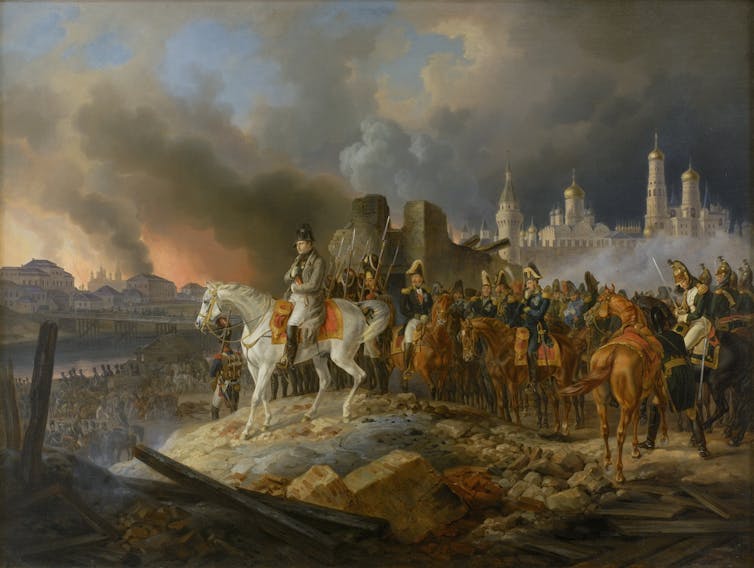
‘Napoleon in Burning Moscow’ by Albrecht Adam (1841).
Wikimedia Commons
Isolationism took on a different but related form in the 20th century: Before the end of World War II, Soviet Russia was the only country in the world professing a belief in Marxism and, for this reason, was a pariah in the eyes of most other countries.
The expanse of Soviet control over other nations after the war, therefore, could be seen as a defensive maneuver – a hedge against future invaders.
An island of Christianity
Russia’s rendering of itself as a geopolitical fortress coincided with the development of its identity as a bastion of Christianity.
In the 16th century under Ivan “the Terrible,” the ruling elite of Muscovy, as the land of Russia was known then, propagated the idea of it being the Third Rome: the God-ordained, sole home of true Christianity.
The two previous capitals of Christianity – the Rome of the Vatican and the Rome of Constantinople as the capital of the Byzantine Empire – could no longer aspire to such status. After all, the first was under control of schismatics – as Orthodox Christians would view Catholics – while the second had been occupied by the Ottoman Turks since the city’s fall in 1453. That left Russia as the only place where a pure form of Christianity could reside.
At that time, no other Orthodox Christians were free of foreign rule. This undergirded the belief that the Russian land was exceptional and, as such, always set it at odds with its neighbors such as the Poles, the Turks and the Balts, who, generally speaking, were of a different faith.
The idea of Russia as an island of true Christianity, however, really gained traction in the 19th century as nationalists sought to define what made their nation and people different from – and, by implication, superior to – others. Prominent figures such as Fyodor Dostoevsky propagated this idea in his writings, as did Apollon Maikov, a famous poet who likened Russia to a besieged monastery, beset by enemies on all sides and only able to rely on itself.
That Russia at the same time was subject to foreign invasions, most notably by Napoleon, served to link the two ideas: Russia was a special place, and for that reason, others on the outside have sought to destroy the country, its culture and its religion through any means necessary.
Victory in defeat
With the invasion of Ukraine, Putin and other Russian leaders have fully embraced this image of Russia once more.
The nation faces an “organized, disciplined attack against everything Russian,” declared Mikhail Shvydkoi, an official in the Ministry of Culture. Putin has even gone as far as to claim that boycotts against Russian literature are the equivalent of book burnings by Nazis in the 1930s.
This coy evocation of Nazi criminality not only resurrects World War II as a reference point for today, but it also aligns with Putin’s principal justification for launching his invasion over a month ago: the alleged embrace of Nazism by the Ukrainian government and subsequent “genocide” of Russian-speaking Ukrainians. The charges, needless to say, are absurd, and this motivating narrative for war has quickly fallen apart.
So Putin has turned to a more stable and, as events have shown, more viable myth to justify his actions: “Fortress Russia.”
The advantages in arguing this line are manifold. It deftly molds to the situation now at hand. Western sanctions, in seeking to isolate Russia, can also perversely confirm the country’s mythical view of itself as a special place that outsiders seek to destroy.
By this reasoning, the sanctions merely reflect the West’s continuing antagonism against Russia dating back centuries. That the invasion set these sanctions in motion can be swept under the rug.
It also paints Russia as once again defending itself against outside aggression and thereby flips the role of it being the villain in the conflict with Ukraine. It enforces the idea of Russia as the perpetual victim, always the underdog in the face of history’s injustices and inequities. Moreover, it preserves the perception of Russia as an island of goodness and beneficence in a hostile world.
The emphasis of this new narrative should not be dismissed in the West as just another propaganda ploy. As the war has turned more into a stalemate, this line, as seen in Putin’s speech of March 25, 2022, has gained more traction.
In fact, while many in Russia have opposed the invasion and some have left the country because of it, recent internal polling suggests that support for Putin has crystallized precisely around this image of him as leader on the nation’s ramparts defending their vital interests. If this trend continues, then – at least in terms of self-image and self-esteem – the nation might have found a satisfactory ending no matter what outcome might come from the war.
For the “Fortress Russia” myth will always have the country land on its feet – even in defeat.
Gregory Carleton does not work for, consult, own shares in or receive funding from any company or organization that would benefit from this article, and has disclosed no relevant affiliations beyond their academic appointment.
Fans of this website will perhaps remember a certain house from the “worst of suburban Illinois” post. I’m here to alert you to the fact that the interior of said house may in fact be the pinnacle of what has been dubbed by my colleague Cocaine Decor as “Cocaine Decor.” This 1990 house has lived rent free in my brain for a while, and now it will live rent free in all of yours. It sits at $1.1 million USD and precisely 10,000 square feet, each of which exists in ignorance of the Light of God.
Remember her? I wish I didn’t. Anyway.
The Lawyer Foyer
I would actually venture that this is the most reasonable and bland room in this house, but it sets the tone for what is to come: baffling art, even more baffling curtains, and the most baffling carpet choices to ever be offered in a catalog. Also from this angle it’s really funny.
The Sitting Room
Ok does anyone else here from the aught’s internet remember vintage Art.com and its kind of weird kitschy art prints? I used to spend hours on that website amassing pictures of lemons and limes because children are weird.
Living Room
I quilt and I KNOW how much fabric costs. Also I really want to do some kind of research project on late 90s-early 2000s “modernism” which is basically like “what if we took modernism and made it really chunky.” If you were working as an industrial designer during that time and can help me figure out what in the world was happening, please hit me up in the Twitter DMs @mcmansionhell.
Kitchen
hmm getting some Eyes Wide Shut vibes from all this… kinda sus…
Main Bedroom
Viral Tweet Voice: Tiger King was 10,000 years ago. Remember sourdough starters??? Hobbies taken up with manic urgency??? Washing groceries??? How young we were. How foolish.
????
Give me some powder and 15 minutes in here and I’ll come up with McMansion Hell 2 (or lose thousands of dollars on NFTs - it’s a toss up.)
bedroom
You know those metallic sharpies they sell two-packs of at Target? They took those to a fabric shop and said: here’s our palette, go nuts.
pool
shout out to my mom, I love her.
Okay, that’s about enough of that. Here’s the back of the house complete with a tripartite architectural analysis (it’s very complicated):
I hope you enjoyed this installment of McMansion Hell, stay tuned for more cursed houses from the Mecca of cursed houses, because I, uh, found a lot of them yesterday.
With a renewed permit, Nestlé will be allowed to pull an absurd amount of water from Florida springs, specifically Ginnie Springs. SPECIAL TO THE ORACLE/FLICKR
After a two-year battle, Nestlé will now have a permit to pull millions of gallons from Florida springs, taking a harsh toll on the environment.
Florida springs are being exploited, and the public should boycott these companies until true sustainability is promised through the prohibition of overpumping.
Ginnie Springs will now have a daily 1.15 million gallons taken by Nestlé, allowing its spring water allotment to exceed 4 million gallons a day in Florida, according to the Florida Springs Institute.
This isn’t feasible considering the damage Nestlé has already done to the springs in years past.
Bottling water accounts for 33% of Ginnie Springs’ flow reduction, as found in a 2021 study from Florida Springs Council (FSC).
Sucking this much water up is overpumping, which makes aquifers weaker. In turn, this increases potential for sinkholes and damaged wetlands, according to Preston Haskell, founder of The Haskell Company, Florida’s largest construction company.
Colorado has already seen the effects of overpumping, where it drained its High Plains Aquifer, according to The Denver Post. It was drying up at a rate of 6 miles per year, drawing water down to the point of highly resilient fish disappearing, evidence of an ecological collapse.
Nestlé Waters released a statement in 2019 downplaying the harmful effect it’s imposing on the environment in Florida. It has since been taken down, presumably due to the backlash it received upon posting.
“Springwater is a rapidly renewable resource when managed correctly, and Nestlé Waters North America is committed to the highest level of sustainable spring water management at all of the springs we manage in Florida and across the country,” the statement said, according to Ideas for Us, an environmental non-profit organization.
The notion of one million gallons a day being “sustainable” is reprehensible. This is a clear attempt at greenwashing the audience and trying to convince people they can continue to purchase bottled water while staying environmentally friendly. Their actions, old and new, directly contrast this sentiment.
“Access to water should not be a public right,” former Nestlé CEO Peter Brabeck-Letmathe said at the World Water Forum in 2000. Nestlé added a statement on their FAQ page arguing that the comment was taken out of context, but never elaborate on how that could have been misconstrued.
An environmental group, Mighty Earth, conducted an investigation in 2017 that found industry practices in Ivory Coast and Ghana contributed heavily to the countries’ deforestation crises. Cocoa traders buy beans that have been grown illegally in protected regions, selling them to large chocolate producers like Nestlé, according to Mighty Earth.
Rain forests now make up less than 4% of the Ivory Coast’s landmass because of this practice that Nestlé has contributed to and enabled.
FSC and Our Santa Fe River filed a legal challenge in March seeking to overturn the Suwannee River Water Management District’s approval of the permit for Nestlé’s bottled water operation.
Anyone can help by contributing to FSC’s legal fund through its website. By purchasing a gift such as a reusable water bottle or shirt, everyone can fund the battle against Nestlé.
Places like Ginnie Springs are meant for spring break adventures and summer memories, not corporate greed.
Nearly 70 years ago – in its 1954 Brown v. Board decision – the Supreme Court framed racial segregation as the cause of educational inequality. It did not, however, challenge the lengths to which states went to ensure the unequal funding of Black schools.
Before Brown, Southern states were using segregation to signify and tangibly reinforce second-class citizenship for Black people in the United States. The court in Brown deemed that segregation was inherently unequal. Even if the schools were “equalized” on all “tangible factors,” segregation remained a problem and physical integration was the cure, the Court concluded.
That framing rightly focused on segregation’s immediate horror – excluding students from schools based on the color of their skin – but obscured an important fact. In addition to requiring school segregation, many states also had long segregated school funding. Some had used “racially distinct tax” policies that reserved separate funds for white and Black schools. Other states had moved school funding responsibility and control from state officials to local communities. Local officials could then ensure inequality without any specific law mandating it.
Brown’s focus on physical segregation inadvertently left important and less obvious aspects of local funding inequality unchecked. Those practices still drive underfunding in predominantly poor and minority schools. Through the University of South Carolina School of Law’s Constitutional Law Center, since 2021 we have been documenting the historical connection between segregation and states’ reliance on local school funding. In our view, until states stop relying so heavily on local school funding, the equal educational opportunities that Brown first sought will remain out of reach for K-12 students in the 21st century.
Increased spending improves college attendance rates, graduation rates and test scores. But, as a 2018 report revealed, school districts enrolling “the most students of color receive about $1,800, or 13%, less per student” than districts serving the fewest students of color.
A more recent analysis further demonstrated that school funding cuts during the Great Recession disproportionately affected Black students and exacerbated achievement gaps.
Most school funding gaps have a simple explanation: Public school budgets rely heavily on local property taxes. Communities with low property values can tax themselves at much higher rates than others but still fail to generate anywhere near the the same level of resources as other communities.
In fact, in 46 of 50 states, local school funding schemes drive more resources to middle-income students than poor students. The local funding gap between districts mostly serving middle-income versus poor students in New Jersey, for example, is $3,460 per pupil. While state and federal programs often send additional funds to poor students, they are insufficient to fully meet the additional needs of low-income students.
Missed opportunities to cure local funding
In Brown v. Board, the court glossed over the history of school segregation and its nuances. The court said it was impossible to “turn the clock back to 1868,” when the nation adopted the Fourteenth Amendment, or “even 1896,” when the court authorized segregation. Instead, it declared that “we must consider public education in the light of its full development and its present place in American life throughout the Nation.”
This pivot let the court tackle segregation on a slate scrubbed clean of history’s mess. But it also deprived the court of any serious consideration of Southern states’ complex and racially motivated system of local school funding.
Later court decisions did not even recognize that a problem with local funding might exist. To the contrary, they put a preference on local funding over remedying inequality. In the 1973 case of San Antonio Independent School District v. Rodriguez, the court rejected a challenge to the inequality local school funding causes, reasoning that “local control” over school funding was “vital to continued public support of the schools” and “of overriding importance from an educational standpoint as well.”
A year later, in Milliken v. Bradley, the Supreme Court blocked a desegregation remedy that would have spanned multiple districts. Finances and local autonomy were at the heart of the court’s rationale. It wrote, “No single tradition in public education is more deeply rooted than local control over the operation of schools.” In its view, desegregation between districts would destroy that tradition and create a host of problems regarding local school funding.
To be sure, those decisions did not preclude desegregation within individual districts. But the Court declared desegregation and school funding inequality that occurs between school districts – as opposed to within school districts – as largely beyond the reach of federal judicial power.
Local communities were certainly important to the implementation of schools, but states like Texas and Virginia centralized school administration, school finance and a variety of other policies. Some states, such as South Carolina, placed the core issue of physical segregation under state control and prohibited it outright.
Others, like South Carolina, achieved the same end by letting taxpayers select which of the segregated schools would receive their funds. Southern leaders openly linked local funding and control to the “wisdom” of segregation.
The development of Northern local school systems was historically distinct. Yet, even in some Northern states, racial antagonism and concerns over segregation prompted pushes for local decision-making. More generally, some Northern states followed a trajectory similar to Southern states: Illinois, for example, imposed a statewide property tax for white education with supplemental local funding before the Civil War. Ironically, though, it ultimately became one of the states most dependent on local funding.
Toward a more fair system
While Brown v. Board declared school segregation itself unconstitutional, other related aspects of segregated schools – particularly the decentralization of school funding – continued unchecked after it. The longer those aspects remained, the more courts accepted them as a neutral aspect of delivering public education.
[Over 150,000 readers rely on The Conversation’s newsletters to understand the world.Sign up today.]
An important step in remedying entrenched school funding inequalities is to first recognize that they are rooted in the history of Jim Crow segregation. Another potential step is to return to the more centralized approach of Reconstruction – an approach that states during their progressive eras have long recognized. And this step makes good constitutional sense, too. After all, every state constitution places the ultimate obligation to fund and deliver public education on states, not local governments.
The authors do not work for, consult, own shares in or receive funding from any company or organization that would benefit from this article, and have disclosed no relevant affiliations beyond their academic appointment.
Wearing his military uniform, Jackie Robinson signs a contract on Oct. 23, 1945 to becomes the first Black to play with a white professional baseball team. Bettmann/Getty Images
On April 15, 1947, Jackie Robinson played his first game with the Brooklyn Dodgers, forever changing baseball and society.
Robinson was Black, and the integration of all-white major league baseball was perhaps the most important story about civil rights in the years immediately following World War II.
The integration, Jules Tygiel wrote in his groundbreaking book “Baseball’s Great Experiment,” “captured the imagination of millions of Americans who had previously ignored the nation’s racial dilemma.”
As Martin Luther King Jr. famously put it, Robinson “was a sit-inner before sit-ins, a freedom rider before freedom rides.”
Major League Baseball celebrates the 75th anniversary of Robinson’s historic career on April 15, 2022, in stadiums and ballparks across the nation.
But in my view, those celebrations will fall short if they don’t address how Robinson confronted white supremacy with class and dignity during a time before he joined the Dodgers, when his own minor league manager once asked, “Do you really think a nigra is a human being?”
I’ve written or edited four books about Jackie Robinson. When I give a lecture or a talk about him, I often mention that he was a Republican.
Given the modern-day opposition that the Republican Party has toward civil and voting rights protections – and the teaching of racism in American history – this invariably provokes an audible gasp from the audience.
Republican roots
Robinson, who lived from 1919 to 1972, was a Republican when millions of other Blacks were Republicans.
The proclamation declared “that all persons held as slaves” within the rebellious Southern states that had seceded from the Union “are, and henceforward shall be free.”
Robinson’s parents gave him the middle name Roosevelt in honor of Republican President Teddy Roosevelt, “who expressed disdain about racism,” Arnold Rampersad wrote in his Robinson biography, “before white supremacist power made Roosevelt retreat into conservatism.”
“If we had one or two governors in the Deep South like Nelson Rockefeller,” King said, “many of our problems could be readily solved.”
Robinson endorsed Richard Nixon, the Republican candidate for president, in 1960. Nixon, who, like Robinson, was from southern California, convinced Robinson, a former UCLA athlete, that he would support civil rights.
In this Oct. 4, 1960 photograph, baseball legend Jackie Robinson stands with then-Vice President Richard M. Nixon (right) during a campaign stop in New Jersey.
Bettmann/GettyImages
Robinson found Democratic presidential candidate John F. Kennedy, Nixon’s opponent, “insincere” in his tepid support for civil rights.
Kennedy won the presidential election that year.
The white man’s party
In 1964, U.S. Sen. Barry Goldwater of Arizona challenged Rockefeller and other more liberal Republicans for control of what the right wing called “the white man’s party.” He won the party’s presidential nomination.
Though Goldwater lost the presidential election in a landslide to Democratic President Lyndon Baines Johnson, he won the hearts and minds of pro-segregation Democrats, the mostly Southern politicians and their followers who had abandoned the Democratic Party when it endorsed legislation during the late ‘50s and '60s to advance civil rights and voting rights for Blacks.
In this July 1948 photograph, segregationist South Carolina Gov. Strom Thurmond is seen gesturing to implore his colleagues to oppose civil rights legislation.
Bettmann/GettyImages
Those who switched parties included U.S. Sen. Strom Thurmond of South Carolina, who ran for president in 1948 as a segregationist and later filibustered for more than 24 hours to prevent passage of the 1957 Civil Rights Act.
Goldwater, Nixon and others in the GOP used what they called the “Southern strategy” to leverage the grievances and fears of Southern whites over the Democrats’ groundbreaking proposal that Blacks should have equal rights.
Jackie Robinson steps up to bat with his back to the camera during a game at a packed stadium on Aug. 28, 1949.
Hulton Archive/Getty Images
By 1968, Robinson was done with the GOP. He refused to support Nixon when he ran for president again in 1968. He also became more active in the civil rights movement and appeared with King on frequent occasions.
Robinson also became a prolific writer, including a column for the Amsterdam News, a weekly Black newspaper, where he further developed his fierce opposition to the Republican Party.
“I suspect that unless the party showed a desire to win our votes,” he wrote in a letter 1968 to Clarence Lee Towns Jr., the leading Black member of the Republican National Committee, “it may rest assured that I and my friends cannot and will not support a conservative.”
Instead, Robinson supported Nixon’s Democratic rival, Hubert Humphrey. “I have my right to remember that I am Black and American before I am Republican,” Robinson wrote in the Amsterdam News. “As such, I will never vote for Mr. Nixon.”
In one of his last letters to the Nixon White House, Robinson pleaded with special assistant Roland L. Elliott to listen to Black America before racial tensions got out of control.
“Black America has asked so little,” Robinson wrote, “but if you can’t see the anger that comes from rejection, you are treading a dangerous course. We older blacks, unfortunately were willing to wait. Today’s young blacks are ready to explode.”
On Nov. 24, 1972, Robinson died of a heart attack at age 53. Twenty-five years later, Major League Baseball honored him by retiring his number, 42, meaning the number can no longer be worn by any player in the league.
No other baseball player has been given such an honor.
Chris Lamb does not work for, consult, own shares in or receive funding from any company or organization that would benefit from this article, and has disclosed no relevant affiliations beyond their academic appointment.
A new study released by the University of South Florida (USF) concludes that the state’s official shell–the Florida horse conch–is in greater peril than previously thought.
The horse conch is one of the world’s largest invertebrate animals, reaching up to two feet. Unregulated commercial harvesting and the collection of live shells by recreational divers have put its population in a downward spiral.
Just how much of a spiral has yet to be determined, but Florida Fish & Wildlife Conservation Commission (FWC) Research Scientist Stephen Geiger said the latest findings “raise a level of concern.”
An interdisciplinary research team made up of the FWC and current and former USF graduate students reported its findings in PLOS.org. The research concludes that horse conchs have been “intensely exploited by shell collectors, curio dealers and commercial harvest” for more than a century.
Learning more about the Florida horse conch
Photo courtesy of FWC
Sarah Stephenson measures a large lightning whelk in Tampa Bay.
The team has studied the life history of the horse conch, the largest gastropod in U.S. marine waters, including its life span, growth rates, spawning age and number of lifetime spawning seasons. These snails live in shallow sand and weeds in the Atlantic Ocean. Horse conchs do not even spawn until they are six years old and likely do not live past 16 years old. Its typical life span is six to 10 years.
Currently, there is a saltwater products license required to take horse conchs, whose scientific name is Triplofosus gigantea. These invertebrates have no other state protections.
“It is a cry for a species that needs attention,” Geiger said. “It is a poster child for 1,200 species of snails in Florida, snails in state and federal waters. Nobody is really managing a lot of species.” And some do not need managing, while others do, he said.
“We don’t have a great baseline” of data on the horse conch, he said, but research does show is that there are not as many of the largest specimens in state waters.
“If you go to an oyster reef, there are thousands of little, tiny black snails that probably need no protection. But something like a horse conch, people are harvesting for a variety of reasons.”
“One of the things you see is, it’s not common, but occasionally they (horse conchs) gather in mating groups where there are 20-100 of these very large conchs. You could walk onto the beach and take two or three and eat them. If we can figure out seasonally why that happens and create a season not to take them, say January through March, because they are mating and much more vulnerable.”
“One of the things I can do is point out there are reasons why the species is less common than it used to be and that it is vulnerable to over-exploitation.”
Collecting shells with an eye towards marine life
Photo courtesy of MyFWC
FWC conducted a survey in the Florida Keys. Here, Erica Levine holds a medium horse conch, probably about the size of a recently mature snail.
For those interested in collecting unoccupied shells, there are several local companies offering shell adventures.
But whether people go shelling on their own or with a company, they should be careful to check each shell for occupancy, Geiger said.
“It’s probably not a huge problem except that the empty shells do form habitat for many creatures. In particular, there are species of hermit crab that can only utilize very large shells to attain their largest size, but many organisms like sponges, barnacles, and oysters rely on shells to settle on,” he said. “The empty shells often serve as dens for things like octopus and small fish that lay eggs in them.”
Removing shells, occupied or not, could make creating regulations and then enforcing those rules more challenging, Geiger said.
“In some places, unfettered harvest for curio and craft trade, of course, does not differentiate live and dead. Prices for collectible shells can be very high, so the temptation to take a live mollusk is also large.”
Island Boat Adventures is among those companies offering shell collecting adventures. It runs tours to Egmont Key in Pinellas County, an island destination covered in shells and sand dollars. Some typical finds include alphabet cones, whelks, murex, shark eyes, horse conchs, Junonian and Scotch bonnets.
The company notes that it is illegal to take shells containing live creatures. “Yes, you can take your treasures home as long as no one is living in them,” it states on its website. “Many creatures, such as hermit crabs and baby octopus, claim empty shells as temporary homes.”
For those who go on their own, the best time for shell collecting is early morning and after a good storm. Low tide is also prime time for shell collecting.
Some of the best local places for collecting include:
But none took as many risks – and had as big an impact – as Jackie Robinson. Though Robinson was a fierce competitor, an outstanding athlete and a deeply religious man, the aspect of his legacy that often gets glossed over is that he was also a radical.
The sanitized version of the Jackie Robinson story goes something like this: He was a remarkable athlete who, with his unusual level of self-control, was the perfect person to break baseball’s color line. In the face of jeers and taunts, he was able to put his head down and let his play do the talking, becoming a symbol of the promise of a racially integrated society.
With this April 15 marking the 75th anniversary of Jackie Robinson’s breaking baseball’s color line, Major League Baseball will celebrate the occasion with great fanfare – with tributes, movies, TV specials, museum exhibits and symposia.
I wonder, however, about the extent to which these celebrations will downplay his activism during and after his playing career. Will they delve into the forces arrayed against Robinson – the players, fans, reporters, politicians and baseball executives who scorned his outspoken views on race? Will any Jackie Robinson Day events mention that, toward the end of his life, he wrote that he had become so disillusioned with the country’s racial progress that he couldn’t stand for the flag and sing the national anthem?
Laying the groundwork
Robinson was a rebel before he broke baseball’s color line.
When he was a soldier during World War II, his superiors sought to keep him out of officer candidate school. He persevered and became a second lieutenant. But in 1944, while assigned to a training camp at Fort Hood in Texas, he refused to move to the back of an army bus when the white driver ordered him to do so.
Robinson faced trumped-up charges of insubordination, disturbing the peace, drunkenness, conduct unbecoming an officer and refusing to obey the orders of a superior officer. Voting by secret ballot, the nine military judges – only one of them Black – found Robinson not guilty. In November, he was honorably discharged from the Army.
Describing the ordeal, Robinson later wrote, “It was a small victory, for I had learned that I was in two wars, one against the foreign enemy, the other against prejudice at home.”
Three years later, Robinson would suit up for the Dodgers.
His arrival didn’t occur in a vacuum. It marked the culmination of more than a decade of protests to desegregate the national pastime. It was a political victory brought about by a persistent and progressive movement that confronted powerful business interests that were reluctant – even opposed – to bring about change.
Beginning in the 1930s, the movement mobilized a broad coalition of organizations – the Black press, civil rights groups, the Communist Party, progressive white activists, left-wing unions and radical politicians – that waged a sustained campaign to integrate baseball.
Biting his tongue, biding his time
This protest movement set the stage for Brooklyn Dodgers executive Branch Rickey to sign Robinson to a contract in 1945. Robinson spent the 1946 season with the Montreal Royals, the Dodgers’ top farm club, where he led the team to the minor league championship. The following season, he was brought up to the big leagues.
Robinson promised Rickey that – at least during his rookie year – he wouldn’t respond to the verbal barbs from fans, managers and other players he would face on a daily basis.
His first test took place a week after he joined the Dodgers, during a game against the Philadelphia Phillies. Phillies manager Ben Chapman called Robinson the n-word and shouted, “Go back to the cotton field where you belong.”
Though Robinson seethed with anger, he kept his promise to Rickey, enduring the abuse without retaliating.
But after that first year, he increasingly spoke out against racial injustice in speeches, interviews and his regular newspaper columns for The Pittsburgh Courier, New York Post and the New York Amsterdam News.
Many sportswriters and most other players – including some of his fellow Black players – balked at the way Robinson talked about race. They thought he was too angry, too vocal.
Syndicated sports columnist Dick Young of the New York Daily News griped that when he talked to Robinson’s Black teammate Roy Campanella, they stuck to baseball. But when he spoke with Robinson, “sooner or later we get around to social issues.”
A 1953 article in Sport magazine titled “Why They Boo Jackie Robinson” described the second baseman as “combative,” “emotional” and “calculating,” as well as a “pop-off,” a “whiner,” a “showboat” and a “troublemaker.” A Cleveland paper called Robinson a “rabble rouser” who was on a “soap box.” The Sporting News headlined one story “Robinson Should Be a Player, Not a Crusader.” Other writers and players called him a “loudmouth,” a “sorehead” and worse.
Nonetheless, Robinson’s relentless advocacy got the attention of the country’s civil rights leaders.
In 1956, the NAACP gave him its highest honor, the Spingarn Medal. He was the first athlete to receive that award. In his acceptance speech, he explained that although many people had warned him “not to speak up every time I thought there was an injustice,” he would continue to do so.
‘A freedom rider before the Freedom Rides’
After Robinson hung up his cleats in 1957, he stayed true to his word, becoming a constant presence on picket lines and at civil rights rallies.
That same year, he publicly urged President Dwight Eisenhower to send troops to Little Rock, Arkansas, to protect Black students seeking to desegregate its public schools. In 1960, impressed with the resilience and courage of the college students engaging in sit-ins at Southern lunch counters, he agreed to raise bail money for the students stuck in jail cells.
Robinson initially supported the 1960 presidential campaign of Sen. Hubert Humphrey, a Minnesota Democrat and staunch ally of the civil rights movement. But when John F. Kennedy won the party’s nomination, Robinson – worried that JFK would be beholden to Southern Democrats who opposed integration - he endorsed Republican Richard Nixon. He quickly regretted that decision after Nixon refused to campaign in Harlem or speak out against the arrest of Martin Luther King Jr. in rural Georgia. Three weeks before Election Day, Robinson said that “Nixon doesn’t deserve to win.”
In February 1962, Robinson traveled to Jackson, Mississippi, to speak at a rally organized by NAACP leader Medgar Evers. Later that year, at King’s request, Robinson traveled to Albany, Georgia, to draw media attention to three Black churches that had been burned to the ground by segregationists. He then led a fundraising campaign that collected $50,000 to rebuild the churches.
In 1963 he devoted considerable time and travel to support King’s voter registration efforts in the South. He also traveled to Birmingham, Alabama, as part of King’s campaign to dismantle segregation in that city.
Jackie Robinson, to the right of Martin Luther King Jr., appeared at a rally in Birmingham, Alabama, in May 1963.
Bettmann/Getty Images
“His presence in the South was very important to us,” recalled Wyatt Tee Walker, chief of staff of King’s Southern Christian Leadership Conference. King called Robinson “a sit-inner before the sit-ins, a freedom rider before the Freedom Rides.”
Robinson also consistently criticized police brutality. In August 1968, three Black Panthers in New York City were arrested and charged with assaulting a white police officer. At their hearing two weeks later, about 150 white men, including off-duty police officers, stormed the courthouse and attacked 10 Panthers and two white supporters. When he learned that the police had made no arrests of the white rioters, Robinson was outraged.
“The Black Panthers seek self-determination, protection of the Black community, decent housing and employment and express opposition to police abuse,” Robinson said during a press conference at the Black Panthers’ headquarters.
He challenged banks for discriminating against Black neighborhoods and condemned slumlords who preyed on Black families.
And Robinson wasn’t done holding Major League Baseball to account, either. He refused to participate in a 1969 Old Timers game because he didn’t see “genuine interest in breaking the barriers that deny access to managerial and front office positions.” At his final public appearance, throwing the ceremonial first pitch before Game 2 of the 1972 World Series, Robinson observed, “I’m going to be tremendously more pleased and more proud when I look at that third base coaching line one day and see a black face managing in baseball.”
Athletes still face backlash for speaking out. When NFL quarterback Colin Kaepernick protested racism by refusing to stand during the national anthem, then-President Donald Trump said that athletes who followed Kaepernick’s example “shouldn’t be in the country.”
In 2018, after NBA star LeBron James spoke about a racial slur that had been graffitied on his home and criticized Trump, Fox News’ Laura Ingraham suggested that he “shut up and dribble.”
[Over 150,000 readers rely on The Conversation’s newsletters to understand the world.Sign up today.]
Even so, in the past decade, athletes have become more outspoken on issues of racism, homophobia, sexism, American militarism, immigrant rights and other issues. They all stand on Robinson’s shoulders.
It was Robinson’s strong patriotism that led him to challenge America to live up to its ideals. He felt an obligation to use his fame to challenge the society’s racial injustice. However, during his last few years – before he died of a heart attack in 1972 at age 53 – he grew increasingly disillusioned with the pace of racial progress.
In his 1972 memoir, “I Never Had It Made,” he wrote: “I cannot stand and sing the anthem. I cannot salute the flag; I know that I am a Black man in a white world.”
Peter Dreier does not work for, consult, own shares in or receive funding from any company or organization that would benefit from this article, and has disclosed no relevant affiliations beyond their academic appointment.
 Help heal the Northern Great Plains and plant your own garden at the same time.
READ MORE...
Help heal the Northern Great Plains and plant your own garden at the same time.
READ MORE...
 And how to avoid having it happen to you.
READ MORE...
And how to avoid having it happen to you.
READ MORE...


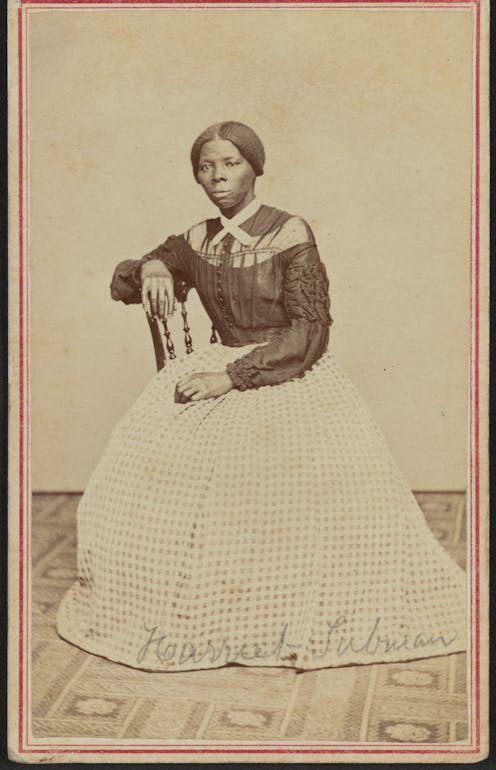
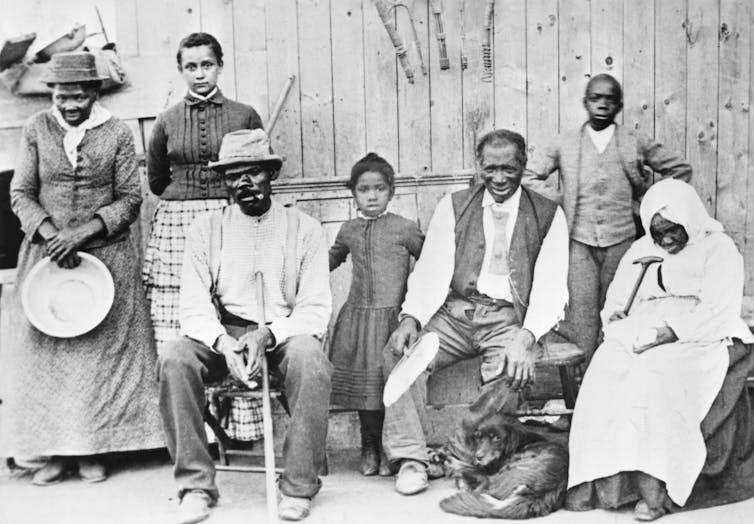

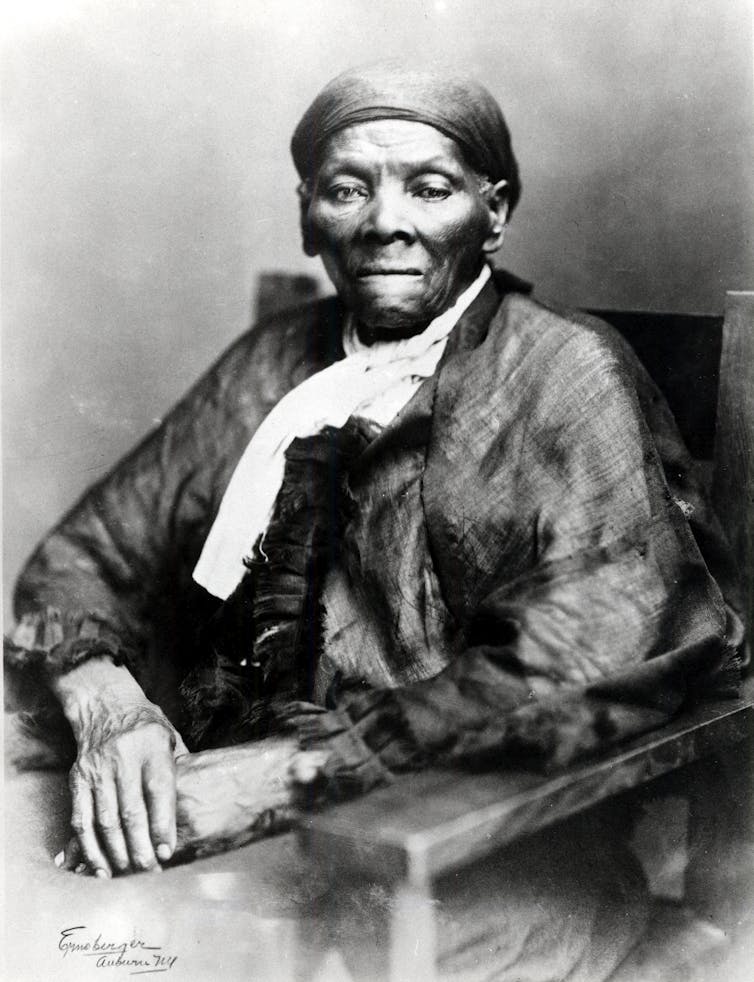

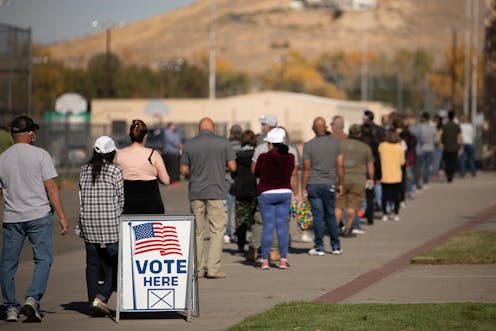

 I'd been misunderstanding hobbies for years.
READ MORE...
I'd been misunderstanding hobbies for years.
READ MORE...
 It may have fallen out of fashion in favor of more modern materials like vinyl and engineered wood, but linoleum has been here all along just waiting for the masses to remember its appeal.
READ MORE...
It may have fallen out of fashion in favor of more modern materials like vinyl and engineered wood, but linoleum has been here all along just waiting for the masses to remember its appeal.
READ MORE...

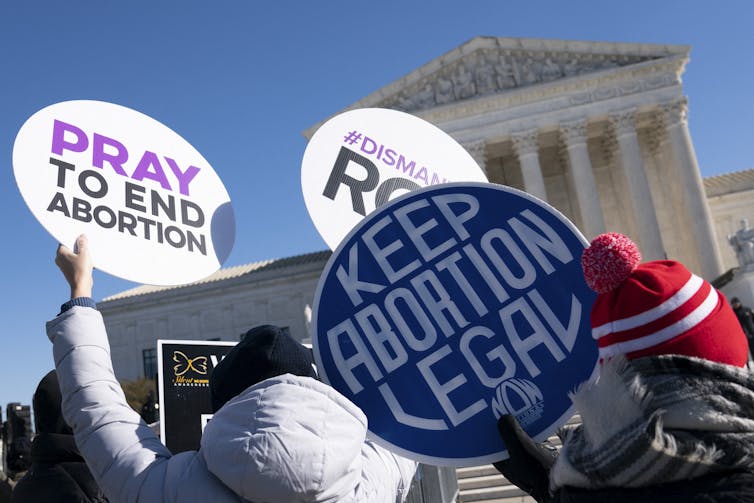

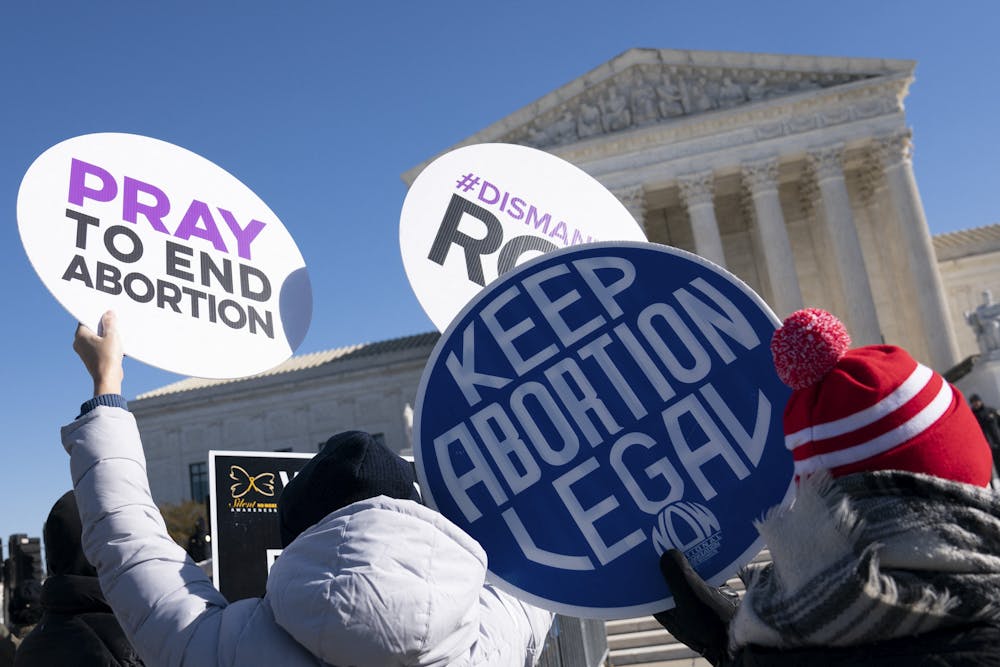
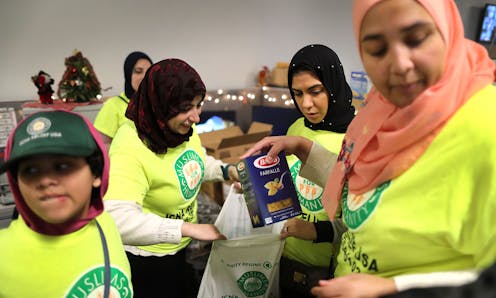




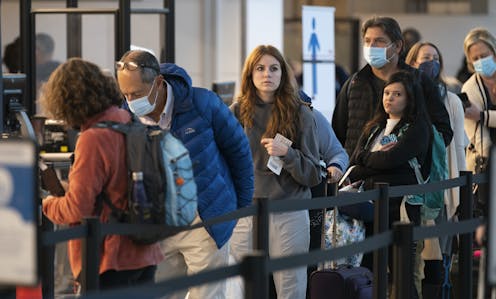
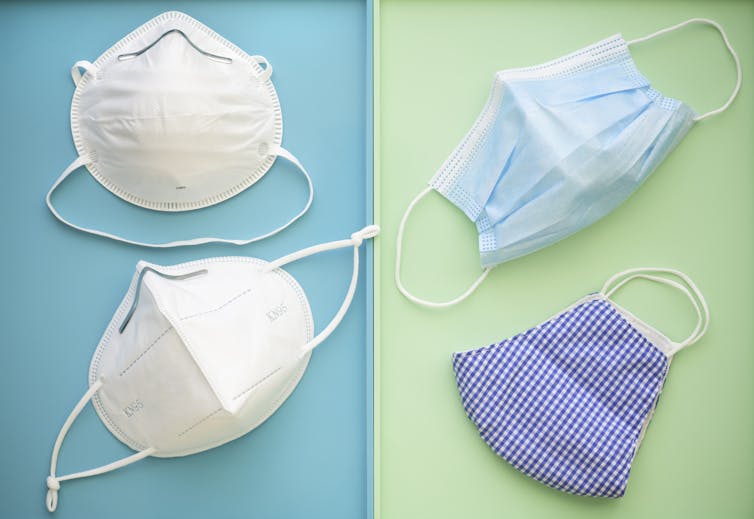

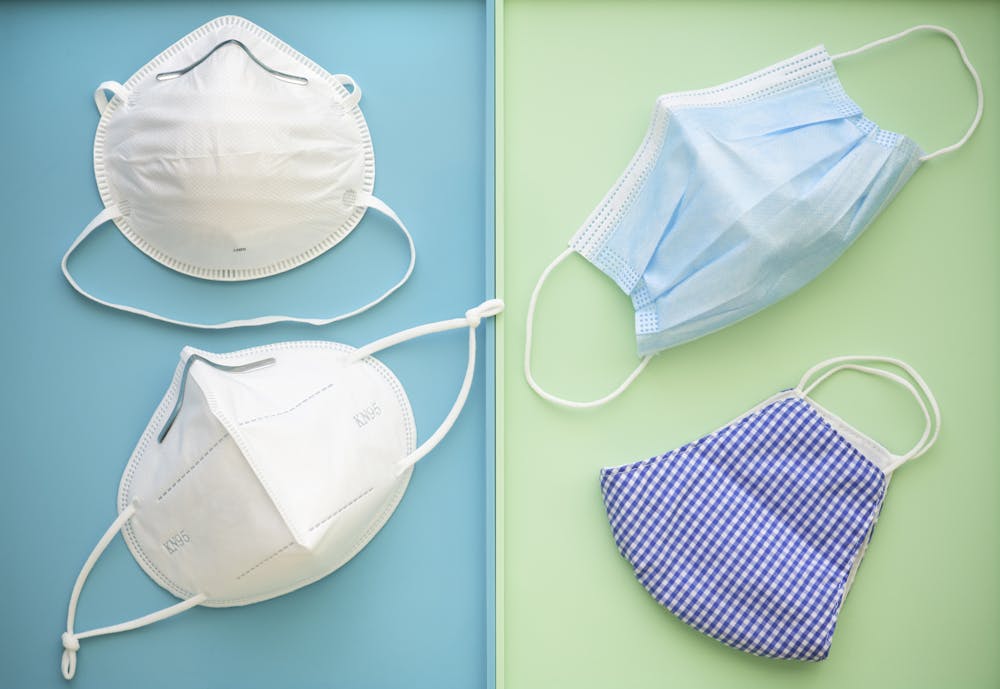



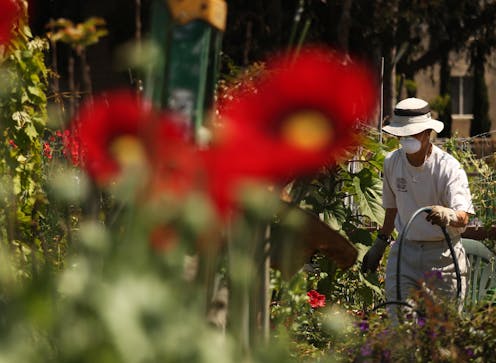


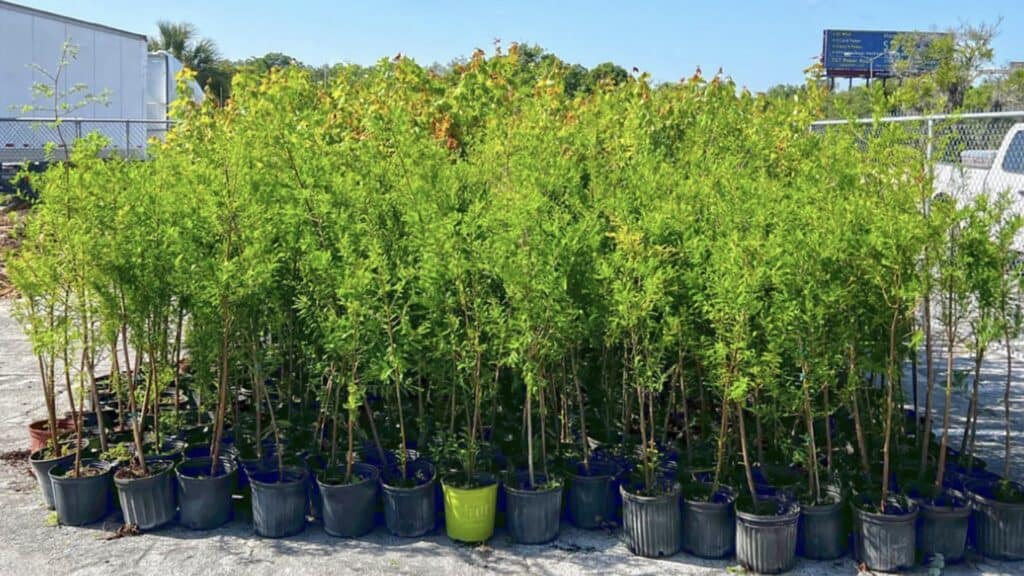
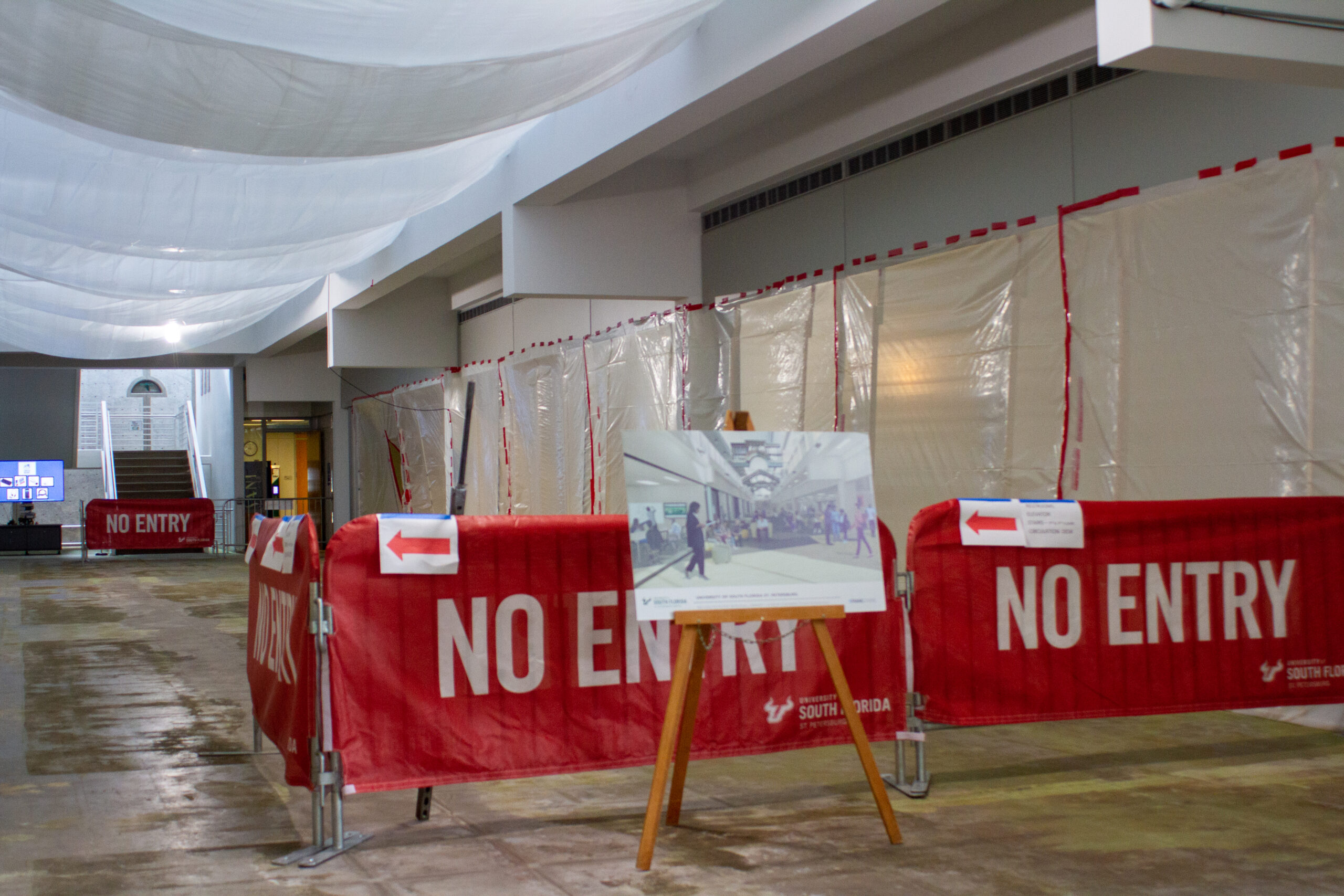
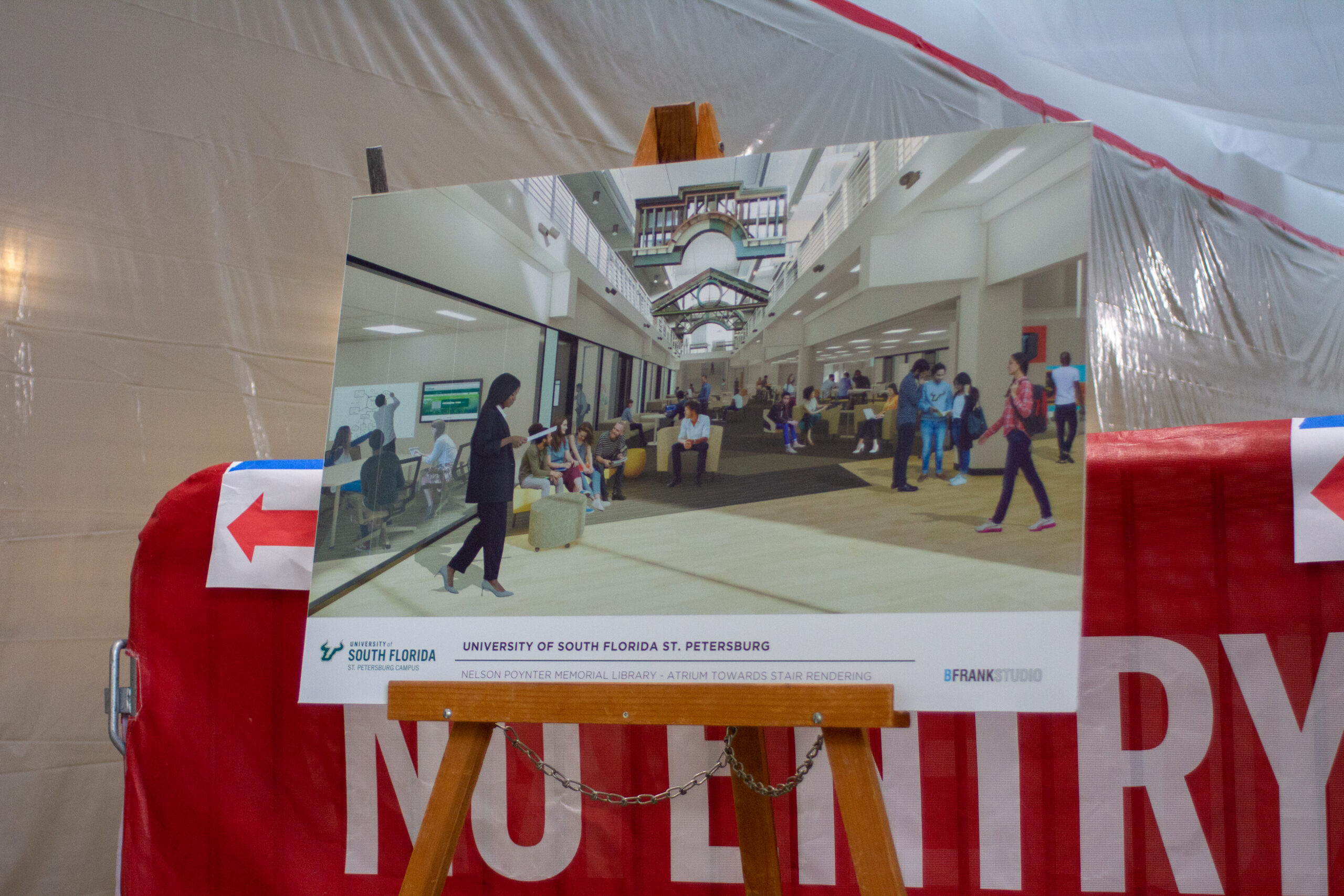
 Never forget your bolsa de mercado.
READ MORE...
Never forget your bolsa de mercado.
READ MORE...