Shared posts

12 Apr 15:52

Libraries around the world are helping safeguard Ukrainian books and culture

by Ksenya Kiebuzinski, Slavic Resources Coordinator, and Head, Petro Jacyk Resource Centre, University of Toronto Libraries, University of Toronto
Illustration by O. Sudomora for the children's story 'Bim-bom, dzelen-bom!' (O. Sudomora)

My mother was born in Sambir, Ukraine, and my father in Przemyśl, Poland. They both spent their childhoods as refugees.

They lived among displaced Ukrainians who fled to Austria and Germany as the Red Army advanced in July 1944. My grandparents’ decision to abandon their homes and leave everything behind saved my parents from the tyranny of Soviet occupation.

They were some of the 200,000 Ukrainians who chose to live in exile rather than be repatriated to the Soviet Union. They organized themselves around civic, education, cultural and political interests. Within these circles, Ukrainians produced newsletters, pamphlets and books to connect themselves with one another and to inform the world about the country’s history.

This publishing effort was in addition to work done by Ukrainians who immigrated for economic reasons to North America beginning in the 1890s, and those who lived abroad for political reasons during the revolutionary era in the early 1920s.

I am the custodian of these publications in my role as a librarian developing, making accessible and researching Ukrainian — and other Slavic-language collections at the University of Toronto Libraries.

Our library’s Ukrainian holdings — whether they were published in Ukraine under Austrian, Polish or Russian rule, in independence, or in refugee centres and diaspora communities — offer a perspective on Ukraine’s distinct history that sets it apart from Russian President Vladimir Putin’s belief that Ukraine was “entirely created by Russia.”

Ukrainian culture and history in libraries

Librarians and libraries across the world play a role in preserving and sharing Ukraine’s cultural history. They acquire western observations about Ukraine or material printed on its territories. And people can learn a lot from these resources.

French architect and military engineer, Guillaume le Vasseur de Beauplan’s map, Carte d’Ukranie, first represented the country as a discrete territory with delineated borders in 1660. It was commissioned by King Ladislaus IV of Poland to help him better understand the land and its people to protect the territory from enemies (particularly Russia).

In Histoire de Charles XII (1731), Voltaire similarly describes and textually maps Ukraine as the country of the Cossacks, situated between lesser Tartary, Poland and Muscovy. He said: “Ukraine has always wanted to be free.”

Other material in our libraries bears physical traces testifying to the horrors of Soviet rule. At the Thomas Fisher Rare Book Library, a Gospel Book printed in Pochaiv, Ukraine, between 1735 and 1758, and written in Church Slavic, bears a notation that it was given to the St. Michael’s Golden-domed Monastery in Kyiv, “to remain forever irremovable from the church.” However, this monastery was destroyed on Stalin’s orders in the mid-1930s and volumes from the library were sold by the Soviet government.

One of the first drawings of Ukraine
‘Carte d’Ukranie’ by Guillaume Le Vasseur de Beauplan, published with his Description d’Ukranie (Rouen, 1660) The map is oriented from south to north to highlight the military importance of the Black Sea Basin for the Polish-Lithuanian Commonwealth. (Guillaume Le Vasseur de Beauplan)

But books also enter library collections through more honest means — refugees sometimes donate their personal libraries to universities. At the University of Toronto, we have a hand-written, water-coloured issue of a Ukrainian prisoner-of-war periodical entitled Liazaroni (Vagabond) (1920). It was produced in an internment camp near Cassino, Italy, where tens of thousands of Ukrainians were held captive after fighting in the Austro-Hungarian army.

Among the close to 1,000 books and pamphlets that were published by Ukrainian people displaced after the Second World War, is a children’s story I remember reading from my youth, housed at the University of Toronto. The book, Bim-bom, dzelenʹ-bom! (1949), tells the story of how a group of chickens and cats help put out a house fire. A passage from the book can be applied to Russia’s war against Ukraine:

“Roosters, chickens, and chicks, and cats and kittens know how to work together to save their home. So, you, little ones, learn how to live in the world, and how in every danger to defend your native home!”

Ukrainian print and digital knowledge at risk

Today, teams of archivists and librarians are heeding a similar call and are working to save Ukrainian library and museum collections. Their efforts echo the work of the Monuments Men who, during the Second World War, gave “first aid to art and books” and engaged in the recovery of cultural materials.

The General Staff of the Armed Forces of Ukraine says Russian military police are destroying Ukrainian literature and history textbooks — Russian forces have also bombed archives, libraries and museums.


Read more: We should all be concerned that Putin is trying to destroy Ukrainian culture


They have destroyed the archives of the Security Service in Chernihiv which documented Soviet repression of Ukrainians, they also damaged the Korolenko State Scientific Library in Kharkiv, Ukraine’s second largest library collection.

Archival staff in Ukraine work day and night to scan paper documents and move digitized content to servers abroad. Librarians and volunteers also pack and make plans to evacuate books.

Maintaining and preserving online archives or digital objects during wartime is difficult. They are as precarious as print material because they rely on infrastructure in the physical world. Computer equipment attached to cables and servers needs power to work. Power outages or downed servers can mean temporary or permanent loss of data.

Over 1,000 volunteers, in partnership with universities in Canada and the United States, are participating in the crowd-sourced project called Saving Ukrainian Cultural Heritage Online (SUCHO) to preserve and secure digitized manuscripts, music, photographs, 3D architectural models and other publications. So far, the team has captured 15,000 files, which are accessible via the Internet Archive.

Just as libraries have collected, preserved and shared knowledge held by their own institutions over the past century, they are now sharing this knowledge globally so that when the war is over, Ukraine can see its cultural treasures rescued and restored.

The Conversation

Ksenya Kiebuzinski does not work for, consult, own shares in or receive funding from any company or organisation that would benefit from this article, and has disclosed no relevant affiliations beyond their academic appointment.

08 Apr 19:59

The colour of someone’s skin doesn't equate to definitive sameness

by Warren Clarke, Assistant Professor, Anthropology, University of Manitoba
Seeing the Black experience as homogenous hurts the community. (Shutterstock)

Despite the highly publicized 2020 murder of George Floyd and subsequent calls for change, many people of non-African descent around the world have yet to consider the lasting impacts of anti-Black racism.

Anti-Black racism is rooted in the enslavement and historical experiences of people of African descent. It continues to harm Black people and communities, “othering” their existence while creating and maintaining tensions between non-Black and Black people.

As a result of anti-Black racism, non-Black people remain ignorant about how Black people experience discrimination and how it acts as a barrier that suppresses the civic, political and economic success of Black communities in a dominant white society.

Canadian scholars like Carl James and Johanne Jean-Pierre explain anti-Black racism as both historical and contemporary race-based discrimination that upholds white supremacy.

Although George Floyd’s murder was a reminder that anti-Black racism exists in western societies, it also illustrated that race-based discrimination is not homogenous among Black people.

Not homogenous

The murder of George Floyd resulted from anti-Black racism coupled with deep-rooted, stereotypical notions of Black masculinity.

In his book The Man-Not: Race, Class, Genre, and the Dilemmas of Black Manhood, philosopher Tommy J. Curry demonstrates that Black men are denied social spaces, defined and perceived as brute savages. And sociologist Tamari Kitossa reminds us that Black men and their bodies have been simultaneously hated and dominated by non-Black people. This domination is rooted in a historical belief that Black men are uneducated and savages, which has been perceived as a social truth.

In the eyes of non-Black — especially white — people, George Floyd’s body was deemed unworthy. Black men and their bodies suffer from further discrimination when their gender is perceived as hypersexual, violent and savage. In turn, white settler society responds by attempting to control and “other” the existence of Black men. This attempt leads to social, economic and political barriers, and the murdering of Black men.

Black men and women do not experience the same anti-Black racism. African American studies researcher Keeanga-Yamahtta Taylor outlines the unique racial and gender-based oppression experienced by Black women in white capitalist societies that challenges their survival and liberation.

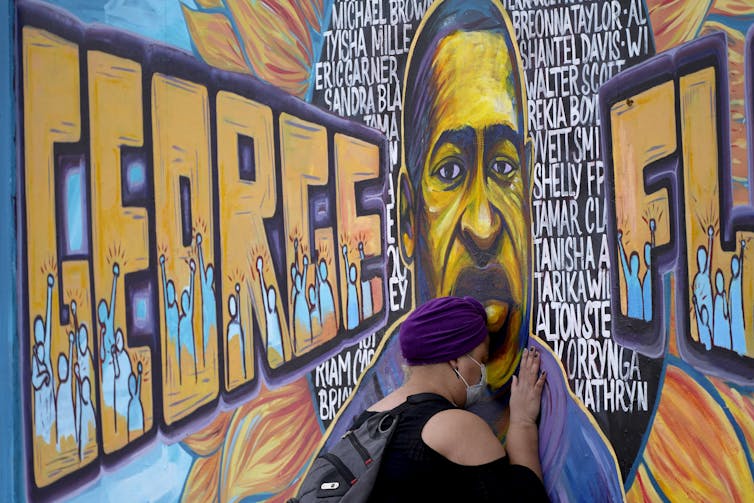
A woman presses her face up against a mural of George Floyd.
A woman pays respect to George Floyd at a mural at George Floyd Square in April 2021. (AP Photo/Julio Cortez)

Black women continue to experience an upward battle to be recognized. Sociologist Patricia Hill Collins contends that Black women’s social oppression is centred on the intersections of their Blackness, gender and social class. Western societies maintain social inequalities where Black women have to experience more moments of struggle to assert themselves economically and politically in comparison to white women.

Black men do in fact share similar economic and political barriers but their social experiences lead to heightened sense of oppression. For instance, research has demonstrated that Black men’s experiences in education have been more challenging than Black women’s. And Black male youth are more likely to continue to be marginalized as they enter adulthood in comparison to Black women.

Interrogating the difference in social experiences between Black women and Black men can lead to an appreciation of intersectionality. Doing so can help us recognize the comprehensive ways to address social inequality on the axes of race, gender, social class, sexuality, disability and age, which distinctively shape people’s lives.

This all illustrates that anti-Black racism is intersectional and experienced differently by Black people based on various characteristics, including gender and socio-economic status.

Settler-colonial ideology

As a settler-colonial nation, Canada rests on a foundation of white settler-colonial ideology. Anthropologist Eva Mackey illustrates that this underlying ideology results in culturally diverse populations being governed under the confines of Canadian white superiority.

As such, predominant Canadian discourse inevitably erases authentic diversity, offering a presumptive sense of inclusion in its place. This provides a sense of ambiguity that defines non-white Canadians as the “other” under the colonial practices within Canada.

Anthropologists Aisha Beliso-De Jesús and Jemima Pierre bolster this argument, suggesting that white colonial powers control and define racialized groups and normalize social understandings of race.

White supremacy serves as a far-reaching barrier, hindering the ability of Black, Indigenous and other racialized people in Canada to lead healthy lives, receive equal employment opportunities and access suitable education.

Despite this shared barrier, white settler ideology does not consider racialized people’s unique racial divisions. For instance, sociologist Sunera Thobani outlines that racialized immigrants receive inclusion in Canada, albeit tenuous and conditional, while the Canadian government continues to strip Indigenous people of sovereignty.

Although racialized people share a common sense of unbelonging in Canada, their unique experiences of discrimination are based upon their cultural and ethnic associations. In order to understand the lived experiences of non-white Canadians equitably, these unique associations need to be prioritized.

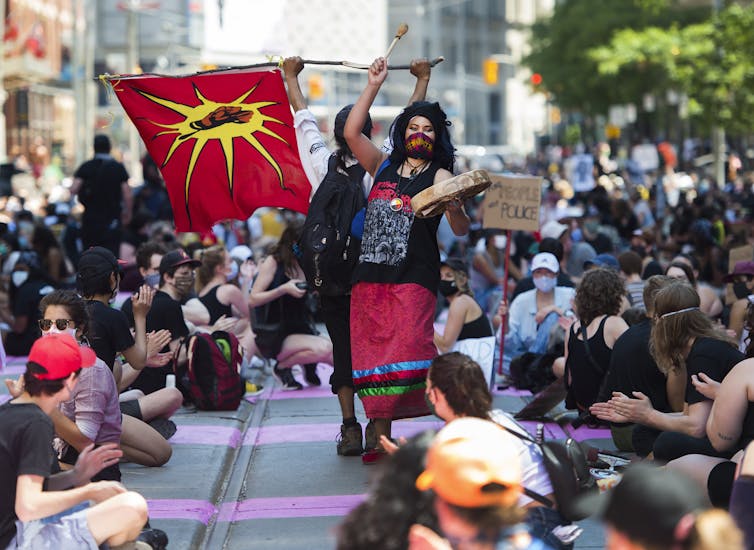
A woman stands amongst people sitting, wearing a ribbon skirt as she drums.
Afro-Indigenous activist Mahlikah Awe:ri along with thousands of people demonstrate during a Black Lives Matter protest in Toronto in 2020. THE CANADIAN PRESS/Nathan Denette

Homogenized under one acronym

The lived experiences of Black, Indigenous and other people of colour are continuously grouped together under one acronym — BIPOC. Homogenizing or grouping together racialized communities under any one term effectively omits the individuality and unique experiences of racialized people.

This acronym treats all racialized people as a whole, erasing their unique, individual experiences. As a common acronym, BIPOC also assumes a bond and closeness between people of colour. The colour of one’s skin doesn’t automatically equal sameness, apart from white supremacy’s stranglehold and attempted dominance over people who are not white.

In a 2020 New York Times article, art historian Charmaine Nelson writes that the use of BIPOC erases Black, Indigenous, Asian, Southeast Indian lived experiences and there needs to be distinctions drawn between racialized people. Arguably, homogenizing racialized people’s lived experiences erases their lived experiences.

The acronym BIPOC discourages consideration of the intersections of oppression that a racialized person can experience. This colonial way of understanding people invisibilizes racialized people and communities, sustaining ignorance about racism. Homogenizing people, particularly Black people, ignores the intersectional facets of anti-Black racism and sustains a non-understanding of the social oppression Black men and women face.

Solidarity must never be attempted through the erasure and homogenization of people’s experiences. Creating true solidarity among racialized people requires not only unity, but acceptance of, and respect for differences.

The Conversation

Warren Clarke works for the University of Manitoba

07 Apr 16:36

Experience the joy of channel surfing across the decades in this fun website

by Popkin

On this website, you can experience the feeling of flipping through the channels on a TV of a different era. There are televisions from the '60s, '70s, '80s, '90s and 2000s. Each television must be operated as it would have been during its era. — Read the rest

07 Apr 16:31

Your forgotten digital footprints could step on your job prospects - here's how to clean up

by Wendy Moncur, Professor, Computer and Information Sciences, University of Strathclyde
fizkes / Shutterstock

Applying for a new (or first) job can be time consuming. The job application process, particularly for graduate schemes, involves multiple steps: tailoring your application, psychometric testing, interviews and participation in a day or more of assessments online or in person.

The process can also involve intrusive scrutiny of your digital footprints. Behind the scenes, up to 80% of employers and recruitment agencies use social media content as part of their assessment of candidate suitability. Being open online about health conditions, addiction issues or pregnancy can adversely affect an applicant’s chances of success when applying for jobs, as can a profile which shows polarised views, non-mainstream lifestyle choices, or excessive partying.

Once in post, employees can face disciplinary action or dismissal for their conduct on social networking sites, even when posting outside of working hours. Unintentional leakage of sensitive information online -— such as trade secrets, intellectual property and personal details of other employees –- can be a security risk for organisations, and lead to loss of competitive advantage, reputation and client trust.


Quarter life, a series by The Conversation

This article is part of Quarter Life, a series about issues affecting those of us in our twenties and thirties. From the challenges of beginning a career and taking care of our mental health, to the excitement of starting a family, adopting a pet or just making friends as an adult. The articles in this series explore the questions and bring answers as we navigate this turbulent period of life.

More articles:

Why it makes good business sense for your employer to look after your mental health

Goblin mode: a gothic expert explains the trend’s mythical origins, and why we should all go ‘vampire mode’ instead

National insurance rise: what do upcoming tax changes mean for me? An expert explains


A vivid illustration of such security risks comes from footage posted by two Naval personnel on the Only Fans pornography-sharing website of their intimate activities at a secure UK nuclear submarine base, resulting in disciplinary action.

Our team has been examining how employees’ digital footprints can harm them and their employers. Through extensive interviews with 26 people, we found that many struggle to recall and conceptualise the entirety of their digital footprints, or to imagine how others may string them together and draw unforeseen conclusions.

This matters for young adults entering the job market, who usually have extensive digital footprints across multiple platforms, and extending back many years. These footprints may reflect outdated versions of the person, and identities and opinions “tried on for size” as they mature and work out who they are.

A man in a suit lifts his glasses and looks shocked while looking at a computer.
Don’t shock potential employers with outdated or inappropriate social media profiles. fizkes / Shutterstock

Young people have told us of the peer pressure they face to comment on hot topics, such as Black Lives Matter and #MeToo, without necessarily feeling that they want to express opinions publicly. Others have expressed regret at opinions gauchely expressed around politics, race and sexuality – opinions which seemed acceptable as a teenager yet don’t read well to adult eyes. The persistence of this online content can affect young adults in ways unfamiliar to their parents, whose murky pasts are likely consigned to photo albums under the bed.

Digital decluttering

Coherently cleaning up one’s digital footprints is a task that people tend to find overwhelming. They struggle to recall what they have posted across multiple channels across many years, and avoid decluttering – reassuring themselves that they are boring and not worthy of others’ interest.

Some take broadbrush actions, such as deleting some or all of their social media accounts. Yet deletion is a luxury. Some of the young adults that we interviewed in our research felt compelled to be visible online via social media accounts while job-seeking – especially for white-collar jobs – so that potential employers could check them out.

Online visibility builds legitimacy. It presents an identity to the world – who we are, who we hang out with, our activities and opinions. Admittedly, that identity may be a sanitised version of the real person, carefully constructed with an online audience in mind, but so is a CV.

A young man sits in front of a laptop computer with his hands covering his face
Many people struggle to remember the entirety of their digital footprint. Krakenimages.com / Shutterstock

There can be ongoing tensions for job seekers between feeling they have to be visible online, and protecting their own safety. One of our interviewees, whose family had sought asylum in the UK, highlighted how asylum seekers could feel torn:

I have met … people who were … running for their lives. Any information that they put online digitally would be instantly sought out, so they stayed off any kind of digital, social media … But then they’re also met with the contrast of needing to put something out in order to progress … to put yourself on show, or otherwise people don’t think you’re legitimate.

Similarly, survivors of domestic abuse may want to keep a low profile to avoid being found by their abusers.

Decluttering is a painful, yet necessary aspect of entering the world of work. Google yourself. Get a friend of a friend to look you up online and see what they find. If you can, remove the content that surfaces which shows you in a bad light. If you are featured in content posted by others, ask them to take it down. Untag yourself. If all else fails, detach yourself from online connections who have tagged you at your worst, so that the content is not associated with you.

If there’s too much content that may harm your employment prospects, tighten your privacy settings so that potential employers can’t see it. If membership of a specific social media site is linked to a past that you no longer align with –- such as an OnlyFans account -– untag yourself and delete your account for good measure.

The Conversation

Wendy Moncur receives funding from EPSRC (EP/R033889/2)

07 Apr 14:39

Emerging BA.2 variant causes Florida cases to spike for first time in months

by Katherine Mailly, STAFF WRITER
The omicron subvariant now accounts for a majority of COVID-19 cases in the U.S., but the severity of the wave is yet to be known. ORACLE PHOTO/LEDA ALVIM

After a wave of its sister omicron variant BA.1 in early December, the omicron variant has returned in the form of subvariant BA.2 and has already begun to increase cases across the globe.

The BA.2 subvariant currently accounts for 72% of COVID-19 cases in the U.S., and Florida has seen a 34% increase in overall COVID-19 cases in the past two weeks, according to Jason Salemi, associate professor in the College of Public Health. 

BA.2’s symptoms thus far seem to closely resemble those of its sister variant — BA.1 — which was responsible for the spike in cases late last year, Associate Dean of the College of Internal Medicine Michael Teng said. Those infected can expect to see symptoms associated with an upper respiratory tract infection, such as headaches, coughing and fevers.

Those who have not been vaccinated or been infected with omicron will be at greater risk for more severe symptoms, however, due to their lack of immune protection against the new variant, Teng said. 

Initially discovered in South Africa in November, the BA.1 variant spread rapidly around the globe, driving a surge in cases in the winter. However, potentially due to rural isolation — and an absence of people to infect — the BA.2 variant has only just begun to create a global rise in cases.

While the two sister variants may share similar symptoms, BA.2 is currently proving itself to have as much as a 60% higher rate of transmission than BA.1, according to Salemi.

The omicron variant has overall shown itself to be less virulent than preceding variants, such as delta which was responsible for many U.S. cases in the summer, but the high transmission rate still presents a threat for hospitalizations and deaths. 

Due to the greater likelihood of many people becoming infected, the relative amount of hospitalizations and deaths will increase, even if the symptoms are generally milder than those of the delta variant.

Florida was averaging 220 deaths daily during the omicron BA.1 peak, which was the second highest rate after that of the delta variant, according to Salemi. With BA.2 and its greater rate of transmission, Salemi said he is worried there may be a similar spike in hospitalizations and deaths.

Conversely, Teng believes that due to the immune protection provided by the BA.1 wave of infections, BA.2 might have a less severe impact as it struggles to infect those who have been vaccinated or infected with the BA.1 variant.

Both Teng and Salemi acknowledged that many are growing tired of having to take precautions against COVID-19, which may increase the transmission rate of the BA.2 variant as more turn away from protection methods, such as wearing masks. Due to the insufficient number of people vaccinated on a global basis, the pandemic will continue to be a concern, Salemi said.

“We want to prevent as much morbidity and mortality as possible,” Salemi said. “Unfortunately, that means we’re going to have to take action to try and block transmission of the virus from person to person.”

Wearing a mask, getting vaccinated, receiving a booster shot and social distancing, Teng said, are the best methods of preventing the spread of the new variant on and off campus.

“[Students] live in these relatively crowded dorms. If it gets there, it’s going to get to everybody, eventually,” he said. “For those kids that live at home, or that live with somebody who may be medically vulnerable … it really pays to be cautious and make sure you don’t bring [COVID-19] home.”

Dean of the College of Public Health Donna Petersen said USF doesn’t expect any particular effect due to the BA.2 variant. The university will continue to advise students to stay home when they feel unwell, get tested and wear masks indoors.

Both professors agreed that the pandemic is still ongoing, even as cases have decreased and many return to what resembles their pre-pandemic lifestyles.

“There are still hundreds of Americans dying every day from COVID-19, so it’s not going away anytime soon,” Teng said. “Just because we treat it like it’s going away doesn’t mean it actually is.”

07 Apr 14:07

OPINION: Dear USF, stop ignoring Africana Studies

by Brielle Lopez, OPINION CO-EDITOR
Africana Studies is an underfunded area of study, and USF needs to reinstate it as a department. ORACLE PHOTO/BRIELLE LOPEZ

The Africana Studies department held a forum March 30 to help bring attention to how neglected it is, since students are struggling to graduate in the field.

Calling it a department is ambitious, as USF dissolved the program in 2015, Africana Studies professor Cheryl Rodriguez said at the forum. Its funding was cut in favor of keeping Women and Gender Studies as a department, leaving Africana Studies under-prioritized and spread thin with faculty.

USF can’t keep turning a blind eye to this area of study. More funding and reinstating it as a department would allow faculty to have a better suited variety of classes. It would also give students a chance to graduate on time.

Africana Studies focuses on what it means to be human, or to be kept out of the category of human as a result of the Atlantic slave trade, according to Undergraduate Director David Ponton. It’s integral to having an intersectional, diverse understanding of humanity and history.

The program should be given the chance to thrive, something it’s never been given, even when it was still a department.

A march was held in 2008 to protest the very same issue — cutting Africana Studies as a department. Provost Ralph Wilcox had plans for this before it was met with such backlash, according to Rodriguez.

Since the department was cut seven years later, the demonstration only bought a few years of peace, unfortunately.

Three full-time professors are relied upon to teach a 36-credit curriculum this year, according to Ponton. Typically, the program has six core faculty, but with three on leave for separate reasons, the courses are left without much support. If more funding were to be provided, this problem wouldn’t present itself.

There are five core classes needed to graduate as an Africana Studies major, which means these classes should be offered on a regular basis — at least once a year.

This is extremely unrealistic considering how little funding and staffing the program’s provided.

Having three full-time professors juggling an entire program — even for one year — presents numerous complications, such as lack of complete freedom to choose what courses will benefit their students the most, as well as the order in which to offer them.

“It sets us up for a difficult arrangement,” Ponton said. “Even if we did create [new courses] there’s nowhere to put them because there’s no time to teach them.”

When comparing USF’s Africana Studies program to other schools, there’s a significant gap in funding, according to English professor Gary Lemons, one of the panelists at the forum. The forum highlighted how a majority of a department’s budget goes toward faculty salaries. This makes the number of staff very telling as to how good the funding is.

A brief look at other universities shows a wide gap between the amounts of faculty.

UCF has eight faculty members teaching its department this semester, according to the Africana Studies course page. That’s already four times the amount USF is funding.

“They have more faculty than we do because they’re departments. That’s part of the real problems I have with this university,” Lemons said.

“We have Women and Gender Studies as a department. But folk of color, Latin American Studies, Africana Studies, are not departments, so you all don’t get to have faculty.”

The university said this is due to lack of students in the field. Africana Studies has roughly 30 majors and 70 minors, according to Ponton. This presents a Catch-22.

Without enough courses offered, no students will be interested, but USF can’t offer more courses without having more faculty. To have more faculty, more funding is needed.

Students have to speak to USF administrators and emphasize the importance of optimizing this program. The first step to reinstating Africana Studies as a department is to use a collective voice, similar to the 2008 march.

A university isn’t truly diverse until programs such as Africana Studies are given proper, and equal, attention.

05 Apr 19:23

5 ways Americans' lives will change if Congress makes daylight saving time permanent

by Steve Calandrillo, Professor of Law, University of Washington
Some people dread the time change that occurs twice a year -- and for good reason. AP Photo/Elise Amendola

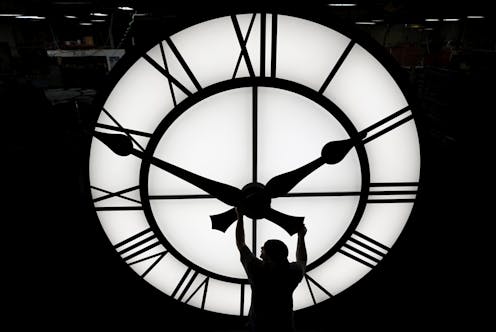
The U.S. Senate approved the Sunshine Protection Act in March 2022, with the goal of making daylight saving time permanent starting in November 2023. If that happens, the U.S. will never again “spring forward” or “fall back.”

Following the Senate’s vote and a recent hearing in the House Subcommittee on Consumer Protection and Commerce – at which I testified – the subcommittee is now considering the issue. The full House of Representatives will need to vote in support of permanent DST before the bill goes to President Biden’s desk for his signature.

In my research on DST, I have found that Americans don’t like Congress messing with their clocks. However, the move to DST year-round makes a lot of sense.

In an effort to avoid the biannual time change in spring and fall, some DST critics have suggested that returning to permanent standard time would benefit society.

But research shows that DST saves lives and prevents crime. Nearly 20 states have passed bills to make DST permanent, and the Senate unanimously passed the Sunshine Protection Act to allow those laws to take effect – since any one state can’t move to DST unilaterally on dates different from the rest of the country.

If Congress ultimately passes the measure to turn all clocks forward permanently, I see five ways that Americans’ lives will improve.

1. Lives would be saved

Simply put, darkness kills – and darkness in the evening is far deadlier than darkness in the morning.

The evening rush hour is twice as fatal as the morning for various reasons. Far more people are on the road, more alcohol is in drivers’ bloodstreams, people are hurrying to get home and more children are enjoying outdoor, unsupervised play. Fatal vehicle-on-pedestrian crashes increase threefold when the sun goes down.

DST brings an extra hour of sunlight into the evening to mitigate those risks. Standard time has the opposite impact, by moving sunlight to the morning.

A metastudy reviewing all of the available research on the topic demonstrated that 343 lives per year could be saved by moving to year-round DST, primarily in reduced vehicle on pedestrian accidents. Mornings would be riskier, but afternoons/evenings would be far more safe.

2. Crime would decrease

Darkness is also a friend of crime. Moving sunlight into the evening has a far greater impact on crime prevention than it does in the morning. This is especially true for crimes by juveniles, which peak in the after-school and early evening hours.

Criminals prefer to do their work in the darkness of evening and night. Crime rates are 30% lower in the morning hours, even when those morning hours occur before sunrise, when it’s still dark.

A 2013 British study found that improved lighting in the evening hours could reduce the crime rate by up to 20%.

3. Energy would be saved

Many people don’t know that the original justification for the creation of DST was to save energy – initially during World War I and II to prioritize energy for U.S. troops, and then later during the 1973 OPEC oil crisis. When the sun is out later in the evening, peak energy loads are reduced.

Having more sun in the evening requires not just less electricity to provide lighting, but reduces the amount of oil and gas required to heat homes and businesses, though it could increase cooling costs in the summer. DST resulted in 150,000 barrels of oil saved by the U.S. in 1973, which helped combat the effect of OPEC’s oil embargo.

Most people in our society are awake and using energy in the early evening when the sun sets. But a considerable portion of the population is still asleep at sunrise, resulting in significantly less demand for energy then.

This rationale motivated some in California to recommend permanent DST in the early 2000s, when the state experienced recurrent electricity shortages and rolling brownouts. The American Council for an Energy-Efficient Economy estimated that the U.S. would have seen an energy savings of more than US$4 billion and a decrease of carbon emissions by 10.8 million metric tons if we had enacted permanent DST more than decade ago.

4. Avoiding clock switches improves sleep

Critics of DST are correct about one thing: The biannual clock switch is bad for health and welfare.

It wreaks havoc with people’s sleep cycles. Heart attacks increase 24% in the week after the U.S. “springs forward” in March. There’s even an uptick during the week when clocks “fall back.”

If that’s not bad enough, a study from 2000 shows that major financial market indexes NYSE, AMEX and NASDAQ average negative returns on the Monday following both clock switches, presumably because of disrupted sleep cycles.

Critics of biannual clock switching sometimes use these points to argue in favor of permanent standard time. However, the same sleep benefits are available under year-round DST, too. Plus, standard time doesn’t offer the energy-saving, lifesaving or crime prevention effects of DST.

5. Recreation and commerce flourish in the sun

Recreation and commerce flourish in daylight and are hampered by evening darkness.

Americans are less willing to go out to shop in the dark, and it’s not very easy to catch a baseball in darkness either. These activities are far more prevalent in the early evening than they are in the early morning hours, so sunlight is not nearly so helpful then.

Not surprisingly, the U.S. Chamber of Commerce and organizations devoted to outdoor recreation favor extended DST. Brick-and-mortar stores, especially family-owned businesses, suffered during the pandemic. Having more daylight to shop helps to reverse the trend.

A note about the downsides of DST

It is important to note that some research highlights the downsides of DST.

The first concern is that DST creates sleep disruptions.

But most circadian rhythm dysfunction is created by the biannual clock shift itself. Either permanent standard time or permanent DST solves that problem. Standard time may be better for circadian rhythms overall because the sun sets and rises earlier; however, people’s evening activities and routines are unlikely to change in response. Earlier sunsets won’t force people to go to bed earlier, as might have been the case 150 years ago before electricity. “Prime time” is 8 to 11 p.m., not 5 to 6 a.m., for a reason.

Other research has associated living in western portions of time zones – which have longer evening sun – with an increased cancer risk compared with those living in eastern portions. The increased cancer risk may be partially explained by lifestyle choices, like diet and exercise, in different parts of time zones.

Further, Americans make decisions all the time that we know have health risks, like eating red meat instead of broccoli and drinking alcohol or soda instead of water. We do this because we enjoy the benefits of those products despite their risks. This is similar to sun exposure and later bedtimes; we enjoy and benefit from them even though we know they carry risks.

[Over 150,000 readers rely on The Conversation’s newsletters to understand the world. Sign up today.]

To address another downside – early morning winter darkness – any switch to permanent DST could be coupled with efforts to move school start times later, as long advocated by the American Academy of Pediatrics. This would be a good idea for kids’ circadian rhythms and mental health, regardless of DST or standard time. Stepped-up child safety measures for darker mornings, such as crosswalk lighting and more crossing guards, would also help.

Time will tell whether the U.S. adopts permanent DST, but either way, we should consider all of its benefits versus all of the costs.

This is an updated version of a story that was originally published on March 4, 2019, and updated on March 3, 2020.

The Conversation

Steve Calandrillo does not work for, consult, own shares in or receive funding from any company or organization that would benefit from this article, and has disclosed no relevant affiliations beyond their academic appointment.

05 Apr 13:35

Ketanji Brown Jackson and the color blind society of Martin Luther King Jr.

by Bev-Freda Jackson, Adjunct Professorial Lecturer, American University School of Public Affairs
U.S. Supreme Court nominee Ketanji Brown Jackson in a US Senate office on March 29, 2022. Alex Wong/Getty Images

U.S. Sen. Chuck E. Grassley had a question for Ketanji Brown Jackson during her confirmation hearings to be the first African American woman on the U.S. Supreme Court.

Grassley, the ranking member of the Senate Judiciary Committee, wanted to know if she agreed with Martin Luther King Jr.‘s vision that one day America would become a nation in which people are judged “not by the color of their skin but by the content of their character.”

What listeners might not have known about Grassley is that, while it appeared that he was holding up King as an example, he has a mixed history with King’s legacy. Grassley is, in fact, the sole surviving U.S. Senator to have cast a“no” vote in 1983 on making Martin Luther King Jr.’s birthday a federal holiday.

Without missing a beat, Jackson delivered a poignant story about her own family and sidestepped Grassley’s apparent move to use King’s words to oppose the teaching of race – and critical race theory in particular – in public schools.

Her parents, she explained, attended racially segregated schools in Florida. One generation later, their daughter was able to attend integrated Florida pubic schools and sits before them as a U.S. Supreme Court nominee.

“The fact that we had come that far was, to me,” Jackson testified, “a testament to the hope and the promise of this country.”

With their vote divided along partisan lines, the U.S. Senate Judiciary Committee has likely assured the confirmation of the first Black woman in the 233-year history of the nation’s highest court. The fact that their vote occurred on April 4, 2022, a day remembered for the assassination 54 years ago of King, was also significant.

As a scholar of social justice movements, I believe that Jackson is the very dream that King envisioned. But he died before seeing the results of his nonviolent movement for social justice.

Distorting MLK’s words

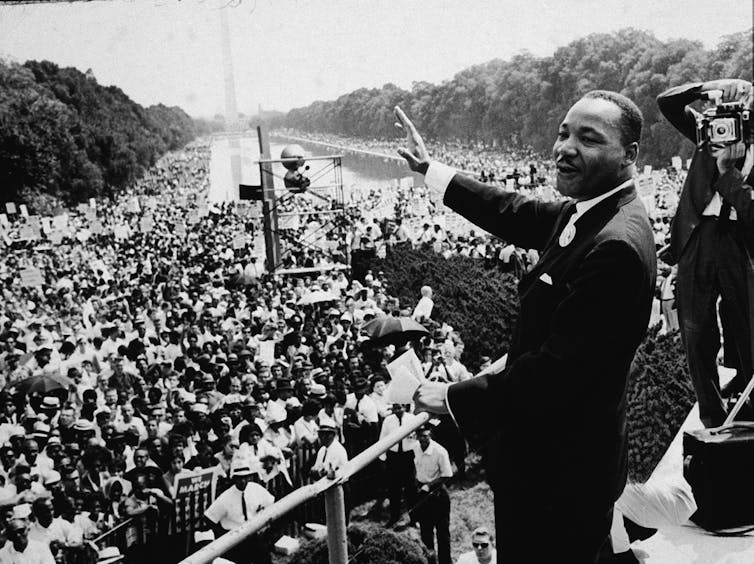
Delivered on Aug. 28, 1963, in front of the Lincoln Memorial in Washington, D.C., the “I Have a Dream” speech is King’s most-recited and best-known.

A black man dressed in a dark suit waves before speaking to thousands of people gathered around the Lincoln Memorial.
Martin Luther King Jr. addresses a crowd during the March on Washington on Aug. 28, 1963. CNP/Getty Images

“So even though we face the difficulties of today and tomorrow, I still have a dream,” King said. “It is a dream deeply rooted in the American dream. … I have a dream that my four little children will one day live in a nation where they will not be judged by the color of their skin but by the content of their character.”

Opponents of critical race theory, the academic framework that explains the relationship among race, racism and the law, have distorted King’s message.

By recasting anti-racism as the new racism, conservative GOP leaders such as Grassley and U.S. Sen. Ted Cruz, a Republican from Texas, use King’s words that advocated for a colorblind society as a critical part of their national messaging to advance legislation that bans the teachings of so-called divisive concepts.

“Critical race theory goes against everything Martin Luther King has ever told us, ‘Don’t judge us by the color of our skin,’ and now they’re embracing it,” House Minority Leader Kevin McCarthy said.

Such distortions have been sharply challenged, most notably by Bernice King, one of King’s four children.

“Do not take excerpts from my father,” she tweeted. “Study him holistically … for people to be able to misappropriate him this way is actually beyond insulting.”

In practical terms, the Senate Judicary’s vote on April 4, 2022 – and subsequent legislative wrangling to advance Jackson’s nomination to the full Senate – does not change the political ideologies on the nation’s highest court. Jackson is a Democratic appointee nominated to replace a Democratic appointee Stephen G. Breyer.

More than likely Jackson will often be writing or signing dissents, along with the other Democratic presidential appointees: Justices Elena Kagan and Sonia Sotomayor.

MLK’s legacy

Jackson’s appointment holds a significant symbolic value and adds an important message about the legacy of King’s sermons, speeches and writings.

In his “Letter from a Birmingham Jail,” King wrote about the “urgency of now” and how Black people could no longer wait for moderates to join the fight for social justice.

“I had hoped,” King wrote, “that the white moderate would understand that law and order exist for the purpose of establishing justice and that when they fail in this purpose they become the dangerously structured dams that block the flow of social progress.”

“For years now, I have heard the word ‘Wait!’” King wrote. “This ‘Wait’ has almost always meant ‘Never.’”

For Black women, at least, I believe the wait is over. What is significant about Jackson’s confirmation is beyond the color of her skin: She would become the only current justice who has spent time not only at prestigious law schools and corporate law firms but also representing clients as a federal public defender.

An elderly white man wearing a dark business suit is seen with a marble wall in the background.
Sen. Chuck Grassley, R-Iowa, arrives at a Senate Judiciary Committee session to vote on Supreme Court nominee Judge Ketanji Brown Jackson. Anna Moneymaker/Getty Images)

Throughout her career, she has written about the unfairness of the criminal justice system, and while serving on the federal Sentencing Commission she took steps to reduce mass incarceration.

[Understand key political developments, each week. Subscribe to The Conversation’s politics newsletter.]

King knew that the Supreme Court was integral in setting precedent, creating change and protecting freedoms.

In defending the Montgomery bus boycott in Alabama, for instance, King invoked the federal courts, which in 1954 struck down school segregation in the Brown v. Board of Education decision.

“If we are wrong, the Supreme Court is wrong,” he said. “If we are wrong, the Constitution is wrong. If we are wrong, God Almighty is wrong.”

Though King was shot on the balcony of the Lorraine Hotel in Memphis, Tennessee, his dream of a colorblind society is becoming a reality with the nomination of Ketanji Brown Jackson to the U.S. Supreme Court.

The Conversation

Bev-Freda Jackson does not work for, consult, own shares in or receive funding from any company or organization that would benefit from this article, and has disclosed no relevant affiliations beyond their academic appointment.

04 Apr 18:35

Is Russia committing genocide in Ukraine? A human rights expert looks at the warning signs

by Alexander Hinton, Distinguished Professor of Anthropology; Director, Center for the Study of Genocide and Human Rights, Rutgers University - Newark
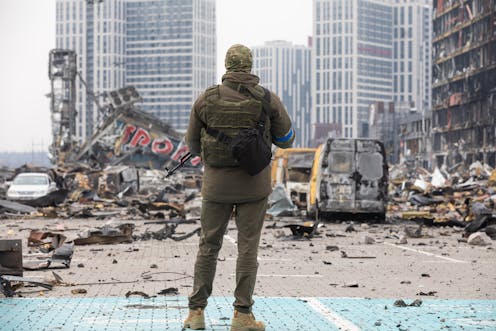
A Ukrainian soldier observes a destroyed shopping mall in Kyiv on March 29, 2022. Mykhaylo Palinchak/SOPA Images/LightRocket via Getty Images

There’s a real threat that Russia will commit genocide in Ukraine. As evidence of war crimes emerges, there is reason to believe it may already be taking place.

“Russia’s forces have committed war crimes in Ukraine,” U.S. Secretary of State Antony Blinken said in a statement on March 23, 2022. Blinken cited as evidence for his allegation Russia’s destruction of “apartment buildings, schools, hospitals, critical infrastructure” and a maternity hospital in the besieged city of Mariupol that was marked with the Russian word for children.

Russia has killed at least 1,189 civilians and wounded 1,901 additional Ukrainians since it began its attack on Ukraine in February 2022, according to the United Nations. This actual death toll is likely much higher.

Such attacks on civilians during conflict are considered war crimes under international law.

But war crimes also often take place in tandem with other atrocity crimes – a legal term that also encompasses ethnic cleansing, crimes against humanity and genocide.

And indeed, there is evidence Russia has also committed crimes against humanity, or widespread attacks against Ukraine’s civilian population. Such attacks include killings, enforced disappearances, rape and torture.

These also include the mass deportations of Ukrainians into Russia that the Kremlin is reportedly carrying out in eastern Ukraine.

Some observers warn that this violence has the potential to become genocidal, particularly given Russian propaganda and physical destruction of Mariupol and other cities.

Ukrainian officials claim genocide has already begun. “The aerial bombing of a children’s hospital,” President Volodymyr Zelenskyy said on March 9, 2022, “is the ultimate evidence that genocide of Ukrainians is happening.”

Other experts disagree, sometimes arguing that the Russian violence doesn’t meet the legal requirements of genocide.

Given the scale of Russian violence in Ukraine, however, genocide warnings need to be taken seriously.

The field of genocide studies, in which I have long worked, has developed frameworks for assessing the threat of genocide in such volatile situations. These tools, including one used by the U.N., indicate Ukraine is indeed at considerable risk for genocide.

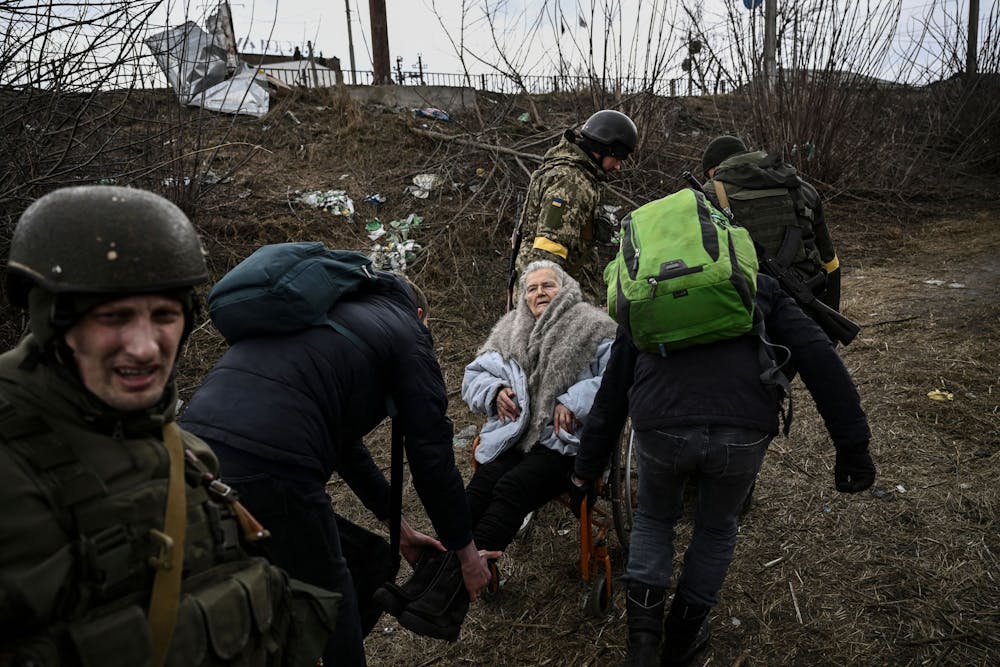
An elderly woman is seated in a wheelchair, carried across dirt by five men, some wearing army uniforms
People help an elderly woman in a wheelchair flee Irpin, Ukraine, on March 7, 2022. Aris Messinis/AFP via Getty Images

Historical precedent

Genocide refers to “acts committed with intent to destroy, in whole or in part, a national, ethnical, racial or religious group.”

These acts involve not just killing people, but seeking to destroy the target group by causing “serious bodily or mental harm,” creating harsh “conditions of life,” preventing births and “forcibly transferring” children to another group.

One predictor for genocide is a history of mass human rights violations and atrocity crimes, including genocide.

Russia has a long history of mass violence against Ukrainians and other groups.

Perhaps most infamously, the Soviet Union enacted land policies that prompted a food shortage and a famine, killing millions of Ukrainians from 1932 to 1933. This is known as the Holodomor, a Ukrainian word meaning meaning “death by hunger.”

Other Soviet atrocities include forced deportation of national and ethnic groups and massive political purges.

After the Soviet Union collapsed in 1991, Russia committed mass violence against civilians in Chechnya, Georgia and Syria. It bombarded and obliterated cities like Grozny in 1995 and Aleppo in 2016.

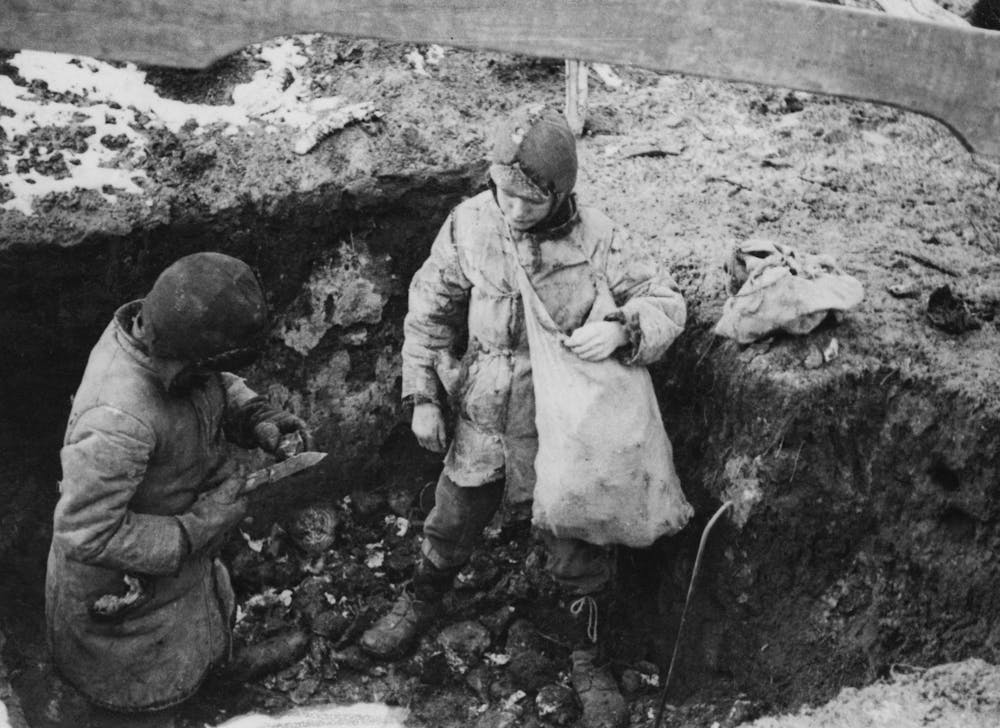
A black and white photo shows two boys in a pit outside, with a bag full of potatoes.
Two boys with a bag of potatoes they found during the human-caused Holodomor famine in Ukraine in 1934. Daily Express/Hulton Archive/Getty Images

Political upheaval

Genocide and atrocity crimes are also strongly correlated with political upheaval, especially war. Such upheaval destabilizes a society and makes it less secure – especially for vulnerable groups of people who may be blamed for the political or economic instability.

Genocide has taken place during global conflicts, as illustrated by the Armenian genocide during World War I, and the Holocaust during World War II.

And then there are genocides associated with colonial conquest and invasion, like the destruction of Indigenous peoples in North America.

Such countries as China and Cambodia have also undertaken social engineering projects resulting in genocide.

Russia has experienced a number of political upheavals, including a current economic crisis. Russia’s invasion of Ukraine is the sort of armed conflict often associated with atrocity crimes.

Ideology and demonization

Genocide is justified by propaganda and language that devalues and demonizes target populations. Historical examples abound, ranging from European colonial caricatures of Indigenous “brutes” and “savages” to Nazi representations of Jews as rats.

Russia is using this type of demonizing language to justify its invasion of Ukraine. First, Russia depicts its violence as necessary to “denazify” Ukraine. President Vladimir Putin, for example, has referred to the Ukrainian leadership as a far-right “gang of drug addicts and neo-Nazis.”

And second, Putin has suggested that Ukrainian identity is not real and that, historically, “Russians and Ukrainians are one people – one nation, in fact.”

The words 'Judd Suss' are shown above the face of a man, demonized with green skin and elongated features
Propaganda, like this 1940 antisemitic advertisement demonizing a group of people, is one warning sign of genocide. Galerie Bilderwelt/Getty Images

Understanding the risk

Proving genocidal intent is difficult, especially in a court of law. This is evident in current debates – including an ongoing court case at the International Court of Justice – about whether Myanmar committed genocide against the Rohingya people, a Muslim minority group.

But it can be inferred by patterns of violence consistent with the legal definition of genocide.

[There’s plenty of opinion out there. We supply facts and analysis, based in research. Get The Conversation’s Politics Weekly.]

Has Russia carried out genocidal acts?

Russia has targeted and killed civilians and reportedly forcibly deported hundreds of thousands of Ukrainians, including children, to Russia. It has bombed a maternity hospital.

Russia has also created “harsh conditions of life” in parts of Ukraine. It has destroyed electrical and water supplies, deprived Ukrainians of food and humanitarian aid and displaced more than 10 million people within and outside of Ukraine.

Russia seeks to seize and Russify Donbas and other parts of eastern Ukraine, where, if Putin is taken at his word, an “imaginary” Ukrainian identity will be erased.

There is a significant risk that Russia will commit genocide in Ukraine. It is possible that a genocide has already begun.

The Conversation

Alexander Hinton does not work for, consult, own shares in or receive funding from any company or organization that would benefit from this article, and has disclosed no relevant affiliations beyond their academic appointment.

04 Apr 17:56

Houses passes bill to federally decriminalize marijuana

by David Pescovitz

The US House of Representatives passed a bill to federally decriminalize marijuana. The final vote was 220 to 204. The bill also clears the record of people who were convicted of non-violent cannabis crimes that, according to House Majority Leader Steny Hoyer, "can haunt people of color and impact the trajectory of their lives and career indefinitely." — Read the rest

04 Apr 17:51

Threats of strict adherence to Florida's "Don't Say Gay" law upsets conservatives

by Jason Weisberger

A fantastic template letter for Florida teachers to send to families of students regarding the implementation of "Don't Say Gay" is naturally freaking out a conservative group that backed the law. As usual, vague language and a refusal to define the law exactly to achieve its goals have been shown to make the law so broad as to also block the things "Moms for Liberty" think aren't gay. — Read the rest

04 Apr 14:54

Nearly 17,000 Acres Added to Florida Wildlife Corridor

by Staff

Wildlife in Florida just gained a lot more land to roam. Yesterday at the Florida Cabinet meeting, seven parcels of land totaling 16,706 acres within the Florida Wildlife Corridor were approved for acquisition and conservation easement. The land will help with conservation and preserving Florida’s biodiversity.

The land is uniquely positioned to address key conservation focuses, including the preservation of ancient scrub, archeological and prehistoric sites, and protecting endangered and at-risk species like the Florida panther and the swallow-tailed kite. This protected land ranges from the Everglades watershed to ancient longleaf pine forests and provides key connections for the Florida Wildlife Corridor to preserve the ecosystems necessary to maintain Florida’s unique biodiversity.

What is the Florida Wildlife Corridor

Florida’s Wildlife Corridor is 17.7 million acres of undeveloped, natural land. State parks, state forests, private ranch lands and timberlands, streams and rivers all make up the corridor. Florida made conservation history in June 2021 when the Florida government enacted the Florida Wildlife Corridor Act. This bill secured $400 million in funding to protect this land. These loosely connected web of green spaces allow Florida’s wildlife to roam free. The protection of this land means the protection of Florida’s resources from pollution and overuse.

Courtesy of Floridawildlifecorridor.org

Related story: FL Land to Strengthen Military Readiness, Address Climate Change

A large threat to the biodiversity in Florida habitat fragmentation. Habitat fragmentation happens when the roads and buildings that connect large cities. For example, the highways that connect Tampa, Miami, and Orlando encroach on natural habitats. The act prevents developers from using the corridor land for more housing and buildings. This is a problem that continues to grow in Florida’s red-hot real estate market.

The post Nearly 17,000 Acres Added to Florida Wildlife Corridor appeared first on ModernGlobe.

04 Apr 14:51

New comic book shop opens the multiverse of madness in South Tampa

by Andrew Harlan

South Tampa now has its very own comic book shop thanks to Francisco Toro. The marvelous comic book shop, South Tampa Comics (Instagram), has soft opened at 5823 S Dale Mabry Highway. A grand opening is planned for April 1. “I started reading comics in the very early 90’s, said Francisco. “I loved the stories and loved the art…at the time I wanted to be an artist and would copy the art from the comics I read.” Francisco notes that co-owner Randall is a diehard reader of comics, and has been since the early 2000s. 

The pair started talking about opening a brick-and-mortar shop in September 2021. “I met My business partner Randall through a mutual friend at a welcome home party,” said Francisco. “We got to talking about comicsand he mentioned that he was doing comic sales online independently and it kind of snowballed from there.” It took just 6 months for the pair to open South Tampa Comics’ doors. 

South Tampa comics makes a splash in the city

South Tampa Comics is just under 1000-square-feet. The shop features a main sales floor where visitors can browse current comic selections, graphic novel back issues, comic trading cards, and their higher valued key issue comics. There’s also a separate room for low cost back issues. 

If you want to stock up on comics and collectibles, then we highly recommend you make it out to the April 1 grand opening. During the grand opening event they will have storewide savings such as 25% off current comic book issues, 25% off graphic novels and trades, 20% off packs of classic comic trading cards, and 50% off back issues. Giveaways will also be a part of the festivities. 

The events calendar doesn’t end there. On May 7 South Tampa comics will participate in “FREE COMIC BOOK DAY.” This nationwide promotion includes major publishers such as Marvel and DC in addition to indie publishers. 

Author and artist signings, and comic book launches could also happen at the space in the near future. Toro says many residents in Tampa would be surprised at the number of creators that live here. 

Celebrating indie comic publishers in the shop

In case you’re wondering what a comic book store owner reads, here’s what Francisco has on his shelf: 

“Right now I’m enjoying  Batman comics but some of my favorite comics to read are the old independent comics from the 90’s from Image publishing and Dark Horse publishing. Especially Dark Horse’s licensed properties like The Terminator, Aliens, and Predator.  Randall is a big Superman fan.”

Keep up with South Tampa Comics by following them on Instagram

This blogger also happens to be a voracious graphic novel reader. A few recent favorites include Snow Angels by Jeff Lemire, Wendy Master of Art by Walter Scott, anything published by Fantagraphics, and My Favorite Thing is Monsters by Emil Ferris. The shop’s recent gallery dedicated to Backlash from Image Comics also sent this fan down memory lane. 

What to read next:

The post New comic book shop opens the multiverse of madness in South Tampa appeared first on That's So Tampa.

30 Mar 19:37

Meet Scot, a 1,600 pound great white shark swimming around Florida

by David Pescovitz

This is Scot, a 1,600 pound great white shark currently swimming around Florida's Gulf Coast. According to marine research group OCEARCH, Scot is more than 12-feet-long. They first found and tagged Scot last year in Nova Scotia and have followed his nearly 4,000 mile journey south. — Read the rest

30 Mar 19:24

What's next with face masks? Keep wearing them in public, wear the best mask available and pay attention to fit

by Catherine Clase, Physician, epidemiologist, professor, McMaster University
Fit, fabric and design affect mask effectiveness. (Windsor Essex Sewing Force), Author provided

Early in the pandemic, mask-wearing policies were consistently associated with decreased transmission of SARS-CoV-2. At that time, the masks worn were generally made of cloth and often improvised.

The highly-transmissible Omicron variant focused attention on mask performance.

Although most provinces are lifting official mask mandates, we agree with public health authorities in recommending that people wear the best mask available. We have been working to improve and test reusable masks for community use.

We are an interdisciplinary group of engineers, scientists, a doctor and a community mask-maker. We test novel personal protective equipment (PPE), advocate for mask use and summarize the best available evidence at clothmasks.org.

Hierarchy of mask performance

There is an accepted hierarchy of mask performance based on mask materials, certification standards and use, confirmed by a 2022 California population health study. The best protection is obtained by wearing a respirator such as an N95, CAN95 or CAN99, or in Europe, an FFP2 or FFP3. Performance is typically lower for KN95s, KF94s and certified medical masks meeting ASTM levels 1 to 3. (ASTM is an international standards organization.)

A man wearing a cloth face mask with a tube extending from it to a machine on the table in front of him
Testing Essex-pleated cotton masks using a PortaCount fit tester at McMaster University. (Windsor Essex Sewing Force), Author provided

The materials used in all these masks offer similar, excellent, aerosol filtration, but the masks differ in their fit and seal on the face, with KN95s and KF94s fitting better than certified medical masks.

Cloth masks are typically ranked lower in their performance and may or may not be certified (for example, meeting ASTM-F3502 standard). However, we recently showed that well-fitted cloth masks comprising high quality two-ply cotton material can perform as well as Level 1 medical masks.

Fabric types

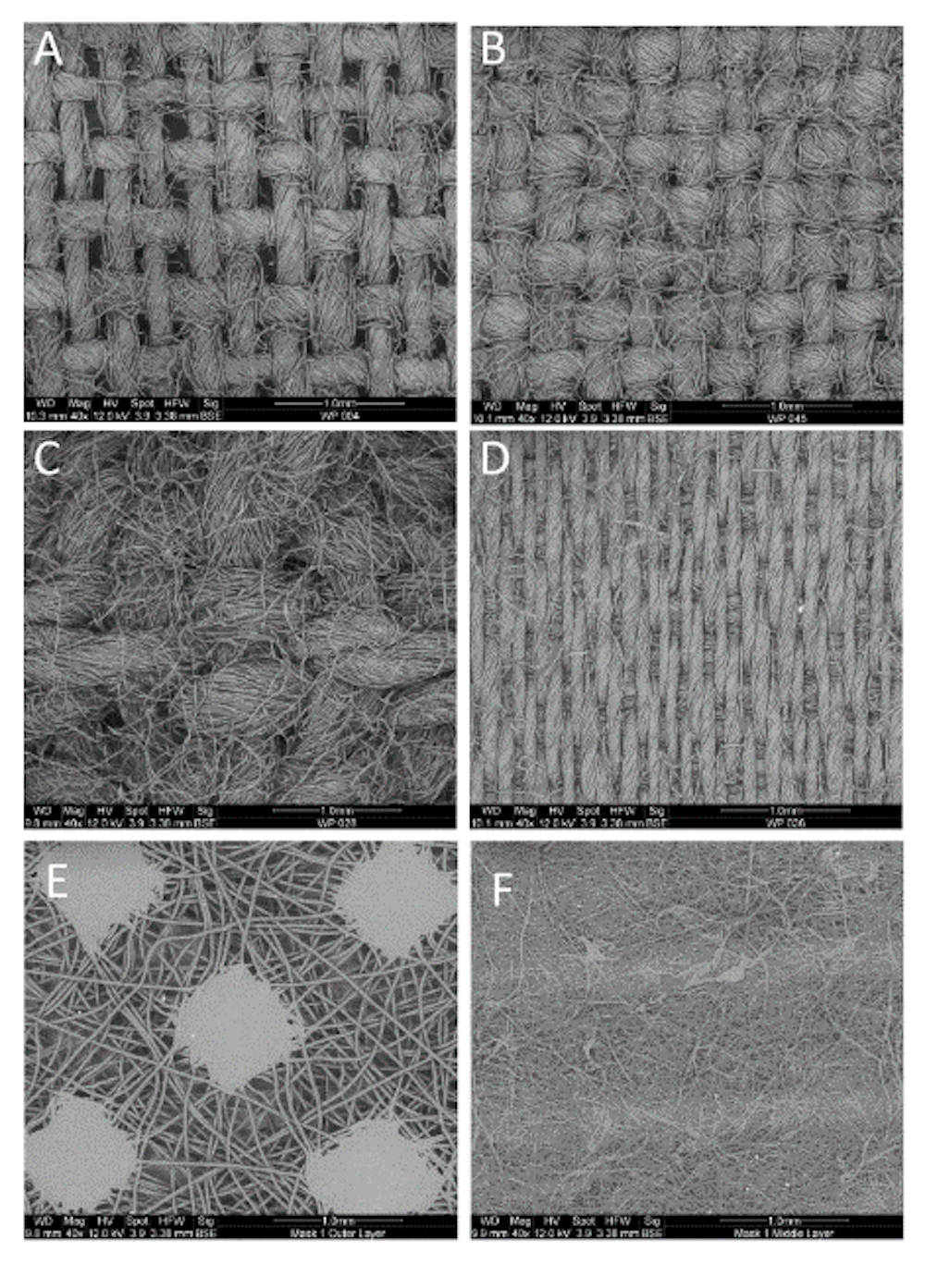
Six squares showing highly magnified images of different fabrics
Some examples of the variations in fabric structure seen with scanning electron microscopy: A) Bandana, B) High quality quilting fabric, C) Tea towel, D) Bed sheet, E) Outer layer L1 nonwoven medical mask, F) Middle layer of L1 nonwoven medical mask. We found that pore diameter (the size of the gaps) and fabric weight predicted filtration, however consumers would not know the pore diameter for retail or wholesale cloth. For this reason, we focus on the categories used when cloth is sold, and recommend 100 per cent cotton quilters’ fabric, fashion fabric and T-shirt fabric. (Drouillard et. al. PLOS), Author provided

When health-care professionals are issued N95s or other certified respirators, they are fit tested to verify mask performance on the wearer. But fit testing is typically not an option for the public.

Our research, explained in plain language here, underscores that fit can be achieved by good design and is as important as mask materials. For our research, we adapted the same method used in quantitative mask fit testing: a PortaCount fit tester that counts particles inside and outside the mask.

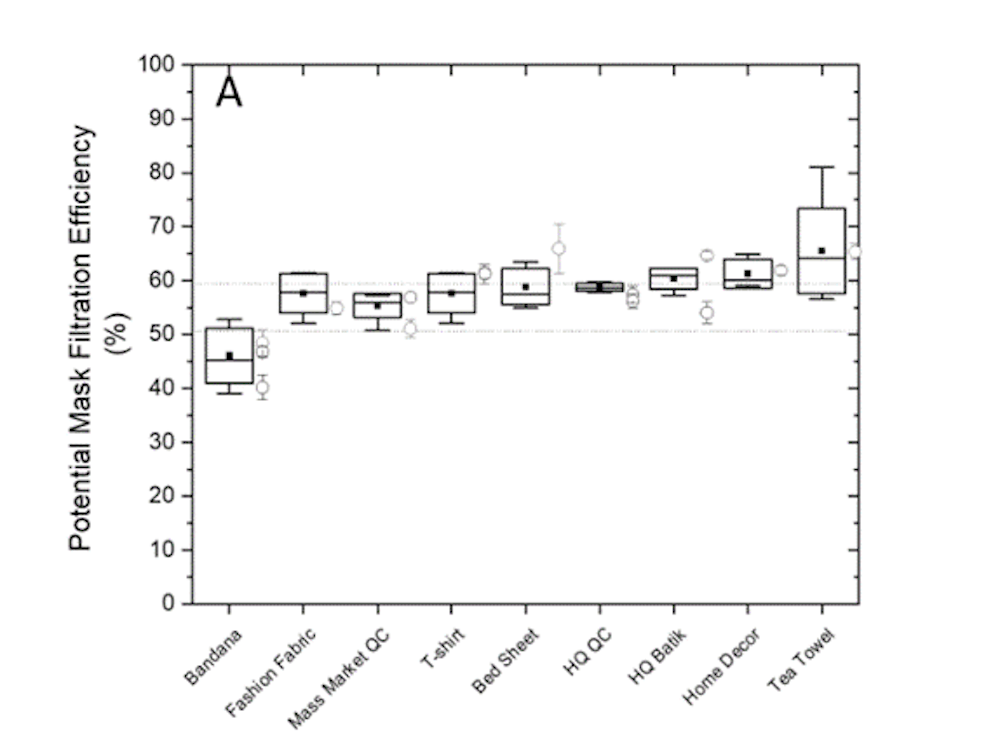
We tested 16 different cottons from nine recognizable categories. All except bandana cotton showed filtration equivalent to a medical mask. These findings apply to the carefully designed two-layer cloth mask with ties we used — other masks that fit less well will not provide the same protection.

Our results show that two-layer cotton masks made from quilters’ cotton, fashion fabric and T-shirt fabric filtered 55 to 60 per cent of aerosol particles measuring one micron or smaller, the size relevant for infectious aerosol particles. This was similar to the performance of a Level 1 medical mask. The breathability of the two-layer cotton masks was also acceptable as per medical mask standards.

Bar graph showing filtration rates for nine types of fabric.
This graph shows the filtration of two-layer masks, all the same design, worn by a human volunteer. All except bandana cotton showed filtration equivalent to a medical mask. Mass market QC = mass market quilting cotton, HQ QC = high quality quilting cotton, HQ Batik = high quality batik quilting fabric. The medical masks we tested are represented by dotted lines showing their 50 to 60 per cent filtration. (Drouillard et. al. PLOS), Author provided

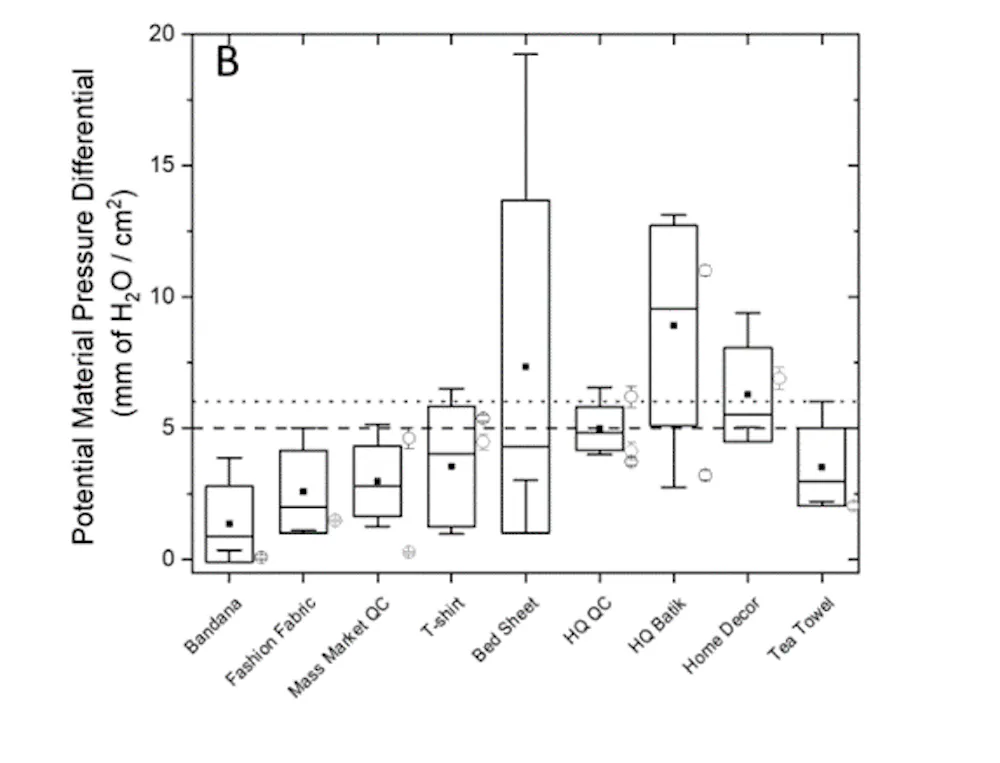
Filtration in the same range was provided by batiks, home décor fabric and bed-sheet fabric, but some examples of these materials failed the breathability testing. Tea towel fabrics also filtered well, but some were too thick to sew. Bandana fabrics performed worst at 46 per cent filtration.

Fit and design

Close-up of an ear showing improper and proper fit of a blue face mask
A close fit at the ear prevents unfiltered air from entering the mask at the sides. (Windsor Essex Sewing Force), Author provided

Our research showed that cloth masks performed similarly to medical masks because they fit better, were designed thoughtfully and had overhead ties. Although medical masks are composed of materials with better filtration performance, they exhibit greater leakage, with completely unfiltered air passing around the mask.

Bar graph showing breathability of different fabrics.
As a test of breathability, we measured the pressure across fabrics using the same methods that are used for testing certified medical masks. The threshold for medical masks is shown with dotted lines. (Drouillard et. al. PLOS), Author provided

The cloth masks included in past studies may have been haphazardly selected: their filtration, using the same methods that we used, was found to be between 23 and 52 per cent. A thoughtfully designed two-layer T-shirt mask with overhead ties, tested on human volunteers, filtered 50 per cent of aerosols, in keeping with our study, and again highlighting the importance of fit.

To compare like with like, when we looked at other studies, the filtration percentages that we quote above were taken from studies using a similar design: protection of a human wearer, using particles 0.02 to 3 microns, 0.02 to 1 microns and 0.02 to 0.1 microns. Other studies examining source control, using mannikins and using larger particles come to similar conclusions.

Good masks fit well, with minimal obvious leaking at the edges. Nosewires, overhead ties or earloop adjusters all contribute to fit. Two layers or more, and a middle layer of non-woven polypropylene improve overall filtration.

Masks meeting the new U.S. Centers for Disease Control and Prevention standard for community masks, ASTM-F3502, are likely to filter well, though generally not as well as respirators.

N95 masks

Hospitals report that the current supply of N95-type masks meets but doesn’t exceed demand, and supply of these masks is insufficient for the general population. Access and cost issues require public health and economic solutions along with consideration of environmental impact of disposable PPE.

If buying respirators for personal use, we recommend buying only what you need and practising extended reuse. If buying KN95s and equivalent certified medical masks, we advise paying close attention to the fit of the mask. We recommend double masking medical masks or using minor modifications or mask hacks that enhance fit and reduce leakage.

A completed blue cloth mask, two masks in progress and a piece of green fabric
Pattern and instructions for the Essex pleated mask — a two-layer, three-pleat design created by the Windsor-Essex Sewing Force — are available from West Essex Sewing Force or from clothmasks.org/patternsinstruction. (Windsor Essex Sewing Force), Author provided

Carefully designed, well-fitting, multilayer reusable cloth masks still have an important ongoing role in reducing transmission of SARS-CoV-2, especially in lower risk settings.

Protection is highest and transmission is lowest when everyone wears masks, because masks both protect the wearer while also reducing the number of contaminated particles reaching the environment (source control). There are important reductions to individual risk from wearing any mask, which have been observed in the community and quantified in the lab. We can protect ourselves, others and vulnerable people. Let’s all wear the best mask available.

Rebecca Rudman, co-founder of the Windsor Essex Sewing Force and member of McMaster’s Cloth Mask Knowledge Exchange, and Amanda Tomkins, an undergraduate student in engineering at McMaster University, co-authored this article.

The Conversation

Catherine Clase is a member of the Cloth Mask Knowledge Exchange, a research and knowledge translation group that includes industry stakeholders. Industry stakeholders contribute to the Cloth Mask Knowledge Exchange by contributing to grant funding, and through in-kind contributions of time and expertise. Industry stakeholders make masks and distribute polypropylene and other fabrics. They may potentially benefit from this article. She is a member of McMaster's Centre of Excellence in Protective Equipment and Materials, and editor-in-chief of clothmasks.org. Catherine has received consultation, advisory board membership or research funding from the Ontario Ministry of Health, Sanofi, Pfizer, Leo Pharma, Astellas, Janssen, Amgen, Boehringer-Ingelheim and Baxter. In 2018 she co-chaired a KDIGO potassium controversies conference sponsored at arm's length by Fresenius Medical Care, AstraZeneca, Vifor Fresenius Medical Care, Relypsa, Bayer HealthCare and Boehringer Ingelheim. Catherine Clase receives funding from CIHR, and is a member of the Green Party, the American Society of Nephrology, the Canadian Society of Nephrology, the American Association of Textile Chemists and Colorists and ASTM International.

Charles-Francois de Lannoy receives funding from the Natural Sciences and Engineering Research Council (NSERC) of Canada, the Global Water Futures (GWF) Research organization, Ontario Centres of Excellence (OCE), Federal Economic Development Agency for Southern Ontario (FedDev), Canadian Foundation for Innovation (CFI), the French Embassy, and McMaster University. He has received funding in partnership with Pall Water, Trojan Technologies, Hatch Ltd., and PW Fabrication. He has engaged in various research projects and testing/validation of facemasks for several private companies in Ontario. He is affiliated with the Cloth Mask Knowledge Exchange as an expert advisor.

Ken G. Drouillard receives funding from Natural Sciences and Engineering Research Council of Canada (NSERC), Ontario Ministry of Environment, Conservation and Parks, Environment and Climate Change Canada, Great Lakes Fisheries Commission, WE-SPARK Health Discovery Institute, University of Windsor, City of Windsor. He is affiliated with the Detroit River Canadian Clean-Up Committee and holds membership with International Association for Great Lakes Research.

Scott Laengert does not work for, consult, own shares in or receive funding from any company or organisation that would benefit from this article, and has disclosed no relevant affiliations beyond their academic appointment.

30 Mar 19:21

Bridgerton – how period dramas made audiences hate the corset

by Serena Dyer, Lecturer in History of Design and Material Culture, De Montfort University
Liam Daniel/Netflix

When you think of a corset, you might imagine period drama dames sucking in as they cling onto a bedpost as a feisty lady’s maid aggressively laces them in. Nextflix’s hot Regency inspired drama Bridgerton features similar such tortuous scenes.

In the run up to the show’s second season, Simone Ashley, who plays the new heroine Kate Sharma, complained to Glamour Magazine about the horrors of wearing a corset. She claimed that her corset caused her “a lot of pain” and “changed her body”.

In the first season, Prudence Featherington (played by Bessie Carter) was tight-laced into a corset. Prudence’s mother urges her daughter on: “I was able to squeeze my waist into the size of an orange-and-a-half when I was Prudence’s age”. Rather unnecessary, when regency gowns fall from an under-bust empire line, which obscures the waist. Unlike their later Victorian counterparts, regency corsets focused on enhancing a lady’s assets, not shrinking her waist.

This scene is ubiquitous in period dramas, from Elizabeth Swan fainting in Pirates of the Caribbean, to Rose DeWitt Bukater unable to breath in Titanic, and, of course, Mammy’s iconic line, “Just hold on, and suck in!”, as Scarlet O’Hara clings to a bedpost in Gone with the Wind. It may be on screen shorthand for the restricted lives of historical women, but it stems from a fundamental misunderstanding of historical corsets and women alike.

After centuries of women (and some men) wearing corsets to support and shape the body, it was Victorian men who taught us to hate corsets. Corset-related health issues were a myth, constructed by doctors, to promote their own patriarchal perspectives. So, you might be surprised to hear that period dramas are perpetuating Victorian misogyny.

Medicine, misogyny, and the corset

The list of medical complaints that 19th-century doctors attributed to the corset seem unending. Constipation, pregnancy complications, breast cancer, postpartum infection and tuberculosis were all blamed on the corset. One Victorian doctor, Benjamin Orange Flower, author of the 1892 pamphlet Fashion’s Slaves, claimed that “if women will continue this destructive habit, the race must inevitably deteriorate”.

As science has developed, the medical root of these illnesses has been identified, and the corset’s culpability disproved. The corset offers an example of gender bias within medical research. The many ailments of George IV, one of the many men to wear a corset in the 19th century, were never blamed on his corset wearing.

Some corsets were even specifically designed to be healthy and supportive. Lingerie company Gossards published Corsets from a Surgical Perspective in 1909, which promoted the flexibility and supportive possibilities of the corset, which could “preserve the lines demanded by fashion, but without discomfort or injury”.

Mannequin with a Regency corset on.
Regency stays sought to shape women’s breasts by separating and lifting them. V&A

But the hourglass shape of the late 19th-century period was not what women of the regency desired. They were only interested in their breasts, as Hilary Davidson has shown. Breasts needed to be lifted and separated into two round orbs. Regency corsets (or “stays” as they were known) were often short, always soft, and never heavily boned. Their purpose was bust support, never restriction. I wonder what regency women would have thought of modern bras with straps that pinch and underwire that rubs.

Historical corsets were ingenious, light and bendy. Whalebone (which is baleen from the mouth of a whale, and is not actual bone) is wonderfully flexible, and moulds to the body beneath it – and many corsets were simply reinforced with cotton cording. Corsets reduced back pain from bad posture and had expanding portions for pregnancy.

Historical myth making

The problem then in the depiction of corsets in period dramas is not “historical accuracy”, an idea widely debunked by historians, including Bridgerton’s own historical advisor. Bridgerton’s costumes are joyously reminiscent of designer George Halley’s highly embellished and brightly coloured empire line fashion designs from the 1960s. Bridgerton’s costumes are historically inspired fantasy.

Bridgerton is to Regency England what Game of Thrones is to the Wars of the Roses, and there is nothing wrong with that. It is a fantastical reimagining, creatively inspired by the past. The idea that its costumes should be “historically accurate”, or that such an aspiration is even possible, is not what is at stake here.

This is an issue of historical fallacy. Women of the past had agency over their bodies and how they were dressed. They were clever about how they achieved the fashionable proportions, padding out the hips and bust, rather than reducing the waist. Like the show’s famed dressmaker, Madame Delacroix, many of the professionals dressing them were themselves women. We strip away that agency and ingenuity when we assume historical women were passive dolls, dressed up and cinched in by a patriarchal society.

For historical women, corsets were a support garment, which allowed them to follow the fashionable silhouette without having to diet, exercise, or have cosmetic surgery. It would be a refreshing change to see period dramas embrace this feminist history of the corset, instead of falling back on a misogynistic stereotype.

The Conversation

Serena Dyer does not work for, consult, own shares in or receive funding from any company or organisation that would benefit from this article, and has disclosed no relevant affiliations beyond their academic appointment.

30 Mar 19:11

Yes, Putin and Russia are fascist – a political scientist shows how they meet the textbook definition

by Alexander Motyl, Professor of Political Science, Rutgers University - Newark
Russian President Vladimir Putin on stage during a rally in Moscow on March 18, 2022. Sergei Guneyev/Pool/AFP via Getty Images

When Vladimir Putin unleashed an unprovoked invasion of Ukraine on Feb. 24, 2022, the Ukrainian media, public and policymakers almost unanimously began calling the Russian president and the state he leads “rashyst.” The term is a hybrid of a derogatory moniker for Russia – “rasha” – and “fascist.”

Ukrainians did so for two reasons. First, they were countering Putin’s absurd insistence that the Ukrainian authorities – including Ukraine’s Jewish president, Volodymyr Zelenskyywere Nazis and that Ukraine needed to be “de-Nazified.” Since Ukraine’s tiny number of right-wing extremists are about as influential as the Proud Boys in the United States, what Putin really had in mind was Ukrainians with a distinct Ukrainian identity. De-Nazification thus meant de-Ukrainianization.

Second, Ukrainians were drawing attention to those features of Putin’s Russia that indicated that it was fascist and thus in need of “de-Nazification.” Putin’s Russia was aggressive, anti-democratic and enamored of Putin himself. Unsurprisingly, his Russia’s resemblance to the regimes built by Mussolini and Hitler had not gone unnoticed by Russian and Western analysts in the last decade or so.

Few policymakers, scholars and journalists listened, however, as the term fascism struck many as too vague, too political or too loaded to serve as an accurate description of any repressive regime. Having written about Putin’s Russia as quasi- or proto-fascist already in the mid-2000s, I know from personal experience that few took my claims seriously, often arguing tautologically that Putin had constructed a “Putinist” system.

But as a political scientist who studies Ukraine, Russia and the USSR empirically, theoretically and conceptually, I believe Putin’s brutal invasion of Ukraine suggests that a reconsideration of the term’s applicability to Russia is definitely in order.

A man in a dark cloth coat next to a line of soldiers, several of whom are carrying wreaths.
One day before his army invaded Ukraine, Russian President Putin attended a wreath-laying ceremony at the Tomb of the Unknown Soldier to mark the Defender of the Fatherland Day in Moscow on Feb. 23, 2022. Alexey Nikolsky/SPUTNIK/AFP via Getty Images

Defining fascist states

But, first, a brief foray into the classification schemes that social scientists like to use, which most people find incomprehensible.

Classifications are essential for good social science, because they enable scholars to group political systems according to their shared features and to explore what makes them tick. Aristotle was one of the first to divide systems into those ruled by one, those ruled by a few and those ruled by many.

Contemporary scholars usually classify states as being democratic, authoritarian or totalitarian, with each category having a variety of subtypes. Democracies have parliaments, judiciaries, parties, political contestation, civil societies, freedom of speech and assembly, and elections.

Authoritarian states rest on the state bureaucracy, military and secret police; they usually circumscribe most of the features of democracies; and they typically are led by juntas, generals or politicians who avoid the limelight.

Totalitarian states abolish all the features of democracy, empower their bureaucracies, militaries and secret police to control all of public and private space, promote all-encompassing ideologies and always have a supreme leader.

Fascist states share all the features of authoritarianism, and they may also share the features of totalitarianism, but with two key differences. Fascist leaders have genuine charisma – that ephemeral quality that produces popular adulation – and they promote that charisma and the image that goes with it in personality cults. The people genuinely love fascist leaders, and the leaders in turn present themselves as embodiments of the state, the nation, the people.

The bare-bones definition of a fascist state is thus this: It is an authoritarian state ruled by a charismatic leader enjoying a personality cult.

Seen in this light, Franco’s Spain, Pinochet’s Chile and the Greece of the colonels were really just your average authoritarian states. In contrast, Mussolini’s Italy and Xi Jinping’s China are clearly fascist, as were Hitler’s Germany and Stalin’s USSR. Fascist states can thus be on the right and on the left.

Two men in military uniforms, with medals on their chests. One man wears a Nazi swastika armband.
Adolf Hitler (1889-1945) and Benito Mussolini (1883-1945), German and Italian fascist dictators. Photo by Universal History Archive/Getty Images

‘Dismantled’ democratic institutions

Putin’s Russia also fits the bill. The political system is unquestionably authoritarian – some might say totalitarian.

Putin has completely dismantled all of Russia’s nascent democratic institutions. Elections are neither free nor fair. Putin’s party, United Russia, always wins, and oppositionists are routinely harassed or killed.

The media have been curbed; freedom of speech and assembly no longer exists; and draconian punishments are meted out for the slightest of criticisms of the regime.

A hypernationalist, imperialist and supremacist ideology that glorifies all things Russian and legitimates expansion as Russia’s right and duty has been both imposed on and willingly accepted by the population.

War is worshipped and justified by the state’s mendacious propaganda machine. As the brutal invasion of Ukraine shows, war is also practiced, especially if it is directed against a people whose very existence Putin regards as a threat to himself and to Russia.

Finally, secret police and military elites, together with a corrupt bureaucracy, form the core of the political system headed by the infallible Putin, who is the undisputed charismatic leader glorified as the embodiment of Russia. One of Putin’s minions once noted that “if there is no Putin, there is no Russia!” There’s a striking similarity with French King Louis XIV’s assertion, “L’état, c’est moi” – “The state is me” – and Hitler’s “One people, one empire, one Führer.”

Fascist states are unstable. Personality cults disintegrate with time, as leaders grow old. Today’s Putin, with his bloated face, is no match for the vigorous Putin of 20 years ago.

Fascist regimes are overcentralized, and the information that reaches the supreme leader is often sugarcoated. Putin’s disastrous decision to invade Ukraine may have been partly due to his lacking accurate information about the condition of the Ukrainian and Russian armies.

Finally, fascist states are prone to wars, because members of the secret police and generals, whose raison d'etre is violence, are overrepresented in the ruling elite. In addition, the ideology glorifies war and violence, and a militarist fervor helps to legitimate the supreme leader and reinforce his charisma.

Fascist states usually prosper at first; then, intoxicated by victory, they make mistakes and start losing. Putin won decisively in his wars in Chechnya and in Georgia, and he appears to be headed for defeat in Ukraine.

I believe Putin’s fascist Russia faces a serious risk of breakdown in the not-too-distant future. All that’s missing is a spark that will rile the people and elites and move them to take action. That could be an increase in fuel prices, the development that led to a citizen revolt in Kazakhstan earlier this year; a blatantly falsified election, such as the one that led to riots in autocratic Belarus in 2020; or thousands of body bags returning to Russia from the war in Ukraine.

[More than 150,000 readers get one of The Conversation’s informative newsletters. Join the list today.]

The Conversation

Alexander Motyl does not work for, consult, own shares in or receive funding from any company or organization that would benefit from this article, and has disclosed no relevant affiliations beyond their academic appointment.

30 Mar 19:05

Science shows that BPA and other endocrine disruptors are harmful to human health, which should incite tighter regulations

by Valérie S. Langlois, Professor/Professeure titulaire, Institut national de la recherche scientifique (INRS)
BPA is an industrial chemical used to make hard, clear plastic known as polycarbonate. It's also used in the lining of some cans. Many hard plastic bottles no longer contain BPA, and it's illegal to sell baby bottles with BPA in Canada. THE CANADIAN PRESS/Jonathan Hayward

More than two decades after the publication of Our Stolen Future, what is the state of research on endocrine disruptors? Are those sneaky contaminants continue to interfere with our hormones?

In the book, scientists Theo Colborn and John Peterson Myers, along with journalist Dianne Dumanoski, shed light on the terrible effects that many environmental contaminants are having on the health of living things, as they interact with the hormonal system, also called the endocrine system.

These chemicals, called endocrine disruptors, can mimic or interfere with the body’s hormones, including thyroid hormones, estrogen, testosterone, etc. Endocrine disruptors can impair the development and proper functioning of the reproductive, nervous and immune systems in humans and animals, and can affect future generations.

One of us, Valérie, holds the Canada Research Chair in Ecotoxicogenomics and Endocrine Disruption. The other, Isabelle, studies the environmental causes of breast cancer. Together, we founded the Intersectorial Centre for Endocrine Disruptor Analysis (ICEDA) at the Institut national de la recherche scientifique.

Along with our colleagues, we recently published a collection of articles that review the scientific literature on endocrine disruptors and their deleterious impacts on health.

The origin of endocrine disruptors

Chris Metcalfe, professor emeritus in the environment school at Trent University, and his colleagues have identified several endocrine disruptors in the environment (water, soil, air, sediment), in food and consumer products. These include organochlorine pesticides, brominated flame retardants, per- and polyfluoroalkyl substances (used in non-stick coatings), alkylphenols (used in detergents), phthalates (used in cosmetics), bisphenol A and its analogues (used in plastics), organotins (used as anti-fouling agents) and others.

Bisphenol A (or BPA) is a good example of an endocrine disruptor. Since 1960, it has been incorporated into most of the plastics we use every day, from plastic bottles and food containers to cash register receipts and canned goods.

BPA has a structure that resembles natural estrogen. Because of this, it was considered for use as a medication to treat menopausal women in the 1930s, prior to its widespread use the production of plastics a few decades later.

In the body, BPA binds to estrogen receptors in cells and induces inappropriate and untimely responses, such as increasing cell proliferation, which could promote the development of tumours.

Infertility in animal species

A literature review led by Vicki Marlatt, an environmental toxicology researcher at Simon Fraser University, reveals a damning and widespread finding: many of these environmental contaminants impair reproduction in fish, amphibians, birds, mammals and humans, reducing their chances of producing viable offspring.

In humans and other animals, embryonic development and early life stages are the periods most susceptible to the effects of these contaminants.

Géraldine Delbès, a professor of reproductive toxicology at INRS, and her colleagues have shown that exposure to endocrine disruptors during this window of susceptibility leads to changes in testicular and ovarian programming.

For example, a decrease in androgens (testosterone and dihydrotestosterone) and an increase in estrogens can lead to a developmental disorder of the testes in children called testicular dysgenesis syndrome, which has increased globally in the past 50 years.

Fetal exposure can lead to adult disease

Our research with Cathy Vaillancourt, who studies pregnancy and toxicology at INRS, has shown that endocrine disruptors can interfere with the hormones produced by the placenta, known for its robust defence barriers, which can lead to health complications later in life. Chronic diseases such as diabetes and obesity have been associated with exposure to endocrine disruptors crossing the placental barrier during fetal development.

We also have shown that early exposure to endocrine modulators can affect the development of fetal mammary glands, and increase the risk of developing breast cancer in adulthood. These include BPA, brominated flame retardants and diethylstilbestrol (DES). Research by Étienne Audet-Walsh, who studies endocrinology and nephrology at Laval University, and his colleagues has suggested that exposure to endocrine disruptors could be linked to the development prostate cancer.

A syringe, stethoscope and paper with the word 'Diabetes' written across the type of it.
Some studies have found links between endocrine disruptors and the development of diabetes. (Shutterstock)

Multiple physiological effects

Endocrine disruptors can also alter other hormonal pathways, including those of the thyroid gland, which are also involved in stress control, immunity and metabolism.

With Caren Helbing, a biochemist at the University of Victoria, we have developed an understanding of the impacts altered thyroid hormone levels can have on other hormonal systems. For example, when endocrine disruptors decrease levels of thyroid hormones, reproduction, stress and metabolism are also affected.

Chris Martyniuk, an animal physiologist at the University of Florida, and his team have identified new targets of endocrine modulators, such as glucocorticoids (corticosteroids). They cite two examples of studies in their work, including the link between high levels of BPA in urine and an increased risk of cardiovascular disease. Certain endocrine disruptors (arsenic, phthalates, organophosphate pesticides) can interfere with insulin and lead to obesity.

From one generation to the next

Endocrine disruptors may also have transgenerational effects. For example, when fish are exposed to water contaminated with antidepressants, the offspring of their offspring show an altered stress response, even if that generations was never exposed to these chemicals.

Bernard Robaire, a professor of reproduction, pharmacology and toxicology at McGill University, has attempted to explain how endocrine disruptors affect future generations. The data he and his team have compiled indicates that the effects of these chemicals are not the result of changes in the genetic code, but other cellular changes, including which genes are turned on or off, a mechanism called epigenetics.

The long-term extent of these consequences is not completely understood. Additional genetic and epigenetic research on the mechanisms underlying the action of endocrine disruptors will be needed, but we also need a better understanding the roles of social, metabolic and environmental stressors.

Globally, we believe that international collaboration and leadership are increasingly needed to advance the science of endocrine disruptors. We must move from the stage of research that characterizes the negative health effects of these chemicals to one that develops best practices for their regulation, which remains an important topic of discussion around the world.

The Conversation

Valérie S. Langlois has received funding from the Natural Sciences and Engineering Research Council of Canada (NSERC) and Canada Research Chairs. She is the Director of the Intersectoral Center for the Analysis of Endocrine Disruptors (ICEDA), which is funded by the Institut national de la recherche scientifique (INRS).

Isabelle Plante has received funding from the Natural Sciences and Engineering Research Council of Canada (NSERC), the Cancer Research Society (CRS) and the Fonds de recherche du Québec-Santé (FRQS). She is the co-director of the Intersectoral Centre for Endocrine Disruptors Analysis (CIAPE-ICEDA) which is funded by the Institut national de la recherche scientifique (INRS).

30 Mar 18:48

888

by Gene Ambaum

29 Mar 17:45

Remaking history: cooking slippery, slimy and oozy historical recipes made me uncomfortably conscious of my own anatomy

by Jacqueline Newling, Honorary Associate, History, University of Sydney
Anna Ancher's The maid in the kitchen, c1883 - 1886 Hirschsprung Collection

In this series, academics explain the ways they are recreating historical practices, and how this impacts their research today.


Old recipes and cookery books are increasingly being recognised as archival records, documenting more than just the food that was eaten in the past. They help us track consistencies and changes in our tastes and traditions, and in the techniques and technologies we employ or rely on to prepare a dish or meal.

Whether hand written or commercially produced, the fact that the recipes were recorded indicates the author felt the resulting foods were worth eating.

When you flick through old Australian recipe books, you will find some of the dishes are familiar, if not the same (“fricasees” and “ragouts” we now know as casseroles), while others, such as flummery and blancmange are echoed in today’s more sophisticated bavarois and pannecotta.

Other dishes which were once common in old cookbooks are curious or even peculiar to the contemporary cook, especially those made with meat cuts that some Australians might balk at: mock turtle soup (made with a calf’s head), brawn (made from a pigs’ head), calves’ feet jelly and boiled tongues being standouts.

As a historian with a Le Cordon Bleu Master’s degree in gastronomy, (which I describe as the study of food and food cultures), I am an intrigued by foods such as these. They are still popular in many other cultures’ cuisines, but have lost their place in Australia’s everyday culinary repertoire.

Why have they disappeared from our menus, and what does their absence from our kitchens, dining tables – and cookbooks – say about contemporary food choices?

What can we learn by recreating old recipies? Jacqui Newling, Author provided

Sensory and visceral

I take a very hands-on approach to researching our food heritage. My gastronomy degree is an academic qualification – I am not a formally trained cook, let alone chef. I have an Anglo-Celtic background that has not exposed me to the majority of “lost” dishes mentioned above in the normal course of life.

In order to understand them – and, importantly, the processes involved in making them – reading recipes is not enough. To write or speak about them with any authority, I need to experience them myself.

I do not profess to be exactly recreating the past or replicating the techniques and resulting dishes. Technological and food safety standards have changed the ingredients and necessary equipment to cook with them, but my experimental and explorative “forensic” exercises have been enlightening and instructive.

Ox tongue is surprisingly dense and heavy. Jacqui Newling, Author provided

They have provided me with a far more intimate connection with these dishes and appreciation of the time, skills and effort required to create them – even with modern cooking facilities – than words on a page could ever conjure.

The sensory and, at times, visceral nature of making these dishes has been particularly educational, but often challenging and discomforting.

I recognise now the vague, nondescript but distinctive smell that is emitted when reconstituting jelly crystals as that which emanates from boiling calves’ feet: the fruity flavours and colouring a thin veil for the true origins of animal-derived gelatine.

Just the thought of handling an ungainly, surprisingly large, dense and heavy ox-tongue, trimming away the unsightly connecting ligaments and peeling its thin but leathery skin from the organ makes me uncomfortably conscious of my own tongue’s anatomy.

Cooking whole animal heads – their eyes staring back at me (accusingly? beseechingly?) as the pot bubbled away on the stove – was quite disarming.

A pig's head in a pot
Watching whole animal heads on the boil is a disconcerting experience. Jacqui Newling, Author provided

Dismembering the pig’s face to retrieve the edible parts for brawn (cheeks, jowls, palate, tongue and snout) is a sticky, slippery and messy job.

While these experiential and embodied forms of self-education have elicited feelings of repugnance, to me they are tangible ways of connecting the past and the present, sharing experiences with cooks who also made these dishes or followed these recipes.

Slippery, slimy and oozy

Emotional responses are of course individual, and imbued with cultural and personal meaning. My feelings of distaste or revolt may not have been experienced by cooks and diners who welcomed these dishes onto their tables.

With the gradual disappearance of local butchers’ shops working with whole animals, our meat, poultry and fish is often sold in plastic packaging, often deboned or filleted with skin removed, trimmed of fat and sinew, ready-portioned, perhaps marinated and ready to cook without further handling.

Moisture sachets and packaging that help absorb fluids and odours make us less tolerant of the natural realities of animal parts that are messy, bloody, sinewy, gristly, viscous, gelatinous, slippery, slimy and oozy.

While convenient and time-saving for consumers, these preparations distance and disconnect consumers from the source animal. We are losing practical skills, but also the sensory connections and emotional sensibilities that come with working with them.

A tongue being boiled.
Cooking like this means there is no disconnection between the food we eat and the animals they come from. Jacqui Newling, Author provided

Many meat eaters who are comfortable with conventional flesh-meats recoil at cuts that are reminders of the once-living animal, finding heads, tongues, feet and tails revolting, perhaps horrifying, even barbaric.

Conversely, nose-to-tail dining, which makes use of every edible part of an animal is lauded as a respectful and responsible acknowledgement of the environmental impacts of meat production and a way of honouring the life taken from an animal bred for consumption.

If we consider the adage that food should not simply be good to eat but good to think about – morally and ethically – is resisting or rejecting these foods prejudice or a mark of refined taste? Were past generations crude and uncouth in their tastes and dining habits, or do they in fact hold the higher moral ground, coming face-to-face with the reality of their food sources?

Much can be learnt from these old cookbooks. Jacqui Newling, Author provided

A recipe to try: mock turtle soup

Get a calf’s head as fresh as possible, split it and take out the brains, wash and clean it well and lay it to steep in cold water for an hour. Then put into a stewpan with enough water to cover it, and two or three pints over; set it on the fire to boil, let it simmer 1½ hours; take out the head, and when cold enough cut [the meat] into pieces, from 1 inch square, and peel the tongue and cut it into pieces, only smaller, and put these into a pan till the next day, covered with a little of the liquor.

Then put all the bones of the head, and about 4 lbs of shin beef into the liquor in the stewpan. To this liquor when boiling, must be added the rind of a lemon, 1 turnip, and a little mace and allspice, and a bunch of sweet herbs with white peppers and salt to taste. Let these boil slowly for 5 hours and then strain.

Warm up the next day with the pieces of meat, egg balls and two or three glasses of white wine (sherry preferred).

— Mrs. Arthur Hardy’s recipe. The Kookaburra Cookery Book, The Lady Victoria Buxton Girls’ Club, Adelaide, South Australia. 1912.

The Conversation

Jacqui Newling is a curator at Sydney Living Museums

29 Mar 17:43

Ultra-processed foods are trashing our health – and the planet

by Kim Anastasiou, Research Dietitian (CSIRO), PhD Candidate (Deakin University), Deakin University
Shutterstock

Our world is facing a huge challenge: we need to create enough high-quality, diverse and nutritious food to feed a growing population – and do so within the boundaries of our planet. This means significantly reducing the environmental impact of the global food system.

There are more than 7,000 edible plant species which could be consumed for food. But today, 90% of global energy intake comes from 15 crop species, with more than half of the world’s population relying on just three cereal crops: rice, wheat and maize.

The rise of ultra-processed foods is likely playing a major role in this ongoing change, as our latest research notes. Thus, reducing our consumption and production of these foods offers a unique opportunity to improve both our health and the environmental sustainability of the food system.

Impacts of the food system

Agriculture is a major driver of environmental change. It is responsible for one-third of all greenhouse gas emissions and about 70% of freshwater use. It also uses 38% of global land and is the largest driver of biodiversity loss.

While research has highlighted how western diets containing excessive calories and livestock products tend to have large environmental impacts, there are also environmental concerns linked to ultra-processed foods.

The impacts of these foods on human health are well described, but the effects on the environment have been given less consideration. This is surprising, considering ultra-processed foods are a dominant component of the food supply in high-income countries (and sales are rapidly rising through low and middle-income countries too).

Our latest research, led by colleagues in Brazil, proposes that increasingly globalised diets high in ultra-processed foods come at the expense of the cultivation, manufacture and consumption of “traditional” foods.

How to spot ultra-processed foods

Ultra-processed foods are a group of foods defined as “formulations of ingredients, mostly of exclusive industrial use, that result from a series of industrial processes”.

They typically contain cosmetic additives and little or no whole foods. You can think of them as foods you would struggle to create in your own kitchen. Examples include confectionery, soft drinks, chips, pre-prepared meals and restaurant fast-food products.

In contrast with this are “traditional” foods – such as fruits, vegetables, wholegrains, preserved legumes, dairy and meat products – which are minimally processed, or made using traditional processing methods.

While traditional processing, methods such as fermentation, canning and bottling are key to ensuring food safety and global food security. Ultra-processed foods, however, are processed beyond what is necessary for food safety.

Australians have particularly high rates of ultra-processed food consumption. These foods account for 39% of total energy intake among Australian adults. This is more than Belgium, Brazil, Columbia, Indonesia, Italy, Malaysia, Mexico and Spain – but less than the United States, where they account for 57.9% of adults’ dietary energy.

According to an analysis of the 2011-12 Australian Health Survey (the most recent national data available on this), the ultra-processed foods that contributed the most dietary energy for Australians aged two and above included ready-made meals, fast food, pastries, buns and cakes, breakfast cereals, fruit drinks, iced tea and confectionery.


Read more: The rise of ultra-processed foods and why they're really bad for our health


What are the environmental impacts?

Ultra-processed foods also rely on a small number of crop species, which places burden on the environments in which these ingredients are grown.

Maize, wheat, soy and oil seed crops (such as palm oil) are good examples. These crops are chosen by food manufacturers because they are cheap to produce and high yielding, meaning they can be produced in large volumes.

Also, animal-derived ingredients in ultra-processed foods are sourced from animals which rely on these same crops as feed.

The rise of convenient and cheap ultra-processed foods has replaced a wide variety of minimally-processed wholefoods including fruits, vegetables, grains, legumes, meat and dairy. This has reduced both the quality of our diet and food supply diversity.

In Australia, the most frequently used ingredients in the 2019 packaged food and drink supply were sugar (40.7%), wheat flour (15.6%), vegetable oil (12.8%) and milk (11.0%).

Some ingredients used in ultra-processed foods such as cocoa, sugar and some vegetable oils are also strongly associated with biodiversity loss.


Read more: It takes 21 litres of water to produce a small chocolate bar. How water-wise is your diet?


What can be done?

The environmental impact of ultra-processed foods is avoidable. Not only are these foods harmful, they are also unnecessary for human nutrition. Diets high in ultra-processed foods are linked with poor health outcomes, including heart disease, type-2 diabetes, irritable bowel syndrome, cancer and depression, among others.

To counter this, food production resources across the world could be re-routed into producing healthier, less processed foods. For example, globally, significant quantities of cereals such as wheat, maize and rice are milled into refined flours to produce refined breads, cakes, donuts and other bakery products.

These could be rerouted into producing more nutritious foods such as wholemeal bread or pasta. This would contribute to improving global food security and also provide more buffer against natural disasters and conflicts in major breadbasket areas.

Other environmental resources could be saved by avoiding the use of certain ingredients altogether. For instance, demand for palm oil (a common ingredient in ultra-processed foods, and associated with deforestation in Southeast Asia) could be significantly reduced through consumers shifting their preferences towards healthier foods.

Reducing your consumption of ultra-processed foods is one way by which you can reduce your environmental footprint, while also improving your health.


Read more: We each get 7 square metres of cropland per day. Too much booze and pizza makes us exceed it


The Conversation

Kim Anastasiou has worked on research funded by a variety of Australian government agencies, industry bodies and private companies.

Mark Lawrence receives funding from the Australian Research Council and the World Health Organization. He is a Board member at Food Standards Australia New Zealand (FSANZ). The views expressed in this article do not necessarily reflect those of the organisations with which he is associated.

Michalis Hadjikakou receives funding from the National Health and Medical Research Council.

Phillip Baker receives funding from The Australian Research Council and the World Health Organization.

29 Mar 17:41

Endometriosis can end women's careers and stall their education. That's everyone's business

by Ingrid Rowlands, Research Fellow, The University of Queensland
Shutterstock

The Coalition has announced a A$58 million funding package to improve endometriosis diagnosis, care and treatment.

This would see new specialised endometriosis and pelvic pain clinics set up in each state and territory, expanded Medicare-funded medical imaging for the condition, and support for women who manage endometriosis with their GP, among other measures.

This announcement would benefit the estimated one in nine Australian women with endometriosis.

However, endometriosis is not just a medical issue. Our recently published research shows there’s a high chance that women surgically diagnosed with endometriosis will leave the workforce.


Read more: Considering surgery for endometriosis? Here's what you need to know


Remind me, what is endometriosis?

Endometriosis causes inflammation when tissue similar to the lining of the womb grows throughout the body.

Women often describe “stabbing” pain during their period, back pain, and pain going to the toilet and during sex.

They might have stomach pain, vomiting and diarrhoea, headaches, muscle aches and tiredness. Imagine dealing with this every day or not knowing when symptoms might strike.

Endometriosis is estimated to cost A$9.7 billion each year to the Australian economy. Most of these costs come from lost productivity at work.


Read more: Endometriosis costs women and society $30,000 a year for every sufferer


How do women with endometriosis struggle at work?

Focusing at work can be difficult because of unpredictable symptoms, side effects of strong painkillers, and frequent trips to the toilet.

Women seeking a diagnosis of endometriosis through surgery need time off to recover and might find themselves having more surgeries in the future.

Trying to explain this to people at work and employers can be embarrassing, feel like an invasion of privacy or may unfairly risk future career opportunities.

Sick leave can disappear quickly, and women may feel pressured to work while unwell.

Emma Watkins, the former Yellow Wiggle, went public with her battle to balance endometriosis and work. Ongoing pain and the need for surgery to treat it forced Emma to pull out of the 2018 Wiggles national tour.

It can take years to be diagnosed

Many women with endometriosis start to see symptoms as adolescents or young adults. However, many women aren’t officially diagnosed until their early thirties. It takes an average of eight years to be diagnosed.

Stories of women fighting hard to get a diagnosis because doctors wouldn’t believe them, or take their symptoms seriously, are common.

To make matters worse, until recently, the only way to tell if someone had endometriosis was to do surgery.

Surgery isn’t the right option for everyone; it has risks, is costly, requires time to recover, and doesn’t always stop women’s pain. Many cannot have, or do not want, surgery and are labelled with “suspected” endometriosis.

Fortunately, international guidelines updated earlier this year say endometriosis can be diagnosed without needing surgery.

Diagnosis is a turning point

A diagnosis of endometriosis was a turning point for women’s participation in work, our research showed.

We used data from the Australian Longitudinal Study on Women’s Health to look at employment for 4,494 Australian women born in 1973-78, with and without endometriosis.

We found 63% of women who had surgery for endometriosis were working full-time before diagnosis. This dropped to 44% after diagnosis.

Women who had surgery for endometriosis were 85% more likely to be unemployed three years after their diagnosis than before it.

Women who had “suspected endometriosis” (diagnosed without surgery) stayed working but were more likely to suffer from severe period pain, tiredness, heavy periods, and headaches or migraines than women without endometriosis.

Women who had surgery for endometriosis may have been in a better financial position to afford to get surgery and to eventually stop working than women who didn’t have surgery.

But we cannot underestimate the emotional and physical challenges of living with endometriosis. The often limited support available in the workplace means women may have been forced to stop work.

How can we support women to stay in work?

The 2018 National Action Plan for Endometriosis attempts to educate employers about supporting women with endometriosis at work.

This includes offering flexibility in the workplace – whether that’s through job modifications and time off in lieu, or flexible work hours and working from home.

Creating a supportive workplace culture is also important. Non-judgemental responses to women’s experiences with endometriosis are also key.


Read more: Women with endometriosis need support, not judgement


Additional days of sick leave for women with endometriosis may also help to manage the demands of their job and symptoms.

These are great starts for women already in work, but we need to do more, and start earlier.

Girls and women need flexibility early in their education to cope with the unpredictable nature of endometriosis.

Virtual classrooms could help minimise missed days at school, TAFE or university. Programs that offer flexibility and allow women to complete their education over a longer period could help.

More funding will be needed

The recent funding announcement for people with endometriosis includes A$2 million with a portion to fund a workplace assistance program. This is for employees and employers to navigate discussions in the workplace.

The detail of how that will work is not yet available, although this just a starting point. More funding will be needed to address the inequity for women with endometriosis in the workplace, to support women to stay working for as long as they want.

Women with ‘suspected’ endometriosis also need support

Finally, we mustn’t invalidate women’s experiences of endometriosis, and the severity of their symptoms, based on their type of diagnosis.

Policymakers, doctors and employers should acknowledge women with “suspected” endometriosis need just as much support as those with surgically diagnosed endometriosis.

The Conversation

Ingrid Rowlands receives funding from NHMRC Medical Research Future Fund.

Gita Mishra receives funding from National Health and Medical Research Council, MRFF and Commonwealth Department of Health

Jason Abbott receives funding from NHMRC, MRFF, the Australasian Gynaecology Endoscopy and Surgery Society and Endometriosis Australia for research. He consults to Vifor Australia, Hologic and Gideon Richter. He is formerly a director of Endometriosis Australia (until 2021).

29 Mar 17:33

Timbuktu manuscripts placed online are only a sliver of West Africa's ancient archive

by Charles C. Stewart, Professor emeritus, University of Illinois at Urbana-Champaign
MICHELE CATTANI/AFP via Getty Images

The ancient Timbuktu manuscripts of Mali were back in the headlines following internet giant Google’s initiative to host a collection of them at an online gallery. The images of the documents, text in Arabic, can be found at a page called Mali Magic.

No place in West Africa has attracted more attention and resources than the city that has always captivated the imagination of the outside world, Timbuktu. There have been documentaries and books, academic studies and a renewed public interest since some of Timbuktu’s world heritage status buildings were damaged in attacks in 2012. The manuscripts, themselves, some reputed to date as early as the 1400s, were threatened and the international community responded.

While Mali Magic displays 45 very photogenic manuscripts from one private library, the site doesn’t begin to tell the full story of the wealth of West Africa’s manuscripts that are found from the Atlantic to Lake Chad.

But thanks to decades of scholarship and, recently, digitisation, that information is now accessible at a bilingual, open-access, online union catalogue of nearly 80,000 manuscripts at the West African Arabic Manuscript Database. This is a resource I began 30 years ago at the University of Illinois that now provides students access to most of the titles and authors that make up West Africa’s manuscript culture.

It’s at this website that one can access the archive of an association of 35 private Timbuktu manuscript libraries – called SAVAMA-DCI. The association has been working with universities on three continents to secure and record, now digitally, their Arabic and Arabic-script manuscripts.


Read more: Timbuktu destruction: landmark ruling awards millions to Malians


The West African Arabic Manuscript Database provides an even bigger picture. It is a comprehensive inventory of over 100 public and private West African manuscript libraries. In it, we find one-third of all extant manuscripts with known authors (314 titles), written by 204 scholars, one-quarter of them from West Africa. Most of these manuscripts come from the 1800s, but have very deep historical roots.

The full story of West Africa’s manuscript culture and Islamic learning centres will finally be known when the attention that is lavished on Timbuktu’s manuscripts is also given to libraries in neighbouring Mauritania, Niger and Nigeria. But we already know a good deal.

Centres of learning

Earliest contact between North Africa and Timbuktu focused on West Africa’s gold trade. This commerce also brought Islamic teachings across the Sahara Desert. The first reference to manuscripts in Timbuktu was in the 1400s, contributing to the mystique that has always enveloped the city as a centre of Islamic education.

In fact, Timbuktu was only one of several southern Saharan towns that attracted scholars and offered Islamic learning. In the 1500s, what is called Timbuktu’s ‘Golden Age’, its famous scholars were known across North Africa.

That period waned, but Arabic learning revived again in the 1800s across West Africa in the wake of several Islamic reform movements that stretched from today’s Guinea and the Senegal River Valley to Northern Nigeria. Today’s older manuscripts in West Africa mainly date from this period.

With the decline of scholarship in Timbuktu in the 1600s, Islamic learning emerged in nomadic centres to the west (in today’s Mauritania). There’s also a national collection of manuscripts in Mauritania that is based on the contents of 80-odd private libraries. They give us a good idea of what was traditionally found in manuscript libraries.

What’s in West Africa’s manuscripts?

The exact subject matter in each of the categories would vary somewhat from one library to the next. But the dominant subject – legal writing – tended to account for one-quarter to one-third of all the manuscripts.

West Africa’s manuscript culture evolved, for the most part, outside any state system. In the absence of a central authority, juridical matters were dispensed by local legal scholars who could cite precedent, case law, to resolve thorny problems.

A black and white aerial photo of a square structure, some under roof but mostly an open courtyard with  a pyramid-like shrine in the centre.
Traditional mosque in the Timbuktu area. Photo by Michel HUET/Gamma-Rapho via Getty Images

The next most important subject in the manuscripts deals with the Prophet Muhammad, mainly biographical and devotional writing. The ratios of manuscripts dealing with mysticism (Sufism); the Qur’an (including copies of the Holy Book) especially recitation styles; Arabic language (lexicology, syntax, prosody, pre-Islamic poetry); and theology vary, each subject accounting for 7% to 13% of the manuscripts in most libraries.

Locally-written poetry and literature is generally the smallest slice of manuscripts, albeit – with correspondence – some of the most interesting. Oddly, the subject of history, like geography, is almost entirely ignored in many collections.

This reminds us, that Arabic and by extension, Arabic script was at base a religious language used for religious purposes, and its use for secular subjects was not common.

The power of the Arabic alphabet

More significant than these Islamic sciences, or disciplines, are the uses to which the Arabic alphabet was applied across West Africa. Arabic uses a phonetic alphabet; each letter always produces the same sound. What this means is that the Arabic script can be used to write any language.

To explain the Arabic of the Qur’an, teachers frequently translated key words into the students’ African language (written in Arabic script). Many West African manuscripts that were used in teaching show these interlineal insertions. From this practice it was an easy step to write classic legends, or memory aids, or poetry in African languages – all in Arabic script.

The name this writing is given in Arabic is “`ajamī” (writing in a foreign language). These manuscripts make up about 15% of most collections in West Africa today.


Read more: These African World Heritage Sites are under threat from climate change


In some areas, whole Arabic books are available in `ajamī form. The African languages that have been adapted to Arabic script are many, including: Fulfulde, Soninké, Wolof, Hausa, Bambara, Yoruba, and the colloquial Arabic spoken in Mauritania, Hasaniyya.

In recent times, `ajami writing has been increasingly used, but in historic manuscripts its use tended to focus on traditional healing methods, the properties of plants, the occult sciences and poetry.

More to come

Google’s new online library is drawn from the collection of SAVAMA-DCI’s director, Abdel Kader Haidara. In 2013, he entered a partnership with the Hill Museum and Manuscript Library, based in Minnesota, US, to digitise his and 23 other family libraries in Timbuktu.

This is a bigger project that will eventually make available 242,000 manuscripts freely, online, complete with the scholarly apparatus and search capacity necessary for their scientific use.

Additional plans call for that project to include libraries at the town’s three main mosques, and Mali’s other centre of Islamic culture, Djenné. Already, over 15,000 manuscripts are accessible for scholars. Opening these manuscripts to scholars around the world to learn about the intellectual life in Africa before colonial rule promises to help re-balance the continent’s place in world history.

The Conversation

Charles C. Stewart does not work for, consult, own shares in or receive funding from any company or organization that would benefit from this article, and has disclosed no relevant affiliations beyond their academic appointment.

28 Mar 18:33

There is, in fact, a 'wrong' way to use Google. Here are 5 tips to set you on the right path

by Muneera Bano, Senior Lecturer, Software Engineering, Deakin University
Shutterstock

I was recently reading comments on a post related to COVID-19, and saw a reply I would classify as misinformation, bordering on conspiracy. I couldn’t help but ask the commenter for evidence.

Their response came with some web links and “do your own research”. I then asked about their research methodology, which turned out to be searching for specific terms on Google.

As an academic, I was intrigued. Academic research aims to establish the truth of a phenomenon based on evidence, analysis and peer review.

On the other hand, a search on Google provides links with content written by known or unknown authors, who may or may not have knowledge in that area, based on a ranking system that either follows the preferences of the user, or the collective popularity of certain sites.

In other words, Google’s algorithms can penalise the truth for not being popular.

Google Search’s ranking system has a fraction of a second to sort through hundreds of billions of web pages, and index them to find the most relevant and (ideally) useful information.

Somewhere along the way, mistakes get made. And it’ll be a while before these algorithms become foolproof – if ever. Until then, what can you do to make sure you’re not getting the short end of the stick?

One question, millions of answers

There are around 201 known factors on which a website is analysed and ranked by Google’s algorithms. Some of the main ones are:

  • the specific key words used in the search
  • the meaning of the key words
  • the relevance of the web page, as assessed by the ranking algorithm
  • the “quality” of the contents
  • the usability of the web page
  • and user-specific factors such as their location and profiling data taken from connected Google products, including Gmail, YouTube and Google Maps.

Research has shown users pay more attention to higher-ranked results on the first page. And there are known ways to ensure a website makes it to the first page.

One of these is “search engine optimisation”, which can help a web page float into the top results even if its content isn’t necessarily quality.

The other issue is Google Search results are different for different people, sometimes even if they have the exact same search query.

Results are tailored to the user conducting the search. In his book The Filter Bubble, Eli Pariser points out the dangers of this – especially when the topic is of a controversial nature.

Personalised search results create alternate versions of the flow of information. Users receive more of what they’ve already engaged with (which is likely also what they already believe).

This leads to a dangerous cycle which can further polarise people’s views, and in which more searching doesn’t necessarily mean getting closer to the truth.

A work in progress

While Google Search is a brilliant search engine, it’s also a work in progress. Google is continuously addressing various issues related to its performance.

One major challenge relates to societal biases concerning race and gender. For example, searching Google Images for “truck driver” or “president” returns images of mostly men, whereas “model” and “teacher” returns images of mostly women.

While the results may represent what has historically been true (such as in the case of male presidents), this isn’t always the same as what is currently true – let alone representative of the world we wish to live in.

Some years ago, Google reportedly had to block its image recognition algorithms from identifying “gorillas”, after they began classifying images of black people with the term.

Another issue highlighted by health practitioners relates to people self diagnosing based on symptoms. It’s estimated about 40% of Australians search online for self diagnoses, and there are about 70,000 health-related searches conducted on Google each minute.

There can be serious repercussions for those who incorrectly interpret information found through “Dr Google” – not to mention what this means in the midst of a pandemic.

Google has delivered a plethora of COVID misinformation related to unregistered medicines, fake cures, mask effectiveness, contact tracing, lockdowns and, of course, vaccines.

According to one study, an estimated 6,000 hospitalisations and 800 deaths during the first few months of the pandemic were attributable to misinformation (specifically the false claim that drinking methanol can cure COVID).

To combat this, Google eventually prioritised authoritative sources in its search results. But there’s only so much Google can do.

We each have a responsibility to make sure we’re thinking critically about the information we come across. What can you do to make sure you’re asking Google the best question for the answer you need?


À lire aussi : Is Google getting worse? Increased advertising and algorithm changes may make it harder to find what you're looking for


How to Google smarter

In summary, a Google Search user must be aware of the following facts:

  1. Google Search will bring you the top-ranked web pages which are also the most relevant to your search terms. Your results will be as good as your terms, so always consider context and how the inclusion of certain terms might affect the result.

  2. You’re better off starting with a simple search, and adding more descriptive terms later. For instance, which of the following do you think is a more effective question: “will hydroxychloroquine help cure my COVID?” or “what is hydroxychloroquine used for?

  3. Quality content comes from verified (or verifiable) sources. While scouring through results, look at the individual URLs and think about whether that source holds much authority (for instance, is it a government website?). Continue this process once you’re in the page, too, always checking for author credentials and information sources.

  4. Google may personalise your results based on your previous search history, current location and interests (gleaned through other products such as Gmail, YouTube or Maps). You can use incognito mode to prevent these factors from impacting your search results.

  5. Google Search isn’t the only option. And you don’t just have to leave your reading to the discretion of its algorithms. There are several other search engines available, including Bing, Yahoo, Baidu, DuckDuckGo and Ecosia. Sometimes it’s good to triangulate your results from outside the filter bubble.


À lire aussi : Australia's competition watchdog says Google has a monopoly on online advertising — but how does it work?


The Conversation

Muneera Bano ne travaille pas, ne conseille pas, ne possède pas de parts, ne reçoit pas de fonds d'une organisation qui pourrait tirer profit de cet article, et n'a déclaré aucune autre affiliation que son organisme de recherche.

25 Mar 19:53

CC opposes mandatory copyright filters, as well as using CC to justify them

by Kat Walsh

Last Friday, United States (US) senators Thom Tillis (R-NC) and Patrick Leahy (D-VT) introduced the “Strengthening Measures to Advance Rights Technologies (SMART) Copyright Act of 2022.”

Their bill proposes to have the US Copyright Office mandate that all websites accepting user-uploaded material implement technologies to automatically filter that content. We’ve long believed that these kinds of mandates are overbroad, speech-limiting, and bad for both creators and reusers. (We’re joined in this view by others such as Techdirt, Public Knowledge, and EFF, who have already stated their opposition.)

But one part of this attempt stands out to us: the list of “myths” Sen. Tillis released to accompany the bill. In particular, Tillis lists the concern that it is a “filtering mandate that will chill free speech and harm users” as a myth instead of a true danger to free expression–and he cites the existence of CC’s metadata as support for his position. 

Creative Commons is strongly opposed to mandatory content filtering measures. And we particularly object to having our work and our name used to imply support for a measure that undermines free expression which CC seeks to protect.

CC licensing is designed to let creators choose to share their work beyond what copyright allows by default–to grant more permissions, not impose more restrictions. And while our license metadata does let reusers know critical information about licensed rights, this metadata exists to convey important information about licensed works, not to restrict their use. Critically, CC licenses were never designed or intended to override the limitations and exceptions to copyright that allow for free expression. 

We believe in giving creators choices about how to share their work, and the importance of respecting those choices. But those rights to choose extend only as far as copyright does. Limitations and exceptions are a crucial feature of a copyright system that truly serves the public, and filter mandates fail to respect them. Because of this, licensing metadata should not be used as a mandatory upload filter–and especially not CC license data. We do not support or endorse the measures in this bill, and we object to having our name used to imply otherwise.

The post CC opposes mandatory copyright filters, as well as using CC to justify them appeared first on Creative Commons.

25 Mar 19:37

NASA's animated "climate spiral" visualization really drives home how quickly global temperatures are rising

by Mark Frauenfelder

NASA's climate spiral visualization shows the changes in global temperatures from 1880 to 2021 compared to their averages. The animation makes it clear that human activities have increased global temperatures over time.

From NASA's Climate Change YouTube channel:

These temperatures are based on data from NASA's Goddard Institute for Space Studies (GISS).

Read the rest
25 Mar 19:29

Sweeteners may be linked to increased cancer risk – new research

by James Brown, Associate Professor in Biology and Biomedical Science, Aston University
The sweetener aspartame is found is many common foods and drinks, such as diet sodas. Kmpzzz/ Shutterstock

Sweeteners have long been suggested to be bad for our health. Studies have linked consuming too many sweeteners with conditions such as obesity, type 2 diabetes and cardiovascular disease. But links with cancer have been less certain.

An artificial sweetener, called cyclamate, that was sold in the US in the 1970s was shown to increase bladder cancer in rats. However, human physiology is very different from rats, and observational studies failed to find a link between the sweetener and cancer risk in humans. Despite this, the media continued to report a link between sweeteners and cancer.

But now, a study published in PLOS Medicine which looked at over 100,000 people, has shown that those who consume high levels of some sweeteners have a small increase in their risk of developing certain types of cancer.

To assess their intake of artificial sweeteners, the researchers asked the participants to keep a food diary. Around half of the participants were followed for more than eight years.

The study reported that aspartame and acesulfame K, in particular, were associated with increased cancer risk – especially breast and obesity-related cancers, such as colorectal, stomach and prostate cancers. This suggests that removing some types of sweeteners from your diet may reduce the risk of cancer.

Cancer risk

Many common foods contain sweeteners. These food additives mimic the effect of sugar on our taste receptors, providing intense sweetness with no or very few calories. Some sweeteners occur naturally (such as stevia or yacon syrup). Others, such as aspartame, are artificial.

Although they have few or no calories, sweeteners still have an effect on our health. For example, aspartame turns into formaldehyde (a known carcinogen) when the body digests it. This could potentially see it accumulate in cells and cause them to become cancerous.

Our cells are hard-wired to self-destruct when they become cancerous. But aspartame has been shown to “switch off” the genes that tell cancer cells to do this. Other sweeteners, including sucralose and saccharin, have also been shown to damage DNA, which can lead to cancer. But this has only been shown in cells in a dish rather than in a living organism.

A person puts aspartame sweetener into their mug of tea.
Aspartame can affect our cells and gut microbiome. RVillalon/ Shutterstock

Sweeteners can also have a profound effect on the bacteria that live in our gut. Changing the bacteria in the gut can impair the immune system, which could mean they no longer identify and remove cancerous cells.

But it’s still unclear from these animal and cell-based experiments precisely how sweeteners initiate or support cancerous changes to cells. Many of these experiments would also be difficult to apply to humans because the amount of sweetener was given at much higher doses than a human would ever consume.

The results from previous research studies are limited, largely because most studies on this subject have only observed the effect of consuming sweeteners without comparing against a group that hasn’t consumed any sweeteners. A recent systematic review of almost 600,000 participants even concluded there was limited evidence to suggest heavy consumption of artificial sweeteners may increase the risk of certain cancers. A review in the BMJ came to a similar conclusion.

Although the findings of this recent study certainly warrant further research, it’s important to acknowledge the study’s limitations. First, food diaries can be unreliable because people aren’t always honest about what they eat or they may forget what they have consumed. Although this study collected food diaries every six months, there’s still a risk people weren’t always accurately recording what they were eating and drinking. Though the researchers partially mitigated this risk by having participants take photos of the food they ate, people still might not have included all the foods they ate.

Based on current evidence, it’s generally agreed that using artificial sweeteners is associated with increased body weight – though researchers aren’t quite certain whether sweeteners directly cause this to happen. Although this recent study took people’s body mass index into account, it’s possible that changes in body fat may have contributed to the development of many of these types of cancers – not necessarily the sweeteners themselves.

Finally, the risk of developing cancer in those who consumed the highest levels of artificial sweeteners compared with those who consumed the lowest amounts was modest – with only at 13% higher relative risk of developing cancer in the study period. So although people who consumed the highest amounts of sweetener had an increased risk of developing cancer, this was still only slightly higher than those with the lowest intake.

While the link between sweetener use and diseases, including cancer, is still controversial, it’s important to note that not all sweeteners are equal. While sweeteners such as aspartame and saccharin may be associated with ill health, not all sweeteners are. Stevia, produced from the Stevia rebaudiana plant, has been reported to be useful in controlling diabetes and body weight, and may also lower blood pressure. The naturally occurring sugar alcohol, xylitol, may also support the immune system and digestion. Both stevia and xylitol have also been shown to protect from tooth decay, possibly because they kill bad oral bacteria.

So the important choice may be not the amount of sweetener you eat but the type you use.

The Conversation

James Brown has previously received funding from the EU Horizon 2020 scheme to study personalised approaches to food choices.

25 Mar 19:19

Caught COVID? Here’s what you should and shouldn't do when self-isolation isn’t mandatory

by Simon Kolstoe, Reader in Bioethics and University Ethics Advisor, University of Portsmouth
ilze kalve/Shutterstock

We are all tired of COVID. But even though the news has moved on to other concerning geopolitical issues, it is a fact that COVID is still very much with us. Vaccines have certainly helped drive down its worst effects, but the disease is here to stay, and we must learn to live with it.

So what should you do now if you get COVID? Anecdotally, many people seem to be ignoring the virus and carrying on regardless. This is perhaps not surprising given the end of self-isolation requirements in England, with Wales set to lift them very soon too. The message seems to be that COVID is no longer so important. But even as the rules do relax, living with COVID must not mean ignoring it.

Here are five things that COVID has shown that we need to do, especially as cases are yet again increasing and new variants like deltacron continue to be discovered.


Quarter life, a series by The Conversation

Working to make a difference in the world but struggling to save for a home. Trying to live sustainably while dealing with mental health issues. For those of us in our twenties and thirties, these are the kinds of problems we deal with every day. This article is part of Quarter Life, a series that explores those issues and comes up with solutions.

More articles:

Would you bring your dog to a shop? Why retailers should be more pet-friendly

News of war can impact your mental health — here’s how to cope

How your colleagues affect your home life (and vice versa)


1. Be alert and stay away from others

Colds and respiratory illnesses are quite common, especially during the autumn, winter and spring months. For the majority of people, they are an inconvenience and not harmful.

But the older you get, the riskier they become. So even if you are young and at low risk, there are plenty of people who might get very ill if you give them COVID. Likewise, there are plenty of people with complex health conditions who are at high risk of getting severely ill if they catch the coronavirus. COVID can also trigger life-changing conditions such as type 1 diabetes in people who are susceptible but otherwise apparently healthy.

So if you start to feel ill, rather than carrying on regardless, acknowledge the infection. Look at your diary and reschedule events where you will come into contact with lots of other people. Take advantage of flexible working opportunities if available. The sicker you are, the more you should stay away from others, as this is the best way to stop the virus spreading (although clearly seek medical help should you need it).

Your employer should respect this, as even in England, where self-isolation is no longer legally enforced, government advice is still to self-isolate if you have tested positive or have COVID symptoms. You can use the NHS website to get an isolation note following a positive PCR test should you need to provide evidence.

2. Treat illness with respect

If you are the “carry on regardless” type, you may also be quite active and used to exercising. But if you sense you’re getting ill, give your body a break.

Even after a mild COVID case, doctors recommend waiting until you’re over your sickness before exercising and easing back in gradually. Some experts believe that rushing back to exercise too quickly may raise the risk of developing post-exertional malaise, a symptom of long COVID.

When living a fast-paced life, it can be difficult to slow down. But sometimes a day or two in bed and then returning to exercise slowly can be the main factor in preventing longer-term ill health.

A woman exhausted after exercising
Don’t risk prolonging your symptoms by pushing yourself too hard too soon. Antonio Guillem/Shutterstock

3. Wash hands, cover face

As children, we are trained to wash our hands often, so the COVID advice to keep good hand hygiene was perhaps not a surprise. However, people’s response to wearing face masks was far more complex.

Face masks are particularly important if you have a respiratory infection like COVID because they stop you spreading germs over other people, much like covering your mouth when you cough or sneeze.

If you are suspicious that you are developing COVID, or even just a cold, wear a face mask if you have to be around other people. Face coverings are far more socially acceptable in western nations than they were prior to COVID, and people will thank you.

4. Stay up to date with vaccines

During childhood, vaccines are taken care of for you, but as an adult it is very easy to let your vaccinations lapse, especially if they are not explicitly required for your profession. For example, prior to COVID annual flu vaccines were increasingly being offered, but uptake was generally quite low.

It is possible that annual COVID vaccinations could be offered moving forward. If they are, it would be wise to take advantage of this, even if you’ve had COVID, because the virus will mutate and previous immunity will wane over time. Vaccines have been, and will continue to be, our best defence against COVID.

5. Think about the long term

Very few of us can drop everything and hide for ten days should we become ill. Work and caring responsibilities in particular can be difficult to avoid. But over the medium to long term, our health and that of our families or colleagues is more important than missing a couple meetings, sports activities or a holiday.

If you think back over time, it is amazing how many “critical” activities turned out to be not quite so important as they felt at the time. Unfortunately, illness is a part of life. Come to terms with the idea that plans can, and do, change.

A man wearing a face mask on public transport
If you think there’s a chance you have a respiratory virus like COVID, wear a face covering in public. DimaBerlin/Shutterstock

These five points probably sound a lot like common-sense behaviour. However, one fascinating aspect of ethics is that people refer often to “common sense”, but almost always in the context of accusing other people of not having it – suggesting sense might not be quite as common as the phrase suggests.

On the contrary, evidence from the last few years suggests that many people won’t follow this advice. Sadly, this means that people will continue to get severely ill and die from COVID and other preventable diseases.

The Conversation

Simon Kolstoe is the independent chair of UK Health Security Agency's Research Ethics and Governance Group.

25 Mar 19:15

With threats of nuclear war and climate disaster growing, America's 'bunker fantasy' is woefully inadequate

by David L. Pike, Professor of Literature, American University

At the end of the Academy Award-nominated film “Don’t Look Up,” with a meteor hurtling toward Earth, the movie’s three scientist-protagonists gather with family and friends for a last supper around a dinner table in central Michigan.

Having exhausted their efforts at action, they eat the food they’ve prepared and purchased, give thanks and pray before “dying neighborly” – to borrow a phrase coined by poet and writer Langston Hughes in 1965.

“Dying neighborly” was something of a common refrain in the small number of stories told by those writers and artists in the 1960s and 1980s who recognized the dangers of nuclear war but were unwilling or unable to accept the only measure recommended by the government: to buy or build your own shelter and pretend that you’d survive.

These stories didn’t get as much attention or acclaim as “Don’t Look Up.” But they continue to influence how the climate emergency or nuclear war is depicted in books and films today.

Shelter or die?

Faced with a Congress unwilling to fund large-scale sheltering measures, the Kennedy administration decided instead to encourage the private development of the individual shelter industry and to establish dedicated spaces within existing public structures.

Although in Europe and elsewhere, vast public shelters were built, the community bomb shelter was almost universally rejected in the U.S. as communistic. As a result, sheltering was available primarily to the military, government officials and those who could afford it. The practicality and the morality of private shelters were debated publicly. The morality or survivability of nuclear war itself seldom was.

Hughes’s phrase comes from “Bomb Shelters,” one of his “Simple Stories.” These were brief and humorous vignettes of the serious issues faced by Jess and Joyce Semple, a fictional working-class Black couple living in Harlem. In this story, Jess vainly tries to adapt the government’s basement and backyard bomb shelter initiative to his cramped urban neighborhood.

With so many people living in every rooming house, “Even if the law required it, how could landlords build enough shelters for every roomer?” he wonders. “And if roomers built their own shelters – me and Joyce living in a kitchenette, for instance. … How would we keep the other roomers out in case of a raid?”

Jess then imagines Joyce’s response following an air raid test: “Thank God, you’re saved, Jess Semple! But let’s tear that shelter down tomorrow. I could not go in there and leave them children and Grandma outside. … If the bomb does come, let’s just all die neighborly.”

The opposite of dying neighborly was the mainstream debate over the right to shoot someone you didn’t want intruding into your private shelter.

This debate was dramatized in a 1961 episode of “The Twilight Zone,” in which desperate neighbors storm the entrance to the basement shelter of the only suburban family with enough foresight to build one.

Yet as musician Bob Dylan recalled of the mostly working-class region of Minnesota where he was raised, nobody was much interested in building shelters because, “It could turn neighbor against neighbor and friend against friend.”

Resignation and retreat

The binary Cold War equation of “shelter or die” meant that the only story that effectively expressed resistance to the premise of nuclear weapons was to die with dignity, according to one’s values.

And it meant that stories of resistance were nearly always elegiac retreats to traditional values of community, religion or family that echoed the hodgepodge collective at the dinner table in “Don’t Look Up.”

In Lynne Littman’s low-budget 1983 drama “Testament,” the citizens of an isolated northern California community cling to their liberal small-town values until they succumb to nuclear fallout from a war viewers never see. Near the end of the film, the surviving and adopted members of the Wetherly family make their last, meager supper a testament to what they have already lost.

In Helen Clarkson’s 1959 novel, “The Last Day,” the members of a Massachusetts island community pool their resources, take in urban refugees, and even tolerate dissenting voices as they die peacefully, one by one, from nuclear fallout.

‘We’ve already survived an apocalypse’

Stories of active resistance, radical policy proposals and advocacy for change really were there for the telling during the Cold War, and they’re certainly there today.

But most of the stories that get told, and especially on the biggest platforms, are still formed by the “shelter or die” scenario. This constrains the way change is imagined.

Whether it’s a meteor strike, climate disaster or nuclear war, the end has nearly always been told in the same way for over 60 years: abruptly, hopelessly and completely. Any solutions tend to be limited to the kinds of short-term reactions or speculative technological quick fixes we see in “Don’t Look Up” rather than long-term change or human-centered initiatives.

Until culture finds effective ways of telling other stories than the one I call the “bunker fantasy,” it will be difficult to sustain effective action in response to the climate emergency or the persistent threat of nuclear war.

This is not to say that the bunker fantasy story is useless as a tool for activism or change. As the popularity of “Don’t Look Up” demonstrates, the specter of instant apocalypse can be galvanizing and focusing on a large scale. And in the right hands, its form can be bent toward messages other than “shelter or die.”

But a better use to which we can put the bunker fantasy today is to show how partial a story it really is. The more storytellers can learn to recognize the limitations of certain forms, the more open readers and viewers may be to conceptualizing what the end of the world means.

[Get the best of The Conversation, every weekend. Sign up for our weekly newsletter.]

I don’t think it’s an accident that the examples I’ve found of “dying neighborly” all come from marginalized perspectives: African Americans in Harlem; rural working-class communities in the upper Midwest; female writers. In many ways, these people – as Ohkay Owingeh Pueblo speculative fiction writer Rebecca Roanhorse observes – have “already survived an apocalypse.”

In other words, if you’ve experienced genocide, slavery, colonizing, patriarchy or the explosion of an atomic bomb, you don’t need the specter of imminent destruction to focus your attention. You know all too well that apocalypse is not the end of human history. It has always been part of it.

When survival is something you’re thinking about every day of your life, apocalypse is not a newly emerging threat but an ongoing existential condition. And perhaps the best way to learn how to survive cataclysm while retaining your humanity is by listening to the stories of those who have already been doing it for centuries.

The Conversation

David L. Pike does not work for, consult, own shares in or receive funding from any company or organization that would benefit from this article, and has disclosed no relevant affiliations beyond their academic appointment.

24 Mar 14:08

Ketanji Brown Jackson's Supreme Court hearing is a flashback to how race and crime featured during Thurgood Marshall's 1967 hearings

by Margaret M. Russell, Associate Professor of Law, Santa Clara University
Ketanji Brown Jackson, speaking during her confirmation hearing on March 22, 2022, would be the first Black woman to serve on the court. Doug Mills-Pool/Getty Images

U.S. Sen. James Eastland posed a question to U.S. Supreme Court nominee Thurgood Marshall during his August 1967 confirmation hearings.

“Are you prejudiced against white people in the South?”

Eastland, a known white supremacist, could not be clearer in conveying his fears about Marshall and race.

Fifty-five years after Marshall’s hearings, U.S. Sen. Marsha Blackburn asked a similar question of Supreme Court nominee Ketanji Brown Jackson on March 22, 2022, during Jackson’s Senate Judiciary Committee confirmation hearings.

“You have praised the 1619 Project, which argues the U.S. is a fundamentally racist country, and you have made clear that you believe judges must consider critical race theory when deciding how to sentence criminal defendants,” Blackburn said. “Is it your personal hidden agenda to incorporate critical race theory into the legal system?”

Blackburn’s questions, when fact-checked, proved to be as inaccurate as they were inflammatory.

However, Blackburn – and other Republican senators – injected race-baiting into Jackson’s confirmation hearings.

President Joe Biden nominated Jackson, 51, on Feb. 25, 2022, to fill Justice Stephen Breyer’s seat, shortly after Breyer announced his retirement plans. Biden had publicly promised during his 2020 presidential campaign to nominate a Black woman to the high court.

Jackson’s confirmation hearings are scheduled to end on March 24. The entire Senate, which is evenly split between Democrats and Republicans, is expected to confirm Jackson after the proceedings, with Vice President Kamala Harris serving as a tie-breaking vote. It’s also possible some Republicans could vote in Jackson’s favor.

As a constitutional law professor who focuses on the Supreme Court, I find it striking that race has surfaced in such a major way in these hearings, more than five decades after Marshall’s nomination. In some respects, there has been progress on racial equity in the U.S., but aspects of these hearings demonstrate that too much remains the same.

Two men in business suits, one Black and one white, are pictured sitting together in a black and white photo
Justice Thurgood Marshall, left, talks with former President Lyndon Baines Johnson following Marshall’s appointment to the Supreme Court in August 1967. Keystone/Getty Images

Some common ground

Marshall was the first African American man who served on the Supreme Court. If confirmed, Jackson will be the first African American woman on the court.

The full Senate’s final vote on Marshall reflected divisions based on racial desegregation and Marshall’s past as an NAACP lawyer, rather than a straight partisan split. President Lyndon B. Johnson, a Democrat, nominated Marshall.

But most Southern Democrats voted against him. Sixty-nine senators – 37 Democrats and 32 Republicans – voted to confirm Marshall. Eleven senators – 10 Democrats and one Republican – voted not to confirm, and 20 senators – 17 Democrats and three Republicans – dodged their senatorial voting responsibilities entirely and were recorded as “not voting.”

Widespread predictions of a final Senate vote along party lines bode well for Jackson.

Jackson is now a judge on the U.S. Court of Appeals for the D.C. Circuit. Breyer and other legal experts have routinely praised Jackson’s intellect and legal experience. Jackson has also worked as a federal trial court judge, vice chair and commissioner on the U.S. Sentencing Commission, private law firm lawyer and federal public defender. She also served as a judicial clerk for Breyer.

The American Bar Association Standing Committee on the Federal Judiciary unanimously rated Jackson “well qualified,” its highest ranking.

Twenty-seven Republican senators have also previously voted to confirm Jackson for her federal court positions.

But Jackson has faced arduous and sometimes histrionic cross-examination during her hearing. Certainly, partisan hostility and political theater have marked every Supreme Court nomination for decades.

Jackson’s hearings, however, stand out. They have been drenched in questions about race, both obviously and not so obviously, most caustically from Sens. Blackburn, Ted Cruz, Josh Hawley and John Cornyn.

On March 22, Cruz questioned Jackson about the teaching of critical race theory at Georgetown Day School, a private school where she serves on the board of trustees.

Jackson, like Marshall, fielded the charged questions in a straightforward manner.

“Senator, those ideas, they don’t come up in my work as a judge, which, respectfully, is what I’m here to discuss,” Jackson said.

A man at a desk with a plaque reading Mr. Cruz is seated next to a large poster from a kids' book that which shows a white baby playing with blocks that spell out the word race
Sen. Ted Cruz questioned U.S. Supreme Court nominee Judge Ketanji Brown Jackson on critical race theory during her March 22 confirmation hearing. Anna Moneymaker/Getty Images

A preoccupation with crime

In addition to the explicit interrogations of Jackson’s views on race, her hearings – like Marshall’s – have featured a preoccupation with the nominee’s views on crime.

Republican senators have repeatedly accused Jackson of being soft on crime – specifically, that she was lenient as a trial judge in sentencing child pornographers.

Fearmongering about crime often carries a racialized connotation, whether blatant or unspoken. Media distortions and carceral inequities fuel the myth that Black and brown men are presumptively criminal.

Jackson’s actual sentencing record reveals no anomalies or disproportionate leniency when compared with that of other judges nominated by both Republican and Democratic presidents.

But Jackson’s hearing was a flashback to Marshall’s August 1967 confirmation hearing, when Sen. John McClellan questioned Marshall and suggested that he did not take crime seriously.

“First, I would ask you if you do not agree with me that the mounting incidence of crime in this country has reached a critical stage,” McClellan said. “How do you plan to deal with it? … Do you think it is reaching proportions where we will have a reign of lawlessness and chaos?”

Marshall answered the questions politely, never hinting at the offensiveness of the implication that he somehow supported crime and lawlessness.

Republicans’ treatment of Jackson

Republicans now sitting on the Senate Judiciary Committee have conflated legal representation of criminal defendants with a disregard for the rule of law and public safety.

Republican Sens. Blackburn, Lindsey Graham, Cruz, Hawley, Tom Cotton and Cornyn have gone far beyond insinuation to outright vilification of Jackson’s legal representation of criminal defendants.

Blackburn incorrectly said on March 21 that Jackson “consistently called for greater freedom for hardened criminals.”

[You’re smart and curious about the world. So are The Conversation’s authors and editors. You can read us daily by subscribing to our newsletter.]

Cornyn incorrectly accused Jackson of using the phrase “war criminal” to describe former President George W. Bush and former Secretary of Defense Donald Rumsfeld during the course of her legal work for Guantanamo detainees.

Cotton incorrectly said she “twisted the law” as a judge in applying the law of compassionate release, in which inmates can be released if they are very sick or elderly, for example. Cotton also suggested that she was “sympathetic” to a “fentanyl drug kingpin.”

A black woman in a bright blue jacket gestures while speaking into a microphone and seated at a large wooden desk
U.S. Supreme Court nominee Ketanji Brown Jackson testifies during her confirmation hearings on March 23, 2022. Chip Somodevilla/Getty Images

Transformative change is slow

Like the Dixiecrat senators – Democratic senators from the South who believed in white supremacy – who grilled Marshall about his views on crime, the present-day Senate Judiciary Committee Republicans have repeatedly insinuated that Jackson is soft on crime for performing her job responsibilities as a defense lawyer and trial judge in a manner that has been shown to be well within the mainstream of these legal roles.

This racialized fearmongering brings to mind the divisive political tactics of the Willie Horton advertisement during the 1988 presidential campaign. That advertisement linked crime with African American men, and then linked both to Democratic presidential candidate Michael Dukakis, who eventually lost the race to Republican George H.W. Bush.

Marshall’s confirmation was a giant step forward in Supreme Court and U.S. history, but along the way he faced Senate Judiciary Committee questions that were race-baiting, arrogant, irrelevant and picayune.

Jackson’s historic hearings have unfolded in a similar way. In all likelihood, Jackson will become the next justice of the U.S. Supreme Court, representing another momentous step forward for this country. But it is also another reminder that transformative change on race, while continuing to progress, happens slowly in the U.S.

The Conversation

Margaret M. Russell serves as a chapter faculty adviser and lawyers council member for the American Constitution Society.