Shared posts

24 Aug 13:33

Man rushed to ER with beans in his peen

by Lillian Stone
Bgarland

“Beans in the wrong stalk: A case of urethral foreign bodies.”

Beenie weenies, indeed.

Do you love surprises? I love surprises. I love opening my mailbox to find a generous TJ Maxx coupon. I love when my nosy neighbor brings me a scone because he baked too many and wants to peer inside my apartment. I love walking down the street and hearing a man scream in agony because he’s crammed six kidney beans up…

Read more...

03 Jul 01:13

Indoor Socializing

Bgarland

I mean, seriously. Now more than ever.

The problem with learning about biology is that everyone you meet is it.
03 Jul 01:06

What experts know so far about the delta variant

by Erin Garcia de Jesús

Yet another coronavirus variant has public health officials around the globe scrambling to control its spread.

The delta variant, which first emerged in India, has now spread to more than 80 countries and is quickly becoming the dominant version of the virus (SN: 5/9/21). In places like the United Kingdom, delta has dethroned the highly transmissible alpha variant, which was first identified in that country, as the most common form of the virus.

See all our coverage of the coronavirus outbreak

That rapid spread of the delta variant has forced health officials to react. U.K. officials, for instance, delayed plans to reopen the country, pushing the date back to mid-July. And health officials in Israel, a nation where nearly 60 percent of the population is fully vaccinated, reinstated its requirement that residents wear masks indoors — a public health measure that had been lifted 10 days before. In the United States, places like Los Angeles County recommend that even vaccinated people still wear masks indoors. The World Health Organization also urges everyone to continue wearing masks, though the U.S. Centers for Disease Control and Prevention’s guidelines that vaccinated people can go without masks in most situations remain in place.     

Delta poses the biggest threat to unvaccinated people, the latest studies suggest. In the United States, delta is responsible for an estimated 26.1 percent of cases across the country. Its prevalence is doubling every two weeks. Narrowing in on regions that include states with low vaccination rates like Missouri and Wyoming reveals that delta is already causing the majority of infections in some places. On July 1, the Biden administration announced that teams of experts equipped with testing supplies and therapeutics would be sent to U.S. hot spots to control outbreaks of delta.

The concern is even greater globally. Just 23.4 percent of people around the world have received at least one dose of a COVID-19 vaccine, most of whom reside in wealthy countries. Less than 1 percent of people in lower-income countries have gotten a shot.

As the delta variant takes center stage amid the pandemic, here’s what researchers know so far.

Delta spreads easily.

The coronavirus that causes COVID-19 is still around because it’s been able to adapt well to spread among humans, says Ravindra Gupta, a virologist at the Cambridge Institute of Therapeutic Immunology & Infectious Disease in England.

While the alpha variant is somewhere around 50 percent more contagious than previous versions of the virus, delta appears to have beaten that benchmark (SN: 4/19/21). Data from Public Health England, a U.K. government health agency, suggest that delta may be 60 percent more transmissible than alpha.

“That’s pretty concerning,” says Ravina Kullar an epidemiologist at UCLA and a spokesperson for the Infectious Diseases Society of America.

People who are unknowingly infected with the delta variant are more likely to pass the virus on to someone else, perhaps seven to eight others, Kullar says. “You can just see an outbreak occurring pretty rapidly if someone harbors the delta variant” but is not isolated from others.

The variant can evade parts of the immune system.

The higher chances of spreading delta to other people isn’t the only concern. With delta, “we have a virus that has all these transmission advantages that alpha did,” Gupta says. But delta can also dodge parts of the immune system, which gives it an extra advantage over alpha. “That explains, in our view, why it’s causing problems everywhere,” Gupta says.

For instance, antibodies from both recovered and vaccinated people were less potent at stopping delta from infecting cells than alpha or the original version of the virus from Wuhan, China, Gupta and colleagues report in a preliminary study posted June 22 on Research Square. And when the team analyzed a cluster of COVID-19 cases in health care workers who had been vaccinated with AstraZeneca’s shot at a hospital in India in April, the researchers found that most were infected with delta.

The same was true at two other health care centers in Delhi, a hint that delta may be more likely to infect some vaccinated people, called breakthrough infection, than variants like alpha (SN: 5/4/21).

On the whole, vaccines still seem do their job.

Even amid the threat of breakthrough infections, vaccinations are so far still protecting people from the worst of COVID-19. One preliminary study, for instance, found that COVID-19 vaccines appear to be less effective against delta than some other variants. But two shots are better than one. A single dose of Pfizer or AstraZeneca’s vaccines is around 33 percent effective at preventing symptomatic disease for delta infections three weeks after the shot, researchers report May 24 at medRxiv.org. That’s compared with 55 percent effectiveness against alpha.

A second dose of Pfizer’s jab, however, raised effectiveness against delta to nearly 88 percent against delta, down from 93.4 percent against alpha. A second dose of AstraZeneca’s shot is around 60 percent effective, down from 66 percent against alpha.

Protection from hospitalization is even better, researchers report June 21 in a separate preliminary study from Public Health England. A single dose of Pfizer’s COVID-19 vaccine was 94 percent effective at keeping people out of the hospital after being infected with delta and one dose of AstraZeneca’s was 71 percent effective. Two doses bumped those numbers up to 96 and 92 percent, respectively.

Sign up for e-mail updates on the latest coronavirus news and research

And so far, in highly vaccinated places like the United Kingdom and Israel, for instance, the rise in COVID-19 cases hasn’t yet been linked to a large spike in hospitalizations or deaths. But hospitalizations and deaths tend to lag a couple of weeks behind case increases, so time will tell whether those numbers will go up.

There’s also not yet much information on delta and the effectiveness of vaccines like Johnson & Johnson’s COVID-19 shot, leaving lots of people waiting, Kullar says. One hopeful sign: A preliminary study posted July 1 at medRxiv.org suggests that antibodies sparked by that vaccine still recognize the variant. So the shot should still be effective.

The key point, however, is that the more vaccinated people there are, the less likely it is that delta will cause problems in a community. 

But vaccines don’t protect everyone equally.

The good news is that young, relatively healthy people who are vaccinated are probably going to be OK. But “we are seeing hospitalizations, and we will see deaths, in people who have been vaccinated who are older, who have underlying conditions,” Gupta says. Not all individuals have the same level of protection from the vaccines. What’s more, children younger than 12 still aren’t eligible for vaccination.

Kullar agrees, noting that there are still lots of people who are immunocompromised, such as organ transplant recipients or people on cancer treatments, or elderly people who might still be at risk. Many of these people have “gotten vaccinated, they’ve done all that they can. Now, they’re relying on those other people around them to protect them.”

Experts are watching and waiting for the next variant to appear.

Delta likely won’t be the last variant to pop up amid the pandemic (SN: 5/26/20). While vaccines still protect people now, the chances that a variant that might render them far less effective will emerge goes up as the virus circulates among the unvaccinated.

Variants will continue to emerge as the coronavirus spreads, Tedros Adhanom Ghebreyesus, director-general of the World Health Organization, said at a June 25 news conference. “That’s what viruses do, they evolve, but we can prevent the emergence of variants by preventing transmission. It’s quite simple. More transmission, more variants. Less transmission, less variants.”

Dampening spread to give the virus fewer opportunities to mutate is crucial, Kullar says. “Before we thought [alpha] was concerning, now there is the delta variant, which puts [alpha] to shame. What’s to come next?”

The time to plan for the future of vaccines amid the spread of new variants that can possibly evade the immune system much more effectively than delta or other current forms of the virus may already be here, Gupta says. “This is not the end of the road.”

03 Jul 01:06

New Cultured Meat Factory Will Churn Out 5,000 Bioreactor Burgers a Day

by Vanessa Bates Ramirez
cultured meat burger future of food

In August 2013, food critics in London sampled the world’s first lab-grown hamburger. Opinions on taste and texture varied, but most agreed it wasn’t all that different than meat from an animal. At the time, the cultured meat’s taste and texture didn’t seem like too big of a concern, because the cost of making the burger—a cool $330,000—meant this technology was years away from reaching the average consumer.

Now, eight years later, an Israeli company called Future Meat Technologies has opened the world’s first facility to produce lab-grown meat at scale, in an inland city south of Tel Aviv called Rehovot. While the company hasn’t released an estimate of per-burger cost, it says the facility will be able to produce 500 kilograms of meat per day, which translates to about 5,000 burger patties.

cultured chicken breast meat
Future Meat Technologies‘ cultured chicken breast

Though burger production costs remain a mystery, Future Meat’s website does say it’s already producing cultured chicken breasts at a cost of $3.90 apiece, breaking a price record in the industry. The average retail price of a boneless chicken breast in the US is $3.37, and that’s allowing for a profit for the producer and the retailer as well as covering the cost of transport and packaging.

Taken in this context, $3.90 is still quite high, and the figure will need to come down significantly to be competitive with factory-farmed meat—but it’s a far cry from the $330,000 burger, and costs will only continue to drop as the technology matures and operations scale.

“After demonstrating that cultured meat can reach cost parity faster than the market anticipated, this production facility is the real game-changer,” said Yaakov Nahmias, Future Meat Technologies founder and chief scientific officer, in a press release. “This facility demonstrates our proprietary media rejuvenation technology in scale, allowing us to reach production densities 10-times higher than the industrial standard.”

cultured meat
Inside Future Meat Technologies‘ facility in Rehovot

Cultured meat is made by extracting cells from animal tissue and giving them nutrients, oxygen, and moisture while keeping them at the same temperature they’d be at inside an animal’s body. The cells divide and multiply then start to mature, with muscle cells joining to create muscle fibers and fat cells producing lipids. The resulting nuggets of meat can be used to make processed products like burgers or sausages. Structured cuts of meat with blood vessels and connective tissue, like steak or chicken breast, require scaffolds, and researchers are creating these with biomaterials, like cellulose from plants. Companies are working on several varieties of more elaborate cultured products, from bacon to salmon.

As reported by Bloomberg, Future Meat aims to start offering its products in US restaurants by the end of next year—but must get approval from the FDA first. On top of that approval, public opinion is another hurdle the company and its competitors will need to clear before they see widespread success; for every person who’s opposed to factory farming, there’s a person who’s squeamish about the idea of meat grown in a bioreactor, despite the avian (or bovine, or porcine) lives being spared. Getting these consumers to view cultured meat favorably will be a matter of education, taste/texture as compared to the ‘real thing,’ and cost competitiveness.

Nahmias is up for the challenge. “Our goal is to make cultured meat affordable for everyone, while ensuring we produce delicious food that is both healthy and sustainable, helping to secure the future of coming generations,” he said.

Image Credit: Yeti studio / Shutterstock.com

04 May 17:03

This Powerful Tidal Turbine Will Power 2,000 Homes in the UK

by Vanessa Bates Ramirez
Bgarland

Wild!

tidal turbine renewable energy

Renewable energy is having its moment in the sun. And in the wind. And, lesser known but equally relevant, in the water.

Tidal turbines don’t get as much buzz as solar and wind farms, and there are less of them out there, but the number is growing—and a unique new one is about to go live.

A Scottish company called Orbital Marine Power built what it’s calling the “most powerful tidal turbine in the world,” a system called the Orbital O2 2MW. They’re in process of getting it up and running near the Orkney Islands, which are located off the country’s northeast coast in the North Sea (this is also where Microsoft sank a cylinder full of servers to the bottom of the ocean!).

Tidal turbines are essentially an underwater version of wind turbines, functioning much the same way; the movement of water turns blades that are attached to a rotor, turning the rotor and powering a generator.

The biggest tidal power plant in the world is Sihwa Lake station in South Korea, which has a capacity of 254 megawatts (MW), followed by a 240MW station in La Rance, France (this is also the world’s oldest tidal plant, built between 1961-1966).

Both these plants use what’s called a barrage, which is a long underwater wall (the barrage at the La Rance plant, for example, is 476 feet long) with gates that open and close with the tides in a way that capitalizes on their energy production potential. This setup works well for generating high quantities of power with multiple turbines; Sihwa Lake has 10 turbines and La Rance has 24.

But these plants are extremely expensive to build ($298 million for Sihwa, $918 million for La Rance), leading some engineers and analysts to question whether the energy they produce is even worth the high cost.

Orbital’s technology is different. The O2 doesn’t require a barrage, and the turbines are attached to a 243-foot-long floating platform. Compared to its much larger cousins, the O2 is tiny—but it’s also mighty. Its two 65-foot rotors can reach an area of 6,460 square feet under water, because rather than only being able to turn in one direction, the turbine blades can adapt to the direction the tide is flowing.

The company hasn’t provided details around the cost to build the O2, but CEO Andrew Scott did emphasize its cost competitiveness, saying the turbine “will unlock tidal markets around the world at a competitive price point and provide regulators and investors with a new, predictable renewable energy option.”

Maintenance and repairs are meant to be relatively easy, as the turbines can be brought to the water’s surface by the same “arms” that attach them to the platform. No construction needs to be done at sea, either; the O2 is built on land before setting sail all ready to go, and is basically just a giant boat that needs to be anchored and connected to the grid; the energy the system produces gets routed back to land through submerged cables.

Orbital said in a press release that the O2 “has the ability to generate enough clean, predictable electricity to meet the demand of around 2,000 UK homes and offset approximately 2,200 tons of CO2 production per year.”

Mind you, UK homes are far less power-hungry than American homes, so the 2 megawatts of power that an O2 produces would likely not go as far on the other side of the Atlantic. But given the relative ease and low cost of deploying the turbine, it seems likely we’ll start to see more of them—maybe even in American waters.

Image Credit: Orbital Marine Power

04 May 16:50

We will never be able to afford to retire if our kids keep eating berries

by Allison Robicelli
Bgarland

It's true.

For years I have silently stewed over my children’s deep, abiding love for berries. I fully understand this infatuation, as a fresh, ripe berry is a wondrous thing, but what kids don’t understand is that they are an expensive wondrous thing. Of all the fresh, healthy produce available to us, they could not have fallen…

Read more...

04 May 16:29

Better Spices, Better Lives

by Elazar Sontag
A man smiles for the camera in front of a greenery-filled background

As CEO of Heray Spice, Mohammad Salehi is on a mission to enrich the lives of farming families in Afghanistan

Mohammad Salehi sells saffron to more than 100 professional chefs and an increasing number of home cooks, but he’s hesitant to call Heray Spice — the company he founded in Chicago in 2017 — a business. To be sure, Heray is a business, and a fast-growing one at that, but Salehi’s vision reaches beyond turning a profit or introducing Americans to some of the best saffron in the world. The 27-year-old wants his customers to understand just what they’re supporting when they buy a tiny glowing jar of this precious spice.

Saffron is the world’s most expensive spice, and Salehi is on a mission to prove to the farmers he works with in Afghanistan that growing it is a meaningful and profitable alternative to producing opium. He pays farmers significantly more for the crops they harvest than most buyers, and he invests 10 percent of Heray’s net income into educational nonprofits in Herat, where he was born. Salehi, who has a master’s degree in business information technology, wants children growing up in Afghanistan to have access to the same level of education his family ensured he received. He hopes that as his young company grows and expands to offer other spices, as well as dried fruits, he can shift the way Afghanistan is viewed by so many outsiders. Heray is a spice business, but in many ways selling saffron is just a means to an end for Salehi, a way to enrich the lives of farming families like the one he grew up in, create opportunity for the children in his home city, and introduce Americans to an Afghanistan where fields of saffron paint the landscape beautiful shades of purple and pink.


Eater: What does a typical day look like for you?

Mohammad Salehi: In Afghanistan, I have an office in Herat and spend most of my time meeting with farmers. We have to recruit new farmers, and some days we have training for farmers so they know what to do differently for the coming year. For example, last year, the water was good but they gave too much water for a few acres of land, which caused them not to produce as much crop.

When I’m in the U.S., I also have a part-time job. Because of COVID-19, I have to work as a contractor, a back-end engineer, so I can make a little bit of money so we can survive. And in the U.S., it’s a lot of meetings with chefs. I go to restaurants and bring them some saffron. Mostly, I deliver my own orders when I’m in Chicago; I want to meet the chefs. I have a team of two people making sure the packaging and the deliveries are fine. It’s a lot of work. It’s a startup life. Some days, you have to clean your whole warehouse. Sometimes it’s packaging. You do everything. It’s not like I am the boss so I don’t do this. I do packaging, delivery, cleaning, anything required. You have to do it.


You grew up in farming but then did work as a translator for the U.S. Army. Then you came back to farming. What brought you back?

In farming culture in Afghanistan, a lot of farmers are not thinking much about how they can make money, how they can make it a business. It’s more a lifestyle. When I was in high school, my family invested a lot of time in me learning English. When I graduated, I wanted to explore another culture, so I found a job as a linguist with the U.S. Army. I knew farming, and I loved to do that, but I also wanted to see what the world had to offer. I wanted to help more.

“I don’t want my country to be famous for opium; that is a big driver for me.”

The problem is a lot of these farmers are the people who are getting the least out of the product. They are selling the product to distributors — to corporations like Whole Foods or in Afghanistan, to big local markets — with a very cheap price. So for me to be able to help farmers, I have to get the saffron to the people. To do all this, I needed to have the knowledge, I needed to have the culture, I needed to know the language. That is why for three or four years, I worked with the U.S. Army, I got a degree, I learned business. So now I have a connection between the two worlds.


When you were first building this business, why did you choose saffron, versus any other crop that grows readily in Afghanistan?

Based on international standards, Afghanistan produces the world’s best saffron. And in Afghanistan, crops like chickpeas, wheat, and corn cannot compete with opium. The regions under the Taliban are cultivating drugs like crazy, and if we wanted to compete, the crops needed to make us the same amount of net income as opium — and that’s almost impossible. We had to find a way we could create a bit of profit. Saffron doesn’t produce much in the first year, but when you come to the second, third, and fourth years, saffron produces three to five times more money than opium. In contrast, poppy seeds — or opium — are an annual cultivation. It needs more care each year, and the production size is linear, meaning that it does not multiply itself annually. With saffron, every year the bulbs multiply and make new offspring. Poppy might produce more money in the first year, but in the long-term, saffron will produce more. Now we can give incentives for farmers: If you cultivate saffron, not only can you help put the world in a better place, but also you’ll make more money for yourself.

I don’t want my country to be famous for opium; that is a big driver for me. The other reason I chose saffron is that my family chose to cultivate it starting in 2008. Before that, we were cultivating potatoes and corn, and we found profit in farming saffron.

A box of Heray saffron behind a pile of saffron

What is your business model right now?

My main goal is to help the farming community in Afghanistan cultivate saffron and help them make a good living off it. By good living, I mean not just survival mode, but to be able to educate your children, to educate your daughters, your sons, send them to school. The other aspect of the business is that we are trying to help our international partners, Americans as well as people around the globe, by providing a good product that’s pure, natural, and essentially organic. We achieve all this through two steps. We’re educating farmers on how to clean the saffron in a way that is acceptable to the Western world: It has to be naturally heated or naturally dried, without any microbiological viruses, not produced in a dirty environment. In the U.S. market, we are educating chefs: If you put fake saffron into water, it’s going to have a chemical taste. It’s food coloring plus safflower or corn silk. It’s not saffron.


Fill in the blank: The past year and a half has been _____.

A transformative year. Because we had to transform from wholesale — selling to restaurants — to online retail business, selling direct to customers. We now focus a lot on the public. It was a challenging year, but I don’t know if that’s the right word because I don’t want to give it a negative connotation. It was an opportunity full of challenges. But it created transformative thinking.


How are you making change in the food world?

I am helping people who need the most help. I am helping farmers. No one listened to their voice; they were making the least amount of money. But now we are changing that. We’re paying them more, we are educating them, we are empowering them. And I’m helping a community of chefs in America to not waste their money on a product that they don’t know the source of. We are connecting these two communities. There was a big distance between them — not a lot of chefs knew where their saffron came from — and I wanted to fill that gap. When I started the business, I could not imagine a day when I’d be helping more than 120 chefs and working with distributors in five different states. I’m still not thinking about Heray as a business. Helping more became a business model for me.


How can readers support your work?

Simply put, we need more demand. Every sale is good for a community of 30 farmers. Very little goes a long way for Afghani farmers and pushes them toward a brighter future.

Fazl Ahmad is a photographer and graphic designer based in Herat, Afghanistan.

30 Mar 13:45

The Louvre’s Entire Collection Goes Online: View and Download 480,00 Works of Art

by Colin Marshall

If you go to Paris, many will advise you, you must go to the Louvre; but then, if you go to Paris, as nearly as many will advise you, you must not go to the Louvre. Both recommendations, of course, had a great deal more relevance before the global coronavirus pandemic — at this point in which art- and travel-lovers would gladly endure the infamously tiring crowdedness and size of France’s most famous museum. But now they, and everyone else around the world, can view the Louve’s artworks online, and not just the ones currently on display: through the new portal collections.louvre.fr, they can now view access every single one of the museum’s artworks online.

“For the first time ever,” says last week’s press release, “the entire Louvre collection is available online, whether works are on display in the museum, on long-term loan in other French institutions, or in storage.”

This includes, according to the about page of the collections’ site, not just the “more than 480,000 works of art that are part of the national collections,” but the “so-called ‘MNR’ works (Musées Nationaux Récupération, or National Museums Recovery), recovered after WWII,” and “works on long-term loan from other French or foreign institutions such as the Bibliothèque Nationale de France, the Musée des Arts Décoratifs, the Petit Palais, the Fonds National d’Art Contemporain, the British Museum and the archaeological museum of Heraklion.”

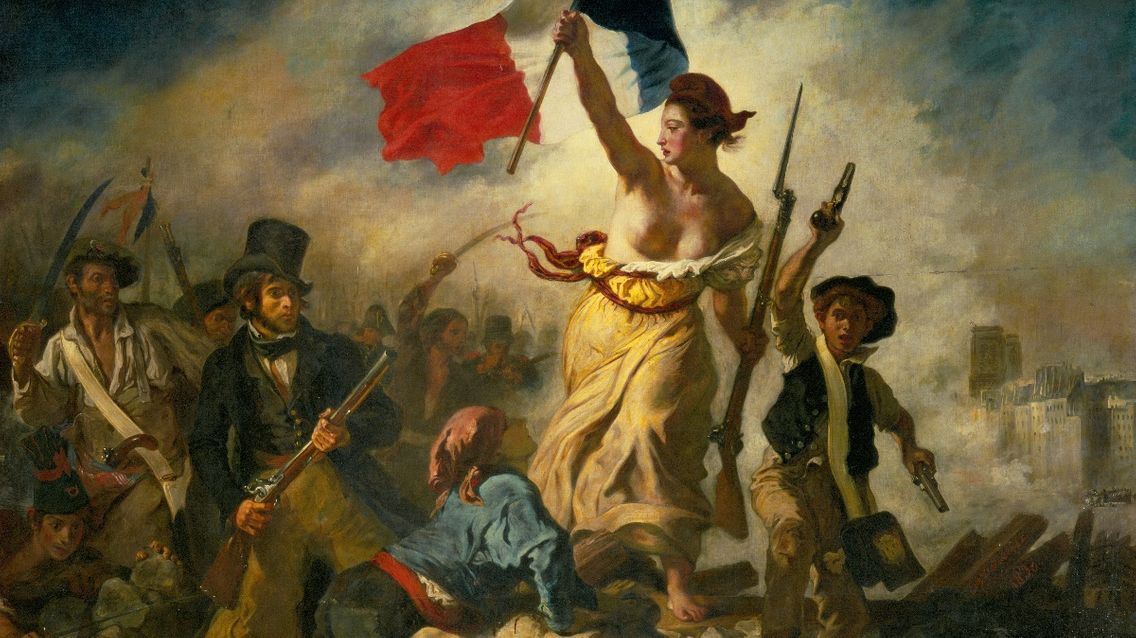
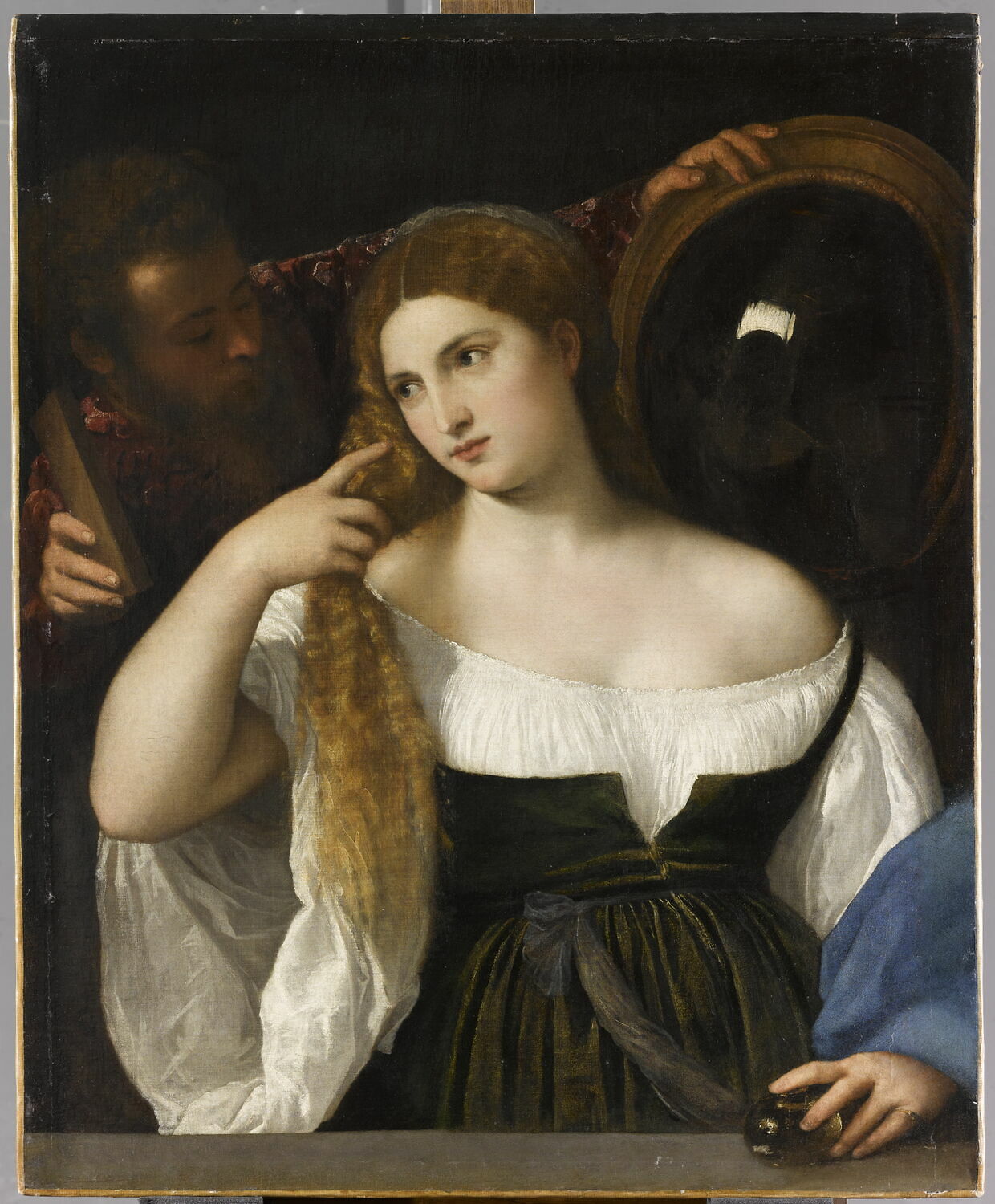
The masterpieces of the Louvre are all there, from Eugène Delacroix’s La Liberté guidant le peuple and Titian’s La Femme au miroir to the Vénus de Milo and the Great Sphinx of Tanis. But so are an enormous number of lesser-known works like a Giovanni Paolo Panini view of the Roman forum, an anonymous 19th-century Algerian landscape, Hendrick de Clerck’s Scène de l’histoire de Psyché (among many other Dutch paintings), and a powder flask amusingly engraved with human and animal figures, all of them in search of their rightful owners since their retrieval from a defeated Germany. You can also explore the Louvre’s online collections by type of work: drawings and engravings, sculptures, furniture, textiles, jewelry and finery, writing and inscriptions, objects, and of course paintings. In that last category you’ll find the Mona Lisa, viewable more clearly than most of us ever have at the physical Louvre — and downloadable at that. Enter the collection here.

Would you like to support the mission of Open Culture? Please consider making a donation to our site. It’s hard to rely 100% on ads, and your contributions will help us continue providing the best free cultural and educational materials to learners everywhere.

Also consider following Open Culture on Facebook and Twitter and sharing intelligent media with your friends. Or sign up for our daily email and get a daily dose of Open Culture in your inbox. 

Related Content:

Free Art & Art History Courses

Take a Long Virtual Tour of the Louvre in Three High-Definition Videos

14 Paris Museums Put 300,000 Works of Art Online: Download Classics by Monet, Cézanne & More

When Pablo Picasso and Guillaume Apollinaire Were Accused of Stealing the Mona Lisa (1911)

Based in Seoul, Colin Marshall writes and broadcasts on cities, language, and culture. His projects include the Substack newsletter Books on Cities, the book The Stateless City: a Walk through 21st-Century Los Angeles and the video series The City in Cinema. Follow him on Twitter at @colinmarshall or on Facebook.

The Louvre’s Entire Collection Goes Online: View and Download 480,00 Works of Art is a post from: Open Culture. Follow us on Facebook, Twitter, and Google Plus, or get our Daily Email. And don't miss our big collections of Free Online Courses, Free Online Movies, Free eBooksFree Audio Books, Free Foreign Language Lessons, and MOOCs.

29 Mar 22:13

The old devil and the new details

by Mab Segrest

Mab Segrest, veteran organizer and author of 'Memoir of a Race Traitor,' offers a long-view on right-wing militia organizing in the South and January's Capitol Insurrection.

The post The old devil and the new details appeared first on Scalawag.

22 Mar 00:37

The Best Vegan Buffalo 'Wings' are Just Tater Tots

by A.A. Newton on Skillet, shared by Marnie Shure to The Takeout

Buffalo cauliflower “wings” are a vegan junk food miracle, but making your own is a different story. If deep frying is a dealbreaker, your options are either sad, soggy “oven fried” versions or abstaining entirely. What’s a frying-averse vegan to do when the craving strikes? Easy—just buy a bag of tater tots.

Read more...

18 Mar 18:57

Will Beauty Change When the World Comes Back?

by Amanda Scriver

Prepandemic, there was always pressure to dress a certain way. But, after months of isolation, looking good may have new meanings

The post Will Beauty Change When the World Comes Back? first appeared on The Walrus.
09 Mar 15:27

22 (!) new titles to add to your TBR pile.

by Katie Yee

With the weather getting slightly warmer and spring just around the corner, I have vaguely thought about the concept of “getting back into shape.” In college, my friends and I used to go to the Rec Barn to exercise (read: read) on the stationary bikes. If this is the kind of exercise you too are thinking about, dear reader, then this is the list for you.

*

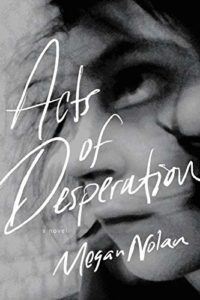
Megan Nolan, Acts of Desperation

Megan Nolan, Acts of Desperation
(Little, Brown)

“Nolan’s portrait of a relationship warped by obsession and low self-worth excavates our private hearts … Subverting traditional love stories, it illuminates the fragile tension between power and desire.”
–The Evening Standard

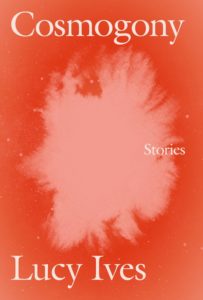
 Cosmogony, copyright © 2021 by Lucy Ives

Lucy Ives, Cosmogony
(Soft Skull)

“Through juxtaposition and collage, these stories illuminate the trickier fringes of life right now.”
–Publishers Weekly

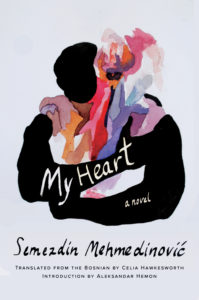
My Heart by Semezdin Mehmedinovic (trans. Celia Hawkesworth)

Semezdin Mehmedinović, tr. Celia Hawkesworth, My Heart
(Catapult)

“Bosnian writer Mehmedinović returns with a powerful autofictional gut punch of a novel.”
–Publishers Weekly

Marguerite Duras, The Impudent Ones

Marguerite Duras, tr. Kelsey L. Haskett, The Impudent Ones
(New Press)

“Most notable is the psychological intensity of the central figure, mercilessly observant Maud, who boldly refuses to comply with familial or social expectations, and Duras’ ravishingly descriptive passages contrasting the stifling monotony of human struggles versus the glory and freedom of nature.”
–Booklist

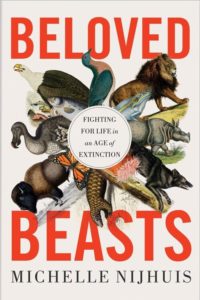
Michelle Nijhuis, Beloved Beasts

Michelle Nijhuis, Beloved Beasts
(W. W. Norton)

“Michelle Nijhuis’ spirited and engaging Beloved Beasts tracks the not always predictable course of species protection from the flora and fauna classification system developed in the 18th century by the Swede Carl Linnaeus to the present day.”
–The Boston Globe

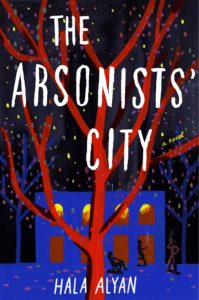
Hala Alyan, The Arsonists' City

Hala Alyan, The Arsonists’ City
(Houghton Mifflin)

“Tenderly and compassionately told, and populated with complicated and flawed characters, the Nasrs’ story interrogates nostalgia, memory, and the morality of keeping secrets against the backdrop of a landscape and a people in constant flux.”
–Publishers Weekly

Takis Würger_Stella

Takis Würger, tr. Liesl Schillinger, Stella
(Grove Press)

“Würger skillfully intertwines fact and fiction. This subtle, thought-provoking narrative is worth a look.”
–Publishers Weekly

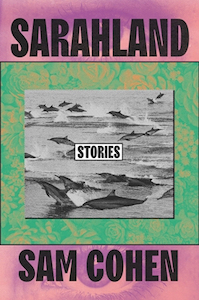
sarahland

Sam Cohen, Sarahland
(Grand Central)

“A bold collection that explores how we might break free from or reimagine ourselves and our places in the universe.”
–Kirkus

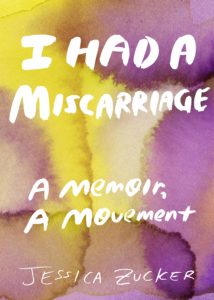
Jessica Zucker, I Had a Miscarriage

Jessica Zucker, I Had a Miscarriage
(Feminist Press)

“Zucker’s story is a profound personal reflection, and her remarkable storytelling sheds new light on a difficult topic.”
–Publishers Weekly

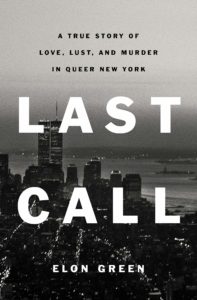
Elon Green, Last Call

Elon Green, Last Call
(Celadon)

“Rather than focus on the killer—who has all the allure of a wet cocktail napkin—he foregrounds the lives and milieus of the victims. It’s a reparative act that doubles as an extended elegy for the decades of closeted or bullied queers who encountered similar demons.”
–4Columns

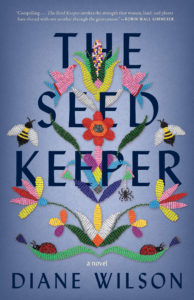
Diane Wilson, The Seed Keeper

Diane Wilson, The Seed Keeper
(Milkweed Editions)

“A thoughtful, moving meditation on connections to the past and the land that humans abandon at their peril.”
–Kirkus

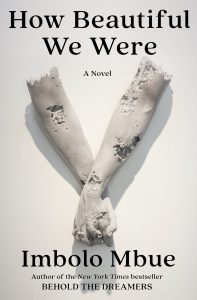
Imbolo Mbue, How Beautiful We Were

Imbolo Mbue, How Beautiful We Were
(Random House)

“Readers who enjoyed Behold the Dreamers will be pleased that Mbue persisted to tell this powerful story of the fateful clash between an American oil company and the tiny African village forced to live with the consequences of its environmental destruction.”
–BookPage

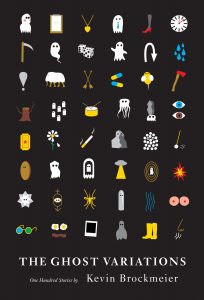
Kevin Brockmeier, The Ghost Variations

Kevin Brockmeier, The Ghost Variations
(Pantheon)

“Varied, inventive, uncanny, and playful: a gifted fabulist’s cabinet of curiosities, his book-length memento mori.”
–Kirkus

Sarah Coolidge (ed.), Elemental: Earth Stories
(Two Lines Press)

“A fantastic and deeply philosophical addition to Two Lines’ Calico series of collected works in translation.”
–Booklist

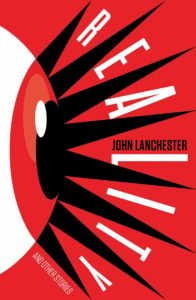
Reality and Other Stories_John Lanchester

John Lanchester, Reality and Other Stories
(W. W. Norton)

“These entertainments are brisk, vinegar-sharp satires that horrify and amuse in equal measure; an alarming reality check. Like a lesson in etiquette, it’s good medicine.”
–The Guardian

Donna Leon_Transient Desires

Donna Leon, Transient Desires
(Atlantic Monthly)

“Leon’s beloved series shows no signs of aging.”
–Booklist

Walter Isaacson, The Code Breaker

Walter Isaacson, The Code Breaker
(Simon & Schuster)

“A vital book about the next big thing in science—and yet another top-notch biography from Isaacson.”
–Kirkus

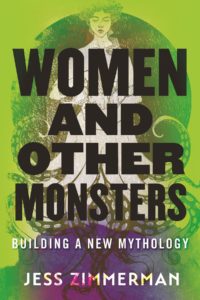
Jess Zimmerman, Women and Other Monsters

Jess Zimmerman, Women and Other Monsters
(Beacon Press)

“A sparkling and perceptive critique of ancient ideas that still hold women back.”
–Kirkus

Rebecca Handler, Edie Richter is Not Alone

Rebecca Handler, Edie Richter is Not Alone
(Unnamed Press)

“Handler’s affecting and darkly funny debut explores the impact of euthanasia on a family.”
–Publishers Weekly

Victoria Shorr_The Plum Trees

Victoria Shorr, The Plum Trees
(W. W. Norton)

” Written with urgency, elegance, and grace, Shorr’s novel is a deeply moving account of a family’s suffering.”
–Kirkus

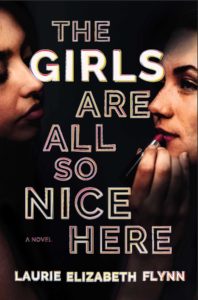
laurie elizabeth flynn_the girls are all so nice here

Laurie Elizabeth Flynn, The Girls Are All So Nice Here
(Simon & Schuster)

“Alternating between Amb’s time at college and the present day, Flynn reveals the darkness girls are capable of, building toward a thrillingly unsettling ending.”
–Electric Literature

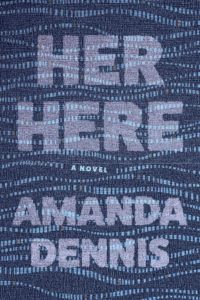
Amanda Dennis_Her Here

Amanda Dennis, Her Here
(Bellevue Literary Press)

“An experimental, psychological debut about selfhood, fiction, and memory.”
–Kirkus

25 Feb 13:43

Please Just Let Women Be Villains

by Elyse Martin

When the trailer for Cruella dropped, Twitter greeted it with jeers. People mocked it for being too much like The Joker; too much like Disney’s earlier film Maleficent; too much like Warner Brothers Birds of Prey— and contributed tweet after tweet about what an odd choice it was to rehabilitate Cruella DeVil in particular: a character who spent her original 1961 film trying to kidnap and kill puppies to make their skins into a coat. 

This seems far from the response Disney expected. It introduced the trailer with the tag line, “Brilliant. Bad. A little bit mad,” calling to mind the oft-quoted characterization of Lord Byron by his ex-lover Lady Caroline Lamb: “mad, bad, and dangerous to know.” The allusion carefully positions Cruella not as a villain, but a Byronic hero: a talented, melancholy rebel, tragically misunderstood by their society. Cruella’s dialogue also reflects this, as she explains: “From the very beginning I realized I saw the world differently from everyone else. That sit didn’t sit well with some people. But I wasn’t for everyone.” Cruella is not, therefore, a two-dimensional villain who likes to kill dogs and inspired a song that rivals “You’re A Mean One, Mr. Grinch” as a Renaissance blazon of bad qualities. She is a misunderstood #girlboss whose actions will be justified by the film, and whose actions most likely were in reaction to bad things other people did to her first… a hard sell for literally cartoon villain whose name is a pun on “cruel devil,” and who lives in Hell Hall.

Cruella is the reductio ad absurdum of a long trend of redemptive retellings featuring pop culture villainesses.

Cruella is the reductio ad absurdum of a long trend of redemptive retellings featuring pop culture villainesses. These female villains are introduced in two dimensions—quite literally, in many cases. But when given depth and turned from antagonist to protagonist, their narratives take on a curious similarity. These recentered stories aren’t a straight retelling of events, but a complete restructuring of the narrative. We don’t merely get the villain’s perspective; we get her justification. She had to kidnap Dorothy, curse a baby, smuggle a machine gun into a mental asylum, or kill a hundred and one puppies. We, the audience, just didn’t have the whole story. We didn’t know the context of her actions—which exonerate her. And in the end, she really wasn’t punished for her crimes in the end, but redeemed—so you see, she isn’t really a villain! She was just tragically misunderstood. She was good all along. 

We don’t see this sort of reboot with say, Jafar from Aladdin, or Count Olaf from A Series of Unfortunate Events. Even Joker allowed its main character to exist within a realm of moral ambiguity; though it was clear social systems had failed him on every level, the movie makes no apologies for Arthur Fleck’s descent into murder. But when big media conglomerates decide to make their villainesses—their literally cartoonishly evil villainesses—into main characters, they also make them into heroines who repent of their evil ways, while also demonstrating that they were never really that evil after all. 

American culture tends to want to explain away the evil actions of women—mostly fictional women, but sometimes real ones—because female villainy rests uncomfortably with lingering cultural perceptions of women’s purity and virtue. The idea that all women must be innately virtuous took form in the mid-19th century, in the movement towards “True Womanhood,” which historians like Barbara Welter have dubbed “the cult of domesticity.” Building off of the late 18th-century idea of “separate spheres,” which claimed that innate gender differences made men more suited for public life and women for private life, the cult of domesticity provided social regulation for the rapidly expanding American middle class and a sense of social stability in a time of great political, economic, and societal upheaval. Middle and upper-class white women became revered for the domestic labor to which they had been confined: social regulation enshrined as near-religion. Women were the center of the family, the light of the home, and the angel of the house. “True Women,” as Welter put it, were known by their domesticity, submissiveness, piety, and purity. In a case of mingled cause and effect, women showed their mastery of the domestic sphere by displaying these qualities, and the display of these qualities proved that they were naturally fitted for that sphere because they were more pious and pure. Indeed, they were naturally religious and moral. Popular fiction of the time often showed criminal men redeemed by the virtue of a true woman. Their moral fiber was perceived to be so much stronger and purer than their male counterparts that a woman could never really commit a crime, and a woman who did commit a crime must have been tricked into it, or led into it by the bad influence of men. Within this structure, such a woman then becomes “fallen.” And yet the very language of exclusion centers on the angelic nature of woman. She is not bad or evil or a villain, she is fallen, like an angel into hell.

Middle and upper-class white women became revered for the domestic labor to which they had been confined.

More than 100 years later, this idea of women’s inherent goodness has proven hard to shake. The cult of domesticity centered around cis white women, whose virtue is still used as a pretext for violent rhetoric and action against Black and trans people, from whom their purity must be protected. And in fiction, when pop culture focuses on a woman who committed a crime, it’s either a cautionary tale or one of these rehabilitation stories, focused on the idea that the villainess’s fallen state is not her fault and is certainly not permanent. 

This justification (it isn’t her fault she’s a villain) and the means of showing it (recentering a popular narrative around a female villain) reached popular prominence in 1995, with Geoffrey Maguire’s novel Wicked, and with the musical adaptation in 2003. Both the book and the musical reconsider the Wicked Witch of the West from L. Frank Baum’s The Wonderful Wizard of Oz. The witch, whom Maguire named Elphaba, does have a song in the second act of the musical where she makes a conscious commitment to give up trying to be good, but the show goes to great lengths to point out that Elphaba was not born wicked, and though she may make a big show of giving up good deeds, she never consciously chooses to do an evil one. Her greatest sin in the show—animal abuse in the form of magically creating flying monkeys— is something she was tricked into, and her villainous reputation thereafter springs mostly from Elphaba setting herself up as the Wizard’s enemy, and the Wizard mounting an extremely effective PR campaign against her. In the end, Elphaba regains her goodness by playing into stereotypes about her villainy and then completely rejecting her wicked reputation. The Wicked Witch dies because her soul is so unclean, water can melt her; Elphaba lives thanks to a trap door, and gets her “happily ever after” with her love interest, outside of Oz. 

We Can’t Believe Survivors’ Stories If We Never Hear Them

Our ideas about which narratives are important, sane, or credible depend on what we see reflected in culture

Mar 2 – Rachel Zarrow
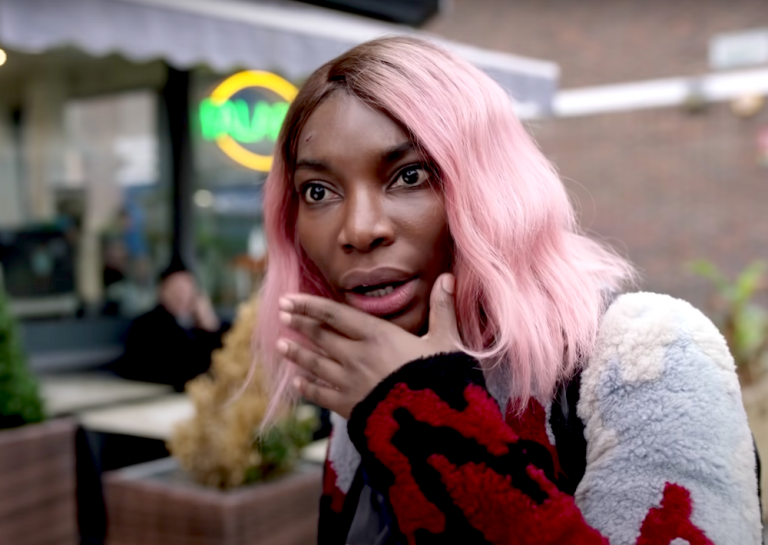
books Michaela Coel in I May Destroy You

Maleficent, Disney’s first retelling centering on a female villain, likewise uses its reframed narrative to prove the heroine’s inherent goodness but gives her even less agency in her fall from grace. In the original 1959 Sleeping Beauty animated film, evil fairy Maleficent curses the infant princess out of pique at being left out of the baby’s welcome party. This is an enjoyably petty reason for committing a villainous action—who hasn’t wanted to hex someone for a social snub?—but it’s not deep or detailed or justified, because it doesn’t have to be. Maleficent enters the movie a villain, spends the film acting like a villain, and then dies like a villain. By contrast, in Maleficent, the 2014 live-action movie that revisits the character’s early life, she begins in innocence in an almost Edenic forest, and falls in love with her childhood friend, Stephen. Maleficent is a fairy guardian of a beautiful natural landscape and fights only to protect it. But what turns her into a villain, complete with a costume change from earth-toned gauzes to heavy black draperies, is a heavily implied (the film is rated PG) sexual assault by an intimate partner: Stephen drugs Maleficent and cuts off her wings. 

In pop culture, sexual assault is still one of the most common motivators for female vengeance—and, by implication, an acceptable justification for a woman committing a bad or violent action. If Stephen gave her “true love’s kiss” and then cut off her wings, thus proving that true love does not exist, then it is not only appropriate but righteous for Maleficent to curse his baby to die, with the caveat that only true love’s kiss can save her. (Elphaba, at least, chose to oppose the Wizard and thus be branded wicked.) In the end, Maleficent provides “true love’s kiss” herself, and regains her wings, returning her to the angel she really was at heart. 

Harley Quinn, in the 2020 Birds of Prey, also ascribes the heroine’s misdeeds to trauma. The film opens by showing how her father abandoned her and her boyfriend abused her and how this led directly to Harley’s transformation from psychologist helping to rehabilitate villains to becoming a villain herself. Once Harley is free of their influence, however, and has real female friends, she becomes a hero of Gotham. She does not choose to be a villain; the emotional abuse she experienced from the men in her life is the true cause of her crimes. 

They don’t commit evil actions because they want to; they do it because they have been tricked or because they have been so wronged, they have no other choice.

In an odd way, these updated villains have less agency than their initial incarnations. They don’t commit evil actions because they want to, even if the want is extremely petty; they do it because they have been tricked or because they have been so wronged, they have no other choice but villainy— which is more a reaffirmation of a damaging patriarchal stereotype than a refutation of it. But this still leaves us with the fact that the traditional literary and pop culture canon is dominated by male creators, and many of their best female characters are, in fact, villains. If we want to interrogate those traditional, familiar stories by centering the most interesting and compelling female character, how should we do it?

Madeline Miller’s Circe has one good way forward: allow female characters to exercise their agency by consciously choosing to do evil, and then to repent. Circe transforms her romantic rival Scylla into a monster not because she was tricked into it, or because she didn’t know what would happen, or because she was so wronged she had to redress it, or because someone had done something so bad to her it rattled her sense of right and wrong. She did it because she was jealous. She wanted to do it, so she did. Circe’s later regret over this evil deed drives her actions at the climax of the book, where she rights this wrong by killing the monster Scylla’s become. Having chosen to do evil because she wanted to, her choice to do good— again because she wants to—shows her growth and gives her moral journey real weight. 

Circe has the benefit of being a novel, rather than a corporately owned and produced piece of intellectual property. Miller had the creative freedom to rehabilitate her villain in a way that is truly transformative, rather than reinforcing outdated ideas. But the book shows that a villainous character can remain fully culpable—Circe deliberately turned another nymph into a monster and owns it at every opportunity—without being unrelatable, uninteresting, or unsympathetic character. Hopefully the HBO Max adaptation of Circe will preserve what makes it so truly interesting a retelling starring a female villain: its instance on and its acknowledgement of the fact that giving a female character agency means that sometimes the character will choose to be bad. 

The post Please Just Let Women Be Villains appeared first on Electric Literature.

22 Feb 17:03

Wired Co-Founder Kevin Kelly Gives 36 Lectures on Our Future World: Education, Movies, Robots, Autonomous Cars & More

by Colin Marshall

Given recent events, 2019 may now seem to us like the distant past. But to those who were thinking hard about the future the year before last, nothing that has happened since has been wholly unexpected — and especially not to those who’d already been thinking hard about the future for decades. Take Kevin Kelly, co-founder of Wired magazine and writer on technology as well as a host of other subjects. It was in 2019 that state telecommunications company China Mobile commissioned him to give a series of 36 short video lectures on the “Future of X”: not the future of the internet in China and the future of India in competition with China, but a range of topics that will surely affect us all, no matter our part of the world.

Self-driving cars, virtual reality, 5G, robots: Kelly has given consideration to all these much-discussed technologies and the roles they may come to play in our lives. But the important thing about them isn’t to know what form they’ll take in the future, since by definition no one can, but to develop habits of mind that allow you to grasp as wide a variety of their possibilities as you can right now.

The future, as Kelly frames it in his talk on uncertainties, consists of “known knowns,” “known unknowns,” and “unknown unknowns.” Those last, better known as “black swans,” are events “completely unexpected by anybody” that “change the world forever.” As examples of possible black swans to come he names World War Three, the discovery of cheap fusion energy, and, yes, a pandemic.

Societal preparation for the future, to Kelly’s mind, will involve developing “a very systematic way of collecting these unknown unknowns and turning them into known unknowns.” Personal preparation for the future, according to his talk on schools and learning, will involve ceaseless acquisition and refinement of knowledge and understanding.

If we want to thrive in an uncertain future, he argues, we should “adopt a method of learning called deliberate practice, falling forward or failing forward,” in which we keep pushing ourselves into unknown intellectual territory, always remaining “newbies” at something, assisted all the while by technology.

Just a couple of decades into the 21st century, we’ve already caught a glimpse of what technology can do to optimize our learning process — or simply to enable learning where it wouldn’t happen otherwise. “I don’t imagine that we’re going to go away from a classroom,” Kelly says, but we also “have the online video world, and more and more people today are learning how to do an amazing variety of things, that we wouldn’t have thought would work on video.”

Of course, since he spoke those words, one black swan in particular has pushed much of humanity away from the classroom, and we’ve found out a good deal more about what kind of learning works (and doesn’t) over the internet. The future, it seems, is now.

You can watch the full playlist of videos, all 36 of them, below. We also recommend his very insightful book, The Inevitable: Understanding the 12 Technological Forces That Will Shape Our Future.

Related Content:

What Technology Wants: Kevin Kelly @ Google

The Best Magazine Articles Ever, Curated by Kevin Kelly

What Books Could Be Used to Rebuild Civilization?: Lists by Brian Eno, Stewart Brand, Kevin Kelly & Other Forward-Thinking Minds

Octavia Butler’s Four Rules for Predicting the Future

9 Science-Fiction Authors Predict the Future: How Jules Verne, Isaac Asimov, William Gibson, Philip K. Dick & More Imagined the World Ahead

Based in Seoul, Colin Marshall writes and broadcasts on cities, language, and culture. His projects include the Substack newsletter Books on Cities, the book The Stateless City: a Walk through 21st-Century Los Angeles and the video series The City in Cinema. Follow him on Twitter at @colinmarshall or on Facebook.

Wired Co-Founder Kevin Kelly Gives 36 Lectures on Our Future World: Education, Movies, Robots, Autonomous Cars & More is a post from: Open Culture. Follow us on Facebook, Twitter, and Google Plus, or get our Daily Email. And don't miss our big collections of Free Online Courses, Free Online Movies, Free eBooksFree Audio Books, Free Foreign Language Lessons, and MOOCs.

20 Feb 03:02

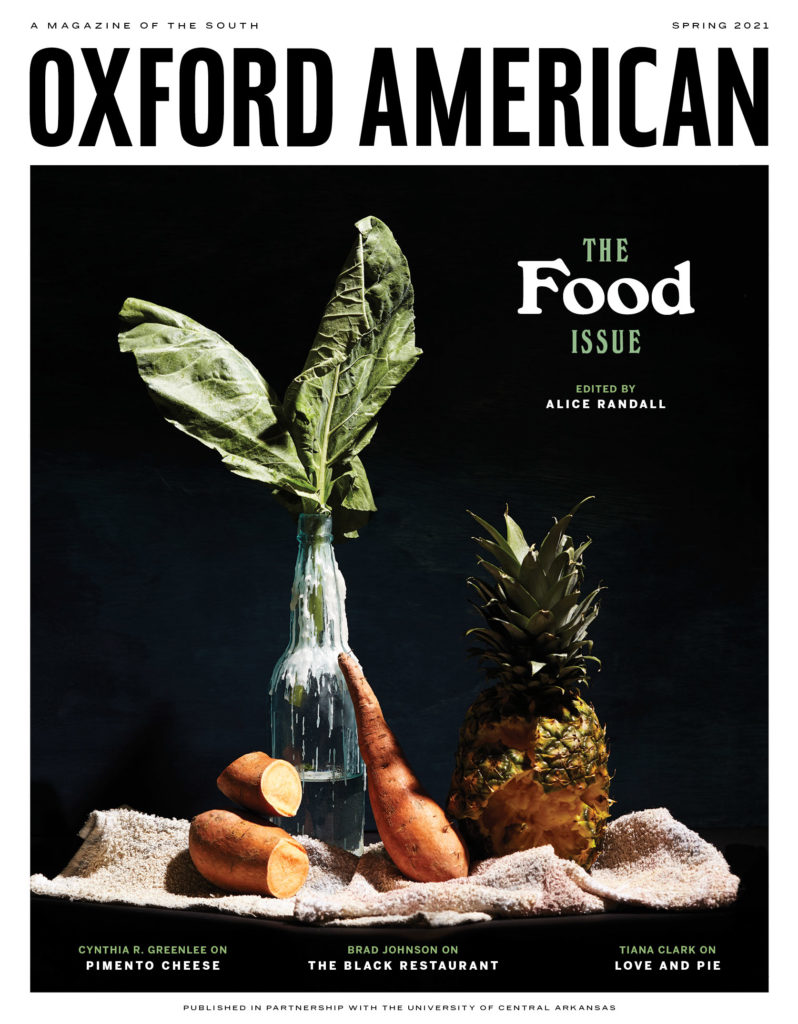
Cover reveal: Oxford American’s Spring 2021 Food Issue, guest edited by Alice Randall.

by Vanessa Willoughby
Oxford American, the Food Issue

Food, like a great novel, can tell a story. The storytelling opportunities are endless: the way we eat, the culinary traditions we pass down from one generation to the next, and communal rituals can provide deeper insight into ourselves and the world around us.

For the Spring 2021 edition of Oxford American, food is the central theme. The Food Issue, guest edited by New York Times best-selling author Alice Randall, promises to explore “the intersections of food, art, and identity.”

Here is the cover, shot by Frank Frances, from his series Remember the South.


Oxford American Spring 2021, Food Issue

Randall, who is an award-winning songwriter, educator, and food activist, and a frequent contributor to the Oxford American, writes in her introduction to the issue:

“Black Lives Matter. Say Her Name. Sedition. These seven words, one for each day of the week, were the words high in my mind as we worked on this issue in January. Reckoning comes before reconciliation and often begins at the table. Reading the getting-to-final drafts of the articles and stories and poems in this issue, I was astounded to discover, one more time, how the sweetness of the table can ease our most bitter hour. There is joy in that. And joy for the table is where art and history enter our bodies and through our bodies our lives, through food and conversation.”

Randall won the NAACP Image Award for her novel Soul Food Love (written with Caroline Randall Williams). Her latest novel, Black Bottom Saints, was published in August 2020.

The issue features 22 writers, 28 visual artists, 6 recipes, 1 playlist, and a special section on sweet potato pie. The contributors include Crystal Wilkinson, Cynthia R. Greenlee, Channing Gerard Joseph, Ashanté M. Reese, Brad Johnson and Tandy Wilson; Tarfia Faizullah and Caroline Randall Williams; J. Shores-Argüello and Eugenia Collier; and Ayana Contreras.

Readers can pre-order the issue here. Subscribers will receive their copies on March 10, 2021. Not a subscriber? You can subscribe to Oxford American here.

The Food Issue will be available on newsstands nationwide on March 23, 2021.

10 Feb 14:30

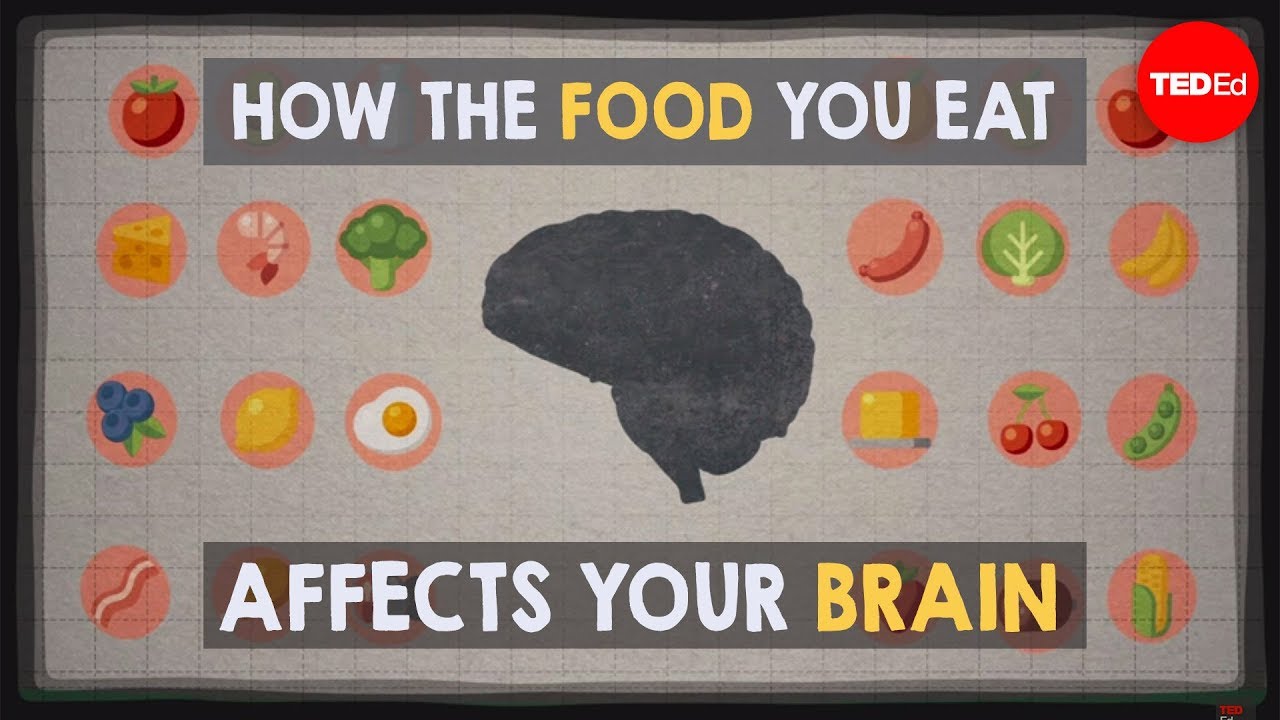
How the Food We Eat Affects Our Brain: Learn About the “MIND Diet”

by Josh Jones

We humans did a number on ourselves, as they say, when we invented agriculture, global trade routes, refrigeration, pasteurization, and so forth. Yes, we made it so that millions of people around the world could have abundant food. We’ve also created food that’s full of empty calories and lacking in essential nutrients. Fortunately, in places where healthy alternatives are plentiful, attitudes toward food have changed, and nutrition has become a paramount concern.

“As a society, we are comfortable with the idea that we feed our bodies,” says neuroscientist Lisa Mosconi. We research foods that cause inflammation and increase cancer risk, etc. But we are “much less aware,” says Mosconi—author of Brain Food: The Surprising Science of Eating for Cognitive Power—“that we’re feeding our brains too. Parts of the foods we eat will end up being the very fabric of our brains…. Put simply: Everything in the brain that isn’t made by the brain itself is ‘imported’ from the food we eat.”

We learn much more about the constituents of brain matter in the animated TED-Ed lesson above by Mia Nacamulli. Amino acids, fats, proteins, traces of micronutrients, and glucose—”the brain is, of course, more than the sum of its nutritional parts, but each component does have a distinct impact on functioning, development, mood, and energy.” Post-meal blahs or insomnia can be closely correlated with diet.

What should we be eating for brain health? Luckily, current research falls well in line with what nutritionists and doctors have been suggesting we eat for overall health. Anne Linge, registered dietitian and certified diabetes care and education specialist at the Nutrition Clinic at the University of Washington Medical Center-Roosevelt, recommends what researchers have dubbed the MIND diet, a combination of the Mediterranean diet and the DASH diet.

“The Mediterranean diet focuses on lots of vegetables, fruits, nuts and heart-healthy oils,” Linge says. “When we talk about the DASH diet, the purpose is to stop high blood pressure, so we’re looking at more servings of fruits and vegetables, more fiber and less saturated fat.” The combination of the two, reports Angela Cabotaje at the University of Washington Medicine blog Right as Rain, results in a diet high in folate, carotenoids, vitamin E, flavonoids and antioxidants. “All of these things seem to have potential benefits to the cognitive function,” says Linge, who breaks MIND foods down into the 10 categories below:

Leafy greens (6x per week)
Vegetables (1x per day)
Nuts (5x per week)
Berries (2x per week)
Beans (3x per week)
Whole grains (3x per day)
Fish (1x per week)
Poultry (2x per week)
Olive oil (regular use)
Red wine (1x per day)

As you’ll note, red meat, dairy, sweets, and fried foods aren’t included: researchers recommend we consume these much less often. Harvard’s Healthbeat blog further breaks down some of these categories and includes tea and coffee, a welcome addition for people who prefer caffeinated beverages to alcohol.

“You might think of the MIND diet as a list of best practices,” says Linge. “You don’t have to follow every guideline, but wow, if how you eat can prevent or delay cognitive decline, what a fabulous thing.” It is, indeed. For a scholarly overview of the effects of nutrition on the brain, read the 2015 study on the MIND diet here and another, 2010 study on the critical importance of “brain foods” here.

Related Content: 

How to Live to Be 100 and Beyond: 9 Diet & Lifestyle Tips

Nutritional Psychiatry: Why Diet May Play an Essential Role in Treating Mental Health Conditions, Including Depression, Anxiety & Beyond

This Is Your Brain on Exercise: Why Physical Exercise (Not Mental Games) Might Be the Best Way to Keep Your Mind Sharp

Josh Jones is a writer and musician based in Durham, NC. Follow him at @jdmagness

How the Food We Eat Affects Our Brain: Learn About the “MIND Diet” is a post from: Open Culture. Follow us on Facebook, Twitter, and Google Plus, or get our Daily Email. And don't miss our big collections of Free Online Courses, Free Online Movies, Free eBooksFree Audio Books, Free Foreign Language Lessons, and MOOCs.

03 Feb 18:59

Meet Five Spice Company Founders Demystifying the Industry

by Sophia F. Gottfried
Hands hold an iPhone above an array of spices

From Burlap & Barrel to Diaspora Co., get to know the spice companies making it their mission to support farmers and educate consumers

Farmers Võ Ngọc Dũng and Vuong Huu Thanh move closer together so both their faces fit into the Zoom camera frame. Behind them, in the central Vietnamese province of Dak Lak, lush vines snake up tall trees. The wobbly camera moves up to a vine, showing off a cluster of tiny berries: peppercorns. Their audience, a group of mostly American spice lovers, quiz them through the chat function. How tall are the ladders they use to harvest the pepper? How do they like to cook with peppercorns? How much pepper does a single vine produce? The pair answers through a translator: around 20 feet high; grilled with snails or stewed with beef; about two kilograms. The comment section lights up with praise.

Ethan Frisch, who’s facilitating the conversation from his own screen in New York, loves this sort of interaction. For the co-founder of Burlap & Barrel, a single-origin, direct-to-consumer spice company, connecting farmers with the people who cook with their crops is essential. While this usually occurs via social media and Burlap & Barrel’s website, the company’s first Zoom event grew out of the “Meet the Farmer” sections on the company’s online shop, and the “culture of online events” the pandemic has created. Frisch says more virtual farm tours and chats with partner farmers are in the works to teach consumers about how spices are grown.

Burlap & Barrel is just one of several businesses to emerge over the last five years that urge chefs and home cooks alike to think about who grows their dash of cardamom or heaping spoonful of chile. Despite the growing demand for spices around the world, the industry remains opaque when it comes to regulation. For centuries, colonial powers grew, sold, and transported spices at the expense of the communities that cultivated them, and the structures that Europeans established to subjugate and disenfranchise farmers linger today. According to Frisch, from India to Zanzibar to Guatemala, in spice-growing regions around the world, “the system is built on farmers making no money.”

Traditionally, in the spice trade, middlemen take a large cut of the profits. By the time a jar of nutmeg from a farmer in Sri Lanka arrives in your grocery store, there could be up to 15 collectors, brokers, traders, processors, wholesalers, and distributors involved, estimates Nadee Bandaranayake, owner of Cinnamon Tree Organics, another mission-driven spice company. This also means it usually takes years for that nutmeg to reach a supermarket shelf, Bandaranayake says. And when it arrives, it could be mixed with nutmeg from a handful of countries, not to mention artificial colors, flavors, and preservatives to make the seeds or ground powder look homogenous and stay fresh. By that point, she says, “the whole purpose of adding spices to a meal — the flavor, the aroma, the color, the health benefits — to me, they’re all kind of gone.”

But Frisch, Bandaranayake, and a crop of other entrepreneurs are working to change this. They’re combating deeply entrenched systems that not only treat farmers unfairly, but also shortchange shoppers, and they’re utilizing modern technology and social media to connect directly with farmers from across the world, cut out middlemen, and shed light on the workings of a notoriously closed off industry. Here, get to know a few of these founders.

Burlap & Barrel

Harnessing Technology to Grow Farmer Relationships

Frisch, a chef turned humanitarian aid worker, started bringing spices back in his luggage from trips abroad around 2012. Food-industry pals couldn’t get enough of the wild cumin from Afghanistan or black pepper from Zanzibar. He and co-founder Ori Zohar, an entrepreneur and longtime friend, sensed an opportunity. “If chefs were this excited, we knew home cooks would be excited, too,” Zohar says.

They have been. Since founding the company in 2016, Burlap & Barrel has grown to include around 300 farmers according to Frisch — in 2020, Frisch says, Burlap & Barrel imported 40 tons of spices from 14 different countries — and amassed a devoted following. “People say, ‘I didn’t know cinnamon could taste like this.’ You see their eyes light up,” Zohar says. “Even if you don’t know or care” where they come from or who grows it, “good spices make your food taste better.”

But that “lightbulb moment,” Frisch says, does get people to care. When they taste a particularly floral, woody, or smoky spice, cooks realize they aren’t “just ground colorful powders,” but potent plants. After that, “it’s a short step to realize the farm itself matters,” he says.

The company aims to help partner farmers grow their businesses by being clear about who uses their spices and how, and by finding new markets for their crops (such as selling the leaves of cinnamon trees rather than composting them, or finding a wholesale buyer for a farmer’s black limes when there was a poor harvest of their main crop, cardamom).

Farmers, the duo says, appreciate the transparency. Typically, once growers hand their wares over to a local broker, such as a truck driver or small shop owner, or sell their harvest at an auction, they have no idea where it ends up. Burlap & Barrel’s farmers can see how cooks use their spices on the brand’s Facebook spice forum, and Frisch and Zohar bring the finished, packaged product to farmers when they visit.

But visits to farms have been put on hold by the coronavirus, just as Burlap & Barrel has seen demand spike from more people staying in and cooking. It’s made an already tricky logistical operation even more difficult. Still, Frisch and Zohar, who both caught and recovered from the virus (and temporarily lost their sense of smell), are expanding the business. Working with nonprofits and local governments for the past few years, they say, has laid a solid groundwork of partner farmers. Word has spread quickly, too, among farmers, with new growers reaching out via WhatsApp or Facebook. This technology, Frisch says, lets them “work as true partners,” plus keep up that two-way interaction between farmers and shoppers. “In what other Facebook group can you message the farmer who grew the spices you made in your recipe? It’s unprecedented.”

Diaspora Co.

Pushing for Greater Equity — and Better Taste — in Turmeric and Beyond

“We’ve grown so much in the last couple months,” says Sana Javeri Kadri, founder of direct-trade, sustainably farmed spice company Diaspora Co. “It is a wild time right now.”

Dismayed by how little had really changed about the spice trade, in 2017, Kadri began Diaspora Co. “We’re rooted in equity,” she says. “I started this company so farmers could have a market to earn really, really well.” She started by selling heirloom turmeric from India, where Kadri lived until moving to the U.S. for college (she now splits her time between the two countries). Three years later, fans of that original heirloom spice can also buy black pepper, cumin, cardamom, coriander, black mustard seeds, and chile from the farms Kadri partners with. She’s been able to provide health insurance to 250 laborers, rolling out a pilot program with the Lona Project that provides preventative and immediate health care, as well as fresh produce, to the mostly female farmworkers; the goal is to keep expanding the program.

Diaspora Co.’s website provides a wealth of information about its supply chain, including how the commodity spice trade works. A bottle of grocery store turmeric, for example, is likely a mixture of multiple farmers’ crops and multiple varieties, rather than, like Diaspora’s, of a single variety or from one farm or region. That approach, the company says, allows it to ensure a better product and work closely with individual partner farms.

Kadri is also working on helping people better understand that spices, like many other crops, are seasonal. “People don’t understand why we sell out, but it’s the same as how the best tomatoes are only in season in the summer. We grow at the rate of nature.” Sometimes, she says, if “you want the best stuff, you’ve got to wait for it.”

Kadri is hopeful that other independent, direct-to-consumer food companies — including other mission-driven spice companies — are similarly pushing consumers to think differently about how we eat and where we spend our money. “We’re all growing the industry for the better so that 10 years from now, this will be the norm.” But taste alone wins people over, too. Some shoppers “may not love our politics or that we’re queer-owned, but they love our turmeric.”

Zameen

The Sustainable Spice Subscription Box

A decade ago, Rushi Sanathra was volunteering with cotton farmers in the state of Gujarat. There, he saw that “folks wanted to do organic farming, but there wasn’t an outlet to sell the product,” he says. And the alternative he witnessed wasn’t just disenfranchising these villagers, it was making them sick. “They would spray pesticides on their cotton and be ill for days,” he says. The farmers often asked him if he could find a market for sustainably grown crops in the United States.

An avid home cook, he began to explore creating such a market for spices instead; he pictured American cooks building their own versions of his mother’s spice box — a staple in every Indian family’s kitchen, he says. He spent two years “ideating and researching and doing background work” on the side, while working in operations at a children’s subscription box company. When he lost his job in January, and then the pandemic hit, he decided it was time to devote his attention to spices.

Sanathra called his company Zameen, which means earth in Hindi. He also decided on a subscription box model: Each month, subscribers receive a mini Mason jar with 1.3 to 2 ounces of a spice, information about the farmers, tips on storing spices, and recipes. This way, he figured, he could gauge interest for his products. Upon launch, he sold most of the subscriptions almost immediately. Turns out “people get excited about spices,” he says.

The recipes included in Zameen boxes are Sanathra’s creations, inspired by family recipes or dishes he learned to make when living in the village, such as kheer eaten around Diwali or a dal served at weddings. But, ultimately, he wants people to feel comfortable cooking intuitively with the turmeric, cardamom, black and white pepper, cinnamon, and allspice. “When I lived in the village, if a spice wasn’t available, they’d just omit it and keep going,” he says.

As a brand-new business, Sanathra works with Krishi Janani, an organization that supports organic, sustainable farmers. Through them, he’s found family-owned farms and sustainable foragers in the Kerala and Tamil Nadu states. He’s also looking into adding star anise, Indian bay leaves, garam masala, and chai masala to his roster, along with grains like rice and millet.

Less than a year into running Zameen full-time, the self-described one-man show says he’s still learning how to manage demand, how to explain to consumers why Zameen’s spices cost more, and how to expand the business responsibly. It’s been “an eye-opener to different world,” especially “as a gay man running a business like this. I’m just doing the work and representing [the farmers] to break the colonial cycle.”

Cinnamon Tree Organics

Preserving Small Farmers’ Spice Traditions in Sri Lanka

Nadee Bandaranayake immigrated from tropical Sri Lanka to Calgary, Canada, at age 20 with her family. It was food from home, she says, “that kept us grounded and comforted.” But, no matter how hard her family tried, recipes never turned out quite the same. Though she was able to find staples such as turmeric and cinnamon, she says, “the flavors were off. We just were not finding what we remembered.” It’s something she says she heard from many other South Asian immigrants.

In Bandaranayake’s case, it was especially true for cinnamon. Ceylon cinnamon, or “true” cinnamon, is native to Sri Lanka; it’s something she says is a matter of national pride. In North America, though, it’s more common to find cassia, a less expensive, more potent variety, she explains. “It’s a completely different spice to me, and completely throws off” the savory dishes — lentils, meat, fish — in which Sri Lankans typically use cinnamon.

Bandaranayake left her Washington, D.C., marketing and communications job last year to focus on selling this Ceylon cinnamon with Cinnamon Tree Organics. Her company also sells black and white pepper, nutmeg, moringa, lemongrass, cardamom, clove, turmeric, chile flakes, ginger, cayenne, masala chai, and a Sri Lankan curry blend. The more she got into the business, the more she felt “it was high time somebody tried to disrupt” the supply chains that, she quickly learned, haven’t changed much in centuries.

She hopes that consumers who already buy fair-trade coffee, chocolate, and tea, and who drink turmeric lattes in droves, “are more open to hearing the details” when it comes to where their spices come from — details like how the mass market values spices for uniformity and color, not necessarily flavor and aroma. Growing cardamom pods to be the greenest and most uniform, rather than for their taste, for example, puts pressure on small farmers to leave behind generations of farming practices and heirloom spice crops. “They want to keep and preserve our nature, culture, and knowledge,” she says. And with a market to sell to, they can.

Bandaranayake says she pays the handful of farmers she works with more than what other buyers or middlemen offer. With better pay, she explains, these farmers can grow their operations, become certified organic, and buy machinery. However, “there are some things that can’t be done with machinery,” Bandaranayake says. Those neatly rolled cinnamon sticks? Called “cinnamon quills” in Sri Lanka, “they’re all done by human hand,” she says, an “art and science taught in families from generation to generation,” and one that’s in danger of dying out. “We have to treat them well and pay them well to keep it going.”

Heray Spice

The Saffron Specialist

Saffron is one of the world’s most famous, and famously expensive, spices. But Mohammad Salehi has found, beyond that, Americans don’t know all that much about what he calls the “queen of spices.” When he first tried selling the delicate crimson threads from his family’s farm in Afghanistan to grocery stores, they didn’t bite.

It was with chefs that Salehi’s business got going. A former translator for the U.S. military in Afghanistan, he was forced to seek asylum in 2013 after his life was threatened. On the advice of a friend in the army, he settled in Chicago. Looking to go into business for himself and support small saffron farmers, such as his own family, which has been farming in the Herat province for generations, Salehi started selling saffron to restaurants. He won over enough of them — including Gibsons Italia in Chicago and Black Shoe Hospitality in Milwaukee — to leave his job at a real estate company in 2017 to run Heray full time.

Although restaurants were his main customers, Salehi sold online to individuals, too. And while he suspects chefs posting about his saffron on Instagram gave an initial boost to this direct-to-consumer business, pandemic home cooking has seen it take off. “Millennials, they care,” he says. “They want to know, ‘Who built this product? How can I buy something that has a positive effect?’”

Salehi explains to his customers that, by working with him, they’re directly supporting his family and other saffron farmers; today, he works with a group of 24 growers. “I know each single farmer and their family’s names,” he says. Heray also uses a portion of profits to buy school supplies for children in danger of dropping out due to poverty.

Harvesting saffron is highly labor intensive — it requires plucking the threads by hand from crocus flowers. It takes 75,000 flowers, Salehi estimates, to yield just a pound of the precious threads, making it more expensive than many other spices. Currently, Heray sells one gram of saffron for $17. The delicate and limited nature of its harvest, and the resulting cost, means saffron is typically sold in small quantities, just a couple grams at a time. But Salehi says, Heray customers need to use only a few saffron threads to robustly flavor and color a dish.

Salehi is keen to one day add cumin, black pepper, and dried figs and apricots to his offerings. Right now, though, he’s focused on educating customers, teaching them how to cook with saffron and the best ways to suss out the real deal from saffron that’s adulterated (saffron swindlers have been known to mix the spice with corn silk or safflower petals and add dyes to bump up the color). Salehi, who’s finishing up a master’s degree in business and information technology, also wants “people to know Afghanistan through its beauty, to give a picture of the country besides the war,” he says. “When you feed someone, it’s the best influence a culture can have on others. When I do a transaction in saffron, I am not only helping someone, but transferring a cultural legacy through food.”

Sophia F. Gottfried is a writer based in New Jersey. Joules Garcia is a freelance illustrator based in Burlington, Vermont.

03 Feb 14:36

RISD Continuing Education Announces 140+ Online Courses This Spring

by Colossal

by RISD CE student Christian Heidsieck

Rhode Island School of Design Continuing Education is excited to announce more than 140 online courses for adults and teens this spring—including RISD’s Advanced Program for High School Students. RISD CE Certificate Programs are now being offered 100% online.

Continuing Education students can take online classes from anywhere in the world, at any time of day or night. Courses are taught by professional artists, designers, and makers, and RISD CE is open admission—everyone is welcome.

Students can enroll in online courses for personal or professional enrichment and as part of a RISD CE Online Certificate Program. Designed for those looking to accelerate their creative lives and work, subjects range from interior design, product development, and graphic design to painting, photography, and animation.

While some teens may attend RISD CE Online Teen Courses for fun and enrichment, others have academic goals. Online courses like animation, illustration, fashion design, and art school prep provide a strong grounding in the visual arts, encouraging creative and personal growth through self-expression.

While Rhode Island School of Design has made the difficult decision to cancel the 2021 RISD Pre-College program and will not be hosting in-person classes this summer, RISD’s Advanced Program for High School Students will be available to help young adults develop as artists and grow their college application portfolios.

The spring term starts March 1, 2021. For more information on RISD CE Online Spring Courses, visit ce.risd.edu.

01 Feb 18:57

Restaurants Avoiding Big Delivery Apps Have to Get Creative

by Kristen Hawley
Rintaro’s Chirashizushi bento | Sylvan Mishima Brackett

Brands like DoorDash and Uber Eats promise volume and convenience. But some restaurateurs are sticking with in-house delivery or small local companies instead.

One of the first things Sylvan Mishima Brackett did after the mayor of San Francisco issued a lockdown order in March was walk a few blocks to a local Best Buy to buy a phone. The chef and owner of Rintaro, a San Francisco Japanese restaurant, planned to set up a bento hotline for people to call and order thoughtfully packaged and impeccably designed to-go meals.

Everything about Rintaro, a six-year-old izakaya in the Mission District of San Francisco, is thoughtful. Food is grilled over a traditional charcoal grill; udon is handmade; Wasabi root is grown locally. Sylvan’s father, who apprenticed as a temple carpenter in Kyoto, built the space, including booths made from 100-year-old redwood wine casks and mud walls made from iron-rich red soil from Sylvan’s childhood home in Northern California’s gold country. It feels refined, relaxed, upscale, and approachable all at the same time. To translate this aesthetic to go, takeout food is creatively wrapped in compostable packaging and adorned with colorful custom labels. In May, Eater SF referred to the bento as some of the “prettiest takeout in San Francisco.”

Rintaro’s bento boxes were especially popular during the earliest days of lockdown. “In the beginning of COVID, there were not that many restaurants like us doing takeout, so we were super busy. The person on the phone was just inundated with calls,” Brackett says. Guests started to get frustrated that they couldn’t get through. One person called 60 times to place an order, only to be greeted by one busy signal after another. Even then, Brackett says he never considered signing up with a big third-party delivery service, even though the headquarters of two of the country’s largest providers, Uber Eats and DoorDash, are within walking distance of his restaurant. Still, his experience underscores how much time, thought, effort, and money is required to purposely avoid the apps.

“They’re an extractive industry that puts in a middleman which takes more or less what the profit would be, or more than the profit would be,” he says. An exceptionally successful restaurant might run a 20 percent profit, he explains. “If a third party is taking anywhere between 15 to 30 percent of the order, then that’s more than the profit of the people who are actually doing the work.”

Restaurateurs’ complaints about third-party delivery services have taken on a different urgency as we near a year of pandemic health and safety restrictions. These companies have always charged for their services; COVID didn’t change that. But as delivery became a lifeline for restaurants in distress due to dining room closures, delivery companies posted record growth. In April, May, and June 2020, DoorDash actually made money for the first time, over $20 million. Meanwhile, Uber’s CEO has promised investors the company will finally make a profit by the end of this year, largely thanks to its delivery business.

Delivery companies promise restaurants easy ordering and incremental sales. They say their huge footprint — DoorDash has 18 million customers — will bring more business. They offer sign-up promotions that reduce or eliminate commissions. The prospect of signing on, getting a tablet in the mail, plugging it in, and accepting orders is tough to resist. While DoorDash doesn’t officially share how many independent restaurants use its service, a December filing referenced 180,000 local restaurants on its platform, representing a significant portion of DoorDash’s 390,000 merchants. Delivery apps have grown quickly, reworking how we order and receive restaurant food, and how we judge convenience — the apps tout an average delivery time around 30 minutes. Larger companies justify high commissions by explaining they provide a service that would cost the restaurant time and money to operate themselves.

Brackett tried a few setups looking for the right fit. He briefly used Tock’s to-go offering, which charges 3 percent for each order, a number that Tock’s CEO has said was the absolute minimum the company could charge while keeping its own lights on. Even at that low rate, Brackett says it was costing Rintaro thousands of dollars in fees and credit card processing charges. “When you’re making negative 4 or 5 percent profit, losing another 2 or 3 percent isn’t great,” he says.

Now, Brackett only accepts delivery orders over the phone and slots them into one of three evening timeslots. Three servers have stayed on “super part time” to work as delivery drivers. The restaurant uses one driver per day to deliver between three and eight orders each night within a three- to four-mile radius, serving more or less half of the city thanks to the restaurant’s central location. Delivery costs the guest $10. For carryout, diners can place online orders through the restaurant’s website, which is tied directly to its point-of-sale system. The restaurant pays a credit card processing fee on each order, something it would pay no matter how it served customers, but online orders cost an extra 1.2 percent on top of the typical fee. It’s called a “card not present” transaction, and the higher rate has to do with the higher risk of fraud associated with processing a transaction without swiping a card. In December, this cost Rintaro about $3,000. The restaurant processes between 30 and 60 to-go orders per night.

When outdoor dining was allowed in San Francisco, Brackett says the restaurant was able to break even, or even turn a small profit, with its 26 outdoor seats. San Francisco Chronicle restaurant critic Soleil Ho recently added Rintaro’s bento to the paper’s Top 25 list, and after that, “We were quite busy,” Brackett says. “We broke even.” That’s a good week — during a bad week, the restaurant loses between $5,000 and $8,000 offering only takeout and delivery.

Since January 1, delivery companies are prohibited from listing California restaurants without explicit permission. Brackett says he used to field sales calls from delivery apps wanting to add Rintaro to their platforms, but hasn’t heard from them in a while. “I think they gave up,” he says. Looking ahead, Brackett expects to continue with bento takeout and delivery for several months or until indoor dining is reopened at full capacity and business returns. “We don’t have the bandwidth in the kitchen to do both,” he says.

A restaurant owner doesn’t have to build their own intricate delivery system or even be particularly tech-savvy to avoid the big apps. Nicolle Dirks owns the Portland, Oregon, restaurant Epif with her husband, chef Pepe Arancibia. It’s a five-year-old, full-service vegan restaurant that serves food inspired by the Andes region of South America. The pair reopened the restaurant in early May, offering takeout for the first time — but only to guests who ordered ahead online. At the time, she said, the prospect of speaking to anyone face to face was daunting. “I actively wouldn’t even accept a walk-up order. I’d point through the window to the sign that had our website and that said order online only,” Dirks said.

Two months later, she noticed a flyer from a local bicycle delivery service. “My husband used to be a bike courier in Boston. And I’m just like, yes, those are my people, that’s who we want to do business with.”

The service is called CCC PDX. “We started in 2017 because we wanted to provide a nice service for nice people to have food delivered quickly and affordably by bike! We’ve seen the way apps do it and we think it SUXXX!” the website reads.

“The couriers, the people who are doing the work should be paid a fair amount and make money doing this job,” says CCC co-owner Ponce Christie. “This was the whole reason I got into it, too, because I wanted to ride bikes and make money riding a bike. And now at this point, I want to make that a possibility for someone else.”

Since March, order volume delivered by CCC has grown nearly 1,000 percent, and the company works with about 100 Portland restaurants. At the beginning of the pandemic, CCC had seven active couriers. Now it has 40, including several former restaurant workers who lost their jobs due to COVID. Restaurants pay a 10 percent delivery charge, and the diner pays $3 to $5, depending on the restaurant and their location. CCC takes 5 percent of the order fee and $1 from the delivery fee; everything else goes to the courier, including the full tip. The company uses software developed by another bicycle messenger company that can be tied directly to many restaurants’ online ordering platforms.

“I think our goals are different,” says CCC’s Christie of larger delivery companies. “Their goal is to capture enough market share that they can put us and everyone else out of business and then raise prices to actually be profitable. Our goal is to not do that — it’s to, like, just exist. And ride bikes.”

As for why it works so well in her Portland community, Dirks says, “Smaller single-location businesses are perhaps a little bit more aware of keeping the local money in this local economy.”

The vast majority of Epif’s orders still come from its own website, placed by local and loyal guests. Thanks to what Dirks calls “multiple fortunate situations,” the restaurant breaks even. “The big one is that my husband and myself as the owners are also the ones who are doing all the work.” It also doesn’t hurt, she says, that the empanadas that they’ve always served travel particularly well.

In October, as the weather cooled, Dirks was looking for more ways to increase business. A friend suggested trying DoorDash, and Dirks reluctantly agreed. “She was like, ‘Nicolle, I know you are so averse to working with any big companies. But you can get so many new customers through these third-party apps.’”

Orders are sporadic — sometimes four or five come in one night, sometimes just one per week. Compared to orders placed for pickup and those delivered by CCC, Dirks knows next to nothing about the customers who place DoorDash orders. Once, a customer ordered through DoorDash but picked up the order themselves. “I wanted to say something when the customer picked up to be like, ‘Hey, if you ordered directly from our website, that would help us out so much more,’” Dirks says. “But I felt like I’m not in a place to tell [that to] people.”

Dirks has also learned that working with a large third-party delivery partner doesn’t mean any less work on her part. She’s taken to writing the time on every bag she packs before sending it out with a DoorDash driver. “So hopefully the customer understands that I had my food ready for you at the right time — it’s your driver that didn’t show up for another 20 minutes or half an hour.” This is also why she likes working with the local service. “I’m directly contacting Ponce via email or by phone and he’s in direct contact via open radio with his couriers,” she says. “So, any problems get solved immediately.”

In March, DoorDash temporarily waived pickup fees for restaurants. According to a company spokesperson it’s no longer offering that promotion, though pickup is offered at a reduced rate for merchants. Over the course of the pandemic, delivery companies have made other product changes, too. Restaurants on the large national platforms can accept orders directly on their own websites without paying commission fees, using a service like DoorDash to deliver the food. Of course, this requires a customer to order directly from a restaurant, not by quickly opening a mobile app. Our app-based ordering habits are tough to break: The majority of DoorDash’s business in 2020 came from repeat users, not diners who were new to DoorDash. And these companies have deep advertising and marketing pockets; DoorDash just announced its first Super Bowl ad, featuring actor and rapper Daveed Diggs and a few Sesame Street muppets. Uber Eats has run an ad campaign for months featuring Olympic gymnast Simone Biles and beloved Queer Eye host Jonathan Van Ness.

Portland, like other U.S. cities, has instituted a temporary 10 percent cap on commissions delivery services can charge restaurants, and Epif’s Dirks says she’s had no trouble with DoorDash respecting the regulation on her bill. But if the city mandate ends and commissions rise, she says she’ll close her account and work only with CCC.

At Rintaro, Brackett’s choice to stay off the apps comes down to his view on their fundamental business model. “It rubs me the wrong way in all sorts of ways. It’s white-collar versus blue-collar, it’s venture capital money versus people who are doing really hard physical work and taking the money from that.” Plus, he says, “It’s been really nice for some of the post-COVID regulars to get delivery from servers that they know.”

Kristen Hawley writes about restaurant operations, technology, and the future of the business from San Francisco.

20 Jan 22:26

Rael San Fratello’s Pink Teeter-Totters at the U.S.-Mexico Border Win Beazley Design of the Year

by Grace Ebert

The three neon pink seesaws that slotted through the U.S.-Mexico border were just named the 2020 Beazley Design of the Year. Conceived by Oakland-based artists Ronald Rael and Virginia San Fratello (previously), the playful, subversive project was installed in July 2019 between El Paso, Texas, and Ciudad Juárez and physically connected the two communities despite the 20-foot barrier. The prestigious, annual award comes from London’s Design Museum.

Rael and San Fratello spent a decade working on “Teeter-Totter Wall” before its installation at the border during a particularly divisive time under the Trump administration. Although it was in use for less than an hour, the interactive work intended to foster and display unity between children and adults from both countries as they physically lifted each other up. In response to the administration separating families at the border, Rael wrote about the project:

The teeter-totters represented the kind of balance necessary for any two people, two nations, to achieve equality, with the understanding that the actions on one side have direct consequences on the other. The teeter-totter is the physical manifestation of the Golden Rule—treat others as you would like others to treat you—a maxim that is shared by all cultures and religions. To experience joy on a teeter-totter, you must allow the other person to experience joy as well.

Among the other winners are a 3D rendering of SARS-CoV-2 by Alissa Eckert and Dan Higgins for the CDC and Social Design Collaborative’s “ModSkool,” a moveable building that can be easily assembled and taken down in response to evictions of farming communities in India. Check out all the top designs through the museum’s virtual exhibition that runs until March 28, and head to Rael San Fratello’s site and Instagram to see more of the duo’s socially minded projects.


View this post on Instagram


A post shared by RAEL (@rrael)


View this post on Instagram


A post shared by RAEL (@rrael)

20 Jan 22:04

How D.C. bars and restaurants are handling a bizarre Inauguration Day

by Dennis Lee
Bgarland

And neither one of those fellas is wearing a proper mask.

After the insurrection at the Capitol on January 6, the mood of the United States changed, and all eyes were squarely set on Washington D.C. It was a tragic, historical, life-altering day for many, and it set an otherworldly tone for what would eventually become today: the day Joe Biden is sworn in as president.

Read more...

20 Jan 21:49

Biden administration outlines its ambitious plan to tackle the COVID-19 pandemic

by Jonathan Lambert

Inauguration Day marks both a grim milestone in the coronavirus pandemic and a new chapter in the U.S. response to it.

On January 19, the United States surpassed 400,000 coronavirus deaths. A day later, newly sworn-in President Joe Biden was poised to launch an ambitious plan to tackle the public health crisis, including distributing 100 million vaccine shots in his first 100 days, issuing a “100 Days Masking Challenge” to encourage the public to wear masks and requiring people to keep physically distant and wear masks in federal buildings and on federal lands.

The President also intends to ask Congress to spend $400 billion to kick-start his national COVID-19 response. The plan includes:

  • $20 billion for a national vaccine program that would partner with states, localities and tribal nations to fast-track vaccine rollout. The plan calls for more vaccination sites, including mobile centers, and expanded efforts to reach underserved communities. The National Guard will also be made available to states to assist with the effort;
  • $50 billion to expand testing, including bolstering support for laboratories and purchasing rapid antigen tests;
  • Funding 100,000 public health workers to aid in contact tracing, vaccine distribution or other needs of local health departments;
  • Expanding paid leave programs to allow more workers to stay home if sick.

Exactly how much money goes toward these, and other, efforts depends in part on Congress, and the details will likely change in the coming weeks. Science News talked with Michael Osterholm, an epidemiologist at the University of Minnesota in Minneapolis and an adviser to the Biden transition team’s COVID-19 advisory board, about the new administration’s plans to handle the pandemic. This interview has been edited for brevity and clarity.

Sign up for e-mail updates on the latest coronavirus news and research

SN: How would you describe the overall state of the pandemic, and pandemic response, that the Biden administration now faces?

Osterholm: There are two components. The first is the overall lack of a national plan [from the previous administration] and the lack of coordination in terms of the delivery of vaccines. There hasn’t been enough investment in state and local delivery systems, there hasn’t been enough attention paid to vaccine hesitancy. Expectations have been mismanaged. They’re inheriting an incredible challenge on the vaccine side, and it’s going to take a while to right that ship. 

The additional challenge, which is in some ways my worst nightmare, is the B.1.1.7 strain that’s impacting the U.K. and Ireland so hard right now. It could take the pandemic to a whole new level. It’s possible that by mid- to late-February we could see a period where what’s happening right now seems not so bad. And all of this is falling right into the Biden administration’s lap.

SN: How can the Biden administration improve vaccine rollout in the United States? 

Osterholm: First of all is just transparency. The administration just has to be honest with the American people about what’s realistic in terms of production timelines and when certain people can get vaccinated. The previous administration has sometimes overpromised how many vaccines will be available when. When you create that kind of short-term excitement about the vaccine being available when it’s just not, it creates long-term confusion, anger and lack of trust. [The Biden administration is] going to have to manage [those feelings]. 

The next big thing is providing support to state and local health departments who are really the air traffic controllers in our communities for vaccination. All public health is local, and it varies dramatically across the country. To deliver a vaccine to a given local area, you’ve gotta know the area and how to best get the vaccine delivered there. Local public health departments know how to do that. They know what volunteer organizations to call on, what community centers they can use, whether they can get help from emergency response corps at universities or medical schools. 

There has never been much support from the federal government. Local health departments are stretched to near-breaking points. [Biden’s] plan acknowledges the critical role health departments play, and provides support in terms of funding and also people. 

See all our coverage of the coronavirus outbreak

SN: How can the Biden team ensure that people actually take the vaccines?

Osterholm: The first thing is to understand why people are vaccine hesitant, and there is no one answer. It’s different for different groups. Health care workers may be hesitant for different reasons than essential workers; it may be different for younger Black men versus older white men. Some people may be concerned with safety, others may have heard misinformation about mRNA vaccines altering DNA. 

The different concerns of different groups have to be ascertained, then you can figure out how to provide this kind of information to that group, figure out who are the peers you can bring together to build trust. For example, major pro sports heroes could publicly promote the vaccine. That kind of trust building is really important.

SN: What other big pandemic challenges does the Biden team face and what can it do to best meet those?

Osterholm: Managing the potential impact of the B.1.1.7 variant. There are going to be calls for many additional measures to reduce transmission in a country that has gone way beyond pandemic fatigue and is almost in a stage of pandemic anger. How do you respond to that? 

You have health care workers begging people not to put themselves at risk because of what they’re experiencing in the hospitals, working 16- to 18-hour days just trying to keep people alive. At the same time, you have people saying, “My small business shut down, I’ve lost my livelihood, I’m done. And I’m angry.” And that anger and frustration often gets put on the government, and I’m sure will spill over to the Biden administration. 

This administration sees it and is prepared to deal with it. [Biden] acknowledges that this is tough.

19 Jan 20:32

A Language AI Is Accurately Predicting Covid-19 ‘Escape’ Mutations

by Shelly Fan
COVID-19 coronavirus DeepMind AI

For all their simplicity, viruses are sneaky little life forces.

Take SARS-Cov-2, the virus behind Covid-19. Challenged with the human immune system, the virus has gradually reshuffled parts of its genetic material, making it easier to spread among a human population. The new strain has already terrorized South Africa and shut down the UK, and recently popped up in the United States.

The silver lining is that our existing vaccines and antibody therapies are still likely to be effective against the new strain. But that’s not always the case. “Viral escape” is a nightmare scenario, in which the virus mutates just enough so that existing antibodies no longer recognize it. The consequences are dire: it means that even if you’ve already had the infection, or produced antibodies from a vaccine, those protections are now kneecapped or useless.

From an evolutionary perspective, viral mutations and our immune system are constantly engaged in a cat-and-mouse game. Last week, thanks to an utterly unexpected resource, we may now have a leg up. In a mind-bending paper published in Science, one team developed a tool to predict viral escape—and it came from natural language processing (NLP), the AI field of mimicking human speech.

Weird, right?

The team’s critical insight was to construct a “viral language” of sorts, based purely on its genetic sequences. This language, if given sufficient examples, can then be analyzed using NLP techniques to predict how changes to its genome alter its interaction with our immune system. That is, using artificial language techniques, it may be possible to hunt down key areas in a viral genome that, when mutated, allow it to escape roaming antibodies.

It’s a seriously kooky idea. Yet when tested on some of our greatest viral foes, like influenza (the seasonal flu), HIV, and SARS-CoV-2, the algorithm was able to discern critical mutations that “transform” each virus just enough to escape the grasp of our immune surveillance system.

“The language of viral evolution and escape … provides a powerful framework for predicting mutations that lead to viral escape,” said Drs. Yoo-Ah Kim and Teresa Przytycka at the National Institute of Health, who were not involved in the study but provided perspectives on it.

“This is a phenomenal way of narrowing down the entire universe of potential mutant viruses,” added Dr. Benhur Lee at Mount Sinai. And if further validated, the algorithm could bolster attempts at an effective HIV vaccine, or a universal flu vaccine—rather than the piecemeal prediction approach we have now. It could also provide insight into how the new coronavirus could further mutate and put our immune system in “check,” and in turn, give us time to battle its escape plans and end the pandemic once and for all.

A Useful Analogy

The idea of using NLP to examine viruses started with an analogy. Last winter, study author Brian Hie was cruising around the snowy grounds of MIT when an idea popped into his head: what if it’s possible to explain the interaction between virus and the immune system in the same way we analyze language?

It’s an uber-nerdy realization that takes a few leaps of faith. But the more Hie thought about it, the more it made sense. Language contains both grammar and semantics. The first is rather immutable, before it sets up the structure of a sentence. But the second, semantics, is just the meaning of the sentence. Changing a single word could immediately alter the meaning to the point a listener could no longer comprehend, all the while keeping the grammar intact. In other words, it’s totally possible to say grammatically correct gibberish—Mad Libs comes to mind—while “escaping” the understanding of a listener.

Here’s the analogy leap. Viruses also run on two main traits to survive. Both involve their interaction with our immune system. The first is their ability to enter a cell to replicate more of themselves. This trait, dubbed “virulence,” needs to stay semi-consistent so that the virus can maintain itself inside a host.

Take SARS-CoV-2. Like most viruses, it’s a bubble-like being with spikes dotted on its surface. Encapsulated within is its genomic sequence. The spike proteins are necessary for the virus to “talk” to our cells, allowing the virus to enter. But it’s the viral genes that dictate the shape of the spike proteins. In other words, if changes to the viral genes also alter spike proteins, these mutations would change the virus’s interaction with our cells and immune system.

In order to survive, any given virus needs to follow its own “grammar.” These fundamental sequences, captured in its genome, allow its survival. Break the grammar with too many mutations, or mutations in critical spots, and the virus will no longer be able to enter a cell and replicate, and will reach an evolutionary dead end. Bottom line: a virus needs to keep its “grammar” intact.

Yet grammar is just half of comprehension. The other is semantics, the meaning of words. This, thought Hie, is where viruses have more leeway. Imagine the virus as a speaker, and our immune system as a listener. Mutations to a viral genome that swap out “words”—but leave the grammar intact—could fool the immune “listener” just enough so that it no longer understands the virus’s language, and halts an attack. Yet because the virus’s grammar remains, it’s free to replicate and cause havoc, hidden away from the immune system’s defenses. In other words, if a mutation allows a virus to keep its grammar but changes its semantics, it also allows viral escape.

The question is, how do we predict those nightmare mutations?

Enter Algorithms

Hie’s second leap in thought was to tap into a completely different field: AI language.

In recent years, AI has gotten extremely efficient at modeling both grammar and semantics in human language, without any prior knowledge or understanding of the content. Take GPT-3 by OpenAI, which produces startling human-like prose that’s both grammatically correct and stays mostly on topic. Rather than studying linguistics, these NLP algorithms learn through a vast corpus of text, arranged in words, short phrases, sentences, and paragraphs. Even without prior training, an NLP algorithm is capable of grasping patterns in human language. Forget rules—it’s pattern recognition all the way through.

Now imagine example text being the virus’s “normal” genome and mutations being alternative novel phrases; it’s then possible to analyze the language of the virus using NLP techniques. Take “grammar,” for example, or sequences in a viral genome that enable its entry into a cell. If considered a language, the NLP could begin grasping sequences related to a virus’s infectiousness, without needing any previous knowledge of microbiology.

A similar idea works for viral semantics. It’s possible to systematically change one viral genetic letter. Using NLP, we can then analyze how far the mutant strays in its “meaning”—for example, its behavior. Using the language example, swapping “cat” to “feline” is a tiny change. Swapping “cat” with “bulldozer,” however, yields a much larger difference. The degree of these alterations is captured by a number, rather than intuition, and allows the algorithm to judge how far a virus has strayed from its original form.

Using influenza, HIV, and SARS-CoV-2, the team set out to find genetic mutations that allow viral escape: ones that preserve the virus’s “grammar,” but alter its “semantics.” Scoring each region with their algorithm, the team uncovered several targeted protein spots—and their genetic blueprint—that massively raised the chance of viral escape. Remember: the algorithm had never previously encountered any data remotely related to the biology of a virus. But based solely on the “language” of the virus, it replicated previous lab results of sequences that led to influenza escape.

It’s not often that unrelated branches of science give each other a push. And Hie’s not about to stop. Further tapping into the language analogy, it’s possible that some people comprehend the same sentence differently based on their history, culture, and experience. Similarly, our immune systems aren’t all the same—each has its own plethora of molecules, antibodies, and immune cells, and overall “strength.”

“It will be interesting to see whether the proposed approach can be adapted to provide a ‘personalized’ view of the language of virus evolution,” said Kim and Przytycka.

Image Credit: Vektor Kunst from Pixabay

07 Jan 02:32

Severe allergic reactions to COVID-19 vaccines are extremely rare, CDC says

by Aimee Cunningham

Out of the first 1.9 million doses of Pfizer’s COVID-19 vaccine administered in the United States, there were 21 reported cases of severe allergic reactions to the vaccine, the Centers for Disease Control and Prevention said January 6.

The rate of anaphylaxis seen so far — 11.1 cases per 1 million vaccine doses — is higher than for the flu vaccine, which is 1.3 cases per 1 million doses, Nancy Messonnier, director of the CDC’s National Center for Immunization and Respiratory Diseases, said in a Jan. 6 news briefing. But the reactions to COVID-19 vaccines are “still exceedingly rare,” she said.

“These are safe and effective vaccines. We have good data to show that,” Messonnier said. The country’s surveillance systems for vaccine side effects are “incredibly robust,” she said, and “the only thing that we have seen is these severe allergic reactions.”

Still, sites that administer COVID-19 vaccines need to be able to recognize the signs of anaphylaxis — which, if it occurs, would most likely happen shortly after vaccination — and be prepared to treat it, CDC officials said. And people who have a history of anaphylaxis as a result of any cause should be observed for 30 minutes after receiving a COVID-19 vaccine.

Anaphylaxis, which can be life-threatening, requires emergency treatment with epinephrine. The United Kingdom, which began immunizing its population against COVID-19 with the Pfizer vaccine December 8, was the first country to report cases of the severe allergic reaction following vaccinations (SN: 12/11/20).

The CDC reported on the 21 cases in the United States, which cover vaccinations given from December 14 to 23, in a Morbidity and Mortality Weekly Report study published online January 6. These first vaccinations were only with Pfizer’s vaccine. Officials don’t yet know what is causing the allergic reaction after immunization with the vaccine.

There were no deaths from anaphylaxis reported in the study. Nineteen of the 21 people were treated with epinephrine and four were hospitalized. Seven of the people in the report had experienced anaphylaxis in the past. CDC officials recommend that people with a history of anaphylaxis alert the person administering the shot before getting it.

The CDC is continuing to monitor for these reactions. Since the report’s data were analyzed, the total number of reported reactions in the United States has grown slightly to 29 cases, the agency said at the news briefing. Some of those new cases were tied to vaccination with the Moderna COVID-19 vaccine.

04 Jan 21:16

Everything published in “the greatest year for books ever” is now in the public domain.

by Emily Temple

As of January 1, 2021, a new group of copyrighted works—not only literature, of course, but film and music too—have entered the public domain in the US. This is the class of 1925, which Jane Ciabattari, writing for the BBC, called “the greatest year for books ever,” handily beating out 1862 (Les Misérables, Fathers and Sons), 1899 (The AwakeningHeart of Darkness), and 1950 (I, RobotThe Martian Chronicles, Strangers on a Train, The Lion, the Witch, and the Wardrobe).

“But 1925 brought something unique,” Ciabattari wrote. “a vibrant cultural outpouring, multiple landmark books and a paradigm shift in prose style. Literary work that year reflected a world in the aftermath of tremendous upheaval. The brutality of World War One, with some 16 million dead and 70 million mobilized to fight, had left its mark on the Lost Generation.” Case in point, the following books, which are now, after 95 years, free for anyone to use, remix, republish with horrible covers, and secretly read at work in full via Google Books (just me?).

Some highlights are below. If you’re in the mood to dig, you can see the full list of books copyrighted in 1925—awkward to browse but very searchable—here.

F. Scott Fitzgerald, The Great Gatsby
Virginia Woolf, Mrs. Dalloway
Ernest Hemingway, In Our Time
Franz Kafka, The Trial (in original German)
Anita Loos, Gentlemen Prefer Blondes
Edith Wharton, The Writing of Fiction
Alain Locke, The New Negro (including essays, poetry, and fiction by writers including W.E.B. du Bois, Countee Cullen, Langston Hughes, Zora Neale Hurston, Claude McKay, Jean Toomer, and Eric Walrond)
Theodore Dreiser, An American Tragedy
John Dos Passos, Manhattan Transfer
Willa Cather, The Professor’s House
Sinclair Lewis, Arrowsmith
Agatha Christie, The Secret of Chimneys
Aldous Huxley, Those Barren Leaves
W. Somerset Maugham, The Painted Veil
Sherwood Anderson, Dark Laughter

[h/t Center for the Study of the Public Domain]

04 Jan 21:10

Icicles are not safe for eating—they’re bird poop popsicles

by Allison Robicelli
Bgarland

You couldn't let us have just one thing, could you?

If you’ve always enjoyed the way icicles transform a landscape into a glorious winter wonderland, take a moment to enjoy that feeling one final time, because it turns out those glimmering, shimmering, crystal-clear spikes are actually bird poop popsicles. This revelation comes to us from meteorologist Katie Nickolaou,…

Read more...

04 Jan 21:09

London’s ‘Chicken Connoisseur’ Is Expanding His Range

by James Hansen

Pengest Munch, the hit YouTube channel from fried chicken shop critic Elijah Quashie, is now known as The CNSR

https://london.eater.com/22210139/pengest-munch-youtube-chicken-connoisseur-elijah-quashie-cnsr-rebrand
30 Dec 01:22

Rev. William Barber on the Reality of COVID-19 Deaths and Why We’re Not Eulogizing

by The Quarantine Tapes

Hosted by Paul Holdengräber, The Quarantine Tapes chronicles shifting paradigms in the age of social distancing. Each day, Paul calls a guest for a brief discussion about how they are experiencing the global pandemic.

On Episode 147 of The Quarantine Tapes, guest host Eddie Glaude is joined by Reverend William Barber. Eddie and Williams have a stirring conversation about how this moment of death and grief fits into a long history of acceptable deaths in the United States. William calls this a jubilee moment for America, urging us to understand the work that needs to be done in order to reach for healing and justice. They talk about what faith can mean in this moment as William draws lessons from the Bible about how to be critical of the system and continue pushing for real justice.

From the episode:

Eddie Glaude: It’s important to think about the reality of death and the necropolitics, because the modern U.S. nation state came into existence on the backs of death, in the midst of unimaginable carnage. When you think about the Civil War and the death that—as Drew Faust put it in This Republic of Sufferingthe death that ushered in what became the modern US nation state became the basis for a certain kind of union, among white men in particular. But it’s almost as if death has been privatized in this moment with COVID. You just deal with your own grief. No public rituals, no communal acknowledgment for the most part. You just on your own to deal with this.

Rev. William Barber: If you are of a certain people. Because this is the other thing about this death reality. And you said the death that the republic was built on, which means when we keep talking about the foundations of the nation, we have to understand that cement is mixed with blood. You’re supposed to mix cement with water. And in a nation, you should be mixing the cement with truth and love and justice. So on the one hand, we say that on paper, but if you crack open the cement, it’s full of blood. It’s the blood of my native brothers and sisters. I have a speech I talk about where one Methodist minister who was a general told the troops, Kill them all—this was a group of natives—kill every one of them, even the children, women, ’cause gnats make nits.

And we’ve never owned that, which is why we don’t want to have a ritual now. The reason why we’re not having a ritual now is because we never had a ritual then. The reason why we don’t want to own the death now is because we’ve never really owned the death before. We’ve never really told the truth. And so we’ve got all of this blood in the cement of the nation, which keeps it cracked. Because it’s untempered mortar. That’s why there’s got to be a third reconstruction. That’s why there has to be a redoing. And that’s going to start with, some of it’s got to be torn down.

Because even the way we’re talking about this—and I have to catch myself. Think about it, Eddie, we say people are dying from COVID, nearly 300,000 people. Black people are dying three to five times more likely, and Hispanics three to five times more likely. And even if you and I are not careful, we end up participating in the lie. Because that’s not who’s dying. Poor, low-wealth Black folk are dying. People who work in face-to-face jobs who were deemed essential—before COVID they were service workers. After COVID they’re essential, because they’re essential for other folk to live their lives of private quarantine and wealth. They got to have meat. They have to have so-and-so. So you make them work, you don’t protect them, then you try to pass immunity laws for the corporation that didn’t protect them. I just found out from my daughter, who’s a public health specialist, PhD graduate from Harvard, they’re not keeping the stats on poverty. So even when we keep saying Black folk are dying, that even is not true. It’s Black folk, but it’s poor, low-wealth Black people. It’s Black people that’s working in the face-to-face.

And we say there’s a recession. Well, there’s not just a recession, because normal recessions start in the manufacturing industry and radiate out. This recession is starting among hospitality areas where it doesn’t normally start. Thirty million people have lost their job, but it’s not just 30 million people. It’s the majority of the people who were already making less than a living wage, who were already facing hard times, who didn’t have the health care and the medical leave and the sick leave and the unemployment, who worked jobs but didn’t have the power through unions to demand even safe workplaces before COVID.

So even you and me, as scholars, we have to catch ourselves. Because this death reality of this society will have us saying things that is not the whole truth and nothing but the truth. And if we keep telling the lie, we keep getting the same results. Because as you said, if you just stop for a minute, how in the world can you not at least have a national eulogy with all this death? Because it’s been done before, and we never said it was wrong then.

________________________

To listen to the episode, as well as the whole archive of The Quarantine Tapes, subscribe and listen on iTunes or wherever else you find your favorite podcasts.

The Rev. Dr. William J. Barber II is the President & Senior Lecturer of Repairers of the Breach, Co-Chair of the Poor People’s Campaign: A National Call For Moral Revival; Bishop with The Fellowship of Affirming Ministries; Visiting Professor at Union Theological Seminary; Pastor of Greenleaf Christian Church, Disciples of Christ in Goldsboro, North Carolina, and the author of four books: We Are Called To Be A Movement; Revive Us Again: Vision and Action in Moral Organizing; The Third Reconstruction: Moral Mondays, Fusion Politics, and The Rise of a New Justice Movement; and Forward Together: A Moral Message For The Nation.

23 Dec 12:56

Our Favorite Lit Hub Stories From 2020

by Lit Hub Daily

From essays to interviews, excerpts and reading lists, we publish around 300 features a month. And while we are proud of all the 3,000+ pieces we’ve shared in 2020, we do have our personal favorites. Below are some of the pieces we loved best on Lit Hub from this very long year.

chainlink

On the Language of Nonviolence and the US Criminal Justice System” by Michael Fischer

Michael Fischer’s brilliant consideration of the term “nonviolent”—how it cleaves society into the redeemable and the irredeemable, and in the process allows the invisible violences of American institutions to continue—stayed with me long after I first read it. Fischer himself served a state prison sentence for a nonviolent offense and describes how his re-entry, and the continuation of his writing career, was affected and aided by his state-assigned label. In condemning the system that would punish individual-level violence while failing to address institutional violence, Fischer lets no one off the hook: After his release, he writes, “I reproduced the same cowardly, unexamined logic that many of us use to claim superiority over others.” Unlearning how to do that, and opening oneself to the awareness of another perspective, is a humbling, challenging process.  –Corinne Segal, Senior Editor

larry kramer

Editing Larry Kramer, a Man Larger than Life” by Helen Eisenbach

After Larry Kramer died this past spring, a number of tributes and not-quite-tributes reckoned with the complicated legacy of a man who, through sheer force of will and personality, achieved the near-impossible by bringing national attention to AIDS while driving many of his closest allies completely insane. This one was my favorite. Helen Eisenbach was a young editor who spotted the excellence of The Normal Heart at an early production and, in short order, bought it for her publisher, NAL/Dutton. Kramer is remembered here in all his impassioned fury: his endless calls to Eisenbach, his demand that the publisher lower the price of the book for the sake of accessibility to the community, his insistence that those who disagreed with him were murderers. Still, she writes—and her full essay shows—he was “a man ahead of his time.” –CS

How I Hustled Hundreds of Dollars of Free Tacos for the Literary World” by MM Carrigan

“The Taco Bell Literature Movement is upon us,” MM Carrigan declares in this essay-slash-manifesto, speaking directly to anyone who’s ever felt cast out, misunderstood, or let down by the publishing world. The story of how Carrigan came to create Taco Bell Quarterly, a Taco Bell-themed literary magazine (really), begins with rejection, ends with the existence of a publication that has drawn national press, and features some straight talk and free tacos along the way. Read it and “dream más.”  –CS

*

I am going to cheat here and choose more stories than I was told I could. Honestly, that the following writers were able to do what they did during this darkest of years elevates these essays a notch higher.  –Jonny Diamond, Editor in Chief 
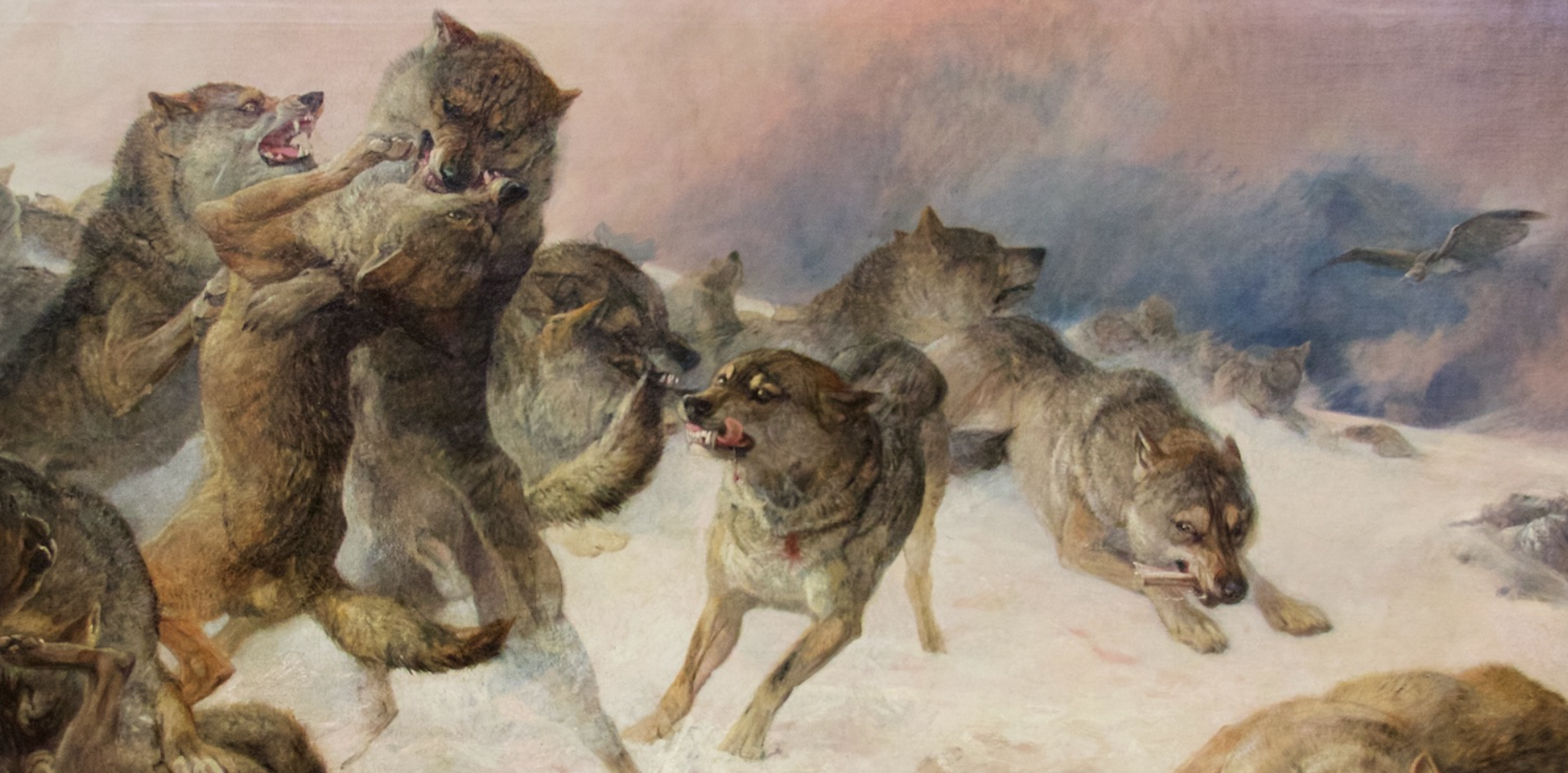
The Wolves of Stanislav: An Improbably True Parable for the Pandemic Age by Paul Auster

Somehow Paul Auster wrote an entirely true parable-within-a-parable about the old bloodlands of Europe and the improbably large wolf packs that once roamed the outskirts of Stanislav… that was in fact about the slow creeping horror of a growing American pandemic.  –JD

On Not Meeting Nazis Halfway” by Rebecca Solnit

Not too long into the first year of the Trump administration Rebecca Solnit wrote what will stand as the most important diagnosis of a pathological presidency; two weeks after the end of that presidency she articulated what millions of us were feeling with a clarity we hadn’t quite achieved on our own. And I quote: “Who the hell wants unity with Nazis until and unless they stop being Nazis?”  –JD

Is There a Better Way for the Left to Talk About American Christianity?” by Marie Mutsuki Mockett

It was a hard year for nuance (it’s been a hard decade for nuance). So I loved Marie Mutsuki Mockett’s unexpected and honest account of the time she spent with a harvesting crew near Oklahoma City, finding complexity and value in a deeply American kind of faith that is too often dismissed as a byproduct of toxic politics.  –JD

Going Quiet as the World Goes Loud: On Private Anxiety in a Very Public Pandemic” by Brandon Taylor

“In the back of the ambulance, I thought about dying. I thought about the people who go in and don’t come out.” Brandon Taylor has always been a revelation to me as a writer and this essay, which gets deeper into the experience of life in the pandemic summer of 2020 than almost any I have read, is one more example of why his writing will endure.  –JD
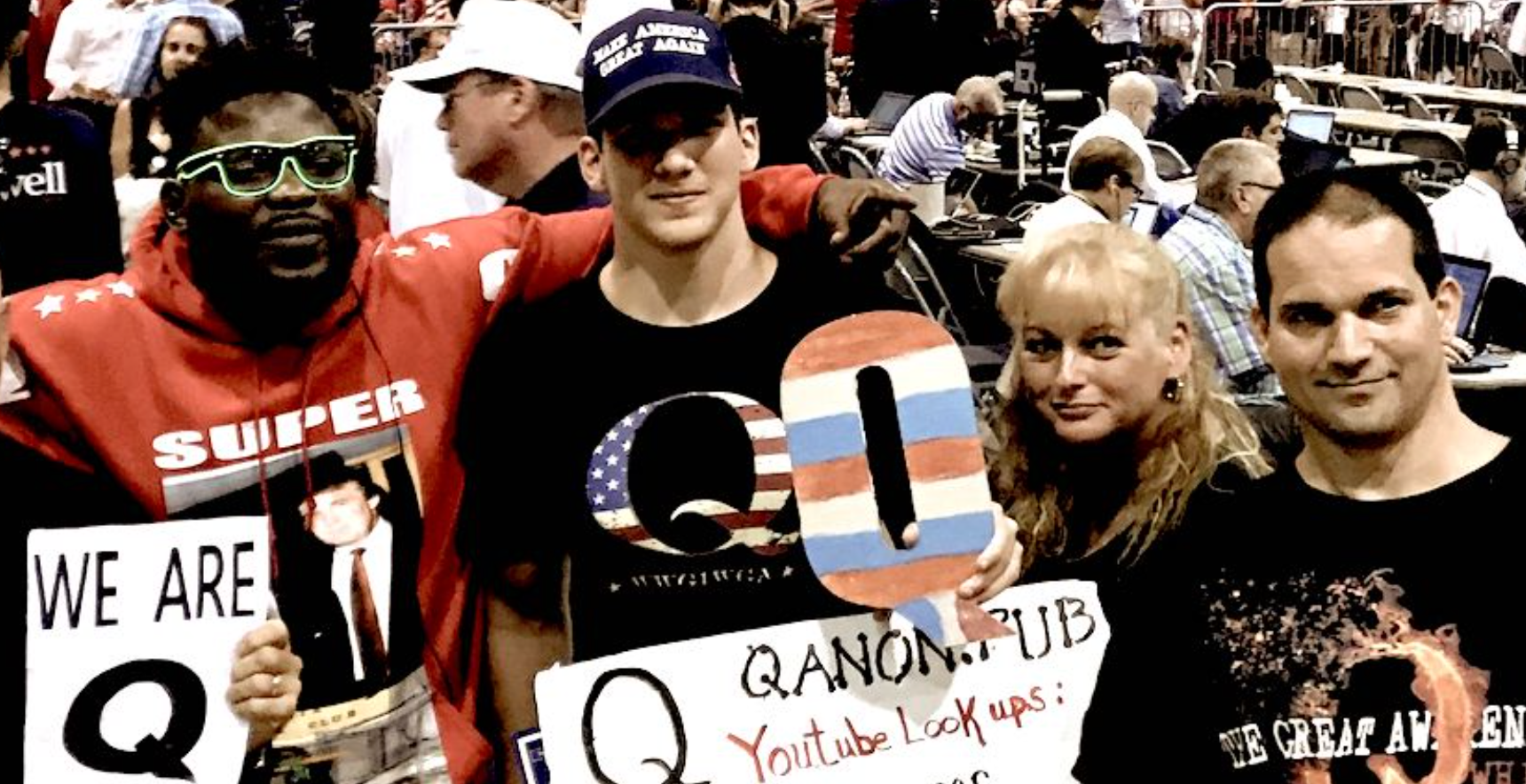
The Incoherence of Hate: Reading The Protocols of the Elders of Zion” by Daniel Torday

It is one thing to retweet a gif of a Nazi getting punched (which, yes, please continue punching Nazis) but it is entirely another to wade into the origins of 20th-century antisemitism and make the ugly connections to the toxic idiocy of 21st-century conspiracy theorists. So we should all be grateful to Daniel Torday for actually reading The Protocols of the Elders of Zion and for unpacking an unhinged syntax of bigotry that has found new life in the mad eructations of QAnon.  –JD

On the Solstice: Deep Winter Dreams of the Spring to Come” by Rick Bass

This was the piece we needed on the darkest day of the darkest winter in many generations of American life. There isn’t much sense in trying to summarize this Rick Bass essay, so I’ll just quote from it at length:

Even the great bears themselves, sleeping like astronauts beneath us in winter, slow their heartbeats at the solstice to almost zero: only a very few beats per minute. But in that rarity, power, waiting, power, building.

I believe they dream of beauty: of the yellow lilies of Easter, and the wild violets and rank mushrooms and pink flesh of trout; of berries, of stones, of antlers, feathers, moss, fire. And fire’s warmth.

These are the dreams we all need right now.  –JD

A Toy, a Tool, a Piece of Art: Sarah Haas on What a Book Can Be” by Sarah Haas

Damn. I was floored by this investigation of the value of the book as object, and of the value of our obsession with the Book as Object, which ranges from William Tyndale to the Nazis to Marie Kondo, and how it is complicated by the constant loom of the internet, not to mention those who seem to imagine that just having books makes them better humans. “Desperately, I want to believe that a book can help one person understand another, that there might be a way to solve the problem of what to do with another’s pain, but I don’t think empathy is logically possible nor morally admirable,” Haas writes. Instead, ultimately, she lands on an idea of books not as ways to understand our friends, but as friendships themselves. If that sounds far out, well, go read the essay and then get back to me.  –Emily Temple, Managing Editor

carol

A Secret Literary Love Hidden in the Margins of The Price of Salt” by Antonia Angress

In this essay, Angress writes about buying a used copy of Patricia Highsmith’s classic soon after realizing her own bisexuality—and finding it covered in marginalia, an elaborate, fractured love letter from one woman to another, transcribed into the margins of one of the best novels about two women in love. This is, obviously, the dream: one of the many reasons I love reading old books is that they often give you a sense of their previous lives, or at least the possibility thereof, though not usually as clearly as this. But Angress also gets at one of the most intense pleasures of reading, one I rarely see articulated: “Sometimes I say that I like to read novels for the most selfish of reasons: to entertain myself,” she writes. “But that’s not the whole truth. I read fiction because it’s a way of rewriting myself. . . . And I worry, sometimes, that I’ve rewritten myself too many times.” Read if you too want a moving personal essay, a work of smart criticism, and a story about finding a mysterious treasure all in one.  –ET

The 89 Best Book Covers of 2020” by Emily Temple

Look, I’m sorry, I realize this piece is technically by me, but all I did was send the emails and write the intro, so I don’t feel bad about admitting that this is always one of my favorite roundups (this is the fifth year we’ve done it!). The credit really goes to all of the professional book cover designers who took the time to send me their lists of their favorite covers of the year (not to mention the designers who made all the covers in question). Every year, I love to see their choices and hear why they admire them—and while I love to see which covers rack up the accolades, it’s even better to be surprised by the lesser-known covers I had never seen before. Plus, it winds up being just a treasure trove of beautiful things, which honestly, after the year we’ve all had, is nothing to kick out of bed.  –ET

Wicked Wouldn’t Have Been What It Is If I Hadn’t Written the Novel by Hand” by Gregory Maguire

If you, like me, are a dork who compulsively fills her home with new blank notebooks and carries one around with her always, you will be delighted by Gregory Maguire’s ode to the act of writing in longhand. (If you’re a theatre dork, you should also check it out, because this is tried and true advice from the man who penned Wicked. Bonus: it includes a scan of his initial idea page which contains the sentences: “Glinda was a media star, shallow and self-serving. The monkeys her only true love.”) In this piece, Maguire questions what we’ve lost when we gained the ease of the typed word. He praises the slow and cramped fingers, the discomfort of the wrist, as chances to seriously consider your next word. He likens writing by hand to the imaginative creation of a child, and he encourages you to free yourself of the shackles of language in order to write: “Drawing is at the core of language, no less so than breathing is at the core of singing. To write a beautiful and captivating word—let’s say, oh, why not, ‘Oz’—is first to master the art of drawing a circle.”  –>Katie Yee, Book Marks Associate editor

About That Wave of Anti-Racist Bestsellers Over the Summer…” by Katherine Morgan

For the past few months, all of #bookstagram has been flooded with VSCO-filtered photos of Ibram X. Kendi’s How to Be an Antiracist, Robin DiAngelo’s White Fragility, Ijeoma Oluo’s So You Want to Talk About Race—you get the idea. Books that had been out for a while were finally getting the attention they deserved. Good. But how genuine is all this, really? Only a few weeks after George Floyd’s murder, and there were fewer people saying his name. A few microaggressions later, and you might be quite convinced that no one is actually reading any of these books at all. Katherine Morgan (a former bookseller at Powell’s) begins her piece: “During the summer of 2020, I spent countless hours helping irate customers cancel their orders of popular anti-racism books.” Yikes! In this honest and incisive essay, Morgan details the painful irony of the racist encounters she endured as a bookseller at the height of #BLM and #BlackWritersMatter. (Katherine Morgan, if you are reading this: I am sorry. People suck.) Everyone, please check your privilege and your performative allyship at the door and read her essay at once.  –KY

Taisia Kitaiskaia, Baba Yaga, feature image

Baba Yaga Will Answer Your Questions About Life, Love, and Belonging” by Taisia Kitaiskaia

This is a fun one! For the fairytale lover: Lit Hub gives you Taisia Kitaiskaia’s advice column, featuring the ventriloquistic powers of the Baba Yaga, an unpredictable Slavic witch that’s rumored to live in the forest and offer sage advice to those who seek it (or, you know, she might eat you as a snack; it’s pretty much 50/50). Responding to real questions that readers have sent in, Kitaiskaia channels the wise, old crone in what can only be described as a charming piece, full of strange turns of phrase and funny quips. How can you tell which type of witch you are? “Cows speak when you are alone. Eating porridge morningly, you crave to make a thing with sucking roots.” How can you find your role in the revolution? “Pull yr Intellect from yr body like the spine from a fish.” Your plants are dying? “Listen close, may-be they do not wish to live in yr house at all.” Take note, @ everyone who thinks they are a plant lady in quarantine.  –KY

Stranger Faces, Serpell

Why Are We Fascinated by Strange Faces?” by Namwali Serpell

This is the kind of essay that you have to buckle in for because its argument is so smart, so capacious, and so bold. In this piece, Namwail Serpell suggests that the general fascination with strange faces is not simply a fetish for the grotesque but a kind of artistic and aesthetic impulse that cannot be totally disentangled with the “pleasures of monstrosity.” She begins with her encounter of the “Smiling Disease” exhibit at the Venice Biennale, which launches her consideration of iconic historical figures like The Elephant Man, Cleopatra, and Michael Jackson. “What can’t be denied,” Serpell says. “Is that Michael Jackson, Joseph Merrick, and Cleopatra each made their strange faces a shameless spectacle.” I loved this essay because it offers us some space to think about beauty, desirability, and art with a different orientation, one that sits with other, more unruly attachments and affects.  –Rasheeda Saka, Editorial Fellow

Who Gets to Be a Sympathetic Character in The Undoing?” by Olivia Rutigliano

There was such an uproar following the season finale of HBO’s hit-show The Undoing that I succumbed to the hype and watched the entire series over the course of three days. What I thought would be amazing (because the uproar seemed to be quite positive) turned out to be utterly dissatisfying. And a day later, I found that our very own Olivia Rutigliano articulated why The Undoing missed the mark; and she did so with such clarity, care, and wit that I texted my friend the piece, saying “I’m crying, this is it.” In the essay, Rutigliano argues that the show’s “simplistic methodology,” which mobilizes racist tropes, fails to position the very woman (Elena) who was murdered by a sociopathic man (and cheating husband) as worthy of sympathy, in favor for a rich white woman (the man’s wife). “Inadvertently, through this all,” says Rutigliano. “The Undoing represents sympathetic victimhood as a privilege, itself—and a privilege given to white women rather than Women of Color.” Even more, Rutigliano locates this argument within the state of current politics, showcasing the magnitude of the show’s implications on our public consciousness. The essay is a beautiful read and I was happy to find words that could explain why and how a show could leave such a bitter aftertaste in my mouth.  –RS

“Love in a Time of Terror,” by Barry Lopez and “Salutations In Search of,” by Patricia Smith 

Love and mourning2020 felt satanically designed to make it impossible to do either. All when we needed both more than ever. How to climb out of this soul-sick time without love? How to appreciate what we’ve lost without mourning? The challenge of these questions was met over again this year by writers across the globe. I was so grateful for essays this year by Masha Gessen, Zadie Smith, Keeanga-Yamahtta Taylor, Paul Hendrickson, Semezdin Mehmedinovic, Valzynha Mort. Poems by Tracy K Smith, Lawrence Joseph, and Terrance Hayes. I could name a hundred pieces from this site, let alone fellow magazines and newspaperswe’re all in this together, all of us want a better worldbut two changed my heart fundamentally. In “Love in a Time of Terror,” Barry Lopez argues that love could be the most powerful force in guiding our interactions on this planetin encounters, across landscapes not our own. In a time when so many types of encounters have begun to feel doomed, Lopez manages to redefine curiosity away from exploitation, and toward respect and love. This is an astonishing essay about environmentalism, ethics and the heart. Simultaneously, Patricia Smith’s poem from earlier this summer seeks a way to address the many who have died, who have been murdered, who have been taken in the centuries of American violence against people of color. In lines syncopated by rage and grief, she forms a psalm of mourning. It reminds you how all writing began with song. ”Dear wild tumultuous, your mouth,” she writes. “Dear God/Your mouth, in fevered skirmish with the tongue,/ denying sound for rope or goldenrod./ Dear mouth, still bulging with Atlantic, wrung/into its new.” I am in awe at writing which can take us back to our fundamental beginnings in this way.  –John Freeman, Executive Editor

black daliah

The Black Dahlia: The Long, Strange History of Los Angeles’ Coldest Cold Case by Miles Corwin

In this long essay, Miles Corwin chronicles the meticulous research of Larry Harnisch, a fact-checker who has spent twenty-four years searching for the murderer of Elizabeth Smart, known as “The Black Dahlia,” who was gruesomely murdered in 1947. Though the case is one of the most famous unsolved murders in history, and most of its secrets are now lost to time, Harnisch actually probably manages to uncover the killer. The documentary filmmaker Errol Morris recently lamented on Twitter that great journalism has become confused with ‘literally solving murders,’ reminding folks that it is vastly possible to do sensational work if you don’t happen to solve an unsolvable crime. That being said, I do want to note the extraordinary and painstaking work that Harnish has accomplished in (probably) solving this crime.  –Olivia Rutigliano, CrimeReads Assistant Editor

Virginia Woolf

Interpreter of Maladies: On Virginia Woolf’s Writings About Illness and Disability by Gabrielle Bellot

>Every piece that Gabrielle Bellot writes is beautiful, but I was so moved by this extremely recent piece of hers, about Virginia Woof’s reflections on illness and trauma (in light of her many bouts of influenza). Gabby gently lays her own experiences with anxiety and COVID-19 alongside her analyses of Woolf’s writings. The richness, the depth of the rumination completed by both these two incredible women, these two exquisite writers, made this piece feel so incredibly soothing. Woolf, Bellot notes, grew to notice that illness was not a site of exploration for most writers, and turned her earlier denials of the seriousness of illness into a place to reflect on the body. And Bellot does the same, to incredibly moving ends.  –OR

pugs

Do All Pugs Go To Heaven?” by Scott Cheshire and “Why We Can’t Stop Loving the Most Troublesome Pets” by Matt Sumell

Two very different but equally wonderful, and quietly devastating, pieces about the joys and agonies of loving dogs, even when age and ailments have made instances of the latter all-too frequent. For Sumell, that dog is Seymour—a malady-plagued rescue mutt, the latest in a line of “hard-luck cases I’ve lost over the last few years, each of them sweet and doomed, each of them dealt terrible and unfair hands by whichever lazy, fat-fingered amateur you choose to believe in.” For Cheshire, that dog is Olive—a fawn-colored, Real Housewives-loving, fourteen-year-old pug who passed away earlier this year. Having become a dog parent myself for the very first time earlier this year (to a springer spaniel puppy who will continue to avoid traffic and blue-green algae and who is going to live forever, ok?), both pieces broke me a little bit.  –Dan Sheehan, Book Marks Editor

The Philosopher and the Detectives: Ludwig Wittgenstein’s Enduring Passion for Hardboiled Fiction,” by Philip K. Zimmerman 

“The scene is London; the year, 1941. Ludwig Wittgenstein, likely the greatest philosopher of the twentieth century, has taken a hiatus from his Cambridge professorship to do ‘war work’ in a menial position at Guy’s Hospital.” That’s how my favorite story of the year began, in good noir fashion, bordering on the gothic, and soon enough we’re launched into the desperate, heady days of wartime and postwar England and its dowdy academic life being quietly subverted by a brilliant, revolutionary mind hellbent on getting to the root, the very essence of language itself. And the mind belongs to Wittgenstein. And when he’s not thinking about philosophy he’s devouring American detective magazines, which he receives from friends and colleagues by the binful. He complains about wartime rations on paper cutting his supply of mystery short. His ideas, crackling and opaque, somehow connect to what he’s reading in those same magazines, stories about hardboiled detectives working seedy cases on the streets of American cities the philosopher will never know. Philip Zimmerman weaves together all these disparate pieces into an illuminating and moving narrative of a mind in the throes of passion and invention, and somehow it keeps coming back to those detective magazines. This is a beautiful portrait in noir.  –Dwyer Murphy, CrimeReads editor in chief

Ten Writers Reflect on Their First Big YES” by Benjamin Schaefer 

After a year of feeling completely incapable of writing (see Irina Dumitrescu’s “Something Is Wrong on the Internet: A Study in Pandemic Distraction” for a too-real rendering of my state of mind), I bring to you, from the annals of January, a feel-good collection of anecdotes about the moments when ten writers went from what-am-I-even-doing-here vibes to “Oh, it’s almost like I’m a real writer now” (Rowan Hisayo Buchanan). I loved to read how each interpreted Benjamin Schaefer’s question of their first big yes, be it a begrudging magazine assignment (Eva Hagberg), the first piece of fan mail (De’Shawn Charles Winslow), a yes to oneself (Francisco Cantú), or even a no (C Pam Zhang). It was a delight to reread eleven months later, and the sort of reflective and sappy question I’ll be foisting upon my unsuspecting writer friends as we close out the year.  –Eliza Smith, contributing editor

Justice for the Invisibles, by the Invisibles: a Brief History of Nontraditional Voices in Crime Fiction” by Christopher Chambers

There’s a wonderful thing happening in crime fiction these days, and one that we’ve been waiting for for some time: the sidekicks, the best friends, and the marginalized are no longer relegated to the interpretation of a white male narrator, but finally telling their own stories. In this brilliant and engaging essay, Christopher Chambers interviews several crime writers to capture the present moment of transition. Chambers’ quote from S.A. Cosby puts it best: “The sidekicks and set dressing are now the protagonists because the people often most misrepresented in the genre are now writing their own stories…we are experiencing an inflection point.”  –Molly Odintz, CrimeReads Senior Editor

Linda, Interrupted” by Sarah Weinman

While Margaret Millar and Ross Macdonald were indisputable masters of mid-century crime fiction, their legacy as parents is a bit more mixed. After you read this essay from Sarah Weinman about the Millars’ daughter Linda, you might even find their nurturing skills to be downright abominable. In this long-form essay, Weinman lays out the harsh details of a short and tragic life, of a young woman in pain, and of a narcissistic and neglectful couple who drove their own child to an early grave.  –MO

How Does Garth Greenwell Make Such Wonderful Sentences?” by Christian Kiefer

Garth Greenwell’s prose has been lauded for accurately capturing the irrational dream logic of desire, but it turns out his sentences are anything but mystical. (And that’s a good thing!) In this essay, Christian Kiefer zooms in and shows us how Greenwell bends traditional grammar rules to create internal logic in his sentences. The piece’s attention to detail recalls Gary Lutz’s lecture “The Sentence is a Lonely Place,” and feels like a little masterclass.  –Walker Caplan, staff writer

“A Feminist Critique of Murakami Novels, with Murakami Himself” by Mieko Kawakami and Haruki Murakami

The tropes of Haruki Murakami novels are well-worn at this point: cats; jazz records; urban malaise; and, most concerningly for some, women that function as gateways for a male protagonist’s transformation. In this transcribed interview, Breasts and Eggs author Mieko Kawakami, one of Murakami’s favorite working novelists and a Murakami admirer herself, questions Murakami about the roles female characters play in his work. Murakami’s answers are unguarded, and the authors’ mutual enjoyment is palpable.  –WC

fish love

In Praise of Weird Literary Couples” by Amy Bonnaffons

Thinking back to February of this year when we had the luxury of dismissing Valentine’s Day plans,  Amy Bonnaffons’ list of weird literary couples was a fun, quirky list of books that could supplement an awkward date night. But now, deep in Zoom happy hours and the darkest nights of winter, I’ve found her list that couples monsters and housewives, women and merman does more than “remind us of love’s inherent strangeness.” Now we are reminded of its necessity. Here, Bonnaffons has collected eight excellent books of strange couplings, plus she’s also written the best description of love I’ve ever read:

Love is hairy, absurd, and dangerous. Of course it’s sometimes mundane and boring too, but only in the way that if you had a pet python named Carl you’d probably get used to him after a while, fail to even notice him sometimes, think of him mostly as an obligation—shoot, who will feed Carl when I go to that conference in Tampa?—and then once in a while you’d catch a glimpse of the terrarium in the corner and think holy shit I live with this thing that could kill me, Carl could totally kill me, and then you’d walk over and lift Carl out of his terrarium and marvel not only that Carl chooses every day not to kill you but that he exists in this world at all: millions of years of evolution culminating in the sleek muscled cable of his body, the dizzying beauty of his scales, the deep black knowing in his tiny beadlike eyes.

–Emily Firetog, deputy editor

17 Dec 12:59

Vaccine Tracker

Bgarland

It me!

*refresh* Aww, still in Kalamazoo. *refresh* Aww, still in Kalamazoo.