Shared posts

07 Mar 19:26

“Stay Free: The Story of the Clash” Narrated by Public Enemy’s Chuck D: A New Spotify Podcast

by DC

FYI: Spotify, in partnership with the BBC, has launched “Stay Free: The Story of the Clash," an eight-part podcast on the iconic punk band, narrated by Public Enemy front man, Chuck D. It might seem like an unexpected pairing. And yet Spotify explains: "Like The Clash, Public Enemy openly challenged the status quo in a completely original way—this parallel and Chuck D’s personal experiences bring a surprising new dimension to the story of The Clash." Reviewing the production in The New Yorker, Sarah Larson adds:

In [“Stay Free: The Story of the Clash"], we learn that Chuck D, a radio d.j. at the time, co-founded Public Enemy after a conversation, in 1986, with a friend at Def Jam, who wanted him to become “the hip-hop version of Joe Strummer,” of the Clash—to make music with “intellectual heft” that could also “rock the party.” And reader, he did. His presence as narrator adds appealing perspective and gravitas to the podcast, which begins with the story of the Clash’s origins, in a West London riot in 1976. With a skillfully layered presentation of punk music, seventies-London audio, and interview clips, the podcast so far thrills me the way that “Mogul,” the Spotify-Gimlet podcast about the late hip-hop mogul Chris Lighty, did; I’m eager to hear the rest.

Watch the podcast trailer above. Stream the podcast episodes--or at least the two released so far--on Spotify here. Also the related playlist of music. And remember folks, The Clash, they're still the only band that matters...

Follow Open Culture on Facebook and Twitter and share intelligent media with your friends. Or better yet, sign up for our daily email and get a daily dose of Open Culture in your inbox. 

If you'd like to support Open Culture and our mission, please consider making a donation to our site. It's hard to rely 100% on ads, and your contributions will help us provide the best free cultural and educational materials.

Related Content:

The Beastie Boys Release a New Freewheeling Memoir, and a Star-Studded 13-Hour Audiobook Featuring Snoop Dogg, Elvis Costello, Bette Midler, John Stewart & Dozens More

The Clash Live in Tokyo, 1982: Watch the Complete Concert

Mick Jones Plays Three Favorite Clash Songs at the Library

Documentary Viva Joe Strummer: The Story of the Clash Surveys the Career of Rock’s Beloved Frontman

The Clash Star in 1980’s Gangster Parody Hell W10, a Film Directed by Joe Strummer

“Stay Free: The Story of the Clash” Narrated by Public Enemy’s Chuck D: A New Spotify Podcast is a post from: Open Culture. Follow us on Facebook, Twitter, and Google Plus, or get our Daily Email. And don't miss our big collections of Free Online Courses, Free Online Movies, Free eBooksFree Audio Books, Free Foreign Language Lessons, and MOOCs.

03 Mar 04:14

5 Reasons a Writer Should Move to Cleveland

by Grace Roberson
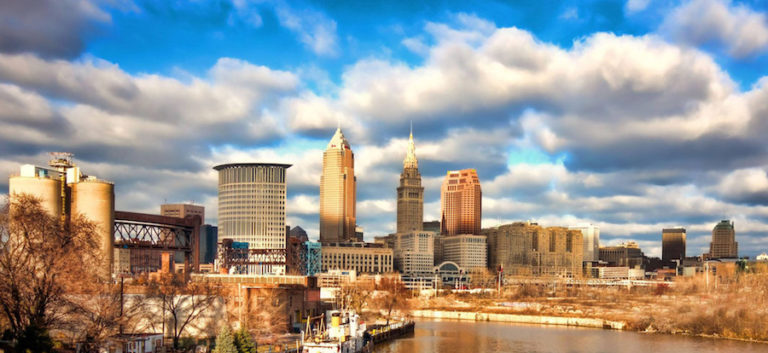
cleveland

The city of Cleveland’s motto, “Progress and Prosperity,” has spoken for itself the past few years with local sports victories, a small business revival, and the general cultural afterglow of the Cavaliers’ championship win. But there are a variety of other perks that Cleveland can offer the residential writer aside from memories of an NBA trophy. 

I.
Read, Drink, & Be Merry

Every first Tuesday of the month, Market Garden Brewery hosts a reputable author for Brews + Prose. The event invites writers and readers to enjoy an evening of books and beer—which is not an unlikely combination in this city, considering our growing number of local breweries and an independent bookstore scene to match. The idea for Brews + Prose came about in 2012, and has carried on as one of Cleveland’s more popular literary series since. This past October, Brews + Prose hosted Cleveland Drafts, an all-day literary bar crawl in one of the city’s historic neighborhoods, Tremont. Cleveland Drafts served as a “works in progress” event, one that celebrates writers at every stage in their career—youth, students, emerging and professional writers—across a variety of genres.

II.
Literary Festivals Are a Common Occurrence

In June 2017, Cleveland State University hosted its first Arts and Humanities Alive Festival (AHA). One of the headliners was Jonathan Safran Foer (Extremely Loud & Incredibly Close and Eating Animals). The success of any event in Cleveland, especially having to do with literary arts, is dependent on the reputation of those who are invited to participate—needless to say, Foer packed the auditorium. In 2015, local writer Lee Chilcote founded the nonprofit Literary Cleveland, which has accumulated 300 members in the past three years. The organization’s biggest event of the year is the Cleveland Inkubator Festival, a week-long celebration towards the end of the summer that concludes with a free, all-day writing conference at the main branch of The Cleveland Public Library, made possible by several grants and collaborative efforts from other literary groups. Registration for the Inkubator Conference starts months prior, and those interested choose from classes that range in subject matter from writing an engaging first chapter of a novel to learning more about a specific genre like literary journalism.

III.
Affordability: You Won’t Be a Starving Artist

The cost of living in Cleveland is not as nearly dismaying as some larger cities. The average price of a one-bedroom apartment in Cleveland is $882 a month, but that price goes up or down depending on the neighborhood where you live, whether it’s Downtown, Ohio City, Tremont, or a suburb like Lakewood. The median value of a home in Cleveland is $53,600 and home value has increased by 14 percent in the past year. No matter which pocket of town a writer chooses, they won’t have to work four jobs just to get by.

IV.
Inspiration Isn’t Lacking

Underneath the passionate (albeit aggressive) loyalty to local teams and the touristy selling point that is the Rock & Roll Hall of Fame, Cleveland makes a notable investment in the arts. If writer’s block strikes, a rewarding fix is a visit to The Cleveland Museum of Art, which was recently ranked the 2nd Best Museum in the U.S. by Business Insider (we lost to the Museum of Modern Art in New York). CMA houses an impressive, eclectic permanent collection of 45,000 works of art—the best feature is that admission is free, aside from special exhibitions. Across the street from CMA is Severance Hall, home to The Cleveland Orchestra, one of the country’s “Big Five” orchestras, if a writer prefers Shostakovich to Van Gogh to get out of a creative rut. Additionally, an abundance of art installations can be found throughout the city’s neighborhoods in the form of murals or interactive pieces, due to a spike in commissions from local artists sought out by Cleveland design studios.

V.
It’s an Investment

No matter where you go, what you take away from a place is what defines your experience living there. Cleveland is a place that grows with its people rather than beside them—over the years it’s grown with me as I’ve graduated from a precocious breakup poet to aspiring essayist, giving me more opportunities to connect with other writers in my zip code. While there isn’t one single word to describe Cleveland’s literary community, the city’s efforts to revive interest in reading and writing, and cultivate intellectual discussion and thought, have been successful so far. Like any other city, Cleveland is full of surprises and hidden gems. We’re not trying to be like other cities—instead we’re creating our own voice, fueled by the unmistakable grit, passion, and attitude of the Midwest.

28 Feb 15:41

Sonic Drive-In Staff Quits Via Scathing Note Taped to the Door 

by Greg Morabito
Bgarland

Two people were arrested at a buffet in Alabama this week when a brawl broke out over crab legs. Apparently they were “using tongs like fencing swords.” [AP]

Alexandria Ocasio-Cortez puts her service industry skills to good use, plus more news to start the day

Sonic is having problems retaining its staff at locations of the drive-thru chain in southern Ohio. Last weekend, employees at a location in Circleville quit their jobs and announced their group departure via a note taped to the door, citing “terrible management” as the main reason for their exodus.

Meanwhile, Sonic staffers at a location in nearby Lancaster quit via a sign reading, “Thank you, next,” and another team in Grove City, Ohio also walked out. Apparently, the management recently lowered wages for some employees and fired the regional director along with several longtime managers. In a response to the mass walk-outs, the chain explains that the restaurants in this area are now “under new ownership and management” from a team that also runs other locations across the country. The chain also notes: “We recognize that changes like this can be difficult for employees to understand and most current employees will have the opportunity to continue working at the drive-in.”

And in other news...

28 Feb 14:59

Science: You’re Definitely Worrying About the Wrong Things

by Lise A. Johnson and Eric Chudler

Three Things That You Really Don’t Need to Worry About
(according to the Worry Index*)

Fluoride
In small doses, fluoride is good for your teeth. It protects against tooth decay by binding to the enamel (the hard, outer shell of the tooth) and remineralizing the enamel with calcium and phosphate. This makes the enamel harder and more resistant to bacteria. For this reason, most toothpastes contain fluoride, and dentists apply topical fluoride treatments to their patients’ teeth, and many communities add fluoride to their water supplies.

Grand Rapids, Michigan, was the first city in the world to add fluoride to community drinking water as part of a pilot program to see if it would reduce the incidence of tooth decay. It did, by up to 50% compared to control communities where fluoride was not added to the water. This result has been replicated many times in different studies and in different parts of the world. The evidence is clear: fluoride protects against dental caries (cavities). Because of this, community water fluoridation is common all over the world, although some cities, like Portland, Oregon, have consistently refused to participate.

The Centers for Disease Control and Prevention (CDC) lists water fluoridation as one of the top 10 public health achievements of the 20th century. Several pages of the CDC’s website are devoted to reassuring the public that fluoridation is safe and healthy.

But some people are not reassured. Water fluoridation was controversial when it was introduced and remains controversial today. Critics claim that fluoride in drinking water causes myriad health problems including cancer, Alzheimer’s disease, lowered IQ, thyroid problems, digestive complaints, and bone fractures. In the more than 70 years since water fluoridation was introduced, these concerns have waxed, waned, and changed, but never disappeared.

Fluoride is an inorganic anion, which means that it doesn’t contain carbon and it has a negative charge (calcium and phosphate are also inorganic ions, although they carry a positive charge). Fluoride occurs naturally in the environment, including rocks, dirt, and seawater. In many places, high concentrations of fluoride exist naturally in the water. This is, in fact, how the dental protective effect of fluoride was discovered. In the early 1900s, a Colorado dentist noticed that the children in Colorado Springs had some really ugly teeth. Specifically, children that were born in the area, or who moved there when they were young, developed permanent teeth that were pitted and stained dark brown (like chocolate). But in addition to being unattractive, these teeth were curiously resistant to decay.

The culprit turned out to be (surprise!) fluoride, which was present in high concentrations in the local water supply. The condition, originally called Colorado brown stain, was subsequently renamed fluorosis. Consumption of very high levels of fluoride can lead to skeletal fluorosis, a painful and debilitating joint condition. Fluoride can also be acutely toxic in high doses, which is why you should call poison control if your kid eats a tube of fluoride toothpaste.

Debilitating disease and acute toxicity are clearly undesirable, which is why the Environmental Protection Agency (EPA) has set the upper limit for how much fluoride can be in drinking water at 4 parts per million (ppm). But the existence of an upper limit is not in itself cause for alarm. Dosage is an important factor. Many things that are good for us in small doses are bad for us in large doses. Iron is a good example of this. If you don’t get enough iron, you will be anemic; if you take too much, it will kill you. The same is true of vitamins A, D, E, C, and K. Even too much water is lethal. The fact that fluoride has negative consequences in large doses is not unusual and shouldn’t disqualify its use in any form.

One notable difference between fluoride and the vitamins and minerals listed above is that fluoride is not known to be necessary for human health. It is, however, helpful (again, like a lot of things). Low doses of fluoride reduce the incidence of tooth decay without causing fluorosis. Artificial fluoridation of water is targeted at the sweet spot where there is an observable benefit but minimal (ideally zero) side effects (slight cosmetic fluorosis is considered acceptable).

Many people don’t believe that such a sweet spot exists, but scientific consensus says that it does. This does not mean that there has been no legitimate dissent. Because fluoridation has been around for a long time, there is a fair bit of epidemiological data to look at, which is good in terms of assessing health outcomes. Numerous studies in animals have also tested the effects of fluoride. However, care is required when evaluating this scientific literature because there is a fair bit of pseudoscience (or straight-up bad science) mixed in with the real thing. Some studies link fluoride consumption to bone cancers, lowered IQ, ADHD, and hypothyroidism.

However, these studies have suffered from methodological concerns such as small sample sizes and improper controls. These critiques may sound trivial, but these issues can lead to false conclusions. For example, if the water that has high fluoride concentrations also has high lead concentrations, you might misidentify the problem. Therefore, it is important to interpret these studies as part of the entire corpus of scientific evidence.

The National Academy of Sciences has conducted several reviews of fluoride. In a 2006 report on the EPA’s standards for fluoride in drinking water (“Fluoride in Drinking Water: A Scientific Review of EPA’s Standards”), the reviewing committee identified severe dental fluorosis as the critical end point of concern (the problem that will develop at the lowest dose that is likely to cause a problem). The committee found that the EPA’s upper bound of 4 ppm was too high to prevent this problem and, further, it was probably too high to protect against bone fractures. In other words, their opinion was that the maximum allowed concentration should be lower.

For reference, this upper limit was (and still is) 4 ppm, and the recommended range for artificial fluoridation is only 0.7 ppm. The committee did not address artificial water fluoridation because that is not within the purview of the EPA. The committee also reviewed the effects of fluoride on other body systems including reproduction and development, neurotoxicity and behavior, the endocrine system, genotoxicity, and cancer. They identified cancer and endocrine effects as potential areas of concern and recommended that the EPA keep an eye on them.

The EPA published a 6-year review (“Six-Year Review 3—Health Effects Assessment for Existing Chemical and Radionuclide National Primary Drinking Water Regulations—Summary Report”) in December 2016. The report covered all of the chemicals (and radionuclides) that are found in water supplies, but included an entire appendix about fluoride. The EPA did review the emerging literature on cancer effects; follow-up studies showed that there weren’t any effects (in bone cancers).

They also reviewed the study linking fluoride to hypothyroidism, but concluded that it did not properly control for several variables. The EPA also studied the data for other health concerns, but did not find anything alarming enough to suggest a revision to the existing upper limit for fluoride concentrations in water. The EPA acknowledges that lowering the limit has the potential to improve health, but fluoride is a low priority compared to other issues, and they do not want to divide their resources. In other words, there are bigger problems with drinking water that you should probably be worried about instead.

For its part, the U. S. Public Health Service, which sets the recommendation for artificial fluoridation levels, revised its fluoride numbers down from 0.7–1.2 ppm to 0.7 ppm in 2015. This is because people are exposed to more fluoride now than they were in the mid-20th century when the original recommendation was made.

If you’re on the fence about fluoride, it is worth pointing out that while we tend to think of cavities as unpleasant, we don’t usually think of them as such a big deal. This might be because, as a society, we do not get as many cavities as we used to. But cavities can be incredibly painful. Left untreated, they can even kill you. Most of us wouldn’t leave cavities untreated if we could afford to do something about it. And that’s the crux of the issue. Not everyone can afford to do something about it, and those who can’t are also less likely to have access to healthy food and other preventative measures. Your kids aren’t the only ones who are affected by fluoride in the water.

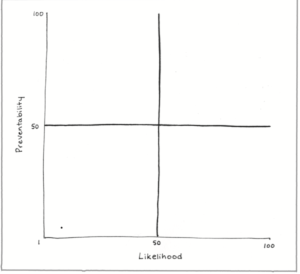
SUMMARY

Preventability (5)
You can choose not to use fluoride-containing toothpaste or mouthwash, but if you live in a community with fluoridated water, you’re going to be exposed.

Likelihood (7)
Exposure within the normal range is very unlikely to cause any problems.

Consequence (2)
The most likely effect of excessive fluoride is mild dental fluorosis, which can be unattractive but isn’t dangerous.
*

Aluminum
Aluminum is the most abundant metal in Earth’s crust. It follows oxygen and silicon as the third most abundant element on Earth’s surface. Although oxygen is still almost six times more common than aluminum, there is a lot of aluminum on Earth. Aluminum doesn’t seem to have any biological role, but that’s okay because we use it to do plenty of other things. It’s handy because it is lightweight, easy to shape, and resistant to corrosion. Aluminum is used to make a positively dizzying number of things including pots and pans, cans, foil, w

eatherproof siding and roofing, ductwork, toys, and airplanes.

But it is also used in many ways you might not expect. For example, it is an ingredient in over-the-counter antacids, baking powder, vaccines, buffered aspirins, cosmetics, antiperspirants, and fireworks. Perhaps most surprisingly, aluminum sulfate is widely used in water treatment. To repeat: there’s a lot of it around. According to the Agency for Toxic Substances and Disease Registry (a division of the Centers for Disease Control and Prevention), “virtually all food, water, air, and soil contain some aluminum.” According to

the same source, adults in the United States eat about 7–9 mg of it every day in their food. Unless you plan to stop breathing, eating, and drinking water, you can’t avoid aluminum. This being the case, if aluminum were toxic, it would be a big deal.

The good news is, contrary to what many people think, aluminum is not especially toxic. Regardless of whether you inhale it, ingest it, or get it on your skin, aluminum is poorly absorbed by the body. And as long as your kidneys are working properly, the aluminum that is absorbed does not tend to accumulate, either in humans or in other animals (like the ones we eat). It doesn’t really accumulate in plants either, with the notable exceptions of tea and some ferns.

Not surprisingly, in large quantities aluminum is not great for you. The nervous system and the lungs are the organ systems that are most sensitive to aluminum toxicity. The neurotoxic effects of aluminum are demonstrated by dialysis dementia, a neurodegenerative syndrome that can occur in people with kidney disease. It results from a combination of a reduced capacity of the kidneys to clear aluminum and an increase in aluminum exposure through dialysis fluid. This leads to an accumulation of aluminum in the brain and symptoms that include the loss of motor, speech, and cognitive functions.

Scientists have also postulated a link between aluminum exposure and Alzheimer’s disease. This connection was proposed decades ago, but

it remains a controversial hypothesis. Some studies have found a correlation between aluminum consumption and Alzheimer’s disease, but others have not. The mixed data make it impossible to make a definitive statement, but scientific interest in the subject seems to have drifted. The Alzheimer’s Association states, “Experts today focus on other areas of research, and few believe that everyday sources of aluminum pose any threat.” We confirmed this with a neurologist specializing in dementia. This isn’t very satisfying, but Alzheimer’s disease is complicated. There probably isn’t just one thing that is responsible.

Aluminum does not appear to cause cancer either. According to an internet rumor that has been circulating for some time, the use of underarm antiperspirant can cause breast cancer. But everyone who has felt guilty for valuing dry armpits over breast health can breathe a sigh of relief. Both the National Cancer Institute and the American Cancer Society say there is no truth to this claim.

An examination of the literature suggests that aluminum is not the metal you should be most concerned about (lead is really at the top of that list). If you still want to limit your exposure to aluminum, unfortunately, it might be difficult to do. A small amount of aluminum is absorbed into food via cooking utensils, especially when you are cooking acidic food. The same is true for antiperspirants: only a small percentage of the aluminum that

makes contact with your skin is actually absorbed. There is very little aluminum in vaccines, and only in some of them (hepatitis A and B, DTaP/Tdap, Hib, HPV, pneumococcus). The aluminum is added because it increases the effectiveness of the vaccine, and skipping a vaccine because of the aluminum is a bad trade-off.

For people who don’t have workplace or industrial waste exposure, the major sources of aluminum exposure are treated water and some processed foods (for example, bread, cereal, and processed cheese). You can certainly cut back on the number of processed foods that you eat; this is in fact a healthy choice for a number of reasons. But it is not a good idea to drink water that has not been treated. If you use antacids frequently or drink a lot of tea, you might also be consuming more than a normal dose of aluminum, and you can reduce your exposure by cutting back on these products.

In some cases, aluminum is the least troubling

part of the equation. For example, if you’re thinking about opening up a can of chicken noodle soup for lunch, you should worry less about the aluminum that may have leached into your food than you should about the BPA it may have picked up from the can lining, or the whopping dose of salt you’re about to consume, or the potential for botulism contamination.

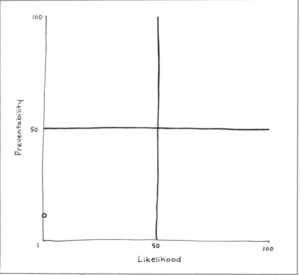
SUMMARY

Preventability (10)

Most people are exposed to aluminum primarily through their food and drinking water. So there isn’t much you can do to avoid it.

Likelihood (1)

Unless you are undergoing dialysis or are exposed to much higher doses of aluminum than most people, you are unlikely to su er any adverse outcomes from aluminum exposure.

Consequence (12)

The typical level of aluminum exposure has not been shown to cause any serious health outcomes. The mixed results of studies on aluminum and dementia make the potential consequence score higher than zero.
*

Asteroid Strike
Hurtling toward the city of Chelyabinsk, Russia, at a speed of 19 kilometers per second (68,400 kph or 42,502 mph), the 12,000 metric ton space rock did not make it to the surface of the
Earth. Instead, the asteroid broke into small pieces and, with the energy of 500 kilotons of TNT, burst into a fireball approximately 30 kilometers above the ground. The blast broke windows and damaged buildings. Although some injuries were caused by the shock wave, flying glass, and falling debris, no residents around Chelyabinsk were killed.

This is the scenario that played out on February 15, 2013. About a century earlier (June 30, 1908), an asteroid exploded over the Siberian skies (the Tunguska event), destroying 2,150 square kilometers of forest. Because the area was sparsely populated, there were no casualties. The dinosaurs were not so lucky when a giant asteroid made contact with Earth just off the Yucatan Peninsula in Mexico approximately 65 million years ago. This asteroid, estimated to have had a diameter of 10–15 kilometers, created the Chicxulub crater, with a diameter of 180 kilometers. The impact, with a force of 10-100 trillion megatons, resulted in a massive tidal wave and sent up a global dust cloud that resulted in the extinction of many life forms.

Our home planet is showered with tons of dust and sand-sized particles from space every day. Most of these materials burn up in the Earth’s atmosphere and pose no threat. On occasion, an asteroid does make it through the atmosphere. Depending on its size, an asteroid that makes it to the surface can cause minimal local damage or wipe out most life on the planet. The Earth Impact Database lists only 190 confirmed impact craters on Earth dating from 2.4 billion years ago to the present.

For example, about 50,000 years ago, an asteroid weighing 300,000 tons crashed into northern Arizona and created the Barringer crater, 1 kilometer wide and 750 feet deep. The shockwave, heat, and shrapnel created by this impact would have destroyed all life within 1.5 miles.

The destructive effects of an asteroid’s impact on Earth are related to the size of an asteroid. Asteroids with diameters greater than 10 kilometers will result in mass extinctions and likely the total annihilation of all humans. Impacts by smaller asteroids (1–3 kilometers diameter) will likely cause massive death, infrastructure damage, and global climate change. Asteroids with diameters between 100 and 300 meters will cause regional damage and set up devastating tsunamis. Even smaller asteroid impacts can cause many deaths if they strike populated areas.

Asteroid impacts generate several damaging forces including heat, tsunamis, pressure waves, cratering, shrapnel, earth shaking, and wind blasts. Wind blasts and pressure shock waves will likely cause most of the human casualties when asteroids (15–400 meters in diameter) impact the Earth. A 200-meter asteroid striking the city of London would be expected to kill approximately 8.7 million people. With enough warning of an impending asteroid strike, it may be possible to evacuate a city to minimize casualties.

Predicting where and when an object from space will impact Earth is tricky business. The Center for Near Earth Object Studies (CNEOS) at the Jet Propulsion Laboratory (California Institute of Technology) and the Spaceguard Project (Powys, United Kingdom) have created an impact monitoring system to track the orbits of hazardous asteroids. Based on the analysis of an asteroid’s orbit, the Sentry system makes a prediction about the time and location of the asteroid’s impact.

The CNEOS Sentry system currently lists 70 potential Earth impact events within the next 100 years. The asteroid with the highest likelihood of impact (predicted to be between the years 2185 and 2198) has a 99.84% chance of missing the Earth. The other 69 objects have an even greater chance of missing our planet. All 70 objects currently have a 0 on the Torino Impact Hazard Scale. The Torino Scale rates the likelihood and consequences of an asteroid impact. A 0 rating indicates that the likelihood of a collision is essentially zero or that the object is so small that it will burn up in the atmosphere or cause little damage if it hits the ground.

So, currently, no asteroids of any significance have been detected that are on a collision course with Earth within the next 100 years. Nevertheless, NASA’s Planetary Defense Coordination Office is still scanning the skies for asteroids and comets that pose a danger to Earth. If a potentially dangerous object is on its way to Earth, given enough time to prepare and deploy a plan, it may be possible to prevent an impact. The key is timing. The sooner an object is detected, the sooner its velocity or direction can be changed, so the Earth can avoid a strike. A system to slow an asteroid by hitting it with another object or by using the gravitational force of another large object placed near the asteroid could work as a defense mechanism.

Exploding a nuclear bomb or ramming a spaceship into an approaching asteroid may not save the Earth from an asteroid’s impact if the asteroid is large or porous. Even if the asteroid did break up, the remaining pieces might still rain down and cause havoc. Detonating a nuclear explosion (or two or three) near an asteroid instead of on it may create enough force to alter the asteroid’s direction. The sooner an asteroid’s course can be altered, the less it has to be moved to avoid a collision with the Earth.

The technology and capability to create and deliver the energy needed to deflect large asteroids are beyond our current capabilities. With decades of planning (and billions of dollars, euros, yen, yuan, and rubles), scientists and engineers might be able to detect approaching asteroids and mount an effort to deflect such objects in order to save life on Earth. In the meantime, it appears that we will not go out as the dinosaurs did, at least not anytime soon.

Feel free to keep an eye on approaching asteroids and comets with NASA’s Asteroid Watch Widget.

SUMMARY

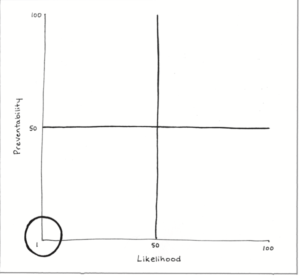
Preventability (1)
No technologies are currently available to stop or alter the trajectory of an asteroid. There is also no action an individual can take that would alter the likelihood or consequences of an asteroid striking the Earth.

Likelihood (1)
The chance of a catastrophic asteroid strike on the Earth within the lifetime of anyone reading this book is extremely low.

Consequence (100)
A large asteroid strike has the potential to wipe out all human life on Earth.
*

Three Things You Should Be Very Worried About

Sugar
To a chemist, sugars are rings of carbon atoms decorated with hydrogens and oxygens, sometimes chained together into strings. In other words, they are carbohydrates. Sugars can be simple or complex, depending on how many rings are strung together. Simple sugars have just one ring and are called monosaccharides. Likewise, if two monosaccharides are strung together you get a disaccharide, and if you add any more than that you just call it a polysaccharide.

Sugars taste sweet, and we like to eat them. This is likely because sugars are extremely important biomolecules. Notably, glucose, a monosaccharide, is the human body’s primary source of energy. It is circulated throughout the body in the bloodstream and is particularly important for the brain, which demands glucose as its exclusive fuel. Sugars serve critical functions elsewhere in the body as well. Most other organisms also rely heavily on sugars.

For example, the disaccharides starch and cellulose are used by plants to store energy and provide structure, respectively. Historically, humans had to either make sugars themselves or ingest them from plants. Sucrose, a disaccharide consisting of a glucose and another monosaccharide, fructose, is found in many plant sources, especially fruits. One plant that is particularly high in sucrose is sugarcane.

Sometime in the distant, murky past of civilization, someone in India figured out how to refine sucrose crystals from sugarcane. This new product (and technology) gradually spread around the world, reaching Europe during the medieval period. Everyone, everywhere, liked sugar, just as we do now. So there was clearly a demand.

But extracting sucrose from sugarcane was difficult and expensive. Unfortunately, it wasn’t until the mid-18th century that anyone realized you could get the same product from a humble beet. And in pursuit of that valuable market share, Europeans began cultivating sugarcane in the New World on huge plantations made possible by slave labor. This made sugar more broadly accessible, and sugar transitioned from an exotic spice to a household staple. It’s not exactly a sweet legacy, to put it mildly.

In modern Western society, refined sugar is a ubiquitous ingredient. It is still derived from sugarcane, but also from beets and corn. It is no longer expensive, and it still tastes great. It is a prime ingredient in all manner of desserts, sauces, condiments, and, of course, sugary drinks. Sugars included in prepared food are called added sugar. We eat a lot of added sugar. Way, way too much.

There is some debate about how bad for us sugar really is, but everyone agrees it’s bad. Sugar consumption is linked to tooth decay, obesity, type 2 diabetes, and heart disease. These conditions lead to risk factors for other diseases, like cancer and blindness.

So how did something that is vital to life turn into something that is making us flabby and slowly killing us? Sucrose is naturally found in fruit, and fruit almost always gets a nutritional thumbs up. The problem arises when you remove the sugar from the fruit and consume it in a different context. In addition to sugars, fruit is full of fiber and other vitamins and beneficial compounds. This is important in at least two ways. First, fiber slows down absorption of sugar. Second, it limits the amount of sugar you can eat in one sitting without getting full or experiencing gastrointestinal distress.

In contrast, a can of soda has no fiber, no protein, no vitamins, and can contain up to 12 teaspoons of sugar, which causes a huge spike in blood sugar. Sugary drinks are especially problematic because, in addition to having high caloric loads, the body doesn’t register those calories in the same way as it does with food. The same number of calories is not equally satiating, and therefore it is very easy to consume a lot of calories without even realizing it. Humans evolved in an environment where calories were scarce, and therefore our bodies store them rather than eliminate them when we over-consume.

One of the more common added sugars, high-fructose corn syrup, may be extra bad for us. This is because, as the name implies, this sugar has a slightly higher ratio of fructose to glucose than table sugar. Unlike glucose, fructose has to be metabolized by the liver before it can be used by the body. Some of the by-products of fructose metabolism are undesirable, like triglycerides—fats that are associated with heart disease. This is somewhat controversial, but regardless, most of us need to cut back on the refined sugar that we eat (and drink). This includes natural sweeteners like evaporated cane juice, honey, agave nectar, and maple syrup.

As it happens, sugars are not the only compounds that taste sweet. Some sweet-tasting compounds like ethylene glycol and lead acetate are incredibly poisonous, but others are innocuous. This latter category is appealing to people looking to reduce their sugar intake. Aspartame, saccharin, stevia, and sucralose are examples of nonnutritive sweeteners. They are sweet, much sweeter than sugar, but they usually don’t taste quite the same. Nevertheless, they can make a passable substitute and have become very popular among the calorie conscious.

Unfortunately, they don’t appear to have any positive impacts in terms of body mass index or cardiovascular health. On the contrary, they are sometimes associated with increased weight gain, high blood pressure, diabetes, and cardiovascular problems. That sort of defeats the point, so at present there does not appear to be a good alternative to curbing the sweet tooth, except in the case of tooth decay. Sugar-free gum is unambiguously better for your teeth than sugar gum, as it even helps to prevent cavities.

The easiest way to reduce your added sugar consumption is to stop drinking sweet beverages such as sodas, blended coffee, energy drinks, powdered drink mixes, and even fruit juice. The next categories to tackle are candy, desserts, and processed foods. For healthy people, whole fruits are a healthy food. However, not all fruits are created equal, and some will have more sugar than others.

Sugar isn’t really bad for you, per se. It’s the quantity that’s important. It’s okay to indulge in sugar as an occasional treat—as long as you don’t define occasional as several times every day.

SUMMARY

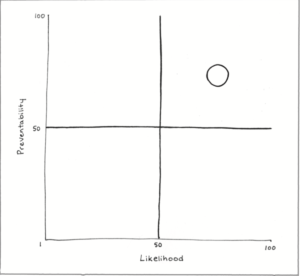
Preventability (77)

Sugar is in most processed foods. You can cut back, but it is hard to cut it out completely.

Likelihood (75)

Eating too much sugar is very likely to damage your health.

Consequence (65)

Obesity, heart disease, diabetes, and tooth decay are all quite common. They can also be quite serious.
*

Lead
If you don’t already know that lead is toxic, you haven’t been paying attention. Lead is notoriously poisonous. Lead poisoning can be acute or chronic, both of which are very serious. Lead has detrimental effects on all of the organ systems in your body, but it hits the nervous system especially hard. This is because lead mimics calcium, an important player in the brain. Lead easily crosses the blood-brain barrier, where it builds up in nervous tissue; it also accumulates in bone, another organ system heavily dependent on calcium. It is toxic both when it is ingested and when it is inhaled as lead vapor or dust. Children are more vulnerable to lead because they are smaller, and their brains are still developing.

Since at least the late 1800s, it has been known that lead is poisonous. But toxicity aside, lead has some very desirable properties. It is a dense, malleable, abundant, easily mined metal that is resistant to decay, is impenetrable to radioactive particles, and has a low melting point. And it tastes sweet. The Romans used it to sweeten wine—an exceptionally bad idea in retrospect.
The overwhelming harm caused by lead has resulted in heavy regulations in the United States since 1980. And these regulations have significantly reduced the public’s exposure to lead. Average blood lead levels decreased by a factor of 10 between children studied in 1976–1980 and 2007–2008. This is great.

Unfortunately, there is still a lot of lead out there. Some of it is legal (e.g., in car batteries, solder, hair dye, dental aprons), and some of it is illegal (e.g., in children’s toys, ceramic glazes), and a lot of it is legacy (e.g., in paint, pipes, dirt, crystal, jewelry). The list of things that historically contained lead is so long that it is difficult to compile and impractical to print. Lead is in seemingly everything (except pencils, which are filled with graphite).

The question then is not whether lead is bad for you, but how bad it really is. Most people who were born before regulations were passed in 1980, and those born in the next decade after, were exposed to lead as children. Leaded gasoline was sold until the late 1990s, and many people lived in houses that were built before lead paint was banned in 1978. Lead water pipes and fixtures were commonly installed in homes and schools before 1986, and many students learned to solder in high school with lead-based solder.

And we’re fine, right? That’s difficult to say, because many of us may be suffering the adverse effects of lead exposure without attributing them to lead. Lead is associated with loss of IQ points, behavioral problems, tremor, cognitive decline, hearing problems, allergies, cardiovascular problems, kidney disease, and reproductive issues. Concerningly, a 2012 report by the National Toxicology Program (“NTP monograph on health effects of low-level lead”) found evidence for some of these health effects even at low blood concentrations (less than 10 micrograms per deciliter and in some cases less than 5 micrograms per deciliter). The CDC has revised the high blood lead level down from 25 micrograms per deciliter in 1985 to 10 in 1991 to 5 (the current level) in 2012. They emphasize that “no safe blood level in children has been identified,” but it is important to remember that the health effects of lead are not limited to children.

If a blood test reveals high lead concentrations, chelating agents can be used to reduce the burden of lead. However, after the body is damaged by lead, especially if this damage affects the nervous system, it is irreversible. So it’s worth trying to prevent lead exposure in the first place.

According to the National Institute of Environmental Health Sciences, the most common sources of lead in the U.S. are lead-based paint, contaminated soil, household dust, drinking water, lead crystal, and lead-glazed pottery. Of these potential sources, it is easiest to avoid lead crystal and lead-glazed pottery. Don’t eat off it and don’t drink out of it.

Drinking water is trickier, because as individuals we don’t have the authority or resources to rip up and replace the city pipes (think Flint, Michigan). Most of us don’t even have the resources to rip out the lead pipes from our own homes. You can buy water filters that will remove lead and other heavy metals, but you need to make sure that the filter you are using is certified for that use.

Lead contamination in dirt is usually the result of either decaying lead paint or historical exposure to leaded gasoline fumes. Dirt around older homes or close to high-traffic areas is most likely to be contaminated. Exposure to lead in soil can be either direct (like children putting dirty fingers in their mouths) or through produce grown in the soil. Soil that is potentially contaminated can, and should, be tested.

The biggest problem in terms of lead exposure is paint. Old lead paint cracks, chips, and flakes. This poses a risk to children, who may eat paint chips (remember, it’s sweet), but it also produces a fine dust that can be ingested or inhaled by children, adults, and pets. This is a huge problem because there are so many residences painted with old lead paint. You should just assume that any older paint you find in your home has lead in it, but you can also buy lead paint test kits at the hardware store. The problem is, what do you do if you have a positive test? The best (but most expensive) option is to call in a lead abatement professional. If you are considering renting or buying a home or planning a remodel, have it tested for lead first.

Lead tends to accumulate in household dust because of decaying paint, contaminated soil, or both. So try to keep the dust levels in your home down (this is a good idea anyway). Make sure everyone in your family washes their hands frequently, and teach your children not to put nonfood items in their mouths (easier said than done). Also, buy high-quality children’s toys and pay attention to the Consumer Product Safety Commission recall list. Be aware that your home isn’t the only place you can be exposed to lead. You also need to think about workplaces, schools, day care centers, and playgrounds. Finally, if you’re worried about lead exposure, get a blood test.

If you grew up with lead paint, your IQ may have taken a permanent hit from lead. But if you take precautions, you may end up with kids that are smarter than you are. That might be its own kind of problem.

SUMMARY

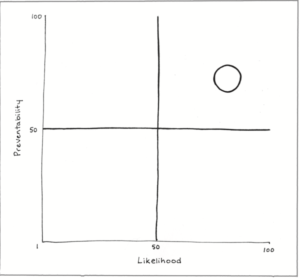
Preventability (74)
There is a lot of legacy lead in buildings, water pipes, and even dirt. But if you take precautions, you can reduce your lead exposure.

Likelihood (80)
Even very small quantities of lead can have measurable negative outcomes.

Consequence (79)
Lead can have negative consequences for all of your organ systems, but it is especially bad for your brain.
*

Alcohol
Colloquially, when people talk about alcohol they are referring to ethanol, which is what is found in alcoholic beverages. Chemically speaking, ethanol is only one member of a large family of compounds known as alcohols. You are probably familiar with some of the other family members, such as isopropyl alcohol, also known as rubbing alcohol, or ethylene glycol, which is commonly used in antifreeze. But as useful as these other compounds are, ethanol’s combination of disinfectant, psychoactive, and nontoxic properties have made it humanity’s longtime favorite. It is the only kind of alcohol that you should consider imbibing, and you should consider it carefully.

Ethanol is the by-product of the fermentation of sugar by yeast. Humans have been taking advantage of this process to make alcoholic beverages since time immemorial. Alcohol has been used medicinally, ritually, and recreationally for thousands of years. It continues to play a social role in many cultures worldwide and is a huge global industry. But for as much as we like it, humanity’s relationship with alcohol has been fraught with struggle, and alcohol consumption has a very dark side.

As a drug, alcohol has system-wide effects on the body. Notably, it reduces inhibition and increases sociability, impacts judgment, impairs motor function, increases reaction time, acts as a diuretic, and dilates blood vessels. In high doses it can cause vomiting, dizziness, unconsciousness, amnesia, respiratory depression, and decreased heart rate. Acute alcohol poisoning can be fatal. It is, in fact, fatal for about six Americans every day. Of course, alcohol is also addictive and is the most commonly abused substance in the United States.

Heavy alcohol use taxes the liver, and cirrhosis is a common and well-known side effect. Wernicke-Korsako syndrome is a less well-known but equally serious condition that is secondary to chronic alcoholism. This disorder, which is a type of dementia, is the result of thiamin deficiency. Alcohol interferes with the body’s ability to absorb B vitamins, such as thiamin and folate. Malabsorption of folate may partially account for another of alcohol’s adverse side effects—increased cancer risk. Alcohol consumption increases the risk of a number of cancers including breast, colon, rectum, liver, mouth, esophagus, and larynx.

In addition to these direct physiological effects, alcohol is associated with a range of negative social outcomes. Domestic violence, child abuse, sexual assault, and accidents, especially motor vehicle accidents, are all made more likely by alcohol. Pretty much any way you look at it, the world would be a safer place without alcohol.

Even so, as a species, humans are very unlikely to give up alcohol. And at this point, you might be mentally protesting that some positive health outcomes are associated with moderate alcohol use. Everyone has heard somewhere that drinking a glass of red wine is good for the heart. It’s true that alcohol may have protective benefits against stroke, diabetes, and coronary heart disease. Some studies have shown that moderate drinkers have a reduced mortality risk compared to both heavy drinkers and abstainers.

Unfortunately, reanalysis of some of these studies has shown that when other factors are accounted for, moderate drinkers really don’t have any mortality advantage. Furthermore, the risks associated with alcohol consumption are so great that they outweigh any potential cardiovascular benefits. This being the case, no one is recommending that anyone start drinking alcohol for health reasons. If you have safe drinking water available, there really aren’t a lot of medically sound reasons to drink alcoholic beverages. The only reason to drink alcohol is because you enjoy it. But drinking isn’t really going to be fun if it kills you, so you should drink in moderation.

You might think you’re a moderate drinker, but are you? The recommendation for moderate alcohol consumption is one standard drink a day for a woman and two drinks a day for a man younger than 65. If you’re a man older than 65, you also only get one drink a day. This doesn’t seem fair, but physiology isn’t fair. Women and men metabolize alcohol differently because of different body composition; this is the same for older people as compared to younger people. And back to that idea of a standard drink. One drink is 12 ounces of 5% alcohol by volume (ABV) beer, 5 ounces of wine, or 1.5 ounces of liquor. If you drink a pint of craft beer with 7% ABV, you are having more than one drink. If you are a woman and drink four or more drinks in two hours, or if you are a man and drink five or more drinks in the same amount of time, you are binge drinking.

Of course, there are some times in life when you should abstain completely. There are some medications, painkillers and allergy pills for example, that do not mix well with alcohol. If you’re taking any medications—prescription, over-the-counter drugs, or herbal—ask your doctor before you imbibe. Another time to teetotal is during pregnancy. This has been standard medical advice for many years, but recently women have been feeling a bit more relaxed about having one glass of wine. It is understandable to want to relax with a buttery chardonnay, but it’s probably not a great idea.

The official medical line is, “there is no known safe amount of alcohol during pregnancy.” That doesn’t mean there isn’t a safe amount, but we don’t know what it is, and it would be unethical to run a clinical trial to find out. That is because it is well known that alcohol can have profound, life-long consequences for an unborn child, including fetal alcohol syndrome. In addition, pregnancy isn’t a static condition but a complicated process. There may be some times during gestation that alcohol will be more likely to do damage to the fetus than at other times. It probably isn’t worth the risk. Reference the above comment about the general unfairness of physiology. Once that baby is born, they should also refrain from drinking alcohol until adulthood. Teenagers may have already achieved their adult height, but they have not yet achieved their adult brains. Drinking during this period of life can have permanent negative impacts on cognitive function.

If you enjoy wine tasting or martinis or craft beers, all of the above can seem like a downer. Life can be that way. In the end, you have to define your own priorities for your life and balance health concerns with life’s pleasure. Cheers.

SUMMARY

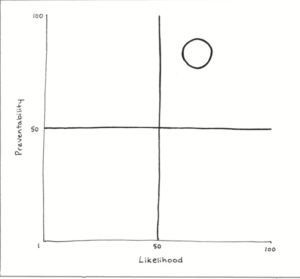
Preventability (85)

Unless you already have an alcohol dependency, you can choose whether you want to imbibe and how much. So the preventability score is high. On the other hand, you can’t control whether other people drink, and other people’s drinking habits can have profound effects on your life, so preventability isn’t perfect.

Likelihood (65)

Many people enjoy the occasional drink without a problem, but the incidence of alcohol-related trouble is quite high.

Consequence (90)

The consequences of excessive alcohol consumption range from a bad headache, to liver damage, to domestic violence, to death. The potential negative outcomes are so many and so severe that the consequence score is high.
 

*How to Interpret the Worry Index

You will notice that for every topic reviewed on this list we have assigned a three-dimensional worry index. The three components of the index are preventability, likelihood, and consequence, defined as follows.

Preventability: The preventability score refers to your ability to avoid or mitigate a specific outcome. If there is something you can do, then you have some control. The more you can do to prepare, the higher the preventability score.

Likelihood: The likelihood score refers to the chance of a negative outcome should you be exposed to a particular element of risk. The greater the odds of an adverse result, the higher the likelihood score.

Consequence: The consequence score refers to the potential magnitude of harm. The more dire the consequence, the higher the consequence score.

In all cases we have assumed that the issue is relevant to you. We have also assumed a typical level of exposure. Obviously, these assumptions aren’t appropriate for everyone all the time.

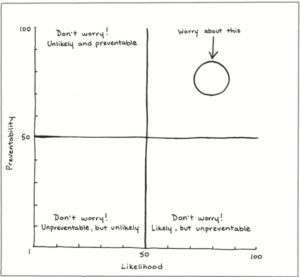
For each topic, we have provided a plot that represents these three factors graphically. The vertical axis (the y-axis) represents preventability; the horizontal axis (the x-axis) represents likelihood; and the size of the marker represents the consequence. Each plot is broken into quadrants. If you follow our suggestions, you will focus most of your effort addressing the large points in the upper-right quadrant. These are the problems that are preventable, likely to happen, and potentially serious. These are the things you should worry about.

If you’re wondering how we came up with this scoring method, the answer is: we made it up. If you’re wondering how we assigned the values, the answer is: we discussed and debated the scores for each topic until we agreed. You are free to disagree with us.

In most cases, it was difficult to assign a real number to the preventability, likelihood, and consequence of a particular risk factor. Almost all the time the answer seemed to be “it depends.” You may find, as we did, that this is very unsatisfying. Therefore, we have done our best to make an estimate. We like to think of these estimates as a good first pass. But we strongly caution you against reading too much into the score.
__________________________________
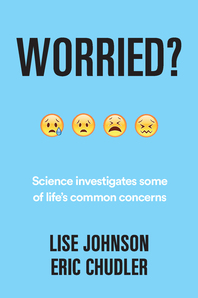
From Worried? Science Investigates Some of Life’s Common Concerns Used with permission of W. W. Norton & Co. Copyright © 2019 by Lise Johnson and Eric Chudler.
26 Feb 19:24

Fighting climate gentrification with a radical community garden

by Maria Esquinca

On a typical Sunday morning in Miami, a not so typical thing happens in a backyard in Little Haiti. Dozens of people come together to tend the Femme Fairy Garden, a community garden organized by Fempower, a queer artist collective based in Miami.

When I visited in December several people were piling out chunks of soil, while others laid stones for a walking path or plucked weeds to make room for seedlings. Tame Impala’s “Let it Happen” played over the loudspeakers. Despite the scathing Florida sun, people joked, laughed, and danced. All around there was an energy abuzz, brimming with joy and determination.

“It’s a place where you can come in and just be yourself. If you want to cry, you can cry. If you want to dance, you can dance. If you want to smoke and chill, you can smoke and chill,” said Saskia Laricchia, one of the early members of the Femme Fairy Garden.   

"The garden is a place of empowerment. It’s self sustaining. We’re trying to grow our own food, trying. We’re getting there. We just want to teach people and empower them, how to do it, and that includes herbs as well," said Director of the Femme Fairy Garden, Ashley Varela.

The Femme Fairy Garden is just one of the branches of Fempower. Since its inception, the collective has grown to host a weekly Liberation Book Club, the “Girls Can Spin Too” DJ Master Class, and various art exhibitions featuring brown and Black artists.

Fempower originally began as a work of dystopian, speculative fiction, written by Helen Peña, founder of the collective. The fiction “depicted Miami being run by this Black, femme, girl-gang,” she said. She wrote it as a response to Donald Trump’s election, Black female death, and heteronormativity in the Latinx community. She envisioned a world where powerful, hard working women come together. The artist collective was founded to turn that vision into reality.

One of the central ideas behind Fempower is “we’re stronger together.” The radical group seeks to resist capitalistic notions of individuality by fostering collective relationships. The garden does exactly that.  

The radical group seeks to resist capitalistic notions of individuality by fostering collective relationships. The garden does exactly that.

“It’s almost like a religion. That’s the beautiful part about religion, the only beautiful part about religion, really, is community,” said Laricchia. “And I feel like that’s what keeps a lot of us going back.”

The garden began only about six months ago, when Peña discussed ways of reconnecting to the earth with Ashley Varela, who is now the Femme Fairy Garden’s director. They decided to start a community garden out of Peña’s backyard in Little Haiti. “Me and Helen saw the potential, like we can really do something here,” Varela said.

Over the course of a few months, Varela, Peña, and a handful of members from Fempower began to clear debris and plant seeds. “It’s like seeing a baby grow up,” Laricchia said, recalling the early days of the garden. “It was crazy.”

Today, the garden boasts dozens of flowers, herbs, and fruits, including hibiscus, sunflowers, lemongrass, cilantro, and bananas.

Members of the Femme Fairy Garden shovel soil from a large pile in the center of the garden.

“This is totally what everyone should be doing, is growing their own food, tending to the earth, putting in the right plants,” Varela said. “All this is such a benefit and a fuck you to capitalism at the same time.”

“To go back to our roots, and reconnect with earth is a big radical, healing, act of resistance,” Peña said. “There’s nothing more, I feel, socialist, [than] growing something and sharing it with other people. It’s literally going against the market and being like ‘we don’t need modern agriculture and industrialization to feed ourselves’.”

Membership has ballooned to more than 40 people on the garden’s WhatsApp chat. Every Sunday morning, dozens of those people show up to tend the garden together.

“I think it’s fucking beautiful,” a member said. “For not just us, but everyone here that doesn’t have access to spaces like these, or food like this, or herbs like this.”

Barbara Meulener is one of newest people to work in the Femme Fairy Garden on Sundays. She said access to food and herbs is limited in communities of color. “I think it’s fucking beautiful,” she said. “For not just us, but everyone here that doesn’t have access to spaces like these, or food like this, or herbs like this.”

Studies have shown the positive effects that nature and gardening have on the human psyche. In a study titled “Coping with Poverty: Impacts of Environment and Attention in the Inner City,” Francis E. Kuo studied the effects of nature on 145 low-income, mostly Black women who lived in public housing. Those who lived in buildings near trees and grass showed improved attention, and could better manage major life issues, than those who were surrounded only by concrete or asphalt. Similar beneficial effects were noted by Susan Stuart in a study of the impacts of community gardens on residents of domestic violence shelters.

Meanwhile, new research shows that people who live in buildings without trees and grass are more likely to be fatigued, irritable, and have more trouble handling conflict than those who live close to plants.

For many members of the Femme Fairy Garden, the positive effects of being in the garden are palpable. Peña describes it like “a spiritual act for me, like going to church on Sunday.”

"It’s not that we really make an effort to bring people out, it’s just that there’s an attraction," said Founder of Fempower, Helen Peña. "You walk by and you see it, and something in it tells you ‘oh, something is here, something big is happening here.”

For Varela, who describes the garden as a “little paradise,” being close to nature helped her overcome depression. Two years ago, she went through a traumatic experience that caused her to leave Miami. She joined a queer herbalist community in California.

“I would go forage for a while lavender and wild sage in the mountains,” she said. She started collecting herbs with a purpose, learning about the medicinal uses of plants, and making plant-based products. “That healed me. Not my therapist could help me with that. Not the medicine I was on could help me with that, the anti-depressants. It was being out in nature that did that for me.”

While Varela said that everyone’s path is different, she hopes people can have a similar experience in the Femme Fairy Garden. “I just want people to have that initial spark,” she said. She added that she wants people to reconnect with nature and see “the beautiful stuff that will happen when you start doing that.”

"But the effort is obviously here, people love it. I love it. Helen loves it, like we’re all just in love," said Director of the Femme Fairy Garden, Ashley Varela.

Hovering in the backdrop of the garden is the intersection of gentrification and climate change.

Little Haiti, a mostly Black neighborhood where Femme Fairy Garden sits, has already become the site of four projected mega developments. Recently, a food hall called The Citadel opened, drawing protests from activists and residents concerned about gentrification and displacement. Thomas Conway, another developer within Miami, also faced scrutiny after evicting local businesses from strip malls he had recently purchased. According to the Miami Herald, some of the evicted tenants had rented space there for as long as 30 years.

By 2045, one fifth of Miami is projected to be underwater. Communities of color like Little Haiti, Liberty City, and Overtown, all mostly Black neighborhoods, are already feeling the effects of climate gentrification, as developers move from low lying areas like South Beach to target higher ground.

It’s hard because I don’t believe the garden will be able to solve gentrification,” Peña said. “But [what] we do have, is something we can lean on when it does happen.”

From the start, the Fempower collective, and the Femme Fairy Garden itself, were designed as positive responses to Miami’s climate gentrification– especially its unequal effects on local Black and brown communities.

“Going back to where Fempower started, there’s always the idea that the apocalypse is now. It’s here. So, how do we navigate through apocalypse? It’s by doing things like coming together, and learning things,”

“Going back to where Fempower started, there’s always the idea that the apocalypse is now. It’s here. So, how do we navigate through apocalypse? It’s by doing things like coming together, and learning things,” Peña said.

Peña calls the garden a dream world. It is a space of hope and survival in the face of an uncertain future for Miami’s communities of color.

“It’s limitless,” Peña said. “While we believe we have to radically change our current system… we also know that it may not happen in our lifetime. We don’t know. So, what we’re trying to do is be in the practice of building those dream worlds right now, and so the garden is that space. It’s an alternative way of being.”

*An earlier version of this article incorrectly stated that The Citadel is owned by Thomas Conway. It is owned by the Urban Atlantic Group.

26 Feb 19:11

Character Name Generator

by Jess Zafarris

When I’m choosing names for characters and locations, I love playing with the search engine Behind the Name. You can enter a name and discover its true meaning, what culture it came from, and when it was first used. Or, with a slight setting change, you can enter an object, concept or place and find names related to your query. I encourage you to play with the variety of other features there at your leisure, but for this prompt, we’ll be searching for meanings.

Writing Prompt: Character Name Generator

  1. Visit behindthename.com.
  2. Click the gear-shaped button next to the search bar to select “search meanings,” as pictured below.
  3. Type in an object, concept, place, color—anything you can think of that might inspire a name. For example, you might type in green, mountain, beautiful or war. Alternatively, you can visit the Name Themes page (behindthename.com/info/themes) and click on one of the concepts there if you’re not sure what to type in.
  4. Select one of the names from the list, and read about its origin. (Or, if you already have a name in mind, you can search for it to determine its origin.)
  5. Create a character using the name you’ve selected, and post a story or scene about them (500 words or fewer) in the comments below. Try to incorporate the meaning of the name you’ve selected in your response.

The post Character Name Generator appeared first on WritersDigest.com.

20 Feb 18:36

The Seedy World of Plant Poaching

by Gloria Dickie
A miraculous cure-all, endangered wild American ginseng is being stolen and sold for thousands of dollars on the black market
20 Feb 18:35

Pearl Harbor Was Not the Worst Thing to Happen to the U.S. on December 7, 1941

by Daniel Immerwahr
Pearl-Harbor

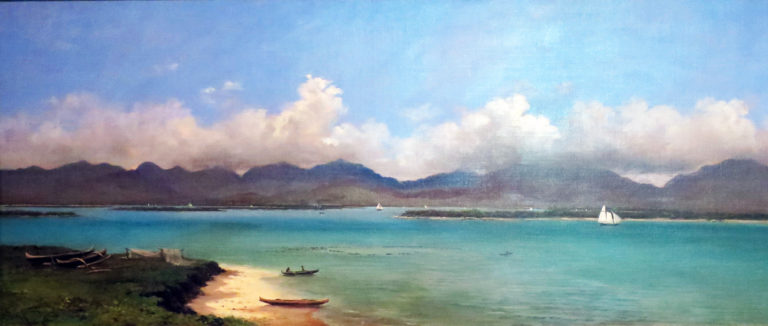
December 7, 1941. Japanese planes appear over a naval base on O‘ahu. They drop aerial torpedoes, which dive underwater, wending their way toward their targets. Four strike the USS Arizona, and the massive battleship heaves in the water. Steel, timber, diesel oil, and body parts fly through the air. The flaming Arizona tilts into the ocean, its crew diving into the oil-covered waters. For a country at peace, this is a violent awakening. It is, for the United States, the start of the Second World War.

There aren’t many historical episodes more firmly lodged in national memory than this one, the attack on Pearl Harbor. It’s one of the few events that most people can put a date to (December 7, the “date which will live in infamy,” as Franklin Delano Roosevelt put it). Hundreds of books have been written about it—the Library of Congress holds more than 350. And Hollywood has made movies, from the critically acclaimed From Here to Eternity (1953) starring Burt Lancaster to the critically derided Pearl Harbor (2001) starring Ben Affleck.

But what those films don’t show is what happened next. Nine hours after Japan attacked the territory of Hawai‘i, another set of Japanese planes came into view over another US territory, the Philippines. As at Pearl Harbor, they dropped their bombs, hitting several air bases, to devastating effect.

The army’s official history of the war judges the Philippine bombing to have been just as disastrous as the Hawaiian one. At Pearl Harbor, the Japanese hobbled the United States’ Pacific fleet, sinking four battleships and damaging four others. In the Philippines, the attackers laid waste to the largest concentration of US warplanes outside North America—the foundation of the Allies’ Pacific air defense.

The United States lost more than planes. The attack on Pearl Harbor was just that, an attack. Japan’s bombers struck, retreated, and never returned. Not so in the Philippines. There, the initial air raids were followed by more raids, then by invasion and conquest. Sixteen million Filipinos—US nationals who saluted the Stars and Stripes and looked to FDR as their commander in chief—fell under a foreign power. They had a very different war than the inhabitants of Hawai‘i did.

Nor did it stop there. The event familiarly known as “Pearl Harbor” was in fact an all-out lightning strike on US and British holdings throughout the Pacific. On a single day, the Japanese attacked the US territories of Hawai‘i, the Philippines, Guam, Midway Island, and Wake Island. They also attacked the British colonies of Malaya, Singapore, and Hong Kong, and they invaded Thailand.

It was a phenomenal success. Japan never conquered Hawai‘i, but within months Guam, the Philippines, Wake, Malaya, Singapore, and Hong Kong all fell under its flag. Japan even seized the westernmost tip of Alaska, which it held for more than a year.

Looking at the big picture, you start to wonder if “Pearl Harbor”—the name of one of the few targets Japan didn’t invade—is really the best shorthand for the events of that fateful day.

But though those embassies were outposts of the United States, there was little public sense that the country itself had been harmed.

*

“Pearl Harbor” wasn’t how people referred to the bombings, at least not at first. How to describe them, in fact, was far from clear. Should the focus be on Hawai‘i, the closest target to North America and the first bit of US soil Japan had struck? Or should it be the Philippines, the far larger and more vulnerable territory? Or Guam, the one that surrendered nearly immediately? Or all the Pacific holdings, including the uninhabited Wake and Midway, together?

“The facts of yesterday and today speak for themselves,” Roosevelt said in his address to Congress—his “Infamy” speech. But did they? Japs Bomb Manila, Hawaii was the headline of a New Mexico paper; Japanese Planes Bomb Honolulu, Island of Guam was that of one in South Carolina. Sumner Welles, FDR’s undersecretary of state, described the event as “an attack upon Hawaii and upon the Philippines.” Eleanor Roosevelt used a similar formulation in her radio address on the night of December 7, when she spoke of Japan “bombing our citizens in Hawaii and the Philippines.”

That was how the first draft of FDR’s speech went, too. It presented the event as a “bombing in Hawaii and the Philippines.” Yet Roosevelt toyed with that draft all day, adding things in pencil, crossing other bits out. At some point he deleted the prominent references to the Philippines and settled on a different description. The attack was, in his revised version, a “bombing in Oahu” or, later in the speech, “on the Hawaiian Islands.” He still mentioned the Philippines, but only as an item on a terse list of Japan’s other targets: Malaya, Hong Kong, Guam, the Philippines, Wake Island, and Midway—presented in that order. That list mingled U.S. and British territories together, giving no hint as to which was which.

Why did Roosevelt demote the Philippines? We don’t know, but it’s not hard to guess. Roosevelt was trying to tell a clear story: Japan had attacked the United States. But he faced a problem. Were Japan’s targets considered “the United States”? Legally, yes, they were indisputably U.S. territory. But would the public see them that way? What if Roosevelt’s audience didn’t care that Japan had attacked the Philippines or Guam? Polls taken slightly before the attack show that few in the continental United States supported a military defense of those remote territories.

Consider how similar events played out more recently. On August 7, 1998, al-Qaeda launched simultaneous attacks on U.S. embassies in Nairobi, Kenya, and Dar es Salaam, Tanzania. Hundreds died (mostly Africans), and thousands were wounded. But though those embassies were outposts of the United States, there was little public sense that the country itself had been harmed. It would take another set of simultaneous attacks three years later, on New York City and Washington, D.C., to provoke an all-out war.

An embassy is different from a territory, of course. Yet a similar logic held in 1941. Roosevelt no doubt noted that the Philippines and Guam, though technically part of the United States, seemed foreign to many. Hawai‘i, by contrast, was more plausibly “American.” Though it was a territory rather than a state, it was closer to North America and significantly whiter than the others. As a result, there was talk of eventual statehood (whereas the Philippines was provisionally on track for independence).

Yet even when it came to Hawai‘i, Roosevelt felt a need to massage the point. Though the territory had a substantial white population, nearly three-quarters of its inhabitants were Asians or Pacific Islanders. Roosevelt clearly worried that his audience might regard Hawai‘i as foreign. So on the morning of his speech, he made another edit. He changed it so that the Japanese squadrons had bombed not the “island of Oahu,” but the “American island of Oahu.” Damage there, Roosevelt continued, had been done to “American naval and military forces,” and “very many American lives” had been lost.

An American island, where American lives were lost—that was the point he was trying to make. If the Philippines was being rounded down to foreign, Hawai‘i was being rounded up to “American.”

“Yesterday, December 7, 1941—a date which will live in infamy—the United States of America was suddenly and deliberately attacked by naval and air forces of the Empire of Japan” is how Roosevelt’s speech began. Note that in this formulation Japan is an “empire,” but the United States is not. Note also the emphasis on the date. It was only at Hawai‘i and Midway, of all Japan’s targets, that the vagaries of the international date line put the event on December 7. Everywhere else, it occurred on December 8, the date the Japanese use to refer to the attack.

Did Roosevelt underscore the date in a calculated attempt to make it all about Hawai‘i? Almost certainly not. Still, his “date which will live in infamy” phrasing further encouraged a narrow understanding of the event, one that left little room for places like the Philippines.

For Filipinos, this could be exasperating. A reporter described the scene in Manila as the crowds listened to Roosevelt’s speech over the radio. The president spoke of Hawai‘i and the many lives lost there. Yet he only mentioned the Philippines, the reporter noted, “very much in passing.” Roosevelt made the war “seem to be something close to Washington and far from Manila.”

This was not how it looked from the Philippines, where air-raid sirens continued to wail. “To Manilans the war was here, now, happening to us,” the reporter wrote. “And we have no air-raid shelters.”

If the Philippines was being rounded down to foreign, Hawai‘i was being rounded up to “American.”

*

Hawai‘i, the Philippines, Guam—it wasn’t easy to know how to think about such places or even what to call them. At the turn of the twentieth century, when many were acquired (Puerto Rico, the Philippines, Guam, American Samoa, Hawai‘i, Wake), their status was clear. They were, as Theodore Roosevelt and Woodrow Wilson unabashedly called them, colonies.

Yet that spirit of forthright imperialism didn’t last. Within a decade or two, after passions had cooled, the c-word became taboo. “The word colony must not be used to express the relationship which exists between our government and its dependent peoples,” an official admonished in 1914. Better to stick with a gentler term, used for them all: territories.

It was gentler because the United States had had territories before, such as Arkansas and Montana. Their place in the national firmament was a happy one. The western territories were the frontier, the leading edge of the country’s growth. They might not have had all the rights that states did, but once they were “settled” (i.e., populated by whites), they were welcomed fully into the fold as states.

But if places like the Philippines and Puerto Rico were territories, they were territories of a different sort. Unlike the western territories, they weren’t obviously slated for statehood. Nor were they widely understood to be integral parts of the nation.

A striking feature, in fact, of the overseas territories was how rarely they were even discussed. The maps of the country that most people had in their heads didn’t include places like the Philippines. Those mental maps imagined the United States to be contiguous: a union of states bounded by the Atlantic, the Pacific, Mexico, and Canada.

That is how most people envision the United States today, possibly with the addition of Alaska and Hawai‘i. The political scientist Benedict Anderson called it the “logo map.” Meaning that if the country had a logo, this shape would be it.

The problem with the logo map, however, is that it isn’t right. Its shape doesn’t match the country’s legal borders. Most obviously, the logo map excludes Hawai‘i and Alaska, which became states in 1959 and now appear on virtually all published maps of the country. But it’s also missing Puerto Rico, which, though not a state, has been part of the country since 1899. When have you ever seen a map of the United States that had Puerto Rico on it? Or American Samoa, Guam, the U.S. Virgin Islands, the Northern Marianas, or any of the other smaller islands the United States has annexed over the years?

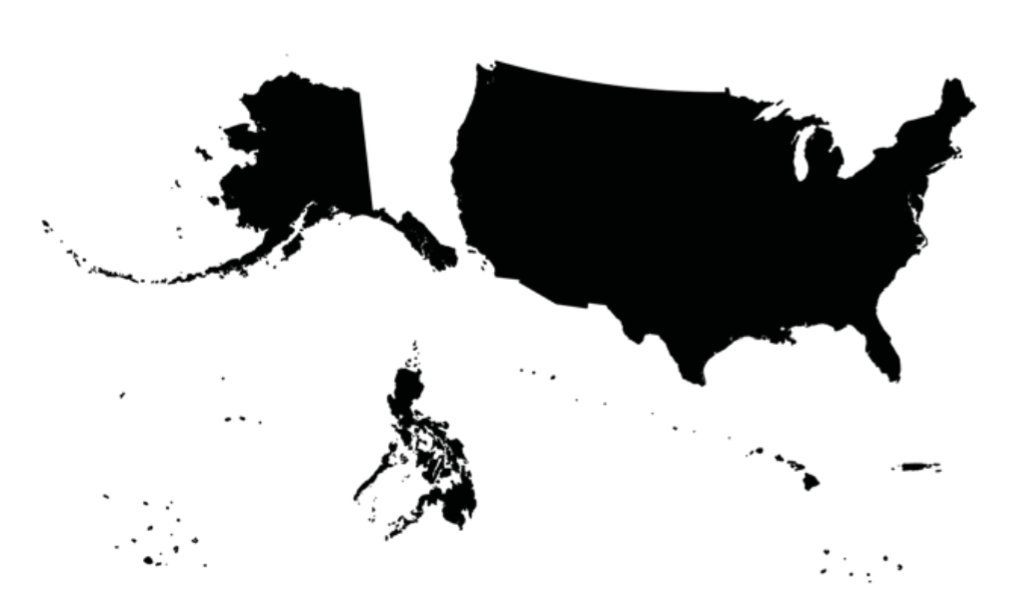
In 1941, the year Japan attacked, a more accurate picture would have been this:

What this map shows is the country’s full territorial extent: the “Greater United States,” as some at the turn of the twentieth century called it. In this view, the place normally referred to as the United States—the logo map—forms only a part of the country. A large and privileged part, to be sure, yet still only a part. Residents of the territories often call it the “mainland.”

I’ve drawn this map to show the inhabited parts of the Greater United States at the same scale and with equal-area projections. So Alaska isn’t shrunken down to fit into a small inset, as it is on most maps. It’s the right size—i.e., it’s huge. The Philippines, too, looms large, and the Hawaiian island chain—the whole chain, not just the eight main islands shown on most maps—if superimposed on the mainland would stretch almost from Florida to California.

This map also shows territory at the other end of the size scale. In the century before 1940, the United States claimed nearly a hundred uninhabited islands in the Caribbean and the Pacific. Some claims were forgotten in time—Washington could be surprisingly lax about keeping tabs. The twenty-two islands I’ve included are the ones that appeared in official tallies (the census or other governmental reports) in the 1940s. I’ve represented them as clusters of dots in the bottom left and right corners, though they’re so small that were I to draw them to scale, they’d be invisible.

When it came to strategy, those dots mattered.

Why include them at all? Was it important that the United States possessed, to take one example, Howland Island, a bare plot of land in the middle of the Pacific, only slightly larger than Central Park? Yes, it was. Howland wasn’t large or populous, but in the age of aviation, it was useful. At considerable expense, the government hauled construction equipment out to Howland and built an airstrip there—it’s where Amelia Earhart was heading when her plane went down. The Japanese, fearing what the United States might do with such a well-positioned airstrip, bombed Howland the day after they struck Hawai‘i, Guam, Wake, Midway, and the Philippines.

When it came to strategy, those dots mattered.

The logo map excludes all that—large colonies and pinprick islands alike. And there is something else misleading about it. It suggests that the United States is a politically uniform space: a union, voluntarily entered into, of states standing on equal footing with one another. But that’s not true, and it’s never been true. From the day the treaty securing independence from Britain was ratified, right up to the present, it’s been a collection of states and territories. It’s been a partitioned country, divided into two sections, with different laws applying in each.

The United States of America has contained a union of American states, as its name suggests. But it has also contained another part: not a union, not states, and (for most of its history) not wholly in the Americas.

*

This is not a country that has kept its hands to itself.

The proposition that the United States is an empire is less controversial today. The leftist author Howard Zinn, in his immensely popular A People’s History of the United States, wrote of the “global American empire,” and his graphic-novel spin-off is called A People’s History of American Empire. On the far right, the politician Pat Buchanan has warned that the United States is “traveling the same path that was trod by the British Empire.” In the vast political distance between Zinn and Buchanan, there are millions who would readily agree that the United States is, in at least some sense, imperial.

The case can be made in a number of ways. The dispossession of Native Americans and relegation of many to reservations was pretty transparently imperialist. Then, in the 1840s, the United States fought a war with Mexico and seized a third of it. Fifty years later, it fought a war with Spain and claimed the bulk of Spain’s overseas territories.

Empire isn’t just landgrabs, though. What do you call the subordination of African Americans? In W.E.B. Du Bois’ eyes, black people in the United States looked more like colonized subjects than like citizens. Many other black thinkers, including Malcolm X and the leaders of the Black Panthers, have agreed.

Or what about the spread of U.S. economic power abroad? The United States might not have physically conquered Western Europe after World War II, but that didn’t stop the French from complaining of “coca-colonization.” Critics there felt swamped by U.S. commerce. Today, with the world’s business denominated in dollars and McDonald’s in more than a hundred countries, you can see they might have had a point.

Then there are the military interventions. The years since the Second World War have brought the U.S. military to country after country. The big wars are well-known: Korea, Vietnam, Iraq, Afghanistan. But there has also been a constant stream of smaller engagements. Since 1945, U.S. armed forces have been deployed abroad for conflicts or potential conflicts 211 times in 67 countries. Call it peacekeeping if you want, or call it imperialism. But clearly this is not a country that has kept its hands to itself.

Yet in all the talk of empire, one thing that often slips from view is actual territory. Yes, many would agree that the United States is or has been an empire, for all the reasons above. But how much can most people say about the colonies themselves? Not, I would wager, very much.

And why should they be able to? Textbooks and overviews of U.S. history invariably feature a chapter on the 1898 war with Spain that led to the acquisition of many of the territories and the Philippine War that followed it (“the worst chapter in almost any book,” one reviewer griped). Yet, after that, coverage trails off. Territorial empire is treated as an episode rather than a feature. The colonies, having been acquired, vanish.

It’s not as if the information isn’t out there. Scholars, many working from the sites of empire themselves, have assiduously researched this topic for decades. It’s just that when it comes time to zoom out and tell the story of the country as a whole, the territories tend to fall away. The confusion and shoulder-shrugging indifference that mainlanders displayed at the time of Pearl Harbor hasn’t changed much at all.

Ultimately, the problem isn’t a lack of knowledge. The libraries contain literally thousands of books about U.S. overseas territory. The problem is that those books have been sidelined—led, so to speak, on the wrong shelves. They’re there, but so long as we’ve got the logo map in our heads, they’ll seem irrelevant. They’ll seem like books about foreign countries.

__________________________________

From How to Hide an Empire: A History of the Greater United States. Used with permission of Farrar, Straus & Giroux. Copyright © 2019 by Daniel Immerwahr.

20 Feb 18:31

Tigers Don’t Eat Humans, So Why Did This One Kill Over 400 People?

by Dane Huckelbridge

In the first decade of the 20th century, the most prolific serial killer of human life the world has ever seen stalked the foothills of the Himalayas. A serial killer that was not merely content to kidnap victims at night and dismember their bodies, but also insisted on eating their flesh. A serial killer that, for the better part of ten years, eluded police, bounty hunters, assassins, and even an entire regiment of Nepalese Gurkhas.

A serial killer that happened to be a Royal Bengal tiger.

Specifically, a tiger known as the Man-Eater of Champawat. Far more than an apex predator that occasionally included humans in its diet, it was an animal that—for reasons that wouldn’t become apparent until its killing spree was over—explicitly regarded our species as a primary source of food. And to that end, this brazen Panthera tigris tigris hunted Homo sapiens on a regular basis across the rugged borderlands of Nepal and India in the early 1900s with shocking impunity and an almost supernatural efficacy. In the end, its reported tally added up to 436 human souls—more, some believe, than any other individual killer, man or animal, before or since.

Despite its unusual appetites and hunting prowess, however, surprisingly little has been written about the Champawat. And when the odd mention of the tiger does crop up, it is more often than not as a curious footnote to a broader article on human–tiger conflict, or as a gory bit of trivia from The Guinness Book of World Records. The fact that a single tiger was able to take such an immense human toll over such a long period of time is rarely presented as a subject worthy of historical scrutiny or academic study. It seems like a good story, and nothing more.

And admittedly, it is a fine story, and it is tempting to present it simply as such. It is universal in its appeal and almost literary in its Beowulfian dimensions: a man-eating creature that terrorizes the countryside, repeatedly evading capture, until a hero appears who is brave enough to track it straight to its lair. It is a timeless campfire tale, simple and hair-raising in the way all such yarns must be. Who wouldn’t want to hear a story like that? One that speaks to the most primal and deeply ingrained of all human fears?

But there is another story to be told here as well, and while certainly hair-raising, it is anything but simple. The events that transpired in the forests and valleys of the Himalayan foothills in the first decade of the twentieth century were not a series of bizarre aberrations. They were in fact the inevitable result of the tremendous cultural and ecological conflicts that were shaking the region—indeed, the world—at that time, affecting man and animal alike in unlikely ways, and throwing age-old systems chaotically out of whack. Far from some pulp fiction tale of man versus nature or good versus evil, the story of the Champawat is richer and much more complex, with protagonists at odds with even themselves.

This tiger ceased to behave like a tiger at all.

Beginning, of course, with the actual tiger. Bengal tigers do not under normal circumstances kill or eat humans. They are by nature semi-nocturnal, deep-forest predators with a seemingly ingrained fear of all things bipedal; they are animals that will generally change direction at the first sign of a human rather than seek an aggressive confrontation. Yet at the turn of the twentieth century, a change so profound and upsetting to the natural order was occurring in Nepal and India as to cause one such tiger to not only lose its inborn fear of humans altogether, but to begin hunting them in their homes on an all but weekly basis—a tragedy for the more than four hundred individuals who would eventually fall victim to its teeth and claws. This tiger ceased to behave like a tiger at all, in important respects, and transformed into a new kind of creature all but unknown in the hills of northern India’s Kumaon district, prowling around villages and stalking men and women in broad daylight.

Then there is Jim Corbett, the now-legendary hunter who was finally commissioned by the British government to end the Champawat Tiger’s reign. To many, even in present-day India, he is nothing short of a secular saint, a brave and selfless figure who risked life and limb to defend poor villagers when no one else would. To others, particularly academics engaged with post-colonial ecologies, he is just another perpetrator of the Eurocentric paternalism that defined the colonial experience. Each is a fair judgment.

The whole truth, however, is far more nuanced, as one would expect when it comes to a deeply conflicted man whose life spanned eras, generations, and eventually even empires. Jim Corbett was a prolific sportsman who, upon achieving fame, hobnobbed with aristocrats and used tiger hunts to curry their favor. But he was also a tireless advocate for wild tigers and devoted the latter part of his life to their conservation—as evidenced by the sprawling and magnificent national park in India that bears his name to this day. Yes, he did come to enjoy the trappings and privileges of the English sahib, servants and sport shooting and social clubs included. But as the domiciled son of an Irish postmaster, foreign-born and considered socially inferior, he was also keenly aware of what it meant to be colonized—by the very people he enabled and admired. And he did love India, above all its people, even while playing an unwitting part in the nation’s subjugation.

Which brings us, inevitably, to colonialism itself—a topic far too broad and multifaceted for any single book, let alone one that’s concerned primarily with man-eating tigers. Yet it is colonialism, undeniably, and the onslaught of environmental destruction that it almost universally heralds, that served as the primary catalyst in the creation of our man-eater. It may have been a poacher’s bullet in Nepal that first turned the Champawat Tiger upon our kind, but it was a full century of disastrous ecological mismanagement in the Indian subcontinent that drove it out of the wild forests and grasslands it should have called home, and allowed it to become the prodigious killer that it was.

Apex predators are generally considered bellwethers of the overall health of the environment.

What becomes clear upon closer historical examination is that the Champawat was not an incident of nature gone awry—it was in fact a man-made disaster. From Valmik Thapar to Jim Corbett himself, any tiger wallah could tell you the various factors that can turn a normal tiger into a man-eater: a disabling wound or infirmity, a loss of prey species, or a degradation of natural habitat. In the case of the Champawat, however, we find not just one but all three of these factors to be irrefutably present. Essentially, by the late nineteenth century, the British in the United Provinces of northern India and their Rana dynasty counterparts in western Nepal had created, through a combination of irresponsible forestry tactics, agricultural policies, and hunting practices, the ideal conditions for an ecological catastrophe.

And it was the sort of catastrophe we can still find whiffs of today, be it in the recent spate of shark attacks in Réunion Island, the rise of human–wolf conflict on the outskirts of Yellowstone, or even the man-eating tigers that continue to appear in places like the Sundarbans forest of India or Nepal’s Chitwan National Park. In the modern day, we have at last, thankfully, come to realize the importance of apex predators in maintaining the health of our ecosystems—but we’re still negotiating, somewhat painfully, how best to live alongside them. And that’s to say nothing of the far more sweeping problems posed by global warming and mass extinction, exigencies that have arisen from very much the same amalgamation of economic mismanagement and environmental destruction. Apex predators are generally considered bellwethers of the overall health of the environment, and at present, with carbon emissions on the rise and natural habitats diminishing, the outlook for both feels disarmingly uncertain.

Which is why this particular story of environmental conflict is not only relevant, but urgent and necessary. At its core, Jim Corbett’s quest to rid the valleys of Kumaon of the Champawat Tiger is dramatic and straightforward, but the tensions that underscore it contain the resonance of much larger and more grievous issues. Yes, it is a timeless tale of cunning and courage, but also a lesson, still very much pertinent today, about how deforestation, industrialization, and colonization can upset the fragile balance of cultures and ecosystems alike, creating unseen pressures that, at a certain point, must find their release.

Sometimes even in the form of a man-eating tiger.

__________________________________

Excerpted from No Beast So Fierce: The Terrifying True Story of the Champawat Tiger, the Deadliest Animal in History. Copyright © 2019 Dane Huckelbridge. On sale February 5 from William Morrow, an imprint of HarperCollins Publishers. Reprinted by permission.

20 Feb 18:25

A Critic for All Seasons

by Korsha Wilson

What would restaurant criticism look like if it represented diners like me?

“If one were offered dinner for two at any price, to be eaten in any restaurant anywhere in the world, what would the choice be? And in these days of ever‐higher prices, what would the cost be?” the critic Craig Claiborne once asked in a restaurant review for the New York Times. His answer was a five-hour meal at Chez Denis in Paris, which Claiborne and his collaborator, chef and cookbook author Pierre Franey, won in a fundraising auction sponsored by American Express. In a spectacularly blase tone, Claiborne recounts a wine-soaked parade of haute cuisine staples, like oysters, caviar, lobster and truffles, foie gras with aspic, and sweetbread parfait, all of which he determined was not the worth the price tag of $4,000 (the equivalent of about $18,000 today, and for which he paid just $300).

The review, “Just a Quiet Dinner for Two in Paris: 31 Dishes, Nine Wines, a $4,000 Check,” ran on the front page on November 14, 1975. Nearly a thousand letters poured into the Times in response, most of them condemning Claiborne’s extravagance at a time when New York City was mired in crisis, fiscal and otherwise. Described in Claiborne’s obituary as his “most notorious gastronomic adventure,” he reportedly said as he walked out of the restaurant, “You know what was so amazing about that meal? I don’t really feel that stuffed.”

As I left a four-hour meal at the Grill, one of New York City’s most opulent and critically acclaimed restaurants, I was similarly unsatisfied, but instead of hungry, I felt unsettled. The Grill is the magnum opus of Major Food Group, a brash New York post-Recession empire built on absurdly expensive theme restaurants like Carbone, an Italian-American fantasia that has since descended on Las Vegas and Hong Kong, and the Polynesian, one of its most recent ventures, an attempt at the perfect tiki bar. The unsettled feeling wasn’t because of the price tag, which was $600 for two people — not uncommon in fine dining restaurants in New York City. (Dinner for two at Eleven Madison Park now runs up to $1100.) It wasn’t because of the food, either. The Grill’s interpretations of midcentury American dining at its peak were technically flawless — a foie gras appetizer that paired silky seared livers with an herbaceous onion sauce was staggering, as was the larded squab with smoky, sweet orange preserves.

It was something else. As I reoriented myself on 52nd Street after dinner, looking at the golden glow of the dining room faintly reflected on the gray office buildings across the street and the row of black town cars with drivers waiting outside, replaying the four hours I spent inside, I realized that fully enjoying the Grill requires partaking in the luxurious nostalgia that it peddles — the fantasy of feeling like one of the wealthiest New Yorkers of the 1960s. The servers outfitted in white suit jackets designed by Tom Ford wheeling around silver gueridons and tableside flambe stations, the antiquated garde-manger station filled with towering displays of fresh fruit and vegetables, none of which you can eat — it was all designed to invoke the surreal sensation of being inside the most important restaurant in the country during the height of American global power. Every seat at the square bar was occupied as bronze rods dangled menacingly over drinkers’ heads and bartenders dashed back and forth in perfectly starched uniforms. The volume of the music and the conversation between diners was high, the tone lighthearted but standoffish. The atmosphere was disorienting — it was a party, but what were we celebrating?

Shortly after the Grill opened in spring 2017, critics were falling over themselves to proclaim their love for this restaurant and its historical allusions. In the Times, Pete Wells hailed it as “confident, theatrical, retro, unsentimental, sharp and New Yorky,” noting how it turns the “increasingly empty formality” of white-tablecloth service “into theater, or a game that everybody can get in on” in a three-star review. Eater New York’s Ryan Sutton said it “puts everyone under a spell that they belong here” and is “as close you get can to a perfect New York restaurant.” Former Eater national critic Bill Addison called it “excessive,” “smashing,” and one of the year’s 12 best new restaurants in America. And GQ’s Brett Martin, who takes nearly a quarter of his review to recount his lifelong yearning to belong at the original Four Seasons — which “may never have been populist, but its Kennedy-esque aspirational vision was open to all” — declares that the Grill and its companion restaurant the Pool “are everything great about New York, a triumph of the New York a kid might dream about growing up in the hinterlands of Deep Brooklyn.”

I did not feel any of the delight that most of the critics felt. Instead, I felt embarrassed by this nostalgia, and the fact that I had just participated in it. I wondered why, in New York City, one of the most diverse places in the country, I was one of two black patrons in a dining room at one of the best-reviewed restaurants of the past year on a Friday night; I imagined how those reviews might have been different if any of them had been written by a person of color.

While for some, Kennedy-era Manhattan is an inspirational time, calling to mind gleaming buildings and uncut optimism, for others, it represents a bleak period of misery and oppression. The original Four Seasons opened in the space in 1959, five years before the Civil Rights Act was passed, meaning I might not have been able to eat where the Grill now stands; in fact, it’s hard to imagine that this space would have been quick to welcome black diners even after the act was passed. Or that its designer, the famed architect Philip Johnson, would want them there, given his history as a Nazi sympathizer. This is a context I cannot push to the back of my mind when dining.

The critical success of the Grill speaks to the origins of modern restaurant criticism — of which Claiborne himself is the patriarch, even devising the Times’s star system — which was largely to tell upper and middle class, implicitly white New Yorkers where to spend their money on their next night out. As a student of food criticism and restaurant goer, I’ve often thought about how being a black woman impacts my dining experience, and wished that more critics understood that experience.

From being asked for a drink by white patrons to being told a different wait time for a table (or told there are none at all), restaurant dining rooms too often act in accordance with the same racial hierarchy as the rest of the world. I’ve been cut in front of as if I didn’t exist and been grabbed by a diner who thought I was ignoring her when she wanted another drink, or whatever she felt she needed at the moment. I’ve been handed the dessert wine menu at a bar because the bartender assumed I liked sweet wines, and been asked, “Have you had a Negroni before?” when ordering one — and even after assuring them that yes, I had, still suffered through a lecture explaining the concept of bitter flavor profiles. Experiences like these are constant reminders to people of color that they’re an “other” in dining spaces.

Even my first visit to the Grill was a reminder that my skin didn’t fit in with the rest of the clientele. After angling in between groups of men in suits to order a Hemingway daiquiri with aged El Dorado rum, the bartender looked at me sideways and asked, “What do you do?” I lied and said I work in consulting. Apparently, I didn’t fit the profile of a Grill patron, or an aged-rum drinker. “You want to have the guy coming to the Four Seasons who has the ripped jeans,” the landlord, real estate mogul Aby Rosen, once told the New Yorker, and yet in my sweater and jeans, I was methodically scanned up and down by the people around me.

In those moments, I want to ask the bartender why he responded to my drink order with a question about what I do for a living, just loudly enough to be heard by everybody around us, so they’d know what I’d experienced. But, as many black diners know, being in a dining space can often mean choosing between being ignored, interrogated, or assaulted. From being attacked while asking for silverware to being questioned for simply sitting at a table, there are plenty of ways in which restaurant experiences can quickly become unsafe for black diners. I suspect that the critics who loved the Grill have never had to negotiate these same realities.

Months after visiting the Grill, I ate at Henry at Life Hotel by JJ, a pan-African restaurant by chef Joseph “JJ” Johnson, formerly of Minton’s and the Cecil in Harlem. The compact, handsome restaurant is in a generic hotel lobby near Madison Square Park, outfitted in dark woods with a low ceiling that makes the space feel like a basement. The menu is the culmination of years of travel and deep research on the African diaspora and its impact on the world’s cuisines. Here, Africa’s spices and cooking techniques are applied to ingredients from all over the world. The continent’s impact visible in dishes with global inspirations, animated like a breeze picking up dry leaves in autumn: Lamb kebabs are served with kimchi and roti bread on the side, while shrimp and pork dumplings are presented on a bed of fragrant yellow curry.

Henry’s atmosphere felt like the New York that I see in my day-to-day life, reflecting the city’s racial, ethnic, and age diversity. Current Times critic Pete Wells also noticed it. “On many nights brown faces and white faces, topknots and braids, headscarves and headbands, sit side by side, giving Henry more the appearance of a restaurant in Harlem than of one just off Herald Square,” he wrote in the one-star review. His remark that Henry has the “appearance of a restaurant in Harlem” is meant to give the reader some context for the feel of the dining room, but reminded me of a Yelp review affirming a restaurant’s authenticity by noting the race of the clientele; it implies that a dining room composed largely of black diners is out of place in a midtown Manhattan neighborhood, even though some 24 percent of the city’s residents are black.

Wells also noted Henry’s “seamless playlist of hip-hop and R&B” that “unspools” over the course of dinner, but for me it was an audible reminder that this is a black chef’s restaurant — not a restaurant that is playing black music for effect or ambiance, but showcasing the actual soundtrack of Johnson’s life, and the lives of many black Americans who grew up in the 1990s and early 2000s.

A restaurant like Henry, with a black chef running a kitchen exploring the often overlooked and undervalued imprint that Africa has left on cuisines around the world, should be celebrated. Not only is a restaurant of its kind still far too rare in this city, but its success would inevitably pave a smoother path for other black chefs. Henry appeared on Wells’s annual list of New York’s best new restaurants, but the city’s critics have otherwise been largely silent on it. It raises the question of how critics decide which restaurants to fete — and why so infrequently, the kinds of restaurants they choose are ones that are comfortable for someone like me.

Everyone has a culinary baseline, a set of flavors or foods they’re intimately familiar with as the result of their background. These baselines aren’t only racial, they’re cultural and geographical and can shift over the course of a person’s lifetime. Conversely, we all have culinary blind spots — cuisines or ways of eating that we’re not familiar with. The implied comfort critics found at the Grill, juxtaposed with their discomfort — or disregard — of Henry highlights the existing critical establishment’s overwhelming whiteness, and how its gaze favors restaurants that speak to that experience.

This fact has been acknowledged by many food writers. “Where are all the Black restaurant critics?” Nikita Richardson asked in a Grub Street op-ed. For Philadelphia, Ernest Owens recounted how, in a city where black people are a plurality, the food scene is trapped in “a self-perpetuating cycle” where “white writers write for mostly white audiences and cover mostly white-owned restaurants that cater mostly to white people,” driven in part by increasing gentrification. With some notable exceptions, women have historically been few and far between: In a 2014 article, then-LA Weekly restaurant critic Besha Rodell wondered why there are so few female food critics, noting that there were twice as many male critics at the time. As far as I can tell, there has never been a black food critic at a major publication or food section of a newspaper. (The culinary historian Jessica Harris did have a stint reviewing restaurants at the Village Voice, alongside Robert Sietsema, between 1998 and 2002.)

But there’s some hope. If the end of 2017 marked the beginning of the critical establishment taking a good, long look at who gets covered, 2018 was the year that it began asking in earnest who gets to be a critic, and who they’re reviewing restaurants for. With the loss of Pulitzer Prize-winning food critic Jonathan Gold of the Los Angeles Times, and the retirement of the stalwart (and occasionally ethically dubious) critic Michael Bauer at the San Francisco Chronicle, new openings emerged for critics in two of the country’s most vital food cities. Tejal Rao was named the first New York Times California restaurant critic; Soleil Ho was named Bauer’s replacement at the Chronicle; and the Los Angeles Times picked up two writers to take over Gold’s food criticism duties, Patricia Escàrcega of Phoenix New Times, alongside Eater’s Addison.

It’s a good start. Sure, the restaurant-criticism establishment remains mostly white, but three women of color filling roles that were traditionally reserved for white people does create some optimism about the future of the genre, in part because all three have written about chefs and communities of color deftly. Hopefully their coverage will expand the world of restaurant criticism in meaningful ways. But there’s more that can be done: There are still too few Latinx writers in food media, and the fact that there isn’t a visible black food critic with a culinary baseline rooted in black foodways reviewing American restaurants and adding to the discourse is shameful — speaking all too clearly to how closely food media has fallen in line with the lack of diversity in newsrooms across the country. And to move the conversation even beyond the male-female discrepancy noted by Rodell, nonbinary writers should also have the opportunity to add their experiences to the canon as critics.

“Until there’s a diversity of voices in the world of restaurant criticism, chefs are going to feel that only one point of view is being represented,” Rodell wrote in 2017. I would add that readers also notice. The homogenous old guard, focusing its coverage on fine or “elevated” dining — and the select restaurants outside of those spheres that it has chosen to hold up in order to maintain the pretense of a fair shake — while often disregarding everyday Caribbean, Asian, South American, Mexican, and African restaurants, sends distinct messages to white readers (here are places you’ll like) and readers of color (your spaces don’t deserve coverage beyond a cheap eats section). Restaurant criticism is fundamentally cultural criticism and just as our society isn’t a monoculture, our restaurant critics shouldn’t reflect one.

Wanting to see if I missed something, I made one last visit to the Grill. The hosts let me know that there was a private event in the main space — but the Pool Lounge was open, so I could have a drink there. I was led through the Grill, which is the only way to get to the Pool. The dining room tables had been removed, and in their place was a cocktail party, men in black ties and women in floor-length black dresses, scattered amidst loud music. Servers and support staff weaved their way through the crowd, balancing platters of champagne flutes and canapes. The gueridon parked behind the stair railing looked abandoned. As I walked through the hallway to the Pool, I asked if the guests were celebrating a wedding or a birthday. The hostess turned to me and said coolly, “It’s actually a memorial service.”

This piece was updated to mention Jessica Harris’s tenure as a co-critic at the Village Voice.

Korsha Wilson is a writer and the host of A Hungry Society on Heritage Radio Network.
D’Ara Nazaryan is a motion graphics designer and illustrator based in Los Angeles.
Fact checked by Emma Grillo
Copy edited by Rachel P. Kreiter

18 Feb 23:51

Where Not to Travel in 2019, or Ever

by Kate Harris
When adventurers crave “untouched” places and “authentic” peoples, it’s the locals who ultimately pay
13 Feb 01:34

Dan Mallory Is the Oldest Story in Publishing

by Ruoxi Chen

The explosive story of a con artist editor lays bare the everyday lies publishing tells itself about who deserves to succeed

This past week has felt like a rough century in book publishing, especially if you’re a woman of color in this traditionally white and monied industry. In many ways, it’s still a 19th-century business, with an overall culture and compensation structure that reflect another era. In the United States, what “19th century” evokes for many white men is a time of even greater freedom, power, and absolute control. For everyone else, it’s a complicated spectrum of misery and struggle. Their nostalgia is for a time when we weren’t considered people.

When people romanticize the Golden Age Of Publishing they are often imagining iconoclastic (difficult) male authors creating art alongside dashing male editors with generous expense accounts and a certain panache. There are a few familiar names that resurface in these conversations — Maxwell Perkins, Gordon Lish, Robert Loomis — always couched as gentlemanly gatekeepers who understood how things were to be done. A 2011 Atlantic profile of Loomis lamented that, on the eve of his retirement, “publishing is not as genteel as it once was.”

When people romanticize the Golden Age Of Publishing they are often imagining iconoclastic male authors creating art alongside dashing male editors.

Genteel — that amorphous, loaded phrase — has often been weaponized as class, race, and gender warfare. And however well-intentioned, “genteel” is doing the work of a cudgel here. To someone in power, it might seem innocuous, a call for “civility” (sound familiar?). To someone trying to break into a power structure it means “you are not good enough, you will never be good enough, and we will never teach you the rules.” It’s not genteel to discuss your salary. It’s not genteel to push back in a meeting on racist or sexist language. It’s not genteel to question the “gaslighting, lying, and manipulation” of your white, male coworker because he fits a received idea of how a superstar book editor ought to look and act.

Readers of Ian Parker’s now-infamous New Yorker profile on liar, con artist, and erstwhile editor and novelist Dan Mallory noted that his coworkers and peers thought of his rise to power as the plot of The Faculty — a film in which an alien parasite infects all the teachers at a school, and no one believes the increasingly terrified, endangered students. His bosses, mentors, and decision-makers all profess, well, genteel shock and “astonishment” when confronted with his embarrassingly inept lies. “How could we have known this man, who told us he wrote a thesis on Patricia Highsmith, carries on about The Talented Mr. Ripley endlessly, and who has been filmed lovingly holding the book up to his chest while talking about his own novel was, in fact, Ripley?”

The lack of scrutiny is even more jarring when you think about Toni Morrison’s decorated career as an editor, how her publisher wanted to send cops along with the publicist to a Harlem launch party she organized, how hard she fought to acquire the books she championed, how even when she’d written and published The Bluest Eye, she at first didn’t tell anyone at her job she wrote at all. (Toni Morrison!) Meanwhile, the publishing world’s Dan Mallorys blithely accept multi-million-dollar deals as their due.

You can look at the damning stats and the story becomes clear in this overwhelmingly white and middle-to-upper-class industry. The kids who spot the alien parasite, who see through the story, are probably overworked and underpaid and far more likely to be from marginalized backgrounds, and the hoodwinked or willfully apathetic people in charge are likely to be white with real estate in multiple states. In 2017, when the Weinstein allegations broke, Lindy West wrote in the New York Times that “to some men — and you can call me a hysteric but I am done mincing words on this — there is no injustice quite so unnaturally, viscerally grotesque as a white man being fired.”

When Bad Men Define Good Art

Far from being fired, this white man, with his fake brotherly “e.mails” and fake cancer and fake family deaths, seems like he’ll be fine. He’s already made millions with his book deal and film options, a book that openly, vampirically depends on the work of the female authors who preceded him. The movie adaptation has A-list stars. He’s thinking about a TV show. He has a half million dollar apartment in Chelsea and a cute dog.

Image by Alli Katz

Both the Mallory New Yorker profile and the recent documentaries about the Fyre Festival, a widely covered social-media-driven grift perpetrated by Billy McFarland, have this double vision. We see white man after white man extolling how “charismatic” and “magnetic” McFarland is — and then we’re treated to a perfectly average guy parading across the screen, while one of his former employees, a woman of color, drips disdain and recounts with clenched teeth how the writing had been on the wall for months before everything came crashing down. At Mallory’s very first editorial assistant job, where he thought the fiction was too downmarket and the job too administrative, a male coworker recalls him as “a good guy, lovely to talk to, very informed.” Mallory allegedly spent his evenings at this job urinating in cups at his female boss’s desk.

An industry professional in the New Yorker profile calls publishing “a business based on hope.” It’s performative by nature. A friend in the industry has deadpanned that “we’re all just LARP-ing,” roleplaying as publishing professionals based on some (nineteenth-century!) idea of what that should be. Very few people have chosen this path because of the money. The romance is the occasional genuine feeling of “they pay me to do this?” and the potential that you might be shaping a public conversation. That magical thinking also opens up ways for vulnerable people to be crushed by failing to perform the correct role. In 2016, one of the industry’s few senior-level black editors, Chris Jackson, asked why he’d gone into publishing, told Publishers Weekly, “I believed in the power of books to shape the culture.” In that same article, a Big Five HR executive, when faced with the notion that race or class might affect hiring, complained, “It’s not about socioeconomics. It’s as if it doesn’t count if we hire someone black who went to Skidmore.”

For a woman of color, the hope that keeps you going is the hope that you’re helping create a book for a younger version of yourself, one who contented herself with work in which it never occurred to the authors that someone like her might have interiority or agency. For a man like Mallory, the romance is this fantasy of a bygone era, when gentlemen were gentlemen, and the idea of talking about inclusivity in literature was absurd. It’s not the romance of having the power to redress deep wounds that have made who you are who are as a reader and editor. It’s the romance of playing a game that you will always win.

For a man like Mallory, the romance is this fantasy of a bygone era, when gentlemen were gentlemen. It’s the romance of playing a game that you will always win.

We work in a system always aware of the next door that might close in our faces. Men like Mallory work in a world where the shallow, regressive role-playing he engaged in was the strategic move. There is something especially insidious about the way that he needed to be both the golden boy and the tragic hero, beset by unlikely gothic calamity. He wanted to be the abused underdog as much as the prince in waiting, and the system — built from centuries of received notions and power structures — tripped over itself in its haste to reward him.

It always gave him the benefit of the doubt, no matter how comically outlandish and incompetent his lies became. For the company that gave him ten times the salary of the assistants who were probably doing his work while he disappeared from the office for months at a time, all he needed was his readymade narrative and identity. For that genteelly “astonished” former professor, he represents a future and a legacy in a way a woman of color would not. To those in power, he’s a plausible mirror and heir who reifies their position and continued relevance. It is impossible to shatter this kind of entrenched privilege with objective truth. Mallory’s transparent humble bragging was “modesty.” His evasiveness about the truth was just his sense of forbearance. His inability to do the work was just proof that he had managed to claw his way to the top despite difficult circumstances. People ask: how did he get away with it? In this deliberately closed world full of smart people who know how to do research? It’s a simple answer. He fit the part.

People ask: how did he get away with it? It’s a simple answer. He fit the part.

If the industry seems shaken, it’s because we understand that this story was not a one off or even a true surprise when you drill down. Many of us have worked with a Dan Mallory type, have watched someone rocket up the hierarchy without doing the work. It’s because there are many, many women, especially women of color, sitting in their cubicles (there are far more men with doors that close) reading about how this man lied his way from assistant to executive editor in a few short years while no one even questioned him. The industry culture is designed to buy into that con, that destructive, specious fantasy of elegant men from a more “civilized” age. It’s embedded deeply, a cancer more real than anything Dan Mallory had.

Many people of color in this industry make gallows jokes that it can sometimes feel like we’re all in Jordan Peele’s Sunken Place. Dan Mallory might be a thriller novelist, but his own narrative is a slow-brewing horror movie. Like the profile says, “the call was coming from inside the house.” At an event earlier this month for The People’s Future of the United States, author Alice Sola Kim described the experience of reading horror as a woman of color as “there’d be this thing that was after you, made for you somehow; it wants you, specifically, which is part of the awfulness of it — like a lock and key. And I feel like that’s applicable to life in the sense that there are all these horrors that depending on who you are, or what group you belong to, there are people, institutions, ideas, that are after you…. And you don’t always survive — you often don’t — but sometimes you do.”

For marginalized people trying to shift the industry, the Dan Mallorys are a lock and key made for us, to horrify and to mock, to tell us what we already suspect in low moments — we are not genteel or white or good enough. The details read like a bad parody of what we always knew, that someone like him could cheat and lie — badly even — and still have a shot to rise to the top at astronomical speed. Your victory of an inch feels meaningless in the face of this operatic marathon of a career con.

Celebrate Grifter Season With These 9 Literary Swindlers

I’m lucky to be in a place right now where I’m valued and supported, empowered to amplify creators of color and to remove barriers where I’m able, but I exist within a larger industry with this checkered history. It is difficult to explain to someone who has never experienced it the specific anxiety of walking into a meeting and being the only one, and equally difficult to explain the sheer power of just seeing a marginalized face in a senior role, to see the hint of a track. I owe a deep debt to the editors of color who came before me, who endured and broke new paths for people to follow.

In a 2018 Publishers Weekly feature on black publishing professionals, Nicole Counts at One World (headed up by Chris Jackson) says that as a fellow person of color, her boss “intuitively understands — or, in cases where he doesn’t, does the work to learn — constantly reminds you that you are allowed to take up space, you are allowed to feel these heavy feelings, you are allowed to need a break.” This trust, this ability to imagine a future with yourself in it, is powerful and fundamental to what this industry will look like for the next generation.

Being a person of color or an ally in book publishing means fighting a battle against the past. Mallory is a reminder that the past isn’t even the past. It’s a living ghost that will throw everything you’ve fought for in your face. The story, as absurd and entertaining as it was, was also sobering, because it felt like an embodiment of everything we hoped our industry has moved beyond. Mallory didn’t just perpetrate a con on publishing — he proved that the prevailing culture of publishing is the con. That the work that’s been done and that we still have to do is backbreaking and tremendous.

Being a person of color or an ally in book publishing means fighting a battle against the past.

There’s no closure, because we know he’ll be fine, the monster that’ll get away. Some of us — exhausted by the constant emotional labor, the draining experience of being the only person who looks like you in room after room, the financial strain — get out and are better for it. And our only other option? Create our own networks. Identify the monsters. Survive. Use what power you have to lift up marginalized voices and change the landscape, inch by inch. That’s why we’re here.


Dan Mallory Is the Oldest Story in Publishing was originally published in Electric Literature on Medium, where people are continuing the conversation by highlighting and responding to this story.

11 Feb 16:49

Reading Proust Is Like Climbing a Mountain — Prepare Accordingly

by Kati Stevens

Reading Proust Is Like Climbing a Mountain — Prepare Accordingly

Take on an intimidating book like you would take on an immense physical challenge: in small parts, with lots of gear

Some might think reading Proust is akin to watching paint dry, but that would be reductive. Rather, reading Proust is like watching Proust focus on a single part of the wall where the paint has not dried as fast as the rest of the paint, then, once the paint has indeed dried in that part of the wall and is no longer distinguishable from the parts that dried faster, talk about this phenomenon and how it made him feel because it reminded him of his aunt in the spring in Combray, her face at once all dark but for one gleaming disk where the sun fell and made glorious that soft, wrinkled cheek, until the sun completed its rise or fall, whichever path it was on, and gently lit every furrow or kindly hit it all in velvet blue night, the kindness of uniformity ultimately less engaging then the brutal but thrilling spotlight, and what that means about him and his mom and bedtime.

Which is to say that reading Proust takes stamina and fortitude, strength over time and strength of character. In my opinion, it’s worth it, but it’s never going to come easily, and should not be attempted without a battle plan and immense willpower. As with finishing a marathon or reaching the summit of a daunting mountain, the only way to get through Proust — even with the best of intentions, even with unlimited free time — is to force yourself.

Reading Proust takes stamina and fortitude, and should not be attempted without a battle plan and immense willpower.

Avid readers may scoff. They think they have that discipline or that, if they weren’t born with it, they certainly developed it over years and years of gobbling up books like candy on Halloween. And there are still plenty as adults who retain their great appetite, who no more have to make themselves read Ulysses than they would Harry Potter. They’re excited to jump into Infinite Jest or A Suitable Boy or Anna Karenina and stay excited even after they’ve been on this trek for days. They don’t need any gear to help them get through and out — no book club, no paid book review, no online reading challenge to keep them accountable. They don’t get on their sat phones and call for a helicopter to come save them, the equivalent in this metaphor to throwing the book across the room. They are able to finish their great adventure in an acceptable amount of time, and then they move onto the next. It’s not an accomplishment. It’s just what they do — read books.

I thought I was like that too, able to rush in unprepared, sneering at the quinine, granola bars, and compass required by lesser readers. If the trails are well-marked, why fear tripping on a rock or getting lost? Then I met Proust.

Proust doesn’t write day hikes. He doesn’t write those four-day hikes you can take in New Zealand where a boat takes your bags for you from hotel to hotel so you don’t have to weigh yourself down as you get your 10–12 miles in. Proust is more like the Appalachian Trail. You need a strategy, and if you don’t prepare, if you don’t pace yourself, if you don’t, several weeks in, have the capacity to kick yourself out of the tent in the morning to once again drag your exhausted butt to the next campsite, you will not make it.

Proust doesn’t write day hikes. Proust is more like the Appalachian Trail.

While I’m not close with anyone who’s hiked the Appalachian Trail, I do have a friend, Leah Passauer, who ran the Great Wall Marathon, a beast in its own right. Not only does it involve some serious climbing up and down large sections of the Great Wall, China as you might remember, and this part of the Wall in particular, is often immersed in a thick, lung-ruining smog. “I think I honestly love the feeling of just pushing through pain to keep going,” the ever-peripatetic Leah wrote me from Burundi. But that’s not what gets her through race day. “It is exciting when one week six miles hurt and then a month later you are breezing through 14 miles. During the actual race for me, [however], it’s all about breaking it into different chunks. Talk yourself through important milestones. You’re suddenly like, ‘Amazing! Less than ten miles left!’”

In other words, even if you read every day of your life, it doesn’t matter if some of your past experiences were a breeze or a pain: leviathans require a unique approach. The whole can just be too daunting to handle, but cutting it up into pieces — a fang here, a tail there, claws one day, horns the next — is how the beast becomes far more manageable. I might be cowed by a monster, but I can fight a tooth here and a nail there. I can compartmentalize. I can fashion for myself a reading schedule.

For Swann’s Way, the first book in Marcel Proust’s septology Remembrance of Things Past, I have Lydia Davis’s translation, which is a very reasonable 400-something pages. Breaking it up in 20–30 page increments, giving myself every fourth day off, gets me finished in a month easy. Some days it’s very hard to crack that 20 — the less dialogue and more pontificating Proust throws my way, the more challenging it is — but I know I can’t go to bed until I’ve finished. I have a deadline. Self-imposed, yes, but if I don’t shake the stones out of my boots, plow through these mosquitoes, and make it to that milepost, it’ll be just that much harder to make up lost ground tomorrow. Also the monster might call its bear friends over to maul me in the middle of the night.

I have a deadline. If I don’t shake the stones out of my boots, plow through these mosquitoes, and make it to that milepost, it’ll be just that much harder to make up lost ground tomorrow.

Reading schedules aren’t the one and only way to reach the peak of a literary K2. Just like you don’t have to stick to one metaphor in your writing — be it butchering beasts, hiking the Appalachian trail, or climbing into thin, terrifying air — a reading schedule for Proust might not be best followed with a reading schedule for (or even attempt at) Ulysses or My Struggle or some other craggy, forbidding epic. After all, no one does Annapurna 1, then heads straight for Everest. Nor does a reading schedule alone guarantee you’ll plant a flag on the cold, icy face of that last page. It’s nearly impossible to summit the highest mountains without a team, either at base camp cheering you on or climbing right alongside you. Getting a friend to read the book with you — or at least to walkie in every once in a while to keep your spirits up — is important. For my part, I’ve convinced my sister to go along with me, and even if she doesn’t make it to the end, even if I have to leave her behind, frozen to the side of the mountain like Flick’s tongue, it’s her there beside me (or behind me) that helps push me onward.

Sometimes I am ashamed Proust isn’t a walk in the park for me. I want to eschew the schedule, certain that it reveals me as a lesser nerd than I’ve always perceived myself. If I have to trick myself into getting through a book, if I have to implement rules, how is that different from being in English class? How is that real, joyful reading? Is the literary spirit dead within me? Why don’t I just admit that I’m not good enough for Proust, thank the book for acting as a mirror for my intellectual limits, and place it, Marie Kondo-style, into my bag of Goodwill donations?

While reading Swann’s Way, I finished Lime Tree Can’t Bear Orange with no schedule at all. Amanda Smyth’s book is, almost literally, a Caribbean breeze to read. But if I had found it hell to read, I wouldn’t have judged myself for getting rid of it, and I certainly wouldn’t have made myself a schedule to ensure completion. I think that’s because, for the vast majority of books, even literary novels, ease of reading and pleasure of reading do in fact go together. Even long fantasy novels, epics in their own right with maps and family trees and invented languages, typically keep you rolling with action and suspense in the forms of fantastic creatures in far-off places doing exhilarating things. For me, if a book is so challenging to read as to make momentum difficult to sustain, it’s usually not because the book is as formidable as it is good. It’s either a bad book, a book for whom I am not the intended audience (something I am fine admitting), or both.

It’s Okay to Give Up on Mediocre Books Because We’re All Going to Die

But Proust, along with some of his high-brow brethren, exists outside that dichotomy. Those aforementioned day hikes and four-day, boat-supported, no-camping treks are great, but whither glory? Only in books that can break you, leave you at the bottom of the canyon sawing off your own arm to survive, are capable of providing glory. The glory, after all, isn’t in the beauty of the view at the end of the adventure, nor, for me at least, in the scarcity of the number of people who get to enjoy the view. The glory comes from proving to myself I had the wherewithal to get there in the first place, the cleverness to bring all the proper tools with me not just to ensure I don’t eat poisonous mushrooms or offend a bridge or tunnel troll, but also to help me muscle my way through and out all the quicksand, driving snow, and bellies of whales. Planning, temerity, and persistence — or knowing you can, canning, and having canned — that’s the trifecta of all great adventures and great escapes.

And that’s really why I’m tackling Proust — as both avoidance of and, hopefully, eventually, preparation to get back to my own writing. Since I published my first book, maybe even before that, I’ve been suffering from serious discipline block. I won’t go to the outfitters and fill my backpack; I don’t scheme or map; I can’t look at the Great Wall and think one watchtower at a time. Instead, I think about those glorious mountains I could be making my own — and I end up watching them on Netflix instead. I have made myself write in the past, and I know I can make myself again the future, but right now I cannot make myself write anything longer than this. What I can make myself do is read Proust. And when I capture the glory at the very end of it, like gold at the end of the rainbow, I am hoping to exchange it for what I really wish — the ability to make my own rainbows, my own gold, my own story.


Reading Proust Is Like Climbing a Mountain — Prepare Accordingly was originally published in Electric Literature on Medium, where people are continuing the conversation by highlighting and responding to this story.

11 Feb 16:29

The Winners of the World Data Visualization Prize

by Duncan Geere

The results are in. After combing through hundreds of impressive, insightful and creative entries, we’ve decided on the winners of the World Data Visualization Prize 2019.

Conducted in partnership with the World Government Summit, the prize focuses on how governments are improving citizens’ lives. We asked entrants to use the power of data-visualization to illuminate data on the innovations and decisions – seen and unseen – that drive progress.

Scroll through the interactive, static and hand-drawn “napkin” category winners to see who took the grand prize of $25,000.


Interactive

Winner – $6,000

GOV | DNA
This beautiful interactive graphic shows the “DNA” of good government. You can compare multiple indicators to investigate their influence on countries, and share your findings with others.
By Werner Helmich

Runner Up – $3,000

Mapamundi
We had so many great interactive entries that we’ve chosen two runners-up. The first uses artificial intelligence techniques to cluster countries together based on different indicators, creating a new world map.
By Christian Parsons

Runner Up – $3,000

Good Governments Help People Succeed 
The second of our two runners-up in the interactive category takes a nuanced, analytical look at the quality of government, through the lens of social well-being and enablement of individual progress.
By Jim Vallandingham


Napkin

Winner – $1,500

What Makes The Government Effective?
This colourful chart shows the correlations between different development indices.
By Eileen Huang

Runner Up – $750

Worst of the Best, and Best of the Worst
This graphic asks what the richest countries are bad at, and what the poorest countries are good at.
By Rasagy Sharma


Static

Winner – $3,000

Small States can be Big Players in Development and Good Governance
Using our Small Countries are Beautiful dataset, this infographic shows how government effectiveness correlates with different development indices, as well as illustrating how small countries tend to be more politically stable and free, and less corrupt.
By Dimiter Toshkov

Runner Up – $1,500

The Value Proposition of Good Government
By normalising for national wealth, this graphic shows the countries in the world that are doing the most impressive work with the least resources.
By Anna Jacobson


Grand Prize Winner – $25,000

An Alternative, Data-Driven, Country Map
This dazzling, winning entry from Nikita Rokotyan uses artificial intelligence and machine learning to find previously-unseen connections and harmonies between different countries. It uses an AI technique called t-SNE to discover clusters of nations that are related by happiness score, health expenditure, investment in education and many other variables. It then presents these patterns visually, creating an interactiv e world map that we can explore, tweak and filter to find unexpected pairings and insights. It uses design, code and artificial intelligence to bring data and statistics to life.
By Interacta – Nikita Rokotyan, Olya Stukova and Dasha Kolmakova


A big thankyou to our judges, who agonised over the decision-making process – Stefanie Posavec of Dear Data fame, Alberto Cairo, author of The Truthful Art and The Functional Art, Patrick Burgoyne, editor of design magazine Creative Review, Alexandra Mousavizadeh, director of the Legatum Prosperity Index, and Information is Beautiful founder David McCandless.

Thanks also to everyone who entered. We were seriously impressed by the diversity and incredible creativity shown by the entries. We’ll be showcasing a wider selection of entries in the coming week. Keep an eye out for future dataviz competitions that we run, and consider submitting your work to the Information is Beautiful Awards 2019, which will launch later this year.

06 Feb 12:31

An AI is playing Pictionary to figure out how the world works

Forget Go or StarCraft—guessing the phrase behind a drawing will require machines to gain some understanding of the way concepts fit together in the real world.
01 Feb 00:38

A new Harry Potter–themed cryptocurrency is like a more private version of Bitcoin

Grin, a strange new coin that runs on a technology called MimbleWimble, has captured the blockchain world’s imagination.
31 Jan 12:44

Watch Black Panther For Free in Theaters, Starting This Friday

by DC

FYI. Earlier this week, Disney announced that the Academy Award-nominated film Black Panther "will return to the big screen to celebrate Black History Month for a one-week engagement, February 1–7, at 250 participating AMC Theatres locations. To ensure that the movie is accessible to all, tickets are free for everyone, and there will be two showings per day at each participating theater." To find a list of participating theaters, just click here.

Follow Open Culture on Facebook and Twitter and share intelligent media with your friends. Or better yet, sign up for our daily email and get a daily dose of Open Culture in your inbox. 

If you'd like to support Open Culture and our mission, please consider making a donation to our site. It's hard to rely 100% on ads, and your contributions will help us provide the best free cultural and educational materials.

Related Content:

Watch the Original Black Panther Animated Series Online: All Six Episodes Now Available Thanks to Marvel

Why Marvel and Other Hollywood Films Have Such Bland Music: Every Frame a Painting Explains the Perils of the “Temp Score”

Every Spider-Man Movie and TV Show Explained By Kevin Smith

Watch Black Panther For Free in Theaters, Starting This Friday is a post from: Open Culture. Follow us on Facebook, Twitter, and Google Plus, or get our Daily Email. And don't miss our big collections of Free Online Courses, Free Online Movies, Free eBooksFree Audio Books, Free Foreign Language Lessons, and MOOCs.

31 Jan 11:42

How We Use Stunning Visuals to Tell the Stories of Science

by Felice C. Frankel
prism

Developing the right visual or metaphor to express a concept or to communicate the unseen is a powerful exercise for two reasons. First, in the process of conjuring up new and communicative visuals, you are clarifying your science in your own mind. Think about it. When putting the pieces together in your slide presentation, or your figure or cover, you are telling a visual story—one that has to be ordered and clear. For that to happen, your thinking has to be ordered and clear. You have to help us see and understand.

Benoit Mandelbrot told me how first seeing the picture of a fractal informed the mathematics. The physicist Lene Has wrote to me, “I am a firm believer in the absolute importance of using visuals in teaching and science communication—it is essential for conveying information.” My dear friend Michael Berry suggested in a lecture, “Pictures bring mathematics to life. It remains true that an equation is a more economical representation, summarizing infinitely many pictures. But economy and worth are not the same, and with the extreme compactness of equations can come a loss of immediate understanding and communication, and pictures can remedy that.”

As for the second reason, I am convinced that smart, accessible, and compelling representations of science can be doors through which others can enter. It is no longer enough to communicate only within the research community. It is critical to engage those outside of research, so that we can welcome the nonexpert to observe how science advances knowledge and how critical thinking informs important decision making, based on fact. There is no question that part of a researcher’s education should be to develop ways to entice the public to look, and then to understand.

Often, I have to come up with a depiction of an idea or a concept, rather than straight photographic documentation, generally because the concept cannot be photographed. This image, which appeared on the cover of Nature Materials, is a combination of three photographs, creating a metaphor to tell the “story” about the research. The scientists developed a technique to chemically protect an implanted device against the body’s natural mechanism of fighting any foreign material, depicted by metaphorically “deactivating” the macrophage on the left. Research: Joshua Doloff, et al. MIT.

All these vials contain the same quantum dots, or nanocrystals with dimensions in the nanometer range. (One nanometer is one-billionth of a meter!). The difference among them is that the nanocrystals vary in size. When ultraviolet light is shined on the vials of quantum dots, they fluoresce at various wavelengths, translated into various colors. Research: M. Bawendi, et al. MIT.

Many labs are studying nature’s designs, inspiring new approaches for developing material. The researchers here engineered rubbery pelts to mimic beaver fur, which could potentially be used as insulation for surfers. Research: A. Nasto, et al. MIT.

Here is another bio-inspired area of research. Various labs study superhydrophobic surfaces, where we sometimes see what is called the “lotus effect.” When a surface is hydrophobic, drops form into almost perfect balls, which then may easily be shed. Researchers are studying the possibility of various applications, like “self-cleaning” material.

For a metaphor designed to communicate the idea of a “binary” language, i.e., the way computers calculate and talk to each other, I came up with an image of the inside mechanism of a music box. As the inside barrel is turned, the pin-like projections hit a particular sounding “comb” and create a musical tone. The presence of a pin can be considered “1” and its absence is the “0”, as in the binary system—suggesting “on” and “off.”

The first chapter in my book is about using a flatbed scanner. Many are surprised to learn that a good, affordable scanner easily creates stunning images of three-dimensional objects. Here is a detail of agate. I simply placed the mineral on the scanner and set the dots-per-inch (“dpi”) setting so that the image would be recorded at a high resolution. Because the captured image is a large file size, this zoomed-in detail shows structure that the naked eye cannot see.  It’s almost like using a microscope.

I used a 105 macro lens to photograph a drop of water, anticipating that the background would be out of focus.If you look carefully, you can see the in-focus image of the background within the drop—the drop is acting like a focusing lens.

I urge readers of this book to come up with some interesting ideas for backgrounds, to enhance the image, but not to distract from the important part. In this photograph, I placed the petri dish with bacterial growth on a piece of blue plastic and then placed the two on an orange background. The key is not to bring attention to the background but only to compliment the primary content. Research: Vlamakis, et al. Harvard Medical School.

Recently, I have changed my mind about encouraging my students to use their phone cameras. At first, I considered it a waste of time because the file sizes were too small and very few journal publications could use the images. That has changed as the images are becoming technically more accurate and rich. Moreover, the more photographs you create, the better a photographer you will become, as long as you study and critique your images, and start deleting those that are not worth keeping. The most compelling reason to use your phone camera is to capture those wonderful moments quickly, just when you see them. They might be gone in an instant. While sitting in the Google atrium in Cambridge, I was spellbound by the constantly changing digital ceiling. I made a movie with my phone, but a quiet still worked just as well.

Here is a single image, part of a series of images photographed over time. You are seeing a one-centimeter glass “sandwich.”  Between the two glass circles is material that changes when the solution evaporates out and around the glass circles. The material changes manifest themselves with color changes. See the next image.  Research: Thomas, et.al. MIT

This image was shot 24 hours after the previous image. The change is fascinating and beautiful.

Using a special technique in microscopy, one that emphasizes surface structural differences, we can clearly see the small wells in this analytical device. Research:  C. Love, et. al. MIT

Finding a way to visually depict a new and simple equation to calculate the force required to push a shovel, or any other “intruder,” was a challenge. I didn’t want to use the suggested “kid-playing-with-sand-on–the-beach” shot. I first tried a number of materials and preferred the sand-like quality of these tiny beads. I used this example in the section of the book called “Case Studies,” where I show, step-by-step, the process of how I reach various final images. Research:  Kamrin, et al. MIT

__________________________________

From Picturing Science and Engineering. Used with the permission of The MIT Press. Copyright © 2018 by Felice C. Frankel.

25 Jan 15:34

We analyzed 16,625 papers to figure out where AI is headed next

Our study of 25 years of artificial-intelligence research suggests the era of deep learning is coming to an end.
24 Jan 11:07

Crowdsourced maps should help driverless cars navigate our cities more safely

Swedish startup Mapillary is compiling a huge database of roadside objects such as signs and markings to help driverless vehicles get around.
22 Jan 17:57

Cat Puke Is the Wellspring of Creative Life

by Recommended Reading

Four new comics by Julia Wertz

Welcome to The Commuter, our home for poetry, flash, graphic, and experimental narrative.

Issue №48

About the Author

Julia Wertz is a professional cartoonist, amateur historian, and part time urban explorer. Her books include Tenements, Towers, & Trash, Drinking at the Movies, The Infinite Wait, and the Fart Party. She is a regular contributor to the New Yorker. See her work at Juliawertz.com, her photography of abandoned places at Adventure Bible School, follow her on instagram, and read her diary comics on Patreon.

About Recommended Reading and the Commuter

The Commuter publishes here every Monday, and is our home for flash and graphic narrative, and poetry. Recommended Reading is the weekly fiction magazine of Electric Literature, publishing every Wednesday morning. In addition to featuring our own recommendations of original, previously unpublished fiction, we invite established authors, indie presses, and literary magazines to recommend great work from their pages, past and present. For access to year-round submissions, join our membership program on Drip, and follow Recommended Reading on Medium to get every issue straight to your feed. Recommended Reading is supported by the Amazon Literary Partnership, the New York State Council on the Arts, and the National Endowment for the Arts. For other links from Electric Literature, follow us, or sign up for our eNewsletter.

“Cat Puke Is the Wellspring of Creative Life: four comics” is published here by permission of the author, Julia Wertz. Copyright © Julia Wertz 2018. All rights reserved.


Cat Puke Is the Wellspring of Creative Life was originally published in Electric Literature on Medium, where people are continuing the conversation by highlighting and responding to this story.

22 Jan 17:28

12 Ways to Keep Kids Busy Playing When They’re Stuck Inside

by Ben Marx

Keeping kids entertained when playing outside isn’t an option can require a lot of work or a bit of imagination. While pent-up energy can turn children into free radicals, ping-ponging off the walls, it can also build momentum in the direction of fun. All that parents need to do to ensure the best results is provide a clear focus or outlet. That’s where games — and not just board games — come in. By creating safe play spaces (in the rhetorical and physical sense), parents allow children to get it all out without antagonizing the cat. This is why it’s so critical that parents keep a few great indoor games in their back pockets. Sure, the weather will improve, but until it does it’s good to have a back-up plan.

The indoor activities for kids below can all be set up in minimal time and though they won’t exactly cure cabin fever, they’ll ensure that kids are too busy to spend the afternoon poking electrical outlets with forks. And, yes, some of these games are likely to devolve into horseplay or roughhousing. That’s fine. So be it. Structured play isn’t the solution to unstructured play, it’s the solution the most pressing question any parent can ask when the weather gets bad: What do we do now?

Pass the Story

Prep Time: 1 minute (time for you find a ball).
Entertainment Time: About 30 minutes or about 15 minutes a story.
What You’ll Need: A soft, large ball. Inflatable beach balls are ideal.

Pass the Story is an interactive group story-telling game that relies almost entirely on imagination. One person starts a story (“Once upon a time…”), and then passes a ball to the next person to continue it. The game can last as long or as short as the group decides the story should go (“The End”). It’s a great way for school-age kids to feel included in story time and makes them stay on their toes.

The Spider Game

Prep Time: None
Entertainment Time: Up to 20 minutes
What You’ll Need: A smallish blanket, ideally the size of a crib or stroller blanket. You need to be able to both throw it and wrap it around a child’s body.

“Hide and Seek” meets “Cat and Mouse” in the Spider Game. The player designated as the “Spider” stays put on one spot on the floor, holding their blanket ready. The other participants play the role of “Prey,” who start the game by running a designated path around the house. Every time the Prey passes by, the Spider gets an opportunity to toss their blanket and ensnare them with their “spider silk.” If the blanket touches any part of their body as they run by, they’re considered “caught,” and if it doesn’t the Spider has to keep trying. The round ends when every Prey is caught.

Magic Box

Prep Time: About 10 minutes
Entertainment Time: 20 minutes or more
What You’ll Need:

  • A medium-sized cardboard box that’s been opened at the top.
  • A box cutter or something sharp to cut into the box.
  • Markers, glitter glue, stickers, feathers – whatever crafts you like.
  • Trinkets from around the house.

The Magic Box is a sleight-of-hand trick that might just convince your kid that they have magical abilities. Let them spend some time decorating the “magic” box any way they wish. Then, when they aren’t looking, cut a narrow flap on one of the short sides, and grab whatever trinkets you want to magically appear. Explain to all the players that the box is very, very special, and ask them to wish hard for something to appear. For extra security, you can ask them to close their eyes. Insert the trinket through the slot and wait a few moments for dramatic effect before opening up the box and revealing what appeared.

Obstacle Course

Prep Time: About 30 minutes.
Entertainment Time: 20 minutes to two hours.
What You’ll Need:

  • Things to jump over, onto, or from. Interlocking foam play mats and tumbling mats are great. So are ropes, toys, cushions, and very stable pieces of furniture.
  • Things to crawl under or through. If you don’t already have a play tunnel, pull a sheet taut and have them crawl under it, army style.
  • Things to throw. Make a station where aim is important. Throwing is a skill very young kids can develop.
  • Things to balance on. An extra piece of woods in the shed can be a balance beam. So can a floorboard if everyone agrees it’s surrounded by lava.

Building an indoor obstacle course is an age-old classic that feels just as fun every time you do it. The best way to make an obstacle course feel fresh is to set up or rearrange different stations with unique challenges. It doesn’t have to all be big structures, you can keep things simple, like having to carry a ping pong ball with a spoon around the whole house before proceeding, or dragging something heavy past a line.

The Detective Game

Prep Time: 15 minutes
Hours of Entertainment: About 30 minutes
What You’ll Need:

  • Something to hide. It can be anything, but the game works better if it’s either sentimental or edible.
  • A series of clues, which can be either actual objects that point to another part of the house or a piece of paper with a riddle, question, or other written message. They should be understandable to a child and small enough to be hidden.
  • Props, like a fake magnifying glass or Sherlock Holmes hat. Not required, but certainly fun.

The Detective Game makes your kid feel like a true sleuth by following a series of clues to uncover something special you’ve hidden somewhere in the house. Pick something they’ll really want back to add to the excitement, like a favorite toy, stuffed animal, or candy. Work backward to hide your clues around the house when your kid’s not looking, and start the game by informing them that the object’s missing and nudge them towards the first hint.

Happy Fun Time

Prep Time: Less than five minutes
Entertainment Time: Twenty minutes
What You’ll Need:

  • A whiteboard and dry-erase markers, or an easel with poster paper and markers.
  • A zany getup/silly hat for the host; last year’s Halloween garb usually works.
  • The material/curriculum you want to quiz your kiddos on.
  • Stuffed animals/items from the toy box to serve as prizes.

Start by making the Happy Fun Time game board by drawing a grid of squares. The grid can be 4×4 or 5×5 or any number, depending on how long you want the game to last. Fill in each square with a vocabulary word, a shape, an arithmetic problem, or anything related to what your kid is currently learning. Then, get into character as the host of your game show. Introduce your contestants and hype them up for the challenge ahead. Explain the rules: Contestants buzz in by raising their hands, and they get one point for each correct answer. Cross out each box after someone gets it right, and once the whole board is crossed out, tally up the score and issue “prizes” to each contestant

The Pillow Game

Prep Time: 0
Entertainment Time: 3-8 minutes (or however long you can keep it going)
What You’ll Need:

  • A bath mat or soft surface for a child to lie on after a bath.
  • A fluffy towel (preferably hooded, because it just works better).
  • A bathtub and a (reasonably) clean child.

The Pillow Game is an after-bath activity that helps your kid quickly get dry with a mash-up between Guess The Animal, Peekaboo, and Charades. While your kid is wrapped in a towel in the bathroom after washing, start the game by laying on their wrapped back as if they were a pillow. Your kid will then pretend to be a specific animal trapped inside a pillowcase. When your “pillow” inevitably starts to move, you can start to wonder out loud what animal could possibly be under your head. If you can’t seem to guess correctly, the game lasts as long as your kid is still willing to be a pillow.

Jump the River

Prep Time: one minute
Entertainment Time: 15 minutes
What You’ll Need: Two sticks or pieces of string/tape, chalk, or a handful of rocks.

Turn the simple act of jumping into a death-defying, imagination-flexing adventure with Jump the River. Lay down your materials (string, tape, rocks, etc.) into two parallel lines a short distance apart. Line your players up either on the river’s edge or a few feet back, and have them take turns leaping over the “water.” If a kid’s foot lands in between the lines, they’re “wet” and out of the game. After everyone’s taken a turn jumping across, increase the challenge for the next round by widening the distance between the lines. Continue through multiple rounds until only one player is still “dry.”

Bear Cave

Prep Time: None
Entertainment Time: 5-10 minutes
What You’ll Need:

  • A closet.
  • An ability to make believe/suspend disbelief.

Bear Cave is a simple make-believe game where toddlers and the rest of the family pretend to be hungry bears who just woke up from hibernation. The game starts with everyone lying down and going into hibernation in the dark closet. At any point, someone can yell “wake up!” and everyone has to groggily crawl out of their cave to forage for food. Everyone’s bear behavior can take different forms, including searching for a beehive full of honey or trying to sniff out berries. Once every bear feels stuffed, you return to the cave to take a nap.

What’s in the Box?

Prep Time: About 15-20 minutes the first time. Afterwards, about 30 seconds.
Entertainment time: 15-30 minutes at a time.
What You’ll Need:

  • A box (you can also use a bowl or jar or cup).
  • Some random objects to place in it.
  • Optional: construction paper and glue.

What’s in the Box is a sensory game where kids have to use their instincts and imagination to figure out what object you’ve hidden in a box only by feeling it. Find an old shoebox and let the participants decorate it, if they’d like. Then, gather a few items of varying sizes, shapes, and textures. Blindfold your players, and have them reach in and feel the objects in 20-second increments. They can only probe the item with their hands, they can’t remove it from the box or scrape it along the sides. After their turn, ask them if they know what it was. The player with the closest or most creative answer wins, it’s up to your discretion.

Camouflage

Prep Time: None
Entertainment Time: Endless
What You’ll Need: A small area with lots of places to hide or duck behind. Trees, rocks, logs, bushes, sofas, and tables all work. Five to ten participants is ideal, but just about any number can work.

Camouflage is a fusion of hide-and-seek and tag, and takes just as little setup to play. Whoever is “It” stands in one place, closes their eyes, and counts down from 20, during which time all other players run off and hide. When the person who’s “It” opens their eyes, they try to spot all of the hiders without leaving their spot. When they can’t find anyone else, they close their eyes again and count down from 15. This time, everyone left has to run from their hiding place, tag them, and quickly hide again. The rounds continue like this until only one hider remains, who gets to be “It” next game.

Pretend Car

Prep Time: None
Hours of Entertainment: For child, many. For you, it depends.
What You’ll Need: A chair, preferably a leather chair with an ottoman so you can sit in the more comfortable “back seat.”

In Pretend Car, your child is completely in charge of the vehicle (a chair), while you just get to play a passenger. It’s an improvisational, imagination-heavy activity where you have to play along with wherever the driver decides they want to go, be it the Pretend Grocery Store or the Pretend Park. You can ask from the backseat to listen to music, or roll the windows, or even ask the driver to stop swerving like a maniac.

Related Articles:

The post 12 Ways to Keep Kids Busy Playing When They’re Stuck Inside appeared first on Fatherly.

18 Jan 04:49

Always Ask for a Small Coffee in a Medium Cup and 21 Other Pieces of Advice for My Sons

by Rufus Griscom
Bgarland

"If a collection of science skeptics build an airplane and offer you a ride, don’t get in."

The following was syndicated from Medium for The Fatherly Forum, a community of parents and influencers with insights about work, family, and life. If you’d like to join the Forum, drop us a line at TheForum@Fatherly.com.

Dear Boys,

Despite your brilliance and good judgment, you appear to have very little interest in my advice, either because you are too old for it (or you think you are, Declan) or you are too young for it (but not for long, Grey and Rye!). I, meanwhile, have a surplus of advice building up in me. I am like a lactating cow that needs to be pumped, or a pregnant sea turtle maybe. I need to get this advice out of me, and put it somewhere for safekeeping.

Be forewarned, not all of this is actually good advice … I am still learning and figuring things out. I am only 48, after all.

With no further ado, the first installment of my partially baked, unsolicited advice follows:

Begin Conversations With People on Airplanes When You Hear “We’ve Begun Our Descent”
If they prove to be fascinating, you will broaden your world; if they prove insufferable, it’s only 15 minutes. Uber rides and chairlifts provide similar opportunities — exposure to people you would not otherwise meet in controlled time periods.

Collect Words the Way Other People Collect Stray Cats, Tropical Birds, or Pokemon Cards
Words are pixels, they are units of thought; just as you can render more precise images with more pixels, you can communicate ideas more powerfully — and maybe even think more efficiently — with more words. This is why vocabulary is among the metrics most highly correlated with success. But don’t be pedantic — use big words sparingly, only when they are the perfect fit.

Develop Tastes and Habits
If you drink green tea without sugar 30 times, it will taste acrid and mouth-puckering the first 29 times, and on the thirtieth it will taste pretty good. This is true of everything … there is no activity or habit you can’t develop a taste for. So you may as well develop a taste for things (and people) that are good for you.

Habits Are for Lazy People
And you are lazy. We all are. Habits are shortcuts to getting a whole lot of things done without spending too much of your finite supply of willpower. So use ’em.

Embrace Your “Funny-Looking” Features
People don’t look bad in photos because they “aren’t photogenic” — they look bad in photos because they think they are better-looking than they are. Don’t be one of these people. Embrace and own the degree to which you are funny-looking. It gives you personality, and it will cause you to be pleasantly surprised by your reflection in the mirror now and then.

Use People’s Names Whenever Possible
When you forget someone’s name, ask them again and blame your dad for passing on bad-memory-for-names genes. Names are a door handle to a person; that small effort opens them up.

“Beer Before Liquor” Is a Myth
When it comes to hangovers, the problem isn’t mixing types of alcohol — its simply about how much you drink. That’s always been my hunch, and I just looked it up and it appears to be true. It’s extremely difficult to do accurate research with a sample size of one (though I am still working on it), and this results in a lot of inaccurate conventional wisdom.

Wear the Same Shirt Every Weekday
Find a shirt you like, and buy 8 of them. It will simplify your morning, and communicates to the world that you are focused.

Wear Funny Shirts on the Weekends
You know this about me, I like silly shirts. Shirts that express joy, and perhaps an element of self-parody. Seventies Givenchy. Mr. Bubble. The technicolored dream coat. Moods are contagious, and a mood can be sparked by a shirt. Humans, broadly speaking, take themselves far too seriously, and you, in your silly shirt, are an antidote.

Figure Out What Your Strengths Are and Build on Them
Become empowered with the knowledge that there is no such thing as a normal or even optimal brain type. I believe I have low level ADD — you may too. Attention deficit disorder is a misnomer — its a brain type that is inclined towards creativity, and selective deep focus, and I happen to love it. Neurodiversity is not an accident … there are a range of different brain types each of which confer advantages and disadvantages and contribute to society in complimentary ways.

Worth Is Relative
If peanut-butter could only be found in the placenta of a rare tropical bird, it would cost $1,000 per ounce. Sure, caviar tastes good, but so does peanut-butter. People are irrationally attracted to that which is scarce, because scarce things function as status symbols. If you understand the elements of human behavior that are irrational and predictable, you are freed from them and can benefit from the insight.

Respect Science
It’s not an ideology. It’s a system for limiting our crazy human inclinations toward bias and misperception, borne out of humility. Every time you get into a commercial airplane, you are betting your life on the scientific method. If a collection of science skeptics build an airplane and offer you a ride, don’t get in.

When Microwaving, Choose Random Numbers
Hit 66 seconds, 99 seconds, or 2:22 rather than even numbers. Why? Because 60 seconds is no more likely to be an appropriate amount of time to heat a cup of tea than 55 or 66 seconds. They are all arbitrary time periods. And you save a couple seconds. More important than the time savings is the ability to think for yourself.

Mentors — Even Highly Successful Ones — Are More Accessible Than You Think They Are
Seek them out. Identify the people who have climbed the mountains you want to climb before and cold-call them. They are accessible because mentoring is a form of therapy; we can’t give advice to our younger selves (this is quite frustrating), so instead we give advice to younger people and it feels good.

Always Give Money to Street Musicians, Even Bad Ones
Well, maybe not really bad ones, but the streets need more music.

When You Are Young, Poverty = Freedom, But When You’re Older, If You Have Kids, Money = Freedom
It makes it possible to do things you used to take for granted like sleep, read the newspaper, and see a little bit of the world. I am not saying money should drive your career decisions — quite the contrary, it’s not what matters in life. But it’s good to understand that your relationship to it will change.

Small Negotiations Are Practice for Big Ones
Engage in small daily negotiations as a form of learning. Almost everything is negotiable … I had heard this, but didn’t believe it was true until I met your mom. You have succeeded when the person with whom you are negotiating feels pleasantly surprised by their capacity for generosity. You win not when you get the best price, but when you do so while building a strong relationship.

When You Are at Starbucks, Ask for a Small Coffee in a Medium Cup
They will over-pour, and you will end up with just enough room for milk. And save 50 cents. This is a little hack; the world is full of them.

Always Tell the Truth
Not because it’s written on a stone tablet, but because it’s a better practice. I used to occasionally find myself bending the truth, but I decided to stop about 20 years ago for four reasons: humans have highly evolved abilities to detect dishonesty, even when they don’t understand how; sharing vulnerability and imperfection connects you to people; the truth is generally good for people even if it’s hard to say; and as it turns out, it’s less work — if you always tell the truth it’s easier to remember what you have said.

Lead With Your Weaknesses
Make fun of yourself. Not compulsively — this reads as insecurity — but in an honest, playful, friendly way. This makes people comfortable, creates trust, and counter-intuitively, it comes across as confidence.

Community, Broadly Defined to Include All Relationships With Other People, Is Everything
It’s not 60 percent of happiness, it’s 99 percent. Everything you think is important — success, building things, writing novels, gaining status — is important only insofar as it nourishes your current and future possible relationships.

Failure Is a Data Point
Whether it’s a failed jump shot, a failed relationship, a bankrupt company, or a scoop of ice cream falling off the cone, failure is data. Aspire to love data the way a father loves his sometimes obstreperous three boys: because of, not in spite of, imperfections.

If At All Possible, Have Kids
Children are extraordinary and infuriating, and among the most powerful human experiences available to us. Kids are a front-row seat to the most extraordinary of spectacles: the unfurling of a human life. Mommy and I are so lucky to have you boys … we are grateful every day. Having your own kids is also a good way to rediscover humility when you think you’ve figured it all out. And humility opens us up to powerful new experiences and relationships. Don’t have them too soon, or too late, and don’t underestimate the challenge, but for gosh sake have em, if you can.

Rufus Griscom is the father of Declan, 11, Grey, 8, and Rye, 5. He is also the co-founder of Heleo.com, 6 months, Babble.com, 8, and Nerve.com, 18.

Related Articles:

The post Always Ask for a Small Coffee in a Medium Cup and 21 Other Pieces of Advice for My Sons appeared first on Fatherly.

17 Jan 22:17

Lauren Groff and Rachel Kushner Talk Prisons, Prairies, and Power

by Literary Hub

Listen to this conversation—which originally took place in November 2018, at The Archive Project by Literary Arts.

*

John Freeman: You both moved from one place to another at a significant stage in your life. Rachel, you moved from Oregon to California when you were about eleven. Lauren, you moved to Florida relatively recently, which you can see in this book [Florida]. I wonder if you could talk about how these landscapes affected your imagination as writers, and with that, how they changed, if at all, what you thought was dangerous.

Rachel Kushner: I am from Eugene, Oregon. Eugene was an incredibly sweet place to be a child. There was no anxiety about poverty there—I mean, there was some, but not the way there is now for marginalized, vulnerable people. No one had money in Eugene. It was a very free, open world in a small place that didn’t have many dangers, and then I moved to San Francisco at the age of ten. You insightfully gathered that the book had something to do with that shift, which was, in a way, a trauma, but an excitement in the way that everything dark that you symbolize in your life produces some kind of energy that can be used later for fiction.

I moved to a big city, I went to giant public schools, I brutally had my ass kicked on the first day of school and that was normal. There were levels of race humiliation there like nothing I had experienced in my life previously had prepared me to understand. I still don’t entirely understand. Part of it was just seeing physical violence between people which i think makes a huge impact on kids, at least it did for me. The first time I saw two boys fighting at school, the amount of blood that was left from this fight—I was in sixth grade, I was eleven years old—it shocked me, and some of writing a book [The Mars Room] that partially takes place in the memories of a woman from my neighborhood in San Francisco was an opportunity to try to reckon with some of that material.

JF: Lauren, you come from Cooperstown, which obviously influenced Monsters of Templeton and some of the stories in your first book. The stories in your new book are mostly set in Florida. What changed for you in your imagination and what you thought was dangerous upon discovering Florida personally?

Lauren Groff: I am from the Northeast and I believe that landscape has a profound effect upon character. I think the temperature and the geography that we look out and see on a daily basis do something to the soul. I grew up in this tiny little town of 1900 people famous for the Baseball Hall of Fame and the Opera, having a huge number of tourists come, and yet my parents just let us be feral in a lot of ways. I swam all day in the lake that was just really beautiful and wonderful, so I had this idyllic childhood.

I moved to Florida twelve years ago because my husband took over a family business and as soon as that happens, you can never leave again. I felt trapped, and I am trapped, emotionally trapped, in this place that I didn’t want to be in, this place that’s incredibly humid, very hot, and full of disgusting bugs and alligators. My parents-in-law have lost three dogs because they live on a pond where there are alligators! So it’s this place where, at first, I was afraid to go outside. I was afraid of loving it, I was afraid of getting comfortable there because it didn’t correspond to who I thought it was. So for five years I resisted it and hated it and slowly, reluctantly, it grew on me like a mold. And now I feel Floridian, and it would take two hours to unpack what that means, but I do, I feel like a Floridian.

It’s like a factory where the prisons make their own incapacitation.

JF: You mention a word that comes up in both of your books, “feral.” In a number of your stories, the narrator often sees these wonderful feral children, usually boys, and she’s protective of them in that state. Similarly the narrators themselves are feeling a bit feral, but feeling they need to control that. And Rachel, since your book takes place in the criminal justice system, which is a system of control and punishment, there are a lot of directives about how to behave. At what stage is your book asking questions about who has the right to be in control and what gets controlled?

RK: Maybe I can partly answer by saying that I come at it from a slightly different angle, which is to say, I don’t so much think about who has the right to be in control as much as I try to ruminate on my own feelings about institutional logic, what it is and how foreign it feels, and what it does to people. There’s a great book by the famous American sociologist Erving Goffman called Asylums. He talks about the cultures in prisons, in hospitals and ships and psychiatric wards, as all having similar ways of stripping people of their identities and forcing them into modalities of behavior that are distinctly institutional by framework, and I’ve always chafed at that. I’ve spent a lot of time in prisons in California, so I’m familiar with the way that women and men are controlled, and in writing the book I was interested in links between the inside and outside of prisons, and the parts of that institutional logic that are particularly invisible to middle class people.

JF: One thing Rachel points out in the book, which is wonderfully discursive and full of anecdotes and facts you wouldn’t know unless you read the book, is that the prisoners who are working for 22 cents an hour in the shop class in the prison are building podiums for courtrooms.

RK: That’s absolutely true, and it was me who discovered that on my own tour. I went on a major tour of mostly California men’s prisons with criminology students who were planning on getting jobs in corrections, because the California Department of Corrections is always hiring, and I went as a “continuing education” student. And now I’ve gotten in big trouble for talking about this publicly and the California Department of Corrections has banned me from their prisons, so I don’t give a fuck if I talk about it anymore. But I was taken into many of the prison industry association’s projects—there are different prisons that are quite proud to show you what they’re doing—and one of the first places I went to was a textiles workshop, where they’re making prison uniforms for that prison and other prisons. The guy running it said they learn all this stuff about textiles and it trains them, so that when they’re released they can seek good jobs, but I noticed they weren’t sewing fabric, just gluing it. I asked what kinds of things they’re learning in here, and he said this isn’t about the actual skills you acquire, it’s about learning to work, which was an amazing moment for me.

Down the hall from there, they were making the safety goggles they wear for prison industries—that was one of the prison industries—and down the hall from that, they were making boots, for the prison industry. So it’s this bizarre tautology where the prison is making itself all the time, and it’s not about profit—prisons cost the state of California an enormous amount of money and they’re mostly public. I know people are freaked out about private prisons, but that’s a tiny percentage of people in prisons and money that flows to prisons. So it’s a public thing, and what the prison is spending money on with their infrastructure and these jobs is the incapacitation—it’s like a factory where the prisons make their own incapacitation.

JF: These two books demonstrate the capacity of fiction to deal with very broad and urgent problems—the prison-industrial complex, climate change to some degree—but through very intimate ways. Lauren, this is your fifth book, and like Fates and Furies, this touches gently on the pressure points of marriage, and as Rachel was speaking about something that creates its own incapacity, you can look at marriage as a vertically integrated control system. In Fates and Furies and in Arcadia and in other works of yours, you ruminate quite a bit on the ways that marriage is a contradictory, closed system that contains both positive and negative pressures, and I wonder if you could talk about how that operates in this new book.

LG: I would’ve tweaked your original question, which I thought was brilliant, to expand into the idea of domesticity and not just marriage; not just this feeling of being in control, but the feeling of what domesticity is and understanding what it means to be a domestic person while also longing to be the opposite. What does wildness mean? How can one live in a place like Florida, which is so liminal, where you pass from one state to another without understanding where you are? Often when I’m inside the house, so is nature. I’m a writer, so all I do is sit in the house all day long.

My feeling is these tensions are in all my stories and all my books, almost like the tension on the surface of a soap bubble. That’s how I see it, a constant pushing outward, an oppositional force against these constraints and these dictates that are imposed somewhat invisibly upon my characters, and within marriage or a longterm partnership, there are these invisible constraints that sort of push in—particularly on the women, let’s be honest—in the way that the outside world perceives the intimate relationship but also the way that it develops in this utopian community of two. So what I’m really interested in is this very fine, molecular level of opposition between the air and the internal force. And that’s what I feel like each of these stories tries to do, is to identify what that bubble is and how far you can push it before it pops.

The idea of landscape in this country is so tied up with the idea of dominion, because it was partly the idea of dominion that allowed us to claim lands which were not ours.

JF: I think what this book does, among other things, so beautifully, is capturing the strangeness of the natural world, because it just is. We can come at it with all sorts of projections, such as a marriage or a person or a friend, but it will just remain in its own state. I wonder if you could talk about writing about the natural world so that it doesn’t only symbolize, and then maybe you can read from one of the stories.

LG: I think my feeling for the natural world comes from my daily runs. In Gainesville, where I live, which is in the middle of a swamp, there’s this giant prairie full of wild bison and the descendants of the conquistadores’ horses. Coral snakes and all sorts of poisonous, dangerous things. I run there miles and miles every morning as the sun’s coming up and it does multiple things for me. One, it reminds me to get out of my head and to actually live in the world. And two, it reminds me that we are all animals even if we believe we’re somehow distinct or separate or above other animals.

In understanding this and seeing over the past twelve years, in a really granular way, you can see the way climate change is affecting the prairie, and it breaks your mother-loving heart on a day-to-day basis. You can feel like an animal, feel like a human, understand the way we live within this larger web than we are able to comprehend, and see the way we are affecting that web. We pretend we don’t have to be the voices of the voiceless, but it’s our job as humans to stand up for nature, I believe. It’s filled my work for the past twelve years with a sense of the injustice and profound immorality in the stance that humanity is somehow above nature.

JF: That idea, I think, is defined as dominion, which comes in some part from the Bible. The idea of landscape in this country is so tied up with the idea of dominion, because it was partly the idea of dominion that allowed us to claim lands which were not ours. In one of your stories, Lauren, one of the characters is imagining what an early Quaker explorer would’ve made of Florida, and she thinks, “a damp, dense tangle, an Eden of dangerous things.” Similarly, in The Mars Room, one of the inmates who knows Romy, the main character, is from Apple Valley, and this inmate says, “it feels so good to have a place to put your anger, to punish someone like you’ve been hurt.” Since women are at the heart of both of your books, I wonder if you could talk about the ways that women are the site of and resist punishment.

RK: Oh gosh, what do I say about that? I’m distracted by Apple Valley, which is a real place in San Bernardino Country. I was just there recently, because a friend of mine, a transgender man who is serving a life sentence in a women’s prison in California, wanted me to go and find his mother, who lives off the grid in Apple Valley. They hadn’t spoken in twenty years. He was convicted for a gang killing, never snitched on the other people involved, was not supported at all by the gang when he went to prison, which tells you about a gender dynamic with people who come from the so-called problematic layer of society from which the prison populations are pulled. If men go to prison and have done honorably by their gang, they are supported while inside: people put money on their books, help them out in various ways. Women get no support at all from the gang, and later on get no support from their families.

In California when they were in their prison-building frenzy between 1980 and 2012, when a new prison was sited in a small town in the Central Valley, which is where they’re all pretty much sited, where we grow food for the country—if a men’s prison was going to be built, the local community, primarily Republicans live in Central Valley, people would come out and protest, and a lot of what they were concerned about was this unsavory population that would come to visit their family on the weekends. And when women’s prisons were built in small towns in Central Valley, no one was concerned about who was coming, because nobody was coming.

To come back around to my friend in prison, this person has no support on the outside, and I thought, I’ll go to visit the mother because I’m the only person willing to do it, and I thought I knew what I wanted to say to this person’s mother about—her daughter, as I put it (I wasn’t going to hit her with a lot of different kinds of news at one time; I like to meet people where they’re at)—I wanted to let her know that her daughter is someone I met through human rights work that I do, and is someone I admired and learned from, and I thought about this for almost a year as I mentally prepared to go speak to this woman. But what I hadn’t understood was what the impact would be on this woman, who had learned to live without a daughter who was serving a life sentence, and frankly had decided to forget about her and had formed a life without her, and I was suddenly confronted with her trauma in the situation and what prison does to families. I hadn’t considered her feelings, so it was a deeply humbling moment for me.

Archetypes are not static; they’re not things that only repeat what we know. I think they can be used to expand the limits of what we’ve believed in the past.

JF: I think you just demonstrated the capacity for your storytelling to hold immense amounts of complexity in it, rather than reduce it. There’s a line in your book that goes something like, “people were a lot stupider than you thought, but that wasn’t bad because they were also a lot less demonic.” I think one of the things that this book does, and Lauren’s as well, is it rejects a reduction of a very complex field to a series of signs, and one of the ways, Lauren, that you’ve done it throughout your work, is through elements of mythology in the symbology you use. I wonder if you can talk about myth as a way to hold complexity, because it clearly is something you’ve read a lot of and understand very well, and one of the joys of reading your book is seeing those old myths come back to life in new forms.

LG: I think that our job as literary writers is not to reduce things, to make them more complex: by the end of a book you should see a fragmentation of what you believed. It’s our job to ask more questions than we thought possible at the beginning of the book. I’m a huge fan of Bruno Bettelheim and Marina Warner and people who have worked deeply in this realm, and I love how mythology changes depending on the person or group or time in which it’s being rewritten, and I find that really moving and beautiful. The baba-yaga, for instance, of 2018 is not the baba-yaga of 1950 or 1850 Russia: she’s changed, she’s become something different, and in this way I think we can be really subversive when it comes to archetypes. Because archetypes are not static; they’re not things that only repeat what we know. I think they can be used to expand the limits of what we’ve believed in the past.

I’ve used mythology as almost a variation on themes, in a musical way—I wish I were more musical than I am, but my music comes through writing—in order to take an idea and to play with it throughout all my books. It’s a theme I come back to. I don’t think of my books as discrete objects; I think of them as speaking to each other, and hopefully destroying what I’ve done before. That’s what I really want to do with each successive book—I want to obliterate what I’ve done before.

JF: There will be no book burning after this. Rachel, as Lauren was speaking, I was thinking, one of the archetypes that emerges in your book is the family. Romy grows up with a not-neglectful but not-present mother, and a missing father, and goes to prison and sort of makes a family out of the people there. I wonder if you could talk a bit about the characters she meets and the ways they play into—or don’t play into—the nuclear family.

RK: The character Romy, when she talks about her background as I mentioned before, is from my neighborhood in San Francisco. I would not have been able to inhabit her voice, especially in the first person, and have the depth and range of understanding that I needed, if I hadn’t made her a girl I could know intimately. In a certain sense, she is an homage to a lot of the women I grew up with whose destinies were quite different from my own, the people I grew up with. I didn’t really want to burden her with an absent father and neglectful mother in order to explain what happens to her, and I think that’s important to me because the role of psychology and character in fiction is not necessarily my primary interest at all. It was more that she spoke in a tone, and with a refusal to sentimentalize, and then some of her background rolled out and she was from a type of background that was very familiar to me from the other kids I grew up with. No one really had a stable background and two parents.

When I started doing human rights work, separate from my novel, in the main women’s prison in California—which is known as Chowchilla, the largest in the world, there are almost 4000 women there—one of the things that struck me about the place, without wanting to sound sentimental myself, was the types of community that were built. It’s also a brutal and cruel place. Women, instead of shanking each other in the hallway, like men do, can really terrorize one another psychologically, but there are also examples of support among people.

The work I did was with an organization called Justice Now, which teaches human rights law to women in prison, and it was a kind of model of empathy among women in prison, and the more I got to know those people and learned about their lives in prison, something really struck me, which is the collective nature of intelligence in prison and the methods women built to look out for one another. They always seemed to have organically accreted from the population, which is always shifting—there are a lot of lifers in prison, but a lot of people are coming and going. It was something about a collective resistance to the authority of the prison and its protean nature because the population is shifting and the rules are always changing—the guards are not stupid; the California system is always trying to outsmart the methods that people develop for getting around the rules and the laws, and it was this collective intelligence which really struck me.

This transcript has been condensed and edited for clarity.

Lauren Groff is the New York Times bestselling author of three novels, The Monsters of TempletonArcadia, and Fates and Furies, and the celebrated short story collection Delicate Edible Birds. She has won the PEN/O. Henry Award, and has been a finalist for the National Book Award and the National Book Critics Circle Award. Her work has been featured in The New Yorker, along with several Best American Short Stories anthologies, and she was named one of Granta‘s 2017 Best Young American Novelists. She lives in Gainesville, Florida, with her husband and sons.

Rachel Kushner is the bestselling author of The Flamethrowers, a finalist for the National Book Award and a New York Times Top Ten Book of 2013. Her first novel, Telex from Cuba was also a finalist for the National Book Award. Her most recent novel is The Mars Room. She lives in Los Angeles.

John Freeman is an American writer and literary critic. A graduate of Swarthmore College, Freeman is the editor of Freeman’s, a literary biannual, and author of two books of nonfiction, The Tyranny of E-mail and How to Read a Novelist, and the book of poetry, Maps. He has also edited two anthologies of writing on inequality, Tales of Two Cities and Tales of Two Americas. The former editor of Granta, he lives in New York, where he teaches at The New School and is writer-in-residence at New York University. The executive editor at LitHub, he has published poems in Zyzzyva, The New Yorker, The Paris Review, and The Nation. His work has been translated into more than twenty languages.

17 Jan 22:14

Software-Defined Radio

by mark

While doodling around in YouTube, some videos bubbled up about SDR – Software Defined Radio. It’s an amazing topic. If I don’t screw up the explanation: Rather than a whole lot of radio receiver hardware that lets you pick up a transmission-at-a-time in a particular band that the radio’s designed to handle, an SDR receiver ($30) (in this case, a USB dongle) does some of the RF stuff, and the software (& hardware) in the computer does what the usual radio hardware does. And it adds a whole lot of flexibility. Here’s a pretty good introduction:

This kit is $28 and includes a few antenna combinations. I’ve put SDR# on my not-really-elaborate laptop (gotta follow the installation directions on this one, it’s not hard or complicated, but not being aware of some details will frustrate), and boom, it comes right up. There’s some exploration necessary to figure out what’s what, but the payoff comes quickly: Being able to see (spectrally) & hear all sorts of stuff in a wide band of freqs. For almost no money, really. And the spectrum available to even this cheapie dongle is far beyond what normal hardware-specific radios are capable of handling. Of course, you can always work on improving your antenna setup, and there are more elaborate (& expensive) radios, so there’s room to grow new capacities. For Hams, there are SDR transceivers, too. There are ways these things can provide broadcast TV reception, too. Even grabbing satellite weather images is possible if you want to chase that. It’s amazing, and cool too.

-- Wayne Ruffner

Software Defined Radio with 2x Telescopic Antennas ($30)

Available from Amazon

16 Jan 13:47

How to Say “I’m a Writer” and Mean It

by Bethany Marcel
Bgarland

I still have a hard time with this.

I’m a writer. For years, I couldn’t say it. I wondered when I would. How many publications would it take? What finish line would I cross? And then it happened: at a wine tasting, a place I already didn’t belong, when a petite, dark-haired woman serving wine, asked me what I did.

“I’m a writer,” I said, trying it out.

“Oh,” she said, eyeing me. “What is it you write?”

“Er… essays,” I said.

“A book?”

I shook my head. There was no book. Maybe someday. I told her so. Then, as I walked away, she said it. “Good luck on your little book.”

*

I hate saying I’m a writer. I hate the way people’s faces light up, as though I’ve told them my secret kink. Oooh, a writer. How one expects them to follow up with la-de-da and a twirl. I hate the responses. “What do you write?” or “I’ve always thought of writing a book myself.” I hate the way my face contorts and my breathing intensifies when someone asks me what my book is about. Grraa, I say in response, or I feel I say, hoping these guttural noises make sense to the listener. They don’t.

Before you can say you’re a writer and mean it, first you must believe you’re a writer.

I’m bad at talking about my work. I’m worse at speaking my mind. Like many writers, I’m shy. I care too much what people think.

I carry deep shame. I’m ashamed I’m thirty-two and still haven’t finished writing the book I started three years ago. Not because 32 is old but because my goal was to write a book by the time I was 30. I despise failing at my arbitrary goals. I’m ashamed I was too shy to major in journalism in college. That I feared the prospect of conducting interviews so much I majored in literature instead. (I’m not ashamed I don’t have an MFA, although sometimes I wish I had one.)

I don’t think these concerns are unique. I believe they’re ordinary. I hate that I preoccupy myself with such ordinary concerns.

You don’t have to say what you’re currently working on. You don’t have to be able to eloquently talk about your work in public. Most of the world probably won’t understand anyway.

I want to imagine publishing a book will fix all of this. But I’m old enough to know better than to believe in those islands. So instead I’m trying to make friends with this shame. For if nothing else, I’ve found this shame works on the page. It’s the place where all the things I’m too afraid to say in life end up.

*

It was my first literary conference and I was sitting across from an agent and a book reviewer. I’d never been in a room with an agent before. Other writers sat at the table, eager-eyed and salivating. It was dinnertime. I noticed I was the only one who’d taken the dinner rolls. Everyone else had only vegetables and meat. Two fat rolls sat on my plate, reminders of how hungry I was for all of this.

The agent turned toward me.

“So,” she said casually. “What’s your book about?”

“Well, I guess, having sex, and then traveling and… stuff…”

This is not what my book is about. But this is an actual thing I said. It was all I said. Stuff. It was the first time I told anyone what my book was about, and I’d blown it.

She smiled politely, and then turned toward another writer, who proceeded to sell her book in beautiful detail, highlighting its plot and themes. She was everything I couldn’t be, I thought. A real writer.

*

You don’t have to tell anyone you’re a writer. You really don’t. I know some secret writers. I know some editors with novels in their nightstands. Secret writers.

You don’t have to say what you’re currently working on. You don’t have to be able to eloquently talk about your work in public. Most of the world probably won’t understand anyway. Do you know how to explain to your Great-Aunt Sally that it’ll most likely take months to hear back about that story you wrote? That when do you hear, it’ll probably be a no? Repeat after me: Aunt Sally, I don’t want to talk about it.

But at some point, more than likely, you’ll get this itch. A certain sentence will turn out right. You’ll think, someone should read this. When that happens, you’re done. You might as well wander out into the frosty night of your small town, shouting I’m a writer at the cows as they stare back, dead-eyed, which is, at last, the one true and perfect response.

*

Before you can say you’re a writer and mean it, first you must believe you’re a writer.

I know I’m a writer now. But I didn’t always know it. When I was growing up in a small town, I’d flip to the back of every book I read, searching for the author bio. Harvard, it would say. New York, it would say.

That wasn’t me. I came from a small town of loggers and teachers. I didn’t live in a world where books were made by small people like me. I didn’t know yet I was reading the wrong books—that there were books out there for me.

In the beginning, others led the way. First, it was my fourth grade teacher who saw me staying in from recess to work on short stories. “Little writer,” she called me. Later on it was other teachers, mentors, and friends. I sent my work to writers I admired. My emails started, “Hi ____, I’m a writer…”

I started like this, confessing to strangers via email. I began submitting poems (yikes), and later essays, to literary journals I admired. Each submission is a quiet declaration that you’re a writer. Don’t disregard this.

I’ve found the bolder I am in life the more vulnerable I am on the page. I’m a writer. I say it now. I tell everyone.

Once, I received a very short rejection from a writer who was not then famous but has since become very famous. “There are nice ideas here,” she wrote. “But I wanted something a bit more complex from this.”

I was thrilled! I took the compliment and critique in equal parts. I was becoming a writer.

*

I’ve found the bolder I am in life the more vulnerable I am on the page. I’m a writer. I say it now. I tell everyone. The woman who called my book small? She was just an asshole. She was small. You can’t control how the world responds to you or your work.

Here’s what I know now, after over ten years of writing, no book, no MFA, and a smattering of publications few people have read: I’m a writer. I was on my way to becoming a writer before I even knew it. Back then I was a secret writer, scribbling notes on receipts as I rode the bus to the teaching job in the small town where I lived. I was heading to a job that would be the focus of my first published essay.

Before I was a writer, I was a reader. I was never ashamed to call myself that. There was so much love there, so much drive to understand how the writers I so admired had crafted narratives that shot through that spot in my heart nothing else could access. I wanted to do that. I still do. I wasn’t a loser. I was a little writer with a little book swirling around in her head.

That was all. I loved stories in a big way. I always have. I let that love carry me forward.

15 Jan 23:53

12 Thrillers and Crime Movies We’re Excited to See in 2019 - Moms on the Lam, Doppelgangers, and Heists Galore

by CrimeReads

As recently as a few years ago, it seemed like thrillers and old-fashioned crime flicks might disappear from the Hollywood landscape, cast aside in favor of the nine figure superhero blockbuster and other splashy fare with bigger potential for international box offices and future franchises. But then Netflix and Amazon came along with deep pockets and a sudden fondness, or anyway a viable market, for the tense thrillers of yesteryear. Suddenly, we’re in the beginnings of what might well be a crime movie renaissance, with promising directors and icons both tapping into that sweet, sweet streaming money to bring their very noir dreams to screens big and small. 2019 is shaping up to be a big year, with new noirs from Quentin Tarantino and Martin Scorsese in the pipeline, as well as exciting projects from up-and-comers like Dan Gilroy, Reed Morano, the Safdie Brothers, and Jordan Peele. Because we here at CrimeReads love nothing more than a big crime-and-pop-culture event, we’ve laid out a handy calendar of 10 new thrillers and crime movies we can’t wait to see this year.

Serenity
(January 25, 2019)

The fact that this one’s release date got bumped twice and eventually ended up in January isn’t exactly reassuring, but the fact is, Steven Wright (creator of Peaky Blinders, Taboo, screenwriter of Eastern Promises and many others) has written and directed a crime thriller about a fishing boat captain (lots of brooding Matthew McConaughey looking out at the sea) and the seemingly femme fatale (Anne Hathaway) who’s trying to hire him to kill and dispose of her husband. Also, Diane Lane is involved. This might be the most traditional noir setup of all the movies we’re looking at here (think James M. Cain style noir), but you know that Wright is going to do something different, and that one way or another you’re going to leave the theater with a strong opinion about whether this succeeded.

Velvet Buzzsaw
(February 1, 2019)

Easily one of the year’s most anticipated, from writer and director Dan Gilroy, whose 2014 noir Nightcrawler was a cult hit, the team is back together with Jake Gyllenhaal and Rene Russo starring alongside John Malkovich and Natalia Dyer in this thriller set in the contemporary art world in Los Angeles. Some mysterious paintings laced with blood set the art world abuzzing, and the clues to their provenance point toward a private asylum and possibly the supernatural. This one looks like a Ross Macdonald story got run through a ringer of William Blake. Excellent.

The Rhythm Section
(February 22, 2019)

Author Mark Burnell is adapting his own debut novel for the big screen with The Rhythm Section, the launch of the Stephanie Patrick series, a vengeance thriller about a woman who spirals after the death of her family in a plane crash, then picks herself back up again, trains with a covert intelligence / special ops agency, and goes on a revenge crusade. Blake Lively, Jude Law, and Sterling K. Brown star, with Reed Morano (The Handmaid’s Tale) at the helm directing.

Us
(March 22, 2019)

Jordan Peele is back with a new “social thriller” following the massive success of Get Out, his 2017 directorial debut, this time around looking at a family who goes on a seaside vacation only to be swarmed by a set of mysterious creatures that appear to be their doppelgängers, possibly hellbent on killing them, or being killed, or maybe even something stranger. Starring Lupita Nyong’o and Winston Duke and, if the trailer is a gauge, the 1995 Luniz classic, I Got Five on It, this is shaping up to be one of the year’s big movies, the thriller that has everyone talking.

Where’d You Go, Bernadette
(March 22, 2019)

Maria Semple’s 2012 comedy mystery has been rumored as poised for a big adaptation for years now, but even in our dreams we couldn’t have imagined it was going to be Richard Linklater bringing it to the big screen and Cate Blanchett playing Bernadette, the suburban Mom who vanishes, setting off this bittersweet family story about the search for where she went, and who she really was, and is.

Under the Silver Lake
(April 19, 2019)

Under the Silver Lake was a semi-divisive hit at last year’s Cannes Film Festival, and since then keeps getting it’s release date pushed back, but it looks like we’re finally in line for what appears to be a hipster remake of Inherent Vice, run through with strands of The Long Goodbye and Pineapple Express. The outlines are simple enough: a young man meets a girl, she disappears (or maybe just moves out of the apartment complex), and he chases up perceived clues around Los Angeles. Director David Robert Mitchell proved with his 2014 thriller, It Follows, that he knows how to innovate and surprise while working within the proven confines of genre storytelling.

John Wick: Chapter 3
(May 17, 2019)

This blockbuster neo-noir series has been a revelation for fans of fight and smash ‘em up thrillers these last few years, and the whole lot—Keanu Reeves, Ian McShane, and Halle Berry—are back for the third installment this spring. From the early word, it sounds like Berry’s character might take on a greater role, and that John Wick is going to have to “fight his way out of New York,” now that he’s violated some central underworld rules. We’re ready for that fight.

Motherless Brooklyn
July 3, 2018

Jonathan Lethem’s now classic crime fiction about a private eye with Tourette’s Syndrome journeying through a cold, lonely underworld in 1950’s New York is finally getting the big screen adaptation it so richly deserves, with Bruce Willis, Willem Dafoe, and Ed Norton starring, and Norton himself writing and directing. Given the talent involved and their particular preoccupations, this is sure to push the PI story into existential territory.

Once Upon a Time in Hollywood
(July 26, 2019)

Tarantino’s ninth film is shaping up to be an especially memorable one. Brad Pitt and Leonardo DiCaprio star in this tale about aspiring actors trying to make it in Hollywood in 1969, with the horrors of the Manson Family as the backdrop for their aspirations. The images from the set look fantastic, with the stars awash in that Pacific light and trippy late 60s colors (and clothes). Given the talents of all involved, we’re expecting a very conversational and slightly pulpy classic.

The Woman in the Window
(October 4, 2019)

Amy Adams is starring in this adaptation of 2018’s blockbuster mystery from A.J. Finn, a riff on Hitchcock’s Rear Window about an agoraphobic woman indulging in her voyeuristic tendencies in New York City. Veteran literary adapter Joe Wright (Atonement, Anna Karenina) will direct.

The Irishman
(TBD 2019)

Sure, there are some red flags here, like the budget that’s ballooned out to $175 million, or the fact that there are reportedly over 300 scenes in the film, or that a good chunk of the budget is supposedly dedicated to technology that makes the main actors look thirty years younger than they are, or even, some might say, that the principals here, Martin Scorsese, Robert DeNiro, and Al Pacino, have been trafficking in impressions of their old selves for years, but brass tacks: Scorsese, DeNiro, Pacino, Joe Pesci, Bobby Cannavale, Ray Romano and (obviously) Anna Paquin are making a hugely expensive movie about the Irish-American hitman who claims to have killed Jimmy Hoffa. You know we’re excited about this. Let’s just hope the budget doesn’t break Netflix and ruin all the good crime content we’ve been getting these last couple years.

Uncut Gems
(TBD)

The Safdie brothers are back this year with the follow-up to their breakout NYC crime flick, Good Time, this round with another New York crime tale, Uncut Gems, which stars, apparently, Adam Sandler, Pom Klementieff, Idina Menzel, and Kevin Garnett. This promises to be a truly strange heist film.

13 Jan 14:08

Instant Pot Restaurant Style Black Beans

by Shannon @ Yup, it's Vegan
Instant Pot Restaurant Style Black Beans

Maybe I’m a little late to the bandwagon but I’ve been all over my Instant Pot this winter. As far as easy budget foods go, black beans are one of my favorites to make in it. These Instant Pot black beans are savory and just the right amount of saucy because nobody likes dry beans; you need that delicious thickened up bean broth for your rice to soak up! And if you don’t have an Instant Pot, don’t worry, because you can make these in any pressure cooker or on the stovetop too.

Rice and beans were one of the first vegan foods I learned how to make. They were a staple meal for me in college and a Puerto Rican friend taught me how to make them with canned black beans and sofrito seasoning. I still make them that way sometimes too!

However, recently I’ve been making an effort to highlight more frugal recipes on the blog and if you want to save money and customize the flavor, dried black beans are the way to go.

Continue reading Instant Pot Restaurant Style Black Beans at Yup, It's Vegan! for the full recipe.

11 Jan 14:15

This Ridiculously Simple Hack Will Make Sure Your Kid Cleans Up Their Toys

by Amanda Tarlton
08 Jan 23:34

These Are the Best and Worst States to Raise Your Kid In

by Amanda Tarlton

When it comes to raising children, New Hampshire may be the best place to do it, according to a new study by SafeHome.org. The home security system website ranked each of the 50 states based on safety-related statistics to determine the best (and worst) states for raising kids.

“There are hundreds of considerations that affect a child’s chances of living a safe and happy life,” the report says, noting that for this particular study, researchers chose to evaluate four key factors: child abuse, juvenile homicides, school shootings, and poverty rates.

SafeHome.org explains, “Each of those measures can be understood as a proxy for broader societal problems, and we wanted to create a ranking that would be easy to understand without a degree in advanced mathematics.”

Based on the data, New Hampshire, which has one of the country’s lowest murder rates, was determined as the best state for raising kids. It is joined by the following states (in order) to round out the top 10: Hawaii, Vermont, Maryland, North Dakota, Maine, Minnesota, Colorado, Connecticut, and Iowa.

The study also listed the worst states for children, with Louisiana coming in last. The bottom 10 is ranked as follows: Louisiana, Mississippi, New Mexico, West Virginia, Alabama, Oklahoma, Texas, Delaware, Arkansas, and Kentucky.

Notably, all but two (New Mexico and Delaware) of the worst-ranking states are located in the South while almost half of the top 10 states are in the Northeast.

SafeHome.org, which reviews and compares home security systems, hopes that its findings will lead to better-informed parenting in the U.S. “Whether this study helps you in deciding where you want to raise a family or you’re interested in other data points that can help you make an informed decision, deciding where to live shouldn’t just be a matter of throwing darts at a map,” the report says.

Related Articles:

The post These Are the Best and Worst States to Raise Your Kid In appeared first on Fatherly.