Shared posts

08 Jan 23:34

A New Report Ranked the Best and Worst States to Raise a New Child In

by Raz Robinson

A recent report released by the Annie E. Casey Foundation, a Baltimore based nonprofit aimed at improving the circumstances of children across the country, has ranked the best and worst states in which to raise a child. The study, called Kids Count, came to their conclusion by measuring data in categories like economic security, the availability of good educational resources, overall health, and family and communal relations. Each of the categories was then broken down further using “measures” like substance abuse and poverty. They concluded that, of the 50 states, New Hampshire takes the top spot and New Mexico ranks the lowest.

“Our measures are not just about the well-being of children in the moment of childhood but also measures that the research shows are connected to success in adulthood,” said Laura Speer, co-director of the report told CNN. “We wanted to capture, as much as we could, the range of factors that impact a child’s life — not just what happens in school, not just what’s happening in the economy — all of these things have an impact on children’s lives.”

The top 10 states:

1) New Hampshire
2) Massachusetts
3) New Jersey
4) Minnesota
5) Iowa
6) Utah
7) Connecticut
8) Vermont
9) Nebraska
10) Virginia

The bottom 10 states:
41) Arkansas
42) Alabama
43) Texas
44) Oklahoma
45) Arizona
46) Alaska
47) Nevada
48) Mississippi
49) Louisiana
50) New Mexico

In an effort to present a more holistic view of a child’s well being in any particular state, the study looked to calculate their rankings using data from a host of government agencies like the US Census Bureau or the National Center for Education Statistics, rather than just focus on one domain like health or socio-economic status. This means that while some states in the top 10 rank high on the overall list, they could easily come up short in more specific categories. For example, while Kansas comes in eighth in terms of economic well being, the state doesn’t even crack the top 20 in terms of family and community.

While the data presented in the report can be for children up to two-years-old, the report was still able to point out some systemic disadvantages that certain kids still face. In practically every measure that the study used, black, American Indian and Latino kids were worse off than their white or Asian peers. Speer did note that there simply isn’t good enough data on things like childhood obesity, or how the justice system affects different kinds of kids by state. That being the case, there could be layers that the study is simply not addressing thoroughly enough.  

Despite this, the  Kids Count study is definitely more thorough than some other lists that look to establish which states are the best for raising or having kids. For example, a study conducted by Wallethub last year, per their name, established which states were the best on a more economic basis, often measuring things like “family friendliness” in terms of cost rather than focusing on outcomes and using data sets that encompass more. As a result of this, they found that Vermont was the number one state for raising a child, while the state only ranked eighth on the Kids Count list.

Related Articles:

The post A New Report Ranked the Best and Worst States to Raise a New Child In appeared first on Fatherly.

07 Jan 21:30

Melissa McCarthy Smuggled a Bunch of Ham Sandwiches Into the Golden Globes

by Greg Morabito
Melissa McCarthy on the Red Carpet

The comedy superstar handed them out to fellow famished attendees

Although a full meal is served to guests before the Golden Globe Awards telecast begins, Melissa McCarthy — a nominee last night for her work in Can You Ever Forgive Me? — took it upon herself to provide some extra nourishment to her Hollywood colleagues by giving away ham sandwiches on the sly.

The movie star purchased a bunch of cute little individually-wrapped meat and cheese-stuffed baguettes from Beverly Grove specialty market Joan’s on Third, and surreptitiously passed them out to other celebrities throughout the awards show. “I’ve been handing them out to everyone,” the actor told Variety. “Next year, I’m bringing hot dogs.” McCarthy’s husband, actor/director Ben Falcone, shared a photo of their bag of 40 smuggled sandwiches, and the ice pack that kept them cool all night.

The surprise ham sandwich deployment was a huge hit with attendees. Presenter Jessica Chastain told a Variety reporter that “it’s a good idea because by the time you get into the ballroom dinner has already been served, and you’re always so hungry.” And during her acceptance speech last night for The Favourite, Olivia Colman gave a shout-out to McCarthy’s gift, saying, “Thank you for the sandwiches, amazing.”

In other food-related Golden Globes news, Homecoming star Julia Roberts finished her evening with a trip to the In-N-Out Burger near Hollywood High, a brilliant post-ceremony move that Aziz Ansari and Guillermo Del Toro also pulled last year.

Golden Globes: Melissa McCarthy Is Secretly Handing Out Ham Sandwiches to Guests [Variety]
Golden Globes winners [Vox]

07 Jan 21:28

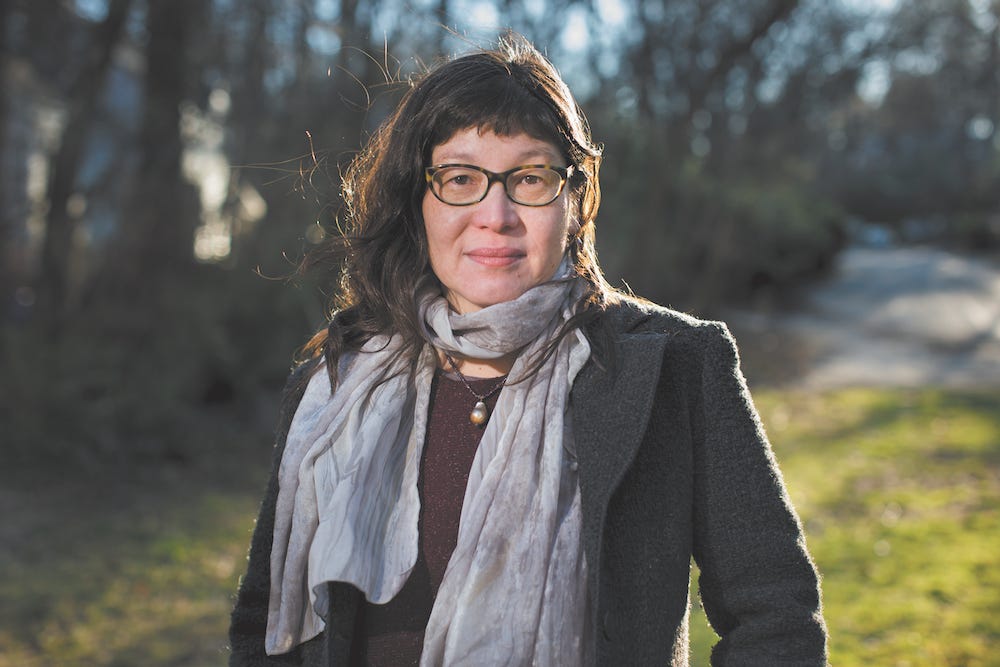
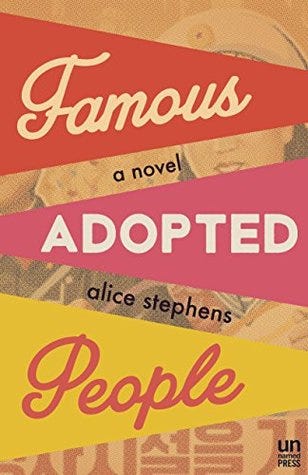
Alice Stephens Is Blowing Up the Traditional Adoption Story

by Marci Calabretta Cancio-Bello

Her thriller “Famous Adopted People” opens the door for stories that challenge the “good adoptee” narrative

Alice Stephens

There are not enough novels by adoptees about adoptees. When I saw the title of Alice Stephens’ debut thriller novel, Famous Adopted People, and found out she was a Korean adoptee like myself, I couldn’t wait to read it. I wondered how, among other things, she would tackle questions of agency for an adoptee protagonist.

In Famous Adopted People (Unnamed Press), two adoptees visit Korea: Mindy to find her birth mother, and Lisa just to have a good time. When a birth search and a romantic date go horribly wrong, Lisa Pearl finds herself in a secret compound in North Korea. Uncertain whether she is captive or guest, Lisa must keep her wits about her in order to survive — even thrive — in such a glamorous and terrifying dystopia.

I spoke with Alice Stephens about how her novel resists stereotypes of the “good adoptee” narrative and reorganizes questions of identity, loss, and empowerment surrounding adoption, how global politics influenced both her plot and characters, and what it was like to bring Kim Jong Un to life.

Marci Cancio-Bello: You not only destroy the tropes about adoption — which always centers around the triad: adoptee, birth mother, adoptive family — but also the whole lens through which adoption is comfortably viewed. We need stories about adoptees who are not interested in searching for their birth parents alongside stories about adoptees who are. I loved that while Mindy’s entire story is about finding her birth mother, Lisa doesn’t care.

Alice Stephens: Thank you so much for saying that. I’ve encountered a lot of resistance. I think people do not want to consider this alternate adoption story. They find it disturbing, and don’t want to part with the traditional narrative of adoption, which is a feel-good story about love and the infinite capacity of the human heart to love someone who’s not of your family or even of your own race. They don’t want to think that adoptees have problems, and I think we all do. We all have identity issues and some sort of feeling about our adoption that isn’t 100% positive. I have a great adoption story, I love my family, they’re great, but I had this problem within myself because I was different from them. I have three siblings who are the biological children of my parents, and I needed to see myself in a story. I hadn’t seen myself in any story, so I decided to write it.

MCB: There are many references to plastic surgery and re-forming one’s identity for both Asian and non-Asian characters. One character even explores how to make a Western eye look more Asian. That moment struck me as a reversal of the constant whitewashing adoptees often feel.

AS: As I sat down, I knew that there were all these themes I wanted to include. I had been reading a lot about North Korea and really interested in that, and a lot of the identity themes transcend even adoption — how people allow themselves to be identified, how easily they can change their identity, how much they want to conform — so I had themes of consumerism and plastic surgery and that sort of thing in there, to hopefully make people think more deeply about identity.

MCB: Whenever I talk to people about North Korea, there is often a veil of disbelief that places like that can exist, that such stories feel too dystopian and bizarre to actually be real.

AS: It’s stranger than fiction.

MCB: Two-thirds of your novel is set in North Korea, and those were the parts I was most interested in. I followed her journey through South Korea, but once Lisa crosses into North Korea, I was hooked.

AS: Oh my gosh. That’s great, because I get a lot of reactions that are the exact opposite. Readers tell me they often start out thinking it’s going to be a light, fluffy jaunt in South Korea and a fun and funny story, and then it takes a sinister turn to North Korea and for some people, that shift turns them off. I’m so glad to hear that that hooked you. That’s really the heart of the story.

MCB: You do a wonderful job of blowing up the assumption that North Korea is isolated, because Kim Jong Un’s character moves about so freely, and we follow so many dark, underground threads from South to North Korea. You also build this terrifying cast of characters, the Gang.

AS: I very loosely based the two Americans on people who actually did defect to North Korea. One of them was Charles Jenkins, who eventually married a kidnapped Japanese woman — because North Korea really does kidnap people. Charles Jenkins was in a little bit of trouble in his home base of South Korea, and walked over the DMZ line to escape his problems, and seemed to survive, even thrive in a way.

Both Americans had a different experience than North Koreans because they were perceived as special. They starred in Kim Jong Il’s movies. Oh, that was another book I read, about Kim Jong Il kidnapping the most famous South Korean movie director and the most famous screen actress and taking them into North Korea and eventually having them make movies because he loved movies and wanted to make prestigious movies that would bring him awards and make North Korea into a place that people saw as a cultural center, and not just as some unpredictable dictatorship.

So all those stories mingled together. I made up the two wives. What I wanted to do was show that North Korea cannot exist without America. America is part of North Korea. The American political system, that Cold War and rivalry, were all complicit. The whole world has made this country. And so that was something that I wanted to make clear.

I also wanted to acknowledge with the two wives that North Korea is not the only place affected by these antiquated notions of right and wrong and the strange sorts of alliances that people build against their enemies. So I took two countries that were very badly managed — Zimbabwe was colonized, and that ruined the whole country, and after they became independent, Mugabe came in and was a terrible dictator, and his story is parallel to the North Korean story. So that’s why I included them. But I did want it to be international, to show that it’s not just North Korea, but the whole world can be encapsulated within the North Korean story.

MCB: I do have to ask how you tackled writing Kim Jong Un as a real, lively character.

AS: It was fun. It was probably the most fun part of the whole thing, just because he can be such a buffoonish character. I made him into a wannabe thug who enjoys looking and acting like somebody dangerous, which he really is, but in an American way. By having him be a large part of the story, I could also introduce readers to North Korea itself and the things that happened there. Also, going back to that theme of how North Korea does not stand by itself but is created by the political situations, to have him be really Americanized seemed really important in the way he acts and the things he likes to do. There are Americans like that. One of them is our president. Yes, he is a cartoonish character, he’s evil, he’s all these terrible things, but people are making him the apotheosis of evil, whereas our allies are just as evil. We have bad things that happen in our own country, and we support people who torture and execute their own people, so his character is just mixing up the morality in the book.

MCB: His relationship to Honey is such a perfect metaphor for two people playing each other, thinking they’re the one in control. I’m not sure who is more dangerous and devious in this story.

AS: Honey made Kim Jong Un and enabled him, giving him his sense of being invincible and special and great, but he has no more affiliation and loyalty to her than anybody else, and it’s all about him and his survival. I think she would do the same if she had to.

MCB: Honey is such an American “ideal” figure — blond, blue-eyed, beautiful, and pulling political strings behind the scenes. We keep coming back to the belief that you can form, re-form, or conform your own identity, and I find that epitomized in Honey.

AS: As I said before, I wanted to blow up the traditional narrative of an adoption story. Instead of some pure source of maternal love that’s going to save the adoptee, I wanted to make her the anti-birth mother who did not conform to that trope. I’m mixed race: my birth mother was Korean, and my birth father was Caucasian American, so I just reversed that. What if my birth mother was actually Caucasian? I based her on a lot of people and attitudes that I experienced growing up, of white privilege — people thinking that because they were wealthy or beautiful or have good taste, they’re more important to the world than anybody else.

MCB: One character I really loved is Ting. She’s so quiet, and yet so tough, even in the smallest moments. Something about her reminds me of the actress Bae Doona.

AS: I wanted to give Lisa an ally. You always need someone to help you, no matter what situation you’re in. It’s a rare person who can do something by herself. The person who you least expect, the person who is the least powerful, is the person who ends up taking that extra step. I wanted to make her female, I wanted to make her Asian, and I wanted to make her feel at first like a child or a minion to the others, but the whole time, she’s thinking to herself, she’s observing, she’s smart, and she wants to escape from her hellish life. She chooses the one person she sees as her best chance, but also as somebody that she can actually morally like.

MCB: I think the moment when Ting’s backstory is revealed, Lisa realizes that other people have suffered for a long time also. She’s also a foil for Mindy’s character.

AS: Yes. Ting is the anti-Mindy, and she’s very strong. She hasn’t had all the advantages that Mindy has. She knows what to do, she’s going to get it done, and she knows who to help. She’s a by-the-bootstraps strong female character. There are a lot of bad characters in the novel, and Mindy is a good character, but I wanted somebody who would actually be a good character and not the expected good character. I wanted somebody who would be a good contrast to Mindy and Lisa, and a good role model for both of them.

MCB: Speaking of role models, I’m really curious about Lisa’s “Famous Adopted People” list that she and Mindy compiled when they were young, and which she references throughout the book. Was that something that you researched specifically for this book?

AS: It was always part of the structure of the novel to have quotes of famous adopted people. Actually, in the first iterations of the novel, each chapter was named for an adopted person, and I connected them a lot more obviously to the story, but my very wise editor, Chris, said that’s too much, just dial it back.

I was adopted in 1968, so I was one of the first (what I thought was the first) transracial adoptees. There were people who came before me, but it was very, very uncommon when I was young. Adoption was still considered kind of a shameful thing, and people didn’t admit to being adopted. Some people didn’t know that they were adopted, so when I was growing up, I would always make note if I found out that somebody was adopted. Michael Reagan is Ronald Reagan’s son, a pretty obscure figure, but I remember when Reagan was president, I made a mental note when hearing that his son was adopted.

I would say about three-fourths of the list was made of people I knew about growing up. I wanted to include them and their words, and — in the earlier iterations — a bit more about their stories, just to show that adoptees are such a huge population with a wide variety of their experiences. Some people didn’t care about their birth parents, some people really did, and all had different ways that they dealt with being adopted. I wanted that as a counterpoint for something to show readers, again, that yes, this is one story, but there are all these other stories out there. I’d always been Googling famous adopted people, so when I was writing this book, I did use Google for some of the adoptees that I didn’t know were adopted, like Greg Louganis, Faith Hill, and people like that. I used the internet for that, but mostly the list was made of people I had heard about my whole life, to make their voices heard too, so that the reader would know that all adoptees cannot be put in one bucket. We are all individuals with our own stories.

MCB: The epilogue especially feels like a love letter to all adoptees. I appreciated that it addressed all these stereotypes, acknowledging that everyone is telling stories except for the actual adoptees, which I think is still mostly true in 2018.

AS: I do too. But I do see, nowadays, that there are more and more adoptees speaking out. I think it has a lot to do with that big wave of adoptees, of which perhaps you are one, that started in the 1980s and 1990s but really crescendoed in the 2000s. I didn’t meet my first Korean adoptee until I was in my late 20s, but now I meet them everywhere. When you’re more visible, you feel like you can speak out more. And I think adoptees aren’t taking it anymore. They’re saying, “Come on, we’ve got our own voices, and we’ve got our own stories, and we don’t want other people to control that.”

MCB: I do have to say that this book had a truly satisfying ending, at least for me.

AS: Oh, I’m so pleased. Actually, I have to confess I wanted to just end the book without the epilogue, but my editor said, “No, you’ve got to give readers something to make sense of it.” As usual, he was right.

I think that a lot of non-adoptees read this as a mad caper where the protagonist just happens to be adopted, but it’s really a thriller and I really did want to make it clear that this was a story about identity and adoptees, and how we make sense of the world.


Alice Stephens Is Blowing Up the Traditional Adoption Story was originally published in Electric Literature on Medium, where people are continuing the conversation by highlighting and responding to this story.

06 Jan 18:15

Homemade Soft Pretzels

by Ginny McMeans

Homemade Soft Pretzels are delicious appetizers that will get you in ‘game day’ mode. They are simple, oil-free, dairy-free and healthy. Don’t forget the mustard!

Close-Up photo of soft pillowy homemade giant soft pretzels. A little bit of mustard is in the corner.
You know how inviting those giant soft pretzels are at sports...

get the full recipe ... Click on the blue recipe title above :) »


03 Jan 18:47

Skip the Negroni, Order a Fancy Shot Instead

by Claire Shaffer

Forget the buttery nipples and mind erasers: these $5 shots are essentially mini craft cocktails

Mood Ring, a bar nestled underneath the subway tracks in Bushwick, Brooklyn, sports an aesthetic that falls somewhere between an underground dive bar and a Wong Kar-wai movie. Patrons in leather jackets, Lolita-style dresses with sneakers, and band T-shirts with cut-off sleeves order off a menu on a TV monitor behind the circular bar advertising a monthly “Horoscope Cocktail” special, drinks with names like “Petty” and “Gucci Belt,” and elaborate, brightly colored shots.

The first time I went to Mood Ring, some terrible Trump-related news had happened earlier that day, and while I can’t remember the details, I can remember secretly wanting to go somewhere that was more low-key, less committal, maybe where you could in theory talk it over with the bartender over a mediocre pint, or just sit in the corner with friends and complain. Luckily, that night I was with folks who had been to Mood Ring before, and together we ordered a round of the Aux Cord, a speciality shot that the bar serves for $5 each. It’s like a tiny bloody mary: vodka, tomato juice, Sriracha, Tabasco.

One knock back had me sold. For a moment, the anxieties I was harboring — about the bar, about the news — melted away. And yet, one gulp of the stuff felt like enough; the sudden burst of spice and flavor felt much more cathartic than either tepidly sipping a cocktail or gulping an acrid shot of straight vodka. Imaginary as it might be, the bloody mary taste appeared more daring, more powerful, when it could be condensed into the palm of your hand.

Bowen Goh, who opened Mood Ring last September with longtime friend Vanessa Li, features several shots at the bar, including the “Bodega Dreams” (a shot of whiskey infused with Arizona iced tea) and the “Mystery of Luv” (vodka, lime, and lychee liqueur). “It was kind of fun for us, because we realized that shots were something that people do communally, as a group, whether it’s a birthday party or just a group of people out,” says Goh.

Li says that the two biggest clientele for these drinks are “people who are on Tinder dates” and big groups, like birthday parties. But often, people at the bar simply see other patrons ordering the Aux Cord and are intrigued by the tiny glasses of bright-red liquid. It can turn into a domino effect, says Goh, where orders of the Aux Cord spread throughout the bar as the night goes on. Part of this is because it’s “just” a shot and not a full cocktail; if you end up not liking how the Aux Cord tastes, it’s over in one sip, and you’re only set back five bucks as opposed to $11, $12, or $15.

Of course, “mixed drink” shots have existed and been served at bars before — the B-52 (coffee liqueur, Irish cream, and Grand Marnier), created in 1977, is a famous example — they’ve usually functioned as an excuse for lewd patrons and bartenders to come up with “the most raunchy name you possibly could,” as Kim Haasarud, who runs the drink consulting firm Liquid Architecture, says. Recipes like the buttery nipple (butterscotch schnapps and Irish cream) and the Irish car bomb (Guinness, Irish cream liqueur, whiskey) came from this tradition, and contributed to the stigma surrounding shots: That they were overly sweet, perhaps too-easily consumable, and designed for more novice drinkers in mind.

“Shots are a good way, without ordering the entire drink, to try something different.”

But over the past few years, a variety of bars, restaurants, and hotels, from small dives like Mood Ring to national chains like TGI Friday’s and Mastro’s Steakhouse, have experimented with “craft” shots and shooters. Where shots were once the purview of college kids on spring break and partying groups wanting to get drunk fast, some bar designers and mixologists now see them as an opening into another realm of sophisticated, or at least more innovative, drink designs.

Perhaps the most famous shot invented in the past two decades is the pickleback, a combination of whiskey and pickle brine whose creation, in 2006, is most often attributed to Reggie Cunningham, a former bartender at Bushwick Country Club. It’s a bizarre drink that’s nonetheless fitting for a Brooklyn dive bar: a hipster-approved fusion of new tastes and rustic traditions (pickles and pickle juice have a long history as drink chasers), one that can be shared casually among friends or — in keeping with the drink’s origins — employed as part of a dare.

“It’s all in the way that you present it,” Haasarud says of the new school of shots. “People want to try new things, and [shots are] a good way, without ordering the entire drink, to try something different.”

At Sweet Liberty, a cocktail bar in Miami Beach, Florida, a boilermaker (beer-and-shot combos) section caters specifically to the after-work crowd. “They’re very popular with industry workers who have just finished a shift,” says Fraser Hamilton, Sweet Liberty’s bar manager. “Shots are for the most no-nonsense drinkers of them all. Also, commonly drunk together as a salute to friendship and comradery.” Sometimes, as patrons are waiting at the bar for a chance to order food, the bartenders will offer them daiquiri shots (“snack-quiris,” as Hamilton calls them) or mini Irish coffees as a thank-you for their patience, as well as to entice them to order the full cocktail versions later in the evening.

Other bars may add more interactive elements. At Three Dots and a Dash, a tiki bar in Chicago, beverage director Kevin Beary designed a group drink order called the Shotstopus, where three rum, passionfruit, and tangerine shots are presented on an octopus-shaped display (each “tentacle” holds a glass) surrounded by dry ice fog and aromatics. “It’s such a wild presentation,” Beary says.

He also admits that the tiki bar atmosphere helps quell the stigma surrounding shots, and transforms them into a fun, elaborate party element. “For the most part, people come here to have a good time. This is not that stuffy environment where taking shots with your friends would be frowned upon.”

For bartenders and bar owners, shots also provide an opportunity to invoke social drinking traditions from other cultures. At Whitechapel, a gin bar in San Francisco, Alex Smith and Martin Cate designed their kopstootje menu (a Dutch word that literally translates to “little head butts”) after taking a trip to Amsterdam and trying a few — not just the drink order itself (a pint of beer and shot of genever mixed with different herbed and spiced liqueurs), but also the highly involved procedure in which it’s meant to be drunk.

“In the Netherlands, they bend down to the table to slurp the overfilled shot with their hands behind their backs,” Smith says via email. “Then they proceed to pick up the glass and down the rest.”

The kopstootje offerings at Whitechapel — “the biggest and most complex menu that I have ever put together, a real labor of love,” says Smith — offers five different genever shots that can each be combined with a beer of choice, for $12. They range from the stately “Traditional” (straight genever and Bols) to the tropical “Erasmus” (Boomsma oude genever, rum, gingersnap, amaro) to the highly aromatic “Rembrandt” (Bols, Becherovka herbal liqueur, and Kummel). While Smith is incredibly proud of his creations, he admits that patrons’ unfamiliarity with the kopstootje tradition makes them less popular than the bar’s more classic gin cocktails.

“The name probably throws people off to begin with, and it isn’t a cultural thing that we do here the same way they do in the Netherlands,” says Smith. “It is common and fun to do [over there], but here people don’t seem to get into it as much.”

What differentiates this new breed of “cocktail” shots is their focus on complex flavors and recipes that would normally not only be inaccessible to the average bar-goer, but also unappealing. The affordability of shots turns the highfalutin culture around mixology and craft cocktails into something more egalitarian — you may not be able to afford (or enjoy) a solo $22 Manhattan in the East Village, but ordering a round of $6 shot versions for the table not only saves your wallet, but also transforms the entire drinking experience.

“It is meant to be a fun social toast, a punctuation in your night of drinking beers, versus getting drunk quickly by doing several large shots in a row,” says Smith.

Haasarud sees the new shot trend as an “educational element” to expand patrons’ palates and open bars up to stranger, more experimental menu items. “It allows you more freedom,” she says. “Maybe this is something that you wouldn’t have ordered before, but because it’s only five dollars, you’re like, ‘I want to try this, I’ve been hearing about this.’ So I think it could also really open the door in allowing restaurants to give something new to try that they wouldn’t have otherwise done.”

Creative shots encourage groups of friends to partake in a low-risk, unpretentious, economically sound way to experiment with unfamiliar flavors and drinking styles — ones that they might not necessarily try on their own, or in larger portions. Just as the dining world needs its casual, family-style establishments with flavors and foods just as bold as the three-star Michelin restaurants, it’d be nice to have a cocktail world that provided the same. And while shots may still have that classic go-hard-or-go-home association in certain watering holes, the mixed-drink shooters offer a brief form of escapism without needing you to drown your sorrows in alcohol. Drinks no longer have to be a choice between casual, fun, or innovative — with mixed-drink shots, you can have all three.

Claire Shaffer is a writer based in Brooklyn. Eliot Wyatt is a freelance illustrator from the UK.
Editors: Daniela Galarza and Erin DeJesus

03 Jan 10:57

Watch an Art Conservator Bring Classic Paintings Back to Life in Intriguingly Narrated Videos

by Colin Marshall

Even in our age of unprecedentedly abundant images, delivered to us at all times by print, film, television, and especially the ever-multiplying forms of digital media, something inside us still values paintings. It must have to do with their physicality, the physicality of oil on canvas or whatever tangible materials the painter originally used. But in that great advantage of the painting lies the great disadvantage of the painting: tangible materials degrade over time, and many, if not most, of the paintings we most revere have been around for a long time indeed, and few of them have come down to us in pristine shape.

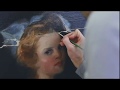
Enter the art restorer, who takes on the task of undoing, painstakingly and entirely by hand, both the ravages of time and the blunders of less competent stewards who have come before. In this case, enter Julian Baumgartner of Chicago's Baumgartner Fine Art Restoration, a meditative short documentary on whose practice we featured earlier this year here on Open Culture.

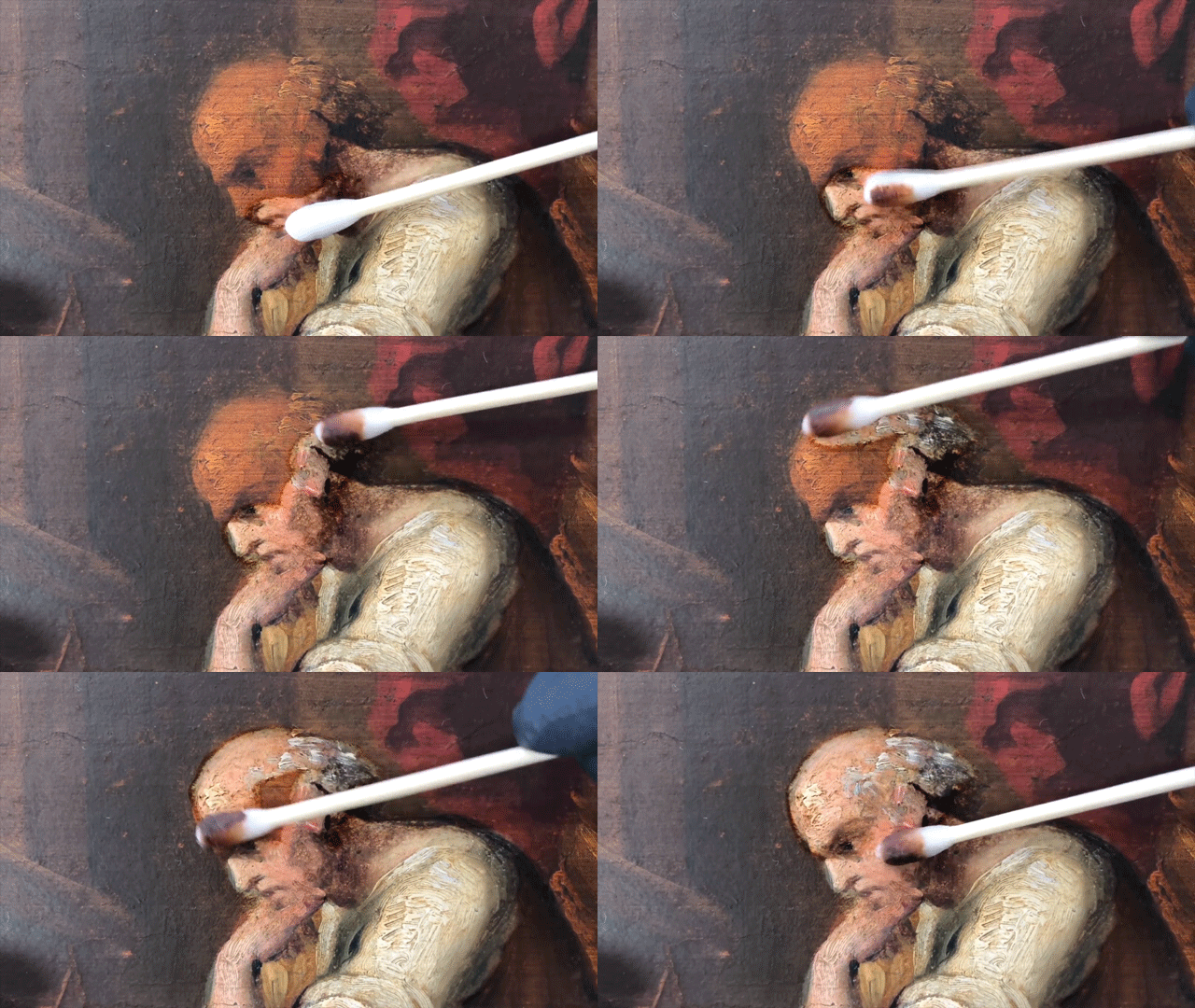
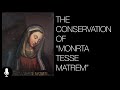
You can see much more of it in these videos: in the one above, writes Colossal's Kate Sierzputowski, Baumgartner "condenses over 40 hours of delicate swiping, scraping, and paint retouching into a 11.5 minute narrated video" showing and explaining his restoration of The Assassination of Archimedes.

The project, not atypical for a painting restoration, "involved cleaning a darkened varnish from the surface of the piece, removing the work from its original wooden panel using both modern and traditional techniques, mounting the thin paper-based painting to acid-free board, and finally touching up small areas that had become worn over the years." Baumgartner's Youtube channel also offers similar condensed restoration videos of two other paintings, Mother Mary and a portrait by the American Impressionist William Merrit Chase.

Baumgartner packs into each of these videos an impressive amount of knowledge about his restoration techniques, which few of us outside his field would have had any reason to know — or even imagine —before. They've racked up their hundreds of thousands of views in part thanks to that intellectual stimulation, no doubt, but all these physical materials and the sounds they make have also attracted a crowd that shares a variety of enthusiasm unknown before the age of digital media. I'm talking, of course, about ASMR video fans, whom Baumgartner has obliged by creating a version of his The Assassination of Archimedes restoration especially for them. Now there's an art restorer for the 21st century.

via Colossal

Related Content:

How an Art Conservator Completely Restores a Damaged Painting: A Short, Meditative Documentary

The Art of Restoring a 400-Year-Old Painting: A Five-Minute Primer

The Art of Restoring Classic Films: Criterion Shows You How It Refreshed Two Hitchcock Movies

Rembrandt’s Masterpiece, The Night Watch, Will Get Restored and You Can Watch It Happen Live, Online

25 Million Images From 14 Art Institutions to Be Digitized & Put Online In One Huge Scholarly Archive

Based in Seoul, Colin Marshall writes and broadcasts on cities, language, and culture. His projects include the book The Stateless City: a Walk through 21st-Century Los Angeles and the video series The City in Cinema. Follow him on Twitter at @colinmarshall or on Facebook.

Watch an Art Conservator Bring Classic Paintings Back to Life in Intriguingly Narrated Videos is a post from: Open Culture. Follow us on Facebook, Twitter, and Google Plus, or get our Daily Email. And don't miss our big collections of Free Online Courses, Free Online Movies, Free eBooksFree Audio Books, Free Foreign Language Lessons, and MOOCs.

01 Jan 21:44

48 Books By Women and Nonbinary Authors of Color to Read in 2019

by R.O. Kwon

Resolve to put all these anticipated books on your reading list

I started compiling this list of anticipated books a couple of years ago, when I was having trouble finding forthcoming books by women of color that I could read and review. It occurred to me that if I was having trouble, others almost certainly were, too.

Here, again, are 2019 books by women of color, as well as by nonbinary people of color: novels, collections, memoirs, and anthologies. This is the third year I’ve assembled such a list for Electric Literature. I’m delighted to learn that the previous two years’ lists have been among the publication’s most shared pieces of 2018 and 2017; I’m dismayed by how necessary the list still seems to be. May this list become less useful, and may we all read more broadly.

46 Books By Women of Color to Read in 2018

(A word on methodology: this is a round-up of books of prose that I, personally, am anticipating. I know I’ve missed wonderful books — if you see something missing, please feel free to mention it in the comments. And though I love and need poetry, I have less of a sense of what’s forthcoming from poets, so, as in past years, I limited the list to prose. Finally, I used an expansive definition of “writers of color,” a necessarily complex and imperfect category that may have different valences outside the United States or even, sometimes, within it.)

JANUARY

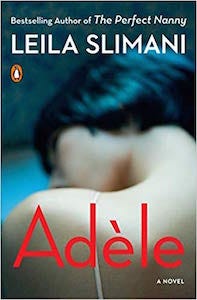
Leila Slimani, Adèle

Adèle is the first novel by Leila Slimani, the heralded Franco Moroccan author of The Perfect Nanny. The winner of the La Mamounia literary prize, and now translated into English, Adèle is about a sex-addicted journalist who organizes her life around her extramarital affairs.

FEBRUARY

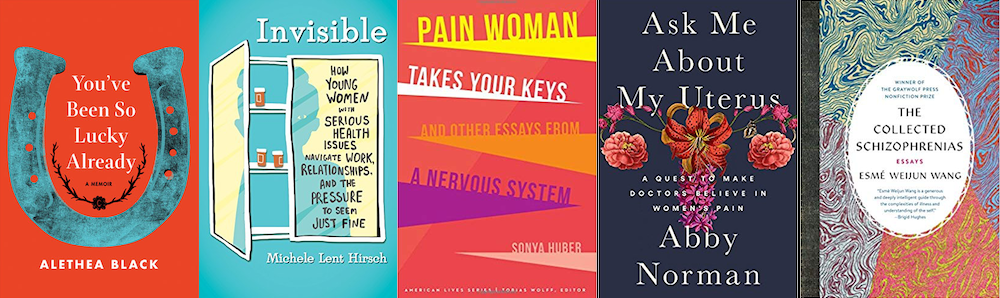
Esmé Weijun Wang, The Collected Schizophrenias

The Collected Schizophrenias is one of the most powerful, affecting, rigorous books of essays I’ve read in recent memory. This exploration of illness is splendid; the book is a gift.

Valeria Luiselli, Lost Children Archive

I buy five copies at a time of Valeria Luiselli’s 2016 book, the extraordinary Tell Me How It Ends, because of how often I feel moved to give it to others. Lost Children Archive is her fifth book and third novel, and it follows a family driving from New York to the United States–Mexico borderline.

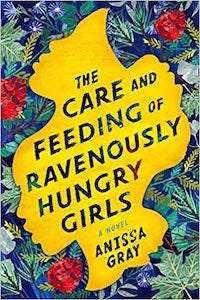
Anissa Gray, The Care and Feeding of Ravenously Hungry Girls

Terry McMillan says she was “immediately taken by the power and honesty of Anissa Gray’s voice” in this debut novel about a mother and father who are arrested, and about the family members who come together to try to raise the couple’s teenage daughters.

A New Art Festival Aims to Change the Way We Tell Stories About Death

Chloe Aridjis, Sea Monsters

The recipient of the Prix du Premier Roman Étranger for her first novel, Book of Clouds, Chloe Aridjis has written a new book about a girl hoping to find a troupe of Ukrainian performers. Garth Greenwell calls Aridjis “one of the most brilliant novelists working in English today.”

Devi Laskar, The Atlas of Reds and Blues

Kiese Laymon says about The Atlas of Reds and Blues that he’s “never read a novel that does nearly as much in so few pages,” and that the book is “as narratively beautiful as it is brutal.” This debut is about a woman, the American-born daughter of Bengali immigrants, who has been shot by the police and lies bleeding in her driveway.

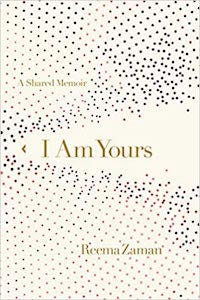
Reema Zaman, I Am Yours

I Am Yours is billed as a “shared memoir,” and it’s about Reema Zaman’s experiences as a writer, actor, and speaker in Bangladesh, Thailand, New York, and Oregon.

Toni Morrison, The Source of Self-Regard

A new collection of nonfiction from Toni Morrison! The book includes essays, speeches, and meditations.

Yiyun Li, Where Reasons End

Written after Yiyun Li lost a child to suicide, Where Reasons End imagines conversations between a mother and a child. Andrew Sean Greer says it’s “the most intelligent, insightful, heart-wrenching book of our time,” and Elizabeth McCracken calls it “an extraordinary book by one of our most extraordinary writers.”

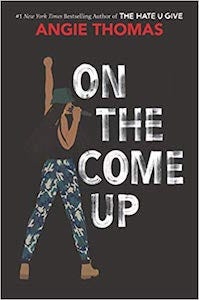
Angie Thomas, On the Come Up

The writer of the beloved The Hate U Give returns with a second novel, this time about a sixteen-year-old girl who wants to be the greatest rapper of all time.

MARCH

Mira Jacob, Good Talk

I’ll leap to read anything Mira Jacob writes and draws, and I’ve been impatiently awaiting this graphic memoir about a woman trying to answer her six-year-old son’s questions about race, family, and belonging. According to Jacqueline Woodson, Good Talk is “a beautiful and eye-opening account of what it means to mother a brown boy and what it means to live in this country post-9/11, as a person of color, as a woman, as an artist.”

Helen Oyeyemi, Gingerbread

Helen Oyeyemi’s seventh book has to do with gingerbread, London, “verbal vegetation,” more gingerbread, and a faraway land called Druhástran. As Michael Schaub says, “Oyeyemi seems to be incapable of writing anything that’s not wholly original.”

Laila Lalami, The Other Americans

Laila Lalami’s previous novel, the incandescent The Moor’s Account, was longlisted for the Man Booker Prize and was a finalist for the Pulitzer Prize. In her new novel, The Other Americans, a Moroccan immigrant in California is murdered, and a town’s and family’s secrets are gradually revealed.

7 Books that Illuminate the People and Places on the U.S.-Mexico Border

Namwali Serpell, The Old Drift

The Old Drift is the first book from the Caine Prize-winning Namwali Serpell. Taking place in Zambia, this multigenerational novel is drawing laudatory comparisons to Gabriel García Márquez’s One Hundred Years of Solitude.

T. Kira Madden, Long Live the Tribe of Fatherless Girls

I’ve been excited to read T. Kira Madden’s Long Live the Tribe of Fatherless Girls ever since I first heard her read last spring. Madden’s debut memoir recounts her coming of age as a queer, biracial teenager in Boca Raton, Florida.

Lilliam Rivera, Dealing in Dreams

Dealing in Dreams is a fast-paced novel that follows on an all-girl group called Las Mal Criadas, and Daniel José Older says it “pulls no punches, launching us on a wild, relentless ride through the cutthroat streets of this brilliantly realized dystopian world, where hard choices can tear even the closest allies apart.”

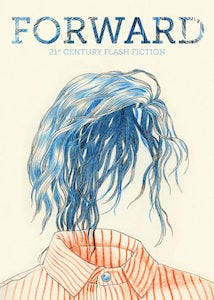
Megan Giddings, ed., Forward

Forward is an anthology of flash fiction and craft essays by writers of color, edited by The Offing’s fiction co-editor Megan Giddings. With contributions from writers including Pam Zhang, Ursula Villarreal-Moura, and Bix Gabriel, Forward looks to be a valuable addition to both personal and classroom bookshelves.

APRIL

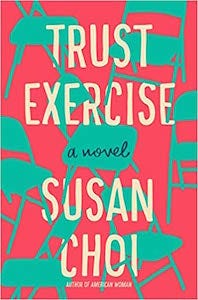
Susan Choi, Trust Exercise

As soon as I finished reading an early copy of Trust Exercise, I hurried online, desperate to talk about the novel with anyone else who’d also read it. It’s a startling, perplexing, fascinating book by a writer I’ve long been—and will always be—eager to read.

Angie Kim, Miracle Creek

Miracle Creek is a courtroom thriller about a Korean immigrant entrepreneur and a murder trial. According to Alexander Chee, this is “a bold debut novel about science and immigration and the hopes and fears each engenders―unforgettable and true.”

Kali Fajardo-Anstine, Sabrina & Corina

Kali Fajardo-Anstine’s debut story collection focuses on Indigenous Latinx characters living in Denver, Colorado. “Comparisons came to mind: the Alice Munro of the high plains, the Toni Morrison of indigenous Latinas — but why compare her to anybody?” says Julia Alvarez. “She is her own unique voice, and her work will easily find a place, not just in Latinx literature but in American literature and beyond.”

Ayşegül Savaş, Walking on the Ceiling

In this novel set in Paris, a Turkish woman starts taking long walks with a British man she meets outside of a bookstore. Katie Kitamura calls it “an elegant meditation on grief, identity, memory and homecoming.”

Grace Talusan, The Body Papers

The Body Papers is a memoir about abuse, immigration, cancer, and mental health. Celeste Ng says that “Grace Talusan writes eloquently about the most unsayable things: the deep gravitational pull of family, the complexity of navigating identity as an immigrant, and the ways we move forward even as we carry our traumas with us.”

MAY

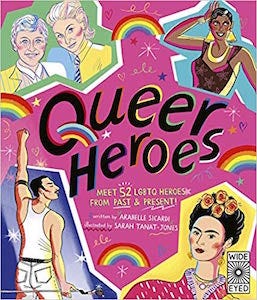
Arabelle Sicardi, Queer Heroes (illustrated by Sarah Tanat-Jones)

A few months ago, as soon as my brother and sister-in-law had their first child, I panicked, went to the internet, and asked it “how to be a feminist aunt.” So far, my answer has been to buy the child a lot of feminist books. I’ll read anything Arabelle Sicardi writes, and I’ll surely pick up their Queer Heroes, which is a series of portraits of writers, artists, activists, and innovators.

Chia-Chia Lin, The Unpassing

The Unpassing is a novel about a Taiwanese immigrant family trying to survive outside of Anchorage, Alaska. In Esquire, Adrienne Westenfeld says that Chia-Chia Lin “resists received wisdom about the American dream to craft a family saga about the difficulty of grieving far from home.”

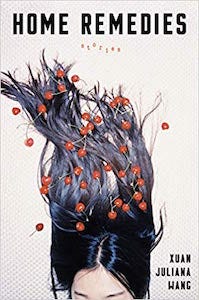
Xuan Juliana Wang, Home Remedies

Called a “radiant new talent” by Lauren Groff, Xuan Juliana Wang has written a debut collection about Chinese millennials. Weike Wang says these stories “surprise and challenge in wonderful, wonderful ways.”

Growing Up with the Face of a Bad Guy

Yoko Ogawa, The Memory Police

Plants, animals, objects, and body parts are disappearing, and almost no one notices. The few who do fear the memory police, who want the lost objects to stay forgotten. Yoko Ogawa is a versatile magician, and The Memory Police is sure to dazzle.

Helen Hoang, The Bride Test

Helen Hoang’s The Bride Test is about a Vietnamese American man whose family returns to Vietnam to find him a bride. Hoang’s first novel, The Kiss Quotient, was a hit that Roxane Gay called “original and sexy and sensitive.”

JUNE

Catherine Chung, The Tenth Muse

The Tenth Muse is about a mathematician named Katherine who’s trying to figure out the Riemann Hypothesis, the greatest unsolved mathematical problem of her time. There’s never enough fiction about mathematicians; Catherine Chung’s first book, Forgotten Country, cut my heart open; I want to read The Tenth Muse right now.

Nicole Dennis-Benn, Patsy

Patsy is centered on a woman who leaves Jamaica and her mother and daughter to live in America, and who, as an undocumented immigrant, works as a bathroom attendant and nanny. “A novel that splits at the seams with yearning, elegantly written and deeply felt,” says Esmé Weijun Wang.

JULY

Elissa Washuta and Theresa Warburton, ed., Shapes of Native Nonfiction

This anthology of essays by Native writers uses “weaving techniques such as coiling and plaiting as organizing themes,” and it includes work from writers such as Terese Marie Mailhot and Deborah Miranda.

Jasmine Guillory, The Wedding Party

The bestselling Jasmine Guillory returns with her third novel, The Wedding Party, a romance about two nemeses whose physical attraction to each other seems to keep growing.

Sarah M. Broom. (Photo by Hal Williamson)

Sarah M. Broom, The Yellow House

Sarah M. Broom received a Whiting Foundation Creative Nonfiction Grant for The Yellow House, a book spanning 100 years of her family’s history. The Whiting jury praised it for being “a crucial memoir of life on the margins.”

AUGUST

Jia Tolentino, Trick Mirror

Most readers I know will rush to read any new essay by the incisive, profound New Yorker staff writer Jia Tolentino. Trick Mirror is her first book, and it’s going to be so good.

Keah Brown

Keah Brown, The Pretty One

This debut essay collection comes from disability-rights advocate Keah Brown, creator of the #DisabledandCute viral campaign. The essays are about romance, pop culture, cerebral palsy, race, and media.

Stephanie Jimenez

Stephanie Jimenez, They Could Have Named Her Anything

In Stephanie Jimenez’s intriguingly titled debut novel, a Latinx teenager from Queens attends an Upper East Side private school and becomes friends with a rich, rebellious white girl. The book alternates between the perspectives of the two girls and their fathers.

Bassey Ikpi, I’m Telling the Truth, But I’m Lying

I’m Telling the Truth, But I’m Lying is an essay collection examining Bassey Ikpi’s experiences of bipolar disorder and anxiety. Ikpi’s collection was a Publishers Weekly preview selection.

Where Are All the Memoirs About Women and Work?

FALL AND AFTERWARD

Roxane Gay

Roxane Gay, How to Be Heard

A book of writing advice from Roxane Gay. So many of you are going to want to read this.

Carolina de Robertis, Cantoras

Carolina de Robertis has long and reliably been a wise, big-hearted writer and translator, one whose work I seek out. Cantoras tracks five fictional women in Uruguay fighting to live and love despite the restrictions imposed by a ruthless military government.

Carmen Maria Machado. (Photo by Art Streiber)

Carmen Maria Machado, In the Dream House

The fantastically inventive writer of the widely-admired Her Body and Other Parties turns from fiction to nonfiction with In the Dream House, a memoir about her experience in an abusive same-sex relationship.

Margaret Wilkerson Sexton. (Photo by Ben Krantz)

Margaret Wilkerson Sexton, The Revisioners

I loved Margaret Wilkerson Sexton’s first novel, A Kind of Freedom, and her second novel tells two parallel stories, that of an escaped slave who forms a friendship with a white next-door neighbor and of a present-day woman who works as a caretaker for an older white woman.

Maaza Mengiste. (Photo by Juergen Bauer)

Maaza Mengiste, The Shadow King

Beneath the Lion’s Gaze, Maaza Mengiste’s 2010 debut novel, was deeply moving and hard to forget; now, her next book, The Shadow King, is coming our way. Set during Mussolini’s 1935 invasion of Ethiopia, Mengiste’s new novel recounts the story of an army of Ethiopian women who fight the Italian fascists.

Meredith Talusan

Meredith Talusan, Fairest

Meredith Talusan is another writer whose work I always want to read. She’s a writer and journalist, and an editor at Them, and her memoir, Fairest, will be wonderful.

Jaquira Díaz

Jaquira Díaz, Ordinary Girls

Ordinary Girls is a memoir about growing up queer in Puerto Rico and Miami Beach as her family splits and her mother struggles with addiction and mental illness.

Akwaeke Emezi

Akwaeke Emezi, Pet

Akwaeke Emezi’s first novel, Freshwater, is the compelling story of a Nigerian woman who develops separate selves. This fall, the National Book Award “5 Under 35” writer will publish their first young-adult novel, Pet, about a teen who frees a monster from a painting.

Mimi Lok

Mimi Lok, Last of Her Name

This story collection depicts Asian outsiders in Hong Kong, British suburbs, California, and Japanese homeless encampments, and it will be part of Kaya Press’s 25th-anniversary list.

Porochista Khakpour

Porochista Khakpour, Brown Album

In Brown Album, Porochista Khakpour brings together essays and reviews about Iranian American life and literature, some of which have previously been published in venues including The New York Times, Los Angeles Times, and The Wall Street Journal.

Meng Jin

Meng Jin, Little Gods

Steinbeck Fellow Meng Jin’s first book, Little Gods, is a portrait of a Chinese woman’s migrations. The novel is narrated by the woman’s daughter, the husband she left behind, and a friend.

Dina Nayeri

Dina Nayeri, The Ungrateful Refugee

The Ungrateful Refugee is Dina Nayeri’s first nonfiction book, an account of her journey from Iran to an Italian refugee camp, to Oklahoma, to Princeton. In addition, the book reports on the stories of other refugees and asylum seekers. I love this book’s title, and can’t wait to read the rest of it.


48 Books By Women and Nonbinary Authors of Color to Read in 2019 was originally published in Electric Literature on Medium, where people are continuing the conversation by highlighting and responding to this story.

29 Dec 15:00

Why I Can’t Cook for Your Self-Centered Architect Cousin

by Jenna Mason
Beth Ann Fennelly, the poet laureate of Mississippi, teaches in the MFA program at the University of Mississippi.
26 Dec 13:00

Appalachian Whiteness: A History that Never Existed

by Lovey Cooper

This piece was originally published by 100 Days in Appalachia.


Writing about Southern Appalachia slightly more than a century ago, travel writer Horace Kephart called “[o]ur highlanders…the most homogenous people in the United States.”

“The mountains proper,” he added, “are free not only from foreigners but from negroes as well.”

By the time Kephart wrote those words, the idea of what historian Aaron Astorrecently called a “whitened archetype of Appalachia…with an untouched, pure Anglo-Celtic core,” had already existed for decades.

The same idea has persisted to the present: in his bestselling 2016 memoir, Hillbilly Elegy, J.D. Vance invokes the Scots-Irish ancestry of his family, asserting that “the culture of Greater Appalachia is remarkably cohesive.”

The notion confers on Appalachia a glazed burnish that has only grown in appeal to those who would pretend to make America white as it never was, “again,” through such measures as President Trump’s recently-announced intention to do away with the right to citizenship that the 14th Amendment confers upon all who are born on U.S. soil.

“Appalachia plays the role of a sort of fetish for those who would oppose birthright citizenship,” said Bob Hutton, author of “‘Bloody Breathitt’: Politics & Violence in the Appalachian South.”

But just as persistent have been the efforts of researchers like Wilma Dunaway, who has documented the presence, over centuries, of a wide range of European ethnic groups and others of African and indigenous descent. Other observers have noted how, in recent years, states in the region occupy top 10 lists of states with the fastest-growing Hispanic populations.

And just as Trump’s pretense toward ending birthright citizenship has incited reexaminations of the Constitution, so should the “fetishization” of Appalachia’s supposed racial and ethnic purity by those supporting the proposal cause us to take another look at the region’s real past and present.

“The first example that shows Appalachian whiteness to be an oversimplification is the presence of the Cherokee, Catawba, Mingo, Yamasee and others,” said Hutton, who is senior history lecturer at the University of Tennessee, Knoxville. “In the early colonial period, Appalachia is home to a panoply of Native American peoples.”

“In fact, where I’m calling from,” he added, “is pure Cherokee territory. They have a burial mound here on campus.”

The population of enslaved blacks in Appalachia never grew beyond lower-double-digit percentages of the region’s total population, but slavery was “immensely important to the Appalachian economy up to the 1860s,” Hutton said. As elsewhere, after the Emancipation Proclamation, it was the 14th Amendment that guaranteed freed slaves and their descendants citizenship, due process and equal rights under the law. (The latter notions became the subject of many important Supreme Court cases in the 20th century).

In the late 19th and early 20th century, many blacks left the region for the North.  Certain African American cultural contributions to the region were slowly erased, or at least obscured, as part of the effort to depict Appalachia as a “racially pure ethnic reservoir in the mountains,” noted Bruce Baker, author of “What Reconstruction Meant: Historical Memory in the American South.”

An example: the banjo.

“There’s the white hillbilly playing banjo — a racially pure, culturally-isolated relic,” Baker said. “But actually, the banjo is an African instrument, played by African Americans and probably brought on the railroads to the piedmont areas.”

Around the same time, Hungarians, Poles, Italians and others came to work in mining and on the railroads. In fact, many Appalachian coal companies “hired immigrants as scabs, playing them against the Scots-Irish miners,” Astor noted.

The tension between these populations — all of whom were immigrants at one time or another — laid the foundation for certain contemporary attitudes.

“The whole fascination with racial purity [in Appalachia] begins in response to Eastern European, Southern European and Mediterranean immigrants of the 1890s showing up by the boatload,” Hutton said.

“They were considered inferior by WASPs, and the interest in Appalachia as the last bedrock of WASP purity grew,” he added.

Over time, these immigrant groups assimilated into the culture of the U.S., leading to a somewhat ironic result, Hutton said. “Some of the biggest supporters of doing away with birthright citizenship have Italian and Polish last names.”

Hutton said the underlying issue, then, is “skin color. Over time, it’s apparent that white Americans consider Appalachia to be theirs.”

But in the late 20th century and up to the present, jobs in agriculture, food services, factories and other areas of local economies began drawing Hispanic immigrants to the region.

These latest arrivals to Appalachia — and their children — have made measurable economic impacts on many towns and small cities across the region, Baker said. He pointed to the work of colleague Leon Fink, author of “The Maya of Morganton,” a book describing a struggle during the 1990s by Guatemalan workers seeking to have their rights respected in a North Carolina poultry plant.

If the citizenship of these immigrants’ children, and the rights that come with citizenship, were suddenly stripped, tens of thousands of families might either find themselves living and working in the shadows, or be forced to leave the region altogether, he noted.

“The effect…could be devastating for particular parts of Appalachia, where they’ve been a part of economic resurgence,” Baker said.

The “immigrant experience in rural areas of Appalachia in recent times hasn’t been written about or studied enough,” said Hutton. “We live in a much more visibly, ethnically diverse Appalachia than 20 years ago, or even 40 years ago.”

In the end, President Trump’s proposal “gets down to who’s really counted as American,” Astor said. “When people hold Appalachia as ‘the most American,’ they’re doing it in a racialized way. The reality is, people have always come in from the outside — and more likely than not, they’ve mixed with those already there.”

18 Dec 00:29

19 Vegetarian Mains for a Festive Holiday Table

by Rabi Abonour
Bgarland

OK, I'm sharing this because the picture of the roasted pumpkin literally caused me to recoil in horror. (Though I highly recommend the vegan miso risotto recipe!)


19 vegetarian main courses that prove the holidays aren't all about turkey and ham. Read More
14 Dec 22:21

Making Healthy School Lunches Free for All Should Be a National Priority

by Megan Carney

Last week, the U.S. Department of Agriculture announced plans to lower nutrition standards for the National School Lunch Program and roll them back to pre-Obama era levels. These actions from the Trump administration signal yet again how low of a priority they consider this program—and by extension the millions of children who rely on it for basic sustenance.

Public health experts frequently lament the calorie-dense and nutrient-poor government surplus food that ends up on school lunch trays, which play a part in the record rates of obesity and diabetes in this country. For the 13 million or more children in living in food-insecure households, school lunch might be the only meal that they will get to eat on any given day.

For those of us who are parents, despite our deep investment in our children’s health, we often don’t have enough time to prepare snacks and lunches that live up to society’s expectations of what constitutes “healthy food.” Recent research has found high levels of depression and anxiety among parents who feel like they’ve failed to provide nourishing meals for their children. My own research with low-income, immigrant mothers in the U.S. has shown that the gendered division of labor around foodwork means that women are disproportionately burdened with meal preparation and internalize feelings of failure when they cannot live up to social expectations.

Internalizing this failure over and over can be disastrous for our mental health. While low-income communities of color suffer from negative health outcomes at rates much higher than the rest of the population, women’s feelings of failure and of being devalued span all races and classes.

Given our constraints on time and financial resources, there’s no simple and easy way of opting out of school meals. It’s a lose-lose scenario: We inevitably feel guilty either for feeding our children the less-than-nutritionally-ideal school lunch or for lacking the time to make them something more nutritious and delicious.

Why do we continue to burden parents with overseeing the provision of healthy meals for children to take to school while staying quiet about the utter inadequacy of the federally subsidized school meals program? A growing number of cities have implemented universal free lunch as a way of improving health and nutrition, and it’s time to make it a reality for every student in the country.

Segregating Hungry Kids at Meal Times

Shaming the children who rely on this federally subsidized program is not our only problem—our schools frequently segregate children who receive federally subsidized meals from those who do not.

Growing up in California, many of my peers were from low-income, farm-working families of Mexican or Central American descent. Our elementary school staff directed those of us with bagged lunches from home to eat outside, while students receiving the free or reduced-price lunch (most of them from immigrant families) were confined to the cafeteria.

Access to wealth in my community fell across lines of race and citizenship, and economic disparities paired with school policies created a physical segregation of brown and white bodies both at lunchtime and the recess period that followed. These early foundations around whom we could eat (and thereby socialize) with set in motion a culture of segregation that regrettably endured into our middle and high school years.

It is by no means a stretch to think that the stigma and shaming surrounding school lunch profoundly shapes the social futures of each and every one of us growing up in this country. And that widespread stigma is one of the main arguments that sociologist Janet Poppendieck makes in her book Free for All: Fixing School Food in America.

Universal Free Lunch: A Viable Solution?

Some U.S. cities have implemented universally free meal programs to public schoolchildren, including Boston, Chicago, Dallas, Detroit, and most recently New York. With federal reimbursements through the USDA’s Community Eligibility Provision (CEP), these cities have been able to finance universally free school meals at no additional cost.

  • Support Civil Eats Today!

    Support from readers like you is what keeps Civil Eats going.
    Please consider making a year-end donation or signing up for an annual subscription if you haven’t already.

    Thank you from the Civil Eats team!

Although universal free lunch goes a long way toward improving access to food for everyone, the food that’s served still isn’t sufficiently nutritious or delicious to entice every family to participate. Unless the contents on the tray change—and the recent lowering of nutrition standards makes it significantly harder to make that positive change—segregation around school lunch will continue, as the families with the time and resources to provide home-made meals continue to opt out of the school lunch program.

The federal government has many tools at its disposal to improve the situation across the country. Take the USDA’s Farm to School program, which funds school programs to establish farm-to-institution purchasing to benefit local farmers and improve the quality of school meals at the same time. According to the National Farm to School Network, demand for funding through the program is currently five times more than the amount dispersed each year. We should be petitioning our elected representatives to advocate for redirecting USDA subsidies away from the wealthiest industrial growers—as they just did, yet again, with the 2018 Farm Bill—toward programs such as Farm to School.

School meals have the potential to serve as a safety net for us all. Proponents of school lunch reform in the U.S. frequently allude to the potential health, environmental, and economic benefits of reinvesting in school meals. I would add to this list, and urge reform advocates to explore, the social merits of school lunch reform: How can we shape school meals to better (re)connect us to each other, reinforce solidarities across lines of social difference, and provide much-needed support to everyone raising children today?

The post Making Healthy School Lunches Free for All Should Be a National Priority appeared first on Civil Eats.

14 Dec 21:16

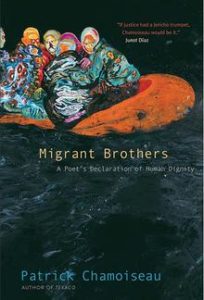
Writing As Action? On the Moral Urgency of the Migrant Crisis

by Patrick Chamoiseau
migrants

I had been invited to dinner by some of my friends. Not for the sole pleasure of seeing one another, but so that they might alert me to what was happening on the outskirts of the City of Lights. These friends are artists, actors, journalists, activists . . . They write in the press, perform on stages, film things in impossible places. They are in essence what I am not: people of action.

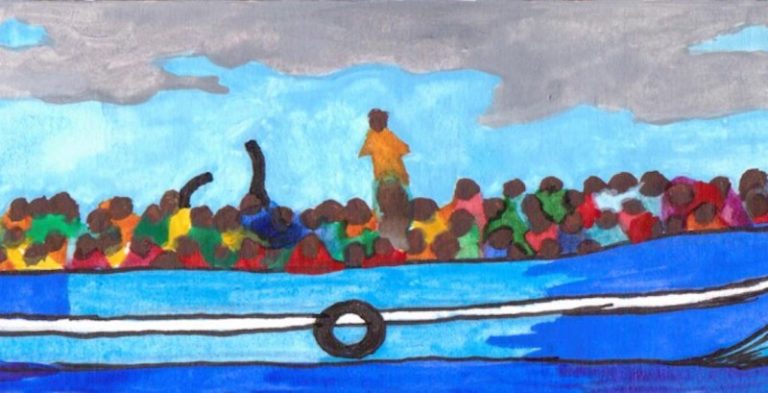
For months they had been battling on the most unexpected of front lines. Hundreds of people—who had overcome deserts, oceans, walls, lines of barbed wire, checkpoints, who had survived nightmarish camps—were arriving in tireless waves only to crash against police violence in the very heart of Paris. They told me what they were experiencing: tales of daily assistance, accounts of brutality, medical care to be dispensed, endless steps to be taken in administrative dead ends. All of which was supplemented by photos and videos salvaged from their confrontations. They filled me with a mixture of guilt and silent indignation.

My friends, women of action, exhorted me to write in my own way about what was happening. By nature calm, rather contemplative, removed from activism, I always feel somewhat guilty in front of people who know how to act, and who act. Even if literature has often showed me the contrary, it’s rare for me to think straightaway that writing, when the emergency is under way, could turn out to be at all useful. Édouard Glissant thought differently. Every time we would write against something we considered unacceptable, he would be the one who initiated it. With vigilant serenity, he thought that beneath the facts, beneath the horror, a poetic vision was able to identify the forces at work, and among them to discern the acting power that alone, in the end, would be the key to a decisive response. Every act, he would say, was born of a poetics. Thus, poetics would usher in politics. My friends had reminded me, probably without knowing it, of Glissant’s thoughts.

The indignation they had managed to arouse in me hardened into a sort of obsession. What I knew or what I had sensed for months about the terrible migratory phenomenon became one of those particular torments which I can escape only through writing. I found it unbearable that in the Mediterranean, in the full light of day, thousands of people had already lost their lives. That in the coming months and years thousands of others were going to die, in the same places, in identical conditions, and in much larger numbers. That such a slaughter is possible in the 21st century, that we can simply tolerate the idea of it, accept the existence of it, can mean only one thing: a barbaric night has settled on the global conscience, and it no longer fears to show itself in the open and without shame. Many are those who say, “Why should we care about this Mediterranean business! It’s Europe’s problem! If there’s barbarity, it’s only a European barbarity, it doesn’t concern us!” And many are those who retreat into the cocoon of good conscience.

We live not in a state, a nation, a federation or confederation, surely not in a constellation of commercial hyper-places and financial centers, but in an ecological and human totality.

And yet a quick look around the world—the Americas, Africa, Asia, Europe, and their archipelagoes—is enough to show us that migratory phenomena palpitate, persist, insist, convulse in one place, are up in another. Everywhere, to various degrees, children, women, men who want to move are ground up in lawless spaces in which human beings become strangers to humanity. Borders are sharpened more and more like the blade of a guillotine. Around them, those who come as humans toward other humans, whose only crime is to be human and call out to their brothers and sisters from the depths of a very human distress, find themselves faced with systems which no longer know how to recognize a human being. As if those who ask for help were a breed of medusae that could be blotted out from the face of the earth. A quick look around shows us that this matter is one of the forces at work in the world, and even worse: that it risks becoming one of the major issues of our planet.

Our immediate future will be dominated by two formidable monsters:

1. Climate change.

2. The triumph of neoliberalism, and of its multidimensional perverse effects.

Two catastrophes that will lead to ecological upheaval, devastating pollution, nuclear accidents, reactionary wars, global precarity, and medieval misery . . . Populations affected in one way or another will not fail to rush off from wherever to wherever. These migratory impulses will only intensify. They will be transglobal but also transnational—but also intranational . . .

Fixity has never existed in cultures, civilizations, or identities. It has never existed in life. Any one of us can, in the wake of a fire, a tornado, a tectonic fury, a job loss, be forced to leave home and ask for asylum a bit farther along, in his or her own nation or beyond. All of us risk finding ourselves inflicted with the conditions forced upon the migrants in the Mediterranean: a nearly systematic destruction as the only answer to distress. Inhumanity is still part of humanity. But when inhumanity sets itself up as a cogwheel mechanism it becomes dishumanity. In dishumanity the principle of humanity itself is threatened by a systematic entity. A murderous, cold robotization, lacking the limitations of affect. The death knell, the famous death knell, then tolls for all, but, lacking a human audience, it remains inaudible.

Acting out of compassion while fearing for oneself is the lowest form of relationship between a conscience and the indecencies of the world. It seems to me that the intensity of these migratory phenomena is such that they were not simply fed by fear, suffering, and wars. That there is, underneath, another imaginary of the world. A particular vision that the exceptional energy of these people secretly possessed. I had to find this power and allow it to project all action beyond humanitarian compassion or fear for oneself. So I attempted to apply to these phenomena the particular poetics that Glissant called globality.

Capitalist economic globalization is not the only force behind the unification of the world. In reality, in this capitalist expansion of the Market, of its alleged invisible regulations, there is no unification. Only the setting up of different places of marketable standardizations that allow the circulation of merchandise and the accumulation of obscene profits. The unprecedented multiplication of contacts, encounters, and exchanges, technoscientific acceleration, and the setting up of an omnipotent digital ecosystem have this as their only goal: markets, profits, financial hoards. And yet, beneath this commercial scheming an encounter between the imaginaries of peoples and individuals is taking place. Truly human sensibilities open up to greater spaces, and, mixing with one another, come together, pass through each other or unite, sometimes fight each other as much as they mutually inform one another. A perception of the world broader than that of our nation alone develops and produces to various degrees, in each of us, the vague consciousness of a world totality: of a world perceived as an indivisible whole. This is globality.

We live not in a state, a nation, a federation or confederation, surely not in a constellation of commercial hyper-places and financial centers, but in an ecological and human totality: extremely reactive, sensitive, unpredictable. It brings us tightly together in a shared fate. All of us together must think and construct this ultimate and grandiose level of the “common good.” Not in the desert of haughty, warlike, or arrogant solitudes, but in the oxygenated luxuriance of encounters, of a mobility in which differences are present, of a solidary exchange that makes everyone grow, and of a human competence that in all circumstances will retain its aptitude to recognize humanity, wherever it might go, wherever it might come from.

*

Hind, the one filming, says to me: In France, the Mediterranean is at the corner of the street and the Calais jungle, destroyed by shovels, keeps popping up along the boulevards! . . .

Jane, the one writing, whispers to me: In Paris, I serve hot coffee, slices of buttered bread, to eyes lacking eyelids. The pupils, whitened by vigilance and the salt of deserts, are like semaphores. In the shadow of these bodies that spring up from nowhere, who do nothing but emerge, evanescent between banks and shores, I see roads become eternal, tombs heaped between islands and continents, a vast array of origins that end up jumbled together on a raft of bundles and suitcases . . . Each one of these silhouettes seems to draw its endurance from a burden of tomorrows shouldered without fatigue, carried without future . . .

She sighs to me too: See how destinations are kept alight like embers, although no one ever arrives at them; how so many little people—children!—can be born into strange solitudes, congenital dagos, spontaneously stateless, untouchables and immanent pariahs, stripped of all sense of belonging, handed over to the damnations of a decree of medusae and sunken boats! . . .

Hind, the one filming, further proclaims to me: In Paris, in Ventimiglia, just as in the Calais region for almost 15 years, migrants have remained stranded on the margin of all margins, minors are treated like industrial livestock, even rounded up on the threshold of France, land of asylum, and hope itself is rooted out!

They are tarnished! . . .

. . . from police stations to detention centers, from detention centers to packages addressed to nowhere, without recourse, without witnesses, without lawyers, often without interpreters, their only asset the persistence of a fear that never gives up, that gives up on nothing! . . . Squats are evacuated without anyone caring for the sick, women, and children! The compassionate are brought before the courts for the crime of solidarity! Demonstrations are crushed even before they are risked! . . .

Here, close by (almost so far away), they are dispersed, they are punished with arrests, rocks are stacked and barriers raised in spaces dedicated to their final weariness; over there, far away (almost so close), coast guards, wall guards, border guards—guards of life, guards of death!—are sick of not being able to contain them! . . . The flow has the vitality of a biblical beginning, it swells having never begun, it begins again having never slowed down and even before it had time to stop . . . At times, guards of misery machine-gun madly and randomly, and often torture out of exasperation, and when they find themselves driven to the limits of their own conscience they cry without really understanding why! . . .

She then growls with all her youth: Islamophobia insecurity identity immigration . . . are words that have turned monstrous! They’ve mated under media hypnosis, in a shrill horde, and they grind madly like cogs, in almost every direction, everywhere, almost endlessly, crushing people under bright city lights and boulevard garlands! . . . We have to act, here’s a cause! . . .

Suddenly, Jane, the one who writes so well, says in astonishment: I saw their eyes, they’re firefies . . .

*

Yes, in this night, on this raft, beneath this frozen horizon, among these shivering shelters, camps, and bivouacs, destroyed again and again yet always reconstructed, in Europe, but also in Asia, in Africa, in the lands of the Caribbean and the other Americas, what you say, my dears, triggers in the geographies of the wind, in sparks of salt, in sparks of sky, a strange meeting of poets and great human beings . . .

*

What is it then to act or to make an effort beyond emergency without neglecting the emergency or missing the essential, and without considering that at the origin of this drama reign invisible forces?

And yet how can we not see them? Neo-liberalism nearing triumph; its financial markets lapsed into lethal hysteria; politics deserting within democracies that have become erratic; a state that is dwindling, leaving the economists alone at the helm and bent beneath the weight of innumerable diffuse mercantile entities participating in the fabric of the world. Not a single computer program, not a single screen, not a single innovation in nanoscience and biotech, not a stitch of the mind, and not a single connection escapes their dogma! . . . And here’s what this planetary darkening causes: exclusion, rejection, violence, stupidity, hatred, and indecency fermenting everywhere, intensifying in loops of algorithms and social networks, exploding in the impulsive horde of the media that are so fascinated by these networks that they become mimetic. This collapse leads to a loss of ethics, and when ethics fail, beauty falls. Pier Paolo Pasolini was right to be troubled in the face of an Italian night that seemed triumphant. A similar night is swallowing us, without alarm, imperceptible, invisible, until suddenly it is malevolently embodied under a blond swath of hair in command of the most powerful nation on earth . . .

__________________________________

From Migrant Brothers: A Poet’s Declaration of Human Dignity by Patrick Chamoiseau; translated by Matthew Amos and Fredrik Rönnbäck; published by Yale University Press in April 2018. Reproduced by permission.

14 Dec 13:13

Mike Isabella’s Empire Is Done

by Hillary Dixler Canavan
Mike Isabella

The D.C. chef filed for Chapter 7 bankruptcy today, ending a year of headlines following #MeToo allegations

With a D.C. restaurant empire in shambles following #MeToo allegations and a sexual harassment lawsuit that has been settled, Mike Isabella pulled the plug on his businesses today, filing Chapter 7 bankruptcy, reports the Washingtonian. The empire should close by December 27 as its assets will be liquified to pay outstanding debts; the full shutdown follows previous announcements and shutters earlier this year that saw the closures of Kapnos Taverna, the chef’s food stalls at Nationals Park, and the multi-concept Isabella Eatery. Isabella filed for Chapter 11 bankruptcy in September, telling the Washington Post at the time that “the bankruptcy is a tool for me to basically restructure my finances and have an opportunity for a fresh start.”

The latest Chapter 7 bankruptcy filing blamed bad press for the business’s failure: “Under the present circumstances,” Isabella wrote, “I am facing the sad realization that I no longer believe that any restaurant associated with my name can recover from the negative press that has enveloped me for nearly the entirety of 2018.”

As the Washingtonian points out, Isabella is the first chef to see his businesses totally gutted following a #MeToo scandal. It’s worth noting, however, that Isabella also refused to “step away” (i.e., staying out of the public eye and out of the restaurants completely, but still earning a paycheck) as chefs like John Besh and Mario Batali did after facing claims of sexual misconduct. It’s hard to say what the future of his well-liked restaurant brands like Kapnos and Graffiato would have been had he stepped away or even divested entirely.

Meanwhile, Isabella’s business partners Nick and George Pagonis apparently still plan on working in D.C. hospitality. Named in the now-settled sexual harassment lawsuit, the men now seem to be distancing themselves from Isabella. “Despite the legal developments, Nick and George Pagonis continue to work hard to provide their clientele a first rate dining experience,” said their lawyer in a statement. “I am working very hard to insure this will continue in the DC Metropolitan Area for years to come.”

Mike Isabella’s Restaurant Group Is Going Out of Business [The Washingtonian]

14 Dec 02:40

David Byrne Curates a Playlist of Great Protest Songs Written Over the Past 60 Years: Stream Them Online

by Ted Mills

When you hear the words “protest song,” what do you see? Is it a folkie like Bob Dylan or Joan Baez delivering songs about injustice? Is it an earnest young thing with a guitar? Is it trapped in 1960s amber, while time has moved on to more ambiguity, more nihilism, more solipsism?

British writers--and may we add amateur folksingers--Jonathan Luxmoore and Christine Ellis made this lament over two years ago in the pages of The Guardian, in an opinion piece entitled, “Not talkin' bout a revolution: where are all the protest songs?” Here they blame the immediacy of social media, the rise of aspirational hip hop, and the decline of radical politics. They end, presciently, with a Jeremy Corbyn-shaped hope for change. Well, look where we are now. Things developed rather quickly, did they not?

(And as a side note, I would suggest the 1980s as a way more protest-filled music decade than the 1960s. Because of the self-aggrandizement of 1960s curators, they claim more than they did. But nearly every pop, rock, r’n’b, and hip hop act of the ‘80s has at least one political song in its discography.)

Enter David Byrne, whose mission apart from his day job as a musician is to bring hope to the masses with a determined optimism. He’s here to say that the protest song never went away, only our definition of it. And he’s brought the receipts, or rather the playlist above, to prove his point:

...in fact, they now come from all directions in every possible genre—country songs, giant pop hits, hip hop, classic rock, indie and folk. Yes, maybe there weren’t many songs questioning the wisdom of invading Iraq, but almost every other issue has been addressed.

Stretching over six decades, the playlist demonstrates the various forms protest can take, from describing racial violence (Billie Holiday’s “Strange Fruit” to Janelle Monae’s “Hell You Talmbout”) to bemoaning economic injustice (The Specials’ “Ghost Town”) and railing against war and conflict (U2’s “Sunday Bloody Sunday”, Edwin Starr’s “War”). Sometimes declaring the positive and gaining a voice is enough of a protest: you could argue that James Brown’s “Say It Loud (I’m Black and I’m Proud)” did more for equality than any song about racism. Bikini Kills’ “Rebel Girl” does similar things for third-wave feminism.

But Byrne wisely gives voice to those who feel they’re swimming against any resistance tide:

I’ve even included a few songs that “protest the protests.” Buck Owens, the classic country artist from Bakersfield, for example, has two songs here. “Rednecks, White Socks and Blue Ribbon Beer,” is a celebration of Americans who feel they are unnoticed, left behind. One might call it a populist anthem, but I think the reference to white socks is intentionally meant to be funny—in effect, it says: “we know who we are, we know how uncool white socks are.”

Look, it’s easy to believe that songs “changed the world” when they are easily accessible to hear decades later but the boots-on-the-ground marches and revolutionary acts from which they sprang are now just photographs, film reels, and foggy memories. But who can deny the gut punch of this year’s “This Is America” from Childish Gambino, the continued excellence of Killer Mike and/or Run the Jewels, and any number of songs that document our outrage? The songs of protest continue as long as there is injustice.

And in the case of David Byrne, covering a modern protest song and adding to its list of names, is what can keep an idea, a memory, and a feeling alive for a new audience. Here he is at the encore of his current tour, covering Janelle Monae’s “Hell You Talmbout,” a memorial to all the black lives killed by law enforcement.

“Here was a protest song that doesn’t hector or preach at us,” he said in an article for the Associated Press. “It simply asks us to remember and acknowledge these lives that have been lost, lives that were taken from us through injustice, though the song leaves that for the listener to put together. I love a drum line, so that aspect of the song sucked me in immediately as well. The song musically is a celebration and lyrically a eulogy. Beautiful.”

He also wisely asked permission to cover such a recent song, especially when it’s an older white man lending his voice to it. But Monae gave her blessing:

“I thought that was so kind of him and of course I said yes. The song’s message and names mentioned need to be heard by every audience.”

Related Content:

When South Africa Banned Pink Floyd’s The Wall After Students Chanted “We Don’t Need No Education” to Protest the Apartheid School System (1980)

Tom Waits Releases a Timely Cover of the Italian Anti-Fascist Anthem “Bella Ciao,” His First New Song in Two Years

Hear a 4 Hour Playlist of Great Protest Songs: Bob Dylan, Nina Simone, Bob Marley, Public Enemy, Billy Bragg & More

David Byrne Creates a Playlist of Eclectic Music for the Holidays: Stream It Free Online

Ted Mills is a freelance writer on the arts who currently hosts the artist interview-based FunkZone Podcast and is the producer of KCRW's Curious Coast. You can also follow him on Twitter at @tedmills, read his other arts writing at tedmills.com and/or watch his films here.

David Byrne Curates a Playlist of Great Protest Songs Written Over the Past 60 Years: Stream Them Online is a post from: Open Culture. Follow us on Facebook, Twitter, and Google Plus, or get our Daily Email. And don't miss our big collections of Free Online Courses, Free Online Movies, Free eBooksFree Audio Books, Free Foreign Language Lessons, and MOOCs.

14 Dec 02:39

Recode Daily: Trump’s former personal lawyer Michael Cohen gets three years in prison

by Recode Staff
Bgarland

I'm sharing this for the super-creepy Taylor Swift item.

Michael Cohen, President Donald Trump’s former personal attorney and fixer, exits federal court after his sentencing hearing, Dec. 12, 2018, in New York City.

Plus: Procter & Gamble buys Walker & Co.; millennials are ghosting their jobs like they would ghost an ex-boyfriend; and best lists, worst lists.

President Donald Trump’s former personal lawyer Michael Cohen was sentenced to three years behind bars for making secret payments to women who alleged they had affairs with Trump, lying to Congress about Trump’s business dealings with Russia and failing to report millions of dollars in income. “I felt it was my duty to cover up his dirty deeds,” Cohen explained. Prosecutors also revealed they had struck a non-prosecution deal with American Media, publisher of the National Enquirer tabloid, for its $150,000 hush payment to former Playboy model Karen McDougal to keep her from publicly disclosing her alleged affair with Trump before the 2016 election. [Benjamin Weiser and William K. Rashbaum / The New York Times]

[Want to get the Recode Daily in your inbox? Subscribe here.]

The Federal Communications Commission voted to open a new review of U.S. media ownership rules that could reverse a rule prohibiting mergers among the four largest broadcast networks. FCC Chairman Ajit Pai said the agency is “teeing up a number of questions” on the issue, and would keep an open mind as to whether the rules remain necessary to promote competition. The FCC also approved a controversial measure that gives mobile carriers the authority to block text messages. The order, supported by the FCC’s Republican majority, classifies text messages as a part of an information service as opposed to a telecommunications service, which prohibits carriers from blocking or discriminating against their users. [Ted Johnson / Variety]

Procter & Gamble acquired the health-and-beauty startup that was aiming to build the Procter & Gamble for people of color. P&G has purchased Walker & Company Brands, maker of Bevel men’s grooming products and Form beauty products; founder Tristan and Walker will continue to run it as CEO. Walker & Company will move its headquarters from the heart of Silicon Valley in Palo Alto, Calif., to Atlanta, Ga., where the startup’s largest customer base resides. Investors are said to have recouped the majority, but not all, of the nearly $40 million they invested in Walker & Company, which means P&G paid somewhere between $20 million and $40 million for the startup. Here’s Walker’s interview with Kara Swisher at a 2017 Code Commerce event. [Jason Del Rey / Recode]

Economists report that workers are starting to act like millennials on Tinder — they’re ditching jobs with nary a text. Companies across the country say that “ghosting” — silent exits — are on the rise, and recruiters at global staffing firms have noticed a “10 to 20 percent increase” in ghosting over the past year. Analysts blame America’s increasingly tight labor market; job openings have surpassed the number of seekers for eight straight months, and the unemployment rate has clung to a 49-year low of 3.7 percent since September. [Danielle Paquette / The Washington Post]

Pop superstar Taylor Swift used facial recognition technology to track her stalkers at a concert at Pasadena’s Rose Bowl earlier this year. A kiosk set up to show highlights of the singer’s rehearsals secretly recorded the faces of onlookers, which were sent to a security “command post” in Nashville that attempted to match those images to hundreds of images of Swift’s known stalkers. The technology could revolutionize policing, medicine, even agriculture, but its applications can easily be weaponized— should we be worried? [Dave Gershgorn / Quartz]

What happens if/when Facebook goes the way of Myspace? Should the company ever collapse — or become so clearly moribund it might as well have died — more than a billion people worldwide would need to unwind their relationship with the platform. We’ve lost plenty of networks before, and one day, we’ll be done with Facebook, at least as we know it. Will it be done with us? [John Herrman / The New York Times Magazine]

Top stories from Recode

2018’s tech trends and tribulations in 14 charts. Here’s a visual look back at the year. [Rani Molla]

Lyft has eaten into Uber’s U.S. market share, new data suggests. Uber controls the majority of U.S. ride-hailing, but Lyft is growing twice as fast. And both plan to go public in early 2019. [Rani Molla]

New York City Council members railed against Amazon in the hope of renegotiating the HQ2 deal. The first of three public hearings on the terms of the previously secret deal were held on Wednesday. [Shirin Ghaffary]

The big business of being a social media star. Platforms like YouTube and Netflix are at war, and on the latest Recode Media, Shot Studios CEO John Shahidi says he’s happy to sell content to all of them. [Kurt Wagner]

This is cool

The best of things.

The worst of things.

14 Dec 02:39

Judge Squashes Effort to Revive DC Minimum Wage Initiative

by Gabe Hiatt
13 Dec 15:42

The Travel Knife: Don't Cleave Home Without It

by Daniel Gritzer
Bgarland

See also the small box travel kitchen kit linked to in the piece. If you are renting a house or apartment with airbnb--you might as well bring a small kitchen-in-a-box that works!


Looking for the perfect travel companion? These knives are small, lightweight, and safe to pack once they're paired with a wooden sheath. Read More
11 Dec 13:11

Some Things Worth Remembering on National Miner’s Day

by Nick Mullins
Photo by Nick Mullins

As we celebrate National Miner’s Day by recognizing the hard work and sacrifice miners make to support their families. While it is important to lift up those who provide the energy and materials necessary for so many to enjoy their comforts and conveniences, we must be careful not to allow specific organizations to use the holiday as good PR for their own interests. I am speaking of course, about mining companies, mining associations, and the pro-mining politicians who attempt to “honor” the workforce that generates their wealth. Though these businessmen want us to focus on the bravery and courage it takes to be a miner in this country, they also want us to forget.

They want us to forget that if it were not for land agents and coal companies swindling our forefathers, our communities would be in possession of the trillions of dollars of wealth that has been extracted and shipped out of our mountains over the past century. 

They want us to forget that they once paid our forefathers in company scrip and that when our families banded together to fight for better safety,  healthcare benefits, and a retirement pension to enjoy what little life they had left afterward the companies hired mercenaries to harass and kill union families.

They want us to forget that still today, they own the majority of private land and mineral rights in our counties. They want us to forget that despite owning all that wealth, they really don’t have to pay much in property taxes, revenues that would go towards our school systems and providing our children the education they would need to escape a life working in the mines or living in poverty where substance abuse prevails.

They want us to forget that there is still no decent mine safety legislation eight years after the Upper Big Branch disaster. Miners still do not possess the right to stop work in unsafe conditions without fear of losing their job or being passed over for another job following layoffs.

They want us to forget that when they file bankruptcy and they rename their companies, they cut their losses by cutting the healthcare benefits of retired miners, all while seeking bonuses for company officials.

But we aren’t fooled. We know the truth about what really happens. We know how they really feel about us. All it takes is getting hurt in their mines and filing for disability, getting a chest x-ray and filing for black lung, asking a politician for better safety legislation, or taking matters into your own hands to slow or stop production until things are made safe. That’s when you really see where you stand.

11 Dec 01:39

On James Baldwin’s Dispatches from the Heart of the Civil Rights Movement

by Ed Pavlić

In part one of “Beyond Simplicity,” (which originally appeared in Brick 101), Ed Pavlić explored the complex motivations that brought James Baldwin back from France to the US and sent him on a tour of the Deep His South to witness the nascent—but also ages-old—Freedom Movement. At age 33, Baldwin had never been to the American South. His reasons for going were deeply personal and fiercely political, a combination he lacked a vocabulary to describe. Part two, below, traces Baldwin’s historic journey through essays published soon after he returned from the trip, accounts from memory later on, and letters he wrote to friends and family while he was there.

V.
“Nothing, sir”
Baldwin in Charlotte, North Carolina

James Baldwin began his trip to the South by flying from New York to Washington, D.C., on September 9, 1957. On assignment for Partisan Review, Baldwin made stops over the next six weeks in Charlotte, Atlanta, Montgomery, Tuskegee, Birmingham, Nashville, Little Rock, and Arlington, Virginia. As he told his brother, the plan was to be back by October 22. Flying between the major stops, Baldwin moved through a territory at once startlingly strange and terrifyingly familiar. He returned to New York, he reports in No Name in the Street, lugging a suitcase stuffed full of “contraband” and “underground secrets.” He collapsed in the apartment of an acquaintance named Furneau in the East Village. As Baldwin recalls, “for five days,” while worried friends and family searched the city for him, he couldn’t move:

While in the South I had suppressed my terror well enough, in any case, to function; but when the pressure came off, a kind of wonder of terror overcame me, making me as useless as a snapped rubber band.

Baldwin pulled himself together and went back to the MacDowell Colony to work on his next novel and a version of Giovanni’s Room to be performed at Lee Strasberg’s Actors Studio in New York that spring. Struggling with chronic medical symptoms resulting from stress and strain, he would also work through 70-odd pages of handwritten notes from his Southern tour, which he’d turn into two short essays: “The Hard Kind of Courage,” rejected by Look magazine and published by Harper’s in October 1958; and “A Letter from the South: Nobody Knows My Name,” which Partisan Review published a few months after that. Both would be part of Baldwin’s second book of essays, Nobody Knows My Name: More Notes of a Native Son, in 1961.

The postmark is smudged, but early in October 1957 Baldwin sent a letter to Mary Painter from Harry Golden’s office at the Carolina Israelite. The trip had only begun; Charlotte was the first stop. He wouldn’t be speaking with Dorothy Counts, whose photograph—as discussed in part one of this essay—Baldwin would mistakenly recall as the initial motivation for the trip. Counts father, a prominent minister, had already removed her from the once-again-all-white Harding High School. But, Baldwin told Painter, he’d been up until midnight talking with Gus Roberts and his mother. Gus and his younger sister Girvaud accounted for half of the Black students sent to white schools in Charlotte that fall. From the group admitted in 1957, Gus would be the only student to graduate from a previously all-white high school.

Baldwin wrote to Painter that he could feel a weight rapidly filling his head and heart during that evening with Mrs. Roberts and her children. (Their father was at work.) Baldwin was there as a reporter, but he was far from detached. He clearly wanted to help, to join the fight. But how? Saying he trusted neither his publisher (Beacon Press) nor his agent (Helen Strauss) to do it, and likely as much for himself as for the embattled young man, Baldwin asked Painter if she’d buy a copy of his first book of essays, Notes of a Native Son, and mail it to Gus Roberts at his home in Charlotte.

Reprinted as “A Fly in Buttermilk” in Nobody Knows My Name, Baldwin’s first piece from his tour was published as “The Hard Kind of Courage” in Harper’s. Baldwin focused on Gus Roberts’s first days at Central High School. Sitting in the quiet of the family’s living room while Gus sat on the sofa exhibiting a “nearly fanatical concentration on his school work,” Baldwin encountered for the first time what it meant to cease playing it safe. In his letter, he told Painter he didn’t have words to describe the scene; to the readers of Harper’s, he reported a situation doused in an almost mineral quiet. For Baldwin, who not long ago had been living in Corsica and in Paris, trapped in “the prison of [his] egocentricity,” struggling with an amorphous pain and spending nights on “the underside of Paris, drinking, screwing, fighting,” the scene with the Roberts family was unspeakably ordinary. Gus himself, Baldwin wrote, “seemed extraordinary at first mainly by his silence.” “‘Good evening, sir,’” Gus had said when Baldwin entered the room, “and then left all the rest to his mother.”

Designed to appear ordinary, Black Southerners’ complex use of silence was, in fact, partly to blame for the heavy panic Baldwin felt filling his insides. The Roberts family maintained a steely silence and protective distance between themselves and their dangerous predicament. Most certainly, no one in their household was playing it safe. So, was the distance created by their silence an illusion or a form of real power? Sensing a strength he couldn’t neatly account for, Baldwin described Mrs. Roberts as “quiet looking.” When he asked her about Gus’s first day at Central: “Nothing, she told me, beyond name calling,” had marked that day. On the second day, the “students formed a wall between G. and the entrances. . . keeping him outside.” Turning to Gus, Baldwin asked, “‘What did you feel when they blocked your way?’” He described the young man’s reaction: “G. looked up at me, very briefly, with no expression on his face, and told me ‘Nothing, sir.’” Baldwin guessed that “pride and silence were his weapons.”

Baldwin asked if Mrs. Roberts had had any ugly encounters with white folks over Gus’s attending Central. (Strangely, not a word appears about Girvaud Roberts’s experience integrating Piedmont Junior High that fall.) Mrs. Roberts reported nothing. Baldwin added: “Nor, she told me, had anyone said anything to her husband, who, however, by her own proud suggestion, is extremely closedmouthed.” As the evening wore on, Baldwin “began to realize” that, as concerned Gus’s experiences at Central High School, “there were not only a great many things G. would not tell me, there was much that he would never tell his mother.” Baldwin asked how other Black families felt about their decision to have Gus “reassigned.” Mrs. Roberts said that “a lot of them don’t like it,” but Baldwin gathered “they did not say so to her.”

The Robertses weren’t the only ones keeping a buffer of quiet between themselves and what it meant, or might mean, to cease playing it safe in North Carolina. The next day, Baldwin encountered another kind of silence. He interviewed Ed Sanders, unnamed in the essay, the principal of Gus Roberts’ new high school. When the students had blocked Gus’s entrance, it had been Sanders who parted the crowd, “took him by the hand,” and walked with him inside “while the children shouted behind them, ‘Nigger-lover.’” Baldwin wrote: “I asked him to describe to me the incident. He told me that it was nothing at all: ‘I’ve seen them do the same thing to other kids when they were kidding.’” Baldwin sensed that Sanders would like to dismiss the situation as normal adolescent mischief “despite the shouts (which he does not mention) of ‘nigger-lover!’”

In the published essay, Baldwin mostly stays out of the way while recording how people navigated segregation and the efforts against it via a tactical distance from their own senses. Sanders’s comments—quite possibly his memory—edit out students’ racist chants. When Baldwin asks about his personal view, Sanders avows his non-racist way of seeing: “I’ve never seen a colored person toward whom I had any hatred or ill-will.” What he does see, however, presents a different picture, one that’s harder to accept. As a school administrator, Sanders tells Baldwin: “it seems to me that colored schools are just as good as white schools.” In his interview with Principal Sanders, Baldwin encounters, again, evidence of perceptions avoided, feelings pre-empted, and speech silenced.

As for Sanders and other white Southerners, Baldwin thought they would have to arrive at a radically different apprehension of Black people and the world around them all.

The fast-accumulating weight Baldwin confided to Painter about likely had much to do with his position as an outsider, one alert to an electricity everyone but him had insulated themselves against. For Gus Roberts and his family, silence served a tactical role that allowed them to attack the system of segregation while avoiding aggressive postures.

Baldwin knew that silence gave way to sound somewhere; he’d laced his own work and life with the music that was one way Black people gave voice to experience without “speaking” about it. As early as 1951, in “Many Thousands Gone,” he’d written that Black music told a story, “which no American is prepared to hear.” As for Sanders and other white Southerners, Baldwin thought they would have to arrive at a radically different apprehension of Black people and the world around them all. He knew this would lead to a difficult reappraisal of themselves as well: “As the walls come down they will be forced to take another, harder look at the shiftless and the menial and will be forced into a wonder concerning them which cannot fail to be agonizing.” When Baldwin very gently pushed Principal Sanders (whom he described as “bewildered and in trouble”) beyond the passive racism and paternalism of his avoidances, Baldwin said the man’s “eyes came to life,” and he found himself “staring at a man in anguish.”

The situation with the Roberts family was similar but also very different. Both Gus and his mother had steeled themselves to navigate verbal abuse and psychological torture. They weren’t, however, converts to philosophies of non-violence. Gus and his mother were ready to fight, which at the time pretty much meant they were ready to die. As Baldwin’s time with the Roberts family ended, Mrs. Roberts spoke about her fears and hopes for the future. She also noted a limit to her avoidance of aggressive postures and an insistence upon self-defense:

“I don’t feel like nothing’s going to happen,” she said, soberly. “I hope not. But I know if anybody tries to harm me or any one of my children, I’m going to strike back with all my strength. I’m going to strike them in God’s name.”

Like his mother—possibly rehearsing private conversations—Gus snaps momentarily out of his weaponized silence when the question of self-defense arrives. Baldwin wrote:

“It’s hard enough,” the boy said later, still in control but with flashing eyes, “to keep quiet and keep walking when they call you nigger. But if anyone ever spits on me, I know I’ll have to fight.”


VI.
“war between Southern cities and states”
Atlanta

Continuing his journey, Baldwin flew from Charlotte to Atlanta. He didn’t stay long. Focused on his findings there, “A Letter from the South: Nobody Knows My Name” presented a summary of his trip to readers of Partisan Review’s winter 1959 issue.

Now, almost all readers encounter Baldwin’s work in his books or in collected volumes, so we forget that most of these essays were written as assignments for fees from magazines with different audiences and editorial approaches. Baldwin’s early essays about the South were published by magazines as different as Harper’s, Partisan Review, and Mademoiselle. The negotiations weren’t ever easy; here and there they proved impossible. During the late spring of 1957, Baldwin, still in Corsica, lamented having to give up a $1,000 fee from Holiday magazine because he couldn’t bring himself to write the essay about the island they wanted, and he knew very well they couldn’t possibly publish the essay about the island he wanted. One thousand dollars for an essay was serious money. Baldwin’s advance for Giovanni’s Room had been $400. His rate for Partisan Review was a cent and a half per word.

Baldwin had ushered readers of his Harper’s piece “The Hard Kind of Courage” into a close proximity to racially distinct registers of Southern silence. In contrast, his Partisan Review piece presents an impersonal account of social and political structure. In Harper’s, Baldwin deployed his novelist’s skill at capturing intimate atmosphere and the quiet intricacies of personal experience. For Partisan Review, he presented himself as a capable surveyor of history in the making.

“No integration, pending or actual,” was happening in Atlanta when Baldwin stopped there on his way to Alabama, where the victory in the Montgomery bus boycott had emboldened movements and sparked violent reprisals in Tuskegee and Birmingham. According to Baldwin’s sources, Atlanta’s approach to progress was led by a relatively strong Black middle class acutely aware of “their position as a class—if they are a class—and their role in a very complex and shaky social structure.” For instance, he thought there was no protest movement or boycott to end segregation on the buses because the city’s “well-to-do Negroes never take buses, for they all have cars.”

The Black middle class and the white mayor found themselves in tense cooperation surrounded by state politics that, to put it mildly, favored neither of their interests. This situation brought about an alliance based upon the fact that “Atlanta is really growing and thriving, and because it wants to make even more money, it would like to prevent incidents that disturb the peace, discourage investments, and permit test cases.” Black middle-class participation in the so-called peace and prosperity of Atlanta’s progress was an unstable arrangement. On the one hand, its members meant to push—peacefully, but push—the mayor for racial progress. On the other, all of Atlanta “belongs to the state of Georgia,” which was committed to the racist status quo. Baldwin noted an example:

When six Negro ministers attempted to create a test case by ignoring the segregation ordinance on the buses, the governor was ready to declare martial law and hold the ministers incommunicado.

In the pages of Partisan Review, Baldwin contends that this “war between the Southern cities and states is of the utmost importance, not only for the South, but for the nation.” Bringing the intimate and social together at the close of the essay, he warns how “this failure to look reality in the face diminishes a nation as it diminishes a person.” He describes the US as engaged in exactly the same kind of avoidance Principal Sanders employed in Charlotte: “the South imagines that it ‘knows’ the Negro, the North imagines that it has set him free. Both camps are deluded.” Baldwin closes with a version of freedom that’s worth the effort: “Human freedom is a complex, difficult—and private—thing. If we can liken life, for a moment, to a furnace, then freedom is the fire which burns away illusion.” If that’s so, letters he sent to friends and family over the next week describe a fiery passage indeed. Baldwin’s illusions of a private life protected from social and political forces dissolved under the pressures of existence in the South. His encounters with Black people’s efforts to change the South presented him with politicized versions of personal life, with methods for ceasing to play it safe. In ways that would take more than a decade for him to fully understand, he learned how to change—which by 1957 meant save—his life.


VII.     
“the fire that burns away illusion.”
Baldwin’s Letters from Alabama

In “A Letter from the South: Nobody Knows My Name,” Baldwin remembered being told while he was in Charlotte that “Charlotte is not the South. . . You haven’t seen the South yet.”

“Charlotte seemed quite Southern enough for me,” he wrote, “but, in fact, the people in Charlotte were right.” By the end of the second week of October, Baldwin had flown from Atlanta to Montgomery, Alabama. He’d spend at least a week traveling between Montgomery and Tuskegee before flying to Birmingham later that week. If Charlotte had been “quite Southern enough,” Alabama proved to be way too much. What he found there, however, would be transformative upon reflection. His essays about the South from the 1950s and early 1960s barely mention Alabama, Birmingham not at all. By the time he wrote No Name in the Street, the recollections had blurred and blended with pain and time and travel and victories, and with the torture and murder of so many people. But the essays Baldwin wrote contemporaneous with his early travels to the South are replete with silences.

Baldwin sent a letter from Tuskegee to his brother David in New York City in the evening mail on October 11, 1957. His mounting fear seeps through his persona of the older brother. He says he can’t sleep and he’s already feeling apprehensive about writing to the public about the trip. After detailing the itinerary, he laments the accumulated effects of what he’s encountered: he felt the country was turning its back on itself, refusing to answer the call to become itself. Forced to cooperate in the face of white resistance to desegregation, which followed directly from the Supreme Court decisions in 1954 and 1955, Black people, Baldwin thought, were fairly united. He could see the toll this battle was taking, and would take. Those Black people who could be would be broken, he wrote, kept from working, kept from eating, attacked, maimed, driven insane, and shot. Still, the outcome was absolutely certain. Baldwin saw the South, the US, and even the world as being in the midst of immense and irreversible change. White people, given their present condition, would hardly be able to stop what had been set in motion, of that he was certain.

In Atlanta, Baldwin had met Martin Luther King Jr., who still lived and preached in Montgomery. King had been staying in a motel, working on a book. Baldwin, who was not predisposed to adore clergy, found King remarkable from the start. Clearly Baldwin’s favorable impression owed to his mounting fear since being in Alabama and to his awe at King’s leadership in the recent victory over segregation on Montgomery’s buses. Baldwin explained to David that he’d ridden a desegregated bus in Montgomery and had felt the stifled rage of the bus driver as well as the calm power of Black bus riders who were sitting in victory all over the bus. Recalling that ride three years later in “The Dangerous Road before Martin Luther King,” he’d remember that white people “sat there, ignoring them, in a huffy, offended silence.” “I think that I have never been,” he would continue, “in a town so aimlessly hostile, so baffled and demoralized.” In Montgomery, Baldwin had also met Reverend Ralph Abernathy, King’s chief strategist, who stressed that the goal was to abolish segregation in all forms throughout the capital and then across the state. Baldwin told his brother the movement, led by King, had been holding packed public meetings in Montgomery for more than two years. White people, meanwhile, were shocked and terrified because Black folks they thought they knew had all transformed, as if overnight, into a force determined to change the social order.

In Atlanta, Baldwin had met Martin Luther King Jr., who still lived and preached in Montgomery. King had been staying in a motel, working on a book. Baldwin, who was not predisposed to adore clergy, found King remarkable from the start.

Baldwin himself was amazed at the mobilized behavior and disciplined demeanor of the Black people he met in Alabama. He’d sat with Gus Roberts and his mother and attempted to gauge their determined and silent insistence. Now, he felt that resolve in organized and principled revolt. The Southern power—Black power—Baldwin had encountered in Charlotte was being mobilized; this was no illusion. As Baldwin would often remark in later years, “Black people in this country come out of a history which was never written down.”

Its power had been transmitted via complexly open secrets, in codes, often enough in music. To David, he marveled that King had advised those in the movement against violence and against hatred. This wasn’t that unusual; the surprise was that the people seemed to follow his lead. In this, Baldwin felt American illusions about Black people’s contentment and powerlessness coming apart. It certainly was difficult and dangerous to be Black in Montgomery, Baldwin told his younger brother, but being white would be worse. It had to be utterly terrifying, he wrote. Black folks had played a hand white people hadn’t seen coming, hadn’t known existed. There was a power in the South that couldn’t be contained. White people, Baldwin wrote, were reacting in disastrous ways and would likely continue to do so. They were trapped in an invisible cage. Meanwhile, he told his brother, King and Abernathy preached Christian love. Baldwin underscored that this was no catch phrase; these Christians were serious about the fundamental basis of love in their message, in their tactics, and in their lives.

The sum of white reaction wouldn’t defeat Black people’s power. Baldwin thought that its most serious ill-effect would take place in the lives of white families, in the homes and churches of white people who resisted the change that would soon surround their lives. More than surrounded, all of Southern life had long been suffused with that power, Black power. That power had cooked the food, it had cared for the children and the elderly. Everyone’s children and elderly. And it had built a distinct way of life; a people had been formed who most white folks had, in fact, never looked at. Now, Black people had stood up and revealed their power in a new dimension. Beholding this, Baldwin thought the white folks of Alabama were like Ezekiel in the valley of death. A miracle had saved Ezekiel. Baldwin thought, maybe hoped, another one would save white people from themselves.

Signing off his letter to David, Baldwin reasoned that the Black power now in evidence in Alabama was very real, but, after all, Montgomery was really just a town. Things would be different in cities. He told his brother he’d written the letter to relieve uneasy feelings about the journey that awaited him. He asked him to pray that God would help him do what he needed to do, to write what he’d have to write. He signed off, as he usually did in letters to his brother, as Jamie.

Less emotionally guarded with Mary Painter than he was with his brother, Baldwin wrote her from Tuskegee before leaving to hear Martin Luther King Jr. preach at Dexter Avenue Baptist Church in Montgomery. He stressed that the trip was taking its toll and that in Montgomery, for the first time, he’d been truly afraid. He detailed for Painter the power dynamics shaping up in Alabama and said the movement to desegregate stores in Tuskegee resembled the bus boycott in Montgomery. Surely store owners in Tuskegee could benefit from what the Montgomery bus company learned after nearly going out of business. However, according to the Tuskegee newspaper, local officials believed that Black folks in the country would still shop at segregated stores even if the Black middle class in town might observe the boycott. Misguided by a mixture of false class assumptions and racism, white officials had been very wrong about that. Baldwin reported that on the Friday afternoon he’d been there, the downtown area was empty and many of the stores were closed.

For most of his letter to Painter, Baldwin reflects on how emerging Black power had put white communities under pressure in ways that, it seemed to him, exposed a tragic lack of white leadership. In No Name in the Street, imagining himself looking at the photo of Dorothy Counts in Charlotte, Baldwin remembers thinking, “Some one of us should have been there with her!” In fact, as he explained to Painter, Harry Golden had said that Counts would have most likely still been at Harding High School if a few respected Charlotte business owners had come to the school on the second day and escorted her into the building. Golden’s idea clearly impressed Baldwin, who would suggest this move to white leadership, including President Kennedy and his brother. It’s too easy to imagine, he told Painter, that huge groups of people are evil and nasty. What Baldwin saw was that white people in the South lacked leaders. If someone stepped up to lead, he thought, people would follow them.

More than malevolence, he told his friend, it was disorientation that afflicted white people in the Deep South. The so-called leaders (people such as Senator Russell in Georgia and Governor Hodges in North Carolina) shamefully hid behind what passed for public opinion. Baldwin wondered to what extent the public really had any opinion. Maybe, he reasoned, the public had reflexes that could be directed and fears that could be assuaged. He thought it was the role of leaders to create public opinion in the true interests of the people, people such as the owners of the empty stores of Tuskegee, for instance. Instead, the ploy was to aggravate people’s fears, transform them into terrors. White politicians thus maintained control moment by moment, in ways that served few people’s if anyone’s interests in the long run.


VIII.       
“I’d best not linger here.”
The Letter from the Birmingham Motel

In “A Letter from the South: Nobody Knows My Name,” Baldwin recorded his counterintuitive finding that, despite the history of slavery, the demise of reconstruction in the late 19th century, and the modern system of segregated oppression, “the black men were stronger than the white.” Echoing things he’d dredged from his memory and imagination in creating the characters of Florence and Elizabeth in his first novel, Go Tell It on the Mountain, he continued: “I do not know how they did it, but it certainly has something to do with that as yet unwritten history of the Negro woman.”

By 1960 when he wrote “The Dangerous Road Before Martin Luther King” for Harper’s, Baldwin understood how some of the unwritten history was ritualized. He had stayed in Montgomery for a mass meeting led by King the day after the Sunday service at Dexter Avenue. He was scheduled to be in Birmingham for the rest of the week. His letters don’t detail his impressions of King’s sermon from Sunday (October 13) or from the mass meeting on Monday. Likely it took a while for him to absorb it. In any case, as we’ll see, by the time he left Birmingham, Baldwin was in no shape to do much more than survive. Three years later, in “The Dangerous Road Before Martin Luther King,” he recalled the transformative experience in Montgomery:

There was a feeling in this church which quite transcended anything I have ever felt in a church before. Here it was, totally familiar and yet completely new . . .

. . . The Negro church was playing the same role which it has always played in Negro life, but it had acquired a new power.

This new power had gone far beyond the confines of churches and most certainly didn’t emanate from a single leader. It came from relationships that clarified people’s sense of collective purpose and mutual consequence. Baldwin wrote: “It is true that it was they who had begun the struggle of which [King] was now the symbol and the leader; it is true that it had taken all of their insistence to overcome in him a grave reluctance to stand where he now stood.” As Danielle McGuire details in her crucially important work The Dark End of the Street: Black Women, Rape, and Resistance, by the time King came there, women in Montgomery and surrounding communities had been formally organizing against and resisting racist sexual abuse for at least a decade. So when Baldwin writes “it was they who had begun the struggle,” he’s mostly talking about the women’s movement in Montgomery.

Of course, King was no mere spoke in the wheel. Having talked with him in Atlanta and after watching him “standing where he now stood” in Dexter Avenue Baptist Church in Montgomery, Baldwin realized, yes, the “unwritten history” of the Black women’s movement in Montgomery had provided the structural basis and the momentum, but it is also true, and it does not happen often, that once he had accepted the place they had prepared for him, their struggle became abs lutely indistinguishable from his own, and took over and controlled his life.

The basis of that movement had been Black women’s struggle for the integrity of their—meaning one another’s—bodies. At bottom, integrity was collective. That was the key to undoing the great American illusion.

Here, now, with Baldwin’s struggles detailed in part one of this essay in mind, we can begin to see the depth of the question answered in his experience in the Deep South in 1957. Primed by his meetings with Gus Roberts and his mother in Charlotte a few weeks earlier, Baldwin encountered, in King, a radically transformed example of what ceasing to play it safe could mean. Here was someone for whom being delivered from “the prison of [one’s] egocentricity,” being released from the trap of one’s “own dirty body,” was political as well as personal. King’s was a physical as well as a spiritual endeavor. Crucially, this was not a dynamic that could be reduced to individuals.

The basis of that movement had been Black women’s struggle for the integrity of their—meaning one another’s—bodies. At bottom, integrity was collective. That was the key to undoing the great American illusion: the exceptional nation made up of exceptional individuals. For most of his mature career, certainly after The Fire Next Time, Baldwin’s description of the role of poets and artists would paraphrase almost verbatim what he took from witnessing King’s Sunday service in Montgomery. This is exactly why most of Baldwin’s literary and cultural critics consider his mature work his weakest. Some of them are still, in no ways simply, unable to recognize the buried—profoundly gendered and deeply Southern—structure of Black power. And not all of them are white.

Baldwin’s pursuit of personal success, conventional happiness, and that version of freedom had turned to acid the previous year. His collapse had nearly killed him. Now, those illusions were being replaced. In Montgomery, Baldwin witnessed churches, the likes of which he thought he knew, transformed into something actively powerful. The way King and the community mobilized their power presented to Baldwin a model for creative, collective human purpose. He felt he was in the presence of a clarified sense of mutual consequence—a people’s affirmative sense of itself, grounded in their transformed sense of each other—that he’d been groping for as if in the dark. Describing what he’d witnessed, he wrote:

The joy which filled this church, therefore, was the joy achieved by people who have ceased to delude themselves about an intolerable situation, who have found their prayers for a leader miraculously answered, and who now know that they can change their situation, if they will.

The road ahead was long and the route would be in many ways unspeakable. But Baldwin had witnessed evidence of a truly new (but also ages-old) sense of possibility in the making. King, Abernathy, and the community in Montgomery had exposed a profound possibility. The white folks were mostly in disbelief. Some created bunkers of silence. Others prepared for what they considered a racial war. A few would join the movement for desegregation and run their own risks and experience reprisals. Baldwin was clearly moved. He was changed, possibly changed into what he’d always been but, until then, had been unable to become.

Baldwin flew from Montgomery to Birmingham late in the evening following the mass meeting on Monday, October 14, 1957. He stayed in Birmingham for three days, flying to Little Rock on October 19 and making a stop in Nashville before going back to Washington, D.C., to take the train to New York City. No mention of Birmingham appears in essays Baldwin published about his first tour of the South. He wouldn’t write about his first visit to Birmingham for many years. In No Name in the Street, Baldwin recalls a visit by Reverend Fred Shuttlesworth, who had been severely beaten outside Phillips High School in Birmingham on September 17, less than a month before. Baldwin recalls that Shuttlesworth came up into my room, and, while we talked, he kept walking back and forth to the window. I finally realized that he was keeping an eye on his car—making sure that no one put a bomb in it, perhaps.

The realization worried Baldwin. After hesitating, he mentioned that he was concerned for the reverend’s safety. The openly outspoken Shuttlesworth, whose wife had been stabbed, whose daughter’s ankle had been broken in the violence outside Phillips High School, and whose house had been bombed on December 25, 1956, was by then a veteran of not playing it safe. Baldwin had fought many intense battles in New York and elsewhere, but in Birmingham he felt out of his depth. He recalls Shuttlesworth’s response:

he smiled—smiled as though I were a novice, with much to learn, which was true . . . and told me he’d be all right and went downstairs and got into his car, switched on the motor and drove off into the soft Alabama night.

Baldwin was staying upstairs at the A.G. Gaston Motel, a modern luxury motel owned by a local entrepreneur. The Gaston Motel would become iconic as the headquarters of King’s movement in Birmingham in 1963. Staying in Room 30, in April 1963, King would decide to march with followers in defiance of Sheriff Bull Connor and an injunction against protests issued from the Alabama Circuit Court. While in jail on April 16, King would write his response to white clergy and other local leaders (A.G. Gaston among them) who were against protests that broke the law, “The Letter from a Birmingham Jail.” King’s letter would become one of the most important documents in the moral scaffold of what would be known to history as the Freedom Movement.

Likely late in the evening of October 17, Baldwin wrote what I call “The Letter from the Birmingham Motel.” Sadly, in the 60 years since he wrote it, Baldwin’s letter has been as obscure as King’s has been visible. The motel stationery on which Baldwin penned his thoughts includes an architect’s detailed rendering of the modern, two-story structure, built in 1954. Modern amenities in the “completely air-conditioned” motel are proudly listed beneath the rendering. Down the left margin, underneath a portrait of Gaston, are photos of the lobby, a bedroom, a master suite, and the motel coffee shop. Certainly there were few Black-owned motels such as the Gaston in the Deep South. Baldwin posted this letter in the accompanying motel envelope to Washington, D.C., from Birmingham in the 9:30 am pickup. It contrasts the comfortable lodgings starkly.

Deeply troubled and unnerved by what he’d seen and heard, and just as much by what he felt and feared in the Southern darkness and silence that surrounded him, Baldwin was at wits’ end when he wrote this two-page letter to Painter. Earlier in the week, he had told his brother he was having trouble sleeping; he said he’d written to ease his feelings. Writing from Tuskegee on October 14, he’d told Mary Painter he was really afraid for the first time; he’d said he had a cold or something like it; he’d suspected it was the result of nerves.

Even by Baldwin’s rather extreme standards, his letter from the Gaston Motel is painfully intense. He opens the letter by confiding that he’s gripped by symptoms of panic and terror; he’s barely holding on. The cold or whatever it was from Tuskegee has worsened, his head hurts, and he is unable to sleep. He’d spent the day walking in the city, talking with people, including a white man who worked for the National Conference of Christians and Jews. This man told Baldwin he was leaving Birmingham, forced out by reprisals in employment, damaged credit, and social ostracism. Too many burning crosses.

He said his wife had miscarried due to the stress of being, as Baldwin puts it, “off-beat.” The man was afraid to leave her at home alone at night. Stories from Black cab drivers, Baldwin writes, were even worse. He thought possibly the acute symptoms of panic followed from his reading from pamphlets and articles, from KKK literature and white citizen’s council reports. In any case, he felt it best that he leave the city as soon as possible. As if to remind himself that not all of life in the US is as it appears to be in Birmingham, he tells Painter he looks forward to seeing her and being in company not so intensely divided by racial warfare. From Birmingham, it appeared to him that no one really cared about the country. If someone did, he wondered, how was such a situation possible?

Giving himself a vantage beyond that particular postage stamp of bitter earth, for a few sentences Baldwin turns to the global, the historical. He tells Painter not even his travels in Germany and Spain after World War II had exposed him to this kind of desperation. This historic perspective clearly fails to raise his hopes in the moment. He wonders if he hadn’t met the likes of those in the mass meetings and mobilized Black churches of Alabama in Germany and Spain because, by the time he arrived, these Black community’s European counterparts had already been exterminated by fascists. Baldwin felt he was touring a prelude to genocide.

In “A Letter from the South: Nobody Knows My Name,” Baldwin recalls his first sight of the red soil of Georgia from the plane taking him to Atlanta: “I could not suppress the thought that this earth had acquired its color from the blood that had dripped down from these trees.” Baldwin’s mind became filmic: he imagined “a black man, younger than I, perhaps, or my own age . . . while white men watched him and cut his sex from him with a knife.” In “The Hard Kind of Courage,” he wrote that images of Southern horror “had been books and headlines and music for me but it now developed that they were also a part of my identity.”

In a way, all this horror had been culture and lore and history when Baldwin left New York on his tour. By the time he wrote those words, however, at least one such image would be disturbingly particular. Baldwin ends his Letter from the Birmingham Motel by informing Painter that the next morning, the dishwasher at the Gaston Motel will take him to meet “the boy” who had been castrated in Birmingham a few weeks before. He is referring to Judge Edward Aaron.

Aaron, who was one year older than Baldwin, had been abducted at random on Labor Day 1957, beaten, and mutilated by a group of notorious KKK-affiliated white men, some of whom had participated in the assault of Nat “King” Cole on stage during a concert on April 10, 1956, in the Birmingham Municipal Auditorium. No record of Baldwin’s meeting has been found to date, but the incident stayed with him. In May 1963, in fact, days after the May 12 bombing of the A.G. Gaston Motel and the uprisings in Birmingham that followed (famous for images of fire hoses trained upon children and teenagers), Robert Stone of Time magazine mentioned the violence in Birmingham and asked Baldwin if he planned to go there. Baldwin responded: “If I’m called, I will go. I don’t want to get castrated any more than anyone else. But I will go.” Time opted not to print the comment. As Baldwin tells Painter in his letter, after the meeting with Aaron he intends to leave Birmingham, a city he takes to be orchestrating its own destruction. In French, Baldwin signals that he’ll see Painter soon and signs the handwritten letter Jimmy.

The density and intensity of Baldwin’s Letter from the Birmingham Motel is unique among the hundreds of his letters I’ve read. It’s the most apt and gripping account of what ceasing to “play it safe” felt like to Baldwin. Written in the dark of night, it figures the extremity of the journey he’d been moved to make and the way he’d kept all his nerves alight and all his senses open. Maybe too open for his own good.

Less than three weeks before, he’d marveled at the silent strength of Gus Roberts and his mother. Still, clearly he wondered how and why they kept to their circumferences of silence. Now, here he was in Birmingham, physically trembling, fearing that the reverend who had just left his hotel room wouldn’t make it home alive. When he’d written from Tuskegee, he’d told David that when he returned to New York this time, it might be the only time he’d ever be glad to see the place.

Baldwin would carry out the rest of his career, and live the rest of his life, in almost constant motion across and between continents. He returned to the South many times, for many reasons. He’d always be returning to the mirror where he’d found “himself reflected” in such angular but undeniable ways in 1957, maybe most of all in the kaleidoscope of people—Southerners young and old, men and women, mostly Black but a few white folks too—who were struggling to remake their world.

Among the array of images, he found in Martin Luther King Jr. a man who’d unlocked the “prison of [his] egocentricity,” a reluctant prophet who’d been summoned into a movement begun by Black women (Rosa Parks lead among them) who collectively sought control over the integrity of their bodies. He found himself connected to a larger body in the process of clarifying what the human power of mutual consequence could mean, and then putting it to the test.

From issue 102 of BRICK. Copyright Ed Pavlić, 2018.

28 Nov 13:54

How Mike Isabella’s Restaurant Empire Came Crashing Down

by Monica Burton
Chef Mike Isabella

The lawsuits, closures, and alcohol abuse that felled one of D.C. dining’s biggest names

Washington D.C. chef Mike Isabella was once one of the biggest names in D.C. dining, but over the past year, the chef was embroiled in multiple lawsuits, closed several restaurants, and, ultimately, filed for bankruptcy. This week, the Washingtonian published an in-depth account of how too-rapid growth, a sexual harassment lawsuit that was later settled, and Isabella’s own alcohol abuse precipitated his restaurant empire’s downfall. And while the facts of the events have been covered before, here are five takeaways from the piece.
Isabella scaled way too quickly, in part because there was little risk

Isabella’s restaurant group, Mike Isabella Concepts, grew as Washington’s dining scene did. According to the Washingtonian, developers believed in the Top Chef star’s ability to draw business to less trafficked areas of the city and gave him money to open multiple restaurants. Offers came from around the country: Isabella says he turned down 10 offers to open restaurants in New York City alone, echoing his assertion in a September Washington Post interview that the empire was not overextended compared to its opportunities. “You know why I didn’t think it was too much?” he said at the time. “Because I had about 20 other fucking deals on the table.”

Isabella tells the Washingtonian, “Each project, I’d get more and more and ask for more and more.” In these deals, the landlords took on much of the risk. The Mike Isabella Concepts staff, meanwhile, felt stretched thin, and on top of managing back-to-back restaurant openings, they were tasked with managing their boss’s behavior.

Mike Isabella Concepts staff knew their boss had a drinking problem

Drinking was a problem for Isabella. At the Graffiato location in Richmond, bartenders would have top-shelf gin ready for the chef’s visits, and the Washingtonian reports, he would sometimes “demand” that staff join him at a strip club. Isabella’s drinking would sometimes spill over into interactions with customers. According to a bartender at Graffiato Richmond, drinking made him belligerent and rude to restaurant patrons, so much so that the restaurant’s staff learned to trick Isabella into drinking less, putting less and less gin in his gin and tonics over the course of a night.

The openings of the Requin at the Wharf was a disaster

In October 2017, Isabella’s restaurant empire started to fracture. The company was set to open three new restaurants: Kapnos Taverna in College Park, the multi-concept Isabella Eatery at Tyson’s Galleria in McClean, Virginia (which is now closed), and Requin at the Wharf, in a new multi-billion-dollar D.C. development. The Wharf project in particular came with a high profile: “The Wharf has the potential to be unlike any other place in the District,” the Washington Post wrote of the anticipated 24-acre development.

With a staff nearing 800 people, Isabella finally added an HR department after years without a corporate structure, having previously opted for an “everything in the family” approach to promotions that even divided shares of the company. And it was during the Requin opening that one of the incidents chronicled in Chloe Caras’s harassment lawsuit, filed in March, occurred.

In preparation for opening Requin at the Wharf, managers worked 100-hour weeks, according to a former employee. Manager Chloe Caras was in charge of running the rushed restaurant debut, and according to her lawsuit against Isabella, the chef and his partners made the event all the more challenging by drinking and commenting on the appearance of women passersby. When Caras asked to split the tips from the day’s food stand, Isabella allegedly threw a calculator at the wall near her head. Less than two months later, Caras alleges she was fired after another conflict with Isabella during preparations for the Isabella Eatery opening.

Apologizing was never part of Isabella’s plan

The fallout from the harassment lawsuit was immediate — Isabella’s publicist left him and the Washington Nationals removed Mike Isabella stands from their ballparks. (Isabella subsequently blamed “bad press” for his financial woes.)

Rather than step away from operations and apologize, Isabella continually denied creating a hostile work environment, and as the Washingtonian reports, even decided “play even rougher” in response to Caras’s lawsuit. Isabella and the partners still on his side tried to “dig up dirt” to discredit Caras. According to a Mike Isabella Concepts employee, two partners even took a trip to the Apple store in an attempt to find potentially incriminating texts on an old iPhone. “They honestly thought they were going to be able to win and come out the victors,” one employee told the Washingtonian. “They were going to be the first guys that were part of this #MeToo thing that pushed back and won.”

Isabella did end up apologizing weeks after filing for bankruptcy in September, saying on Fox 5 evening news, “There’s no one who’s untouchable. Everyone has to be held accountable.”

Isabella has fallen far, but he’s not at all done with restaurants

Since the settlement, things haven’t gotten better for Isabella. He was hospitalized for a panic attack and ordered to stop drinking. He now employees 400 people, not 800, and he’s not making money off of appearances as a celebrity chef. He’s also not done closing restaurants — Kapnos Taverna in College Park, Maryland will close December 1.

But, Isabella still has 10 restaurants to operate, and despite the events of the past year plus, the Washingtonian reports that there are investors out there who would still invest in a Mike Isabella restaurant. So while this is by no means a redemption narrative, future redemption is still on the table.

Update: December 13, 2018, 12:00 p.m.: On December 12, the Washingtonian reported that Mike Isabella filed for Chapter 7 bankruptcy. Once again, the chef cited bad press for his business’s failure, writing in the US Bankruptcy Court filing, “I am facing the sad realization that I no longer believe that any restaurant associated with my name can recover from the negative press that has enveloped me for nearly the entirety of 2018.”

Mike Isabella Concept restaurants will close by December 27, making Isabella the first chef involved in a #MeToo scandal to see his empire completely dissolve.

The Inside Story of Mike Isabella’s Fallen Empire [Washingtonian]

22 Nov 02:06

Free: Download 15,000+ Free Golden Age Comics from the Digital Comic Museum

by Rebecca Onion

The Digital Comic Museum offers free access to hundreds of pre-1959 comic books, uploaded by users who often offer historical research and commentary alongside high-quality scans.

The site’s moderators and administrators are particularly careful to avoid posting non-public-domain comics (a complicated designation, as described in this forum thread). The resulting archive is devoid of many familiar comic-book characters, like those from Marvel, D.C., or Disney.

On the other hand, because of this restriction, the archive offers an interesting window into the themes of lesser-known comics in the Golden Age—romance, Westerns, combat, crime, supernatural and horror. The covers of the romance comics are great examples of popular art.

Interested in understanding how homefront American culture reflected fighting in World War II and Korea, and the anxieties of the Cold War? The archive is full of titles like "Fighting Yank"  (or "Warfront") that trade on true stories of past combat and present-day engagements. Many, like these “Atomic Attack” books from the early 1950s, have a distinctive Cold War flavor, with science-fictional imaginings of futuristic combat. ("See how the war of 1972 will be fought! The war that YOU, yourself, might have to take part in...")

The museum holds some unexpected and forgotten titles, like the Mad Magazine knock-off “Eh.” Here you can see how looking at a comic that wasn't successful enough to have a lasting legacy (and, therefore, a renewed copyright) can be enlightening in and of itself. What subjects did "Eh" cover that Mad might have avoided?

The DCM asks users to register and log in before downloading comic files. Registration is free, and—for now—there’s no limit on the number of titles you can download. You can enter the archive here.

When you're there, make sure you visit the site's ever-growing collection of those notorious 'Pre-Code' Horror comics of the 50s. Also see the Archives and Collections area where artists of note have been given their own individual spotlight.

Note: An earlier version of this post appeared on our site in March, 2013.

Follow Open Culture on Facebook and Twitter and share intelligent media with your friends. Or better yet, sign up for our daily email and get a daily dose of Open Culture in your inbox. 

If you'd like to support Open Culture and our mission, please consider making a donation to our site. It's hard to rely 100% on ads, and your contributions will help us provide the best free cultural and educational materials.

Related Content:

Free Comic Books Turn Kids Onto Physics: Start with the Adventures of Nikola Tesla

Read Martin Luther King and The Montgomery Story: The Influential 1957 Civil Rights Comic Book

The Pulp Fiction Archive: The Cheap, Thrilling Stories That Entertained a Generation of Readers (1896-1946) 

Rebecca Onion is a writer and academic living in Philadelphia. She runs Slate.com’s history blog, The Vault. Follow her on Twitter: @rebeccaonion.

Free: Download 15,000+ Free Golden Age Comics from the Digital Comic Museum is a post from: Open Culture. Follow us on Facebook, Twitter, and Google Plus, or get our Daily Email. And don't miss our big collections of Free Online Courses, Free Online Movies, Free eBooksFree Audio Books, Free Foreign Language Lessons, and MOOCs.

21 Nov 01:41

Writing Women’s Pain: A Roundtable

by Literary Hub

We asked some of our favorite writers (listed below, with their latest books) to address what it means to write and research pain and to unpack the ways in which this influences the fiction and nonfiction they write. The following is part one of that conversation, edited for clarity.

Alethea Black, You’ve Been So Lucky Already · Michele Lent Hirsch, Invisible: How Young Women With Serious Health Issues Navigate Work, Relationships, and the Pressure to Seem Just Fine · Sonya Huber, Pain Woman Takes Your Keys and Other Essays from a Nervous System · Abby Norman, Ask Me About My Uterus: A Quest to Make Doctors Believe in Women’s Pain · Julie Rehmeyer, Through the Shadowlands: A Science Writer’s Odyssey into an Illness Science Doesn’t Understand · Esme Weijun Wang, The Collected Schizophrenias

I.
Pain is such a hard thing to describe. Not only is it subjective, but it’s notoriously vivid in real time and fuzzy in memory (e.g. pregnant women’s impressions of giving birth). Did you find the personal nature of pain to be something vexing or motivating, in terms of trying to write about it?

Sonya Huber: Trying to describe the sensation itself was one of my main motivations in writing Pain Woman Takes Your Keys. When I first began to have significant chronic pain, the personal and internal nature of the experience made it so isolating, and I struggled for words to try to share the experience with others. It was that real and ongoing need to share and connect that pushed me more and more toward language and metaphor. Once I began to get courage in taking wild leaps with language, the challenge became a compelling puzzle—and continues to be! And I think the one advantage to writing with chronic pain is that there’s always more pain, so I can check in with myself at any point to re-sample the experience.

Article continues after advertisement

Julie Rehmeyer: Both! Language is not a natural tool to capture internal sensations. The words at hand for describing pain—stabbing, crushing, throbbing, cramping—capture quite a narrow range of the types of discomfort humans can feel. Also, how do I convey to you a sensation you may well never have experienced? That makes it daunting, but it also feels like writers are the people whose skills are most suited to the problem.

I agree with Sonya on the power of metaphor. It probably doesn’t mean much to say to most people that my brain feels inflamed. Instead, I might describe it this way: “My brain feels like an overripe peach, bruised and delicate, its juices threatening to seep out my ears.” Hopefully that gives a visceral sense of the sensation—and offers language others can use to describe the experience.

Alethea Black: I think pain can be as ineffable and mysterious and internal as love. How to let someone else know what this sensation is like when I don’t fully understand it myself? How to make concrete what is so abstract—yet simultaneously concrete? Anyone who has sat in a doctor’s office, put her hand on what hurts, and tried to describe it with enough clarity and precision that the doctor not only recognizes the symptom (and perhaps the architecture behind it), but feels it in her own body, has, in a sense, been a writer.

Michele Lent Hirsch: I love this idea, Alethea, that anyone who’s ever tried to describe pain to their doctor has, in a sense, been a writer. It makes me think about the women I interviewed for my book. For the memoir strands, I had to try to put my own pain into words, and that was certainly vexing. But for the reported sections, I listened to the experiences of others who’d gone through illness or pain. Not quite like how a doctor listens to a patient, but perhaps as a peer listens to a peer—only I was charged with accurately portraying what they told me. Since I couldn’t rely on my own visceral memory for these reported parts, I tried to stick with the phrases that my interviewees used in the hopes of doing their stories justice. To some extent, they wrote their own stories, because only they know their own bodies. While I used some writerly techniques to coax their experiences toward the readers’ mind and heart, I wanted to honor their word choices as much as I could.

Abby Norman: From the beginning—not just in terms of the book but in terms of my life and the full spectrum of painful experiences I’ve endured—writing about my pain was really the only way for me to understand it. I’ve generally always felt the need to disassemble experiences methodically by writing about them, which allows me to process them intellectually in a way that is manageable for me. For most of my life this was a private act, and I have to admit that the choice to take it public wasn’t necessarily easy. I recognized I was, in a way, giving up my most relied upon coping mechanism in service to an issue that I had come to realize went far beyond my own experience and was part of something much larger than me, my life, and my story. And, therefore, my process. Although I don’t regret that decision, it’s been difficult to cope with the painful experiences as they continue to compound now that my entire method for doing so has become a public, rather than private, process.

But one of the gifts of having done this the very act of sharing my pain in this way has put it into a larger context, thus removing it from me in a way. It’s given me some distance that has helped me gain perspective, to begin to grieve. At times I’m miserably overwhelmed to know that I’ve not been alone in having these experiences and each message I get I feel a sense of duty or responsibility—or guilt when I can’t offer or solve anything. Other times it’s more a feeling of solidarity, of sharing, of recognizing one’s struggle in someone else. Empathy is pain familiar.

What’s been most vexing to me now, having told this story and written my way through the pain of the past… is that all I’m experiencing now I feel strangely inexperienced in. As though I’ve abandoned my methodology. Despite having written a book that’s arguably more than half memoir, I find it very difficult to write about myself now.

Esme Weijun Wang: I imagine that this is something that will continue to shift throughout my literary life, but I’ve always considered one of my aims as a writer to be the act of attempting to describe the visceral experience of pain, whether psychic or physical. In writing The Border of Paradise, I very much wanted to talk about psychosis in ways I hadn’t seen before, and my personal experiences laid the groundwork for that. It became even more important for me to be able to describe psychosis and psychic pain in The Collected Schizophrenias, my second book, which also covers some of the terrain of late-stage Lyme disease within its essays. So, in my case, my personal experiences of pain were motivating.

Sonya Huber: I was very reluctant. When I was diagnosed with rheumatoid arthritis, I doubted my ability to make sense of what was happening in my body. Then there was the nonfiction dilemma of no clear narrative; my condition isn’t going to go away, barring some unforeseen medical miracle, so I couldn’t see a “story.” I worried about it being “too depressing” because I struggled with increased depression (kind of an extra side-order of depression on top of the depression I already had). Plus, the main action involved a lot of me lying on the couch, on beds, and on the floor, so that’s less than riveting. But then I read Sarah Manguso’s remarkable book The Two Kinds of Decay and was led to start thinking about the ways language itself could carry the experience.

Esme Weijun Wang: The Two Kinds of Decay was a very important book to me when I first got sick with Lyme. I was (and am) in awe of how well Manguso could write about physical suffering.

Julie Rehmeyer: I felt like I had no choice in this one: I had to write it. Chronic illness is rising dramatically, and we don’t yet have a rich enough literature to help us make sense of this crushing and transformative experience. In getting sick, I felt as though I were gradually pulled down the rabbit hole into an underworld I had scarcely imagined before, and to the tiny extent I had imagined it, I had sneered at it as unscientific and crazy. But once I was there, it changed my view of almost everything. Then I faced this gap in talking to people who hadn’t gone through this—it wasn’t just that we viewed things differently, it was that they couldn’t imagine that there even could be a different way to view it. So I wanted to entice my readers down the rabbit hole with me and to create in them a bit of the transformation my own perspective had undergone.

Abby Norman: I made a very conscious and sustained effort to push those feelings aside until I had completed the manuscript. I was constantly at risk of psyching myself out. I’m still reeling from the panic that ensued once I finally allowed myself to sit with that uncertainty, and fear, and reluctance. Feeling how paralyzing it is, I know that had I tried to make space for it in the process of telling this story, if I’d not hardened myself, I wouldn’t have been able to write about it. Consequently I do think there are portions of the book where my detachment is apparent, maybe in a way that is somewhat isolating—but that’s evidence, I think, of survival. Not just my determination to survive the events in the book, but the act of writing it.

I do think that since the story was very much still unfolding as I was writing it, once the book was done I was able to come away with some closure for a lot of what had happened leading up to where I am now. It’s always odd for me to step back and realize that I’m sicker now than I was at the climax of the story I told—but I’m also very aware that had I not told the story when I did, because of how my ill health has progressed since, I may have missed my chance. I think I would have preferred to tell it some years from now, when I had more distance and life experience and perhaps had become a more refined storyteller. But I think the truth is, the moment was right. So, I’m thankful that I was given the opportunity and that it lined up with some of the last years of full-function I had.

Alethea Black: I think part of my reluctance stemmed from the fact that writing about my illness would mean writing about myself, and I usually prefer to write about other people. So there was that initial hurdle. At first, I tried to give myself some psychic distance from the material by writing about my health struggles in the second person (a solution that’s so natural, I’ve also noticed it in the work of Heidi Julavits and Joshua Cody). But after a while, too much second person becomes a bit tedious, so I wound up with a hybrid creature—some parts written in first person, other parts sliding into second. In the end, I’m glad I gave in. One way or another, this material was going to have its way with me.

Julie Rehmeyer: There’s no question that it’s scary to expose these most vulnerable aspects of our lives, particularly when we’re our illnesses are so often dismissed as being all in our heads. Part of my motivation was doing so was to say, “You think this is psychological? OK, instead of picking on everyone else, come pick on me. I’m going to write my story as honestly and transparently as I can, showing you a huge amount about how my psychology works. Then you can see if, in light of that, you’ll still accuse me of that.” Of course, a few people have, but it’s also opened some people’s eyes. Vulnerability can be disarming.


II.
Did writing about illness—or while coping with illness—change your work habits at all?

Sonya Huber: Writing about illness helped me to see and acknowledge the way in which pain had woven itself through my days, and I think seeing my reality on the page—and then working with it, reflecting at a distance—helped me to develop more compassion and understanding for myself. I was very depressed because I could no longer work the way I was accustomed to working, in long great swathes of time, and I was so angry at myself, almost determined to figure out a way to “push through” and access my previous methods of work through force of will (and… nope. That didn’t work). Describing my reality helped me see what I was up against, and then in that description I began to see I was still working, but in a different rhythm. Now I can look at certain ideas and sense I don’t have the energy for them, but the limitations have introduced a creative constraint that has forced me to come up with other forms, methods such as writing in short bursts, stitching together any essay more slowly and having more faith that something will cohere eventually.

Julie Rehmeyer: I’ve had to learn to just write when I can and forgive myself for not doing so while I can’t. Happily, I was doing pretty well while writing the book. But as I researched the science—and especially while interviewing mainstream, skeptical researchers—I felt as though I had to kind of split myself in two. My central problem is mold hypersensitivity, which such folks typically maintain doesn’t exist. At one point, my nextdoor neighbor’s house flooded, spewing mold spores into the air, and so I was sitting on the floor of my bathroom, the cracks in the door sealed off, with air purifiers blasting, talking to one of these guys as he told me I had to be crazy. I kept asking him about the holes in his scientific argument, restraining the personal implications of what he was saying. I did come out to him as one of those “crazy moldies,” but I still felt as though I had to hold these two aspects of my identity—a scientist and a patient—separately, in a way I don’t ordinarily do.

Abby Norman: All aspects of my life must be constantly amenable to change. I’m a creature of habit and linear living and schedules and checklists, so this has been one of the most difficult aspects of chronic illness for me to accept. Particularly where creative work is concerned because not only has it long been my main source of identity, but really my one true and boundless joy. To feel as though that’s all been lost to me has stirred up in me something beyond depression—a real existential crisis, I think. Being ill has rendered me, and my life, totally unrecognizable. I have tried to exercise stoicism in the face of this, but the sicker I’ve become the less able I am to conceal how much it frightens me.

I’m very much still in the process of figuring out how to work like this. If I can work like this at all, really. It’s the quintessential cautionary tale: don’t tie your entire identity to your work, because should you be forced to be without it.

The fear for me, always, is that I will somehow slip or slink into an identity that is tied to my illness. Sometimes it seems inevitable only because it takes up so much of my life—as it must, if I’m to survive. My attempts to avoid that have rendered me somewhat hollow, which may be why writing about myself seems difficult. I am only “myself” in the moments where my illness or pain isn’t making some kind of demand on me. There are little moments in the day when I connect to something else—art, music, literature, film, nature—when I allow myself to come back. Otherwise, I generally find it necessary to be as far outside my body as possible.

It’s in those fleeting moments when inspiration strikes and I’ve just had to accept that for now, all of that must be carefully filed away and hoarded. I take some pride in organizing it. I think I actually find it a joy and somewhat soothing, actually. I can’t work the way I want to right now. Some days I really can’t do much at all other than breathe and watch the sun pass through my window. But there’s still a part of me that thinks—someday, someday. And I want to be prepared. So for now I find myself focusing on the act of seeking and acquisition, which I’m trying to appreciate as being a valid, important, worthy part of the work. Of the creative process. As much as the act of writing, maybe more, since the survival of my spirit seems to be dependent on it. When your life seems to be little more than a litany of painful experiences, there’s something fortifying about continuing to grasp. About telling yourself, “I’m getting ready, I’m getting ready.”

Sonya Huber: I just wanted to second Abby’s point about being a creature of habit and schedules, and then having an illness throw those schedules awry—and also the point about being outside my body for a good part of the day. Both of those insights are so true.

Alethea Black: Yes, they really are. I’d like to third her point! It’s so true.

I’ve been told that my writing style is “high-energy,” and I need to feel high-energy in order to write well. Whether this means coffee beforehand, or a walk on the beach, or listening to a favorite song, or some stand-up comedy—I have to feel my pilot light on high before I write.

At least, that’s what I thought before I got sick. After being sick, that attitude changed. I started to think that all I needed in order to write well was to be awake (and not in too much pain) and sitting at my computer. The work itself, once I get into it, will lend me the energy required to write it. The work itself is the pilot light.

Esme Weijun Wang: I could write an entire book about this, but the most tangible example of how much my writing process has changed is in how much I rely on my phone or iPad Mini now, as opposed to my laptop. I wrote my first book in great big, long spurts, often crouched at my laptop for up for up to six or seven hours at a time. I wrote most of my second book while lying in bed or on a couch, tapping away on my iPad Mini. Writing is already exhausting in so many ways, but to remain upright while doing so–that adds an extra challenge for me.

What Abby said here: “I’m very much still in the process of figuring out how to work like this. If I can work like this at all, really. It’s the quintessential cautionary tale: don’t tie your entire identity to your work, should you be forced to be without it” resonates so deeply for me. I’m in a better place with my chronic illnesses right now than I have been in a while. At the worst of it, though, I’ve been terrified that I would not be able to write anything, let alone a book. The idea of production and productivity being tied to my self-worth is an ongoing thread for me—there are times when I haven’t been able to do anything but lie in bed and try to focus on something other than pain. There are times when suffering and pain overwhelm everything, even love, and that still scares the hell out of me.

Michele Lent Hirsch: I included lines in my book from one of Esme’s essays—one that centers on this idea of productivity being tied to self-worth, and the fear that many of us—we perfectionist writer types—have. This fear that we’re being lazy because we can’t work the way we used to, or the way others who don’t have health issues expect us to. Unlike some others here, I’ve never been a creature of habit. I’m the kind of person who wants to walk home from the subway a different way each day because I want to see different streets and not get sick of a routine. So I think that health issues have changed the way I work not because they jolted me out of some specific habits—since I didn’t have many of those to begin with!—but because they’ve forced me to listen more to my body, and to try to not judge that body’s needs.

And writing about illness affected my writing habits, too, in the sense that I had to take a lot of walks and try to tell myself that it was okay to proceed in a more jagged, start-and-stop way through the passages that were especially difficult to write. After I’d type a few lines about my own near-death experiences, say, or about the ways doctors abused some of the women I interviewed, I’d need to take a walk, take a break, share conversation with a friend, take days off, reset. Sometimes I could bang out a lot in a day, and sometimes I could only write two lines, because I’d squeezed those lines out of an overwhelming or upsetting experience.

21 Nov 01:34

Writing Women’s Pain: Part Two of a Roundtable

by Literary Hub

We asked some of our favorite writers (listed below, with their latest books) to address what it means to write and research pain and to unpack the ways in which this influences the fiction and nonfiction they write. The following is part two of that conversation, edited for clarity. You can read part one here.

Alethea Black, You’ve Been So Lucky Already · Michele Lent Hirsch, Invisible: How Young Women With Serious Health Issues Navigate Work, Relationships, and the Pressure to Seem Just Fine · Sonya Huber, Pain Woman Takes Your Keys and Other Essays from a Nervous System · Abby Norman, Ask Me About My Uterus: A Quest to Make Doctors Believe in Women’s Pain · Julie Rehmeyer, Through the Shadowlands: A Science Writer’s Odyssey into an Illness Science Doesn’t Understand · Esme Weijun Wang, The Collected Schizophrenias

III.
Do you think it’s a truism to talk about the redemptive power of turning pain into art, or do you think there really is something redemptive about it?

Sonya Huber: I believe writing is often a quest for redemption: redeeming and re-finding, renaming, reframing. I don’t think I’d be so compelled to write if that weren’t part of the goal and the possibility. But I don’t always know what “redemption” means or if I’ve ever gotten there. And we never know what is redemptive for other people to read. I could write something very redemptive for myself, but that doesn’t mean I’ve succeeded in creating a parallel experience for the reader. I have not cured my own pain with words, nor have I cured anyone else’s, but writing has the power to make us feel less alone, to soothe or to challenge and reorient us. To have even a slim chance of doing that for myself and for others, once in a great while, is very compelling. I also think I write just to see what is really going on in my life, to admit it to myself.

Julie Rehmeyer: One of the most difficult aspects of illness is the sense of isolation. Trying to convey the experience on the page, and to create something that would be useful to others, helped break me out of that.  It was part of a more general process of moving outward: At first, my illness felt like it was just my weird little problem. Then I connected with others with ME/CFS and then mold illness, and I saw the political dimension of the problem: lack of research funding, lack of public acceptance, lack of support, on and on and on. And more recently, I’ve come to see that those problems face people with most chronic illnesses. We need a new civil rights movement. And playing some role, however small, in creating such a movement, transforms the experience of being sick, giving it a meaning so that it’s not only pointless suffering.

Article continues after advertisement

Alethea Black: I agree, Julie. Pain is a great motivator for change. And more and more people nowadays are being forced to live with chronic pain. At a certain point, the collective will rebel and say: Enough.

To say that writing about something can help to redeem it is probably both—a truism and also true. When a movie or a book or a play manages to deepen my understanding of something unconscionable, it makes it less unconscionable to me. Nowadays, when something awful happens, if I can just create a tiny crack of distance between the experience and myself—as if, for instance, I were writing about it—it can temper the awfulness so much.

Abby Norman: I’m sure it’s different for everyone. Probably even different for each person depending on where they are in life, the nature of the pain, its progenitor. I’ve never created anything with any hope of redemption. I’ve only ever created as an act of seeking clarity. As a child I was trying to sort out the world and the people in it who were around me. As I grew up the focus turned inward, which I think was just a natural response to adolescence and coming of age in the early 2000s where the expectation to be digitally present became unavoidable and, overwhelmed by that, I split off into the “curated” version of myself. That self was projected and well enough received that I could continue to keep certain parts of myself not just offline, but completely private—not even outside of myself.

Writing the book, then, especially the memoir portions of it, required me to unify these parts. Or really, I think, bringing out and giving up the part I’d tried to keep for myself. I wouldn’t say that integration was redemption, I wouldn’t say it was a liberation. It was hard, and painful, and scary. It has not always been rewarding and I would be lying if I said I never had a moment of regret. But where I think the redeeming quality can be found is that in doing so, I can say that I gave it all when I wrote the book. I knew that unless I could be completely vulnerable there was no point in writing it, in telling the story. I knew that I was going to take that risk without being fully aware of what it meant, just because I was far too young to understand. I still am, I think, but the process wisened me. And certainly being so ill ages you and matures you.

So, I emerged from the other side somehow less confident in my purpose or process creatively, but what I came away with was a sense of personal integrity that I hope might guide me toward a place of redeeming, of forgiving, myself.

IV.
Are there people in your life who’ll find it too painful to read the details of your illness journey? Are there people who’d never know the extent of what you went through if they didn’t have access to your writing?

Alethea Black: I don’t know that it’ll be too painful for anyone, and of course there are people who’d never know, unless they read the book. If what you’re asking is whether reading about what this was like for me will render a deeper and more intimate understanding of the experience than would be gleaned even if you’d been sitting beside me while it happened, the answer is yes. That’s the magic of writing.

Sonya Huber: I am lucky to have people in my life who say, Give me this book and keep writing, folks very willing to go along with me through the stories. My mom found it very sad, but she read it. My husband hasn’t read it, but he lives it with me. I don’t tend to share much about my experience with pain and illness outside of my writing. It’s almost the only vehicle I have. Face-to-face conversations with pain are very difficult, because people have so many preconceived ideas and, frankly, terrors, about pain that their brains are constantly struggling to “fix” and erase the experience. I think this is true for many, many life conditions; we don’t have the conversational capacity or place to put accounts of extended suffering. Suffering is seen as unacceptable in some deep way in our culture, and it comes freighted with fear and judgment, so many stories of long-term pain are not shared.

Julie Rehmeyer: In talking to people I don’t know well, I typically give a very condensed and not very accurate version, saying something like, “I have extreme allergies.” That’s something people can understand, and it paints a picture that’s closer to the reality than saying that I have chronic fatigue syndrome, which people think means I’m really tired. (In fact, sometimes acquaintances will ask me if I’m still feeling tired, and it takes me a moment to figure out why they’re asking such a bizarre question.) The distance people have to travel to understand what I’m actually dealing with is much, much too far for a casual conversation. But quite a few of my colleagues have read my book, and that changes everything—they not only understand what I’ve gone through, they see how it connects to their own experiences. And even people who have followed my saga fairly closely over the years and then read the book have said that there’s so much they hadn’t understood.

Michele Lent Hirsch: Some friends and family members who’ve known me for years learned new aspects of my internal experience by reading Invisible. Aspects there may not have been space to talk about back when my health issues were unfolding—or that I at least didn’t know there was space for. I didn’t realize what you were going through is a sentiment I’ve heard from a few folks, and it makes me think about something I write about: how even if we have warm and loving people around us, we sometimes get the sense that we shouldn’t weigh someone down with talk of surgery or cancer or pain. And that’s certainly a deep cultural issue, as Sonya said. It feels surreal and a little scary to have my private thoughts about bodies and gender and health in bookstores and online, publicly accessible. But having strangers read these thoughts isn’t as weird for me as having close friends suddenly learn how I felt a decade ago, when we were bopping around in our early twenties. I have really wonderful friends. And I’ve gotten the sense from some of them that reading my book has shifted their understanding of what it’s like to deal with health crap when you’re young. For me, it’s also made it easier for us to talk about it all in person. It feels like it’s made our close friendships closer.

Abby Norman: There are very few people in my life now who knew me before I got sick. Illness has a way of culling your social life. Most of the connections I have now that I maintain are professional and certainly what people know of my experience in that realm is quite limited. I suspect they may be somewhat taken aback by some of what’s in the book. But really, I think it’s the people who knew me before, who knew and loved me when I was well—when I was happy—who had the most difficult time reading it. Partly because a few of them lived through it all with me and had to relive it, but from my perspective, in doing so. But also because they remember, and are pained by as I am, what it was like before. And as much as I miss being well they miss me being well, too. And we are constantly reminded, as life trudges on, of how much of my life and their lives I have, and continue, to miss. My presence in the lives of others has largely been reduced to writing–either the book, or a scribbled letter attached to a baby shower gift, or a note on an RSVP to a wedding I won’t attend, or an email sent off apologizing for my absence but making no clear indication that I’ll remedy it. A social media post now and again, though I’m slowly retracting myself from any spaces that make sharing my life feel performative.

V.
Sometimes the law of unforeseen consequences has comedic effects for writers, and you write a story about your mother’s death, but some readers think it’s about the day you went shopping for a dog harness. Have you found this to be the case in your writing about illness? More so or less so than with other kinds of writing? Does writing about illness require a more ‘direct hit’ than other types of writing?

Sonya Huber: At least in my first foray into writing about chronic pain, it seemed to me that the topic pulled everything else into itself, like the gravitational pull of a huge planet. I would try to write about subjects tangential to pain, and these essays would sometimes be read as intense or very sad because pain appeared as a minor character. I think I did compensate by diving right into the subject with more directness, because I realized through reader responses that skirting the edges wasn’t really possible with this topic.

Abby Norman: From the standpoint of a reader, I think it’s a matter of taste. As a writer, and I think this comes much from me being a science writer, having been a reporter, having a proclivity toward nonfiction or fiction and prose and poetry, that I feel I can only tell stories, that I can only write, in the way that I speak. Which is to say I’m fairly direct. But I can turn a phrase! I think there are times, especially writing about such a subjective experience as pain, when you can’t be direct. Because the spectrum of human perception for that experience is so vast that you won’t reach as many people by communicating it in that pure, mechanical, sort of detached way that you might have processed it. You need to create a parallel, an analogy. You need to invite in a metaphor. I think the greatest challenge is reconciling that you aren’t alone in experiencing pain, but your experience of pain is not universal. So how do you share it in a way that both honors and illuminates your experience but doesn’t negate or shadow another? How do you reach out and connect the two in the dark?

Alethea Black: Some readers will always misinterpret things, and that’s okay. In a way, you bring with you and project your own experiences onto whatever you’re reading, so it’s always a collaborative act. Both as individuals, and as a collective, we’re always learning. If I write about wanting to get to the real root cause of my ‘mystery illness’, and standing my ground when faced with doctors who were inclined to think my nervous and digestive systems weren’t working because I was anxious—instead of the other way around—some readers will empathize with the doctors. And that’s legit. But other readers—and their ranks seem to be steadily growing—will want to know more, and will find themselves, perhaps very slowly and tentatively at first, listening.

VI.
We tend to expect illness narratives to end in wellness, but that’s not the way real life always goes. Did you accept that basic narrative structure, or did you push against it?

Sonya Huber: I couldn’t bring myself to write the narrative along the timeline of my illness. Narrative questions of cause and effect didn’t interest me. Abby writes above about writing to find meaning and understand, and I think somehow narrative expectations made me feel as though they wouldn’t deliver that meaning, at least for this subject and for me. The standard timeline structure felt like part and parcel of the abled world’s expectations; “getting better” is almost a moral obligation. And if one can’t get better, I guess you have to deliver a kind of acceptance or transcendence, which I couldn’t do either. My narrative feels very boring to me; there’s no drama that conforms to an external plot. Each day, however, is its own separate set of adventures and struggles. I wonder if there’s something about chronic illness that unglues a person from time, and that is somehow something we have to wrestle with in our books? I felt that challenge of describing altered time hovering in the background as I wrote. I wanted to take on the assumption that without external drama, there was no meaning or insight. That said, I did sort of arrange my essays in an order that references chronology but isn’t bound by it.

Esme Weijun Wang: The conditions I live with have tended to come with the notion of, “no cure.” Things can get better or worse, but they don’t tend to travel or progress in a linear way, and so the idea of an arc or narrative is a tricky one. After I won the Graywolf Nonfiction Prize, which is for a work-in-progress, I came to my editor (Steve Woodward) with a bunch of essays and a lot of confusion about how to put together The Collected Schizophrenias in a way that would feel like it had an arc—neither a chronological arc nor a Hero’s Journey, but something that made sense and would feel satisfying to the reader. Did I achieve that, in the end? Hopefully, though perhaps in an unconventional way; and even now, I see my life as getting better and worse in an extremely arbitrary way.

Alethea Black: I’m laughing because in the review of my book in The New York Times this weekend, the reviewer disliked that my rendering of chronology was not more clearly laid out and linear. And Sonya, that’s funny that you mention the idea of a person becoming unglued from time in your answer, because notions of time and how we experience it were a big part of the resolution to my illness journey. Because I never received a formal diagnosis—the tests doctors would order continued to tell them that nothing was wrong, but my body continued to tell me that nothing was right—I was forced to research my symptoms myself, while collaborating and comparing notes with some of the thousands of other people who are falling through the cracks of mainstream medicine. This led me down a rather unexpected path—toward quantum physics—and I’ve become fascinated by the idea of a relationship between human illness and the experience of time.

Julie Rehmeyer: My story did roughly hew to the conventional narrative of getting better and finding transcendence. On the one hand, that made my job as a writer easier, providing a satisfying conclusion—but on the other hand, it made it harder, because I knew that the reality was that I got lucky. I could have done everything I did, attained every insight, gone through every transformation, and still been just as sick. (And indeed, since finishing the book, I’ve had a serious setback in my health.) The idea that we earn wellness by being good people (where “good” is defined in any number of ways) is a revolting one, because it implies that if we’re not well, it’s because of our own flaws. I worried endlessly about betraying my fellow patients and myself by allowing my story to reinforce that narrative. So I worked hard to complicate that story, making it explicit that my improvement was very substantially out of my control.

Michele Lent Hirsch: My story is woven in with those of the women and femmes I interviewed, and on the whole there’s no illness —> wellness linearity. Many of us with bodies that have done unexpected things know that illness, wellness, and the ways we think about our bodies are always in flux. You can trace my growth through the book, in the ways I learn from those I meet and examine my own thinking about bodies and identity. Maybe the structure that emerges is, in the end, a sense of community.

21 Nov 01:24

Throw Away All of Your Romaine Lettuce Right Now

by Chris Fuhrmeister
Bgarland

Seriously, this impacts the core of two of my daily meals, sometimes three.

If you see this, run in the other direction.

Pointing to a new E. coli outbreak, the CDC says no leaf is safe

It is time once again for everyone to look in their refrigerators, fish out whatever romaine lettuce they might have in the crisper, and throw it in the garbage. A new E. coli outbreak has been linked to the salad green, and the Centers for Disease Control warns all consumers, grocery stores, and restaurants should discard any romaine they have, whether it is in the form of whole heads, hearts, or chopped leaves, packaged in bags, boxes, or part of Caesar salad kits. All romaine lettuce is bad.

The CDC, U.S. Food and Drug Administration, and officials in several states and Canada are looking into an outbreak that has led to reports of 32 illnesses in 11 states. This particular strain of E. coli is the Shiga toxin-producing variety, which can lead to kidney failure. Thirteen people have been hospitalized, including one person with a type of kidney failure. No deaths have been reported. In Canada, 18 people have fallen ill in Ontario and Quebec.

Earlier this year, an E. coli outbreak linked to romaine lettuce grown in Yuma, Arizona, resulted in nearly 200 illnesses and five deaths. Government officials have not determined the source of this latest outbreak.

The announcement from the CDC comes two days before Thanksgiving, forcing a change of plans for any Americans who planned to include salad on their Turkey Day table. Sorry, West Coasters.

Outbreak of E. coli Infections Linked to Romaine Lettuce [CDC]
E. Coli-Tainted Romaine Lettuce Has Sickened People in 11 States [E]
No One Should Die From Eating Salad [Vox]

19 Nov 01:40

A Japanese Illustrated History of America (1861): Features George Washington Punching Tigers, John Adams Slaying Snakes & Other Fantastic Scenes

by Colin Marshall
Bgarland

"George Washington straight-up punching a tiger"

"George Washington (with bow and arrow) pictured alongside the Goddess of America"

Though I'm American myself, I always learn the most about America when I look outside it. When I want to hear my homeland described or see it reflected, I seek out the perspective of anyone other than my fellow Americans. Given that I live in Korea, such perspectives aren't hard to come by, and every day here I learn something new — real or imagined — about the United States. But Japan, the next country over to the east, has a longer and arguably richer tradition of America-describing. And judging by Osanaetoki Bankokubanashi (??????), an 1861 book by writer Kanagaki Robun and artist Utagawa Yoshitora, it certainly has a more fantastical one. "Here is George Washington (with bow and arrow) pictured alongside the Goddess of America," writes historian of Japan Nick Kapur in a Twitter thread featuring selections from the book.

"George Washington defending his wife 'Carol' from a British official"

History does record Washington having practiced archery in his youth, among other popular sports of the day, and the image of the Goddess of America does look like a faintly Japanese version of Columbia, the historical female personification of the United States.

The next image Kaur posts shows Christopher Columbus reporting his discovery of America to Queen Isabella of Spain. "So far, kinda normal," but then comes a bit of artistic license: a scene from the American Revolution in which we see "George Washington defending his wife 'Carol' from a British official named 'Asura' (same characters as the Buddhist deity)." Other illustrated events from early American history include "Washington's "second-in-command" John Adams battling an enormous snake," "the incredibly jacked Benjamin Franklin firing a cannon that he holds in his bare hands, while John Adams directs him where to fire," and "George Washington straight-up punching a tiger."

"George Washington straight-up punching a tiger"

The founding of the United States, as Kanagaki and Utagawa saw it, seems to have required the defeat of many a fearsome beast, including a giant snake that eats Adams' mother and against which Adams must then team up with an eagle to slay. What truth we can find here may be metaphorical in nature: even in the mid-19th century, the world still saw America as a vast, wild continent just waiting to enrich those brave and strong enough to subdue it. Global interest in the still-new republic also ran particularly high at that time, as evidenced by the popularity of publications like Alexis de Tocqueville's Democracy in America (which still offers an insightful outsider's perspective on America), first published in 1835 and 1840.

"Together, John Adams and the eagle kill the enormous snake that ate his Mom. The power of teamwork!!!"

Japan, long a closed country, had also begun to take a keen interest in the outside world: American Commodore Matthew Perry and his warships, filled with technology then unimaginable to the Japanese, had arrived in 1853 with an intent to open Japan's ports to trade. In 1868 the Meiji Restoration would consolidate imperial rule in the country and open it to the world, but Osanaetoki Bankokubanashi, which you can read in its entirety in digitized form at Waseda Unversity's web site, came out seven years before that. At that time, the likes of Kanagaki and Utagawa, relying on second-hand sources, could still thrill their countrymen — none of whom had any more direct experience of America than they did — with tales of the grotesque creatures, vile oppressors, heroic rebels, and guiding goddesses to be found just on the other side of the Pacific Ocean.

For more images, see Nick Kapur's twitter stream here.

Related Content:

What Happens When a Japanese Woodblock Artist Depicts Life in London in 1866, Despite Never Having Set Foot There

A Wonderfully Illustrated 1925 Japanese Edition of Aesop’s Fables by Legendary Children’s Book Illustrator Takeo Takei

Download Hundreds of 19th-Century Japanese Woodblock Prints by Masters of the Tradition

Hand-Colored Photographs from 19th Century Japan: 110 Images Capture the Waning Days of Traditional Japanese Society

Vintage 1930s Japanese Posters Artistically Market the Wonders of Travel

Based in Seoul, Colin Marshall writes and broadcasts on cities, language, and culture. His projects include the book The Stateless City: a Walk through 21st-Century Los Angeles and the video series The City in Cinema. Follow him on Twitter at @colinmarshall or on Facebook.

A Japanese Illustrated History of America (1861): Features George Washington Punching Tigers, John Adams Slaying Snakes & Other Fantastic Scenes is a post from: Open Culture. Follow us on Facebook, Twitter, and Google Plus, or get our Daily Email. And don't miss our big collections of Free Online Courses, Free Online Movies, Free eBooksFree Audio Books, Free Foreign Language Lessons, and MOOCs.

19 Nov 01:37

What It’s Like to Be Rejected by Your Religious Family

by Jessica Wilbanks

When my friend’s mother pulled into my parents’ driveway, the sun already lay low on the tree line, infusing the cornfields that surrounded the house with a thick, yellow light. It was the September of my senior year, and I flounced into the house in my too-short plaid uniform skirt and knee socks and threw my bookbag on the dining room table. My mother fussed with the ever-expanding pile of dishes by the sink, and my father sat reading a newspaper at the blond wood table in the middle of the room, wearing a polo shirt stamped with the name “The King’s Masons,” an all-Christian masonry crew he had worked with years before. It was strange that he was home so early on a day when it wasn’t raining. He cut his eyes at me over his bifocals and I made a face at him and snagged an apple from the bowl of fruit on the table. But when I tried to tell my parents about what my physics teacher had done that day, my father kept his eyes on the paper and my mother didn’t turn around, just kept fiddling with the dishes. I trailed off and they didn’t seem to notice.

“Hello?” I said, not looking up at first, still focused on peeling the skin off the apple. When I looked up, my father was standing in front of me with his mouth open, clearing his throat and shifting around. My mother was drying her hands on a dishtowel.

“Your father and I want to talk to you.” Her voice was strange and raspy, and I started to sit down at the table.

“Not here. Outside.”

“Mom, what’s going on?”

“Leave the apple,” she said.

As I followed them out to the yard, my first thought was that someone had died. But I could hear my brothers wrestling in the living room, five-year-old Joshua acting as a referee. It must have been my dad’s mother, I thought.

When I tried to tell my parents about what my physics teacher had done that day, my father kept his eyes on the paper and my mother didn’t turn around, just kept fiddling with the dishes. I trailed off and they didn’t seem to notice.

We walked out into the chilly September evening. Our new rented farmhouse was white with red shutters, a brick red chimney, and a long, wide front porch. 60 yards out in the middle of that green ocean of a yard were three lawn chairs, the cheap kind with rusted metal legs and plastic canvas plaits. One for my mother, one for my father, and one for me. When I saw those chairs, I decided that the years of my father’s temper and my mother’s sadness had caught up with them and they had finally decided to get a divorce. I prepared myself, wondering where my dad would live and who would cook dinner for him.

My mother still held a blue-and-white checkered dishtowel in her lap. She started speaking, her voice quivering. She usually stuttered when she was nervous, but the words came out clean and plain.

She said, “We know that you are a homosexual. Your father read your journal.”

The soft noise of the crickets and cicadas in the background turned into an overpowering buzz that drowned out my mother’s voice and whatever my father said after that. Some duller, more primitive part of my mind unpacked their words and pieced the story together. Their discovery had come several weeks before. I’d spent a Friday night at a friend’s house, staying up until dawn watching Escape from the Blue Lagoon and music videos, raiding her parents’ refrigerator for chips and drinking Mountain Dew. Back at the farmhouse my father was up late too, reading one of his Westerns in my bed. That wasn’t unusual—for as long as I can remember he slept on the couch, passing out in the early evening with a couch pillow behind his head and no blanket, his belly rising and falling, snorting and shaking with his breath. When an empty bed was available, he took advantage of it.

My father’s story was that he had dropped his book behind my bed. When he reached for it he picked up the lime-green spiral notebook that I had squirreled away by the headboard, and in which I wrote about the days remaining until I left for college and all the things I wanted. He opened it and followed the purple curlicues of my adolescent handwriting and learned what I’d been up to. I hadn’t held anything back, not to that notebook. I had written about going out deep into the cornfield and bringing along a smashed pack of cigarettes and a pack of gas station matches nabbed from the junk drawer. I had written about that night at the beach a few years before, when I felt a tug of desire for the girl with kohl-rimmed eyes and tangled hair. I had written about smoking pot from a smelly old foil pipe with friends at the beach near my aunt’s house.

But worst of all I had written about kissing my friend Sophie in my parents’ living room during a sleepover a month before. Sophie didn’t fit in with the rest of the crowd at Calverton. She listened to Janis Joplin and Bob Dylan and still hung out with her old friends from Calvert High on the weekends. She couldn’t have been more different than my white-bread friends who loved boy bands and pop music. Sophie seemed to be in tune with something bigger, something I thought I was moving toward.

He opened it and followed the purple curlicues of my adolescent handwriting and learned what I’d been up to. I hadn’t held anything back, not to that notebook.

My notebook told the story about how, one night, when Sophie was sleeping over on the futon on the living room floor, she played that girl’s game of having a secret she wouldn’t tell, and for hours I cajoled her and tried to talk her into confessing. She wouldn’t say anything. Finally, she admitted that she had a crush on someone, that she stayed up late thinking of what it would be like to kiss this person. I finally realized that she was talking about me, but I didn’t let on that I knew. We kept chatting and teasing and meanwhile my heart was racing. She took my face in her hands and kissed me softly, and suddenly I was all body and no mind at all. As I felt her lips against mine, my brain started up with all the reasons this was wrong and unnatural. But it was dark and quiet and her skin was so soft that part of me felt like it would smear if I touched it. Her mouth tasted faintly of raspberries, and after a few moments my mind turned off. In the morning, when I woke up to her brown hair splayed out on the pillow beside me I felt no guilt at all, only an incredible sense of lightness. I felt older and wiser, more confident. A woman. As we ate scrambled eggs and pancakes to the sound of my brothers’ shrieks, I gazed at her across the table and we smiled secret smiles at each other.

*

There is a particular kind of feeling that tattoos itself into your bones, where it aches for days and weeks afterward, and keeps aching whenever you think of it years later. Out there on that summer night on the lawn, as the sky went blue-black and the seagulls made their way over the corn and toward their nests, I felt myself slipping away. My parents built a tower of words, I don’t know you anymore and evil and sin and unnatural. But I wasn’t listening. I knew that story. I’d heard it a thousand times, from Pastor Jim’s lips, from Miss Kathy, from my mother’s books about how a Christian ought to live. I knew about that great force of evil in the world that warped men and women’s natural passions for one another and turned them inside out. It was the story of an abomination, an evil as powerful and insidious as a poisonous gas. I had heard that story in my head the moment I drew back from kissing Sophie, and again when I washed my face and hands in the bathroom. But there was another voice in there too, a voice that said what we did was gentle and innocent and nothing to feel shame over.

My mother was shocked and sad. She couldn’t put it together, she just didn’t understand. But my father inspected his nails and then looked at me coolly. He had tasted more of what the world had to offer than my mother had. He wasn’t surprised that I had said yes to cigarettes and alcohol, warm arms and lips, female or male. But they both rejected the idea that I was intrinsically bad. Instead they had decided that evil had gotten into me and jumped under my skin. This unnatural sexual urge that I had was a virus, a pollutant. It went without saying that I would never be allowed to spend time with Sophie again.

My parents built a tower of words, I don’t know you anymore and evil and sin and unnatural. But I wasn’t listening. I knew that story.

Sitting there, hearing my parents’ words wash over me, I felt the dull burn of a brand across my chest. Homosexual. There had been a nest and I had fallen out of it. I already knew there was no going back inside. As night stretched over the lawn my parents studied me as if I was an intractable algebra problem. They couldn’t solve for X; they couldn’t figure out what had gone so wrong. It would have been different if I had reached for a boy, or even a man. Those desires were a well-trodden path, mistakes thousands of girls before me had made. But I hadn’t picked the apple. I had reached for the snake itself.

*

That summer I tagged along with my father when he drove into northern Virginia on Saturdays. I rode the Metro into Washington, DC, and got off at random stops to walk around. With a Metro card in my pocket I felt free, the same clear, exhilarating feeling I used to have when I got up before dawn with my father to walk Calvert Beach with the twins. The day stretched out like a horizon in front of me and all that time was mine. There were no brothers around to distract me, no mother to read over my shoulder, no father to come home with darting eyes and make everyone tremble. I spent hours in the Smithsonian museums, gaping at abstract paintings and re-constructed dinosaur bones. I bought egg rolls in Chinatown and walked all the way up to Dupont Circle to eat gummy bears on a bench in front of a marble fountain with a statue of a naked woman. I talked to everyone: store clerks, security guards, the homeless people who set up their tents on the sidewalks of the city. Wherever I went, I kept my eyes open for the city of sin Pastor Jim talked about, but I couldn’t find it.

One day I steeled myself and walked into the gay and lesbian bookstore on Connecticut Avenue. Two rainbow flags framed the doorway. The man behind the register had a shock of grey hair and wore thick black-rimmed glasses. He looked like one of the deacons at church and didn’t pay me any attention. I wandered through the aisles and trained my eyes on the sides of the books. I was afraid to pick them up, but the titles alone were an education. A woman appeared, friendly, with a masculine edge to her. Her face was kind, but hard at the same time, so different from the women at church, with their old-fashioned hairstyles.

“Is there anything I can help you with?”

I peered up at her and was immediately tongue-tied. I wanted to ask her if she grew up like me, listening to sermon after sermon about how she herself was an abomination, and what it had taken to get those words out of her head. If sometimes she got so nervous she bit down on the skin on the inside of her cheeks or the skin on the top of her knuckles. If she and I and that bespectacled man behind the counter and all those young men in tight jeans hanging out over by the fountain were all going to hell. I wanted to ask her what it was about us that scared people so badly. Where it was that I could hide my notebooks to keep my parents from finding them. If I should even bother coming home for Christmas when I got to college. Why my heart leapt for Sophie at the same time it sometimes leapt for boys. If there was some sign that women can wear to show they’re interested in each other. A pinky ring, a green scarf?

The chime on the door clanged and her eyes darted over to see who had just walked in. When she met my eyes again, I told her I was just browsing. On the way out, I picked up a copy of the Washington Blade, and on the subway I splayed it open on my legs so nobody could see what I was reading. I read articles about AIDS, about a group called PFLAG, a profile of some C-list actress, a review of Angels in America. As the train tunneled underneath the Potomac I read the singles ads, amazed by everything people wanted to do to each other. I was too nervous to bring the newspaper home, even tucked in my bag, so I threw it away in the garbage can at the King Street Metro station.

The cab of my father’s ancient pickup truck smelled like engine oil and lawn clippings, and I had to be careful not to catch my jean skirt on the wire poking out of the ripped bucket seat. When we crossed the Woodrow Wilson Bridge, I looked down and saw that the newsprint had stained the skin above my knee red and black. I licked my fingers and rubbed the words away.

__________________________________

From When I Spoke in Tongues: A Story of Faith and Its LossCourtesy of Beacon Press. Copyright 2018 by Jessica Wilbanks.

14 Nov 18:31

Adventures in Insomnia: Sleep Diets, Weird Dreams, and the Singularity

by Marina Benjamin

The modern cure for insomnia is sleep restriction. The opposite of the rest cure, which feeds you up, the sleep diet keeps you hungry for sleep by keeping things lean. How lean, you might ask? Well, first you need to work out how much sleep you are entitled to by determining your “sleep efficiency quotient”—a magic number arrived at by dividing the number of hours you sleep by the number of hours you actually spend in bed, trying and failing to sleep. My sleep quotient is 63 percent, so my diet is strict. It obliges me to sleep for no more than the 5.6 hours a night that I averaged over a four-week run, diligently recorded in the sleep diary I’d been encouraged to keep at the sleep clinic. Only if I up my sleep efficiency quotient to 90 percent by observing proper sleep hygiene practices am I permitted to add 15 minutes of sleep to my nightly diet.

It is a torment to take an insomniac and then deprive them of sleep. The sleep therapists seem entirely blind to the fact that counting anything, but most of all counting sleep—calculating its efficiency, its depth, its span, while adding up every minute spent lying awake each night between all-too-shallow bouts of it—is the very thing that will stop an insomniac from sleeping. That, or they are sadists.

Nor do the sleep experts, who freely advise on cognitive matters (the C in CBT), appreciate the workings of the insomniac mind. Routinely, they offer the sleep-deprived a range of “blockers” to counter those insistent, intrusive thoughts that can keep us from sleeping. One of these blockers consists of silently chanting “the, the, the, the, the,” over and over, for unendurably long minutes. It is the mental equivalent of telling your brain to talk to the hand. And yet “the, the, the, the, the” is just the sort of senseless thought train that nourishes the insomniac mind: repetitive, rhythmic, dumbly enigmatic and therefore intrinsically engaging, it pivots between the familiar and alien, zooms in and out of the uncanny.

Besides, intrusive thinking is just one way the insomniac brain stokes itself. Harder to fathom (and to treat) is the freewheeling, seemingly autonomous tripping through utter banality, the nighttime regurgitation of daytime crud—of the stuff that doesn’t actually merit deliberation—that moves like an arm-linked chain of can-can dancers through a demi-wakefulness that exists beyond any conscious control, but (and this is the source of frustration) is conscious enough—kick, and kick, and kick—that you have to clock it.

Too often my insomniac mind is stuck in crud-chewing mode. It feeds me snippets of song, meshed with advertorial-type sloganizing that might, in turn, trigger a memory from childhood before pinging back to a thought-of desire (a want) or to something I saw on the Internet, or something someone told me—then on again, unpredictable, inconsequential, threading and worming inside my head. Nothing is more inimical to rest and yet I am powerless to stop it. It is like waterboarding the mind with meaningless overflow, a smothering drip, drip, drip of surplus thought.

Intrusive thinking is just one way the insomniac brain stokes itself. Harder to fathom (and to treat) is the freewheeling, seemingly autonomous tripping through utter banality, the nighttime regurgitation of daytime crud

It is a well-known fact that each of us contains an internal clock that regulates our circadian rhythms (in response to changing levels of temperature, light, and melatonin, among other things). These cellular clocks have just two modes, wakeful and sleepy, roughly corresponding to day and night, but in insomniacs they don’t work properly, the likely result of irregularities in melatonin production. When your circadian rhythms are out of sync with the diurnal round, you feel sleepy at odd, inconvenient times and awake at night: jet-lagged in your native time zone. Strictly speaking, these body clocks are not a timekeeping device but a sleepkeeping one, a guardian of the rest that each of us is permitted to accrue.

When I think of insomnia’s wayward rhythms what I picture is this: gaudy insomnia with its wide lapels and toothy grin is the last groover on the dance floor, still going at it after everyone else has collapsed in a heap or gone home. You are desperate to shut up the joint for the night but insomnia is on a roll, singing along to all the tunes, gyrating wildly, body popping and whooping, letting it rip. To crown it all, insomnia is a god-awful dancer. You are wilting with exhaustion. Bleary-eyed, your body leaden, you hanker for nothing more than to sleep, and yet you must endure this thing—this coked-up arriviste!—who on top of everything else (the clowning, the nagging insistence, the manic glare) has no freaking beats.

Neither do I, as it happens. In menopause I have grown accustomed to having no rhythms to speak of, neither hormonal nor lunar, and certainly not circadian.

Still, there are other rhythms that govern sleep, subject to such complex mechanisms of internal control that the best we can do is represent them graphically. I am referring to those characteristic patterns of electrical activity that the brain displays as it stealthily guides us into sleep, beta waves morphing into alpha waves then theta waves, and finally delta waves—those long-drawn-out pulses that scratch extended claw marks onto the graph paper and signify the arrival of deep sleep. Reading up on this process, a joyful thump pulses my chest as I learn that at the threshold of sleep, on the very brink of delta-wave insensibility, you get a blip or two on the graph, which on closer inspection turns out to be a series of shallow theta waves, all bunched up like yarn wound around a spindle. Without these “sleep spindles” forming, sleep will not come. So perhaps every sleep is enchanted after all.

Except for REM sleep. Which is not enchanted but paradoxical, because in REM sleep the body sleeps deeply while the brain is only half-sleeping. This explains why we can snap out of a bad dream, or spring awake in the middle of a too-good one, and why, once in a rare blue moon, we experience the strange power trip that is lucid dreaming. The paradoxes inherent in REM sleep, however, cannot even begin to account for how the brain is able to entertain itself with its own magic lantern shows, raiding the image banks of our unconscious minds, searching out characters and props and wholly repressed memories and motivations, and then knit them together into spontaneously evolving story lines and dissolving phantasmagoria.

When I think of insomnia’s wayward rhythms what I picture is this: gaudy insomnia with its wide lapels and toothy grin is the last groover on the dance floor, still going at it after everyone else has collapsed in a heap or gone home.

In October 1964, Vladimir Nabokov decided to keep a dream diary. Every morning, immediately upon waking, he would write down whatever he could rescue from the night, and for the next couple of days he would be on active lookout for anything that seemed to do with the remembered dream. Nabokov was testing a theory which suggested that dreams might be prophetic; that rather than containing a jumble of reconstituted shards of daily experience, mingled with cut-and-paste plots borrowed from our memory stores and personal demons escaped from the inner closets of repression, our dreams might also offer a proleptic vision of what is to come, turning every one of us into clairvoyants.

Nabokov had fallen under the sway of the maverick British aeronautical engineer John W. Dunne, who, in the early decades of the last century, came up with a left-field theory of Time that he laid out in a series of cryptic books filled with runic runs of algebra and frenetic diagrams. Boiled down to its concentrate by one Nabokov scholar, the theory posits that “time’s progress is not unidirectional but recursive: the reason we do not notice the backflow is that we are not paying attention.” In 1964, Nabokov started paying attention, and he recorded several instances of identifying preamnesia—that is, unwittingly manufacturing a preceding dream that matched a later waking experience. For Nabokov, as for Dunne, dreams became a kind of portal through which chunks of personal experience could effectively be teleported across time.

In this topsy-turvy world in which time can multiply serially or run backwards inside hidden loops, dreams are to timekeeping what wormholes are to space. They are singularities into which all succession (with wormholes, its dimension) simply pours and is obliterated. The question is whether insomnia might also qualify as a singularity, and, if so, what gets sucked in and obliterated other than sleep. Peace of mind, rest, a coherent sense of one’s self? Or is it your dignity?

Roberto Bolaño wrote of the numberless ways in which those shapeless border zones between one place and another (Texas and Mexico, in his case, but it could be anywhere, and it could be day and night) mess with your head. The borderlands are neither here nor there, neither this nor that. They are a no-man’s-land patrolled by vigilantes and assassins. The soil under your feet in the borderlands is watered with blood and the horizons offer only “wind and dust”—a “minimal dream.” Such places (or psychic spaces), says Bolaño, lead to a condition that is much to be feared. He calls it an “eviction of the mind.”

Another dream theory: our dreams are social. Which is to say there exist dream templates we all share, born of mythic archetypes that reside in the collective unconscious (thank you, Jung) or arising out of shared traumatic experiences of the kind that Charlotte Beradt uncovered in the 1930s, when as a young Jewish journalist living in Vienna she suffered nightmares of being “hunted from pillar to post—shot at, tortured, scalped.” Convinced that her countrymen and women were, like her, busy funneling their anxieties into their dreams, she began to interview people about their nightmares and to write these down. Synergies and sympathies quickly emerged, leading Beradt to conclude that people who live in fear for their freedom under stridently authoritarian regimes end up inhabiting a shared dreamscape. “In the darkness of night they reproduced in distortion all they had experienced in that sinister daytime world.”

The question is whether insomnia might also qualify as a singularity, and, if so, what gets sucked in and obliterated other than sleep. Peace of mind, rest, a coherent sense of one’s self? Or is it your dignity?

One woman dreamed that posters had been set up on every street corner listing the words people were no longer permitted to use. The first was Lord, the last, I. Neither god nor self could be acknowledged. Another person dreamed he was in his apartment relaxing with a book, when suddenly the walls around his room then his apartment disappear, and he hears over a loudspeaker that henceforth the Nazis are outlawing all walls. He told Beradt: “I looked around and discovered to my horror that as far as the eye could see, no apartment had walls anymore.” Beradt claims that this is the dream of someone who resists collectivization. It is rooted in a defiance that would lead to a sanity-saving dissociation: what people at the time began to call “Inner Emigration.”

In many of the dreams—Beradt smuggled them out of Austria after the Anschluss of 1938, scrawled in code on tiny bits of paper—the domestic space that ought to safeguard an individual’s privacy becomes a place of terror and surveillance. Lamps listen to you then tell you off, cushions balk, spying desk clocks testify against you. One of Beradt’s subjects dreamed that the Dutch oven in her living room “began to talk in a harsh and penetrating voice, repeating every word she and her husband said against the government.”

Coping with the mounting paranoia (a symptomatic shunting of the logic of insomnia into day) demanded urgent measures. Not so much an inner emigration but its opposite, an inner evacuation. This could take a sinister turn, making people blind—asleep!—to the atrocities being enacted all around them. Elsewise, it might befuddle and confound the authorities, as one woman envisioned when she dreamed that she was talking in her sleep and “to be on the safe side” was talking in Russian—a language she neither spoke nor understood. If she could not understand herself, she reasoned, then neither could the government. Unconsciously, the woman sought subterfuge from the fascists by making herself unintelligible. This is also an eviction of the mind.

In a coda to the English translation of Beradt’s dream collection, published in 1966, Bruno Bettelheim observes that the Nazi regime successfully forced its enemies to dream the kind of dreams it wanted them to dream. That resistance was impossible, that they were contaminated and inferior, that safety lay only in compliance. These were dreams that told people too much about themselves. They were dreams that told them what they did not want to know. On this account, writes Bettelheim, the Nazis, like Macbeth, “murdered sleep.”

I could murder some sleep. Even at the price of reckoning with my soul. Especially at that price, in fact, since everybody carries a part of the night within them, a small piece of impenetrable, unknowing darkness, akin to what Freud referred to as the “navel” of a dream, which was his term for that untranslatable nub of the thing that forever resists interpretation.

__________________________________

From InsomniaCourtesy of Catapult. Copyright 2018 by Marina Benjamin.

13 Nov 18:38

20 Vegetarian Thanksgiving Recipes You Should Try This Year

by Shellywest

Thanksgiving is less than a week away – do you know what you are making yet? Whether you are planning the whole menu or just looking for a dish or two to bring to the party, I’ve got 20 Vegetarian Thanksgiving that are perfect for...

The post 20 Vegetarian Thanksgiving Recipes You Should Try This Year appeared first on .

13 Nov 18:24

7 New Books That Continue To Prove Women are Funnier Than Men

by New Erotica for Feminists

The authors of ‘New Erotica for Feminists: Satirical Fantasies of Love, Lust, and Equal Pay’ recommend a pantheon of funny women writers

Screenshot of Jessica Williams, Phoebe Robinson in ‘2 Dope Queens’

“Women aren’t funny. Ever heard that ridiculous statement? As Tina Fey retorted in her indisputably hilarious book 2011 Bossypants, “It is an impressively arrogant move to conclude that just because you don’t like something, it is empirically not good. I don’t like Chinese food, but I don’t write articles trying to prove it doesn’t exist.”

Purchase the book

Not only are women obviously funny, they’re capable of being many different kinds of funny. From silly and absurdist jokes to wry and erudite satire, we love books that showcase their unique voices, diverse forms and mastery of wit. These 6 books are of course a mere sliver of what we could have included from the last year alone.

As the co-authors of the book New Erotica for Feminists: Satirical Fantasies of Love, Lust, and Equal Pay, we’re so proud to add our own voices to this proud pantheon, with our satirical vignettes that subvert tired porn and cultural tropes to feminist (and funny) ends, imagining a world where women get what they really want: equality. Until that day comes, we’ll continue to tirelessly celebrate and amplify funny women like the ones on this list.

How To Be Successful Without Hurting Men’s Feelings: Non-Threatening Strategies for Women by Sarah Cooper

Sarah Cooper’s fierce and funny collection of satirical work advice for women everywhere could sadly be interpreted as genuine advice by a terrifying number of human beings. Cooper, an ex-Googler, has written a pointed and poignant examination of expectations for women in the workplace. This book will leave you on the floor laughing — but also crying, because it’s 2018 and we haven’t gotten far enough. Featuring fun illustrations by the author herself, anti-inspirational sayings like “Your imposter syndrome will never be good enough,” and Men’s Achievement Stickers (example: “Stopped Myself From Explaining Something I Didn’t Understand), How To Be Successful Without Hurting Men’s Feelings proves that women’s anger about workplace inequality can be channelled into smart, satirical humor.

Hey Ladies!: The Story of 8 Best Friends, 1 Year, and Way, Way Too Many Emails by Michelle Markowitz & Caroline Moss

If you’ve ever gotten an email with the subject line “Hey Ladies!” you know what you’re in for — an increasingly expensive bachelorette party planning chain that devolves over the course of several hundred emails. Born out of a popular column on The Toast, writers Michelle Markowitz & Caroline Moss hilariously detail the emails between a group of eight friends in the year leading up to one of their weddings. In between all the logistics are pitch-perfect satirical details about each character, snarky side texts between them responding to the main threads, and lots and lots of heightened moments you’ll recognize (and probably cringe at!) from your own life. You can read the entire book in one laugh-filled sitting, then go back to pull out your favorite sections to savor later — maybe each time you get another email?

10 Satirical Covers for the Terrible Books You Can’t Get Away From

The Anna Karenina Fix: Life Lessons from Russian Literature by Viv Groskop

Have you ever read Russian literature and thought, “Wow, this is actually filled with really good and not terrible life advice?” Journalist, critic and comedian Viv Groskop, who has studied Russian literature for 20 years, is the one person who did. So she wrote The Anna Karenina Fix, a clever, funny and truly helpful self-help memoir hybrid, filled with lessons learned (or not learned) by characters in Russian novels and their authors. It is a joyful read that you’ll love if you’re into Russian literature or even if you know nothing about it. And if you’re in the latter camp, you’ll want to read some immediately. Only a true master of words, culture, life and comedy could write this, and we’re so glad Viv did.

Inflame Your Loins With The Desire for Equality

Everything’s Trash, But it’s Okay by Phoebe Robinson

Like much of the best humor since the dawn of time (and all of the books on this list), comedian Phoebe Robinson’s second collection of essays is as funny as it is necessary. Robinson finds the funny in the darkest of times and themes (one particularly notable essay covers hiding her large amount of debt from her parents until after she’s paid it off), and seeing her unique perspective on comedy, work, and the current state of the world inspires and educates. These are dark times, but thankfully Everything’s Trash is like a stuffed animal — in that will make you feel all right and you’ll throw a tantrum when you can’t find your copy.

Amateur Hour: Motherhood in Essays and Swear Words by Kimberly Harrington

Kimberly Harrington is a noted copywriter and satirist whose skilled words make brands or break blowhards, but in her debut book Amateur Hour, Harrington looks inward as much as outward. Musing on everything from how her love for social media can lead to potentially problematic parenting conundrums to the often lonely tragedy of miscarriage, Amateur Hour is a feisty, arresting collection of essays that bring intimate laughter and tears often in the same breath. In a world of endless mommy tell-alls that feel like the literary equivalent of house chardonnay, this is top-shelf whiskey.

Decorating a Room of One’s Own by Susan Harlan

This beautifully laid out and illustrated book is an incredibly funny, detailed homage to the homes in some of our favorite stories. Harlan, a college professor at Wake Forest University, has turned her discerning eye and lovely prose to a very funny premise that combines an Apartment Therapy-esque voice with the narrators and characters of classic literature. Some of the gut-busting chapters include “Jay Gatsby’s Desperately Sad McMansion of UnFulfilled Dreams,” “Stella and Stanley’s Not Overly Welcoming New Orleans Walk-up,” and an interlude centering on a conversation of underwater living between Grendel’s Mother and the Sea Witch from the original fairy tale version of The Little Mermaid. Harlan’s prose is as vivid as the comedic pictures she paints, and putting this book on your coffee table shows off your command of design elements as well as the narrative structure of Moby Dick.

Well, That Escalated Quickly: Memoirs and Mistakes of an Accidental Activist by Franchesca Ramsey

Franchesca Ramsey unwittingly stumbled into celebrity — and activism — when her YouTube video, What White Girls Say…to Black Girls, went mega-viral. Ramsey’s charm is that she’s not afraid to own up her mistakes — and she admits in this book that she’s made a lot (like, a lot-a lot.) This collection of humorous essays covers everything from her in-defense-of-“sluts” showdown with Jenna Marbles to natural hair to her “accidental” activism. Though the topics aren’t light, Ramsey’s easy-breezy delivery is. Toward the end of the book, she takes it a step further and supplies a glossary full of not-so-simple concepts like white feminism and ableism, along with an activism primer. Read this if you want to laugh and change the world.

About the Authors

Caitlin Kunkel, Brooke Preston, Fiona Taylor, and Carrie Wittmer are the authors of New Erotica for Feminists: Satirical Fantasies of Love, Lust, and Equal Pay, based on the mega-viral McSweeney’s piece of the same name. They created and edit The Belladonna, a comedy and satire site by women and non-binary writers, for everyone. Their writing, together and separately, can be found in The New Yorker’s Daily Shouts, McSweeney’s, and many other places across the vast internet.


7 New Books That Continue To Prove Women are Funnier Than Men was originally published in Electric Literature on Medium, where people are continuing the conversation by highlighting and responding to this story.

13 Nov 03:36

Salmonella Outbreak Linked to Raw Turkey Just in Time for Thanksgiving

by Chris Fuhrmeister
Bgarland

"Chillingly, the CDC says this particular strain 'is present in live turkeys and in many types of raw turkey products, indicating it might be widespread in the turkey industry.'”

Plus, there’s more speculation that ex-Starbucks CEO Howard Schultz is planning a presidential run, and more food news

Maybe try a new Thanksgiving entree this year

Thanksgiving is next week, which makes this a less-than-ideal time for the Centers for Disease Control to announce a massive salmonella outbreak linked to raw turkey. This outbreak was first reported in July, and in a new update, the CDC says 164 people in 35 states have fallen ill. There have been 63 hospitalizations and one death.

“In interviews, ill people report eating different types and brands of turkey products purchased from many different locations,” reports the government agency. “Three ill people lived in households where raw turkey pet food was fed to pets.” So far, a source for the salmonella has not been pinned down, and, chillingly, the CDC says this particular strain “is present in live turkeys and in many types of raw turkey products, indicating it might be widespread in the turkey industry.”

Schultz for president in 2020?

Howard Schultz, the billionaire former Starbucks chief executive officer, is once again fueling speculation that he may run for president in 2020. Schultz has put together an “elite” public relations team, according to CNBC, with Steve Schmidt, who managed John McCain’s failed presidential bid in 2008 and is now a political pundit on television, set to play a key role. So far, Schultz has denied intentions to run as a Democrat in two years, and there as been no official announcement as to why the ex-coffee executive has assembled this PR team.

And in other food news ...

  • People are obsessed with this behind-the-scenes footage of the Chili’s baby back ribs jingle. [AV Club]
  • Actually, Boston cream pie is a cake. It’s still delicious, though. “Though a pie in name only, this crowd-pleaser would make a welcome addition to the holiday table,” writes Gabriella Gershenson. [Wall Street Journal]
  • Having already bastardized Nashville hot chicken, KFC is rolling out its own version of chicken and waffles at locations across America. The new dish is available in platter and sandwich form. [Food Beast]
  • What does the Starbucks mermaid want with us, and what can we do to stop it? [@addamschloe on Twitter]
  • American farmers are stockpiling soybeans. They’re refusing to sell due to low prices related to Chinese tariffs. [Bloomberg]
  • Food blogger and Saveur Best New Voice People’s Choice Award winner Esteban Castillo is writing a cookbook called Chicano Eats. The tome, which is described as “an exploration of Chicano cuisine — Mexican food with an immigrant sensibility that weaves easily between Mexican and American genres and borders,” is scheduled to be published in 2020. [Publisher’s Marketplace]
  • Ted Cruz challenger Beto O’Rourke recently ate a big bowl of guacamole while driving, Obviously, everyone wants to know Beto’s guac recipe. [The Cut]
  • Finally, here’s wonderful Salt, Fat, Acid, Heat creator Samin Nosrat sharing her favorite food memory from childhood: eating golden grapes on the beach. [@dontwatchhungry on Instagram]