Florida Gov. Ron DeSantis has discovered a problem with the anti-immigration policies that once made him a GOP star. Luckily he has a solution.
The problem is that chasing immigrant workers out of his state created a labor shortage in some of its most important industries, such as construction, agriculture and tourism.
DeSantis’ solution? Put more kids to work.
“What’s wrong with expecting our young people to be able to work part-time?” DeSantis asked during a March 20 appearance with Donald Trump’s immigration czar, Tom Homan, at which he evoked a candy-colored past in which youngsters earned life lessons in the workplace. “That’s how it used to be when I was growing up. Why do we say we need to import foreigners, even import them illegally, when teenagers used to work at these resorts?”
Florida is not the first state to loosen child labor protections, or even the most aggressive in that effort. Last year eight states, all led by Republicans, did so, according to a tracking by the labor-affiliated Economic Policy Institute.
The most dangerous rollback, by EPI’s reckoning, was enacted by Iowa in 2023. The bill signed by Republican Gov. Kim Reynolds allows teens as young as 14 to work in previously prohibited hazardous jobs in industrial laundries, and those as young as 15 to perform light assembly work.
The measure also allows state agencies to waive restrictions on hazardous work for 16– and 17-year-olds, including demolition, roofing, excavation, and power-driven machine operation. Permissible hours for teens as young as 14 were extended to 9 p.m. from 7 p.m., the federal standard, during the school year. State penalties for violations were reduced.
The drive to reduce child labor restrictions has spread nationwide.
Get rid of the immigrants, put the 10 year olds to work. The Gilded Age is back baby!
On May 5, 1913, barbers in New York City went on strike. This little known incident with not a lot of public information on it is quite interesting. Let’s put together what we can. I was unable to find anything written on it by scholars, which isn’t dispositive. Perhaps I missed something. But let’s see what we can dig up here.
There had been earlier efforts to organize New York’s barbers before this. In 1907, the American Federation of Labor tried to support an organizing effort in Harlem, but it failed. In 1913, the strike started in the Brownsville neighborhood of Brooklyn. The key issue was the work day, which could extend up to 92 hours a week and included working on Sundays. Workers wanted far shorter hours and they wanted Sundays off. Quite reasonable! On May 7, barbers started clashing with police in Brownsville during their street rallies. Reporters suggested up to 5,000 people were involved and that they started throwing vegetables at the cops.
By May 11, the New York Times was reporting on the strike. They credited it to the Industrial Workers of the World. This was probably true. By this time, Joseph Ettor had arrived on the scene. Ettor was one of the IWW’s most effective organizers and would become much more well known the next year when he was central in the organizing of the Lawrence “Bread and Roses” strike. There, the mill owners set up Ettor and other leading IWW organizers for murder as a way to bust the strike. It did not work and his case was quite famous at the time. The picture above is Ettor addressing the strikers.
Barbers marched into Manhattan, picking up disgruntled workers from many professions along the way, going over the Brooklyn Bridge. It picked up a bunch of Manhattan barbers, led by a barber named Frank Cancilleri, who was an IWW member. He actually owned a shop. But he claimed that he was in sympathy with the struggles of the working class and didn’t see the fact that he was an employer of a small shop like this to be a problem. That would be reasonably consistent with how the IWW actually operated, which was with a ton of ideological flexibility in actions, as opposed to their most ideological public statements. Given who led this, the strike was most successful among Italian barbers.
Led by Cancilleri, the strikers converged on the shop of an anti-union barber named Philip Mohr, on Third Avenue. He had seven barbers working, each with a patron in the chair. They called on him to close the shop. He refused. About 60 men gathered outside protesting. One threw a rock through his window. The cops came to Mohr’s rescue, but he refused to press charges, saying he feared for his life from the striking barbers. Or at least this is how the Times reported it. That newspaper was so anti-labor for the early decades of its existence that I hardly trust it as a source, but it is the information I was able to find here. In any case, after this the cops started beating up the barbers with their truncheons, because that’s what cops do.
One participant wrote to a local professional barbers journal, “I will say that on a certain bright morning in the month of May, I found that the entire barber industry was paralyzed. Nearly 13,000 workingmen were out on strike. Isn’t that a miracle? Thirteen thousand barbers on strike!”
The New York Tribune reported on this with some amusement, writing, “From Bushwick to Bay Ridge haggard men go about with the telltale blemish encroaching upon their visages like a noxious fungus. Half-shaved men slink about the alleys, avoiding the light of day.” The horror. The horror.
Although the strike did not succeed in bringing the revolution to the workers of New York, nor did it lead to a recognized union, barbers did succeed in lowering their work weeks to about 62 hours a week, which is still nuts but is not literally all day every day for peanuts. The strike ended about May 30, with about 2,300 barbers agreeing to return to work.
Well, that’s about what I can come up with. There’s still plenty for historians to write about! And maybe there’s something out there that I missed. But given what fragments of information I could find, I did the best I could here. If you know of something to add to this, let me know!
No matter how nice an employer seems, or even how progressive a workplace is, you never really know what they think until their workers try to start a union.
In 2024, the ACLU was embroiled in a labor lawsuit – and ended up trying to destroy worker’s right across the country and all the gains labor made under the Biden administration. Matt Bruenig explains:
…the ACLU has decided to pay a fortune to management-side lawyer Kenneth Margolis to advance boutique legal theories arguing, not that the ACLU’s conduct respected Ms. Oh’s Section 7 rights, but rather that the NLRB, either because of the constitution or the ACLU’s arbitration policy, has no authority to enforce Ms. Oh’s rights. In the unlikely scenario where these theories succeed, the ACLU will strike a blow, not just against Ms. Oh, but every worker across the country and the labor movement more generally…. If this argument prevails, then it could potentially invalidate everything the Biden Board has done.
After an outcry, the ACLU backed off, and now says “The ACLU wholeheartedly supports labor unions, the right to organize and the National Labor Relations Board.” I’m glad they changed their mind – but why did they even consider embracing radical anti-labor legal theories in the first place?
And the answer is: Because for all the good it does, the ACLU is still a large employer, and the knee-jerk reaction of large employers is to try and stifle worker’s rights. Hamilton Nolan writes:
Even if we give the ACLU—an organization full of lawyers!—the full benefit of the doubt, it is quite revealing that its choice when faced with an employee labor rights complaint was to hire an attorney who himself felt comfortable advancing a legal argument with such sweeping possible consequences—and that the ACLU’s leadership was comfortable taking that argument to court, at least initially. The point here is that it is taken for granted that worker power is a force that must be opposed, and that eroding the structures that strengthen it would naturally be good for any employer.
The ACLU doesn’t stand alone; a lot of progressive businesses and nonprofits, such as Starbucks (which is faux-progressive) and Planned Parenthood (actually progressive) have engaged in union-busting.
The hypocrisy is galling. But it also makes a good cartoon! (I’m just trying to find a silver lining here).
TRANSCRIPT OF CARTOON
This cartoon has four panels, plus a tiny “kicker” panel under the bottom of the fourth panel.
PANEL 1
An executive type leans against his desk as he smiles and talks to us.
EXEC: At our company, nothing matters more than our employees!
PANEL 2
The same executive is now outdoors, holding a shovel next to a hole for a tree that’s to be planted.
EXEC: Treating every worker as a partner in the company isn’t just the right thing to do, it’s good business!
PANEL 3
The executive, still grinning and talking to us, is now in a corporate mailroom. A worker with a nametag stands next to him, smiling, and he has an avuncular hand on her shoulder.
EXEC: From board members like me to the folks in the mailroom, we’re all one big family.
PANEL 4
The worker, still smiling, has turned to talk to the exec. He smiles at her, but it’s sadistic looking.
WORKER: That’s great to hear! Because we’ve decided to start a union!
EXEC: Go jump in a meat grinder.
TINY KICKER PANEL AT THE BOTTOM
The exec talks to Barry the cartoonist.
EXEC: What I meant was, nothing matters more than our employees… knowing their place.
CHICKEN FAT WATCH
“Chicken fat” is yea olde cartoonists’ term for unimportant details hidden in a cartoon.
PANEL 1 – There are framed portraits of Daddy Warbucks and The Monopoly Man on the wall. There’s a corpse hidden behind the desk. The mug on the desk says “I $.” The front of the desk has two panels with fancy embedded art, the left panel showing a dog with a halo, and the right panel showing a cat with devil horns.
PANEL 2 – While the Exec’s shovel is perfectly clean, there’s a sweaty worker in the background with a dirt-covered shover. Albert Einstein is inside the hole in the tree. There’s a realistic duck near the hole, but it’s wearing Uncle Scrooge’s glasses and top hat. An evil bunny is on the right of the panel, smoking a cig and carrying a knife.
PANEL 3 – The shelves on the left contain a live rat, a human hand (or maybe it’s Thing from the Addams Family), a mug with a picture of a cracking egg, an eyeball, and a book with the title “Background.” The shelves on the right contain a decapitated head (who looks unhappy) and a box with a “this way up” arrow pointed down.
There are two posters on the wall. The first says “DIVERSITY is against company policy. Report any seen to management. All hail Trump.” The second has an illustration of a Kiwi, and the words “NOTICE. Do not accidently mail yourself to New Zealand. They’re on to that trick.”
PANEL 4 – The shelves on the left now contain a goldfish in a bowl, who is smoking a cig. A little birthday cupcake with a lit candle. And the mug’s picture now shows a hatched egg with a baby bird. The shelf on the left now has a human skull where the decapitated head was, and the arrow on the box is labeled “down” but is pointing up.
The first poster says “NOTICE. Hey you! The person bothering to read the tiny background text. You are awesome! You’re smart and swell and everyone agrees you smell good.” The second poster has an illustration of a smiling, friendly looking sun. The words say “I WORK AT THE INSPIRATIONAL POSTER FACTORY,” then in smaller print “where every day we pray today will be the day the sun explodes.”
I’m working on a project with another scholar and we are trying to come up with a simple visualization of the correlation between women’s labor force participation and women’s experiences of intimate partner violence all around the world. When I set out to visualize women’s labor force participation alongside their experiences of intimate partner violence, my first instinct was to lean on what maps do best: show us where things happen. Below on top you can see this separately for (1) the percentage of women actively engaged in the labor market (2023 World Bank data), and (2) below that, the share of ever-partnered women aged 15–49 who reported physical or sexual violence in the past year (UN Women, 2018).
At a glance, I found it hard to see the relationships between these two issues. I felt like two maps might orient you to regional patterns, but they also force you into a mental flip-flop—constantly comparing one side with the other—and the equal-interval grayscale bins are just hard to follow in my opinion.
That tension—maps that feel immediate but obscure precise cross-country relationships—led me to try a scatterplot. First I did this by region to not have too much data on one figure and also to enable us to examine regional differences in the relationship between the two variables. Bubble size shows population, so India and Nigeria loom large in their respective corners. In most regions, you see a negative slope (with some outliers): as more women work, fewer report violence in the past year. Yet Sub-Saharan Africa defies this trend, clustering in the upper-right quadrant where high participation coexists with high IPV—an hint of either backlash or measurement challenges. Faceting by region sharpens these contrasts, but it also fragments the story: readers must scan six separate frames, and in the North America panel—just two points, the United States and Canada—the message feels a little lonely.
This is interesting, and I could have added trend lines or something. But it’s still sort of overly complicated. My coauthor asked to see a single scatterplot. So, I filled all Sub-Saharan African nations dark gray and added a trend line just for those nations compared with a trend line for all other nations in the world (below). Here, you can see the global negative association (higher labor participation, lower violence) by looking at the bold trend line, while the dashed trend line for Sub-Saharan Africa sort of illustrates that the pattern is different in that region. But this one felt more complex that necessary as well. Labeling is also challenging because so many countries are sort of piled in the middle of the figure at the bottom. So, I ended up feeling that this is more complicated to read than I wanted.
So, I went back to considering maps again, but learning how to put together bivariate chloropleth maps (HERE is the package if you’re intrigued). These maps shade each country by one of nine combined categories—low, average, or high on labor force participation crossed with low, average, or high IPV. So, I basically binned the data into thirds on each variable and then we can look at overlaps by just looking at nine bins.
I’m still thinking through this and Daniel Laurison, Laurel Westbrook, and Raewyn Connell gave me great feedback that I’m still thinking through (THANK YOU). I think this map is really visually striking, but it takes a bit to read. You have to orient yourself to considering how to read it for a minute before it makes sense.
The added challenge is that, in the book, this will have to be in grayscale. So, I tried to make a version with nine colors of gray (it was a disaster and impossible to read – so, I’m not showing that). But here, I used patterns to distinguish low (dots), average (lines), and high (solid) rates of women’s labor force participation to try to approximate what I think is easier to view with colors added.
I’d be interested in learning which format felt most “readable” to you.
Note: If you notice that the IPV data are from 2018 and the LFP data are from 2023, I did as well. I don’t think we yet have more recent global estimates like these than those published by U.N. Women in 2018.
Art Institute of Chicago (AIC) President and Director James Rondeau has taken a voluntary leave of absence amid an ongoing investigation into accusations of stripping in public while aboard a flight to Germany last month.
Rondeau, who has helmed the museum since 2016, was allegedly under the influence of alcohol and prescription medication, as first reported by CBS News. Sources told the news outlet that the incident happened on April 18 during an overnight United Airlines flight from Chicago to Munich.
After the plane landed, police officers were called to the scene in response to reports that a passenger had taken off his clothes.
“The Art Institute takes this very seriously and has opened an independent investigation into the incident to gather all available information,” an AIC spokesperson said in a statement.
In response to Hyperallergic‘s inquiry, German police confirmed an incident aboard UA Flight 953 from Chicago to Munich involving a United States citizen. Citing German law, police said they could not confirm the name of the passenger.
“Prior to landing about 9am local time the cockpit crew reported an unruly passenger on board who stripped off his clothes,” police said. “After arrival police started investigations on the matter. Due to the influence of medicine a 55 [year-old] male suspect faced an exceptional psychological situation.”
United Airlines declined to comment. Rondeau has not yet responded to Hyperallergic’s inquiry.
Founded in 1879 as the Chicago Academy of Fine Arts, the AIC is one of the United States’s most internationally recognizable arts museums, known for its permanent collection of more than 300,000 works, which began with a specific focus on avant-garde European painting and sculpture, and for its affiliated arts institution, the School of the Art Institute of Chicago.
Rondeau, who makes more than $1 million a year in salary (as of 2023), has been with the museum for nearly three decades. He first joined the AIC in 1998 as an associate curator of contemporary art before moving into a curator position of Modern and Contemporary Art in 2004.
Here at The Hard Times, a lot of us fancy ourselves to be sort of armchair history buffs. As we’re fond of saying around the office, “There’s nothing illegal about being an armchair history buff.” We’re always just saying that around here.
Say, how about today we take a little break from the norm and just do a little good ol’ fashioned history buffing. Let’s see, what should we focus on today, lots of options, literally everything that has ever happened, top of my head… how about the death of fascist dictator Benito Mussolini and the subsequent brutal desecration of his corpse by the Italian people? Seems as good a topic as any, let’s dive in! Again, for no particular reason.
For those of you who didn’t grow up before The History Channel was all Ancient Aliens, Benito Mussolini is considered to be the founder of fascism, and largely responsible for its spread throughout the world during the interwar period. He was the Prime Minister of Italy who, through the installation of loyalists in key positions, radical secret policing, and wild interpretation/manipulation of the law, became the country’s dictator. Sound familiar? Well, we don’t know why, we’re just talking history here, people! Anyway, let’s skip ahead to the good stuff:
Somebody fucking kills him
Towards the end of World War II, as Allied troops advanced on Northern Italy, Mussolini’s bitch-ass tried fleeing to Spain but got his ass unalived along the way. Initially, it was believed that communist partisan Walter Audisio executed him, but this has been refuted over the years, and to this day, there are more theories on exactly who took Duce out than there are about the Kennedy assassination.
I guess the takeaway is, when you’re an authoritarian strongman leader more concerned with staying in power than the welfare of your countrymen, a lot of people want you dead, man. A lot of fucking people just want you fucking dead.
The body of Mussolini is placed in a town square
In order to understand the decision to just dump Mussolini’s corpse in the Piazzale Loreto and its significance, we first have to understand the symbolism of that body.
Mussolini’s physical body was central to much of Italy’s fascist propaganda. A lot of it featured photos and illustrations of him shirtless, engaged in challenging labor. They didn’t have NFTs back then, but if they did, he probably would have released one depicting himself as a buff superhero; the dude was that vain and petty.
Anyway, given the significance of Mussolini’s body as a symbol of authoritarianism, it seemed only fitting that the Italian people had a chance to spend some face time with it.
The body is insulted and ridiculed by the masses
The crowd began hurling insults and blasphemies at the corpse almost immediately. Can you blame them? They had just been living under an authoritarian dictator during wartime, this was the closest they got to speaking truth to power in a long time!
The body is abused physically
Sometimes, speaking truth to power isn’t enough, so you start punching truth to power. The crowd went absolutely savage on Mussolini’s corpse — slapping, punching, kicking — one dude even shot it a few more times just for the fuck of it.
They cut his fucking dick off and stuffed it into his own dumb fascist mouth
This particular desecration was perhaps… overzealous, but we get it. One second you’re living under the rule of a fascist blowhard and the next he’s just this dead stupid punching bag right in front of you and after beating the shit out of him for a few hours and still finding yourself angry you start to think “Well, what the hell else can we do with this thing?” It’s fortunate for the Italian people that McDonald’s didn’t exist back then, because if it did, Mussolini’s member would be too sad and shriveled by fish fillet (but he probably would have called it something stupid like “Fish Delight”) consumption to make a satisfying tableau. If this were to happen to a modern dictator, the crowd would probably just go for butt stuff.
The body is hung upside down, with the dick still in the mouth
Ordinarily, in Italy, hanging a body upside down, with or without it’s severed dick in it’s mouth like a macabre cigar, is the ultimate sign of disrespect. In Mussolini’s case, however, it was honest-to-god done just to get what remained of his remains the fuck away from that angry crowd so there would be something left to bury! That is one hell of a retreat — having your corpse subjected to your culture’s ultimate form of humiliation just to keep what’s left of you SAFE.
We hope you enjoyed this little stroll down history lane, and to any modern leader with aims to follow in Mussolini’s footsteps, we at The Hard Times implor you to turn your history book to page fuck around and find out.
The reek of sugar hits as soon as you turn your car into the lot. Then, when you actually step inside the shop, it’s this soft wall you pass through—sickeningly sweet.
It’s 1998, I’m sixteen, and I work at the brand new Krispy Kreme, in the parking lot of a mall in Phoenix, where my family just moved from Southern California. Ours is the first Krispy Kreme in the state of Arizona, and people drive for hours for our signature hot glazed donuts.
My main job is boxing. I dip my plastic stick in the donut’s hole and swoop the still-sizzling dough off the conveyor belt and through the air. Plop the donut in the box.
When the donuts are this hot, they are vulnerable. You have to be careful not to jab them and break the skin. The corner of the donut box jams the soft flesh of my arm, which feels bruised the entire two years I work this job, though no mark will ever become visible.
What is visible is me. One of Krispy Kreme’s gimmicks, other than our hot-off-the-oven donuts, is that you can watch the entire donut-making process from behind a glass wall.
It is admittedly fun, from the customer’s POV. The many donuts coming down the belt in neatly crowded rows, the shimmering glaze curtain they pass through, like something from Willy Wonka. The machine is a marvel of the industrial age, based on Henry Ford’s assembly line. And, at the end, there’s me: khaki corduroys, striped shirt, latex gloves, Krispy Kreme baseball cap. Cardboard box in arm, gathering up their donut prize.
If I don’t go fast enough, the donuts tumble off the belt into a large industrial trash can. I alone stand against donut suicide, and if I lose any, I’m in deep shit.
Men love to tap the glass and taunt me, Don’t let them fall!
The job is physically grueling, and boring. But my boredom can never show. My manager orders me to smile whenever a customer catches my gaze through the glass, so I avoid eye contact. Focus on the donuts, head down. Stuck like that for hours. Neck aching, back aching. Crowds gather to watch me work. I ignore them. But when I do accidentally catch someone’s eye, it’s the customer who is usually smiling at me.
The smile of the Krispy Kreme customer is kind of a lot. It exists somewhere between a child’s open grin and a leer. Like they are horny for donuts. I can tell by their smile the customers feel I know them, like really know them, deep in their grubby baby souls.
I’m just trying to get my seven bucks an hour. I didn’t sign up to stare into the abyss.
Before there was work, there was time. Before there was time, there was only sun, milk, play, stars, sleep.
The living face of my doll. Cherries falling from the tree, rotting into earth. I placed them in my slobbering mouth, ate that sweet mold, and, like my doll, lived.
My parents taught me the twelve calendar months. These unfurled in my mind like a ribbon, wrapping itself around in a circle. After I saw time, I could not unsee it.
A door I had not known was there, slammed itself in the distance.
Each turn of the ribbon of my childhood, each January 1, my mom threw out her Precious Moments calendar. I dug it out of the trash, the paper stained with orange juice, encrusted with oatmeal. Took it back to my room, where I lay on my bed observing the child angels with huge liquid eyes, haloed heads aglow with golden light.
You can’t see where the light comes from. The calendar frame cuts off before you get to the source.
Heaven, mom said, when I asked.
If heaven is where the light comes from, is heaven also where time comes from? I said.
In heaven there is light but no time, she said. Time only exists here on earth.
The Precious Moments angels kept watch over days and months that were mostly blank. My fundamentalist parents had read the signs—the fires, pestilence, and famine in distant lands. They’d decoded the barcodes, tracked the suspicious abundance of credit cards, these marks of the beast. Bill Clinton was the Antichrist, they thought, Jerry Springer and Sally Jesse Raphael harbingers of the world’s slide to the end. They called it that—“the world.” Something other. But where were we if not inside it? In something smaller, an air pocket on a sinking ship.
They pulled me out of school, and my family retreated. Stockpiling canned food. Filling canisters from the garden hose. They stacked these items in dark corners of the garage, where my gaze wandered when I went in there to feed my pet rat, Jessica.
These empty days of my childhood stretched with no tasks to fill them, only those I invented for myself. My favorite was collecting the spiky seed pods that fell from the Sweetgum trees. They’re called witches burrs, although I was not allowed to say witches.
I’d tug my red Radio Flyer through the neighborhood, collecting fallen burrs, which I’d place on the street where I predicted the tires of future cars would go. Hide in a bush or a tree on the median, that space between worlds that is itself a world, which people (adults) overlook.
Waiting felt like forever. Until a car eventually came through my sleepy Southern California suburb, and, if I was lucky, ran over my burrs, flattening them like pennies on a train track. Then I’d fill my wagon back up with the squashed burrs, satisfied, having transformed something of this world.
I never thought of my burrs as a job. If someone had hired me—even if they paid me infinity money, the amount I always asked for as a child, knowing I would not get a dime—I would have suddenly hated my work.
There are different kinds of boredom. It is boring waiting for the world to end. I flattened my burrs because I was bored, but my play was boring too. And yet how marvelous my game. I’d think, I’ll squash all the burrs in the world, and then I’ll squash the people and the rocks and the trees and the houses and the mountains and then the world itself—and I’ll hold all of it in my hand, like a tiny seed.
My favorite thing to do at Krispy Kreme to stave off the boredom is stack the donuts on top of each other and then squish them down into a “sandwich.” When they are hot, they flatten in an extreme way. I can get about twelve in the pile before things get messy. Some days, this donut sandwich is all I eat, other than maybe one other thing, a giant slice of pizza from Sbarro or orange chicken from Panda Express in the mall across the vast parking lot, which I pay for with my meager tip money. I also drink excessive amounts of the whole chocolate milk we sell. This anorexic, sugary diet means I weigh just under 110 pounds and am always jittery.
I get home at night bone-exhausted. Peel my shoes from my swollen feet, dirty white Vans I got at Journeys in the mall, skater shoes that reek of sweat but also sweetness. The donut smell baked into the shoe’s material. Years later it will still be there when I finally throw those shoes away.
At Krispy Kreme, I watch the clock so much sometimes not even a minute passes and I wonder if the clock is broken or if time has stopped.
In this way, work-time resembles childhood-time, when I told my mom in full confidence, I had finally done it, I had paused the sun with my mind.
But this lull in time’s flow at work is not something I choose, and therefore, it is evil.
Here, in the hot room, time is imposed on me. There is no sun. There is only a clock.
One of my jobs is to fill the creams and custards. Out of sight, in the way back. I go where the air is even hotter, where the floor is always wet, where there is a sound of water dripping, though no one can find the leak. I go to the cream machine.
It’s set at five; a lower setting won’t squirt out enough cream to fill the donut shell.
Any higher, and the donut will explode.
There are no windows back here. Only thin strips of fluorescent light. Everything drenched in bilious yellow. But no customer can see me, so I don’t mind the gross light.
Alone one day, I turn the machine all the way to seven. Jam the stainless-steel protuberance into the donut’s tiny, cream-ready hole.
In my gloved hands the donut shell swells, hardens. The top shudders, like something large moving beneath the surface of a lake. There is a rupture—white cream pushes through. I lick it unthinkingly. Dump the disaster before a manager sees.
The next day, I turn the machine all the way up to eight. The donut shell rips violently, white cream jizzing on the floor and on me. I am terrified of getting caught. I am ecstatic.
A tire catapulted a burr into a stranger’s yard; I dug in leaves of wild mustard; lifted oranges dusted with black mold; yanked up cold Bermuda grass, like I yanked the hairs from my Barbie’s head; like human flesh, hunks of moist earth came up, affixed to the grass; red worms suicided themselves midair; one all the way down my shirt; all throughout my body, I felt its slick wriggling; I stuck my hand down there and flung it free; ants crawled across me as I crawled across the bright green, and I never found that seed pod again.
Another seed pod ricocheted off a spinning tire and arced backwards through the air, whacking me dead in the face. It hurt. It hurt so bad. The driver didn’t see me. I screamed with happiness.
A woman screams at me, But I drove all the way from Tucson just for hot donuts! It took an hour! I was bored.
I tell the woman we don’t have hot donuts 24/7, it’s not a guarantee. The glaze, falling in its constant cascade, builds up on the trays and in the grates and needs to be cleaned out several times a day. During those times, the machine is off. She’ll know there are hot glazed donuts when the sign glows red.
It’s on the outside of the building, but the woman follows my finger as I point to the inside wall, behind which the sign hangs. The wall is covered in flattened donut boxes signed by celebrities who have visited our shop. The most famous is singer Natalie Cole, the daughter of Nat King Cole.
Right now, the HOT GLAZED NOW! sign isn’t glowing, I say, as the woman stares at Natalie Cole’s swooping signature.
Now she does that thing where she refuses to look me in the eye. Anyone who’s worked retail knows this power move. Customers staring at you is annoying, but customers totally avoiding your gaze is worse. Of course, people avoid eye contact for different reasons, it’s not always about dominance—but when it is, you know.
The unhappy woman orders some not-hot cake donuts and our extra creamy, full fat milk. I ring her up. She throws crumpled, sweaty cash at me. It lands on the counter.
I serve her donuts and change, and she stomps off to a table. Scatters wadded-up napkins everywhere. Doesn’t pick them up when she leaves.
As she goes out the door, I feel her mind closing to this place, which has brought her back to some room of her childhood, a wound still hemorrhaging behind dusty, forgotten toys; I look down and see a dark spot on the floor. Strange. I thought I cleaned that. I am to clean the floors every hour. I am not allowed to sit; to read; to talk too long with coworkers about non-work things; to eat the donuts while I am still inside the store; to stare blankly into space. I am to wipe and rewipe the counters when there is nothing to do, even when they are already clean.
The window at the front of the shop, also clean, because it was cleaned by me, looks out onto a row of cars. The woman is getting into a white SUV. The mall in the distance. From here, I can see the AMC 24 next to the Journeys, a Radio Shack.
The unhappy woman settles in her SUV, appearing like a normal adult, except for the powdered sugar dusting her upper lip and chin.
The machine starts up again.
I resume boxing.
The faster I go, in as few movements as possible—unfold box, shift box to arm, pick up stick, scoop donut, donut in box—the more I become a part of the machine. The less I think about how trapped I am. I have found something like escape in the mechanical. A machine can’t get stuck inside time, a machine just goes until it breaks.
But this tale actually ends another time. In that time, which is really a place, I run. I run out of the hot room. Because I am still near the donut shop, the air still smells sickly sweet, but it’s not the only smell out here: there’s flowers, running water, electricity. I’m in the Krispy Kreme parking lot, which is also the woods. It’s both somehow, a parking lot and the woods—which is better than just being a Krispy Kreme inside a mall parking lot surrounded by freeways surrounded by desert surrounded by cold dark infinitely expanding space. The air is moist, thick. It feels good. Like being inside a cloud. But then I catch another smell, a smell that’s coming, but it’s not here yet. Burning human flesh.
I’m caught in headlamps so I can’t see the driver, but I sense someone watching me. This is confirmed when I kneel in front of the tire, and they blast the horn in my face. But I won’t rush this. I do my task, the one I made for myself a long time ago.
When I’m finished, I step aside. There is a tree. The unhappy woman tears off in her SUV, burning metal so close I can feel the skin singeing off me. It hurts. It hurts so bad, but I don’t move.
The flattened donut, steaming with heat, clings tightly to the earth.
The vote ended in a tie, 49-49, with three Republicans — Sens. Rand Paul of Kentucky, Susan Collins of Maine and Lisa Murkowski of Alaska — joining all Democrats present in support of the resolution, which was designed to terminate the national emergency Trump declared to implement his global tariffs.
Sens. Mitch McConnell, R-Ky., and Sheldon Whitehouse, D-R.I., who voiced support for the measure, were absent for the vote. It needed a simple majority to pass.
Sen. Ron Wyden, D-Ore., and Paul used a legislative procedure to force a vote on the measure in the Senate, where Republicans hold a 53-47 majority.
The entire Republican Party owns Trump’s self-induced recession.
Today is Fentanyl Awareness day. In President Trump’s first 100 days we’ve seized over 22 million fentanyl laced pills, saving over 119 Million lives.
We are fighting relentlessly for the families of loved ones lost, for those whose lives are at risk, and for the soul of our… pic.twitter.com/nQLnN0nipn
— Attorney General Pamela Bondi (@AGPamBondi) April 29, 2025
The claim that Trump administration policy regarding fentanyl saved the lives of more than one third of the nation’s population in the first three months of 2025 has multiple functions.
First, some extremely stupid credulous people who are incapable of the most rudimentary statistical reasoning will accept on its face.
Second, it will own the libs who take it literally not seriously, or whatever other bullshit formulation is employed by the fascist propaganda machine to rationalize its most egregious lies.
Third, claims like this undermine the very concept of some sort of reliable public discourse, especially one emanating from purportedly authoritative government sources. In Arendt’s much-quoted insight from The Origins of Totalitarianism:
In an ever-changing, incomprehensible world the masses had reached the point where they would, at the same time, believe everything and nothing, think that everything was possible and that nothing was true. … Mass propaganda discovered that its audience was ready at all times to believe the worst, no matter how absurd, and did not particularly object to being deceived because it held every statement to be a lie anyhow. The totalitarian mass leaders based their propaganda on the correct psychological assumption that, under such conditions, one could make people believe the most fantastic statements one day, and trust that if the next day they were given irrefutable proof of their falsehood, they would take refuge in cynicism; instead of deserting the leaders who had lied to them, they would protest that they had known all along that the statement was a lie and would admire the leaders for their superior tactical cleverness.
I’m so old I remember when this was considered a purely historical insight, applicable to nations that had, to paraphrase Gen. Corman when he gives Col. Willard his secret mission at the beginning of Apocalypse Now, very obviously gone insane.
Mohsen Mahdawi was released today on bail at the order of Judge Geoffrey W. Crawford of Federal District Court in Vermont. His immigration case continues, but he can fight it from outside a detention facility.
Mr. Mahdawi, 34, had been in custody since April 14, when immigration officials detained him at an appointment in Vermont that he thought was a step toward becoming a U.S. citizen.
In granting the release of Mr. Mahdawi, a Vermont resident, Judge Crawford cited his extensive ties to his community. He noted that the court had received more than 90 submissions from community members, academic experts and professors who know Mr. Mahdawi, “many of them Jewish,” attesting to his character and consistently describing him as “peaceful.”
The judge also spoke of the “extraordinary circumstances” of Mr. Mahdawi’s detention and the present moment in history.
“This is not the first time that the nation has seen chilling action by the government intended to shut down debate,” Judge Crawford said.
Michael Drescher, the acting U.S. attorney in Vermont, who argued on behalf of the Trump administration, said that immigration officials had solid legal reason to detain Mr. Mahdawi as they considered his deportation case. Mr. Drescher noted that Mr. Mahdawi is not a U.S. citizen and has access to resources that would enable him to leave the country. “His detention is not illegal,” Mr. Drescher said. (NYT)
The moment Mohsen Mahdawi was released from ICE custody in Vermont.
The U.S. economy contracted in the first three months of 2025, as businesses rushed to stock up on imports ahead of the Trump administration’s tariffs and consumer spending slowed.
The Commerce Department said U.S. gross domestic product—the value of all goods and services produced across the economy—fell at a seasonally and inflation adjusted 0.3% annual rate in the first quarter. That was the first contraction since the first quarter of 2022.
Consumer spending, the economy’s main engine, rose at a 1.8% pace in the first quarter, the smallest increase since mid-2023. Spending by the federal government fell as the Department of Government Efficiency cut jobs and contracts.
But the main driver of the first-quarter contraction was Trump’s trade war. Net exports, the difference between what the U.S. imports and exports, subtracted nearly 5 percentage points from headline GDP. That was the biggest quarterly drag from net exports on record dating back to 1947.
Other readings look scarier. Bookings for new journeys between China and America plummeted by 45% year-on-year in the week beginning April 14th, according to Vizion, a data firm. The number of blank sailings, when a vessel skips a port or a carrier runs fewer ships on a route to even out the service, has risen to 40% of all scheduled trips. Pricing data suggests trade flows are being reshuffled. The cost of sailing between Shanghai and Los Angeles has fallen by about $1,000 a container in the past month, according to Freightos, a logistics company, as businesses have gone from front-running the tariffs to avoiding them. The price for ferrying goods from Vietnam to America has risen by a similar amount, suggesting importers have been looking for alternative suppliers.
Trade shocks take a while to propagate through the economy, meaning that the full extent of the damage may still be some time away.Companies can rely on their inventories for a time, for instance; demand for bonded warehouses, which allow firms to store goods near ports and pay customs only when they are released, has surged. Many firms are also opting not to raise prices—which in theory they should do, to ration their stockpiles—because they are bound by pre-existing contracts or want to preserve relationships with customers in case Mr Trump changes his mind. And a 90-day pause on the most extreme tariffs on other Asian countries will give importers a chance to shuffle production. Apple plans to source more iPhones for the American market from India rather than China, for instance.
Don’t worry, though, because if you exchange money for goods and services you want you’re actually getting ripped off. And if I recall correctly American voters have never had any particular objection to paying higher prices.
At least we now have two Hall of Famers to provide the soundtrack for Trump ruining the humming economy he inherited in a remarkably short period of time, with the strong support of most of the American business community.
One afternoon last fall, 55-year-old Kara Spellman was working from her Upper East Side apartment when her phone pinged. Her big brother Glenn, 58, a longtime licensed appraiser and self-described “picker” who lives in the same building, had texted a photo and a short message: “Take a look at this.”
The image was of a small abstract painting — 30 by 24 inches — titled “Landscape Forms” and newly listed on ShopGoodwill.com, the online auction wing of the national thrift store chain. The brushwork was gestural, the color palette felt just right, and in the lower-right corner, a signature: E.H.
Glenn had a hunch. Kara, director of Estates and Acquisitions at Hollis Taggart Gallery in Chelsea, had a stronger one.
“We both have a good eye,” she told Hyperallergic, laughing. “The brushwork looked too specific to be a copy.”
But instinct wasn’t enough. The siblings, who’ve teamed up before on treasure hunts, needed the catalogue raisonné — the official compendium of an artist’s authenticated work.
Kara emailed the Watson Library at the Metropolitan Museum of Art and begged them to pull the volume by the end of the day. Miraculously, someone she knew replied right away: They’d do it. She jumped in a cab.
“There it was,” she said. “Landscape Forms” (1959). Signed. Documented. And officially marked: “Whereabouts Unknown.”
The only visual in the book was an off-color image made from an unmarked slide in the artist’s papers at Oberlin College’s Allen Memorial Art Museum. In fact, as noted in the catalogue raisonné, it’s “one of 15 paintings known only by unmarked slides” included in that archive. But it matched exactly. And it was lost for decades until it popped up at a Goodwill warehouse in Frederick, Maryland.
The Jewish artist Eva Hesse, born in Hamburg in 1936, escaped the Nazis as a child via the Kindertransport to London with her sister. Their desperate parents followed soon after, and the family eventually resettled in New York. Hesse would go on to become one of the most influential figures of the postwar American avant-garde. Best known for her radical, impermanent sculptural work in materials such as latex, fiberglass, and cheesecloth, she died in 1970, at just 34. Fragile and emotionally charged, her most important pieces helped define Post-Minimalism and, though rarely offered at auction, have sold for millions. Most are held in the collections of major museums.
But before all that, Hesse painted. “Landscape Forms,” made while she was an MFA student at Yale under Josef Albers — who affectionately called her “my little colorist”— is part of that rare early body of work.
In a Yale essay from her graduation year, Hesse wrote that the Abstract Expressionist “attempts to define a deeply-rooted bond between himself and nature.” That bond runs straight through the brushwork: muddy tones, confident lines, a mind in transition.
And then one day, it was gone. Was it lost? Stolen? A gift quietly passed along, then forgotten?
Glenn Spellman in Frederick, Maryland, moments after picking up the long-lost Eva Hesse painting from a Goodwill warehouse (photo Laurie Gwen Shapiro/Hyperallergic)
“I’m not an artist,” Glenn said in a phone call late at night after a grueling 10-hour day looking at estates. “I’m a treasure hunter. A detective.”
He’s been doing this kind of thing for decades — house calls, off-radar auctions, garage sales, backroom cleanouts, and, yes, obsessive scrolling through ShopGoodwill.com.
Now Glenn runs his own gallery in his off hours, founded in 2016. He’s a certified member of the Appraisers Association of America and works mostly by appointment.
“Once or twice a year, something outstanding shows up there,” he said of ShopGoodwill. “You just have to know what you’re looking at.”
With Kara’s confirmation from The Met that the piece was indeed “Landscape Forms,” listed in the official record, complete with the enigmatic “Whereabouts Unknown,”he was all in.
For bigger finds, Glenn often partners with Hollis Taggart, his former boss and longtime friend. They agreed it was worth pursuing together. After winning the lot for $40,000 — not exactly a steal, but Hesse’s auction record is above $4 million — Glenn drove to Frederick, Maryland, himself. Eight hours round-trip.
“I’ve had pieces ruined in transit before,” he said. “This one, I wasn’t taking chances.”
Back in New York, Glenn brought the painting to Hollis Taggart Gallery. There, it underwent conservation: surface cleaning, minor restoration, and re-stretching.
It was shown at two major art fairs, including the Armory Show last September. There was interest — almost a sale — but no one bit.
“People still associate Hesse with her sculpture,” Kara said. “But this is a beautiful early piece, and it throws people. Not everyone knows she painted before the sculpture. If I had the money, I’d buy it.”
Now, after regrouping, “Landscape Forms” is headed to Christie’s Post-War and Contemporary Art Day Sale in May, with an estimate of $60,000–$80,000. Several experts who spoke to Hyperallergic believe it could go much higher. After all, other early Hesse paintings have fetched six figures, and this one has the kind of backstory auction houses dream of.
Not every “lost Hesse” turns out to be one. At the recent opening of BravinLee’s Golden Thread, a recurring textile and fiber art show in Manhattan’s Seaport District, co-curator John Post Lee recalled a moment from the early 2000s, back when his gallery (with partner Karin Bravin) was at 526 West 26th. One day, he spotted a dusty painting leaning against the building basement’s wall.
It looked suspiciously Hesse-ish. For about five minutes, he thought he’d struck gold.
“I pulled one out — muted palette, expressive brushwork, the initials ‘E.H.’—and thought, Jesus, maybe,” he said.
He brought in Barry Rosen, his friend and longtime overseer of the Hesse estate. Rosen took one look and gave a subtle shake of his head: not a Hesse.
“And that was that,” Lee said. “Was it some young artist channeling her? You think you’re Joan Mitchell. You think you’re Eva Hesse.”
The painting went back into the heap. No provenance. No Christie’s estimate.
The Spellman siblings, Gen Xers who’ve been in New York for decades, grew up in Ballston Spa, near Saratoga Springs, and got their start as bottle diggers.
“There was an old slaughterhouse near the creek bed,” Glenn recalled. “We’d find colored, hand-blown bottles and sell them downtown, because there was also a one-cent candy store in town. If we sold an old bottle for a quarter, we’d get 25 pieces of candy. A home run would be a dollar bottle, which equaled 100 pieces of candy!”
They’ve been collaborating on finds for years now. “My brother’s a licensed dealer — but you can just say he’s the picker,” Kara said. “I’m the researcher with the books.”
Both are longtime fans of American Pickers (2010–), the History Channel’s reality TV series whose hosts travel across the country in search of valuable artifacts. “I still watch it religiously,” Glenn added. “You pick up more than you’d think.”
When asked how it felt to hold the Hesse in his hands for the first time, Glenn got quiet.
“It was very exciting,” he said. “You get the thrill when you win it, but when you finally handle it, when you know it’s real, that’s the magic.”
by Hrag Vartanian, Hakim Bishara, Valentina Di Liscia, Natalie Haddad, Lakshmi Rivera Amin, Lisa Yin Zhang, Alex Bowditch, Jasmine Weber, Nancy Zastudil and Melissa Holbrook Pierson
Even the figures in Katsukawa Shunchō’s 1789 woodblock print only buy from independent bookstores! (image public domain via the Metropolitan Museum of Art, edit Shari Flores/Hyperallergic)
Flipping through a volume with a bit of sand in its spine, basking in sun, and in no rush — this is how we were meant to read art books. With summer around the corner and visions of balmy parks swimming in our heads, we decided to compile a non-exhaustive list of summer art reads. Reviews Editor Natalie Haddad takes a look at a new biography of Yoko Ono, while Editor-in-Chief Hrag Vartanian uncovers nuggets of wisdom in a reissue of Jack Whitten’s studio notebook. We also have a beach-read novel about a curator’s trip to Greece gone awry, a biography of Marsha P. Johnson with a focus on her artistic work, essays on Latinx art, and more on our shelf. Wear sunscreen and get reading! —Lakshmi Rivera Amin, Associate Editor
Jack Whitten: Notes from the Woodshed, edited by Katy Siegel
This is a delightful book that brings together 55 years of lateartist Jack Whitten’s studio journal,featuring jotted-down notes, observations, idioms, sketches, and other oddities that chart the curious mind of the artist on every page. This is a reissue of a book that original came out in 2018, but given the current large retrospective of his paintings at the Museum of Modern Art and the renewed interest in his work created by his blue chip gallery, Hauser & Wirth, it’s a timely opportunity for his gallery to remind us of his words, if only to help move his art into museums and private collections.
At one point he writes, “Inclusiveness is a necessary ingredient of art. To exclude is a form of hate. Freedom is only possible when there is no need for the OTHER.” Elsewhere, he offers, “17 DEC: I MUST RECONSTRUCT NATURE IN MY IMAGE.” The book preserves the artist’s all-caps and crossed-out comments, which are certainly fun to read.
I don’t think this is a volume to be read from cover to cover, and I found it most useful when I opened a random page to meditate and reflect on Whitten’s pearls of wisdom. Hementions advice from elder artists, like Willem de Kooning and Franz Kline, the latter of whom he calls “always helpful,” and shares one key bit of advice that the stark gestural abstractionist gave Whitten and other artists: “The minute you step into that studio and pick up that brush, you are a part of art history and you’ll never be lonely.”I imagine those creatives who choose to keep Whitten’s studio journal alongside them in their ownstudiosmay find that the solitude of creating will not be lonely anymore, as they’ll feel in dialogue with someone who is egging them on. —Hrag Vartanian
Amy Sherald: American Sublime, edited by Sarah Roberts
Few are the artists who can boast their own brand of realism. With her unique portraits of contemporary Black Americans, Amy Sherald is a stellar example of one who can. Released in conjunction with her mid-career survey at the Whitney Museum of American Art, this catalogue contextualizes the artist’s oeuvre within American painting traditions, Black literature, this country’s troubled race relations, and her own family history. It’s the second-best thing after visiting the show in person, where encountering Sherald’s portrait of Breonna Taylor, the 26-year-old Black American woman killed by police in Louisville, Kentucky, in 2020, moved me to absolute tears. —Hakim Bishara
Buy on Bookshop | Yale University Press and the San Francisco Museum of Modern Art, November 2024
A Handbook of Latinx Art, edited by Rocío Aranda-Alvarado and Deborah Cullen-Morales
In recent years, a wave of research has attempted to address the erasure of Latinx artists — or Latine, both terms denoting individuals of Latin American and Caribbean descent who live in the United States — who scholars argue are marginalized on two fronts: Not considered “American” enough to be included in broader surveys of this nation’s art, they are often seen as too much so to fit snugly within the “Latin American” canon, as Arlene Dávila argued in her pivotal book Latinx Art(2020). This new compendium of essays traces the roots of Latine art and its evolutions between the 1970s and the present day, from El Museo del Barrio founder Raphael Ortiz’s “Culture and the People” (1971) to Luis Camnitzer’s epic “Wonder Bread and Spanglish Art” (1990) and Teresita Fernández’s more recent “Liminal Places” (2023). Perhaps the most notable shared attribute among these texts is all that they do not share, illuminating the convergence of class, ethnicity, race, immigration status, and other intersectional factors that complicate the notion of a tidy, retrospective-ready Latine art history. A note: Although the book covers a wide geographic region of the US, its ethnographic focus is on Mexican-American, Puerto Rican, Cuban-American, and Dominican-American communities, who make up the majority of the country’s Latine population. In the coming years, I hope to see our field expand its scholarship to examine the experience of Venezuelan Americans, one of the fastest-growing Latine origin groups. —Valentina Di Liscia
Buy on Bookshop | University of California Press, February 2025
Yoko: A Biography by David Sheff
In the prologue to Yoko: A Biography, author David Sheff writes of the eponymous artist’s legendary 1964 performance piece, “‘Cut Piece’ meant different things to different people.” A deceptively simple statement, the same can be said of Yoko Ono herself. Few people in the world have more acutely experienced the double-edged sword of fame. Only in recent years has the significance of her art and activism finally received some of its due, after decades being overshadowed by her celebrity (and notoriety, to some) as John Lennon’s wife and collaborator. In Yoko, Sheff, a journalist who became a longtime friend, provides a detailed account of the artist’s life that is sympathetic without avoiding the rough patches. And, importantly, he reminds readers who know her as a renowned artist and musician of the sexist and racist maligning, and worse, that she endured for years from the press and the general public. Though the book is about far more than just her art practice, it makes clear that art has been at the center of the nonagenarian’s life and self-identity, and it considers something that separates her art from that of many of her feminist and Fluxus peers: despite the gravity of performances like “Cut Piece,” as well as the traumas she was working through, a sense of positivity permeates her oeuvre — not that of naïveté, but of survival. —Natalie Haddad
It was a quintessentially British day — that is, damp and overcast — when I visited Charleston one summer in middle school. Once a meeting place for the Bloomsbury crowd, the farmhouse was the longtime home of artists Vanessa Bell and Duncan Grant, whose creative spirits live on in each delightfully embellished room: wobbly hand-painted chevrons in the dining room, watery tilework around the windows, gray paisleys dotted with the suggestion of white flowers. I was so moved by Bell’s ingenuity that I attempted to paint the paisley pattern onto my own bedroom walls; something told me Bell would approve of the imperfections. Modern Living, a slim, square tile of a volume perfect for summer reading, walks us through the Charleston rooms and into the rest of Bell’s incredible artistic output, from floral paintings and portraiture to designs she produced at the Omega Workshops and lithograph illustrations, book covers she designed for novels by her younger sister, Virginia Woolf. Delving into this condensed guide to her radical work and life is essential for anyone who, as author Rosalind McKever writes, shares Bell’s belief in “the central tenet of modernism: to blend art and life.” —LA
Hervé Guibert: The Only Face, edited by Jordan Weitzman and translated by Christine Pichini
Amid a crowd in a Czech monastery in the late 1970s to late ’80s, Hervé Guibert is suddenly struck: For one perfect instant, that tangled mass of humanity reconfigures itself into a path leading his gaze to a face, “framed like a jewel,” looking back at him — it’s a coup de foudre, literally, a bolt of lightning. He fumbles for his camera, turns the focus to infinity, and captures the moment.
Guibert was a French writer and photographer perhaps most famous for writing To the Friend Who Did Not Save My Life (1990), which played a large part in shifting French perceptions of HIV/AIDS, the disease that killed him one year after the book’s publication, or for being a friend and lover to the writer and philosopher Michel Foucault. Originally conceived as an exhibition catalog to accompany a gallery show of his photos in Paris, The Only Face (2025) offers a tantalizing glimpse of the warm, aesthetically sharp, and humanistic mind we lost. It’s a slim volume consisting of just the above essay describing his visit to the monastery; a suite of photographs of friends, lovers, and strangers — Sienna sunlight catching whisps of smoke rising from a prostrate figure at a desk by the window like a soul, a “self-portrait” of a painting that centers not the likeness but the cracks in its surface — and a short essay by photographer Jordan Weitzman, who put this book together.
Thank god Weitzman read the French original from 1984 on a whim, and was possessed to publish its translation into English. Otherwise, we Anglophones would have missed this thoughtful, incandescent treatise on photography, as Weitzman puts it, with its interjecting, its prevaricating, and double-backing. It feels like an intimate conversation with a talented and anxious confidant, or maybe a fretful superego: “I think that in my case, photography-wise, what’s interesting is my resistance to photography, the fractious, careful, suspicious way that I practice it.” We would’ve missed Guibert’s great proclamation of the purpose underlying his work of all mediums: “to bear witness to my love.” —Lisa Yin Zhang
With Y2K around the corner, ambitious American curator Elizabeth Clarke touches down on a small Greek island to acquire a rare sculpture of a female nude. Freshly divorced and afflicted by a litany of maladies, including mysterious migraines, a benzodiazepine dependency, and a traumatic backstory that defies limitation, this trip is Clarke’s final, desperate attempt at self-actualization by way of “winning” her career. As she grows closer to her translator and his beautiful, enigmatic wife — a talented young photographer grappling with darkness of her own — it becomes clear that nothing is as it seems, starting with the statue, whose origins are far murkier than her discoverers promised. C. Michelle Lindley’s The Nude is not a subtle novel, but it’s easy enough to let go of the baroque writing style and at times incongruous choice of words and slip into the island scenery, where you can enjoy tantalizing descriptions of food (I’m still contemplating a delightful passage about a honeyed-feta-phyllo pastry) and learn something about Ancient Greek art history from someone who obviously adores it. Finishable in one, maybe two, trips to the beach. It’s a breeze. —Alexandra Bowditch
MARSHA: The Joy and Defiance of Marsha P. Johnson by Tourmaline
This forthcoming biography approaches the legacy of Marsha “Pay It No Mind” Johnson with a deserved depth of care and admiration, offering an account of her remarkable life. Artist, filmmaker, and activist Tourmaline’s writing makes Marsha’s magnetic humor, wit, and warmth palpable. Tourmaline’s ouvre is rooted in a deep scholarship of and connection to Marsha’s influence; she and artist Sasha Wortzel directed, wrote, and produced a fictional short called “Happy Birthday, Marsha!” (2018), and Tourmaline’s contribution to the 2024 Whitney Biennial, “Pollinator,” also weaves in references celebrating Marsha’s life.
The book situates Marsha, celebrated for her triumphs as an activist, as a textile artist who stitched beautiful political banners and a performance artist who acted alongside downtown troupes like the Hot Peaches and the Angels of Light. It reveres her devoted role as a mother to many of the community members she helped, housed, and cared for while navigating her own struggles with mental health and housing insecurity, and as a victim of violence.
MARSHA’s chapters flow chronologically, beginning with her childhood in New Jersey, and include anecdotes from her many friends, family members, and collaborators, woven with relevant academic references. Though Marsha is perhaps best known today for her key role in the 1969 Stonewall Riots and subsequent Gay Liberation movement, this bookalso explores lesser-known narratives of the eponymous muse’s life, like cofounding STAR, a radical collective of trans activists; her support during the HIV/AIDS epidemic; and her advocacy for sex workers, to name only some of her monumental impact on the LGBTQ+ community of New York City and beyond. —Jasmine Weber
Bad Outdoorsmen by Katie Hargrave and Meredith Laura Lynn
How would you perform alone in the wilderness? When it comes to survivalism, artists Katie Hargrave and Meredith Laura Lynn aren’t faking it, even if they don’t fit the mold of a typical “outdoorsman.”
In short, Bad Outdoorsmen is an exhibition catalog that tracks a series of artworks Hargrave and Lynn made in Florida as part of a Crisp-Ellert Art Museum Artist Residency in the fall of 2022. The longer story is that the book’s mere 76 pages present the artists’ funny yet poignant critique of a certain brand of wilderness-based settler colonialism — the kind embodied and enacted by the likes of John Muir, John James Audubon, and other White men who weren’t particularly good at being outside, what with the bugs, weather, and all. Their work also looks at contemporary American society’s obsession with wilderness consumerism, rife with what Hargrave recognizes as “colonial fantasies.”
Those fantasies extend to mainstream entertainment media such as the TV series Alone (2015), in which wanna-be-survivalist participants battle nature in an effort to survive 100 days alone in a remote location, relying on their wits and a few personal possessions to stay alive and win up to a million dollars.
Hargrave and Lynn have created their own Alone audition video, “performing” in the landscape and proposing that “good TV can also push back against an idealized (not to mention sexist and racist) vision of the outdoors.” But the artists don’t isolate themselves from the critical issues; the nature of their implication is visible in hand-sewn ghillie suits of camouflage fabric printed with Alone episode video stills — images that comprise most of the book. The inclusion of selected comments from their Instagram feeds further draws attention to how polarizing issues of visibility can be. And with leaves from the suits incorporated into the book’s overall tactical design, the result is a clever and conceptually satisfying summer read. —Nancy Zastudil
Image: Bad Outdoorsmen (design direction by Luminosity Lab, photo by The Book Photographer)
Mona’s Eyes by Thomas Schlesser, translated by Hildegarde Serle
Henry Vuillemin’s beloved granddaughter, Mona, appears to be losing her sight. He may have only a year to show her as much beauty as he can before her world goes dark. He hatches a plan to study a single artwork per week with the 10-year-old. Then she can carry the memory of these seminal pieces spanning 300 years, from Botticelli and Leonardo da Vinci to Boltanski and Soulages, into the unseen future. They work their way through highlights of the Louvre, Musée d’Orsay, and Centre Georges-Pompidou. There, Mona proves herself not only an apt student, but a preternaturally deft critic, delighting her doting grandfather — no slouch himself in the art history biz. No surprise that the novel’s author is a professor of art history at the École Polytechnique in Paris; his characters channel his dazzling command of the greats. While a fictionalized Art History 101 — dropped into a plot frequently both sentimental and implausible — may sound dreadful, it is the book’s guileless veneration of the visual world that elevates it beyond its cornier elements. Viewing Whistler’s “Mother,” Vuillemin asserts that “to paint was, first and foremost, to love.” So, too, to appreciate art this movingly. —Melissa Holbrook Pierson
This [gift link] is a powerful and correct argument against being supine in the face of Trump’s narrow victory:
All of this negative attention has had an effect. It’s not just that the president’s overall approval rating has dipped into the low 40s — although it has — but that he’s losing his strong advantage on immigration as well. Fifty percent of Americans said they disapproved of Trump’s handling of immigration, according to a recent poll from Quinnipiac University, and a new Reuters poll showed Trump slightly underwater on the issue, with a 45 percent approval to 46 percent disapproval.
Americans were even negative on the specifics of the president’s handling of immigration. Most people responding to a March Reuters/Ipsos poll, 82 percent, said the president should follow federal court rulings even when he disagrees with them. A smaller but still significant majority said the president should stop deporting people in defiance of court orders. And Americans were broadly opposed to the deportation of undocumented immigrants who have lived in America for a long time or who have children who are U.S. citizens or who are law-abiding except for breaking immigration law.
[…]
The individuals and institutions inclined to work with Trump thought they would stabilize the political situation. Instead, the main effect of going along to get along was to do the opposite: to give the White House the space it needed to pursue its maximalist aims.
But all the while, there was real weakness. There were the tens of millions of Americans who voted against Trump, still opposed him and remained dismayed by his lawless cruelty. There was the clear disorganization of the Trump administration, the fact that it was split among rival power centers and that Trump did not, in the four years between his first and second terms, become more able or adept at managing the executive branch. He looked exclusively for loyalty, and the result — after his initial blitz of executive orders — was haphazard incompetence across a number of fronts.
[…]
The Trump administration is still pushing to realize its vision — and high-profile prisoners like Mahmoud Khalil and Rumeysa Ozturk still face deportation — but the administration is no longer on a glide path to success. It could even careen toward failure. By exercising political leadership, by acting like an opposition, both lawmakers and ordinary citizens have turned smooth sailing into rough waters for the administration. And while there is still much to do (Abrego Garcia has not been released, there are reports that the administration has sent at least one detainee to Rwanda, and there is also at least one person who is missing from all records), it’s also true that Trump and his people are not an unstoppable force.
Trump wants us to be demoralized. He wants his despotic plans to be a fait accompli. They will be if no one stands in the way. But every time we — and especially those with power and authority — make ourselves into obstacles, we also make it a little less likely that the administration’s authoritarian fantasy becomes our reality.
Again, some marginal Trump supporters are finding out for the first time that if anything Trump/Vance place a higher priority on deporting immigrants who are here legally than those who aren’t — let alone being focused only on violent criminals — and they’re not going to like it.
underdiscussed factor in the debate of how this happened a second fucking time: right wing penetration into alternative media markets, in particular those in languages other than english, was extreme and not particularly well monitored or tracked
there were people being told that trump's real plan was to hone in on deporting criminal undocumented immigrants so that the people who are just here to work could be fast tracked to legal status
“Fear is a strange soil. It grows obedience like corn, which grow in straight lines to make weeding easier. But sometimes it grows the potatoes of defiance, which flourish underground.”
Please stay on topic in the comments. For those of you who need a little help, the topic is HHS Secretary Robert F Kennedy Jr.’s response to the ongoing measles outbreak.
The health secretary, Robert F Kennedy Jr, said on a press tour that his response to a large measles outbreak in west Texas should be a “model for the world”.
This isn’t meant to be funny either, it’s just that The Guardian isn’t the NYT.
The statement came after Kennedy attended the funeral of a third measles victim over the weekend.
But given Secretary Sexting Scandal’s disdain for human life, maybe he does think more dead kids is a great idea.
“The numbers continue to grow by the day, but … the growth rate has diminished substantially,” Kennedy told reporters during a press conference, while promoting his health agenda through the American south-west.
Sounds familiar. Along with the bragging about how great he is at handling things.
“I would compare it to what’s happening in Europe now,” Kennedy continued, according to Politico. “They’ve had 127,000 cases and 37 deaths. And so, what we’re doing right here in the United States is a model for the rest of the world.”
Kennedy appeared to reference figures from the World Health Organization (WHO) released in March. In that instance, global health officials were referring to cases across 53 countries in Europe and central Asia, which make up the WHO’s “European region”. Included in that tally are nations such as Romania and Kazakhstan, which together account for nearly 60,000 cases.
The WHO report also covered 2024. But if I attempt math I get .70 deaths per country in 2024. The U.S. is up to three since January and I think partial blame can be placed at the feet of Kennedy, who would be begging parents to get their kids vaccinated. If he, you know, cared about kids.
Why do some names swing between genders — and others stick? This is the central question raised by Stanley Lieberson, Susan Dumais, and Shyon Baumann in their influential work on baby names and cultural change. In Lieberson, et al.’s account, androgynous names (think Taylor, Casey, or Riley) are inherently unstable: once a name becomes associated with girls, it loses appeal for boys; nominal androgyny, they argue, is a transitional phase, not a stable one (HERE). Thus, they argued that androgynous names that become sufficiently popular become girl names (again, according to Lieberson, et al).
More recently, Charles Séguin, Chris Julien, and Yongjun Zhang (2021) challenged this idea using a much larger dataset, showing that many gender-variable names seem to be more stable than previously thought (HERE). Rather than inevitably “tipping” into one category or another, some names actually retain an ambiguous or shared gender identity for decades.
Because I’ve been looking at names at the state level for some other posts examining nominal polarization (HERE, HERE, and HERE if you’re intrigued), I’ve been getting more familiar as using these data at the state level. And it made me think of how name androgyny is being measured. I’ve written androgynous names before (HERE and HERE), but not looking at state-level data. What if we’ve been looking at this question with the wrong spatial lens? What if, in other words, there are names that are androgynous in Kentucky, solidly boy names in Nevada, and girl names in Montana? That would mean, for instance, that a name could be androgynous at the national level, but gendered differently across space.
This is interesting in part because the Lieberson, et al. and Séguin, et al. studies can’t really be compared in this way. Thus, while it’s not the point of their analysis, rather than one of these two studies being “right,” it’s possible that some names are stably androgynous in some places. Do state-level comparisons give us a little purchase on this? I don’t actually know. But it’s interesting.
To explore this, I began by identifying the top 25 most gender-variable names currently in circulation (identifying the most common androgynous names used between 2020 and 2023). This figure shows historical trends (1910–2023) for each name, separated by gender. [Note: state-level data only go back to 1910 rather than 1880 using SSA data.]
Names like Dallas, Oakley, and Lennon have common use for both boys and girls and relatively high overall usage. But my question is: are they equally androgynous everywhere? So, I just picked “Dallas” to zoom in on one to think about this. To investigate, I looked at state-level rates of the name Dallas over the same period (1910-2023), but by state. So, below is name rate data, but looking at states and only looking at one single name across all 50 states: “Dallas” (for boys and girls separately).
Just looking at it, I think it is interesting. In Wyoming, West Virginia, South Dakota, North Dakota, Montana, Hawaii, Delaware, and Alaska, “Dallas” is not an androgynous name; it’s a boy name. In Washington D.C. (which I realize is a little unfair to compare here), “Dallas” is a girl name. In some states, it’s just not really a name given to children: Maine, New Hampshire, and Vermont (interesting that they’re regionally clustered in this way).
Then, just for funsies, I thought it would be interesting to try gganimate in R. I’ve never used it before and this seemed like a fun project to try. It lets you look at the trend over time and in space to watch girl and boy Dallas’es emerge around the U.S. each year.
The result is a sort of naming geography, showing how “Dallas” shifts as a boy and girl name over time and across states. It made me think of some questions. I don’t have answers here. But just wanted to document them as I consider.
What if androgyny is as much a property of regions as it is of names? Do some names only look gender-neutral nationally because they’re highly gendered in opposite directions in different places? Should we produce a measure of androgyny that allows us to ask both how androgynous names are, but also how popular? Could we come up with other data to look into whether this is driven by urban/rural dynamics? I don’t know.
Totally interesting and, from what I know, not really a question we have answered yet (happy to be corrected in the comments if I’m wrong).
From art institutions to science centers, museums often cite inclusion and community in their mission statements. But one critical facility is regularly neglected: all-gender restrooms.
“The museum’s values state a commitment to being inclusive, imaginative, and caring,” Esme Ward, director of the Manchester Museum in England, told Hyperallergic. “If we’re really serious about extending that care, we need to have all-gender toilets.”
As trans rights come under attack in the United States and worldwide, high-profile institutions have received attention for accommodating trans and nonbinary visitors. In 2014, the Whitney Museum of American Art in New York announced its new all-gender bathrooms, and the Baltimore Art Museum’s all-gender restrooms named for artist John Waters made headlines in 2021. Hyperallergic spoke to seven museum professionals, many of them queer and trans individuals who use all-gender toilets themselves, about the labor and expertise that goes into developing these facilities.
Left: Edie Fake, “Gender Neutral Bathroom Sign” (2011) (image courtesy the artist) Right: Restroom signage at the Burrell Collection in Glasgow rejects the gender binary by using an icon of a toilet. (photo Margaret Middleton/Hyperallergic)
The Manchester Museum team took a collaborative, community-focused approach to developing all-gender toilets. While the institution closed for redevelopment in 2022, Learning Facilitator and Visitor Team Coordinator Mattie Davies ran a focus group with The Proud Trust, a local LGBTQ+ youth organization. Together, they decided on signage iconography that emphasizes the facility rather than the user, opting for a toilet symbol in place of the typical gendered silhouettes.
The museum’s new restrooms don’t just appeal to trans and gender-nonconforming visitors, though, Davies told Hyperallergic. They also feature baby-changing spaces and three different types of accessible toilets, including a “Changing Places” toilet, equipped with a full-size changing bench and hoist so people with limited mobility can use the restroom or have their continence pad changed.
“By combining these facilities under the All-Gender Toilets, visitors and families of any combination of disabled, neurodivergent, trans, and nonbinary identities can use the same facilities,” Davies explained.
All-gender restroom signs at the de Young Museum (photo by Ted Eytan via Flickr)
All-gender restroom facilities are often included in museum access guides alongside information about wheelchair access, service animals, breastfeeding, and sensory needs. Davies added that “toilets with their own sinks in particular might be preferred by visitors with a range of needs, whether that is to wash out a menstrual cup or to avoid sensory overload from hand dryers.” Manchester Museum provides a Toilet Map on their website, stating, “Whoever you are, you will find a toilet for you in the museum.”
Beyond cultivating a more welcoming space for trans and nonbinary visitors, all-gender toilets reflect a commitment to good visitor service practice. Children’s museums have long offered family restrooms, recognizing that a visit to a public bathroom is a communal affair for children and caregivers, and sex-segregated restrooms can be challenging to navigate. Peter Fallon, visitor team manager at Manchester Museum, lists the institution’s all-gender bathrooms as part of a suite of amenities, also including a picnic area and a prayer room.
According to Ward, much of the feedback on the all-gender toilets at the Manchester Museum has been positive. But when complaints arise, staff are equipped with a protocol that instructs them to inform the visitors of the museum’s values of inclusivity, imagination, and care, and then direct them to sex-segregated toilet options.
In Spring 2019, the Museum of Fine Arts, Boston installed signs for visitors to use the restrooms that reflect their current gender identity and/or presentation. (photo via Getty Images)
In some cases, the introduction of all-gender toilets is directly inspired by new exhibitions that prompt museum workers to consider these spaces.
Queer heritage researcher Kit Heyam worked with the Royal Armouries Museum in Leeds to produce Forgotten Battles, a 2023 exhibition and object trail highlighting stories related to gender. Heyam told Hyperallergic that, in the lead-up to this community project, they facilitated a trans awareness training for Armouries staff, which motivated the museum to turn one of the women’s restrooms into an all-gender bathroom by changing the signage. Another outcome of the project was the Gendering the Museum Toolkit, which recommends providing gender-inclusive restrooms.
Matisse DuPont, who consults on gender and sexuality in museums, advised on interpretation for the 2019 exhibition Gender Bending Fashion at the Museum of Fine Arts, Boston. DuPont told Hyperallergic that they advocated for the toilets adjacent to the gallery to be transformed into all-gender restrooms. At some point after the show closed, DuPont noticed that the restrooms had been quietly reverted, and said they went back to advocate for the restoration of the all-gender facility. Though they were ultimately successful, DuPont described the process as “emotional.”
“I hated having to fight for what feels like basic things,” DuPont said.
Bathroom Boundaries problematized the convention of gendered toilet use. (photo courtesy Exploratorium)
At San Francisco’s Exploratorium, which describes itself as a “public learning laboratory,” the instigators for change came from within. The museum was the site of a toilet “intervention” in 2018, when trans staff membersSal Bell Alper and Shafer Mazow took an experimental approach by prototyping bathroom signage designating new categories for the sex-segregated staff restrooms. One day the restrooms were divided by height; another day by eye color. As staff engaged with the experimental signage, support grew for a public-facing version.
The intervention, titled Bathroom Boundaries, problematized the convention of gendered toilet use and fostered empathy, confronting all bathroom users with the same issues many gender-nonconforming people face. Some visitors didn’t align with either toilet, while others were so close to the boundary between two categories that they questioned whether they belonged. According to Alper, the Exploratorium has yet to adopt official all-gender restrooms.
The US and UK governments have both become increasingly hostile to trans and gender nonconforming people. The Trump administration is taking deliberate steps to erase trans people from history and public life, while the Starmer ministry continues to walk back Labour Party promises of ensuring trans rights.
Museums have an opportunity to counter this climate of transphobia by taking steps to become queer inclusive, the workers Hyperallergic interviewed emphasized. Alongside exhibitions with queer content and programming, all-gender restrooms are part of actively welcoming and meeting the needs of queer visitors, as well as a range of other communities; or, as DuPont puts it: “Gender inclusivity will free all of us.”
I continue to wonder why Musk’s goons don’t get bodily removed from more offices. By now, Trumpies are in charge of enough agencies that they can order that computer access be turned over to the invaders, and, as in the takeover of the US Institute of Peace, armed guards play a part. We need to hear more about how the takeovers happen.
A whistleblower, Daniel Berulis, has provided information on what happened after the goons took over the computers at the National Labor Relations Board. When Berulis tried to raise concerns internally, someone physically taped a threatening note to his door that included sensitive personal information and overhead photos of him walking his dog that appeared to be taken with a drone.
His disclosure to Congress and other federal overseers includes forensic data and records of conversations with colleagues that provide evidence of DOGE’s access and activities. NPR wrote a long article summarizing the disclosure.
Matt Johanson nicely summarized the disclosure on Bluesky.
THREAD: A federal whistleblower just dropped one of the most disturbing cybersecurity disclosures I’ve ever read.He's saying DOGE came in, data went out, and Russians started attempting logins with new valid DOGE passwordsMedia's coverage wasn't detailed enough so I dug into his testimony:
Who’s the whistleblower?Daniel Berulis — a senior DevSecOps architect at the National Labor Relations Board (NLRB), formerly with TS/SCI clearance.He just told Congress the Department of Government Efficiency (DOGE) pulled off a covert cyber op inside a federal agency.
DOGE demanded root access.Not auditor access. Not admin.They were given “tenant owner” privileges in Azure — full control over the NLRB’s cloud, above the CIO himself.This is never supposed to happen.
They disabled the logs.Berulis says DOGE demanded account creation with no recordkeeping.They even ordered security controls bypassed and disabled tools like network watcher so their actions wouldn’t be logged.
And then the data started flowing out.10+ GB spike in outbound trafficExfiltration from NxGen, the NLRB's legal case databaseNo corresponding inbound trafficUnusual ephemeral containers and expired storage tokens
They used an external library that used AWS IP pools to rotate IPs for scraping and brute force attacks.They downloaded external GitHub tools like requests-ip-rotator and browserless — neither of which the agency uses.
The most daming claim in this statement IMO:Within 15 minutes of DOGE accounts being created…Attackers in Russia tried logging in using those new creds.Correct usernames and passwords.2 options here. The DOGE device was hacked. And I don't think I need to explain the 2nd.
DOGE were given “tenant owner” privileges, which allowed them full control over NLRB’s cloud.
They disabled logging tools so that their actions wouldn’t be logged.
10+ GB spike in outbound data.
Within 15 minutes of DOGE accounts being created, attackers in Russia tried logging in using those new creds. Correct usernames and passwords.
The DOGE teams seem to use their “official” status to gain access to computers, but disabling logging tools suggests that they are not working for the federal government. If they were, logging would be part of the job. It’s been clear for some time that DOGE is taking a lot of sensitive data (our formerly private and personal data) for themselves. The Russian attack is a bit of a surprise; they also disabled some of the safeguards like two-factor login, so it could have been part of the continuing Russian attacks to hack government data. I will leave you to imagine other possibilities.
You keep hearing this shit from some Democrats, often unnamed: the denial of due process for and the United States government's kidnapping of Kilmar Abrego Garcia is some kind of crafty "distraction" that Donald Trump and Republicans have conjured up. Just this morning, on CNN's State of Dana Bash's Concerned Face, Democratic Sen. Amy Klobuchar, after stating that what happened to Abrego Garcia is fucked up, said, "They're doing it because they want to distract people from the fact that our economy is in a tailspin thanks to them, their tariffs, the fact that you have got businesses that are looking at closing down or not investing, that costs are up, chaos is up, corruption is up, and the market is down."
And she added, "So, for the most cynical reasons, this is the case they have picked to not obey the law. Maybe one -- they will. All of a sudden, they will just send him back. Or maybe they will be held in contempt. I think it's really important for people to realize they're following the law in other cases. They have just decided not to follow the law with this guy."
Except she's completely fucking wrong. They're not "following the law" in other cases, and it's very much not just "this guy." Every single man who was sent to El Salvador was denied due process for removal from the country. In fact, it was so much not only "this guy" that the Supreme Court stepped in to say, "Whoa, whoa, motherfuckers. You can't send another planeload of people to another country without giving them their day in court." So I honestly don't know what the fuck Klobuchar is talking about.
That aside, I can't begin to comprehend where the fuck this hesitation to jump into the fight on Abrego Garcia and the rule of law is coming from. Perhaps they fear that some magical thing will show up that proves Abrego Garcia is a human-trafficking leader of a terrorist gang and not an apprentice sheet metal worker raising three American kids with his American wife. But he would still have the right to due process, so what the fuck?
There's a strain of Democrats so devoted to making the battle over tariffs the main thrust of an attack on Trump and the Republican Party that they actually seem to believe that the White House cannily created this situation with the alleged "criminals" and "terrorists" they rounded up and shipped off to a hell hole in order to intentionally distract from the tariff madness. They can't see that what really happened is that Trump bumblefucked into a situation where his deluded cabal of moronic goons and dim, drooling racists stepped on their dicks repeatedly, shit the legal bed, and now are trying to hide that they bruised their dicks themselves.
So, no, Gov. Gavin Newsom, it's not "the distraction of the day. The art of distraction," as he said. It's not "a mistake to focus Democratic opposition on border and immigration," as one of those anonymous "operatives" told NBC News. In fact, it's not even about the border and immigration, and that's why it's a winning fucking subject.
Let me make this as clear as possible: People don't fucking understand the tariff situation. They just don't. Until prices start climbing and as soon as there are shortages of shit in the stores, most people won't get it. And, frankly, it's pretty goddamn complicated to explain. Yes, polls show that voters are concerned and believe it will hurt the economy, but until it does in a more obvious way than it has so far, they won't get it. And then, absolutely, go ape shit, Democrats.
But you know what most Americans do understand on a gut level? Denying someone their constitutionally-guaranteed due process rights. We're talking a country where half the shit that everyone watches is some variation on Law and Order or true crime, all of which are about putting someone through the criminal justice system and getting a conviction or proving their innocence. Hell, when it comes to due process for legal immigrants, including those here on visas, the vast majority of Americans, including Republicans, are for them receiving a fair trial. A majority also supports due process for undocumented migrants, so, yeah, people do get this.
It's basic shit for Americans. We were all raised on pop culture of one sort or another that showed evil dictators or kings or queens condemning people without trial (Game of Thrones, anyone?). If this nation of historical idiots knows anything about this country, it's the Declaration of Independence, with its list of offenses against the people of this land committed by the British king, many of which Trump is literally committing or promising to commit again. You can see the discomfort in the face of Republican members of Congress, even some of Trump's most loyal ball-lickers, when they're asked about the disregard for due process and especially no due process followed by imprisonment in another country. Most everyone knows that's fucked up, but Trump is arguing in court and in the media that he should be allowed to disappear whoever the fuck he wants whenever the fuck he wants.
Man, if a meatloaf like Joe Rogan understands how fucked up it is, then everyone gets it.
Trump and the ghoulish, sadistic Stephen Miller contingent want to pretend that this is about immigration and crime. But it very much isn't. It's about consolidating power in the president so that he can be a king or a tyrant or a supervillain or some such bullshit. It's about getting away with it with non-citizens so that he can unleash it on citizens, and that's so fucking easy to comprehend that it's a rhetorical gimme for Democrats.
Sure, keep up the attack on tariffs. But if Democrats take a stand on the principle that everyone, even Donald fucking Trump, even an immigrant with real (not photoshopped) MS-13 tattoos that also say, "I want to rape and murder you," even you and me, deserves due process, deserves to be able to defend themselves in court, deserves the things that have been the very foundation of not just this country, but of modern civilization, then people will get it. And, not for nothing, but they also get it if Trump defies the Supreme Court or, really, any court, and they don't fucking like it.
The party needs to unite around leaders like Sen. Chris Van Hollen, who went to El Salvador, met with Abrego Garcia, and came back to tell every fucking network today, including Fox, that we are supposed to guarantee constitutional rights, not strip them away at the whim of a mad king. And, for good measure, Van Hollen dick-punched Gavin Newsom by saying, "I think Americans are tired of elected officials or politicians who are all finger to the wind… Anybody who can’t stand up for the Constitution and the right of due process doesn’t deserve to lead." Fuck yeah.
Pope Francis has died, the Vatican announced on Monday, ending a groundbreaking pontificate that sought, however haltingly, to reshape the Roman Catholic Church into a more inclusive institution.
Standing somberly behind a microphone at the Vatican, Cardinal Kevin Farrell announced the pope’s death. “At 7:35 this morning, the Bishop of Rome, Francis, returned to the house of the Father,” he said. An American of Irish origin, Cardinal Farrell becomes the Vatican’s de facto administrator after the death of a pope.
Mourners, some in tears, quickly went to St. Peter’s Square in Rome, as tributes poured in from global leaders offering condolences to the world’s Catholics and praising the pontiff’s commitment to the poor and marginalized.
The death of Francis sets off deliberations and machinations to choose a successor.
Not surprising, exactly, although the succession of false alarms over the past six weeks had removed the sense of urgency. I’m not Catholic and lack any expertise with which to evaluate Francis’ tenure or contemplate his potential successors.
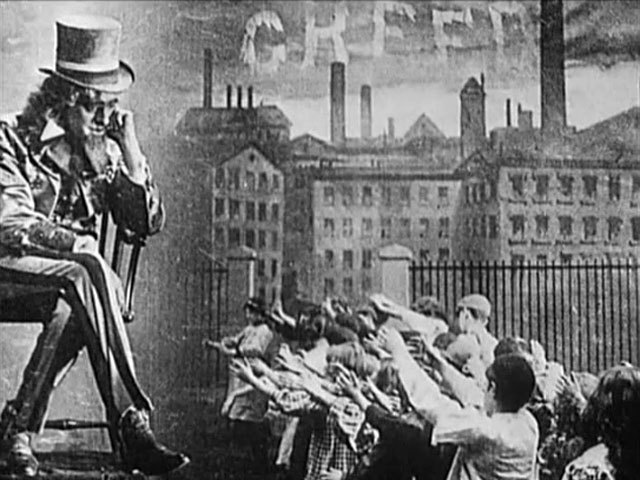
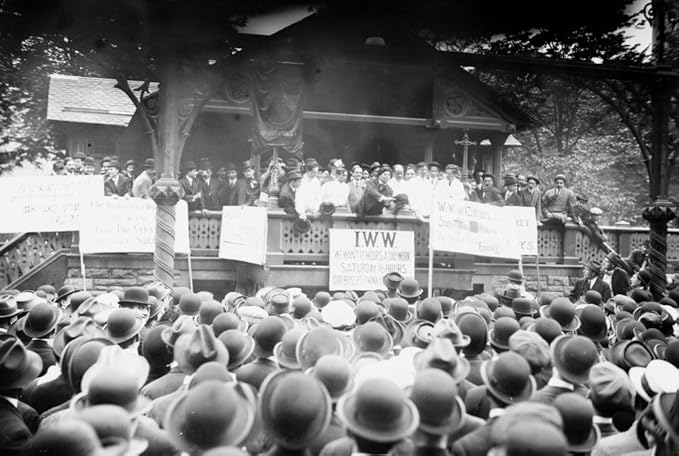
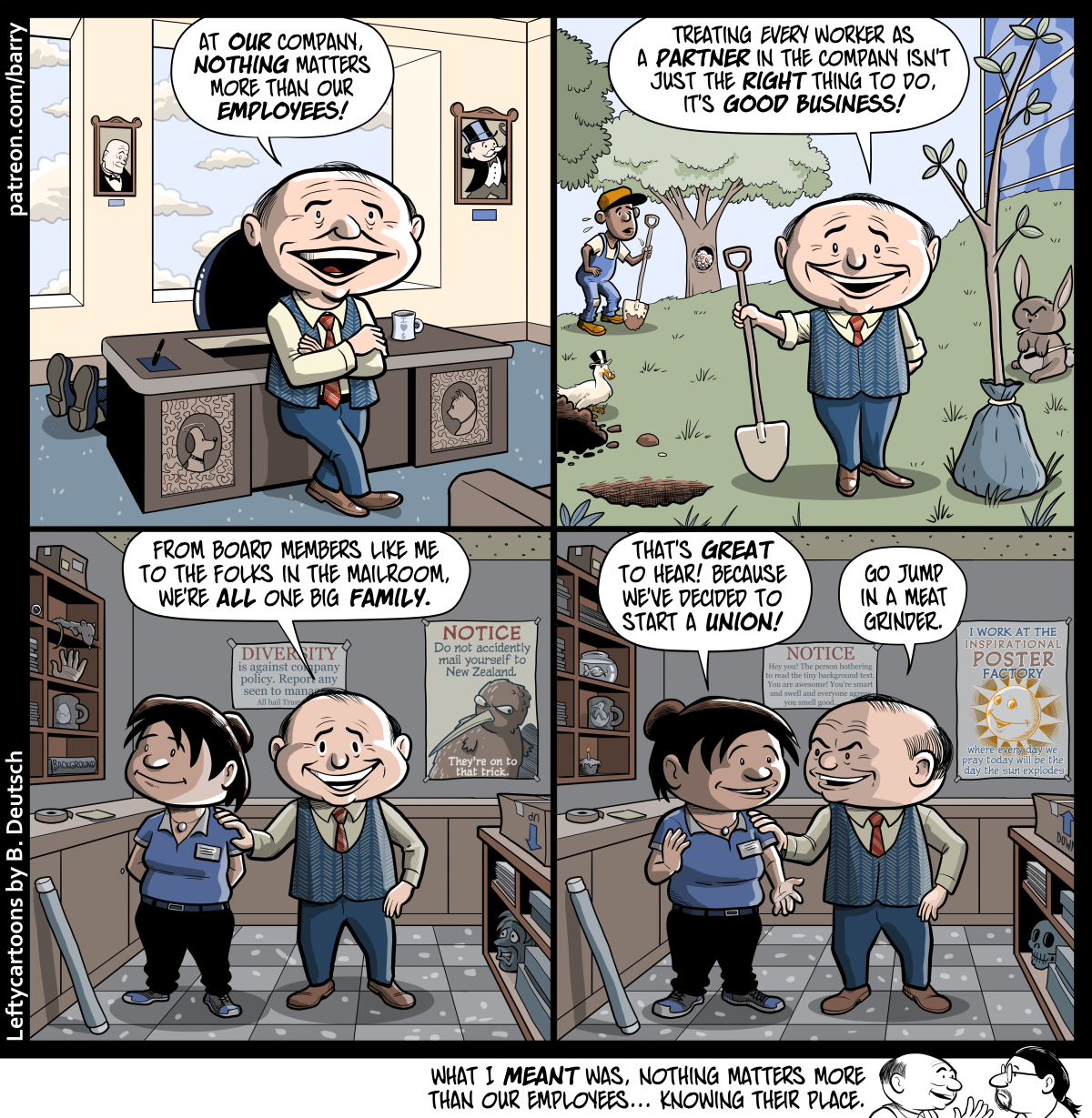
 $.” The front of the desk has two panels with fancy embedded art, the left panel showing a dog with a halo, and the right panel showing a cat with devil horns.









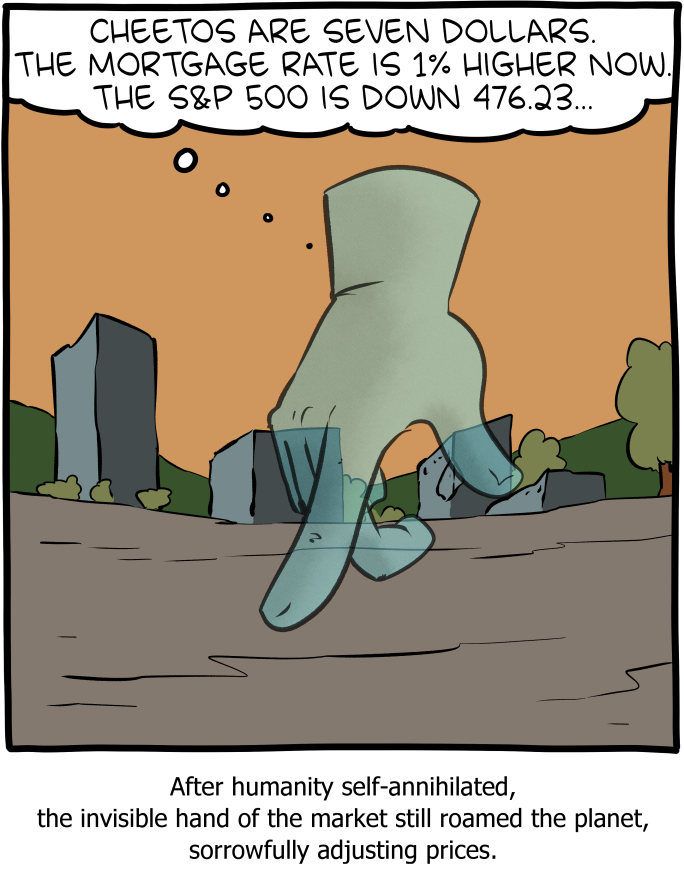




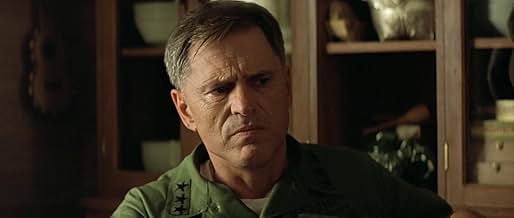
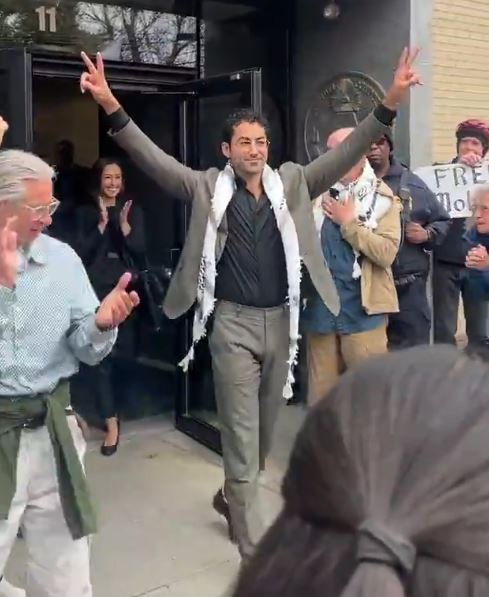



 ALT
ALT






 THREAD: A federal whistleblower just dropped one of the most disturbing cybersecurity disclosures I’ve ever read.He's saying DOGE came in, data went out, and Russians started attempting logins with new valid DOGE passwordsMedia's coverage wasn't detailed enough so I dug into his testimony: