Shared posts

20 May 20:43

Trump's Threat to Withhold Federal Funds from States that Expand Voting By Mail Highlights Growing Menace to Federalism and Separation of Powers

by Ilya Somin
Gpscruise

i agree with Trump. Voting by mail is anachronistic. Get Wells Fargo to setup voting online, so people trust it.

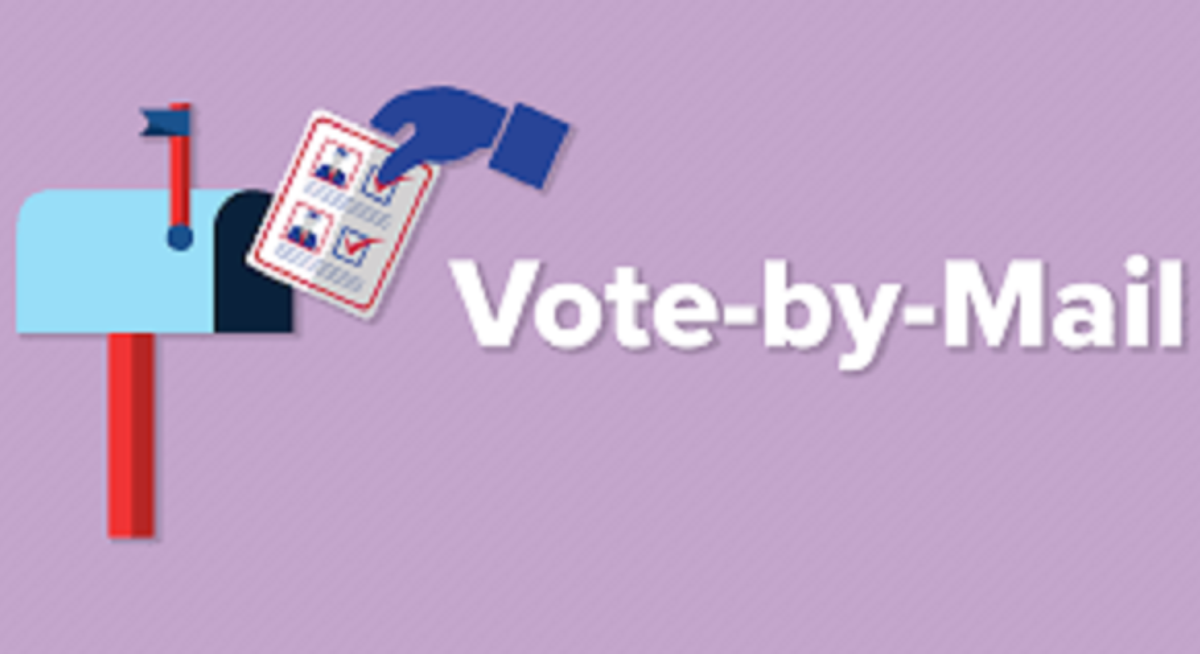
Earlier today, President Trump threatened to withhold federal grants from the states of Michigan and Nevada if they proceed with plans to expand vote-by-mail options in order to make it safer to vote in the midst of the ongoing coronavirus pandemic. It isn't clear what specific funds Trump has in mind, or even whether he has any meaningful plan to make good on the threat at all. Still, the danger that the White House can use the threat of withholding grants to bully the states should be taken seriously. If the president is able to impose his own new conditions on federal grants to states and localities, it would be a serious threat to both federalism and separation of powers. The vast expansion of federal spending and state dependence thereon during the coronavirus crisis has made this an even more serious danger than before.

To my knowledge, there are no federal grants to Michigan, Nevada, or other states that Congress has conditioned on forbidding or severely restricting voting by mail. The extent of mail voting is one of of many aspects of election administration that the Constitution largely leaves to state governments.

In my view, expanding vote by mail makes excellent sense at a time when in-person voting could risk spreading a deadly disease, particularly among elderly voters and poll workers, who are especially vulnerable to the coronavirus. Empirical evidence undercuts claims that postal voting is particularly prone to fraud, or that it necessarily advantages one party over the other. In this 2014 post, I criticized claims that allowing early voting by mail exacerbates the problem of political ignorance.

But whether expanding mail voting is a good idea or not, the president has no authority to use federal grants to pressure states on the issue. The Constitution gives Congress, not the president, the power to allocate federal spending, including imposing conditions on state and local government grant recipients. Supreme Court precedent also imposes constraints on those conditions to protect state autonomy, most notably that any onditions  "unambiguously" stated in the text of the law "so that the States can knowingly decide whether or not to accept those funds,"  not added later by the president or by creative judicial interpretation of vague statutes.

If the president can get around such restrictions and impose his own new conditions on federal grants to state governments, he could use that power to bully states and localities on a wide range of issues. Conservatives who might be happy to see Trump wield that authority should ask how they would feel when Joe Biden (or some other future Democratic president) does the same thing. The same tools Trump uses to pressure blue and purple states can easily be turned against red states. Either way, centrally enforced homogeneity will undermine the variation in state policy that is crucial to coexistence in a diverse and deeply divided nation.

Those tempted to dismiss Trump's threat as mere bluster should recall this is far from the first time the administration has tried to bully states and localities by usurping the spending power. In a long series of "sanctuary city" cases, Trump has repeatedly tried to use that tactic to force state and local governments to cooperate with his immigration agenda. Nearly all court decisions on the issue (with one notable exception) have so far rejected the administration's tactics on the ground that Trump cannot impose spending conditions that were not authorized by Congress.

Many of the sanctuary city cases involved administration efforts to withhold relatively modest-size federal law enforcement grants. But the threat to federalism and separation of powers goes far beyond that specific case. The same tactics used by the administration in sanctuary cities cases, can also be used to coerce states and localities by threatening to withhold far more significant federal grants.

Congress, of course, also sometimes adopts ill-advised grant conditions. But the need to build up majorities in two houses representing a range of diverse interests makes it harder to enact sweeping new conditions, and provides some protection for the autonomy of politically diverse states. The president can act more aggressively and faces fewer such constraints.

The vast expansion of federal spending during the ongoing coronavirus crisis exacerbates the danger posed by executive usurpation in this sphere. Thanks to that expansion and the catastrophic decline in states' own tax revenue,  state and local governments are now more dependent on federal aid than at any time in living memory. In that state of affairs, a president empowered to attach his own new conditions to federal grants will have more opportunity to abuse that authority than ever.

Ideally, we should limit the danger by taking steps to ensure a quick recovery, while also carefully limiting proposed bailouts of states to those that are genuinely needed to deal with the emergency. But we must reckon with the possibility that the crisis will continue for a long time, and that massive expansions of federal spending will continue along with it.

If that happens, growing state dependency on federal grants will almost unavoidably have serious negative effects. For example, it will diminish state incentives to compete for residents who "vote with their feet," since one of the main incentives for such competition is the desire for new tax revenue—which will be less pressing the more states can instead get money from Washington.

As long as the crisis continues, we cannot prevent all such problems, or even come close to it. But vigilant enforcement constitutional constraints on presidential attempts to usurp the spending power can forestall at least one threat to federalism and separation of powers.

This specific threat by Trump may ultimately come to nothing. But even if he does not act on it, this probably isn't the last we have heard of presidential efforts to exploit the coronavirus crisis to attach new conditions to federal grants to state governments, thereby circumventing Congress and gaining new leverage over states and localities.
18 May 04:26

Why contact tracing may be a mess in America

by James Temple
Gpscruise

only hire waiters.

Dozens of states across the US are pinning their hopes on contact tracing to control the spread of the coronavirus and enable regions to reopen without sparking major resurgences of the outbreak.

Alaska, California, Massachusetts, New York, and others are collectively hiring and training tens of thousands of people to interview infected patients, identify people they may have exposed, and convince everyone at risk to stay away from others for several weeks.

Contact tracing is a proven tool in containing outbreaks of highly infectious diseases. But this particular virus could pose significant challenges to tracing programs in the US, based on new studies and emerging evidence from initial efforts. Stubbornly high new infection levels in some areas, the continued shortage of tests, and American attitudes toward privacy could all hamstring the effectiveness of such programs.

Driving down infection rates

The chief challenge with this coronavirus is its potential to spread exponentially: absent containment measures, every infected person on average will infect two or three others, according to most estimates (although some studies find it could be higher).

The goal of contact tracing, as well as social distancing, is to push down the number of people each infected person infects, creating an “effective reproduction number,” or Re, of 1 or less. At that point the number of new cases is flat or falling.

But contact tracers have to reach a significant portion of cases and contacts to really move those numbers.

A team in any given region would have to detect at least half of new symptomatic cases, and reach at least half the people they were in close contact with and encourage them to stay away from others, in order to reduce the transmission rate by 10% or more, according to a new model. (The work was published as a preprint on MedRxiv on May 8 but hasn’t been peer-reviewed yet.)

If they successfully detected 90% of symptomatic cases and reached 90% of their contacts—and tested all of them regardless of whether they had symptoms—it could reduce transmissions by more than 45%, the researchers found.

In other words, if social distancing in a given region had reduced infections per person from 2.6 to 1, this level of contact tracing could push it down to .55. Or the region could ease distancing measures by about half and keep infection levels constant.

“It gives us some room to be targeted and strategic in terms of the sorts of restrictions we have on business and commerce and social interactions,” says Joshua Salomon, a professor of medicine at Stanford and coauthor of the study.

Can we hit those kinds of figures? Salomon thinks it’s possible, but he adds that most of the nation doesn’t have the well-trained workers and data systems in place to achieve anything on that level yet.

Amassing armies

The success of contact tracing will depend on how big the teams are, how many new cases develop, and how readily people respond in any given community.

Reaching 90% of contacts, for instance, will be especially difficult in states and regions still grappling with lots of new infections. Take Massachusetts, which put to work a 1,000-person contact tracing task force at the beginning of the month. But new confirmed cases in the state are still generally exceeding 1,000 daily, and nearly reached 1,700 on Thursday, so every tracer on the team will need to track down and convince some multiple of that number to stay away from others every day. While shelter-in-place rules are in effect, that multiple may be only two or three people. But as regions relax social distancing measures, the average number of contacts for infected patients could rise to closer to 20.

NPR reported that 44 states and the District of Columbia now plan to bolster their contact tracing teams, collectively increasing them from about 11,000 today to more than 66,000 in the weeks ahead.

But that’s likely not going to be enough. The National Association of County & City Health Officials estimates that US tracing efforts will require 30 professionals for every 100,000 people (or more than 98,000 people nationwide).

Only seven states have plans that would reach that target, including California, New York, and Illinois, NPR found. Only one, North Dakota, meets it currently.

A bipartisan group of prominent health experts and public officials—including Bob Kocher, a former special assistant to President Barack Obama on health policy, and former Republican Senate Majority Leader Bill Frist—argue that the nation will need to go further than that. They called on Congress to set up a 180,000-person contact tracing workforce that would cost the federal government some $12 billion.

Technology can certainly supplement human contact tracing. Smartphone apps that flag when someone may have been in close contact with an infected person helped China, which required citizens in many cities to download the software, to flatten the curve of its outbreak. Similarly, South Korean officials have made use of credit card information, surveillance footage and GPS data to track the recent whereabouts of patients who test positive, as well as smart phone apps to ensure they remain in quarantine.

But proximity-tracking apps, at least, need to be very widely used in order to make a meaningful difference. So there are serious doubts about how effective they could be in the US, given heightened cultural concerns about privacy and the fact that the government isn’t forcing people to use them.

Move fast and test things

A study published on May 1 in JAMA Internal Medicine, tracking the first 100 cases in Taiwan, found that people are most infectious before and within five days of the onset of symptoms. That adds to a growing body of evidence that people with minimal or no warning signs like fevers and coughs are a major vector of the disease.

That underscores the critical importance of contact tracing. The very goal is to identify people who don’t know they’re infected and encourage them to quarantine themselves before they unwittingly infect others. But it’s hard to identify and trace all the cases out there if people aren’t sick enough to know they should get tested, and it means contact tracers need to move incredibly fast to get to people before they’re already spreading the virus.

“I say you need to find people and isolate them within four days of exposure, if you’re going to make a dent,” says George Rutherford, a professor of epidemiology at the University of California, San Francisco, and principal investigator on California’s contact tracing program. “It’s probably even three.”

The potential for people to spread the disease before displaying symptoms also underscores the importance of making tests much more widely available. Given the shortages of supplies, protective equipment, trained personnel, and processing capacity, many regions are still offering tests only for people who have symptoms or are frontline health workers.

But if areas can build the capacity to test all the close contacts of infected people, even if they haven’t developed symptoms, it could increase the effectiveness of contact tracing programs by as much as 2.2 times, Salomon and his coauthors found.

That’s because if an asymptomatic person does test positive, it triggers additional efforts to contact and quarantine everyone that person may have exposed. Also, researchers suspect, people are more likely to adhere to requests to stay away from others if they know they’re infected than if they’re simply told they may have been exposed.

Last month, researchers at the Harvard Global Health Institute estimated that the US would need to conduct at least half a million tests per day to capture asymptomatic cases and safely reopen the economy. Now they think that figure is closer to 900,000. Meanwhile, the daily average over the last week has been about a third of that level, according to the COVID Tracking Project.

The American psyche

Successful contact tracing efforts also require people to accept calls and heed advice from complete strangers.

Unfortunately, years of robocalls and telemarketing have conditioned many Americans to ignore calls from numbers they don’t recognize. Jana De Brauwere, a program manager with the San Francisco Public Library who is working with the city’s contact tracing task force, says that at least half the people she calls simply don’t answer. Others hang up once she starts asking for personal information, like addresses and dates of birth.

UCSF’s Rutherford has said there’s an added challenge for regions with large populations of immigrants or undocumented residents, where people may be fearful of interacting or sharing information with public officials. San Francisco’s contact tracers are finding that about 40% of potentially exposed contacts are Spanish-only speakers, many of them in crowded living situations.

Even if contacts do take the call and stay on the line, there’s the separate question of whether they’ll follow the advice to get tested or voluntarily place themselves in quarantine.

De Brauwere says that all she can do is recommend these steps, and offer support to help people take them. She can connect them, for instance, with city workers who will deliver food or medicine, or even locate shelter in extreme situations.

Kocher, a fellow at the University of Southern California’s Schaeffer Center for Health Policy and Economics, adds that we’re often asking people to miss work for several weeks. Some people can’t afford that, and some will fear losing their jobs. So if we expect people to comply, we may have to provide additional incentives, including money to pay their bills, he says.

There are other reasons to suspect these requests won’t go over well among certain people and in certain parts of the nation, particularly as public opinion about the dangerousness of the disease and the appropriateness of government interventions becomes increasingly politicized.

In a Twitter thread earlier this week, Keith Humphreys, a professor of psychiatry and behavioral sciences at Stanford, argued that public health officials are underestimating how much US attitudes toward government authority could undermine national testing and tracing programs.

Americans have already defied the orders of health officials in several prominent incidents, including assaults on store workers who asked people to wear masks, armed demonstrators protesting stay-at-home restrictions, and businesses that have reopened before their local government gave the go-ahead.

Public health orders, Humphreys notes, work only when there’s a public that will abide by them.

Update: This piece was updated to clarify how South Korea has used digital tools and other methods to control the outbreak in South Korea.

15 May 16:57

NEWS FROM MY NECK OF THE WOODS: Knox County reports no new COVID-19 cases, no current hospitalizati…

by Glenn Reynolds
Gpscruise

the spanish flu lasted 2 years and then went away. QED

NEWS FROM MY NECK OF THE WOODS: Knox County reports no new COVID-19 cases, no current hospitalizations. It’s been two weeks since our reopening.

Related:

It’s too early to say, but what if we’re topping out?

Also related: Spot The Difference: Two Governors Reopened Their States, Only One Was Accused of ‘Human Sacrifice.’

12 May 20:23

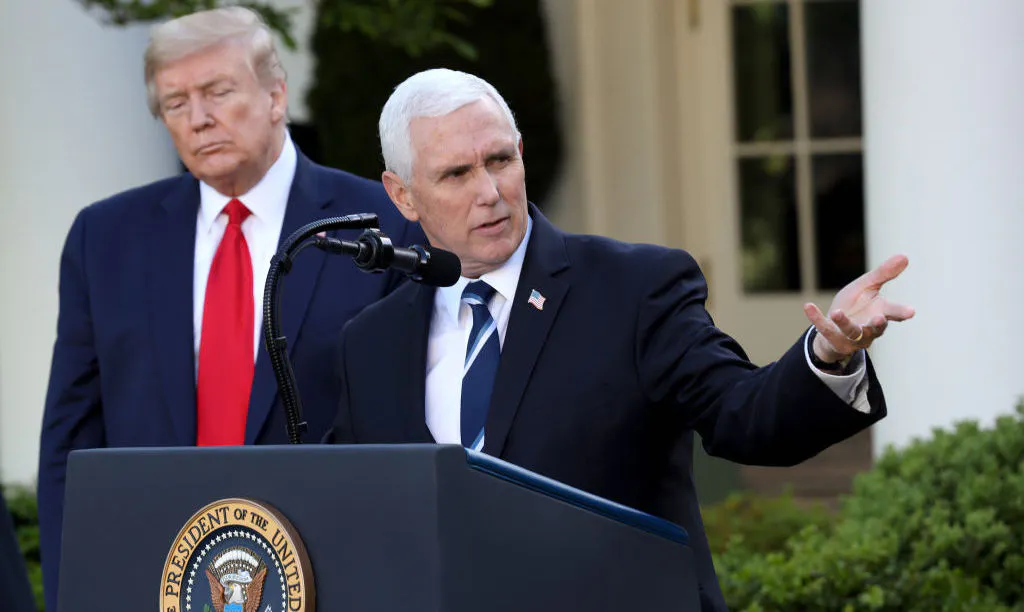
Pence: All Nursing Home Residents, Staff Should Be Tested For Coronavirus

by Tim Pearce

Vice President Mike Pence wants residents and staff at every nursing home in the United States tested for the coronavirus after a remarkable number of deaths have come out of such facilities.

The U.S. has roughly 15,000 nursing homes and one million nursing home residents. On Monday, Pence said that governors should prioritize testing at those healthcare facilities to prevent even more deaths among those especially vulnerable to Covid-19.

“I want to say what we’re urging with regard to nursing home testing is … let’s just get everybody in the homes everybody on the staff, let’s get them tested,” Pence said, according to ABC News.

“We’re really asking for every governor to focus, over the next two weeks, on testing 100% of the residents and workers, then setting up routine surveillance of all of the workers,” added Dr. Deborah Birx, who is in charge of coordinating the Trump administration’s response to the pandemic.

Senior care facilities have been exceptionally hard hit by the coronavirus pandemic. Currently, 33 states are tracking deaths in long-term care facilities and reporting them as a percentage of total coronavirus-related deaths.

In many cases, such facilities account for more than half of total coronavirus deaths. In three states – Pennsylvania, Rhode Island, and New Hampshire – the death toll in senior care facilities makes up at least 70% of the total coronavirus death count across the state, according to data collected by the Kaiser Family Foundation.

ABC News conducted its own survey of state data and found that the total number of reported coronavirus-related deaths from people living in nursing homes in the U.S. is about 31% of the national total. Notably, that percentage is drawn from just 35 states that report deaths in long-term care facilities. If the other 15 states are assumed to have similar a number of deaths, the percentage of U.S. coronavirus-related deaths from senior care facilities rises to roughly 40%.

“I was on a phone call last week, where four or five patients came into our hospital just in one day from nursing homes,” Dr. Sunil Parikh, an infectious disease specialist at the Yale School of Public Health, told The Guardian. “It’s just a staggering number day to day.”

Parikh recommends doing exactly what Pence has called for: testing everyone that works for or is living at senior care homes.

“What I would like to see is the ability to test the entire nursing homes,” Parikh said. “This symptomatic approach is just not cutting it. Many states, including Connecticut, are starting to move in that direction … but I hope it becomes a national effort.”

The industry group National Center for Assisted Living is also on board with Pence’s plan.

“We strongly agree with the vice president and Dr. Birx’s recommendation today for testing of all nursing home residents and staff and call on the federal government to help with this endeavor,” NCAL CEO Mark Parkinson told ABC News. “Without access to more testing, long term care providers are at a severe disadvantage in identifying more of these asymptomatic residents and staff who could be contagious and an endangerment to others.”

The Daily Wire, headed by bestselling author and popular podcast host Ben Shapiro, is a leading provider of conservative news, cutting through the mainstream media’s rhetoric to provide readers the most important, relevant, and engaging stories of the day. Get inside access to The Daily Wire by becoming a member.

12 May 20:21

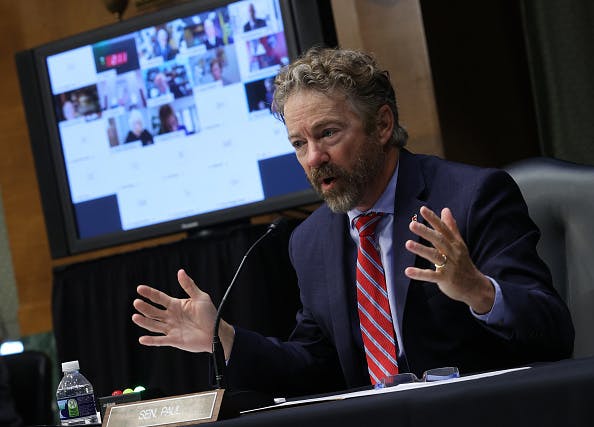
WATCH: Rand Paul Spars With Fauci: ‘Ridiculous’ To Cancel School In The Fall, ‘I Don’t Think You’re The End-All’

by Paul Bois
Gpscruise

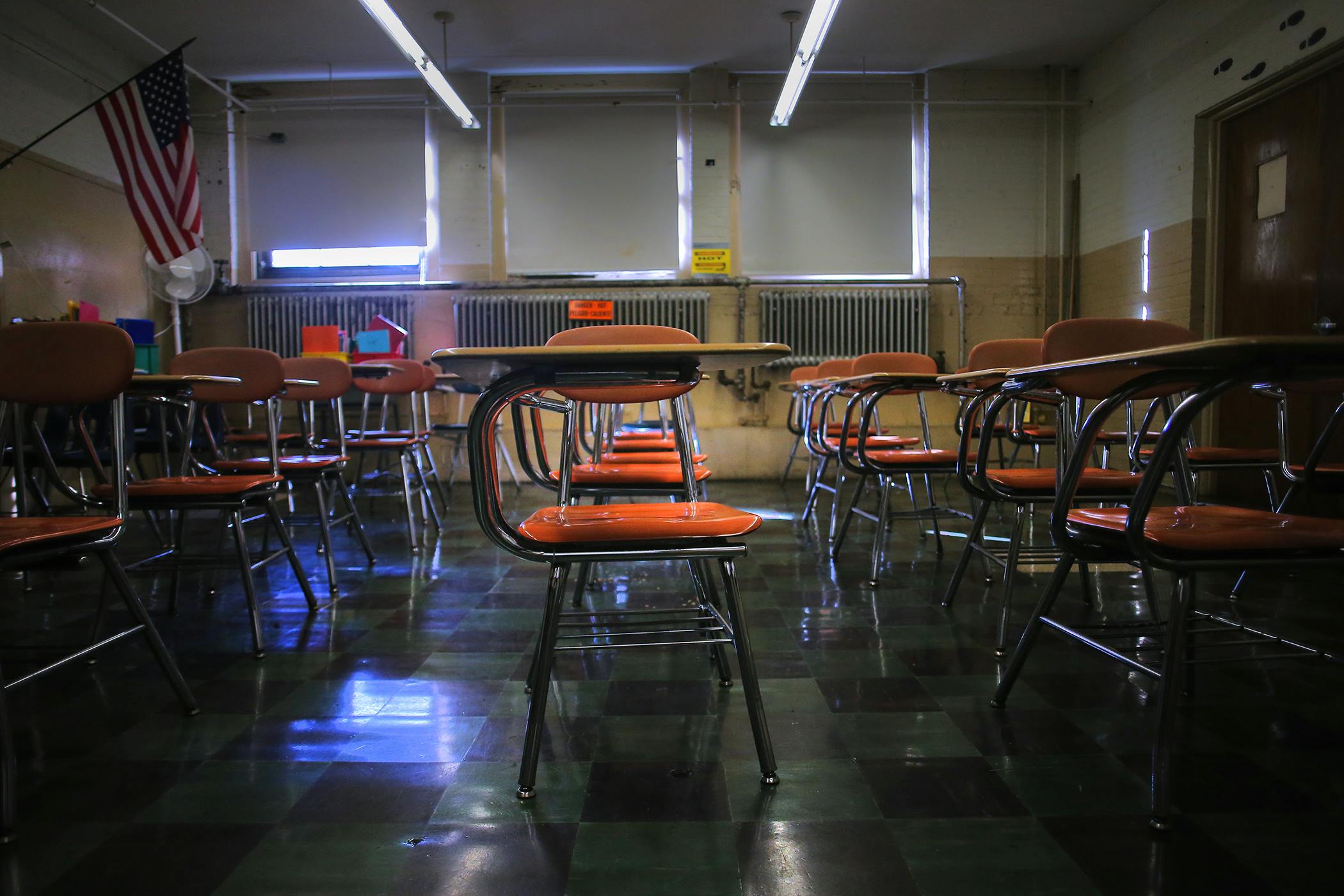
rethinking this, its really not a big deal to keep schools closed. They are just babysitters. Serious. Other than bored kids getting into trouble (I just caught my 14 year old with cigarettes!!!) its not that big a deal for kids to be home.

Sen. Rand Paul (R-KY), an ophthalmologist who recently recovered from COVID-19, sparred with Dr. Anthony Fauci,  the director of the National Institute of Allergy and Infectious Diseases, over his suggestion that the lockdowns should continue and that schools should be closed through the fall semester.

During his testimony before a U.S. Senate committee on Tuesday, Fauci covered a range of topics, stressing that COVID-19 could see a resurgence as states and cities reopen their economies, which have been crippled as a result of the shutdowns he advocated for.

“I think that … we’re going to have a national one-size-fits-all approach — nobody’s going to go to school, is kind of ridiculous,” Paul told Fauci. “We really ought to be doing it school district by school district, and the power needs to be dispersed because people make wrong predictions.”

Senator Paul noted that the mortality rates have varied by region and criticized the experts for crafting policies based on faulty scientific models that have been largely disproven, some as recently as this week.

“We ought to have a little bit of humility in our belief that we know what’s best for the economy,” said Paul. “And, as much as I respect you, Dr. Fauci, I don’t think you’re the end-all. I don’t think you’re the one person that gets to make the decision. We can listen to your advice, but there are people on the other sides saying that there’s not going to be a surge, and we can safely open the economy and the facts will bear this out.”

Fauci pushed back on Paul’s comments by clarifying that he is just a public health official and a scientist who simply gives his opinion based on the available evidence.

“Sen. Paul, thank you for your comments, I have never made myself out to be the end-all and only voice of this,” Fauci said. “I’m a scientist, a physician, and a public health official. I give advice according to the best scientific evidence.”

Fauci then pointed out that some cases with children show that COVID-19 could be associated with an inflammatory syndrome similar to Kawasaki disease, stressing that people should be “careful” regarding the virus.

“We don’t know everything about this virus and we really better be very careful, particularly when it comes from children,” Fauci said. “For example, right now children presenting with COVID-19 who actually have a very strange inflammatory syndrome.”


Prior to his testimony on Tuesday, Fauci warned that there will be “needless suffering and death” if we open the country too quickly.

“If we skip over the checkpoints in the guidelines to: ‘Open America Again,’ then we risk the danger of multiple outbreaks throughout the country,” Fauci said in an email to The New York Times. “This will not only result in needless suffering and death, but would actually set us back on our quest to return to normal.”

The Daily Wire, headed by bestselling author and popular podcast host Ben Shapiro, is a leading provider of conservative news, cutting through the mainstream media’s rhetoric to provide readers the most important, relevant, and engaging stories of the day. Get inside access to The Daily Wire by becoming a member 

12 May 19:06

Facebook and YouTube are rushing to delete “Plandemic,” a conspiracy-laden video

by Abby Ohlheiser
Gpscruise

i just subscribed, fun stuff.

The news: A 25-minute clip of an upcoming documentary featuring a well-known anti-vaccine conspiracy theorist was viewed millions of times this week on social media, before Facebook and YouTube pledged to remove copies of it from their platforms. On Thursday, Facebook told reporters that the documentary violated its policies by promoting the potentially harmful claim that wearing a mask can make you ill. According to Digital Trends, the clip had more than 1.8 million views and 150,000 shares on Facebook. It was also viewed millions of times on YouTube before being removed for violating covid-19 misinformation policies.

How it spread: Anti-vaccine activists have drawn millions of views on social media by promoting covid-19 conspiracy theories. As we reported earlier, this isn’t an accident: activists are seeking out larger audiences in the middle of the pandemic by using the same techniques that YouTube creators and influencers use to get views. They’ve sought out interviews with bigger, more mainstream YouTubers, latched on to existing trends, encouraged their fans to amplify their messages, and built presences on every social platform they can find. Renee DiResta, a researcher at the Stanford Internet Observatory who works to combat this type of misinformation, told us this week that if anti-vaccine activists feel they “can create content people will find if they search for a specific term,” they’ll invest the time.

When copies of “Plandemic” began to disappear from YouTube, supporters bombarded Twitter with claims that they were being unfairly censored. The documentary subsequently became a trending hashtag on Thursday, driving even more attention, outrage, and media coverage to it.

The potential harm: “Plandemic,” along with other conspiracy-oriented videos, contain several inaccurate claims that could lead people to try ineffective, sometimes dangerous treatments for covid-19, or encourage people to ignore public health guidelines for staying safe. Judy Mikovits, the anti-vaccine figure featured in “Plandemic,” told YouTuber Patrick Bet-David in a lengthy conversation last week that a flu vaccine from the mid-2010s is “driving the pandemic,” that wearing a mask will “activate” the virus in the body, and that Anthony Fauci should be charged with “treason.” Some of those claims were repeated in the clip, which itself was supposed to be a teaser for a longer documentary.

David Gorski, a surgical oncologist at Wayne State University School of Medicine who is a well-known expert on medical misinformation, has a thorough rundown debunking the claims here.

How to stop it: Experts have said that some of the things platforms are trying, such as removing content promoting misinformation or extreme views, elevating reliable information in recommendations and search, and providing information boxes on borderline videos or posts that provide authoritative information, can help. But platforms like YouTube and Facebook have struggled to enforce these policies quickly enough to prevent videos like “Plandemic” from being widely shared and viewed anyway. There’s another challenge, too: misinformation, particularly health misinformation, thrives when reliable information is scant or unavailable. This is a particular problem in the current pandemic, as doctors and scientists are racing to understand a disease that didn’t exist six months ago. If conspiracy theorists are behind most of the content relating to specific ideas or search terms, then people Googling those terms out of curiosity will find themselves in an algorithmic tunnel of unreliable sources.

Some doctors have worked to fill these voids by becoming influencers themselves, debunking popular misinformation to their large followings on the platforms where those ideas are spreading. Zubin Damania, a physician and online personality, posted “A Doctor Reacts To ‘Plandemic’” to his YouTube channel earlier this week. 

“This is crazy,” he said in the video. “Don’t waste your time watching it. Don’t waste your time sharing it. Don’t waste your time talking about it. I can’t believe I’m wasting my time doing this. But I just want to stop getting messages about it.”  The video has more than 1.3 million views.

12 May 17:04

BBC sports broadcaster who narrates his dogs' lives in lockdown is branching out

by Mary Jo DiLonardo
Gpscruise

a meme is born

BBC sports broadcaster Andrew Cotter does commentary on his dogs' lives during lockdown.
11 May 15:59

New AI diagnostic can predict COVID-19 without testing

Gpscruise

what is the definition of loss of taste?

(King's College London) Researchers at King's College London, Massachusetts General Hospital and health science company ZOE have developed an artificial intelligence diagnostic that can predict whether someone is likely to have COVID-19 based on their symptoms. Their findings are published today in Nature Medicine.
11 May 15:07

HEY JOURNALISTS: WANT PEOPLE TO STOP THINKING OF YOU AS GARBAGE? STOP BEING GARBAGE. …

by Glenn Reynolds
Gpscruise

i disagree. Just dont read it and it will go away. Grow up, I did.

HEY JOURNALISTS: WANT PEOPLE TO STOP THINKING OF YOU AS GARBAGE? STOP BEING GARBAGE.

10 May 04:22

‘Not Messing Around’: Tesla CEO Files Lawsuit Against County, Local Mayor Issues Statement

by Eric Quintanar
Gpscruise

did he pay out the pedo lawsuit??

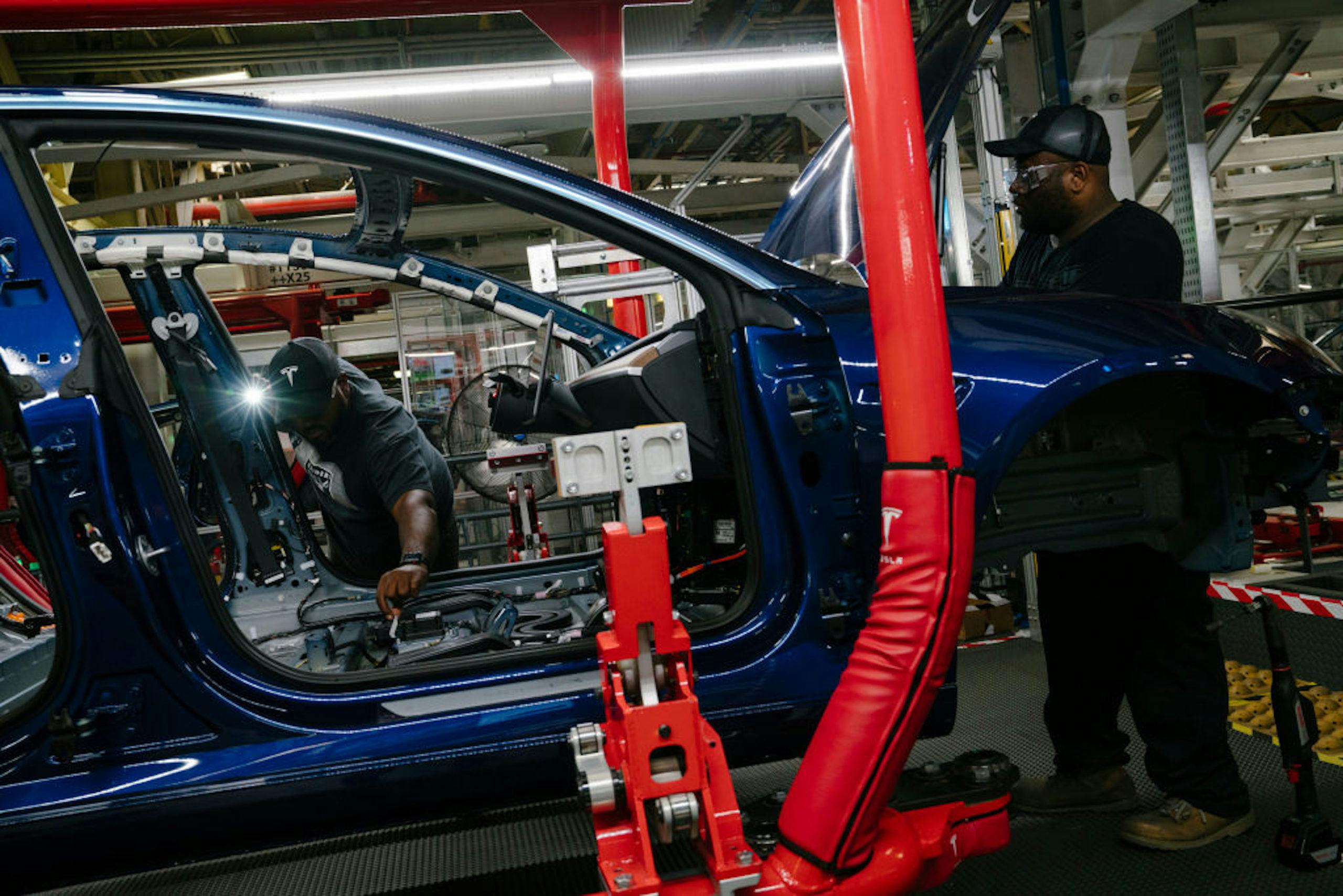
Tesla CEO Elon Musk has filed a lawsuit against Alameda County, California, after the local public health department blocked him from resuming business at the company’s manufacturing plant in Fremont this past Friday.

The lawsuit argues that Alameda County, where Tesla’s headquarters are based, empowered itself to close businesses, under the threat of fines or jail time, that supply critical infrastructure even after deeming them as essential, according to a copy posted by Third Row Tesla on Twitter.

The lawsuit also notes that Tesla’s facilities in neighboring San Joaquin County have not been subject to the same restrictions, despite both counties having “substantially similar” coronavirus death rates and infection rates.

After the Twitter account posted a copy of the lawsuit, Musk replied: “I’m not messing around. Absurd & medically irrational behavior in violation of constitutional civil liberties, moreover by *unelected* county officials with no accountability, needs to stop.”

Lily Mei, the mayor of Fremont, California, came out in support of Tesla resuming business so long as they were committed to finding a “thoughtful, balanced approach.”

The mayor’s statement comes after Musk blasted Alameda County and declared that his company would move its headquarters and unspecified programs out of California. The Tesla CEO also said he would consider moving the entire manufacturing process out of Fremont depending on “how Tesla is treated in the future.”

Dr. Erica Pan, the interim public health office for Alameda County, said during an online town hall on Friday that Tesla did not have “the green light” to resume operations, according to CNBC.

Early Saturday morning, when Musk tweeted his plans to move the company, the Tesla CEO referred to an “ignorant” unnamed “Interim Health Officer” who was acting contrary to “plain common sense.”

In a statement after Musk’s tweets, Neetu Balrum, a public information manager for Alameda County, told NBC News that they’ve been working with Tesla on a “good faith effort” to reopen the factory.

“Tesla has been responsive to our guidance and recommendations, and we look forward to coming to an agreement on an appropriate safety plan very soon,” said Balrum.

The Daily Wire, headed by bestselling author and popular podcast host Ben Shapiro, is a leading provider of conservative news, cutting through the mainstream media’s rhetoric to provide readers the most important, relevant, and engaging stories of the day. Get inside access to The Daily Wire by becoming a member.

09 May 17:37

Kimmel Offers Snide ‘Apology’ For Video About Pence: ‘I Know How Dearly This Administration Values Truth’

by Hank Berrien
Gpscruise

hes the new letterman... pass

On Friday morning, after blowback erupted from late-night host Jimmy Kimmel playing a deceptively-edited video in order to attack Vice-President Mike Pence, Kimmel offered a snide apology on Twitter, writing, “it would appear that @vp was joking about carrying empty boxes for a staged publicity stunt. The full video reveals that he was carrying full boxes for a staged publicity stunt. My apologies. I know how dearly this administration values truth.”

On Thursday night, Jimmy Kimmel ripped  Pence, asserting that a video showing Pence carrying empty boxes to a rehabilitation and healthcare center was an attempt by Pence to “pretend,” adding that it was “the perfect metaphor for who he is and what he’s doing. A big box of nothin’ delivering another box of nothin’.”

One problem: the video had been deceptively edited, as the complete video shows Pence at the Woodbine Rehabilitation and Healthcare Center in Alexandria, Virginia, delivering boxes full of personal protective equipment (PPE) from FEMA.

Kimmel stated:

Here he is, with no mask on, wheeling boxes of PPEs into a health care center and doing his best to lift them. What a hero. (laughing) Just barely in the door. And since it was going so well, and also because he didn’t realize he had a mic on, Magic Mike decided to keep it going. Listen in closely here:

The video shows someone saying, “Those are empty, sir. We’re good to go.” Pence responds, “Well, can I carry the empty ones? Just for the camera?” Someone answers, “Absolutely.”

Kimmel continued, “Mike Pence pretending to carry empty boxes of PPEs into a hospital is the perfect metaphor for who he is and what he’s doing. A big box of nothin’ delivering another box of nothin’.”

Here’s the complete video:

Kimmel has targeted Pence before; in March 2018 he tweeted, “That’s not the point. We don’t make films like Call Me By Your Name for money. We make them to upset Mike Pence.”

Kimmel routinely takes shots at figures within the Trump administration; in December 2018, referencing reports that one of the leading candidates to replace Gen. John Kelly as Trump’s chief of staff was none other then Trump’s son-in-law and key adviser Jared Kushner, Kimmel decided to work in a sexual reference to his wife, Ivanka, saying,”I guess the thinking of [Trump] is: if he’s good enough to screw my daughter, he’s good enough to screw the country.”

In August 2019, Kimmel went on a rant in which he branded Senate Majority Leader Mitch McConnell an “evil soulless odd creep,” called Republicans “cowardly” for refusing to appear on left-wing cable news shows after the mass shootings over the weekend, and finished with a flourish, referring to Trump supporters as people who have been “repeatedly punched in the head” and calling President Trump’s sons Donald Jr. and Eric the “Douches of Hazzard” for being fans of MMA fighter Colby Covington.

The Daily Wire, headed by bestselling author and popular podcast host Ben Shapiro, is a leading provider of conservative news, cutting through the mainstream media’s rhetoric to provide readers the most important, relevant, and engaging stories of the day. Get inside access to The Daily Wire by becoming a member.

07 May 14:46

Many Effects of Hydroxychloroquine against COVID-19

by Leo Goldstein
This is a scientific review, published to inform health care professionals and public officials, and for an open peer review. It is not medical advice. Abstract Hydroxycholoroquine (HCQ) is effective against COVID-19 in a variety of roles – the main two being antiviral and immunomodulator.  This “silver bullet” effect may have caused confusion between different…
07 May 14:29

D.C. Bee Expert: ‘Everyone Should Chill The Hell Out’ About ‘Murder Hornets’

by Amanda Prestigiacomo
Gpscruise

i have been viscously stung by killer-bees. They are calculating and very different.

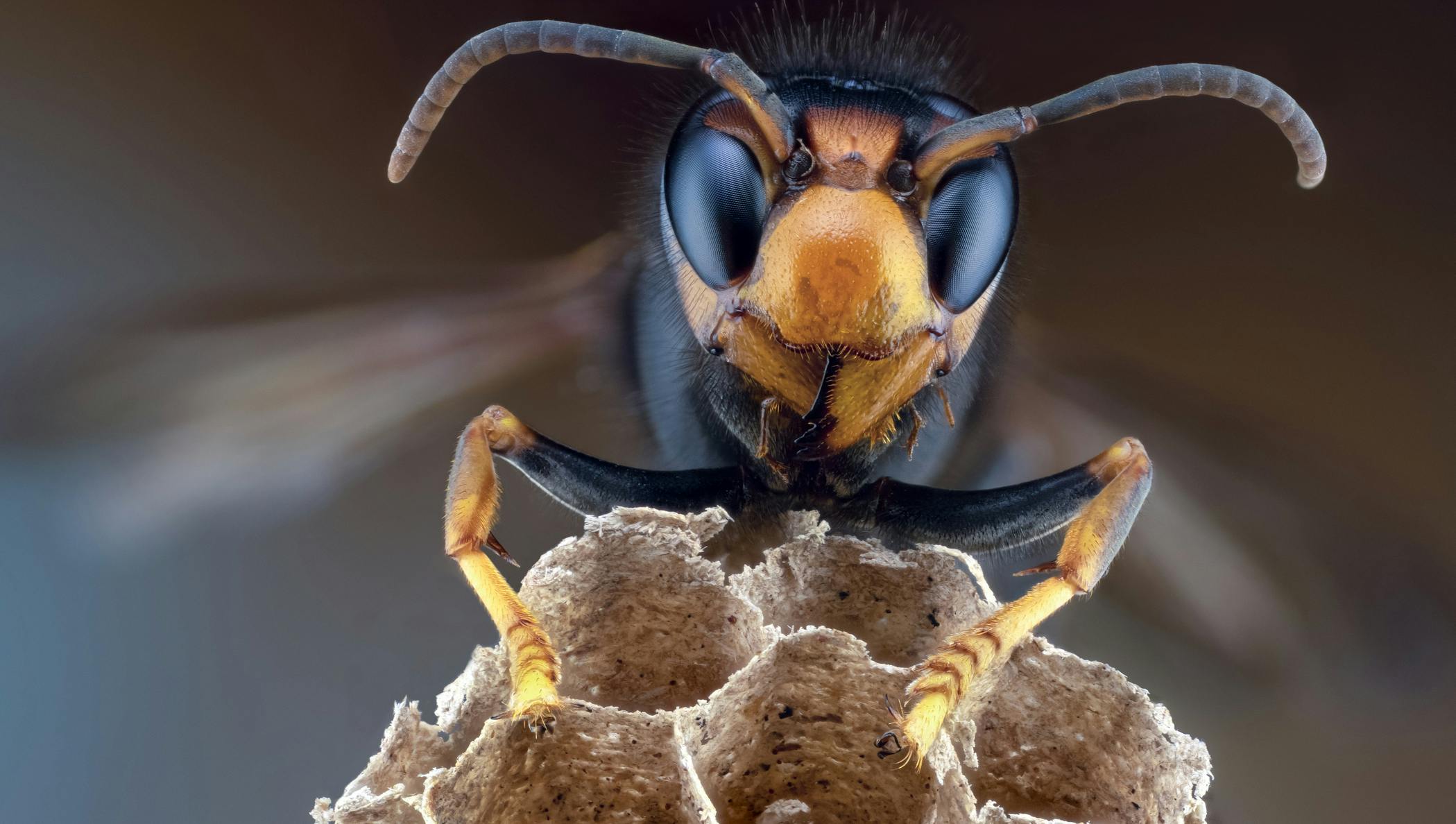
A D.C. bee expert is advising people to “chill the hell out” over reports of so-called “murder hornets,” which originated in Japan and recently made their way to Washington state.

“Everyone should chill the hell out,” said president of the D.C. Bee Keepers Alliance Toni Burnham, according to DCist.

The bees, known as Asian giant hornets or Vespa mandarinia, have been dubbed “murder hornets,” which Burnham argues is misleading and “stupid.”

“There is no more a murder hornet than there is a killer bee,” she explained. “They’re both stupid names.”

“That fear has consequences—in the past few days, she has seen photos across the country showing some people killing other bees, even bumblebees, over the murder hornet paranoia,” DCist report said, adding, “The hornet is not new to entomologists. Like most insects, when unprovoked, they’re not a threat to humans, Burnham says.”

“These things have been around, and there are techniques for controlling them,” the bee expert explained.

According to Burnham, “murder hornets are no scarier looking than other large insects that buzz around the region, like the European hornet (which she calls flying school buses for their bright yellow torsos) or her favorite bug, cicada killers,” according to DCist. “She urges that residents shouldn’t go out of their way to kill these creatures out of fear of a potential murder hornet invasion.”

“Let [Washington state] handle it, and everyone calm down,” she added. “Have a beer.”

Last week, news reports spread about the so-called murder hornets, adding more panic to already novel coronavirus-panicked Americans. The real issue with the bees, as highlighted by CBS News, is the apparent threat the bees might pose to the honeybee population, which in turn would affect food supply.

“[M]urder hornets become most dangerous from late summer to early fall, when they ravage through honey bee populations,” the CBS News report outlined. “WSU researchers said the hornets attack the bee hives, decapitating and killing the adults and eating the larvae and pupae. Just a few of the hornets can completely destroy a hive in a matter of hours.”

“WSDA says on their website that the hornets do not typically go after humans, but if they do, not even beekeeping suits can protect against the hornets’ stingers, which are longer and more dangerous than a bee’s,” the report noted.

As noted by Scientific American, “U.S. beekeepers supply billions of honeybees each year to help pollinate at least 90 agricultural crops. And they are worried that this new raider could further worsen already deep losses in important pollinator populations. … Early colonists brought the iconic honeybee (Apis mellifera) to North America from Europe. It contributes an estimate $15 billion each year to the U.S. economy through its pollination services, far more than any other managed bee.”

The Daily Wire, headed by bestselling author and popular podcast host Ben Shapiro, is a leading provider of conservative news, cutting through the mainstream media’s rhetoric to provide readers the most important, relevant, and engaging stories of the day. Get inside access to The Daily Wire by becoming a member.  

07 May 14:27

Celebrity Chef Tom Colicchio: Restaurants Will Have To Adapt

by Paul Bois
Gpscruise

summer=patio. QED

Celebrity chef Tom Colicchio (“Top Chef”) said that restaurants will have to adapt to the current climate as states look to reopen, noting that they will not be able to go back to business-as-usual for some time.

Speaking with Fox News, Colicchio said without question that the COVID-19 pandemic will change the restaurant industry and outlined some ways those industries can adapt.

“Clearly we have to come up with some hybrid model, especially for the next year,” said Colicchio. “Because à la carte dining, with the spacing that [we’ll need to implement], and knowing that most likely bartenders, waiters are going to have to wear masks… People aren’t necessarily going to be very comfortable going to a restaurant like that.”

Colicchio noted that restaurants and banquet spaces dependent on private parties that can host upwards of 100 people are going to be hurt the worst, noting that “business isn’t coming back anytime soon.”

“If you have sales through private parties or banquet spaces where you have 120 to 300-seat banquet rooms, that business isn’t coming back any time soon,” said the celebrity chef. “So, we have to move to kind of an à la carte model, with also to-go orders. A combination of sort of chefs, and partnerships with chefs, suppliers and farmers, and stuff like that, to create takeaway boxes that can be picked up at the restaurant. So yeah, I don’t know yet.”

“Definitely when it reopens there will be some sort of a combination of different ways to do business… at least to get through for the next year, or until we find a vaccine,” he concluded.

Speaking with Tucker Carlson of Fox News last month, celebrity chef Robert Irvine (“Restaurant: Impossible”) said that restaurants will have to implement changes: cleaning habits, seating plans, and possibly even menu sizes.

“A restaurant, like any other business, has a break-even point, and that’s a huge thing when we come into business,” said Irvine. “People need to come back to work, but it has to be done safely. We are not going back to full 300-seat restaurants. We have to let the guests know that it’s safe to come into not only the restaurant but the stores at the same time. People are going to be scared, and … we don’t know what’s going on. I’m not a doctor, [but] I know I want to get back to work. My life is about saving restaurants and that’s what I’ve been doing.”

“[A]ll those mom-and-pop restaurants and mom-and-pop stores need business. We need money. That’s the way the world goes around. So let’s start doing it and do it smartly,” Irvine continued. “Listen to the experts, but also let’s be smart when we say, ‘OK, you can let 50 people in your restaurant over a two-hour period.’ And then you have to adjust everything … We have to lay out [new guidelines] clearly for [guests] so they know what to expect.”

In March, the National Restaurant Association predicted that 11% of restaurants could be closing permanently. Hudson Riehle, the Association’s senior vice president of research, said the data shows the industry is in “uncharted territory.”

“Association research found that 54% of operators made the switch to all off-premises services; 44% have had to temporarily close down. This is uncharted territory,” said Riehle. “The industry has never experienced anything like this before.”

The Daily Wire, headed by bestselling author and popular podcast host Ben Shapiro, is a leading provider of conservative news, cutting through the mainstream media’s rhetoric to provide readers the most important, relevant, and engaging stories of the day. Get inside access to The Daily Wire by becoming a member.

06 May 21:38

This App Protects Privacy While Tracing Covid-19 Infections

by Nick Gillespie
Gpscruise

doctoral fodder.

One of the most promising ways to end the lockdowns that have been instituted due to the COVID-19 pandemic is for you to know if you've been exposed to the virus so you can either be tested or enter quarantine. And one of the most promising ways to know whether you've been exposed is through smartphone apps that will notify you automatically if you've had contact with infected people.

But these apps also pose serious questions about efficacy and privacy—will they work and, even more importantly, how do we make sure they don't become the pretext for authorities to trace our every step?

Tina White thinks she has a solution. She's a doctoral student in mechanical engineering at Stanford, a self-described libertarian, and the head of a group called Covid Watch, a new nonprofit that released the first ever open-source protocol for a voluntary app that uses anonymous, decentralized data to give all of us more information about the disease that has shuttered the global economy.

In a wide-ranging conversation, White tells Nick Gillespie about Covid Watch's origins; why it insists on voluntary, open-source, and privacy-enhancing standards; and when we're likely to see the app in the real world.

05 May 17:51

The UK starts testing its contact tracing app this week—but will it work?

by Charlotte Jee
Gpscruise

why dont we open disneyland to all kids for 30 days. Have nurses and chaparones. This will fix it quick and safe.

The news: The UK government has announced it will start inviting residents of the Isle of Wight to download its official covid-19 contact tracing app this week. The app launch will start with National Health Service and municipal staff tomorrow, with all of the island’s 140,000 residents set to get access from Thursday. If the trial is successful, it will be launched for the rest of the UK starting in mid-May. The app is part of a wider plan to start safely easing the country’s lockdown measures, which includes hiring an additional 18,000 people to do manual contact tracing.

How the app will work: People who download the app will be instructed to switch on Bluetooth, turn on notifications, and enter the first half of their postcode. They will then be asked if they have any symptoms of covid-19. If they do, they will asked to order a test. The app uses Bluetooth to detect who the owner of the phone has been near, meaning it can deliver a warning if the person has been in close proximity to someone who has contracted covid-19. App users are invited to upload a list of their contacts to the app, which will use a risk-scoring algorithm to decide who to alert. This algorithm takes into account how long the two people have been in proximity, and how close they got to each other.

Potential problems: The UK is almost the only country that has decided to adopt such a centralized approach for its contact tracing app, shunning the decentralized system designed by Apple and Google. Security and technical experts have voiced concerns, warning that the app will not work unless people have it running constantly in the foreground, with their phone always switched on. An Oxford University professor who worked on the app said 60% of the population will need to download it for it to be effective. There are also worries over the fact it relies on self-reporting of symptoms, which may be unreliable, and could potentially contravene the UK’s data laws.

What are other countries doing? Singapore’s contact tracing app TraceTogether was one of the first to be launched, but it has faced a huge hurdle: getting enough people to sign up. Australia, New Zealand, and India have built similar apps, while China’s is highly centralized and collects a lot of data. One of the main lessons so far has been that unless the majority of the population downloads and uses contact tracing apps, they are of little use compared with manual tracing.   

04 May 21:19

How Apple and Google will let your phone warn you if you’ve been exposed to the coronavirus

by David Starobinski, Professor of Electrical and Computer Engineering, Boston University
Gpscruise

this is bullshit


On April 10, Apple and Google announced a coronavirus exposure notification system that will be built into their smartphone operating systems, iOS and Android. The system uses the ubiquitous Bluetooth short-range wireless communication technology.


There are dozens of apps being developed around the world that alert people if they've been exposed to a person who has tested positive for COVID-19. Many of them also report the identities of the exposed people to public health authorities, which has raised privacy concerns. Several other exposure notification projects, including PACT, BlueTrace and the Covid Watch project, take a similar privacy-protecting approach to Apple's and Google's initiative.

So how will the Apple-Google exposure notification system work? As researchers who study security and privacy of wireless communication, we have examined the companies' plan and have assessed its effectiveness and privacy implications.

Recently, a study found that contact tracing can be effective in containing diseases such as COVID-19, if large parts of the population participate. Exposure notification schemes like the Apple-Google system aren't true contact tracing systems because they don't allow public health authorities to identify people who have been exposed to infected individuals. But digital exposure notification systems have a big advantage: They can be used by millions of people and rapidly warn those who have been exposed to quarantine themselves.


Bluetooth beacons

Because Bluetooth is supported on billions of devices, it seems like an obvious choice of technology for these systems. The protocol used for this is Bluetooth Low Energy, or Bluetooth LE for short. This variant is optimized for energy-efficient communication between small devices, which makes it a popular protocol for smartphones and wearables such as smartwatches.

Bluetooth LE communicates in two main ways. Two devices can communicate over the data channel with each other, such as a smartwatch synchronizing with a phone. Devices can also broadcast useful information to nearby devices over the advertising channel. For example, some devices regularly announce their presence to facilitate automatic connection.

To build an exposure notification app using Bluetooth LE, developers could assign everyone a permanent ID and make every phone broadcast it on an advertising channel. Then, they could build an app that receives the IDs so every phone would be able to keep a record of close encounters with other phones. But that would be a clear violation of privacy. Broadcasting any personally identifiable information via Bluetooth LE is a bad idea, because messages can be read by anyone in range.


Anonymous exchanges

To get around this problem, every phone broadcasts a long random number, which is changed frequently. Other devices receive these numbers and store them if they were sent from close proximity. By using long, unique, random numbers, no personal information is sent via Bluetooth LE.

Apple and Google follow this principle in their specification, but add some cryptography. First, every phone generates a unique tracing key that is kept confidentially on the phone. Every day, the tracing key generates a new daily tracing key. Though the tracing key could be used to identify the phone, the daily tracing key can't be used to figure out the phone's permanent tracing key. Then, every 10 to 20 minutes, the daily tracing key generates a new rolling proximity identifier, which looks just like a long random number. This is what gets broadcast to other devices via the Bluetooth advertising channel.

When someone tests positive for COVID-19, they can disclose a list of their daily tracing keys, usually from the previous 14 days. Everyone else's phones use the disclosed keys to recreate the infected person's rolling proximity identifiers. The phones then compare the COVID-19-positive identifiers with their own records of the identifiers they received from nearby phones. A match reveals a potential exposure to the virus, but it doesn't identify the patient.

Most of the competing proposals use a similar approach. The principal difference is that Apple's and Google's operating system updates reach far more phones automatically than a single app can. Additionally, by proposing a cross-platform standard, Apple and Google allow existing apps to piggyback and use a common, compatible communication approach that could work across many apps.


No plan is perfect

The Apple-Google exposure notification system is very secure, but it's no guarantee of either accuracy or privacy. The system could produce a large number of false positives because being within Bluetooth range of an infected person doesn't necessarily mean the virus has been transmitted. And even if an app records only very strong signals as a proxy for close contact, it cannot know whether there was a wall, a window or a floor between the phones.

However unlikely, there are ways governments or hackers could track or identify people using the system. Bluetooth LE devices use an advertising address when broadcasting on an advertising channel. Though these addresses can be randomized to protect the identity of the sender, we demonstrated last year that it is theoretically possible to track devices for extended periods of time if the advertising message and advertising address are not changed in sync. To Apple's and Google's credit, they call for these to be changed synchronously.

But even if the advertising address and a coronavirus app's rolling identifier are changed in sync, it may still be possible to track someone's phone. If there isn't a sufficiently large number of other devices nearby that also change their advertising addresses and rolling identifiers in sync – a process known as mixing – someone could still track individual devices. For example, if there is a single phone in a room, someone could keep track of it because it's the only phone that could be broadcasting the random identifiers.


Another potential attack involves logging additional information along with the rolling identifiers. Even though the protocol does not send personal information or location data, receiving apps could record when and where they received keys from other phones. If this was done on a large scale – such as an app that systematically collects this extra information – it could be used to identify and track individuals. For example, if a supermarket recorded the exact date and time of incoming rolling proximity identifiers at its checkout lanes and combined that data with credit card swipes, store staff would have a reasonable chance of identifying which customers were COVID-19 positive.

And because Bluetooth LE advertising beacons use plain-text messages, it's possible to send faked messages. This could be used to troll others by repeating known COVID-19-positive rolling proximity identifiers to many people, resulting in deliberate false positives.

Nevertheless, the Apple-Google system could be the key to alerting thousands of people who have been exposed to the coronavirus while protecting their identities, unlike contact tracing apps that report identifying information to central government or corporate databases.

Johannes Becker, Doctoral student in Electrical & Computer Engineering, Boston University and David Starobinski, Professor of Electrical and Computer Engineering, Boston University

This article is republished from The Conversation under a Creative Commons license. Read the original article.

02 May 18:23

NASA will license its FDA-approved ventilator to manufacturers for free

by Christine Fisher
A new high-pressure ventilator developed by NASA engineers and designed to treat COVID-19 has received FDA approval via a fast-tracked emergency use authorization. Now, NASA is looking for a medical industry partner to manufacture the device. It will...
02 May 16:23

Me on COVID-19 Contact Tracing Apps

by Bruce Schneier
Gpscruise

they have this in Korea. My neighbors kid lives there. If you get near a covid+ person, you get a text. They have a low covid death there. They also have no crime. Why you ask? Because they have cameras EVERYWHERE. You wont get away with crime.
--Cool for them, but I dont want this in USA.

I was quoted in BuzzFeed:

"My problem with contact tracing apps is that they have absolutely no value," Bruce Schneier, a privacy expert and fellow at the Berkman Klein Center for Internet & Society at Harvard University, told BuzzFeed News. "I'm not even talking about the privacy concerns, I mean the efficacy. Does anybody think this will do something useful? ... This is just something governments want to do for the hell of it. To me, it's just techies doing techie things because they don't know what else to do."

I haven't blogged about this because I thought it was obvious. But from the tweets and emails I have received, it seems not.

This is a classic identification problem, and efficacy depends on two things: false positives and false negatives.

  • False positives: Any app will have a precise definition of a contact: let's say it's less than six feet for more than ten minutes. The false positive rate is the percentage of contacts that don't result in transmissions. This will be because of several reasons. One, the app's location and proximity systems -- based on GPS and Bluetooth -- just aren't accurate enough to capture every contact. Two, the app won't be aware of any extenuating circumstances, like walls or partitions. And three, not every contact results in transmission; the disease has some transmission rate that's less than 100% (and I don't know what that is).

  • False negatives: This is the rate the app fails to register a contact when an infection occurs. This also will be because of several reasons. One, errors in the app's location and proximity systems. Two, transmissions that occur from people who don't have the app (even Singapore didn't get above a 20% adoption rate for the app). And three, not every transmission is a result of that precisely defined contact -- the virus sometimes travels further.

Assume you take the app out grocery shopping with you and it subsequently alerts you of a contact. What should you do? It's not accurate enough for you to quarantine yourself for two weeks. And without ubiquitous, cheap, fast, and accurate testing, you can't confirm the app's diagnosis. So the alert is useless.

Similarly, assume you take the app out grocery shopping and it doesn't alert you of any contact. Are you in the clear? No, you're not. You actually have no idea if you've been infected.

The end result is an app that doesn't work. People will post their bad experiences on social media, and people will read those posts and realize that the app is not to be trusted. That loss of trust is even worse than having no app at all.

It has nothing to do with privacy concerns. The idea that contact tracing can be done with an app, and not human health professionals, is just plain dumb.

EDITED TO ADD: This Brookings essay makes much the same point.

30 Apr 19:17

Musk's SpaceX, Bezos' Blue Origin land contracts to build NASA's astronaut moon lander

Gpscruise

my money is on Boeing, not Musk

((This April 30 story has been corrected to say Starship can carry more than 100 metric tonnes of cargo, not 100 pounds in paragraph 9. The error occurred in a previous version as well.))
30 Apr 19:15

ONE HUNDRED MILLION CORPSES — AND COUNTING: Tomorrow is Victims of Communism Day. Communism does…

by Stephen Green
Gpscruise

people hate communism, but not that much.... Read GulagArchipeligo book.

ONE HUNDRED MILLION CORPSES — AND COUNTING: Tomorrow is Victims of Communism Day.

Communism doesn’t just kill. It psychologically scars entire nations for years and years after the Communists have finally been deposed.

29 Apr 17:32

Why it’ll still be a long time before we get a coronavirus vaccine

Gpscruise

i want to send all minor children to disneyworld and let them get corona. Yes, have strict shaparones via phones, but do it!

Trials of experimental coronavirus vaccines are already under way, but it’s still likely to be years before one is ready and vaccination may not even be possible
29 Apr 15:25

Media Hype Estrogen For Men As Coronavirus Treatment After Trashing Chloroquine

Gpscruise

I heard that Testosterone pills for women raises occurance of gypsyism.

The New York Times and other major media outlets are hyping estrogen for men as a new experimental treatment for the coronavirus and are applying little if any of the skepticism they've shown towards chloroquine. ...
29 Apr 14:38

Memory

by Grant
Gpscruise

i have thoroughly enjoyed having none of that for April. No Disney guilt, no What-are-the-Jones-doing". A breath of family time.


28 Apr 20:41

How coronavirus will see 240,000 fewer people move to Australia this year

Gpscruise

my buddy says Sidney is just LA with an accent.... So I used to want to move there, but not so much any more...

Margin lender CommSec, which provides financing to buy shares, is predicting Australia's border closures will cause immigration levels to plummet to levels that will harm the economy.
28 Apr 03:39

Become fluent in one of the most dynamic programming languages for $35

by Big Think
Gpscruise

i like python, BUT when it gets under the covers, the +++___blah+++___ gets scary.


  • Since its release in 1991, Python has become one of the world's most popular general-purpose programming languages.
  • Python enables programmers to write clear code with significant use of whitespace.
  • From data mining and web programming to cybersecurity and game design, Python can be used for virtually everything online.

Though it was first dreamed up in the eighties, Python's first release in 1991 made this general-purpose programming language an ideal successor to the ABC language. Logical and clear, Python offers coders and programmers a flexible and readable approach to designing virtually anything online.

When it comes to coding languages, Python is incredibly user-friendly, making it an ideal choice of coding newcomers. It also happens to be incredibly lucrative, with programmers earning over $75K as a base salary.

Want to start your programming journey into Python? The Complete Python Certification Bootcamp Bundle is a 12-course bundle that features 832 lessons by Python masters. In this incredible package you'll learn how to:

  • Look at statistics and data sets to become an expert data miner.
  • Use an introduction to statistics to learn how to visualize data through popular plotting libraries, such as Seaborn and Matplotlib.
  • Become an expert programmer who can code up everything needed to launch complex websites.
  • Acquire the skills necessary for statistical data analysis wrangling.
  • Develop an awareness of the tools required of a cybersecurity expert, including analyzing web app security vulnerabilities using Ruby onRails and PHP.
  • Build apps from scratch—you'll construct 10 during these lessons.
  • Design a Frogger-style game that will teach you the fundamentals of Python 3.

The Complete Python Certification Bootcamp Bundle is now on sale for just $34.99, a 98% discount from the list price.

Price subject to change.

More from the Big Think Shop

22 Apr 20:21

US Army doctors invent COVID-19 isolation chamber to protect hospital staff

Gpscruise

God thats stupid

(TechLink) The COVID-19 Airway Management Isolation Chamber is a barrier device constructed by draping clear plastic sheeting over a box-like frame made of common PVC piping that directs a particle capturing airflow over the patients head and chest.
20 Apr 17:39

WALSH: Harvard Professor Makes The Case For Homeschool Ban. Here’s Everything Wrong With Her Argument.

by Matt Walsh
Gpscruise

i homeschooled my kindergardener for six months. Our first and second lessons were "actually shooting a fire extenguisher" and actually firing a gun. Safe, fun...

With schools across the country shut down, millions of parents have discovered the considerable joys and challenges of homeschooling. This has made our betters in media and academia extremely nervous. What if a sizable portion of these parents decide that they quite prefer teaching their own kids? What if they never send their offspring back into the government’s education factories? They — our betters, I mean — may lose their hold on an entire generation of children. And that would be a great tragedy. For them, anyway. 

A recent article in the Washington Post was forthright about these fears. “Homeschooling during the coronavirus will set back a generation of children,” the editorial claimed. Harvard Law School is holding a “summit” to discuss this problem. The summit, led by “experts,” will focus especially on “educational deprivation and child maltreatment that too often occur under the guise of homeschooling, in a legal environment of minimal or no oversight.” Naturally, the summit experts have suggestions on “legal reforms” to help remedy this problem.

To get an idea of what this “legal reform” might look like, at least in the fevered dreams of Harvard professors, we need only look to an article just published in Harvard Magazine titled “The Risks Of Homeschooling,” and accompanied by an unintentionally ironic picture of a homeschooled child locked in a prison made of books while all of the public schooled children frolic and play outside. In reality, of course, it is the public schooled child who is chained to a desk in a government building for 8 hours a day while homeschooled children are free to go outdoors whenever they please.

The picture may be a hilariously poor representation of homeschooling, but it is a spot-on representation of the article, which time and time again confuses the problems of public school with the problems of homeschool. The piece extensively quotes Elizabeth Bartholet, who we are told is the “public interest professor of law and faculty director of the Law School’s Child Advocacy Program.” Bartholet advocates an outright ban on the dangerous practice of educating your own child, for reasons that are both illogical and morally absurd. Let’s take a look at them.

  1. Bartholet worries that the “unregulated regime” of homeschooling might allow parents who “don’t read or write” to tragically mishandle their children’s education. As evidence of this problem, she points to a memoir written by a woman who was homeschooled by survivalists in Idaho. 

If Bartholet has actual evidence that any significant, or even insignificant, percentage of homeschool parents are illiterate, she will need to do better then presenting a single anecdote. We are not all Idahoan survivalists, after all. I dare say a sizable majority of us do not fit that description. Besides, two can play the anecdote game. As a public schooled person, I could, for example, tell you about the geography teacher I had in tenth grade who didn’t know Georgia is the name of both a state and a country. Or the Spanish teacher in seventh grade who was rather hampered in her Spanish-teaching duties by the fact that she evidently didn’t know Spanish. For every story about dumb and neglectful homeschool parents, I could dig up ten about dumb and neglectful public school teachers. 

But if we’re going beyond mere anecdotes to compare the relative quality of homeschool and public school education, homeschool still comes out looking pretty good. Homeschoolers tend to perform better than the national average on both the SAT and the ACT. Granted, standardized tests are not a good way to measure these things but that in itself is another argument against public school, as the entire system is structured around these tests. The point is that homeschool kids can beat public school kids at their own game. And this is a fact that makes the Elizabeth Bartholets of the world hate homeschool even more. 

Putting standardized tests to the side, all we need to do is take a look around our society — a society which is largely the product of the public school system — to see how effective that system has been. For by their fruits we shall know them, according to a certain hugely influential book that homeschool kids have the advantage of being allowed to study.   Surveys and studies show that most American adults are downright ignoramuses in subjects such as civics, geography, and math, for example. It wouldn’t be rational to lay the blame for all of this entirely at the feet of our public school system, but it also wouldn’t be rational to survey this landscape of ignorance and stupidity and conclude that the education system is doing a bang up job.

2. Bartholet warns that many homeschool families are “driven by conservative Christian beliefs,” and that “some of these parents are ‘extreme religious ideologues’ who question science and promote female subservience and white supremacy.”

Her fears, in this case, are partially justified. It is indeed true that many homeschool parents have committed the crime of believing in Christianity. But then all educators in all educational environments have underlying beliefs. As for the notion that homeschool parents “promote female subservience and white supremacy,” this is nothing but ridiculous fear mongering with no evidentiary basis whatsoever. Bartholet’s research into homeschooling appears to consist of reading Daily Kos and Jezebel. Her claim about homeschool parents “questioning science” needs further qualification. Does she mean actual science, or the kind of “science” they teach in public school these days; the kind that says girls have penises and boys get pregnant? As a homeschool parent, let me be the first to admit that I do certainly question that.

3. Her final argument against homeschooling is that some homeschool parents might abuse their children. She explains that most public school teachers are “mandated reporters” who can “alert authorities to evidence of child abuse or neglect.” If a child doesn’t go to school, the argument goes, there won’t be anyone to save him from harm. 

The problem with this line of reasoning is that it utterly fails to account for the abuse that happens in public school. A study commissioned by the Department of Education found that a full 10 percent of children in public school are victims of sexual misconduct by teachers and staff. And that’s to say nothing of the many thousands of children who have been sexually abused at school by other students. Comparing this to the rate of child abuse at home — and even comparing sexual abuse at school to sexual abuse and every other kind of abuse at home — it seems apparent that a child is more likely to suffer abuse at school than at home. So, yes, an abused child who is homeschooled will not be rescued from his situation by a vigilant teacher. That is a tragedy. But there are many more children who are not abused at home and then are abused at school, which means that schools more often play the role of abuser than protector. 

On top of all of this, public school also offers bullying, suicide, drug abuse, alcoholism, social ostracization, and peer pressure. Indeed, when you consider the myriad dangers of public school, and the deleterious effect it so often has, and the generally abysmal job it has done of educating our children, you may begin to think that homeschool should be mandated rather than banned. I’m not sure I would go that far, but I could make a much more persuasive argument in that direction than the one that Harvard Magazine has put forward. 

20 Apr 02:29

Celebrities and the Media Shouldn't Sneer at Coronavirus Lockdown Protesters

by Robby Soave
Gpscruise

i expect an underground viralroal soon

In their desperation to get back to work, some Americans are taking to the streets to demand that the government end the quarantine. Comedian Patton Oswalt is unsympathetic.

"Anne Frank spent 2 years hiding in an attic and we've been home for just over a month with Netflix, food delivery & video games and there are people risking viral death by storming state capital buildings & screaming, 'Open Fuddruckers!'" he tweeted on Saturday.

This is hardly Oswalt's first display of smug liberal condescension: His tweet denouncing Covington Catholic High School student Nick Sandmann as a "leering, privileged little shit" was one of the most vile celebrity attacks on the wrongly maligned teenager.

It may be trivially simple for the Emmy Award-winning comic—and voice of Remy in Pixar's Ratatouille—to stay at home, watch Netflix, order carry-out, and play video games for a few weeks. (Writer and podcaster Bridget Phetasy compared Oswalt to Marie Antoinette's apocryphal indifference toward the hungry masses, tweeting: "Let them eat kale!") But many auto mechanics, coffee baristas, and small business owners can't afford this so easily. They are watching their financial situations become more and more precarious with each day that extreme social distancing continues. Oswalt suggested that the uncultured rubes are crazy to want Fuddruckers to reopen; people whose livelihoods depend upon places like Fuddruckers might see things differently.

That's why it's important for those criticizing misguided protesting efforts—including media figures who increasingly appear to be taking the view that you would have to be a deranged right-winger to want social distancing to end—not to resort to sneering at the less fortunate. (For example: A guest on MSNBC recently called the protesters, "the Fox News Nazi confederate death cult rump of the Republican Party.") These are terrifying times, and the prospect of hundreds of thousands of deaths means there is very good reason for policymakers to proceed cautiously with reopening. But both federal and state governments must consider the long-term practicality of their coronavirus prevention plans, including whether people will be willing to obey stay-at-home orders for much longer.

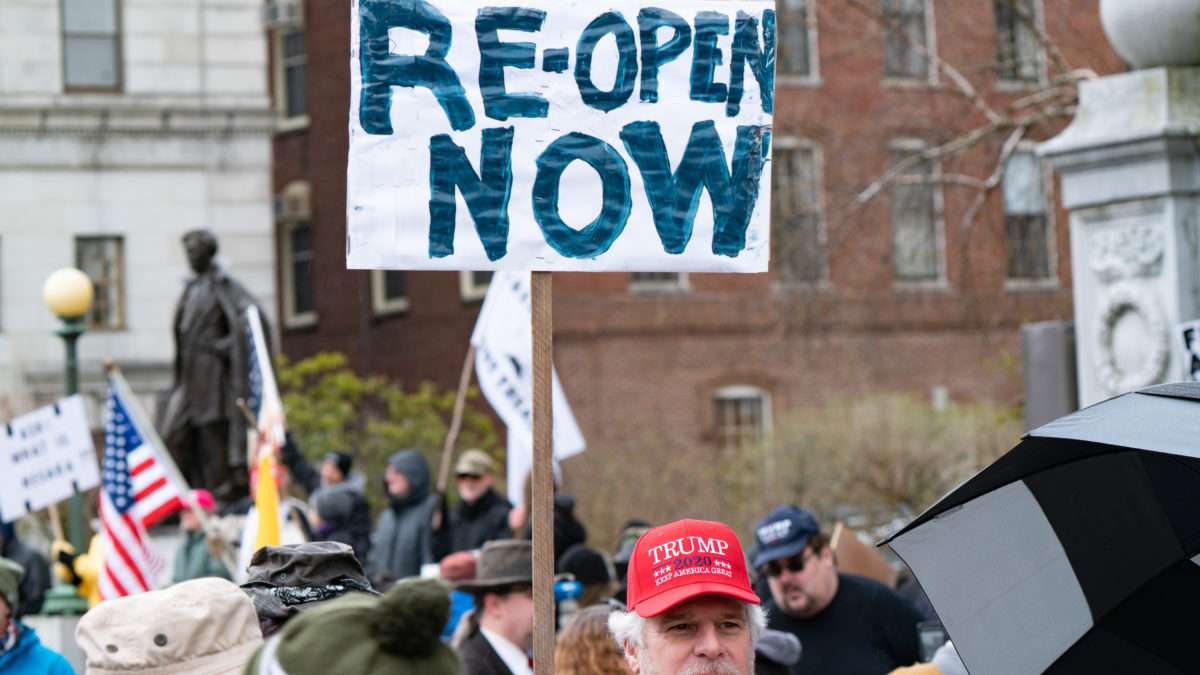
While these efforts to slow the spread of COVID-19 remain broadly popular, some Americans are understandably growing frustrated. Protests have cropped up in several states—most notably Michigan, where opposition to the draconian quarantine dictates of Gov. Gretchen Whitmer (D–Mich.) culminated in a drive-through protest of the state capitol last week. Many of the protesters did indeed maintain social distancing, stayed in their cars, or wore masks, though some of the attendees—zanier right-wing types—did not.

Political protests, be they left-leaning or right-leaning, always invite an eclectic crowd: from concerned citizens motivated by legitimate frustrations to professional activists desperate to attach a pro- or anti-Trump spin to seemingly any cause. Their tactics, goals, and organizational structure often attract well-deserved criticism: Some of the lockdown protests, for instance, seem to be generically pro-Trump in character, disconnected from the reality that thus far President Donald Trump has supported the shutdowns at every critical juncture. Indeed, it's quite odd to hear protesters chanting "Fire Fauci" while waving MAGA signs: Trump has praised Dr. Anthony Fauci incessantly and never fails to heed his advice, the media's attempt to create a narrative of mounting tension between the two notwithstanding.

But there are legitimate grievances for protesters to air. Whitmer's stay-at-home orders were, as Reason's Billy Binion put it, a "hot mess," prohibiting travel between residences (even to relatively uninhabited areas), buying gardening supplies, and motorboats (but not boats without motors). Authorities in New York City have called on people to report each other for failing to abide by the most stringent social distancing measures. People have been stopped, shamed, and arrested for merely going outdoors. Voluntary compliance with social distancing has been remarkable, but forcibly constraining every last person has diminishing returns, and is not a good use of government resources.

That does not mean the quarantine protesters are, as conservative pundit Stephen Moore put it, "modern-day Rosa Parks." But some of them are justifiably upset, and their frustration should be neither mocked nor ignored.

17 Apr 20:38

I was homeschooled for 8 years: Here’s what I recommend

by Mordechai Levy-Eichel
Gpscruise

i would rather see a video of his day.


I was homeschooled for eight years, from age 11 through to college, before it was a novel way for tiger parents to show off their dynamic commitment to their children's education.


Now, if millions of parents and families are suddenly going to be homeschooling their kids for the coming weeks (and, let's be honest, quite likely beyond), it's worth trying to think about how to do this in a manner as smooth, healthy and wise as possible.

Learning at home is quite different from learning at school. It requires us to reorient how we think about learning in general, and how we approach the process with our children – maybe even with ourselves, too. Historically, education has been the province of parents. But the question of how kids spend their time, and learn, and grow, is one to which society as a whole should pay more substantive attention, instead of leaving it to the professional advocates and their tired debates about charter schools, unions and uniforms.

Homeschooling is at once traditional, radical, empowering, frustrating, revealing and, most importantly, not quite any of the above. That's because it is, by its nature, highly dependent on the individuals involved. Spending very long stretches of time with my parents (I'm an only child) was both the most trying and also the most positively formative part of being homeschooled. Finding my own motivations to overcome setbacks was the most difficult. Browsing whatever ideas and subjects piqued my curiosity was the most rewarding. For this and other reasons, try not to compete with all your friends (online and off) about how much your child is hitting the proverbial books. Not only is it morally and intellectually detrimental – it teaches kids the wrong lessons about what's important – but homeschooling is one of the best opportunities you'll get to indulge in more substantive and important comparisons in the first place. Try to use this opportunity for something genuinely alternative.


There are four essential points that all those currently experimenting with homeschooling should bear in mind. First, it takes time to find your rhythm. This might sound obvious, but the first (overly ambitious) schedule, or the second (pared-down) one, or even the third that you come up with, is unlikely to be a smooth fit. And you'll realise this only thanks to all the frustrations, failures and annoyances that you and your kids encounter.

Learning what works very often requires first finding out what doesn't, and then adapting. Because we're all human, change is almost always hard. Don't simply impose your ideal schedule on your kids, and then get frustrated when they (and you) can't live up to it. I found mathematics hard, so for months I avoided it. Then, in order to get it done, I made it the first thing I did each morning – and my fear lessened and my understanding of it improved. I still spent way too much time getting through trigonometry. It will take not only time but multiple failures and slip-ups to work out how to arrange it all satisfactorily. Expect to experiment, make mistakes and reorder your priorities – several times.

Second, talk to your kids about what they want, and what works for them. (Yes, they want more television; no, that's not what I mean.) Many educational systems fall into disrepute because of how poor they are at soliciting, engaging and stimulating student interest. Students are often discouraged from participating in their education. After all, how many of them get to choose the books they read, or what science they pursue? Ask your kids what interests them, and be sure to do so repeatedly, since their answers will change the more that they learn. Maybe they simply want to sleep later (which research shows would be good for their physical, emotional and intellectual health in every way). Perhaps they're bored with geometry and trigonometry, which, honestly, often get taught as though they're numbing agents. (Algebra is usually more interesting before it also becomes too rote in high school.)


Worry less about their plug-and-chug skills, and give them a sense of the ideas and proofs on which modern mathematics is actually based (which are not above anybody's head), and on which there are many recent, accessible books: for example, Love and Math (2013) by Edward Frenkel and The Mathematics Lover's Companion (2017) by Edward Scheinerman. Or read some classic short stories with your kids, and show them how you're affected by the literature you hope they learn. If you find that, actually, you don't like the stories you chose, try to explain why. Doing so would teach your kids so much more than any predictable, moralistic and, frankly, boring age-appropriate young adult novel ever could. I recommend Isaac Bashevis Singer's short stories – clear, lucid, powerful and somehow both appropriate and inappropriate for the whole family.

Third, perhaps the hardest aspect of homeschooling is the parent-student relationship, and the countless difficulties it faces. Of course you're finding homeschooling tough – you're trying to do it alongside your day job! We've probably got the Western workaholic culture to blame for that, which largely separates the roles of parent and teacher. Education in schools today is mostly treated as the acquisition of facts and techniques. That's what schools test for, after all. However, bare facts and techniques aren't what deeply shape most people when they are students, nor later, in their work careers. Beyond basic literacy and numeracy, the most decisive learning comes from what kids see their parents, elders and friends doing, day in and day out.

What books and magazines do you leave lying around? What subjects and ideas do you discuss with your friends when you see them? How do you treat the other people you encounter, and what kinds of interactions take place? Children learn chiefly by emulation, and the examples you provide every day in small ways, the books you have on the coffee table, the websites you visit, and the work you bring home and talk about – whether you are a lawyer, a dentist, a nurse or a bus driver – provide more instruction than most classes. Your children's education depends less on which workbook you choose for them than on what you talk about at dinner. In my house, for instance, the radio was often on and tuned to everything from Amy Goodman on the Left to Rush Limbaugh on the Right, with lots of National Public Radio in the middle. I learned more about politics this way than I might have in an average high-school civics classroom.


The fourth and final point, since you're probably still wondering which textbooks or workbooks to get, I can assure you that no single work for any subject will even come close. The first history survey that my father, now an old New-Leftist, bought for me was Howard Zinn's iconoclastic A People's History of the United States (1980). It was an eye-opening tale of American's depredations, and I couldn't stand it. I didn't hate the politics of it, but rather the monotonous tone of the work. My father, no matter his political opinions, encouraged me to read other views. In other words, Zinn's partisan History was stimulating precisely because it was part of an open-ended education. Sometimes a bit of partiality and fervour is actually quite healthy.

Like one's country, one's education is, at its core, an ongoing experiment. Rabbi Lord Jonathan Sacks notes, in his introduction to The Koren Siddur (2009), that 'Prayer is less about getting what we want than about learning what to want.' If nothing else, for those who usually entrust their kid's education to others, a few weeks or months of homeschooling is an opportunity to encourage our students to do something novel, different, unexpected – to learn what we could and should want, for them, and for us. As a society, we have become exceptionally bad at encouraging our charges to be idiosyncratic and independent. These qualities are not measured by standardised tests, but are just as socially important as a vaccine for COVID-19. Being stuck at home for a few weeks and months, forced to homeschool, is a daunting prospect – but also a tremendous opportunity to cultivate the virtues of independence and original thinking.Aeon counter – do not remove

This article was originally published at Aeon and has been republished under Creative Commons. Read the original article.