If the theme of late here is simple, cozy meals we can assemble even when we’re not, perhaps, having the most well-rested, worry-free weeks ever, we are unquestionably overdue for a conversation about eggs in purgatory, aka Italian-style huevos rancheros/shakshuka. Plus, what could be more appropriately uplifting during Holy Week than a dish that celebrates hell, or the imminent threat of it? What, you say, one that also celebrates the oldest profession? Oh honey, we’re in.
assuming shes average height. her boobs appear to be about 1/3 her torso and average torso of a female being 22.6” her boobs are about 7.5” long. a foot is 12 inches. theyre moving at 5,600ft aka 67200 inches a second. her boobs are flopping 8960 times a second.
8960 flops per second would result in the shockwaves from her breasts emitting an 8960 Hz tone, which is actually a very shrill noise within the range of human hearing. You can enter 8960 into this website to hear an audio sample of what her breast-tone would approximately sound like
Did all of you major in boob math
I HAVE BEEN LOOKING FOR THIS EVERYWHERE AND I HAVE FOUND IT AGAIN AT LASt
Reblogging an old classic for boob physics appreciation. Bless you for calculating this. -s
This impressive rocket by Tyler Clites depicts Tintin’s rocket in Explorers on the Moon, the 17th volume of the famous comic series The Adventures of Tintin by Belgian cartoonist Hergé. The classic red and white chequered rocket is beautifully shaped with traditional slopes, wedges and curved slopes. The jet thrust gives rise to some fantastically simple but effective smoke, maintaining the original cartoon feel.
There is also a detailed interior allowing the construction of this LEGO creation to be admired. Tyler has used a mix of Technic and system parts to build the rocket, but you can see that the inner construction is not a hidden construction site but a functional part of the final build.
Fans of Tintin will also enjoy a previous build by Tyler of Tintin’s moon explorer vehicle from the same comic series. Tyler’s version of Tintin’s rocket is not the first time this vehicle has been featured here on TBB – Tintin’s Rocket by Gonkius was a previous, memorable version.
I’ve got nothing against the classic brick and brownstone facades of yesteryear. But I am a sucker for the hyper-modern apartment buildings that are springing up in urban areas all across America. This model by lisqr hits all the right notes: assymetrical design, complex vertical plane, and surprising color choices. Each minifig-scale balcony is individually detailed, firmly linking the form to a human cityscape. Plus, cats. Just one question: how much is the rent?
“If you look around over the last week there are a number of highly sophisticated Republican voices arguing that Donald Trump is the sort of demagogue and potential strongman our political system was designed to prevent from gaining power in our country. They are portentous and ominous words and true in many respects. But they would be far more credible if so many Republicans - not necessarily the same writers, but countless formal and informal spokespersons including numerous high-ranking elected officials - hadn’t spent the last seven years ranting that the temperamentally cautious and cerebral Barack Obama was a ‘dictator’ who was trampling the constitution.”
I keep reading that “the GOP will have to pay” for what it’s done, and that its thought leaders – ha ha “thought leaders” – will face a reckoning, because they’ve allowed the rise of Trump, and that the GOP will be destroyed by this election.
Really? I doubt it. People like Bill Kristol and Dick Cheney and Donald Rumsfeld and John McCain and all of those people who have been in the vanguard of every disastrous decision the GOP has made since 1970 have never faced a single reckoning or even mild rebuke from anyone in 40 years. Why now? Because Trump traded their dog whistles for a bullhorn?
They invented the Iraq war, and have faced zero consequences. That’s got to be the electoral equivalent of Sandy Hook for gun policy in America. If that wasn’t going to do it, nothing will.
This is a pure expression of the conservative doctrine of federalism: States handle things better than the feds because they are closer to the people.
But then came the debacle in Flint, when Michigan authorities embraced cost-saving changes in the city’s water supply and caused mass lead poisoning. Now members of Congress are blaming the EPA for failing to stop the problem — oblivious to the irony that they and their predecessors were the ones who denied the federal government the ability to enforce drinking-water standards in the first place.
See, this is what they do: they defund and obstruct and wreck the government we pay for, and then they complain that government doesn’t work, so they are the only ones who can be trusted to fix it … by cutting taxes and regulations and obstructing anyone who fights it.
And they never pay a political price, they never lose elections because of it, the Democrats don’t explicitly call them out on it nearly enough (or run elections based on conservative failure), and nothing ever changes.
And nothing ever changes because this sort of failure only hurts and kills the poor, and the vast majority of government doesn’t give a flying fuck about the poor.
On Wednesday night, the person who runs the Twitter feed for San Francisco’s BART system began answering riders’ frustrated tweets with frank, honest statements that eschewed the bland “thank you for your feedback” and the chipper “we’re working on it!” norms of corporate social media in favor of brutally honest assessments of the sorry state of the system, starting with, “BART was built to transport far fewer people, and much of our system has reached the end of its useful life. This is our reality.”
BART’s twitter manager, Taylor Huckabee (who tweets in his personal capacity as @iwriterealgood) turned #thisisourreality into a hashtag, and continued to answer (and sometimes rebut) riders with open, truthful statements about the state of BART, a cash-starved piece of critical infrastructure in a city that’s bursting at its seams.
Public reaction has been gratifyingly sympathetic: it turns out that riders and customers don’t want to be spoon-fed bland reassurances; they want to know what is going on, where the problems lie, who is at fault, and what can be done about it.
Ever since the launch of Apple’s app-enabled devices, users have sought ways to run software not sourced from the official App Store. It’s been a cat-and-mouse battle, with teams of security experts trying to break Apple’s security to enable a process known as ‘jailbreaking’.
A successfully jailbroken iPhone, for example, can not only run software from third party app stores such as Cydia, but can also run pirated iOS software. Needless to say, with this feature the popularity of jailbreaking has soared, prompting Apple to do everything it can to close security holes.
However, in 2013 something unexpected happened. A new technique known as the “FairPlay Man-In-The-Middle” (MITM) attack exploited flaws in Apple’s ‘Fairplay’ DRM system to allow both pirated and third-party software (unapproved by Apple) to run on iOS devices. Crucially, this could all take place without a jailbreak being deployed on the device.
Somewhat surprisingly people with the ability to carry out the third-party software exploit have been remarkably well behaved for the past three years but all good things come to an end. Rather than using the loophole for consumer-friendly activity, attackers are now using it for evil.
According to Palo Alto Networks researcher Claud Xiao, there now exists iOS malware that is able to deploy itself to non-jailbroken devices using the man-in-the-middle attack previously used by pirates.
Named “AceDeceiver” by the researcher, the malware targets the method of transferring App Store purchases from the iTunes software installed on users’ computers to their iOS devices.
“iOS devices will request an authorization code for each app installed to prove the app was actually purchased,” Xiao explains.
“In the FairPlay MITM attack, attackers purchase an app from App Store then intercept and save the authorization code. They then developed PC software that simulates the iTunes client behaviors, and tricks iOS devices to believe the app was purchased by victim. Therefore, the user can install apps they never actually paid for, and the creator of the software can install potentially malicious apps without the user’s knowledge.”
But to do its dirty deeds AceDeceiver needs to find a way onto a user’s device in the first instance and that was achieved via Apple’s very own App Store.
Between July 2015 and February 2016 software claiming to be wallpaper apps successfully passed Apple’s vetting systems and were made available to Apple users. The way this was achieved was extremely cunning, with the App only going into malicious mode if it was run in a certain geographical area, in this case, China.
“The iOS apps of AceDeceiver mainly act as a third party app store if users access them from China. Note that some of the apps or games they provide in the store are also installed through a FairPlay MITM attack. In addition, these apps strongly suggest users input their Apple ID with password so that users could ‘directly install free apps from the App Store, execute in-app purchase, and login to Game Center’.”
That doesn’t sound like good news and indeed, the researchers found that claims that the software did not transfer login credentials were simply untrue.
“In fact, we discovered all versions of AceDeceiver will upload the Apple ID and password to [the attackers’ server],” Xiao adds.
All three apps were removed by Apple after the researchers reported them in February 2016 but their threat remains.
“The attack is still viable because the FairPlay MITM attack only requires these apps to have been available in the App Store once. As long as an attacker could get a copy of authorization from Apple, the attack doesn’t require current App Store availability to spread those apps,” Xiao explains.
“While the attack requires a user’s PC to be infected by malware first, after that, the infection of iOS devices is completed in the background without the user’s awareness. The only indication is that the new malicious app does appear as an icon in the user’s home screen, so the user may notice a new app he or she won’t recall downloading.”
The full disclosure from Claud Xiao can be found here, along with removal instructions for those concerned they may be infected by the malware.
South Korean professional building team Olive Seon specialize in creating huge layouts for retail stores to showcase official LEGO sets (like this epic UCS-scale Star Wars trench run or a true minifig-scale Stay Puft marshmallow man terrorizing the city). Though the official sets are the focus, the team are masters at integrating them into beautiful custom backdrops, and I never tire of seeing the official sets nestled into dioramas like the LEGO catalogs from the 80s and 90s. Olive Seon’s latest diorama is worth it just for the epic shuttle launch they’ve portrayed. Never has the 60080 Spaceport shuttle looked so good.
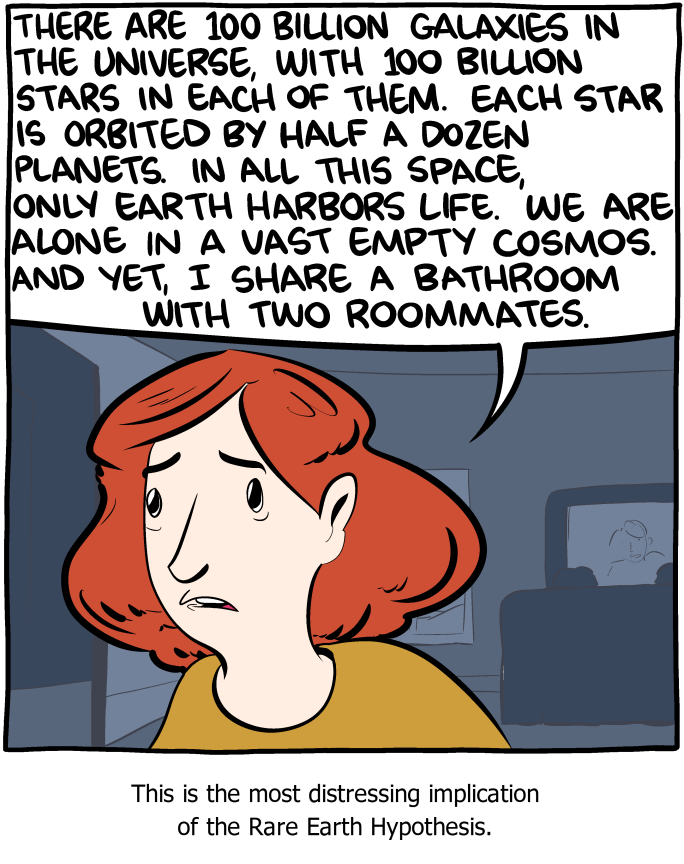
What percentage of the Sun's heat (per day) does the population of Earth eat in calories per year? What changes could be made to our diets for the amount of calories to equal the energy of the Sun?
—James Mitchell
0.000000000065%.
A McDonald's Big Mac contains 540 (dietary) calories of energy, or about 2,250,000 joules. The Sun's output is 382,800,000,000,000,000,000,000,000 joules per second.[1]Also known as watts. This is a rare case of a common-in-America unit which is secretly SI-friendly. Of course, we immediately worked our way around to measuring stored energy in kWh (and mAh), and now everything is terrible again. That's enough to tell us that we're going to have a hard time catching up with the Sun by eating more burgers.
Why is this so difficult?
Most of the Sun's mass is concentrated in the core, where energy is released as hydrogen fuses into helium. By volume, the Sun's core doesn't actually produce that much energy—a blob of core matter produces about the same amount of energy as the body heat of a reptile of the same size,[2]A Wikipedia factoid also compares the Sun's heat-per-unit-volume to the heat produced by an active compost pile, although the energy production from compost varies with temperature—since a hot compost pile kills off the organisms that do the composting. and less than a warmer-bodied mammal. The Sun is hotter than a reptile[citation needed] because it's so large—all that heat adds up.[3]A large object also has more surface area to radiate heat away, but since surface area is proportional to radius2 while the amount of heat-producing material is proportional to radius3, making things bigger generally makes them hotter.
Reptiles may produce heat at approximately the same rate as the stuff in the Sun, but if a reptile doesn't eat for a few weeks or months, it runs out of energy and starves. The Sun, on the other hand, has been burning for billions of years and will last for billions more—because nuclear fusion produces much more energy than metabolizing fat or muscle.
How much more? Strangely, we can come up with a pretty decent estimate just from what we know about animals. Animals live a few weeks—or months, in the case of some snakes—on their own stored reserves, while the Sun will last about 10 billion years. That's a difference of about 100 billion-fold. This is roughly similar to the ratio between the energy stored in a snake-meat Big Mac and the energy stored in a Big Mac-sized chunk of the Sun's core.[5]If you calculate out the exact actual ratios here, you'll find that the sun-to-big-mac energy ratio is a bit lower than the sun-to-lizard lifespan ratio. This is partly explained by the fact that animals are full of bones and brains and stuff, and can't efficiently consume their entire body volume as if they were a giant Big Mac.
If we want to eat enough food to keep up with the Sun's energy-use rate, we have to eat a lot more. A typical person eats a few thousand calories per day, and we probably can't improve on that too much—we can't all be The Rock. To keep up with the Sun, what we really need is more people.
At the end of this article, we imagined a galaxy full of habitable planets, each one hosting 7 billion clones of former solicitor general Ted Olson. (Don't ask.) If the Teds ate a normal diet, the total calorie consumption of that galaxy would still fall short of the Sun. We'd need approximately a thousand galaxies worth of burger-eating Ted Olsons to achieve our goal.
It's important to spread this food consumption out across multiple galaxies, because if you gathered all that food in once place, you'd have a big problem. Since food has such a low energy density compared to the Sun, you need a lot of food to keep up with the Sun. Matching a few days' worth of Sun output would require a sphere of hamburgers the size of the Earth, and keeping up with the Sun over its entire lifetime would take a pile of burgers much larger than the Sun. In fact, it would be heavier than the supermassive black hole at the center of the galaxy.[6]Which would promptly create a new black hole. And possibly a new center of the galaxy, for all I know, although I'd want to play with Universe Sandbox for a while before making any sort of guess about how that would play out.
The bottom line: If you want to keep up with the Sun's output by feeding people burgers, you'll need to open some intergalactic franchises.
For more on the dangers of these devices, just type "skimmer" into the search box in the right sidebar; I must have written about a half-dozen posts on the subject over the years.
Nowadays pretty much every self-respecting coffee bar has its own Wi-Fi access point, allowing customers to check their email or read the latest news.
The same is true for many other shops and establishments that offer free and open Internet access.
While most free Wi-Fi users do little harm, these unsecured networks can also be used to download and share copyrighted material. This is what happened to Tobias McFadden, who runs a local music and lighting shop in Munich, Germany.
In 2010, a music pirate on McFadden’s network was flagged by Sony, who took the owner of the shop to court. While the local German court was inclined to hold the shop operator responsible for indirect copyright infringement, EU Advocate General Szpunar disagrees.
In a lengthy advisory opinion to the EU Court of Justice, which will issue a final ruling later, Szpunar concludes that much like general ISPs, operators of commercial establishments with free Wi-Fi are not liable for pirating users.
This means that the safe harbor Internet providers enjoy also apply to members of the public who offer free Wi-Fi as part of their business.
“In his view, it is not necessary for the person in question to present himself to the public as a service provider or that he should expressly promote his activity to potential customers,” the EU Court of Justice clarifies in a press release today.
The Advocate General does leave room for local courts to impose injunctions on network operators to stop the copyright infringements. However, these should be fair and balanced, without any requirements to monitor users.
Also, the operators of free Wi-Fi should not be forced to secure their connections. This requirement would prioritize the interests of copyright holders above the public’s right to freedom of expression and information, which would not be appropriate.
“By restricting access to lawful communications, the measure would also entail a restriction on freedom of expression and information,” the Court notes.
“More generally, any general obligation to make access to a Wi-Fi network secure, as a means of protecting copyright on the Internet, could be a disadvantage for society as a whole and one that could outweigh the potential benefits for rightsholders.”
The Advocate General’s advice is not binding, but the European Court of Justice often uses such advice as the basis of its rulings.
Redditor FragmentedChicken spotted this groan-inducingly silly pair of structural formulas on the whiteboard in their chemistry classroom. We’ve all heard of formaldehyde, but… wait for it… “casual-dehyde” must be so laid-back and chill that it hasn’t made it into the textbooks just yet.
This year we celebrate 55 years since the first human spaceflight in history. Tyler takes on the role of a Soviet space program chief designer and commemorates the event in a stunning couple of spacecraft — Vostok-1 and Soyuz — classic craft from the early days of putting cosmonauts into orbit.
Take a moment to notice the choice of pieces. Pretty unpretentious, yet with ordinary slopes and wedges Tyler magically creates curved shapes of various diameters, which look fascinating even in plain grey colors. The aerials and dishes are especially heartwarming as they resemble the style of the legendary Discovery sets from 2003. What is so outstanding about the Soyuz model is the use of studs of various colors under trans-blue tiles — a simple and amazingly effective solution. These solar panels look even cooler than stickers from the said Discovery sets.
Huib van der Hart is a master of large LEGO cranes. His latest effort is a Liebherr LTM 1750-9.1 mobile crane owned by Northwest Crane Service. At 1:16 scale, the model packs in loads of detail, and Huib tells us the crane uses close to 15,000 pieces, is over 4 feet in length and weighs 33 pounds. It’s even completely drivable with 18-wheel steering thanks to LEGO Power Functions. This isn’t Huib’s first humongous crane, either, as he previously built this crane’s sibling, the Liebherr LTM 11200 9.1. He’s continuing to work on the 1750 model, and has plans to make the boom arm fully extendable.
Self-described “gender-fluid futurist” Illma Gore is indefinitely banned from Facebook after posting an original NSFW sketch of a naked Donald Trump bearing a micropenis and a next-level dad bod. The image has also been banned from eBay. Gore is making sure the Bernie Sanders campaign benefits every time the photo is banned.(NSFW photo within.)










 Ever since the launch of Apple’s app-enabled devices, users have sought ways to run software not sourced from the official App Store. It’s been a cat-and-mouse battle, with teams of security experts trying to break Apple’s security to enable a process known as ‘jailbreaking’.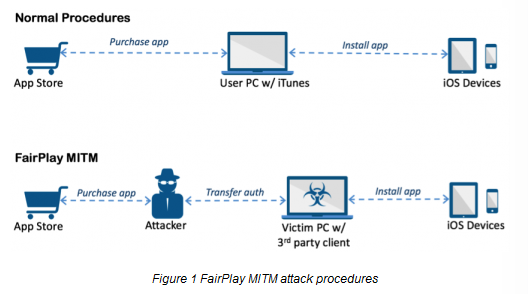



 Nowadays pretty much every self-respecting coffee bar has its own Wi-Fi access point, allowing customers to check their email or read the latest news.