Shanghai-based developer ZhongRong Holdings is working with Arup on an ambitious proposal to reconstruct Joseph Paxton’s Crystal Palace in London. Originally built to house the Great Exhibition of 1851, the 80,000 square-meter cast iron and glass structure was relocated from Hyde Park to south-east London in 1854 where it was ultimately destroyed by fire in 1936.
Though discussions between all parties “remain at a very early feasibility stage,” as the Mayor of London stated, it has been confirmed that no residential development will be included in the proposal and the public will be involved before any final consensus is made. This statement is in regards to the 1990 Act of Parliament, which specifies that any new construction on the site “must be in the spirit of Paxton’s original building” and has prevented a number of proposals from being developed in the past.
If constructed, ZhongRong Holdings’ Crystal Palace replica would include a public space for exhibitions and events, as well as retail space and cafes.
UPD: We have received a number of proposals that we are discussing right now. Chances are high that public The Old Reader will live after all
Since we launched first public version almost a year ago up until March 2013 we have been working on The Old Reader in “normal” mode. In March things became “nightmare”, but we kept working hard and got things done. First, we were out of evenings, then out of weekends and holidays, and then The Old Reader was the only thing left besides our jobs. Last week difficulty level was changed to “hell” in every possible aspect we could imagine, we have been sleep deprived for 10 days and this impacts us way too much. We have to look back.
The truth is, during last 5 months we have had no work life balance at all. The “life” variable was out of equation: you can limit hours, make up rules on time management, but this isn’t going to work if you’re running a project for hundreds of thousands of people. Let me tell you why: it tears us to bits if something is not working right, and we are doing everything we can to fix that. We can’t ignore an error message, a broken RAID array, or unanswered email. I personally spent my own first wedding anniversary fixing the migration last Sunday. Talk about “laid back” attitude now. And I won’t even start describing enormous sentimental attachment to The Old Reader that we have.
We would really like to switch the difficulty level back to “normal”. Not to be dreaded of a vacation. Do something else besides The Old Reader. Stop neglecting ourselves. Think of other projects. Get less distant from families and loved ones. The last part it’s the worst: when you are with your family, you can’t fall out of dialogues, nodding, smiling and responding something irrelevant while thinking of refactoring the backend, checking Graphite dashboard, glancing onto a Skype chat and replying on Twitter. You really need to be there, you need to be completely involved. We want to have this experience again.
That’s why The Old Reader has to change. We have closed user registration, and we plan to shut the public site down in two weeks. We started working on this project for ourselves and our friends, and we use The Old Reader on a daily basis, so we will launch a separate private site that will keep running. It will have faster refresh rate, more posts per feed, and properly working full-text search — we are sure that we can provide all this at a smaller scale without that much drama, just like we were doing before March.
The private site?
Accounts will be migrated to the private site automatically. We will whitelist everybody we know personally, along with all active accounts that were registered before March 13, 2013. And of course, we will migrate all our awesome supporters and people who donated to keep the project running (if you sent us bitcoins, please get in touch to get identified). Later this week your account will get a distinct indication whether it will be migrated to the private site or not. If you see that message and believe that it’s wrong, or if all your friends are getting migrated and you are left behind — please, drop us a line.
Give me my data!
You will have two weeks to export your OPML file regardless of our decision. OPML export link is located at the bottom of the Settings page — use the top-right menu to get there. All posts that you saved for later by using Pocket integration will obviously remain in your Pocket account.
But you could…
For those who would like to start the usual “VC, funding, mentor” or “charge for the damn thing” mantras — please, spare it. We’re not in the Valley where it might be super-easy, and, after all, not everyone wants to be an entrepreneur. We just love making a good RSS reader.
We really want The Old Reader to be a big and successful project, with usable free accounts. But this is not possible to achieve with what we have, so unless someone resourceful takes over the project and brings it to the next level, it is not gonna happen. We had over 2 000 new registrations after the blackout last week. This is amazing and sad at the same time.
If anyone is interested in acquiring The Old Reader and making it better, we are very open and accepting proposals at hello@theoldreader.com. We would be waiting for them for two weeks, supporting and maintaining The Old Reader as usual. Please don’t write us if you don’t have resources to maintain a site used by tens of thousands of people every day, or if you don’t know how you would improve The Old Reader. And please spare our time if you just want to buy the domain name and park a bunch of silly ads there — it’s not going to happen.
We value our community very much, and we will either pass the project to somebody who we know is going to take a good care of it, or we will switch it to private mode.
What next?
From one point of view, it’s not a big deal: “RSS is obsolete”, nobody died, we don’t owe anybody anything, you name it. Also, there are a lot of good readers around to choose from, a large part of them is smaller than The Old Reader and had not experienced growing pains of 80 000 daily active users in no time. But for us, it’s heartbreaking.
I will finally get back to work on my small studio — Bespoke Pixel — which has been run by my awesome partner all this time. Dmitry will keep being bright young software developer, making scalable and beautiful projects. Our team will stay together, and will keep working on making the private version of The Old Reader awesome.
We feel great responsibility for the project. We’d rather provide a smooth and awesome experience for 10 000 users than a crappy one for 420 000.
Sorry, each and everyone if we failed you. You are an incredible, supportive and helpful community. The best we could possibly hope for.
All the love, Elena Bulygina and Dmitry Krasnoukhov
Typography is the subject of the graduation project of Thibault de Fournas and for that he put together one of the most inspiring videos I've seen in a while. The video is titled From Paper to Screen and it walk us through the evolution of typography. It is a must see.
Animation which shows typography evolution from paper to screen. The animation is divided in two parts. The first deals with the basic rules of typesetting. The second, is about the evolution of typography in cinema. Used mainly for Opening and Closing title.
Music : Clair de Lune - Debussy
Shoot the Piano Player: Poursuite - Hugh Wolff & London Sinfonietta - Georges Delerue
In From up North’s inspiration galleries we present the latest of our findings from the wonderful world of design. Amazing high quality artworks in various categories from great designers all over the globe.
Style is the limit
El inmenso talento de Aryz : Distorsion Urbana
MEGGS X THE HUNDREDS HQ - david meggs hooke
Agnes Cecile
LOST FOR WORDS by Peter Preffington
“Colour/Greys” by PREF
Street Art by A'SHOP at Mural Festival in Montreal, Canada
SmugOne
SmugOne
SmugOne
Seth x Makatron x Sirum x Plea x Dem189 New Mural In Melbourne, Australia
Ghettobird by Nychos
Misfit ave.
INTI in Istanbul
El Mac
"Living graffiti" by Hayli Alyce
New Blood by MAC
Bom.K New Mural In Brest, France
If you would like to send us suggestions for these galleries, please click on the button “Submit” located in the header, and fill out the form. And don’t forget to subscribe to the RSS-feed and follow From up North on Twitter + Facebook to get all the latest updates.
Buzzfeed has the story, and it's remarkably short, and has the ring of truth to it.
It's worth noting because this is how decisions are really made in tech, and probably every other industry.
Larry Page says Meh! to RSS and readers. He doesn't use Google Reader.
When it comes up at meetings, if it ever does, the person who brought it up is the subject of jokes.
It keeps running for months if not years on its own, with no one working on development.
Every time there's a cleanup, Google Reader is at the top of the list. Someone says "Oh but there are a lot of users and a bunch of them are reporters." So they keep it running for a little while longer.
Then, to make a point that he wants people to focus, a first-level report of Page's puts it on the shutdown list, despite the objections. Everyone shrugs.
They write a blog post with some BS about how everyone gets news now on their Android phone, something that's sure to make LP happy if he ever sees it.
A few months later it shuts down. Google survives.
What do great men like Benjamin Franklin, Thomas Jefferson, and Theodore Roosevelt all have in common?
They all were proficient in Latin.
From the Middle Ages until about the middle of the 20th century, Latin was a central part of a man’s schooling in the West. Along with logic and rhetoric, grammar (as Latin was then known) was included as part of the Trivium – the foundation of a medieval liberal arts education. From Latin, all scholarship flowed and it was truly the gateway to the life of the mind, as the bulk of scientific, religious, legal, and philosophical literature was written in the language until about the 16th century. To immerse oneself in classical and humanistic studies, Latin was a must.
Grammar schools in Europe and especially England during this time were Latin schools, and the first secondary school established in America by the Puritans was a Latin school as well. But beginning in the 14th century, writers started to use the vernacular in their works, which slowly chipped away at Latin’s central importance in education. This trend for English-language learning accelerated in the 19th century; schools shifted from turning out future clergymen to graduating businessmen who would take their place in an industrializing economy. An emphasis on the liberal arts slowly gave way to what was considered a more practical education in reading, writing, and arithmetic.
While Latin had been dying a slow death for hundreds of years, it still had a strong presence in schools until the middle of the 20th century. Beginning in the 1960s, college students demanded that the curriculum be more open, inclusive, and less Euro-centric. Among their suggested changes was eliminating Latin as a required course for all students. To quell student protests, universities began to slowly phase out the Latin requirement, and because colleges stopped requiring Latin, many high schools in America stopped offering Latin classes, too. Around the same time, the Catholic Church revised its liturgy and permitted priests to lead Mass in vernacular languages instead of Latin, thus eliminating one of the public’s last ties to the ancient language.
While it’s no longer a requirement for a man to know Latin to get ahead in life, it’s still a great subject to study. I had to take classes in Latin as part of my “Letters” major at the University of Oklahoma, and I really enjoyed it. Even if you’re well out of school yourself, there are a myriad of reasons why you should still consider obtaining at least a rudimentary knowledge of the language:
Knowing Latin can improve your English vocabulary. While English is a Germanic language, Latin has strongly influenced it. Most of our prefixes and some of the roots of common English words derive from Latin. By some estimates, 30% of English words derive from the ancient language. By knowing the meaning of these Latin words, if you chance to come across a word you’ve never seen before, you can make an educated guess at what it means. In fact, studies have found that high school students who studied Latin scored a mean of 647 on the SAT verbal exam, compared with the national average of 505.
Knowing Latin can improve your foreign language vocabulary.Much of the commonly spoken Romanic languages like Spanish, French, and Italian derived from Vulgar Latin. You’ll be surprised by the number of Romanic words that are pretty much the same as their Latin counterparts.
Many legal terms are in Latin. Nolo contendere. Mens rea. Caveat emptor. Do you know what those mean? They’re actually common legal terms. While strides have been made to translate legal writing into plain English, you’ll still see old Latin phrases thrown into legal contracts every now and then. To be an educated citizen and consumer, you need to know what these terms mean. If you plan on going to law school, I highly recommend boning up on Latin. You’ll run into it all the time, particularly when reading older case law.
Knowing Latin can give you more insight to history and literature.Latin was the lingua franca of the West for over a thousand years. Consequently, much of our history, science, and great literature was first recorded in Latin. Reading these classics in the original language can give you insights you otherwise may have missed by consuming it in English.
Moreover, modern writers (and by modern I mean beginning in the 17th century) often pepper their work with Latin words and phrases without offering a translation because they (reasonably) expect the reader to be familiar with it. This is true of great books from even just a few decades ago (seems much less common these days – which isn’t a hopeful commentary on the direction of the public’s literacy I would think). Not having a rudimentary knowledge of Latin will cause you to miss out on fully understanding what the writer meant to convey.
Below we’ve put together a list of Latin words and phrases to help pique your interest in learning this classical language. This list isn’t exhaustive by any stretch of the imagination. We’ve included some of the most common Latin words and phrases that you still see today, which are helpful to know in boosting your all-around cultural literacy. We’ve also included some particularly virile sayings, aphorisms, and mottos that can inspire greatness or remind us of important truths. Perhaps you’ll find a Latin phrase that you can adopt as your personal motto. Semper Virilis!
Latin Words and Phrases Every Man Should Know
a posteriori — from the latter; knowledge or justification is dependent on experience or empirical evidence
a priori — from what comes before; knowledge or justification is independent of experience
acta non verba — deeds, not words
ad hoc — to this — improvised or made up
ad hominem — to the man; below-the-belt personal attack rather than a reasoned argument
ad honorem — for honor
ad infinitum — to infinity
ad nauseam — used to describe an argument that has been taking place to the point of nausea
ad victoriam — to victory; more commonly translated into “for victory,” this was a battle cry of the Romans
alea iacta est — the die has been cast
alias — at another time; an assumed name or pseudonym
alibi — elsewhere
alma mater — nourishing mother; used to denote one’s college/university
amor patriae — love of one’s country
amor vincit omnia — love conquers all
annuit cœptis –He (God) nods at things being begun; or “he approves our undertakings,” motto on the reverse of the Great Seal of the United States and on the back of the United States one-dollar bill
ante bellum — before the war; commonly used in the Southern United States as antebellum to refer to the period preceding the American Civil War
ante meridiem — before noon; A.M., used in timekeeping
aqua vitae — water of life; used to refer to various native distilled beverages, such as whisky (uisge beatha) in Scotland and Ireland, gin in Holland, and brandy (eau de vie) in France
arte et marte — by skill and valour
astra inclinant, sed non obligant — the stars incline us, they do not bind us; refers to the strength of free will over astrological determinism
audemus jura nostra defendere — we dare to defend our rights; state motto of Alabama
audere est facere — to dare is to do
audio — I hear
aurea mediocritas — golden mean; refers to the ethical goal of reaching a virtuous middle ground between two sinful extremes
auribus teneo lupum — I hold a wolf by the ears; a common ancient proverb; indicates that one is in a dangerous situation where both holding on and letting go could be deadly; a modern version is, “to have a tiger by the tail”
aut cum scuto aut in scuto — either with shield or on shield; do or die, “no retreat”; said by Spartan mothers to their sons as they departed for battle
aut neca aut necare — either kill or be killed
aut viam inveniam aut faciam — I will either find a way or make one; said by Hannibal, the great ancient military commander
barba non facit philosophum — a beard doesn’t make one a philosopher
bellum omnium contra omnes — war of all against all
bis dat qui cito dat — he gives twice, who gives promptly; a gift given without hesitation is as good as two gifts
bona fide — good faith
bono malum superate — overcome evil with good
carpe diem — seize the day
caveat emptor — let the buyer beware; the purchaser is responsible for checking whether the goods suit his need
circa — around, or approximately
citius altius forties — faster, higher, stronger; modern Olympics motto
cogito ergo sum — “I think therefore I am”; famous quote by Rene Descartes
contemptus mundi/saeculi — scorn for the world/times; despising the secular world, the monk or philosopher’s rejection of a mundane life and worldly values
corpus christi — body of Christ
corruptissima re publica plurimae leges — when the republic is at its most corrupt the laws are most numerous; said by Tacitus
creatio ex nihilo — creation out of nothing; a concept about creation, often used in a theological or philosophical context
cura te ipsum — take care of your own self; an exhortation to physicians, or experts in general, to deal with their own problems before addressing those of others
curriculum vitae — the course of one’s life; in business, a lengthened resume
de facto — from the fact; distinguishing what’s supposed to be from what is reality
deo volente — God willing
deus ex machina — God out of a machine; a term meaning a conflict is resolved in improbable or implausible ways
dictum factum — what is said is done
disce quasi semper victurus vive quasi cras moriturus — learn as if you’re always going to live; live as if tomorrow you’re going to die
discendo discimus — while teaching we learn
docendo disco, scribendo cogito — I learn by teaching, think by writing
ductus exemplo — leadership by example
ducunt volentem fata, nolentem trahunt — the fates lead the willing and drag the unwilling; attributed to Lucius Annaeus Seneca
dulce bellum inexpertis — war is sweet to the inexperienced
dulce et decorum est pro patria mori — it is sweet and fitting to die for your country
dulcius ex asperis — sweeter after difficulties
e pluribus unum — out of many, one; on the U.S. seal, and was once the country’s de facto motto
emeritus — veteran; retired from office
ergo — therefore
et alii — and others; abbreviated et al.
et cetera — and the others
et tu, Brute? — last words of Caesar after being murdered by friend Brutus in Shakespeare’s Julius Caesar, used today to convey utter betrayal
ex animo — from the heart; thus, “sincerely”
ex libris — from the library of; to mark books from a library
ex nihilo — out of nothing
ex post facto — from a thing done afterward; said of a law with retroactive effect
faber est suae quisque fortunae — every man is the artisan of his own fortune; quote by Appius Claudius Caecus
fac fortia et patere — do brave deeds and endure
fac simile — make alike; origin of the word “fax”
flectere si nequeo superos, acheronta movebo — if I cannot move heaven I will raise hell; from Virgil’s Aeneid
fortes fortuna adiuvat — fortune favors the bold
fortis in arduis — strong in difficulties
gloria in excelsis Deo — glory to God in the highest
habeas corpus — you should have the body; a legal term from the 14th century or earlier; commonly used as the general term for a prisoner’s right to challenge the legality of their detention
habemus papam — we have a pope; used after a Catholic Church papal election to announce publicly a successful ballot to elect a new pope
historia vitae magistra — history, the teacher of life; from Cicero; also “history is the mistress of life”
hoc est bellum — this is war
homo unius libri (timeo) — (I fear) a man of one book; attributed to Thomas Aquinas
honor virtutis praemium — esteem is the reward of virtue
hostis humani generis — enemy of the human race; Cicero defined pirates in Roman law as being enemies of humanity in general
humilitas occidit superbiam — humility conquers pride
igne natura renovatur integra — through fire, nature is reborn whole
ignis aurum probat — fire tests gold; a phrase referring to the refining of character through difficult circumstances
in absentia — in the absence
in aqua sanitas — in water there is health
in flagrante delicto — in flaming crime; caught red-handed, or in the act
in memoriam — into the memory; more commonly “in memory of”
in omnia paratus — ready for anything
in situ — in position; something that exists in an original or natural state
in toto — in all or entirely
in umbra, igitur, pugnabimus — then we will fight in the shade; made famous by Spartans in the battle of Thermopylae and by the movie 300
in utero — in the womb
in vitro — in glass; biological process that occurs in the lab
incepto ne desistam — may I not shrink from my purpose
intelligenti pauca — few words suffice for he who understands
invicta — unconquered
invictus maneo — I remain unvanquished
ipso facto — by the fact itself; something is true by its very nature
labor omnia vincit — hard work conquers all
laborare pugnare parati sumus — to work, (or) to fight; we are ready
labore et honore — by labor and honor
leges sine moribus vanae — laws without morals [are] vain
lex parsimoniae — law of succinctness; also known as Occam’s Razor; the simplest explanation is usually the correct one
lex talionis — the law of retaliation
magna cum laude — with great praise
magna est vis consuetudinis — great is the power of habit
magnum opus — great work; said of someone’s masterpiece
mala fide — in bad faith; said of an act done with knowledge of its illegality, or with intention to defraud or mislead someone; opposite of bona fide
malum in se — wrong in itself; a legal term meaning that something is inherently wrong
malum prohibitum — wrong due to being prohibited; a legal term meaning that something is only wrong because it is against the law
mea culpa — my fault
meliora — better things; carrying the connotation of “always better”
memento mori — remember that [you will] die; was whispered by a servant into the ear of a victorious Roman general to check his pride as he paraded through cheering crowds after a victory; a genre of art meant to remind the viewer of the reality of his death
memento vivere — remember to live
memores acti prudentes future — mindful of what has been done, aware of what will be
modus operandi — method of operating; abbreviated M.O.
montani semper liberi — mountaineers [are] always free; state motto of West Virginia
morior invictus — death before defeat
morituri te salutant — those who are about to die salute you; popularized as a standard salute from gladiators to the emperor, but only recorded once in Roman history
morte magis metuenda senectus — old age should rather be feared than death
mulgere hircum — to milk a male goat; to attempt the impossible
multa paucis — say much in few words
nanos gigantum humeris insidentes — dwarfs standing on the shoulders of giants; commonly known by the letters of Isaac Newton: “If I have seen further it is by standing on the shoulders of giants”
nec aspera terrent — they don’t terrify the rough ones; frightened by no difficulties; less literally “difficulties be damned”
nec temere nec timide — neither reckless nor timid
nil volentibus arduum — nothing [is] arduous for the willing
nolo contendere — I do not wish to contend; that is, “no contest”; a plea that can be entered on behalf of a defendant in a court that states that the accused doesn’t admit guilt, but will accept punishment for a crime
non ducor, duco — I am not led; I lead
non loqui sed facere — not talk but action
non progredi est regredi — to not go forward is to go backward
non scholae, sed vitae discimus — we learn not for school, but for life; from Seneca
non sequitur — it does not follow; in general, a comment which is absurd due to not making sense in its context (rather than due to being inherently nonsensical or internally inconsistent); often used in humor
non sum qualis eram — I am not such as I was; or “I am not the kind of person I once was”
nosce te ipsum — know thyself; from Cicero
novus ordo seclorum — new order of the ages; from Virgil; motto on the Great Seal of the United States
nulla tenaci invia est via — for the tenacious, no road is impassable
obliti privatorum, publica curate — forget private affairs, take care of public ones; Roman political saying which reminds that common good should be given priority over private matters for any person having a responsibility in the State
panem et circenses — bread and circuses; originally described all that was needed for emperors to placate the Roman mob; today used to describe any entertainment used to distract public attention from more important matters
para bellum — prepare for war; if you want peace, prepare for war; if a country is ready for war, its enemies are less likely to attack
parvis imbutus tentabis grandia tutus — when you are steeped in little things, you shall safely attempt great things; sometimes translated as, “once you have accomplished small things, you may attempt great ones safely”
pater familias — father of the family; the eldest male in a family
pecunia, si uti scis, ancilla est; si nescis, domina — if you know how to use money, money is your slave; if you don’t, money is your master
per angusta ad augusta — through difficulties to greatness
per annum — by the year
per capita — by the person
per diem — by the day
per se — through itself
persona non grata — person not pleasing; an unwelcome, unwanted or undesirable person
pollice verso — with a turned thumb; used by Roman crowds to pass judgment on a defeated gladiator
post meridiem — after noon; P.M.; used in timekeeping
post mortem — after death
postscriptum — thing having been written afterward; in writing, abbreviated P.S.
praemonitus praemunitus — forewarned is forearmed
praesis ut prosis ne ut imperes — lead in order to serve, not in order to rule
primus inter pares — first among equals; a title of the Roman Emperors
pro bono — for the good; in business, refers to services rendered at no charge
pro rata — for the rate
quam bene vivas referre (or refert), non quam diu — it is how well you live that matters, not how long; from Seneca
quasi — as if; as though
qui totum vult totum perdit — he who wants everything loses everything; attributed to Seneca
quid agis — what’s going on; what’s up, what’s happening, etc.
quid pro quo — this for that; an exchange of value
quidquid Latine dictum sit altum videtur — whatever has been said in Latin seems deep; or “anything said in Latin sounds profound”; a recent ironic Latin phrase to poke fun at people who seem to use Latin phrases and quotations only to make themselves sound more important or “educated”
quis custodiet ipsos custodes? — who will guard the guards themselves?; commonly associated with Plato
quorum — of whom; the number of members whose presence is required under the rules to make any given meeting constitutional
requiescat in pace — let him rest in peace; abbreviated R.I.P.
rigor mortis — stiffness of death
scientia ac labore — knowledge through hard work
scientia ipsa potentia est — knowledge itself is power
semper anticus — always forward
semper fidelis — always faithful; U.S. Marines motto
semper fortis — always brave
semper paratus — always prepared
semper virilis — always virile
si vales, valeo — when you are strong, I am strong
si vis pacem, para bellum — if you want peace, prepare for war
sic parvis magna — greatness from small beginnings — motto of Sir Frances Drake
sic semper tyrannis — thus always to tyrants; attributed to Brutus at the time of Julius Caesar’s assassination, and to John Wilkes Booth at the time of Abraham Lincoln’s assassination; whether it was actually said at either of these events is disputed
sic vita est — thus is life; the ancient version of “it is what it is”
This is pretty amazing. Fox News's Lauren Green just can't believe that Reza Aslan, a MUSLIM, would dare write a book about the history of Jesus of Nazareth, a Jew who lived more than 2,000 years ago.
We've seen umbrellas stuck into car doors; optimized for wind resistance; slapped onto bikes; and the design potential for this simple device is so great that we even ran a series on umbrella innovations earlier this year (here's Part 1, here's Part 2). The umbrella is one of the longest-lived objects I can think of (and a great example of early design). We know the Ancient Greeks and Egyptians had parasols for sun blockage, and that the Chinese had developed a collapsible umbrella design as early as 21 A.D. But who came up with the idea of the umbrella in the first place?
The amazing photos here, captured by Indonesia-based photographer Penkdix Palme, make you wonder: Was the umbrella's invention biomimetic in the sense that we saw an animal doing this and then emulated them? Or is it simply common sense that early man, caught in the rain, seeks to block it by holding a deflective object above their head?
Baitogogo by Brazilian artist Henrique Oliveira is an installation at the Palais de Tokyo in Paris where the sculpted wood forms transform from a grid to a knot.
In the US, watermelons are a common sight in front of grocery stores in the summer, and they tend to sell for about 50 cents per pound. But in Moscow, you could drop a good chunk of your paycheck on the fruit. According to reports from Tokyo, cube-shaped watermelons that are grown in Japan are fetching as much as 28,000 rubles ($860 USD) in luxury supermarkets — about 300 times the price of a regular watermelon. Even stranger, buyers aren’t even eating the fruit; according to reports, the square melons aren’t ripe, and people buy the ornamental fruit “just for fun.”
Japanese artist Aki Inomata once asked "Why not hand over a shelter to hermit crabs?" and answered her own question with this: a series of plastic shells modeled after the New York City skyline, a Parisian apartment, as well as typical architectures of other countries.
Aki's said:
In this piece I gave hermit crabs shelters that I had made for them, and if they liked my shelters, I got them to use them as their shell. I overheard that the land of the former French Embassy in Japan had been French until October 2009; that it was to become Japanese for the following fifty years, and then be returned to France. This concept made me think of hermit crabs, which change their shells. The same piece of land is peacefully transferred from one country to the other. These kinds of things take place without our being aware of it. On the other hand, similar events are not unrelated to us as individuals. For example acquiring nationality, moving, and migration. The hermit crabs wearing the shelters I built for them, which imitate the architecture of various countries, appeared to be crossing various national borders.
You might think that the bubonic plague is so 14th Century, but a squirrel recently found dead in Los Angeles County begs to differ. The rodent was found covered in fleas near a campground, and it tested positive for the infamous Black Death disease. The little guy isn’t the first case of bubonic plague this year – last month, two dogs in New Mexico also tested positive for the plague.
An American family vacationing in Greece recently enjoyed a subdued, respectful trip abroad and returned to the United States without brutally killing and eating everything that wandered into their path. Just kidding. That will never happen. We're a hungry people! An American family vacationing in Greece recently caught an extremely rare form of octopus while out snorkeling, beat it to death on some rocks, and ate it.
Mr. Cranston is clearly a good enough actor that he can walk around Comic-Con in his own mask without anyone being the wiser, but a true testament to his finely tuned craft and why he should always win ALL THE AWARDS is this season by season breakdown of Walter White’s evolution as told by how he reacts to a gun in his face.
In all seriousness the uniform did fail at its basic job.
This question refers to the United States Army's universal camouflage pattern (UCP). This pattern has been scorned by soldiers and analysts for the better part of a decade. Now I was in the Marines and we had a slightly different theory on camo. We believed that it was better to blend in with the background rather than sicken the enemy by reminding them of the color of vomit.
(See? This is just me hangin' out in Iraq.)
The fact is that the Army and Marine Corps use the exact same pattern to produce their cammis. The only difference is that they each use different colors. (Cool fact, as shown below the Marine Corps borrowed the design from the Canadians.)
The idea was that, in following with the Marine Corps' success of with their MARPAT patterns the Army would do even better by using colors tested to blend into... something... scientifically better. The problem was they did not test the actual colors with the patter they would be using. This produced the ever present "vomit camo" that has been in usage since 2005.
But the army learned their lesson. Not long ago they revamped their uniforms and came out with a new standard that seems to do the job much better. It looks absolutely disgusting to see walking around at the airport, but it seems to work much better for our sister branch. (Sorry for the bravado. Marines are a bit fanatical about our uniforms.)
Buying an old-school arcade console is a big investment. Ms. Pac-Man bragging rights don't just cost a lot of money—you pay the price in real estate. That whole corner of your living room gone for just one measly game. A new service called All You Can Arcade sort of makes this proposition worthwhile.
Backpacking through Europe in my 20s, my sense of direction served me well—until I hit the cities with the truly medieval street plans. So in Florence, after renting a motorcycle, I devised a clever way to find the garage again: Next to the garage was an impressive, obviously important brick building, with a large arrow and some Italian words pointing to it. I observed these same signs along the street pointing back towards this building, so I knew that if I got close enough, the signs would lead me back to the building and the garage.
Attempting to return at the end of the day, I located the signs, began following them—and was soon hopelessly lost. It was only after going in a complete circle that I realized what was written on the sign—Senso Unico—was Italian for "One Way."
To follow arrows is human-behavior-meets-graphic-design 101. So it may not surprise you to learn that these gigantic concrete arrows dotting America, from east to west, are for wayfinding.


 Image via Shutterstock





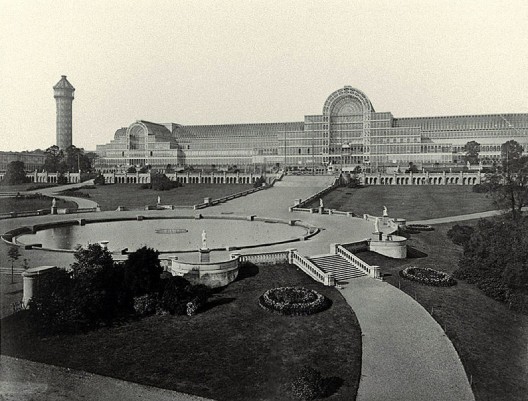
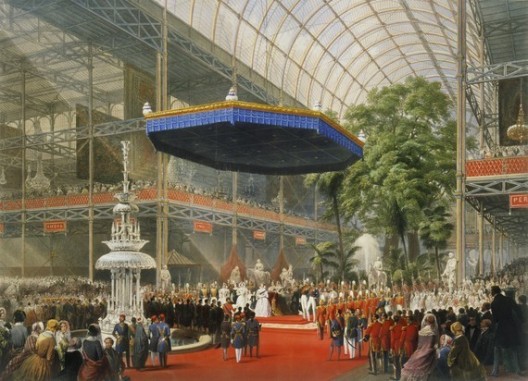








 Photo via Shutterstock


 (See? This is just me hangin' out in Iraq.)
 (Did you notice all 6?)