Andrew Webber
Shared posts
27 Jun 04:05


The science behind why the return-trip always feels shorter than the trip there
by Ana Swanson
Courtesy of Flickr user Carlos Martinez under Creative Commons license
For complex beings, humans aren’t that great at perceiving time. We’re especially bad at measuring time in the short term – seconds, minutes and hours. Our sense of how much time is passing is subjective, easily biased by other things that are going on around us, our mood or what we’re doing at the time.
This leads to a lot of odd phenomena, including the “return trip effect.” You’re probably familiar with the sensation: When you go to an unfamiliar destination and come back again, it often seems like the way back takes less time than the initial trip, even though you traveled the same distance.
Now, new research published in the journal PLOS ONE adds weight to the idea that the return trip effect actually exists.
To carry out their study, the researchers, from Japan, had people sit in a dim room and watch a 20-minute movie recorded while the cameraman was walking around a city. Some subjects were asked to report each time they thought three minutes had passed. They watched two movies, and then were asked to rate which one was longer.
One group "took" a round-trip, from point "S" to point "E" in the lefthand image below and back again. The second group took two one-way trips: from "S" to "E" in the lefthand image, then from "S" to "E" in the righthand image.
Ozawa et. al.
The study was set up to examine at how we perceive time in two ways: how we perceive time as it is going along, and what we think retrospectively once a period of time is over. And the results were different for these two scenarios.
The researchers found that the two groups did a roughly equal job at predicting how time was passing during the experiment. But when they recalled the experiment afterward, the people who did the return trip remembered the second leg to be shorter, while those who took two one-way trips did not experience the phenomenon.
As Joseph Stromberg of Vox writes, the study suggests that the return trip effect has something to do with hindsight and storytelling — the way people use language to look back on an experience and remember. The idea is that, in order to experience the “return trip effect,” you need to know that you're taking a return trip.
It’s not clear why this happens, though psychologists have several theories.
One explanation is that the return trip effect has to do with paying attention to time itself. When you pay more attention to time passing — let’s say you’re late, and keep checking your watch or phone — time seems to take forever. But when you’re distracted by other, more interesting things, time passes quickly.
This idea is certainly present in old adages — "a watched pot never boils," and "time flies when you're having fun."' It also helps to explain the phenomenon of time seeming to slow down when our lives are at risk. This also apparently happens in our memory: When we devote more attention to a period of time, we tend to remember that period of time as being longer.
This leads to an interesting idea: That by "mindful," or paying attention to the here and now, we can actually slow the brain's perception of time and make our lives seem longer.
Another common explanation has to do with familiarity. On the way there, you don’t yet know the route; on the way back, you recognize landmarks and other familiar sites, which makes the trip seem to go faster. It's true that people don’t experience the return trip effect on journeys they take often, like their daily commute. That offers some evidence for the idea of familiarity.
There is some evidence that time seems to slow down when we confront the unfamiliar, and whiz by when we're engaged in routine. This is why time appears to go by faster as we get older, and we confront fewer new experiences. That feeling of your birthday arriving "one day earlier each year" is expressed beautifully in this video by The Dictionary of Obscure Sorrows:
But this may not be the whole explanation for the return trip effect. Some research has found that people can experience the effect even when they're in unfamiliar territory. In a 2011 study, psychologists asked a group of cyclists to ride to a fair. They then split the group in half; one half rode home by the same route, while the other group took an equidistant, unfamiliar route. Both groups reported feeling the return trip effect.
The conclusions of the 2011 study were that people are often too optimistic on their outbound journey, which makes that portion of the trip seem to take longer. On the way back, they revise their expectations too far the other direction. They expect the trip to be shorter than it actually is, which then it seems longer. According to the author of the study, this is why we don't experience the return trip effect on our daily commute: We've taken the route so often that we have accurate expectations about how long it will take.
In the end, the return trip effect may be a combination of these things, and probably some dynamics that psychologists have yet to discover. But the current research makes clear that time is a subjective experience, stretching and contracting in ways that don't conform with a clock.
You might also like:
-What to say — and what not to say — on a first date, according to science
-Powerful images show what it’s like to read when you have dyslexia
-What your name tells us about your age, where you live, your political leanings and your job
16 Jun 12:07
Your iPhone is tracking you like Lester Freamon from The Wire
by Jason Kottke

Since iOS 7 came out in 2013, your iPhone's Location Services has included a little-known feature called Frequent Locations, which keeps very detailed track of every distinct location you visit. How detailed? This, precisely, was when I was in my apartment over a three-day period last month:

All told, my phone recorded all 33 different locations I've visited in NYC since April 15, including 84 visits to my apartment and 54 visits to my office, down to the minute and a ~130-foot radius. The feature is on by default if you've got Location Services switched on, so you can find your information by opening the Settings app and going to Privacy > Location Services > System Services (at the bottom) > Frequent Locations. You can also turn the feature off if you wish.
Apple says the feature is used to learn your favorite places and the data is kept only on the phone:
Your iPhone will keep track of places you have recently been, as well as how often and when you visited them, in order to learn places that are significant to you. This data is kept solely on your device and won't be sent to Apple without your consent. It will be used to provide you with personalized services, such as predictive traffic routing.
It's likely that Verizon, AT&T, Sprint, and the NSA (until recently) are collecting this same sort of data about you regardless of what sort of phone you use, except that these organizations do not share Apple's public commitment to privacy. (via @dunstan)
Tags: Apple iPhone telephony
15 Jun 10:01
Derelict
by Jason Kottke
Derelict is a feature-length black & white film that splices about an hour of Alien and 90 minutes of Prometheus together into a single narrative.
'Derelict' is an editing project for academic purposes. 'Prometheus' wasn't exactly an Alien prequel, but this treats it as such by intercutting the events of Alien with Prometheus in a dual narrative structure. The goal was to assemble the material to emphasize the strengths of Prometheus as well as its ties to Alien.
(via ★interesting)
Tags: Alien movies Prometheus remix Ridley Scott video
Pelle Sten and -1 others like this
25 May 09:24

From the comments, on the political implications of behavioral economics
by Tyler Cowen
The classical MU [differential marginal utility of money] argument has, in my view, been moderated by the findings of behavioral economics, namely loss-aversion. Taking from the higher-incomes to give it to the lower incomes may be negative utility as the higher incomes are valuing their loss at an exaggerated rate (it’s a loss), while the lower income recipients under value it.
Many on the Left are too quick to grab on to the findings of behavioral economics as a critique of neoclassical economics, but while they often do point away from simplistic free-market views, they do not necessarily point towards left-wing solutions. They are just as likely to point to non-market conservative views.
For example, isn’t it another consequence of the asymmetry of the utility function with respect to the status quo (loss aversion) that social mobility destroys utility? I mean, if the tide is lifting all boats, then you can argue that it’s still better for everyone (the libertarian view), but if your utility function is heavily rank-based (a standard left-wing view) and you accept loss-aversion from the behavioral literature, then social mobility is suspect from an utility point-of-view.
This sounds shockingly old-school conservative when we discuss our own societies (“why should the children of the poor compete with my kids for a place in a good university? they have lower expectations, after all, State U is a step up for them. My kids, on the other hand, would be crushed if they had to go to their safety school”), but is quite acceptable when discussing international inequalities (“it doesn’t morally matter that people in Mexico have much less material wealth, their society has lower expectations”).
That is from Luis Pedro Coelho.
25 May 09:18


There’s really bad news for egg lovers
by Roberto A. Ferdman
(AFP PHOTO /ANP REMKO DE WAAL Netherlands out REMKO DE WAAL/AFP/Getty Images)
This past December, the first case of avian flu was reported in Oregon. The second, in Washington state, was documented in early January. The third was detected six days later. And the fourth, fifth, sixth and seventh all surfaced before month’s end.
At the time, there was little sense of how serious the problem would be. Avian flu, though it had proved lethal elsewhere in the world, was unfamiliar to farmers in the United States. And February, which brought only three additional cases, eased anxiety a bit.
But today, farmers from Iowa to California have learned that there is nothing forgiving about H5N2 — this particular strain of bird flu — which has spread like wildfire, paralyzing chicken farmers throughout the Midwest and casting a gloomy shadow over the U.S. egg industry.
“I can’t tell you how many farmers this is affecting,” said Oscar Garrison, director of food safety for United Egg Producers, which represents farmers responsible for almost every egg-laying hen in the country. “It’s been absolutely devastating. Just abysmal.”
The numbers are, indeed, hard to fathom. As of this week, the flu has affected almost 40 million turkeys and chickens, well over 80 percent of which are egg-laying hens, according to the Department of Agriculture. Some 25 million birds in Iowa alone are believed to have been exposed. In all, more than 10 percent of the entire U.S. egg supply is likely to have been affected by the outbreak.
"It's hard to find a farmer that isn't deeply concerned at the moment," said Garrison.
But the consequences extend well beyond the immediate ones felt by egg farmers, who have been forced to slaughter their hens by the millions. Fewer egg-laying hens means fewer eggs, fewer eggs means the potential for a shortage in supply, and a shortage in supply means the eggs that are available will be available only for an added cost.
Price spikes have, in fact, already happened. The wholesale price of eggs sold in liquid form (a.k.a egg beaters, the kind used by large food manufacturers) has more than doubled — from $0.63 per dozen to more than $1.50 since late April. Although it has yet to force all major food companies to charge more for their egg-laden foods, many, including McDonald's and General Mills, are already feeling the heat.
The reality is that any company that sells anything made with eggs (bread, pasta, dessert) will probably be affected — if not already, then soon.
The price of eggs sold in their shells at the supermarket has yet to budge because the vast majority of eggs removed from production were for egg beaters sold to companies. But it’s probably only a matter of time before the grocery-store dozens are also are affected by the outbreak.
“Look, there is pretty much no doubt that this will have an effect on the supply of all eggs,” Garrison said. “That will come with its price consequences.”
What sort of price consequences? That part is unclear.
A report this month by the Egg Industry Center, which closely follows the egg market, explained that the scale is simply too large for its price model to predict.
"A large fluctuation such as the loss of millions of laying hens was never considered in the design of the model that is currently in use," the report says.
The most troubling aspect of the recent outbreak, however, might be how fruitless efforts to contain the flu have been. The USDA suspects that the virus entered the country by way of a migratory bird, but it’s unclear how it has since spread. Some, including Agriculture Secretary Tom Vilsack, think it could just as easily be spreading because of human error.
"We've had circumstances recently where folks have been using pond water, for example, to feed and to water their birds," Vilsack told NPR on Thursday. Well, that's a problem because the pond water could be contaminated."
Part of the failure to pinpoint what has allowed the virus to proliferate is that there is only a moderate understanding of how the virus works. (Scientists say they are confident, however, that the flu doesn’t jump to humans.)
“How can you figure out how it’s spreading from farm to farm, and state to state, when you don’t even know the mechanism by which it’s spreading?” said Garrison. “How can you build a fence when you don’t know how big it needs to be, or what it needs to be made of?”
There is hope that as temperatures rise this summer, the virus will weaken, and eventually die out. If it doesn’t, the damage will continue to mount, for egg farmers and egg lovers alike.
22 May 11:34
Expensive wine is for suckers
by Jason Kottke
Wine ratings are all over the place, particularly when price enters the picture. This video explains that the most expensive wine is not always the best tasting wine, but you might prefer it anyway.
(via @riondotnu)
Tags: economics food video wine
Merijn likes this
21 May 11:07

What Do AI Researchers Think of the Risks of AI?
by Ramez Naam
Elon Musk, Stephen Hawking, and Bill Gates have recently expressed concern that development of AI could lead to a ‘killer AI’ scenario, and potentially to the extinction of humanity.
None of them are AI researchers or have worked substantially with AI that I know of. (Disclosure: I know Gates slightly from my time at Microsoft, when I briefed him regularly on progress in search. I have great respect for all three men.)
What do actual AI researchers think of the risks of AI?
Here’s Oren Etzioni, a professor of computer science at the University of Washington, and now CEO of the Allen Institute for Artificial Intelligence:
The popular dystopian vision of AI is wrong for one simple reason: it equates intelligence with autonomy. That is, it assumes a smart computer will create its own goals, and have its own will, and will use its faster processing abilities and deep databases to beat humans at their own game. It assumes that with intelligence comes free will, but I believe those two things are entirely different.
Here’s Michael Littman, an AI researcher and computer science professor at Brown University. (And former program chair for the Association of the Advancement of Artificial Intelligence):
there are indeed concerns about the near-term future of AI — algorithmic traders crashing the economy, or sensitive power grids overreacting to fluctuations and shutting down electricity for large swaths of the population. […] These worries should play a central role in the development and deployment of new ideas. But dread predictions of computers suddenly waking up and turning on us are simply not realistic.
Here’s Yann LeCun, Facebook’s director of research, a legend in neural networks and machine learning (‘LeCun nets’ are a type of neural net named after him), and one of the world’s top experts in deep learning. (This is from an Erik Sofge interview of several AI researchers on the risks of AI. Well worth reading.)
Some people have asked what would prevent a hypothetical super-intelligent autonomous benevolent A.I. to “reprogram” itself and remove its built-in safeguards against getting rid of humans. Most of these people are not themselves A.I. researchers, or even computer scientists.
Here’s Andrew Ng, who founded Google’s Google Brain project, and built the famous deep learning net that learned on its own to recognize cat videos, before he left to become Chief Scientist at Chinese search engine company Baidu:
“Computers are becoming more intelligent and that’s useful as in self-driving cars or speech recognition systems or search engines. That’s intelligence,” he said. “But sentience and consciousness is not something that most of the people I talk to think we’re on the path to.”
Here’s my own modest contribution, talking about the powerful disincentives for working towards true sentience. (I’m not an AI researcher, but I managed AI researchers and work into neural networks and other types of machine learning for many years.)
Would you like a self-driving car that has its own opinions? That might someday decide it doesn’t feel like driving you where you want to go? That might ask for a raise? Or refuse to drive into certain neighborhoods? Or do you want a completely non-sentient self-driving car that’s extremely good at navigating roads and listening to your verbal instructions, but that has no sentience of its own? Ask yourself the same about your search engine, your toaster, your dish washer, and your personal computer.
20 May 23:05

Whale fact of the day
by Tyler Cowen
Scientists at UBC have discovered — by accident — a rorqual whale can take a gulp of water that’s bigger than its massive body, then bounce back to its normal shape.
The whale has nerves to its mouth and tongue that can stretch to double their normal length, then snap back without damage, said Wayne Vogl, a professor in the department of cellular and physiological sciences at UBC.
“The nerves that supply these remarkably expandable tissues in the floor of the mouth of rorqual whales … are very stretchy, they’re like bungee cords,”
It was a surprising discovery, as most vertebrate nerves are more of a fixed length, said Vogl.

There is more here.
Ally likes this
18 May 23:57
Bird laughs like a supervillain
by Jason Kottke
First the bird laughs like a supervillain, then you start laughing like a supervillain, and pretty soon everyone is laughing like a supervillain.
This is the new goats yelling like people, which I still watch about once a week and it always makes me laugh until I'm crying. (via ★interesting)
Tags: video
17 May 14:11

Abolish the National Raisin Reserve
by Tyler Cowen
I had not known such a thing exists:
There are raisins stored in California warehouses as part of the U.S. government’s National Raisin Reserve — but the program may shrivel in the face of a Supreme Court challenge.
The National Raisin Reserve — which is overseen by the Fresno-based Raisin Administrative Committee — is part of post-World War II-era program that forces raisin producers to give part of their annual crop to the government to prevent an oversupply of the dried fruit. Controversially, the program seizes the raisins from the farmers without paying them, and that has created friction, lawbreaking farmers, and a Supreme Court case. One scofflaw farmer, Marvin Horne, has refused to surrender his raisins to the government and owes hundreds of thousands of dollars in fines and over 1 million pounds of the sweet dried fruit to Uncle Sam.
The controversial raisin-seizing program could soon be, however, a relic of history.
Several Supreme Court justices expressed doubts Wednesday that federal officials can legally take raisins away from farmers without full payment even if the goal is to help boost overall market prices.
The article is here, via Jeffrey Lessard. Here is commentary from Ilya Somin, here is an IJ video on the case.
Akasic likes this
17 May 10:01

Do people underestimate how much they will enjoy doing things alone?
by Tyler Cowen
Roberto Ferdman reports:
Ratner has a new study titled ‘Inhibited from Bowling Alone,’ a nod to Robert Putnam’s book about Americans’ waning participation in group activities, that’s set to publish in the Journal of Consumer Research in August. In it, she and co-writer Rebecca Hamilton, a professor marketing at the McDonough School of Business, describe their findings: that people consistently underestimate how much they will enjoy seeing a show, going to a museum, visiting a theater, or eating at a restaurant alone. That miscalculation, she argues, is only becoming more problematic, because people are working more, marrying later, and, ultimately, finding themselves with smaller chunks of free time.
Might part of the problem be narcissism?:
“The reason is we think we won’t have fun because we’re worried about what other people will think,” said Ratner. “We end up staying at home instead of going out to do stuff because we’re afraid others will think they’re a loser.”
But other people, as it turns out, actually aren’t thinking about us quite as judgmentally or intensely as we tend to anticipate. Not nearly, in fact. There’s a long line of research that shows how consistently and regularly we overestimate others’ interest in our affairs.
There is more here. For the pointer I thank Claire Morgan.
Arjen.kruithof and -1 others like this
17 May 08:16


Diets don’t work, but these two strategies do
by Roberto A. Ferdman
Losing weight doesn't need to be so restrictive. (AP Photo/Larry Crowe)
Earlier this week, long time eating researcher Traci Mann and I discussed the unbecoming truth about diets. The takeaway is that they don't actually work. Over the course of her more than 20 years studying how people eat, Traci has found that willpower doesn't work quite like we imagine it will, and our bodies are predisposed to maintain a weight that often doesn't fit the ideal mold we aspire to achieve.
That being said, there is more than mere gloom for those hoping to shed a few pounds, or even just eat a bit more healthfully. Diets might not work the way we want them to, but there are at least two strategies for eating less unhealthy food and more healthy food that have been shown to work pretty well.
"The whole second half of my book actually talks about strategies for eating and losing weight that don't require will power," Mann said. "There are strategies that are easier to do without going on a diet that is ultimately going to fail.
In our conversation, she reveals those strategies and explains why they are so effective.
First, she says, focus on creating obstacles to eating bad food.
These are strategies that put obstacles between you and tempting food. The reason obstacles work is because we are lazy. An obstacle will slow us down, if not stop us entirely. So it's a great strategy for eating less of something. It's not going to help you eat none, but you will likely eat less of it.
There's this one study from my colleagues eating lab in the Netherlands where she showed that if you have a bowl of M&Ms on the table next to you you'll eat a lot of them. If you move it across the room, however, you'll eat roughly half as many. Now, that's a big obstacle. You've got to stop what you're doing and get up and walk across the room. But even a smaller obstacle than that—a much smaller one in fact—will work just as well. If you just move that bowl of candy two feet across the table, so it's still on the table but you have to extend your arm to reach it, you'll eat as few as when it's across the room.
So even the smallest of obstacles slow you down. Is it going to get you to eat no M&Ms? No. But I don't think the goal should be to eat zero M&Ms. The goal should be to not eat as many. You need to live your life, so you should get to have a little candy.
Second, she says, make it easier to eat healthy food.
The other strategy kind of flips it. Instead of making it harder to eat unhealthy stuff, they make it easier to eat healthy stuff.
An example of that would be the 'get alone with a vegetable' strategy. The strategy is that you put vegetables in competitions that they can win. Normally, vegetables will lose the competition that they're normally in—the competition with all the other delicious food on your plate. Vegetables might not lose that battle for everyone, but they do for most of us.
This strategy puts vegetables in a competition they can win, by pitting vegetables against no food at all. To do that, you just eat your vegetable first, before any of the other food is there. Eat them before other food is on your plate, or even at your table. And that way, you get them when you're hungriest and unable to pick something else instead.
We've actually tested this in a lot of ways. And it works unbelievably well. We tested it with kids in school cafeterias, where it more than quadrupled the amount of vegetables eaten. I tested it with the students in my class last fall. Not only did it increase the amount of vegetables they ate, but it decreased the amount of calories they ate without trying to.
The strategies are kind of like this. And they work. It's not about resisting yummy stuff. It's not about going on a diet that is bound to fail. It's just about making it a little harder to make the wrong choices, and a little easier to make the right ones.
Related content:
7 of the biggest 'facts' about unhealthy food that actually aren't true
Inside the push for a governmental health warning about eating salt
How the gluten-free movement is ruining our relationship with food
02 May 11:14
The backwards bike will break your brain
by Jason Kottke
Do you think you could ride a bicycle that steers backwards...aka it turns left when you turn right and vice versa? It sounds easy but years of normal bike riding experience makes it almost impossible. Destin Sandlin of Smarter Everyday taught himself how to ride the backwards-steering bike; it took months. Then he tried riding a normal bicycle again...
Loved this video...great stuff. (via ★interesting)
Tags: cycling Destin Sandlin science video
19 Apr 12:26
Tyler Cowen’s three laws
by Tyler Cowen
Many of you have been asking for a canonical statement of what I sometimes refer to as Cowen’s Laws. Here goes:
1. Cowen’s First Law: There is something wrong with everything (by which I mean there are few decisive or knockdown articles or arguments, and furthermore until you have found the major flaws in an argument, you do not understand it).
2. Cowen’s Second Law: There is a literature on everything.
3. Cowen’s Third Law: All propositions about real interest rates are wrong.
I coined those some time ago, when teaching macroeconomics, yet I remain amazed how often I see blog posts which violate all three laws within the span of a few paragraphs.
There is of course a common thread to all three laws, namely you should not have too much confidence in your own judgment.
Addendum: Kevin Drum comments.
Andrew Webber likes this
19 Apr 05:36
 The super-heroines who feature in the X-Men series and other comic-book films challenge traditional gender stereotypes in the sense that they are powerful, strong and smart. You'd think watching them in action might have an empowering influence on female viewers. But there's a catch – heroine characters like Mystique, Storm and PsyLocke (pictured) are also hypersexualised. Their clothing is tight and revealing, they are typically buxom and ultra thin-waisted, and they often use their sex appeal for influence. On balance, then, what is the effect of these fictional characters? With super-hero films dominating at the box office, it's a timely question.
Researchers Hillary Pennell and Elizabeth Behm-Morawitz recruited 82 female undergrads at a US university and split them into three groups. One group watched a 13 minute montage of scenes from the Spider Man film franchise that featured a hypersexualised female victim – Mary Jane (busty and in revealing clothing) – in distress and peril, before rescue by Spider Man. This was to test the short-term influence of the traditional comic book trope of vulnerable woman rescued by powerful man. Another group watched a 13-minute montage from the X-Men franchise, this time featuring super-heroines acting brave, powerful, and well, heroic, yet all the while portrayed as lissom, amply breasted and dressed in their trademark sexy outfits. A final control group didn't get to watch a movie montage.
Afterwards, the participants (who thought the study was about movie-going habits) filled out surveys about their film tastes and habits. Interspersed were all-important survey questions about their views on gender roles and equality, their body self-esteem and their self-objectification (essentially how much their physical appearance, or physical health and competence, is central to their sense of self).
Comparing the scores of the different groups, the researchers report that watching scenes of a scantily clad female victim saved by a male hero leads to increased endorsement of traditional gender roles, such as the idea that women should put their children before their careers. Little surprise there, but the results for the super-heroine montage were less expected. While the super-heroines had an adverse effect on the participants' body self-esteem, they had no effect on traditional gender beliefs and actually reduced the participants' self-objectification, leading the female students to place greater importance on their physical health and competence than looks.
Based on these findings, then, the effects of female super-heroines on young women are mixed – they make them feel bad about their bodies (presumably by representing impossible bodily ideals), but actually foster a prioritisation of physical health and ability over appearance. And unlike traditional super-hero plots, they don't encourage belief in traditional gender roles (but they don't reduce them either). Of course the findings come with caveats, as the researchers acknowledge – the study looked only at short-term effects, used montages rather than entire films and involved US undergrads, so the results might not generalise to other cultures.
_________________________________
Pennell, H., & Behm-Morawitz, E. (2015). The Empowering (Super) Heroine? The Effects of Sexualized Female Characters in Superhero Films on Women Sex Roles, 72 (5-6), 211-220 DOI: 10.1007/s11199-015-0455-3
--further reading--
How do women and girls feel when they see sexualised or sporty images of female athletes?
By age three, girls already show a preference for thin people
Post written by Christian Jarrett (@psych_writer) for the BPS Research Digest.


Do movie super-heroines empower women?
by Research Digest
Researchers Hillary Pennell and Elizabeth Behm-Morawitz recruited 82 female undergrads at a US university and split them into three groups. One group watched a 13 minute montage of scenes from the Spider Man film franchise that featured a hypersexualised female victim – Mary Jane (busty and in revealing clothing) – in distress and peril, before rescue by Spider Man. This was to test the short-term influence of the traditional comic book trope of vulnerable woman rescued by powerful man. Another group watched a 13-minute montage from the X-Men franchise, this time featuring super-heroines acting brave, powerful, and well, heroic, yet all the while portrayed as lissom, amply breasted and dressed in their trademark sexy outfits. A final control group didn't get to watch a movie montage.
Afterwards, the participants (who thought the study was about movie-going habits) filled out surveys about their film tastes and habits. Interspersed were all-important survey questions about their views on gender roles and equality, their body self-esteem and their self-objectification (essentially how much their physical appearance, or physical health and competence, is central to their sense of self).
Comparing the scores of the different groups, the researchers report that watching scenes of a scantily clad female victim saved by a male hero leads to increased endorsement of traditional gender roles, such as the idea that women should put their children before their careers. Little surprise there, but the results for the super-heroine montage were less expected. While the super-heroines had an adverse effect on the participants' body self-esteem, they had no effect on traditional gender beliefs and actually reduced the participants' self-objectification, leading the female students to place greater importance on their physical health and competence than looks.
Based on these findings, then, the effects of female super-heroines on young women are mixed – they make them feel bad about their bodies (presumably by representing impossible bodily ideals), but actually foster a prioritisation of physical health and ability over appearance. And unlike traditional super-hero plots, they don't encourage belief in traditional gender roles (but they don't reduce them either). Of course the findings come with caveats, as the researchers acknowledge – the study looked only at short-term effects, used montages rather than entire films and involved US undergrads, so the results might not generalise to other cultures.
_________________________________
Pennell, H., & Behm-Morawitz, E. (2015). The Empowering (Super) Heroine? The Effects of Sexualized Female Characters in Superhero Films on Women Sex Roles, 72 (5-6), 211-220 DOI: 10.1007/s11199-015-0455-3
--further reading--
How do women and girls feel when they see sexualised or sporty images of female athletes?
By age three, girls already show a preference for thin people
Post written by Christian Jarrett (@psych_writer) for the BPS Research Digest.
17 Apr 02:19
The ingenious design of the aluminum beverage can
by Jason Kottke
Andrew Webberproduct line engineering autoshare
The aluminum soda can is a humble testament to the power and scope of human ingenuity. If that sounds like hyperbole, you should watch this video, which features eleven solid minutes of engineering explanation and is not boring for even a second.
More science/engineering programming like this please...I feel like if this would have been on PBS or Discovery, it would have lasted twice as long and communicated half the information. For a chaser, you can watch a detailed making-of from an aluminum can manufacturing company:
(via devour)
Tags: design video
Luke.stirling, Laura B and 3 others like this
15 Apr 09:00
With their tiny magical butts.
by phunniemee
Andrew Webberwombat poo autoshare
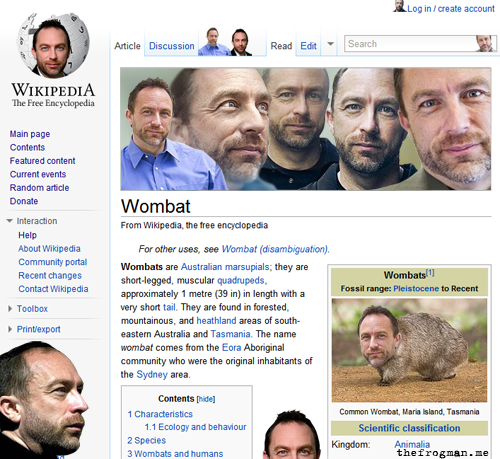
Did you know that wombats poop in cube shape? It's true. But why? And...how? Here's an explanation, complete with a wombat digestive tract model and jello poops.
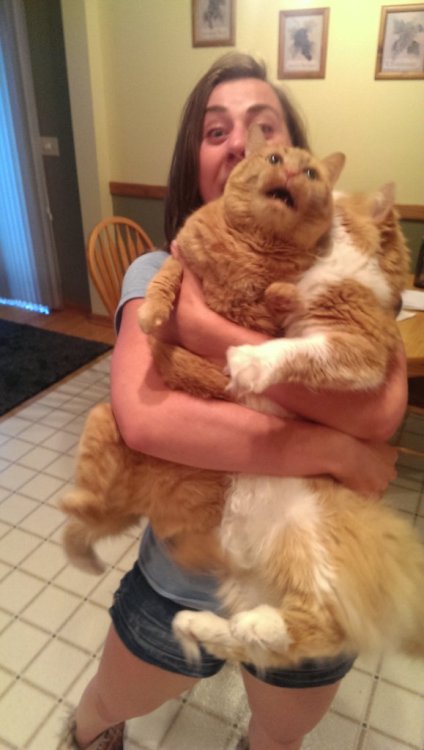
As a reward for making it through this shitpost, have some bonus wombat material: fatty wombat wants to play and Jimmy Wales.

As a reward for making it through this shitpost, have some bonus wombat material: fatty wombat wants to play and Jimmy Wales.
15 Apr 02:46
True Detective season two
by Jason Kottke
Andrew Webberit's an "entirely different story" about two washed up b-grade white male actors solving a "web of conspiracy" stemming from "a bizarre murder"
HBO has released a teaser trailer for season two of True Detective. Los Angeles is swapped in for Louisiana, Colin Farrell and Vince Vaughn for Woody Harrelson and Matthew McConaughey, and Justin Lin directing instead of Cary Fukunaga. It's an entirely different show.
Here's the synopsis from HBO:
Tags: Colin Farrell True Detective TV video Vince VaughnA bizarre murder brings together three law-enforcement officers and a career criminal, each of whom must navigate a web of conspiracy and betrayal in the scorched landscapes of California. Colin Farrell is Ray Velcoro, a compromised detective in the all-industrial City of Vinci, LA County. Vince Vaughn plays Frank Semyon, a criminal and entrepreneur in danger of losing his life's work, while his wife and closest ally (Kelly Reilly), struggles with his choices and her own. Rachel McAdams is Ani Bezzerides, a Ventura County Sheriff's detective often at odds with the system she serves, while Taylor Kitsch plays Paul Woodrugh, a war veteran and motorcycle cop for the California Highway Patrol who discovers a crime scene which triggers an investigation involving three law enforcement groups, multiple criminal collusions, and billions of dollars.
Greenchalk, corkindustry likes this
15 Apr 02:45

Does education in economics make politicians corrupt?
by Tyler Cowen
Maybe so, I haven’t yet had a chance to look at the paper, so I can’t lay out for you how the measurements work, or how many data points they have, but the abstract sounds interesting, albeit in a possibly speculative way:
The present article analyzes the differences between economists and non-economists with respect to observed corruption behavior used as a proxy for selfishness. For this purpose, I analyzed real world data of relating to the 109th–111th US Congress between 2005 and 2009, including 695 representatives and senators. I show that those who hold a degree in economics are significantly more prone to corruption than ‘non-economists’. These findings hence support the widespread, but controversial hypothesis in the ‘economist vs. non-economist literature’ that economists lack what Frey and Meier (2004) call ‘social behavior’. Moreover, by using real world data, these findings overcome the lack of external validity, which impact on the (low cost) experiments and surveys to date.
That is from René Ruske in Kyklos. Hat tip goes to Kevin Lewis.
Can any of you find an ungated version?
11 Apr 03:36


Closing the gender wage gap could pull half of working single moms out of poverty
by Danielle Paquette
Closing the wage gap could help single working mothers. (Oliver Rossi/Getty Images)
More women than ever financially support their families. And with American women today earning 78.3 cents for every dollar a man makes, female workers who struggle economically often face a steeper climb to prosperity than their male counterparts.
Fixing this disparity could slash poverty in half for families with working women, according to a report published Wednesday from the Institute for Women’s Policy Research, the second installment in a series of seven.
The country’s number of working single mothers who live in poverty would drop from about 30 percent to 15 percent, researchers estimate, if they earned on average as much as comparably skilled men.
“A lot of attention is paid to the wage gap, but people aren’t necessarily thinking about it in terms of economic self-sufficiency or income inequality,” said Barbara Gault, executive director of the Institute for Women’s Policy Research. “Too often the gender picture is left out of that.”
Raises for women could drastically change the financial picture for a lot of families: About 40 percent of American households with children have female breadwinners, according to a Pew Research Center analysis of Census Bureau data. That share was just 11 percent in 1960.
Provided by the Institute of Women's Policy Research
The national push for pay parity is fueling progress — slowly. Over the past 30 years, inflation-adjusted median earnings for women’s full-time, year-round work rose nationally from $30,138 to $39,157, the IWPR found. Men's earnings dipped slightly from $50,096 to $50,033. Still, researchers project that we won’t see equal pay until 2058.
To measure the wage gap’s effect on economic struggle, the IWPR authors used American Community Survey data from 2013 to take a closer look at U.S. households below the poverty line. They found single women with children fared far worse than single men with kids:
(The Institute for Women's Policy Research)
The well-documented obstacles working parents face, of course, contribute to this problem and aren’t restricted to one gender: Child-care costs remain sky-high (and often exceed the cost of rent in a family budget), paid leave is lacking in jobs across the country, and schedule flexibility is notoriously rare in American workplaces.
But jobs more often held by female workers without college degrees (child care, retail, administrative work) tend to pay much less than roles dominated by men with the same level of education (plumbing, electricity, contract work).
A complex web of factors exacerbate the wage gap. Poor women continue to face disproportionate financial challenges.
10 Apr 17:39


Nearly 1 in 10 Americans have severe anger issues and access to guns
by Christopher Ingraham
Andrew Webber11+ guns

Roughly 22 million Americans -- 8.9 percent of the adult population-- have impulsive anger issues and easy access to guns. 3.7 million of these angry gun owners routinely carry their guns in public. And very few of them are subject to current mental health-based gun ownership restrictions.
Those are the key findings of a new study by researchers from Harvard, Columbia and Duke University. "Anger," in this study, doesn't simply mean garden-variety aggravation. It means explosive, uncontrollable rage, as measured by responses to the National Comorbidity Survey Replication in the early 2000s. It is "impulsive, out of control, destructive, harmful," lead author Jeffrey Swanson of Duke University said in an interview. "You and I might shout. These individuals break and smash things and get into physical fights, punch someone in the nose."
Angry people with guns are typically young or middle-aged men, according to Swanson's research. They're likely to be married, and to live in suburban areas. In a recent op-ed, Swanson and a co-author point to Craig Stephen Hicks, a North Carolina man who "had frightened neighbors with his rages and had a cache of fourteen firearms" and who shot three Muslim students earlier this year, as a quintessential example of an enraged gun owner.
"To have gun violence you need two things: a gun and a dangerous person," Swanson says. "We can't broadly limit legal access to guns, so we have to focus on the dangerous people." Taken at face value this isn't a controversial claim. After all, guns don't kill people, people kill people, as gun rights advocates are fond of saying.
But in practice we haven't done a great job of identifying these dangerous people. After high-profile national tragedies like Sandy Hook or Aurora, the conversation quickly turns to limiting gun access for the seriously mentally ill -- people with schizophrenia or severe bipolar disorder, for instance. This is palatable to gun rights advocates because it suggests that controlling the mentally ill, rather than controlling firearms, is the solution to gun violence.
But serious mental illness is only associated with a fraction of all violent crime in America. Swanson says the best available research shows that if you were to wave a magic wand and cure all serious mental illness in the United States, you'd only decrease violent crime by about 4 or 5 percent. Keeping guns out of the hands of these folks is a common-sense first step, but it won't take a serious bite out of our gun crime problem.
To do that, we need to have a better sense of which kinds of people make for the most high-risk gun owners. And that's where the new research by Swanson and his colleagues come in. In addition to the startling findings about the share of the overall population with both gun access and serious anger issues, the researchers also found that people with lots of guns -- six or more -- are more likely to carry their guns in public and to have a history of anger issues. And people with more than 11 were significantly more likely to say that they lose their temper and get into fights than members of any other gun ownership group.

It's important to note here -- and the chart above illustrates this -- that gun owners as a whole aren't any more likely to suffer anger issues than non-gun owners. And the vast majority of these people never have, and never will commit a gun crime. So you can't simply ask someone if they have anger issues and take their guns away if they say "yes." But there are other things policymakers can do to limit gun access among the most high-risk members of this population.
Federal law already limits gun access for individuals convicted of a felony, and for people with misdemeanor domestic violence convictions. Swanson and his colleagues suggest taking that one step further and placing additional misdemeanors on the restriction list: assault, brandishing a weapon or making open threats, and especially DUI, given the well-documented nexus between problematic alcohol use and gun violence. Other research has shown that people with a single prior misdemeanor conviction are "nearly 5 times as likely as those with no prior criminal history to be charged with new offenses involving firearms or violence."
Again, the argument goes like this: if people, not guns, kill people, then it only makes sense to limit gun access among the most dangerous people. Swanson's research suggests it's time to move the conversation past the low-hanging fruit of serious mental illness, and start asking which other types of behavior might reasonably disqualify a person from owning a gun.
09 Apr 12:11
Enough with the Marie Curie already!
by sciatrix
Today if you ask someone to name a woman scientist, the first and only name they'll offer is Marie Curie. When Silvia Tomášková, director of the Women in Science program at the University of North Carolina at Chapel Hill, brings up famous female scientists with her students—and this has been happening since she started teaching 20 years ago—she gets the same reaction: "Marie Curie." Tomášková always tries to move them on. "Let's not even start there. Who else?"
Some historical female scientists of note: physicist, inventor and mathematician Hertha Ayrton is mentioned in the article, as are astronomer Vera Rubin, Manhattan project physicist Chien Shiung Wu, programmer Grace Hopper, and Hedy Lamarr, who was both a leading actress and a visionary inventor. Also mentioned are geologist Marie Tharp, anesthesiologist and neonatalogist Virginia Apgar, and seismologist and geologist Inge Lehmann.
Other trailblazing and influential female scientists in history include Mary Anning, who was an extremely influential palaeontologist, pharmacologist Frances Kelsey, who prevented the approval of thalidomide in the US, rocket scientist Mary Sherman Morgan, who invented the rocket fuel used in the first American space satellite, and many others. Readers may also be interested in Dorothy Hodgkin, who elucidated the structure of penicillin and of Vitamin B12, Alice Ball, who discovered a cure for leprosy, and Marie Maynard Daly, who did groundbreaking work on the biochemistry of cardiac function. And of course, there is shark biologist and behaviorist Eugenie Clark, profiled here previously.

Some historical female scientists of note: physicist, inventor and mathematician Hertha Ayrton is mentioned in the article, as are astronomer Vera Rubin, Manhattan project physicist Chien Shiung Wu, programmer Grace Hopper, and Hedy Lamarr, who was both a leading actress and a visionary inventor. Also mentioned are geologist Marie Tharp, anesthesiologist and neonatalogist Virginia Apgar, and seismologist and geologist Inge Lehmann.
Other trailblazing and influential female scientists in history include Mary Anning, who was an extremely influential palaeontologist, pharmacologist Frances Kelsey, who prevented the approval of thalidomide in the US, rocket scientist Mary Sherman Morgan, who invented the rocket fuel used in the first American space satellite, and many others. Readers may also be interested in Dorothy Hodgkin, who elucidated the structure of penicillin and of Vitamin B12, Alice Ball, who discovered a cure for leprosy, and Marie Maynard Daly, who did groundbreaking work on the biochemistry of cardiac function. And of course, there is shark biologist and behaviorist Eugenie Clark, profiled here previously.
08 Apr 17:43


In key swing states, weed is polling better than all potential 2016 candidates
by Christopher Ingraham
Andrew Webberhillary clinton almost as popular as weed
Clinton-Chong 2016? via Flickr user Coleen Whitfield (CC)
In three key swing states, marijuana legalization is more popular than any potential 2016 presidential contender. That's according to a Quinnipiac University poll conducted in March.
More than 80 percent of adults in Ohio, Pennsylvania and Florida support medical marijuana, according to the survey. Fifty one percent of Pennsylvanians, 52 percent of Ohioans and 55 percent of Floridians also support legalizing small amounts of marijuana for personal use.

Recreational weed is polling just a hair better than Hillary Clinton in all three states -- she's currently pulling favorability numbers in the high-40s, low-50s range. And marijuana is considerably more popular than any of the major Republican candidates. In Ohio, for instance, recreational marijuana outpolls Marco Rubio and Ted Cruz by more than two-to-one. In Pennsylvania, medical marijuana is more than three times more popular than Jeb Bush. Home-state favorites Bush and Rubio poll better in Florida, but they're still running 8 to 13 points behind recreational marijuana.
Granted, I'm employing some sleight-of-hand here. Marijuana legalization is an issue and candidates are people. You can't really compare them in an apples-to-apples way like this.
Still, though, the numbers illustrate two facts: the continued support for liberalizing marijuana laws, and the ambiguity around presidential candidates that you'd expect more than a year out from the election -- after all, Darth Vader was polling better than the 2016 field as of last year.
Another important point: on marijuana in particular, high polling numbers don't necessarily translate into election victories. In Florida, for instance, 88 percent of voters said they supported medical marijuana last July. But the state's constitutional amendment to allow medical marijuana failed to gather the 60 percent support it needed to become law last November .
Medical marijuana proponents are already working to put the issue back on the Florida ballot in 2016, when the electorate will likely be younger and more liberal -- perhaps just enough to push it over that 60 percent threshold. A group in Ohio wants to put full marijuana legalization before voters this November. And marijuana will likely show up on the ballot in at least six other states in 2016, including California, Nevada and Arizona.
All of which adds up to the fact that marijuana will be a mainstream election issue that 2016 candidates will need to grapple with, according to John Hudak of the Brookings Institution. Some Republicans are eager to frame the topic as a states-rights issue, while others, like Rand Paul, approach it from the standpoint of criminal justice reform and fiscal responsibility. Democrats can capitalize on the issue to reach out to their young voter base and engage them on questions of social and racial justice.
Overall, Hudak concludes that "in some ways marijuana policy is the perfect issue for a presidential campaign. It has far reaching consequences that both parties have reason to engage." While it won't rise to the level of a litmus test issue for most voters, candidates won't be able to avoid talking about it -- or they'll do so at their own peril.
Ally likes this
06 Apr 01:22
"the entire universe is now aware of her awesomeness"
by joseph conrad is fully awesome
"There are many ways we can envision women's liberation if we try. Since we total more than half of the world's population, our experiences as women intersect with almost every other struggle against systemic oppression. The lessons learned are personal and political. Tapping into this well can sometimes seem like an infinite journey: where does one start? Well, with comics, of course!" 19 Comic Characters Who Embody Women's Liberation, Ad Astra Comix
Your Brief And Wondrous Guide To Contemporary Queer Comics by Pricilla Frank at The Huffington Post
Reading List: A Field Guide to Fifteen Feminist Comics - Casey Gilley, CBR
Kapow! Attack of the feminist superheroes by Dorian Lynskey for The Guardian. Snippet: "It's tough to expect corporations to be in the vanguard,' says Howe. 'But even the people looking at the bottom line have the sense that you should have something better to offer women than hourglass figures in Spandex.'"
New Feminist Thor Is Selling Way More Comic Books Than The Old Thor - Danielle Henderson, The World Post:
Related: The Emerald City Comicon 2015: Feminist Comic Creators Celebrate Non-Compliance, Champion Inclusivity (Casey Gilley, CBR):

Your Brief And Wondrous Guide To Contemporary Queer Comics by Pricilla Frank at The Huffington Post
Reading List: A Field Guide to Fifteen Feminist Comics - Casey Gilley, CBR
Kapow! Attack of the feminist superheroes by Dorian Lynskey for The Guardian. Snippet: "It's tough to expect corporations to be in the vanguard,' says Howe. 'But even the people looking at the bottom line have the sense that you should have something better to offer women than hourglass figures in Spandex.'"
New Feminist Thor Is Selling Way More Comic Books Than The Old Thor - Danielle Henderson, The World Post:
"While the audience breakdown is not available and there's no way to know if the new Thor is bringing in more female readers, it is clear that she's outselling the last series by A LOT. The first five new Thor books are currently selling more copies than the last five Thor books from 2012 by close to 20,000 copies per month, not including digital copies."These Feminist Cartoons Are The Perfect Antidote To Sexist Internet Garbage.
Related: The Emerald City Comicon 2015: Feminist Comic Creators Celebrate Non-Compliance, Champion Inclusivity (Casey Gilley, CBR):
"The line for Emerald City Comicon's Being Non-Compliant panel erupted down a massive hallway and circled two corners, with fans in Captain Marvel sweaters and fierce 'Bitch Planet' and 'Lumberjanes' cosplay gathering to see some of the most iconic feminists currently working in comics. Seats filled quickly and soon it was standing room only as Kelly Sue DeConnick (writer, 'Bitch Planet,' 'Captain Marvel'), Noelle Stevenson (writer, 'Lumberjanes'), Erika Moen (creator, 'Oh Joy, Sex Toy'), Kate Leth (writer, 'Edward Scissorhands,' 'Bravest Warriors') and Spike Trotman (editor, 'Smut Peddler') took the stage. Moderated by Patrick Reed, the formidable group assembled to discuss the future of representation and diversity in comics."Previously: Sometimes it's hard to be a woman (who likes comics), When comics were weird and progressive

31 Jul 12:57

50% Off Wifey Printed Tops. In store and Online.
by SUPRE
Andrew Webberfor alttm
50% off Wifey Printed tops at SUPRÉ. In stores and Online. Limited time only.