When driving in Manhattan, I love taking a random turn and finding myself on a curved street.
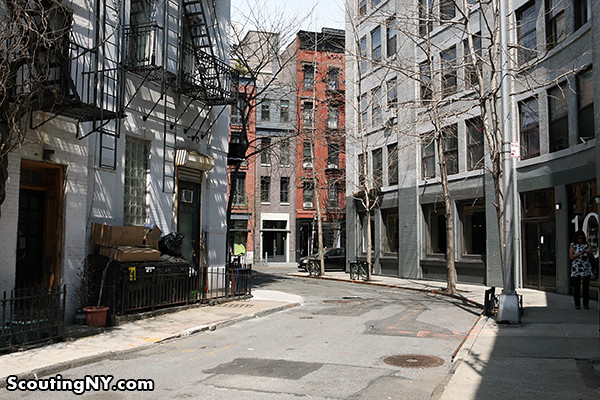
While commonplace pretty much anywhere else, crooked streets are incredibly rare in Manhattan. There are certainly avenues and streets with gradual curves, but when it comes to sharp angles – the kind that require you to really twist the wheel while still mid-block – there are very few, all dating back to a pre-grid New York.
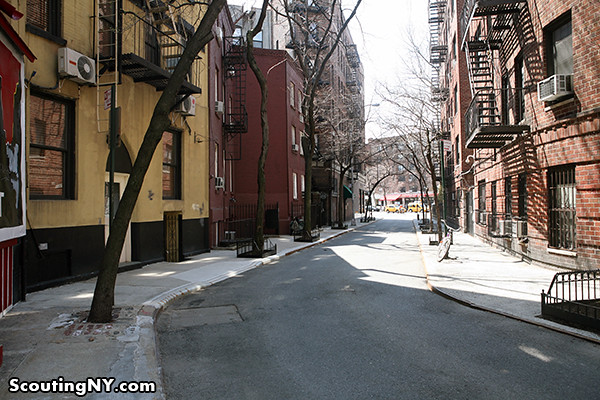
But the rarest of the rare are L-shaped streets – streets with 90° turns that leave you on the same street you started on (as opposed to the intersection of two different streets). How rare? As far as I can tell, there are only two public L-shaped streets left in Manhattan.
MARKETFIELD STREET
The diminutive Martketfield Street can be found off of Broad Street, nestled between two stately buildings:
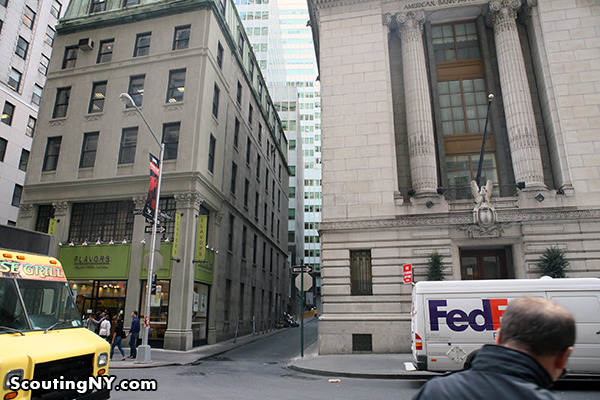
The slim byway extends about half a block in…
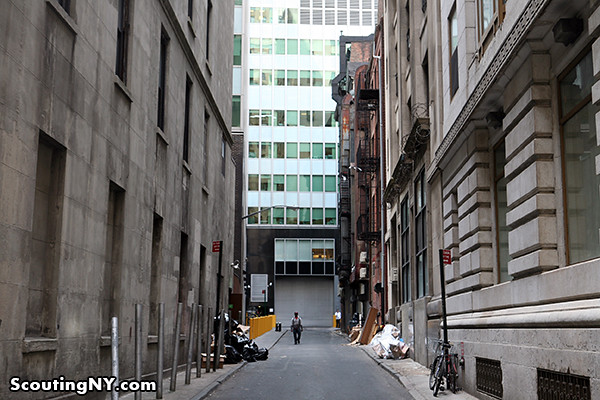
…then hangs a sharp right to connect with Beaver Street:
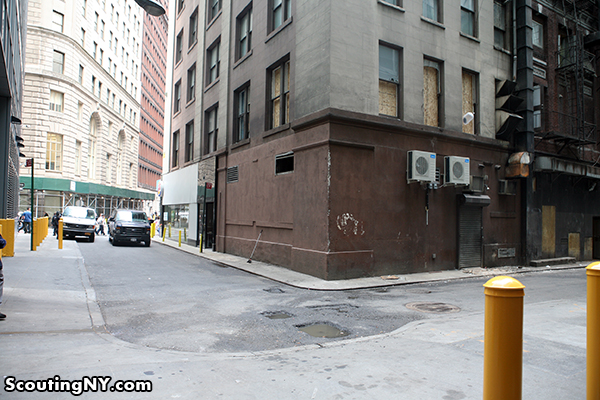
Marketfield Street dates back to the 1650s, when today’s Bowling Green was home to a livestock market called the Marckvelt. Originally known by the Dutch Marckvelt Steegh (“market field path”), it was later anglicized to its current name. According to legend, it was also known for a period as Petticoat Lane, in reference to either its clothing stores or prostitution.
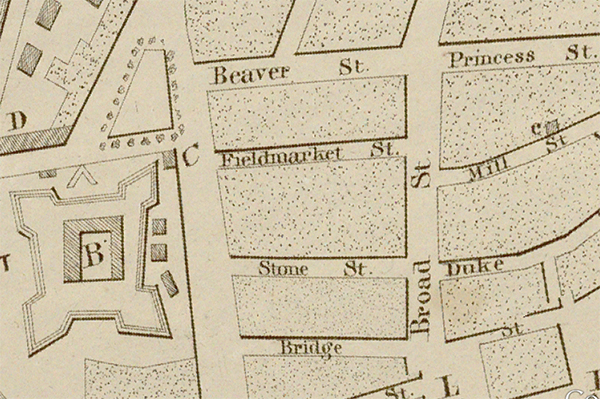
In 1880, the NY Produce Exchange purchased the eastern end of the street from the city for the construction of its new headquarters, and Marketfield was given its unusual angle.

Though the south side is pretty bland, the north side is as archetypal a New York alley as you can find, complete with crumbling, grime-covered brick, fire escapes, ducts…
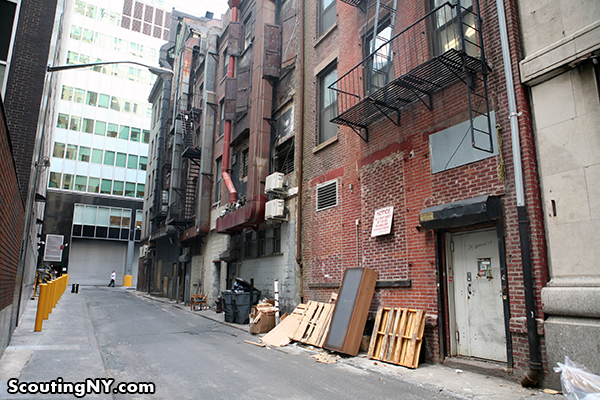
…and my favorite, ancient, rusting shutters:

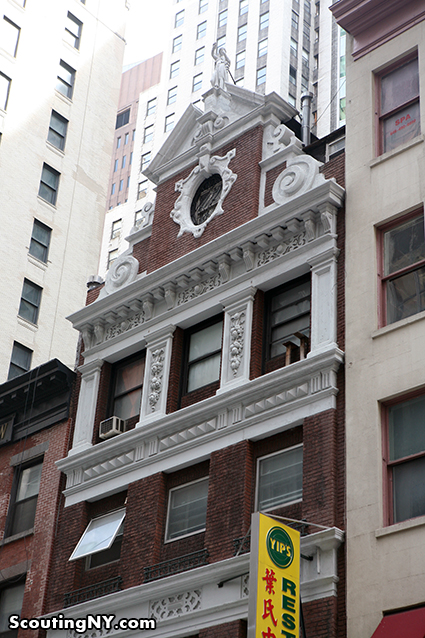
One of the most unusual structures is this facade, which features a surprising amount of detailing for a dank back alley:
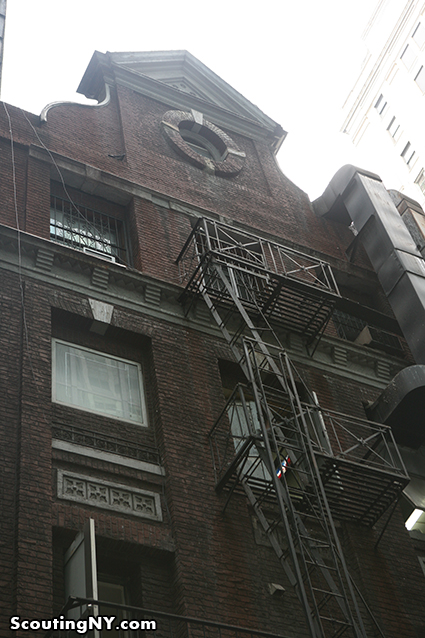
Its main facade is located at 18 Beaver Street, and the contrast between the two is pretty amazing:
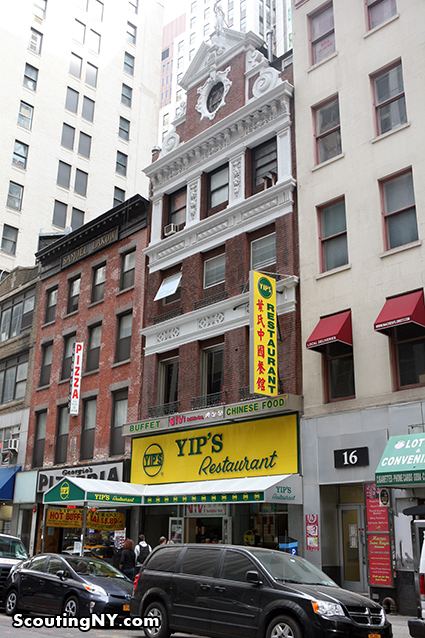
According to New York – A Guide To The Metropolis, 18 Beaver Street dates to the 1880s and was most likely a fancy restaurant, or “dining saloon.”
COMMERCE STREET
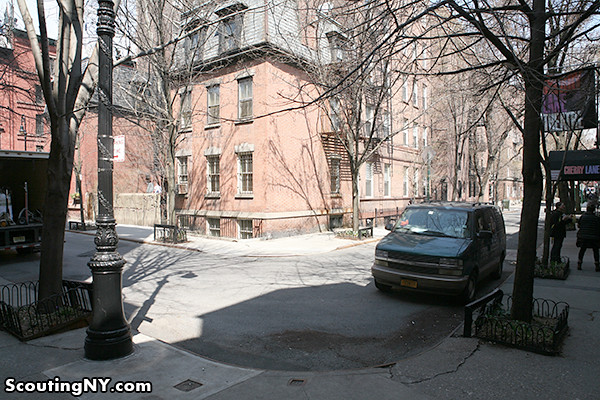
Moving further north to the West Village, the Commerce Street “L” begins on Bedford Street…

…then makes a sharp 90° turn onto Barrow Street:
The bend in Commerce, along with several parallel streets, follows the property line of Dutch Governor Wouter Van Twiller’s farm, dating to the 1630s. Originally, Commerce was a dead-end, though nearly connecting with the now defunct Barrow Street (today’s Barrow was then known as Burrow’s).
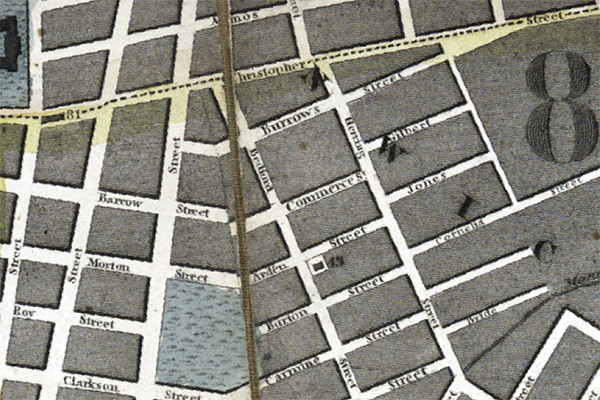
You can still see the remains of the original Barrow Street in the passage between buildings off of Hudson Street:

As the West Village began to take on the layout we’d recognize today, Commerce Street became a lonely dead-end…
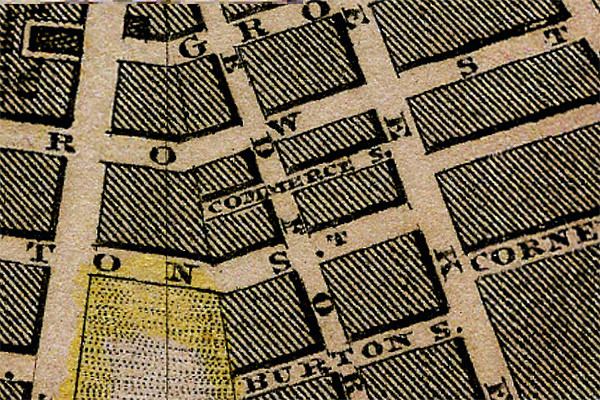
…then was finally given it’s distinctive bend into modern Barrow Street at some point in the early 1800s:

No one is 100% sure how Commerce Street got its name, though the most common story has it that it refers to the sudden increase in Village businesses following a yellow fever outbreak in downtown Manhattan.
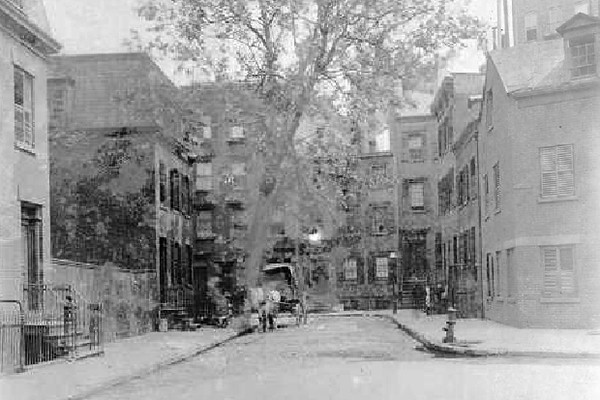
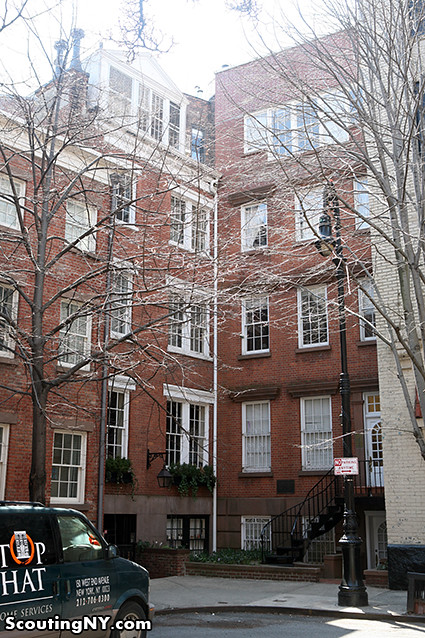
In particular, I’ve always loved the two buildings that meet right at the turn, which date to the mid-1800s. The one on the right, #48, was built for one Alexander Stewart, who owned a department store at Broadway and Chambers.
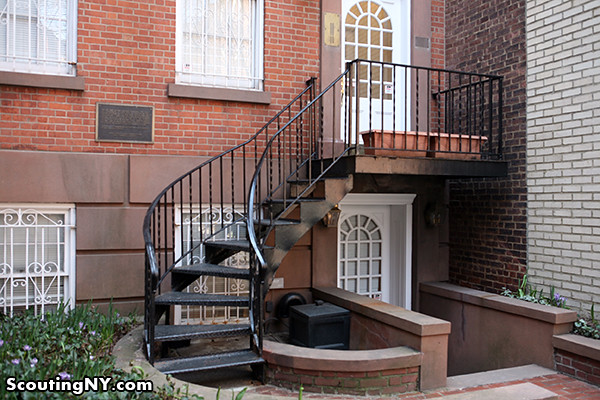
The curved staircase to the upper door seems very appropriate for the street.
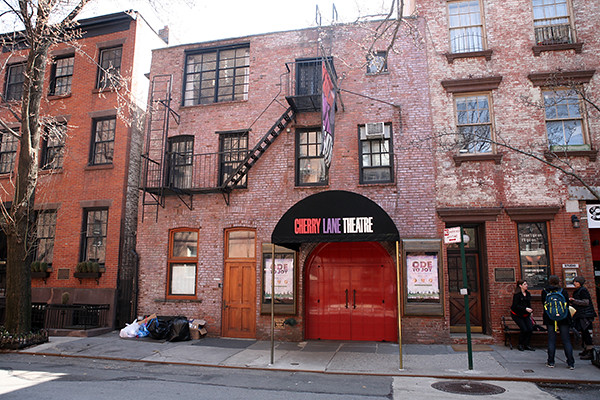
Also on the block is the Cherry Lane Theater. Originally built as a brewery in 1836, it became a theater in the 1920s (if you’ve heard that Commerce Street was once known as Cherry Lane, it’s a myth, perpetrated by one of the theater’s founders).
And that’s it for L-shaped streets! Yes, New York has several L-shaped intersections – where two differently named streets meet at a 90° angle (for example, Hamilton Terrace and W 144th Street). But for public streets in the grid (i.e. not on developments or parks), Marketfield and Commerce are the only two that fit the definition.
That’s not to take away from the beauty of unusually angled byways like Gay Street, Minetta Street, and Doyers Street though! Look for more crooked articles coming soon!
-SCOUT




 Don’t expect these to add up to 100 percent. This data is self-reported, and the categories are overlapping (note “through family” and “through own family”).





