
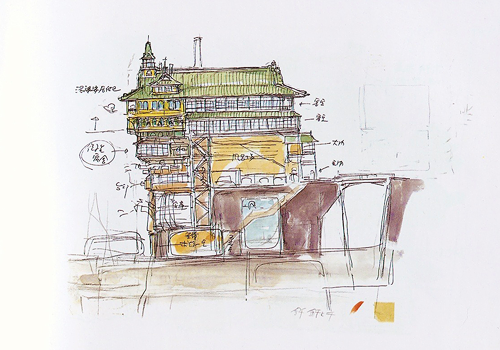

Spirited Away bathhouse concept art
Linda DV (on the old layout with a hacking tool) has added a photo to the pool:

Belgium. Antwerp Zoo.
Verreaux's eagle-owl, also known as the milky eagle owl or giant eagle owl, (Bubo lacteus) is a member of the family Strigidae and is the largest African owl. This owl is the world's third heaviest living owl, after Blakiston's fish owl and the Eurasian eagle-owl and the fourth longest owl, after additionally the great gray owl.
en.wikipedia.org/wiki/Verreaux%27s_eagle-owl
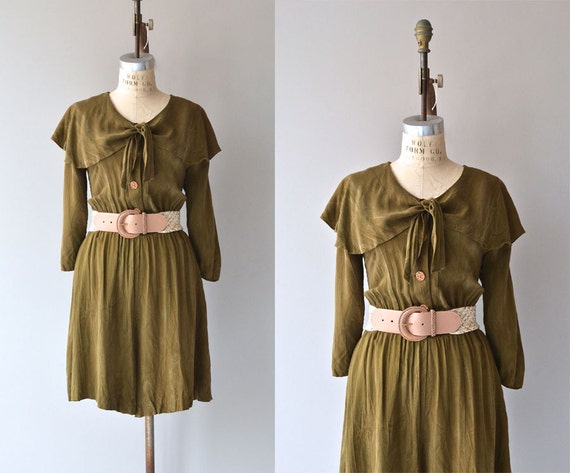
54,00 USD
Vintage 1980s olive silk romper with tie capelet collar, wooden buttons, elastic waist, woven cotton belt and flouncy shorts.
✂-----Measurements
fits like: fits best medium/large
bust: 36-42"
waist: 22-32"
hip: free
length: 39"
brand/maker: Elisse
condition: excellent
to ensure a good fit, please read the sizing guide:
http://www.etsy.com/shop/DearGolden/policy
✩ more vintage dresses ✩
http://www.etsy.com/shop/DearGolden?section_id=5986725
✩ visit the shop ✩
http://www.DearGolden.etsy.com
_____________________
✩ www.deargolden.com
✩ twitter: deargolden
Russian Sledgesvia rosalind ("HAVE YOU SEEN BEARS")
 Peter LaBarbera was recently interviewed by a former Infowars reporter named David Ortiz who asserted that acceptance of homosexuality represents “the death of the American male because you cannot be a masculine nation and support homosexuality.” "LaBarbera asserts that "masculine men do not have sex with other men."
Russian Sledgesvia firehose

Instructables user Aleator777 has a tutorial up on how to build this stunning lunar clock using your Raspeberry Pi. Via raspberrypi.org.
In this Instructable we will be building a dynamic lunar lamp with the Raspberry Pi. With your very own lunar clock you’ll always know the current phase of the moon, no matter the weather!

Budding astronomer? Recently bitten by a werewolf? Whatever your lunar-phase-knowing needs, the Lunar Phase Clock has you covered! If you’re interested in getting started on the build, move on over to the next step. Here we’ll talk about the astronomy behind the project.
So what are the phases of the Moon?
Just as the Earth orbits the Sun, so too the Moon orbits the Earth. The Moon is tidally locked to the Earth, which means that because the Moon completes its own rotation in the same time it take to orbit around the Earth, we always see the same side of the Moon. While we may be stuck to the same view of the Moon, the relationship between the Earth and Sun as the Moon completes its orbit is constantly changing. This means that it will be illuminated to varying degrees (or not at all!) and will take on a distinct shape. These distinct shapes are what we refer to as the lunar phases. The Moon completes a cycle around the Earth every 29.53 days; this is referred to as a synodic month.
Russian Sledgesvia firehose ("Russian Sledges life goals") via THANKGODYOUREHERE
I require this

Russian Sledgesvia overbey ("Somebody’s lesson plan didn’t go so well.")
The Jim Crow laws were simply put in place to provide African Americans of sense of belonging.
Boston Public Library posted a photo:

File name: 12_05_000029
Local call number: RARE BKS H.90.282 xxb c.1
Title: The man is not bought!
Other title information: He is still in the slave pen in the courthouse ... let every man attend the trial
Genre: Broadsides
Created/Published: [Boston : s.n.]
Date issued: 1854 (questionable)
Physical description: 1 broadside ; 97 x 56 cm.
Physical description note: Boston Public Library (Rare Books Department) copy 1 shows significant ink offset and noticeable paper loss, particularly in the lettering on the upper half of the sheet. On the verso of the sheet is an inscription that reads: "Theo. Parker, 1 Exeter Place."
General notes: Title from item.; Full text of this broadside reads: "The man is not bought! He is still in the slave pen in the court house! The kidnapper agreed both publicly, and in writing, to sell him for $1200! The sum was raised by eminent citizens of Boston and offered him. He then claimed more. The bargain was broken! The kidnapper breaks his agreement! Though even the United States Commissioner advised him to keep it. Be on your guard against all lies! Watch the slave pen -- let every man attend the trial!"
Date notes: Date supplied by cataloger.
Ownership notes: Formerly owned by Theodore Parker.
Biographical and historical notes : This broadside publicizes the arrest of the fugitive slave Anthony Burns, who escaped from Richmond, Virginia and made his way to Boston where, on May 24th, 1854, he was arrested. While he was awaiting trial for extradition to Virginia, a large crowd of abolitionists and anti-slavery sympathizers stormed the jail in which he was held in an attempt to free him. Federal troops were eventually sent to Boston to support the extradition, and Burns was ultimately returned to Virginia. He was later ransomed from slavery, eventually obtaining an education at Oberlin College and becoming a Baptist minister.
Subjects: Antislavery movements--Massachusetts--Boston; Fugitive slaves--Legal status, laws, etc.--United States; United States. Fugitive slave law (1850); Burns, Anthony, 1834-1862
Collection: Anti-Slavery Collection
Location: Boston Public Library, Rare Books Department
Rights: No known copyright restrictions.
Russian Sledges"The plot exploded! John H. Pearson & the bloodhounds! The Vigilance Committee give their fellow citizens to understand, that they have for several days known the plan by which the unhappy man, Thomas Sims, an alleged fugitive from Georgia, is to be dragged back from the soil of Massachusetts without a trial! Without a particle of anything which any other court but ours would dignify with the name of evidence, against the Massachusetts presumption that every man who treads her soil is a freeman. He is to be delivered by armed soldiers, in violation of the Massachusetts statute of 1843, on board the brig Acorn, now lying at the foot of Long Wharf ... This is the plot. A Boston merchant volunteers his services not only as a slave-catcher, but as a slave-carrier for his southern customers ..."
Boston Public Library posted a photo:

File name: 12_05_000033
Local call number: RARE BKS H.90.295 xxb c.2
Title: The plot exploded!
Other title information: John H. Pearson & the bloodhounds : the Vigilance Committee give their fellow citizens to understand that they have for several days known the plan by which Thomas Sims ... is to be dragged back from the soil of Massachusetts without trial
Creator/Contributor: Vigilance Committee (Boston, Mass.) (Sponsor)
Genre: Broadsides
Created/Published: [Boston : s.n.]
Date issued: 1851 (inferred)
Physical description: 1 broadside ; 70 x 53 cm.
Physical description note: Boston Public Library (Rare Books Department) holds two copies of this broadside. Each is identical in content, differing only in size and typography. Copy no. 1 measures 30 x 24 cm., while copy no. 2 measures 70 x 53 cm.
General notes: Title from item.; Text of this broadside reads: "The plot exploded! John H. Pearson & the bloodhounds! The Vigilance Committee give their fellow citizens to understand, that they have for several days known the plan by which the unhappy man, Thomas Sims, an alleged fugitive from Georgia, is to be dragged back from the soil of Massachusetts without a trial! Without a particle of anything which any other court but ours would dignify with the name of evidence, against the Massachusetts presumption that every man who treads her soil is a freeman. He is to be delivered by armed soldiers, in violation of the Massachusetts statute of 1843, on board the brig Acorn, now lying at the foot of Long Wharf ... This is the plot. A Boston merchant volunteers his services not only as a slave-catcher, but as a slave-carrier for his southern customers ..."
Date notes: Date supplied by cataloger.
Biographical and historical notes : Thomas Sims, born about 1834, was an African American who escaped from slavery in Georgia at age 17 and lived for a time in Boston, Massachusetts. He was captured under the Fugitive Slave Act of 1850 and returned to Georgia. After being sold back into slavery to an owner in Mississippi, Sims escaped again and returned to Boston.
Subjects: Antislavery movements--Massachusetts--Boston; Fugitive slaves--Legal status, laws, etc.--United States; United States. Fugitive slave law (1850); Sims, Thomas, approximately 1834-
Collection: Anti-Slavery Collection
Location: Boston Public Library, Rare Books Department
Rights: No known copyright restrictions.
Russian SledgesTitle: Public meeting : kidnappers in Boston
Other title information: Men of Boston, one of your fellow citizens was last night seized by slave-hunters ... assemble without arms in front of the State House ... this Friday afternoon to consult for the public good!
Boston Public Library posted a photo:

File name: 12_05_000034
Local call number: RARE BKS H.90.281 xxb
Title: Public meeting : kidnappers in Boston
Other title information: Men of Boston, one of your fellow citizens was last night seized by slave-hunters ... assemble without arms in front of the State House ... this Friday afternoon to consult for the public good!
Genre: Broadsides
Created/Published: [Boston : s.n.]
Date issued: 1850-1859 (questionable)
Physical description: 1 broadside ; 71 x 54 cm.
Physical description note: Boston Public Library (Rare Books Department) copy bears an ink ownership stamp in the lower right corner.
General notes: Title from item.; Text of this broadside reads: "Public meeting: kidnappers in Boston. Men of Boston, one of your fellow citizens was last night seized by slave-hunters. He is now in most imminent deadly peril! The citizens of Boston and its neighborhood are earnestly invited to assemble without arms! In front of the State House at 4 1-2 o'clock, this, Friday, afternoon! To consult for the public good!"
Date notes: Date supplied by cataloger.
Subjects: Antislavery movements--Massachusetts--Boston; Fugitive slaves--Legal status, laws, etc.--United States; United States. Fugitive slave law (1850)
Collection: Anti-Slavery Collection
Location: Boston Public Library, Rare Books Department
Rights: No known copyright restrictions.
Boston Public Library posted a photo:

File name: 12_05_000038
Local call number: RARE BKS H.A852.A10F xxb c.1
Title: First anniversary of the kidnapping of Thomas Sims by the City of Boston ...
Creator/Contributor: Brown, John, 1800-1859 (Author in quotations or text abstracts)
Genre: Broadsides
Created/Published: [Boston? : s.n.]
Date issued: 1852 (inferred)
Physical description: 1 broadside ; 112 x 76 cm.
General notes: Title from item.
Date notes: Date supplied by cataloger.
Biographical and historical notes : Call to a meeting at the Melodeon to be addressed by Rev. Theodore Parker to memorialize the arrest of the fugitive slave Thomas Sims and to express outrage at the action. Thomas Sims (b. 1834) escaped slavery in Georgia in 1851 and made his way to Boston. In April of that year he was arrested under the Fugitive Slave Law of 1850. He was put on trial in Boston before being returned to Georgia aboard a U.S. naval vessel. As with the fugitive slave Anthony Burns, who was arrested under the same law in 1854, the arrest of Sims incited the ire of northern abolitionists.
Subjects: Antislavery movements--Massachusetts--Boston; Fugitive slaves--Legal status, laws, etc.--United States; United States. Fugitive slave law (1850); Sims, Thomas, approximately 1834-; Parker, Theodore, 1810-1860
Collection: Anti-Slavery Collection
Location: Boston Public Library, Rare Books Department
Rights: No known copyright restrictions.
Russian Sledgesvia overbey

A Hmong family’s produce stand in Fresno (Photo: Penny Gladstone / The Chronicle)
Drought Dispatch is an ongoing series tracking how the California drought is affecting food in the Bay Area in both expected and unexpected ways.
Salinas may be known as California’s salad bowl, and the San Joaquin Valley the source of America’s almonds. Many people don’t know, however, that the Central Valley is where most of the country’s long beans, Chinese eggplant, fuzzy gourd (mo qua) and other Asian vegetables are grown — at least during the summer months.
The majority of California’s Asian produce is grown on small to midsize farms, most in the range of from one to 30 acres. Last year’s heat wave, combined with this year’s drought, has hit these farms hard.
Eric Yu, owner of Fortune Agricultural Co., a merchant in San Francisco’s Wholesale Produce Market, says that 50 percent of the Central Valley farmers who supply him aren’t growing vegetables this year. “A lot of the folks who used to deal with us for the longest time have thought about leasing their own land to Blue Diamond to grow almonds,” he says. It’s a more reliable source of income, and the company provides technical support to help them get started.
The Civic Center Farmers’ Market is currently missing five farm stands that specialize in Asian produce, and the remaining stands are so lightly stocked that they sell out before the end of the day. “I’m not not seeing anybody on the cusp of quitting,” says director Kate Creps, “but their revenue is being drastically slashed.”
Particularly affected are the region’s Hmong and Mien farmers, who largely farm one- to five-acre plots and do not have the economic resources to install wells. Because their farms are so small, says Michael Yang, who works with the community at the UC Extension office in Fresno, they have to specialize, which is why so many focus on niche crops.
Typical of their plight is Lue Vang, whose family grows peanuts, sunchokes, eggplant and a variety of gourds on 10 acres near Sanger, Calif. In April, the Vangs’ well went dry — the water table had already dropped far beneath normal levels. He didn’t have the money to install a new pump powerful enough to irrigate his fields, so he asked his neighbors if he could get water from them.
A large commercial tangerine grower allowed Vang to install a water line connected to its pumps. “Now they’ve got me on a flow meter, and they’re charging me 10 times more than I would normally pay,” he says.
Compounding the problem: Vang won’t get much more money for what he is able to produce. For the past few years, the Asian produce market has been glutted from all these small farms. In addition, so many of the farmers are too poor to buy the equipment to chill and store their produce, making it extremely perishable and reducing farmers’ chances of finding a buyer who can cover their increased costs. “I’m thinking if this goes on I can’t farm no more,” Vang says.
Wholesale prices are up slightly, confirms wholesaler Yu, but not much–mostly because of Mexican competition. Large farms in Sinaloa normally supply most of the United States’ Asian produce during the winter, and then stop when the Central Valley crops appear. Seeing the drought approach, many of the Mexican farmers planted second crops this spring. “If we don’t get the same amount of produce from the Central Valley as in previous years,” Yu says, “We’ll get it from somewhere else.”


Russian Sledges"Moleosophy
Molybdomancy
Mr. Nuts
Myomancy
Myrmomancy"
Russian Sledgesvia firehose
Russian Sledges#tinyhousebros

"I probably have 15 or 20 names trademarked, just in case I find a space," says Andrew Carmellini, a chef who understands the importance of a good name. (He first trademarked Bar Primi, the name of his latest restaurant, back in 2007.) "Naming might be the hardest part of the restaurant incubation process," the chef continues. "Usually, I come to the table with 100 names, and whittle the list down. Like restaurants, there's no road map for the perfect name." There might not be a road map, but lately it seems more and more owners are in fact turning to one specific plan: short, indistinct words that hold no innate meaning for most English speakers — nonsense names.
New York has a proud history of gibberish restaurants, places like Moomba or Babbo or Dorsia (made famous again thanks to Patrick Batemen's obsession with getting a reservation). But the trend feels like it's accelerated in the last few years as more and more places adopt a similar type of name. One word, two or three syllables, lots of vowels, often ending with an a: Estela, Piora, All'onda, Contrada, Barchetta. (Can we be that far away from someone naming a restaurant Bla'blabla?) Sure the names might mean something in Italian, or Danish, or another foreign tongue, but mostly they just sound nice. There's a sort of timeless appeal, since they don't refer to any specific era or place, and they're simple enough to stick in diners' minds.
"I like something short and sweet," says Bobby Flay, who chose Gato for his latest restaurant, adding that he liked the name because it actually translates to cat in Spanish. "There are a lot of made-up words that people are using, and it's hard to understand what they mean," he continues. "I have no idea what Noma means, except that it's the best restaurant in the world."
Talk to enough chefs about restaurant names, and Noma actually comes up a lot. The Copenhagen restaurant's success seems to be one reason why this naming trend has taken hold. Just look at Blanca, Aldea, Aska, Contra, or even Alma in Los Angeles, all spots with names you might call Noma-ish.
Yet while Flay sees these kinds of names as inherently meaningless, for the people doing the naming, that's part of the draw: The names can be interpreted in many different ways. They can sound vaguely Italian, or Nordic, or Spanish, whatever. A name that isn't tied to anything too specific means a restaurant can create an identity that isn't grounded in anything too literal. (Go with a name like Empire Biscuit or Shalom Japan, and your concept becomes somewhat inflexible.)
Fabian Von Hauske says the name Contra only found real meaning as the actual restaurant evolved: "At first it had no significance, really, but then, when we actually got a space, the name started taking shape: two ideas clashing against each other in order to form something else."
Estela partners Thomas Carter and Ignacio Mattos chose their restaurant's name exactly because it could apply to Mattos's South American heritage, or Carter's family roots in Kiev. "It sounded like it could be from either of our backgrounds," Carter says. The name won out over "Tourbillon," a mechanism for watches that got ditched for reasons that are now obvious ("I can't even pronounce it," Carter says). As a bonus, there was historical significance for Estela: It was the name of the café that was in the space before it became the Knitting Factory.
"It's impossible to name a restaurant correctly," says John Fraser, whose latest restaurant is Narcissa (named for one of owner André Balazs's cows). "It's like naming a child, who knows?" he adds. "But the confusion about what it means actually helps people remember it."
Read more posts by Sierra Tishgart
Filed Under: word play, aldea, all'onda, alma, aska, babbo, bar primi, barchetta, contra, contrada, estela, gato, narcissa, new york, piora

Russian Sledgesvia firehose
Russian Sledgesvia firehose
Russian Sledgesvia firehose
I am still sad about this
Hoefler & Frere-Jones became one of the most renowned type foundries in the world for its creation of widely used font families such as Gotham and Whitney, but the foundry is now embroiled in a lawsuit between its two important namesakes. The foundry's name came from its leaders, Jonathan Hoefler and Tobias Frere-Jones, with Frere-Jones largely responsible for creating fonts and Hoefler responsible for the business. But earlier this year, the two entered into a legal battle over Frere-Jones' stake in the company, which he alleges is 50 percent and Hoefler alleges was never meant to be equal.
To see what tore them apart, New York Magazine has taken a look into the background of the company, from how Frere-Jones came to be there, to how much he contributed, and why his claim is only being brought up now. It doesn't have an answer for who might win their battle, but it certainly suggests that Frere-Jones deserves more than Hoefler wants him to have.

Russian SledgesNot many people would have you down as being a fan of the likes of Earth, or Sunn O))). What draws you to that style of music, and what parts of it do you try to filter into your own work?
I definitely have a dark and heavy edge to my music, and that’s always been there. I think Earth and Sunn O)))) have the same thing; they may be heavy and I may be sometimes delicate, but it's just different vocabulary to the same emotions expressed. I don’t want to pin my music down as just one-dimensionally dark, but there’s definitely that there. You know, I met Earth many years ago. I was very lucky to get to meet Dylan [Carson], as I was already a big fan. My first records were put out on this mail order record label in Arizona – Eclipse Records, who are still going strong by the way – and they had a booking agent, Angela Means, who booked Boris, Earth, and me alongside some other heavy acts. So I opened for Earth for a few shows, and got to meet their bassist at the time, Jonas Haskins, who I still play with. Funny enough, Steve Moore from Earth plays a ton on my new album as well. Suffice to say, I’m a huge, huge fan. Great music for the land.
So I got to tour with them and that’s how I came to really like them. I was actually hanging out with Stephen [O'Malley] last night in Paris, so it's funny that you mention Sunn O))).
Now that you are both on the same label, what are the chances of you collaborating with David Lynch?
Oh my God, I would love to! I told Caleb [Braaten, Sacred Bones founder] that, but we'll see. I'd like to collaborate with Jim Jarmusch too…that would be insane!
If you could write an alternative soundtrack for any of Lynch's films, which one would you choose?
None. They are all perfect!
Russian Sledgesyesssss
BOSTON — Gov. Deval Patrick is pushing legislation to give cities and towns more control over the number of liquor licenses in their communities.
Lawmakers passed a bill last fall allowing the town of Norfolk to grant a liquor license to a local food mart. The measure was one of at least 18 bills the Legislature approved last year allowing communities from Fairhaven to Fitchburg to grant an additional liquor license to a specific business.
Patrick and others say that while doling out individual liquor licenses has become commonplace on Beacon Hill, it’s also cumbersome for local cities and towns trying to build their economies.
“What we are saying is you ought not to have to come—f you’re Lowell or any other city or town—to the Statehouse and get legislation passed to get one more liquor license,” Patrick said recently on his monthly radio show on WGBH-FM. “That decision ought to be made locally.”
Under current state law, the cap on the number of licenses allowed in a city or town is set by a formula based partly on a community’s population numbers. To go above the cap requires the Legislature to pass a separate piece of legislation for each additional license.
Patrick’s bill would remove the cap, eliminating the Legislature from stepping in.
Testifying at a Statehouse hearing Thursday, Secretary of Administration and Finance Glen Shor argued that the change also would be a boon to the state economy by streamlining the licensing process and giving local communities more control.
“We have heard from developers who cannot start construction because lenders are refusing to finance projects until they know the project will have an adequate number of liquor licenses in place,” Shor said.
House Speaker Robert DeLeo and Senate President Therese Murray haven’t yet said whether they support the legislation. Although requests for additional licenses are vetted by legislative committees, typically little or no debate takes place before they are approved by the full House and Senate.
Many mayors and town leaders embrace the proposal, saying it would strengthen local municipalities by removing one more bureaucratic hurdle to their growth. Supporters argue that capping licenses makes it harder for new businesses in depressed urban areas to take off.
But not everyone likes Patrick’s proposal. Among the skeptics are some liquor license holders since a flood of additional licenses could threaten their businesses.
Massachusetts Restaurant Association President Bob Luz said that while restaurants are generally supportive of increasing license availability and expediting the process, he remains concerned about the effect that would have on existing owners “who may have paid a far steeper price due to current market restrictions.”
Those licenses can be worth hundreds of thousands of dollars in cities like Boston.
“We hope that any legislation that moves forward would explore options that will close the delta between the need for new licenses and the business model of the existing license system,” Luz said in a statement.
For Patrick, removing the cap on liquor licenses is part of what he sees as a wider effort to spur development and add jobs.
“If we are really serious about growing opportunity and accomplishing that by growing the economy, then we’ve just got to make it simpler to make their investment decisions and get on with it,” he said.
Russian Sledgesscroll down to see the Liberty print I bought half a yard of (the one with the roses and rose bits)

"Have nothing in your house that you do not know to be useful, or believe to be beautiful" - William Morris
This quote at the beginning of Cassanda Ellis' new book sets the tone for the majestic practicality of Cloth. Personal anecdotes as well as condensed histories of linen, cotton, silk, wool, and hide give a refreshing look at natural fibers. The projects are unique and not only place heavy value on the materials, but use them to create a story behind each object.
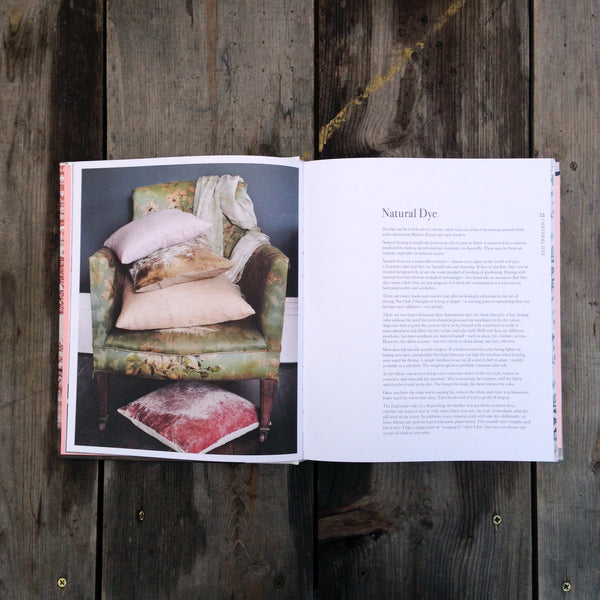
Working at Verb has inspired me to think about where the fibers and textiles I knit and sew with come from and how choosing local, sustainable, and organic options lessens the historically problematic impact they have on the environment. To see all of these intersect is an inspiration. To see all of them intersect to create something beautiful is breathtaking. The color palette of the book and the photography warrant some serious swooning.
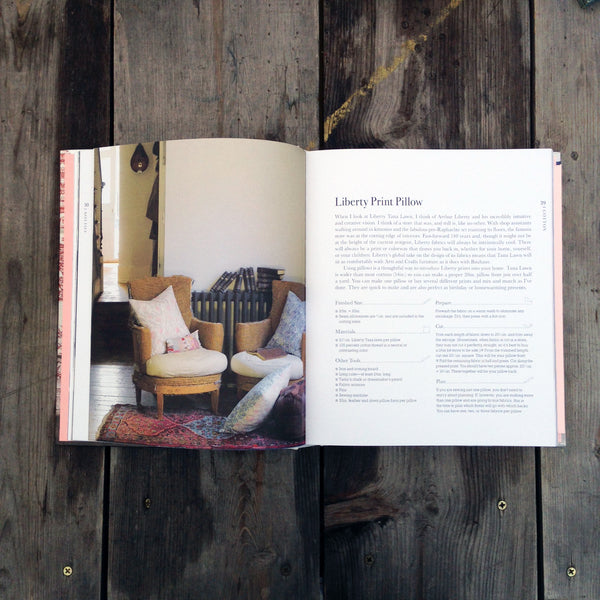
At Verb we have a variety of linen, cotton, silk, and wool to make many of the projects in Cloth. One of the first ones in the book is a Liberty Print Pillow, which is a perfect opportunity for beginning sewists to work with the luxurious Tana Lawn in a simple project. Pick your favorite Liberty print to use for both sides of your pillow, or mix and match to create your own combination of colors and designs!
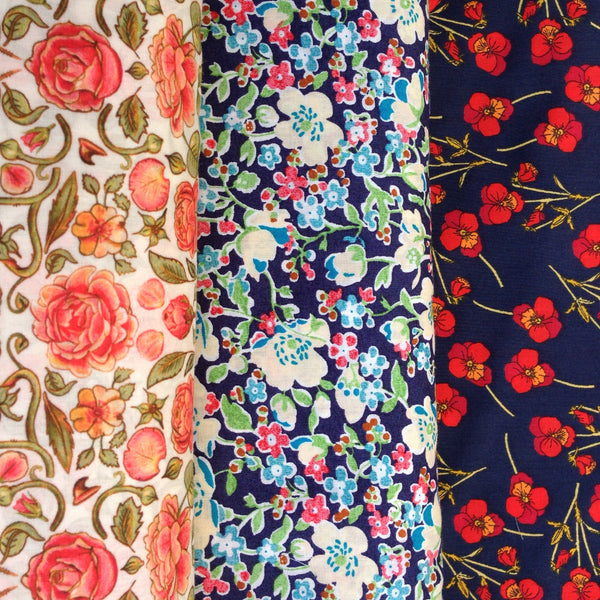
I'm eager to pore over a copy of my own. I can't wait to take in the stories, the histories, and the photos of Cloth.
-Mckenzie
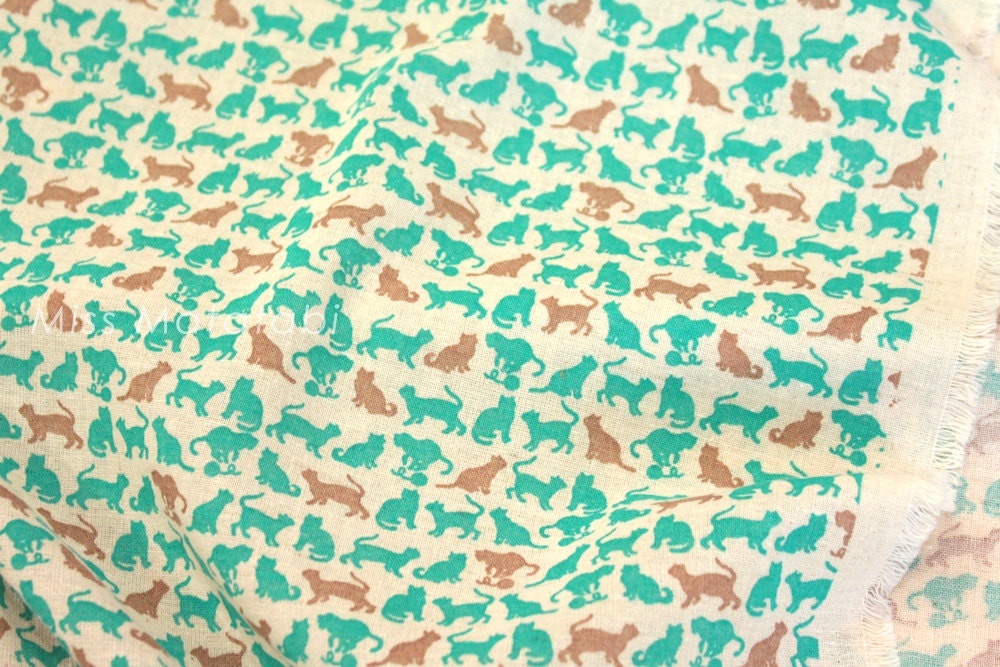
6.00 USD
Linen blend voile cats
85% cotton, 15% linen voile
Lightweight and semi-sheer
1/2 metre (50cm x 112cm , 19" x 44")
If you would like continuous yardage please change the quantity at the checkout.
Parcels are shipped via small packet international airmail from Japan.
Japan Post does not provide tracking numbers for small packet airmail.
A shipping upgrade with a tracking number and insurance can be purchased
for an additional $5. If you would like to upgrade to registered small packet airmail
please let me know.
Thank you.
All images © Miss Matatabi
Russian Sledgesvia firehose
Russian Sledgesvia rosalind

Richard Newton, Eight types of drunken women, 1795
Russian Sledgesvia rosalind
hyhomnb, Bio-Duck Sound?
Russian Sledgesthe beginning reminds me of a SNES-era RPG but I can't quite place it
 Every year, thousands of shipping containers are lost to the briny deep. Maggie Koerth-Baker on the strange new homes they create for marine creatures. Read the rest
Russian Sledgesvia rosalind ("Who turned out the lights?")


More skulls in spacesuits. Part one.
This collection is from the Flickr group Skeletons in Spacesuits. Featuring the work of Darrell K Sweet, John Harris, and Michael Whelan, among others.