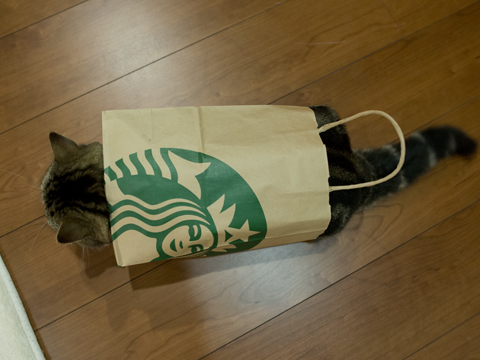
まる:「着心地ですか?」
Maru:[Do you want to know the comfort of this bag?]
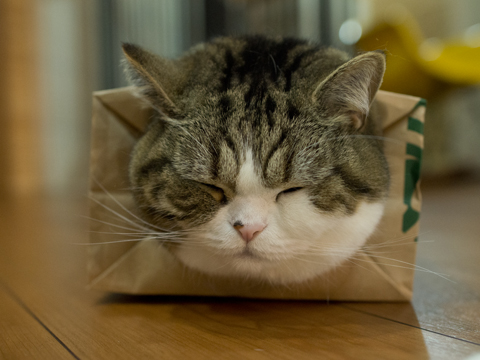
まる:「こんな感じですよ。」
Maru:[Read my face!]
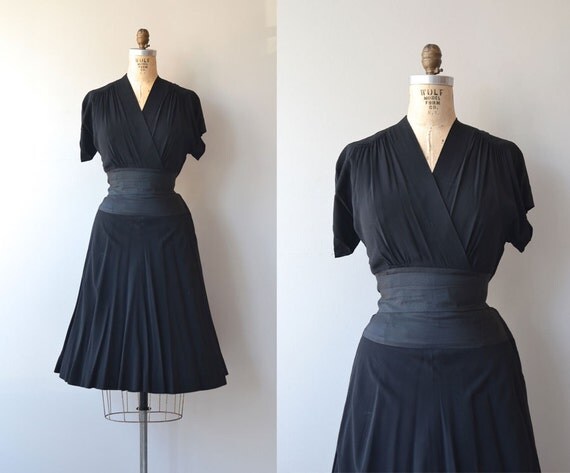
138,00 USD
Vintage 1950s black rayon dress with surplice bodice, short sleeves, very wide wrapped waist with black grosgrain ribbon tied around the waist, semi-full skirt and metal side zipper.
✂-----Measurements
fits like: small
bust: 34-36"
waist: 26"
hip: free
length: 43"
brand/maker: Junior Guild
condition: excellent
To ensure a good fit, please read the sizing guide:
http://www.etsy.com/shop/DearGolden/policy
➸ More vintage dresses ✩
https://www.etsy.com/shop/DearGolden?section_id=5986725&ref=shopsection_leftnav_3
➸ Visit the shop ✩
http://www.DearGolden.etsy.com
_____________________
➸ instagram | deargolden
➸ twitter | deargolden
➸ facebook.com | deargolden
➸ blog | www.deargolden.com
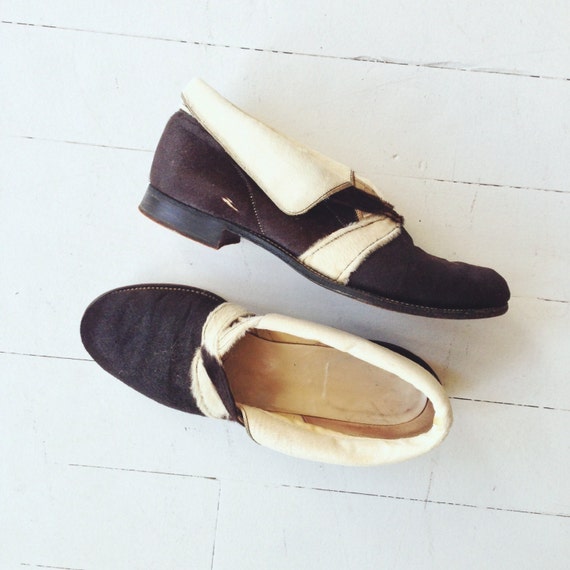
124,00 USD
Vintage 1960s pony and leather slip on shoes with rounded toe, nice leather insole and wood sole.
--- M E A S U R E M E N T S ---
fits like: us 7 | euro 37.5 | uk 4.5
insole: 9.75"
ball: 3.5"
heel: .75"
brand/maker: n/a
condition: excellent
➸ More Vintage Footwear
http://www.etsy.com/shop/DearGolden?section_id=5800174
➸ Visit the shop
http://www.DearGolden.etsy.com
_____________________
➸ instagram | deargolden
➸ twitter | deargolden
➸ facebook.com | deargolden
➸ blog | www.deargolden.com


The pilot of the doomed Germanwings plane desperately struggled to get into the cockpit that the co-pilot had locked him out of before the plane crashed into the French Alps, killing all 150 on board, a German newspaper reported Sunday.
“For God’s sake, open the door,” the captain, Patrick Sonderheimer, can be heard demanding in cockpit voice recordings salvaged by investigators probing Tuesday’s crash, according to the German publication Bild am Sonntag.
The 27-year-old co-pilot, Andreas Lubitz, doesn’t reply, even as the pilot’s pleas are accompanied by screams of terrified passengers, Bild am Sonntag reported. Lubitz also ignored bangs on …
Read more from our partners at NBC News


Rapier
This sword, with its superbly sculptural hilt, was once thought to be the work of the Florentine goldsmith and sculptor Benvenuto Cellini. As with the ‘Cellini Shield’, the tradition was refuted when historic arms and armour came under more serious scrutiny in the last quarter of the 19th century. Nevertheless, the work of the anonymous sculptor of the forged and chiselled iron hilt is of very high quality.
The subjects are from the Old Testament Book of Samuel. On one side of the pear-shaped pommel David is depicted beheading Goliath, while on the other he brings his giant opponent’s head to Saul. These two scenes are separated by male and female herms. The oval grip has a scene of Samuel anointing David. Next, on one side of the quillon-block (the central point of the two guards or quillons) David is shown making a libation or sacrifice with water brought from the well by the gates of Bethlehem.
On the other side there’s Abigail, the wife of Nabal, brings David two flasks. At the centre of the side ring is an oval cartouche with the young David slaying the lion. The quillons terminate in hunched and winged figures of Fame and Time. The details of the figurative scenes are picked out in gold, overlaid on the iron ground. A second tradition attaching to this sword is that it belonged to John Hampden (1594-1643), one of the leaders of the parliamentary opposition to Charles I, who was mortally wounded at the Battle of Chalgrove Field.
This was claimed by another former owner, the author Pryse Lockhart Gordon (?d. 1834), who had casts made from the reliefs of the hilt by the prolific Scottish cameo artist James Tassie (1735-99); he presented these to friends 'as memoirs of the patriot’ (i.e. Hampden). Gordon sold the sword to 'a royal purveyer of virtu, a man of fine taste’, namely Walsh Porter (d. 1809), the writer, collector and connoisseur who advised George IV on the decoration of Carlton House.
Source: Copyright © 2015 Royal Collection Trust/Her Majesty Queen Elizabeth II
It’s that time again when the cherry trees bloom, people in kimono enjoy picnics and cats inexplicably bust out their best pearls.


Six-month-old one-horned rhino Jalada Prasad had a prance party in honor of his public debut Friday at Alipore Zoological Garden in Kolkata, India. Little dude had some rough early months after his mother was killed by poachers. But! He was rescued and nursed back to health, and now appears to be quite the peppy fella.

Russian Sledges#butts
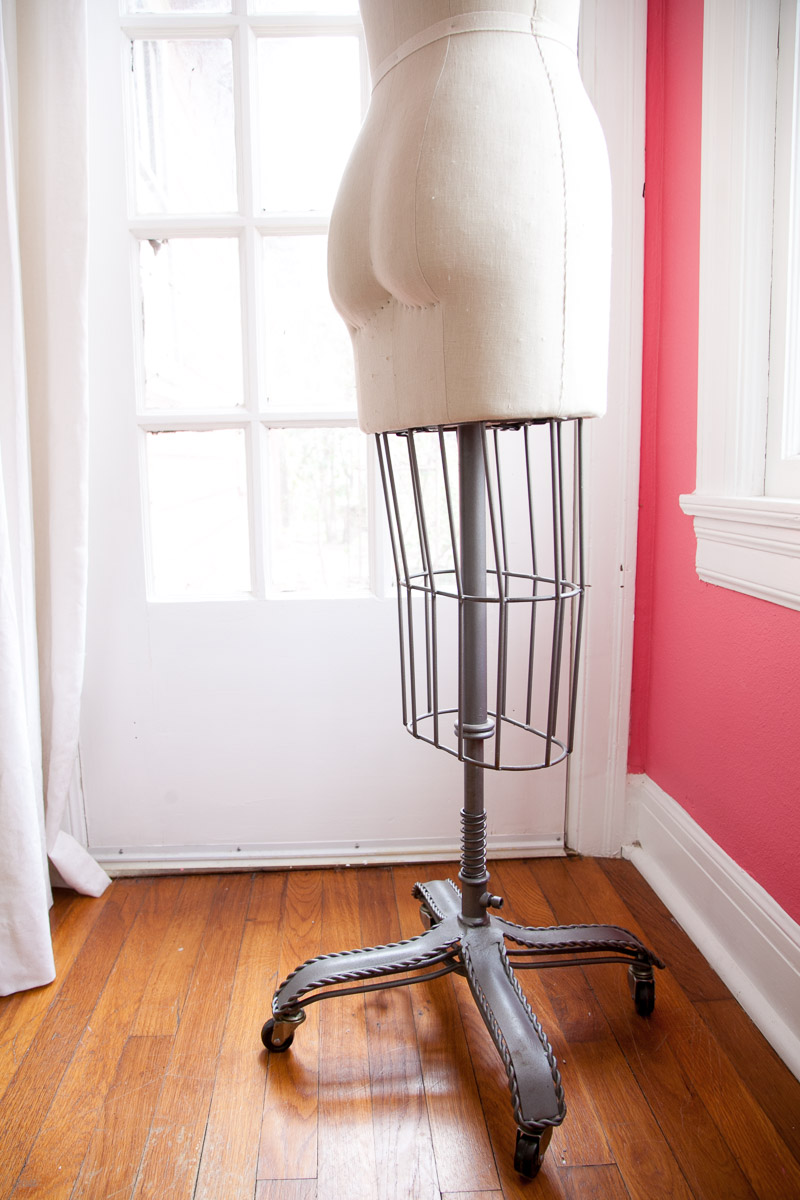
Let’s talk about one of sewing’s favorite subjects—dress forms!
Over the last month I’ve been shopping for a new form, both by doing a bit of online “window shopping” and by asking questions of various dealers and makers. It’s been a fun process!
The first time I went shopping for a dress form, circa 2002, I had access to very little information about them. The little that was out there on the internet about patternmaking and draping seemed to reinforce the mystique of, or my need for, a dress form. I was convinced that I needed one for any kind of serious sewing work.
Of course this was fueled in no small part by my lifelong romantic ideals of fashion designers all draping away on their dress forms. When I was a teenager, I used to imagine that a vintage Wolf form was something Molly Ringwald’s Pretty in Pink character might have kept in the corner of her bedroom. And I adored that character (what she did to that prom dress!).
I now own two dress forms. I bought one for personal use and one for professional pattern work and display photography. However, neither fills the specific need I have at the moment.
So before I dive into dress form specifics, let’s talk about all the reasons one might want a dress form:
Do any of these stand out for you?
Knowing what you really want to use it for can help you choose from among the various dress form styles.
So for example, when I look at this list, I’m most drawn to a form that works for both blog photo styling and makes an interesting collector’s piece. I’d also like the ability to pad the form for fitting purposes in the future. So I’m interested in looks as much as function.
Clearly I don’t prioritize having a form for fitting or draping purposes, which is probably the biggest reason many sewists want a dress form. The truth is, even if I had a better form or a totally customized body cast I don’t think I would use it very much for fitting. I prefer to fit directly on my body, and I can often visualize what flat pattern adjustments are going to do.
However, if you have trouble visualizing adjustments or pattern lines, a form might be a helpful tool!
Now let’s have a look at some of the different form types out there.
1. Professional form with cast iron base. These kind of forms are usually made with papier mache, padded with a few layers of cotton wadding and covered in linen. These are usually available either as a classic dressmaker form with a skirt cage or as a full body with legs.
Among these kind of forms is a huge variety in quality, and I’ll talk more specifics about these forms in my next post.
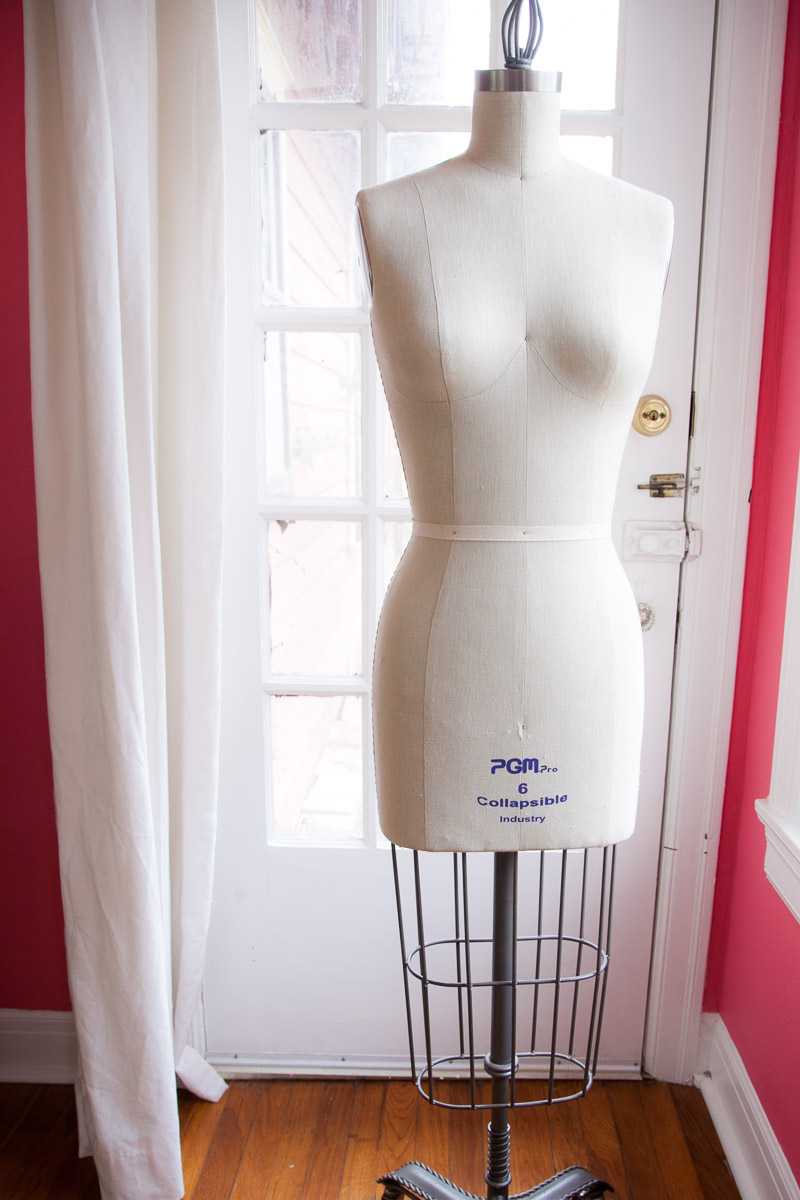
2. Display form. These forms are often designed to look just like sewing forms but they are really produced for display purposes. The form is usually made from either foam or fiberglass, and have a more simplified body shape to them.
Some dress forms cover a middle ground between professional sewing form and display form. For example, Urban Outfitters is selling this dress form, which was probably produced as an inexpensive form by one of the major form makers:
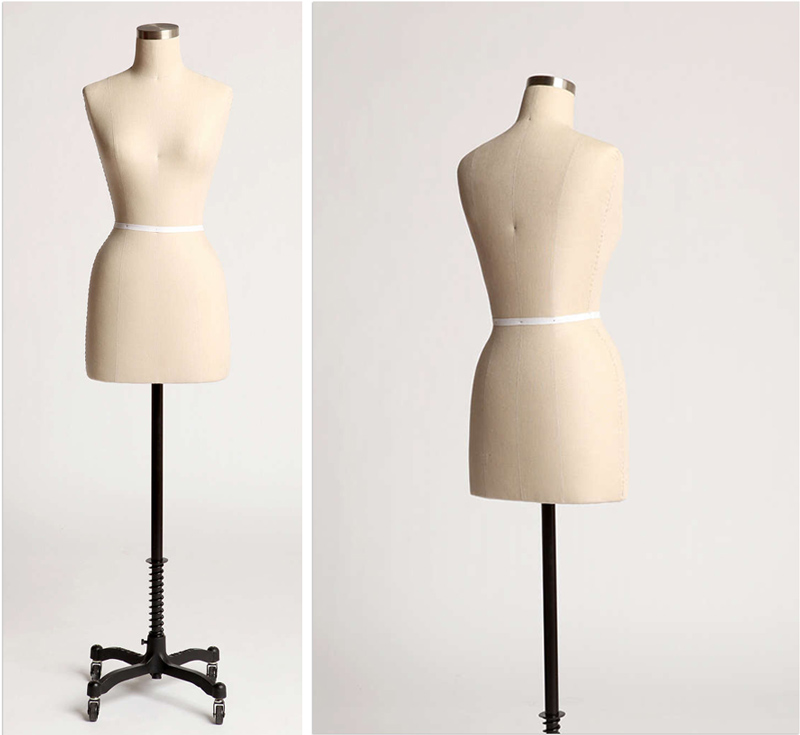
Although it is advertised as a sewing tool, it doesn’t have collapsible shoulders, is made from foam, and the stand has a height pedal that is purely decorative. You’ll also notice that the body shape is quite simplified, with absolutely no butt.
3. Adjustable form. These are the forms with dials that allow you to expand and contract the form as needed for different measurements.
4. Handmade form. There are a lot of fun methods for making a totally customized body form: plaster-casting, duct-tape and papier mache. Among these methods I’d include the mother of all crazy inventions, the Uniquely You form, which is a compressible foam form that you squeeze into a custom-fitted cover. Whoever first came up with the name “torpedo boobs” for this form deserves a sewing hall of fame star! I own one of these babies, too. A story for another day.
An important thing to keep in mind is that most dress forms can’t totally replace the work of fitting on an actual body. Bodies move and breathe. Most of these forms need work in order to replicate important body measurements and posture.
If you don’t need to do a lot of heavy fitting work, almost any of these will work for light sewing purposes. What you choose depends on budget, how much you need to fit precisely, or whether or not the form is for other non-sewing purposes.
—-
So after all this you may wonder what I’ve chosen for myself! As I mentioned I have a very specific need and I’ve narrowed it down to a few options. I’ll share more about that, along with what I loved and disliked about particular forms, in my next post.
Do you have a form? What do you use it for? What do love or wish you could change about it? And if you’ve blogged about your form, do share a link. I love reading dress form posts!
The post A Guide to Dress Forms appeared first on Cloth Habit.
Russian Sledgesof the methods for creating plackets that I've tried so far, this has been the easiest one with the tidiest results
Russian SledgesI've been using a tailor's sausage
I love making up sewing tools. There are times a tweezer works better than a bone folder, and a rubber hammer works better than an iron. I have a pencil that works great for spaghetti straps and probably do “wet finger” pressing on silk more times than I care to admit.
It’s really fun and easy to make your own pressing tools, and this week I’m pleased to share a guest tutorial on making your own bra pressing curve from my fellow lingerie-making addict Maddie Flanigan! You may know her from her blog Madalynne, gorgeous sewing photography and brand-new bra making workshops in her Philly studio. So let me step aside as Maddie brings on the drill…
——–
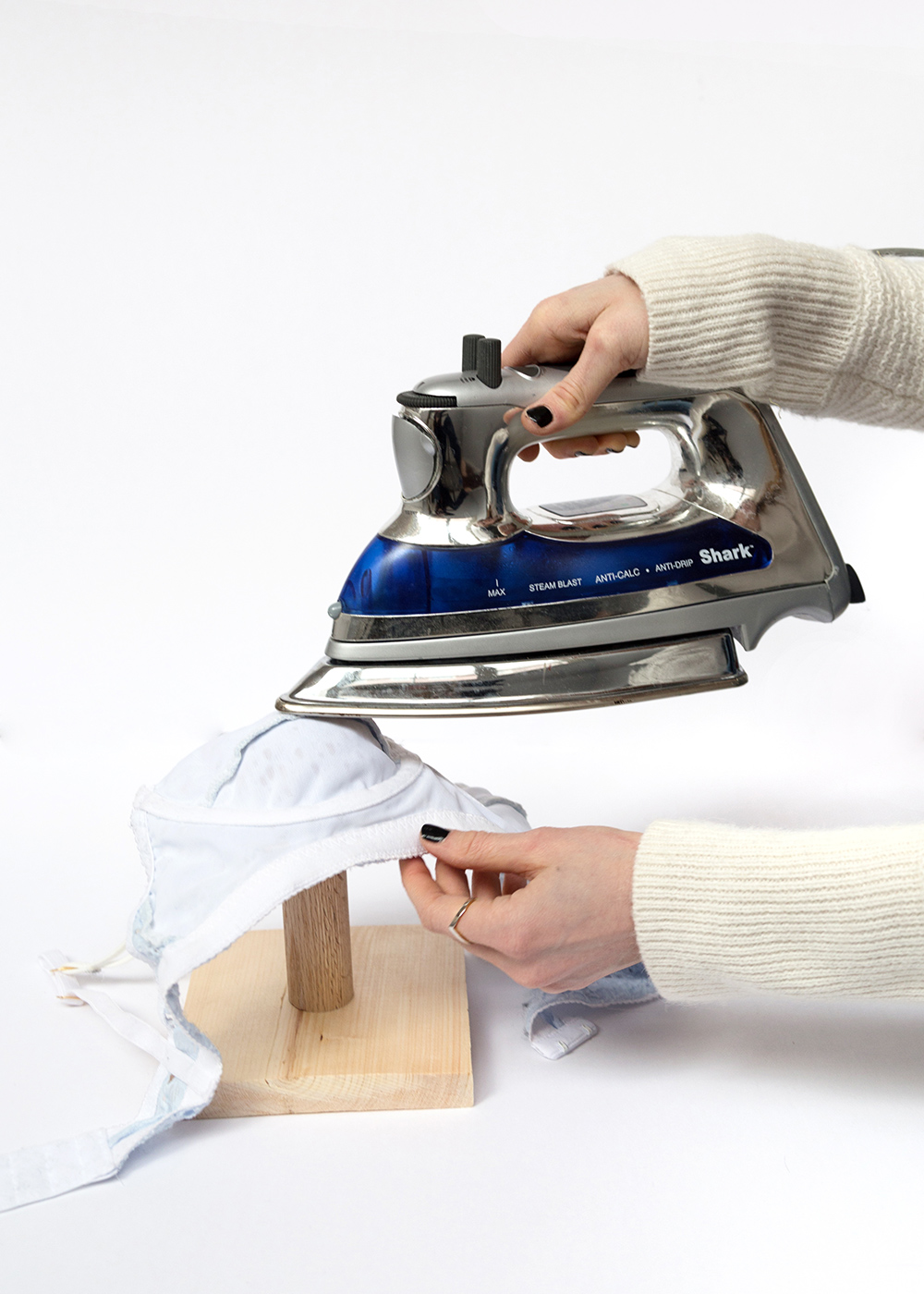
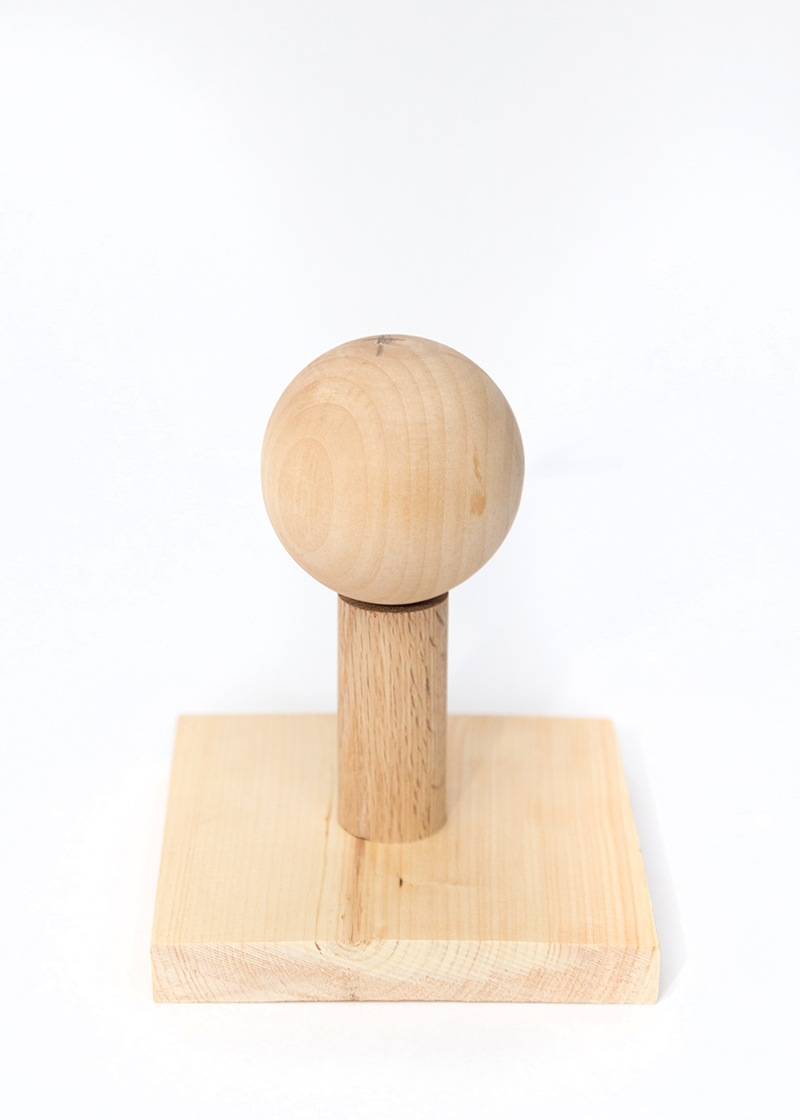
Based on a similar item sold at Bra-makers Supply, my bra pressing curve has become a
valuable tool. I first came across it when Beverly Johnson mentioned it during her class
on Craftsy. She said it was easy to make and she was right. All it took was a trip to the
hardware store and about 30 minutes. I use it mostly to press cross cup seams without
touching other parts of the bra.
Supplies:
All supplies except for round ball can be sourced at most hardware stores such as Home
Depot and Lowes.
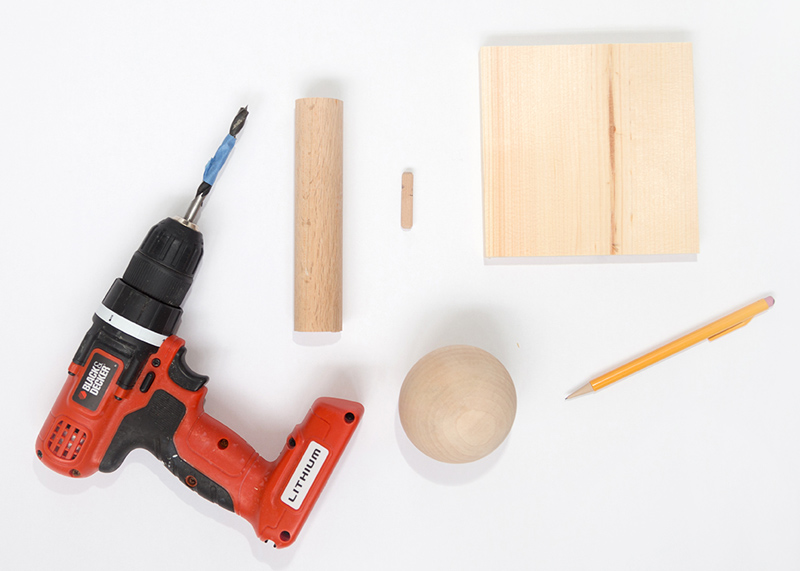
Prep: Most likely, your hardware store will sell long, rectangular pieces of wood, not one that is exactly 5.5″ x 5.5″. The same goes for dowels. Having it cut down isn’t a hassle. The hardware store should do it for free. Ask to have extras pieces cut so you have a spare in case you mess up.
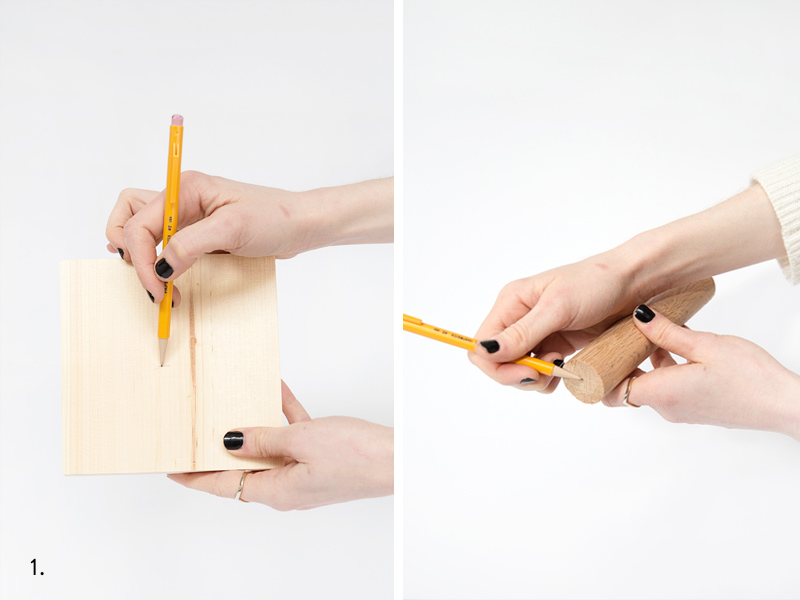
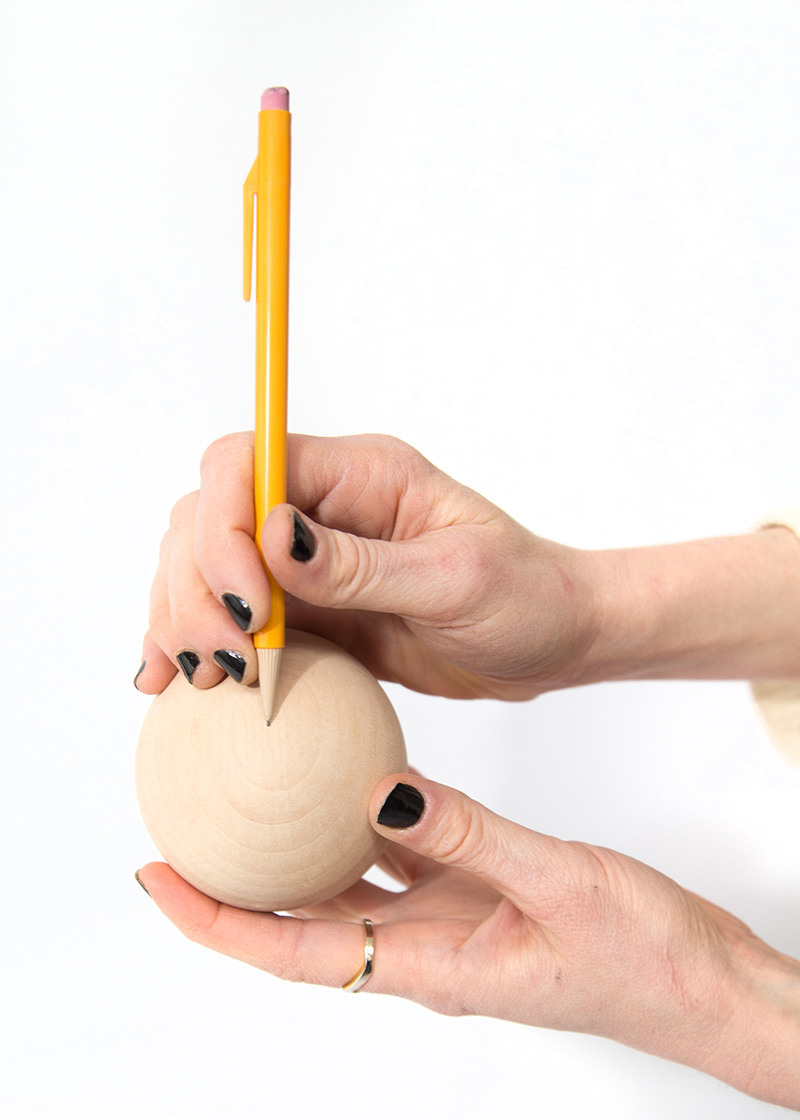
Step 1: Using a pencil, mark the center of the sphere, the center of the dowel at the top and bottom, and the center of the square at the top and bottom as well. Mark all of these points with a cross mark.
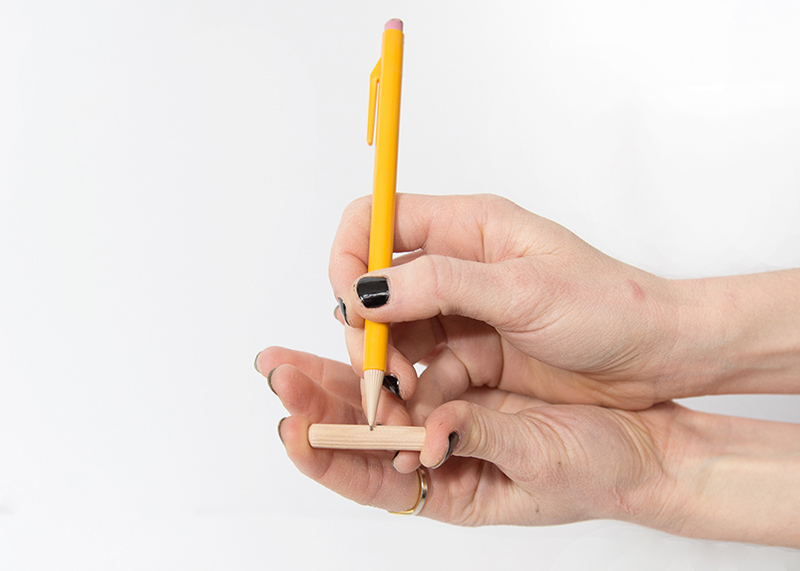
Step 2: Mark the center of the dowel pin and then place it next to the drill bit as shown. Using masking or painters tape, wrap the drill bit at the point where the center point is on the dowel pin. Why? Because you don’t want to drill too far into the ball or the dowel.
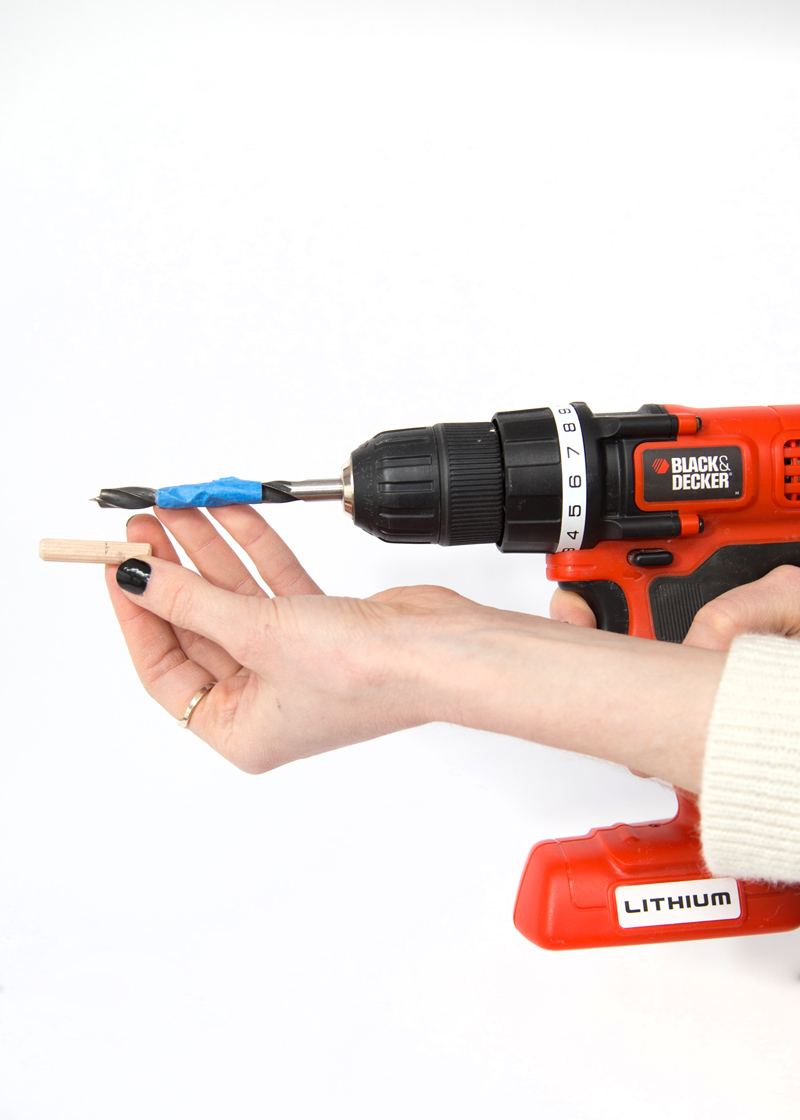
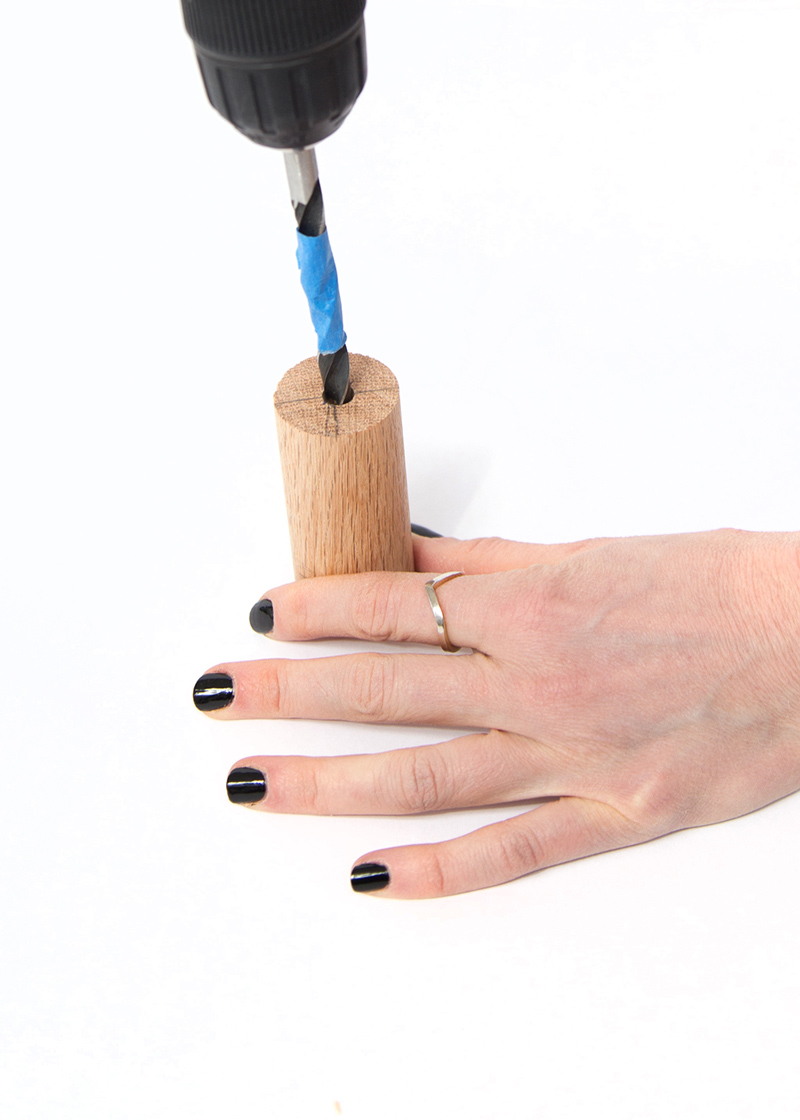
Step 3: Use power drill to drill a hole into the ball and the dowel at both top and bottom. To ensure that you drill straight down, use a quick grip clamp or have someone hold the ball and the dowel while you drill.
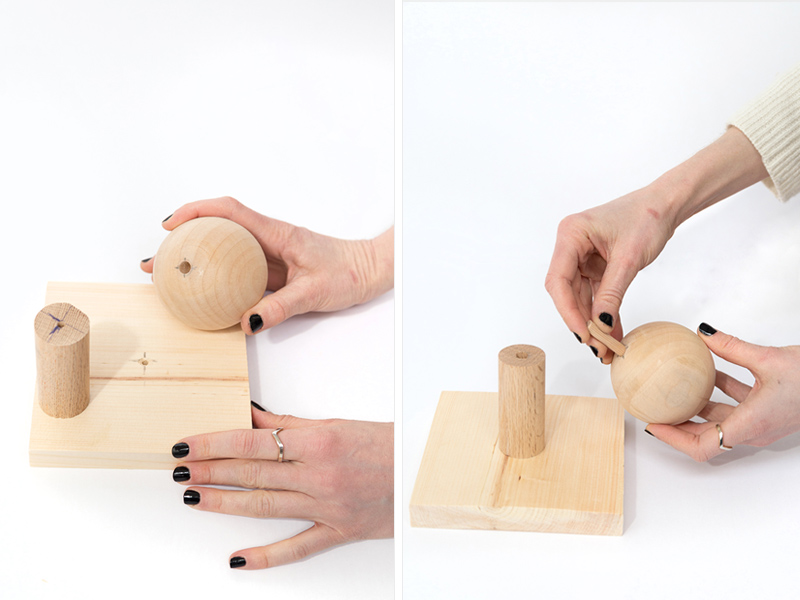
Step 4: Connect the ball with the dowel by placing a thin coat of wood glue on the dowel pin and inserting one end into the ball and the other into one end of the dowel.
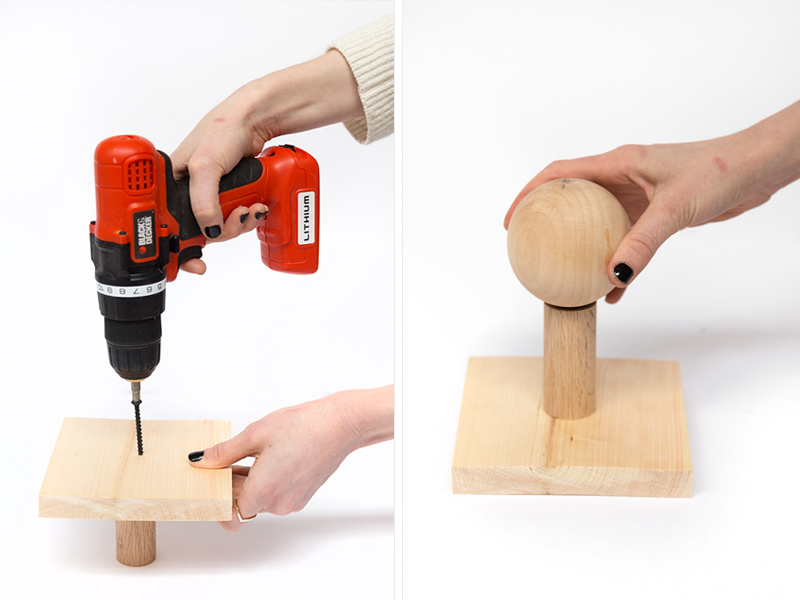
Step 5: The final step is to connect the dowel/sphere (which is now one) to the wood square. Using a regular drill bit, drill from the bottom of the square block up through the bottom of the down with a regular screw.
The post Guest Post: Make Your Own Bra Pressing Curve appeared first on Cloth Habit.
Russian SledgesI wish I could get any russian river beer


Why would anyone wait hours in line for a limited-edition beer? We talk to a few beer nuts in line for Russian River Brewing Company’s Pliny the Younger to find out.
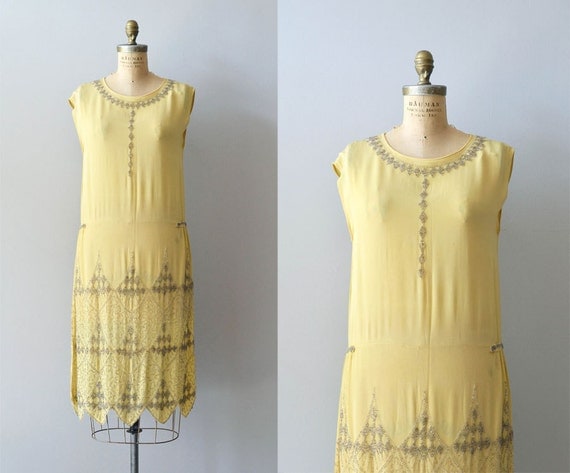
745,00 USD
Vintage 1920s warm yellow silk crepe dress with silvery-gray beading along the collar, down the bodice, on small tabs on each side of the waist and heavily in a geometric pattern on the skirt. This dress has no closures and slips on easily over the head.
✂-----Measurements
fits like: medium
bust: 34-36"
waist: up to 26"
hip: up to 40"
length: 44"
brand/maker: n/a
condition: excellent, no flaws
This dress is eligible for layaway, send a convo for details. :)
to ensure a good fit, please read the sizing guide:
http://www.etsy.com/shop/DearGolden/policy
➸ visit the shop
http://www.DearGolden.etsy.com
_____________________
➸ blog | www.deargolden.com
➸ twitter | deargolden
➸ facebook.com | deargolden✩
Russian SledgesI eat this
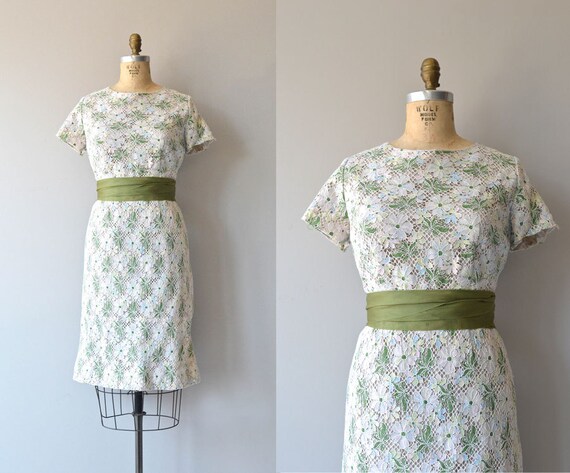
128,00 USD
Vintage late 1950s, early 1960s white, green and a hint of pale blue floral lace sheath dress with short sleeves, fitted waist, extra long and wide sash belt and metal zipper.
✂-----Measurements
fits like: large
shoulder: 16"
bust: 38-40"
waist: 33"
hip: up to 42"
length: 42"
brand/maker: n/a
condition: excellent
To ensure a good fit, please read the sizing guide:
http://www.etsy.com/shop/DearGolden/policy
➸ More vintage dresses ✩
https://www.etsy.com/shop/DearGolden?section_id=5986725&ref=shopsection_leftnav_3
➸ Visit the shop ✩
http://www.DearGolden.etsy.com
_____________________
➸ instagram | deargolden
➸ twitter | deargolden
➸ facebook.com | deargolden
➸ blog | www.deargolden.com
Russian Sledgesthe national archives has been putting images from their booze exhibit up on tumblr: http://usnatarchivesexhibits.tumblr.com/tagged/Spirited-Republic/

Russian Drinking Horn
Item from: Gifts from Heads of State
This drinking horn was given to the United States by Nikita Khrushchev when he was Premier of the USSR. It is made from a bovine horn, silver, and niello.
Discover more gifts between nations at the Friendship Between Nations Family Day! This event is tomorrow, March 28th, from 10 a.m. - 4 p.m. in the Boeing Learning Center at the National Archives in Washington, DC. You can find more information about this event on the events page at http://www.archives.gov/dc-metro/events/#blc2.
Source: http://www.jfklibrary.org/Asset-Viewer/Archives/JFKSG-MO-1963-2470-1.aspx
Russian Sledgescan't decide whether to click through or not
 "Tractor Rape Chain" is one of the most classic songs on Bee Thousand, one of Guided By Voices' most classic albums. And even though the aesthetic difference between modern-day GBV and modern-day Death Cab For Cutie seems vast, the bands exploded into the national underground within a few years of each other and probably came up playing a lot of the same dive bars. And as Death Cab frontman Ben Gibbard demonstrates in a new solo acoustic cover for SiriusXM, the intersection of the two artists' styles makes some kind of sense. Speed up, slow down, go all around below.
Russian Sledgesvia saucie
I could live in hot coffee
What do you call a man from Bucksnort, TN? A bucksnorter of course. Some Southern town names are so outrageous they almost seem like jokes, but it turns out there is a story behind each one. Before the Civil War, a man local to present-day Bucksnort sold “snorts” of moonshine for a dollar. Perhaps his name was Buck.

Bucksnort, TN (Ray Rafidi)
And there’s plenty more where that came from. Some Southern town names need no explanation. Early surveyors in Uncertain, TX, weren’t sure which state they were in. Meanwhile, Between, GA is named for resting exactly halfway between Atlanta and Athens. Not sure where to road trip this spring? Try Nowhere, OK, Nameless, TN, or Experiment, GA, or get to the bottom of some of North Carolina’s oddest town names, Big Lick, Meat Camp, and Tick Bite. Hoop and Holler, TX sounds like a fun place to be. The only less prestigious address than Upper Pig Pen, NC? Try Lower Pig Pen, NC. Loving and Happyland are both in Oklahoma, but so is Slaughtersville.

Nameless, TN (Wikipedia)
Here are few more of our favorites:
Wooly Booger, WV
Lick Skillet, TN
Needmore, FL
Hot Coffee, MS
Toast, NC
Humptulips, WV
The Holy City, OK
Hog Jaw, AR
Santa Claus, GA (There’s also a Christmas, FL)
Scissors, TX

Hot Coffee, MS (R. Steven Norman, III)
What’s the most off-the-wall Southern town you’ve been to? Share it with us in the comments.
Russian Sledgesjoe laycock autoshare
bonus: dreamy dave frankel

 Title:
Dangerous games: What the Moral Panic over Role-Playing Games Says about Play, Religion, and Imagined Worlds
Title:
Dangerous games: What the Moral Panic over Role-Playing Games Says about Play, Religion, and Imagined Worlds


What inspired you to write Dangerous Games?
In the preface I’m very candid about my experiences growing up in Texas and being told that my favorite hobby is satanic. When grown-ups told me that playing Dungeons & Dragons (D&D) was going to drive me insane or cause me to worship the devil, it suddenly dawned on me that adults were fallible: They ran the schools, the churches, and the police, but they didn’t always think rationally or know what they were talking about.
After that, I never saw the social order in the same way again. I became the sort of teenager who has “a problem with authority.” It wasn’t until I encountered the sociology of religion—especially thinkers like Peter Berger—that I could begin to imagine why D&D was so frightening to Christian conservatives in the 1980s.
Religious studies gave me the tools to finally articulate why these games are so engrossing and also why they were so horrifying to certain conservative Christians.
What’s the most important take-home message for readers?
I think than fantasy role-playing games really can function like a religion, in the sense that players work together to construct an alternative world in which they can meaningfully dwell. As sociologists of religion know, when people can imagine an alternative world they tend to see the social order differently. Much like religion, these games create a new mental space from which players can look back on the world and their lives from a new perspective.
The converse of this comparison is that a religious worldview can be compared to a fantasy role-playing game: As long as the adherents of the religion “play their roles,” the world of the religion is “real” and does not require empirical confirmation. In making this argument, I do not mean to dismiss religion or cast religious people as childish or delusional. I don’t believe human beings can function without some sort of socially constructed framework through which to understand the world, so we are all playing “games” of one sort or another.
But I do I think this insight helps to explain why role-playing games seemed so threatening to some people. Some of the most ardent crusaders against role-playing games seemed to have been deeply disturbed by the idea that their worldview could actually be a game, no more real than the worlds created in D&D. They never came out and said this, of course, but in their jeremiads about the dangers of these games, they occasionally tipped their hands.
I think the claim that D&D is not a game but an “occult religion” was in part an attempt to push down the nagging sense that reality is socially constructed. In this sense, Christian attacks on role-playing games were actually rooted in a lack of faith on the part of the attackers.
Is there anything you had to leave out?
Surprisingly little. My editors at the University of California Press gave me a lot of freedom. However, there are a lot of really fascinating psychological experiments going on right now concerning religion and the imagination. There was a lot of discussion in the blogosphere this summer about a study published in the journal Cognitive Science suggesting that a religious upbringing affects the way children discern fantasy from reality. Studies like this are easily misinterpreted and we cannot use them to draw facile conclusions about the nature religion. However, I would have loved to discuss this and similar studies in Dangerous Games.
What are some of the biggest misconceptions about your topic?
During the panic, moral entrepreneurs claimed that D&D was an “occult” practice while gamers

“Occult dnd”. Licensed under Fair use via Wikipedia
countered that it was “harmless escapism.” The problem with this debate is that it makes it impossible to do a serious comparison of fantasy role-playing games and religion. One gamer expressed to me that fantasy role-playing games have nothing to do with religion and that the comparison itself is offensive. But I think this is a useful comparison that allows us to think about both role-playing games and religion in a new light.
Of course D&D isn’t a “religion” in the way that moral entrepreneurs claimed: players are not actually worshipping deities, casting spells, etc. But something about the game made them think of religion and I think it’s worth asking what that was. I also think these games can be a lot more than just “escapism.” I found a lot of cases of gamers who found these games to be transformative: they thought about the world and themselves differently as a result of playing these games. So the point is not to claim that D&D is a religion or that religion is a fantasy role-playing game, but rather to use the creative tension of this comparison to think about how people create meaning together.
Did you have a specific audience in mind when writing?
The audience I had in mind was the generation of gamers who were directly affected by this panic. A lot of these gamers grew up to become intellectuals. (It is remarkable how many religion and philosophy professors used to play D&D!) While many remember the panic, its full history has never been properly told. I know for some readers this will be cathartic and vindicating.
Are you hoping to just inform readers? Entertain them? Piss them off?
All of the above. There are two parts to this book. The first part tells the history of the panic from the origins of the fantasy role-playing game in the 1960s until 2001. (The panic never fully died, but 9/11 and the War on Terror gave Americans a much more tangible focus for their fears.) In telling this history I found a lot of information that most gamers never knew about.
The full extent of the panic is simultaneously fascinating, frightening, and tragic. For example, The Committee for the Advancement of Role-Playing Games (CAR-PGa) provided me with copies of documents on how to interrogate adolescent gamers that were sent to police departments throughout the country.
The second part discusses how role-playing games resemble religions and how religions resemble role-playing games. I think that some moral entrepreneurs realized this connection. Their claims that D&D was a religion and not a game were in many ways a kind of defense mechanism that shielded them from viewing their own religion as a game. At the same time, I think that these moral entrepreneurs were fascinated with D&D and that by attacking the game they found a vicarious enjoyment in it. Ironically, many of these figures imagined themselves as heroes who were beset at every turn by demonic forces and evil conspiracies.
Despite my best intentions, some people may find these ideas offensive and feel that either their religion or their hobby has been slighted. But I think most readers will find this book interesting and thought provoking.
What alternative title would you give the book?
For a while my working title was “What The Moral Panic Over Role-Playing Games Says About Religion and Other Imagined Worlds.” I eventually dropped this more provocative title for two reasons. First, I wanted to foreground the importance of play, which is a major theme in the book. Second, I didn’t want the book to be misunderstood as hostile to religion or aligned with the New Atheist movement.
How do you feel about the cover?
I love the cover! It was designed by David Frankel, who attended Hampshire College with me. For those who can’t tell, it’s a parody of the first edition Dungeon Master’s Guide published in 1979. That cover featured a knight and wizard battling an enormous fiery devil that clutched a scantily clad damsel in one hand. (Ironically, the covers of the old D&D books look very similar to covers for some Christian books on spiritual warfare. Both have swords and devils everywhere.) In Frankel’s cover the devil is clutching a rather embarrassed looking middle-schooler, the knight is a soccer mom, and the wizard looks like Pat Robertson. This image demonstrates the irony that the most active crusaders against D&D—those who advanced conspiracy theories involving witches and Satanists—effectively constructed a fantasy world for themselves in which they could embark on heroic adventures.
Is there a book out there you wish you had written?
This book is obviously indebted to Johan Huizinga’s Homo Ludens in which he outlines his theory that all aspects of culture are developed from play. I also built on the work of Gary Alan Fine whose 1983 work Shared Fantasy: Role-Playing Games as Social Worlds remains the best work on the sociology of role-playing games. Finally, in researching the history of role-playing games I was blown away by John Peterson’s recent work Playing at the World. The history of role-playing games is murky, contested, and a serious challenge for any historian. Peterson did amazing archival research digging up obscure wargame journals and mimeographs from the 1960s and 1970s.
What’s your next book?
2014 was a year with a lot of controversies surrounding monuments. I’m interested in the way monuments are used to inscribe particular histories and ideas of polity onto the land. I’m also interested in the way rituals are used to construct and change those meanings. The connection between ritual, sacred space, and narrative runs through a lot of my work. In my next book I plan to look at some of the controversies surrounding monuments in America in order to explore how and why sacred spaces and sacred histories are constructed.
Photo courtesy flickr user rachel a.k. via Creative Commons
The most asked question about the Marlborough bra pattern is “Will it fit me?” Usually this question comes from someone outside of the size range listed on the pattern. It is an excellent question and many times, my answer is actually yes!
This bit of sizing magic is possible through what is called “sister sizing”. Sister sizes are bra sizes that have the same bra cup volume and underwire size. The difference between sister sizes is usually just the size of the band and frame.
Below is a table showing sister sizing by row as it relates to the Marlborough bra pattern. The Marlborough sizes are in black and the sister size equivalents are in gray.

If your size appears in gray above, you can find your Marlborough size by finding the nearest equivalent size in black on the same row. For example, if you are a 34E you will use the pattern for the 36DD. If you are a 34F, then you will use the pattern for the 38DD. Then it is simply a matter of adjusting the band and frame to get to your band size.
In the first example above, you will be removing ½” from both the frame and the band at the side seams for an overall circumference decrease of 2″. The orange lines in the drawing below indicate where the new seam line would be for this change.
 To increase the band, you add to the side seam. For example if you want a 42D and are starting with the 40DD pattern, you will be adding ½” to the frame and to the band at the side seam for an overall 2″ increase in band circumference. Again, the orange lines in the drawing below indicate where the new seam line would be for this change.
 Note that for maximum support I draft a fairly firm band for a power mesh with 50% stretch. If you are going down by just one band size or using a firmer power mesh, you may want to mock up a toile to test the band.
Happy bra making!
Russian Sledgesvia rosalind
there can be nothing more portland

photo by Emily Sinovic via Multnomah County Animal Services
Yesterday, two bright pink chickens were spotted wandering on the waterfront in Portland, Oregon. After Portland-area news organization KATU reported the runaway animals, an officer from Multnomah County Animal Services promptly picked up the chickens and brought them to the animal shelter for safe keeping.
Workers at the shelter say that food coloring is often used to dye chicks, an effect that lasts until the animal’s first molting. The practice of dyeing the animals is physically harmless to chicks, but some animal welfare groups frown upon it as it may discourage pet owners from seeing dyed chickens at Easter as a pet that requires a home and care for years.
North Portland resident Bruce Whitman came forward Friday afternoon to retrieve his two pet chickens, claiming that he purposefully abandoned his chickens—whose feathers he dyed with Kool-Aid, beet juice, and food dye—to elicit a response from the public.

photo via Multnomah County Animal Services

photo via Multnomah County Animal Services

photo via Emily Sinovic
Russian Sledgesvia firehose
Russian Sledgesthat's [not] a human ear alright













Russian Sledgesvia willowbl00

Marchesa Luisa Casati. An heiress, a muse and a fashion legend, she dazzled everyone she met and shocked turn-of-the-century Europe. She wore live snakes as jewellery and was infamous for her evening strolls; naked beneath her furs whilst parading cheetahs on diamond-studded leads. Nude servants gilded in gold leaf attended her. Bizarre wax mannequins sat as guests at her dining table, some of them rumoured to contain the ashes of past lovers.
Not gonna lie, she looks like she’s cosplaying the Iron Throne.
Russian SledgesI guess I'll stop resharing everything Ryan Walsh posts when it stops being acutely relevant to my interests
Russian Sledgessomehow nobody informed me that naomi yang (of damon & naomi) made a music video for the neutral milk hotel song "naomi"
![We all remember those famous first words spoken by an astronaut on the surface of Mars: "That's one small step fo- HOLY SHIT LOOK OUT IT'S GOT SOME KIND OF DRILL! Get back to the ... [unintelligible] ... [signal lost]"](http://imgs.xkcd.com/comics/opportunity.png "We all remember those famous first words spoken by an astronaut on the surface of Mars: \"That's one small step fo- HOLY SHIT LOOK OUT IT'S GOT SOME KIND OF DRILL! Get back to the ... [unintelligible] ... [signal lost]\"")
