When we finished the shot, I glanced down at the photo and said: “I could hug you right now.”
“No you couldn’t,” she said, “I’m a fierce ass bitch.”
(San Francisco, CA)
When we finished the shot, I glanced down at the photo and said: “I could hug you right now.”
“No you couldn’t,” she said, “I’m a fierce ass bitch.”
(San Francisco, CA)
Gary Carr will play the first black character on the fourth season of ITV's highly acclaimed costume drama, "Downton Abbey."
Carr will play Jack Ross, "a charming and charismatic young man" in the eight-episode season whose role “will bring interesting twists to the drama," said executive producer Gareth Neame in a statement.
The addition of a black character was announced in February responding to criticism over the show's lack of diversity.
Carr's previous experience includes roles in BBC series "Bluestone 42" and "Death In Paradise."

    
|


(it has to be asked) Bless this man.
Russian Sledges"The fact that she's African American and that the same assistant state attorney has decided not to charge a white teenager who accidentally killed his brother with a BB gun has some thinking whether this is a case of doing science while black"
via firehose


Read more of this story at Slashdot.

Oregon Meth House Owners Settle With Freddie Mac
follow-up
An encore presentation.
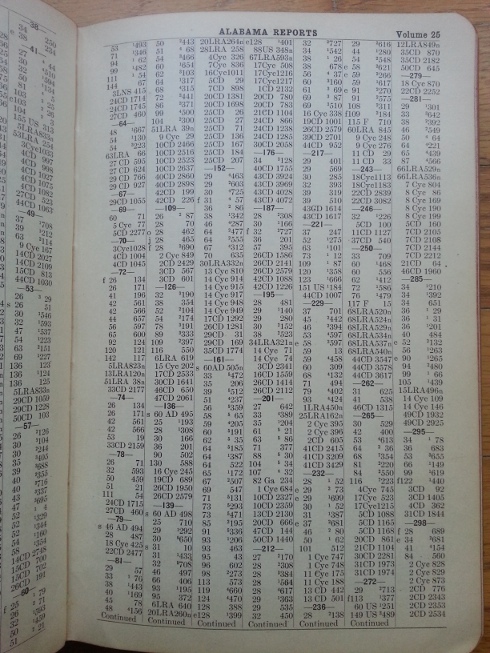
From early 2003 to late 2005 I wrote a blog on oreillynet.com that I called Thinking About Linking. The last entry summarizes what I covered and my experiences with that blog, but today I wanted to republish my favorite entry from that blog on the tenth anniversary of its original publication. It's the same as the 2003 version except that I updated one link. On the right: a page from Shepard's 1902 "Shepard's Alabama Citations," which I bought on ebay. (My comment below about link typing would certainly need updating now, given my experience with RDF.)
Frank Shepard was a salesman for a Chicago legal publisher. Shortly after the American Civil War, he noticed that when one court case overruled, criticized, or otherwise cited another, lawyers often jotted a note about it in the margin of the reporter volume with the cited case's text. For example, upon learning that the judge in the case known as “La Bourgogne” (210 U.S. 95) made a negative references to the “Moore v. American Transportation Company” (65 U.S. 1) case, a lawyer might turn to page 1 in volume 65 of the U.S. Supreme Court case reporter and write “210 U.S. 95, negative” in the margin next to the Moore case. This way, if if the Moore case ever came up in court, the lawyer would have a better idea of its exact value.
Shepard had an idea: if he printed gummed labels for each case listing the cases that cited it, he could save the lawyers the trouble of writing in these references by hand. He built a business out of selling these inter-case links to the legal profession and named the company after himself: Shepard's. (Full disclosure: since Reed Elsevier acquired Shepard's in the mid-1990s, Shepard's Citations has been a product of my employer, LexisNexis. Other than some occasional XSLT advice to the folks in Colorado Springs, where Shepard's has been based since 1947, I don't do any work on that particular product.) In one sense, the stickers they produced in 1873 were already more sophisticated than web links, because if more than one case had cited the same case, the sticker for that case added a one-to-many link to it.
To help the lawyers quickly learn why one case had been cited by another, Shepard's started including one-letter codes to show that the citing case had overruled, criticized, modified, or applied some other treatment to the cited case. Now their links had link types: indications about the nature of the links to give a clue about why they might be worth traversing.
The stickers, or “Adhesive Annotations,” became very popular. While sitting on the Massachusetts Supreme Judicial Court, future United States Supreme Court Justice Oliver Wendell Holmes Jr. wrote “I regard Shepard's Massachusetts Annotations as the most thorough labor-saving device that has even been brought to my attention. No one owning a set of reports can afford to be without one.”
Before the nineteenth century came to a close, the company began producing alternatives to the sticker collections: bound books that listed, for each case, the cases that cited it and codes describing the citing case's treatment. Today, we call this separation of the links from the linked resources “out-of-line links.”
The books became so popular that their inventor's last name became a verb. Any lawyer or law student knows that to Shepardize a case is to find out all relevant cases that cite it. Of course, automating the storage and lookup of these links is much easier with software, and it's all online now. When you view a case using LexisNexis, clicking the “Shepardize” link displays a list of citing cases with links to the full text of those cases. This saves a lot of running around a law library, which was how the links were followed for the first century of their existence. (LexisNexis's chief competitor, WestLaw, has a competing on-line product called KeyCite.)
The success of Frank Shepard's invention tells us several things about linking:
Link typing can add real value to a linking application. If a lawyer who's going to bring up a case in court Shepardizes it and sees only codes for positive treatment, there's little need to look up the citing cases. If other cases criticized the case to be cited, however, it's his job to find out why. (Too bad it's so difficult to find other examples of link typing adding obvious value!)
Out-of-line links can sometimes be more useful than in-line links. The web and other hypertext systems leading up to it have conditioned many to think of a link as something that connects the resource they're looking at to a single other resource somewhere else, but links can be more than that. Shepard's customers found that having all the citation links in a single set of books instead of as a set of stickers to be spread around hundreds of volumes can make the research go much more quickly, especially with the treatment codes added to the link identifiers to give clues about whether the links are worth traversing.
It's not about the technology, but about the information. Just as a well-written song can work well when performed by different bands, a good linking application can still have value when implemented using different technologies.
Please add any comments to this Google+ post.
Russian Sledges'Pikrallidas described Dahlberg as a “hardworking family man and a church-going person” who had been drinking but was not intoxicated.'
fuck this guy
Russian Sledgesgive them to me

This is totally what Sam and I should look like all the time.
The Pennsylvania R.R. and Connecting Lines (1871)
 G.W. & C.B. Colton's map of the Pennsylvania Railroad and its connecting lines from 1871. Map of the Pennsylvania R.R. and Connecting Lines Date: 1871 Author: G.W. & C.B. Colton & Co. Dwnld: Full Size (18.9mb) Print Availability: See our Prints Page for more details pff This map isn't part of any series, but we have other railroad maps that you might want to check out. Everything I know about...
the BIG Map Blog - Interesting maps, historical maps, BIG maps.
Russian Sledgesthis is from a couple years ago, but it never gets old

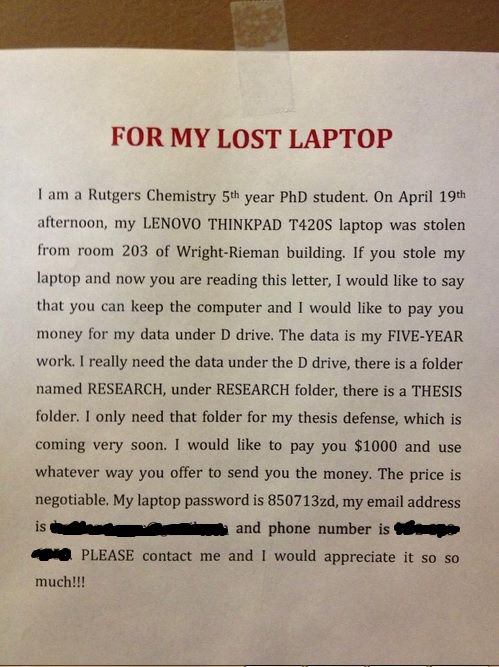
This is a notice of pure desperation. Imagine working on your thesis for five years and suddenly it's gone. University librarians and computer techs say it happens more than you might think. You can store it online, in the cloud, on external drives, or with a professional service. When data is this precious, more than one backup method would be a good idea. Link

Sterling, Virginia-based pixel artist, t-shirt designer and 2D animator Drew Wise created a geekerrific collection of video game pixel art sweatshirts. They are available to purchase online at Beloved Shirts.
 Daily Beast |
Daily Beast Sasha and Malia better think carefully about getting a tattoo. President Obama told the Today show that he and Michelle have told their daughters, “If you guys ever decided you're going to get a tattoo, then Mommy and me will get the exact same tattoo in the ... Sasha and Malia Obama and tattoos.LifeGoesStrong Obama Says No Tattoos for His DaughtersHispanicBusiness.com Obama: Michelle has often been like a single motherGreenville News GlobalPost -The Hollywood Gossip -Thegardenisland.com all 81 news articles » |
Russian Sledgesffcfe

If you need a specific type of paper for your notebook, organizer, or even your Hipster PDA, don't settle for drawing lines on paper yourself. Generated Paper has over 40 printable PDF templates for ruled paper, graph paper, business cards, music sheets, and more, all completely free.

|
|

Redditor doigoid revealed that their dog Jack has an extraordinarily talent for balancing things on its head, and asked the reddit community for suggestions on what Jack should balance. For more images, take a look at the original post from doigoid and this collection of images posted in the thread.


photos via doigoid
Russian Sledgesthis is the bathing suit I want

Read more of this story at Slashdot.

Read more of this story at Slashdot.

Many survivors live in Massachusetts, a state that requires residents to have health insurance, “which should cover most of their required treatment,” said Amie Breton, spokeswoman for Massachusetts’ consumer affairs office. “The total cost of that treatment is impossible to calculate at this early stage.”
Massachusetts is among about 20 states that require health insurers to pay for prosthetic limbs, but many plans don’t cover 100 percent of those costs, said Dr. Terrence Sheehan, chief medical officer for Adventist Rehabilitation Hospital in Rockville, Md., and medical director of the Amputee Coalition, a national advocacy group.
Harvard Pilgrim Health Care, another big insurer, is changing its policy and will pay for some of the more expensive bionic limbs when there is a demonstrated need, said Dr. Michael Sherman, chief medical officer. He said that 15 blast survivors admitted to hospitals are Harvard Pilgrim customers and that the insurance company is discussing “whether we might absorb some of the copays and deductibles.”
The 26 hospitals that have treated bombing victims have charity funds that will cover some of the costs, said Tim Gens, executive vice president of the Massachusetts Hospital Association. Some injured residents may be eligible for Massachusetts’ public health funds for the uninsured or underinsured. People with huge medical bills they can’t afford are eligible, regardless of income.
”Destroy everything

Lisa DeJong for The Chronicle
It takes Allison Armentrout, an adjunct instructor of English composition at Stark State College, a long time to grade essays, but she has to keep her hours below 30 a week, after which her employer would have to pay health insurance under the Affordable Care Act.
By Sydni Dunn
Allison G. Armentrout, an adjunct instructor at Stark State College, doesn't get paid by the hour. She earns $4,600 to teach two English composition courses. But now she carefully tracks how many hours she works on an electronic time sheet.
On a recent week, she spent three hours preparing for her lectures, close to six hours in the classroom, and 16 more grading assignments for a grand total of about 25 hours. So she can breathe a sigh of relief because she won't lose her job: She came in under the college's new 29-hour-a-week wire designed to keep her ineligible for health-care coverage under the Patient Protection and Affordable Care Act.
Stark State, in North Canton, Ohio, is among a growing number of colleges that have limited the number of weekly hours part-time employees can work to keep them below the level at which employers are required to provide health insurance. Under the new law, which takes effect in January 2014, employees of large companies who work 30 hours or more a week must receive health benefits from their employers. Employers who violate the rule could be fined. Colleges in Ohio, Virginia, New Jersey, and Pennsylvania are among those that have acted in advance.
But adjuncts are rarely paid by the hour. Their salary is based on the number of courses they teach, making it difficult for colleges to determine how many work hours are put into each course.
Enlarge Image
Lisa DeJong for The Chronicle
Allison G. Armentrout, an adjunct at Stark State: "I've been put in a position twice this semester where I've just had to lie about the number of hours I actually worked. I don't want to have to make a choice between having a job or not."

Lisa DeJong for The Chronicle
Allison G. Armentrout, an adjunct at Stark State: "I've been put in a position twice this semester where I've just had to lie about the number of hours I actually worked. I don't want to have to make a choice between having a job or not."
The Internal Revenue Service didn't provide a formula to calculate the workload of adjuncts when the law's proposed rules were announced in January. It simply advised universities to "use a reasonable method for crediting hours of service," adding that it would not be "reasonable" to take into account "only classroom or instruction time and not other hours that are necessary to perform the employee's duties, such as class-preparation time."
The IRS document also stated that "further guidance may be provided," but gave no indication when that guidance might be coming. The agency has collected more than 500 comments in response to the proposed rules, and it will hold a public comment session on April 23 in Washington.
Kenneth H. Ryesky, an adjunct professor of taxation and business law at Queens College of the City University of New York and a former state tax lawyer, says he submitted a written comment and will attend the hearing. Although his university provides health benefits through the faculty and staff union, he says, he is fighting for clarity.
By limiting the number of hours adjuncts can work as a way to evade penalties, he says, universities are reversing the intent of the Affordable Care Act.
From an administrative perspective, he says he understands that the decision is the "path that makes the most financial sense," but it's abusive because universities are not giving adjuncts the support they need.
The American Council on Education, the American Association of University Professors, and the New Faculty Majority have also weighed in, all warning the IRS of the unintended consequences of the proposed rules.
"Colleges and universities should realize the importance of providing health insurance to employees," according to a recent statement by the AAUP. "We call on them to comply with the law and devise fair methods of calculating adjunct faculty hours, methods that fully take into account the many activities in which such faculty members engage."
Maria C. Maisto, president of the New Faculty Majority, an advocacy group for adjuncts, says her organization recommends that the IRS require every college to do a comprehensive examination of its teaching faculty and come up with a formula that is correct, "not one that is convenient or saves them money."
'Simply Unaffordable'
Most universities agree, however, that money is a big factor, as adjuncts make up a growing portion of the nation's teaching faculty.
The Community College of Allegheny County, for example, reduced the workload limit for its temporary, part-time adjuncts from 12 to 10 credits per semester. The Pittsburgh college employs about 2,200 adjunct instructors, but most of them only teach one course, so they are not at risk of running over 30 hours. The reduction directly affected about 200 of those adjuncts, plus another 200 temporary, part-time employees.
David Hoovler, executive assistant to the president, says the college's preference was to expand coverage, but it was "simply unaffordable." The institution has an annual operating budget of around $109-million, and administrators estimate it would cost at least $6-million to provide health benefits to the 400 part-time temporary employees who would have been eligible.
To compensate for the changes, Mr. Hoovler says, the college gave all of its part-time employees a "modest" increase—$20 per credit-hour for adjuncts, and a comparable percentage per hour for other part-time temporary employees. The money for those increases came from frozen or eliminated administrative positions, he says. The college is also trying to form a type of group health plan to offer its part-time employees discounted insurance rates, but nothing is definite.
"Our adjunct employees, and others who are affected, are an important part of the college community," he says. "It's the right thing to do to offset the cuts."
Ms. Maisto says she believes Allegheny is the only college making this type of effort, though many are downsizing adjunct work hours.
Some universities, she says, have cut the number of courses adjuncts are allowed to teach from three to two. Some have used a ratio, such as one-to-one or two-to-one, to determine how many hours are needed outside the classroom for every hour spent inside of it. The rest have adopted their own solutions, estimating the number of hours needed to teach each individual course or carefully tracking and logging work hours. All of those policies are subject to change.
Administrators at the College of William & Mary sent notice to its part-time faculty after Gov. Bob McDonnell of Virginia submitted an amendment limiting part-time employees and adjunct faculty to 29 hours per week, on average, in order to comply with the act's requirements, says Anna B. Martin, vice president for administration.
Michael R. Halleran, William & Mary's provost, says the college has told its adjunct faculty that they cannot go over 29 hours per week, or "meet or exceed, on average over a 12-month period, 75 percent of the course load for a full-time, non-tenure-track teaching faculty member at that institution."
Mr. Halleran says he asked the academic deans to submit a list of people in their respective departments who might exceed the new limit, and fewer than 10 names were submitted. Deans will monitor these people to ensure they do not violate the new rule. The university hasn't ruled out extending health benefits to its adjuncts, he says, but for now its plan is to reduce their hours and courses.
"There's been a lot of confusion and uncertainty," he says of higher education's response to the health-care laws. "I like what we've done because it's accurate, simple, fair."
New Metrics
In the case of Stark State, each course was evaluated by department chairs, deans, and faculty members to determine how many hours were needed to teach it, says Irene Lewis Motts, director of marketing.
"We've never had to determine how long it took to teach a class because our faculty were under contract, and they just taught the classes, whatever the time it took or whatever the time they wanted to put in," Ms. Lewis Motts says. "We had to put some metrics to it."
Part-time employees were notified in December by the college's provost that they were not allowed to exceed an average of 29 hours per week over a six-month period. The hours are being "monitored carefully" through a logging system called PeopleAdmin, she says. Individual instructors enter data every other week, which is then reviewed by the human-resources department. There are 857 part-time employees at Stark State, she says. Those employees make up more than 40 percent of all employees.
Ms. Armentrout, who migrates among three institutions for work, says many instructors have had to begin teaching at other colleges to make ends meet. Adjuncts are paid by the course, she says.
The scaled-back schedule at Stark State affects adjuncts financially, she says, but "it also creates ethical difficulties with reporting our hours."
"We're not allowed to go over 29 hours, and that includes time spent prepping, grading, e-mailing, meeting with students, attending required meetings," she says. "What is happening—and I'm finding this even with just two classes—because of the grading load, I've been put in a position twice this semester where I've just had to lie about the number of hours I actually worked. I don't want to have to make a choice between having a job or not."
Ms. Armentrout says she has considered reducing the number of pages she requires for her essay assignments, to cut back on the grading time. But, she says, she has to be careful not to violate page requirements set by the Ohio Board of Regents.
Most weeks, she works 22 or 23 hours, she says, so it's not an issue. "But everyone wants to know: What happens if we go over?"
Ms. Lewis Motts says there are no formal repercussions in place now. If someone consistently exceeds the 29-hour rule, affecting his or her six-month average, then human resources will meet with that employee.
But Ms. Armentrout says some faculty fear that if their average work weeks are ever over the limit, the university might not renew their contracts.
"There's potential for a lot of issues there," she says. "There will be a lot more professors working at McDonald's."