Shared posts

13 May 20:34

Harvard and MIT try to build a higher education in the cloud

by Jacob Kastrenakes

Harvard and MIT are among a group of universities planning to spend tens of millions of dollars on "massively open online courses (MOOCs)," a new type of higher education teaching that can include thousands of students in a single lecture. The two institutions have already launched an online platform called edX to offer these courses. (Stanford has been a leader in online education as well, and its competing Class2Go platform has already been adopted by other universities.) But whether MOOCs are actually the future of education still seems to be a point of confusion and concern among professors. In a large profile of educators and administrations involved in the educational shift, The New Yorker explores whether pedagogy at a higher level is a more about the weekly lectures that MOOCs emulate or about placing students in an intellectual environment with face-to-face connections.

As The New Yorker writer Nathan Heller notes, "Bill Clinton, a lower-middle-class kid out of Arkansas, might have received an equally distinguished education if he hadn't gone to Georgetown, Oxford, and Yale, but he wouldn't have been President." Even if universities haven't determined if there's truly a distinction, many are already moving to put MOOCs into regular practice.

13 May 20:33

fripperiesandfobs: Riding spencer ca. 1835 From LACMA


fripperiesandfobs:

Riding spencer ca. 1835

From LACMA

13 May 20:33

The Newest Thing for the Hipster in Your Life

The Newest Thing for the Hipster in Your Life

Submitted by: Unknown

13 May 19:48

Tim Wiechmann on Bronwyn: "Let's Really Conquer the Pretzels"

13 May 19:16

Homebody: 1940

by Dave
1940. "Lana Turner being served coffee on a tray in her Beverly Hills home." Is there the germ of a screenplay here? Photo by Earl Theisen for the Look magazine article "Lana Turner and Artie Shaw at Home." View full size.
13 May 15:54

Photo

Russian Sledges

troughton in color autoshare


13 May 15:41

Wormhole Map, A Handy Guide For Time Travelers Returning From the Cretaceous Period

by Justin Page

Wormhole Map

The Wormhole Map poster design by Californian writer J. Ryan Stradal and artist Wilfred Castillo is a handy guide for time travelers returning from the Cretaceous Period. It is available to purchase from the Echo Park Time Travel Mart, a time travel themed store in Los Angeles that benefits the nonprofit children’s tutoring center 826LA.

Now you’ll be able to time travel the galaxy in style (without missing the Universe’s Largest Cheeseburger)!

submitted via Laughing Squid Tips

13 May 15:41

Oh God.

by Luke Plunkett
Russian Sledges

attn overbey

Oh God. FreeCiv, the open source "tribute" to the classic strategy series, now runs on HTML5. Meaning it can run in browsers. And on your phone. Play here. Thanks PC Gamer.

13 May 15:41

adriofthedead: snoozlebee: allisonkilkenny: Chris Person...


adriofthedead:

snoozlebee:

allisonkilkenny:

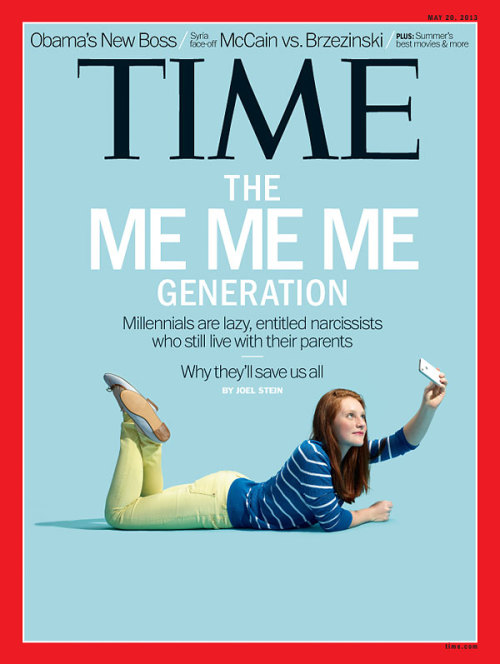
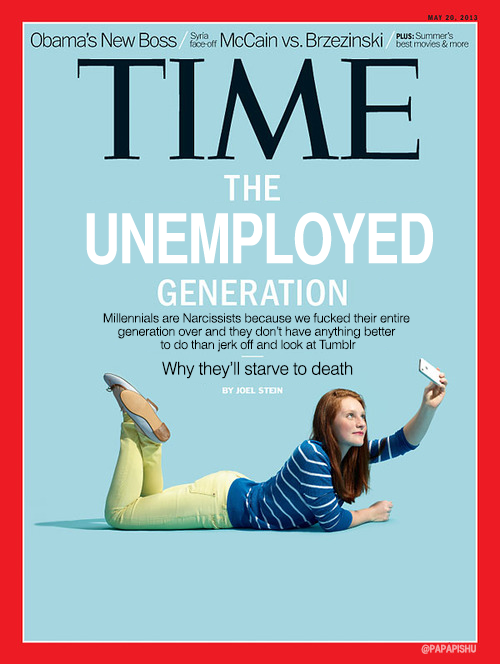
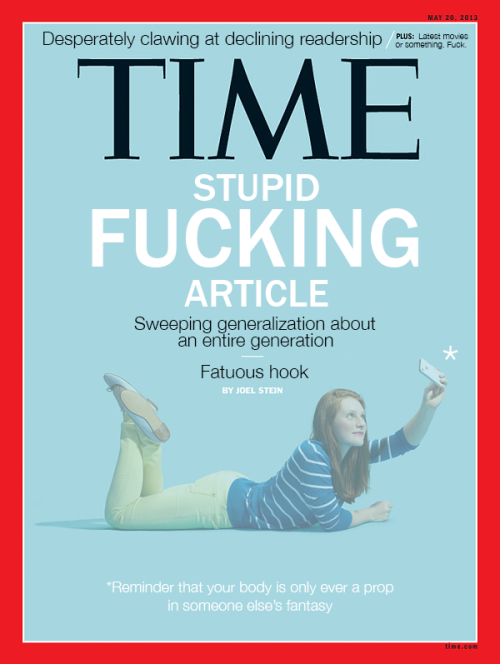
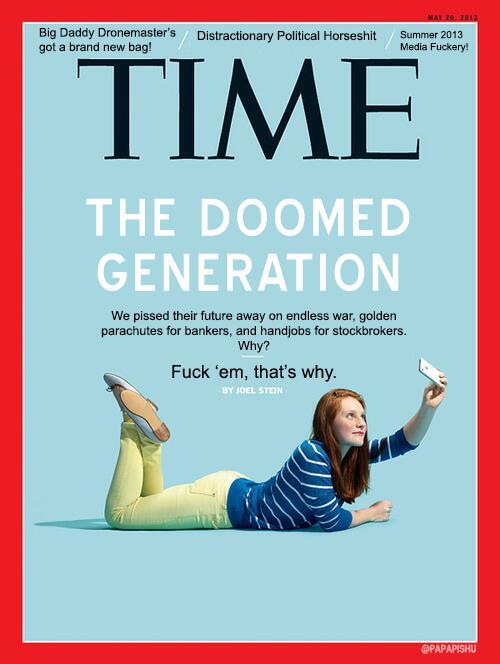
Chris Person fixed TIME’s new magazine cover. Now it’s accurate. (TIME version #1, Person edit #2)

Update: And here’s another stellar contribution from @direlog

EXCELLENT

image

From @EARNEST_CYBORG9

13 May 14:53

Photo


13 May 14:20

The Great Gatsby is an Alternate Timeline Where Jack Survived Titanic

by Chris Lough

Leonardo DiCaprio Great Gatsby alternate timeline Titanic The Beach Catch Me If You Can The Aviator Revolutionary Road Inception

“...trying to forget something very sad that had happened to me long ago.”—Jay Gatsby

I’m sorry, but I think we have to discuss the elephant in the room here. While Baz Luhrmann’s movie adaptation of F. Scott Fitzgerald’s classic novel The Great Gatsby looks gorgeous, and probably brings the novel to life in a wonderfully larger-than-life manner, at no point have I seen anyone discussing how Leonardo DiCaprio’s Gatsby is obviously Jack from Titanic. And how the movie is obviously an alternate timeline where he survived the sinking of the ship and went on to build a life for himself in America in an attempt to reunite with Rose.

Not only that, but no one is discussing how this is the sixth Leonardo DiCaprio movie depicting an alternate timeline where Jack survived.

[It's not just me, right? We all feel this way?]

Read the full article

13 May 13:48

I don’t understand


I don’t understand

13 May 13:00

‘Gangnam Style’ by the Yard

Russian Sledges

did not attend; was informed that professor eckert was not particularly awesome; did not realize that reischauer co-sponsored this

Every now and then a song sweeps the world, catapulting its singer into the stratosphere of super-fame. “Gangnam Style” is that kind of phenomenon, performed by South Korea’s Park Jae-sang, better known to nearly 1.6 billion YouTube viewers (the most ever) as Psy.

On Thursday the Korea Institute at Harvard University sponsored “A Conversation with Psy” for a packed audience of Harvard students, staff, and faculty and the international press at Memorial Church, in a session that was also live-streamed online.

The event was introduced by Carter J. Eckert, the Yoon Se Young Professor of Korean History. Slipping on a pair of sunglasses, à la Psy’s trademark style, Eckert suggested that Harvard hasn’t been so close to cool since Ralph Waldo Emerson’s 1838 speech on transcendentalism.

Alexander Zahlten, assistant professor of East Asian languages and civilizations, put “Gangnam Style” into the context of the investments Asian countries are making in exporting their cultures, and their growing influence in the West.

Psy then entered and shook hands, and the audience cheered as he walked to the pulpit.

“Isn’t life beautiful?” he asked.

Psy, of course, wasn’t always a superstar. He was born in 1977 in the well-to-do Gangnam district of Seoul. As the only son, he was expected to take over the family business, building a “semiconductor equipment thing.” To avoid that, he spent four years in the late ’90s in college in Boston. First, he studied business at Boston University, then dropped out and enrolled at the Berklee College of Music.

He left Berklee without a degree (“My nickname was W-W-F: Withdrawal, Withdrawal, Fail,” he said to a chorus of sympathetic “Awws!”), went back to South Korea, started making K-pop, and danced on television. He released his first album in 2001. For the next 10 years, Psy sang, danced, and made music.

In July of 2012, he released “Gangnam Style.”

“When I wrote [‘Gangnam Style’] last summer, the economy was so bad,” he said.

“Everyone was so poor. My only goal was to make them laugh, with the song and choreography, so I tried to be as ridiculous as possible.” He explained that he intentionally developed the now-famous “horsey dance” so that anyone could do it.

Then, lightning struck. By August, “Gangnam Style” was No. 1 on iTunes, and by November it was the most viewed video ever on YouTube. In December, it became the first YouTube video to reach one billion views.

“Isn’t that amazing?” Psy said. “I am so glad, because the crowd doesn’t know [the meaning of the words], but they look so happy” when listening to the song and doing the dance.

“I think there is something beyond the language,” he said, trying to explain the song’s popularity. “We can assume it’s the music. But that’s the boring answer. I think it’s the word ‘fun.’”

Psy has won accolades and dozens of music and video awards, but he said the moment he really knew he’d made it was when Madonna asked him to perform with her at Madison Square Garden. He said when he arrived, Madonna was lying on the stage, and she told him, “Honey, you can touch anywhere on my body on the stage.”

He said his first thought was, “I’m her honey?”

His actual response was, “Really?”

“I’ve got to be humble,” he continued. “This doesn’t happen to everyone, especially Asian artists. I dreamed someday, some Korean artist would be recognized in the American market, but I didn’t dream that it would be me. I have a very special body shape, so I never thought it would be me.

“It’s weird,” he continued. “I am facing you guys like this. But life is weird. I’m happy and so proud. It’s so unrealistic to make a speech at Harvard.”

During a question-and-answer session, he advised, “Please be positive. That’s the biggest power on the planet.”

And, almost echoing his cool predecessor Emerson’s words at the Divinity school so many years ago (“Thank God for these good men”), Psy said, “I thank God all the time, because what I want to do is what I can do.”

He then graciously thanked the audience for their time, and treated everyone to a Korean dinner.

“A Conversation with Psy” was co-sponsored by the Office for the Arts at Harvard “Learning from Performers” series and the Edwin O. Reischauer Institute of Japanese Studies.

13 May 12:58

Boldly going to Houghton

Russian Sledges

I would also like to note that harvard also has a ton of star trek scripts in widener/hd (I cataloged them)

The camera pans across the bridge of the U.S.S. Enterprise, where Capt. James T. Kirk and his crew are under attack by an alien vessel firing deadly bolts of photon energy-plasma. As the ship’s deflector shields weaken, Kirk turns to comfort and embrace a comely female yeoman as they await almost certain death.

Can you spot the fundamental flaw in this teaser? According to the authors of a guide for would-be scriptwriters of the original television series “Star Trek,” the scene involves a major format error for the science fiction fantasy. It is not believable.

“We’ve learned during a full season of making science fiction that believability of characters, their actions and reactions,” the guide states, “is our greatest need and is the most important angle factor.”

To test potential plot pitfalls, writers should always translate their ideas into “a real-life situation.” Using the previous example, the guide asks, if while patrolling Vietnam waters he was faced with a suicide attack from a boat carrying an atomic warhead, would Capt. E.L. Henderson ­­— the then-commander of the navy cruiser the U.S.S. Detroit — turn to hug a pretty “female WAVE who happened to be on the bridge?”

“No, Captain Henderson wouldn’t! Not if he’s the kind of captain we hope is commanding any navy vessel of ours. Nor would Captain Kirk hug a female crewman in a moment of danger, not if he’s to remain believable.”

Harvard’s Houghton Library recently purchased a copy of “The Star Trek Guide,” an intriguing and often amusing handbook that includes everything that aspiring writers might need to know before crafting a script for the ’60s cult sci-fi television series that spawned several TV sequels, numerous films, countless pop cultural references, and even a complex internal language. The comprehensive manual includes details on the show’s ethos, characters, terminology, spaceship — even its snug-fitting uniforms.

500trekguide

The comprehensive manual includes details on the show’s ethos, characters, terminology, spaceship — even its snug-fitting uniforms.

“Never have members of the crew putting things into pockets. There are no pockets. When equipment is needed, it is attached to special belts (as in the case of the communicator and the phaser),” reads the guide’s practical instructions.

The 31-page booklet, along with copies of four “Star Trek” scripts, is part of the library’s growing science fiction collection, which includes more than 3,000 volumes, largely 20th-century trade paperbacks, magazines, fanzines, and prozines.

“We have been trying to acquire more in the way of what people generally refer to as popular culture material,” said Leslie Morris, Houghton’s curator of modern books and manuscripts and a longtime “Star Trek” fan. (Her favorite episode is the show’s second season classic “The Trouble with Tribbles.”) While Houghton traditionally has been associated with early printed books and illuminated manuscripts and is more commonly known for its papers of literati such as Emily Dickinson and John Keats, there is growing interest from places like Harvard’s English, History, and Literature departments, said Morris, “in using more popular materials as well.” The guide, she added, “is part of that effort to bring material here that will support that kind of research.”

Morris suspects that the booklet, a third edition from 1967, is one of many sent to interested scriptwriters as a way for the show’s producers to weed out inappropriate material and “get more suitable submissions.” But in addition to being a writer’s how-to, the red-covered, mimeographed manual offers readers an in-depth look at one of the things that helped make “Star Trek” a cult sensation: its obsessive attention to detail.

The guide contains page after page of “Trekkie” gold. The Enterprise is “somewhat larger than a present day naval cruiser,” carries a crew of 430, and provides the TV audience a “familiar and comfortable counterpoint to the bizarre and unusual things we see during our episodes.” Of the ship’s engines, it says, “(the two outboard nacelles) use matter and anti-matter for propulsion, the annihilation of dual matter creating the fantastic power required to warp space and exceed the speed of light.” Warp speed, factor one, the guide notes, is the speed of light, or 186,000 miles per second. “Maximum safe speed is warp six. At warp eight, the vessel starts to show considerable strain.” Sensor, according the guide, is the ubiquitous term for any equipment used for “sensing” and “reading” a range of details, like the number of aliens on a ship, or the size of a meteoroid. “Never try to explain or describe the sensors, simply use them — they’re real because they are and they work.”

500 script

The 31-page booklet, along with copies of four “Star Trek” scripts, is part of the library’s growing science fiction collection, which includes more than 3,000 volumes, largely 20th-century trade paperbacks, magazines, fanzines, and prozines.

“Star Trek” first aired in September 1966 and was almost canceled during its second season because of poor ratings. But a massive letter-writing campaign by devoted fans gave it a lifeline and a third year on the air. Its last episode ran in June 1969. Many observers argue that the series’ initial appeal — and its wild success in reruns — came because the show touched on important issues of the times, including the space race and a burgeoning social revolution. Men would soon walk on the moon, and the Civil Rights Movement was thriving. A TV series that tracked the adventures of a spaceship patrolling unexplored parts of the galaxy struck a chord with viewers, as did the crew’s diversity. The crew, the booklet states, is “international in origin, completely multiracial.”

Lt. Uhura, the “quick and intelligent” communications officer, hails from the “United States of Africa” and is fond of singing during her off hours, both traditional songs and “space ballads.” She can also “do an impersonation at the drop of a communicator.” The ship’s helmsman, Lt. Sulu, is a compulsive hobbyist. One week he “may be fascinated by botany with the intention of that becoming his lifelong avocation, then another week we will find he has switched to a determination of acquiring a galaxy-famous collection of alien firearms.” Capt. Kirk is described as a “‘space-age Horatio Hornblower,’ constantly on trial with himself, a strong, complex personality.” Mr. Spock, the show’s famously logical human-Vulcan, has a “yellowish complexion” and “satanic pointed ears.” On his planet, any show of emotion, the guide notes, is considered “the grossest of sins.”

The manual also contains practical advice. The stories should always be “about people, not about science and gadgetry.” All scripts must have four acts, and run no longer than 65 pages. There are a limited of number of standing sets for the show, and “completely new and unusual sets are costly.” Writers should also “avoid long philosophical exchanges or tedious explanations of equipment,” and anyone in need of technical guidance should consider reaching out to a university, the aerospace research and development industry, or to the National Aeronautics and Space Administration. But the manual also urges writers to ignore the fact that they are not scientists.

After all, it asks rhetorically, how many cowboys wrote westerns?

500B

Many observers argue that the series’ initial appeal — and its wild success in reruns — came because the show touched on important issues of the times, including the space race and a burgeoning social revolution.

The latest in the “Star Trek” franchise continues with “Star Trek Into Darkness,” which opens nationwide on May 17.

13 May 12:55

WMBR DJ’s 8-hour Radio Marathon during Boston Lockdown

by Jennifer Waits
Russian Sledges

jon bernhardt autoshare

WMBR logoI hadn’t really given much thought to how DJs in Boston coped with the the lockdown during the search for the Boston Marathon bombing suspect until I read a fascinating story about a college radio DJ at M.I.T. radio station WMBR in Cambridge, Massachusetts. Jon Bernhardt, the long-time host of the Friday morning edition of “Breakfast of Champions,” ended up pulling an 8-hour shift at the station on April 19 after the DJs following him called in to say that they couldn’t make it to the station due to the lockdown in Boston.

Bernhardt was originally scheduled to do his regular 2-hour show from 8 to 10am and had planned to do a tribute to the recently deceased musician Scott Miller (Game Theory, Loud Family). As the lockdown dragged on, he decided to stay at the station as both a safety measure and as a way to provide music to WMBR listeners who might want an escape from the scary news outside their doors. Not only did he fill in for programs similar to his, but he also had to quickly select music for shows (including a jazz program) that were outside of his area of expertise. I interviewed him over email in order to get more insight into how he handled his unplanned 8-hour shift.

Jennifer Waits: How long have you been a DJ at WMBR?

Jon Bernhardt: I joined WMBR at the start of my sophomore year at M.I.T., in September 1983, hosting a call-in show called “Flame Session” as well as a late-night freeform experimental music program cleverly titled “Late Night.” I settled into my current morning rock show, “Breakfast of Champions” [BoC], in June of 1984. It airs weekdays from 8 to 10 am, with a different DJ each day. I host the Friday edition.

Waits: Tell me about the Scott Miller special. Did that go as planned?

Bernhardt: Scott Miller passed away on April 15. As my show on the 19th approached, I noticed that no one on WMBR had acknowledged it and thought it would be a good idea to rectify that situation. I selected about 35 minutes worth of his music — some “hits,” some rarities — that I intended to play during the last 40 minutes of my 2 hour program. I almost postponed the tribute, although not for the reason you might think. Each week, a different BoC DJ picks a “Band of the Week” that all the other DJs have to play at 8:30am (typically 1 to 3 songs with no repeats during the week). Late Thursday, the DJ whose turn it was, announced that his pick for the next week would be Scott Miller! I didn’t want the other DJs to think I was bogarting all the good songs a few days early, but none of them cared so I went ahead with it.

As Friday morning’s events unfolded, I *was* briefly concerned that honoring a dead California musician might be awkward given the larger local tragedy. But, in the end, I decided to just acknowledge the thorniness on the air and go forward. Postscript: by the following Friday, there were still plenty of rarities that hadn’t been played during the week, so I programmed another half hour of Miller’s music from 8:30 to 9am!

Waits: What normally happens when DJs can’t make their shifts?

Bernhardt: Typically DJs have some advance notice that they can’t make their show. In those situations, we have a listserv where substitute station members can be solicited. On the day in question, I sent an email to the list, but no one (probably wisely) wanted to leave their homes. The station’s General Manager, Elliot, who was staying at the dorm next door to the radio station and who is also another BoC host, stopped by before 8am to check in, but he told me he’d been up all night and needed to get some sleep. My choices were to continue on or turn off the transmitter.

Waits: What prompted you to stay and how long would you have stayed?

Bernhardt: I chose to stay because it seemed like the safest thing to do! Plus, my wife was insistent that I not leave the building. There’s a show change every 2 hours. I never knew for certain that the DJ for the next show wasn’t going to show up until maybe an hour before its start, but I had a strong suspicion that I’d be there for a long time. I stayed as long as I was physically able — until 4pm. At around 2:30, I gave Elliot a call and he promised to show up for the 4pm program. By then, the authorities were saying that, if you were at work, it was OK to leave and go home. So I did, although I biked home using a circuitous route. My normal path would have taken me right past the bombers’ Cambridge apartment where there was talk of “controlled detonations!”

Waits: I’m trying to remember how the lockdown worked. Could the DJs not come because of the lockdown? Were people being ordered to stay indoors?

Bernhardt: The Massachusetts Emergency Management Agency was strongly recommending that people in Watertown and all its adjacent cities and towns (which includes Cambridge) “shelter in place.” You could go out — no one would stop you — but it was strongly discouraged. In fact, around lunch time, a friend who lives nearby (Mark Robinson of famed indie band Unrest, and founder of Teen Beat Records) did venture over to bring me some much needed snacks.

Waits: Is this the longest shift you’ve ever done?

Bernhardt: Back when I was an undergrad (over 27 years ago!) I remember doing a lot of air over the Christmas break, but it wasn’t consecutive — more like a few hours every day for four or five days. Since then I’ve done the occasional four hour shift, but even then, I had some warning. I’d never had to do anything close to six extra hours on the fly.

Waits: How much information did you provide over the air?

Bernhardt: From the beginning, I made a judgement call. I figured that if people wanted non-stop news, or updates every time a dog barked, they wouldn’t be listening to WMBR. If they were listening to me, it was because they wanted an escape from the 24 hour news cycle and wanted to be entertained. So I did my normal show but gave people the essential information (“Stay indoors!”) and promised to update them if there were any critical developments (there never were).

The responses I received, via phone calls, tweets, emails, IMs, etc., indicate that my instincts were correct. Not one listener response was a complaint. Instead, people cheered me on, thanked me, and called me a legend or a hero. Those last two are just a tad hyperbolic (and insulting to the real heroes!), but the support immeasurably helped me get through the day. Funnily enough, the only criticism came early on from a couple of fellow WMBR DJs who thought we should either sign off or preempt our regular programming for more news. But even they came around to my way of thinking later in the day and admitted I’d done a good thing.

Thanks to Jon Bernhardt for sharing with me all of the details of his 8-hour shift. If you want to see his playlists or listen to the show, you can do so from the WMBR website.

13 May 11:33

With Race Emerging As Fault Line In Senate Race, Census Data Points To Persistently High White Voter Turnout In Mass.

by David Scharfenberg

BOSTON — New U.S. Census data show non-white voters made up a record share of the Massachusetts electorate last fall.

But over the last 12 years, a WBUR analysis reveals, the white vote has held up stronger in the Bay State than it has nationwide.

The racial cross-currents could play a key role in the U.S. Senate contest pitting U.S. Rep. Edward Markey, a Democrat, against Republican venture capitalist Gabriel Gomez.

A WBUR poll released last week gives Markey a six-point edge on his GOP opponent. And virtually his entire lead is attributable to his sizable advantage with non-white voters — 61 to 9 percent.

“In a close race,” says Jeffrey Berry, a political science professor at Tufts University, “Markey needs to turn out minority voters.”

Last fall’s record minority turnout is no doubt encouraging for the Markey camp; the Census data show that minorities made up 16 percent of the Massachusetts electorate in November.

But that election featured a presidential race and a high-profile clash between U.S. Sen. Scott Brown and his Democratic challenger Elizabeth Warren.

In the November 2010 election — a lower turnout affair more akin to the Markey-Gomez election set for June 25 — the minority share of the electorate was only half as large: 8 percent.

That figure, Census data show, is more in line with the totals in recent elections. And it speaks to the unusual staying power of the white vote in Massachusetts.

Nationwide, the decline of the white vote in recent years has been two-fold. First, whites have shrunk as a share of the voting-age population.

And second, the white voter turnout rate – the percentage of voting-age whites casting ballots – has declined since the 2004 presidential race.

In the Bay State, the white share of the voter-age population has dropped, as it has nationally. But the decline has been partially offset by steady growth in the rate of white voter turnout over the course of the last 12 years.

Berry, the political science professor, attributes the persistently high white voter turnout to the state’s relative affluence. A better-off population is more likely to vote.

“It’s not a matter of Massachusetts virtue,” he says, “it’s a matter of Massachusetts demographics.”

Whatever the explanation, the trend gives Massachusetts Republicans a glimmer of hope – especially in non-presidential year elections where whites make up a particularly large share of the electorate.

That may explain why the Democratic Party and allies like the Service Employees International Union have made a concerted effort over the last couple of election cycles to organize minority voters.

It’s hard to measure the impact of canvassing and phone banking. But between the 2008 and 2012 elections, voter turnout gains in majority-minority cities like Lawrence, Lynn and Springfield outpaced statewide voter turnout growth.

All three municipalities have sizable Latino populations. But the sample sizes in the new Census survey for Latinos, blacks and Asians are too small — at the state level — to draw any definitive conclusions about which group or groups drove the 2012 spike in the non-white share of the electorate.

Whoever was behind the spike, though, it was advantageous for Democrats. And whether Markey can produce anything approaching the demography of the 2012 electorate could prove decisive in his own race.

The Massachusetts data is part of a broader, nationwide survey of 60,000 households. At the national level, the sample sizes for minority groups were large enough to make meaningful findings. And the Census found — among other things — that the black voter turnout rate exceeded the white voter turnout rate for the first time in 2012.

13 May 11:31

The Future of Fox is Now

by Armin

21st Century Fox Logo, New

Hinted to as early as July of 2012 and officially announced this past December, Rupert Mudorch's News Corporation is splitting into two separate businesses. The first, to remain named News Corporation will handle all the publishing properties — newspapers and magazines — like The Wall Street Journal and The New York Post, with the former's managing editor, Robert Thompson, as CEO. The second, to be renamed 21st Century Fox will handle the entertainment properties — cable and television channels, filmed entertainment, and direct satellite broadcasting businesses — including the FOX network, 20th Century FOX, FX, among dozens of other channels with Rupert Murdoch as CEO. Absolutely every single property will retain its existing name and logo. The name, 21st Century Fox, will serve as the parent company only and the logo — announced this past Thursday via an e-mail to employees — will only be a business-to-business mark. It was designed by Pentagram partners Michael Gericke and Emily Oberman.

The name and symbol distill the elements of Fox's familiar searchlights-and-monument logo into a dynamic new identity. The 21st Century Fox logo features a pair of sweeping searchlights that suggest entertainment, broadcasting and limitless possibilities within a circle shape inspired by a lens. Iconic and distinctive, the symbol is accompanied by a wordmark set in strong, stacked lettering that is derived from the typographic pedestal of the Twentieth Century Fox logo and Fox Broadcasting's wordmark.
Pentagram project page
"Today I am proud to unveil our new logo, which serves as a powerful symbol of the inspiration and high bar set by our company. Like our name, the logo reflects the rich creative heritage of Twentieth Century Fox and signals the promise of the 21st century and our restless drive toward the future."
E-mail from News Corp. Chief Executive Rupert Murdoch to employees

21st Century Fox Logo, New

For extra clarification as it relates to entertainment properties that contain the name FOX: 21st Century Fox is the parent company, the existing logos DO NOT change.

To clarify for a third time, the new logo does not replace the famous 20th Century Fox logo and movie opener — I'll take bets now on how many people in the comments bitch about how that logo should not have been changed. Anyway, with that in mind, this new logo has a couple of roles to play or things to communicate: 1) Its association with all things "FOX" and 2) its role as an entertainment company. The first is achieved by modeling the typography after the FOX Network logo (shown in blue above) and to a certain degree on the lettering on the 20th Century Fox logo as well as by translating its moving spotlights into a static version that, in turn, help achieve the second aspect of entertainment: Creating an instant association with the famous logo and red carpet events and movie openings that enjoy the spectacle of moving spotlights.

So, the logo does its job. It just happens to do it in a rather underwhelming way. The typography feels far too informal — and Kabel-ish — to elicit the associations with the monument-like lettering of the studio it takes its name from and there is also something not quite finished or finessed about the spotlights in a circle, or maybe it's just the large size of it against the typography. Perhaps we've grown so accustomed to the corporate-ness of News Corp. that this relatively playful logo is just not corporate enough.

Finally, for some levity and because there really aren't that many opportunities to break this out, I leave you with one of the best renditions of the 20th Century Fox fanfare. Take it away, Mr. Wiggum.

Thanks to Barkley Anderson for first tip.

Vote
Don't forget to cast your vote about this post online

Many thanks to our ADVx3 Partners
13 May 11:28

Clouds, Birds, Moon, Venus

13 May 11:20

Tumblr

by walkman
Russian Sledges

#themepartyideas

13 May 11:19

Music for Carnage and Infidels.


Music for Carnage and Infidels.

12 May 22:59

Photo


12 May 22:59

Police: 17 wounded in New Orleans parade shooting

NEW ORLEANS (AP) — Gunmen opened fire on dozens of people marching in a Mother's Day second-line parade in New Orleans on Sunday, wounding at least 17 people, police said.


12 May 22:59

Photo


12 May 22:56

World’s tallest tree, bonsai version

by Annie Churdar

World’s tallest tree, bonsai version

What happens when you combine the art of shaping a Bonsai Tree with the powerful strength of a Redwood? You get a little Bonsai Redwood tree. Now you can nurture the world’s largest tree in a small pot on your bedside table. Take a look at the Redwood Empire Bonsai Society to get a small taste of the mini Redwood growing culture. Many of these little trees are older than me.

World’s-tallest-tree,-bonsai-version9 World’s-tallest-tree,-bonsai-version8 World’s-tallest-tree,-bonsai-version6 World’s-tallest-tree,-bonsai-version4

The post World’s tallest tree, bonsai version appeared first on Lost At E Minor: For creative people.

12 May 22:56

      Super Mario Bros.                Super Mario Bros. 2


Super Mario Bros.


Super Mario Bros. 2

12 May 22:54

BBC Doctor Who Plead: Please Don't Leak The Series 7 Ending

by Jill
Russian Sledges

I bet I know who has a dvd


Following the news that a number of US Blu-ray editions of the Doctor Who series 7 finale had been dispatched early in error, the producers of  the show have issued a heartfelt plea to fans not to leak details of the final episode onto the internet.

Tonight the official BBC Doctor Who Twitter account pledged that there would be a special reward involving David Tennant and Matt Smith if fans obliged in keeping the secrets of the last episode, The Name Of The Doctor. Tonight they posted:


Some US DVDs of this series have gone out early. The #DoctorWho team would be hugely grateful if fans helped keep spoilers off the net.

Steven Moffat has promised if fans help keep the finale’s secrets, we’ll release a special video featuring Matt & David right after the ep!

The Name Of The Doctor airs on Saturday 18th May on BBC One at 7pm and on BBC America at 8pm ET/PT


12 May 22:52

Here’s an awesome sight that’s as likely to be someone’s dream...


Here’s an awesome sight that’s as likely to be someone’s dream come true as someone else’s worst nightmare. You’re looking at just over 4 continuous miles of sausage. Three French butchers located in in Ganges, France recently beat the European record for making the longest sausage. It measures 6km and 772m or 4.2 miles. Yep, that’s a whole lot of sausage.

And now, the next time someone asks you to name Europe’s longest sausage, you’ll have the answer.

Photo by Alain Robert

[via Telegraph.co.uk]

12 May 22:47

Google Is Such A Desolate Wasteland That Big Brands Like Dominos Haven't Updated Their Accounts In Months

Google Is Such A Desolate Wasteland That Big Brands Like Dominos Haven't Updated Their Accounts In Months:

However, roughly 40 percent of the brands with pages on Google have either never posted any content, or do so infrequently. Seventeen brands, including Nike and Pepsi, had not posted to their Google page in more than a week. The McDonald’s Google page did not have a single posting. A spokeswoman for the fast-food chain said only that the company was “not active” on Google .

12 May 17:54

The lewd women made me do it, 1752

by Emily Brand
Russian Sledges

"seven of them ascribe their Ruin to the Association of Lewd Women, who drove them to unlawful Courses, in order to support the Extravagancies of those Daughters of Plunder"

Poor old James Holt, a man who went to the scaffold not entirely convinced that the death sentence was the …

Continue reading →

12 May 17:52

Photo

Russian Sledges

shared to infuriate overbey