Four miniatures from the calendar section of the manuscript. Each is approximately two inches square in the original and part of its own page of text and decoration.
I can't imagine anyone disliking Rogue Genius' Gingerbread Kaiju, because even if you're not into city-stomping strategy games or somehow hate giant monsters, eating tasty gingerbread cookies and piles of candy are literally part of the game's rules.
A picture tweeted by @MattLyonSLC, shows boy scouts in Salt Lake City wearing rainbow kerchiefs, delivering pizza to county workers who are skipping their lunch break to keep serving the hundreds of gay couples lining up around the block for marriage licenses.
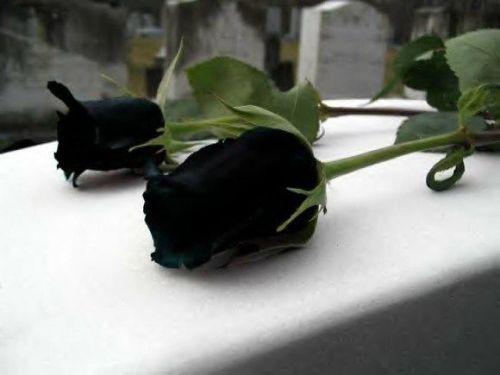
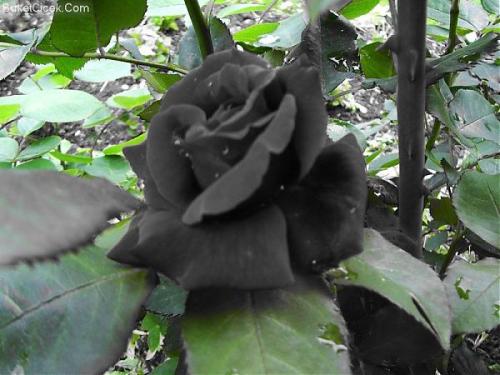
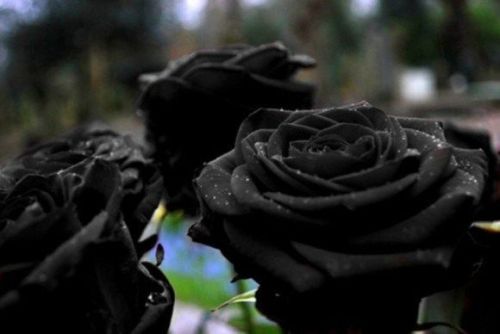
Turkish Halfeti Roses are incredibly rare. They are shaped just like regular roses, but their color sets them apart. These roses are so black, you’d think someone spray-painted them. But that’s actually their natural color.
Although they appear perfectly black, they’re actually a very deep crimson color. These flowers are seasonal – they only grow during the summer in small number, and only in the tiny Turkish village of Halfeti. Thanks to the unique soil conditions of the region, and the pH levels of the groundwater (that seeps in from the river Euphrates), the roses take on a devilish hue. They bloom dark red during the spring and fade to black during the summer months.
The local Turks seem to enjoy a love-hate relationship with these rare blossoms. They consider the flowers to be symbols of mystery, hope and passion, and also death and bad news.
Seeing a black rose in full bloom is a once-in-a-lifetime sort of thing. Don’t miss it if you ever happen to be in Turkey during the summer.
INDIANAPOLIS — Indiana's law banning same-sex marriage cannot be used to invalidate a marriage if one spouse later changes his or her gender identity, the state Court of Appeals has ruled.
A great last minute gift for any blogger friends struggling with their super important Year In Review think pieces right now would be this interactive map from Google that shows the top searches in 150 cities throughout the world for every day of 2013. It also makes for an interesting stroll through the year for those of us who have ravaged our attention span through social media addiction.
Set the city preference to New York, for example, and you’ll be pleasantly reminded, or irritated, by the things New Yorkers were searching for as the year went by. Rex Ryan tattoo? WTF? Oh right, that thing where he got a Mark Sanchez tattoo. The guy who isn’t the quarterback anymore. Katherine Webb? No idea who that was. *Googles* Oh right, she was Miss Alabama, and dating a college quarterback bro, and we all Googled her when she showed up on the sidelines to figure out if there were any nudes.
Kate Middleton, of course. Oscars, Aaron Swartz, the internet activist who killed himself, Golden Globes, Lance Armstrong, a famous cheater and liar, Manti T’eo, the football player who got catfished, Coachella, unemployment (those two kind of go hand in hand), The Walking Dead, the Grammys, Blue Ivy Carter, NASCAR, Russian meteor, Amanda Knox, Boston bombing, Jason Collins, the NBA player who came out of the closet, Amanda Bynes, Arrested Development, and on and on, every single thing more important than the next.
Give it a spin here for your city and think back fondly on all the things we needed to know right away this year, then promptly forgot.
“We’re not in the business of publishing hoaxes,” BuzzFeed’s news editor wrote in response to Weigel’s piece, “and we feel an enormous responsibility here to provide our readers with accurate, up-to-date information”—which sounds a bit like Altria’s health inspector saying they’re sorry they gave you cancer.
The fact is, that sort of double-dipping is what most of us who produce Internet content do, myself included. Give me the viral pictures, and I’ll give you the truth. And then, after an appropriate waiting period, I’ll give you the other truth, and capitalize on that traffic too. It’s almost a perfect callback to William Randolph Hearst’s infamous declaration on the eve of the Spanish-American War, “You furnish the pictures and I’ll furnish the war.” Even more fitting, historians don’t think he ever said anything like that. Then as now, it’s the myth that plays, not the reality. Today it just plays on an exponentially larger stage.
"Some answers the project is now reaching will be surprising: that, for example, the most responsible act of conservation might be the destruction of a piece of art."
The New York Times 12/20/13
PubMed Commons enables authors to share opinions and information about scientific publications in PubMed. All authors of publications in PubMed are eligible to become members. Members play a pivotal role in ensuring that PubMed Commons remains a forum for open constructive criticism and discussion of scientific issues. They can comment on any publication in PubMed, rate the helpfulness of comments, and invite other eligible authors to join.
Some items are in high demand at the food bank and you may not realize it. Because they aren’t essentials, the staff doesn’t publicly ask for them. A survey asked volunteers what items people would be most appreciative of and we’ve listed the top 10 below. If you’re looking for an easy way to help out, pick some of these up while shopping and drop them off at one of our area food banks.
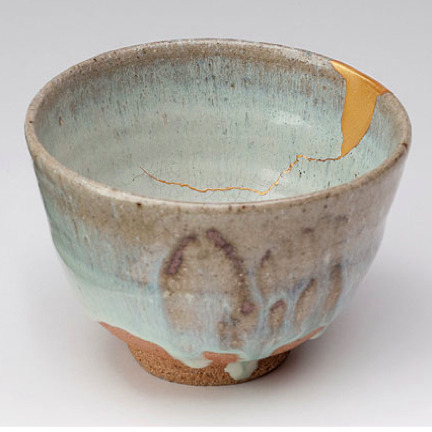
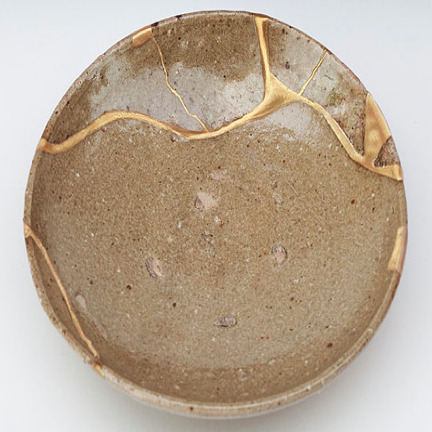
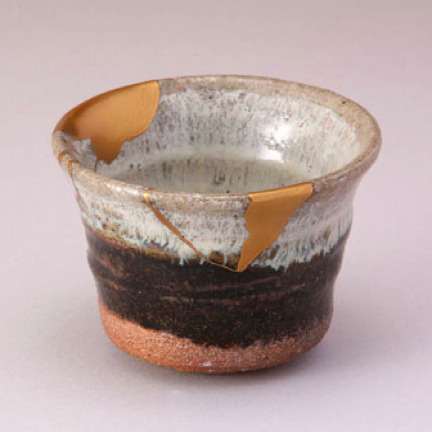
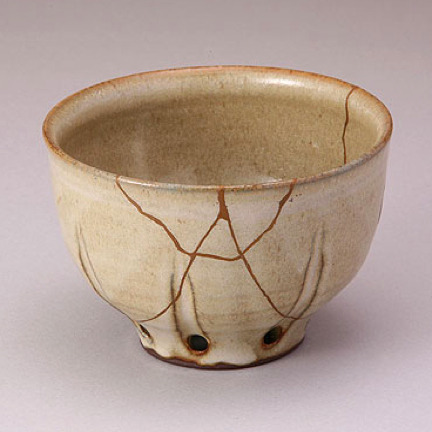
I learnt a new word and I love the sound of it: kintsukuroi. It is the Japanese art of repairing broken pottery with seams of gold. Kintsugi repairs the brokenness in a way that makes the container even more beautiful than it was prior to being broken. Not a very common idea in western culture!
Instead of diminishing the bowl’s appeal and appreciation, the “break” offers the container a new sense of its vitality and resilience. The bowl has become more beautiful for having been broken. One can say that the true life of the bowl began the moment it was dropped!
Imagine you are that clay pot: celebrate your flaws and imperfections. Remember that you being you is what makes you uniquely beautiful.
And remember: “The world breaks everyone, then some become strong at the broken places.”Ernest Hemingway
I’m pretty sure that I’ve reblogged this before, but its actually one of my favorite posts on tumblr. The idea that something can be more beautiful after being broken is so moving to me. I kind of want one of these someday, or to make my own. It’s an amazing concept, and I love the fact that it’s an artform.
Artist Aram Bartholl's "Forgot Your Password?" is an eight-volume print edition collecting, in alphabetical order, all 4.7 million Linkedin password that leaked in 2012. Linkedin had stored the passwords in cleartext, which is a very, very bad idea. It will be shown at Munich's Unpainted media art fair in January 2014.
In summer 2012 the social network LinkedIn.com got hacked and lost its whole user database. A few months later parts of the decrypted password list surfaced on the Internet. These eight volumes contain 4.7 million LinkedIn clear text user passwords printed in alphabetical order. Visitors are invited to look up their own password.
Here's a photo that purports to show Vladimir Putin -- during his time as a KGB agent -- in plainclothes, inconspicuously hanging out near Ronald Reagan during the Gipper's visit to the USSR in 1988.
The Michigan state legislature recently passed a law banning health insurance markets from offering coverage for abortions. Instead, women seeking the procedure will be required to purchase a separate insurance rider for abortion procedures.
Under the new restrictions, which will take effect three months after the legislature adjourns for the year, women would have to predict when they will have an unplanned pregnancy, as abortion coverage must be purchased before becoming pregnant. Becausethe law does not allow exceptions for rape or incest, state Sen. Gretchen Whitmer and other opponents of the law have called it “rape insurance.”
Adding yet another hurdle to health-care access, the law does not guarantee that abortion insurance riders will even be available for separate purchase. According to officials at Planned Parenthood and the Guttmacher Institute, the markets for abortion riders don’t exist yet.
During debate over the bill, Sen. Whitmer, the Democratic Minority Leader, told a heart-wrenchingstory of being raped decades ago and never being able to tell many of her close friends. She talked about the tough discussions women who seek abortions would have to make if they did not have the insurance to cover the procedure.
Even some conservative Michigan officials oppose the law. Last year, anti-choice Michigan Gov. Rick Snyder vetoed the abortion insurance rider bill because it neglected to leave exceptions for rape or incest. Prior to that, former governor John Engler, another Republican, also vetoed the bill. However, because abortion opponents collected 315,477 petition signatures, they were able to sidestep Snyder’s veto.
Those signatures do not accurately reflect Michigan voters, however, as they represent about 3 percent to 4 percent of Michigan voters. Said Whitmer during her speech,
Make no mistake, this is anything but a citizens’ initiative. It’s a special interest group’s perverted dream come true.
Shae Collins is the creator of A Womyn’s Worth, a social commentary blog that addresses interests and concerns of black women. Follow this current Ms. intern on Twitter.
After all, life in Endiang, Alberta, the heart of coyote country, isn’t easy for roly-poly animals with short legs and low IQ. So when he and his wife were stocking their farm four years ago, they jumped on a small classified ad selling a small flock of Icelandic sheep.
“They’re not an ‘improved breed,’ so you’re dealing with the same sheep that were running around Iceland during the Viking times. They’re more like wild mountain sheep,” says Somerville, acting president of Iceland Sheep Breeders of North America. “I’ve watched these sheep take on dogs. I’m pretty sure they’d take on a coyote.”
But they’re not feral. In fact, 28-year-old Somerville is certain they’re smarter than standard commercial sheep, and he trusts them; he sometimes sits in the middle of their pen and holds his seven-month-old son while the sheep snuffle around their faces.
There are many reasons why growing numbers—primarily farmers and knitters — are fixated on the Icelandic sheep. The breed, with fine-grained meat and a wooly coat that is both light-as-air and rugged, has retained one of the purest bloodlines in the agricultural world and carries a romantic and wild history.
Without sheep milk, meat and hides, life for her Viking ancestors would have been impossible, says Ragnheiður Eiríksdóttir, a Reykjavik-based knitting instructor and former nurse. “They were essential to surviving here,” she says. Three years ago she started Knitting Iceland, a tour company that primarily caters to American and Canadian knitters.
“In my classes I talk a lot about the sheep, our culture, farmers and our heritage,” she says. “If you just present someone with a ball of yarn it doesn’t have the same impact as that story, the fact that the whole heritage of a nation follows that ball of yarn.”
The Icelandic sheep is an ancient North European breed, slightly smaller than modern varieties, whose double-layered coat is uniquely suited to cold and wet conditions, says Eiríksdóttir. In Iceland they are raised primarily for their meat, but the wool is a valuable byproduct. The inner layer, or thel, is insulating, superlight and very airy, while the outer layer, or tog, is long, strong and water repellent. Carded together, these two layers make lopi, versatile wool used to knit lopapeysa, the distinctive traditional Icelandic sweater of concentric rings.
These days, says Eiríksdóttir, it is trendy for tourists to bring home an Iceland sweater as a souvenir, which means the humble lopapeysa is quickly becoming a status symbol.
“Over here everybody wears them: babies, old guys at the harbour, hipsters wearing lopi sweaters instead of hoodies,” she says, laughing.
At summer’s apex, before the annual slaughter, the number of sheep in Iceland outnumbers the human population three to one, at approximately 500,000. Allowed to roam wild in the summer, they are ubiquitous on the island’s barren, rocky landscape, sometimes scaling giant mountains in search of edible moss and herbs, where they can only be seen as tiny white, black and brown specks thousands of feet in the air.
Wool from the spring shearing is coarse and generally used to make carpets, while prized lopi wool comes from the autumn shearing. The country only has one industrial spinning mill, Ístex, which is co-owned by a cooperative comprised of 1,800 sheep farmers. From about 1,000 tonnes of raw pelts the mill produces about 454 tonnes of handknitting and felting wool—about 60 per cent is sold domestically.
When Chicago knitter and fibre artist Noelle Sharp was accepted into a three-month residency in Iceland, she wasn’t expecting she’d be staying on a sheep farm in the middle of nowhere. But that’s where she first discovered the joys of knitting with lopi.
Noelle Sharp
“It’s got these great fibres that are kind of spindly. I work with unspun lopi, and it took me a couple of weeks to get used to it because it was like knitting with air,” says Sharp. “Plus, it has this self-cleaning quality to it, so I was told you’re only supposed to wash an Icelandic sweater once a year. I had never heard of that before.”
Back in Illinois, Sharp says lopi is the only fibre she uses that isn’t made in America. While it can be hard to find here—she orders hers directly from Iceland—she says it is gaining cult-like popularity in knitting circles. “As far as fashion goes, this year Iceland is huge,” says Sharp, who sells her work online “Sometimes when I’m knitting in public I’ll have knitters come up to me and ask, ‘Is that lopi and where did you get it?’”
According to Hulda Hákonardóttir, Ístex’s marketing manager, sales of lopi to North America make up approximately 20 per cent of their export market and sales have grown 30 per cent since 2009. Part of the growth, she says, is that is becoming increasingly difficult for knitters to find pure knitting wool instead of rayon and acrylic blends, which are generally cheaper.
But Sharp says there’s more to it, that there is an authenticity to the wool, a sense of connection to agriculture and to the sheep inherent in the material. “In Iceland I met this weaver who teaches weaving and knitting. Because of the shortage of trees, older people would wrap their yarn around sheep bones and use them as bobbins. She had a whole bowl of bones with yarn wrapped around them. It was very Viking,” says Sharp.
And then, she says, there’s the smell. “I get all kinds of wool into my studio, and sometimes it smells like an amazing Icelandic sheep, really warm and earthy,” she says. “Even though they have bright colors you just have this sense that they’re not polluting it with dyes and whatnot. You really have to smell it. It smells like a sheep. Other wool smells like nothing.”
Responding to demand for homegrown lopi has been challenging, says Somerville, particularly since they’re “not going to become millionaires selling wool and fleece.” Still, he fields regular calls from other farmers who want to learn more about the breed, and there are currently 300 farmers in North America who are registered owners of Icelandic sheep. After all, as he says: “Sometimes you just want something that’s more self-sufficient.”
For a free Icelandic sweater knitting pattern, click here
'...officials say they plan to ban the sale of alcohol at a price lower than that of the tax due on it, promise action against “irresponsible promotions in pubs and clubs” and have increased taxes on frozen “alcopops"'
British officials are considering solutions as large numbers of British youths go out on the weekends to get thoroughly, blindingly and often violently drunk.



 INDIANAPOLIS — Indiana's law banning same-sex marriage cannot be used to invalidate a marriage if one spouse later changes his or her gender identity, the state Court of Appeals has ruled.