Russian Sledges
Shared posts
psittacism, n.
Russian SledgesPronunciation: Brit. /ˈsɪtəsɪz(ə)m/ , U.S. /ˈsɪdəˌsɪz(ə)m/
Etymology: < classical Latin psittacus or its etymon Hellenistic Greek ψιττακός parrot (see psittac n.) + -ism suffix, after French psittacisme ( Leibniz Nouveaux essais sur l'entendement humain (1765) ii. 145).
The mechanical repetition of previously received ideas or images, without true reasoning or feeling; repetition of words or phrases parrot-fashion; an instance of this.
1883 M. Chapman tr. P. Janet Theory of Morals iii. vi. 380 This habit of repeating formulas, the meaning of which is not present in the imagination, Leibnitz calls psittacism (talking like a parrot). He is fond of this expression, and even applies it to the belief of the majority of men in regard to the future life.
1896 A. G. Langley tr. Leibniz New Ess. Human Understanding ii. xxi. 196 All that they do think about it [sc. the future life] is but a psittacism, or gross and vain images after the Mahometan fashion, in which they themselves see little likelihood.
1904 Amer. Jrnl. Relig. Psychol. & Educ. May 107 Then followed monographs on psittacism and symbolic thought, heredity, and laughter.
1923 C. K. Ogden & I. A. Richards Meaning of Meaning x. 349 Psittacism is the use of words without reference.
1936 Amer. Speech 11 173/2 This procedure would reduce a science to the level of a fastidious psittacism—a blind alley leading to the dead end of a circumscribed habit.
1995 Classical Rev. 45 114 It has been repeated by followers. And there is no doubt that we have indeed been guilty of scholarly psittacism.
1978783_10201815789611757_779102891_n.jpg (704×960)
Russian Sledgesvia several appalled industry people on facebook
Mulder? (larger)
Russian Sledgesvia firehose


Merrill & Co. Restaurant Will Bring Seafood to Boston's South End
Russian SledgesI need to create a bingo board for new bar openings
The ballad of “Bitcoin Jesus”: The tech millionaire who fears for his life
Russian Sledges'I have sworn not to write the name of the island where Roger Ver is currently residing, the reason being that he fears for his life.' [...]
'During that conversation, I learn that Ver and his partner are living at a mid-range hotel on one of the world’s bluest beaches, where there is a swim-up bar and old ladies who sell handmade floral-patterned shirts under the banyan trees. The tourists congregate by half past 5 each winter night to watch the sunset. He is on the Caribbean side of the island. I know this because – strangely — I have stayed at this particular hotel before, more than decade ago, when my college swim team visited the island to train.'
dude, somebody's going to figure it out

    
|
tomiswatching: peaceypanic: fearisdead: missythemermaid: Mos...
Russian Sledgesvia rosalind

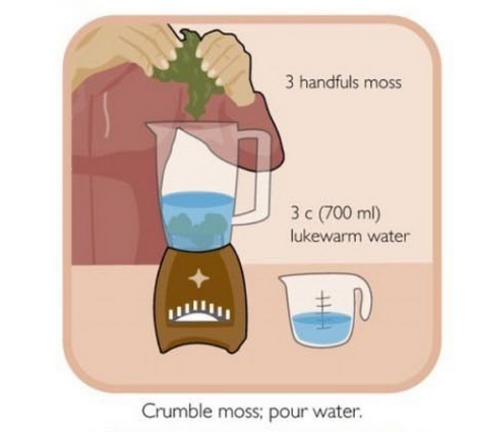

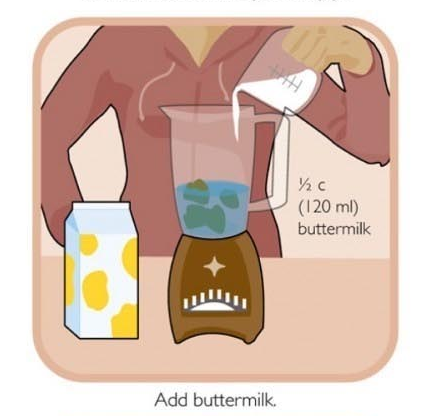
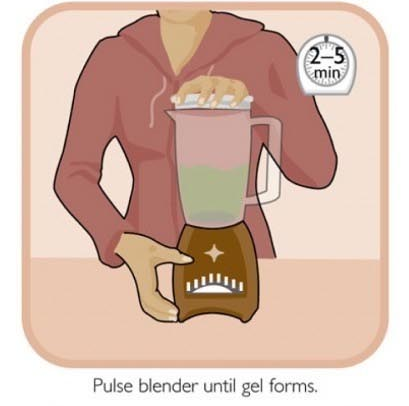
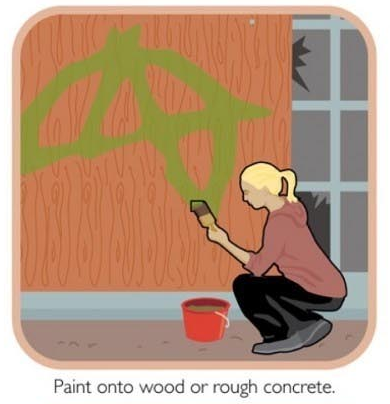
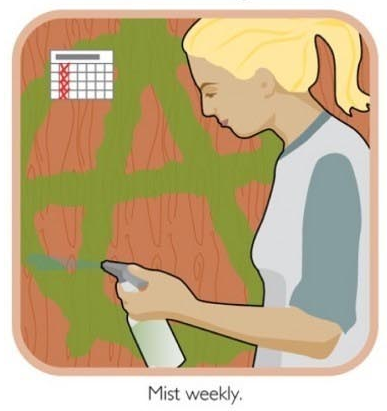
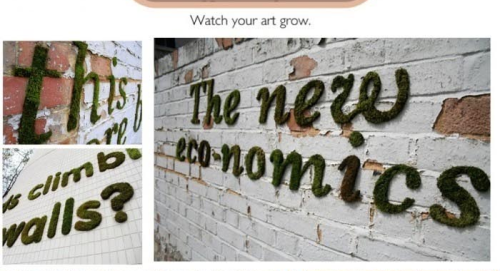
Moss Graffiti: A How To Guide
are you fucking for real
Oh man, i was actually looking for this the other day.
Yay it’s back to remind me of something awesome I haven’t gotten done yet
this is fucking sick
Infographie : cinquante nuances de Poutine


A Beautiful Handcrafted Orrery, A Mechanical Model of the Solar System
Russian Sledgesvia rosalind
#orrery autoreshares forever

Designer Ken Condal created a beautiful handcrafted orrery, a mechanical model of the Solar System, from “brass, aluminum, acrylic, corian and exotic woods” with the help of David Clark in 2012.
The model includes representations of the planets Mercury, Venus, Earth and the Moon, Mars, Jupiter, and Saturn orbiting a clear orb representing the Sun thanks to a series of gears. The particulars of the project, which took Condal 10 months to complete, are broken down in meticulous detail in a series of blogs over on Condal’s website.
Ever since the fourth grade when we made solar systems with coat hangers and styrofoam balls, I’ve wanted to build a more realistic Orrery but was never able to find a design or set of plans that inspired me. Having never worked with gears, I believed that designing my own was far beyond my skill level, but that’s never stopped me before.


images via Ken Condal
via Zero State Reflex, sagan|sense, Stacey Bramhall, My Modern Metropolis
Breaking Out of the Library Mold, in Boston and Beyond

|
|
The harbinger of summer
Russian Sledges#berd looks like #fish
by Matthew Cobb
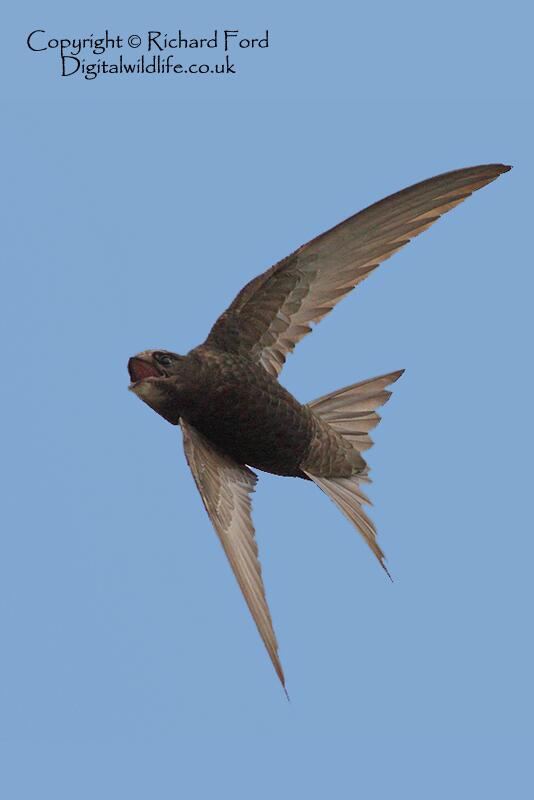
The nightjar is only my second favourite bird. My favourite is the swift, Apus apus. They are currently zooming about in Africa, but will soon be making their flight back north, to Europe. They arrive in Manchester around 1 May, stay until about 15 August, and are the sound of summer with their evocative screeching as they hunt in packs.
This fantastic photo by – I think – @PhilipMillns popped up in my Tw*tter feed, re-tw**eted by @SaveOurSwifts:

It’s hard to see what insect the swift is about to nom, but it looks like it has two pairs of wings…
Philip tw**eted “many shots to get sharp not the sharpest but wow”. Indeed, wow.
Here’s another superb photo of a swift in flight, taken by Richard Ford (@digitalwildlife):
It’ll be a couple of months before this sight appears in my skies. Can’t wait.
.


Foods Expertly Painted to Look Like Other Foods
Russian Sledgesvia rosalind

In her series “It’s not what it seems,” artist Hikaru Cho paints food items to look like other foods: for instance, a banana is expertly painted to look like a cucumber. The series also includes an egg and a tomato.


photos via Hikaru Cho
via Visual News
I went to my advisor and said "I want to write about a book" and she gave me a book to write about.
Russian Sledgesthat's not a bad book to write about
Art Conservation, Scripps College
The Kelmscott Chaucer: Material Longevity and the Ideology of William Morris
Wood smoke plan could make new stoves too costly
Russian Sledges#maine

|
|
A Hand-Cranked Automaton That Mimics the Effect of a Raindrop Hitting Water


This little wood automaton is meant to mimic the effect of a water drop hitting a body of water, all using concentric rings cut from wood that are manipulated by a hand crank. The piece was created by UK-based designer Dean O’Callaghan, inspired by the work of Reuben Margolin (most likely his round wave sculpture). (via The Automata Blog)
For Gerard Mortier
The progressive-minded Belgian impresario, who gave strong support to such diverse artists as Kaija Saariaho, Mark Morris, Pierre Boulez, and Peter Sellars, died yesterday in Brussels, at the age of seventy. Ultimately, administrators prove their worth through their commitment to new work, and in this respect Mortier deserves enduring thanks: each time L'Amour de loin, The Death of Klinghoffer, or L'Allegro, il Penseroso ed il Moderato is performed, he will be remembered.
More: The New York Times obituary, by Zachary Woolfe.
How do British and American attitudes to dictionaries differ?
By Lynne Murphy
For 20 years, 14 of those in England, I’ve been giving lectures about the social power afforded to dictionaries, exhorting my students to discard the belief that dictionaries are infallible authorities. The students laugh at my stories about nuns who told me that ain’t couldn’t be a word because it wasn’t in the (school) dictionary and about people who talk about the Dictionary in the same way that they talk about the Bible. But after a while I realized that nearly all the examples in the lecture were, like me, American. At first, I could use the excuse that I’d not been in the UK long enough to encounter good examples of dictionary jingoism. But British examples did not present themselves over the next decade, while American ones kept streaming in. Rather than laughing with recognition, were my students simply laughing with amusement at my ridiculous teachers? Is the notion of dictionary-as-Bible less compelling in a culture where only about 17% of the population consider religion to be important to their lives? (Compare the United States, where 3 in 10 people believe that the Bible provides literal truth.) I’ve started to wonder: how different are British and American attitudes toward dictionaries, and to what extent can those differences be attributed to the two nations’ relationships with the written word?
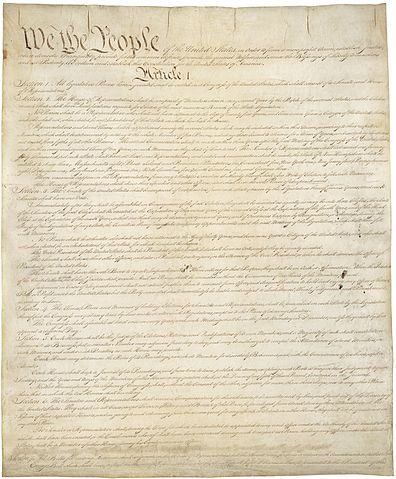
Constitution of the United States of America. Public Domain via Wikimedia Commons.
Our constitutions are a case in point. The United States Constitution is a written document that is extremely difficult to change; the most recent amendment took 202 years to ratify. We didn’t inherit this from the British, whose constitution is uncodified — it’s an aggregation of acts, treaties, and tradition. If you want to freak an American out, tell them that you live in a country where ‘[n]o Act of Parliament can be unconstitutional, for the law of the land knows not the word or the idea’. Americans are generally satisfied that their constitution — which is just about seven times longer than this blog post — is as relevant today as it was when first drafted and last amended. We like it so much that a holiday to celebrate it was instituted in 2004.
Dictionaries and the law
But with such importance placed on the written word of law comes the problem of how to interpret those words. And for a culture where the best word is the written word, a written authority on how to interpret words is sought. Between 2000 and 2010, 295 dictionary definitions were cited in 225 US Supreme Court opinions. In contrast, I could find only four UK Supreme court decisions between 2009 and now that mention dictionaries. American judicial reliance on dictionaries leaves lexicographers and law scholars uneasy; most dictionaries aim to describe common usage, rather than prescribe the best interpretation for a word. Furthermore, dictionaries differ; something as slight as the presence or absence of a the or a usually might have a great impact on a literalist’s interpretation of a law. And yet US Supreme Court dictionary citation has risen by about ten times since the 1960s.
No particular dictionary is America’s Bible—but that doesn’t stop the worship of dictionaries, just as the existence of many Bible translations hasn’t stopped people citing scripture in English. The name Webster is not trademarked, and so several publishers use it on their dictionary titles because of its traditional authority. When asked last summer how a single man, Noah Webster, could have such a profound effect on American English, I missed the chance to say: it wasn’t the man; it was the books — the written word. His “Blue-Backed Speller”, a textbook used in American schools for over 100 years, has been called ‘a secular catechism to the nation-state’. At a time when much was unsure, Webster provided standards (not all of which, it must be said, were accepted) for the new English of a new nation.
American dictionaries, regardless of publisher, have continued in that vein. British lexicography from Johnson’s dictionary to the Oxford English Dictionary (OED) has excelled in recording literary language from a historical viewpoint. In more recent decades British lexicography has taken a more international perspective with serious innovations and industry in dictionaries for learners. American lexicographical innovation, in contrast, has largely been in making dictionaries more user-friendly for the average native speaker.
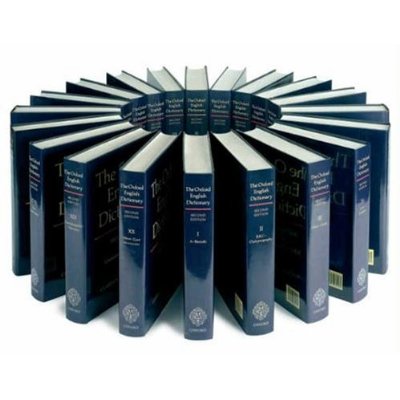
The Oxford English Dictionary, courtesy of Oxford Dictionaries. Do not use without permission.
Local attitudes: marketing dictionaries
By and large, lexicographers on either side of the Atlantic are lovely people who want to describe the language in a way that’s useful to their readers. But a look at the way dictionaries are marketed belies their local histories, the local attitudes toward dictionaries, and assumptions about who is using them. One big general-purpose British dictionary’s cover tells us it is ‘The Language Lover’s Dictionary’. Another is ‘The unrivalled dictionary for word lovers’.
Now compare some hefty American dictionaries, whose covers advertise ‘expert guidance on correct usage’ and ‘The Clearest Advice on Avoiding Offensive Language; The Best Guidance on Grammar and Usage’. One has a badge telling us it is ‘The Official Dictionary of the ASSOCIATED PRESS’. Not one of the British dictionaries comes close to such claims of authority. (The closest is the Oxford tagline ‘The world’s most trusted dictionaries’, which doesn’t make claims about what the dictionary does, but about how it is received.) None of the American dictionary marketers talk about loving words. They think you’re unsure about language and want some help. There may be a story to tell here about social class and dictionaries in the two countries, with the American publishers marketing to the aspirational, and the British ones to the arrived. And maybe it’s aspirationalism and the attendant insecurity that goes with it that makes America the land of the codified rule, the codified meaning. By putting rules and meanings onto paper, we make them available to all. As an American, I kind of like that. As a lexicographer, it worries me that dictionary users don’t always recognize that English is just too big and messy for a dictionary to pin down.
A version of this article originally appeared on the OxfordWords blog.
Lynne Murphy, Reader in Linguistics at the University of Sussex, researches word meaning and use, with special emphasis on antonyms. She blogs at Separated by a Common Language and is on Twitter at @lynneguist.
Subscribe to the OUPblog via email or RSS.
Subscribe to only language articles on the OUPblog via email or RSS.
The post How do British and American attitudes to dictionaries differ? appeared first on OUPblog.


Related Stories
John Denver's 'Country Roads,' Now Official In West Virginia
Russian Sledgeshttps://www.facebook.com/pages/Make-Roadrunner-Massachusetts-Rock-Song/131302800353780
John Denver's hit "Take Me Home, Country Roads," has just become a state song of West Virginia, an effort spearheaded by the woman married to the actor who played Gilligan on Gilligan's Island.

Photograph taken from 100 year old negatives discovered in...

Photograph taken from 100 year old negatives discovered in Antarctica of Ross Sea Party member Alexander Stevens, Shackleton’s Chief Scientist, standing on-board the Aurora.
http://www.nzaht.org/content/library/Century_old_Antarctic_images_discovered_10_Dec_2013_NZAHT.pdf
Son of a Gun: The Firearms Baby Name Report
Russian Sledgesvia firehose
 |
Courtney
shared this story
from  Baby Name Wizard: Baby Name Wizard:
|
| O_o |

If naming a child Violet or Lily suggests delicate, timeless beauty, and naming a child River or Sky conjures the majesty of the natural world, what does naming a child Ruger or Beretta suggest?
That's no longer a hypothetical question. Gun-related names have become a style category of their own, and as I've briefly noted in the past, they're on the rise. Today I'd like to take a closer look at this trend.
I cross-checked lists of firearms terms and manufacturers with names given to five or more babies in the most recent statistical year (2012) and/or 10 years earlier (2002). I ended up with a list of 15 gun-related names, including brand names like Ruger and Colt as well as general terms like Gauge and Shooter. The decade-long popularity trend was crystal clear:
Every name on the firearms list rose significantly over the 10-year period.
The average rise was over 500%. Five names which didn't appear at all in 2002 -- Beretta, Browning, Savage, Trigger and Wesson -- showed up on the 2012 list. Here's a visual summary of the trend (* indicates girls' names):

You may not see these all as "gun names"; the borders of the category are fuzzy. For instance, Gunner could be a respelling of the Nordic name Gunnar as well as an English noun. Even trickier is a name like Cooper, which is both a rifle maker and a familiar tradesman surname. (I left Cooper off of my list, but it too has soared in popularity.)
design-is-fine: Joris Hoefnagel, illuminator and Georg Bocskay,...
Russian Sledgesvia firehose

Joris Hoefnagel, illuminator and Georg Bocskay, scribe, Superimposed Letters Spelling the Names of Illustrious Women of Ancient Rome, 1561/96.
Oregon Republican Conference Endorses Same-Sex Marriage
Russian Sledgesvia saucehose
Republicans at the annual Dorchester conference in Seaside voted to endorse a measure to legalize same-sex marriage that could be on the ballot this November. The vote prompted three conservative groups to organize an alternative event.
The Hortus Deliciarum is a pictorial encyclopedia, possibly the...
Russian Sledgesvia firehose
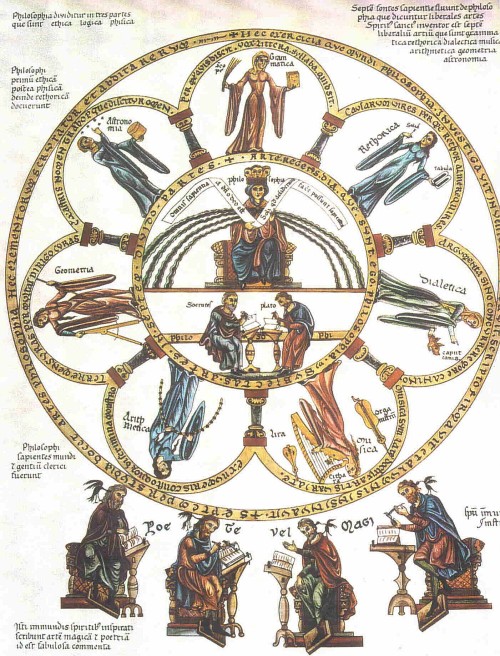
The Hortus Deliciarum is a pictorial encyclopedia, possibly the first of that type book compiled by a lady. For more about the Abbess Herrad of Landsberg, click through the picture!
Untitled — Cat cafe, Dotombori, Osaka. gguillotte gets...
Russian Sledgesvia firehose ("saucie on the camera
that black cat was my buddy")

 Untitled.
UMass latest to deal with rowdy St. Pat's parties - Atlanta Journal Constitution
Russian Sledgesvia firehose
San Francisco Chronicle |
UMass latest to deal with rowdy St. Pat's parties Atlanta Journal Constitution Police detain a participant in the pre-St. Patrick's Day "Blarney Blowout" near the University of Massachusetts in Amherst, Mass. on Saturday, March 8, 2014. Amherst police said early Sunday that 73 people had been arrested after authorities spent most of the ... 73 arrested at 'Blarney Blowout' celebration near UMass AmherstNECN Amherst Police Arrest 73 in Blarney BlowoutGuardian Liberty Voice all 304 news articles » |
The Internet may be producing an excess of penguin sweaters
Russian Sledgesvia firehose
"may be"???
 |
popular
shared this story
from  Boing Boing. Boing Boing.
|
The Guardian reports that the Phillips Island Penguin Foundation in Australia is asking volunteers to knit sweaters for penguins being rehabilitated after oil spills. Back in 2011, Dean wrote here about a similar request. The catch: That earlier plea for penguin sweaters (in fact, every earlier plea for penguin sweaters) has produced far, far more penguin sweaters than penguins actually need. For instance, in 2000, the Tasmanian Conservation Trust requested 100 sweaters and received 15,000. Yes, penguins wearing sweaters are cute, but it may be a good idea to contact the Phillips Island Penguin Foundation directly before you get started knitting.

|
|
People are really bad at saying what they mean and meaning what they say but at least there's whiskey.
Written Arts, Bard College


Manhattan Politician Wants To Ban Animal Tattoos & Piercings
Russian Sledgesthis is a thing?
 This week, animal lovers were up in arms after a Brooklyn tattoo artist posted a photo of his dog, still unconscious after spleen surgery, sporting some newly acquired ink. Artist Mistah Metro (aka Alex Avgerakis) was fired from his job at Red Legged Devil over the controversy. And now, a Manhattan politician wants to ban all animal tattoos and piercings: “It seems crazy to us that it isn’t already illegal,” Lauren Schuster, a spokesperson for Assemblywoman Linda Rosenthal, told Capital NY. [ more › ]
|
|
Rand Paul Is CPAC Straw Poll Winner
Well, there it is: As the Washington Times reported a few minutes before the official announcement, Rand Paul has won the 2014 CPAC straw poll. It’s not a huge surprise — since 2010, Mitt Romney is the only winner whose last name hasn’t been Paul (congressman Ron Paul won in 2010 and 2011).
This is Senator Paul’s second win in a row. He won with 31 percent of the vote, with Senator Ted Cruz taking 11 percent. Ben Carson, a retired neurosurgeon and Fox News contributor who’s been named as a potential 2016 dark-horse candidate, came in third with 9 percent of the vote.
Senator Marco Rubio dropped precipitously from last year, going from second place and 23 percent of the vote to seventh place and 6 percent this year.
The poll was first held in 1976, and winners have included Rudy Giuliani, Ronald Reagan, and Mitt Romney. There were 25 potential candidates on the list this year.