Shared posts
23 May 02:13

Google Correlate
by Tyler Cowen
Steve Dyeri am tickled!
Which search terms correlate with support for which politicians? Why not at least ask this question?
John Kasich. Places that like Kasich are richer in some fairly policy-wonkish search terms: “net cost,” “renewable portfolio standard,” the economist Joseph Stiglitz, Financial Times writer Martin Wolf, and Vox writer Dylan Matthews. These terms have a ring of plausibility. They might be good fodder for small talk…if you are talking with a Kasich supporter!
But then there are terms that I don’t entirely understand: Route 73 and Haven Pizza. Maybe someone can explain those to me. It is also true that with billions of search terms to choose from, occasionally a correlation will arise by chance. These might be false positives.
Ted Cruz. Many Cruz-related search terms are related to domestic life of a certain kind: family photos, felt Christmas stockings, scentsy plug ins, balloon animals, Baby Trend car seats, and DIY cribs. Easy enchiladas are particularly Cruz-y. Mmmm, enchiladas. And udder covers…I wasn’t expecting that one. Maybe the Cruz campaign could start distributing Cruz-themed udder covers!
Donald Trump. Note that the correlations are weaker. That could be because Trump support is broad-based in the Republican Party. Or it could be that the connection between the voter and the Google-searcher is indirect (i.e. they are different individuals who live near one another).
That is from Sam Wang, via the keen-eyed Jordan Schneider. And what about the Democrats?
Near Clinton supporters it’s cheap bedroom furniture, Nicki Minaj fans, and pink hoverboard shoppers. And “career in” – Google auto-complete as a job counselor!
And the strongest correlate with Bernie Sanders support?: “candied nuts,” next in line is “best oatmeal,” ladies and gentlemen that is proof this is not just data mining and false correlations. The list is dominated by recipe terms, and “corn syrup substitute” is number four! Oh where oh where is Martin Wolf?
The post Google Correlate appeared first on Marginal REVOLUTION.
21 May 19:23
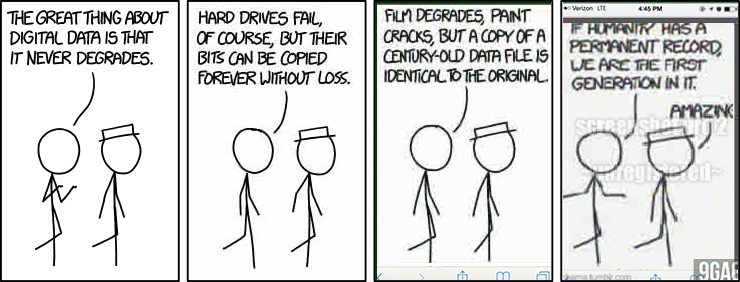
Digital Data
Steve DyerSHITPICS ARE THE BANE OF MY EXISTENCE
Adam Victor Brandizzi, Jon Back and 17 others like this
18 May 18:23


Mexican President Calls for Legalization of Gay Marriage Nationwide: WATCH
by Sean Mandell
Steve Dyer#DILFsofNAFTA

On Tuesday, Mexican President Enrique Peña Nieto called for the legalization of gay marriage nationwide, a move in accordance with a ruling from Mexico’s Supreme Court last year that found it was unconstitutional for states to ban same-sex marriage.
Speaking at an event on the International Day Against Homophobia, Pena Nieto said he signed initiatives that would seek to add same-sex marriage provisions to Mexico’s constitution and the national civil code.
Pena Nieto said he would seek to reform Article 4 of the constitution to clearly reflect the Supreme Court opinion “to recognize as a human right that people can enter into marriage without any kind of discrimination.”
“That is, for marriages to be carried out without discrimination on the basis of ethnicity or nationality, of disabilities, of social or health conditions, of religion, of gender or sexual preference,” he added.
The profile page of Pena Nieto’s Twitter account was turned rainbow-colored Tuesday as he made the announcement.
Por un @Mexico incluyente que reconoce en la diversidad, una de sus mayores fortalezas #SinHomofobia. pic.twitter.com/6ooZGuPEsD
— Enrique Peña Nieto (@EPN) May 17, 2016
Gay marriage is currently legal in Mexico’s capital, Coahuila, as well as the Quintana Roo state. The legislation proposed by the president would add same-sex marriage rights to the nation’s constitution and civil code.
Watch video of Peña Nieto proposing the legislation, below.
The post Mexican President Calls for Legalization of Gay Marriage Nationwide: WATCH appeared first on Towleroad.
17 May 22:24


Canadian PM Justin Trudeau Announces New Transgender Rights Legislation: WATCH
by Sean Mandell
Steve Dyer#DILFsofNAFTA

On Tuesday, Canadian Prime Minister Justin Trudeau announced that his government will enact new protections for transgender citizens. The moves comes on The International Day Against Homophobia and Transphobia.
According to the Canadian Department of Justice, the new legislation will update both the Canadian Human Rights Act and the country’s Criminal Code to include gender identity and gender expression as a “distinguishing feature of a person.” If enacted the legislation would criminalize discrimination, harassment and violence based on that feature.
Trudeau made the announcement after he received the Laurent McCutcheon Award, named after the pioneer in the fight against homophobia who served as president of the Montreal hotline Gai Écoute from 1982 until 2013.
The award highlights Trudeau’s continued support for lesbian, gay, transgender and bisexual individuals in Quebec and across Canada.
“I believe in a Canada where men can give blood, regardless of their sexual orientation,” Trudeau said. “Where transgender people are protected by the law.”
“A Canada where all prime ministers are proud to walk with the LGBT community during gay pride parades.”
The bill aimed at safeguarding transgender Canadians is to be tabled in the House of Commons on May 17, the International Day against Homophobia, Transphobia and Biphobia.
“We must carry on the legacy of those who fought for justice by being bold and ambitious in our actions,” Trudeau said. “And we must work diligently to close the gap between our principles and reality.”
Trudeau also took to Twitter on Tuesday to share the news.
Today, we’ve tabled a bill to protect Canadians from being discriminated against based on gender identity or gender expression. #FreeToBeMe
— Justin Trudeau (@JustinTrudeau) May 17, 2016
…the bill also extends hate-crime sections of the Criminal Code to include those targeted based on gender identity. https://t.co/7zdYFNLEDZ
— Justin Trudeau (@JustinTrudeau) May 17, 2016
Watch Trudeau make the announcement, below.
You can read Trudeau’s full statement, below:
“Today, I join Canadians – and people around the world – to recognize the International Day Against Homophobia, Transphobia, and Biphobia.
“Everyone deserves to live free of stigma, persecution, and discrimination – no matter who they are or whom they love. Today is about ensuring that all people – regardless of sexual orientation or gender identity – feel safe and secure, and empowered to freely express themselves.
“On this important day, I encourage all Canadians to raise awareness, and mobilize to end the violence, prejudice, and judgement faced by LGBTQ2 persons.
“As a society, we have taken many important steps toward recognizing and protecting the legal rights for the LGBTQ2 community – from enshrining equality rights in the Canadian Charter of Rights and Freedoms to the passage of the Civil Marriage Act. There remains much to be done, though. Far too many people still face harassment, discrimination, and violence for being who they are. This is unacceptable.
“To do its part, the Government of Canada today will introduce legislation that will help ensure transgender and other gender-diverse people can live according to their gender identity, free from discrimination, and protected from hate propaganda and hate crimes.
“Today, let us unite in a global celebration of diversity, and reaffirm our commitment to unequivocally defend LGBTQ2 rights as human rights. We will never stop fighting for a safer, more equal, and more just world for all of our children.”
The post Canadian PM Justin Trudeau Announces New Transgender Rights Legislation: WATCH appeared first on Towleroad.
16 May 18:10
We Are Closing The Toast July 1st
by Nicole and Mallory
Steve DyerRIP :(
This is not a drill.
Read more We Are Closing The Toast July 1st at The Toast.
13 May 17:36
I Don’t Know How To Tell You This, But Donald Trump Might Have Said Something Untrue
by Rebecca Schoenkopf
Steve Dyerclick through to the wapo article, it is a new level of unbelievable, even for trump
Donald Trump definitely did not make those phone calls pretending to be a PR spokesman for Donald Trump that Donald Trump admitted Donald Trump made.
11 May 16:29
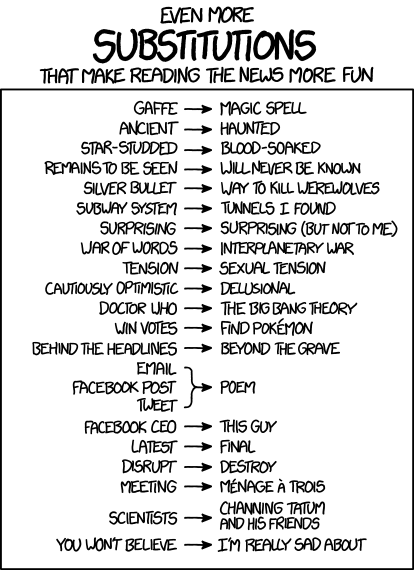
Playing By Pyongyang's Rules
by Aaron Fox-Lerner
Steve DyerI WANT TO GO TO NORTH KOREA

Of the roughly five thousand Western tourists who go to North Korea every year, up to half will pass through the office of Koryo Tours, the most popular and longest-running tour operator to the Democratic People’s Republic of Korea. Tucked away in a residential courtyard in the otherwise glitzy shopping district of Sanlitun in Beijing, the office is decorated with posters of North Koreans smiling, laughing, shouting in victory, or staring resolutely ahead. “We try to avoid the ones that are too viciously anti-American,” Koryo founder Nicholas Bonner told me. The tourists receive a briefing and warnings—“Don’t wander off. It’s illegal. Don’t underestimate the feeling people have for the leaders.”—before traveling on from China to North Korea. They are escorted everywhere by guides and minders, and they visit attractions like the Arch of Triumph, Revolutionary Martyrs’ Cemetery, and North Korea’s largest bowling alley.
If you’ve read a news story about North Korea that didn’t involve sanctions, gulags, or nuclear weapons, there’s a fair chance it had some connection to Koryo Tours. They bring foreigners to the Pyongyang Marathon, co-ordinate the Pyongyang International Film Festival, and provide information for Lonely Planet and Rough Guides. They sold tickets for the Slovenian industrial band Laibach’s tour of the country last year, and helped co-ordinate the New York Philharmonic’s 2008 visit. Through tourism and media-friendly cultural exchange, Koryo promises a window onto the world’s last truly Stalinist state.

Bonner is a middle-aged Englishman with a cheery, easy-going demeanor. He started offering tours in 1993 with his friend Joshua Green, who was running the Pyongyang branch of a courier service at the time. The country had only been open to Western tourism since 1987. “One of the North Koreans [whom Green was friends with] said, ‘look I work for a travel company and we’ve got no tourists.’ So that was our excuse in,” Bonner explained.
Until the early aughts, the company had little competition. Now they’re part of a small crowd of tour operators including budget option Young Pioneers, US-based Uri Tours, and UK-based Lupine Travel, among about a dozen others. All foreign tourists to North Korea must coordinate with North Korea’s state-owned travel companies, and groups or individuals are accompanied at all times by North Korean guides who set the agenda. Koryo tries to set itself apart by emphasizing its experience and connections. Its media-friendliness and knack for attaching itself to events surely don’t hurt either.

Koryo also offers tours to other unconventional locations like Russian prison towns and the Central Asian dictatorship of Turkmenistan, but it’s best known for its North Korea service. “It’s not just supposed to be disaster tourism. It’s dark tourism, I guess, in many cases,” Simon Cockerell, Koryo Tour’s general manager, said. “But it’s not misery tourism. I think there is a difference. And I think we’re on the right side of that, I hope.” Where Bonner speaks in airy tones and has a tendency to ramble, Cockerell, a fellow Englishman, is direct and clear, speaking in practiced soundbites. He started working for Koryo in 2002 after meeting Bonner at an amateur Beijing soccer league, and marked his hundred and fiftieth trip to North Korea earlier this year.
Koryo’s promotional materials stress their record of safety in visiting what they bill as “the world’s most mysterious country.” Bonner told me that they have a vetting process for their tourists, and have turned down those whom they thought might cause problems, including potential tourists who came across as too pro-regime in conversation. In general, both Bonner and Cockerell referred to the trips as “interesting” or “fascinating” more often than “fun.”

This March, Otto Warmbier, an American student at the University of Virginia who visited the country with Young Pioneers, was sentenced to fifteen years of hard labor for stealing a banner from a hallway in the Yanggakdo International Hotel, one of the only hotels open to foreigners in Pyongyang. To some Westerners, Warmbier’s real crime was traveling to North Korea in the first place. “Please Cancel Your Vacation to North Korea,” opined a Korean-American essayist in a New York Times. Cockerell, while quick to note he doesn’t agree with the arrest or harsh sentencing of Warmbier, bristled at the idea that there is any danger in visiting the country. “There has never been a case of any tourist being arrested for nothing. There’s always something…we tell people in the strictest possible terms, no ambiguity whatsoever, don’t break the law.” North Korea has a history of holding foreigners for minor offenses. Robert Boynton’s book about North Korea’s bizarre history of foreign abductions, The Invitation-Only Zone, is a great way to sour potential tourists on the idea of going. Boynton told me last month, “Frankly, I believe there should be a travel ban for Americans.” Tourism, he said, not only “plays into the hands of the regime,” but it also “exacerbates the situation by giving them a steady supply of would-be hostages.”
The ethics of traveling to North Korea have long been debated, with those in favor saying that even small, outside contact can help change the country, and a visit can help you learn about it. Barbara Demick, the author of Nothing to Envy, expressed caution about traveling to North Korea in an email to me, but also noted that “you can still get glimpses of people’s lifestyles if you look carefully. On trips to the outskirts of Pyongyang, I saw barefoot children and people collecting weeds at the side of the road out of bus windows. The North Koreans you meet are all official guides, but it is still interesting to talk to them.” Most debates over ethics and tourism center on how visitors can end up changing a place for the worse: local traditions rendered inauthentic, cities gentrified, environments despoiled. The debate over North Korean tourism, however, centers on how to more effectively change the country for the better.

Only around five thousand Westerners visit North Korea every year. That’s about half as many visitors as the Empire State Building gets in a day. Cockerell argues that tourism revenue is far from central to the regime: “It has industry and trade, even with the sanctions. So if tourists stop going, the result will not be the crumbling of the North Korean state, it will just be that five thousand fewer Western people per year will have any exposure to North Koreans at all…It’s not a question of moral relativism. Tourists don’t support the North Korean state, nor do they want to support the North Korean state. But thousands of people have jobs because of tourists.” But his argument depends on the number of tourists remaining small. The country has an officially stated goal of growing the number of annual tourists to two million by 2020, which Cockerell dryly described as “aspirational” given the lack of infrastructure and policies. If North Korea were somehow magically able to hit that goal, it would mark a notable rise in income for the state.
Koryo’s role in North Korean tourism is well known, but its media-friendly promotion of the country goes largely overlooked. It has been involved in arranging art projects, feature films, documentaries, musical tours, and sports matches. Bonner explained by way of saying, “there’s no one else to consult, [we’re] the only people there.” He’s being modest—at times, Koryo Tours can feel like a de facto soft power arm for North Korea, and all of its projects made in the country are subject to the dictatorship’s strict censorship. In 2011, Bonner co-directed Comrade Kim Goes Flying, which he billed as a girl-power rom-com for North Korean audiences. I wondered whether the film’s trouble-free vision of North Korean life might not be propaganda, but he argued that it was worth playing by the regime’s rules to produce a purely entertainment-oriented, feminist-leaning film, which North Koreans would otherwise never see.

Matjaž Tančič, a Beijing-based Slovenian photographer (and a friend of mine), worked with Koryo Tours for a portrait series that was later shown in Pyongyang and showcased in The Guardian and CNN. He described shooting it to me as a constant attempt to avoid portraying the big attractions his guides wanted in favor of ordinary people. That said, even with the back-and-forth between him and the guides, they still determined where he went and whom he could shoot. Tančič pushed back against the idea that his work could be seen as propaganda: “Just the way I didn’t shoot them happy or smiling, but if they were uncomfortable, it showed their human side, you know? I didn’t feel it was propaganda at all. Just the context helps: where you shoot it, where you put it.”
A series of documentaries Bonner produced with director Daniel Gordon prove just how much can still be achieved within the state’s limitations. Their 2004 film A State of Mind follows a couple of young girls who say things like “We have to endlessly hate the US and fight them to the end” as they prepare for the country’s mass games. The filmmakers even managed to be allowed into people’s homes, which include the infamous state radios that can be turned down but not off. Crossing the Line, which came out in 2006, is damning. It focuses on an American named James Joseph Dresnok who defected from the Army to North Korea in the 1960s. At one point, Dresnok brags about getting full rations at a time when hundreds of thousands of ordinary North Koreans were starving to death.
Koryo’s close connections and long history have enabled its fantastic access, but Bonner and Cockerell both minimized their level of connection to the North Korean government. “It’s all indirect,” Cockerell said. “You only talk to your partner and your partner passes it on. It’s hard to go above someone’s head. You don’t really have the connection to the people above them, and no one really knows how far up the ladder everything goes.” Boynton praised Bonner’s documentaries, but had questions about the access required to make them: “One thing I’m struck by is that anyone who wants to maintain good relations and the ability to go there and come back, has to censor himself.” When I brought this up with Bonner, he said he simply focused on the stories he wanted to tell. That may be true, but selective focus can still qualify as its own form of self-censorship.

One of the strangest realities of North Korea is that the people who cover or study the country the most are often unable to actually enter it. Demick said she went multiple times in the past but hasn’t tried to go since her book came out. Boynton was once scheduled to go, but had his invitation rescinded over a piece he wrote on the country’s digital underground. Rob York, chief editor of specialty site NK News, similarly told me he didn’t think he’d be let into North Korea because he’s written about its human rights violations. About 130 journalists were invited into the country via direct visa application for its party congress this month, but even then, a reporter and camera crew from the BBC were detained and expelled for coverage deemed disrespectful of the system. By contrast, Cockerell said that Koryo has been able to take in journalists to cover soft news like sporting events. The North Korean government may attract a lot of mockery in America for seeming clueless, but it knows exactly what kind of press it wants. There’s also the issue of how this kind of thing plays out in terms of domestic propaganda. Tourists are expected (but not required) to pay respect to statues of Kim Il-sung and Kim Jong-il. Cockerell insisted to me that this doesn’t contribute to government control in North Korea, saying that “it’s just one of those things people do” and compared it to attending a flag-raising ceremony.
North Korea’s earliest abductions, Boynton noted, were largely of South Korean fishermen. Many of them were taken to banquets and festivities before being allowed to return home. The point was to leave the abductees with a positive image of North Korea that they would spread in the South. “North Korea’s only production or product is public relations,” Boynton said. “It’s a public relations state.” Dennis Rodman’s surreal visit to play basketball—for which Koryo Tours sold a limited number of tickets through an exclusive partnership with the organizers—hardly seems like good PR, but it was better for North Korea’s image than a story focusing on the government’s crimes against humanity or confronting the fact that the country has its own gulag archipelago.

When I brought this up with Cockerell, he insisted, “we don’t trivialize it. We’re not an NGO, we’re not a human rights organization, but it’s a sensitive place and you have to be sensitive about certain things. And we don’t want people to get so comfortable thinking it’s just like anywhere else, because it’s not like anywhere else”
There is little danger of anyone thinking North Korea is like anywhere else. The sheer novelty of a place we’re forbidden to fully see will continue to drive both niche tourism and media coverage. And while we argue over whether we can better change North Korea through an open or closed approach, the country has stayed more or less the same. I asked Bonner how much had changed since he started in 1993. His answer, after a brief pause, was simple: “Not a lot.”
09 May 18:34
Photoshop The News
by Joe Tonelli
Steve DyerYES TO THIS

Look at this photo of Bob Barker and Drew Carey. They’re just two friends, sharing a vast body of knowledge about the MSRPs of household goods and a love of responsible pet ownership practices. But imagine for a second, if there was something…more.
You’re a crew member on “The Price Is Right” who’s bounced around the industry for a few years out of college, you’re doing okay, but it’s still early in your career, the bridges you’re going to burn aren’t very long.
“Hmm, what are those two shadows lurking behind the Plinko board?”
“OMIGOD IS THAT WHO I THINK IT IS!?!?!!”
*snaps a few grainy iPhone photos*
It’s probably not what you think it is, but you’re going to offer those photos to that scuzzy paparazzo you met at SUR for a quick fifty bucks.
And then the next day the news is blaring in the National Inquirer: MAY-DECEMBER ROMANCE SPRINGS UP BETWEEN TVS HOTTEST DAYTIME GAMESHOW HOSTS
I could go on, however, I am not a fanfic writer—in fact, I am not even a non-fic writer. I possess a small blue checkmark (which I probably do not deserve), meaning people on Twitter are required to take me seriously. This got me thinking to myself, “Joe baby, you need to get yourself some scoops to let people know you’re the real deal!!” Show them you’re someone with exclusives and embargoes. Someone who wrote tktk once.
Then one day my coworker said to me, “Hey, imagine if the Property Brothers kissed?? They seem like they do that and I would very much like to see it.” And I says to her, “Oh, they have, and I have the exclusive footage to prove it.” And after just a few minutes, the story broke!!
EXCLUSIVE FOOTAGE: PROPERTY BROTHERS KISSING FOR THE FIRST TIME pic.twitter.com/weZFMNNjtd
— Toenails (@joetoenails) February 25, 2016
From then on, I knew any story about male celebrities kissing could be mine, no matter how wild. After all, the best thing about being a journalist in 2016 is that you get to make up any story you want!!! So I give the people what they want, which is lies. But real lies! With real(ish) facts! Who cares if the facts were manufactured poorly in Photoshop?? Nobody! And less so me! Welcome to New York Channel Zero, home of taglines like “none of the news never.”
HOLY SHIT, THE WHITE HOUSE DOES NOT WANT YOU TO SEE THIS!! OBAMA AND TRUDEAU CAUGHT SMOOCHIN!!! pic.twitter.com/828JSIYrw4 — Toenails (@joetoenails) March 10, 2016
I’m a one-man media rag with a cracked version of Photoshop tweeting at a breakneck pace, I can’t be stopped! Plus, I’m the most transparent (0% opacity) news source out there! You can see my whole editorial process from “layer via cut” to “save for web and devices.”
WOW! EXCLUSIVE DELETED SCENE FROM BATMAN V SUPERMAN!!! A SUPERHERO SMOOCH!! pic.twitter.com/YYAy2hSJod — Toenails (@joetoenails) March 29, 2016
And do you know what else? Being bad at something is hilarious. I am bad at a lot of things, including Photoshop and investigative makeout journalism. But that hasn’t stopped me from pursuing both those things. In fact, it’s inspired me. My power is limited only by my own imagination and the photos I can find by searching “Michael Strahan kiss,” literally nothing else!! Not reality, that’s for dang sure! Look, not everyone should kiss everyone. But when it comes to two famous people, they should probably definitely just kiss.
OH MY GOD THIS IS WHY MICHAEL STRAHAN LEFT!!!!!11!! UNBELIEVABLE FOOTAGE!!!! pic.twitter.com/sYkronS9u5 — Toenails (@joetoenails) April 22, 2016
They’re (I assume) doing weird rich people stuff anyway, so is it too far out of the bag to imagine them kissing? The ideas are already rumbling grumbling around in people’s heads, just look at all the Finn/Poe stuff out there!! Or Cruz/Trump!!
EXCLUSIVE: TRUMP AND CHRISTIE KISSING FOR THE FIRST TIME. RUBIO STUNNED!!! pic.twitter.com/x1R3YAH4I1 — Toenails (@joetoenails) February 26, 2016
(Oh it is all out there, my friend). I just provide a shuttle service for the imagination with my extremely limited skill set. I can’t get us all the way there, but with a few copy and pastes, we’re halfway to smooch-ville.
It’s 2016, I can find pictures of almost any two famous guys together so I’m gonna keep doing the thing. And if I can’t, I can still make them kiss — trust me.

09 May 16:23
Mayans located their cities according to constellations
by Jason Kottke
Steve DyerThis kid is an asshole
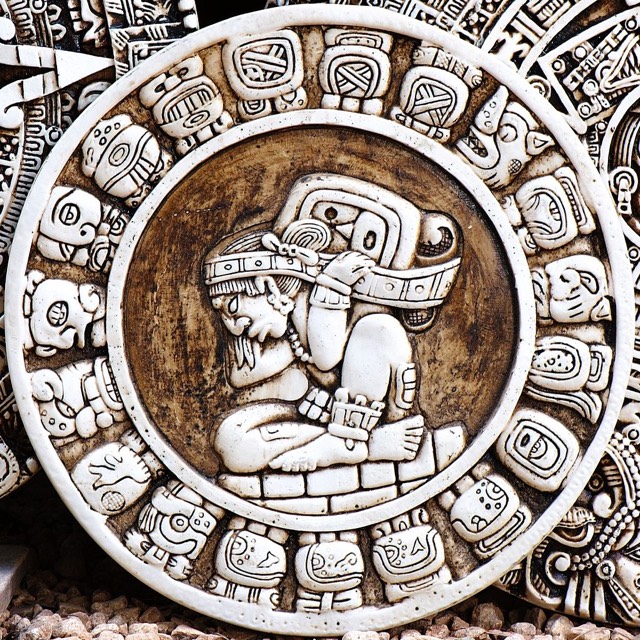
15-year-old Canadian William Gadoury has translated his interest in the Mayan civilization into two remarkable discoveries. Gadoury noticed that the locations of the biggest Mayan cities matched the locations of the stars in Mayan constellations. Furthermore, the star charts pointed to the existence of a previously unknown city, the ruins of which have since been uncovered by satellite photography.
"I did not understand why the Maya built their cities away from rivers, on marginal lands and in the mountains," said Gadoury. "They had to have another reason, and as they worshiped the stars, the idea came to me to verify my hypothesis. I was really surprised and excited when I realized that the most brilliant stars of the constellations matched the largest Maya cities."
Someone start a Kickstarter campaign so that he can visit those ruins! (via @delfuego)
Update: Due to a mislabeled file on Wikipedia, I used a photo of an Aztec compass instead of a Mayan image. I have replaced with an image of the Mayan zodiac.
Also, per my post about media coverage of science yesterday, I'll point out quickly that there's much to be skeptical about re: this story (see this post from a Mesoamerican archaeologist). More likely than not, there's a Mayan scholar mailing list going bananas right now...I'll let you know if I hear anything specific.
In the meantime, this story in the Independent contains some satellite photos of the location in question. (via @gunnihinn)
Update: Vice: That 15-Year-Old Kid Probably Didn't Discover a Hidden Mayan City.
The rectangular feature seen on satellite is likely an old corn field (it's not the right shape to be a pyramid). There are indeed ancient Maya sites all over the place, and satellite imagery and LiDAR are being used to discover them, but this doesn't seem to be one of those cases...
On the bright side, the "if it sounds too good to be true, it probably is" study has been successfully replicated again. Science rolls on...
Tags: archaeology astronomy Maya civilization science William Gadoury
06 May 14:36
Interested in webcam young girls? take a look: Chat Sexo...
Steve DyerI guess this tumblr is officially dead now and I should take it off my feed


03 May 20:12

After mastering writing his own name, Jumpy, the border collie mix, has moved on to painting landscape masterpieces, with help from his owner and trainer, Omar Von Muller.
[Omar Von Muller]

Genius Dog Paints a Landscape Painting
Steve Dyerwhat it says on the can

After mastering writing his own name, Jumpy, the border collie mix, has moved on to painting landscape masterpieces, with help from his owner and trainer, Omar Von Muller.
[Omar Von Muller]



03 May 16:00
in the end, the work is what matters
by Freddie
Steve Dyer@kantos re:hamilton
Another reader request. Devon:
“What do you think of the controversy over Hamilton and its historical accuracy? Are the criticisms fair? It seems like a good example of politics overriding artistic quality in the way you’ve criticized in the past.”
I can’t say anything about Hamilton critically; I haven’t seen it. I have listened to the soundtrack a few times and it is decidedly not for me. But a play is not its soundtrack and I can’t say if the play is as good as its reputation or not. (And unless I win the lottery, probably never will.) I have certainly noticed the ways in which appreciation for the play has taken on a life of its own. I’ve also read some of the criticism from historians. I feel like the specific question of the play’s historical accuracy is kind of limited and boring. But there are more interesting, larger questions that connect here.
First, I agree with the great Isaac Butler on just about everything in this piece. It’s essential to separate two things: a work of historical fiction’s artistic value and its historical accuracy. Both are important. People who consume historical fiction (or fictionalized history or whatever) should have a basic sense of when and how the fiction diverges from our best guess of the historical record; people who fictionalize history should feel no guilt over liberally departing from the historical record if that’s what’s best for the story. Part of what made Zero Dark Thirty so egregious was that the producers repeatedly insisted it was a work of faithful history, comparing it to a documentary in the film’s publicity countless times. As far as I know, nobody involved with Hamilton has presented it as an attempt at perfect historical fidelity. Like… I’m pretty sure Alexander Hamilton didn’t rap that much. If the creators are upfront about their departures, and the audience understands the nature of historical fiction, no harm and no foul.
The bigger issue, though, I think is more important, which is the question of the correct relationship between the politics of a piece of art and its quality. I do think that we have seen a wide scale, passionate embrace of art criticism that presumes the purpose of criticism is to adjudicate whether and how well art fulfills the functions of contemporary social liberalism. In the era of Takes, there is an entire wing of criticism – a large and growing concern – that asks to what degree any given work of art confirms the kind of vague intersectional race, gender, and sexual politics that have become the default language of our culture industry. That art is considered well crafted which best dramatizes the stories that this form of social liberalism tells about the world. This type of Takes criticism also judges how well a given work practices socially liberal principles through diversity, either the diversity of its perspective or the diversity of its creators. Both of these are laudable goals, though Takes criticism has an uninspiring track record when it comes to fairly and consistently sorting what failure or success looks like in this regard.
I get a fair amount of emails from people who are mad that a work of art they consider undeserving is receiving praise, or that a work of art they consider good is receiving criticism, because of success or failure in properly demonstrating the consensus political norms. Often I agree with them, but I’m forced to laugh, because in their opposition they’ve ended up doing precisely what they accuse others of doing: allowing a work of art’s political reception to overwhelm their aesthetic appreciation. Putting politics first.
There are reams that you could write about this; I already have, as have others. Probably the most important point is simply that, as bad as this stuff can be for aesthetics, it’s even worse politics, as it fits in perfectly with contemporary liberalism’s addiction to symbolism over substance and utter inability to sort one from the other. But I think it’s worth making a smaller point: the short-term political interests of the contemporary audience is precisely the sort of thing that will cease to matter over time, and if we want to engage culturally in the spirit of a longer historical lineage of criticism, we should worry about the demise of aesthetics at the hands of politics. Because it’s aesthetics that endure.
As someone who reads a fair amount of books that were published long ago, I find few things quite as baffling as trying to parse their political context. That’s true even when I’m armed with a good understanding of what the major players and actors were in the given time period. Politics is filled with exceptional nuance, small-but-crucial distinctions, linguistic cues that seem inscrutable to those who haven’t been steeped in their discussions for ages. I find it easy to adapt to the cultural changes that inflect older books; mores about sex and nobility and justice and friendship, I find, are more accessible across the ages. But politics is hard, and the political work that endures is that which most effectively ties immediate and ephemeral political realities to more enduring aspects of human existence. Or so it seems to me.
Look at Gulliver’s Travels, for example. The book was, above and beyond anything else, a political satire, and yet it’s hard to imagine that this resonates with most of its readers. I read it last year for the first time in (god) 20 years or so. I was no more able to really grasp the political implications than I was when I read it as a young teenager and wasn’t even looking for them. I kept seeing aspects of the book that I could tell must have had important satirical elements, but they just meant nothing to me; I’m not a creature of that time. But the book has endured, and not because 12 year olds are masters of 18th century Anglo politics. The story’s fantasy elements, and Jonathan Swift’s verve in delivering them, have survived the passage of time; its politics, for most people, haven’t. Of course, there are politics at work in Aeschylus and Hamlet and To the Lighthouse, but those are the politics which can be removed from their immediate historical context and still enlighten, challenge, or disturb. Critics who want to contribute to developing an enduring and meaningful reputation for a particular book or movie or album should probably emphasize what’s timeless instead of what’s timely. And the kind of politics I’m talking about are very much part of our particular political and cultural moment.
Yet this is precisely what Takes never do. Takes always emphasize the local and the immediate. It’s their nature; the endless churn of the #content cycle ensures that the machine will produce mostly writing of immediate but rapidly-declining relevance. Takes criticism thus most often locates a piece of art in a particular contemporary context, but almost never shows how that art connects to more enduring themes. I know that many people flatter themselves to think that we’re in some sort of unique political era, that we’re on the cusp of a permanent adjustment of how we deal with power and difference. But this strikes me as the pretense of people from every political era.
I have no idea if people think Creed, Transparent, or Lemonade are good art as art, because the focus on their good politics has been so relentless. In the long run that’s good for nobody, artist or consumer.
Think about a book like Uncle Tom’s Cabin. These days it functions as much more of a historical document than a literary one, an archival text used to demonstrate attitudes towards slaves, slavery, and abolition in the immediate pre-war period. We now have a great deal of (convincing) arguments for all of the ways in which the book is problematic, and that work is important. But I think the book is rarely read anymore not because of its various and deep political problems but because it’s just not a very good book. Meanwhile, no matter how many new Takes are written that problematize Huck Finn or To Kill a Mockingbird — and, crucially, no matter how right they very well might be! — I find their reputation secure. When Tolstoy died, people traveled from thousands of miles away to pay their respects. Riots and strikes broke out across Russia. They renamed the village where he died. I don’t think his artistic reputation is going to be affected by talking about what a shitty husband he was, even though he was a shitty husband, and it’s important to say so, and our understanding of artistic greatness should recognize the role gender inequality has played in the production of art.
Look, obviously the relationship between artistic reputation is a huge topic and far bigger than a couple cherry picked examples. I do think, though, that it’s sensible to say that when you constantly put politics before aesthetics you risk making the work you champion appear incapable of standing on its own artistic value. And this is a point that I really wish the people now writing politics-first criticism would understand: the problem isn’t always or just that you’re overpraising art that suits your politics, but that in doing so you’re actually undervaluing that art. That is, by focusing so relentlessly on the degree to which a given movie or book or show satisfies the dictates of limp bourgeois social liberalism, you actually damage your ability to influence its enduring reputation. Perception of mass critical opinion is weird and chancy and uncertain, but there’s little question that the initial reaction of critics helps to determine a piece’s eventual stable reputation. Later critics may affirm that initial reception or reject it, but they almost always read through the prism of what’s been said before. To restrict your contribution to how well a piece of art fits within current progressive norms, which will surely appear inscrutable and arbitrary in just a few decades, is a way to write yourself out of a more lasting conversation.
Good politics are used in the service of making bad art every day. Monsters make masterpieces. This is not news.
So if you’re mad that Hamilton has gotten as much hype as it has, because of the way liking it now functions as a kind of membership card for cultured progressives, and if you’re a Hamilton fan who feels that the backlash against the play sidelines its artistic merit in an unfair meta-conversation, the news is good: time is an imperfect but powerful corrective for overemphasizing short-term political attitudes in criticism. I’m sure some people will intentionally misread this post, but I’m not saying that you shouldn’t write about Hamilton and race or Hamilton and representation or Hamilton and the economics of Broadway. All of those things sound like great things to write about. I am saying, though, that you should ensure that when you do write these things, you write about how well done they are, about how effectively the play wrings drama and meaning from them, about whether the politics deepen and complicate the art rather than merely exist within it. The easiest way to undermine the durability of your opinion on Hamilton is to write about nothing but its role in satisfying the expectations of cultural progressives. The easiest way to undermine Hamilton‘s long term reputation is by praising the show in a way that sidelines aesthetics in favor of those politics.
Stuff that’s lionized today will be forgotten tomorrow. And a lot of it will be stuff that was championed not because of its quality but because of what lavishing that praise was meant to say about the champions. Whether Hamilton will be one of them, time will tell.
02 May 20:05


Justin Trudeau Just Served Queen Elizabeth, Prince Harry, and the Obamas a One-Armed Mic Drop: WATCH
by Sean Mandell

Last week we told you about an amusing fake feud that started online between the Obamas and the Windsors, namely Barack and Michelle v. Queen Elizabeth II and Prince Harry.
It all began with a challenge from the Obamas saying that the Brits better bring it at the upcoming Invictus Games in Orlando, Florida.
Hey, @KensingtonRoyal! Are you ready for @InvictusOrlando? Game on. pic.twitter.com/S34KrEv5Is
— The First Lady (@FLOTUS) April 29, 2016
Unfortunately for the Obamas, Queen Elizabeth II happened to be around when Harry got the message from Michelle. That left us with the memorable, “Boom, really, please” line from HM.
Unfortunately for you @FLOTUS and @POTUS I wasn't alone when you sent me that video 😉 – H.https://t.co/sjfSQvkzb6
— Kensington Palace (@KensingtonRoyal) April 29, 2016
Now, Canadian Prime Minister Justin Trudeau–apparently feeling left out of the love loss contest (hey, Canada is part of the Commonwealth)–decided to get into the beef-stakes with a mic drop of his own: one armed push ups.

Mic. Dropped.
Watch, below.
The post Justin Trudeau Just Served Queen Elizabeth, Prince Harry, and the Obamas a One-Armed Mic Drop: WATCH appeared first on Towleroad.
02 May 17:08
Medieval Fight Club
by Jason Kottke
Steve DyerTHIS DOESN'T SEEM NECESSARY
This is NUTS. The members of the Armored Combat League get dressed up in medieval armor and go at it, hard. Like full on with knives and axes and clubs.
We've seen guys' fingers get cut off, we've seen guys' knees kicked in, we've seen guys break both of their arms in the same fight, we've seen guys get all their teeth knocked out because the helmet smashes up against their face or something, some guy had to get flown out by helicopter because he has blood in his brain...
Makes movie fighting seem a lot more like dancing, doesn't it? (thx, byrne)
Tags: video
28 Apr 20:44
Louis C.K. Says ‘Horace and Pete’ Put Him “Millions of Dollars in Debt”
by Megh Wright
Steve DyerThis is actually the best show in history.
Here's my login info:
louisck.net
stevenpdyer@gmail.com
sharingiscaring
Louis C.K.’s new series Horace and Pete just wrapped up its 10-episode run (check out our review here), and it turns out that C.K.’s latest experimental release hasn’t been yielding the kind of profits he had hoped for — at least, not yet. Speaking to Howard Stern today, C.K. revealed that the original plan was […]
28 Apr 19:13
German City Tries to Prevent Idiots With Cell Phones From Winning Darwin Awards
by Dan Savage
Steve DyerHandynutzer
by Dan Savage
Caption: "Die Stadtwerke Augsburg haben zunächst an zwei Straßenbahn-Haltestellen Bodenampeln installiert - so soll es vor allem für abgelenkte Handynutzer mehr Sicherheit geben!"
Translation: "The Augsburg City Transport Authority installed groundstoplights at two tram stops to increase safety especially for distracted cellphone users."
You gotta love the Germans just stringrandomwords together to makenewwords. IwishwedidthatinEnglish.
Full disclosure: When I lived downtown, shortly after I moved to Seattle, I almost stepped in front of a speeding bus on Western Avenue. I was reading a book while I walked around a deserted, pre-condo-tower Belltown. And I came... this close... to being killed. If I had been walking a split second faster... I would've been killed. But God didn't want me to win a Darwin Award that day. Because God had had a plan for my life... a plan that included this.
28 Apr 05:25
Soundscan Surprises Week Ending 4/21
by Silvia Killingsworth

I think we all know what happened here.
1. PRINCE VERY BEST OF PRINCE 100,174 copies
2. PRINCE PURPLE RAIN 62,544 copies
3. PRINCE THE HITS/THE B-SIDES 24,142 copies
4. PRINCE 1999 13,123 copies
7. PRINCE ULTIMATE PRINCE 8,977 copies
9. PRINCE SIGN ‘O’ THE TIMES 6,272 copies
17. PRINCE DIRTY MIND 3,704 copies
18. PRINCE CONTROVERSY 3,596 copies
19. PRINCE AROUND THE WORLD IN A DAY 3,461 copies
29. PRINCE PARADE (UNDER THE CHERRY MOON) 2,818 copies
32. PRINCE ART OFFICIAL AGE 2,635 copies
72. PRINCE & THE NEW POWER GENERATION DIAMONDS & PEARLS 1,916 copies
111. PRINCE SYMBOL 1,586 copies
130. PRINCE HITS 1 1,477 copies
157. PRINCE FOR YOU 1,312 copies
(Previously.)
Photo: Flickr
27 Apr 18:23
Super high-resolution photos of tiny insects
by Jason Kottke
Steve DyerBUGS


Stitching together thousands of images, photographer Levon Biss produces huge and detailed photographs of tiny insects; prints of 10 mm bugs are 3 meters across. An exhibition of Biss' photos will be on display at the Oxford University Museum of Natural History. All three images above are of the orchid cuckoo bee at different levels of zoom. This video shows how the photos are made:
Tags: Levon Biss photography video
Afishman126, Tadeu and one other like this
26 Apr 18:12
Quiz: You Tell Me Space Facts, I’ll Show You Echidnas. Deal?
Steve Dyerthis is the antidote to monday
Look, you’ve got something I want (space facts), and I’ve got something you want (echidna pics). I’m sure we can work something out.
26 Apr 16:21
Burger Topped
by Silvia Killingsworth
a beef patty, a fried shrimp patty, a rib patty, and a second beef patty with cheese; then it tops the meat tower off with more cheese, bacon, lettuce, cabbage, tomato, and onion; then it heaves a healthy glop of six sauces on top (teriyaki, mayo, spicy mayo, tartar sauce, meat sauce, and ketchup) to presumably seep down and act as glue. But if the goo potential here still underwhelms so far, no worries — Lotteria also crams a soft-boiled egg in there.
Japan is better than America at most things, and that includes American overindulgence.
26 Apr 16:09
Thing Amazing
by Alex Balk
Steve DyerTruly a standout in its genre.
I know we all get down on the Internet for being vapid and terrible and soul-crushing and depression-inducing and generally just making us wish we all lived in a world without wireless while also causing us to wonder if we even deserve the gift of literacy, but on extremely infrequent occasions it offers up something so beautiful, so miraculous, that you are able to forgive it its manifest sins against humanity. This is one of those times.
24 Apr 15:15


In Moving Essay, Former U.S. Senator Harris Wofford Announces Marriage to Man 50 Years His Junior
by Andy Towle
Steve DyerGuys, this is an incredibly weird story.
also his fiance's website autoplays music, so let that knowledge color the story
http://www.charltondesigns.com/

Former U.S. Senator Harris Wofford (D-PA), who was married to his wife Clare for 48 years until she died from Leukemia when they both were nearly 70, writes movingly of his love affair and the one that found him after she died. His more recent love affair, with 40-year-old Matthew Charlton, has been going on for 15 years, and they’re about to “join hands, vowing to be bound together: to have and to hold, for better for worse, for richer for poorer, in sickness and in health, to love and to cherish, until death do us part.”
Wofford met Charlton in a chance meeting on a Florida beach.
Writes Wofford in the must-read NYT essay:
To some, our bond is entirely natural, to others it comes as a strange surprise, but most soon see the strength of our feelings and our devotion to each other. We have now been together for 15 years.
Too often, our society seeks to label people by pinning them on the wall — straight, gay or in between. I don’t categorize myself based on the gender of those I love. I had a half-century of marriage with a wonderful woman, and now am lucky for a second time to have found happiness.
Wofford, who was succeeded in office by Senator Rick Santorum, says he’ll marry again on April 30. He says he never thought he’d see the day:
For a long time, I did not suspect that idea and fate might meet in my lifetime to produce same-sex marriage equality. My focus was on other issues facing our nation, especially advancing national service for all. Seeking to change something as deeply ingrained in law and public opinion as the definition of marriage seemed impossible.
I was wrong, and should not have been so pessimistic….
…Twice in my life, I’ve felt the pull of such passionate preference. At age 90, I am lucky to be in an era where the Supreme Court has strengthened what President Obama calls “the dignity of marriage” by recognizing that matrimony is not based on anyone’s sexual nature, choices or dreams. It is based on love.
Congrats to the couple. May we all find our own happiness.
Here’s a brief clip published in February about Wofford from the Corporation for Civic Documentaries:
The post In Moving Essay, Former U.S. Senator Harris Wofford Announces Marriage to Man 50 Years His Junior appeared first on Towleroad.
21 Apr 18:41
Hilariously bad phone number web forms
by Jason Kottke
Steve DyerShared for Cherv in her new endeavours.
Stelian Firez recently shared a really boneheaded web form for entering your phone number:

Soon afterward, several people attempted to conjure up even more cumbersome ways to ask people for phone numbers:




"Solutions" by Jeff Bonhag, Paulo Gaspar, Dan Kozikowski, and Justin. (via @ftrain)
Update: Thomas Park went old school with a rotary dial.

M, Greenchalk likes this
14 Apr 17:41
Massachusetts Governor Charlie Baker Booed Offstage at LGBT Event – WATCH
by Sean Mandell
Steve DyerMaura Healy has an opening to unseat this guy

Massachusetts Governor Charlie Baker (R) was booed off stage while speaking at an LGBT event on Wednesday night over his failure to support a transgender rights bill.
If passed, the bill would extend anti-discrimination protections in the area of public accommodations to transgender citizens in the state.
Baker spoke [at Boston Spirit Magazine’s LGBT Executive Networking Night] for about 18 minutes as 30 demonstrators stood silently in the front row holding signs that read “Public Spaces = Our Spaces. Trans Rights Now!” until he finally addressed the issue.
“We should not discriminate against anyone in the commonwealth of Mass.,” Baker said.
“If and when (the bill) lands on my desk, I’ll talk to all parties involved,” he started to say before a chant of “Sign the bill” broke out.
Baker tried to rally by returning to the opioid epidemic and urging those in the crowd to “continue to have those conversations,” about the public access bill, but he was shouted at and booed.
He then walked off the stage and left the ballroom at the Boston Marriott Copley Place.

Baker reportedly did not address any specific LGBT issues during his speech:
Lorelei Erisis, a transgender resident from Ayer who works in Cambridge, called it “one of the most politically tone-deaf speeches I’ve ever heard.”
“Forget trans people, this is an LGBT event and he barely even mentioned LGB issues, never mind the public access issue,” she said. “He talked about the MBTA, he talked about his success with the opioid issues, which are all very important issues for him to be working on, but they are not necessarily relevant to this room full of rainbow flags. His silence to us is a de facto promise that he will veto. I hoped to be a Gov. Baker fan. I wanted to be optimistic.”
After the incident, Baker did not change his stance:
A statement from the governor’s office said, “He supports the 2011 legislation that expanded protections to transgender individuals and looks forward to reviewing additional legislation should it reach his desk.”
Watch video of Baker being booed, below.
The post Massachusetts Governor Charlie Baker Booed Offstage at LGBT Event – WATCH appeared first on Towleroad.