ted-cruz-is-the-zodiac-killer:
It’s back!

Carly Rae Jepsen has just released a new music video for her song “Boy Problems” and it’s an 80s-infused glitter-goth treat.
Jezebel’s Jia Tolentino has previously called the track “a beautiful song of gay discovery.” Another (admittedly more basic) interpretation of the song would suggest that it’s about those times when you can’t stop talking about your ‘boy problems’; problems that seem so grave the world may as well be ending. This take is given some credence in the music video–see: young girl dressed in wedding dress gets into casket and takes selfies. Of course, while you think the world is ending, your friends are sick and tired of hearing about it (‘cuz they’ve got worse problems).
The video was shot in NYC and directed by Petra Collins, an artist and photographer.
Says Jepsen of the video, “Out of the blue, Petra reached out to ask if she could make a video for her favorite track of the album-Boy Problems. What she didn’t know is that I had been following her online via Instagram and other outlets for a while and had become a HUGE fan of her photographs and artwork. I think she has a very gifted eye for a refreshing look at youth and beauty and the way she plays with color always stands out to me. So the answer was an immediate YES! We met that first day in New York and were giddy with creating something new together and I am so pleased for how the dark and glittery scenes we imagined turned out.”
Watch:
The post Carly Rae Jepsen Has ‘Boy Problems’ and Doesn’t Know What To Do – WATCH appeared first on Towleroad.
Steve Dyerjust click play
Back to Real Footage from lucie elven on Vimeo.
The ten minutes you’ll spend on this odd monologue (starring anarchist/anthropologist David Graeber, favorite of the Baffler-reading lefty young, and Suzanne Elven) might be the weirdest part of your day. I mean, I hope it is. Director Lucie Elven suggests that it will convey “the familiar experience of listening to someone misguidedly giving you a terrible, episodic, parabolic pep talk,” but there is a lot more going on just under the surface.
Steve Dyerthis is cool but what the fuck is the accent of the speaker?
“The researchers built another octopus-inspired bot called ‘Poseidrone’ that tackled the more difficult challenge of swimming. A few different tactics were employed before engineers decided the best swimming mechanism was to give up control of Poseidrone’s arms altogether. The end result is a little kooky-looking (think a chicken flapping its wings underwater), but it gets the job done.”
—This is also a metaphor for how to “swim” when you are drowning in “LIFE,” but suffice it to say that scientists in Italy are using biomimicry to create “soft robots” that imitate ocean creatures that are already essentially aliens, so I think our work here on earth is done. No thanks to the weathermen!
The life cycle of Smash Mouth’s “All Star” is a fascinating one. The second single from the band’s 1999 album Astro Lounge, the song was a huge hit for the one-time ska band. True to its era, the song’s video featured a tie-in to the Ben Stiller box office flop Mystery Men, including an appearance from a young Dane Cook, as the band strutted through a delightfully suburban landscape. Since then, the song has taken on a second life as both a muse and a musical punchline. It’s been mashed-up time and again, and also served as the soundtrack to Smash Mouth singer Steve Harwell’s expletive-laden rant at the Taste Of Fort Collins festival that’s affectionately known as the “bread incident,” as well as that time he ate a bunch of eggs with Guy Fieri.

The latest take on “All Star” is this disorienting version that first surfaced on Tumblr and sees the song’s studio version hacked and chopped so that everyone in Smash Mouth is playing the song at slightly different tempos. It’s a bit of a mindfuck to listen to, but is just another chapter in the ever-growing history of the song’s newfound meme status.
Send your Great Job, Internet tips to GJI@avclub.com
Steve Dyerhttp://i.dailymail.co.uk/i/pix/2016/03/18/21/325894AB00000578-0-image-a-174_1458338352796.jpg

Steve Dyermind control fungi are my primary motivation and inspiration and life. alt text is true.

Steve DyerSo this is hosted on my company's website for some reason.
Steve Dyerelection season

McGill University researchers have found that urban bird populations are smarter and have stronger immune systems than birds in the country, scoring higher on cognitive tests and exploiting new resources more than rural birds. What do you think?

Steve DyerThe word "selfie" will become synonymous with "photograph" WITHIN OUR LIFETIMES
For the record: a selfie is a photograph of a person taken either by that person, or at that person's request.
— Kevin Roose (@kevinroose) March 29, 2016
Because no one has anything better to do anymore, there’s a rather spirited debate centering around this deeply misguided man’s attempt to claim that a word somehow means both its stated definition and something that is clearly at odds with that definition. And while I can see an argument being made that this entire discussion should be given a UNESCO designation of Utter Uselessness under the International Who Gives A Shit Conventions of 2004—“selfie” being an appallingly idiotic formation and yet another example of the total teen-girlization of standard English that the Internet has been so guilty in abetting—it says here that no matter how doltish a word is, how vomitously cutesy-wootsy it might sound to the ears of anyone who finds the continuing degradation of the language of Shakespeare to be a profound source of regret and even rage, you cannot change what that word connotes simply out of sheer laziness. A simile is not a metaphor. A board that does not hover is not a hoverboard, unless you are aggressively stupid or deliberately indifferent to the concept of meaning. For whatever horrible reason a bunch of people who almost certainly should have known better chose to start referring to this century’s most visible symbol of shameless narcissism as a “selfie,” and as offensive as it may be to those of us who find ourselves stricken by even typing the word, that is what it shall remain: a picture you take of yourself in hopes that other people will see it and want to be you or fuck you. It can mean no other thing. Here endeth the lesson.
Steve DyerAll of the best and worst people are talking about this today. I'm gunna put on my snorkel and see what happens.
“I talked to Robbie and explained to her what had happened and that I couldn’t work with a power hungry flake. Ten minutes later Anne was calling me. I could tell I was on speakerphone. We decided that better than Paris, Tokyo should be the venue for the interview since Rei lives and works there. I told Anne that I see Rei as a Romantic from early 19th century, a time when painters started depicting fires, ruins, decay and painted people from the back in a rebuke to the sickening self righteousness of the Enlightenment and by extension as a Dada trying to destroy art.”
—We’re currently debating whether this is genius, insane, an amazing piece of performance art or a new low in click-hunger. My personal feeling is that it could very well be three of those things, but not all four. If you’re not doing anything else, and if you’ve made it down this far let’s face it, you’re not, get the full experience yourself by clicking here. Also, I take no responsibility for your reaction if you do click, so don’t come back to me with your “I can’t believe you made me read that whole thing” because no one can make you read anything you don’t want to. If you read it it’s because you hate yourself and feel like your head should be filled with a big bowl of crazy word potpourri. The choice is yours.
Steve DyerI WOULD BE SO PISSED IF I WERE COOPS

In a new interview, Gloria Vanderbilt reveals that she had a lesbian relationship as a teenager–much to the surprise of her son and co-interviewee Anderson Cooper.
Vanderbilt and Cooper recently wrote a book together, The Rainbow Comes and Goes, and are the subject of a new documentary, Nothing Left Unsaid.
The pair sat down to talk with Jess Cagle, editorial director for People and Entertainment Weekly, and Cooper found himself more than a little taken aback when his mother made her revelation.
“I, myself, when I went to [Miss Porter’s School in] Farmington, [Connecticut] I went through a brief so-called lesbian relationship with a girl in school,” Vanderbilt revealed after Cooper discussed coming out to the author.
In response, the CNN anchor appeared shocked, saying, “What? Hello,” and adding, “this is news to me. You didn’t mention this in the book, Mom.”
“Cynthia, her name was, and she came once to visit my aunt in New York on holiday,” continued Vanderbilt. “We had this sort of lesbian relationship and it felt so great. It felt so good and yet I thought, ‘There’s something about this,’ and this is before the thing I knew about my mother. I thought, ‘No, this is something that’s not really what I want.’ It was very brief.”
Vanderbilt revealed that she was 13 at the time of the relationship, and said she now realizes, “I think almost everybody goes through at one point … of course, the thing is, now we realize there’s no difference. Love is love.”
Vanderbilt’s mother, Gloria Morgan Vanderbilt, had been “accused” of being a lesbian in a 1932 custody trial. When Vanderbilt finally came to understand what that accusation meant, and what it meant to be a lesbian, it affected her deeply. She wondered as a child, “Is it something that maybe I have inherited?” Vanderbilt added, “That was very difficult for me growing up to try to figure it out.”
In a video clip from People, Cooper also reveals that he knew he would be able to come out to his mother in part because she had described two of her gay friends as married, even though in the eyes of the law and in the eyes of most Americans at the time that was not the case.
Watch Cooper be shocked by his mother’s revelation, below.
Disclosure: If you buy something through hyperlinks to supporting retailers, we may get a small commission on the sale. Thanks for your ongoing support of Towleroad and independent publishing.
The post Gloria Vanderbilt Shocks Anderson Cooper With News of Her Lesbian Affair: WATCH appeared first on Towleroad.
Steve Dyerdid you know that gwen stefani is older than ted cruz

MILWAUKEE—Attempting to connect with voters in the run-up to Wisconsin’s crucial state primary next week, Republican presidential candidate Ted Cruz reportedly opened up to a town hall crowd Tuesday about his early days as a larva feeding on a rotting porcupine carcass. “Those days spent regurgitating my own bile in order to soften up the animal’s decomposing flesh taught me a lot about life and really shaped who I am today,” said a wistful Cruz, adding that he learned to appreciate hard work and family while burrowing alongside the hundreds of other members of his brood into the most festering part of the carrion. “Those were much simpler times for America, back when every parent could easily provide enough animal remains for their young, and the biggest worry was finding a warm, dry location in which to pupate. Of course, it wasn’t always easy to tunnel ...

Steve Dyerthese are always so dumb and perfect
Steve Dyerthis is really well played

Click here to read our endorsement.
Steve Dyerrupaul is the smartest sharpest person alive
The drag supermodel of the world on how straight people steal from gay culture, meeting David Bowie, and why educating the youth is a waste of time.

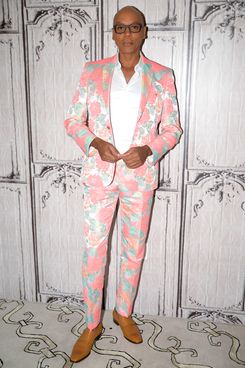
RuPaul was born November 17, which makes him a Scorpio — a detail he has said accounts for his observant and analytical nature during interviews. I could feel his gaze settle on me as he sat down on a gold couch at the London Hotel in New York, wearing rectangular black glasses and a suit made of thick brocade in a resplendent print of pink roses. This was not the light and effervescent RuPaul-in-drag the American public has come to know since the release of his single, “Supermodel (You Better Work),” in 1992, but rather workroom Ru: serious, sober, and slightly intimidating. During our conversation, RuPaul, 55, clapped back at critics who said RuPaul's Drag Race used transphobic language, dismissed Spike TV’s Lip Sync Battle as a ripoff of his show, and explained why educating younger generations is a waste of everyone’s time. Grab your reading glasses, because the library is open.
Congratulations on the 100th episode of RuPaul’s Drag Race. With the eighth season, how do you keep things fresh?
We're always inspired by the queens. And because it's like a school, we get a new crop of kids every single year — that's how it stays fresh. This year especially, it's the children's Drag Race. These are the kids who grew up watching it, and their whole drag aesthetic comes from the show. So it's an interesting shift. And we knew this would come if we stayed on the air long enough — we'd see what we produced in the public. And they're beautiful! They're smart. We have to actually work harder to stay one step ahead of them.
Has that given you a chance to take a step back and reflect on what you've created on the show?
You know, I normally don't. I only even entertain those ideas when I'm talking to someone like you, from the press, and they ask me. I'm always looking forward. I do understand we've launched the careers of 100 queens, which is really the most important part of our job.
What are some of your favorite moments?
Because the kids are so courageous and their stories are so rich, they bring such a unique story every single time. I always think about Roxxxy's story when she revealed she was abandoned at a bus stop as a 4-year-old. It's usually their stories that surprise me of how resilient and strong they are.
One of the things I love about drag is that it’s an art form about survival.
It is, because each of those kids were little boys, sometimes in small towns, who were alienated and ostracized. And even in the face of such adversity, they prevailed and shine today. So it's a story of strength. That's what the appeal is for the audience. Here are these people who have prevailed and succeeded against insurmountable odds. It's a great story for anyone who watches.
They often say that drag saved their lives.
Right. And I'll tell you why. Because you get to a point where if you're smart and you're sensitive, you see how this all works on this planet. It's like when Dorothy looks behind the curtain. Like, "Wait a minute. You're the wizard?" And you figure out the hoax. That this is all an illusion. There's only a few areas you can go. First, you get angry that you've been hoaxed and you get bitter. But then, take more steps beyond the bitterness and you realize, "Oh, I get it. Let's have fun with it. It's all a joke. You mean I don't have to stick with one look or one whatever? I can shape-shift? Great." That's when you can save lives because otherwise the mediocrity and the hypocrisy is so mundane, it's better to just not do it. I'm not going to say "end it all." But that's why it saves lives. Because for people who are highly sensitive and super-intelligent, it tickles the brain. It gives them something to live for. It's the irreverence. I was the same way when I was 15. I said, "Okay, I'm gonna do this life. But I'm gonna do it on my terms, and I'm never gonna join the Matrix." That's why it saves lives.
Would you say that drag saved your life?
It actually didn't save my life, it gave me a life. I don't think there is a life in the mundane 9-to-5 hypocrisy. That's not living. That's just part of the Matrix. And drag is punk rock, because it is not part of the Matrix. It is not following any rules of societal standards. Boy, girl, black, white, Catholic, Jew, Muslim. It's none of that. We shape-shift. We can do whatever we want.
Do you feel that drag can never be mainstream?
It will never be mainstream. It's the antithesis of mainstream. And listen, what you're witnessing with drag is the most mainstream it will get. But it will never be mainstream, because it is completely opposed to fitting in.
Throughout your career, have you ever felt like you are part of the mainstream?
No. You know, I've never been on Ellen or David Letterman or The Tonight Show, and there's a reason for that, which I don't want to go into, but there's a reason that I've never been thought of as someone who can go on there. Because it makes those hosts feel very, very uncomfortable, especially if we really talked. It would be the opposite of what they're used to. So am I part of the mainstream? No. People know my name, people know what I look like, but am I invited to the party? No, and there's a reason for it.
Would you want to be?
No. In fact, I made a pact with myself when I was 15 that if I was going to live this life, I'm only going to do it on my terms, and I'm only going to do it if I'm putting my middle finger up at society the whole time. So any time I've had yearnings to go, "Aw, gee, I wish I could be invited to the Emmys," I say, Ru, Ru, remember the pact you made. You never wanted to be a part of that bullshit. In fact, I'd rather have an enema than have an Emmy.
The show is clearly one of the best reality shows, so it's insane to me that you haven't been nominated.
It's not insane when you take the car apart and you really look at what the car is. You understand that it can't recognize it, because in doing so it would recognize all of the flaws in their doctrine, in their whole ideology. Drag doesn't conform. It's actually making fun of [conformity]. Now, the talk-show hosts … get it if I'm making fun of myself and if I'm a punch line for them, but not as a human being. They would have a transsexual on because a transsexual is saying, "This is who I really am. I'm real." I'm saying, "No, I'm not real. I'm actually everything and nothing at all."
That's very Buddhist.
I didn't come up with this shit. I studied. It is very Buddhist, and all roads lead to Zen and Buddhism. If you are a seeker and you want to know the answers, you're not the first person to go there. And you don't have to look that far for the answers. They're not encoded in this ancient scripture. It's actually right there in front of you. It's in that flower that I'm looking at right now or that tree over there or that mountain. It's all there.
What do you think of Lip Sync Battle and Jimmy Fallon?
Oh, I don't think of it. It's a poor ripoff of our show. Regular, straight pop culture has liberally lifted things from gay culture as long as I can remember. And that's fine, because guess what? We have so much more where that comes from. Take it! That's why [my new show] Gay for Play is such a fun thing, because we've taken the best of the gay sensibility and put it all in one place. And we're showing these bitches how it's really done. But it's funny how that works, even in gay culture. There's a certain "gay shame." Gay people will accept a straight pop star over a gay pop star, or they will accept a straight version of a gay thing, because there's still so much self-loathing, you know?
They talk so much about acceptance now today and it's like, yes, but trust me — I'm old and I know this shit — it's superficial. Because as soon as the lights go out, you'll see how advanced people's thinking is. This so-called "Will & Grace acceptance" era is just people fucking posing. Things haven't changed that much. You see it in politics right now — that's the fucking truth of people. And you know, people will have you think, "Oh, we're fashion. We're gay. That's my gay over there!" It's like, no. We're still a very, very, very primitive culture.
Gayness is still treated as an accessory.
Exactly. But if we can just cut out the self-loathing, we could get really far.
There’s a sense on Drag Race that there's a way to win. With certain judges, there's a value of "fishiness" (a.k.a. looking like a real woman). Do you feel like that is counter to what drag is?
The criteria really isn't "fishiest." It's charisma, uniqueness, nerve, and talent. And if you got it, if you look at our iconic photo from the premiere, we have a wide variety of girls and, I don't know, are any of them fishy? Being fishy isn't like a home run to win. Because we've had every type of winner, and the iconic girls who didn't win who are still super-duper-stars, they're not necessarily fishy, I would say. They're a character.
Fishiness can be a part of it.
For some, it is. It was never for me. I always did what I thought was interesting. I always just did what caught my fantasy. Looking like a woman, that was never the criteria for me. It was always to do drag. And drag is not gender-specific. Drag is just drag. It's exaggeration.
It's about playing with gender.
Oh, it's poking fun at gender. It's mocking gender is what it's doing. But taking it seriously? No. Because that's what fishy alludes to. Fishiness alludes to the look and feel of "real." For most drag queens, that's not the criteria. Because the look and feel of real is boring.
Last week on Drag Race, you eliminated both queens, Laila McQueen and Dax Exclamationpoint. This has only happened one other time in Drag Race history. What was disappointing about their Gloria Gaynor, “I Will Survive,” lip-sync battle?
Because Drag 101, the first song you learn to lip sync to is Gloria Gaynor's “I Will Survive.” And every human alive knows the words to that song, just by default, because they play it so motherfucking much. And it was like, “What the fuck? You don't know the words to ‘I Will Survive’? Then both you bitches need to go. I've heard these theories of, "Oh, they planned that." Bitch, we didn't plan that. Did you see the performance? It was absolutely awful.
You eliminated Naysha Lopez earlier this season. Why did you decide to bring her back this week?
Because she's fabulous. She had just left, and I was like, "You know what, you deserve another chance." I've seen all of the kids’ audition tapes for many years. Thorgy had auditioned every single year. And finally, this time, her audition was like, "Okay, she's ready." But why did I bring [Naysha] back? Because I wanted to. Because the show's called RuPaul's Motherfucking Drag Race. (Laughs.)
Drag has always been about playing with language and taking it apart and blurring boundaries, whereas currently the discourse on the internet is about creating demarcations within language and saying you can, or cannot, say something. What do you think about that?
It's stupid. They're dumb, and it's stupid. If I said, "Boy, I really love corn dogs!" it doesn't mean I actually love a corn dog. Because love has nothing to do with corn dogs. But it's just language. It's a state of mind. You take for granted that my intention is really to express that I enjoy them a lot and I want to eat one right now. That's what it's meant to do. But if you have an agenda and you want to take my sentence apart, you could certainly say, "Oh, my God! You love a corn dog? What do you mean by that? Do you want to marry it? Do you want to put it inside of you?" It's like, "That's not what I meant and you actually know that's not what I meant and you're only using it because you have an agenda so that you could get attention for whatever reason you have."
How then would you interpret taking out "She-Mail" from the show due to allegations of transphobia?
I don't know. You know, I didn't do that. The network did that, and you'd have to ask them why they did it, but I had nothing to do with that.
Did you feel like that was not a battle to have?
Well, the intention behind that word is a portmanteau that was meant as a way to be fun and to enjoy language. I talked earlier about the sweet, sensitive souls who find this world, when they uncover life's cruel hoax. The first stage is anger. Then bitterness. The third stage is laughter and irreverence and understanding that, "Oh! I can have fun. Don't take it too seriously. Have fun with it." So twist a phrase, curl a word, paint on a mustache. We do not stand on ceremony, and we do not take words seriously. We do take feelings seriously and intention seriously, and the intention is not to be hateful at all. But if you are trigger-happy and you're looking for a reason to reinforce your own victimhood, your own perception of yourself as a victim, you'll look for anything that will reinforce that.
How do you view drag's relationship to the trans community?
I think it's a boring topic. I don't really want to talk about that because everybody wants to ask about that. It's so topical, but they're complete opposites. We mock identity. They take identity very seriously. So it's the complete opposite ends of the scale. To a layperson, it seems very similar, but it's really not.
Right. But I mean, it is complicated, too, because …
I don't think it's complicated. Some people take identity very seriously. I don't. I choose to laugh at identity and play with it. I'll wear a suit or I'll wear a sailor's outfit. I'll dress femme. I'll dress butch queen, which is the name of my new album, by the way. I'll do whatever. All of the experiences I've learned and every ascended master you've studied will say the exact same thing: Life is not to be taken seriously. Most people are dumb as fuck. If you look at their voting habits and their eating habits, you realize people are stupid. So we could talk about stupid people or we could just stay with smart people who know how to have fun and not even focus on what dumb people do. It's not worth it. I tell you this as someone who's a smart motherfucker: Don't waste your time fooling with dumb people or trying to figure them out or trying to educate them. It doesn't work. It's a lose-lose situation.
How do you feel drag's function has changed?
The function hasn't changed. It's been the same since the beginning of time when shamans, witch doctors, or court jesters were the drags. Which is to remind culture to not take itself seriously. To remind you that you are not your shirt or your religious affiliation. You are an extension of the power that created the whole universe. You are God in drag. You are dressed up in this outfit of a body, which is temporary. You are eternal. You are forever. You are unchanged. And this is a dream you're having. So don't get to attached to it. Make love. Love people. Be sweet. Have corn dogs. Dance. Live. Love. Fuck shit up. But it's all good. You can't fuck it up because you're eternal.
There’s a discussion right now about how TV has become diversified because there are different channels, there are web shows, there are podcasts. Do you feel like there's more opportunity now than there was in the early '80s when you were coming up?
There are more opportunities because there are more avenues where you have a voice. But in saying that, everyone else has a voice too, and everyone else's voice is treated with the same levity as the next person's voice is. So there's a lot more opportunities, but the playing field is so, so crowded. You have to be very, very distinct to really get out there. And when you realize who the audience is and what their intellectual DNA is, it's almost like, Gee, do I want to be the most popular? Do I want to be someone who Betty and Joe Beer Can are not threatened by? Because they're threatened by everything.
Do you think it's true that audiences have become more niche?
Yes, definitely, which is not necessarily a great thing. When I was in clubs in New York, I'd go out every night. I'd go to four to five, maybe six clubs a night, and at all of those clubs, there would be uptown, downtown, black, white, gay, straight, everybody was there. And it was so exciting. And there was no shame. It wasn't like this hostile tension because we were all mixed together. But as the '90s rolled in, people started branching off into their little niches, and I thought it was very indicative of what was going on in the rest of the world. And we're witnessing that in television right now. I think it's a cycle that humans go through.
What do you think changed?
This is my twisted little theory: that because more and more people became narcissistic and became self-analyzed or in therapy, their own personal issues became omnipotent, and they wanted the whole world to know, “My personal issues are important, dammit, and so I need to be around people who understand me.” Rather than the other way around, and fixing yourself from the inside out, they wanted the outside to reflect who they are. I'm working on this theory as I'm saying it, but I think the answer is in there somewhere. It has to do with the Me Generation, the narcissistic generation needing to make their environment reflect who they think they are.
How important is history for drag in general? Do you feel like there's a generational gap with these young kids coming up who don't know the original references but they know what has been based on them?
Yes, drag traditionally has been a sampling machine. We have always taken little bits to piece together a bigger story. It's almost like an encrypted message. For young gay people before the 1990s, and forever, we had to speak in code. We had to speak so that we couldn't be found out. And a lot of that came in the form of references, pictures, one-liners, a twist of phrase. And that's the tradition of the young outsider — your tribe finds you once you send out these messages. In the “Supermodel” video we've got the Diana Ross urban legend of the Brewster-Douglass Projects with the Supremes, how they met. We've got Sunset Boulevard. Mahogany was in there where she's looking in the mirror and she puts the lipstick on the mirror. It's all in there.
It's a tradition, and will young people get it? They don't have to get it as much today because it's not like this gay underground railroad where if you're found out, you'll be run out of town. They don't need to have that secret language anymore. But on Drag Race, we still put it in there because it's our duty and our tradition to behave that way. To have little wink wink, nudge nudge references that people who do know will get it.
Do you think it's important for the younger generation to learn it?
I don't know. I don't really care about them. The truth is, they're on their own. They'll figure it out. There's nothing we can do to force them to say, "Look, this is important." Humans don't learn that way. I think about New York, and I had such a fucking great time there. Do I wish young people could experience that? Yes! Yes, I do. Am I going to work it out for them? No, bitch, you're fucking on your own. Work it out for yourself.
There have been lot of LGBT narratives recently: Carol, The Danish Girl. What did you think of them?
I loved Carol. I thought it was a beautiful film. I loved the story. The Danish Girl, I couldn't see past the wigs, which were terrible. I did love that one time where he gets dressed up and looks like David Bowie. He's in a suit that has these huge wide legs, cinched waist, and he's not in women's clothes, he's in a man's suit. It is gorgeous. It's worth watching the movie for just that one shot. Anybody in that David Bowie suit, oh my God, gorgeous.
David Bowie was a big influence on you. Did you ever get to meet him?
I did, yeah. I was at a dinner party and when I saw he was there, I had to excuse myself into the library of this swanky house. Actually, it's a house that David Geffen owns now, but it wasn't his then. I excused myself to breathe a little bit, you know? Thinking back, I guess he came in there specifically because he knew that I went in there. And he said "Hi" and shook my hand. I said, "Hi, great to see you." And we spoke for a little bit. Then I actually escaped the party and didn't sit down for dinner because I had to go downstairs and let out the screaming and crying that followed.
What does he mean for you?
I talk about the sweet, sensitive souls, the people who are my tribe, you know? And how hard it is to navigate your heart in this plane, in this linear, basic, mediocre, hypocritical world. To find those beacons of light in that darkness is such a gift. And he is that. He still is that. Through his music and his art, how he projected this image out there. And it was never cocky. Part of the rock creed is to wear black and cover up and smoke a cigarette and be exclusive. His wasn't that way. His was always open. That's why my generation of kids flocked to that. Because it was a continuation of the exploration of the '60s and '70s.
Is there anyone who interests you in pop culture right now?
The only person who interests me in pop culture right now is Judge Judy. That's it. Because of the realness — she has kept the story of mankind. There's a certain decorum and civility that keeps our society together, and it has crumbled so much in the past, really, 20 years. But when you watch her during that hour in the afternoon, she has remembered it and is saying, "No! We do it like this." And I love it! She remembers the rules of civility. Because if you've gotten to the point where you need to go to court to figure out what to do, then you've lost your right to be cocky. You need someone. You need a mediator. And she's that person.
You mentioned your upcoming game show, Gay for Play. Can you talk a little more about it?
It's a pop-culture trivia show, where contestants win over $5,000 in cash and prizes with a panel of celebrities who are there to help them answer the questions if they choose to listen to them. And it is hilarious, sexy, cheeky, irreverent. It's the gay aesthetic done by gay people. Through our show and social media, the gay vernacular has been adopted by mainstream pop culture. Every blog is now in the voice of gay culture. Sex and the City was a show that was a gay aesthetic done by straight women. That's what made it successful. And it starred New York City. So we decided to take our gay aesthetic and put it on a game show and do it the way it should be done. These other shows that rip off little bits of our show? Have at it. We've got plenty. You could try to come for us and try to do it. You could never do it the way we do it.
Steve Dyeroof


Steve Dyeryeahhhh baby freaky versions of dolphins!

A whale watching boat off of Dana Point, California was watching a pod of false killer whales when a bright patch of blood blossomed at the surface of the water. What they saw next was something no tour boat has ever recorded.
The tourist’s shock turned to amazement when they saw a baby whale leap from the surface and realized that what they had just witnessed was a live birth. The whales stuck around, pushing the baby to the surface of the water to help it breath during its first moments out of the womb.
Said tour company owner Dave Anderson to the L.A.Times: “I’m so thankful they chose to do it in front of our boat. It’s got to be one of the biggest things that’s ever happened out here. This birth is one of a kind and I’ve been doing whale watching for 20 years.”
Said the boat’s captain Tom Southern to the OC Register:
“The females came up right next to the boat and all started pushing at the side. Then you see this spurt of blood and you think they got something – but instead you see a baby pop out. He was about 2 1/2 feet-long and his fins were all folded together. He was lying on his side and flopping around like a fish….“I don’t know if anyone has ever seen a false killer whale give birth. At least no other commercial boat has reported this.”
False killer whales, which are members of the dolphin family, are also rare off of southern California: “Southern remembers only two sightings in 15 years on the water.”
Watch:
The post Whale Watch Boat Sees Blood in the Water, Then Gets a Big Surprise: WATCH appeared first on Towleroad.
Last spring, as Beckett Delaney was hoverboarding to his office in SoHo, his man bun flailing behind him in the wind, he came to an abrupt halt.
“I realized I just couldn’t work that day,” Delaney recalled recently, in between puffs of an e-cigarette outside the Bushwick Sweetgreen. “Because I hadn’t finished binge-watching Master of None.”
Delaney’s attitude is typical of his youthful cohort. Millennials—the demographic group also known as Generation Y, Generation Me, and Daesh—have found it difficult to balance dueling priorities as they exit their parents’ basements and enter the real world.
They have stacked up record student loan debt, and yet spend thousands on frivolous items like Beyoncé concert tickets and groceries; they yearn for more than just a paycheck, and yet continue to be employed in jobs that provide them with paychecks in return for their labor; and they enjoy watching television and movies, but also Vine.
“For me, the most important thing is expressing myself,” said Jewel Packard, 24, during an interview conducted via reaction GIFs in the communication app Slack. “Sometimes that means tattoos, and sometimes that means podcasts.”
Packard, who co-works at a bespoke underwear startup, and whose hobbies include 7 a.m. dance parties and sexting, said that she values her ability to express herself almost as much as she values her parents’ Netflix account.
“When it comes down to it, life is really all about finding a hashtag for yourself and sending hilarious emoji on Venmo,” Packard said, and then, after a moment of reflection, added: “Lena Dunham.”
Beckett Delaney agrees. Delaney lives in the Empire State Building, which his parents bought for him; he often invites fellow millennials, whom he meets on relationship apps, to his bedroom, so that they can kiss. (Occasionally, they copulate.)
Not that Delaney is looking to settle down. On the subject of marriage, Delaney, who practices yoga but is also an atheist, echoed an idea that the DJ/Model/Ecoterrorist Callista Larson often repeats to her hundreds of thousands of devoted Instagram followers.
“You’ve gotta ask yourself: Would you downvote the Yik Yak of your own life?” Delaney mused. His mood quickly soured. “Broad City is on,” he explained, removing a selfie stick from his man-purse.
This devotion to personal expression has presented itself in several outlets for the cosmopolitan millennial, including the $435 “Hamilton”-themed SoulCycle class in Red Hook, and the increasing popularity of Dr. Vanessa Sullivan, a hypnotherapist in Murray Hill who speaks only in references to the 1999 film She’s All That.
Whether millennials can sustain this rosy outlook as they assume corporate leadership roles and settle down with their Tinder wives is less certain.
“Millennials haven’t proven anything,” said Farley Cornmuncher, the 87-year-old Johns Hopkins professor and expert on millennial behavior. “Whether it’s their laziness, or their hookup culture, or their insistence on living with roommates, it’s clear that millennials have different values than those of us who are seventy years older than they are.”
Perhaps no one embodies this difference better than Davis Parkworth. The CEO of venture-backed shoelace marketplace Eyelet, Parkworth, 23, oversees an office where employees must give “trigger warnings” before entering the cafeteria, and where the office speaker system plays hits from Adele just as often as new tunes from 13-year-old YouTube a capella sensation Kurtiz Blorch.
“If we’re not helping the environment, we’re not a successful company,” Parkworth enthused, wiping a kale stem from his handlebar mustache.
“Feel the Bern!” one of Parkworth’s employees shouted, generating a roar of approval from the kombucha-sipping creative team, many of whom had never applied for a mortgage or car loan. Just then Fillmore, the office rooster, strutted by. This was not your father’s shoelace company.
But then, emulating the previous generation doesn’t interest millennials like Parkworth, Packard, or Beckett Delaney.
“When I look back at my life, I want to know that I slayed,” Delaney said, using a slang term for “succeeded.” He spun in circles on his hoverboard, listening to pirated rap music and canceling his cable subscription.
“If that makes me a selfish millennial,” Delaney concluded, re-adjusting his Warby Parker monocle, “well, at least I’m keeping it 100.”