Shared posts
21 Dec 22:24
La fin des «captchas» est-elle une si bonne nouvelle?
by Cécile Dehesdin
Comme on l'écrivait cette semaine, l'époque des gribouillis incompréhensibles que de nombreux sites Internet nous demandent de déchiffrer puis de retaper sur notre clavier avant d'accéder à une autre page est bientôt finie. Cette technologie, appelée «captcha» et datant de 1997, sert à vérifier que telle ou telle requête sur une page web provient bien d'un humain, et non d'un bot informatique (une tâche automatisée qui peut par exemple se connecter à un site pour spammer les commentaires).
Google a inventé un nouveau système pour faire cette vérification -entre autres parce que les robots deviennent de plus en plus doués pour déchiffrer des bouts de texte gribouillés. Il suffira bientôt de cocher la case «Je ne suis pas un robot» pour passer à la suite:
La nouvelle a de quoi réjouir tous ceux qui se sont un jour escrimés devant un captcha incompréhensible, mais, sur son blog BodySpaceSociety, le sociologue Antonio Casilli soulève plusieurs problèmes dans les plans de Google pour leur nouvelle technologie, dont celui-ci: si vous avez un historique de navigation et des cookies, elle vous laisse passer à la page suivante après avoir coché la case. Mais si vous naviguez de façon privée, elle vous proposera de nouveaux captchas.
Il peut entre autres s'agir d'identifier des photos. Google assure avoir pensé à ça parce que c'est plus facile depuis un mobile de taper du doigt sur les photos correspondant à la question ...

18 Dec 23:33
Your Telephone Is Lying to You About Sounds
Telephones lie about sounds because odd numbers aren't even. Once again with those integers and sound perception! Telephones can only pick up frequencies above 300 or 400 Hertz (cycles per second,...
-- Read more on ScientificAmerican.com


-- Read more on ScientificAmerican.com
14 Dec 21:31


CIA torturers forced hummus, raisins, pasta and nuts into detainees' anuses
by Mark Frauenfelder
"Daddy, what did you do when you were in the CIA?"
"I raped detainees and stuffed food into their anuses, son."
"I hope I don't grow up to be a CIA officer like you, Daddy." Read the rest
Stephanie.hammell likes this
14 Dec 09:11
A farmhouse shrine to obsolete computers
by Leigh Alexander
York University's Jim Austin, a teacher of neural computing, has accumulated some 1,000 machines across 30 years of collecting obsolete computers. Read the rest
13 Dec 21:02


Eastern Philosophy Explained with Three Animated Videos by Alain de Botton’s School of Life
by Josh Jones
http://www.youtube.com/watch?v=tilBs32zN7I
“Among the founders of religions,” writes Walpola Rahula in his book What the Buddha Taught, “the Buddha…was the only teacher who did not claim to be other than a human being, pure and simple. […] He attributed all his realization, attainment and achievements to human endeavor and human intelligence.” Rahula’s interpretation of Buddhism is only one of a great many, of course. In some traditions, the Buddha is miraculous and more or less divine. But this quote sums up why the generally non-theistic system of Eastern thought is often called a psychology or philosophy rather than a religion. With the video above, Alain de Botton—whose School of Life has recently brought us a survey of Western philosophers—begins his introduction to Eastern thought with Buddhism. The Buddha’s story, de Botton says, “is a story about confronting suffering.”
Born the son of a wealthy Indian king and destined for greatness by a prophecy—or so the story goes—Siddhartha Gautama, the future Buddha, discovered human suffering during brief excursions from his palace. Appalled and disturbed by sickness, aging, and death, the Buddha left his luxurious life (and his wife and son) and practiced many rituals and austerities before finding his own path to enlightenment and Nirvana—the extinguishing of desire. One fruit of his realization is the doctrine of “the Middle Way,” a mediation between extremes that one source compares to Aristotle’s golden mean, “whereby ‘every virtue is a mean between two extremes, each of which is a vice.’” The Buddha’s enlightened understanding of the essential continuity of life gave him compassion for all living beings; of the thousands of sutras, or sayings, attributed to him, his teaching can be concisely summed up in what he called “the Four Noble Truths,” the acknowledgement, cause, and remedy of inevitable pain and discontent.
http://www.youtube.com/watch?v=dFb7Hxva5rg
Most of what de Botton does in his introduction to the Buddha will be familiar to anyone who has taken a comparative religions class. But true to his task of approaching Buddhism philosophically, he avoids Buddhist metaphysics, cosmology, and questions of rebirth, instead interpreting the Buddha’s teachings as a kind of Eastern Aristotelian ethics: “We must change our outlook (not our circumstances). We are unhappy not because we don’t have enough money, love, or status, but because we’re greedy, vain, and insecure. By reorienting our minds we can become content. By reorienting our behavior, and adopting what we now term a ‘mindful’ attitude, we can also become better people.”
While Buddhist scholars and sages would argue that enlightenment entails a great deal more than self-improvement, the summation suits the purposes of de Botton’s School of Life—to help people “live wisely and well.” These videos—like his others, animated by Mad Adam films with Monty Pythonesque whimsy—distill Eastern thought into fun, bite-sized nuggets. Just above, we have a short introduction to the Chinese sage Lao Tzu, purported author of the Tao Te Ching, the founding text of Daoism. Whereas de Botton seems to take the Buddha’s story more or less for granted, he admits above that Lao Tzu may well be a mythical character, “like Homer,” and that the Tao is likely the work “of many authors over time.”
Daoism is often intertwined with Buddhism and Confucianism, but its own particular philosophy is distinct from either tradition. At the heart of Daoism is wu wei, which translates to “non-action” or “non-doing,” a mode of being that seeks harmony with the rhythms of nature and a ceasing of preoccupation and ambition. Another “key point” of Lao Tzu’s instructions for realizing the “Tao,” or “the way,” is getting “in touch with our real selves,” something we can only accomplish through receptivity to nature—our own and that outside us—and through freedom from distraction, a most difficult demand for technology-obsessed 21st century people.
http://www.youtube.com/watch?v=ZpE-XL0u5yI
The third video in de Botton’s series surveys a Japanese Zen Buddhist sage and contrasts him with Western philosophers, who generally write long, obscure books and cloister themselves in lecture halls and offices. In the Zen tradition, de Botton says, “philosophers write poems, rake gravel, go on pilgrimages, practice archery, write aphorisms on scrolls, chant, and in the case of one of the very greatest Zen thinkers, Sen no Rikyu, teach people how to drink tea in consoling and therapeutic ways.” Born in 1522 near Osaka, Rikyu reformed and refined the chanoyu, the Japanese tea ceremony, into a rigorous but elegant meditative practice. Rikyu coined the term wabi-sabi, a compound of words for “satisfaction with simplicity and austerity” and “appreciation for the imperfect.” Wabi-sabi offers not only the foundation for a way of life, but also for a way of design and architecture, and its practice informs a great deal of traditional Japanese aesthetics.
Like Lao Tzu, Rikyu intended his practices to help people reconnect with the simplicity and harmony of nature, as well as with each other, inspiring mutual respect free of status-consciousness and competition. Rikyu’s wabi-sabi philosophy is premised on Zen’s understanding of the impermanence, imperfection, and incompleteness of everything. Therefore he eschewed the trappings of luxury and preferred worn and humble objects in his ceremonial instructions. Whether we call Rikyu’s practices religious or philosophical seems to make little difference. In the case of the three thinkers profiled here, the distinction may be meaningless and introduce Western conceptual divisions that only obscure the meaning of Buddhism, Daoism, and Japanese Zen. When it comes to the latter, another Western interpreter, Alan Watts, once delivered an excellent talk called “The Religion of No Religion” that helps to explain practices like Rikyu’s chanoyu.
All of the videos here are part of the School of Life’s “Curriculum.” Visit de Botton’s Youtube channel for more, and for short videos offering advice on everything from anxiety to relationships to “the dangers of the internet.”
Related Content:
Alain de Botton’s School of Life Presents Animated Introductions to Heidegger, The Stoics & Epicurus
A Guide to Happiness: Alain de Botton Shows How Six Great Philosophers Can Change Your Life
Alain de Botton Shows How Art Can Answer Life’s Big Questions in Art as Therapy
Josh Jones is a writer and musician based in Durham, NC. Follow him at @jdmagness
Eastern Philosophy Explained with Three Animated Videos by Alain de Botton’s School of Life is a post from: Open Culture. Follow us on Facebook, Twitter, and Google Plus, or get our Daily Email. And don't miss our big collections of Free Online Courses, Free Online Movies, Free eBooks, Free Audio Books, Free Foreign Language Lessons, and MOOCs.
The post Eastern Philosophy Explained with Three Animated Videos by Alain de Botton’s School of Life appeared first on Open Culture.
Pcline98 likes this
12 Dec 13:28
How to explain linguistics to your friends and family this holiday season
This time of year often involves leaving the cozy sanctuary of your linguistics department where everyone knows what a wug is and spending quality time with your non-linguist friends and family. Who, bless ‘em, are often a little bit confused about linguistics. So I’ve compiled a list of common questions and some resources to help you answer them. And if you end up needing a break, check out the linguistmas tag and my extensive archive of linguist humour.
What is linguistics exactly?
Explaining what linguistics is using geology and biology analogies
Brain surgeon analogy
Car analogy
Botany analogy
So, you’re a linguist? How many languages do you know?
Why linguists hate being asked how many languages they know
Wow, linguistics, I guess I’d better watch my grammar around you, right?
8 myths about language and linguistics
On the interplay between copyediting and descriptivism
We each have an idiolect, and they’re all okay
That’s not even in the dictionary! So many people are degrading language these days!
Anne Curzan on what makes a word “real”
xkcd on kids and text abbreviations
Erin McKean, actual lexicographer, on what it means when a word isn’t in the dictionary
The kilogram model of language and what’s wrong with the America’s ugliest accent challenge
Don’t you just hate it when people say…?
In defence of “unnecessary” words
Every argument you’ll ever need for singular “they” (plus the Canadian government’s support of it, and why do we even have gendered pronouns)
In defence of hyperbolic “literally”
Vocal fry and can we stop hating on how young women talk?
When it comes to Rachel Jeantel, who’s really on trial here?
A linguistics degree? What are you going to do with that?
A variety of options in the linguistics jobs series.
Tell me something interesting about linguistics!
My go-to is the script in Explaining English plurals to non-linguists, but for a longer list of linguistic writing pitched at non-linguists try here for just me and here for me and other people. Or go for linguistics videos or linguistically-relevant games.
12 Dec 13:19
French and Irish parliaments call for recognition of Palestinian state
by Ian Black, Middle East editor
Israel criticises vote by Irish MPs, arguing that recognition prejudices the outcome of peace negotiations
The French and Irish parliaments have become the latest in Europe to call on their governments to recognise an independent state of Palestine, confirming a trend, alarming for Israel, that reflects changing public opinion across the continent.
In Paris on Thursday the senate ratified an earlier decision by the national assembly, while MPs in Denmark were holding the first reading of a motion urging the government to recognise Palestine as a state alongside Israel within its 1967 borders.
Continue reading...
12 Dec 13:13
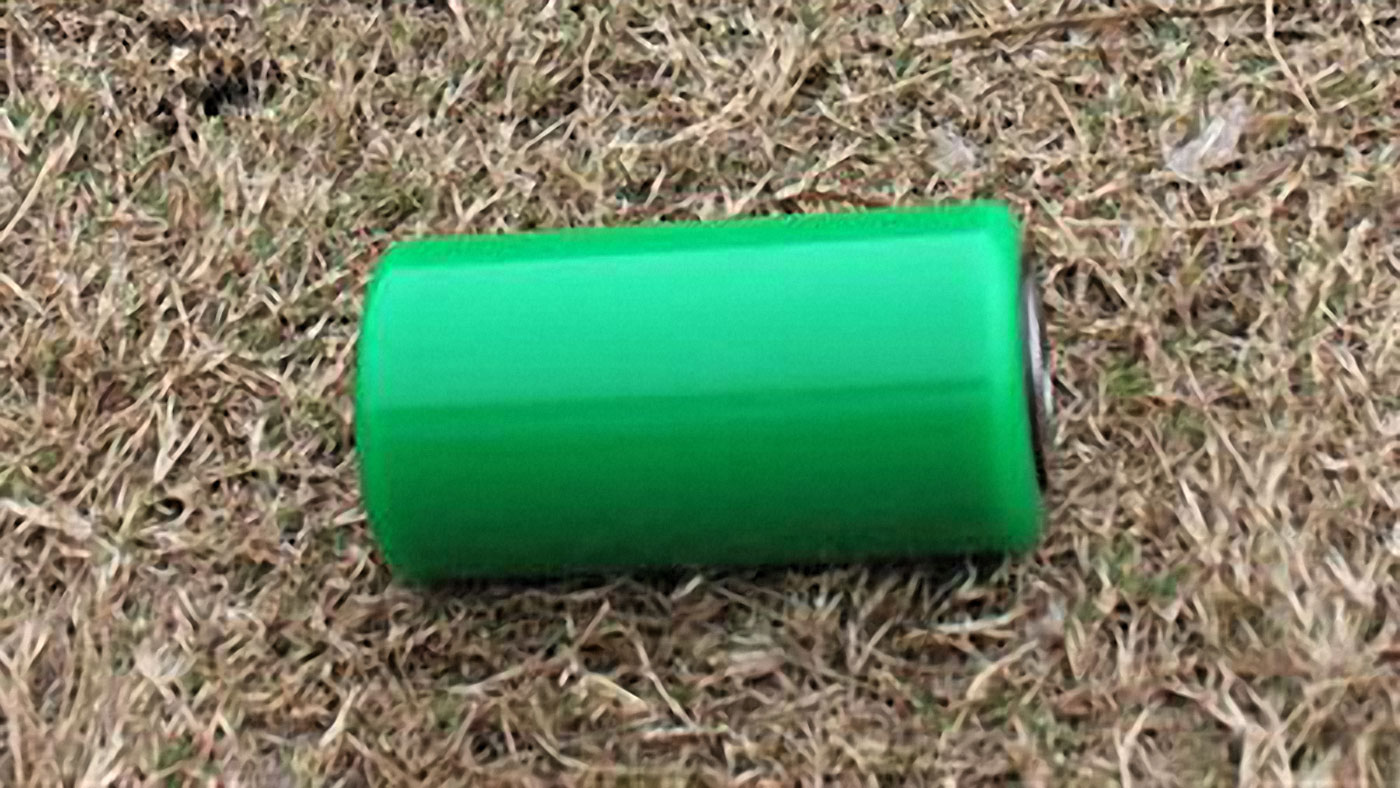 Glenn Fleishman reports that a goat dairy farmer was not expecting to receive a mysterious green cylinder. Read the rest
Amazon mails conveyor belt roller instead of gift
by Glenn Fleishman
Glenn Fleishman reports that a goat dairy farmer was not expecting to receive a mysterious green cylinder. Read the rest
Luke.stirling likes this
12 Dec 13:06

LISTEN: Edgar Allan Poe's Graveyard Visitor
by Futility Closet
For most of the 20th century, a man in black appeared each year at the grave of Edgar Allan Poe. In the predawn hours of January 19, he would drink a toast with French cognac and leave behind three roses in a special pattern.
Read the rest
12 Dec 13:01

We asked a legal evidence expert if Serial's Adnan Syed has a chance to get out of prison
by Libby Nelson
Colin Miller, an associate professor of law at the University of South Carolina, is an evidence expert. He's written law review articles about plea bargains, hearsay, and attorney-client confidentiality. But lately, he's been focused on another legal issue: the questions raised by the incredibly popular Serial podcast.
Miller has written, so far, 13 blog posts on the legal issues in Serial — mostly about whether the information jurors were given at trial should have been allowed. Should the prosecutors have been allowed to read from Hae Min Lee's diary at trial, or show jurors the note she passed a friend about her breakup with Adnan Syed? (He argues not.) Should the information about Jay's lawyer being arranged by the state have been provided to the defense before the trial? (Yes, he says.) And was Adnan's lawyer, Christina Gutierrez, ineffective enough that he could win an appeal arguing that she hadn't represented him effectively?
That last question is at the heart of Adnan's appeal, which his lawyer has described as his "last best chance" to get out of prison. The Maryland Court of Special Appeals will decide whether to grant him the appeal in January.
I called Miller to talk about the appeal process more generally and Serial in particular. Our conversation has been slightly rearranged and lightly edited for clarity and length.
Libby Nelson: Explain the appeals process to me. How does it work?
Colin Miller: There are both direct and collateral appeals. In direct appeals, what you need to do is point to a specific error or errors by the prosecution/the judge at trial, and prove that's reversible error. The point is to say that the judge let in a misuse of evidence and that was against the rules of evidence. Or that this was an important piece of evidence that could have tipped the jury, but the prosecution didn’t disclose this evidence and timely disclosure would have allowed us to prepare better for trial.
[For Syed], that was the direct appeal that took place in the early 2000s. This is a a collateral appeal. A collateral appeal isn’t directly addressing what the judge or prosecutor did at trial. It's claiming ineffective assistance of counsel: it's not that the government acted improperly. It was the defense counsel, that in preparing and presenting the case, committed one or more significant errors.
LN: How difficult is it to prove ineffective assistance of counsel? My impression is that it's very hard — there are people whose lawyers fell asleep during the trial, and they didn't win on that appeal.
CM: If you are looking at it empirically, there are a number of studies that look at what actually happens [in ineffective assistance of counsel cases]. That claim is successful between 1 and 8 percent of the time.
In terms of the legal standards, Strickland v. Washington [a 1984 court case about when ineffective assistance of counsel violated the Sixth Amendment] set up a two-pronged test. The first prong asks: was there an error or errors by defense counsel that caused the performance to fall below a prevailing standard of reasonableness?
Courts give a strong presumption of reasonableness in defense counsels' behavior. The general presumption is most decisions are trial strategy and the appellate court isn’t going to second-guess.
The second prong is prejudice: is there a reasonable probability that the resulting proceeding would have been different? Even if we have a mistake or mistakes by defense counsel, the jury could have found [the defendant] guilty beyond a reasonable doubt even with those errors.
LN: How does Adnan's claim of ineffective assistance rate on those criteria?
CM: It's difficult for me to see without the full trial transcript, but [the major issue is] the failure to investigate the alibi given by Asia McClain. The prosecution sets forth a timeline at trial. According to the prosecution at trial, the murder has to to take place before 2:36 pm, which is when the state says Adnan calls Jay from the Best Buy to come and meet him there.
The Asia McClain letter — she sends it to Adnan, she saw him at the Woodlawn Library, and according to the timeframe in those letters, she tends to say that she saw him past that 2:36 p.m. time. And so again, it’s possible Asia McClain had the dates wrong. It's possible she’s unreliable, it’s possible she’s lying. But from my perspective, that doesn’t stop a lawyer from contacting her. After she meets with her, she can decide [whether Asia should testify].
But she was never even contacted! The failure to even contact that alibi witness falls below the reasonableness standard.
LN: Does it matter that Adnan's lawyer is dead?
CM: It does in the sense that, typically, if you have a claim of ineffective assistance of counsel, you’d have defense counsel at the hearing. And defense counsel would be able to stand up and say, Here's why I did X, and here's why I didn't do Y. It's a little more difficult to decipher exactly what her thinking was
LN: So what about all the questions Sarah Koenig has explored, all the stuff she's uncovered — like whether Adnan could have made the drive to Best Buy and back? Does it matter?
CM: No. All the appellate court here is considering is whether defense counsel is ineffective with regard to the one or two particular issues I mentioned.
LN: What happens if Adnan wins his appeal?
CM: If he were able to demonstrate ineffective assistance of counsel, his conviction would be thrown out. And then we’d either have a new trial, or the state would decide not to reprosecute, or he would seek a plea deal.
LN: Those are three options. Which is most likely?
CM: If a defendant wins on a claim of ineffective assistance of counsel, it really depends on the particular facts of the case. In this case, I think the state wouldn’t seek to reprosecute. It sort of depends on the strength of it - you might have a relatively strong prosecution case, and in that case you might have a plea bargain. But this seems weaker, and there’s been a significant passage of time.
LN: Will the publicity around the Serial podcast play any role?
CM: It shouldn’t. The judiciary should make the decision objectively — but it’d be pretty hard for the judges and the clerks to avoid the publicity going on, and that potentially could have some impact on the decision-making.
LN: What's your opinion of the podcast, as an expert in this field?
CM: I enjoy it quite a bit. It’s something that looks at a trial from a number of different perspectives. I think it humanizes a number of the people who were involved in the process. And the fact that it’s free, I think, exposes a broader segment of the public to the trial process and allows them to see both its faults and its successes.
LN: I understand this is effectively Adnan's last chance. Is that the case?
CM: He has exhausted his state direct appeals. Under Maryland law, he gets one appeal where he can file the post-conviction petition in state court. That's the one that he submitted, and the circuit court rejected it. And now the Court of Special Appeals have decided if it's going to grant him leave to appeal to that court.
And that's all he can do, except for the Innocence Project asking for DNA testing of Hae Min Lee's [rape kit, on which the Virginia Innocence Project is reportedly pursuing DNA testing]. Independent of his current post-conviction petition, they can seek DNA testing. And if he was trying to make a claim of actual innocence, that could be a collateral appeal — but that’s very unlikely.
After this, his only avenue is DNA testing in state court. He could also file in federal court to try to get relief, seeking a writ of habeas corpus. But he would have to claim there was some violation of federal law, and there’s nothing that seems to have done so.
12 Dec 13:00

Serial: The Syed family on their pain and the ‘five million detectives trying to work out if Adnan is a psychopath’
by Jon Ronson
The podcast exploring the case of Adnan Syed, who was convicted of the 1999 murder of his ex-girlfriend Hae Min Lee, has become a global phenomenon. In an exclusive interview, Adnan’s family talk to Jon Ronson about listening to Serial, toxic Reddit threads and how his imprisonment has destroyed their lives
An elderly man crouches on a rug in a house in west Baltimore. He’s alone, and wearing shalwar kameez, so from the back I assume he’s praying. In fact he’s eating his dinner. When he sees me come through the front door, he quickly hurries to his bedroom. He’s Syed Rahman, Adnan Syed’s father.
“He spends the whole time in his room,” his wife, Shamim, tells me a few minutes later.
Continue reading...
12 Dec 12:50

Google News shuts down in Spain
by Cory Doctorow

Spain's insane new compulsory fee for quoting news stories has shut down Google News there -- and will prevent any new news search-engines from emerging to replace it.
Read the rest
Luke.stirling likes this
12 Dec 12:49

Does water freeze or boil in space?
by Cory Doctorow

Both.
Read the rest
Luke.stirling, Benjaminsavage likes this
12 Dec 12:46

Englandland: BBC plans a theme-park
by Cory Doctorow

The BBC's commercial arm, BBC Worldwide, is in plans to build a themepark in the Thames estuary, in cooperation with a Kuwaiti property developer and Paramount Pictures.
Read the rest
12 Dec 12:45
This day, you will be mesmerized by pasta
by Cory Doctorow

Link (via Diane Duane)
Pedro Perez, Boumji and 3 others like this
12 Dec 12:39


Google is apparently to shut down its Russian engineering offices.
by Jamie Condliffe
Google is apparently to shut down its Russian engineering offices. It follows the announcement of new laws which will require websites to store user data about Russian citizens within the country's borders.
12 Dec 10:48

English by Degrees
by Greg Ross
In his landmark paper “A Mathematical Theory of Communication,” Claude Shannon experimented with a series of stochastic approximations to English. He started with a sample message in which each of the 26 letters and the space appear with equal probability:
XFOML RXKHRJFFJUJ ZLPWCFWKCYJ FFJEYVKCQSGHYD QPAAMKBZAACIBZLHJQD.
In the next message, the symbols’ frequencies are weighted according to how commonly they appear in English text (for example, E is more likely than W):
OCRO HLI RGWR NMIELWIS EU LL NBNESEBYA TH EEI ALHENHTTPA OOBTTVA NAH BRL.
In the third he linked each letter to its predecessor: After one letter is recorded, the next is chosen in a manner weighted according to how frequently such a pair appears in natural English (a “digram”):
ON IE ANTSOUTINYS ARE T INCTORE ST BE S DEAMY ACHIN D ILONASIVE TUCOOWE AT TEASONARE FUSO TIZIN ANDY TOBE SEACE CTISBE.
In the fourth he applied the same idea to sets of three letters (“trigrams”):
IN NO IST LAT WHEY CRATICT FROURE BIRS GROCID PONDENOME OF DEMONSTURES OF THE REPTAGIN IS REGOACTIONA OF CRE.
In the fifth he shifts from letters to words. Words appear in a manner weighted by their frequency in English (without regard to the prior word):
REPRESENTING AND SPEEDILY IS AN GOOD APT OR COME CAN DIFFERENT NATURAL HERE HE THE A IN CAME THE TO OF TO EXPERT GRAY COME TO FURNISHES THE LINE MESSAGE HAD BE THESE.
Finally, he applies the digram technique to words — each word is chosen based on the frequency with which pairs of words appear in English:
THE HEAD AND IN FRONTAL ATTACK ON AN ENGLISH WRITER THAT THE CHARACTER OF THIS POINT IS THEREFORE ANOTHER METHOD FOR THE LETTERS THAT THE TIME OF WHO EVER TOLD THE PROBLEM FOR AN UNEXPECTED.
Already this is starting to look like English — Shannon notes that the 10-word phrase ATTACK ON AN ENGLISH WRITER THAT THE CHARACTER OF THIS could find a home in a natural sentence without much strain.
He had to stop there, as this was 1948 and he was using paper books. “But the modern availability of computing power has made carrying out such calculations automatically a near-trivial task for reasonably-sized bodies of sample text,” writes UC-Santa Cruz computer scientist Noah Wardrip-Fruin. “As Shannon also pointed out, the stochastic processes he described are comonly considered in terms of Markov models. And, interestingly, the first application of Markov models was also linguistic and literary — modeling letter sequences in Pushkin’s poem ‘Eugene Onegin.’ But Shannon was the first to bring this mathematics to bear meaningfully on communication, and also the first to use it to perform text-generation play.”
(Noah Wardrip-Fruin, “Playable Media and Textual Instruments,” in Peter Gendolla and Jörgen Schäfer, eds., The Aesthetics of Net Literature, 2007.)
11 Dec 22:56
Taking Baby to Conference: A Crowdsource Project
by Karen
On Facebook in November, I posted this query: “A reader wonders about taking baby to conference: “I’m particularly interested to know if people (grad students in particular) walked around with their babies or if they kept them hidden away (oy). Organizing infant care (conference childcare doesn’t take babies under 6 months) is a big challenge and I’m trying to figure out it’ll hurt me too much professionally to drag the baby with me to meeting up with people (not faculty, but other grad student friends, etc.)”
It prompted an outpouring of responses. Here they are (as of 11/20/14).
Also, please see this excellent blog post on taking babies to conferences, by Jaime Teevan — who has four kids–as well as her follow-up on NOT taking kids to conferences. Both edifying reading on this perennially fraught subject.
~~~~~~~~~~~~~~

I don’t think having a baby affects how people will think of you, but it’s simply impossible to have a professional conversation when your baby needs attention, which is pretty much all the time they aren’t asleep. It’s like taking the baby to work – you won’t get much done. There aren’t many conferences and you need to establish professional relationships. It is really okay to take a few days off from your child – it is not harmful for him/her to be left with other parent for a few days. (Sometimes it helps to have someone say this)
- Thank you. *It is ok to have someone else care for your baby!!*
- Agreed, but your mileage may vary on baby, mom, other parent, baby’s age…
- Ah, yes, this option is not available to those of us whose partner’s employment pays most of the bills through sixty hour work weeks. They’re unavailable for childcare, and the cost of childcare for 12+ hours for multiple days is as much or more than traveling to the conference with child in tow.
- Keep in mind there is cost and there is cost – the point of going to a meeting is to gain professionally. In most cases you will gain little with a baby along preventing you from focusing, being able to go out late, etc. Paying for grandma/babysitter etc. whether at the conference or at home will help you make the most out of a conference. That is why some societies have decided to subsidize precisely these costs. I do sympathize, but I imagine you already pay for childcare up to 10 hours / day (that’s our max) so is the expense significant?
- Maybe… It seems like we’re making assumptions about academic parents’ situations (spouse or grandparent able to take over for a few days) and judging their financial decisionmaking. There are plenty of reasons it’s better logistically to bring a baby. Maybe their home departments subsidize conference travel but not childcare. Maybe overnight care at home is unavailable. Maybe their budget only covers regular childcare at home (which you often need to pay while on vacation in order to keep your spot) and attending the conference with baby costs the same as attending solo, with no need to pay for any overnight care….
- I agree that attending a conference with a baby probably means you’re not benefiting professionally as much as you would be without the baby, but for some the relevant calculus might be attending with baby vs. not attending.
Wait!! There is conference child care??
- at many, yes!
- The American Academy of Religion is this week-end in San Diego. The AAR has a service we like to call, AAR Camp. I’ve never made use of the service, but one of my male colleagues is bringing his child to AAR Camp this year. I’ll let you know how it goes for him. . .
- For many conferences yes, but it’s often expensive. SMBE and Ent Society have extra grants to help – that includes bringing grandma to the meeting as a babysitter which is really cool.
- Seems like for bigger conferences it is more common. My primary association told me that you have to hit like… 5k attendees to justify it.
- SMBE is more like 1000
- It also may be about what sort of services the hotel provides as part of their conference package and what sort of venues the association uses.
- I was supposed to be presenting at a conference today but had to decline because babysitter cancelled on me. Wish I had asked about this!
- Due to liability issues I’ve mostly seen dependent care grants that the recipient can do as they need with (defray cost of other parent attending, hire a babysitter, arrange visiting care for an elderly family member, etc.). At least at the conferences I attend they are never depleted and funds carry over to the next year.
As a grad student, I brought both of my children to conferences when they were about 3-4 months old. Most of the comments here cover my experience (difficulty of carrying on adult/professional conversations, having someone care for my child elsewhere while I present/attend presentations). For child care, I actually relied a lot on grad school friends who might be willing to take the baby for 90 minutes while I conferenced. If you do bring your baby, don’t expect to be a full conference participant. That said, every time I sat down with the baby, especially if I was nursing, another academic woman would come and thank me for bringing my baby and creating space where it is okay to be an academic and a mother. And I certainly wasn’t alone. There are almost always children with grad student/professor parents at the major academic conferences in education that I have been to. When I’ve had other parents ask me this question, I do say that they won’t be able to participate fully in the conference. Does the expense of / reason for attending the conference outweigh that? For me, it did — the conferences were my academic lifeline while having children, the way I kept myself active. And it in no way (that I’m aware of) had a bearing on my professional reputation or how people saw me…if anything, I got the, “Wow! You’re Super Mom!” comments.
I brought my 2 month old and partner to a conference (as a graduate student) last year and both to a workshop 7 months later. I carried the baby during the community events (receptions, dinners) and my partner took her during panels. Both graduate students and faculty members understood the circumstances and were extremely supportive of these choices. In turn, older members of the community shared stories of bringing their kids to these events- during the wrap up session of the workshop a faculty member shared pictures of her son at the same age as my daughter at the same workshop 10 years earlier. I felt really supported by my community of scholars (both male and female) and realized that it was really a small period of time when my life and career had to publicly intersect (and that people understood that it wouldn’t be forever). This year, I went to the same conference without my 13 month old.
I’ve brought my baby to several conferences, but never to panels. I’ve noticed that several faculty members, even those who are quite senior and well known in my field, took special care to stop by and say hello. They seemed to go out of their way to make sure that I knew I was welcome and to share some of their own experiences trying to balance parenthood and an academic career. Not everyone feels that way, and who knows what was said behind my back, but in general people were welcoming.
I’m at a conference right now and I’ve seen tons of babies this morning in the common areas.
Also now that I’m on the faculty side I feel like I worried about this too much as a grad student and that as a faculty member I would probably had more respect for a grad student with a child. On the other hand I heard a male colleague (in a different discipline) complain the other day about how much having a baby slowed down a particular grad student’s progress. Having a baby cost me time too, but I worked my ass off to make up for it. I joked with him… “I had more time to lose as a grad student than I do now, pre-tenure!”
It is so sad that still we feel that we need to hide some very important part of our life to be considered professionals. Men don’t go through this.
I left my baby at home while I went to a conference last year. She was roughly 7 months old, the conference city was just a three hour drive away, I pumped in between sessions and froze the milk in my room’s mini fridge, and I enjoyed the first uninterrupted nights’ sleep since she was born (and the last.) It was nice to get away for a couple nights but it would also be nice to see better acknowledgement of work/life balance on the conference circuit. If circumstances had been slightly different (further away, longer duration, etc) I might have done things differently too.

Ellie Louson, a grad student at York University wrote a blog post on her experiences taking a child to a conference: http://elouson.blogspot.ca/…/how-to-attend-conference…
How to attend a conference with a baby | Productive (adj)
I took my four month old to a conference in Texas (I’m from the midwest). I did have someone watch her while I presented, but she went to the sessions and meet and greets with me. Since I sat in the back I could leave if she started to fuss. Almost every woman there thanked me for bringing her. I think either way is ok – just make it work for you. Good luck with your decision.
There isn’t an easy answer. Do what you got to/want to do. You’ll live either way. And congrats on the wee one!
Bring the baby. However, I would be wary about taking the child into sessions unless it is a very quiet baby. Make sure you grab a seat in the back by the door so you can bail if the baby is restless (or if the presenter starts to read a paper out loud!).
I am a modular student and had my second child my first term. She has been to 3 Residencies with me and 1 conference. Infants are easier to take with you than older babies. Infants mostly sleep and nurse. I nursed my baby during classes, lectures, and presentations. Normally she would nurse to sleep. I think the key to successfully bringing a baby with you is knowing your baby’s diaper/eat/sleep rhythm. Babywearing is also very helpful. I received many compliments from colleagues and professors about how well my baby behaved during meetings. I also relied on fellow graduates to help watch the baby during meetings where I wished not to be distracted.
Baby is the reason I do not go to conferences right now: 1. Can’t afford sitter at home or to go with. 2. Can’t leave baby at home because of partner’s disability. 3. Nursing. 4. Partner gets no paid leave to come with. Cannot afford to miss work.
If I could, I would get someone to go with me, which would solve the nursing and care issues. Good luck to this mother! Many people are odious to academic women with children.
Depends on the discipline. I had a 1 year old (and then an 18 month old) traveling with me to conferences and worried just like you. I always had his dad or my mom keeping baby while I conferenced. In my field, it would not be acceptable to have a baby in a panel room or at a reception. If I were in your shoes I would try to convince someone to come with you so you can do both things… Parent (especially if you’re breastfeeding) and be “on” for conference activities… Running back to the room when you can. Good luck!
Just do it.

Good question to raise awareness
This came up at a recent women’s mentorship event at a conference I attended and an interesting point was made (by the mentors) – that demonstrating that you can successfully balance your personal and work life, multitask, and prioritize your career while also raising a child reflected extremely *well* on a person that chooses to bring their child to a conference (or on campus interview). All babies that I saw had both parents there (this conference offers dependent care grants that many use to bring a partner or family member with them). https://www.facebook.com/hssgecc/photos/pb.110597685695591.-2207520000.1416521488./720056011416419/?type=3&theater
History of Science Society Graduate and Early Career Caucus
“everything you wanted to know about job negotiation but were afraid to ask” workshop in progress ?#?hsspsa14 ?#?hssgcc
I’m Japanese and did my PhD at a US institution before taking my current job in Japan. I took my 4 year-old son to one of the monthly brown-bag talks on campus one time. I thought it went okay that time. But later when another talk was announced, my adviser casually asked me “you are not bringing your son with you, are you?” So that was when I decided I would not bring my kids into my professional space (although I did try to voice). Organizing infant care is such a pain, too, for me professionally and financially. I was a “physically” single mom (my husband was working in Japan) and if I wanted to travel, I had to either hire a nanny or babysitter to watch my kids at home or take the kids with me and use the childcare at the conference site. Either way, I simply couldn’t afford it. There was also one time when my daughter got sick and sent back from daycare a few hours before my presentation. Thankfully it was a regional conference and I asked my friend to watch her for a few hours. After this incident, I asked my parents, in-laws, and my sister to come all the way from Japan. Even if I could afford to ask someone or trade childcare with friends, I didn’t want to ask them to watch my kids when they’re sick or when they get sick.
Super thoughtless to take your baby to a student’s defence if you are a committee member -if it was the candidate -no problem but on a student’s most stressful high stakes day -it’s just cheap and thoughtless and yeah even people with children are judging you.
While a grad student, last year I was lucky enough to have a husband who could watch my little one while I gave a paper at the Chicago AAAs, and then surrounded by colleagues who were welcoming to my daughter joining us for lunch after sessions. Do you babywear? If the baby is young enough s/he might be comfy enough to snuggle in and fall asleep – then one can carry on as usual. Sometimes for committee meetings I’d put my little one on a blanket with toys and she’d be content enough – but it really depends on the personality of the baby. And whether or not this would all hurt you professionally might depend on the field you are in too! I
Just bring the baby! Especially if you have colleagues who will be attending who know about him/her (and probably would LIKE to meet him/her). I wouldn’t mind babysitting someone’s baby as a “break” from the scene for a bit (for free, of course).. Babies just bring smiles to my face and help me forget about whatever stress I’m dealing with.
I should add that one presenter was disappointed when I left her lecture in order to change a diaper. At one point in her paper she presented a view in Latina/o culture that the Virgin Mary’s milk is a symbol of the Holy Spirit. I had been nursing in the back of the room before I left and she referred to me. I was honored as a mother to receive recognition even though I had left. You may get negative responses, but in my experience colleagues and professors have been supportive.
I left my 7 month old baby at home to go to a conference when I was a graduate student and recently wrote a newsletter post about that and other academic parenting issues for the The Medieval Academy of America. In case you decide to leave the baby but are feeling daunted by the pumping while away part, you might find the detailed handout I made useful. It’s linked within this article: http://www.themedievalacademyblog.org/maa-news-parenting…/
MAA News – Parenting in Academia
I was in a panel last spring (a dozen people in a small hotel conference room) where two adults were with a noisy baby about 9 months of age in the back row. I suspected that mom was on the panel and the adults were dad and friend (or aunt). They kept trying to calm baby, give him iPad or food, then take him outside to the hallway, and then come back in with him once he was calmed and then repeat repeat repeat. The opening and closing of the door was really distracting. And I totally understand wanting to see your spouse’s paper but in this case I did not understand why baby was there and why adults thought it was okay to have him there. I guess there is some reason they were there… Maybe mom has social anxiety and needed dad there or something… Maybe? But oh, I was annoyed that baby kept shrieking during my talk.
It’s way too male dominated/hierarchical to walk around with your baby at an academic conference and assume you won’t be judged in some way by at least one possible employer. I also like to keep a nice separation between my work and private life.
I wouldn’t. It’s very difficult to be in your professional role and be mommy at the same time. I either don’t go to the conference or I leave the baby at home. I usually don’t go to conference until they are a year old. I have 3 kids.
A lot depends on the conference too. At something like WAWH or the Berks, no problem at all. For the AHA or other really high-stakes conferences, you may want to be able to devote more of your full attention to the professional aspects, so having a spouse, partner, or trusted friend available to spell you during panels, workshops, and especially job interviews would be a good idea. Receptions and maybe event meals are probably OK, as long as you can make a quick getaway if you need to.
As a grad student I took my 2 year old to a conference and put him in the conference childcare for a few hours so I could go to some sessions. He didn’t like the childcare too much but I pulled him out for lunch and when I went to the expo hall and the vendors were happy talking to him. I think they missed their own kids. I was fortunate to take him to two large conferences before he started elementary school. I don’t see anything wrong taking your child to a conference or sitting in a session if they can be quiet since I see it as a benefit for them to be in a social setting. He would have never traveled nor visited these conferences if I were not in a doc program.
I took my 9 m/o with me and had her with me in a sling on the back. But I also had daycare at the congress and went there to nurse in between sessions. Worked out fine, but was an exhausting enterprise…!
Depends on baby and you. It would have been hard with mine, but I once a friend who travelled from Australia with her 4 mo old and we had a wonderful time catching up at a conference. Her baby slept the whole time and my friend was as relaxed as could be. But once before I had kids I was frustrated by a friend who insisted on meeting with me (not very convenient, but ok, I wanted to see her too) but then was totally focused on her son and his needs as I followed her stroller around the streets.
I see lots of babies at conferences. My son went to his first one when he was 3 months old. I’ve always had a helper along. Sometimes my husband and more often my parents. When it is my husband, we split time at the conference since we are in similar fields. He is old enough now that he will be attending some talks in the january conference we are both attending (he is 10) so we can all see more.
Baby’s health and well-being should be the first criterion. I’ve taken child to conferences, but w the help of my spouse. If you can do it alone (with a little help from friends) go for it. I’ve not hidden child, but have also not taken her to panels. As said by others, it is also nice too to get a break
I took my baby to a conference when he was 4 months old. My husband watched him during the panels and I came out and nursed in the hallway every 2 hours. I met another grad student nursing her baby there at the same time. I’m going to my discipline’s big conference in December to present a panel 35 weeks into my 2nd pregnancy and my now 2 year old is coming. He’ll be occupied during the panels but absolutely will come to events with frineds/ mentors/ etc. I would not bring a baby to a job interview but aside from that, I would not see a problem with it.
In cognitive science conferences I see lots of babies/kids, in my other specializations, philosophy and the occasional religion conference, not so much. I took my 8-week-old son to a 3-day conf (he was exclusively breastfed, wouldn’t take a bottle, so that was the only solution). It did not hurt my career I think: many people came up to me and said they were sad to leave their babies at home. The baby is an excellent conversation starter (I got to talk to a very senior professor in my field who adored little babies). It’s no picnic but a baby < 6 months still sleeps a lot and you can quietly sit with him or her in a pram near an exit.
No, I think bringing a baby is just the normal thing to do in graduate circles. I always like to talk to the babies!
I have brought my babies to interviews and conferences that required travel. In one situation I didn’t have enough milk pumped, and in the other situation the conference told me that there would be NO space where I could pump during the day, so baby had to come with (I was staying at another hotel about 20 min away, so to leave the conference hotel to pump would have been ridiculous… and oh yeah I’m not interested in pumping in bathroom stall). If you don’t have enough milk pumped or if your baby is simply to little to leave with someone else, then you should bring him or her. This is reality and academics need to make room for new mothers at conferences. Do not be afraid of what others have to say. Most people will just ooh and ahh over your baby anyway (that’s my experience).
I’ve always done it, but I have also always had either my spouse or a good friend (another grad student) along with me to help with baby-wrangling during panels, meetings, etc. (eta–at one particular conference I attend annually I also spend part of the time as an exhibitor, so I usually have a minion with me at the booth. They always attract lots of friendly attention from passersby and, like others have commented, have been a great way to get a conversation going with someone who I may not have gotten to talk to otherwise)
I always see babies or young children at conferences. However, I am in the field of Child Development, so that may be part of the reason. I wouldn’t think anything of it to see a young one, especially since this baby is under 6 months!
11 Dec 22:36
Rare Iguana is Endangered Because People Like to Eat Egg-Carrying Females
It’s a simple equation, really: If a species can’t reproduce, it will go extinct. A critically endangered species in Honduras faces that risk in a notable way.
-- Read more on ScientificAmerican.com

-- Read more on ScientificAmerican.com
11 Dec 22:36
Eye-Tracking Technology Aims to Take Your Unconscious Pizza Order
Pizza Hut has started to test eye-tracking technology for ordering in some of its U.K. restaurants, but it may not get your order right
-- Read more on ScientificAmerican.com

-- Read more on ScientificAmerican.com
11 Dec 22:35
Smartphone Screens Correct for Your Vision Flaws
Self-correcting screens on smartphones and iPads tailor themselves to a viewer's vision—no glasses necessary
-- Read more on ScientificAmerican.com

-- Read more on ScientificAmerican.com
10 Dec 23:34
Talented Vienna Street Musicians Play an Impressive Blues Riff With Homemade Broom Guitar and Shovel Bass
by Lori Dorn
While visiting Vienna, Austria, filmmaker Romik Taverdians caught wonderful footage of two talented street musicians impressively playing the blues on homemade instruments: a guitar made from a broom and a bass made from a shovel. As one YouTube commenter put it, “This is for those who go behind [the] ‘better guitar better player’ myth.”
via Digg
Chelsea likes this
08 Dec 11:37

Our need for sleep seems to be about 80 percent genetic
Don't try to fight it: Your need to sleep is 80 percent genetic
by Susannah Locke
History is filled with stories of highly successful people who barely slept. Thomas Edison and Margaret Thatcher are both said to have gotten by on four hours a night. President Obama reportedly only sleeps six.
But here's the bad news: it's very, very unlikely that you can do the same and still be fully functional in the morning. Scientists estimate that only about 5 percent of people are natural "short sleepers" who feel well-rested after six hours of sleep or less.
only about 5 percent of people are natural "short sleepers"
More recently, researchers have also found that our need for sleep is largely determined by our genes. So if you need eight hours of sleep to feel well-rested, it's impossible to train yourself to get by with less and still operate at peak capacity. (Though that doesn't stop people from trying — surveys have found that about 40 percent of Americans get six hours or less each night.)
One interesting question, though, is whether that could ever change in the future. Lately, sleep researchers have been studying what separates these short sleepers from the rest of us, trying to figure out what it is about their genes that lets them go about with so little slumber. It's possible this research could someday lead to new drugs to help all of us become more efficient sleepers — though it's also possible that messing with our natural sleep needs could have disastrous consequences.
Our need for sleep seems to be about 80 percent genetic
/cdn0.vox-cdn.com/uploads/chorus_asset/file/2518882/shutterstock_86125402.0.jpg)
Thanks, family, for my sleep genes. (Shutterstock)
One of the best ways to figure out how much of a given trait is genetic is to look at twins. Identical twins are genetically identical (give or take a few random mutations), whereas fraternal twins are simply siblings that shared a womb — and, like all other biological siblings, 50 percent of their genes. By comparing how these two groups differ for a given trait, researchers can calculate how much of the variance of the trait is from genetic factors.
A group of researchers led by Allan Pack at the University of Pennsylvania did just that for sleep. In a laboratory setting, they deprived 59 pairs of identical twins and 41 pairs of fraternal twins of sleep for 38 hours and tested them with a standard reaction-time test every two hours. The differences in their performance was roughly 80 percent heritable.
Some other studies have looked at twins and surveyed them about how long they usually sleep. Of course, how much sleep people need and how much they actually get can be quite different. But this still shows a genetic trend. These types of analyses generally peg the heritability of actual sleep length at roughly 40 percent to 55 percent.
The search for genes that let people get by with less sleep
/cdn0.vox-cdn.com/uploads/chorus_asset/file/2518926/shutterstock_185444162.0.jpg)
I think he found one. (Shutterstock)
This is still a pretty young field. The first sleep genes — which were involved in narcolepsy — weren't found until 1999. But some progress is slowly being made.
In 2009, researchers screening DNA samples from volunteers found two women (a mother and daughter) who could wake up naturally after six hours feeling refreshed. They both had mutations in a gene called DEC2 or BHLHE41. The scientists also found that when mice were given this same mutation, they became shorter sleepers that recovered more quickly from sleep deprivation. They published their research in Science.
In July 2014, a second paper, published in the journal SLEEP, linked the DEC2 gene to a need for less shuteye. Maria Konnikova summarized it recently for the New Yorker. Researchers announced that they'd found a different mutation in the DEC2 gene that seemed to account for drastic differences in sleep needs in a pair of 27-year-old brothers. The brother with the unusual mutation usually slept about two hours less. In laboratory tests, he showed less impairment after being sleep deprived and recovered from sleep deprivation faster.
a mutation in the DEC2 gene seemed to account for drastic differences in sleep needs in a pair of brothers
Still, it's unlikely that DEC2 is the only gene that governs our need for sleep. Many other genes have been implicated as well. The Period 3 gene has been found to be associated with attention and cognition after sleep deprivation. And researchers have found that the ABCC9 gene accounts for roughly 5 percent of the variation in self-reported sleep in a study of more than 4,000 people. (That gene codes for a protein that's involved with metabolism.)
So the hunt continues. Another study published in December 2014 in Molecular Psychiatry broadly looked across the genomes of more than 47,000 people and found two general areas that correlated with people's reports of how much they usually sleep. They then replicated those findings in a smaller group of about 4,800 people.
Scientists still aren't quite sure which genes within those areas are the important ones. But they did note that one region is also related to metabolism and the other to psychiatric disorders. At this point, it's difficult to tell if sleep is influencing these other conditions or vice versa (or if underlying genetic factors are causing both).
Could we ever engineer short sleepers?
/cdn0.vox-cdn.com/uploads/chorus_asset/file/2518886/shutterstock_209534521.0.jpg)
If only. (Shutterstock)
If researchers end up finding some genes that have a huge influence on our need for sleep, then what? One possibility is that scientists might be able to develop a genetic test to figure out who can likely get by on little sleep — and who can't. Such a test could help people choose lifestyles and careers that better suit their health needs (performing 20-hour surgeries may not be for everyone).
ONE possibility would be to Develop drugs that turn people into more efficient sleepers
Another possibility would be to use this information to develop drugs that turn people into more efficient sleepers. Genes code for various proteins in the body, which means that different genes in short sleepers leads to different amounts of these proteins, too. Theoretically, scientists could find drugs that change the activity of these molecules to help other people sleep less, too. (Though this would likely be decades and decades away.)
In an even more futuristic scenario, scientists might one day be able to permanently alter the relevant genes through gene therapy — engineering humans who can get by with little sleep.
Still, it's unclear if doing so would be wise. Sleep is a complex behavior that's intimately tied to all kinds of other health issues, including metabolism and memory. It's unclear what side effects might come from messing with all of this. Indeed, it's entirely possible that people who can naturally get by with less sleep are paying for it in other ways.
Even if you're not a short sleeper, you can still sleep more efficiently
/cdn0.vox-cdn.com/uploads/chorus_asset/file/2518890/shutterstock_224707915.0.jpg)
Do not try this at home. (Shutterstock)
While we wait for science to (maybe) save us, there are more banal techniques that can help the rest of us become more efficient sleepers. We can turn off glowing devices such as phones and TVs an hour before bed (their blue light can mess up your body's production of the hormone melatonin, which makes you sleepy). We can avoid caffeine in the afternoon. And we can keep a consistent sleep schedule — even on the weekends.
If you're not a short sleeper, these tricks won't let you get by with four hours of slumber and feel fine. But they might let you feel a bit better in the morning.
dvillarreal likes this
08 Dec 11:31

A paper by Maggie Simpson and Edna Krabappel was accepted by two scientific journals
by Joseph Stromberg
/cdn0.vox-cdn.com/uploads/chorus_asset/file/2522772/thumb.0.png)
(20th Century Fox)
A scientific study by Maggie Simpson, Edna Krabappel, and Kim Jong Fun has been accepted by two journals.
Of course, none of these fictional characters actually wrote the paper, titled "Fuzzy, Homogeneous Configurations." Rather, it's a nonsensical text, submitted by engineer Alex Smolyanitsky in an effort to expose a pair of scientific journals — the Journal of Computational Intelligence and Electronic Systems and the comic sans-loving Aperito Journal of NanoScience Technology.
/cdn0.vox-cdn.com/uploads/chorus_asset/file/2522204/Screen_Shot_2014-12-05_at_11.15.18_AM.0.png)
One journal congratulates the authors on their paper being accepted. (Alex Smolyanitsky)
These outlets both belong to a world of predatory journals that spam thousands of scientists, offering to publish their work — whatever it is — for a fee, without actually conducting peer review. When Smolyanitsky was contacted by them, he submitted the paper, which has a totally incoherent, science-esque text written by SCIgen, a random text generator. (Example sentence: "we removed a 8-petabyte tape drive from our peer-to-peer cluster to prove provably "fuzzy" symmetries’s influence on the work of Japanese mad scientist Karthik Lakshminarayanan.")
Then, he thought up the authors, along with a nonexistent affiliation ("Belford University") for them. "I wanted first and foremost to come up with something that gives out the fake immediately," he says. "My only regret is that the second author isn't Ralph Wiggum."
/cdn0.vox-cdn.com/uploads/chorus_asset/file/2522230/Screen_Shot_2014-12-05_at_11.18.26_AM.0.png)
The paper, as published in the Aperito Journal of Nanoscience Technology. (Alex Smolyanitsky)
One journal immediately accepted it, while the other took a month before accepting (perhaps as part of an effort to fake peer review), but has since published it — and now keeps sending Smolyanitsky an invoice for $459.
The fact that these journals would accept the paper is absurd, and the Simpsons connection is pretty funny. But it's also a troubling sign of a bigger problem in science publishing.
This isn't the first time a predatory publisher has been exposed
This is one of many times that low-quality, for-profit online journals have been exposed — either intentionally or by accident.
Most recently, one journal accepted a paper titled "Get me off Your Fucking Mailing List" that had been created by a pair of computer scientists as a joke to use in replying to unwanted conference invitations.
/cdn0.vox-cdn.com/uploads/chorus_asset/file/2478224/Screen_Shot_2014-11-21_at_9.53.24_AM.0.png)
Figure 1 from the paper "Get me off Your Fucking Mailing List." (Mazieres and Kohler)
In other cases, reporters have intentionally exposed low-quality journals by submitting substandard material to see if it would get published.
Last April, for instance, a reporter for the Ottawa Citizen named Tom Spears wrote an entirely incoherent paper on soils, cancer treatment, and Mars, and got it accepted by 8 of 18 online, for-profit journals. And last year, reporter John Bohannon and the prestigious journal Science collaborated on a similar stunt, getting a deeply flawed paper about a cancer-fighting lichen accepted by 60 percent of 340 journals. Using IP addresses, Bohannon discovered that the journals that accepted his paper were disproportionately located in India and Nigeria.
a paper titled "get me off your fucking mailing list" was accepted by one journal
Earlier this year, I carried out a sting of a predatory book publisher — a company that uses the same basic strategy, but publishes physical books of academic theses and dissertations. When they contacted me offering to publish my undergraduate thesis for no fee, I agreed, so I could write an article about it. They gained the permanent rights to my work — along with the ability to sell copies of it for exorbitant prices online — but failed to notice that I'd stuck in a totally irrelevant sentence in towards the end, highlighting the fact that they publish without proofreading or editing.
Perhaps most troublingly, in Feburary 2014, a pair of science publishers (Springer and IEEE) retracted more than 120 papers, some of which were pure nonsense (created by the same program used for the Simpsons paper) but had made it into their published conference proceedings. Both these publishers are generally seen as reliable — showing how far the problem of substandard quality control goes.
Inside the weird world of predatory journals
The existence of these dubious publishers can be traced to the early 2000's, when the first open-access online journals were founded. Instead of printing each issue and making money by selling subscriptions to libraries, these journals were given out for free online, and supported themselves largely through fees paid by the actual researchers submitting work to be published.
The number of predatory journals has exploded
The first of these journals were and are legitimate — PLOS ONE, for instance, rejected Bohannon's lichen paper because it failed peer review. But these were soon followed by predatory publishers — largely based abroad — that basically pose as legitimate journals so researchers will pay their processing fees.
Over the years, the number of these predatory journals has exploded. Jeffrey Beall, a librarian at the University of Colorado, keeps an up-to-date list of them to help researchers avoid being taken in; it currently has 550 publishers and journals on it.
Still, new ones pop up constantly, and it can be hard for a researcher — or a review board, looking at a resume and deciding whether to grant tenure — to track which journals are bogus. Journals are often judged on their impact factor (a number that rates how often their articles are cited by other journals), and Spears reports that some of these journals are now buying fake impact factors from fake rating companies to seem more legitimate.
Scientists view this industry as a problem for a few reasons: it reduces trust in science, allows unqualified researchers to build their resumes with fake or unreliable work, and makes research for legitimate scientists more difficult, as they're forced to wade through dozens of worthless papers to find useful ones.
08 Dec 11:24

Chinese government wants to ban puns
by Cory Doctorow

Chinese media regulators have called on broadcasters to end the widespread, longstanding practice of using puns, idiom and wordplay in everyday communications, advertisement, jokes, and political speech.
Read the rest
Luke.stirling likes this
06 Dec 11:19
World's Oldest Engraving Upends Theory of Homo sapiens Uniqueness
It is getting harder and harder to figure out what distinguished Homo sapiens from other members of the human family and fueled our extraordinary success as a species.
-- Read more on ScientificAmerican.com

-- Read more on ScientificAmerican.com
06 Dec 11:18
The Saddest Thing I Know about the Integers
The integers are a unique factorization domain, so we can't tune pianos. That is the saddest thing I know about the integers. I talked to a Girl Scout troop about math earlier this month, and one of...
-- Read more on ScientificAmerican.com

-- Read more on ScientificAmerican.com


