Shared posts


The students who get the most out of college wake up and go to class

Bad news for college students who like to sleep in: your early-bird peers are getting a better education than you are.
College freshmen who are self-described morning people spend more time studying than their peers. They spend less time relaxing and socializing. And they said their classes were more demanding and rigorous.
/cdn0.vox-cdn.com/uploads/chorus_asset/file/2479648/Screen_Shot_2014-11-21_at_2.51.20_PM.0.png)
The National Survey of Student Engagement asked 5,420 college students at 57 colleges at the beginning of their freshman year about their sleep habits: if they feel better in the morning and prefer morning activities, if they feel better in the evening and prefer evening activities, or if they don't really care. (This is a real scientific measurement known as the Composite Scale of Morningness.) Then they matched those responses with what the students said at the end of their freshman year about their experiences in college.
Morning people spent more time studying: 52 percent of early birds studied for at least 15 hours a week, compared with 38 percent of night owls. And they spent way less time socializing:
/cdn0.vox-cdn.com/uploads/chorus_asset/file/2479650/Screen_Shot_2014-11-21_at_2.51.28_PM.0.png)
This seemed to pay off. Students who feel their best in the morning were more likely to report that their classes required critical thinking skills, that they were asked to connect what they were learning to real life, and that they had to draw conclusions based on their own analyses. They also had better study habits, both alone and in groups.
/cdn0.vox-cdn.com/uploads/chorus_asset/file/2479656/Screen_Shot_2014-11-21_at_2.57.04_PM.0.png)
Only about 12 percent of students said they were morning people, and 11 percent were night owls. The rest said they had no preference (or maybe feel better at another time of day, like early afternoon).
It's possible that morning people are just better, smarter, more motivated students. Or maybe college is built for them to succeed. Most college classes are still held in the morning, and adolescents — including traditional-aged college freshmen — have circadian rhythms that often slow them down in the morning. Either all college students should get up early, or colleges should wonder why their schedules seem to work best for 12 percent of the population.
Kids These Days Really Are More Egocentric
-- Read more on ScientificAmerican.com
The Status of the Press Matters, Still!
A debate has simmered on the comment thread to my post, Does the Status of the Press Matter, in recent weeks, on the question: is Palgrave MacMillan a press with high enough status for a US R1 tenure case? My position has always been, based on my years at two R1 universities (in a total of four departments due to joint appointments in Anthropology and East Asian Languages and Cultures): don’t count on it. While as far as I remember this was not put to the test during my years in the academy, I do know that I was told point blank that anything less than a major university press was thin ice for my own tenure case. This was also the explicit message I received from the Associate Dean for the Humanities who worked with me when I was Department Head, handling my first tenure cases.
In other words, a monograph out with Palgrave MacMillan or another reputable and well known non-university press of that ilk was not an absolute torpedo to a tenure case in the humanities and social sciences at an R1, but it was a definite weaker link.
I believe that these presses would be absolutely fine for tenure cases at lower ranked institutions — R2s, teaching colleges, and so on. But not at R1s or Ivy Leagues.
And then–the field may play a role: Brill, for example, is a strong press in some humanities fields (art history springs to mind), but not others. You must know your field context.
So the status of the press must be evaluated for every tenure candidate’s individual case: what is your institution? what is your field and subfield? what are your departmental and campus expectations and standards?
Understand that the principle here is the rigor of the peer review process. The top presses will subject every manuscript to a lengthy and exhaustive peer review process and will not bend on its outcomes—if the reviewers say that X and Y are invalid scholarly claims, they will not publish the book until X and Y are rectified. The process is long and time consuming and grueling.
By contrast, many of the lesser presses will do either no peer-review process, or a relatively truncated peer review process, in which the mss is sent out to academic reviewers, but the standards are lax, and most things will pass with a few general critiques. The process is shorter and easier. As a result, as one commenter below says, these presses “seemingly publish anything that is sent their way….” and “show signs of poorly digested junior rank scholarship–as if they don’t really have to worry about trying to sell the books and so don’t demand quality.”
There is no free lunch here. If you go with a lesser press that is known to have lax peer review standards and a quick timeline, your book will not achieve a top-rank reputation or value for purposes of the job market or tenure. You and your mother may be thrilled to death to see your dissertation in print, but everyone else is making judgments about it based on the status and rank of the press that put it out.
If you observe that some famous senior people in your field are publishing with these presses, do NOT assume that this guarantees they are safe for you, just starting your career. Many senior academics publish with lesser presses late in their career because they already have established reputations and don’t want or need the hassle of an extended peer-review process. The presses often lavish them with perks and series editorships and various vanity opportunities. You, however, have no such luxury. You NEED the extended peer-review process to demonstrate that you are deserving of a place at the table.
Nobody can produce a definitive ranking of academic presses that can account for every single field and subfield and institutional bias. There is no shortcut to you doing the work of thoroughly investigating your own field and subfield, asking hard questions of trusted senior advisors re the ranking of presses, and then making a conscious and intentional choice for yourself about how hard you want to work and how much time you want to spend. If you are aiming for a career at the R1 level, know that anything other than the top presses is risky.
Below I will paste some of the comments I received about this question, to help young academics understand the scope of opinion on this matter, and judge for themselves where they consider submitting their manuscripts for publication.
~~~~~~~~~~~~~~
As for Palgrave Macmillan, in my field they’re not the same as a university press (or, I should say, a top university press). I’m an historian, and I work on early modern Europe, and there are only a handful of presses that are actually top presses: Harvard, Yale, Cambridge, Oxford, Chicago, and formerly, Johns Hopkins (they’re moving out of early modern). There are other presses that publish in my field, U Toronto, Duke, Penn State, Penn, California, Stanford, for example, but they’re not as good in my view. The private presses can likewise be ranked: Ashgate is among the best, if only because they publish a lot in early modern history/Renaissance studies.
Palgrave, Routledge, Rowan and Littlefield, Scholars Press, and even Brill are all minor players, who seemingly publish anything that is sent their way–then charge exorbitant amounts for it.
Price point is something that scholars don’t often take into consideration, but they should: a book like my most recent that is priced at $35 will be purchased by individuals, while something priced at $100 (or above!) will only be purchased by institutions (and typically only those with subscriptions or standing orders). For example, Brill’s books are outrageously priced, and they show signs of poorly digested junior rank scholarship–as if they don’t really have to worry about trying to sell the books and so don’t demand quality. Routledge and Palgrave are the same–although they publish less in my field. I was approached by Palgrave to put together a “Handbook”, and I declined when they told me that the organized volume (which is what this was intended to be) would result in my getting “one copy” of the book. I told them, much to their displeasure, that by paying peanuts, they would only get monkeys. Those monkeys, increasingly, are junior scholars who need to build their resumes, and British academics who need–desperately–to publish in order to boost their department’s rankings on the RAE. It’s a sad state of affairs, but the private publishers, esp. Routledge, Palgrave, and Brill, live off of it.
Full Prof, History, R1
~~~~~~~~~~~~~
My first book was with Brill and it was more than enough for tenure (2014) at George Fox University. My field is religious studies and I consider Palgrave a major publisher but not quite as good as a university press.
Tenured Prof, George Fox, a private Christian liberal arts college
~~~~~~~~~~~~~~~
I guess there are a bunch of important things here: discipline, country where one is employed (eg, US versus UK), specific regional fields, but for the most part university presses almost always trump the private academic presses. This matters most at the time of tenure decisions. If you want to do a Palgrave book in cultural anthropology, do it as a post-tenure book. That said, I think that if a department wants to tenure someone, they will find a way to do so. And in that case, it doesn’t matter if their book comes out from University of California Press or Berghahn.
Consider what I call The Book Room Test: at the annual conference of your discipline, what are the publisher’s booths you do not miss going to? And what are the ones that if you don’t have time to go to their booth, you can maybe just grab a catalogue and (perhaps) look at it later….?
Full Prof, Anthro, R1
~~~~~~~~~~~~~~~~~~~~~~~~~~~~~~~
A negative R1 tenure review letter I have seen tells the candidate, “Your book was your dissertation that was essentially neither peer reviewed nor edited, and was published by what is in many academic circles considered a non-reputable publisher.” [this publisher is one of the ones listed in the first comment above.]
Karen’s personal experience
~~~~~~~~~~~~~~~~~~~~~~~~~~~~~~~
“I encourage you to warn folks about Left Coast Press. In a recent campus visit I named it among four presses that are interested in my work (the others were all university presses) and was warned – by a department chair where I was interviewing – that LCP is considered undependable because only some of their books go through peer review or editing, and the press is not transparent about which ones those are (or aren’t). I always knew that LCP was a para-academic press, but this insight was great enough that I removed the mention from my cover letter (and rehearsed interview answers).”
A client on the job market, in social sciences
Paris tops the chart of student cities
Melbourne leaps into second place in this year’s ranking of student-friendly cities, while London falls to third place
• The 10 best cities in the world to be a student – in pictures
Paris is the best city for students, according to this year’s QS world university rankings.
Melbourne is the second most student-friendly city (fifth last year), while the high cost of living in London has seen it fall a place in the rankings, from second to third.
Continue reading...
Leonardo Da Vinci’s To Do List (circa 1490) Is Much Cooler Than Yours
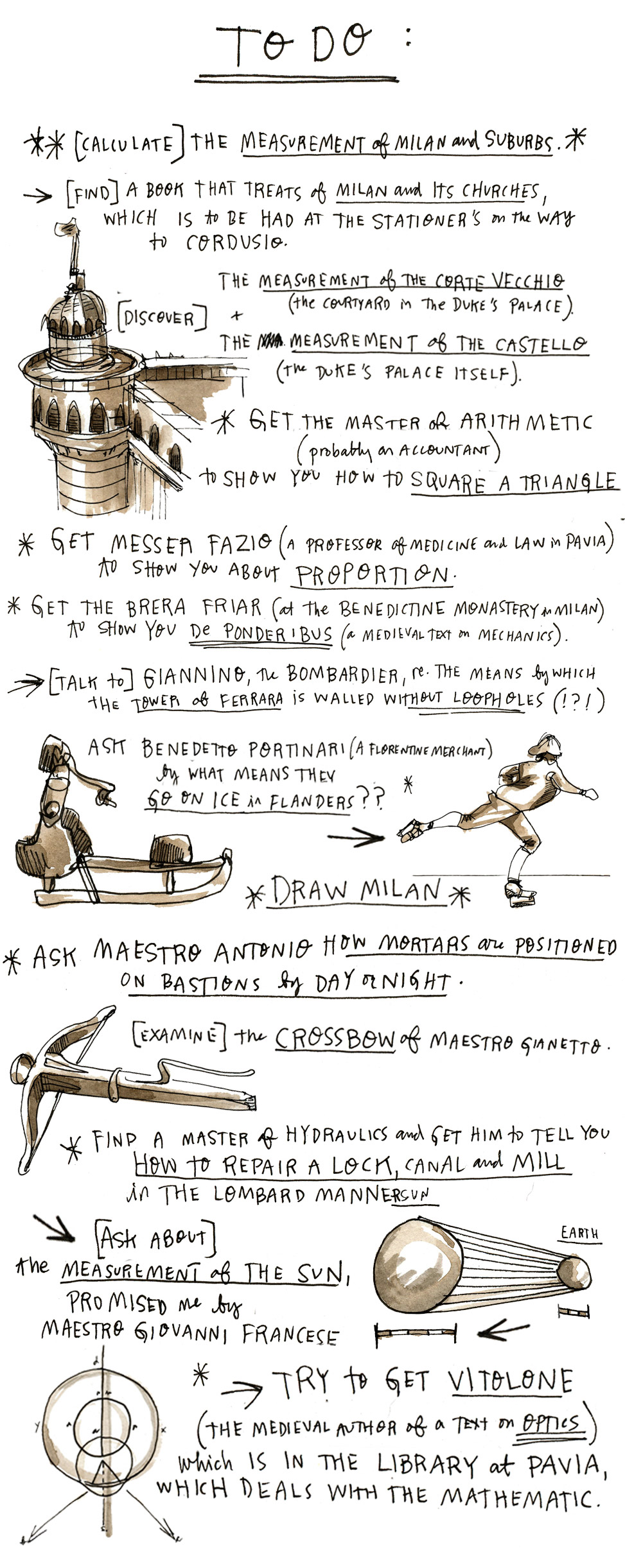
Image by Wendy MacNaughton for NPR
Most people’s to-do lists are, almost by definition, pretty dull, filled with those quotidian little tasks that tend to slip out of our minds. Pick up the laundry. Get that thing for the kid. Buy milk, canned yams and kumquats at the local market.
Leonardo Da Vinci was, however, no ordinary person. And his to-do lists were anything but dull.
Da Vinci would carry around a notebook, where he would write and draw anything that moved him. “It is useful,” Leonardo once wrote, to “constantly observe, note, and consider.” Buried in one of these books, dating back to around the 1490s, is a to-do list. And what a to-do list. NPR’s Robert Krulwich had it directly translated. And while all of the list might not be immediately clear, remember that Da Vinci never intended for it to be read by web surfers 500 years in the future.
[Calculate] the measurement of Milan and Suburbs
[Find] a book that treats of Milan and its churches, which is to be had at the stationer’s on the way to Cordusio
[Discover] the measurement of Corte Vecchio (the courtyard in the duke’s palace).
[Discover] the measurement of the castello (the duke’s palace itself)
Get the master of arithmetic to show you how to square a triangle.
Get Messer Fazio (a professor of medicine and law in Pavia) to show you about proportion.
Get the Brera Friar (at the Benedictine Monastery to Milan) to show you De Ponderibus (a medieval text on mechanics)
[Talk to] Giannino, the Bombardier, re. the means by which the tower of Ferrara is walled without loopholes (no one really knows what Da Vinci meant by this)
Ask Benedetto Potinari (A Florentine Merchant) by what means they go on ice in Flanders
Draw Milan
Ask Maestro Antonio how mortars are positioned on bastions by day or night.
[Examine] the Crossbow of Mastro Giannetto
Find a master of hydraulics and get him to tell you how to repair a lock, canal and mill in the Lombard manner
[Ask about] the measurement of the sun promised me by Maestro Giovanni Francese
Try to get Vitolone (the medieval author of a text on optics), which is in the Library at Pavia, which deals with the mathematic.
You can just feel Da Vinci’s voracious curiosity and intellectual restlessness. Note how many of the entries are about getting an expert to teach him something, be it mathematics, physics or astronomy. Also who casually lists “draw Milan” as an ambition?
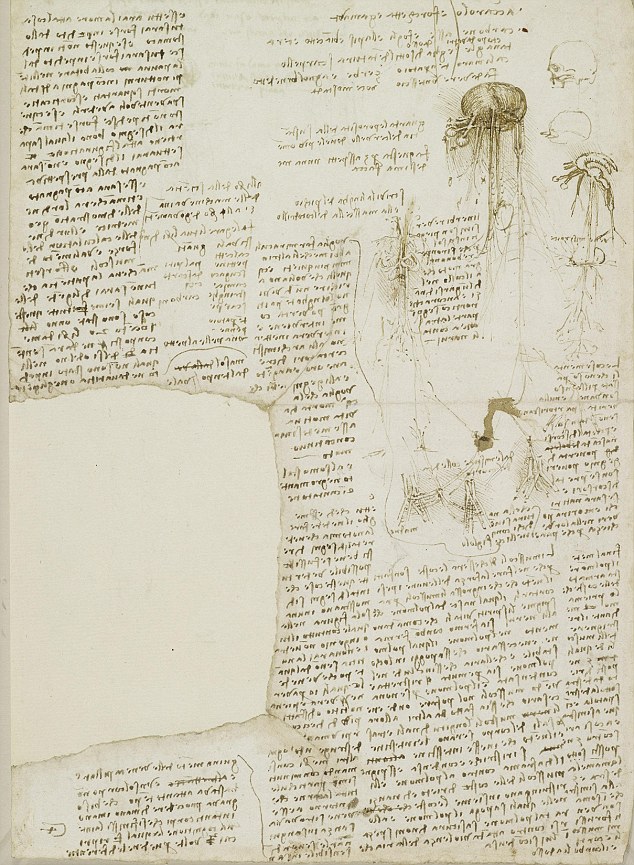
Later to-do lists, dating around 1510, seemed to focus on Da Vinci’s growing fascination with anatomy. In a notebook filled with beautifully rendered drawings of bones and viscera, he rattles off more tasks that need to get done. Things like get a skull, describe the jaw of a crocodile and tongue of a woodpecker, assess a corpse using his finger as a unit of measurement.
On that same page, he lists what he considers to be important qualities of an anatomical draughtsman. A firm command of perspective and a knowledge of the inner workings of the body are key. So is having a strong stomach.
You can see a page of Da Vinci’s notebook above but be warned. Even if you are conversant in 16th century Italian, Da Vinci wrote everything in mirror script.
Related Content:
The Anatomical Drawings of Renaissance Man, Leonardo da Vinci
An Animated History Of Aviation: From da Vinci’s Sketches to Apollo 11
Jonathan Crow is a Los Angeles-based writer and filmmaker whose work has appeared in Yahoo!, The Hollywood Reporter, and other publications. You can follow him at @jonccrow. And check out his blog Veeptopus, featuring lots of pictures of badgers and even more pictures of vice presidents with octopuses on their heads. The Veeptopus store is here.
Leonardo Da Vinci’s To Do List (circa 1490) Is Much Cooler Than Yours is a post from: Open Culture. Follow us on Facebook, Twitter, and Google Plus, or get our Daily Email. And don't miss our big collections of Free Online Courses, Free Online Movies, Free eBooks, Free Audio Books, Free Foreign Language Lessons, and MOOCs.
The post Leonardo Da Vinci’s To Do List (circa 1490) Is Much Cooler Than Yours appeared first on Open Culture.
Hearing – Not Just For Your Ears Anymore
-- Read more on ScientificAmerican.com
Airbnb for fields and meadows
 Field Lover is like Airbnb but for open grassy land in the UK. Sure, it's great for weddings, sporting events, and festivals but apparently they also encourage listings for "horses, alpacas or ostriches to live the good life." (more…)
VIDEO: Japan is so much better than Americans at shopping lines

If you are an American, then odds are you are spending some significant chunk of today fighting your way through unpleasant, stressful, and chaotic shopping lines. Those shopping lines are bad year-round, of course, but there's something about Black Friday to really drive their horribleness home.
There's a better way. There's a better kind of line. And it's in Japan.
Watch this time-lapse video of patrons lining up at Comiket, a regular comic book festival in Tokyo, and just marvel at the order of it all. (They're lining up to enter the festival, one chunk of people at a time.) The experience looks easy, even downright pleasant, and most amazing of all appears entirely self-organized. I challenge you to find a single person cutting, lagging behind, or otherwise disrupting the — frankly beautiful — order of it all. Skip ahead to 2:10 to really see the line in action:
Obviously not every single line in Japan is going to be this orderly. But it is broadly true that line culture varies from city to city and country to country; it's a small but often fascinating expression of how people interact with public spaces. And it's true that Tokyo and Japan have earned reputations for line cultures rivaling even the British and German love of queuing.
To be clear, obviously it is not the case that any one group or culture is somehow innately better or worse at forming lines. Culture is in many ways just the expression of collectively shared rules and assumptions. And, in Japan, it's actually not difficult to find possible roots of this unusual predilection for formal and orderly lines: disaster preparedness education. Japanese students are drilled, and drilled heavily, from a very young age on how to prepare for earthquakes and tsunamis, which are common there. That preparedness necessarily includes a lot of being taught to form quick and orderly lines. And maybe that helps explain why, if you travel to Tokyo, you'll find lines to be generally much more on the efficient end of the spectrum.
If you're reading this in the United States on Black Friday, though, and if you should dare to venture to a shopping mall today, that contrast is going to be especially clear to you.
Man who used McDonald's McChicken sandwich as weapon against pregnant wife is arrested
Nature makes all its papers free to view

The premiere science publisher will make shareable "read-only" links to its all papers stretching back to 1869, using technology from a startup that its parent company, Macmillan, has invested in.
Read the rest
Kickstarting a keyboard-shaped waffle-iron

What started as a viral shoop is now a potential real thing, thanks to a crowdfunding campaign that's looking for $50K to go into production.
Read the rest
Kickstarter funded gesture input ring is a disaster
Snazzy Labs reviewed the "monstrously big," "incredibly uncomfortable" gesture input device called The Ring. Its verdict: a $269 "piece of shit." (more…)
Pastafarian services advertised at German town limits


A reader writes, "In Germany, churches promote the times of their masses on signs at the town entrances. Now, for the first time, the 'Church Of The Flying Spaghetti Monster' in Templin/Germany was allowed to put sign there as well: 'Fridays, 10am: Noodle mass'."
(more…)
XKCD versus neurobollocks
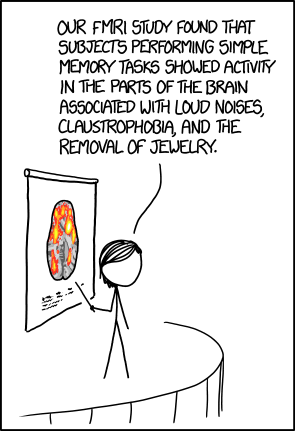 In his latest strip, fMRI, Randall "XKCD" Munroe nails the problems with brain imaging studies that claim to have found the neuroanatomical link between certain kinds of thoughts and regions of the brain (see 2013's Brainwashed: The Seductive Appeal of Mindless Neuroscience for more).
Read the rest
In his latest strip, fMRI, Randall "XKCD" Munroe nails the problems with brain imaging studies that claim to have found the neuroanatomical link between certain kinds of thoughts and regions of the brain (see 2013's Brainwashed: The Seductive Appeal of Mindless Neuroscience for more).
Read the rest
French Couple Sings an Achingly Charming Version of VU’s “Femme Fatale”
Day in, day out, we rummage around the internet, looking for new material to bring your way. I start searching, and I never quite know where the search will take me. Some paths lead to dead ends, others to interesting side streets. Speaking of interesting side streets…. Yesterday a trip through some old Velvet Underground material (more on that tomorrow) led me to this small, unexpected delight. Above, we have Mathieu and Pauline, two young French musicians, singing an achingly charming version of VU’s “Femme Fatale”. There’s so much beauty and youth in it, it kinda hurts. Below, see them sing a cover of Serge Gainsbourg’s “Elisa.”
Follow us on Facebook, Twitter and Google Plus and share intelligent media with your friends. Or better yet, sign up for our daily email and get a daily dose of Open Culture in your inbox.
Related Content:
Andy Warhol Shoots the Only Color Film of The Velvet Underground Playing Live in Concert (1967)
Hear Newly-Released Material from the Lost Acetate Version of The Velvet Underground & Nico (1966)
A Symphony of Sound (1966): Velvet Underground Improvises, Warhol Films It, Until the Cops Turn Up
French Couple Sings an Achingly Charming Version of VU’s “Femme Fatale” is a post from: Open Culture. Follow us on Facebook, Twitter, and Google Plus, or get our Daily Email. And don't miss our big collections of Free Online Courses, Free Online Movies, Free eBooks, Free Audio Books, Free Foreign Language Lessons, and MOOCs.
The post French Couple Sings an Achingly Charming Version of VU’s “Femme Fatale” appeared first on Open Culture.
‘South Park’ Creators Animate the Teachings of Western Buddhist Philosopher Alan Watts
South Park creators Trey Parker and Matt Stone have applied their trademark animation to the teachings of Alan Watts, a noted British-born philosopher who helped popularize Buddhism and other tenets of Eastern philosophy among Western audiences. Archival teaching by Watts can also be heard as a weekly podcast curated by his son, Mark.
via Open Culture
HYPER REALISTIC NBA COLLECTION | BY ENTERBAY

High-end figurine manufacturer Enterbay, are specialists in hyper realistic action figures, they first caught our attention with their remarkable, life-like Michael Jordan action figure. Since then, Enterbay have added some more renown basketball legends to their portfolio and now have a NBA Collection, including names such as Kevin Durant, Jeremy Lin, Kobe Bryant, Dennis Rodman and Lebron James. All feature amazing attention to detail, with authentic likeness, detailed wrinkles, detailed veins and muscles, realistic skin texture and a body with 30 points of articulation. Additional features include a bevy of interchangeable body parts, a basketball, accessories, sneakers and team jerseys.
A tapeworm lived in this man's brain for years

This is the story of a man who had a tapeworm living in his brain for at least four years. You can see the worm moving from one side of his brain to the other in this series of images, taken over that timespan:
/cdn0.vox-cdn.com/uploads/chorus_asset/file/2485524/Brain_MRI_Scan_over_time_Credit_Nagui_Antoun.0.png)
(Nagui Antoun)
This 50-year-old man came to the hospital complaining of headaches, weird smells, seizures, and memory problems. Eventually, Tim Chester of Mashable reports, the doctors did brain surgery, found the tapeworm, and removed it.
Now, how did this person get a tapeworm in his brain? It's because it wasn't any ordinary tapeworm. Ordinary tapeworms live in stomachs, and you can find them in dogs and cats in the United States because fleas can carry tapeworm larvae.
This brain tapeworm is a very rare and different species, called Spirometra erinaceieuropaei. It lives in some Asian countries (this patient had recently been to China) and can be acquired through eating undercooked frog meat or drinking contaminated water.
Scientists later sequenced its genome — the first of this species. They hope to find clues in its DNA of what kinds of drugs will best fight it in the future. They published this tale, and its scientific results, in the journal Genome Biology on November 21, 2014.
Here's some more crazy things you can see with MRI:
These tech interns are probably making more than you are

If you needed any confirmation that you are probably in the wrong business, then look no further than what tech interns are getting paid these days:
Friend made a list of top internship offers pic.twitter.com/faEonGfjwd
— Tiffany Zhong (@tzhongg) November 23, 2014
If you extrapolate Zhong's numbers, a Quora intern is making over $100,000 a year (though, interns don't usually work the full year) when you add in the housing stipend. And I don't even want to do the math on FitBit. We've always heard whispers (Business Insider reported in June that tech internships have salaries that top out at $7,000) about these mythic internships, but there's something staggering about seeing all those salaries lined up side by side. Companies don't usually divulge tech internship salaries, and what we know comes by way of former interns or current interns who post salaries to sites like Glassdoor.
You have to remember that these aren't even "real" jobs yet, and they are already paid bundles more than the average national salary (around $44,000).
Tiffany Zhong, the co-founder of Glimpse, an app that allows you to share private photos with friends, compiled the list. She explained that these, unless otherwise noted, are undergraduate internships. Which basically means that we should just all learn how to code:
@MarshallOsborne @pandemona basically, yeah!
— Tiffany Zhong (@tzhongg) November 23, 2014
Update: Of course, these companies don't usually release salary information, so there's no way to know if these numbers are exactly accurate. But given previous reporting and rumors, they seem entirely plausible — and that's even more depressing.
The best elevator in Russia

"To call the elevator, connect the two wires." [via]
Why Have Our Brains Started to Shrink?
-- Read more on ScientificAmerican.com
Rare Samurai Swords and Arms up for bid in online Christie's auction
Firefox switches default search from Google to Yahoo
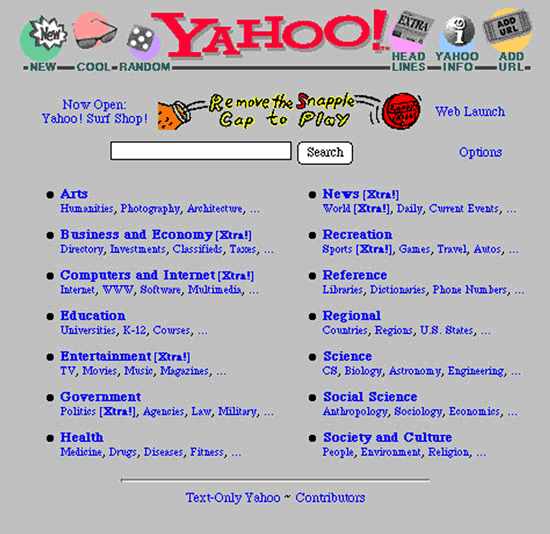
In some ways, it's the inevitable outcome of Google's increased focus on Chrome and Yahoo's increased focus on getting anyone, anywhere to care about it before it runs out of money.
Read the rest
Britain's pink-painted poo aims to shame irresponsible dog owners
The London Borough of Camden has a new weapon in its eternal fight against dog poo: pink spray paint. The idea is to embarrass dog owners who fail to pick up after their animals—and they've offered cans of paint to local residents who wish to participate in the program.
Read the restChess so boring that the Grandmaster dozed off

Chess Grandmaster Magnus Carlsen fell asleep during a game against Viswantahan Anand in the World Chess Championship now taking place in Sochi, Russia; the game ended in a draw. "I wasn't in the best of shape," Carlsen said. (Yahoo! Sport)
Map of bizarre British place names
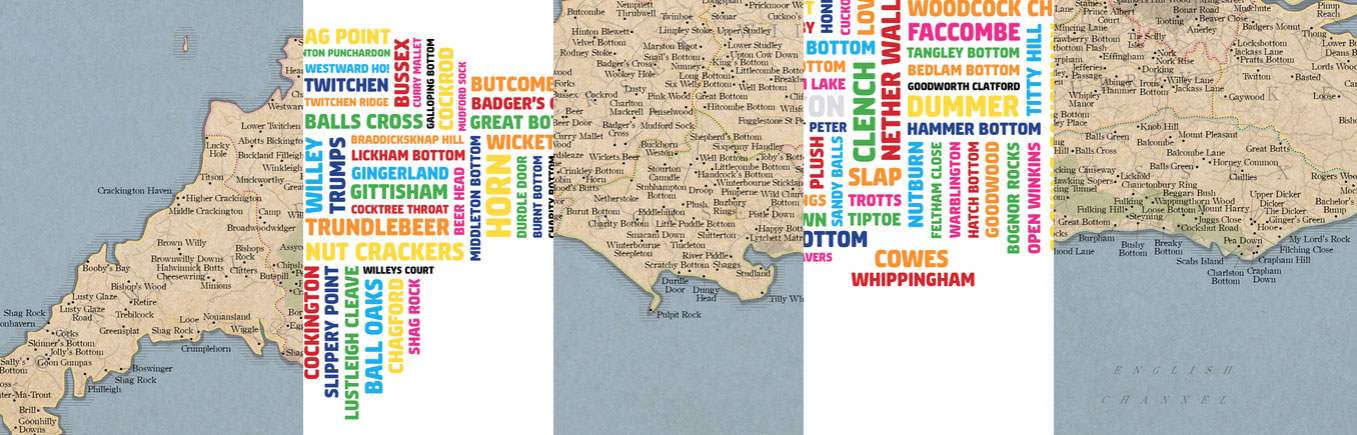 Strumpshaw, Tincleton & Giggleswick sell this map, in traditional and wordcloud form, for £22. If you ever visit, take the time to visit beautiful Shitterton, Lickham Bottom, and Marston Bigot.
‘A Brief History of Graphics’, A Five-Part Video Series Examining the History of Graphics in Video Games
“A Brief History of Graphics” is a five-part video series by Stuart Brown of XboxAhoy that examines the history of graphics in video games from pixels to polygons and beyond.
Pixel Pioneers: A Brief History of Graphics, Part One
Sprite Supreme: A Brief History of Graphics, Part Two
Polygon Realm: A Brief History of Graphics, Part Three
Voodoo Bloom: A Brief History of Graphics, Part Four
Future Crisis: A Brief History of Graphics, Part Five
via Digg
Air traffic porn from the UK skies
Hot on the heels of their hit visualizations Europe 24 and North Atlantic Skies, air traffic management firm NATS returns with "UK 24 – your guided tour to some of what makes UK aviation work."