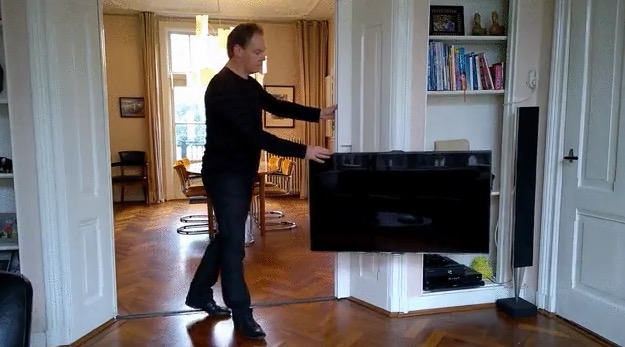
The tamper-evident "Warrant Void If Removed" stickers violate the Magnuson-Moss Warranty Act of 1975, which allows device owners to take their gadgets for service at independent depots without voiding their warranties. (more…)
The tamper-evident "Warrant Void If Removed" stickers violate the Magnuson-Moss Warranty Act of 1975, which allows device owners to take their gadgets for service at independent depots without voiding their warranties. (more…)
$7.25 of pay keeps the FLSA away
as suggested by Meaulnes Kenwood
FRED Blog, August 8, 2016
In 1938, the U.S. federal government passed the Fair Labor Standards Act, establishing a federal minimum wage of $0.25 per hour. Today, the federal minimum wage stands at $7.25 per hour. The FLSA doesn’t cover all workers, but it does cover those who meet certain criteria, such as those who work for businesses with annual sales or business conducted of at least $500,000. It covers those who work for hospitals and other medical or nursing care providers, schools, and government agencies. Domestic service workers and those involved in interstate commerce are covered as well.
A state minimum wage law applies to all residents within a state. If a worker isn’t covered under FLSA, they’ll receive the state minimum wage. If a worker is covered by both FLSA and state legislation, they’re generally paid the higher wage. These state standards differ across the country. Some states have no minimum wage. Some states, such as Washington, adjust their minimum wage annually according to changes in price levels.
The maps show changes in state minimum wages between 1985 (top map) and 2016 (bottom map). California and Massachusetts have the highest wage, at $10 per hour; Oregon and Connecticut also have comparatively high wages, at $9.25 and $9.60, respectively. A cluster of states, including Mississippi and Alabama, do not have a state minimum wage. In these states, if a worker meets FLSA criteria, they’re paid $7.25. If not, they’re paid whatever wage they negotiate with their employer. Finally, some states have lower minimum wages: Wyoming, for example, sets its minimum wage at $5.15, less than the FLSA rate. But one trend is consistent: Over time, the minimum wage has increased across the United States.
Many factors can contribute to the rate a state chooses to set. States’ labor forces and economies vary dramatically, so naturally the minimum wage can vary as well. Some regions, such as New England and the West Coast, have higher costs of living, which is a likely reason for higher minimum wages.
How these maps were created: From the GeoFRED site, click the “Build a new map” button at the top right. After a world map appears, use the tab on the left to customize the map. Select “State” for the region type and search for “State minimum wage rate” in the data section. To create maps for different time periods, select different years under the “Dates” section.
Suggested by Meaulnes Kenwood.
The post $7.25 of pay keeps the FLSA away appeared first on The Big Picture.
CodsmackCool!
I recall someone once pointing me to a story in the paper — late ’80s? early ’90s? — remarking on the fact that Microsoft Corp. had just passed General Motors in terms of total value (at least as measured by market capitalization). It seemed like one of those Moments, some sort of milestone in the march from the Industrial to the Information Age: GM, with several hundred thousand employees and an immense physical presence around the world, with massive factories and showrooms and all the rest, overtaken by a company with fewer than 10,000 employees and one small campus in Washington state.
Well, we may just have passed another such Moment. Bloomberg reports that, as of Aug. 1, for the first time, the five most valuable corporations in the world are all tech companies: Apple, Alphabet (Google), Microsoft, Amazon and Facebook. [And a note for the “Make America Great Again” crowd: They’re also all based in the United States, foreign firms on previous Top 5 lists (Gazprom, Vodafone, Royal Dutch Shell, PetroChina) having failed to keep pace with the U.S. tech giants.]
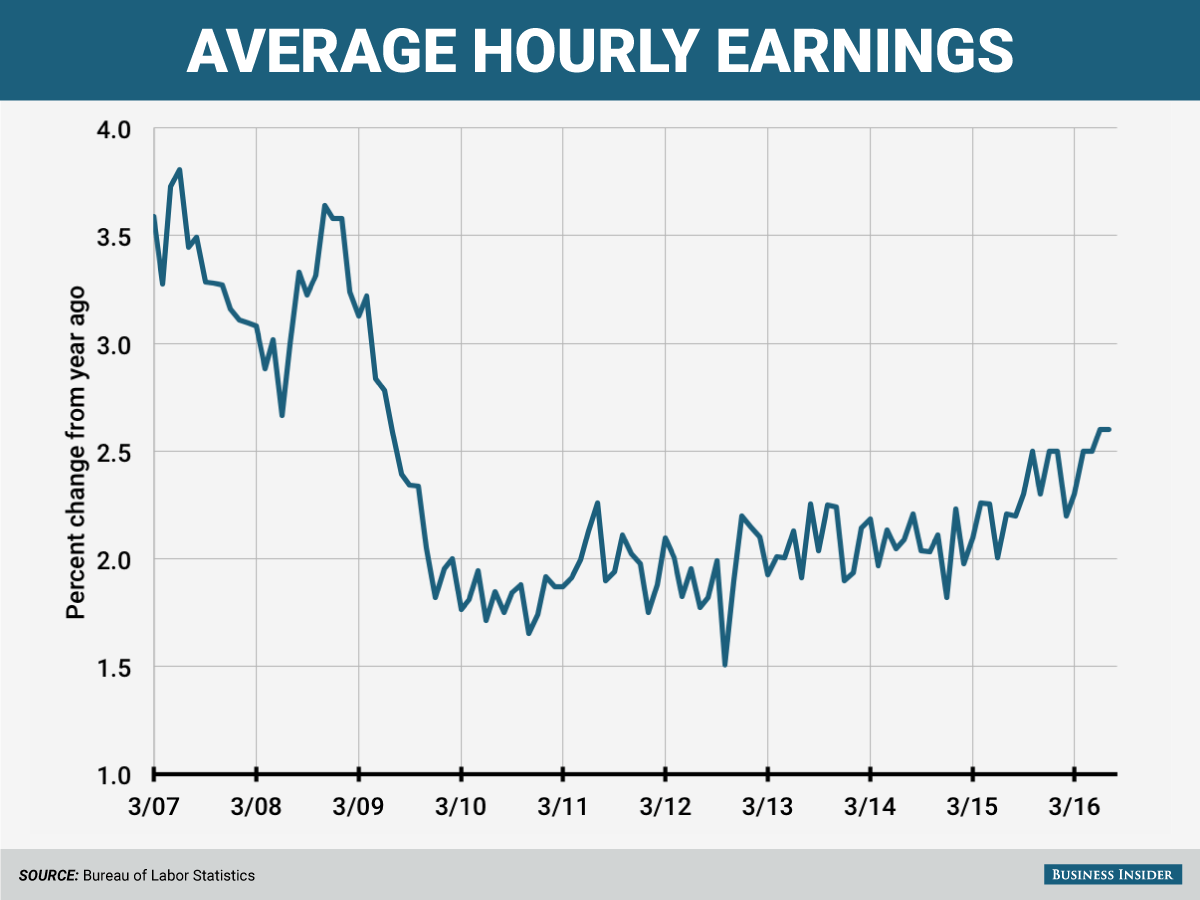
Wages grew by 2.6% over the prior year, equal to last month’s reading and in line with expectations…
Wage growth remains at its highest rate since the Great Recession
click for ginormous graphic
Source: Business Insider
The post Wage Growth at its Highest Rate Since Great Recession appeared first on The Big Picture.

Hurricane Earl on Wednesday, shortly before it made landfall in Belize. (credit: NOAA)
On Thursday some meteorologists (who are by nature a cheesy lot) had an opportunity to channel their inner Dixie Chick and sing "Goodbye Earl" as yet another hurricane went into the Yucatan Peninsula to die. Most of the rest of the United States yawned—another hurricane in the Atlantic, and no harm done.
But the hurricane was remarkable precisely because of this. Earl, which attained a maximum wind speed of 80 mph before striking Belize, marked another in a long line of hurricanes that have formed in the Atlantic basin—the Atlantic Ocean, Caribbean Sea, and Gulf of Mexico—but have not affected the United States.
Consider some of the following statistics: the last hurricane to reach the Gulf of Mexico was Ingrid in September, 2013. The current, nearly three-year-long drought for the Gulf has not been equaled since at least 1851. The drought in hurricanes that make Florida landfalls is even more pronounced. The Sunshine State, which juts into the Atlantic Ocean like a lightning rod for tropical weather, has not been hit by a hurricane since Wilma (2005). Earl was in fact the 67th Atlantic hurricane in a row to not make landfall in Florida, according to hurricane scientist Phil Klotzbach. The previous record was a mere 33 hurricanes, a streak between Hurricanes David (1979) and Elena (1985).
The annual Perseid meteor shower peaks this year on Aug. 11 and 12, with the best viewing after local midnight. The shower is one of the very best of the year, with 60 or more shooting stars visible every hour.
I have a viewing guide below, but first there’s some unusual news: The shower may have a rare outburst, a big uptick in activity, this year!
The Perseids are debris from the comet Swift-Tuttle, which orbits the Sun every 133 years. When it gets close to the Sun, the heat from our star turns the ices in the comet into gas, forming the long tail. Small bits of rocky debris also slough off and trail behind the comet. When the Earth plows into these, they burn up in our atmosphere to form the shower.
However, they’re not alone in space. Jupiter’s gravity tugs on the stream of particles, causing their orbits to shift. Sophisticated computer simulations indicate that this year, the Earth should be plowing through a denser than usual part of the stream, creating as many as 200 shooting stars per hour!
This outburst should occur on the night of Aug. 11 and 12. It’s not clear if it will happen, or when—these things are pretty difficult to predict—so I advise you go out shortly before midnight and stay out as long as you can. If you miss it, don’t fret: The shower will still be nice the next night, too. As I describe below, the later at night you can stay out the better.
So, ready for the viewing guide? Here you go. I’ve adapted the previous year’s guide to be appropriate for 2016. Watching a meteor shower is easy and fun, and I highly recommend it. Even better, the roughly half-full Moon sets around midnight, so it won't be around to wash out the meteors! So get out and take a look.
Oh, one more thing: If you have cloudy skies, don't fret: NASA will live-stream the shower! So you can always watch on your computer.
Perseids 2016 Viewing Guide
For the tl;dr crowd: The best time to go out is Thursday night Aug. 11/Friday morning Aug. 12 after your local midnight. Find a place with wide-open skies, lie back, and look up. You don’t need a telescope or anything like that. The meteors should zip across the sky about once per minute or so on average, appearing to come from near the constellations of Cassiopeia and Perseus in the northeast.
Meteor showers occur when, as the Earth orbits the Sun, it plows through the debris left by a comet (or, in one case, a weird asteroid) that is also orbiting the Sun. Comets are basically dust and gravel held together by water ice, and as the Sun warms the comet, the ice sublimates (turns directly to gas) and the rocky bits are sloughed off. They orbit the Sun in more or less the same path as the comet, and when the Earth rams through them, they enter our atmosphere at high speed, heat up, and glow.
And we get a meteor shower.
Due to perspective (the same effect that makes raindrops always seem to be coming from ahead of you when you drive a car through a rain shower) the meteors appear to come from a point in the sky in the constellation of Perseus, near the W-shape of Cassiopeia. They radiate away from there, so that point in the sky is called the radiant, and the shower gets its name from the constellation.
By the way, I did a whole episode of Crash Course Astronomy on meteors. It’s not specific to the Perseids, but it’s chock full o’ fun science.
Now, on to the FAQ!
When is the best time to watch?
Technically, the meteor shower starts around July 17 and lasts until late August. Realistically, though, it peaks over the week around Aug. 11–13. This year, the best time to watch is Thursday night/Friday morning after local midnight (that’s when your part of the Earth is facing into the oncoming meteoroids and you see more). However, a night before or after will be fine, too. The later you wait in the evening the better, but even a couple of hours after dark will be fine.
How many will I see, and how often?
The Perseids average about 60–100 meteors per hour. I usually see a lot fewer than that because my skies aren’t particularly dark. Meteors are random, in that you may see three in a row in a few seconds, then nothing for five more minutes.
A lot of people have the misconception that you’ll see meteors zipping across the sky everywhere like fireworks. It’s not like that; expect to see one per minute or so. Trust me, it’s still wonderful!
Speaking of which, don’t expect to go outside and see tons of meteors right away. Your eyes take a few minutes to adjust to the darkness (it takes about a half hour to get fully adapted) so give it a few after going out. Patience!
And remember, if there's an outburst, you might see many more! It's worth going out to see.
What direction should I face?
Up! Seriously, meteors can appear anywhere in the sky (though they tend to head in a direction away from Perseus), so the more sky you can see the better. Try to get away from buildings and trees. I have a spot in my yard with fewer trees and where my house blocks the light from nearby towns. See if you can find something similar.
Do I need a dark sky?
Being away from city lights helps a lot. Many meteors are fainter and get washed out if the sky is bright from light pollution. However, I grew up in the Washington, D.C., suburbs and usually saw quite a few meteors, so incredibly dark skies aren’t critical. Just nice.
Do I need a telescope or binoculars? A camera?
I think this comes up due to movies and TV shows (and commercials in fact) where they show people out in a field looking through a telescope during a shower. But this is a terrible idea! Meteors zip across the sky from random spots, so you want to see as much sky as possible. A telescope only lets you see a tiny part of the sky at once. Bent over an eyepiece, you’re likely to miss everything. It’s like trying to watch fireworks through a soda straw.
Having said that, if you have binoculars or something else, why not use them every now and again just to see the sky? You’re outside, it’s dark, and the wonders of the heavens await! Just be aware you’re trading off seeing some meteors if you do, but scanning the Milky Way with binoculars for a few minutes is totally worth it.
As for taking pictures, getting good shots of meteors can be a bit tricky. I suggest reading the guides at the American Meteor Society, Sky and Telescope, and PetaPixel. What you get out of the effort depends on what you put in, usually. But even inexpensive digital cameras can do the trick.
Meteors, meteoroids, meteorites? What?
Meteoroids are the solid bits of debris. Meteors are what we call them as they shine brightly, ramming through our air. Usually they burn up, but if they make it to the ground we call them meteorites. So a meteorite is a meteoroid that survives being a meteor.
How fast are the meteors traveling?
A typical Perseid is moving at about 60 kilometers/second (35 miles/sec) when it enters our atmosphere. That’s 200,000 kph (130,000 mph)! That’s incredibly fast; rapid enough to get from the Earth to the Moon in just two hours.
Geez, that’s fast! Are we in any danger from the meteors?
Nope. These are generally not much more substantial than snowflakes or grains of sand. They burn up 90–100 kilometers above the ground, far, far above your head.
Are astronauts in danger from meteors?
Not really. The odds of the space station getting hit are incredibly low, even over the course of many years. But in 2011 astronaut Ron Garan got a photo of a Perseid meteor burning up in the air below him. How cool is that?
Why do they leave a smoke trail?
That’s not really smoke; it’s vaporized meteoroid bits! As the meteoroid screams through the air, it gets hot because it’s violently compressing the air ahead of it—when you squeeze a gas it gets hot, and the meteoroid is squeezing the air hard. Bits of the particle melt and blow off (astronomers call this “ablation”) forming the long trail (technically, we call it a “train”) and can take a few seconds to cool and fade.
One meteor got really bright and I thought I saw a puff of smoke that lasted for a few minutes. What was that?
Pushing through our air at high speeds puts the meteoroid under incredible pressure. It can break apart, and the pieces burn up much more rapidly. This can cause a pulse or multiple pulses of light, basically explosions. The meteoroid can disintegrate, creating a big puff of ionized particles that sometimes last for several minutes (this is called a “persistent train”), which then gets twisted in high-altitude winds. It’s rare, but spectacular. I’ve never seen one.
Why are some meteor trains long and some short?
The length of the train depends on the angle of the meteor toward you. If it’s headed right at you it will appear foreshortened, so it looks really short. If it’s headed tangentially from you, more or less across the sky, it’ll appear longer.
Its like someone throwing a ball right at you to catch versus watching two people play catch from the side. Perspective counts.
Can I listen to the shower?
This may seem like a weird question, but the answer is yes, kinda. They happen so high up that any sound they might make will never reach your ears, so in that sense, no.
But, meteors are so hot they ionize the air around them, stripping the electrons from the atoms and molecules. Ionized air makes an excellent reflector of radio waves, and so a meteor will make a radio “ping” as it zips through the sky. You can listen to this live at the Space Weather Radio site. It’s eerie.
I have more info about this in an earlier post.
Where can I get find out more about meteors?
I’m glad you asked. Here are a bunch of links that’ll keep you occupied until the show starts. Enjoy!
This post was done in partnership with The Sweethome, a buyer's guide to the best things for your home. Read the full article with more details and background information here.
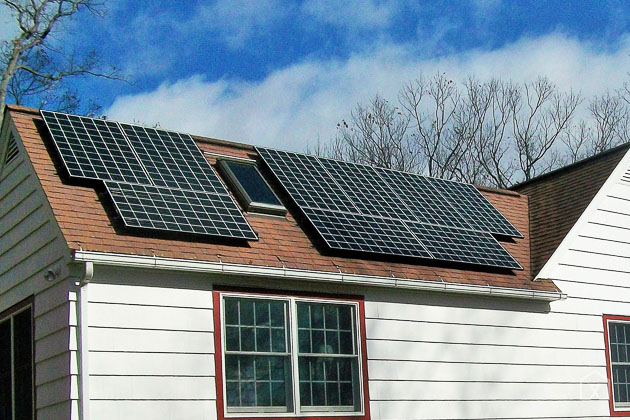
With solar power, there's no one-size-fits-all solution. Before deciding whether we could recommend any components for solar power, we spent weeks compiling statistics, wading through specifications, and getting expert input—and even so, the picks we make here represent only a starting point on the road to solar. Every installation needs to take into account electricity consumption, geographic location, roof orientation, local permits, and a host of other issues. This guide will help you get a rough idea of how much power you'll need, and then, in most cases, the first option you should consider is a grid-tied system made up of Suniva Optimus 335W monocrystalline solar panels paired with SolarEdge P400 power optimizers, plus a SolarEdge inverter at the heart of it all. Suniva panels are efficient, affordable, and backed by a reputable warranty from a company with manufacturing in the US. SolarEdge inverter components, meanwhile, combine the reliability and cost savings of a traditional string-inverter system with the placement flexibility and increased efficiency of microinverters.
In the past five years, solar panels have started to become a commodity item, with small technical differences that are immaterial to most homeowners. The Suniva panels, made at factories in Georgia and Michigan, come with a 10-year warranty and a 25-year power guarantee, though most other top-tier manufacturers offer the same warranty. The Suniva panels are right in the middle when it comes to efficiency rating—not so low as to require the extra space that cut-rate panels may need, but not so high that you're paying 50 percent more for engineering prestige you'll never notice. If you can find panels from a similarly reputable company with the same warranty and similar efficiency but a lower price tag, you'll probably be just as happy with them. But the Suniva panels should be the bar that you try to clear as you shop.
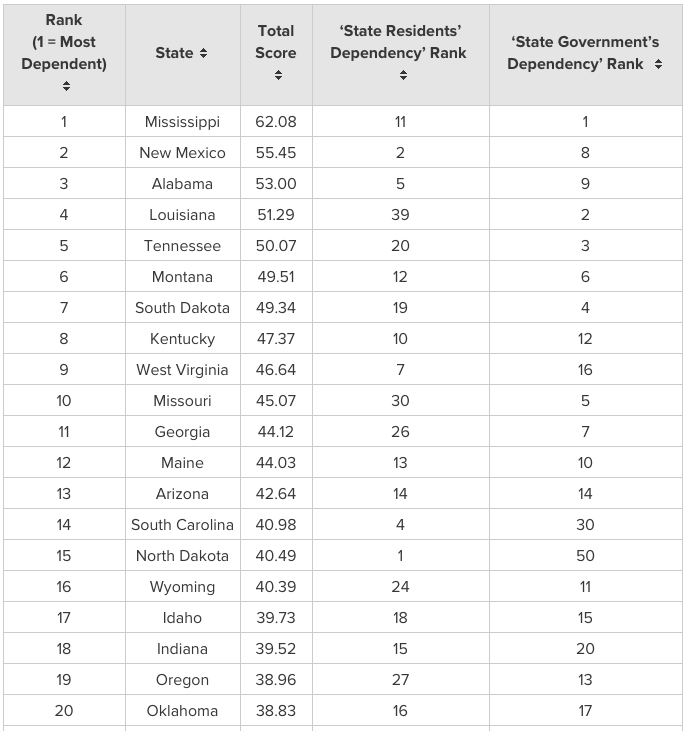
Source: WalletHub
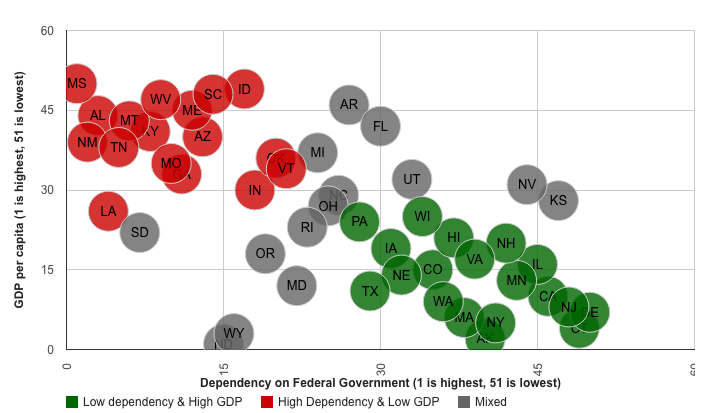
The post Most & Least Federally Dependent States appeared first on The Big Picture.
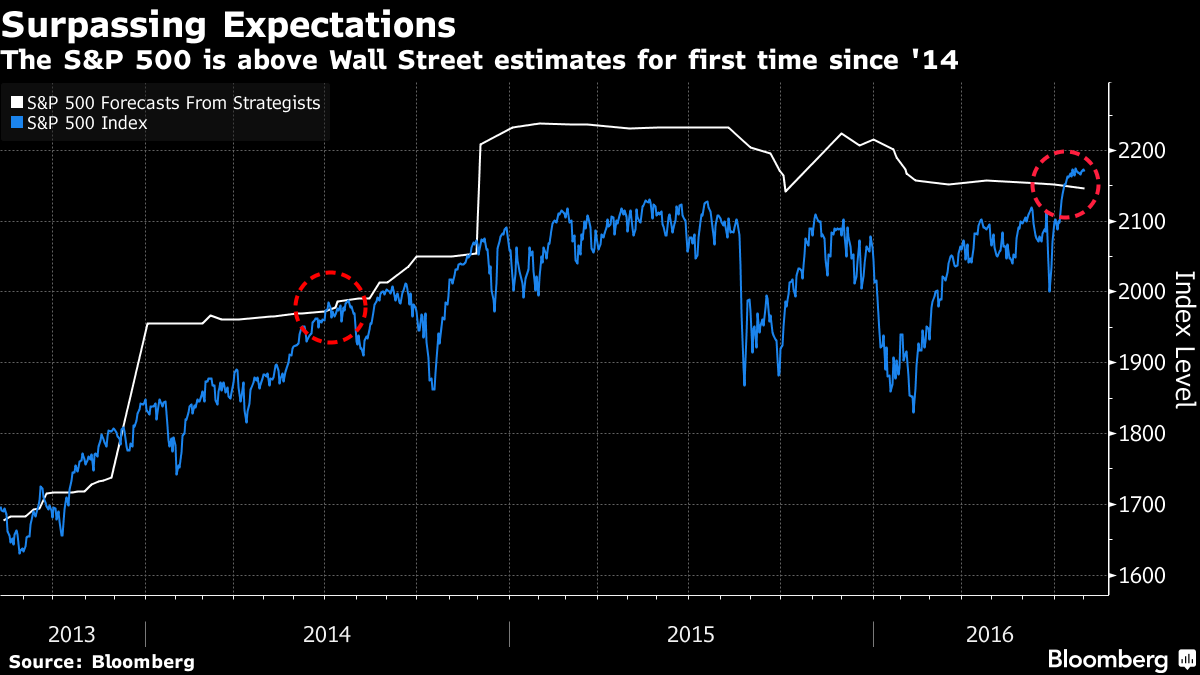
A rare condition, as described by Bloomberg:
“One of the safest assumptions on Wall Street is that however high stocks have climbed, professional forecasters will say they can go higher. That’s not the case now.
U.S. shares dropped the most in four weeks on Tuesday, pushing the S&P 500 Index down as much as 1.1 percent to 2,147.58. And, for a change, turning to equity strategists was little comfort. As much as they have loved the bull market, a year of stagnating earnings, inflated valuations and confusion about the Federal Reserve has left prognosticators playing an unfamiliar role as bears.”
click for ginormous graphic
Source: Bloomberg
The post 5-week, 8% Rally Has S&P500 Ahead of Estimates appeared first on The Big Picture.
NIST is no longer recommending two-factor authentication systems that use SMS, because of their many insecurities. In the latest draft of its Digital Authentication Guideline, there's the line:
[Out of band verification] using SMS is deprecated, and will no longer be allowed in future releases of this guidance.

Tony Greenhand, 26, of Albany, Oregon makes pinata-like fully smokable joints that he sells for big bucks.

CodsmackI've missed this game. Looks fun.

This is the SFW version of the spin-off's card selection.
Board game smash hit Codenames has earned countless accolades and awards since its 2015 launch due to its ease of play, surprising depth, and family friendliness. The game revolves around giant packs of words, which means a simple "add some more words" offshoot or expansion was inevitable, but the game's first official follow-up wastes no time erasing the phrase "family friendly" from the recommendation list.
Codenames: Deep Undercover began appearing at Target shops in late July, and this week it finally officially launched at more Targets (and will, for now, remain an exclusive at the US big-box chain) for $20. The 200-card set only differs from the core game in one key aspect: dirty words. Players split into two teams, and they're each led by a "spymaster" who must help his or her teammates figure out which face-up words on a table belong to their team—and must do so with one-word clues, which makes the clue-giving process pretty tricky.
But while the original game's word list mostly consisted of neutral words and proper nouns, C:DU takes the blue route, consisting mostly of sexual words (squirt, vibrator), slurs (bitch, slut), and double entendres (clam, pickle). The game also comes with Codenames' first official set of blank cards, on which players can write their own vulgar or gross words of choice, along with more stylized versions of its "bystander" cards.
The Outer Space Treaty requires countries to “authorize and continuously supervise" the activities of space missions under their jurisdiction, including those of commercial companies. In the United States, the Federal Aviation Administration carries out those duties with regard to private spaceflight, and things have worked well enough.
But now a number of companies, including SpaceX with its Red Dragon mission, are seeking to push beyond Earth orbit, which has been the traditional boundary for commercial activity. Perhaps the biggest of the many questions this raises is how permissive the federal government would be regarding this new commercial interest.
The early answer seems encouraging. The first company to apply for a commercial space mission beyond Earth orbit has just received approval from the federal government. As part of the Google Lunar X Prize competition, Moon Express intends to launch a small, single-stage spacecraft to land on the Moon by the end of 2017.
CodsmackWOW! Brazen!
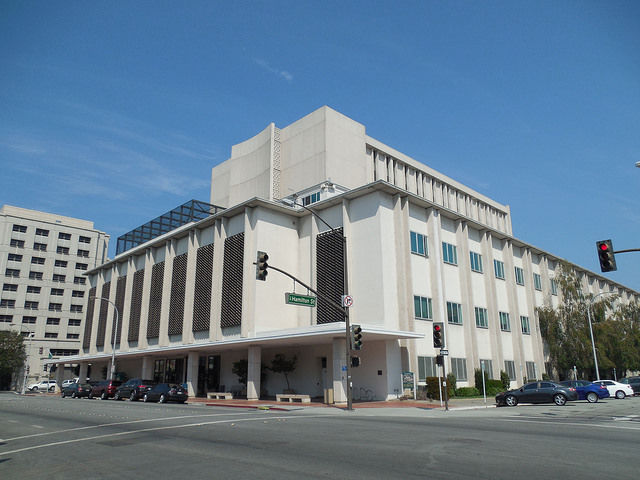
The bugged courthouse. Redwood City, California. (credit: Jimmy Emerson)
The FBI violated the Fourth Amendment by recording more than 200 hours of conversation at the entrance to a county courthouse in the Bay Area, a federal judge has ruled.
Federal agents planted the concealed microphones around the San Mateo County Courthouse in 2009 and 2010 as part of an investigation into alleged bid-rigging at public auctions for foreclosed homes. In November, lawyers representing five defendants filed a motion arguing that the tactic was unconstitutional, since the Fourth Amendment bans unreasonable searches.
"[T]he government utterly failed to justify a warrantless electronic surveillance that recorded private conversations spoken in hushed tones by judges, attorneys, and court staff entering and exiting a courthouse," US District Judge Charles Breyer wrote in an order (PDF) published yesterday. "Even putting aside the sensitive nature of the location here, Defendants have established that they believed their conversations were private and they took reasonable steps to thwart eavesdroppers."
CodsmackInteresting. It isn't clear to me how much the officers really thought someone else's life was at stake and directly from this man. However, if they did think that, then this usage seems appropriate.
In a decision issued today in United States v. Caraballo, the U.S. Court of Appeals for the Second Circuit (per Judge Guido Calabresi) held that police did not violate the Fourth Amendment when they “pinged” a suspect’s cellphone because exigent circumstances existed. I find the outcome plausible on its facts, but the analysis strikes me as pretty unusual. Here are the details:
Frank Caraballo was a known drug dealer who was under investigation by narcotics officers. A woman who was an associate of his was found slain in an apparent execution-style killing. There was some reason to suspect that Caraballo was behind the killing. Two months earlier, the woman had told the police that she sold drugs with Caraballo and that he would “kill her” if he knew she was speaking to them. The police knew Caraballo’s cellphone number, so they asked the carrier, Sprint, to “ping” the phone. Pinging a phone sends a request for information to the GPS on the phone. The GPS returns the location within a range of 8 to 46 meters. As I read the opinion, the officers made the request four to five hours after the woman’s body was discovered.
Sprint had the officers fill out an exigency request form, presumably to satisfy 18 U.S.C. 2702(c)(4), which allows the disclosure of non-content information about a cellphone account “to a governmental entity, if the provider, in good faith, believes that an emergency involving danger of death or serious physical injury to any person requires disclosure without delay of information relating to the emergency[.]” The officers said that the reason for the emergency was “[m]ale with phones is suspect in possible homicide.”
Sprint pinged the phone 15 times until police confirmed that Caraballo’s car was at a local McDonald’s. That led to Caraballo’s arrest, at which point he made incriminating statements. Caraballo moved to suppress the statements as fruit of an unlawful search of his phone when police “pinged” it. The government responded that the pinging was not a search; if it was a search, it was a reasonable search based on exigent circumstances; and if it was an unreasonable search, the good-faith exception to the exclusionary rule applied.
The court’s opinion notes the uncertainty of whether a search occurred at all. The opinion bypasses this question by assuming that a search occurred and ruling only that any search was reasonable because it was justified by exigent circumstances. As some readers know, exigent circumstances are usually based on a pressing emergency. The basic idea is that if the government has to act quickly, because the evidence would be gone or the public harmed by the delay in getting a warrant, then the government can conduct a warrantless search or seizure as long as it is reasonable under the totality of the circumstances.
The court’s analysis of exigent circumstances breaks down into two parts. The first is what you might call traditional exigent circumstances analysis. Caraballo was a suspect in a violent killing who might have been armed, and if he killed the victim, he might try to kill others, including government informants who had turned against him. Also, the officers testified that although it would have taken only six hours to get a warrant, it probably would have taken “days or weeks” for Sprint to execute the warrant and ping the phone.
I think these arguments provide a pretty weak basis for exigent circumstances. The case that Caraballo was behind the killing was plausible but not strong, and the grounds for thinking he was going to hurt others if he was behind the killing itself seem pretty speculative. The concern that Sprint might delay in executing the warrant is interesting, although it’s not obvious that it provides an argument against getting a warrant in the first place (especially given that the officers believed they had probable cause that Caraballo was a drug dealer but not that he was the killer). But at least these arguments are sound in traditional exigent circumstances analysis, so they’re pretty fact-bound points.
The second part of the exigent circumstances analysis is more doctrinally novel. Judge Calabresi quotes a passage from a prior case saying that the amount of force and the degree of privacy invasion used in carrying out a search and seizure are relevant to reasonableness. From that, he deduces a somewhat different principle:
We read this language to mean that the greater the invasion of privacy, e.g., of a person’s home, see Florida v. Jardines, 133 S. Ct. 1409, 1414 (2013) (“[W]hen it comes to the Fourth Amendment, the home is first among equals.”), and the clearer the restrictions on police behavior in the absence of exigency, the more stringent the requirements that the search be urgently undertaken in order for the exigency exception to apply. In this respect, exigency analysis incorporates both principles of objectively proper officer behavior and the degree of privacy invasion involved.
The fact that the officers apparently acted in good faith and that their conduct may not have been a search at all then weighs in favor of exigent circumstances:
At the same time, and significantly, the degree of the officers’ intrusion into Caraballo’s privacy was relatively slight. First of all, the officers showed due regard for applicable law in conducting their search. In the words of the District Court, the officers “held a good faith, reasonable belief that there was a serious and imminent threat to human life and that federal law authorized a warrantless cell phone pinging in those circumstances.” Caraballo, 963 F. Supp. 2d at 346 (emphasis added). Indeed, not only was this belief consistent with the officers’ limited experience with pinging, but it was also endorsed by the county’s state attorney, who viewed the course of action as “appropriate.” Id.
Moreover, contrary to the privacy interests at stake in Dorman and MacDonald, any expectation of privacy that Caraballo had in his cell-phone location was dubious at best. Indeed, given that the search took place prior to the Supreme Court’s decision in United States v. Jones, 132 S. Ct. 945 (2012), Caraballo would have struggled to point to any authority that would support an argument that he had a reasonable expectation of privacy in this information. See United States v. Aguiar, 737 F.3d 251, 261 (2d Cir. 2013) (“The Supreme Court’s decision in [United States v. Knotts, 460 U.S. 276 (1983)] stood for the proposition that the warrantless use of a tracking device to monitor a vehicle on public roads did not violate the Fourth Amendment.”). Moreover, the fact that the question of the degree of privacy that adheres to these sorts of information, to date, divides those Circuit courts that have spoken to the issue reinforces the conclusion that the intrusion here was not to an established, core privacy value.
Pardon me for wading into the Fourth Amendment nerd zone, but I tend to think this analysis is mixing up doctrinal boxes. Fourth Amendment law has three basic questions: 1) what is covered at all (what is a search or seizure), 2) when is a search or seizure reasonable, and 3) what are the remedies for violations. The exigent circumstances doctrine is about the second question. But Judge Calabresi’s analysis seems to incorporate analysis from the first and third questions into the second.
Whether the government acted in good-faith belief of legality is generally a question of remedy, not whether the search was reasonable. Granted, the categories can blur (see Heien v. North Carolina), but it seems like more of a remedies question than a reasonableness question here. Similarly, whether a search occurred at all is a question to be analyzed under the first box rather than the second.
Perhaps the court’s approach reflects a wish to avoid a broad Fourth Amendment ruling. Exigent circumstances is a classic case-by-case doctrine, so the court could approve the government’s conduct here without saying much about other cases. There is a lot of value in a court proceeding cautiously in the face of new technologies and avoiding broad holdings. At the same time, there is also value in a court answering the hard questions raised when the three questions of Fourth Amendment law are kept distinct and a court has to answer them separately.
(Here is the latest edition of the Institute for Justice’s weekly Short Circuit newsletter, written by John Ross.)
An essential role of the judiciary is to ensure that when the government limits freedom, there is a logical, defensible reason for the limitation. So says Evan Bernick of the Center for Judicial Engagement, countering a scholar who argued this week that there is no such thing as “rational legislation” and that demands that the government rationally justify its actions are “pernicious.” Click here to read Bernick’s missive.
Polygraph tests are notoriously unreliable, and so it’s reasonable for a defendant to refuse one. But might knowledge of such a refusal unfairly prejudice a jury against a defendant? So much so that a new trial is required, says the dissent to this denial of en banc review from the Seventh Circuit. We discussed the original panel decision on the podcast.
Two D.C. shoppers divulge their zip codes at the request of clothing-store cashiers. And then nothing happens. D.C. Circuit: So the shoppers don’t have standing to file suit, even if D.C. law prohibits retailers from inquiring after credit-card customers’ addresses.
Allegation: Columbia University officials failed to investigate a possible sexual assault, instead accepting the accuser’s unsupported narrative while disregarding and declining to seek out evidence favorable to the accused. Second Circuit: Could be sex discrimination. The district court should not have dismissed the case.
Falls Church, Va. officers arrive at suspect’s home with arrest warrant. His mother answers the door, tells officers she’ll get him. Cops believe she is actually convincing him to flee, but he comes forth minutes later. Fourth Circuit: Which hardly amounts to obstruction of justice on the part of the mother. So she can sue over her arrest even though officers obtained a warrant for it.
Despite ICE rule requiring the presence of a female officer, male officer transports female detainees unescorted. He sexually assaults them. Can the women sue? Fifth Circuit: Can’t sue the private contractor running the detention center, the officer, or the officer’s supervisor because the prison performs a federal not state function. Can’t sue ICE because officials weren’t (sufficiently alleged to have been) aware of the risk of misconduct. But the district court should reconsider whether the women’s state-law claims (against the contractor, officer, and supervisor) belong in federal court.
Alerted by his wife to a possible theft at their home during July 4th party, Cleveland cop leaves the city, confronts suspect at his suburban home. A second Cleveland officer forces the suspect to a squad car. Allegation: The officers beat, choked the suspect when he declined to enter the vehicle and then shot him dead when he broke free momentarily. Sixth Circuit: No qualified immunity.
Motorist crashes into ditch, putting an end to high-speed chase. Allegation: Though he is perhaps unconscious and certainly not making threatening movements, Lebanon, Tenn. police shoot, kill him moments after the crash. Sixth Circuit: No qualified immunity for the officers or the city.
Seconds after announcing their presence, SWAT officers knock down apartment door, tear out windows, and ignite flashbang grenade. The grenade gravely injures suspect’s mom, who says she’d been asleep on an air mattress. Excessive force? Jury: It’s unfair to ding two officers when the blame falls on Chicago PD as a whole. So no. Seventh Circuit: No need for a new trial.
At drug convict’s sentencing hearing, judge opines on riots in Milwaukee that delayed his deployment to Vietnam as well as more recent riots in Baltimore, laments the state of the convict’s neighborhood, and notes the convict has children by several women. Seventh Circuit: One might reasonably perceive a lack of fair sentencing.
Los Angeles police tell murder suspect they have incriminating surveillance footage. He tells them he no longer wishes to speak but proceeds to make inculpatory statements (and later learns there is no other hard evidence against him). Ninth Circuit: The interrogation should have stopped. Habeas granted. Dissent: In context, it’s clear he was expressing frustration, not invoking his Miranda rights.
Online newspaper reports on then-emerging story: An unknown porn star has tested positive for HIV. Alongside the story, the paper publishes photo of well-known performer who is not HIV positive. Defamation? The performer’s suit is not a Strategic Lawsuit Against Public Participation, says the Ninth Circuit, so the question can go to a jury.
Albuquerque, N.M. police officer handcuffs, arrests 13-year-old student whose repeated burping is the source of much mirth amongst classmates. Tenth Circuit: Qualified immunity. Dissent: The law might occasionally be an ass but not this much of an ass.
Might the recently renamed Florida National University be easily mistaken for the more-established Florida International University, and so infringe on or dilute FIU’s trademark? Indeed not, says the Eleventh Circuit. Among other reasons, the acronyms of 12 other Florida institutions of higher education also contain “F” and “U.”
Marin County, Fla. school officials discover champagne bottle on bus arriving at senior prom, detain all 38 students on board until they can be breathalyzed, which takes nearly two hours. They all pass, but they miss prom. Eleventh Circuit: The officials are entitled to qualified immunity.
Twenty-six states require African-style hair braiders to obtain licenses that require spending hundreds or thousands of hours in classes, which cost thousands or tens of thousands of dollars and often teach little or nothing about braiding. Licensing is an enormous hurdle for workers of modest means, and, as a new study from the Institute for Justice shows, has little impact on public health and safety. Indeed, braiding, which is an ancient tradition, is remarkably safe. According to data from state licensing boards, among nearly 10,000 braiders, just 95 had complaints filed against them over a seven-year span. Of those, only one complaint came from a consumer. Click here to read the report.

The Supreme Court building in Washington. (Joshua Roberts/Reuters)
Reason’s Damon Root has reprinted responses from 10 “libertarian and conservative legal experts” to the question of whether Supreme Court appointments provide a good reason to support Donald Trump for president. Four of the 10 experts are Volokh Conspiracy bloggers, and all of the rest will be familiar to regular readers of the blog.
The responses are short and should be read in full. For those who want the CliffsNotes version, here’s a rough and quick breakdown of the 10 responses.
Five of the 10 answers were some form of “no.” Most of these responses argued that while Trump’s judicial nominees might be marginally better than Hillary Clinton’s, that possible benefit is outweighed by the damage Trump would do as head of the executive branch. (Jonathan Adler, Alan Gura, Orin Kerr, Roger Pilon and Timothy Sandefur)
Two of the answers were some form of “maybe.” Generally, they argued that Trump’s judicial nominees would be better than Clinton’s and that reasonable people will disagree on whether other concerns about Trump outweigh that. (Randy Barnett and Michael Rappaport)
Finally, three of the answers were some form of “yes.” Generally, they argued that Trump’s judicial nominees clearly would be better than Clinton’s. These answers did not take a clear position on whether people should vote for Trump, but instead responded only to the question of whether Supreme Court appointments provide a good reason to do so. (David Kopel, Glenn Reynolds and Carrier Severino)
Some of the answers, and the difficulty in classifying them, reflect an ambiguity in the question. A “good reason” might mean a persuasive reason, or it might just mean a plausible reason, and different answers may have made different assumptions about that. But I thought the responses were interesting nonetheless.
Russia was behind the hacks into the Democratic National Committee's computer network that led to the release of thousands of internal emails just before the party's convention began, U.S. intelligence agencies have reportedly concluded.
The FBI is investigating. WikiLeaks promises there is more data to come. The political nature of this cyberattack means that Democrats and Republicans are trying to spin this as much as possible. Even so, we have to accept that someone is attacking our nation's computer systems in an apparent attempt to influence a presidential election. This kind of cyberattack targets the very core of our democratic process. And it points to the possibility of an even worse problem in November that our election systems and our voting machines could be vulnerable to a similar attack.
If the intelligence community has indeed ascertained that Russia is to blame, our government needs to decide what to do in response. This is difficult because the attacks are politically partisan, but it is essential. If foreign governments learn that they can influence our elections with impunity, this opens the door for future manipulations, both document thefts and dumps like this one that we see and more subtle manipulations that we don't see.
Retaliation is politically fraught and could have serious consequences, but this is an attack against our democracy. We need to confront Russian President Vladimir Putin in some way politically, economically or in cyberspace and make it clear that we will not tolerate this kind of interference by any government. Regardless of your political leanings this time, there's no guarantee the next country that tries to manipulate our elections will share your preferred candidates.
Even more important, we need to secure our election systems before autumn. If Putin's government has already used a cyberattack to attempt to help Trump win, there's no reason to believe he won't do it again especially now that Trump is inviting the "help."
Over the years, more and more states have moved to electronic voting machines and have flirted with Internet voting. These systems are insecure and vulnerable to attack.
But while computer security experts like me have sounded the alarm for many years, states have largely ignored the threat, and the machine manufacturers have thrown up enough obfuscating babble that election officials are largely mollified.
We no longer have time for that. We must ignore the machine manufacturers' spurious claims of security, create tiger teams to test the machines' and systems' resistance to attack, drastically increase their cyber-defenses and take them offline if we can't guarantee their security online.
Longer term, we need to return to election systems that are secure from manipulation. This means voting machines with voter-verified paper audit trails, and no Internet voting. I know it's slower and less convenient to stick to the old-fashioned way, but the security risks are simply too great.
There are other ways to attack our election system on the Internet besides hacking voting machines or changing vote tallies: deleting voter records, hijacking candidate or party websites, targeting and intimidating campaign workers or donors. There have already been multiple instances of political doxing publishing personal information and documents about a person or organization and we could easily see more of it in this election cycle. We need to take these risks much more seriously than before.
Government interference with foreign elections isn't new, and in fact, that's something the United States itself has repeatedly done in recent history. Using cyberattacks to influence elections is newer but has been done before, too most notably in Latin America. Hacking of voting machines isn't new, either. But what is new is a foreign government interfering with a U.S. national election on a large scale. Our democracy cannot tolerate it, and we as citizens cannot accept it.
Last April, the Obama administration issued an executive order outlining how we as a nation respond to cyberattacks against our critical infrastructure. While our election technology was not explicitly mentioned, our political process is certainly critical. And while they're a hodgepodge of separate state-run systems, together their security affects every one of us. After everyone has voted, it is essential that both sides believe the election was fair and the results accurate. Otherwise, the election has no legitimacy.
Election security is now a national security issue; federal officials need to take the lead, and they need to do it quickly.
This essay originally appeared in the Washington Post.
Russia has attacked the US in cyberspace in an attempt to influence our national election, many experts have concluded. We need to take this national security threat seriously and both respond and defend, despite the partisan nature of this particular attack.
There is virtually no debate about that, either from the technical experts who analyzed the attack last month or the FBI which is analyzing it now. The hackers have already released DNC e-mails and voicemails, and promise more data dumps.
While their motivation remains unclear, they could continue to attack our election from now to November -- and beyond.
Like everything else in society, elections have gone digital. And just as we've seen cyberattacks affecting all aspects of society, we're going to see them affecting elections as well.
What happened to the DNC is an example of organizational doxing -- the publishing of private information -- an increasingly popular tactic against both government and private organizations. There are other ways to influence elections: denial-of-service attacks against candidate and party networks and websites, attacks against campaign workers and donors, attacks against voter rolls or election agencies, hacks of the candidate websites and social media accounts, and -- the one that scares me the most -- manipulation of our highly insecure but increasingly popular electronic voting machines.
On the one hand, this attack is a standard intelligence gathering operation, something the NSA does against political targets all over the world and other countries regularly do to us. The only thing different between this attack and the more common Chinese and Russian attacks against our government networks is that the Russians apparently decided to publish selected pieces of what they stole in an attempt to influence our election, and to use WikiLeaks as a way to both hide their origin and give them a veneer of respectability.
All of the attacks listed above can be perpetrated by other countries and by individuals as well. They've been done in elections in other countries. They've been done in other contexts. The Internet broadly distributes power, and what was once the sole purview of nation states is now in the hands of the masses. We're living in a world where disgruntled people with the right hacking skills can influence our elections, wherever they are in the world.
The Snowden documents have shown the world how aggressive our own intelligence agency is in cyberspace. But despite all of the policy analysis that has gone into our own national cybersecurity, we seem perpetually taken by surprise when we are attacked. While foreign interference in national elections isn't new, and something the US has repeatedly done, electronic interference is a different animal.
The Obama administration is considering how to respond, but politics will get in the way. Were this an attack against a popular Internet company, or a piece of our physical infrastructure, we would all be together in response. But because these attacks affect one political party, the other party benefits. Even worse, the benefited candidate is actively inviting more foreign attacks against his opponent, though he now says he was just being sarcastic. Any response from the Obama administration or the FBI will be viewed through this partisan lens, especially because the president is a Democrat.
We need to rise above that. These threats are real and they affect us all, regardless of political affiliation. That this particular attack targeted the DNC is no indication of who the next attack might target. We need to make it clear to the world that we will not accept interference in our political process, whether by foreign countries or lone hackers.
However we respond to this act of aggression, we also need to increase the security of our election systems against all threats -- and quickly.
We tend to underestimate threats that haven't happened -- we discount them as "theoretical" -- and overestimate threats that have happened at least once. The terrorist attacks of 9/11 are a showcase example of that: administration officials ignored all the warning signs, and then drastically overreacted after the fact. These Russian attacks against our voting system have happened. And they will happen again, unless we take action.
If a foreign country attacked US critical infrastructure, we would respond as a nation against the threat. But if that attack falls along political lines, the response is more complicated. It shouldn't be. This is a national security threat against our democracy, and needs to be treated as such.
This essay previously appeared on CNN.com.

Charges were dismissed for the Madison, Alabama police officer who body slammed a 58-year-old man from India walking on the sidewalk last year. Sureshbhai Patel, who does not understand English, was seriously injured and needed an operation to fuse two vertebrae.
From NBC News:
Hank Sherrod, Patel's attorney, told NBC News in an email that the state's decision to drop the assault charge is deeply troubling, though not entirely surprising.
"This decision illustrates how difficult it is to hold law enforcement officers accountable under the criminal laws for brutal acts that would send an ordinary citizen to jail," he said.
[Former Madison, Ala. police officer Eric Sloan] Parker, 27, still faces a civil lawsuit in connection with the incident. Parker encountered Patel last Feb. 6 while responding to a call of a suspicious black man looking at garages and walking near houses. Patel, in from India to visit his son and grandson, testified that he did not understand English or the officers who confronted him while he was out for a walk.
Nice people around the world gave $209,000 to Mr. Patel's GoFundMe account.

My historical thriller The Eighth Day Brotherhood, about an occult scholar, an aspiring artist, and an Irish immigrant investigating a series of murders in 1888 Paris, is available for preorder at http://www.blackrosewriting.com/historical-fiction/the-eighth-day-brotherhood! Use the promo code PREORDER2016 to receive a 10% discount prior to the publication date of August 11, 2016.
“A flat out sprint through the horrors not just of 19th-century Paris but the dark spaces where art, science and spirituality collide. Phillips balances massive knowledge of, and enthusiasm for, the time period with a lightness of touch that should be the envy of other thriller writers. Historical but never stodgy, fast paced but never without weight this is a major debut from a major talent…Somewhere, Poe is nodding approvingly. And wondering why he didn’t think of this.” —Alasdair Stuart, freelance journalist, broadcaster, and host of the Parsec award-winning podcast Pseudopod
CodsmackHow many times did the parents watch Rocky in front of this kid for this to happen?!?
 (Photos: Southern Arizona Guide)
This is Bad Angel, an American P-51 Mustang fighter aircraft at the Pima Air and Space Museum in Pima, Arizona.

Like many World War II aircraft, it has kill markings on the side. Do you notice anything unusual about them?
Yes, that's an American flag. Lt. Louis Curdes was credited with shooting down an American aircraft while flying Bad Angel. Jim Gressinger, who visited the Pima Air and Space Museum, tells the whole story at Southern Arizona Guide.
Curdes was flying over Batan, the Philippines, in 1945 when he spotted an American Douglas C-47 transport aircraft approaching a Japanese-held airfield, apparently planning to land there. The pilot, Curdes, reasoned, must not have known that it was in enemy possession.
So Curdes tried to warn him off, first through radio, then through visual signals. But the C-47 stayed on course. Curdes had no choice but to shoot out one of the aircraft's engines. Nonetheless, the pilot kept going straight toward the Japanese airfield. Finally, Curdes shot out the C-47's other engine, forcing it to ditch into the ocean.
The pilot and all 12 passengers were rescued. Among them was, to Curdes's shock, a nurse whom he had taken on a date the night before. Curdes, who had fought the Germans, Italians, and Japanese, was shocked:
He later told a reporter, "Jeepers, seven 109s and one Macchi [the Italian fighter plane] in North Africa, one Jap, and one Yank in the Pacific. And to top it, I have to go out and shoot down my girlfriend!"
Curdes was also awarded the Distinguished Flying Cross for shooting down the C-47. Read more about his adventures at Southern Arizona Guide.
-via Ace of Spades HQ
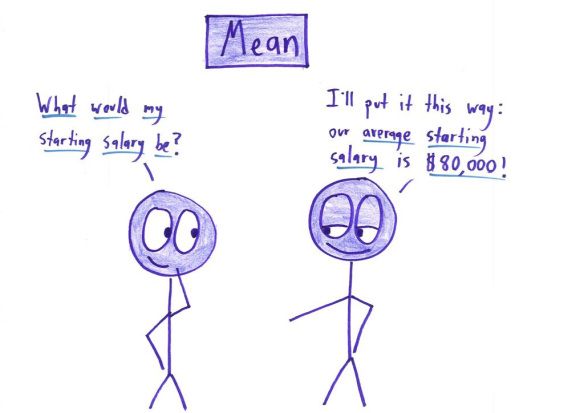
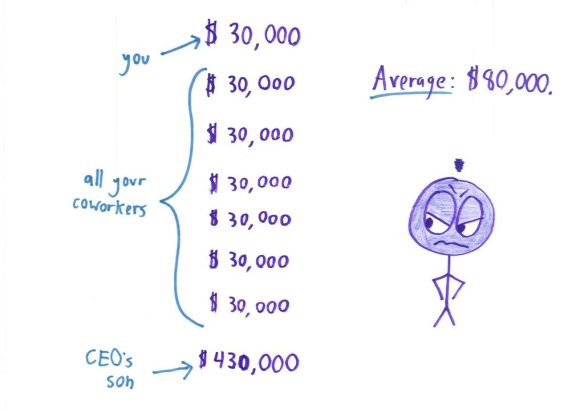
Don’t be fooled by people using the word “average,” particularly when they talk about income. If you’ve ever come across the “average” salary in your state or nation and wondered why you don’t make that much, it’s because some outliers ruin the math by making obscene amounts of money, while there are no outliers in the other direction, since you can’t have “income” at less than zero. This is only one of several comics illustrating how statistics can be manipulated to say anything you want at Math With Bad Drawings. -via Digg
Codsmackamusing - no need for sound.
CodsmackPreCheck is good? I was wrong!
" Under most realistic combinations of parameter values PreCheck actually increases risk reduction, perhaps up to 1%, while under the worst assumptions, it lowers risk reduction only by some 0.1%. Extensive sensitivity analyses suggests that, overall, PreCheck is most likely to have an increase in overall benefit. "
Interesting research: Mark G. Stewart and John Mueller, "Risk-based passenger screening: risk and economic assessment of TSA PreCheck increased security at reduced cost?"
Executive Summary: The Transportation Security Administration's PreCheck program is risk-based screening that allows passengers assessed as low risk to be directed to expedited, or PreCheck, screening. We begin by modelling the overall system of aviation security by considering all layers of security designed to deter or disrupt a terrorist plot to down an airliner with a passenger-borne bomb. Our analysis suggests that these measures reduce the risk of such an attack by at least 98%. Assuming that the accuracy of Secure Flight may be less than 100% when identifying low and high risk passengers, we then assess the effect of enhanced and expedited (or regular and PreCheck) screening on deterrence and disruption rates. We also evaluate programs that randomly redirect passengers from the PreCheck to the regular lines (random exclusion) and ones that redirect some passengers from regular to PreCheck lines (managed inclusion). We find that, if 50% of passengers are cleared for PreCheck, the additional risk reduction (benefit) due to PreCheck is 0.021% for attacks by lone wolves, and 0.056% for ones by terrorist organisations. If 75% of passengers rather than 50% go through PreCheck, these numbers are 0.017% and 0.044%, still providing a benefit in risk reduction. Under most realistic combinations of parameter values PreCheck actually increases risk reduction, perhaps up to 1%, while under the worst assumptions, it lowers risk reduction only by some 0.1%. Extensive sensitivity analyses suggests that, overall, PreCheck is most likely to have an increase in overall benefit.
The report also finds that adding random exclusion and managed inclusion to the PreCheck program has little effect on the risk reducing capability of PreCheck one way or the other. For example, if 10% of non-PreCheck passengers are randomly sent to the PreCheck line, the program still is delivers a benefit in risk reduction, and provides an additional savings for TSA of $11 million per year by reducing screening costs -- while at the same time improving security outcomes.
There are also other co-benefits, and these are very substantial. Reducing checkpoint queuing times improves in the passenger experience, which would lead to higher airline revenues, can exceed several billion dollars per year. TSA PreCheck thus seems likely to bring considerable efficiencies to the screening process and great benefits to passengers, airports, and airlines while actually enhancing security a bit.