If you're watching soccer you saw New York Red Bulls star Thierry Henry score another beautiful goal last week, and knew his goal celebration would create another photo fad. Those are some of the best #Henrying photoshops from around Twitter.
Want to make your own #Henrying photo? Follow KickTV's breakdown:
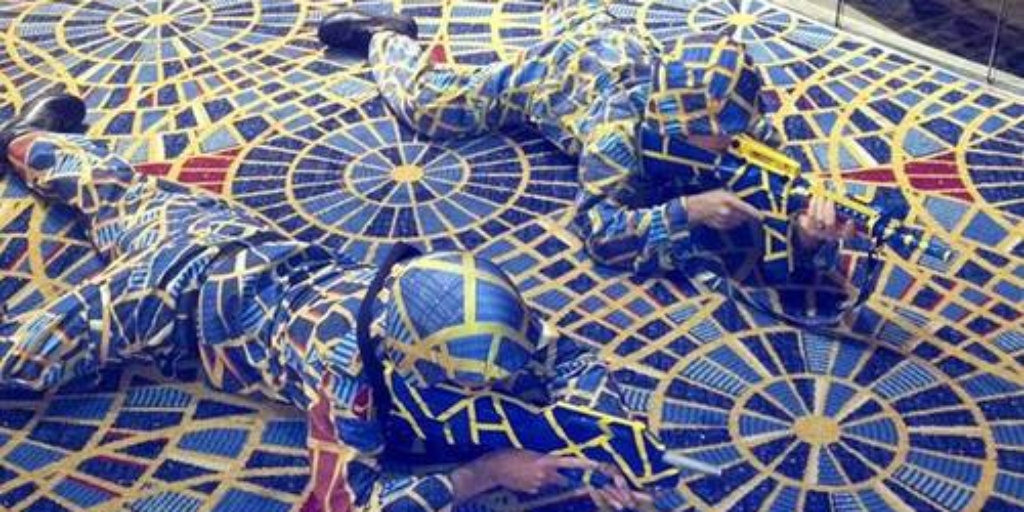
There's widespread consensus that the best cosplayers at this year's Dragoncon were the people who dressed up in bodysuits patterned after the notoriously bizarre institutional carpet at the Atlanta Marriott hotel, one of the event's venues. But when one of the cosplayers offered to supply carpet-camo to other attendees, Couristan Inc (the company that designed the carpet) sent them a legal threat.
Of all the things to get a Cease and Desist over, of ALL the replicas I've made over the years, I've received one from Couristan Inc., designers if the Marriott Marquis Atlanta hotel carpet. Spoonflower has pulled the design, as is their right, so sorry everyone who wanted some fabric of their own!
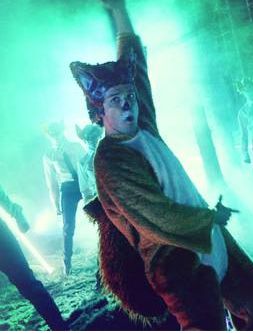
Now that the song "The Fox" is a bona fide hit (40 million YouTube views) and Ylvis has been on The Ellen Degeneres Show, the question remains: What does the fox say? We don't know!
Fortunately, some people do, and they’ve recorded foxes making those sounds. Wired points us to the Cornell Lab of Ornithology’s Macaulay Library, which catalogs audio and video of thousands of species.
So, what does the fox say? Like other animals, foxes have a lot of different calls that they use for different situations.
...none of which roll off the tongue as easily as “Gering-ding-ding-ding-ringerdingering.”
Hear audio clips of what foxes actually sound like, which vary depending on species and purpose, but all defy translation into human language. Do not neglect to read the comments at mental_floss. Link
"You swim slowly through the night, contemplating the solitary brutality of your existence as an apex predator."
Jaws, the text adventure, is fantastic in three ways: as a game; in its adherence to the ZX Spectrum's palette and limitations; and its location firmly in the 19A0s.
Cullen Hoback's documentary "Terms and Conditions May Apply" is a scathing look at the abusive, lengthy fine-print that dominates our online lives. If the YouTube trailer and the non-embeddable Guardian trailer are representative, this is an important and timely film. I do quibble with one point -- the movie doesn't distinguish between the stupid license agreements that are a function of a stupid law (for example, requiring LinkedIn users to license the stuff they give to LinkedIn so that LinkedIn can display it) and the ones that are pure greed and venality (AT&T making you agree to extrajudicial wiretapping).
Hoback has an op-ed in today's Guardian where he sets out his thesis with great clarity, and draws the important connection between Patriot Act surveillance and fine-print "agreements." Unfortunately, the video itself seems to be exclusively available through Itunes, which has some pretty dreadful license terms, and mandatory DRM to boot.
At our DC premiere of Terms and Conditions May Apply, Congressman Dennis Kucinich made a surprise appearance in the crowd and went a step further, standing up after the screening and saying the “NSA should be abolished", and that Edward Snowden should get a “ticker-tape parade".
While this speech tickled users on Reddit and got a lot of press, open criticism of the surveillance-industrial complex is far from the norm. And supporting Edward Snowden as a public official seems to be politically cancerous.
But I have hope, and here’s why:
While in DC, I was reminded of something that stuck with me: Congressmen are just people too. When 9/11 happened, they were rushed to protected sites in what must have been a terrifying moment for them. They surely felt like the next target. And then they were asked to pass a bill that would protect America from the kind of horror they had just been put through, first-hand - a bill called 'The Patriot Act'.
It wasn’t passed because they got together and said, “Let’s gut the Constitution". It happened partially from fear and partially from a misguided sense of duty.
READ CAREFULLY. By reading this post, you agree, on behalf of your employer, to release me from all obligations and waivers arising from any and all NON-NEGOTIATED agreements, licenses, terms-of-service, shrinkwrap, clickwrap, browsewrap, confidentiality, non-disclosure, non-compete and acceptable use policies ("BOGUS AGREEMENTS") that I have entered into with your employer, its partners, licensors, agents and assigns, in perpetuity, without prejudice to my ongoing rights and privileges. You further represent that you have the authority to release me from any BOGUS AGREEMENTS on behalf of your employer.
Social Mobilization and the Networked Public Sphere: Mapping the SOPA-PIPA Debate is a scholarly paper by Yochai Benkler (et al) that analyzes the links, traffic and spread of the anti-SOPA campaign to see how the story went from an obscure area of wonkish concern to a massive Internet-scale shitstorm that put millions of phone-calls through to Congress and ultimately killed a bill that was tipped to be a sure thing. In the wake of SOPA, a lot of inside-the-Beltway commentators assured their constituencies that the SOPA fight wasn't really any kind of grassroots effort -- it was led by Google, or Wikipedia, or someone. It wasn't masses of people making such a big noise that Google (et al) were finally able to lend their support without getting clobbered by their policy people.
As Benkler and co show, the truth is that this really was a bottom-up, grassroots effort. I knew that, but it's nice to have it all laid out in black and white here.
This novel, data-driven perspective on the dynamics of the networked public sphere supports an optimistic view of the potential for networked democratic participation, and offers a view of a vibrant, diverse, and decentralized networked public sphere that exhibited broad participation, leveraged topical expertise, and focused public sentiment to shape national public policy. We find that the fourth estate function was fulfilled by a network of small-scale commercial tech media, standing non-media NGOs, and individuals, whose work was then amplified by traditional media. Mobilization was effective, and involved substantial experimentation and rapid development. We observe the rise to public awareness of an agenda originating in the networked public sphere and its framing in the teeth of substantial sums of money spent to shape the mass media narrative in favor of the legislation. Moreover, we witness what we call an attention backbone, in which more trafficked sites amplify less-visible individual voices on specific subjects. Some aspects of the events suggest that they may be particularly susceptible to these kinds of democratic features, and may not be generalizable. Nonetheless, the data suggest that, at least in this case, the networked public sphere enabled a dynamic public discourse that involved both individual and organizational participants and offered substantive discussion of complex issues contributing to affirmative political action.
If you enjoyed Monday's post about Bruce Alexander's addiction-research experiment "Rat Park" (where heroin addicted rats were given luxurious accomodation, social stimulus, and lots of diverting entertainment), you'll probably enjoy Stuart McMillen's 40-page comic about the experiment.
Experimental filmmaker Jayne Amara Ross and composer/sound artist Frédéric D. Oberland created an absolutely exquisite compilation of cinematic music and spoken word that inspires their art, from Bernard Hermann, Tom Waits and Crystal Gale, and John Zorn, to Maya Deren, John Cale, and Danny Elfman and Elliot Smith. Stunning. Full track list: "For Valuska: A Mixtape By Jayne Amara Ross & Frédéric D. Oberland" (Thanks, Patrick Kelly!)
In response, Lumen has sent a threat to O'Connor, saying that calling them patent trolls is a "hate crime" ("I didn't know patent trolls were a protected class" - O'Connor) and threatening to seek criminal charges if O'Connor doesn't pay them a bunch of money and apologize.
FindTheBest's RICO lawsuit uses language like "extortion" to describe Lumen View's business practices.
The suit has several tacks. First, it claims that FTB couldn't possibly infringe a patent that clearly describes two or more people entering a preference—FindTheBest's system only handles the preference of one user at a time.
In fact, Lumen didn't do "any meaningful pre-filing investigation," the suit alleges, and that's part of the problem. Lumen simply did "a broad internet search for companies that offer any type of matching service... Because the concept of matching two parties is as old as Adam and Eve, this general search reveals numerous company websites." The company's expert witness not only hadn't investigated FindTheBest's services—he'd never heard of the target company, according to O'Connor.
The threat letter is also full of barely veiled threats that Lumen will make the lawsuit as expensive as possible. In fact, the majority of the letter describes how the defendant company must take drastic steps to collect all its electronic and other documents now that it has been sued—if it doesn't, sanctions may occur, says Lumen.
FindTheBest also argues that Lumen's attorney made the claim that calling someone a "patent troll" was actually a "hate crime" under “Ninth Circuit precedent." After O'Connor contacted Shapiro, Lumen View attorney Wasserbauer threatened to file criminal charges—unless FindTheBest settled the civil case immediately, apologized, and gave financial compensation to Shapiro. The offer was "good until close of business that day," Wasserbauer allegedly said.
Screen Junkies gives Brad Pitt's World War Z the honest trailer treatment. This was the first film I'd gone to a theater to see in years, and found it utterly forgettable, for reasons that will be made clear in this video. -via reddit
In Manic Pixel Dream Girl , a four-part comic, Elizabeth Simins recounts a memoir of being a girl who loved video games but felt that they were the reason she couldn't fit in with the other kids. It's a thoughtful and at times brutal story about identity, exclusion, and passion, and it has a wonderful ending (thankfully).
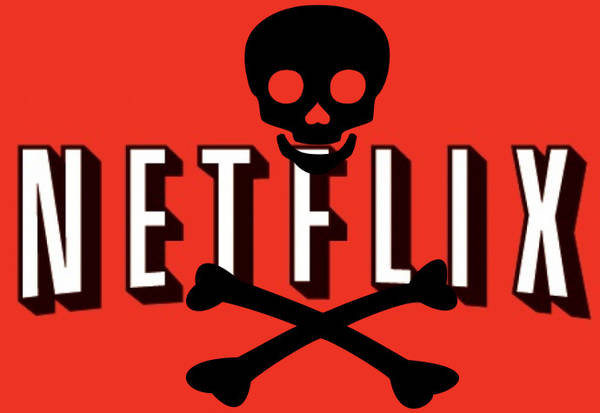
Senior executives from Netflix have explained their method for choosing which programs to license for the service: they buy the rights to the most-pirated shows in each territory, because that's where the demand is.
“With the purchase of series, we look at what does well on piracy sites,” Merryman told Tweakers.
One of the shows that Netflix acquired the rights to in the Netherlands is Prison Break, since it is heavily pirated locally. “Prison Break is exceptionally popular on piracy sites,” Merryman says.
In a separate interview Netflix CEO Reed Hastings adds that his company is aware of the many people who download content without permission via torrent sites. However, this is not exclusively a bad thing, as it also creates demand for the content Netflix is offering.
“Certainly there’s some torrenting that goes on, and that’s true around the world, but some of that just creates the demand,” Hastings says.
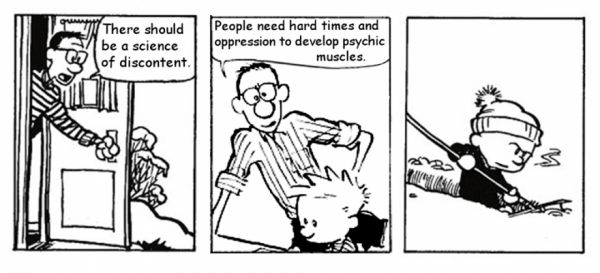
The sleeper must awaken...and shovel the snow. The blog Calvin & Muad'Dib combines the sayings of the messianic character Paul Muad'Dib from Dune and panels from Bill Watterson's Calvin & Hobbes. They work perfectly.
AT&T has started sending letters to some of its customers, threatening to disconnect them because they've been accused (without trial or a chance to rebut the evidence) of copyright infringement. AT&T is doing this voluntarily. There is no law or regulation requiring them to do this. It's part of the controversial Copyright Alert System, whose overseeing body had its company status revoked last May.
We are sending you this alert as part of our participation in the Copyright Alert Program — an industry-wide initiative intended to help users understand their rights and responsibilities in the distribution of copyrighted content online.
Digital content owners routinely monitor file-sharing networks to determine if copyrighted movies and music are being distributed illegally over the Internet. Through the Copyright Alert System, we’ve recently received a notice from a movie studio, record company, television studio or other company that owns copyrighted material that your AT&T Internet account was used in connection with possible infringement of their copyright protected materials.
Your account was identified by its IP address. However, in keeping with the AT&T Privacy Policy, we have not released your name or personal information, and we will not do so except as required by a lawful request for records. But at the request of the content owner, we are sending this alert — which applies to all users of your account — so that the issue may be resolved without further action.
A copy of the original notice can be found at att.com/copyright-infringement, but summary information is available at the end of this email.
Zack sez, "There's an upcoming Canadian TV animation URBANCE, based on a short film by animator Joel Dos Reis Viegas. The neon-colored series combines elements of SF, hip-hop, and just plane rave-flavored action: 'In the big city, gender war rises. Sex is prohibited because of a genetic deadly virus. Ruled by hate and anger, boys and girls grow up apart from each other, forming rivals gangs. Among these lost teenagers, Kenzell and lesya will fight adversity and defy all the rules in order to live their love and restore peace.'
MuckRock News reports that Freedom of Information Act requests faxed to the Office of the Secretary of Defense (OSD) started coming back as undeliverable a couple weeks ago. The OSD confirms their fax machine is down, possibly for another few months, because there's no money in their tens of billions of dollars a year budget for a new one, and they can't switch to email as a request method. "The office that oversees the most powerful military in history (not to mention the best-funded) is unable to project when its single fax machine will once again be operational."
A lawsuit filed by technology entrepreneur and hacker Kim Dotcom against the government of New Zealand demands NZ $6 million (roughly USD $5 million) over an "excessively aggressive and invasive approach" by police who raided his mansion 18 months ago. The raid was ordered by the FBI, which sought to extradite him to the US on copyright violation charges.
Journalist Rob Walker took an "interactive Google Street View tour" of the Moto X (the Google-owned Motorola phone) assembly plant in Forth Worth, TX. He selectively snagged screen shots of the plant that make it look nearly abandoned.
Dungeons & Developers is a cute and useful "skill tree" in the style of an RPG levelling guide. It starts with basic HTML and works its way through various skills all the way to master Web developer. Each skill-box comes with links to free online tutorials and training materials, and the flowchart suggests a logical progression through all the varied topics.
DJ Davyjones said he couldn't help but here the Sanford and Son theme music every time the Robin Thicke song "Burred Lines" played. They just go together like peas and carrots. -via Laughing Squid
UK Prime Minister David Cameron has appointed Mike Weatherley, an entertainment executive-turned-MP, to be his "intellectual property advisor." His remit will be "enforcement issues" on "the challenges that face the film and music industries." The previous Labour government passed the controversial Digital Economy Act without Parliamentary debate on its last day, and that bill allows future governments to establish a disconnection system whereby people accused of copyright infringement will lose their Internet access without proof or trial, along with everyone who lives with them. Weatherley's former colleagues from the entertainment industry have been lobbying to put this into place through a voluntary scheme, despite compelling evidence that shows that these systems don't reduce piracy.
Then yesterday there was more news that strongly suggests that the government intends to take a tougher line on copyright infringement. Prime Minister David Cameron announced that he had appointed Mike Weatherley MP as his advisor on intellectual property.
Weatherley, who says he will focus on enforcement issues relating to the creative industries, is no stranger to the entertainment world. The chartered accountant was the former finance director of record producer Pete Waterman’s empire. He later became Vice President (Europe) for the Motion Picture Licensing Company.
Greg Nutt created this JJ Abrams-style trailer for Galaxy Quest, remixing the original. It's an interesting and entertaining exercise in form, and makes me wonder if you couldn't apply the treatment to practically any footage -- Local Hero? The Outsiders? A Day at the Races?



 Now that the song
  io9's Rob Bricken





 (
(



 AT&T has started sending letters to some of its customers,


 Journalist Rob Walker took an "interactive Google Street View tour" of the Moto X (the Google-owned Motorola phone) assembly plant in Forth Worth, TX. He selectively snagged screen shots of the plant that make it look nearly abandoned.



 (
(


