1st Grade Teacher: The Natives taught us to grow crops and we all had thanksgiving!
6th Grade: we might have kicked the Natives off their land, and for that we are so sorry.
Me: but did you mur-
Teacher: you’ll learn that in high school
12th grade: We killed that one Native and we are so sorry, but the BUFFALOS, WE WERE DICKS FOR THAT!!
College: It was genocide.
Okay non-European tumblr, I’m gonna explain to you why ‘white’ isn’t as simple here as it is in the rest of the world
- Shades of white in Europe range from ‘freshly fallen snow’ to ‘I am frequently mistaken as being from the Middle East’
- White European is a thing. When you fill out a form, under ethnicity, there are several options for white; white British, white European, white other. Because people make that distinction
- There are Europeans who don’t class their ethnicity as their skin colour, but as their nationality. I have family who don’t think of themselves as white, they just think of themselves as Italian and don’t really give much thought to their skin colour
- People here in Britain always question if darker skinned white Europeans are ‘actually white’. I get it a lot myself. My response is always ‘well I’m not anything else, so obviously I must be’
- Despite being white, a lot of Europeans from Italy, Greece, Spain etc, don’t feel white in the traditional sense. We’re not white like white British people. We’re not white like white Americans. We’re our own white. White British is one thing. White Italian is another thing. White Greek is another, etc
- Which is why we have this notion here in Europe of ‘nationality over race’. Being white isn’t as important as where you’re from
- So this really only becomes an issue if you’re an immigrant
- So being white in Europe doesn’t save you from racial discrimination, because sure, you’re technically white, but you’re not white white. Not the right white
- Here in England, Europeans with really blatantly foreign names, such as myself, find it more difficult to get job interviews, because they take one look at our name and don’t bother reading the rest of the CV. A guy I know was actually told by his boss to reduce the pile of CVs he had by ‘chucking away any with a name you can’t fucking pronounce’
- And then even when you do get an interview, half the time you walk into the joint several shades darker than everyone else and feel like you’ve walked into the ‘Swedish supermodel’ clubhouse and you just know you’re not getting hired
This is all basic stuff and it’s very much taken for granted here. Race and ethnicity are not as clear cut, so it can be very confusing for non-Europeans to wrap their heads around. Which is fine. But I implore you to stay in your lane, because when you say things like ‘no white person anywhere in the world ever knows what it’s like to face racial discrimination’, it’s really fucking offensive to all of the European immigrants who are denied jobs, harassed by the police and beaten by racists, because foreign is foreign to these people, and they don’t give a shit if you’re technically white. So when you mean white American, say white American.
This doesn’t just apply to “darker skin” Europeans either (which I’m sure some Americans would argue are POC for some reason or other). Try being slavic in Western Europe. Hell, try being Sinti or Roma in any part of Europe.
Especially in the UK you can be as white as you like but if you aren’t from Britain (or in some cases just England) then you face discrimination. It really isn’t that clear cut in Europe and it drives me mad when people say white people can’t experience racism because that’s such a US-centric idea.
And if you’re from anywhere in South-East Europe then you should prepare for your country to be slandered in every UK paper. Seriously, you can’t turn on the news, go on the internet, read a newspaper, without being told how Romanian, Ukrainian, Polish people are a drain on the UK’s resources and they should be banned from the country. And guess what?
(That’s Mila Kunis. She was born in the Ukraine.)
(Sebastian Stan. From Constanta, Romania.)
(Mia Wasikowska, from Poland)
(Nina Dobrev, who was born in Bulgaria.)
They are white! Just because they are white, it doesn’t mean people from their countries cannot face horrible discrimination, and it doesn’t mean that they can’t be constantly told that they don’t work as hard as people from Western Europe, and that they don’t deserve basic human rights.
So just before you force your ignorance onto people who don’t hold the same views as you due to where they live operating in a different way, just remember that not everybody lives in America.
Racism is alive and well in all of Europe, but Xenophobia (Prejudice towards other nationalities, people from other Countries) is equally rampant, and varies somewhat from country to country.
I’m speaking from the POV of living in England, and from what I grasp, people who are, say, Black will experience racism in all European countries, while Xenophobic tendencies vary more - for example, the UK has masses of Xenophobia aimed towards the Polish, Ukrainian, Romanian, and many, many other countries, while somewhere like Slovakia may have other prejudices.
I feel like racism and xenophobia are heavily interlinked issues, but also aren’t mutually exclusive - regardless of how a country or its inhabitants are viewed within the rest of Europe, it can still be horribly racist/prejudiced. If that makes sense
As an inmate at an upstate New York prison, then-18-year-old Aaron Willey spent over six weeks "behind a Plexiglas shield in [a] cell with [a] broken toilet" and another two weeks in an "unsanitary cell where he was kept naked." Both places smelled strongly of urine and feces and at one point, prison guards "forced him to inhale his own excrement."
He claims that prison officials harassed him physically and mentally "because he refused to provide false information about another inmate suspected of drug smuggling." He attributes his later suicide attempt to the humiliation and pain he suffered while in prison. Now, he's pursuing civil action against Wende Correctional Facility, claiming that prison officials violated the Eighth Amendment ban against cruel and unusual punishment.
A federal district court judge in Rochester, New York, somehow found Willey's experience to be within the boundaries of acceptable treatment by the state. He ruled for the prison officials, concluding that "the exact length of Willey's exposures was unclear, and that he did not claim he was made ill or that waste overflowed from the toilet."
But last Friday a federal appeals court overruled that decision and ruled for Willey, concluding that he has the right to bring civil claims against the prison officials. According to Reuters:
Chief Judge Robert Katzmann said no minimum duration or "level of grotesquerie" is required before unsanitary confinement conditions can violate the Eighth Amendment ban against cruel and unusual punishment. He also said that the exposure's "qualitative offense to a prisoner's dignity should be given due consideration."
The appeals court also revived several of Willey's other claims, and returned the case to the lower court.
However, while the victory gives Willey the opportunity to pursue civil claims, it does not mean he has won his case, nor does it mean that the prison officials have been brought to justice.
Willey's case, like so many others, reveals the extent of sadistic behavior by prison officials all over the nation. As we grapple with our country's tradition of mass incarceration, we must also deal with the unacceptable conditions of our prisons, including those prison officials who are flagrantly inhumane. In order to do this, we must be aware of what is happening in courts across the nation when it comes to unjust imprisonment.
As Willey's lawyer stated, this decision shows "the key role that federal courts have in overseeing prisoner litigation claims related to confinement conditions, due process rights and treatment by corrections authorities."
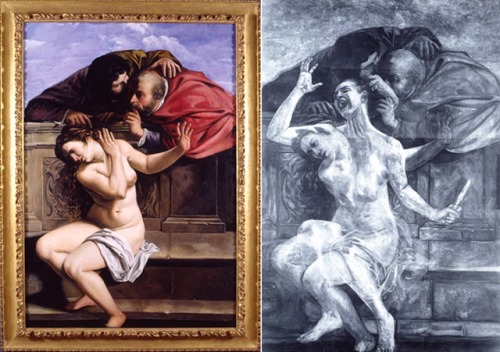
Susanna and the Elders, Restored with X-ray (Right)
Kathleen Gilje, 1998
wow
Oooh my gosh this is rad. This is so rad.
For those who don’t know about this painting, the artist was the Baroque artist Artemisia Gentileschi.
Gentileschi was a female painter in a time when it was very largely unheard of for a woman to be an artist. She managed to get the opportunity for training and eventual employment because her father, Orazio, was already a well established master painter who was very adamant that she get artistic training. He apparently saw a high degree of skill in some artwork she did as a hobby in childhood. He was very supportive of her and encouraged her to resist the “traditional attitude and psychological submission to brainwashing and the jealousy of her obvious talents.”
Gentileschi became extremely well known in her time for painting female figures from the Bible and their suffering. For example, the one seen above depicts the story from the Book of Daniel. Susanna is bathing in her garden when two elders began to spy on her in the nude. As she finishes they stop her and tell her that they will tell everyone that they saw her have an affair with a young man (she’s married so this is an offense punishable by death) unless she has sex with them. She refuses, they tell their tale, and she is going to be put to death when the protagonist of the book (Daniel) stops them.
So that painting above? That was her first major painting. She was SEVENTEEN-YEARS-OLD. For context, here is a painting of the same story by Alessandro Allori made just four years earlier in 1606:
Wowwwww. That does not look like a woman being threatened with a choice between death or rape. So imagine 17 year old Artemisia trying to approach painting the scene of a woman being assaulted. And she paints what is seen in the x-ray above. A woman in horrifying, grotesque anguish with what appears to be a knife poised in her clenched hand. Damn that shit is real. Who wants to guess that she was advised by, perhaps her father or others, to tone it down. Women can’t look that grotesque. Sexual assault can’t be depicted as that horrifying. And women definitely can’t be seen as having the potential to fight back. Certainly not in artwork. Women need to be soft. They need to wilt from their captors but still look pretty and be a damsel in distress. So she changed it.
What’s interesting to note is that she eventually painted and stuck with some of her own, less traditional depictions of women. However, that is more interesting with some context.
(Warning for reference to rape, torture, and images of paintings which show violence and blood.)
So, Gentileschi’s story continues in the very next year, 1611, when her father hires Agostino Tassi, an artist, to privately tutor her. It was in this time when Tassi raped her. He then proceeded to promise that he would marry her. He pointed out that if it got out that she had lost her virginity to a man she wasn’t going to marry then it would ruin her. Using this, he emotionally manipulated her into continuing a sexual relationship with him. However, he then proceeded to marry someone else. Horrified at this turn of events she went to her father. Orazio was having none of this shit and took Tassi to court. At that time, rape wasn’t technically an offense to warrant a trial, but the fact that he had taken her virginity (and therefore technically “damaged Orazio’s property”. ugh.) meant that the trial went along. It lasted for 7 months. During this time, to prove the truth of her words, Artemisia was given invasive gynecological examinations and was even questioned while being subjected to torture via thumb screws. It was also discovered during the trial that Tassi was planning to kill his current wife, have an affair with her sister, and steal a number of Orazio’s paintings. Tassi was found guilty and was given a prison sentence of…. ONE. YEAR……. Which he never even served because the verdict was annulled.
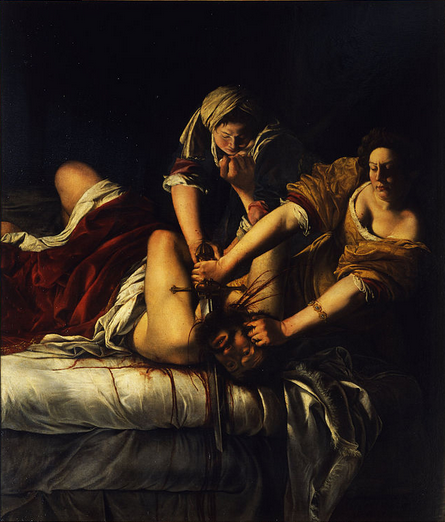
During this time and a bit after (1611-1612), Artemisia painted her most famous work of Judith Slaying Holofernes. This bible story involved Holofernes, an Assyrian general, leading troops to invade and destroy Bethulia, the home of Judith. Judith decides to deal with this issue by coming to him, flirting with him to get his guard down, and then plying him with food and lots of wine. When he passed out, Judith and her handmaiden took his sword and cut his head off. Issue averted. The subject was a very popular one for art at the time. Here is a version of the scene painted in 1598-99 by Carivaggio, whom was a great stylistic influence on Artemisia:
This depiction is a pretty good example of how this scene was typically depicted. Artists usually went out of their way to show Judith committing the act (or having committed it) while trying to detach her from the actual violence of it. In this way, they could avoid her losing the morality of her character and also avoid showing a woman committing such aggression. So here we see a young, rather delicate looking Judith in a pure white dress. She is daintily holding down this massive man and looks rather disgusted and upset at having to do this. Now, here is Artemisia’s:
Damn. Thats a whole different scene. Here Holofernes looks less like he’s simply surprised by the goings ons and more like a man choking on his own blood and struggling fruitlessly against his captors. The blood here is less of a bright red than in Carrivaggio’s but is somehow more sickening. It feels more real, and gushes in a much less stylized way than Carrivaggio’s. Not to mention, Judith here is far from removed from the violence. She is putting her physical weight into this act. Her hands (much stronger looking than most depictions of women’s hands in early artwork) are working hard. Her face, as well, is completely different. She doesn’t look upset, necessarily, but more determined.
It’s also worth note that the handmaiden is now involved in the action. It’s worth note because, during her rape trial, Artemisia stated that she had cried for help during the initial rape. Specifically she had called for Tassi’s female tenant in the building, Tuzia. Tuzia not only ignored her cries for help, but she also denied the whole happening. Tuzia had been a friend of Artemisia’s and in fact was one of her only female friends. Artemisia felt extremely betrayed, but rather than turning her against her own gender, this event instilled in her the deep importance of female relationships and solidarity among women. This can be seen in some of her artwork, and I believe in the one above, as well, with the inclusion of the handmaiden in the act.
So, I just added a million words worth of information dump on a post when no one asked me, but there we go. I could talk for ages about Artemisia as a person and her depictions of women (even beyond what I wrote above. Don’t get me started on her depictions of female nudes in comparison to how male artists painted nude women at the time.)
To sum up: Artemisia Gentileschi is rad as hell. This x-ray is also rad as hell and makes her even radder.
I love art history.
I’m reblogging this again to add something that I also think is important to know about Artemisia Gentileschi. Back in her time and through even to TODAY, there are people who argue that her artworks were greatly aided by her father…. As in he either helped her paint them or just straight up painted them himself. Hell, there are a number of works only recently (past several years or so) that have been officially attributed to Artemisia because people originally saw the signature with “Gentileschi” in it and automatically attributed it to Orazio. So, not only was Artemisia Gentileschi an amazing artist and amazing historical figure, but I don’t want it to be ignored that there are people over 400 years later who still won’t give her the credit she deserves, just because she’s a woman and obviously women can’t paint like she did.
It’s important to note that Tuzia was being tormented by Tassi as well. That guy was more of an asshole than you can possibly imagine.
Unfortunately, the trail lasted almost as long as Tassi’s sentence, and we actually still have most of the transcripts. Throughout the trial he accused Orazio of having an incestuous relationship Artemisia and selling her off to other men. Tassi was paying people off and intentionally delivering contradictory statements. The judge literally had to stop the trial and ask him to stop fucking lying (ironically, that same judge would later pardon him). Orazio went on to sue six of Tassi’s witnesses for bearing false witness.
I didn’t even realize Susanna is holding a knife in the x-ray. This is pretty poignant considering Artemisia actually attacked Tassi with a knife after the initial assault: ’When I saw myself free, I went to the table drawer and took a knife and
moved toward Agostino saying: ‘I’d like to kill you with this knife
because you have dishonored me’ … I wounded him slightly on the
chest and some blood came out, only a little since I had barely touched
him with the point of the knife.’
I do think the trial and its affects offer insight into Artemisia’s work, but in my art school experience, I was subject to lectures that only touched on this event. Artemisia went on to be an official member of the Academy of Design. She was the protege of Michelangelo the Younger. She held the patronage of Grand Duke Cosimo II de’ Medici. She resided in the English court for a time, painting for King Charles I. She had a daughter whom she taught to paint. She was absolutely remarkable.
I walked to a deli and got a sandwich to go and a coffee and while I was waiting these two teenage girls ran up and were like OH MY GOD JESSICA HOW ARE YOU and then hugged me and the one whispered “that guy was following you and taking pictures of you” and then they walked home with me and that one guy stopped following me and hONESTLY THIS IS WHAT I AM HERE FOR
Here’s the thing about Halloween: all year long if you live in America you’re under a steady assault by this right-wing traditional faux-wholesome pseudo-Christian nuclear patriot family atmosphere, and then all the sudden as the weather cools and the days shorten the country loses its marbles decking everything out in bloody corpses, demon faces, witchcraft and giant rubber bugs. Half the country thinks they’re the Addams Family for 1-3 months while a small chunk of weiners get angry that it’s “pagan” or something.
I don’t know if anyone in any other cultural environment can really understand how that feels. It’s the antithesis of the “love jesus and eagles or GIT OUT” under(over)tone American culture is usually about.
And even though it generates billions of dollars, there’s no pressure, shaming or guilting to spend money on it like there is for certain other holidays. We spend that much on Halloween just because it’s fun and we want to, rather than some unspoken (usually unspoken) rule that you must buy extravagant gifts or you’re a heathen scrooge and you don’t love your family.
and it’s when everything is themed with black and it’s totally acceptable
Nikki Haley is confused. On Wednesday, the Republican governor of South Carolina stated that the Black Lives Matter movement was actually harming black lives. According to the New York Times:
"Most of the people who now live in terror because local police are too intimidated to do their jobs are black," Ms. Haley said at a luncheon in Washington. "Black lives do matter, and they have been disgracefully jeopardized by the movement that has laid waste to Ferguson and Baltimore." […]
"Some people think that you have to yell and scream in order to make a difference," Ms. Haley said. "That’s not true. Often, the best thing we can do is turn down the volume level."
It is actually remarkable how many on the right are condemning the Black Lives Matter movement. The movement is asking for police to stop killing black people. Why is that so remarkably controversial? If police can't do their jobs because we want them to stop killing black people, they aren't very good at their jobs.
And notice how Haley turns this into another boring conversation about black-on-black crime. Black people are forced to live in terror because of crime in their neighborhoods (read: black-on-black crime) since police can't police now. Right. Note that Rand Paul did the same thing during a speech in Chicago, saying, "When I hear people say, 'Black lives matter,' I think of Jacele Johnson, who is 4 years old and got shot this weekend just a few blocks from here." In other words, when I think of black lives matter, I think of black crime. It's a deflection tactic and the ultimate example of false equivalence.
How crazy is it that when we ask police to not act without undue force—in other words, to do their jobs—we're told that they are unable to do so? How crazy is it to say that police are too intimidated to do their jobs now that we've asked them to stop recklessly killing people of color?
Haley also does what so many on the right have done in this conversation. They talk about America while denigrating the most American of traditions. Bad news, Gov. Haley. "Yelling and screaming"—in other words, marching and protesting—are not only legal, they are a deep and important part of our history in this country. This is the benefit of free speech and democracy. You don't have to like the message, although you should. But the tactics themselves you should support. This is like saying, "All those people sitting in at the lunch counter are only hurting themselves. You don't have to disrupt everyone else for your cause."
Haley once again proves that she's where she should be: in the wrong on the right.
Once slavery was abolished in 1865, manufacturers scrambled to find other sources of cheap labor—and because the 13th amendment banned slavery (except as punishment for crimes), they didn’t have to look too far. Prisons and big businesses have now been exploiting this loophole in the 13th amendment for over a century.
“Insourcing,” as prison labor is often called, is an even cheaper alternative to outsourcing. Instead of sending labor over to China or Bangladesh, manufacturers have chosen to forcibly employ the 2.4 million incarcerated people in the United States. Chances are high that if a product you’re holding says it is “American Made,” it was made in an American prison.
On average, prisoners work 8 hours a day, but they have no union representation and make between .23 and $1.15 per hour, over 6 times less than federal minimum wage. These low wages combined with increasing communication and commissary costs mean that inmates are often released from correctional facilities with more debt than they had on their arrival. Meanwhile, big businesses receive tax credits for employing these inmates in excess of millions of dollars a year.
While almost every business in America uses some form of prison labor to produce their goods, here are just a few of the companies who are helping prisoners pay off their debt to society, so to speak.
Whole Foods. The costly organic supermarket often nicknamed “Whole Paycheck” purchases artisan cheese and fish prepared by inmates who work for private companies. The inmates are paid .74 cents a day to raise tilapia that is subsequently sold for $11.99 a pound at the fashionable grocery store.
McDonald’s. The world’s most successful fast food franchise purchases a plethora of goods manufactured in prisons, including plastic cutlery, containers, and uniforms. The inmates who sew McDonald’s uniforms make even less money by the hour than the people who wear them.
Wal-Mart. Although their company policy clearly states that “forced or prison labor will not be tolerated by Wal-Mart”, basically every item in their store has been supplied by third-party prison labor factories. Wal-Mart purchases its produce from prison farms where laborers are often subjected to long, arduous hours in the blazing heat without adequate sunscreen, water, or food.
Victoria’s Secret. Female inmates in South Carolina sew undergarments and casual-wear for the pricey lingerie company. In the late 1990’s, 2 prisoners were placed in solitary confinement for telling journalists that they were hired to replace “Made in Honduras” garment tags with “Made in U.S.A.” tags. Victoria’s Secret has declined to comment.
Aramark. This company, which also provides food to colleges, public schools and hospitals, has a monopoly on foodservice in about 600 prisons in the U.S. Despite this, Aramark has a history of poor foodservice, including a massive food shortage thatcaused a prison riot in Kentucky in 2009.
AT&T. In 1993, the massive phone company laid off thousands of telephone operators—all union members—in order to increase their profits. Even though AT&T’s company policy regarding prison labor reads eerily like Wal-Mart’s, they have consistently used inmates to work in their call centers since ’93, barely paying them $2 a day.
BP. When BP spilled 4.2 million barrels of oil into the Gulf coast, the company sent a workforce of almost exclusively African-American inmates to clean up the toxic spill while community members, many of whom were out-of-work fisherman, struggled to make ends meet. BP’s decision to use prisoners instead of hiring displaced workers outraged the Gulf community, but the oil company did nothing to reconcile the situation.
“The way I try to approach being an ally as a white cis person, what I find is helpful, is to just pretend you’re an intern. Like what would you do if you were an intern? You would hang out, take notes, listen, speak up when somebody asks you to, and get coffee.”
I really like this because - it’s not okay to scream at interns, it’s not okay to abuse them, it’s not okay to treat them with contempt. A lot of advice on being a good ally doesn’t leave you with any tools for leaving an unhealthy situation or even realizing you’re in one. This analogy emphasizes the “listen, learn, support” role but in a way that leaves room for you to say “I’m being abused”.
I don't know why, but the laminated paper one almost killed me.
How often do you see a motivational speech that tells you it’s okay to suck? reblog it reblog it reblog it reblog it reblog it reblog it reblog it reblog it reblog it reblog it reblog it reblog it reblog it reblog it reblog it reblog it reblog it reblog it reblog it reblog … Continued
It's tempting to file this exhaustive report from policing experts under the "no shit" category, but it's also a vindication for the women and men on the ground in Ferguson who lived through these egregious abuses.
Law enforcement officials responding to demonstrations and unrest in Ferguson, Missouri, following the death of Michael Brown last August used a variety of inappropriate tactics and strategies that often exacerbated tensions, according to a report by policing experts that the Justice Department is releasing this week.
The assessment finds that deploying dogs for crowd control was "provocative," positioning snipers on top of armored vehicles during daytime protests "inflamed tensions," tear gas was "deployed inappropriately," and law enforcement used unconstitutional policing strategies that suppressed First Amendment rights. Such strategies "had the unintended consequence of escalating rather than diminishing tension," the report states.
While this report feels nearly a year late and obviously cannot undo all of the trauma experienced by protestors and residents, we can only hope that it somehow informs future policing of protests moving forward. Although I'm a full-fledged optimist, I must admit I have little hope that this report will be honored or even deeply acknowledged by the law enforcement community.
shapeshifting is the best super power because you can have any haircut any time you want, you can turn into a hotter version of yourself, you can turn into a dragon, you can turn into a robot, you can turn into a shambling mound of abstract shapes and sulk outside your estranged father’s house at night while chanting ominously about his sins,
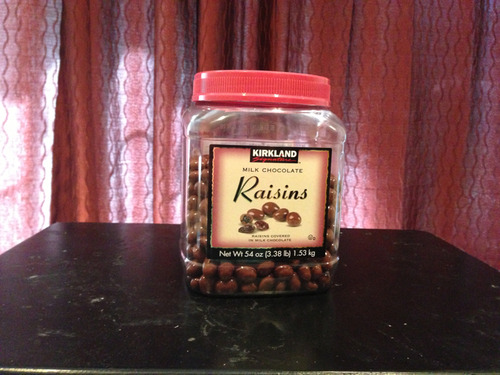
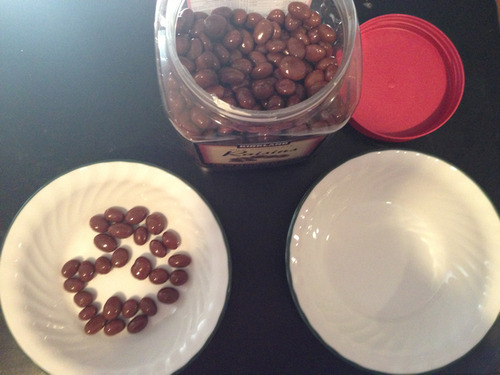
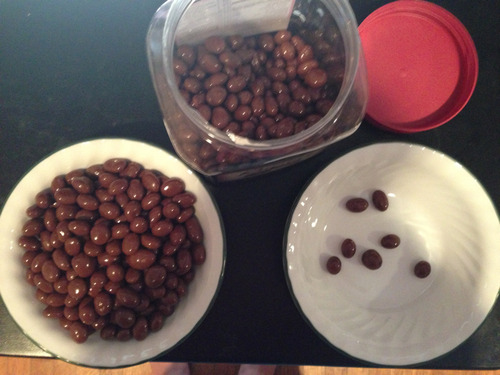
Actually it is a jar full of chocolate covered raisins on top of a dirty TV tray. But pretend the raisins are interesting and well rounded fictional characters with significant roles in their stories.
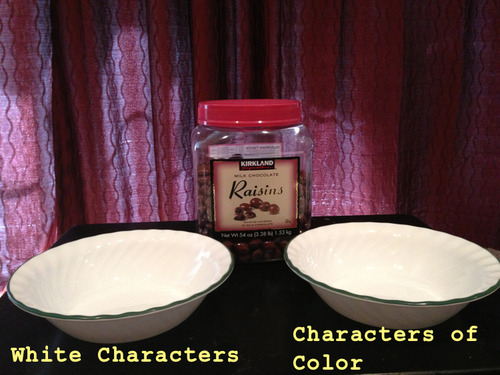
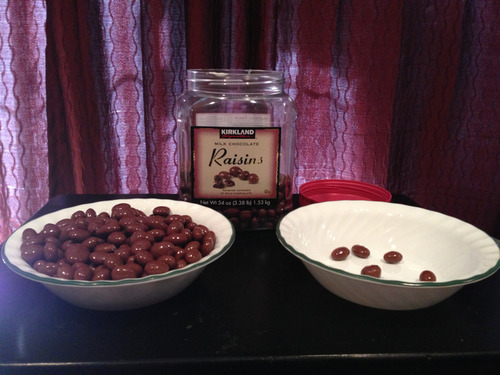
We’re sharing these raisins at a party for Western Storytelling, so we get out two bowls.
Then we start filling the bowls. And at first we only fill the one on the left.
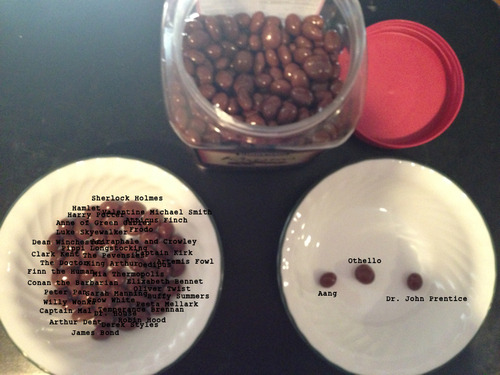
This doesn’t last forever though. Eventually we do start putting raisins in the bowl on the right. But for every raisin we put in the bowl on the right, we just keep adding to the bowl on the left.
And the thing about these bowls is, they don’t ever reset. We don’t get to empty them and start over. While we might lose some raisins to lost records or the stories becoming unpopular, but we never get to just restart. So even when we start putting raisins in the bowl on the right, we’re still way behind from the bowl on the left.
And time goes on and the bowl on the left gets raisins much faster than the bowl on the right.
Until these are the bowls.
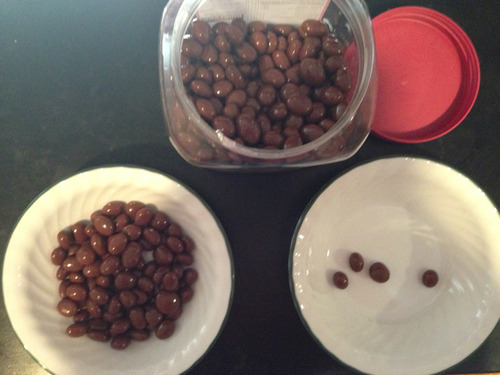
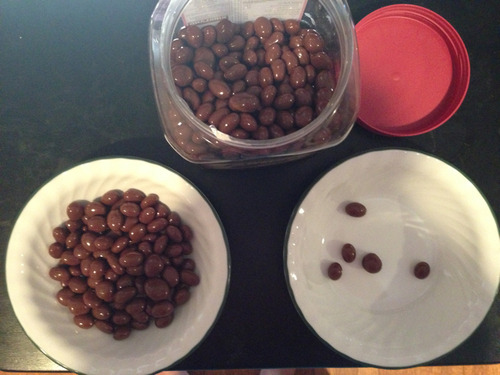
Now you get to move and distribute more raisins. You can add raisins or take away raisins entirely, or you can move them from one bowl to the other.
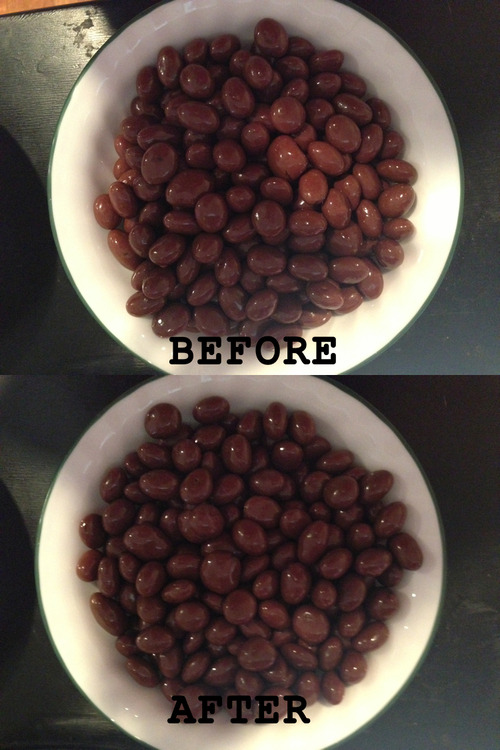
This is the bowl on the left. I might have changed the number of raisins from one picture to the next. Can you tell me, did I add or remove raisins? How many? Did I leave the number the same?
You can’t tell for certain, can you? Adding or removing a raisin over here doesn’t seem to make much of a change to this bowl.
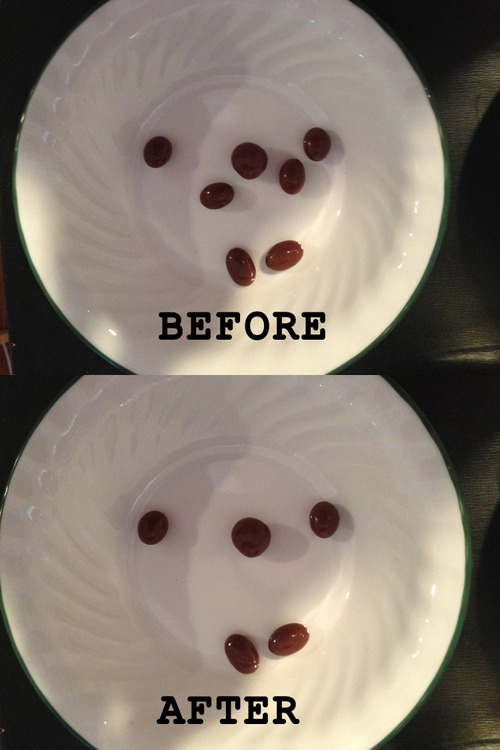
This is the bowl on the right. I might have changed the number of raisins from one picture to the next. Can you tell me, did I add or remove raisins? How many? Did I leave the number the same?
When there are so few raisins to start, any change made is really easy to spot, and makes a really significant difference.
This is why it is bad, even despicable, to take a character who was originally a character of color and make them white. But why it can be positive to take a character who was originally white and make them a character of color.
The white characters bowl is already so full that any change in number is almost meaningless (and is bound to be undone in mere minutes anyway, with the amount of new story creation going on), while the characters of color bowl changes hugely with each addition or subtraction, and any subtraction is a major loss.
This is also something to take in consideration when creating new characters. When you create a white character you have already, by the context of the larger culture, created a character with at least one feature that is not going to make a difference to the narratives at large. But every time you create a new character of color, you are changing something in our world.
I mean, imagine your party guests arrive
Oh my god they are adorable!
And they see their bowls
But before you hand them out you look right into the little black girls’s eyes and take two of her seven raisins and put them in the little white girl’s bowl.
I think she’d be totally justified in crying or leaving and yelling at you. Because how could you do that to a little girl? You were already giving the white girl so much more, and her so little, why would you do that? How could you justify yourself?
But on the other hand if you took two raisins from the white girl’s bowl and moved them over to the black girl’s bowl and the white girl looked at her bowl still full to the brim and decided your moving those raisins was unfair and she stomped and cried and yelled, well then she is a spoiled and entitled brat.
And if you are adding new raisins, it seems more important to add them to the bowl on the right. I mean, even if we added the both bowls at the same speed from now on (and we don’t) it would still take a long time before the numbers got big enough to make the difference we’ve already established insignificant.
And that’s the difference between whitewashing POC characters and making previously white characters POC. And that’s why every time a character’s race is ambiguous and we make them white, we’ve lost an opportunity.
*goes off to eat her chocolate covered raisins, which are no longer metaphors just snacks*
The Jacks by Sculpy, are very cleverly designed scented candles that look like they’re crying when lit inside their decorative bases. The current offerings are black or white skull bases with brain-shaped candles, rabbit bases with accompanying ears and deers with antlers. According to the founders, the project came about accidentally.
One of our sculpting member’s hobby is to make useless things with 3D printer. One day he realized that he had no ashtray so he created a skull looking ashtray for his cigarettes, and Sophie lit a candle in it.And then an idea came up…We thought it was fun to depict a dripping of wax as a tear flowing from the skull.
By adding diverse product lines we have created our first The Jacks candle series.