Imad Agha, Serkan Ates, Luca Sapienza, Kartik Srinivasan
We experimentally demonstrate spectral broadening and shaping of exponentially-decaying nanosecond pulses via nonlinear mixing with a phase-modulated pump in a periodically poled lithium niobate (PPLN) waveguide. 1550 nm pump light is imprinted with a temporal phase and used to upconvert a ... [Opt. Lett. 39, 5677-5680 (2014)]
Riccardo Sapienza
Shared posts
27 Sep 19:03
Spectral broadening and shaping of nanosecond pulses: toward shaping of single photons from quantum emitters
by Imad Agha
27 Sep 19:02
Investigation of electric/magnetic local interaction between Si photonic-crystal nanocavities and Au meta-atoms
by Yoonsik Yi
Yoonsik Yi, Takashi Asano, Yoshinori Tanaka, Bong-Shik Song, Susumu Noda
We experimentally investigate nanoscale local interaction in a composite system consisting of dielectric photonic-crystal nanocavity and metallic meta-atoms. The Q factor of the composite system changes by a maximum of about 10 dB based on the relative position and the type of meta-atoms. The ... [Opt. Lett. 39, 5701-5704 (2014)]
We experimentally investigate nanoscale local interaction in a composite system consisting of dielectric photonic-crystal nanocavity and metallic meta-atoms. The Q factor of the composite system changes by a maximum of about 10 dB based on the relative position and the type of meta-atoms. The ... [Opt. Lett. 39, 5701-5704 (2014)]
27 Sep 13:10
Focus: Single Molecule Microphone
A single molecule can work as a vibration sensor that can detect displacements nearly as small as a proton.

Published Fri Sep 26, 2014
Published Fri Sep 26, 2014
26 Sep 07:39
Optical and Structural Properties of Ultra-thin Gold Films. (arXiv:1409.7338v1 [physics.optics])
by Anna Kossoy, Virginia Merk, Denis Simakov, Kristjan Leosson, Stéphane Kéna-Cohen, Stefan A. Maier
Realizing laterally continuous ultra-thin gold films on transparent substrates is a challenge of significant technological importance. In the present work, formation of ultra-thin gold films on fused silica is studied, demonstrating how suppression of island formation and reduction of plasmonic absorption can be achieved by treating substrates with (3-mercaptopropyl) trimethoxysilane prior to deposition. Void-free fi lms with deposition thickness as low as 5.4 nm are realized and remain structurally stable at room temperature. Based on detailed structural analysis of the fi lms by specular and diffuse X-ray reflectivity measurements, it is shown that optical transmission properties of continuous ultra-thin films can be accounted for using the bulk dielectric function of gold. However, it is important to take into account the non-abrupt transition zone between the metal and the surrounding dielectrics, which extends through several lattice constants for the laterally continuous ultra-thin films (film thickness below 10 nm). This results in a significant reduction of optical transmission, as compared to the case of abrupt interfaces. These findings imply that the atomic-scale interface structure plays an important role when continuous ultra-thin films are considered, e.g., as semi-transparent electrical contacts, since optical transmission deviates significantly from the theoretical predictions for ideal films.
26 Sep 07:39
Lasing at the band edges of plasmonic lattices. (arXiv:1409.7293v1 [physics.optics])
by A.Hinke Schokker, A. Femius Koenderink
We report room temperature lasing in two-dimensional diffractive lattices of silver and gold plasmon particle arrays embedded in a dye-doped polymer that acts both as waveguide and gain medium. As compared to conventional dielectric distributed feedback lasers, a central question is how the underlying band structure from which lasing emerges is modified by both the much stronger scattering and the disadvantageous loss of metal. We use spectrally resolved back-focal plane imaging to measure the wavelength- and angle dependence of emission below and above threshold, thereby mapping the band structure. We find that for silver particles, the band structure is strongly modified compared to dielectric reference DFB lasers, since the strong scattering gives large stop gaps. In contrast, gold particles scatter weakly and absorb strongly, so that thresholds are higher, but the band structure is not strongly modified. The experimental findings are supported by finite element and fourier modal method calculations of the single particle scattering strength and lattice extinction.
26 Sep 07:39
Invariance property of wave scattering through disordered media. (arXiv:1409.7229v2 [physics.optics] UPDATED)
by Romain Pierrat, Philipp Ambichl, Sylvain Gigan, Alexander Haber, Rémi Carminati, Stefan Rotter
A fundamental insight in the theory of diffusive random walks is that the mean length of trajectories traversing a finite open system is independent of the details of the diffusion process. Instead, the mean trajectory length depends only on the system's boundary geometry and is thus unaffected by the value of the mean free path. Here we show that this result is rooted on a much deeper level than that of a random walk, which allows us to extend the reach of this universal invariance property beyond the diffusion approximation. Specifically, we demonstrate that an equivalent invariance relation also holds for the scattering of waves in resonant structures as well as in ballistic, chaotic or in Anderson localized systems. Our work unifies a number of specific observations made in quite diverse fields of science ranging from the movement of ants to nuclear scattering theory. Potential experimental realizations using light fields in disordered media are discussed.
Jacopo.bertolotti likes this

24 Sep 08:03
Random lasing in an organic light-emitting crystal and its interplay with vertical cavity feedback. (arXiv:1405.4678v2 [cond-mat.mtrl-sci] UPDATED)
by Andrea Camposeo (1), Marco Polo (1), Pompilio Del Carro (1), Leonardo Silvestri (2), Silvia Tavazzi (3), Dario Pisignano (1,4) ((1) National Nanotechnology Laboratory Istituto Nanoscienze-CNR, (2) School of Electrical Engineering and Telecommunications-University of New South Wales, (3) Dipartimento Scienza dei Materiali-Universita' di Milano Bicocca, (4) Dipartimento di Matematica e Fisica 'E. De Giorgi'-Universita' del Salento)
The simultaneous vertical-cavity and random lasing emission properties of a blue-emitting molecular crystal are investigated. The 1,1,4,4-tetraphenyl-1,3-butadiene samples, grown by physical vapour transport, feature room-temperature stimulated emission peaked at about 430 nm. Fabry-P\'erot and random resonances are primed by the interfaces of the crystal with external media and by defect scatterers, respectively. The analysis of the resulting lasing spectra evidences the existence of narrow peaks due to both the built-in vertical Fabry-P\'erot cavity and random lasing in a novel, surface-emitting configuration and threshold around 500 microJ cm^-2. The anti-correlation between different modes is also highlighted, due to competition for gain. Molecular crystals with optical gain candidate as promising photonic media inherently supporting multiple lasing mechanisms.
24 Sep 08:02
Statistical physical theory of mode-locking laser generation with a frequency comb. (arXiv:1409.6345v2 [physics.optics] UPDATED)
by Fabrizio Antenucci, M. Ibañez Berganza, Luca Leuzzi
A study of the Mode-locking lasing pulse formation in closed cavities is presented within a statistical mechanical framework where the onset of laser coincides with a thermodynamic phase transition driven by the optical power pumped into the system. Electromagnetic modes are represented by classical degrees of freedom of a Hamiltonian model at equilibrium in an effective ensemble corresponding to the stationary laser regime. By means of optimized Monte Carlo numerical simulations, the system properties are analyzed varying mode interaction dilution, gain profile and number of modes. Novel properties of the resulting mode-locking laser phase are presented, not observable by previous mean-field approaches. For strong dilution of the nonlinear interaction network, power condensation occurs as the whole optical intensity is taken by a few electromagnetic modes, whose number does not depend on the size of the system. For all reported cases laser thresholds, intensity spectra, and ultra-fast electromagnetic pulses are computed.
21 Sep 20:55
There’s not a creativity deficit in science
by Chris Lee
Not so long ago, on a website not so far away, an opinion was expressed: creativity was being suppressed in science. On the surface, the statistics support this: younger researchers are getting progressively less of the funding. Older researchers, it is asserted, tend to propose less risky and less innovative research. As with any good opinion in science, Nobel prize winners are wheeled as supporting cast. But, is it really true? Are we truly suppressing the creative side of science?
The answer is, overwhelmingly, no. Scientific papers are a crude measure for scientific progress, but never have more papers being produced per year than now. Clearly, something creative is going on here. If you don't like scientific papers, simply look at technological progress: your smartphone would not have nearly as much punch without the creativity of scientists; antiviral drugs were not found lying about on the ground; experimental stem-cell therapies were not accidentally attempted. Behind all of these new things lies a decade or more of scientific research. But, you know, thats not creative at all.
Maybe a lack of creativity manifests if we restrict ourselves to more fundamental breakthroughs, like... finding exoplanets, brown dwarfs, the anisotropy in cosmic microwave background, the Higgs Boson, Bose Einstein Condensates, or the acceleration of the rate of expansion of the universe. Not to mention very clever experiments that test the very nature of reality itself, like Wheeler's delayed choice experiment, and Bell inequality tests. Oh wait, all of those have happened in the last 20 years. Some have even garnered Nobel prizes for their work.
Jacopo.bertolotti likes this
19 Sep 09:15
Nanophotonic hybridization of narrow atomic cesium resonances and photonic stop gaps of opaline nanostructures. (arXiv:1409.3417v1 [physics.optics])
by Philip J. Harding, Pepijn W.H. Pinkse, Allard P. Mosk, Willem L. Vos
We study a hybrid system consisting of a narrowband atomic optical resonance and the long-range periodic order of an opaline photonic nanostructure. To this end, we have infiltrated atomic cesium vapor in a thin silica opal photonic crystal. With increasing temperature, the frequencies of the opal's reflectivity peaks shift down by >20% due to chemical reduction of the silica. Simultaneously, the photonic bands and gaps shift relative to the fixed near-infrared cesium D1 transitions. As a result the narrow atomic resonances with high finesse (f/df=8E5) dramatically change shape from a usual dispersive shape at the blue edge of a stop gap, to an inverted dispersion lineshape at the red edge of a stop gap. The lineshape, amplitude, and off-resonance reflectivity are well modeled with a transfer-matrix model that includes the dispersion and absorption of Cs hyperfine transitions and the chemically-reduced opal. An ensemble of atoms in a photonic crystal is an intriguing hybrid system that features narrow defect-like resonances with a strong dispersion, with potential applications in slow light, sensing and optical memory.
19 Sep 09:10


Reversible Positioning of Single Molecules inside Zero-Mode Waveguides
by Joseph Larkin, Mathieu Foquet, Stephen W. Turner, Jonas Korlach and Meni Wanunu

Nano Letters
DOI: 10.1021/nl503134x
19 Sep 09:07
How the Result of a Single Coin Toss Can Turn Out to be 100 Heads
by Christopher Ferrie and Joshua Combes
Author(s): Christopher Ferrie and Joshua Combes
A classical model is proposed that exhibits the same anomalous weak values as a quantum system, suggesting that weak values are not inherently quantum.
[Phys. Rev. Lett. 113, 120404] Published Thu Sep 18, 2014
YiPiao, Derek Xiao likes this
19 Sep 09:05
Low-threshold and narrow linewidth diffusive random lasing in rhodamine 6G dye-doped polyurethane with dispersed ZrO_2 nanoparticles
by Benjamin R. Anderson
Benjamin R. Anderson, Ray Gunawidjaja, Hergen Eilers
We report on low-threshold and narrow linewidth intensity feedback random lasing in rhodamine 6G dye-doped polyurethane with dispersed ZrO_2 nanoparticles. Depending on the dye/particle concentration, the lasing threshold is 6.8–15.4 MW/cm^2, and the linewidth is ... [J. Opt. Soc. Am. B 31, 2363-2370 (2014)]
We report on low-threshold and narrow linewidth intensity feedback random lasing in rhodamine 6G dye-doped polyurethane with dispersed ZrO_2 nanoparticles. Depending on the dye/particle concentration, the lasing threshold is 6.8–15.4 MW/cm^2, and the linewidth is ... [J. Opt. Soc. Am. B 31, 2363-2370 (2014)]
17 Sep 04:19
Rapidly Accelerating Mathieu and Weber Surface Plasmon Beams
by Ana Libster-Hershko, Itai Epstein, and Ady Arie
Author(s): Ana Libster-Hershko, Itai Epstein, and Ady Arie
We report the generation of two types of self-accelerating surface plasmon beams which are solutions of the nonparaxial Helmholtz equation in two dimensions. These beams preserve their shape while propagating along either elliptic (Mathieu beam) or parabolic (Weber beam) trajectories. We show that o...
[Phys. Rev. Lett. 113, 123902] Published Mon Sep 15, 2014
15 Sep 18:54
Indistinguishable Photons from Separated Silicon-Vacancy Centers in Diamond
by A. Sipahigil, K. D. Jahnke, L. J. Rogers, T. Teraji, J. Isoya, A. S. Zibrov, F. Jelezko, and M. D. Lukin
Author(s): A. Sipahigil, K. D. Jahnke, L. J. Rogers, T. Teraji, J. Isoya, A. S. Zibrov, F. Jelezko, and M. D. Lukin

 Two silicon-vacancy centers in diamond can emit photons that are indistinguishable—suggesting they have potential as building blocks for a diamond-based quantum computer.
[Phys. Rev. Lett. 113, 113602] Published Thu Sep 11, 2014
07 Sep 20:38
[Research Article] Topology and dynamics of active nematic vesicles
by Felix C. Keber
Dynamical shape-changing materials result from merging active liquid crystals with soft deformable vesicles.
Authors: Felix C. Keber, Etienne Loiseau, Tim Sanchez, Stephen J. DeCamp, Luca Giomi, Mark J. Bowick, M. Cristina Marchetti, Zvonimir Dogic, Andreas R. Bausch
05 Sep 09:01
[Report] Chiral nanophotonic waveguide interface based on spin-orbit interaction of light
by Jan Petersen
05 Sep 09:00
Synopsis: Quantum Photonics on a Chip
On a single chip, sources of entangled photons are combined with optical elements that can perform complex manipulations of quantum signals.

Published Thu Sep 04, 2014
Published Thu Sep 04, 2014
04 Sep 11:02
Disordered photonic crystals: a cluster coherent potential approach using photonic Wannier functions
by Martin Köhl
Martin Köhl, Christian Wolff, Kurt Busch
We present a cluster coherent potential approach for disordered photonic crystals (PhCs) that is based on maximally localized Wannier functions. In particular, the Wannier basis facilitates an efficient representation of the photonic band structure of a defect-free PhC and the Green’s ... [J. Opt. Soc. Am. B 31, 2246-2257 (2014)]
We present a cluster coherent potential approach for disordered photonic crystals (PhCs) that is based on maximally localized Wannier functions. In particular, the Wannier basis facilitates an efficient representation of the photonic band structure of a defect-free PhC and the Green’s ... [J. Opt. Soc. Am. B 31, 2246-2257 (2014)]
03 Sep 08:41
Optical levitation of microdroplet containing a single quantum dot. (arXiv:1409.0092v3 [physics.optics] UPDATED)
by Yosuke Minowa, Ryoichi Kawai, Masaaki Ashida
We demonstrate the optical levitation or trapping in helium gas of a single quantum dot (QD) within a liquid droplet. Bright single photon emission from the levitated QD in the droplet was observed for more than 200 s. The observed photon count rates are consistent with the value theoretically estimated from the two-photon-action cross section. This paper presents the realization of an optically levitated solid-state quantum emitter.
This paper was published in Optics Letters and is made available as an electronic reprint with the permission of OSA. The paper can be found at the following URL on the OSA website: https://www.opticsinfobase.org/ol/abstract.cfm?uri=ol-40-6-906. Systematic or multiple reproduction or distribution to multiple locations via electronic or other means is prohibited and is subject to penalties under law.
01 Sep 14:52
Incorporating learning goals about modeling into an upper-division physics laboratory experiment
by Benjamin M. Zwickl, Noah Finkelstein and H. J. Lewandowski
Implementing a laboratory activity involves a complex interplay among learning goals, available resources, feedback about the existing course, best practices for teaching, and an overall philosophy about teaching labs. Building on our previous work, which described a process of transforming an entire lab course, we now turn our attention to how an individual lab activity on the polarization of light was redesigned to include a renewed emphasis on one broad learning goal: modeling. By using this common optics lab as a concrete case study of a broadly applicable approach, we highlight many aspects of the activity development and show how modeling is used to integrate sophisticated conceptual and quantitative reasoning into the experimental process through the various aspects of modeling: constructing models, making predictions, interpreting data, comparing measurements with predictions, and refining models. One significant outcome is a natural way to integrate an analysis and discussion of systematic error into a lab activity.
01 Sep 12:37

Superabsorption of light via quantum engineering
by K. D. B. Higgins
Article
A quantum system that super-radiates must also exhibit enhanced absorption, but the former always dominates in natural systems. However, by invoking environmental quantum control techniques, Higgins et al. demonstrate that a system can exhibit quantum-enhanced light absorption.
Nature Communications doi: 10.1038/ncomms5705
Authors: K. D. B. Higgins, S. C. Benjamin, T. M. Stace, G. J. Milburn, B. W. Lovett, E. M. Gauger
01 Sep 09:15
Limitations of Particle-Based Spasers. (arXiv:1408.7054v2 [physics.optics] UPDATED)
by Günter Kewes (1), Rogelio Rodríguez-Oliveros (2), Kathrin H\"ofner (2), Alexander Kuhlicke (1), Oliver Benson (1), Kurt Busch (2 and 3) ((1) AG Nanooptik, Institut fur Physik, Humboldt-Universit\"at zu Berlin, Newtonstrasse 15, 12489 Berlin, Germany, (2) AG Theoretische Optik & Photonik, Institut fur Physik, Humboldt-Universität zu Berlin, Newtonstrasse 15, 12489 Berlin, Germany, (3) Max-Born Institut, Max-Born-Strasse 2a, 12489 Berlin, Germany)
We present a semi-classical analytic model for spherical core-shell surface plasmon lasers. Within this model, we drop the widely used one-mode approximations in favor of fully electromagnetic Mie theory. This allows for incorporation of realistic gain relaxation rates that so far have been massively underestimated. Especially, higher order modes can undermine and even reverse the beneficial effects of the strong Purcell effect in such systems. Our model gives a clear view on gain- and resonator-requirements, as well as on the output characteristics that will help experimenters to design more efficient particle-based spasers.
29 Aug 10:15
From weak to strong coupling of localized surface plasmons to guided modes in a luminescent slab. (arXiv:1408.6568v1 [physics.optics])
by S.R.K. Rodriguez, Y.T. Chen, T.P. Steinbusch, M.A. Verschuuren, A. F. Koenderink, J. Gomez Rivas
We investigate a periodic array of aluminum nanoantennas embedded in a light-emitting slab waveguide. By varying the waveguide thickness we demonstrate the transition from weak to strong coupling between localized surface plasmons in the nanoantennas and refractive index guided modes in the waveguide. We experimentally observe a non-trivial relationship between extinction and emission dispersion diagrams across the weak to strong coupling transition. These results have implications for a broad class of photonic structures where sources are embedded within coupled resonators. For nanoantenna arrays, strong vs. weak coupling leads to drastic modifications of radiation patterns without modifying the nanoantennas themselves, thereby representing an unprecedented design strategy for nanoscale light sources.
29 Aug 10:13
Topological Photonics. (arXiv:1408.6730v2 [physics.optics] UPDATED)
by Ling Lu, John D. Joannopoulos, Marin Soljačić
Topology is revolutionizing photonics, bringing with it new theoretical discoveries and a wealth of potential applications. This field was inspired by the discovery of topological insulators, in which interfacial electrons transport without dissipation even in the presence of impurities. Similarly, new optical mirrors of different wave-vector space topologies have been constructed to support new states of light propagating at their interfaces. These novel waveguides allow light to flow around large imperfections without back-reflection. The present review explains the underlying principles and highlights the major findings in photonic crystals, coupled resonators, metamaterials and quasicrystals.
24 Aug 18:44
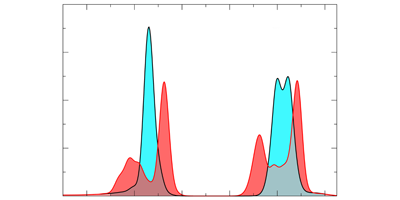
Synopsis: Zeeman Effect Induced by Light Waves
The magnetic field of intense visible light should have a major effect on the spectra of plasmas made from a wide range of elements.
Published Tue Aug 19, 2014
Published Tue Aug 19, 2014
24 Aug 15:07
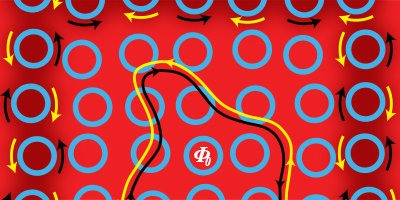
Viewpoint: Light Avoids Anderson Localization
A flat optical device is designed to allow light to travel unimpeded along its edges, even in the presence of defects.
Published Wed Aug 20, 2014
Published Wed Aug 20, 2014
24 Aug 15:07
Topologically Robust Transport of Photons in a Synthetic Gauge Field
by S. Mittal, J. Fan, S. Faez, A. Migdall, J. M. Taylor, and M. Hafezi
Author(s): S. Mittal, J. Fan, S. Faez, A. Migdall, J. M. Taylor, and M. Hafezi
A flat optical device is designed to allow light to travel unimpeded along its edges, even in the presence of defects.
[Phys. Rev. Lett. 113, 087403] Published Wed Aug 20, 2014