Riccardo Sapienza
Shared posts
[Report] Programmable self-assembly in a thousand-robot swarm
Ultrasensitive Diagnostic Analysis of Au Nanoparticles Optically Trapped in Silicon Photonic Circuits at Sub-Milliwatt Powers

Polarization-Resolved Near-Field Mapping of Plasmonic Aperture Emission by a Dual-SNOM System

[Report] Using origami design principles to fold reprogrammable mechanical metamaterials
[Feature] The brain chip
Lateral and Temporal Dependence of the Transport through an Atomic Gold Contact under Light Irradiation: Signature of Propagating Surface Plasmon Polaritons

The theory of pattern formation on directed networks
Article
The study of pattern formation in reaction–diffusion systems has been mainly restricted to symmetric (undirected) networks. Here, Asllani et al. identify a different pattern formation mechanism in a larger class of networks incorporating the possibility of unequal weights for transport along edges.
Nature Communications doi: 10.1038/ncomms5517
Authors: Malbor Asllani, Joseph D. Challenger, Francesco Saverio Pavone, Leonardo Sacconi, Duccio Fanelli
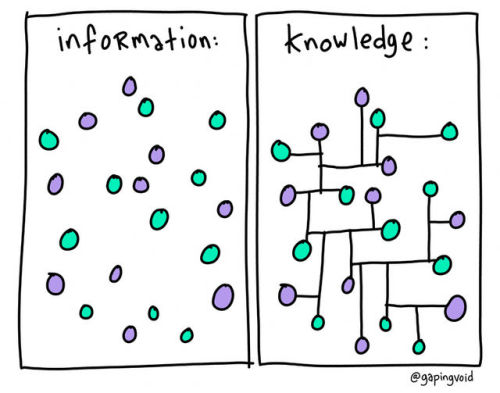
nieuwebegin: ilovecharts: Information vs Knowledge via Greg...
Light focusing in the Anderson regime
Article
Anderson localization is a regime where diffusion is inhibited, leading to the localization of waves. Here, Leonetti et al. use wavefront shaping to achieve focusing in disordered optical fibres in the Anderson regime and demonstrate efficient focusing action.
Nature Communications doi: 10.1038/ncomms5534
Authors: Marco Leonetti, Salman Karbasi, Arash Mafi, Claudio Conti
Single-Photon Transistor Using a Förster Resonance
Author(s): Daniel Tiarks, Simon Baur, Katharina Schneider, Stephan Dürr, and Gerhard Rempe
 Researchers have used interactions between highly excited atoms to make an optical transistor that can be activated by a single photon.
[Phys. Rev. Lett. 113, 053602] Published Mon Jul 28, 2014
Cubehelix color scheme

Cubehelix is a color scheme that retains contrast as it is desaturated (top), as opposed to a more typical rainbow scheme (bottom). It’s great for look-up-tables (LUTs).
Dave Green’s web site has multiple implementations of the color scheme, including code for R and MATLAB.
More…
Colorblind-proof color schemes
Daltonization
By the way, the If We Assume blog has many great posts on the graphical presentation of data.


Toward Plasmonics with Nanometer Precision: Nonlinear Optics of Helium-Ion Milled Gold Nanoantennas

Science books you (and I) should read

La Recherche asked me to recommend my favourite science book for a special issue of the magazine. I had to go for Richard Holmes’ The Age of Wonder (Harper Press, London, 2008). Lots of science books have interested me, and many have captivated me with their wonderful writing. But this is the only one that left me feeling quite so excited.
________________________________________________________________________
Who should write books about science? A Nobel laureate once made his views on that plain enough to me, saying “I have a healthy disregard for anybody and everybody who has not made advances in the field in which they are pontificating.” And in compiling The Oxford Book of Modern Science Writing, Richard Dawkins proclaimed that “This is a collection of good writing by professional scientists, not excursions into science by professional writers” – implying not only that those two groups are distinct but that true science writing embraces only the former.
There are plenty of good examples that demonstrate the wisdom of the academic impulse never to stray outside your own field – in which you have perhaps painstakingly accumulated expertise over decades. The results of forays into foreign intellectual territory have sometimes been disastrous. But the idea that non-scientists have nothing to say about science that could possibly be useful or interesting to scientists, or that scientists from one discipline are unlikely to say anything valuable about another, is one that I find not just dismaying but terrifying.
I don’t think Dawkins or my Nobel colleague actually doubts for a moment that science can be effectively popularized by non-experts. After all, as many people have read and been informed by Bill Bryson’s A Short History of Nearly Everything (2005) as they have many of Dawkins’ splendid and profoundly erudite expositions on evolution. But can outsiders actually bring anything new to the table?
My answer to that is Richard Holmes’ book The Age of Wonder. It tells of the period in the late eighteenth and early nineteenth centuries when scientists sat down with artists and poets – Humphry Davy and Samuel Coleridge exchanged mutually admiring correspondence, for example. They all shared a common view of nature as a source of sublime wonder, the exploration of which was a voyage of romantic discovery that needed the cadences of poetry as much as the precision of scientific experiment and observation. This material could have become a formulaic lament about the “two cultures” that have allegedly arisen since, but Holmes does something much subtler, richer and more fulfilling.
Beginning with James Cook’s expedition to Tahiti in 1769, on which the botanist was the future president of the Royal Society Joseph Banks, Holmes takes in episodes of “romantic science” that include William and Caroline’s telescopic investigations of the moon and stars, early balloon flights and Davy’s experiments with laughing gas and the miner’s lamp. Holmes’ sights are trained firmly on the cultural setting and reception of these studies, and the mindset that informed them. “For many Romantic scientists”, he writes,
“there was no immediate contradiction between religion and science: rather the opposite. Science was a gift of God or Providence to mankind, and its purpose was to reveal the wonders of His design.”
Holmes has insisted that he knows rather little about science. This is excessively modest, but not falsely so. One doesn’t doubt, from the confident tone of the book, either that he spared any pains to find out what he needed to know or that he knew what to do with that information. Precisely because Holmes is an expert on the lives and intellectual milieu of Coleridge, Percy Shelley and the British and French Romantics generally, he was able to draw out themes and ideas that historians of science would not have seen.
But the book isn’t just to be celebrated for its fresh perspective. It is also a joy to read. Every page delivers something interesting, always with elegance and wryness. Even the footnotes (mark this, academics) are not to be missed. I have read a lot of science books – when I first read The Age of Wonder it was as a judge of the Royal Society Science Book Prize (which Holmes won), and so I was wading through literally stacks of them. But none has left me with such genuine exhilaration as this one. And none has better illuminated the case which Holmes makes at the end, and which surely all scientists would applaud:
“Perhaps most important, right now, is a changing appreciation of how scientists themselves fit into society as a whole, and the nature of the particular creativity they bring to it. We need to consider how they are increasingly vital to any culture of progressive knowledge, to the education of young people (and the not so young), and to our understanding of the planet and its future.”
More challenging to some, I suspect, is Holmes’ corollary:
“The old rigid debates and boundaries – science versus religion, science versus the arts, science versus traditional ethics – are no longer enough. We should be impatient with them. We need a wider, more generous, more imaginative perspective.”
Here already is the beginning of that perspective.
Rosalind Franklin, who created Photo 51, born today in 1920

The X-Ray spectroscopy image of the DNA molecule taken by Franklin (1920-1958) and PhD student Ray Gosling at King's College London in 1952 can claim to be one of the world's most important photographs (see the BBC article). It demonstrated the helical structure of DNA and enabled James Watson and Francis Crick of Cambridge to build the first model of the molecule in 1953.
A one-dimensional optomechanical crystal with a complete phononic band gap
Article
Cavity optomechanics connects light to the mechanical degrees of freedom of a resonator and has great potential for sensing applications. Here, the authors realize a one-dimensional optomechanical crystal with a complete phononic bandgap containing high Q-factor modes and limited clamping losses.
Nature Communications doi: 10.1038/ncomms5452
Authors: J. Gomis-Bresco, D. Navarro-Urrios, M. Oudich, S. El-Jallal, A. Griol, D. Puerto, E. Chavez, Y. Pennec, B. Djafari-Rouhani, F. Alzina, A. Martínez, C.M. Sotomayor Torres
Rediscovering black phosphorus as an anisotropic layered material for optoelectronics and electronics
Article
The applications of graphene and transition metal dichalcogenides in electronics are limited by their zero-bandgap and low mobility, respectively. Here, the authors demonstrate the potential of an emerging layered material—black phosphorous—for thin film electronics and infrared optoelectronics.
Nature Communications doi: 10.1038/ncomms5458
Authors: Fengnian Xia, Han Wang, Yichen Jia
Vectorial Nanoscale Mapping of Optical Antenna Fields by Single Molecule Dipoles

[In Depth] A radical change in peer review
Nanophotonic Enhancement of the Förster Resonance Energy-Transfer Rate with Single Nanoapertures

Control of Radiative Processes Using Tunable Plasmonic Nanopatch Antennas

Physics: Wave of the future
Physics: Wave of the future
Nature 511, 7509 (2014). http://www.nature.com/doifinder/10.1038/511278a
Author: Alexandra Witze
After two decades and more than half a billion dollars, LIGO, the world's largest gravitational-wave observatory, is on the verge of a detection. Maybe.
Quantum-hub finalists picked
Quantum-hub finalists picked
Nature 511, 7509 (2014). http://www.nature.com/doifinder/10.1038/511271a
Author: Katia Moskvitch
UK government considers eight proposals for up to six research centres.
Interesting links: peer review, falsifiability
- A thoroughly dishonest scientist (and I guess a couple of other people) were exposed as running an awful peer review scam. More about this here. The scam involved creating fake email addresses and identities to mask people essentially reviewing their own and friends' papers. The worst thing about this whole mess is that it gives ammunition to the anti-science crowd who are convinced that scientific research is a corrupt enterprise - people like the person I wrote about here.
- Peter Woit has written an interesting review of a book about string theory and whether the scientific method needs to be revised to deal with "post-emprical" theory verification, whatever that means. I haven't read the book, but the idea of post-empiricism is pretty sketchy to me.
- Natalie Wolchover has written an article about some fluid droplet experiments that show quantum-like behavior of droplets (e.g., interference-fringe-like distributions, for example). The physics here is that the droplets are interacting with associated surface waves of an underlying fluid, and the mechanics of those waves self-consistently guides the droplets. This is similar in spirit to Bohm's ideas about pilot waves as a way of thinking about quantum mechanics. The authors of the fluid paper are clearly high on this idea. These are clearly very cool experiments, but it's a huge stretch to say that they should motivate re-thinking our interpretations of quantum mechanics.
Bright emission from a random Raman laser
Article
Unlike conventional lasers that require a uniform resonant cavity to operate, random lasers use a highly disordered gain medium in which scattering is dominant. Hokr et al . report Raman lasing from a bulk three-dimensional disordered medium whose intensity exceeds that of other random lasers by many orders of magnitude.
Nature Communications doi: 10.1038/ncomms5356
Authors: Brett H. Hokr, Joel N. Bixler, Michael T. Cone, John D. Mason, Hope T. Beier, Gary D. Noojin, Georgi I. Petrov, Leonid A. Golovan, Robert J. Thomas, Benjamin A. Rockwell, Vladislav V. Yakovlev
Coherent anti-Stokes Raman scattering with single-molecule sensitivity using a plasmonic Fano resonance
Article
The field enhancements arising in plasmonic nanostructures make them ideal as substrates for molecular sensors. In this study, Zhang et al. achieve single molecule sensitivity with Fano resonances in a quadrumer nanostructure and coherent anti-Stokes Raman spectroscopy.
Nature Communications doi: 10.1038/ncomms5424
Authors: Yu Zhang, Yu-Rong Zhen, Oara Neumann, Jared K. Day, Peter Nordlander, Naomi J. Halas
A Simple Self-Calibrating Method To Measure the Height of Fluorescent Molecules and Beads at Nanoscale Resolution

[Report] All-optical routing of single photons by a one-atom switch controlled by a single photon
07/09/14 PHD comic: 'Professor Vacation'
| Piled Higher & Deeper by Jorge Cham |
www.phdcomics.com
|
|
 |
||
|
title:
"Professor Vacation" - originally published
7/9/2014
For the latest news in PHD Comics, CLICK HERE! |
||
Applied physics: A new view on displays
Applied physics: A new view on displays
Nature 511, 7508 (2014). doi:10.1038/511159a
Authors: Dirk J. Broer
Materials that rapidly switch between amorphous and crystalline states are widely used to manage heat and store data. They now emerge as promising building blocks for ultrahigh-resolution display devices. See Letter p.206
Nanophotonic integrated circuits from nanoresonators grown on silicon
Article
The integration of photonic components on silicon chips creates the challenge of achieving a uniform and efficient architecture. Here, the authors demonstrate on-chip light-emitters, photodetectors, photovoltaic power supply and optical data link, all based on InGaAs nanoresonators grown on silicon.
Nature Communications doi: 10.1038/ncomms5325
Authors: Roger Chen, Kar Wei Ng, Wai Son Ko, Devang Parekh, Fanglu Lu, Thai-Truong D. Tran, Kun Li, Connie Chang-Hasnain