Shared posts

07 Oct 19:02

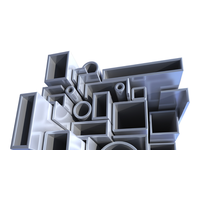
Squaring the Circle: Geometric Skewness and Symmetry Breaking for Passive Scalar Transport in Ducts and Pipes

by Manuchehr Aminian, Francesca Bernardi, Roberto Camassa, and Richard M. McLaughlin

Author(s): Manuchehr Aminian, Francesca Bernardi, Roberto Camassa, and Richard M. McLaughlin

Calculations of the motion of particles carried by a fluid flowing through a pipe find a surprising effect of the pipe’s shape.


[Phys. Rev. Lett. 115, 154503] Published Mon Oct 05, 2015

02 Oct 19:38

[Report] Direct sampling of electric-field vacuum fluctuations

by C. Riek
02 Oct 10:41

Confinement of Surface Plasmon Polaritons by Heterostructures of Plasmonic Crystals

by Hikaru Saito, Shohei Mizuma and Naoki Yamamoto

TOC Graphic

Nano Letters
DOI: 10.1021/acs.nanolett.5b02623
02 Oct 09:41

A century of physics

by Roberta Sinatra

Nature Physics 11, 791 (2015). doi:10.1038/nphys3494

Authors: Roberta Sinatra, Pierre Deville, Michael Szell, Dashun Wang & Albert-László Barabási

An analysis of Web of Science data spanning more than 100 years reveals the rapid growth and increasing multidisciplinarity of physics — as well its internal map of subdisciplines.

29 Sep 18:54

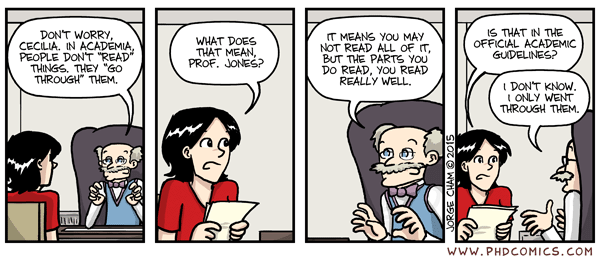
09/28/15 PHD comic: 'Academics don't read'

Piled Higher & Deeper by Jorge Cham
www.phdcomics.com
Click on the title below to read the comic
title: "Academics don't read" - originally published 9/28/2015

For the latest news in PHD Comics, CLICK HERE!

29 Sep 15:41

All-passive nonreciprocal metastructure

by Ahmed M. Mahmoud

Article

The design of all-passive nonreciprocal metastructures is a challenging task as there are trade-offs between the nonreciprocal transmission ratio and insertion loss. Here, Mahmoud et al . propose a concept for all-passive, high-throughput metastructures that exhibit nonreciprocal properties and wave-flow isolation.

Nature Communications doi: 10.1038/ncomms9359

Authors: Ahmed M. Mahmoud, Arthur R. Davoyan, Nader Engheta

29 Sep 15:41

Perfect absorption in nanotextured thin films via Anderson-localized photon modes

by Martin Aeschlimann

Nature Photonics 9, 663 (2015). doi:10.1038/nphoton.2015.159

Authors: Martin Aeschlimann, Tobias Brixner, Dominik Differt, Ulrich Heinzmann, Matthias Hensen, Christian Kramer, Florian Lükermann, Pascal Melchior, Walter Pfeiffer, Martin Piecuch, Christian Schneider, Helmut Stiebig, Christian Strüber & Philip Thielen

The enhancement of light absorption in absorber layers is crucial in a number of applications, including photovoltaics and thermoelectrics. The efficient use of natural resources and physical constraints such as limited charge extraction in photovoltaic devices require thin but efficient absorbers. Among the many different strategies used, light diffraction and light localization at randomly nanotextured interfaces have been proposed to improve absorption. Although already exploited in commercial devices, the enhancement mechanism for devices with nanotextured interfaces is still subject to debate. Using coherent two-dimensional nanoscopy and coherent light scattering, we demonstrate the existence of localized photonic states in nanotextured amorphous silicon layers as used in commercial thin-film solar cells. Resonant absorption in these states accounts for the enhanced absorption in the long-wavelength cutoff region. Our observations establish that Anderson localization—that is, strong localization—is a highly efficient resonant absorption enhancement mechanism offering interesting opportunities for the design of efficient future absorber layers.

27 Sep 19:59

Pronounced Linewidth Narrowing of an Aluminum Nanoparticle Plasmon Resonance by Interaction with an Aluminum Metallic Film

by Ali Sobhani, Alejandro Manjavacas, Yang Cao, Michael J. McClain, F. Javier García de Abajo, Peter Nordlander and Naomi J. Halas

TOC Graphic

Nano Letters
DOI: 10.1021/acs.nanolett.5b02883
25 Sep 12:18

Controlling transmission eigenchannels in random media by edge reflection

by Liyi Zhao, Chushun Tian, Yury P. Bliokh, and Valentin Freilikher

Author(s): Liyi Zhao, Chushun Tian, Yury P. Bliokh, and Valentin Freilikher

When a wave is incident on an open random medium it is decomposed into a number of “partial waves” that propagate independently along natural channels, the so-called transmission eigenchannels, and are superposed again when they leave the medium. Here, the authors propose the use of asymmetric edge reflection (the asymmetry in the reflections of the sample edges) to control the perfectly transmitting eigenchannel in a quasi-one-dimensional diffusive medium.


[Phys. Rev. B 92, 094203] Published Mon Sep 21, 2015

24 Sep 10:42

Quantum plasmonics: Diamonds in waveguides

by Maria Maragkou

Nature Materials 14, 962 (2015). doi:10.1038/nmat4441

Author: Maria Maragkou

24 Sep 10:42

Synopsis: Dance of the Wedding Rings

Wedding rings spinning on a surface can follow surprising boomeranglike trajectories.


[Physics] Published Tue Sep 22, 2015

23 Sep 10:43

Experimental observation of N00N state Bloch oscillations

by Maxime Lebugle

Article

Bloch oscillations consist of periodic spreading and relocalization of particle wave functions, but have been so far observed only in separable states. Here the authors observe them for two-photon N00N states in integrated photonic circuits, revealing transitions from particle bunching to anitbunching.

Nature Communications doi: 10.1038/ncomms9273

Authors: Maxime Lebugle, Markus Gräfe, René Heilmann, Armando Perez-Leija, Stefan Nolte, Alexander Szameit

22 Sep 19:05

Nanoscale Imaging of Local Few-Femtosecond Near-Field Dynamics within a Single Plasmonic Nanoantenna

by Erik Mårsell, Arthur Losquin, Robin Svärd, Miguel Miranda, Chen Guo, Anne Harth, Eleonora Lorek, Johan Mauritsson, Cord L. Arnold, Hongxing Xu, Anne L’Huillier and Anders Mikkelsen

TOC Graphic

Nano Letters
DOI: 10.1021/acs.nanolett.5b02363
22 Sep 09:44

The physics of musical scales: Theory and experiment

by Dallin S. Durfee and John S. Colton

The theory of musical scales involves mathematical ratios, harmonic resonators, beats, and human perception and provides an interesting application of the physics of waves and sound. We first review the history and physics of musical scales, with an emphasis on four historically important scales: twelve-tone equal temperament, Pythagorean, quarter-comma meantone, and Ptolemaic just intonation. We then present an easy way for students and teachers to directly experience the qualities of different scales using MIDI synthesis.

22 Sep 09:44

Asymmetric wave functions from tiny perturbations

by T. Dauphinee and F. Marsiglio

The quantum mechanical behavior of a particle in a double well defies our intuition based on classical reasoning. Not surprisingly, an asymmetry in the double well will restore results more consistent with the classical picture. What is surprising, however, is how a very small asymmetry can lead to essentially classical behavior. In this paper, we use the simplest version of a double-well potential to demonstrate these statements. We also show how this system accurately maps onto a two-state system, which we refer to as a “toy model.”

18 Sep 12:44

I picchi immaginari

by peppe liberti

C’era una volta un esperimento che poteva cambiare il volto della Fisica Nucleare

Continue reading on Through the optic glass »

17 Sep 12:24

Postdoc openings!

by Riccardo
In our group in King’s College London we study light generation and interaction within nanoscale complex photonic systems, a combination of nano-optics, quantum optics and lasing science.
JoinOurTeam
We are now looking to recruit two postdocs to study:
1. Biocompatible random lasing –  2 year Postdoctoral Research Position (Deadline for applications 13th October 2015)
You will fabricate new disordered biomaterials (biopolymers and proteins such as natural silk) and observe lasing from them, to form the basis of new-generation bio-sensors. For more information go to: http://www.jobs.ac.uk/job/ALZ390/post-doctoral-research-associate-in-bio-compatible-random-lasing-in-the-department-of-physics/
2. Hyperuniform photonic networks – 3 year Postdoctoral Research Position
You will study how single emitters can be controlled and boosted in nanophotonic and hyperuniform networks, combining network theory with nanophotonics, with a view to quantum optics at the nanoscale. This is collaborative project with Dr. Marian Florescu (University of Surrey, UK).
Please contact Dr. Riccardo Sapienza, Riccardo.Sapienza@kcl.ac.uk, for more information.
17 Sep 12:21

Bloch-like waves in random-walk potentials based on supersymmetry

by Sunkyu Yu

Article

Various approaches based on the iterative search have failed in the deterministic creation of bandgaps in random networks. Here Yu et al . reveal a deterministic pathway to bandgaps in random-walk potentials by applying the notion of supersymmetry to the wave equation.

Nature Communications doi: 10.1038/ncomms9269

Authors: Sunkyu Yu, Xianji Piao, Jiho Hong, Namkyoo Park

16 Sep 15:02

D-Wave unveils new quantum computing benchmark (and it’s fast)

by Chris Lee

D-Wave, a company we have covered extensively in the past, has taken some heat because a number of tests have shown that its adiabatic quantum optimizer is no faster than a regular computer. But the company is now claiming that its machine is between two to 600 times faster than a classical computer. What happened to obtain such a huge speed-up? A new benchmark, that's what.

I remember when every OS manufacturer, chip maker, and video card vendor would either cheat or invent a new benchmark in order to claim to be the fastest. So my eyes initially rolled so hard that Newton's third law just about kicked me out of my chair. After recovering from the muscle strain, I got a hold of the paper, and much to my surprise, I agree with the authors.

Inappropriate benchmarks

Before I get to the D-Wave benchmark, let's take a quick look at how a naive benchmark might work. You can set your computer a task and time how long it takes to perform it. Or you can set it a repetitive set of fundamental operations (say multiplying two numbers) and see how many operations it can perform per second.

Read 18 remaining paragraphs | Comments

15 Sep 21:14

A Call to the Early Career Nanoscience Community: Now Accepting Nominations for the Nano Letters Early Career Advisory Board

by A. Paul Alivisatos and
Nano Letters
DOI: 10.1021/acs.nanolett.5b03674
11 Sep 15:58

Universal Quantum Transducers Based on Surface Acoustic Waves

by M. J. A. Schuetz, E. M. Kessler, G. Giedke, L. M. K. Vandersypen, M. D. Lukin, and J. I. Cirac

Author(s): M. J. A. Schuetz, E. M. Kessler, G. Giedke, L. M. K. Vandersypen, M. D. Lukin, and J. I. Cirac

Surface acoustic waves may work as a “quantum bus” that carries information to different parts of a quantum computer.


[Phys. Rev. X 5, 031031] Published Thu Sep 10, 2015

10 Sep 20:06

Arithmetic and local circuitry underlying dopamine prediction errors

by Neir Eshel

Arithmetic and local circuitry underlying dopamine prediction errors

Nature 525, 7568 (2015). doi:10.1038/nature14855

Authors: Neir Eshel, Michael Bukwich, Vinod Rao, Vivian Hemmelder, Ju Tian & Naoshige Uchida

Dopamine neurons are thought to facilitate learning by comparing actual and expected reward. Despite two decades of investigation, little is known about how this comparison is made. To determine how dopamine neurons calculate prediction error, we combined optogenetic manipulations with extracellular recordings in the ventral tegmental area while mice engaged in classical conditioning. Here we demonstrate, by manipulating the temporal expectation of reward, that dopamine neurons perform subtraction, a computation that is ideal for reinforcement learning but rarely observed in the brain. Furthermore, selectively exciting and inhibiting neighbouring GABA (γ-aminobutyric acid) neurons in the ventral tegmental area reveals that these neurons are a source of subtraction: they inhibit dopamine neurons when reward is expected, causally contributing to prediction-error calculations. Finally, bilaterally stimulating ventral tegmental area GABA neurons dramatically reduces anticipatory licking to conditioned odours, consistent with an important role for these neurons in reinforcement learning. Together, our results uncover the arithmetic and local circuitry underlying dopamine prediction errors.

10 Sep 20:05

Apple presenta la sua nuova gamma di sonniferi

by Paolo Attivissimo
Questo articolo vi arriva gratuitamente e senza pubblicità grazie alle gentili donazioni di “bcsmat*” e “fabiano*” ed è stato aggiornato dopo la pubblicazione iniziale. Se vi piace, potete incoraggiarmi a scrivere ancora (anche con un microabbonamento, come ha fatto “mfrab*”). Ultimo aggiornamento: 2015/09/17 22:50.

Ieri Apple ha presentato i nuovi Watch (o meglio, nuove casse, software e cinturini), i nuovi iPhone, un Apple TV potenziato e un iPad gigante con tastiera e stilo. Saranno disponibili tra poco, costeranno un botto, e saranno come al solito i migliori di sempre. Come tutte le altre volte, ma stavolta con più sonniferi: a mia memoria è stato il Keynote più noioso della storia delle presentazioni Apple. Di novità reali, rivoluzionarie, manco l'ombra.

Ecco, vi ho appena fatto risparmiare due ore della vostra vita e tutto il tempo che avreste passato a leggere le recensioni dei prodotti Apple che appestano in queste ore tutti i siti dell'universo conosciuto. Recensioni che sono la fase finale di un ciclo acchiappaclic che frutta un pacco di soldi pubblicitari ai siti e li trasforma in grancasse promozionali per Apple: qualche settimana prima del Keynote si pubblicano gli articoli di ipotesi su come saranno i nuovi prodotti; poi si pubblicano quelli sulle indiscrezioni su come saranno; poi si mette online la raffica di articoli su come sono realmente. E intanto il contatore dei clic corre.

Posso dirlo una volta per tutte? Sono un utente Apple da anni, uso Mac come laptop e computer fisso, e non me ne frega niente delle ipotesi, delle indiscrezioni e delle congetture su come potrebbero essere i prossimi prodotti Apple. Salterò a pié pari tutta questa fuffa. Chiamatemi quando si sa come sono realmente i nuovi prodotti e piantatela di fare i lacché di Apple a caccia di clic.

Tanto per dirvi a che livelli di ridicolo inconsapevole siamo arrivati, ieri è stato presentato l'iPad Pro, che è un iPad più grande, al quale si abbinano una tastiera e uno stilo. Risoluzione spettacolare, estetica al top, certo, ma lasciatemi scappare uno sbadiglio cosmico. È un gran bel tablet con tastiera, tutto qui, eppure Apple l'ha annunciato come se fosse stata la Terza Tavola della Legge portata da Mosé. E il pubblico ha applaudito entusiasta.

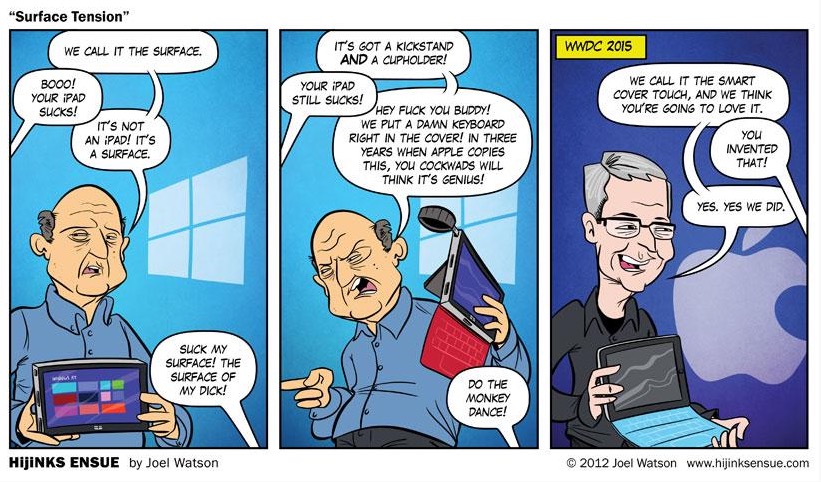
Ma guardate questa vignetta di Joel Watson, che risale al 2012, e se siete fanboy di Apple, datevi una ridimensionata.


Ballmer: Lo chiamiamo Surface [“superficie”].

Pubblico: Buuuuu! Il tuo iPad fa schifo.

Ballmer: Non è un iPad! È un Surface.

Pubblico: Succhiami la superficie! Quella del mio uccello!

Ballmer: Ha un supporto estraibile e anche un portabicchiere.

Pubblico: Il tuo iPad fa schifo lo stesso.

Ballmer: Ehi, amico, vaffanculo! Abbiamo messo una tastiera direttamente nella copertina! Tra tre anni, quando Apple ce lo copierà, voi stronzi penserete che è geniale.

Pubblico: Facci il ballo della scimmia!

WWDC 2015 – Tim Cook: Lo chiamiamo Smart Cover Touch, e crediamo che lo amerete.

Pubblico: Lo avete inventato voi!

Tim Cook: Sì, sì, lo abbiamo inventato noi.

Più seriamente, temo che l'iPad Pro sia un nuovo passo in avanti nella strategia a lungo termine di Apple per eliminare definitivamente il computer, nel senso di personal computer, quello sul quale siamo liberi di far girare le applicazioni che vogliamo, e spingerci sempre di più verso dispositivi chiusi, sui quali possiamo eseguire soltanto le applicazioni che vuole Apple, il cui modello di business è sempre meno vendere dispositivi aperti per la produttività personale e sempre più vendere dispositivi chiusi che inducano i clienti a comperare servizi. Naturalmente servizi venduti da Apple.

Fra l'altro questa strategia va benissimo a molti degli altri attori coinvolti: pirateria del cinema? Non sarà più un problema, se su un iCoso girerà soltanto il media player con DRM (sistemi anticopia) e i video senza DRM verranno bloccati o degradati. C'è Adblock che blocca le pubblicità invadenti? Per contrastare questo crimine basterà non approvarlo nell'App Store.

Circolazione di documenti scottanti? Non sarà più un rischio, se sull'iCoso gireranno soltanto le applicazioni di lettura documenti benedette da Apple (che magari chiameranno Cupertino per informare su chi ha letto cosa e quando e dove l'ha fatto).

Comunicazioni riservate che impensieriscono inquirenti o governi, come quello americano o britannico? Problema risolto, se sull'iCoso gireranno solo le app di messaggistica approvate e con chiave di decifrazione centralizzata. Considerate, tanto per fare un esempio, che già ora WhatsApp scambia i messaggi cifrandoli nella versione Android, mentre in quella iOS sono in chiaro.

Sostituire il computer aperto, dove l'utente installa quello che vuole lui, con un dispositivo digitale chiuso, sul quale si possa esercitare un controllo ferreo, conviene insomma a tanti. Era l'aspirazione alla base del contestatissimo Palladium/Trusted Computing di Microsoft, ai tempi in cui Microsoft era il colosso monopolista e Apple si presentava come la paladina del libero pensiero. Come si cambia.

Oggi nessuno accetterebbe soprusi come questi. Ma considerate alcune delle cose alle quali Apple ci ha abituati nel corso degli anni (e altre case produttrici stanno facendo cose analoghe):
– con iOS ha reso normale l'idea che possiamo installare soltanto le app benedette da una specifica azienda: se vogliamo installare qualcosa di diverso dobbiamo scardinare le protezioni del nostro dispositivo.
– con iOS, chi vuole offrire una app agli utenti deve registrarsi come sviluppatore pagando;
– batterie non più rimovibili, prima negli iPhone e iPad, poi nei laptop: tu, utente, non devi mettere le mani all'interno del dispositivo, nemmeno per cambiare la batteria.
– OS X convergente con iOS: l'installazione delle app non firmate da Apple viene disincentivata tramite finestre di dialogo di cui bisogna conoscere le opzioni nascoste per poterle scavalcare e installare quello che si desidera.
– proprio in questi giorni, l'introduzione della possibilità di un adblocker che blocchi tutte le pubblicità tranne, guarda caso, quelle di Apple (iAds) e tranne il tracciamento delle app native di Apple.
– DRM sui video di film e telefilm vincolati da copyright.

Va considerato, inoltre, che Apple è oggi un'azienda che produce iPhone e iPad e secondariamente computer, come evidenziato dai rendiconti pubblici (screenshot qui accanto); nel secondo trimestre del 2015 ha venduto 61 milioni di iPhone e 12 milioni di iPad, con ricavi per circa 46 miliardi di dollari, mentre i 4,5 milioni di Mac hanno prodotto 5,6 milioni di ricavi: meno di un decimo rispetto ai dispositivi iOS. Il Mac conta ben poco, in questo bilancio: perché tenerlo?

Oltretutto sui dispositivi iOS è più facile implementare DRM che li trasformi in piattaforme fidate per la diffusione di contenuti sotto copyright. E Apple è un colosso in questo campo. Guardate il grafico dei ricavi mostrato qui accanto, pubblicato dalla BBC, e notate le dimensioni di Apple a confronto delle principali aziende che si occupano di media.

Però per arrivare a proporre il controllo totale senza che ci sia opposizione bisogna prima togliere di mezzo il personal computer, troppo libero, troppo aperto, troppo flessibile e riprogrammabile. Per eliminarlo non servono leggi o sequestri: basta disabituare gli utenti a usarlo. Pian piano e con il sorriso.

Guardate i giovani di oggi: sanno usare un iPhone perché l'hanno da sempre. Per loro passare a un iPad è naturale: stesse icone, stessa interfaccia, stessa filosofia. Passare a un PC o a un Mac, per loro che non ne hanno mai usato uno, è uno sforzo di apprendimento massiccio (santo cielo, chi usa iOS non vede neppure il filesystem e trova alieno il concetto di cartella, figuriamoci path e directory, o di salvare i dati): ditemi voi perché dovrebbero farlo, ora che c'è un super-tablet che ha una tastiera e un dispositivo di puntamento di precisione? L'iPad è un complemento al computer; l'iPad Pro è un sostituto. Un Mac o un PC, per chi ha oggi undici o dodici anni e non ha memoria di come fosse il mondo prima degli iCosi, è inutilmente macchinoso e arcaico come lo è per me una macchina per scrivere.

Dal loro punto di vista, per quale motivo questi giovani cresciuti a pane e iOS dovrebbero faticare per imparare a usare un PC o un Mac, con tutte le sue bizzarrie e infettabilità, specialmente adesso che c'è un iPad da 13 pollici con tastiera che fa le stesse cose di un PC/Mac, ma senza tutte le complicazioni di un PC/Mac? Un iPad, se non viene sottoposto a jailbreak, è una piattaforma che non s'infetta, si aggiorna automaticamente, salva i dati automaticamente nel cloud. E alla maggior parte della gente rinunciare alla libertà di installare quello che si vuole in cambio di una maggiore sicurezza e semplicità (e dei dati personali) va benissimo.

Sono profeta di sventura? Può darsi; spero di prevenire, non di prevedere, ma giudicate voi. Io vado frequentemente nelle scuole per fare lezioni di sicurezza informatica e vedo sempre più spesso studenti che non sanno fare login a Facebook da un computer perché non l'hanno mai fatto: hanno sempre cliccato sull'app.

Considerate, per esempio, i dati di vendita dei computer negli ultimi anni secondo il Wall Street Journal: “I consumatori hanno iniziato a mollare i PC in favore dei tablet nel 2012, quando le spedizioni scesero del 2,6%, secondo Gartner. Il mercato è crollato l'anno successivo, calando dell'11,1%, e ha continuato a calare nel 2014 dello 0,8%.” E le previsioni per il 2015 non sono rosee: “un calo dell'11,8% rispetto all'anno precedente” secondo IDC, citata sempre dal WSJ. Anche i dati di Statista.com (immagine qui accanto) indicano un calo continuo dal 2011 in poi; le vendite di computer nel 2014 sono ai livelli del 2009. Tendenza temporanea o inizio del declino? Lo scopriremo tra qualche anno.

Ricordate Cory Doctorow e il suo monito sulla guerra in atto contro il computer universale? Provate a rileggere le sue parole di qualche anno fa e chiedetevi, senza inutili complottismi, se per caso aveva ragione.
Scritto da Paolo Attivissimo per il blog Il Disinformatico. Ripubblicabile liberamente se viene inclusa questa dicitura (dettagli). Sono ben accette le donazioni Paypal.
09 Sep 20:01

Designing Plasmonic Gratings with Transformation Optics

by Matthias Kraft, Yu Luo, S. A. Maier, and J. B. Pendry

Author(s): Matthias Kraft, Yu Luo, S. A. Maier, and J. B. Pendry

Solar cell technology benefits from increased photocurrents. New research uses transformation optics to preferentially concentrate light in hotspots in a metal grating.


[Phys. Rev. X 5, 031029] Published Tue Sep 08, 2015

09 Sep 09:33

Self-Aligned Plasmonic Nanopores by Optically Controlled Dielectric Breakdown

by Sergii Pud, Daniel Verschueren, Nikola Vukovic, Calin Plesa, Magnus P. Jonsson and Cees Dekker

TOC Graphic

Nano Letters
DOI: 10.1021/acs.nanolett.5b03239
09 Sep 09:32

Sparsity-based super-resolved coherent diffraction imaging of one-dimensional objects

by Pavel Sidorenko

Article

In measurements that employ phase retrieval algorithms, such as coherent diffraction imaging, reconstruction of one-dimensional signals is challenging due to ambiguity issues. Here, the authors demonstrate super-resolution coherent imaging of one-dimensional objects by utilizing sparsity prior information.

Nature Communications doi: 10.1038/ncomms9209

Authors: Pavel Sidorenko, Ofer Kfir, Yoav Shechtman, Avner Fleischer, Yonina C. Eldar, Mordechai Segev, Oren Cohen

07 Sep 19:53

Bright Phonon-Tuned Single-Photon Source

by Simone Luca Portalupi, Gaston Hornecker, Valérian Giesz, Thomas Grange, Aristide Lemaître, Justin Demory, Isabelle Sagnes, Norberto D. Lanzillotti-Kimura, Loïc Lanco, Alexia Auffèves and Pascale Senellart

TOC Graphic

Nano Letters
DOI: 10.1021/acs.nanolett.5b00876
07 Sep 19:52

Percolation Model of Sensory Transmission and Loss of Consciousness Under General Anesthesia

by David W. Zhou, David D. Mowrey, Pei Tang, and Yan Xu

Author(s): David W. Zhou, David D. Mowrey, Pei Tang, and Yan Xu

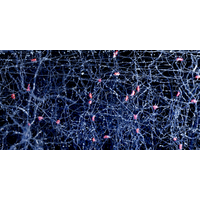
A computer model of a network of neurons shows that a sudden breakdown in the net’s ability to transmit information mimics the brain wave changes that accompany anesthesia.


[Phys. Rev. Lett. 115, 108103] Published Fri Sep 04, 2015

07 Sep 11:15

Negative refractive index and acoustic superlens from multiple scattering in single negative metamaterials

by Nadège Kaina

Negative refractive index and acoustic superlens from multiple scattering in single negative metamaterials

Nature 525, 7567 (2015). doi:10.1038/nature14678

Authors: Nadège Kaina, Fabrice Lemoult, Mathias Fink & Geoffroy Lerosey

Metamaterials, man-made composite media structured on a scale much smaller than a wavelength, offer surprising possibilities for engineering the propagation of waves. One of the most interesting of these is the ability to achieve superlensing—that is, to focus or image beyond the diffraction limit. This originates from the left-handed behaviour—the property of refracting waves negatively—that is typical of negative index metamaterials. Yet reaching this goal requires the design of ‘double negative’ metamaterials, which act simultaneously on the permittivity and permeability in electromagnetics, or on the density and compressibility in acoustics; this generally implies the use of two different kinds of building blocks or specific particles presenting multiple overlapping resonances. Such a requirement limits the applicability of double negative metamaterials, and has, for example, hampered any demonstration of subwavelength focusing using left-handed acoustic metamaterials. Here we show that these strict conditions can be largely relaxed by relying on media that consist of only one type of single resonant unit cell. Specifically, we show with a simple yet general semi-analytical model that judiciously breaking the symmetry of a single negative metamaterial is sufficient to turn it into a double negative one. We then demonstrate that this occurs solely because of multiple scattering of waves off the metamaterial resonant elements, a phenomenon often disregarded in these media owing to their subwavelength patterning. We apply our approach to acoustics and verify through numerical simulations that it allows the realization of negative index acoustic metamaterials based on Helmholtz resonators only. Finally, we demonstrate the operation of a negative index acoustic superlens, achieving subwavelength focusing and imaging with spot width and resolution 7 and 3.5 times better than the diffraction limit, respectively. Our findings have profound implications for the physics of metamaterials, highlighting the role of their subwavelength crystalline structure, and hence entering the realm of metamaterial crystals. This widens the scope of possibilities for designing composite media with novel properties in a much simpler way than has been possible so far.

07 Sep 11:13

Hyperspectral light sheet microscopy

by Wiebke Jahr

Article

Multicolour information is required to study the complex interplay of biological tissues. Here, Jahr et al. acquire spectral information at high resolution for each pixel in a hyperspectral light sheet microscope, while maintaining its perpendicular illumination and low phototoxicity.

Nature Communications doi: 10.1038/ncomms8990

Authors: Wiebke Jahr, Benjamin Schmid, Christopher Schmied, Florian O. Fahrbach, Jan Huisken