Nature Photonics 9, 559 (2015). doi:10.1038/nphoton.2015.158
Author: David McGloin
Turning living cells into miniature lasers offers new opportunities for cell labelling, tracking and sensing on a grand scale.
Nature Photonics 9, 559 (2015). doi:10.1038/nphoton.2015.158
Author: David McGloin
Turning living cells into miniature lasers offers new opportunities for cell labelling, tracking and sensing on a grand scale.
 There has been a lot of interest online recently about the "drought balls" that the state of California is using to limit unwanted photochemistry and evaporation in its reservoirs. These are hollow balls each about 10 cm in diameter, made from a polymer mixed with carbon black. When dumped by the zillions into reservoirs, don't just help conserve water: They spontaneously become a teaching tool about condensed matter physics.
We propose a nanowaveguide platform for collective atom-light interaction through evanescent field coupling. We have developed a 1cm-long silicon nitride nanowaveguide can use evanescent fields to trap and probe an ensemble of 87Rb atoms. The waveguide has a sub-micrometer square mode area and was designed with tapers for high fiber-to-waveguide coupling efficiencies at near-infrared wavelengths (750nm to 1100nm). Inverse tapers in the platform adiabatically transfer a weakly guided mode of fiber-coupled light into a strongly guided mode with an evanescent field to trap atoms and then back to a weakly guided mode at the other end of the waveguide. The coupling loss is -1dB per facet (~80% coupling efficiency) at 760nm and 1064nm, which is estimated by a propagation loss measurement with waveguides of different lengths. The proposed platform has good thermal conductance and can guide high optical powers for trapping atoms in ultra-high vacuum. As an intermediate step, we have observed thermal atom absorption of the evanescent component of a nanowaveguide, and have demonstrated the U-wire mirror magneto-optical trap that can transfer atoms to the proximity of the surface.

Author(s): Simon A. Lambert, Sven Peter Näsholm, David Nordsletten, Christian Michler, Lauriane Juge, Jean-Michel Serfaty, Lynne Bilston, Bojan Guzina, Sverre Holm, and Ralph Sinkus
Wave scattering provides profound insight into the structure of matter. Typically, the ability to sense microstructure is determined by the ratio of scatterer size to probing wavelength. Here, we address the question of whether macroscopic waves can report back the presence and distribution of micro…
[Phys. Rev. Lett. 115, 094301] Published Wed Aug 26, 2015
We study theoretically the spatial correlations between the intensities measured at the input and output planes of a disordered scattering medium. We show that at large optical thicknesses, a long-range spatial correlation persists and takes negative values. For small optical thicknesses, short-range and long-range correlations coexist, with relative weights that depend on the optical thickness. These results may have direct implications for the control of wave transmission through complex media by wavefront shaping, thus finding applications in sensing, imaging and information transfer.
We present a numerical study on the minimum reflection channel in a disordered waveguide and its modification by coherent amplification of light. The minimum reflection channel is formed by destructive interference of quasi-normal modes at the front surface of the random medium. While the lowest reflection eigenvalue increases with gain in most random realizations, the minimum reflection channel can adjust its modal composition to enhance the destructive interference and slow down the growth of reflectance with gain. Some of the random realizations display a further reduction of the minimum reflectance by adding optical gain. The differential amplification of the modes can make their destructive interference so effective that it dominates over the amplitude growth of the modes, causing the reflectance to drop with gain. Therefore, the interplay between interference and amplification makes it possible to further minimize light reflection from a strong scattering medium by introducing optical gain.
The mechanical properties of light have found widespread use in the manipulation of gas-phase atoms and ions, helping create new states of matter and realize complex quantum interactions. The field of cavity-optomechanics strives to scale this interaction to much larger, even human-sized mechanical objects. Going beyond the canonical Fabry-Perot cavity with a movable mirror, here we explore a new paradigm in which multiple cavity-optomechanical elements are wired together to form optomechanical circuits. Using a pair of optomechanical cavities coupled together via a phonon waveguide we demonstrate a tunable delay and filter for microwave-over-optical signal processing. In addition, we realize a tight-binding form of mechanical coupling between distant optomechanical cavities, leading to direct phonon exchange without dissipation in the waveguide. These measurements indicate the feasibility of phonon-routing based information processing in optomechanical crystal circuitry, and further, to the possibility of realizing topological phases of photons and phonons in optomechanical cavity lattices.

Author(s): Silvia Viciani, Manuela Lima, Marco Bellini, and Filippo Caruso
A system of optical fibers and cavities is used to simulate noise-assisted transport through a network. This system could potentially allow the contribution of noise to the transport of light in a complex system, analogous to photosynthesis, to be studied.
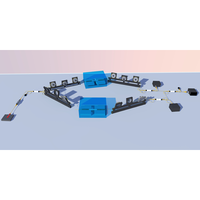
[Phys. Rev. Lett. 115, 083601] Published Thu Aug 20, 2015
Nanoscale generation of individual photons in confined geometries is an exciting research field aiming at exploiting localized electromagnetic fields for light manipulation. One of the outstanding challenges of photonic systems combining emitters with nanostructured media is the selective channelling of photons emitted by embedded sources into specific optical modes and their transport at distant locations in integrated systems. Here, we show that soft-matter nanofibers, electrospun with embedded emitters, combine subwavelength field localization and large broadband near-field coupling with low propagation losses. By momentum spectroscopy, we quantify the modal coupling efficiency identifying the regime of single-mode coupling. These nanofibers do not rely on resonant interactions, making them ideal for room-temperature operation, and offer a scalable platform for future quantum information technology.
DONATE to arXiv: One hundred percent of your contribution will fund improvements and new initiatives to benefit arXiv's global scientific community. Please join the Simons Foundation and our generous member organizations and research labs in supporting arXiv. https://goo.gl/QIgRpr
Author(s): Pree-Cha Kiatkirakajorn and Lucas Goehring
Experiments explain why solidifying colloids sometimes form zigzagging stripes as they dry.
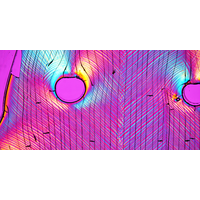
[Phys. Rev. Lett. 115, 088302] Published Tue Aug 18, 2015


Laser based lightning control holds a promising way to solve the problem of the long standing disaster of lightning strikes. But it is a challenging project due to insufficient understanding of the interaction between laser plasma channel and high voltage electric filed. In this work, a direct observation of laser guided corona discharge is reported. The high voltage corona discharge can be guided along laser plasma filament, and enhanced through the interaction with laser filaments. The fluorescence lifetime of laser filament guided corona discharge was measured to be several microseconds, which is 3 orders of magnitude longer than the fluorescence lifetime of laser filaments. This could be advantageous towards laser assisted leader development in the atmosphere.
Author(s): Robert Fischer, Itamar Vidal, Doron Gilboa, Ricardo R. B. Correia, Ana C. Ribeiro-Teixeira, Sandra D. Prado, Jandir Hickman, and Yaron Silberberg
We introduce a simple and flexible method to generate spatially non-Markovian light with tunable coherence properties in one and two dimensions. The unusual behavior of this light is demonstrated experimentally by probing the far field and by recording its diffraction pattern after a double slit: In…
[Phys. Rev. Lett. 115, 073901] Published Fri Aug 14, 2015

The future of science will soon be upon us
Nature 524, 7564 (2015). http://www.nature.com/doifinder/10.1038/524137a
Author: Colin Macilwain
The European Commission has abandoned consideration of 'Science 2.0', finding it too ambitious. That was the wrong call, says Colin Macilwain.


Author(s): Bing Liu, Thijs H. Besseling, Alfons van Blaaderen, and Arnout Imhof
Rod-shaped particles in a liquid arrange into a variety of structures when subjected to confining walls, an effect that might be used to design optical materials.
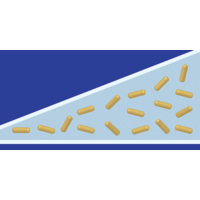
[Phys. Rev. Lett. 115, 078301] Published Tue Aug 11, 2015
Article
Conventional optical imaging systems are limited in resolution by the decay of the evanescent wave carrying fine feature information. Here, Cang et al. propose an adiabatic lens that allows far-field optical systems to project an image of near-field features and achieve sub-50 nm imaging resolution in the visible.
Nature Communications doi: 10.1038/ncomms8942
Authors: Hu Cang, Alessandro Salandrino, Yuan Wang, Xiang Zhang
Article
The confined surface plasmon-polariton modes in plasmonic waveguides are a promising platform for single-photon manipulation in small, coplanar architectures. Here, Bermúdez Ureña et al . demonstrate efficient coupling of a single quantum emitter to the supported modes of a V-groove plasmonic waveguide.
Nature Communications doi: 10.1038/ncomms8883
Authors: Esteban Bermúdez-Ureña, Carlos Gonzalez-Ballestero, Michael Geiselmann, Renaud Marty, Ilya P. Radko, Tobias Holmgaard, Yury Alaverdyan, Esteban Moreno, Francisco J. García-Vidal, Sergey I. Bozhevolnyi, Romain Quidant
Chromatic aberration in optical systems arises from the wavelength dependence of a glass's refractive index. Polychromatic rays incident upon an optical surface are refracted at slightly different angles and in traversing an optical system follow distinct paths creating images displaced according to color. Although arising from dispersion, it manifests as a spatial distortion correctable only with compound lenses with multiple glasses and accumulates in complicated imaging systems. While chromatic aberration is measured with interferometry, simple methods are attractive for their ease of use and low cost. In this letter we retrieve the longitudinal chromatic focal shift of high numerical aperture (NA) microscope objectives from the extinction spectra of metallic nanoparticles within the focal plane. The method is accurate for high NA objectives with apochromatic correction, and enables rapid assessment of the chromatic aberration of any complete microscopy systems, since it is straightforward to implement
In deep tissue photoacoustic imaging, the spatial resolution is inherently limited by acoustic diffraction. Moreover, as the ultrasound attenuation increases with frequency, resolution is often traded-off for penetration depth. Here we report on super-resolution photoacoustic imaging by use of multiple speckle illumination. Specifically, we show that the analysis of second-order fluctuations of the photoacoustic images combined with image deconvolution enables resolving optically absorbing structures beyond the acoustic diffraction limit. A resolution increase of almost a factor 2 is demonstrated experimentally. Our method introduces a new framework that could potentially lead to deep tissue photoacoustic imaging with sub-acoustic resolution.
Author(s): Tobias Haug, Philippe Klemm, Sebastian Bange, and John M. Lupton
Visible light emission from silver and gold nanoparticle films irradiated with ultrashort infrared pulses is governed by hot electron recombination within the conduction band.

[Phys. Rev. Lett. 115, 067403] Published Fri Aug 07, 2015