05 Jan 20:26
by Seng Fatt Liew and Hui Cao
Author(s): Seng Fatt Liew and Hui Cao
Enhancing light transmission through scattering media is of much interest in many fields. Here, numerical simulations are performed to study the impact of gain on the value of reflection of the minimum reflection channel in a random medium. Surprisingly, in some random configurations, the reflection falls when gain is added even through the intensity inside the medium presumably increases once gain is introduced. This unexpected behavior is explained based on a decomposition of quasinormal modes.
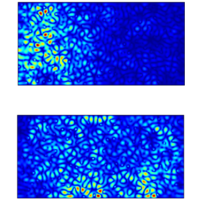
[Phys. Rev. B 92, 224202] Published Tue Dec 29, 2015
05 Jan 20:24
by Chen Sun
Single-chip microprocessor that communicates directly using light
Nature 528, 7583 (2015). doi:10.1038/nature16454
Authors: Chen Sun, Mark T. Wade, Yunsup Lee, Jason S. Orcutt, Luca Alloatti, Michael S. Georgas, Andrew S. Waterman, Jeffrey M. Shainline, Rimas R. Avizienis, Sen Lin, Benjamin R. Moss, Rajesh Kumar, Fabio Pavanello, Amir H. Atabaki, Henry M. Cook, Albert J. Ou, Jonathan C. Leu, Yu-Hsin Chen, Krste Asanović, Rajeev J. Ram, Miloš A. Popović & Vladimir M. Stojanović
Data transport across short electrical wires is limited by both bandwidth and power density, which creates a performance bottleneck for semiconductor microchips in modern computer systems—from mobile phones to large-scale data centres. These limitations can be overcome by using optical communications based on chip-scale electronic–photonic systems enabled by silicon-based nanophotonic devices8. However, combining electronics and photonics on the same chip has proved challenging, owing to microchip manufacturing conflicts between electronics and photonics. Consequently, current electronic–photonic chips are limited to niche manufacturing processes and include only a few optical devices alongside simple circuits. Here we report an electronic–photonic system on a single chip integrating over 70 million transistors and 850 photonic components that work together to provide logic, memory, and interconnect functions. This system is a realization of a microprocessor that uses on-chip photonic devices to directly communicate with other chips using light. To integrate electronics and photonics at the scale of a microprocessor chip, we adopt a ‘zero-change’ approach to the integration of photonics. Instead of developing a custom process to enable the fabrication of photonics, which would complicate or eliminate the possibility of integration with state-of-the-art transistors at large scale and at high yield, we design optical devices using a standard microelectronics foundry process that is used for modern microprocessors. This demonstration could represent the beginning of an era of chip-scale electronic–photonic systems with the potential to transform computing system architectures, enabling more powerful computers, from network infrastructure to data centres and supercomputers.

04 Jan 22:32
by Behzad Khanaliloo, Harishankar Jayakumar, Aaron C. Hryciw, David P. Lake, Hamidreza Kaviani, and Paul E. Barclay
Author(s): Behzad Khanaliloo, Harishankar Jayakumar, Aaron C. Hryciw, David P. Lake, Hamidreza Kaviani, and Paul E. Barclay
Optomechanics, which refers to the interplay of light and nanomechanics, has widespread applications in sensing and quantum optics. Researchers demonstrate that an optomechanical system based on single-crystal diamond nanobeams can undergo large self-oscillations.

[Phys. Rev. X 5, 041051] Published Tue Dec 29, 2015
01 Jan 20:07
by Alexandros Emboras, Jens Niegemann, Ping Ma, Christian Haffner, Andreas Pedersen, Mathieu Luisier, Christian Hafner, Thomas Schimmel and Juerg Leuthold

Nano Letters
DOI: 10.1021/acs.nanolett.5b04537

28 Dec 21:11
by Kyoung-Duck Park, Eric A. Muller, Vasily Kravtsov, Paul M. Sass, Jens Dreyer, Joanna M. Atkin and Markus B. Raschke

Nano Letters
DOI: 10.1021/acs.nanolett.5b04135

25 Dec 20:55
by Michaël Lobet, Michaël Sarrazin, Francesca Cecchet, Nicolas Reckinger, Alexandru Vlad, Jean-François Colomer and Dan Lis

Nano Letters
DOI: 10.1021/acs.nanolett.5b02494

23 Dec 20:17
by Matthew R. Foreman, Alberto Favaro, and Andrea Aiello
Author(s): Matthew R. Foreman, Alberto Favaro, and Andrea Aiello
Complete determination of the polarization state of light requires at least four distinct projective measurements of the associated Stokes vector. Stability of state reconstruction, however, hinges on the condition number κ of the corresponding instrument matrix. Optimization of redundant measuremen…
[Phys. Rev. Lett. 115, 263901] Published Wed Dec 23, 2015
23 Dec 20:15
by By Marcel Rey, Roey Elnathan, Ran Ditcovski, Karen Geisel, Michele Zanini, Miguel-Angel Fernandez-Rodriguez, Vikrant V. Naik, Andreas Frutiger, Walter Richtering, Tal Ellenbogen, Nicolas. H. Voelcker and Lucio Isa

Nano Letters
DOI: 10.1021/acs.nanolett.5b03414

23 Dec 14:13
by Susanne C. Kehr, Raymond G. P. McQuaid, Lisa Ortmann, Thomas Kämpfe, Frederik Kuschewski, Denny Lang, Jonathan Döring, J. Marty Gregg and Lukas M. Eng

ACS Photonics
DOI: 10.1021/acsphotonics.5b00365
23 Dec 14:12
by Sarah Kostinski and Ariel Amir
Random walks, and
in particular, their first passage times, are ubiquitous in nature. Using direct
enumeration of paths, we find the first-return-time distribution of a one-dimensional
random walker, which is a heavy-tailed distribution with infinite mean. Using the same
method, we find the last-return-time distribution, which follows the arcsine law. Both
results have a broad range of applications in physics and other disciplines. The derivation presented
here is readily accessible to physicsundergraduates and
provides an elementary introduction into random walks and their intriguing properties.
22 Dec 10:31
An analysis of London’s street network shows how the network has evolved over time from a heterogeneous to homogeneous fractal pattern.

[Physics] Published Thu Dec 17, 2015
21 Dec 22:34
by Maxim A. Yurkin and Marcus Huntemann

The Journal of Physical Chemistry C
DOI: 10.1021/acs.jpcc.5b09271

18 Dec 14:42
by Dmitry Yu. Fedyanin, Dmitry I. Yakubovsky, Roman V. Kirtaev and Valentyn S. Volkov

Nano Letters
DOI: 10.1021/acs.nanolett.5b03942

18 Dec 14:39
by Felix Benz, Bart de Nijs, Christos Tserkezis, Rohit Chikkaraddy, Daniel O. Sigle, Laurynas Pukenas, Stephen D. Evans, Javier Aizpurua, Jeremy J. Baumberg
We develop an analytic circuit model for coupled plasmonic dimers separated
by small gaps that provides a complete account of the optical resonance
wavelength. Using a suitable equivalent circuit, it shows how partially
conducting links can be treated and provides quantitative agreement with both
experiment and full electromagnetic simulations. The model highlights how in
the conducting regime, the kinetic inductance of the linkers set the spectral
blue-shifts of the coupled plasmon.
Donate to arXiv
18 Dec 14:39
by Jie Ma
Article
Plasmons can enhance hot-carrier generation for efficient photochemical reactions, but the interplay between plasmons and single-particle excitations are difficult to capture in models. Here, the authors use real-time time-dependent density functional theory to study these interactions in silver nanocrystals.
Nature Communications doi: 10.1038/ncomms10107
Authors: Jie Ma, Zhi Wang, Lin-Wang Wang

18 Dec 14:37
by Mehedi Hasan, Ivan Iorsh, Pavel Belov
We present a quantum theoretical treatment of light-matter coupling in the
system consisting of a quantum dot and a spherical core-shell metal-dielectric
multilayer nanoparticle. It is shown that both weak and strong coupling regimes
can be realized in the set-up. Specifically, we demonstrate a strong coupling
regime between a quantum dot and a nanoparticle, when the quantum dot resonance
is tuned to the frequency at which normal component of effective nanoparticle
permittivity is crossing zero. Moreover, we demonstrate the regime at which the
quantum dot decays much faster than in vacuum (due to the large Purcell factor)
and at the same time radiates more power to the far field. This findings pave
the way towards more efficient control over radiation properties of quantum
emitters.
Donate to arXiv
17 Dec 12:58
by Tanya Das, Prasad P. Iyer, Ryan A. DeCrescent, and Jon A. Schuller
Author(s): Tanya Das, Prasad P. Iyer, Ryan A. DeCrescent, and Jon A. Schuller
The ability to control multipolar light-matter interactions in metamaterials and other photonic systems has traditionally relied on engineering the physical properties of the resonators. In this paper, the authors follow the reverse approach. By tailoring the optical beam that illuminates a spherical nanoparticle, they demonstrate selective and enhanced coupling to the optical modes excited on the nanoparticle.
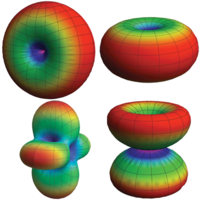
[Phys. Rev. B 92, 241110(R)] Published Mon Dec 14, 2015
16 Dec 21:09
by Scott A. Skirlo, Ling Lu, Yuichi Igarashi, Qinghui Yan, John Joannopoulos, and Marin Soljačić
Author(s): Scott A. Skirlo, Ling Lu, Yuichi Igarashi, Qinghui Yan, John Joannopoulos, and Marin Soljačić
A two-dimensional photonic crystal has multiple topologically protected channels, which can be used to transmit and reroute light without scattering losses.
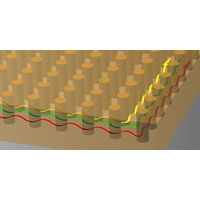
[Phys. Rev. Lett. 115, 253901] Published Mon Dec 14, 2015
16 Dec 21:08
by Marissa Giustina, Marijn A. M. Versteegh, Sören Wengerowsky, Johannes Handsteiner, Armin Hochrainer, Kevin Phelan, Fabian Steinlechner, Johannes Kofler, Jan-Åke Larsson, Carlos Abellán, Waldimar Amaya, Valerio Pruneri, Morgan W. Mitchell, Jörn Beyer, Thomas Gerrits, Adriana E. Lita, Lynden K. Shalm, Sae Woo Nam, Thomas Scheidl, Rupert Ursin, Bernhard Wittmann, and Anton Zeilinger
Author(s): Marissa Giustina, Marijn A. M. Versteegh, Sören Wengerowsky, Johannes Handsteiner, Armin Hochrainer, Kevin Phelan, Fabian Steinlechner, Johannes Kofler, Jan-Åke Larsson, Carlos Abellán, Waldimar Amaya, Valerio Pruneri, Morgan W. Mitchell, Jörn Beyer, Thomas Gerrits, Adriana E. Lita, Lynden K. Shalm, Sae Woo Nam, Thomas Scheidl, Rupert Ursin, Bernhard Wittmann, and Anton Zeilinger
By closing two loopholes at once, three experimental tests of Bell’s inequalities remove the last doubts that we should renounce local realism. They also open the door to new quantum information technologies.
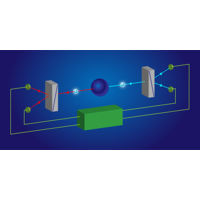
[Phys. Rev. Lett. 115, 250401] Published Wed Dec 16, 2015
16 Dec 21:08
by Carlos Abellán, Waldimar Amaya, Daniel Mitrani, Valerio Pruneri, and Morgan W. Mitchell
Author(s): Carlos Abellán, Waldimar Amaya, Daniel Mitrani, Valerio Pruneri, and Morgan W. Mitchell
A fast random number generator based on laser dynamics helps test the foundations of quantum physics.
[Phys. Rev. Lett. 115, 250403] Published Wed Dec 16, 2015
15 Dec 11:16
by R. Verre, M. Svedendahl, N. Odebo Länk, Z. J. Yang, G. Zengin, T. J. Antosiewicz and M. Käll

Nano Letters
DOI: 10.1021/acs.nanolett.5b03026

15 Dec 11:15
by Hossein Shokri Kojori, Ju-Hyung Yun, Younghun Paik, Joondong Kim, Wayne A. Anderson and Sung Jin Kim

Nano Letters
DOI: 10.1021/acs.nanolett.5b03625

15 Dec 10:47
by Kyuyoung Bae
Article
Efficient steam generation under solar irradiation is of interest for energy harvesting applications. Here, Bae et al. develop a plasmonic nanofocusing film consisting of metal coated alumina nanowires to efficiently generate solar vapour with an efficiency up to 57% at 20 kWm −2 .
Nature Communications doi: 10.1038/ncomms10103
Authors: Kyuyoung Bae, Gumin Kang, Suehyun K. Cho, Wounjhang Park, Kyoungsik Kim, Willie J. Padilla

13 Dec 13:31
by Felix E. Kemmerich, Marko Swoboda, Dominik J. Kauert, M. Svea Grieb, Steffen Hahn, Friedrich W. Schwarz, Ralf Seidel and Michael Schlierf

Nano Letters
DOI: 10.1021/acs.nanolett.5b03956

10 Dec 09:37
by sebastien.popoff@telecom-paristech.fr (Sébastien Popoff)
[tutorial] How to control a lquid crystal SLM with Python

Most liquid crystal Spatial Light Modulators (SLMs) and some digital micromirror devices (DMDs) are controlled via an analog (VGA) or digital (HDMI/DVI) monitor standard communication protocol. In other words, you plug it to your computer and it is recognized as a monitor display. There is usually no useful tool or API provided with the device to dynamically control the SLM. I previously introduced a way to control an SLM using Matlab/Octave, now that I switched to Python, I present here a way to do this using Python.
10 Dec 09:37
by Thang B. Hoang, Gleb M. Akselrod and Maiken H. Mikkelsen

Nano Letters
DOI: 10.1021/acs.nanolett.5b03724

08 Dec 19:54
by Limei Tian, Jingyi Luan, Keng-Ku Liu, Qisheng Jiang, Sirimuvva Tadepalli, Maneesh K. Gupta, Rajesh R. Naik and Srikanth Singamaneni

Nano Letters
DOI: 10.1021/acs.nanolett.5b04320

06 Dec 20:29
by admin@smbc-comics.com
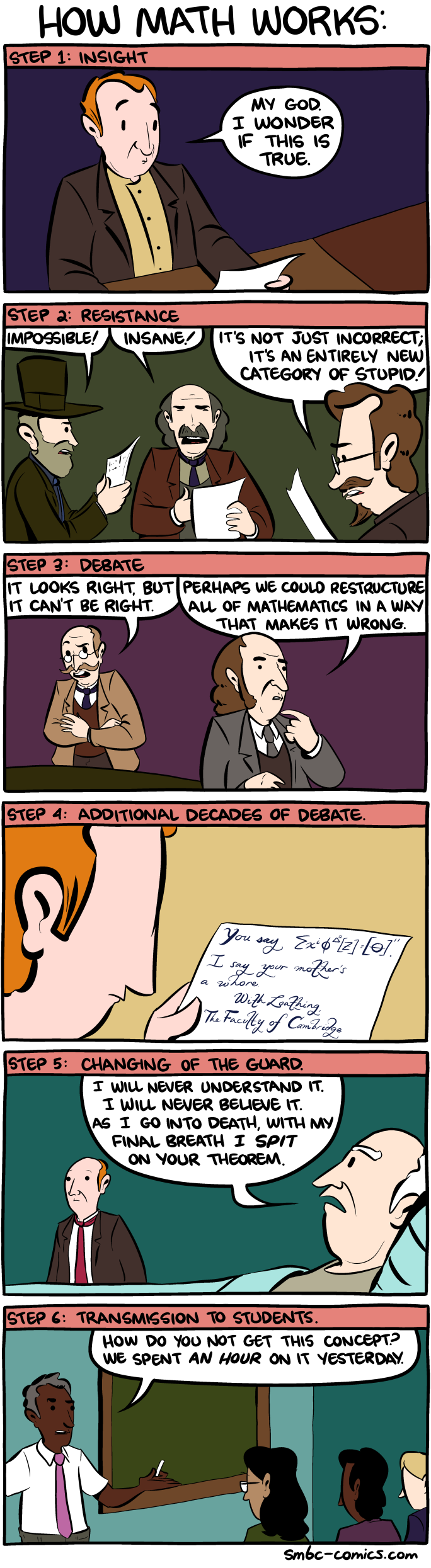
Hovertext: DID MY ANALOGY ABOUT BEES MEAN NOTHING TO YOU?!
New comic!Today's News:
04 Dec 20:22
by Clément Sayrin, Christian Junge, Rudolf Mitsch, Bernhard Albrecht, Danny O’Shea, Philipp Schneeweiss, Jürgen Volz, and Arno Rauschenbeutel
Author(s): Clément Sayrin, Christian Junge, Rudolf Mitsch, Bernhard Albrecht, Danny O’Shea, Philipp Schneeweiss, Jürgen Volz, and Arno Rauschenbeutel
A proof-of-principle experiment allows single photons to travel in only one direction through an optical fiber.

[Phys. Rev. X 5, 041036] Published Fri Dec 04, 2015
04 Dec 12:13
by Shannon Palus
Two journals published by Elsevier are retracting a pair of material science papers that appear to share figures. The papers — in Materials Letters and Optics Communications — discuss photonic crystals, a kind of material used to manipulate light. They share the same first author, Zheng-qi Liu at Jiangxi Normal University and Nanjing University in China, as well as […]
The post Duplication shatters two photonic crystal papers appeared first on Retraction Watch.

