Nature Materials 15, 1177 (2016). doi:10.1038/nmat4736
Authors: Simon Gelin, Hajime Tanaka & Anaël Lemaître
Nature Materials 15, 1177 (2016). doi:10.1038/nmat4736
Authors: Simon Gelin, Hajime Tanaka & Anaël Lemaître
Author(s): Cosmo Lupo and Stefano Pirandola
Quantum imaging can distinguish between two point-like light sources that are classically indistinguishable, according to theoretical analysis. This may lead to coherent imaging techniques as alternatives to classical microscopy techniques.
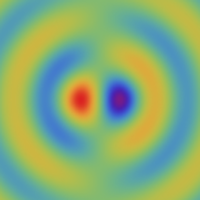
[Phys. Rev. Lett. 117, 190802] Published Fri Nov 04, 2016
Author(s): Stéphane Clemmen, Alessandro Farsi, Sven Ramelow, and Alexander L. Gaeta
Single particles of light can be prepared in a quantum superposition of two different colors, an achievement that could prove useful for quantum information processing.
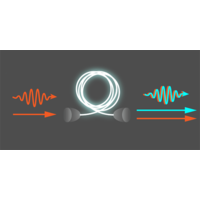
[Phys. Rev. Lett. 117, 223601] Published Wed Nov 23, 2016


The emission rate of a point dipole can be strongly increased in presence of a well-designed optical antenna. Yet, optical antenna design is largely based on radio-frequency rules, ignoring e.g.~ohmic losses and non-negligible field penetration in metals at optical frequencies. Here we combine reciprocity and Poynting's theorem to derive a set of optical-frequency antenna design rules for benchmarking and optimizing the performance of optical antennas driven by single quantum emitters. Based on these findings a novel plasmonic cavity antenna design is presented exhibiting a considerably improved performance compared to a reference two-wire antenna. Our work will be useful for the design of high-performance optical antennas and nanoresonators for diverse applications ranging from quantum optics to antenna-enhanced single-emitter spectroscopy and sensing.
Author(s): Xi-Lin Wang, Luo-Kan Chen, W. Li, H.-L. Huang, C. Liu, C. Chen, Y.-H. Luo, Z.-E. Su, D. Wu, Z.-D. Li, H. Lu, Y. Hu, X. Jiang, C.-Z. Peng, L. Li, N.-L. Liu, Yu-Ao Chen, Chao-Yang Lu, and Jian-Wei Pan
An entangled polarization state of ten photons sets a new record for multiphoton entanglement.
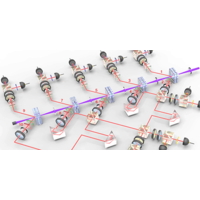
[Phys. Rev. Lett. 117, 210502] Published Tue Nov 15, 2016

Nature Photonics. doi:10.1038/nphoton.2016.217
Authors: Kevin D. Heylman, Niket Thakkar, Erik H. Horak, Steven C. Quillin, Charles Cherqui, Kassandra A. Knapper, David J. Masiello & Randall H. Goldsmith

Author(s): Benjamin Yadin, Jiajun Ma, Davide Girolami, Mile Gu, and Vlatko Vedral
Coherence is a fundamental feature of quantum theory and promises to underpin many future quantum technologies. By studying processes where it is not a necessary resource, researchers sharpen the theory of coherence finding links with interferometry and quantum correlations.

[Phys. Rev. X 6, 041028] Published Mon Nov 07, 2016

Nikon has just announced a new stand, the Ti2. Some noteworthy features, including a 25mm camera port with an F-mount (with a new tube lens and larger filter cubes; it looks like the Plan Apo λ objectives are flat across this field), an LED brightfield illuminator with a fly-eye lens for uniform illumination, a motorized correction collar, an internal camera for back focal plane imaging, and encoding of all microscope components.

Author(s): Sangyeon Cho, Matjaž Humar, Nicola Martino, and Seok Hyun Yun
Embedding nanoscale lasers in a biological cell could lead to optical images with resolution smaller than the laser light’s wavelength.
[Phys. Rev. Lett. 117, 193902] Published Fri Nov 04, 2016
Author(s): Francesco Monticone, Constantinos A. Valagiannopoulos, and Andrea Alù
Lenses are critical to a variety of fields of science, but optical aberrations such as astigmatism are common problems. A “perfect” lens made of two metasurfaces is theoretically developed.

[Phys. Rev. X 6, 041018] Published Tue Oct 25, 2016

Colloidal Quantum dots (CQDs) are nowadays one of the cornerstones of modern photonics as they have led to the emergence of new optoelectronic and biomedical technologies. However, the full characterization of these quantum emitters is currently restricted to the visible wavelengths and it remains a key challenge to optically probe single CQDs operating in the infrared spectral domain which is targeted by a growing number of applications. Here, we report the first experimental detection and imaging at room temperature of single infrared CQDs operating at telecommunication wavelengths. Imaging was done with a doubly resonant bowtie nano-aperture antenna (BNA) written at the end of a fiber nanoprobe, whose resonances spectrally fit the CQD absorption and emission wavelengths. Direct near-field characterization of PbS CQDs reveal individual nanocrystals with a spatial resolution of 75 nm (lambda/20) together with their intrinsic 2D dipolar free-space emission properties and exciton dynamics (blinking phenomenon). Because the doubly resonant BNA is strongly transmissive at both the CQD absorption and emission wavelengths, we are able to perform all-fiber nano-imaging with a standard 20 % efficiency InGaAs avalanche photodiode (APD). Detection efficiency is predicted to be 3000 fold larger than with a conventional circular aperture tip of the same transmission area. Double resonance BNA fiber probes thus offer the possibility of exploring extreme light-matter interaction in low band gap CQDs with current plug-and-play detection techniques, opening up new avenues in the fields of infrared light emitting devices, photodetectors, telecommunications, bio-imaging and quantum information technology.
Early-career researchers need fewer burdens and more support
Nature 538, 7626 (2016). doi:10.1038/538427a
Academia is more difficult than ever for young scientists. That’s bad for them, and bad for science
Quantum dynamics of simultaneously measured non-commuting observables
Nature 538, 7626 (2016). doi:10.1038/nature19762
Authors: Shay Hacohen-Gourgy, Leigh S. Martin, Emmanuel Flurin, Vinay V. Ramasesh, K. Birgitta Whaley & Irfan Siddiqi
In quantum mechanics, measurements cause wavefunction collapse that yields precise outcomes, whereas for non-commuting observables such as position and momentum Heisenberg’s uncertainty principle limits the intrinsic precision of a state. Although theoretical work has demonstrated that it should be possible to perform simultaneous non-commuting measurements and has revealed the limits on measurement outcomes, only recently has the dynamics of the quantum state been discussed. To realize this unexplored regime, we simultaneously apply two continuous quantum non-demolition probes of non-commuting observables to a superconducting qubit. We implement multiple readout channels by coupling the qubit to multiple modes of a cavity. To control the measurement observables, we implement a ‘single quadrature’ measurement by driving the qubit and applying cavity sidebands with a relative phase that sets the observable. Here, we use this approach to show that the uncertainty principle governs the dynamics of the wavefunction by enforcing a lower bound on the measurement-induced disturbance. Consequently, as we transition from measuring identical to measuring non-commuting observables, the dynamics make a smooth transition from standard wavefunction collapse to localized persistent diffusion and then to isotropic persistent diffusion. Although the evolution of the state differs markedly from that of a conventional measurement, information about both non-commuting observables is extracted by keeping track of the time ordering of the measurement record, enabling quantum state tomography without alternating measurements. Our work creates novel capabilities for quantum control, including rapid state purification, adaptive measurement, measurement-based state steering and continuous quantum error correction. As physical systems often interact continuously with their environment via non-commuting degrees of freedom, our work offers a way to study how notions of contemporary quantum foundations arise in such settings.

Author(s): D. Pierangeli, F. Di Mei, G. Di Domenico, A. J. Agranat, C. Conti, and E. DelRe
We report the direct observation of the onset of turbulence in propagating one-dimensional optical waves. The transition occurs as the disordered hosting material passes from being linear to one with extreme nonlinearity. As the response grows, increased wave interaction causes a modulational unstab…
[Phys. Rev. Lett. 117, 183902] Published Fri Oct 28, 2016


Artificial intelligence: Deep neural reasoning
Nature 538, 7626 (2016). doi:10.1038/nature19477
Authors: Herbert Jaeger
The human brain can solve highly abstract reasoning problems using a neural network that is entirely physical. The underlying mechanisms are only partially understood, but an artificial network provides valuable insight. See Article p.471