Xingchen Ji, Felippe A. S. Barbosa, Samantha P. Roberts, Avik Dutt, Jaime Cardenas, Yoshitomo Okawachi, Alex Bryant, Alexander L. Gaeta, Michal Lipson
On-chip optical resonators have the promise of revolutionizing numerous fields, including metrology and sensing; however, their optical losses have always lagged behind those of their larger discrete resonator counterparts based on crystalline materials and silica microtoroids. Silicon nitride ... [Optica 4, 619-624 (2017)]
Riccardo Sapienza
Shared posts
08 Jun 08:07
Ultra-low-loss on-chip resonators with sub-milliwatt parametric oscillation threshold
by Xingchen Ji
06 Jun 08:35
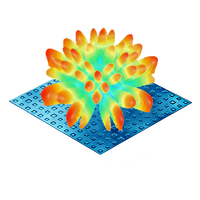
Ultrathin Acoustic Metasurface-Based Schroeder Diffuser
by Yifan Zhu, Xudong Fan, Bin Liang, Jianchun Cheng, and Yun Jing
Author(s): Yifan Zhu, Xudong Fan, Bin Liang, Jianchun Cheng, and Yun Jing
Sound diffusers are widely used to improve acoustics in a space, but the size of traditional diffusers limits their usefulness at low- to mid-range frequencies. New experiments show that a prototype diffuser based on acoustic metasurfaces performs on par with conventional designs despite being roughly 1 order of magnitude thinner.
[Phys. Rev. X 7, 021034] Published Mon Jun 05, 2017
Ouuing likes this
06 Jun 08:34
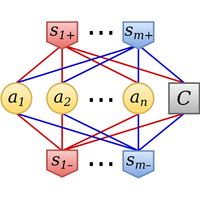
Quasinormal-Mode Expansion of the Scattering Matrix
by Filippo Alpeggiani, Nikhil Parappurath, Ewold Verhagen, and L. Kuipers
Author(s): Filippo Alpeggiani, Nikhil Parappurath, Ewold Verhagen, and L. Kuipers
Scattering matrices are a key mathematical tool used by physicists to understand how the output and input of many types of systems relate to one another. A new analysis shows how a scattering matrix can be determined solely based on quasinormal modes, providing an effective and powerful tool for gaining insight into complex physical systems.
[Phys. Rev. X 7, 021035] Published Mon Jun 05, 2017
Jacopo.bertolotti, Meichen_Yu likes this
05 Jun 09:20
High-Q photonic crystal cavities in all-semiconductor photonic-crystal heterostructures. (arXiv:1706.00420v1 [physics.app-ph])
by Zoe Bushell, Marian Florescu, Stephen Sweeney
Photonic crystal cavities enable the realization of high Q-factor and low mode-volume resonators, with typical architectures consisting of a thin suspended periodically-patterned layer to maximize confinement of light by strong index guiding. We investigate a heterostructure-based approach comprising a high refractive index core and lower refractive index cladding layers. Whilst confinement typically decreases with decreasing index contrast between the core and cladding layers, we show that, counter-intuitively, due to the confinement provided by the photonic band structure in the cladding layers, it becomes possible to achieve Q-factors $>10^4$ with only a small refractive index contrast. This opens up new opportunities for implementing high Q-factor cavities in conventional semiconductor heterostructures, with direct applications to the design of electrically-pumped nano-cavity lasers using conventional fabrication approaches.
04 Jun 19:22
Optical parametric oscillation in a random polycrystalline medium
by Qitian Ru
Qitian Ru, Nathaniel Lee, Xuan Chen, Kai Zhong, Georgiy Tsoy, Mike Mirov, Sergey Vasilyev, Sergey B. Mirov, Konstantin L. Vodopyanov
We demonstrate an optical parametric oscillator (OPO) based on random phase matching in polycrystalline ZnSe. The OPO was pumped by Cr:ZnS laser pulses (2.35 μm, 62 fs, 79 MHz), had a pump threshold of 90 mW, and produced an ultrabroadband spectrum spanning ... [Optica 4, 617-618 (2017)]
We demonstrate an optical parametric oscillator (OPO) based on random phase matching in polycrystalline ZnSe. The OPO was pumped by Cr:ZnS laser pulses (2.35 μm, 62 fs, 79 MHz), had a pump threshold of 90 mW, and produced an ultrabroadband spectrum spanning ... [Optica 4, 617-618 (2017)]
yishifeiyun likes this
02 Jun 15:51

Self-Similar Nanocavity Design with Ultrasmall Mode Volume for Single-Photon Nonlinearities
by Hyeongrak Choi, Mikkel Heuck, and Dirk Englund
Author(s): Hyeongrak Choi, Mikkel Heuck, and Dirk Englund
A carefully shaped air gap in a silicon block would concentrate laser light enough to produce photons that interact with one another, even using a weak laser beam, according to theory.
[Phys. Rev. Lett. 118, 223605] Published Tue May 30, 2017
02 Jun 15:50

Quantum Nonlinear Optics with a Germanium-Vacancy Color Center in a Nanoscale Diamond Waveguide
by M. K. Bhaskar, D. D. Sukachev, A. Sipahigil, R. E. Evans, M. J. Burek, C. T. Nguyen, L. J. Rogers, P. Siyushev, M. H. Metsch, H. Park, F. Jelezko, M. Lončar, and M. D. Lukin
Author(s): M. K. Bhaskar, D. D. Sukachev, A. Sipahigil, R. E. Evans, M. J. Burek, C. T. Nguyen, L. J. Rogers, P. Siyushev, M. H. Metsch, H. Park, F. Jelezko, M. Lončar, and M. D. Lukin
A diamond color center with a germanium defect has superior optical coherence properties over other color centers, with implications for application.

[Phys. Rev. Lett. 118, 223603] Published Wed May 31, 2017
Sonny Rhim likes this
31 May 20:23

Spectral correlations in a random distributed feedback fibre laser
by com.springer.oscar.shared.search.Author@5b7da691[name=Srikanth Sugavanam,email=some(s.sugavanam1@aston.ac.uk)]
Spectral correlations in a random distributed feedback fibre laser
Nature Communications, Published online: 18 May 2017; doi:10.1038/ncomms15514
The feedback mechanism in random fibre lasers has been insofar deemed incoherent. To reveal the dynamic evolution of the random fibre laser spectra, Sugavanam et al. use a real-time spectral measurement technique and observe long-lived narrowband components in the random fibre laser’s spectrum.
27 May 20:45
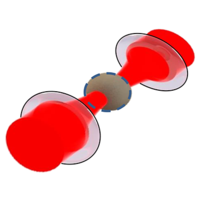
Colloquium: Strongly interacting photons in one-dimensional continuum
by Dibyendu Roy, C. M. Wilson, and Ofer Firstenberg
Author(s): Dibyendu Roy, C. M. Wilson, and Ofer Firstenberg
Photons, the particles of light, are in most conditions very weakly interacting. Nevertheless, it is possible to make them interact by altering environmental conditions, for instance, in the interior of certain materials or by squeezing them in confined geometries. In this Colloquium the topic of photons interacting strongly when confined to a one-dimensional geometry is discussed from experimental and theoretical perspectives.
[Rev. Mod. Phys. 89, 021001] Published Wed May 10, 2017
27 May 20:44


Intracellular and Extracellular Recording of Spontaneous Action Potentials in Mammalian Neurons and Cardiac Cells with 3D Plasmonic Nanoelectrodes
by Michele Dipalo, Hayder Amin, Laura Lovato, Fabio Moia, Valeria Caprettini, Gabriele C. Messina, Francesco Tantussi, Luca Berdondini and Francesco De Angelis

Nano Letters
DOI: 10.1021/acs.nanolett.7b01523
23 May 08:36
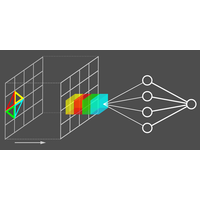
Quantum Loop Topography for Machine Learning
by Yi Zhang and Eun-Ah Kim
Author(s): Yi Zhang and Eun-Ah Kim
A new machine-learning algorithm based on a neural network can tell a topological phase of matter from a conventional one.
[Phys. Rev. Lett. 118, 216401] Published Mon May 22, 2017
Meichen_Yu likes this
23 May 08:34

Nonlinear Optical Magnetism Revealed by Second-Harmonic Generation in Nanoantennas
by Sergey S. Kruk, Rocio Camacho-Morales, Lei Xu, Mohsen Rahmani, Daria A. Smirnova, Lei Wang, Hark Hoe Tan, Chennupati Jagadish, Dragomir N. Neshev and Yuri S. Kivshar

Nano Letters
DOI: 10.1021/acs.nanolett.7b01488
23 May 08:34
Enhancement Mechanisms of the Second Harmonic Generation from Double Resonant Aluminum Nanostructures
by Kuang-Yu Yang, Jérémy Butet, Chen Yan, Gabriel D. Bernasconi and Olivier J. F. Martin

ACS Photonics
DOI: 10.1021/acsphotonics.7b00288
21 May 10:35
Spectrally multiplexed single-photon detection with hybrid superconducting nanophotonic circuits
by Oliver Kahl
Oliver Kahl, Simone Ferrari, Vadim Kovalyuk, Andreas Vetter, Georgia Lewes-Malandrakis, Christoph Nebel, Alexander Korneev, Gregory Goltsman, Wolfram Pernice
The detection of individual photons by superconducting nanowire single-photon detectors is an inherently binary mechanism, revealing either their absence or presence while concealing their spectral information. For multicolor imaging techniques, such as single-photon spectroscopy, fluorescence ... [Optica 4, 557-562 (2017)]
The detection of individual photons by superconducting nanowire single-photon detectors is an inherently binary mechanism, revealing either their absence or presence while concealing their spectral information. For multicolor imaging techniques, such as single-photon spectroscopy, fluorescence ... [Optica 4, 557-562 (2017)]
19 May 09:31
Collective strong coupling of cold atoms to an all-fiber ring cavity
by S. K. Ruddell
S. K. Ruddell, K. E. Webb, I. Herrera, A. S. Parkins, M. D. Hoogerland
Large-scale quantum networks could allow a wide variety of applications in quantum computing and simulation. Here we demonstrate the operation of a single node for use in such a network. We employ a ring geometry all-fiber cavity system for cavity quantum electrodynamics with an ensemble of cold ... [Optica 4, 576-579 (2017)]
Large-scale quantum networks could allow a wide variety of applications in quantum computing and simulation. Here we demonstrate the operation of a single node for use in such a network. We employ a ring geometry all-fiber cavity system for cavity quantum electrodynamics with an ensemble of cold ... [Optica 4, 576-579 (2017)]
18 May 09:22
Scaling Theory of the Anderson Transition in Random Graphs: Ergodicity and Universality
by Garcia-Mata, I.; Giraud, O.; Georgeot, B.; et al.
Title: Scaling Theory of the Anderson Transition in Random Graphs: Ergodicity and Universality
Author(s): Garcia-Mata, I.; Giraud, O.; Georgeot, B.; et al.
Source: PHYSICAL REVIEW LETTERS, 118 (16): APR 17 2017
Document Type: Article
Author(s): Garcia-Mata, I.; Giraud, O.; Georgeot, B.; et al.
Source: PHYSICAL REVIEW LETTERS, 118 (16): APR 17 2017
Document Type: Article
18 May 08:35
Photonic hypercrystals for control of light-matter interactions [Engineering]
by Tal Galfsky, Jie Gu, Evgenii E. Narimanov, Vinod M. Menon
Photonic crystals (PCs) have emerged as one of the most widely used platforms for controlling light–matter interaction in solid-state systems. They rely on Bragg scattering from wavelength-sized periodic modulation in the dielectric environment for manipulating the electromagnetic field. A complementary approach to manipulate light–matter interaction is offered by artificial media...
12 May 07:43
Single Asymmetric Plasmonic Antenna as a Directional Coupler to a Dielectric Waveguide
by Dries Vercruysse, Pieter Neutens, Liesbet Lagae, Niels Verellen and Pol Van Dorpe

ACS Photonics
DOI: 10.1021/acsphotonics.7b00038
Hi likes this
12 May 07:42
Light-Directed Tuning of Plasmon Resonances via Plasmon-Induced Polymerization Using Hot Electrons
by Tao Ding, Jan Mertens, Anna Lombardi, Oren A. Scherman and Jeremy J. Baumberg

ACS Photonics
DOI: 10.1021/acsphotonics.7b00206
11 May 17:52
Waveguide Bandgap in Crystalline Bandgap Slows Down Surface Plasmon Polariton
by Hikaru Saito, Naoki Yamamoto and Takumi Sannomiya

ACS Photonics
DOI: 10.1021/acsphotonics.6b00943
Hi likes this
10 May 13:51


Moire lenses
by L.
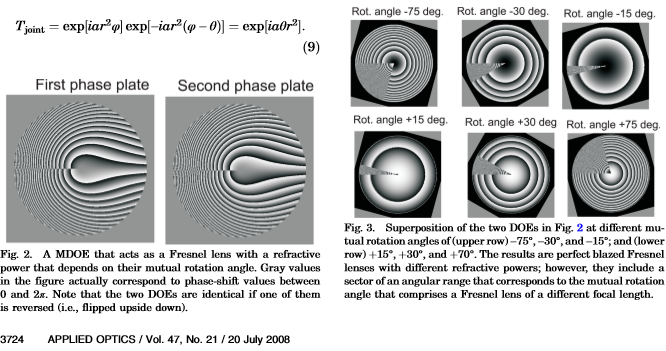
Moiré lenses are cool: two patterned diffractive optical elements are rotated relative to each other to vary the power of the “lens”. Just watch the video (below).
Demonstration of focus-tunable diffractive Moiré-lenses
Stefan Bernet, Walter Harm, and Monika Ritsch-Marte
Vol. 21, Issue 6, pp. 6955-6966 (2013) •https://doi.org/10.1364/OE.21.006955
And their 2008 theoretical work.
Jacopo.bertolotti likes this
09 May 21:44

Wireless Communication with Nanoplasmonic Data Carriers: Macroscale Propagation of Nanophotonic Plasmon Polaritons Probed by Near-Field Nanoimaging
by Moshik Cohen, Yossi Abulafia, Dmitry Lev, Aaron Lewis, Reuven Shavit and Zeev Zalevsky

Nano Letters
DOI: 10.1021/acs.nanolett.7b00266
09 May 09:19

Ultrabright Linearly Polarized Photon Generation from a Nitrogen Vacancy Center in a Nanocube Dimer Antenna
by Sebastian K. H. Andersen, Shailesh Kumar and Sergey I. Bozhevolnyi

Nano Letters
DOI: 10.1021/acs.nanolett.7b01436
09 May 08:50

Resonant Light Guiding Along a Chain of Silicon Nanoparticles
by Reuben M. Bakker, Ye Feng Yu, Ramón Paniagua-Domínguez, Boris Luk’yanchuk and Arseniy I. Kuznetsov

Nano Letters
DOI: 10.1021/acs.nanolett.7b00381
06 May 17:23
Holography of Wi-fi Radiation
by Philipp M. Holl and Friedemann Reinhard
Author(s): Philipp M. Holl and Friedemann Reinhard
The Wi-Fi signals that provide internet access can also produce images of the transmitter’s 3D surroundings, even through walls.
[Phys. Rev. Lett. 118, 183901] Published Fri May 05, 2017
05 May 19:52
Orbital angular momentum 25 years on
by Miles J. Padgett
Miles J. Padgett
Twenty-five years ago Allen, Beijersbergen, Spreeuw, and Woerdman published their seminal paper establishing that light beams with helical phase-fronts carried an orbital angular momentum. Previously orbital angular momentum had been associated only with high-order atomic/molecular transitions and ... [Opt. Express 25, 11265-11274 (2017)]
Twenty-five years ago Allen, Beijersbergen, Spreeuw, and Woerdman published their seminal paper establishing that light beams with helical phase-fronts carried an orbital angular momentum. Previously orbital angular momentum had been associated only with high-order atomic/molecular transitions and ... [Opt. Express 25, 11265-11274 (2017)]
05 May 13:37
Near-field coherence reveals defect densities in atomic monolayers
by Roxana Rezvani Naraghi
Roxana Rezvani Naraghi, Luiz Gustavo Cançado, Félix Salazar-Bloise, Aristide Dogariu
The ability to control the light-matter interaction in the deep subwavelength regime has fascinating consequences for material sciences and a range of photonics technologies. The statistical properties of emerging fields strongly depend on both the source of radiation and specific characteristics ... [Optica 4, 527-531 (2017)]
The ability to control the light-matter interaction in the deep subwavelength regime has fascinating consequences for material sciences and a range of photonics technologies. The statistical properties of emerging fields strongly depend on both the source of radiation and specific characteristics ... [Optica 4, 527-531 (2017)]
04 May 21:21

Engineering Highly Interconnected Neuronal Networks on Nanowire Scaffolds
by Vini Gautam, Shagufta Naureen, Naeem Shahid, Qian Gao, Yi Wang, David Nisbet, Chennupati Jagadish and Vincent R. Daria

Nano Letters
DOI: 10.1021/acs.nanolett.6b05288
04 May 21:20
Quantum Optics Model of Surface-Enhanced Raman Spectroscopy for Arbitrarily Shaped Plasmonic Resonators
by Mohsen Kamandar Dezfouli and Stephen Hughes

ACS Photonics
DOI: 10.1021/acsphotonics.7b00157