Shared posts

24 Oct 20:35

The Maiden and the Beast, or, How I Crossed the Egyptian Border in a Bikini

by cheimonette

View of the Red Sea from Eilat

I’ve talked about Fortitude before on this blog, but it’s one of those cards that keeps coming up this summer. I wanted to focus on this card specifically, rather than just on its connection to the Devil.

Fortitude: where did it come from?

Fortitude is the eleventh trump card in the tarot, today commonly known as “Strength” (in the A.E. Waite deck, Strength shows a young woman and a tamed lion genuflecting at her feet, and older decks, dating back to the 16th century, usually depict a person either subduing a lion or breaking a stone pillar). In my card, the central characters of “the maiden and the beast” remain, but the maiden is a naked, winged woman, blindfolded as though she fancied herself the statue of blind Justice on the steps of our Supreme Courthouse, and the beast is a headless, charging horse.

Weridly, a headless horse with open, seeing eyes.

Although I created this image in 2004, my understanding of the beast in Fortitude didn’t really crystallize till the summer of 2012, when I was in Israel/Palestine, working as a researcher and urban planner on the pilot project of an NGO think tank based in Tel Aviv. To inexcusably collapse what is a very long and involved story, I consistently had a difficult time with border guards and other IDF staff while I was there. I don’t know precisely why it happened, but my luggage was always given a special search, I was always taken aside for meticulous questioning, and I usually had to provide contacts from work for them to call to confirm that I really worked there. Sometimes there were more profound intrusions into my private affairs and possessions. I obviously wasn’t an ordinary Jewish tourist, and I didn’t have any family to vouch for me there. The fact that I was there to work for several months baffled and alarmed the guards, and I quickly learned that my naïve explanations about working for human rights and social justice only made me suspicious and strange.

About a month before my contract was up, I planned to take a trip down to the Red Sea to do some diving. I hopped on a bus after work, rode with a pile of sullen young people dressed for a European discothèque and a scattering of shrieking tourists and their comatose, sunburned children, and was deposited at the door of a tiny diver’s hostel at 11 pm. The temperature had dropped (it was late July) to about 105 degrees Fahrenheit, and the labored breathing of the four walruslike men sleeping on the bunks in the dorm room mingled with the waves breaking on the beach just outside to create a peaceful white noise. I fell asleep in my bathing suit, which, as daytime temperatures regularly reach 125 degrees in the Negev desert, became my only outfit for the three days I was there.

After two days of good diving, someone at the dive shop suggested I go to their partner dive shop, just over the border in Taba, Egypt. Egypt’s relationship with Israel no longer had any pretense of friendliness at that time, and the Israeli dive instructors and divers couldn’t go, but I could. They told me to grab my passport and dive log and get in a car, as one of the staff was heading that way anyway. It was a small miracle that I decided, at the last minute, to bring my sandals. I had (and I should certainly have known better) thought we would simply drive over the border and I would be left at the Egyptian dive site for the day, but to my astonishment, the young driver cheerfully indicated that I had to get out and walk over the border. “Taba dive shop just over there,” he said. “Walk on left side of road through border patrol and turn left after donut shop.” Of course I was still in my usual round-the-clock outfit: a faded, flimsy, purple bikini.

I was nearly alone, standing in line. Desert insects droned, and the border terminal was quiet. A German family outfitted in tropical print clothing stared humorlessly at me. The immaculately dressed Egyptian border guards continued to gaze straight ahead, impenetrably grave. The resort town of Taba, in the middle of the day, was mercifully somewhat deserted, but occasionally a traditionally dressed couple would stroll by, carefully training their eyes at the pavement, away from me. Both religious Muslims and Jews have a culture of modesty in dress, especially for women, and I was sure that I seemed like an affront, an alien and an outsider without the humility or common decency to respect local traditions as I intruded myself into their home. I had always been careful to dress plainly when I was in traditional communities, with my arms, neck, and legs covered and my hair tied back, and here I was in a string bikini. I was at this point heavily encrusted with the salty residue of evaporated sea water, my bruise-colored bikini was frayed in several places, and I found out later that there was a ribbon of seaweed tangled in my hair. I took some comfort, at least, in the fact that I didn’t look like I was trying to be sexy.

The young guard at the border had the good grace to giggle a little when he asked me if I was carrying any concealed weapons.

After one of the best days of diving I had ever experienced, I had to walk over the border again, this time through the Israeli terminal. My scantily dressed swamp monster appearance did not seem to dampen the usual suspicion I created, and I wound up in the private office of a soldier, perspiring into a leather chair while she regarded me dubiously from behind her desk.  For the first time, I was asked if I was Jewish (I had always offered this information before). I said that I was, and, visibly relaxing, she began explaining why they had to ask me so many questions, excusing herself as though to a troublesome relative at a family reunion. I mumbled something I can’t recall anymore, and dragged off towards a bus shelter, where I waited glumly for the Eilat dive shop to remember to pick me up again. Somehow, the apologies were even worse than the suspicion: I felt even less understood than I had before. It was, in fact, a somewhat risky thing I had done by going to Taba for the day. At that point in my trip, I had gone into the West Bank to stay at the headquarters of a Palestinian resistance movement in a small farming community. I had attended a protest against the acquisition of Palestinian land by local settlers. If the soldier had learned about any of this, I certainly would have been kept much longer for questioning, and I may have had more difficulty leaving the country as well. I doubt I would have had to spend time in jail, but it was not out of the question that I might have been held for 9 or 10 hours for questioning, or even had my electronic devices temporarily confiscated and forcibly inspected on my way out of the country. I was grateful to have gotten through relatively easily, but it was so strange to feel so naked and also so invisible. From where she was sitting, she really couldn’t see me at all.

Fortitude

The headless beast in my card represents things that behave like people. The impetus that drives a person’s life, work, or desires is bigger than interpersonal relationships, and includes abstract concepts and imaginative ideals: a cultural narrative, the dream of a better life, a union with the beliefs of a religious community, a story of a higher calling and heroism, the promises of a powerful corporation, the mythology of a whole nation. These entities (a nation, a corporation, a religion, a cultural norm, a philosophy) sometimes influence us as though they had feelings and thoughts of their own. As though they had desires. As though they understood us, and whispered the truth into our ears.

The State has eyes, but it has no mind. It may wander aimlessly, be guided by those who care for its power, or even race blindly towards its own destruction. The maiden’s leap from the back of the beast is, like all leaps, a leap of faith. Despite being less powerful than the beast of a human institution such as culture, or religion, or country, she has come to trust herself more than she can trust authority. Even if she is leaping to her own death, she has a need to decide for herself. This courage, which is stronger than death, is Fortitude. And when I sat, shamed, nearly naked, confused and misunderstood by the agent of a mindless limb of the State of Israel, in the leather chair of the IDF soldier who thought she recognized me as one of her own, I realized I had not only taken that leap many years ago, but that the leap does not happen just once. It happens again and again and again, as new situations arise, and the beast attempts to fit us onto its back once again.

Is she foolish in her decision to leave the beast, and all its norms and known quantities behind?

The answer seems to be no: she has wings.

This post is part of a series about my deck, the Cheimonette Tarot.

28 Sep 20:18

omg yes


omg yes

27 Sep 00:52

"You live like this, sheltered, in a delicate world, and you believe you are living. Then you read a..."

“You live like this, sheltered, in a delicate world, and you believe you are living. Then you read a book… or you take a trip… and you discover that you are not living, that you are hibernating. The symptoms of hibernating are easily detectable: first, restlessness. The second symptom (when hibernating becomes dangerous and might degenerate into death): absence of pleasure. That is all. It appears like an innocuous illness. Monotony, boredom, death. Millions live like this (or die like this) without knowing it. They work in offices. They drive a car. They picnic with their families. They raise children. And then some shock treatment takes place, a person, a book, a song, and it awakens them and saves them from death. Some never awaken.”

- Anaïs Nin (via kinkycasey)

Holy…fuck. These are literally the exact same thoughts that have been running through my head and that I’ve been writing about or planning to write about…all combined into one neat little quote…insane.
27 Sep 00:51

Photo


26 Sep 16:56

In Which Terrence Malick and Richard Linklater Remind You That You Are an Unambitious Failure

by Erik Henriksen

Wondering what Terrence Malick is up to? Oh, not much, just making a couple of movies. Including Voyage of Time.

Since 2008, 15 shoots have been conducted totaling 175 days and Voyage of Time is currently working with 3,300 minutes of raw footage (55 hours worth, for those counting), as well as several hundred pre-vis visual effects shots. (Via.)

Oh, hey, that reminds me, let's check in on Richard Linklater!

Richard Linklater has been making Boyhood since 2002. The film isn’t delayed or in trouble or anything like that. Boyhood is designed to chronicle the growth of a boy from age six to his last year of high school at 17 or 18. Ellar Salmon plays the boy through the entire film, because Linklater has shot the movie essentially in sequence, creating new scenes each year since ’02 as Salmon grew. (Via.)

Boyhood might be out as soon as 2014, there's no timeline on when to expect Voyage of Time, and all of the little goals you have for your little life are small and sad in comparison.

[ Subscribe to the comments on this story ]

26 Sep 16:35

‘Dracula’ and the Bible

by Fred Clark

NBC television has a new 10-episode miniseries this fall called Dracula. It’s based on the famous vampire from Bram Stoker’s 1897 gothic novel.

I’ve never read Stoker’s novel. I’m not sure I could. I’m not sure any of us could. It’s still in print and readily available — you can download a free ebook version here, or read it online if you like. But those of us sitting here, in 2013, will still have a very hard time reaching back to 1897 to read the book as Stoker intended it to be read or as its first readers read it at the turn of the last century.

Stoker’s language and style may seem a bit archaic, but that’s not the main problem. The main problem is that Stoker introduced symbols and characters and creatures that have, for more than a century, been redefined, reinterpreted and re-presented dozens of times over. If I go back to the original book and encounter those symbols, I can’t help but bring with me all the new meanings that have attached to them over the intervening years.

When Stoker wrote of “Dracula” and “vampires” and “Transylvania” he did not and could not have meant all the things that I cannot help but take those words to mean, to imply, to connote. It would require enormous effort on my part — not just willpower, but extensive research and scholarship — to encounter Stoker’s words and symbols without all that extra and extraneous meaning those words and symbols have since collected and accreted. I’m not sure that project could ever be wholly successful.

The cover of the first edition of the book shown here has just four words on it, but it’s immensely difficult to read even those four words without importing and imposing a vast amount of information they don’t actually contain. The “Dracula” I already know is not the same thing as the “Dracula by Bram Stoker.” My Dracula includes a thousand things Bram Stoker never dreamed of — Bela Lugosi and the Universal movies, Ed Wood and Abbot and Costello, Buffy, Twilight, The Lost Boys, Sesame Street, Count Chocula, Nosferatu, Willem Dafoe, Barnabas Collins, Salem’s Lot, True Blood, Louis and Lestat, and dozens of other things I’ve forgotten reading or watching even though their influence lingers, unacknowledged.

Here are the opening paragraphs of Stoker’s novel:

3 May. Bistritz.—Left Munich at 8:35 P. M., on 1st May, arriving at Vienna early next morning; should have arrived at 6:46, but train was an hour late. Buda-Pesth seems a wonderful place, from the glimpse which I got of it from the train and the little I could walk through the streets. I feared to go very far from the station, as we had arrived late and would start as near the correct time as possible. The impression I had was that we were leaving the West and entering the East; the most western of splendid bridges over the Danube, which is here of noble width and depth, took us among the traditions of Turkish rule.

We left in pretty good time, and came after nightfall to Klausenburgh. Here I stopped for the night at the Hotel Royale. I had for dinner, or rather supper, a chicken done up some way with red pepper, which was very good but thirsty. (Mem., get recipe for Mina.) I asked the waiter, and he said it was called “paprika hendl,” and that, as it was a national dish, I should be able to get it anywhere along the Carpathians. I found my smattering of German very useful here; indeed, I don’t know how I should be able to get on without it.

Having had some time at my disposal when in London, I had visited the British Museum, and made search among the books and maps in the library regarding Transylvania; it had struck me that some foreknowledge of the country could hardly fail to have some importance in dealing with a nobleman of that country. I find that the district he named is in the extreme east of the country, just on the borders of three states, Transylvania, Moldavia and Bukovina, in the midst of the Carpathian mountains; one of the wildest and least known portions of Europe. I was not able to light on any map or work giving the exact locality of the Castle Dracula, as there are no maps of this country as yet to compare with our own Ordnance Survey maps; but I found that Bistritz, the post town named by Count Dracula, is a fairly well-known place. I shall enter here some of my notes, as they may refresh my memory when I talk over my travels with Mina.

In the population of Transylvania there are four distinct nationalities: Saxons in the South, and mixed with them the Wallachs, who are the descendants of the Dacians; Magyars in the West, and Szekelys in the East and North. I am going among the latter, who claim to be descended from Attila and the Huns. This may be so, for when the Magyars conquered the country in the eleventh century they found the Huns settled in it. I read that every known superstition in the world is gathered into the horseshoe of the Carpathians, as if it were the centre of some sort of imaginative whirlpool; if so my stay may be very interesting. (Mem., I must ask the Count all about them.)

That’s written as a journal entry by Jonathan Harker — a character portrayed and revisited so many times that he has his own IMDB page with dozens of entries. It’s not easy to encounter him there in Stoker’s novel without some of those many portrayals reshaping what I read.

When Stoker’s first readers encountered that passage, they couldn’t know what awaited Harker at the end of his journey. We can’t help but know — or can’t help but think we know. This story is familiar to us, but the story we’re familiar with is not identical to the story Stoker is telling. And so, for us today, the story Stoker is telling may be inseparable from the story we’re already familiar with.

Stoker’s original story is, for us today, at the center of some sort of imaginative whirlpool. And so it is, for us, an enormous challenge to encounter that story itself — as itself — without being influenced by all the allusions and accretions swirling around it, on top of it, under it and through it.

All of this presents a challenge for Cole Haddon and Daniel Knauf, the creators of that new Dracula show for NBC. How will they choose to tell this story? What version or versions of the story will they choose to tell?

One approach would be to attempt a faithful adaptation — painstakingly separating the original tale from all the later cultural additions and reinterpretations of it. That’s a tricky business, first of all because it’s hard. “Faithful adaptation” may be an oxymoron. One can be faithful, or one can adapt, but it may not always be possible to do both at once. Francis Ford Coppola’s Bram Stoker’s Dracula took this approach, but as that awkward double attribution suggests, that film didn’t so much give us Stoker’s Dracula as it did Coppola’s Stoker.

Another problem with the “faithful adaptation” approach is that it tends to upset some of Dracula’s fans. Their idea of what’s “canonical” may be only a loosely overlapping Venn diagram with Stoker’s original canon. Cut away all of the extraneous later additions that have attached themselves over time to the original story and you’ll be cutting away many fans’ favorite parts. If Jonathan Rhys Myers is more like Stoker’s Dracula than like Bela Lugosi, that’s bound to disappoint some viewers who wanted to see Lugosi, or to upset others for whom Gary Oldman represents the “authentic” Count. Fans may be frustrated if Oliver Jackson-Cohen’s Jonathan Harker turns out to be nothing like Keanu Reeves. (OK, yes, that last bit is a joke.)

And so a second approach would be to set aside the difficult project of separating the original from the expanded cultural phenomenon. Instead of trying to faithfully adapt Bram Stoker’s Dracula, the creators of the show might choose to tell a story about our Dracula — the character we all know or think we know today, complete with all of the additions and subtractions, elaborations, amendments and emendations. This approach is easier, but no less complicated and no less fraught with the danger of disappointing the fans because it requires a host of choices about which parts of “our” Dracula to keep and which to cast aside.

These two approaches seem almost like opposites. The first says that the story is what the text says, and that our task is thus to cut away and to cut through everything else to try to get back to the pure, unspoiled essence of the original, authoritative text. The second says that the story is ours, not just Stoker’s, and so Stoker is just one of many participants in a community. In the second approach, then, our task becomes sorting through all the many contributions from the many voices in that community to locate at the center that which seems most true to our story.

In practice, though, these two very different approaches are never quite so abstract and separate as they may seem. The unspoiled original and authoritative text will always be determined and interpreted by the community that belongs to it and to which it belongs. It’s words and symbols and characters can never mean anything wholly separate from what they mean to that community. And Stoker’s voice will always have a privileged place in that community of voices, his original words will always be there at the center, no matter how large the imaginative whirlpool swirling around them grows to be.

And but so anyway, I titled this post “‘Dracula’ and the Bible,” and now I’ve gone on and on about the Bible without hardly even mentioning Dracula. Sorry about that.

24 Sep 00:51

No detectable association between frequency of cannabis use and health or healthcare utilization

by Mark Frauenfelder

Researchers from Boston Medical Center (BMC) and Boston University School of Medicine (BUSM) "studied 589 adults who screened positive for drug use at a primary care visit." They found "no differences between daily marijuana users and those using no marijuana in their use of the emergency room, in hospitalizations, medical diagnoses or their health status."


23 Sep 02:41

From FB September 22, 2013 at 09:36PM

tbh sometimes i think this whole “introvert” thing is folks being exhausted by alienation and having their affect commoditized. that is how it feels to me, anyway. imo, i’m much more extroverted when i can be my authentic self but i get to be that person less than 30% of my time probably.

20 Sep 03:04

Narnia: Lord Octesian's Last Will and Testament

by Ana Mardoll
[Content Note: Genocide]

Narnia Recap: In which Eustace is turned back into a boy.

Voyage of the Dawn Treader, Chapter 7: How The Adventure Ended

I haven't counted up how many posts have comprised Chapter 7, but today is the big day when we leave this chapter! Someone grab a bottle of champagne and swing it against your computer monitor in celebration or something! (Note: Do not do this thing, seriously. Computer monitors smashed up with champagne makes Aslan sad.)

When we last left Edmund and Eustace, Eustace was sharing how he was made a boy again by the power of Aslan who he had somehow pretty much never heard of before (minus one or two magical utterances of the name) because no one on this ship exists if C.S. Lewis isn't looking directly at them and the people who do exist don't behave like actual human beings with messy things like superstitions and fallacious beliefs and whatnot because the natural growth of a realistically-inaccurate mythos surrounding Aslan and the Pevensies would screw with Lewis' underlying biblical message.

Which is a shame, because a dash of mythology would liven up Narnia a lot. And I don't mean the stuff with Bacchus running around in Prince Caspian (which is the only example I know of in which Bacchus is boring, and that in itself should be some kind of sin on Lewis' record), but rather I mean the myth-making that would accompany a world in which a god-and-His-chosen-rulers are apt to pop in and back out with a moment's notice.

I mean, we know that the Pevensies are normal children and that Aslan doesn't live in their house with them, but the Narnians have no reason to assume that. These Telmarine sailors -- newly converted to the church of Aslan, aware that huge swaths of information have been lost in the Narnian purges, and desperate for a deity to save them from the frightening sea -- should be pestering Eustace with all sorts of questions, like if he spends all his time in England with Aslan or just most of it. But I can certainly understand why Lewis wouldn't want to suggest that the members of his pseudo-Christian allegory church would accidentally make up incorrect stuff in an attempt to explain the world around them, so on we move.

   And by the way, I’d like to apologize. I’m afraid I’ve been pretty beastly.”
   “That’s all right,” said Edmund. “Between ourselves, you haven’t been as bad as I was on my first trip to Narnia. You were only an ass, but I was a traitor.”

I'm pretty sure that Lewis didn't mean this to be much more than a connecting throw-away line between the series with maybe some brief side-theology about how as Eustace is now, Edmund once was, and as Edmund is now, Eustace may someday be, etc. about how everyone sins and redemption is possible for everyone and changes and growth and whatnot. But the thing is, this line is one of the saddest in the books for me for about a billion different reasons.

It's sad to me first off because of how deeply Edmund has internalized this traitor narrative. Edmund was not a traitor. We've already covered why I feel that way, and I'm not going to go into it again -- my larger point here is that it is entirely possible to hold the position that he wasn't a traitor with a straight face while being intellectually honest with oneself. So the fact that Edmund does hold the position that he was a traitor tells me that he has either chosen to see himself as such, or he has had that framing pressured onto him, possibly by his siblings (remember how keen Lucy was to tell him about Aslan's sacrifice) or by his own subjects (who may have embraced the mythic narrative of Traitor Turned King for their own story-telling or edification or any number of reasons).

In either case, I have to wonder how this narrative has affected Edmund in the long-run; I suspect the answer is that it has affected him badly. Sure, he may think of himself as redeemed, but I know some people for whom the weight of being a traitor, even a redeemed traitor, would be too much to carry for a lifetime. If I were fix-fic'ing, I'd be additionally tempted to speculate that the reason Edmund is so quiet in this (and all previous) books may be in part because he's wrestling with his own issues of guilt and/or depression as opposed to merely being sparsely characterized.

There's also that mention of secrecy: between ourselves, Edmund was a traitor. That makes me recall that these Narnians (and Telmarines) are not those Narnians who enjoyed the golden age of the Pevensies' rule -- these Narnians are either the great-great-great-great-great grandchildren of those Narnians (fan theories about Reepicheep's supposed immortality notwithstanding) or are entirely unrelated, in the case of the pureblood descendents of the Telmarine invaders. This element of secrecy suggests an element of shame, or perhaps relief on the part of Edmund that none of his new comrades know the sordid facts of his history. That makes it all the more sad to me that he thinks of himself as a traitor, because it seems like he doesn't claim that title willingly or proudly (as one conceivably could, with a proud mythos revolving around being an ex-traitor who came over to the side of good).

But this is additionally terribly sad to me because it underlines just how little Edmund has learned from his traumatizing experience and "redemption" at the hands of the White Witch and the Emperor. I know someone will suggest -- and possibly this is true! -- that Edmund stated this line less out of a sense of self-identity and more out of an attempt to cheer up Eustace with commiseration. But even if we are meant to interpret it that way, this piece of empathy with his cousin is so little and so late.

Edmund, by his assessment here and not ours, was way worse than Eustace. Eustace has merely been an annoying sometimes-bully who complains a lot. Edmund was not merely a traitor, he was a traitor whose traitorous actions could have gotten himself, his siblings, and possibly his god permanently (as opposed to temporarily) dead -- along with a lot of innocent Narnians. Edmund also lied to discredit Lucy and was snotty to Peter (itself a cardinal sin, I'm sure) when caught out in his lies. And while I think Edmund was largely innocent because of Turkish Delight, and while Lewis thought Edmund could have been worse because of Liberal Vegetarians, it seems that according to Edmund's world-view, he was objectively worse than Eustace.

...and yet...

He wasn't kinder to Eustace, either in England or in Narnia. He didn't learn from his previous bad behavior that Bad Children aren't necessarily rotten to the core. He didn't try to connect with Eustace, or explain things to him, or at least warn him about Aslan and White Witches and Miraz and object lessons. From the moment Eustace flopped onto the deck, Edmund was chortling about Eustace's seasickness and telling Lucy not to waste her cordial on something as simple as chronic nausea.

Or rather, since it was technically Caspian doing those things, we are left to assume that Edmund either agreed with him or didn't effectively oppose him. There's really no reason why Edmund couldn't have been kinder to Eustace, and there's every reason why his experiences should have led him to be more compassionate, yet every page of this book suggests that Edmund didn't learn a damn thing from his own past which he himself classifies as being much worse, in terms of culpability and sinfulness.

And for that matter, we've no reason left to us for why Caspian wasn't kinder to Eustace, except that apparently we're to accept that Good Manly Christian Men don't put up with wussy vegetarian liberal feminist boys. It seems like Caspian has every reason to sympathize with a small child who has lost his parents and found himself in a frightening situation wherein a magic he never knew existed totally does. And Caspian himself claims to have an inside scoop on the horrors of slavery and the psychological damage of being raised by people who aren't Good Narnians; you'd think at least some of those experiences would lead him to sympathize with the boy on his ship who was raised non-Narnian and is now being forced to work in conditions he didn't choose and doesn't understand. Yet it doesn't, and we're never given a sense that this is Strange or Unexpected or just plain Wrong.

The thing is, I hate harping on this, because it's not entirely unrealistic. Sometimes people who struggle with or survive something do come out the other end with no increase in (or even a decrease of) empathy for people in similar conditions. It didn't hurt me, so you should buck up is unfortunately a think that some people do say. [Content Note at link: Sexual abuse of a child; victim-blaming.] But it's not the ideal. And in an allegorical story like this, where Caspian is the boy-king of perfection and Edmund is the redeemed good Christian, it's jarring to see two people who should know better -- both intellectually as Children of Aslan and emotionally as something they've experienced firsthand -- treating Eustace so badly, so neglectfully, so spitefully, so terribly, with so little reason to do so, and with no revealing moment where it's made clear to them (and us) that their actions were wrong.

It jars me. I am jarred.

   “Well, don’t tell me about it, then,” said Eustace. “But who is Aslan? Do you know him?”

AND THEN THERE IS THIS. WHAT IS THIS.

I'm sure it's just Lewis trying to sweep on with his story because momentum. ("Go read the other books! I don't wanna rehash it!") Maybe, charitably, it's Eustace sensing that Edmund is distinctly uncomfortable with his admission of traitorness and he's offering to move past the moment. But it's difficult not to shake the impression that Deep Sharing is one more thing that Good Manly Christian Men don't do. There's a sort of back-pedaling here, like holy crap, emotions? sharing? abort-abort-abort! 

And that just makes the whole conversation feel even more lonely and terrible. Edmund is troubled with a history of self-identifying as a traitor (or of having that label pushed onto him by the people he most wants approval from) and Eustace has been through the trauma of being transformed into a dragon and then painfully transformed back, and NO ONE CAN TALK ABOUT IT because manliness stereotypes and everyone has to limp quietly back to the ship and not make eye contact and not talk about their feelings and not talk about Aslan and instead go to their designated quiet corners and struggle not to weep because manliness stereotypes. Holy shit, that is some fucked up.

The thought occurs that Lewis may have been "the most reluctant convert in England" because his internalized image of what converts do (nothing except wait around for Aslan to show up!) and how they live (they don't unless the author is looking directly at them!) and how they share and interact (pretty much not at all except in self-flagellating ways that cannot then be cathartically explored or healed!) is painful and stilted and horrible and lonely and awful. To me, anyway, your mileage may vary. 

   “Well—he knows me,” said Edmund. “He is the great Lion, the son of the Emperor-beyond-the-Sea, who saved me and saved Narnia. We’ve all seen him. Lucy sees him most often. And it may be Aslan’s country we are sailing to.”
   Neither said anything for a while. 

Possibly because that was a terrible answer. I feel pretty safe in guessing that no one on earth, were they placed in Edmund's position right here, would answer this way. And I feel equally safe in guessing that no one on earth, were they sitting in Eustace's position, would be satisfied with this answer.

I realize that Lewis is big on the whole INEFFABLE UNKNOWABLE DEITY OF MYSTERIOUS CONFUSINGNESS theme, but this is an author's answer, not a devotee's answer. The "he knows me" construction implies that Edmund doesn't know him, which fits super-well with the ineffable unknowable etc. but doesn't fit well with why-in-the-hell Edmund would follow Aslan slavishly or love him eternally or devote his entire life to baking cupcakes for the weekly Aslan Club Night nor how this is an acceptable answer to Edmund in light of the fact that he has dinner with Aslan and Aslan occasionally takes a dagger in the chest for him. Those are personal things, to which Edmund is giving an impersonal description.

In order to do those things which Edmund demonstrably does and in order to experience the things which Edmund has demonstrably experienced, he has to have internalized and he must choose to maintain some kind of meaning that Aslan means to him, even if that meaning is incomplete (because ineffable etc.). To put it another way, I don't know every single possible aspect of my husband (and Asperger syndrome can be pretty damn ineffable etc. at times) but he still means something more to me than, eh, he knows me and I guess that's enough, right? That's not the answer of a devoted lover, it's the answer of a distant observer.  

Then there's this Royal Title nonsense, where Aslan is "The Great Lion" (which surely means nothing to Eustace in a land of dragons and magic, so it's lucky that he's seen Aslan in a dream or he'd probably be picturing a 20-foot-tall lion right about now) and "the son of a flowery title that means nothing to anyone". Edmund mentions that Aslan saved him, but mentions it completely without passion or emphasis or details or context -- so Eustace has to be wondering if Aslan turned Edmund back from being a dragon, too, and if this is just something all little boys have to go through in this world of magic -- before sweeping on to saying that Aslan saved a land that Eustace has never seen and has no reference for except that it's the place where Caspian, Reepicheep, and the sailors claim to be from. Considering that Eustace has reason to have heard about Miraz and the genocide more than the White Witch (who is from the mists of legends as opposed to relatively recent), he may well now be assuming that Aslan saved Narnia from the Telmarines (which I guess Lewis would maintain but which I think is debatable).

And the thing is, Mystery Religions do exist. But Edmund is behaving like a member of a mystery religion in the context of a world where his god literally shows up in the flesh every so often to share dinner with him. And not in the ineffable "I felt him and he was there" sense, but in the actual, effable "He brought the catering with him" sense. And Aslan didn't save Edmund's life in the sense that he asked Aslan into his heart and now he is saved from eternal darkness; he saved Edmund's life in the sense that Aslan took a dagger in the chest for him. Using the dispassionate language of the former to describe the intimacy of the latter is a strange juxtaposition for me and comes off making Edmund seem strangely detached from this relationship he shares with Aslan.

   The last bright star had vanished and though they could not see the sunrise because of the mountains on their right, they knew it was going on because the sky above them and the bay before them turned the color of roses. Then some bird of the parrot kind screamed in the wood behind them, they heard movements among the trees, and finally a blast on Caspian’s horn. The camp was astir.

We've had zero insight into the camp routine for the last couple of days, so it's unclear whether this is a danger, Edmund and the dragon are missing, form a search party horn or a to arms and genocide the inhabitants like Telmarines do horn or a today's menu is bacon and gravy with a side of grits horn. There's certainly no indication that people are searching for E&E or that they need to approach with caution because folks will be on edge because all we get is this:

   Great was the rejoicing when Edmund and the restored Eustace walked into the breakfast circle round the camp fire. And now of course everyone heard the earlier part of his story. 

Welp. And that would be the earlier part of the story that no one bothered much to find out because it was too much trouble to help Eustace tell it. We can only hope that since he's a good Aslanite now he'll know how to tell a story properly, even if he has read all the wrong books. 

   People wondered whether the other dragon had killed the Lord Octesian several years ago or whether Octesian himself had been the old dragon. The jewels with which Eustace had crammed his pockets in the cave had disappeared along with the clothes he had then been wearing: but no one, least of all Eustace himself, felt any desire to go back to that valley for more treasure.

Pfft. Okay, I get that this is prudent if there's still a concern that there might be a transmogrification spell on the pile, but doesn't anyone spare a thought for Octesian's living relatives or spouse or whatever? Shouldn't they at least try to find out if he really did die on this island or if the bracelet was the only trace of him (which might suggest that it was merely lost or stolen and the rest of Octesian and his treasure / armor / artifacts is still elsewhere and Caspian is still oath-bound to look for him)?

   In a few days now the Dawn Treader, remasted, repainted, and well stored, was ready to sail. Before they embarked Caspian caused to be cut on a smooth cliff facing the bay the words:

DRAGON ISLAND
DISCOVERED BY CASPIAN X, KING OF NARNIA, ETC.
IN THE FOURTH
YEAR OF HIS REIGN.
HERE, AS WE SUPPOSE, THE LORD OCTESIAN
HAD HIS DEATH

Oh. No, I guess we're not going to do all that because it seems like trouble. Spiffing.

    It would be nice, and fairly nearly true, to say that “from that time forth Eustace was a different boy.” To be strictly accurate, he began to be a different boy. He had relapses. There were still many days when he could be very tiresome. But most of those I shall not notice. The cure had begun.

This would have been more amusing if it had been written about Edmund in Lions and Witches: The Enwardrobing because (as you'll recall) Edmund effectively had no lines after his redemption. Eustace fares better here and will still be allowed to talk, and will occasionally speak in-character about sensible things. So that's nice.

But it's also interesting to see the narrator flat-out admit that his "notice" of Eustace has been censorious rather than simple reporting of the facts. I've noted before that an openly biased narrator calls into question the entire premise (that this is supposed to help children recognize Jesus Aslan in their own worlds), so I'll just again reiterate that a book which claims to be biased and selective propaganda is a book which can't complain when I deconstruct it. Nyah!

   The Lord Octesian’s arm ring had a curious fate. Eustace did not want it and offered it to Caspian and Caspian offered it to Lucy. She did not care about having it. “Very well, then, catch as catch can,” said Caspian and flung it up in the air. This was when they were all standing looking at the inscription. Up went the ring, flashing in the sunlight, and caught, and hung, as neatly as a well-thrown quoit, on a little projection on the rock. No one could climb up to get it from below and no one could climb down to get it from above. And there, for all I know, it is hanging still and may hang till that world ends.

"We thought about taking it back home for the Widow Octesian or for Octesian Junior, but no one could remember if they survived the Coronation Day Massacre and then it seemed like it would take up space on the ship and Lucy said her room was pretty full already from the Lone Island looting, so we just tossed it and called it a day."
20 Sep 03:01

Nedroid Fun Times: Since a few people have asked, here are the rules for the game called...

Nedroid Fun Times: Since a few people have asked, here are the rules for the game called...:

nedroidcomics:

Since a few people have asked, here are the rules for the game called “Broken Picture Telephone,” also known as “Eat Poop, You Cat,” also known as “Draw-o Word-o,” also known in the U.K. as “Crumbs and Whistles,” also known as “Call of Duty 5.”

  • You need a relatively big group to play; too few…

MY FAVORITE GAME

20 Sep 02:57

feminist-fury: ghosttownfrown: Your professor will not be happy with you if he says the Stanford...

feminist-fury:

ghosttownfrown:

Your professor will not be happy with you if he says the Stanford Prison Experiment shows human nature and you say it shows the nature of white middle class college-aged boys.

Like he will not be happy at all.

DAYUM. I wish I had said that, hahaha.

20 Sep 02:26

An Early Look at Cinema 21's Expansion

by Erik Henriksen

On October 11, venerable Portland movie theater Cinema 21 will be getting a major expansion. Two new auditoriums, a new lobby, new options, and two new bathrooms will bring the theater—a fixture of Northwest Portland since 1926—into the 21st century. Everything that's great about Cinema 21 will remain—currently, as an independent, single-screen arthouse theater with a balcony, it's one of the best places to see movies in the city. It's just that in a month or so, there'll be significantly more of it.

The changes, according to longtime owner Tom Ranieri, will help Cinema 21 stay competitive in an increasingly difficult market, in part by significantly improving the theater's variety and flexibility. Yesterday afternoon I met up with the talkative, likeable Ranieri—who's been Cinema 21's owner since 1987—to get a look at how the ambitious renovations are progressing.

From what I saw, the new and improved Cinema 21 is going to be pretty great. What's now a single screen theater that can play 35mm and digital prints and seat 500 people will soon boast two additional screens. And while they'll be touching up the theater's current concession stand and doing some more-than-welcome renovations on the space's less-than-ideal bathrooms, the real changes are happening across the hall.

Ticket sales will continue to take place at Cinema 21's current box office, but soon—where you currently turn right to enter the auditorium—you'll be able to go left, heading down a wide set of stairs that open up into an entirely new, and considerably more welcoming, lobby. With exposed wooden beams and an new concession area, the new space will offer a place to hang out, drink beer and wine, and eat pizza. (Said pizza, in what's probably the best news I'll hear all week, will come from Escape from New York.)

Splitting off from that secondary lobby will be two big, new bathrooms, as well as the two new auditoriums. Both with offer gradually rising seating, digital projection, and screens about 11 feet high by 17 feet wide. The larger of the two (pictured above) will seat around 80; the smaller will seat 49.

In order to expand, Ranieri—along with his business partner Chuck Nakvasil, who's been part of Portland's independent movie exhibition business since the '60s—had to break through to an entirely seperate building. Originally built in 1927, the building next door to Cinema 21's current space was most recently a realty office, but has also been home to places like the Earth Tavern, where Ranieri remembers seeing the Ramones. (Sounds like it was a pretty good show). The upper floors of this second building—which stands at the corner of NW 21st and Irving—are currently used for parking, which means Ranieri's dealing with a slew of engineering and soundproofing challenges, helped out by an acoustic engineer and a whole lot of patience.

"It's not in my nature, but I've learned how to surf," Ranieri says of having to adjust his plans on the fly, butting up against city codes and the challenges that come from having a business that now straddles two buildings—and two landlords. When the new part of Cinema 21 opens up, it'll have been in the works for about three and a half years.

Here's an interesting addendum about This Modern Age We Find Ourselves In: Out of sight from customers, Cinema 21's two new auditoriums are joined by a shared area for the projectors. It's basically just a crawlspace, barely big enough to install, mainstain, and house the two projectors. Since the new projectors are digital, they can be programmed and operated from Cinema 21's main projector booth, but since there's no longer a need for projectionists in said booths, this space is far smaller than most theaters' booths. Welcome to the future! (And so long, weird cool upstairs parts of theaters.)

"What it allows us to do is have flexibility," Ranieri says of the changes. Now films that do well at Cinema 21 can keep playing there for longer instead of getting pushed out by newer releases—and it'll also let Ranieri branch out a bit in terms of the films can be booked at the theater. "It's a moving target, guessing what people will want to see in a communal space," Ranieri says—but with two more theaters, Cinema 21 will have better odds. Don't expect Trans4mers there next summer, but Cinema 21 will now have the chance—and the sway with distributors—to experiment with crossover pictures that smudge the lines between arthouse and commercial. Cinema 21 will continue hosting festivals and events, too, such as certain screenings of the NW Film Center's Portland International Film Festival, not to mention good ol' Hump.

The first movie I ever saw at Cinema 21—sitting in the front row of the balcony—was 2002's Spellbound; ever since, it's been one of my favorite places to see movies in Portland. The idea of it getting bigger—with more movies, longer run dates, the chance to be more competitive with other downtown and west side theaters, and Escape from New York pizza, right there, readily available to cram into my mouth—sounds pretty great. I'll be stoked to see how it all turns out next month.

[ Subscribe to the comments on this story ]

19 Sep 04:56

Star Wars opening crawl in HTML and CSS

by Rob Beschizza
Tim Pietrusky nailed it. Select the text!


19 Sep 02:57

INTP Confession #363

Being INTP and transitioning was my most difficult challenge.  Doing something that required me to find myself based solely on feeling and having that clash with my sense of reason then over-analyzing myself made my life a nightmare for a while. :p

19 Sep 02:25

fightoffyourdarling: ewok-gia: Meet Sir Stuffington, an one...


fightoffyourdarling:

ewok-gia:

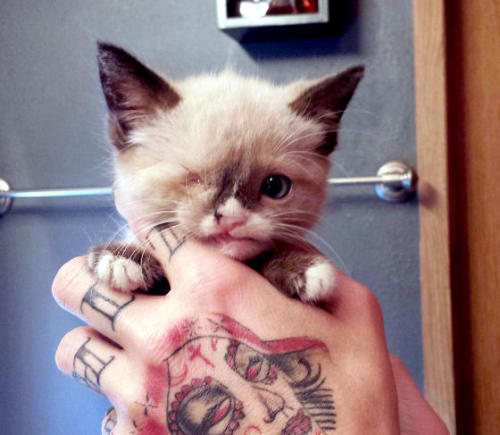
Meet Sir Stuffington, an one eyed kitty who survived a raccoon attack and was saved by a kind person along with his 2 brothers. “His feral litter was attacked by a raccoon, mom and one baby didn’t make it,” said his foster mom.

When he was turned into Multnomah County Animal Services, they discovered that he had calicivirus, a severe flea infestation, a heart murmur, a missing eye and a possible jaw fracture that has since healed. He was left with a smile resembling a pirate – a cute pirate that he is.

HIS EYE PATCH!! AHHHHHHHHH MY HEART IS BURSTING

(wrenching crying under some blankets)

18 Sep 18:57

How to Blog About Code and Give Zero [bleep]s

» How to Blog About Code and Give Zero [bleep]s

"I need you to blog more. Little future developers who look or act or dress or think like you need you to blog more. Your slightly confused and defensive developer community needs you to blog more."

16 Sep 05:48

Kickstarting a lesbian sex-ed graphic novel

by Cory Doctorow

Allison Moon sez, "I'm Kickstarting my new book, a collaborative comic novella about queer lady sex. Think of it as 'en and the Art of Vulva Maintenance.'"

$25 gets you a paperback.

Author Allison Moon (Tales of the Pack series about lesbian werewolves) collaborates with illustrator kd diamond (Salacious Magazine) to create a sex ed book specifically for lesbians, queer & bisexual women, and those curious about the ins and outs of girl-on-girl sex. Now through October 19, they're Kickstarting the book to pay all the artists and experts involved in the creation of the book.

Girl Sex 101 features 'scenic viewpoints' by over 15 top sex experts including Sex Nerd Sandra (Nerdist.com), Tristan Taormino (On Our Backs, The Village Voice), Jiz Lee (CrashPad.com), Reid Mihalko (ReidAboutSex.com), Julia Serano (Whipping Girl: A Transsexual Woman on Sexism and the Scapegoating of Femininity), Ignacio Rivera, Kelly Shibari, Sophia St. James, Megan Andelloux, and more.

Based on Moon's live sex-ed workshop of the same name, Girl Sex 101 shares practical, women-focused and pleasure-oriented sex education for people of all orientations and experience levels. Girl Sex 101 also utilizes social media to include readers in the book-building. Using Twitter (@GirlSex101) and Tumblr (girlsex101.tumblr.com), Girl Sex 101 is asking LGBTQ women to share their own opinions on girl sex, like how they identify, how they met their partner(s), and some of their favorite moves to use in bed.

Girl Sex 101- Sex ed with a story. Comics with a lez edge.


16 Sep 05:48

i still can’t tell if LifeHackable.com is a parody site or...


i still can’t tell if LifeHackable.com is a parody site or what

15 Sep 16:13

What if surfing was your job?

by Seth Godin

Same waves, different day.

The risk of skin cancer. The falling. Sand in your socks. The people hassling you for your spot on the wave. The pressure to do more sets. The other guys at the beach who don't appreciate your style. The drudgery of doing it again tomorrow, when the weather sucks. And then every day, from now on, never ceasing.

Where would you go on vacation?

Your drudgery is another person's delight. It's only a job if you treat it that way. The privilege to do our work, to be in control of the promises we make and the things we build, is something worth cherishing.

       
15 Sep 16:07

The Hiding Places Of Insane Ideas

by Andrew Sullivan

Pivoting off of the fundamentalist speculation about Syria’s potential role in the apocalypse, Amanda Marcotte details the influence of crazy Christian beliefs and how they spread:

The rule of thumb with bizarre Christian right beliefs, such as the belief that Syria’s conflict is a sign of the end times, is that by the time it percolates up to a Google search or a website like the Blaze, it’s been flying around in lower-profile venues such as Internet forums, Facebook posts, books sold in Christian bookstores, in-person meetings in churches, sermons and presentations, and email forwards for a long time now. The fact that these points of view are concealed from prying liberal eyes doesn’t mean that they don’t have a huge impact on right-wing communities—and that includes Republican politicians.

The Bush administration in particular provided some strong examples of how Christian right folk beliefs and conspiracy theories can percolate up to the highest levels of government without ever putting those ideas out in the general public. The Bush administration appointed Eric Keroack to the deputy assistant secretary of population affairs within the Department of Health and Human Services despite, and probably because of, Keroack’s strong anti-choice beliefs. Keroack became famous for his presentation, prior to appointment, of his belief that women’s brains get flooded with oxytocin when they have premarital sex, which makes them less capable of falling in love. Prior to Keroack’s appointment, this bizarre theory, which has no scientific basis and is pure Christian right babble, wasn’t something you could find through Google, much less the mainstream media. But it not only was a guiding belief of Keroack’s, it has been a mainstay of the kind of abstinence-only programs that Bush administration policy mandated in so many schools across the country. It was a classic example of how a right-wing myth can become widely influential through PowerPoint presentations and pamphlets without ever touching the Internet, where prying eyes might see it.


15 Sep 02:31

Phrenology of Barack Obama's head reveals mind control connection to Nazi Occult, MKULTRA, Satan

by Xeni Jardin

"The Phrenology of Barack Obama," a self-published book by Bensa Magos, is basically the best thing ever. Here's the publisher's blurb, and by that, I mean a blurb written by Bensa Magos about Bensa Magos:

In his newest book, The Phrenology of Barack Obama, author Bensa Magos returns to reveal the secrets behind the occulted past of President Barack Obama using the pseudo-science of phrenology. Magos uncovers natural, unnatural, and preternatural features of "Manchurian Candidate" Obama's cranium and brainpan, including the mysterious "head scar" which the mass media refuses to discuss. Causes for the head scar range from CIA brain-implants to a partial lobotomy by his puppet master handlers, as well as the most shocking revelation: that Obama once had a horn. Magos follows a trail of evidence that leads from Obama's brain surgery and dehorning, to government Mind Control programs like MKULTRA and MONARCH with roots in the Nazi Occult, and ultimately to the satanic endgame revealed by the Demon Horn of Moloch.

Given the NSA and IRS scandals, this book is a must read!

eBay link.

[HT: @Jamelle Bouie] ‏


14 Sep 16:51

Want to shrink government? Let D.C. grow.

by Lydia DePillis

Washington D.C. is nearing the end of its examination of whether to relax the city's strict height limit, but it's no closer to actually doing so than when it started. In fact, even after concluding that allowing taller buildings would be an economic benefit, it's probably further away.

Why? Because rigid adherence to a one-dimensional understanding of the city's purpose had doomed it from the start.

The latest evidence comes from the National Capital Planning Commission, whose job it is to evaluate the impact of any particular project on the "federal interest." The inter-jurisdictional body defines that interest in three basic ways: Security, symbolism, and space needed to house the government.

If those are your top priorities, of course, boosting the height limit becomes completely unnecessary. Tall buildings are just harder to lock down in a crisis. The federal government's long personnel expansion is over. And an office building poking its penthouse above the obedient skyline insults the dignity of our iconic monuments, violating the imagery of commerce being subject to law.

"The horizontality of the city allows these landmarks to stand out and emphasizes their importance and symbolism," reads the staff's draft report. "Changes to the Height Act could impact the scale of nationally significant landmarks, their setting, and alter or reduce their symbolic meaning." It also goes on to explain how tall buildings would do violence to the city's century-old McMillan Plan, which it has pledged to forever defend. Oh, and don't tall buildings get in the way of radio signals and stuff?

In response, one might argue that a conception of whether Pennsylvania and Massachusetts Avenues are or aren't flattered by tall buildings is a subjective aesthetic judgment; New York City's Broadway and 5th Avenue feel no less grand for their soaring borders, and Central Park seems even more powerful for its skyscraping perimeter.

One might even play NCPC's own game and say that right now, all the height limit symbolizes is rules that make the rich richer by artificially constraining supply, forcing the poor and middle class to the fringes -- not to mention enforcing a myopic government monoculture that's oblivious to reality in the rest of America (Bejing's Forbidden City and imperial Versailles come to mind).

But you don't even have to make those arguments. Fine, let's keep our uncluttered vistas of the White House and the Capitol in the footprint of the McMillan Plan itself. There are plenty of places to build higher without marring that pristine patrimony: Next to Union Station, down by the waterfront and the Ballpark, at the city's universities, etc.

The Commission, however, insists that protected viewsheds extend to the edges of the city's "topographic bowl": Neighborhoods far outside downtown where a few other federal landmarks reside. In their estimation, all of that must also fit into a flat envelope, as if it had no purpose other than to serve as a backdrop for the projection of government power.

Of course, it's perhaps too much to expect anything more progressive from a body that is set up to care about the preservation of federal grandeur and little else. It's disappointing, though, to see the same kind of thinking from people who also care about the character and vitality of urban space.

This weekend, the Washington Post magazine has a package on that very subject, featuring some neat interactive visualizations of what the city might look like if buildings reached 130 feet, 160 feet, 200 feet. Perhaps because of the constraints of the medium, they represent a maximalist abstraction: Giant beige boxes placed on top of graceful buildings. Even the most ardent urbanophile would be horrified.

But lifting height limits wouldn't immediately result in that kind of dystopian future. Any change to the law would doubtless require that the massing of the buildings be stepped back from the street, and subject to rigorous design standards in exchange for the additional height. Also, buildings would pop up over a long time, and end up at different heights, giving the city the kind of "sawtooth roofline" that historic preservationists love so much.

An overplayed fear of urban "canyons" is only one part of the opposition to D.C.'s height limit-free future. The other is a belief that the city's local government is still a cesspool of corruption that can't be trusted not to hand out development rights to the highest bidder.

“I simply don’t have confidence in the history of municipal government,” argues the eminent urbanist Witold Rybczynski, to The Post's Phil Kennicott. “It is very much swayed by money, by power, by various interest groups.”

Unlike, I don't know, Congress?

It's terribly unfortunate that the handful of recent scandals in Washington D.C.'s local government have tarnished confidence in its ability to govern. But overall, it's not the 1980s anymore. Starting with the mayorship of Anthony Williams in the early 2000s, the city has become increasingly professionalized; as new residents demand better services, cavities of waste and incompetence are being unearthed and burned away. As longtime planning director Harriet Tregoning points out, the process for granting taller building permits would likely be so closely watched that fraud would be nearly impossible to pull off.

Besides, even if developers do get a small opening and start asking for more, what is the terrifying bottom of Rybczynski and Kennicott's slippery slope? More places for people to work and do business? A more dense and sustainable pattern of growth near transit? More interesting forms of architecture than the ice cubes that are a blight on the built environment today?

All of those futures sound more desirable than what we've got right now, not less.

Most cities, when confronted with the kind of population influx that D.C.'s now experiencing -- a good problem to have! -- are able to tweak regulations such that the market can respond to accommodate it, while preserving historic resources. And D.C.'s able to do some of that, through relaxing its own zoning code to allow for things like less parking and accessory dwelling units in residential backyards.

But the most efficient markets allow for development to go where it makes the most economic sense. High office rents downtown justify more construction downtown, in proximity to transit, shopping, and all the personal interaction that greases this city's gears. The idea that development will just spread around to underserved areas if denied the most desirable ones is unrealistic. But a powerful core is more likely to generate knock-on benefits that could seep out to the rest of the city. A strong and diverse economy requires that buildings be allowed to concentrate where demand justifies the cost.

This is the option that Washington is unable to create for its citizens, because of a federal government that jealously guards the primacy of its own edifices, and the enduring misperception of D.C. as a feeble protectorate that can't be trusted to plan for its future.

D.C. could be more than just a gilded government town, if only it were granted the freedom that every other city in America enjoys.


14 Sep 04:22

Photo


14 Sep 03:37

The myth of the ugly blobfish

by Maggie Koerth-Baker

Here we have the common Internet blobfish, recently voted World's Ugliest Animal.

But wait! At Smithsonian, Colin Schultz has made a very good case for why the blobfish doesn't deserve its unattractive reputation. This isn't about beauty being subjective (although some might find the above picture more cute than ugly). Instead, it's about atmospheric pressure, and what happens to a fish removed from its natural, deep-sea, high-pressure habitat.

Here is what the blobfish really looks like, before somebody took him to the surface and snapped an embarrassing photo:


14 Sep 03:36

Re: INTP Confession 350

I think a lot of INTPs do understand that the world doesn’t operate on logic alone.    I think they get frustrated trying to understand or express concepts that are “ethereal” or not quantifiable so they tend to lean toward things that are more concrete and can be replicated as an attempt to not only understand concepts, but to explain them.    I believe INTP’s are well aware (almost too aware) of their shortcomings and almost humbled by what they don’t know. Which is why they are always searching.  There are no answers in the INTP mind,  just more questions. 

As for confident geniuses- thats more of an INTJ thing.  

14 Sep 03:33

forlackofabettercomic: Do you have any idea how hard it is to...


forlackofabettercomic:

Do you have any idea how hard it is to draw comics with skeleton hands?

14 Sep 03:31

Noted brogrammer douchebag Pax Dickinson gets 15 more minutes of internet fame

by Xeni Jardin
"Women in tech are great. There's just not that many of them because tech is just a kind of thing that a lot of women aren’t that interested in." Pax "Jesus got raped by a pack of n**gers" Dickinson speaks to NY Mag about his regrets, all zero of them.


14 Sep 03:19

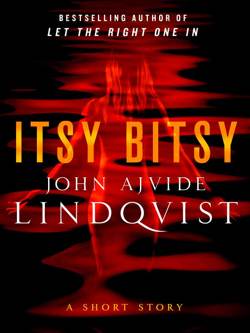
Itsy Bitsy - free horror ebook by John Ajvide Lindqvist

by Mark Frauenfelder

Itsy Bitsy is a free 78-page Kindle story by John Ajvide Lindqvist, Swedish horror writer of Let the Right One In. I have not read it yet, but from the description below it sounds like a paparazzo gets punished, so I am looking forward to reading it. A young celebrity lives on my street and the paparazzi tear up and down it like maniacs. One day they are going to kill a pedestrian.

Destined to become a modern classic, the short story Itsy Bitsy is guaranteed to make you think twice before you take a picture of someone in a bikini. In this creepy shocker, horror author superstar John Ajvide Lindqvist gives new meaning to punishing the paparazzi.
Itsy Bitsy


12 Sep 00:28

What if a typical family spent like the federal government? It’d be a very weird family.

by Brad Plumer

The Heritage Foundation wants us to consider an analogy:


The idea here seems to be that the U.S. government is taking on a lot of debt. True, the typical American family also takes on a lot of debt through mortgages and the like, but U.S. government borrowing is even more massive than that.

Fair enough. This analogy seems incomplete, though. We should take it further. If the typical family — let’s call them the Smiths — really did spend like the federal government, a few other things would also be true:

-- The Smiths would spend 20 percent of their income, or $10,440 each year, on an arsenal of guns, tanks and drones to defend their house against threats or invade the occasional neighbor over lawn-pesticide disputes and access to the gas station.

-- The Smiths would spend another third of their income financing retirement and health care for Grandma and Grandpa. Part of that would have been prepaid by money that Grandma and Grandpa socked away while they were working, but some of it would be paid for by the parents and kids who are chipping in.

-- Actually, come to think of it, the Smiths spend nearly half their money — 43 percent — operating a massive insurance conglomerate whose main beneficiaries are family members.

-- Over the past few years, the Smiths have been able to borrow a vast amount of cash at negative interest rates. That is, banks have essentially been paying the familyto hold their money. That’s partly because everyone assumes the Smiths are more or less immortal and will always be good for it. Plus they have all those tanks.

-- The Smiths, by the way, own their own printing press. For whatever reason, it’s totally legal for them to print more money, although they have to be selective about this.

-- Of the $312,000 that the Smith parents have borrowed so far, about 47 percent of that is owed to outsiders, including the Chens down the street. But much of the rest they borrow from their kids with a promise to repay.

-- The parents could also tap into the kids’ extra income from their lucrative million-dollar lemonade stand business if they wanted to whittle down the debt, although this would come up for a family vote and the kids aren’t keen on this.

Anyway, it’s a good analogy. The U.S. federal government really does resemble your typical money-printing family that owns lots of tanks, operates a giant insurance conglomerate, can borrow money at extremely low rates, and is assumed to be immortal.


12 Sep 00:20

Steam Adding Option To Share And Borrow Games

by Nathan Grayson

Here’s something I never expected to say: Steam has stolen a feature from the Xbox One, and it’s really, really cool. Back before Microsoft cut the cord on that X-est of bones’ online requirement, it touted a family sharing program as one of the (few) perks that constant connectedness would bring. But then there was much wailing and gnashing of teeth about, well, everything else, so Microsoft packed up its whizzbang new toy and went home. The only real winners in that whole scenario? Us! Soon, we’ll be able to share our entire Steam libraries with up to ten people of our choosing.

(more…)