A new phishing attack hops from one Gmail account to the next by searching through compromised users' previous emails for messages with attachments, then replies them from the compromised account, replacing the link to the attachment with a lookalike that sends you to a fake Google login page (they use some trickery to hide the fake in the location bar); the attackers stand by and if you enter your login/pass, they immediately seize control of your account and attack your friends.
(more…)
There’s a liberty to creating, or witnessing subversive material knowing that it won’t be monitored, that the information is contained only within the pages of the zine. The trustworthiness of a physical object in our current age is strangely compelling. Links shared via Facebook or messenger apps can be intercepted, logged, or dispersed otherwise into the ether. Especially for teenagers, zines counter the anxiety and subsequent frantic deletion of browser history so that your family can’t see it. Hide it under your bed instead, or in a zipped inner sanctum within your school bag.
French company Parrot has had a rough year and missed its sales expectations. That’s why the company will lay off 290 employees who were working on drones. In total, Parrot currently has 840 employees on the drone team and more than a thousand employees in total.
While the company isn’t just selling drones, it represents a good chunk of the business. But it looks like other companies, such as DJI, are doing better in this market. Parrot expected to report $105.9 million in sales for 2016. It reported $90 million instead (€85 million vs. €100 million expected).
Even though the company is still selling quite a few drones, Parrot says that it doesn’t generate healthy margins. So here’s the new plan: focusing on commercial drones.
Well, this explains my holiday shopping difficulties with Parrot. Ollie asked for a drone for Christmas and after doing some research, I decided on the Parrot Swing. Amazon was out of stock, so I decided to buy directly from Parrot. They had stock and the site said they’d ship in plenty of time for Xmas. So I ordered one. The next day, I get a call from Parrot saying I need to “verify my order”. So, I call them back, give them some info about my order and where it’s being shipped and the very nice woman on the phone tells me that I’m all set and they’re shipping it out.
Two days go by, no shipping confirmation email in sight. I get another voicemail: you need to call us to verify your order. I call back, give them the same info and tell them, oh by the way I’ve already done this once. Profuse apologies were offered, that was a mistake, and the very nice woman on the phone tells me she’s going to tell the shipping people to send out my order “right away”. It will still arrive in time for Xmas. The next day I get an email from Parrot:
Hello! We have refunded your order No. XXXXX-XXXXX placed 12/15/2016. We are sorry that your order did not meet your expectations and hope that you will visit us again.
Obviously, I am done with them at this point but still need that drone. Amazon is still out of stock, but Walmart has them. I order one, it arrives two days later (with free shipping), and on Christmas morning, after some reflection, Ollie says it was the best present Santa has ever gotten him.
I did quite a bit of holiday shopping this year…went a bit nuts making up for some not-so-great efforts the past two years. The kids and I shopped for Toys for Tots (twice), I bought gifts for them from me and from Santa, I bought non-holiday stuff like clothes for myself,1 and I shopped virtually for the gift guide. I shopped every which way: small, locally, at big box stores, and online at 4-5 different retailers. My main takeaway from that experience? Amazon is miles and miles and miles ahead of everyone else. It is not even close.
Sure, Walmart had the drone in stock, but when I’d tried shopping with them earlier in the month, the product page threw a 404 error. I switched to Safari and was able to put the item into my cart, but then a form in the ordering flow wouldn’t work, so I had to get that item elsewhere. (When I did finally create an account while ordering the drone, Walmart thought my name was “Ashley”?!)
Target’s site was so slow that it was nearly unusable (like 30-40 seconds for a product page to start loading). But I persevered because they had an item I really wanted that no one else had in stock. I got an email two days before Xmas saying they were out of stock and couldn’t ship until Jan 4 at the earliest, but that if I still wanted the item, I would have to log in to my account to verify the new shipping date. I didn’t want the item later, so I did nothing. Guess what arrived on my doorstep last week?
My troubles with Parrot I shared above. The local toy stores are expensive (Lego sets are $5-10 more than if you buy online) and ran out of popular items 2-3 weeks before Xmas. Very few online stores outside Amazon, Walmart, etc. had clear holiday shipping policies, so relying on them more than a week or two out was risky. Zappos was great (Amazon owns them) and Patagonia was pretty good, although their shipping estimates aren’t that great and returns aren’t free.
And Amazon? The site is always fast, I have never seen a 404’d product page, the URLs for their products haven’t changed in almost 20 years,1 each product page was clearly marked with holiday shipping information, they showed the number of items in stock if they were running low, shipping was free (b/c I’m a Prime member), returns are often free, and the items arrived on time as promised. More than 20 years after the invention of online retailing, how is it that Amazon seems to be the only one that’s figured all this out? How come massive companies like Walmart and Target, whose very businesses are under immense pressure from Amazon, can’t get this stuff right despite having spent hundreds of millions on it? I’m not a financial analyst, but unless something changes drastically, Amazon is just going to continue to eat more and more of the US retail pie and at this point, with all these advantages they’ve accrued and their razor-sharp focus on low pricing, it’s difficult to see how anyone is going to compete.1
After freezing my ass off wearing improper clothing the last few years (because, to be clear, I am an idiot), I made myself a promise this year that I was not going to be cold this winter. So in November and December, I spent a bunch of energy outfitting myself with the proper gear: sweaters, thermal layers, coats, mittens, boots, etc. I am both warm and happy now.↩
I linked to the Office Space DVD on kottke.org in 1999 and the link still works. What’s the percentage of URLs from 1999 that still work? 5%? 2%? 0.1%?↩
Just for fun, let’s take a quick stab. Stripe and Shopify are arguably better than Amazon in some ways and when the one-click patent expires this year, those payment flows will get even easier. And anyone can use them to sell anything. So the problem becomes stocking and shipping. Who’s going to build/provide the third-party fulfillment infrastructure so that shipping and returns are cheap and reliable…like Amazon’s fulfillment warehouses but for anyone to use? UPS? FedEx? The USPS? (Hahaha.) Uber? Can that company offer a Prime-like or Costco-like shipping membership? What is the rationale for everyone involved (the retailers, the payment company, the online store service, the fulfillment company) to keep prices as relentlessly low as Amazon does? There are a lot of different reasons why a collection of interchangeable third-party services could succeed against a fully integrated solution, but price does not seem like one of them…there’s just too much margin lost because of the friction between services.
(And we haven’t even talked about AWS here. It’s profitable by itself but is also turning out to be a massive competitive advantage. The likes of Walmart and Target can’t use it even if it would be better than their home-grown infrastructure because that’s like the Trojans paying the Greeks to invade. AWS also potentially insulates Amazon against competitors like Shopify and Stripe. Imagine if Amazon got serious about integrating AWS with their payment and fulfillment systems…a low-cost, bulletproof, integrated system that almost anyone could use to sell almost anything would put an enormous amount of pressure on every other retail experience, particularly if they continue to ramp up their real-world retail offerings.)↩
Artist Suzanne Moxhay produces photomontage scenes which seem to effortlessly combine elements from both her own photography practice and her large archive of collected images. To compose her taken and collected photographs, Moxhay relies on a film technique dating back to the early 20th century called matte painting, a process where backdrops are illustrated on glass panels and integrated into live-action sets. Using this method she creates the illusion that all of her disparate pictures are one cohesive image, first arranging the fragments on glass, then re-photographing the new configuration, and finally touching up the compositions digitally.
“In my recent work I have been exploring concepts of spatial containment in montages built from fragments of photographed and painted interiors,” says Moxhay. “Architectures are disrupted by anomalous elements – contradictory light sources, faulty perspective, paradoxes of scale. Light casts shadows in the wrong direction, walls fail to meet in corners, an area of the image can be seen either as an enclosing wall or dark overcast sky.”
Moxhay lives and works in London. You can see more of her photomontage scenes on her website. (via ArtistADay)
Travelers features an icky, insidiously clever form of going undercover: agents from 100 years in the future take up residence in people living in the present’s bodies. It makes things morally complicated. Like when a heroin junkie watches a man die from a heart attack and tearfully tells him that he knew it was coming.
Over the last week, I’ve watched the first five episodes of the new Netflix scifi drama and have been hooked by its depressing iteration of a well-worn genre trope. Travelers, which debuted last month, operates on a simple, familiar science-fiction premise: a team of people from the future jump back to our present to stop something terrible from happening. When FBI agent Grant McLaren (Eric McCormack) gets assigned to monitor suspicious activity on the deep web, he starts to track down people whose IP addresses are logged with the messages. Those people are a squad of Travelers and, right after he meets them, his own body gets taken over by their team leader. But the body-hopping aspect of their chronospatial displacement—moving into bodies of present-dwelling people right at the time of their deaths—is only the first morsel of a deliciously slippery moral slope.
MacLaren’s newly commandeered existence plops him into situations where he doesn’t know what the old version of him would do and other Travelers face the same dilemma. Everything about these people looks the same from the outside, but their radically altered behaviors flummox the people who’ve been their lovers, friends, co-parents, and caretakers. The Travelers are sworn to prioritize a set of Protocols designed to help them carry out missions, like Protocol 2 (“Leave the future in the past”) or Protocol 6 (“Traveler teams should stay apart unless instructed otherwise”).
However, following those guidelines forces them to do problematic things. One guy uses his time-shifted knowledge to help a crooked, gambling-addicted prosecutor win money at horse races so he can dodge jail time. The same guy later wins more than $92,000 with lottery numbers that he already knew. His female counterpart zaps into the body of a developmentally challenged woman whose sudden increase in cognitive capacity throws everyone for a loop. She lies to doctors and her social worker but also has to depend on the latter for resources in the present. Yet another Traveler lands into the body of a high-school student who dies during an underground MMA brawl, changing the kid from a sleazy bully into someone with a lot more empathy.
The future-folk come back to our time via T.E.L.L. (time, elevation, longitude, latitude) technology that lets people do the soon-to-be-deceased body-jumping thing. Thousands of Travelers already live in the present. There’s discomfiting morbid humor about host bodies that morphs into commentary about how disposable any of our lives are, in service of larger schemes and purposes. The Travelers seem to know anybody who will die on a given day in a given area, so as to coordinate rendezvous and mission objectives. At first my reaction was “wow, cool plot beat,” then it was “man, that is fucked up.” So far, the guilt of such knowledge has driven one Traveler to dark places and, even if his disobedience is wrong by lights of the Travelers’ protocols, his insubordination feels entirely believable.
Travelers finds interesting angles on time travel genre conventions, like when the characters debate about what exactly can be trusted about the historical record they’re working off of. With the distance of a century, people understood as villains may be victims or vice versa. Structurally, the first half of the 12-episode season is reminiscent of X-Files, Heroes season one, and the late, beloved Global Frequency comics written by Warren Ellis. Thus far, episodes are largely done-in-one affairs centered on specific threats, with subplots that simmer along. Complications happen, of course; agents have to deal with bodies that aren’t in good shape or in the throes of heroin withdrawal. A person doesn’t die the way history said and someone from the future can’t use the body they were supposed to. The show sprinkles little hints of a larger lore structure, too, like telling us that Travelers have been here for years and that teams operate in cells that aren’t supposed to talk to each other.
One of the things I’m enjoying most about Travelers is its great use of comedic tones, particularly in McCormack’s oft-befuddled portrayal of McLaren. He does the steely hero-man thing well enough, but it’s the juxtaposition of that gruffness with the wry, sardonic vocal affect so familiar to fans of Will & Grace that wins me over. Here, his voice squeaks happen when he needs to dissemble to his wife or smooth-talk his way past his FBI colleagues. It’s a wrinkle that folds in some disarming self-awareness as to the absurdity of his casting, his character’s predicaments, and the show’s premise. Give in to both, his voice says, and you’ll have some fun.
And Travelers is fun, which is weird given how dark the mechanics of its fiction are. The title characters push people out of their bodies before their appointed deaths. Granted, it’s only a half-minute most times, but it’s still a violation of the natural order. This is a superhero show in double disguise, offering up clever explorations of the secret identity concept that touch on the guilt and contortions that come with living a double life. If the second half is as good as the first, then it’s definitely something you should watch.
Minst 30 miljoner rader kod, i alla språk och dialekter, lagrade under 50 år av digitalisering. Det är vad Försäkringskassan består av. I sina egna kärnsystem. Bilden ovan är myndigehetens digitala system som sedda ”från en höjd på 10 000 meter. De minsta enheterna på en pixel syns inte ens”.
När jag föreläser försöker jag förklara att problem med dåligt fungerande digitala system inte längre beror på att enskilda system är dåligt designade. Det handlar istället i hög grad om att problem uppstår i kontakten eller kombinationen av två eller flera system.
Att lägga till bara ett nytt system till en given mängd kanske verkar trivalt. Men antalet beroenden och antalet potentiella friktioner mellan systemen ökar exponentiellt. I många miljöer är vi nu långt bortom den punkt där de kan förstås eller begripas av människor.
– Det börjar bli rätt dyrt att införa nya saker och framför allt har kostnaderna för att reda ut hur de sitter ihop och att migrera ökat. Men det är inte ett problem som bara vi står inför, säger Andreas Henningsson till ComputerSweden
(Försäkringskassan tar VR till hjälp för att förstå 30 miljoner rader kod, 19 dec 2016)
På Försäkringskassan försöker man lösa denna tekniska utmaning med virtual reality, VR. Ett nytt system (sic) kan visualisera hela samlade digitala systemet så att man kan ”kliva in i det”, berättar Computer Sweden.
Projektet heter ”Beroendekartan” och syftet är ”att förstå hur myndighetens egna it-system ser ut” – ”miljontals kopplingar som knyter ihop alla noder till detta enorma it-garnnystan”. Förhoppningen är att bland annat att kunna felsöka snabbare och förebygga fel. Men det kostar också – projektet har hittills fem miljoner på ett år.
Jag har en ganska enkel bild i mina föreläsningar, för att pedagogiskt förklara hur komplexa miljöer vi bygger. Men den skiljer sig från Försäkringskassans verkliga bild med många, många magnituder.
Så detta är förstås vad jag pratar om angående svårigheterna – och därmed riskerna – med att ”öka takten”.
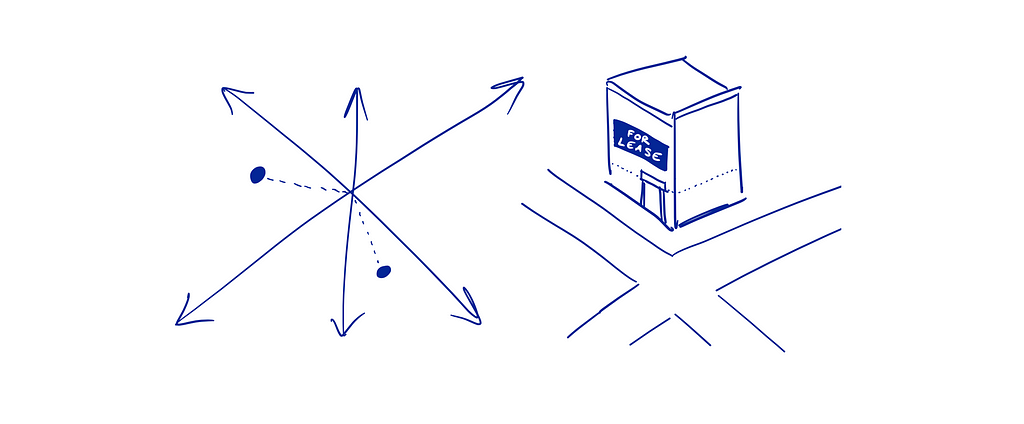
The mantra in real estate is “location, location, location.” You can upgrade kitchens and bathrooms all day, but if you’re in the wrong neighborhood it won’t sell.
The same is true for products. Focusing on individual features and experiences is good, but you should never forget about the position you’re trying to hold.
A product’s position is a “location” in a more abstract space — the space of trade-offs. The decisions you make about which features to build and how to integrate them places you “closer” or “further” from other products.
Your position also affects whether you’re in or out of the competitive set when a “hiring” moment arises. That is, when a person reaches for a product to solve their problem, are you the right fit? Which problems are good fits for you and which ones are bad fits?
When you know your position, you can say “no.” When you don’t know, you say “yes” out of fear. You build a feature because you’re afraid of what will happen if you don’t. That’s not a strong place to be competitively and it’s not a coherent place to be in terms of your product design.
Snickers and Milky Way
Let’s make this less abstract. The thing that made this click for me is a story about Snickers and Milky Way. Once upon a time, they were marketed identically. “Smooth chocolately flavor” etc. The teams took on a challenge to outsell each other, under the assumption they were competitors in the same space — the “chocolate candy bar” position.
Both teams did some unconventional research, and big distances appeared between them. Snickers is chewy like food. A little salty, a little crunchy. People ate it when they missed meals and needed a snack. They ate it in public.
Milky Way melts in your mouth. It’s an indulgence. People ate it after an emotional event when they needed a boost. They ate it in private.
The marketing story is famous. Snickers became “You’re not you when you’re hungry.” Young guys bite into them between plays on a football field. That’s a lot different from “Get lost in a Milky Way”, as the happy customer closers their eyes and time stretches out.
What’s important from a product design perspective is this: Snickers can’t take a feature request to be “more melty” and then win over some new customers. Milky Way can’t “add a little crunch” to hit two birds with one stone. These are trade-offs. The trade-offs are both what make them different, what define their competitive sets, and what make them suitable for different hiring moments.
Basecamp’s trade-offs
Each product has its own version of “melty vs chewy.”
At Basecamp, we have an informal understanding about what the product should be and what it shouldn’t be in order to hold its position.
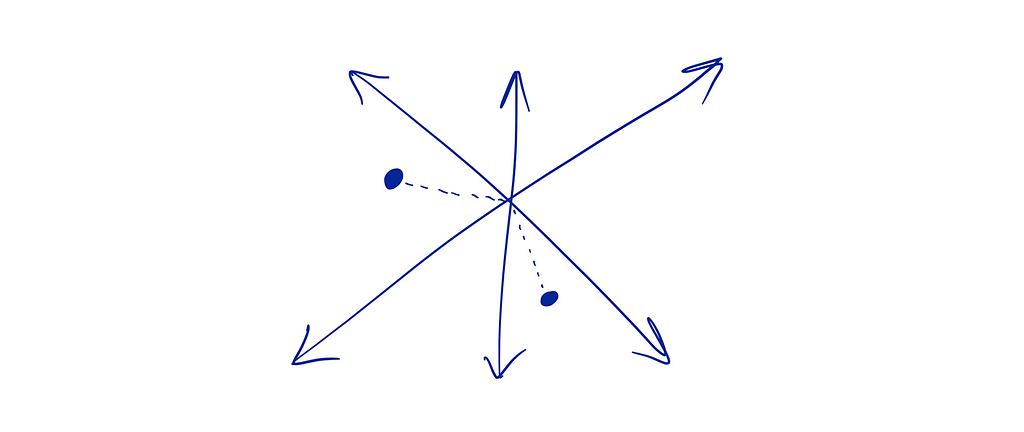
A metaphor from math can create a picture. There are a few trade-offs that you can think of like dimensions that position us in an n-dimensional space.
An abstract space
We could spend months or years building a multiperson live editor ala Google Docs. It’s a “collaboration” feature right? But Basecamp errs on the side of asynchronous communication instead of live editing. Basecamp should make your business a calmer, more orderly place. We want to help you respond to things when you have time, suggest edits when you have time to think, etc.
We could build high-end project management charts that map every dependency between every task. But we want Basecamp to help you make sure key things don’t slip through the cracks. We’d rather make sure you don’t forget something than help you plan to the millimeter.
You can store anything you want in Basecamp. But it’s going to work best if you use it to share and discuss read-only, flat rendered files. Screenshots, PDFs, proofs of copy, video edit #23, etc. Other tools are better for the constant churn of uploading/download or opening/saving that happens with an original PSD file.
We could build custom features that let you tune Basecamp to your exact workflow. But then you’d have to learn how to configure it, navigate all the options and setup flows, and train your team on the inevitably complicated UI. Instead we try to be more like Post-It notes. Something anybody can understand because they don’t have time to learn and set up a more complicated system.
Colors in the ocean
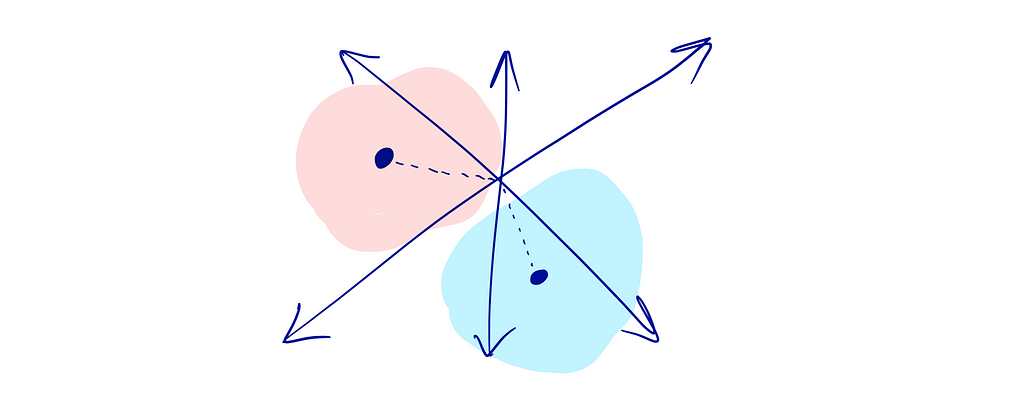
The book Blue Ocean Strategy captures this notion well. The trade-offs you make and the features you integrate position you differently relative to other offerings and hiring situations. With the space of trade-offs in mind, you can visualize how some areas are more attractive than others depending on who else is there. The authors talk about “red oceans” where competitors make similar trade-offs and “blue oceans” where there’s space for something new.
Red and blue “oceans” — positions you want to target or avoid
Communicating with your team
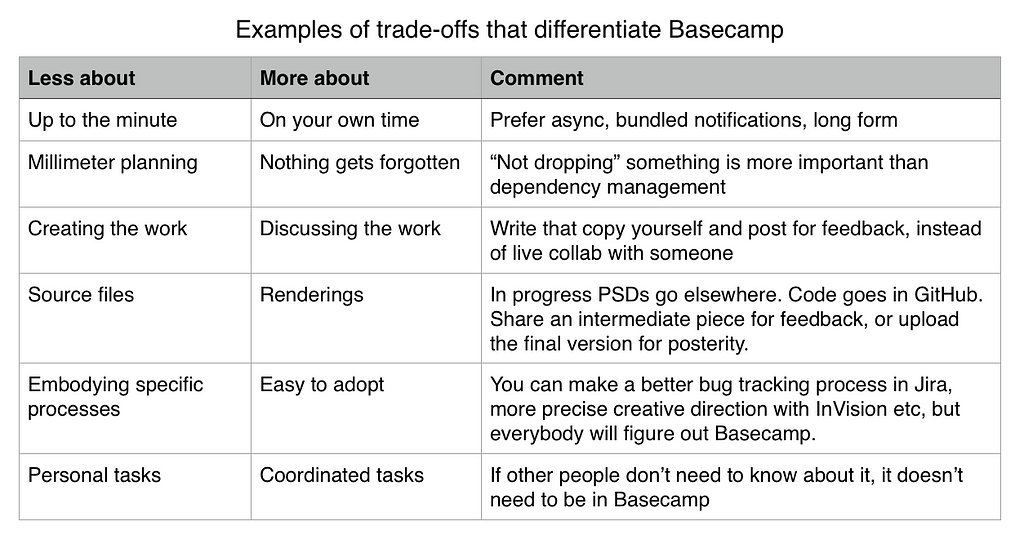
In this year’s strategy retrospective we used an informal table to remind ourselves of how we want to make trade-offs going into 2017.
The “less about / more about” format is a quick way to stake out a position. No math class required.
Position, position, position
Without a clear point of view on what makes you different, it’s easy to wander. Especially in the software industry. New feature requests come in every day, and if you can’t say “no”, who knows where on the map you’ll land.
Like in real estate, it’s easy to repeat the mantra but hard to make the right bet. If you find it hard to clearly define where you belong in the market, you’re not alone. We struggled with it ourselves when Basecamp’s customer base grew into all kinds of industries and use cases. In our case, techniques like the “job to be done” interview technique that Bob Moesta and Chris Spiek teach at their “Switch” workshops were very helpful.
As Clay Christensen says, “questions create the space where answers can appear” — so at the very least, thinking about your product’s position can set you on the right path for gaining more clarity down the road.
It’s a crying shame, really. I love Medium. It’s the best writing environment on the web, and they sweat the details like nobody else. The community too is just peach. This could have been a love story for the ages.
But I don’t think we’ll grow old together, Medium and I. I suspect it’ll end quite tragic, actually. $132,000,000 is a lot of money after all, and that’s how much venture capital Medium has been dipped in. Before having a prayer or a song about how to turn into that multi-billion-dollar business it must to satisfy the required rate of return.
The clock started running three years ago when $25,000,000 of Series A growth dynamite was rigged. That means they’re about half ways until the bomb explodes, and so far the company doesn’t seem much luck finding the code that’ll disarm.
All the vanity metrics are up, but it’s clear that there’s no idea how to turn that into actual moolah model. Well, short of following the same brain-dead advertising extraction scheme that Medium was specifically founded to counter. So credit to Ev, at least that strategy seems out — for now.
And credit to the whole Medium team for building that better typewriter. Seriously. That’s hard! There were a bunch of big typewriter makers out there already, and how much can you improve that mousetrap anyway? But improve they did.
It’s just that in Silicon Valley, you can’t merely make a better typewriter and sell that at a profit. No, you have to DISRUPT. You have to REINVENT. Well, at least you need the appearance of that, while you squeeze eyeballs until they pop out enough advertising dollars to give the VCs that 10x return.
So what is Medium going to do now, after axing a third of their staff? They’re going to essentially think about how they should fulfill the mission they were founded five years ago to pursue:
So, we are shifting our resources and attention to defining a new model for writers and creators to be rewarded, based on the value they’re creating for people. And toward building a transformational product for curious humans who want to get smarter about the world every day.
It is too soon to say exactly what this will look like.
Wut? Five years is not enough time to think about how we should make any money in a way congruent with our founding values? That just doesn’t compute. But the convoluted language and indirection does, and the ticker is spelling S. H. I. T!
This is tragic, but also expected. Medium rigged that VC bomb and is failing to disarm. And just like most other VC bombs, it too will explode and take with it the prospect of a lovely, smaller, important typewriter business.
The web, of course, will go on, if murder is indeed what she’ll write. Especially for anyone who moved to Medium but hedged their bets by keeping their own domains. A quick dump and nothing will break — except our hearts. Again.
Cheers to none of this actually happening, and Ev finding a diamond in the rubble before it’s too late. But if you’re a publisher on Medium, I’d dust off the contingency plans none the less.
It didn’t have to be this way. Ev could have RECONSIDERED. He surely had enough in the bank from previous exploits. Started slower. Not hired 150 people before there was a path to profitability, let alone sustainability. Maybe you will.
Covering an actual time of 20 minutes, you can watch this time lapse of smog rolling into Beijing in a matter of a few seconds. The NY Times has a short piece on the video, which was filmed on January 2.
Residents have come to expect such dense air pollution in the late fall and winter, as people burn coal to heat their homes. Recently, the problem has been particularly bad, and the city has been enveloped in smog for extended periods starting in October.
Mr. Pope, writing on Twitter, pegged the air quality index, a measure of the pollution, above 400 around the time of the video. The United States government rates readings of 301 to 500 as “hazardous.”
What a disaster…and the air wasn’t that clear before the smog rolled in. I’ve been to Beijing once, back in 1995, and even though I’d love to see how the city has changed over the past 20 years, I have no interest in returning until they get their air quality under control.
By law, hourly levels of toxic nitrogen dioxide must not be more than 200 micrograms per cubic metre (µg/m3) more than 18 times in a whole year, but late on Thursday this limit was broken on Brixton Road in Lambeth.
Many other sites across the capital will go on to break the annual limit and Putney High Street exceeded the hourly limit over 1,200 times in 2016. Oxford Street, Kings Road in Chelsea and the Strand are other known pollution hotspots.
This week, the official Russian Embassy to the UK tweeted Pepe the Frog to British Prime Minister Theresa May, an apparent attempt to make a mockery of the UK’s relationship with both the US and Russia. Obviously not traditional procedure for such an institute, right? Fighting the good fight of national interest is fairly normal for embassies, sure, but using a politically volatile and racist meme? Less so.
Nevertheless, there it is, going viral as a dog whistle for Trump fans and alt-righters worldwide. Or so the thinking goes.
On first glance, the Embassy's deployment of Pepe may seem intended to target the usual SJWs and snowflakes. But take a step back, and you can see it's one of just many tactics that the London-based embassy has started exercising to go after the Western press. This is a social media propaganda game than extends from Twitter, to Facebook, to the embassy's own website. And it isn't a one off; it's the latest salvo in the Trump-era infowars.
For months now, between its expected tweets about the innocuous daily goings-on of a diplomatic office—images of London’s Hyde Park, or patriotic news clippings about Russia’s cultural escapades in the UK—are darker, less predictable tweets. The Russian embassy’s Twitter account has been lobbing attacks at media outlets such as the BBC and The Guardian newspaper, often tagging Western news publications directly in its posts.
Take this one for instance, which attacks the British media’s nonchalance to potential CIA hack reports that don’t include accusations of Russian involvement. “Breaking News: I Don’t Care” reads the quasi-meme, mocking the press not wanting to run stories that don’t include salacious finger-pointing of Russian hackers.
Then December saw the “Lame Duck” meme criticising Obama’s expulsion of 35 Russian diplomats in response to accusations of Russian involvement in the US election. The image caught the attention of the international press. The account was getting noticed.
President Obama expels 35 diplomats in Cold War deja vu. As everybody, incl people, will be glad to see the last of this hapless Adm. Russian Embassy, UK December 29, 2016
Motherboard requested an interview with the social media manager of the account, but the embassy had yet to respond to our request as of publication. It’s likely the account has more than one user.
"These memes work which is why the Embassy uses them. They attract more attention from readers because they share the informal, often jokey style of other successful Twitter-users,” Charlie Beckett, professor in the Department of Media and Communications at London School of Economics, told Motherboard in an email.
"The Tweets don't particularly seek to convey hard facts or detailed information,” Beckett continued. “Twitter isn't that good at doing that anyway. Instead, they are seeking to disrupt conventional narratives and to provide an alternative perspective in a way that is hard to counter with the usual style of 'rational' argument.”
I asked Beckett whether the embassy may be mirroring Trump’s unorthodox use of Twitter. He told me that he doubts the account is doing so deliberately, but that it has a similar strategy. “In that sense, their task is to spread doubt, at least, about the 'other side's' argument. Even when they attract critical responses they have achieved their aim of raising the profile of the Russian point of view,” said Beckett.
And raise the profile it has. The Pepe tweet has been covered by a plethora of media publications, including Motherboard (twice now). The tweet, at the time of publication, has just shy of 6,000 retweets and almost 10,000 likes. Stratospheric!
On Tuesday came a further scathing attack on British press, directed mostly at The Sunday Times, from the embassy’s official website. In a blog post, an unnamed author speaks out against a perceived “impending official anti-Russian witch hunt in Britain, ” goading the British press into covering their side of the story.
It’s confusing. It’s schizophrenic. But maybe that’s the point. Russia is using the same meme-laden mindset as much of the alt-right does to confound, attack, and mock critics. Memes, Twitter, and offbeat blog posts remain a surprisingly effective tactic of retaliation for an institution that’s supposed to play by the old rules of politics and media, such as official press conferences or memos to journalists. This is 2017, and in a climate of fake news, misinformation, and extreme political prejudices borne out of Facebook filter bubbles, the attention the Pepe tweet is garnering shows there’s no need to play by the rules of official protocol anymore.
It makes sense that villages and towns would develop a short distance away from each other so that people living nearby wouldn’t have to travel far to sell their goods, bank, or go to school. But what about cities? Geography has a lot ot do with where cities are located.
If you enjoy this video but haven’t read Jared Diamond’s Guns, Germs, and Steel yet, you probably should.
Yahoo didn't provide an explanation for what “Altaba” means or why it was selected as the new name of the company. But it’s worth noting that the name is phonetically similar to “Alibaba,” the name of the Chinese internet giant that is part-owned by Yahoo.
The company also announced that Yahoo CEO Marissa Mayer, the veteran former Google executive who tried and failed to turn around the internet pioneer, will exit the company’s board after more than four years at the helm. Yahoo co-founder David Filo is also leaving the company's board.
Monday’s announcement is just the latest surprising twist for a company that from its founding in 1994 helped define the first major stage of the web, first as a “guide to the World Wide Web” and later a search engine, but one that has long since been eclipsed by Silicon Valley rivals like Google, and more recently, Facebook and Twitter.
Once the company’s core internet business is sold, Yahoo (Altaba) will effectively become an investment company, with significant stakes in Alibaba Group and Yahoo Japan, along with some intellectual property and other assets. Yahoo’s 15% stake in Alibaba is worth in excess of $30 billion. Verizon will retain the rights to the Yahoo web properties and branding, so Yahoo.com and Yahoo Mail and associated products may not actually be going anywhere—though they will have a new parent company.
And after the dismal 2016 that Yahoo had, it’s not surprising that the company would want to rebrand itself.
Over the last several months, Yahoo has suffered the indignity of disclosing that it was the victim of several major hacking incidents in recent years. After first announcing that information associated with at least 500 million user accounts had been stolen by a “state-sponsored actor,” Yahoo was forced to later acknowledge a separate incident in which a whopping 1 billion user accounts were affected.
Those disclosures came after Verizon had already announced its plan to buy Yahoo for $4.8 billion, prompting the telecom giant to reportedly ask for a $1 billion discount on the sale price. It’s entirely possible that Verizon might still walk away from the deal altogether.
Verizon wants to integrate Yahoo’s internet business with fellow, faded dot-com-era giant AOL, which the telecom giant bought last year for $4.4 billion, in order to gain a stronger foothold in the online advertising space.
The problem facing Verizon is that the online advertising market is already dominated by Google and Facebook. In 2015, Google and Facebook accounted for 64% of all online advertising revenue, according to data from Pivotal Research analyst Brian Wieser cited by Bloomberg.
For Mayer, the Verizon deal and the subsequent hacking disclosures amount to disappointing conclusion to a multi-year effort to turn around Yahoo’s internet business, which has been ailing for nearly a decade.
Get six of our favorite Motherboard stories every day by signing up for our newsletter.
Watching the Underworld movies is a weird experience, because it feels like the filmmakers are trying to make a cool entertainment about vampires and werewolves by using none of the stuff that’s cool about vampires and werewolves.
There are four live-action films in the Underworld series—a fifth comes out this weekend—and each installment in the vampires-with-guns-vs-werewolves-with-guns film franchise feels like someone is headbanging their way through a script with the loudest available heavy metal blaring through giant headphones. They lug around a particularly shallow and clumsy sort of self-seriousness and darkness, and twist themselves into knots trying to feel portentous. The movies are so goth that marble busts (possibly of Shakespeare?) get used for target practice in one of them.
The biggest differentiator about Underworld’s approach to its Immortal creatures of the night is the fact that it avoids magic. Sunlight still kills these bloodsuckers but they can’t hypnotize humans or turn into bats or mist; they’re merely super-fast, super-strong and super-pale. Crucifixes do no harm, though. Some of their older, more powerful werewolf antagonists can change shape at will and infect ordinary folks with a bite of their massive jaws. These transformations and abilities happen in CG sequences that miraculously made me giggle and get grossed out at the same time.
Instead of magic, the Underworld flicks lean hard on guns and technology as each side’s tools of the trade. The main character is Selene, a centuries-old Death Dealer vampire played by Kate Beckinsdale whose job is to hunt down Lycans. Lycans are simply werewolves, but Underworld is too busy trying to re-invent monster lore to actually call them that. In this fiction, vampires and werewolves are genetic cousins, twin branches of an ancient disease that evolved differently in humans that were bitten by bats and wolves. (Just think, closed castle doors and windows—and better pest control in general—could’ve avoided this whole thing!)
Any gestures at metaphorical usage of the creatures’ bestial natures are extremely heavy-handed, like the subplot that has Lycans as daytime slaves/protectors of vampires for centuries. The movies’ segments set in the Dark Ages feel like lavishly funded LARP campaigns, full of crossbows that shoot chainlink arrows and intense staredowns where you can see people trying to decide whether they’re method-acting or not.
One of the admirable things about the Underworld flicks is how quickly they sidelined Scott Speedman’s Michael, the love interest for Selene who debuted in the first film. A human descendant of the patient zero of the Immortal virus who is a hybrid of both vamp and wolf, he’s set up as the films’ chosen-one-savior. But his screentime dwindles in each installment, and the movies become all about Selene’s quest to keep vampires alive.
The drama in the movie’s plots comes from Selene’s incremental discoveries of how just about all the Immortal Elders are fucked-up liars who’ve been betraying each other and/or their entire species for centuries. Just about each movie orbits around revelations that some character killed his or her own family members or lusted after someone he/she wasn’t supposed from the wrong side of the trenchcoat train tracks. Hell, the third movie, Underworld: Rise of the Lycans, is a prequel that pretty much re-tells the emo-Goth Romeo & Juliet story of the first Underworld, in that it’s concerned with a man and a woman from opposite factions treating each other as something other than second-class citizens or blood enemies.
The series’ big status quo shift happens in Underworld: Awakening, set after a time when humans learn about the existence of the immortal races and have been killing them en masse. Selene wakes up from cryo-sleep imprisonment to find out she’s got a daughter and that an Evil Corporation is trying to cure the disease that creates Immortals.
It was hilarious how much the first movie tried to ape The Matrix’s cool-trenchcoat-and-pistols wire-fu aesthetic, but things have only gotten more over the top as time since then. But Underworld has , to the point where absurdly ridiculous things happen. In the Underworld 1 scene below, Selene shoots enough holes in the floor of an apartment building to open up a hole.
It’s straight out of a Bugs Bunny Looney Tunes cartoon, especially because she never reloads her guns. Over the course of four movies, the level of cheesy moodiness on display increases at an exponential rate.
Here’s yet another extravagant waste of ammunition...
...vampire Elder Marcus pulling down a helicopter…
...vamp/Lycan hybrid Michael discovering that he can’t just have dinner anymore…
...and a bad guy scientist who gets a silver grenade punched inside of him and the ensuing explosion.
Like the Resident Evil movies starring Milla Jovovich, this kind of spray-on cheese food product kicksplode action has become the hallmark of the series, which is why they’ve chugged along for 13 years despite never engendering a fervent fan base of its own. The Underworld movies won’t ever be anyone’s shining example of high-minded, life-changing science-fiction but they’re just as immortal as their vampires and werewolves. Er, Lycans.
The first Rogue One trailer ended with a very memorable shot of Jyn Erso walking down a hallway and turning around just as the lights went on around her. You see it above. Obviously, it’s not in the movie, and that’s because it was never supposed to be.
Speaking at a Director’s Guild screening of the film, captured on the podcast “The Director’s Cut,” director Gareth Edwards explained the shot was filmed seemingly at random. Every day they’d do “Indie Hour,” where for an hour, they just shot random stuff for no reason, just to see what would happen.
It was just a way for the crew of understanding, for now, we’re just going to do loads of random shit. Don’t try to ask, we can’t explain. It would just be things I thought were a beautiful moment or ‘This is a great idea’ and a lot of the stuff in the trailer ended up through that process.
Such as the shot of Jyn turning in the tunnel, which Edwards explained:
We finished a shot and [Felicity Jones] was just walking to the next shot, which was at the end of the tunnel. And as she walked, someone switched the lights on and the way they turned on they went *clickclickclick* like this. Someone called her, and she just turned around a little bit and I was like, “Oh my god that looked great.” And I was like “Stop stop stop!” and everyone stopped. “This will take 10 seconds, just roll camera”....Then obviously 10 seconds turned into a half hour, and we probably did 17 takes. So that ended and there’s that feeling of, “Well what was that for?” And I was like, “I don’t know, that just felt good.”
From there Edwards says he forgot about it. Until marketing was looking at dailies to pull shots for a trailer, and picked that one. He was glad to see it, even though he knew it wasn’t the movie.
He said there was a similar story with this shot of Ben Mendelsohn. It was filmed after another scene. The actor was done, but Edwards simply didn’t call cut, and just filmed him. “He had a very good vibe about him,” Edwards said.
Image: Rogue One, Disney/Lucasfilm
Edwards admitted that this method of filmmaking wasn’t exactly easy. It made editing very difficult because they had too much footage. “It’s like running around the supermarket,” he said. “You’re just grabbing everything. People say ‘What are you going to cook?’ and you go, ‘I don’t know. The shop closes in 10 minutes and we’re not coming back in, grab everything.’”
This explains why so much, especially of that first teaser, isn’t in the movie.
Listen to the full discussion, which is with Han Solo co-director Chris Miller, above. The above quotes come in around 18:30.
It’s about time for something new. What follows is the introduction to our next book The Calm Company. We’re working on it now, and will be shopping to publishers soon for publication later this year.
“It’s crazy at work”
How often have you heard that? Or said it yourself?
Probably too often.
For many, “it’s crazy at work” has become their normal. But why so crazy?
At the root is an onslaught of physical and virtual real-time distractions slicing work days into a series of fleeting work moments.
Tie that together with a trend of over-collaboration, plus an unhealthy obsession with growth at any cost, and you’ve got the building blocks for an anxious, crazy mess.
It’s no wonder people are working longer, earlier, later, on weekends, and whenever they have a spare moment. People can’t get work done at work anymore.
Work claws away at life. Life has become work’s leftovers. The doggy bag. The remnants. The scraps.
That’s just not OK. It’s unacceptable.
What’s worse is that long hours, excessive busyness, and lack of sleep have become a badge of honor for many people these days. Sustained exhaustion is not a badge of honor, it’s a mark of stupidity. Companies that force their crew into this bargain are cooking up dumb at their employees expense.
And it’s not just about organizations — individuals, contractors, and solopreneurs are burning themselves out the very same way.
You’d think with all the hours people are putting in, and all the promises of tech’s flavor of the month, the load would be lessening. It’s not. It’s getting heavier.
But the thing is, there’s not more work to be done all of the sudden. The problem is there’s hardly any uninterrupted, dedicated time to do it.
Working more but getting less done? It doesn’t add up. But it does — it adds up to a majority of time wasted on things that don’t matter.
Crazy companies all tend to be especially great at one thing: wasting. Wasting time, attention, money, energy.
Out of the 60, 70, 80 hours a week many are expected to pour into work, how many of those hours are really spent on the work itself? And how many are tossed away in meetings, lost to distraction, and withered away by inefficient business practices? The bulk.
The answer isn’t more hours, it’s less bullshit. Less waste, not more production. And far fewer things that induce distraction, always-on anxiety, and stress.
Stress is an infection passed down from organization to employee, from employee to employee, and then from employee to customer. And it’s becoming resistant to traditional treatments. The same old medicine is only making it worse.
And remember, stress can not be contained. It never stops at the edge of work. It always bleeds into life. It infects your relationships with your friends, your family, your kids.
The promises keep coming. More time management hacks. More ways to communicate. More information spread across separate platforms and disparate places. New demands to pay attention to more and more real-time conversations happening all the time at work. Faster and faster, for what? Panaceas left and right. Snake oil. Crazy.
On-demand is for movies, TV shows, and podcasts, not for you. Your time isn’t an episode recalled when someone wants it at 10pm on a Saturday night, or every few minutes in the collection of conveyor belt chat room conversations you’re supposed to be following all day long.
If it’s constantly crazy at work, we have two words for you: Fuck that. And two more: Enough already.
Not only does crazy not work, but its genesis — an unhealthy obsession with rapid growth — is equally corrupt. Towering, unrealistic expectations drag people down.
It’s time for companies to stop asking their employees to breathlessly chase ever-higher, ever-more artificial targets set by ego, not need. It’s time to stop celebrating crazy.
Over the last 17 years we’ve been working at making Basecamp a calm company. One that isn’t fueled by stress, or ASAP, or rushing, or late nights, or all-nighter crunches, or impossible promises, or high turnover, or over-collaboration, or consistently missed deadlines, or projects that never seem to end, or manufactured busywork, or incorrect assumptions that lead to systemic institutional anxiety.
No growth-at-all-costs. No constant, churning false busyness. No ego-driven decisions. No keeping up with the Joneses Corporation. No hair on fire.
And yet we’ve been profitable 68 straight quarters, 17 straight years. We’ve kept our company intentionally small — we believe small is a key to calm.
As a tech company we’re supposed to be playing the hustle game in Silicon Valley, but we’re blissfully far away in Chicago with employees working remotely in 30 different towns around the world.
We each put in about 40 hours a week most of the year, and just 32-hour four-day weeks in the summer. We send people on month-long sabbaticals every three years. We not only pay for people’s vacation time, but we pay for the actual vacation too.
No, not 9pm Wednesday night. It can wait until 9am Thursday morning. No, not Sunday. Monday.
Walk into our office and it feels more like a library and less like a chaotic kitchen. Noise and movement are not indicator of activity and progress — they’re just indicators of noise and movement.
We’re in one of the most competitive industries in the world. An industry dominated by giants and frequent upstarts backed by hundreds of millions of dollars in VC money. We’ve taken zero. Where does our money come from? Our customers. They buy what we’re selling and we treat them exceptionally well. Call us old fashioned.
Our benefits are focused on getting people out of the office, not enticing them to stay longer. Fresh fruits and veggies are delivered to people’s houses, not the kitchen at work. Want to learn to play the guitar in your own time? We’ll gladly support you and pay for that too.
We’ll pay for you to get a massage, but we won’t bring the masseuse to the office. Loosening up for 60 minutes only to tense back up hunched over your desk is faux relaxation. No “stay here” signals. Everything’s about wrapping up your reasonable day, going home, and living your life.
Are there occasionally stressful moments? Sure — such is life. Is every day peachy? Of course not — we’d be lying if we said it was. But we do our best to make sure those are the exceptions. On balance we’re calm — by choice, by practice. We’re intentional about it. We’ve made different decisions than the rest. At Basecamp it’s not always crazy at work.
We’ve designed our company differently. We’re here to tell you about it, and show you how you can do it. There’s a path. You’ve got to want it, but if you do you’ll realize it’s much nicer over here. You can have a calm company too.
This book treats the patient, and points out the diseases plaguing modern workplace and work methods. It calls out false cures, and pushes back against ritualistic time-sucks that have infected the way people work these days. We have a prescription to make it better.
Chaos should not be the natural state at work. Anxiety isn’t a prerequisite for progress. Sitting in meetings all day isn’t required for success. These are all perversions of work — side effects of broken models and follow-the-lemming-off-the-cliff worst practices. Step aside and let the suckers jump.
Calm is profitability. Calm is protecting people’s time and attention. Calm is reasonable expectations. Calm is about 40 hours of work a week. Calm is ample time off. Calm is smaller. Calm is a visible horizon. Calm is meetings as a last resort. Calm is contextual communication. Calm is asynchronous first, real-time second. Calm is more independence, less interdependence. Calm is about sustainable practices that can run for the long-term.
By the end of the book you’ll understand it all.
Let’s dig into it.
Additional details
We’ll be posting occasional essays from the book as we write it. The best way to stay on top of The Calm Company news, is to click the green Follow button at the top of our Signal vs. Noise blog here on Medium, and by following me (@jasonfried) and David (@dhh) on Twitter. And be sure to check out Basecamp 3 — the product that best embodies the spirit of a Calm Company.
In Disappearing Routine Jobs: Who, How, and Why? economists from USC, UBC and Manchester University document how the automation of "routine" jobs (welders, bank tellers, etc) that pay middle class wages has pushed those workers out of the job market entirely, or pushed them into low-paying, insecure employment.
(more…)
Idag delar den eminenta skeptikerföreningen VoF (Vetenskap och Folkbildning) ut utmärkelserna Årets folkbildare och Årets förvillare.
Årets folkbildare 2016 är Dagens Nyheters vetenskapsredaktion där Maria Gunther och Amina Manzoor rapporerat om vetenskap på ett föredömligt sätt.
Årets förvillare 2016 är Karolinska Institutets tidigare rektor professor Anders Hamsten och de övriga i KI:s ledning som medverkade till att tysta ned det forskningsfusk som begicks av kirurgen Paolo Macchiarini.
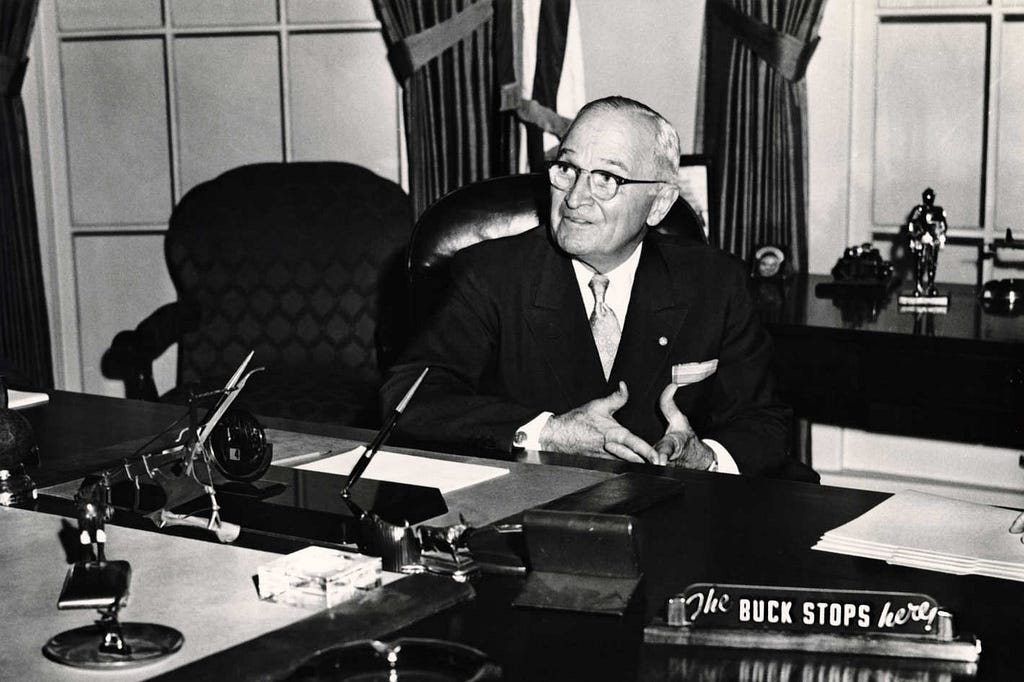
This year I’ve decided to take Harry Truman’s famous “The BUCK STOPS here” sign literally.
So in 2017, all refunds requested by Basecamp customers will come out of my paycheck.
If a customer is unhappy with Basecamp to the point where they request a refund, it should be my penalty. We didn’t make them happy, and, as co-founder and CEO, ultimately that’s my responsibility. So it should be on me.
Logistically, we’re still figuring out how to implement it — a quarterly tally and then a subtraction, some sort of total by the end of the year that reduces an end-of-year dividend, etc. But however we do it, I’ll make my pay net of total refunds for 2017.
Will this continue into 2018 and beyond? We’ll see — this is pure experimentation. No set goals other than I want to see and feel this year’s refunds as a personal responsibility.
It’s 2017 — get back on top of your business again with Basecamp 3. We just surveyed 10,000 Basecamp 3 customers and 89% said they have a better handle on their business because of Basecamp. And 84% said their teams are more self-sufficient since switching to Basecamp. Break bad habits, establish great ones, and run a better business in 2017 and beyond with Basecamp.
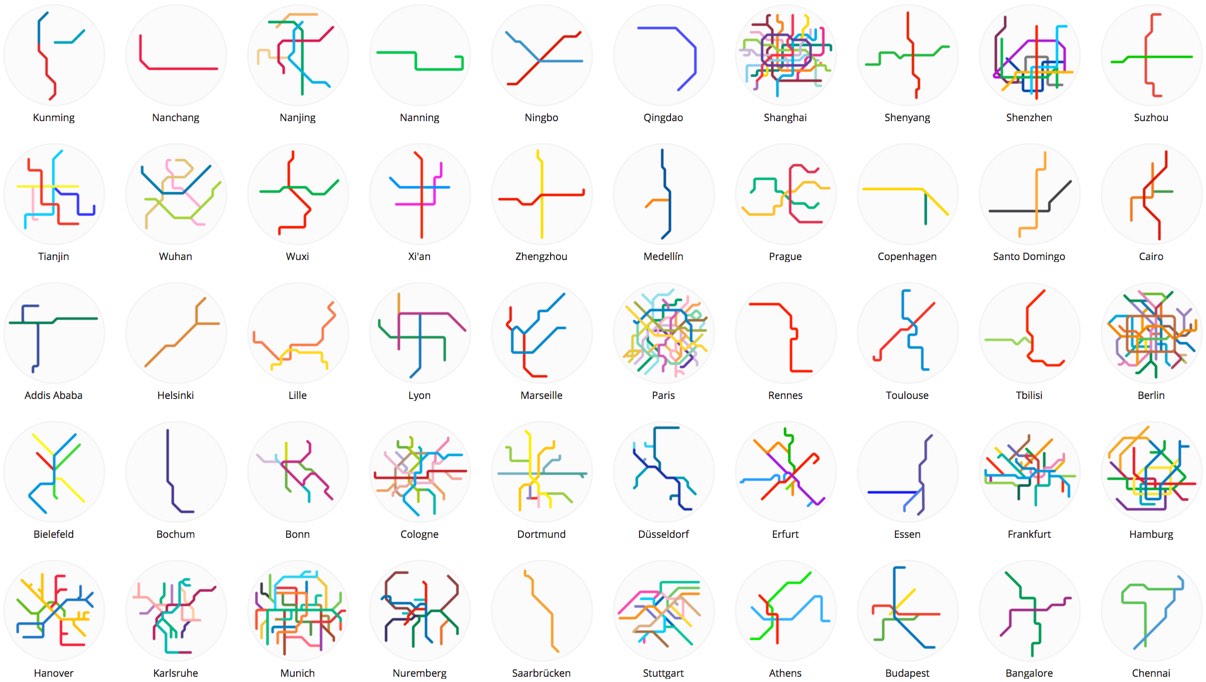
Mini Metros features small and simplified maps of over 200 metro and light rail systems from around the world. Many of the systems are small and simple themselves, just a single line or two, like in Edmonton, Mumbai, Seville, and Qingdao. Others, like in Munich, Shanghai, Tokyo, London, Seoul, and New York, are densely interconnected.
Each year, Edge has asked a group of scientists, philosophers, musicians, writers, and designers a simple but provocative question and collects the answers on their website. Past questions have included:
Of all the scientific terms or concepts that ought to be more widely known to help to clarify and inspire science-minded thinking in the general culture, none are more important than “science” itself.
Many people, even many scientists, have traditionally had a narrow view of science as controlled, replicated experiments performed in the laboratory-and as consisting quintessentially of physics, chemistry, and molecular biology. The essence of science is conveyed by its Latin etymology: scientia, meaning knowledge. The scientific method is simply that body of practices best suited for obtaining reliable knowledge.
“Life history” is the term biologists use to describe how organisms change over time-how long an animal lives, how long a childhood it has, how it nurtures its young, how it grows old. Human life history is weird. We have a much longer childhood than any other primate-twice as long as chimps, and that long childhood is related to our exceptional learning abilities. Fossil teeth suggest that this long childhood evolved in tandem with our big brains-we even had a longer childhood than Neanderthals. We also rapidly developed special adaptations to care for those helpless children-“pair-bonding” and “alloparents.” Fathers and unrelated kin help take care of human children, unlike our closest primate relatives.
And we developed another very unusual life history feature-post-menopausal grandmothers. The killer whale is the only other animal we know that outlives its fertility. The human lifespan was expanded at both ends-longer childhood and a longer old age. In fact, anthropologists have argued that those grandmothers were a key to the evolution of learning and culture. They were crucial for the survival of those helpless children and they also could pass on two generations worth of knowledge.
In physics a fine-grained description of a system is a detailed description of its microscopic behavior. A coarse-grained description is one in which some of this fine detail has been smoothed over.
Coarse-graining is at the core of the second law of thermodynamics, which states that the entropy of the universe is increasing. As entropy, or randomness, increases there is a loss of structure. This simply means that some of the information we originally had about the system has become no longer useful for making predictions about the behavior of a system as a whole. To make this more concrete, think about temperature.
Temperature is the average speed of particles in a system. Temperature is a coarse-grained representation of all of the particles’ behavior — the particles in aggregate. When we know the temperature we can use it to predict the system’s future state better than we could if we actually measured the speed of individual particles. This is why coarse-graining is so important — it is incredibly useful. It gives us what is called an effective theory. An effective theory allows us to model the behavior of a system without specifying all of the underlying causes that lead to system state changes.
There’s a saying that there are no cultural relativists at thirty thousand feet. The laws of aerodynamics work regardless of political or social prejudices, and they are indisputably true. Yes, you can discuss to what extent they are an approximation, what are their limits of validity, do they take into account such niceties as quantum entanglement or unified field theory (of course they don’t). But the most basic scientific concept that is clearly and disturbingly missing from today’s social and political discourse is the concept that some questions have correct and clear answers. Such questions can be called “scientific” and their answers represent truth. Scientific questions are not easy to ask. Their answers can be verified by experiment or observation, and they can be used to improve your life, create jobs and technologies, save the planet. You don’t need pollsters or randomized trials to determine if a parachute works. You need an understanding of the facts of aerodynamics and the methodology to do experiments.
There are 200 more contributions from bold-faced names like Richard Dawkins, Hanna Levin, Brian Eno, Kevin Kelly, and Danny Hillis. Have fun!
by Casey Chan on Sploid, shared by Cheryl Eddy to io9
Have you ever wondered why the world’s largest cities sprout up where they sprout up? It has a lot to do with water, natural resources, history, and being in the northern hemisphere.
Wendover Productions took a really hard look at why cities are whey they are in the video below and it’s completely fascinating. Some of the reasons are pretty obvious: Being close to water helps because the ocean is what connects the world, and without access to drinkable water cities would die of thirst. Being near natural resources obviously helps, too, since living near the stuff you need just makes sense.
But what’s most interesting is probably how most of the big cities in the world are located in the northern hemisphere, and that’s because many of history’s largest empires were located in Europe and Asia. And many of history’s largest empires were located in Europe and Asia because the shape of both Europe and Asia is wider than it is tall. And being a wider continent means there’s a lot of land that’s roughly on the same latitude which means roughly the same climate, which means plants and animals that were successful on one part of the continent can probably be successfully raised in another part of the continent (or even a new continent along the same latitude like say, North America), which means towns and colonies can support more people, which means they can eventually become the biggest cities in the world.
Seeking a novel way to redesign a light switch while simultaneously retaining a functional and aesthetically pleasing object was the design challenge for Netherlands-based designer Arthur Limpens of Allocacoc DesignNest. His solution was the Heng Balance Lamp, a fun desktop light that relies on a pair of magnets suspended on strings to pull an internal switch. The design concept won a Red Dot Design Award last year, and Allocacoc is now lauching an edition of the lamp through Kickstarter.
För en gångs skulle levererar denna blogg en årsbästalista.
Jag har köpt och lyssnat på en hel del musikkassetter under 2016. Andra kassetter har jag velat köpa men inte kunnat eftersom de små upplagorna – ofta bara runt 50 ex – brukar sälja slut snabbt. Så jag har också laddat ner en hel del digital kassettmusik från Bandcamp eller via Soulseek. Olika sorters musik, ofta i gränstrakterna mellan genrer men ändå inte på ett helt flytande vis, just tack vare de kassettbolag som går in för att bygga egna musikaliska rum med särprägel. Dessa kassettbolag – från länder som Ryssland, Kanada, Kroatien, Frankrike, Sverige och USA – utmärker sig ofta för en estetisk konsekvens i utgivningen. Efter att ha upptäckt en kassett som faller en i smaken kan man lika gärna beställa hem de andra kassetterna från samma bolag och räkna med gott utbyte.
Följaktligen har kassettåret 2016 för mig i väldigt hög grad kretsat kring kassetthouse. Vilket inte är någon genre, men väl ett sånt där “eget rum”, eller snarare en hel lägenhet där de olika rummen representeras av kassettbolag som 100% Silk och 1080p, med korridorerna fulla av artister som distribuerar på helt egen hand. Musiken är analogsyntetisk, taktfast och drömmig. (Jag vet inte varför jag skrev “drömmig” i stället för “drömsk” men det känns tidsenligt.) Den kan dra åt ambient eller funk, shoegaze eller dub, men själva noden för dessa kopplingar är ändå house. Ibland strösslas etiketter som “outsider house”, “introvert house”, eller “lo-fi house”.
Skitsamma, jag säger kassetthouse, även om många av artisterna även släpper musik på vinyl eller i rent digitala versioner. Sådana format kan användas till DJ-mixar. Kassettmediet, däremot, låter sig inte mixas. Detta har betydelse när det kommer till olika varianter av housemusik, som annars ofta släpps med DJ:s i särskild åtanke, efter att ha producerats med mixvänliga intron och outron. Sånt kan göra musiken mindre lyssningsbar i omixat skick. När musiken däremot släpps på kassett så är det en tydlig markering om att den faktiskt är gjord för att lyssnas på, alltså även utan att först ha mixats av en DJ. Därför är form och innehåll oskiljbart i kassetthouse, vilket inte förminskas av att musiken samtidigt distribueras i digitala kanaler.
Här kommer så min lista som rymmer tolv kassettsläpp i inte så strikt ordningsföljd.
Elka – Chants
1080p | Discogs | Bandcamp
Om en kassett från 2016 ska få representera den nya vågen av kassetthouse så får det nog ändå bli den här kassetten från Vancouver, som är epicentrum för hela grejen. Elka (Elan Benaroch) producerar i grunden klassisk deep house (med i slag av acid), men med en maximerad kontrast mellan de energiskt synkoperade trummorna och de ibland närmast somnabula syntharmonier som svävar i bakgrunden.
100% Silk | Discogs | Bandcamp
Bludwork är enligt uppgift en 18-åring från Georgia, som i höstas gav ut sin andra kassett på 100% Silk. Inte helt olikt ovan nämnda Elka, men kanske varmare klanger och stundtals ännu mer dansant.
Body-san – Shining The Money Ball
1080p | Discogs | Bandcamp
Brandon Knocke i Portland kallade sig tidigare Discoverer men det här är mer egenartat, lite släpigt, mycket drömmigt. Det blir inte mindre egenartat när man ser videon till ett av spåren.
Kaazi – Zen Travel
100% Silk | Discogs | Bandcamp
Släpptes samtidigt som Bludworks kassett (se ovan) och har väl musikaliskt rätt stora likheter. “Cycle” är ett fantastiskt spår som förtjänar att bli dansat till. I väntan på detta har Kaazis kassett rullat många varv på repeat hos mig.
House Plants Records | Discogs | Bandcamp
Splitkassett med en schweizisk och en australiensisk artist, varav den senare använder ett verkligt avskräckande namn. Låter som något från 100% Silk men är utgivet på ett nytt kassettbolag från Toulouse, House Plants Records. Kan passa på att tipsa om deras mixtape Heat from Toulouse #1 som på rör sig från lofi-house till marockanska rytmer.
Betonkust & Palmbomen II – Center Parcs EP
1080p | Discogs | Bandcamp
I vissa ljud finns en kantighet som kan låta som ett konverteringsfel från 1980-talet, vilket kan föra tankarna till vaporwave. Utgivet på 1080p men skiljer sig ändå en smula från det typidksa Vancouver-soundet. Palmbomen är holländaren Kai Hugo som förra året delade sitt artistnamn i två, kanske som en vink till Amon Düül II och Silvester Anfang II. Använder sig av upphittad videofilm, som alla andra.
Buz Ludzha – Jungle Tapes
Tape Throb Records | Discogs | Bandcamp
Hallå, den här kassetten är ännu inte slutsåld! Jag fick den med en hälsning från artisten och ett fint klistermärke med budskapet “home taping is making music”. Irländaren Andrew Morrison, som släpper musik både som Buz Ludzha och som The Cyclist, har som få andra i scenen gått in för en ljudbild präglad av just kassettbandet och dess distortion. Under året har han även släppt ett par riktigt bra vinylsläpp, mer dansgolvsorienterade: The Cyclist – Pressing Matters och Buz Ludzha – Basslines For Life.
Men den här kassetten är ett försök att rekonstruera jungle, distat och svajande över i dub, punk och blues. Det påminner förresten om ett liknande sidoprojekt som släppts på kassett under året: Luca Lozanos Junglish Massive.
Perfume Advert – Foreverware
Seagrave | Discogs | Bandcamp
Brittisk duo som tidigare gett ut två kassetter på Opal Tapes och 1080p. Den här gången kanske lite tyngre förankrade i dubtechnon. Låter tyskt och tidlöst.
100% Silk | Discogs | Bandcamp
Antoni Maiovvi kommer från italohållet vilket kanske märks på de smått bombastiska arrangemangen, samtidigt som ljudbilden är väldigt karakteristisk för vad som ges ut på 100% Silk.
Potions – Pushing The Cuboid
100% Silk | Discogs | Pretty All Right
Potions har gett ut typ 20 kassetter på fem år, det är rätt starkt. Här märks en del syntpopinfluenser och en låt är byggd på en Throbbing Gristle-sampling, en annan staplar saxofoner.
ISSHU – Greyscale
Seagrave | Discogs | Bandcamp
Jag vet inte, men utgår från att ISSHU kommer från London. Väldigt mörkt på det brittiska sättet, där musikens dansanta kvaliteter känns som förvrängda ekon från ett dansgolv. Således svårt att inte dra paralleller till Burial, även om ljudbilden här är betydligt mer oslipad. Kassetten släpptes bara härom veckan och jag hann beställa ett ex innan det såldes slut. När jag får hem den ska den få rulla på repeat några gånger, men dessförinnan håller jag mig till lite digitalt nosande.
I’ve been getting a lot of tweets and emails from neo-Nazis and neo-fascists lately. To be fair, I said that Nazis and fascists were bad, so I was kind of asking for it. But the thing that I’ve found most interesting amongst the mountains of hate are all the fake quotes that racists send me, purportedly by famous…
“Star Wars but every time someone shoots a laser it speeds up” by Lord Aussem on YouTube is exactly what it says on the tin. I’m more surprised by the long stretches of time where no lasers are fired than I am by the fact that this only lasts one minute, 17 seconds.
And even though it’s going too fast to actually show if Han shot first, the new Jabba shots tell us that this is the sped-up version of the Special Edition. I don’t know if that affects your decision to spend 77 seconds on this, but there you go.
Tweeting “this is the most 2016 thing” is a common trope that relatively meme-aware but ultimately not-that-clever internet users (that is to say, most of us) employed whenever something completely messed up happened this year. It denotes the ludicrousness of whatever just transpired, while highlighting the general mood of the time.
Pegging all of the ugliness to a finite stretch of 365 days also offers the hope that it’ll all be over soon.
Unfortunately, the problems that seem like they could only ever exist in the mud and the shit of 2016 all go back decades and even centuries. They’ll continue to stretch into 2017 and onwards forever and ever until we finally destroy the root causes, if we ever manage to do that.
Maybe, then, saying that something terrible or just plain crazy is “the most 2016 thing” is actually a mental defense mechanism that allows us to frame the day’s problems as temporary. Maybe it also allows us to shore up nostalgia for years that we remember more fondly. Or maybe it’s just lazy tweeting.
För någon tid sedan blev jag kontaktad av ett stort svenskt företag.
– Vi har kastat bort 25 miljoner på ett HR-system som inte går att använda, förklarade de. Nu vill vi ha hjälp med att göra ett bättre.
– Visst, svarade jag, och började löst skissa hur vi skulle kunna hitta en bra lösning, genom att observera och analysera behoven och de önskade effekterna. Företagets representanter började skruva på sig.
– Fast vår offertförfrågan ska skickas nu på fredag, om fem dagar, sa de besvärat.
Mer och mer börjar jag se brådskan som det stora problemet i dagens digitala utveckling. Exemplen kan göras otaliga. Den stora organisationen som vill utveckla applikationen som ska bli deras ”flaggskepp”, som ska leda organisationen in i framtiden … men, nej, de har inte tid för varken behovsanalyser eller tester.
Och så har vi ju de tekniska problemen. Så här skrev jag borta på InUse-bloggen:
”Risken med Shekarabis budskap, med dess signalord som ‘öka takten’ och ‘snabbare’ är att det driver oss ännu längre in en allt mer komplicerad labyrint av system med fler och fler svagheter. Vi behöver egentligen redan idag särskilda kompetenser för att avveckla system. Den digitaliseringsflora vi har är inte hållbar.” Regeringens nya digitaliseringssatsning förbiser risker, 5 dec 2016.
Steve Jobs explains why successful "companies forget what it means to make great products." In short, it's because sales and marketing push the "product people" out.