Really, not so much.
An overseas pixel-pal sent me a link to a Daily Mail (UK) piece on the Davos Forum a few days back. I think he expected me to be tickled by the second half of the headline:
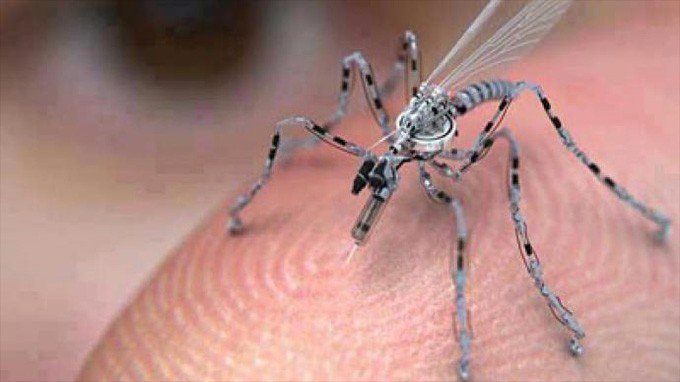
Harvard professors warn ‘privacy is dead’ and predict mosquito-sized robots that steal samples of your DNA
—but predictably, it was the front end of that sentence that got under my skin. And on the off chance that the headline hadn’t hammered the point home with sufficient force, the bullet points beneath beat the horse to death:
- Researchers told Davos that privacy is already non existent
- Say technology will allow governments and insurance firms to steal DNA
- Also claims the same technology could help eradicate disease
It’s a tired old story— or at least it seems old, possibly because we’ve heard it so many times. Hell, you’ve heard it repeatedly even here: about that story in Wired, the self-proclaimed cutting-edge voice of the tech-savvy, offering up a token lament for the Cloud’s lack of security before telling us all that there’s no going back so we might as well just get used to it. (Late-breaking update: and sweet smoking Jesus, they’re at it again.) Robert Sawyer debating at the Gallen Symposium, leading off with Scott McNealy’s infamous claim that “You already have zero privacy: get over it”, and proceeding to claim that this was a good thing, something that would make the world a better place. Not to mention our old buddy David Brin. But the Daily Mail’s bullet points— and the story that followed— show pretty much the textbook talking points you’ll find in all such arguments:
- You have no privacy;
- There’s no way to regain your privacy;
- But hey, that’s actually a good thing! Think of all the great travel recommendations Google will be able to serve up, once it can read your mind! Think of all the diseases we can cure and contain, now that everyone is being tracked! Think of all the lost puppies we can find!
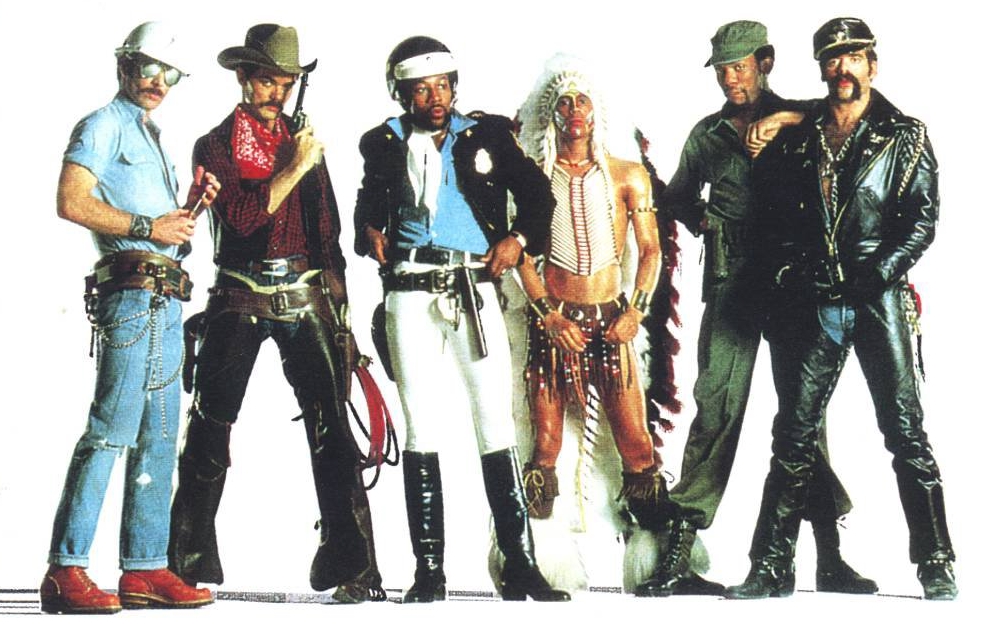
Third one from the left, actually.
It’s especially easy, these days, to believe the first two points at least. Over in the UK, after the overwhelming rejection of the so-called “Snooper’s Charter”— a law that would have forced ISPs to monitor their customers’ online activity and turn it over to pretty much anyone who dressed up like one of the Village People— politicians are still trying to sneak the same damn provisions into different pieces of legislation, hoping that one of these days no one will notice. Here in Canada, the Harper Administration has just tabled a new Bill to Keep Us Safe From Jihadists by, among other things, expanding the surveillance state, reducing civil rights protections, and making it illegal to “promote terrorism” online (which is especially troubling when you remember that “terrorists” is a term that now includes environmental activists). I was chuffed, earlier this week, to see Techdirt harken back to the fears I posted last October on this very ‘crawl. I only wish it had been under happier circumstances.
Naturally, all this extra power comes 100% Oversight-free!, which should be a surprise to no one. What’s more interesting, perhaps, is that CSIS (Canada’s spy agency) is not getting any extra money to go along with the bigger club. They’ve already admitted that they don’t have anywhere near the budget to deal with their current watchlist; there’d seem little point in giving them even more tewwowists to spy on when they can’t handle those already on their plate. This has led some to suggest that the bill is more about electioneering than security, that its purpose is to make anyone who opposes it look “weak on terror” in an election year. It’s not really meant to work.
Perhaps. But that presupposes that Islamic extremists are actually the target of the legislation, and not just the pretext. You don’t need a greatly expanded budget if you’re going after, for example, Amnesty International activists. Or pipeline protestors.
Plenty of people have called Harper evil. I don’t know of anyone who ever called him stupid.
Meanwhile, down in the US— the country that started it all, with its pervasive and mind-boggling surveillance of friend and foe alike— those in power are finally talking about passing laws to rein in unchecked— well, encryption, actually. Because they don’t like it when they can’t spy on us, and they especially don’t like it when companies like Apple and Google— late to the party as they may be— finally wake up to the fact that there are better ways to attract customers than selling them out to every Sheriff Bubba who knocks at the door without a warrant. They don’t like the fact that end-to-end encryption is catching on, that the system is reconfiguring itself so that admins won’t be physically able to comply with Bubba even if they want to. The FBI wants to ban encryption, at least the gummint-proof kind. The Justice Department fears that giving citizens too much privacy will result in a “zone of lawlessness” in which bogeymen might flourish. “Tor obviously was created with good intentions,” admits Leslie Caldwell, assistant attorney general, “but it’s a huge problem for law enforcement. There are a lot of online supermarkets where you can do anything from purchase heroin to buy guns to hire somebody to kill somebody, there are murder for hire sites.”
It’s the go-to rationale for every peeping tom without a warrant: what if terrorists are planning their next daycare-center bombing on bittorrent? What if the plans for the next Parliament shoot-up are right there in someone’s iPhone and we can’t see them? Don’t you know that TOR is 80% pedophiles?
Won’t someone think of the children?
You have to admit: as hypothetical arguments go, it’s pretty much unassailable. If we can’t unlock all the doors, how do we stop evildoers from plotting behind them? The problem is that this argument applies as much to literal doors as to metaphoric ones. There’s no difference in logical structure between Tewwowists might be plotting via encrypted emails and Tewwowists might be plotting in your kitchen. If you agree that the spectre of potential evildoing is sufficient cause to let the government go through your mail without a warrant, how can you then deny them the right to check out your basement on a whim? Are evil deeds are any less nefarious when plotted offline?
It’s worse than a slippery slope. It’s a slippery step-function; the first concession gives everything away.
Which leads to a simple metric I use to assess the claims put forth by wannabe surveillers: simply relocate the argument from cyber- to meatspace, and see how it holds up. For example, Leslie Caldwell’s forebodings about online “zones of lawlessness” would be rendered thusly:
Caldwell also raised fresh alarms about curtains on windows and locks on bathroom doors, both of which officials say make it easier for criminals to hide their activity. “Bathroom doors obviously were created with good intentions, but are a huge problem for law enforcement. There are a lot of windowless basements and bathrooms where you can do anything from purchase heroin to buy guns to hire somebody to kill somebody”
If you remain comfortable with such arguments even when brought down to earth— well, enjoy the Panopticon. I know a few SF writers whose work you might like.
And yet, oddly, I take heart from these things.
I take heart from the fact that the the Free World is trying to curtail freedom at every turn. I take heart from the endless attempts of the UK, the US, and Canada to pry into our private lives and put webcams in our toilets (because you never know when someone might try to avoid prosecution by flushing a bag of coke down the john, you know). I take heart from PRISM and the Snooper’s Charter and Bill-C-whatever-number-they’re-up-to-this-week— because they put the lie to those stories in Wired and the Daily Mail and the New York Times, they put the lie to all those journos and pundits who would tell us that privacy is dead. It gives me hope.
Because if privacy is really dead, why are so many still trying so hard to kill it?







:strip_icc(1)/https%3A%2F%2Fs3.amazonaws.com%2Fpolicymic-images%2Fi7unxz7oioe4r2mo712oqxue8k1akffnm99jh11zs58mgb6b5brec1cwtu9o04co.jpg)