Shared posts

03 Jan 15:09

Telecom Monopolies Are Exploiting Crappy U.S. Broadband Maps To Block Community Broadband Grant Requests

by Karl Bode

We've noted repeatedly that despite a lot of breathless rhetoric about America's "quest to bridge the digital divide," U.S. government leaders still don't actually know where broadband is or isn't available. Shoddy broadband mapping has generally been a good thing for regional U.S. telecom monopolies, who not only have been allowed to obscure competition gaps (and the high prices and poor service that result), but hoover up an endless gravy train of subsidies and tax breaks for networks that...mysteriously...always wind up half deployed. Our failure to measure deployment success has been painfully, repeatedly exploited.

But there are other ways that incumbents exploit our ongoing failure to map broadband to their advantage. Case in point: roughly 230 U.S. communities have applied for broadband grants being doled out as part of the National Transportation Infrastructure Agency (NTIA)'s $288 million Broadband Infrastructure Program. But when a town or local cooperative/utility/public-private partnership looking to build its own, better broadband network applies for the grant, they're facing baseless challenges by ISPs which claim they already serve these areas.

Grafton, New Hampshire, for example, is looking to build its own fiber network after years of market neglect. It had 3,000 of the 4,000 census blocks they applied for grant money for falsely challenged by regional giants Comcast and Charter Spectrum:

"Of the 4,000 census blocks covered by Grafton’s grant application, Coates said that incumbent ISPs challenged 3,000 of them, even those dominated by cemeteries. In the majority of the challenges, telecom giants overstated available speeds and existing coverage, he noted. “My immediate response was that this was them telling us to go boil water,” Coates said. “Here you go, prove that you can do this in these three thousand census blocks. Have fun figuring it out.”

As we've noted, there's a big lobbying push afoot by entrenched monopolies to ensure as little government stimulus money as possible goes toward building out competition to their regional dominance, no matter what that competition looks like (cooperatives, utilities, local governments, smaller private ISPs, private/public partnerships). To justify their obstruction to local community grants, big ISPs like Comcast and Charter point to FCC broadband maps they know aren't accurate to insist nothing needs to be done. That perpetuates the sub-par service and high prices created by monopolization.

Except the FCC's maps routinely overstate both coverage and speeds, and have for decades. The FCC's methodology also declared (until only recently) that an entire census block is "served" with broadband, if an ISP claims it can serve just one home in that census block. While there have finally been some meaningful improvements to FCC mapping pushed through Congress, it's still going to be several years (and significantly more funding) before most of those fixes can be properly implemented. Some states have developed their own alternative mapping solutions, but for many, engaging in a bureaucratic battle with deep-pocketed monopolies to disprove their coverage claims isn't financially viable.

While the NTIA has made some progress of its own on mapping, it's still being tasked with doling out $42 billion in additional broadband grants as part of the recently passed infrastructure bill -- despite still not having an entirely accurate picture of the problem it's trying to fix. That is, and will continue to be, exploited by entrenched monopolies like AT&T, Comcast, Charter, or Verizon which have not only fought against better mapping for years (knowing more accurate data would only spur calls for reform), but have a vested interest in fighting tooth and nail against any effort to disrupt the uncompetitive status quo.

01 Jan 17:01

Children’s hospitals are filling nationwide amid tidal wave of omicron

by Beth Mole
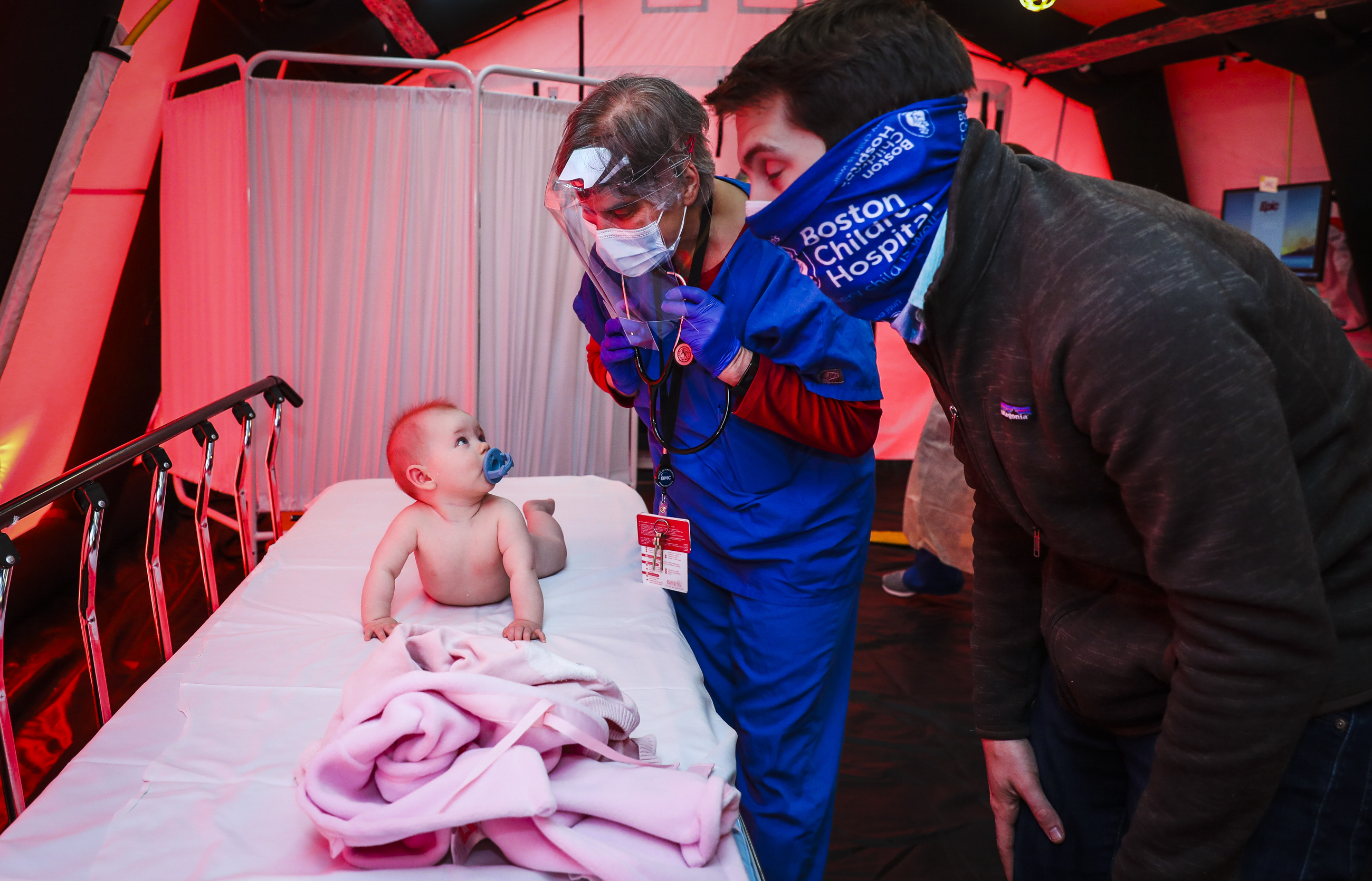
A Boston Medical Center pediatrician performs a checkup on an 8-month-old while her father provides her comfort in a pediatrics tent set up outside of Boston Medical Center in Boston on April 29, 2020.

Enlarge / A Boston Medical Center pediatrician performs a checkup on an 8-month-old while her father provides her comfort in a pediatrics tent set up outside of Boston Medical Center in Boston on April 29, 2020. (credit: Getty | Boston Globe)

The number of children hospitalized with COVID-19 in the US is skyrocketing amid the omicron wave, with new admissions up 66 percent in the last week and now past the all-time record high for the pandemic.

The surge in pediatric hospitalizations comes amid a record-smashing vertical rise in overall cases, which is being driven by the ultratransmissible omicron coronavirus variant. Though preliminary data continues to link omicron waves to milder disease and fewer hospitalizations compared with previous variants, it's still unclear if the variant is intrinsically less virulent in people generally, and specifically children, specifically.

Laboratory studies continue to indicate that omicron causes milder lung disease in rodents than previous variants. But, mild omicron waves in humans have largely been seen in populations with high levels of preexisting protection from prior COVID-19 infection and/or vaccination. Such populations are expected to have less severe disease overall.

Read 6 remaining paragraphs | Comments

30 Dec 17:48

Tesla is recalling over 475,000 Model 3 and Model S vehicles

by Eric Bangeman
Tesla Model 3

Enlarge (credit: Jonathan Gitlin)

Tesla is recalling over 475,000 of its vehicles because of a pair of safety issues. According to the National Highway Traffic Safety Administration, 356,309 Tesla Model 3s covering model years 2017-2020 are being recalled due to problems with the rearview cameras. The 2017-2020 Model S is the other target with 119,009 of those BEVs due to a problem with the front hood latch. 

For the Model 3, the NHTSA says that the problem comes from a cable harness for the rearview camera, which "may be damaged by the opening and closing of the trunk lid, preventing the rearview camera image from displaying."

On the Model S, problems with the latch for the front hood may cause the "frunk" to open while the vehicle is in motion and without warning, which would obstruct the driver’s visibility, increasing the risk of a crash."

Read 2 remaining paragraphs | Comments

29 Dec 18:54

Despite omicron, Covid-19 will become endemic. Here’s how.

by Sigal Samuel
A health care worker hands out a Covid-19 test kit at a drive-through testing site in Riverside, California, on December 21. | Gina Ferazzi/Los Angeles Times via Getty Images

The variant has changed how we get from “pandemic” to “endemic,” but that doesn’t mean we’re back to square one.

With omicron rates soaring, you may find yourself despairingly asking when — or even if — this pandemic is ever going to end.

The good news is that it will end. Experts agree on that. We’re not going to totally eradicate Covid-19, but we will see it move out of the pandemic phase and into the endemic phase.

Endemicity means the virus will keep circulating in parts of the global population for years, but its prevalence and impact will come down to relatively manageable levels, so it ends up more like the flu than a world-stopping disease.

For an infectious disease to be classed in the endemic phase, the rate of infections has to more or less stabilize across years, rather than showing big, unexpected spikes as Covid-19 has been doing. “A disease is endemic if the reproductive number is stably at one,” Boston University epidemiologist Eleanor Murray explained. “That means one infected person, on average, infects one other person.”

We’re nowhere near that right now. The highly contagious omicron variant means each infected person is infecting more than one other person, with the result that cases are exploding across the globe. Nobody can look at the following chart and reasonably conclude that we’re in endemic territory.

 Our World in Data

Looking at this data might make you wonder about some of the predictions that were floating around before omicron came on the scene. In the fall, some health experts were saying that they thought the delta variant might represent the last big act for this pandemic, and that we could reach endemicity in 2022.

The outlook is more uncertain now. So how should you be thinking about the trajectory and timeline of the pandemic going into the new year? And how should omicron be shaping your everyday decision-making and risk calculus?

When we’ll know we’re finally in “endemic” territory

Here’s one big question you’d probably like the answer to: Does omicron push endemicity farther off into the future? Or could it actually speed up our path to endemicity by infecting so much of the population so swiftly that we more quickly develop a layer of natural immunity?

“That is really the million-dollar question,” Angela Rasmussen, a virologist at the University of Saskatchewan in Canada, told me. “It’s really hard to say right now.”

That’s partly because endemicity isn’t just about getting the virus’s reproductive number down to one. That’s the bare minimum for earning the endemic classification, but there are other factors that come into play, too: What’s the rate of hospitalizations and deaths? Is the health care system overburdened to the point that there’s a precipitous space or staffing shortage? Are there treatments available to reduce how many people are getting seriously ill?

In general, a virus becomes endemic when we (health experts, governmental bodies, and the public) collectively decide that we’re okay with accepting the level of impact the virus has — that in other words, it no longer constitutes an active crisis.

With omicron surging right now and many governments reimposing stricter precautions as a result, it’s clear we’re still in crisis mode. “But so much depends on the burden it’ll place on the health care system,” Rasmussen said. “And that’s going to be different from community to community.”

Even though omicron so far seems to result in milder disease than previous variants, a massive increase in cases could still lead to a big increase in hospitalizations and deaths. That could further stress health care systems that are already in dire straits. That’s why Rasmussen concludes that “omicron certainly has the potential to delay endemicity.”

But there are also some hopeful things to bear in mind. “The incredible number of infections is building up population-level immunity. That’ll be crucial in terms of muting future waves,” said Joshua Michaud, associate director for global health policy at the Kaiser Family Foundation.

In addition to omicron potentially building up some immunity in the vast numbers of people who are becoming infected with it, vaccinations and boosters are also contributing to “a significant immunity wall that’s being built,” he said. But he cautioned that “that’s a wall to the variants we’ve seen already. There could be another variant which could evade immunity down the road.” Some experts are already conjecturing that getting infected with omicron may not give you much cross-protection against other variants, though a small early study showed positive signs on that front.

This is why Ramussen says “the key determinant” of when the pandemic ends is how long it will take to make vaccines accessible around the world (and to combat ongoing vaccine hesitancy). Currently, we’re not vaccinating the globe fast enough to starve the virus of opportunities to mutate into something new and serious. “If only a very small proportion of people are getting access to vaccines, we’re just going to keep playing variant whack-a-mole indefinitely,” Rasmussen said.

In the meantime, we do have another ace up our sleeves, which will hopefully also become available around the globe sooner rather than later: new treatments like Pfizer’s paxlovid, recently approved by the Food and Drug Administration, and Merck’s molnupiravir, also FDA approved — that reduce the rates of hospitalization and death from Covid-19.

“Very important in the context of endemicity is the antiviral pills,” Michaud said. “If we have those tools, we’re looking at a very different state going into 2022. People shouldn’t feel like we’re back to square one.”

We’re not back to March 2020. But it makes sense to modify our behavior during the omicron surge.

Dire headlines notwithstanding, we’re in much better shape than we were at the start of the pandemic. We’ve discovered a lot more information about how Covid-19 works. We’ve manufactured effective masks, vaccines, boosters, treatments, and rapid tests.

We’ve also learned that having to hunker down comes at a real cost to our mental and economic health and wellbeing. The cost of a strict lockdown may have been worthwhile in March 2020, but by and large, that’s not what US experts are advising now.

They are, however, urging us to take more precautions than we might have been in the weeks leading up to omicron.

Take Bob Wachter, for example, the chair of the department of medicine at the University of California San Francisco. In the fall, he shifted from being very cautious about Covid-19 to taking some more calculated risks, including dining indoors at restaurants and even hosting an in-person medical conference with 300 attendees. But now that omicron is causing cases to skyrocket, he’s being more cautious again.

“I see the next few months as a time to fortify one’s safety behaviors,” he wrote on Twitter. Here’s how he explained his reasons:

The other experts I spoke to agreed that now is a time to limit risky activities.

“I had taken my foot off the brakes in terms of my own behavior. But I’ve now started to put it on again,” Michaud told me. “I canceled plans to go to New Jersey to visit my family over Christmas. I’m avoiding more indoor environments. As of now, it does make a lot of sense to me to take additional steps to prevent yourself and those around you from getting infected.”

After the omicron wave passes, he said, he envisions relaxing precautions again. Modeling suggests that omicron could peak in mid- to late January in the US, with case rates steeply declining — and activities becoming correspondingly safer again — in February.

Rasmussen is also modifying her behavior in light of omicron, though she emphasizes that’s not the same as going back to a spring 2020-style lockdown. Although she canceled an international flight over the holidays, she still felt comfortable going over to her colleague’s house for a Christmas meal. That’s because she and they had vaccinations, boosters, rapid tests, and great ventilation working in their favor.

“We have a lot more tools at our disposal for dealing with this than we did in March 2020,” she said.

We’ll know endemicity has arrived when those tools — and the long, painful experience of the pandemic itself — has enabled us to fully adapt to the virus, as the virus has adapted to us.

Update, January 1, 2022: This story has been updated to reflect new evidence on the severity of omicron illness.

29 Dec 17:05

Omicron Is Smashing Case Records in DC, Maryland, and Virginia

by Andrew Beaujon
DC, Maryland, and Virginia all broke records for the number of positive coronavirus cases this week. DC’s daily average of cases was 2,071 on Tuesday, up more than 900 percent over the average two weeks ago. Maryland’s daily average of cases was 6,847 Tuesday, up more than 400 percent over two weeks ago. Virginia’s daily […]
28 Dec 20:47

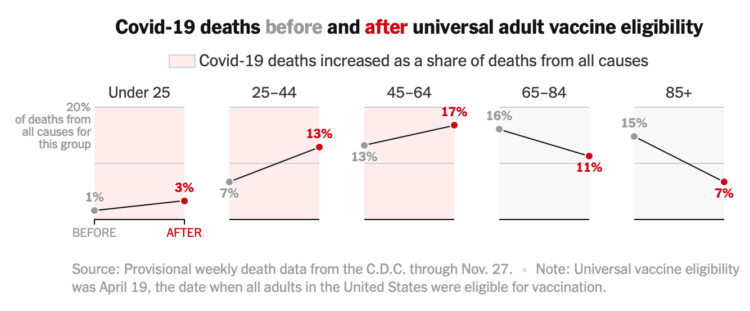
Covid-19 mortality before and after vaccine eligibility

by Nathan Yau

Denise Lu and Albert Sun for The New York Times show the shifts in Covid-19 deaths among different demographic groups:

The change in death rates among groups is starker by race and ethnicity, and the death rate has risen particularly sharply for middle-aged white people. Covid-19 now accounts for a much larger share of all deaths for that group than it did before vaccines were widely available.

In a series of slope charts, each multiple shows a group, and the background color indicates an increase (red) or a decrease (gray) in deaths among that group.

Tags: coronavirus, New York Times

28 Dec 18:57

CDC draws criticism for shorter COVID quarantine, isolation as omicron bears down

by Beth Mole
Travelers wait in line to check-in at LaGuardia Airport in New York, on December 24, 2021. -On Christmas Eve, airlines, struggling with the Omicron variant of Covid-19, have canceled over 2,000 flights globally, 454 of which are domestic, into or out of the US.

Enlarge / Travelers wait in line to check-in at LaGuardia Airport in New York, on December 24, 2021. -On Christmas Eve, airlines, struggling with the Omicron variant of Covid-19, have canceled over 2,000 flights globally, 454 of which are domestic, into or out of the US. (credit: Getty | YUKI IWAMURA)

As the ultratransmissible omicron coronavirus variant bears down on the US, the Centers for Disease Control and Prevention on Monday made a controversial decision to ease COVID-19 isolation and quarantine rules.

The country's omicron surge has sent graphs of case counts vertical, and is already causing severe strain on health systems, shuttering businesses, and wreaking havoc on holiday travel and festivities. The US is currently averaging over 243,000 new COVID-19 cases per day, near the country's all-time high of an average just over 250,000 per day set in early January 2021. Still, federal officials and public health experts say this is only the beginning of omicron's towering wave, which may not peak until next month.

The CDC's decision Monday is intended to ease the economic burden of the skyrocketing cases and follows an accumulation of data suggesting that infectiousness tends to wane two to three days after the onset of symptoms. However, some public health experts called the new rules "reckless" for not incorporating testing requirements.

Read 12 remaining paragraphs | Comments

27 Dec 20:00

Why so much Obama-era pop culture feels so cringe now

by Constance Grady
Lin-Manuel Miranda and the cast of Hamilton on Disney+. | Courtesy of Disney

How Hamilton, Parks and Recreation, and Harry Potter lost cultural cachet.

One of the oddities of getting old is bearing witness as the pop culture you used to think would always be beyond reproach slowly slides out of favor. As millennials age into the solid middle of the culture here at the end of 2021, they’re getting to experience that disorienting slip with some of the most beloved pop culture of their youths, and most particularly the pop culture that was celebrated during the presidency of Barack Obama.

Sunny, wholesome, nominated-for-16-Emmys Parks and Recreation is now widely considered an overrated and tunnel-visioned portrait of the failures of Obama-era liberalism. Iconic and beloved Harry Potter is the neoliberal fantasy of a transphobe. Perhaps most dramatic of all is the rapid fall of Hamilton and its creator and star, Lin-Manuel Miranda, whose reputation is now one of embarrassing earnestness.

Gossip Girl, hyper-aware in all its incarnations of the preferred status symbols of mean teens, sounded the death knell there. The 2021 HBO revival of Gossip Girl sees its cast of wealthy Upper East Side teenagers enjoying a night out at the Public Theatre, where Hamilton first premiered off-Broadway in 2015.

“You know, I saw Hamilton here with Max, before it went on Broadway,” brags one of the teens, hoping to impress his cool new girlfriend Zoya. “You into that play?”

Zoya, the wokest of the group and the one with the most sophisticated literary taste, sighs deeply and rolls her eyes. “No doubt it’s a work of art,” she allows. “But …”

Zoya doesn’t finish her sentence. She doesn’t have to; by now, the critiques of Hamilton are so well established that the audience can fill in the blanks on its own: Hamilton, according to current conventional cool-person wisdom, glorifies the slave-owning and genocidal Founding Fathers while erasing the lives and legacies of the people of color who were actually alive in the Revolutionary era. It is no longer considered to be self-evidently virtuous or self-evidently great.

Zoya’s heavy sigh signals something about Hamilton’s current status, too. It proves that the show is no longer cool.

That’s true of all the works and public figures I’m discussing here. Political critiques have their place, but the real sign that the shibboleths of millennial pop culture have lost their cultural capital is that right now, they mostly just feel kind of cringe.

Lin-Manuel Miranda gazing out at the audience with misty eyes at the end of Hamilton? Cringe. Grown adults debating their Hogwarts houses? Cringe. An article in which fictional character Leslie Knope shares words of comfort after Donald Trump’s 2016 election on this very website? So so so cringe.

Part of the decline these properties have experienced is simply a natural response to overexposure. They reached a level of cultural saturation that made them inescapable, and a backlash inevitably ensued. Yet there’s also something about precisely which relics of Obama-era pop culture have come in for special reviling in 2021. They’re not necessarily associated with Obama himself.

Instead, they are all media that tends to celebrate people who work through the grind of bureaucracy to make their great achievements; media much venerated for their identity politics of representation; media with a firm but vague political identity of liberal centrism.

They are, in short, media that celebrates the qualities associated with our collective pop cultural understanding of Hillary Clinton.

So as 2021 comes to a close, and we have begun to grasp what President Joe Biden’s America looks like, let’s take a step back. We can trace which formerly beloved works of pop cultural liberalism have fallen out of favor in the tumultuous years since 2016, which ones have risen up to take their place, and come to understand what all of the above can tell us about how we’re thinking of America right now.

On the eve of the 2016 election, left-leaning pop culture was celebrating hard work and representation that mattered. Hillary Clinton was its poster child.

Parks and Recreation ended in 2015, and Hamilton premiered in the same year. Harry Potter and the Cursed Child, with its much-heralded Black Hermione, premiered in 2016, offering a highly anticipated extension of a series that had been foundational to the Harry Potter generation as a story of diversity and difference conquering racism and small-minded conformity. So on the eve of the 2016 US election, there was a clear archetype operating at full strength in American popular culture: a sincere celebration of playing by the rules, working hard within the system, and being rewarded with the chance to smash through the barriers of systemic discrimination. And no one epitomized that archetype better than Hillary Clinton as pop culture understood her.

To be clear, when I’m talking about our pop cultural understanding of Hillary Clinton, I don’t mean the actual Hillary Clinton, the politician who published real policy papers and had an interesting if fraught voting record. Nor am I talking about the shrill, castrating harpy (or villain in a pedophile-ring conspiracy theory) that many on the right talk about when they use Hillary Clinton’s name. I mean the liberal caricature of Hillary Clinton, the flat but far-reaching portrait of Hillary that dominated the left-wing political ecosystem for decades.

When pop culture celebrated that idea of Hillary Clinton, it was celebrating some very specific traits: She was celebrated for doing hard, unglamorous work. She was admired for grinding through dull bureaucratic processes to come to a reasonable political compromise, for being pragmatic rather than inspirational. “Bitches get stuff done,” said Tina Fey of Hillary Clinton on Saturday Night Live in 2008. Clinton does “the work of retail politics,” wrote Rebecca Traister for New York magazine in 2016, “like an Olympic athlete.”

In tandem, pop culture properties like Hamilton, Parks and Recreation, and Harry Potter celebrated the heroes who made their way through boring political red tape to enact true change.

“How do you write like you’re running out of time?” asks a wonderstruck Aaron Burr in Hamilton as piles of parchment signifying the groundwork for a new economic system accumulate around the musical’s title character. Parks and Recreation frequently returned to the sight gag of Leslie Knope plowing her way through a stack of binders that contained everything she needed to make some tiny, ever-so-meaningful tweak to one of the parks of Pawnee, Indiana. Harry Potter repeatedly celebrated the anxious over-preparedness of Hermione Granger and her constant refrain of, “Honestly, am I the only one who’s ever read Hogwarts: A History?”

So it came to be fashionable, during the 2016 election, to draw recurring parallels between Hillary and all of her hard-working pop cultural analogues. Hillary Clinton is the Hermione of politics, commenters argued. Or, in fact, she is Leslie Knope, which means the haters need to get over themselves. Clinton herself quoted Hamilton when she accepted her nomination at the 2016 Democratic National Convention, and then Lin-Manuel Miranda rewrote the lyrics to “The Ten Duel Commandments” for a Hillary fundraiser.

Besides being celebrated for her work ethic, Hillary was also celebrated for the historic nature of her identity. She was the first woman to win the nomination of a major party for the presidency. She was the first woman to win the popular vote for the presidency. Regardless of where her politics lay, the sheer fact of her existence was radical and boundary-breaking.

Likewise, Hamilton, Parks and Recreation, and Harry Potter were all celebrated for the symbolic force of their politics of representation. Hamilton had actors of color playing the Founding Fathers in a move that was, New York magazine’s 2015 review declared, “more than colorblind; it’s a key to the story as it projects into the future.” Parks and Rec was lauded for the “quietly consistent argument for feminism” in its portrayal of an ambitious female politician. Harry Potter had earned feminist credit for its strong female characters, the argument being that “the Harry Potter universe is full of take-charge women and supportive men who don’t let a silly thing like gender constructs get in the way of their fight against the evil forces of the world.”

Then Donald Trump became president instead of Hillary Clinton, and everything changed.

Since the 2016 election, cultural capital has ebbed away from Clinton and the pop culture most associated with her

In the five years since Hillary Clinton’s defeat at the hands of Donald Trump, pop culture’s support of her — and of her specific hard-working archetype — has waned.

Pop culture was still interested in wholesome stories about good people during the Trump era. Certainly there were still plenty of antiheroes and villains; The Handmaid’s Tale made Trump’s misogyny the leering ogre at the center of its dystopia, and Succession’s cynical Roy family views the world through the same power-above-all lens that Trump did. But there were also shows like The Good Place (from Parks and Recreation showrunner Michael Schur) and Netflix’s revamped Queer Eye, both of which made their debuts to critical acclaim during this era.

What distinguished the wholesome pop culture of the Trump era was that it seemed to be starting from zero. While pop culture’s Hillaries tended to be presented as fully-cooked good people whom we could all emulate, in the Trump era, wholesome pop culture tended to center itself around fundamentally flawed people who were trying to be good, and not always succeeding. The protagonists of The Good Place started in hell and had to work their way painfully up to heaven over the course of four seasons. The heroes of Queer Eye all had some major personality flaw or emotional obstacle to try to conquer over the course of each episode.

Moreover, the pop culture of the Trump years wasn’t always sure what goodness itself would look like. The Good Place held up one moral philosophy after another for examination and often found them wanting. Queer Eye could not always offer its subjects a convincing redemption. It was as though we were in an era in search of an ideal.

And when we came out the other side, pop culture seemed to have concluded that it wasn’t going back to the Hillary role model.

Clinton’s biggest moment in 2021 pop culture came courtesy of American Crime Story: Impeachment — which, while sympathetic, focused less on Clinton’s accomplishments than on her humiliations at her husband’s hands.

Meanwhile the real tell, as ever, remains the mean teens.

Early on in HBO Max’s buzzy The White Lotus (not a show about pop culture liberalism per se, but very much a show about cultural capital), two terrifyingly cool college students begin gossiping knowingly to each other about Hillary Clinton. “Like she actually cared about the working poor,” one of them says dismissively.

“She was a neoliberal war hawk,” returns the other, Olivia. “She was a neolib and a neocon.”

“Oh. Oh, is that the trendy thing they’re teaching now, to hate on Hillary Clinton?” demands Olivia’s mother, a high-powered executive in her 50s played by Connie Britton. “Hillary Clinton is one of the most influential women of the last 30 years, and many women in my generation very much admire Hillary Clinton.”

“Mom, don’t get triggered,” Olivia says. She adds sarcastically, “We all love Hillary Clinton.”

Like Zoya with Hamilton, Olivia doesn’t need to explain why she doesn’t like Hillary Clinton. The fact of her not liking Hillary signifies Olivia’s cool, her progressive politics. It shows that she has her finger on the pulse. Her mother’s knee-jerk defense of Hillary, meanwhile, shows how behind-the-times she is.

Hillary lost the election to Donald Trump. She and her hard work and her commitment to navigating the constraints of the system and her politics of representation did not save us. In response, the culture has turned on her. In America’s popular imagination, she’s become a symbol of all the worst impulses of the Democratic Party establishment: both a neolib and a neocon. So the art to which Hillary was continually compared throughout the 2016 election is reviled now, too.

Hamilton is understood to use its color-conscious casting to “whitewash” the slave-owning founding fathers. Harry Potter, fans note to each other significantly, “was a trust fund jock who became a cop and married his high school sweetheart,” and moreover his author is transphobic. Parks and Recreation is a symbol of the failure of liberalism in the face of Donald Trump.

“That’s what Parks and Rec did for most of its run, assuaging the anxieties of managerial-class liberals by telling them everything would be okay if we trusted the grownups — the Obamas, the Clintons, the Knopes — to look out for us,” wrote Timothy Shenk for Dissent in 2019. Shenk argued that Parks and Recreation’s finale, which flashes forward into the future all the way up to 2048, ignored America’s increasingly unstable politics to assure fans that at least Leslie Knope was going to live a happy life: “By the end of the show, optimism meant a future where public services are gutted, a handful of corporations dominate the economy, and all your favorite characters are doing just splendidly.”

I am not here to argue that these properties are all definitively regressive works of neoliberal propaganda and that there is no other way of understanding them. It’s still possible to have more radical interpretations of all of these works, perhaps especially of Hamilton. It’s also still possible to respect the achievements of Hillary Clinton. But the pendulum of cultural opinion has swung out of their favor.

It used to be that you demonstrated your cred by saying you saw Hamilton at the Public. Now you demonstrate your cred by saying you have your doubts about Hamilton’s racial politics.

The new face of mainstream American pop cultural liberalism is Ted Lasso

I also don’t want to argue that this shift away from Hillary and her analogues means mainstream America is moving toward embracing a radical new leftism in its popular culture. What I think it actually means is that pop culture’s understanding of mainstream political virtue has shifted toward a new model, one that is slightly, tellingly different from the one Hillary symbolized.

One of the most discussed new shows of the past couple of years is the Apple TV+ sitcom Ted Lasso. It is in many ways a direct descendant of Parks and Recreation: a sitcom animated by the same sense of sweetness, offering viewers the same chance to luxuriate in a world of niceness.

But while Parks and Rec was organized around a hard-working and ambitious blonde woman, played by an actress who had played Hillary Clinton on SNL, Ted Lasso has a different anchor.

The titular Ted Lasso is an American college football coach who moves to England to coach a professional soccer team, and he is the moral center of his show. Ted is a folksy, avuncular figure. He is a white man who understands the problems with white men, who is working hard to redeem the rest of his gender. He is able to walk into a football franchise that has been run into the ground by poor leadership and turn it around again, not with dull paperwork and rule-following — both of which escape him — but by the sheer force of his vision. His superpower is his empathy, and he is much admired for his ability to find common ground with some of his enemies, as well as his willingness to declare others (notably Rebecca’s wicked ex-husband Rupert) beyond help.

He is even played, like Leslie Knope, by an actor who played a prominent politician on SNL; Jason Sudeikis used to be SNL’s Biden.

As both the backlash toward Ted Lasso’s second season and Biden’s plummeting approval ratings both demonstrate, our patience with this archetype is not infinite. Still, right now, Ted Lasso is the collective liberal fantasy of who Joe Biden could be if we maybe all wished hard enough. He’s replaced the collective fantasy of who Hillary Clinton could be after she failed to best Donald Trump. And only time will tell us if we’ll end up repudiating him — and all his pop cultural analogues — too.

27 Dec 19:13

Smokers gave a home to bacteria that now sicken people with cystic fibrosis

by Ars Contributors
Image of a smoking cigarette.

Enlarge (credit: Peter Dazeley / Getty Images)

Smoking can really clog up the lungs, even for people who’ve never been near a cigarette. Turns out that smoking habits from the early 1900s are still inflicting damage—not on tobacco users or their families, but on people with cystic fibrosis.

Cystic fibrosis (CF) is a hereditary condition that makes afflicted people’s mucus thick and sticky. Their lungs become breeding grounds for bacteria that healthy people’s immune systems easily defeat. People with CF often take antibiotics to prevent lung infections, but antibiotics don’t kill everything. A bacterium called Mycobacterium abscessus (M. abscessus) is resistant to many common drugs, and it has become a plague in the CF community over the last couple of decades.

A few years ago, scientists began investigating how the plague originated. By analyzing M. abscessus genomes collected from people around the world, the researchers traced the bacterium’s spread over the last century. They found that decades before the 1950s—before medical advances let people with CF survive past infancy—M. abscessus was already spreading around the globe, and an old public health enemy was to blame. Smokers’ lungs created a reservoir where the pathogen could live and reproduce, a reservoir that quickly spilled over when people with cystic fibrosis began living into adulthood.

Read 16 remaining paragraphs | Comments

27 Dec 19:12

3 Out Of 4 Americans Support Community Broadband, Yet 19 States Still Ban Or Hinder Such Networks

by Karl Bode

For years a growing number of US towns and cities have been forced into the broadband business thanks to US telecom market failure. Frustrated by high prices, lack of competition, spotty coverage, and terrible customer service, some 750 US towns and cities have explored some kind of community broadband option. And while the telecom industry routinely likes to insist these efforts always end in disaster, that's never actually been true. While there certainly are bad business plans and bad leaders, studies routinely show that such services not only see far better customer satisfaction scores than large private ISPs, they frequently offer better service at lower, more transparent pricing than many private providers.

Undaunted, big ISPs like AT&T and Comcast have waged a multi-pronged, several decades attack on such efforts. One, by writing and buying protectionist laws in dozens of states either hamstringing or banning cities from building their own networks, often in cases where private ISPs refuse to expand service. Two, by funding economists, consultants, and think tankers (usually via proxy organizations) happy to try and claim that community broadband is always a taxpayer boondoggle -- unnecessary because private sector US broadband just that wonderful.

Of course if you ask actual American consumers, they generally support towns and cities building better, faster broadband networks if they've been historically underserved. And they most certainly don't approve of Comcast buying state laws that eliminate their voting right to make local infrastructure decisions for themselves. A recent Consumer Reports survey found that three out of four Americans support community broadband efforts:

"Three out of four Americans feel that municipal/community broadband should be allowed because it would ensure that broadband access is treated like other vital infrastructure such as highways, bridges, water systems, and electrical grids, allowing all Americans to have equal access to it."

The survey also found that the subject somewhat splits along partisan lines, despite not technically being a partisan issue (more on that in a second):

"A larger percentage of Democrats (85%) than Independents (74%) and Republicans (63%) say municipal/community broadband should be allowed."

Here's where I'll note that wanting to maintain your local voting rights to make infrastructure decisions for yourselves isn't really a partisan issue. Wanting better broadband isn't a partisan issue. A disdain for regional monopolies like Comcast isn't partisan. Most community broadband networks have been built in conservative cities (the most popular being Chattanooga). The subject is often only partisan because regional monopoly lobbyists and policy folks like to frame it that way in policy conversations to sow dissent, stall consensus, and undermine anything that challenges their regional monopoly power.

ISPs could easily derail the movement by offering better, cheaper, faster broadband in more markets. But the reality is they've found it easier and cheaper to throw campaign contributions at state and federal lawmakers, letting them effectively buy laws banning meaningful challenges to their dominance. As a result, 83 million Americans currently live under a broadband monopoly, and in a long line of states, cities and towns have their hands tied when it comes to actually doing something about it.

Having tracked the US telecom sector for a while, most of the exciting progress in the space is happening on the local level. There's a massive grass roots coalition of utilities, co-ops, governments, small ISPs, local businesses, and public/private partnerships doing most of the heavy lifting in this space. And it remains aggressively idiotic that state leaders continue to block such efforts, often under the misleading claim of "market freedom," simply because AT&T, Verizon, and Comcast don't like a challenge or competition.

24 Dec 19:44

Big Tech split leads to demise of Internet Association

by Financial Times
Street sign for K Street, the Wall Street of political influence in the US capital.

Enlarge / Street sign for K Street, the Wall Street of political influence in the US capital. (credit: Bjarte Rettedal | Getty Images)

Growing tensions between Microsoft, Amazon, Alphabet, Meta, and Apple lie behind the death of the Internet Association (IA), the nine-year-old lobby group that was Big Tech’s voice in Washington, according to insiders and industry observers.

The Washington-based group, which dubbed itself the “unified” voice of the internet industry, will shut at the end of the year after both Microsoft and Uber, among others, pulled their financial support, leaving an insurmountable funding gap.

“Our industry has undergone tremendous growth and change,” it said in a statement, adding that its closure was “in line with this evolution.”

Read 24 remaining paragraphs | Comments

24 Dec 19:42

'Anti-5G' Jewelry Found To Be... Radioactive And Dangerous

by Karl Bode

We've noted for years how much of the hysteria surrounding 5G health hazards aren't based on actual science. In fact, 5G in general is arguably less powerful that previous standards; especially millimeter wave 5G, which struggles with distance and wall penetration. Most 5G health freak outs you'll see online are often based on a twenty year old misinterpreted graph that doesn't actually say what folks claim it does. That's not to say it's impossible that cellular technology could be harming human health, just that the evidence we have so far absolutely does not point in that direction.

Of course facts and data aren't particularly popular in the post-truth era, leading to endless continued freak outs over 5G. Some of which have proven notably dangerous to wireless company technicians, who've been increasingly targeted by conspiracy theorists. They've also resulted in a sub-market of grifters, offering "solutions" to a problem that isn't real (see this faraday cage enclosed router, for example).

Some of these grifts have proven to be a bit more harmful to their target audience however. For example the Authority for Nuclear Safety and Radiation Protection (ANVS) in the Netherlands just had to issue a warning that several brands of “quantum pendants” and other “negative ion” jewelry marketed as "anti-5G" were in fact radioactive and dangerous to human health:

"The consumer products tested contain radioactive materials and therefore continuously emit ionizing radiation, thereby exposing the wearer. Exposure to ionizing radiation can cause adverse health effects. Due to the potential health risk they pose, these consumer products containing radioactive materials are therefore prohibited by law. Ionizing radiation can damage tissue, and DNA and can cause, for example, red skin. Only low levels of radiation have been measured on these specific products. However, someone who wears a product of this kind for a prolonged period (a year, 24 hours a day) could expose themselves to a level of radiation that exceeds the stringent limit for skin exposure that applies in the Netherlands. To avoid any risk, the ANVS calls on owners of such items not to wear them from now on."

One "negative ion" band was tested and was found to be emitting 2 microsieverts (or 0.000002 sieverts) of radiation every hour, or the equivalent of five dental X-Rays in a single day.

You'd like to think that people who bought radioactive jewelry to ward off unproven health hazards only to find the jewelry itself was killing them would maybe learn something from the experience, but that's unfortunately not how any of this works. Group think reinforced gibberish belief systems take a lot of time and effort to unwind, if you hadn't noticed by the seeming parade of conspiracy theories that never die.

24 Dec 19:40

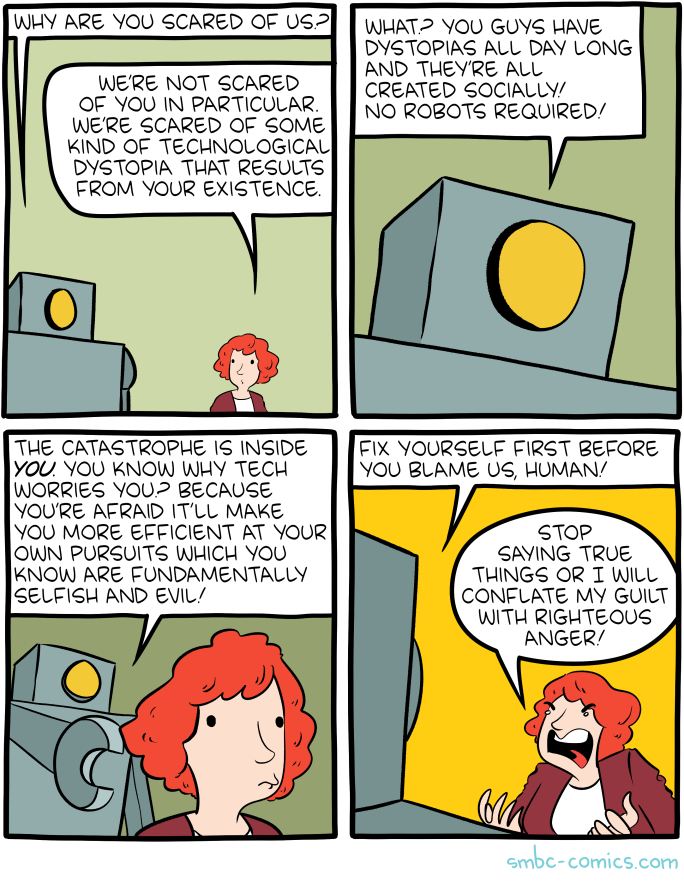
Saturday Morning Breakfast Cereal - Dystopia

by tech@thehiveworks.com


Click here to go see the bonus panel!

Hovertext:
Just registering that I was siding with the robots decades before the Glorious Overthrowing.


Today's News:
23 Dec 17:01

Omicron cases less likely to require hospital treatment, studies show

by Financial Times
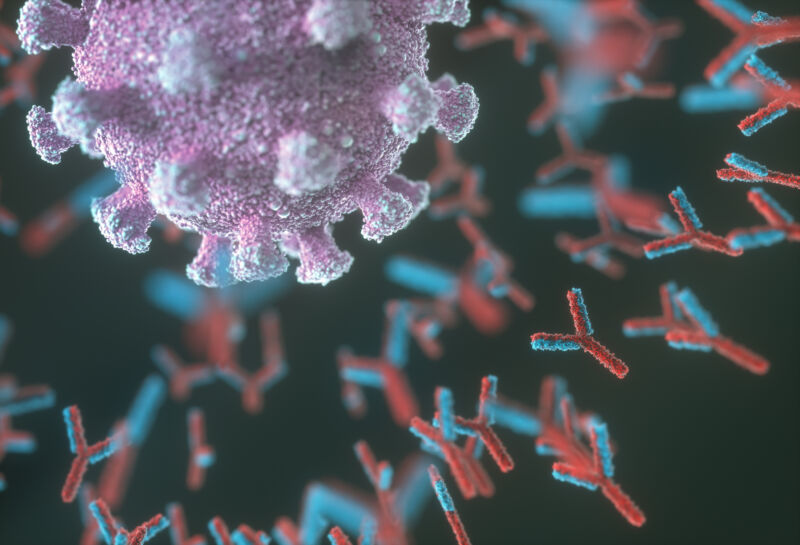
Cartoon of a virus surrounded by small, Y-shaped molecules.

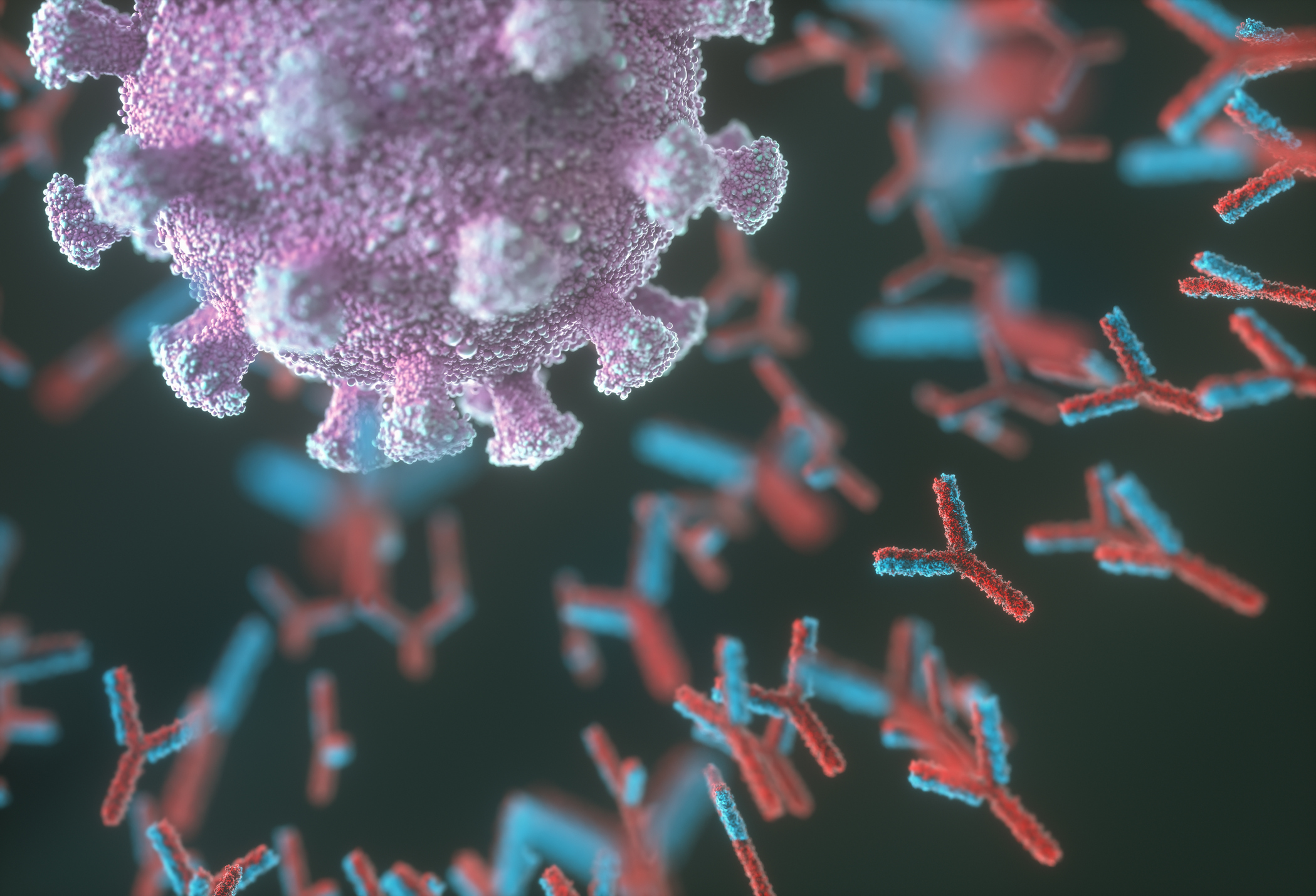
Enlarge / Illustration of antibodies (red and blue) responding to an infection with Covid-19 (purple). (credit: Getty Images)

A lower share of people infected with the Omicron coronavirus variant are likely to require hospital treatment compared with cases of the Delta strain, according to healthcare data from South Africa, Denmark, and the UK.

The findings by separate research teams raise hopes that there will be fewer cases of severe disease than those caused by other strains of the virus, but the researchers cautioned that Omicron’s high degree of infectiousness could still strain health services.

The reduction in severe illness was likely to stem from Omicron’s greater propensity, compared with other variants, to infect people who have been vaccinated or previously infected, experts stressed, though the UK studies also hinted at a possible drop in intrinsic severity.

Read 23 remaining paragraphs | Comments

22 Dec 18:45

AWS suffers third outage of the month

by Eric Bangeman
3D Amazon logo hangs from a convention center ceiling.

Enlarge (credit: Chesnot | Getty Images)

December has been a rough month for Amazon—at least for Amazon Web Services. The massively popular cloud computing platform suffered its third outage of the month Wednesday, affecting Slack, the Epic Games Store, and several other services. 

The AWS Service Health Dashboard shows the problem lies within a data center in northern Virginia and affects customers in the US-EAST-1 Availability Zone. The first outage was reported at 7:35 am EST. 

Slack users began seeing problems shortly after the outage, and the Epic Games Store noted that the AWS outage was causing problems "affecting logins, library, purchases, etc."

Read 3 remaining paragraphs | Comments

22 Dec 16:12

Tesla will shut off center console gaming while car is in motion [Updated]

by Eric Bangeman
<em>Sky Force Reloaded</em> running on a Tesla's central screen while the car is driving down the road.

Enlarge / Sky Force Reloaded running on a Tesla's central screen while the car is driving down the road. (credit: YouTube / Cf Tesla)

Update (December 24): Tesla will issue a software update that will prevent games from being played on the infotainment display. The carmaker moved quickly to issue a software update that will roll out to the affected vehicles by Christmas.

“Following the opening of a preliminary evaluation of Tesla’s ‘Passenger Play,’ Tesla informed the agency that it is changing the functionality of this feature,” a National Highway and Transportation Administration spokesperson said in a statement. “In a new software update, ‘Passenger Play’ will now be locked and unusable when the vehicle is in motion.”

Original story (December 22): Earlier this month, we covered a software update issued by Tesla that allowed games to be played on the infotainment display while the car was in motion. We pointed out at the time that this new capability would likely draw the attention of state and federal regulators. To no one's surprise, the National Highway Traffic Safety Administration on Wednesday announced a formal safety investigation over the update.

Read 4 remaining paragraphs | Comments

22 Dec 12:22

The US Gov't Paid For Moderna To Develop Its Vaccine; But Moderna Wants To Keep The Patent All To Itself

by Mike Masnick

Folks may know that when Jonas Salk created the polio vaccine he chose not to patent it, and when asked who owns the patent on it, responded: "Well... the people I would say. There is no patent... Could you patent the sun?"

Whenever people bring this up, patent maximalists -- especially those in the pharma world -- like to come up with all sorts of excuses about how that was "different" somehow. My favorite excuse was that he did this because "the public had funded the vaccine."

Fast forward to today. Moderna, somewhat famously, helped produce one of the very first COVID vaccines using its mRNA technology. It's a great thing (I got two Moderna shots in my own arm as soon as I could). You may have heard a lot about Moderna as well. While the company had been around for a decade, this vaccine is its first product on the actual market. It had been experimenting with mRNA technology, but hadn't actually come out with anything until the COVID vaccine.

But -- and this is the important part -- it was the US government, and by that we mean "the US public," who mostly funded Moderna's COVID vaccine... and it was actually US government employees who did a lot of the important work. At the beginning of the pandemic, the US government gave Moderna $483 million dollars to work on the COVID vaccine. A few months later it gave another $472 million.

Also, Moderna now admits that US government employees were critical to the development of the vaccine:

Moderna acknowledged that scientists at NIH's National Institute of Allergy and Infectious Diseases (NIAID) played a "substantial role" in developing Moderna's messenger RNA (mRNA) vaccine...

So, "the public" funded this vaccine, and the public -- via the government which represents us -- helped do the scientific work necessary to make the vaccine.

But Moderna wants the patent. Indeed, it initially refused to even share the patent with the US government. Last month there was a bit of a legal fight as the NIH did the legal equivalent of asking Moderna "WTF?"

The vaccine grew out of a four-year collaboration between Moderna and the N.I.H., the government’s biomedical research agency — a partnership that was widely hailed when the shot was found to be highly effective. A year ago this month, the government called it the “N.I.H.-Moderna Covid-19 vaccine.”

The agency says three scientists at its Vaccine Research Center — Dr. John R. Mascola, the center’s director; Dr. Barney S. Graham, who recently retired; and Dr. Kizzmekia S. Corbett, who is now at Harvard — worked with Moderna scientists to design the genetic sequence that prompts the vaccine to produce an immune response, and should be named on the “principal patent application.”

Moderna disagrees. In a July filing with the United States Patent and Trademark Office, the company said it had “reached the good-faith determination that these individuals did not co-invent” the component in question. Its application for the patent, which has not yet been issued, names several of its own employees as the sole inventors.

Apparently the NIH and Moderna had been "negotiating" about this when Moderna made that filing. As this went public and people (rightly) started calling Moderna out for this bullshit, Moderna took a half step backwards and claimed that it was willing to share the patent with the US government (and said "Moderna remains the only company to have pledged not to enforce its COVID-19 intellectual property during the pandemic.")

But, it seems like we should go a step further: there's no reason to patent this. I have no problem with Moderna getting plenty of profit for its important role in developing the vaccine. And, it is. The company went from having losses every quarter through last year, to making billions in profit this year. It made over 7 billion in net income (not gross) this year through the first three quarters.

That's not because of its patent. It's because it's producing something that is important to humanity, which governments are more than willing to pay for, and which remain in high demand globally.

So, don't try to hog it. Don't try to hog it from the US government. But don't even try to "share it" with the US government. Share it with everyone. Let the people "own" it by refusing to patent it at all. After all, would you patent the sun?

22 Dec 12:18

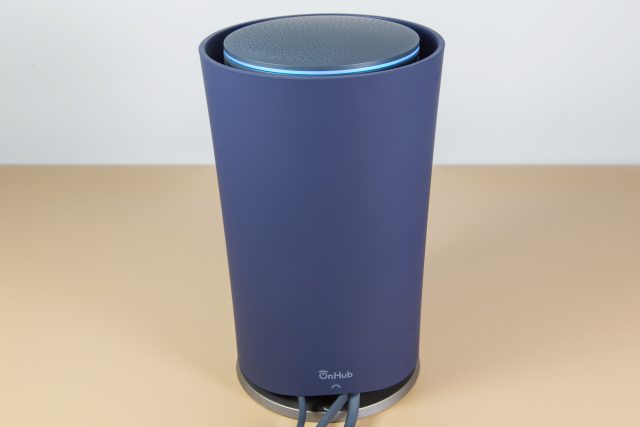
Google OnHub router will join Google’s list of dead products next December

by Andrew Cunningham
The Google OnHub.

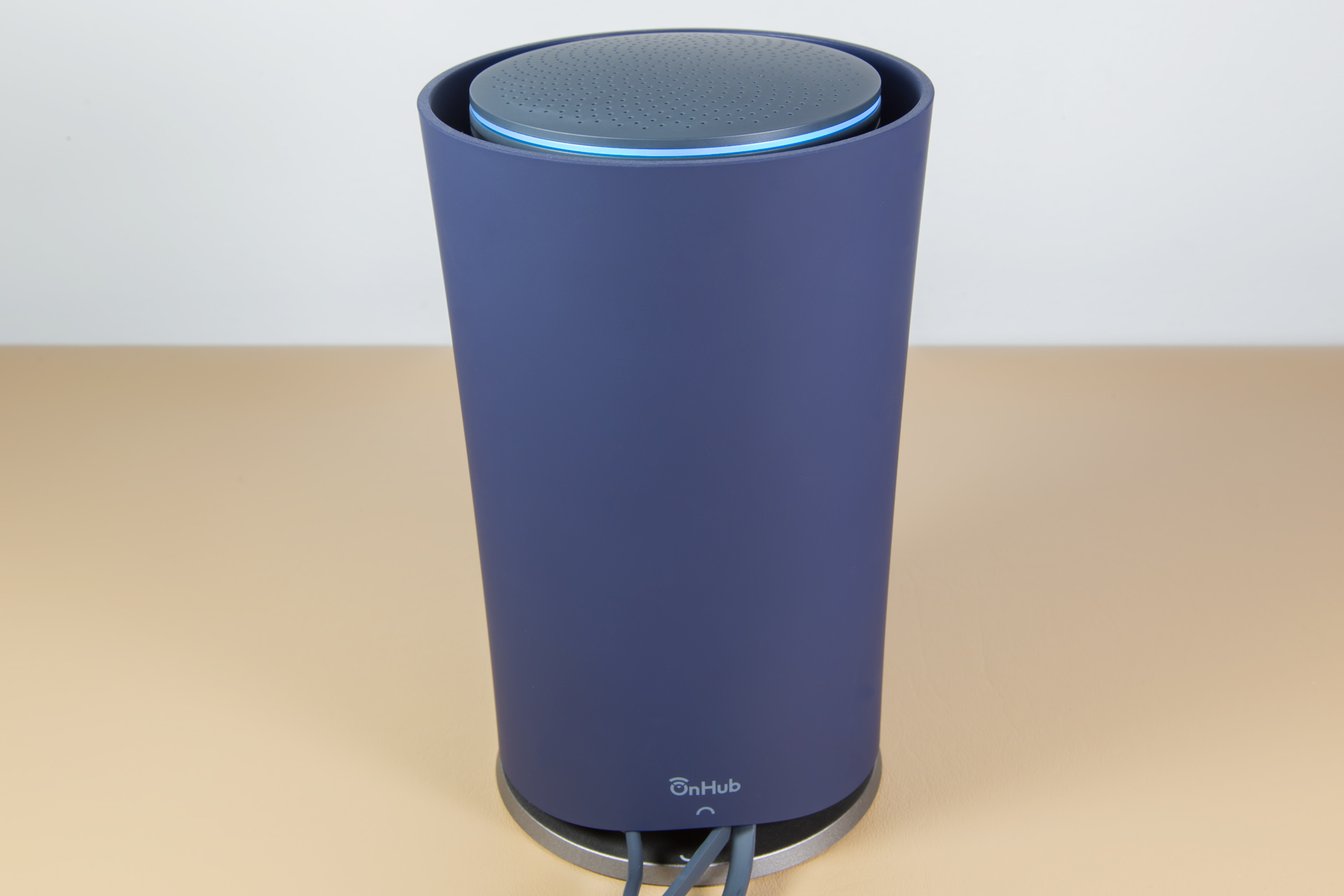
Enlarge / The Google OnHub. (credit: Ron Amadeo)

If you're still using a Google OnHub router, Google wants you to know that you're nearing the end of the line. According to Android Police, the company has been emailing OnHub owners to let them know that support for the router is ending on December 19, 2022. The router will still function on a basic level after that date, but advanced services and router configuration will no longer be available through Google's apps, and you'll no longer receive security updates.

In the email it's sending to OnHub users, Google is also offering 40 percent discounts on Nest Wifi hardware for people who want to replace their OnHub with another Google router.

OnHub has always been a bit of an outlier in Google's hardware lineup; it shipped with mediocre performance and was never very flexible or configurable, and it was replaced with Google Wifi (now Nest Wifi) just a year after it launched. OnHub early adopters could always integrate the older router into their modern Google or Nest Wifi setups as a router or satellite, but that functionality will presumably go away when Google ends support a year from now.

Read 1 remaining paragraphs | Comments

22 Dec 12:12

This is your brain on obsession

by Lexi Pandell
An illustration of two halves of a pink brain with a small Tamagotchi character in the middle.
Efi Chalikopoulou for Vox

What the tiny Tamagotchi can teach us all

Part of the Fads Issue of The Highlight, our home for ambitious stories that explain our world.

The smooth, plastic egg fits in your palm. Brightly colored shell. Gray screen the size of a postage stamp. Below that, three buttons. Pull a thin plastic tab on the side, and the screen lights up. An 8-bit egg appears onscreen. It quivers and rolls and shakes until, finally, your Tamagotchi is born.

Inside your head, the squishy, enigmatic organ known as the brain begins firing — not only to process the visual and sensory stimuli, but to generate curiosity in this new object. In fact, the spark of this fixation likely began before you even held this toy, when you heard friends feverishly speak about it and saw it in the clutches of popular kids at school.

Obsession is more than a cultural phenomenon — it’s part of our brain chemistry, and part of what it means to be human. For hundreds of thousands of years, we evolved in environments of scarcity, where social structures were required for survival, and seeking and curiosity were imperative. In the modern era, the same brain chemistry that lured us to the sweetness of fruit and alerted us to the presence of danger now draws us to fads like the Tamagotchi.

“People are born stupid,” says Paul Silvia, a psychologist at the University of North Carolina Greensboro and author of Exploring the Psychology of Interest. Many newborn animals already have instincts about their environment and quickly gain mobility. Sea turtles, for example, emerge from eggs ready to seek the sea. Human babies, meanwhile, are notably helpless. “We can’t really move, we can’t feed ourselves, we don’t have a lot of innate behaviors,” Silvia says. “But there’s an epic learning period that happens. You can be born knowing how to take care of yourself, or you could be born knowing how to learn.” That’s where interest comes in.

Humans developed both the capacity for immense learning and a reward system that pushes us to seek out new things. In our brains, that reward cycle originates largely with dopamine, a neurotransmitter. Though dopamine-releasing neurons constitute fewer than 1 percent of the brain’s neurons, they’re incredibly powerful. Dopamine is linked to our motivation and reward cycles and, thus, implicated in everything from love and lust to addiction and our habits as consumers.

Here’s how it works at the simplest level: Nearly all dopamine cells originate from the midbrain. We experience pleasure thanks to a nerve tract that runs between a cluster of neurons known as the ventral tegmental area (VTA) and another part of the brain known as the nucleus accumbens. The VTA communicates with the nucleus accumbens to respond to rewards, releasing dopamine, which leaves its neuron of origin, passes through synapses, and then zaps receptors on the other end. That action produces feelings of gratification, letting the brain know that what’s occurring is beneficial — perhaps even bound to survival. This activity also primes the brain to remember the pleasurable event by strengthening the synapses in the hippocampus, the brain’s learning center.

Though dopamine was once thought only to be involved only in the hedonistic reward system of our brains, “Over time, neuroscientists have come to understand that it may be even more important to the motivation that drives us to get the reward,” says Dr. Anna Lembke, a Stanford University psychiatrist and author of Dopamine Nation.

In a classic experiment conducted at the University of Michigan in 1998, scientists engineered rats that didn’t produce dopamine. “What they found was that when they put food in the rat’s mouth, the animal seemed to experience pleasure,” Lembke says. “But when they placed food just a small distance away, the rat would starve to death, not being motivated to get up to go seek out the food.”

In sum, dopamine pushes us to pursue, then allows us to enjoy the bounty of what’s found. In primitive times, that helped humans discover their environment, innovate, and find new resources. Then came modernity, and with it a surplus of goods combined with the development of products designed to capture our attention.

Enter the Tamagotchi.


It’s 1997. Colorful Tamagotchi eggs sway from backpacks. Ride slung on belt loops. Dangle from fingers like yo-yos. It’s the kind of toy that is nowhere until, suddenly, it’s everywhere.

The concept of the Tamagotchi is straightforward. The device houses a tiny digital pet with basic needs for food, play, discipline, hygiene, and, on occasion, medical intervention. You check in on your Tamagotchi throughout the day — though it beeps if it requires immediate attention — and use the simple buttons to interact with it. Fail to care for it, and it dies, requiring a restart with a new pet to continue.

The Tamagotchi becomes a schoolyard status symbol. Woe to the parent who accidentally buys a GigaPet for their child. It is not the same. In fact, such dupes only reveal how hard you’re trying to fit in.

How did an unassuming, $15 toy capture the attention of millions?

Created by Japanese toymaker Bandai, Tamagotchi became a smash hit when it was released in Japan in 1996, selling millions of units in less than a year. The international buzz about the toys made for an effective hook. In 1997, Tamagotchi arrived in US toy stores, and kids lined up outside FAO Schwarz to buy them — the store sold 30,000 units in the first three days. Bandai made more than $160 million from Tamagotchi in the US that year.

How did an unassuming, $15 toy capture the attention of millions?

Fads have an element of mystery. Some, like the Pet Rock, become almost as famous for their absurdity as they do for their popularity. “It tends to be kind of lightning in a bottle,” says Nir Eyal, author of Hooked: How to Build Habit-Forming Products and Indistractable: How to Control Your Attention and Choose Your Life. If it were possible to identify exactly what sparks trends, such products could be precisely engineered to succeed. Still, some commonalities do emerge.

Our brains are tuned to pick up newness. “That’s a cornerstone of what interest is all about,” Silvia says. “How people respond to things that are new, different, unfamiliar, and unexpected.” In long-ago times, this vigilance and attention to change in our environment kept us alive.

While Game Boys were popular for video games on the go, nothing else replicated the precise experience of a Tamagotchi. The toy was ever-present in a way others weren’t — it was created with a built-in keychain so it could be literally attached to the player, and keeping the digital pet alive required constant gameplay. It also marked the advent of digital pets, which would continue to be popular in later years with the introduction of the online Neopets game, the AIBO robotic dog, and others.

To go one step deeper, an object or product becomes increasingly fascinating if it’s constantly changing — basically, if it renews that sense of novelty.

In the 1950s, psychologist B.F. Skinner researched the power of variable schedules of rewards. In a lab experiment, an animal might be given a food reward randomly. Perhaps the animal presses a button and, the first time, it immediately dispenses a treat. The next time, it takes 10 taps before that reward is doled out. That kind of irregularity creates more interest than when the reward is delivered on a set, unchanging schedule.

Humans are similarly drawn to this erratic structure. Unexpected rewards result in a greater rush of dopamine. That’s because variability is involved with higher learning — if we’re able to correctly predict a reward, it’s not as interesting to our brains. But if it’s surprising? Now that’s something worth remembering. That’s part of the reason we’re drawn to fads at all. “Knowing what trends or styles are hip has an element of variability almost like a slot machine,” Eyal says.

If it’s surprising? That’s worth remembering. That’s part of the reason we’re drawn to fads at all.

A Tamagotchi changes and adapts depending on gameplay. The digital pet trills for attention. You learn how to interact with it. When you check in on your device, there may be any number of steaming little piles of turds for you to clean up. And then — miraculously, as all life is — you check your Tamagotchi one day to find that your pet has grown.


A person looks at a Tamagotchi game in their hand with an open-mouthed expression. They have a Tamagotchi character on his shoulder and an egg carton filled with Tamagotchi games in front of them.

Countless toys stare out from the shelves of stores across the country. But the Tamagotchi isn’t just a cool-looking object, nor is it merely an entertaining game. It’s a symbol of belonging, as were Tickle Me Elmo and Beanie Babies before it. “The thing itself is almost immaterial,” Lembke says. That’s why the GigaPet — a nearly identical toy, in theory — doesn’t cut it. The name-brand Tamagotchi transmits taste, indicating that you know what’s cool and interesting. “That becomes very powerful,” Eyal says.

Lembke describes trend-following as akin to the behavior of a flock of birds: No sooner has one bird startled and raised its wings than all the birds around it are in flight. “Humans are wired to know, see, and be aware of what our near neighbors are doing,” she says.

This is amplified in childhood. “Fads spread like wildfire through K-12 schools,” Silvia says. “Some people are into it, then everyone’s into it, and then you have to be into it or else you’ll be a loser.”

This kind of emotionally driven behavior may be because the lateral prefrontal cortex, the self-regulation part of the brain, matures slowly. Moreover, from an evolutionary perspective, adolescence is the time when people prepare to leave their families and create their own lives. Children are seeking their place. Consider the hierarchy of the playground, with its “in” groups and “out” groups. Kids play, bully, and suss out who falls where in the pack. Money and class come into play, with expensive, branded goods becoming a divisive force regarding who can afford to adopt fads at all. The popular kids tend to latch onto trends early, influencing the rest of their peers to hop on board — or else suffer being an outcast. “What drives all human behavior, all motivation, is not the pursuit of pleasure, but the avoidance of pain,” Eyal says. “One of the worst pains we can experience is social isolation.”

Schools are a pressure cooker for our drive for connectedness and belonging, where children can closely watch what their peers are doing. Philosophical anthropologist René Girard coined the term “mimetic desire” as part of his larger theory of human relations, positing that we do not desire things independently, but rather based on what other people want. Eyal summarizes it as: “Monkey see, monkey do.”

It makes a lot of sense when you consider evolution. In a world of risk, it’s safest to follow what others do. Caveman A ate a speckled mushroom, got sick, and died. Caveman B, on the other hand, ate a small brown mushroom, lived to tell the tale, and reported that it tasted delicious. So it’s only logical to eat the second type of mushroom, not the first. This is trendspotting as a tool for survival.

In a modern world of abundance, humans still possess basic desires to sate our hunger and thirst, to seek shelter and warmth. But when it comes down to what we eat, what we drink, how we style our homes, and what clothes we wear, it’s often not enough for something to satisfy our base needs. We’re influenced by peers and innovators.


There’s a problem with Tamagotchi. The stakes are too high. Ignore the pets for too long — even five to six hours — and they might die. In fact, it’s not enough to merely keep it alive. Fail to care for your Tamagotchi properly, and it evolves into a selfish duck-billed creature as opposed to a well-balanced teddy bear. In 1997, Education World interviewed one exasperated assistant principal in Connecticut. “First we were overrun with Beanie Babies, then all of a sudden teachers started commenting that the kids seemed to be taking a lot of long bathroom breaks,” he said. As it turns out, kids were stealing off to care for their virtual pets.

There’s a problem with Tamagotchi. The stakes are too high. It’s not enough to merely keep it alive.

Schools begin to ban Tamagotchis; rebellious kids sneak them into class regardless. Others ask their parents to babysit their digital pets at home.

The shrill cry of the Tamagotchi interrupts family dinner, homework, time with friends. You’re tethered to it — literally, by a keychain, and emotionally, as it depends on you for survival. You bond with this cute digital creature because it has the same characteristics as living animals — seeking our attention, holding grudges, and seeming to act independently. As Harvard computer science researcher Judith Donath wrote about our connection to Tamagotchi, “It is obsessive to leave a meeting or dinner because a game requires attention, but it is reasonable to do so if a pet is in need.”

Humans grow attached to things when there’s an investment. While the Tamagotchi may not cost much money (unless you pay for it with your own allowance, a hefty toll), it costs a whole lot in time. Sweeping away tiny, digital poops with the press of a button. Feeding it a sandwich, a slice of cake, or a piece of wrapped candy. Scolding it when it won’t eat. Checking its weight and age. Administering medicine when it’s sick.

The Tamagotchi requires devotion. And the sheer time required to keep it alive only further binds us to it.

Eyal points to commitment and consistency bias here, also known as the sunk-cost fallacy. This is a sociological concept which essentially says that the more we invest in something, the more likely we are to keep doing it. “Only an idiot would keep putting effort, time, and money into something that’s not valuable, so it must be valuable,” Eyal summarizes. “This circular logic keeps us doing what we always have done. To break the chain is very uncomfortable.”

But putting on this obsession as a personality — not just playing with the Tamagotchi, but becoming a Tamagotchi player — is also about identity. Adolescence is the time of brain pruning, says Lembke. Neurons become selected for those we use most and deselected for neural circuits we’re not using. “The ones we tend to use a lot are then heavily myelinated, this sort of way of adding insulation to the wiring so it works more efficiently,” Lembke says. Mental architecture is still in formation. “It’s a time of enormous plasticity in the brain.” Synapses evolve and change depending on how we interact with our environment. It becomes a stage when humans try on different personas and go through phases.

Plus, taking your Tamagotchi to school, to restaurants, or to the park is about fitting in and demonstrating that you’re a part of a community. When we make human connections, our systems for dopamine and oxytocin (the so-called “love hormone”) are activated. “It’s not really a surprise to learn that we feel pleasure when we make human connections,” Lembke says. “And we feel connected by doing the same thing at the same time, experiencing the same emotion at the same time, wearing the same thing at the same time, watching the same show at the same time.”


Egg, baby, child, teenager, adult: The Tamagotchi evolves quickly. Each day marks the passing of months or even years in the Tamagotchi world. You’re responsible, caring for your Tamagotchi diligently. But, within two weeks, your adult Tamagotchi grows needy. Tamagotchis require the most attention as newborns and as they approach the end of their life. Some may beep as frequently as every 5 minutes, demanding help. Their needs are a bottomless hole for attention. Your Tamagotchi’s health and happiness diminish. Then, due to sickness or old age or neglect, it sprouts wings and returns to its home planet. Your Tamagotchi has died. Cue the tears and the heartbreak.

(That anguish, by the way, is real. Online cemeteries pop up for mourners and, in one English town, children even lay their Tamagotchis to rest in real pet cemeteries. In fact, the psychological phenomenon for how humans form attachments to machines and AI was named for this emotional connection: the Tamagotchi effect.)

You restart with a new pet, but it’s not the same. Your first has died and, with it, that initial joy. It’s happening on a broader scale: Because Tamagotchis are now so common, the popular kids abandon them in search of the next cool thing. Your friends discard their eggs. Some of them become frustrated by their pet’s demands, smashing their eggs against the wall or on the ground, accidentally restarting their game.

There’s a psychological phenomenon for how humans form attachments to machines and AI: It’s called the Tamagotchi effect

Remember the seeking aspect of the dopamine reward cycle? That comes back into play here. When we try new things, a rush of dopamine floods the reward pathway, which makes us feel good and reinforces that pleasure. But our brain adapts. This inundation is followed by a dopamine deficit state, which makes us crave and seek. “It’s a craving that drives motivation,” Lembke says. “To restore baseline levels of homeostasis, or to get even higher.”

Our ancestors couldn’t remain in a blissed-out state. “If we did, we wouldn’t look for the next reward,” Lembke says. The brain processes pleasure quickly, tells us that we should get more of it, and has us move on to the next thing.

“Dopamine rewards experiencing something new,” Silvia says. Hobbies that tend to be long-lasting have a sense of infinite learning or a community around them that provides a social benefit, such as crafting or sports. “You could always get better, you could always learn something new,” Silvia says. “There’s a gravity always pulling people in deeper.”

Fads tend to be static. Pet Rocks and Cabbage Patch Kids didn’t get any better — they were what they were. Sure, maybe your Tamagotchi became more entertaining as you progressed through the first round of gameplay, or perhaps even as you improved your caretaking skills with your next pets, but eventually the thrill dissipated.

The Tamagotchi fades from the schoolyard, fades from memory. You put yours in a drawer and are free of its beeps and demands.

Yet toymakers learned from all this — what worked to get you obsessed and what eventually chased you off. Digital pets? Still hot. Though, perhaps, the toys don’t need to be quite as needy. And what would happen if that faux pet weren’t made of hard plastic but, rather, were as soft as a stuffed animal? Toymakers iterate.

By autumn 1998, there’s something new in stores capturing the collective imagination.

Enter the Furby.

Lexi Pandell is a writer from Oakland, California. Her nonfiction work has been published in the Atlantic, the New York Times, Wired, and elsewhere.

21 Dec 19:02

DC Just Reported an Absolutely Staggering Number of New Covid Cases

by Damare Baker
DC’s count of coronavirus cases are higher than ever. After experiencing technical difficulties that delayed DC Health from updating the city’s coronavirus data, DC reported 3,763 new cases between December 17 and 19, which amounts to a daily average of 1,254 cases. This is the highest number in a single day since the pandemic began […]
21 Dec 16:45

Larry Hogan, Elizabeth Warren, and More Test Positive for Covid-19

by Anna Spiegel
The latest Covid-19 surge is creating record-high positivity numbers and impacting all parts of Washington. A growing number of political figures recently announced breakthrough cases. Maryland Governor Larry Hogan announced Monday morning on Twitter that he tested positive for Covid-19—despite being fully vaccinated and boosted—and is “feeling fine at the moment.” Over the weekend, the […]
21 Dec 16:44

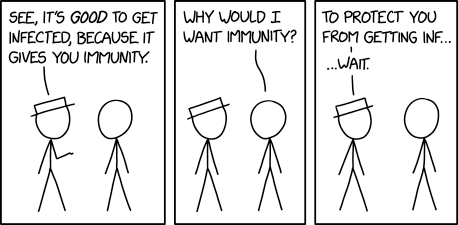
Immunity

This plan may sound appealing to people who know a little about the immune system, but the drawbacks are clear to people who know a lot about the immune system and also to people who don't know anything about it.
20 Dec 18:28

More EVs, hybrids likely to follow revised EPA fuel economy standards

by Tim De Chant
More EVs, hybrids likely to follow revised EPA fuel economy standards

Enlarge (credit: Luke Sharrett via Getty Images)

The Environmental Protection Agency today announced more stringent fuel economy standards that will require passenger vehicles to travel 70 percent farther on a gallon of gasoline.

The Biden administration announced earlier this year that it would be revising the Trump-era standards, which sought to increase fleet average fuel economy 1.5 percent per year through 2026. The new EPA standards will require automakers to improve fuel economy by 5–10 percent annually across their fleets. Five years from now, fuel economy on new vehicle Monroney stickers will average about 40 mpg combined, up from about 25 mpg today.

The move will save car and truck owners more than $1,000 over the lifetime of their vehicles, the agency said, and it will prevent 3.1 billion tons of carbon pollution through 2050. Transportation represents about a third of US carbon emissions. The rule will take effect in 60 days and will apply to model years 2023–2026. 

Read 2 remaining paragraphs | Comments

20 Dec 18:27

DC Will Reinstate Indoor Mask Mandate, Ramp Up Covid Testing

by Jessica Sidman
A month after loosening DC’s mask rules, Mayor Muriel Bowser announced today that the city will reinstate its indoor mask mandate beginning December 21 at 6 a.m. through at least the end of January. The reversal comes as Covid cases are surging amid the emergence of the highly transmissible Omicron variant. On Friday, DC reported […]
20 Dec 14:36

FDA makes abortion pills permanently available ...

20 Dec 14:35

People with COVID Often Infect Their Pets

20 Dec 14:33

Manchin may have doomed American climate policy

by Rebecca Leber
Sen. Joe Manchin delivered the news on Fox that he was a “no” vote on the centerpiece of Biden’s domestic agenda. | Anna Moneymaker/Getty Images

“This is the last best shot we’re really going to have.”

On Sunday, Sen. Joe Manchin (D-WV) may have delivered a final blow to the United States’s best chance to take action on the climate crisis this decade.

After months of negotiations with the White House and Democratic leaders, Manchin announced on Fox News that he will be a “no” vote on the centerpiece of the president’s domestic agenda in its current form. That agenda — known as the Build Back Better Act — would have invested $555 billion in clean electricity, electric vehicles, and reducing methane emissions. Although the $1.75 trillion bill has already passed the House of Representatives, a no vote from Manchin would ensure the bill does not have a path forward in the Senate. That’s because Democrats were relying on a budget process that requires 50 Senate votes to get it to President Joe Biden’s desk.

As Vox’s Andrew Prokop wrote, it’s possible that Manchin’s Sunday comments were just another negotiating tactic, and he could be convinced to support a revised version of the Build Back Better plan that delivers on what he wants.

But if the bill truly is a goner, it will be much more than a political setback for the Biden agenda. It will be a colossal tragedy for the planet and future generations, which are depending on the US government to accelerate the transition away from fossil fuels this decade with major legislation like this bill, to avoid the worst effects of climate change. The bill also contains funding for adapting to climate change and helping the most vulnerable communities; without it, the US will be far less prepared to face escalating climate disasters here at home.

It’s unlikely Democrats will have exactly the same set of political circumstances — in control of both the presidency and Congress — to pass a similarly ambitious climate agenda in the next decade. “We won’t be acting on the climate crisis if we don’t pass this bill, and there’s not a decade left to waste,” said Leah Stokes, a climate political scientist at UC-Santa Barbara who has been advising Democrats. “Senator Manchin talks a lot about that and what he owes to his grandchildren, and the number one thing he owes to his grandchildren is a livable planet.”

Democrats probably won’t get a second chance after next year’s midterms to act. And the next time they do have a chance, it may be too late to limit some of the worst effects of warming.

The US can’t reach its climate goals without congressional legislation

If passed, the Build Back Better Act would deliver the largest injection of federal funds into clean energy and emissions reductions that the country has ever seen. It would tackle the two biggest sources of US pollution that come from the transportation and electricity sectors, by boosting clean energy, electric vehicles, and charging stations.

The US is responsible for the largest share of global warming, so serious federal action is essential to closing the gap. Climate scientists have warned that once the atmosphere warms more than 1.5 degrees Celsius, we will live in a drastically changed world. If countries, corporations, and individuals don’t take immediate action to reduce pollution, the world may hit that grim milestone in just 10 years.

The bill would also literally save lives. For example, its clean energy funding would help close the nation’s last coal plants, eliminating an energy source that releases particulate matter that contributes to asthma, heart attacks, and other diseases. One Harvard estimate found that reaching 80 percent clean electricity by 2030 would save 9,200 lives in 2030 alone, and another 317,500 through 2050.

Finally, the bill would dedicate hundreds of millions of dollars to helping communities prepare for worsening floods, heat, and fires in the name of climate justice. One program would help tribes relocate away from areas threatened by climate change, and other investments would help disadvantaged communities improve their water and physical infrastructure.

By the time the bill passed the House of Representatives, progressive Democrats had already made some concessions that weakened some of the key provisions. They scaled down the overall cost of the bill and cut some proposals, including setting a national standard to reach 80 percent clean energy by 2030. All of that was to appease Manchin. It just didn’t work.

“Utter nonsense,” a “catastrophic failure”: The climate community reacts

Manchin released a statement after his Fox appearance elaborating on why he said “I just can’t” vote for the legislation. Several of his complaints targeted the climate provisions in the bill. He said the Build Back Better Act would harm the electric grid and increase dependence on foreign supply chains. He worried a faster energy transition “will have catastrophic consequences for the American people like we have seen in both Texas and California in the last two years”— likely a reference to power outages and volatile energy rates from extreme weather the past few years. (In fact, a major reason his West Virginia constituents have faced higher utility rates in recent years is coal is getting more expensive.)

Climate advocates who helped Democrats design the Build Back Better plan were grieving Sunday over what the loss would mean for both the planet and public health. Jesse Jenkins, a Princeton expert on the electricity sector and adviser to the White House on the Build Back Better plan, called Manchin’s news “devastating” and his excuses “utter nonsense.”

Sam Ricketts, co-director of the advocacy group Evergreen Action, who has advised Democrats on the bill, called Manchin “duplicitous” for leaving “the important needs of the country unfulfilled.” He countered Manchin’s claims, saying, “The Build Back Better act would reduce Americans’ energy costs, not increase [them]. It would enhance American economic competitiveness, not decrease it. It would increase the reliability and resiliency of the electric grid, not the opposite.”

Ricketts suspected Manchin had it backward because, he said, the senator was more informed “by corporate donors or by ignorance.” Manchin’s son is a leader in the coal industry, and Manchin himself has made $4.5 million from his investments in coal over the course of his Senate career. Over the past year, Manchin has reaped more campaign donations from the oil, gas, and coal industries than any other senator.

Climate activists are also dismayed because Congress has promised action for years, but failed to deliver. And they point to a larger pattern of how obstructionists — both in the Republican and Democratic parties — have sunk the US’s best chances of action again and again. Longtime climate activist and writer Bill McKibben noted that Manchin’s obstruction fits the long legacy of a Congress that can’t pass climate legislation to meet the scale of the crisis.

There are still plenty of unanswered questions after Manchin’s announcement.

Will Congress be able to salvage a smaller deal that still delivers on climate cuts? In a statement Sunday, Sen. Ed Markey (D-MA) advocated for that path. “Major climate and clean energy provisions of the Build Back Better Act have largely been negotiated, scored for ten years, and financed,” he said. “Let’s pass these provisions now. We cannot let this moment pass.”

Another question: Could Democrats find another legislative vehicle that will finally win Manchin’s support? Progressive lawmakers have already pointed fingers at the White House and Democratic leadership for their political failure, but some have hinted there may still be a path forward.

Grieving climate activists also echoed that this isn’t a moment to give up. “This is the last best shot we’re really going to have to enact national policy that deals with the climate crisis in the scope and scale that’s necessary,” said Ricketts. “We still have a Democratic president in the White House who has claimed that climate is a top priority for his administration. Now let’s see them deliver.”

20 Dec 14:32

Progressives’ biggest fear about the Build Back Better Act has come to pass

by Li Zhou
House Democrats Meet Behind Closed Doors To Discuss Legislation With Pres. Biden
Rep. Cori Bush (D-MO) speaks to reporters as she leaves a meeting with progressive House Democrats at the Capitol on October 28. | Drew Angerer/Getty Images

There’s a reason they wanted the social spending bill tied to infrastructure.

For members of “the Squad,” a group of staunch progressives in the House, Sen. Joe Manchin’s statement opposing the Build Back Better Act didn’t come as a surprise. They’d long warned it was just a matter of time before Manchin derailed the bill if a vote on infrastructure legislation, which he supported, was held first.

It turns out they were right.

Manchin has previously voiced a variety of concerns about the massive climate and social spending bill, and has repeatedly demanded it be trimmed down. In an attempt to pressure the moderate senator to support the measure, progressives lobbied Democratic leaders to keep it linked to a vote on a massive infrastructure package known as the Bipartisan Infrastructure Framework, as that latter bill was seen as a priority for Manchin.

The bills were coupled for weeks but were eventually separated due to pressure from House moderates and an assurance from President Joe Biden that he’d secure a yes vote from Manchin on the Build Back Better Act. Most House progressives voted in favor of the Bipartisan Infrastructure Framework; in the end, the six House members in “the Squad” were the only ones within the Congressional Progressive Caucus who voted against it. At the time, they reiterated fears that passing the infrastructure bill first would give up any leverage they had to pressure moderate lawmakers like Manchin to consider the Build Back Better Act.

Just over a month after that vote, Manchin has told Fox News he’s “a no” on Build Back Better.

“We have been saying this for weeks that this would happen,” Squad member Rep. Cori Bush (D-MO) said in an MSNBC interview on Sunday. “Having [the infrastructure bill and Build Back Better] coupled together was the only leverage we had. And what did the caucus do? We tossed it.”

Bush’s stance was echoed by other Squad members, like Rep. Ayanna Pressley (D-MA), and it’s now clear these progressives were correct to be worried. Although it’s uncertain how open Manchin might be to a different version of the Build Back Better Act, his position has effectively doomed the current version.

Democrats are attempting to pass Build Back Better via a process known as budget reconciliation, which allows legislation to pass the Senate with a simple majority. They need all 50 members of the Senate Democratic caucus on board to approve it — a fragile unity that’s impossible to achieve without Manchin’s vote. That fact has given Manchin, the bill’s largest detractor in the Senate, a lot of say over its fate. Over the past few months, he’s shown he’s more than willing to make full use of that influence. He did so again Sunday, shaking what little faith many progressives had left in him.

“Maybe they’ll believe us next time. Or maybe people will just keep calling us naive,” Rep. Alexandria Ocasio-Cortez (D-NY) tweeted on Sunday.

Progressives have long feared that moderates would abandon Build Back Better without the infrastructure bill

For months, the Congressional Progressive Caucus emphasized that it wouldn’t move along the bipartisan infrastructure bill without a concurrent vote on the Build Back Better Act. Members worried that moderates including Manchin would potentially abandon the social spending legislation once infrastructure passed. They were able to issue this ultimatum because the House also has a thin Democratic majority and the Congressional Progressive Caucus has the numbers to keep any bill without Republican support from passing.

At the start of November, however, as pressure to pass the infrastructure bill grew from both the White House and impatient moderates, most members in the progressive caucus agreed to a compromise. Armed with a written agreement from House moderates agreeing to consider the Build Back Better Act once the Congressional Budget Office released a cost estimate, as well as Biden’s promise that he would get Manchin’s support, progressives allowed the infrastructure vote to move forward.

“The president’s word is on the line here, and I do still believe that he is going to do what he told me and what he told our caucus and what he told the country he would do,” Rep. Pramila Jayapal (D-WA), the chair of the Progressive Caucus, said in an MSNBC interview last week. Manchin “made a commitment to the president, the president made a commitment to us, and I believe we’re going to get it done.”

The White House said Manchin was still participating in negotiations as recently as Tuesday, and that Manchin had brought the president a more limited version of the bill he could support. (As Vox’s Andrew Prokop has explained, Manchin’s statements do not explicitly indicate whether he’s closed the door to negotiating on a different version of the Build Back Better plan.)

“If his comments on FOX and written statement indicate an end to that effort, they represent a sudden and inexplicable reversal in his position, and a breach of his commitments to the President and the Senator’s colleagues in the House and Senate,” White House press secretary Jen Psaki wrote in a statement Sunday.

Jayapal, in the MSNBC interview last week, said she did not regret the Congressional Progressive Caucus’s decision to vote for the infrastructure bill when it did.

“I don’t regret it because I think our leverage was at the maximum point,” Jayapal said. “Had we not done that, I think we would have lost even more on Build Back Better.”

It’s impossible to say exactly what would have happened had progressives not chosen to put their trust in the president’s ability to seal a deal.

On one hand, questions have been raised about how much leverage progressives actually had throughout this process. Although Manchin helped negotiate the Bipartisan Infrastructure Framework, it was never clear whether he wanted it to pass so badly that he’d be willing to overlook his concerns about the size of the Build Back Better Act and many of its programs. It’s possible he would have been willing to vote down the social spending legislation even if that meant jeopardizing infrastructure legislation, too.

On the other hand, it did appear that the infrastructure legislation was a proposal that Manchin was invested in. He has long emphasized his support of bipartisanship and commitment to a measure addressing much-needed funding for roads and bridges that could garner both Democratic and Republican support. For that reason, the Squad is among those who now believe Democrats made a major miscalculation — one that not only potentially squandered a chance to pass Build Back Better quickly, but that has also put Democrats in a position in which further negotiation will be exponentially more difficult.

Manchin’s statement has damaged trust

Democrats are where they are now because of trust.

Progressives made a number of concessions on the Build Back Better Act, agreeing to a $3.5 trillion framework after initially proposing a $6 trillion option. Then they agreed to winnow it down further to $1.75 trillion, cutting some of their key priorities, including Medicare expansion of dental and vision coverage.

Throughout this process, willingness to move forward has relied on a sense that Manchin was participating in talks in good faith. And there was a sense that Biden, who has often touted the power of his personal relationship with Manchin, could find a way to get the senator to vote yes. For the Congressional Progressive Caucus, Manchin’s new statement seems to have shattered that trust.

“Today, Senator Manchin has betrayed his commitment not only to the President and Democrats in Congress but most importantly, to the American people,” caucus chair Jayapal said in a Sunday statement. “He routinely touts that he is a man of his word, but he can no longer say that.”

Now it will be more difficult to move forward. Progressives may feel less willing to compromise on provisions that remain outstanding in the bill, like drug pricing and Medicaid expansion, feeling that further compromise won’t net them anything from Manchin.

Manchin has also created confusion about what he wants, making it difficult for Democratic leaders to know where they should restart negotiations. It’s unclear if he simply doesn’t like the current shape of the Build Back Better Act and would be willing to vote for the proposal he brought to Biden recently, or if he’s now a no on any more spending.

The senator has placed Senate Majority Leader Chuck Schumer in a tough position as well. Schumer is under increasing pressure from his caucus to simply bring a vote on the Build Back Better Act to the floor of the Senate, in hopes of forcing Manchin to vote yes.

The weeks to come will reveal if Manchin is willing to consider a version of the legislation that takes his concerns into consideration, or if he’s willing to walk away from it altogether. In both respects, however, his statement has made it tougher for progressives to trust that he will engage with this legislation seriously moving forward.

20 Dec 13:53

“Get This Thing Out of My Chest”

by by Neil Bedi and Maryam Jameel

by Neil Bedi and Maryam Jameel

]

ProPublica is a nonprofit newsroom that investigates abuses of power. Sign up to receive our biggest stories as soon as they’re published.

For the roughly 2,000 Americans who rely on it to keep their hearts going, the implanted pump is impossible to ignore.

They feel it pressing inside their ribs when they lean over. Or they ache from the weight of its controller strapped to their shoulders. Some can even hear the device’s whirring hum deep inside their chests.

Most of all, they now live with the stress of knowing the HeartWare Ventricular Assist Device has such serious issues — a higher rate of deaths and strokes than an alternative pump and a history of unexplained malfunctions — that the Food and Drug Administration and the device’s maker agreed this summer it should be taken off the market.

Those who already have the heart pump, also known as the HVAD, can’t simply get it removed or replaced. The required surgery is typically considered more dangerous than leaving it in.

They are now stuck in a medical dilemma that could have been prevented.

Buffy Shaw, left, an HVAD patient, with her daughter, who found the recall online. (Rachel Bujalski for ProPublica)

As we detailed in August, the FDA and HVAD maker Medtronic allowed the device to be implanted into thousands of people for years, even as federal inspectors found serious manufacturing problems, the company issued many high-risk safety alerts and people died after their implants malfunctioned. The FDA and Medtronic said they believed the benefits outweighed the risks for HVAD patients with severe heart failure, until this year when data was published showing a higher frequency of deaths and strokes compared to patients with a competing device.

The company has pledged to do everything it can to support the remaining HVAD users. Medtronic said it would provide patients with educational materials, financial assistance and technical support. “The wellbeing and experiences of patients are vitally important to us, which is why we’ve set up patient support programs, services, and feedback mechanisms,” a company spokesperson said in a written statement.

The FDA said it would “actively provide oversight of Medtronic to monitor their recall of the device and ensure that patient care remains a top priority.”

But when we spoke to people across the country who are living with HVADs, they said they'd experienced little of the promised support and had encountered financial and emotional hardships.

Here, in their own words, is what they told us.

(These interviews below have been edited for clarity.)

The purse where Shaw carries her HVAD equipment (Rachel Bujalski for ProPublica)

I haven’t gotten a letter to this day from anybody saying anything about that recall.

—Alicia Warren, a 44-year-old from Madison, Georgia, raised her two daughters alone while having heart failure. She has had the device since April 2018.

Alicia Warren started experiencing symptoms of heart failure at age 22, shortly after giving birth to her first daughter. “They said it came from the stress on my heart from pregnancy,” she said. “I went to the hospital one night telling them, ‘I’m not feeling good, something’s wrong.’ The emergency room doctor told me, ‘Your heart rate is racing, have you smoked crack or anything like that?’ You’ve got to be kidding me. My daughter was 1 month old.

“I did pretty well at keeping my health up and everything until around October of 2017. I was in end-stage heart failure and didn’t even know it. My kidneys were failing and my digestive system was shutting down. I’ll never say again in my life that I’m tired. Because I really know what tired is. My brothers were calling me and texting me asking what was going on, and I didn’t even have the strength to lift my finger to text back.

“The doctor acted like he was just gonna let me die. He was like, ‘I think we’ve reached the end of your life.’ I was 40 at the time. He told my kids that and everything.” Warren’s family had her moved to another hospital. Doctors there told her she only had about a month to live unless she got a left ventricular assist device, or LVAD.

LVAD is the general name for these heart pumps. Before June, there were two companies that sold LVADs in the United States, Medtronic with the HVAD and Abbott Laboratories with the HeartMate. The FDA found serious problems at the HVAD’s manufacturing plant in 2014 and labeled the device “adulterated.” But it continued to be implanted in patients for seven more years, even though dangerous issues persisted. In response, Medtronic said this month: “In 2014, the benefits of using the HVAD System for these patients significantly outweighed the known risks. Lives were saved and others extended.”

Warren and 13 other HVAD users said they weren’t told about those problems. Warren and many of the others also said they weren’t given a choice between the two devices. Sometimes that was because they had had an emergency implant with little time to research the options, or, as with Warren, their doctors only offered one device.

“I just think they should’ve went about it a different way, told the truth, and if people still want to get it, then fine. But don’t hold back the truth. Because people have died,” Warren said. “I was not informed about the issues, deaths or even the recall of the pump.”

Never miss the most important reporting from ProPublica’s newsroom. Subscribe to the Big Story newsletter.

Three years after she received the HVAD, Warren was surprised to find out it had been suddenly removed from the market. “Someone in the LVAD friends group posted a link, and I went and read it. And then I was like, ‘What?’ I’m sure if this was true, my doctors would’ve told me. They should’ve been straightforward with us about what was going on.

“I haven’t gotten a letter to this day from anybody saying anything about that recall.

“Now here I am with this thing in me, and there’s nothing I can do. It’s in me now. The only thing I can do is pray and hope I never have any issues with this thing until they get it out of me. I’m mad, but I’m still alive.”

Five other people who still have the HeartWare pump told us they first found out about the device discontinuation from social media or news reports. Some only received a letter from Medtronic after they contacted their doctors or after we reached out to the company.

The FDA said that Medtronic is required to inform every patient in writing and that the federal agency published a public notice of this. Medtronic wrote in December, “We sent letters to patients and set up a patient website and hotline. We’ve confirmed 90 percent of patients in the United States received our letter and we will continue to work with clinician offices to reach the remaining 10 percent who either declined delivery or for whom we had outdated contact information.”

Pretty much everything they said could go wrong with it has gone wrong with it, except for the death part.

—Kelly Sanchez, 54, is a former meat cutter from Beulah, Michigan, who was forced to retire early because of his heart condition. He’s been an HVAD patient since August 2016. Kelly Sanchez outside his home in Beulah, Michigan (Brittany Greeson, special to ProPublica)

When Kelly Sanchez first got the letter announcing Medtronic’s discontinuation of the HVAD, he assumed it was nothing serious. “I thought they were sending me another card in the mail for carrying in my wallet,” he said. Then he read closer. “I was in shock. And then, of course, I’m worried. Because how much are they telling me? And how much are they not telling? Yeah, they sent me this letter. But if they’re doing all this, there’s got to be more to it.

“Pretty much everything they said could go wrong with it has gone wrong with it, except for the death part. Neurological issues, the strokes, the clotting. The pump exchange.”

A pump exchange is a surgery to replace the implanted heart pump with a new one if it stops working properly and the benefits of the operation now outweigh the risks. Sanchez had the operation after a clot got stuck in the device in 2017. “It sounded like a cement mixer,” he said.

Then, in July 2019, he went golfing with his stepson Tyler Schmidt. He never got past the first hole. “I teed off, I turned around, took a step and then all of a sudden I got, they called it, stacked double vision. I was seeing a head on top of a head. Tyler rushed me up with the car and we took off to the hospital.”

Sanchez plays pool with his HVAD external controller in a backpack. The cable connects the controller to the internal pump through a small incision in his waist. (Brittany Greeson, special to ProPublica)

Sanchez was taken in for brain scans and doctors found that not only did he have a stroke, but he had also had four or five earlier undiagnosed ones based on the damage in his brain. Much of the damage was in the optical center. “My cardiologist flat-out told me, if you have a major stroke you can lose your vision permanently,” he recalled.

When Medtronic discontinued the HVAD in June, the company said: “A growing body of observational clinical comparisons demonstrate a higher frequency of neurological adverse events and mortality.”

A study published in July found that HVAD patients experienced strokes and other neurological injuries more than twice as often as those with the competing HeartMate device. Medtronic said, “This study re-confirms our reasons for stopping sales and distribution of the HVAD device.” The company also noted the study compared the HVAD to the HeartMate 3, a newer version of the competing device. That device was approved by the FDA in 2017.

“I’m not gonna lie, we’ve been through so much stress after that first letter,” Sanchez said. “I love playing pool. I play pool three nights a week in leagues. It used to be a stress reliever. But it’s everywhere now. I mean, I can’t get away from it. With me, there’s no stress relief right now at all.”

Kelly Sanchez’s wife, Kim, points to a sheet listing his medications and their costs. (Brittany Greeson, special to ProPublica) Kelly Sanchez shows a bucket list of places he wants to visit with his family after he receives a heart transplant. (Brittany Greeson, special to ProPublica)

“I have diabetes and I can’t get my sugar under control because of the stress,” his wife, Kim Sanchez, said. “Every day, that thing is in his chest. And I’m always waiting. I always have my phone, right by me. When my phone rings, and it’s his number, I’m scared to death that something else has happened.”

Sanchez’s cardiologist said they needed to get him a heart transplant as soon as possible, Kim Sanchez said. Patients no longer need HVADs once they receive heart transplants, but they need to be eligible and wait for a donor heart to become available. People who aren’t transplant candidates could have the HVAD for the rest of their lives.

“Right now, my entire thought process is to get this thing out of my chest as quick as I can,” Kelly Sanchez said. In June, he underwent bariatric surgery to lose weight to meet transplant requirements. He lost 56 pounds by November and thought he was finally below the BMI limits. Then he learned the medical staff measured his height an inch shorter than before, pushing his BMI higher.

“I’m frustrated, I’m angry and I’m scared because I still have this thing in my chest,” he said. “As long as I’ve lost 8 pounds by the 23rd of December, they’ll go back to the board. Now our hope is, I lose the 8 pounds, I get down to 225. And hopefully by the new year I’ll be on the list. That’s all we got right now.”

Sanchez and his wife with their grandson Cassius at their home (Brittany Greeson, special to ProPublica)

Those costs all add up. If we did have to pay mortgage or rent, I wouldn’t make it with my disability payments.

—Dennis Partner, 65, is a former sales representative and truck driver from Lafayette, Indiana. He’s had his device since November 2017. He and his wife rely on disability insurance for income.

Dennis Partner had his first heart attack at 32, while playing softball. He’d go on to have about five more, each further damaging his heart. His doctor eventually recommended the HVAD, saying it could extend his life and give him more energy.

“I really thought the LVAD would bring back more and more movement. It never has,” he said. “I walk half a block and have to sit down and lean against something and rest. My legs just give out.”

After the HVAD was discontinued in June, doctors increased the frequency of his checkups. The additional attention also meant additional medical costs. Partner has to drive 125 miles round-trip to get to and from his doctors’ office, and each visit requires a co-pay. “Those costs all add up,” he said. Partner is thankful that his family downsized their home and paid off their purchase. “If we did have to pay mortgage or rent, I wouldn’t make it with my disability payments.”

Dennis Partner at his home in Lafayette, Indiana (Taylor Glascock for ProPublica)

Then, Partner’s device controller displayed a critical alert.

Before June, users were able to swap out their external device controllers at home if there was ever an issue. Patients told us that, after the recall, these controller exchanges are now done in hospitals. “They need to have a surgical suite and surgeon on call in case the pump wouldn’t start, to try to save me,” Partner said.

“It was a pretty nerve-wracking drive up there. I spent the night every five minutes having to quiet my alarm. My coordinator and her helper or trainee came into the hospital room and said, ‘You ready to change it out?’ And five minutes later it was done. Luckily mine started up just fine.”

When Medtronic discontinued the device, the company admitted there has been an issue since 2009 with the pump failing to start up. Medtronic said there had been 106 complaints related to the problem. Fourteen cases led to patients dying, and 13 others required emergency surgery to remove the devices. Medtronic said in June it still hadn’t been able to figure out the root cause of the malfunctions. The company said it was a rare problem, affecting only a small portion of devices based on the complaints submitted.

Linda Partner, Dennis’ wife, changes the bandage on the incision that connects his HVAD pump to its external controller. (Taylor Glascock for ProPublica)

Partner received a bill for about $47,000 for the two days he spent in the hospital for the exchange. Medicare negotiated the bill down to $29,000 and covered most of the cost, but Partner still has to pay $2,556 — a significant amount for his family, which relies on disability income.

“I never even thought there was going to be a bill. I’m still having a hard time — I can’t get an explanation of why they installed this model when they knew there were tons of problems with it. I just don’t feel that’s my responsibility.”

After we recently told Medtronic about patients who are struggling with new medical costs, a company spokesperson said in an email, “We anticipated patients might have concerns about medical costs, so we expanded the HVAD System warranty and are encouraging patients to contact us (1-800-635-3930) for potential coverage of non-reimbursed medical costs.”

The expanded financial support is news to patients. The people we spoke to said they weren’t informed of it. When asked, Medtronic didn’t provide evidence that it had told patients about the expanded assistance. Days later, the company updated its patient support website, which now says it can help patients with newly incurred medical expenses.

Medtronic told us last week it had heard from four patients in total and covered costs for two of them since June.

Partner said he contacted the company more than two months ago to see if it could help with his medical bills. A representative said they would “see what they could do,” he said.

The company finally reached back out to him last week, asking for more information.

Lottery tickets pile up at Partner’s home. (Taylor Glascock for ProPublica)

You guys messed up. You need to do something to correct this. We don’t really have a voice.

—Buffy Shaw, 47, has had the device since 2019. She’s from Oroville, California, but spends much of her time traveling around the world as an international flight nanny for American Bully dogs.

“It’s a nonstop lifestyle,” Buffy Shaw said about her job as an in-flight nanny for American Bully dogs. “I’ve built a bunch of clientele all over the world. It’s like I don’t ever stop.” So, when she learned she needed an LVAD, it was devastating.

“The first six weeks were extremely difficult. Very emotional. Very everything. Just learning how to do everything again. I couldn’t walk from the chair to the front door. I’d literally go to pass out. I couldn’t hold anything down as far as food. I got sick from everything. I couldn’t take a shower by myself. I couldn’t do anything by myself.”

Batteries for Shaw’s HVAD controller in a charger at her daughter’s home (Rachel Bujalski for ProPublica)

Shaw said it took almost six months to adapt to having the device. She began carrying the external controller in a purse to avoid questions and was able to continue taking dogs around the world.

Then, her daughter found the recall online. “Once I started learning exactly what it entailed, it was very depressing,” Shaw said. “I feel like they’ve used us as guinea pigs.”

Shaw said she feels powerless as only one person — or even one of 2,000 people — up against Medtronic, a multibillion-dollar company, and the federal government. “You guys messed up,” she said. “You need to do something to correct this. We don’t really have a voice. That’s what I feel like. We don’t have a voice to make something happen. There are people that have died because of this machine.”

Another HVAD patient, who Shaw met on Facebook, started having problems with his device in October. He needed emergency surgery to replace the pump, but he never fully recovered. He died three weeks ago. “Death. Literally all you can think about is death,” she said.

Shaw looks at photos from her travels for work. (Rachel Bujalski for ProPublica)

“I don’t sleep a lot as it is, which is a side effect of having heart failure, you know, sleep issues. So now it’s just stress about the recall and them not really offering any solutions to it. There’s certain things you can do, certain things you can’t do. It’s a lot of stress, like, extreme stress.

“They should have offered something for that as far as counseling. I feel like right now, we have zero resources. My doctors always say that I’m a high functioning patient as far as this goes. I’m just super high functioning because I don’t feel like I ever want to — I’m not going to — sit home and die. I’m not going to be one of those people that just sits online and reads about people dying and all the stuff that goes on and I just have to get out of that space.”

Shaw has visited Hawaii, France and Ireland for her job since September. “To me, that’s ideal in my situation, because I literally could drop dead tomorrow,” she said. “Right now I’m just thankful that I am able to do what I’m doing. Until I get to where I can’t anymore. It’s a very fine line. That’s for sure. It’s a very fine line.”

Shaw with her granddaughter at her daughter’s home (Rachel Bujalski for ProPublica)

Tell Us About Your Experience With Life-Sustaining Medical Devices

Maya Miller contributed reporting.
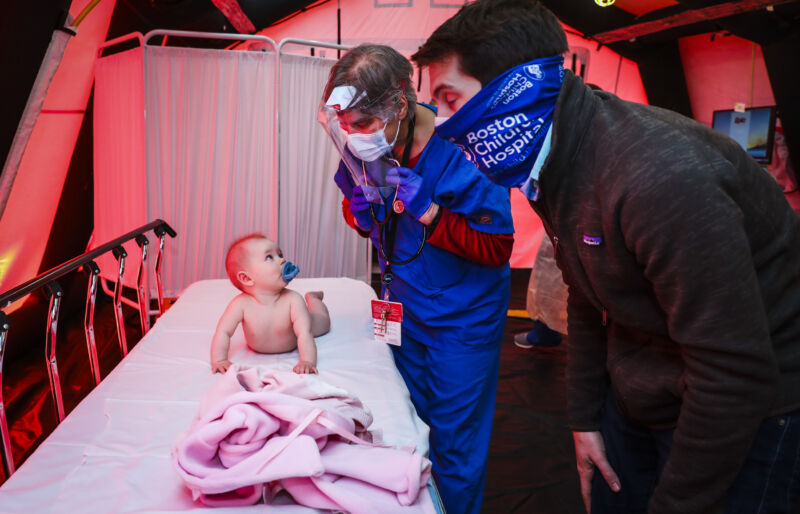
19 Dec 16:51

A Bunch of DC Bars and Restaurants Are Closing Amidst a Covid-19 Surge

by Anna Spiegel
A number of schools, theaters, and businesses are cancelling or postponing indoor activities as Covid-19 surges around DC. Restaurants and bars are following suit. On Friday, as DC reported 844 new cases—shattering the previous record of 508 new cases on Thursday—businesses began to send out messages of closures via social media. The trend isn’t limited […]