Shared posts

19 Dec 16:57

Vaccine trial finds a glitch with children in one age range

by John Timmer
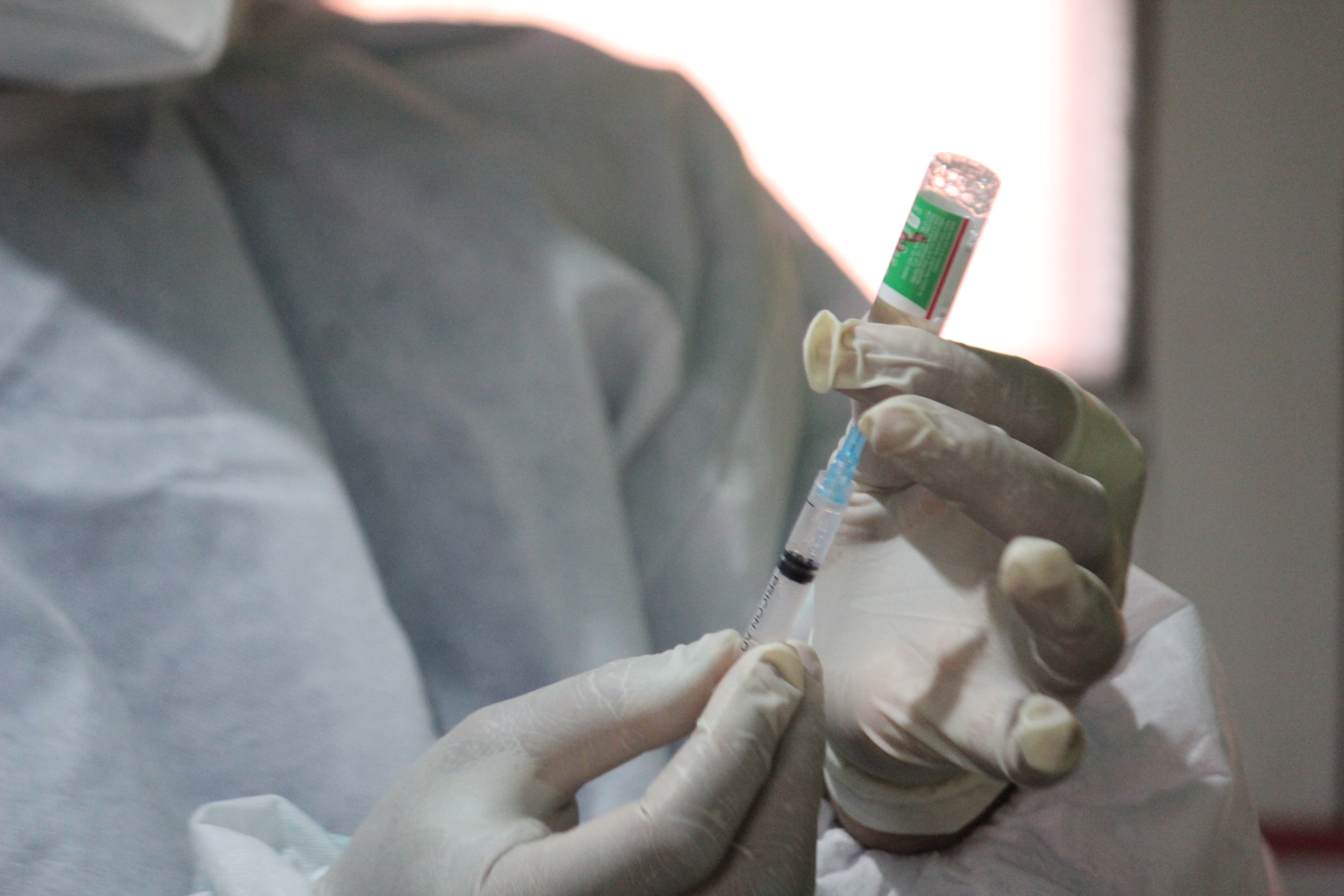
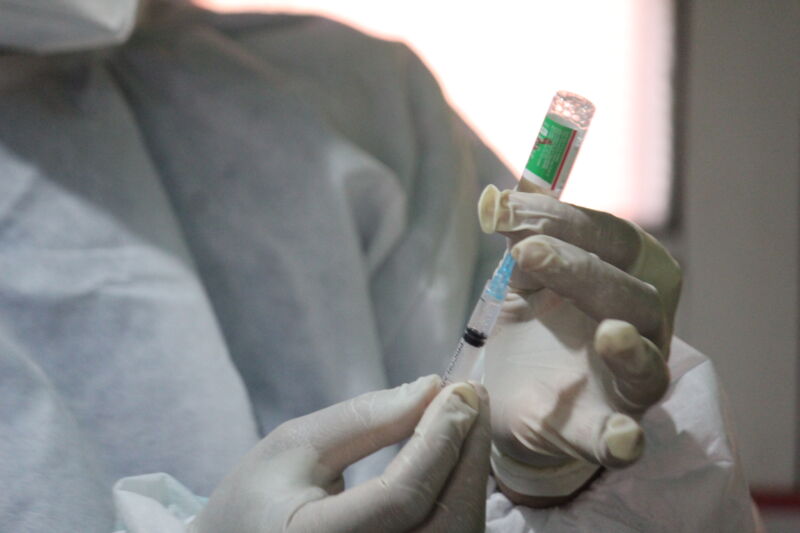
Image of a health worker preparing an injection.

Enlarge (credit: Reshi Irshad / Getty Images)

On Friday, Pfizer and BioNTech announced that their latest vaccine trial was showing some odd results in children within a specific age range. Children in the 2- to 5-year age group didn't produce as strong of an antibody response to the vaccine as older and younger children did. As a result, the trial is being modified to include a third dose of vaccine for participants in this age group.

The trial was designed to enroll as many as 4,500 children to test the safety and efficacy of the companies' messenger RNA vaccine. It included an early test of how well the vaccine was tolerated in different age groups. Based on these results, the companies went ahead with a two-tiered strategy: children from 5 to 11 years of age got two doses of 10 µg; younger children (down to six months in this trial) received two doses of 3 µg.

The trial is ongoing, and both the participants and doctors involved remain blinded to the status of the participants. But blood samples were obtained from some participants one month after the second dose and analyzed by a separate group of researchers who were not blinded as to the vaccine/placebo status of the participants. The analysis they performed showed an unexpected pattern.

Read 4 remaining paragraphs | Comments

17 Dec 18:17

Judge rejects Sackler immunity deal, vacating Purdue Pharma opioid settlement

by Jon Brodkin
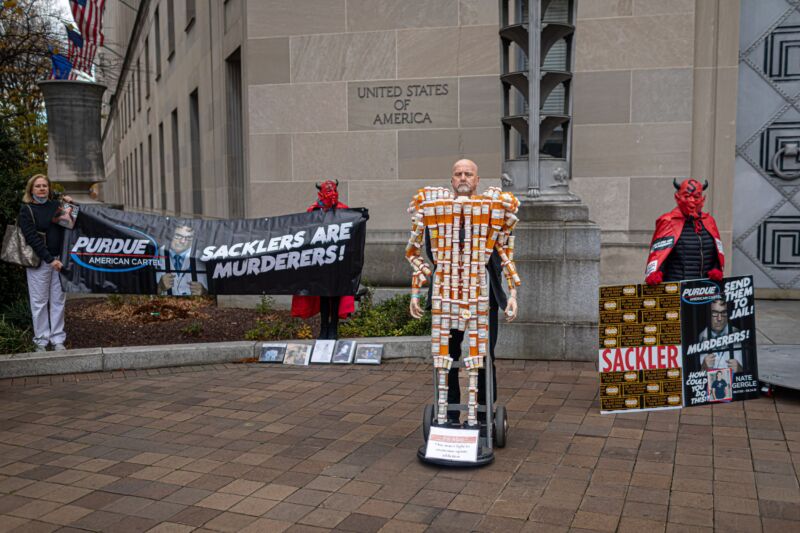
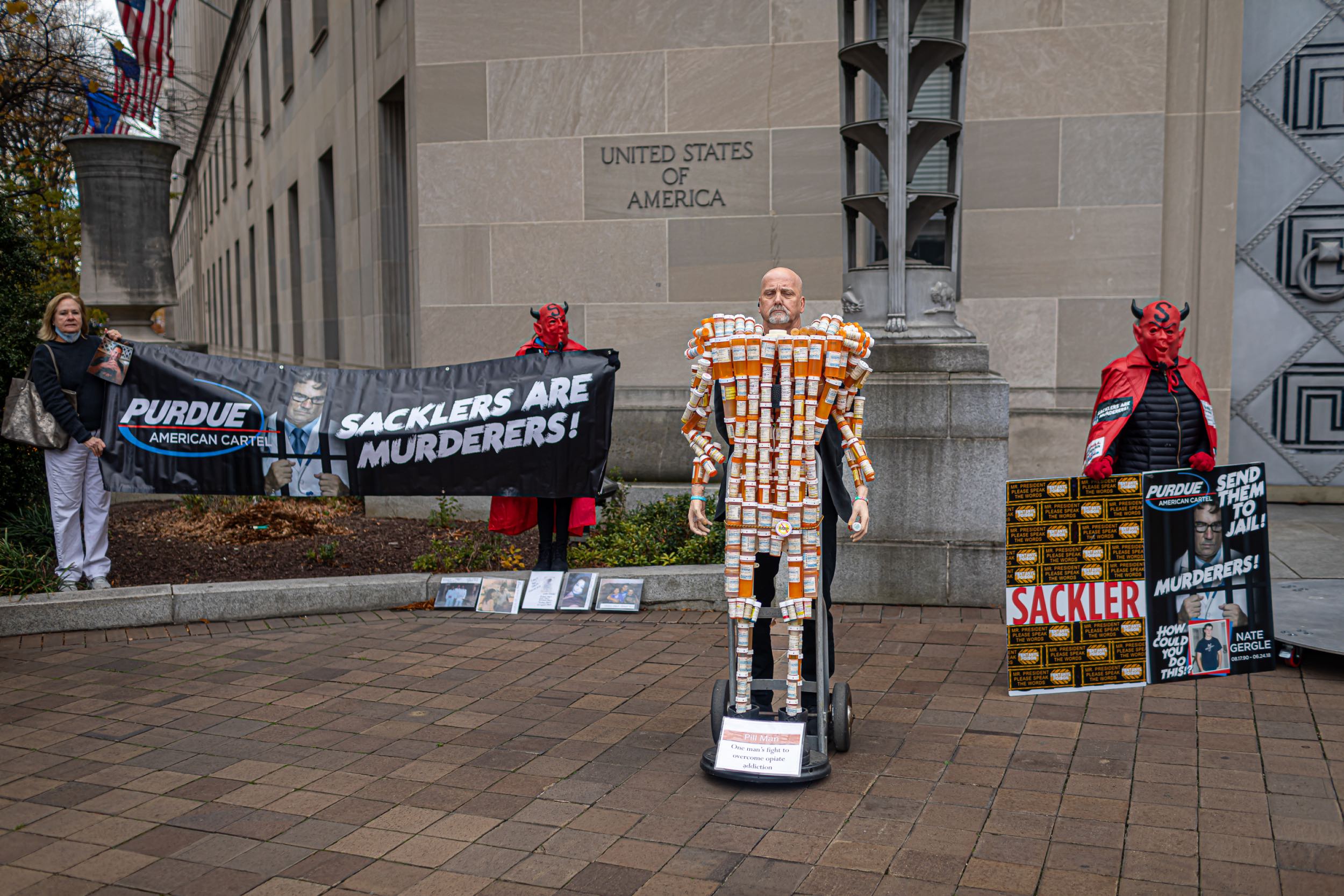
Protesters hold a sign that says,

Enlarge / Frank Huntley, who raises awareness of opiate addiction with his sculpture "Pill Man," is among protesters who rallied at the Department of Justice in Washington, DC, on December 3, 2021, calling on Attorney General Merrick Garland to bring criminal charges against members of the Sackler family. (credit: Getty Images | Pacific Press )

A federal judge yesterday rejected the Purdue Pharma settlement that would grant lifetime legal immunity to the Sackler family for their role in the opioid crisis, finding that the bankruptcy court doesn't have the authority to approve legal immunity for people who did not declare bankruptcy. The ruling to vacate the bankruptcy plan was issued by Judge Colleen McMahon in US District Court for the Southern District of New York.

Non-debtors like the Sackler family members aren't obligated to "disclose their assets and apply them... to the resolution of the claims of their creditors," McMahon noted. Because non-debtors do not have those obligations, they also "do not have any rights at all under the 'special remedial scheme' that is bankruptcy—certainly not the 'right' to have claims that are being asserted against them outside the bankruptcy process released."

The $4.5 billion settlement was previously approved by a judge in US Bankruptcy Court for the Southern District of New York. While 15 US states agreed to the settlement, eight states and the District of Columbia objected to it and filed appeals. US government officials also objected to the settlement.

Read 13 remaining paragraphs | Comments

17 Dec 16:35

DC Reported a Record High Number of New Covid Cases on Thursday

by Daniella Byck
DC reported 508 new cases of coronavirus on Thursday—the highest number of new cases in a day since the start of the pandemic, according to DC Health. The new-case total recorded yesterday is almost double the 263 cases reported on December 16, 2020. The new year is less than a month away, but the latest […]
17 Dec 14:50

A domestic newspaper warns of the Russian space program’s “rapid collapse”

by Eric Berger
Roscosmos head Dmitry Rogozin visits the construction site for the launch pad for the rocket boosters of the Angara family, at the Vostochny Cosmodrome.

Enlarge / Roscosmos head Dmitry Rogozin visits the construction site for the launch pad for the rocket boosters of the Angara family, at the Vostochny Cosmodrome. (credit: Yegor AleyevTASS via Getty Images)

A long and strikingly critical article that reviews the state of the Russian space program was published in the state-aligned newspaper MK this week.

None of the findings in the 2,800-word article were particularly surprising. Western observers who track the Russian space industry realize the program is deeply troubled, and to a great extent running on the fumes of its past and very real glory. What is notable, however, is that a major Russian media outlet has published such a revelatory article for a domestic audience.

Increasingly, Russia's space program seeks to project its greatness in space through symbolic acts rather than technological achievements—such as the launch of a Russian movie star, sending a robot nicknamed Fedor to space, or making (entirely) hollow promises about a Moon landing in 2030. But now it has been called out on these acts in a publication closely aligned with the Russian government.

Read 15 remaining paragraphs | Comments

17 Dec 14:50

Electric vehicles ask a lot of their tires—here’s why

by Jonathan M. Gitlin
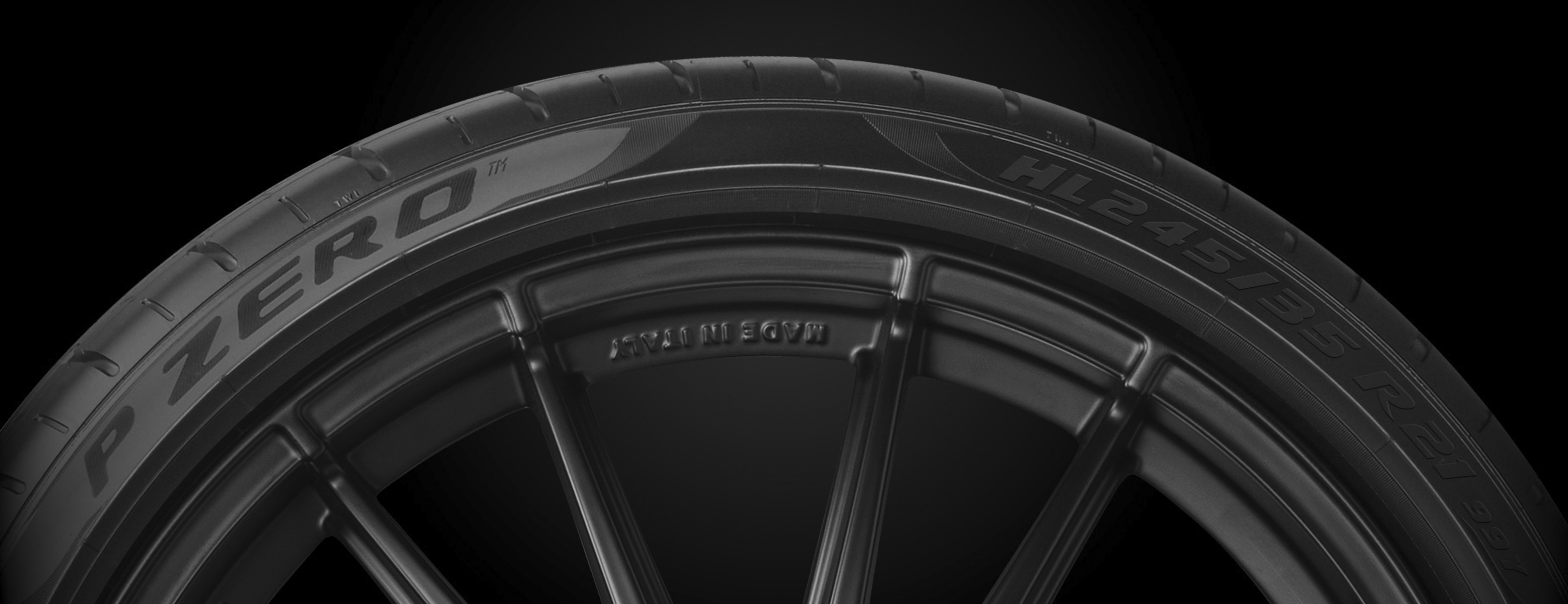
Promotional image of new tire.

Enlarge / Pirelli recently introduced a high load (HL) version of its P Zero performance tire, designed to cope with the greater mass of an electric vehicle. (credit: Pirelli)

In the past, we've looked at the technology that goes into winter tires—and even what makes a good racing tire. But considering that the majority of our auto coverage at Ars focuses on electric vehicles, it's time to dig into the specialized tires those EVs have to wear.

"We like to design [the tire] as the car is being designed," explained Ian Coke, director of quality at Pirelli. That means getting started with the OEM several years before the car is due on sale, when it's still just a concept being developed. "Or if you're Tesla, six weeks, because they work in a different way," he laughed.

"We're getting to know [Tesla] very well now," he said, as the Italian tire company develops rubber for the automaker.

Read 10 remaining paragraphs | Comments

17 Dec 14:48

How bad research clouded our understanding of Covid-19

by Kelsey Piper
Photo illustration of a magnifying glass looking at the word hydroxycholoroquine printed on a piece of paper.
Getty Images/iStockphoto

Early studies of Covid-19 therapeutics turned out to be fabricated or suspicious. That’s a huge problem for science.

The scientific integrity site Retraction Watch has been a bulwark of sound science since its founding in 2010. Its self-proclaimed mission is to act as a “window into the scientific process” by shining a light on academic research that has been retracted.

Retractions come from across all scientific fields, but over the past two years, many of the most consequential ones have revolved around a single topic: Covid-19. And according to Retraction Watch, as many as 200 Covid-19 papers have been retracted since the start of the pandemic for a range of reasons: elementary calculation errors, researchers refusing to provide evidence that the studies were really conducted, or conclusions that aren’t supported by the data.

The problem is especially acute when it comes to studies looking into treatments for Covid-19. Early papers claiming to find stunning results for drug regimens like ivermectin or hydroxychloroquine earned tremendous attention and influence, only to later be retracted, often because substantial evidence suggested that the studies never actually happened or at least never happened as described.

One ivermectin study included in an influential meta-analysis that found great results for the drug turned out to be based on a data file where the same 11 patients were copied and pasted repeatedly to produce a more robust sample size of a few hundred. When BuzzFeed News followed up on another ivermectin study with huge results, a hospital where the research had reportedly been conducted said it had no record of such a study happening there.

As I wrote for Vox in September, the evidence for ivermectin is mixed and limited. Most careful analyses suggest it might have an effect but also that we don’t know enough to say for sure — certainly not enough to hail it as a miracle cure, as many have. Part of the reason the treatment rose to prominence is that early, high-profile studies of ivermectin showed positive results, sometimes huge ones. When other researchers peered under the hood, however, they realized those findings didn’t hold up or had no basis to begin with. But by then it was too late — for some, ivermectin had become an article of faith.

To be clear, it’s not all an epistemic hellscape. There’s sound research being performed on early treatments, including ivermectin. But the damage done by fraudulent research is immense and has contributed to misleading public policymaking and individual decision-making. Narratives about effective cures take hold only for retractions to cloud the picture, abetting bad-faith actors and inflaming our all-consuming culture war.

If we are to finally overcome this pandemic and defeat the next one, it’s essential for us to fix a system where it’s all too easy for bad research to warp scientific discourse and public knowledge.

A look at papers that show signs of serious error or misconduct

One of the first high-profile instances of alleged Covid-19 research fraud occurred last spring: A study in The Lancet claimed to have looked at more than 96,000 coronavirus patients across the world and found that — after controlling for age, sex, and how sick the subjects were — patients receiving hydroxychloroquine or a variant of the drug were about twice as likely to die as those who did not.

But scientists immediately started pointing out that something was wrong with the study. It had reported more Covid-19 deaths of enrolled patients in its Australia arm than there were Covid-19 deaths in all of Australia. Further investigation found that hospitals supposedly enrolled in the study had never heard of Surgisphere, the company that conducted it.

The hydroxychloroquine paper was quickly retracted from The Lancet, as was another by the same authors in The New England Journal of Medicine, another highly prominent journal. Further research has demonstrated that hydroxychloroquine is not, in fact, an effective Covid-19 treatment — but it’s also not as deadly as the Surgisphere paper suggested.

In the months since, scientific misconduct, data fraud, and careless mistakes have been repeatedly found in the Covid-19 literature.

Jack Lawrence, a grad student in biomedical science at the University of London, kicked off a broad investigation into ivermectin research fraud when he got an assignment to look at a widely cited ivermectin study. That study, by professor of medicine Ahmed Elgazzar and others at Benha University in Egypt, found huge benefits for Covid-19 patients taking ivermectin.

Lawrence noticed something wrong immediately: The introduction was plagiarized from other papers. He then notified a colleague, Gideon Meyerowitz-Katz, an epidemiologist at the University of Wollongong in Australia. “Jack Lawrence emailed me about the Elgazzar study and said, ‘I know you think it’s low quality but are you aware that most of it’s plagiarized?’” Meyerowitz-Katz recalled. “And that started this whole thing.”

Data forensics experts found other problems with the Elgazzar paper: patients who died before the study started and yet were counted as enrolled; patient records duplicated; numbers that were too suspiciously clean to have occurred by chance. (Elgazzar says his study is legitimate.)

Soon, the preprint server that hosted the paper withdrew it. But the damage had been done — the Elgazzar study had already started feeding the widespread misconception in some quarters that ivermectin was a Covid-19 miracle drug.

 Andressa Anholete/Getty Images
A supporter of Brazilian President Jair Bolsonaro holds a large box of box of ivermectin during a protest organized to show support to his government in Brasilia, Brazil, in May. Bolsonaro has recommended the use of hydroxychloroquine and ivermectin to treat Covid-19.

Lawrence and Meyerowitz-Katz consider themselves part of a loose-knit group of researchers — including Nick Brown of the University of Groningen in the Netherlands, Cipher Skin chief scientific officer James Heathers, and Kyle Sheldrick of the University of New South Wales in Australia — who have taken it upon themselves to check the integrity of Covid-19 research.

A big part of their work is simply to pore over the data and methods of Covid-19 studies. It was this team that investigated the paper, in the journal Viruses, that found that ivermectin was a highly effective treatment but that turned out to have a data set that was just the same 11 patient records copied over and over.

The study authors said, “After revising the raw data we realised that a file that was used to train a research assistant was sent by mistake for analysis.” (Though the authors admitted the error, they have yet to come out with a legitimate data set.)

The same group of researchers has also raised serious questions about a large randomized controlled trial in Iran that found positive results for ivermectin.

The problem? The data is “not consistent with a genuine randomised controlled trial,” Sheldrick argued in a detailed blog post laying out some of the suspicious inconsistencies. “This paper claims to describe a trial in which patients were randomly allocated to treatments. This is not true. Extreme differences are seen between groups across multiple variables such as oxygen level, blood pressure, and SARS-CoV-2 test results before they even got their first dose of medication.”

One simple but effective test for data fabrication is whether numbers have a typical distribution of “trailing digits” — for example, whether they end in “1” about as often as they end in “0.” Humans, when making up numbers, tend to cluster around certain end digits. The randomized control trial from Iran fails this test, with very pronounced digit clustering to a degree that can’t have occurred by chance, according to Sheldrick. (It’s “very normal to see such randomisation,” the lead author rebutted.)

Members of this research group have raised questions, too, about research published by Dr. Flavio Cadegiani on various Covid-19 treatments, including ivermectin and proxalutamide, that exhibited bizarre statistical patterns inconsistent with randomization. They also raised concerns about research into the anti-parasite medication nitazoxanide, which turned out to be riddled with statistical errors and data analysis problems. (Meanwhile, other researchers have noted that Cadegiani’s papers claim a horrifying death rate in the control group. One explanation is fabricated data; another is medical malpractice, prompting a parliamentary inquiry in Brazil to accuse Cadegiani of crimes against humanity.)

Other researchers have been uncovering more dubious work. A randomized controlled trial in Egypt studying favipiravir and hydroxychloroquine was retracted after glaring data inconsistencies were found.

A study that took place in Brazil that found incredible benefits of ivermectin as prophylaxis also failed to withstand scrutiny. Reporters at BuzzFeed News called one of the hospitals where the study was reportedly conducted for more information, only to learn that the hospital said that it hadn’t participated.

The sheer number of problem studies is eye-popping. In one major analysis, Lawrence, Meyerowitz-Katz, and others looked at 26 studies that were part of the evidence base for ivermectin and found that 10 of them had serious invalidating errors or evidence of likely fraudulent conduct. It’s one of the first attempts to estimate the scale of the problem, and it’s not encouraging.

“I’ve been working in this field for 30 years and I have not seen anything like this,” University of Liverpool’s Andrew Hill, who has been researching Covid-19 treatments, told MedPage Today. “I’ve never seen people make data up. People dying before the study even started. Databases duplicated and cut and pasted.”

How misconduct is interfering with our understanding of Covid-19

To understand how flimsy or even potentially fraudulent small-scale studies can have such a strong influence on broader conclusions about Covid-19, it helps to understand that a considerable part of our knowledge of treatments comes from meta-analyses.

A meta-analysis looks comprehensively at published evidence on a topic and figures out which way that evidence collectively points. A small study here and there might not give us findings we can count on alone, but put a bunch more studies together and you’re likelier to get a reliable picture of a drug’s effects.

But if some of the papers included are error-ridden or fabricated, it can easily throw off the entire meta-analysis.

Meta-analyses of ivermectin research have often combined some papers that found modest or no effects with papers that found dramatic, nearly miraculous effects and consequently a few of those meta-analyses have concluded that the drug should be expected to work remarkably well for Covid-19. (Quite reasonably, ivermectin’s enthusiasts often point to meta-analyses like these, which are generally considered valid scientific tools.)

That would be fine if all the studies looked at in a meta-analysis were of high quality and had been conducted as the authors described. But when a decent share of them might well be problematic or maybe even faked, aggregating all these studies won’t give you a clear picture of the drug’s efficacy, to say the least.

The University of Liverpool’s Hill conducted a meta-analysis that initially found positive results for ivermectin, only to conduct a re-analysis without studies that were later identified as suspect that found much worse results for ivermectin. “This has made me more wary about trusting results when you don’t have access to the raw data,” Hill told MedPage Today. “We took them on trust and that was a mistake.”

In the case of ivermectin, the phenomenon is especially striking because the bad papers “are bigger than average, make more dramatic claims than average,” Sheldrick told me. “While this is a minority of studies, they probably form about half of all the trial data we have on ivermectin for Covid.”

That makes sense — fakers often publish their studies faster, Sheldrick said, because running a real study takes a lot more time than fabricating data does. And they often claim to have run larger and more comprehensive studies.

“Running a 600-person trial is a hell of a lot more work than running a 50-person trial, but faking a 600-person trial isn’t actually that much more work than faking a 50-person trial,” he said. So in the case of an event like Covid-19 where researchers are rushing to complete trials as fast as possible, the rate of possible fraud tends to be higher in the earliest published research, which disproportionately influences further research, and analyses by number of patients treated will often end up over-weighting studies that didn’t occur as described.

The preponderance of bad research casts a shadow on the whole research enterprise two years into the pandemic. “The entire scientific community operates on trust,” Meyerowitz-Katz told me. “There is this assumption in research that if someone tells you they have done something, then they have done it.”

Unfortunately, there aren’t enough guardrails at other points in the process to prevent misleading or flawed work from seeing the light of day. The peer review process typically checks whether the authors of a paper are accurately interpreting their data, whether they’ve appropriately situated their results in the existing literature, and whether their approach to the topic is a good one. What it generally does not do is check whether the data set that the researchers used was faulty or even fabricated.

And publication in top-tier journals isn’t a safeguard against error or fraud. While some of the highest-profile studies that were allegedly fraudulent were published only as preprints or in poorly regarded journals, “some of the studies where we have very serious concerns about fraud are in very high-quality journals,” Meyerowitz-Katz told me.

“There are some studies that have found benefits for ivermectin that are certainly not fraud,” he added. But those benefits have tended to be small and still need to be confirmed by further research. “Any study reporting massive benefits from ivermectin, at this point, we’ve either found fairly strong evidence for fraud or the authors have declined to share data with us.”

A challenge to how we do science

There has been hardly any let-up for the retraction watchers. Last month saw another high-profile incident: The Journal of Intensive Care Medicine printed a retraction notice for a December 2020 paper about how to treat Covid-19 patients co-authored by Pierre Kory, who has testified in front of the US Senate about Covid-19 and has been a leading advocate for ivermectin.

 Tom Williams/CQ-Roll Call, Inc via Getty Images
Pierre Kory testifies in front of the US Senate on December 8, 2020.

Kory and his co-authors’ paper centered on his so-called MATH+ treatment: a protocol with four headline drugs — methylprednisolone, ascorbic acid (Vitamin C), thiamine, and heparin — plus other treatments. (Kory has since included ivermectin in the protocol, but it was not part of his treatment regimen at the time the paper was published.)

The paper was retracted because a hospital where the research took place told the journal that patients there weren’t systematically offered Kory’s treatment, contrary to his claims, and that Kory misrepresented outcomes for the patients who did receive his treatment.

Moreover, officials at the hospital — Sentara Healthcare in Norfolk, Virginia — told me that Kory had ignored their calls when they reached out to ask for the error to be corrected. (Kory has said that it was inappropriate for the journal to retract the paper and that he has offered to correct the study.)

The long list of dubious studies adds up to a single big picture: Our understanding of ivermectin, and early Covid-19 treatments more broadly, has been badly damaged by studies reporting results that did not really occur as described.

The situation has implications for how scientific studies are performed and vetted that go beyond Covid-19 research.

The researchers who’ve been calling out bad studies have some ideas on how to improve things. In an article in Nature Medicine in September, they made the case for a radical rethinking of meta-analyses. Instead of re-analyzing using “summary data” from original studies, they argue, the scientific community should transition to doing meta-analyses that re-analyze by patient — effectively pooling all the patients across all the studies as if they were all part of one study, and then analyzing that.

Currently, patient data is not generally shared among researchers, both because of privacy concerns and because scientists often feel proprietary about data sets they may have worked for months or years to acquire, clean up, and analyze. But if those norms changed, it would be harder for data fakers to get away with it or for serious mistakes to pass unnoticed — and our processes for aggregating knowledge could improve significantly.

“If people are unwilling to share their data, that’s the biggest giveaway. There’s a good likelihood there are major, major flaws in the data,” Covid-19 treatments researcher Ed Mills at McMaster University told me.

Sheldrick told me that some researchers declare in their paper that their data is available and they’re happy to share it, and then avoid scrutiny by not actually responding to requests. There’s no real mechanism to complain about a researcher who said they’d share their data but isn’t following through. “We’ve developed this culture where it’s acceptable to publish a study and go, ‘Our data’s available, just contact us,’ and then not respond when contacted,” Sheldrick said.

Another approach may simply be for researchers to internalize what they’ve learned these past couple of years and more closely scrutinize ivermectin studies — and, more broadly, studies that claim spectacular benefits while obscuring some details of their methodology.

Flavio Abdenur, an independent mathematician and data scientist who has been investigating the case for ivermectin through meta-analyses, told me he has radically changed his approach, examining the ivermectin literature by looking only at studies that have been demonstrated not to be fraudulent. He’s essentially withdrawing the normal practice of giving researchers the benefit of the doubt.

That’s what Richard Smith, former editor of the British Medical Journal (BMJ), argued for in an editorial in the BMJ this summer. “We have now reached a point where those doing systematic reviews must start by assuming that a study is fraudulent until they can have some evidence to the contrary,” he wrote.

That would be an extraordinary shift. But there’s no question that something needs to change. Monitoring for mistakes and fraud can’t only be done by journalists calling hospitals, hospitals doing their own research and contacting journals proactively, and researchers with day jobs looking for fraud on the side.

If fraudulent and faulty research is a systematic, serious problem — and it is — it needs a systematic, serious solution.

17 Dec 14:05

Omicron is coming and lockdowns aren’t coming back. So what can we do?

by Dylan Scott
A pedestrian walks past cars lined up at a drive-through Covid-19 testing center in Los Angeles, California, on December 6. | Mario Tama/Getty Images

There is no grand plan for stopping omicron — but that doesn’t mean we’re powerless.

As an ongoing wave of delta collides with the new omicron variant just as people are traveling and gathering for the holidays, all signs now point to a massive wave of Covid-19 in the coming months.

The question is what, if anything, we can do to prevent a worst-case scenario.

Just a few months ago, people in America were dying because hospitals had been overwhelmed with Covid-19 patients and couldn’t find a bed for them. This was what more than a year of public health interventions had tried to avoid, and it was happening well after the vaccines had become widely available. Now there is the distinct possibility of a repeat of the same catastrophe.

Meanwhile, the country’s tolerance for public health interventions appears to be shrinking. Most people say they are still planning to travel to see family and friends for the holidays and they consider those activities to be a small or moderate risk. Sporting events, concerts, and other large gatherings are happening every day. Just nine states currently have any kind of mask mandate in place. A return to more drastic lockdown measures appears to be off the table — and some experts think they would be inappropriate now because those policies can have their own negative effects and because vaccines are widely available.

The federal government has limited authority to impose its own mask and vaccine mandates, as President Joe Biden’s winter plan for the pandemic tacitly acknowledges. It can offer carrots — mobile clinics and ride-sharing programs to vaccine sites — but wields few sticks.

Now that the vaccines are available and most US adults are vaccinated, even some Democratic leaders don’t sound interested in any new suite of public health measures that would hit vaccinated and unvaccinated adults alike.

“It’s scary. But I think our relatively lax response to the rise of omicron is not unexpected,” Kumi Smith, a University of Minnesota epidemiologist, told me. “People build up a tolerance to risk over time, and I think as Covid deaths keep climbing we’re also getting numb to the tragedy as well. And the helplessness we all feel from the country’s inability to unite against Covid also probably contributes to the collective apathy.”

So: Nearly two years into the pandemic, a lot of people are simply burnt out. But that doesn’t mean we are powerless. Covid-19 will always be circulating and the world isn’t going to shut down every time cases rise. But that doesn’t mean apathy is the solution. Individual people making individual decisions to take the virus seriously — by wearing masks, getting vaccinated, and being thoughtful about what activities they participate in — can help slow down the virus, at least a little bit, and give the health system a fighting chance.

“Fatalism is not an effective means of infection control or public health,” Bill Hanage, a Harvard University epidemiologist, told me.

It’s time to flatten the curve again

The omicron variant could definitely push the health system into crisis. Even if the variant does tend to cause milder illness on average, as some early indications suggest, a certain percentage of infected people, especially unvaccinated people, is going to end up getting really sick. The bigger the denominator (infected people) gets, the bigger the numerator (hospitalized patients) will too. The more hospitalizations we see, the more deaths will be added to the 800,000 American lives lost so far. It’s a matter of math.

So the goal of a successful pandemic response now is the same it was in early 2020: to “flatten the curve” and prevent hospital systems from becoming so inundated with Covid-19 patients that they can’t give everybody — Covid-19 and other patients alike — the medical care they need.

We know this can happen because it already has. This summer, doctors called facility after facility, looking for beds for patients experiencing a cardiac emergency. Some of these patients died waiting for medical attention. The risk that someone will show up at their local ER with symptoms of a heart attack or appendicitis and be unable to get treatment because of staff shortages, bed shortages, or both will grow as case numbers rise.

In early 2020, the best ideas for flattening the curve were extraordinary measures never seen before in the US: widespread business closures, social distancing requirements, and mask-wearing. Now there are vaccines.

 Samuel Corum/Getty Images
People line up outside of a free Covid-19 vaccination site in Washington, DC, on December 3.

Vaccination remains the best guard against severe outcomes from a Covid-19 infection, and vaccinating more people is the best way to flatten the curve collectively. The vaccines still provide strong protection against hospitalization and, if a vaccinated person does fall sick and needs hospital treatment, they usually have shorter stays. With a booster shot, experts expect that protection to hold up against omicron.

Governments should do everything they can to get more people vaccinated and boosted. The Biden administration has already tried to force large employers to require vaccinations. That did prompt a slew of company mandates and an uptick in new vaccinations, but it has also been blocked in federal court, losing the force of law. The administration is also trying to make vaccines more accessible, encouraging more outreach from Medicare and AARP, and setting up mobile clinics. Some big cities are going even further by requiring people to be vaccinated if they are going to go to a restaurant or another business.

The country has a lot more tools now to track and treat Covid-19. But they come with caveats. At-home tests can sometimes be hard to find, and experts worry the Biden plan to let people submit the cost of tests to their insurer for reimbursement is too cumbersome. New antiviral medications appear promising, but experts worry they won’t be available in large enough quantities to help with the imminent omicron wave.

There are also limits on what Americans will tolerate. Countries in Europe and East Asia are starting to close businesses and putting more restrictions on unvaccinated people as the omicron variant takes hold. US public health experts, meanwhile, generally acknowledge those policies being implemented widely in this country is essentially a fantasy.

There are good reasons not to revive lockdowns and other blanket restrictions, which have their own costs — and in theory, we shouldn’t need them. Vaccines are available; doctors understand the virus much better and have more effective treatments. But there is still a lot the US could do short of locking down to slow the virus and give hospitals and their staff members a better chance to handle any surge in Covid-19 patients without sacrificing care for all of their patients.

Vaccines, testing, and masks work, and they work best if everyone — not just the cautious — employs them. Without collective action, it seems likely the onus will continue to fall on individuals: to get vaccinated and boosted, and to encourage their loved ones to get vaccinated and boosted, and to take tests and isolate themselves if they show symptoms.

“The default now in most places is reliance on individuals taking preventive steps on their own,” Joshua Michaud, associate director of global health policy at the Kaiser Family Foundation, told me. “In the face of the combined delta and omicron threat this winter, we’ll probably end up where we’ve been for much of the pandemic: different jurisdictions approaching the problem in their own way, which will lead to a chaotic patchwork of mostly half-measures or no real measures at all.”

This is a collective reality that requires collective solutions. Where are they?

Other countries are taking more aggressive steps. The UK reinstituted its mask mandate and is requiring vaccine passes for large events. Denmark and France have closed their nightclubs again. Germany and Italy are putting new restrictions on their unvaccinated residents, barring them from indoor dining and other activities. South Korea has limited private gatherings to no more than four people and established a new curfew as its delta-driven wave puts a strain on its hospitals.

These measures represent governments’ attempts to grapple with the pandemic with the tools we have now, in addition to the tools we’ve had all along. But such measures seem unlikely in most of the United States, which is stuck in a public health morass. (The exceptions are big coastal cities like San Francisco and New York, which are getting more aggressive with vaccine mandates and other interventions: San Francisco is requiring people to show proof of vaccinations to enter many businesses, and New York has mandated private businesses to require vaccination and will send tests and masks to many residents.)

 Mario Tama/Getty Images
People wear face coverings while riding a Los Angeles Metro Rail train on December 15. California residents, regardless of Covid-19 vaccination status, are again required to wear face masks in all indoor public settings in response to rising coronavirus case numbers and the omicron threat. The statewide mandate will be in effect through January 15, 2022.

There’s no publicly agreed-upon goal for managing the ongoing pandemic. Experts don’t even agree on how to measure its severity. Even if the federal government established a clear strategy, it would have limited ability to enforce that plan across state borders, and for the most part, there is little political will to impose new restrictions.

Other countries have already experimented with refocusing their Covid-19 strategies and defining a new normal: Singapore, for instance, has begun to use hospitalization numbers, instead of case numbers, to determine when to impose new restrictions. Some experts are calling for the same in the US, including Monica Gandhi, an infectious-disease professor at the University of California San Francisco, who wrote in the New York Times this week that hospitalizations should be the most important metric going forward.

But other scientists disagree and argue that case numbers still matter. This is part of the reason it has been so difficult for the US to come up with a long-term Covid-19 plan: Even experts who want better pandemic management disagree on what the approach should be.

America’s fractured government and polity also contribute to the inertia. States and localities hold a lot of the power to impose meaningful public health measures. Many of the adults who have not gotten vaccinated appear very committed to that position. Vaccine mandates can have a positive effect, and a majority of voters appear to support them, but they also invite backlash and have been blocked in some cases in federal courts.

Polarization has not bent but rather hardened throughout the pandemic. Republican politicians are, generally speaking, opposed to new pandemic interventions. In Wisconsin, where hospitalizations are up 23 percent over the last two weeks and one-third of all ICU units have Covid-19 patients in them, the GOP House leader dismissed the need for any new measures.

Even in blue states, politicians seem to be bowing to pandemic fatigue: Colorado Gov. Jared Polis, a Democrat, drew attention this week for saying that the public health emergency “is over.” He said he doesn’t want to impose new restrictions on vaccinated people who have done their part to try to get the pandemic under control.

If the policy landscape remains relaxed, then each person will be left to assess their own particular situation when deciding what precautions to take, once again weighing familiar questions: What is my personal risk? Am I in regular contact with people who don’t have the full protection conferred by vaccines, like elderly or immunocompromised people as well as unvaccinated children? What is the level of Covid-19 spread right now in my community?

“The reality is that we are all going to be infected at some point with omicron or something else, but we can do things to control how that happens to us and to our communities,” Hanage said. “That includes stuff like getting boosters and thinking about ways to reduce transmission in our communities. They won’t reduce it to nil. They will slow it and give more people the chance to have the benefit of vaccination before they get infected.”

16 Dec 14:47

The world as we know it is ending. Why are we still at work?

by Anna North
An illustration of a man in a business suit with a briefcase walking in front of a polluted landscape.
Through crisis after crisis, we’re still supposed to show up for our jobs. | Getty Images/iStockphoto

From the pandemic to climate change, Americans are still expected to work no matter what happens.

For a moment in early 2020, it seemed like we might get a break from capitalism.

A novel coronavirus was sweeping the globe, and leaders and experts recommended that the US pay millions of people to stay home until the immediate crisis was over. These people wouldn’t work. They’d hunker down, take care of their families, and isolate themselves to keep everyone safe. With almost the whole economy on pause, the virus would stop spreading, and Americans could soon go back to normalcy with relatively little loss of life.

Obviously, that didn’t happen.

Instead, white-collar workers shifted over to Zoom (often with kids in the background), and everybody else was forced to keep showing up to their jobs in the face of a deadly virus. Hundreds of thousands died, countless numbers descended into depression and burnout, and a grim new standard was set: Americans keep working, even during the apocalypse.

Now it’s been nearly two years since the beginning of the pandemic — a time that has also encompassed an attempted coup, innumerable extreme weather events likely tied to climate change, and ongoing police violence against Black Americans — and we’ve been expected to show up to work through all of it. “I don’t think people are well,” says Riana Elyse Anderson, a clinical and community psychologist and professor at the University of Michigan’s School of Public Health. “We are moving along but we are certainly not well.”

For some Americans, working during the apocalypse is fatal — think of the transit workers who died from Covid-19 in 2020, or the Amazon warehouse workers killed by a tornado on December 10 in Illinois. “All disasters are workplace disasters for some people,” said Jacob Remes, a historian and the director of the Initiative for Critical Disaster Studies at New York University. For others, the effects are more of a slow burn; the chronic stress that comes with putting on a game face at work, day in and day out, as the world becomes ever more terrifying.

Of course, Americans haven’t all quietly accepted the demand that we work through the end times. Record numbers are quitting their jobs in search of higher pay and better conditions. After more than 20 months of being asked to keep showing up uncomplainingly while everything crumbles around them, people are demanding a more humane approach to work in the age of interlocking crises.

A disaster, whether it’s the pandemic or climate change or the existential threat to democracy or all of the above, “can help us to understand the ordinary structures of work differently,” Remes said. The conditions we find ourselves in today, dark as they are, are an opportunity to remake American culture around an ethic of care rather than productivity, so that we can face the next disaster together — rather than being forced to ride it out in isolated cubicles.

Since the pandemic began, workers in America have faced “compounding and continuous” crises, Anderson said. There’s the threat of the virus itself, which has taken a devastating toll on front-line workers, with line cooks, warehouse employees, and agricultural workers at especially high risk of death in 2020. The first waves of the virus also brought economic hardship in the form of job insecurity, slashed hours, and depleted savings, anxieties that fell especially hard on Black and Latinx workers who had less wealth than white ones to begin with, and who were less likely to receive federal assistance in the form of PPP loans.

As Covid-19 raged, Americans witnessed the murder of George Floyd and ongoing police violence against Black Americans, a reminder that the pandemic was not “the only threat to Black life,” as Anderson put it. At the same time, then-President Donald Trump refused to say whether he’d accept the results of the 2020 election, stoking widespread fear over the fate of American democracy. Then, when he did lose the election, his followers stormed the Capitol in an insurrection that left five people dead.

That day, a tweet asking if we were really “supposed to be working during the coup” went viral, as workers questioned whether we were still expected to be productive while the highest levels of American government appeared to be crumbling before our eyes.

“This is the black heart of productivity culture: the maniacal focus on the individual capacity to produce elides the external forces that could (and should!) short-circuit our concentration and work ethic,” Anne Helen Petersen, co-author of the book Out of Office, wrote at the time. “If we had time and space to process the tragedies of daily life, if we gave ourselves permission for deep empathy — then maybe we’d have the fortitude and will to fight for the changes that would actually make the world less traumatic.”

Then the coup was over. Some companies gave employees extra days off, or expanded mental health options, or yoga classes. But mostly, it was business as usual. The answer to whether Americans were expected to work during the coup was: basically, yeah.

Since then, the crises have kept compounding. A new variant of the coronavirus stalks the globe, stoking fear and uncertainty in leaders and ordinary people alike. Tornadoes killed at least 90 people across six states in December in what one federal official warned will be the “new normal” due to climate change. American democracy looks ever more at risk, with experts warning that the country is “sleepwalking” toward a future in which votes no longer matter.

Workers haven’t just been sitting still through all this: They’ve been quitting jobs in record numbers all year long. Those numbers have included many low-wage workers who left for better-paying jobs, as the Atlantic’s Derek Thompson reports. Indeed, workers next year could experience the biggest pay increase since 2008. Thousands are also striking or joining unions to take back at least some power from their employers. And Americans from office workers to Olympians are speaking out about the importance of prioritizing their mental health.

However, talk of the so-called Great Resignation often ignores the experiences of people who might want to quit but don’t have the savings (or inherited wealth) to risk walking out on a job, Anderson noted. Meanwhile, even if wages are rising, that doesn’t mean employers or the country at large have figured out how to handle work in an age of constant disaster.

At the extreme end, the expectation that people keep working no matter what’s going on around them can lead to their deaths. Some workers at the Mayfield Consumer Products factory in Kentucky said they were told they would be fired if they left their posts, even as deadly tornadoes approached. They and workers at an Illinois Amazon warehouse were, “in effect, compelled to work by the almost sovereign power of their respective employers, with horrific consequences for them, their families and their communities,” Jamelle Bouie wrote in the New York Times.

The pressures of work in the 21st century can also have subtler effects. For example, environmental and labor economist R. Jisung Park and his team have found that extreme heat, a more common occurrence thanks to climate change, leads to an increase in workplace injuries like falls and chemical spills. “If you’re in a baseline dangerous working environment, temperature is just one of many variables that might just make it incrementally harder to sustain focus and avoid injury,” Park said.

That’s true not just in outdoor occupations like construction or agriculture, but in workplaces like warehouses that may lack air conditioning or other climate control, Park added.

Then there are the emotional and psychological consequences of trying to get your job done, day in and day out, during unceasingly chaotic times. Because of the pandemic and climate change, people are being forced to continually evaluate and reevaluate their risk tolerance, Remes said. Is it safe to eat in a restaurant? To send a child to day care? To take the subway?

Making these kinds of calculations all the time is exhausting and takes a toll on mental health. The “constant, low-level stress” of slow-moving disasters like the melting polar ice caps can make everything more difficult, including work, Remes said. “It makes it harder for people to be productive, because they’re worrying about their basement flooding.”

Seventy percent of respondents in one September survey said they were anxious or stressed about work, and 81 percent said they were more burnt out than at the start of the pandemic. Among Americans of color, who have experienced many of the pandemic’s interlocking crises most acutely, “depression and anxiety and stress are spiking in ways that are disproportionate to their peers,” Anderson said.

Companies have made some effort to acknowledge the problem. As Petersen notes, many white-collar employers have sent out emails to workers along the lines of “feel free to take some time if you need to.”

Such messages can ring hollow, though, when every day is more frightening than the next — after more than 20 months of a pandemic, how do we even know when we need to take time? Moreover, those who need a break the most are probably the least likely to be offered one — nobody in the Mayfield factory was given the opportunity to “take time.”

Experts say what’s needed is, at minimum, a new approach to employee well-being and, at a maximum, a full rethinking of the meaning of work in America.

Companies can start by taking the onus off individual employees and offering time off to everyone in difficult times. Even if management encourages people to take time off, employees may fear repercussions if they actually do it, Anderson pointed out — plus they’ll be coming back to a mountain of work on their return. A better strategy is to simply give time off to all employees without requiring them to request it. Nike, for example, gave all office employees a week off earlier this year, and Bumble and LinkedIn enacted similar policies.

Beyond time off, more companies are also offering wellness perks from art classes to visits from therapy dogs, said Rebecca Rice, a professor of communication studies at the University of Nevada Las Vegas, who studies how organizations work during emergencies. Such extras can be nice, but ultimately they’re “a temporary fix to a broader feeling of everyone being overextended,” Rice said.

Employers need to understand that today’s slate of overlapping crises “is a new normal that perhaps requires different standards,” Rice explained. That means having “honest conversations with employees about what work is necessary and a priority and what work is not for right now.” That could mean a daily meeting happens only three days a week — or never.

These conversations are starting to happen in white-collar workplaces but have yet to permeate as much into lower-wage and service-sector work. While more companies institute time off for office workers, some Amazon warehouse employees say the company uses a high-tech monitoring system to watch their every move and goad them into working faster.

Tighter labor regulations, including those governing work in extreme weather, could help protect workers whose employers have not so far shown an interest in protecting them. More broadly, the disasters of the last two years should prompt a reexamination of what work is really for, some say. For Remes, the pandemic has shown the importance of care labor, from teaching to elder care to nursing. “That should actually be the essential thing that we do with our lives,” he said. “Everything else should support that as opposed to that care and maintenance supporting the production of consumer goods.”

Reorienting the American economy around care would mean fairly compensating workers in fields like child care and elder care, which routinely pay poverty-level wages. It would also mean providing other workers with the paid leave, flexibility, and reasonable schedules necessary for them to attend to their own care responsibilities at home.

Overall, surviving the disasters of the 21st century will require a new kind of strength from Americans — not the dogged persistence to keep doing our jobs while the world falls down around us, but the empathy and generosity to come together to stop the collapse. As Remes put it, “nothing is possible when we all have to pretend to be independent all the time.”

16 Dec 14:02

What’s Polluting the Air? Not Even the EPA Can Say.

by by Ava Kofman

by Ava Kofman

]

ProPublica is a nonprofit newsroom that investigates abuses of power. Sign up to receive our biggest stories as soon as they’re published.

For decades, a factory on the outskirts of Portland, Oregon, has churned out hulking metal parts for Boeing’s commercial airplanes. Despite the steady pulse of its machinery, the plant maintains a low profile; Oregonians more readily associate Boeing with its historic headquarters up north in Seattle. Perhaps, I reasoned last spring, this helped explain why no one had noticed that the company’s satellite campus seemed to have unleashed an environmental catastrophe.

In 2016, Boeing reported to the Environmental Protection Agency that it had massively ramped up the amount of chromium compounds it was pumping into the skies of eastern Portland. For anyone who followed Erin Brockovich’s crusade against the dangerous chemical in Hinkley, California, this should have come as alarming news. Hexavalent chromium, as the highly toxic form of the metal is known, can cause lung, nasal and sinus cancers, trigger pulmonary congestion and abdominal pain, and damage the skin, eyes, kidneys and liver. Although it is widely used in the aerospace industry to protect plane parts from corrosion, hexavalent chromium is such a potent carcinogen that in 2004 Boeing’s own environmental newsletter acknowledged that “it would be most desirable to eliminate the offending agent” altogether.

The only reason I’d heard about the issue at the Portland plant was because my colleagues Lylla Younes and Al Shaw, who have been reporting on toxic air since 2019, spent the past year calculating the cancer risks posed by industrial air polluters across the entire country. Their first-of-its-kind analysis of the EPA’s modeled data initially found that Portland — despite its reputation as an eco-friendly, farm-to-table mecca — was home to one of the worst hot spots of cancer-causing air in the country, all because of a single plant’s emissions.

The clues to how this slow-motion disaster unfolded were buried in technical paperwork. In 2016, Boeing’s Portland plant told the EPA that it had released 1,954 pounds of chromium compounds into the air — a 1,000% increase from the year before, when it emitted 164 pounds. In 2017, that amount soared to 5,556 pounds, where it hovered for the next two years. Because the factory makes planes, the EPA assumed that a fifth of the total chromium releases were hexavalent. When Al and Lylla crunched these numbers, they spotted a handful of elementary schools lying downwind of the factory. Our newsroom dispatched a team of reporters to investigate hot spots of cancer-causing air, and I was asked to look into Portland.

Everyone agreed that this was an urgent story, especially because no one else had reported on it. Although the data about these dangerous emissions was available to anyone who visited the EPA’s website, there had been no public outcry and no enforcement actions. Between the appearance of flagrant corporate misconduct, the glaring regulatory failures and the staggering potential health effects, the matter seemed to call for just the kind of investigation that ProPublica was set up to pursue.

There was just one problem: None of it was true.

Much of the data that Americans rely on to understand pollution is self-reported by the polluters themselves. The EPA compiles this information in various catalogs, but the most ambitious of its efforts is the Toxics Release Inventory, which publishes land, water and air emissions data from more than 21,000 industrial facilities. Landmark “right-to-know” legislation established the TRI program in 1986, and ever since it’s been celebrated for inaugurating a new era of environmental transparency.

In the beginning, then, our reporting team had little reason to suspect that a Fortune 500 company would submit numbers to a public database that would, incorrectly, make it seem like its plant had poisoned the skies of suburban Portland. It’s long been argued that information disclosure initiatives like TRI compel polluters to scale back immoderate emissions for fear that their names might otherwise end up on the front page of The New York Times. If anything, we figured that corporations would be more likely to underreport their releases than to wildly overstate them.

It was with these assumptions that I first began to look into the Boeing case. But almost immediately, I hit a wall. Not one of the 39 people I interviewed, including workers at the Portland plant, had heard anything about the factory’s dangerous spike in hexavalent chromium emissions. Nor did I find any circumstantial evidence to corroborate Boeing’s numbers in the thousands of pages of public records I requested — documents that included air permits, regional pollution studies, EPA files, city blueprints for the factory’s recent expansion, employee safety complaints and public school district emails.

Instead, I was uncovering information that appeared to directly contradict the federal database. Like the fact that chrome plating shops in factories across the country — including the Boeing Portland factory — emitted, on average, closer to a pound of chromium per year, according to a decade-old EPA survey of the industry. Or, that in 2016, Boeing Portland told the Oregon Department of Environmental Quality that it had released a mere 0.53 pounds of hexavalent chromium — a figure that was several orders of magnitude lower than the 1,166.76 pounds of hex chrome that EPA records showed Boeing releasing the following year.

By now I’d started to feel as though the EPA data belonged to an alternate universe. So it was partly a relief to learn that Oregon’s regulators felt the same way. J.R. Giska, an air-quality engineer at the Oregon Department of Environmental Quality, told me that the state agency does not typically consult the federal database, since it has historically “found discrepancies in TRI reporting.” Unlike the EPA, Oregon’s regulators require each facility to disclose in detail the underlying calculations it used to determine its emissions, and state officials rigorously check this work. The DEQ requests and reviews data from companies, Giska said, “at a level that the TRI reporting does not even come close to.” Giska and his colleagues provided me with extensive documentation to support Boeing’s lower chromium figures, including granular calculations, stack tests and material safety data sheets — all of which five air quality scientists substantiated at my request.

Thanks to their time and expertise, I was able to see for myself that Boeing had erred. In 2016, the company started to account for all of the chromate-containing materials it had purchased while neglecting to account for the fact that most of those materials had been used on its planes or captured by its pollution-controlling equipment.

Up to that point, Boeing had refused to engage with me on the record about this riddle, but after I contacted the company a few more times, a spokesperson confirmed what I’d by then deduced independently. “Your reporting highlighted for us that we actually over-reported chromium emissions above what the site is emitting,” the statement said. “We will be submitting amended reports.”

As far as we were concerned, though, the case was far from closed. If the data was so off, how many other facilities had made similar mistakes? Why hadn’t the EPA investigated these emissions as a potential danger — or a potential outlier? And what was the purpose of TRI, ostensibly the most prominent pollution inventory on the planet, if its information was largely overlooked?

Our story was no longer that Boeing appeared to be poisoning Portland; it was that Boeing had said it was poisoning Portland four years in a row — and the EPA had ignored it.

Few facilities are actually measuring what’s coming out of their smokestacks; the EPA doesn’t require them to. Instead, many polluters approximate their releases using emissions factors — unreliable formulas that predict the average amounts a facility might expect to emit from a particular manufacturing process. Most factors were developed decades ago and do not reflect the current industrial landscape. In 2006, the EPA’s Office of Inspector General concluded that emissions factors had “significantly underestimated” the pollution burden for several industries; some factories may be releasing twice as much pollution as the equation predicts. Last fall, the EPA issued a warning that many emissions factors should “only be used as a last resort.” Even so, the agency essentially defers to companies to determine whether they’ve submitted “reasonable estimates” to the Toxics Release Inventory. Todd Cloud, an environmental expert who’s consulted for both industry and environmental advocacy groups, told me that the data is often “80% math and 20% art — though some would call the art voodoo.”

The wide latitude for estimates and ambiguous standards for accuracy can create the impression that the data is “sort of presumptive,” said Craig Johnston, a former attorney at the EPA and a professor at Lewis and Clark Law School in Portland. “I tell my law students all the time, ‘If you are uncomfortable with this dynamic and think it’s a fox-in-the-henhouse situation, the only solace I can offer you is that almost all of the relevant environmental data we depend on is generated by the companies themselves.’”

Although company officials must certify that they stand by the accuracy of their self-reported data, they’re allowed to revise their paperwork at any time. Earlier this year, The Intercept’s Sharon Lerner revealed that multiple facilities edited their TRI reports for the potent carcinogen ethylene oxide after the EPA determined that its cancer risk was 30 times higher than previously thought. “With the submission of several online forms,” she wrote, “a huge portion of the country’s ethylene oxide problem disappeared — or at least the public record of it did.”

There are no studies on the overall reliability of the Toxics Release Inventory, but over the decades, researchers have documented concerns that industrial emissions may be severely underestimated. In 2004, for instance, environmental groups projected that releases of certain carcinogens were likely four to five times higher across the country than what had been reported to the TRI. In 2019, three senators on the Environment and Public Works Committee requested that the EPA’s Office of Inspector General “assess whether data is being deliberately or unintentionally withheld from TRI reporting.”

In an interview over the summer, an EPA official told me that the agency continuously vets the data submitted to the TRI. It uses a program to spot forms that show vastly different emissions from the previous year or identical quantities multiple years in a row. Staffers also contact hundreds of facilities by phone and email, while the TRI Compliance and Enforcement program works to flag inaccurate submissions for extra scrutiny. “We do our best to curate data to ensure that it is of the highest quality,” the official, who spoke on background at the EPA’s request, told me. “If the data has been inaccurate in the past, the facility has to update it.”

But who’s to say what’s inaccurate? Because TRI reports are largely based on estimates — and because those estimates are largely made in the absence of measurements — it’s incredibly difficult for the EPA to prove that a company has reported the wrong amount. Nor would it be worth the gigantic effort, according to several former regulators, since the TRI program is not typically tied to the agency’s enforcement activities. When the EPA penalizes polluters for TRI violations, it’s almost always for neglecting to report their releases rather than for misreporting them.

After I spoke with the EPA in June, I asked about whether Boeing’s concerning chromium releases had ever been flagged internally. “Yes,” the agency replied. “When TRI staff contacted the facility regarding the accuracy of certain reported data, the facility told them the data were accurate.” The EPA apparently left it at that.

The agency’s laissez-faire approach calls the value of the TRI program into question, experts say. “You don’t hear the phrase ‘thousands of pounds’ in the same sentence as ‘hex chrome.’ It’s like putting out plutonium,” said Cloud, one of the consultants who reviewed the Boeing documents at my request. “Where there’s a story here is that this should have been immediately flagged by the EPA. Where are they? Are they asleep at the wheel? Why didn’t they catch this, or, if they knew it was wrong, ask the company to fix it?”

Shoddy data makes it difficult for the public to know what kind of pollution they’re being exposed to. It complicates the efforts of regulators — not to mention journalists — who try to identify the dangers that facilities pose to vulnerable communities. It derails officials from investigating complaints. And it lowers the chances that anyone will step in to curb excessive emissions, which disproportionately burden communities of color.

People living near polluters often find themselves frustrated, and at times misled, by the gaps in the information at their disposal. “All of these reporting requirements come out of the idea that a community should understand the risks posed by facilities nearby, but when you get down to the nitty gritty of it, there’s all of these off-ramps for the facilities,” said Mary Peveto, the founder of Neighbors for Clean Air, an advocacy group based in Portland, Oregon.

One of the most important things the EPA could do to improve its air-pollution data is require more facilities to actually monitor how much toxic air they release, according to all 29 environmental experts I interviewed about the issue. When the Clean Air Act was passed in 1970, monitoring technology was in some cases too costly and complicated to be practical. Today, methods for measuring hazardous air pollutants are far more feasible, yet the practice remains rare, according to Scott Throwe, a former senior staffer in the EPA’s enforcement office. Cloud, the environmental consultant, said, “We have machines you could put on a stack to make all this voodoo go away.”

The EPA’s new administrator, Michael S. Regan, told us that the agency plans to ramp up its monitoring capabilities with funds from President Joe Biden’s coronavirus stimulus package. An internal slideshow about the TRI program from 2016 acknowledges that “increased prevalence of personal pollution monitors could lead to questions [about] whether TRI reported data is consistent with ‘real’ levels.”

While monitoring is the best option, it’s not always the most practical one: Some devices are too expensive or insufficiently sensitive to be useful, and minuscule concentrations of certain air toxics can evade detection altogether. When monitoring isn’t possible or available, the EPA should shore up its standards for the estimates it accepts, Throwe said. It could do this, for instance, by restricting the use of emission factors that it knows to be unreliable and by reconsidering how frequently facilities can alter their forms.

Federal officials might also do well to borrow from the playbooks of some of their successful state partners. After all, without the meticulous evidence compiled by the Oregon DEQ, we would not have been able to diagnose what was going on at Boeing Portland. That state data exists thanks in part to activists like Peveto, who were so fed up with the EPA’s emissions inventory that they pushed state regulators to start their own database under a new law known as Cleaner Air Oregon. “I didn’t see a lot of validity in trying to force EPA to improve or support their data,” Peveto said, “but I did see huge progress in having the Cleaner Air Oregon program provide us with stronger data we could believe in.”

The EPA said that it intends to release “more robust” air toxics information annually. “Good decision-making starts with good data,” its statement said. “We have made major investments to improve detection technologies and emissions testing at industrial facilities. We also continuously work to improve our emissions inventories so that we can evaluate risks based on the most accurate information possible.”

By the summer, the seven of us who had been investigating toxic hot spots were fixated on what we’d taken to calling The Boeing Situation. If we had caught one major error that the EPA had overlooked, how many more were out there? We dropped everything to undertake our own vast data reckoning.

We weren’t starting from scratch. As far back as February 2020, Shaw and Younes had known that the data, like all data, had its limitations. Experts advised them to dig into companies whose emissions looked “fishy” or seemed unusually high for the facility’s size. After they did this, four polluters said they realized they had made mistakes and revised their emissions forms. They were companies most people have never heard of. But once we stumbled across the Boeing problem, we wanted to know how many other large, sophisticated corporations might have also botched their data.

We attempted to contact the 200 facilities that appeared to be subjecting residents to the greatest cancer risk. We emailed, called, left messages and spoke on the phone with employees whenever possible. In our correspondence, we asked companies to confirm the releases they reported to TRI for 2014-18, the years covered in our analysis, and noted that we had identified their emissions as elevating the estimated cancer risk in the area. Of the 109 companies that responded, 71% confirmed that their reported emissions were correct, while 29% noted errors. When companies told us they’d erred, we asked them to resubmit their forms to the EPA, which most of them did, and we adjusted our model accordingly. We also compared the federal data against state inventories and checked our work with dozens of regulators and scientists. (You can read more about how we went about all of this in our methodology). In the end, some of the hot spots in our preliminary analysis shrank and others disappeared entirely. Since publishing our analysis last month, we’ve invited companies to let us know if they alter their TRI forms, and so far we’ve heard from three additional facilities that are revising their figures downward.

The image on the left shows the air pollution footprint from the Boeing Portland facility in ProPublica’s initial, unpublished analysis of industrial air pollution. The image on the right shows the analysis we published, after our fact check led Boeing to correct its data. (Screenshots by ProPublica)

As journalists, we can’t help but wonder about the role that our questioning might have played in prompting some of these revisions. Perhaps other companies were contacted by the EPA, like Boeing, but only reexamined their forms following calls from reporters. We also can’t rule out the possibility that some facilities might have revised their estimates downward because of the potential for negative publicity. It is not lost on us that it is far easier to get corrections out of companies that overreported their pollution than those that underreported. Either way, the edits raise questions about how seriously companies take their duty to report to the federal government. I was struck by how many of the errors we encountered were caused by trivial oversights: Companies told us they had inserted a number in the wrong place, or employed the wrong method of calculation, or confused the amount of chemicals purchased for the amount they’d released into the air.

But one of the most common sources of error we encountered had less to do with the companies than with the way the EPA designed the program. The TRI paperwork doesn’t allow companies to distinguish between the forms of the heavy metal they’re releasing. This poses a major issue for facilities that emit chromium compounds: Hexavalent chromium is a known carcinogen, whereas trivalent chromium is not, and yet the TRI directs companies to lump the two together. A handful of facilities told us that they didn’t release any hexavalent chromium, but because of the way TRI’s reporting system works, they couldn’t specify that. The EPA makes this problem worse when it models the TRI data, since it assumes that some share of the total chromium compounds are hexavalent. (With Boeing, for example, the initial problem was caused by the facility grossly overstating its chromium releases, which in turn drove up the share that was assumed to be hexavalent.)

Internal memos and emails from the EPA reveal that it has long grappled with what it calls the “issue of heavy metals.” But the agency has yet to fix the issue, much to the frustration of current and former staffers. “It’s a constant topic of conversation and a baffling problem for everyone,” an EPA employee familiar with the program told me. “I don’t think I’ve ever heard anyone at the EPA say it would not be useful and that they wouldn’t want to have it. It’s more, How can we go about it so that facilities will provide the estimates across the board?”

The fuzzy nature of the TRI data can give the agency cover not to act, said Wayne Davis, an environmental scientist at the EPA who worked in the TRI program until 2019. “If the agency can’t measure it,” he said, “it doesn’t have to manage it.”

Perhaps at this point it doesn’t go without saying: the Toxics Release Inventory, despite its flaws, remains the most comprehensive, readily available source of industrial air pollution data in the country. When it comes to understanding what facilities are putting into the air, experts variously described TRI to me as “the only thing out there,” “the only game in town,” “the gold standard,” “a global leader,” “not the gospel but pretty good” and, on five separate occasions, “the best available data.”

Without TRI, many communities would remain in the dark about the health risks they face. “If you really want to try to understand where hot spots are, this is as good as it currently gets,” said Johnston, the law professor and former EPA staffer. “It may or may not always be precise. It may or may not be accurate in every case. But it sure is a heck of a lot better than nothing. It should be a presumptive starting point for trying to understand aggregate impacts in these areas.”

That’s how we used it. Our map identified more than a thousand hot spots of cancer-causing air that warrant further investigation. It serves as a screening tool, one that allows residents and regulators to pinpoint places in need of greater air-monitoring efforts, data-quality inspections and enforcement activities. If anything, experts say, the risks we show are typically an underestimate: the floor, not the ceiling. Our team — now along with dozens of newsrooms — has been reporting on how communities in these hot spots are affected by the factories in their midst. Since we published our analysis, we’ve heard from over a thousand people living in or near more than a hundred toxic hot spots in 34 states. They’ve circulated petitions, packed town halls, applied for air-monitoring grants and met with environmental regulators.

The EPA is paying attention, too. On a recent tour through some of the most toxic hot spots in the country, Administrator Regan told me, “We’ve looked very carefully at your reporting and we’re incorporating much of it into our refined and revised system ourselves as well, so that we can begin to address these issues.”

Community leaders and environmental advocates have stressed that the limitations of the data should not delay the agency from taking action to curb dangerous emissions. “The data show a problem that EPA needs to address,” said Emma Cheuse, an attorney and air toxics expert at the advocacy group Earthjustice. “You can constantly improve the data, and more research will always be helpful, but the EPA also needs to act on the information we have now.”

Do You Live Near an Industrial Facility? Help Us Investigate.

Lylla Younes, Lisa Song, Maya Miller, Kiah Collier, Al Shaw and Max Blau contributed reporting.
16 Dec 12:55

Pfizer’s anti-COVID drug still looks effective after further analysis

by John Timmer
Scenes like this might become less common if a new SARS-CoV-2 protease inhibitor becomes widely available.

Enlarge / Scenes like this might become less common if a new SARS-CoV-2 protease inhibitor becomes widely available. (credit: Getty Images)

On Monday, pharmaceutical giant Pfizer released more data on its anti-COVID-19 drug, named Paxlovid. The company had released its initial data on the drug in early November, and it looked extremely promising: a drop in hospitalization and death of 89 percent in high-risk patients. But preliminary results like that don't always hold up, as we saw with a drug from Merck. But there's good news in this case: Paxlovid appears to be just as effective once more patients and numbers from a second trial are included.

On trial

Paxlovid inhibits a viral protein called a protease, which normally breaks chemical bonds in other viral proteins, converting them into their mature, functional forms. This processing is needed before the virus is able to copy its own genome, so inhibiting the protease should block viral reproduction.

Pfizer started at least two clinical trials with Paxlovid. One involved unvaccinated individuals who are at high risk from COVID-19 due to age or health issues. The second trial involved moderate risks: either unvaccinated individuals with no risk factors, or those who have been vaccinated but are at elevated risk. In both trials, treatments started within days of a confirmed infection.

Read 7 remaining paragraphs | Comments

16 Dec 12:54

New York City bans new natural gas hookups in step toward all-electric future

by Tim De Chant
New York City bans new natural gas hookups in step toward all-electric future

Enlarge (credit: Tim Graham/Getty Images)

The New York City Council voted today to ban natural gas in new buildings, putting the nation’s largest city at the vanguard of national efforts to eliminate the fossil fuel and potent greenhouse gas.

The bill prohibits natural gas hookups and oil-burning equipment in new buildings under seven stories starting in 2023 and all new buildings starting in 2027. Existing buildings are not affected by the measure, though significant renovations could require buildings to become all-electric. Hospitals, factories, laundromats, and commercial kitchens are also exempt. Mayor Bill de Blasio has said that he will sign the bill.

The city isn’t the first to attempt something like this. Other, smaller cities like Brookline, Massachusetts, and San Jose and Berkeley, California, have enacted similar bans on new hookups, but New York City is by far the largest to date. Some 40 percent of its greenhouse gas emissions come from boilers, furnaces, and hot water heaters.

Read 6 remaining paragraphs | Comments

16 Dec 12:54

Current vaccines are enough to fight omicron, but massive wave is coming fast

by Beth Mole
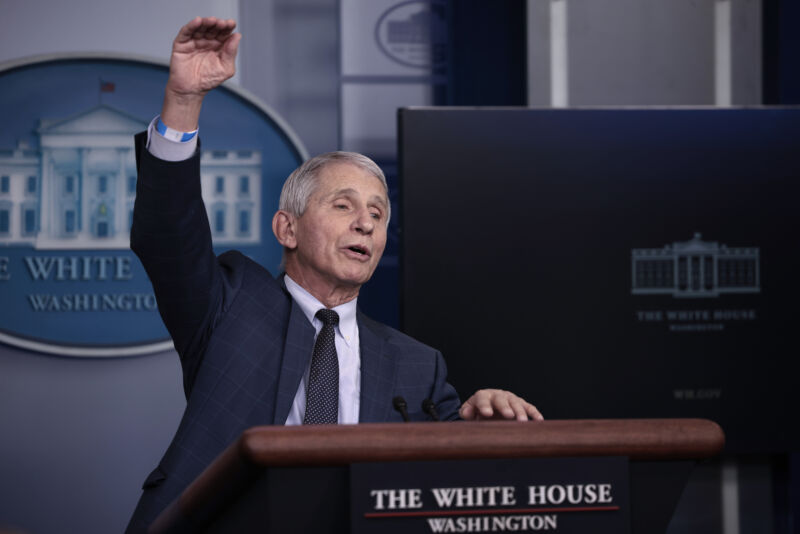

Dr. Anthony Fauci, chief medical adviser to the president, during the daily press briefing at the White House on December 1, 2021, in Washington, DC.

Enlarge / Dr. Anthony Fauci, chief medical adviser to the president, during the daily press briefing at the White House on December 1, 2021, in Washington, DC. (credit: Getty | Anna Moneymaker)

Though booster doses of current vaccines can foil the ultra-transmissible omicron coronavirus variant, a towering wave of omicron cases may peak in the US as soon as January, officials warn.

Scientists are still racing to fully understand the variant, which first gained international attention in late November. But a few things are becoming increasingly clear: the variant spreads stunningly fast, and it can largely circumvent protection from two vaccine doses. However, people who have received a third vaccine dose are well-protected against severe disease.

In a White House press briefing Wednesday, top infectious disease expert Anthony Fauci reviewed the early laboratory and real-world data on vaccine effectiveness. Numerous laboratory studies have all shown that levels of neutralizing antibodies from two doses of a vaccine are significantly lower against omicron—potentially so low that they do not protect against the variant. But studies looking at neutralizing antibodies after a third dose consistently find a substantial increase in protection. One study found a 38-fold rise in the level of neutralizing antibodies against omicron after a third dose of an mRNA vaccine.

Read 9 remaining paragraphs | Comments

15 Dec 18:15

Birds Aren't Real, And Kids Are Not So Susceptible To Conspiracy Theories (Their Parents On The Other Hand...)

by Mike Masnick

Back in high school, I read Robert Anton Wilson/Robert Shea's Illuminatus! Trilogy back-to-back with Umberto Eco's Foucault's Pendulum, and ended up being amused and fascinated at the intersection of conspiracy theories and pranksters. If you're unaware, both books satirize the nature of conspiracy theories. Soon after I picked up a copy of Re/Search's Pranks! book, which, to this day, is on my book shelf between a copy of the Mondo 2000 book and The Book of the SubGenius (with a copy of the tiny Loompanics yellow version of Principia Discordia sitting next to them). Soon after reading those, I got to college, and thanks to the wonders of the internet (and Usenet in particular) discovered a group of somewhat merry internet pranksters who dubbed themselves "The Flat Earth Society" -- as a purely ironic group who enjoyed the mixture of absurdity, satire, pranking, with an appreciation for the occasional conspiracy theory worth mocking (I'm still in touch with some people from that group decades later, again, thanks to the internet).

That's all preamble to note that I not only recognize, but really appreciate what's going on with a group of Gen Z pranksters, who cooked up a rather brilliant satirical conspiracy theory, better known as "Birds Aren't Real," which has been making the rounds for a while now, and only was officially "exposed" as a prank in a thoroughly delightful NY Times article last week.

The events were all connected by a Gen Z-fueled conspiracy theory, which posits that birds don’t exist and are really drone replicas installed by the U.S. government to spy on Americans. Hundreds of thousands of young people have joined the movement, wearing Birds Aren’t Real T-shirts, swarming rallies and spreading the slogan.

It might smack of QAnon, the conspiracy theory that the world is controlled by an elite cabal of child-trafficking Democrats. Except that the creator of Birds Aren’t Real and the movement’s followers are in on a joke: They know that birds are, in fact, real and that their theory is made up.

What Birds Aren’t Real truly is, they say, is a parody social movement with a purpose. In a post-truth world dominated by online conspiracy theories, young people have coalesced around the effort to thumb their nose at, fight and poke fun at misinformation. It’s Gen Z’s attempt to upend the rabbit hole with absurdism.

It seems that every generation needs this kind of thing -- and it's often driven by young folks (correctly) mocking older folks for various moral panics about different conspiracy theories. We see it again, and again. The Stuff You Should Know podcast just recently had an episode all about SINA, the "Society for Indecency to Naked Animals" which was a very similar style prank in the late 1950s, early 1960s.

In each case, these tend to be efforts by younger folks mocking this or that moral panic by older folks -- who always cloak the moral panic in a desire to "protect the children," even as the moral panics themselves seem frequently to come out of conspiracy theories or nonsense that the older folks fall for, and many of the younger folks see through. It's hard not to identify with this kind of thinking:

Most Birds Aren’t Real members, many of whom are part of an on-the-ground activism network called the Bird Brigade, grew up in a world overrun with misinformation. Some have relatives who have fallen victim to conspiracy theories. So for members of Gen Z, the movement has become a way to collectively grapple with those experiences. By cosplaying conspiracy theorists, they have found community and kinship, Mr. McIndoe said.

“Birds Aren’t Real is not a shallow satire of conspiracies from the outside. It is from the deep inside,” he said. “A lot of people in our generation feel the lunacy in all this, and Birds Aren’t Real has been a way for people to process that.”

Or as someone notes later in the article:

Mr. Gaydos added, “If anyone believes birds aren’t real, we’re the last of their concerns, because then there’s probably no conspiracy they don’t believe.”

To me, though the clear take away from this is that, yet again, the kids are alright, and will continue to be alright. And for all of the "but think of the children" moral panics we will experience over and over again, the kids will figure out ways to process and deal with those moral panics in the best way possible for them, figuring out the best ways to deal with the impossibilities of the world, and making the best of what may seem like a bad situation.

Count me as all in as saying "birds aren't real."

15 Dec 17:50

Senate Inches Closer To Providing Free Access To PACER

by Tim Cushing

Might a free PACER finally be on the horizon? For years, activists and a handful of Congressional reps have attempted to strip the fees from PACER, the federal court system's antiquated database that provides online access to court documents.

The antiquation doesn't begin with the fees. The system is outdated and hasn't improved much over the years, despite the fact that PACER regularly turns a profit. PACER looks and performs like a holdover from the 1990s. The UI is its own barrier to entry. The search function barely functions, vacillating between drawing a blank or producing several pages of irrelevant search results.

And that's where the fees kick in. PACER operates like a library copy machine, charging users $0.10/page for everything. Search results and dockets are treated like they're being printed out at the central PACER desk. Useless search results are $0.10/page. So are dockets, which may or may not contain the documents. These fees add up before users even locate the documents they're looking for. Those documents are also $0.10/page to download in PDF form, putting price on ones, zeroes, and the fractions of cents needed to generate, store, and transmit the documents.

The US Courts System has blown PACER profit on in-court niceties like new TV screens and furniture. Almost none of the millions PACER generates has gone towards improving PACER itself or lowering access fees. The federal court system has argued it will cost billions to overhaul PACER and provide free access to users.

But according to the Congressional Budget Office investigation and former government technologists, the actual outlay for an improved, free PACER is much less. The CBO says free access would only cost about $1 million a year. Technologists estimate the overhaul would only cost $10-20 million and require less than $5 million a year to maintain.

These facts helped push a bill mandating free access to PACER through Congress late last year. But that's only half the battle. And it's the far easier half of the battle. The Senate still needs to create and pass its own version, meld that with the House of Representatives offering, and drop a cohesive bill on the President's desk.

Well, we're one step closer to that happening, as Nate Raymond reports for Reuters.

A U.S. Senate panel on Thursday advanced a bipartisan bill that would overhaul the federal judiciary's PACER electronic court record system and make the downloading of filings free for the public through the elimination of costly fees.

The Senate Judiciary Committee voted to send the Open Courts Act of 2021 to the full Senate for its consideration after adopting an amendment that provided for additional funding and addressed the judiciary's concerns on technical issues.

The panel approved the measure on voice vote without any recorded opposition, and in a sign of the bill's support, nearly all of the committee members elected to co-sponsor the legislation by the end of the hearing.

The Administrative Office of the US Courts is still pretending this is far too expensive to accomplish. According to its statement to the Senate, it remains committed to modernizing PACER (which clearly isn't true) and thinks it will run out of money if people who've already paid once for the creation and storage of these documents aren't forced to pay again for access to them.

The Senate bill [PDF] would force the court system to do the thing it pretends it's been doing for years: overhaul the outdated PACER system. To help pay for these initial costs, high-volume users (those accessing more than $25,000 in dockets and documents quarterly) would still be charged PACER fees. For everyone else, it would be free.

The bill is still a few steps away from passing but free access to PACER is closer than it's been in years. And there's really no reason the government needs to continue charging taxpayers for access to documents they've already paid for. One wonders why the federal courts are so resistant to this change, considering the only thing at stake here is other people's money. Free access will still be taxpayer-funded. All this means is the court system won't have as large a slush fund to spend on office furniture and TVs -- items that do nothing to improve public access to court documents, which was the point of PACER all along.

15 Dec 17:49

Banks, ISPs Increasingly Embrace 'Voice Print' Authentication Despite Growing Security Risk

by Karl Bode

While it's certainly possible to sometimes do biometrics well, a long line of companies frequently... don't. Voice print authentication is particularly shaky, especially given the rise of inexpensive voice deepfake technology. But, much like the continued use of text-message two-factor authentication (which is increasingly shown to not be secure), it apparently doesn't matter to a long list of companies.

Banks and telecom giants alike have started embracing voice authentication tech at significant scale despite the added threat to user privacy and security. And they're increasingly collecting user "voice print" data without any way to opt out:

"despite multiple high-profile cases of scammers successfully stealing money by impersonating people via deepfake audio, big banks and ISPs are rolling out voice-based authentication at scale. The worst offender that I could find is Chase. There is no “opt in”. There doesn’t even appear to be a formal way to “opt out”! There is literally no way for me to call my bank without my voice being “fingerprinted” without my consent."

The U.S. has generally been extremely lax on privacy and security legislation and oversight, generally opting for baseline requirements that companies at least be transparent about their security and privacy practices, and provide users with working opt out tools. But time and time again neither are really adhered to. Eventually our lack of any meaningful privacy rules for the internet era will culminate in a privacy scandal that makes past scandals look like a grade school picnic. And with companies increasingly prioritizing convenience and simplicity over security and common sense, that day could arrive sooner than we think.

The rush toward voice authentication tech is particularly problematic given the quick rise of automated deepfake systems and the growing trove of user voice data available online. With parades of online creators, and smart televisions and other gadgets hoovering up voice data (and frequently failing to secure or encrypt it), availability of this data is ballooning. As are examples where faking a user's voice has been used for significant thefts. What happens when voice print authentication is adopted at scale, and exploitation of that trend becomes automated by robocall scammers already running amok? Nothing good.

Using voice authentication to secure your finances (or much of anything notable) is, at its base, already very much a hit or miss proposition:

If you figure voice deepfake tech will only get cheaper and better over time, you can also figure replacing passwords and pins with voice authentication isn't a great idea in a country already drowning in robocall scams. Yet we're apparently doing it anyway:

"Again, society must adjust to the following reality: It’s become easy for anyone to spoof the voices of others who have public recordings of them talking (very common). Therefore, companies (especially banks) should not be using this as a @#%!ing way to log into accounts! You would think this is SIMPLE-enough for corporate America to understand, but alas, here we are."

At the very least informed users should have the ability to opt out of voice data collection, yet in many cases they can't even do that. It's yet another example of why the nation needs at least some kind of baseline privacy rules that at an extreme minimum mandates that both data collection and security options should be transparent, and users should always retain opt out control. Baseline privacy legislation should also include meaningful penalties and accountability for the very long line of companies that view consumer privacy and security as an annoying afterthought.

Given this would cost a large number of politically powerful industries money we're not going to do any of that. Instead, we're going to continue to embrace the current paradigm: a few badly crafted state privacy proposals and a generalized apathy on the federal level. Surely that will work out well, right?

15 Dec 17:47

A potential hangup for quantum computing: Cosmic rays

by John Timmer
Image of a chip above iridescent wiring.

Enlarge / Google's Sycamore processor. (credit: Google)

Recently, when researchers were testing error correction on Google's quantum processor, they noted an odd phenomenon where the whole error-correction scheme would sporadically fail badly. They chalked this up to background radiation, a combination of cosmic rays and the occasional decay of a naturally occurring radioactive isotope.

It seemed like a bit of an amusing aside at the time—Google having accidentally paid for an extremely expensive cosmic ray detector. But the people behind the processor took the problem very seriously and are back with a new paper that details exactly how the radiation affects the qubits. And they conclude that the problems caused by cosmic rays happen often enough to keep error-corrected quantum computations from working unless we figure out a way to limit the rays' impact.

It’s a shame about the rays

Cosmic rays and radioactivity cause problems for classical computing hardware as well. That's because classical computers rely on moving and storing charges, and cosmic rays can induce charges when they impact a material. Qubits, by contrast, store information in the form of the quantum state of an object—in the case of Google's processor, a loop of superconducting wire linked to a resonator. Cosmic rays affect these, too, but the mechanism is completely different.

Read 12 remaining paragraphs | Comments

15 Dec 16:32

FAA Ignores FCC, Limits U.S. 5G Over Unsubstantiated Safety Concerns

by Karl Bode

We'd already noted that the FAA had been pushing to impose limits on 5G deployments in certain bands due to safety concerns. The problem: the FCC, the agency with the expertise in spectrum interference, has repeatedly stated those concerns are unfounded based on the FCC's own research. Worse, the FAA has proven a bit intractable in providing the FCC with data proving their claims of harm. The FAA claims that deploying 5G in the 3.7 to 3.98 GHz "C-Band" will cause interference with certain radio altimeters. But the FCC has shown that more than 40 countries have deployed 5G in this band with no evidence of harm.

That didn't seem to sway the FAA, which prodded both AT&T and Verizon to pause deployment in the C-band. The FAA's refusal to listen to the FCC, or be transparent about sharing any data to support its claims, has pissed off the FCC. To the point where a bipartisan coalition of six former agency commissioners and bosses wrote a joint letter politely tut-scolding the agency for being bull-headed:

We are concerned about the Federal Aviation Administration’s (FAA) recent efforts to revisit the FCC’s 2020 decision” to free airwaves for the fast 5G mobile service that’s to start next month, the six said in a letter dated Monday obtained by Bloomberg News.

“The FAA position threatens to derail the reasoned conclusions reached by the FCC after years of technical analysis and study,” the signers, a mix of Republicans and Democrats, said in the letter. They are Ajit Pai, Tom Wheeler, Mignon Clyburn, Julius Genachowski, Michael Copps and Michael Powell.

The weird thing is even one of the FAA's own recent bulletins (pdf) states there are no "proven reports of harmful interference" with C-Band 5G deployments anywhere in the world. Despite no evidence of harm, the FCC was careful to set aside a 220 MHz guard band that will remain unused as a buffer to prevent this theoretical interference -- technically double the amount manufacturers like Boeing requested. The FAA continues to maintain its claim, but so far has refused to provide the FCC with data proving it (but did manage to find time to leak its claims to the Wall Street Journal).

It's a fairly bizarre feud caused by a stubborn agency that's understandably so concerned about the faintest threat to public safety, it's refusing to transparently work with the one agency that actually understands how the technology works. Harold Feld, who probably knows more about U.S. wireless spectrum policy than anybody in the country, has written a long primer here for anybody who's interested.

15 Dec 13:30

Turns out the Senate can make an exception to the filibuster if it wants to

by Li Zhou
Senate Majority Leader Chuck Schumer, shown speaking to reporters on December 14, and Minority Leader Mitch McConnell (not pictured), arrived at a deal on the debt ceiling. | Chip Somodevilla/Getty Images

Congress on Tuesday raised the debt ceiling by $2.5 trillion by doing just that.

The Senate avoided a debt default on Tuesday — in a unique way.

Lawmakers voted 50-49 to raise the debt limit by $2.5 trillion, a figure that’s expected to tide the government over until after the midterm elections next fall. Every one to two years, it’s vital for the US to address the debt ceiling to cover past spending and make sure the government doesn’t default; if it did, it would likely have catastrophic economic consequences globally.

Interestingly, the resolution succeeded because it did not require 60 votes to clear a filibuster in the Senate after lawmakers passed a bill last Thursday granting a one-time exception to the rule.

The deal to suspend the filibuster was bipartisan; leaders of both parties have hesitated to make exceptions to the filibuster, a procedural rule requiring a Senate supermajority to pass legislation, if it gets blocked by the opposition. Senators were willing to make an exception in this case, for two reasons.

One, it enabled Democrats to approve the debt limit resolution on their own, with no Republican support. Republicans wanted to withhold their votes in hopes of weaponizing Democrats’ vote to raise the debt ceiling in future campaigns. Two, the deal allowed a vote to be held quickly, narrowly avoiding the December 15 default deadline calculated by Treasury Secretary Janet Yellen.

This last-minute deal enabled lawmakers to avert a debt default and massive economic crisis while overcoming a partisan impasse on the subject. For some Democrats, too, it revealed that exceptions to the filibuster are possible — and an option lawmakers should consider for other bills.

Republicans want Democrats to own the debt

Raising or suspending the debt limit, something lawmakers have to do to ensure the country has enough money to cover its past spending, has long been politicized.

In the past, both parties have used votes to raise or suspend the debt limit as opportunities to accuse the other party of irresponsible spending, with Republicans doing so more frequently in recent years. In reality, additions to the debt have taken place under both Democratic and Republican presidents. And during the Trump administration, as was generally the case previously, debt limit increases received bipartisan backing: In that period, $8 trillion was added to the national debt, and lawmakers voted to suspend the debt limit three times.

This year, however, Republicans have been particularly eager to use the debt limit to send a political message, as midterm elections loom in 2022.

The fight over the debt limit took place as Democrats are attempting to pass a $1.85 trillion social and climate spending bill — the Build Back Better Act — on their own via budget reconciliation (a process that, like the filibuster exemption, allows bills to pass the Senate with a simple majority). Republican leaders have argued Democrats should figure out how to raise the debt ceiling on their own, too. Republicans hope to use a Democratic party-line debt limit vote in campaigns to accuse the other party of adding to the debt. They plan to incorrectly imply that Democrats’ spending bills necessitated the debt limit increase, even though the spending covered by the increase has already happened, with much of it taking place under President Donald Trump.

The parties have already had one major debt limit fight earlier this year. The debt default date was originally in October, and Republicans initially refused to help raise the debt limit. They ultimately caved as the default deadline approached. At that time, lawmakers raised the limit by $480 billion, enough to push the default date back a few months, bringing the national debt to roughly $29 trillion.

This particular vote ends this fight, at least temporarily. It raises the debt limit by enough to cover expenses until roughly next fall, at which point this battle will be repeated. Since raising or suspending the debt ceiling is must-pass legislation, it should be a routine issue that Congress checks off, not a controversial one. Because it has to pass, however, it’s increasingly used as an opportunity for the minority party to extract policy concessions or make a political point (for example, that their opposition spends too freely). So there will likely be a similar battle next fall, regardless of which party wins the midterms.

A precedent for a filibuster exception

The debt ceiling vote has opened the door to questions of whether Democrats would consider filibuster exceptions for other bills, like voting rights protections. Activists, and some Democratic lawmakers, have called for this in recent months amid failures to advance voting rights protections, police reform, and a $15 minimum wage due to GOP opposition in the Senate. But a filibuster exemption for policy changes is likely to be difficult to secure.

This time around, Democrats were only able to get an exception because it was for something Republicans actually wanted. Though there was enough GOP opposition to raising the debt limit that getting 60 Senate votes was in doubt, Republican leaders like Senate Minority Leader Mitch McConnell did not want the US to default. Those leaders made sure the exception passed for the good of the domestic and global economy. Without Republican support, Democrats likely wouldn’t be able to approve another exception in this same way.

That leaves Democrats with another challenging option: banding together for a rules change. Those sorts of modifications can be done by majority vote. But that would require the support of all 50 Democratic caucus members, which party leaders don’t currently have. Moderate Sens. Joe Manchin (D-WV) and Kyrsten Sinema (D-AZ) have staunchly opposed such changes thus far.

Still, this development has made it clear lawmakers do have another option to consider for bills that can’t pass via budget reconciliation, and has set a recent precedent for such carveouts. Now that it’s been done once, expect to hear calls to do it again. In fact, this filibuster carveout has sparked new conversation about how else this tactic could be used.

“If we can make an exception to the filibuster for the debt ceiling, we should absolutely do it to protect our democracy,” Sen. Alex Padilla (D-CA) has previously said.

15 Dec 12:12

Vaccination rates compared against country wealth

by Nathan Yau

Vaccine supply is only part of the equation. For The New York Times, Keith Collins and Josh Holder looked at distribution of available doses in countries, categorized by income group.

Tags: coronavirus, New York Times, vaccination

15 Dec 12:11

The Fugitive Maryland Zebras Have Been Found

by Damare Baker
After months of fascinating the DC area, the fugitive Maryland Zebra Saga has come to an end. The two zebras who have run away from a farm near Upper Marlboro have been found and captured, WUSA9 reports. The US Department of Agriculture and Prince George’s County government has not disclosed where the zebras are currently […]
15 Dec 12:11

Japan's Paper Culture

by Connie
Japan's Paper Culture

With Japan’s rich traditions in paper, it’s no wonder that paper is such a big part of Japanese culture. The development of washi-making techniques from families that have made paper for generations and constant innovation among modern Japanese paper companies mean that stationery lovers have some pretty neat options, like ultra-thin Tomoe River paper and luxuriously plushy Midori MD Cotton paper. Keep reading to learn more about why paper is so important in Japan—plus, take a look at a few of our favorite Japanese paper companies.

14 Dec 16:57

The one good thing that could come from Gavin Newsom trolling the Supreme Court

by Ian Millhiser
California Governor Gavin Newsom standing and speaking at a middle school, holding his hands at shoulder height.
California Gov. Gavin Newsom speaks during a news conference after meeting with students at James Denman Middle School on October 1, 2021, in San Francisco, California. | Justin Sullivan/Getty Images

There are worse things than a hypocritical Court.

The Supreme Court effectively held on Friday that state lawmakers can neutralize a constitutional right — so long as the state law attacking that right is enforced solely through private lawsuits.

Not long after the Court opened up this surprising door in Whole Woman’s Health v. Jackson, California Gov. Gavin Newsom (D) announced that he would see if the justices are really serious about creating a loophole that can be used to cancel constitutional rights.

The Jackson case involved SB 8, Texas’s (apparently successful) effort to ban all abortions after the sixth week of pregnancy. SB 8 flouts the Supreme Court’s decision in Planned Parenthood v. Casey (1992), which forbids abortion bans prior to the point when the fetus can live outside the womb.

Texas drafted SB 8 specifically to prevent it being stopped by a federal court. Ordinarily, someone who wishes to challenge a state law in federal court must sue the state official charged with enforcing that law. But the most important provisions of SB 8 can only be enforced through private lawsuits. On Friday, the Supreme Court essentially gave its blessing to this scheme, ruling that the only people who can be sued are state health officials who play an insignificant role in enforcing SB 8.

One day later, Newsom announced that he will push for an SB 8-style law in California, which targets gun rights in the same way that Texas targeted abortion rights.

Realistically, there is little chance that Newsom’s gambit will actually succeed in limiting gun rights in California.

The Supreme Court has repeatedly signaled that its 6-3 conservative majority intends to expand gun rights, while also limiting or even eliminating the constitutional right to an abortion. At an oral argument in early November, a majority of the Court appeared likely to strike down a New York state gun licensing law that’s been on the books for more than a century. A month later, in a different oral argument, a majority of the Court appeared openly hostile to Roe v. Wade, potentially to the point that they will overrule it altogether.

At oral arguments in Jackson itself, Justice Brett Kavanaugh — who is probably the median justice on the current Court — repeatedly pointed to a brief filed by the Firearms Policy Coalition, which warned that states might enact SB 8-style laws targeting guns. Although Kavanaugh effectively voted to sustain Texas’s efforts to ban abortions in Jackson, he appeared unwilling to do the same for a gun law.

The hypocrisy of a decision allowing states to neutralize a right favored by Democrats, but not a right favored by Republicans, is obvious. But, honestly, we should hope for hypocrisy. We should hope that the worst thing that comes out of Jackson is an unprincipled decision holding that Jackson is a one-off case that applies to abortion and nothing else. For, if Jackson is allowed to stand unmodified, it threatens the very notion that states are bound by the Constitution.

The rule announced in Jackson, to put it mildly, is dangerous. As Kavanaugh correctly noted in the Jackson oral argument, an SB 8-style law could be used to target “Second Amendment rights, free exercise of religion rights, free speech rights” — really any constitutional right at all. A Republican legislature, to give just one example, could potentially enact an SB 8-style law authorizing private citizens to collect bounties from anyone who criticizes Donald Trump.

Newsom’s gambit, in other words, gives the Supreme Court an opportunity to neutralize a reckless decision before it endangers more constitutional rights.

Jackson effectively allows any state to ban abortion

As Chief Justice John Roberts wrote in his Jackson dissent, SB 8 employs “an array of stratagems designed to shield its unconstitutional law from judicial review.”

Normally, a litigant who believes that a state law is unconstitutional may not sue the state directly in federal court. Instead, they must sue the state official tasked with enforcing that law. If a federal court agrees that the law is unconstitutional, it will typically issue a court order known as an injunction, which prohibits that state official from enforcing the unconstitutional law.

SB 8 exploits this structure by forbidding any “officer or employee of a state or local governmental entity” in Texas from enforcing key provisions of its abortion ban. Instead, the law is enforced almost exclusively through private lawsuits.

The law provides that “any person” — literally anyone in the world, regardless of whether they live in Texas, who is not an employee of the state — may sue anyone who either performs an abortion in violation of SB 8 or who “aids or abets the performance or inducement of an abortion.” Victorious plaintiffs receive a bounty of at least $10,000 that is paid by the defendant, and there is no upper limit on this bounty.

Thus, anyone who is even suspected of violating SB 8 could potentially be bombarded with thousands of lawsuits filed by individuals from all over the globe. Even if they win every one of these suits, such an SB 8 defendant would likely face devastating legal fees, as they would need a small army of lawyers to defend against so many suits. And, if an SB 8 defendant loses only one of these lawsuits, they could be hit with a bounty of $10,000, or $10 million, or $10 billion. Again, there is no upper limit to the bounty.

The idea, in other words, is to chill abortion providers from performing abortions — because anyone accused of performing an abortion after the sixth week of a pregnancy risks being bankrupted by legal fees before a court even decides if they violated SB 8.

In Jackson, a 5-4 Court determined that all the most important parts of SB 8 are, indeed, insulated from federal judicial review. The Court did allow suits to proceed against state health officials who play a very minor role in enforcing the law, but an injunction against these health officials is likely to prove useless. Such an injunction does nothing to stop private lawsuits from being filed against abortion providers, and it similarly does nothing to prevent Texas state judges from ordering these providers to pay a bounty.

(In theory, the Texas Supreme Court might eventually issue an order halting SB 8. But that’s highly unlikely as all nine seats on that court are held by Republicans.)

Under Jackson, moreover, a state could pass a nearly identical law that bans all abortions — and not just after the sixth week of pregnancy — and that law would also be insulated from any meaningful judicial review. The Supreme Court gave states a road map they can use to prohibit abortions altogether, even though decisions like Casey and Roe v. Wade still technically remain good law.

Why Whole Woman’s Health v. Jackson is so reckless

Although the Jackson opinion involved an anti-abortion statute, nothing in Jackson prevents a state from using SB 8-style private bounties to neutralize any constitutional right.

So Newsom proposes taking the Supreme Court at its word. The legislation he floated on Saturday would allow private citizens to sue anyone who “manufactures, distributes or sells an assault weapon or ghost gun kit” (“ghost guns” are weapons with no serial number). In June, a conservative federal judge struck down California’s existing ban on “assault weapons,” although that case is now on appeal.

Other state policymakers, meanwhile, could enact SB 8-style laws that do considerable violence to the Constitution — at least if Jackson remains good law.

To take the example I mentioned above, suppose that Texas wishes to ban all criticism of Donald Trump during the 2024 election. Under Jackson, Texas could enact a law that is virtually identical to SB 8, except that it permits “any person” to sue anyone who speaks ill of the former president. Such a statute could even be written to target any journalist who publishes a Trump-critical article that can be accessed online in the state of Texas.

Then suppose I publish an article on Vox arguing that Trump’s judicial nominees do not adequately respect First Amendment rights. Under the terms of an SB 8-style law banning criticism of the former president, I would immediately be vulnerable to thousands of lawsuits.

Meanwhile, state lawmakers could enact similar laws targeting any other constitutional right. Maybe a state would authorize SB 8-style bounty hunting against anyone who claims that police unlawfully searched their home without a warrant. Or a state could allow SB 8-style lawsuits against any Black family that sends their child to a predominantly white public school. The possibilities truly are endless.

This is why it is a good thing that Gov. Newsom could force the courts to consider the full implications of Jackson. Yes, a decision striking down an SB 8-style gun ban would be duplicitous and difficult to square with the Court’s decision in Jackson. But the Supreme Court needs to hand down a second decision limiting the scope of Jackson — even if that second decision is completely unprincipled and simply declares that Jackson applies only to anti-abortion laws.

The alternative is a world where the Constitution is optional. And where states are free to defy it at will.

14 Dec 16:54

EUIPO Study Indicates It's Likely That Piracy Traffic Has Decreased Significantly, Even During The Pandemic

by Timothy Geigner

Back in April of 2020, which feels roughly like a damned lifetime ago, we discussed a much-publicized report that indicated explosive growth in traffic to pirate torrent and streaming sites for movies, music, television, and video games. Much hand-wringing ensued, which was largely silly. All kinds of media consumption traffic rose during the initial lockdown months of the COVID-19 pandemic and it only made sense that piracy traffic would follow suit, particularly when you consider the broader economic impact of the pandemic. This wasn't some new paradigm shift in the piracy landscape; it was literally one of the most predictable things that could have happened.

But now, almost two years later, where are we at? Well, per a recent study by the EU Intellectual Property Office, piracy traffic hasn't just fallen, it's fallen sharply.

New research published by the European Union Intellectual Property Office shows that, despite the pandemic, piracy site visits continue to fall. This trend is visible for movies, TV shows, and music, with the latter showing the sharpest drop. Income level and inequality appear to be major piracy drivers, but there's a major caveat as well.

We'll get into that caveat more a bit later, but it's worth pointing out that all the data for this report comes from MUSO. MUSO is an anti-piracy outfit, albeit one that isn't afraid to embrace some new and interesting ideas. Still, as an organization that is certainly not incentivized to play down piracy numbers. And, yet, the numbers do indicate a significant trend downward.

The chart below shows that the piracy numbers roughly halved between 2017 and 2020. This trend is visible for all content categories and most pronounced for music, which dropped by more than 80% during this time period.

These data also reveal that TV piracy is by far the most common. This could in part be due to the recurring nature of TV shows. At the end of 2020, roughly 70% of all pirate site visits were TV-related. The film and music categories are good for 20% and 10% respectively.

The COVID boom was either never a thing, or it was so short-lived that it basically isn't worth talking about. This tracks with other pandemic related effects on the nation, such as the stock market crash that then came roaring back almost immediately. Humans, as it turns out, are perfectly capable of wild swings of behavior and outlook when pressured by a historic event.

But the overall downward trend over recent years is very easy to explain: streaming. As the public gets more and more comfortable with utilizing streaming services in order to get the content they want, services that are often well-priced and easy to use, the desire for piracy goes down. For $50 a month across several streaming services I can get nearly all the content I want? Fine, then no need to engage in risky or even non-risky pirate behavior.

Now, about that caveat...

The study really only covers a part of the broader piracy landscape. The focus on web traffic means that apps, streaming devices, and IPTV services are not included either. Perhaps that’s where some mobile users are going?

This caveat may also shed a different light on the piracy drop, as these untracked piracy channels have grown explosively in recent years. According to some, these streaming tools are the largest piracy threat at the moment.

And perhaps there is some truth to that, though it feels quite unlikely that IPTV services explain the global drop of piracy levels across the board. TV and movies are one thing, but IPTV doesn't factor into music or video game piracy in any serious way. But Spotify and subscription based gaming services certainly do.

So if the trend is that piracy is on the significant downswing, you would think we'd see the IP industries ratchet down the rhetoric on the evils of piracy. Somehow, I cannot quite convince myself to hold my breath on that one.

13 Dec 18:10

The Bipartisan Attacks On The Internet Are Easily Understood If You Realize They Just Want To Control Speech Online

by Mike Masnick

Understanding the "bipartisan" approach to internet regulations over the last couple of years really boils down to "both parties want to control the internet" and twist it to their own advantage. Almost everything you hear about "harms" from the internet are disingenuous nonsense from grandstanding politicians. That's not to say there aren't real problems with things on the internet or how it's structured -- but there is almost no realistic exploration of those issues by those in various legislatures. It's all about grabbing control over the internet. Two recent articles highlight pretty clearly how both Republicans and Democrats are clearly salivating to control speech online for their own benefit -- and not for the actual good of society or the internet.

First up, we have The Spectator. To be honest, this publication has been a garbage publication recently, pushing out all sorts of nonsense, but apparently there are still a few people there who can publish something good. Taylor Millard has written a short and to the point article noting, accurately, that so much of the bipartisan attacks on the internet lately are really about one thing: how both parties want to control your speech online. We've discussed how the policy plans of Republicans and Democrats often feel at odds, with Republicans complaining about too much moderation, and Democrats complaining about too little, but the truth is slightly more nuanced, and both are really just looking to have control over speech online -- control that is simply not allowed under the 1st Amendment.

The Democrats' attacks on free speech are pretty straightforward:

Congressional Democrats are hoping to enact rules due to their concerns over so-called misinformation and “harmful content.” Their anger over the 2016 election of Donald Trump and the bogeyman of Russian interference fueled the original push for new regulations. The coronavirus pandemic and 2020 presidential election fallout poured rocket fuel on the ideological pyre, as did the QAnon conspiracy and discussions around alternate Covid treatments, masks and vaccine efficacy.

Vermont congressman Peter Welch promoted a new five-member commission with civil penalty power making sure Big Tech is “unbiased” and doesn’t promote harmful content. The Democrat used the infamous “for the children” crusade as reasoning. Minnesota senator Amy Klobuchar desires Health and Human Services control over the internet where public health is involved. She believes more lives would be saved if Section 230 protections for Big Tech were removed. New Mexico senator Ben Ray Lujan took it a step further, saying that the spread of misinformation ended up “fueling distrust in public health officials, promoting conspiracy theories and putting lives at risk.” To paraphrase Frank Herbert: he who controls the information, controls the world.

The Republican side is just slightly more nefarious in that they falsely claim that their efforts are in support of free speech, though as rulings in Texas and Florida have shown, they're equally as problematic under the 1st Amendment.

Republicans are just as censorious — but they shroud their urge to regulate Big Tech under the guise of protecting free speech. The Florida and Texas legislatures passed rules requiring large social media companies not to remove users from their platforms if they express dissident viewpoints.

We see this elsewhere too -- not just in the states. Nearly all of Josh Hawley's policy proposals regarding the internet are about controlling how internet companies present speech. And Republicans are just as prone as Democrats to roll out "for the children!" legislation that is designed to simply give government more control over speech.

The second article is by Adam Thierer, and published over at The Hill and makes a very similar point:

The only thing unifying both sides is a desire for greater regulatory control of media. In today’s hyper-partisan world, tech platforms have become just another plaything to be dominated by politics and regulation. When the ends justify the means, principles that transcend the battles of the day – like property rights, free speech and editorial independence – become disposable. These are things we take for granted until they’ve been chipped away at and lost.

Is there any way to make both sides happy without undermining the digital economy, which has been dominated globally by American firms for over a quarter century? 

That’s unlikely, but it hasn’t stopped lawmakers from introducing a flurry of bills to weaken or eliminate protections afforded by Section 230, which limits liability for platforms that host user-generated content. Implemented in 1996, it has served as the cornerstone of America’s ascendancy in the digital world and helped spur an avalanche of innovation. Gutting it would put all that at risk. 

As Thierer rightly notes, this is entirely about attacking free speech and the 1st Amendment, by both parties, in order to control a medium they haven't been able to control for the past few decades:

Without admitting it, both sides are really at war against the First Amendment, which protects the editorial decisions made by private companies. To be sure, there is problematic content to be found on digital media platforms, and there are some legitimate complaints about overzealous takedown policies and lack of transparent standards. That does not mean there is an easy policy fix to those problems, however. But courts have held repeatedly that the First Amendment protects efforts by private media firms to devise their own approaches. Just last week, a Texas judge blocked a law that sought to limit social media platforms’ editorial freedoms. That followed a court in Florida enjoining a similar law this summer. 

Critics like to paint large tech companies as nefarious overlords out to destroy civilization. In reality, the problems we see and hear on modern platforms reflect deeper problems in our society. If these companies are to be blamed for anything, it’s making human communication so frictionless that every person now has a soapbox to speak to the world. That’s both a blessing and a curse. With unbounded speech comes many wonders but also many problems.

The battles here are not about making a better internet. Or "protecting children." It's very much about each of the political parties wanting control over the key tool that has enabled people to communicate with each other, without having that speech first filtered through an "official" source.

13 Dec 12:07

How California plans to copy Texas abortion tactics for gun control

by Ellen Ioanes
California Gov. Gavin Newsom gestures while speaking to a crowd of students outdoors in Oakland, California, on September 15, 2021.
California Gov. Gavin Newsom speaks to students at Melrose Leadership Academy in Oakland, California, in September. | Stephen Lam/San Francisco Chronicle via Getty Images

Gov. Gavin Newsom wants to let Californians sue some firearm manufacturers and sellers.

California Gov. Gavin Newsom announced Saturday that his administration will push for a new measure, modeled after Texas’s controversial abortion ban, to limit the sale of assault weapons and “ghost guns” in the state.

The proposed bill, according to a press release from Newsom, would allow Californians to sue “anyone who manufactures, distributes, or sells an assault weapon or ghost gun kit or parts” for damages — the same injunction-skirting mechanism Texas has used to ban all abortions after six weeks, which has so far been permitted by the Supreme Court.

“If that’s the precedent then we’ll let Californians sue those who put ghost guns and assault weapons on our streets,” Newsom said in a tweet Saturday. “If TX can ban abortion and endanger lives, CA can ban deadly weapons of war and save lives.”

Newsom’s statement comes on the heels of a Friday Supreme Court ruling, which further entrenched Texas’s ability to ban virtually all abortions in the state, despite allowing a suit against Texas state health officials to advance. As Vox’s Ian Millhiser explained:

The upshot of this decision is that, while the abortion provider plaintiffs in Jackson may be able to get a federal court order declaring that SB 8 is unconstitutional, the only real relief they are likely to win is an order preventing a few state health officials from carrying out the minor role they play in enforcing the law. The most important provisions of the law — the ones that effectively prevent anyone from performing an abortion after the sixth week of pregnancy by threatening them with financial ruin if they do so — will most likely remain in effect.

Currently, few details are known about the proposed California legislation other than its enforcement mechanism; according to Newsom’s announcement, plaintiffs suing firearms manufacturers could be awarded at least $10,000, plus attorney’s fees if they win their case. As the LA Times reports, however, the California State Assembly and Attorney General Rob Bonta won’t be able to move on putting together a bill until January 3, when the legislature reconvenes after the holiday break.

Newsom wants to use Texas’s abortion tactics for gun control

SB 8, the law that Newsom references in Saturday’s announcement, hinges on a novel, convoluted enforcement scheme. Though it functionally bans all abortions after a mere six weeks of pregnancy, Texas officials are prohibited from directly enforcing the law, according to its text. Instead, SB 8 is constructed so that an individual — who doesn’t even have to be a Texas resident or have anything to do with the abortion in question — can sue an abortion provider or someone suspected of aiding an abortion performed after the six-week window.

As Vox’s Millhiser explained in August, SB 8 is an intentionally perplexing piece of legislation, designed to thwart legal challenges:

The anti-abortion law, which is before the Supreme Court in a case called Whole Woman’s Health v. Jackson, presents a maze of procedural complexities that are rarely seen in even the most complicated litigation. The law appears to have been drafted to intentionally frustrate lawsuits challenging its constitutionality. And Texas, with an assist from a right-wing appellate court, has thus far manipulated the litigation process to prevent any judge from considering whether SB 8 is lawful.

Already, SB 8 has resulted in a number of copycat bills. According to Forbes, state legislatures in Alabama, Arkansas, Florida, and Ohio have all introduced similar abortion bans, and even more could be on the way.

The proposed California legislation, however, would be the first measure to use an SB 8-style enforcement mechanism for a different goal. Newsom’s proposal would empower private citizens to sue the manufacturers of assault rifles and so-called ghost guns — firearms made from kits, which are difficult to track because they don’t have serial numbers like those that come from licensed companies and are sold by licensed dealers. Ghost gun kits are sold online, are easy to assemble, require no background check to buy, and are impossible for authorities to trace, as the New York Times’s Annie Karni explained in April.

California’s longstanding ban on assault weapons was overturned by federal district court Judge Robert Benitez in June; the same judge ruled in 2017 against a ban on magazines with a capacity of more than 10 bullets, and last year blocked a 2019 law requiring background checks for people purchasing ammunition.

Benitez overturned the previous ban on the grounds that it violated the Second Amendment, and explicitly pointed to the AR-15’s military utility in his decision. “Like the Swiss Army knife, the popular AR-15 rifle is a perfect combination of home defense weapon and homeland defense equipment,” Benitez wrote. “Good for both home and battle.”

As Vox’s Dylan Matthews explained in 2019, the AR-15 “is not a specific model — it gets its name from ArmaLite, the company that originally manufactured the rifle,” but the design is no longer patented. Though the AR-15 was initially designed as a military weapon, it has since become one of the most popular rifles in the US.

At the time, Newsom called Benitez’s ruling “a direct threat to public safety and innocent Californians.”

Newsom’s new tactic — adapting the SB 8 model to gun control — would ostensibly circumvent Benitez’s June ruling, taking enforcement of the law out of the hands of the state and shielding the ban itself from judicial challenge in the same way SB 8’s enforcement mechanism does.

California legislation could be a political win-win for Newsom

In some ways, the proposed legislation could be a no-lose strategy for Newsom, who is running for reelection next year after surviving a recall effort in September. It’s a way for him to take aim at the June ruling overturning the assault rifle ban, and to rebuke the Texas law that infringes on the right to an abortion and presents an alarming subversion of legal and judicial processes.

While Newsom’s proposed bill probably stands a good chance in the California legislature, where Democrats have a supermajority in both chambers, it’s also proof positive of the warning that SB 8 presents a slippery legal precedent, as gun rights group the Firearms Policy Coalition described in an amicus brief in Whole Woman’s Health v. Jackson.

“To the extent this tactic is effective at evading or outright blocking pre-enforcement review, while still deterring protected behavior, it will easily become the model for suppression of other constitutional rights, with Second Amendment rights being the most likely targets,” the group’s attorney, Erik Jaffe, wrote in the brief.

Supreme Court Justice Sonia Sotomayor echoed that assessment in her dissent to Friday’s ruling, which allows SB 8 to stand while another legal challenge is argued before the Court, saying the Texas law would create a path for other states to “reprise and perfect Texas’ scheme in the future to target the exercise of any right recognized by this court with which they disagree.”

With Newsom’s Saturday announcement, that now appears more likely to come to pass.

“Gov. Newsom is following through on the threat,” UC Berkeley School of Law professor Khiara Bridges told the LA Times. “It’s just been academic up until now.”

As Bridges points out, the proposed bill won’t necessarily succeed. Should it become law and end up before the Supreme Court, it’s still possible judges could strike it down while leaving SB 8’s citizen enforcement mechanism intact.

“I have no doubt whatsoever that the Supreme Court will find some bizarre, disingenuous argument to distinguish gun rights from abortion rights,” Bridges told the Times.

Newsom’s proposal does, however, have the potential to underscore the absurdity of the mechanism behind SB 8, whatever the actual outcome for the gun bill. As Chief Justice John Roberts wrote Friday in a minority opinion, “If the legislatures of the several states may, at will, annul the judgments of the courts of the United States, and destroy the rights acquired under those judgments, the constitution itself becomes a solemn mockery.”

11 Dec 16:42

Amid violent threats, lawmaker ditches bill to make unvaxxed pay hospital bills

by Beth Mole
Intensive Care Unit nurse monitors patients in the ICU ward at Roseland Community Hospital on December 14, 2020, in Chicago, Illinois.

Enlarge / Intensive Care Unit nurse monitors patients in the ICU ward at Roseland Community Hospital on December 14, 2020, in Chicago, Illinois. (credit: Getty | Scott Olson)

Illinois Representative Jonathan Carroll is scrapping his proposed legislation to make willfully unvaccinated people pay COVID-19 hospital bills out of pocket after he received violent threats that also targeted his family, staff and synagogue.

The Democrat from the Chicago suburb of Northbrook introduced legislation earlier this week that would have amended the state's codes for health and accident insurance. The proposed bill aimed to prevent insurance policies from covering COVID-19 hospital bills for people who choose to remain unvaccinated without a medical reason.

The bill was quickly politically divisive—and legally dubious. Federal law prevents health insurance providers from denying or reducing coverage based on a change in a person's health status, including a diagnosis of COVID-19.

Read 8 remaining paragraphs | Comments

11 Dec 16:38

Book Publishers Sue Maryland Over Law That Would Require Them To Offer 'Reasonable' Prices On Ebooks To Libraries

by Mike Masnick

For years now, we've been highlighting how book publishers are at war with libraries, and see ebooks and ebook pricing as a key lever in that war. With regular books, a library can just buy the book and lend it out and do what they want with it. But not ebooks. Because of a broken copyright law, publishers retain excess control over ebooks, and they lord that over libraries, arbitrarily raising prices to ridiculous levels, limiting how many times they can lend it out before they have to "repurchase" the ebook, and generally making it as difficult as possible for libraries to actually be able to offer ebooks.

This is because of a broken copyright system that gives publishers way more control over ebooks than traditional hardcopy books. And book publishers have spent the past decade abusing that power. In an ideal world, Congress would get its act together and fix copyright law and properly add first sale rights for digital goods like ebooks. But, without that, some states are trying to step in and fix things, including Maryland, which earlier this year passed a law that would require publishers to sell ebooks to libraries at "reasonable" rates.

With the law set to go into effect next year, helping more Maryland residents get access to ebooks in the midst of a still ongoing pandemic, the book publishers have continued their Grinch-like ways, and sued to block the law. The complaint says that this is an attempt by state law to route around federal copyright law, and since the 1976 Copyright Act, state copyright laws are pre-empted by federal law.

The complaint spews a lot of nonsense and propaganda about "the importance of copyright" to "the ultimate benefit of the public" which is laughable -- especially coming from book publishers who have gone out of their way to use copyright to fuck over the public. But, as ridiculous as it is from a societal level, the publisher's reading of the 1976 Act might convince a court. It is true that the 1976 act says that states can't pre-empt federal copyright law, so the publisher's argument is that this law is a route around that.

I assume that Maryland will argue, forcefully, that this is not a copyright law or an attempt to route around federal copyright law, but rather something else entirely. Indeed, as some have noticed, the Maryland law is deliberately "modest." It only says that if a publisher is already offering ebooks, it also has to make sure it will sell to libraries at a reasonable price. It's not forcing publishers to offer ebooks at all -- just make sure that the publishers can't treat consumers and libraries differently. And, as the libraries argued in the runup to this bill passing, there is historical evidence that a law that only impacts contracting does not impede on copyright:

First, the bills are not preempted by federal copyright law. The AAP cites section 301 of the U.S. Copyright Act as authority for its argument that federal copyright law preempts the bills. In fact, section 301 was adopted by Congress in 1976 to preempt state copyright laws—laws that created rights that are “equivalent to any of the exclusive rights within the general scope of copyright.” Courts around the country have repeatedly held that section 301 does not preempt state laws relating to contracts because contract rights are not “equivalent” to the exclusive rights of copyright. Central to those courts’ analysis is that the existence of a contract constituted an “extra element” not present in copyright law. Because the bills regulate license terms, they are completely outside the scope of section 301. It should be noted that 21 years ago, Maryland adopted the Uniform Computer Information Transactions Act (“UCITA”), which regulates licenses for copyrighted works such as software and databases. Publishers strongly supported the adoption of UCITA, and did not argue that its regulation of licenses was preempted by section 301 of the Copyright Act.

Realistically speaking, this is just the book publishers, once again, attacking libraries and the public, and using copyright as their weapon to do so. It's shameful behavior, but the underlying problem is our copyright laws, and the belief instilled in copyright abusers like the publishers, that it lets them control everything, even after they've sold something. The answer is to fix our copyright laws wholesale. If the copyright laws weren't so broken in the first place, we wouldn't need states like Maryland stepping in to try to fix situations like how publishers rip off libraries (and the public with it).

10 Dec 19:27

An Unplanned, Ad-Hoc Collaboration Reveals The On-The-Ground Truth About China's Internment Camps For Uyghurs

by Glyn Moody

The US, UK and Australia have all announced a diplomatic boycott of the Beijing Winter Olympics. The reason given for the move is because of human rights abuses in China, particularly in the turkic-speaking region of Xinjiang. Techdirt has been writing about the Chinese authorities' use of technology to censor and carry out surveillance on the local Uyghur population, among others, for some years. One of the most controversial aspects of China's policy in the region is the use of huge detention camps. According to the authorities there, these camps are for educational and vocational training. Human rights organizations call them internment camps; some governments speak of "genocide" against the Uyghurs.

Given the highly sensitive nature of the topic, it is naturally hard to ascertain what is really happening in these camps. One solution is to use satellite imagery to peek inside China's tightly-controlled borders. Perhaps the best-researched investigation using this technique appeared on BuzzFeed News last year. The main article, and the four follow-ups, revealed the hitherto unknown scale of the internment camps, but were necessarily limited by their use of an extreme physical viewpoint -- the view from space.

A Chinese travel blogger going by the name of Guanguan decided to investigate on the ground some of the camps located by BuzzFeed News, by driving to them. The remarkable 20-minute video summary of his travels provides unique views of the camps, which complement the satellite imagery used by BuzzFeed News. Specifically, they show in some detail side-views of the camps. This allows Guanguan to make reasonable guesses about which camps are indeed for education and training of some kind, and which ones are likely to be high-security internment camps.

The video is well-worth watching in its entirely, since it provides probably our best glimpse yet of the reality of China's internment camps for Uyghurs and others (wisely, Guanguan seems to be out of China now). In fact, the quality of the video images is such that IPVM, which specializes in covering the world of video surveillance, was able to recognize several of the security cameras used at the internment camps. There are a few cameras from the Chinese company Dahua Technology, but the majority identified come from Hikvision. This, Techdirt readers will recall, is the company whose director of cybersecurity and privacy said that IoT devices with backdoors "can't be used to spy on companies, individuals, or nations." IPVM reported that Hikvision "declined to comment" on these latest findings. Its article noted that the visual evidence of Hikvision cameras being used in multiple internment camps, the result of an interesting unplanned, ad-hoc collaboration between Western journalists and a Chinese video blogger, is likely to make things even worse for a company already blacklisted by the US government.

Follow me @glynmoody on Twitter, Diaspora, or Mastodon.

09 Dec 19:28

FDA authorizes boosters for ages 16 and 17 ahead of holidays, omicron [Updated]

by Beth Mole
FDA authorizes boosters for ages 16 and 17 ahead of holidays, omicron [Updated]

Enlarge (credit: Getty | Noam Galai)

Update 12/9/2021, 2:55 pm ET: The Centers for Disease Control and Prevention has signed off on the FDA's authorization and now recommends booster doses of the Pfizer-BioNTech COVID-19 vaccine for teens ages 16 and 17. This final step now means that boosting in this group can begin nationwide.

"Although we don’t have all the answers on the omicron variant, initial data suggests that COVID-19 boosters help broaden and strengthen the protection against Omicron and other variants," CDC Director Rochelle Walensky said in a statement. "We know that COVID-19 vaccines are safe and effective, and I strongly encourage adolescents ages 16 and 17 to get their booster if they are at least six months post their initial Pfizer vaccination series."

Original Story, 12/9/2021, 12:21pm ET: The Food and Drug Administration on Thursday authorized the Pfizer-BioNTech COVID-19 vaccine for use as a single booster dose in teens ages 16 and 17.

Read 8 remaining paragraphs | Comments

09 Dec 19:28

300,000 MikroTik routers are ticking security time bombs, researchers say

by Dan Goodin
300,000 MikroTik routers are ticking security time bombs, researchers say

Enlarge (credit: Getty Images)

As many as 300,000 routers made by Latvia-based MikroTik are vulnerable to remote attacks that can surreptitiously corral the devices into botnets that steal sensitive user data and participate in Internet-crippling DDoS attacks, researchers said.

The estimate, made by researchers at security firm Eclypsium, is based on Internet-wide scans that searched for MikroTik devices using firmware versions known to contain vulnerabilities that were discovered over the past three years. While the manufacturer has released patches, the Eclypsium research shows that a significant proportion of users has yet to install them.

“Given the challenges of updating MikroTik, there are large numbers of devices with these 2018 and 2019 vulnerabilities,” Eclypsium researchers wrote in a post. “Collectively, this gives attackers many opportunities to gain full control over very powerful devices, positioning them to be able to target devices both behind the LAN port as well as target other devices on the Internet.”

Read 5 remaining paragraphs | Comments