Customers walk past boxes of at-home Covid-19 tests for sale at a Washington CVS store in November 2021. As of January 15, Americans with private insurance are supposed to be reimbursed for the cost of the tests. | Ted S. Warren/AP
Why would getting reimbursed for Covid-19 testing ever involve a freaking fax machine?
Do you have a printer? Do you have a fax machine? If not, you might have trouble getting your “free” at-home Covid-19 test paid for by your health insurer.
As of January 15, Americans with private insurance are able to submit their at-home testing bills to their insurer in order to get reimbursed. But for some people, that may be easier said than done. Some insurers are letting their customers submit their bills online, but others are requiring people to physically print a piece of paper that resembles an IRS form, fill it out, and then either send it to their insurer through the mail or fax it.
A quick scan of social media finds Americans who sound baffled by what they are being asked to do in order to secure free Covid-19 tests in the middle of a public health emergency.
I just had a look at my health insurer's COVID-19 home test reimbursement form. Obstacle #1: it's not electronic, and I don't have a printer. Nor a fax machine, for that matter. pic.twitter.com/fQRbfLEBGR
Look at this tax form, @fepblue@BCBSAssociation. Not even a specialized, simplified form for at-home COVID test reimbursement? And no online option? I don't even know how you want me to fill out most of this form. What if I do it wrong? How is anyone supposed to get reimbursed? pic.twitter.com/X7rE8GdPbF
People can also order free tests through a new government website, covidtests.gov. But they are limited to four tests per household, which may not be enough for the people who have been exposed or need to test regularly.
Asking a patient in the year 2022 to send a fax in order to have their medical services paid for may sound laughable. But it’s a microcosm of the burdens the US health system puts on Americans in order to receive necessary health care.
“Our health care system is mind-numbingly complex,” said Larry Levitt, executive vice president at the Kaiser Family Foundation, “and that complexity takes its toll on patients in terms of time, access, and affordability.”
The United States health system, more than any other in the developed world, forces patients to manage their health care on their own. They pay a lot of their own money for medical care. They have to make sure their specific doctor is covered by their specific insurer. And even if their doctor believes they need a certain treatment, patients must follow rules set by their health insurer, or risk delays in treatment or ultimately having their insurance claims denied.
Patients run into these obstacles all the time — with serious consequences for their well-being. A recurring finding in health care research is that when patients run into any friction, whether high cost-sharing, limited access to providers, or something else, they tend to receive less timely and appropriate care. Over time, that will make people more likely to develop serious health conditions and, ultimately, die younger than they would with proper care.
It starts with the sheer cost of health care to US patients. Out-of-pocket spending per person is higher in the US than in any other wealthy country save Switzerland, and roughly twice as much as in countries like the UK, the Netherlands, and Japan. Recent research has found that even small cost obligations, as little as $10 for a prescription, can discourage patients from taking their medicine as prescribed. A third of Americans have reported in public opinion surveys that they skip medications or other necessary medical care because of the cost.
But the US health system puts up other, subtler hurdles. Insurers don’t cover care at every doctor’s practice or hospital; they instead contract with certain providers to create provider networks, within which their patients must seek care for their treatment to be covered. These networks put the onus on patients to figure out where they can go for care, at the risk of incurring huge medical bills if they get it wrong. That problem came to the forefront in the recent debate over surprise billing: Many people were going to the hospital for an emergency, only to find out after the fact that either the hospital or a doctor who treated them was not covered by their insurer.
That has been a common experience for American patients: About one in four heart attacks lead to the patient being charged for out-of-network care in the emergency department or if they are admitted.
Networks also make shopping for health insurance more difficult. Patients have to try to figure out in advance whether their existing primary care doctor or specialists, or the local hospital, will be covered by their new plan. Levitt told me he had recently been helping a friend shop for an insurance plan through the Affordable Care Act and ran into that problem.
“There have been multiple calls with the marketplace, the insurers, and doctors’ offices,” Levitt said. “It’s hard to get straight answers. I’m a health insurance expert and he’s got an MBA from Harvard.”
Patients can run into the same kind of problem with drug formularies, a list of approved drugs that health plans use to prioritize coverage for certain medications. If a drug is not on a plan’s formulary, customers must pay more of their money than they would for approved drugs. Sorting out which drugs are covered or preferred under a health plan’s formulary can be a headache, and research has shown that such restrictions lead to patients using fewer medications.
And even when care is ostensibly covered, it can be hard to actually get it paid for. The complicated reimbursement for Covid-19 tests is one striking example. Another common barrier is prior authorizations — when an insurer won’t cover a test or a procedure unless the health care provider has requested and received permission ahead of time.
In both academic research and provider surveys, prior authorization requirements tend to lead to treatment delays, even though most requests do eventually get approved. Forcing patients and doctors to take this extra step doesn’t seem to weed out unnecessary care, but does lead to delays for care that is ultimately deemed necessary.
It’s a needlessly complicated process that provides little benefit but creates plenty of problems — in other words, like the test reimbursement process, it’s the US health system in a nutshell.
ProPublica is a nonprofit newsroom that investigates abuses of power. Sign up to receive our biggest stories as soon as they’re published.
The Washington, D.C., attorney general’s office sued Arise Virtual Solutions, the work-at-home customer service company, on Wednesday, alleging the company stole wages from workers and deprived them of minimum wage, overtime pay and paid sick leave.
Large companies like Airbnb and Disney hire Florida-based Arise, which in turn recruits workers to answer customer service calls from their homes for its corporate clients. The attorney general’s civil suit, filed in D.C. Superior Court, alleges that Arise illegally classifies those workers as independent contractors rather than regular employees. That deprives the workers of a range of wage and other protections that the law provides only to employees.
The suit also names as a defendant Comcast, one of the many blue-chip companies that have obtained customer service workers via Arise.
“Arise has been elaborately constructed to avoid paying workers the minimum wage, overtime, and paid sick leave as required by District law,” D.C. Attorney General Karl Racine said in a statement. “Comcast, and other large companies, partnered with Arise and profited from that company’s theft of workers’ wages and benefits.”
The attorney general’s office opened its probe following a ProPublica investigation of Arise in 2020. Interviews and documents showed how Arise required workers to pay for the company’s training and their own equipment. The company made workers pay Arise monthly fees to take customer service calls on its “platform.” A CEO of the firm pitched corporate clients by saying the company could “squeeze wastage out of a typical workday.”
Customer service reps told ProPublica that Arise and the large corporations for whom they answered calls maintained a high level of control over their jobs, even as they were classified for legal purposes as independent contractors.
Those are labor law violations, the lawsuit alleges. “The economic reality of Arise’s relationship with its agents demonstrates the existence of an employer-employee relationship,” the lawsuit says. “Arise has the power to hire and fire agents, exercises extensive supervision and control over their conditions of employment, and determines their rate of pay.”
The D.C. suit seeks to recover back wages and paid sick leave, plus additional penalties, for at least 180 affected workers in Washington. That’s a small fraction of the tens of thousands of agents Arise has claimed to have around the country. The suit doesn’t say how much money the attorney general is seeking.
An Arise spokesperson declined to comment on the suit. The company has denied wrongdoing when its labor practices were called into question in the past. Arise is owned by private equity giant Warburg Pincus, which also declined to comment on the lawsuit.
The lawsuit alleges that Comcast is liable for wage law violations against its agents because the company had “substantial control over their conditions of work from hiring, to performance, and through termination.”
A Comcast spokesperson said in a statement that the company is “absolutely committed to lawful pay practices. This particular case involves individuals retained by and paid by Arise, not Comcast. We are reviewing the complaint and cannot comment further at this time.”
The lawsuit alleges that Arise targets women, especially women of color, for recruitment as customer service contractors. One Arise marketing site tells prospective workers they can “Become A Work From Home Mom” while another included in the complaint features photos of women of color smiling broadly alongside headlines like “Finally I had a chance to work again but I would be my own boss.”
That echoes ProPublica’s previous reporting that Arise’s workforce is heavily female, with one ad showing a woman being literally showered with cash.
Separately, a private class-action case filed against Arise in federal court last year is still pending. That followed a federal Department of Labor investigation more than a decade ago that concluded the company was violating the law and owed workers $14.2 million. But Arise pushed back against the government and ultimately paid nothing.
We'd already noted that the FAA had been pushing to impose limits on 5G deployments in certain bands due to safety concerns. The problem: the FCC, the agency with the expertise in spectrum interference, has repeatedly stated those concerns are unfounded based on the FCC's own research. The whole feud has been fairly bizarre, with the FAA refusing to transparently "show its math" at several points, but taking the time to leak its scary claims to select press outlets.
More specifically: the FAA (and a big chunk of the airline industry) claims that deploying 5G in the 3.7 to 3.98 GHz "C-Band" will cause interference with certain radio altimeters. But the FCC has shown that more than 40 countries have deployed 5G in this band with no evidence of harm if you implement some fairly basic safety precautions (like limiting deployments immediately around airports, and utilizing a 220 MHz guard band that will remain unused as a buffer to prevent this theoretical interference).
The FCC says there's not actually a problem here. And the wireless industry, having spent billions of dollars on middle band spectrum, obviously wants to move forward with deployment. Especially given criticism that U.S. 5G underperforms many overseas deployments thanks to a dearth of middleband spectrum. The U.S. has deployed substantial low band 5G spectrum (great range, lower speeds), and high band millimeter wave spectrum (poor range, poor building penetration, great speeds), but unlike many nations overseas, not much middle band (both good speeds and good range).
"The aviation industry faces “catastrophic” disruption from the rollout of a new 5G service this week, airline leaders have warned. In a letter sent Monday to United States transportation and economic officials and obtained by NBC News, the CEOs of major carriers said that the launch could ground flights and leave "tens of thousands of Americans" stranded overseas."
To be clear, evidence of actual harm here remains hard to come by. The FAA's own recent memos (pdf) stated there was no "proven reports of harmful interference" with C-Band 5G deployments anywhere in the world. And wireless spectrum policy experts tell me there's been absolutely no new studies that would justify this level of renewed freaking out by airline CEOs:
"We have seen no new evidence of anything,” Feld told Motherboard. “No new studies. No lists of altimeter equipment with their sensitivity to potential harmful interference."
When issues have popped up, they've proven relatively trivial to mitigate around the world. U.S. Wireless carriers have already agreed to limit deployment around at least 50 U.S. airports to reduce the chance of interference, and had agreed to a short delay to study harm before this week's deployment. After some initial squabbling between the FCC and FAA, all sides seemed to have basically struck a deal on U.S. 5G deployment in these bands, including that 200Mhz buffer (double what companies like Boeing recommended) to further limit potential harm.
But the real reason for the chaos isn't the actual interference. Some analysts suggest that, as usual, money is playing a role, and that the FAA, tightly wound up with the companies it regulates, wants to push the cost of any mitigation measures off to wireless carriers.
But Consumer groups, FCC sources, and wireless carriers all tell me the real problem is FAA procrastination, hubris and incompetence. Consumer groups and AT&T rarely agree on anything, but they both agree that the FAA didn't respect the expertise of the FCC (who again already studied this problem before the C-band auction and found little need for concern), wasn't willing to offer transparent evidence of their interference claims, didn't bring any of its concerns up years ago during the investigation process, and has lagged on both certifying altimeters it deems safe to use around C-Band 5G--and setting up flight restrictions for planes that have altimeters that don't qualify as safe under FAA guidance. AT&T was fairly blunt:
So it's not really clear why the CEOs of major airlines have dropped a doomsday-esque letter like this into the mix this late in the game (literally a day before initial deployments), given what little safety issues that do exist have already been addressed by the FCC and others. Just like it wasn't really clear why the FAA didn't want to listen to the FCC when it said there wasn't really an issue here that couldn't be easily mitigated. Especially given this same technology has already been deployed in more than 40 countries (in some cases, like Japan, even closer to spectrum ranges used by avionics equipment) with absolutely no evidence of harm. There's being adequately cautious out of respect for human safety, and then there's just being difficult.
The Federal Aviation Administration today said it has cleared 62 percent of US commercial airplanes to perform low-visibility landings at airports where AT&T and Verizon are deploying 5G on C-band spectrum this week.
Several international airlines previously canceled some flights to the US after Boeing issued a recommendation to not fly the 777 into airports where carriers are deploying 5G on the C-band. However, the 777 planes—or at least those that have altimeters capable of filtering out C-band transmissions—were on the FAA's new list of cleared aircraft. The FAA has been granting Alternate Means of Compliance (AMOCs) to operators with altimeters that are safe to use.
"Airplane models with one of the five cleared altimeters include some Boeing 717, 737, 747, 757, 767, 777, MD-10/-11 and Airbus A300, A310, A319, A320, A330, A340, A350 and A380 models," the FAA said in a statement issued shortly after 2 pm EST today. These airplanes are now authorized "to perform low-visibility landings at airports where wireless companies deployed 5G C-band," the FAA said. The word "some" indicates that not every plane with the mentioned model numbers has an approved altimeter.
The Red Cross on Wednesday pleaded with the threat actors behind a cyberattack that stole the personal data of about 515,000 people who used a program that works to reunite family members separated by conflict, disaster, or migration.
"While we don't know who is responsible for this attack, or why they carried it out, we do have this appeal to make to them," Robert Mardini, the director-general of the International Committee for the Red Cross, said in a release. “Your actions could potentially cause yet more harm and pain to those who have already endured untold suffering. The real people, the real families behind the information you now have are among the world's least powerful. Please do the right thing. Do not share, sell, leak or otherwise use this data."
Wednesday’s release said the personal data was obtained through the hack of a Switzerland-based subcontractor that stores data for the Red Cross. The data was compiled by at least 60 different Red Cross and Red Crescent National Societies worldwide. The ICRC said it has no "immediate indications as to who carried out this cyber-attack" and is so far unaware of any of the compromised information being leaked or shared publicly.
After last week’s letter from a medical practice manager struggling to hire staff and unable to pay more because of tightly regimented insurance company payments, I received this letter offering a different view that I wanted to share here.
Hi LW #2,
As a fellow small medical practice owner, I feel your pain. The feedback about PTO and other suggestions is fine, but I think most commenters (possibly even Alison included) aren’t aware of the root issue.
I run a similarly sized practice to yours. We are known for our amazing culture. I always have more people who want to work here than I can hire or have need for. I have had people move across the country to work here, unasked. There is no problem signing people on.
Our challenge? Retaining staff, because we can’t afford to pay them. We have the exact same problem: our pay ceiling is capped because of reimbursement and the fee-for-service nature of health care. Our staff are crestfallen when they have to resign, but it’s necessary for them to do what’s best for their families. I’m constantly consulting with the staff to tweak our employee offerings: more benefits and less pay, more pay and less benefits, etc. etc. But at the end of the day, we can only offer so much pay + benefits combined. More PTO is fine, but more PTO costs money!
We are able to keep as many people as we have because of our culture. Our staff in two-income families are willing and able to take a lower pay for improved work-life balance and employee experience. But not everyone has that financial privilege.
Insurance rates haven’t budged in over a decade, or they’ve gone down. I ran an inflation calculator this past week. Since I first opened the practice nine years ago, there has been an effective 20% cut in reimbursement. Twenty percent loss of revenues, in less than a decade. Cost of living has gone up and up (and skyrocketed during COVID). Health care workers need higher compensation in order to feed their families, but where does that money come from?
The math just. does. not. work. It is mathematically impossible for a health care practice to take year-over-year cuts (that are outside our control) while maintaining employee compensation levels, let alone increasing. Treatment times may be shortened, as you described, but that’s a huge quality and clinical efficacy hit. In some cases, a shortened treatment might as well be no treatment at all. There are qualitative minimums to clinical care.
We made the decision to go private pay only this year, as a result of this. Our specialty is such that this is doable, we offer a service for which enough people can afford to pay out-of-pocket. This isn’t possible for many kinds of medical care, though. Practices with expensive equipment or involved procedures won’t be able to service anyone but the 0.01% as a private pay clinic.
There is a reason small private practices (and hell, small and mid-tier hospital systems) are all selling and being absorbed by massive entities. I don’t know how long the rest of us who operate these kinds of practices will be able to survive. We are probably the ones who make the best damn buggy whips — but it’s still a buggy whip, and there’s no place for that in today’s market.
The advice from readers (and Alison) is fine, but as someone who has been grappling with everything you expressed, this is NOT because you are failing or missing the mark as a business owner. Sure, maybe you can level up some elements of culture or flexibility or something. But that is only going to get you so far, and you will still have the same struggles.
I don’t have an answer, and I’m sorry to sound so grim. You aren’t alone.
Enlarge / Workers with Hong Kong's Agriculture, Fisheries and Conservation Department inspect the Little Boss pet store in Hong Kong, China, on Tuesday, January 18, 2022. (credit: Getty | Bloomberg)
Authorities in Hong Kong are planning to cull around 2,000 small animals after a pet store employee and several imported hamsters tested positive for COVID-19, according to a report by the Associated Press.
On Monday, the pet store employee tested positive and was found to be infected with the delta coronavirus variant. Several hamsters in the store, which had recently been imported from the Netherlands, were also positive. The city, meanwhile, has been grappling with an outbreak of COVID-19 cases caused by the omicron variant.
It's unclear if the pet store cases are linked and, if they are, if the employee was infected by the hamsters or vice versa. But Hong Kong authorities say they can't exclude the possibility that the hamsters spread the virus to the employee. As such, they aren't taking any chances.
Enlarge / Sure, they look like they're just taking a friendly swim, but these two dolphins are actually aroused. A recent study found that female bottlenose dolphins have large erectile bodies that fill up with blood, large nerves with nerve bundles that end right under the skin, thinner skin on the clitoris body, and genital corpuscles known to be involved in the pleasure response. (credit: Dara Orbach)
Female dolphins are known to be highly social and engage in all sorts of sexual behavior. In addition to mating with male dolphins, female bottlenose dolphins are, for instance, known to masturbate and also rub each other's clitoris with snouts, flippers, and flukes, suggesting the acts are pleasurable for them. According to a recent paper published in the journal Current Biology, there is now anatomical evidence that the dolphin clitoris is fully functional, remarkably similar in many ways to the clitoris in human females.
It's not just dolphins that engage in what Canadian biologist and linguist Bruce Bagemihl has dubbed "biological exuberance." Same-sex pairings have been recorded in some 450 different species, including flamingoes, bison, warthogs, beetles, and guppies. For instance, female koalas sometimes mount other females, while male Amazon river dolphins have been known to penetrate each other's blowholes. The observation of female-female pairs among Laysan albatrosses made national headlines, prompting comedian Stephen Colbert to warn satirically that "albatresbians" were threatening American family values with their "Sappho-avian agenda." Female hedgehogs may hump one another or perform cunnilingus, while 60 percent of all sexual activity among bonobos takes place between two or more females.
Despite this abundance of behavioral evidence, there have been very few academic studies of the clitoris and female sexual pleasure in nature, according to Patricia Brennan, a marine biologist at Mount Holyoke College in Massachusetts and a co-author of the new study. "This has left us with an incomplete picture of the true nature of sexual behaviors," she said. "Studying and understanding sexual behaviors in nature is a fundamental part of understanding the animal experience and may even have important medical applications in the future." It can also yield insights into the evolution of sexual behaviors.
A few months back, we wrote about Southwest Airlines' ridiculously antagonistic legal strategy against aggregators that would scrape information on flights and prices from Southwest.com and help people find flights and prices. The case we covered was the one against Skiplagged, but it was related to a separate case against Kiwi.com. Skiplagged had argued that it didn't violate Southwest's terms of service since it wasn't scraping info from Southwest... but rather had scraped it from a different site, Kiwi.com, which in turn had scraped it from Southwest.com.
Just the fact that we're arguing over whether or not it's legal to scrape data from publicly available websites should alert you to the fact that these lawsuits are nonsense. Factual data -- such as flight routes and prices -- are not protected by any intellectual property and if you put them out there, people can (and should!) copy them and spread them elsewhere. But, unfortunately, the court ruled against Kiwi.com last fall, granting Southwest an injunction saying that Kiwi can't scrape its site for data any more. Realizing it was in trouble, it appears that Kiwi caved in and settled the lawsuit agreeing to no longer collect data on Southwest flights.
Given that, the court has now made the preliminary injunction a permanent injunction barring Kiwi and any of its employees from ever scraping data off of Southwest's site. The court takes for granted that Southwest can just say in their terms of service that you can't copy data from their website and that's a valid contract. That seems dangerously empowering for terms of service. Can I add to Techdirt's terms of service that by reading this site you agree to place any copyright-covered works you create into the public domain?
Southwest’s Terms & Conditions are a valid and enforceable contract, and Kiwi.com
accepted those Terms & Conditions when it used the Southwest Website with knowledge of the
Terms & Conditions;
Kiwi.com breached the Terms & Conditions when it, among other things, harvested
and scraped data from the Southwest Website, published Southwest’s flight and fare schedules on
Kiwi.com, used the Southwest Website for Kiwi.com’s own commercial purposes, and brokered
and sold Southwest flights without permission;
Kiwi.com’s violations of the Terms & Conditions have caused Southwest to suffer
irreparable harm, including lost traffic on its website, customer service burdens, operational
disruptions, and reputational damage; and
After considering the balance of harms, the threatened injury to Southwest if the
injunction was denied outweighed the harm to Kiwi.com because, among other things, Kiwi.com’s
unauthorized sales of Southwest flights poses a significant disruption to its customer operations,
and the public interest would be served if an injunction is granted because there is an expectation
that parties to contracts will honor their contractual obligations.
Those last two paragraphs also seem like complete nonsense. If people find it easier to use a third party service than your own site, well, then that should mean you should work to improve your own site, not get to sue them in court. Lots of things lead to "lost traffic" on a website, including better service from a competitor. But we don't say that violates the law.
Anyway, because of this no one associated with Kiwi.com can ever "extract" any information from Southwest's website or even post data about Southwest flights on its website and I honestly don't see how that's possibly legal. Data is data. You shouldn't be able to bar a company from posting data.
IT IS HEREBY ORDERED that Kiwi.com, Inc. and Kiwi.com s.r.o., as well as their
officers, agents, servants, employees, and attorneys and all other persons acting who are in active
concert or participation with them, are permanently prohibited, restrained, and enjoined
permanently from: (1) harvesting, extracting, or scraping information from the Southwest website,
www.southwest.com, or its proprietary servers, including Southwest’s flight and fare information;
(2) publishing Southwest flight or fare information on the kiwi.com website, through its mobile
applications or elsewhere; (3) otherwise accessing and using Southwest’s website and data for any
commercial purpose; (4) selling Southwest flights; and (5) committing any other acts in violation
of Southwest’s Terms & Conditions
What an unfortunate state of an events -- but also a very clear reminder that Southwest is anti-consumer in its practices.
Paul Wiedefeld, who took over Washington’s troubled transit system in 2015 as general manager and CEO of the Washington Metro Transit Authority, announced on Tuesday that he plans to leave his job in six months. Wiedefeld’s tenure has encompassed some improvements to the system, as well as many challenges. Most recently the derailment of a […]
Two people stand near a “Free flu & Covid-19 vaccines here” sign at a CVS in New York City on September 6, 2021. | Alexi Rosenfeld/Getty Images
This terrible Covid and flu season is a preview of the post-pandemic normal.
Even as omicron is surging, the seasonal flu is back: More than 2,500 Americans were admitted to the hospital with influenza in the last week of December. The flu hospitalization rate is still about half of the pre-Covid normal, but it is eight times higher than it was last year when one side effect of pandemic restrictions was that flu cases fell off dramatically.
This is the first glimpse of a harsh new reality that will outlast this wave of the pandemic: Flu season has transformed into Covid-and-flu season — a “flu-rona” wave every winter.
Before the pandemic, the flu alone could sometimes push hospital systems into crisis mode, where they cancel elective procedures and limit other kinds of care. Now there’s Covid-19, which has done the same thing on its own.
Suddenly conjuring more hospital capacity every winter to handle the expected surges of flu and Covid-19 is not going to happen. Thousands of additional hospital beds are not coming in the next few years, and the US would not have the doctors and nurses to staff them anyway. It will take much longer — years or maybe decades — to improve the gaps in America’s health care infrastructure and workforce that have been exposed during Covid-19.
This means the imperative to “flatten the curve,” to limit the spread of these viruses to stop hospitals from being overwhelmed, will be with us for a long time. But the makeup of the curve will change, measuring multiple diseases instead of one.
Public health experts believe now and going forward the US needs a new public health strategy that treats Covid-19 and influenza as one unified threat. We can’t think that we will endure the omicron wave and then all of these problems will be behind us. This is the new reality. Responding to it adequately, along the lines some experts are calling for, would require a massive effort — nothing less than a complete rethinking of how we respond to the annual winter surge in respiratory illness.
“We are on the lip. We are in a transitional phase, moving from pandemic to endemic,” William Schaffner, the medical director of the National Foundation for Infectious Diseases and a Vanderbilt University professor, told me. “With two of these respiratory viruses going on at pretty much the same time, I think that will create a greater stress on the health care system.”
Get ready to live through Covid-and-flu seasons for the foreseeable future
The flu is reliably seasonal. The dominant strains for a given year usually start circulating in October and November before reaching their peak between December and February. Then the virus peters out over the next few months, then a new mutation arrives the next fall.
Every year, influenza strains the US health care system. In the flu season before Covid-19 arrived, 2018-2019, an estimated 29 million Americans were infected, there were more than 380,000 flu-related hospitalizations, and 28,000 people died from the virus. Covid-19 is not as bound by the calendar. US hospitals may endure not only a winter wave, in tandem with the flu, but also periodic spikes throughout the year as well. Both 2020 and 2021 saw small surges in the summer, followed by a massive wave once winter and the cold weather hit.
“It is sort of the worst of both worlds,” said Emily Martin, a University of Michigan epidemiologist. “You’re always gonna expect a really bad winter season, but then you might have other bad times as well.”
The reasons for seasonality are complex. But generally speaking, viruses survive better in colder environments and people’s behavior also tends to change when the weather gets cold — spending more time inside, traveling for the holidays — in ways that makes it easier for pathogens to spread.
Last winter was an aberration: widespread social distancing dramatically reduced the spread of flu. But this winter, the CDC estimates that there have been about four times as many outpatient visits for respiratory illnesses, including flu, as last year, closer to the level seen in the two years before the pandemic.
Meanwhile, Covid-19 is surging again too, with case numbers and hospitalizations surpassing the records set the previous winter. Hospitals also report a significant jump in flu cases compared to last year, with some such as Houston Methodist seeing comparable case numbers to their pre-Covid normal. This rebound in flu is happening at the same time that some hospitals are seeing as many Covid-19 patients as they have at any point in the pandemic so far.
Brandon Bell/Getty Images
Emergency room nurses and EMTs tend to patients in the hallways of Houston Methodist The Woodlands Hospital on August 18, 2021, in Texas.
The crunch already being felt by US hospitals has spurred some public health experts to propose comprehensive policy plans that would help the health system tackle the flu and Covid-19 in the future.
“The ‘new normal’ requires recognizing that SARS-CoV-2 is but one of several circulating respiratory viruses that include influenza, respiratory syncytial virus (RSV), and more,” a group of advisers to President Joe Biden’s transition team wrote in a recent medical journalarticle. “Covid-19 must now be considered among the risks posed by all respiratory viral illnesses combined.”
They argued that public health officials should begin by discarding distinct case and death counts for flu, Covid-19, RSV, and other respiratory illnesses. Instead, they say we should focus on the aggregate risk of all these diseases combined. Based on the available evidence, we should expect that risk to peak every winter.
These experts said the goal should be to keep the collective effect of all these infections at or below those of a severe flu season. In the 2017-2018 flu season, for example, the US had 41 million cases, 710,000 hospitalizations, and 52,000 deaths. And that was without Covid-19, another highly contagious and dangerous virus that will make future winters even more difficult for the health care system to manage.
“We know during a pretty bad flu season, that can put a strain on things,” Richard Webby, influenza expert at St. Jude Children’s Research Hospital, told me. “Now we’re talking about two flu seasons.”
This is all still somewhat hypothetical. It’s possible, Webby pointed out, that the flu and Covid-19 won’t surge simultaneously, but will trade off, spiking and fading in cycles, over months. Alternating waves might decrease the risk of an enormous flood of patients overwhelming hospitals at any particular moment, but they would still create a sustained crisis every winter that strains hospitals for months without a break.
The steps to avoid worst-case scenarios of overwhelmed hospitals and rationed care might sound familiar.
Anand Parekh, chief medical adviser at the Bipartisan Policy Center, said any strategy for navigating the Covid-and-flu seasons to come should have at least four components: vaccination, testing, treatment, and masking.
But executing that plan is easier said than done. The US has struggled with some of these interventions throughout the pandemic. Deploying them annually would require a fundamental shift in how US hospitals and all of society approach the winter season. We can no longer muddle through every year and hope for the best.
1) Vaccination
Vaccination is the best way to stop a bad Covid-and-flu season before it starts.
Every year, the FDA fast-tracks approval of that season’s flu vaccine, which must be updated annually to protect against whatever flu strain is expected to become dominant. A similar routine could happen with Covid-19. The former Biden advisers, in their plan, wrote that people should anticipate a need for periodic, possibly seasonal Covid-19 vaccines as well and urged the federal government to start preparing an expedited approval process. Moderna has also announced it’s working on a shot that would combine its flu and Covid-19 vaccines. So, in theory, you would have to get only one shot each year to be protected from both Covid-19 and the flu.
The problem is that, historically, the United States has not done a good job of vaccinating people against the flu. Fewer than half of US adults get their flu shots every year. Even among people over 65, the most vulnerable to dying from the flu, the vaccination rate is usually stuck under 70 percent.
Tom Williams/CQ-Roll Call, Inc via Getty Images
A sign that reads “Flu Shots & Other Vaccinations” outside of a pharmacy in Washington, DC, on April 12, 2021.
A Covid-and-flu public health response could build on the momentum of the Covid-19 vaccination campaign. Though the US has struggled somewhat compared to its European peers, it is still outperforming the typical flu vaccine drive, with more than 70 percent of eligible Americans receiving at least two shots, including almost 90 percent of people over 65.
Mandates and other policies — such as paid sick leave that makes it easier for people to take time off, a policy that surveys have found makes it more likely people will get the Covid-19 vaccine — could help push vaccination rates higher, Biden’s former advisers said.
2) At-home testing
Surveillance is critical, starting with early-warning systems. Public health institutions have long monitored the flu and they are already tracking Covid-19 in a similar manner. Monitoring the amount of virus detected in local wastewater has proven to be a reliable leading indicator of new Covid-19 waves during the pandemic. And widespread, reliable testing will be essential — including at-home tests for both Covid-19 and the flu.
Right now, flu tests are common at the doctor’s office, but there’s never been an option for people to administer a test themselves at home. In their recommendations for adjusting to an endemic Covid-19 world, former Biden advisers urged the government to invest in new technologies that could test for multiple pathogens at once. Public health experts are imagining a future in which people can take one test, find out if they have the flu or Covid-19 or neither, and respond accordingly. They could isolate rather than going into their work and spreading it to other people; several experts told me they hoped it would become more common after the pandemic for people to stay home if they are sick. People at higher risk of severe flu symptoms could also get prescribed antivirals earlier, when those medications are most effective.
“I think it is highly likely, finally, that home testing will become something that virtually everybody becomes comfortable with,” said Mara Aspinall, an Arizona State University professor who publishes a newsletter on Covid-19 testing. “A lot of at-home testing in this scenario is really important and I think will be a key factor going forward.”
There’s a long history of tests moving from doctor’s offices into the home. Aspinall pointed to pregnancy tests as one example of a diagnostic test that used to be done almost exclusively by doctors until at-home tests came to market and flourished. The same thing happened for HIV testing and is already underway with Covid-19.
But there is still work to do to prepare for that shift. It would start with making tests available for free or at a reasonable cost. Experts have criticized the Biden White House’s current plan of asking people with private insurance to submit their bills for reimbursement; his former transition advisers pointed to the example of states sending free kits to their residents as one possible model to follow.
A lot of at-home testing will be useful for surveillance, but only if people report the results. That has already been a problem with at-home Covid-19 tests. In one memorable case, public health officials in Las Vegas realized only weeks after the fact that a Phish concert on Halloween had been a superspreader event. They had no idea because people took tests at home and never reported the results.
The point being: Sorting out which tests to use when and what to do with the results has already been a struggle in the heat of the pandemic. Coming up with clear guidelines and educating the public will be necessary if we are to get the most out of at-home tests in the Covid-and-flu seasons to come.
3) Treatments
Frequent testing lets people know that they should isolate. If they are at higher risk of severe illness, they can get on antivirals quickly. The current therapies are most effective at stopping serious symptoms that could require hospitalization if they are taken within the first few days of an illness. Research in the last decade has found that flu antivirals are too often underprescribed for patients who would benefit most; improving prescription rates is only more critical now that the health system will be contending with both the flu and Covid-19 going forward.
That’s because the goal of these plans is really to “flatten the curve” by preventing as much severe illness as possible, which reserves hospitals’ capacity for the most vulnerable patients and also allows them to treat all of the other patients who need hospital-level care.
Capacity at “the brick and mortar hospitals that are needed for care for the severely ill will continue to be finite,” Schaffner said. “There will not be a major increase there.” That means alleviating the pressure on hospitals is crucial. But it will take more than a lot of at-home testing to achieve it.
Brontë Wittpenn/San Francisco Chronicle via Getty Images
The Alameda County superintendent of schools holds boxes of Covid-19 at-home testing kits while passing them to families on December 31, 2021, in California.
The former Biden advisers said the US needs to come up with a mechanism so that, the moment somebody tests positive for Covid-19, they are offered treatment. They also said that it may make sense for certain at-risk populations to be prescribed antivirals preemptively, as a prophylactic.
Other experts also argued it needs to be as easy as possible for people to get flu and Covid-19 treatments, either over the counter at the pharmacy or after a brief doctor’s visit.
“Over-the-counter testing and over-the-counter treatment can be really powerful going forward,” Martin said.
4) Masks and other non-pharmaceutical interventions
Other successful pieces of the pandemic response should also stick, experts said. We have the playbook and we’ve now run more plays from it than ever before.
Masking has become normalized for many people, and experts expect public health authorities to continue to recommend it for particular populations or even for everybody if respiratory viruses are spreading rapidly. Medical providers have more experience using telemedicine during health emergencies, in order to reduce the risks of exposure while still providing guidance and remote care for their patients. Public health experts say Covid has demonstrated the importance of good ventilation, which could be improved in schools and other public spaces to reduce the chances of transmission.
During severe outbreaks of flu or Covid-19 or both, experts think companies could more readily switch to remote work now that managers and workers are accustomed to it. Social distancing measures — mask mandates, even restrictions for large gatherings — could be put back in place on a selective basis, now that we have experience with them because of Covid-19.
If, that is, politicians are willing to implement them and the public will abide by them. The current crisis has revealed just how delicate even the best-laid plans are because they are subject to backlash, confusion, and politicization. In some states, lawmakers have actually acted to limit the ability of local governments or public health officials to take these steps on their own in the middle of a public health crisis.
“Public health laws are being dismantled in many jurisdictions, dramatically limiting the ability of public health officials to require actions that limit disease transmission,” said Ron Bialek, president of the Public Health Foundation. “Unfortunately, for too many elected officials, making political points has become a higher priority than serving and helping to protect their constituencies.”
We are not going to leave Covid-19 behind. The same policy problems and debates that have defined the pandemic will be with us in the flu/Covid-19 seasons going forward.
“The role of government in this communicable disease arena will continue to be under discussion. We’re divided about this,” Schaffner said. “It’s not going to be eliminated by a reflection on what did and didn’t work with Covid.”
According to the YouMail Robocall Index, there were 3.6 billion U.S. robocalls placed last December, or 115 million robocalls placed every single day. That's 4.8 million calls placed every hour. Despite the periodic grumble, it's wholly bizarre that we've just come to accept the fact that essential communications platforms have been hijacked by conmen, salesmen, and debt collectors, and we're somehow incapable of doing anything about it.
it’s wild we’ve come to accept as a fact of life that neither the government nor the multibillion dollar telecoms it’s apparently beholden to can do anything at all to stop our super high-tech communications networks from being totally overrun by scams everyday, nonstop.
Every 6-12 months or so the federal government comes out with a "new plan to finally tackle robocalls," yet the efforts only frequently make a small dent in the problem. One reason why is that each time the federal government unveils a new plan, it focuses exclusively on scammers. Said plan (and therefore the entire press coverage of said plan) discusses robocalls as if it's only something velour track suit clad dudes in Florida strip malls are engaging in.
Folks like Margot Saunders of the National Consumer Law Center (NCLC) has testified before Congress for years about how the biggest robocallers are often legitimate companies, usually selling you services you don't want, or harassing people they know can't pay overdue bills with sometimes hundreds of calls per day. The group notes that as of last month, scammers continued to make up the minority of overall robocalls:
The issue has long been that the marketing and financial industries doesn't want any of this to change, and their influence on Congress, regulators, and policymakers generally means that solutions carve out large loopholes in rules that weaken their effectiveness. And their influence on the courts has consistently eroded what agencies like the FCC can do about much of it. Last April, a Supreme Court ruling (Facebook, Inc. v. Duguid) effectively nullified the Telephone Consumer Protection Act's ban on autodialed calls and texts to cell phones without your consent.
So folks like Saunders keep pointing out while we have a patchwork array of rules that sometimes limit pre-recorded robocalls, the rules governing annoying spam texts or live robocalls are negligible at best:
"A lot of the live calls that are survey calls and debt collection calls to cell phones that are so annoying to people are made with automated dialers,” Saunders said. “There is at the moment no way of controlling those calls unless the called party individually blocks the caller."
The onus is, as it often is in the case of patchy and flimsy U.S. consumer protection, shifted entirely to the consumer to tackle the problem themselves. Especially in a country where Congress struggles to pass any law that might dent the revenues of the nation's biggest and most politically powerful companies (see: net neutrality, privacy, climate, etc.). The lobbying of these companies does more than just weaken court and regulatory oversight. It has resulted in a discourse where robocalls are framed as only a problem involving scammers, not everyday companies (note the heavy presence of telecoms and banks on the list above) that utilize many of the same dodgy tactics as the scammers.
While that broader problem isn't changing anytime soon, one immediate area that could be cracked down on are so-called "gateway providers," who act as a proxy here in the U.S. for robocalls originating overseas:
"Gateway providers, and other originating providers, use Voice over Internet Protocol (VoIP) to transmit voice and text messages over the internet to American landlines and cell phones. As an entry point into the American telephone network for foreign callers, gateway providers and the service providers that accept calls from the gateway providers are in a unique position to arrest the flow of harmful scam calls and illegal robocalls. Many illegal robocalls, especially the worst scam calls, originate overseas and are passed through U.S. gateway providers to complicit intermediary providers and then transmitted to American telephones."
That's not to say there hasn't been progress. Pressure to force wireless carriers to speed up deployment of technology that can help block robocallers who spoof their phone numbers (like SHAKEN/STIR) have netted some results. But we're still drowning in robocalls thanks to loophole-filled rules, inconsistent oversight, a corrupted court system, and a generalized fear of holding large, legitimate robocallers accountable for doing too little to protect their customers. Truly fixing the problem will require doing something U.S. policymakers don't like doing: holding larger companies accountable for failure, and crafting laws that aren't utterly polluted and defanged by lobbyist influence.
Calendar year three into the pandemic, and vaccination coverage among pregnant people remains staggeringly low.
According to data from the US Centers for Disease Control and Prevention, as of January 1, just over 40 percent of pregnant people in the United States between age 18 and 49 were fully vaccinated prior to pregnancy or during their pregnancy, compared with 66 percent of the general population over the age of 5. For Black pregnant people, the figure plummets to about 25 percent. Data for the United Kingdom is a little less up to date, but in August 2021 just 22 percent of women who gave birth were fully vaccinated.
And with omicron running rampant, this is a problem. At the end of 2021, the UK’s vaccine watchdog, the Joint Committee on Vaccination and Immunization, announced that pregnant women would be made a priority group for vaccination, after reamsofresearch has shown just how vulnerable the group is to COVID.
Stewart Rhodes, the recently indicted founder of the Oath Keepers, on February 28, 2021, in Fort Worth, Texas. | Aaron C. Davis/The Washington Post via Getty Images
Stewart Rhodes is facing the most serious charges yet in connection with the Capitol riot.
On Thursday, federal prosecutors charged Oath Keepers leader Stewart Rhodes and 10 others with seditious conspiracy for their role in the January 6, 2021, attack on the US Capitol.
That charge — the most serious yet to come out of the investigation — is one of several in the indictment unsealed Thursday, which alleges Rhodes and his co-defendants brought small arms to the Washington, DC, area; engaged in combat training to prepare for the attack; and made plans to stage quick-reaction forces to support insurrectionists.
Rhodes was taken into custody Thursday in Texas and is among the highest-profile arrests made in the investigation into last year’s attack on the Capitol, although more than 700 people have thus far been arrested and charged in connection with January 6.
Thursday’s indictments are also the first seditious conspiracy charges in the investigation so far, and the first the Justice Department has brought in more than a decade. Seditious conspiracy isn’t the same as treason, but it’s also not terribly far off; as former federal prosecutor Laurence Tribe wrote for NBC News on Saturday, the “crime is, in effect, treason’s sibling.”
Specifically, seditious conspiracy occurs when two or more people work together to plan to overthrow the government or prevent the execution of its laws.
In the case against Rhodes and his alleged co-conspirators, the government presented evidence in the charging documents that shortly after the November 3, 2020, election Rhodes told his followers to, “Prepare your mind, body, and spirit” because, “We aren’t getting through this without a civil war.” In December, Rhodes promised a “bloody, massively bloody revolution” should a peaceful transfer of power occur, and in the lead-up to the Capitol riot purchased thousands of dollars’ worth of weapons, ammunition, and related tactical gear.
Other defendants in the case are alleged to have set up paramilitary training groups, and created private Signal groups to discuss their operations, including procuring weapons and establishing a quick reaction force outside the DC area to bring in additional insurrectionists and weapons.
Reading this Oath Keepers indictment.
These posts on TheDonald from January 5th make a lot more sense now.
The plan was to go all night and transport in the guns later, once they felt they had control over the Capitol. pic.twitter.com/5Nq2tXHm8j
The indictment is “major news in [the] effort to hold extremists accountable for their role in #Jan6 insurrection,” the Southern Poverty Law Center’s anti-government desk told Vox via email. “January 6th was a culmination of years of poor behavior on Rhodes [sic] part. It felt like this was always where he and Oath Keepers were headed, but many of us had hoped that we could have prevented it.”
The new charges also refute the argument that narratives about the January 6 attack are overblown because no participants had yet been charged with sedition. As the Washington Post’s Aaron Blake pointed out on Thursday, Fox News’s Brit Hume had tweeted just hours before Rhodes’s arrest, “Let’s base our view on whether 1/6 was an ‘insurrection’ on whether those arrested are charged with insurrection. So far, none has been.”
Here's a thought. Let's base our view on whether 1/6 was an "insurrection" on whether those arrested are charged with insurrection. So far, none has been. https://t.co/szsAGU3bz0
Hume’s tweet echoes months of Fox News hosts’ and guests’ attempts, along with other conservatives, to argue that the Capitol riot did not rise to the level of insurrection.
Seditious conspiracy prosecutions are rare and difficult
Seditious conspiracy charges are rare — so rare that, as the SPLC points out, this is just the fourth time in the past 80 years that the statute has been used against right-wing extremists in the US.
In 2010, members of a small Christian militia group in Michigan called the Hutaree were indicted on seditious conspiracy charges, and before that, in the late 1980s, white supremacist militia members in Arkansas were charged with the same crime. In both cases, they were acquitted.
That means the stakes for the Justice Department’s prosecution of Rhodes and his cohort are high, even as lawmakers in Congress continue to seek accountability for January 6 along different avenues. “It’s that significant of a moment,” the SPLC told Vox.
According to a 1993 case, United States v. Lee, proof of a conspiracy rests on establishing that everyone in the conspiracy shares “a ‘unity of purpose,’ the intent to achieve a common goal, and an agreement to work toward that goal”; previous seditious conspiracy cases have failed in part because the government failed to prove that unity, or to establish exactly what defendants were planning to do.
Even when cases are more clear-cut, there are barriers; as historian Kathleen Belew described on Twitter Thursday, cultural and circumstantial factors may have contributed to the 1988 acquittal of the extremists in Arkansas, despite a surfeit of apparent evidence.
“Seditious conspiracy charges against Oath Keepers will seek to show that Jan 6 was not just a ‘protest’ ... but an organized and pre-planned [attack] on American democracy,” Belew tweeted. “The stakes are high, but there are a lot more tools today than existed in 1987-88: an FBI aware of and willing to confront white power and militant right violence; a DOD aware of the problem and taking action; hundreds of journalists telling better and more complete stories.”
The stakes are high, but there are a lot more tools today than existed in 1987-88: an FBI aware of and willing to confront white power and militant right violence; a DOD aware of the problem and taking action; hundreds of journalists telling better and more complete stories (20)
In fact — and perhaps in foreshadowing of Thursday’s indictments — the DOJ announced last week it was establishing a unit dedicated to investigating and prosecuting domestic terrorism, shortly after the one-year anniversary of the January 6 attack.
“We have seen a growing threat from those who are motivated by racial animus, as well as those who ascribe to extremist anti-government and anti-authority ideologies,” Assistant Attorney General Matthew Olsen told lawmakers.
Thursday’s indictment, however, could help combat that threat. Jonathon Moseley, an attorney for Stewart Rhodes and his co-defendant Kelly Meggs, told Vox in a phone interview that “the Oath Keepers in general have been pretty much stalled in any of their operations during this whole year.”
“So a lot is going to depend on how the trial goes, what the outcome is. If they’re found guilty, they’re going to be sort of a pariah ... so I think a lot is at stake in terms of the viability of the organization and its movement,” Moseley said.
The indictment could also affect the ability of extremist groups to plan an attack like the Capitol riot, Michael Edison Hayden, a SPLC spokesperson and senior investigative reporter, told Vox.
“Extremists are also paying close attention to the use of Signal” — an encrypted messaging app — “in making this arrest,” Hayden said. “So many far-right figures are perpetually chasing an online space to plan in secret and Signal’s presence in Rhodes’ indictment is a very clear warning sign that they don’t have any great options left. It’s an arrest that will likely inspire quite a bit of paranoia.”
Rhodes himself maintained his innocence during an interview with the FBI last year and in a subsequent appearance in Texas early last year, the Guardian reports. “I may go to jail soon, not for anything I actually did, but for made-up crimes,” Rhodes said at the time.
Rhodes has denied in FBI interviews that he ordered members of his group to breach the Capitol building, saying that anyone who did went in only to give medical aid after they heard someone had been shot, and he did not personally breach the Capitol.
Even beyond the futures of Rhodes and the Oath Keepers, the implications for Thursday’s indictments could be far-reaching. More than a year after January 6, 2021, both the DOJ and Congress continue to probe the attack, but the DOJ has far more staying power: If Republicans win back the House in the midterm elections, DOJ’s seditious conspiracy case will continue, but the same can’t be said for the January 6 select committee, which could be hamstrung or dismantled if the balance of power changes in the House next year.
Despite the improved resources and focus on domestic extremism in 2022, the government’s case isn’t necessarily a slam-dunk. It’s still momentous, however: As Belew tweeted, “the outcome of this prosecution will be enormously important if we hope to curb further violent attacks on people, institutions, and democracy itself.”
We're taking part in Copyright Week, a series of actions and discussions supporting key principles that should guide copyright policy. Every day this week, various groups are taking on different elements of copyright law and policy, addressing what's at stake and what we need to do to make sure that copyright promotes creativity and innovation.
In 2019, for the first time in 20 years, U.S. copyright law allowed formerly copyrighted works to join the public domain. Works in the public domain are no longer under copyright, and anyone can republish or use those works in whatever way they want. The public domain is the default home of all creative endeavors because culture isn’t owned by any single person or corporation—it’s shared.
This year, the public domain opened up to include works from 1926 and a whopping 400,000 sound recordings. Of course, the real fun is that the third Hercule Poirot novel by Agatha Christie, Ernest Hemingway’s The Sun Also Rises, and the original books of Winnie-the-Pooh and Bambi are now free for anyone to use.
In particular, the popular images of Winnie-the-Pooh and Bambi have been dominated by one rightsholder’s vision for a long time: Disney. And while Disney’s versions of those stories remain under copyright, their exclusive hold on two cornerstones of childhood has come to an end. This is a good thing—it lets those stories be reinterpreted and repurposed by people with different takes. We can all decide whether the Disney versions are the actual best ones or were simply the only ones.
Public domain works can be used for such lofty goals. Or they can simply be used for fun, allowing anyone to participate in a worldwide sport of joy. With so many more uses suddenly available to so many more people, we get a flood of works and get to choose which ones we love most. And, of course, we can try our hand at joining in.
Last year, the Great Gatsby was at the center of a flurry of internet jokes when it entered the public domain. Archive of Our Own, the award-winning fanfiction archive, suddenly found itself home to very lightly altered versions of F. Scott Fitzgerald’s famous work. Some replaced the characters in the original with those from other works, putting them in dialog with each other. One absolute internet genius replaced every use of “Gatsby” with “Gritty,” replacing a memetic capitalist played by Leonardo DiCaprio in a recent film adaptation with a memetic anti-capitalist puppet hockey mascot.
When people compete to top each other for the most creative, weird, or just funny use of a public domain work, we all win.
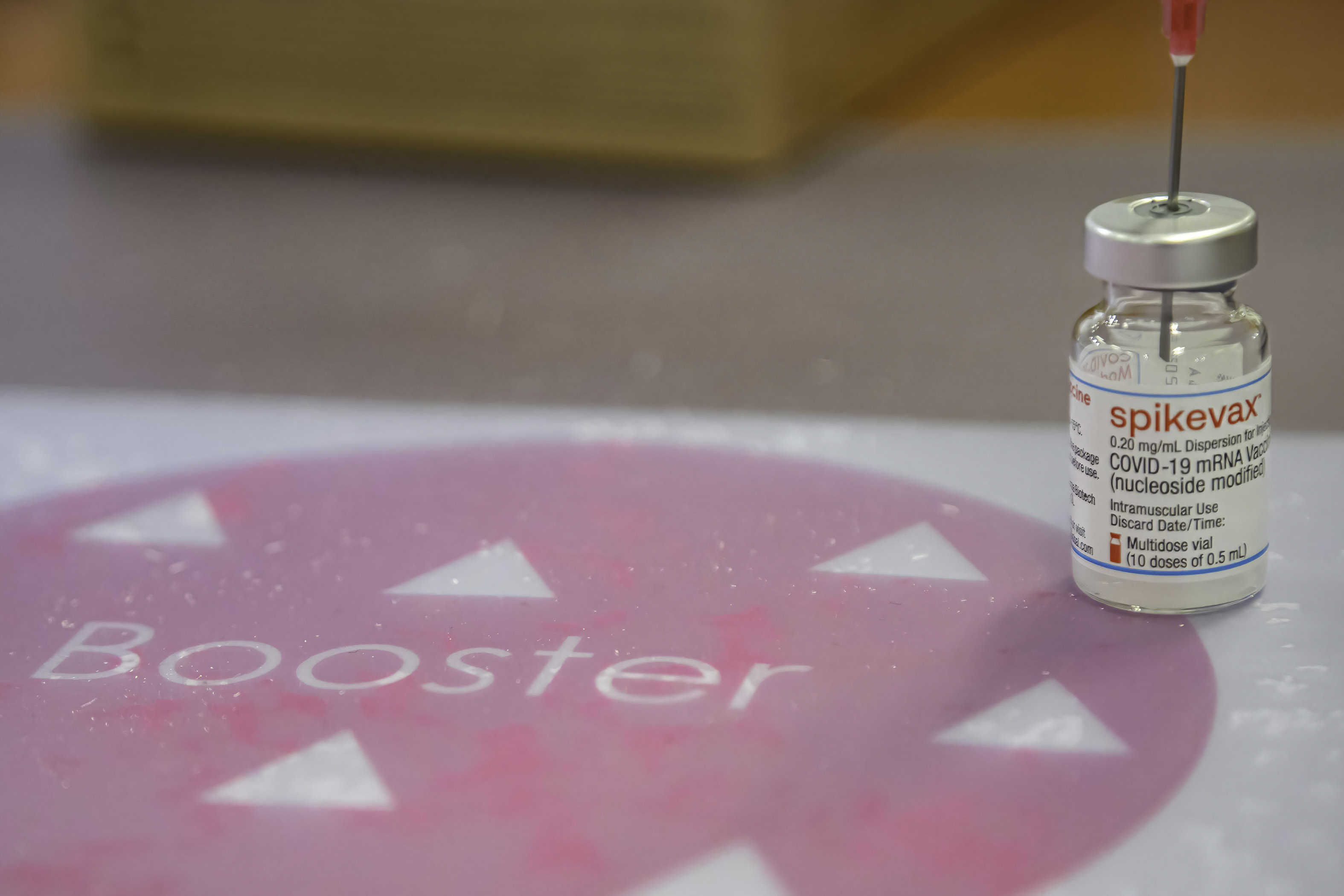
Enlarge / EINDHOVEN, NETHERLANDS - 2022/01/08: A vial containing Moderna COVID-19 booster vaccine at a vaccination centre. (credit: Getty | SOPA Images)
As the US weathers record COVID-19 cases from the ultra-transmissible omicron variant, vaccine makers are thinking about future waves—and the shots that could help prevent them.
Leading mRNA vaccine makers Moderna and Pfizer/BioNTech are currently working up omicron-specific versions of their vaccines, which could be ready in a matter of months. And according to recent interviews, they expect that such boosters will be used as annual shots, which could be given in the fall for the next several years until global transmission dies down.
"I think the reality is that this is going to become an annual vaccination, at least for a period of time," Scott Gottlieb, former Food and Drug Administration commissioner and Pfizer board member, said Sunday on CBS's Face the Nation. "We don't know what the epidemiology of this infection is going to be over the long run, but certainly over the next couple of years, you can envision boosters becoming an annual affair."
Big Update: It turns out that this was a clerical error on the part of a Senate staffer, and that Elizabeth Warren is not co-sponsoring this bill from Lindsey Graham to repeal Section 230. The Congress.gov site is expected to be corrected and her name removed as a co-sponsor some time soon. I am leaving the original story below for posterity, but it's good to see that Senator Warren hasn't gone completely over to the dark side on this.
Original story here:
So, just yesterday I wrote about how Democratic Senators had been shying away from co-sponsoring bills with Senator Josh Hawley. Throughout 2019 and 2020, even as Hawley's populist fascist tendencies had become abundantly clear, Democrats were willing to partner with him because he was "anti-big tech." But after January 6th of last year, suddenly Hawley was left shouting on Fox News, rather than teaming up with Democrats to sponsor bills to regulate the internet.
So... it was more than a bit of a surprise that, yesterday, Senator Elizabeth Warren's name popped up as a co-sponsor on S.2972, a bill from Republican Senators Lindsey Graham, Josh Hawley, and Marsha Blackburn, to literally repeal Section 230.
It's such a bizarre and nonsensical move. Even for Senators who support reforming Section 230, repealing it seems unlikely to accomplish what they think it will. And, even more to the point, Warren is apparently already aware of how removing Section 230 can cause significant harm. She was behind a previous bill in the Senate that was designed to study the impact of FOSTA on sex workers, after tons of people realized (way too late, and despite widespread warnings from multiple experts) that FOSTA would create massive consequences for the sex work industry (and related industries).
Over the last couple of years, ever since she lost the Presidential primary, Warren seems to have shifted further and further away from the thoughtful Senator "with a detailed plan to fix things" to one who has fully embraced pure, naked, populism for the sake of political gain. She's especially leaned hard into attacking internet companies in ways that are extremely disappointing. Even if you believe that the big internet companies (and the wider internet itself) require regulation -- an argument that is easily defensible -- she has embraced truly extreme and unconstitutional positions that generate headlines and screams of support from people who just want to punish big companies, rather than create a better world.
This latest move -- teaming up with three extremist Republican Senators -- on a bizarrely stupid and dangerous plan to flat out repeal Section 230 makes absolutely no sense at all, and I don't see how it accomplishes any of Senator Warren's stated goals. Without Section 230, you end up helping the largest internet companies cement their position, while punishing smaller competitors and killing them with legal liability for things that they didn't actually do.
This is an unfortunate and cynical move by a Senator who I had thought was better than that.
So, just yesterday I wrote about how Democratic Senators had been shying away from co-sponsoring bills with Senator Josh Hawley. Throughout 2019 and 2020, even as Hawley's populist fascist tendencies had become abundantly clear, Democrats were willing to partner with him because he was "anti-big tech." But after January 6th of last year, suddenly Hawley was left shouting on Fox News, rather than teaming up with Democrats to sponsor bills to regulate the internet.
So... it was more than a bit of a surprise that, yesterday, Senator Elizabeth Warren's name popped up as a co-sponsor on S.2972, a bill from Republican Senators Lindsey Graham, Josh Hawley, and Marsha Blackburn, to literally repeal Section 230.
It's such a bizarre and nonsensical move. Even for Senators who support reforming Section 230, repealing it seems unlikely to accomplish what they think it will. And, even more to the point, Warren is apparently already aware of how removing Section 230 can cause significant harm. She was behind a previous bill in the Senate that was designed to study the impact of FOSTA on sex workers, after tons of people realized (way too late, and despite widespread warnings from multiple experts) that FOSTA would create massive consequences for the sex work industry (and related industries).
Over the last couple of years, ever since she lost the Presidential primary, Warren seems to have shifted further and further away from the thoughtful Senator "with a detailed plan to fix things" to one who has fully embraced pure, naked, populism for the sake of political gain. She's especially leaned hard into attacking internet companies in ways that are extremely disappointing. Even if you believe that the big internet companies (and the wider internet itself) require regulation -- an argument that is easily defensible -- she has embraced truly extreme and unconstitutional positions that generate headlines and screams of support from people who just want to punish big companies, rather than create a better world.
This latest move -- teaming up with three extremist Republican Senators -- on a bizarrely stupid and dangerous plan to flat out repeal Section 230 makes absolutely no sense at all, and I don't see how it accomplishes any of Senator Warren's stated goals. Without Section 230, you end up helping the largest internet companies cement their position, while punishing smaller competitors and killing them with legal liability for things that they didn't actually do.
This is an unfortunate and cynical move by a Senator who I had thought was better than that.
This week saw the introduction of the The Terms-of-service Labeling, Design and Readability Act, or "TLDR Act," for short. The bill, which, for now, has bipartisan support, would require the FTC to create rules mandating that websites must offer a truncated version of obnoxiously long and predatory terms of service (TOS) nobody actually reads. The "summary statement" websites would be obligated to provide would not only lay out the legal requirements in terms normal humans could understand, it would also require a website disclose any major data breaches that have occurred in the last three years.
A breakdown (pdf) of the bill also states it will require websites to disclose what data is collected upon a user's visit, and what kind of control a user has over that data. Any violation of the new law would be declared to be within the realm of "unfair and deceptive" under the FTC Act, giving the agency the authority to act on it. Rep. Lori Trahan had this to say about the need for such a law:
"For far too long, blanket terms of service agreements have forced consumers to either ‘agree’ to all of a company’s conditions or lose access to a website or app entirely. No negotiation, no alternative, and no real choice,” said Congresswoman Trahan, a member of the House Subcommittee on Consumer Protection and Commerce. “To further slant the decision in their favor, many companies design unnecessarily long and complicated contracts, knowing that users don’t have the bandwidth to read lengthy legal documents when they’re simply trying to message a loved one or make a quick purchase."
Yes, most TOS are overlong and that length is often used to obscure bad behavior or quietly erode consumer rights (see: binding arbitration). But many TOS are also overlong because U.S. law and compliance are complicated as hell. The idea that you can always simplify everything a company needs to get across to a user to comply with the law and reasonably cover your ass in a sentence or too is probably a little simplistic. At the same time, I'm not sure the American consumer, many with the attention span of a goldfish, would even read the truncated version of a TOS anyway.
While "more transparency" is certainly good, it also only goes so far if you're not willing to tackle the deeper problem(s). For example the FCC is pondering a transparency label on broadband connections outlining all the sneaky ways you're getting ripped off by your internet service provider. And while knowing the precise parameters how you're getting ripped off is nice, users in monopolized markets can't switch ISPs anyway because the FCC generally isn't willing or able to combat monopolization and limited competition. So transparency only accomplishes so much.
Here too, websites, apps, and services use overlong TOS to obfuscate all manner of behaviors U.S. regulators either don't have the resources to police (the FTC has 8% of the staff dedicated to privacy issues as the UK, despite the UK having one-fifth the consumers to protect) or are apathetic to because of revolving door corruption (see: telecom, banking, adtech, etc.). Expecting the FTC to do a whole lot more stuff without notably expanding funding seems a bit short sighted. And this is all assuming the bill is actually well written and doesn't cause new, unforeseen problems via sloppy language.
So while well intentioned, this feels like a bit of a band aid on problems policymakers can't or won't tackle head on. Like limited competition. Or the complete and total lack of anything even vaguely resembling accountability in telecom, adtech, or the data broker space. Or privacy reform. Or antitrust reform. All of these problems lead to bad behaviors companies are hiding in their TOS, and making those bad behaviors clearer to the end user is only part of a process. Knowing you're getting screwed or spied on is only helpful if you have the recourse to do something about it, and regulators willing to stand up for you when push comes to shove.
Using old Census records and documents, Julie Zauzmer Weil, Adrian Blanco and Leo Dominguez for The Washington Post tallied the congressmen who enslaved people over time. There were more than 1,700 enslavers over Congress’s first 130 years.
The grid (or tile) map above shows the timeline for each state, showing the percentage of officials who were enslavers from 1789 to 1923. Periods before states gained statehood status are faded out.
Dr. Anthony Fauci and CDC Director Rochelle Walensky participate in a White House Covid-19 briefing in Washington, DC, on December 27, 2021. | Carolyn Kaster/AP
Why are public health officials so bad at talking to us?
The fierce backlash to the CDC’s recent decision to shorten the recommended isolation period for people who test positive for Covid-19 was the latest in a series of communications blunders so severe that they have now become a meme.
Communication is an essential part of any public health response. But US health agencies have struggled with it since the very beginning of the pandemic, when government officials initially advised against wearing masks in early 2020 before reversing themselves to recommend nearly universal masking.
It appeared the initial guidance may have been issued in order to preserve enough masks for health care workers. Government officials were warning at the time that hospitals’ supplies could be depleted at a critical moment if there was a run on masks. It was the first of the pandemic’s “noble lies,” The Week’s Ryan Cooper wrote in a blistering essay on the paternalistic treatment of the US public that has undermined the country’s Covid-19 response.
America’s public health institutions have failed to communicate effectively with the US public throughout the pandemic for two reasons: either they have been left trying to defend poor policies, or the messaging has taken the place of creating any kind of coherent policy at all.
“I don’t think any federal or state agency has done a great job communicating policy during the pandemic,” Briana Mezuk, co-director of the Center for Social Epidemiology and Population Health at the University of Michigan School of Public Health, told me. “The CDC should have been setting the example, and I guess in a way it did: a less-than-great example.”
In those early days of the pandemic, a more explicit policy decision would have been to ration masks, telling the public that masks could be protective but that high-quality supplies would be reserved for health care workers. Instead, authorities sidestepped the issue and planted the seeds for the backlash.
“We cannot pretend that communication can get us out of policy answers,” Michael Mackert, director of the Center for Health Communication at the University of Texas Austin, told me.
The problem of unsound or indecisive policy creating bad messaging has been repeated over and over again throughout the pandemic, which has deepened skepticism about the agency’s recommendations and created a fertile environment for disinformation to flourish.
A year after the first masking flip-flop, the CDC stumbled on masks again. In April 2021, the agency urged vaccinated people to continue wearing masks in most indoor settings to reduce transmission before reversing itself and saying that vaccinated people could feel free not to wear masks indoors unless it was required by a local or state government.
Many public health experts believed the decision to relax the masking guidance for vaccinated people was premature and, just a few months later when the delta variant drove up cases, the CDC changed course again and recommended everyone, including vaccinated people, wear masks when indoors in public.
Contrast the whiplash in the US with the approach in Canada, which issued a much more limited change to its masking guidance around the same time and didn’t need to quickly revise it. Canadians were urged to keep masking, with the one exception of small indoor gatherings with other vaccinated people. Those recommendations remain more or less the same to this day.
Other crucial pivots in the US response were undermined in the following months. President Joe Biden announced in August that booster shots would soon be available for everyone. But some of the federal government’s scientific advisers balked at that idea in public meetings, sowing confusion about whether additional doses were really necessary for everyone.
Pubic health authorities faced serious obstacles to communicating effectively with the public. The American people are divided, consuming different information from different sources, motivated by different ideologies. Social media allows “alternative” sources of information to flourish. The world had never seen a virus quite like SARS-CoV-2 and scientists were learning more about the virus in real time. It was inevitable some of their early assumptions would be wrong and guidance would have to change.
But some of the confusion that has undermined the American response was avoidable. Prevailing attitudes inside the medical establishment prior to Covid-19 and specific mistakes made during the pandemic itself have contributed to the disconnect between public health authorities and the public they are trying to protect.
“Our institutions are failing us with the lack of coordination, the lack of clarity,” Scott Ratzan, editor-in-chief of the Journal of Health Communication: International Perspectives and a CUNY lecturer, told me. “This is a case clearly that shows our 21st-century institutions are not prepared.”
Why America’s public health institutions failed at pandemic messaging
The initial mistake in the messaging around masks — in effect, misleading the American people, seemingly to preserve the supply of masks — set the stage for what would follow: a pattern of public health authorities adopting a patronizing attitude toward the public they are supposed to serve.
Steve Pfost/Newsday via Getty Images
Health care workers accept boxes filled with donated masks at North Shore University Hospital in Manhasset, New York, on March 26, 2020.
Mezuk voiced her frustration with phrases like “follow the science” that were used to justify various policies. Individual people have to account for all kinds of other variables in their daily decisions — making money, educating their kids, caring for loved ones — as they make risk assessments regarding Covid-19, she said.
The government had more to consider than the public health ramifications of the Covid-19 response. There were economic and social consequences to weigh when it came to closing restaurants or mandating remote learning. An acknowledgment of that complexity might have engendered more trust when the pandemic persisted and some of those calculations began to change, rather than pretending the science had been settled.
“Some amount of backtracking, revision, etc., of policies was inevitable. That should have been stated early, often, and repeatedly,” Mezuk told me.
Several experts told me public health officials should have better prepared their audience for inevitable policy changes, making it clear from the beginning that scientists were still learning more about the virus and policies would need to adjust.
“Instead, they went with ‘we are following the science,’ which was interpreted by the public as, ‘so if you disagree with our decision, you must not be following the science,’” she said. “That is just a false dichotomy, and people knew that. And so the CDC and other leaders lost a lot of credibility that I think the public would have freely given them had they not latched onto that simplistic narrative.”
In some ways, the battle to win hearts and minds during the pandemic was lost before Covid-19 ever arrived. Several experts pointed out that most people are not nearly as fluent in interpreting statistics or assessing risk as public health experts are trained to be, and public health officials have often failed to find simple but effective ways to convey complex ideas to the masses.
The debate over booster shots is perhaps the most important example of how the government can muddle the messaging around its own policies. Biden got out ahead of the government’s science advisers when he announced boosters for everybody in the late summer. The government’s scientific advisers and many public health commentators ended up being divided on the merits of boosters.
The CDC was left to try to craft recommendations in the middle of this chaotic debate. The agency initially attempted to split the difference, urging all people over 65 and people over 50 with underlying medical conditions to get boosters. It also said people under 50 who either have preexisting conditions or work in high-exposure settings could get an additional dose if they chose to.
Who the boosters were actually for (older people? essential workers? everyone?) got confused. By December, even after the CDC had revised that guidance to urge everyone over 18 to receive three doses of the vaccine, one in five vaccinated adults were unclear on what the agency had recommended, according to a Kaiser Family Foundation survey.
The US is now lagging behind the United Kingdom in administering third doses, particularly among the older people who benefit most from a booster. The UK had been more direct in its initial vaccine guidance: Certain people (adults over 50, front-line workers, immunocompromised people) should get the booster, full stop.
In the US, a messy policy process led to poor messaging. Several experts I spoke to contrasted the confusion over vaccines with the simple rubrics used to communicate the risk of an incoming hurricane. People don’t need to know the intricacies of meteorology to understand that a Category 5 hurricane is going to be bad. But we have failed to find the same effective shorthand to communicate basic facts about Covid-19.
“I don’t know the drop in barometric pressure. We don’t need to give people all the technical information that can be misconstrued and turned into misinformation,” Ratzan said. “The scientists might think they have to explain all the reasons. But, in the end, we need scientific consensus that is not only data-driven but also reflects a social science base of how people are going to respond.”
What it takes to effectively communicate in a public health emergency
There will be a lot of work to do to prevent a repeat of these mistakes in the future. In a December 2021 review published by the National Academy of Medicine, public health researchers advocated for a policy of “radical transparency” that attempts to meet people at all levels of health literacy.
Eugene Hoshiko/AP
Pedestrians walk past a public awareness sign encouraging social distancing and hand-washing to help reduce the spread of the coronavirus in Tokyo, Japan, on June 22, 2021.
Messages should be simple. The Japanese government’s “three Cs” — urging people to avoid closed spaces, crowded places, and close-contact settings — is seen as one of the more effective messages of the pandemic. This Vietnamese hand-washing PSA went viral in the spring of 2020, driven by a catchy song and a dance.
Suzanne Bakken, who has contributed to the National Academy’s work on Covid communications, told me that “flatten the curve” had been the most effective message deployed in the United States. It managed to communicate an important public health goal in an intelligible fashion and, for a time, gave people a shared goal to work around.
“That really spoke to people,” she said. “It was a pretty simple visualization.”
Academics such as Bakken are also thinking about how to empower local health authorities and nongovernmental groups, in which people might place more trust in the current polarized political environment. The National Academy of Medicine review contemplates some kind of national infrastructure that would disseminate information to local actors and allow them to decide how to tailor the message based on their particular community:
Communications should be adapted at the individual and community levels and take into account how centrally developed communications methods can be rooted in patriarchy, colonial oppression, and structural racism. Without this understanding, communications cannot be appropriately adapted to local contexts, and therefore may be rejected by many communities.
This is a lesson that other countries more accustomed to public health emergencies have already learned. In Vox’s Pandemic Playbook series, reporter Jen Kirby traveled to Senegal and spoke with community health workers who were integral to that country’s response, as the point of contact and primary communicator in their own villages and towns.
Given how diverse the US is, and how much trust in some of its national institutions has eroded, such a model would offer one way to begin repairing the relationship between the American public and its public health institutions.
“It’s not only getting the message right,” Ratzan said, “but having the right messenger, with the right dosage.”
The Biden administration has made vaccine mandates central to its attempts to limit the impact of the COVID-19 pandemic. Or at least it has tried to; various states and other organizations have used the courts to challenge the federal government's authority to impose these mandates. Last week, the Supreme Court heard arguments regarding two of the most significant mandates: one for all hospital workers issued by the Department of Health and Human Services (HHS), and a second for all employees of large companies issued by the Occupational Safety and Health Administration (OSHA).
By the time the cases were argued before the Supreme Court, the HHS rule was already blocked by a stay issued by a lower court. By contrast, the OSHA rules had seen a lower court lift earlier stays, leaving it on the verge of enforcement.
On Thursday, the Supreme Court issued expedited rules that reflected the tone of the questioning the week before. The OSHA rule is now subject to a stay that blocks its implementation, a decision that saw the court's three liberal justices issue a dissent. The stay against the HHS rules was lifted, but only by a close 5-4 ruling.
Enlarge / This photomicrograph depicts leukemia cells that contain Epstein Barr virus using an FA staining technique, 1972. Epstein-Barr virus, EBV, is a member of the Herpesvirus family and is one of the most common human viruses. (credit: Getty | CDC)
Evidence is mounting that the garden-variety virus that sometimes causes mono in teens is the underlying cause of multiple sclerosis, a rare neurological disease in which the immune system attacks the brain and spinal cord, stripping away protective insulation around nerve cells, called myelin.
It's still unclear how exactly the virus—the Epstein-Barr virus (EBV)—may trigger MS and why MS develops in a tiny fraction of people. About 95 percent of adults have been infected with EBV, which often strikes in childhood. MS, meanwhile, often develops between the ages of 20 and 40 and is estimated to affect around one million people in the US. Yet, years of evidence have consistently pointed to links between the childhood virus and the chronic demyelinating disease later in life.
With a study published today in Science, the link is stronger than ever, and outside experts say the new findings offer further "compelling" evidence that EBV isn't just connected to MS; it's an essential trigger for the disease. The study found, among other things, that people had a 32-fold increase in risk of developing MS following an EBV infection in early adulthood.
Over a week after the snowstorm that caused both panic-buying and delivery truck delays, area grocery stores are still struggling to replenish daily necessities like chicken, lettuce, and dairy products. According to Andy Harig, Vice President at the Food Marketing Institute, there were scattered reports of product shortages during the holidays, but nothing abnormal–until Omicron […]
Update: This feature is only available on certain phones running Android 12. So far we have only confirmed it is available on the Pixel 6.
Last year Google quietly pushed a new feature to its Android operating system allowing users to optionally disable 2G at the modem level in their phones. This is a fantastic feature that will provide some protection from cell site simulators, an invasive police surveillance technology employed throughout the country. We applaud Google for implementing this much needed feature. Now Apple needs to implement this feature as well, for the safety of their customers.
What is 2G and why is it vulnerable? 2G is the second generation of mobile communications, created in 1991. It’s an old technology from a time when standards bodies did not account for certain risk scenarios such as rogue cell towers and the need for strong encryption. As years have gone by, many vulnerabilities have been discovered in 2G.
There are two main problems with 2G. First, it uses weak encryption between the tower and device that can be cracked in real time by an attacker to intercept calls or text messages. In fact, the attacker can do this passively without ever transmitting a single packet. The second problem with 2G is that there is no authentication of the tower to the phone, which means that anyone can seamlessly impersonate a real 2G tower and a phone using the 2G protocol will never be the wiser.
Cell-site simulators sometimes work this way. They can exploit security flaws in 2G in order to intercept your communications. Even though many of the security flaws in 2G have been fixed in 4G, more advanced cell-site simulators can downgrade your connection to 2G, making your phone susceptible to the above attacks. This makes every user vulnerable—from journalists and activists to medical professionals, government officials, and even law enforcement.
What you can do to protect yourself now If you have a newer Android phone (such as a Pixel 6, or some new Samsung phones) you can disable 2G right now by going to Settings > Network & Internet > SIMs > Allow 2G and turning that setting off.
Now 2G is disabled If you have an older Android phone, these steps may or may not work. Unfortunately due to limitations of old hardware, Google was only able to implement this feature on phones running Android 12 and supporting version 1.6 of the radio HAL, so far this is limited to the Pixel 6. If you have a newer Samsung phone you may also be able to shut off 2G support the same way, unfortunately this is not supported on all networks or all Samsung phones. For iPhone owners unfortunately Apple does not support this feature, but you can tweet at them to demand it!
We are very pleased with the steps that Google has taken here to protect users from vulnerabilities in 2G, and though there is a lot more work to be done this will ensure that many people can finally receive a basic level of protection. We strongly encourage Google, Apple, and Samsung to invest more resources into radio security so they can better protect smartphone owners.
Enlarge / Dr. Janet Woodcock, acting commissioner of the Food and Drug Administration, testifies during a Senate Health, Education, Labor, and Pensions Committee hearing on Capitol Hill on January 11, 2022 in Washington, D.C. (credit: Getty | Shawn Thew)
US officials are comparing the ultra-transmissible omicron coronavirus variant to a natural disaster as the country continues to shatter records, logging over 1.4 million new COVID-19 cases Monday and seeing hospitalizations at all-time highs of over 140,000.
Officials are now bracing for the weeks ahead, which are expected to bring yet higher numbers of cases that will hamstring health care systems and other essential services nationwide.
"I think that we're talking about a natural disaster," Janet Woodcock, acting commissioner of the Food Drug Administration, said in a Senate Health Committee hearing Tuesday. "I think right now, we need to focus on continuity of operations for hospitals and other essential services as this variant sweeps through the population."




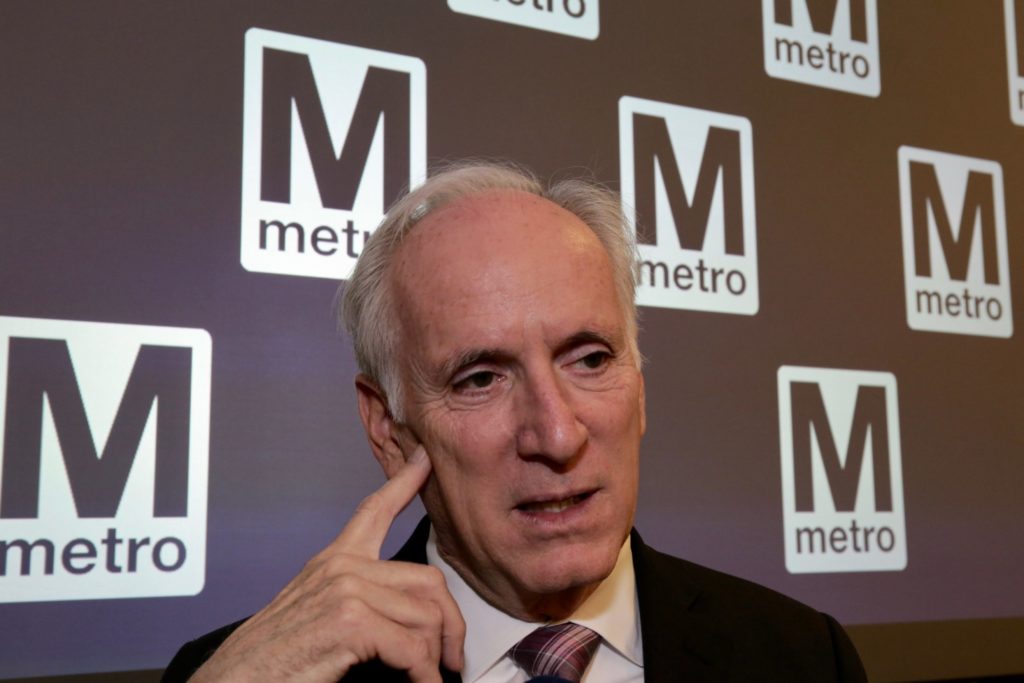

/cdn.vox-cdn.com/uploads/chorus_asset/file/23169054/GettyImages_1334894422t.jpg) Brandon Bell/Getty Images
Brandon Bell/Getty Images
/cdn.vox-cdn.com/uploads/chorus_asset/file/23169071/GettyImages_1232272941t.jpg) Tom Williams/CQ-Roll Call, Inc via Getty Images
Tom Williams/CQ-Roll Call, Inc via Getty Images
/cdn.vox-cdn.com/uploads/chorus_asset/file/23169305/GettyImages_1362467655t.jpg) Brontë Wittpenn/San Francisco Chronicle via Getty Images
Brontë Wittpenn/San Francisco Chronicle via Getty Images







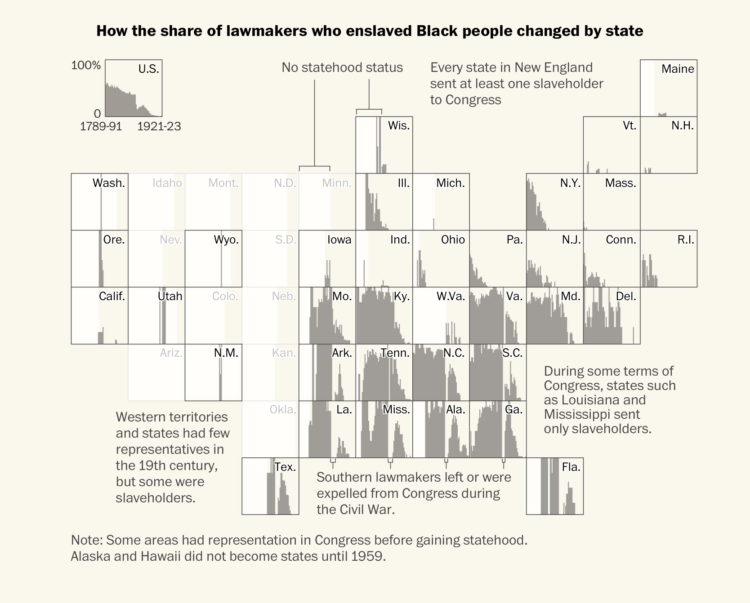

/cdn.vox-cdn.com/uploads/chorus_asset/file/23161443/GettyImages_1215578709.jpg) Steve Pfost/Newsday via Getty Images
Steve Pfost/Newsday via Getty Images
/cdn.vox-cdn.com/uploads/chorus_asset/file/23161268/AP21173284096033.jpg) Eugene Hoshiko/AP
Eugene Hoshiko/AP