Back in October, I noted the huge amounts of money pouring into music copyrights, largely driven by the global rise of online streaming. Since then, that trend has continued, most notably with Bruce Springsteen's sale of his recordings and songwriting catalogue to Sony, for a rumored $550 million. As I pointed out in the post, one of the problems with this "financialization" of the sector is that music copyrights become completely divorced from the original creativity that lies behind them. They become just another asset, like gold, petroleum or property. On the Open Future blog, Paul Keller has pointed out a plausible – and terrifying – consequence of this shift.
As Keller notes, the more the owners of copyrights become detached from the creative production process, the less they will care about the nominal balances within the system. In particular, the central quid pro quo of copyright – that a government monopoly is granted to creators for a limited period, after which the work enters the public domain – will be perceived simply as an obstacle to greater profits. The financialization of the music world means that an artist's ability to use the public domain as a foundation for future creativity, or to take advantage of copyright exceptions, will be of no interest to the corporations and private equity firms that are only concerned about the value of their own assets. For Keller, the end-game is clear:
From the perspective of financial investors, copyright is not much more than a bundle of rights created out of thin air that structure financial flows and it follows that there is absolutely no reason why they should not push for governments to make these rights last longer. Once the slate of recording artists that entered into these deals have passed away and will not be able to speak up anymore – or complain that they have been shafted – it will only be a question of time until financial investors start pushing for longer term durations or – more likely – perpetual copyright. Compared to this new class of cultural predators, the good old Walt Disney company will quickly start looking like an innocent schoolboy.
It has been hard enough in the past to make copyright a little fairer for members of the public. If Keller is right – and I fear he is – it will become close to impossible to continue that process in the future unless people start defending vociferously what few rights that they currently have in the world of copyright.
Less than a year after Verizon and other ISPs forced users to switch plans in order to get government-funded discounts, a new federal program will prevent such upselling by requiring ISPs to let customers obtain subsidies on any Internet plan.
With last year's $50-per-month Emergency Broadband Benefit that was created by Congress, the Federal Communications Commission let ISPs participate in the program as long as they offered the discount on at least one service plan. The FCC said it did so to encourage participation by providers, but some major ISPs drastically limited the subsidy-eligible plans—forcing users to switch to plans that could be more expensive in order to get a temporary discount.
Congress subsequently created a replacement program that will offer $30 monthly subsidies to people with low incomes. The program also specified that ISPs "shall allow an eligible household to apply the affordable connectivity benefit to any Internet service offering of the participating provider at the same terms available to households that are not eligible households." The FCC still has to make rules for implementing the new Affordable Connectivity Program (ACP), but that requirement prevented the FCC from using the same one-plan rule that helped ISPs use the program as an upselling opportunity.
Google took to Twitter this weekend to complain that iMessage is just too darn influential with today's kids. The company was responding to a Wall Street Journal report detailing the lock-in and social pressure Apple's walled garden is creating among US teens. iMessage brands texts from iPhone users with a blue background and gives them additional features, while texts from Android phones are shown in green and only have the base SMS feature set. According to the article, "Teens and college students said they dread the ostracism that comes with a green text. The social pressure is palpable, with some reporting being ostracized or singled out after switching away from iPhones." Google feels this is a problem.
"iMessage should not benefit from bullying," the official Android Twitter account wrote. "Texting should bring us together, and the solution exists. Let's fix this as one industry." Google SVP Hiroshi Lockheimer chimed in, too, saying, "Apple's iMessage lock-in is a documented strategy. Using peer pressure and bullying as a way to sell products is disingenuous for a company that has humanity and equity as a core part of its marketing. The standards exist today to fix this."
The "solution" Google is pushing here is RCS, or Rich Communication Services, a GSMA standard from 2008 that has slowly gained traction as an upgrade to SMS. RCS adds typing indicators, user presence, and better image sharing to carrier messaging. It is a 14-year-old carrier standard, though, so it lacks many of the features you would want from a modern messaging service, like end-to-end encryption and support for non-phone devices. Google tries to band-aid over the aging standard with its "Google Messaging" client, but the result is a lot of clunky solutions that don't add up to a good modern messaging service.
Senate Majority Leader Chuck Schumer speaks at a news conference on Capitol Hill on January 4. | Susan Walsh/AP
It’s a big step toward actually confronting filibuster reform.
Senate Majority Leader Chuck Schumer is going further than he ever has on filibuster reform, forcing Democrats to take a vote on the issue later this month.
In an announcement this week, Schumer said he plans to use a vote on a major voting rights package to trigger another vote on overhauling the filibuster. Depending on the rules change Democrats consider, it’s a move that could affect both voting rights legislation and other bills, and it marks a significant step for Democrats, who have yet to consider this type of reform on the Senate floor. (Recently, Democrats approved a filibuster carveout to raise the debt ceiling, but they did so with Republican help, something they won’t have this time around.)
Both votes are likely to fail. But they send a strong message about the rapid change in the Democratic Party. Not long ago, changing the filibuster was embraced primarily by the party’s progressive wing. Now, the idea has become mainstream, and Schumer’s plan is emblematic of the shift.
“I think Schumer has always been willing to be where the caucus is,” said Tré Easton, a senior adviser for Battle Born Collective, a group dedicated to advancing progressive policies.
Democratic opposition toward the filibuster, a mechanism by which a senator can block essentially any legislation unable to receive 60 votes in its favor, has grown quickly in the last year, as Republicans have used this rule to repeatedly kill key priorities. Thus far, the Republican minority has used the filibuster to block legislation on everything from the January 6 Commission to equal pay. Some Democrats, including former President Barack Obama, have taken to calling it a “Jim Crow relic” because of how it has been used to obstruct civil rights legislation, including Democrats’ recent efforts to expand voting access.
If the filibuster were eliminated, Democrats, who currently hold a narrow Senate majority, could pass more bills. Congress would be able to “have debates and bring to a conclusion other Democratic priorities like increasing the minimum wage, passing the PRO Act, passing common sense gun safety legislation,” argues Eli Zupnick, the head of Fix Our Senate, a coalition of groups pushing for reform.
With the filibuster intact, however, Democrats are far more limited.
Because of that, Schumer has long said “everything is on the table” regarding possible changes. This is the first time, though, that he’s holding a vote on reforms, a major shift.
In a letter this week, Schumer promised that if Republicans filibuster a voting rights bill supported by the entire Senate Democratic caucus, as they are expected to, he’ll schedule a vote on changes to the rules by January 17. This move is notable, signaling that he’s willing to put members on the spot regarding their positions about the filibuster, and that he’s ready to move forward on reforms himself.
“We must ask ourselves: if the right to vote is the cornerstone of our democracy, then how can we in good conscience allow for a situation in which the Republican Party can debate and pass voter suppression laws at the State level with only a simple majority vote, but not allow the United States Senate to do the same?” Schumer asked in a recent letter.
“This is the most aggressive statement that we’ve seen, and aggressive in a good way,” said Meagan Hatcher-Mays, director of democracy policy at Indivisible, a progressive activist group. “To have [Schumer] come out swinging on the first Monday of 2022 was really encouraging.”
The voting rights bill Democrats hope to pass is called the Freedom to Vote Act. It was created to combat state laws attempting to suppress the right to vote, which passed in the wake of former President Donald Trump’s false claims about fraud in the 2020 election.
Though the Senate Democratic caucus is united behind the bill, because of the filibuster rules, it can’t pass without the support of at least 10 GOP senators. That support doesn’t exist. As such, many Democrats, including Schumer, now hope to change the filibuster rules so they can pass the bill with a simple majority — the 51 Senate votes Democrats possess (counting the tie-breaking vote of Vice President Kamala Harris) — rather than requiring the 60 votes they don’t have.
There’s a problem with this plan, however. All 50 members of the Senate Democratic caucus would need to be onboard with the rules change order to make it happen, and they aren’t quite yet. Sens. Joe Manchin (D-WV) and Kyrsten Sinema (D-AZ) have been adamant about their reluctance to making any major changes to the filibuster, including proposals to create a carveout for voting rights legislation. Schumer is attempting to publicly pressure them to change their minds, and other members are trying to gauge if any, more limited, filibuster reforms could potentially get their support.
Amid this internal division, Republicans have begun to demonstrate growing interest in updates to an existing bill called the Electoral Count Act (ECA). The bill centers on Congress’s ability to certify elections, and lawmakers are now weighing possible changes to it that clarify the Vice President’s ability to overturn election results. Many Democrats have called the GOP’s ECA efforts a ploy aimed at deterring moderates like Manchin and Sinema from considering rules changes.
Jacquelyn Martin/AP
Sen. Joe Manchin gestures to reporters while boarding an elevator on Capitol Hill on December 2, 2021.
Tom Williams/CQ-Roll Call, Inc via Getty Images
Sen. Kyrsten Sinema takes a phone call outside a Senate Democrats luncheon at the Capitol on December 16, 2021.
This month’s vote is forcing a conversation about potential options and putting pressure on Democrats to publicly reveal where they stand on the issue. Schumer’s willingness to hold a vote on the subject, alone, sends a strong message about how much many Democrats, including himself, have shifted when it comes to openly pushing for filibuster reforms.
“We must adapt. The Senate must evolve, like it has many times before,” Schumer wrote in his January letter.
Why the filibuster vote matters
Schumer’s decision to hold a filibuster vote is a reflection of increasing Democratic support for rules changes, amid frustration that Republicans have recently been able to obstruct everything from voting rights to the establishment of a committee designed to investigate the January 6 insurrection.
At this point, Republicans have now blocked Democrats’ voting rights legislation four times in the span of eight months, one of many reminders that the voting protections Democrats want don’t have the bipartisan support needed to clear a filibuster. This repeated obstruction is a major reason Democrats, including Schumer, are now considering rules reforms more aggressively.
Just last December, several moderates including Sens. John Hickenlooper (D-CO) and Maggie Hassan (D-NH), came out in support of changes to the filibuster in order to pass voting rights legislation.
“Sen. Bob Casey [D-PA] recently tweeted that he used to think the filibuster was this thing that protected debate and he has evolved on that,” Easton said. “That’s the story of a lot of senators in the Democratic caucus.”
I used to believe that the filibuster forced sides to engage more—but recent events have forced us to reevaluate. Modern times require modern reform. We can’t let something as urgent and consequential as voting rights be lost to an arcane procedural tool.
This vote puts pressure on the Democratic caucus to come together on a rules change that all 50 lawmakers can get behind. At this point, lawmakers still haven’t arrived at a resolution, but discussions about which path to take, which are being led by Sens. Tim Kaine (D-VA), Angus King (I-ME), and Jon Tester (D-MT), have ramped up.
Because both Manchin and Sinema have been resistant toward a full elimination of the filibuster — or even a carveout for voting rights, which President Joe Biden has endorsed — other ideas have been suggested as well. Democrats have floated bringing back a rule requiring filibustering lawmakers to actively speak on the Senate floor, and lowering the vote threshold needed to proceed to debate on a bill from 60 votes to a simple majority.
Manchin has indicated that more limited reforms might be the most he’s willing to back at the moment. “I think the filibuster needs to stay in place, any way, shape or form that we can do it,” Manchin told reporters earlier this week. Sinema, too, has indicated that she’s reluctant to consider more sweeping options. Passage of more modest changes would still mark progress for Democrats, though they wouldn’t guarantee that bills like voting rights would actually advance.
Without Manchin and Sinema’s support, any vote on a rules change will fail. In the past, although both have been vocal about their stances, they’ve never had to take a formal vote on the issue, however. A vote will force them to make their positions clear, and could reveal if there are any other, less vocal, senators who agree with them.
“It seems to be two people that are preventing it,” Hatcher-Mays said. “On the Senate floor, they need to defend their position to the American people.”
Nicholas Kamm/AFP via Getty Images
Supporters of the Freedom Riders for Voting Rights demonstrate on the National Mall near the Capitol in Washington, DC, on June 26, 2021.
The voting rights bill would push back on restrictive, post-Trump state laws
Any vote on the filibuster would come after a vote on the Freedom to Vote Act, which Democrats would like to pass ahead of the fast approaching midterms to combat state laws attempting to suppress the right to vote.
The Freedom to Vote Act aims to address a couple of key priorities. Among other provisions, it would:
Set new federal standards that would protect people’s voting rights
Expand voting by mail and early voting
Standardize automatic voter registration
Make Election Day a legal public holiday
Reinstate voting rights to all those with felony convictions who’ve completed their sentences
Strengthen protections of election administration officials, combat gerrymandering practices, and bolster campaign finance laws
“The single most important thing is to have uniform national standards to protect the right to vote and that includes the right to vote early, the right to vote by mail, the right to not stand in a line for nine hours, and that’s exactly what the bill does,” said Daniel Weiner, co-director of the Elections and Government Program at the Brennan Center for Justice.
Many of the provisions directly push back against state laws that have been passed in states like Arizona, Texas, Georgia and Florida, according to a report compiled by Danielle Root, Michael Sozan, and Alex Tausanovitch of the Center for American Progress. In Georgia, for example, the state legislature has passed a law that prohibits election officials from distributing mail ballots to registered voters. The Freedom to Vote Act would guarantee that officials would have the ability to do so, improving people’s access to voting during a pandemic.
The bill would tackle states’ efforts to remove or intimidate election officials. Since last year, when Trump questioned the outcome of the 2020 election, multiple states have attempted to undermine the roles of election administrators and give more power over the process to partisan state legislatures. In Georgia, multiple Black Democrats have been removed from county election boards, for example. The bill attempts to curb this behavior by empowering election officials to contest these removals in court.
Finally, the bill would push back on partisan gerrymandering and boost campaign finance protections through a variety of measures, including new mandatory criteria for redistricting and requiring greater transparency from organizations donating more than $10,000 in an election cycle. As states complete redistricting this year, many are reinforcing existing gerrymandering, or drawing new districts that are more safely partisan. These efforts often undermine the presence and power of communities of color, and attempt to undercut the population growth that has taken place in certain districts in recent years.
Following Schumer’s pledge to hold a vote on filibuster changes, some Republicans have indicated support for updates to the Electoral Count Act instead. Republicans claim that this would fix some of the problems around elections by making it impossible for a sitting president to pressure a vice president to overrule the election results, something Trump pushed former Vice President Mike Pence to do in 2021.
But many Democrats see this an effort as an attempt to convince moderate Democrats not to back rules changes. Sen. Raphael Warnock (D-GA), for instance, has called it “a distraction.”
If Democrats want to enact their voting reforms, they’re running out of time. Democratic leaders have stressed that the legislation needs to pass soon in order to be implemented this fall. That means quickly changing Manchin and Sinema’s minds about the filibuster. Schumer’s given his party roughly two weeks to do so — and whether he and other Democrats are successful will have a major impact on what Democrats are able to accomplish in their second year in power.
Two people wear KN95 masks while standing in Times Square, New York City, in August 2021. | Roy Rochlin/Getty Images
Cloth masks won’t cut it against omicron.
The rapid spread of the omicron variant means that many medical and public health experts are urging Americans to adopt better masking protocols to protect themselves and others from the spread of Covid-19.
Masking best practices have changed since the beginning of the pandemic, and confusion still abounds about which mask to wear and in what circumstances. However, medical experts are in agreement: Masks are a crucial component in stopping the spread of all variants of Covid-19, and the National Institute for Occupational Safety and Health (NIOSH)-approved N95 respirator is still the most effective mask on the market.
Mask-wearing guidance has changed a lot over the course of the pandemic, and omicron presents more changes — as well as more opportunity for confusion. With the high transmissibility of the omicron variant, experts say, masking is particularly important. Omicron is estimated to be about 2.7 to 3.7 times more infectious among inoculated people than the delta variant, which rapidly became the world’s dominant strain last summer. While many people are experiencing milder cases with omicron, cases are increasing precipitously, even in highly vaccinated areas. Its ability to dodge antibodies created by the available Covid-19 vaccines means that additional prevention measures — like masks — are now back in the spotlight.
As Abraar Karan, an infectious diseases doctor at Stanford University, explained to New York magazine in December, cloth masks and face coverings don’t filter aerosols — the particles through which the coronavirus spreads — particularly well; they can escape from an infected person and easily be inhaled if both parties are wearing cloth face coverings.
N95 respirators in particular are much better at blocking these particles, according to Karan, due to the filter’s structure and the electrostatic charge that attracts and traps the tiny aerosol particles. Just as critically, the filter’s fit over the wearer’s mouth and nose is far better than a cloth mask or face covering, which can leave large gaps on the sides — giving infectious particles ample opportunity to escape.
How can you get the right mask?
The N95 has been the gold standard for masks since the start of the pandemic, and they provide the most protection against Covid-19, including the omicron variant. Now that they’re no longer in critically short supply, they’re also the best option for day-to-day use.
As Karan explained, the N95’s complex, irregular webbing allows for superior filtration which traps 95 percent of aerosol particles — hence the “95” in N95. KN95s similarly filter out 95 percent of particles; the K denotes that they are manufactured to meet China’s mask standards.
When used in a medical setting, N95s are generally single-use, but for average people in lower-risk settings, they can be reused a limited number of times.
N95 availability was scattershot at best in the beginning of the pandemic, even for health care workers. Now, nearly two years later, high-quality options are much more readily available.
Cost is still a potential barrier, however, as N95s generally cost a dollar or two per disposable mask, and counterfeit respirators pose an additional problem, as Anne Miller, executive director of the nonprofit Project N95, explained to US News and World Report in December. Nonetheless, Miller said, there are some failsafe ways to ensure that the model you are purchasing was manufactured by a reputable company and has passed NIOSH filtration tests.
Specifically, N95 masks should have a TC number; TC, followed by a series of five total numbers, then a lot number. KN95 respirators operate under a similar protocol; all models should have GB 2626-2019, followed by a space, then KN95, printed on them if they are produced by a reputable company. According to Miller, lack of a brand name on a mask or a claim on the mask’s packaging that it’s FDA-approved or registered with the FDA are major warning signs; those claims are essentially meaningless.
However, high-quality respirators that have been tested for fit and efficacy are available, and doing a few basic tests on masks yourself can help you weed out ineffective models. For one, as the Strategist reported last month, you shouldn’t be able to see light through the mask when you hold it up to a light source, nor should you be able to blow out a flame when wearing the mask. And in terms of fit, the sides should collapse when you breathe in, showing that your mask has an effective seal. If air escapes around the sides of the mask, you need a tighter fit, since aerosols can still flow in or out of the barrier.
If you can’t find an N95 or KN95, a surgical mask is quite effective as well, given its multiple layers and irregular weave, which is better at intercepting particles than the regular, uniform weave of cloth masks. Surgical masks aren’t quite as effective as N95 respirators, but they use the same filtration mechanism. Fit is also crucial, since surgical masks don’t have the same structure as N95 masks and don’t mold as well to the nose and mouth area. However, fit can be improved by knotting or twisting the side loops before placing them over your ears for a closer fit.
Despite still-existing barriers like cost and confusing messaging, it’s easier now in 2022 to buy an effective N95 or KN95 respirator that’s comfortable and fits your face. And in combination with Covid-19 vaccines and boosters, which provide strong protection against severe Covid-19, a good quality, well-fitting mask is one of the best steps you can take to protect yourself as case numbers continue to surge in the US.
Enlarge / Astronomers mapped out the stars (shown here in blue) and gas (green) of the strange galaxy known as AGC 114905. (credit: Javier Román and Pavel Mancera Piña)
Three years ago, Filippo Fraternali and his colleagues spotted a half-dozen mysteriously diffuse galaxies, which looked like sprawling cities of stars and gas. But unlike almost every other galaxy ever seen—including our own Milky Way—they didn't seem to be enshrouded in huge masses of dark matter, which would normally hold those stellar metropolises together with their gravity. The scientists picked one to zoom in on, a modest-sized galaxy about 250,000 light-years away, and they pointed the 27 radio telescope antennas of the Very Large Array in New Mexico at it.
After gathering 40 hours' worth of data, they mapped out the stars and gas and confirmed what the earlier snapshots had hinted at: "The dark matter content that we infer in this galaxy is much, much smaller than what you would expect," says Fraternali, an astronomer at Kapteyn Astronomical Institute of the University of Groningen in the Netherlands. If the team or its competitors find other such galaxies, that could pose a challenge for scientists' view ofdarkmatter, the dominant perspective in the field for at least 20 years. Fraternali and his team published their findings in December in the Monthly Notices of the Royal Astronomical Society.
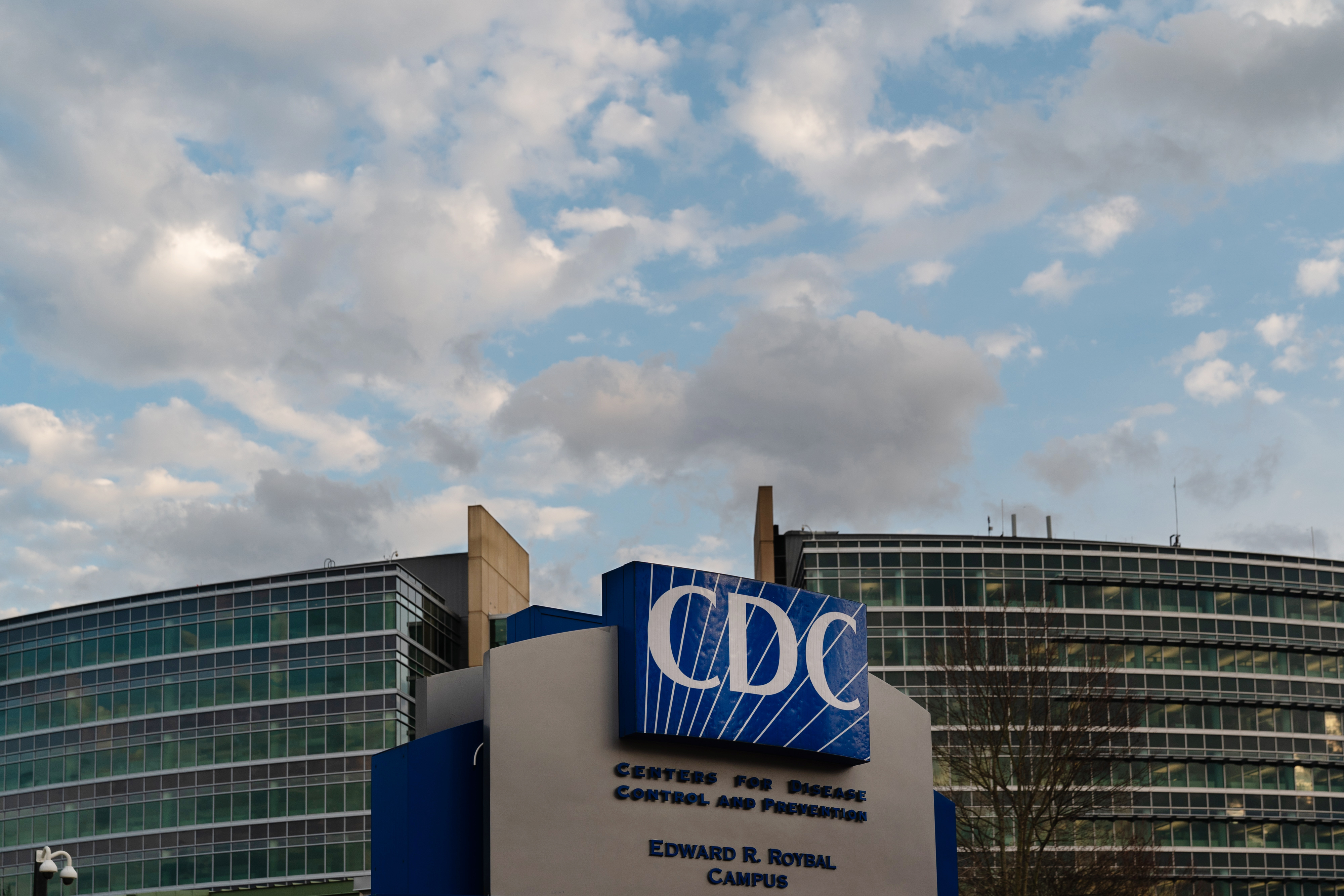
Enlarge / The Centers for Disease Control and Prevention (CDC) headquarters stands in Atlanta, Georgia, on Saturday, March 14, 2020. (credit: Getty | Bloomberg)
The US Centers for Disease Control and Prevention on Friday held its first COVID-19 press briefing in over a year. The briefing covered a wide range of pandemic-related topics, from the rise in pediatric COVID-19 cases to the trajectory of the omicron wave and the agency's own missteps in communicating with the public.
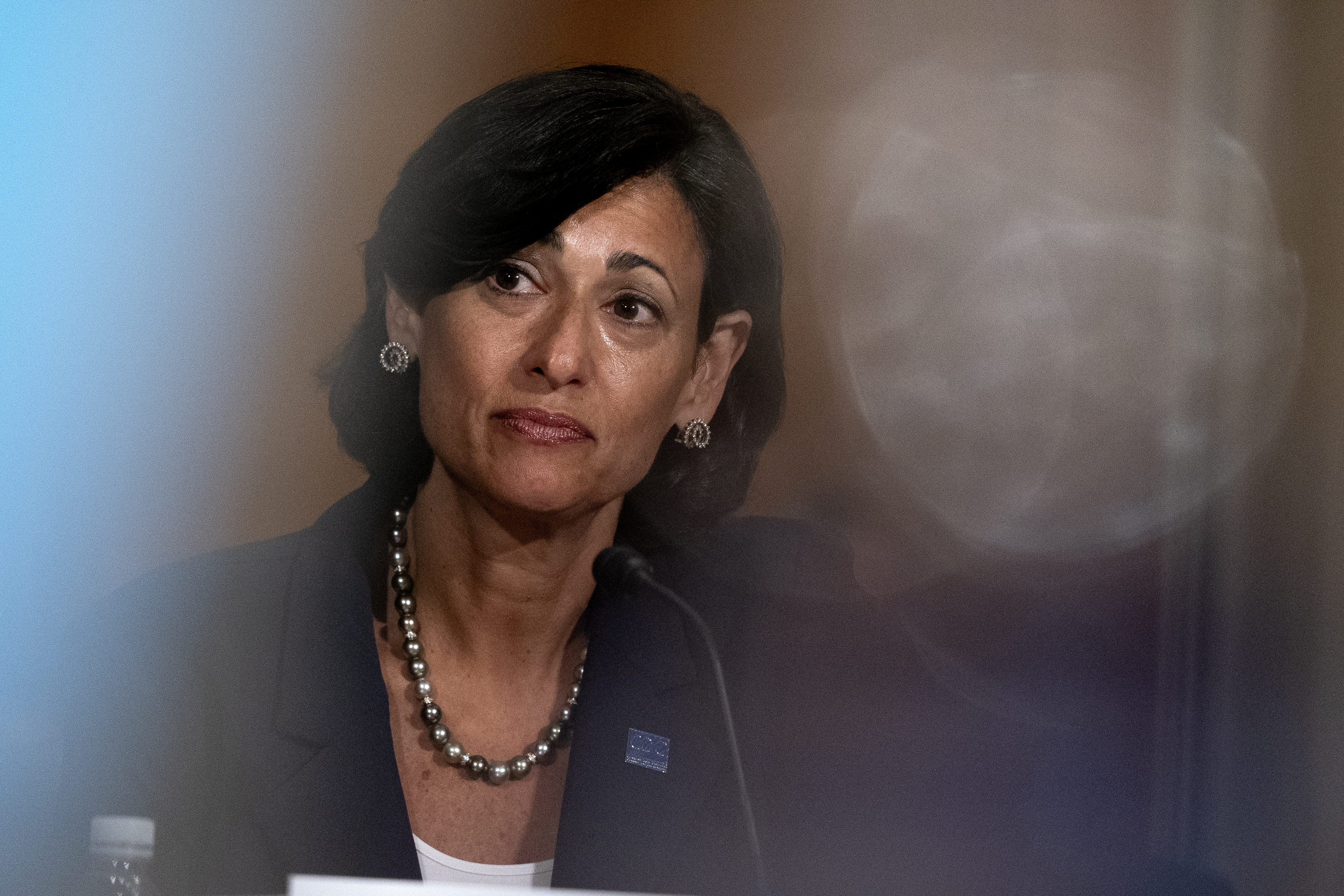
CDC Director Rochelle Walensky fielded most of the questions herself during the roughly 35-minute phone conference, as reporter after reporter expressed the need for more briefings and thanked her for being available today. Walensky noted that she had been in over 80 COVID-19 briefings held by the White House. However, the CDC had not given its own briefing on its pandemic-related work since January 6, 2021.
In the intervening year, the CDC has experienced periodic missteps and has taken heavy criticism for muddled messaging around ever-evolving pandemic guidance. The latest such episode unfolded last week after the agency said that certain individuals infected with COVID-19 could leave isolation periods early without having to test negative. The agency has stood by the decision, despite science-based criticisms and concerns that the CDC's decision was influenced by political interests, namely avoiding the problem of test shortages.
Alan Tudyk is back as an alien who crash-lands on Earth in the second season of Syfy's Resident Alien.
An alien (Alan Tudyk) disguised as a small-town doctor must figure out how to rescue his new human friends from an invading army of his fellow aliens in the trailer for the second season of Resident Alien, Syfy's critically acclaimed dramedy based on the Dark Horse comics created by Peter Hogan and Steve Parkhouse. This gem of a series easily made our list of the best TV shows of 2021.
(Some spoilers for S1 below.)
As I've written previously, Tudyk's alien (with an unpronounceable name) takes on the identity (and form) of small-town doctor Harry Vanderspeigle and promptly gets roped into investigating a local murder. Harry's mission is to wipe out the human race for the good of the planet, but he finds himself wavering in his resolve the more time he spends in the small town of Patience, Colorado.
Montgomery County announced Friday that it will begin distributing free at-home Covid tests at public libraries beginning Monday, January 10. (Library systems in DC, Prince George’s County, and across Northern Virginia are already distributing free tests.) In Montgomery County, iHealth COVID-19 Rapid Antigen Test kits will be handed out on a first-come, first-served basis. One […]
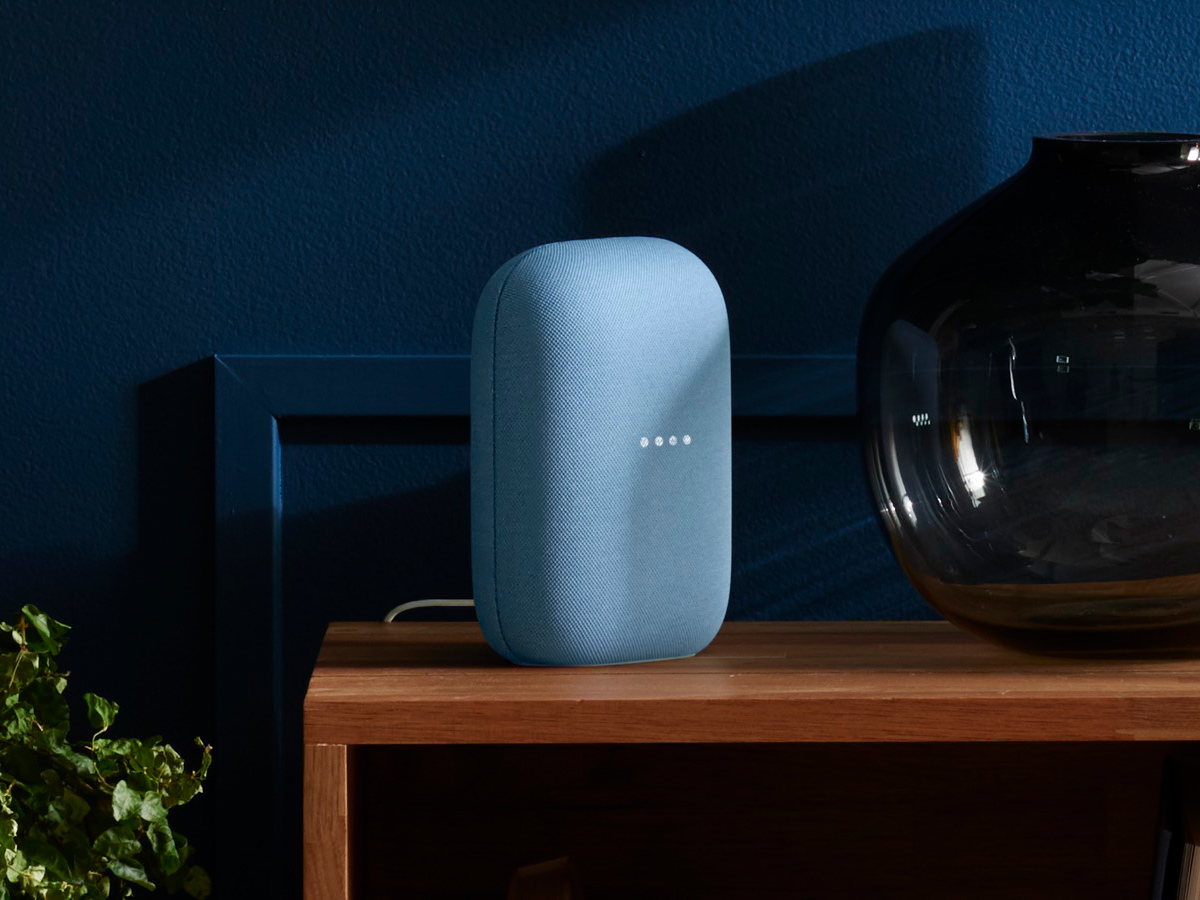
Following a preliminary ruling in August, the US International Trade Commission has issued a final decision saying that Google infringed five Sonos smart speaker patents. It would be possible for this ruling to result in some products like the Nest Audio, Chromecast, and Pixel line being banned in the US, but Google has prepared ITC-approved software downgrades, which remove the infringing features from users' products.
Sonos essentially invented the connected speaker category for streaming music, but the advent of voice assistants has led to Big Tech stomping all over Sonos' territory. Sonos says that while it was pitching Google for support of Google Play Music, Google got a behind-the-scenes look at Sonos' operations in 2013. Sonos says Google used that access to "blatantly and knowingly" copy Sonos' features for the Google Home speaker, which launched in 2016. Sonos sued Google in early 2020.
Eddie Lazarus, the chief legal officer at Sonos, told The New York Times, “We appreciate that the ITC has definitively validated the five Sonos patents at issue in this case and ruled unequivocally that Google infringes all five. That is an across-the-board win that is surpassingly rare in patent cases.”
Senator Ted Cruz (R-Texas) says he plans to introduce a bill that would overturn a vaccine mandate for school kids in D.C., which is more than 1,100 miles from the border of the state he actually represents in the U.S. Senate.
In a press release from his office sent Wednesday, Cruz said the bill would seek to nullify the vaccine mandate approved by the D.C. Council in late December, which requires students eligible for a COVID-19 vaccine that is fully approved by the U.S. Food and Drug Administration to get inoculated by Mar. 1, though enforcement would not begin until the start of the 2022-23 school year.
“These mandates, we’re seeing them all over the place. You know, we’re seeing them in schools. It is amazing how many Democrats are willing to try to force parents to get their kid vaccinated,” said Cruz on Tuesday in an interview with conservative commentator Ben Shapiro.
“I’ll tell you, the District of Columbia — the school board — voted to force every child in D.C. to get vaccinated,” Cruz continued. “I’m introducing this week legislation in the Senate to reverse that order. Under the Constitution, the District of Columbia is under the authority of Congress. The school board has no right to force you to get your five-year-old vaccinated. If you want to vaccinate your kid, vaccinate your kid. But if you don’t want to, who are these petty authoritarians trying to make this decision for you? And sadly, it’s a pattern we’re seeing across the board.”
In the interview Cruz mistakenly said the school board approved the vaccine mandate, correcting himself in his press release, where he said “the bill passed 11-1, with only one member of the City Council voting against the measure.” No member voted against the measure; Councilmember Trayon White (D-Ward 8), who says he has received the vaccine but does not want to force others to do so, voted “present.”
“Immunizations are the best defense against some of the most common and sometimes deadly infectious diseases. They are necessary to prevent an outbreak among unimmunized children and children and adults who are unable to receive immunizations, similar to those measles outbreaks that have occurred in other jurisdictions and forced the temporary closure of schools,” says D.C. Health in its Immunization Attendance Policy.
According to D.C. data, 20% of the city’s 5- to 11-year-olds have already received one or both doses of the COVID vaccine. About 67% of kids aged 12 to 15 have received at least one dose, as have 65% of kids aged 16 to 17.
This isn’t the first time Texas has messed with D.C. Last August, Rep. Pat Fallon (R-Texas) and Rep. Louie Gohmert (R-Texas) introduced a bill that would prohibit D.C. from instituting a vaccine mandate for businesses, which Mayor Muriel Bowser later did. (It will take effect Jan. 15.) Their bill has not moved forward in the House, and D.C. Del. Eleanor Holmes Norton said at the time she would not allow it to.
“Congressman Fallon is from Texas. It’s interesting to me how these ill-conceived bills to restrict the rights of D.C. to govern itself always come from members of Congress with no ties to D.C.,” she said in an August statement. “D.C. has a right, based on the science, to do what it can to protect our residents.”
Cruz’s bill similarly has little chance of clearing the Senate, then the House, and then being signed by President Joe Biden, a Democrat. But it still drew opposition from some local officials.
“It’s another infringement on our autonomy as taxpayer citizens,” said Bowser at a press conference Thursday afternoon.
“I hear they say ‘don’t mess with Texas,'” tweeted D.C. Attorney General Karl Racine. Same rule applies here: Keep your hands off D.C. Deferring to local officials is a basic concept of federalism, a principle on which our country was founded.”
“Vaccines save lives. Vaccine requirements are common in school. Standing in the way with cases as high as they’ve ever been and with a clear difference between being vaxxed and not, is beyond reckless,” added Councilmember Charles Allen (D-Ward 6). “One year after Jan. 6, don’t you think you’ve done enough harm, Senator?”
Cruz and D.C. have clashed in the past. In 2013, the government shutdown spurred by Cruz’s opposition to the Affordable Care Act also shuttered the D.C. government, because it is considered to be federally funded. (This is despite the fact that the city raises its own revenue to fund operations.) A few years later, he managed to get a bill passed blocking a D.C. law that banned discrimination based on reproductive health decisions. In 2018, he unsuccessfully tried to block D.C. from enforcing the ACA’s individual mandate.
Cruz is up for re-election in 2024, though D.C. residents will be unable to vote for or against him.
Robin Zanak’s son was born at the end of June 2020. It was a few months into the pandemic, and so she’d had time to process what it might mean to have a baby during the COVID era. She wanted to breastfeed but intended to offer herself a little grace if it didn’t go entirely smoothly, especially after an early stomach obstruction landed her son in the NICU. But Zanak worked from home in Maryland—she was finishing a Ph.D. and now teaches communications classes part time at a college—and so it was easy to take little 10 minute breaks here and there to breastfeed. She rarely had to nurse in public and never had to switch to majority-pumping. Now, Zanak says, “My son is 17 months old, and I can’t believe I’m still nursing.”
Advertisement
Advertisement
Advertisement
Advertisement
There was another factor for Zanak, too. When her son was 9 or 10 months old, around the time she’d imagined beginning the process of weaning him, she was able to finally get the COVID-19 vaccine. She knew that one of the benefits of breastfeeding is that—at least early on in a baby’s life—the child is able to acquire some “passive” immunity to diseases from its mom, via an antibody substance present in the mother’s milk. Zanak did a little research into whether her son might get COVID protection, too, from her milk once she got the vaccine.
Zanak learned the science wasn’t yet conclusive on whether her son was getting much protection. But, she says, “This is the one defense he has at this point. He can’t wear a mask. He can’t get vaxxed.” She’s planning, at this point, to keep feeding until around the time he turns 2 in June 2022,which she’s hoping will coincide with him being able to get his own vaccine. (Pfizer has said it expects to submit an application for its under-5 vaccines in “the first half” of 2022.)
Advertisement
Advertisement
Zanak isn’t alone in extending her breastfeeding timeline as a result of the pandemic—at least among the relatively affluent, largely white women who tend to dominate a lot of the public discourse around breastfeeding in the United States. (Guilty: I am breastfeeding a 6-month-old, and I fit roughly into that description.) This year, I started to hear about more friends and friends of friends who were going a lot longer than the six months or one year of breastfeeding they might have aimed for before the pandemic, based on the American Academy of Pediatrics’ recommendations about breastfeeding.
Advertisement
Among the women I spoke to about their pandemic feeding habits, going eighteen months or two years was relatively common. I also heard about some women breastfeeding 4-year-olds, though none of them wanted to talk to me. Perhaps because there’s stigma around extended breastfeeding that goes that long. One woman, breastfeeding a large-for-her-age 2-year old, told me her husband wants her to stop. “He’s like, enough already. He thinks it starts to get weird at 18 months. He’s like, OK dude, who is this for?” The New York Times even reported earlier this year on mothers who’d weaned their children but then attempted the biologically difficult process of relactation after they got their vaccine.
Advertisement
Advertisement
Advertisement
The science is inconclusive on exactly what kind of COVID protection extended breastfeeding provides.
Some researchers’ preliminary data about breastfeeding during the pandemic indicates that extended lactation among this set could be a real trend—one that might have lasting consequences for gender norms and class disparities. (Not to mention that it might increase the potential for guilt and shame experienced by parents who, for any number of excellent reasons, formula-feed.) One not-yet-published survey conducted from March to June of 2020 and shared with me by a group of researchers at Washington University in St. Louis, Johns Hopkins, and the University of North Carolina looked at how the pandemic was affecting breastfeeding decisions. That sample, which was disproportionally white and upper-middle-class, showed that more than 30 percent wanted to extend breastfeeding until the end of the pandemic, and a high proportion were able to do it during the early lockdowns. Many cited the immunological protection afforded by mother’s milk as the reason, along with the ease that working at home brought to breastfeeding. “[Working from home because of the pandemic] acted as a de facto paid leave for people who had an intention to breastfeed,” said Aunchalee Palmquist, a UNC medical anthropologist who worked on the survey.
Advertisement
Advertisement
Advertisement
Advertisement
Jessica Calarco, a sociologist at Indiana University, began tracking a cohort of women through pregnancy and beyond in 2018 and 2019, so those children were between 6 months and 18 months when the pandemic hit. Her data showed that a quarter of those women were still breastfeeding at 18 months, and that at a year, nearly 10 percent more of the women in her study were breastfeeding than the national average for the previous year might have predicted—though she cautions that her sample has more stay-at-home and part-time parents than is nationally representative. (And she warns that we won’t have truly good data on any of this until the Center for Disease Control and Prevention’s Breastfeeding Report Cards come out in 2022 and 2023, which will include the data for pandemic babies.)
Advertisement
Advertisement
The science is inconclusive on exactly what kind of COVID protection extended breastfeeding provides. Multiple studies have shown that COVID antibodies are present in the breast milk of vaccinated mothers, which is good news. More recent research (still in preprint) also shows that T-cells in breast milk change after mRNA vaccination, which could mean additional immunity, aka even more good news. But as yet, there’s not much data on how much COVID protection is actually being absorbed by babies; that’s the next round of research. It seems likely that whatever immunity is conferred only lasts as long as breastfeeding is ongoing and is proportionate with the amount of the milk consumed by the baby. In other words, it wouldn’t function like a vaccine but more like a daily dose of medication, as the NYT explained. It might be that the protection is only mucosal, which is to say it would only come via the surfaces (like the throat, mouth, and nose) that the milk coats. But that’s not nothing, given the nature of COVID.
Advertisement
Advertisement
For extended breastfeeding, though, there’s an additional open question of how much immunity is absorbed by older babies and toddlers. There’s not much good data, in general, on this question, since that older breastfeeding group hasn’t been much studied. Certain changes that happen in babies’ physiognomy (like more stomach acid) as they grow suggest that they’re never able to absorb every bit of immune protection that’s in breast milk as effectively as they do in the earliest days. The introduction of other food and drink—which usually happens by 6 months—also alters the ability of the antibodies to bind to cells. (One small Spanish study, cited last year by the American Academy of Pediatrics, did show that vaccinated mothers breastfeeding children beyond 23 months seemed to have the highest concentration of COVID antibodies of the women studied.) Still, a lot of the women I talked to said even a slim chance of protection was worth it.
Advertisement
Advertisement
Advertisement
And looking for antibodies isn’t the only reason parents are breastfeeding longer during the pandemic. For a lot of office workers with young children, even if they’re working full time, in certain ways their lives now have the flexibility of the stay-at-home and part-time-working mothers who statistically tend to breastfeed longer.
Advertisement
Advertisement
Emily Mitchell Marell, an academic adviser who moved from Brooklyn to Woodstock, New York, during the pandemic, says she was the “last man standing” when her now-6-year-old stopped nursing at age 2. “I felt like a freak about it,” she says. “In music class a few years ago, I wouldn’t have wanted to nurse.” This time around, as she breastfeeds her 2 year old (born on March 14, 2020, the day before school closed in New York City) with no end date in sight, Marell has company. Of the five or six “mom friends” she’s acquired in Woodstock, all of whom have children between ages 1 and 3, all are nursing. For her, it’s not about antibodies; it’s about access. “I’m always around. She can ask at any time, and I never had to pump so my supply is sky-high,” she says. “I could nurse on a call and no one would care. It’s more acceptable now if your kid is in the background.”
Advertisement
Meghan Haire Gaffney works for a tech company in the Bay Area; she just weaned her 1-year-old, but for the last six months was exclusively pumping. (Anyone who has even partially pumped can tell you that this is a major commitment.) She says she wouldn’t have gone as long if it wasn’t for COVID. She wanted her daughter to get as many antibodies as possible, but also, she was no longer traveling for work. “It sounds terrible to be in a hotel room and have to ship your breast milk,” she says.
Advertisement
Advertisement
There are also fewer life events to plan around now, too. Sara Petry, a CPA who lives in Lutherville, Maryland, plans to keep nursing her 1½-year-old until the COVID vaccine is available to him. She had weaned her other children around 1, and when he turned 1, in May 2021, she imagined she might wean him, too. Vaccines were more widely available, and infections were decreasing. She had a bachelorette party to attend in August, and she set that as the deadline to end breastfeeding. But then delta hit, and child hospitalizations went up. “Instead of weaning him, I backed out of the bach,” she said. “They chose Florida. I was like, you guys are crazy.”
Advertisement
While parents in certain urban enclaves might be seeking out vaccinated milk, the extended-breastfeeding-for-COVID-protection trend is not the national norm. A sizable group of parents—including a bunch of college-educated and vaccinated ones—believe that it’s not worth vaccinating very young children, since they’re not hit as hard by the disease. And, in preliminary data from a new survey Calarco is conducting, more than 60 percent of U.S. parents think that COVID-19 vaccines are either as dangerous or more dangerous for kids than the disease itself. (E.A. Quinn, a biological anthropologist at Washington University in St. Louis who also worked on the spring 2020 breastfeeding survey, told me that in one Missouri milk-sharing group a graduate student of hers was monitoring until recently, participants noted their vaccination status when they offered up milk. Unvaccinated milk was preferred; some people even went as far as to try to give back milk when they realized they got a vaccinated batch.)
Advertisement
Advertisement
Advertisement
For other groups, barriers to breastfeeding were either worsened or created by the pandemic. Women farther down the income ladder and those in communities of color are less likely to have cultural support for breastfeeding, paid time off, or a clean place to pump, even if their job gives them enough break time to pump. In the earliest days of the pandemic, many women inPalmquist and Quinn’s 2020 surveyfeared that breastfeeding might actually put their baby at risk if they were to contract the virus and decided that formula would be safer. (We now know that kind of transmission doesn’t happen, but Palmquist told me that women who were at high risk of contracting COVID, like doctors and nurses, went so far as to live in an apartment separate from their babies, pump, and send milk home.)
Advertisement
Advertisement
Calarco says that in her study, the women who were more likely to stop breastfeeding earlier than they wanted were parents who went back to work outside the home during COVID, including health care workers. And even for those who didn’t, not everyone appreciated the extra breastfeeding time. For some women, the extra physical contact was a stressor, another way to be pulled in multiple directions simultaneously while trapped indoors; COVID actually led them to wean. One mom in the study described her toddler daughter climbing up on her lap and trying to nurse during the workday.
Advertisement
Calarco wonders whether social pressure for extended breastfeeding, if it exists as the pandemic drags on, would have a chilling effect on women’s decisions to return to in-person work, if they have the financial freedom to stay home. She pointed out that Americans’ preference for “traditional” gender roles has increased during the pandemic. (Anecdotally, two of the women I spoke to for this story had recently become stay-at-home moms, at least temporarily.) “Especially if the moms in the position to take advantage of extended breastfeeding are affluent white moms leading the trend, it has downstream consequences and can lead to shaming of women who can’t make that choice,” says Calarco.
Alyssa Lindsey, an educator in Baltimore County, Maryland, is still breastfeeding her 3½-year-old. This is her third child, and the others were weaned around a year old. She had already gone a little longer than she’d expected but was thinking she’d wean when her daughter turned 2. That happened in May 2020, at the height of the pandemic’s first wave. “Maybe it’ll help protect her,” she thought. She wasn’t vaccinated—no one was—but “no one knows anything but it’s not NOT going to help,” she told herself. “So why not?”
Advertisement
Advertisement
Advertisement
In February 2021, she was vaccinated; in April, her daughter (along with her other two children) got COVID. But Lindsey still thinks maybe the reason her toddler was totally asymptomatic had something to do with whatever protection she was getting from breast milk. I asked her if she’s setting vaccine availability as a deadline for weaning. She said no. “People are weird about it,” she said. Because of COVID, she admitted, “ I could be like, I want her to have the antibodies. Even though that wasn’t the reason. The real reason was I like it, and it’s working for us.”
If you thought this might be the year of E3's in-person comeback, its creators and showrunners have bad news for you. The Entertainment Software Association (ESA) confirmed on Thursday that it will not proceed with a traditional exposition floor plan for E3 2022, an event that, in previous years, was the gaming industry's biggest coming-out party of the year. Instead, organizers have pledged to bring the expo back as an online-only version, as we saw in 2021.
The ESA's official explanation for the move, first offered to VentureBeat, references "the ongoing health risks surrounding COVID-19 and its potential impact on the safety of exhibitors and attendees." When asked directly about whether E3 will return to last year's online-only format, ESA representatives declined to answer. Instead, they said the organization is "excited" about such an option.
Ars Technica's attempts to contact the ESA's E3 news line, which was live during its E3 2021 period, bounced back on Thursday as undeliverable. [Update, 6:03 p.m. ET: In an email to Ars Technica, an ESA representative confirmed that "the show is going to be virtual this year," then forwarded the same statement sent to VentureBeat.)
People at the Copyright Office seem to get mad at me every time I suggest that the Copyright Office is captured by Hollywood, and pointing out how top officials there all seem to bounce back and forth between the Copyright Office and Hollywood.
That's not to say there aren't some good people there, because there are. But the organization is dominated by former (and, if the past is any indication, soon to be again), lobbyists and lawyers of the biggest copyright abusers on the planet. So it's difficult to take the Office seriously as a steward for the public good (as they are supposed to be), when it's currently headed by the former top lawyer at IFPI, who, before that, was the top IP lawyer for Time Warner. And, when she then decides to hire Disney's top "IP lawyer" to become General Counsel of the Copyright Office (as has just been announced), it becomes really difficult not to be cynical.
This is what regulatory capture looks like.
But even worse, actions like this are why the public doesn't believe in copyright. Over and over again all we see is abuse of copyright, and then the government puts the same people who have abused copyright in charge of copyright at the Copyright Office, it makes the public cynical and (reasonably) distrustful of the intentions of the Copyright Office. That's disappointing, as there are plenty of people who have expertise in copyright law who would be great for the Copyright Office. But, for some reason, they never get hired into the top jobs unless they've spent time working for one of the giant Hollywood or recording industry organizations.
Android's January security patch is out, and it's addressing one of the nastiest Android bugs to come up in some time: certain apps can stop you from contacting 911 or other worldwide emergency services numbers.
In early December, a harrowing tale popped up in the GooglePixel subreddit from a user whose Pixel 3 crashed when they needed it most: while dialing 911 for their grandmother who "appeared to be having a stroke." The whole phone subsystem seemed to immediately crash upon calling emergency services, with user "KitchenPicture5849" saying they couldn't get the call to connect or hang up to try the call again. Luckily, a nearby landline was available after their Android phone let them down, and emergency services was able to be contacted.
After the crisis was over, the user gave calling 911 from their smartphone another shot, and Android crashed again, indicating it wasn't a one-off bug. A check of their phone bill also revealed that KitchenPicture5849 never actually connected to 911. They say they also got a few other DMs from users reporting that they were experiencing the same bug.
The US Centers for Disease Control and Prevention on Wednesday offered mixed messages on the use of at-home rapid tests as the agency continued to defend its controversial recommendation that people with COVID-19 can leave isolation early without testing.
The CDC updated its guidance on isolation and quarantine periods last week. It shortened isolation periods for infected people from 10 days down to only five if their symptoms have cleared or are resolving by then and if they wear a mask for five days afterward. Notably, the agency did not hinge the recommendation on people getting tested after five days and only ending their isolation early if they receive a negative result.
The omission drew swift criticism from experts who argue that testing is vital to shortening isolation periods safely. Harvard epidemiologist and rapid-test advocate Dr. Michael Mina called the move "reckless," and virology expert Angela Rasmussen called the agency's reasoning "bullshit."
What happens when you add a bored cop to a cold case? Bad things. Very bad things. That's the moral of the story conveyed by this Seventh Circuit Appeals Court decision [PDF].
Actually, calling it a decision is overstating the conclusions. Apparently, the plaintiff, the defendants, and the lower court all made matters far more confusing than they needed to be, leaving the Appeals Court with a muddied record, unclear assertions from all parties, and open questions as to whether qualified immunity on Fourth Amendment claims had actually been denied.
But the path to the procedural shitshow is a full-blown horror show. An unfortunate death, a full autopsy, no sign of foul play, and yet some officer put out to pasture by his department decided he was the second coming of Columbo and mounted a concerted attempt to ruin a person's life.
Curt Lovelace's wife, Cory, died in her bed one morning while Curt was getting their children ready for school. Almost any death in a person's home will trigger an investigation. This tragedy was no exception.
Because Cory was relatively young when she died, the City of Quincy police, along with several Adams County officials, conducted a thorough investigation of her demise. All the physical evidence pointed toward a natural cause of death. It turned out that Cory was severely alcoholic, bulimic, and had been sick with flu-like symptoms for several days before she died. An autopsy revealed that Cory had been suffering from “marked steatosis of the liver.” Severe steatosis—significant fat throughout the liver—can cause the liver to become inflamed and riddled with scar tissue; at that point the person has cirrhosis of the liver, which can lead to liver failure and death. This evidence could not establish a single, indisputable cause of death, but it was more than enough to suggest an array of plausible natural explanations—chronic alcoholism, when combined with other medical conditions, can itself be fatal. Moreover, Cory’s body bore no signs of violent trauma. She had a small patch of redness under her nose, but it was more consistent with a cold or acne than with violence. And she had a small cut inside her mouth, but because it was already healing when Cory died, it was determined to have predated her death.
Curt's accounting of the events was corroborated by his children.
Investigators also verified Curt’s account of the morning in question by comparing his story to the physical evidence indicating time of death. Curt recounted that Cory was supposed to take their three school-aged children to school that day, as Curt was scheduled to teach a class at a local university. But Cory was still unwell when she woke up. They decided that Curt would cancel his class and take their children to school instead. At one point Cory came downstairs to help get the children ready, but she was feeling very weak, and so Curt helped her back upstairs and into bed. Curt then took the children to school at around 8:15 am. He was back at the house by 8:35 am, but he did not go upstairs until around 9 am, when he discovered that Cory had died. The police interviewed Curt’s three oldest children; all three corroborated this timeline. In particular, all three confirmed that they had seen their mother alive and moving about on the morning in question.
The autopsy, as noted above, saw no evidence of foul play. There was a question raised about the level of rigor mortis observed by the doctor performing the autopsy, but responders to the scene saw nothing out of the ordinary, noting the body was still warm, pliable, and displaying a minimum amount of lividity. An EMS attendant was able to raise Cory's arms to a position above her heart so he could attempt to revive her. Her arms remained in the position the EMS tech had moved them to as rigor mortis set in. The investigation was closed shortly thereafter with law enforcement concluding this was a tragic death, not a homicide.
For most of a decade, the case remained closed. But then a cop with too much time on his hands turned his idle hands into the devil's cold case unit.
There the story should have ended. But seven years later, Detective Gibson set in motion a second act. Formerly one of the Quincy police department’s canine officers, Gibson had been reassigned to elder services after his dog retired. But the new role did not keep him busy, it seems, and so to pass the time he made a habit of reviewing files from old cases. One photo of Cory’s body in the Lovelace file caught Gibson’s attention in November 2013. In it, her arms were raised in what appeared to Gibson to be an unnatural position. He concluded that Curt had suffocated Cory with a pillow the evening before her death was reported, that rigor had set in overnight, and that her arms had stayed put when the pillow was removed sometime the next morning. This was, as we already have noted, wild speculation; Gibson was simply looking at photos that were taken after [the EMS tech had] repositioned Cory’s arms.
Unfortunately, the Quincy PD did not tell the detective to get back to his real work and stop trying to turn closed investigations into ongoing investigations. Detective Gibson managed to rope in a coroner who had spent a few minutes at the home moving Cory's body. Coroner Keller -- years after the fact and prompted by Detective Gibson's enthusiasm for refusing to leave the past unmolested -- made a number of claims supportive of the detective's murder theory.
[Keller] claimed, apparently without notes or other corroboration, to recall that Cory’s body had been in full, not partial, rigor, and that the room had smelled bad, as if her body had already begun to decompose. Those claims, if true, would have supported Gibson’s alternate timeline and contradicted Curt’s account. But no other eyewitness, including several who had spent far more time on the scene than Keller, had reported a similar degree of rigor or mentioned any strong odor. Moreover, Keller made no effort to explain how someone could have moved Cory’s arms if Keller was correct.
Detective Gibson and his coroner co-conspiracist discarded everything that didn't agree with the "Curt killed Cory" theory. They began shopping this narrative around to other medical examiners, hoping to obtain an autopsy report that turned the grieving husband into his wife's murderer.
They started in early January 2014 with Dr. Derrick Pounder. But after hearing Gibson’s theory, Dr. Pounder explained in an email that “rigor is not a reliable method of estimating time of death.” And he advised Gibson that Cory could have spoken to her children that morning, just as Curt claimed, and then been dead with her arms at some stage of rigor 90 minutes later. Gibson did not write up a report memorializing Dr. Pounder’s conclusions.
In late January, Gibson and Keller consulted Dr. Scott Denton. Like the original investigators, Dr. Denton quickly dismissed the redness above the lip and small cut in the mouth as irrelevant. And he, too, homed in on the liver as the most likely cause of death. In February, Gibson met with Dr. Denton in person, but again he made no record of Dr. Denton’s opinions. Nor did Dr. Denton himself submit any report at the time.
They also went back to the person who had performed the original autopsy and tried to get her to change her mind about the cause of death. This effort failed. So did their fourth attempt to secure a medical report in their favor from Dr. Shaku Teas. Teas not only agreed with the other medical experts the pair had approached, but was so troubled by Detective Gibson's actions, she testified on behalf of Curt Lovelace during his trial.
Fifth time was the charm.
Gibson and Keller’s fifth and final attempt to secure a favorable expert opinion took place in April and May, when they presented the case to Dr. Jane Turner. That time, they took a more aggressive approach. Rather than providing Dr. Turner with an accurate and complete picture of the evidence and allowing her to draw her own conclusions, they provided her with selected background “facts.” They told Dr. Turner that Cory was in full rigor before the paramedics arrived (not mentioning that this was at least disputed), told her about the minor injuries to Cory’s lip and mouth but omitted any mention of the benign explanations for those injuries, and falsely suggested that another expert—Dr. Denton—had already all but confirmed the suffocation theory. Most damningly, they told Dr. Turner about the position of Cory’s arms, but not that the arms had been repositioned by the paramedics. Dr. Turner, making it clear that her conclusions rested solely on the information that had been presented to her, prepared a report supporting the suffocation hypothesis.
Using this, Detective Gibson had Curt Lovelace arrested. Lovelace was incarcerated for 21 months because he was unable to make bail. His first trial ended with a mistrial because of a hung jury. Prosecutors went after Lovelace again, but he was more prepared for the second trial. Documents obtained through FOIA requests uncovered a lot of Detective Gibson's attempts to build a murder case out of a previously undisputed natural death. This time around, a jury acquitted Lovelace after two hours of deliberation.
The lawsuit followed. Unfortunately for Curt Lovelace, he might not be able to hold Detective Gibson and his coroner buddy liable for wrecking his life. There are questions about whether or not Fourth Amendment claims were preserved for appeal. There are also questions as to whether the lower court has even made a decision on the qualified immunity the defendants are seeking. A lot of this mess will return to the lower court to get sorted out, which means there's still a chance the detective and the coroner will be able to utilize qualified immunity to have the case tossed.
There's a credible Fourteenth Amendment claim that survives completely intact, though. This appears to have been argued somewhat poorly at the lower level, but the Appeals Court says there are enough facts in dispute that the lower court should not have awarded qualified immunity on that count. That's reversed, which means both claims will hopefully be handed over to a jury to sort out just how badly these government employees fucked over Curt Lovelace and how much it should cost them. But that also means any closure -- much less compensation -- is still probably years away for the man one cop decided might be a murderer.
ProPublica is a nonprofit newsroom that investigates abuses of power. Sign up to receive our biggest stories as soon as they’re published.
As I walked off the jet bridge into Hong Kong International Airport, I stepped into another world. I was home for Christmas, to see my parents for the first time in two years. But first, I had to get through a gantlet of COVID-19 precautions that envelop the city like a protective bubble.
Incoming travelers were greeted by gowned, gloved and masked workers, who directed us through the terminal. As I followed the passengers ahead of me, I was unnerved by the shuttered stores. Every other time I’ve flown in and out of Hong Kong, the airport hums with thousands of travelers, children scampering across the polished floors, announcements intoned in English, Cantonese and Mandarin. The terminal was now eerily still. My feet made too much noise as I trudged along the path marked by guardrails.
A PPE-covered worker sent me to a series of stations. First, I pulled my mask down for a nurse to swab my nose and throat for a PCR test. Then I presented my documents — preflight negative COVID-19 test, proof of hotel booking, Hong Kong resident ID and vaccination card — to an officer who scrutinized them before declaring me up to par. The worker at the next station checked for a functioning phone, test-dialing my U.S. number. Then I was presented with a sandwich and water bottle and directed to a waiting area with chairs and desks placed in a grid as though ready for an exam. I checked my lanyard to find my seat: G205.
As I waited for my COVID-19 test results, I could see the sky through the arched windows turning bright, revealing a beautiful, cloudless December morning. I texted my parents: “Landed!” They responded with clapping emoji. I would see them in 21 days.
Sitting in the cavernous space, I suddenly felt so far from the previous day, when I checked on the chard and radishes growing in my California garden and took a walk with my friend and her new puppy. For all the caution I had taken to reduce exposure in the interminable months since March 2020, that all felt like child’s play compared with the Compulsory Quarantine Order in my hand, which reminded me that I, Chen Caroline Yi Ling, was required, with immediate effect, to be quarantined in my hotel room at the Crowne Plaza as ordered by Yau Yuet-ming Lannon, an authorized officer of the Regulation, until Dec. 20, 2021, at 11:59 p.m. I flipped through the booklet of instructions for the three weeks of hotel quarantine. On Page 4, bold letters declared: “Warning: Leaving the room will be treated as breaching of the quarantine order. Offenders will be referred to the police without prior warning. Breaching the quarantine order is a criminal offence and offenders are subject to a maximum fine of HK $25,000 and imprisonment for six months.”
Hong Kong’s quarantine procedures are among the strictest in the world. The city is committed to a “zero-COVID” policy, which means it will take every possible measure to prevent a single case. Its policies for travelers have become progressively stringent. In December 2020, concerned about the B.1.1.7 (alpha) variant, the government increased the quarantine period for travelers from the United Kingdom to 21 days “so as to ensure that no case would slip through the net even under very exceptional cases where the incubation period of the virus is longer than 14 days.” Concerned about the delta variant, 15 countries including the U.S. were added to the “high-risk” category in August of last year, even though local scientists said the additional week was unnecessary and extreme. As it turns out, I arrived just before another change: With the emergence of the omicron variant, travelers from the United States were required to spend four days in government quarantine facilities — spartan temporary housing in an isolated corner of one of Hong Kong’s islands — before being released to a hotel of their choice for the remaining 17 days.
I was spared that fate, thankfully. Once my airport test registered negative, I was released to a shuttle that dropped me off at my hotel. A PPE-shrouded employee sent me up the service elevator to my room on the 21st floor. It would be my home for the next three weeks.
A sign posted on the hotel room door warns guests not to leave the room.
(Caroline Chen/ProPublica)
“Are you still sane???” “How are you surviving??” my U.S. friends texted me. The honest answer was, “It’s fine!” The ability to work remotely filled my days, and large windows with a beautiful view helped to ward off claustrophobia. The meals that appeared at my door were sufficient if not inspiring. I came to appreciate YouTube exercise videos and little luxuries at the hotel, like the hot water kettle that I used to make endless cups of tea and the laundry line over the bathtub. Deliveries were allowed, and my parents dropped off a yoga mat and fresh fruit. One of my childhood best friends sent me home-baked goods. These gifts, each heralded by a doorbell ring, were doses of love that buoyed my spirits. I made my way through seven and a half books and refreshed my rusty Cantonese by watching local TV stations.
Watching the nightly news, I was struck by the detailed reports on every COVID-19 case: countries visited, timelines of infection, recountings of symptoms and sequencing details. This is only possible because there are so few cases. During the first week of my stay, the city, which has a population and land area similar to that of New York City, had an average of four daily cases, all of which were caught in travelers during the quarantine process. When the first omicron cases were detected, a case study dissected how one traveler managed to infect another residing across the hallway at the same hotel — even though they never had their doors open at the same time. The virus must have managed to linger in the hallway, transmitted while they were reaching out to grab their meals. The case study provided the world with an early hint as to just how transmissible the new variant could be.
Every three days, I had my only human contact. The doorbell would ring, I’d open it to an HVAC tube like an enormous vacuum hose held in front of my face while a PPE-clad worker swabbed my nose and throat. In the course of the hotel stay, I was tested seven times, including two samples collected the day before departure, which were sent to separate laboratories, just in case one provided a false negative. Even the trash was tightly regulated: I was instructed to put garbage in a sealed bag outside my room at designated times — otherwise, a sign warned me, I could be referred to the police and sent to a quarantine center. I have never in my life been so attentive about handling garbage.
The hotel put up instructions for handling garbage.
(Caroline Chen/ProPublica)
I can’t say Hong Kong’s approach to COVID-19 is better or worse than other countries’ policies. Twenty-one days of quarantine is excessive. Experts have said that the zero-infection policy is unsustainable, and it is fair to be concerned about the impact to the city’s reputation as an international commerce hub. Even local residents have pushed back at times, such as when 120 schoolchildren were sent to government quarantine facilities for three days after a parent tested positive. Arguably, improving the local vaccination rate (currently at 69% with two doses) could pave the way for easing some policies, but in an unexpected chicken-and-egg scenario, the lack of COVID-19 cases is one reason why many residents have put off getting their shots.
Whether or not the strict measures are ideal, the result is undeniable: When I finally departed my hotel, there were zero cases of COVID-19 in the city. Life is remarkably different than in the U.S.
I celebrated Christmas with my extended family: more than 20 of us together, from my grandmother and my cousin’s infant children, and we were spared fraught discussions of testing and exposure and risk reduction that so many U.S. families wrestled with this year. I walked through shopping malls and rode subway trains packed with people, knowing I didn’t have to worry about exposure. One of my best friends, currently pregnant, said she’s grateful to feel safe.
Everyone wears a mask, both indoors and outdoors. Stores on every other street corner tout rainbow displays of surgical masks, with a dazzling variety of patterns. Christmas-themed masks were popular over the holidays. I made a game of trying to spot people not wearing masks and only managed to catch one person wearing their mask under their nose. Otherwise, compliance was universal. I debated the extensive masking with my mom: If there’s no local transmission, why would anyone need to wear a mask, particularly outdoors? Masking is a shared community responsibility, my mother replied. She observed that Hong Kong is an incredibly dense city and added that, when the omicron variant inevitably reached Hong Kong, universal masking would help to slow its spread.
Sure enough, my mom was right. There are loopholes in Hong Kong’s COVID-19 containment policies. Local aircrew members were allowed to serve a weeklong quarantine at home, a concession to the grueling mental health effects and impracticality of losing staff to weeks of hotel quarantine every time they returned. Crew members could also leave their homes for essentials like grocery shopping and mandatory COVID-19 testing.
The day before I left Hong Kong, my flight was abruptly canceled. A Cathay Pacific crew member had violated the rules. He left home quarantine early on Dec. 27 and ate at a restaurant in a shopping mall. When he tested positive a few days later, an intense contact tracing effort began. As of Jan. 3, health authorities had identified five other positive cases related to the restaurant. After nearly three months of zero cases within the city, Hong Kong had local transmission again. Health authorities have sent 200 diners and 22 restaurant employees to government quarantine facilities, using credit card transactions to track down the customers. A few days later, after discovering a positive case that was “untraceable” to other known cases, the government said it would stop flights from several countries for two weeks and imposed a curfew on restaurants, banning meals after 6 p.m.
The immediate and overwhelming response to a handful of cases means that local transmission likely will not explode. But it comes at a cost. The government immediately tightened quarantine rules for aircrew members, requiring hotel stays for up to 14 days. Cathay, already struggling with staff quitting over increasingly strict measures, canceled numerous flights, unable to book enough hotel rooms to satisfy the new requirements.
Over the past two years, much comparison has been made between
different countries’ COVID-19 policies. I have heard so many times, “Why can’t the U.S. be like X country?” Having experienced a drastically different approach from the United States, I have more respect for the trade-offs inherent in every choice. Hong Kong has been incredibly successful in battling the virus, with about 12,700 cases and 213 deaths out of a population of 7.5 million to date (compare that with New York City’s 1.7 million cases and 35,500 deaths among 8.4 million residents.) The community-minded and prevention-oriented attitude of Hong Kong citizens is one that Americans could benefit from. Yet Hong Kong is losing talent and business due to its strict approach (coupled with recent political changes such as the sweeping national security law passed in June 2020). It’s unclear if a zero-infection policy can be sustained as Hong Kong moves to open its borders with mainland China, and I wonder how the city will adapt as the virus becomes endemic.
But what I’d like to hold on to, after traveling between these two worlds, is the reminder not to take things for granted. The small things, like the ability to cook my own food and exercise outdoors. The bigger things, like being able to walk through a bustling crowd without anxiety.
And the most important thing: being able to see my loved ones, with or without the hassle of quarantine. I was technically free to leave the hotel at midnight, but I suggested to my parents that I check out the next morning so they wouldn’t have to stay up. “We will be unable to sleep knowing that you can be at home that very moment,” my dad responded, insisting that they would be there at 12 a.m. So I sat in my hotel room, watching the clock and waiting for the knock on the door that meant I was free to go. Then I stepped out into the cool night and walked into my parents’ waiting arms.
After being released from quarantine, I was finally reunited with my parents.
(Caroline Chen/ProPublica)
Lowell Elementary School in Chicago, where classes were canceled on January 5, after a dispute between the teachers’ union and district officials over Covid-19 protocols. | Scott Olson/Getty Images
The problem started way before omicron.
Schools in Cleveland, Ohio, will be remote for the first week of January. So will schools in Charles County, Maryland; Reading, Pennsylvania; and Weehawken, New Jersey. The Chicago public schools closed on January 5 following a dispute between teachers and district officials over how to handle surging Covid-19 cases.
All told, at least 4,500 schools across the country will close their physical buildings for one day or more in the first week of 2022, according to the data service Burbio, which has been tracking school calendars since 2020. Some level of school disruption was inevitable with the omicron variant, which is driving record case counts and swamping hospitals, transit lines, and emergency services around the country. But America’s public schools were struggling to stay open even before the latest surge hit, beset by quarantines, staffing troubles, and, sometimes, burnout among educators stretched to the breaking point by two years of pandemic instruction.
You might not hear about it as much as disruptions in restaurants, retail, or shipping, but schools are facing a pandemic labor shortage, one that hampers their ability to respond to any crisis, let alone one as widespread as omicron. This one has been years in the making: public schools were under-resourced for decades before Covid-19 hit, with decrepit buildings, overcrowded classrooms, and underpaid teachers. Now that is coming back to haunt school districts as they struggle to stay open amid yet another virus surge.
“Our schools are in a crisis across the nation,” said Sobia Sheikh, a high school math teacher in Washington state. That crisis started long before omicron, and without real changes to the way America values and funds its public school system, it’s likely to last long after it’s gone.
The problems at public schools started long before omicron
School closures have been a fixture of the pandemic since March 2020, when K-12 institutions in all 50 states shifted to remote learning to help stem the spread of Covid-19. Those closures varied in length from a few months in the South and Midwest to more than a year in parts of California, but by early 2021, teachers were getting vaccinated, case rates were falling, and experts were cautiously predicting a normal fall for kids, educators, and families.
Mario Tama/Getty Images
A teacher waits in a socially distanced standby line for people hoping to receive Covid-19 vaccine doses in Encino, California, in January 2021.
Obviously, that didn’t happen. Instead, public schools dealt with the rise of the delta variant, which helped ensure that quarantines were a fact of life for many students and some staff — in Los Angeles, for instance, 3,500 students were quarantined as close contacts in the first week of the fall 2021 semester alone.
Quarantines affected kids, who lost in-person class time, and families, who had to scramble to arrange child care, but they also affected teachers and other school staff. When a teacher is sick or in quarantine, someone has to cover their classes. The same is true for bus drivers, cafeteria workers, and other adults in school buildings — somebody has to do the work, or the school can’t function.
Usually, substitute teachers can fill in the gaps, at least in the classroom. But in the fall, districts around the country started facing substitute shortages, brought on in part by the large number of teachers who had left the field since the pandemic began.
That meant that when teachers were out, other staff at the school had to handle their classes — on top of their regular work. “Every day we’d get emails: Hey, we need someone to cover fourth period, sixth period, seventh period,” Sheikh said. At her school, counselors, each one already responsible for helping 400 to 500 students dealing with the stress, anxiety, and depression brought on by the pandemic, were pulled into the classroom to serve as substitute teachers.
Without an adequate pool of substitutes, even a small number of staff absences could lead to chaos for a school. “Let’s say that as little as 5 percent of the teachers are sick or in quarantine,” said Dennis Roche, president of Burbio. “Way more than 5 percent of the rest of the staff is going to be involved at some point trying to cover those classes.”
All those recruited to help out when colleagues are in quarantine, meanwhile, lose time they might ordinarily spend grading or planning class for the next day. Too much of this can mean classes or even whole schools have to shut down, often suddenly — in late fall, Burbio saw an increase in closures for staffing reasons.
In addition to quarantines, education during a public health crisis has brought with it new challenges that many teachers never thought they’d have to face. “The job of the typical teacher has been extended,” as Roche put it, to include tasks like mask enforcement, surface disinfecting, and contact tracing.
Teachers also had to deal with, and do their best to mitigate, the impact of the pandemic on students and their learning. “Our students hadn’t been in the classroom for almost a year and a half,” Sheikh said. “They’re trying to relearn how to do everything.”
Many were so used to going to school online that even using a textbook or writing in a journal was a struggle. “Teaching just those basic skills, but also focusing on their mental health, was a lot,” Sheikh said.
Physical health, for students, teachers, and families, was still on the line as well, even with the arrival of vaccines. Kareem Neal, who teaches special education science and social studies in Phoenix, recalled that this fall, the mother of one of his students died of Covid-19. The student was hospitalized, too. “It’s hard to teach a class when you’re looking at that missing face in that chair,” Neal said.
All the while, teachers had to contend with anger from parents — and politicians — who blamed them for months of remote school earlier in the pandemic. The demands of virtual learning drove many parents deep into burnout in 2020 and 2021, and lawmakers and candidates around the country blamed teachers’ unions for keeping schools closed. Teachers often countered that they just wanted the resources — like masks, ventilation, and manageable class sizes — necessary to open schools safely. Conflicts have continued into 2022, with Chicago public schools shutting down in the first week of January when the local teachers’ union and district officials could not agree on Covid-19 protocols.
Around the country, a teachers-versus-parents dynamic has developed. Losing the goodwill of their communities — something that made a difficult and low-paid job more rewarding in pre-pandemic times — has been tough on many educators, Neal said. “A lot of teachers feel like the world doesn’t like us anymore.”
Doing a job that’s harder than ever, and often doing one or two colleagues’ jobs on top of it, has been devastating for teachers’ mental health. “We’re all burnt out,” Sheikh said. After this year, “I don’t know if I will be coming back.”
An increase of teachers leaving the profession, of course, will only make the staffing crisis even worse. To prevent that, some schools in the fall began canceling classes to give staff mental health days, Roche said. In some cases, the goal wasn’t relaxation but giving teachers time to complete the work they’d missed when they were covering for other teachers.
Still, for many families, the effect was the same: another day when their kids couldn’t go to school, after so many days already lost to the virus.
And that was before omicron hit.
The new surge is stretching already understaffed schools to the breaking point
The new variant has quickly led to a surge in cases around the country, creating even more difficulties for already overstretched public schools. A staffing shortage that was bad before omicron could now be catastrophic, especially since the new variant appears better able to evade prior immunity, making vaccinated teachers, staff, and students increasingly vulnerable to breakthrough infections (the vaccines still appear to protect well against severe illness from omicron). While vaccines for children once seemed to spell the end of the pandemic’s impact on American schools, it seems that’s no longer the case.
Many districts have launched testing programs to help students come back to school more safely, with some, like Seattle and Beechwood, Ohio, also delaying the start of classes to allow time for testing. Others are delaying their start dates by a week or more.
Some schools have already had to close temporarily because of staffing shortages. Elsewhere, leaders are warning of potential closures to come. “It becomes unmanageable at a certain point to keep classrooms staffed,” Boston Mayor Michelle Wu told reporters on January 3.
David L. Ryan/The Boston Globe via Getty Images
A custodian cleans a classroom doorknob at the Donald McKay K-8 School in Boston earlier this week in preparation for students returning to school from winter recess.
“I have a feeling that we’re going to go back to online learning, and we’re going to be back in, like, March of 2020,” Sheikh said. She worries for the emotional well-being of her students, who were finally getting used to in-person learning again this fall. “Some of my students were like, I don’t want to go on winter break. I don’t want to stay home,” Sheikh said.
Studies in the US and around the world have found that student learning suffered when classes were remote, and many teachers were no fan of the system either, with educators ranking the challenges of virtual instruction among their top pandemic stressors in one recent study. At the same time, some fear that in-person school during omicron may simply become untenable. Sheikh’s school has one nurse for 2,500 students, making it nearly impossible to do any real contact tracing. “There’s no way to contain these Covid cases,” she said.
Teachers, staff, students, and families are all caught between a rock and a hard place: a return to remote learning is disruptive for everyone, but rising caseloads on top of two years of overwork and burnout among educators may make it simply impossible to operate a school.
Pandemic education isn’t just about public health — it’s about labor
Even at this late date, however, there are still ways to help schools weather the surge — and whatever comes next in a pandemic that continues to frustrate our desire for a return to normal.
It starts with understanding why public schools were understaffed going into the omicron wave. Schools were affected by all the same labor-market pressures as other sectors of the economy in 2020, including parents (a majority of them mothers) quitting their jobs because of child care disruptions, and older and immunocompromised people leaving front-line work because it was too dangerous, said Erica Groshen, senior economics adviser at the Cornell University School of Industrial and Labor Relations. But there’s a big reason school districts haven’t been able to entice workers back, or find new ones: money.
The higher an employer sets wages, the more people will be willing to do the job, Groshen said. A labor shortage typically happens when employers want more workers than they can attract at the wage they’re offering.
In public education, pay has been stagnating for decades, with teachers making 21.4 percent less than other workers with comparable education and experience as of 2018. Bus drivers, cafeteria workers, and substitutes often make even less. Today, when workers are urgently needed, letting pay fall so low “is coming back to bite a lot of school districts,” Groshen said.
Fixing the shortage, then, starts with simply paying people more. Substitutes, in particular, need higher pay and better working conditions, including access to a planning period during the day, Sheikh said.
Watchara Phomicinda/MediaNews Group/The Press-Enterprise via Getty Images
Long-term substitute teacher Veronica Roman teaches fifth-grade students language arts at Hunt Elementary in San Bernardino, California, in September 2021.
Of course, raising wages is easier said than done in a time of plunging education budgets, but the pandemic may be a wakeup call for local, state, and federal lawmakers to adjust their budgetary priorities. “This may be a time when various school districts realize that they really do need a higher budget, because they need to be able to fulfill these jobs,” Groshen said.
In addition to boosting pay, districts can address staffing shortages by creating more paths for teacher’s aides and people with some college to become full-time teachers. They can also attract more people by improving career development, “so that you’re not hiring people for a dead-end job,” Groshen said. Ideally, these solutions would work in tandem with higher pay to help get more people into the profession and retain them.
Beyond better pay for teachers and staff, districts need to ensure they have a manageable workload, Sheikh said. Right now, a lot of schools are responding to burnout by offering professional development sessions devoted to self-care, which don’t really fix the problem. “They’re like, Hey, here’s how you can tend to your own emotional needs,” Sheikh said. “And it’s like, No, I just need more time.”
None of these solutions are quick fixes, and they’re unlikely to stop omicron from disrupting schools across the country in the weeks ahead. However, if districts can reckon with the deeper problems the pandemic has exposed, they may be able to make the next wave of Covid-19 — and the crisis after that, whatever it may be — easier for educators, students, and families to bear.
A ruling (pdf) last week by the U.S. Court of Appeals for the District of Columbia Circuit has paved the way for deployment of faster, better Wi-Fi, while simultaneously cementing the FCC's authority to make important decisions related to spectrum and interference concerns.
Last year, the FCC voted to open up a chunk of spectrum in the 6GHz band for unlicensed use, providing more airwaves to be used by Wi-Fi and other technologies. Wi-Fi is the most immediate beneficiary; this posed the biggest expansion of available spectrum since Wi-Fi was first unveiled back in 1989. The expansion, and the new standards making more efficient use of more spectrum, should result first in better, more reliable Wi-Fi, and ultimately faster speeds of 1–2 Gbps connections over Wi-Fi. That means better broadband, and more innovation in the band:
Big news! Today the DC Circuit unanimously upheld the FCC's decision to free up the 6 GHz band for more unlicensed use. This decision = more Wi-Fi in more places and it matters because it comes at a time when being connected is more important than ever. https://t.co/jjN4G8ALzA
Granted, large wireless carriers like AT&T didn't much like this plan. They wanted the FCC to auction off this swath of publicly owned airwaves to them for deployment of their 5G networks. Carriers masked this ambition under interference concerns in a subsequent lawsuit, claiming that Wi-Fi in these bands would interfere with the "tens of thousands of microwave links critical to maintaining network infrastructure." The FCC and its staff of engineers (and a bipartisan array of commissioners) disagreed, and found that opening this spectrum to unlicensed use served both innovation and the public interest.
Now, the court has reiterated that the FCC has the expertise and authority to make these kinds of decisions. That had long been understood, but there's been a concerted effort to reduce the FCC's authority on countless fronts over the last decade. First, you watched as the broadband industry effectively gutted much of the agency's consumer protection authority with the net neutrality repeal. We also watched a heavily-lobbied Congress gut the FCC's broadband privacy authority with a partisan vote. More recently, everybody from the wireless industry to the FAA has been trying to malign the FCC's engineering authority (see: the FAA's weird attempt to limit 5G deployments based on shaky interference and safety claims).
The court basically made it clear the FCC has the expertise and authority to make major decisions in this space -- provided it clearly explains why with real-world data (something it often didn't do during the Trump era).
Today’s decision in AT&T Services has broader consequences for noting spectrum battles. 1. It reaffirms the @FCC gets deference on its technical judgments and which studies/methodologies it prefers. *As long as it explains why.* But failure to explain why results in remand. /1
It's one of those weird and rare instances where a bipartisan coalition of FCC officials all align to do the right thing, despite heavy meddling from giant wireless carriers like AT&T, ever eager for policies more favorable to their bottom lines. The coalition of companies excited to develop innovative products making use of the additional spectrum are understandably happy about the ruling, as are consumers and tinkerers looking forward to better, faster Wi-Fi -- and the policy wonks happy to see the FCC's authority to do its job cemented by the courts.
If you're in the IT industry, as I am, and you come across someone talking about using Norton or Symantec antivirus software, as I occasionally do, it typically sends you diving for your calendar to check what year we're in. The a/v provider, once dominant in the space, has since built a reputation for itself as bloated software that is mostly effective at grinding your computer to a halt. Whether or not that reputation is deserved, the company has also had issues in the past with users claiming an inability to fully remove Norton software when attempting an uninstall. So, a checkered recent past is the point.
What is Norton Crypto? Norton Crypto is a feature made available in Norton 360 which you can utilize for mining cryptocurrency when your PC is idle. Currently, Norton Crypto is limited to users with devices that meet the required system requirements.
Now, the FAQ has, as its second bullet point, a notification that this is all opt-in... but I am 99% sure that wasn't there when I first viewed it. (Editor's note: Sure enough, Wayback Machine shows that the page did not originally say that it was only opt-in -- though it also does not say that it's only opt-out). Shame on me for not grabbing a screenshot to be sure, but there were plenty of folks on Twitter who read through it and took this all as sneaky and opt-out.
This is fucking wild. Norton "Antivirus" now sneakily installs cryptomining software on your computer, and then SKIMS A COMMISSION. https://t.co/6s2otyCd78
Now, about that cut that Doctorow references. The FAQ notes that there is no software licensing fee needed to utilize this feature. It's included in your Norton 360 subscription. However, Norton also takes a 15% cut of all cryptocurrency that is mined by the user's computer. Twitter had much to say about this as well. Some see this as mostly a free money-grab by Norton, getting a 15% cut when nearly all the mining work is being done on its customers' computers. Others pointed out that, based on the price of Ethereum, current mining rate projections, and the cost of energy... using this software might actually be a net-negative revenue generator for anyone using it, due to the increase in energy consumption to keep an otherwise idle machine spending GPU cycles to mine crypto.
And still others have pointed out that there are already complaints from users of the platform over, you guessed it, a convoluted process for uninstalling the feature from their computers.
However, according to mAxius and other users, there is no way to fully opt out of the program, and you actually have to dig into NCrypt.exe in your computer’s directory to delete it.
That may not seem like a big deal, but Norton has a rocky relationship with its user base, and the company has seen controversy in the past for poor transparency and not entirely deleting files when uninstalled.
So, in summary, Norton proudly announced that it was adding a feature for users to repurpose antivirus software to mine cryptocurrency, which likely wasn't clearly labeled as an opt-in feature, in order to take a 15% cut from its own customer base when its used and which it made difficult to actually uninstall if a customer wants to be rid of it.
I'll give Norton this, at least: this is all very on-brand.
Enlarge / Sony has followed 2020's Vision-S 01 sedan with this, the Vision-S 02. It's an electric SUV, and the company might well put it into production. (credit: Sony)
In 2020, Sony surprised the world by unveiling an electric concept car at CES. Called the Vision-S, it was designed to showcase technology from across the breadth of the Japanese technology firm. January 2021 saw CES go entirely virtual for obvious reasons, but that didn't stop Sony from showing off the Vision-S again. This time, it was a fleet of them, including footage of on-road testing in Austria.
CES in 2022 is mostly virtual—there might be people on the ground in Las Vegas, but I'm certainly not one of them—and Sony's EV is back once again. And it has brought a friend: an SUV called the Vision-S 02. (This means the sedan is known as the Vision-S 01.)
The Vision-S 02 uses the same EV powertrain as the sedan, which should still mean a pair of 200 kW (268 hp) electric motors, one for each axle. Yet again, Sony has made extensive use of its sensor know-how to endow the Vision-S 02 with a mix of lidar and high-resolution, wide-dynamic-range CMOS optical sensors that give the car a 360-degree view of the world around it. The Vision-S uses that fused sensor data to inform drivers about their driving environment, alerting them to the presence of emergency vehicles and so on.
Washingtonians kind of blew it with the recent snowstorm. Blame it on two straight years with negligible snow, holiday hangover, or Covid fatigue, but there were few reports of people ransacking their nearest Trader Joe’s or putting in great quantities of ice melt. And look what happened. But! Another opportunity to panic—the most reasonable reaction […]
There’s a strong chance Jacob Chansley is who you think of when you recall the January 6 riot. Better known as the “QAnon Shaman,” Chansley strode into the Capitol shirtless on that overcast, wintry day, showing off a torso covered in tats. His face was painted with three finely rendered red-white-and-blue triangles. The remains of […]
My favorite story I wrote in 2019 was about a research study that taught rats to drive, an activity that the rats appeared to enjoy. Today, we have another tale of lab animals getting behind the wheel, but this time, the motorists in question weren't mammals—they were goldfish that learned how to drive a fish-operated vehicle, or "FOV," in a terrestrial environment.
What's the point of this experiment? In the driving-rat study from 2019, the researchers were trying to look at environmental stress, and driving is an activity that turned out to reduce stress levels in the rats. This study, conducted by Shachar Givon and colleagues at Ben-Gurion University of the Negev in Israel and published in Behavioral Brain Research, aimed to discover something a little different.
Specifically, the idea was to see if the fishes' navigation skills are universal and work in extremely unfamiliar environments, a concept known as domain transfer methodology. And you have to admit that driving a tank inside an enclosure in a research lab is a pretty unfamiliar environment for a goldfish.
Virginia Senator Tim Kaine was among thousands of drivers left stranded on I-95 between Fredericksburg and the Beltway after a snowstorm caused multiple accidents and created virtual parking lot on the busy thoroughfare. But unlike the other drivers marooned along the highway, Kaine was someone who, but for a few midwestern votes in 2016, might […]
The United States reported over one million new cases of COVID-19 on Monday, setting a global record for a single-day total as the ultra-transmissible omicron coronavirus variant continues its savage spread.
The daily high likely includes a backlog of cases from the holiday weekend. But with more people relying on at-home testing for identifying COVID-19 infections, the number is still probably an underrepresentation of recent cases.
Though cases are rising nationwide, the Eastern US is seeing the highest case rates and steepest increases. New York, New Jersey, and Washington, DC, have the top-three highest infection rates in the country. Louisiana, Maryland, and Alabama are reporting the largest increase in cases over the last two weeks.
The National Zoo and Smithsonian museums in the DC area will operate on a reduced schedule between January 5-17. The decision comes in anticipation of what the Smithsonian anticipates will be “unprecedented staff shortages in the coming weeks due to the surge in COVID-19 cases.” As a result, many of the most popular Smithsonian museums […]




/cdn.vox-cdn.com/uploads/chorus_asset/file/23150504/AP21336716714880.jpg) Jacquelyn Martin/AP
Jacquelyn Martin/AP
/cdn.vox-cdn.com/uploads/chorus_asset/file/23150514/GettyImages_1237273205.jpg) Tom Williams/CQ-Roll Call, Inc via Getty Images
Tom Williams/CQ-Roll Call, Inc via Getty Images
/cdn.vox-cdn.com/uploads/chorus_asset/file/23150495/GettyImages_1233670829.jpg) Nicholas Kamm/AFP via Getty Images
Nicholas Kamm/AFP via Getty Images


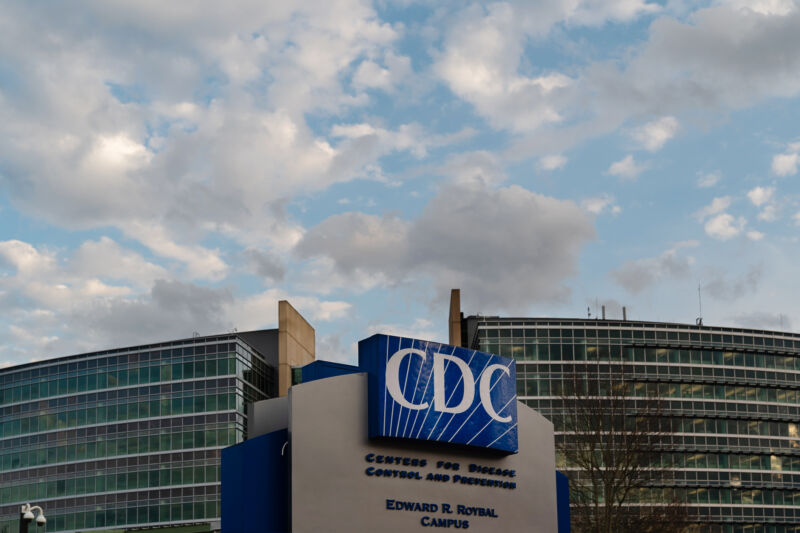
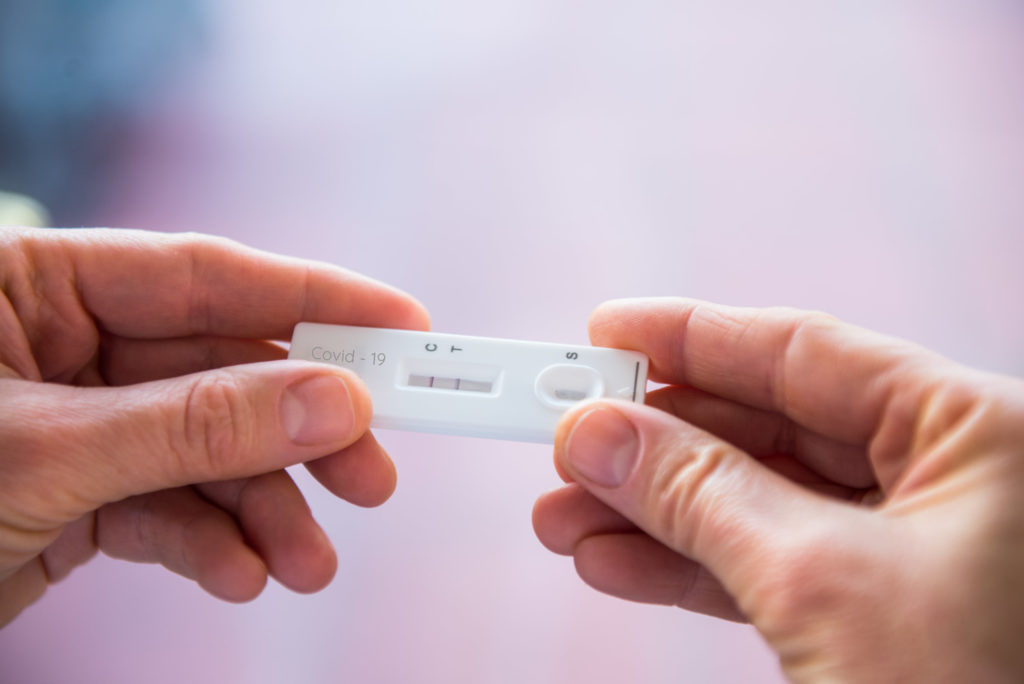
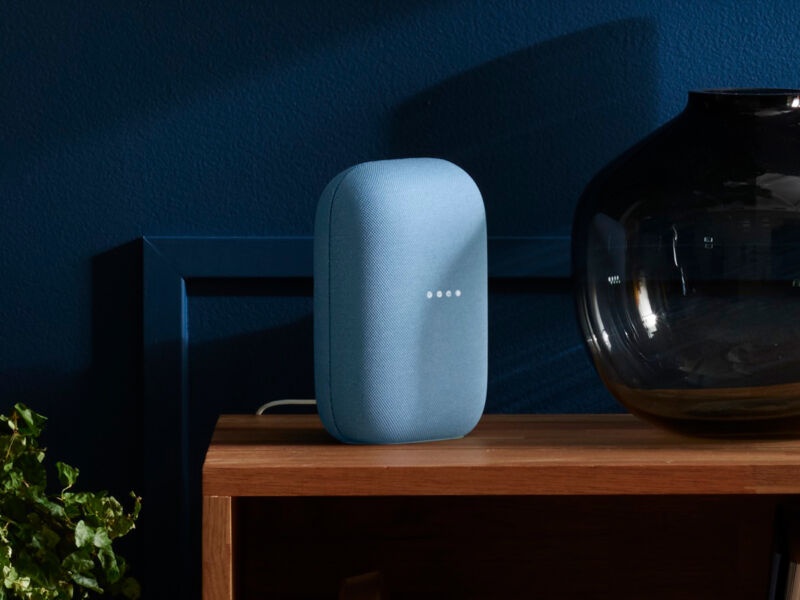

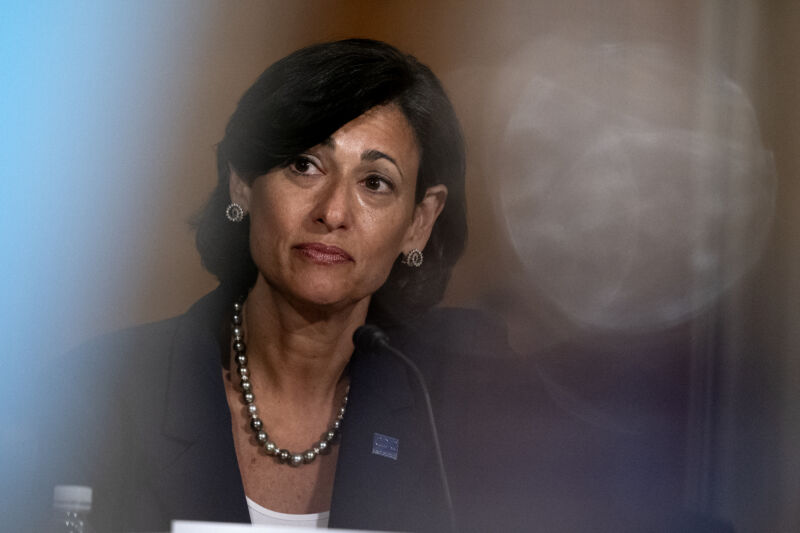

/cdn.vox-cdn.com/uploads/chorus_asset/file/23147549/GettyImages_1299353966.jpg) Mario Tama/Getty Images
Mario Tama/Getty Images
/cdn.vox-cdn.com/uploads/chorus_asset/file/23147528/GettyImages_1237533851.jpg) David L. Ryan/The Boston Globe via Getty Images
David L. Ryan/The Boston Globe via Getty Images
/cdn.vox-cdn.com/uploads/chorus_asset/file/23147521/GettyImages_1235434213.jpg) Watchara Phomicinda/MediaNews Group/The Press-Enterprise via Getty Images
Watchara Phomicinda/MediaNews Group/The Press-Enterprise via Getty Images