A little more than a week ago, the Department of Justice updated its policy regarding CFAA (Computer Fraud and Abuse Act) prosecutions. For years, the DOJ had been complicit in the punishment of security researchers for doing their jobs, reasoning that unauthorized access was the only criminal element it needed to satisfy. The guidance — which had not been completely updated for years — reversed this course, affirmatively stating the DOJ would no longer seek prosecution of good faith security research efforts, making it a bit less dangerous to be a security researcher.
Unfortunately, there are caveats. First of all, it’s a policy update, not a codification of practices. The law still remains abusable should subsequent Attorneys General feel this is the path the DOJ should take in the future. It also does nothing to prevent private parties from suing researchers under the CFAA, although it does increase the risk the DOJ will file briefs siding with the defendants.
It’s a good step forward, though, no matter how limited or temporary it may turn out to be following the next regime change. In that same vein of cautious optimism, the DOJ has updated its use-of-force policy for the first time in 18 years, replacing the 2004 guidance with something that better reflects the standards the DOJ, under AG Merrick Garland, is attempting to instill in law enforcement agencies all over the nation.
Perhaps the biggest change in the new use-of-force policy is this: federal officers are no longer allowed to turn a blind eye to misconduct. The updated policy [PDF] gives officers responsibilities they’ve never had before, making an implicit assumption explicit.
Officers will be trained in, and must recognize and act upon, the affirmative duty to intervene to prevent or stop, as appropriate, any officer from engaging in excessive force or any other use of force that violates the Constitution, other federal laws, or Department policies on the reasonable use of force.
This is what we expect from law enforcement officers. This isn’t what they expect of themselves. And there’s nothing in settled law that imposes this duty. The DOJ is imposing this — via policy — on the federal officers it oversees, which includes those working for the DEA, FBI, ATF, US Marshals Service, and the Federal Bureau of Prisons.
That’s a lot of coverage. But, at this point, it’s only worth the bits it’s printed with. The DOJ will need to enforce it. And it will need to do more than hand out wrist slaps over dead bodies or broken limbs. And it will need to try to keep this policy on the books even after Garland exits the AG office. It’s unclear how the DOJ will handle this moving forward, but hopefully the man they answer to — Merrick Garland — will continue to make it clear federal policing is in need of fixing as much as local law enforcement agencies are.
Taser and surveillance vendor Axon has proposed what it claims to be the solution to the epidemic of school shootings in the United States: a remote-controlled flying drone armed with a taser. For many many reasons, this is a dangerous idea. Armed drones would mission-creep their way into more every-day policing. We must oppose a process of normalizing the arming of drones and robots.
EFF has stated strongly before that drones and robots, whether they be autonomous or remote-controlled, should not be armed–either with lethal or “less-lethal” weapons. And we’re far from the only group to do so.
Police currently deploy many different kinds of moving and task-performing technologies. These include flying drones, remote control bomb-defusing robots, and autonomous patrol robots. While these different devices serve different functions and operate differently, none of them—absolutely none—should be armed with any kind of weapon.
Mission creep is very real. Time and time again, technologies given to police to use only in the most extreme circumstances make their way onto streets during protests or to respond to petty crime. For example, cell site simulators (often called “Stingrays”) were developed for use in foreign battlefields, brought home in the name of fighting “terrorism,” then used by law enforcement to catch immigrants and a man who stole $57 worth of food. Likewise, police have targeted BLM protesters with face surveillance and Amazon Ring doorbell cameras.
We cannot state this strongly enough: if police get their hands on taser drones, they will not sit in a warehouse until the next emergency mass shooting situation. History has proven this. We will see them flying over protests and shopping districts. We will hear news stories about police using a drone to taser someone for vandalism, petty theft, or fleeing the drone. It will not be a matter of if, but when.
Police will be more likely to use this kind of force if the entire process feels like a video game—if they can send tens of thousands of volts through a person’s body with the push of a button far removed from that person. And the person at risk of being tased might not hear the drone’s commands or may be confused by the presence of a floating robot.
Police use of tasers have killed over 500 people since 2010, according to a study on the lethality of the technology done by USA Today in 2021.
The Axon Ethics Board has voted firmly against Axon moving forward with this project.
Armed drones are just one part of a multi-part strategy from Axon for selling products that they claim might curb mass incidents of gun violence. Axon has also announced a partnership with Fusus, a company that specializes in consolidating private security camera feeds and giving police live access. EFF raised concerns in 2020 when police in Jackson, Mississippi, announced a pilot program with Fusus to get live access to video streams from private cameras, ranging from commercial security cameras to resident’s private Ring doorbell cameras.
This would create, with the permission of the camera owners but not the people who walk by them every day, a massive surveillance network. Like drones, it will ultimately be used by police much more often than in rare critical emergency situations.
We’ve seen this before. Time and time again, police conjure the extreme worst-case-scenario threat in order to deploy extraordinary powers, which end up being used in everyday acts of policing which disproportionately affect the lives of people of color, immigrants, and other vulnerable members of society. Before these tools are deployed, we demand that armed police drones never see the light of day.
Axon has announced a Reddit AMA here on Friday, June 3, 2022, to ask questions about these new products. Ask questions about your concerns. You can ask questions like: How do you feel about making a dangerous technology that will likely be used in other less dire scenarios than their preferred use case? Why has your ethics advisory board condemned the project? Will that stop you?
Disclosure: EFF's Surveillance Litigation Director Jennifer Lynch serves on the Axon AI Ethics Board in her personal capacity.
The US flag flies in front of the Supreme Court in Washington, DC. | Andrew Harrer/Bloomberg via Getty Images
A silly case about a minor paperwork error could snowball into a serious threat to the right to vote.
The dispute in Ritter v. Migliori, an election case currently pending on the Supreme Court’s shadow docket, is beneath the dignity of a nation’s highest court.
It involves a fight over whether 257 ballots cast in a low-level state judicial race should be tossed out because of a very minor paperwork error. It also involves a fairly obvious violation of a federal law providing that voters should not be disenfranchised due to such errors.
David Ritter is a Republican candidate for a judgeship on the Lehigh County Court of Common Pleas in Pennsylvania. Official tallies show him leading Democrat Zachary Cohen by 71 votes. Meanwhile, 257 ballots remain uncounted — enough to potentially flip the race from Ritter to Cohen.
Ritter wants the Supreme Court to prevent these ballots from being counted, thus locking in his victory. And, while the election took place last November and two other judges who prevailed in that election have already been sworn in, the outcome of the Ritter/Cohen race remains uncertain as the fight over these uncounted ballots drags on.
A state law provides that voters who cast their ballots by mail shall “date and sign” the envelope accompanying their ballot. Significantly, however, the state does not care which date the voter writes on this envelope — only that a date is written upon it. Envelopes that are dated “July 4, 1776” or “April 5th, 2063” will be opened and the ballot within shall be counted. But Ritter argues that voters who fail to write any date should be disenfranchised.
Ritter’s argument conflicts with a federal voting rights law, which provides that voters should not be disenfranchised due to paperwork errors “if such error or omission is not material in determining whether such individual is qualified under State law to vote in such election.”
This law, which was enacted as part of the Civil Rights Act of 1964, was intended to prevent states from hunting through paperwork filed by voters of color to find small errors that could then be used to disenfranchise those voters. But the law is written broadly to apply to any state action that would strip someone of the right to vote because of a paperwork requirement that is irrelevant to whether the voter is legally qualified to vote.
Ritter in other words, should be an extremely easy case. Even if there might be a legitimate reason why Pennsylvania could require voters to accurately state the date when they cast their ballot, a requirement that voters must write any random date on their ballot envelope is “not material in determining whether such individual is qualified under State law to vote.”
As Judge Paul Matey, a Trump appointee to the United States Court of Appeals for the Third Circuit, wrote about this case “no party contests that voter declarations with inaccurate dates were counted in this election.” There’s no way to defend a state policy that discards undated ballots, but which counts ballots that purport to have been cast on “December 25, 0 CE”
Nevertheless, Ritter raises three legal arguments that could do considerable violence to federal voting rights law. His arguments would have gained no traction in another era. But this Court is notoriously hostile to federal voting rights statutes. As Justice Elena Kagan wrote in a 2021 dissenting opinion, her Republican-appointed colleagues have “treated no statute worse” than the Voting Rights Act.
There is a non-zero risk, in other words, that the Court could transform this low-stakes case, about an entirely clearcut dispute, into a vehicle for gutting much of what remains of American voting rights law.
The case makes aggressive attacks on the law protecting voters with minor paperwork errors
Although Ritter attempts to argue that the voting rights law at issue in this case does not apply to the facts of this case, those arguments are exceedingly unpersuasive. The law excuses all paperwork errors by voters that are “not material in determining whether such individual is qualified under State law to vote.” A requirement that voters write any random date that they choose on an envelope is not relevant to determining whether a voter can lawfully cast a ballot.
His strongest arguments — strong, not because they are consistent with current law but because they could persuade many of the justices on this highly politicized Court — involve three structural attacks on the federal government’s power to enact and enforce voting rights laws.
Ritter suggests that the voting rights law is unconstitutional
Ritter’s most aggressive legal argument is that the provision of the Civil Rights Act of 1964 at issue in this case may be unconstitutional.
The Constitution gives Congress nearly limitless power to set the rules governing congressional elections, but its power to regulate state and local elections like the judicial race at issue in Ritter is narrower. As Ritter’s lawyers write in their brief, “though Congress can modify state regulations of federal congressional elections ... its power to modify state regulations of state elections can be justified only under its power to enforce the Fourteenth and Fifteenth Amendments.”
That statement is true as far as it goes, but it also does not undercut the constitutionality of the Civil Rights Act. The 15th Amendment prohibits states from denying the right to vote “on account of race, color, or previous condition of servitude,” and it also gives Congress broad power to enforce this prohibition.
Indeed, the Court has repeatedly said that Congress may enact broad voting rights laws that ban techniques that states have used in the past to disenfranchise racial minorities, even if those federal laws also prevent states from using those techniques in racially neutral ways. In City of Boerne v. Flores (1997), for example, the Court endorsed “a suspension of literacy tests and similar voting requirements under Congress’ ... power to enforce the provisions of the Fifteenth Amendment.”
That is, to prevent states from using literacy tests to target voters of color, Congress may enact a blanket ban on all literacy tests as a voter qualification. It follows that Congress may also enact a blanket ban on election rules that disenfranchise voters for minor paperwork errors, in order to prevent states from using these errors to target voters because of their race.
If the Supreme Court were to back away from the rule it announced in Flores and similar cases, that could be a catastrophe for voting rights. It could reopen the door to literacy tests and other tactics that were historically used to disenfranchise voters, unless a voting rights plaintiff could prove that these tactics were being deployed specifically to target voters because of their race.
Ritter claims that the relevant provision of the Civil Rights Act can only be enforced by the attorney general
Ritter also points to a provision of the voting rights law at issue in this case, which allows the US attorney general to file suit against states that target voters who make minor paperwork errors, and claims that only the attorney general may bring such suits.
This argument is wrong for many reasons. Among other things, federal law also provides that federal courts hearing voting rights suits brought under the Civil Rights Act shall hear those suits “without regard to whether the party aggrieved” has exhausted other possible legal remedies. It makes no sense to include this broadly worded provision if the only party that is allowed to file such a lawsuit is the attorney general.
It is worth noting that the Voting Rights Act of 1965 — the single most important safeguard against race discrimination in elections — also contains similar language permitting the attorney general to file lawsuits. And it also contains similar language indicating that private parties should be able to bring voting rights lawsuits even if they haven’t exhausted other legal remedies.
Indeed, in a 2021 concurring opinion, Justice Neil Gorsuch made a very similar argument to the one Ritter makes to undercut the Civil Rights Act, though Gorsuch targeted the Voting Rights Act. And, last February, a Trump judge in Arkansas embraced this narrow reading of federal voting rights law — holding that only the attorney general may file suits enforcing the Voting Rights Act. So far only one other justice, Clarence Thomas, has publicly shown support for this approach.
But it’s a sign that the question of whether to cut off voting rights suits by private plaintiffs, and give sole authority to enforce such suits to a single political appointee, is an open one — at least among the rightward fringe of the federal judiciary. Existing law rejects this limited reading of voting rights statutes, but at least some members of the Supreme Court appear eager to toss out existing law.
Ritter wants to shut down voting rights suits brought after an election
Finally, Ritter relies on something called the “Purcell principle” to argue that federal courts may not enforce the voting rights provision of the Civil Rights Act after an election has already taken place.
In Purcell v. Gonzalez (2006), the Court warned federal judges to be cautious about altering a state’s election law as the election draws close. “Court orders affecting elections ... can themselves result in voter confusion and consequent incentive to remain away from the polls,” the Court warned in Purcell, and this risk increases “as an election draws closer.”
Though Purcell simply urged judges to exercise caution when handing down decisions close to an election, key members of the Court’s Republican-appointed majority have relied on Purcell to shut down voting rights lawsuits months before Election Day. Concurring in Merrill v. Milligan (2022), for example, Justice Brett Kavanaugh invoked Purcell to justify reinstating a racially gerrymandered congressional map in Alabama — despite the fact that Merrill was decided nine months before the next general election and three months before the next primary.
If the Supreme Court were to embrace this argument, the implications would be breathtaking. The impact of state laws that illegally disenfranchise voters often are not apparent until after an election has taken place, when voters who expected their votes to be counted are surprised to learn that they were not.
It is far from clear that the provision of the Civil Rights Act relevant in the Ritter case could be enforced at all if it can’t be enforced in post-election proceedings. Federal courts are not allowed to hear a lawsuit challenging a state or federal law unless the plaintiff in that lawsuit can show that they were injured in some way by that law.
But the crucial point in the Ritter case is that about 250 voters inadvertently made a paperwork error that caused their ballots to be set aside. These voters couldn’t possibly have known that they were injured by the state law calling for them to write a date on the ballot envelope until after the election took place. And, if they had known that the state law required them to write a date on the envelope, they would have simply written a date on the envelope rather than challenging the state law in federal court.
Similarly, Zachary Cohen — Ritter’s opponent who is now pushing to get the disputed ballots counted — couldn’t have known that the outcome of the election could turn upon whether undated ballots are counted until after the election took place. Cohen’s injury, in other words, was entirely speculative until after the election had already happened.
Thus, if post-election lawsuits are forbidden, it is likely that no one would have been legally permitted to challenge Pennsylvania’s requirement that voters must write a date on their ballot envelopes.
Any time this Court hears a voting rights case is a cause for alarm
The bottom line is that Ritter involves a straightforward violation of a federal statute, which clearly requires the 257 disputed ballots to be counted. In his attempt to prevent those ballots from being counted, Ritter asks the Court to do considerable violence to the federal government’s power to protect voting rights.
And yet, given this Court’s history, it is entirely possible that at least five justices will take Ritter up on his invitation to gut this part of federal voting rights law. The arguments raised by Ritter are extreme, but they aren’t less extreme than the kinds of arguments that have already earned favor with the justices.
Four justices, for example, have signed onto a theory known as the “independent state legislature doctrine,” which would potentially give gerrymandered state legislatures limitless power to write highly partisan election laws — even if those laws violate the state’s constitution. The newest justice, Amy Coney Barrett, has not yet weighed in on this theory. But it is entirely possible that she will provide the fifth vote for it because she typically votes with the Court’s right flank in voting rights cases.
The Court’s Voting Rights Act decisions, meanwhile, have taken such liberties with the text of that law — and with the text of the Constitution — that their outcomes seem unconstrained by very basic rule that words are supposed to have meaning. In Brnovich v. DNC (2021), for example, the Court invented several new limits on the Voting Rights Act — such as a presumption that voter restrictions that were common in 1982 are lawful — which appear nowhere in the law’s text. As Justice Kagan wrote of Brnovich, the majority opinion “mostly inhabits a law-free zone.”
All of which is a long way of saying that, this Court frequently goes out on a limb to strike down or weaken voting rights laws. And the kind of judges who brought us Brnovich could also embrace the fairly extreme arguments presented in Ritter.
This is probably not the most likely outcome in Ritter. But, in this Court, it is dangerous to predict that any case will end well for voting rights.
Yesterday, the Biden Administration announced that this fall’s class of White House interns will be the first in the history of the program to be paid for their labor. For each week of “at least 35 hours” of work, interns will receive $750. They still will not receive relocation assistance, and they are responsible for […]
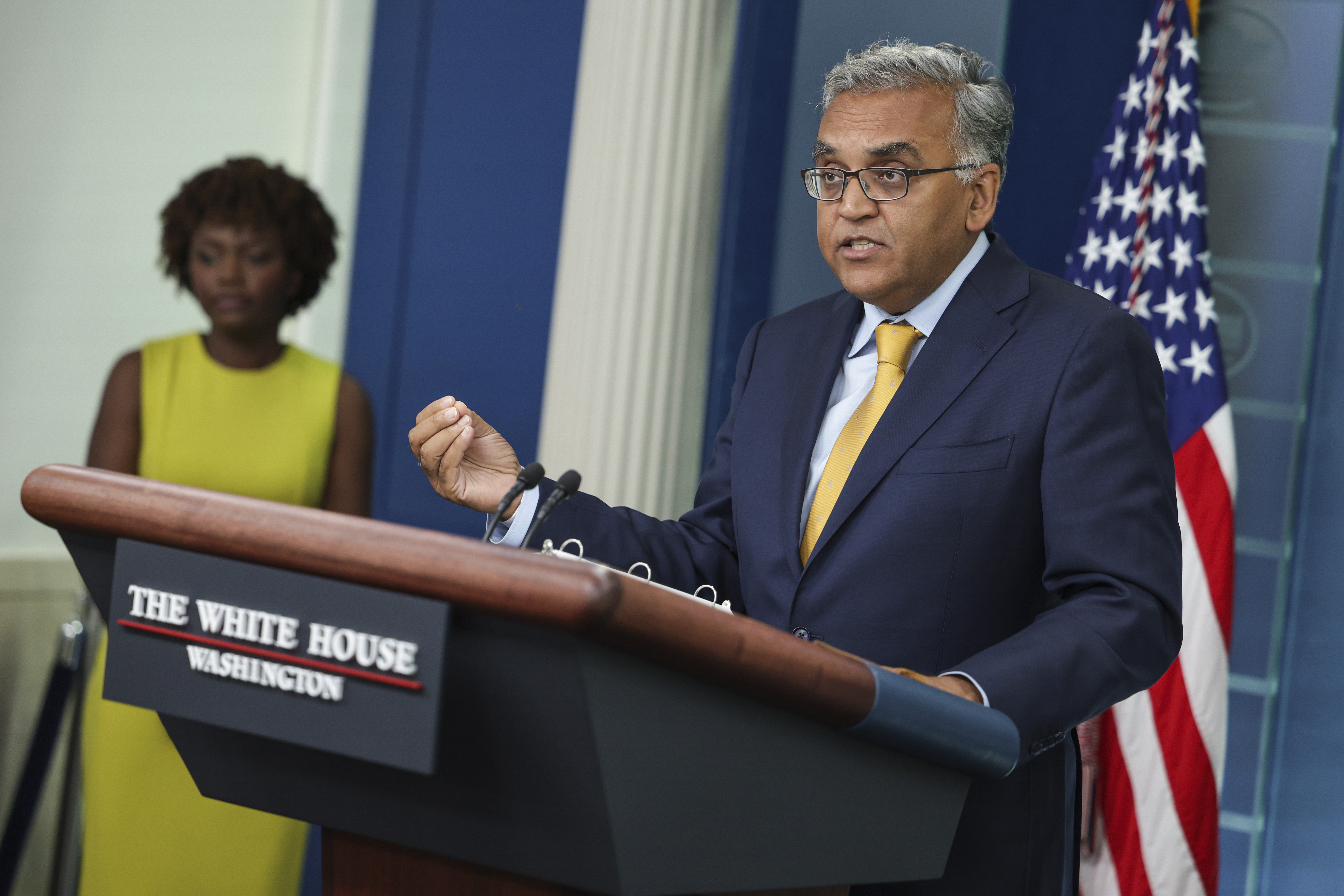
Enlarge / White House COVID-19 Response Coordinator Dr. Ashish Jha speaks alongside White House Press Secretary Karine Jean-Pierre during the daily press briefing at the White House on June 2, 2022, in Washington, DC. (credit: Getty | Kevin Dietsch)
COVID-19 vaccination for children ages 6 months to under 5 years—the only age group yet to be eligible for vaccination—is expected to get underway on June 21, White House COVID-19 Response Coordinator Ashish Jha said in a press briefing Thursday.
The Food and Drug Administration is now reviewing data from Moderna and Pfizer-BioNTech on their respective vaccines for the young age group. The agency will convene its panel of independent expert advisers to review the data on June 15 and vote on whether the vaccines should be granted emergency use authorization.
If the panel votes in favor of authorization, the FDA will likely grant it quickly. Once that happens, shipments of federal supplies of the vaccines will begin going out to states for distribution. But, before they can go into little arms, the Centers for Disease Control and Prevention will need to have its own advisory committee meeting to review the data and vote on a recommendation. And for the final step, CDC Director Rochelle Walensky will need to endorse the recommendation.
Finally we’re seeing some real progress at Rockville’s Twinbrook Quarter commercial/residential development, future home of the much-anticipated Wegmans grocery store. Cranes have been out in full force on this stretch of Rockville Pike, where the wrecking ball soon will demolish empty buildings that once belonged to Pizza CS, Fuddruckers, Toosso, the Salvation Army Family Store and the Sheffield/Danker furniture warehouse. Sadly though, we’re still a long way off from welcoming Wegmans to Rockville — so long, in fact, that the grocery chain won’t even speculate about a potential opening date. As things stand now, a Wegmans spokesman tells us this store probably won’t even get started on construction until 2024.
Another parking lot on its way out
In other Rockville development news, it looks like this quiet parking lot behind Federal Plaza will eventually be home to a pair of high-rise residential towers. Owner Federal Realty, which developed Pike & Rose, Rockville Town Square and countless other mixed-use properties in Montgomery County, has sketched out plans for new housing and street-level retail on this lot. The timeline is uncertain, and it’s also unclear how this project will affect rear-facing tenants like T.J. Maxx and Micro Center. But the Panera in the parking lot would definitely have to go.
Home stretch for HomeSense
HomeSense is set to open June 16th at Rockville’s Montrose Crossing, where it’s been under construction since last winter in the former A.C. Moore space. The T.J. Maxx-owned retail chain is similar to sister store HomeGoods, with a vast selection of kitchenware, pillows, rugs, wall art, decor and textiles. But while HomeGoods typically offers random pieces of furniture, HomeSense sells complete matched sets as well as lighting, bathroom fixtures, paint, wallpaper and tools.
The Store Reporter Guide
A weekly guide sponsored by some of our favorite local businesses
If you’re visiting Pike & Rose this weekend, be sure to check out two boutiques in our Store Reporter Guide. Scout & Molly’s is celebrating its fourth anniversary with discounts, raffles and gifts with purchase. And Evoluxxy, which recently relocated to the opposite side of Grand Park Avenue, has a new home and gift section as well as your favorite brands.
SHOP LOCAL
EVOLUXXYat Pike & Rose. Curated outfits & dresses for any occasion, just a few minutes’ drive from Potomac, Bethesda & Rockville. We have the brands you love: Ulla Johnson, LoveShackFancy, Misa, Mother denim, Citizens, AGOLDE, Ganni, Sympathique, Vince, Xirena, Current Air & much more. Newly added home & gift section. Shop 24/7 @ our online store: evoluxxy.com. Address: 11804 Grand Park Ave. Call (301) 281-2999. Follow us on Facebook and Instagram.
HANNA’S CONNECTIONclothing boutique, upstairs inside the Cabin John mini-mall. New arrivals with the latest trends from France & Italy. You won’t find them anywhere else! Stop in to see everything in person, schedule a private appointment, or arrange a virtual shopping session. Curbside pickup & shipping available. Shop new arrivals on Facebook and Instagram. Call us: (301) 704-0264. Website: hannasconnection.com.
JOYFUL BATH CO.: We make our own soaps, shower steamers, bath bombs, soy candles, Turkish towels & custom baskets. All our products are vegan & cruelty-free, paraben & phthalate-free, great for sensitive skin, no SLS or detergents, no glittery mess. We ship, we offer curbside pickup, and we’re open for in-person shopping: 10 a.m.-5 p.m. Monday-Friday and 10 a.m.-2 p.m. Saturdays. 5534 Wilkins Ct., North Bethesda. Call (301) 986-5320 . Website: joyfulbathco.com.
KAUFMANN JEWELERS: Fine jewelry, custom jewelry, large & small repairs. Father & son George & Corey Kaufmann are carrying on the family tradition: offering an upscale shopping experience while preserving the handshake-generation, family-business mentality. Whether we’re designing your custom piece, showing you our collection or handling your repairs, Kaufmann Jewelers strives to build lifelong clients. Call us: (301) 978-7778. Visit us at Park Potomac, 12500 Park Potomac Avenue. Website: kaufmannjewelers.com.
LEILA JEWELSis the online address for the jewelry, gifts & Judaica shop you used to love at Cabin John Shopping Center. Since closing the shop a few years ago, owner Deb Shalom has gone virtual with a unique & beautiful selection of everything from gemstones & sterling silver to Murano glass from Venice & Judaica from Alef Bet Jewelry & Joy Stember Studios. Every price point, every occasion. Free shipping for all jewelry & hand-delivery for customers in the Potomac area. Website: leilajewels.com.
SCOUT & MOLLY’S BOUTIQUE, your North Bethesda fashion destination at Pike & Rose. Join us this weekend (June 4th & 5th) to celebrate our four-year anniversary. Enjoy discounts, raffles & gifts with purchase all weekend long! A ton of new summer and fan favorite arrivals. Shop Instagram, shop Facebook, shop online, shop in-store or call us: (301) 348-5047. Website: northbethesda.scoutandmollys.com.
COLADA SHOP POTOMAC: Voted Best All-Day Drinks by Bethesda Magazine. Shop Colada Potomac’s seasonal menu including chayote & black bean empanadas, tamarind tonic espressos & a refreshing melon mule cocktail. Plus, visit their in-store Mercado for make-at-home Colada favorites, specialty Latin products, wine, houseplants & more! Plus students get 10% off when they show their student ID! Phone: (240) 332-8870. Learn more at www.coladashop.com.
FILICORI ZECCHINI PARK POTOMAC: Authentic Italian coffee, from Bologna to Potomac. Open daily for breakfast, lunch, baked goods, snacks, gelato, coffee & tea, with a passion for quality since 1919. We also offer coffee beans & espresso blends, so your favorite coffee can accompany you everywhere. 12430 Park Potomac Ave. Phone: (301) 444-4417.
FISH TACO: Let’s catch up! We are family-owned and we source our food seasonally, sustainably & locally. We take pride in using the highest quality ingredients to bring our guests delicious, hand-crafted meals & empower them to connect with what’s important in life. We offer our famous fish tacos, as well as an assortment of Baja-inspired favorites. Visit us at multiple area locations, or order online at www.fishtacoonline.com.
GREGORIO’S TRATTORIA, Italian favorites at Cabin John Village, 7745 Tuckerman Lane. Full menu and weekly specials featuring pizzas, pastas, seafood, meats, salads & more. Open indoors & outdoors for lunch & dinner, 11 a.m. to 10 p.m. We also offer curbside pickup, pay by phone & contact-free delivery. Phone: (301) 296-6168. Call for catering: (800) 749-8894. Menu for all locations: gregoriostrattoria.com.
MOBY DICK KABOBS, Persian cooking on the go. Multiple locations in Maryland & the DMV. Our family platters feed 3-4 people starting at $36.99 or 5-6 people starting at $63. Check out daily specials like khoresht gheymeh (yellow split-pea soup with beef) on Wednesdays & ghormeh sabzi (herb stew) on Fridays. All locations open for dine-in, carry-out, delivery & curbside pickup. Potomac phone: (240) 660-2626. Rockville phone: (301) 738-0005. Menu: mobyskabob.com.
PICCOLI PIATTI PIZZERIA: Authentic. Neapolitan. Greatness. We use high-quality imported Italian flour & tomatoes, locally sourced meats, organic produce & spectacular domestic cheeses to create exceptional, affordable dishes that please the whole family. Our pizza is crafted to order in the classic Neapolitan style & finished in our 900-degree brick oven. Great pastas, small plates & lunch sandwiches too! 10257 Old Georgetown Road in the Wildwood center. Call us: (240) 858-6099. Order online: piccolipiattipizzeria.com.
POTOMAC PIZZA, a delicious favorite since 1978. Multiple locations in Maryland and the DMV. Potomac location: (301) 299-7700. Traville location: (301) 279-2234. Chevy Chase location: (301) 951-1127. Dine with us or choose contact-free delivery, curbside pickup or takeout. Sister company Bagels & Grinds also offering bagels, lox & cream cheese pickup in Potomac on Saturday mornings. Menu: potomacpizza.com.
QUARTERMAINE COFFEE ROASTERS, locally owned & operated. Visit us on Bethesda Row for fresh roasted coffee by the pound, custom-made coffee & tea drinks, fresh-squeezed juices & smoothies. Try any of our drinks with oat milk, almond milk or soy milk. Spring drink specials have arrived! Want coffee shipped to your door? Subscriptions available & $5 flat-rate shipping with $30 minimum. Visit www.quartermaine.com.
QUINCY’S POTOMAC BAR & GRILLE, atPotomac Woods Plaza off Montrose & Seven Locks. Twenty beers on tap & American bar fare: hand-cut sirloins, filets & ribeyes; fried chicken, grilled chicken kabobs, lamb lollipops, fajitas & more. We host trivia night on Mondays, karaoke on Tuesdays, bingo on Wednesdays, Family Feud on Thursdays. Follow us on Facebook & Instagram. Phone: (240) 500-3010. Menu: quincyspotomac.com.
ROSE’S LUXURY: The Michelin-starred D.C. favorite is now offering delivery to our area. Choose two or three nights of impeccably prepared meals, including appetizers, entrées and desserts — $40 and up, per person per night. Your order will arrive with easy-to-follow instructions for assembly and reheating, complete with garnishes, pour-over sauces, dollops of whipped cream and custom Spotify playlists. Menus change every two weeks. Click here for details.
SISTERS THAI POTOMAC, Asian & Thai cuisine + drinks & desserts. Indoor & patio dining with a funky, charming decor at Cabin John Village, 7995 Tuckerman Lane. Try our chicken satay, larb gai, pad thai, drunken noodles, curry dishes & much more. We’re also known for our Instagrammable desserts, cocktails, teas, fruit drinks & specialty lattes. Phone: (301) 299-4157. Menu: sistersthaicabinjohn.com.
THE BOTTLE SHOP WINE & BEER: Exceptional wine, craft beer & artisan snacks — chilled & ready to go — to make your evenings special. You’ll find us at Potomac Woods Plaza, 350 Fortune Terr., around the corner from Park Potomac (Montrose & Seven Locks). Check our weekly wine & beer discounts on Facebook, Twitter & Instagram. Call us: (301) 738-9463. Website: mybottleshop.net.
WINTERGREEN PLAZAhas the stores, restaurants & services businesses you need — all in one place, with free & easy parking. Besides Food Lion, Classic Beer & Wine, Dunkin’ and Starbucks, this is the home of Chipotle, Habit Burger, Jersey Mike’s, Mission BBQ, Niwano Hana, Paisano’s Pizza, Sweet Frog, Ten Ren Tea Ginseng, The Halal Guys & Wingstop. Also: salons, professional practices, Bray & Scarff, The UPS Store, Pure Hockey, Rockville Soccer, TennisTopia & much more. For a full list, click here.
YEKTAPersian restaurant & market. 1488 Rockville Pike. Our restaurant is open for carry-out or curbside pickup, 11 a.m.-8 p.m. Monday-Saturday and 11:30 a.m.-7 p.m. Sunday. Call (301) 984-0005 or use ChowNow, UberEats, Grubhub & other delivery apps. Our market is open 10 a.m.-8 p.m. Monday-Saturday and 11 a.m.-7 p.m. Sunday. Carry out or pick up curbside. To place your order, email info@yekta.com or call (301) 984-1190. Menu: yekta.com.
SELLING YOUR JEWELRY
JUST JEWELS: Ready to sell your jewelry? Lee Siegel has been buying & selling diamonds, fine jewelry & watches for 25 years. Modern & older cuts, engagement rings, loose diamonds, vintage pieces & brands like Cartier, Tiffany, Van Cleef & Arpels, David Webb, Chopard, Bvlgari, David Yurman, Rolex, Cartier, Patek Philippe & Omega. License #2801. Call our office in Bethesda: (301) 525-7561. Email justjewelsusa@outlook.com. Website: justjewelsusa.com.
STX GOLD: Turning your old jewelry into thousands of dollars since 2009. We buy gold, silver, platinum & sterling silver flatware, serving pieces & platters. By appointment only at our office, or we’ll come to you. We always wear masks & gloves for your safety. For a no-obligation appointment, call (301) 318-9788. Visit our website & check the current price of gold: stxgold.com.
FITNESS, HEALTH & BEAUTY
MODA OPTIC: Celebrating 14 years of framing your faces in Rockville. What a journey it’s been — and cheers to another 14! We are fully committed to a future of bold, beautiful optical designs and supercharged technology for all your optical needs. Make an appointment today! 130 Rollins Ave. Call us: (301) 881-9444. Website: www.modaoptic.net.
ROCKVILLE PERSONAL TRAINING, first three sessions $99. Our private studio on Rollins Avenue uses the latest research & technology for a fun, affordable & effective exercise program designed specifically for you. We have backgrounds in medical exercise & clinical physiology, plus a decade of experience working with ages 9-90. We disinfect between clients, & we keep you safe with HEPA & UV-C air filtration. All trainers are vaccinated. Check us out on Facebook, Instagram & Twitter. Call us or text us: (240) 630-0298.
SHIN ORTHODONTICS is one of MoCo’s leading providers of Invisalign. Drs. Richard & Debra Shin, board-certified orthodontists, are also experts in traditional braces, lingual braces such as InBrace, Brius, & 3D-printed braces such as Lightforce that best suit your lifestyle. We treat teens, adults & kids at two convenient locations: 4701 Randolph Road in Rockville & the Cabin John mini-mall in Potomac. Call for a free consultation: (301) 750-6699. Text us: (301) 812-3011. Website: shinorthodontics.com.
TAFF & LEVINE D.D.S. provides state-of-the-art dental treatment in a relaxing atmosphere surrounded by caring doctors and staff. No insurance? No problem! Join our V.I.P. dental plan, pay one monthly fee for free hygiene appointments and 10% off all other dental procedures. 7811 Montrose Road in Potomac. Call 301-530-3717. Website: taffandlevine.com.
THE GLOSSARY NAIL SPA: The newest salon at Cabin John Village, offering manicure, pedicures & waxing. You’ll find us right next to My Eye Dr. We use the highest quality products and never re-use materials, so everything is fresh for you. Walk-ins welcome, but weekends are busy so it’s best to make an appointment. Call us: (240) 660-2192. Website: glossarynailspa.com.
TOTALLY POLISHED at the Cabin John mini-mall, walk in or call (301) 299-3672. Serving the Potomac community for more than 30 years. From gel manicures & dip manicures to signature pedicures & waxing, we do it all. We take great care with sanitation, including disposable pedicure tools & liners. Check out our work on Facebook & Instagram. We’re open 7 days a week. Stop by to enjoy a relaxing day!
WINK EYECARE BOUTIQUE: Dr. Rachel Cohn & her talented team of opticians will make sure you always look & see your best. We offer high-tech eye exams & assessments, plus trending frames from designers like Robert Marc, Oliver Peoples & Anne et Valentin. We’ll monitor the health of your eyes & can assist with dry eyes, allergies, contact lenses & more. We are all vaccinated, & have state-of-the-art air & UV light filters. Find us at Potomac Woods Plaza, 1095 Seven Locks Road. Call (301) 545-1111. Website: wink.net.
KIDS & TEENS
BAR-T: Over 60 years of summer fun under the sun! Multiple locations in Montgomery & Frederick counties offering on-site swimming, ropes courses, zip lines, archery & brand new playgrounds, all taught by a trained & energetic staff. We also offer specialty camps for adventure, STEM, sports & the creative arts. Transportation & extended-day options available. Our schedules are flexible, allowing you to register on a weekly basis. Call (301) 948-3172. Website: Bar-T.com.
TIPS ON TRIPS AND CAMPS: What will your kids be doing this summer? We’re here to offer ideas, expertise & plenty of options. Tips on Trips and Camps has been around for half a century, guiding families like yours to the best summer options for their students ages 7-18+. All our services are FREE to families. No need to figure this out alone — we are happy to help, with plenty of ideas for summer 2022! To get started on your summer plan, call Lisa Bulman Mullen:(561) 703-6448or emaillisa@tipsontripsandcamps.com.
HOME & PROFESSIONAL SERVICES
JIMMY GUSKY HEATING & AIR, one-stop shop for heating, air conditioning, plumbing and ductwork, serving Rockville & the D.C. area. We always give you an honest opinion and transparent pricing, making repairs when we can and helping you decide when replacement is the better option. Have an emergency? We’re available 24/7. Call (301) 327-7306. Website: jimmygusky.com.
MALECH LAW, Bethesda family law practitioner. Aggressive legal representation in high-conflict divorces, child custody & child support conflicts, spousal support & alimony battles, enforcing & modifying court orders, protective orders in domestic violence cases, & settlement agreements. Call Lloyd Malech at (202) 441-2107. Website: malechlaw.com. Family law, reenvisioned.
MIKE’S LOCKSMITH & SECURITY, commercial, residential & emergency. Lock repair & replacement, re-key services, touchscreen locks & high-security locks. Now offering security cameras, video doorbells & monitored security systems accessible on any device, so you can talk to visitors & unlock doors remotely. All at a low monthly fee. Labor & materials guaranteed for as long as you own your home. Appointments & after-hour emergencies: (240) 506-7500. Email: mike@mikes-locksmith.com. Website: mikes-locksmith.com.
TOWN & COUNTRY MOVERS, family-owned moving and storage company, based in Gaithersburg and serving the DMV since 1977. We handle local, long-distance and international relocations, as well as short-term and long-term storage solutions. Our staging division works with local realtors to enhance listings and improve home sales. Call (301) 670-4600. Website: townandcountrymovers.com.
CELEBRATIONS
FLASHBACK FILMS, photo & video montages for your special occasion — whether in-person or virtual. Professional montages at affordable prices for all your important milestones: birthdays, anniversaries, graduations, mitzvahs & more. We’re a locally based, student-run company and will work within your budget. Send us your photos and we’ll do the rest. Visit us on Instagram. For video samples & pricing, email flashbackfilms123@gmail.com.
JAMIE KRAMER EVENTS is dedicated to crafting authentic, memorable & customized experiencesfor private & corporate events. Celebrations & milestones, conferences & board meetings, team building, corporate retreats, networking & more. Whether you’re ready for an in-person event or still prefer virtual, we promise to make it unforgettable. Check us out on Instagram & Facebook, and email jamie@jamiekramerevents.com to start planning. Website: jamiekramerevents.com.
KONA ICE &CARD MY YARD POTOMAC: Our colorful Kona trucks serve up one-of-a-kind gourmet shaved ice — plus a fully customizable menu for your parties, carnivals, sporting events, corporate functions & school fundraisers (including kosher). And Card My Yard is the premier yard greeting sign rental service, making your big day even b-i-g-g-e-r. Celebrate with one company or both! For Kona Ice: Call (301) 284-8260 or visit kona-ice.com. For Card My Yard: Email potomac@cardmyyard.com or visit cardmyyard.com.
LILAC, special occasion wear for girls, tweens & teens. We have the perfect outfits for bar & bat mitzvahs (both service & party), recitals, graduations, cotillion & other special occasions. Our clothes are fashionable, well-made, well-priced, age-appropriate — and not typically found in department stores. Now booking private shopping appointments at www.calendly.com/shoplilacgirl. Find us on Instagram (@lilacgirlshop) and Facebook (@shoplilacgirl). For more info, email sales@shoplilacgirl.com.
Enlarge / Someday, Google's messaging lineup will look like this (assuming Google can stop launching competing products). (credit: Ron Amadeo)
The long-rumored Google Duo and Google Meet merger is actually happening. Google officially confirmed the move on Wednesday, explaining in a blog post that the goal is to create a "single video communications service" and that the Duo brand will go away in favor of Google Meet.
While the Google Duo brand is dying, it sounds like the Duo codebase will live on as the basis for the new Google Meet. Google says that "existing video calling features from Duo are here to stay" and that "in the coming weeks, we’re adding all the Google Meet features to the Duo app, so users can easily schedule a video meeting at a time that works for everyone, or continue using video calling to instantly connect with a person or group. Later this year, we’ll rename the Duo app to Google Meet, our single video communications service across Google that is available to everyone at no cost."
The move comes after Google unified its communication teams under Google Workspace VP and GM Javier Soltero (the author of Google's blog post) in 2020. Google has not clarified which products are being unified, but it should mean that Google Hangouts, Google Meet, Google Chat, Google Messages, Google Duo, and Google Voice will all live under one roof.
US flags, across New York Bay from the Statue of Liberty, fly at half-mast at Liberty State Park in Jersey City, New Jersey, on May 25, 2022, as a mark of respect for the victims of the May 24 shooting at Robb Elementary School in Uvalde, Texas. | Timothy A. Clary/AFP via Getty Images
Politicians diverge from voters when it comes to preventing gun deaths.
The massacre of children at an elementary school in Texas is adding fresh urgency to the conversation about gun control in the United States, which has been politically fraught and lacking in progress. That’s not because of a lack of support for gun control. That support just needs a little bit of parsing.
To be clear: Americans’ views about guns are complicated, and vary significantly by political party and geography. Overall, the vast majority of Americans support the right for private citizens to own guns, and more than 40 percent of households own at least one firearm. That doesn’t mean they’re against tighter rules on their guns. Nearly three-quarters of Americans think that gun violence is a big or moderately big problem, according to a survey last year by Pew Research Center. And a majority of Americans think that the epidemic of school shootings could be stopped with drastic changes in legislation, according to a poll this week by YouGov.
Still, when Americans are asked broadly if they support stricter gun laws, their opinions volley back and forth, and it’s hard to see a consistent majority. Slightly more than half (52 percent) of Americans in a Gallup poll last year said laws regarding firearms sales should be stricter — a number that has actually gone down in recent years — and a Quinnipiac poll last year found that just under half (45 percent) support stricter gun laws. More recently, a Politico/Morning Consult poll last week found that 59 percent of registered voters think it’s very important (41 percent) or somewhat important (18 percent) for lawmakers to pass stricter gun laws.
But these might not be the right things for pollsters to be asking. That’s because of how drastically existing gun laws vary state by state.
“The thing about those sort of generic questions: Somebody in Vermont can say yes and someone in California can say no, and they favor the exact same thing,” Chris Poliquin, an assistant professor at UCLA’s Anderson School of Management, who studies gun legislation after mass shootings, told Recode.
When asking Americans about their opinions on more specific gun policies, the results are clearer. A vast majority of Americans supports universal background checks, keeping people with serious mental health issues from buying guns, bans on assault-style weapons and high-capacity magazines, and so-called “red flag laws” that would allow police and family members to seek court orders to temporarily take guns away from those considered a risk to themselves and others. A majority of Americans, of both political parties, oppose carrying concealed weapons without a permit.
There’s much more action at the state level, but it doesn’t typically end with progress. Poliquin’s research found that state legislatures consider 15 percent more firearm bills in the year after a mass shooting, although the existence of more bills doesn’t typically lead to stricter gun laws. In fact, Republican legislatures pass more gun-related legislation in the wake of mass shootings — but they’re laws that make gun laws less strict.
“A lot of those [gun control measures] are actually supported in the abstract by gun owners, but often not in practice,” Matthew Lacombe, an assistant professor at Barnard and author of Firepower: How the NRA Turned Gun Owners into a Political Force, told Recode. “So people have a particular issue stance, but then that issue becomes salient and Democratic and Republican politicians start taking clear stances on it. And then people’s views tend to fall into line to match their partisan outlooks.”
Part of the issue is that Americans have somewhat conflicting stances on gun control. But what’s a bigger problem is that even when a majority of Americans agree, a simple majority of lawmakers agreeing on a bill is not enough to pass laws in our country. The Senate filibuster lets a minority of states — and Americans — veto national policy that the majority of Americans want. The result is a minority of people making the laws for the majority of Americans, regardless of what the population at large thinks.
Background checks
Background checks are by far the least controversial aspect of gun legislation, according to a wholelotofsurveys. Roughly 80 to 90 percent of Americans support universal background checks, which would mean all sellers would have to verify that a person doesn’t have a history of violent crime or domestic abuse before they can buy a gun. As Robin Lloyd, managing director of the gun control advocacy group Giffords, put it, “Background checks on every gun sale polls higher than people who support ice cream.”
That overwhelmingly broad support, however, has not led to sweeping national requirements for background checks. There are currently laws requiring extended background checks for all people who buy guns in 21 states, but federal law only covers sales between federally licensed dealers. That means there’s a loophole in which about a fifth of gun sales — sold privately, online, and at gun shows — are done without that oversight. Even states that have expanded laws suffer from an influx of guns from those that don’t.
Of course, many mass shooters would have no trouble passing a background check. The 18-year-old Uvalde shooter, for instance, legally purchased his guns. The Buffalo shooter bought his guns legally. The Parkland shooter did. The list goes on. Still, according to a 2020 study, the odds of mass shootings are 60 percent lower in states with laws requiring permits for firearms — and, by extension, background checks.
Notably, many of these killers are young and don’t yet have a record. After the Parkland shooting in 2018, there was massive support for raising the legal age for buying a firearm from 18 to 21. Universal background checks are one of those rare issues that both Republicans (70 percent) and Democrats (92 percent) support, but partisanship in other areas keeps it from going anywhere. Republican senators would have to cross the aisle to vote for gun control laws — a move that would likely hurt them in their state primaries.
The Bipartisan Background Checks Act of 2021, or HR 8, which would close the background check loophole, was sketched out in rough form after the Sandy Hook elementary school massacre a decade ago. Despite lawmakers from both sides of the aisle signaling support for such bills, these bills have repeatedly passed the House only to languish in the Senate.
Red flag laws
Americans overwhelminglysupport red flag laws, otherwise known as extreme risk protection orders, which work similarly to restraining orders. Again, these laws allow police and family members to petition a court — which would determine whether there’s enough evidence to do so — to temporarily keep guns from people who might be a threat to themselves or others. Some 77 percent of Americans think that a family member should be able to petition a court to do this, while 70 percent think police should, according to a survey by APM Research Lab.
And this approach to gun control has been gaining traction in recent years. A number of states adopted such laws following the Parkland, Florida, shooting, in which the gunman, like many mass shooters, displayed obvious red flags. (An acquaintance said he’d introduce himself, “Hi, I’m Nick. I’m a school shooter.”) Some say the red flag approach might be less controversial with gun owners, specifically, because it seems like common sense.
For red flag laws to be useful, they have to be used
“Red flag laws are promising because they’re specifically targeted at people or cases or instances in which there’s reason to believe that there might be a problem,” Lacombe said. “So it’s not like a blanket rule that treats gun owners like a particular class of citizen.”
Of course, for red flag laws to be useful, they have to be used. If police had decided to seek such an order against the shooter in the Buffalo supermarket earlier this month, who had been referred to police for threatening violence, 10 gun deaths could have been prevented. New York Gov. Kathy Hochul has since announced an executive order that would compel police to do so.
Mental health restrictions
There’s also overwhelming support on both sides of the aisle (85 percent of Republicans and 90 percent of Democrats) for stopping those with mental illness from buying a gun. But in the case of gun sales that happen through a licensed dealer, that’s supposed to already be happening (though the same loopholes occur for online and private sellers). If a court has had someone involuntarily committed or otherwise determined that they are incapable of managing their life, that person is not supposed to be able to buy a gun, since they should be flagged by the FBI’s National Instant Criminal Background Check System (NICS) database.
In practice, that has not always happened.
After a student with a documented history of court-ordered mental health treatment shot and killed 32 students and faculty at Virginia Tech in 2007, there was a major push to make sure state-level records were entered into NICS. George W. Bush signed the NICS Improvement Act into law in 2008, but it still had huge holes where relevant state and federal records were not uploaded to the database. Some of those were remedied by the Fix NICS Act that was signed into law in 2018, but the system is far from perfect.
Additionally, mass shooters generally wouldn’t be considered to have mental illness severe enough to show up in the federal gun database in the first place.
“There’s sort of this perception about mass shooters that they are severely mentally ill people,” Poliquin said. “Although they might have mental health issues, the level of mental health issues doesn’t necessarily lead to institutionalization.”
Additionally, there’s a lot of debate over mental health and mass shooting coming from Republicans that might be in bad faith. It’s not as though Americans have a higher rate of mental health problems than other countries — what makes the US exceptional is the number of guns in the country and the corresponding number of gun deaths.
“I’m not aware of any instance in which a Republican saying that this is really a mental health issue has actually then come forward with a proposal to invest additional resources in our public health and mental health infrastructure, which I think sends a signal just how serious they are,” Lacombe said.
Assault rifles and high-capacity magazines
Bans on assault weapons and high-capacity ammunition magazines have an approval rating of over 60 percent in the US, according to Pew.
Assault weapons are a poorly defined class of firearms, but generally refer to military-style semi-automatic weapons. High-capacity magazines are generally ammunition clips that hold more than 10 rounds. AR-15s, the preferred style of weapon in recent mass shootings, are assault weapons, which can be modified to accept a number of after-market parts, including high-capacity magazines, that make it even deadlier.
While it has majority support, banning assault weapons is much more divided by political party. While 83 percent of Democrats approve of banning assault-style weapons, just 37 percent of Republicans do; 83 percent of Democrats would like a ban on high-capacity ammunition magazines compared with 41 percent of Republicans.
Assault weapons and high-capacity magazines, both of which allow murderers to kill more people in a short span of time, used to be illegal in the US. A federal law passed in 1994 banned assault weapons and high-capacity magazines, but Congress let the legislation lapse in 2004. Even though the 1994 law had its issues — it didn’t make illegal or confiscate the 1.5 million assault weapons and 25 million large-capacity magazines that Americans already owned — the bans did significantly reduce death tolls while they were in effect.
“After that, we’ve just seen like an explosion of assault weapons all across the country,” Lloyd said, estimating the number to be in the tens of millions.
Bans on assault weapons and high-capacity ammunition magazines have an approval rating of over 60 percent in the US
Cassandra Crifasi, an assistant professor at Johns Hopkins Bloomberg School of Public Health, said gun laws should go beyond simply listing which specific guns are restricted or not by making it harder to get deadly gun accessories.
“In response to some of these bans, you can buy a rifle that falls into the approved list, and then you can find accessories online or at gun shows that allow you to customize it and then it may become in violation of the ban,” she said. “Once you have the rifle, if you can then buy those accessories after-market, you can skirt around the ban.”
The Buffalo shooter, for example, purchased his AR-15-style gun legally but modified it to accept a large-capacity magazine that is illegal in New York.
However it’s defined, Lloyd says, limiting guns, ammo, and accessories would limit the extent of gun violence in mass shootings.
“It is impossible to ignore the fact that assault weapons are extremely dangerous because of how many people they can kill in such a short amount of time,” she said, referring to the death tolls in Buffalo and Uvalde.
There is proposed legislation, including the Keep Americans Safe Act (HR 2510 / S 1108), that would ban high-capacity magazines, and the Assault Weapons Ban of 2021, which would ban military-style assault weapons and high-capacity magazines. All of these bills have been introduced but not voted on, and thanks to the filibuster, would be unlikely to pass without a lot more Republican support.
Concealed carry
Though it varies by party, the vast majority (81 percent) of Americans oppose laws that would allow people to carry concealed handguns without a permit, according to a recent poll this month by Marquette Law School. And generally, support for the wider ability to carry guns — in schools, without permits — has been declining, according to Crifasi.
At the same time, laws allowing people to carry weapons in public have become much more commonplace in the last decade. The effort, however, began decades before in the 1980s as the NRA, beginning in Florida, sought to get states to slowly roll back their concealed carry laws from something that was a special dispensation to something that was expected as a way for gun owners to express their Second Amendment rights. Just last year, the Texas legislature passed a law making it so that people no longer need a license or training to carry a handgun.
“The NRA put forth a pretty strategic, organized, and concerted effort to change state laws, one state at a time,” Lacombe said. “As it became increasingly normalized to be in the law, voters also became more likely to see it as acceptable.”
The thinking behind these Republican and NRA talking points is that having a concealed weapon would allow the “good guys” to take down the bad guys. In practice, that doesn’t actually happen. Though there are a handful of anecdotes in which a person with a concealed weapon successfully stops a mass shooter, adding more guns to the mix is more dangerous. To wit: a man who stopped a mass shooter with his concealed weapon last year in Colorado, only to be mistakenly shot and killed by police.
As the conceal carry issue shows, gun policy reflects the influence of NRA lobbyists more than everyday Americans.
“We have an exceptionally powerful gun lobby that works on behalf of gun manufacturers to make it easy for gun dealers and gun manufacturers to sell a lot of guns really easily,” Crifasi said. “And many of our elected officials are more beholden to the gun lobby than they are to their own constituents.”
Many of the gun control ideas above are part of kitchen table discussions being had right now across the country, as Americans mourn yet another senseless tragedy at the hands of a mass shooter. Specific gun control measures have bipartisan support and could go a long way toward stopping the next mass shooting before it happens.
Unfortunately, what Americans want is not being reflected in America’s laws. The ability of the minority in small, mostly rural, and mostly white communities to outweigh the majority has vast repercussions for the way we live and the way we die. The Senate filibuster is undermining democracy, and in turn is undermining the American government’s legitimacy. It’s possible tragic events like the one last week in Texas could help turn the tide, but for now. tide-turning would require support from Republican lawmakers that actually matches the desires of their Republican constituents.
For that to change, Republicans in addition to Democrats will have to vote out politicians whose stances on guns don’t align with theirs. If not, these conversations begin and end at the kitchen table.
The Supreme Court’s ruling here… is a little strange. It was a 5-4 decision, but probably not the lineup you might expect. The ruling to grant the stay (i.e., to block the law from being enforced) was supported by Chief Justice Roberts, along with Justices Barrett, Breyer, Kavanaugh, and Sotomayor. That leaves the four who wished to have the law still in place as Justices Alito, Thomas, Gorsuch, and… Kagan?!
Unfortunately there’s little in the way of details here, as there is no explanation for the majority decision to put the law on hold. Kagan only notes that she would deny the application. Many are speculating that her reasoning was based on her distaste for the so-called “Shadow Docket” of emergency applications where this all played out. Though, as shadow docket expert Steve Vladeck notes, even though Kagan has been vocal about disapproving of the use of the shadow docket, that hasn’t prevented her from granting relief via it in the past.
And while there is no majority opinion to explain the thinking, Alito did write a dissent that, as perhaps could be expected, is just full of nonsense. Thomas signed onto it, along with Gorsuch. That Alito and Thomas would align on this isn’t that surprising, given what they’ve said in the past (though one would hope with slightly more briefing in front of them they might have realized their positions are fundamentally mistaken — but no such luck). Gorsuch is kind of surprising, as on similar issues he’s seemed more open to reason.
It’s good to see Kavanaugh stay consistent here, as his ruling in the Halleck case was an important precedent, and it would be bizarre to see him flip so quickly.
As for the dissent, authored by Alito, well, it’s a mess. We don’t need to do a full analysis on it, because it doesn’t really matter yet. But Alito seems extremely confused about a few important concepts and it will be important to carefully brief those concepts in more detail when this issue, inevitably, returns to the Supreme Court docket along more traditional lines. Also, it’s quite incredible for him and his two co-signers to suggest that you can simply take away 1st Amendment rights and only come back and determine if that was okay at a later date.
It is also… not entirely clear to me what happens next. In theory, the 5th Circuit is still expected to release its more complete opinion turning the law back on. But… now that doesn’t matter because the Supreme Court has already blocked that? Or, could that turn the law back on again? It’s all a bit unclear, but at least in the very, very short term, by an uncomfortably narrow margin, Texas’ dangerously bad content moderation law is not in effect.
There are baby formula shortages in the United States. A criticism from some who don’t know what they’re talking about are for parents to “just” breastfeed. Alyssa Rosenberg for Washington Post Opinion discusses the challenges behind that from a time perspective:
Even in the best-case scenario, breastfeeding isn’t free. It costs money for the supplies that keep a nursing mother comfortable and healthy enough to keep producing milk. And it costs time. I can show you exactly how much time, because I used an app to track every minute I spent nursing and pumping over the first six months of my son’s life.
She then translates the many hours spent into dollars, based on your salary.
Around 40 percent of American workdays are currently done from home, and a growing number of them report that they’re being more productive. | Carlos Avila Gonzalez/San Francisco Chronicle via Getty Images
Employers are missing out by calling workers back to the office.
For the minority of Americans who’ve been fortunate enough to work from home over the past couple of years, the ride might seem like it’s coming to an end. Employers big and small are asking their employees to return to the office — just as those employees have gotten really good at working from home.
People who work remotely are reporting being more productive than they were early on in the pandemic, according to data from Stanford University professor Nicholas Bloom. Bloom, who’s been studying remote work since before it was cool, has teamed up with other academics from the University of Chicago, ITAM, and MIT since May 2020, to conduct a huge ongoing survey about employees’ work arrangements and attitudes toward remote work. In April, people who worked remotely at least some of the time reported being about 9 percent more efficient working from home than they were working from the office. That’s up from 5 percent in the summer of 2020.
Why? Bloom says we’ve gotten better at it.
“When we flipped to working from home back in March 2020, we were completely unprepared,” Bloom told Recode. “We didn’t have management systems, performance review systems, meeting structures, workflows, equipment.”
Now we’re much better set up, and productivity should continue to improve as technology makes it easier, according to Bloom.
Additionally, and perhaps more importantly, as the worst parts of the pandemic fade, our support systems outside of work — day care, friends and family, the ability to do literally anything besides staying home — have largely returned, too.
“Whatever you were doing during the pandemic and its stilted aftermath, it was not working from home,” Anne Helen Petersen and Charlie Warzel note at the start of their book Out of Office: The Big Problem and the Bigger Promise of Working from Home. “You were laboring in confinement and under duress.”
Of course, this data on productivity is self-reported, and most people report wanting to keep working from home, so take it with a grain of salt. There is, however, objective data — like more calls per minute for call center workers, engineers submitting more changes to code, and Bureau of Labor Statistics data on growing output per hours worked — that has generally shown that people are, in fact, more productive working from home. But even the idea that people feel more productive is important.
Around 40 percent of American workdays are currently done from home, according to Bloom’s data. This figure tracks with data from the office keycard company Kastle, which is seeing office buildings at 43 percent occupancy. Bloom expects it to remain at around 25 to 30 percent after the pandemic, meaning that working from home will by no means go away. So while traffic has mostly returned to pre-pandemic levels at hotels, movie theaters, and restaurants, the offices remain a holdout.
Many employers have conceded that productivity is fine at home, but they’re still worried about other immeasurables, like workers’ ability to collaborate and to be creative from home. A December report from Northeastern University found that over half of C-suite executives across industries were concerned about their workforce’s ability to be creative and innovative while working remotely. They also worry about how continued remote work will affect their company culture and loyalty. Interestingly, Slack’s Future Forum found that executives are more likely to say they want to work from the office than non-executives, but are less likely to be doing so full time. The study also found that since a third of office workers have returned to the office five days a week — the highest since the survey began in June 2020 — these workers are also reporting their worst employee experience.
But in this current tight labor market, many workers are getting their way with remote work, and bosses aren’t exactly in a position to push back. Interest in remote jobs is consistently higher than that of onsite work. About 20 percent of paid job listings on LinkedIn were remote in March, but they saw the majority of applications (52 percent), according to the company. And some 60 percent of knowledge workers said they would quit their job for a fully remote one.
Indeed, employers seem to be conceding to employees’ desire to work from home. According to the Bloom surveys, office workers say their employers are planning to let them do so on average 2.3 days per week after the pandemic. That’s up from 1.6 days in the summer of 2020.
Apple had said it would make workers come into the office three days per week, but has since postponed and modified that plan after worker pushback and after a prominent machine learning engineer resigned over the company’s lack of flexibility. Even the office stalwarts like big banks are changing their tune and increasingly offering remote work. JPMorgan Chase CEO Jamie Dimon, who has been vocal about his disdain for remote work, said in his latest shareholder letter that only half of the company’s workers would be in the office full time.
Anecdotally, we’re hearing from people who are required to go into the office a few days per week that it’s not actually happening. Tech companies, law offices, and insurance firms are telling employees to come in two or three days per week, and they’re showing up one or two. Companies could, of course, fire workers for failing to comply with office mandates, but that doesn’t seem to be happening.
It’s less clear what happens when the economy turns sour and when people don’t have as much leverage as they do now. In that case, employers might be better able to force workers back into the office — or perhaps they’ll go the other way and get rid of more office space.
As it stands, 52 percent of the 185 office companies recently surveyed by the real estate services company CBRE said they intend to decrease their office real estate in the next three years, compared with 39 percent who say they’re expanding (9 percent say they’re maintaining their existing footprint). The survey found that most companies, 73 percent, plan to follow a hybrid work plan wherein people work from home and the office, while 19 percent are office only and 8 percent are fully remote. Amid the uncertainty, coworking spaces, which can be unloaded much more quickly than traditional office space, are thriving.
For now, many office workers are doing a pretty good job of working from home.
This story was first published in the Recode newsletter. Sign up here so you don’t miss the next one!
Enlarge / A 2003 photo of the arms and legs of a 4-year-old girl infected with monkeypox in Liberia. (credit: Getty | BSIP)
Monkeypox is presumed to have spread within the US, and nine cases have now been identified in seven states, according to the director of the Centers for Disease Control and Prevention, Rochelle Walensky.
In a press briefing Thursday, Walensky said the nine cases were from Massachusetts, New York, Florida, Utah, Washington, California, and Virginia. Most of the nine cases had recent international travel to areas with active monkeypox cases, but not all.
"We need to presume that there is some community spread," Walensky said. "But there is active contact tracing that is happening right now to understand whether and how these cases might have been in contact with each other or with others in other countries."
ProPublica is a nonprofit newsroom that investigates abuses of power. Sign up to receive our biggest stories as soon as they’re published.
This article is co-published with The Texas Tribune, a nonprofit, nonpartisan local newsroom that informs and engages with Texans. Sign up for The Brief weekly to get up to speed on their essential coverage of Texas issues.
The fact that the gunman responsible for this week’s massacre in Uvalde, Texas, was able to buy two AR-15s days after his 18th birthday highlights how much easier it is for Americans to purchase rifles than handguns.
Under federal law, Americans buying handguns from licensed dealers must be at least 21, which would have precluded Salvador Ramos from buying that type of weapon. That trumps Texas law, which only requires buyers of any type of firearm to be 18 or older.
Following Tuesday’s massacre at Robb Elementary School, which killed 19 children and two adults, a growing number of lawmakers in Texas and beyond are calling for the minimum age to purchase assault rifles to be raised to 21 from 18. Doing so would require undoing nearly two centuries of more permissive regulations on so-called long guns.
“It’s something that could happen at either the state or federal level, but I don’t see movement on either front,” said Sandra Guerra Thompson, a criminal law professor at the University of Houston Law Center.
Only six states — Florida, Washington, Vermont, California, Illinois and Hawaii — have increased the minimum purchase age for long guns to 21, according to the Giffords Law Center to Prevent Gun Violence. The majority did so following the 2018 massacre in Parkland, Florida, where a then-19-year-old assailant killed 17 people at a high school.
Several states have since faced legal challenges.
The National Rifle Association sought to repeal the Florida law.
“The ban infringes the right of all 18-to-20-year-olds to purchase firearms for the exercise of their Second Amendment rights, even for self-defense in the home,” the NRA argued in a court filing, according to the South Florida Sun Sentinel. “The ban does not just limit the right, it obliterates it.”
Government attorneys, however, argued that because “18-to-20-year-olds are uniquely likely to engage in impulsive, emotional, and risky behaviors that offer immediate or short-term rewards, drawing the line for legal purchase of firearms at 21 is a reasonable method of addressing the Legislature’s public safety concerns.”
A U.S. Court of Appeals recently ruled that California’s version of the law was unconstitutional, though it did uphold a provision that requires adults under 21 to obtain a hunting license before buying a rifle or shotgun.
After the shooting in Uvalde this week, lawmakers in New York and Utah also called on their states to raise the age limit for long gun purchases to 21. U.S. Sen. Dianne Feinstein introduced federal legislation earlier this month — less than a week before the Uvalde shooting — that would raise the minimum age to purchase assault weapons to 21 from 18; the California Democrat said in a statement that it was in response to a shooting that killed 10 people at a Buffalo supermarket. That gunman also was 18 years old.
“It makes no sense that it’s illegal for someone under 21 to buy a handgun or even a beer, yet can legally buy an assault weapon,” she said.
Small rifles meant for children, including a miniature AR-15, for sale at a gun store in Austin.
(Jordan Vonderhaar for The Texas Tribune)
Lindsay Nichols, federal policy director at the Giffords Law Center to Prevent Gun Violence, said that increasing the age requirement at the federal level may be more effective because federal authorities can inspect and discipline licensed firearm sellers.
“State authorities often don’t have a system in place for enforcing the laws governing” licensed dealers, Nichols said.
In the hours after the shooting in Uvalde, there was some confusion about what types of firearms Ramos had used. Texas Gov. Greg Abbott initially said that Ramos had a handgun and possibly a rifle. That prompted some to speculate that Ramos had been able to get hold of the weapons more easily because of recent changes to the gun laws in Texas, including a bill passed last year that allows Texans to carry handguns without a permit or training. But those early reports turned out to be inaccurate.
After it became clear that the weapon used was a rifle, Texas Democrats questioned why Ramos was able to purchase one at the age of 18.
“Why do we accept a government that allows an 18 year old to buy an assault rifle, but not tobacco products?” state Rep. Nicole Collier, a Fort Worth Democrat who chairs the Texas Legislative Black Caucus, said in a statement. “The hypocrisy of government is deafening. We can develop gun policy that does not infringe upon one’s constitutional right, while preserving and protecting life; that’s called multitasking and we can do that.”
State Rep. Jarvis Johnson, a Houston Democrat, called on Abbott to convene a special session of the Legislature so lawmakers could “pass real gun reforms,” including raising the minimum age to purchase long guns.
“Enough is enough,” he said.
Such a move would reverse a decades-old Texas system that treats handguns differently from long guns, which have long been exempted from state rules on open carry.
The disparate rules date back to the post-Civil War era, when the state — counter to its modern-day reputation — adopted some of the strictest gun control laws in the nation.
“Despite its stereotype of being a state where cowboys promiscuously tote six-shooters, Texas is one of the few states that absolutely prohibits the bearing of pistols by private individuals,” wrote firearms attorney Stephen Halbrook in a 1989 Baylor Law Review article, six years before former Texas Gov. George W. Bush relaxed rules on handguns considerably.
Following spasms of violence that were then plaguing the young state in the 19th century, lawmakers “started specifically targeting weapons that they equated with crime,” said Texas historian Brennan Rivas, who is writing a book about the state’s early gun laws. “They equated bowie knives, daggers and pistols with interpersonal violence and crime.”
Muskets, rifles and shotguns, by comparison, were excluded because they were used for hunting or participating in a militia.
“They didn’t consider long guns to be deadly weapons,” Rivas said. “Those had valuable uses. Whereas these other weapons were kind of like a plague on polite society.”
Lawmakers of that time could not have envisioned that long guns would evolve from lumbering hunting rifles into AR-15s capable of firing dozens of rounds per minute, Rivas added.
Just last year, following high-profile massacres in El Paso and in Midland and Odessa in 2019, lawmakers approved a variety of measures that loosened gun regulations. In addition to authorizing the carrying of handguns in public without a permit or training, the laws ban the governor from limiting gun sales during an emergency and allow gun owners to bring their weapons into hotel rooms.
During a Wednesday press conference at Uvalde High School, Abbott repeated a claim he and other Republican state leaders have often made, that mental health issues are to blame for the streak of mass shootings, not lax gun regulations. Officials conceded that they were not aware that the gunman had any criminal or mental health issues.
“The ability of an 18-year-old to buy a long gun has been in place in the state of Texas for more than 60 years,” Abbott said. “And why is it that for the majority of those 60 years we did not have school shootings? And why is it that we do now?”
It’s a grim reminder that the United States — or, at least, key leaders within government — has chosen to prioritize gun rights over the kinds of laws that successfully protect citizens of many other nations from being struck down by a bullet.
One of the most consequential choices by policymakers to choose gun rights over sensible policy came in 2008, with the Supreme Court’s decision in District of Columbia v. Heller. By a 5-4 vote, the Court held, for the first time in American history, that the Second Amendment protects an individual right to possess a gun. Among other things, Heller gave special constitutional protection to handguns.
While mass shootings understandably capture an outsize share of public attention, they account for only a tiny percentage of all homicides committed with firearms. In 2019, for example, 10,258 people were murdered with a gun in the United States. According to a Mother Jones database of mass shootings, which includes incidents where three or more people were killed, only 73 of these victims were murdered by a mass shooter. (Other methodologies with different definitions of “mass shooting” count more victims, but still a tiny share of those who died by gun violence in the US.)
The bulk of gun deaths in the United States look very different from the kind of mass killings that inspire so many American nightmares. Most of these deaths are suicides. 2020 data from the Centers for Disease Control and Prevention, for example, shows that over 24,000 people died of suicide from a firearm that year, while just over 19,000 died in a gun-related homicide (2020 was an unusually deadly year, most likely due to the pandemic).
That makes small, easy-to-store, and easy-to-conceal weapons like handguns especially dangerous. And that’s why Heller’s special legal protections for handguns make America’s gun violence problem unsolvable, even if we did have a filibuster-free Congress that was eager to pass gun regulations.
The empirical case against handguns
In a typical year, about 14,000 to 15,000 people are murdered in the United States, according to the FBI, and between 9,000 and 11,000 of those murders are committed with a gun.
While Democrats frequently suggest banning assault rifles as a solution to gun violence, those weapons account for only a tiny fraction of homicides. According to the FBI, of the more than 10,000 gun murders committed in 2019, only 364 were committed with a rifle of any kind (the FBI does not break down those murders by type of rifle). So an assault rifle ban would have only a marginal impact on gun violence within the US.
By far the deadliest weapon in the United States is the handgun — the easiest kind of firearm to conceal. In 2019, handguns accounted for 6,368 of the 10,258 murders committed with a firearm. If anything, that number underestimates the dangers presented by handguns because the FBI classified over 3,000 of the murders that year as being committed by “Firearms, type not stated.” If you only count gun murders where the type of firearm is known, about 90 percent of all such murders are committed with a handgun.
The dangers presented by handguns are fairly obvious, even though handguns may not be designed to kill as efficiently as a larger weapon. Recall that thousands of deaths occur every year because an argument escalates into a murder. If someone walks into a bar with an AR-15 slung over their shoulder, you’ll probably give them a wide berth. But if the same person is carrying a handgun, you may not realize that they are armed until you accidentally spill your beer on them.
Handguns can be stored in the nightstand near where romantic couples fight. They can be easily tucked into a jacket that someone wears to an illegal drug deal. And they can be brought undetected into a store and then revealed at the moment a robbery begins.
Which is why America’s gun violence problem is largely a handgun problem.
Heller made it impossible to meaningfully restrict handgun ownership
As the Court explained in United States v. Miller(1939), the “obvious purpose” of the Second Amendment was to “render possible the effectiveness” of militias. And thus the amendment must be “interpreted and applied with that end in view.”
But the Court abandoned that approach in Heller.Heller didn’t simply hold, for the first time, that the Second Amendment protects an individual right to bear arms. It also reinvented the Court’s understanding of what the Second Amendment is supposed to accomplish.
Although the Second Amendment states that its purpose is to protect well-regulated militias, Heller held that an “inherent right of self-defense has been central to the Second Amendment right.” So Heller transformed the Second Amendment from a provision that largely protected a collective right to form a “well regulated militia” into an amendment protecting individuals’ rights to possess a gun.
And the Court gave special protection to handguns. Handguns, Justice Antonin Scalia wrote for the Court, are “overwhelmingly chosen” by gun owners who wish to carry a weapon for self-defense. And thus, Scalia claimed, the Constitution does not permit lawmakers to ban “the most preferred firearm in the nation to ‘keep’ and use for protection of one’s home and family.”
In fairness, Heller also laid out several examples of gun regulations that are permitted under the case’s understanding of the Second Amendment. “Nothing in our opinion should be taken to cast doubt on longstanding prohibitions on the possession of firearms by felons and the mentally ill,” Scalia wrote, or on “laws forbidding the carrying of firearms in sensitive places such as schools and government buildings.”
And Heller permits laws that prohibit “the carrying of ‘dangerous and unusual weapons,’” which is why many judges have said that assault rifle bans are permitted — although it is far from clear that the Supreme Court’s present majority will agree with lower court judges who have upheld such bans. The Court’s current slate of justices appear to be more hostile to gun laws than any Supreme Court in American history.
Notably, Justice Brett Kavanaugh, who is often the Court’s median vote in politically contentious cases, wrote in a 2011 dissenting opinion that the government may not ban semiautomatic rifles like the one used in the Uvalde shooting. Kavanaugh denied that these weapons are “dangerous and unusual” because they are, in fact, “in common use” throughout the United States.
The upshot of Kavanaugh’s opinion is that weapons that are popular cannot be banned, even if they are frequently used to commit murder.
The Court is also hearing a case challenging a 108-year-old New York law requiring anyone who wishes to carry a gun outside of their home to demonstrate “proper cause” before they can obtain a license to do so. Based on the justices’ comments in an oral argument in this case, New York State Rifle & Pistol Association v. Bruen, it appears very likely that the Court will strike down this law.
But even before then-President Donald Trump remade the Court in the image of the Federalist Society, a somewhat less conservative Court declared that handguns are the most favored weapon in the country. And that means that the weapon responsible for the most deaths in the United States is beyond the reach of policymakers who do not sit on the Supreme Court.
There’s a story in the Daily Mail that underlines why it is important for people to make copies. It concerns the re-surfacing of rare recordings of the Beatles:
In the summer of 1963, the BBC began a radio series called Pop Go The Beatles which went out at 5pm on Tuesdays on the Light Programme.
Each show featured the Beatles performing six or seven songs, recorded in advance but as live, in other words with no or minimal post-production.
The BBC had not thought it worth keeping the original recordings, even though they consisted of rarely heard material – mostly covers of old rock ‘n’ roll numbers. Fortunately, a young fan of the Beatles, Margaret Ashworth, used her father’s modified radio connected directly to a reel-to-reel tape recorder to make recordings of the radio shows, which meant they were almost of broadcast quality.
When the recording company EMI was putting together an album of material performed by the Beatles for the BBC, it was able to draw on these high-quality recordings, some of which were much better than the other surviving copies. In this case, it was just chance that Margaret Ashworth had made the tapes. The general message is that people shouldn’t do this, because “copyright”. There are other cases where historic cultural material would have been lost had people not made copies, regardless of what copyright law might say.
Margaret Ashworth thought it would be fun to put out the old programmes she had recorded on a Web site, for free, recreating the weekly schedules she had heard back in the 1960s. So she contacted the BBC for permission, but was told it would “not approve” the upload of her recordings to the Internet. As she writes:
after all these years, with the Beatles still extremely popular, it seems mean-spirited of the BBC not to allow these little time capsules to be broadcast, either by me or by the Corporation. I cannot believe there are copyright issues that cannot be solved.
In the wake of the Buffalo and Uvalde massacres, we need to talk about identity politics: both white identity politics, and the identity politics of gun owners.
Ideological white nationalism appears to have been a key motivation in the Buffalo attack. And in the wake of the attack, gun owner identity politics is likely to spur fierce resistance to any additional gun control measures.
To some extent, this is already happening. “Inevitably when there’s a murder of this kind, you see politicians try to politicize it, you see Democrats and a lot of folks in the media whose immediate solution is to try to restrict the constitutional rights of law-abiding citizens,” Sen. Ted Cruz, whose constituents were murdered in Uvalde, told reporters shortly after the shooting.
The way the responses to the gun massacres over the past week and a half played outwas about something deeper: the development of gun ownership into a powerful political identity, one that shapes national politics, even presidential politics, in a profound way.
How gun ownership drives votes
Gun ownership has not always had such a clear partisan tilt. Indeed, gun control was once embraced by right-wing racists as a tool to disempower Black Americans.
“Few people realize it, but the Ku Klux Klan began as a gun control organization,” UCLA law professor Adam Winkler writes in Gunfight: The Battle Over the Right to Bear Arms in America. “After the Civil War, the Klan and other violent racist groups sought to reaffirm white supremacy, which required confiscating the guns blacks had obtained for the first time during the conflict.” He notes that a century later, in the 1960s, politicians turned to gun control measures to “disarm politically radical urban blacks, like the Black Panthers.”
Over the course of the past four decades, though, gun ownership has firmly sorted along party lines. In a 2017 paper, University of Kansas political scientists Mark Joslyn, Don Haider-Markel, Michael Baggs, and Andrew Bilbo found that the correlation between owning a gun and presidential vote choice increased markedly from 1972 to 2012.
In 1972, about 66 percent of gun owners voted for Richard Nixon, compared to 55 percent of non-gun owners, for a gap of 11 percentage points.
In 2012, 56 percent of gun owners voted for Mitt Romney, compared to 26 percent of non-gun owners. The gap was 30 percent, almost triple what it was in 1972. Joslyn and Haider-Markel updated their study in 2017, and found that the gap in 2016 wasn’t quite as large as in 2012 — 62 percent of gun owners and 38 percent of non-owners voted for Trump — but it did remain significant and far larger than in the 1970s and ’80s.
Indeed, a SurveyMonkey poll found that in 2016, Trump won gun owners in every single state except Vermont, and lost non-gun owners in every state but West Virginia and Wyoming.
More recently, in 2021, the Pew Research Center found that self-identified Republicans were much likelier (54 percent) to report having a gun than self-identified Democrats (31 percent).
Joslyn (who’s expanded his work into a book, The Gun Gap) and coauthors find that even after you control for gender, race, education, age, rural/urban status, and even party affiliation, gun ownership still correlates strongly with presidential vote choice. Indeed, they find that in their regressions, it “exerts a greater influence on likelihood of voting Republican than gender, education, or rural residence, and rivals age.”
These regressions can’t prove causality — that is, they can’t prove that gun ownership causes people to vote Republican. But they do show that the phenomenon we’re seeing isn’t just an effect of which racial groups or genders are likely to own guns.
Gun ownership on its own appears to matter. Democrats who own guns are likelier to vote for Republican presidential candidates than Democrats who don’t; Black Americans who own guns are likelier to vote Republican than Black Americans who don’t; women who own guns are likelier to vote Republican than women who don’t, and on and on and on.
How gun owners became part of the conservative coalition
Matthew Lacombe, a political science professor at Barnard College, has spent years trying to figure out how gun ownership, and NRA membership specifically, became such a potent political identity.
As part of his PhD dissertation research at Northwestern University, excerpted in a Journal of Politics article, he combed through 79 years of back issues of American Rifleman, the NRA’s flagship publication, from 1930 to 2008, reviewing some 422 staff editorials on political, gun control-related topics. He also analyzed more than 3,200 letters to the editor about gun issues in the New York Times, the Arizona Republic, the Atlanta Journal-Constitution, and the Chicago Tribune over the same period.
The NRA’s editorials, he found, were filled with language meant to cultivate a clear political identity for gun owners rather than argue policy issues on the technical merits. And the specific identity the NRA sought to build, based in American traditions of self-reliance, rugged individualism, and the like, was designed to fit well with American conservatism.
“Rather than confronting a situation where the gun owner identity is potentially in conflict with the partisan identities of gun owners, they seem to fit together really well. I think that’s no coincidence,” Lacombe told me in a 2018 interview. “The NRA has been pushing characteristics we now associate with conservatism for a long time, which is why it was so well positioned to become an important part of the Republican Party coalition.”
This isn’t a recent phenomenon, or even one that began in the 1960s and ’70s. “The identity existed, I would argue, all the way back in the 1930s, when the first federal attempts on gun control were made,” Lacombe said. Even then, the group was mobilizing members to call Congress and try to weaken or defeat new restrictions, contrary to some narratives of the group as largely nonpartisan up until 40 to 50 years ago.
American political parties haven’t always sorted ideologically; for decades, even into the 1970s and ’80s, there were quite liberal Republicans (like Charles Mathis or John Chafee) and very conservative Democrats (like Jim Eastland or Larry McDonald) in Congress. But as conservatism became the clear province of the Republican Party over the past four decades, gun owners became a central part of the Republican coalition, creating the trends in gun owner voting that Joslyn and his team found.
This grounding of gun owners’ conservative politics in a deep social identity helps make them a potent base of political support for the NRA and other opponents of gun control. Gun owners are much likelier to report having contacted an elected official about the issue or donated to a pro-gun organization than are non-owners who support gun control.
Work by Joslyn and the political science team at Kansas confirms the existence of this participation gap. “Gun owners are more likely to vote than non-gun owners, both for presidential candidates and down-the-ballot races,” Joslyn told me in 2018. “They are also more likely to engage in other campaign-related activities. On gun issues specifically, gun owners are more active, willing to contribute to gun-friendly candidates, contact public officials about gun policies, sign petitions, etc.”
Lacombe notes that some of the participation gap could be caused by the nonpolitical functions of the NRA. “More than a million people annually participate in NRA programs, which provide real services and experiences for people who enjoy firearms,” he told me, referencing the group’s firearms trainings, shooting ranges, and other events. “Once they’re there, they’re exposed to the NRA’s really politically charged, identity-based appeals. That gives them an advantage a lot of other groups don’t have.”
The cultural attitudes that drive the gun debate
The conservative themes that Lacombe alluded to in the gun debate — an individualist spirit, paired with a respect for traditional family values — can be broken down in a couple of ways.
First, there is a divide between an individualist attitude, which places a premium on individual autonomy, and a communitarian attitude, in which the community or nation is in this together and sometimes needs to make individual sacrifices for the greater good.
Second, there’s a divide between a hierarchical worldview, where traditional practices and distinctions between genders, ages, social groups, etc. are viewed as important and justified, and an egalitarian worldview that views such distinctions as fundamentally arbitrary.
Donald Braman, a professor at George Washington University law school who holds a PhD in anthropology, has, with his Yale colleague Dan Kahan, examined the gun debate through these cultural divisions, using an approach known as the “cultural theory of risk.” Pioneered by the late anthropologist Mary Douglas, the theory holds that people’s cultural environments, particularly the groups of which they’re members, help determine what people view as significant risks: Is the more significant threat “insufficient control of concealed weapons, leaving citizens vulnerable to deliberate or accidental shootings”? Or is it “excessive control, leaving citizens unable to defend themselves from attackers”?
This perception, in turn, colors how people interpret empirical evidence and form conclusions about policy.
Gun ownership is a particularly powerful identity, even starting as early as childhood. “We found that growing up in a household where firearms were present and having a firearm in the home was a strong determinant of how dangerous people thought firearms were,” with people growing up with gunsperceiving them to beless dangerous, says Braman. Childhood exposure to guns is also a strong determinant of whether people keep firearms to this day.
And gun control advocates’ views are also, in significant measure, culturally and identity-determined.
For this group, “guns connote … the perpetuation of illicit social hierarchies, the elevation of force over reason, and the expression of collective indifference to the wellbeing of strangers,” Braman and Kahan write. “These individuals instinctively support gun control as a means of repudiating these significations and of promoting an alternative vision of the good society that features equality, social solidarity, and civilized nonaggression.”
Using evidence from the General Social Survey, Kahan and Braman found that respondents’ expression of certain cultural values — support for societal hierarchy versus egalitarian views, support for individualism versus communitarianism — had a strong effect on their opinion regarding gun control.
People with more hierarchical but simultaneously individualistic worldviews are less likely to support gun control, and people of a communitarian, egalitarian bent are more likely. “With the exception of gender, no other characteristic comes close to the explanatory power of cultural orientations,” they write. “Cultural orientations have an impact on gun control attitudes that is over three times larger than being Catholic, over two times larger than fear of crime, and nearly four times larger than residing in the West.”
That leads Kahan and Braman to urge that advocates in the gun debate focus less, when trying to persuade others, on the consequences of given gun policies, since empirical evidence on these policies is filtered through these cultural lenses. “Moderate citizens must openly attend not just to the consequences that gun control laws promote but to the cultural values they express,” Braman and Kahan write.
Is there any way out?
The NRA and the anti-gun control lobby have a number of advantages, most of which, contrary to popular belief, don’t have much to do with an ability to buy off politicians with campaign contributions.
They have an extensive network of events that bring people together into actual, real-life social networks, built on fun activities like going to a shooting range rather than an explicitly political end. Grassroots gun rights supporters have remarkable discipline about contacting politicians.
Lacombe looked through letters and phone calls to the White House about guns over the years, and found that while pro-gun control letters and calls spike after mass shootings, there’s a constant stream of anti-gun control contacts from gun owners, which easily matches and outpaces the calls for stricter regulation.
But this state of affairs isn’t necessarily permanent. For one thing, gun ownership has been on a long-term decline, in part because of the urbanization and suburbanization of American society, and while the pandemic appears to have at least temporarily reversed that trend, far fewer US households report owning guns than did decades ago.
“Many of the characteristics and cultural practices of gun owners have been challenged or threatened because hunting is very hard to do if you don’t have wilderness to go hunting in,” Braman told me in 2018. “There have been shooting ranges and those types of things, but they tend not to be as common as hunting used to be. … We also have a smaller portion of the population involved in the military and law enforcement, so those populations are also not as prominent.”
And while there is no easy-to-build gun control equivalent of the rifle clubs that the NRA uses as its base of support, Lacombe stresses that similar organizing might be possible among supporters of increased regulation. “The gun control side can never have its own version of rifle clubs, but that doesn’t mean it can’t engage in identity building,” he said.
Arguably, this happened in the wake of the 2018 Parkland shooting, with high school students becoming a mobilized group in their own right, a group that, like the NRA, has nonpolitical activities and physical spaces it can use for networking and organizing. It remains to be seen if a similar movement will crop up after Buffalo and Uvalde.
It’s definitely an approach that could help gun control advocates succeed. But it would also intensify polarization around the issue, especially if it challenges gun owners by implying that the gun enthusiast part of their identity is incompatible with parenting.
What no one seems to know is how to make the debate less about identity and more about evidence — or if such a move is even possible. It might be that the most we can hope for is an ever-escalating clash of identities that somehow results, against all odds, in sensible policy.
Update, May 25, 2022, 1:30 pm: This story has been updated to include new research and responses to the Buffalo, New York, and Uvalde, Texas, mass shootings.
That's a lot of guns. | (William West/AFP/Getty Images)
In the wake of the killing in Uvalde, here’s what America can learn from Australia’s response to tragedy.
Tuesday’s shooting in Uvalde, Texas, has already kicked off another national debate about gun control. It is worth considering, as one piece of evidence about what policies do and do not work, the experience of Australia in the late 1990s.
Between October 1996 and September 1997, Australia responded to its own gun violence problem with a solution that was both straightforward and severe: It collected roughly 650,000 privately held guns. It was one of the largest mandatory gun buyback programs in recent history.
And there’s decent reason to think it worked. That does not mean that something even remotely similar would work in the US — they are, needless to say, different countries — but it is worth at least looking at Australia’s experience.
What Australia did
Fairfax Media/Getty Images
Australian Prime Minister John Howard and his wife at a service for the victims of Port Arthur in 1996.
On April 28, 1996, a 28-year-old man with a troubled past named Martin Bryant walked into a cafe in Port Arthur, a tourist town on the island of Tasmania, and opened fire with a semi-automatic rifle. He killed 35 people and wounded another 28.
Australia's prime minister at the time, John Howard, had taken office just six weeks earlier at the head of a center-right coalition. He quickly drew a very clear conclusion from the Port Arthur killing: Australia had too many guns, and they were too easy to get.
"I knew that I had to use the authority of my office to curb the possession and use of the type of weapons that killed 35 innocent people," Howard wrote in a 2013 op-ed for the New York Times. "I also knew it wouldn’t be easy."
Howard persuaded both his coalition and Australia's states (the country has a federal system) to agree to a sweeping, nationwide reform of gun laws. The so-called National Firearms Agreement (NFA), drafted the month after the shooting, sharply restricted legal ownership of firearms in Australia. It also established a registry of all guns owned in the country, among other measures, and required a permit for all new firearm purchases.
One of the most significant provisions of the NFA was a flat-out ban on certain kinds of guns, such as automatic and semi-automatic rifles and shotguns. But there were already a number of such guns in circulation in Australia, and the NFA required getting them off the streets.
Australia solved this problem by introducing a mandatory buyback: Australia's states would take away all guns that had just been declared illegal. In exchange, they'd pay the guns' owners a fair price, set by a national committee using market value as a benchmark, to compensate for the loss of their property. The NFA also offered legal amnesty for anyone who handed in illegally owned guns, though they weren't compensated.
There were fears that the mandatory buyback would provoke resistance: During one address to a crowd of gun rights supporters, Howard wore a bulletproof vest. Thankfully, fears of violence turned out to be unfounded. About 650,000 legally owned guns were peacefully seized, then destroyed, as part of the buyback. According to one academic estimate, this amounted to about 20 percent of all privately owned guns in Australia.
Australia's program likely saved a lot of lives
William West/AFP via Getty Images
Australia’s gun buyback in action.
In 2011, Harvard's David Hemenway and Mary Vriniotis reviewed the research on Australia's suicide and homicide rate after the NFA. Their conclusion was clear: "The NFA seems to have been incredibly successful in terms of lives saved."
What they found is a decline in both suicide and homicide rates after the NFA. The average firearm suicide rate in Australia in the seven years after the bill declined by 57 percent compared with the seven years prior. The average firearm homicide rate went down by about 42 percent.
Australia's homicide rate was already declining before the NFA was implemented, so you can't attribute all of the drops to the new laws. But there's some reason to believe the NFA, especially the buyback provisions, contributed to those declines.
"First," Hemenway and Vriniotis write, "the drop in firearm deaths was largest among the type of firearms most affected by the buyback. Second, firearm deaths in states with higher buyback rates per capita fell proportionately more than in states with lower buyback rates."
There is also this: 1996 and 1997, the two years in which the NFA was implemented, saw the largest percentage declines in the homicide rate in any two-year period in Australia between 1915 and 2004.
In the years since Hemenway and Vriniotis’s study, there has been a great deal of research examining the precise effects of the NFA. A 2021 meta-analysis of the available evidence, conducted by the RAND Corporation, found that it’s very tricky to pin down the contribution of Australia’s policies to a reduction in gun violence due in part to the preexisting declining trend — that when it comes to overall homicides in particular, there’s not especially great evidence that Australia’s buyback had a significant effect.
Nevertheless, the RAND authors conclude, “the strongest evidence is consistent with the claim that the NFA caused reductions in firearm suicides, mass shootings, and female homicide victimization.” So why these three effects?
As my colleague Dylan Matthews points out, there is good reason why gun restrictions would prevent suicides. Suicide is often an impulsive choice, one often not repeated after a first attempt. Guns are specifically designed for killing, which makes suicide attempts with guns likelier to succeed than, for example, attempts with razors or pills. Limiting access to guns makes each attempt more likely to fail, thus making it more likely that people will survive and not attempt to harm themselves again.
The logic for female homicide victimization is similar. Women are disproportionately likely to be murdered by male partners as part of a pattern of domestic abuse; an abuser with access to a weapon specifically designed to kill is more likely to murder their partner than they would be otherwise.
And mass shootings are rare events undertaken by a small fraction of individuals; reducing the availability of guns makes it less likely for people who want to engage in such actions to be able to do so. A 2018 study found that in the 18 years before Port Arthur, Australia experienced 13 mass shootings — defined as incidents in which five or more people died. In the years since, the country suffered one such incident (there was also a shooting in 2019 that killed four).
Bottom line: Australia's gun buyback may well have saved lives, likely by reducing homicides and almost certainly by reducing suicides. Again, Australian lessons might not necessarily apply to the US, given the many cultural and political differences between the two countries. But in thinking about gun violence and how to limit it, this seems like a worthwhile thing to look at.
Watch: 18 charts that explain gun violence in America
Update, May 25, 2022: This story has been updated to include recent research on the effects of the Australian gun buyback program.
It’s truly amazing how focused people are, in discussions on content moderation, on the claims that “content moderation is censorship” and that it’s primarily “suppressing” political speech. That’s not how it works at all. Honestly, the origins of most content moderation efforts were around two major things: (1) spam prevention and (2) copyright infringement. Over time, that’s expanded, but the major categories of content moderation have little to nothing to do with “viewpoint” discrimination, no matter what Texas seems to think.
An important thing to focus on, whether you’re an average user worried about censorship or recently bought a social network promising to allow almost all legal speech, is what kind of kind of speech Facebook removes. Very little of it is “political,” at least in the sense of “commentary about current events.” Instead, it’s posts related to drugs, guns, self-harm, sex and nudity, spam and fake accounts, and bullying and harassment.
To be sure, some of these categories are deeply enmeshed in politics — terrorism and “dangerous organizations,” for example, or what qualifies as hate speech. But for the most part, this report chronicles stuff that Facebook removes because it’s good for business. Over and over again, social products find that their usage shrinks when even a small percentage of the material they host includes spam, nudity, gore, or people harassing each other.
Usually social companies talk about their rules in terms of what they’re doing “to keep the community safe.” But the more existential purpose is to keep the community returning to the site at all.
I dug into some of the numbers, and if we just look at “content actioned” over the last couple years, it appears that spam is still the major focus. Facebook removed 1.8 billion pieces of content it judged as spam in just the fourth quarter of 2021. It also removed 1.6 billion “fake accounts” (Facebook requires accounts to be associated with real humans). You get to much smaller numbers for other categories, like 31 million pieces of content removed for “sexual activity,” 16.5 million pieces of content dealing with sexual exploitation, and another 2.1 million around “nudity and physical abuse” involving children. 16 million pieces of content dealt with for terrorism (which was way up). 26 million pieces of content were deemed problematic for “violent and graphic content.” 6.8 million were dealt with over “suicide and self-injury.” And 15 million for “hate speech.” Another 9.5 million were around “bullying and harassment.”
Even if you assume that some of the listed categories above were political, the numbers are still dwarfed by the spam and fake accounts issues that are the vast majority of content that Facebook’s moderators need to deal with. Putting this all in graphic form, you realize that content moderation is almost entirely about spam and (for Facebook) dealing with fake accounts. It is not, generally, about being “censors.” (Copyright seems to be part of a separate transparency report).
So, for everyone who insists that there should be no content moderation and that everything should flow, just recognize that most of what you’d be enabling is… spam. Lots and lots and lots of spam. Unfathomable amounts of spam.
To make this more explicit, I put all of the other categories together and made this chart:
So, yeah. You want content moderation. You need content moderation.
Content moderation is not about censoring political views.
Google Hardware's products aim to bring the best of Google's software prowess to the market, but the division sure does have a lot of quality control issues. The latest weird Google Hardware defect is yellowing, warping phone cases. As The Verge reports, Google's pricey, translucent plastic cases aren't living up to their $30 price tag.
Numerous reports on Amazon and Reddit list all kinds of problems with these cases. One post on Reddit, titled "Pixel 6 case Made by Google is trash," has 500 upvotes and contains several pictures of what these official cases look like after a few months. The cases apparently quickly turn yellow or brown from UV degradation. That's a common problem with cheap transparent cases, but it's not something you would expect from an official $30 case from a major manufacturer.
Another continually cited problem is that the cases don't fit correctly, either straight from the factory or due to warping over time. Images show waggly edges around the power and volume buttons.
This chart from The New York Times, based on estimates from Our World In Data and World Bank, shows GDP per capita against gun homicide rates. The United States stands alone. Why.
Despite early suggestions that the omicron coronavirus subvariant BA.1 would be mild, a massive wave of infections in January caused spikes in hospitalizations and more excess deaths than earlier variants. And subsequent omicron subvariants don't appear to be easing up.
According to a preprint study involving data from more than 1.5 million people in the United Kingdom, an infection with the omicron subvariant BA.2 was more likely to be symptomatic, more likely to cause a larger number of symptoms, and more likely to cause symptoms that people said affected their daily lives "a lot," compared to an infection with BA.1.
In fact, BA.2 wasn't just worse than BA.1; it was bad overall. The study authors analyzed symptom reports linked to infections of the ancestral coronavirus strain and variants alpha, delta, omicron BA.1, and omicron BA.2. The authors found that BA.2 infections were the most likely to cause symptoms compared with all the other variants. And the finding held up when the authors adjusted for time since a booster dose in people who were triple vaccinated, suggesting that waning vaccine protection could not explain the increase in symptom reporting.
Enlarge / A woman wears a facemask as she walks by the Pfizer world headquarters in New York on November 9, 2020. (credit: Getty | KENA BETANCUR )
Growing complacency about COVID-19 and politicization of the pandemic response will cost lives as the world is hit by new waves of the virus in the coming months, Pfizer’s chief executive has warned.
Albert Bourla said people were growing “tired” of the measures introduced to slow the spread of the virus, while “politicians want to claim victory.” Compliance with authorities’ requests for people to get booster shots would fall even among those who are already vaccinated, he predicted.
This, combined with waning immunity from previous infections and vaccinations, is likely to lead to “constant waves” of COVID variants and deaths, he said.
A hack on police servers in China’s Xinjiang region has yielded thousands of graphic images and videos of Uighur detainees suffering in detention camps in one of the starkest accounts yet of the ongoing humanitarian crisis caused by the country’s persecution of ethnic minorities.
The images are accompanied by training manuals, detailed police work rosters, and instructions for guarding the camps. Using a euphemism to describe inmates, one document states: “If students do not respond to warning shots and continue to try to escape, the armed police shoot to kill,” the BBC reported. Images show one prisoner in an iron torture device known as a tiger chair, which immobilizes the arms. Der Spiegel, one of the other outlets that published the tranch of hacked photos and documents, said it confirmed their authenticity in part by analyzing GPS data included in some of the images.
“The material is unprecedented on several levels,” Dr. Adrian Zenz, director and senior fellow in China Studies at the Victims of Communism Memorial Foundation, who obtained the files and shared them with news outlets, wrote on Twitter. His thread provided a broad overview of the leaked materials that included “high-level speeches, implicating top leadership and containing blunt language,” “camp security instructions, far more detailed than China Cables [that] describe heavily armed strike units with battlefield assault rifles,” and other evidence of Uighur oppression at the hands of the Chinese government.
Law enforcement officers work the scene at Robb Elementary School in Uvalde, Texas, on May 24, after an 18-year-old gunman killed 19 people and at least two adults. | Jordan Vonderhaar/Getty Images
Uvalde joins Parkland, Sandy Hook, and America’s long list of horrific massacres in schools.
An 18-year-old gunman killed 19 students and at least two adults at Robb Elementary School in Uvalde, Texas, on Tuesday morning, just 10 days after another mass shooting at a supermarket in Buffalo, New York, that claimed the lives of 10 people.
It’s the deadliest US school shooting in years: In 2018, 17 were killed at Marjory Stoneman Douglas High School in Parkland, Florida; in 2012, a shooter at Sandy Hook Elementary School in Newtown, Connecticut killed 26 people.It marks the 27th school shooting this year alone; in addition to the deaths reported in Uvalde, 25 people have been killed in school shootings since January.
Jordan Vonderhaar/Getty Images
People become emotional during a prayer vigil in the Uvalde town square on May 24.
In a national address on Tuesday night, President Joe Biden called for lawmakers to pass “common sense gun laws.” As vice president, he tried and failed to pass universal background checks, a new assault weapons ban, and a prohibition on high-capacity gun clips.
“Why are we willing to live with this carnage? Why do keep letting this happen? Where in God’s name is our backbone to have the courage … to stand up to the lobbyists?” he said. “It’s time to turn this pain into action. For every parent, for every citizen of this country, we have to make it clear to every elected official in this country, it’s time to act.”
Despite that plea, several Republicans, including Sens. Ted Cruz of Texas and Jim Inhofe of Oklahoma, have already publicly rejected the prospect of passing gun control legislation in response to the shooting. And Texas Gov. Greg Abbott suggested in a press conference on Wednesday afternoon that the shooting was the symptom of a broader mental health crisis, not the state’s lax gun laws.
“The ability of an 18-year-old to buy a long gun has been in place in the state of Texas for more than 60 years,” he said. “Why is it that for the majority of those 60 years, we did not have school shootings? And why is it that we do now? . ... One thing that has substantially changed is the status of mental health in our communities. We as a state, we as a society, need to do a better job with mental health.”
His remarks prompted Democrat Beto O’Rourke, who is running against Abbott for governor, to angrily interrupt the press conference, resulting in his being escorted out.
“This is on you,” O’Rourke told Abbott. “The time to stop the next shooting is now, and you are doing nothing.”
Dario Lopez-Mills/AP
Emergency personnel gather near Robb Elementary School following the shooting on May 24.
What we know about the Uvalde shooter and the Robb Elementary School shooting
In Wednesday’s press conference, Abbott said that the gunman made a post on Facebook about 30 minutes before arriving at the school that said he intended to shoot his grandmother.
He then shot his grandmother in the face, and made a new post saying he’d done so. She called the police and remains in critical condition. In his final post, about 15 minutes before he opened fire at the school, the gunman wrote that he was going to shoot an elementary school. He crashed his car outside the school before running inside, barricading himself in a fourth grade classroom.
According to Texas Department of Safety spokesperson Lt. Christopher Olivarez, the shooter had on body armor. Abbott said Wednesday that the only weapon used was an AR-15 semiautomatic rifle. The shooter is now dead, killed by a responding Border Patrol officer, according to Abbott.
Jordan Vonderhaar/Getty Images
The Uvalde, Texas, home of the 18-year-old gunman, is cordoned off with police tape on May 24.
The gunman legally purchased the semiautomatic rifle at a local sporting goods store on March 17, then bought 375 rounds of ammunition the following day and a second semiautomatic rifle at the same store on March 20, according to Texas Department of Public Safety director Steven C. McCraw.
There is no age restriction on possessing guns in Texas, but you have to be 21 or older to carry a concealed handgun without a license under the permitless carry law that went into effect last September. And it’s generally not legal to carry a handgun on K-12 public school property, though one Republican lawmaker sought to make that possible for licensed adults in the last session of the Texas legislature. There are no specific state law restrictions on carrying a rifle.
There have already been two school campus-related shootings in Texas this year, each of which left one injured. But the Uvalde school shooting is the worst in Texas since 2018, when a student at Santa Fe High School near Houston shot and killed 10 people and wounded another 13.
What we know about the victims
The victims were all in the same fourth grade classroom where the shooter had barricaded himself, Olivarez told CNN on Wednesday.
Not all of the victims have been publicly identified yet, but as of Wednesday afternoon, they include:
10-year-old Amerie Jo Garza; her father searched for her for seven hours before posting an update on Facebook on Wednesday that his “little love is now flying high with the angels above.”
Fourth-grade teacher Eva Mireles, who had been an educator for 17 years.
10-year-old Xavier Lopez, who had just made the school’s honor roll Tuesday morning.
10-year-old Uziyah Garcia, whose grandfather described him to KSAT as the “sweetest little boy that I’ve ever known.”
10-year-old Jose Flores Jr., whose father described him as “always ready to play ’til the night” to CNN.
10-year-old Lexi Rubio, who had also just made the honor roll.
Dario Lopez-Mills/AP
The archbishop of San Antonio, Gustavo Garcia-Siller, comforts families outside the Willie de Leon Civic Center in Uvalde, Texas, on May 24.
Allison Dinner/AFP via Getty Images
A young girl holds flowers outside the civic center, as people gathered to mourn the victims of the mass shooting on May 24.
The Uvalde shooting — the second in a month — puts a renewed spotlight on gun control
Two mass shootings in 10 days should be a wake-up call for lawmakers. After the Buffalo shooting, nothing was done to tighten federal gun laws. The House of Representatives passed a bill aimed at addressing domestic terrorism, since the shooter was a white supremacist who invoked the “Great Replacement” conspiracy theory before he opened fire on shoppers in a predominantly Black neighborhood. But even that bill, which only tangentially addresses the underlying gun violence issue, has stalled in the Senate.
The Uvalde shooting isn’t likely to meaningfully change the status quo.
Democratic Senate Majority Leader Chuck Schumer signaled Tuesday that he will put to a vote a bill to extend the window for completing a background check before a gun sale, but it would need 60 votes to pass — and it’s not even clear whether all 50 Democrats are on board. West Virginia Sen. Joe Manchin, for instance, has previously opposed certain legislative efforts to expand background checks, and though he told CNN Tuesday that he would do “anything I can” to move “common sense” gun legislation forward, he still refused to change or eliminate the filibuster so that Democrats could do so with a simple majority in the Senate.
Uvalde’s Rep. Tony Gonzalez, a Republican who is running for reelection this year, has repeatedly voted against gun control measures while in Congress, including legislation that would require a background check for every firearm sale and for private transfer of firearms.
“My heart breaks for the city of Uvalde. Pray for our families,” he tweeted on Tuesday.
Sen. Chris Murphy, a Democrat from Connecticut and a leading proponent of gun control, urged Congress to take action in the wake of the second mass shooting in two weeks.
J. Scott Applewhite/AP
Sen. Chris Murphy speaks during a morning television interview on May 25 on Capitol Hill in Washington. Murphy took to the Senate floor Tuesday and demanded that lawmakers accomplish what they failed to do after 20 children, mostly 6 or 7 years old, and six educators in Newtown, Connecticut, died in a mass shooting there on December 14, 2012.
“What are we doing? What are we doing? Just days after a shooter walked into a grocery store to gun down African American patrons, we have another Sandy Hook on our hands,” he said in an address on the Senate floor Tuesday.
If history is any evidence, it’s unlikely that Texas Republican lawmakers, who control the state legislature and pushed to loosen state gun laws in the lead-up to the midterms, will change course as a result of the Uvalde shooting. After the Santa Fe shooting, Abbott signed bills that bolstered mental health initiatives for children, removed the cap on how many school marshals can carry guns on public school campuses, and gave school districts money to prevent and make emergency preparations for shootings — but didn’t enact gun control measures.
Instead, he’s led successful state legislative efforts to relax gun laws, most recently signing legislation to remove permit requirements to carry a concealed handgun in public. Abbott is still scheduled to speak Friday at the National Rifle Association’s annual meeting in Houston alongside other prominent Republicans, including Sen. Ted Cruz of Texas and former President Donald Trump.
Allison Dinner/AFP via Getty Images
Texas Gov. Greg Abbott, center, backed by Sen. Ted Cruz at center right, holds a press conference at Uvalde High School on May 25.
That’s in contrast to New York Democrats’ response to the Buffalo shooting, which was to tighten the state’s already restrictive gun laws.
New York Gov. Kathy Hochul announced last week that police will now be required to bar individuals who are believed to pose a danger to themselves or others from possessing firearms. She also called on the state legislature to pass bills that would require police to report guns associated with crimes within 24 hours and mandate that semiautomatic pistols sold in New York be microstamped so that law enforcement can link cartridges found at crime scenes to the gun that fired them.
But there’s only so much that individual states can do without federal gun control measures, which have remained stalled in Congress for a decade due to Republican opposition. Tuesday’s shooting, particularly because it happened in a deep red state, probably won’t soften that longstanding opposition.
Enlarge / The "See more dates" option will soon appear on iOS and Android. (credit: Google)
Today is the 15th birthday of Google Maps Street View, Google's project to take ground-level, 360-degree photographs of the entire world. To celebrate, the company is rolling out a few new features.
First up, Google is bringing historical Street View data to iOS and Android phones. The feature has long existed on desktop browsers, where you can click into Street View mode and then time travel through Google's image archives. When you tap on a place to see Street View imagery, a "see more dates" button will appear next to the current age of the photo, letting you browse all the photos for that area going back to 2007. Google says the feature will release "starting today on Android and iOS globally," though, like all Google product launches, it will take some time to fully roll out.
If you'd like to help Google with its plan to photograph the entire world, the company is launching "Street View Studio." Google calls this "a new platform with all the tools you need to publish 360 image sequences quickly and in bulk." The Street View app is still around for people who want to build a 360 photosphere from a regular smartphone camera, but Google imagines Street View Studio as a tool for people with consumer 360 cameras. Google has a store-style page that lists compatible 360 cameras; the options range from sub-$200 fisheye cameras to the $3,600, ball-shaped Insta360 Pro, which looks like something out of Star Wars.
The People’s Convoy officially disbanded on Friday afternoon. “As of 2:30pm EST today May 20, 2022, The People’s Convoy declares victory and announces its conclusion of the national convoy portion of this great movement,” it wrote in an official release. “Victory” is a curious term for a group that has zero accomplishments since it formed […]



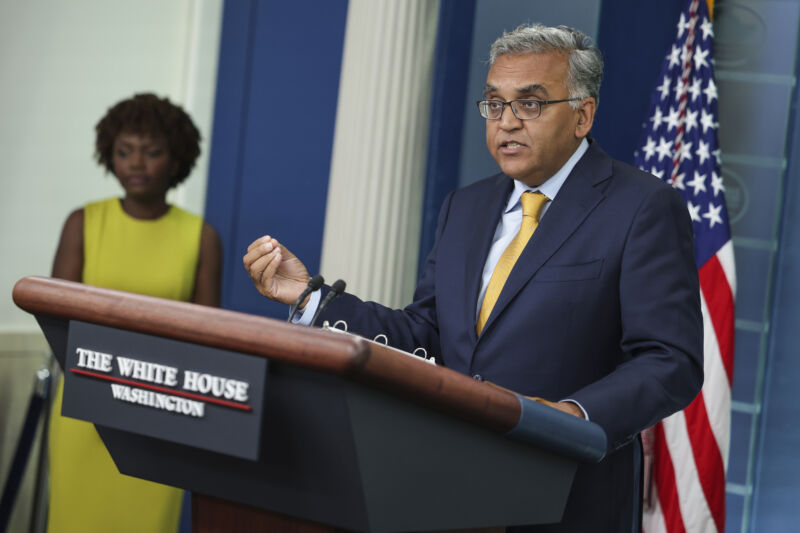





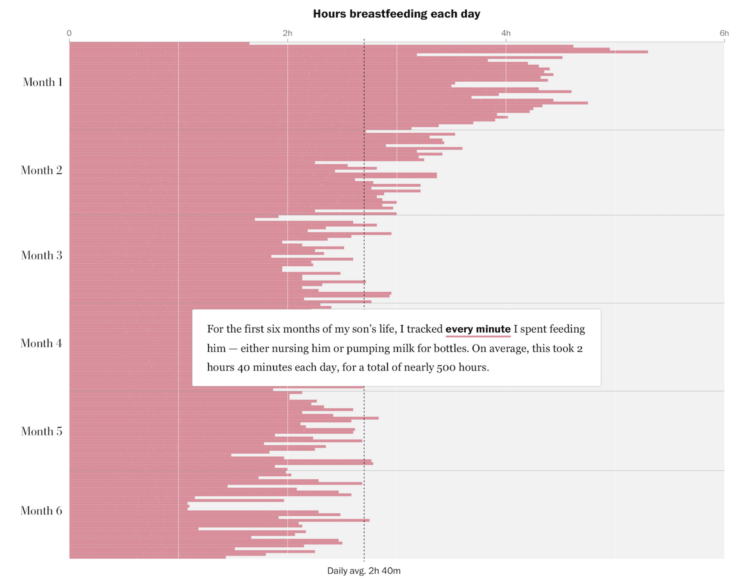
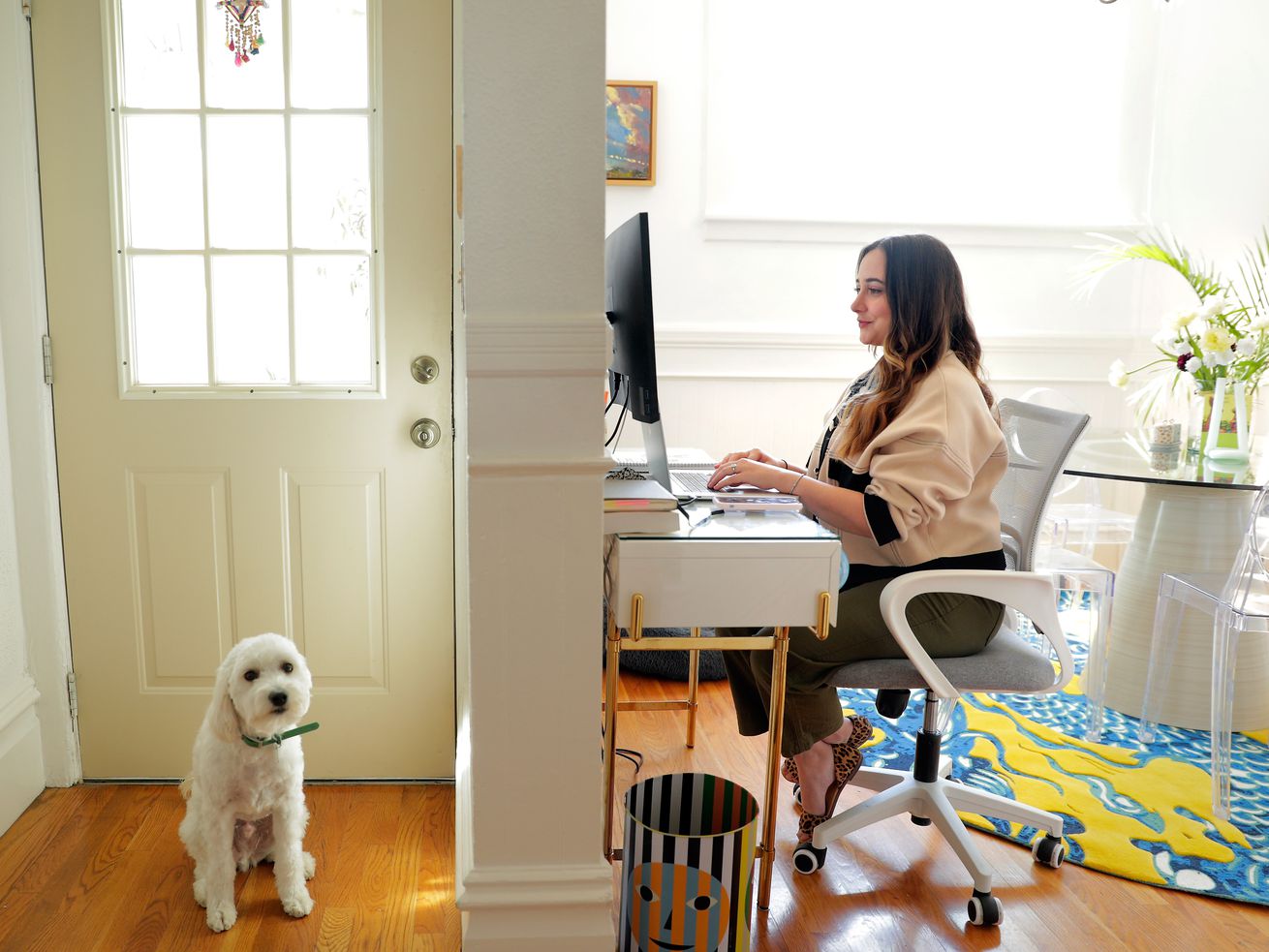




/cdn.vox-cdn.com/uploads/chorus_asset/file/10304087/GOP_voters_gun_owners_chart.jpg) Javier Zarracina/Vox; data via
Javier Zarracina/Vox; data via 
/cdn.vox-cdn.com/uploads/chorus_asset/file/4004134/GettyImages-540015981.0.jpg) Fairfax Media/Getty Images
Fairfax Media/Getty Images
/cdn.vox-cdn.com/uploads/chorus_asset/file/4004142/GettyImages-158581522.0.jpg) William West/AFP via Getty Images
William West/AFP via Getty Images



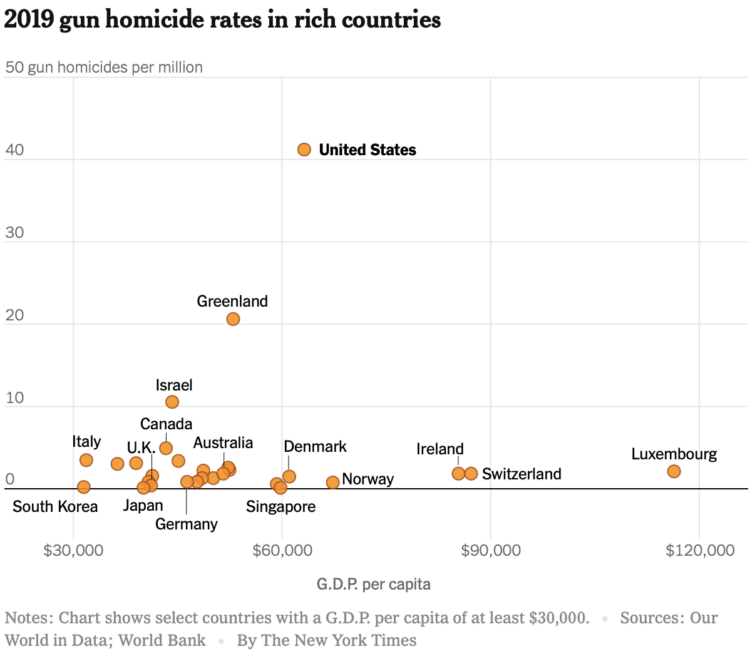
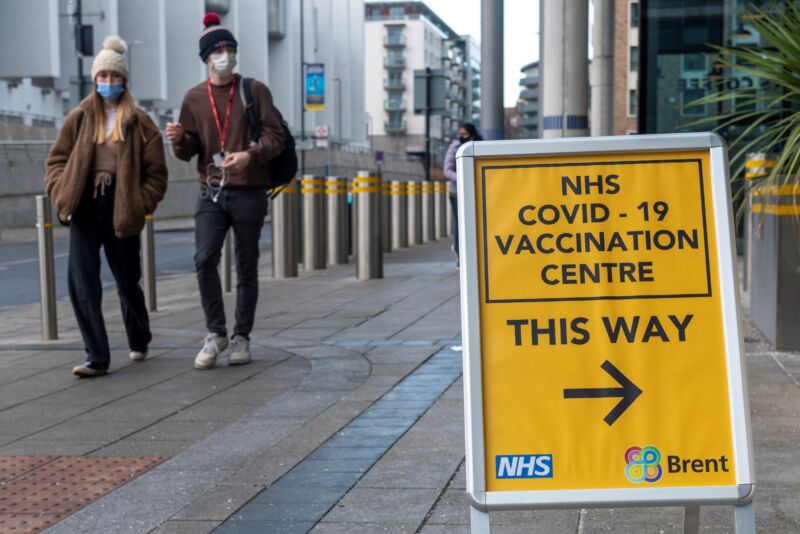


/cdn.vox-cdn.com/uploads/chorus_asset/file/23587636/GettyImages_1240886339.jpg) Jordan Vonderhaar/Getty Images
Jordan Vonderhaar/Getty Images
/cdn.vox-cdn.com/uploads/chorus_asset/file/23586523/AP22144729712308.jpg) Dario Lopez-Mills/AP
Dario Lopez-Mills/AP
/cdn.vox-cdn.com/uploads/chorus_asset/file/23587545/GettyImages_1240886517.jpg) Jordan Vonderhaar/Getty Images
Jordan Vonderhaar/Getty Images
/cdn.vox-cdn.com/uploads/chorus_asset/file/23587517/AP22145084513318.jpg) Dario Lopez-Mills/AP
Dario Lopez-Mills/AP
/cdn.vox-cdn.com/uploads/chorus_asset/file/23587567/GettyImages_1240886718.jpg) Allison Dinner/AFP via Getty Images
Allison Dinner/AFP via Getty Images
/cdn.vox-cdn.com/uploads/chorus_asset/file/23587582/AP22145459300149.jpg) J. Scott Applewhite/AP
J. Scott Applewhite/AP
/cdn.vox-cdn.com/uploads/chorus_asset/file/23588301/GettyImages_1240899375.jpg) Allison Dinner/AFP via Getty Images
Allison Dinner/AFP via Getty Images