Shared posts

23 May 18:45

Pandemic school reopenings were not just about politics

by Rachel M. Cohen
Superintendent Matt Malone chats with a first grader at an elementary school in Fall River, Massachusetts, in November 2020. Fall River schools were in-person for several months at the start of the 2020-2021 school year before going fully remote in December due to increasing rates of coronavirus infections. | Jessica Rinaldi/The Boston Globe via Getty Images

What researchers are still learning about in-person instruction during Covid-19.

Almost as soon as some schools reopened for in-person learning in the fall of 2020, research was suggesting a tidy, albeit dark, conclusion about why they did: politics. Early analyses indicated that Covid-19 health factors had virtually nothing to do with reopening decisions, and partisan politics could explain nearly all the variation.

There were early signs that this narrative didn’t explain the full story. If allegiance to former President Donald Trump (in schools that opened) or teacher unions (in those that stayed closed) were all that mattered, why did support for reopening schools also drop among Republican voters over the summer? And what about the conflicting recommendations coming from federal health and education departments at that time? Nevertheless, the idea that Covid-19 was not a real factor was repeated by some of the nation’s most influential journalists and media outlets, and framed as though the question was generally settled.

This is typical in policy research: Initial waves of data often attract lots of attention, and can quickly ossify into conventional wisdom. When subsequent, often deeper inquiry reveals alternative or more nuanced explanations, it tends to receive far less notice.

That’s what’s been happening with research into school closures. More recent studies have found that, far from being irrelevant, Covid-19 indicators were among central factors predicting whether schools would reopen.

Researchers say they also still haven’t fully understood how other factors — like school governance and parent preferences — influenced Covid-19 school decisions. A new study, published recently by two education researchers from George Mason University, replicates some earlier findings and explores new potential variables. All in all, it continues adding to a picture that’s more complex than the early analyses suggested.

This debate might seem moot: Schools have been back to in-person learning this school year, and parents largely report satisfaction with their child’s progress. But the consequences of these decisions continue to linger. Many educators say things have not yet returned to normal. Empirical research suggests some of the most negative academic effects were experienced disproportionately by low-income students and students of color. Moreover, future pandemics remain a threat, and district leaders may one day again be charged with navigating similar circumstances.

A new study reinforces that school opening decisions were complicated

The narrative that school reopening decisions were all about politics coalesced early. One of the first pieces of evidence came from a Brookings Institution blog post published in July 2020, where senior fellow Jon Valant found “no relationship” between school districts’ reopening plans and their per-capita Covid-19 cases, but a strong one between districts’ plans and county-level support for Trump in the 2016 election. The implication was that communities that take their cues from then-President Trump were more willing to resume in-person instruction.

Additional research emerged in the following months reiterating that health concerns were not a significant factor. “We find evidence that politics, far more than science, shaped school district decision-making,” concluded political scientists Michael Hartney and Leslie Finger in an October 2020 analysis.

But as time passed, and more schools reopened, the picture grew more complicated. A July 2021 analysis compared fall 2020 reopening factors to those in spring 2021. Tulane economists Douglas Harris and Daniel Oliver found Covid-19 rates were one significant predictor of fall school reopening. Over time, the role of both politics and health factors declined, Harris and Oliver observed, while the demographics of a given community remained a strong predictor throughout the year. (This was knotty, they note, given the “close interplay between demographics, parental work situations, and COVID health risks.”)

The latest addition to the research literature was published this month by two George Mason professors, Matthew Steinberg and David Houston. Their working paper — which has not yet been peer-reviewed — affirmed some of the core findings of earlier studies: Higher rates of in-person instruction during fall 2020 occurred in areas with weaker unions and that leaned Republican, and rates of Covid-19 were correlated with reopening decisions.

The new paper looks at how factors predicting in-person schooling changed over the course of the 2021-21 academic year. Covid-19 case and death rates, political partisanship, and teacher union strength became “less potent predictors” over time. As the year stretched on, Steinberg and Houston also observed that communities with a history of higher standardized test scores grew significantly more likely to reopen school buildings than their lower-achieving counterparts.

“This pattern may help us understand the widening test score gaps that have emerged in the wake of the pandemic,” they write.

Sarah Reckhow, a political scientist at Michigan State University who was involved in a study that found local school district decisions were heavily tied to political partisanship and union strength, called Houston and Steinberg’s study “great” — and noted the importance of replication in policy research.

While her own research found school reopening to be less tied to Covid-19 severity, she said there was still a relationship to Covid-19 rates observed in some aspects of their model.

Harris told Vox he agreed with the new working paper’s conclusions — that reopening was about more than just politics — which largely mirrored his prior research. He also praised the new study for tracking how factors that seemed to drive in-person instruction changed over time. “That was novel and interesting and important,” Harris said.

Steinberg and Houston’s study leveraged county-level data from a private firm, Burbio, which tracked in-person and virtual learning for nearly half of all public school students during the pandemic. Covid-19 case and death rates, and partisanship measured by presidential vote share, are also all reported at the county level. Most counties, however, contain multiple school districts, which is why other researchers have preferred a school district-level analysis.

“There are a lot of analytic choices that go into descriptive analyses of imperfect data, and we do not have a strong bone to pick with the other studies,” Steinberg told Vox, but emphasized that many of these minor choices can have “nontrivial implications” for interpreting results.

Brad Marianno, an education policy researcher at the University of Nevada Las Vegas, told Vox he is skeptical of Burbio’s ability to accurately capture in-person instruction rates, and thought a school district-level analysis (like one he published earlier this year) would have been better than a county-level approach. Still, he praised the new paper, including for performing its analysis over time. “We need multiple efforts at the question, especially efforts that employ similar and different datasets and measures, to really triangulate a data-driven answer,” he said.

Sarah Cohodes, a Columbia University economist who has studied pandemic differences between charter schools and traditional public schools, said there is no right or wrong answer when it comes to measuring by county or school-district levels. “You’re damned if you do and damned if you don’t,” she told me, though she reiterated that it depends on the research question.

Local support for teachers may have made it easier to reopen schools

One of the most novel elements of Steinberg and Houston’s study is their suggestion of a previously unexplored factor predicting in-person instruction: local support for teachers. Using multiple surveys with different sampling strategies and question wordings, the George Mason professors found that pre-pandemic support for increases in educator pay was consistently associated with higher rates of in-person instruction during the pandemic. In other words, areas where the public was more supportive of raises for teachers were also more likely to have in-person learning.

Other education policy scholars told Vox they’d need more time to consider that connection. Reckhow called it “a really intriguing result” but one that left her with “many questions” about the underlying mechanisms that might explain the finding. “Without more information, it’s hard for me to develop a fully satisfactory explanation,” she said.

Steinberg stressed that what he sees as so “revelatory” about this finding, which was based on data from two different nationally representative surveys, is that it suggests to him there was something about communities that valued their teachers more highly that potentially made it easier for schools to open for in-person learning.

“Some of these little p-politics in communities matter, and whether or not there is preexisting trust could make the logistical complexity of reopening manageable for leaders or unmanageable,” he said.

As time marches on, it can be easy to forget just how acute the uncertainty was for school administrators during the 2020-21 school year, particularly before vaccines were available. Everything looks crisper in hindsight. But given the tremendous implications for students, schools, and families — and that administrators may one day again find themselves in similar positions — researchers will likely study those decisions for years to come.
23 May 18:43

Judges block Florida law that says Facebook and Twitter can’t ban politicians

by Jon Brodkin
Facebook and Twitter logos.

Enlarge (credit: Getty Images | NurPhoto )

The Florida law that makes it illegal for large social media sites like Facebook and Twitter to ban politicians likely violates the First Amendment, according to a unanimous ruling by a panel of three federal appeals court judges.

The ruling, released today by the US Court of Appeals for the Eleventh Circuit, upheld key portions of a preliminary injunction issued by a US District Court judge in June 2021. Florida appealed that injunction. As a result of today's ruling, the state still cannot enforce the law's content-moderation requirements.

"It is substantially likely that [the Florida law's] content-moderation restrictions and its requirement that platforms provide a thorough rationale for every content-moderation action violate the First Amendment," the appeals court judges found in today's ruling. It wasn't a complete loss for Florida, as the judges said it is "unlikely that the law's remaining (and far less burdensome) disclosure provisions violate the First Amendment." Florida can thus enforce those less burdensome disclosure requirements while litigation is pending.

Read 12 remaining paragraphs | Comments

23 May 16:27

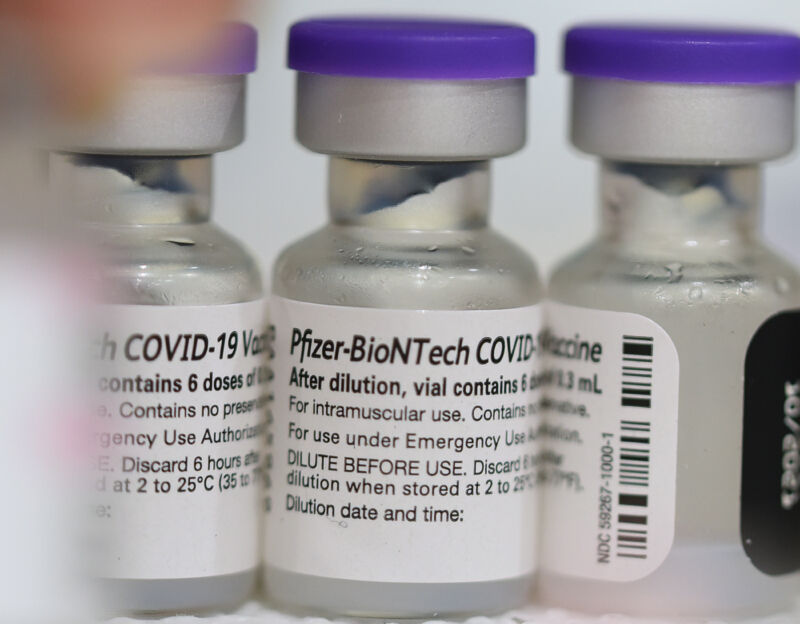
Pfizer says 3-dose COVID vaccine for under 5s produces strong immune response

by Beth Mole
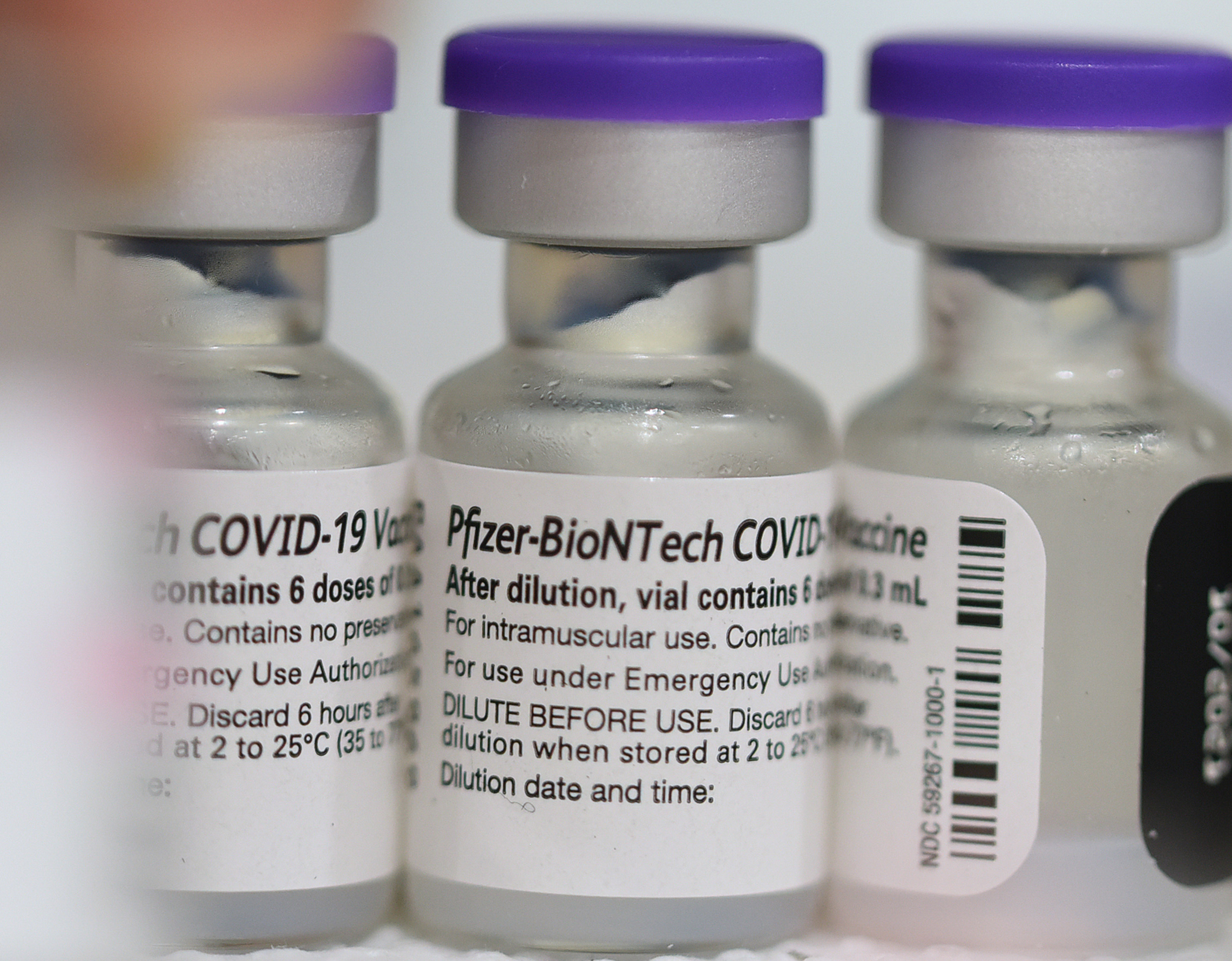
Vials of the Pfizer COVID-19 vaccine.

Enlarge / Vials of the Pfizer COVID-19 vaccine. (credit: SOPA images)

Pfizer and BioNTech will request authorization from the US Food and Drug Administration this week for their three-dose COVID-19 vaccine for children ages 6 months to under 5 years, the companies announced this morning.

Top-line clinical trial results indicate that the vaccine series is safe and produces a strong immune response against the pandemic virus, according to the companies.

"The study suggests that a low 3-[microgram] dose of our vaccine…  provides young children with a high level of protection against the recent COVID-19 strains," BioNTech CEO Ugur Sahin said in a statement.

Read 9 remaining paragraphs | Comments

23 May 16:25

Humble

by Reza

23 May 13:48

3 doses of Covid vaccine are effective for kids...

23 May 13:05

Why the Depp-Heard trial is so much worse than you realize

by Aja Romano
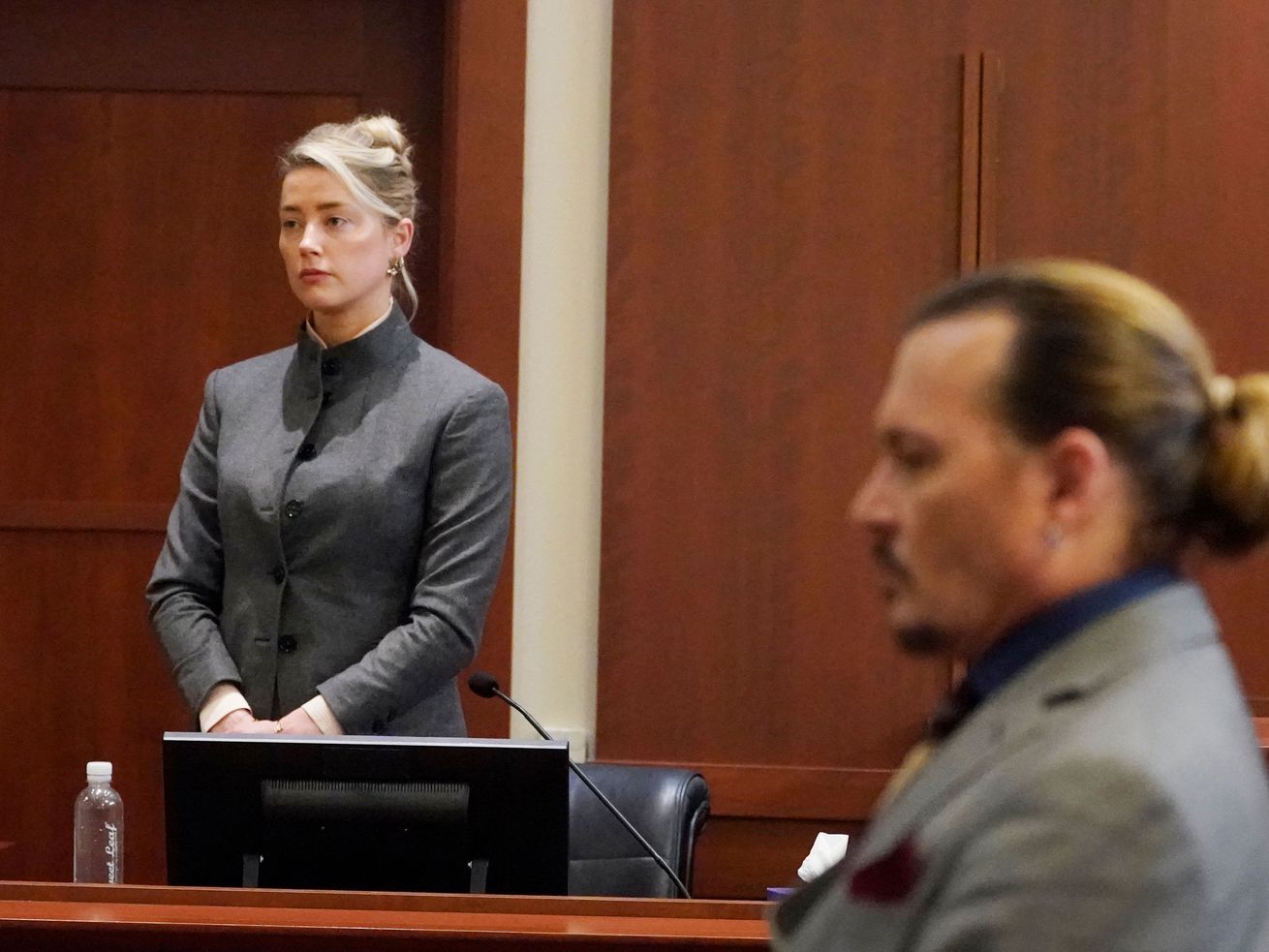
Amber Heard and Johnny Depp watch as the jury leaves the courtroom at the end of the day at the Fairfax County Circuit Courthouse in Fairfax, Virginia, May 16, 2022.
Amber Heard and Johnny Depp at the Fairfax County Circuit Courthouse in Fairfax, Virginia, on May 16, 2022. | Steve Helber/AFP via Getty Images

Amber Heard is just the first target of a new extremist playbook.

Around the third or fourth time I logged into Twitter to find “#AmberHeardIsAPsychopath” at the top of the trending list, I realized that there was no longer any pretending that the Depp-Heard defamation trial was not a terrible, foreboding reflection of our culture’s worst impulses.

The media has covered the degree to which this trial has served as a referendum on the Me Too movement and a siren call to domestic abusers.

The narrative of the trial has been shaped in part by what appears to be, according to multiple researchers, an army of bots spreading rhetoric favorable to Depp. One researcher found more bots favorable to Heard, but said most of those bots were from third-party apps trying to capitalize on the trial; meanwhile, they found the highest pro-Depp bot post was shared nearly 20,000 times. The work of those bots has been further amplified by “men’s rights activists” — the part of the far-right-leaning extremist “manosphere” that seems to have decided discrediting Amber Heard is the key to destroying every woman who accuses men of abuse or domestic violence.

Conservative media outlets have also promoted a one-sided narrative of the case; Vice recently reported that Ben Shapiro’s popular conservative news platform the Daily Wire has spent nearly $50,000 promoting ads about the trial on Instagram and Facebook — most of it trashing Amber Heard. The presence of these bad actors has, if anything, only exacerbated the vitriol Heard has received within the mainstream.

Trial memes — almost universally weighted against Heard — have taken over every corner of the internet, from TikTok to Twitch to Etsy. Even Saturday Night Live has lampooned what have been portrayed as the many excesses and absurdities of the trial testimony, and social media users have similarly found the trial ripe for parody. On TikTok, for example, totally unrelated accounts seem to have given themselves over to full-time Depp-Heard trial mockery, to the point where the actual substance of the testimony seems completely irrelevant beside the need to mine the proceedings for entertainment. Sure, Amber Heard cried while on the stand, but did you see how ridiculous she looked while doing it?

To put it mildly, this surreal explosion of internet culture vilification of Heard feels dispiriting and troubling. What made so many millions of people feel so justified in treating such a personal, toxic relationship like popcorn fodder? At what point before the bot armies and men’s rights activists poisoned the well of discourse around this trial could a reasonable assessment of the evidence and the facts have been made? Did that point ever exist?

Most of the reporting on these memes has placed the blame for their sensationalist tone squarely on the evolution of fandom content creation. But recall that the white supremacist alt-right movement has a long history of memeifying everything they want to normalize and legitimize, and keep in the forefront of your mind that the alt-right latched onto this case as its bulwark long before fandom and the internet at large did. By now, after years of political disinformation campaigns, we’re used to social media’s natural ability to contort reality. Rarely, however, has it bent this far, this rapidly, for this many people, in service of something this vile.

Again and again over the course of this trial, basic human empathy seems to have completely flown out the window. More than that, nuance feels impossible, and there doesn’t seem to be room for even the reality of the situation. The contours of the abuse were well-established before the 2018 opinion column Depp is suing over was published. The basic facts of the case have gotten their day in court once already, having been heard in a British court in 2020, with the judge finding in Heard’s favor. But the basic, well-established facts do not seem to matter.

They do not seem to matter to people who would normally care about facts, truth, and nuance. They do not seem to matter to the tabloid media gleefully reporting on every aspect of this case. They do not seem to matter to the TikTok creators who seize every chance to parody a tearful Heard, turning her objectively harrowing trial testimony into a farce of over-the-top fake weeping.

The facts do not seem to matter to any of the people who have gleefully latched on to the image of Heard as a manipulative villain, as if she split her own lip, punched her own face, and pulled out clumps of her own hair.

What we’re witnessing here are the dramatically compounded effects of internet researcher Alice Marwick’s theory of morally motivated networked harassment, which holds that a group of social media users can justify any amount of abuse directed at a target if they feel their cause is morally right. At scale, this looks like, and effectively is, millions of people around the world lining up to eagerly subject one woman to untold amounts of abuse, public humiliation, and violent rhetoric. (Incidentally, this is exactly what Depp wanted to happen to her — so even if he loses the case, he still wins.)

To be clear, this isn’t an easy story of good and evil. It’s impossible to completely absolve Amber Heard, who has her own alleged history of violence, or frame Depp as a monster incapable of kindness, charity, and the positive energy that amassed him millions of fans to begin with. Yet you don’t need to do either of those things to acknowledge that this is a case about the deeply unfunny topic of intimate partner abuse and that the major points of this trial have already been decided in one court of law. The judge at the first trial in 2020 found Heard had proven 12 of 14 allegations of abuse. So far none of the trial testimony has substantially contradicted anything in Heard’s original claim of being a domestic violence survivor.

Culture critic Ella Dawson has a Twitter thread compiling reporting on the myriad ways in which this trial is not only destroying years of progress made against domestic abuse in the US, but also laying the groundwork for a culture in which bots and bad actors harass, vilify, and eviscerate all other prominent women who publicly name their abusers — like Gamergate, but times tens of millions of participants, and gleefully endorsed by people all across American culture.

That, above all — above the TikTok cat memers mocking Heard and Saturday Night Live dismissing the whole trial as “for fun” — is what’s absolutely jawdropping here. This trial, which amounts to a simple yes/no question over whether Heard had the right to call herself a victim of domestic abuse in a single sentence from that 2018 opinion piece, has somehow united far-right misogynists with middle-of-the-road liberals and geeky progressive fandom acolytes of Depp.

People who have spent the last decade hashtagging #believewomen, fighting online harassment campaigns, and, especially, resisting white male supremacy have, over the course of this trial, crawled into bed with the vilest kinds of internet refuse — at least 11 percent of whom don’t actually exist, according to one bot researcher — possibly all because they really like Captain Jack Sparrow.

The sheer volume of this cultural takeover by Depp acolytes has created a seismic value shift to a degree that may be unalterable. Trial watchers seem to be welcoming misinformation about the trial while doing everything they can to reject or undermine actual documented facts of the case.

Some of the arguments made against Amber Heard sound like QAnon-level conspiracy rabbit holes. (Amber Heard’s trial outfits, for example, have somehow become part of a sinister narrative in which Heard is a manipulative abuser attempting to rattle and intimidate Depp by mimicking his own trial suits.) This trial has accomplished what our enraged, paranoid ideological fringe could not: a complete dismantling of the ideological breakdown that has divided us politically, and the general public acceptance of a narrative created and controlled by bad actors and far-right extremists.

The Depp-Heard trial has refined the Gamergate playbook in a way that will haunt us for years to come. It has proven to extremists that if you rally around the right beloved public figure or institution, blanket them in a protective sphere of outrage and misinformation, and weaponize fandom culture — already so prone to ideological radicalization and irrational groupthink — you can successfully push whatever media narrative you want into the mainstream.

There’s no coming back from this. The actual trial verdict is all but irrelevant now. It’s not just that Amber Heard will forever be an imperfect accuser whose own volatile history was used to help destroy a revelatory movement in Me Too. It’s that there will be other Amber Heards, and many of them will be marginalized, with far fewer resources to withstand this onslaught of hate.

It’s not a coincidence that this spectacle is playing out against a backdrop of perpetually escalating racist violence and the rapid erosion of decades of human rights for women, queer, and trans people. The Depp-Heard trial has just trained millions of people to discard their own empathy, their own rational judgment, in exchange for the gleeful mockery, rejection, and belittlement of a woman making herself vulnerable in public. If you don’t think that training will be weaponized against vulnerable targets, you haven’t been paying attention.

23 May 13:01

Oklahoma isn’t waiting for the Supreme Court to ban all abortions

by Nicole Narea
A protester in a crowd holds up a sign that reads, “Keep your laws off my body!”
Abortion rights protesters rally in Bloomsburg, Pennsylvania, on May 15. | Paul Weaver/SOPA Images/LightRocket via Getty Images

It’s about to become the first state to ban abortions after fertilization.

Oklahoma lawmakers passed the nation’s harshest anti-abortion bill to date on Thursday.

HB 4327 bans all abortions — except in cases where the pregnant person’s life is endangered or in cases of sexual assault or incest — taking place after the moment of fertilization. That means, of course, that all abortions are banned. While it doesn’t actually criminalize abortions, it does allow private individuals to sue anyone who aids in or performs an abortion — or who intends to do so.

The bill would take effect once signed by Republican Gov. Kevin Stitt, who has committed to signing any anti-abortion legislation that comes across his desk and has previously described himself as America’s “most pro-life governor.”

If the bill is signed as expected, Oklahoma would become the “first state in the country to completely outlaw abortion — even while Roe still stands,” Alexis McGill Johnson, the president and CEO of Planned Parenthood Federation of America, said in a statement Thursday.

The bill explicitly notes that it does not prohibit “Plan B, morning-after pills, or any other type of contraception or emergency contraception.” GOP state Rep. Wendi Stearman, the bill’s sponsor, told CNN that the intent is to “discourage abortion, not contraception.”

Despite that, abortion advocates worry that because the language of the bill doesn’t explicitly name IUDs among the allowed forms of contraception, they may soon be under attack. This fear stems from the fact that Republicans in states like Missouri and Idaho are already looking to limit access to IUDs.

In the vast majority of cases, IUDs work by preventing fertilization, either by killing or impairing sperm or stopping sperm from entering the uterus. But IUDs can also prevent a fertilized egg from implanting in the uterus, which some on the right have argued makes them abortifacients rather than contraceptives.

In a statement Thursday, White House press secretary Karine Jean-Pierre called the bill “the most extreme effort to undo” fundamental reproductive health rights so far. Legal challenges to the bill are expected, though none have been filed yet.

The Oklahoma bill is just the latest among a slate of bills passed by Republican-controlled state legislatures attacking abortion rights in anticipation that the US Supreme Court will strike down its 1973 precedent in Roe v. Wade this summer. The end of Roe is widely expected due to the anti-abortion arguments contained in a draft opinion leaked to Politico earlier this month.

That would allow many red states to start enforcing “trigger laws” to prosecute people who provide and receive abortions, rather than having to rely on private individuals bringing civil lawsuits. So long as Roe stands, states have largely refrained from prosecuting people for abortions.

But Republicans have already made headway in severely limiting access to abortion in the meantime.

Texas and Idaho have already banned most abortions. So, too, has Oklahoma: Earlier this year, Stitt also signed two other anti-abortion measures. One is modeled after a Texas law banning abortions after fetal cardiac activity can be detected, which can be as early as around six weeks of pregnancy, before many know they are pregnant; the other is a near-total ban on abortion except in cases where the pregnant person’s life is endangered, which would go into effect in August unless blocked by the courts.

23 May 12:23

Sixth child in US dies of unexplained hepatitis as global cases top 600

by Beth Mole
Liver lesions in patient with chronic active hepatitis C.

Enlarge / Liver lesions in patient with chronic active hepatitis C. (credit: Getty | BSIP)

A sixth child has died in the United States from puzzling liver inflammation—aka hepatitis—and the number of unexplained cases has risen to 180 across 36 states, according to the Centers for Disease Control and Prevention.

The latest death was announced in a press briefing Friday, led by CDC Deputy Director for Infectious Diseases Jay Butler, who said it was reported to the agency Thursday. He did not indicate in which state the death occurred.

In addition to the deaths, 15 of the 180 cases required liver transplants, Butler reported. The cases all occurred in children under the age of 10 but skewed to preschool-age children, with the median age being around 2 years.

Read 16 remaining paragraphs | Comments

23 May 12:07

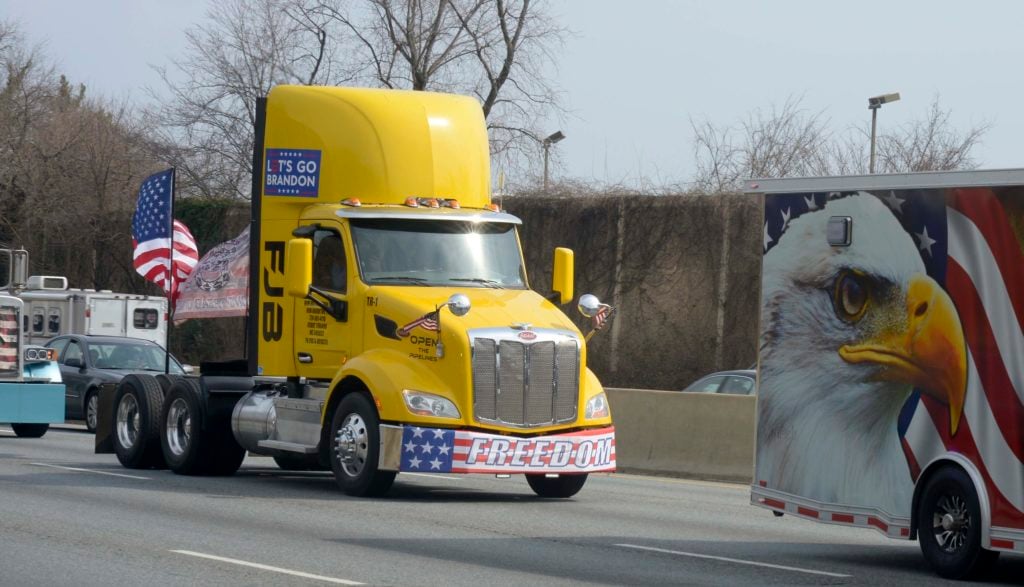
The Trucker Convoy Has Given Up on DC Yet Again. We Tried One Last Time to Find Out What They Wanted.

by Andrew Beaujon

The Hagerstown Speedway is a dirt oval track about seven miles outside downtown Hagerstown, Maryland. Its red clay has hosted Bobby Allison, Jeff Gordon, and Ken Schrader since the facility opened in 1947. On Friday morning the track was dark, but there was a little action going on in its back lot, which overlooks the […]

The post The Trucker Convoy Has Given Up on DC Yet Again. We Tried One Last Time to Find Out What They Wanted. first appeared on Washingtonian.

20 May 16:49

Hyundai and Kia recall nearly 20,000 Ioniq 5s, EV6s

by Jonathan M. Gitlin
A Hyundai Ioniq 5 on the road, seen from behind

Enlarge / The retro-futuristic styling of the Ioniq 5 refers back to the Hyundai Pony of the mid-1970s. (credit: Hyundai)

Hyundai and Kia are recalling nearly 20,000 of their newest electric vehicles. The problem affects the impressive Hyundai Ioniq 5 and Kia EV6, a pair of EVs built using the Korean OEMs' new E-GMP platform.

Specifically, the issue has to do with the EVs' parking brake function. If a voltage fluctuation occurs while the vehicle is parked and turned off, a command signal from the shifter control unit could disengage the parking pawl, potentially allowing the car to roll away.

The issue was identified by the automakers in Korea; Hyundai says that it received four claims of Ioniq 5s being affected.

Read 2 remaining paragraphs | Comments

18 May 12:45

US road deaths increased by more than 10% in 2021

by Jonathan M. Gitlin
Just drive carefully, okay?

Enlarge / Just drive carefully, okay? (credit: Getty Images)

We had an inkling that the traffic statistics for 2021 would be bad. In November last year, the National Highway Traffic Safety Administration published data for the first half of that year, showing the greatest ever six-month rise in road fatalities since people kept records. On Tuesday, the other shoe dropped, with NHTSA's estimate of the entire year's toll: 42,915 people killed in crashes, an increase of 10.8 percent compared to 2020.

The rise in road deaths began with the pandemic in 2020. Despite a big reduction in the number of miles we drove, road deaths went up that year—8 percent year-over-year, after a period of gently declining traffic fatalities. Sadly things haven't gotten better.

Most kinds of driving became more dangerous last year. Deaths on rural interstates and urban arterial roads increased by 15 percent. And local and urban collector road deaths went up by 20 percent, belying the idea of "Vision Zero". Both daytime and nighttime deaths went up by 11 percent compared to 2020, with weekends seeing a slightly larger increase than weekdays (11 percent versus 10 percent).

Read 5 remaining paragraphs | Comments

18 May 11:43

Google backtracks on legacy GSuite account shutdown, won’t take user emails

by Ron Amadeo
A battered and bruised version of the Google logo.

Enlarge / An artist's rendering of Google's current reputation. (credit: Aurich Lawson)

Google finally launched a solution for people with "legacy" GSuite Google accounts. After initially threatening to shut down free GSuite accounts if users didn't start paying for the service, Google has completely backed off. Once users jump through some sign-up hoops, Google will allow their ~16-year-old accounts to continue functioning. You'll even get to keep your email address.

The saga so far, if you haven't been following, is that Google has a custom-domain user account service, currently called "Google Workspace" and previously called "G Suite" and "Google Apps." The service is mostly a normal Google account that lets you use an email that ends in your custom domain name rather than "@gmail.com." Today this service is aimed at businesses and costs money each month, but that was not always the case. From 2006 to 2012, custom domain Google accounts were free and were even pitched at families as a geeky way to have an online Google identity.

In January, some bean counter at Google apparently noticed this tiny group of longtime users was technically getting a paid service for free and decided this was unacceptable. Google posted an announcement in January declaring these people "Legacy GSuite users" and basically told them, 'Pay up or lose your account.' These users signed up for a free Google service and stored data on it for as long as 16 years, and there were no indications it would ever be charged. Google held this decade-plus of user data hostage, telling users to start paying business rates for Workspace or face an account shutdown.

Read 6 remaining paragraphs | Comments

18 May 11:41

FDA obliterates formula maker’s defense of contamination linked to baby deaths

by Beth Mole
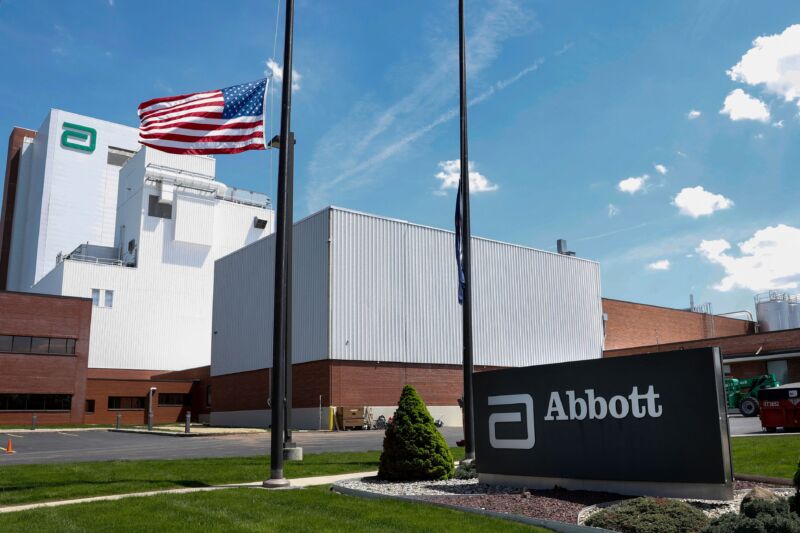
The Abbott manufacturing facility in Sturgis, Michigan, on May 13, 2022.

Enlarge / The Abbott manufacturing facility in Sturgis, Michigan, on May 13, 2022. (credit: Getty | Jeff Kowalsky)

Formula maker Abbott continues to firmly deny that its infant formulas sickened four babies, killing two. The denial is despite the same dangerous bacteria that sickened the infants—Cronobacter sakazakii—being found at the company's formula factory in Sturgis, Michigan, which the Food and Drug Administration alleges was producing formula "under insanitary conditions." And at least one container of Abbott's formula tested positive for the same Cronobacter sakazakii strain found infecting one of the infants.

Still, Abbott argues that the link hasn't been confirmed, and its formula isn't to blame. In a lengthy Twitter thread on May 13, the company made the blunt assertion: "The formula from this plant did not cause these infant illnesses."

But that is a brazen and misleading claim, according to the Food and Drug Administration. In a press briefing Monday evening, agency officials thoroughly dismantled Abbott's defense.

Read 16 remaining paragraphs | Comments

17 May 16:01

Baby Name Inspiration: Gems From the DMV’s Top Names in 2021

by Kayla Benjamin

From Aaron to Zuri, the top 100 baby names in the Washington area contain quite a few surprises. According to the Social Security Association’s annual report released earlier this month, Henry, Liam, Charlotte, and Olivia were most popular in DC, Maryland and Virginia, similar to the rest of the country. So we looked down the […]

The post Baby Name Inspiration: Gems From the DMV’s Top Names in 2021 first appeared on Washingtonian.

17 May 15:50

People Without Babies Said They Got Unsolicited...

People Without Babies Said They Got Unsolicited Formula From Brands

Women who don’t have babies are getting baby formula in the mail during a formula shortage

17 May 15:49

Apple’s and Google’s outdated apps bans would cut each store by a third

by Ron Amadeo
Apple’s and Google’s outdated apps bans would cut each store by a third

(credit: Apple)

Both members of our favorite mobile duopoly, Google and Apple, recently announced plans to cull outdated apps in their respective app stores. Last month, both companies decided any app that hadn't been updated in two years would be removed. Early in April, Google announced a two-year cutoff plan that would kick-in in November, and later in the month, Apple started emailing developers, giving them 30 days' notice to update or be removed. It's hard to know what culling two-year-old apps will look like, so exactly how many apps are we talking about?

CNET has data from the analyst firm Pixalate, which says the two-year cutoff would remove 869,000 apps from Google Play and around 650,000 from the App Store. That's about a third of each store's current total app selection. Those numbers would have Google Play changing from 2.6 million apps to 1.7 million apps and the App Store from 1.95 million apps to 1.3 million.

That Google number is an estimate since Google officially said the cutoff point is two years. Apple has not publicly specified a cutoff point. The company has only personally emailed developers, saying it is removing apps that have "not been updated in a significant amount of time," but some developers have pegged this date at two years.

Read 1 remaining paragraphs | Comments

17 May 15:48

The End Of Roe Will Bring About A Sea Change In The Encryption Debate

by Mike Masnick

With the Supreme Court poised to rip away a constitutional right that’s been the law of the land for nearly half a century by overturning Roe v. Wade, it’s time for the gloves to come off in the encryption debate. For a quarter of a century, it has been an unspoken prerequisite for “serious” discussion that American laws and law enforcement must be given a default presumption of legitimacy, respect, and deference. That was always bullshit, the end of Roe confirms it, and I’m not playing that game anymore.

Weirdly, there are a lot of similarities between encryption and abortion. Encryption is a standard cybersecurity measure, just like abortion is a standard medical procedure. Encryption is just one component of a comprehensive data privacy and security program, just like abortion is just one component of reproductive health care. They both save lives. They both support human dignity. They’re both deeply bound up with the right to autonomy privacy, no matter what a hard-right Supreme Court says. (Ironically, the way things are going, the Supreme Court’s position will soon be that we have more privacy rights in our phones than in our own bodies.) And finally, both encryption and abortion keep being framed as something “controversial” rather than something that you and I have every damn right to – something that should be ubiquitously available without encumbrance. 

It would be nice if both of these things were settled questions, but as we’ve seen in both cases, the opponents of each will never let them be. The opponents of bodily autonomy are about to score a victory they’ve been working towards for decades. The immediate result will be total bans and criminalization of abortion in large swaths of the United States. We absolutely cannot afford for the opponents of encryption to prevail as well, whether in the U.S., the EU, its member states, or anywhere else.

The only reason there’s still any “debate” over encryption is because law enforcement refuses to let it drop. For over a quarter of a century, they’ve constantly insisted on the primacy of their interests. They demand to be centered in every discussion about encryption. They frame encryption as a danger to public safety and position themselves as having a monopoly on protecting public safety. They’ve insisted that all other considerations – cybersecurity, privacy, free expression, personal safety – must be made subordinate to their priorities. They expect everyone else to make trade-offs in the name of their interests but refuse to make trade-offs themselves. Nothing trumps the investigation of crime.

Why should law enforcement’s interests outweigh everything else? Because they’re “the good guys.” In debates about whether law enforcement should get “exceptional access” (i.e., a backdoor) to our encrypted communications and files, we pretend that American (and other Western democracies’) law enforcement are “the good guys,” positioned in contrast to “the bad guys”: criminals, hackers, foreign adversaries. When encryption advocates talk about how encryption is vital for protecting people from the threat posed by abusive, oppressive governments, we engage in the polite fiction that we’re talking about “that other country, over there.” It’s China, or Russia, or Ethiopia, not the U.S. If we talk about the threats posed by U.S.-based law enforcement at all, it’s the “a few bad apples” framing: we hypothesize about the occasional rogue cop who’d abuse an encryption backdoor in order to steal money or stalk his ex-wife. 

We don’t confront the truth: that law enforcement in the U.S. is rife with institutional rot. Law enforcement does not have a monopoly on protecting public safety. In fact, they’re often its biggest threat. When encryption advocates play along with framing law enforcement as “the good guys,” we’re agreeing to avert our eyes from the fact that one-third of all Americans killed by strangers are killed by police, the fact that police kill three Americans a day, and the staggering rates of domestic violence by cops. When actual horrific crimes get reported to them – the very crimes they say they need encryption backdoors to investigate – they turn a blind eye and slander the victims. Law enforcement is a scourge on Americans’ personal safety. The same is true of our privacy as well: as a brand-new report from Georgetown underscores, law enforcement agencies don’t hesitate to flout the law with impunity in the pursuit of their perfect surveillance state. 

U.S. law enforcement officers and agencies have shown us with their own actions that they don’t deserve any deference whatsoever in discussions about encryption policy. They aren’t entitled to any presumption of legitimacy. They are just another one of the threats that encryption protects people from. With the demise of Roe, we can no longer ignore that the same is also true of American laws. 

Of course, this has always been the case. “Crimes” are whatever a group of lawmakers at some point in time decide they are, and “criminals” are whoever law enforcement selectively decides to enforce those laws against: Black and brown people, undocumented immigrants, homeless people, sex workers, parents of trans kids, drug users. Now that we’re rolling back the clock on social progress by half a century, “criminals” once again will include people who have abortions (which, don’t you ever forget, does not just mean cisgender women) and those who provide them. Already, some deeply conservative states are plotting for using contraception to make you a criminal again too. People in consensual same-sex relationships or interracial marriages may be next. All of these “crimes” are what should come to your mind whenever you hear somebody tout “fighting crime” as a reason to outlaw strong encryption. 

If you’re an encryption advocate in the United States, it’s time to stop pretending that encryption’s protection against oppressive governments is only about Uighurs in Xinjiang or gay people in Uganda. Americans also need strong encryption to protect ourselves from our own domestic governments and their abominable laws. The impending end of Roe has laid that bare. The threat is coming from inside the house. “China” was really a euphemism for “Alabama” this whole time. Encryption advocates in the U.S. just usually aren’t willing to say so. 

Why not? Because we’ve internalized that unless we treat American laws (and the people who enforce them) as unimpeachably legitimate and supreme, we won’t be treated as “serious.” We’ll be derided as “zealots” and “absolutists” who aren’t willing to have a “mature conversation” about “finding a balance” and “working together” to find a “middle-ground solution” on encryption. Our views and demands will be dismissed out of hand. We won’t get invited anymore to events put on by universities and foundations. We won’t get to talk in endless circles while sitting in fancy conference rooms far away from the jailhouses where Purvi Patel and Lizelle Herrera were held.  

The loss of Roe will unavoidably usher in a new phase of the encryption debate in the U.S., because Roe has been the law of the land throughout the entire time that strong encryption has been generally available. Roe was decided in 1973, and the landmark Diffie/Hellman paper “New Directions in Cryptography” didn’t come out until 1976. In the decades since, strong encryption went from a niche concern of the military and banks to being in widespread use by average consumers – while, simultaneously, the constitutional right to abortion was slowly and systematically chipped away. Nevertheless, Roe still stood. In all the years since 1976, encryption policy discussions about “balancing” privacy rights and criminal enforcement have never had to seriously grapple with what it means for abortion to be a crime rather than a right. That’s about to change.

Encryption advocates: It’s time to stop playing along with U.S. law enforcement’s poisonous expectation to exempt them from the threat model. The next time you’re at yet another fruitless roundtable event to “debate” encryption and some guy from the FBI complains that law enforcement must always be the star of the show, ask him to defend his position now that abortion will be against the law across much of the country. If he whines that that’s states’ laws, not federal, ask him what the FBI is going to do once a tide of investigators from those states start asking the FBI for help unlocking the phones of people being prosecuted for seeking, having, or performing an abortion. 

Tech companies: Do you want to help put your users behind bars by handing over the data you hold about them in response to legal demands by law enforcement? Do you not really care if they go to prison, but do care about the bad PR you’ll get if the public finds out about it? Then start planning now for what you’re going to do when – not if – those demands start coming in. Data minimization and end-to-end-encryption are more important than ever. And start worrying about internal access controls and insider threats, too: don’t assume that none of your employees would ever dream of quietly digging through users’ data looking for people they could dox to the police in anti-abortion jurisdictions. Protecting your users is already so hard, and it’s going to get a lot harder. Update your threat models.

Lawmakers: You can no longer be both pro-choice and anti-encryption. The treasure troves of Americans’ digital data are about to be weaponized against us by law enforcement to imprison people for having abortions, stillbirths, and miscarriages. If you believe that Americans are entitled to bodily autonomy and decisional privacy, if you believe that abortion is a right and not a crime, then I don’t want to hear you advocate ever again for giving law enforcement the ability to read everyone’s communications and unlock anyone’s phone. Whether or not you manage to codify Roe or to crack down on data brokers that sell information about abortion clinic visitors, you need to stop talking out of both sides of your mouth by claiming you care about privacy and abortion rights while also voting for bills like the EARN IT Act that would weaken encryption. The midterms are coming, and we are watching.

As I wrote recently for Brookings, encryption protects our privacy where the law falls short. Once Roe is overturned, the law will fall short for tens of millions of people. We no longer have the luxury of indulging in American exceptionalism. The enforcement of American laws isn’t a justification for weakening encryption. It’s an urgent argument in favor of strengthening it. 

Riana Pfefferkorn is a Research Scholar at the Stanford Internet Observatory.

This post originally published to Stanford’s Cyberlaw blog.

17 May 15:48

Omicron caused spike in breathing condition in babies and toddlers, study finds

by Beth Mole
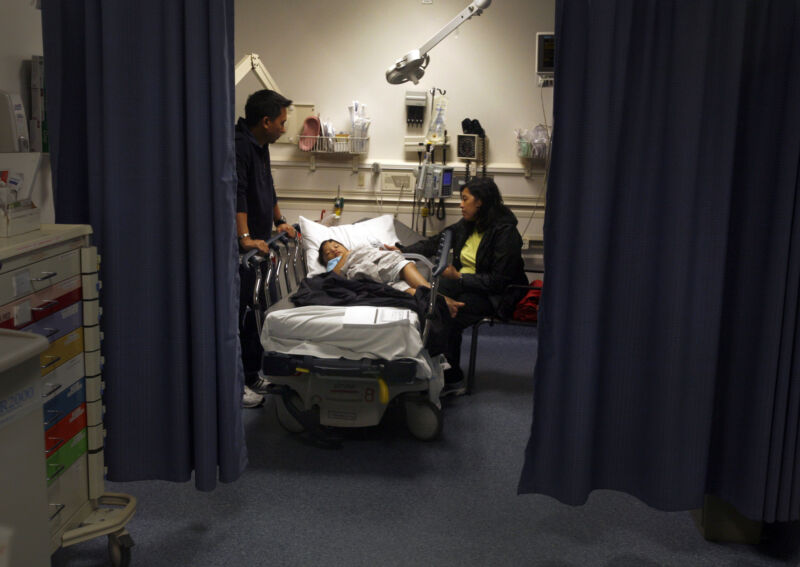
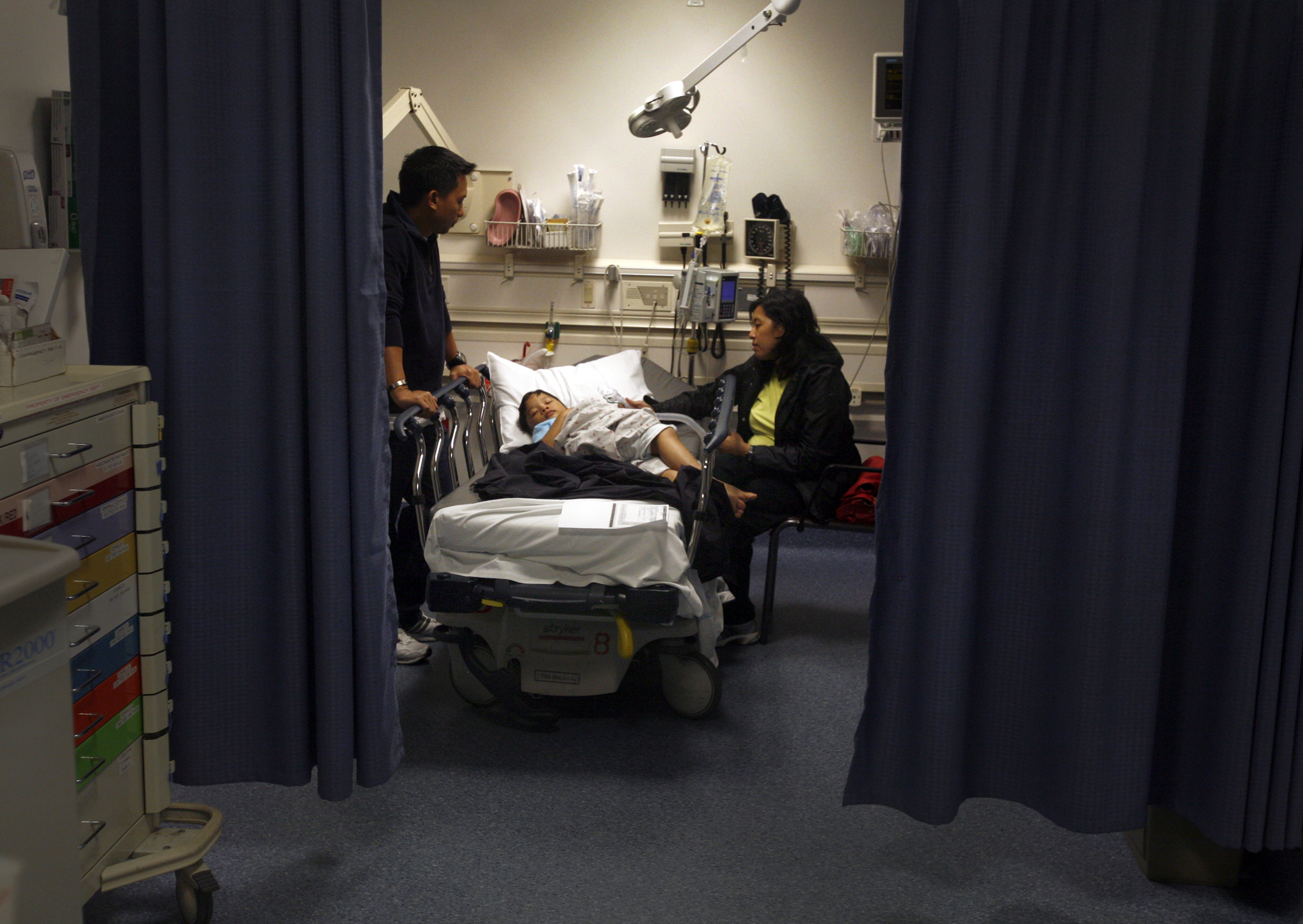
Parents look after their son, age 5, who is being treated for croup and asthma in an emergency room at a California hospital March 24, 2010.

Enlarge / Parents look after their son, age 5, who is being treated for croup and asthma in an emergency room at a California hospital March 24, 2010. (credit: Getty | Mark Boster)

The omicron coronavirus variant caused a spike in cases of a potentially severe breathing condition in babies and toddlers, according to a hospital study recently published in the journal Pediatrics.

The study is small, focusing only on COVID-19-associated cases at one large children's hospital in Massachusetts during the pandemic. But, it provides some of the initial data on the subject and backs up anecdotes from health care providers that the latest pandemic variant causes more cases of laryngotracheobronchitis—aka croup—in younger children than earlier variants.

Generally, croup is a common upper-respiratory tract condition in which significant inflammation and swelling develop in the larynx and trachea, imperiling breathing. Croup is usually triggered by some type of viral infection, but allergies and other irritants can also be culprits. It can occur at any age but mostly strikes the tiny upper airways of infants and young children, ages 3 months to 5 years.

Read 11 remaining paragraphs | Comments

17 May 11:36

The many, many costs of breastfeeding

by Aubrey Hirsch

Breastfeeding isn’t free — and it isn’t a solution to the national baby formula shortage.

16 May 17:01

The Trucker Convoy Will Return to Hagerstown on Tuesday

by Andrew Beaujon

The “People’s Convoy” of truckers and fellow travelers said on its website Sunday evening that it is due to arrive at Hagerstown Speedway in Hagerstown, Maryland, on Tuesday. The racetrack is the site of the convoy’s staging area for the baffling and results-free demonstration it staged in the area earlier this year. Reached by phone, […]

The post The Trucker Convoy Will Return to Hagerstown on Tuesday first appeared on Washingtonian.

16 May 12:15

Flight delayed? Blame a spaceship.

by Rebecca Heilweil
A person watches the vapor trail of a rocket launch.
Space flights are now are regular occurrence in Florida. | Marco Bello/AFP via Getty Images

In Florida, a surging number of space launches has created a new type of travel headache.

You can typically blame an airline flight delay on a handful of usual suspects, like bad weather, mechanical issues, and traffic on the tarmac. But thanks to the rise of the commercial space industry, there’s now a surprising new source of air travel disruption: rocket launches.

In recent weeks, flights in and out of Florida have seen a sharp increase in delays. Palm Beach International Airport logged more than 100 delays or cancellations on April 15 alone. (Some of these can be attributed to a surge in private and charter flights.) Things are even worse at Jacksonville International Airport, where there were nearly 9,000 flight delays in March. Last week, federal regulators met to discuss these disruptions, which reflect many of the ongoing challenges facing the aviation industry, including storms, the rising cost of jet fuel, the Covid-19 pandemic, and a shortage of airline workers. But in Florida, a growing number of space launches — particularly those in the Cape Canaveral area — is also making flight schedules more complicated.

“They close significant airspace on the east coast before and during and after a launch. That traffic has to go somewhere,” John Tiliacos, the executive vice president of finance and procurement at Tampa International Airport, told Recode. “It’s like putting 10 pounds of potatoes in a five-pound bag, so you’re further congesting an already constrained airspace on the west coast of Florida.”

While right now these delays are concentrated in Florida, this problem could get a lot worse, especially as the number of spaceflights increases and as new launch facilities, or spaceports, open in other parts of the country. The situation is also a sign that the arrival of the second space age could have an unexpected and even extremely inconvenient impact on everyday life.

The spaceship problem is relatively straightforward: Air traffic controllers currently have to ground or reroute flights during launches. In order to break through the atmosphere and reach outer space, rockets must first travel through airspace that’s monitored by the Federal Aviation Administration (FAA), which oversees air traffic control centers and flight navigation throughout the country. While these rockets typically only spend a few minutes in this airspace, they can create debris, like spent pieces of rocket hardware, either because they’re designed to shed their payloads in several stages or because the mission has failed. Reusable boosters used by some spacecraft, like SpaceX’s Falcon 9, reenter this airspace, too.

To make sure that planes aren’t hit by this debris, the FAA typically stops flights from traveling within a rectangle-shaped block of sky that can stretch from 40 to several hundred miles long, depending on the type of launch. Typically, there’s about two weeks of advance notice before each launch, and during that time, air traffic controllers can develop alternative arrangements for the flights scheduled on that day. While a launch is taking place, aviation officials track the vehicle’s entry into space and then wait for word from experts who analyze the trajectory of debris created by the launch in real time. If there is debris, air traffic controllers stand by until it falls back to Earth, which typically takes 30 to 50 minutes. Once that happens, regular flights can return to their normal flight paths.

A single space launch can disrupt hundreds of flights. For example, a SpaceX Falcon Heavy launch in 2018 — the same flight that infamously shot Elon Musk’s Tesla Roadster into spaceimpacted 563 flights, created 4,645 total minutes of delays, and forced planes to fly an extra 34,841 nautical miles, according to data from the FAA. That extra mileage adds up quickly, especially when you consider the extra fuel and carbon emissions involved. Researchers from Embry-Riddle Aeronautical University in Daytona Beach, Florida, estimate that a single space launch could cost airlines as much as $200,000 in extra fuel by 2027, and as much as $300,000 in extra fuel in the following decade.

The FAA insists it’s making improvements. Last year, the agency started using a new tool, the Space Data Integrator, that more directly shares data about spacecraft during launches and allows the agency to reopen airspace more quickly. The FAA also says it has successfully reduced the duration of launch-related airspace closures from about four to just over two hours. In some cases, the agency has been able to reduce that time to just 30 minutes.

“An end goal of the FAA efforts is to reduce delays, route deviations, fuel burn, and emissions by commercial airlines and other National Airspace System users as the frequency of commercial space operations increase,” the agency said in a statement.

A graph representing the increasing number of licensed rocket launches in the US. Faa.gov

And the frequency of launches is picking up. There were 54 licensed space launches overseen by the FAA last year, but the agency thinks that number could grow in 2022 thanks to the rise in space tourism, growing demand for internet satellites, and upcoming space exploration missions. These launches could also become more common in other parts of the country as new spaceports, which are often built on or near existing airports, ramp up operations. The FAA has already licensed more than a dozen different spaceport locations in the United States, including Spaceport America in New Mexico, where Virgin Galactic launched its first flight last summer, as well as the Colorado Air and Space Port, a space transportation facility located just six miles from the Denver International Airport.

The FAA’s role in the rise of the commercial space industry is becoming increasingly complex. Beyond certifying and licensing launches, the FAA’s responsibilities also include studying the environmental impact of space travel and overseeing new spaceports. The agency will eventually have to monitor space passenger safety, too. This is on top of all the other new types of flying vehicles the FAA will also have to keep its eyes on, like drones, flying air taxis, supersonic jets, and even, possibly, space-faring balloons.

“Where things get contested is more on: How do all of these different types of vehicles fit in the system that the FAA is in charge of?” Ian Petchenik, who directs communications for the aircraft flight-tracking service Flightradar24, told Recode. “Things are going to get much more complicated, and having a way to figure out who has priority, how much space they need, and what the safety margins are, I think, is a much bigger long-term question.”

While we’re still in the early days of the commercial space industry, some have already expressed concern that the agency isn’t headed in the right direction. The Air Line Pilots Association warned back in 2019 that the FAA’s approach could become a “prohibitively expensive method of supporting space operations,” and has urged the agency to continue to cut down on the length of airspace shutdowns during space launches. At least one member of Congress, Rep. Peter DeFazio, is already worried that the FAA is prioritizing commercial spaceflight launches over traditional air travel, which serves significantly more people.

Beyond air flight delays, the burgeoning space travel business has already influenced everything from the reality television we can watch and the types of jobs we can get to international politics and — because of the industry’s potentially enormous carbon footprint — the threat of climate change. Now it looks as though the commercial space industry could also influence the timing of your next trip to Disney World.

16 May 12:13

Switch to Moderna booster after Pfizer shots better against omicron in 60+

by Beth Mole
The Comirnaty (Pfizer/BioNTech) and Moderna COVID-19 vaccines.

Enlarge / The Comirnaty (Pfizer/BioNTech) and Moderna COVID-19 vaccines. (credit: Getty | Marcos del Mazo)

People ages 60 and older who were initially vaccinated with two Pfizer-BioNTech COVID-19 vaccine doses were better protected from the omicron coronavirus variant after being boosted with a Moderna vaccine rather than another dose of the Pfizer-BioNTech vaccine.

Those results are according to interim data from a small but randomized controlled clinical trial in Singapore and published this week in the journal Clinical Infectious Diseases.

The study—involving 98 healthy adults—can't determine if the Moderna booster is simply superior to a Pfizer-BioNTech booster for older adults or if a mix-and-match booster strategy is inherently better. It also focused solely on antibody levels, which may or may not translate to significant differences in infection rates and other clinical differences. It also only followed people for 28 days after a booster, so it's unclear if the Moderna booster's edge will hold up over time.

Read 8 remaining paragraphs | Comments

16 May 11:27

Geofence Warrants and Reverse Keyword Warrants are So Invasive, Even Big Tech Wants to Ban Them

by Matthew Guariglia

Geofence and reverse keyword warrants are some of the most dangerous, civil-liberties-infringing and reviled tools in law enforcement agencies’ digital toolbox. It turns out that these warrants are so invasive of user privacy that big tech companies like Google, Microsoft, and Yahoo are willing to support banning them. The three tech giants have issued a public statement through a trade organization,“Reform Government Surveillance,'' that they will support a bill before the New York State legislature. The Reverse Location Search Prohibition Act, A. 84/ S. 296, would prohibit government use of geofence warrants and reverse warrants, a bill that EFF also supports. Their support is welcome, especially since we’ve been calling on companies like Google, which have a lot of resources and a lot of lawyers, to do more to resist these kinds of government requests.

Under the Fourth Amendment, if police can demonstrate probable cause that searching a particular person or place will reveal evidence of a crime, they can obtain a warrant from a court authorizing a limited search for this evidence. In cases involving digital evidence stored with a tech company, this typically involves sending the warrant to the company and demanding they  turn over the suspect’s digital data.

Geofence and reverse keyword warrants completely circumvent the limits set by the Fourth Amendment. If police are investigating a crime–anything from vandalism to arson–they instead submit requests that do not identify a single suspect or particular user account. Instead, with geofence warrants, they draw a box on a map, and compel the company to identify every digital device within that drawn boundary during a given time period. Similarly, with a “keyword” warrant, police compel the company to hand over the identities of anyone who may have searched for a specific term, such as a victim’s name or a particular address where a crime has occurred.

These reverse warrants have serious implications for civil liberties. Their increasingly common use means that anyone whose commute takes them goes by the scene of a crime might suddenly become vulnerable to suspicion, surveillance, and harassment by police. It means that an idle Google search for an address that corresponds to the scene of a robbery could make you a suspect. It also means that with one document, companies would be compelled to turn over identifying information on every phone that appeared in the vicinity of a protest, as happened in Kenosha, Wisconsin during a protest against police violence. And, as EFF has argued in amicus briefs, it violates the Fourth Amendment because it results in an overbroad fishing-expedition against unspecified targets, the majority of whom have no connection to any crime.


In the statement released by the companies, they write that, “This bill, if passed into law, would be the first of its kind to address the increasing use of law enforcement requests that, instead of relying on individual suspicion, request data pertaining to individuals who may have been in a specific vicinity or used a certain search term.” This is an undoubtedly positive step for companies that have a checkered history of being cavalier with users' data and enabling large-scale government surveillance. But they can do even more than support legislation in one state. Companies can still resist complying with geofence warrants across the country, be much more transparent about the geofence warrants it receives, provide all affected users with notice, and give users meaningful choice and control over their private data.

16 May 11:26

The Future

by squires

future comic

Still slowly but surely migrating all comics over to squires.nz, including those initially published on Webtoon and a bunch not published anywhere because they are bad. Some comics should stay buried

The post The Future appeared first on Moonbeard.

12 May 16:54

China Finalizes Hong Kong Police State By Installing Man Who Led Crackdown On Protests As Its Next Leader

by Tim Cushing

The country that promised to allow Hong Kong to choose its own leadership until at least 2047 is putting the finishing touches on its ahead-of-schedule oppression. Pro-democracy protests greeted China’s incursion into the area, alerting the world to the fact the ultra-profitable region was being invaded by forces indistinguishable from those that had turned China into a quasi-socialist nation by murdering millions of people who disagreed with the government’s means and methods.

Hong Kong never really had a chance. It takes a nation of millions to hold a nation of billions back, but the current Chinese government doesn’t really care what the rest of the world thinks about it or its actions. While pretending Hong Kong was still a democracy, the Chinese government not-so-quietly installed its own leaders and laws, criminalizing pro-democracy activity and bypassing what little was left of Hong Kong’s democracy to put its preferred representatives in charge.

Carrie Lam, a pro-China stooge, was given the reins to Hong Kong. She was very useful to the Chinese government, advancing its laws and efforts without questioning the damage to the electorate she no longer needed to be worried about. The Chinese government then made it clear “police state” wasn’t something theoretical and/or metaphorical by moving up former Secretary of Security John Lee to second-in-command. It also promoted a former police commissioner to fill Lee’s spot.

Lee’s pedigree had apparently impressed his Chinese handlers. Lee was instrumental in the crackdowns on pro-democracy protests, heading up police efforts to enforce Chinese laws written specifically to punish protesters, critics, and dissenters.

To further rig things in its favor, the Chinese government decided its version of “democracy” would only pertain to “patriots” who supported its premature takeover of Hong Kong. Instead of counting votes cast by unhappy Hong Kong residents, the “election” of new officials would be handled by a Chinese-appointed “committee” that would handpick 40 or 90 city legislators, including the most important position: Chief Executive of the region.

Carrie Lam, the useful stooge, approved this move away from anything lightly resembling democracy, claiming it was important that Hong Kong be led by “patriots.” Her period of usefulness appears to be over. Lam’s kowtowing to China managed to set off the region’s largest ever demonstration after she proposed rewriting extradition laws to make it easier for China to disappear Hong Kong residents opposed to its actions. Having failed to live up to the Chinese government’s oppressive standards, Lam is stepping down.

She will be replaced by her second-in-command, John Lee — an official best known for his overseeing of law enforcement brutality targeting pro-democracy protesters. Lee obtained his position thanks to the Chinese government’s recently installed “patriot” committee that allows the puppet government to appoint pro-China legislators and officials.

John Lee, who became the face of the national security law and who oversaw the arrests of dozens of activists and raids on newsrooms, is set to replace outgoing Chief Executive Carrie Lam when she finishes her five-year term at the end of June.

In what the government billed as an “open, just and honest” election, a largely government-appointed, pro-Beijing committee of 1,461 people appointed the next leader for the city’s 7.5 million residents on Sunday. Lee was the only person in the running, in contrast to previous years that saw run-offs between multiple candidates.

Engage in enough intimidation and violence and you can pretend to uphold democratic ideals while ensuring the election process is a forgone conclusion. Lee also supported the revamped extradition bill that would have given the Chinese government the ability to spirit away Hong Kong residents at will. While protests raged, Lee gave the Chinese government what it wants: more violence against protesters and more public proclamations that demonstrators were “radicals” and “terrorists.” For this show of loyalty in the face of widespread condemnation, Lee has been awarded the keys to the region.

The Chinese government will also see its oppressive stock rise with Lee’s appointment. It now has a true loyalists installed, rather than an interim loyalist (Carrie Lam) who failed to demonstrate she could secure the submission of Hong Kong residents.

At the unveiling of his policy manifesto on April 29, Lee emphasized the need to integrate Hong Kong with other economically important Chinese cities. There was no English translation provided, despite English being one of Hong Kong’s two official languages – in striking contrast to most government events to date.

He also vowed to bolster security legislation and introduce “national identity” education. Both proposals have long been controversial, with previous attempts to introduce legislation foiled by protests and pushback – much to Beijing’s frustration.

There will be no independence for Hong Kong. The Chinese government has amply demonstrated it won’t be deterred by mass protests or worldwide condemnation. All that’s left to determine is how much the government can profit from Hong Kong’s position as a center of world commerce… and how long it can retain this position once its pro-democracy proponents have exited the county, either through self-exile or at the hands of John Lee, its new, unelected, thoroughly compromised Chief Executive.

12 May 11:51

450 cases, 11 dead worldwide in growing child hepatitis mystery

by Beth Mole
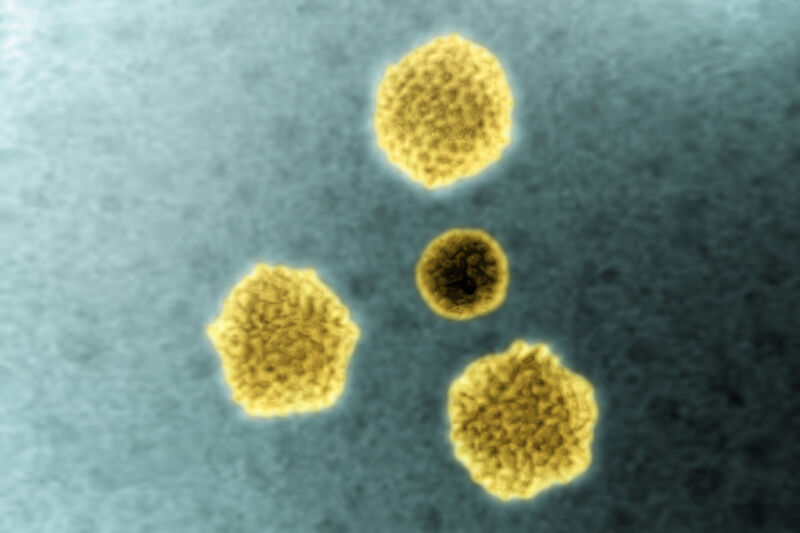
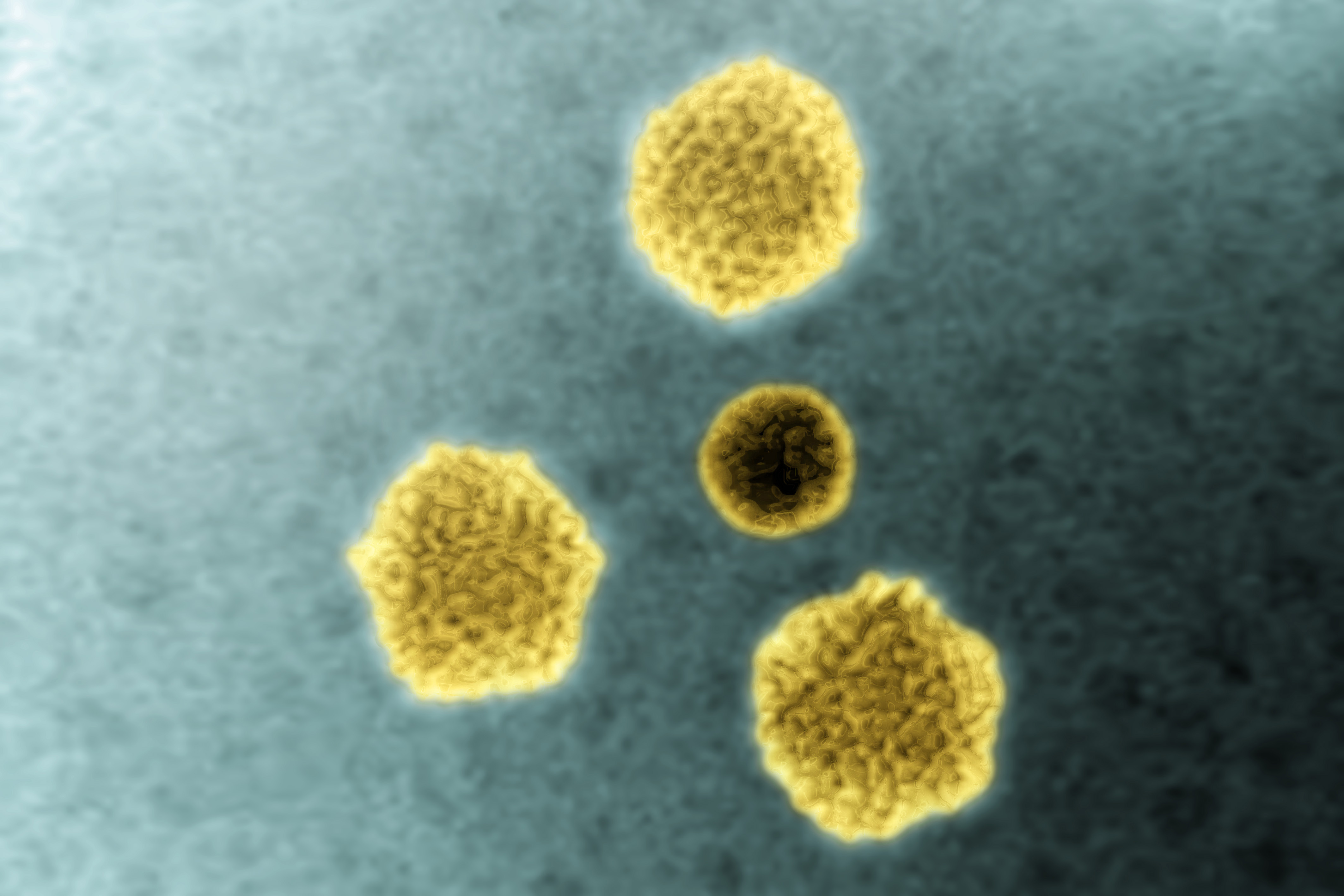
Adenoviruses remain the leading suspect, though no cause has been identified.

Enlarge / Adenoviruses remain the leading suspect, though no cause has been identified. (credit: Getty | BSIP)

The global tally of unexplained hepatitis cases in children has reached about 450, including 11 reported deaths, according to an update from the European Centre for Disease Prevention and Control.

The cases come from more than two dozen countries around the world, with about 14 countries reporting more than five cases. The countries with the largest case counts so far are the United Kingdom and the United States.

In the UK, officials have identified 163 cases in children under the age of 16, 11 of whom required liver transplants. Last week, the US Centers for Disease Control reported 109 cases under investigation in children under the age of 10 from 25 states. Of those cases, 14 percent required liver transplants, and five children died.

Read 11 remaining paragraphs | Comments

12 May 11:51

The Pixel 6a is official, and it’s set to dominate the mid-range market

by Ron Amadeo
The Pixel 6a is here at an incredible price.

Enlarge / The Pixel 6a is here at an incredible price. (credit: Google)

It's Google I/O today, and a big part of the keynote was the official confirmation of the Pixel 6a, Google's next mid-range smartphone. The Pixel A series has been a great option since its inception in 2019, but this year is different. The Pixel 6a—confirmed today to cost $449—is shipping with a flagship SoC—the very same Google Tensor chip that ships in the $600 Pixel 6 and $900 Pixel 6 Pro. Apple regularly ships its flagship SoC in the $400 iPhone SE, but for most Android markets, especially the US, this kind of hardware at this price point is unheard of.

For $449 you get a 6.1-inch 2400×1080, 60 Hz OLED, that flagship Google Tensor SoC, 6GB of RAM, 128GB of storage, and a 4,306 mAh battery. It really feels like the goal here is to create a "third flagship," and the three Pixel phones are now all equally spaced from each other. Each tier is around $150-$200 more and increases by 0.2-0.3 inches, 30 Hz, and 2GB of RAM: the $449 Pixel 6a with a 6.1-inch 60 Hz display and 6GB of RAM; the $600 Pixel 6 with a 6.4-inch 90 Hz display and 8GB of RAM; and then the $900 Pixel 6 Pro with a 6.7-inch 120Hz display and 12GB of RAM.

Just like how the spec sheet makes this a smaller flagship Pixel phone, the design follows that motif, too. The Pixel 6a looks just like the Pixel 6 and 6 Pro, with an all-screen front design, a centered front camera, and an in-screen optical fingerprint reader. The back has the Pixel 6's trademark back camera bar. We were big fans of this design with the Pixel 6, both for being very distinctive and good looking, while also giving the phone a stable base to sit on when you put it down and start tapping it. So many phones are wobbly on a table, but not the Pixel 6.

Read 2 remaining paragraphs | Comments

12 May 11:50

Google teases future hardware: The Pixel 7, Pixel Tablet, and AR Goggles

by Ron Amadeo
Google teases future hardware: The Pixel 7, Pixel Tablet, and AR Goggles

Enlarge (credit: Google)

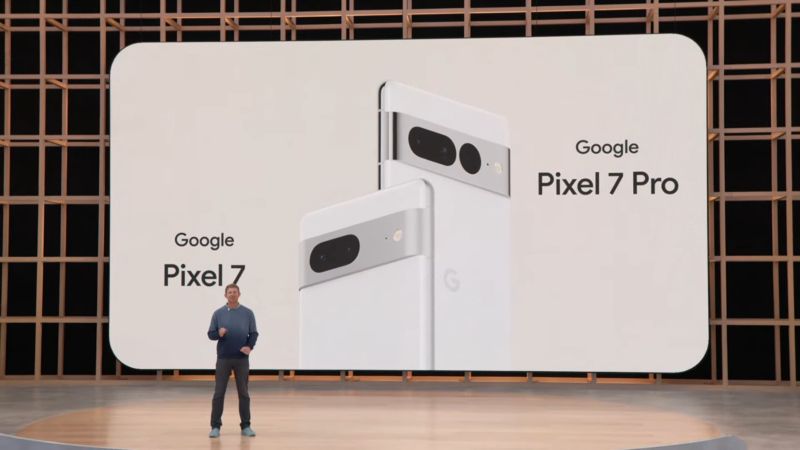
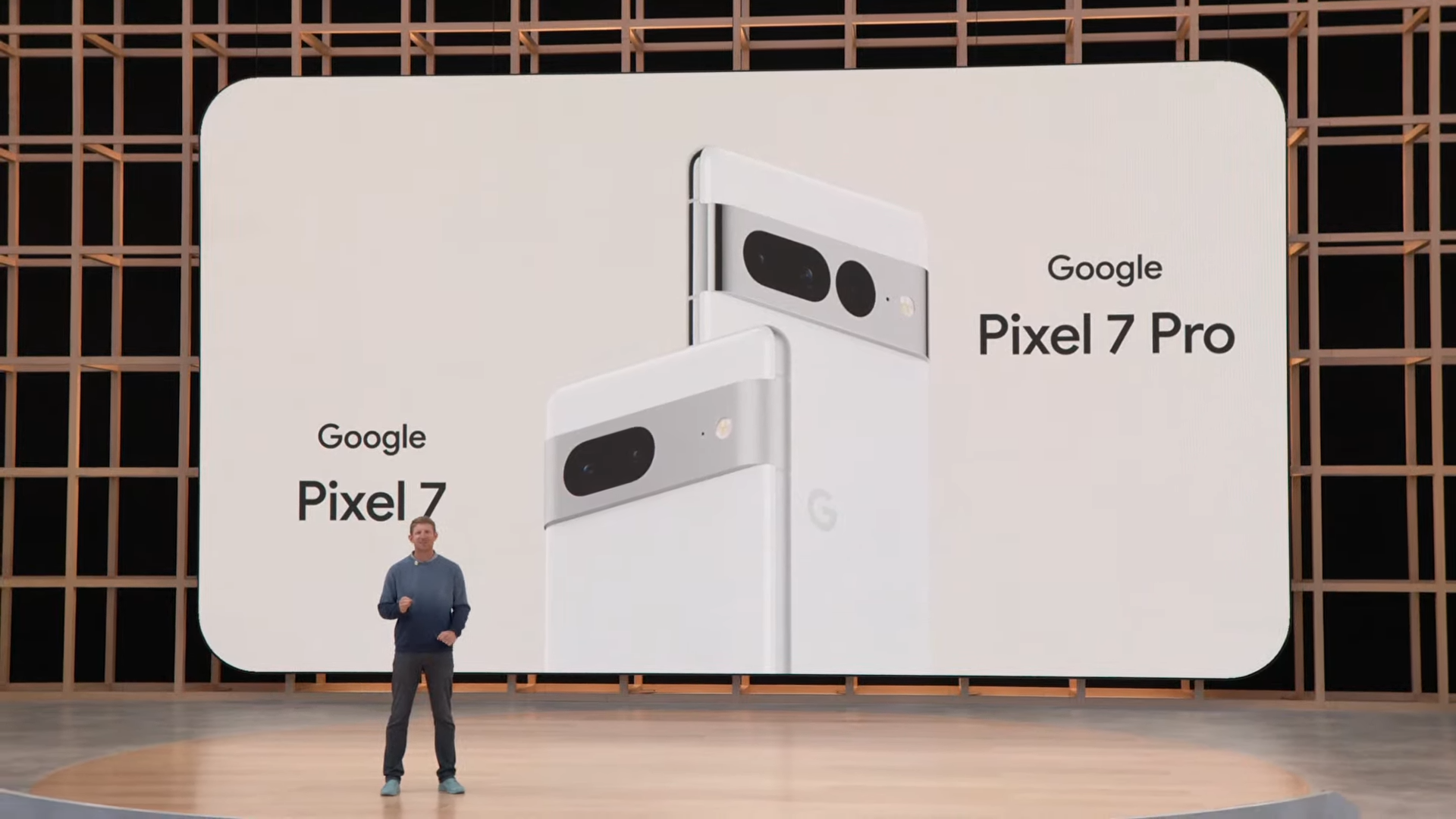
Google I/O today contained a million different hardware announcements, some of which were just two-minute product teases, presumably to head off product leakers. First up is the Pixel 7, Google's flagship smartphone launching later this year.

Google called the work it did with the Pixel 6 and Google Tensor SoC "a hardware foundation that we'll be building on for years to come," and the Pixel 7 is the next step on this road map. It will have a similar design and next-generation Google SoC. The camera bar is now polished aluminum rather than glass, which should help some of the light glare issues on the massive glass panel on the current camera bar. The Pixel 7 Pro has three rear cameras, and the Pixel 7 has two rear cameras. Google promises the pro will "set a completely new standard" for camera performance.

That's it. That's how quick these teases were. Next!

Read 6 remaining paragraphs | Comments

12 May 11:49

The killing of Palestinian-American journalist Shireen Abu Akleh, explained

by Jonathan Guyer
Demonstrators take part in a protest in Haifa, Israel, on May 11, to denounce the killing of Al Jazeera reporter Shireen Abu Akleh. | Ilia Yefimovich/Picture Alliance via Getty Images

Shireen Abu Akleh covered occupied Palestine for two decades. She was killed doing her job.

For over two decades, journalist Shireen Abu Akleh covered human rights abuses in the occupied Palestinian territory. A generation grew up watching the Al Jazeera broadcaster break down some of the most difficult pieces of news to cover.

On Wednesday morning local time, she was shot and killed while doing the same, reporting on a raid of the West Bank city of Jenin by the Israeli Defense Forces (IDF).

In a statement, Al Jazeera, the Qatar-based Arab news network, accused Israeli forces of killing her, calling it “a blatant murder” and “heinous crime, which intends to only prevent the media from conducting their duty.” The Palestinian Health Ministry also blamed the Israeli military.

Israel attributed Abu Akleh’s death to Palestinian gunmen, saying she was caught in the crossfire of clashes. Multiple witnesses, however, said that it is more likely she was shot by IDF forces than Palestinian. If that bears out, Abu Akleh’s killing will fit into a larger pattern of attacks on the press in Palestine and in the systemic violence against Palestinians more broadly.

The language that an Israeli spokesperson used Wednesday to describe the work of Palestinian journalists underscored that reality. Israeli military spokesperson Ran Kochav said, “They’re armed with cameras, if you’ll permit me to say so,” and in so doing drew a not-subtle comparison between the work of journalism and that of violence.

Israel’s defense minister Benny Gantz announced an investigation Wednesday and released body-cam footage from the army, striking a more cautious tone than earlier Israeli statements. Palestinian authorities declined to participate in the investigation and have refused to share the bullet with Israeli authorities. Now that bullet is at the center of the two competing investigations — even as tensions simmer on the ground.

On Friday in Jerusalem, thousands of mourners gathered for Abu Akleh’s funeral procession in what may be the largest public outpouring there since the death of Palestine Liberation Organization leader Yasser Arafat in 2004.

As the casket was carried out of a Jerusalem hospital’s gates, Israeli police attacked mourners with batons and set off stun grenades, violence that almost caused the pallbearers to drop Abu Akleh’s coffin.

Funeral Of Al Jazeera Reporter Shireen Abu Akleh Killed In The Occupied West Bank Amir Levy/Getty Images
Relatives carry Shireen Abu Akleh’s coffin during her funeral procession on May 13, in Jerusalem.
Funeral Of Al Jazeera Reporter Shireen Abu Akleh Killed In The Occupied West Bank Amir Levy/Getty Images
Police officers clash with attendees of Abu Akleh’s funeral on May 13, in Jerusalem.

If an investigation ultimately does find Israeli soldiers responsible, it wouldn’t be the first time the country’s military has targeted the press. Israel has killed more than 50 Palestinian journalists since 2001, according to the Palestinian Journalism Syndicate, and Reporters Without Borders has recorded more than 144 journalists injured in just the last four years. “In terms of the event itself, unfortunately, it is not unique, not different,” says Saleh Hijazi, the deputy director of Amnesty International’s Middle East program. “It fits a pattern, a pattern of unlawful killing, and also a pattern of targeting journalists and human rights defenders.”

What we know about Abu Akleh’s death

Abu Akleh had become a leading media voice when she reported on the 2000 uprising, or intifada, that came to define the past two decades of violent inertia between Israel and Palestine. She had continued documenting the Israeli occupation and the daily lives of those living in Palestine, and was one of the most well-known faces of Palestinian journalism.

“She was the voice of Palestine to the rest of the Arab world and its diaspora,” said Mezna Qato, a historian at the University of Cambridge. “She was the one who forced the Arab world to remember, to contend with, and to take seriously what it means to disengage from the question of Palestine.”

On Wednesday, she was reporting from Jenin, where the IDF had been conducting, as it put it, “counterterrorism activity to apprehend terrorist suspects.” Israeli forces have been conducting more raids in Jenin after several recent deadly attacks in Israel, which Israel has attributed to militants from the city.

Abu Akleh and four or so other journalists arrived in Jenin early Wednesday morning. Clashes between IDF and Palestinian gunmen were reported in the city. Gathered several hundred feet away from Israeli forces, the journalists were watching from afar as an Israeli raid on a Palestinian home took place. At the crackling of gunshots, the group took cover, but Abu Akleh appeared to already be shot. According to the Associated Press, she was brought to the hospital, where she died.

Ali Samoudi, her producer, who was also shot and in the hospital Wednesday, said Israeli forces shot her. Two Palestinian witnesses also attributed the killing to Israeli forces, telling the Times of Israel that the buildings around the area were filled with soldiers.

A fragment of the bullet was removed from her head during the autopsy; the director of the Palestinian forensic institute said he was not yet able to identify who fired it. And if, as Israeli officials told the New York Times, both sides were firing M16 rifles Wednesday, it might be ultimately difficult to determine who fired it without testing individual rifles.

Samoudi said, regardless, there were no armed Palestinian fighters nearby and that Abu Akleh was killed “in cold blood.”

Israeli army chief Lt. Gen. Aviv Kochavi told the AP, “At this stage, we cannot determine by whose fire she was harmed and we regret her death.” Earlier statements from the government, however, more directly blamed Palestinians. The Israeli military’s Twitter feed said it was “investigating the event and looking into the possibility that journalists were hit by the Palestinian gunmen.” That explanation was echoed by Israeli Prime Minister Naftali Bennett, who said “armed Palestinians shot in an inaccurate, indiscriminate, and uncontrolled manner” during the IDF’s operation.

“Our forces from the IDF returned fire as accurately, carefully, and responsibly as possible. Sadly, Al Jazeera journalist Shireen Abu Akleh was killed in the exchange,” Bennett said. The Israeli foreign ministry shared a video of Palestinian gunmen active in the city Wednesday to back up these claims.

But a researcher with the preeminent Israeli human rights organization B’Tselem analyzed the footage and reported that the gunman in the video was in a separate location in Jenin entirely.

Israeli leaders, including the prime minister and the secretary of defense, do not usually make pronouncements about such things; that they issued statements along these lines about Abu Akleh shows the weight of this killing.

The last two months have seen a significant uptick in violence in Israel and Palestine, with the most deaths in that span since 2008, according to Amnesty International. Amnesty has documented 34 Palestinians killed, including six children, in March and April, and 18 people have been killed in Israeli cities in attacks in recent weeks.

“You only have this happen because there is no addressing of root causes, which is apartheid, because Israel is able to enjoy this impunity, mainly because of the role that the US and other Western allies play,” Hijazi said.

Why Israel can’t investigate itself

US Ambassador to Israel Thomas Nides said that he encouraged “a thorough investigation into the circumstances of [Abu Akleh’s] death and the injury of at least one other journalist today in Jenin.” State Department spokesperson Ned Price said, “those responsible must be held accountable.”

The Israeli government said that it would jointly investigate the killing with the Palestinian Authority, but the Palestinian side declined to provide Abu Akleh’s body or share the bullet that killed her with Israeli authorities.

That likely has something to do with the Israeli government not having a good track record of investigating its own crimes. Israel doesn’t allow international investigations of violations in the country or the occupied territories, and in recent years has chosen not to cooperate or provide access to UN commissions or special rapporteurs. Israel has even designated the premier Palestinian rights organization Al-Haq as a terrorist organization, in what experts called retribution for Al-Haq’s documentation of violations on the ground.

“No one should believe the Israeli promises to quote-unquote investigate what has happened because the promise of investigations are nothing but the first step in Israel’s organized whitewash,” said Hagai El-Ad, executive director of the rights group B’Tselem. “Israel is unable and unwilling to conduct such investigations which opens the door to international legal responsibility.”

B’Tselem has stopped cooperating with the Israeli government on investigations. Israel tends to stretch out the investigations as long as possible and in the end fails to hold military leaders to account, according to El-Ad. “Israel treats every incident as an extraordinarily exceptional occurrence, and the investigations always push the responsibility down to the lowest level of soldiers,” he told me. “It shouldn’t surprise anyone — it’s the army that’s investigating the army.”

Israel has maintained that it is committed to investigations, including one devoted to Abu Akleh’s death.

“To uncover the truth, there must be a real investigation, and the Palestinians are currently preventing that,” Prime Minister Bennett said in a statement. “Without a serious investigation, we will not reach the truth.”

For Omar Shakir of Human Rights Watch, the situation reflects the larger structural dynamic. “Their calls for investigations [are] as if it’s a few bad apples in a situation that’s otherwise normal, but that’s not the reality. Palestinians live in a situation of grave underlying structural violence,” he told me. “This underlying daily reality of apartheid and the cold violence of structural repression leads to the hot violence of bloodshed and the killing of Palestinians.”

Jordanian Journalists Demonstrate Over Death Of Palestinian Al Jazeera Reporter Jordan Pix/Getty Images
Jordanian journalists take part in a sit-in to demonstrate against the killing of Abu Akleh, at the Al Jazeera TV office in Amman, Jordan, on May 11.

Abu Akleh has already merited tributes from US Ambassador to the United Nations Linda Thomas-Greenfield, who had met Abu Akleh recently and said she had “extraordinary respect for her.”

It was important, too, that Abu Akleh was a woman delivering the news to Arabic-speaking audiences worldwide. “So many girls wanted to be her. So many aspiring journalists have told me they would stand in front of a mirror and use a hairbrush and pretend it were a microphone, and basically pretend to be Shireen,” said Dalia Hatuqa, a journalist and friend of Abu Akleh.

“Now she’s been silenced in this utterly violent way that echoes some of her own reporting,” Qato told me.

11 May 11:03

Report: Most Mental Health, Prayer Apps Have Abysmal Security And Privacy Standards

by Karl Bode

From the Internet of very broken things to telecom networks, the state of U.S. privacy and user security is arguably pathetic. It’s 2022 and we still don’t have even a basic privacy law for the Internet era, in large part because over-collection of data is too profitable to a wide swath of industries, which, in turn, lobby Congress to do either nothing, or the wrong thing.

Apps routinely aren’t much of an exception. Mozilla’s latest *Privacy Not Included guide analyzed the privacy and security standards of 32 mental health and prayer apps, and gave 29 of them a “privacy not included” warning label indicating they failed to adhere to even basic user privacy standards:

“The vast majority of mental health and prayer apps are exceptionally creepy. They track, share, and capitalize on users’ most intimate personal thoughts and feelings, like moods, mental state, and biometric data. Turns out, researching mental health apps is not good for your mental health, as it reveals how negligent and craven these companies can be with our most intimate personal information.”

The problems included an over-collection and sale of data (including the collection of some mental health chat transcripts), poor password creation standards, and nebulous and undercooked privacy policies. Better Help, Youper, Better Stop Suicide, Woebot, Talkspace, and Pray.com were deemed the worst offenders. Only three of the 32 app makers responded to a Mozilla request for comment.

The discovery shouldn’t be particularly surprising. Back in February Politico revealed that a top suicide help hotline was caught collecting and selling “anonymized” (a useless term) user data.

The U.S. isn’t known for quality mental health care, but online mental health apps and services are booming, with a particular focus on the sale of ketamine and psychedelics for therapeutic use. But many of these services have all the kinds of problems you might expect (shoddy therapy, incorrect doses) before you even get to the potential privacy problems that will ultimately and inevitably appear.

Again, abysmal federal security and privacy standards and feckless, under resourced U.S. privacy regulators are an intentional feature, not a bug.

It’s not that difficult to pass a baseline privacy law for the Internet era that at least erects some basic guard rails and base-level accountability for bad actors and executives. But we have no such law because a huge array of industries have lobbied Congress into apathy and dysfunction, with the cost being repeatedly borne by ordinary Americans.

It will keep happening until there’s a privacy and security scandal so idiotically ferocious that the problem will be impossible to ignore (probably involving either significant deaths, or the extremely sensitive and personal data of powerful people). Even then, there’s no guarantee a grotesquely corrupt U.S. Congress will be willing or able to respond competently to the challenge.